EP2355393A1 - Method and apparatus for determining an optimized number of transmissions for a data packet in a multicast transmission system - Google Patents
Method and apparatus for determining an optimized number of transmissions for a data packet in a multicast transmission system Download PDFInfo
- Publication number
- EP2355393A1 EP2355393A1 EP10003546A EP10003546A EP2355393A1 EP 2355393 A1 EP2355393 A1 EP 2355393A1 EP 10003546 A EP10003546 A EP 10003546A EP 10003546 A EP10003546 A EP 10003546A EP 2355393 A1 EP2355393 A1 EP 2355393A1
- Authority
- EP
- European Patent Office
- Prior art keywords
- nak
- transmissions
- data packet
- limited number
- determining
- Prior art date
- Legal status (The legal status is an assumption and is not a legal conclusion. Google has not performed a legal analysis and makes no representation as to the accuracy of the status listed.)
- Granted
Links
- 230000005540 biological transmission Effects 0.000 title claims abstract description 133
- 238000000034 method Methods 0.000 title claims abstract description 22
- 230000001419 dependent effect Effects 0.000 description 3
- 238000010586 diagram Methods 0.000 description 3
- 230000000694 effects Effects 0.000 description 1
Images

Classifications
-
- H—ELECTRICITY
- H04—ELECTRIC COMMUNICATION TECHNIQUE
- H04L—TRANSMISSION OF DIGITAL INFORMATION, e.g. TELEGRAPHIC COMMUNICATION
- H04L1/00—Arrangements for detecting or preventing errors in the information received
- H04L1/12—Arrangements for detecting or preventing errors in the information received by using return channel
- H04L1/16—Arrangements for detecting or preventing errors in the information received by using return channel in which the return channel carries supervisory signals, e.g. repetition request signals
- H04L1/18—Automatic repetition systems, e.g. Van Duuren systems
- H04L1/1825—Adaptation of specific ARQ protocol parameters according to transmission conditions
-
- H—ELECTRICITY
- H04—ELECTRIC COMMUNICATION TECHNIQUE
- H04L—TRANSMISSION OF DIGITAL INFORMATION, e.g. TELEGRAPHIC COMMUNICATION
- H04L1/00—Arrangements for detecting or preventing errors in the information received
- H04L1/12—Arrangements for detecting or preventing errors in the information received by using return channel
- H04L1/16—Arrangements for detecting or preventing errors in the information received by using return channel in which the return channel carries supervisory signals, e.g. repetition request signals
- H04L1/18—Automatic repetition systems, e.g. Van Duuren systems
- H04L1/1812—Hybrid protocols; Hybrid automatic repeat request [HARQ]
- H04L1/1816—Hybrid protocols; Hybrid automatic repeat request [HARQ] with retransmission of the same, encoded, message
Definitions
- the invention concerns a method and an apparatus for determining an optimized upper-limited number of transmissions for a data packet in a multicast transmission system.
- Multicast systems transferring a datastream from one transmitter to a limited number of receivers as disclosed in EP 1 722 506 A1 employ an Automatic Repeat Request (ARQ) protocol in the data link layer, which starts a retransmission of the data packet in case of an unsuccessful reception of that data packet in at least one of the receivers.
- ARQ Automatic Repeat Request
- H-ARQ Type-II Hybrid ARQ
- the object of the invention is to develop a method and an apparatus for determining the optimized upper-limited number of transmissions resulting to an optimal throughput in a multicast system.
- the object of the invention is solved by a method for determining an optimized upper-limited number of transmissions for a data packet in a multicast transmission with the features of claim 1 and an apparatus for determining an optimized upper-limited number of transmissions for a data packet in a multicast transmission with the features of claim 6.
- the throughput in a multicast system is dependent on the average number of receivers receiving correctly a data packet within an upper-limited number of transmissions and on the average number of transmissions for correctly receiving a data packet by each receiver.
- the average number of receivers receiving correctly a data packet within an upper-limited number of transmissions and the average number of transmissions for correctly receiving a data packet by each receiver is determined for each possible upper-limited number of transmissions. Calculating the quotient between the average number of receivers and the average number of transmissions for each possible upper-limited number of transmissions and determining the maximum quotient of the calculated quotients results in the optimized upper-limited number of transmissions.
- the average number of receivers receiving correctly a data packet within an upper-limited number of transmissions and the average number of transmissions for correctly receiving a data packet by each receiver are each dependent on each probability determined respectively for correctly receiving a data packet in one of each receivers of the multicast transmission system after exactly one of all possible numbers of transmissions.
- the probability is determined on the basis of a value characterizing the channel transmission quality, preferably the signal-to-noise-ratio and Doppler spread, and is measured at one of the receivers by use of Link Quality Analysis sounding and exchange methods at one of the possible transmissions.
- a value characterizing the channel transmission quality preferably the signal-to-noise-ratio and Doppler spread
- Another option for characterizing the channel transmission quality is the use of a prediction and coverage analysis program.
- the throughput T is dependent on the size m of the transmitted message, the transmission time t of the message and the number s of receivers according to equation (1).
- T m t ⁇ s
- the transmission time t of the message can be determined according to equation (2) on the basis of the number r of retransmissions, the number M of data packets per message and the transmission time t 0 of a data packet, whereby the transmission time t 0 of a data packet comprises the time t Data for transmission of a data packet and the time t Ack for the acknowledgement of a data packet according to equation (3).
- the throughput T is proportional to the quotient s r of the number s of receivers and the number r of retransmissions. T ⁇ s r
- Both the number s of receivers and the number r of retransmissions are statistical factors depending on probabilities characterizing the transmission behaviour of the transmission channel from the transmitter to each receiver.
- the average number s nak of receivers receiving the full message correctly within an upper-limited number nak of transmissions and the average number r nak of transmissions for receiving correctly a data packet by each receiver are introduced replacing the number s of receivers and the number r of retransmissions in equation (6).
- the average number s nak of receivers receiving the full message within an upper-limited number nak of transmissions is given by the sum of probabilities of each receiver receiving the entire message within the upper-limited number nak of transmissions according to equation (7) .
- p i,nak is the probability of receiver i receiving the entire message within the upper-limited number nak of transmissions.
- N is the total number of receivers.
- the probability p i,nuk of receiver i receiving the entire message within the upper-limited number nak of transmissions is given by the probability of receiver i receiving every data packet in the message within the upper-limited number nak of transmissions.
- the probability of receiver i receiving every data packet in the message within the upper-limited number nak of transmissions is calculated by m times multiplication of the probability q i,nak of receiver i receiving one data packet within the upper-limited number nak of transmissions according to equation (8).
- M is the amount of data packets sent per message.
- the probability q ⁇ , nak of receiver i receiving one data packet within the upper-limited number nak of transmissions is determined by 1 minus the probability of receiver i being not able to receive one data packet within the upper-limited number nak of transmissions according to equation (9).
- the probability of receiver i being not able to receive one data packet within the upper-limited number nak of transmissions can be expressed by the multiplied probabilities of receiver i being not able to receive one data packet in exact j transmissions, whereby each probability corresponds to one number j of transmissions between 1 and the upper-limited number nak .
- the probability of receiver i being not able to receive one data packet in exact j transmissions can be expressed by 1 minus the probability v i , j of receiver i receiving one data packet in exact j transmissions correctly, i.e. without any further retransmission.
- the probability P nak that a data packet will need to be transmitted nak times is given by the probability that at least one receiver did not receive the data packet in any j ⁇ nak transmission, which is given by 1 minus the probability that all receivers correctly received the data packet in these j ⁇ nak transmissions.
- the optimal throughput T is directly proportional to the quotient s r between the number s of receivers and the number r of retransmissions.
- the optimal value nak opt for the upper-limited number nak of transmissions can be determined according to equation (14) by calculating the quotient s nak r nak for each upper-limited number nak and determining the maximal quotient of all calculated quotients s nak r nak , whose upper-limited number nak is the optimal value nak opt for the upper-limited number.
- nak opt argmax max s nak r nak
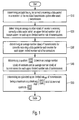
- FIG. 1 An embodiment of the inventive method for determining an optimized upper-limited number of transmissions for a data packet in a multicast transmission system is described on the basis of the flowchart in Fig. 1 in combination with an embodiment of the inventive apparatus for determining an optimized upper-limited number of transmissions for a data packet in a multicast transmission system shown in the block diagram of Fig. 2 .
- the probabilities v i,j for correctly receiving a data packet of the message in a receiver i of the multicast transmission system after exact j transmissions is determined for each receiver i and each number j of transmissions in means 1 for determining probabilities ⁇ i,j for correctly receiving a data packet of the message in a receiver i of the multicast transmission system after exact j transmissions.
- the probabilities ⁇ i,j are determined on the basis of values characterizing the channel transmission quality, preferably the signal-to-noise-ratio and Doppler spread, between the transmitter and the receiver i and are measured at a receiver i in a series of in total j transmissions.
- the values characterizing the channel transmission quality are preferably determined by means of a Link Quality Analysis sounding or exchange method or by means of a prediction and coverage analysis program, for example VOACAP.
- step S20 of the inventive method an average number s(nak) of receivers receiving correctly a data packet within an upper-limited number nak of transmissions for each upper-limited number nak of transmissions is determined according to equation (10) in means 2 for determining an average number s(nak) of receivers receiving correctly a data packet within an upper-limited number nak of transmissions.
- step S30 of the inventive method an average number r(nak) of transmissions for correctly receiving a data packet by each receiver for each upper-limited number nak of transmissions is determined according to equation (13) in means 3 for determining an average number r(nak) of transmissions for correctly receiving a data packet by each receiver.
- a quotient s nak r nak between an average number s(nak) of receivers and an average number r(nak) of transmissions for each upper-limited number nak of transmissions is determined in means 4 for determining a quotient s nak r nak between an average number s(nak) of receivers and an average number r(nak) of transmissions.
- an optimized upper-limited number nak opt of transmissions as the maximum quotient argmax max s nak r nak of all determined quotients s nak r nak is determined according to equation (14) in means 5 for determining an optimized upper-limited number nak opt of transmissions being the maximum quotient argmax max s nak r nak of all determined quotients s nak r nak .
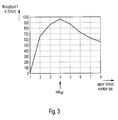
- Such a determined maximum quotient argmax max s nak r nak of all determined quotients s nak r nak corresponds to the maximum throughput T in the multicast transmission system with the related optimized upper-limited number nak Opt of transmissions according to Fig. 3 .
- the determined optimized upper-limited number nak Opt of transmissions is used in the transmission of the next message. After the transmission of the next message a repeated determination of the optimized upper-limited number nak Opt of transmissions is performed.
Landscapes
- Engineering & Computer Science (AREA)
- Computer Networks & Wireless Communication (AREA)
- Signal Processing (AREA)
- Mobile Radio Communication Systems (AREA)
Abstract


Description
- The invention concerns a method and an apparatus for determining an optimized upper-limited number of transmissions for a data packet in a multicast transmission system.
- Multicast systems transferring a datastream from one transmitter to a limited number of receivers as disclosed in
EP 1 722 506 A1 employ an Automatic Repeat Request (ARQ) protocol in the data link layer, which starts a retransmission of the data packet in case of an unsuccessful reception of that data packet in at least one of the receivers. - In the STANAG 4538 standard, a special ARQ protocol called Type-II Hybrid ARQ (H-ARQ) is introduced, which includes code and soft combining into the ARQ protocol for increasing the packet reception probability with each retransmission.
- However, due to high fluctuations in RF channel conditions, there are often cases when one or many receivers are not able to receive one or more data packets successfully, i.e. the distance between the transmitter and the at least one receiver is too far or at least one receiver is interfered. To prevent infinite data packet delivery times, the number of retransmissions for an individual data packet is restricted to an upper limit.
- The upper-limited number of transmissions has two negative effects:
- If the upper-limited number of retransmissions is set too low, not enough receivers will have the opportunity to successfully receive the packet.
- If the upper-limited number of retransmissions is set too high, too many retransmissions are allowed, and the packet delivery will become extremely time consuming.
- Both of these scenarios will jeopardise the overall throughput performance of a multicast system.
- Therefore the object of the invention is to develop a method and an apparatus for determining the optimized upper-limited number of transmissions resulting to an optimal throughput in a multicast system.
- The object of the invention is solved by a method for determining an optimized upper-limited number of transmissions for a data packet in a multicast transmission with the features of
claim 1 and an apparatus for determining an optimized upper-limited number of transmissions for a data packet in a multicast transmission with the features ofclaim 6. - The throughput in a multicast system is dependent on the average number of receivers receiving correctly a data packet within an upper-limited number of transmissions and on the average number of transmissions for correctly receiving a data packet by each receiver. Thus the average number of receivers receiving correctly a data packet within an upper-limited number of transmissions and the average number of transmissions for correctly receiving a data packet by each receiver is determined for each possible upper-limited number of transmissions. Calculating the quotient between the average number of receivers and the average number of transmissions for each possible upper-limited number of transmissions and determining the maximum quotient of the calculated quotients results in the optimized upper-limited number of transmissions.
- Preferably the average number of receivers receiving correctly a data packet within an upper-limited number of transmissions and the average number of transmissions for correctly receiving a data packet by each receiver are each dependent on each probability determined respectively for correctly receiving a data packet in one of each receivers of the multicast transmission system after exactly one of all possible numbers of transmissions.
- Preferably the probability is determined on the basis of a value characterizing the channel transmission quality, preferably the signal-to-noise-ratio and Doppler spread, and is measured at one of the receivers by use of Link Quality Analysis sounding and exchange methods at one of the possible transmissions. Another option for characterizing the channel transmission quality is the use of a prediction and coverage analysis program.
- The inventive method and the inventive apparatus for determining a optimized upper-limited number of transmissions for a data packet in a multicast transmission system is described in detail in the following referring to the drawings. The figures of the drawings show:
- Fig. 1
- a flowchart of an embodiment of the inventive method for determining an optimized upper-limited number of transmissions for a data packet in a multicast transmission system,
- Fig. 2
- a block diagram of an embodiment of the inventive method for determining an optimized upper-limited number of transmissions for a data packet in a multicast transmission system and
- Fig. 3
- a diagram showing the throughput of the multicast system in dependence of possible upper-limited numbers of transmissions.
- Firstly the mathematical basics of the invention are derived as far as being necessary for the understanding of the invention.
- The throughput T is dependent on the size m of the transmitted message, the transmission time t of the message and the number s of receivers according to equation (1).

- The transmission time t of the message can be determined according to equation (2) on the basis of the number r of retransmissions, the number M of data packets per message and the transmission time t 0 of a data packet, whereby the transmission time t 0 of a data packet comprises the time tData for transmission of a data packet and the time tAck for the acknowledgement of a data packet according to equation (3).


- Inserting the term for the transmission time t of the message according to equation (2) and the term for the transmission time t 0 of a data packet according to equation (3) in equation (1) results in the expression for the throughput T according to equation (4) including the constant parameters m, M and t 0 in a constant b 0 according to equation (4).


- Therefore the throughput T is proportional to the quotient


- Both the number s of receivers and the number r of retransmissions are statistical factors depending on probabilities characterizing the transmission behaviour of the transmission channel from the transmitter to each receiver. Thus the average number snak of receivers receiving the full message correctly within an upper-limited number nak of transmissions and the average number rnak of transmissions for receiving correctly a data packet by each receiver are introduced replacing the number s of receivers and the number r of retransmissions in equation (6).
- The average number snak of receivers receiving the full message within an upper-limited number nak of transmissions is given by the sum of probabilities of each receiver receiving the entire message within the upper-limited number nak of transmissions according to equation (7). pi,nak is the probability of receiver i receiving the entire message within the upper-limited number nak of transmissions. N is the total number of receivers.

- Furthermore, the probability pi,nuk of receiver i receiving the entire message within the upper-limited number nak of transmissions is given by the probability of receiver i receiving every data packet in the message within the upper-limited number nak of transmissions. The probability of receiver i receiving every data packet in the message within the upper-limited number nak of transmissions is calculated by m times multiplication of the probability qi,nak of receiver i receiving one data packet within the upper-limited number nak of transmissions according to equation (8). M is the amount of data packets sent per message.

- The probability q¡,nak of receiver i receiving one data packet within the upper-limited number nak of transmissions is determined by 1 minus the probability of receiver i being not able to receive one data packet within the upper-limited number nak of transmissions according to equation (9). The probability of receiver i being not able to receive one data packet within the upper-limited number nak of transmissions can be expressed by the multiplied probabilities of receiver i being not able to receive one data packet in exact j transmissions, whereby each probability corresponds to one number j of transmissions between 1 and the upper-limited number nak. The probability of receiver i being not able to receive one data packet in exact j transmissions can be expressed by 1 minus the probability v i,j of receiver i receiving one data packet in exact j transmissions correctly, i.e. without any further retransmission.

- The complete expression for the average number snak of receivers receiving the entire message correctly within an upper-limited number nak of transmissions is given by equation (10).

- Given a certain upper-limited number nak, the probability Pnak that a data packet will need to be transmitted nak times is given by the probability that at least one receiver did not receive the data packet in any j < nak transmission, which is given by 1 minus the probability that all receivers correctly received the data packet in these j < nak transmissions.

- The probability Pk , that all receivers receive the data packet at exact k transmissions correctly, is given according to equation (12) by the probability


previous transmissions 1,...,k-1.
- To calculate the average number rnak of transmissions for receiving correctly a data packet by each receiver, the mean value of the discrete probability distribution given by E[X]=Σi xi.p(xi) has to be determined. Thus the mean value of the distribution over the probabilities pk that all receivers receive the data packet at exact k transmissions correctly, for each k=1,..,nak has to be determined according to equation (13).

- According to equation (6) the optimal throughput T is directly proportional to the quotient


- An embodiment of the inventive method for determining an optimized upper-limited number of transmissions for a data packet in a multicast transmission system is described on the basis of the flowchart in
Fig. 1 in combination with an embodiment of the inventive apparatus for determining an optimized upper-limited number of transmissions for a data packet in a multicast transmission system shown in the block diagram ofFig. 2 . - In the first step S10 of the inventive method the probabilities v i,j for correctly receiving a data packet of the message in a receiver i of the multicast transmission system after exact j transmissions is determined for each receiver i and each number j of transmissions in
means 1 for determining probabilities ν i,j for correctly receiving a data packet of the message in a receiver i of the multicast transmission system after exact j transmissions. - The probabilities ν i,j are determined on the basis of values characterizing the channel transmission quality, preferably the signal-to-noise-ratio and Doppler spread, between the transmitter and the receiver i and are measured at a receiver i in a series of in total j transmissions.
- The values characterizing the channel transmission quality are preferably determined by means of a Link Quality Analysis sounding or exchange method or by means of a prediction and coverage analysis program, for example VOACAP.
- In the following step S20 of the inventive method an average number s(nak) of receivers receiving correctly a data packet within an upper-limited number nak of transmissions for each upper-limited number nak of transmissions is determined according to equation (10) in
means 2 for determining an average number s(nak) of receivers receiving correctly a data packet within an upper-limited number nak of transmissions. - In the following step S30 of the inventive method an average number r(nak) of transmissions for correctly receiving a data packet by each receiver for each upper-limited number nak of transmissions is determined according to equation (13) in
means 3 for determining an average number r(nak) of transmissions for correctly receiving a data packet by each receiver. - In the following step S40 of the inventive method a quotient

means 4 for determining a quotient
- In the last step S50 of the inventive method an optimized upper-limited number nakopt of transmissions as the maximum quotient


means 5 for determining an optimized upper-limited number nakopt of transmissions being the maximum quotient

- Such a determined maximum quotient


Fig. 3 . - The determined optimized upper-limited number nakOpt of transmissions is used in the transmission of the next message. After the transmission of the next message a repeated determination of the optimized upper-limited number nakOpt of transmissions is performed.
- The invention is not limited to the discussed embodiments. All described and/or drawn features can be combined without any limitation for this invention.
Claims (7)
- Method for determining an optimized upper-limited number (nakOpt) of transmissions for a data packet in a multicast transmission system comprising following steps:• determining an average number (s(nak)) of receivers receiving correctly said data packet within an upper-limited number (nak) of transmissions for each upper-limited number (nak) of transmissions,• determining an average number (r(nak)) of transmissions for correctly receiving said data packet by each receiver for each upper-limited number (nak) of transmissions,• determining a quotient
 • determining said optimized upper-limited number (nakOpt ) of transmissions as being a maximum quotient

- Method according to claim 1,
characterized in,
that said average number (s(nak)) of receivers is determined in dependence of probabilities ν i,j determined for correctly receiving said data packet in a receiver i of said multicast transmission system after an exact number j of transmissions for each receiver i and each number j of transmissions. - Method according to claim 2,
characterized in
that said average number (r(nak)) of transmissions is determined in dependence of said probabilities ν i,j . - Method according to claims 2 or 3,
characterized in,
that said probability ν i,j is determined on the basis of a value characterizing the channel transmission quality, preferably the signal-to-noise-ratio, and measured at a receiver i at the time of the j th transmission. - Method according to claim 4,
characterized in,
that a value characterizing the channel transmission quality is determined by means of a Link Quality Analysis sounding or exchange method or by means of a prediction and coverage analysis program. - Apparatus for determining an optimized upper-limited number (nakOpt ) of transmissions for a data packet in a multicast transmission system comprising• means (2) for determining an average number (s(nak)) of receivers receiving correctly said data packet within an upper-limited number (nak) of transmissions for each upper-limited number (nak) of transmissions,• means (3) for determining an average number (r(nak)) of transmissions for correctly receiving said data packet by each receiver for each upper-limited number (nak) of transmissions,• means (4) for determining a quotient
 • means (5) for determining said optimized maximum number (nakOpt ) of transmissions as being a maximum quotient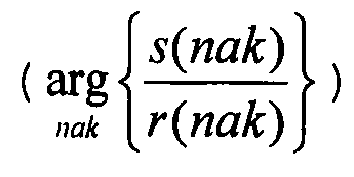

- Apparatus according to claim 6 further comprising means (1) for determining probabilities ν i,j for correctly receiving said data packet in a receiver i of said multicast transmission system after exact a number j transmissions.
Priority Applications (1)
| Application Number | Priority Date | Filing Date | Title |
|---|---|---|---|
| EP10003546.8A EP2355393B1 (en) | 2010-01-21 | 2010-03-31 | Method and apparatus for determining an optimized number of transmissions for a data packet in a multicast transmission system |
Applications Claiming Priority (2)
| Application Number | Priority Date | Filing Date | Title |
|---|---|---|---|
| EP10000586 | 2010-01-21 | ||
| EP10003546.8A EP2355393B1 (en) | 2010-01-21 | 2010-03-31 | Method and apparatus for determining an optimized number of transmissions for a data packet in a multicast transmission system |
Publications (2)
| Publication Number | Publication Date |
|---|---|
| EP2355393A1 true EP2355393A1 (en) | 2011-08-10 |
| EP2355393B1 EP2355393B1 (en) | 2013-12-11 |
Family
ID=43333229
Family Applications (1)
| Application Number | Title | Priority Date | Filing Date |
|---|---|---|---|
| EP10003546.8A Ceased EP2355393B1 (en) | 2010-01-21 | 2010-03-31 | Method and apparatus for determining an optimized number of transmissions for a data packet in a multicast transmission system |
Country Status (1)
| Country | Link |
|---|---|
| EP (1) | EP2355393B1 (en) |
Families Citing this family (1)
| Publication number | Priority date | Publication date | Assignee | Title |
|---|---|---|---|---|
| US11647550B2 (en) | 2020-04-17 | 2023-05-09 | Rockwell Collins, Inc. | 4G automatic link establishment (ALE) with improved two-way link quality analysis (LQA) exchange |
Citations (3)
| Publication number | Priority date | Publication date | Assignee | Title |
|---|---|---|---|---|
| US5659702A (en) * | 1993-02-15 | 1997-08-19 | Honda Giken Kogyo Kabushiki Kaisha | Data transmission method and system therefor |
| US20020172192A1 (en) * | 2001-03-09 | 2002-11-21 | Denso Corporation | ARQ parameter retransmission control for variable data rate channels |
| US6661998B1 (en) | 1999-12-23 | 2003-12-09 | Denso Corporation | Mobile station to base station communication and signal acknowledgement |
-
2010
- 2010-03-31 EP EP10003546.8A patent/EP2355393B1/en not_active Ceased
Patent Citations (3)
| Publication number | Priority date | Publication date | Assignee | Title |
|---|---|---|---|---|
| US5659702A (en) * | 1993-02-15 | 1997-08-19 | Honda Giken Kogyo Kabushiki Kaisha | Data transmission method and system therefor |
| US6661998B1 (en) | 1999-12-23 | 2003-12-09 | Denso Corporation | Mobile station to base station communication and signal acknowledgement |
| US20020172192A1 (en) * | 2001-03-09 | 2002-11-21 | Denso Corporation | ARQ parameter retransmission control for variable data rate channels |
Also Published As
| Publication number | Publication date |
|---|---|
| EP2355393B1 (en) | 2013-12-11 |
Similar Documents
| Publication | Publication Date | Title |
|---|---|---|
| US11876751B2 (en) | Mobile station aggregation of acknowledgments and negative acknowledgments in wireless networks | |
| EP3783826B1 (en) | Method and apparatus for signal transmission, and terminal | |
| EP2234302B1 (en) | Method and device for sending information in a physical uplink control channel | |
| EP2922233B1 (en) | Method for mapping physical hybrid automatic repeat request indicator channel | |
| EP4462721A3 (en) | Resource selection method and apparatus for sidelink transmission | |
| BR112021016034A2 (en) | Method implemented by a wireless transmit/receive unit, and, wireless transmit/receive unit | |
| EP3633905B1 (en) | Control channel resource allocation method and apparatus | |
| WO2020146247A3 (en) | Methods, apparatus and systems for enhanced control signaling of ultra-reliable transmissions | |
| CN104811284B (en) | Method and apparatus for uplink transmission feedback for MTC UE | |
| JP2021514147A5 (en) | ||
| EP3396884A1 (en) | Wireless communication having reduced feedback delay | |
| US9351287B2 (en) | Method for transmitting uplink response signal, terminal equipment and base station | |
| EP2608613A1 (en) | Method, system and transmitter for allocating resources | |
| RU2012152641A (en) | TERMINAL DEVICE AND ITS METHOD OF COMMUNICATION | |
| EP2448313A1 (en) | Signal detection method and apparatus in long term evolution system | |
| EP3952559A1 (en) | Processing method for harq mechanism, instructing method, terminal and network side equipment | |
| WO2018001345A1 (en) | Method and device for scheduling pucch resource | |
| CN110972105A (en) | Communication method, communication device and user equipment | |
| CN101409922A (en) | Interruption transmission detection method and corresponding down distribution indication method | |
| EP2262147A2 (en) | Communication system | |
| US8811500B2 (en) | Data transmission | |
| CN104868979A (en) | Data Transmission Method, Device And System | |
| EP2355393B1 (en) | Method and apparatus for determining an optimized number of transmissions for a data packet in a multicast transmission system | |
| CN107078859B (en) | Method and device for data retransmission | |
| CN102484572A (en) | Improved signal reception in wireless communication systems using automatic repeat request transmission and conditional interference cancellation in NACK misinterpretation situations |
Legal Events
| Date | Code | Title | Description |
|---|---|---|---|
| PUAI | Public reference made under article 153(3) epc to a published international application that has entered the european phase |
Free format text: ORIGINAL CODE: 0009012 |
|
| 17P | Request for examination filed |
Effective date: 20101208 |
|
| AK | Designated contracting states |
Kind code of ref document: A1 Designated state(s): DE FR GB IT |
|
| AX | Request for extension of the european patent |
Extension state: AL BA ME RS |
|
| GRAP | Despatch of communication of intention to grant a patent |
Free format text: ORIGINAL CODE: EPIDOSNIGR1 |
|
| INTG | Intention to grant announced |
Effective date: 20130723 |
|
| GRAS | Grant fee paid |
Free format text: ORIGINAL CODE: EPIDOSNIGR3 |
|
| GRAA | (expected) grant |
Free format text: ORIGINAL CODE: 0009210 |
|
| AK | Designated contracting states |
Kind code of ref document: B1 Designated state(s): DE FR GB IT |
|
| REG | Reference to a national code |
Ref country code: GB Ref legal event code: FG4D |
|
| REG | Reference to a national code |
Ref country code: DE Ref legal event code: R096 Ref document number: 602010012277 Country of ref document: DE Effective date: 20140130 |
|
| REG | Reference to a national code |
Ref country code: DE Ref legal event code: R097 Ref document number: 602010012277 Country of ref document: DE |
|
| PLBE | No opposition filed within time limit |
Free format text: ORIGINAL CODE: 0009261 |
|
| STAA | Information on the status of an ep patent application or granted ep patent |
Free format text: STATUS: NO OPPOSITION FILED WITHIN TIME LIMIT |
|
| 26N | No opposition filed |
Effective date: 20140912 |
|
| REG | Reference to a national code |
Ref country code: DE Ref legal event code: R097 Ref document number: 602010012277 Country of ref document: DE Effective date: 20140912 |
|
| REG | Reference to a national code |
Ref country code: FR Ref legal event code: PLFP Year of fee payment: 7 |
|
| REG | Reference to a national code |
Ref country code: FR Ref legal event code: PLFP Year of fee payment: 8 |
|
| REG | Reference to a national code |
Ref country code: FR Ref legal event code: PLFP Year of fee payment: 9 |
|
| PGFP | Annual fee paid to national office [announced via postgrant information from national office to epo] |
Ref country code: FR Payment date: 20210322 Year of fee payment: 12 |
|
| PGFP | Annual fee paid to national office [announced via postgrant information from national office to epo] |
Ref country code: GB Payment date: 20210324 Year of fee payment: 12 Ref country code: DE Payment date: 20210323 Year of fee payment: 12 |
|
| PGFP | Annual fee paid to national office [announced via postgrant information from national office to epo] |
Ref country code: IT Payment date: 20210331 Year of fee payment: 12 |
|
| REG | Reference to a national code |
Ref country code: DE Ref legal event code: R119 Ref document number: 602010012277 Country of ref document: DE |
|
| GBPC | Gb: european patent ceased through non-payment of renewal fee |
Effective date: 20220331 |
|
| PG25 | Lapsed in a contracting state [announced via postgrant information from national office to epo] |
Ref country code: GB Free format text: LAPSE BECAUSE OF NON-PAYMENT OF DUE FEES Effective date: 20220331 Ref country code: FR Free format text: LAPSE BECAUSE OF NON-PAYMENT OF DUE FEES Effective date: 20220331 Ref country code: DE Free format text: LAPSE BECAUSE OF NON-PAYMENT OF DUE FEES Effective date: 20221001 |
|
| PG25 | Lapsed in a contracting state [announced via postgrant information from national office to epo] |
Ref country code: IT Free format text: LAPSE BECAUSE OF NON-PAYMENT OF DUE FEES Effective date: 20220331 |