EP2352286A1 - A recording control apparatus and a recording control method - Google Patents
A recording control apparatus and a recording control method Download PDFInfo
- Publication number
- EP2352286A1 EP2352286A1 EP10170180A EP10170180A EP2352286A1 EP 2352286 A1 EP2352286 A1 EP 2352286A1 EP 10170180 A EP10170180 A EP 10170180A EP 10170180 A EP10170180 A EP 10170180A EP 2352286 A1 EP2352286 A1 EP 2352286A1
- Authority
- EP
- European Patent Office
- Prior art keywords
- storage medium
- recording
- recording control
- operation time
- time information
- Prior art date
- Legal status (The legal status is an assumption and is not a legal conclusion. Google has not performed a legal analysis and makes no representation as to the accuracy of the status listed.)
- Withdrawn
Links
- 238000000034 method Methods 0.000 title claims description 5
- 238000012545 processing Methods 0.000 claims description 29
- 230000015654 memory Effects 0.000 claims description 9
- 238000009825 accumulation Methods 0.000 claims 1
- 230000005236 sound signal Effects 0.000 description 7
- 229910052782 aluminium Inorganic materials 0.000 description 2
- XAGFODPZIPBFFR-UHFFFAOYSA-N aluminium Chemical compound [Al] XAGFODPZIPBFFR-UHFFFAOYSA-N 0.000 description 2
- 238000004512 die casting Methods 0.000 description 2
- 238000003780 insertion Methods 0.000 description 2
- 230000037431 insertion Effects 0.000 description 2
- 230000006870 function Effects 0.000 description 1
- 230000007274 generation of a signal involved in cell-cell signaling Effects 0.000 description 1
- 239000004973 liquid crystal related substance Substances 0.000 description 1
- 229910052751 metal Inorganic materials 0.000 description 1
- 239000002184 metal Substances 0.000 description 1
- 239000007769 metal material Substances 0.000 description 1
- 238000012986 modification Methods 0.000 description 1
- 230000004048 modification Effects 0.000 description 1
- 238000012544 monitoring process Methods 0.000 description 1
- 230000010363 phase shift Effects 0.000 description 1
- 238000006467 substitution reaction Methods 0.000 description 1
Images

Classifications
-
- H—ELECTRICITY
- H04—ELECTRIC COMMUNICATION TECHNIQUE
- H04N—PICTORIAL COMMUNICATION, e.g. TELEVISION
- H04N5/00—Details of television systems
- H04N5/76—Television signal recording
- H04N5/765—Interface circuits between an apparatus for recording and another apparatus
-
- G—PHYSICS
- G11—INFORMATION STORAGE
- G11B—INFORMATION STORAGE BASED ON RELATIVE MOVEMENT BETWEEN RECORD CARRIER AND TRANSDUCER
- G11B17/00—Guiding record carriers not specifically of filamentary or web form, or of supports therefor
- G11B17/22—Guiding record carriers not specifically of filamentary or web form, or of supports therefor from random access magazine of disc records
- G11B17/228—Control systems for magazines
-
- G—PHYSICS
- G11—INFORMATION STORAGE
- G11B—INFORMATION STORAGE BASED ON RELATIVE MOVEMENT BETWEEN RECORD CARRIER AND TRANSDUCER
- G11B19/00—Driving, starting, stopping record carriers not specifically of filamentary or web form, or of supports therefor; Control thereof; Control of operating function ; Driving both disc and head
- G11B19/02—Control of operating function, e.g. switching from recording to reproducing
- G11B19/04—Arrangements for preventing, inhibiting, or warning against double recording on the same blank or against other recording or reproducing malfunctions
- G11B19/048—Testing of disk drives, e.g. to detect defects or prevent sudden failure
-
- H—ELECTRICITY
- H04—ELECTRIC COMMUNICATION TECHNIQUE
- H04N—PICTORIAL COMMUNICATION, e.g. TELEVISION
- H04N21/00—Selective content distribution, e.g. interactive television or video on demand [VOD]
- H04N21/40—Client devices specifically adapted for the reception of or interaction with content, e.g. set-top-box [STB]; Operations thereof
- H04N21/41—Structure of client; Structure of client peripherals
- H04N21/414—Specialised client platforms, e.g. receiver in car or embedded in a mobile appliance
- H04N21/4147—PVR [Personal Video Recorder]
-
- H—ELECTRICITY
- H04—ELECTRIC COMMUNICATION TECHNIQUE
- H04N—PICTORIAL COMMUNICATION, e.g. TELEVISION
- H04N21/00—Selective content distribution, e.g. interactive television or video on demand [VOD]
- H04N21/40—Client devices specifically adapted for the reception of or interaction with content, e.g. set-top-box [STB]; Operations thereof
- H04N21/41—Structure of client; Structure of client peripherals
- H04N21/426—Internal components of the client ; Characteristics thereof
- H04N21/42607—Internal components of the client ; Characteristics thereof for processing the incoming bitstream
- H04N21/4263—Internal components of the client ; Characteristics thereof for processing the incoming bitstream involving specific tuning arrangements, e.g. two tuners
-
- H—ELECTRICITY
- H04—ELECTRIC COMMUNICATION TECHNIQUE
- H04N—PICTORIAL COMMUNICATION, e.g. TELEVISION
- H04N21/00—Selective content distribution, e.g. interactive television or video on demand [VOD]
- H04N21/40—Client devices specifically adapted for the reception of or interaction with content, e.g. set-top-box [STB]; Operations thereof
- H04N21/41—Structure of client; Structure of client peripherals
- H04N21/426—Internal components of the client ; Characteristics thereof
- H04N21/42661—Internal components of the client ; Characteristics thereof for reading from or writing on a magnetic storage medium, e.g. hard disk drive
-
- H—ELECTRICITY
- H04—ELECTRIC COMMUNICATION TECHNIQUE
- H04N—PICTORIAL COMMUNICATION, e.g. TELEVISION
- H04N21/00—Selective content distribution, e.g. interactive television or video on demand [VOD]
- H04N21/40—Client devices specifically adapted for the reception of or interaction with content, e.g. set-top-box [STB]; Operations thereof
- H04N21/43—Processing of content or additional data, e.g. demultiplexing additional data from a digital video stream; Elementary client operations, e.g. monitoring of home network or synchronising decoder's clock; Client middleware
- H04N21/433—Content storage operation, e.g. storage operation in response to a pause request, caching operations
- H04N21/4334—Recording operations
-
- H—ELECTRICITY
- H04—ELECTRIC COMMUNICATION TECHNIQUE
- H04N—PICTORIAL COMMUNICATION, e.g. TELEVISION
- H04N21/00—Selective content distribution, e.g. interactive television or video on demand [VOD]
- H04N21/40—Client devices specifically adapted for the reception of or interaction with content, e.g. set-top-box [STB]; Operations thereof
- H04N21/43—Processing of content or additional data, e.g. demultiplexing additional data from a digital video stream; Elementary client operations, e.g. monitoring of home network or synchronising decoder's clock; Client middleware
- H04N21/442—Monitoring of processes or resources, e.g. detecting the failure of a recording device, monitoring the downstream bandwidth, the number of times a movie has been viewed, the storage space available from the internal hard disk
- H04N21/4424—Monitoring of the internal components or processes of the client device, e.g. CPU or memory load, processing speed, timer, counter or percentage of the hard disk space used
-
- H—ELECTRICITY
- H04—ELECTRIC COMMUNICATION TECHNIQUE
- H04N—PICTORIAL COMMUNICATION, e.g. TELEVISION
- H04N5/00—Details of television systems
- H04N5/76—Television signal recording
- H04N5/765—Interface circuits between an apparatus for recording and another apparatus
- H04N5/775—Interface circuits between an apparatus for recording and another apparatus between a recording apparatus and a television receiver
-
- H—ELECTRICITY
- H04—ELECTRIC COMMUNICATION TECHNIQUE
- H04N—PICTORIAL COMMUNICATION, e.g. TELEVISION
- H04N5/00—Details of television systems
- H04N5/76—Television signal recording
- H04N5/78—Television signal recording using magnetic recording
- H04N5/781—Television signal recording using magnetic recording on disks or drums
-
- H—ELECTRICITY
- H04—ELECTRIC COMMUNICATION TECHNIQUE
- H04N—PICTORIAL COMMUNICATION, e.g. TELEVISION
- H04N5/00—Details of television systems
- H04N5/76—Television signal recording
- H04N5/78—Television signal recording using magnetic recording
- H04N5/782—Television signal recording using magnetic recording on tape
-
- H—ELECTRICITY
- H04—ELECTRIC COMMUNICATION TECHNIQUE
- H04N—PICTORIAL COMMUNICATION, e.g. TELEVISION
- H04N5/00—Details of television systems
- H04N5/76—Television signal recording
- H04N5/91—Television signal processing therefor
- H04N5/913—Television signal processing therefor for scrambling ; for copy protection
Definitions
- a recording control apparatus includes a recording control module.
- the recording control module is configured to detect operation time information of each of a plurality of storage media, to determine a given storage medium having a relatively long remaining lifetime from among the plurality of storage media based on the operation time information, and to control the given storage medium to preferentially record contents.
- the operation time information includes time information of idling condition of the each of plurality of storage media.
- the broadcast receiving apparatus 111b is equipped with a tuner unit 103, which includes tuners 1031-1036 for the terrestrial digital TV broadcast and a tuner 1037 for the BS/CS digital TV broadcast.
- Fig. 2 shows an example main signal processing system relating to the invention of the TV broadcast receiving apparatus 111.
- Satellite digital TV broadcast signals received by a BS/CS digital broadcast receiving antenna 243 are supplied via an input terminal 244 to the satellite digital broadcast tuner 1037, which tunes in to a broadcast signal on a desired channel.
- the broadcast signal selected by the tuner 1037 is supplied to a PSK (phase shift keying) demodulation module (not shown), which demodulates it into a transport stream (TS).
- PSK phase shift keying
- the transport stream is supplied to a TS decoding module (not shown), which decodes it into a digital video signal, audio signal, data signal, etc., which are output to a signal processing module 248.
- Terrestrial digital TV broadcast signals received by a terrestrial broadcast receiving antenna 249 are supplied via an input terminal 250 to the terrestrial digital broadcast tuners 1031-1036, which tune into broadcast signals on desired channels.
- the broadcast signals selected by the tuners 1031-1036 are supplied to an OFDM (orthogonal frequency division multiplexing) demodulation module (not shown), which demodulates them into transport streams (TSs).
- TSs transport streams
- Each transport stream is supplied to the TS decoding module, which decodes it into a digital video signal, audio signal, data signal, etc., which are output to the signal processing module 248.
- the signal processing module 248 performs prescribed digital signal processing selectively on a digital video signal and audio signal supplied from the TS decoding module, and outputs resulting signals to a graphic processing module 254 and an audio processing module 255, respectively.
- the graphic processing module 254 superimposes an on-screen display (OSD) signal generated by an OSD signal generation module 257 on the digital video signal that is supplied form the signal processing module 248, and outputs a resulting video signal.
- OSD on-screen display
- the cards 302-306 are slots for insertion of terrestrial digital-broadcast-dedicated cards (blue cards). When blue cards are inserted in the respective card slots 302-306, the tuners 1032-1036 can descramble terrestrial digital TV broadcast signals.
- the control module 261 controls a playback or recording of resulting descrambled broadcast signals.
- the control module 261 In the TV broadcast receiving apparatus 111, operations including various operations mentioned above (a program receiving operation, a program recording operation, and a playback of a recorded program) are supervised by the control module 261.
- the control module 261 By incorporating a CPU (Central Processing Unit), a microcomputer, or the like, the control module 261 is capable of receiving manipulation information from the manipulation unit 116 or the remote controller 117 and controlling the individual modules etc. so that the TV broadcast receiving apparatus 111 performs an operation that reflects the manipulation content.
- a CPU Central Processing Unit
- the control module 261 is capable of receiving manipulation information from the manipulation unit 116 or the remote controller 117 and controlling the individual modules etc. so that the TV broadcast receiving apparatus 111 performs an operation that reflects the manipulation content.
- the control module 261 is equipped with a ROM (Read Only Memory) 261a which is mainly stored with control programs to be run by the CPU or the like, a RAM (Random Access Memory) 261b which provides a work area for the CPU or the like, and a nonvolatile memory 261 c to be stored with various kinds of setting information, control information, etc.
- ROM Read Only Memory
- RAM Random Access Memory
- the recording control module 261 d controls a recording operation for recording broadcast signals (contents) selected and descrambled by the tuners 1031-1037 in one of the multiple storage media (e.g., HDDs 290-292) according to default recording control information stored in the nonvolatile memory 261c and information of a power-on operation time (including an idling time) that is stored in each storage medium itself.
- the control for a recording operation will be described later in detail.
- the nonvolatile memory 261 is stored with the above-mentioned default recording control information.
- the default recording control information includes first recording control information to be used for recording contents in a first storage medium (e.g., HDD 290) in first recording processing (e.g., program-designated recording) and second recording control information to be used for recording contents in a second storage medium (e.g., HDD 291) in second recording processing (e.g., multiple simultaneous recording).
- the program-designated recording is processing of recording a program that has been designated by the user using the remote controller 117, and is also called PVR (personal video recording).
- the power-on-hours-count information indicates operation times including not only times during which the HDD performed a recording operation or a playback operation but also time elapsed in a state (idling state) that the HDD did not perform a recording operation or a playback operation though it was energized, and an accumulative time of those operation times.
- the recording control module 261d used in the embodiment detects pieces of operation time information that are stored in the multiple respective storage media.
- the HDD 290 is a 2.5-inch HDD and the HDD 291 is a 3.5-inch HDD.
- the 3.5-inch HDD has a larger storage capacity than the 2.5-inch HDD. Since more contents would be stored for a longer time in the multiple simultaneous recording than in the program-designated recording, the multiple simultaneous recording requires a larger storage capacity than the program-designated recording.
- the default recording control information indicates that the HDD 290 (2.5-inch HDD) should be assigned to the program-designated recording (PVR) and the HDD 291 (3.5-inch HDD) should be assigned to the multiple simultaneous recording.
- the TV broadcast receiving apparatus 111 selects a prescribed storage medium from the incorporated HDDs 290 and 291 according to various conditions including the pieces of operation time information and causes recording of information in the selected storage medium.
- the invention is not limited to such a case.
- the invention can also be applied to a TV broadcast receiving apparatus in which a recording destination storage medium is determined from among storage devices including a built-in nonvolatile memory such as an SSD or a flash memory that does not have a motor, a disk, or the like and an external storage medium (e.g., HDD 292) according to the pieces of operation time information of the respective storage media and other information and various contents are recorded in the thus-determined storage medium.
- a recording destination storage medium is determined from among storage devices including a built-in nonvolatile memory such as an SSD or a flash memory that does not have a motor, a disk, or the like and an external storage medium (e.g., HDD 292) according to the pieces of operation time information of the respective storage media and other information and various contents are recorded
Landscapes
- Engineering & Computer Science (AREA)
- Multimedia (AREA)
- Signal Processing (AREA)
- Computer Networks & Wireless Communication (AREA)
- Databases & Information Systems (AREA)
- Signal Processing For Digital Recording And Reproducing (AREA)
- Television Signal Processing For Recording (AREA)
Abstract
In general, according to one embodiment, a recording control apparatus includes a recording control module. The recording control module is configured to detect operation time information of each of a plurality of storage media, to determine a given storage medium having a relatively long remaining lifetime from among the plurality of storage media based on the operation time information, and to control the given storage medium to preferentially record contents. The operation time information includes time information of idling condition of the each of plurality of storage media.
Description
- Embodiments described herein relate generally to a recording control apparatus and a recording control method which can record contents in multiple storage media.
- Recording/playback apparatus capable of recording and playing back digital broadcast programs have come into wide use. For example, recording/playback apparatus record digital broadcast programs using a storage medium such as an HDD (hard disk drive), a DVD (digital versatile disc), or a nonvolatile memory. The storage capacities of storage media such as HDDs and nonvolatile memories are increasing year by year. As a result, recording/playback apparatus and TV receivers having a recording function that use such a storage medium can record a large number of programs.
- There is a general tendency that such storage media become more prone to fail and are shortened in lifetime as the accumulative operation time increases.
- A general configuration that implements the various features of the invention will be described with reference to the drawings. The drawings and the associated descriptions are provided to illustrate embodiments of the invention and not to limit the scope of the invention.
-
Fig. 1 is an exemplary drawing showing a recording control apparatus according to an embodiment; -
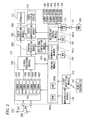
Fig. 2 is an exemplary drawing showing a main signal processing system of the recording control apparatus according to the embodiment; and -
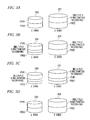
Figs. 3A to 3D are exemplary drawings explaining examples of control for a recording operation of the recording control apparatus according to the embodiment. - In general, according to one embodiment, a recording control apparatus includes a recording control module. The recording control module is configured to detect operation time information of each of a plurality of storage media, to determine a given storage medium having a relatively long remaining lifetime from among the plurality of storage media based on the operation time information, and to control the given storage medium to preferentially record contents. The operation time information includes time information of idling condition of the each of plurality of storage media.
- One embodiment of the invention will be hereinafter described with reference to the drawings.
Fig. 1 schematically shows an appearance of a TVbroadcast receiving apparatus 111 according to an embodiment. The TVbroadcast receiving apparatus 111 includes a video/audio output device 111 a and abroadcast receiving apparatus 111 b (information recording apparatus). Although as shown inFig. 1 the embodiment is directed to a two-piece-type digital TV broadcast receiving system in which the video/audio output device 111a and the broadcast receiving apparatus 11 1b are connected to each other by a cable 120 (e.g., HDMI cable), the invention is not limited to such a case. For example, a TV broadcast receiving apparatus may be configured in such a manner that the video/audio output device 111a and the broadcast receiving apparatus 11 1b are housed in a single cabinet. - The video/
audio output device 111a has athin cabinet 112 and asupport stage 113 for supporting thecabinet 112 which is erected. Thecabinet 112 houses avideo display module 114 which is a flat-panel display having a liquid crystal panel or a plasma display panel,speakers 115, amanipulation module 116, a remote controllight receiving module 118 for receiving manipulation information that is transmitted from aremote controller 117, and other components. - The
broadcast receiving apparatus 111b is equipped with atuner unit 103, which includes tuners 1031-1036 for the terrestrial digital TV broadcast and atuner 1037 for the BS/CS digital TV broadcast. -
Fig. 2 shows an example main signal processing system relating to the invention of the TVbroadcast receiving apparatus 111. Satellite digital TV broadcast signals received by a BS/CS digitalbroadcast receiving antenna 243 are supplied via aninput terminal 244 to the satellitedigital broadcast tuner 1037, which tunes in to a broadcast signal on a desired channel. The broadcast signal selected by thetuner 1037 is supplied to a PSK (phase shift keying) demodulation module (not shown), which demodulates it into a transport stream (TS). The transport stream is supplied to a TS decoding module (not shown), which decodes it into a digital video signal, audio signal, data signal, etc., which are output to asignal processing module 248. - Terrestrial digital TV broadcast signals received by a terrestrial
broadcast receiving antenna 249 are supplied via aninput terminal 250 to the terrestrial digital broadcast tuners 1031-1036, which tune into broadcast signals on desired channels. The broadcast signals selected by the tuners 1031-1036 are supplied to an OFDM (orthogonal frequency division multiplexing) demodulation module (not shown), which demodulates them into transport streams (TSs). Each transport stream is supplied to the TS decoding module, which decodes it into a digital video signal, audio signal, data signal, etc., which are output to thesignal processing module 248. - Terrestrial analog TV broadcast signals received by the terrestrial
broadcast receiving antenna 249 are supplied via theinput terminal 250 to a terrestrial analog broadcast tuner (not shown), which tunes in to a broadcast signal on a desired channel. The broadcast signal selected by this tuner is supplied to an analog demodulation module (not shown), which demodulates it into an analog video signal and audio signal, which are output to thesignal processing module 248. - In viewing of a TV program, the
signal processing module 248 performs prescribed digital signal processing selectively on a digital video signal and audio signal supplied from the TS decoding module, and outputs resulting signals to agraphic processing module 254 and anaudio processing module 255, respectively. - A
control module 261 receives, from thesignal processing module 248 or the TS decoding module, various data for acquisition of programs, electronic program guide (EPG) information, program attribute information (program genres etc.), subtitle information (service information; SI or PSI), etc. The control module 162 performs image generation processing for displaying an EPG or subtitles on the basis of the received pieces of information, and outputs resulting image information to thegraphic processing module 254. - The
graphic processing module 254 superimposes an on-screen display (OSD) signal generated by an OSDsignal generation module 257 on the digital video signal that is supplied form thesignal processing module 248, and outputs a resulting video signal. - The digital video signal that is output from the
graphic processing module 254 is supplied to avideo processing module 258. Thevideo processing module 258 converts the received digital video signal into an analog video signal having such a format as to be displayable by thevideo display module 114. The analog video signal is output to and displayed by thevideo display module 114. - The
audio processing module 255 converts the received digital audio signal into analog audio signals having such formats as to be reproducible by thespeakers 115. The analog audio signals are output to and reproduced by thespeakers 115. - Equipped with multiple storage media (e.g.,
HDDs 290 and 291), the TVbroadcast receiving apparatus 111 can record program data in theHDDs broadcast receiving apparatus 111 can playback a program recorded in theHDD control module 261. TheHDDs broadcast receiving apparatus 111b or thecabinet 112 of the video/audio output device 111a. - The TV
broadcast receiving apparatus 111 is equipped with various interfaces. For example, thecontrol module 261 is connected to aUSB terminal 123 via a USB interface (I/F) 271. As a result, thecontrol module 261 can exchange information via the USB I/F 271 with a device (e.g., external HDD 292) that is connected to theUSB terminal 123. That is, the TVbroadcast receiving apparatus 111 can record program data in theHDD 292 and play back program data stored in theHDD 292. - To accommodate scrambled broadcasts, the TV
broadcast receiving apparatus 111 is equipped with multiple card slots 301-306 into which multiple descrambling cards for multiple channels are to be inserted. Thecard slot 301 is a slot for insertion of a BS/CS /terrestrial common card (red card). When a red card is inserted in thecard slot 301, thetuner 1031 can descramble a terrestrial digital TV broadcast signal or thetuner 1037 can descramble a BS/CS digital TV broadcast signal. - The cards 302-306 are slots for insertion of terrestrial digital-broadcast-dedicated cards (blue cards). When blue cards are inserted in the respective card slots 302-306, the tuners 1032-1036 can descramble terrestrial digital TV broadcast signals. The
control module 261 controls a playback or recording of resulting descrambled broadcast signals. - In the TV
broadcast receiving apparatus 111, operations including various operations mentioned above (a program receiving operation, a program recording operation, and a playback of a recorded program) are supervised by thecontrol module 261. By incorporating a CPU (Central Processing Unit), a microcomputer, or the like, thecontrol module 261 is capable of receiving manipulation information from themanipulation unit 116 or theremote controller 117 and controlling the individual modules etc. so that the TVbroadcast receiving apparatus 111 performs an operation that reflects the manipulation content. - The
control module 261 is equipped with a ROM (Read Only Memory) 261a which is mainly stored with control programs to be run by the CPU or the like, a RAM (Random Access Memory) 261b which provides a work area for the CPU or the like, and anonvolatile memory 261 c to be stored with various kinds of setting information, control information, etc. - The
control module 261 includes arecording control module 261d. Content data such as a received program is recorded in a prescribed storage medium under the control of therecording control module 261d. The "prescribed storage medium" may be any of the HDDs 290-292, a memory card, the DVD disc that is set in a DVD recorder, the HDD provided in a DVD recorder, etc. Programs to be recorded are not limited to terrestrial and satellite broadcast programs and may be programs that are received over the Internet or what is called one-segment programs. When the broadcast of a target program is started, therecording control module 261 d performs a control according to recording reservation information that was input using theremote controller 117 or the like so that the reserved program will be recorded. - Under the control of the
recording control module 261d used in the embodiment, the TVbroadcast receiving apparatus 111 can record, automatically and simultaneously, programs on multiple channels in a designated time slot (e.g., one week). This kind of simultaneous recording of programs on multiple channels is called multiple simultaneous recording or multiple simultaneous automatic recording. In the multiple simultaneous recording, programs on multiple channels in a designated time slot are recorded automatically and simultaneously and programs that were recorded before the designated time slot (for example, programs that were recorded one week ago) are deleted (i.e., overwritten by new programs). To realize the multiple simultaneous recording by receiving broadcast waves on multiple channels simultaneously, the TVbroadcast receiving apparatus 111 is provided with the multiple tuners 1031-1037 which correspond to the multiple respective channels. - The
recording control module 261 d controls a recording operation for recording broadcast signals (contents) selected and descrambled by the tuners 1031-1037 in one of the multiple storage media (e.g., HDDs 290-292) according to default recording control information stored in thenonvolatile memory 261c and information of a power-on operation time (including an idling time) that is stored in each storage medium itself. The control for a recording operation will be described later in detail. - For example, each of the HDDs 290-292 has a top cover that is covered with a surface metal member produced by aluminum die casting or the like and a base chassis made of a metal material and produced also by aluminum die casting or the like. In each of the HDDs 290-292, multiple magnetic disks of about 1 to 3.5 inches, for example, magnetic heads for reading and writing on the magnetic disks, and a drive unit such as a motor for rotationally driving the magnetic disks are disposed inside the top cover. In the embodiment, as an example combination, the
HDD 290 includes multiple magnetic disks of about 2.5 inches and theHDD 291 includes multiple magnetic disks of about 3.5 inches. - The
nonvolatile memory 261 is stored with the above-mentioned default recording control information. The default recording control information includes first recording control information to be used for recording contents in a first storage medium (e.g., HDD 290) in first recording processing (e.g., program-designated recording) and second recording control information to be used for recording contents in a second storage medium (e.g., HDD 291) in second recording processing (e.g., multiple simultaneous recording). The program-designated recording is processing of recording a program that has been designated by the user using theremote controller 117, and is also called PVR (personal video recording). - Each of the HDDs 290-292 is stored with information of a power-on operation time including an idling time of such components as the motor. For example, "power-on-hours-count" information that is one item of S.M.A.R.T. (self-monitoring, analysis and reporting technology) information is used as the power-on operation time information. The power-on-hours-count information indicates the sum (accumulative time) of energization time (power-on time) of the HDD from the shipment from a factory. More specifically, the power-on-hours-count information indicates operation times including not only times during which the HDD performed a recording operation or a playback operation but also time elapsed in a state (idling state) that the HDD did not perform a recording operation or a playback operation though it was energized, and an accumulative time of those operation times. The
recording control module 261d used in the embodiment detects pieces of operation time information that are stored in the multiple respective storage media. - Next, an example control for a recording operation that is performed according to the default recording control information and the pieces of operation time information will be described with reference to
Figs. 3A-3D . - As shown in
Fig. 3A , theHDD 290 is a 2.5-inch HDD and theHDD 291 is a 3.5-inch HDD. The 3.5-inch HDD has a larger storage capacity than the 2.5-inch HDD. Since more contents would be stored for a longer time in the multiple simultaneous recording than in the program-designated recording, the multiple simultaneous recording requires a larger storage capacity than the program-designated recording. In view of this, the default recording control information indicates that the HDD 290 (2.5-inch HDD) should be assigned to the program-designated recording (PVR) and the HDD 291 (3.5-inch HDD) should be assigned to the multiple simultaneous recording. - The
recording control module 261 d detects the pieces of operation time information of the multiple storage media (HDDs), and determines, as a content recording destination, a storage medium that is determined relatively long in remaining lifetime from among the multiple storage media, and performs a control so that contents will be stored preferentially in the determined storage medium. The remaining lifetime is a time to the end of an operation assurance time. - Incidentally, the operation assurance time of an HDD, which is set by its maker, varies from one product type to another. For example, in the embodiment, assume that the HDD 290 (2.5-inch HDD) has an operation assurance time of 33,000 hours and the HDD 291 (3.5-inch HDD) has an operation assurance time of 30,000 hours. Since as mentioned above more contents would be stored for a longer time in the multiple simultaneous recording than in the program-designated recording, the
HDD 291 would operate longer than theHDD 290. - In view of the above, the
recording control module 261d performs a recording control in the following manner according to the pieces of power-on operation time information of theHDDs - More specifically, for example, the
recording control module 261d compares the accumulative power-on operation times of therespective HDDs recording control module 261d determines an HDD having a smaller accumulative operation times as a storage media that having a longer remaining lifetime. If the accumulative power-on operation times of theHDDs HDDs recording control module 261 d performs a recording control according to the default recording control information. - Therefore, at the beginning, the
HDDs HDD recording control module 261 d determines, as a content recording destination, one, having a longer remaining lifetime, of theHDDs 290 and 291 (i.e., a storage medium having a smaller accumulative operation times). For example, if the accumulative operation times of theHDD 290 is smaller than that of theHDD 291, as shown inFig. 3B therecording control module 261 d switches the recording destinations of all or part of multiple simultaneous recording contents from theHDD 291 to theHDD 290. In this case, therecording control module 261d may cause recording of contents in theHDD 290 in multiple simultaneous recording time slots that do not overlap with any program-designated recording time slot. - The
recording control module 261d may determine, as a storage medium having a longer remaining lifetime, an HDD that is smaller in the ratio of the accumulative power-on operation time to the operation assurance time. As in the above-described case, if the accumulative operation times of theHDDs recording control module 261d performs a recording control according to the default recording control information. - Therefore, at the beginning, the
HDDs HDD recording control module 261d assumes one, having a smaller ratio of the accumulative operation time to the operation assurance time, of theHDDs HDD 290 is a little larger than 50% (threshold value) and that of theHDD 291 is 80%, as shown inFig. 3B therecording control module 261d switches the recording destinations of all or part of multiple simultaneous recording contents from theHDD 291 to theHDD 290. In this case, therecording control module 261d may cause recording of contents in theHDD 290 in multiple simultaneous recording time slots that do not overlap with any program-designated recording time slot. - As shown in
Fig. 3C , therecording control module 261d may dynamically change the corresponding relationship between theHDD recording control module 261d may sometimes cause multiple simultaneous recording programs to be recorded in theHDD 290 and program-designated recording programs to be recorded in theHDD 291. - As described above, where the TV
broadcast receiving apparatus 111 is equipped with multiple HDDs (in the embodiment, theHDDs 290 and 291) having different storage capacities and operation assurance times, the content recording destination is selected according to the pieces of operation time information of the respective HDDs. As a result, the accumulative operation times of the respective HDDs can be averaged and hence the lifetime of each HDD can be elongated. - In the embodiment, the TV
broadcast receiving apparatus 111 selects a prescribed storage medium from the incorporatedHDDs - Although in the embodiment the HDDs (e.g.,
HDDs 290 and 291) have different disk sizes and capacities, as shown inFig. 3D the invention can also be applied to a case of usingHDDs - While certain embodiments have been described, these embodiments have been presented by way of example only, and are not intended to limit the scope of the invention. Indeed, the novel apparatus and method described herein may be embodied in a variety of other forms; furthermore, various omissions, substitutions and changes in the form of the apparatus and the method described herein may be made without departing from the sprit of the invention. The accompanying claims and their equivalents are intended to cover such forms or modifications as would fall within the scope and sprit of the invention.
Claims (9)
- A recording control apparatus comprising:a recording control module configured to detect operation time information comprising time information of idling condition of each of a plurality of storage media, to determine a given storage medium having a relatively long remaining lifetime from among the plurality of storage media based on the operation time information, and to control the given storage medium to preferentially record contents.
- The apparatus of Claim 1,
wherein the plurality of storage media comprises at least a first storage medium and a second storage medium,
wherein the recording control apparatus further comprises:a memory configured to store default recording control information, the default recording control information comprising first recording control information for recording contents in the first storage medium with respect to first recording processing and second recording control information for recording contents in the second storage medium with respect to second recording processing, andwherein the recording control module is configured to switch a content recording destination with respect to the second recording processing from the second storage medium to the first storage medium according to the operation time information of the first storage medium and the second storage medium. - The apparatus of Claim 1 or 2, wherein the recording control module is configured to determine the given storage medium by selecting one of the first storage medium and the second storage medium which has less accumulation operation time than the other.
- The apparatus of Claim 1 or 2, wherein the recording control module is configured to determine the given storage medium by selecting one of the first storage medium and the second storage medium which has a smaller ratio of an accumulative operation time with respect to an operation assurance time than the other.
- The apparatus of Claim 2, wherein the first recording processing comprises program-designated recording processing; and
the second recording processing comprises simultaneous recording processing on multiple channels. - The apparatus of Claim 2, wherein the first storage medium comprises a disk of a first size driven by a motor; and
the second storage medium comprises a disk of a second size driven by a motor, the second size being larger than the first size. - The apparatus of Claim 2, wherein the first storage medium comprises a disk of a first size driven by a motor; and
the second storage medium comprises a disk of a second size driven by a motor, the second size being the same as the first size. - The apparatus of Claim 1, wherein the operation time information is stored in the each of plurality of storage media.
- A recording control method comprising:detecting operation time information comprising time information of idling condition of each of a plurality of storage media;determining a given storage medium having a relatively long remaining lifetime from among the plurality of storage media based on the operation time information; andcontrolling the given storage medium to preferentially record contents.
Applications Claiming Priority (1)
| Application Number | Priority Date | Filing Date | Title |
|---|---|---|---|
| JP2009294254A JP4762342B2 (en) | 2009-12-25 | 2009-12-25 | Recording control apparatus and recording control method |
Publications (1)
| Publication Number | Publication Date |
|---|---|
| EP2352286A1 true EP2352286A1 (en) | 2011-08-03 |
Family
ID=42831647
Family Applications (1)
| Application Number | Title | Priority Date | Filing Date |
|---|---|---|---|
| EP10170180A Withdrawn EP2352286A1 (en) | 2009-12-25 | 2010-07-20 | A recording control apparatus and a recording control method |
Country Status (2)
| Country | Link |
|---|---|
| EP (1) | EP2352286A1 (en) |
| JP (1) | JP4762342B2 (en) |
Citations (5)
| Publication number | Priority date | Publication date | Assignee | Title |
|---|---|---|---|---|
| JP2005005829A (en) * | 2003-06-10 | 2005-01-06 | Chrome Cyz:Kk | Broadcast data recording system |
| US20050125569A1 (en) * | 1999-05-12 | 2005-06-09 | Swidler Thomas U. | Method of distributed recording whereby the need to transition to a second recording device from a first recording device is broadcast by the first recording device |
| US20070116429A1 (en) * | 2005-11-20 | 2007-05-24 | Kabushiki Kaisha Toshiba | Broadcast recording apparatus and broadcast recording method |
| US20090028513A1 (en) * | 2007-07-27 | 2009-01-29 | Nosaka Masafumi | Video data copying apparatus, video data copying method, recording medium, and integrated circuit |
| EP2228986A1 (en) * | 2009-03-12 | 2010-09-15 | Kabushiki Kaisha Toshiba | Broadcast recording apparatus |
Family Cites Families (7)
| Publication number | Priority date | Publication date | Assignee | Title |
|---|---|---|---|---|
| JP2006243902A (en) * | 2005-03-01 | 2006-09-14 | Canon Inc | HDD load balancing system |
| JP2007130905A (en) * | 2005-11-11 | 2007-05-31 | Kyocera Mita Corp | Image forming apparatus |
| JP4328792B2 (en) * | 2006-09-29 | 2009-09-09 | Necパーソナルプロダクツ株式会社 | Recording / reproducing apparatus and recording control method |
| JP2008135805A (en) * | 2006-11-27 | 2008-06-12 | Konica Minolta Business Technologies Inc | Image forming apparatus |
| JP4575346B2 (en) * | 2006-11-30 | 2010-11-04 | 株式会社東芝 | Memory system |
| JP5014026B2 (en) * | 2007-03-07 | 2012-08-29 | 株式会社 インターコム | Information processing apparatus and program |
| JP2009087103A (en) * | 2007-09-28 | 2009-04-23 | Brother Ind Ltd | Terminal apparatus in information distribution system, information processing program thereof, and information processing method |
-
2009
- 2009-12-25 JP JP2009294254A patent/JP4762342B2/en not_active Expired - Fee Related
-
2010
- 2010-07-20 EP EP10170180A patent/EP2352286A1/en not_active Withdrawn
Patent Citations (5)
| Publication number | Priority date | Publication date | Assignee | Title |
|---|---|---|---|---|
| US20050125569A1 (en) * | 1999-05-12 | 2005-06-09 | Swidler Thomas U. | Method of distributed recording whereby the need to transition to a second recording device from a first recording device is broadcast by the first recording device |
| JP2005005829A (en) * | 2003-06-10 | 2005-01-06 | Chrome Cyz:Kk | Broadcast data recording system |
| US20070116429A1 (en) * | 2005-11-20 | 2007-05-24 | Kabushiki Kaisha Toshiba | Broadcast recording apparatus and broadcast recording method |
| US20090028513A1 (en) * | 2007-07-27 | 2009-01-29 | Nosaka Masafumi | Video data copying apparatus, video data copying method, recording medium, and integrated circuit |
| EP2228986A1 (en) * | 2009-03-12 | 2010-09-15 | Kabushiki Kaisha Toshiba | Broadcast recording apparatus |
Also Published As
| Publication number | Publication date |
|---|---|
| JP2011134411A (en) | 2011-07-07 |
| JP4762342B2 (en) | 2011-08-31 |
Similar Documents
| Publication | Publication Date | Title |
|---|---|---|
| US20070118852A1 (en) | Virtual television channels for audio-video system | |
| US20050111819A1 (en) | System and method for allowing time-shifted access to multiple programs at the same time | |
| US20080187293A1 (en) | Method and apparatus for processing data | |
| EP2448257A2 (en) | Recording and reproduction apparatus using a multi-screen having a plurality of display regions | |
| KR100469264B1 (en) | Method and apparatus for saving broadcasting signal depending on the category of PVR system | |
| US20060239659A1 (en) | Removable hard disk drive | |
| JP4762342B2 (en) | Recording control apparatus and recording control method | |
| US20100226625A1 (en) | Broadcast receiving apparatus and broadcast receiving method | |
| JP4843703B2 (en) | Broadcast receiver | |
| WO2006078365A1 (en) | Method and apparatus for skipping commercials | |
| JP2010148011A (en) | Recording apparatus | |
| JP4635098B1 (en) | Electronics | |
| EP2302899B1 (en) | Electronic apparatus and program table display method | |
| JP2011048881A (en) | Information recording device and information recording method | |
| US20090019475A1 (en) | Broadcast processing apparatus and control method thereof | |
| EP2302910A1 (en) | Electronic apparatus and display method | |
| US20090046989A1 (en) | Method of controlling recording quality | |
| US7551836B2 (en) | Broadcast program recording method, broadcast receiver, and information recorder therefor | |
| JP4275052B2 (en) | Display device | |
| JP4197173B2 (en) | Content reservation recording apparatus, method, program, and recording medium | |
| JP5296242B2 (en) | Electronic device and reproduction control method | |
| KR100698258B1 (en) | Personal video recording device and control method | |
| US8478112B2 (en) | Digital broadcast recording device | |
| JP5419604B2 (en) | Broadcast program recording and playback device | |
| US9368158B2 (en) | Method and apparatus for re-inserting a commercial during playback of a recorded program |
Legal Events
| Date | Code | Title | Description |
|---|---|---|---|
| PUAI | Public reference made under article 153(3) epc to a published international application that has entered the european phase |
Free format text: ORIGINAL CODE: 0009012 |
|
| 17P | Request for examination filed |
Effective date: 20100720 |
|
| AK | Designated contracting states |
Kind code of ref document: A1 Designated state(s): AL AT BE BG CH CY CZ DE DK EE ES FI FR GB GR HR HU IE IS IT LI LT LU LV MC MK MT NL NO PL PT RO SE SI SK SM TR |
|
| AX | Request for extension of the european patent |
Extension state: BA ME RS |
|
| 17Q | First examination report despatched |
Effective date: 20110811 |
|
| STAA | Information on the status of an ep patent application or granted ep patent |
Free format text: STATUS: THE APPLICATION HAS BEEN WITHDRAWN |
|
| 18W | Application withdrawn |
Effective date: 20120529 |