EP2351581B1 - A vaccine composition against foot-and-mouth disease and the preparation method thereof - Google Patents
A vaccine composition against foot-and-mouth disease and the preparation method thereof Download PDFInfo
- Publication number
- EP2351581B1 EP2351581B1 EP09821602.1A EP09821602A EP2351581B1 EP 2351581 B1 EP2351581 B1 EP 2351581B1 EP 09821602 A EP09821602 A EP 09821602A EP 2351581 B1 EP2351581 B1 EP 2351581B1
- Authority
- EP
- European Patent Office
- Prior art keywords
- seq
- fmdv
- protein
- vaccine composition
- recombinant protein
- Prior art date
- Legal status (The legal status is an assumption and is not a legal conclusion. Google has not performed a legal analysis and makes no representation as to the accuracy of the status listed.)
- Active
Links
- 241000710198 Foot-and-mouth disease virus Species 0.000 title claims description 217
- 229960005486 vaccine Drugs 0.000 title claims description 183
- 239000000203 mixture Substances 0.000 title claims description 113
- 208000007212 Foot-and-Mouth Disease Diseases 0.000 title description 20
- 238000002360 preparation method Methods 0.000 title description 9
- 108010008281 Recombinant Fusion Proteins Proteins 0.000 claims description 149
- 102000007056 Recombinant Fusion Proteins Human genes 0.000 claims description 149
- 230000000890 antigenic effect Effects 0.000 claims description 104
- 101710132601 Capsid protein Proteins 0.000 claims description 88
- 101710197658 Capsid protein VP1 Proteins 0.000 claims description 88
- 101710118046 RNA-directed RNA polymerase Proteins 0.000 claims description 88
- 101710108545 Viral protein 1 Proteins 0.000 claims description 88
- 108090000623 proteins and genes Proteins 0.000 claims description 70
- 125000003275 alpha amino acid group Chemical group 0.000 claims description 66
- 102000004169 proteins and genes Human genes 0.000 claims description 65
- 241001465754 Metazoa Species 0.000 claims description 59
- 102000006496 Immunoglobulin Heavy Chains Human genes 0.000 claims description 47
- 108010019476 Immunoglobulin Heavy Chains Proteins 0.000 claims description 47
- 108090000765 processed proteins & peptides Proteins 0.000 claims description 27
- 108010014477 Foot-and-mouth disease virus virus-infection-associated antigen Proteins 0.000 claims description 24
- 241000283690 Bos taurus Species 0.000 claims description 23
- 239000002773 nucleotide Substances 0.000 claims description 22
- 125000003729 nucleotide group Chemical group 0.000 claims description 22
- 108091033319 polynucleotide Proteins 0.000 claims description 20
- 102000040430 polynucleotide Human genes 0.000 claims description 20
- 239000002157 polynucleotide Substances 0.000 claims description 20
- 230000028993 immune response Effects 0.000 claims description 18
- 241000282898 Sus scrofa Species 0.000 claims description 12
- 239000002671 adjuvant Substances 0.000 claims description 12
- 230000001939 inductive effect Effects 0.000 claims description 11
- 230000004044 response Effects 0.000 claims description 9
- 239000003937 drug carrier Substances 0.000 claims description 8
- 210000003719 b-lymphocyte Anatomy 0.000 claims description 5
- 241001494479 Pecora Species 0.000 claims description 4
- 241000894007 species Species 0.000 claims description 3
- 235000018102 proteins Nutrition 0.000 description 61
- 239000012634 fragment Substances 0.000 description 53
- 241000282887 Suidae Species 0.000 description 44
- 108020004414 DNA Proteins 0.000 description 33
- 108091028043 Nucleic acid sequence Proteins 0.000 description 30
- 239000000872 buffer Substances 0.000 description 20
- 210000004027 cell Anatomy 0.000 description 20
- 238000000034 method Methods 0.000 description 20
- 241000700605 Viruses Species 0.000 description 18
- 239000013604 expression vector Substances 0.000 description 18
- 238000002255 vaccination Methods 0.000 description 17
- 238000004458 analytical method Methods 0.000 description 15
- 102000039446 nucleic acids Human genes 0.000 description 15
- 108020004707 nucleic acids Proteins 0.000 description 15
- 150000007523 nucleic acids Chemical class 0.000 description 15
- 239000000047 product Substances 0.000 description 15
- 210000002966 serum Anatomy 0.000 description 15
- 238000012360 testing method Methods 0.000 description 15
- 239000013612 plasmid Substances 0.000 description 14
- AZUYLZMQTIKGSC-UHFFFAOYSA-N 1-[6-[4-(5-chloro-6-methyl-1H-indazol-4-yl)-5-methyl-3-(1-methylindazol-5-yl)pyrazol-1-yl]-2-azaspiro[3.3]heptan-2-yl]prop-2-en-1-one Chemical compound ClC=1C(=C2C=NNC2=CC=1C)C=1C(=NN(C=1C)C1CC2(CN(C2)C(C=C)=O)C1)C=1C=C2C=NN(C2=CC=1)C AZUYLZMQTIKGSC-UHFFFAOYSA-N 0.000 description 13
- 241000699670 Mus sp. Species 0.000 description 13
- 210000001744 T-lymphocyte Anatomy 0.000 description 13
- 238000003119 immunoblot Methods 0.000 description 11
- 231100000636 lethal dose Toxicity 0.000 description 11
- 230000003321 amplification Effects 0.000 description 10
- 238000003199 nucleic acid amplification method Methods 0.000 description 10
- 125000000539 amino acid group Chemical group 0.000 description 9
- 238000010276 construction Methods 0.000 description 9
- 238000006386 neutralization reaction Methods 0.000 description 9
- 238000004088 simulation Methods 0.000 description 9
- 230000005867 T cell response Effects 0.000 description 8
- 230000001580 bacterial effect Effects 0.000 description 8
- XSQUKJJJFZCRTK-UHFFFAOYSA-N Urea Chemical compound NC(N)=O XSQUKJJJFZCRTK-UHFFFAOYSA-N 0.000 description 7
- 108010067390 Viral Proteins Proteins 0.000 description 7
- 239000004202 carbamide Substances 0.000 description 7
- 238000006243 chemical reaction Methods 0.000 description 7
- 239000002299 complementary DNA Substances 0.000 description 7
- 230000002163 immunogen Effects 0.000 description 7
- 208000015181 infectious disease Diseases 0.000 description 7
- 238000004519 manufacturing process Methods 0.000 description 7
- 239000013642 negative control Substances 0.000 description 7
- 238000011537 Coomassie blue staining Methods 0.000 description 6
- 231100000111 LD50 Toxicity 0.000 description 6
- TWRXJAOTZQYOKJ-UHFFFAOYSA-L Magnesium chloride Chemical compound [Mg+2].[Cl-].[Cl-] TWRXJAOTZQYOKJ-UHFFFAOYSA-L 0.000 description 6
- FAPWRFPIFSIZLT-UHFFFAOYSA-M Sodium chloride Chemical compound [Na+].[Cl-] FAPWRFPIFSIZLT-UHFFFAOYSA-M 0.000 description 6
- 230000000295 complement effect Effects 0.000 description 6
- 238000002474 experimental method Methods 0.000 description 6
- RAXXELZNTBOGNW-UHFFFAOYSA-N imidazole Natural products C1=CNC=N1 RAXXELZNTBOGNW-UHFFFAOYSA-N 0.000 description 6
- 238000002347 injection Methods 0.000 description 6
- 239000007924 injection Substances 0.000 description 6
- 239000013641 positive control Substances 0.000 description 6
- 230000001681 protective effect Effects 0.000 description 6
- 235000004252 protein component Nutrition 0.000 description 6
- 241000894006 Bacteria Species 0.000 description 5
- 108020004705 Codon Proteins 0.000 description 5
- 241000699666 Mus <mouse, genus> Species 0.000 description 5
- 238000012408 PCR amplification Methods 0.000 description 5
- 101000702488 Rattus norvegicus High affinity cationic amino acid transporter 1 Proteins 0.000 description 5
- 238000004113 cell culture Methods 0.000 description 5
- 210000003000 inclusion body Anatomy 0.000 description 5
- 230000003472 neutralizing effect Effects 0.000 description 5
- 238000012163 sequencing technique Methods 0.000 description 5
- 238000002415 sodium dodecyl sulfate polyacrylamide gel electrophoresis Methods 0.000 description 5
- 208000024891 symptom Diseases 0.000 description 5
- QKNYBSVHEMOAJP-UHFFFAOYSA-N 2-amino-2-(hydroxymethyl)propane-1,3-diol;hydron;chloride Chemical compound Cl.OCC(N)(CO)CO QKNYBSVHEMOAJP-UHFFFAOYSA-N 0.000 description 4
- 230000006820 DNA synthesis Effects 0.000 description 4
- FFEARJCKVFRZRR-BYPYZUCNSA-N L-methionine Chemical compound CSCC[C@H](N)C(O)=O FFEARJCKVFRZRR-BYPYZUCNSA-N 0.000 description 4
- 230000006052 T cell proliferation Effects 0.000 description 4
- 239000004480 active ingredient Substances 0.000 description 4
- 238000003556 assay Methods 0.000 description 4
- 238000012258 culturing Methods 0.000 description 4
- 238000001514 detection method Methods 0.000 description 4
- 201000010099 disease Diseases 0.000 description 4
- 208000037265 diseases, disorders, signs and symptoms Diseases 0.000 description 4
- 238000000338 in vitro Methods 0.000 description 4
- BPHPUYQFMNQIOC-NXRLNHOXSA-N isopropyl beta-D-thiogalactopyranoside Chemical compound CC(C)S[C@@H]1O[C@H](CO)[C@H](O)[C@H](O)[C@H]1O BPHPUYQFMNQIOC-NXRLNHOXSA-N 0.000 description 4
- 239000007788 liquid Substances 0.000 description 4
- 229930182817 methionine Natural products 0.000 description 4
- 238000003757 reverse transcription PCR Methods 0.000 description 4
- 230000002194 synthesizing effect Effects 0.000 description 4
- 108091032973 (ribonucleotides)n+m Proteins 0.000 description 3
- 108091003079 Bovine Serum Albumin Proteins 0.000 description 3
- 241000588724 Escherichia coli Species 0.000 description 3
- 108010008038 Synthetic Vaccines Proteins 0.000 description 3
- IQFYYKKMVGJFEH-XLPZGREQSA-N Thymidine Chemical compound O=C1NC(=O)C(C)=CN1[C@@H]1O[C@H](CO)[C@@H](O)C1 IQFYYKKMVGJFEH-XLPZGREQSA-N 0.000 description 3
- 230000005875 antibody response Effects 0.000 description 3
- 210000000612 antigen-presenting cell Anatomy 0.000 description 3
- 238000010367 cloning Methods 0.000 description 3
- 239000012091 fetal bovine serum Substances 0.000 description 3
- 239000001963 growth medium Substances 0.000 description 3
- 230000001524 infective effect Effects 0.000 description 3
- 244000144972 livestock Species 0.000 description 3
- 229910001629 magnesium chloride Inorganic materials 0.000 description 3
- 108020004999 messenger RNA Proteins 0.000 description 3
- 230000009696 proliferative response Effects 0.000 description 3
- 229940124551 recombinant vaccine Drugs 0.000 description 3
- 150000003839 salts Chemical class 0.000 description 3
- 239000011780 sodium chloride Substances 0.000 description 3
- IYMAXBFPHPZYIK-BQBZGAKWSA-N Arg-Gly-Asp Chemical compound NC(N)=NCCC[C@H](N)C(=O)NCC(=O)N[C@@H](CC(O)=O)C(O)=O IYMAXBFPHPZYIK-BQBZGAKWSA-N 0.000 description 2
- 102100031974 CMP-N-acetylneuraminate-beta-galactosamide-alpha-2,3-sialyltransferase 4 Human genes 0.000 description 2
- 108090000565 Capsid Proteins Proteins 0.000 description 2
- 102100023321 Ceruloplasmin Human genes 0.000 description 2
- 208000035473 Communicable disease Diseases 0.000 description 2
- 241000699800 Cricetinae Species 0.000 description 2
- 102100034274 Diamine acetyltransferase 1 Human genes 0.000 description 2
- 101000703754 Homo sapiens CMP-N-acetylneuraminate-beta-galactosamide-alpha-2,3-sialyltransferase 4 Proteins 0.000 description 2
- 101000641077 Homo sapiens Diamine acetyltransferase 1 Proteins 0.000 description 2
- 101000713305 Homo sapiens Sodium-coupled neutral amino acid transporter 1 Proteins 0.000 description 2
- 101000640813 Homo sapiens Sodium-coupled neutral amino acid transporter 2 Proteins 0.000 description 2
- 101000716973 Homo sapiens Thialysine N-epsilon-acetyltransferase Proteins 0.000 description 2
- 102100034343 Integrase Human genes 0.000 description 2
- 108010092799 RNA-directed DNA polymerase Proteins 0.000 description 2
- 102100020926 Thialysine N-epsilon-acetyltransferase Human genes 0.000 description 2
- 229960000723 ampicillin Drugs 0.000 description 2
- AVKUERGKIZMTKX-NJBDSQKTSA-N ampicillin Chemical compound C1([C@@H](N)C(=O)N[C@H]2[C@H]3SC([C@@H](N3C2=O)C(O)=O)(C)C)=CC=CC=C1 AVKUERGKIZMTKX-NJBDSQKTSA-N 0.000 description 2
- 230000002788 anti-peptide Effects 0.000 description 2
- 230000005540 biological transmission Effects 0.000 description 2
- 230000015572 biosynthetic process Effects 0.000 description 2
- 230000036760 body temperature Effects 0.000 description 2
- 210000000234 capsid Anatomy 0.000 description 2
- 238000005119 centrifugation Methods 0.000 description 2
- 239000003995 emulsifying agent Substances 0.000 description 2
- 238000001502 gel electrophoresis Methods 0.000 description 2
- 230000003053 immunization Effects 0.000 description 2
- 238000002649 immunization Methods 0.000 description 2
- 230000005847 immunogenicity Effects 0.000 description 2
- 238000001727 in vivo Methods 0.000 description 2
- 230000006698 induction Effects 0.000 description 2
- 238000007912 intraperitoneal administration Methods 0.000 description 2
- 210000004698 lymphocyte Anatomy 0.000 description 2
- 239000003550 marker Substances 0.000 description 2
- 239000002609 medium Substances 0.000 description 2
- 210000003205 muscle Anatomy 0.000 description 2
- 230000008520 organization Effects 0.000 description 2
- 230000008569 process Effects 0.000 description 2
- 102000004196 processed proteins & peptides Human genes 0.000 description 2
- 230000035755 proliferation Effects 0.000 description 2
- 239000003531 protein hydrolysate Substances 0.000 description 2
- 230000009257 reactivity Effects 0.000 description 2
- 230000010076 replication Effects 0.000 description 2
- 210000004989 spleen cell Anatomy 0.000 description 2
- 230000000638 stimulation Effects 0.000 description 2
- 238000003860 storage Methods 0.000 description 2
- UCSJYZPVAKXKNQ-HZYVHMACSA-N streptomycin Chemical compound CN[C@H]1[C@H](O)[C@@H](O)[C@H](CO)O[C@H]1O[C@@H]1[C@](C=O)(O)[C@H](C)O[C@H]1O[C@@H]1[C@@H](NC(N)=N)[C@H](O)[C@@H](NC(N)=N)[C@H](O)[C@H]1O UCSJYZPVAKXKNQ-HZYVHMACSA-N 0.000 description 2
- 239000006228 supernatant Substances 0.000 description 2
- 238000003786 synthesis reaction Methods 0.000 description 2
- 238000013519 translation Methods 0.000 description 2
- 230000014616 translation Effects 0.000 description 2
- 239000013598 vector Substances 0.000 description 2
- XLYOFNOQVPJJNP-UHFFFAOYSA-N water Substances O XLYOFNOQVPJJNP-UHFFFAOYSA-N 0.000 description 2
- 102000040650 (ribonucleotides)n+m Human genes 0.000 description 1
- 241000710189 Aphthovirus Species 0.000 description 1
- NOWKCMXCCJGMRR-UHFFFAOYSA-N Aziridine Chemical compound C1CN1 NOWKCMXCCJGMRR-UHFFFAOYSA-N 0.000 description 1
- DWRXFEITVBNRMK-UHFFFAOYSA-N Beta-D-1-Arabinofuranosylthymine Natural products O=C1NC(=O)C(C)=CN1C1C(O)C(O)C(CO)O1 DWRXFEITVBNRMK-UHFFFAOYSA-N 0.000 description 1
- 108010001857 Cell Surface Receptors Proteins 0.000 description 1
- 102000012410 DNA Ligases Human genes 0.000 description 1
- 108010061982 DNA Ligases Proteins 0.000 description 1
- 238000001712 DNA sequencing Methods 0.000 description 1
- 108060003951 Immunoglobulin Proteins 0.000 description 1
- 108060004795 Methyltransferase Proteins 0.000 description 1
- 239000008118 PEG 6000 Substances 0.000 description 1
- 229930182555 Penicillin Natural products 0.000 description 1
- JGSARLDLIJGVTE-MBNYWOFBSA-N Penicillin G Chemical compound N([C@H]1[C@H]2SC([C@@H](N2C1=O)C(O)=O)(C)C)C(=O)CC1=CC=CC=C1 JGSARLDLIJGVTE-MBNYWOFBSA-N 0.000 description 1
- 241000709664 Picornaviridae Species 0.000 description 1
- 229920002584 Polyethylene Glycol 6000 Polymers 0.000 description 1
- 239000002202 Polyethylene glycol Substances 0.000 description 1
- 101710086015 RNA ligase Proteins 0.000 description 1
- 101800001554 RNA-directed RNA polymerase Proteins 0.000 description 1
- 102000006382 Ribonucleases Human genes 0.000 description 1
- 108010083644 Ribonucleases Proteins 0.000 description 1
- 108010006785 Taq Polymerase Proteins 0.000 description 1
- 239000007983 Tris buffer Substances 0.000 description 1
- YZCKVEUIGOORGS-NJFSPNSNSA-N Tritium Chemical compound [3H] YZCKVEUIGOORGS-NJFSPNSNSA-N 0.000 description 1
- 108020000999 Viral RNA Proteins 0.000 description 1
- 108010087302 Viral Structural Proteins Proteins 0.000 description 1
- 230000004913 activation Effects 0.000 description 1
- 238000001042 affinity chromatography Methods 0.000 description 1
- WNROFYMDJYEPJX-UHFFFAOYSA-K aluminium hydroxide Chemical compound [OH-].[OH-].[OH-].[Al+3] WNROFYMDJYEPJX-UHFFFAOYSA-K 0.000 description 1
- 229910021502 aluminium hydroxide Inorganic materials 0.000 description 1
- ILRRQNADMUWWFW-UHFFFAOYSA-K aluminium phosphate Chemical compound O1[Al]2OP1(=O)O2 ILRRQNADMUWWFW-UHFFFAOYSA-K 0.000 description 1
- 229940001007 aluminium phosphate Drugs 0.000 description 1
- 229910000147 aluminium phosphate Inorganic materials 0.000 description 1
- 238000010171 animal model Methods 0.000 description 1
- 239000003242 anti bacterial agent Substances 0.000 description 1
- 229940088710 antibiotic agent Drugs 0.000 description 1
- 239000000427 antigen Substances 0.000 description 1
- 102000036639 antigens Human genes 0.000 description 1
- 108091007433 antigens Proteins 0.000 description 1
- 238000013459 approach Methods 0.000 description 1
- 108010072041 arginyl-glycyl-aspartic acid Proteins 0.000 description 1
- 230000008901 benefit Effects 0.000 description 1
- IQFYYKKMVGJFEH-UHFFFAOYSA-N beta-L-thymidine Natural products O=C1NC(=O)C(C)=CN1C1OC(CO)C(O)C1 IQFYYKKMVGJFEH-UHFFFAOYSA-N 0.000 description 1
- 210000000601 blood cell Anatomy 0.000 description 1
- 238000001516 cell proliferation assay Methods 0.000 description 1
- 210000002421 cell wall Anatomy 0.000 description 1
- 230000001413 cellular effect Effects 0.000 description 1
- 239000013522 chelant Substances 0.000 description 1
- 239000003795 chemical substances by application Substances 0.000 description 1
- 238000004587 chromatography analysis Methods 0.000 description 1
- 230000009351 contact transmission Effects 0.000 description 1
- 230000000120 cytopathologic effect Effects 0.000 description 1
- 210000001151 cytotoxic T lymphocyte Anatomy 0.000 description 1
- 230000034994 death Effects 0.000 description 1
- 238000000502 dialysis Methods 0.000 description 1
- 239000012154 double-distilled water Substances 0.000 description 1
- 239000012149 elution buffer Substances 0.000 description 1
- 210000000981 epithelium Anatomy 0.000 description 1
- 238000011156 evaluation Methods 0.000 description 1
- 230000003203 everyday effect Effects 0.000 description 1
- 239000000284 extract Substances 0.000 description 1
- 238000000605 extraction Methods 0.000 description 1
- 238000001914 filtration Methods 0.000 description 1
- 239000012530 fluid Substances 0.000 description 1
- 238000010353 genetic engineering Methods 0.000 description 1
- SYUXAJSOZXEFPP-UHFFFAOYSA-N glutin Natural products COc1c(O)cc2OC(=CC(=O)c2c1O)c3ccccc3OC4OC(CO)C(O)C(O)C4O SYUXAJSOZXEFPP-UHFFFAOYSA-N 0.000 description 1
- 102000018358 immunoglobulin Human genes 0.000 description 1
- 230000006054 immunological memory Effects 0.000 description 1
- 230000000415 inactivating effect Effects 0.000 description 1
- 230000002779 inactivation Effects 0.000 description 1
- 238000011081 inoculation Methods 0.000 description 1
- 238000007918 intramuscular administration Methods 0.000 description 1
- 238000010253 intravenous injection Methods 0.000 description 1
- 238000011835 investigation Methods 0.000 description 1
- 238000002955 isolation Methods 0.000 description 1
- 210000003292 kidney cell Anatomy 0.000 description 1
- 239000010410 layer Substances 0.000 description 1
- 239000000463 material Substances 0.000 description 1
- 238000005259 measurement Methods 0.000 description 1
- 239000012528 membrane Substances 0.000 description 1
- 102000006240 membrane receptors Human genes 0.000 description 1
- 244000005700 microbiome Species 0.000 description 1
- 238000012986 modification Methods 0.000 description 1
- 230000004048 modification Effects 0.000 description 1
- 239000000178 monomer Substances 0.000 description 1
- 230000003287 optical effect Effects 0.000 description 1
- 229940049954 penicillin Drugs 0.000 description 1
- 229940023041 peptide vaccine Drugs 0.000 description 1
- 229920001223 polyethylene glycol Polymers 0.000 description 1
- 239000002244 precipitate Substances 0.000 description 1
- 230000002062 proliferating effect Effects 0.000 description 1
- 230000000069 prophylactic effect Effects 0.000 description 1
- 229940023143 protein vaccine Drugs 0.000 description 1
- 239000011535 reaction buffer Substances 0.000 description 1
- 238000003259 recombinant expression Methods 0.000 description 1
- 238000005215 recombination Methods 0.000 description 1
- 230000006798 recombination Effects 0.000 description 1
- 230000009467 reduction Effects 0.000 description 1
- 238000011160 research Methods 0.000 description 1
- 238000010839 reverse transcription Methods 0.000 description 1
- 239000003161 ribonuclease inhibitor Substances 0.000 description 1
- 238000013207 serial dilution Methods 0.000 description 1
- 230000035939 shock Effects 0.000 description 1
- 239000002356 single layer Substances 0.000 description 1
- AJPJDKMHJJGVTQ-UHFFFAOYSA-M sodium dihydrogen phosphate Chemical compound [Na+].OP(O)([O-])=O AJPJDKMHJJGVTQ-UHFFFAOYSA-M 0.000 description 1
- 229910000162 sodium phosphate Inorganic materials 0.000 description 1
- 239000007787 solid Substances 0.000 description 1
- 239000000243 solution Substances 0.000 description 1
- 210000000952 spleen Anatomy 0.000 description 1
- 229960005322 streptomycin Drugs 0.000 description 1
- 238000007920 subcutaneous administration Methods 0.000 description 1
- 239000000126 substance Substances 0.000 description 1
- 239000000725 suspension Substances 0.000 description 1
- 229940104230 thymidine Drugs 0.000 description 1
- 238000004448 titration Methods 0.000 description 1
- LENZDBCJOHFCAS-UHFFFAOYSA-N tris Chemical compound OCC(N)(CO)CO LENZDBCJOHFCAS-UHFFFAOYSA-N 0.000 description 1
- 229910052722 tritium Inorganic materials 0.000 description 1
- 238000005199 ultracentrifugation Methods 0.000 description 1
- 230000009385 viral infection Effects 0.000 description 1
- 210000005253 yeast cell Anatomy 0.000 description 1
Images


Classifications
-
- A—HUMAN NECESSITIES
- A61—MEDICAL OR VETERINARY SCIENCE; HYGIENE
- A61K—PREPARATIONS FOR MEDICAL, DENTAL OR TOILETRY PURPOSES
- A61K39/00—Medicinal preparations containing antigens or antibodies
- A61K39/12—Viral antigens
- A61K39/125—Picornaviridae, e.g. calicivirus
- A61K39/135—Foot- and mouth-disease virus
-
- A—HUMAN NECESSITIES
- A61—MEDICAL OR VETERINARY SCIENCE; HYGIENE
- A61K—PREPARATIONS FOR MEDICAL, DENTAL OR TOILETRY PURPOSES
- A61K39/00—Medicinal preparations containing antigens or antibodies
- A61K39/12—Viral antigens
-
- A—HUMAN NECESSITIES
- A61—MEDICAL OR VETERINARY SCIENCE; HYGIENE
- A61P—SPECIFIC THERAPEUTIC ACTIVITY OF CHEMICAL COMPOUNDS OR MEDICINAL PREPARATIONS
- A61P31/00—Antiinfectives, i.e. antibiotics, antiseptics, chemotherapeutics
-
- A—HUMAN NECESSITIES
- A61—MEDICAL OR VETERINARY SCIENCE; HYGIENE
- A61P—SPECIFIC THERAPEUTIC ACTIVITY OF CHEMICAL COMPOUNDS OR MEDICINAL PREPARATIONS
- A61P31/00—Antiinfectives, i.e. antibiotics, antiseptics, chemotherapeutics
- A61P31/12—Antivirals
- A61P31/14—Antivirals for RNA viruses
-
- A—HUMAN NECESSITIES
- A61—MEDICAL OR VETERINARY SCIENCE; HYGIENE
- A61P—SPECIFIC THERAPEUTIC ACTIVITY OF CHEMICAL COMPOUNDS OR MEDICINAL PREPARATIONS
- A61P37/00—Drugs for immunological or allergic disorders
- A61P37/02—Immunomodulators
- A61P37/04—Immunostimulants
-
- A—HUMAN NECESSITIES
- A61—MEDICAL OR VETERINARY SCIENCE; HYGIENE
- A61K—PREPARATIONS FOR MEDICAL, DENTAL OR TOILETRY PURPOSES
- A61K39/00—Medicinal preparations containing antigens or antibodies
- A61K2039/55—Medicinal preparations containing antigens or antibodies characterised by the host/recipient, e.g. newborn with maternal antibodies
- A61K2039/552—Veterinary vaccine
-
- A—HUMAN NECESSITIES
- A61—MEDICAL OR VETERINARY SCIENCE; HYGIENE
- A61K—PREPARATIONS FOR MEDICAL, DENTAL OR TOILETRY PURPOSES
- A61K39/00—Medicinal preparations containing antigens or antibodies
- A61K2039/60—Medicinal preparations containing antigens or antibodies characteristics by the carrier linked to the antigen
- A61K2039/6031—Proteins
- A61K2039/6056—Antibodies
-
- A—HUMAN NECESSITIES
- A61—MEDICAL OR VETERINARY SCIENCE; HYGIENE
- A61K—PREPARATIONS FOR MEDICAL, DENTAL OR TOILETRY PURPOSES
- A61K39/00—Medicinal preparations containing antigens or antibodies
- A61K2039/64—Medicinal preparations containing antigens or antibodies characterised by the architecture of the carrier-antigen complex, e.g. repetition of carrier-antigen units
-
- C—CHEMISTRY; METALLURGY
- C12—BIOCHEMISTRY; BEER; SPIRITS; WINE; VINEGAR; MICROBIOLOGY; ENZYMOLOGY; MUTATION OR GENETIC ENGINEERING
- C12N—MICROORGANISMS OR ENZYMES; COMPOSITIONS THEREOF; PROPAGATING, PRESERVING, OR MAINTAINING MICROORGANISMS; MUTATION OR GENETIC ENGINEERING; CULTURE MEDIA
- C12N2770/00—MICROORGANISMS OR ENZYMES; COMPOSITIONS THEREOF; PROPAGATING, PRESERVING, OR MAINTAINING MICROORGANISMS; MUTATION OR GENETIC ENGINEERING; CULTURE MEDIA ssRNA viruses positive-sense
- C12N2770/00011—Details
- C12N2770/32011—Picornaviridae
- C12N2770/32111—Aphthovirus, e.g. footandmouth disease virus
- C12N2770/32134—Use of virus or viral component as vaccine, e.g. live-attenuated or inactivated virus, VLP, viral protein
Definitions
- the present invention pertains to the field of immunology and genetic engineering.
- the present invention relates to a recombinant vaccine composition against foot-and-mouth disease virus as well as the preparation and use thereof.
- Foot-and-mouth disease (FMD), the most serious disease among the class A infectious diseases in animals, is a fulminating infectious disease which severely affects cloven hoofed animals such as pig, cattle, sheep and the like.
- livestock industries of many countries have suffered huge economical losses caused by the outbreak and epidemic of FMD.
- FMDV foot-and-mouth disease virus
- seven serotypes of foot-and-mouth disease virus (FMDV) European A, O and C, African SAT1, SAT2 and SAT3, and Asia 1 serotypes
- many subtypes see, e.g., Kleid et al., 1981, Science 214: 1125-1129 ) have been known, with O serotype FMDV being the most widely spread serotype.
- FMDV belongs to the Aphthovirus genus of the Picornaviridae family. It consists of a positive-sense, single-stranded RNA genome (about 8.5 kb) surrounded by 60 copies of three capsid viral proteins (VP1, VP2, and VP3). Investigations show that in FMDV serotype O, VP1 of these three viral proteins is most relevant to the infectivity of the virus. There are two immunogenic regions in VP1 protein, namely those portions of amino acid residues 141-160 and 200-213. They reside respectively in two protruding, disordered and highly mobile loop structures.
- the loop structure of the region of residues 145-157 comprises a conserved structure Arg-Gly-Asp (RGD region), involving in the attachment to cell surface receptors (Belsham GJ and Martinez-Salas E, Genome organization, translation and replication of foot-and-mouth disease virus RNA, p. 19-52, 2004, Foot and Mouth Disease Current Perspectives, Edited by: Sobrino F and Domingo E).
- RGD region conserved structure Arg-Gly-Asp
- Protein 3D is a RNA-dependent RNA polymerase in FMDV, which has antigenic epitopes recognized by porcine T cells (Belsham GJ and Martinez-Salas E, Genome organization, translation and replication of foot-and-mouth disease virus RNA, p.19-52, 2004, Foot and Mouth Disease Current Perspectives, Edited by: Sobrino F and Domingo E).
- This protein has also been defined as a major cross-reactive immunodeterminant of FMDV able to elicite heterotypic T-cell responses ( Collen T et al., 1998, Virus Research 56(2): 125-133 ).
- Prophylactic immunization can control the transmission of FMDV.
- Killed virus is used in the existing anti-FMDV vaccines.
- such vaccines may cause the transmission of the disease due to the in vivo recombination of the viral RNA (Brown, F. An overview of the inactivation of FMDV and the implications when residual virus is present in vaccines. Dev Biol Stand 1991; 75: 37-41 ).
- chemical inactivating agents are used to inactivate the virus in such vaccines, and low-temperature cold-chain transportation and freezer storage are required during delivery. No freezers are available in the rural areas of some developing countries, and consequently, the vaccines may have substantially lost their efficacy at time of injection.
- the possibility of live FMDV virus leakage during the manufacture process makes the production of such vaccines an unsafe factor for the environment.
- US 2002/0076405 discloses a vaccine composition for inducing an immune response against FMDV comprising an antigenized antibody.
- this antigenized antibody comprises a single or a tandem repeat of antigenic epitopes 141-160 and 200-213 from VP1 of FMDV linked to the heavy chain constant region of swine IgG. More particularly the article Chan E W C et al., 2001, Vaccine ELSEVIER 19 :538-546 describes that inoculation of an antigenized antibody comprising a single repeat of the antigenic epitopes elicits both FMDV-specific B-cell response and increased T-cell response in laboratory animals.
- the epitope-specific vaccine of the present invention can elicit an antibody response against FMDV in the vaccinated animals.
- the vaccine of the present invention is not only very safe in use and production, but also very convenient in its handling, storage and transportation. Meanwhile, the vaccine of the present invention can be designed to meet specific requirements.
- the present invention provides a safe and effective recombinant vaccine for use against FMDV.
- the specification describes a vaccine composition for inducing a specific immune response against FMDV in an animal, which vaccine composition comprises a recombinant protein comprising from its N-terminus to C-terminus:
- the specification describes a vaccine composition for inducing a specific immune response against FMDV in an animal, which vaccine composition comprises:
- the antigenic epitope in the recombinant protein may be repeated for 2 to 5 times in the tandem repeat. More preferably, the antigenic epitope in the recombinant protein is repeated for 3 times in the tandem repeat.
- the present invention provides a vaccine composition for use in inducing a specific immune response against foot-and-mouth disease virus (FMDV) in an animal, wherein the vaccine composition comprises a recombinant protein comprising from its N-terminus to C-terminus:
- FMDV foot-and-mouth disease virus
- the present invention provides vaccine composition for use in inducing a specific immune response against FMDV in an animal, wherein the vaccine composition comprises:
- the repeated antigenic epitopes are linked to each other via a peptide linker and/or the tandem repeat of the antigenic epitope is linked to the constant region of the immunoglobulin heavy chain via a peptide linker.
- the antigenic epitope derived from VP1 protein elicits B lymphocyte response.
- the antigenic epitope is derived from the FMDV VP1 protein.
- the antigenic epitope may be derived from, for example, European A, O and C serotypes; African SAT1, SAT2 and SAT3 serotypes; and Asia 1 serotype.
- antigenic epitope of VP1 comprises one or more amino acid sequences selected from the group consisting of SEQ ID NO:9, SEQ ID NO:10, SEQ ID NO:25, SEQ ID NO:26, SEQ ID NO:32, SEQ ID NO:33, SEQ ID NO:34, SEQ ID NO:43, and SEQ ID NO:44.
- the tandem repeat is a tandem repeat of two antigenic epitopes derived from O serotype FMDV VP1 protein, respectively comprising or consisting of an amino acid sequence of SEQ ID NO:9 or SEQ ID NO:10.
- the tandem repeat is a tandem repeat of two antigenic epitopes derived from Asia 1 serotype FMDV VP1 protein, respectively comprising or consisting of an amino acid sequence of SEQ ID NO:25 or SEQ ID NO:26.
- the tandem repeat is a tandem repeat of two antigenic epitopes derived from A serotype FMDV VP1 protein, respectively comprising or consisting of an amino acid sequence of SEQ ID NO:43 or SEQ ID NO:44.
- the tandem repeat is a tandem repeat of three antigenic epitopes derived from bovine O serotype FMDV VP1 protein, respectively comprising or consisting of an amino acid sequence of SEQ ID NO:32, SEQ ID NO:33 or SEQ ID NO:34.
- the tandem repeat is a tandem repeat of two antigenic epitopes derived from O serotype FMDV VP1 protein, respectively consisting of an amino acid sequence of SEQ ID NO:9 or SEQ ID NO:10.
- the tandem repeat is a tandem repeat of two antigenic epitopes derived from Asia 1 serotype FMDV VP1 protein, respectively consisting of an amino acid sequence of SEQ ID NO:25 or SEQ ID NO:26.
- the tandem repeat is a tandem repeat of two antigenic epitopes derived from A serotype FMDV VP1 protein, respectively consisting of an amino acid sequence of SEQ ID NO:43 or SEQ ID NO:44.
- the tandem repeat is a tandem repeat of three antigenic epitopes derived from bovine O serotype FMDV VP1 protein, respectively consisting of an amino acid sequence of SEQ ID NO:32, SEQ ID NO:33 or SEQ ID NO:34.
- the vaccine composition of the invention may be administered to cloven-hoofed animals such as pigs, cattles, or sheeps, to induce immune response against FMDV infection.
- the constant region of the immunoglobulin heavy chain contained in the recombinant protein is from the same species as the animal to be vaccinated.
- the vaccine composition of the invention may further comprise a pharmaceutically acceptable carrier and/or adjuvant.
- the present invention also encompasses a vaccine composition for the use of the invention, wherein the recombinant protein comprises an amino acid sequence selected from the group consisting of SEQ ID NO:8, SEQ ID NO:30, SEQ ID NO:41, SEQ ID NO:47, SEQ ID NO: 13, SEQ ID NO:28, SEQ ID NO:39, and SEQ ID NO:45.
- the present invention provides an isolated polynucleotide encoding the recombinant protein contained in the vaccine composition for the use of the invention.
- the isolated polynucleotide of the invention comprises a nucleotide sequence selected from the group consisting of SEQ ID NO:7, SEQ ID NO:14, SEQ ID NO:29, SEQ ID NO:31, SEQ ID NO:40, SEQ ID NO:42, SEQ ID NO:46, and SEQ ID NO:48.
- the present invention also encompasses an isolated recombinant protein comprising an amino acid sequence encoded by a polynucleotide of the invention.
- the present application further describes a method of preparing a recombinant protein for use in the anti-FMDV vaccine of the invention, the method comprising the steps of:
- the present application also describes a method of preventing FMDV infection in an animal comprising the step of administering an effective amount of the vaccine composition of the invention to an animal in need thereof.
- the present invention provides a vaccine composition for use in inducing a specific immune response against FMDV in an animal, wherein the vaccine composition comprises a recombinant protein comprising from its N-terminus to C-terminus: a tandem repeat of more than one antigenic epitope of FMDV VP1 protein; the constant region of the immunoglobulin heavy chain; and the FMDV 3D protein , and a pharmaceutically acceptable carrier and/or adjuvant, wherein said more than one antigenic epitope in the recombinant protein is repeated for 2, 3, 4, or 5 times in the tandem repeat, wherein said VP1 protein and 3D protein are from the same serotype or from different serotypes of FMDV selected from the group consisting of O serotype FMDV, European A serotype FMDV and Asia 1 serotype FMDV.
- the present invention provides a vaccine composition for use in inducing a specific immune response against FMDV in an animal, wherein the vaccine composition comprises: (i) a recombinant protein comprising from its N-terminus to C-terminus: (a) a tandem repeat of more than one antigenic epitope of FMDV VP1 protein; and (b) the constant region of the immunoglobulin heavy chain; and (ii) the FMDV 3D protein, and a pharmaceutically acceptable carrier and/or adjuvant, wherein said more than one antigenic epitope in the recombinant protein is repeated for 2, 3, 4, or 5 times in the tandem repeat, wherein said VP1 protein and 3D protein are from the same serotype or from different serotypes of FMDV selected from the group consisting of O serotype FMDV, European A serotype FMDV and Asia 1 serotype FMDV.
- an antigenic epitope of the FMDV VP1 protein useful in the construction of the recombinant protein can be a known major antigenic epitope of VP1 protein, for example, an epitope represented by amino acid residues 141-160 (SEQ ID NO:9) or amino acid residues 200-213 (SEQ ID NO:10) of porcine O serotype FMDV VP1 protein. It has been demonstrated that these epitopes can elicit B lymphocyte response in animals infected by FMDV.
- the antigenic epitope of FMDV (e.g., an antigenic epitope of VP1 protein) is tandemly repeated in the recombinant protein constructed for use in the vaccine of the invention.
- the tandem repeat may be formed by one or more antigenic epitopes of FMDV (e.g., antigenic epitopes of VP1 protein) that are tandemly repeated.
- tandem repeat of an antigenic epitope is intended to mean that, in the amino acid sequence of the recombinant protein, each of the antigenic epitopes (which can be either identical or different) is orderly linked directly, or indirectly via a linker, to another, and each of these tandemly linked antigenic epitopes (which can be either identical or different) is repeated for two or more times, for example, for three times.
- tandem repeat of an antigenic epitope also encompasses a plurality of different antigenic epitopes of FMDV (e.g., three epitopes) which are arranged in tandem and linked directly, or indirectly via a linker, to each other in the amino acid sequence of the recombinant protein, and wherein each of the epitopes may appear for one or more times (e.g., for 2 or 3 times).
- the antigenic epitope in the recombinant protein is repeated for 2 to 5 times in the tandem repeat. Repetitions of greater than 5 are also possible, but repetitions of less than 5 will make it more convenient to express the recombinant protein of the invention by means of recombinant expression. More preferably, the antigenic epitope in the recombinant protein is repeated for 3 times in the tandem repeat.
- the tandem repeat in the recombinant protein is a tandem repeat of two antigenic epitopes derived from the FMDV VP1 protein.
- the tandem repeat is formed by two antigenic epitopes which are arranged in tandem and repeated for three times, wherein said two antigenic epitopes are respectively represented by the amino acid sequence of the residues 141-160 (SEQ ID NO:9) and the amino acid sequence of the residues 200-213 (SEQ ID NO: 10) of porcine O serotype FMDV VP1 protein.
- this recombinant protein can protect animals by effectively inducing a specific immune response against the O serotype FMDV in animal.
- Fig. 1 illustrates the construction of the vaccine with reference to the anti-O serotype FMDV vaccine composition, in which the N-terminus of the recombinant protein is a region of the tandem repeat of an antigenic epitope of the O serotype FMDV VP1 protein, followed by the constant region of the immunoglobulin heavy chain of livestock origin, and the FMDV 3D protein can be either directly linked to the C-terminus of the constant region of the immunoglobulin heavy chain ( Fig. 1A ), or a separate protein component ( Fig. 1B ).
- the antigenic epitopes and/or the tandem repeats in the recombinant protein are linked via a peptide linker to each other.
- the peptide linker between the antigenic epitopes and/or the tandem repeats should not influence the linear structure of the antigenic epitopes.
- Examples of the peptide linkers that can be used in the present invention are, for example, GGSSGG (SEQ ID NO:11), GGGSGGGGS (SEQ ID NO: 12), and GGGGS (SEQ ID NO:27).
- the experimental data provided herein show that the above "GS linkers” can be used as peptide linkers in the present invention which will not influence the linear structure of the antigenic epitopes arranged in the form of tandem repeat in the recombinant protein, and the recombinant protein can elicit the production of protective antibodies in the animal.
- the tandem repeat of antigenic epitope(s) can also be linked to the amino acid sequence of the constant region of the immunoglobulin heavy chain via peptide linkers as mentioned above.
- the antigenic epitopes arranged in the form of tandem repeat can be displayed on the surface of the recombinant protein molecule
- the antigenic epitopes for example, the antigenic epitopes of VP1 protein, arranged in the form of tandem repeat are linked to the constant region of the immunoglobulin heavy chain or a functional fragment thereof.
- the constant region of the immunoglobulin heavy chain is capable of displaying the sequence of the variable region of antibody on the surface of the immunoglobulin molecule.
- the inventor replaces the variable region of the immunoglobulin heavy chain with the antigenic epitopes that are arranged in the form of tandem repeat, allowing the constant region of the immunoglobulin heavy chain to display the antigenic epitopes, for example, the tandem repeat of the antigenic epitopes of VP1 protein, on the surface of the recombinant protein molecule.
- the B cell surface IgM monomers can contact with the antigenic epitope in the recombinant protein molecule and then be activated, leading to the production of immune response.
- the experiments conducted on animals confirm that the vaccine designed in this way can elicit robust protective immune response, which can achieve the purpose of protecting animals from infection.
- the constant region of the immunoglobulin heavy chain that can be used in the recombinant protein of the invention is of livestock origin.
- a constant region of the immunoglobulin heavy chain which is from the same species as the animal to be vaccinated.
- the constant region of the immunoglobulin heavy chain can be derived from IgA, IgM, IgE, IgD, or IgG or a subtype of them.
- a "functional fragment" of the constant region of the immunoglobulin heavy chain refers to a portion of the constant region of the immunoglobulin heavy chain which retains the ability to display the tandem repeat of the antigenic epitopes on the surface of the recombinant protein molecule.
- the FMDV 3D protein and the antigenic epitopes from the VP1 protein can be from the same type of FMDV. Alternatively, they can be from different types of FMDV.
- the antigenic epitopes of VP1 protein can be derived from the O serotype FMDV, while the 3D protein can be derived either from O serotype FMDV or from A serotype or Asia 1 FMDV.
- the FMDV 3D protein can be directly linked to the C-terminus of the constant region of the immunoglobulin heavy chain, so as to form an entire recombinant protein comprising the tandem repeat of antigenic epitopes of the FMDV VP1 protein, the constant region of the immunoglobulin heavy chain, and the FMDV 3D protein.
- the 3D protein can be present as a separate protein component which, together with the recombinant protein comprising the tandem repeat of antigenic epitopes of VP1 protein and the constant region of the immunoglobulin heavy chain, forms the effective components of the vaccine of the invention.
- the purpose of introducing the FMDV 3D protein into the vaccine for the use of the invention, either as a portion of the recombinant protein or as a separate component, is to elicit T cell response in the animal being vaccinated.
- T cells can attack the cells being infected by the virus in the animal body, and clean out the virus by eliminating the infected cells. Accordingly, T cell response plays a crucial role in protecting animals from virus infection.
- the antigen-presenting cells can uptake and process the protein components in the vaccine, and the processed components can be presented on the surface of APCs by MHC molecules. This will induce the activation and proliferation of antigen-specific cytotoxic T lymphocytes, and the generation of immune memory cells.
- the N-terminus of the recombinant protein is formed by two antigenic epitopes of O serotype FMDV VP1 protein arranged in tandem and repeated for three times, in which the two antigenic epitopes are SEQ ID NO:9 (amino acid residues 141-160 of VP1) and SEQ ID NO:10 (amino acid residues 200-213 of VP1) which are linked by the peptide linker SEQ ID NO:11, and this tandem repeat is linked to the immunoglobulin heavy chain (SEQ ID NO:4) at its C-terminus by the peptide linker SEQ ID NO: 11, and the C-terminus of the recombinant protein is formed by the intact 3D protein sequence of O serotype FMDV, thereby forming the entire recombinant protein (SEQ ID NO:8).
- SEQ ID NO:9 amino acid residues 141-160 of VP1
- SEQ ID NO:10 amino acid residues 200-213 of VP1
- the N-terminus of the recombinant protein is formed by two antigenic epitopes of O serotype FMDV VP1 protein arranged in tandem and repeated for three times, in which the two antigenic epitopes are SEQ ID NO:9 (amino acid residues 141-160 of VP1) and SEQ ID NO:10 (amino acid residues 200-213 of VP1) which are linked by the peptide linker SEQ ID NO:11, and the C-terminus of the recombinant protein is formed by the immunoglobulin heavy chain (SEQ ID NO:4), and the above two portions are linked by the peptide linker SEQ ID NO:11, while the intact 3D protein is a separate independent component.
- the recombinant protein (SEQ ID NO: 13) component and the 3D protein (SEQ ID NO:6) component together form the effective components of the vaccine composition.
- the present invention provides an isolated polynucleotide encoding the recombinant protein in the vaccine composition for the use of the invention.
- the methods of obtaining the polynucleotide encoding the recombinant protein of the invention are known in the art.
- the polynucleotide molecule can be directly prepared through chemical synthesis.
- RT-PCR amplification it is possible to obtain the polynucleotide encoding the constant region of the immunoglobulin heavy chain from the spleen cells of an animal, and the polynucleotide encoding the 3D protein from an FMDV sample.
- the polynucleotide of the invention can be used to prepare the components in the vaccine for the use of the invention, for example, by inserting the polynucleotide into a suitable vector and then introducing it into a host cell to express the recombinant protein.
- the present application describes a method of preparing a recombinant protein for use in a vaccine composition for inducing a specific immune response against FMDV in an animal, the method comprising the steps of:
- the expression vectors for example, a prokaryotic or eukaryotic expression vector, that can be used to introduce the polynucleotide of the invention into a host cell are also known in the art.
- the present invention provides an isolated recombinant protein comprising an amino acid sequence encoded by the polynucleotide of the invention.
- the host cells that can be used to express the recombinant protein of the invention are, for example, Escherichia coli and yeast cells.
- the anti-FMDV vaccine composition described herein comprises an effective amount of the effective component(s), i.e., the entire recombinant protein or the recombinant protein component and the separate 3D component, together with a pharmaceutically acceptable carrier and adjuvant.
- the animals are cloven-hoofed animals, such as, pigs, cattles, or sheeps.
- an effective amount means that the component or components of the vaccine are in an amount that is sufficient to induce a specific immune response against FMDV in the animal being vaccinated.
- Suitable carrier and adjuvant are, for example, inorganic adjuvants, such as aluminium hydroxide or aluminium phosphate; organic adjuvants, such as CpG DNA or polyA; microorganisms and extracts thereof; and oil adjuvants, etc.
- the present application also describes a method of preventing FMDV infection in an animal comprising the step of administering to an animal in need thereof an effective amount of the vaccine composition of the invention.
- the vaccine of the invention can be administered in any route that is suitable for the administration of a protein vaccine, for example, by way of subcutaneous, intramuscular, intraperitoneal or intravenous injection.
- an effective amount means that the component or components of the vaccine are in an amount that is sufficient to induce a specific immune response against FMDV in the animal being vaccinated.
- the effective amount can be readily determined by one skilled in the art, for example, through conventional experiments on animals.
- the protein components in the vaccine of the invention can be administered in a total amount of 100-2000 ⁇ g, preferably 200-1000 ⁇ g.
- a single dosage administration of the recombinant protein in a amount of from 200 to 1000 ⁇ g can elicit an effective protective immune response against O serotype FMDV in the animal being vaccinated.
- Such methods and techniques include in vitro culture and titration of FMDV such as culture of hamster cells, in vitro propagation of virus, and preparation of protein; animal experiments such as collecting serum from the vaccinated animals, serum neutralization test, suckling mice protection test, ID 50 and LD 50 determination, and virus challenge tests in pigs; and immune response assays in animals, such as serum neutralizing antibody response assay and T cell response assay.
- Example 1a Construction of O serotype FMDV-based recombinant gene and expression vector
- the DNA encoding two antigenic epitopes of VP1 protein which are tandemly repeated for three times was obtained through DNA Synthesis.
- the two antigenic epitopes are from the O serotype FMDV causative of the recent outbreak of FMD, i.e., amino acid residues 141-160 (SEQ ID NO:9) and amino acid residues 200-213 (SEQ ID NO:10) of O serotype FMDV VP1 protein.
- the nucleotide sequence encoding a peptide linker (SEQ ID NO:11) was introduced between the nucleotide sequences encoding each of the tandemly repeated antigenic epitopes of VP1 protein.
- the nucleic acid encoding the constant region of animal immunoglobulin heavy chain was obtained by RT-PCR amplification from animal spleen cells as outlined below.
- Total mRNA containing the mRNA for the constant region of heavy chain from porcine single chain IgG (scIgG) was extracted and purified from a pig spleen sample by using a FastPrep Kit (Gibco).
- the cDNA fragment encoding the scIgG was obtained by RT-PCR amplification by using the following primers ( Kacskovics, I., Sun, J., Butler, J.E. Five putative subclasses of porcine IgG identified from the cDNA sequences of a single animal.
- M-MLV reverse transcriptase (Promega) was used for reverse transcription under the following conditions: 5 ⁇ l of M-MLV 5X reaction buffer (250 mM Tris-HCl (pH 8.3), 375 mM KCl, 15 mM MgCl 2 , 50 mM DTT); 1.25 ⁇ l of each dNTP, 10 mM; 25 units of recombinant RNasin® RNase Inhibitor; 200 units of M-MLV reverse transcriptase; 2 ⁇ g mRNA; 0.5 ⁇ g of primers; adding RNase free water to a final volume of 25 ⁇ l. The reaction was conducted at 37°C for 60 minutes, and then inactivated at 70°C for 15 minutes.
- M-MLV 5X reaction buffer 250 mM Tris-HCl (pH 8.3), 375 mM KCl, 15 mM MgCl 2 , 50 mM DTT
- 1.25 ⁇ l of each dNTP 10
- the obtained product was then used as the template for subsequent PCR amplification.
- the total volume of the PCR amplification system was 25 ⁇ l, containing 2.5 ⁇ l of 10 x PCR buffer (100 mM Tris-HCl, pH 8.4, 500 mM KCl, 1 mg/ml glutin), 0.5 ⁇ l of 10 mM dNTP, 0.5 ⁇ l of 50 mM MgCl 2 , 1 ⁇ l of scIgG 5' primer (SEQ ID NO:15) (10 mM), 1 ⁇ l of scIgG 3' primer (SEQ ID NO: 16) (10 mM), 0.2 ⁇ l of Taq polymerase (Promega), 1 ⁇ l of template, 18.3 ⁇ l of ddH 2 O.
- the PCR was conducted under the following conditions: 95°C for 5 minutes; 34 cycles of 95°C for 30 seconds, 52°C for 30 seconds, and 72°C for 2 minutes; and finally, 72°C for 5 minutes.
- the obtained amplification product was designated as "IGC" fragment. Sequencing analysis revealed that this fragment has the nucleotide sequence as shown in SEQ ID NO:3.
- Ligation of the nucleic acid encoding the tandem repeat of antigenic epitopes of VP1 protein (3R fragment) and the cDNA for the constant region of porcine immunoglobulin heavy chain (IGC fragment) was conducted in a ligation reaction system conatining: 300 mM Tris-HCl (pH 7.7), 100 mM MgCl 2 , 50 mM DTT and 1 mM ATP.
- the molar ratio of the nucleic acid encoding the tandem repeat of antigenic epitopes of VP1 protein to the cDNA fragment for the constant region of heavy chain was 1:1.
- the ligation product was designated as "3R-IGC" fragment, the nucleotide sequence of which is shown in SEQ ID NO: 14.
- the following primers were used for cloning the nucleic acid encoding the FMDV 3D protein from a blister fluid sample obtained from a pig infected by O serotype FMDV: 3D 5' primer: 5'-CCATCTCCAAGACTCAGGGTAAAGGGTTGATCGTCGA CACC-3' SEQ ID NO:17 3D 3' primer: 5'-GTATGCGTCACCGCAC-3' SEQ ID NO:18
- the RT-PCR conditions were same as that used in amplification of IGC.
- the product amplified from FMDV was designated as "D” fragment. This product encodes the FMDV 3D protein and has the nucleotide sequence as shown in SEQ ID NO:5.
- the "3R-IGC” fragment as prepared above was then ligated with the "D” fragment encoding the 3D protein amplified from FMDV by overlapping PCR, thereby obtaining the nucleic acid molecule "3R-IGCD” encoding the entire recombinant protein.
- the detailed steps are as follows.
- 3R-IGCD 5' primer 5'-AGCTGAATTCATGGTACCAAACCTG-3' SEQ ID NO:19
- 3R-IGC 3' primer1 5'-GGTAGAGGTTCTGAGTCCCATTTCCCAACTAGCAG CTGTGG -3' SEQ ID NO:20
- the 3R-IGCD 5' primer is complementary to the 5' end of the "3R-IGC” fragment
- the 3R-IGC 3' primer 1 is partially complementary to the 3' end of the "3R-IGC” fragment and partially complementary to the 5' end of the "D" fragment.
- the PCR amplification produced the 3R-IGC portion of the 3R-IGCD, the 3' end sequence of which is partially identical to the 5' end of the "D” fragment.
- D 5' primer 5'-CCATCTCCAAGACTCAGGGTAAAGGGTTGATCGT CGACACC -3' SEQ ID NO:21
- 3R-IGCD 3' primer 5'-AGCTTCTAGAAATTTATGCGTCACCGCAC-3' SEQ ID NO:22
- the D 5' primer is partially complementary to the 5' end of the "D” fragment and partially complementary to the 3' end of the "3R-IGC” fragment
- the 3R-IGCD 3' primer is complementary to the 3' end of the "D” fragment.
- the PCR amplification produced the D portion of the 3R-IGCD, the 5' end sequence of which is partially identical to the 3' end of the "3R-IGC” fragment.
- (3) 5 ⁇ g of each of the 3R-IGC portion and the D portion were used as the PCR primers and template for each other, subjected to 6 cycles of 95°C denature for 1 minute, 65°C elongation for 2 minutes.
- the 3R-IGCD 5' primer and the 3R-IGCD 3' primer were added to this reaction system, subjected to 20 cycles of 95°C denature for 1 minute, 55°C 30 seconds, 72°C elongation for 2 minutes.
- the obtained amplification product is the 3R-IGCD (SEQ ID NO:7), encoding the recombinant protein in the Vaccine Composition A as prepared in Example 2.
- the amplification product "3R-IGCD” obtained as described above was digested with EcoR I and Xba I and then inserted into the bacterial expression vector pET22b (Novagen Inc.), thereby obtaining the plasmid p3R-IGCD.
- 3R-IGC 5' primer 5'-AGCTGAATTCATGGTACCAAAC-3' SEQ ID NO:23
- 3R-IGC 3' primer2 5'-AGCTTCTAGATCATCATTTACCCTGAGT-3' SEQ ID NO:24
- the amplification product was digested with EcoR I and Xba I and then inserted into the bacterial expression vector pET22b (Novagen Inc.), thereby obtaining the plasmid p3R-IGC.
- Example 1b Construction of Asia 1 FMDV-based recombinant gene and expression vector
- the DNA encoding the tandemly repeated antigenic epitopes of Asia 1 FMDV VP1 protein was synthesized in a way similar to that described in Section 1.1 of Example 1a.
- the DNA encoding two antigenic epitopes of Asia 1 FMDV VP1 protein which are tandemly repeated was obtained through DNA synthesis.
- the two antigenic epitopes respectively have the amino acid sequence of residues 133-158 (SEQ ID NO:25) and amino acid sequence of residues 200-213 (SEQ ID NO:26) of Asia 1 FMDV VP1 protein.
- the nucleotide sequence encoding a peptide linker (SEQ ID NO:11) was introduced between the nucleotide sequences encoding each of the tandemly repeated antigenic epitopes of VP1 protein.
- a methionine codon was added to the 5' end of the DNA sequence, and an additional nucleotide sequence encoding a peptide linker (SEQ ID NO:27) was added to the 3' end.
- the obtained product was designated as "3As" fragment.
- the 3As was ligated with the IGC (SEQ ID NO:3) as obtained in Section 1.2 of Example 1a in a way similar to that described in Section 1.3 of Example 1a.
- the ligation product was designated as "3As-IGC” fragment, having the nucleotide sequence as shown in SEQ ID NO:29, and the amino acid sequence encoded by "3As-IGC” is shown in SEQ ID NO:28.
- the "3As-IGC” fragment was then ligated with the "D" fragment (SEQ ID NO:5) obtained in above Section 1.4 by way of overlapping PCR similar to that described in Section 1.5 of Example 1a, thereby obtaining the nucleic acid molecule "3As-IGCD” encoding the entire Asia 1 FMDV-based recombinant protein. Sequencing analysis revealed that it has the DNA sequence as shown in SEQ ID NO:31, and the encoded amino acid sequence is SEQ ID NO:30.
- Example 1c Construction of bovine O serotype FMDV-based recombinant gene and expression vector
- the DNA encoding the tandemly repeated antigenic epitopes of bovine O serotype FMDV VP1 protein was synthesized in a way similar to that described in Section 1.1 of Example 1a.
- the DNA encoding three antigenic epitopes of bovine O serotype FMDV VP1 protein which are tandemly repeated was obtained through DNA synthesis.
- the antigenic epitopes of VP1 protein respectively have the amino acid sequence of SEQ ID NO:32, SEQ ID NO:33, and SEQ ID NO:34.
- the nucleotide sequence encoding a peptide linker (SEQ ID NO:11) was introduced between the nucleotide sequences encoding each of the tandemly repeated antigenic epitopes of VP1 protein.
- nucleotide sequence encoding the constant region of bovine immunoglobulin heavy chain was obtained in a way similar to that described in Section 1.2 of Example 1a.
- the following primers were used: cIGC 5' primer: 5'-CATG AAGCTT GCCTCCACCACAGCCCCGAAAG-3' SEQ ID NO:35
- cIGC 3' primer 5' -CCGG CTCGAG TTTACCCGCAGACTTAGAGGTGGA SEQ ID NO:36 CTTC-3'
- cIGC cIGC
- the 3KO was ligated with the cIGC in a way similar to that described in Section 1.3 of Example 1a.
- the ligation product was designated as "3KO-cIGC” fragment, having the nucleotide sequence as shown in SEQ ID NO:40, and the amino acid sequence encoded by "3KO-cIGC” is shown in SEQ ID NO:39.
- the "3KO-cIGC” fragment was then ligated with the "D" fragment (SEQ ID NO:5) obtained in above Section 1.4 by way of overlapping PCR similar to that described in Section 1.5 of Example 1a, thereby obtaining the nucleic acid molecule "3KO-cIGCD” encoding the entire bovine O serotype FMDV-based recombinant protein. Sequencing analysis revealed that it has the DNA sequence as shown in SEQ ID NO:42, and the encoded amino acid sequence is SEQ ID NO:41.
- Example 1d Construction of A serotype FMDV-based recombinant gene and expression vector
- the DNA encoding the tandemly repeated antigenic epitopes of A serotype FMDV VP1 protein was synthesized in a way similar to that described in Section 1.1 of Example 1a.
- the DNA encoding two antigenic epitopes of A serotype FMDV VP1 protein which are tandemly repeated was obtained through DNA synthesis.
- the two antigenic epitopes respectively have the amino acid sequence of residues 141-160 (SEQ ID NO:43) and amino acid sequence of residues 200-213 (SEQ ID NO:44) of A serotype FMDV VP1 protein.
- the nucleotide sequence encoding a peptide linker (SEQ ID NO:11) was introduced between the nucleotide sequences encoding each of the tandemly repeated antigenic epitopes of VP1 protein.
- a methionine codon was added to the 5' end of the DNA sequence, and an additional nucleotide sequence encoding a peptide linker (SEQ ID NO:27) was added to the 3' end.
- This linker is used for linking the tandemly repeated antigenic epitopes with the fragment of the constant region of porcine immunoglobulin heavy chain.
- the obtained product was designated as "3A" fragment.
- the 3A was ligated with the IGC (SEQ ID NO:3) as obtained in Section 1.2 of Example 1a in a way similar to that described in Section 1.3 of Example 1a.
- the ligation product was designated as "3A-IGC” fragment, having the nucleotide sequence as shown in SEQ ID NO:46, and the amino acid sequence encoded by "3A-IGC” is shown in SEQ ID NO:45.
- the "3A-IGC” fragment was then ligated with the "D" fragment (SEQ ID NO:5) obtained in above Section 1.4 by way of overlapping PCR similar to that described in Section 1.5 of Example 1a, thereby obtaining the nucleic acid molecule "3A-IGCD encoding the entire A serotype FMDV-based recombinant protein. Sequencing analysis revealed that it has the DNA sequence as shown in SEQ ID NO:48, and the encoded amino acid sequence is SEQ ID NO:47.
- the plasmid p3R-IGC was used to express and purify the recombinant protein (having the amino acid sequence as shown in SEQ ID NO:13) encoded by 3R-IGC.
- the results from the Coomassie blue staining and immunoblotting assay (probed with anti-FMDV sera from pigs) of the SDS-PAGE of this recombinant protein were shown in Fig. 4 .
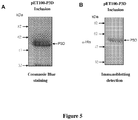
- the nucleic acid encoding the 3D protein of FMDV as obtained in Section 1.4 of Example 1 was cloned into expression vector pET100-D-TOPO (Invitrogen), thereby obtaining plasmid pET100-P3D.
- the vector pET100-D-TOPO has been linearized by the manufacturer, which can be linked to target fragment for the expression of the recombinant protein in bacteria.
- the plasmid pET100-P3D was used to transform E. coli. strain BL21 codon plus.
- the cultured bacteria were induced with 0.4 mM IPTG for 4 hours, so as to express the 3D protein.
- the expressed and purified 3D protein was subjected to SDS-PAGE and Coomassie blue staining, and immunoblotting using anti-His antibody. The results were shown in Fig. 5 .
- the recombinant protein encoded by 3R-IGC and the 3D protein were mixed at equivalent molar ratio, to which emulsifying agent 206 (SEPPIC Inc, France) was added, thereby obtaining the Vaccine Composition B of the invention (containing 3R-IGC-encoded recombinant protein (SEQ ID NO:13) and the 3D protein (SEQ ID NO:6) as active ingredients).
- the vaccines were prepared containing the recombinant proteins as generated in Example 1b, 1c and 1d using the similar procedures as in Sections 2.1 and 2.2, respectively.
- Said vaccines contain the entire recombinant protein "3As-IGCD”, “3KO-cIGCD”, or “3A-IGCD” as active ingredients, or contain the separate 3D component together with the recombinant protein "3As-IGC”, “3KO-cIGC”, or "3A-IGC” as active ingredients, respectively.
- Hamster Kidney Cell line (BHK21) (purchased from ATCC, ATCC CCL-10) was cultured in Essential Medium supplemented with 10% heat inactivated fetal bovine serum (FBS) (Gibco), penicillin (100 U ml -1 ), streptomycin (100 ⁇ g ml -1 ) and Earle salts, at 37°C and 5% CO 2 ( Barnett, P. V., L. Pullen, R. F. Staple, L. J. Lee, R. Butcher, D. Parkinson, and T. R. Doel. 1996. A protective anti-peptide antibody against the immunodominant site of the A24 Cruzeiro strain of foot-and-mouth disease virus and its reactivity with other subtype viruses containing the same minimum binding sequence. J. Gen. Virol. 77: 1011-1018 ).
- FBS heat inactivated fetal bovine serum
- penicillin 100 U ml -1
- streptomycin 100 ⁇ g ml -1
- FMDV was derived from the epithelial tissue of blisters of pigs infected with FMDV upon prevalence.
- 1 ml FMDV liquid was added to the surface of cell layer to propagate FMDV.
- the BHK21 cells were cultured at 37°C for 45 minutes, and were harvested until cells exhibited 75% of cellular cytopathic effect, and then 20 ml essential medium (EMEM) supplemented with Earle salts and free from FBS were added.
- EMEM essential medium
- ID 50 of FMDV liquid ie. 1 ID 50 ( Collen, T., R. Dimarchi, and T. R. Doel. 1991.
- a T Cell Epitope in VP1 of Foot-and-Mouth Disease Virus is Immunodominant for Vaccinated Cattle. J. Immunol. 14G: 749-755 .
- FMDV virus challenge test is a method to determine the efficiency of recombinant vaccine. Totally 25 pigs (2.5 month old, about 25 kg) negative for FMDV serum reaction were used for virus challenge analysis.
- the pigs were divided into 5 groups: (a) 5 were used as negative control (injected with 1 ml PBS); (b) 5 were used as positive control (injected with 2ml commercial FMD vaccine (Inactivated whole virus), China Agricultural VET. BIO. Science and Technology Co.
- the reaming groups c, d, e were injected with Vaccine Composition A, ie., the recombinant protein (encoded by "3R-IGCD") as prepared in Section 2.1 of Example 2, as follows: (c) 5 were injected with 0.2 mg of the recombinant protein; (d) 5 were injected with 0.5 mg of the recombinant protein; (e) 5 were injected with 1 mg of the recombinant protein.
- the pigs were vaccinated at the cervical muscle for the first time, and then vaccinated again at the same dosage on day 21.
- Serum samples were collected on day 0 and day 51 from animals of each group and tested.
- the animals were challenged with FMDV at 1000 x ID 50 , and the diagnostic criteria for indentifying FMD were the same as those in above ID 50 determination ( Rodriguez, A., J. C. Salz, I. S. Novella, D. Andreu, and F. Sobrino. 1994. Antigenic Specificity of Porcine T Cell Response against Foot-and-Mouth Disease Virus Structural Proteins: Identification of T Helper Epitopes in VP1. Virology 205: 24-33 ).
- Serum Neutralization Tests were performed according to the procedure prescribed by the World Reference Laboratory for FMD (Chapter 2.1.1 Foot and mouth disease. In: " OIE Manual”. Office International des Epizooties, Paris, 1996; 47-56 .).
- the concentrations of antibodies are represented in the form of log 10 SN 50 ( Salt, J. S., P. V. Barnett, P. Dani, and L. William. 1998. Emergency vaccination of pigs against foot-and-mouth disease: protection against disease and reduction in contact transmission. Vaccine 16: 746-754 ).
- Antibody neutralization reactions pigs were vaccinated with 200 ⁇ g, 500 ⁇ g and 1 mg of the recombinant protein (Vaccine Composition B, in which the molar ratio of the recombinant protein to 3D protein is 1:1), the buffer and the commercial anti-FMD vaccine, respectively, and antibody neutralization reactions were conducted on day 51 of vaccination.
- Vaccine Composition B in which the molar ratio of the recombinant protein to 3D protein is 1:1
- Suckling mouse protection test is the second method to determine whether the pigs vaccinated with the vaccine of the present invention can produce antibodies against FMDV.
- the mouse protection test was performed as described in Mulcahy et al. with modification ( Mulcahy, G., L. A. Pullen, C. Gale, R. D. DiMarchi, and T. R. Doel. 1991. Mouse protection test as a predictor of the protective capacity of synthetic foot-and-mouth disease vaccines. Vaccine 9:19-24 ).
- the 50% Lethal Dose (LD 50 ) of the FMDV material 5 virus samples diluted by serial dilutions (such as 10 -3 , 10 -4 , 10 -5 , 10 -6 and 10 -7 ) were injected into 5 groups of suckling mice (4 mice in each group), the diluted concentration which causes 50% death in the mice was then determined as the LD 50 .
- the anti-sera of the experimental pigs (vaccinated with the vaccine of the invention (Vaccine Composition A or Vaccine Composition B), the commercial anti-FMD vaccine, and the buffer, respectively) were taken on the day 51 of vaccination. All the anti-sera were inactivated at 56°C for 30 minutes.
- mice in each group were intraperitoneally injected (i.p.) with 100 ⁇ l undiluted pig anti-serum, respectively. Within 20-23 hours, all the mice were respectively challenged by FMDV at a dose of 10, 100, or 1000 times of the 50% Lethal Dose (LD 50 ), and were then observed for 4 days. The number of mice that remained alive was recorded. The results are shown in Table 3. Table 3. Suckling mouse protection test: suckling mice protected by the anti-sera taken from the pigs on day 51 of vaccination with 200 ⁇ g, 500 ⁇ g and 1 mg of the vaccine of the invention (Vaccine Composition A or Vaccine Composition B), the buffer, and the commercial anti-FMD vaccine.
- the anti-sera of the pigs that were not vaccinated with the recombinant protein were totally unable to protect the suckling mice against the infection of FMDV; while the anti-sera of the pigs that were vaccinated with the commercial anti-FMD vaccine can protect the suckling mice against the challenge of FMDV at a dose up to 1000 times of the 50% Lethal Dose (LD 50 ).
- T-cell proliferation analysis was performed to characterize the T-cell proliferation caused by the injection of the recombinant protein.
- T-cells were collected from the groups of pigs that were vaccinated with Vaccine Composition A or Vaccine Composition B, the commercial anti-FMD vaccine, and the buffer. The blood cells were purified through 1.077 g ml -1 of Percoll solution. 4 x 10 6 T-cells/ml for each group were cultured in 96-well plate (Corning), and FMDV viral protein was added to a concentration of 10 ⁇ g ml -1 or 50 ⁇ g ml -1 .
- the plate was cultured at 37°C for 4 days and then 1 microcurie ( ⁇ Ci) per 25 ⁇ l of [tritium]thymidine ([ 3H ]thymidine) was added, the cells were collected after culturing for 18 hours and measured using liquid scintillation counter (Beckman LS6500) ( Measurement of proliferation Response of Cultured lymphocytes, Chapter 7.10, Current Protocols in Immunology, Edited by J.E. Cologan (NIH), 2005, Johm Wiley and Sons, Inc. Lierop, M. J. C. V., K. V. Maanen, R. H. Meloen, V. P. M. G. Rutten, M. A. C. Dejong, and E. J.
- Negative control group 1 1.1 1.3 1.0 1.3 (1ml PBS) 2 1.0 0.9 0.9 0.9 3 0.7 1.1 1.2 0.7 a . Pigs were divided into 5 groups for experiment, 3 pigs in each group. Different groups adopted different dose of Vaccine Composition A for vaccination. Each animal received two vaccination injections, with a 4 week interval between each time. Serum was taken 10 days after each injection. 1ml PBS was injected for the blank control group.
- SI Simulation Index
- T-cell Response in pigs received two vaccinations of Vaccine Composition B to FMDV protein.
- Negative control group (1ml PBS) 1 1.2 1.2 1.1 1.2 2 0.9 0.8 1.2 1.4 3 0.8 1.0 0.8 0.9 a . Pigs were divided into 5 groups for experiment, 3 pigs in each group. Different groups adopted different dose of Vaccine Composition B for vaccination. Each animal received two vaccination injections, with a 4 week interval between each time. Serum was taken 10 days after each injection. 1ml PBS was injected for the blank control group. b .
- Simulation Index (SI) the counts per minute (cpm) of T-cell culture with simulation of FMDV protein/the counts per minute (cpm) of T-cell culture without simulation of FMDV protein. Simulation Index (SI) higher than 1.5 is defined as a positive response.
- Table 4 and 5 illustrate the in vitro proliferative response of T-cells collected from pigs that were respectively vaccinated with Vaccine Composition A or Vaccine Composition B (200 ⁇ g, 500 ⁇ g and 1 mg of protein), the commercial anti-FMD vaccine or the buffer.
- the proliferative response was determined after in vitro simulation of 10 ⁇ g ml -1 or 50 ⁇ g ml -1 of FMDV protein.
- the T-cells from the pigs that were vaccinated with the recombinant protein and the commercial anti-FMD vaccine showed the best response, while the group simulated by buffer showed no proliferative response.
- FMDV challenge analysis 25 pigs (5 groups) were respectively vaccinated twice with 0.2 or 0.5 or1 mg of protein (Vaccine Composition A), the commercial anti-FMD vaccine, or the buffer, and were then challenged by FMDV at a dose of 1000 times of the 50% Lethal Dose (LD 50 ). Samples tested Number of animals protected / Number of animals challenged Vaccine Composition A 0.2 mg Protein 4/5 0.5 mg Protein 5/5 1 mg Protein 5/5 Commercial anti-FMD vaccine 5/5 Buffer control group 0/5 Table 7.
- FMDV challenge analysis 25 pigs (5 groups) were respectively vaccinated twice with 0.2 or 0.5 or1 mg of protein (Vaccine Composition B), the commercial anti-FMD vaccine, or the buffer, and were then challenged by FMDV at a dose of 1000 times of the 50% Lethal Dose (LD 50 ). Samples tested Number of animals protected / Number of animals challenged Vaccine Composition B 0.2 mg Protein 5/5 0.5 mg Protein 5/5 1 mg Protein 5/5 Commercial anti-FMD vaccine 5/5 Buffer control group 0/5
Landscapes
- Health & Medical Sciences (AREA)
- Life Sciences & Earth Sciences (AREA)
- Virology (AREA)
- Veterinary Medicine (AREA)
- Chemical & Material Sciences (AREA)
- Medicinal Chemistry (AREA)
- Public Health (AREA)
- Pharmacology & Pharmacy (AREA)
- Immunology (AREA)
- Animal Behavior & Ethology (AREA)
- General Health & Medical Sciences (AREA)
- Microbiology (AREA)
- Mycology (AREA)
- Epidemiology (AREA)
- General Chemical & Material Sciences (AREA)
- Organic Chemistry (AREA)
- Nuclear Medicine, Radiotherapy & Molecular Imaging (AREA)
- Chemical Kinetics & Catalysis (AREA)
- Zoology (AREA)
- Communicable Diseases (AREA)
- Oncology (AREA)
- Molecular Biology (AREA)
- Bioinformatics & Cheminformatics (AREA)
- Engineering & Computer Science (AREA)
- Peptides Or Proteins (AREA)
- Medicines Containing Antibodies Or Antigens For Use As Internal Diagnostic Agents (AREA)
- Preparation Of Compounds By Using Micro-Organisms (AREA)
Description
- The present invention pertains to the field of immunology and genetic engineering. In particular, the present invention relates to a recombinant vaccine composition against foot-and-mouth disease virus as well as the preparation and use thereof.
- Foot-and-mouth disease (FMD), the most serious disease among the class A infectious diseases in animals, is a fulminating infectious disease which severely affects cloven hoofed animals such as pig, cattle, sheep and the like. Recently, livestock industries of many countries have suffered huge economical losses caused by the outbreak and epidemic of FMD. So far, seven serotypes of foot-and-mouth disease virus (FMDV) (European A, O and C, African SAT1, SAT2 and SAT3, and Asia 1 serotypes) and many subtypes (see, e.g., Kleid et al., 1981, Science 214: 1125-1129) have been known, with O serotype FMDV being the most widely spread serotype.
- FMDV belongs to the Aphthovirus genus of the Picornaviridae family. It consists of a positive-sense, single-stranded RNA genome (about 8.5 kb) surrounded by 60 copies of three capsid viral proteins (VP1, VP2, and VP3). Investigations show that in FMDV serotype O, VP1 of these three viral proteins is most relevant to the infectivity of the virus. There are two immunogenic regions in VP1 protein, namely those portions of amino acid residues 141-160 and 200-213. They reside respectively in two protruding, disordered and highly mobile loop structures. The loop structure of the region of residues 145-157 comprises a conserved structure Arg-Gly-Asp (RGD region), involving in the attachment to cell surface receptors (Belsham GJ and Martinez-Salas E, Genome organization, translation and replication of foot-and-mouth disease virus RNA, p. 19-52, 2004, Foot and Mouth Disease Current Perspectives, Edited by: Sobrino F and Domingo E).
Protein 3D is a RNA-dependent RNA polymerase in FMDV, which has antigenic epitopes recognized by porcine T cells (Belsham GJ and Martinez-Salas E, Genome organization, translation and replication of foot-and-mouth disease virus RNA, p.19-52, 2004, Foot and Mouth Disease Current Perspectives, Edited by: Sobrino F and Domingo E). This protein has also been defined as a major cross-reactive immunodeterminant of FMDV able to elicite heterotypic T-cell responses (Collen T et al., 1998, Virus Research 56(2): 125-133). - Prophylactic immunization can control the transmission of FMDV. Killed virus is used in the existing anti-FMDV vaccines. In practice, such vaccines may cause the transmission of the disease due to the in vivo recombination of the viral RNA (Brown, F. An overview of the inactivation of FMDV and the implications when residual virus is present in vaccines. Dev Biol Stand 1991; 75: 37-41). Meanwhile, chemical inactivating agents are used to inactivate the virus in such vaccines, and low-temperature cold-chain transportation and freezer storage are required during delivery. No freezers are available in the rural areas of some developing countries, and consequently, the vaccines may have substantially lost their efficacy at time of injection. Moreover, the possibility of live FMDV virus leakage during the manufacture process makes the production of such vaccines an unsafe factor for the environment.
- Other bioengineered vaccines have been developed. For example the vaccine described by Cedillo-Barron et al. (2001, Journal of General Virology 82:1713-1724) is a plasmid allowing the in vivo production of the components of self-assembling empty FMDV capsids and the production of 3D protein. It was tested on swine but proved to be not as effective as the conventional virus vaccine.
- The patent application published as
US 2002/0076405 discloses a vaccine composition for inducing an immune response against FMDV comprising an antigenized antibody. In a particular form, this antigenized antibody comprises a single or a tandem repeat of antigenic epitopes 141-160 and 200-213 from VP1 of FMDV linked to the heavy chain constant region of swine IgG. More particularly the article Chan E W C et al., 2001, Vaccine ELSEVIER 19 :538-546 describes that inoculation of an antigenized antibody comprising a single repeat of the antigenic epitopes elicits both FMDV-specific B-cell response and increased T-cell response in laboratory animals. - The epitope-specific vaccine of the present invention can elicit an antibody response against FMDV in the vaccinated animals. The vaccine of the present invention is not only very safe in use and production, but also very convenient in its handling, storage and transportation. Meanwhile, the vaccine of the present invention can be designed to meet specific requirements.
- The present invention provides a safe and effective recombinant vaccine for use against FMDV.
- In one aspect, the specification describes a vaccine composition for inducing a specific immune response against FMDV in an animal, which vaccine composition comprises a recombinant protein comprising from its N-terminus to C-terminus:
- a tandem repeat of an antigenic epitope of the FMDV capsid protein;
- the constant region of the immunoglobulin heavy chain or a functional fragment thereof; and
- the
FMDV 3D protein or an immunogenic fragment thereof. - In a further aspect, the specification describes a vaccine composition for inducing a specific immune response against FMDV in an animal, which vaccine composition comprises:
- (i) a recombinant protein comprising from its N-terminus to C-terminus:
- a tandem repeat of an antigenic epitope of the FMDV capsid protein; and
- the constant region of the immunoglobulin heavy chain or a functional fragment thereof; and
- (ii) the
FMDV 3D protein or an immunogenic fragment thereof. - In the vaccine composition, the antigenic epitope in the recombinant protein may be repeated for 2 to 5 times in the tandem repeat. More preferably, the antigenic epitope in the recombinant protein is repeated for 3 times in the tandem repeat.
- In one aspect, the present invention provides a vaccine composition for use in inducing a specific immune response against foot-and-mouth disease virus (FMDV) in an animal, wherein the vaccine composition comprises a recombinant protein comprising from its N-terminus to C-terminus:
- a tandem repeat of more than one antigenic epitope of FMDV VP1 protein;
- the constant region of the immunoglobulin heavy chain; and
- the FMDV 3D protein, and
- In further aspect, the present invention provides vaccine composition for use in inducing a specific immune response against FMDV in an animal, wherein the vaccine composition comprises:
- (i) a recombinant protein comprising from its N-terminus to C-terminus:
- a tandem repeat of more than one antigenic epitope of FMDV VP1 protein; and
- the constant region of the immunoglobulin heavy chain; and
- (ii) the FMDV 3D protein, and
- In one embodiment of the vaccine composition for the use of the invention, the repeated antigenic epitopes are linked to each other via a peptide linker and/or the tandem repeat of the antigenic epitope is linked to the constant region of the immunoglobulin heavy chain via a peptide linker.
- In one embodiment of the vaccine composition for the use of the invention the antigenic epitope derived from VP1 protein elicits B lymphocyte response.
- In the vaccine composition for the use of the invention, the antigenic epitope is derived from the FMDV VP1 protein. The antigenic epitope may be derived from, for example, European A, O and C serotypes; African SAT1, SAT2 and SAT3 serotypes; and Asia 1 serotype. In one embodiment of the above mentioned vaccine composition for the use of the invention antigenic epitope of VP1 comprises one or more amino acid sequences selected from the group consisting of SEQ ID NO:9, SEQ ID NO:10, SEQ ID NO:25, SEQ ID NO:26, SEQ ID NO:32, SEQ ID NO:33, SEQ ID NO:34, SEQ ID NO:43, and SEQ ID NO:44. In one embodiment of the vaccine composition for the use described herein, the tandem repeat is a tandem repeat of two antigenic epitopes derived from O serotype FMDV VP1 protein, respectively comprising or consisting of an amino acid sequence of SEQ ID NO:9 or SEQ ID NO:10. In a further embodiment of the vaccine composition for the use described herein, the tandem repeat is a tandem repeat of two antigenic epitopes derived from
Asia 1 serotype FMDV VP1 protein, respectively comprising or consisting of an amino acid sequence of SEQ ID NO:25 or SEQ ID NO:26. In a further embodiment of the vaccine composition for the use described herein, the tandem repeat is a tandem repeat of two antigenic epitopes derived from A serotype FMDV VP1 protein, respectively comprising or consisting of an amino acid sequence of SEQ ID NO:43 or SEQ ID NO:44. In a further embodiment of the vaccine composition for the use described herein, the tandem repeat is a tandem repeat of three antigenic epitopes derived from bovine O serotype FMDV VP1 protein, respectively comprising or consisting of an amino acid sequence of SEQ ID NO:32, SEQ ID NO:33 or SEQ ID NO:34. - In one embodiment of the above mentioned vaccine composition for the use of the invention, the tandem repeat is a tandem repeat of two antigenic epitopes derived from O serotype FMDV VP1 protein, respectively consisting of an amino acid sequence of SEQ ID NO:9 or SEQ ID NO:10. In a further embodiment of the above mentioned vaccine composition for the use of the invention, the tandem repeat is a tandem repeat of two antigenic epitopes derived from
Asia 1 serotype FMDV VP1 protein, respectively consisting of an amino acid sequence of SEQ ID NO:25 or SEQ ID NO:26. In a further embodiment of the above mentioned vaccine composition for the use of the invention, the tandem repeat is a tandem repeat of two antigenic epitopes derived from A serotype FMDV VP1 protein, respectively consisting of an amino acid sequence of SEQ ID NO:43 or SEQ ID NO:44. In a further embodiment of the above mentioned vaccine composition for the use of the invention, the tandem repeat is a tandem repeat of three antigenic epitopes derived from bovine O serotype FMDV VP1 protein, respectively consisting of an amino acid sequence of SEQ ID NO:32, SEQ ID NO:33 or SEQ ID NO:34. - The vaccine composition of the invention may be administered to cloven-hoofed animals such as pigs, cattles, or sheeps, to induce immune response against FMDV infection. Preferably, in the vaccine composition of the invention, the constant region of the immunoglobulin heavy chain contained in the recombinant protein is from the same species as the animal to be vaccinated. The vaccine composition of the invention may further comprise a pharmaceutically acceptable carrier and/or adjuvant.
- The present invention also encompasses a vaccine composition for the use of the invention, wherein the recombinant protein comprises an amino acid sequence selected from the group consisting of SEQ ID NO:8, SEQ ID NO:30, SEQ ID NO:41, SEQ ID NO:47, SEQ ID NO: 13, SEQ ID NO:28, SEQ ID NO:39, and SEQ ID NO:45.
- In a further aspect, the present invention provides an isolated polynucleotide encoding the recombinant protein contained in the vaccine composition for the use of the invention. In one embodiment the isolated polynucleotide of the invention comprises a nucleotide sequence selected from the group consisting of SEQ ID NO:7, SEQ ID NO:14, SEQ ID NO:29, SEQ ID NO:31, SEQ ID NO:40, SEQ ID NO:42, SEQ ID NO:46, and SEQ ID NO:48.
- The present invention also encompasses an isolated recombinant protein comprising an amino acid sequence encoded by a polynucleotide of the invention.
- The present application further describes a method of preparing a recombinant protein for use in the anti-FMDV vaccine of the invention, the method comprising the steps of:
- obtaining a polynucleotide encoding the recombinant protein;
- constructing an expression vector containing the polynucleotide;
- introducing the expression vector into a host cell; and
- culturing the host cell under conditions suitable for the expression of the recombinant protein, recovering and purifying the expressed recombinant protein.
- In addition, the present application also describes a method of preventing FMDV infection in an animal comprising the step of administering an effective amount of the vaccine composition of the invention to an animal in need thereof.
- The invention is defined by the claims.
-
-
Figure 1 illustrates the construction of an anti-O serotype FMDV vaccine. A: the Vaccine Composition A prepared in the Examples, in which a tandem repeat of an antigenic epitope of the O serotype FMDV VP1 protein, the constant region of animal immunoglobulin heavy chain, and theFMDV 3D protein are linked so as to form a recombinant protein (encoded by "3R-IGCD"). B: the Vaccine Composition B prepared in the Examples, in which a tandem repeat of an antigenic epitope of the O serotype FMDV VP1 protein and the constant region of animal immunoglobulin heavy chain are linked so as to form a recombinant protein (encoded by "3R-IGC"), and theFMDV 3D protein is a separate component. -
Figure 2 shows the Coomassie blue staining of the recombinant protein (encoded by "3R-IGCD") in the Vaccine Composition A. M: protein molecular weight marker; lane 1: total protein; lane 2: soluble protein; lane 3: inclusion body (dissolved in 6 M urea); lane 4: inclusion body (dissolved in 8 M urea). -
Figure 3 shows the immunoblotting detection of the recombinant protein (encoded by "3R-IGCD") in the Vaccine Composition A using anti-O serotype FMDV serum. M: protein molecular weight marker; lane 1: total protein; lane 2: soluble protein; lane 3: inclusion body (dissolved in 6 M urea); lane 4: inclusion body (dissolved in 8 M urea). -
Figure 4 shows the Coomassie blue staining and immunoblotting detection of the recombinant protein (encoded by "3R-IGC") in the Vaccine Composition B. A: Coomassie blue staining of the total protein lysate from the bacteria expressing the recombinant protein encoded by the 3R-IGC fragment (before and after IPTG induction); B: immunoblotting detection of the recombinant protein (encoded by 3R-IGC fragment) in the total protein lysate obtained after IPTG induction using anti-O serotype FMDV serum from pig. -
Figure 5 shows the Coomassie blue staining and immunoblotting detection of the 3D protein component in the Vaccine Composition B of the invention. -
- SEQ ID NO:1: DNA sequence encoding the tandemly repeated antigenic epitopes of the O serotype FMDV VP1 protein used in the Examples;
- SEQ ID NO:2: amino acid sequence of the tandemly repeated antigenic epitopes of the O serotype FMDV VP1 protein used in the Examples;
- SEQ ID NO:3: DNA sequence encoding the constant region of porcine immunoglobulin heavy chain used in the Examples;
- SEQ ID NO:4: amino acid sequence of the constant region of porcine immunoglobulin heavy chain used in the Examples;
- SEQ ID NO:5: DNA sequence encoding the
FMDV 3D protein used in the Examples; - SEQ ID NO:6: amino acid sequence of the
FMDV 3D protein used in the Examples; - SEQ ID NO:7: DNA sequence ("3R-IGCD") encoding the recombinant protein of the invention used in the Examples;
- SEQ ID NO:8: amino acid sequence of the recombinant protein used in the Examples encoded by the "3R-IGCD";
- SEQ ID NO:9: amino acid sequence of residues 141-160 of the O serotype FMDV VP1 protein;
- SEQ ID NO:10: amino acid sequence of residues 200-213 of the O serotype FMDV VP1 protein;
- SEQ ID NO: 11: a peptide linker GGSSGG that may be used in the invention;
- SEQ ID NO: 12: a peptide linker GGGSGGGGS that may be used in the invention;
- SEQ ID NO: 13: amino acid sequence of the recombinant protein used in the Examples encoded by the "3R-IGC";
- SEQ ID NO:14: DNA sequence ("3R-IGC") encoding the recombinant protein of the invention used in the Examples;
- SEQ ID NO: 15: scIgG 5' primer for amplifying the cDNA fragment encoding the porcine scIgG;
- SEQ ID NO:16: scIgG 3' primer for amplifying the cDNA fragment encoding the porcine scIgG;
- SEQ ID NO:17: 3D 5' primer for cloning the nucleic acid encoding the
FMDV 3D protein; - SEQ ID NO:18: 3D 3' primer for cloning the nucleic acid encoding the
FMDV 3D protein; - SEQ ID NO:19: 3R-IGCD 5' primer used for synthesizing the 3R-IGCD fragment;
- SEQ ID NO:20: 3R-IGC 3'
primer 1 used for synthesizing the 3R-IGCD fragment; - SEQ ID NO:21: D 5' primer used for synthesizing the 3R-IGCD fragment;
- SEQ ID NO:22: 3R-IGCD 3' primer used for synthesizing the 3R-IGCD fragment;
- SEQ ID NO:23: 3R-IGC 5' primer used for amplifying SEQ ID NO:14;
- SEQ ID NO:24: 3R-IGC 3'
primer 2 used for amplifying SEQ ID NO:14; - SEQ ID NO:25: amino acid sequence of residues 133-158 of the
Asia 1 FMDV VP1 protein; - SEQ ID NO:26: amino acid sequence of residues 200-213 of the
Asia 1 FMDV VP1 protein; - SEQ ID NO:27: a peptide linker GGGGS that may be used in the invention;
- SEQ ID NO:28: amino acid sequence of the recombinant protein used in the Examples encoded by "3As-IGC";
- SEQ ID NO:29: DNA sequence ("3As-IGC") encoding the recombinant protein of the invention used in the Examples;
- SEQ ID NO:30: amino acid sequence of the recombinant protein used in the Examples encoded by "3As-IGCD";
- SEQ ID NO:31: DNA sequence ("3As-IGCD") encoding the recombinant protein of the invention used in the Examples;
- SEQ ID NO:32: amino acid sequence of a VP1 epitope of bovine O serotype FMDV;
- SEQ ID NO:33: amino acid sequence of a VP1 epitope of bovine O serotype FMDV;
- SEQ ID NO:34: amino acid sequence of a VP1 epitope of bovine O serotype FMDV;
- SEQ ID NO:35: cIGC 5' primer for amplifying the nucleotide sequence encoding the constant region of bovine immunoglobulin heavy chain;
- SEQ ID NO:36: cIGC 3' primer for amplifying the nucleotide sequence encoding the constant region of bovine immunoglobulin heavy chain;
- SEQ ID NO:37: amino acid sequence of the constant region of bovine immunoglobulin heavy chain;
- SEQ ID NO:38: nucleotide sequence ("cIGC" fragment) encoding the constant region of bovine immunoglobulin heavy chain;
- SEQ ID NO:39: amino acid sequence of the recombinant protein used in the Examples encoded by "3KO-cIGC";
- SEQ ID NO:40: DNA sequence ("3KO-cIGC") encoding the recombinant protein of the invention used in the Examples;
- SEQ ID NO:41: amino acid sequence of the recombinant protein used in the Examples encoded by "3KO-cIGCD";
- SEQ ID NO:42: DNA sequence ("3KO-cIGCD") encoding the recombinant protein of the invention used in the Examples;
- SEQ ID NO:43: amino acid sequence of residues 141-160 of the A serotype FMDV VP1 protein;
- SEQ ID NO:44: amino acid sequence of residues 200-213 of the A serotype FMDV VP1 protein;
- SEQ ID NO:45: amino acid sequence of the recombinant protein used in the Examples encoded by "3A-IGC";
- SEQ ID NO:46: DNA sequence ("3A-IGC") encoding the recombinant protein of the invention used in the Examples;
- SEQ ID NO:47: amino acid sequence of the recombinant protein used in the Examples encoded by "3A-IGCD"; and
- SEQ ID NO:48: DNA sequence ("3A-IGCD") encoding the recombinant protein of the invention used in the Examples.
- In one aspect, the present invention provides a vaccine composition for use in inducing a specific immune response against FMDV in an animal, wherein the vaccine composition comprises a recombinant protein comprising from its N-terminus to C-terminus: a tandem repeat of more than one antigenic epitope of FMDV VP1 protein; the constant region of the immunoglobulin heavy chain; and the
FMDV 3D protein , and a pharmaceutically acceptable carrier and/or adjuvant, wherein said more than one antigenic epitope in the recombinant protein is repeated for 2, 3, 4, or 5 times in the tandem repeat, wherein said VP1 protein and 3D protein are from the same serotype or from different serotypes of FMDV selected from the group consisting of O serotype FMDV, European A serotype FMDV andAsia 1 serotype FMDV. - In a further aspect, the present invention provides a vaccine composition for use in inducing a specific immune response against FMDV in an animal, wherein the vaccine composition comprises: (i) a recombinant protein comprising from its N-terminus to C-terminus: (a) a tandem repeat of more than one antigenic epitope of FMDV VP1 protein; and (b) the constant region of the immunoglobulin heavy chain; and (ii) the
FMDV 3D protein, and a pharmaceutically acceptable carrier and/or adjuvant, wherein said more than one antigenic epitope in the recombinant protein is repeated for 2, 3, 4, or 5 times in the tandem repeat, wherein said VP1 protein and 3D protein are from the same serotype or from different serotypes of FMDV selected from the group consisting of O serotype FMDV, European A serotype FMDV andAsia 1 serotype FMDV. - In the anti-FMDV vaccine composition for the use of the invention, an antigenic epitope of the FMDV VP1 protein useful in the construction of the recombinant protein can be a known major antigenic epitope of VP1 protein, for example, an epitope represented by amino acid residues 141-160 (SEQ ID NO:9) or amino acid residues 200-213 (SEQ ID NO:10) of porcine O serotype FMDV VP1 protein. It has been demonstrated that these epitopes can elicit B lymphocyte response in animals infected by FMDV.
- To enhance the immunogenicity of the recombinant protein in the vaccine for the use of the invention, the antigenic epitope of FMDV (e.g., an antigenic epitope of VP1 protein) is tandemly repeated in the recombinant protein constructed for use in the vaccine of the invention. In addition, the tandem repeat may be formed by one or more antigenic epitopes of FMDV (e.g., antigenic epitopes of VP1 protein) that are tandemly repeated. In this regard, the phrase "a tandem repeat of an antigenic epitope", as used herein, is intended to mean that, in the amino acid sequence of the recombinant protein, each of the antigenic epitopes (which can be either identical or different) is orderly linked directly, or indirectly via a linker, to another, and each of these tandemly linked antigenic epitopes (which can be either identical or different) is repeated for two or more times, for example, for three times. The phrase "a tandem repeat of an antigenic epitope", as used herein, also encompasses a plurality of different antigenic epitopes of FMDV (e.g., three epitopes) which are arranged in tandem and linked directly, or indirectly via a linker, to each other in the amino acid sequence of the recombinant protein, and wherein each of the epitopes may appear for one or more times (e.g., for 2 or 3 times).
- In preferred embodiments of the vaccine composition for the use of the invention, the antigenic epitope in the recombinant protein is repeated for 2 to 5 times in the tandem repeat. Repetitions of greater than 5 are also possible, but repetitions of less than 5 will make it more convenient to express the recombinant protein of the invention by means of recombinant expression. More preferably, the antigenic epitope in the recombinant protein is repeated for 3 times in the tandem repeat.
- In a particular embodiment of the vaccine composition for the use of the invention, the tandem repeat in the recombinant protein is a tandem repeat of two antigenic epitopes derived from the FMDV VP1 protein. In one particular embodiment, the tandem repeat is formed by two antigenic epitopes which are arranged in tandem and repeated for three times, wherein said two antigenic epitopes are respectively represented by the amino acid sequence of the residues 141-160 (SEQ ID NO:9) and the amino acid sequence of the residues 200-213 (SEQ ID NO: 10) of porcine O serotype FMDV VP1 protein. As demonstrated in the experiment part, this recombinant protein can protect animals by effectively inducing a specific immune response against the O serotype FMDV in animal.
-
Fig. 1 illustrates the construction of the vaccine with reference to the anti-O serotype FMDV vaccine composition, in which the N-terminus of the recombinant protein is a region of the tandem repeat of an antigenic epitope of the O serotype FMDV VP1 protein, followed by the constant region of the immunoglobulin heavy chain of livestock origin, and theFMDV 3D protein can be either directly linked to the C-terminus of the constant region of the immunoglobulin heavy chain (Fig. 1A ), or a separate protein component (Fig. 1B ). - In a preferred embodiment of the vaccine for the use of the invention, the antigenic epitopes and/or the tandem repeats in the recombinant protein are linked via a peptide linker to each other. The peptide linker between the antigenic epitopes and/or the tandem repeats should not influence the linear structure of the antigenic epitopes. Examples of the peptide linkers that can be used in the present invention are, for example, GGSSGG (SEQ ID NO:11), GGGSGGGGS (SEQ ID NO: 12), and GGGGS (SEQ ID NO:27). The experimental data provided herein show that the above "GS linkers" can be used as peptide linkers in the present invention which will not influence the linear structure of the antigenic epitopes arranged in the form of tandem repeat in the recombinant protein, and the recombinant protein can elicit the production of protective antibodies in the animal. In addition, in the recombinant protein in the vaccine for the use of the invention, the tandem repeat of antigenic epitope(s) can also be linked to the amino acid sequence of the constant region of the immunoglobulin heavy chain via peptide linkers as mentioned above.
- In order that the antigenic epitopes arranged in the form of tandem repeat can be displayed on the surface of the recombinant protein molecule, the antigenic epitopes, for example, the antigenic epitopes of VP1 protein, arranged in the form of tandem repeat are linked to the constant region of the immunoglobulin heavy chain or a functional fragment thereof. The constant region of the immunoglobulin heavy chain is capable of displaying the sequence of the variable region of antibody on the surface of the immunoglobulin molecule. By taking the advantage of this property of the constant region of the immunoglobulin heavy chain, the inventor replaces the variable region of the immunoglobulin heavy chain with the antigenic epitopes that are arranged in the form of tandem repeat, allowing the constant region of the immunoglobulin heavy chain to display the antigenic epitopes, for example, the tandem repeat of the antigenic epitopes of VP1 protein, on the surface of the recombinant protein molecule. Upon administering the vaccine of the invention into an animal, the B cell surface IgM monomers can contact with the antigenic epitope in the recombinant protein molecule and then be activated, leading to the production of immune response. The experiments conducted on animals confirm that the vaccine designed in this way can elicit robust protective immune response, which can achieve the purpose of protecting animals from infection.
- Preferably, the constant region of the immunoglobulin heavy chain that can be used in the recombinant protein of the invention is of livestock origin. To reduce the immunogenicity of the constant region of the immunoglobulin heavy chain in the recombinant protein molecule, it is preferred to use a constant region of the immunoglobulin heavy chain which is from the same species as the animal to be vaccinated. The constant region of the immunoglobulin heavy chain can be derived from IgA, IgM, IgE, IgD, or IgG or a subtype of them. A "functional fragment" of the constant region of the immunoglobulin heavy chain refers to a portion of the constant region of the immunoglobulin heavy chain which retains the ability to display the tandem repeat of the antigenic epitopes on the surface of the recombinant protein molecule.
- Another portion or component in the vaccine for the use of the invention is the
FMDV 3D protein. TheFMDV 3D protein and the antigenic epitopes from the VP1 protein can be from the same type of FMDV. Alternatively, they can be from different types of FMDV. For example, in the vaccine for the use of the invention, the antigenic epitopes of VP1 protein can be derived from the O serotype FMDV, while the 3D protein can be derived either from O serotype FMDV or from A serotype orAsia 1 FMDV. - In the vaccine for the use of the invention, the
FMDV 3D protein can be directly linked to the C-terminus of the constant region of the immunoglobulin heavy chain, so as to form an entire recombinant protein comprising the tandem repeat of antigenic epitopes of the FMDV VP1 protein, the constant region of the immunoglobulin heavy chain, and theFMDV 3D protein. Alternatively, the 3D protein can be present as a separate protein component which, together with the recombinant protein comprising the tandem repeat of antigenic epitopes of VP1 protein and the constant region of the immunoglobulin heavy chain, forms the effective components of the vaccine of the invention. - The purpose of introducing the
FMDV 3D protein into the vaccine for the use of the invention, either as a portion of the recombinant protein or as a separate component, is to elicit T cell response in the animal being vaccinated. T cells can attack the cells being infected by the virus in the animal body, and clean out the virus by eliminating the infected cells. Accordingly, T cell response plays a crucial role in protecting animals from virus infection. After animals being vaccinated with the vaccine of the invention, the antigen-presenting cells (APCs) can uptake and process the protein components in the vaccine, and the processed components can be presented on the surface of APCs by MHC molecules. This will induce the activation and proliferation of antigen-specific cytotoxic T lymphocytes, and the generation of immune memory cells. - In a particular embodiment of the vaccine for the use of the invention, the N-terminus of the recombinant protein is formed by two antigenic epitopes of O serotype FMDV VP1 protein arranged in tandem and repeated for three times, in which the two antigenic epitopes are SEQ ID NO:9 (amino acid residues 141-160 of VP1) and SEQ ID NO:10 (amino acid residues 200-213 of VP1) which are linked by the peptide linker SEQ ID NO:11, and this tandem repeat is linked to the immunoglobulin heavy chain (SEQ ID NO:4) at its C-terminus by the peptide linker SEQ ID NO: 11, and the C-terminus of the recombinant protein is formed by the intact 3D protein sequence of O serotype FMDV, thereby forming the entire recombinant protein (SEQ ID NO:8). In another particular embodiment, the N-terminus of the recombinant protein is formed by two antigenic epitopes of O serotype FMDV VP1 protein arranged in tandem and repeated for three times, in which the two antigenic epitopes are SEQ ID NO:9 (amino acid residues 141-160 of VP1) and SEQ ID NO:10 (amino acid residues 200-213 of VP1) which are linked by the peptide linker SEQ ID NO:11, and the C-terminus of the recombinant protein is formed by the immunoglobulin heavy chain (SEQ ID NO:4), and the above two portions are linked by the peptide linker SEQ ID NO:11, while the intact 3D protein is a separate independent component. As such, the recombinant protein (SEQ ID NO: 13) component and the 3D protein (SEQ ID NO:6) component together form the effective components of the vaccine composition.
- In a further aspect, the present invention provides an isolated polynucleotide encoding the recombinant protein in the vaccine composition for the use of the invention.
- The methods of obtaining the polynucleotide encoding the recombinant protein of the invention are known in the art. For example, the polynucleotide molecule can be directly prepared through chemical synthesis. Alternatively, it is possible to first obtain the nucleic acid molecules respectively encoding the tandem repeat of antigenic epitopes, the constant region of the immunoglobulin heavy chain or a functional fragment thereof, and the
FMDV 3D protein or an immunogenic fragment thereof, add the sequence encoding the peptide linker, and then link them together to form the polynucleotide encoding the entire recombinant protein. For example, by RT-PCR amplification, it is possible to obtain the polynucleotide encoding the constant region of the immunoglobulin heavy chain from the spleen cells of an animal, and the polynucleotide encoding the 3D protein from an FMDV sample. - The polynucleotide of the invention can be used to prepare the components in the vaccine for the use of the invention, for example, by inserting the polynucleotide into a suitable vector and then introducing it into a host cell to express the recombinant protein.
- Accordingly, in a further aspect, the present application describes a method of preparing a recombinant protein for use in a vaccine composition for inducing a specific immune response against FMDV in an animal, the method comprising the steps of:
- obtaining a polynucleotide encoding the recombinant protein as described above;
- constructing an expression vector containing the polynucleotide;
- introducing the expression vector into a host cell; and
- culturing the host cell under conditions suitable for the expression of the recombinant protein, recovering and purifying the expressed recombinant protein.
- The expression vectors, for example, a prokaryotic or eukaryotic expression vector, that can be used to introduce the polynucleotide of the invention into a host cell are also known in the art.
- In a further aspect, the present invention provides an isolated recombinant protein comprising an amino acid sequence encoded by the polynucleotide of the invention.
- The host cells that can be used to express the recombinant protein of the invention are, for example, Escherichia coli and yeast cells.
- The anti-FMDV vaccine composition described herein comprises an effective amount of the effective component(s), i.e., the entire recombinant protein or the recombinant protein component and the separate 3D component, together with a pharmaceutically acceptable carrier and adjuvant. The animals are cloven-hoofed animals, such as, pigs, cattles, or sheeps. As used herein, "an effective amount" means that the component or components of the vaccine are in an amount that is sufficient to induce a specific immune response against FMDV in the animal being vaccinated.
- Suitable carrier and adjuvant are, for example, inorganic adjuvants, such as aluminium hydroxide or aluminium phosphate; organic adjuvants, such as CpG DNA or polyA; microorganisms and extracts thereof; and oil adjuvants, etc.
- The present application also describes a method of preventing FMDV infection in an animal comprising the step of administering to an animal in need thereof an effective amount of the vaccine composition of the invention. The vaccine of the invention can be administered in any route that is suitable for the administration of a protein vaccine, for example, by way of subcutaneous, intramuscular, intraperitoneal or intravenous injection. As used herein, "an effective amount" means that the component or components of the vaccine are in an amount that is sufficient to induce a specific immune response against FMDV in the animal being vaccinated. The effective amount can be readily determined by one skilled in the art, for example, through conventional experiments on animals. The protein components in the vaccine of the invention can be administered in a total amount of 100-2000 µg, preferably 200-1000 µg. Taking the recombinant protein in the Vaccine Composition A prepared in the Examples for an example, a single dosage administration of the recombinant protein in a amount of from 200 to 1000 µg can elicit an effective protective immune response against O serotype FMDV in the animal being vaccinated.
- Methods and techniques for determining and evaluating the efficacy of the anti-FMDV vaccine composition are known in the art. Such methods and techniques include in vitro culture and titration of FMDV such as culture of hamster cells, in vitro propagation of virus, and preparation of protein; animal experiments such as collecting serum from the vaccinated animals, serum neutralization test, suckling mice protection test, ID50 and LD50 determination, and virus challenge tests in pigs; and immune response assays in animals, such as serum neutralizing antibody response assay and T cell response assay.
- The following examples are presented only by way of illustration. The examples are not intended in any way to limit the scope of the invention.
- The DNA encoding two antigenic epitopes of VP1 protein which are tandemly repeated for three times was obtained through DNA Synthesis. The two antigenic epitopes are from the O serotype FMDV causative of the recent outbreak of FMD, i.e., amino acid residues 141-160 (SEQ ID NO:9) and amino acid residues 200-213 (SEQ ID NO:10) of O serotype FMDV VP1 protein. The nucleotide sequence encoding a peptide linker (SEQ ID NO:11) was introduced between the nucleotide sequences encoding each of the tandemly repeated antigenic epitopes of VP1 protein. In addition, a methionine codon was added to the 5' end, and an additional nucleotide sequence encoding the peptide linker (SEQ ID NO:11) was added to the 3' end. The obtained product was designated as "3R" fragment, the nucleotide sequence of which is shown in SEQ ID NO: 1.
- The nucleic acid encoding the constant region of animal immunoglobulin heavy chain was obtained by RT-PCR amplification from animal spleen cells as outlined below. Total mRNA containing the mRNA for the constant region of heavy chain from porcine single chain IgG (scIgG) was extracted and purified from a pig spleen sample by using a FastPrep Kit (Gibco). The cDNA fragment encoding the scIgG was obtained by RT-PCR amplification by using the following primers (Kacskovics, I., Sun, J., Butler, J.E. Five putative subclasses of porcine IgG identified from the cDNA sequences of a single animal. J Immunol 1994; 153: 3565-73):
scIgG 5' primer: 5'-GCCCCCAAGACGGCCCCA-3' SEQ ID NO:15 scIgG 3' primer: 5'-TCATCATTTACCCTGAGT-3' SEQ ID NO:16 - M-MLV reverse transcriptase (Promega) was used for reverse transcription under the following conditions: 5 µl of M-MLV 5X reaction buffer (250 mM Tris-HCl (pH 8.3), 375 mM KCl, 15 mM MgCl2, 50 mM DTT); 1.25 µl of each dNTP, 10 mM; 25 units of recombinant RNasin® RNase Inhibitor; 200 units of M-MLV reverse transcriptase; 2 µg mRNA; 0.5µg of primers; adding RNase free water to a final volume of 25 µl. The reaction was conducted at 37°C for 60 minutes, and then inactivated at 70°C for 15 minutes.
- The obtained product was then used as the template for subsequent PCR amplification. The total volume of the PCR amplification system was 25 µl, containing 2.5 µl of 10 x PCR buffer (100 mM Tris-HCl, pH 8.4, 500 mM KCl, 1 mg/ml glutin), 0.5 µl of 10 mM dNTP, 0.5 µl of 50 mM MgCl2, 1 µl of scIgG 5' primer (SEQ ID NO:15) (10 mM), 1 µl of scIgG 3' primer (SEQ ID NO: 16) (10 mM), 0.2 µl of Taq polymerase (Promega), 1 µl of template, 18.3 µl of ddH2O. The PCR was conducted under the following conditions: 95°C for 5 minutes; 34 cycles of 95°C for 30 seconds, 52°C for 30 seconds, and 72°C for 2 minutes; and finally, 72°C for 5 minutes. The obtained amplification product was designated as "IGC" fragment. Sequencing analysis revealed that this fragment has the nucleotide sequence as shown in SEQ ID NO:3.
- Ligation of the nucleic acid encoding the tandem repeat of antigenic epitopes of VP1 protein (3R fragment) and the cDNA for the constant region of porcine immunoglobulin heavy chain (IGC fragment) was conducted in a ligation reaction system conatining: 300 mM Tris-HCl (pH 7.7), 100 mM MgCl2, 50 mM DTT and 1 mM ATP. The molar ratio of the nucleic acid encoding the tandem repeat of antigenic epitopes of VP1 protein to the cDNA fragment for the constant region of heavy chain was 1:1. 2 u T4 DNA ligase and 0.2 u T4 RNA ligase (Promega) were used to enhance the efficiency of the ligation. The ligation product was designated as "3R-IGC" fragment, the nucleotide sequence of which is shown in SEQ ID NO: 14.
- The following primers were used for cloning the nucleic acid encoding the
FMDV 3D protein from a blister fluid sample obtained from a pig infected by O serotype FMDV:3D 5' primer: 5'-CCATCTCCAAGACTCAGGGTAAAGGGTTGATCGTCGA CACC-3' SEQ ID NO:17 3D 3' primer: 5'-GTATGCGTCACCGCAC-3' SEQ ID NO:18 - The RT-PCR conditions were same as that used in amplification of IGC. The product amplified from FMDV was designated as "D" fragment. This product encodes the
FMDV 3D protein and has the nucleotide sequence as shown in SEQ ID NO:5. - The "3R-IGC" fragment as prepared above was then ligated with the "D" fragment encoding the 3D protein amplified from FMDV by overlapping PCR, thereby obtaining the nucleic acid molecule "3R-IGCD" encoding the entire recombinant protein. The detailed steps are as follows.
(1) Designing the primers for "3R-IGC" fragment amplification:3R-IGCD 5' primer: 5'-AGCTGAATTCATGGTACCAAACCTG-3' SEQ ID NO:19 3R-IGC 3' primer1: 5'-GGTAGAGGTTCTGAGTCCCATTTCCCAACTAGCAG CTGTGG -3' SEQ ID NO:20 primer 1 is partially complementary to the 3' end of the "3R-IGC" fragment and partially complementary to the 5' end of the "D" fragment. The PCR amplification produced the 3R-IGC portion of the 3R-IGCD, the 3' end sequence of which is partially identical to the 5' end of the "D" fragment.
(2) Designing the primers for "D" fragment amplification:D 5' primer: 5'-CCATCTCCAAGACTCAGGGTAAAGGGTTGATCGT CGACACC -3' SEQ ID NO:21 3R-IGCD 3' primer: 5'-AGCTTCTAGAAATTTATGCGTCACCGCAC-3' SEQ ID NO:22
(3) 5 µg of each of the 3R-IGC portion and the D portion were used as the PCR primers and template for each other, subjected to 6 cycles of 95°C denature for 1 minute, 65°C elongation for 2 minutes. And then, the 3R-IGCD 5' primer and the 3R-IGCD 3' primer were added to this reaction system, subjected to 20 cycles of 95°C denature for 1 minute, 55°C 30 seconds, 72°C elongation for 2 minutes. The obtained amplification product is the 3R-IGCD (SEQ ID NO:7), encoding the recombinant protein in the Vaccine Composition A as prepared in Example 2. - The amplification product "3R-IGCD" obtained as described above was digested with EcoR I and Xba I and then inserted into the bacterial expression vector pET22b (Novagen Inc.), thereby obtaining the plasmid p3R-IGCD.
- The following primers were used in PCR amplification of the "3R-IGC" preapred in above Section 1.3:
3R-IGC 5' primer: 5'-AGCTGAATTCATGGTACCAAAC-3' SEQ ID NO:23 3R-IGC 3' primer2: 5'-AGCTTCTAGATCATCATTTACCCTGAGT-3' SEQ ID NO:24 - The amplification product was digested with EcoR I and Xba I and then inserted into the bacterial expression vector pET22b (Novagen Inc.), thereby obtaining the plasmid p3R-IGC.
- The DNA encoding the tandemly repeated antigenic epitopes of
Asia 1 FMDV VP1 protein was synthesized in a way similar to that described in Section 1.1 of Example 1a. In brief, the DNA encoding two antigenic epitopes ofAsia 1 FMDV VP1 protein which are tandemly repeated was obtained through DNA synthesis. The two antigenic epitopes respectively have the amino acid sequence of residues 133-158 (SEQ ID NO:25) and amino acid sequence of residues 200-213 (SEQ ID NO:26) ofAsia 1 FMDV VP1 protein. The nucleotide sequence encoding a peptide linker (SEQ ID NO:11) was introduced between the nucleotide sequences encoding each of the tandemly repeated antigenic epitopes of VP1 protein. In addition, a methionine codon was added to the 5' end of the DNA sequence, and an additional nucleotide sequence encoding a peptide linker (SEQ ID NO:27) was added to the 3' end. The obtained product was designated as "3As" fragment. - The 3As was ligated with the IGC (SEQ ID NO:3) as obtained in Section 1.2 of Example 1a in a way similar to that described in Section 1.3 of Example 1a. The ligation product was designated as "3As-IGC" fragment, having the nucleotide sequence as shown in SEQ ID NO:29, and the amino acid sequence encoded by "3As-IGC" is shown in SEQ ID NO:28.
- The "3As-IGC" fragment was then ligated with the "D" fragment (SEQ ID NO:5) obtained in above Section 1.4 by way of overlapping PCR similar to that described in Section 1.5 of Example 1a, thereby obtaining the nucleic acid molecule "3As-IGCD" encoding the
entire Asia 1 FMDV-based recombinant protein. Sequencing analysis revealed that it has the DNA sequence as shown in SEQ ID NO:31, and the encoded amino acid sequence is SEQ ID NO:30. - Finally, the "3As-IGCD" was digested with EcoR I and Xba I and then inserted into the bacterial expression vector pET22b (Novagen Inc.), obtaining the plasmid p3As-IGCD.
- The DNA encoding the tandemly repeated antigenic epitopes of bovine O serotype FMDV VP1 protein was synthesized in a way similar to that described in Section 1.1 of Example 1a. In brief, the DNA encoding three antigenic epitopes of bovine O serotype FMDV VP1 protein which are tandemly repeated was obtained through DNA synthesis. The antigenic epitopes of VP1 protein respectively have the amino acid sequence of SEQ ID NO:32, SEQ ID NO:33, and SEQ ID NO:34. The nucleotide sequence encoding a peptide linker (SEQ ID NO:11) was introduced between the nucleotide sequences encoding each of the tandemly repeated antigenic epitopes of VP1 protein. In addition, a methionine codon was added to the 5' end of the DNA sequence, and an additional nucleotide sequence encoding a peptide linker (SEQ ID NO:27) was added to the 3' end. The obtained product was designated as "3KO" fragment.
- The nucleotide sequence encoding the constant region of bovine immunoglobulin heavy chain was obtained in a way similar to that described in Section 1.2 of Example 1a. The following primers were used:
cIGC 5' primer: 5'-CATGAAGCTTGCCTCCACCACAGCCCCGAAAG-3' SEQ ID NO:35 cIGC 3' primer: 5' -CCGGCTCGAGTTTACCCGCAGACTTAGAGGTGGA SEQ ID NO:36 CTTC-3' - Sequencing analysis revealed that the obtained cDNA, designated as "cIGC" fragment, has the sequence as shown in SEQ ID NO:38, and the encoded amino acid sequence is SEQ ID NO:37.
- The 3KO was ligated with the cIGC in a way similar to that described in Section 1.3 of Example 1a. The ligation product was designated as "3KO-cIGC" fragment, having the nucleotide sequence as shown in SEQ ID NO:40, and the amino acid sequence encoded by "3KO-cIGC" is shown in SEQ ID NO:39.
- The "3KO-cIGC" fragment was then ligated with the "D" fragment (SEQ ID NO:5) obtained in above Section 1.4 by way of overlapping PCR similar to that described in Section 1.5 of Example 1a, thereby obtaining the nucleic acid molecule "3KO-cIGCD" encoding the entire bovine O serotype FMDV-based recombinant protein. Sequencing analysis revealed that it has the DNA sequence as shown in SEQ ID NO:42, and the encoded amino acid sequence is SEQ ID NO:41.
- Finally, the "3KO-cIGCD" was digested with EcoR I and Xba I and then inserted into the bacterial expression vector pET22b (Novagen Inc.), obtaining the plasmid p3KO-cIGCD.
- The DNA encoding the tandemly repeated antigenic epitopes of A serotype FMDV VP1 protein was synthesized in a way similar to that described in Section 1.1 of Example 1a. In brief, the DNA encoding two antigenic epitopes of A serotype FMDV VP1 protein which are tandemly repeated was obtained through DNA synthesis. The two antigenic epitopes respectively have the amino acid sequence of residues 141-160 (SEQ ID NO:43) and amino acid sequence of residues 200-213 (SEQ ID NO:44) of A serotype FMDV VP1 protein. The nucleotide sequence encoding a peptide linker (SEQ ID NO:11) was introduced between the nucleotide sequences encoding each of the tandemly repeated antigenic epitopes of VP1 protein. In addition, a methionine codon was added to the 5' end of the DNA sequence, and an additional nucleotide sequence encoding a peptide linker (SEQ ID NO:27) was added to the 3' end. This linker is used for linking the tandemly repeated antigenic epitopes with the fragment of the constant region of porcine immunoglobulin heavy chain. The obtained product was designated as "3A" fragment.
- The 3A was ligated with the IGC (SEQ ID NO:3) as obtained in Section 1.2 of Example 1a in a way similar to that described in Section 1.3 of Example 1a. The ligation product was designated as "3A-IGC" fragment, having the nucleotide sequence as shown in SEQ ID NO:46, and the amino acid sequence encoded by "3A-IGC" is shown in SEQ ID NO:45.
- The "3A-IGC" fragment was then ligated with the "D" fragment (SEQ ID NO:5) obtained in above Section 1.4 by way of overlapping PCR similar to that described in Section 1.5 of Example 1a, thereby obtaining the nucleic acid molecule "3A-IGCD encoding the entire A serotype FMDV-based recombinant protein. Sequencing analysis revealed that it has the DNA sequence as shown in SEQ ID NO:48, and the encoded amino acid sequence is SEQ ID NO:47.
- Finally, the "3A-IGCD" was digested with EcoR I and Xba I and then inserted into the bacterial expression vector pET22b (Novagen Inc.), obtaining the plasmid p3A-IGCD.
-
- 2.1.1. Expression of the recombinant protein encoded by 3R-IGCD. The competent cells (E. coli, BL21) were thawed on ice, and 300µl of competent cells were added to each ice-cold tube. The plasmid p3R-IGCD as prepared in Example 1 was added to each tube, mixed and allowed to stand on ice for 40 minutes, and then subjected to heat shock in water bath at 42°C for 45 seconds. 1 ml of L-culture medium (no antibiotics) was added to each tube. The tubes were incubated on a shaker at 37°C for 45 minutes to allow the expression of protein from the plasmid. The transformed bacteria were plated on culture plate with ampicillin, and allowed to stay overnight at 37°C. The bacteria clones with ampicillin resistance were selected, and subjected to DNA sequencing after plasmid extraction. Strains containing the plasmids with correct sequence were then selected. The strains were inoculated in LB culture medium, and allowed to grow until OD=0.5 at 37°C, and then 0.4 mM IPTG was added to the culture so as to induce the expression of the recombinant protein. After 4 hours, the bacterial cells were collected. The suspension of bacterial cells was sonicated, and then centrifuged at 10,000 x g for 10 minutes at 4°C, so as to remove residual bacterial debris. The supernatant was directly used for immunoblotting analysis. The insoluble protein (inclusion body) was collected by centrifugation at 30,000 x g, and washed with LB culture medium once, then mixed with buffer 1 (SB 1: 100 mM NaH2PO4, 10 mM Tris-HCl, 20 mM imidazole, pH 8.0, 1 mM DTT, 8 M urea, 1.5 M NaCl) in the amount of 25 ml per gram of precipitate with shaking, and incubated at room temperature for 20-30 minutes. The vitric insoluble cell wall was removed by centrifugation at 65,000 x g for 30 minutes. The supernatant was filtrated through 0.2 µm filtration membrane, thereby obtaining the protein sample containing the recombinant protein. The expressed recombinant protein was purified with His-Trap column (Porath, J., Carlsson, J., Olsson, I., Belfrage, G. Metal chelate affinity chromatography, a new approach to protein fraction. Nature 1975; 258: 598-99). 5-10 mg/ml of the above protein sample was placed on a 1 x 5 cm pre-equilibrated His-Trap column. The recombinant protein expressed from p3R-IGCD plasmid has a His-tail. The bound protein was washed with 50 ml SB1, and then was eluted from the column using elution buffer 2 (EB2: SB1 + 0.5 M NaCl + 480 mM imidazole, pH 8.0). The eluted protein was 10-fold diluted with SB1, then subjected to a second chromatography under the same condition. The eluted proteins were combined, and the concentration thereof was determined using Bio-Rad protein analysis kit according to manufacturer's instruction. The concentration of the protein was adjusted to 0.3-0.4 mg/ml. Dialysis was performed with 5 L 50 mM Tris, pH 7.5, 1.0 M NaCl for 72 hours, with the dialysate being changed frequently. The protein was also purified using a similar method except that 6 M urea was used to dissolve protein instead of 8 M urea. The purified protein was stored at 4°C.
- 2.1.2. SDS-PAGE and immunoblotting analysis of the recombinant protein encoded by 3R-IGCD. The expression of recombinant protein was revealed by SDS-PAGE gel electrophoresis. The result of SDS-PAGE showed that the molecular weight of the resulting recombinant protein was consistent with that as expected (
Fig. 2 ). The expression of target protein was determined by immunoblotting (Amersham ECL immunoblotting kit) (Gel electrophoresis of proteins (Hammes, B.D., Rickwood, D., eds.), IRL Press, Oxford, 1981). In immunoblotting analysis, the anti-FMDV anti-sera obtained from pigs infected with O serotype FMDV were used (Fig. 3 ), and the results confirm that the recombinant protein is immunogenic and reactive with above sera. - 2.1.3. Obtaining Vaccine Composition A. Emulsifying agent 206 (SEPPIC Inc, France) was added to and mixed with the recombinant protein, thus obtaining the Vaccine Composition A of the invention (containing the 3R-IGCD-encoded recombinant protein (SEQ ID NO:8) as active ingredient).
- According to the similar procedures as in Section 2.1, the plasmid p3R-IGC was used to express and purify the recombinant protein (having the amino acid sequence as shown in SEQ ID NO:13) encoded by 3R-IGC. The results from the Coomassie blue staining and immunoblotting assay (probed with anti-FMDV sera from pigs) of the SDS-PAGE of this recombinant protein were shown in
Fig. 4 . - The nucleic acid encoding the 3D protein of FMDV as obtained in Section 1.4 of Example 1 was cloned into expression vector pET100-D-TOPO (Invitrogen), thereby obtaining plasmid pET100-P3D. The vector pET100-D-TOPO has been linearized by the manufacturer, which can be linked to target fragment for the expression of the recombinant protein in bacteria. According to the similar procedures as in Section 2.1.1, the plasmid pET100-P3D was used to transform E. coli. strain BL21 codon plus. The cultured bacteria were induced with 0.4 mM IPTG for 4 hours, so as to express the 3D protein. The expressed and purified 3D protein was subjected to SDS-PAGE and Coomassie blue staining, and immunoblotting using anti-His antibody. The results were shown in
Fig. 5 . - The recombinant protein encoded by 3R-IGC and the 3D protein were mixed at equivalent molar ratio, to which emulsifying agent 206 (SEPPIC Inc, France) was added, thereby obtaining the Vaccine Composition B of the invention (containing 3R-IGC-encoded recombinant protein (SEQ ID NO:13) and the 3D protein (SEQ ID NO:6) as active ingredients).
- The vaccines were prepared containing the recombinant proteins as generated in Example 1b, 1c and 1d using the similar procedures as in Sections 2.1 and 2.2, respectively. Said vaccines contain the entire recombinant protein "3As-IGCD", "3KO-cIGCD", or "3A-IGCD" as active ingredients, or contain the separate 3D component together with the recombinant protein "3As-IGC", "3KO-cIGC", or "3A-IGC" as active ingredients, respectively.
- Hamster Kidney Cell line (BHK21) (purchased from ATCC, ATCC CCL-10) was cultured in Essential Medium supplemented with 10% heat inactivated fetal bovine serum (FBS) (Gibco), penicillin (100 U ml-1), streptomycin (100 µg ml-1) and Earle salts, at 37°C and 5% CO2 (Barnett, P. V., L. Pullen, R. F. Staple, L. J. Lee, R. Butcher, D. Parkinson, and T. R. Doel. 1996. A protective anti-peptide antibody against the immunodominant site of the A24 Cruzeiro strain of foot-and-mouth disease virus and its reactivity with other subtype viruses containing the same minimum binding sequence. J. Gen. Virol. 77: 1011-1018).
- FMDV was derived from the epithelial tissue of blisters of pigs infected with FMDV upon prevalence. When BHK21 single layer cells grew to 80% confluence, 1 ml FMDV liquid was added to the surface of cell layer to propagate FMDV. The BHK21 cells were cultured at 37°C for 45 minutes, and were harvested until cells exhibited 75% of cellular cytopathic effect, and then 20 ml essential medium (EMEM) supplemented with Earle salts and free from FBS were added. After culturing, 0.01 M Binary ethylenimine (Sigma) was added and the culture was placed at 37°C for 1 hour to inactivate FMDV; then 7% polyethylene glycol (PEG 6000) (Sigma) was added and placed at 4°C overnight to precipitate the inactivated FMDV. The total protein of virus was obtained by ultra-centrifugation at 40,000 rpm for 2 hours. The concentration of the purified viral protein was determined by measuring optical density at 259 nm (1 OD=132 µg) (Barnett, P. V., L. Pullen, R. F. Staple, L. J. Lee, R. Butcher, D. Parkinson, and T. R. Doel. 1996. A protective anti-peptide antibody against the immunodominant site of the A24 Cruzeiro strain of foot-and-mouth disease virus and its reactivity with other subtype viruses containing the same minimum binding sequence. J. Gen. Virol. 77: 1011-1018). The viral protein was used for T cell proliferation assay.
- To determine the concentration of 50% Infective dosage (ID50) of FMDV, 25 pigs negative for FMDV serum reaction were used for the analysis of 50% Infective dosage (ID50). The animals were divided into 5 groups, 5 animals per group. The Foot-and-mouth disease virus liquid was 1:10 serially diluted (e.g., 10-4, 10-5, 10-6, 10-7 and 10-8), and injected to the cervical muscle of pigs, respectively. 2-10 days after virus challenge, observation was made to the nasal, buccal, glossal and podalic blister formation, with body temperature being recorded everyday. The pigs with FMD symptoms and a body temperature above 40°C were indentified as FMD positive. The diluted concentration at which 50% pigs exhibited positive symptoms due to FMDV infection was defined as ID50 of FMDV liquid, ie. 1 ID50 (Collen, T., R. Dimarchi, and T. R. Doel. 1991. A T Cell Epitope in VP1 of Foot-and-Mouth Disease Virus is Immunodominant for Vaccinated Cattle. J. Immunol. 14G: 749-755. Taboga, O., C. Tami, E. Carrillo, J. I. Nunez, A. Rodriguez, J. C. Saiz, E. Blanco, M. L. Valero, X. Roig, J. A. Camarero, D. Andreu, M. G. Mateu, E. Giralt, E. Domingo, F. Sobrino, and E. L. Palma. 1997. A Large-Scale Evaluation of Peptide Vaccines against Foot-and-Mouth Disease: Lack of Solid Protection in Cattle and Isolation of Escape Mutants. J. Virol. 71: 2604-2614).
- FMDV virus challenge test is a method to determine the efficiency of recombinant vaccine. Totally 25 pigs (2.5 month old, about 25 kg) negative for FMDV serum reaction were used for virus challenge analysis.
- The pigs were divided into 5 groups: (a) 5 were used as negative control (injected with 1 ml PBS); (b) 5 were used as positive control (injected with 2ml commercial FMD vaccine (Inactivated whole virus), China Agricultural VET. BIO. Science and Technology Co. LTD., Lanzhou, China, following the dosage recommended by the manufacturer); the reaming groups c, d, e were injected with Vaccine Composition A, ie., the recombinant protein (encoded by "3R-IGCD") as prepared in Section 2.1 of Example 2, as follows: (c) 5 were injected with 0.2 mg of the recombinant protein; (d) 5 were injected with 0.5 mg of the recombinant protein; (e) 5 were injected with 1 mg of the recombinant protein. When testing the Vaccine Composition B as prepared in Section 2.2 of Example 2, grouping was the same as above for testing Vaccine Composition A, the total amount of protein injected was the same as Vaccine Composition A, wherein the molar ratio of the recombinant protein (encode by "3R-IGC") to the 3D protein was 1:1.
- At the beginning, the pigs were vaccinated at the cervical muscle for the first time, and then vaccinated again at the same dosage on day 21. Serum samples were collected on day 0 and day 51 from animals of each group and tested. One week later, the animals were challenged with FMDV at 1000 x ID50, and the diagnostic criteria for indentifying FMD were the same as those in above ID50 determination (Rodriguez, A., J. C. Salz, I. S. Novella, D. Andreu, and F. Sobrino. 1994. Antigenic Specificity of Porcine T Cell Response against Foot-and-Mouth Disease Virus Structural Proteins: Identification of T Helper Epitopes in VP1. Virology 205: 24-33).
- For the five groups of pigs that were injected respectively with the recombinant protein, the commercial anti-FMD vaccine, and the buffer, in order to determine their specific antibody response to FMDV, Serum Neutralization Tests (SNT) were performed according to the procedure prescribed by the World Reference Laboratory for FMD (Chapter 2.1.1 Foot and mouth disease. In: "OIE Manual". Office International des Epizooties, Paris, 1996; 47-56.). The concentrations of antibodies are represented in the form of log10SN50 (Salt, J. S., P. V. Barnett, P. Dani, and L. William. 1998. Emergency vaccination of pigs against foot-and-mouth disease: protection against disease and reduction in contact transmission. Vaccine 16: 746-754). The results are shown in Tables 1 and 2.
Table 1. Antibody neutralization reactions: pigs were vaccinated with 200 µg, 500 µg and 1 mg of the recombinant protein (Vaccine Composition A), the buffer and the commercial anti-FMD vaccine, respectively, and antibody neutralization reactions were conducted on day 51 of vaccination. Samples tested Dose of protein (µg) Titers of neutralizing antibodies (log10SN50)a Vaccine Composition A 200 1.55±0.64 500 1.76±0.21 1000 1.82±0.25 Buffer b < 0.4 Commercial anti-FMD vaccine b 2.36±0.43 aThe average titers of neutralizing antibodies from five pigs ± SEM (the standard error of the mean);
bThe commercial anti-FMD vaccine: positive control; the buffer: negative control.Table 2. Antibody neutralization reactions: pigs were vaccinated with 200 µg, 500 µg and 1 mg of the recombinant protein (Vaccine Composition B, in which the molar ratio of the recombinant protein to 3D protein is 1:1), the buffer and the commercial anti-FMD vaccine, respectively, and antibody neutralization reactions were conducted on day 51 of vaccination. Samples tested Dose of protein (µg) Titers of neutralizing antibodies (log10SN50)a Vaccine Composition B 200 1.45±0.80 500 1.64±0.32 1000 1.84±0.37 Buffer b < 0.4 Commercial anti-FMD vaccine b 3.55±0.63 a The average titers of neutralizing antibodies from five pigs ± SEM (the standard error of the mean);
b The commercial anti-FMD vaccine: positive control; the buffer: negative control. - The results of Serum Neutralization Tests show that, after vaccination with Vaccine Composition A or Vaccine Composition B (200 µg, 500 µg and 1 mg), antibody neutralization reaction against FMDV can be elicited in all the pigs that were previously negative in FMDV serum reaction (Tables 1 and 2). The pigs in the negative control group were not vaccinated with the recombinant protein or the commercial anti-FMD vaccine, and thus no antibody reaction was detected. There is no statistically significant difference between the antibody levels of the three groups vaccinated with our vaccine and the group vaccinated with commercial anti-FMD vaccine.
- Suckling mouse protection test (MPT) is the second method to determine whether the pigs vaccinated with the vaccine of the present invention can produce antibodies against FMDV. The mouse protection test was performed as described in Mulcahy et al. with modification (Mulcahy, G., L. A. Pullen, C. Gale, R. D. DiMarchi, and T. R. Doel. 1991. Mouse protection test as a predictor of the protective capacity of synthetic foot-and-mouth disease vaccines. Vaccine 9:19-24). The 50% Lethal Dose (LD50) of the FMDV material: 5 virus samples diluted by serial dilutions (such as 10-3, 10-4, 10-5, 10-6 and 10-7) were injected into 5 groups of suckling mice (4 mice in each group), the diluted concentration which causes 50% death in the mice was then determined as the LD50. The anti-sera of the experimental pigs (vaccinated with the vaccine of the invention (Vaccine Composition A or Vaccine Composition B), the commercial anti-FMD vaccine, and the buffer, respectively) were taken on the day 51 of vaccination. All the anti-sera were inactivated at 56°C for 30 minutes. Four 3-4 day old suckling mice in each group were intraperitoneally injected (i.p.) with 100 µl undiluted pig anti-serum, respectively. Within 20-23 hours, all the mice were respectively challenged by FMDV at a dose of 10, 100, or 1000 times of the 50% Lethal Dose (LD50), and were then observed for 4 days. The number of mice that remained alive was recorded. The results are shown in Table 3.
Table 3. Suckling mouse protection test: suckling mice protected by the anti-sera taken from the pigs on day 51 of vaccination with 200 µg, 500 µg and 1 mg of the vaccine of the invention (Vaccine Composition A or Vaccine Composition B), the buffer, and the commercial anti-FMD vaccine. Samples tested Percentage of the mice protected a Dose of the protein (µg) 1000 LD50 100 LD50 10 LD50 Vaccine Composition A/Vaccine 200 100/100b 100/100 100/100 Composition B 500 100/100 100/100 100/100 1000 100/100 100/100 100/100 Commercial anti-FMD vaccine 100/100 100/100 100/100 Buffer 0 0 0 a Each valve represents the average degree of protection of the suckling mice (4 in each group) in every group;
b Before the "/" is the percentage of protection produced by Vaccine Composition A, and after the "/" is the percentage of protection produced by Vaccine Composition B. - It is clearly shown in Table 3 that, the anti-sera from the pigs that were vaccinated with either 200 µg, 500 µg or 1 mg of Vaccine Composition A or Vaccine Composition B all can completely protect the suckling mice against the challenge of FMDV at a dose of 1000 times of the 50% Lethal Dose (LD50). The anti-sera of the pigs that were not vaccinated with the recombinant protein (the negative control group) were totally unable to protect the suckling mice against the infection of FMDV; while the anti-sera of the pigs that were vaccinated with the commercial anti-FMD vaccine can protect the suckling mice against the challenge of FMDV at a dose up to 1000 times of the 50% Lethal Dose (LD50).
- T-cell proliferation analysis was performed to characterize the T-cell proliferation caused by the injection of the recombinant protein. T-cells were collected from the groups of pigs that were vaccinated with Vaccine Composition A or Vaccine Composition B, the commercial anti-FMD vaccine, and the buffer. The blood cells were purified through 1.077 g ml-1 of Percoll solution. 4 x 10⁶ T-cells/ml for each group were cultured in 96-well plate (Corning), and FMDV viral protein was added to a concentration of 10 µg ml-1 or 50 µg ml-1. The plate was cultured at 37°C for 4 days and then 1 microcurie (µCi) per 25 µl of [tritium]thymidine ([3H]thymidine) was added, the cells were collected after culturing for 18 hours and measured using liquid scintillation counter (Beckman LS6500) (Measurement of proliferation Response of Cultured lymphocytes, Chapter 7.10, Current Protocols in Immunology, Edited by J.E. Cologan (NIH), 2005, Johm Wiley and Sons, Inc. Lierop, M. J. C. V., K. V. Maanen, R. H. Meloen, V. P. M. G. Rutten, M. A. C. Dejong, and E. J. Hensen. 1992. Proliferative Lymphocyte responses to foot-and-mouth disease virus and three FMDV peptides after vaccination or immunization with these peptides in cattle. Immunol. 75: 406-413).
Table 4. T-cell Response in pigs received two vaccinations of Vaccine Composition A to FMDV protein. Fist vaccination Second vaccination T-cell Stimulation Index (S.I. b ) Immunogen Pig No. 10 µg/ml 50 µg/ml 10 µg/ml 50 µg/ml Vaccine Composition A 1 1.5 2.1 3.2 9.0 0.2 mg 2 1.4 2.3 2.8 7.9 3 1.6 1.9 2.9 6.7 Vaccine Composition A 1 1.6 1.9 2.9 8.0 0.5 mg 2 1.2 2.1 3.5 7.7 3 1.4 1.9 3.4 6.5 Vaccine Composition A 1 1.3 2.0 3.4 8.1 1 mg 2 1.7 1.8 3.3 9.7 3 1.7 1.8 2.9 8.8 Positive control group 1 1.8 2.1. 4.4 8.5 (Commercial vaccine) 2 1.3. 1.9 2.7 9.7 3 1.7 2.0 2.8 9.4 Negative control group 1 1.1 1.3 1.0 1.3 (1ml PBS) 2 1.0 0.9 0.9 0.9 3 0.7 1.1 1.2 0.7 a . Pigs were divided into 5 groups for experiment, 3 pigs in each group. Different groups adopted different dose of Vaccine Composition A for vaccination. Each animal received two vaccination injections, with a 4 week interval between each time. Serum was taken 10 days after each injection. 1ml PBS was injected for the blank control group.
b . Simulation Index (SI): the counts per minute (cpm) of T-cell culture with simulation of FMDV protein/the counts per minute (cpm) of T-cell culture without simulation of FMDV protein. Simulation Index (SI) higher than 1.5 is defined as a positive response.Table 5. T-cell Response in pigs received two vaccinations of Vaccine Composition B to FMDV protein. Fist vaccination Second vaccination T-cell Stimulation Index (S.I. b ) Immunogen Pig No. 10 µg/ml 50 µg/ml 10 µg/ml 50 µg/ml Vaccine Composition B 1 1.2 2.0 3.0 8.9 0.2 mg 2 1.6 2.1 2.8 7.4 3 1.3 1.8 2.7 6.9 Vaccine Composition B 1 1.6 2.4 3.1 8.2 0.5 mg 2 1.4 2.2 3.6 8.7 3 1.3 2.2 3.1 7.7 Vaccine Composition B 1 1.7 2.3 3.3 8.1 1 mg 2 1.5 1.9 3.5 8.7 3 1.6 2.1 3.1 8.9 Positive control group 1 1.7 2.5 4.5 8.9 (Commercial vaccine) 2 1.4. 2.7 3.1 9.5 3 1.9 2.4 3.0 9.7 Negative control group (1ml PBS) 1 1.2 1.2 1.1 1.2 2 0.9 0.8 1.2 1.4 3 0.8 1.0 0.8 0.9 a . Pigs were divided into 5 groups for experiment, 3 pigs in each group. Different groups adopted different dose of Vaccine Composition B for vaccination. Each animal received two vaccination injections, with a 4 week interval between each time. Serum was taken 10 days after each injection. 1ml PBS was injected for the blank control group.
b . Simulation Index (SI): the counts per minute (cpm) of T-cell culture with simulation of FMDV protein/the counts per minute (cpm) of T-cell culture without simulation of FMDV protein. Simulation Index (SI) higher than 1.5 is defined as a positive response. - Table 4 and 5 illustrate the in vitro proliferative response of T-cells collected from pigs that were respectively vaccinated with Vaccine Composition A or Vaccine Composition B (200 µg, 500 µg and 1 mg of protein), the commercial anti-FMD vaccine or the buffer. The proliferative response was determined after in vitro simulation of 10 µg ml-1 or 50 µg ml-1 of FMDV protein. When simulated by 50 µg ml-1 of viral protein, the T-cells from the pigs that were vaccinated with the recombinant protein and the commercial anti-FMD vaccine showed the best response, while the group simulated by buffer showed no proliferative response.
- The results of the challenge of FMDV to pigs are shown in Tables 6 and 7.
Table 6. FMDV challenge analysis: 25 pigs (5 groups) were respectively vaccinated twice with 0.2 or 0.5 or1 mg of protein (Vaccine Composition A), the commercial anti-FMD vaccine, or the buffer, and were then challenged by FMDV at a dose of 1000 times of the 50% Lethal Dose (LD50). Samples tested Number of animals protected / Number of animals challenged Vaccine Composition A 0.2 mg Protein 4/5 0.5 mg Protein 5/5 1 mg Protein 5/5 Commercial anti-FMD vaccine 5/5 Buffer control group 0/5 Table 7. FMDV challenge analysis: 25 pigs (5 groups) were respectively vaccinated twice with 0.2 or 0.5 or1 mg of protein (Vaccine Composition B), the commercial anti-FMD vaccine, or the buffer, and were then challenged by FMDV at a dose of 1000 times of the 50% Lethal Dose (LD50). Samples tested Number of animals protected / Number of animals challenged Vaccine Composition B 0.2 mg Protein 5/5 0.5 mg Protein 5/5 1 mg Protein 5/5 Commercial anti-FMD vaccine 5/5 Buffer control group 0/5 - Among the 5 groups of pigs challenged by FMDV, a rapid onset of disease was seen in the buffer control group (n=5). All of them were diagnosed as FMD positive based the occurrence of typical FMD symptoms within defined time limit (7-10 days). While the animals (n=5) in the positive control group of the commercial anti-FMD vaccine did not exhibit any FMD symptoms. As for the pigs (n=5) that were vaccinated with 0.2 mg of Vaccine Composition A, 4 of them were protected against FDMV challenge; all the pigs (n=5) that were vaccinated with 0.5 mg or 1 mg of Vaccine Composition A were completely protected against the FMDV challenge. The pigs (n=5) that were vaccinated with 0.2 mg, 0.5 mg or 1 mg of Vaccine Composition B were also completely protected against the FMDV challenge, and did not show any FMD symptoms.
-
- <110> Ray Vaccine Limited
- <120> Anti-FMD Vaccine Composition and Preparation and Use Thereof
- <130> P2009568C
- <150>
200810172927.8
<151> 2008-10-24 - <160> 48
- <170> PatentIn version 3.3
- <210> 1
<211> 417
<212> DNA
<213> artificial - <220>
<223> DNA sequence encoding tandem repeats of FMDV VP1 epitopes with linkers - <400> 1

- <210> 2
<211> 139
<212> PRT
<213> artificial - <220>
<223> amino acid sequence of tandem repeats of FMDV VP1 epitopes with linkers - <400> 2


- <210> 3
<211> 984
<212> DNA
<213> swine - <400> 3
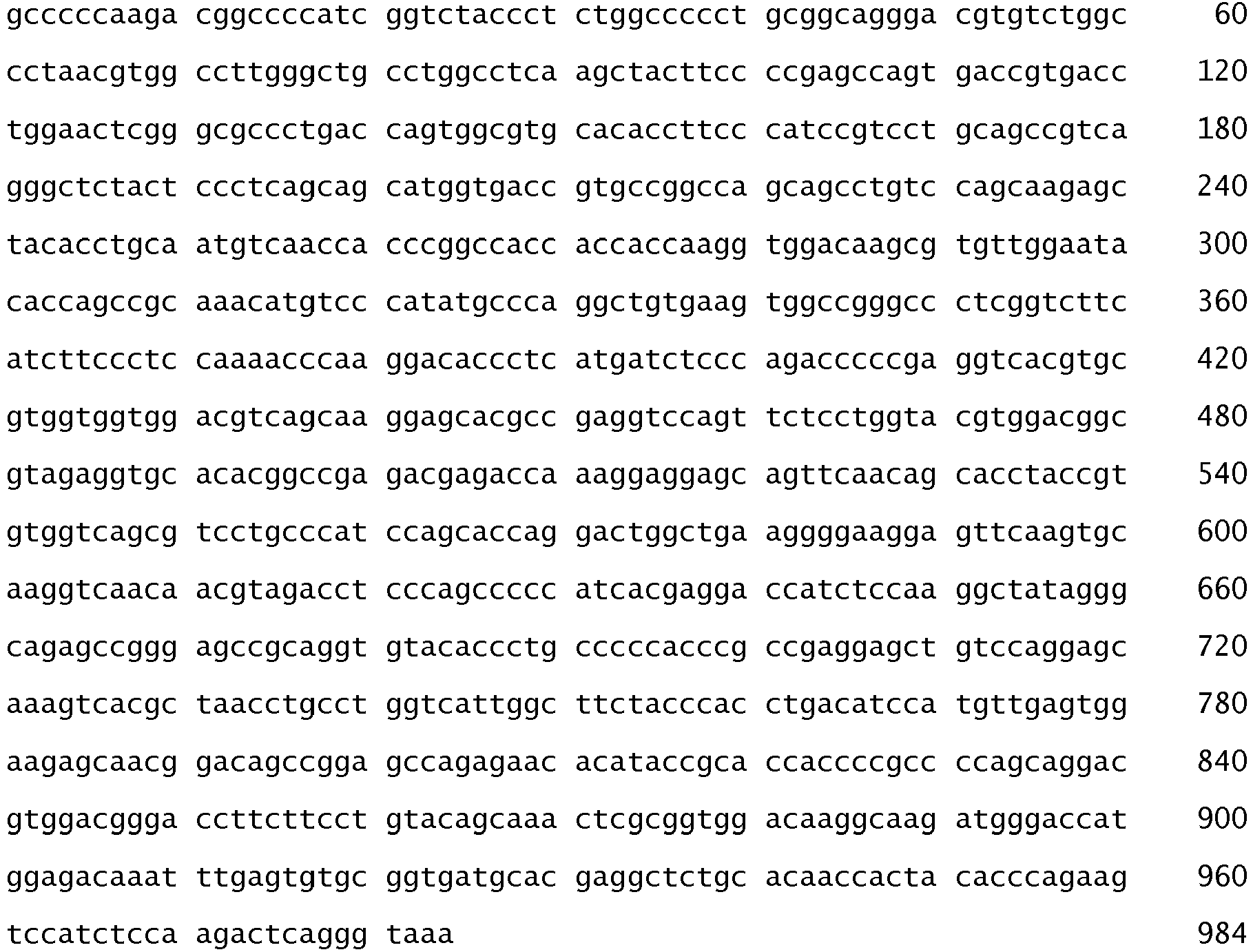
- <210> 4
<211> 328
<212> PRT
<213> swine - <400> 4


- <210> 5
<211> 1413
<212> DNA
<213> Foot-and-mouth disease virus - <400> 5

- <210> 6
<211> 470
<212> PRT
<213> Foot-and-mouth disease virus - <400> 6


- <210> 7
<211> 2814
<212> DNA
<213> artificial - <220>
<223> DNA sequence encoding the recombinant protein - <400> 7


- <210> 8
<211> 899
<212> PRT
<213> artificial - <220>
<223> amino acid sequence of the recombinant protein - <400> 8


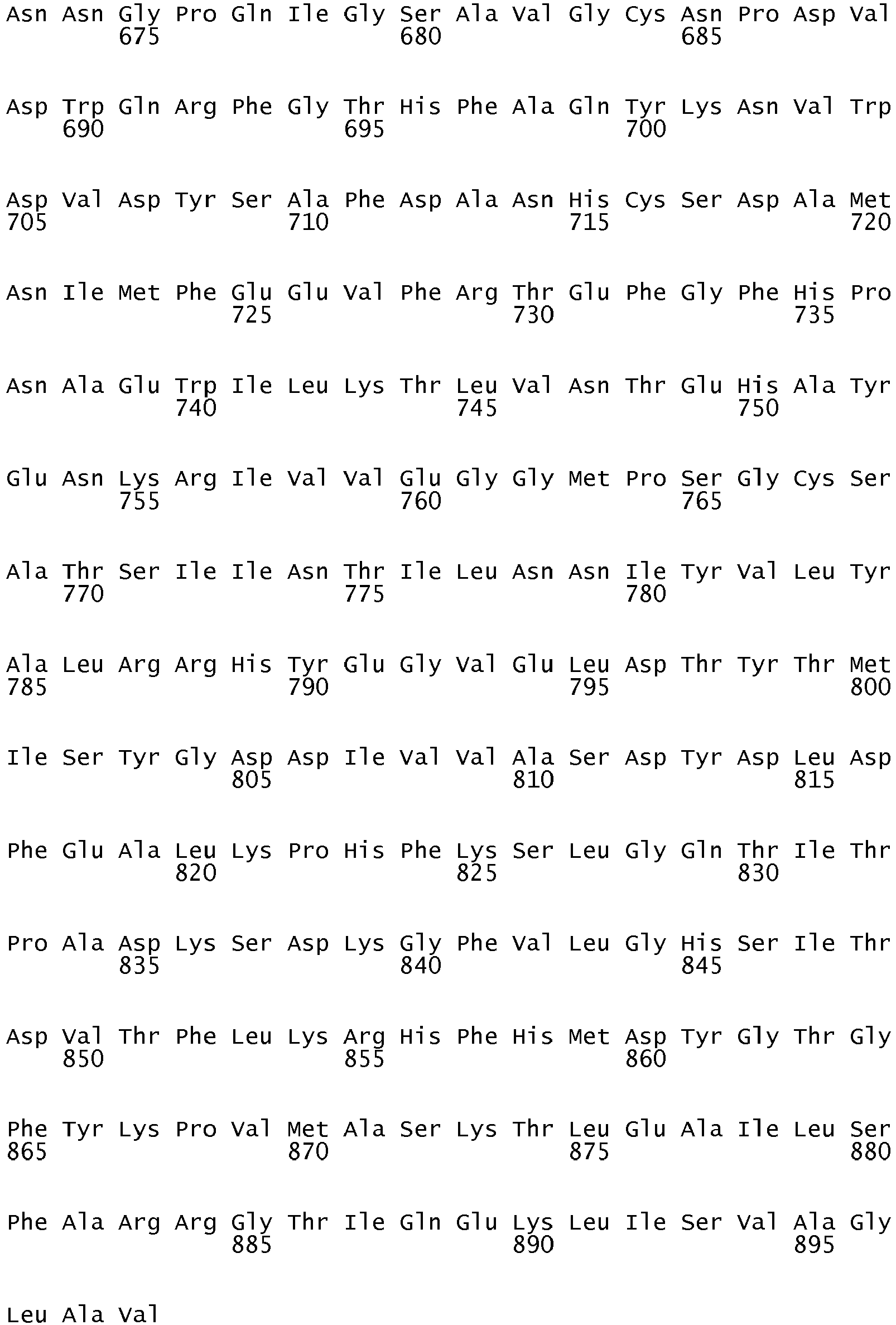
- <210> 9
<211> 20
<212> PRT
<213> Foot-and-mouth disease virus - <400> 9

- <210> 10
<211> 14
<212> PRT
<213> Foot-and-mouth disease virus - <400> 10

- <210> 11
<211> 6
<212> PRT
<213> artificial - <220>
<223> linker - <400> 11

- <210> 12
<211> 9
<212> PRT
<213> artificial - <220>
<223> linker - <400> 12

- <210> 13
<211> 467
<212> PRT
<213> artificial - <220>
<223> amino acid sequence of the recombinant protein - <400> 13


- <210> 14
<211> 1401
<212> DNA
<213> artificial - <220>
<223> DNA sequence encoding the recombinant protein - <400> 14


- <210> 15
<211> 18
<212> DNA
<213> artificial - <220>
<223> scIgG 5'primer - <400> 15
gcccccaaga cggcccca 18 - <210> 16
<211> 18
<212> DNA
<213> artificial - <220>
<223> scIgG 3' primer - <400> 16
tcatcattta ccctgagt 18 - <210> 17
<211> 41
<212> DNA
<213> artificial - <220>
<223> 3D 5' primer - <400> 17
ccatctccaa gactcagggt aaagggttga tcgtcgacac c 41 - <210> 18
<211> 16
<212> DNA
<213> artificial - <220>
<223> 3D 3' primer - <400> 18
gtatgcgtca ccgcac 16 - <210> 19
<211> 25
<212> DNA
<213> artificial - <220>
<223> 3R-IGCD 5' primer - <400> 19
agctgaattc atggtaccaa acctg 25 - <210> 20
<211> 41
<212> DNA
<213> artificial - <220>
<223> 3R-IGC 3' primer1 - <400> 20
ggtagaggtt ctgagtccca tttcccaact agcagctgtg g 41 - <210> 21
<211> 41
<212> DNA
<213> artificial - <220>
<223> D 5' primer - <400> 21
ccatctccaa gactcagggt aaagggttga tcgtcgacac c 41 - <210> 22
<211> 29
<212> DNA
<213> artificial - <220>
<223> 3R-IGCD 3' primer - <400> 22
agcttctaga aatttatgcg tcaccgcac 29 - <210> 23
<211> 22
<212> DNA
<213> artificial - <220>
<223> 3R-IGC 5'primer - <400> 23
agctgaattc atggtaccaa ac 22 - <210> 24
<211> 28
<212> DNA
<213> artificial - <220>
<223> 3R-IGC 3'primer2 - <400> 24
agcttctaga tcatcattta ccctgagt 28 - <210> 25
<211> 26
<212> PRT
<213> Foot-and-mouth disease virus - <400> 25

- <210> 26
<211> 14
<212> PRT
<213> Foot-and-mouth disease virus - <400> 26

- <210> 27
<211> 5
<212> PRT
<213> artificial - <220>
<223> linker - <400> 27

- <210> 28
<211> 486
<212> PRT
<213> artificial - <220>
<223> amino acid sequence of the recombinant protein - <400> 28


- <210> 29
<211> 1461
<212> DNA
<213> artificial - <220>
<223> DNA sequence encoding the recombinant protein - <400> 29


- <210> 30
<211> 956
<212> PRT
<213> artificial - <220>
<223> amino acid sequence of the recombinant protein - <400> 30


- <210> 31
<211> 2868
<212> DNA
<213> artificial - <220>
<223> DNA sequence encoding the recombinant protein - <400> 31


- <210> 32
<211> 20
<212> PRT
<213> Foot-and-mouth disease virus - <400> 32

- <210> 33
<211> 20
<212> PRT
<213> Foot-and-mouth disease virus - <400> 33

- <210> 34
<211> 14
<212> PRT
<213> Foot-and-mouth disease virus - <400> 34

- <210> 35
<211> 32
<212> DNA
<213> artificial - <220>
<223> cIGC 5'primer - <400> 35
catgaagctt gcctccacca cagccccgaaag 32 - <210> 36
<211> 38
<212> DNA
<213> artificial - <220>
<223> cIGC 3' primer - <400> 36
ccggctcgag tttacccgca gacttagagg tggacttc 38 - <210> 37
<211> 330
<212> PRT
<213> cattle - <400> 37


- <210> 38
<211> 990
<212> DNA
<213> cattle - <400> 38

- <210> 39
<211> 470
<212> PRT
<213> artificial - <220>
<223> amino acid sequence of the recombinant protein - <400> 39


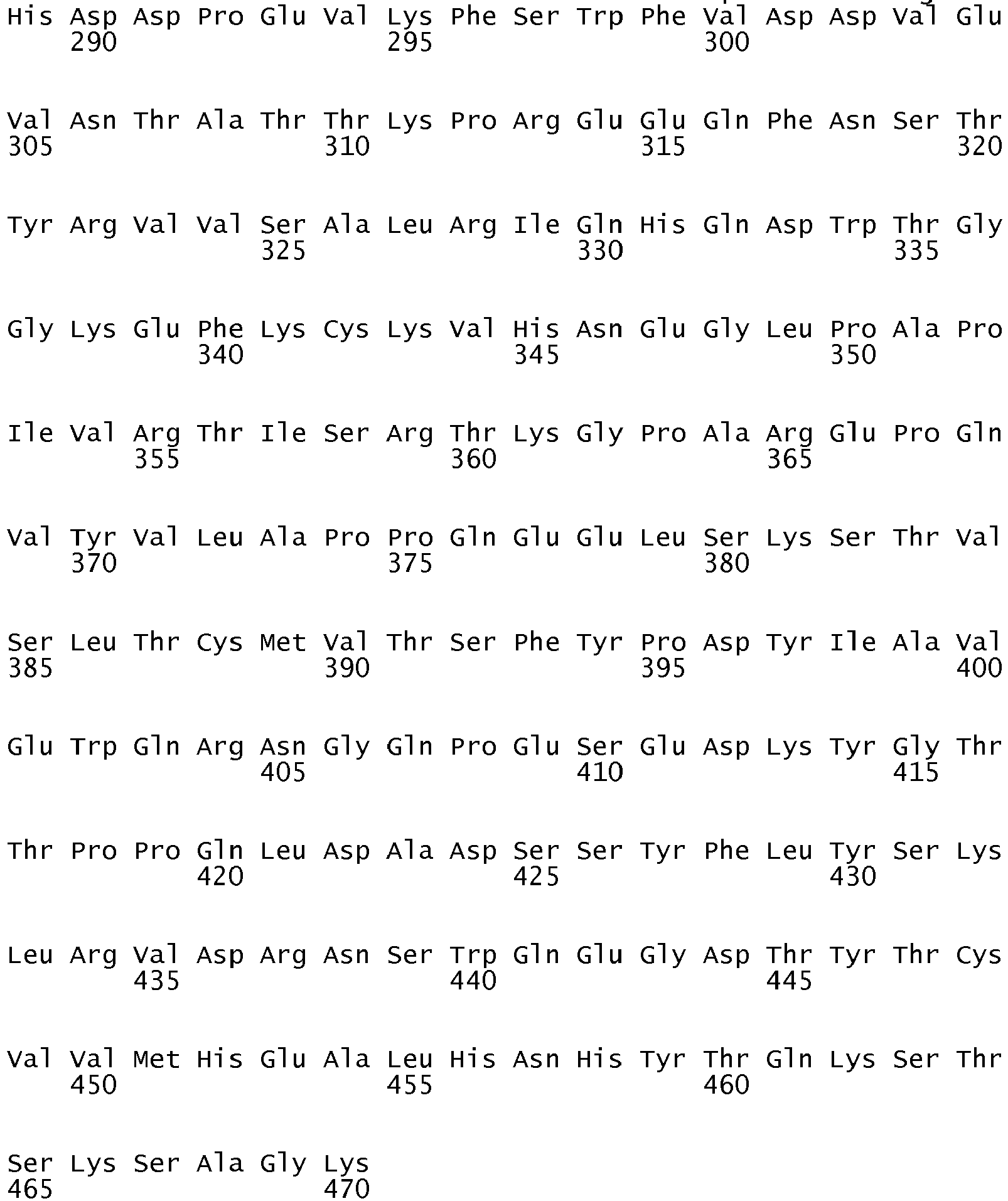
- <210> 40
<211> 1413
<212> DNA
<213> artificial - <220>
<223> DNA sequence encoding the recombinant protein - <400> 40

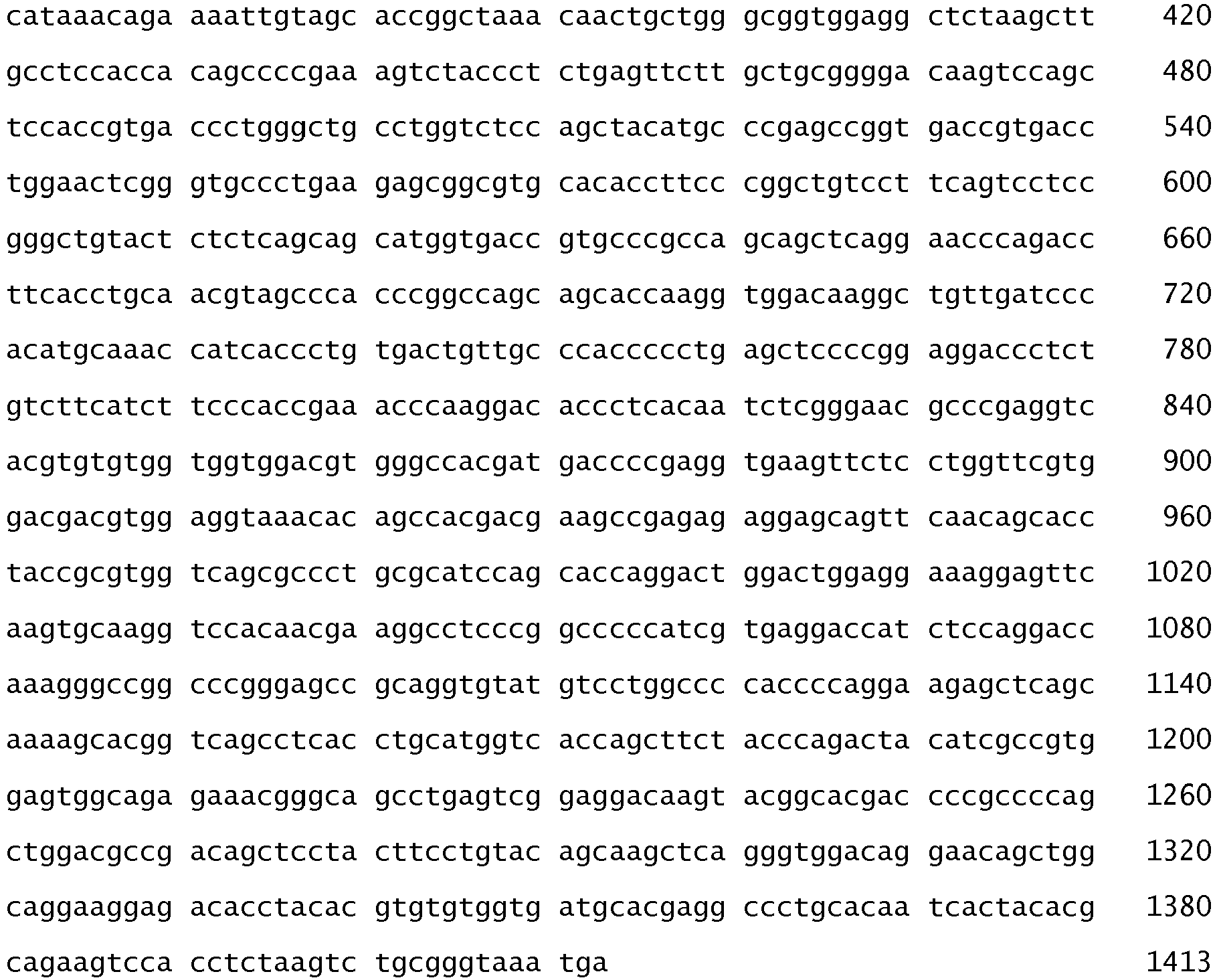
- <210> 41
<211> 940
<212> PRT
<213> artificial - <220>
<223> amino acid sequence of the recombinant protein - <400> 41


- <210> 42
<211> 2820
<212> DNA
<213> artificial - <220>
<223> DNA sequence encoding the recombinant protein - <400> 42


- <210> 43
<211> 20
<212> PRT
<213> Foot-and-mouth disease virus - <400> 43

- <210> 44
<211> 14
<212> PRT
<213> Foot-and-mouth disease virus - <400> 44

- <210> 45
<211> 468
<212> PRT
<213> artificial - <220>
<223> amino acid sequence of the recombinant protein - <400> 45


- <210> 46
<211> 1380
<212> DNA
<213> artificial - <220>
<223> DNA sequence encoding the recombinant protein - <400> 46

- <210> 47
<211> 938
<212> PRT
<213> artificial - <220>
<223> amino acid sequence of the recombinant protein - <400> 47


- <210> 48
<211> 2814
<212> DNA
<213> artificial - <220>
<223> DNA sequence encoding the recombinant protein - <400> 48


wherein said more than one antigenic epitope in the recombinant protein is repeated for 2, 3, 4, or 5 times in the tandem repeat,
wherein said VP1 protein and 3D protein are from the same serotype or from different serotypes of FMDV selected from the group consisting of O serotype FMDV, European A serotype FMDV and Asia 1 serotype FMDV.
wherein said more than one antigenic epitope in the recombinant protein is repeated for 2, 3, 4, or 5 times in the tandem repeat,
wherein said VP1 protein and 3D protein are from the same serotype or from different serotypes of FMDV selected from the group consisting of O serotype FMDV, European A serotype FMDV and Asia 1 serotype FMDV.
Claims (13)
- A vaccine composition for use in inducing a specific immune response against foot-and-mouth disease virus (FMDV) in an animal, wherein the vaccine composition comprises a recombinant protein comprising from its N-terminus to C-terminus:- a tandem repeat of more than one antigenic epitope of FMDV VP1 protein;- the constant region of the immunoglobulin heavy chain; and- the FMDV 3D protein, anda pharmaceutically acceptable carrier and/or adjuvant,
wherein said more than one antigenic epitope in the recombinant protein is repeated for 2, 3, 4, or 5 times in the tandem repeat,
wherein said VP1 protein and 3D protein are from the same serotype or from different serotypes of FMDV selected from the group consisting of O serotype FMDV, European A serotype FMDV and Asia 1 serotype FMDV. - A vaccine composition for use in inducing a specific immune response against FMDV in an animal, wherein the vaccine composition comprises:(i) a recombinant protein comprising from its N-terminus to C-terminus:- a tandem repeat of more than one antigenic epitope of FMDV VP1 protein; and- the constant region of the immunoglobulin heavy chain; and(ii) the FMDV 3D protein, anda pharmaceutically acceptable carrier and/or adjuvant,
wherein said more than one antigenic epitope in the recombinant protein is repeated for 2, 3, 4, or 5 times in the tandem repeat,
wherein said VP1 protein and 3D protein are from the same serotype or from different serotypes of FMDV selected from the group consisting of O serotype FMDV, European A serotype FMDV and Asia 1 serotype FMDV. - The vaccine composition for the use of any one of claims 1 to 2, wherein the repeated antigenic epitopes are linked to each other via a peptide linker and/or wherein the tandem repeat of the antigenic epitope is linked to the constant region of the immunoglobulin heavy chain via a peptide linker.
- The vaccine composition for the use of any one of claims 1 to 3, wherein said antigenic epitope derived from VP1 protein elicits B lymphocyte response.
- The vaccine composition for the use of any one of claims 1 to 4, wherein said antigenic epitope of VP1 comprises one or more amino acid sequences selected from the group consisting of SEQ ID NO:9, SEQ ID NO:10, SEQ ID NO:25, SEQ ID NO:26, SEQ ID NO:32, SEQ ID NO:33, SEQ ID NO:34, SEQ ID NO:43, and SEQ ID NO:44.
- The vaccine composition for the use of any one of claims 1 to 4, wherein said tandem repeat is a tandem repeat of two antigenic epitopes of VP1, wherein the amino acid sequences of the first and the second antigenic epitope of VP1 are respectively SEQ ID NO:9 and SEQ ID NO:10, SEQ ID NO:25 and SEQ ID NO:26, or SEQ ID NO:43 and SEQ ID NO:44; or said tandem repeat is a tandem repeat of three antigenic epitopes of VP1, wherein the amino acid sequences of the first, the second, and the third antigenic epitope of VP1 are respectively SEQ ID NO:32, SEQ ID NO:33, and SEQ ID NO:34.
- The vaccine composition for the use of any one of claims 1 to 6, wherein said constant region of the immunoglobulin heavy chain is from the same species as said animal.
- The vaccine composition for the use of claim 1, wherein said recombinant protein comprises an amino acid sequence selected from the group consisting of SEQ ID NO:8, SEQ ID NO:30, SEQ ID NO:41, and SEQ ID NO:47.
- The vaccine composition for the use of claim 2, wherein said recombinant protein comprises an amino acid sequence selected from the group consisting of SEQ ID NO: 13, SEQ ID NO:28, SEQ ID NO:39, and SEQ ID NO:45.
- The vaccine composition for the use of claim 1 or 2, wherein said animal is a pig, cattle, or sheep.
- An isolated polynucleotide encoding the recombinant protein contained in the vaccine composition as defined in claim 1.
- The isolated polynucleotide of claim 11 comprising a nucleotide sequence selected from the group consisting of SEQ ID NO:7, SEQ ID NO:14, SEQ ID NO:29, SEQ ID NO:31, SEQ ID NO:40, SEQ ID NO:42, SEQ ID NO:46, and SEQ ID NO:48.
- An isolated recombinant protein comprising an amino acid sequence encoded by the polynucleotide of claim 11 or 12.
Applications Claiming Priority (2)
| Application Number | Priority Date | Filing Date | Title |
|---|---|---|---|
| CN200810172927.8A CN101721698B (en) | 2008-10-24 | 2008-10-24 | Anti-foot-and-mouth disease vaccine composition and its preparation and application |
| PCT/CN2009/074585 WO2010045881A1 (en) | 2008-10-24 | 2009-10-23 | A vaccine composition against foot-and-mouth disease and the preparation method thereof |
Publications (4)
| Publication Number | Publication Date |
|---|---|
| EP2351581A1 EP2351581A1 (en) | 2011-08-03 |
| EP2351581A9 EP2351581A9 (en) | 2011-11-02 |
| EP2351581A4 EP2351581A4 (en) | 2013-02-27 |
| EP2351581B1 true EP2351581B1 (en) | 2017-07-12 |
Family
ID=42118967
Family Applications (1)
| Application Number | Title | Priority Date | Filing Date |
|---|---|---|---|
| EP09821602.1A Active EP2351581B1 (en) | 2008-10-24 | 2009-10-23 | A vaccine composition against foot-and-mouth disease and the preparation method thereof |
Country Status (8)
| Country | Link |
|---|---|
| US (1) | US8551495B2 (en) |
| EP (1) | EP2351581B1 (en) |
| JP (2) | JP5565877B2 (en) |
| KR (1) | KR101313159B1 (en) |
| CN (1) | CN101721698B (en) |
| AU (1) | AU2009306900B2 (en) |
| CA (1) | CA2741419C (en) |
| WO (1) | WO2010045881A1 (en) |
Cited By (1)
| Publication number | Priority date | Publication date | Assignee | Title |
|---|---|---|---|---|
| RU2839585C2 (en) * | 2018-12-19 | 2025-05-06 | Юнайтед Байомедикал, Инк. | Artificial non-selective epitopes of t-helper cells as immune stimulators for synthetic peptide immunogens |
Families Citing this family (21)
| Publication number | Priority date | Publication date | Assignee | Title |
|---|---|---|---|---|
| CN102512671A (en) * | 2011-12-16 | 2012-06-27 | 厦门大学 | Anti-foot-and-mouth disease type O virus-like particle vaccine and preparation method thereof |
| RU2526570C2 (en) * | 2012-08-09 | 2014-08-27 | Федеральное государственное бюджетное учреждение "Федеральный центр охраны здоровья животных" (ФГБУ "ВНИИЗЖ") | Inactivated sorbent type a foot-and-mouth disease vaccine |
| CN103214560B (en) * | 2013-03-25 | 2014-10-01 | 中国牧工商(集团)总公司 | Polypeptide used for preparing bovine foot and mouth disease type O peptide vaccine, and preparation method and application thereof |
| UA121200C2 (en) | 2013-09-19 | 2020-04-27 | Зоетіс Сервісіз Ллс | OIL-BASED ADJUSTANT |
| CN103773803A (en) * | 2014-01-23 | 2014-05-07 | 中国农业科学院特产研究所 | Recombined cattle parainfluenza carrier for expressing protein VP1 of porcine O type foot-and-mouth disease virus |
| CN103897065B (en) * | 2014-03-13 | 2016-08-24 | 中国农业科学院兰州兽医研究所 | Ox Asia1/O type aftosa bivalent polyepitope vaccines and its preparation method and application |
| RU2563345C1 (en) * | 2014-04-16 | 2015-09-20 | Федеральное государственное бюджетное учреждение "Федеральный центр охраны здоровья животных" (ФГБУ "ВНИИЗЖ") | Inactivated sorbed vaccine against fmd of type a |
| US20170233452A1 (en) * | 2014-04-23 | 2017-08-17 | Immusoft Corporation | Chimeric antigen receptors specific to avb6 integrin and methods of use thereof to treat cancer |
| KR20220100725A (en) | 2016-06-02 | 2022-07-15 | 조에티스 서비시즈 엘엘씨 | Vaccine against infectious bronchitis |
| KR102165358B1 (en) * | 2017-12-29 | 2020-10-14 | (주)플럼라인생명과학 | Vaccine composition for foot and mouth disease virus a serotype |
| CN109021109A (en) * | 2018-07-20 | 2018-12-18 | 上海交通大学 | A kind of ox source property anti-Staphylococcus aureus fusion antibody scFv-Fc and preparation method thereof |
| WO2020132275A1 (en) * | 2018-12-19 | 2020-06-25 | Ubi Ip Holdings | Artificial promiscuous t helper cell epitopes as immune stimulators for synthetic peptide immunogens |
| KR102672787B1 (en) * | 2019-06-28 | 2024-06-05 | (주)플럼라인생명과학 | Vaccine composition for foot and mouth disease virus |
| CN110372791A (en) * | 2019-07-30 | 2019-10-25 | 中国农业科学院兰州兽医研究所 | A kind of preparation method of the single-stranded genetic engineering antibody in foot-and-mouth disease virus resistant pig source |
| CN110624100B (en) * | 2019-09-06 | 2021-03-16 | 中国农业科学院兰州兽医研究所 | Application of foot-and-mouth disease virus 3D protein as cell TLR3 pathway activator |
| KR102234754B1 (en) | 2019-10-28 | 2021-04-01 | 대한민국 | Foot-and-mouth disease recombinant type A virus inserted with T cell epitope and vaccine composition containing inactivated antigen isolated and purified from this virus |
| CA3173905A1 (en) * | 2020-04-21 | 2021-10-28 | Karin Jooss | Antigen-encoding cassettes |
| CN111848815A (en) * | 2020-07-13 | 2020-10-30 | 上海健康医学院 | Porcine hepatitis E genotype 4 virus and swine foot-and-mouth disease type O virus neutralizing epitope chimeric protein and its preparation method and application |
| KR102523209B1 (en) | 2020-11-11 | 2023-04-20 | 대한민국 | Foot-and-mouth disease type O recombinant virus (O TWN-3A) inserted with T cell epitope for enhancing cellular immunity and vaccine composition containing inactivated antigen isolated and purified from the virus |
| KR102623115B1 (en) | 2021-07-23 | 2024-01-10 | 대한민국 | Novel foot-and-mouth disease Asia1 recombinant virus and foot-and-mouth disease vaccine composition comprising the same |
| CN118304393B (en) * | 2024-01-19 | 2024-11-29 | 中国农业科学院兰州兽医研究所(中国动物卫生与流行病学中心兰州分中心) | O-type foot-and-mouth disease virus composite epitope protein vaccine for current epidemic strains and application |
Family Cites Families (7)
| Publication number | Priority date | Publication date | Assignee | Title |
|---|---|---|---|---|
| US6774225B2 (en) * | 1999-04-15 | 2004-08-10 | Hong Kong University Of Science & Technology | Antigenized antibody vaccine for foot-and-mouth disease |
| CN1287858C (en) * | 2002-09-16 | 2006-12-06 | 复旦大学 | Foot-and-mouth disease gene engineering polypeptide vaccine and its preparing method |
| CN1275649C (en) * | 2003-11-07 | 2006-09-20 | 复旦大学 | Bivalence polypeptide vaccine for resisting A type and O type foot-and-mouth disease virus and its preparation |
| CN1318592C (en) * | 2003-11-11 | 2007-05-30 | 中国农业科学院兰州兽医研究所 | O type foot and mouth disease virus DNA vaccine and its preparing method |
| CN1737144A (en) * | 2004-08-18 | 2006-02-22 | 金宁一 | Composite multiple epitope bivalent nucleic acid vaccine construction for foot-and-mouth disease |
| CN100582122C (en) * | 2006-05-12 | 2010-01-20 | 北京宝麦德生物医药科技有限责任公司 | O-type foot-and-mouth disease virus multi-epitope mucous membrane immunization vaccine and use |
| CN100572541C (en) * | 2007-05-28 | 2009-12-23 | 中国农业科学院兰州兽医研究所 | Foot-and-mouth disease virus double-effect vaccine carrier, its preparation method and application |
-
2008
- 2008-10-24 CN CN200810172927.8A patent/CN101721698B/en not_active Expired - Fee Related
-
2009
- 2009-10-23 WO PCT/CN2009/074585 patent/WO2010045881A1/en not_active Ceased
- 2009-10-23 AU AU2009306900A patent/AU2009306900B2/en not_active Ceased
- 2009-10-23 KR KR1020117011664A patent/KR101313159B1/en active Active
- 2009-10-23 JP JP2011532486A patent/JP5565877B2/en not_active Expired - Fee Related
- 2009-10-23 US US13/125,907 patent/US8551495B2/en not_active Expired - Fee Related
- 2009-10-23 CA CA2741419A patent/CA2741419C/en active Active
- 2009-10-23 EP EP09821602.1A patent/EP2351581B1/en active Active
-
2014
- 2014-03-18 JP JP2014054853A patent/JP2014147389A/en not_active Withdrawn
Non-Patent Citations (1)
| Title |
|---|
| HUA TANG: "The epitopes of Foot and Mouth Disease", ASIAN JOURNAL OF ANIMAL AND VETERINARY ADVANCES, vol. 7, no. 12, 2012, pages 1261 - 1265, ISSN: 1683-9919 * |
Cited By (1)
| Publication number | Priority date | Publication date | Assignee | Title |
|---|---|---|---|---|
| RU2839585C2 (en) * | 2018-12-19 | 2025-05-06 | Юнайтед Байомедикал, Инк. | Artificial non-selective epitopes of t-helper cells as immune stimulators for synthetic peptide immunogens |
Also Published As
| Publication number | Publication date |
|---|---|
| EP2351581A4 (en) | 2013-02-27 |
| JP2012506242A (en) | 2012-03-15 |
| AU2009306900A1 (en) | 2010-04-29 |
| JP2014147389A (en) | 2014-08-21 |
| AU2009306900B2 (en) | 2013-06-06 |
| US20110206718A1 (en) | 2011-08-25 |
| US8551495B2 (en) | 2013-10-08 |
| CA2741419C (en) | 2015-01-27 |
| CA2741419A1 (en) | 2010-04-29 |
| KR101313159B1 (en) | 2013-09-30 |
| CN101721698B (en) | 2014-04-02 |
| KR20110088526A (en) | 2011-08-03 |
| EP2351581A1 (en) | 2011-08-03 |
| CN101721698A (en) | 2010-06-09 |
| HK1144787A1 (en) | 2011-03-11 |
| EP2351581A9 (en) | 2011-11-02 |
| JP5565877B2 (en) | 2014-08-06 |
| WO2010045881A1 (en) | 2010-04-29 |
Similar Documents
| Publication | Publication Date | Title |
|---|---|---|
| US8551495B2 (en) | Anti-FMD vaccine composition and preparation and use thereof | |
| CN102675471B (en) | Pig foot-and-mouth disease virus O-type broad spectrum multi-epitope recombination antigen and application thereof | |
| US10420832B2 (en) | Synthetic peptide-based emergency vaccine against foot and mouth disease (FMD) | |
| CN113151184A (en) | Method for cell membrane-based display of coronavirus immunogens to induce neutralizing antibodies | |
| Smith et al. | Display of peptides on the surface of tobacco mosaic virus particles | |
| CN1989240B (en) | Vaccines containing attenuated pestiviruses | |
| Chan et al. | An immunoglobulin G based chimeric protein induced foot-and-mouth disease specific immune response in swine | |
| ES2924914T3 (en) | Human rhinovirus vaccine | |
| CN116102660A (en) | A kind of porcine parvovirus genetic engineering epitope vaccine and its preparation method | |
| CN102657864B (en) | Immune adjuvant of foot-and-mouth disease vaccine and application of immune adjuvant | |
| Yi et al. | Recombinant bivalent vaccine against foot-and-mouth disease virus serotype O/A infection in guinea pig | |
| HK1155064A (en) | A vaccine composition against foot-and-mouth disease and the preparation method thereof | |
| He et al. | A novel nanoparticle vaccine, based on S1-CTD, elicits robust protective immune responses against porcine deltacoronavirus | |
| CN103169962A (en) | Anti-foot-and-mouth disease vaccine composition and preparation and application thereof | |
| Shao et al. | Immune potential of a novel multiple-epitope vaccine to FMDV type Asia 1 in guinea pigs and sheep | |
| HK1144787B (en) | Anti-fmd vaccine composition and preparation and use thereof | |
| Martínez-Espinosa et al. | mRNA-based COVID-19 vaccines: a new age | |
| TW201018480A (en) | Duck hepatitis vaccine and the manufacture method thereof | |
| Maity | MASTERS OF VETERINARY SCIENCE | |
| WO2022049276A1 (en) | Ha stem vaccine for ha antibody-positive targets | |
| Lan et al. | PCR Detects the DNA Vaccines in mice Vaccinated via and Construction Containing Hsp70 and GP5/M protein of PRRSV | |
| Deryabin et al. | Obtaining classical swine fever virus E2 recombinant protein and DNA-vaccine on the basis of one subunit | |
| Bhat | EVALUATION OF BACULOVIRUS EXPRESSED FOOT AND MOUTH DISEASE (FMD) TYPE O VIRUS CAPSID PROTEINS FOR THEIR IMMUNOGENICITY | |
| AU4809101A (en) | Polynucleotide vaccine against canine distemper |
Legal Events
| Date | Code | Title | Description |
|---|---|---|---|
| PUAI | Public reference made under article 153(3) epc to a published international application that has entered the european phase |
Free format text: ORIGINAL CODE: 0009012 |
|
| 17P | Request for examination filed |
Effective date: 20110517 |
|
| AK | Designated contracting states |
Kind code of ref document: A1 Designated state(s): AT BE BG CH CY CZ DE DK EE ES FI FR GB GR HR HU IE IS IT LI LT LU LV MC MK MT NL NO PL PT RO SE SI SK SM TR |
|
| DAX | Request for extension of the european patent (deleted) | ||
| REG | Reference to a national code |
Ref country code: HK Ref legal event code: DE Ref document number: 1155064 Country of ref document: HK |
|
| RIC1 | Information provided on ipc code assigned before grant |
Ipc: A61K 39/135 20060101AFI20130117BHEP Ipc: A61P 31/14 20060101ALI20130117BHEP |
|
| A4 | Supplementary search report drawn up and despatched |
Effective date: 20130128 |
|
| RAP1 | Party data changed (applicant data changed or rights of an application transferred) |
Owner name: PHAROS VACCINE INC. |
|
| 17Q | First examination report despatched |
Effective date: 20140317 |
|
| GRAP | Despatch of communication of intention to grant a patent |
Free format text: ORIGINAL CODE: EPIDOSNIGR1 |
|
| INTG | Intention to grant announced |
Effective date: 20170303 |
|
| GRAS | Grant fee paid |
Free format text: ORIGINAL CODE: EPIDOSNIGR3 |
|
| GRAA | (expected) grant |
Free format text: ORIGINAL CODE: 0009210 |
|
| AK | Designated contracting states |
Kind code of ref document: B1 Designated state(s): AT BE BG CH CY CZ DE DK EE ES FI FR GB GR HR HU IE IS IT LI LT LU LV MC MK MT NL NO PL PT RO SE SI SK SM TR |
|
| REG | Reference to a national code |
Ref country code: GB Ref legal event code: FG4D |
|
| REG | Reference to a national code |
Ref country code: CH Ref legal event code: EP |
|
| REG | Reference to a national code |
Ref country code: AT Ref legal event code: REF Ref document number: 907725 Country of ref document: AT Kind code of ref document: T Effective date: 20170715 |
|
| REG | Reference to a national code |
Ref country code: IE Ref legal event code: FG4D |
|
| REG | Reference to a national code |
Ref country code: DE Ref legal event code: R096 Ref document number: 602009047136 Country of ref document: DE |
|
| REG | Reference to a national code |
Ref country code: FR Ref legal event code: PLFP Year of fee payment: 9 |
|
| REG | Reference to a national code |
Ref country code: NL Ref legal event code: MP Effective date: 20170712 |
|
| REG | Reference to a national code |
Ref country code: LT Ref legal event code: MG4D |
|
| REG | Reference to a national code |
Ref country code: AT Ref legal event code: MK05 Ref document number: 907725 Country of ref document: AT Kind code of ref document: T Effective date: 20170712 |
|
| PG25 | Lapsed in a contracting state [announced via postgrant information from national office to epo] |
Ref country code: AT Free format text: LAPSE BECAUSE OF FAILURE TO SUBMIT A TRANSLATION OF THE DESCRIPTION OR TO PAY THE FEE WITHIN THE PRESCRIBED TIME-LIMIT Effective date: 20170712 Ref country code: SE Free format text: LAPSE BECAUSE OF FAILURE TO SUBMIT A TRANSLATION OF THE DESCRIPTION OR TO PAY THE FEE WITHIN THE PRESCRIBED TIME-LIMIT Effective date: 20170712 Ref country code: HR Free format text: LAPSE BECAUSE OF FAILURE TO SUBMIT A TRANSLATION OF THE DESCRIPTION OR TO PAY THE FEE WITHIN THE PRESCRIBED TIME-LIMIT Effective date: 20170712 Ref country code: NL Free format text: LAPSE BECAUSE OF FAILURE TO SUBMIT A TRANSLATION OF THE DESCRIPTION OR TO PAY THE FEE WITHIN THE PRESCRIBED TIME-LIMIT Effective date: 20170712 Ref country code: NO Free format text: LAPSE BECAUSE OF FAILURE TO SUBMIT A TRANSLATION OF THE DESCRIPTION OR TO PAY THE FEE WITHIN THE PRESCRIBED TIME-LIMIT Effective date: 20171012 Ref country code: LT Free format text: LAPSE BECAUSE OF FAILURE TO SUBMIT A TRANSLATION OF THE DESCRIPTION OR TO PAY THE FEE WITHIN THE PRESCRIBED TIME-LIMIT Effective date: 20170712 Ref country code: FI Free format text: LAPSE BECAUSE OF FAILURE TO SUBMIT A TRANSLATION OF THE DESCRIPTION OR TO PAY THE FEE WITHIN THE PRESCRIBED TIME-LIMIT Effective date: 20170712 |
|
| PG25 | Lapsed in a contracting state [announced via postgrant information from national office to epo] |
Ref country code: GR Free format text: LAPSE BECAUSE OF FAILURE TO SUBMIT A TRANSLATION OF THE DESCRIPTION OR TO PAY THE FEE WITHIN THE PRESCRIBED TIME-LIMIT Effective date: 20171013 Ref country code: PL Free format text: LAPSE BECAUSE OF FAILURE TO SUBMIT A TRANSLATION OF THE DESCRIPTION OR TO PAY THE FEE WITHIN THE PRESCRIBED TIME-LIMIT Effective date: 20170712 Ref country code: BG Free format text: LAPSE BECAUSE OF FAILURE TO SUBMIT A TRANSLATION OF THE DESCRIPTION OR TO PAY THE FEE WITHIN THE PRESCRIBED TIME-LIMIT Effective date: 20171012 Ref country code: ES Free format text: LAPSE BECAUSE OF FAILURE TO SUBMIT A TRANSLATION OF THE DESCRIPTION OR TO PAY THE FEE WITHIN THE PRESCRIBED TIME-LIMIT Effective date: 20170712 Ref country code: IS Free format text: LAPSE BECAUSE OF FAILURE TO SUBMIT A TRANSLATION OF THE DESCRIPTION OR TO PAY THE FEE WITHIN THE PRESCRIBED TIME-LIMIT Effective date: 20171112 Ref country code: LV Free format text: LAPSE BECAUSE OF FAILURE TO SUBMIT A TRANSLATION OF THE DESCRIPTION OR TO PAY THE FEE WITHIN THE PRESCRIBED TIME-LIMIT Effective date: 20170712 |
|
| REG | Reference to a national code |
Ref country code: DE Ref legal event code: R097 Ref document number: 602009047136 Country of ref document: DE |
|
| PG25 | Lapsed in a contracting state [announced via postgrant information from national office to epo] |
Ref country code: CZ Free format text: LAPSE BECAUSE OF FAILURE TO SUBMIT A TRANSLATION OF THE DESCRIPTION OR TO PAY THE FEE WITHIN THE PRESCRIBED TIME-LIMIT Effective date: 20170712 Ref country code: DK Free format text: LAPSE BECAUSE OF FAILURE TO SUBMIT A TRANSLATION OF THE DESCRIPTION OR TO PAY THE FEE WITHIN THE PRESCRIBED TIME-LIMIT Effective date: 20170712 Ref country code: RO Free format text: LAPSE BECAUSE OF FAILURE TO SUBMIT A TRANSLATION OF THE DESCRIPTION OR TO PAY THE FEE WITHIN THE PRESCRIBED TIME-LIMIT Effective date: 20170712 |
|
| PLBE | No opposition filed within time limit |
Free format text: ORIGINAL CODE: 0009261 |
|
| STAA | Information on the status of an ep patent application or granted ep patent |
Free format text: STATUS: NO OPPOSITION FILED WITHIN TIME LIMIT |
|
| PG25 | Lapsed in a contracting state [announced via postgrant information from national office to epo] |
Ref country code: MC Free format text: LAPSE BECAUSE OF FAILURE TO SUBMIT A TRANSLATION OF THE DESCRIPTION OR TO PAY THE FEE WITHIN THE PRESCRIBED TIME-LIMIT Effective date: 20170712 Ref country code: SM Free format text: LAPSE BECAUSE OF FAILURE TO SUBMIT A TRANSLATION OF THE DESCRIPTION OR TO PAY THE FEE WITHIN THE PRESCRIBED TIME-LIMIT Effective date: 20170712 Ref country code: SK Free format text: LAPSE BECAUSE OF FAILURE TO SUBMIT A TRANSLATION OF THE DESCRIPTION OR TO PAY THE FEE WITHIN THE PRESCRIBED TIME-LIMIT Effective date: 20170712 Ref country code: IT Free format text: LAPSE BECAUSE OF FAILURE TO SUBMIT A TRANSLATION OF THE DESCRIPTION OR TO PAY THE FEE WITHIN THE PRESCRIBED TIME-LIMIT Effective date: 20170712 Ref country code: EE Free format text: LAPSE BECAUSE OF FAILURE TO SUBMIT A TRANSLATION OF THE DESCRIPTION OR TO PAY THE FEE WITHIN THE PRESCRIBED TIME-LIMIT Effective date: 20170712 |
|
| REG | Reference to a national code |
Ref country code: CH Ref legal event code: PL |
|
| 26N | No opposition filed |
Effective date: 20180413 |
|
| REG | Reference to a national code |
Ref country code: IE Ref legal event code: MM4A |
|
| PG25 | Lapsed in a contracting state [announced via postgrant information from national office to epo] |
Ref country code: LI Free format text: LAPSE BECAUSE OF NON-PAYMENT OF DUE FEES Effective date: 20171031 Ref country code: CH Free format text: LAPSE BECAUSE OF NON-PAYMENT OF DUE FEES Effective date: 20171031 Ref country code: LU Free format text: LAPSE BECAUSE OF NON-PAYMENT OF DUE FEES Effective date: 20171023 |
|
| REG | Reference to a national code |
Ref country code: BE Ref legal event code: MM Effective date: 20171031 |
|
| PG25 | Lapsed in a contracting state [announced via postgrant information from national office to epo] |
Ref country code: SI Free format text: LAPSE BECAUSE OF FAILURE TO SUBMIT A TRANSLATION OF THE DESCRIPTION OR TO PAY THE FEE WITHIN THE PRESCRIBED TIME-LIMIT Effective date: 20170712 Ref country code: BE Free format text: LAPSE BECAUSE OF NON-PAYMENT OF DUE FEES Effective date: 20171031 |
|
| REG | Reference to a national code |
Ref country code: FR Ref legal event code: PLFP Year of fee payment: 10 |
|
| PG25 | Lapsed in a contracting state [announced via postgrant information from national office to epo] |
Ref country code: MT Free format text: LAPSE BECAUSE OF NON-PAYMENT OF DUE FEES Effective date: 20171023 |
|
| PG25 | Lapsed in a contracting state [announced via postgrant information from national office to epo] |
Ref country code: IE Free format text: LAPSE BECAUSE OF NON-PAYMENT OF DUE FEES Effective date: 20171023 |
|
| PG25 | Lapsed in a contracting state [announced via postgrant information from national office to epo] |
Ref country code: HU Free format text: LAPSE BECAUSE OF FAILURE TO SUBMIT A TRANSLATION OF THE DESCRIPTION OR TO PAY THE FEE WITHIN THE PRESCRIBED TIME-LIMIT; INVALID AB INITIO Effective date: 20091023 |
|
| PG25 | Lapsed in a contracting state [announced via postgrant information from national office to epo] |
Ref country code: CY Free format text: LAPSE BECAUSE OF NON-PAYMENT OF DUE FEES Effective date: 20170712 |
|
| PG25 | Lapsed in a contracting state [announced via postgrant information from national office to epo] |
Ref country code: MK Free format text: LAPSE BECAUSE OF FAILURE TO SUBMIT A TRANSLATION OF THE DESCRIPTION OR TO PAY THE FEE WITHIN THE PRESCRIBED TIME-LIMIT Effective date: 20170712 |
|
| PG25 | Lapsed in a contracting state [announced via postgrant information from national office to epo] |
Ref country code: PT Free format text: LAPSE BECAUSE OF FAILURE TO SUBMIT A TRANSLATION OF THE DESCRIPTION OR TO PAY THE FEE WITHIN THE PRESCRIBED TIME-LIMIT Effective date: 20170712 |
|
| PGFP | Annual fee paid to national office [announced via postgrant information from national office to epo] |
Ref country code: FR Payment date: 20220928 Year of fee payment: 14 |
|
| PGFP | Annual fee paid to national office [announced via postgrant information from national office to epo] |
Ref country code: TR Payment date: 20221005 Year of fee payment: 14 Ref country code: GB Payment date: 20221027 Year of fee payment: 14 Ref country code: DE Payment date: 20221012 Year of fee payment: 14 |
|
| REG | Reference to a national code |
Ref country code: DE Ref legal event code: R119 Ref document number: 602009047136 Country of ref document: DE |
|
| GBPC | Gb: european patent ceased through non-payment of renewal fee |
Effective date: 20231023 |
|
| PG25 | Lapsed in a contracting state [announced via postgrant information from national office to epo] |
Ref country code: GB Free format text: LAPSE BECAUSE OF NON-PAYMENT OF DUE FEES Effective date: 20231023 |
|
| PG25 | Lapsed in a contracting state [announced via postgrant information from national office to epo] |
Ref country code: GB Free format text: LAPSE BECAUSE OF NON-PAYMENT OF DUE FEES Effective date: 20231023 Ref country code: FR Free format text: LAPSE BECAUSE OF NON-PAYMENT OF DUE FEES Effective date: 20231031 Ref country code: DE Free format text: LAPSE BECAUSE OF NON-PAYMENT OF DUE FEES Effective date: 20240501 |