EP2348727A1 - Digital broadcast reception device and digital broadcast reception method - Google Patents
Digital broadcast reception device and digital broadcast reception method Download PDFInfo
- Publication number
- EP2348727A1 EP2348727A1 EP09819161A EP09819161A EP2348727A1 EP 2348727 A1 EP2348727 A1 EP 2348727A1 EP 09819161 A EP09819161 A EP 09819161A EP 09819161 A EP09819161 A EP 09819161A EP 2348727 A1 EP2348727 A1 EP 2348727A1
- Authority
- EP
- European Patent Office
- Prior art keywords
- digital broadcast
- configuration information
- cdn
- broadcast receiver
- time
- Prior art date
- Legal status (The legal status is an assumption and is not a legal conclusion. Google has not performed a legal analysis and makes no representation as to the accuracy of the status listed.)
- Withdrawn
Links
Images


Classifications
-
- H—ELECTRICITY
- H04—ELECTRIC COMMUNICATION TECHNIQUE
- H04N—PICTORIAL COMMUNICATION, e.g. TELEVISION
- H04N21/00—Selective content distribution, e.g. interactive television or video on demand [VOD]
- H04N21/40—Client devices specifically adapted for the reception of or interaction with content, e.g. set-top-box [STB]; Operations thereof
- H04N21/43—Processing of content or additional data, e.g. demultiplexing additional data from a digital video stream; Elementary client operations, e.g. monitoring of home network or synchronising decoder's clock; Client middleware
- H04N21/435—Processing of additional data, e.g. decrypting of additional data, reconstructing software from modules extracted from the transport stream
-
- H—ELECTRICITY
- H04—ELECTRIC COMMUNICATION TECHNIQUE
- H04N—PICTORIAL COMMUNICATION, e.g. TELEVISION
- H04N21/00—Selective content distribution, e.g. interactive television or video on demand [VOD]
- H04N21/20—Servers specifically adapted for the distribution of content, e.g. VOD servers; Operations thereof
- H04N21/23—Processing of content or additional data; Elementary server operations; Server middleware
- H04N21/235—Processing of additional data, e.g. scrambling of additional data or processing content descriptors
-
- H—ELECTRICITY
- H04—ELECTRIC COMMUNICATION TECHNIQUE
- H04N—PICTORIAL COMMUNICATION, e.g. TELEVISION
- H04N21/00—Selective content distribution, e.g. interactive television or video on demand [VOD]
- H04N21/40—Client devices specifically adapted for the reception of or interaction with content, e.g. set-top-box [STB]; Operations thereof
- H04N21/43—Processing of content or additional data, e.g. demultiplexing additional data from a digital video stream; Elementary client operations, e.g. monitoring of home network or synchronising decoder's clock; Client middleware
- H04N21/4302—Content synchronisation processes, e.g. decoder synchronisation
- H04N21/4305—Synchronising client clock from received content stream, e.g. locking decoder clock with encoder clock, extraction of the PCR packets
-
- H—ELECTRICITY
- H04—ELECTRIC COMMUNICATION TECHNIQUE
- H04N—PICTORIAL COMMUNICATION, e.g. TELEVISION
- H04N21/00—Selective content distribution, e.g. interactive television or video on demand [VOD]
- H04N21/40—Client devices specifically adapted for the reception of or interaction with content, e.g. set-top-box [STB]; Operations thereof
- H04N21/43—Processing of content or additional data, e.g. demultiplexing additional data from a digital video stream; Elementary client operations, e.g. monitoring of home network or synchronising decoder's clock; Client middleware
- H04N21/434—Disassembling of a multiplex stream, e.g. demultiplexing audio and video streams, extraction of additional data from a video stream; Remultiplexing of multiplex streams; Extraction or processing of SI; Disassembling of packetised elementary stream
- H04N21/4345—Extraction or processing of SI, e.g. extracting service information from an MPEG stream
-
- H—ELECTRICITY
- H04—ELECTRIC COMMUNICATION TECHNIQUE
- H04N—PICTORIAL COMMUNICATION, e.g. TELEVISION
- H04N21/00—Selective content distribution, e.g. interactive television or video on demand [VOD]
- H04N21/40—Client devices specifically adapted for the reception of or interaction with content, e.g. set-top-box [STB]; Operations thereof
- H04N21/43—Processing of content or additional data, e.g. demultiplexing additional data from a digital video stream; Elementary client operations, e.g. monitoring of home network or synchronising decoder's clock; Client middleware
- H04N21/443—OS processes, e.g. booting an STB, implementing a Java virtual machine in an STB or power management in an STB
- H04N21/4432—Powering on the client, e.g. bootstrap loading using setup parameters being stored locally or received from the server
-
- H—ELECTRICITY
- H04—ELECTRIC COMMUNICATION TECHNIQUE
- H04N—PICTORIAL COMMUNICATION, e.g. TELEVISION
- H04N21/00—Selective content distribution, e.g. interactive television or video on demand [VOD]
- H04N21/60—Network structure or processes for video distribution between server and client or between remote clients; Control signalling between clients, server and network components; Transmission of management data between server and client, e.g. sending from server to client commands for recording incoming content stream; Communication details between server and client
- H04N21/63—Control signaling related to video distribution between client, server and network components; Network processes for video distribution between server and clients or between remote clients, e.g. transmitting basic layer and enhancement layers over different transmission paths, setting up a peer-to-peer communication via Internet between remote STB's; Communication protocols; Addressing
- H04N21/64—Addressing
- H04N21/6405—Multicasting
-
- H—ELECTRICITY
- H04—ELECTRIC COMMUNICATION TECHNIQUE
- H04N—PICTORIAL COMMUNICATION, e.g. TELEVISION
- H04N21/00—Selective content distribution, e.g. interactive television or video on demand [VOD]
- H04N21/60—Network structure or processes for video distribution between server and client or between remote clients; Control signalling between clients, server and network components; Transmission of management data between server and client, e.g. sending from server to client commands for recording incoming content stream; Communication details between server and client
- H04N21/63—Control signaling related to video distribution between client, server and network components; Network processes for video distribution between server and clients or between remote clients, e.g. transmitting basic layer and enhancement layers over different transmission paths, setting up a peer-to-peer communication via Internet between remote STB's; Communication protocols; Addressing
- H04N21/643—Communication protocols
- H04N21/64322—IP
-
- H—ELECTRICITY
- H04—ELECTRIC COMMUNICATION TECHNIQUE
- H04N—PICTORIAL COMMUNICATION, e.g. TELEVISION
- H04N7/00—Television systems
- H04N7/16—Analogue secrecy systems; Analogue subscription systems
- H04N7/173—Analogue secrecy systems; Analogue subscription systems with two-way working, e.g. subscriber sending a programme selection signal
- H04N7/17309—Transmission or handling of upstream communications
- H04N7/17318—Direct or substantially direct transmission and handling of requests
Definitions
- the present invention relates to a digital broadcast reception technique, and particularly to a time setting technique in a digital broadcast receiver including an IPTV function.
- timer viewing, timer recording and the like from an electronic program guide can be made accurately by setting the time of its timer.
- the time setting processing is performed at the time of initial setting of the digital broadcast receiver.
- a channel search is carried out at the time of the initial setting.
- a technique described in Patent Document 1 is to execute an efficient channel search and thus contributes to user convenience.
- IPTV Internet Protocol Television
- IPTV Internet Protocol Television
- EPG electronic program guide
- the present invention provides a technique for easily performing time acquisition which is a problem peculiar to an IPTV with which viewing of an IP broadcast is also possible.
- the time of a receiver is set at the same time as a (initial) channel search of an IPTV.
- An aspect of the present invention provides a digital broadcast receiver including a timer and being capable of receiving an IP broadcast, characterized by comprising a controller configured to perform initial channel search processing on the basis of SI dedicated stream information described in a PF configuration information file in a CDN configuration information file acquired after the digital broadcast receiver is newly connected to a CDN, at a time of processing of acquiring time information through a SNTP which is described in the CDN configuration information file.
- the initial channel search processing may be performed at a timing near the timing of the time information acquisition processing through the SNTP.
- the SI dedicated stream is received through the RTP (UDP) protocol which is a protocol different from the SNTP for the time information acquisition processing. By use of this, the stream information and time information can be acquired at the same time. Since the time is also set at the time of the initial channel search, even when the digital broadcast receiver receives an IP broadcast, a viewer can enjoy a service received by the receiver without any burden being imposed on the viewer.
- the controller performs processing if an IP broadcast is found in processing to determine whether there is an IP broadcast or not. It is preferable that the controller reflects the time information to the timer, and performs processing of acquiring electronic program guide information acquirable from a digital broadcast wave, on the basis of the time information in the timer.
- Another aspect of the present invention provides a reception method in a digital broadcast receiver including a timer and being capable of receiving an IP broadcast, the method characterized by comprising the step of performing initial channel search processing on the basis of SI dedicated stream information described in a PF configuration information file described in a CDN configuration information file acquired after the digital broadcast receiver is newly connected to a CDN, at a timing near a timing of processing of acquiring time information through a SNTP which is described in the CDN configuration information file.
- the present invention may be a program causing a computer to execute the method described above.
- the present invention may also be a computer-readable recording medium on which the program is recorded.
- the program may also be one obtained through a transmission medium such as the Internet.
- the time is also set at the time of the initial channel search, which enhances the function of the receiver itself. Therefore, even when the receiver is capable of receiving an IP broadcast, a viewer can enjoy a service received by the receiver without any burden being imposed on the viewer.
- a CDN configuration information file differs from one CDN to another.
- FIG. 1 is a diagram showing a configuration example of a digital broadcast receiver according to this embodiment.
- a digital broadcast receiver A shown in Fig. 1 includes: a front-end 1 configured to perform processes to receive signals of digital broadcasts through an antenna and tune channels; a demultiplexer 3; a video/audio decoder 5 configured to decode an output from the demultiplexer 3; a screen synthesizer 17 configured to synthesize the decoded video signal and later-described program guide data to generate a signal for display; a display unit 21 for display based on the signal synthesized in the screen synthesizer 17; and an audio output unit 7 configured to output audio.
- the digital broadcast receiver A further includes: a program information decoder 11 configured to decode program information outputted from the demultiplexer 3; and an electronic program guide generator 15 configured to generate an electronic program guide based on the program information decoded by the program information decoder 11.
- the digital broadcast receiver A includes: an interface unit 28 forming an interface between the receiver A and another external device; a remote control optical receiver 23 configured to receive remote control signals from a remote controller as a control device; a controller (CPU) 25 configured to control the entire device; and a memory unit (RAM, ROM) 27 configured to store an application program executed by the controller 25 for various processes and to expand and provide the program to the CPU.
- the interface unit 28 is capable of receiving digital contents delivered from a content server B through the Internet (NT).
- the controller 25 is provided with a timer 25a, for example, and is thus capable of acquiring time information carried on a broadcast wave and of setting the time.
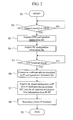
- Fig. 2 is a flowchart showing a flow of time information acquisition processing in the digital broadcast receiver according to this embodiment.
- Step S1 START
- the digital broadcast receiver can acquire a CDN configuration information file (XML) (Step S3).
- XML CDN configuration information file
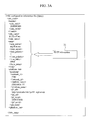
- Fig. 3A is a view showing an example of the CDN configuration information file (XML).
- the CDN configuration information file includes SNTP information 31 (a protocol for allowing a client to inquire of a server for the accurate time) in addition to a CDN name and the like. Thereby, the digital broadcast receiver can inquire for time information.
- Fig. 3B is a view showing an example of the PF configuration information file (XML).
- SI dedicated stream information 35 is described in the PF configuration information file.
- Information on a stream dedicated for provider use is described in the SI dedicated stream information 35.
- the digital broadcast receiver can carry out a channel search on the basis of this information.
- the digital broadcast receiver judges whether there is an IP broadcast or not. If there is an IP broadcast (Y in Step S5), the digital broadcast receiver connects to a multicast address described in the PF configuration information file (XML) (Step S6), and acquires information on all channels in the PF from the SI dedicated stream (all station SI including no video and audio) (at the time of channel scan: Step S7). Note that, in Fig.
- the multicast address is represented as "ff38::100.” Although the multicast address is shown here in an abbreviated manner, the non-abbreviated address is "ff38:0000:0000:0000:0000:0000:0100.”
- NIT is an abbreviation of Network Information Table.
- a NIT is used to transmit information associating a scheduled channel with transmission path information such as a multicast address for transmitting channels. In a NIT, all scheduled channel ID numbers included in one distribution system are described.
- Time information is acquired through the SNTP at the same time as (or at a timing near the timing of, such as immediately before or immediately after) the channel scan. Since the SI dedicated stream is received through the RTP (UDP) protocol, this processing can be performed through a protocol different from the SNTP for the time information acquisition processing. Thus, the stream information and time information can be simultaneously acquired at the same timing or at near timings.
- Step S8 viewing of an IP broadcast is possible without acquisition of time information through the SNTP.
- Step S9 The processing ends with the above steps.
- a program guide which lists information of the oldest EIT[schedule] or later (information of the time of 0:00 or later of the same day, for example) carried on the SI dedicated stream, can be displayed, but a program guide starting from a currently broadcasting program cannot be displayed.
- the above procedure is carried out, i.e., program information is acquired through the SNTP at the timing of acquiring the NIT.
- the time can be acquired at the same time as or at a timing near the timing of the channel scan, i.e., the time of the timer 25a can be set at the time of the initial channel search in the initial setting.
- This makes it possible to also acquire time information used for acquiring information from a digital broadcast wave, such as an electronic program guide, even if almost only an IP broadcast is viewed, for example.
- a digital broadcast receiver including a timer and capable of receiving an IP broadcast includes a controller configured to perform initial channel search processing, on the basis of SI dedicated stream information described in a PF configuration information file described in a CDN configuration information file acquired after the digital broadcast receiver is newly connected to a CDN, at a timing near a timing of time information acquisition processing through a SNTP which is described in the CDN configuration information file.
- the SI dedicated stream is received through the RTP (UDP) protocol which is different from the SNTP for the time information acquisition processing.
- UDP RTP
- the stream information and time information can be acquired at the same time. Since the time is also set at the time of the initial channel search, even when the digital broadcast receiver receives an IP broadcast, a viewer can enjoy a service received by the receiver without any burden being imposed on the viewer.
- the time is also set at the time of the initial channel search.
- the present invention is applicable to a digital broadcast receiver with which viewing of an IP broadcast is possible.
Landscapes
- Engineering & Computer Science (AREA)
- Multimedia (AREA)
- Signal Processing (AREA)
- General Engineering & Computer Science (AREA)
- Software Systems (AREA)
- Two-Way Televisions, Distribution Of Moving Picture Or The Like (AREA)
- Circuits Of Receivers In General (AREA)
Abstract
Description
- The present invention relates to a digital broadcast reception technique, and particularly to a time setting technique in a digital broadcast receiver including an IPTV function.
- In a digital broadcast receiver, timer viewing, timer recording and the like from an electronic program guide can be made accurately by setting the time of its timer. Generally, the time setting processing is performed at the time of initial setting of the digital broadcast receiver. In addition, a channel search is carried out at the time of the initial setting. A technique described in
Patent Document 1 is to execute an efficient channel search and thus contributes to user convenience. - Patent Document 1:
JP-A 2004-112621 - In recent years, various contents other than digital broadcast programs have been received by using a digital broadcast receiver.
- However, it is hard for a viewer using the receiver to be aware of the necessity to change its setting depending on the nature of receivable contents. Even if the user is aware of this, an operation for the setting change is still complicated and bothersome for the user. For this reason, there is a problem that the user cannot receive or no longer feels like receiving a service that the user can be originally granted.
- For example, an IPTV (Internet Protocol Television), which is a service for delivering a digital television broadcast using an IP, is considered to be often used in the future. In this case, there is a problem that, without time setting, viewing of an electronic program guide (EPG) is not allowed even though viewing of IPTV programs is possible, for example. Such a problem never occurs when only a terrestrial broadcast is received.
Patent Document 1 describes a technique related to a channel search, but does not describe any problem peculiar to an IPTV (time acquisition). - The present invention provides a technique for easily performing time acquisition which is a problem peculiar to an IPTV with which viewing of an IP broadcast is also possible.
- According to the present invention, the time of a receiver is set at the same time as a (initial) channel search of an IPTV.
- An aspect of the present invention provides a digital broadcast receiver including a timer and being capable of receiving an IP broadcast, characterized by comprising a controller configured to perform initial channel search processing on the basis of SI dedicated stream information described in a PF configuration information file in a CDN configuration information file acquired after the digital broadcast receiver is newly connected to a CDN, at a time of processing of acquiring time information through a SNTP which is described in the CDN configuration information file. The initial channel search processing may be performed at a timing near the timing of the time information acquisition processing through the SNTP. The SI dedicated stream is received through the RTP (UDP) protocol which is a protocol different from the SNTP for the time information acquisition processing. By use of this, the stream information and time information can be acquired at the same time. Since the time is also set at the time of the initial channel search, even when the digital broadcast receiver receives an IP broadcast, a viewer can enjoy a service received by the receiver without any burden being imposed on the viewer.
- It is preferable that the controller performs processing if an IP broadcast is found in processing to determine whether there is an IP broadcast or not. It is preferable that the controller reflects the time information to the timer, and performs processing of acquiring electronic program guide information acquirable from a digital broadcast wave, on the basis of the time information in the timer.
- Another aspect of the present invention provides a reception method in a digital broadcast receiver including a timer and being capable of receiving an IP broadcast, the method characterized by comprising the step of performing initial channel search processing on the basis of SI dedicated stream information described in a PF configuration information file described in a CDN configuration information file acquired after the digital broadcast receiver is newly connected to a CDN, at a timing near a timing of processing of acquiring time information through a SNTP which is described in the CDN configuration information file.
- The present invention may be a program causing a computer to execute the method described above. The present invention may also be a computer-readable recording medium on which the program is recorded. The program may also be one obtained through a transmission medium such as the Internet.
- This specification includes the contents of the specification and/or drawings of Japanese Patent Application No.
2008-260098 - According to the present invention, the time is also set at the time of the initial channel search, which enhances the function of the receiver itself. Thereby, even when the receiver is capable of receiving an IP broadcast, a viewer can enjoy a service received by the receiver without any burden being imposed on the viewer.
-
-
Fig. 1 is a diagram showing an example of a configuration of a digital broadcast receiver according to an embodiment of the present invention. -
Fig. 2 is a flowchart showing a flow of time information acquisition processing in the digital broadcast receiver according to this embodiment. -
Fig. 3A is a view showing an example of a CDN configuration information file (XML). -
Fig. 3B is a view showing an example of a PF configuration information file (XML). -
- A
- DIGITAL BROADCAST RECEIVER
- 1
- FRONT-END
- 3
- DEMULTIPLEXER
- 5
- VIDEO/AUDIO DECODER
- 7
- AUDIO OUTPUT UNIT
- 11
- PROGRAM GUIDE DECODER
- 15
- PROGRAM GUIDE DATA GENERATOR
- 17
- SCREEN SYNTHESIZER
- 21
- DISPLAY UNIT
- 23
- REMOTE CONTROL OPTICAL RECEIVER
- 25
- CONTROLLER
- 25a
- TIMER
- 27
- MEMORY UNIT
- 28
- INTERFACE UNIT
- B
- CONTENTS SERVER
- NT
- NETWORK
- 31
- SNTP INFORMATION
- 35
- SI DEDICATED STREAM INFORMATION
- Basic terms are defined below before description about an embodiment of the present invention.
-
- 1) CDN (Contents Delivery Network): A network designed to deliver digital contents.
-
- 2) CDN configuration information URI: http://cdn.iptvf.jp/cdn.comp: A URI that a user accesses to acquire CDN configuration information is the same irrespective of which CDN the user subscribes to. Such a URI is referred to as CDN configuration information URI.
-
- 3) DNS: A domain name system which is a system associating an IP address with a domain name of a computer connected to the Internet, and serving to replace one of them with the other. The system is managed in such a way that an IP address to be returned varies (for each CDN) depending on a DNS to be connected.
- A CDN configuration information file differs from one CDN to another.
-
- 4) TCP/IP: One of protocols for synchronization of the computer clock time through a network. An abridged version of a NTP. It is defined in RFC 2030.
-
- 5) SNTP (Simple Network Time Protocol): A NTP is a protocol which configures time information servers in a hierarchical manner and synchronizes the time through information exchange. A SNTP is especially designed to allow a client to inquire of a server for the accurate time by omitting a complicated part of the specification of the NTP.
-
- 6) SI dedicated stream: SI (Service Information) denotes program arrangement information, and is various information defined for the sake of convenience of program selection. A SI dedicated stream indicates a special transport stream including no video and audio. This stream is used to transmit EITschedule for all channels of an IP broadcast and the like in a lump.
- Hereinafter, a digital broadcast reception technique according to an embodiment of the present invention will be described with reference to the drawings.
-
Fig. 1 is a diagram showing a configuration example of a digital broadcast receiver according to this embodiment. A digital broadcast receiver A shown inFig. 1 includes: a front-end 1 configured to perform processes to receive signals of digital broadcasts through an antenna and tune channels; ademultiplexer 3; a video/audio decoder 5 configured to decode an output from thedemultiplexer 3; ascreen synthesizer 17 configured to synthesize the decoded video signal and later-described program guide data to generate a signal for display; adisplay unit 21 for display based on the signal synthesized in thescreen synthesizer 17; and anaudio output unit 7 configured to output audio. - The digital broadcast receiver A further includes: a
program information decoder 11 configured to decode program information outputted from thedemultiplexer 3; and an electronicprogram guide generator 15 configured to generate an electronic program guide based on the program information decoded by theprogram information decoder 11. - In addition, the digital broadcast receiver A includes: an
interface unit 28 forming an interface between the receiver A and another external device; a remote controloptical receiver 23 configured to receive remote control signals from a remote controller as a control device; a controller (CPU) 25 configured to control the entire device; and a memory unit (RAM, ROM) 27 configured to store an application program executed by thecontroller 25 for various processes and to expand and provide the program to the CPU. Theinterface unit 28 is capable of receiving digital contents delivered from a content server B through the Internet (NT). Further, thecontroller 25 is provided with atimer 25a, for example, and is thus capable of acquiring time information carried on a broadcast wave and of setting the time. -
Fig. 2 is a flowchart showing a flow of time information acquisition processing in the digital broadcast receiver according to this embodiment. First, upon start of the processing (Step S1: START), after newly connected to a CDN by a user's operation (YES in Step S2), the digital broadcast receiver can acquire a CDN configuration information file (XML) (Step S3). -
Fig. 3A is a view showing an example of the CDN configuration information file (XML). The CDN configuration information file includes SNTP information 31 (a protocol for allowing a client to inquire of a server for the accurate time) in addition to a CDN name and the like. Thereby, the digital broadcast receiver can inquire for time information. - Next, the digital broadcast receiver acquires a PF configuration information file written in the CDN configuration information (Step S4).
Fig. 3B is a view showing an example of the PF configuration information file (XML). SIdedicated stream information 35 is described in the PF configuration information file. Information on a stream dedicated for provider use is described in the SIdedicated stream information 35. The digital broadcast receiver can carry out a channel search on the basis of this information. - The digital broadcast receiver judges whether there is an IP broadcast or not. If there is an IP broadcast (Y in Step S5), the digital broadcast receiver connects to a multicast address described in the PF configuration information file (XML) (Step S6), and acquires information on all channels in the PF from the SI dedicated stream (all station SI including no video and audio) (at the time of channel scan: Step S7). Note that, in
Fig. 3B , the multicast address is represented as "ff38::100." Although the multicast address is shown here in an abbreviated manner, the non-abbreviated address is "ff38:0000:0000:0000:0000:0000:0000:0100." Here, at the time of the channel scan, the digital broadcast receiver joins the SI dedicated stream (35) to acquire NIT (scheduled channel) data for all stations. Note that, NIT is an abbreviation of Network Information Table. A NIT is used to transmit information associating a scheduled channel with transmission path information such as a multicast address for transmitting channels. In a NIT, all scheduled channel ID numbers included in one distribution system are described. Since a default cycle of a NIT retransmission cycle is one second, around two seconds are enough to acquire all channel data of one PF. This is a large difference between channel scan and program guide acquisition. For program guide acquisition, 180 seconds x 2 are required at maximum. The URL of the SNTP is described in the CDN configuration information file. Time information is acquired through the SNTP at the same time as (or at a timing near the timing of, such as immediately before or immediately after) the channel scan. Since the SI dedicated stream is received through the RTP (UDP) protocol, this processing can be performed through a protocol different from the SNTP for the time information acquisition processing. Thus, the stream information and time information can be simultaneously acquired at the same timing or at near timings. - Note that, viewing of an IP broadcast is possible without acquisition of time information through the SNTP (Step S8). The processing ends with the above steps (Step S9).
- Heretofore, if time information has not been acquired at the time of displaying an electronic program guide, a program guide, which lists information of the oldest EIT[schedule] or later (information of the time of 0:00 or later of the same day, for example) carried on the SI dedicated stream, can be displayed, but a program guide starting from a currently broadcasting program cannot be displayed.
- To cope with this, the above procedure is carried out, i.e., program information is acquired through the SNTP at the timing of acquiring the NIT. With this procedure, the time can be acquired at the same time as or at a timing near the timing of the channel scan, i.e., the time of the
timer 25a can be set at the time of the initial channel search in the initial setting. This makes it possible to also acquire time information used for acquiring information from a digital broadcast wave, such as an electronic program guide, even if almost only an IP broadcast is viewed, for example. - A digital broadcast receiver including a timer and capable of receiving an IP broadcast includes a controller configured to perform initial channel search processing, on the basis of SI dedicated stream information described in a PF configuration information file described in a CDN configuration information file acquired after the digital broadcast receiver is newly connected to a CDN, at a timing near a timing of time information acquisition processing through a SNTP which is described in the CDN configuration information file. The SI dedicated stream is received through the RTP (UDP) protocol which is different from the SNTP for the time information acquisition processing. By use of this, the stream information and time information can be acquired at the same time. Since the time is also set at the time of the initial channel search, even when the digital broadcast receiver receives an IP broadcast, a viewer can enjoy a service received by the receiver without any burden being imposed on the viewer.
- As has been described, according to this embodiment, the time is also set at the time of the initial channel search. Thereby, even when the digital broadcast receiver receives an IP broadcast, a viewer can enjoy a service received by the receiver without any burden being imposed on the viewer.
- The present invention is applicable to a digital broadcast receiver with which viewing of an IP broadcast is possible.
Claims (6)
- A digital broadcast receiver including a timer and being capable of receiving an IP broadcast, characterized by comprising
a controller configured to perform initial channel search processing on the basis of SI dedicated stream information described in a PF configuration information file in a CDN configuration information file acquired after the digital broadcast receiver is newly connected to a CDN, at a time of processing of acquiring time information through a SNTP which is described in the CDN configuration information file. - The digital broadcast receiver according to claim 1, characterized in that the controller performs the initial channel search if an IP broadcast is found in processing to determine whether there is an IP broadcast or not.
- The digital broadcast receiver according to any one of claims 1 and 2, characterized in that the controller reflects the time information to the timer, and performs processing of acquiring electronic program guide information acquirable from a digital broadcast wave, on the basis of the time information in the timer.
- A reception method in a digital broadcast receiver including a timer and being capable of receiving an IP broadcast, the method characterized by comprising the step of
performing initial channel search processing on the basis of SI dedicated stream information described in a PF configuration information file described in a CDN configuration information file acquired after the digital broadcast receiver is newly connected to a CDN, at a timing near a timing of processing of acquiring time information through a SNTP which is described in the CDN configuration information file. - A program causing a computer to execute the method described in claim 4.
- A computer-readable recording medium on which the program described in claim 5 is recorded.
Applications Claiming Priority (2)
| Application Number | Priority Date | Filing Date | Title |
|---|---|---|---|
| JP2008260098 | 2008-10-06 | ||
| PCT/JP2009/067346 WO2010041627A1 (en) | 2008-10-06 | 2009-10-05 | Digital broadcast reception device and digital broadcast reception method |
Publications (2)
| Publication Number | Publication Date |
|---|---|
| EP2348727A1 true EP2348727A1 (en) | 2011-07-27 |
| EP2348727A4 EP2348727A4 (en) | 2012-12-05 |
Family
ID=42100577
Family Applications (1)
| Application Number | Title | Priority Date | Filing Date |
|---|---|---|---|
| EP09819161A Withdrawn EP2348727A4 (en) | 2008-10-06 | 2009-10-05 | Digital broadcast reception device and digital broadcast reception method |
Country Status (8)
| Country | Link |
|---|---|
| US (1) | US8667537B2 (en) |
| EP (1) | EP2348727A4 (en) |
| JP (1) | JP5236738B2 (en) |
| CN (1) | CN102172041B (en) |
| BR (1) | BRPI0920035A2 (en) |
| MX (1) | MX2011003124A (en) |
| RU (1) | RU2011118345A (en) |
| WO (1) | WO2010041627A1 (en) |
Families Citing this family (7)
| Publication number | Priority date | Publication date | Assignee | Title |
|---|---|---|---|---|
| KR20080067475A (en) * | 2007-01-16 | 2008-07-21 | 엘지전자 주식회사 | Digital broadcasting service method and system using internet, digital broadcasting receiving method and receiver |
| JP5236738B2 (en) * | 2008-10-06 | 2013-07-17 | シャープ株式会社 | Digital broadcast receiving apparatus and digital broadcast receiving method |
| BRPI0920554A2 (en) * | 2008-10-07 | 2015-12-29 | Sharp Kk | digital broadcast receiver and reception method |
| CN103875252A (en) * | 2011-10-13 | 2014-06-18 | 三星电子株式会社 | Content display method, content synchronization method, broadcast content display method and display device |
| CN103974092B (en) * | 2013-01-31 | 2018-05-15 | 中兴通讯股份有限公司 | A kind of method, apparatus and Web TV that Web broadcast is realized based on Web TV |
| JP7352889B2 (en) * | 2018-11-30 | 2023-09-29 | パナソニックIpマネジメント株式会社 | Broadcast receiving device, broadcast receiving method and program |
| KR102643885B1 (en) | 2018-12-11 | 2024-03-08 | 삼성전자주식회사 | Electronic apparatus and controlling method thereof |
Family Cites Families (33)
| Publication number | Priority date | Publication date | Assignee | Title |
|---|---|---|---|---|
| US8635649B2 (en) * | 1996-12-19 | 2014-01-21 | Gemstar Development Corporation | System and method for modifying advertisement responsive to EPG information |
| JP2002064769A (en) * | 2000-08-21 | 2002-02-28 | Sony Corp | Information processing apparatus, information processing method, and recording medium |
| AUPR454601A0 (en) * | 2001-04-23 | 2001-05-24 | Summit Cd Manufacture Pte Limited | A display system |
| JP3789875B2 (en) | 2002-09-20 | 2006-06-28 | 三洋電機株式会社 | Digital broadcast receiver |
| JP4344185B2 (en) | 2003-01-28 | 2009-10-14 | シャープ株式会社 | Client terminal device, information processing method, sub-client terminal device, computer-executable program, and recording medium |
| JP4364619B2 (en) | 2003-12-03 | 2009-11-18 | 日本電信電話株式会社 | Multiple video time synchronous display terminal, multiple video time synchronous display method, program, and recording medium |
| US20050195862A1 (en) * | 2004-03-02 | 2005-09-08 | Sbc Knowledge Ventures, L.P. | System and method for transparent adjustment of a network node timing component |
| WO2006033338A1 (en) * | 2004-09-24 | 2006-03-30 | Nec Personal Products, Ltd. | Broadcast processing system |
| JP2006094357A (en) * | 2004-09-27 | 2006-04-06 | Toshiba Corp | Broadcast receiving apparatus and clock display method |
| KR100703490B1 (en) * | 2005-04-18 | 2007-04-03 | 삼성전자주식회사 | Time Synchronization Method and System for Mobile Terminal Based on Asynchronous Method |
| JP4855752B2 (en) * | 2005-09-30 | 2012-01-18 | 株式会社東芝 | IP broadcast transmission method |
| US20070104181A1 (en) * | 2005-11-09 | 2007-05-10 | Lee David H | System and method for a media internet channel station (mics) to connect to and access media content utilizing media domain name (mdn) channels with three modes |
| CN101438256B (en) * | 2006-03-07 | 2011-12-21 | 索尼株式会社 | Information processing device, information communication system, information processing method |
| JP2007329800A (en) * | 2006-06-09 | 2007-12-20 | Matsushita Electric Ind Co Ltd | Digital broadcast receiving apparatus and receiving method |
| KR20080030900A (en) * | 2006-10-02 | 2008-04-07 | 엘지전자 주식회사 | Customized broadcast signal receiver and broadcast reception method |
| JP2008124857A (en) * | 2006-11-14 | 2008-05-29 | Sharp Corp | Broadcast receiving apparatus, information distribution server apparatus, and program |
| KR101314608B1 (en) * | 2007-01-05 | 2013-10-07 | 엘지전자 주식회사 | Receiver and method for controlling content viewing in IPTV environment |
| KR101356491B1 (en) * | 2007-03-02 | 2014-02-03 | 엘지전자 주식회사 | Method and apparatus for processing rating information and IPTV system |
| JP2008260098A (en) | 2007-04-12 | 2008-10-30 | Mitsubishi Materials Corp | Surface-coated cutting tool |
| US20090100470A1 (en) * | 2007-10-16 | 2009-04-16 | Fujitsu Limited | Information processing device |
| KR20090056848A (en) * | 2007-11-29 | 2009-06-03 | 엘지전자 주식회사 | Broadcast receiver and customized broadcast signal reception method |
| JP5025734B2 (en) * | 2007-11-30 | 2012-09-12 | シャープ株式会社 | Broadcast receiver |
| US8112775B2 (en) * | 2007-12-05 | 2012-02-07 | Lg Electronics Inc. | IPTV receiver and method of providing channel details information |
| US8893205B2 (en) * | 2007-12-05 | 2014-11-18 | Lg Electronics Inc. | IPTV receiver and method of providing channel map management information |
| US8484689B2 (en) * | 2007-12-05 | 2013-07-09 | Lg Electronics Inc. | IPTV receiver and method of discovering an IPTV service |
| US8813155B2 (en) * | 2007-12-05 | 2014-08-19 | Lg Electronics Inc. | Method for receiving service information data and an IPTV receiver |
| US8893200B2 (en) * | 2007-12-05 | 2014-11-18 | Lg Electronics Inc. | IPTV receiver and method of acquiring a resource for an IPTV service |
| US8397256B2 (en) * | 2007-12-05 | 2013-03-12 | Lg Electronics Inc. | IPTV receiver and method of providing channel map information |
| US8635641B2 (en) * | 2007-12-05 | 2014-01-21 | Lg Electronics Inc. | Method of performing parental control a channel and an IPTV receiver |
| US8869219B2 (en) * | 2007-12-05 | 2014-10-21 | Lg Electronics Inc. | Method for controlling a channel and an IPTV receiver |
| CA2650151C (en) * | 2008-01-17 | 2013-04-02 | Lg Electronics Inc. | An iptv receiving system and data processing method |
| JP5236738B2 (en) * | 2008-10-06 | 2013-07-17 | シャープ株式会社 | Digital broadcast receiving apparatus and digital broadcast receiving method |
| MX2011003606A (en) * | 2008-10-10 | 2011-05-10 | Sharp Kk | Broadcast receiver apparatus. |
-
2009
- 2009-10-05 JP JP2010532904A patent/JP5236738B2/en not_active Expired - Fee Related
- 2009-10-05 US US13/122,688 patent/US8667537B2/en not_active Expired - Fee Related
- 2009-10-05 CN CN200980139852.6A patent/CN102172041B/en not_active Expired - Fee Related
- 2009-10-05 WO PCT/JP2009/067346 patent/WO2010041627A1/en not_active Ceased
- 2009-10-05 MX MX2011003124A patent/MX2011003124A/en active IP Right Grant
- 2009-10-05 EP EP09819161A patent/EP2348727A4/en not_active Withdrawn
- 2009-10-05 BR BRPI0920035A patent/BRPI0920035A2/en not_active IP Right Cessation
- 2009-10-05 RU RU2011118345/07A patent/RU2011118345A/en not_active Application Discontinuation
Also Published As
| Publication number | Publication date |
|---|---|
| WO2010041627A1 (en) | 2010-04-15 |
| US8667537B2 (en) | 2014-03-04 |
| RU2011118345A (en) | 2012-11-20 |
| CN102172041A (en) | 2011-08-31 |
| CN102172041B (en) | 2014-03-26 |
| JP5236738B2 (en) | 2013-07-17 |
| EP2348727A4 (en) | 2012-12-05 |
| US20110197244A1 (en) | 2011-08-11 |
| MX2011003124A (en) | 2011-04-21 |
| JPWO2010041627A1 (en) | 2012-03-08 |
| BRPI0920035A2 (en) | 2015-12-15 |
Similar Documents
| Publication | Publication Date | Title |
|---|---|---|
| JP6092122B2 (en) | Transmission method and apparatus for broadcasting / communication integrated service | |
| US8667537B2 (en) | Digital broadcast receiver and digital broadcast reception method | |
| US10735787B2 (en) | Transmission device, transmission method, reception device, reception method, and computer program | |
| US9967623B2 (en) | Apparatus and method for receiving broadcast content from a broadcast stream and an alternate location | |
| RU2627040C2 (en) | Receiving device and method of synchronized processing of images in this device | |
| JP2004297628A (en) | Stream switching apparatus and apparatus for providing contents thereto | |
| AU2015202846A1 (en) | A method and system for streaming one or more broadcast events | |
| US20090235314A1 (en) | Television broadcast receiving apparatus and control method therefor | |
| JP6151152B2 (en) | Receiving device, receiving method, transmitting device, and transmitting method | |
| CA2986568C (en) | Reception apparatus and data processing method | |
| WO2009041755A1 (en) | Iptv digital-broadcast system and method for reducing channel change time | |
| KR101371016B1 (en) | Method and apparatus for transmitting/receiving broadcasting information using reserved channels | |
| WO2018008429A1 (en) | Transmission apparatus, reception apparatus, and data processing method | |
| JP4582070B2 (en) | Receiving apparatus and receiving method | |
| EP4207776A1 (en) | Media data processing method and media data processing device | |
| JPWO2009145182A1 (en) | Video service receiving terminal apparatus, control method, computer program, and search server | |
| EP3876544A1 (en) | Media processing device and media processing method | |
| JP2008244704A (en) | Digital broadcast signal retransmitter | |
| US20050220147A1 (en) | Retransmission of a burst copy in a broadband digital network | |
| EP4468711A1 (en) | Method for processing media data and device for processing media data | |
| TW201018214A (en) | Mobile TV system and method for synchronizing the rendering of streaming services thereof | |
| HK1160315A (en) | Digital broadcast reception device and digital broadcast reception method | |
| KR20140125668A (en) | Apparatus and method of providing broadcast services | |
| WO2014045614A1 (en) | Video signal transmitting method, video signal receiving apparatus, and video signal receiving method | |
| JP2009049534A (en) | Receiving terminal, receiving method, and information distribution system |
Legal Events
| Date | Code | Title | Description |
|---|---|---|---|
| PUAI | Public reference made under article 153(3) epc to a published international application that has entered the european phase |
Free format text: ORIGINAL CODE: 0009012 |
|
| 17P | Request for examination filed |
Effective date: 20110505 |
|
| AK | Designated contracting states |
Kind code of ref document: A1 Designated state(s): AT BE BG CH CY CZ DE DK EE ES FI FR GB GR HR HU IE IS IT LI LT LU LV MC MK MT NL NO PL PT RO SE SI SK SM TR |
|
| AX | Request for extension of the european patent |
Extension state: AL BA RS |
|
| DAX | Request for extension of the european patent (deleted) | ||
| A4 | Supplementary search report drawn up and despatched |
Effective date: 20121106 |
|
| RIC1 | Information provided on ipc code assigned before grant |
Ipc: H04B 1/16 20060101ALI20121030BHEP Ipc: H04N 7/173 20110101AFI20121030BHEP Ipc: H04N 21/443 20110101ALI20121030BHEP Ipc: H04N 21/643 20110101ALI20121030BHEP Ipc: H04N 21/434 20110101ALI20121030BHEP Ipc: H04N 21/43 20110101ALI20121030BHEP Ipc: H04N 21/6405 20110101ALI20121030BHEP |
|
| RIC1 | Information provided on ipc code assigned before grant |
Ipc: H04N 21/6405 20110101ALI20121221BHEP Ipc: H04N 21/443 20110101ALI20121221BHEP Ipc: H04N 21/643 20110101ALI20121221BHEP Ipc: H04N 21/434 20110101ALI20121221BHEP Ipc: H04N 21/43 20110101ALI20121221BHEP Ipc: H04N 7/173 20110101AFI20121221BHEP Ipc: H04B 1/16 20060101ALI20121221BHEP |
|
| STAA | Information on the status of an ep patent application or granted ep patent |
Free format text: STATUS: THE APPLICATION HAS BEEN WITHDRAWN |
|
| 18W | Application withdrawn |
Effective date: 20130910 |