EP2348434A1 - Information processing apparatus - Google Patents
Information processing apparatus Download PDFInfo
- Publication number
- EP2348434A1 EP2348434A1 EP20100252075 EP10252075A EP2348434A1 EP 2348434 A1 EP2348434 A1 EP 2348434A1 EP 20100252075 EP20100252075 EP 20100252075 EP 10252075 A EP10252075 A EP 10252075A EP 2348434 A1 EP2348434 A1 EP 2348434A1
- Authority
- EP
- European Patent Office
- Prior art keywords
- certificate
- application
- user
- unit
- information
- Prior art date
- Legal status (The legal status is an assumption and is not a legal conclusion. Google has not performed a legal analysis and makes no representation as to the accuracy of the status listed.)
- Granted
Links
Images



Classifications
-
- G—PHYSICS
- G06—COMPUTING OR CALCULATING; COUNTING
- G06F—ELECTRIC DIGITAL DATA PROCESSING
- G06F21/00—Security arrangements for protecting computers, components thereof, programs or data against unauthorised activity
- G06F21/60—Protecting data
- G06F21/64—Protecting data integrity, e.g. using checksums, certificates or signatures
-
- G—PHYSICS
- G06—COMPUTING OR CALCULATING; COUNTING
- G06F—ELECTRIC DIGITAL DATA PROCESSING
- G06F21/00—Security arrangements for protecting computers, components thereof, programs or data against unauthorised activity
- G06F21/10—Protecting distributed programs or content, e.g. vending or licensing of copyrighted material ; Digital rights management [DRM]
-
- G—PHYSICS
- G06—COMPUTING OR CALCULATING; COUNTING
- G06F—ELECTRIC DIGITAL DATA PROCESSING
- G06F21/00—Security arrangements for protecting computers, components thereof, programs or data against unauthorised activity
- G06F21/10—Protecting distributed programs or content, e.g. vending or licensing of copyrighted material ; Digital rights management [DRM]
- G06F21/12—Protecting executable software
-
- G—PHYSICS
- G06—COMPUTING OR CALCULATING; COUNTING
- G06F—ELECTRIC DIGITAL DATA PROCESSING
- G06F9/00—Arrangements for program control, e.g. control units
- G06F9/06—Arrangements for program control, e.g. control units using stored programs, i.e. using an internal store of processing equipment to receive or retain programs
- G06F9/44—Arrangements for executing specific programs
- G06F9/445—Program loading or initiating
Definitions
- aspects of the present invention relate to an information processing apparatus that executes a plurality of applications.
- a related-art information processing apparatus that executes a plurality of applications.
- a "validating function" is included in each of a plurality of certificates that is stored by the information processing apparatus.
- an execution of the application is controlled based on the "validating function" included in the certificate that is designated to be used for executing the application (see JP-A-2006-059141 ).
- one aspect of the present invention is to provide an information processing apparatus appropriately storing correspondence information of an application and a certificate to be used for execution of the application and thus capable of appropriately managing the certificate to be stored.
- an information processing apparatus comprising: a storage unit configured to store a plurality of applications and a plurality of certificates; an application execution unit configured to execute one of the plurality of applications by using one of the plurality of certificates which is designated by a user; and a storage control unit configured to control the storage unit to store correspondence information indicating that the executed application corresponds to the designated certificate, when the application execution unit executes one of the plurality of applications and one of the plurality of certificates is designated by the user.
- the user when a user makes the information processing apparatus execute a desired application, the user can designate a certificate that should be used in the application.
- the correspondence information indicating that the application and the certificate correspond to each other is stored in the storage unit.
- the information processing apparatus can notify the correspondence information to the user, for example.
- a certificate hereinafter, referred to as "specific certificate”
- the user can easily find the specific certificate.
- the user can delete the specific certificate from the storage unit.
- the information processing apparatus itself can find the specific certificate based on the correspondence information, for example.
- the information processing apparatus can delete the specific certificate from the storage unit or notify the user with information that the specific certificate exists, thereby urging the user to delete the specific certificate. As a result, it is possible to reduce a number of certificates to be stored.
- the storage unit may further store a management application that manages the plurality of certificates. Additionally, the above-described information processing apparatus may further include a first confirmation unit and a first notification unit.
- the first confirmation unit may be configured to confirm whether first correspondence information relating to the first certificate is stored in the storage unit, and when it is confirmed that the first correspondence information is stored in the storage unit, the first notification unit may be configured to cause first information about a first application that corresponds to the first certificate according to the first correspondence information to be notified to the user.
- the first notification unit when a user instructs that the first certificate that corresponds to the first application be deleted, the first notification unit causes the first information about the first application to be notified to the user. Since the first information is notified, the user can know that the first application corresponds to the first certificate that the user instructed be deleted. Accordingly, the user can confirm whether to delete the first certificate or not.
- the above-described information processing apparatus may further include a second notification unit, wherein, when the first application starts up, after the first certificate is deleted and before a different certificate, which is to be used in executing the first application, is newly designated instead of the first certificate, the second notification unit may be configured to cause second information indicating that the first certificate is deleted to the user. According to this configuration, the user can know that the first certificate corresponding to the first application has been deleted.
- the storage unit may further store validity information indicating validity of the corresponding certificate for each of the certificates
- the above-described information processing apparatus may further include a second confirmation unit and a third notification unit.
- the second confirmation unit may be configured to confirm whether the second certificate is valid based on the validity information relating to the second certificate, and when it is confirmed that the second certificate is not valid, the third notification unit may be configured to cause third information indicating that the second certificate is not valid to be notified to the user. According to this configuration, when the second application starts up, the user can know that the second certificate is not valid.
- the third notification unit may be configured to cause the third information to be notified to the user in accordance with the second application.
- the storage control unit may be configured to delete the third correspondence information and further store fourth correspondence information indicating that the third application and the fourth certificate correspond to each other in the storage unit. According to this configuration, when the user designates the fourth certificate different from the third certificate which corresponds to the third application, in executing the third application, the information processing apparatus automatically updates the correspondence information. Thus, it is not necessary for the user to update the correspondence information.
- the above-described information processing apparatus may further include a fourth notification unit, wherein in the specific case, the fourth notification unit may be configured to cause fourth information which indicates that the third application and the third certificate correspond to each other to be notified to the user, before the third correspondence information is deleted. Since the fourth information is notified, the user can know that, even though the user designated the third certificate when the third application was previously executed, when the third application is executed this time, the fourth certificate different from the third certificate has been designated.
- a control method and a computer program for realizing the information processing apparatus are also newly provided.
- FIG. 1 is a schematic view of an application execution system 2 of the present exemplary embodiment.
- the application execution system 2 includes a LAN 4, a multi-functional device 10 and a PC 80. Both the multi-functional device 10 and the PC 80 are connected to the LAN 4.
- the multi-functional device 10 and the PC 80 can communicate with each other via the LAN 4.
- the multi-functional device 10 has a plurality of functions such as a copy function, a printer function, a scanner function, an e-mail transmitting and receiving function, internet FAX function, and the like.
- the multi-functional device 10 includes an operation unit 12, a display unit 14, a network interface 16, a scan execution unit 18, a print execution unit 20, a storage unit 22 and a control unit 32.
- the operation unit 14 includes a plurality of keys. A user can input a variety of instructions to the multi-functional device 10 by operating the operation unit 12.
- the display unit 14 can display a variety of information.
- the network interface 16 is connected to the LAN 4.
- the scan execution unit 18 includes a scanning mechanism such as CIS and CCD, and produces image data by scanning an object.
- the print execution unit 20 includes a print mechanism of an ink jet head style or a laser style, and executes printing according to instructions from the control unit 32.
- the storage unit 22 stores a program 24, a certificate storing area 28 and a management table 30.
- the program 24 includes a plurality of applications 26 for realizing the above functions of the multi-functional device 10.
- the program 24 includes a management application 27 that manages the applications 26 and a plurality of certificates of the multi-functional device 10.
- the control unit 32 executes a process in accordance with the program 24 stored in the storage unit 22. As the control unit 32 executes a process in accordance with the program 24, functions of respective units 34 to 48 are realized.
- the certificate storing area 28 stores the plurality of certificates that are used in the respective applications of the multi-functional device 10.
- the management table 30 includes a plurality of combination information 50 to 56.
- Each of the plurality of combination information 50 to 56 is information in which a certificate ID 60, an expiring date 62 and designation information 64 to 70 corresponding to applications A1 to A4 are related to each other.
- the certificate ID 60 is identification information for identifying the respective certificates stored in the certificate storing area 28.
- the expiring date 62 is information that indicates date and time of the expiring date of a certificate indicated by the certificate ID 60.
- the designation information 64 of the application A1 is information indicating whether each certificate indicated by the certificate ID 60 is designated as a certificate that should be used in executing the application A1.
- a certificate whose designation information 64 is "o" indicates that it is designated as a certificate that should be used in executing the application A1.
- the designation information 64 of the certificate ID "C2" is "o.” This indicates that a certificate indicated by the certificate ID "C2” is designated as a certificate that should be used in executing the application A1.
- a certificate whose designation information 64 is " ⁇ ” indicates that it is not designated as a certificate that should be used in executing the application A1.
- the designation information 64 of the certificate ID "C1” is " ⁇ .” This indicates that a certificate indicated by the certificate ID "C1” is not designated as a certificate that should be used in executing the application A1.
- the designation information 66 to 70 corresponding to the applications A2 to A4 is also the same as the designation information 64.
- a state in which a specific certificate is designated as a certificate that should be used in executing a specific application may also be described as "a specific certificate corresponds to a specific application.”
- a state in which "o" is recorded in the designation information 64, and the like may also be described as "a specific certificate corresponds to a specific application.”
- to rewrite the designation information 64 and the like from “x" to "o” may also be described as “to make a correspondence” and to rewrite the designation information 64 and the like from "o” to " ⁇ ” may also be described as “to cancel a correspondence.”
- each of the applications 26 store a certificate ID indicating the certificate as one of setting information of the application.
- the storage unit 22 includes a setting storing area (not shown) for storing setting information of the application, for each of the applications 26.
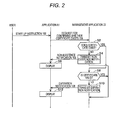
- a startup process that is executed when an application starts up will be described with reference to FIG. 2 .
- an application A1 will be described as an example of the applications. However, the same process is also executed for the other applications A2 to A4.
- the application A1 and a certificate indicated by the certificate ID "C2" have been already made to correspond to each other at the start of the startup process, resulting from a certificate designating process (refer to FIG 3 ) that will be described later.
- the application A1 stores the certificate ID "C2" as one of the setting information of the application A1.
- a user can operate the operation unit 12 of the multi-functional device 10 or an operation unit (not shown) of the PC 80 connected to the multi-functional device 10 so as to input a startup instruction 102 for starting up the application A1 to the multi-functional device 10.
- the control unit 32 When the startup instruction 102 is inputted, the control unit 32 starts up the application A1. Then, the control unit 102 transmits a request 104 for confirming whether a certificate exists to the management application, in accordance with the application A1.
- the request 104 includes a certificate ID that the application A 1 stores as one of the setting information.
- the control unit 32 executing a process in accordance with an application may be described as "the application executes a process,” rather than "the control unit 32 executes a process.” In the above example, since the application A 1 already stores the certificate ID "C2" indicating the certificate that has been made to correspond to the application A1, the certificate ID "C2" is included in the request 104.
- the control unit 32 executes a process to confirm whether the certificate ID corresponding to the application A1 exists in the management table 30, in accordance with the management application 27 (S2). For example, in the management table 30 of FIG 1 , the certificate ID "C2" and the application "A1" are made to correspond to each other. In this case, the control unit 32 determines "YES" in S2.
- a second notification unit 44 transmits to the application A1 a non-existence notification 106 indicating that the specific certificate made to correspond to the application A1 has been deleted, in accordance with the management application 27 (S4).
- the second notification unit 44 causes the display unit 14 of the multi-functional device 10 or a display unit (not shown) of the PC 80 to display that the specific certificate corresponding to the application A1 has been deleted, in accordance with the application A1 (S6). Thereby, a user can know that the certificate corresponding to the application A1 has been deleted and thus does not exist.
- a second confirmation unit 40 confirms whether the certificate corresponding to the application A1 is currently valid, in accordance with the management application 27 (S8).
- the second confirmation unit 40 first obtains current date and time. Then, the second confirmation unit 40 specifies an expiration date 62 that is related to the certificate ID 60 which corresponds to the application A1, from the management table 30. The second confirmation unit 40 compares the specified expiration date 62 with the current date and time. As a result of the comparison, when the current date and time is later than the specified expiration date 62, the second confirmation unit 40 determines "NO" in S8. In the meantime, when the specified expiration date 62 is later than the current date and time, the second confirmation unit 40 determines "YES" in S8.
- a third notification unit 46 transmits to the application A1 a expiration notification 108 indicating that the expiration date of the certificate corresponding to the application A1 has expired, in accordance with the management application 27 (S10).
- the third notification unit 46 causes the display unit 14 of the multi-functional device 10 or the display unit (not shown) of the PC 80 to display that the expiration date of the certificate corresponding to the application A1 has expired, in accordance with the application A1 (S12). Thereby, a user knows that the expiration date of the certificate corresponding to the application A1 has expired.
- the management application 27 shifts to a standby state in which it stands until a next instruction is inputted by a user.
- the application A1 also shifts to a standby state.
- the multi-functional device 10 terminates the startup process.
- the above description is based on an exemplary state in which the application A1 and the certificate indicated by the certificate ID "C2" already correspond to each other at the start of the startup process.
- the application A1 In order to execute this process, as a precondition, the application A1 needs to have been started up.
- the application A1 may have been started up in accordance with the startup process shown in FIG. 2 or the typical startup process.
- a user can operate the operation unit 12 of the multi-functional device 10 or the operation unit of the PC 80 and thus input a certificate designation instruction 120, which designates a specific certificate (for example, a certificate indicated by a certificate ID "C4") that will be used in executing the application A1, to the multi-functional device 10.
- the certificate designation instruction 120 includes a certificate ID (for example, a certificate ID "C4") designated by the user.
- the control unit 32 transmits a certificate designation notification 122 including the certificate ID (for example, "C4"), which is included in the certificate designation instruction 120, to the management application 27, in accordance with the application A1.
- the control unit 32 checks whether a certificate made to correspond to the application A1 exists in the management table 30, in accordance with the management application 27 (S20). Specifically, the control unit 32 determines "YES” in S20 when the certificate ID (for example, "C4") which is included in the certificate designation notification 122, and the certificate ID (for example, "C2”) which currently corresponds to the application A1, are different.
- control unit 32 determines "NO" in S20 when the certificate ID which is included in the certificate designation notification 122, and the certificate ID which currently corresponds to the application A1, are the same. In this case, the control unit 32 does not execute processes of S30 and S32 that will be described later. Additionally, the control unit 32 also determines "NO” in S20 when all the designation information 64 corresponding to the application A1 are "x" in the management table 30. In this case, the control unit 32 proceeds to S30 and S32 that will be described later.
- a fourth notification unit 48 transmits to the application A1 a warning notification 124 indicating that a certificate indicated by the certificate ID (for example, "C2") currently corresponds to the application A1, in accordance with the management application 27 (S22).
- the warning notification 124 includes the certificate ID (for example, "C2") indicating the certificate currently corresponding to the application A1.
- the fourth notification unit 48 causes the display unit 14 of the multi-functional device 10 or the display unit of the PC 80 to display a predetermined warning in accordance with the application A1 (S24).
- the warning in S24 includes a character string indicating that the application A1 and the certificate ID (for example, "C2") included in the warning notification 124 correspond to each other.
- the warning in S24 includes a character string enabling a user to select whether or not to use a newly designated certificate (for example, "C4").
- the user operates the operation unit 12 of the multi-functional device 10 or the operation unit of the PC 80 and thus selects whether or not to use a newly designated certificate (for example, "C4").
- a user instruction 126 indicating "use” or a user instruction 126 indicating "disuse” is inputted to the multi-functional device 10.
- the control unit 32 checks whether the user instruction 126 indicates "use” or "disuse” in accordance with the application A1 (S26). When the user instruction 126 indicates "use” (i.e., the user instruction is an approval instruction), the control unit determines YES in S26.
- the control unit determines NO in S26.
- the control unit 32 transmits an approval notification 128 to the management application 27 in accordance with the application A1 (S28).
- a storage control unit 36 (refer to FIG. 1 ) updates the designation information 64 of the application A1 in the management table 30 in accordance with the management application 27 (S30). The process that the storage control unit 36 executes in S30 is different for a case in which the process went through S28 and for a case where a determination result of S20 is NO.
- the storage control unit 36 changes the designation information 64 of the application A1 from “o” to " ⁇ " at this point. In other words, the correspondence of the application A1 and the certificate is cancelled (i.e., the correspondence is deleted). Then, the storage control unit 36 changes the designation information 64, which is related to the certificate ID (for example, "C4") included in the certificate designation notification 122, from "x" to "o". In other words, a certificate, which is indicated by the certificate ID included in the certificate designation notification 122, and the application A1 are newly made to correspond to each other.
- the certificate ID for example, "C4"
- the storage control unit 36 changes the designation information 64, which is related to the certificate ID (for example, "C4") included in the certificate designation notification 122, from " ⁇ " to "o". In other words, the storage control unit 36 registers a new correspondence of a certificate indicated by the certificate ID (for example, "C4") and the application A1.
- the control unit 32 transmits an update completion notification 130 indicating that the update has been completed to the application A1, in accordance with the management application 27 (S32).
- the control unit 32 causes the display unit 14 of the multi-functional device 10 or the display unit of the PC 80 to display the information indicating that the update has been completed, in accordance with the application A1 (S34). Thereby, a user can know that the process of changing the certificate, which is used in executing the application A1, has been completed.
- the application A1 stores a certificate ID (for example, "C4"), which indicates a new certificate that should be used in executing the application A1, as one of the setting information.
- a certificate ID for example, "C2”
- the application A1 changes (overwrites) the certificate ID (for example, "C2") already stored to a new certificate ID (for example, "C4") and stores it.
- the control unit 32 transmits a disapproval notification 132 indicating that the above change is not approved to the management application 27, in accordance with the application A1 (S36). In this case, the storage control unit 36 does not execute the management table updating process S30. When the respective processes are completed, the multi-functional device 10 terminates the certificate designating process.
- a certificate designation cancelling process will be described with reference to FIG 4 .
- a precondition for this process will be described.
- the application A1 has already been started up in accordance with the above startup process.
- a certificate for example, a certificate corresponding to the certificate ID "C2" corresponding to the application A1 exists.
- a user can operate the operation unit 12 of the multi-functional device 10 or the operation unit of the PC 80, thereby inputting a certificate designation cancelling instruction 140 for cancelling the correspondence of the application A1 and the certificate to the multi-functional device 10.
- the certificate designation cancelling instruction 140 includes a certificate ID (for example, certificate ID "C2”) whose designation will be cancelled.
- the control unit 32 transmits a certificate designation cancelling notification 142, which includes the certificate ID (for example, "C2") included in the certificate designation cancelling instruction 140, to the management application 27 in accordance with the application A1.
- the storage control unit 36 executes a management table updating process in accordance with the management application 27 (S50). Specifically, in S50, the storage control unit 36 changes the designation information 64, which is related to the certificate ID (for example, "C2") included in the certificate designation cancelling notification 142, from "o" to "x".
- the storage control unit 36 cancels the correspondence of the certificate, which is indicated by the certificate ID (for example, "C2") included in the certificate designation cancelling notification 142, and the application A1 (i.e., the correspondence is deleted).
- the control unit 32 transmits an update completion notification 144 indicating that the update is completed to the application A1, in accordance with the management application 27.
- the control unit 32 causes the display unit 14 of the multi-functional device 10 or the display unit of the PC 80 to display that the update is completed, in accordance with the application A1 (S54). Thereby, the user recognizes that the process of cancelling the certificate that is used in executing the application A1 is completed.
- the application A1 deletes the certificate ID (for example, "C2"), which is stored as one of the setting information and which should be used in executing the application A1, from the setting information.
- the certificate ID for example, "C2”
- an application executing process will be described with reference to FIG. 5 .
- a precondition for this process will be described.
- the application A1 has already been started up in accordance with the startup process described-above.
- a certificate (for example, a certificate corresponding to the certificate ID "C2") that corresponds to the application A1 exists.
- a user can operate the operation unit 12 of the multi-functional device 10 or the operation unit of the PC 80, thereby inputting an application execution instruction 150 for requesting an execution of the application A1 to the multi-functional device 10.
- an application execution unit 34 executes the application A1 by using a certificate (for example, a certificate indicated by the certificate ID "C2”) that currently corresponds to the application A1 (S60).
- a certificate deleting process will be described with reference to FIG. 6 .
- a user can operate the operation unit 12 of the multi-functional device 10 and the like, thereby inputting a management table display instruction 160 for requesting a display of the management table 30 to the multi-functional device 10.
- the management table display instruction 160 is inputted, the control unit 32 starts up the management application 27. Then, the control unit 32 causes the display unit 14 of the multi-functional device 10 and the like to display the management table 30 stored in the storage unit 22, in accordance with the management application 27 (S70).
- the user can input a certificate deletion instruction 162 for deleting a predetermined certificate (for example, a certificate corresponding to the certificate ID "C2") in the management table 30 from the storage unit 22 to the multi-functional device 10, by operating the operation unit 12 of the multi-functional device 10 and the like.
- the certificate deletion instruction 162 includes a certificate ID (for example, "C2") indicating a certificate to be deleted (hereinafter, referred to as "deletion object certificate").
- a first confirmation unit 38 checks whether there is an application corresponding to the certificate ID (for example, "C2") included in the certificate deletion instruction 162, in accordance with the management application 27 (S72). For example, in the management table 30 of FIG 1 , the certificate ID "C2" and the application "A1" corresponds to each other. In this case, the first confirmation unit 38 determines "YES" in S72.
- a first notification unit 42 displays a warning indicating that there is an application corresponding to the deletion object certificate shown in the display unit 14 of the multi-functional device 10 and the like, in accordance with the management application 27 (S74).
- the warning in S74 includes a character string indicating the identification information (for example, "A1") identifying all applications corresponding to the deletion object certificate.
- the warning in S74 includes a character string enabling a user to select whether or not to delete the deletion object certificate.
- the user operates the operation unit 12 of the multi-functional device 10 and the like, thereby selecting whether or not to delete the deletion object certificate.
- a user instruction 164 indicating "deletion” or a user instruction 164 indicating "non-deletion” is inputted to the multi-functional device 10.
- the control unit 32 checks whether the user instruction 164 indicates “deletion” or "non-deletion", in accordance with the management application 27 (S76). When the user instruction 164 indicates “deletion” (approval instruction), the control unit determines "YES” in S76. When the user instruction 164 indicates "non-deletion” (disapproval instruction), the control unit determines "NO” in S76.
- the storage control unit 36 executes a management table updating process in accordance with the management application 27 (S78). Specifically, in S78, the storage control unit 36 deletes the combination information (for example, 52) which is in the management table 30 and which includes the certificate ID (for example, "C2") indicating the deletion object certificate, in accordance with the management application 27. Further, the storage control unit 36 deletes the deletion object certificate from the certificate storing area 28 (refer to FIG. 1 ) in the storage unit 22.
- the combination information for example, 52
- the certificate ID for example, "C2”
- control unit 32 causes the display unit 14 of the multi-functional device 10 and the like to display the update completion of the management table 30, in accordance with the management application 27 (S80). Thereby, the user can know that the process of deleting the deletion object certificate is completed.
- the storage control unit 36 does not execute the management table updating process (S78).
- the combination information (for example, 52) including the certificate ID (for example, "C2") indicating the deletion object certificate is kept in the management table 30. Further, the deletion object certificate is also kept in the certificate storing area 28 of the storage unit 22.
- the multi-functional device 10 terminates the certificate deleting process.
- the exemplary embodiment of the present invention has been specifically described.
- the multi-functional device 10 of the above-described exemplary embodiment as shown in the management table 30 of FIG 1 , the certificate ID and the designation information "o" are stored so as to correspond to each other.
- the user can designate a certificate to be used in the desired application and store the certificate ID and the designation information "o" so as to correspond to each other.
- the multi-functional device 10 can notify the user with the management table 30.
- a certificate (hereinafter, referred to as "specific certificate") that does not correspond to an application is stored in the storage unit, the user can easily find the specific certificate. In this case, the user can delete the specific certificate from the storage unit. As a result, it is possible to reduce the number of certificates that should be stored in the multi-functional device 10.
- the multi-functional device 10 of the above-described exemplary embodiment checks whether there is an application corresponding to the deletion object certificate (S72).
- the multi-functional device displays to the user a warning that there is an application corresponding to the deletion object certificate (S74). Since the warning is displayed, the user can know that an application corresponds to the deletion object certificate which the user instructed to delete. Accordingly, the user can check whether or not to delete the deletion object certificate.
- one certificate corresponds to a plurality of applications, even when a user does not recognize all the applications corresponding to the certificate, it is possible to prevent the user from deleting the certificate accidentally.
- the multi-functional device 10 of the above-described exemplary embodiment notifies a user with information that there is not a certificate that corresponds to the application A1 when the application A1 starts up.
- the user can know that a certificate corresponding to the application A1 has been deleted, for example.
- the multi-functional device determines a validity of a certificate that corresponds to the application A1 when the application A1 starts up.
- the multi-functional device notifies the user with the information. The user can know that the certificate corresponding to the application A1 is not valid when the application A1 starts up, for example.
- a user may designate a new certificate (for example, "C4") different from the certificate (for example, "C2”) that corresponds to the application A1.
- the multi-functional device 10 automatically updates the correspondence of the application and the certificate. Thus, it is not necessary for the user to execute the update of the correspondence again.
- a warning is displayed.
- the user can know that a new certificate (for example, "C4") different from the certificate (for example, "C2") which currently corresponds to the application A1 is designated when the application A1 is executed this time.
- the control unit 32 of the multi-functional device 10 causes the display unit 14 of the multi-functional device 10 to display a variety of information, such as information that a certificate corresponding to the application A1 is deleted (i.e., does not exist) and information that the expiration date of the certificate has expired, in accordance with the application A1.
- the management application may enable the display 14 of the multi-functional device 10 and the like to display the information in accordance with the management application, rather than the application A1.
- the validity of a certificate in order to determine the validity of a certificate, whether the expiration date of the certificate has expired or not was confirmed. However, in addition to the expiration date, the validity of a certificate may be determined, based on the other criteria such as a determination of whether the certificate is included in a predetermined invalidation list.
- functions of the units are implemented by software. However, the functions of the units, or at least a part of thereof, may be implemented by hardware.
Landscapes
- Engineering & Computer Science (AREA)
- Theoretical Computer Science (AREA)
- Software Systems (AREA)
- Computer Security & Cryptography (AREA)
- General Engineering & Computer Science (AREA)
- General Physics & Mathematics (AREA)
- Physics & Mathematics (AREA)
- Computer Hardware Design (AREA)
- Technology Law (AREA)
- Multimedia (AREA)
- Health & Medical Sciences (AREA)
- Bioethics (AREA)
- General Health & Medical Sciences (AREA)
- Stored Programmes (AREA)
- Facsimiles In General (AREA)
- Accessory Devices And Overall Control Thereof (AREA)
Abstract
Description
- Aspects of the present invention relate to an information processing apparatus that executes a plurality of applications.
- There has been proposed a related-art information processing apparatus that executes a plurality of applications. In the related-art information processing apparatus, a "validating function" is included in each of a plurality of certificates that is stored by the information processing apparatus. For each of the applications, an execution of the application is controlled based on the "validating function" included in the certificate that is designated to be used for executing the application (see
JP-A-2006-059141 - In the related-art information processing apparatus, even when there is a certificate that is not used for execution of any application, it is difficult to specify the certificate. Thus, for example, even when a user wants to delete an unnecessary certificate, the user does not know which certificate to delete. Accordingly, one aspect of the present invention is to provide an information processing apparatus appropriately storing correspondence information of an application and a certificate to be used for execution of the application and thus capable of appropriately managing the certificate to be stored.
- According to an exemplary embodiment of the present invention, there is provided an information processing apparatus comprising: a storage unit configured to store a plurality of applications and a plurality of certificates; an application execution unit configured to execute one of the plurality of applications by using one of the plurality of certificates which is designated by a user; and a storage control unit configured to control the storage unit to store correspondence information indicating that the executed application corresponds to the designated certificate, when the application execution unit executes one of the plurality of applications and one of the plurality of certificates is designated by the user.
- In the above-described information processing apparatus, when a user makes the information processing apparatus execute a desired application, the user can designate a certificate that should be used in the application. In this case, the correspondence information indicating that the application and the certificate correspond to each other is stored in the storage unit. When the correspondence information is stored in the storage unit, the information processing apparatus can notify the correspondence information to the user, for example. According to this configuration, if a certificate (hereinafter, referred to as "specific certificate") that does not correspond to the application is stored in the storage unit, the user can easily find the specific certificate. Thus, it is possible to appropriately manage a certificate to be stored. For example, in this case, the user can delete the specific certificate from the storage unit. Additionally, the information processing apparatus itself can find the specific certificate based on the correspondence information, for example. In this case, the information processing apparatus can delete the specific certificate from the storage unit or notify the user with information that the specific certificate exists, thereby urging the user to delete the specific certificate. As a result, it is possible to reduce a number of certificates to be stored.
- In the above-described information processing apparatus, the storage unit may further store a management application that manages the plurality of certificates. Additionally, the above-described information processing apparatus may further include a first confirmation unit and a first notification unit. When an instruction to delete a first certificate from the storage unit is input by the user to the management application, the first confirmation unit may be configured to confirm whether first correspondence information relating to the first certificate is stored in the storage unit, and when it is confirmed that the first correspondence information is stored in the storage unit, the first notification unit may be configured to cause first information about a first application that corresponds to the first certificate according to the first correspondence information to be notified to the user. According to this configuration, when a user instructs that the first certificate that corresponds to the first application be deleted, the first notification unit causes the first information about the first application to be notified to the user. Since the first information is notified, the user can know that the first application corresponds to the first certificate that the user instructed be deleted. Accordingly, the user can confirm whether to delete the first certificate or not.
- The above-described information processing apparatus may further include a second notification unit, wherein, when the first application starts up, after the first certificate is deleted and before a different certificate, which is to be used in executing the first application, is newly designated instead of the first certificate, the second notification unit may be configured to cause second information indicating that the first certificate is deleted to the user. According to this configuration, the user can know that the first certificate corresponding to the first application has been deleted.
- In the above-described information processing apparatus the storage unit may further store validity information indicating validity of the corresponding certificate for each of the certificates Additionally, the above-described information processing apparatus may further include a second confirmation unit and a third notification unit. When second correspondence information indicating that a second application and a second certificate correspond to each other is stored in the storage unit and an operation for starting up the second application is executed by the user, the second confirmation unit may be configured to confirm whether the second certificate is valid based on the validity information relating to the second certificate, and when it is confirmed that the second certificate is not valid, the third notification unit may be configured to cause third information indicating that the second certificate is not valid to be notified to the user. According to this configuration, when the second application starts up, the user can know that the second certificate is not valid.
- In the above-described information processing apparatus, the third notification unit may be configured to cause the third information to be notified to the user in accordance with the second application.
- In the above-described information processing apparatus, in a specific case where third correspondence information indicating that a third application and a third certificate that correspond to each other is stored in the storage unit and a fourth certificate is designated by the user in executing the third application, the storage control unit may be configured to delete the third correspondence information and further store fourth correspondence information indicating that the third application and the fourth certificate correspond to each other in the storage unit. According to this configuration, when the user designates the fourth certificate different from the third certificate which corresponds to the third application, in executing the third application, the information processing apparatus automatically updates the correspondence information. Thus, it is not necessary for the user to update the correspondence information.
- The above-described information processing apparatus may further include a fourth notification unit, wherein in the specific case, the fourth notification unit may be configured to cause fourth information which indicates that the third application and the third certificate correspond to each other to be notified to the user, before the third correspondence information is deleted. Since the fourth information is notified, the user can know that, even though the user designated the third certificate when the third application was previously executed, when the third application is executed this time, the fourth certificate different from the third certificate has been designated.
- A control method and a computer program for realizing the information processing apparatus are also newly provided.
-
-
FIG. 1 shows an example of an application execution system; -
FIG 2 shows a sequence diagram of a startup process that is performed by a multi-functional device; -
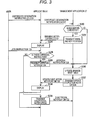
FIG. 3 shows a sequence diagram of a certificate designating process that is performed by a multi-functional device; -
FIG 4 shows a sequence diagram of a certificate designation cancelling process that is performed by a multi-functional device; -
FIG 5 shows a sequence diagram of an application executing process that is performed by a multi-functional device; and -
FIG 6 shows a sequence diagram of a certificate deleting process that is performed by a multi-functional device. - (Exemplary Embodiments)
- (System Configuration)
- An exemplary embodiment of the present invention will be described with reference to the drawings.
FIG. 1 is a schematic view of anapplication execution system 2 of the present exemplary embodiment. Theapplication execution system 2 includes aLAN 4, amulti-functional device 10 and a PC 80. Both themulti-functional device 10 and the PC 80 are connected to theLAN 4. Themulti-functional device 10 and the PC 80 can communicate with each other via theLAN 4. - (Configuration Of Multi-functional Device 10)
- Configuration of the
multi-functional device 10 will now be described. Themulti-functional device 10 has a plurality of functions such as a copy function, a printer function, a scanner function, an e-mail transmitting and receiving function, internet FAX function, and the like. Themulti-functional device 10 includes anoperation unit 12, adisplay unit 14, anetwork interface 16, ascan execution unit 18, aprint execution unit 20, astorage unit 22 and acontrol unit 32. Theoperation unit 14 includes a plurality of keys. A user can input a variety of instructions to themulti-functional device 10 by operating theoperation unit 12. Thedisplay unit 14 can display a variety of information. Thenetwork interface 16 is connected to theLAN 4. Thescan execution unit 18 includes a scanning mechanism such as CIS and CCD, and produces image data by scanning an object. Theprint execution unit 20 includes a print mechanism of an ink jet head style or a laser style, and executes printing according to instructions from thecontrol unit 32. - The
storage unit 22 stores aprogram 24, acertificate storing area 28 and a management table 30. Theprogram 24 includes a plurality ofapplications 26 for realizing the above functions of themulti-functional device 10. In addition, theprogram 24 includes amanagement application 27 that manages theapplications 26 and a plurality of certificates of themulti-functional device 10. Thecontrol unit 32 executes a process in accordance with theprogram 24 stored in thestorage unit 22. As thecontrol unit 32 executes a process in accordance with theprogram 24, functions ofrespective units 34 to 48 are realized. - The
certificate storing area 28 stores the plurality of certificates that are used in the respective applications of themulti-functional device 10. The management table 30 includes a plurality ofcombination information 50 to 56. Each of the plurality ofcombination information 50 to 56 is information in which acertificate ID 60, an expiringdate 62 anddesignation information 64 to 70 corresponding to applications A1 to A4 are related to each other. Thecertificate ID 60 is identification information for identifying the respective certificates stored in thecertificate storing area 28. The expiringdate 62 is information that indicates date and time of the expiring date of a certificate indicated by thecertificate ID 60. Thedesignation information 64 of the application A1 is information indicating whether each certificate indicated by thecertificate ID 60 is designated as a certificate that should be used in executing the application A1. A certificate whosedesignation information 64 is "o" indicates that it is designated as a certificate that should be used in executing the application A1. For example, in the management table 30 ofFIG. 1 , thedesignation information 64 of the certificate ID "C2" is "o." This indicates that a certificate indicated by the certificate ID "C2" is designated as a certificate that should be used in executing the application A1. Meanwhile, a certificate whosedesignation information 64 is "×" indicates that it is not designated as a certificate that should be used in executing the application A1. For example, in the management table 30 ofFIG 1 , thedesignation information 64 of the certificate ID "C1" is "×." This indicates that a certificate indicated by the certificate ID "C1" is not designated as a certificate that should be used in executing the application A1. Thedesignation information 66 to 70 corresponding to the applications A2 to A4 is also the same as thedesignation information 64. - Hereinafter, a state in which a specific certificate is designated as a certificate that should be used in executing a specific application (a state in which "o" is recorded in the
designation information 64, and the like) may also be described as "a specific certificate corresponds to a specific application." In addition, to rewrite thedesignation information 64 and the like from "x" to "o"may also be described as "to make a correspondence" and to rewrite thedesignation information 64 and the like from "o" to "×" may also be described as "to cancel a correspondence." - In addition, when a certificate that should be used in executing an application corresponds to the application, each of the
applications 26 store a certificate ID indicating the certificate as one of setting information of the application. Thestorage unit 22 includes a setting storing area (not shown) for storing setting information of the application, for each of theapplications 26. - (Processes To Be Executed By Multi-functional Device 10)
- In the followings, each process that is executed by the
control unit 32 of themulti-functional device 10 will be described with reference toFIGS. 2 to 6 . - (Startup Process)
- First, a startup process that is executed when an application starts up will be described with reference to
FIG. 2 . In addition, an application A1 will be described as an example of the applications. However, the same process is also executed for the other applications A2 to A4. Hereinafter, an example will be described in which the application A1 and a certificate indicated by the certificate ID "C2" have been already made to correspond to each other at the start of the startup process, resulting from a certificate designating process (refer toFIG 3 ) that will be described later. In this example, the application A1 stores the certificate ID "C2" as one of the setting information of the application A1. When the power of themulti-functional device 10 is on, a user can operate theoperation unit 12 of themulti-functional device 10 or an operation unit (not shown) of thePC 80 connected to themulti-functional device 10 so as to input a startup instruction 102 for starting up the application A1 to themulti-functional device 10. - When the startup instruction 102 is inputted, the
control unit 32 starts up the application A1. Then, the control unit 102 transmits arequest 104 for confirming whether a certificate exists to the management application, in accordance with the application A1. Therequest 104 includes a certificate ID that the application A 1 stores as one of the setting information. Thecontrol unit 32 executing a process in accordance with an application (or a management application) may be described as "the application executes a process," rather than "thecontrol unit 32 executes a process." In the above example, since the application A 1 already stores the certificate ID "C2" indicating the certificate that has been made to correspond to the application A1, the certificate ID "C2" is included in therequest 104. Thecontrol unit 32 executes a process to confirm whether the certificate ID corresponding to the application A1 exists in the management table 30, in accordance with the management application 27 (S2). For example, in the management table 30 ofFIG 1 , the certificate ID "C2" and the application "A1" are made to correspond to each other. In this case, thecontrol unit 32 determines "YES" in S2. - When a determination result of S2 is "NO," i.e., when the certificate ID "C2" is deleted from the management table 30 by a certificate deleting process (
FIG. 6 ) that will be described later and thus does not exist therein, a second notification unit 44 (refer toFIG. 1 ) transmits to the application A1 anon-existence notification 106 indicating that the specific certificate made to correspond to the application A1 has been deleted, in accordance with the management application 27 (S4). In this case, thesecond notification unit 44 causes thedisplay unit 14 of themulti-functional device 10 or a display unit (not shown) of thePC 80 to display that the specific certificate corresponding to the application A1 has been deleted, in accordance with the application A1 (S6). Thereby, a user can know that the certificate corresponding to the application A1 has been deleted and thus does not exist. - In the meantime, when a determination result of S2 is YES, a second confirmation unit 40 (refer to
FIG. 1 ) confirms whether the certificate corresponding to the application A1 is currently valid, in accordance with the management application 27 (S8). In S8, the second confirmation unit 40 first obtains current date and time. Then, the second confirmation unit 40 specifies anexpiration date 62 that is related to thecertificate ID 60 which corresponds to the application A1, from the management table 30. The second confirmation unit 40 compares the specifiedexpiration date 62 with the current date and time. As a result of the comparison, when the current date and time is later than the specifiedexpiration date 62, the second confirmation unit 40 determines "NO" in S8. In the meantime, when the specifiedexpiration date 62 is later than the current date and time, the second confirmation unit 40 determines "YES" in S8. - When a determination result of S8 is NO, a third notification unit 46 (refer to
FIG. 1 ) transmits to the application A1 aexpiration notification 108 indicating that the expiration date of the certificate corresponding to the application A1 has expired, in accordance with the management application 27 (S10). In this case, thethird notification unit 46 causes thedisplay unit 14 of themulti-functional device 10 or the display unit (not shown) of thePC 80 to display that the expiration date of the certificate corresponding to the application A1 has expired, in accordance with the application A1 (S12). Thereby, a user knows that the expiration date of the certificate corresponding to the application A1 has expired. - Meanwhile, when a determination result of S8 is YES, the
management application 27 shifts to a standby state in which it stands until a next instruction is inputted by a user. When the process of S6 or S8 ends, the application A1 also shifts to a standby state. When the respective processes are completed, themulti-functional device 10 terminates the startup process. The above description is based on an exemplary state in which the application A1 and the certificate indicated by the certificate ID "C2" already correspond to each other at the start of the startup process. - Contrary to the above example, there may be a case where there are no certificates that correspond to the application A1 at the start of the startup process. In this case, when a user inputs a startup instruction 102, only a process of starting up the application A1 is carried out without performing the processes of S2 to S12. Hereinafter, such a startup process may be called as a "typical startup process." During the typical startup process, information indicating that no certificates correspond to the application A1 may be displayed on the
display unit 14 of themulti-functional device 10 and the like in accordance with the application A1. - (Certificate Designating Process)
- Continuously, a certificate designating process will be described with reference to
FIG. 3 . In order to execute this process, as a precondition, the application A1 needs to have been started up. The application A1 may have been started up in accordance with the startup process shown inFIG. 2 or the typical startup process. A user can operate theoperation unit 12 of themulti-functional device 10 or the operation unit of thePC 80 and thus input acertificate designation instruction 120, which designates a specific certificate (for example, a certificate indicated by a certificate ID "C4") that will be used in executing the application A1, to themulti-functional device 10. Thecertificate designation instruction 120 includes a certificate ID (for example, a certificate ID "C4") designated by the user. - When the
certificate designation instruction 120 is inputted, thecontrol unit 32 transmits a certificate designation notification 122 including the certificate ID (for example, "C4"), which is included in thecertificate designation instruction 120, to themanagement application 27, in accordance with the application A1. In this case, thecontrol unit 32 checks whether a certificate made to correspond to the application A1 exists in the management table 30, in accordance with the management application 27 (S20). Specifically, thecontrol unit 32 determines "YES" in S20 when the certificate ID (for example, "C4") which is included in the certificate designation notification 122, and the certificate ID (for example, "C2") which currently corresponds to the application A1, are different. Meanwhile, thecontrol unit 32 determines "NO" in S20 when the certificate ID which is included in the certificate designation notification 122, and the certificate ID which currently corresponds to the application A1, are the same. In this case, thecontrol unit 32 does not execute processes of S30 and S32 that will be described later. Additionally, thecontrol unit 32 also determines "NO" in S20 when all thedesignation information 64 corresponding to the application A1 are "x" in the management table 30. In this case, thecontrol unit 32 proceeds to S30 and S32 that will be described later. - When a determination result of S20 is YES, a fourth notification unit 48 (refer to
FIG. 1 ) transmits to the application A1 awarning notification 124 indicating that a certificate indicated by the certificate ID (for example, "C2") currently corresponds to the application A1, in accordance with the management application 27 (S22). Thewarning notification 124 includes the certificate ID (for example, "C2") indicating the certificate currently corresponding to the application A1. - Then, the
fourth notification unit 48 causes thedisplay unit 14 of themulti-functional device 10 or the display unit of thePC 80 to display a predetermined warning in accordance with the application A1 (S24). The warning in S24 includes a character string indicating that the application A1 and the certificate ID (for example, "C2") included in thewarning notification 124 correspond to each other. In addition, the warning in S24 includes a character string enabling a user to select whether or not to use a newly designated certificate (for example, "C4"). - The user operates the
operation unit 12 of themulti-functional device 10 or the operation unit of thePC 80 and thus selects whether or not to use a newly designated certificate (for example, "C4"). Thereby, according to the selection of the user, a user instruction 126 indicating "use" or a user instruction 126 indicating "disuse" is inputted to themulti-functional device 10. Thecontrol unit 32 checks whether the user instruction 126 indicates "use" or "disuse" in accordance with the application A1 (S26). When the user instruction 126 indicates "use" (i.e., the user instruction is an approval instruction), the control unit determines YES in S26. When the user instruction 126 indicates "disuse" (i.e., the user instruction is a disapproval instruction), the control unit determines NO in S26. When a determination result of S26 is YES, thecontrol unit 32 transmits anapproval notification 128 to themanagement application 27 in accordance with the application A1 (S28). When themanagement application 27 receives the approval notification or when a determination result of S20 is NO, a storage control unit 36 (refer toFIG. 1 ) updates thedesignation information 64 of the application A1 in the management table 30 in accordance with the management application 27 (S30). The process that thestorage control unit 36 executes in S30 is different for a case in which the process went through S28 and for a case where a determination result of S20 is NO. - In the process of S30 for a case in which the process went through S28, the
storage control unit 36 changes thedesignation information 64 of the application A1 from "o" to "×" at this point. In other words, the correspondence of the application A1 and the certificate is cancelled (i.e., the correspondence is deleted). Then, thestorage control unit 36 changes thedesignation information 64, which is related to the certificate ID (for example, "C4") included in the certificate designation notification 122, from "x" to "o". In other words, a certificate, which is indicated by the certificate ID included in the certificate designation notification 122, and the application A1 are newly made to correspond to each other. - In the process of S30 for a case where a determination result of S20 is NO, the
storage control unit 36 changes thedesignation information 64, which is related to the certificate ID (for example, "C4") included in the certificate designation notification 122, from "×" to "o". In other words, thestorage control unit 36 registers a new correspondence of a certificate indicated by the certificate ID (for example, "C4") and the application A1. - When the process of S30 is completed, the
control unit 32 transmits anupdate completion notification 130 indicating that the update has been completed to the application A1, in accordance with the management application 27 (S32). In this case, thecontrol unit 32 causes thedisplay unit 14 of themulti-functional device 10 or the display unit of thePC 80 to display the information indicating that the update has been completed, in accordance with the application A1 (S34). Thereby, a user can know that the process of changing the certificate, which is used in executing the application A1, has been completed. - In addition, when the processes of S30 to S34 are completed, the application A1 stores a certificate ID (for example, "C4"), which indicates a new certificate that should be used in executing the application A1, as one of the setting information. At this time, when the application A1 already stores a different certificate ID (for example, "C2"), the application A1 changes (overwrites) the certificate ID (for example, "C2") already stored to a new certificate ID (for example, "C4") and stores it.
- Meanwhile, when a determination result of S26 is NO, the
control unit 32 transmits adisapproval notification 132 indicating that the above change is not approved to themanagement application 27, in accordance with the application A1 (S36). In this case, thestorage control unit 36 does not execute the management table updating process S30. When the respective processes are completed, themulti-functional device 10 terminates the certificate designating process. - (Certificate Designation Cancelling Process)
- Continuously, a certificate designation cancelling process will be described with reference to
FIG 4 . A precondition for this process will be described. First, the application A1 has already been started up in accordance with the above startup process. Second, a certificate (for example, a certificate corresponding to the certificate ID "C2") corresponding to the application A1 exists. A user can operate theoperation unit 12 of themulti-functional device 10 or the operation unit of thePC 80, thereby inputting a certificatedesignation cancelling instruction 140 for cancelling the correspondence of the application A1 and the certificate to themulti-functional device 10. The certificatedesignation cancelling instruction 140 includes a certificate ID (for example, certificate ID "C2") whose designation will be cancelled. - Then, the
control unit 32 transmits a certificatedesignation cancelling notification 142, which includes the certificate ID (for example, "C2") included in the certificatedesignation cancelling instruction 140, to themanagement application 27 in accordance with the application A1. In this case, thestorage control unit 36 executes a management table updating process in accordance with the management application 27 (S50). Specifically, in S50, thestorage control unit 36 changes thedesignation information 64, which is related to the certificate ID (for example, "C2") included in the certificatedesignation cancelling notification 142, from "o" to "x". In other words, thestorage control unit 36 cancels the correspondence of the certificate, which is indicated by the certificate ID (for example, "C2") included in the certificatedesignation cancelling notification 142, and the application A1 (i.e., the correspondence is deleted). When the management table updating process is completed, thecontrol unit 32 transmits anupdate completion notification 144 indicating that the update is completed to the application A1, in accordance with themanagement application 27. In this case, thecontrol unit 32 causes thedisplay unit 14 of themulti-functional device 10 or the display unit of thePC 80 to display that the update is completed, in accordance with the application A1 (S54). Thereby, the user recognizes that the process of cancelling the certificate that is used in executing the application A1 is completed. - When the respective processes have been completed, the application A1 deletes the certificate ID (for example, "C2"), which is stored as one of the setting information and which should be used in executing the application A1, from the setting information.
- (Application Executing Process)
- An application executing process will be described with reference to
FIG. 5 . A precondition for this process will be described. First, the application A1 has already been started up in accordance with the startup process described-above. Second, a certificate (for example, a certificate corresponding to the certificate ID "C2") that corresponds to the application A1 exists. A user can operate theoperation unit 12 of themulti-functional device 10 or the operation unit of thePC 80, thereby inputting anapplication execution instruction 150 for requesting an execution of the application A1 to themulti-functional device 10. In this case, an application execution unit 34 (refer toFIG 1 ) executes the application A1 by using a certificate (for example, a certificate indicated by the certificate ID "C2") that currently corresponds to the application A1 (S60). - (Certificate Deleting Process)
- A certificate deleting process will be described with reference to
FIG. 6 . When the power of themulti-functional device 10 is on, a user can operate theoperation unit 12 of themulti-functional device 10 and the like, thereby inputting a managementtable display instruction 160 for requesting a display of the management table 30 to themulti-functional device 10. When the managementtable display instruction 160 is inputted, thecontrol unit 32 starts up themanagement application 27. Then, thecontrol unit 32 causes thedisplay unit 14 of themulti-functional device 10 and the like to display the management table 30 stored in thestorage unit 22, in accordance with the management application 27 (S70). Accordingly, the user can input acertificate deletion instruction 162 for deleting a predetermined certificate (for example, a certificate corresponding to the certificate ID "C2") in the management table 30 from thestorage unit 22 to themulti-functional device 10, by operating theoperation unit 12 of themulti-functional device 10 and the like. Thecertificate deletion instruction 162 includes a certificate ID (for example, "C2") indicating a certificate to be deleted (hereinafter, referred to as "deletion object certificate"). - When the
certificate deletion instruction 162 is inputted, a first confirmation unit 38 (refer toFIG 1 ) checks whether there is an application corresponding to the certificate ID (for example, "C2") included in thecertificate deletion instruction 162, in accordance with the management application 27 (S72). For example, in the management table 30 ofFIG 1 , the certificate ID "C2" and the application "A1" corresponds to each other. In this case, thefirst confirmation unit 38 determines "YES" in S72. - When a determination result of S72 is YES, a first notification unit 42 (refer to
FIG 1 ) displays a warning indicating that there is an application corresponding to the deletion object certificate shown in thedisplay unit 14 of themulti-functional device 10 and the like, in accordance with the management application 27 (S74). The warning in S74 includes a character string indicating the identification information (for example, "A1") identifying all applications corresponding to the deletion object certificate. In addition, the warning in S74 includes a character string enabling a user to select whether or not to delete the deletion object certificate. - The user operates the
operation unit 12 of themulti-functional device 10 and the like, thereby selecting whether or not to delete the deletion object certificate. Thereby, according to the selection of the user, a user instruction 164 indicating "deletion" or a user instruction 164 indicating "non-deletion" is inputted to themulti-functional device 10. Thecontrol unit 32 checks whether the user instruction 164 indicates "deletion" or "non-deletion", in accordance with the management application 27 (S76). When the user instruction 164 indicates "deletion" (approval instruction), the control unit determines "YES" in S76. When the user instruction 164 indicates "non-deletion" (disapproval instruction), the control unit determines "NO" in S76. - When a determination result of S76 is YES or when a determination result of S72 is NO, the
storage control unit 36 executes a management table updating process in accordance with the management application 27 (S78). Specifically, in S78, thestorage control unit 36 deletes the combination information (for example, 52) which is in the management table 30 and which includes the certificate ID (for example, "C2") indicating the deletion object certificate, in accordance with themanagement application 27. Further, thestorage control unit 36 deletes the deletion object certificate from the certificate storing area 28 (refer toFIG. 1 ) in thestorage unit 22. When the management table updating process of S78 is completed, thecontrol unit 32 causes thedisplay unit 14 of themulti-functional device 10 and the like to display the update completion of the management table 30, in accordance with the management application 27 (S80). Thereby, the user can know that the process of deleting the deletion object certificate is completed. - Meanwhile, when a determination result of S76 is NO, the
storage control unit 36 does not execute the management table updating process (S78). The combination information (for example, 52) including the certificate ID (for example, "C2") indicating the deletion object certificate is kept in the management table 30. Further, the deletion object certificate is also kept in thecertificate storing area 28 of thestorage unit 22. When the respective processes are completed, themulti-functional device 10 terminates the certificate deleting process. - The exemplary embodiment of the present invention has been specifically described. According to the
multi-functional device 10 of the above-described exemplary embodiment, as shown in the management table 30 ofFIG 1 , the certificate ID and the designation information "o" are stored so as to correspond to each other. When a user wants themulti-functional device 10 to execute a desired application, the user can designate a certificate to be used in the desired application and store the certificate ID and the designation information "o" so as to correspond to each other. When installing a certificate, it is not necessary for the user to determine an application that corresponds to the certificate. Themulti-functional device 10 can notify the user with the management table 30. Accordingly, if a certificate (hereinafter, referred to as "specific certificate") that does not correspond to an application is stored in the storage unit, the user can easily find the specific certificate. In this case, the user can delete the specific certificate from the storage unit. As a result, it is possible to reduce the number of certificates that should be stored in themulti-functional device 10. - As shown in
FIG 6 , when the user inputs thecertificate deletion instruction 162 to delete the deletion object certificate, themulti-functional device 10 of the above-described exemplary embodiment checks whether there is an application corresponding to the deletion object certificate (S72). When there is an application (S72: YES), the multi-functional device displays to the user a warning that there is an application corresponding to the deletion object certificate (S74). Since the warning is displayed, the user can know that an application corresponds to the deletion object certificate which the user instructed to delete. Accordingly, the user can check whether or not to delete the deletion object certificate. In particular, in a case where one certificate corresponds to a plurality of applications, even when a user does not recognize all the applications corresponding to the certificate, it is possible to prevent the user from deleting the certificate accidentally. - As shown in
FIG 2 , themulti-functional device 10 of the above-described exemplary embodiment notifies a user with information that there is not a certificate that corresponds to the application A1 when the application A1 starts up. The user can know that a certificate corresponding to the application A1 has been deleted, for example. - As shown in
FIG. 2 , the multi-functional device determines a validity of a certificate that corresponds to the application A1 when the application A1 starts up. When the certificate is not valid, the multi-functional device notifies the user with the information. The user can know that the certificate corresponding to the application A1 is not valid when the application A1 starts up, for example. - As shown in
FIG. 3 , when the application A1 is executed, a user may designate a new certificate (for example, "C4") different from the certificate (for example, "C2") that corresponds to the application A1. In this case, themulti-functional device 10 automatically updates the correspondence of the application and the certificate. Thus, it is not necessary for the user to execute the update of the correspondence again. At this time, as shown in S24 ofFIG 3 , a warning is displayed. Thus, even though the user designated the certificate (for example, "C2"), which currently corresponds to the application A1 when the application A1 was executed last time, the user can know that a new certificate (for example, "C4") different from the certificate (for example, "C2") which currently corresponds to the application A1 is designated when the application A1 is executed this time. - Additionally, in the above-described exemplary embodiment, as shown in S4, S6, S10 and S12 of
FIG 2 , for example, thecontrol unit 32 of themulti-functional device 10 causes thedisplay unit 14 of themulti-functional device 10 to display a variety of information, such as information that a certificate corresponding to the application A1 is deleted (i.e., does not exist) and information that the expiration date of the certificate has expired, in accordance with the application A1. However, the management application may enable thedisplay 14 of themulti-functional device 10 and the like to display the information in accordance with the management application, rather than the application A1. - In the above-described exemplary embodiment, as shown in S8 of
FIG. 2 , in order to determine the validity of a certificate, whether the expiration date of the certificate has expired or not was confirmed. However, in addition to the expiration date, the validity of a certificate may be determined, based on the other criteria such as a determination of whether the certificate is included in a predetermined invalidation list. - The exemplary embodiments of the invention have been described above. However, the scope of claims may not be restricted by the above-described exemplary embodiments. The technology described in the claim also includes variations and modifications of the above-described exemplary embodiments. In addition, technical elements explained in the description and the drawings can be used independently or in combination so as to achieve technical utility, and is not restricted by the combination recited in the claims. In addition, a plurality of purposes can be achieved at the same time by the technology described in the description and the drawings, and by achieving one of the pluralities of purposes, technical utility can be achieved.
- In the above-described exemplary embodiments, functions of the units are implemented by software. However, the functions of the units, or at least a part of thereof, may be implemented by hardware.
Claims (7)
- An information processing apparatus (10) comprising:a storage unit (22) configured to store a plurality of applications and a plurality of certificates;an application execution unit (34) configured to execute one of the plurality of applications by using one of the plurality of certificates which is designated by a user; anda storage control unit (36) configured to control the storage unit (22) to store correspondence information indicating that the executed application corresponds to the designated certificate, when the application execution unit executes one of the plurality of applications and one of the plurality of certificates is designated by the user.
- The information processing apparatus (10) according to claim 1, further comprising a first confirmation unit (38) and a first notification unit (42),
wherein the storage unit (22) further stores a management application that manages the plurality of certificates,
wherein, when an instruction to delete a first certificate from the storage unit (22) is input by the user to the management application, the first confirmation unit (38) is configured to confirm whether first correspondence information relating to the first certificate is stored in the storage unit (22) (S72), and
wherein, when it is confirmed that the first correspondence information is stored in the storage unit (22), the first notification unit (42) is configured to cause first information about a first application that corresponds to the first certificate according to the first correspondence information to be notified to the user (S74). - The information processing apparatus (10) according to claim 2, further comprising a second notification unit (44),
wherein, when the first application starts up, after the first certificate is deleted and before a different certificate, which is to be used in executing the first application, is newly designated instead of the first certificate, the second notification unit (44) is configured to cause second information indicating that the first certificate is deleted to be notified to the user. - The information processing apparatus (10) according to any one of claims 1 to 3, further comprising a second confirmation unit (40) and a third notification unit (46),
wherein the storage unit (22) further stores validity information indicating validity of a corresponding certificate for each of the certificates,
wherein, when second correspondence information indicating that a second application and a second certificate correspond to each other is stored in the storage unit (22) and an operation for starting up the second application is executed by the user, the second confirmation unit (40) is configured to confirm whether the second certificate is valid based on the validity information relating to the second certificate (S8), and
wherein, when it is confirmed that the second certificate is not valid, the third notification unit (46) is configured to cause third information indicating that the second certificate is not valid to be notified to the user. - The information processing apparatus (10) according to claim 4,
wherein the third notification unit (46) is configured to cause the third information to be notified to the user in accordance with the second application. - The information processing apparatus (10) according to any one of claims 1 to 5,
wherein in a specific case where third correspondence information indicating that a third application and a third certificate that correspond to each other is stored in the storage unit (22) and a fourth certificate is designated by the user in executing the third application, the storage control unit (36) is configured to delete the third correspondence information and further store fourth correspondence information indicating that the third application and the fourth certificate correspond to each other in the storage unit (22) (S30). - The information processing apparatus (10) according to claim 6, further comprising a fourth notification unit (48),
wherein in the specific case, the fourth notification unit (48) is configured to cause fourth information which indicates that the third application and the third certificate correspond to each other to be notified to the user, before the third correspondence information is deleted.
Applications Claiming Priority (1)
| Application Number | Priority Date | Filing Date | Title |
|---|---|---|---|
| JP2009295954A JP5521542B2 (en) | 2009-12-25 | 2009-12-25 | Information processing device |
Publications (2)
| Publication Number | Publication Date |
|---|---|
| EP2348434A1 true EP2348434A1 (en) | 2011-07-27 |
| EP2348434B1 EP2348434B1 (en) | 2019-03-13 |
Family
ID=43764229
Family Applications (1)
| Application Number | Title | Priority Date | Filing Date |
|---|---|---|---|
| EP10252075.6A Not-in-force EP2348434B1 (en) | 2009-12-25 | 2010-12-08 | Information processing apparatus |
Country Status (4)
| Country | Link |
|---|---|
| US (1) | US8984281B2 (en) |
| EP (1) | EP2348434B1 (en) |
| JP (1) | JP5521542B2 (en) |
| CN (1) | CN102137209B (en) |
Families Citing this family (11)
| Publication number | Priority date | Publication date | Assignee | Title |
|---|---|---|---|---|
| CN102904865B (en) * | 2011-07-29 | 2016-05-25 | 中国移动通信集团公司 | A kind of management method, system and equipment of the multiple digital certificates based on mobile terminal |
| JP5927863B2 (en) * | 2011-11-24 | 2016-06-01 | ブラザー工業株式会社 | Function execution device and server |
| KR102147359B1 (en) * | 2012-06-29 | 2020-08-24 | 삼성전자 주식회사 | Method for managing non-volatile memory device, and non-volatile memory device |
| US9424405B2 (en) * | 2012-11-28 | 2016-08-23 | Apple Inc. | Using receipts to control assignments of items of content to users |
| JP6176020B2 (en) * | 2013-09-17 | 2017-08-09 | 株式会社リコー | Apparatus, information processing system, information processing method, information processing program, and storage medium storing information processing program |
| DE102014201234A1 (en) * | 2014-01-23 | 2015-07-23 | Siemens Aktiengesellschaft | Method, management device and device for certificate-based authentication of communication partners in a device |
| JP6379931B2 (en) | 2014-09-29 | 2018-08-29 | ブラザー工業株式会社 | Function execution device and screen information server |
| JP6459805B2 (en) * | 2015-07-03 | 2019-01-30 | 富士ゼロックス株式会社 | Information processing system, information processing apparatus, and program |
| CN105871840B (en) * | 2016-03-30 | 2019-08-27 | 恒宝股份有限公司 | A kind of certificate management method and system |
| JP7158830B2 (en) * | 2017-06-08 | 2022-10-24 | キヤノン株式会社 | Information processing device, control method for information processing device, and program |
| CN112202567B (en) * | 2020-09-30 | 2024-03-15 | 北京百度网讯科技有限公司 | A certificate sending method, certificate sending method, cloud and terminal device |
Citations (5)
| Publication number | Priority date | Publication date | Assignee | Title |
|---|---|---|---|---|
| US20060021012A1 (en) * | 2004-06-21 | 2006-01-26 | Canon Kabushiki Kaisha | Image forming apparatus, license managing method for applications executed by image forming apparatus, program for implementing the method, and storage medium storing the program |
| JP2006059141A (en) | 2004-08-20 | 2006-03-02 | Ricoh Co Ltd | Device, function management method, program, and recording medium |
| US20060200420A1 (en) * | 2005-02-24 | 2006-09-07 | Canon Kabushiki Kaisha | License management apparatus, control method therefor, and program for implementing the control method |
| US20080005029A1 (en) * | 2006-06-07 | 2008-01-03 | Mitsuo Ando | Image forming apparatus, license management method, and license management program product |
| US20090133128A1 (en) * | 2007-11-16 | 2009-05-21 | Canon Kabushiki Kaisha | Image processing apparatus and reinstallation method therefor |
Family Cites Families (10)
| Publication number | Priority date | Publication date | Assignee | Title |
|---|---|---|---|---|
| JP2001022702A (en) * | 1999-07-12 | 2001-01-26 | Fujitsu Ltd | Authentication control device, authentication control system, authentication control method, and recording medium |
| KR20040015272A (en) | 2001-06-12 | 2004-02-18 | 리서치 인 모션 리미티드 | Certificate management and transfer system and method |
| JP2004297333A (en) | 2003-03-26 | 2004-10-21 | Ntt Comware West Corp | Digital certificate accreditation system, digital certificate accreditation server, pki token, digital certificate accreditation method and program |
| US20050268343A1 (en) * | 2004-05-14 | 2005-12-01 | Onoda Sen Ichi | Application management device and its method |
| JP2006005613A (en) | 2004-06-17 | 2006-01-05 | Secom Trust Net Co Ltd | Authentication system |
| JP4667921B2 (en) | 2005-03-24 | 2011-04-13 | 三菱電機株式会社 | Verification device, communication system, trust store management device, and trust store monitoring device |
| US20080228513A1 (en) * | 2006-12-08 | 2008-09-18 | Mcmillan Joshua A | Software license management |
| JP4654255B2 (en) * | 2008-02-27 | 2011-03-16 | 株式会社沖データ | Image processing apparatus, system and method |
| JP5047870B2 (en) * | 2008-04-17 | 2012-10-10 | 株式会社日立製作所 | Master management system, master management method, and master management program |
| JP5219729B2 (en) * | 2008-10-20 | 2013-06-26 | キヤノン株式会社 | License management system and control method of license management system |
-
2009
- 2009-12-25 JP JP2009295954A patent/JP5521542B2/en active Active
-
2010
- 2010-12-08 EP EP10252075.6A patent/EP2348434B1/en not_active Not-in-force
- 2010-12-13 US US12/967,034 patent/US8984281B2/en active Active
- 2010-12-27 CN CN201010623068.7A patent/CN102137209B/en active Active
Patent Citations (5)
| Publication number | Priority date | Publication date | Assignee | Title |
|---|---|---|---|---|
| US20060021012A1 (en) * | 2004-06-21 | 2006-01-26 | Canon Kabushiki Kaisha | Image forming apparatus, license managing method for applications executed by image forming apparatus, program for implementing the method, and storage medium storing the program |
| JP2006059141A (en) | 2004-08-20 | 2006-03-02 | Ricoh Co Ltd | Device, function management method, program, and recording medium |
| US20060200420A1 (en) * | 2005-02-24 | 2006-09-07 | Canon Kabushiki Kaisha | License management apparatus, control method therefor, and program for implementing the control method |
| US20080005029A1 (en) * | 2006-06-07 | 2008-01-03 | Mitsuo Ando | Image forming apparatus, license management method, and license management program product |
| US20090133128A1 (en) * | 2007-11-16 | 2009-05-21 | Canon Kabushiki Kaisha | Image processing apparatus and reinstallation method therefor |
Also Published As
| Publication number | Publication date |
|---|---|
| US20110162085A1 (en) | 2011-06-30 |
| JP5521542B2 (en) | 2014-06-18 |
| US8984281B2 (en) | 2015-03-17 |
| JP2011139131A (en) | 2011-07-14 |
| CN102137209B (en) | 2014-11-26 |
| EP2348434B1 (en) | 2019-03-13 |
| CN102137209A (en) | 2011-07-27 |
Similar Documents
| Publication | Publication Date | Title |
|---|---|---|
| EP2348434B1 (en) | Information processing apparatus | |
| JP5805519B2 (en) | Image processing system, image receiving apparatus, image processing apparatus, and image processing method | |
| KR101040484B1 (en) | Job processing device, job log management method in job processing device, and job history management system | |
| US11079992B2 (en) | Information processing apparatus having software key display, control method thereof, and program | |
| JP4462321B2 (en) | Image transmission apparatus, image transmission method, and image transmission program | |
| US20110125781A1 (en) | Image processing apparatus, image processing system, control method for these, and storage medium | |
| JP2013030110A (en) | Display control device, operation display device, image processing device, display control method, and display control program | |
| JP2019191948A (en) | program | |
| JP2018134760A (en) | Image forming apparatus, display method and program | |
| US10536586B2 (en) | Image processing apparatus controlling information transmission, control method thereof, and recording medium | |
| US8848218B2 (en) | Information processing apparatus and method for job ticket manupulation | |
| JP2009265807A (en) | Data distribution device, data distribution method, and data distribution program | |
| JP4962586B2 (en) | Image reading program | |
| JP2022084118A (en) | Scanner and control program | |
| JP5050981B2 (en) | Data distribution apparatus and data distribution method | |
| US9584678B2 (en) | Image data storing device, method of storing image data and non-transitory computer readable medium storing program | |
| JP5062037B2 (en) | Data distribution apparatus, data distribution method, and data distribution program | |
| JP5391710B2 (en) | Image forming apparatus and program | |
| JP6114353B2 (en) | Image processing system, image processing method, and computer program | |
| JP6798603B2 (en) | Programs and terminals | |
| JP6616867B2 (en) | Image receiving apparatus and control method therefor, application program, image processing system and control method therefor | |
| JP2019180063A (en) | Image forming apparatus and program | |
| JP6367409B2 (en) | Image processing system, image processing method, and computer program | |
| JP4702068B2 (en) | Job submission device and program | |
| JP5610731B2 (en) | Image forming apparatus, control method therefor, and program |
Legal Events
| Date | Code | Title | Description |
|---|---|---|---|
| PUAI | Public reference made under article 153(3) epc to a published international application that has entered the european phase |
Free format text: ORIGINAL CODE: 0009012 |
|
| AK | Designated contracting states |
Kind code of ref document: A1 Designated state(s): AL AT BE BG CH CY CZ DE DK EE ES FI FR GB GR HR HU IE IS IT LI LT LU LV MC MK MT NL NO PL PT RO RS SE SI SK SM TR |
|
| AX | Request for extension of the european patent |
Extension state: BA ME |
|
| 17P | Request for examination filed |
Effective date: 20120126 |
|
| 17Q | First examination report despatched |
Effective date: 20150318 |
|
| STAA | Information on the status of an ep patent application or granted ep patent |
Free format text: STATUS: EXAMINATION IS IN PROGRESS |
|
| REG | Reference to a national code |
Ref country code: DE Ref legal event code: R079 Ref document number: 602010057507 Country of ref document: DE Free format text: PREVIOUS MAIN CLASS: G06F0021000000 Ipc: G06F0009445000 |
|
| GRAP | Despatch of communication of intention to grant a patent |
Free format text: ORIGINAL CODE: EPIDOSNIGR1 |
|
| STAA | Information on the status of an ep patent application or granted ep patent |
Free format text: STATUS: GRANT OF PATENT IS INTENDED |
|
| RIC1 | Information provided on ipc code assigned before grant |
Ipc: G06F 21/10 20130101ALI20180919BHEP Ipc: G06F 9/445 20060101AFI20180919BHEP Ipc: G06F 21/12 20130101ALI20180919BHEP Ipc: G06F 21/64 20130101ALI20180919BHEP |
|
| INTG | Intention to grant announced |
Effective date: 20181016 |
|
| GRAS | Grant fee paid |
Free format text: ORIGINAL CODE: EPIDOSNIGR3 |
|
| GRAA | (expected) grant |
Free format text: ORIGINAL CODE: 0009210 |
|
| STAA | Information on the status of an ep patent application or granted ep patent |
Free format text: STATUS: THE PATENT HAS BEEN GRANTED |
|
| RIC1 | Information provided on ipc code assigned before grant |
Ipc: G06F 9/445 20180101AFI20180919BHEP Ipc: G06F 21/64 20130101ALI20180919BHEP Ipc: G06F 21/12 20130101ALI20180919BHEP Ipc: G06F 21/10 20130101ALI20180919BHEP |
|
| AK | Designated contracting states |
Kind code of ref document: B1 Designated state(s): AL AT BE BG CH CY CZ DE DK EE ES FI FR GB GR HR HU IE IS IT LI LT LU LV MC MK MT NL NO PL PT RO RS SE SI SK SM TR |
|
| REG | Reference to a national code |
Ref country code: GB Ref legal event code: FG4D |
|
| REG | Reference to a national code |
Ref country code: CH Ref legal event code: EP Ref country code: AT Ref legal event code: REF Ref document number: 1108628 Country of ref document: AT Kind code of ref document: T Effective date: 20190315 |
|
| REG | Reference to a national code |
Ref country code: IE Ref legal event code: FG4D |
|
| REG | Reference to a national code |
Ref country code: DE Ref legal event code: R096 Ref document number: 602010057507 Country of ref document: DE |
|
| REG | Reference to a national code |
Ref country code: NL Ref legal event code: MP Effective date: 20190313 |
|
| REG | Reference to a national code |
Ref country code: LT Ref legal event code: MG4D |
|
| PG25 | Lapsed in a contracting state [announced via postgrant information from national office to epo] |
Ref country code: NO Free format text: LAPSE BECAUSE OF FAILURE TO SUBMIT A TRANSLATION OF THE DESCRIPTION OR TO PAY THE FEE WITHIN THE PRESCRIBED TIME-LIMIT Effective date: 20190613 Ref country code: FI Free format text: LAPSE BECAUSE OF FAILURE TO SUBMIT A TRANSLATION OF THE DESCRIPTION OR TO PAY THE FEE WITHIN THE PRESCRIBED TIME-LIMIT Effective date: 20190313 Ref country code: SE Free format text: LAPSE BECAUSE OF FAILURE TO SUBMIT A TRANSLATION OF THE DESCRIPTION OR TO PAY THE FEE WITHIN THE PRESCRIBED TIME-LIMIT Effective date: 20190313 Ref country code: LT Free format text: LAPSE BECAUSE OF FAILURE TO SUBMIT A TRANSLATION OF THE DESCRIPTION OR TO PAY THE FEE WITHIN THE PRESCRIBED TIME-LIMIT Effective date: 20190313 |
|
| PG25 | Lapsed in a contracting state [announced via postgrant information from national office to epo] |
Ref country code: HR Free format text: LAPSE BECAUSE OF FAILURE TO SUBMIT A TRANSLATION OF THE DESCRIPTION OR TO PAY THE FEE WITHIN THE PRESCRIBED TIME-LIMIT Effective date: 20190313 Ref country code: NL Free format text: LAPSE BECAUSE OF FAILURE TO SUBMIT A TRANSLATION OF THE DESCRIPTION OR TO PAY THE FEE WITHIN THE PRESCRIBED TIME-LIMIT Effective date: 20190313 Ref country code: LV Free format text: LAPSE BECAUSE OF FAILURE TO SUBMIT A TRANSLATION OF THE DESCRIPTION OR TO PAY THE FEE WITHIN THE PRESCRIBED TIME-LIMIT Effective date: 20190313 Ref country code: GR Free format text: LAPSE BECAUSE OF FAILURE TO SUBMIT A TRANSLATION OF THE DESCRIPTION OR TO PAY THE FEE WITHIN THE PRESCRIBED TIME-LIMIT Effective date: 20190614 Ref country code: BG Free format text: LAPSE BECAUSE OF FAILURE TO SUBMIT A TRANSLATION OF THE DESCRIPTION OR TO PAY THE FEE WITHIN THE PRESCRIBED TIME-LIMIT Effective date: 20190613 Ref country code: RS Free format text: LAPSE BECAUSE OF FAILURE TO SUBMIT A TRANSLATION OF THE DESCRIPTION OR TO PAY THE FEE WITHIN THE PRESCRIBED TIME-LIMIT Effective date: 20190313 |
|
| REG | Reference to a national code |
Ref country code: AT Ref legal event code: MK05 Ref document number: 1108628 Country of ref document: AT Kind code of ref document: T Effective date: 20190313 |
|
| PG25 | Lapsed in a contracting state [announced via postgrant information from national office to epo] |
Ref country code: EE Free format text: LAPSE BECAUSE OF FAILURE TO SUBMIT A TRANSLATION OF THE DESCRIPTION OR TO PAY THE FEE WITHIN THE PRESCRIBED TIME-LIMIT Effective date: 20190313 Ref country code: IT Free format text: LAPSE BECAUSE OF FAILURE TO SUBMIT A TRANSLATION OF THE DESCRIPTION OR TO PAY THE FEE WITHIN THE PRESCRIBED TIME-LIMIT Effective date: 20190313 Ref country code: RO Free format text: LAPSE BECAUSE OF FAILURE TO SUBMIT A TRANSLATION OF THE DESCRIPTION OR TO PAY THE FEE WITHIN THE PRESCRIBED TIME-LIMIT Effective date: 20190313 Ref country code: AL Free format text: LAPSE BECAUSE OF FAILURE TO SUBMIT A TRANSLATION OF THE DESCRIPTION OR TO PAY THE FEE WITHIN THE PRESCRIBED TIME-LIMIT Effective date: 20190313 Ref country code: CZ Free format text: LAPSE BECAUSE OF FAILURE TO SUBMIT A TRANSLATION OF THE DESCRIPTION OR TO PAY THE FEE WITHIN THE PRESCRIBED TIME-LIMIT Effective date: 20190313 Ref country code: ES Free format text: LAPSE BECAUSE OF FAILURE TO SUBMIT A TRANSLATION OF THE DESCRIPTION OR TO PAY THE FEE WITHIN THE PRESCRIBED TIME-LIMIT Effective date: 20190313 Ref country code: SK Free format text: LAPSE BECAUSE OF FAILURE TO SUBMIT A TRANSLATION OF THE DESCRIPTION OR TO PAY THE FEE WITHIN THE PRESCRIBED TIME-LIMIT Effective date: 20190313 Ref country code: PT Free format text: LAPSE BECAUSE OF FAILURE TO SUBMIT A TRANSLATION OF THE DESCRIPTION OR TO PAY THE FEE WITHIN THE PRESCRIBED TIME-LIMIT Effective date: 20190713 |
|
| PG25 | Lapsed in a contracting state [announced via postgrant information from national office to epo] |
Ref country code: PL Free format text: LAPSE BECAUSE OF FAILURE TO SUBMIT A TRANSLATION OF THE DESCRIPTION OR TO PAY THE FEE WITHIN THE PRESCRIBED TIME-LIMIT Effective date: 20190313 Ref country code: SM Free format text: LAPSE BECAUSE OF FAILURE TO SUBMIT A TRANSLATION OF THE DESCRIPTION OR TO PAY THE FEE WITHIN THE PRESCRIBED TIME-LIMIT Effective date: 20190313 |
|
| REG | Reference to a national code |
Ref country code: DE Ref legal event code: R097 Ref document number: 602010057507 Country of ref document: DE |
|
| PG25 | Lapsed in a contracting state [announced via postgrant information from national office to epo] |
Ref country code: AT Free format text: LAPSE BECAUSE OF FAILURE TO SUBMIT A TRANSLATION OF THE DESCRIPTION OR TO PAY THE FEE WITHIN THE PRESCRIBED TIME-LIMIT Effective date: 20190313 Ref country code: IS Free format text: LAPSE BECAUSE OF FAILURE TO SUBMIT A TRANSLATION OF THE DESCRIPTION OR TO PAY THE FEE WITHIN THE PRESCRIBED TIME-LIMIT Effective date: 20190713 |
|
| PLBE | No opposition filed within time limit |
Free format text: ORIGINAL CODE: 0009261 |
|
| STAA | Information on the status of an ep patent application or granted ep patent |
Free format text: STATUS: NO OPPOSITION FILED WITHIN TIME LIMIT |
|
| PG25 | Lapsed in a contracting state [announced via postgrant information from national office to epo] |
Ref country code: DK Free format text: LAPSE BECAUSE OF FAILURE TO SUBMIT A TRANSLATION OF THE DESCRIPTION OR TO PAY THE FEE WITHIN THE PRESCRIBED TIME-LIMIT Effective date: 20190313 |
|
| 26N | No opposition filed |
Effective date: 20191216 |
|
| PG25 | Lapsed in a contracting state [announced via postgrant information from national office to epo] |
Ref country code: SI Free format text: LAPSE BECAUSE OF FAILURE TO SUBMIT A TRANSLATION OF THE DESCRIPTION OR TO PAY THE FEE WITHIN THE PRESCRIBED TIME-LIMIT Effective date: 20190313 |
|
| PG25 | Lapsed in a contracting state [announced via postgrant information from national office to epo] |
Ref country code: TR Free format text: LAPSE BECAUSE OF FAILURE TO SUBMIT A TRANSLATION OF THE DESCRIPTION OR TO PAY THE FEE WITHIN THE PRESCRIBED TIME-LIMIT Effective date: 20190313 |
|
| REG | Reference to a national code |
Ref country code: CH Ref legal event code: PL |
|
| REG | Reference to a national code |
Ref country code: BE Ref legal event code: MM Effective date: 20191231 |
|
| PG25 | Lapsed in a contracting state [announced via postgrant information from national office to epo] |
Ref country code: MC Free format text: LAPSE BECAUSE OF FAILURE TO SUBMIT A TRANSLATION OF THE DESCRIPTION OR TO PAY THE FEE WITHIN THE PRESCRIBED TIME-LIMIT Effective date: 20190313 |
|
| PG25 | Lapsed in a contracting state [announced via postgrant information from national office to epo] |
Ref country code: IE Free format text: LAPSE BECAUSE OF NON-PAYMENT OF DUE FEES Effective date: 20191208 Ref country code: LU Free format text: LAPSE BECAUSE OF NON-PAYMENT OF DUE FEES Effective date: 20191208 |
|
| PG25 | Lapsed in a contracting state [announced via postgrant information from national office to epo] |
Ref country code: CH Free format text: LAPSE BECAUSE OF NON-PAYMENT OF DUE FEES Effective date: 20191231 Ref country code: BE Free format text: LAPSE BECAUSE OF NON-PAYMENT OF DUE FEES Effective date: 20191231 Ref country code: LI Free format text: LAPSE BECAUSE OF NON-PAYMENT OF DUE FEES Effective date: 20191231 |
|
| PG25 | Lapsed in a contracting state [announced via postgrant information from national office to epo] |
Ref country code: CY Free format text: LAPSE BECAUSE OF FAILURE TO SUBMIT A TRANSLATION OF THE DESCRIPTION OR TO PAY THE FEE WITHIN THE PRESCRIBED TIME-LIMIT Effective date: 20190313 |
|
| PG25 | Lapsed in a contracting state [announced via postgrant information from national office to epo] |
Ref country code: MT Free format text: LAPSE BECAUSE OF FAILURE TO SUBMIT A TRANSLATION OF THE DESCRIPTION OR TO PAY THE FEE WITHIN THE PRESCRIBED TIME-LIMIT Effective date: 20190313 Ref country code: HU Free format text: LAPSE BECAUSE OF FAILURE TO SUBMIT A TRANSLATION OF THE DESCRIPTION OR TO PAY THE FEE WITHIN THE PRESCRIBED TIME-LIMIT; INVALID AB INITIO Effective date: 20101208 |
|
| PG25 | Lapsed in a contracting state [announced via postgrant information from national office to epo] |
Ref country code: MK Free format text: LAPSE BECAUSE OF FAILURE TO SUBMIT A TRANSLATION OF THE DESCRIPTION OR TO PAY THE FEE WITHIN THE PRESCRIBED TIME-LIMIT Effective date: 20190313 |
|
| P01 | Opt-out of the competence of the unified patent court (upc) registered |
Effective date: 20230529 |
|
| PGFP | Annual fee paid to national office [announced via postgrant information from national office to epo] |
Ref country code: GB Payment date: 20231102 Year of fee payment: 14 |
|
| PGFP | Annual fee paid to national office [announced via postgrant information from national office to epo] |
Ref country code: FR Payment date: 20231108 Year of fee payment: 14 Ref country code: DE Payment date: 20231031 Year of fee payment: 14 |
|
| REG | Reference to a national code |
Ref country code: DE Ref legal event code: R119 Ref document number: 602010057507 Country of ref document: DE |
|
| GBPC | Gb: european patent ceased through non-payment of renewal fee |
Effective date: 20241208 |
|
| PG25 | Lapsed in a contracting state [announced via postgrant information from national office to epo] |
Ref country code: DE Free format text: LAPSE BECAUSE OF NON-PAYMENT OF DUE FEES Effective date: 20250701 |
|
| PG25 | Lapsed in a contracting state [announced via postgrant information from national office to epo] |
Ref country code: GB Free format text: LAPSE BECAUSE OF NON-PAYMENT OF DUE FEES Effective date: 20241208 |
|
| PG25 | Lapsed in a contracting state [announced via postgrant information from national office to epo] |
Ref country code: FR Free format text: LAPSE BECAUSE OF NON-PAYMENT OF DUE FEES Effective date: 20241231 |