EP2346274A1 - Method of handling security in SRVCC handover and related communication device - Google Patents
Method of handling security in SRVCC handover and related communication device Download PDFInfo
- Publication number
- EP2346274A1 EP2346274A1 EP11000365A EP11000365A EP2346274A1 EP 2346274 A1 EP2346274 A1 EP 2346274A1 EP 11000365 A EP11000365 A EP 11000365A EP 11000365 A EP11000365 A EP 11000365A EP 2346274 A1 EP2346274 A1 EP 2346274A1
- Authority
- EP
- European Patent Office
- Prior art keywords
- network
- domain
- security
- keys
- handover
- Prior art date
- Legal status (The legal status is an assumption and is not a legal conclusion. Google has not performed a legal analysis and makes no representation as to the accuracy of the status listed.)
- Granted
Links
Images



Classifications
-
- H—ELECTRICITY
- H04—ELECTRIC COMMUNICATION TECHNIQUE
- H04W—WIRELESS COMMUNICATION NETWORKS
- H04W12/00—Security arrangements; Authentication; Protecting privacy or anonymity
- H04W12/04—Key management, e.g. using generic bootstrapping architecture [GBA]
- H04W12/041—Key generation or derivation
-
- H—ELECTRICITY
- H04—ELECTRIC COMMUNICATION TECHNIQUE
- H04W—WIRELESS COMMUNICATION NETWORKS
- H04W12/00—Security arrangements; Authentication; Protecting privacy or anonymity
- H04W12/04—Key management, e.g. using generic bootstrapping architecture [GBA]
- H04W12/043—Key management, e.g. using generic bootstrapping architecture [GBA] using a trusted network node as an anchor
- H04W12/0433—Key management protocols
-
- H—ELECTRICITY
- H04—ELECTRIC COMMUNICATION TECHNIQUE
- H04W—WIRELESS COMMUNICATION NETWORKS
- H04W36/00—Hand-off or reselection arrangements
- H04W36/0005—Control or signalling for completing the hand-off
- H04W36/0011—Control or signalling for completing the hand-off for data sessions of end-to-end connection
- H04W36/0022—Control or signalling for completing the hand-off for data sessions of end-to-end connection for transferring data sessions between adjacent core network technologies
- H04W36/00224—Control or signalling for completing the hand-off for data sessions of end-to-end connection for transferring data sessions between adjacent core network technologies between packet switched [PS] and circuit switched [CS] network technologies, e.g. circuit switched fallback [CSFB]
- H04W36/00226—Control or signalling for completing the hand-off for data sessions of end-to-end connection for transferring data sessions between adjacent core network technologies between packet switched [PS] and circuit switched [CS] network technologies, e.g. circuit switched fallback [CSFB] wherein the core network technologies comprise IP multimedia system [IMS], e.g. single radio voice call continuity [SRVCC]
-
- H—ELECTRICITY
- H04—ELECTRIC COMMUNICATION TECHNIQUE
- H04W—WIRELESS COMMUNICATION NETWORKS
- H04W36/00—Hand-off or reselection arrangements
- H04W36/0005—Control or signalling for completing the hand-off
- H04W36/0011—Control or signalling for completing the hand-off for data sessions of end-to-end connection
- H04W36/0033—Control or signalling for completing the hand-off for data sessions of end-to-end connection with transfer of context information
- H04W36/0038—Control or signalling for completing the hand-off for data sessions of end-to-end connection with transfer of context information of security context information
-
- H—ELECTRICITY
- H04—ELECTRIC COMMUNICATION TECHNIQUE
- H04W—WIRELESS COMMUNICATION NETWORKS
- H04W36/00—Hand-off or reselection arrangements
- H04W36/14—Reselecting a network or an air interface
- H04W36/144—Reselecting a network or an air interface over a different radio air interface technology
-
- H—ELECTRICITY
- H04—ELECTRIC COMMUNICATION TECHNIQUE
- H04L—TRANSMISSION OF DIGITAL INFORMATION, e.g. TELEGRAPHIC COMMUNICATION
- H04L63/00—Network architectures or network communication protocols for network security
- H04L63/06—Network architectures or network communication protocols for network security for supporting key management in a packet data network
Definitions
- the application relates to a method used in a wireless communication system and related communication device, and more particularly, to a method for handling security in an SRVCC handover in a wireless communication system and related communication device.
- an evolved universal terrestrial radio access network includes a plurality of evolved Node-Bs (eNBs) and communicates with a plurality of mobile stations, also referred as to user equipments (UEs).
- eNBs evolved Node-Bs
- UEs user equipments
- a Single Radio Voice Call Continuity provides the ability to transmit a voice call from the VolP/IMS (lP Multimedia Subsystem) packet domain to the legacy circuit domain.
- Variations of SRVCC are being standardized to support both GSM/UMTS and CDMA 1x circuit domains.
- SRVCC provides their VolP subscribers with coverage over a much larger area than would typically be available during the rollout of a new network.
- SRVCC functions as follows.
- An SRVCC-capable UE engaged in a voice call transmits measurement reports including measurement results to the LTE network (e.g. E-UTRAN).
- the LTE network determines that the voice call needs to be moved to the legacy Circuit-Switched (CS) domain based on the measurement results. It notifies a mobile switching center (MSC) server of the need to switch the voice call from the Packet-Switched (PS) to the CS domain and initiates a handover of the LTE voice bearer to the circuit network (e.g. UTRAN, GERAN or CDMA2000).
- MSC mobile switching center
- the MSC server establishes a bearer path for the mobile station in the legacy network and notifies the IMS core that the UE's call leg is moving from the PS to the CS domain.
- the call leg represents a logical connection between the router and either a telephony endpoint over a bearer channel, or another endpoint.
- the circuit-packet function in the IMS core then performs the necessary inter-working functions.
- the UE arrives on-channel in the legacy network, it switches its internal voice processing from VolP to legacy-circuit voice, and the call continues.
- Information security shall be applied for transmissions during and after the SRVCC to avoid malicious intruders.
- LTE LTE
- UMTS UMTS
- GERAN lu mode systems ciphering and integrity protection are employed, whereas the GERAN (non lu mode) only applies ciphering.
- the LTE is a pure packet switched (PS) system, while the UMTS, GERAN and GERAN lu mode systems are hybrid systems of PS and CS (Circuit Switched) service domains.
- PS packet switched
- CS Circuit Switched
- a UE compatible with all the abovementioned systems includes: security configuration of the LTE system (for E-UTRAN) including a START, a CK (Cipher Key), an lK (Integrity Key), an eKSI (evolved Key Set Identifier), a NAS DL COUNT (Non Access Stratum Downlink COUNT), and a K ASME (a key used between the UE and a mobile management entity); security configuration of the UMTS (for UTRAN) and GERAN lu mode systems including STARTcs/STARTpS, CK cs /CK ps , lK cs /lK ps , KSl cs /KSl ps, and COUNT cs /COUNT ps ; and security configuration of the GERAN system including a GSM ciphering key (CK) and a GPRS (Global Packet Radio Service) ciphering key (CK).
- security keys e.g. ciphering and integrity
- 3GPP TS 23.216 The handling of security keys for SRVCC handover from E-UTRAN to UTRAN/GERAN/CDMA2000 is specified in 3GPP TS 23.216.
- the handling of security keys for SRVCC from UTRAN/GEARN/CDMA2000 to E-UTRAN has not been defined.
- the UE may have two active key sets (One key set is for CS and the other key set is for PS). It is not clear what key set is used to derive security keys used in E-UTRAN. Therefore the call drops after the SRVCC handover from UTRAN/GEARN/CDMA2000 to E-UTRAN because the UE and the network may not use same security keys talking to each other.
- a method of handling security in an SRVCC handover for a mobile device in a wireless communication system and a related communication device are provided.
- a method for handling security in an SRVCC handover for a mobile device in a wireless communication device comprises having an active Circuit-Switched (CS) service or a Radio Resource Control (RRC) connection in a CS domain when the mobile device is served by a first network, wherein the first network supports the CS domain and a Packet-Switched (PS) domain; receiving a handover command to handover from the first network to a second network, wherein the second network supports the PS domain; deriving a plurality of security keys used in the second network from a plurality of CS domain keys used in the first network; and applying the plurality of security keys for transmission and reception in the second network.
- CS Circuit-Switched
- RRC Radio Resource Control
- a method for handling security in an SRVCC handover for a mobile device in a wireless communication device comprises having an active Circuit-Switched (CS) service or a first Radio Resource Control (RRC) connection in a CS domain and an active Packet-Switched (PS) service or a second RRC connection in a PS domain when the mobile device is served by a first network, wherein the first network supports the CS domain and the PS domain; receiving a handover command to handover from the first network to a second network, wherein the second network supports the PS domain; deriving a plurality of security keys used in the second network from a plurality of PS domain keys used in the first network; and applying the plurality of security keys for transmission and reception in the second network.
- CS Circuit-Switched
- RRC Radio Resource Control
- PS Packet-Switched
- a communication device for handling security in an SRVCC handover in a wireless communication device comprises means for having an active Circuit-Switched (CS) service or a Radio Resource Control (RRC) connection in a CS domain when the mobile device is served by a first network, wherein the first network supports the CS domain and a Packet-Switched (PS) domain; means for receiving a handover command to handover from the first network to a second network, wherein the second network supports the PS domain; means for deriving a plurality of security keys used in the second network from a plurality of CS domain keys used in the first network; and means for applying the plurality of security keys for transmission and reception in the second network.
- CS Circuit-Switched
- RRC Radio Resource Control
- a communication device for handling security in an SRVCC handover in a wireless communication device comprises means for having an active Circuit-Switched (CS) service or a first Radio Resource Control (RRC) connection in a CS domain and an active Packet-Switched (PS) service or a second RRC connection in a PS domain when the mobile device is served by a first network, wherein the first network supports the CS domain and the PS domain; means for receiving a handover command to handover from the first network to a second network, wherein the second network supports the PS domain; means for deriving a plurality of security keys used in the second network from a plurality of PS domain keys used in the first network; and means for applying the plurality of security keys for transmission and reception in the second network.
- CS Circuit-Switched
- RRC Radio Resource Control
- PS Packet-Switched
- a serving network 12 and a target network 14 employ different radio access technologies (RATs), and the mobile device 10 supporting both of the RATs is served by the serving network 12.
- the serving network 12 supports multiple service domains and may be a network of a UMTS (Universal Mobile Telecommunications System) system, a GSM system, a GERAN lu mode system or a CDMA (Code division multiple access) 2000 system supporting both PS (Packet Switched) and CS (Circuit Switched) service domains.
- UMTS Universal Mobile Telecommunications System
- GSM Global System
- GERAN lu mode system a CDMA 2000 system supporting both PS (Packet Switched) and CS (Circuit Switched) service domains.
- CDMA Code division multiple access 2000 system supporting both PS (Packet Switched) and CS (Circuit Switched) service domains.
- the target network 14 may be a LTE (long-term evolution) or a HSPA+ (High Speed Packet Access Plus) system network only supporting a PS (Packet Switched) service domain.
- the network is referred as a Universal Terrestrial Radio Access Network (UTRAN) comprising a radio network controller (RNC) and a plurality of NBs (Node Bs);
- RNC radio network controller
- Node Bs Node Bs
- the network In the GSM/ GERAN lu mode system, the network is referred as a GERAN comprising a base station controller (BSC) and a plurality of base stations;
- BSC base station controller
- the network is referred as a evolved-UTRAN (EUTRAN) comprising a plurality of eNBs (evolved-Node Bs).
- the mobile device 10 is referred as a user equipment (UEs) or a mobile station (MS) supporting the abovementioned RATs and may be a device such as a mobile phone, a computer system, etc.
- the network and the mobile device 10 can be seen as a transmitter or receiver according to transmission direction, e.g., for uplink (UL), the mobile device 10 is the transmitter and the network is the receiver, and for downlink (DL), the network is the transmitter and the mobile device 10 is the receiver.
- UL uplink
- DL downlink
- the serving network 12 transfers necessary configuration (capability, mobility, security configuration, etc.) of the target network 14 to the mobile device 10 so that the mobile device 10 changes its configuration based on the transferred configuration and establishes a connection to the target network 14.
- the connection establishment is successful, the mobile device 10 disconnects with the serving network 12.
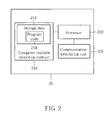
- the communication device 20 can be the mobile device or the network shown in FIG. 1 and includes a processor 200, a computer readable recording medium 210 and a communication interfacing unit 220.
- the computer readable recording medium 210 may be any data storage device that stores storage data 212, including program code 214, thereafter read and processed by the processor 200. Examples of the computer readable recording medium 210 includes a subscriber identity module (SIM), read-only memory (ROM), random-access memory (RAM), CD-ROMs, magnetic tapes, hard disks, optical data storage devices, and carrier waves (such as data transmission through the Internet).
- SIM subscriber identity module
- ROM read-only memory
- RAM random-access memory
- CD-ROMs compact discs
- magnetic tapes magnetic tapes
- hard disks hard disks
- optical data storage devices optical data storage devices
- carrier waves such as data transmission through the Internet.
- the communication interfacing unit 220 is preferably a radio transceiver for wirelessly communicating with other communication devices and can transform process results from the processor 200 into radio signals
- the communication device 20 supports the LTE or HSPA+, and UMTS, GSM or GERAN lu mode systems.
- the communication device 20 stores security configuration of the LTE system (for EUTRAN) including a START, a CK (Cipher Key), an lK (Integrity Key), an eKSI (evolved Key Set Identifier), a NAS DL COUNT (Non Access Stratum Downlink COUNT), and a K ASME (a mobile-management-level key used between the UE and a MME (mobile management entity); security configuration of the UMTS (for UTRAN) or GERAN lu mode systems including START cs /START PS , CK cs /CK ps , lK cs /lK ps , KSl cs /KSl ps , and COUNT cs /COUNT PS ; or security configuration of the GERAN system including a G
- the program code 214 includes program code of multiple communications protocol layers, which from top to bottom are a radio resource control (RRC) layer 300, a packet data convergence protocol (PDCP) layer 310, a radio link control (RLC) layer 320, a medium access control (MAC) layer 330 and a physical (PHY) layer 340.
- RRC radio resource control
- PDCP packet data convergence protocol
- RLC radio link control
- MAC medium access control
- PHY physical
- FIG.3 is a flow chart of an exemplary process 40.
- the process 40 is used for security in a SRVCC handover for a UE in a wireless communication system.
- the wireless communication system could be the wireless communication system 10.
- the process 40 can be compiled into the program code 214 and include the following steps:
- the UE when the UE is served by the network NT1 the UE may have the active CS service or the RRC connection in the CS domain.
- the network NT1 may be referred as to the serving network 12 (e.g. UTRAN/UMTS, GERAN/UMTS or CDMA2000), which support both the CS domain and the PS domain.
- the UE receives the handover command to handover from the network NT1 to the network NT2.
- the network NT2 may be referred as to the target network 14 (e.g. E-UTRAN or related EPS (Evolved packet system)), which merely support the PS domain.
- the UE may derive the security keys (e.g.
- the UE can handle the security in SRVCC handover from the network NT1 (e.g. UTRAN/UMTS, GERAN/UMTS or CDMA2000) to the network NT2 (e.g. E-UTRAN).
- the network NT1 e.g. UTRAN/UMTS, GERAN/UMTS or CDMA2000
- the network NT2 e.g. E-UTRAN
- the CS domain keys could be most recently generated by a successful UMTS AKA (Authentication and Key Agreement) run or a UMTS security context.
- AKA Authentication and Key Agreement
- CN core network
- AKA is provided for use between the UE and the core network (CN).
- the UE and the CN can authenticate each other and ensure data security and ciphering.
- a new key set will be allocated to the UE after AKA is run.
- the CS domain keys most recently generated by the UMTS AKA run may or may not have been taken into use by the UE or MSC (Mobile Switching Center).
- the MSC is the primary service delivery node for GSM/CDMA, responsible for the services such as voice calls, short message service (SMS), conference calls, FAX and circuit switched data).
- the MSC also sets up and releases the end-to-end connection, handles mobility and hand-over requirements during the call.
- the UMTS security context is established between the UE and the network NT1 domain as a result of the execution of UMTS AKA or as a result of inter RAT mobility from E-UTRAN to UTRAN or GERAN.
- the UMTS security context could be created from an EPS security context during a previous handover of the UE to the network NT1 (e.g. UTRAN) from the network NT2 (e.g. E-UTRAN).
- the UE does not use the old CS domain keys. Instead, the UE creates the UMTS security context from the EPS security context.
- the UE sets the eKSI to an initial value or to the KSI.
- the initial value may be an arbitrary number between 0 and 7.
- the KSI may be referred as to the key set identifier KSl cs , which is associated with the CS domain keys used in the network NT1.
- the network NT2 may use the same security keys for security of data transfer. So the network NT1 may send the CS domain keys to the network NT2, the network NT2 derives the security keys from the CS domain keys used in the network NT1.
- a MSC or a SGSN (Serving GPRS Support Node) of the network NT1 e.g.
- UTRAN/GREAN/CDMA2000 send the CS domain keys (e.g. CK cs and lk cs ) used in the network NT1.
- a MME of the LTE system derives the security keys from the CS domain keys (e.g. CK cs and lK cs ).
- the SGSN is a main component of the GPRS network, which handles all packet switched data within the network, e.g. the mobility management and authentication of the users.
- the SGSN performs the same functions as the MSC for voice traffic.
- the network NT1 may send the KSI to the network NT2.
- the network NT2 may set the eKSI to the initial value or to the KSI.
- the initial value may be an arbitrary number between 0 and 7 and the KSI may be referred as to the key set identifier KSI cs , which is associated with the CS domain keys used in the network NT1.
- the network NT1 may derive the security keys from the CS domain keys (e.g. CK cs and lk cs ) and then send the security keys to the network NT2.
- the network NT2 may derive the security keys itself or get them from the network NT1.
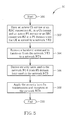
- FIG.5 is a flow chart of an exemplary process 50.
- the process 50 is used for security in a SRVCC handover for a UE in a wireless communication system.
- the wireless communication system could be the wireless communication system 10.
- the process 50 can be compiled into the program code 214 and include the following steps:
- the UE when the UE is served by the network NT3 the UE may have the active CS service or the RRC connection R1 in the CS domain as well as the active PS service or the RRC connection R2 in the PS domain.
- the network NT3 may be referred as to the serving network 12 (e.g. UTRAN/UMTS, GERAN/UMTS or CDMA2000), which support both the CS domain and the PS domain.
- the UE receives the handover command to handover from the network NT3 to the network NT4.
- the network NT4 may be referred as to the target network 14 (e.g. E-UTRAN or related EPS, which merely support the PS domain.
- the UE may derive the security keys (e.g.
- the network NT3 may have the CS services and the PS services simultaneously.
- the UE served by the network NT3 may have voice call service in the CS domain and data transfer in the PS domain at the same time. So there would be the CS domain keys and the PS domain keys used in the network NT3.
- the UE derives the security keys used in the network NT4 from the PS domain keys. Consequently, it is clear how the UE handles the security in SRVCC handover from the network NT3 (e.g. UTRAN/UMTS, GERAN/UMTS or CDMA2000) to the network NT4 (e.g. E-UTRAN) when the network NT3 have the CS services and the PS services both.
- the network NT3 e.g. UTRAN/UMTS, GERAN/UMTS or CDMA2000
- E-UTRAN E-UTRAN
- the PS domain keys could be most recently generated by a successful UMTS AKA run or a UMTS security context.
- the PS domain keys most recently generated by the successful UMTS AKA run in the network NT3 may or may not have been taken into use by the UE or MSC (Mobile Switching Center).
- the UMTS security context could be created from an EPS security context during a previous handover of the UE to the network NT3 (e.g. UTRAN) from the network NT4 (e.g. E-UTRAN).
- the UE sets the eKSI to an initial value or to the KSI.
- the initial value may be an arbitrary number between 0 and 7.
- the KSI may be referred as to the key set identifier KSl PS , which is associated with the PS domain keys used in the network NT3.
- the network NT4 may use the same security keys for security of data transfer. So the network NT3 may send the PS domain keys to the network NT4, the network NT4 derives the security keys from the PS domain keys used in the network NT3.
- a MSC or a SGSN of the network NT3 e.g.
- the UTRAN/GREAN/CDMA2000 send the PS domain keys (e.g. CK PS and lK PS ) used in the network NT3. Then, a MME of the LTE system derives the security keys from the PS domain keys (e.g. CK ps and lK PS ).
- the network NT3 may send the KSI to the network NT4. Accordingly, the network NT3 may set the eKSI to the initial value or to the KSI.
- the initial value may be an arbitrary number between 0 and 7 and the KSI may be referred as to the key set identifier KSI PS , which is associated with the PS domain keys used in the network NT3.
- the network NT3 may derive the security keys from the PS domain keys (e.g. CK PS and lK PS ) and then send the security keys to the network NT4.
- the network NT4 may derive the security keys itself or get them from the network NT3.
- the abovementioned steps including suggested steps can be realized by means that could be hardware, firmware known as a combination of a hardware device and computer instructions and data that reside as read-only software on the hardware device, or an electronic system.
- hardware can include analog, digital and mixed circuits known as microcircuit, microchip, or silicon chip.
- the electronic system can include system on chip (SOC), system in package (Sip), computer on module (COM), and the communication device 20 in which the processor 200 processes the program code 214 related to the abovementioned processes and the processed results can perform feedback load reduction in the wireless communications system 20.
- SOC system on chip
- Sip system in package
- COM computer on module
- the communication device 20 in which the processor 200 processes the program code 214 related to the abovementioned processes and the processed results can perform feedback load reduction in the wireless communications system 20.
- the UE having an active CS service or a RRC connection in a CS domain receives the handover command to handover from UTRAN/GREAN/CDMA2000 to E-UTRAN.
- the UE derives the security keys used in E-UTRAN from the CS domain keys (e.g. CK cs and lk CS ) used in UTRAN/GREAN/CDMA2000.
- the UE applies the security keys for transmission and reception in E-UTRAN. If the UE has an active CS service or an RRC connection in the CS domain as well as an active PS service or an RRC connection in the PS domain, the UE derive the security keys used in E-UTRAN from the PS domain keys (e.g.
- CK PS and lK PS used in UTRAN/GREAN/CDMA2000 when receiving the handover command. Consequently, the UE is able to handle security in the SRVCC handover from UTRAN/GREAN/CDMA2000 to E-UTRAN.
Landscapes
- Engineering & Computer Science (AREA)
- Computer Networks & Wireless Communication (AREA)
- Signal Processing (AREA)
- Computer Security & Cryptography (AREA)
- Multimedia (AREA)
- Mobile Radio Communication Systems (AREA)
Abstract
Description
- The application relates to a method used in a wireless communication system and related communication device, and more particularly, to a method for handling security in an SRVCC handover in a wireless communication system and related communication device.
- A long-term evolution (LTE) system, initiated by the third generation partnership project (3GPP), is now being regarded as a new radio interface and radio network architecture that provides a high data rate, low latency, packet optimization, and improved system capacity and coverage. In the LTE system, an evolved universal terrestrial radio access network (E-UTRAN) includes a plurality of evolved Node-Bs (eNBs) and communicates with a plurality of mobile stations, also referred as to user equipments (UEs).
- A Single Radio Voice Call Continuity (SRVCC) provides the ability to transmit a voice call from the VolP/IMS (lP Multimedia Subsystem) packet domain to the legacy circuit domain. Variations of SRVCC are being standardized to support both GSM/UMTS and CDMA 1x circuit domains. For an operator with a legacy cellular network who wishes to deploy IMS/VolP-based voice services in conjunction with the rollout of an LTE network, SRVCC provides their VolP subscribers with coverage over a much larger area than would typically be available during the rollout of a new network.
- SRVCC functions as follows. An SRVCC-capable UE engaged in a voice call transmits measurement reports including measurement results to the LTE network (e.g. E-UTRAN). The LTE network determines that the voice call needs to be moved to the legacy Circuit-Switched (CS) domain based on the measurement results. It notifies a mobile switching center (MSC) server of the need to switch the voice call from the Packet-Switched (PS) to the CS domain and initiates a handover of the LTE voice bearer to the circuit network (e.g. UTRAN, GERAN or CDMA2000). The MSC server establishes a bearer path for the mobile station in the legacy network and notifies the IMS core that the UE's call leg is moving from the PS to the CS domain. The call leg represents a logical connection between the router and either a telephony endpoint over a bearer channel, or another endpoint. The circuit-packet function in the IMS core then performs the necessary inter-working functions. When the UE arrives on-channel in the legacy network, it switches its internal voice processing from VolP to legacy-circuit voice, and the call continues.
- Information security shall be applied for transmissions during and after the SRVCC to avoid malicious intruders. In the LTE, UMTS, and GERAN lu mode systems, ciphering and integrity protection are employed, whereas the GERAN (non lu mode) only applies ciphering. Furthermore, the LTE is a pure packet switched (PS) system, while the UMTS, GERAN and GERAN lu mode systems are hybrid systems of PS and CS (Circuit Switched) service domains. Thus, a UE compatible with all the abovementioned systems includes: security configuration of the LTE system ( for E-UTRAN) including a START, a CK (Cipher Key), an lK (Integrity Key), an eKSI (evolved Key Set Identifier), a NAS DL COUNT (Non Access Stratum Downlink COUNT), and a KASME (a key used between the UE and a mobile management entity); security configuration of the UMTS (for UTRAN) and GERAN lu mode systems including STARTcs/STARTpS, CKcs/CKps, lKcs/lKps, KSlcs/KSlps, and COUNTcs/COUNTps; and security configuration of the GERAN system including a GSM ciphering key (CK) and a GPRS (Global Packet Radio Service) ciphering key (CK).
- The handling of security keys (e.g. ciphering and integrity) for SRVCC handover from E-UTRAN to UTRAN/GERAN/CDMA2000 is specified in 3GPP TS 23.216. However, the handling of security keys for SRVCC from UTRAN/GEARN/CDMA2000 to E-UTRAN has not been defined. In UTRAN, the UE may have two active key sets (One key set is for CS and the other key set is for PS). It is not clear what key set is used to derive security keys used in E-UTRAN. Therefore the call drops after the SRVCC handover from UTRAN/GEARN/CDMA2000 to E-UTRAN because the UE and the network may not use same security keys talking to each other.
- A method of handling security in an SRVCC handover for a mobile device in a wireless communication system and a related communication device are provided.
- A method for handling security in an SRVCC handover for a mobile device in a wireless communication device is disclosed. The method comprises having an active Circuit-Switched (CS) service or a Radio Resource Control (RRC) connection in a CS domain when the mobile device is served by a first network, wherein the first network supports the CS domain and a Packet-Switched (PS) domain; receiving a handover command to handover from the first network to a second network, wherein the second network supports the PS domain; deriving a plurality of security keys used in the second network from a plurality of CS domain keys used in the first network; and applying the plurality of security keys for transmission and reception in the second network.
- A method for handling security in an SRVCC handover for a mobile device in a wireless communication device is disclosed. The method comprises having an active Circuit-Switched (CS) service or a first Radio Resource Control (RRC) connection in a CS domain and an active Packet-Switched (PS) service or a second RRC connection in a PS domain when the mobile device is served by a first network, wherein the first network supports the CS domain and the PS domain; receiving a handover command to handover from the first network to a second network, wherein the second network supports the PS domain; deriving a plurality of security keys used in the second network from a plurality of PS domain keys used in the first network; and applying the plurality of security keys for transmission and reception in the second network.
- A communication device for handling security in an SRVCC handover in a wireless communication device is disclosed. The communication device comprises means for having an active Circuit-Switched (CS) service or a Radio Resource Control (RRC) connection in a CS domain when the mobile device is served by a first network, wherein the first network supports the CS domain and a Packet-Switched (PS) domain; means for receiving a handover command to handover from the first network to a second network, wherein the second network supports the PS domain; means for deriving a plurality of security keys used in the second network from a plurality of CS domain keys used in the first network; and means for applying the plurality of security keys for transmission and reception in the second network.
- A communication device for handling security in an SRVCC handover in a wireless communication device is disclosed. The communication device comprises means for having an active Circuit-Switched (CS) service or a first Radio Resource Control (RRC) connection in a CS domain and an active Packet-Switched (PS) service or a second RRC connection in a PS domain when the mobile device is served by a first network, wherein the first network supports the CS domain and the PS domain; means for receiving a handover command to handover from the first network to a second network, wherein the second network supports the PS domain; means for deriving a plurality of security keys used in the second network from a plurality of PS domain keys used in the first network; and means for applying the plurality of security keys for transmission and reception in the second network.
- These and other objectives of the present invention will no doubt become obvious to those of ordinary skill in the art after reading the following detailed description of the preferred embodiment that is illustrated in the various figures and drawings.
-
-
FIG.1 is a schematic diagram of an exemplary wireless communication system. -
FIG.2 is a schematic diagram of an exemplary communication device. -
FIG.3 illustrates the program code inFIG.2 -
FIG.4 is a flow chart of an exemplary process. -
FIG.5 is a flow chart of an exemplary process. - Please refer to
Fig. 1 , which simply illustrates an exemplarywireless communication system 10. InFig. 1 , a servingnetwork 12 and atarget network 14 employ different radio access technologies (RATs), and themobile device 10 supporting both of the RATs is served by theserving network 12. The servingnetwork 12 supports multiple service domains and may be a network of a UMTS (Universal Mobile Telecommunications System) system, a GSM system, a GERAN lu mode system or a CDMA (Code division multiple access) 2000 system supporting both PS (Packet Switched) and CS (Circuit Switched) service domains. Thetarget network 14 may be a LTE (long-term evolution) or a HSPA+ (High Speed Packet Access Plus) system network only supporting a PS (Packet Switched) service domain. In the UMTS system, the network is referred as a Universal Terrestrial Radio Access Network (UTRAN) comprising a radio network controller (RNC) and a plurality of NBs (Node Bs); In the GSM/ GERAN lu mode system, the network is referred as a GERAN comprising a base station controller (BSC) and a plurality of base stations; In the LTE system, the network is referred as a evolved-UTRAN (EUTRAN) comprising a plurality of eNBs (evolved-Node Bs). Themobile device 10 is referred as a user equipment (UEs) or a mobile station (MS) supporting the abovementioned RATs and may be a device such as a mobile phone, a computer system, etc. Besides, the network and themobile device 10 can be seen as a transmitter or receiver according to transmission direction, e.g., for uplink (UL), themobile device 10 is the transmitter and the network is the receiver, and for downlink (DL), the network is the transmitter and themobile device 10 is the receiver. When themobile device 10 performs a Single Radio Voice Call Continuity (SRVCC) handover from theserving network 12 to thetarget network 14, theserving network 12 transfers necessary configuration (capability, mobility, security configuration, etc.) of thetarget network 14 to themobile device 10 so that themobile device 10 changes its configuration based on the transferred configuration and establishes a connection to thetarget network 14. When the connection establishment is successful, themobile device 10 disconnects with theserving network 12. - Please refer to
FIG.2 , which is a schematic diagram of anexemplary communication device 20. Thecommunication device 20 can be the mobile device or the network shown inFIG. 1 and includes aprocessor 200, a computerreadable recording medium 210 and acommunication interfacing unit 220. The computerreadable recording medium 210 may be any data storage device that storesstorage data 212, includingprogram code 214, thereafter read and processed by theprocessor 200. Examples of the computerreadable recording medium 210 includes a subscriber identity module (SIM), read-only memory (ROM), random-access memory (RAM), CD-ROMs, magnetic tapes, hard disks, optical data storage devices, and carrier waves (such as data transmission through the Internet). Thecommunication interfacing unit 220 is preferably a radio transceiver for wirelessly communicating with other communication devices and can transform process results from theprocessor 200 into radio signals. - Preferably, the
communication device 20 supports the LTE or HSPA+, and UMTS, GSM or GERAN lu mode systems. For security operation, thecommunication device 20 stores security configuration of the LTE system (for EUTRAN) including a START, a CK (Cipher Key), an lK (Integrity Key), an eKSI (evolved Key Set Identifier), a NAS DL COUNT (Non Access Stratum Downlink COUNT), and a KASME (a mobile-management-level key used between the UE and a MME (mobile management entity); security configuration of the UMTS (for UTRAN) or GERAN lu mode systems including STARTcs/STARTPS, CKcs/CKps, lKcs/lKps, KSlcs/KSlps, and COUNTcs/COUNTPS; or security configuration of the GERAN system including a GSM ciphering key (CK) for the CS domain and a GPRS (Global Packet Radio Service) ciphering key (CK) for the PS domain. - Please refer to
Fig. 3 , which illustrates theprogram code 214 inFIG.2 . Theprogram code 214 includes program code of multiple communications protocol layers, which from top to bottom are a radio resource control (RRC)layer 300, a packet data convergence protocol (PDCP)layer 310, a radio link control (RLC)layer 320, a medium access control (MAC)layer 330 and a physical (PHY)layer 340. - Please refer to
FIG.3 , which is a flow chart of anexemplary process 40. Theprocess 40 is used for security in a SRVCC handover for a UE in a wireless communication system. The wireless communication system could be thewireless communication system 10. Theprocess 40 can be compiled into theprogram code 214 and include the following steps: - Step 400: Start.
- Step 402: Have an active CS service or an RRC connection in a CS domain when the UE is served by a network NT1.
- Step 404: Receive a handover command to handover from the network NT1 to a network NT2.
- Step 406: Derive security keys used in the network NT2 from CS domain keys used in the network NT1.
- Step 408: Apply the security keys for transmission and reception in the network NT2.
- Step 410: End.
- According to the
process 40, when the UE is served by the network NT1 the UE may have the active CS service or the RRC connection in the CS domain. The network NT1 may be referred as to the serving network 12 (e.g. UTRAN/UMTS, GERAN/UMTS or CDMA2000), which support both the CS domain and the PS domain. In the meanwhile, the UE receives the handover command to handover from the network NT1 to the network NT2. The network NT2 may be referred as to the target network 14 (e.g. E-UTRAN or related EPS (Evolved packet system)), which merely support the PS domain. The UE may derive the security keys (e.g. a START, a CK, an IK, an eKSl, a NAS DL COUNT, and a KASME) used in the network NT2 from the CS domain keys (e.g. STARTcs, CKcs, lkcs, KSIcs, and COUNTCS) used in the network NT1 and applies the security keys for transmission and reception in the network NT2. Consequently, the UE can handle the security in SRVCC handover from the network NT1 (e.g. UTRAN/UMTS, GERAN/UMTS or CDMA2000) to the network NT2 (e.g. E-UTRAN). - Preferably, the CS domain keys could be most recently generated by a successful UMTS AKA (Authentication and Key Agreement) run or a UMTS security context. According to the 3rd Generation Partnership Project (3GPP), AKA is provided for use between the UE and the core network (CN). With AKA, the UE and the CN can authenticate each other and ensure data security and ciphering. A new key set will be allocated to the UE after AKA is run. The CS domain keys most recently generated by the UMTS AKA run may or may not have been taken into use by the UE or MSC (Mobile Switching Center). The MSC is the primary service delivery node for GSM/CDMA, responsible for the services such as voice calls, short message service (SMS), conference calls, FAX and circuit switched data). The MSC also sets up and releases the end-to-end connection, handles mobility and hand-over requirements during the call. The UMTS security context is established between the UE and the network NT1 domain as a result of the execution of UMTS AKA or as a result of inter RAT mobility from E-UTRAN to UTRAN or GERAN. The UMTS security context could be created from an EPS security context during a previous handover of the UE to the network NT1 (e.g. UTRAN) from the network NT2 (e.g. E-UTRAN). There may be old CS domain keys having existed in the UE since the previous visit of the UMTS before the handover. In this situation, the UE does not use the old CS domain keys. Instead, the UE creates the UMTS security context from the EPS security context.
- After the security keys are derived, the UE sets the eKSI to an initial value or to the KSI. The initial value may be an arbitrary number between 0 and 7. The KSI may be referred as to the key set identifier KSlcs, which is associated with the CS domain keys used in the network NT1. In order to match the security keys which the UE derives from, the network NT2 may use the same security keys for security of data transfer. So the network NT1 may send the CS domain keys to the network NT2, the network NT2 derives the security keys from the CS domain keys used in the network NT1. To be more specific, a MSC or a SGSN (Serving GPRS Support Node) of the network NT1 (e.g. UTRAN/GREAN/CDMA2000) send the CS domain keys (e.g. CKcs and lkcs) used in the network NT1. Then, a MME of the LTE system derives the security keys from the CS domain keys (e.g. CKcs and lKcs). The SGSN is a main component of the GPRS network, which handles all packet switched data within the network, e.g. the mobility management and authentication of the users. The SGSN performs the same functions as the MSC for voice traffic. In addition, the network NT1 may send the KSI to the network NT2. Accordingly, the network NT2 may set the eKSI to the initial value or to the KSI. As mentioned above, the initial value may be an arbitrary number between 0 and 7 and the KSI may be referred as to the key set identifier KSIcs, which is associated with the CS domain keys used in the network NT1.
- On the other hand, the network NT1 may derive the security keys from the CS domain keys (e.g. CKcs and lkcs) and then send the security keys to the network NT2. Briefly, the network NT2 may derive the security keys itself or get them from the network NT1.
- Please refer to
FIG.5 , which is a flow chart of anexemplary process 50. Theprocess 50 is used for security in a SRVCC handover for a UE in a wireless communication system. The wireless communication system could be thewireless communication system 10. Theprocess 50 can be compiled into theprogram code 214 and include the following steps: - Step 500: Start.
- Step 502: Have an active CS service or an RRC connection R1 in a CS domain and an active PS service or an RRC connection R2 in a PS domain when the UE is served by a network NT3.
- Step 504: Receive a handover command to handover from the network NT3 to a network NT4.
- Step 506: Derive security keys used in the network NT4 from PS domain keys used in the network NT3.
- Step 508: Apply the security keys for transmission and reception in the network NT4.
- Step 510: End.
- According to the
process 50, when the UE is served by the network NT3 the UE may have the active CS service or the RRC connection R1 in the CS domain as well as the active PS service or the RRC connection R2 in the PS domain. The network NT3 may be referred as to the serving network 12 (e.g. UTRAN/UMTS, GERAN/UMTS or CDMA2000), which support both the CS domain and the PS domain. In the meanwhile, the UE receives the handover command to handover from the network NT3 to the network NT4. The network NT4 may be referred as to the target network 14 (e.g. E-UTRAN or related EPS, which merely support the PS domain. The UE may derive the security keys (e.g. a START, a CK, an lK, an eKSI, a NAS DL COUNT, and a KASME) used in the network NT4 from the PS domain keys (e.g. STARTPS, CKPS, lKPS, KSlPS, and COUNTPS) used in the network NT3 and applies the security keys for transmission and reception in the network NT4. In other words, the network NT3 may have the CS services and the PS services simultaneously. For example, the UE served by the network NT3 may have voice call service in the CS domain and data transfer in the PS domain at the same time. So there would be the CS domain keys and the PS domain keys used in the network NT3. In this situation, the UE derives the security keys used in the network NT4 from the PS domain keys. Consequently, it is clear how the UE handles the security in SRVCC handover from the network NT3 (e.g. UTRAN/UMTS, GERAN/UMTS or CDMA2000) to the network NT4 (e.g. E-UTRAN) when the network NT3 have the CS services and the PS services both. - Preferably, the PS domain keys could be most recently generated by a successful UMTS AKA run or a UMTS security context. The PS domain keys most recently generated by the successful UMTS AKA run in the network NT3 (e.g. UTRAN) may or may not have been taken into use by the UE or MSC (Mobile Switching Center). The UMTS security context could be created from an EPS security context during a previous handover of the UE to the network NT3 (e.g. UTRAN) from the network NT4 (e.g. E-UTRAN). There may be old PS domain keys having existed in the UE since the previous visit of the UMTS before the handover. In this situation, the UE does not use the old PS domain keys. Instead, the UE maps the UMTS security context from the EPS security context.
- After the security keys are derived, the UE sets the eKSI to an initial value or to the KSI. The initial value may be an arbitrary number between 0 and 7. The KSI may be referred as to the key set identifier KSlPS, which is associated with the PS domain keys used in the network NT3. In order to match the security keys which the UE derives from, the network NT4 may use the same security keys for security of data transfer. So the network NT3 may send the PS domain keys to the network NT4, the network NT4 derives the security keys from the PS domain keys used in the network NT3. To be more specific, a MSC or a SGSN of the network NT3 (e.g. UTRAN/GREAN/CDMA2000) send the PS domain keys (e.g. CKPS and lKPS) used in the network NT3. Then, a MME of the LTE system derives the security keys from the PS domain keys (e.g. CKps and lKPS). In addition, the network NT3 may send the KSI to the network NT4. Accordingly, the network NT3 may set the eKSI to the initial value or to the KSI. As mentioned above, the initial value may be an arbitrary number between 0 and 7 and the KSI may be referred as to the key set identifier KSIPS, which is associated with the PS domain keys used in the network NT3.
- On the other hand, the network NT3 may derive the security keys from the PS domain keys (e.g. CKPS and lKPS) and then send the security keys to the network NT4. Briefly, the network NT4 may derive the security keys itself or get them from the network NT3.
- Please note that the abovementioned steps including suggested steps can be realized by means that could be hardware, firmware known as a combination of a hardware device and computer instructions and data that reside as read-only software on the hardware device, or an electronic system. Examples of hardware can include analog, digital and mixed circuits known as microcircuit, microchip, or silicon chip. Examples of the electronic system can include system on chip (SOC), system in package (Sip), computer on module (COM), and the
communication device 20 in which theprocessor 200 processes theprogram code 214 related to the abovementioned processes and the processed results can perform feedback load reduction in thewireless communications system 20. - To sum up, during the SRVCC handover, the UE having an active CS service or a RRC connection in a CS domain receives the handover command to handover from UTRAN/GREAN/CDMA2000 to E-UTRAN. The UE derives the security keys used in E-UTRAN from the CS domain keys (e.g. CKcs and lkCS) used in UTRAN/GREAN/CDMA2000. The UE applies the security keys for transmission and reception in E-UTRAN. If the UE has an active CS service or an RRC connection in the CS domain as well as an active PS service or an RRC connection in the PS domain, the UE derive the security keys used in E-UTRAN from the PS domain keys (e.g. CKPS and lKPS) used in UTRAN/GREAN/CDMA2000 when receiving the handover command. Consequently, the UE is able to handle security in the SRVCC handover from UTRAN/GREAN/CDMA2000 to E-UTRAN.
Claims (14)
- The method of handling security in a Single Radio Voice Call Continuity (SRVCC) handover for a mobile device in a wireless communication system, the method comprising:having an active Circuit-Switched (CS) service or a Radio Resource Control (RRC) connection in a CS domain when the mobile device is served by a first network, wherein the first network supports the CS domain and a Packet-Switched (PS) domain;receiving a handover command to handover from the first network to a second network, wherein the second network supports the PS domain;deriving a plurality of security keys used in the second network from a plurality of CS domain keys used in the first network; andapplying the plurality of security keys for transmission and reception in the second network.
- The method of claim 1 further comprising setting an evolved Key Set Identifier (eKSI) to an initial value or to a Key Set Identifier (KSI) associated with the plurality of CS domain keys used in the first network.
- The method of claim 1 further comprising the second network deriving the plurality of security keys from the plurality of CS domain keys used in the first network, wherein the plurality of CS domain key is sent from the first network to the second network.
- The method of claim 1 further comprising the first network deriving the plurality of security keys from the plurality of CS domain keys used in the first network and sending the plurality of security keys to the second network.
- The method of claim 1 further comprising the second network setting an evolved Key Set Identifier (eKSI) to an initial value.
- The method of claim 1 further comprising:the first network sending Key Set Identifier (KSI) to the second network, wherein the KSI is associated with the plurality of CS domain keys used in the first network; andthe second network setting an evolved Key Set Identifier (eKSI) to the KSI.
- The method of claim 1, wherein the plurality of CS domain keys are the most recently generated by the first network or are currently used by the mobile device and the first network.
- A method of handling security in a Single Radio Voice Call Continuity (SRVCC) handover for a mobile device in a wireless communication system, the method comprising:having an active Packet-Switched (PS) service or a second RRC connection in a PS domain when the mobile device is served by a first network, wherein the first network supports the CS domain and the PS domain;receiving a handover command to handover from the first network to a second network, wherein the second network supports the PS domain;deriving a plurality of security keys used in the second network from a plurality of PS domain keys used in the first network; andapplying the plurality of security keys for transmission and reception in the second network.
- The method of claim 8 further comprising setting an evolved Key Set Identifier (eKSI) to an initial value or to a Key Set Identifier (KSI) associated with the plurality of PS domain keys used in the first network.
- The method of claim 8 further comprising the second network deriving the plurality of security keys from the plurality of PS domain keys used in the first network, wherein the plurality of PS domain key is sent from the first network to the second network.
- The method of claim 8 further comprising the first network deriving the plurality of security keys from the plurality of PS domain keys used in the first network and sending the plurality of security keys to the second network.
- The method of claim 8 further comprising the second network setting an evolved Key Set Identifier (eKSI) to an initial value.
- The method of claim 8 further comprising:the first network sending Key Set Identifier (KSI) to the second network, wherein the KSI is associated with the plurality of PS domain keys used in the first network; andthe second network setting an evolved Key Set Identifier (eKSI) to the KSI.
- The method of claim 8, wherein the plurality of PS domain keys are the most recently generated by the first network or are currently used by the mobile device and the first network.
Applications Claiming Priority (2)
| Application Number | Priority Date | Filing Date | Title |
|---|---|---|---|
| US29576910P | 2010-01-18 | 2010-01-18 | |
| US13/007,672 US9167424B2 (en) | 2010-01-18 | 2011-01-17 | Method of handling security in SRVCC handover and related communication device |
Publications (2)
| Publication Number | Publication Date |
|---|---|
| EP2346274A1 true EP2346274A1 (en) | 2011-07-20 |
| EP2346274B1 EP2346274B1 (en) | 2013-04-17 |
Family
ID=44277602
Family Applications (1)
| Application Number | Title | Priority Date | Filing Date |
|---|---|---|---|
| EP11000365.4A Active EP2346274B1 (en) | 2010-01-18 | 2011-01-18 | Method of handling security in SRVCC handover and related communication device |
Country Status (4)
| Country | Link |
|---|---|
| US (1) | US9167424B2 (en) |
| EP (1) | EP2346274B1 (en) |
| CN (1) | CN102158855B (en) |
| TW (1) | TWI452914B (en) |
Cited By (2)
| Publication number | Priority date | Publication date | Assignee | Title |
|---|---|---|---|---|
| WO2011141621A1 (en) * | 2010-05-07 | 2011-11-17 | Nokia Corporation | Signaling radio bearer security handling for single radio voice call continuity operation |
| EP2569964A4 (en) * | 2010-05-10 | 2015-08-12 | Nokia Technologies Oy | Key derivation during inter-network handover |
Families Citing this family (12)
| Publication number | Priority date | Publication date | Assignee | Title |
|---|---|---|---|---|
| US8811954B1 (en) | 2005-10-31 | 2014-08-19 | Genband Us Llc | Network domain selection |
| US8600006B2 (en) * | 2006-12-27 | 2013-12-03 | Genband Us Llc | Voice continuity among user terminals |
| US8644298B1 (en) | 2007-09-12 | 2014-02-04 | Genband Us Llc | Adding a service control channel after session establishment |
| JP5547340B2 (en) * | 2010-05-04 | 2014-07-09 | クゥアルコム・インコーポレイテッド | Shared circuit switched security context |
| WO2013009892A1 (en) | 2011-07-11 | 2013-01-17 | Interdigital Patent Holdings, Inc. | Systems and methods for establishing and maintaining multiple cellular connections and/or interfaces |
| EP3570628B1 (en) | 2011-08-12 | 2020-12-30 | BlackBerry Limited | Handling a connection in a wireless communication system |
| US8995959B2 (en) * | 2011-09-20 | 2015-03-31 | Alcatel Lucent | Prevention of mismatch of authentication parameter in hybrid communication system |
| CN102413467B (en) * | 2011-11-29 | 2017-10-27 | 中兴通讯股份有限公司 | A kind of SRVCC switching handling methods, device and its terminal |
| US9338805B2 (en) * | 2012-11-16 | 2016-05-10 | Mediatek, Inc. | Method and apparatus for standby with a dual-standby modem and establishing single connection for one subscriber identity card |
| CN104919834B (en) | 2013-01-11 | 2018-10-19 | Lg 电子株式会社 | Method and device for applying security information in a wireless communication system |
| US11071021B2 (en) * | 2017-07-28 | 2021-07-20 | Qualcomm Incorporated | Security key derivation for handover |
| US11363662B2 (en) * | 2019-11-20 | 2022-06-14 | Lg Electronics Inc. | Method and apparatus for reporting a connection failure with a target network during handover in a wireless communication system |
Citations (3)
| Publication number | Priority date | Publication date | Assignee | Title |
|---|---|---|---|---|
| WO2000076194A1 (en) * | 1999-06-04 | 2000-12-14 | Nokia Networks Oy | Arranging authentication and ciphering in mobile communication system |
| WO2008023162A2 (en) * | 2006-08-22 | 2008-02-28 | Vodafone Group Plc | Methods for call continuity telecommunication systems |
| EP1983796A1 (en) * | 2007-04-17 | 2008-10-22 | Alcatel Lucent | Handover from E-UTRAN to UTRAN/GERAN CS |
Family Cites Families (13)
| Publication number | Priority date | Publication date | Assignee | Title |
|---|---|---|---|---|
| FI110974B (en) * | 2000-03-01 | 2003-04-30 | Nokia Corp | Initialization of a counter, especially for radio frames |
| WO2009130042A2 (en) * | 2008-04-24 | 2009-10-29 | Telefonaktiebolaget L M Ericsson (Publ) | Supporting a session management in case of a transfer between different radio access networks |
| CN102067681B (en) * | 2008-06-17 | 2016-08-10 | 阿尔卡特朗讯 | Explicit indication of bearers subject to voice call continuity |
| US8249019B2 (en) * | 2008-08-26 | 2012-08-21 | Futurewei Technologies, Inc. | System and method for SR-VCC of IMS emergency sessions |
| CN101668273B (en) * | 2008-09-05 | 2011-11-23 | 中兴通讯股份有限公司 | Emergency service switching method |
| JP4505528B2 (en) * | 2008-09-22 | 2010-07-21 | 株式会社エヌ・ティ・ティ・ドコモ | Mobile communication method |
| US20100135246A1 (en) * | 2008-10-15 | 2010-06-03 | Hallentaal Magnus | Mobility solution selection for voice over eps |
| JP4435254B1 (en) * | 2008-10-22 | 2010-03-17 | 株式会社エヌ・ティ・ティ・ドコモ | Mobile communication method and switching center |
| WO2010061051A1 (en) * | 2008-11-03 | 2010-06-03 | Nokia Corporation | Method, apparatus and computer program product for providing security during handover between a packet-switched network and a circuit-switched network |
| US9344924B2 (en) * | 2008-11-27 | 2016-05-17 | Htc Corporation | Method of handling handover security configuration and related communication device |
| US8526617B2 (en) * | 2008-12-29 | 2013-09-03 | Htc Corporation | Method of handling security configuration in wireless communications system and related communication device |
| WO2011021091A1 (en) * | 2009-08-17 | 2011-02-24 | Telefonaktiebolaget Lm Ericsson (Publ) | Method for handling ciphering keys in a mobile station |
| KR101783699B1 (en) * | 2009-11-09 | 2017-10-10 | 삼성전자 주식회사 | Method and system to support single radio video call continuity during handover |
-
2011
- 2011-01-17 US US13/007,672 patent/US9167424B2/en active Active
- 2011-01-18 CN CN201110020510.1A patent/CN102158855B/en active Active
- 2011-01-18 EP EP11000365.4A patent/EP2346274B1/en active Active
- 2011-01-18 TW TW100101800A patent/TWI452914B/en active
Patent Citations (3)
| Publication number | Priority date | Publication date | Assignee | Title |
|---|---|---|---|---|
| WO2000076194A1 (en) * | 1999-06-04 | 2000-12-14 | Nokia Networks Oy | Arranging authentication and ciphering in mobile communication system |
| WO2008023162A2 (en) * | 2006-08-22 | 2008-02-28 | Vodafone Group Plc | Methods for call continuity telecommunication systems |
| EP1983796A1 (en) * | 2007-04-17 | 2008-10-22 | Alcatel Lucent | Handover from E-UTRAN to UTRAN/GERAN CS |
Cited By (3)
| Publication number | Priority date | Publication date | Assignee | Title |
|---|---|---|---|---|
| WO2011141621A1 (en) * | 2010-05-07 | 2011-11-17 | Nokia Corporation | Signaling radio bearer security handling for single radio voice call continuity operation |
| US9131412B2 (en) | 2010-05-07 | 2015-09-08 | Nokia Technologies Oy | Signaling radio bearer security handling for single radio voice call continuity operation |
| EP2569964A4 (en) * | 2010-05-10 | 2015-08-12 | Nokia Technologies Oy | Key derivation during inter-network handover |
Also Published As
| Publication number | Publication date |
|---|---|
| CN102158855B (en) | 2014-07-09 |
| TW201141248A (en) | 2011-11-16 |
| EP2346274B1 (en) | 2013-04-17 |
| TWI452914B (en) | 2014-09-11 |
| US9167424B2 (en) | 2015-10-20 |
| CN102158855A (en) | 2011-08-17 |
| US20110176680A1 (en) | 2011-07-21 |
Similar Documents
| Publication | Publication Date | Title |
|---|---|---|
| EP2346274B1 (en) | Method of handling security in SRVCC handover and related communication device | |
| US9344924B2 (en) | Method of handling handover security configuration and related communication device | |
| CN201499311U (en) | Wireless Transmit/Receive Unit Capable of Fallback from Packet Switched Domain to Circuit Switched Domain | |
| US8249019B2 (en) | System and method for SR-VCC of IMS emergency sessions | |
| US20120087339A1 (en) | Method of Handling Call Transferring And Related communication device | |
| US20130196665A1 (en) | Method of Handling Multicall Functionality and Related Communication Device | |
| WO2008023162A2 (en) | Methods for call continuity telecommunication systems | |
| JP5031879B2 (en) | Method for handling proximity information transmission and related communication device | |
| US20110230192A1 (en) | Apparatuses and methods for controlling sequenced message transfer during signal radio voice call continuity (srvcc) | |
| EP2628325B1 (en) | Method and network node | |
| EP2378805B1 (en) | Method of load balancing | |
| US9615294B2 (en) | Dynamic session transfer number for voice call continuity | |
| US8982840B2 (en) | Handover | |
| WO2014072858A1 (en) | Bss derived information for cs to ps srvcc | |
| EP2019564A1 (en) | An apparatus for contolling handover |
Legal Events
| Date | Code | Title | Description |
|---|---|---|---|
| PUAI | Public reference made under article 153(3) epc to a published international application that has entered the european phase |
Free format text: ORIGINAL CODE: 0009012 |
|
| 17P | Request for examination filed |
Effective date: 20110118 |
|
| AK | Designated contracting states |
Kind code of ref document: A1 Designated state(s): AL AT BE BG CH CY CZ DE DK EE ES FI FR GB GR HR HU IE IS IT LI LT LU LV MC MK MT NL NO PL PT RO RS SE SI SK SM TR |
|
| AX | Request for extension of the european patent |
Extension state: BA ME |
|
| 17Q | First examination report despatched |
Effective date: 20110630 |
|
| R17C | First examination report despatched (corrected) |
Effective date: 20110901 |
|
| GRAP | Despatch of communication of intention to grant a patent |
Free format text: ORIGINAL CODE: EPIDOSNIGR1 |
|
| RIC1 | Information provided on ipc code assigned before grant |
Ipc: H04W 36/00 20090101ALI20121011BHEP Ipc: H04W 12/04 20090101AFI20121011BHEP |
|
| RIN1 | Information on inventor provided before grant (corrected) |
Inventor name: WU, CHIH-HSIANG |
|
| GRAS | Grant fee paid |
Free format text: ORIGINAL CODE: EPIDOSNIGR3 |
|
| GRAA | (expected) grant |
Free format text: ORIGINAL CODE: 0009210 |
|
| AK | Designated contracting states |
Kind code of ref document: B1 Designated state(s): AL AT BE BG CH CY CZ DE DK EE ES FI FR GB GR HR HU IE IS IT LI LT LU LV MC MK MT NL NO PL PT RO RS SE SI SK SM TR |
|
| REG | Reference to a national code |
Ref country code: GB Ref legal event code: FG4D |
|
| REG | Reference to a national code |
Ref country code: CH Ref legal event code: EP |
|
| REG | Reference to a national code |
Ref country code: IE Ref legal event code: FG4D |
|
| REG | Reference to a national code |
Ref country code: AT Ref legal event code: REF Ref document number: 607926 Country of ref document: AT Kind code of ref document: T Effective date: 20130515 |
|
| REG | Reference to a national code |
Ref country code: DE Ref legal event code: R096 Ref document number: 602011001325 Country of ref document: DE Effective date: 20130613 |
|
| REG | Reference to a national code |
Ref country code: NL Ref legal event code: T3 |
|
| REG | Reference to a national code |
Ref country code: AT Ref legal event code: MK05 Ref document number: 607926 Country of ref document: AT Kind code of ref document: T Effective date: 20130417 |
|
| REG | Reference to a national code |
Ref country code: LT Ref legal event code: MG4D |
|
| PG25 | Lapsed in a contracting state [announced via postgrant information from national office to epo] |
Ref country code: ES Free format text: LAPSE BECAUSE OF FAILURE TO SUBMIT A TRANSLATION OF THE DESCRIPTION OR TO PAY THE FEE WITHIN THE PRESCRIBED TIME-LIMIT Effective date: 20130728 Ref country code: FI Free format text: LAPSE BECAUSE OF FAILURE TO SUBMIT A TRANSLATION OF THE DESCRIPTION OR TO PAY THE FEE WITHIN THE PRESCRIBED TIME-LIMIT Effective date: 20130417 Ref country code: LT Free format text: LAPSE BECAUSE OF FAILURE TO SUBMIT A TRANSLATION OF THE DESCRIPTION OR TO PAY THE FEE WITHIN THE PRESCRIBED TIME-LIMIT Effective date: 20130417 Ref country code: BE Free format text: LAPSE BECAUSE OF FAILURE TO SUBMIT A TRANSLATION OF THE DESCRIPTION OR TO PAY THE FEE WITHIN THE PRESCRIBED TIME-LIMIT Effective date: 20130417 Ref country code: NO Free format text: LAPSE BECAUSE OF FAILURE TO SUBMIT A TRANSLATION OF THE DESCRIPTION OR TO PAY THE FEE WITHIN THE PRESCRIBED TIME-LIMIT Effective date: 20130717 Ref country code: GR Free format text: LAPSE BECAUSE OF FAILURE TO SUBMIT A TRANSLATION OF THE DESCRIPTION OR TO PAY THE FEE WITHIN THE PRESCRIBED TIME-LIMIT Effective date: 20130718 Ref country code: IS Free format text: LAPSE BECAUSE OF FAILURE TO SUBMIT A TRANSLATION OF THE DESCRIPTION OR TO PAY THE FEE WITHIN THE PRESCRIBED TIME-LIMIT Effective date: 20130817 Ref country code: AT Free format text: LAPSE BECAUSE OF FAILURE TO SUBMIT A TRANSLATION OF THE DESCRIPTION OR TO PAY THE FEE WITHIN THE PRESCRIBED TIME-LIMIT Effective date: 20130417 Ref country code: PT Free format text: LAPSE BECAUSE OF FAILURE TO SUBMIT A TRANSLATION OF THE DESCRIPTION OR TO PAY THE FEE WITHIN THE PRESCRIBED TIME-LIMIT Effective date: 20130819 Ref country code: SE Free format text: LAPSE BECAUSE OF FAILURE TO SUBMIT A TRANSLATION OF THE DESCRIPTION OR TO PAY THE FEE WITHIN THE PRESCRIBED TIME-LIMIT Effective date: 20130417 Ref country code: SI Free format text: LAPSE BECAUSE OF FAILURE TO SUBMIT A TRANSLATION OF THE DESCRIPTION OR TO PAY THE FEE WITHIN THE PRESCRIBED TIME-LIMIT Effective date: 20130417 |
|
| PG25 | Lapsed in a contracting state [announced via postgrant information from national office to epo] |
Ref country code: LV Free format text: LAPSE BECAUSE OF FAILURE TO SUBMIT A TRANSLATION OF THE DESCRIPTION OR TO PAY THE FEE WITHIN THE PRESCRIBED TIME-LIMIT Effective date: 20130417 Ref country code: RS Free format text: LAPSE BECAUSE OF FAILURE TO SUBMIT A TRANSLATION OF THE DESCRIPTION OR TO PAY THE FEE WITHIN THE PRESCRIBED TIME-LIMIT Effective date: 20130417 Ref country code: HR Free format text: LAPSE BECAUSE OF FAILURE TO SUBMIT A TRANSLATION OF THE DESCRIPTION OR TO PAY THE FEE WITHIN THE PRESCRIBED TIME-LIMIT Effective date: 20130417 Ref country code: BG Free format text: LAPSE BECAUSE OF FAILURE TO SUBMIT A TRANSLATION OF THE DESCRIPTION OR TO PAY THE FEE WITHIN THE PRESCRIBED TIME-LIMIT Effective date: 20130717 Ref country code: PL Free format text: LAPSE BECAUSE OF FAILURE TO SUBMIT A TRANSLATION OF THE DESCRIPTION OR TO PAY THE FEE WITHIN THE PRESCRIBED TIME-LIMIT Effective date: 20130417 Ref country code: CY Free format text: LAPSE BECAUSE OF FAILURE TO SUBMIT A TRANSLATION OF THE DESCRIPTION OR TO PAY THE FEE WITHIN THE PRESCRIBED TIME-LIMIT Effective date: 20130417 |
|
| PG25 | Lapsed in a contracting state [announced via postgrant information from national office to epo] |
Ref country code: DK Free format text: LAPSE BECAUSE OF FAILURE TO SUBMIT A TRANSLATION OF THE DESCRIPTION OR TO PAY THE FEE WITHIN THE PRESCRIBED TIME-LIMIT Effective date: 20130417 Ref country code: CZ Free format text: LAPSE BECAUSE OF FAILURE TO SUBMIT A TRANSLATION OF THE DESCRIPTION OR TO PAY THE FEE WITHIN THE PRESCRIBED TIME-LIMIT Effective date: 20130417 Ref country code: EE Free format text: LAPSE BECAUSE OF FAILURE TO SUBMIT A TRANSLATION OF THE DESCRIPTION OR TO PAY THE FEE WITHIN THE PRESCRIBED TIME-LIMIT Effective date: 20130417 Ref country code: SK Free format text: LAPSE BECAUSE OF FAILURE TO SUBMIT A TRANSLATION OF THE DESCRIPTION OR TO PAY THE FEE WITHIN THE PRESCRIBED TIME-LIMIT Effective date: 20130417 |
|
| PLBE | No opposition filed within time limit |
Free format text: ORIGINAL CODE: 0009261 |
|
| STAA | Information on the status of an ep patent application or granted ep patent |
Free format text: STATUS: NO OPPOSITION FILED WITHIN TIME LIMIT |
|
| PG25 | Lapsed in a contracting state [announced via postgrant information from national office to epo] |
Ref country code: RO Free format text: LAPSE BECAUSE OF FAILURE TO SUBMIT A TRANSLATION OF THE DESCRIPTION OR TO PAY THE FEE WITHIN THE PRESCRIBED TIME-LIMIT Effective date: 20130417 Ref country code: IT Free format text: LAPSE BECAUSE OF FAILURE TO SUBMIT A TRANSLATION OF THE DESCRIPTION OR TO PAY THE FEE WITHIN THE PRESCRIBED TIME-LIMIT Effective date: 20130417 |
|
| 26N | No opposition filed |
Effective date: 20140120 |
|
| REG | Reference to a national code |
Ref country code: DE Ref legal event code: R097 Ref document number: 602011001325 Country of ref document: DE Effective date: 20140120 |
|
| PG25 | Lapsed in a contracting state [announced via postgrant information from national office to epo] |
Ref country code: LU Free format text: LAPSE BECAUSE OF FAILURE TO SUBMIT A TRANSLATION OF THE DESCRIPTION OR TO PAY THE FEE WITHIN THE PRESCRIBED TIME-LIMIT Effective date: 20140118 |
|
| REG | Reference to a national code |
Ref country code: CH Ref legal event code: PL |
|
| PG25 | Lapsed in a contracting state [announced via postgrant information from national office to epo] |
Ref country code: LI Free format text: LAPSE BECAUSE OF NON-PAYMENT OF DUE FEES Effective date: 20140131 Ref country code: CH Free format text: LAPSE BECAUSE OF NON-PAYMENT OF DUE FEES Effective date: 20140131 |
|
| REG | Reference to a national code |
Ref country code: IE Ref legal event code: MM4A |
|
| PG25 | Lapsed in a contracting state [announced via postgrant information from national office to epo] |
Ref country code: IE Free format text: LAPSE BECAUSE OF NON-PAYMENT OF DUE FEES Effective date: 20140118 |
|
| PG25 | Lapsed in a contracting state [announced via postgrant information from national office to epo] |
Ref country code: MC Free format text: LAPSE BECAUSE OF FAILURE TO SUBMIT A TRANSLATION OF THE DESCRIPTION OR TO PAY THE FEE WITHIN THE PRESCRIBED TIME-LIMIT Effective date: 20130417 |
|
| REG | Reference to a national code |
Ref country code: FR Ref legal event code: PLFP Year of fee payment: 6 |
|
| PG25 | Lapsed in a contracting state [announced via postgrant information from national office to epo] |
Ref country code: MT Free format text: LAPSE BECAUSE OF FAILURE TO SUBMIT A TRANSLATION OF THE DESCRIPTION OR TO PAY THE FEE WITHIN THE PRESCRIBED TIME-LIMIT Effective date: 20130417 |
|
| PG25 | Lapsed in a contracting state [announced via postgrant information from national office to epo] |
Ref country code: SM Free format text: LAPSE BECAUSE OF FAILURE TO SUBMIT A TRANSLATION OF THE DESCRIPTION OR TO PAY THE FEE WITHIN THE PRESCRIBED TIME-LIMIT Effective date: 20130417 |
|
| PG25 | Lapsed in a contracting state [announced via postgrant information from national office to epo] |
Ref country code: TR Free format text: LAPSE BECAUSE OF FAILURE TO SUBMIT A TRANSLATION OF THE DESCRIPTION OR TO PAY THE FEE WITHIN THE PRESCRIBED TIME-LIMIT Effective date: 20130417 Ref country code: HU Free format text: LAPSE BECAUSE OF FAILURE TO SUBMIT A TRANSLATION OF THE DESCRIPTION OR TO PAY THE FEE WITHIN THE PRESCRIBED TIME-LIMIT; INVALID AB INITIO Effective date: 20110118 |
|
| REG | Reference to a national code |
Ref country code: FR Ref legal event code: PLFP Year of fee payment: 7 |
|
| REG | Reference to a national code |
Ref country code: FR Ref legal event code: PLFP Year of fee payment: 8 |
|
| PG25 | Lapsed in a contracting state [announced via postgrant information from national office to epo] |
Ref country code: MK Free format text: LAPSE BECAUSE OF FAILURE TO SUBMIT A TRANSLATION OF THE DESCRIPTION OR TO PAY THE FEE WITHIN THE PRESCRIBED TIME-LIMIT Effective date: 20130417 |
|
| PG25 | Lapsed in a contracting state [announced via postgrant information from national office to epo] |
Ref country code: AL Free format text: LAPSE BECAUSE OF FAILURE TO SUBMIT A TRANSLATION OF THE DESCRIPTION OR TO PAY THE FEE WITHIN THE PRESCRIBED TIME-LIMIT Effective date: 20130417 |
|
| P01 | Opt-out of the competence of the unified patent court (upc) registered |
Effective date: 20230602 |
|
| PGFP | Annual fee paid to national office [announced via postgrant information from national office to epo] |
Ref country code: GB Payment date: 20251204 Year of fee payment: 16 |
|
| PGFP | Annual fee paid to national office [announced via postgrant information from national office to epo] |
Ref country code: NL Payment date: 20251215 Year of fee payment: 16 Ref country code: FR Payment date: 20251208 Year of fee payment: 16 |
|
| PGFP | Annual fee paid to national office [announced via postgrant information from national office to epo] |
Ref country code: DE Payment date: 20251203 Year of fee payment: 16 |