EP2346249A1 - Digital broadcast reception device and reception method - Google Patents
Digital broadcast reception device and reception method Download PDFInfo
- Publication number
- EP2346249A1 EP2346249A1 EP09819162A EP09819162A EP2346249A1 EP 2346249 A1 EP2346249 A1 EP 2346249A1 EP 09819162 A EP09819162 A EP 09819162A EP 09819162 A EP09819162 A EP 09819162A EP 2346249 A1 EP2346249 A1 EP 2346249A1
- Authority
- EP
- European Patent Office
- Prior art keywords
- already
- service provider
- digital broadcast
- basic registration
- service
- Prior art date
- Legal status (The legal status is an assumption and is not a legal conclusion. Google has not performed a legal analysis and makes no representation as to the accuracy of the status listed.)
- Withdrawn
Links
Images


Classifications
-
- H—ELECTRICITY
- H04—ELECTRIC COMMUNICATION TECHNIQUE
- H04N—PICTORIAL COMMUNICATION, e.g. TELEVISION
- H04N21/00—Selective content distribution, e.g. interactive television or video on demand [VOD]
- H04N21/40—Client devices specifically adapted for the reception of or interaction with content, e.g. set-top-box [STB]; Operations thereof
- H04N21/43—Processing of content or additional data, e.g. demultiplexing additional data from a digital video stream; Elementary client operations, e.g. monitoring of home network or synchronising decoder's clock; Client middleware
- H04N21/434—Disassembling of a multiplex stream, e.g. demultiplexing audio and video streams, extraction of additional data from a video stream; Remultiplexing of multiplex streams; Extraction or processing of SI; Disassembling of packetised elementary stream
- H04N21/4345—Extraction or processing of SI, e.g. extracting service information from an MPEG stream
-
- H—ELECTRICITY
- H04—ELECTRIC COMMUNICATION TECHNIQUE
- H04H—BROADCAST COMMUNICATION
- H04H20/00—Arrangements for broadcast or for distribution combined with broadcast
- H04H20/65—Arrangements characterised by transmission systems for broadcast
- H04H20/76—Wired systems
- H04H20/82—Wired systems using signals not modulated onto a carrier
-
- H—ELECTRICITY
- H04—ELECTRIC COMMUNICATION TECHNIQUE
- H04L—TRANSMISSION OF DIGITAL INFORMATION, e.g. TELEGRAPHIC COMMUNICATION
- H04L65/00—Network arrangements, protocols or services for supporting real-time applications in data packet communication
- H04L65/1066—Session management
- H04L65/1073—Registration or de-registration
-
- H—ELECTRICITY
- H04—ELECTRIC COMMUNICATION TECHNIQUE
- H04L—TRANSMISSION OF DIGITAL INFORMATION, e.g. TELEGRAPHIC COMMUNICATION
- H04L65/00—Network arrangements, protocols or services for supporting real-time applications in data packet communication
- H04L65/60—Network streaming of media packets
- H04L65/61—Network streaming of media packets for supporting one-way streaming services, e.g. Internet radio
- H04L65/611—Network streaming of media packets for supporting one-way streaming services, e.g. Internet radio for multicast or broadcast
-
- H—ELECTRICITY
- H04—ELECTRIC COMMUNICATION TECHNIQUE
- H04N—PICTORIAL COMMUNICATION, e.g. TELEVISION
- H04N21/00—Selective content distribution, e.g. interactive television or video on demand [VOD]
- H04N21/20—Servers specifically adapted for the distribution of content, e.g. VOD servers; Operations thereof
- H04N21/23—Processing of content or additional data; Elementary server operations; Server middleware
- H04N21/235—Processing of additional data, e.g. scrambling of additional data or processing content descriptors
-
- H—ELECTRICITY
- H04—ELECTRIC COMMUNICATION TECHNIQUE
- H04N—PICTORIAL COMMUNICATION, e.g. TELEVISION
- H04N21/00—Selective content distribution, e.g. interactive television or video on demand [VOD]
- H04N21/40—Client devices specifically adapted for the reception of or interaction with content, e.g. set-top-box [STB]; Operations thereof
- H04N21/43—Processing of content or additional data, e.g. demultiplexing additional data from a digital video stream; Elementary client operations, e.g. monitoring of home network or synchronising decoder's clock; Client middleware
- H04N21/435—Processing of additional data, e.g. decrypting of additional data, reconstructing software from modules extracted from the transport stream
-
- H—ELECTRICITY
- H04—ELECTRIC COMMUNICATION TECHNIQUE
- H04N—PICTORIAL COMMUNICATION, e.g. TELEVISION
- H04N21/00—Selective content distribution, e.g. interactive television or video on demand [VOD]
- H04N21/40—Client devices specifically adapted for the reception of or interaction with content, e.g. set-top-box [STB]; Operations thereof
- H04N21/43—Processing of content or additional data, e.g. demultiplexing additional data from a digital video stream; Elementary client operations, e.g. monitoring of home network or synchronising decoder's clock; Client middleware
- H04N21/438—Interfacing the downstream path of the transmission network originating from a server, e.g. retrieving encoded video stream packets from an IP network
- H04N21/4383—Accessing a communication channel
-
- H—ELECTRICITY
- H04—ELECTRIC COMMUNICATION TECHNIQUE
- H04N—PICTORIAL COMMUNICATION, e.g. TELEVISION
- H04N21/00—Selective content distribution, e.g. interactive television or video on demand [VOD]
- H04N21/40—Client devices specifically adapted for the reception of or interaction with content, e.g. set-top-box [STB]; Operations thereof
- H04N21/43—Processing of content or additional data, e.g. demultiplexing additional data from a digital video stream; Elementary client operations, e.g. monitoring of home network or synchronising decoder's clock; Client middleware
- H04N21/442—Monitoring of processes or resources, e.g. detecting the failure of a recording device, monitoring the downstream bandwidth, the number of times a movie has been viewed, the storage space available from the internal hard disk
- H04N21/44209—Monitoring of downstream path of the transmission network originating from a server, e.g. bandwidth variations of a wireless network
-
- H—ELECTRICITY
- H04—ELECTRIC COMMUNICATION TECHNIQUE
- H04N—PICTORIAL COMMUNICATION, e.g. TELEVISION
- H04N21/00—Selective content distribution, e.g. interactive television or video on demand [VOD]
- H04N21/40—Client devices specifically adapted for the reception of or interaction with content, e.g. set-top-box [STB]; Operations thereof
- H04N21/43—Processing of content or additional data, e.g. demultiplexing additional data from a digital video stream; Elementary client operations, e.g. monitoring of home network or synchronising decoder's clock; Client middleware
- H04N21/443—OS processes, e.g. booting an STB, implementing a Java virtual machine in an STB or power management in an STB
- H04N21/4432—Powering on the client, e.g. bootstrap loading using setup parameters being stored locally or received from the server
-
- H—ELECTRICITY
- H04—ELECTRIC COMMUNICATION TECHNIQUE
- H04N—PICTORIAL COMMUNICATION, e.g. TELEVISION
- H04N21/00—Selective content distribution, e.g. interactive television or video on demand [VOD]
- H04N21/60—Network structure or processes for video distribution between server and client or between remote clients; Control signalling between clients, server and network components; Transmission of management data between server and client, e.g. sending from server to client commands for recording incoming content stream; Communication details between server and client
- H04N21/61—Network physical structure; Signal processing
- H04N21/6106—Network physical structure; Signal processing specially adapted to the downstream path of the transmission network
- H04N21/6125—Network physical structure; Signal processing specially adapted to the downstream path of the transmission network involving transmission via Internet
-
- H—ELECTRICITY
- H04—ELECTRIC COMMUNICATION TECHNIQUE
- H04N—PICTORIAL COMMUNICATION, e.g. TELEVISION
- H04N21/00—Selective content distribution, e.g. interactive television or video on demand [VOD]
- H04N21/80—Generation or processing of content or additional data by content creator independently of the distribution process; Content per se
- H04N21/83—Generation or processing of protective or descriptive data associated with content; Content structuring
- H04N21/84—Generation or processing of descriptive data, e.g. content descriptors
-
- H—ELECTRICITY
- H04—ELECTRIC COMMUNICATION TECHNIQUE
- H04N—PICTORIAL COMMUNICATION, e.g. TELEVISION
- H04N7/00—Television systems
- H04N7/16—Analogue secrecy systems; Analogue subscription systems
- H04N7/173—Analogue secrecy systems; Analogue subscription systems with two-way working, e.g. subscriber sending a programme selection signal
- H04N7/17309—Transmission or handling of upstream communications
- H04N7/17318—Direct or substantially direct transmission and handling of requests
-
- H—ELECTRICITY
- H04—ELECTRIC COMMUNICATION TECHNIQUE
- H04H—BROADCAST COMMUNICATION
- H04H60/00—Arrangements for broadcast applications with a direct linking to broadcast information or broadcast space-time; Broadcast-related systems
- H04H60/76—Arrangements characterised by transmission systems other than for broadcast, e.g. the Internet
- H04H60/81—Arrangements characterised by transmission systems other than for broadcast, e.g. the Internet characterised by the transmission system itself
- H04H60/82—Arrangements characterised by transmission systems other than for broadcast, e.g. the Internet characterised by the transmission system itself the transmission system being the Internet
-
- H—ELECTRICITY
- H04—ELECTRIC COMMUNICATION TECHNIQUE
- H04N—PICTORIAL COMMUNICATION, e.g. TELEVISION
- H04N21/00—Selective content distribution, e.g. interactive television or video on demand [VOD]
- H04N21/40—Client devices specifically adapted for the reception of or interaction with content, e.g. set-top-box [STB]; Operations thereof
- H04N21/45—Management operations performed by the client for facilitating the reception of or the interaction with the content or administrating data related to the end-user or to the client device itself, e.g. learning user preferences for recommending movies, resolving scheduling conflicts
- H04N21/462—Content or additional data management e.g. creating a master electronic programme guide from data received from the Internet and a Head-end or controlling the complexity of a video stream by scaling the resolution or bit-rate based on the client capabilities
- H04N21/4622—Retrieving content or additional data from different sources, e.g. from a broadcast channel and the Internet
-
- H—ELECTRICITY
- H04—ELECTRIC COMMUNICATION TECHNIQUE
- H04N—PICTORIAL COMMUNICATION, e.g. TELEVISION
- H04N21/00—Selective content distribution, e.g. interactive television or video on demand [VOD]
- H04N21/60—Network structure or processes for video distribution between server and client or between remote clients; Control signalling between clients, server and network components; Transmission of management data between server and client, e.g. sending from server to client commands for recording incoming content stream; Communication details between server and client
- H04N21/63—Control signaling related to video distribution between client, server and network components; Network processes for video distribution between server and clients or between remote clients, e.g. transmitting basic layer and enhancement layers over different transmission paths, setting up a peer-to-peer communication via Internet between remote STB's; Communication protocols; Addressing
- H04N21/643—Communication protocols
- H04N21/64322—IP
Definitions
- the present invention relates to a digital broadcast reception technique and particularly relates to a digital broadcast receiver including an IPTV function.
- IPTV IP Television
- Many of digital broadcast receivers are multi-functional devices having a lot of functions. Further, devices including the IPTV function have been getting available recently. The more functions the devices have, the more frequently screen transition occurs. This makes it more difficult for the user to smoothly perform his/her operation.
- Patent Literature 1 discloses a device capable of allowing the user to know that channels receivable by a tuner include a channel which cannot be normally received when such channel is present.
- IPTV services including IP broadcasting via the Internet and VOD
- IPTV services and other services are viewed through the broadcast receivers, as described above.
- viewers need to enter detailed information and perform new setting operations for information such as which service providers the viewers subscribe to and whether the service providers distribute broadcasts, for example, in addition to entry of viewers' residence information which has been required. Accordingly, there are a problem that the viewers have large load, and another problem that the viewers cannot easily receive expanded services.
- An object of the present invention is to, when IP broadcasting is selected, enable operations without any confusion by determining whether there is a broadcast viewable with a receiver and changing a screen after transition.
- the broadcast receiver previously makes determinations based on whether the viewer has a subscription and whether there is a viewable broadcast. Accordingly, the screen after transition can be changed according to the state of the viewer's subscription and a service provided by a service provider.
- An aspect of the present invention provides a digital broadcast receiver capable of receiving an IP broadcast, characterized by including: a controller configured to perform, at initial startup, control such that, among settings concerning an IPTV function, a process to set an IP address and DNS, a process to acquire CDN configuration information, and a process to acquire PF configuration information are performed while a process to acquire channel information is not performed.
- the basic registration refers to a process to notify the service provider of user's information to activate a service. When a certain period of time elapses after the activation, channel setting becomes available.
- the controller preferably performs a caution display to prompt the process to acquire the channel information when there is a service provider for which basic registration has already been performed. Even if a service provider for which the basic registration has already been performed exists but does not provide an IP broadcast service; but if there is another service provider for which the basic registration has already been performed, the controller may determine whether there is an IP broadcast service again.
- the controller preferably transitions to a portal site set in the basic registration.
- the controller preferably transitions to a portal site when there is no service provider for which the basic registration has already been performed.
- Another aspect of the present invention provides a reception method in a digital broadcast receiver capable of receiving an IP broadcast, characterized by including performing, at initial startup, a process step of setting an IP address and DNS, a process step of acquiring CDN configuration information, and a process step of acquiring PF configuration information, while skipping a process step of acquiring channel information, among settings concerning an IPTV function.
- the present invention may be a program causing a computer to execute the above method, or otherwise, may be a computer-readable recording medium on which the program is recorded.
- the program may be acquired via a transmission medium such as the Internet.
- the receiver determines whether there is a broadcast viewable with the receiver and changes the screen after transition. This allows the viewer to perform an operation without any confusion in enormous number of services.
- FIG. 1 is a diagram showing a configuration example of a digital broadcast receiver according to an embodiment of the present invention.
- a digital broadcast receiver A shown in Fig. 1 includes: a front-end 1 configured to perform processes to receive signals of digital broadcasts through an antenna and tune channels; a demultiplexer 3; a video/audio decoder 5 configured to decode an output from the demultiplexer 3; a screen synthesis section 17 configured to synthesize the decoded video signal and later-described program list data to generate a signal for display; a display section 21 for display based on the signal synthesized in the screen synthesis section 17; and an audio output section 7 configured to output audio.
- the digital broadcast receiver A further includes: a program information decoding section 11 configured to decode program information outputted from the demultiplexer 3; and an electronic program list generation section 15 configured to generate an electronic program list based on the program information decoded by the program information decoding section 11.
- the digital broadcast receiver A includes: an interface section 28 forming an interface between the receiver A and another external device; a remote control light receiving section 23 configured to receive remote control signals from a remote control unit as a control device; a controller (CPU) 25 configured to control the entire device; and a memory section (RAM, ROM) 27 configured to store an application program executed by the controller 25 for various processes and to expand and provide the program to the CPU.
- the interface section 28 is capable of receiving digital contents delivered from a content server B through the Internet (NT).
- the controller 25 also performs control concerning channel tuning at the time of selecting IPTV.
- the broadcast receiver In order for a broadcast receiver capable of receiving IPTV to receive an IP broadcast, the broadcast receiver needs to set an IP address and DNS and acquire the CDN configuration information, PF configuration information, and channel information.
- the basic registration refers to a process to notify a service provider of user's information to activate a service. When a certain period of time elapses after the activation, channel setting becomes available.
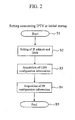
- Fig. 2 is a flowchart showing an example of setting processing concerning IPTV at initial startup.
- setting concerning IPTV hereinafter, referred to as IPTV setting
- step S 1 Start
- step S2 a process to set an IP address and DNS
- step S3 a process to acquire the CDN configuration information is performed, and a process to acquire the PF configuration information and the like are performed in step S4.
- step S5 The processing is thus terminated (step S5).
- the digital broadcast receiver is allowed to use a portal service provided by the service provider after the processing is terminated.
- the acquisition of the channel information is not performed at the IPTV setting because 1) basic registration is previously required at the portal site in some cases and 2) IP broadcast services are not provided in some service types.
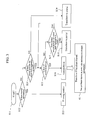
- Fig. 3 is a flowchart showing an example of a flow of tuning pattern processing at the time of selecting IPTV
- the digital broadcast receiver A when a user tries to use the IPTV service (for example, when the user selects the IPTV service by using an input switch, a direct button, or the like), even if the user wants to receive an IP broadcast in a similar manner to digital terrestrial broadcasting or BS digital broadcasting, the digital broadcast receiver A cannot receive the IP broadcast in a state where only the IPTV setting is made since the digital broadcast receiver A has not acquired the channel information of IP broadcasting.
- step S11 start
- the digital broadcast receiver A proceeds to a process of step S14 if not having acquired the channel information (NO in step S12). Then it is judged whether there is a service provider for which the basic registration has already been performed (the presence or absence of a service provider).
- the digital broadcast receiver A can tune in IP broadcasting (step S 13).
- the digital broadcast receiver A may be configured to automatically tune in the channel selected last.
- step S 14 If there is no service provider for which the basic registration has already been performed (NO in step S 14), the processing proceeds to step S 19 to transition to the portal site and prompt the basic registration processing. If there are multiple portal sites, the digital broadcast receiver A may be configured to allow selection on which portal site is to be displayed at setting at the time of initial startup, or otherwise may be configured to select the portal site for which the registration has been made first.
- step S 15 determines whether there is an IP broadcast service or not.
- the processing proceeds to step S17, where it is determined whether there is another service provider for which the basic registration has already been performed.
- the digital broadcast receiver A transitions to a portal site of the service provider for which the basic registration has already been performed. If there are multiple portal sites for which the basic registration has already been performed, the digital broadcast receiver A may be configured to select one of the portal sites for which the registration has been made first.
- step S 15 If it is determined in step S 15 that the IP broadcast service is provided (YES), the processing proceeds to step S16, where a caution display is performed.
- a caution display As indicated by reference numeral 41, a display is made to prompt acquisition of the channel information like: "There is no IP broadcast channel. See the guidance shown at the portal site and acquire channel information.” This allows the user to surely acquire the channel information.
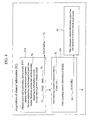
- Figs. 4 and 5 are each a view showing a display screen example concerning acquisition of channel information.
- the digital broadcast receiver shows, in a display screen 21 d, a display 71 prompting the user to acquire the channel information with a proviso such as: "Channel search will be performed, and receivable IPTV channels will be automatically registered. Previous registration may be required at the portal site. Further, broadcast services may not be provided depending on subscription contents. Do you want to perform channel search?.”
- the digital broadcast receiver A accepts a selected one of YES 77 and NO 73 from the user. If YES 77, the digital broadcast receiver A proceeds to a display screen 21e below, and if NO 73, the digital broadcast receiver A proceeds to end of setting 75.
- the digital broadcast receiver A displays an indication 81: "Now checking viewable broadcast stations. Please wait" and an indication for informing the user: "Now acquiring channel information of xxxx” and acquires the channel information, thus proceeding to a process shown in Fig. 5 .
- the digital broadcast receiver A stops to acquire the channel information when "cancel" 83 is pressed, then proceeding to the process shown in Fig. 5 (85). The channel information can be thus acquired at this phase.
- a description will be given of the detail of the process to acquire the channel information with reference to Fig. 5 .
- a message of "IPTV channels are registered" is displayed in a display screen 21f, and the channel information including a PF name, a channel name, and a three-digit number as the setting value is set up (stored in the memory).
- An end button 93 is pressed to finish the setting (95).
- the digital broadcast receiver A displays a message indication 101 to the user "IPTV channels are not found. You may need previous registration at the portal site. Further, broadcast services may not be provided depending on subscription contents.” The digital broadcast receiver A also displays a message of "Will you end channel search or execute it again?" to prompt the user's selection. If "end” 103 is pressed, the process proceeds to end of setting 105, and if "re-execute” 107 is pressed, a re-execution process 111 is performed.
- the digital broadcast receiver A when there is no channel information but there is a service provider for which the basic registration has already been performed and the service provider provides an IP broadcast service at the time of selecting IPTV, the digital broadcast receiver A performs a caution display for acquisition of the channel information to cause the user to acquire the channel information under those conditions.
- the aforementioned configuration allows the user to smoothly perform setting for receiving IP broadcasts.
- the viewer when the viewer selects an IP broadcast, the viewer can perform an operation in enormous number of services without any confusion even if the screen after transition is changed depending on whether there are broadcasts viewable through the receiver.
- the receiver according to the present invention does not essentially have to include the function to receive digital broadcasts through an antenna and may be an IPTV-dedicated device.
- the present invention is applicable to a digital broadcast receiver capable of receiving an IP broadcast.
Landscapes
- Engineering & Computer Science (AREA)
- Multimedia (AREA)
- Signal Processing (AREA)
- Computer Networks & Wireless Communication (AREA)
- Databases & Information Systems (AREA)
- Business, Economics & Management (AREA)
- General Business, Economics & Management (AREA)
- General Engineering & Computer Science (AREA)
- Software Systems (AREA)
- Two-Way Televisions, Distribution Of Moving Picture Or The Like (AREA)
- Circuits Of Receivers In General (AREA)
Abstract
If there is a service provider for which basic registration has already been performed, the processing proceeds to step S15 to determine whether there is an IP broadcast service or not. If no IP broadcast service is provided, the processing proceeds to step S 17 to determine whether there is another service provider for which the basic registration has already been performed. If no other service provider for which the basic registration has already been performed is found in this determination, a transition is made to a portal site of the service provider for which the basic registration has already been performed. If it is determined that an IP broadcast service is provided in step S 15, the processing proceeds to step S16 to perform a caution display. In the caution display, a display is made to prompt acquisition of channel information. In the case of acquiring channel information, an indication informing the user is displayed so that the channel information can be acquired at this phase. Thereby, when IP broadcasting is selected, the receiver determines whether there is a broadcast viewable with the receiver and changes a screen after transition, thus enabling the user to perform an operation without any confusion.
Description
- The present invention relates to a digital broadcast reception technique and particularly relates to a digital broadcast receiver including an IPTV function.
- Many of digital broadcast receivers are multi-functional devices having a lot of functions. Further, devices including the IPTV function have been getting available recently. The more functions the devices have, the more frequently screen transition occurs. This makes it more difficult for the user to smoothly perform his/her operation.
- The technique described in
Patent Literature 1 below discloses a device capable of allowing the user to know that channels receivable by a tuner include a channel which cannot be normally received when such channel is present. - Patent Literature 1:
JP-A 2008-53975 - In recent years, in addition to digital broadcast programs, various services such as IPTV services including IP broadcasting via the Internet and VOD have been becoming available by using digital broadcast receivers. A wider variety of broadcast services are provided and IPTV services and other services are viewed through the broadcast receivers, as described above. To this end, viewers need to enter detailed information and perform new setting operations for information such as which service providers the viewers subscribe to and whether the service providers distribute broadcasts, for example, in addition to entry of viewers' residence information which has been required. Accordingly, there are a problem that the viewers have large load, and another problem that the viewers cannot easily receive expanded services.
- An object of the present invention is to, when IP broadcasting is selected, enable operations without any confusion by determining whether there is a broadcast viewable with a receiver and changing a screen after transition.
- According to the present invention, the broadcast receiver previously makes determinations based on whether the viewer has a subscription and whether there is a viewable broadcast. Accordingly, the screen after transition can be changed according to the state of the viewer's subscription and a service provided by a service provider.
- An aspect of the present invention provides a digital broadcast receiver capable of receiving an IP broadcast, characterized by including: a controller configured to perform, at initial startup, control such that, among settings concerning an IPTV function, a process to set an IP address and DNS, a process to acquire CDN configuration information, and a process to acquire PF configuration information are performed while a process to acquire channel information is not performed.
- Some of providers providing services require previous online basic registration. To actually use IP broadcast services, it is necessary to acquire channel information. However, the channel information is not acquired at initial setting for IPTV because 1) the previous basic registration is required at a portal site in some cases and 2) IP broadcast services are not provided in some service types. Note that, the basic registration refers to a process to notify the service provider of user's information to activate a service. When a certain period of time elapses after the activation, channel setting becomes available.
- The controller preferably performs a caution display to prompt the process to acquire the channel information when there is a service provider for which basic registration has already been performed. Even if a service provider for which the basic registration has already been performed exists but does not provide an IP broadcast service; but if there is another service provider for which the basic registration has already been performed, the controller may determine whether there is an IP broadcast service again.
- If a service provider for which the basic registration has already been performed exists but does not provide an IP broadcast service; and if there is no other service provider for which the basic registration has already been performed, the controller preferably transitions to a portal site set in the basic registration. The controller preferably transitions to a portal site when there is no service provider for which the basic registration has already been performed.
- Another aspect of the present invention provides a reception method in a digital broadcast receiver capable of receiving an IP broadcast, characterized by including performing, at initial startup, a process step of setting an IP address and DNS, a process step of acquiring CDN configuration information, and a process step of acquiring PF configuration information, while skipping a process step of acquiring channel information, among settings concerning an IPTV function.
- The present invention may be a program causing a computer to execute the above method, or otherwise, may be a computer-readable recording medium on which the program is recorded. The program may be acquired via a transmission medium such as the Internet.
- This specification includes the contents of the specification and/or drawings of Japanese Patent Application No.
2008-260738 - According to the present invention, when the viewer selects an IP broadcast, the receiver determines whether there is a broadcast viewable with the receiver and changes the screen after transition. This allows the viewer to perform an operation without any confusion in enormous number of services.
-
-
Fig. 1 is a diagram showing a configuration example of a digital broadcast receiver according to an embodiment of the present invention. -
Fig. 2 is a flowchart showing a flow of setting processing concerning IPTV at initial startup. -
Fig. 3 is a flowchart showing an example of a tuning pattern at the time of selecting IPTV. -
Fig. 4 is a view showing a display screen example concerning acquisition of channel information. -
Fig. 5 is a view showing a display screen example concerning acquisition of channel information. -
- A... DIGITAL BROADCAST RECEIVER
- 1... FRONT-END
- 3... DEMULTIPLEXER
- 5... VIDEO/AUDIO DECODER
- 7... AUDIO OUTPUT SECTION
- 11... PROGRAM INFORMATION DECODING SECTION
- 17... SCREEN SYNTHESIS SECTION
- 21... DISPLAY SECTION
- 25... CONTROLLER
- 28... INTERFACE SECTION
- NT... INTERNET
- B... CONTENT SERVER
- First, basic terms are defined below before description about an embodiment of the present invention.
-
- 1) CDN (contents delivery network): A network designed to deliver digital contents.
-
- 2) CDN configuration information: Information for acquiring time information and a URL for acquiring PF configuration information are included.
-
- 3) PF configuration information: Presence or absence of provision of IP broadcast services, information for acquiring channel information, and information on a service provider included in itself (portal URL and the like) are included. A URL for acquiring the PF configuration information is described in the CDN configuration information.
-
- 4) IPTV service: A collective term for IP broadcast, portal, and VOD services and the like.
- Hereinafter, a digital broadcast reception technique according to an embodiment of the present invention will be described with reference to the drawings.
Fig. 1 is a diagram showing a configuration example of a digital broadcast receiver according to an embodiment of the present invention. A digital broadcast receiver A shown inFig. 1 includes: a front-end 1 configured to perform processes to receive signals of digital broadcasts through an antenna and tune channels; ademultiplexer 3; a video/audio decoder 5 configured to decode an output from thedemultiplexer 3; ascreen synthesis section 17 configured to synthesize the decoded video signal and later-described program list data to generate a signal for display; adisplay section 21 for display based on the signal synthesized in thescreen synthesis section 17; and anaudio output section 7 configured to output audio. - The digital broadcast receiver A further includes: a program
information decoding section 11 configured to decode program information outputted from thedemultiplexer 3; and an electronic programlist generation section 15 configured to generate an electronic program list based on the program information decoded by the programinformation decoding section 11. - In addition, the digital broadcast receiver A includes: an
interface section 28 forming an interface between the receiver A and another external device; a remote controllight receiving section 23 configured to receive remote control signals from a remote control unit as a control device; a controller (CPU) 25 configured to control the entire device; and a memory section (RAM, ROM) 27 configured to store an application program executed by thecontroller 25 for various processes and to expand and provide the program to the CPU. Theinterface section 28 is capable of receiving digital contents delivered from a content server B through the Internet (NT). Thecontroller 25 also performs control concerning channel tuning at the time of selecting IPTV. - In order for a broadcast receiver capable of receiving IPTV to receive an IP broadcast, the broadcast receiver needs to set an IP address and DNS and acquire the CDN configuration information, PF configuration information, and channel information. Some of the providers providing services previously require online basic registration. Here, the basic registration refers to a process to notify a service provider of user's information to activate a service. When a certain period of time elapses after the activation, channel setting becomes available.
-
Fig. 2 is a flowchart showing an example of setting processing concerning IPTV at initial startup. In the digital broadcast receiver A according to this embodiment, setting concerning IPTV (hereinafter, referred to as IPTV setting) is started at initial startup (step S 1: Start), then a process to set an IP address and DNS is performed in step S2. Next, in step S3, a process to acquire the CDN configuration information is performed, and a process to acquire the PF configuration information and the like are performed in step S4. The processing is thus terminated (step S5). The digital broadcast receiver is allowed to use a portal service provided by the service provider after the processing is terminated. - In order to actually use the IP broadcast service, it is necessary to acquire the channel information. However, the acquisition of the channel information is not performed at the IPTV setting because 1) basic registration is previously required at the portal site in some cases and 2) IP broadcast services are not provided in some service types.
-
Fig. 3 is a flowchart showing an example of a flow of tuning pattern processing at the time of selecting IPTV - According to the specification of digital broadcast receivers, when a user tries to use the IPTV service (for example, when the user selects the IPTV service by using an input switch, a direct button, or the like), even if the user wants to receive an IP broadcast in a similar manner to digital terrestrial broadcasting or BS digital broadcasting, the digital broadcast receiver A cannot receive the IP broadcast in a state where only the IPTV setting is made since the digital broadcast receiver A has not acquired the channel information of IP broadcasting.
- Here, when the IPTV is selected (step S11: start), the digital broadcast receiver A proceeds to a process of step S14 if not having acquired the channel information (NO in step S12). Then it is judged whether there is a service provider for which the basic registration has already been performed (the presence or absence of a service provider).
- Meanwhile, if the IPTV service is selected after the channel information is acquired (YES in step S 12), the digital broadcast receiver A can tune in IP broadcasting (step S 13). In the case where IPTV has been once selected before, the digital broadcast receiver A may be configured to automatically tune in the channel selected last.
- If there is no service provider for which the basic registration has already been performed (NO in step S 14), the processing proceeds to step
S 19 to transition to the portal site and prompt the basic registration processing. If there are multiple portal sites, the digital broadcast receiver A may be configured to allow selection on which portal site is to be displayed at setting at the time of initial startup, or otherwise may be configured to select the portal site for which the registration has been made first. - On the other hand, if there is a service provider for which the basic registration has already been performed (YES in step S14), the processing proceeds to step
S 15 to determine whether there is an IP broadcast service or not. When no IP broadcast service is provided (NO), the processing proceeds to step S17, where it is determined whether there is another service provider for which the basic registration has already been performed. In this determination, if there is no other service provider for which the basic registration has already been performed (NO), the digital broadcast receiver A transitions to a portal site of the service provider for which the basic registration has already been performed. If there are multiple portal sites for which the basic registration has already been performed, the digital broadcast receiver A may be configured to select one of the portal sites for which the registration has been made first. - If it is determined in step S 15 that the IP broadcast service is provided (YES), the processing proceeds to step S16, where a caution display is performed. In the caution display, as indicated by
reference numeral 41, a display is made to prompt acquisition of the channel information like: "There is no IP broadcast channel. See the guidance shown at the portal site and acquire channel information." This allows the user to surely acquire the channel information. - Next, a description will be given of the acquisition of the channel information.
Figs. 4 and5 are each a view showing a display screen example concerning acquisition of channel information. As shown inFig. 4 , the digital broadcast receiver shows, in adisplay screen 21 d, adisplay 71 prompting the user to acquire the channel information with a proviso such as: "Channel search will be performed, and receivable IPTV channels will be automatically registered. Previous registration may be required at the portal site. Further, broadcast services may not be provided depending on subscription contents. Do you want to perform channel search?." The digital broadcast receiver A accepts a selected one ofYES 77 and NO 73 from the user. IfYES 77, the digital broadcast receiver A proceeds to adisplay screen 21e below, and if NO 73, the digital broadcast receiver A proceeds to end of setting 75. - In the
display screen 21 e, the digital broadcast receiver A displays an indication 81: "Now checking viewable broadcast stations. Please wait..." and an indication for informing the user: "Now acquiring channel information of xxxx" and acquires the channel information, thus proceeding to a process shown inFig. 5 . Here, the digital broadcast receiver A stops to acquire the channel information when "cancel" 83 is pressed, then proceeding to the process shown inFig. 5 (85). The channel information can be thus acquired at this phase. Next, a description will be given of the detail of the process to acquire the channel information with reference toFig. 5 . When one or more channels are found (Fig. 5(a) ), a message of "IPTV channels are registered" is displayed in adisplay screen 21f, and the channel information including a PF name, a channel name, and a three-digit number as the setting value is set up (stored in the memory). Anend button 93 is pressed to finish the setting (95). - If no channel information is found (
Fig. 5(b) ), as shown in adisplay screen 21g, the digital broadcast receiver A displays amessage indication 101 to the user "IPTV channels are not found. You may need previous registration at the portal site. Further, broadcast services may not be provided depending on subscription contents." The digital broadcast receiver A also displays a message of "Will you end channel search or execute it again?" to prompt the user's selection. If "end" 103 is pressed, the process proceeds to end of setting 105, and if "re-execute" 107 is pressed, are-execution process 111 is performed. - As described above, when there is no channel information but there is a service provider for which the basic registration has already been performed and the service provider provides an IP broadcast service at the time of selecting IPTV, the digital broadcast receiver A performs a caution display for acquisition of the channel information to cause the user to acquire the channel information under those conditions.
- The aforementioned configuration allows the user to smoothly perform setting for receiving IP broadcasts.
- As described above, according to this embodiment, when the viewer selects an IP broadcast, the viewer can perform an operation in enormous number of services without any confusion even if the screen after transition is changed depending on whether there are broadcasts viewable through the receiver.
- Note that, the receiver according to the present invention does not essentially have to include the function to receive digital broadcasts through an antenna and may be an IPTV-dedicated device.
- The present invention is applicable to a digital broadcast receiver capable of receiving an IP broadcast.
Claims (8)
- A digital broadcast receiver capable of receiving an IP broadcast, characterized by comprising:a controller configured to perform, at initial startup, control such that, among settings concerning an IPTV function, a process to set an IP address and DNS, a process to acquire CDN configuration information, and a process to acquire PF configuration information are performed while a process to acquire channel information is not performed.
- The digital broadcast receiver according to claim 1, characterized in that the controller performs a caution display to prompt the process to acquire the channel information when there is a service provider for which basic registration has already been performed.
- The digital broadcast receiver according to claim 2, characterized in that even if a service provider for which the basic registration has already been performed exists but does not provide an IP broadcast service; but if there is another service provider for which the basic registration has already been performed, the controller determines whether there is an IP broadcast service again.
- The digital broadcast receiver according to claim 2, characterized in that if a service provider for which the basic registration has already been performed exists but does not provide an IP broadcast service; and if there is no other service provider for which the basic registration has already been performed, the controller transitions to a portal site set in the basic registration.
- The digital broadcast receiver according to any one of claims 1 to 4, characterized in that the controller transitions to a top page of a service when there is no service provider for which the basic registration has already been performed.
- A reception method in a digital broadcast receiver capable of receiving an IP broadcast, characterized by comprising performing, at initial startup, a process step of setting an IP address and DNS, a process step of acquiring CDN configuration information, and a process step of acquiring PF configuration information, while skipping a process step of acquiring channel information, among settings concerning an IPTV function.
- A program causing a computer to execute the method according to claim 6.
- A computer-readable recording medium on which the program according to claim 7 is recorded.
Applications Claiming Priority (2)
| Application Number | Priority Date | Filing Date | Title |
|---|---|---|---|
| JP2008260738 | 2008-10-07 | ||
| PCT/JP2009/067347 WO2010041628A1 (en) | 2008-10-07 | 2009-10-05 | Digital broadcast reception device and reception method |
Publications (1)
| Publication Number | Publication Date |
|---|---|
| EP2346249A1 true EP2346249A1 (en) | 2011-07-20 |
Family
ID=42100578
Family Applications (1)
| Application Number | Title | Priority Date | Filing Date |
|---|---|---|---|
| EP09819162A Withdrawn EP2346249A1 (en) | 2008-10-07 | 2009-10-05 | Digital broadcast reception device and reception method |
Country Status (8)
| Country | Link |
|---|---|
| US (1) | US8763048B2 (en) |
| EP (1) | EP2346249A1 (en) |
| JP (1) | JP5166544B2 (en) |
| CN (1) | CN102172040A (en) |
| BR (1) | BRPI0920554A2 (en) |
| MX (1) | MX2011003524A (en) |
| RU (1) | RU2011118468A (en) |
| WO (1) | WO2010041628A1 (en) |
Families Citing this family (4)
| Publication number | Priority date | Publication date | Assignee | Title |
|---|---|---|---|---|
| KR20080067475A (en) * | 2007-01-16 | 2008-07-21 | 엘지전자 주식회사 | Digital broadcasting service method and system using internet, digital broadcasting receiving method and receiver |
| BRPI0920554A2 (en) * | 2008-10-07 | 2015-12-29 | Sharp Kk | digital broadcast receiver and reception method |
| JP6182871B2 (en) * | 2013-01-17 | 2017-08-23 | 沖電気工業株式会社 | Service configuration information providing apparatus, service configuration information providing method, and service configuration information providing program |
| CN103974092B (en) * | 2013-01-31 | 2018-05-15 | 中兴通讯股份有限公司 | A kind of method, apparatus and Web TV that Web broadcast is realized based on Web TV |
Family Cites Families (47)
| Publication number | Priority date | Publication date | Assignee | Title |
|---|---|---|---|---|
| US8635649B2 (en) * | 1996-12-19 | 2014-01-21 | Gemstar Development Corporation | System and method for modifying advertisement responsive to EPG information |
| US7581110B1 (en) * | 1999-08-25 | 2009-08-25 | Nokia Corporation | Key distribution for encrypted broadcast data using minimal system bandwidth |
| AUPR454601A0 (en) * | 2001-04-23 | 2001-05-24 | Summit Cd Manufacture Pte Limited | A display system |
| FR2833788B1 (en) * | 2001-12-13 | 2005-05-06 | France Telecom | METHOD OF DIFFUSING A SUCCESSION OF CONTENTS FROM A SOURCE TO RECEIVER TERMINALS THROUGH A COMPUTER NETWORK, SIGNAL, BROADCAST SOURCE AND ASSOCIATED TERMINAL |
| KR100456162B1 (en) * | 2002-12-14 | 2004-11-09 | 한국전자통신연구원 | Method of Key update in DCATV Conditional Access System |
| JP4344185B2 (en) * | 2003-01-28 | 2009-10-14 | シャープ株式会社 | Client terminal device, information processing method, sub-client terminal device, computer-executable program, and recording medium |
| JP4225533B2 (en) | 2003-02-05 | 2009-02-18 | 株式会社日立コミュニケーションテクノロジー | Broadcast system and IP broadcasting device |
| US20050195862A1 (en) * | 2004-03-02 | 2005-09-08 | Sbc Knowledge Ventures, L.P. | System and method for transparent adjustment of a network node timing component |
| WO2006033338A1 (en) * | 2004-09-24 | 2006-03-30 | Nec Personal Products, Ltd. | Broadcast processing system |
| KR100709348B1 (en) * | 2005-02-17 | 2007-04-20 | 삼성전자주식회사 | Video player and channel map update method for channel map update |
| CN101167356B (en) * | 2005-03-24 | 2013-03-06 | 客得富移动通信股份有限公司 | Conditional access system and method for each transmitter in single frequency network |
| KR100703490B1 (en) * | 2005-04-18 | 2007-04-03 | 삼성전자주식회사 | Time Synchronization Method and System for Mobile Terminal Based on Asynchronous Method |
| KR100755435B1 (en) * | 2005-10-04 | 2007-09-04 | 삼성전자주식회사 | Digital broadcasting limited reception terminal and method |
| US20070104181A1 (en) * | 2005-11-09 | 2007-05-10 | Lee David H | System and method for a media internet channel station (mics) to connect to and access media content utilizing media domain name (mdn) channels with three modes |
| US20080031451A1 (en) * | 2005-11-14 | 2008-02-07 | Jean-Francois Poirier | Method and system for security of data transmissions |
| US7801510B2 (en) * | 2006-02-27 | 2010-09-21 | Samsung Electronics Co., Ltd | Authentication method in a mobile broadcast system and system thereof |
| CN101438256B (en) * | 2006-03-07 | 2011-12-21 | 索尼株式会社 | Information processing device, information communication system, information processing method |
| JP2007329701A (en) | 2006-06-08 | 2007-12-20 | Matsushita Electric Ind Co Ltd | Digital broadcast receiving apparatus and receiving method |
| JP2008053975A (en) | 2006-08-23 | 2008-03-06 | Toshiba Corp | Communication device |
| KR20080030900A (en) * | 2006-10-02 | 2008-04-07 | 엘지전자 주식회사 | Customized broadcast signal receiver and broadcast reception method |
| JP2008125033A (en) | 2006-11-16 | 2008-05-29 | Matsushita Electric Ind Co Ltd | Program distribution system, scan information distribution apparatus, and reception apparatus |
| JP4886500B2 (en) * | 2006-12-20 | 2012-02-29 | 株式会社日立製作所 | Data transfer apparatus and system |
| KR101314608B1 (en) * | 2007-01-05 | 2013-10-07 | 엘지전자 주식회사 | Receiver and method for controlling content viewing in IPTV environment |
| KR20080067475A (en) | 2007-01-16 | 2008-07-21 | 엘지전자 주식회사 | Digital broadcasting service method and system using internet, digital broadcasting receiving method and receiver |
| KR101356491B1 (en) * | 2007-03-02 | 2014-02-03 | 엘지전자 주식회사 | Method and apparatus for processing rating information and IPTV system |
| JP5121287B2 (en) | 2007-04-13 | 2013-01-16 | 富士フイルム株式会社 | Triarylamine derivatives |
| AU2008297726B2 (en) * | 2007-09-14 | 2012-11-22 | Samsung Electronics Co., Ltd. | Apparatus and method for changing subscription status of service in mobile communication system and mobile communication system thereof |
| CN101399958B (en) * | 2007-09-30 | 2010-11-03 | 华为技术有限公司 | Method, system and device for acquiring user management information |
| US20090100470A1 (en) * | 2007-10-16 | 2009-04-16 | Fujitsu Limited | Information processing device |
| KR20090056848A (en) * | 2007-11-29 | 2009-06-03 | 엘지전자 주식회사 | Broadcast receiver and customized broadcast signal reception method |
| JP5025734B2 (en) * | 2007-11-30 | 2012-09-12 | シャープ株式会社 | Broadcast receiver |
| US8813155B2 (en) * | 2007-12-05 | 2014-08-19 | Lg Electronics Inc. | Method for receiving service information data and an IPTV receiver |
| US8484689B2 (en) * | 2007-12-05 | 2013-07-09 | Lg Electronics Inc. | IPTV receiver and method of discovering an IPTV service |
| US8397256B2 (en) * | 2007-12-05 | 2013-03-12 | Lg Electronics Inc. | IPTV receiver and method of providing channel map information |
| US8893200B2 (en) * | 2007-12-05 | 2014-11-18 | Lg Electronics Inc. | IPTV receiver and method of acquiring a resource for an IPTV service |
| US8112775B2 (en) * | 2007-12-05 | 2012-02-07 | Lg Electronics Inc. | IPTV receiver and method of providing channel details information |
| US8635641B2 (en) * | 2007-12-05 | 2014-01-21 | Lg Electronics Inc. | Method of performing parental control a channel and an IPTV receiver |
| US8869219B2 (en) * | 2007-12-05 | 2014-10-21 | Lg Electronics Inc. | Method for controlling a channel and an IPTV receiver |
| US8893205B2 (en) * | 2007-12-05 | 2014-11-18 | Lg Electronics Inc. | IPTV receiver and method of providing channel map management information |
| CA2650151C (en) * | 2008-01-17 | 2013-04-02 | Lg Electronics Inc. | An iptv receiving system and data processing method |
| US8868721B2 (en) * | 2008-05-29 | 2014-10-21 | Red Hat, Inc. | Software appliance management using broadcast data |
| JP5236738B2 (en) * | 2008-10-06 | 2013-07-17 | シャープ株式会社 | Digital broadcast receiving apparatus and digital broadcast receiving method |
| BRPI0920554A2 (en) * | 2008-10-07 | 2015-12-29 | Sharp Kk | digital broadcast receiver and reception method |
| MX2011003606A (en) * | 2008-10-10 | 2011-05-10 | Sharp Kk | Broadcast receiver apparatus. |
| US8166120B2 (en) * | 2009-03-30 | 2012-04-24 | Microsoft Corporation | Content channels for electronic messaging |
| US8200624B2 (en) * | 2010-07-20 | 2012-06-12 | Sybase, Inc. | Membership tracking and data eviction in mobile middleware scenarios |
| GB2486002A (en) * | 2010-11-30 | 2012-06-06 | Youview Tv Ltd | Media Content Provision |
-
2009
- 2009-10-05 BR BRPI0920554A patent/BRPI0920554A2/en not_active IP Right Cessation
- 2009-10-05 CN CN2009801404048A patent/CN102172040A/en active Pending
- 2009-10-05 US US13/122,764 patent/US8763048B2/en not_active Expired - Fee Related
- 2009-10-05 MX MX2011003524A patent/MX2011003524A/en active IP Right Grant
- 2009-10-05 JP JP2010532905A patent/JP5166544B2/en active Active
- 2009-10-05 RU RU2011118468/07A patent/RU2011118468A/en not_active Application Discontinuation
- 2009-10-05 EP EP09819162A patent/EP2346249A1/en not_active Withdrawn
- 2009-10-05 WO PCT/JP2009/067347 patent/WO2010041628A1/en not_active Ceased
Non-Patent Citations (1)
| Title |
|---|
| See references of WO2010041628A1 * |
Also Published As
| Publication number | Publication date |
|---|---|
| WO2010041628A1 (en) | 2010-04-15 |
| JP5166544B2 (en) | 2013-03-21 |
| US8763048B2 (en) | 2014-06-24 |
| JPWO2010041628A1 (en) | 2012-03-08 |
| RU2011118468A (en) | 2012-11-20 |
| MX2011003524A (en) | 2011-05-02 |
| BRPI0920554A2 (en) | 2015-12-29 |
| CN102172040A (en) | 2011-08-31 |
| US20110197245A1 (en) | 2011-08-11 |
Similar Documents
| Publication | Publication Date | Title |
|---|---|---|
| US8019984B2 (en) | Method for controlling autostart of data application and video playback apparatus thereof | |
| EP1898643A2 (en) | Method for automatically searching for data applications for all channels and video apparatus adopting the method | |
| EP2219370A1 (en) | Digital television broadcast receiver | |
| US8763048B2 (en) | Digital broadcast receiver and reception method | |
| US8205224B2 (en) | Image signal processing apparatus and control method for selecting a rating system thereof | |
| US8646003B2 (en) | Method and device for displaying electronic program guide | |
| US20090024538A1 (en) | Method for providing stock information and broadcast receiving apparatus using the same | |
| US20120222079A1 (en) | Information procesing apparatus, broadcast receiving apparatus and information processing method | |
| EP2077034B1 (en) | Control device and method for channel searching in image display device | |
| KR20070084954A (en) | Digital broadcast output method of digital broadcast receiver | |
| US8325277B2 (en) | Display apparatus and data display method for displaying a format mismatch message | |
| CN111083556A (en) | Method for selecting and displaying television programs transmitted by the internet and related device | |
| US8479244B2 (en) | Receiving apparatus, display control method, and program | |
| US20030208757A1 (en) | Broadcast data receivers | |
| US20090025044A1 (en) | Method for providing information and broadcast receiving apparatus using the same | |
| KR20160126483A (en) | Display device and displaying method thereof | |
| HK1160316A (en) | Digital broadcast reception device and reception method | |
| KR20050037667A (en) | System and method for reservation seeing and hearing of broadcast program | |
| EP1180899A2 (en) | Improvements to electronic programme guide | |
| US20130191867A1 (en) | Device and method for generating electronic program guide and display apparatus for use with the same | |
| KR20080057375A (en) | Display device and information display method | |
| KR20070000839A (en) | Digital broadcast receiving device and broadcasting program list output method using same | |
| KR20090024926A (en) | Broadcast program guide management method and device | |
| JP2010252173A (en) | Receiver and receiver control method | |
| JP2008271300A (en) | Terrestrial digital broadcast receiver |
Legal Events
| Date | Code | Title | Description |
|---|---|---|---|
| PUAI | Public reference made under article 153(3) epc to a published international application that has entered the european phase |
Free format text: ORIGINAL CODE: 0009012 |
|
| 17P | Request for examination filed |
Effective date: 20110429 |
|
| AK | Designated contracting states |
Kind code of ref document: A1 Designated state(s): AT BE BG CH CY CZ DE DK EE ES FI FR GB GR HR HU IE IS IT LI LT LU LV MC MK MT NL NO PL PT RO SE SI SK SM TR |
|
| AX | Request for extension of the european patent |
Extension state: AL BA RS |
|
| DAX | Request for extension of the european patent (deleted) | ||
| STAA | Information on the status of an ep patent application or granted ep patent |
Free format text: STATUS: THE APPLICATION HAS BEEN WITHDRAWN |
|
| 18W | Application withdrawn |
Effective date: 20130725 |