EP2345970A2 - Method and system for text segmentation - Google Patents
Method and system for text segmentation Download PDFInfo
- Publication number
- EP2345970A2 EP2345970A2 EP11163970A EP11163970A EP2345970A2 EP 2345970 A2 EP2345970 A2 EP 2345970A2 EP 11163970 A EP11163970 A EP 11163970A EP 11163970 A EP11163970 A EP 11163970A EP 2345970 A2 EP2345970 A2 EP 2345970A2
- Authority
- EP
- European Patent Office
- Prior art keywords
- tokens
- characters
- token
- combinations
- determined
- Prior art date
- Legal status (The legal status is an assumption and is not a legal conclusion. Google has not performed a legal analysis and makes no representation as to the accuracy of the status listed.)
- Withdrawn
Links
Images

Classifications
-
- G—PHYSICS
- G06—COMPUTING OR CALCULATING; COUNTING
- G06F—ELECTRIC DIGITAL DATA PROCESSING
- G06F40/00—Handling natural language data
- G06F40/20—Natural language analysis
- G06F40/279—Recognition of textual entities
- G06F40/284—Lexical analysis, e.g. tokenisation or collocates
Definitions
- the present invention relates generally to text segmentation and, more particularly, to segmenting strings of characters.
- Text processing methods and systems exist that attempt to interpret data representing text. Text processing is made more difficult when a string of characters is received that has no breaks indicating words or other tokens.
- One of the first steps in processing such strings of characters is to segment the string into tokens in order to interpret the string.
- tokens can be words, acronyms, abbreviations, proper names, geographical names, stock market ticker symbols or other tokens,
- the number of possible combinations of tokens can be high. However, it is generally to perform the segmentation process at a fast rate.
- a domain name can locate an organization or other entity on the Internet.
- the domain name ⁇ www.google. com> locates the company Google Inc. at a specific IP address on the World Wide Web. It is desirable to be able to process a domain name into tokens, so that the tokens can be interpreted.
- Embodiments of the present invention comprise systems and methods for text segmentation.
- Embodiments identify tokens in strings of text.
- One aspect of an embodiment of the present invention comprises accessing a string of characters, determining any long tokens, pinning down contiguous characters in the long token, and determining tokens from the string of characters by keeping the pinned down contiguous characters together, and determining a plurality of combinations of tokens for the string of characters, wherein the number of combinations of tokens is reduced by the pinned down contiguous characters.
- the present invention comprises methods and systems for text segmentation, including methods and systems for identifying tokens in a string of characters.
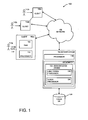
- FIG. 1 is a diagram illustrating an exemplary system in which exemplary embodiments of the present invention may operate.
- the present invention may operate, and be embodied in, other systems as well.
- the system 100 shown in FIG. 1 includes multiple client devices 102a-n, a server device 104, and a network 106.
- the client devices 102an shown each include a computer-readable medium, such as a random access memory (RAM) 108 in the embodiment shown, coupled to a processor 110.
- RAM random access memory
- the processor 110 executes a set of computer-executable program instructions stored in memory 108.
- processors may include a microprocessor, an ASIC, and state machines.
- processors include, or may be in communication with, media, for example computer-readable media, which stores instructions that, when executed by the processor, cause the processor to perform the steps described herein,
- Embodiments of computer-readable media include, but are not limited to, an electronic, optical, magnetic, or other storage or transmission device capable of providing a processor, such as the processor in communication with a touch-sensitive input device, with computer-readable instructions.
- suitable media include, but are not limited to, a floppy disk, CD-ROM, magnetic disk, memory chip, ROM, RAM, an ASIC, a configured processor, all optical media, all magnetic tape or other magnetic media, or any other medium from which a computer processor can read instructions.
- various other forms of computer-readable media may transmit or carry instructions to a computer, including a router, private or public network, or other transmission device or channel, both wired and wireless.
- the instructions may comprise code from any computer-programming language, including, for example, C, C++, C#, Visual Basic, Java, and JavaScript.
- Client devices 102a-n may also include a number of external or internal devices such as a mouse, a CD-ROM, a keyboard, a display, or other input or output devices.
- client devices 102a-n are personal computers, digital assistants, personal digital assistants, mobile phones, smart phones, pagers, digital tablets, laptop computers, a processor-based device and similar types of systems and devices.
- a client device 102a-n may be any type of processor-based platform connected to a network 106 and that interacts with one or more application programs.
- the client devices 102a-n shown include personal computers executing a browser application program such as Internet ExplorerTM, version 6.0 from Microsoft Corporation, Netscape Navigator, version 7.1 from Netscape Communications Corporation, and Safari, version 1.0 from Apple Computer.
- a server device 104 is also coupled to the network 106.
- the server device 104 shown includes a server executing a segmentation engine application program located in memory 118. Similar to the client, devices 102a- n, the server device 104 shown includes a processor 116 coupled to a computer readable memory 118.
- Server device 104 depicted as a single computer system, may be implemented as a network of computer processors. Examples of a server device 104 are servers, mainframe computers, networked computers, a processor-based device and similar types of systems and devices.
- Client processors 110 and the server processor 116 can be any of a number of well known computer processors, such as processors from Intel Corporation of Santa Clara, California and Motorola Corporation of Schaumburg, Illinois.
- the server device 104 may also be connected to a database 126.
- the server device 104 can access the network 106 to receive strings of characters from other devices or systems connected to the network 106.
- Characters can include, for example, marks or symbols used in a writing system, including data representing a character, such as ASCII, ANSI, and EBCDIC or any other suitable character set.
- the segmentation engine 120 segments a string of characters into potential combinations of tokens.
- a token can comprise a word, a proper name, a geographic name, an abbreviation, an acronym, a stock market ticker symbol, or other tokens.
- the segmentation engine 120 includes a long token processor 122 and a token processor 124. In the embodiment shown, each comprises computer code residing in the memory 118.
- the long token processor 122 matches known long tokens in a string of characters and pins down contiguous characters contained in the long token.
- the token processor 124 utilizes the pinned down characters to determine a list of possible combinations of tokens from the string of characters. In one embodiment, the token processor 124 determines a probability for each combination in the list. Other functions and characteristics of the long token processor 122 and the token processor 124 are further described below.
- Server device 104 also provides access to other storage elements, such as a token storage element, in the example shown a token database 120.
- the token database can be used to store tokens.
- Data storage elements may include any one or combination of methods for storing data, including without limitation, arrays, hashtables, lists, and pairs. Other similar types of data storage devices can be accessed by the server device 104.
- the present invention may comprise systems having different architecture than that which is shown in FIG. 1 .
- the long token processor 122 may not be part of the segmentation engine 120 or may not be located on the same server device.
- the system 100 shown in FIG. 1 is merely exemplary, and is used to explain the exemplary method shown in FIGS. 2-3 .
- One exemplary method according to the present invention comprises accessing a string of characters, determining at least one long token, pinning down contiguous characters in the long token, determining tokens from the string of characters by keeping the pinned down contiguous characters together, and determining a plurality of combinations of tokens for the string of characters, wherein the number of combinations of tokens is reduced by the pinned down contiguous characters.
- Multiple long tokens can be determined and contiguous characters are pinned down in each long token.
- the exemplary method can also further comprise determining a likelihood or a probability for each combination and providing the combination with the highest likelihood. Combinations with the highest likelihoods can also be provided to other applications or alternatively a user can be provided with combinations having relative high likelihoods and be allowed to choose the desired combination,
- the long token is greater than seven characters
- the pinned down contiguous characters can be a set of characters from a second character of the long token to the next to the last character of the long token.
- determining token comprises accessing adjacent characters until a match between a first group of adjacent characters and a first token is found, and storing the first token if it is determined that the first token contains none of the pinned down characters or if it is determined that the first token contains all of the pinned down contiguous characters for a long token.
- Determining tokens can also further comprise receiving a next adjacent character to provide a revised first group of adjacent characters, determining if the revised first group matches with a token, if the revised group matches with a second token then storing the second token if it is determined that the second token contains none of the pinned down characters or if it is determined that the second token contains an of the pinned down contiguous characters for a long token, and if the revised group does not match with a token then receiving a second group of adjacent characters.
- the second group of adjacent characters can begin with a character after a last character of the first stored token or it can begin after a previously determined token break. In one embodiment, these steps in determining tokens are repeated until a plurality of combinations of tokens have been determined.
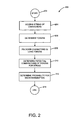
- FIG. 2 illustrates an exemplary method according to an embodiment of the present invention.
- This exemplary method is provided by way of example, as there are a variety of ways to carry out methods according to the present invention.
- the method 200 shown, in FIG. 2 can be executed or otherwise performed by any of various systems.
- the method 200 is described below as carried out by the system 100 shown in FIG. 1 by way of example, and various elements of the system 100 are referenced in explaining the example method of FIG. 2 .
- the method 200 shown provides a method for identifying tokens from a string of characters.
- Each block shown in FIG. 2 represents one or more steps carried out in the exemplary method 200.
- the example method 200 begins.
- Block 202 is followed by block 204, in which a string of characters is obtained by the segmentation engine 120.
- the string of characters can be obtained from a device connected to network 106, for example, or from another device.
- Block 204 is followed by block 206, in which the long token processor 122 determines any long tokens.
- a long token can be, for example, any token equal to or greater than eight characters. Any number of characters can be chosen as a long token.
- the long tokens can be received from token database 126, from a device connected to network 106, or from another device.
- the long token processor 122 attempts to match long tokens with adjacent characters in the string of characters. In one embodiment, the long token processor 122 may start with the first character of the string and attempt to match the next adjacent seven adjacent characters with a known long token. If no token is found with the first eight characters, the long token processor 122 can move down the string starting with the second character and the next adjacent seven characters and so on until the end of the string is reached. Multiple long tokens can be found for each string of characters.
- the long token processor 122 can start with the character “t” and the adjacent seven characters"ransfor". The long token processor 122 can determine that the characters "transfor"can potentially be matched to some long tokens, such as "transform” and "transformation”. The long token processor 122 continues reading characters and attempting to match the characters. When, for example, the long token processor 122 receives the character "m”, the processor would match the characters with the long token "transform”. However, when the next character is received, "a”, the long token processor 122 continues receiving characters attempting to determine if the characters can be matched to a larger token, such as "transformation”. In the example given, the characters could be matched to the token"transformation''. When the next character "o" is received, the long token processor 122 would be unable to match the characters "transformationo" with a long token, so it can determine that the first fourteen characters should be matched with the token"transformation"and proceed processing.
- the long token processor 122 would be unable to match the next two sets of eight characters beginning with "o” and "f” to any long tokens. The long token processor 122 can then determine that the next group of characters "probabil" can be matched with a long token and would continue receiving characters. The long token processor 122 can then match the long token "probability" with the remaining characters in the string.
- Block 206 is followed by block 208, in which the long token processor pins down characters in the determined long tokens.
- the long token processor 122 signifies that the characters should be used together in a single token.
- the long token processor 122 pins down contiguous characters in the center of a determined long token.
- the long token processor 122 pins down all the characters in a determined long token except a character at each end of the token.
- the long token processor can pin down the characters "ransformatio" of the determined long token "transformation” and can pin down the characters "robabilit" of the determined long token "probability".
- the long token processor 122 can leave two or three characters unpinned at the each end of a determined long token.
- characters are left unpinned at the ends of a token to avoid pinning down characters that appear to be a prefix or suffix of the long token, but are actually part of another token.
- Block 208 is followed by block 210, in which the potential combinations of tokens are determined by the token processor 124.
- the long token processor 122 transfers to the token processor 124 any pinned down characters determined in block 208.
- the token processor 124 matches the string of characters to multiple tokens while considering any pinned down characters.
- the subroutine 210 continues until all potential token combinations have been identified and a list of all potential combinations of tokens is created.
- the token processor 124 can "cut" one or more adjacent characters that it cannot match to a token in a particular combination. By cutting one or more adjacent characters, the cut characters are removed from consideration for matching with a token for a particular combination of tokens.
- the list of potential combinations of tokens may comprise:"for the heart”,”fort heart”,”fort he art", and "for x heart”.
- FIG. 3 illustrates a subroutine 210 for carrying out the method 200 shown in FIG. 2 .
- the subroutine 210 determines potential combinations of tokens for the string of characters.
- An example of the subroutine is as follows.
- the subroutine begins at block 300.
- a group of adjacent characters is received or accessed by the token processor 124, In one embodiment, at least two characters are received. Alternatively, one character can be received.
- the token processor 124 begins at one end of the string of characters and works its way through the multiple potential paths of tokens for the string until all of the multiple possibilities of combinations of tokens for the string have been determined.
- Block 300 is followed by block 303, in which the token processor 122 determines if the received characters match to any token paths.
- the tokens are stored in a tree-like structure where, for example, each character is at the top of the tree and each step down the tree adds a character of a token.
- the token "apple” for example, "a” is at the top of the tree, followed by "p” the next step down, followed by "p” the next step down, allowed by "1” the next step down, and followed by “e” the next step down.
- the tree can branch off to other paths that form various other tokens.
- the token path is the same as “apple” for the characters “appl” and then branches to "i", then “e”, and then “d” for “applied” instead of "e” for apple.
- a tree-like structure is a Ternary Tree. If in block 300, for example, the characters "tra" are received, at block 302 the token processor 122 can determine that at least one token path exists that begins with the characters "tra”. In one embodiment, if only two characters are received, the token processor 124 attempts to match these two characters with a limited number of two letter tokens and does not attempt to match two characters with a token path.
- the token processor returns to block 300 and receives a new set of adjacent characters. For example, if the characters"12d"are received and these characters do not match to any token path, meaning that no tokens begin with the characters"12d," the token processor returns to block 300 and receives a new group of adjacent characters. This can be, for example, the group starting with "2d".
- Subroutine 210 can be a recursive loop, such that the next set of adjacent characters can begin from any number of places in the string, such as the next character after the end of a found token.
- All potential token paths can be followed to determine all combinations of tokens that can be formed from the characters in the string.
- the number of combinations of tokens is reduced by pinning down the characters in long tokens.
- the token processor 124 determines if the group of characters match to a token. For example, if the characters"tra"have been received, the token processor determines whether a token exists for"tra".
- the next adjacent character is received by the token processor 124 to form a revised group of adjacent characters.
- the token processor 124 can determine if the revised group matches any token paths in block 302. For the example, "transformation of probability" after the characters "tra” are received the next adjacent character is "n" and the token processor 124 determines if "tran” matches a token path or paths. In this example, it does match several paths and the loop continues until a token is determined. For example, the loop continues until all of the characters "transform" are received, because, for example, "transform” is a token.
- the token processor 124 next determines whether any of the characters are pinned down. If none of the received characters are pinned down, then the token processor 124 notes the potential token break, receives the next adjacent character, and continues at block 302,
- the token processor 124 determines in block 310 whether all pinned down contiguous characters have been received. In the example above for "transformationofprobability" where the characters "transformation" are received, the token processor 124 determines that all of the adjacent pinned down characters have been received. If only the characters "trans" are received, for example, the token processor 124 determines that not all of the adjacent pinned down characters have been received. By not allowing tokens to be formed (or token breaks to occur) within the adjacent pinned down characters, the number of combinations of tokens for the character string can be greatly reduced.
- the token processor 124 stores the token in block 312. The token processor then receives the next adjacent character in block 306 and continues the recursive loop at block 302.
- the token processor 124 receives the next adjacent character in block 306 and continues the recursive loop at block 302. In one embodiment, the determination of whether all adjacent pinned down characters have been received is not determined until after the next adjacent character is received. For example, if the characters "transform" are received, the token processor can note the potential token break. However, when the next adjacent character"a"is received and it is determined that this character has been pinned down, the potential token break after "transforn” can be disregarded. When the remaining characters of "transformation" are received "transformation” is stored as a token. Alternatively, a potential token break after "transformation” can be stored instead of storing the token.
- the token processor 124 After a known complete token is stored, the next adjacent character is received in block 306 and the token processor 124 continues with subroutine 210 at block 302. When a match with tokens is not found, the token processor 124 receives a new group of adjacent characters. In one embodiment, for example, the new group of adjacent characters can begin with the character after the last character of the smallest previously identified token. So that all potential token paths are explored and all potential combinations of tokens for the string are identified and a list of all potential token combinations is compiled.
- block 210 is followed by block 212, in which the likelihood or probability for each combination in the list is determined by the token processor 124.
- the likelihood of each combination is based on the frequency of the tokens in the combination.
- the frequency of tokens can be predetermined from an analysis of the World Wide Web.
- the frequency of each token in a combination can he multiplied together and then biased based on the number of words in the combination. Cut characters can be given a low likelihood.
- the combination or combinations with the highest likelihood can then be used in further processing or passed on to a user, for example, depending on the application.
- a plurality of the top combinations based on likelihood can be presented to a user and the user can select the desired combination.
- the present invention can be used in a variety of applications where the segmentation of text, such as a domain name, is needed.
- the present invention can be used with a domain name advertising product on the Internet. If a user enters a domain name for a non-existing website, the segmentation engine can be used to segment the domain name entered, so that a website or advertisement relevant to the entered text can be presented to the user. Similarly, the present invention can be used to segment an entered domain name so that advertising relevant to the domain name can be displayed to the user. The present invention can also be used when a user desires to purchase a domain name, but the domain name is unavailable. The segmentation engine can segment the entered domain name and this information can be used to suggest other similar domain names that are available.
Landscapes
- Engineering & Computer Science (AREA)
- Theoretical Computer Science (AREA)
- Health & Medical Sciences (AREA)
- Artificial Intelligence (AREA)
- Audiology, Speech & Language Pathology (AREA)
- Computational Linguistics (AREA)
- General Health & Medical Sciences (AREA)
- Physics & Mathematics (AREA)
- General Engineering & Computer Science (AREA)
- General Physics & Mathematics (AREA)
- Machine Translation (AREA)
- Character Input (AREA)
Abstract
Description
- The present invention relates generally to text segmentation and, more particularly, to segmenting strings of characters.
- Text processing methods and systems exist that attempt to interpret data representing text. Text processing is made more difficult when a string of characters is received that has no breaks indicating words or other tokens. One of the first steps in processing such strings of characters is to segment the string into tokens in order to interpret the string. Such tokens can be words, acronyms, abbreviations, proper names, geographical names, stock market ticker symbols or other tokens,
- Depending on the length of the string of characters, the number of possible combinations of tokens can be high. However, it is generally to perform the segmentation process at a fast rate.
- An example of a short string of text is a domain name. A domain name can locate an organization or other entity on the Internet. For example, the domain name <www.google. com> locates the company Google Inc. at a specific IP address on the World Wide Web. It is desirable to be able to process a domain name into tokens, so that the tokens can be interpreted.
- Embodiments of the present invention comprise systems and methods for text segmentation. Embodiments identify tokens in strings of text. One aspect of an embodiment of the present invention comprises accessing a string of characters, determining any long tokens, pinning down contiguous characters in the long token, and determining tokens from the string of characters by keeping the pinned down contiguous characters together, and determining a plurality of combinations of tokens for the string of characters, wherein the number of combinations of tokens is reduced by the pinned down contiguous characters. Multiple long tokens can be determined and contiguous characters are pinned down in each long token. Additional aspects of the present invention are directed to computer systems and to computer-readable media having features relating to the foregoing aspects.
- These and other features, aspects, and advantages of the present invention are better understood when the following Detailed Description is read with reference to the accompanying drawings, wherein:
-
FIG. 1 illustrates a block diagram of a system in accordance with one embodiment of the present invention; -
FIG. 2 illustrates a flow diagram of a method in accordance with one embodiment of the present invention; -
FIG. 3 illustrates a subroutine of the method shown inFIG. 2 . - The present invention comprises methods and systems for text segmentation, including methods and systems for identifying tokens in a string of characters. Reference will now be made in detail to exemplary embodiments of the invention as illustrated in the text and accompanying drawings. Those skilled in the art will recognize that many other implementations are possible, consistent with the present invention. The same reference numbers are used throughout the drawings and the following description to refer to the same or like parts.
- Various systems in accordance with the present invention may be constructed.
FIG. 1 is a diagram illustrating an exemplary system in which exemplary embodiments of the present invention may operate. The present invention may operate, and be embodied in, other systems as well. - The
system 100 shown inFIG. 1 includesmultiple client devices 102a-n, aserver device 104, and anetwork 106. Thenetwork 106 shown includes the Internet. - In other embodiments, other networks, such as an intranet may be used. Moreover, methods according to the present invention may operate in a single computer. The client devices 102an shown each include a computer-readable medium, such as a random access memory (RAM) 108 in the embodiment shown, coupled to a
processor 110. - The
processor 110 executes a set of computer-executable program instructions stored inmemory 108. Such processors may include a microprocessor, an ASIC, and state machines. Such processors include, or may be in communication with, media, for example computer-readable media, which stores instructions that, when executed by the processor, cause the processor to perform the steps described herein, - Embodiments of computer-readable media include, but are not limited to, an electronic, optical, magnetic, or other storage or transmission device capable of providing a processor, such as the processor in communication with a touch-sensitive input device, with computer-readable instructions. Other examples of suitable media include, but are not limited to, a floppy disk, CD-ROM, magnetic disk, memory chip, ROM, RAM, an ASIC, a configured processor, all optical media, all magnetic tape or other magnetic media, or any other medium from which a computer processor can read instructions. Also, various other forms of computer-readable media may transmit or carry instructions to a computer, including a router, private or public network, or other transmission device or channel, both wired and wireless. The instructions may comprise code from any computer-programming language, including, for example, C, C++, C#, Visual Basic, Java, and JavaScript.
-
Client devices 102a-n may also include a number of external or internal devices such as a mouse, a CD-ROM, a keyboard, a display, or other input or output devices. Examples ofclient devices 102a-n are personal computers, digital assistants, personal digital assistants, mobile phones, smart phones, pagers, digital tablets, laptop computers, a processor-based device and similar types of systems and devices. III general, aclient device 102a-n may be any type of processor-based platform connected to anetwork 106 and that interacts with one or more application programs. Theclient devices 102a-n shown include personal computers executing a browser application program such as Internet ExplorerTM, version 6.0 from Microsoft Corporation, Netscape Navigator, version 7.1 from Netscape Communications Corporation, and Safari, version 1.0 from Apple Computer. - Through the
client devices 102a-n,users 112a-n can communicate over thenetwork 106 with each other and with other systems and devices coupled to thenetwork 106. As shown inFIG. 1 , aserver device 104 is also coupled to thenetwork 106. - The
server device 104 shown includes a server executing a segmentation engine application program located inmemory 118. Similar to the client,devices 102a- n, theserver device 104 shown includes aprocessor 116 coupled to a computerreadable memory 118.Server device 104, depicted as a single computer system, may be implemented as a network of computer processors. Examples of aserver device 104 are servers, mainframe computers, networked computers, a processor-based device and similar types of systems and devices.Client processors 110 and theserver processor 116 can be any of a number of well known computer processors, such as processors from Intel Corporation of Santa Clara, California and Motorola Corporation of Schaumburg, Illinois. Theserver device 104 may also be connected to adatabase 126. - The
server device 104, or related device, can access thenetwork 106 to receive strings of characters from other devices or systems connected to thenetwork 106. Characters can include, for example, marks or symbols used in a writing system, including data representing a character, such as ASCII, ANSI, and EBCDIC or any other suitable character set. - In one embodiment, the
segmentation engine 120 segments a string of characters into potential combinations of tokens. A token can comprise a word, a proper name, a geographic name, an abbreviation, an acronym, a stock market ticker symbol, or other tokens. Thesegmentation engine 120 includes along token processor 122 and atoken processor 124. In the embodiment shown, each comprises computer code residing in thememory 118. Thelong token processor 122 matches known long tokens in a string of characters and pins down contiguous characters contained in the long token. Thetoken processor 124 utilizes the pinned down characters to determine a list of possible combinations of tokens from the string of characters. In one embodiment, thetoken processor 124 determines a probability for each combination in the list. Other functions and characteristics of the longtoken processor 122 and thetoken processor 124 are further described below. -
Server device 104 also provides access to other storage elements, such as a token storage element, in the example shown atoken database 120. The token database can be used to store tokens. Data storage elements may include any one or combination of methods for storing data, including without limitation, arrays, hashtables, lists, and pairs. Other similar types of data storage devices can be accessed by theserver device 104. - It should be noted that the present invention may comprise systems having different architecture than that which is shown in
FIG. 1 . For example, in some systems according to the present invention, the longtoken processor 122 may not be part of thesegmentation engine 120 or may not be located on the same server device. - The
system 100 shown inFIG. 1 is merely exemplary, and is used to explain the exemplary method shown inFIGS. 2-3 . - Various methods in accordance with the present invention may be carried out. One exemplary method according to the present invention comprises accessing a string of characters, determining at least one long token, pinning down contiguous characters in the long token, determining tokens from the string of characters by keeping the pinned down contiguous characters together, and determining a plurality of combinations of tokens for the string of characters, wherein the number of combinations of tokens is reduced by the pinned down contiguous characters. Multiple long tokens can be determined and contiguous characters are pinned down in each long token, The exemplary method can also further comprise determining a likelihood or a probability for each combination and providing the combination with the highest likelihood. Combinations with the highest likelihoods can also be provided to other applications or alternatively a user can be provided with combinations having relative high likelihoods and be allowed to choose the desired combination,
- In one embodiment, the long token is greater than seven characters, The pinned down contiguous characters can be a set of characters from a second character of the long token to the next to the last character of the long token.
- In one embodiment, determining token comprises accessing adjacent characters until a match between a first group of adjacent characters and a first token is found, and storing the first token if it is determined that the first token contains none of the pinned down characters or if it is determined that the first token contains all of the pinned down contiguous characters for a long token. Determining tokens can also further comprise receiving a next adjacent character to provide a revised first group of adjacent characters, determining if the revised first group matches with a token, if the revised group matches with a second token then storing the second token if it is determined that the second token contains none of the pinned down characters or if it is determined that the second token contains an of the pinned down contiguous characters for a long token, and if the revised group does not match with a token then receiving a second group of adjacent characters. The second group of adjacent characters can begin with a character after a last character of the first stored token or it can begin after a previously determined token break. In one embodiment, these steps in determining tokens are repeated until a plurality of combinations of tokens have been determined.
-
FIG. 2 illustrates an exemplary method according to an embodiment of the present invention. This exemplary method is provided by way of example, as there are a variety of ways to carry out methods according to the present invention. Themethod 200 shown, inFIG. 2 can be executed or otherwise performed by any of various systems. Themethod 200 is described below as carried out by thesystem 100 shown inFIG. 1 by way of example, and various elements of thesystem 100 are referenced in explaining the example method ofFIG. 2 . - The
method 200 shown provides a method for identifying tokens from a string of characters. Each block shown inFIG. 2 represents one or more steps carried out in theexemplary method 200. Referring toFIG. 2 , inblock 202, theexample method 200 begins.Block 202 is followed byblock 204, in which a string of characters is obtained by thesegmentation engine 120. The string of characters can be obtained from a device connected to network 106, for example, or from another device. -
Block 204 is followed byblock 206, in which the longtoken processor 122 determines any long tokens. A long token can be, for example, any token equal to or greater than eight characters. Any number of characters can be chosen as a long token. The long tokens can be received fromtoken database 126, from a device connected to network 106, or from another device. The longtoken processor 122 attempts to match long tokens with adjacent characters in the string of characters. In one embodiment, the longtoken processor 122 may start with the first character of the string and attempt to match the next adjacent seven adjacent characters with a known long token. If no token is found with the first eight characters, the longtoken processor 122 can move down the string starting with the second character and the next adjacent seven characters and so on until the end of the string is reached. Multiple long tokens can be found for each string of characters. - For example, for the string of characters "transformationofprobability" the long
token processor 122 can start with the character "t" and the adjacent seven characters"ransfor". The longtoken processor 122 can determine that the characters "transfor"can potentially be matched to some long tokens, such as "transform" and "transformation". The longtoken processor 122 continues reading characters and attempting to match the characters. When, for example, the longtoken processor 122 receives the character "m", the processor would match the characters with the long token "transform". However, when the next character is received, "a", the longtoken processor 122 continues receiving characters attempting to determine if the characters can be matched to a larger token, such as "transformation". In the example given, the characters could be matched to the token"transformation''. When the next character "o" is received, the longtoken processor 122 would be unable to match the characters "transformationo" with a long token, so it can determine that the first fourteen characters should be matched with the token"transformation"and proceed processing. - The long
token processor 122 would be unable to match the next two sets of eight characters beginning with "o" and "f" to any long tokens. The longtoken processor 122 can then determine that the next group of characters "probabil" can be matched with a long token and would continue receiving characters. The longtoken processor 122 can then match the long token "probability" with the remaining characters in the string. -
Block 206 is followed byblock 208, in which the long token processor pins down characters in the determined long tokens. By pinning the characters down, the longtoken processor 122 signifies that the characters should be used together in a single token. By pinning down characters of the long tokens of a text string the number of possible combinations of tokens in the text string is reduced, thereby, increasing the speed of the process. The longtoken processor 122 pins down contiguous characters in the center of a determined long token. In one embodiment, the longtoken processor 122 pins down all the characters in a determined long token except a character at each end of the token. In the example above, for example, the long token processor can pin down the characters "ransformatio" of the determined long token "transformation" and can pin down the characters "robabilit" of the determined long token "probability". - Alternatively, the long
token processor 122 can leave two or three characters unpinned at the each end of a determined long token. In the described embodiment, characters are left unpinned at the ends of a token to avoid pinning down characters that appear to be a prefix or suffix of the long token, but are actually part of another token. -
Block 208 is followed byblock 210, in which the potential combinations of tokens are determined by thetoken processor 124. The longtoken processor 122 transfers to thetoken processor 124 any pinned down characters determined inblock 208. Thetoken processor 124 matches the string of characters to multiple tokens while considering any pinned down characters. Thesubroutine 210 continues until all potential token combinations have been identified and a list of all potential combinations of tokens is created. In one embodiment, thetoken processor 124 can "cut" one or more adjacent characters that it cannot match to a token in a particular combination. By cutting one or more adjacent characters, the cut characters are removed from consideration for matching with a token for a particular combination of tokens. For example, for the string of characters "fortheheart" where the cutting of characters (represented with an "x") is permitted, the list of potential combinations of tokens may comprise:"for the heart","fort heart","fort he art", and "for x heart". -
FIG. 3 illustrates asubroutine 210 for carrying out themethod 200 shown inFIG. 2 . Thesubroutine 210 determines potential combinations of tokens for the string of characters. An example of the subroutine is as follows. - The subroutine begins at
block 300. In block 300 a group of adjacent characters is received or accessed by thetoken processor 124, In one embodiment, at least two characters are received. Alternatively, one character can be received. In one embodiment, thetoken processor 124 begins at one end of the string of characters and works its way through the multiple potential paths of tokens for the string until all of the multiple possibilities of combinations of tokens for the string have been determined. -
Block 300 is followed by block 303, in which thetoken processor 122 determines if the received characters match to any token paths. In one embodiment, the tokens are stored in a tree-like structure where, for example, each character is at the top of the tree and each step down the tree adds a character of a token. For the token "apple", for example, "a" is at the top of the tree, followed by "p" the next step down, followed by "p" the next step down, allowed by "1" the next step down, and followed by "e" the next step down. At each step down, the tree can branch off to other paths that form various other tokens. For example, for the token "applied", the token path is the same as "apple" for the characters "appl" and then branches to "i", then "e", and then "d" for "applied" instead of "e" for apple. One example of such a tree-like structure is a Ternary Tree. If inblock 300, for example, the characters "tra" are received, atblock 302 thetoken processor 122 can determine that at least one token path exists that begins with the characters "tra". In one embodiment, if only two characters are received, thetoken processor 124 attempts to match these two characters with a limited number of two letter tokens and does not attempt to match two characters with a token path. - If the characters processed in
block 302 do not match to any token paths, then the token processor returns to block 300 and receives a new set of adjacent characters. For example, if the characters"12d"are received and these characters do not match to any token path, meaning that no tokens begin with the characters"12d," the token processor returns to block 300 and receives a new group of adjacent characters. This can be, for example, the group starting with "2d".Subroutine 210 can be a recursive loop, such that the next set of adjacent characters can begin from any number of places in the string, such as the next character after the end of a found token. - All potential token paths can be followed to determine all combinations of tokens that can be formed from the characters in the string. The number of combinations of tokens is reduced by pinning down the characters in long tokens.
- If a token path is determined to exist in
block 302, then inblock 304 thetoken processor 124 determines if the group of characters match to a token. For example, if the characters"tra"have been received, the token processor determines whether a token exists for"tra". - If a token is not determined to exist in
block 304, then inblock 306 the next adjacent character is received by thetoken processor 124 to form a revised group of adjacent characters. Thetoken processor 124, then can determine if the revised group matches any token paths inblock 302. For the example, "transformation of probability" after the characters "tra" are received the next adjacent character is "n" and thetoken processor 124 determines if "tran" matches a token path or paths. In this example, it does match several paths and the loop continues until a token is determined. For example, the loop continues until all of the characters "transform" are received, because, for example, "transform" is a token. - After a token is determined in
block 304, thetoken processor 124 next determines whether any of the characters are pinned down. If none of the received characters are pinned down, then thetoken processor 124 notes the potential token break, receives the next adjacent character, and continues atblock 302, - If the
token processor 124 determines that some of the characters have been pinned down inblock 308, thetoken processor 124 then determines inblock 310 whether all pinned down contiguous characters have been received. In the example above for "transformationofprobability" where the characters "transformation" are received, thetoken processor 124 determines that all of the adjacent pinned down characters have been received. If only the characters "trans" are received, for example, thetoken processor 124 determines that not all of the adjacent pinned down characters have been received. By not allowing tokens to be formed (or token breaks to occur) within the adjacent pinned down characters, the number of combinations of tokens for the character string can be greatly reduced. - If all adjacent pinned down characters have been received, the
token processor 124 stores the token inblock 312. The token processor then receives the next adjacent character inblock 306 and continues the recursive loop atblock 302. - If all adjacent pinned down characters have not been received, the
token processor 124 receives the next adjacent character inblock 306 and continues the recursive loop atblock 302. In one embodiment, the determination of whether all adjacent pinned down characters have been received is not determined until after the next adjacent character is received. For example, if the characters "transform" are received, the token processor can note the potential token break. However, when the next adjacent character"a"is received and it is determined that this character has been pinned down, the potential token break after "transforn" can be disregarded. When the remaining characters of "transformation" are received "transformation" is stored as a token. Alternatively, a potential token break after "transformation" can be stored instead of storing the token. - After a known complete token is stored, the next adjacent character is received in
block 306 and thetoken processor 124 continues withsubroutine 210 atblock 302. When a match with tokens is not found, thetoken processor 124 receives a new group of adjacent characters. In one embodiment, for example, the new group of adjacent characters can begin with the character after the last character of the smallest previously identified token. So that all potential token paths are explored and all potential combinations of tokens for the string are identified and a list of all potential token combinations is compiled. - Referring again to
FIG. 2 , block 210 is followed byblock 212, in which the likelihood or probability for each combination in the list is determined by thetoken processor 124. In one embodiment, the likelihood of each combination is based on the frequency of the tokens in the combination. The frequency of tokens can be predetermined from an analysis of the World Wide Web. The frequency of each token in a combination can he multiplied together and then biased based on the number of words in the combination. Cut characters can be given a low likelihood. - The combination or combinations with the highest likelihood can then be used in further processing or passed on to a user, for example, depending on the application. Alternatively, a plurality of the top combinations based on likelihood can be presented to a user and the user can select the desired combination.
- The present invention can be used in a variety of applications where the segmentation of text, such as a domain name, is needed. For example, the present invention can be used with a domain name advertising product on the Internet. If a user enters a domain name for a non-existing website, the segmentation engine can be used to segment the domain name entered, so that a website or advertisement relevant to the entered text can be presented to the user. Similarly, the present invention can be used to segment an entered domain name so that advertising relevant to the domain name can be displayed to the user. The present invention can also be used when a user desires to purchase a domain name, but the domain name is unavailable. The segmentation engine can segment the entered domain name and this information can be used to suggest other similar domain names that are available.
- While the above description contains many specifics, these specifics should not be construed as limitations on the scope of the invention, but merely as exemplifications of the disclosed embodiments.
- Further features of the invention include:-
- 1. A method, comprising:
- accessing a string of characters;
- determining at least one long token ;
- pinning down contiguous characters in the long token ;
- determining tokens from the string of characters by keeping the pinned down contiguous s characters together; and
- determining a plurality of combinations of tokens for the string of characters,
- wherein the number of combinations of tokens is reduced by the pinned down contiguous characters.
- 2. The method of feature 1, wherein multiple long tokens are determined, contiguous characters are pinned down in each long token, and determining tokens comprises keeping the pinned down contiguous characters together for each long token.
- 3. The method of feature 1, wherein determining tokens comprises:
- (a) accessing adjacent characters until a match between a first group of adjacent characters and a first token is found; and
- (b) storing the first token if it is determined that the first token contains none of the pinned down characters or if it is determined that the first token contains all of the pinned down contiguous characters.
- 4. The method of feature 3, wherein determining tokens further comprises:
- (c) accessing a next adjacent character to provide a revised first group of adjacent characters;
- (d) determining if the revised first group matches with a token;
- (e) if the revised first group matches with a second token, then storing the second token if it is determined that the revised first group contains none of the pinned down characters or if it is determined that the revised first group contains all of the pinned down contiguous characters for the long token; and
- (f) if the revised first group does not match with a token then receiving a second group of adjacent characters.
- 5. The method of feature 4, wherein steps (a) through (f) are repeated until the plurality of combinations of tokens have been determined.
- 6. The method of feature 4, wherein the second group of adjacent characters begins with a character after a last character of the first stored token.
- 7. The method of feature 1, further comprising determining a likelihood for each combination of tokens.
- 8. The method of feature 7, further comprising providing a combination of tokens with the highest likelihood.
- 9. The method of feature 7, further comprising providing a plurality of combinations of tokens with the highest likelihoods.
- 10. The method of feature 7, further comprising providing a user with combinations of tokens having relative high likelihoods and allowing the user to choose the desired combination of tokens.
- 11. The method of feature 1, wherein the pinned down contiguous characters is a set of contiguous characters from a second character of the long token to the next to the last character of the long token.
- 12. A computer readable medium containing program code, comprising:
- program code for accessing a string of characters; program code for determining at least one long token;
- program code for pinning down contiguous characters in the long token;
- program code for determining tokens from the string of characters by keeping the pinned down contiguous characters together; and
- program code for determining a plurality of combinations of tokens for the string of characters, wherein the number of combinations of tokens is reduced by the pinned down contiguous characters,
- 13. The computer readable medium of feature 12, wherein multiple long tokens are determined, contiguous characters are pinned down in each long token, and determining tokens comprises program code for keeping the pinned down contiguous characters together for each long token.
- 14. The computer readable medium of feature 12, wherein determining tokens comprises:
- (a) program code for accessing adjacent characters until a match between a first group of adjacent characters and a first token is found; and
- (b) program code for storing the first token if it is determined that the first token contains none of the pinned down characters or if it is determined that the first token contains all of the pinned down contiguous characters,
- 15. The computer readable medium of feature 14, wherein determining tokens further comprises:
- (c) program code for accessing a next adjacent character to provide a revised first group of adjacent characters;
- (d) program code for determining if the revised first group matches with a tokens
- (e) program code for if the revised first group matches with a second token, then storing the second token if it is determined that the revised first group contains none of the pinned down characters or if it is determined that the revised first group contains all of the pinned down contiguous characters for the long token; and
- (f) program code for if the revised first group does not match with a token then receiving a second group of adjacent characters.
- 16. The computer readable medium of feature 15, wherein steps (a) through (f) are repeated until the plurality of combinations of tokens have been determined.
- 17. The computer readable medium of feature 15, wherein the second group of adjacent characters begins with a character after a last character of the first stored token.
- 18. The computer readable medium of feature 12, further comprising program code for determining a likelihood for each combination.
- 19. The computer readable medium of feature 18, further comprising program code for providing a combination with the highest likelihood.
- 20. The computer readable medium of feature 18, further comprising program code for providing a plurality of combinations of tokens with the highest likelihoods.
- 21. The computer readable medium of feature 18, further comprising program code for providing a user with combinations of tokens having relative high likelihood and allowing the user to choose the desired combination of tokens.
- 22. The computer readable medium of feature 12, wherein the pinned down contiguous characters is a set of contiguous characters from a second character of the long token to the next to the last character of the long token.
Claims (15)
- A method comprising:a. accessing (204) a string of characters;b. determining (210) a plurality of combinations of tokens for the string of characters;c. determining (212) a probability for each of the plurality of combinations of tokens based on frequencies with which the tokens occur; andd. providing for display or for further processing one or more of the combinations of tokens based on the determined probabilities.
- The method of claim 1, wherein the probability for each of the plurality of combinations of tokens is determined based on frequencies with which the tokens occur on the World Wide Web.
- The method of claim 1, wherein the probability for a combination of tokens is determined by multiplying frequencies for each of the tokens of the combination together and biasing the multiplied frequencies based on the number of tokens in the combination.
- The method of claim 1, wherein at least one of the plurality of combinations of tokens does not include all of the characters from string of characters; and
wherein the at least one of the plurality of combinations of tokens is determined to have a low probability. - The method of claim 1, wherein the one or more of the combinations of tokens that are provided have the greatest probabilities among the plurality of combinations of tokens.
- A system (100) comprising:a. a computer server system (104);b. a segmentation engine (120) of the computer server system to segment a string of characters into a plurality of combinations of tokens; andc. a token processor (124) of the computer server system to determine a probability for each of the plurality of combinations of tokens based on frequencies with which the tokens occur, and to provide for display or for further processing one or more of the combinations of tokens based on the determined probabilities.
- The system (100) of claim 6, wherein the probability for each of the plurality of combinations of tokens is determined based on frequencies with which the tokens occur on the World Wide Web.
- The system (100) of claim 6, wherein the probability for a combination of tokens is determined by multiplying frequencies for each of the tokens of the combination together and biasing the multiplied frequencies based on the number of tokens in the combination.
- The system (100) of claim 6, wherein at least one of the plurality of combinations of tokens does not include all of the characters from string of characters; and
wherein the at least one of the plurality of combinations of tokens is determined to have a low probability. - The system (100) of claim 6, wherein the one or more of the combinations of tokens that are provided have the greatest probabilities among the plurality of combinations of tokens.
- A computer program product tangibly embodied on computer-readable media including instructions that, when executed, cause a processor to perform operations comprising:a. accessing a string of characters;b. determining a plurality of combinations of tokens for the string of characters;c. determining a probability for each of the plurality of combinations of tokens based on frequencies with which the tokens occur; andd. providing for display or for further processing one or more of the combinations of tokens based on the determined probabilities.
- The computer program product of claim 10, wherein the probability for each of the plurality of combinations of tokens is determined based on frequencies with which the tokens occur on the World Wide Web.
- The computer program product of claim 10, wherein the probability for a combination of tokens is determined by multiplying frequencies for each of the tokens of the combination together and biasing the multiplied frequencies based on the number of tokens in the combination.
- The computer program product of claim 10, wherein at least one of the plurality of combinations of tokens does not include all of the characters from string of characters; and wherein the at least one of the plurality of combinations of tokens is determined to have a low probability.
- The computer program product of claim 10, wherein the one or more of the combinations of tokens that are provided have the greatest probabilities among the plurality of combinations of tokens
Applications Claiming Priority (2)
| Application Number | Priority Date | Filing Date | Title |
|---|---|---|---|
| EP03819295.1A EP1700250B1 (en) | 2003-12-30 | 2003-12-30 | Method and system for text segmentation |
| PCT/US2003/041609 WO2005069199A1 (en) | 2003-12-30 | 2003-12-30 | Methods and systems for text segmentation |
Related Parent Applications (2)
| Application Number | Title | Priority Date | Filing Date |
|---|---|---|---|
| EP03819295.1A Division-Into EP1700250B1 (en) | 2003-12-30 | 2003-12-30 | Method and system for text segmentation |
| EP03819295.1 Division | 2003-12-30 |
Publications (2)
| Publication Number | Publication Date |
|---|---|
| EP2345970A2 true EP2345970A2 (en) | 2011-07-20 |
| EP2345970A3 EP2345970A3 (en) | 2013-05-29 |
Family
ID=34793608
Family Applications (2)
| Application Number | Title | Priority Date | Filing Date |
|---|---|---|---|
| EP03819295.1A Expired - Lifetime EP1700250B1 (en) | 2003-12-30 | 2003-12-30 | Method and system for text segmentation |
| EP11163970.4A Withdrawn EP2345970A3 (en) | 2003-12-30 | 2003-12-30 | Method and system for text segmentation |
Family Applications Before (1)
| Application Number | Title | Priority Date | Filing Date |
|---|---|---|---|
| EP03819295.1A Expired - Lifetime EP1700250B1 (en) | 2003-12-30 | 2003-12-30 | Method and system for text segmentation |
Country Status (3)
| Country | Link |
|---|---|
| EP (2) | EP1700250B1 (en) |
| AU (1) | AU2003300437A1 (en) |
| WO (1) | WO2005069199A1 (en) |
Families Citing this family (2)
| Publication number | Priority date | Publication date | Assignee | Title |
|---|---|---|---|---|
| US8843845B2 (en) | 2012-10-16 | 2014-09-23 | Google Inc. | Multi-gesture text input prediction |
| US8832589B2 (en) | 2013-01-15 | 2014-09-09 | Google Inc. | Touch keyboard using language and spatial models |
Family Cites Families (1)
| Publication number | Priority date | Publication date | Assignee | Title |
|---|---|---|---|---|
| US6269189B1 (en) | 1998-12-29 | 2001-07-31 | Xerox Corporation | Finding selected character strings in text and providing information relating to the selected character strings |
-
2003
- 2003-12-30 WO PCT/US2003/041609 patent/WO2005069199A1/en not_active Ceased
- 2003-12-30 AU AU2003300437A patent/AU2003300437A1/en not_active Abandoned
- 2003-12-30 EP EP03819295.1A patent/EP1700250B1/en not_active Expired - Lifetime
- 2003-12-30 EP EP11163970.4A patent/EP2345970A3/en not_active Withdrawn
Non-Patent Citations (1)
| Title |
|---|
| None |
Also Published As
| Publication number | Publication date |
|---|---|
| AU2003300437A1 (en) | 2005-08-03 |
| WO2005069199A1 (en) | 2005-07-28 |
| EP2345970A3 (en) | 2013-05-29 |
| EP1700250A4 (en) | 2009-01-21 |
| EP1700250A1 (en) | 2006-09-13 |
| EP1700250B1 (en) | 2015-02-18 |
Similar Documents
| Publication | Publication Date | Title |
|---|---|---|
| US8078633B2 (en) | Methods and systems for improving text segmentation | |
| US8489387B2 (en) | Methods and systems for selecting a language for text segmentation | |
| US8745065B2 (en) | Query parsing for map search | |
| US8412517B2 (en) | Dictionary word and phrase determination | |
| US9652529B1 (en) | Methods and systems for augmenting a token lexicon | |
| US20100114879A1 (en) | Identifying related concepts of urls and domain names | |
| CN112347767B (en) | Text processing method, device and equipment | |
| CN108228710B (en) | Word segmentation method and device for URL | |
| EP1700250B1 (en) | Method and system for text segmentation | |
| CN118114660A (en) | Text detection method, system and computer readable storage medium | |
| HK1159278A (en) | Method and system for text segmentation | |
| RU2348071C2 (en) | Text segmentation methods and systems | |
| US7302645B1 (en) | Methods and systems for identifying manipulated articles | |
| US12026157B2 (en) | Narrowing synonym dictionary results using document attributes |
Legal Events
| Date | Code | Title | Description |
|---|---|---|---|
| PUAI | Public reference made under article 153(3) epc to a published international application that has entered the european phase |
Free format text: ORIGINAL CODE: 0009012 |
|
| AC | Divisional application: reference to earlier application |
Ref document number: 1700250 Country of ref document: EP Kind code of ref document: P |
|
| AK | Designated contracting states |
Kind code of ref document: A2 Designated state(s): AT BE BG CH CY CZ DE DK EE ES FI FR GB GR HU IE IT LI LU MC NL PT RO SE SI SK TR |
|
| REG | Reference to a national code |
Ref country code: HK Ref legal event code: DE Ref document number: 1159278 Country of ref document: HK |
|
| PUAL | Search report despatched |
Free format text: ORIGINAL CODE: 0009013 |
|
| AK | Designated contracting states |
Kind code of ref document: A3 Designated state(s): AT BE BG CH CY CZ DE DK EE ES FI FR GB GR HU IE IT LI LU MC NL PT RO SE SI SK TR |
|
| RIC1 | Information provided on ipc code assigned before grant |
Ipc: G06F 17/27 20060101AFI20130423BHEP |
|
| STAA | Information on the status of an ep patent application or granted ep patent |
Free format text: STATUS: THE APPLICATION IS DEEMED TO BE WITHDRAWN |
|
| 18D | Application deemed to be withdrawn |
Effective date: 20131130 |
|
| REG | Reference to a national code |
Ref country code: HK Ref legal event code: WD Ref document number: 1159278 Country of ref document: HK |
|
| P01 | Opt-out of the competence of the unified patent court (upc) registered |
Effective date: 20230519 |