EP2345409A1 - Therapeutic agent for adult t-cell leukemia - Google Patents
Therapeutic agent for adult t-cell leukemia Download PDFInfo
- Publication number
- EP2345409A1 EP2345409A1 EP09814427A EP09814427A EP2345409A1 EP 2345409 A1 EP2345409 A1 EP 2345409A1 EP 09814427 A EP09814427 A EP 09814427A EP 09814427 A EP09814427 A EP 09814427A EP 2345409 A1 EP2345409 A1 EP 2345409A1
- Authority
- EP
- European Patent Office
- Prior art keywords
- group
- formula
- adult
- tetrahydro
- cell leukemia
- Prior art date
- Legal status (The legal status is an assumption and is not a legal conclusion. Google has not performed a legal analysis and makes no representation as to the accuracy of the status listed.)
- Withdrawn
Links
- 0 CC1C(C)CC(C)=*C1 Chemical compound CC1C(C)CC(C)=*C1 0.000 description 2
- IQSHEHNQCGEHFW-UHFFFAOYSA-N CC(C)C(CC1(C)C)C(C)(C)c(cc2C(C)=S)c1cc2O Chemical compound CC(C)C(CC1(C)C)C(C)(C)c(cc2C(C)=S)c1cc2O IQSHEHNQCGEHFW-UHFFFAOYSA-N 0.000 description 1
Images

Classifications
-
- C—CHEMISTRY; METALLURGY
- C07—ORGANIC CHEMISTRY
- C07C—ACYCLIC OR CARBOCYCLIC COMPOUNDS
- C07C49/00—Ketones; Ketenes; Dimeric ketenes; Ketonic chelates
- C07C49/76—Ketones containing a keto group bound to a six-membered aromatic ring
- C07C49/82—Ketones containing a keto group bound to a six-membered aromatic ring containing hydroxy groups
- C07C49/83—Ketones containing a keto group bound to a six-membered aromatic ring containing hydroxy groups polycyclic
-
- A—HUMAN NECESSITIES
- A61—MEDICAL OR VETERINARY SCIENCE; HYGIENE
- A61K—PREPARATIONS FOR MEDICAL, DENTAL OR TOILETRY PURPOSES
- A61K31/00—Medicinal preparations containing organic active ingredients
- A61K31/095—Sulfur, selenium, or tellurium compounds, e.g. thiols
- A61K31/10—Sulfides; Sulfoxides; Sulfones
-
- A—HUMAN NECESSITIES
- A61—MEDICAL OR VETERINARY SCIENCE; HYGIENE
- A61K—PREPARATIONS FOR MEDICAL, DENTAL OR TOILETRY PURPOSES
- A61K31/00—Medicinal preparations containing organic active ingredients
- A61K31/11—Aldehydes
-
- A—HUMAN NECESSITIES
- A61—MEDICAL OR VETERINARY SCIENCE; HYGIENE
- A61K—PREPARATIONS FOR MEDICAL, DENTAL OR TOILETRY PURPOSES
- A61K31/00—Medicinal preparations containing organic active ingredients
- A61K31/12—Ketones
-
- A—HUMAN NECESSITIES
- A61—MEDICAL OR VETERINARY SCIENCE; HYGIENE
- A61K—PREPARATIONS FOR MEDICAL, DENTAL OR TOILETRY PURPOSES
- A61K31/00—Medicinal preparations containing organic active ingredients
- A61K31/16—Amides, e.g. hydroxamic acids
- A61K31/165—Amides, e.g. hydroxamic acids having aromatic rings, e.g. colchicine, atenolol, progabide
- A61K31/166—Amides, e.g. hydroxamic acids having aromatic rings, e.g. colchicine, atenolol, progabide having the carbon of a carboxamide group directly attached to the aromatic ring, e.g. procainamide, procarbazine, metoclopramide, labetalol
-
- A—HUMAN NECESSITIES
- A61—MEDICAL OR VETERINARY SCIENCE; HYGIENE
- A61K—PREPARATIONS FOR MEDICAL, DENTAL OR TOILETRY PURPOSES
- A61K31/00—Medicinal preparations containing organic active ingredients
- A61K31/33—Heterocyclic compounds
- A61K31/335—Heterocyclic compounds having oxygen as the only ring hetero atom, e.g. fungichromin
- A61K31/35—Heterocyclic compounds having oxygen as the only ring hetero atom, e.g. fungichromin having six-membered rings with one oxygen as the only ring hetero atom
- A61K31/352—Heterocyclic compounds having oxygen as the only ring hetero atom, e.g. fungichromin having six-membered rings with one oxygen as the only ring hetero atom condensed with carbocyclic rings, e.g. methantheline
-
- A—HUMAN NECESSITIES
- A61—MEDICAL OR VETERINARY SCIENCE; HYGIENE
- A61K—PREPARATIONS FOR MEDICAL, DENTAL OR TOILETRY PURPOSES
- A61K31/00—Medicinal preparations containing organic active ingredients
- A61K31/695—Silicon compounds
-
- A—HUMAN NECESSITIES
- A61—MEDICAL OR VETERINARY SCIENCE; HYGIENE
- A61P—SPECIFIC THERAPEUTIC ACTIVITY OF CHEMICAL COMPOUNDS OR MEDICINAL PREPARATIONS
- A61P35/00—Antineoplastic agents
- A61P35/02—Antineoplastic agents specific for leukemia
-
- A—HUMAN NECESSITIES
- A61—MEDICAL OR VETERINARY SCIENCE; HYGIENE
- A61P—SPECIFIC THERAPEUTIC ACTIVITY OF CHEMICAL COMPOUNDS OR MEDICINAL PREPARATIONS
- A61P43/00—Drugs for specific purposes, not provided for in groups A61P1/00-A61P41/00
Definitions
- the present invention relates to an agent used for treating adult T-cell leukemia (ATL).
- ATL adult T-cell leukemia
- ATL Adult T-cell leukemia
- Patent Literature 1 discloses a therapeutic agent containing fucoxanthin or fucoxanthinol as an active ingredient.
- Patent Literature 2 discloses a therapeutic agent for adult T-cell leukemia containing digitoxin as an active ingredient.
- an object of the present invention is to provide a novel therapeutic drug for adult T-cell leukemia having an ATL cell specific antitumor effect.
- the present inventors have screened an agent library using a cell strain S1T established from an ATL patient to try to identify an agent having an ATL cell specific antitumor effect, and found selective ATL cell growth suppression activity in agents having a certain structure, thereby completing the present invention. More specifically, the summary of the present invention is as follows.
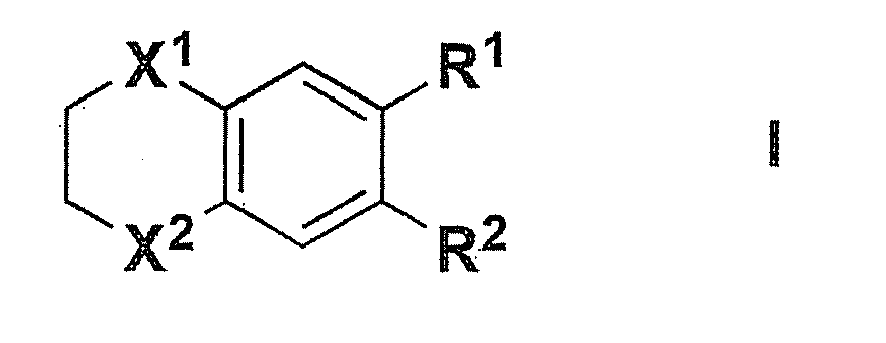
- a therapeutic drug for adult T-cell leukemia comprising a compound represented by the formula I or a prodrug thereof:
- R 1 is H, OH, an alkoxy group, an acyl group, or a thioacyl group
- R 2 is an acyl group, a thioacyl group, CONR 7 R 8 , or CSNR 7 R 8 (R 7 and R 8 being each independently H, an alkyl group containing 1 to 3 carbon atoms, or a phenyl group), or R 1 and R 2 together may form a ring
- X 1 and X 2 may be the same or different and are each -CR 3 R 4 -, -SiR 3 R 4 - or oxygen
- R 3 and R 4 may be the same or different and are each an alkyl group containing 1 to 6 carbon atoms.
- R 1 is H, or OH
- R 2 is an acyl group
- R 3 to R 6 may be the same or different and are each an alkyl group containing 1 to 6 carbon atoms.
- the compound according to the present invention can suppress selectively the growth of an ATL cell strain, the same is consequently effective as a therapeutic drug for adult T-cell leukemia.
- a therapeutic drug for adult T-cell leukemia is characterized by containing a compound represented by the formula I as an active ingredient, wherein R 1 is H, OH, an alkoxy group, an acyl group, or a thioacyl group, R 2 is an acyl group, a thioacyl group, CONR 7 R 8 , or CSNR 7 R 8 (R 7 and R 8 being each independently H, an alkyl group containing 1 to 3 carbon atoms, or a phenyl group), or R 1 and R 2 together may form a ring, X 1 and X 2 may be the same or different and are each -CR 3 R 4 -, -SiR 3 R 4 - or oxygen, and R 3 and R 4 may be the same or different and are each an alkyl group containing 1 to 6 carbon atoms.
- a compound, in which X 1 and X 2 are oxygen (O) is commercially available from Sigma-Aldrich, Inc.:
- the alkoxy group may be either linear or branched, and preferably contains 1 to 5 carbon atoms.
- Examples of such alkoxy group may include a methoxy group, an ethoxy group, a propyloxy group, an i -propyloxy group, a butoxy group, an i -butoxy group, a t-butoxy group, and a pentyloxy group.
- acyl group examples include a linear or branched, saturated or unsaturated aliphatic acyl group containing 1 to 10 carbon atoms, such as a formyl group, an acetyl group, a propionyl group, a butyryl group, an isobutyryl group, a valeryl group, an isovaleryl group, a pivaloyl group, a hexanoyl group, an octanoyl group, a decanoyl group, a propenoyl group (acryloyl group), a butenoyl group, an isobutenoyl group, a pentenoyl group, a hexenoyl group, and a 4-methyl-2-pentenoyl group; and preferably a saturated or unsaturated aliphatic acyl group containing 2 to 10 carbon atoms (the carbon number is a number including the carbon in a carbonyl group); and an aromatic acyl group (
- Examples of the applicable thioacyl group include those derived from the aforedescribed acyl groups by replacing the carbonyl group with a thiocarbonyl group, and more specifically a thioformyl group, a thioacetyl group, a thiopropionyl group, a thiobutyryl group, and a thiobenzoyl group.
- acyl groups or thioacyl groups a carbon atom not adjacent to a carbonyl group or a thiocarbonyl group may be replaced with a hetero atom, such as nitrogen, sulfur, and oxygen.
- a hetero atom such as nitrogen, sulfur, and oxygen.
- Examples of the CONR 7 R 8 group and CSNR 7 R 8 include CONH 2 , CONH(CH 3 ), CON(CH 3 ) 2 , CONH(CH 2 CH 3 ), CONH(CH 2 CH 2 CH 3 ), CONHC(CH 3 ) 3 , CONHC 6 H 5 , CSNH 2 , CSNH(CH 3 ), CSN(CH 3 ) 2 , CSNH(CH 2 CH 3 ), CSNH(CH 2 CH 2 CH 3 ), CSNHC(CH 3 ) 3 , and CSNHC 6 H 5 . Among them is especially preferable CONH 2 .
- the alkyl group containing 1 to 6 carbon atoms may be linear or branched, and examples thereof include a methyl group, an ethyl group, an n-propyl group, an isopropyl group, an n -butyl group, a t -butyl group, an isobutyl group, an n-pentyl group, an isopentyl group, and a neopentyl group.
- a preferable embodiment of the therapeutic drug for adult T-cell leukemia according to the present invention is characterized by containing a compound represented by the formula II as an active ingredient, wherein R 1 is H or OH, R 2 is an acyl group, and R 3 to R 6 may be the same or different and are each an alkyl group containing 1 to 6 carbon atoms:
- the acyl group is as defined above, and examples thereof include a linear or branched, saturated or unsaturated aliphatic acyl group containing 1 to 10 carbon atoms, such as a formyl group, an acetyl group, a propionyl group, a butyryl group, an isobutyryl group, a valeryl group, an isovaleryl group, a pivaloyl group, a hexanoyl group, an octanoyl group, a decanoyl group, a propenoyl group, a butenoyl group, an isobutenoyl group, a pentenoyl group, a hexenoyl group, and a 4-methyl-2-pentenoyl group; and preferably a saturated or unsaturated aliphatic acyl group containing 2 to 10 carbon atoms (the carbon number is a number including the carbon in a carbonyl group); and an aromatic acyl group
- the alkyl group containing 1 to 6 carbon atoms may be, as described above, either linear or branched, and examples thereof include a methyl group, an ethyl group, an n-propyl group, an isopropyl group, an n -butyl group, a t-butyl group, an isobutyl group, an n-pentyl group, an isopentyl group, and a neopentyl group.
- the therapeutic drug for adult T-cell leukemia according to the present invention preferably contains as an active ingredient the compound represented by the formula III among the compounds according to the above formula II:
- the compound can be synthesized by a conventional organic synthesis, for example according to the description of Kagechika H, Hashimoto Y, Kawachi E, Shudo K, "affinity gels for purification of retinoid-specific binding protein (RSBP)", Biochem. Biophys. Res. Commun. 155: 503-508 (1988 ).
- RSBP retinoid-specific binding protein
- the objective compound of the formula III (5,6,7,8-tetrahydro-3-hydroxy-5,5,8,8-tetramethyl-2-naphthyl methyl ketone) can be yielded according to the following reaction formula by heating 5,6,7,8-tetrahydro-5,5,8,8-tetramethyl-2-naphthyl methyl ketone with m-chloroperbenzoic acid (mCPBA) in chloroform for several hours, and by heating the yielded intermediate with aluminum chloride at 130 to 140°C:
- mCPBA m-chloroperbenzoic acid
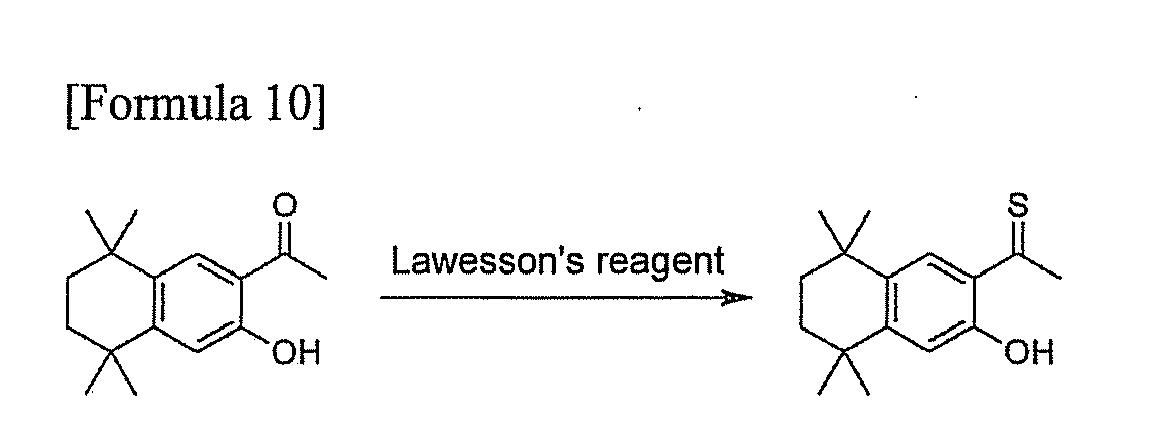
- the acetyl group in the compound of the formula III can be converted to a thioacetyl group according to the method described in Hupp CD, Tepe JJ, "Total Synthesis of a Marine Alkaloid from the Tunicate Dendrodoa grossularia", Org. Lett. 10: 3737-3739 (2008 ).
- 5,6,7,8-tetrahydro-3-hydroxy-5,5,8,8-tetramethyl-2-naphthyl ethanethione can be yielded according to the following reaction formula by heating under reflux 5,6,7,8-tetrahydro-3-hydroxy-5,5,8,8-tetramethyl-2-naphthyl methyl ketone with Lawesson's reagent in toluene:
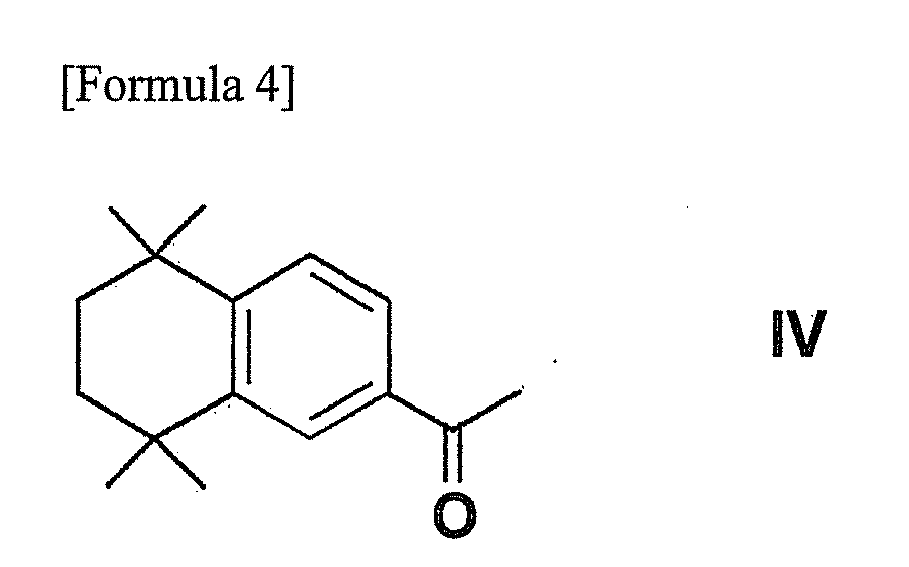
- the therapeutic drug for adult T-cell leukemia according to the present invention contains preferably a compound represented by the formula IV as an active ingredient:
- the compound can be synthesized by a conventional organic synthesis, for example according to the description of Kagechika H, Kawachi E, Hashimoto Y, Himi T, Shudo K, "Retinobenzoic acids. 1. Structure-activity relationships of aromatic amides with retinoidal activity", J. Med. Chem. 31: 2182-2192 (1988 ), or Buttner MW, Penka M, Doszczak L, Kraft P, Tacke R, "Silicon analogues of the musk odorant veralide", Organometallics, 26: 1295-1298 (2007 ).
- the objective compound of the formula IV (5,6,7,8-tetrahydro-5,5,8,8-tetramethyl-2-naphthyl methyl ketone) can be obtained at a yield of about 80% according to the following reaction formula by reacting 1,2,3,4-tetrahydro-1,1,4,4-tetramethylnaphthalene with acetyl chloride in dichloroethane in the presence of aluminum chloride:
- the therapeutic drug for adult T-cell leukemia according to the present invention contains preferably a compound represented by the formula V or the formula VI as an active ingredient:
- the compound of the formula V is equivalent to that with OH as the R 1 and a propionyl group as the R 2 , which form together a ring
- the compound of the formula VI is equivalent to that with OH as the R 1 and a propenoyl group as the R 2 , which form together a ring.
- the compound represented by the formula VII may be quoted:
- a prodrug of a compound represented by the formulas I to VII means a compound to be converted to the compound of the formulas I to VII under physiological conditions in vivo according to a reaction by an enzyme, gastric acid, or the like, more particularly a compound to be converted to the compound of the formulas I to VII enzymatically by oxidation, reduction, hydrolysis, etc., or a compound to be converted to the compound of the formulas I to VII, for example, through hydrolysis by gastric acid.
- examples of a prodrug of the compound according to the formula III include a compound derived by acylation, alkylation, phosphorylation, or boration of the hydroxy group of the compound according to the formula III ( e.g .
- Such prodrug can be produced by a per se publicly known method from the compound according to the formula III.
- prodrugs of the compounds according to the formulas V and VI include compounds represented by the following formulas:
- R 9 and R 10 are H, CH 3 , etc., or R 9 and R 10 may together form a ring.
- R 11 is an alkyl group such as CH 3 , or an acyl group such as COCH 3 .
- a prodrug of a compound of the formulas I to VII may be that to be converted to the compound of the formulas I to VII under physiological conditions as described in " Pharmaceutical Research and Development (Iyakuhin no Kaihatsu)", Vol. 7 (Molecular Design), HirokawaShoten, 1990, p.163-198 .
- the compound and a prodrug thereof may be formulated in combination with a conventional pharmaceutical carrier to a therapeutic drug for adult T-cell leukemia.
- a dosage form which can be selected appropriately according to need, and examples thereof include an oral preparation, such as a tablet, a capsule, a granule, a fine granule, a powder, a sustained release preparation, a liquid, a suspension, an emulsion, a syrup, and an elixir, and a parenteral preparation, such as an injection, and a suppository.
- An oral preparation can be produced according to a conventional method using starch, lactose, white soft sugar, mannitol, carboxymethylcellulose, corn starch, inorganic salts, etc.
- a binder, a disintegrator, a surfactant, a lubricant, a glidant, a corrigent, a colorant, a fragrance, etc . may be admixed appropriately.
- binder examples include starch, dextrin, gum arabic, gelatin, hydroxypropyl starch, methylcellulose, sodium carboxymethylcellulose, hydroxypropylcellulose, crystalline cellulose, ethylcellulose, polyvinylpyrrolidone, and macrogol.
- Examples of a disintegrator include starch, hydroxypropyl starch, sodium carboxymethylcellulose, calcium carboxymethylcellulose, carboxymethylcellulose, and low substituted hydroxypropylcellulose.
- Examples of a surfactant include sodium lauryl sulfate, soybean lecithin, sucrose fatty acid ester, and polysorbate 80.
- a lubricant examples include talc, waxes, a hydrogenated plant oil, sucrose fatty acid ester, magnesium stearate, calcium stearate, aluminum stearate, and polyethylene glycol.
- Examples of a glidant include light anhydrous silicic acid, dried aluminum hydroxide gel, synthetic aluminum silicate, and magnesium silicate.
- An injection can be produced according to a conventional method, and as a diluent therefor can be used in general distilled water for injection, physiologic saline, a glucose aq. solution, an olive oil, a sesame oil, an earth nut oil, a soybean oil, a corn oil, propylene glycol, polyethylene glycol, etc . Further, according to need, a bactericide, a preservative, a stabilizer, an isotonizing agent, a soothing agent, etc. may be added. Furthermore, from a standpoint of stability, an injection may be filled in a vial, etc ., frozen and subjected to usual freeze-drying to remove water. A liquid can be reprepared from the freeze-dried product immediately before use. The content of a compound according to the formulas I to VII or a prodrug thereof in an injection may vary, without limited thereto, in a range of 5 to 50 weight-%.
- Examples of another parenteral preparation include a suppository for intrarectal administration, which can be produced according to a conventional method.
- a formulated therapeutic drug may be administered 1 to 4 times per day and for 1 week to 3 months, subject to a formulation form, an administration route, etc.
- An oral preparation should preferably be taken to exert a desired effect for an adult generally in an amount of 0.1 to 1000 mg, preferably 1 to 500 mg, as the mass of a compound or a prodrug thereof according to the formulas I to VII, which is divided into several doses per day, though the amount may be varied in accordance with the age, body mass, or severity of disease of the patient.
- a parenteral preparation should preferably be administered by intravenous injection, intravenous drip infusion, subcutaneous injection, or intramuscular injection to exert a desired effect for an adult generally in an amount of 0.1 to 1000 mg, preferably 1 to 500 mg, as the mass of a compound or a prodrug thereof according to the formulas I to VII, though the amount may be varied in accordance with the age, body mass, or severity of disease of the patient.
- S1T cell strain originated from an ATL patient
- MT-2 HTLV-1 infected cell strain
- MOLT-4 acute lymphoblastic leukemia cell strain
- CEM acute lymphoblastic leukemia cell strain
- HL-60 acute promyelocytic leukemia cell strain
- Jurkat acute T-cell leukemia cell strain
- TMNAA retinoid-specific binding protein
- Agent IC 50 ( ⁇ M) SI Designation Chemical structure S1T MOLT-4 Sodium salicylate 1,570 1,320 0.84 TN BAA 29.7 44.4 1.49 TMNAA 5.0 53.8 10.8 TMBA > 100 61.1 ⁇ 0.61 TMN (COCH 3 ) 6.9 66.0 9.6 TMN (OCH 3 ) (CONCH 3 ) 7.0 11.9 1.7 TMN > 100 > 100 ⁇ > 1 IC50: Concentration of an agent to inhibit cell growth by 50% SI: Selectivity to ALT cell
- the synthesis process is as set forth in the chemical reaction formula below.
- the AlCl 3 in the reaction path stands for aluminum chloride.
- anhydrous dichloromethane 5 mL
- aluminum chloride 144 mg, 1.08 mmol
- 2,5-dichloro-2,5-dimethylhexane 2.18 g, 11.9 mmol
- the reaction solution was poured into cold water and extracted by ethyl acetate.
- the organic layer was washed by water, a saturated sodium hydrogen carbonate aq. solution, and a saturated saline solution, dried over magnesium sulfate, and concentrated under reduced pressure.
- the synthesis process is as set forth in the chemical reaction formula below.
- the TiCl 4 in the reaction path stands for titanium chloride.
- the reaction solution was diluted by dichloromethane, and the organic layer was washed by water, a saturated sodium hydrogen carbonate aq. solution, and a saturated saline solution, dried over magnesium sulfate, and concentrated under reduced pressure.
- the synthesis process is as set forth in the chemical reaction formula below.
- aluminum chloride 200 mg, 1.5 mmol
- 2,5-dichloro-2,5-dimethylhexane 4.70 g, 25.7 mmol
- the reaction solution was poured into cold water and extracted by ethyl acetate.
- the organic layer was washed by water, a saturated sodium hydrogen carbonate aq. solution, and a saturated saline solution, dried over magnesium sulfate, and concentrated under reduced pressure.
- the yield was 4.90 g (94%).
- the synthesis process is as set forth in the chemical reaction formula below.
- the KMnO 4 in the reaction path stands for potassium permanganate.
- pyridine 12 mL
- potassium permanganate 6.70 g, 42.4 mmol
- sodium hydroxide (1.00 g, 25.0 mmol)
- the reaction solution was filtrated by celite and the filtrate was made acidic by adding hydrochloric acid. After extraction by ethyl acetate, the liquid was dried over magnesium sulfate, and concentrated under reduced pressure.
- the synthesis process is as set forth in the chemical reaction formula below.
- the DMF in the reaction path stands for N,N-dimethylformamide, the (COCl) 2 for oxalyl chloride, the HN(OMe)Me for N-methoxy-N-methylamine hydrochloride, and the Et 3 N for triethylamine.
- To 5,6,7,8-tetrahydro-5,5,8,8-tetramethyl-2-naphthalenecarboxylic acid (c) (232 mg, 1.00 mol) were added anhydrous dichloromethane (10 mL), oxalyl chloride (294 mg, 2.40 mmol), N,N-dimethylformamide (1 drop) followed by stirring at room temperature for 5 hours.
- the reaction solution was concentrated under reduced pressure.
- anhydrous dichloromethane (10 mL)
- N -methoxy- N -methylamine hydrochloride (116 mg, 1.20 mmol)
- triethylamine (4.00 mL, 28.7 mmol)
- the reaction solution was concentrated under reduced pressure and diluted by ethyl acetate.
- the solution was washed by dil. hydrochloric acid, water, a saturated sodium hydrogen carbonate aq. solution and a saturated saline solution, and the crude product was purified by silica gel chromatography using hexane/ethyl acetate (10/1) as an elution solvent.
- the synthesis process is as set forth in the chemical reaction formula below.
- the PhBr in the reaction path stands for benzene bromide.
- the synthesis process is as set forth in the chemical reaction formula below.
- the CAN in the reaction path stands for cerium ammonium nitrate.
- acetic acid 8.2 mL
- cerium ammonium nitrate 2.40 g, 4.37 mol
- the reaction solution was poured into ice water and extracted by ethyl acetate.
- the organic layer was washed by water, a saturated sodium hydrogen carbonate aq. solution and a saturated saline solution, dried over magnesium sulfate, and concentrated under reduced pressure.
- the synthesis process is as set forth in the chemical reaction formula below.
- TNAA 5,6,7,8-tetrahydro-3-hydroxy-5,5,8,8-tetramethyl-2-naphthyl methyl ketone
- N,N -dimethylformamide 0.5 mL
- N,N -dimethylformamide dimethyl acetal 135 ⁇ L, 1.01 mmol
- the reaction solution was poured into ice water and extracted by diethyl ether.
- the organic layer was washed by water and a saturated saline solution, dried over magnesium sulfate, and concentrated under reduced pressure.
- the yield was 151 mg (100%).
- S1T cell strain originated from an ATL patient
- MOLT-4 acute lymphoblastic leukemia cell strain
- the compounds according to the present invention have higher selectivity to the ATL cell than another derivative having an analogous structure (the agent J).
Landscapes
- Health & Medical Sciences (AREA)
- Chemical & Material Sciences (AREA)
- Pharmacology & Pharmacy (AREA)
- Veterinary Medicine (AREA)
- Public Health (AREA)
- General Health & Medical Sciences (AREA)
- Medicinal Chemistry (AREA)
- Animal Behavior & Ethology (AREA)
- Life Sciences & Earth Sciences (AREA)
- Epidemiology (AREA)
- Organic Chemistry (AREA)
- Nuclear Medicine, Radiotherapy & Molecular Imaging (AREA)
- General Chemical & Material Sciences (AREA)
- Chemical Kinetics & Catalysis (AREA)
- Bioinformatics & Cheminformatics (AREA)
- Engineering & Computer Science (AREA)
- Hematology (AREA)
- Oncology (AREA)
- Pharmaceuticals Containing Other Organic And Inorganic Compounds (AREA)
- Acyclic And Carbocyclic Compounds In Medicinal Compositions (AREA)
- Organic Low-Molecular-Weight Compounds And Preparation Thereof (AREA)
- Pyrane Compounds (AREA)
Abstract
Description
- The present invention relates to an agent used for treating adult T-cell leukemia (ATL).
- Adult T-cell leukemia (ATL) is a malignant tumor caused by infection with HTLV-1. It is estimated that the number of carriers of HTLV-1 is about 1.2 millions in Japan and 10 to 20 millions in the world, and believed that 2 to 5% of them develop ATL in their lives. The survival rate after the onset of ATL is extremely low, and although a multidrug therapy using various anticancer drugs has been conducted as a treatment, the treatment outcome is poor due to rapid acquisition of drug resistance.
- As a conventional therapeutic drug for adult T-cell leukemia, for example, Patent Literature 1 discloses a therapeutic agent containing fucoxanthin or fucoxanthinol as an active ingredient. Further, Patent Literature 2 discloses a therapeutic agent for adult T-cell leukemia containing digitoxin as an active ingredient.
- Under such circumstances, development of a new agent having specificity to an ATL cell has been demanded.
-
- Patent Literature 1: Japanese Patent Publication (Kokai) No.
2008-19174 A - Patent Literature 2: Japanese Patent Publication (Kokai) No.
4-36240 A (1992 - Consequently, an object of the present invention is to provide a novel therapeutic drug for adult T-cell leukemia having an ATL cell specific antitumor effect.
- To achieve the object, the present inventors have screened an agent library using a cell strain S1T established from an ATL patient to try to identify an agent having an ATL cell specific antitumor effect, and found selective ATL cell growth suppression activity in agents having a certain structure, thereby completing the present invention. More specifically, the summary of the present invention is as follows.
- (1) A therapeutic drug for adult T-cell leukemia comprising a compound represented by the formula I or a prodrug thereof:

- wherein R1 is H, OH, an alkoxy group, an acyl group, or a thioacyl group, R2 is an acyl group, a thioacyl group, CONR7R8, or CSNR7R8 (R7 and R8 being each independently H, an alkyl group containing 1 to 3 carbon atoms, or a phenyl group), or R1 and R2 together may form a ring, X1 and X2 may be the same or different and are each -CR3R4-, -SiR3R4- or oxygen, and R3 and R4 may be the same or different and are each an alkyl group containing 1 to 6 carbon atoms.
- (2) The therapeutic drug for adult T-cell leukemia according to (1) above, wherein the compound represented by the formula I is a compound represented by the formula II:

- wherein R1 is H, or OH, R2 is an acyl group, and R3 to R6 may be the same or different and are each an alkyl group containing 1 to 6 carbon atoms.
- (3) The therapeutic drug for adult T-cell leukemia according to (2) above, wherein the compound represented by the formula II is a compound represented by the formula III:
-

- (4) The therapeutic drug for adult T-cell leukemia according to (2) above, wherein the compound represented by the formula II is a compound represented by the formula IV:
-
- (5) The therapeutic drug for adult T-cell leukemia according to (1) above, wherein the compound represented by the formula I is a compound represented by the formula V or the formula VI:
-

- The present invention claiming priority based on Japanese Patent Application No.
2008-242867 2008-256620 2009-068750 - Since the compound according to the present invention can suppress selectively the growth of an ATL cell strain, the same is consequently effective as a therapeutic drug for adult T-cell leukemia.
-
- [
Figure 1] Figure 1 is a graph showing the selective ATL cell growth suppression activity of the compound (TMNAA) according to the formula III. - The present invention will be described in detail below.
- A therapeutic drug for adult T-cell leukemia according to the present invention is characterized by containing a compound represented by the formula I as an active ingredient, wherein R1 is H, OH, an alkoxy group, an acyl group, or a thioacyl group, R2 is an acyl group, a thioacyl group, CONR7R8, or CSNR7R8 (R7 and R8 being each independently H, an alkyl group containing 1 to 3 carbon atoms, or a phenyl group), or R1 and R2 together may form a ring, X1 and X2 may be the same or different and are each -CR3R4-, -SiR3R4- or oxygen, and R3 and R4 may be the same or different and are each an alkyl group containing 1 to 6 carbon atoms. A compound, in which X1 and X2 are oxygen (O), is commercially available from Sigma-Aldrich, Inc.:
-

- The alkoxy group may be either linear or branched, and preferably contains 1 to 5 carbon atoms. Examples of such alkoxy group may include a methoxy group, an ethoxy group, a propyloxy group, an i-propyloxy group, a butoxy group, an i-butoxy group, a t-butoxy group, and a pentyloxy group.
- Examples of the acyl group include a linear or branched, saturated or unsaturated aliphatic acyl group containing 1 to 10 carbon atoms, such as a formyl group, an acetyl group, a propionyl group, a butyryl group, an isobutyryl group, a valeryl group, an isovaleryl group, a pivaloyl group, a hexanoyl group, an octanoyl group, a decanoyl group, a propenoyl group (acryloyl group), a butenoyl group, an isobutenoyl group, a pentenoyl group, a hexenoyl group, and a 4-methyl-2-pentenoyl group; and preferably a saturated or unsaturated aliphatic acyl group containing 2 to 10 carbon atoms (the carbon number is a number including the carbon in a carbonyl group); and an aromatic acyl group (an aroyl group), such as a benzoyl group, and a naphthoyl group.
- Examples of the applicable thioacyl group include those derived from the aforedescribed acyl groups by replacing the carbonyl group with a thiocarbonyl group, and more specifically a thioformyl group, a thioacetyl group, a thiopropionyl group, a thiobutyryl group, and a thiobenzoyl group.
- In the aforedescribed acyl groups or thioacyl groups, a carbon atom not adjacent to a carbonyl group or a thiocarbonyl group may be replaced with a hetero atom, such as nitrogen, sulfur, and oxygen. Examples of such an acyl group or a thioacyl group replaced with a hetero atom include -COCH=CHN(CH3)2, and -CSCH=CHN(CH3)2.
- Examples of the CONR7R8 group and CSNR7R8 include CONH2, CONH(CH3), CON(CH3)2, CONH(CH2CH3), CONH(CH2CH2CH3), CONHC(CH3)3, CONHC6H5, CSNH2, CSNH(CH3), CSN(CH3)2, CSNH(CH2CH3), CSNH(CH2CH2CH3), CSNHC(CH3)3, and CSNHC6H5. Among them is especially preferable CONH2.
- The alkyl group containing 1 to 6 carbon atoms may be linear or branched, and examples thereof include a methyl group, an ethyl group, an n-propyl group, an isopropyl group, an n-butyl group, a t-butyl group, an isobutyl group, an n-pentyl group, an isopentyl group, and a neopentyl group.
- A preferable embodiment of the therapeutic drug for adult T-cell leukemia according to the present invention is characterized by containing a compound represented by the formula II as an active ingredient, wherein R1 is H or OH, R2 is an acyl group, and R3 to R6 may be the same or different and are each an alkyl group containing 1 to 6 carbon atoms:
-

- The acyl group is as defined above, and examples thereof include a linear or branched, saturated or unsaturated aliphatic acyl group containing 1 to 10 carbon atoms, such as a formyl group, an acetyl group, a propionyl group, a butyryl group, an isobutyryl group, a valeryl group, an isovaleryl group, a pivaloyl group, a hexanoyl group, an octanoyl group, a decanoyl group, a propenoyl group, a butenoyl group, an isobutenoyl group, a pentenoyl group, a hexenoyl group, and a 4-methyl-2-pentenoyl group; and preferably a saturated or unsaturated aliphatic acyl group containing 2 to 10 carbon atoms (the carbon number is a number including the carbon in a carbonyl group); and an aromatic acyl group (an aroyl group), such as a benzoyl group, and a naphthoyl group.
- The alkyl group containing 1 to 6 carbon atoms may be, as described above, either linear or branched, and examples thereof include a methyl group, an ethyl group, an n-propyl group, an isopropyl group, an n-butyl group, a t-butyl group, an isobutyl group, an n-pentyl group, an isopentyl group, and a neopentyl group.
- Especially, the therapeutic drug for adult T-cell leukemia according to the present invention preferably contains as an active ingredient the compound represented by the formula III among the compounds according to the above formula II:

- The compound can be synthesized by a conventional organic synthesis, for example according to the description of Kagechika H, Hashimoto Y, Kawachi E, Shudo K, "affinity gels for purification of retinoid-specific binding protein (RSBP)", Biochem. Biophys. Res. Commun. 155: 503-508 (1988). Specifically, the objective compound of the formula III (5,6,7,8-tetrahydro-3-hydroxy-5,5,8,8-tetramethyl-2-naphthyl methyl ketone) can be yielded according to the following reaction formula by heating 5,6,7,8-tetrahydro-5,5,8,8-tetramethyl-2-naphthyl methyl ketone with m-chloroperbenzoic acid (mCPBA) in chloroform for several hours, and by heating the yielded intermediate with aluminum chloride at 130 to 140°C:

- The acetyl group in the compound of the formula III can be converted to a thioacetyl group according to the method described in Hupp CD, Tepe JJ, "Total Synthesis of a Marine Alkaloid from the Tunicate Dendrodoa grossularia", Org. Lett. 10: 3737-3739 (2008). Specifically, 5,6,7,8-tetrahydro-3-hydroxy-5,5,8,8-tetramethyl-2-naphthyl ethanethione can be yielded according to the following reaction formula by heating under reflux 5,6,7,8-tetrahydro-3-hydroxy-5,5,8,8-tetramethyl-2-naphthyl methyl ketone with Lawesson's reagent in toluene:
- In another embodiment, the therapeutic drug for adult T-cell leukemia according to the present invention contains preferably a compound represented by the formula IV as an active ingredient:

- The compound can be synthesized by a conventional organic synthesis, for example according to the description of Kagechika H, Kawachi E, Hashimoto Y, Himi T, Shudo K, "Retinobenzoic acids. 1. Structure-activity relationships of aromatic amides with retinoidal activity", J. Med. Chem. 31: 2182-2192 (1988), or Buttner MW, Penka M, Doszczak L, Kraft P, Tacke R, "Silicon analogues of the musk odorant veralide", Organometallics, 26: 1295-1298 (2007). Specifically, the objective compound of the formula IV (5,6,7,8-tetrahydro-5,5,8,8-tetramethyl-2-naphthyl methyl ketone) can be obtained at a yield of about 80% according to the following reaction formula by reacting 1,2,3,4-tetrahydro-1,1,4,4-tetramethylnaphthalene with acetyl chloride in dichloroethane in the presence of aluminum chloride:

- Further, in another embodiment, the therapeutic drug for adult T-cell leukemia according to the present invention contains preferably a compound represented by the formula V or the formula VI as an active ingredient:

- The compound of the formula V is equivalent to that with OH as the R1 and a propionyl group as the R2, which form together a ring, and the compound of the formula VI is equivalent to that with OH as the R1 and a propenoyl group as the R2, which form together a ring.
- As another example of the therapeutic drug for adult T-cell leukemia according to the present invention, the compound represented by the formula VII may be quoted:
-

- A prodrug of a compound represented by the formulas I to VII means a compound to be converted to the compound of the formulas I to VII under physiological conditions in vivo according to a reaction by an enzyme, gastric acid, or the like, more particularly a compound to be converted to the compound of the formulas I to VII enzymatically by oxidation, reduction, hydrolysis, etc., or a compound to be converted to the compound of the formulas I to VII, for example, through hydrolysis by gastric acid. For example, examples of a prodrug of the compound according to the formula III include a compound derived by acylation, alkylation, phosphorylation, or boration of the hydroxy group of the compound according to the formula III (e.g. a compound derived by acetylation, palmitoylation, propanoylation, pivaloylation, succinylation, fumarylation, alanylation or dimethylaminomethylcarbonylation of the hydroxy group of the compound according to the formula III). Such prodrug can be produced by a per se publicly known method from the compound according to the formula III.
- Examples of prodrugs of the compounds according to the formulas V and VI include compounds represented by the following formulas:

- wherein X is O or S, R9 and R10 are H, CH3, etc., or R9 and R10 may together form a ring.
- Further, a compound represented by the following formula may be used as a prodrug of the compound according to the formula V:

- wherein R11 is an alkyl group such as CH3, or an acyl group such as COCH3.
- Further, a prodrug of a compound of the formulas I to VII may be that to be converted to the compound of the formulas I to VII under physiological conditions as described in "Pharmaceutical Research and Development (Iyakuhin no Kaihatsu)", Vol. 7 (Molecular Design), HirokawaShoten, 1990, p.163-198.
- The compound and a prodrug thereof may be formulated in combination with a conventional pharmaceutical carrier to a therapeutic drug for adult T-cell leukemia. There is no particular restriction on a dosage form, which can be selected appropriately according to need, and examples thereof include an oral preparation, such as a tablet, a capsule, a granule, a fine granule, a powder, a sustained release preparation, a liquid, a suspension, an emulsion, a syrup, and an elixir, and a parenteral preparation, such as an injection, and a suppository.
- An oral preparation can be produced according to a conventional method using starch, lactose, white soft sugar, mannitol, carboxymethylcellulose, corn starch, inorganic salts, etc.
- In addition to the aforementioned excipients, a binder, a disintegrator, a surfactant, a lubricant, a glidant, a corrigent, a colorant, a fragrance, etc. may be admixed appropriately.
- Examples of a binder include starch, dextrin, gum arabic, gelatin, hydroxypropyl starch, methylcellulose, sodium carboxymethylcellulose, hydroxypropylcellulose, crystalline cellulose, ethylcellulose, polyvinylpyrrolidone, and macrogol.
- Examples of a disintegrator include starch, hydroxypropyl starch, sodium carboxymethylcellulose, calcium carboxymethylcellulose, carboxymethylcellulose, and low substituted hydroxypropylcellulose.
- Examples of a surfactant include sodium lauryl sulfate, soybean lecithin, sucrose fatty acid ester, and
polysorbate 80. - Examples of a lubricant include talc, waxes, a hydrogenated plant oil, sucrose fatty acid ester, magnesium stearate, calcium stearate, aluminum stearate, and polyethylene glycol.
- Examples of a glidant include light anhydrous silicic acid, dried aluminum hydroxide gel, synthetic aluminum silicate, and magnesium silicate.
- An injection can be produced according to a conventional method, and as a diluent therefor can be used in general distilled water for injection, physiologic saline, a glucose aq. solution, an olive oil, a sesame oil, an earth nut oil, a soybean oil, a corn oil, propylene glycol, polyethylene glycol, etc. Further, according to need, a bactericide, a preservative, a stabilizer, an isotonizing agent, a soothing agent, etc. may be added. Furthermore, from a standpoint of stability, an injection may be filled in a vial, etc., frozen and subjected to usual freeze-drying to remove water. A liquid can be reprepared from the freeze-dried product immediately before use. The content of a compound according to the formulas I to VII or a prodrug thereof in an injection may vary, without limited thereto, in a range of 5 to 50 weight-%.
- Examples of another parenteral preparation include a suppository for intrarectal administration, which can be produced according to a conventional method.
- A formulated therapeutic drug may be administered 1 to 4 times per day and for 1 week to 3 months, subject to a formulation form, an administration route, etc.
- An oral preparation should preferably be taken to exert a desired effect for an adult generally in an amount of 0.1 to 1000 mg, preferably 1 to 500 mg, as the mass of a compound or a prodrug thereof according to the formulas I to VII, which is divided into several doses per day, though the amount may be varied in accordance with the age, body mass, or severity of disease of the patient.
- A parenteral preparation should preferably be administered by intravenous injection, intravenous drip infusion, subcutaneous injection, or intramuscular injection to exert a desired effect for an adult generally in an amount of 0.1 to 1000 mg, preferably 1 to 500 mg, as the mass of a compound or a prodrug thereof according to the formulas I to VII, though the amount may be varied in accordance with the age, body mass, or severity of disease of the patient.
- The present invention will be described below in more detail based on Examples and Comparative Examples, provided that the same should not be interpreted in any restrictive way.
- In the presence of various agents, S1T (cell strain originated from an ATL patient), MT-2 (HTLV-1 infected cell strain), and as controls, MOLT-4 (acute lymphoblastic leukemia cell strain), CEM (acute lymphoblastic leukemia cell strain), HL-60 (acute promyelocytic leukemia cell strain), and Jurkat (acute T-cell leukemia cell strain) were cultivated for 4 days, and the growth inhibitory effects of compounds on the respective cells were evaluated by the MTT method.
- With S1T and MOLT-4 were screened 138 agents to find that the inhibitory concentrations 50% (IC50) on S1T were 0 to 1 µM for 7 agents, 1 to 10 µM for 26 agents, and 10 to 100 µM for 67 agents. Meanwhile, the same on MOLT-4 were 0 to 1 µM for 8 agents, 1 to 10 µM for 32 agents, and 10 to 100 µM for 67 agents. Among them, as an agent inhibiting specifically the growth of an ATL cell strain, 6 agents with the selectivity index on the S1T cell (SI= IC50 for MOLT-4 / IC50 for S1T) of 2 or higher, and 1 agent with the same of 10 or higher were identified. The results of the compound (TMNAA) according to the formula III, which gave the SI of 10 or higher, are shown in
Figure 1 . Incidentally, TMNAA was synthesized according to the description of Kagechika H, Hashimoto Y, Kawachi E, Shudo K, "Affinity gels for purification of retinoid-specific binding protein (RSBP)", Biochem. Biophys. Res. Commun. 155: 503-508 (1988). As obvious fromFigure 1 , TMNAA, a compound according to the present invention, inhibits selectively at a concentration of 4 µM or higher the growth of an ATL cell in comparison to the control. - Further, the results of the compound (TMN(COCH3)) according to the formula IV, which gave a high SI value similarly as TMNAA, and other derivatives are shown in Table 1. As obvious from Table 1, the compounds according to the present invention, TMNAA, TMN(COCH3) and TMN(OCH3)(COCH3), have higher selectivity to an ATL cell than other derivatives with analogous structures. Among them, TMNAA and TMN(COCH3), which are the compounds according to the present invention, have been found to have higher selectivity to an ATL cell than other derivatives with analogous structures. Meanwhile, despite a report on anti-ATL effect of sodium salicylate, which is an agent related to the above compounds, by Portis T, Harding JC, Ratner L, "The contribution of NF-κ activity to spontaneous proliferation and resistance to apoptosis in human T-cell leukemia virus type 1 Tax-induced tumor". Blood 98: 1200-1208 (2001), no selectivity to S1T was recognized by the experiment as shown in Table 1. With the compound of the formula III, which gave the SI above 10, the growth inhibitory effects on MT-2, CEM, HL-60, and Jurkat were studied to find that it gave a specific inhibitory effect solely on MT-2.
[Table 1] Agent IC50 (µM) SI Designation Chemical structure S1T MOLT-4 Sodium salicylate 1,570 1,320 0.84 TN BAA 
29.7 44.4 1.49 TMNAA 
5.0 53.8 10.8 TMBA 
> 100 61.1 <0.61 TMN (COCH3) 
6.9 66.0 9.6 TMN (OCH3) (CONCH3) 
7.0 11.9 1.7 TMN 
> 100 > 100 < > 1 IC50: Concentration of an agent to inhibit cell growth by 50%
SI: Selectivity to ALT cell - The synthesis process is as set forth in the chemical reaction formula below. The AlCl3 in the reaction path stands for aluminum chloride. Into phenol (1.02 g, 10.8 mmol) were added anhydrous dichloromethane (5 mL), aluminum chloride (144 mg, 1.08 mmol), and 2,5-dichloro-2,5-dimethylhexane (2.18 g, 11.9 mmol) followed by stirring at room temperature for 19 hours. The reaction solution was poured into cold water and extracted by ethyl acetate. The organic layer was washed by water, a saturated sodium hydrogen carbonate aq. solution, and a saturated saline solution, dried over magnesium sulfate, and concentrated under reduced pressure. The crude product was purified by recrystallization in a solvent of hexane. The yield was 1.83 g (83%).
FAB-MS m/z 204 (M+H)+; 1H-NMR (500 MHz, CDCl3) δ 7.17 (d, 1H, J = 8.5 Hz), 6.75 (d, 1H, J = 3.0 Hz), 6.62 (dd, 1H, J = 5.5, 3.0 Hz), 4.49 (s, 1H), 1.66 (s, 4H), 1.25 (s, 6H), 1.24 (s, 6H). - To 5,6,7,8-tetrahydro-2-hydroxy-5,5,8,8-tetramethylnaphthalene (204 mg, 1.00 mmol) were added anhydrous dichloromethane (1 mL), aluminum chloride (148 mg, 1.12 mmol), and propionyl chloride (101.7 mg, 1.10 mmol) followed by stirring at 60°C for 16 hours. The reaction solution was poured into cold water and extracted by ethyl acetate. The organic layer was washed by water, a saturated sodium hydrogen carbonate aq. solution, and a saturated saline solution, dried over magnesium sulfate, and concentrated under reduced pressure. The crude product was purified by silica gel column chromatography using hexane/ethyl acetate (20/1) as an elution solvent. The yield was 117 mg (45%).
FAB-MS m/z 247 (M+H)+; 1H-TTMR (500 MHz, CDCl3) δ 11.96 (s, 1H), 7.68 (s, 1H), 6.90 (s, 1H), 3.03 (q, 2H), 1.68 (s, 4H), 1.28 (s, 6H), 1.27 (s, 6H), 1.25 (t, 3H, J = 7.3 Hz). - The synthesis process is as set forth in the chemical reaction formula below. To 5,6,7,8-tetrahydro-2-hydroxy-5,5,8,8-tetramethylnaphthalene (204 mg, 1.00 mol) were added anhydrous dichloromethane (1 mL), aluminum chloride (148 mg, 1.12 mmol), and isobutyryl chloride (117 mg, 1.10 mmol) followed by stirring at 60°C for 2 hours. The reaction solution was poured into cold water, and extracted by ethyl acetate. The organic layer was washed by water, a saturated sodium hydrogen carbonate aq. solution, and a saturated saline solution, dried over magnesium sulfate, and concentrated under reduced pressure. The crude product was purified by silica gel chromatography using hexane/ethyl acetate (20/1) as an elution solvent. The yield was 128 mg (47%).
FAB-MS m/z 261 (M+H)+; 1H-NMR (500 MHz, CDCl3) δ 12.11 (s, 1H), 7.71 (s, 1H), 6.91 (s, 1H), 3.60 (septet, 1H, J = 7.0 Hz), 1.68 (s, 4H), 1.29 (s, 6H), 1.27 (s, 6H), 1.24 (d, 6H, J = 6.7 Hz). - The synthesis process is as set forth in the chemical reaction formula below. The TiCl4 in the reaction path stands for titanium chloride. To 5,6,7,8-tetrahydro-2-hydroxy-5,5,8,8-tetramethylnaphthalene (409 mg, 2.00 mmol) were added titanium chloride (417 mg, 2.20 mmol) and pivaloyl chloride (361 mg, 2.99 mmol) followed by stirring at 120°C for 1 hour. The reaction solution was diluted by dichloromethane, and the organic layer was washed by water, a saturated sodium hydrogen carbonate aq. solution, and a saturated saline solution, dried over magnesium sulfate, and concentrated under reduced pressure. The crude product was purified by silica gel chromatography using hexane/ethyl acetate (40/3) as an elution solvent. The yield was 53.6 mg (9.0%).
FAB-MS m/z 289 (M+H)+; 1H-NNM (500 MHz, CDCl3) δ 12.30 (s, 1H), 7.97 (s, 1H), 6.92 (s, 1H), 2.05 (s, 1H), 1.68 (s, 4H), 1.45 (s, 9H), 1.29 (s, 6H), 1.27 (s, 6H). - The synthesis process is as set forth in the chemical reaction formula below. To 5,6,7,8-tetrahydro-2-hydroxy-5,5,8,8-tetramethylnaphthalene (204 mg, 1.00 mmol) were added anhydrous dichloromethane (1 mL), aluminum chloride (148 mg, 1.12 mmol), and benzoyl chloride (155 mg, 1.10 mmol) followed by stirring at 60°C for 1 hour. The reaction solution was poured into cold water and extracted by ethyl acetate. The organic layer was washed by water, a saturated sodium hydrogen carbonate aq. solution, and a saturated saline solution, dried over magnesium sulfate, and concentrated under reduced pressure. The crude product was purified by silica gel chromatography using hexane/ethyl acetate (20/1) as an elution solvent. The yield was 27.3 mg (9%).
FAB-MS m/z 309 (M+H)+; 1H-NMR (500 MHz, CDCl3) δ 11.63 (s, 1H), 7.69 (s, 1H), 7.67 (s, 1H), 7.59 (m, 2H), 7.55 (m, 3H), 6.99 (s, 1H), 2.05 (s, 1H), 1.68 (m, 4H), 1.30 (s, 6H), 1.17 (s, 6H).
- The synthesis process is as set forth in the chemical reaction formula below. To 5,6,7,8-tetrahydro-5,5,8,8-tetramethylnaphthalene (188 mg, 1 mmol) were added anhydrous dichloromethane (1 mL), aluminum chloride (148 mg, 1.12 mmol), and propionyl chloride (101 mg, 1.10 mmol) followed by stirring at 60°C for 3 hours. The reaction solution was poured into cold water and extracted by ethyl acetate. The organic layer was washed by water, a saturated sodium hydrogen carbonate aq. solution, and a saturated saline solution, dried over magnesium sulfate, and concentrated under reduced pressure. The crude product was purified by silica gel chromatography using hexane/ethyl acetate (30/1) as an elution solvent. The yield was 66.4 mg (27%).
FAB-MS m/z 245 (M+H)+; 1H-NMR (500 MHz, CDCl3) δ 7.94 (d, 1H, J = 2.0 Hz), 7.70 (dd, 1H, J = 6.0, 2.0 Hz), 7.38 (d, 1H, J = 8.5 Hz), 2.97 (q, 2H, J = 7.3 Hz), 1.70 (s, 4H), 1.31 (s, 6H), 1.29 (s, 6H), 1.22 (t, 3H, J = 7.3 Hz). - The synthesis process is as set forth in the chemical reaction formula below. To 5,6,7,8-tetrahydro-5,5,8,8-tetramethylnaphthalene (188 mg, 1.00 mmol) were added anhydrous dichloromethane (1 mL), aluminum chloride (140 mg, 1.05 mmol), and isobutyryl chloride (112 mg, 1.05 mmol) followed by stirring at room temperature for 3 hours. The reaction solution was poured into cold water and extracted by ethyl acetate. The organic layer was washed by water, a saturated sodium hydrogen carbonate aq. solution, and a saturated saline solution, dried over magnesium sulfate, and concentrated under reduced pressure. The crude product was purified by silica gel chromatography using hexane/ethyl acetate (20/1) as an elution solvent. The yield was 97.4 mg (38%).
FAB-MS m/z 259 (M+H)+; 1H-NMR (500 MHz, CDCl3) δ 7.95 (d, 1H, J = 1.8 Hz), 7.70 (dd, 1H, J = 6.0, 1,8 Hz), 7.38 (d, 2H, J = 2.4 Hz), 3.54 (septet, 1H, J = 7.0 Hz), 1.70 (s, 4H), 1.31 (s, 6H), 1.29 (s, 6H), 1.21 (d, 6H, J = 7.0 Hz).
- To 5,6,7,8-tetrahydro-3-hydroxy-5,5,8,8-tetramethyl-2-naphthyl methyl ketone (13.3 mg, 53.9 µmol) were added anhydrous toluene (1 mL) and Lawesson's reagent (32.0 mg, 80.9 mmol) followed by stirring at 120°C for 24 hours. The reaction solution was poured into cold water and extracted by dichloromethane, and the combined organic layers were concentrated under reduced pressure. The crude product was purified by silica gel column chromatography using hexane/ethyl acetate (12/1) as an elution solvent. The yield was 4.2 mg (30%).
FAB-MS m/z 263 (M+H)+; 1H-NMR (500 MHz, CDCl3) δ 12.99 (s, 1H), 7.82 (s, 1H), 6.99 (s, 1H), 3.12 (s, 3H), 1.69 (s, 4H), 1.30 (s, 6H), 1.29 (s, 6H). - The synthesis process is as set forth in the chemical reaction formula below. Into anhydrous toluene (10 mL) were added aluminum chloride (200 mg, 1.5 mmol), 2,5-dichloro-2,5-dimethylhexane (4.70 g, 25.7 mmol) followed by stirring at room temperature for 24 hours. The reaction solution was poured into cold water and extracted by ethyl acetate. The organic layer was washed by water, a saturated sodium hydrogen carbonate aq. solution, and a saturated saline solution, dried over magnesium sulfate, and concentrated under reduced pressure. The yield was 4.90 g (94%).
1H-NMR (500 MHz, CDCl3) δ 7.20 (d, 1H, J = 8.0 Hz), 7.10 (d, 1H, J = 1.2 Hz), 6.95 (dd, 1H, J = 6.5, 1.2 Hz), 2.29 (s, 3H), 1.67 (s, 4H), 1.28 (s, 6H), 1.26 (s, 6H). - The synthesis process is as set forth in the chemical reaction formula below. The KMnO4 in the reaction path stands for potassium permanganate. To 5,6,7,8-tetrahydro-5,5,8,8-tetramethyl-2-methylnaphthalene (3.52 g, 17.4 mmol) were added pyridine (12 mL), potassium permanganate (6.70 g, 42.4 mmol), and sodium hydroxide (1.00 g, 25.0 mmol) followed by stirring at 95°C for 5 hours. The reaction solution was filtrated by celite and the filtrate was made acidic by adding hydrochloric acid. After extraction by ethyl acetate, the liquid was dried over magnesium sulfate, and concentrated under reduced pressure. The crude product was purified by silica gel chromatography using hexane/ethyl acetate (4/1) as an elution solvent. The yield was 141.6 mg (3%).
FAB-MS m/z 233 (M+H)+; 1H-NMR (500 MHz, CDCl3) δ 8.05 (d, 1H, J = 1.8 Hz), 7.82 (dd, 1H, J = 6.0, 1.8 Hz), 7.40 (d, 1H, J = 8.0 Hz), 1.71 (s, 4H), 1.32 (s, 6H), 1.30 (s, 6H). - The synthesis process is as set forth in the chemical reaction formula below. The DMF in the reaction path stands for N,N-dimethylformamide, the (COCl)2 for oxalyl chloride, the HN(OMe)Me for N-methoxy-N-methylamine hydrochloride, and the Et3N for triethylamine. To 5,6,7,8-tetrahydro-5,5,8,8-tetramethyl-2-naphthalenecarboxylic acid (c) (232 mg, 1.00 mol) were added anhydrous dichloromethane (10 mL), oxalyl chloride (294 mg, 2.40 mmol), N,N-dimethylformamide (1 drop) followed by stirring at room temperature for 5 hours. The reaction solution was concentrated under reduced pressure. To the crude product were added anhydrous dichloromethane (10 mL), N-methoxy-N-methylamine hydrochloride (116 mg, 1.20 mmol), and triethylamine (4.00 mL, 28.7 mmol) followed by stirring at room temperature for 17 hours. The reaction solution was concentrated under reduced pressure and diluted by ethyl acetate. The solution was washed by dil. hydrochloric acid, water, a saturated sodium hydrogen carbonate aq. solution and a saturated saline solution, and the crude product was purified by silica gel chromatography using hexane/ethyl acetate (10/1) as an elution solvent. The yield was 139 mg (50%).
FAB-MS m/z 276 (M+H)'; 1H-NNM (500 MHz, CDCl3) δ 7.34 (d, 1H, J = 1.8 Hz), 7.30 (d, 1H, J = 8.0 Hz), 7.16 (dd, 1H, J = 6.1,1.8 Hz), 3.10 (br s, 1H), 3.00 (br s, 1H), 1.68 (s, 4H), 1.29 (s, 6H), 1.28 (s, 6H). - The synthesis process is as set forth in the chemical reaction formula below. To 5,6,7,8-tetrahydro-5,5,8,8-tetramethyl-2-naphthalenecarboxylic acid (c) (465 mg, 2.00 mmol) were added DMF (3 drops), anhydrous dichloromethane (5 mL), and oxalyl chloride (0.25 mL, 2.95 mmol) followed by stirring at 0°C for 1 hour. After adding conc. ammonia water (30 mL), the liquid was stirred at room temperature for 15 hours. The reaction solution added with water was extracted by dichloromethane. The organic layer was washed by water and a saturated saline solution, dried over magnesium sulfate, and concentrated under reduced pressure. The crude product was purified by recrystallization in ethyl acetate. The yield was 453 mg (98%).
FAB-MS m/z 232 (M+H)+; 1H-NMR (500 MHz, CDCl3) δ 7.81(d, 1H, J = 2.0 Hz), 7.49(dd, 1H, J = 8.0, 2.0 Hz), 1.70 (s, 4H), 1.31 (s, 6H), 1.29 (s, 6H). - The synthesis process is as set forth in the chemical reaction formula below. The PhBr in the reaction path stands for benzene bromide. To benzene bromide (1.17 g, 7.50 mmol) were added anhydrous tetrahydrofuran (10 mL), magnesium (911 mg, 37.5 mol) and iodine, followed by stirring at 80°C. After cooling down to room temperature, the mixture was added to 5,6,7,8-tetrahydro-5,5,8,8-tetramethyl-2-naphthyl-N-methoxy-N-methylamide (J) (55.0 mg, 0.200 mmol) dissolved in anhydrous diethyl ether (2 mL), which was then stirred at room temperature for 22 hours. The reaction solution was poured into a saturated ammonium chloride aq. solution and extracted by ethyl acetate. The organic layer was washed by water, a saturated sodium hydrogen carbonate aq. solution and a saturated saline solution, dried over magnesium sulfate, and concentrated under reduced pressure. The crude product was purified by silica gel chromatography using hexane/ethyl acetate (2/1) as an elution solvent. The yield was 14.9 mg (25%).
FAB-MS m/z 293 (M+H)+; 1H-TTMR (500 MHz, CDCl3) δ 7.80 (d, 1H, J = 7.3 Hz), 7.79(s, 1H), 7.57 (t, 1H, J = 7.5 Hz), 7.55 (dd, 1H, J = 6.1, 1.8 Hz), 7.47 (t, 1H, J = 8.0 Hz), 7.39 (d, 1H, J = 8.0 Hz), 1.72 (s, 4H), 1.31 (s, 6H), 1.29 (s, 6H). - The synthesis process is as set forth in the chemical reaction formula below. The CAN in the reaction path stands for cerium ammonium nitrate. To 5,6,7,8-tetrahydro-5,5,8,8-tetramethyl-2-methylnaphthalene (b) (202 mg, 1.00 mol) were added acetic acid (8.2 mL) and cerium ammonium nitrate (2.40 g, 4.37 mol) followed by stirring at 100°C for 1 hour. The reaction solution was poured into ice water and extracted by ethyl acetate. The organic layer was washed by water, a saturated sodium hydrogen carbonate aq. solution and a saturated saline solution, dried over magnesium sulfate, and concentrated under reduced pressure. The crude product was purified by silica gel chromatography using hexane/ethyl acetate (15/1) as an elution solvent. The yield was 106 mg (49%).
FAB-MS m/z 217 (M+H)+; 1H-NMR (500 MHz, CDCl3) δ 9.95 (s, 1H), 7.83 (d, 1H, J = 2.0 Hz), 7.62 (dd, 1H, J = 7.0, 2.0 Hz), 7.46 (d, 1H, J = 8.0 Hz), 1.72 (s, 4H), 1.32 (s, 6H), 1.31 (s, 6H).
- The synthesis process is as set forth below according to the description of Buttner M. W, Penka M, Doszczak L, Kraft P, Tacke R, "Silicon Analogues of the Musk Odorant Versalide", Organometallics 26: 1295-1298 (2007).
- To 1,2-bis(ethynyldimethylsilyl)ethane (486 mg, 2.50 mmol) and 3-(trimethylsiloxy)-1-butyne (498 mg, 3.50 mol) were added anhydrous xylene (5 mL) and cyclopentadienylcobalt dicarbonyl (135 mg, 0.750 mmol) followed by heating at 170°C for 9 hours. The reaction solution was concentrated under reduced pressure. The residue was partially purified by silica gel chromatography using hexane/ethyl acetate (20/1) as an elution solvent. To the crude product were added methanol (5 mL) and acetic acid (1 mL), and the mixture was heated at 95°C for 30 hours. The reaction liquid was poured into a saturated sodium hydrogen carbonate aq. solution, followed by extraction by ethyl acetate. The organic layer was washed by water and a saturated saline solution, dried over magnesium sulfate, and concentrated under reduced pressure. The crude product was purified by silica gel chromatography using hexane/ethyl acetate (4/1) as an elution solvent. The yield was 153 mg (23%).
1H-NMR (500 MHz, CDCl3) δ 7.50 (m, 2H), 7.36 (dd, 1H, J = 6.0, 2.0 Hz), 4.87 (m, 1H), 1.51 (d, 3H), 1.00 (s, 4H), 0.23 (d, 6H, J = 2.0 Hz), 0.22 (s, 6H). - To 5,6,7,8-tetrahydro-5,8-disila-5,5,8;8-tetramethyl-2-naphthyl ethan-1-ol (d) (153 mg, 0.577 mmol) were added dichloromethane (2 mL) and pyridinium dichromate (376 mg, 1.00 mmol) followed by stirring at room temperature for 2 hours. The reaction solution was filtrated by celite, washed by dichloromethane, and then concentrated under reduced pressure. The crude product was purified by silica gel chromatography using hexane/ethyl acetate (8/1) as an elution solvent. The yield was 67.9 mg (45%).
FAB-MS m/z 263 (M+H)+; 1H-NMR (500 MHz, CDCl3) δ 8.05 (d, 1H , J = 6.0, 2.0 Hz), 7.86 (dd, 1H, J = 6.0, 2.0 Hz), 7.60 (d, 1H, J = 7.0 Hz), 2.60 (s, 3H), 1.03 (s, 4H), 0.26 (s, 6H), 0.24 (s, 6H).
- The synthesis process is as set forth in the chemical reaction formula below. To 5,6,7,8-tetrahydro-3-hydroxy-5,5,8,8-tetramethyl-2-naphthyl methyl ketone (TMNAA) (129 mg, 0.50 mmol) were added N,N-dimethylformamide (0.5 mL) and N,N-dimethylformamide dimethyl acetal (135 µL, 1.01 mmol), followed by stirring at 100°C for 3.5 hours. The reaction solution was poured into ice water and extracted by diethyl ether. The organic layer was washed by water and a saturated saline solution, dried over magnesium sulfate, and concentrated under reduced pressure. The yield was 151 mg (100%).
FAB-MS m/z 302 (M+H)+; 1H-NMR, (500 MHz, CDCl3) δ 13.42 (s, 1H), 7.87 (d, 1H, J = 12.0 Hz), 7.59 (s, 1H), 6.86 (s, 1H), 5.76 (d, 1H, J = 12.0 Hz), 3.18 (s, 3H), 2.99 (s, 3H), 1.67 (s, 4H), 1.29 (s, 6H), 1.27 (s, 6H). - The synthesis process is as set forth in the chemical reaction formula below. To 5,6,7,8-tetrahydro-3 -hydroxy-5,5,8,8-tetramethyl-2-naphthyl-β-(N,N-dimethylamino)vinylketone (the above named compound M) (149 mg, 0.50 mmol) was added 3N sulfuric acid (0.5 mL) followed by stirring at 105°C for 3.5 hours. The reaction solution was poured into a saturated sodium hydrogen carbonate aq. solution and extracted by ethyl acetate. The organic layer was dried over magnesium sulfate, and concentrated under reduced pressure. The yield was 125 mg (98%).
FAB-MS m/z 257 (M+H)+; 1H-NMR (500 MHz, CDCl3) δ 8.14 (s, 1H), 7.79 (d, 1H, J = 6.0 Hz), 7.36 (s, 1H), 6.26 (d, 1H, J = 6.0 Hz), 1.73 (s, 4H), 1.34 (s, 6H), 1.33 (s, 6H). - The synthesis process is as set forth in the chemical reaction formula below. To 6,7,8,9-tetrahydro-6,6,9,9-tetramethyl-4H-naphtho[2,3-b]pyran-4-one (the above named compound N) (124 mg, 0.48 mmol) were added methanol (4.0 mL), ethyl acetate (4.0 mL) and 10% palladium on carbon (40 mg), followed by stirring under a hydrogen atmosphere at room temperature for 10 hours. The reaction solution was filtrated by celite, and the filtrate was concentrated under reduced pressure. The crude product was purified by silica gel chromatography using hexane/ethyl acetate (4/1 to 2/1) as an elution solvent. The yield was 80.0 mg (64%).
FAB-MS m/z 259 (M+H)+; 1H-NMR (500 MHz, CDCl3) δ 7.85 (s, 1H), 6.89 (s, 1H), 4.50 (t, 2H, J = 6.0 Hz), 2.77 (t, 2H, J = 6.0 Hz), 1.67 (s, 4H), 1.27 (s, 6H), 1.26 (s, 6H).
- In the presence of various concentrations of agents, S1T (cell strain originated from an ATL patient) and as a control MOLT-4 (acute lymphoblastic leukemia cell strain) were cultivated for 4 days, and the growth inhibitory effects of the compounds on the respective cells were evaluated by the MTT method. The results are shown in Table 2.
[Table 2]Table 2: Anti ATL effect of agent Agent IC50 (µM) IC50 SI S1T cell MOLT-4 cell A 4.7±1.3 32.3±5.4 6.9 B 6.0 ± 0.7 31.9±0.2 5.3 C 41.5 ± 0.8 43.2 ± 2.4 1.0 D 15.2 ± 2.3 28.3 ± 0.7 1.9 E 3.3 ± 1.0 21.5 ± 2.2 6.5 F 3.8±2.1 34.6 ± 1.5 9.1 G 6.9 ±2.3 36.4 ±2.1 5.3 H 7.0 ± 0.9 11.8 ± 2.2 1.7 J 12.6 ± 2.1 9.9 ± 0.0 <1.0 K 37.0 ± 2.1 39.4 ± 10.4 1.1 M 2.1 ± 0.1 9.3 ± 0.9 4.4 N 1.9 ± 0.2 14.5 ± 1.9 7.6 O 6.7 ± 0.9 13.6 ± 2.6 2.0 S1T (cell strain originated from an ATL patient) and MOLT-4 (acute lymphoblastic leukemia cell strain) as a control were cultivated for 4 days in the presence of various concentrations of agents, and then the viable cell counts were quantified by the MTT method. IC50: Concentration of an agent to inhibit cell growth by 50%. SI: Selectivity to ATL cell (lC50 for MOLT-4/IC50 for S1T). The values are mean values of at least 2 experiments. - As obvious form the results in Table 2, the compounds according to the present invention have higher selectivity to the ATL cell than another derivative having an analogous structure (the agent J).
- The entire contents of the publications, patents and patent applications cited herein are incorporated herein by reference.
Claims (5)
- A therapeutic drug for adult T-cell leukemia comprising a compound represented by the formula I or a prodrug thereof:

- The therapeutic drug for adult T-cell leukemia according to claim 1, wherein the compound represented by the formula I is a compound represented by the formula II:

- The therapeutic drug for adult T-cell leukemia according to claim 2, wherein the compound represented by the formula II is a compound represented by the formula III:

- The therapeutic drug for adult T-cell leukemia according to claim 2, wherein the compound represented by the formula II is a compound represented by the formula IV:

- The therapeutic drug for adult T-cell leukemia according to claim 1, wherein the compound represented by the formula I is a compound represented by the formula V or the formula VI:

Applications Claiming Priority (4)
| Application Number | Priority Date | Filing Date | Title |
|---|---|---|---|
| JP2008242867 | 2008-09-22 | ||
| JP2008256620 | 2008-10-01 | ||
| JP2009068750 | 2009-03-19 | ||
| PCT/JP2009/064557 WO2010032582A1 (en) | 2008-09-22 | 2009-08-20 | Therapeutic agent for adult t-cell leukemia |
Publications (2)
| Publication Number | Publication Date |
|---|---|
| EP2345409A1 true EP2345409A1 (en) | 2011-07-20 |
| EP2345409A4 EP2345409A4 (en) | 2012-03-28 |
Family
ID=42039422
Family Applications (1)
| Application Number | Title | Priority Date | Filing Date |
|---|---|---|---|
| EP09814427A Withdrawn EP2345409A4 (en) | 2008-09-22 | 2009-08-20 | THERAPEUTIC AGENT FOR ADULT LYMPHOCYTE T LEUKEMIA |
Country Status (6)
| Country | Link |
|---|---|
| US (1) | US8765719B2 (en) |
| EP (1) | EP2345409A4 (en) |
| JP (1) | JP5516894B2 (en) |
| BR (1) | BRPI0919348A2 (en) |
| WO (1) | WO2010032582A1 (en) |
| ZA (1) | ZA201101778B (en) |
Family Cites Families (9)
| Publication number | Priority date | Publication date | Assignee | Title |
|---|---|---|---|---|
| JPH0436240A (en) | 1990-05-29 | 1992-02-06 | Shionogi & Co Ltd | Treating agent for adult t-cell leukemia |
| CA2114936C (en) | 1991-08-23 | 2004-02-10 | Ronald M. Evans | Use of selective ligands for treatment of disease states responsive to steroid or steroid-like hormones |
| JP2004523571A (en) * | 2001-03-08 | 2004-08-05 | マキシア・ファーマシューティカルズ・インコーポレイテッド | RXR activating molecule |
| IL152904A0 (en) * | 2002-01-24 | 2003-06-24 | Gamida Cell Ltd | Utilization of retinoid and vitamin d receptor antagonists for expansion of renewable stem cell populations |
| AU2003286245A1 (en) * | 2002-11-25 | 2004-06-18 | Amedis Pharmaceuticals Ltd. | Silicon compounds to be used as ligands for retinoid receptors |
| JP4337986B2 (en) | 2006-07-11 | 2009-09-30 | 株式会社トロピカルテクノセンター | Virus-related malignant tumor therapeutic agent |
| JP2008242867A (en) | 2007-03-27 | 2008-10-09 | Fujitsu Ltd | Lottery processing program |
| JP2008256620A (en) | 2007-04-06 | 2008-10-23 | Matsushita Electric Ind Co Ltd | Map data correction device, map data correction method, and map data correction program |
| JP5097487B2 (en) | 2007-09-12 | 2012-12-12 | 三洋電機株式会社 | Air conditioner outdoor unit |
-
2009
- 2009-08-20 EP EP09814427A patent/EP2345409A4/en not_active Withdrawn
- 2009-08-20 WO PCT/JP2009/064557 patent/WO2010032582A1/en not_active Ceased
- 2009-08-20 JP JP2010529695A patent/JP5516894B2/en active Active
- 2009-08-20 BR BRPI0919348A patent/BRPI0919348A2/en not_active IP Right Cessation
- 2009-08-20 US US13/120,114 patent/US8765719B2/en not_active Expired - Fee Related
-
2011
- 2011-03-08 ZA ZA2011/01778A patent/ZA201101778B/en unknown
Also Published As
| Publication number | Publication date |
|---|---|
| EP2345409A4 (en) | 2012-03-28 |
| US8765719B2 (en) | 2014-07-01 |
| JPWO2010032582A1 (en) | 2012-02-09 |
| BRPI0919348A2 (en) | 2015-12-29 |
| WO2010032582A1 (en) | 2010-03-25 |
| ZA201101778B (en) | 2012-06-27 |
| JP5516894B2 (en) | 2014-06-11 |
| US20110172185A1 (en) | 2011-07-14 |
Similar Documents
| Publication | Publication Date | Title |
|---|---|---|
| KR102866499B1 (en) | Novel small molecule inhibitors of TEAD transcription factors | |
| HUE027657T2 (en) | Novel stat3 pathway inhibitors and cancer stem cell inhibitors | |
| WO2018157842A1 (en) | Use of 2-(substituted phenylamino)benzoic acid fto inhibitor in treating leukemia | |
| TWI503121B (en) | Compositions and methods for treating cancer | |
| CN111662294A (en) | Compound with activity of degrading Btk | |
| EP0350012A2 (en) | Antiviral composition | |
| EP4201941B1 (en) | Pyrazole boronic acid compound, pharmaceutical composition containing same, and uses thereof | |
| CN116018140B (en) | Donepezil Ji Mi palmitate or pharmaceutically acceptable salts thereof | |
| JP7624747B2 (en) | Disubstituted adamantyl derivatives, pharma- ceutically acceptable salts thereof, and pharmaceutical compositions for inhibiting cancer proliferation containing the same as an active ingredient | |
| EP0670317B1 (en) | Epoxycyclohexenedione derivative | |
| EP0732329A1 (en) | Chroman derivative | |
| EP2345409A1 (en) | Therapeutic agent for adult t-cell leukemia | |
| EP1346987B1 (en) | Benzofuran derivatives and pharmaceutical compositions containing the same | |
| WO2014049356A1 (en) | Erythromycin ketolide derivatives bearing c-10 modifications | |
| HU211233A9 (en) | Bis (phenyl) ethane derivatives and phamaceuticals containing them | |
| EP1720849B1 (en) | Pyranone derivatives useful for treating cancer | |
| EP4067367B1 (en) | Oleanane cinnamamide derivative, preparation method therefor, and use thereof | |
| JP6338276B2 (en) | Anticancer drug | |
| JP2790335B2 (en) | Conjugated γ-oxybutenolide compound and anti-ulcer agent containing the same as active ingredient | |
| KR101881115B1 (en) | Novel 2-substituted tetrahydropyran or 2-substituted tetrahydrofuran derivatives, method for preparing the same, and use thereof | |
| JP5761971B2 (en) | Pyrazine derivatives having a bicyclic aryl ring or a bicyclic heteroaryl ring | |
| RU2650523C1 (en) | Derivative pyridoxin for treatment of epilepsy | |
| JP2023549962A (en) | P.U. 1 Compounds as inhibitors | |
| CN118772107A (en) | HDAC inhibitors and uses thereof | |
| CA3210043A1 (en) | Therapeutic compounds and methods of use thereof |
Legal Events
| Date | Code | Title | Description |
|---|---|---|---|
| PUAI | Public reference made under article 153(3) epc to a published international application that has entered the european phase |
Free format text: ORIGINAL CODE: 0009012 |
|
| 17P | Request for examination filed |
Effective date: 20110411 |
|
| AK | Designated contracting states |
Kind code of ref document: A1 Designated state(s): AT BE BG CH CY CZ DE DK EE ES FI FR GB GR HR HU IE IS IT LI LT LU LV MC MK MT NL NO PL PT RO SE SI SK SM TR |
|
| AX | Request for extension of the european patent |
Extension state: AL BA RS |
|
| DAX | Request for extension of the european patent (deleted) | ||
| A4 | Supplementary search report drawn up and despatched |
Effective date: 20120228 |
|
| RIC1 | Information provided on ipc code assigned before grant |
Ipc: C07C 49/83 20060101ALI20120222BHEP Ipc: A61P 43/00 20060101ALI20120222BHEP Ipc: A61P 35/02 20060101ALI20120222BHEP Ipc: A61K 31/695 20060101ALI20120222BHEP Ipc: A61K 31/352 20060101ALI20120222BHEP Ipc: A61K 31/166 20060101ALI20120222BHEP Ipc: A61K 31/11 20060101ALI20120222BHEP Ipc: A61K 31/10 20060101ALI20120222BHEP Ipc: A61K 31/12 20060101AFI20120222BHEP |
|
| 17Q | First examination report despatched |
Effective date: 20141204 |
|
| STAA | Information on the status of an ep patent application or granted ep patent |
Free format text: STATUS: THE APPLICATION IS DEEMED TO BE WITHDRAWN |
|
| 18D | Application deemed to be withdrawn |
Effective date: 20150303 |