EP2344253B1 - Use of histone deacetylase inhibitors for the care of philadelphia-negative myeloproliferative syndromes - Google Patents
Use of histone deacetylase inhibitors for the care of philadelphia-negative myeloproliferative syndromes Download PDFInfo
- Publication number
- EP2344253B1 EP2344253B1 EP09783251.3A EP09783251A EP2344253B1 EP 2344253 B1 EP2344253 B1 EP 2344253B1 EP 09783251 A EP09783251 A EP 09783251A EP 2344253 B1 EP2344253 B1 EP 2344253B1
- Authority
- EP
- European Patent Office
- Prior art keywords
- methyl
- phenylcarbamoyloxymethyl
- hydroxycarbamoyl
- naphthalen
- diethyl
- Prior art date
- Legal status (The legal status is an assumption and is not a legal conclusion. Google has not performed a legal analysis and makes no representation as to the accuracy of the status listed.)
- Active
Links
Classifications
-
- A—HUMAN NECESSITIES
- A61—MEDICAL OR VETERINARY SCIENCE; HYGIENE
- A61K—PREPARATIONS FOR MEDICAL, DENTAL OR TOILETRY PURPOSES
- A61K31/00—Medicinal preparations containing organic active ingredients
- A61K31/21—Esters, e.g. nitroglycerine, selenocyanates
- A61K31/27—Esters, e.g. nitroglycerine, selenocyanates of carbamic or thiocarbamic acids, meprobamate, carbachol, neostigmine
-
- A—HUMAN NECESSITIES
- A61—MEDICAL OR VETERINARY SCIENCE; HYGIENE
- A61K—PREPARATIONS FOR MEDICAL, DENTAL OR TOILETRY PURPOSES
- A61K31/00—Medicinal preparations containing organic active ingredients
-
- A—HUMAN NECESSITIES
- A61—MEDICAL OR VETERINARY SCIENCE; HYGIENE
- A61K—PREPARATIONS FOR MEDICAL, DENTAL OR TOILETRY PURPOSES
- A61K31/00—Medicinal preparations containing organic active ingredients
- A61K31/16—Amides, e.g. hydroxamic acids
-
- A—HUMAN NECESSITIES
- A61—MEDICAL OR VETERINARY SCIENCE; HYGIENE
- A61K—PREPARATIONS FOR MEDICAL, DENTAL OR TOILETRY PURPOSES
- A61K31/00—Medicinal preparations containing organic active ingredients
- A61K31/16—Amides, e.g. hydroxamic acids
- A61K31/165—Amides, e.g. hydroxamic acids having aromatic rings, e.g. colchicine, atenolol, progabide
- A61K31/167—Amides, e.g. hydroxamic acids having aromatic rings, e.g. colchicine, atenolol, progabide having the nitrogen of a carboxamide group directly attached to the aromatic ring, e.g. lidocaine, paracetamol
-
- A—HUMAN NECESSITIES
- A61—MEDICAL OR VETERINARY SCIENCE; HYGIENE
- A61K—PREPARATIONS FOR MEDICAL, DENTAL OR TOILETRY PURPOSES
- A61K31/00—Medicinal preparations containing organic active ingredients
- A61K31/16—Amides, e.g. hydroxamic acids
- A61K31/18—Sulfonamides
-
- A—HUMAN NECESSITIES
- A61—MEDICAL OR VETERINARY SCIENCE; HYGIENE
- A61K—PREPARATIONS FOR MEDICAL, DENTAL OR TOILETRY PURPOSES
- A61K45/00—Medicinal preparations containing active ingredients not provided for in groups A61K31/00 - A61K41/00
- A61K45/06—Mixtures of active ingredients without chemical characterisation, e.g. antiphlogistics and cardiaca
-
- A—HUMAN NECESSITIES
- A61—MEDICAL OR VETERINARY SCIENCE; HYGIENE
- A61P—SPECIFIC THERAPEUTIC ACTIVITY OF CHEMICAL COMPOUNDS OR MEDICINAL PREPARATIONS
- A61P11/00—Drugs for disorders of the respiratory system
-
- A—HUMAN NECESSITIES
- A61—MEDICAL OR VETERINARY SCIENCE; HYGIENE
- A61P—SPECIFIC THERAPEUTIC ACTIVITY OF CHEMICAL COMPOUNDS OR MEDICINAL PREPARATIONS
- A61P11/00—Drugs for disorders of the respiratory system
- A61P11/10—Expectorants
-
- A—HUMAN NECESSITIES
- A61—MEDICAL OR VETERINARY SCIENCE; HYGIENE
- A61P—SPECIFIC THERAPEUTIC ACTIVITY OF CHEMICAL COMPOUNDS OR MEDICINAL PREPARATIONS
- A61P35/00—Antineoplastic agents
-
- A—HUMAN NECESSITIES
- A61—MEDICAL OR VETERINARY SCIENCE; HYGIENE
- A61P—SPECIFIC THERAPEUTIC ACTIVITY OF CHEMICAL COMPOUNDS OR MEDICINAL PREPARATIONS
- A61P35/00—Antineoplastic agents
- A61P35/02—Antineoplastic agents specific for leukemia
-
- A—HUMAN NECESSITIES
- A61—MEDICAL OR VETERINARY SCIENCE; HYGIENE
- A61P—SPECIFIC THERAPEUTIC ACTIVITY OF CHEMICAL COMPOUNDS OR MEDICINAL PREPARATIONS
- A61P43/00—Drugs for specific purposes, not provided for in groups A61P1/00-A61P41/00
-
- A—HUMAN NECESSITIES
- A61—MEDICAL OR VETERINARY SCIENCE; HYGIENE
- A61P—SPECIFIC THERAPEUTIC ACTIVITY OF CHEMICAL COMPOUNDS OR MEDICINAL PREPARATIONS
- A61P7/00—Drugs for disorders of the blood or the extracellular fluid
-
- A—HUMAN NECESSITIES
- A61—MEDICAL OR VETERINARY SCIENCE; HYGIENE
- A61P—SPECIFIC THERAPEUTIC ACTIVITY OF CHEMICAL COMPOUNDS OR MEDICINAL PREPARATIONS
- A61P7/00—Drugs for disorders of the blood or the extracellular fluid
- A61P7/02—Antithrombotic agents; Anticoagulants; Platelet aggregation inhibitors
-
- A—HUMAN NECESSITIES
- A61—MEDICAL OR VETERINARY SCIENCE; HYGIENE
- A61K—PREPARATIONS FOR MEDICAL, DENTAL OR TOILETRY PURPOSES
- A61K2300/00—Mixtures or combinations of active ingredients, wherein at least one active ingredient is fully defined in groups A61K31/00 - A61K41/00
Definitions
- Myeloproliferative syndromes are disorders of the neoplastic type which have in common the fact that they originate from pluripotent stem cells from bone marrow, that is to say, cells which, by dividing, can form various types of blood cell.
- CML chronic myeloid leukaemia
- PV polycythemia vera
- ET essential thrombocythemia
- IM idiopathic myelofibrosis
- the molecular basis for chronic myeloid leukaemia has been known for some time and consists in the formation of the Philadelphia chromosome, or the 9;22 translocation, and the generation of the BCR-ABL fusion gene; in these cases, called Philadelphia-positive myeloproliferative syndromes, the use of a specific ABL tyrosine kinase inhibitor (such as imitinib or desatinib) makes it possible to intervene selectively in the cells responsible for the pathology, limiting the possible consequences of a non-specific cytotoxicity to the detriment of the healthy cells.
- a specific ABL tyrosine kinase inhibitor such as imitinib or desatinib
- Histone deacetylases are enzymes capable of removing the acetyl group bound to the lysine residues in the N-terminal portion of histones or in other proteins.
- HDACs can be subdivided into four classes, on the basis of structural homologies.
- Class I HDACs HDAC 1, 2, 3 and 8 are similar to the RPD3 yeast protein and are located in the cell nucleus.
- Class II HDACs HDAC 4, 5, 6, 7, 9 and 10 are similar to the HDA1 yeast protein and are located both in the nucleus and in the cytoplasm.
- Class III HDACs are a structurally distinct form of NAD-dependent enzymes correlated with the SIR2 yeast protein.
- Class IV (HDAC 11) consists at the moment of a single enzyme having particular structural characteristics.
- HDACs of classes I, II and IV are zinc enzymes and can be inhibited by various classes of molecule: hydroxamic acid derivatives, cyclic tetrapeptides, short-chain fatty acids, aminobenzamides, derivatives of electrophilic ketones, and the like.
- Class III HDACs are not inhibited by hydroxamic acids, and their inhibitors have structural characteristics different from those of the other classes.
- histone deacetylase inhibitor in relation to the present invention is to be understood as meaning any molecule of natural, recombinant or synthetic origin capable of inhibiting the activity of at least one of the enzymes classified as histone deacetylases of class I, class II or class IV.
- Histone deacetylase inhibitors are a class of molecules provided with antineoplastic and anti-inflammatory activity.
- histone deacetylase inhibitors inhibit cell proliferation and induce cell death and differentiation [ Gaofeng Bi and Guosheng Jiang in Cellular & Molecular Immunology 3, 285-290 (2006 )].
- Histone deacetylase inhibitors are also capable of modulating the production of cytokines and other pro-inflammatory factors on the part of immuno-competent cells and have demonstrated, in vivo, anti-inflammatory properties [ Frédéric Blanchard and Céline Chipoy in Drug Discovery Today 10, 197-204 (2005 ); 1M Adcock in British Journal of Pharmacology 150, 829-831(2007 )].
- a histone deacetylase inhibitor (Zolinza, vorinostat) has been approved for the treatment of cutaneous T-cell lymphoma.
- histone deacetylase inhibitors currently at the clinical study stage are described, with other analogues thereof, in the following patents: WO 2004/092115 , WO 2005/019174 , WO 2003/076422 , WO 1997/043251 , WO 2006/010750 , WO 2006/003068 , WO 2002/030879 , WO 2002/022577 , WO 1993/007148 , WO 2008/033747 , WO 2004/069823 , EP 0847992 and WO 2004/071400 .
- Diethyl-[6-(4-hydroxycarbamoyl-phenylcarbamoyloxymethyl)-naphthalen-2-yl methyl]-ammonium chloride which is described in WO 97/43251 (anhydrous form) and in WO 2004/065355 (monohydrate crystal form), is an HDAC inhibitor with good anti-inflammatory activities; such an active principle is also known as ITF2357 and/or Givinostat.
- ITF2357 reduced by 50% the release of tumor necrosis factor- ⁇ (TNF ⁇ ) at 10 to 22 nM, the release of intracellular interleukin (IL)-1 ⁇ at 12 nM, the secretion of IL-1 ⁇ at 12.5 to 25 nM, and the production of interferon- ⁇ (IFN ⁇ ) at 25 nM.
- Oral administration of 1.0 to 10 mg/kg ITF2357 to mice reduced LPS-induced serum TNF ⁇ and IFN ⁇ by more than 50% [ Flavio Leoni et al. in Molecular Medicine 11, 1-15 (2005 )].
- ITF2357 is capable of inhibiting the clonogenic activity of stem cells obtained from patients suffering from PV or ET [ V. Guerini et al. Leukemia 22, 740 - 747 (2008 )].
- concentrations at which inhibition of clonogenic activity is obtained are much lower than those necessary for obtaining a modification of the molecular markers (JAK2 V617F and STAT proteins) or a cytotoxic effect; the ambiguity of these results makes it difficult to provide for the transferability of these effects, obtained in vitro, to situations of treatment in vivo, especially for any therapeutic treatments in humans.
- the therapeutic dose of such an active principle for the treatment of Philadelphia-negative myeloproliferative syndromes in humans, is significantly lower than that normally used for the care of tumour syndromes i.e. from 10 to 150 mg/day/patient, preferably from 30 to 120 mg/day/patient, and even more preferably from 50 to 100 mg/day/patient.
- the dose of ZolinzaTM (vorinostat) indicated for the treatment of cutaneous T-cell lymphoma is 400 mg/day.
- the present invention relates to the use of diethyl-[6-(4-hydroxycarbamoyl-phenylcarbamoyloxymethyl)-naphthalen-2-yl methyl]-ammonium chloride, preferably in monohydrate form, more preferably in monohydrate crystal form for the therapeutic treatment of Philadelphia-negative myeloproliferative syndromes (polycythemia vera, essential thrombocythemia or idiopathic myelofibrosis) according to the claims.
- Philadelphia-negative myeloproliferative syndromes polycythemia vera, essential thrombocythemia or idiopathic myelofibrosis
- Such an active principle may be used alone, i.e. not in combination with other active principles, or in combination with other cytostatic active principles such as, purely by way of example, hydroxyurea or pipobroman.
- the present invention relates also to the therapeutic use of such an active principle, for the treatment of Philadelphia-negative myeloproliferative syndromes, at daily doses lower than those used for the treatment of tumour pathologies (for example: cutaneous T-cell lymphoma), these doses being from 10 to 150 mg/day/patient, preferably from 30 to 120 mg/day/patient, and even more preferably from 50 to 100 mg/day/patient.
- tumour pathologies for example: cutaneous T-cell lymphoma
- treatment in relation to the present invention, is to be understood as meaning the action of caring for, relieving, mitigating, minimizing, eliminating or blocking the harmful effects resulting from the pathological state or the progression of the disease.
- the inhibitory activity of a particular compound, with respect to histone deacetylases may be measured in vitro using, for example, an enzyme test which demonstrates the inhibition of at least one of these enzymes. Tests of this type are known in the literature: see, for example, P.A. Marks et al. in J. Natl. Cancer Inst. 92 1210-1215 (2000 ); L.M. Butler et al. in Cancer Res. 60 5165-5170 (2000 ); V.M. Richon et al. in Proc. Natl. Acad. Sci. USA 95 3003-3007 (1998 ); M. Yoshida et al. in J. Biol. Chem. 265 17174-17179 (1990 ); kits for measuring the HDAC inhibition are also available commercially (e.g. Biomol International LP (USA); HDAC1 Fluorimetric Drug Discovery Kit, product number BML-AK511-0001).
- Duration of the treatment up to a maximum of 24 weeks of continual administration.
- the JAK2 V617F mutated, human cell line SET-2 (a megakaryoblastic cell line established from the peripheral blood of a patient with leukemic transformation of essential thrombocythemia) was obtained by the German cell bank DSMZ (catalogue number ACC 608) and grown in 24 well plates in culture medium (RPMI 1640 + Hepes buffer 1M + Penicillin 10.000 IU/ml + Streptomycin 10.000 ⁇ g/ml + 20% foetal calf serum). Previous experiments were carried out to determine the optimal number of cells giving a sufficient number of clones in each Petri dish to make a reproducible counting. In the case of the SET-2 line the number corresponded to 3 x 10 3 cells/Petri dish.
- the cells were harvested by centrifugation (10 min at 10 3 rpm) and then suspended in culture medium at the concentration of 90 x 10 3 cells/ml. 100 ⁇ l of the suspension were added to 3.0 ml of methyl-cellulose (Methocult TM, catalogue number H4230, Stemcell Technologies) prepared as described by manufacturer and, then, 50 ⁇ l of 63 fold concentrated solution of the HDAC inhibitor in 0.1% DMSO was added. For each compound 5 serial dilutions (1000 - 12 nM range) were tested. The methyl-cellulose solution containing the HDAC inhibitor was then carefully mixed using a sterile plastic Pasteur pipette avoiding the formation of bubbles.
- methyl-cellulose Metal-cellulose
- the EC 50 value (concentration required to reduce of 50% the number of clones) was calculated using GraphPad Pnsm 5 0 software and reported in the table below. Values for rhHDAC1 inhibition are also reported: the enzyme was obtained from BPS Biosciences (cat n. 50001) and the test was carried out using a BIOMOL kit, according to supplier instructions.
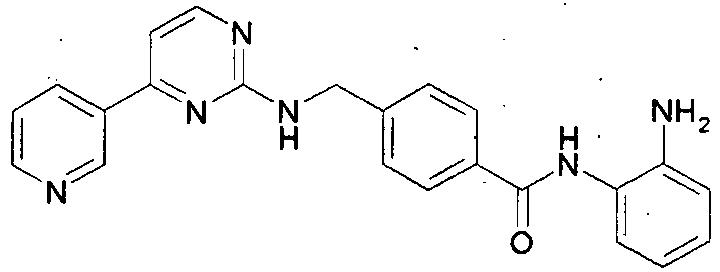
- the tested compounds correspond to the following formulae. Givinostat (ITF2357) Mocetinostat (MGCD-0103) KD-5170 Entinostat (MS-275;SNDX-275)
Landscapes
- Health & Medical Sciences (AREA)
- General Health & Medical Sciences (AREA)
- Life Sciences & Earth Sciences (AREA)
- Chemical & Material Sciences (AREA)
- Public Health (AREA)
- Veterinary Medicine (AREA)
- Medicinal Chemistry (AREA)
- Animal Behavior & Ethology (AREA)
- Pharmacology & Pharmacy (AREA)
- Epidemiology (AREA)
- Organic Chemistry (AREA)
- Nuclear Medicine, Radiotherapy & Molecular Imaging (AREA)
- General Chemical & Material Sciences (AREA)
- Chemical Kinetics & Catalysis (AREA)
- Engineering & Computer Science (AREA)
- Bioinformatics & Cheminformatics (AREA)
- Hematology (AREA)
- Pain & Pain Management (AREA)
- Diabetes (AREA)
- Pulmonology (AREA)
- Emergency Medicine (AREA)
- Oncology (AREA)
- Acyclic And Carbocyclic Compounds In Medicinal Compositions (AREA)
- Pharmaceuticals Containing Other Organic And Inorganic Compounds (AREA)
- Medicines That Contain Protein Lipid Enzymes And Other Medicines (AREA)
- Medicines Containing Material From Animals Or Micro-Organisms (AREA)
Description
- Myeloproliferative syndromes are disorders of the neoplastic type which have in common the fact that they originate from pluripotent stem cells from bone marrow, that is to say, cells which, by dividing, can form various types of blood cell.
- Myeloproliferative syndromes are separated into four types: chronic myeloid leukaemia (CML), polycythemia vera (PV), essential thrombocythemia (ET), and idiopathic myelofibrosis (IM).
- The molecular basis for chronic myeloid leukaemia has been known for some time and consists in the formation of the Philadelphia chromosome, or the 9;22 translocation, and the generation of the BCR-ABL fusion gene; in these cases, called Philadelphia-positive myeloproliferative syndromes, the use of a specific ABL tyrosine kinase inhibitor (such as imitinib or desatinib) makes it possible to intervene selectively in the cells responsible for the pathology, limiting the possible consequences of a non-specific cytotoxicity to the detriment of the healthy cells.
- For the other three pathologies, grouped under the name of Philadelphia-negative myeloproliferative syndromes, the molecular basis has been identified more recently [see, for example: Robert Kralovics et al. in The New England Journal of Medicine 352, 1779-1790 (2005); Chloé James et al. in Nature 434, 1144-1148 (2005)] and seems to relate to a gene mutation affecting JAK2 tyrosine kinase. For these syndromes, current therapy also provides for the use of cytostatic drugs having a non-specific action, principally hydroxyurea, which present a risk of inducing, after a certain period of treatment, the development of pathologies towards myelodysplastic states and towards forms of leukaemia.
- In Europe, the incidence of Philadelphia-negative myeloproliferative syndromes is approximately 5 cases for every 100,000 inhabitants per year.
- It is therefore clear that it is necessary to identify new drugs which, even for Philadelphia-negative myeloproliferative syndromes (PV, ET and IM), can act in a more selective manner and at non-toxic doses.
- Histone deacetylases (HDAC) are enzymes capable of removing the acetyl group bound to the lysine residues in the N-terminal portion of histones or in other proteins.
- HDACs can be subdivided into four classes, on the basis of structural homologies. Class I HDACs (HDAC 1, 2, 3 and 8) are similar to the RPD3 yeast protein and are located in the cell nucleus. Class II HDACs (HDAC 4, 5, 6, 7, 9 and 10) are similar to the HDA1 yeast protein and are located both in the nucleus and in the cytoplasm. Class III HDACs are a structurally distinct form of NAD-dependent enzymes correlated with the SIR2 yeast protein. Class IV (HDAC 11) consists at the moment of a single enzyme having particular structural characteristics. The HDACs of classes I, II and IV are zinc enzymes and can be inhibited by various classes of molecule: hydroxamic acid derivatives, cyclic tetrapeptides, short-chain fatty acids, aminobenzamides, derivatives of electrophilic ketones, and the like. Class III HDACs are not inhibited by hydroxamic acids, and their inhibitors have structural characteristics different from those of the other classes.
- The expression "histone deacetylase inhibitor" in relation to the present invention is to be understood as meaning any molecule of natural, recombinant or synthetic origin capable of inhibiting the activity of at least one of the enzymes classified as histone deacetylases of class I, class II or class IV.
- Histone deacetylase inhibitors are a class of molecules provided with antineoplastic and anti-inflammatory activity.
- In tumour cells, histone deacetylase inhibitors inhibit cell proliferation and induce cell death and differentiation [Gaofeng Bi and Guosheng Jiang in Cellular & Molecular Immunology 3, 285-290 (2006)].
- Histone deacetylase inhibitors are also capable of modulating the production of cytokines and other pro-inflammatory factors on the part of immuno-competent cells and have demonstrated, in vivo, anti-inflammatory properties [Frédéric Blanchard and Céline Chipoy in Drug Discovery Today 10, 197-204 (2005); 1M Adcock in British Journal of Pharmacology 150, 829-831(2007)].
- Numerous clinical studies, both on tumour pathologies and on inflammatory pathologies, are currently underway, and are at various stages of advance, using various inhibitors [Marielle Paris et al.. in Journal of Medicinal Chemisty 51, 1505-1529 (2008)].
- Recently, a histone deacetylase inhibitor (Zolinza, vorinostat) has been approved for the treatment of cutaneous T-cell lymphoma.
- Some of the histone deacetylase inhibitors currently at the clinical study stage are described, with other analogues thereof, in the following patents:
WO 2004/092115 ,WO 2005/019174 ,WO 2003/076422 ,WO 1997/043251 ,WO 2006/010750 ,WO 2006/003068 ,WO 2002/030879 ,WO 2002/022577 ,WO 1993/007148 ,WO 2008/033747 ,WO 2004/069823 ,EP 0847992 andWO 2004/071400 . - Diethyl-[6-(4-hydroxycarbamoyl-phenylcarbamoyloxymethyl)-naphthalen-2-yl methyl]-ammonium chloride, which is described in
WO 97/43251 WO 2004/065355 (monohydrate crystal form), is an HDAC inhibitor with good anti-inflammatory activities; such an active principle is also known as ITF2357 and/or Givinostat. In lipopolysaccharide (LPS)-stimulated cultured human peripheral blood mononuclear cells (PBMCs), ITF2357 reduced by 50% the release of tumor necrosis factor-α (TNFα) at 10 to 22 nM, the release of intracellular interleukin (IL)-1α at 12 nM, the secretion of IL-1β at 12.5 to 25 nM, and the production of interferon-γ (IFNγ) at 25 nM. Oral administration of 1.0 to 10 mg/kg ITF2357 to mice reduced LPS-induced serum TNFα and IFNγ by more than 50% [Flavio Leoni et al. in Molecular Medicine 11, 1-15 (2005)]. - It has recently been reported that ITF2357, at sub-micromolar concentrations, is capable of inhibiting the clonogenic activity of stem cells obtained from patients suffering from PV or ET [V. Guerini et al. Leukemia 22, 740 - 747 (2008)]. However, the concentrations at which inhibition of clonogenic activity is obtained are much lower than those necessary for obtaining a modification of the molecular markers (JAK2V617F and STAT proteins) or a cytotoxic effect; the ambiguity of these results makes it difficult to provide for the transferability of these effects, obtained in vitro, to situations of treatment in vivo, especially for any therapeutic treatments in humans.
- We have now found, and this constitutes one aspect of the present invention, that the administration of diethyl-[6-(4-hydroxycarbamoyl-phenylcarbamoyloxymethyl)-naphthalen-2-yl methyl]-ammonium chloride, preferably in monohydrate form, more preferably in monohydrate crystal form, to patients suffering from polycythemia vera, essential thrombocythemia or myelofibrosis causes a complete or partial response; in addition, in patients who initally demonstrated a state of splenomegaly, a significant reduction in the volume of the spleen is observed.
- We have also found, that the therapeutic dose of such an active principle, for the treatment of Philadelphia-negative myeloproliferative syndromes in humans, is significantly lower than that normally used for the care of tumour syndromes i.e. from 10 to 150 mg/day/patient, preferably from 30 to 120 mg/day/patient, and even more preferably from 50 to 100 mg/day/patient.
- Purely by way of example, the dose of Zolinza™ (vorinostat) indicated for the treatment of cutaneous T-cell lymphoma is 400 mg/day.
- The present invention relates to the use of diethyl-[6-(4-hydroxycarbamoyl-phenylcarbamoyloxymethyl)-naphthalen-2-yl methyl]-ammonium chloride, preferably in monohydrate form, more preferably in monohydrate crystal form for the therapeutic treatment of Philadelphia-negative myeloproliferative syndromes (polycythemia vera, essential thrombocythemia or idiopathic myelofibrosis) according to the claims. Such an active principle may be used alone, i.e. not in combination with other active principles, or in combination with other cytostatic active principles such as, purely by way of example, hydroxyurea or pipobroman.
- The present invention relates also to the therapeutic use of such an active principle, for the treatment of Philadelphia-negative myeloproliferative syndromes, at daily doses lower than those used for the treatment of tumour pathologies (for example: cutaneous T-cell lymphoma), these doses being from 10 to 150 mg/day/patient, preferably from 30 to 120 mg/day/patient, and even more preferably from 50 to 100 mg/day/patient.
- The term "treatment", in relation to the present invention, is to be understood as meaning the action of caring for, relieving, mitigating, minimizing, eliminating or blocking the harmful effects resulting from the pathological state or the progression of the disease.
- The inhibitory activity of a particular compound, with respect to histone deacetylases, may be measured in vitro using, for example, an enzyme test which demonstrates the inhibition of at least one of these enzymes. Tests of this type are known in the literature: see, for example, P.A. Marks et al. in J. Natl. Cancer Inst. 92 1210-1215 (2000); L.M. Butler et al. in Cancer Res. 60 5165-5170 (2000); V.M. Richon et al. in Proc. Natl. Acad. Sci. USA 95 3003-3007 (1998); M. Yoshida et al. in J. Biol. Chem. 265 17174-17179 (1990); kits for measuring the HDAC inhibition are also available commercially (e.g. Biomol International LP (USA); HDAC1 Fluorimetric Drug Discovery Kit, product number BML-AK511-0001).
- The following examples are intended to be illustrative of the invention.
- Clinical study of 1TF2357 in patients suffering from Philadelphia-negative myeloproliferative syndromes. Design: phase II, open, non-randomized study. Population in the study: 27 patients with the JAK2V617F mutation suffering from myeloproliferative syndromes not adequately controlled by the standard pharmacological treatment (hydroxyurea).
- Drug under study: ITF2357 at a dose of 50 mg twice per day.
- Duration of the treatment: up to a maximum of 24 weeks of continual administration.
- Primary objective: to evaluate the efficiency and tolerability of ITF2357 in the treatment of patients having JAK2V617F-positive myeloproliferative diseases (PV, ET, IM).
- Secondary objective: to evaluate the effect of the treatment on the mutated JAK2 allele burden by quantitative PCR.
- Examination of the preliminary data (duration of the treatment from 4 to 12 weeks) shows that the administration of ITF2357 to patients suffering from polycythemia vera, essential thrombocythemia or myelofibrosis induces a complete or partial response in approximately 60% of cases; in addition, a significant reduction in the volume of the spleen is observed in patients who initially exhibited a state of splenomegaly.
- The JAK2V617F mutated, human cell line SET-2 (a megakaryoblastic cell line established from the peripheral blood of a patient with leukemic transformation of essential thrombocythemia) was obtained by the German cell bank DSMZ (catalogue number ACC 608) and grown in 24 well plates in culture medium (RPMI 1640 + Hepes buffer 1M + Penicillin 10.000 IU/ml + Streptomycin 10.000 µg/ml + 20% foetal calf serum). Previous experiments were carried out to determine the optimal number of cells giving a sufficient number of clones in each Petri dish to make a reproducible counting. In the case of the SET-2 line the number corresponded to 3 x 10³ cells/Petri dish. When a sufficient number of cells were obtained, the cells were harvested by centrifugation (10 min at 103 rpm) and then suspended in culture medium at the concentration of 90 x 103 cells/ml. 100 µl of the suspension were added to 3.0 ml of methyl-cellulose (Methocult ™, catalogue number H4230, Stemcell Technologies) prepared as described by manufacturer and, then, 50 µl of 63 fold concentrated solution of the HDAC inhibitor in 0.1% DMSO was added. For each compound 5 serial dilutions (1000 - 12 nM range) were tested. The methyl-cellulose solution containing the HDAC inhibitor was then carefully mixed using a sterile plastic Pasteur pipette avoiding the formation of bubbles. At the end 1 ml of the solution was homogeneously dispensed in a Petri dish (35 mm diameter with grid, catalogue number 174926 Nunc) using a syringe with a 18G needle. For each experimental point 2 Petri dishes were done. The 2 experimental dishes were put in an larger Petri dish along with a reservoir of sterile water to ensure a constant humidity. All the dishes were then maintained at 37°C in a humidity and CO2-controlled sterile incubator. After 14 days of growing the number of clones m each dish was determined by using a binocular microscope The average number of clones for each coupe of dishes was calculated and the percentage inhibition of clones formation was determined in respect to the number of clones obtained in the absence of any compounds (control dishes). The EC50 value (concentration required to reduce of 50% the number of clones) was calculated using GraphPad Pnsm 5 0 software and reported in the table below. Values for rhHDAC1 inhibition are also reported: the enzyme was obtained from BPS Biosciences (cat n. 50001) and the test was carried out using a BIOMOL kit, according to supplier instructions.
Table 1 Code Originator INN Chemical Class EC50 µM IC50 nM (rhHDAC1) ITF2357 Italfarmaco Givinostat Hydroxamic acid 0.028 - 0.054* 121 MGCD-0103 MethylGene Mocetinostat Benzamide 1.196** 17 KD-5170 Kalypsys --- S,Acetyl-α-mercaptoketone <20% inhib. at 1µM 24 SNDX-275 Bayer Schenng Entinostat Benzamide 1.820** 293 *) values obtained m two different experiment
**) p<0.05 towards ITF2357 in the same experiment - Although Mocetinostat and Entinostat are considered as class I specific HDAC inhibitors [Zhou, N. et al. J Med Chem 51, 4072 (2008) and Jones, P. et al. J Med Chem 51, 2350 (2008)], KD-5170 has been reported to be a broad spectrum Class I and 11-HDAC inhibitor [
WO 2007/067795 ; Payne, J.E. et al. Bioorg Med Chem Lett 18, 6093 (2008)], the same as ITF2357 - Although, the inhibition of cloning efficiency of SET-2 cells is not proven to be predictive for the cure of the Philadelphia-negative, JAK2V617F-positive, myeloproliferative syndromes, the potent inhibitory effect of ITF2357, if compared to the other HDAC inhibitors, seems to indicate that the presence of histone deacetylase inhibition is not essential for obtaining the clinical efficacy shown by ITF2357 with respect to Philadelphia-negative myeloproliferative syndromes.
- The tested compounds correspond to the following formulae.



Claims (11)
- Diethyl-[6-(4-hydroxycarbamoyl-phenylcarbamoyloxymethyl)-naphthalen-2-yl-methyl]-ammonium chloride, or other pharmaceutically acceptable salts and/or solvates, for use in the treatment of Philadelphia-negative myeloproliferative syndromes, characterized in that the daily dosage is from 10 to 150 mg per patient.
- Diethyl-[6-(4-hydroxycarbamoyl-phenylcarbamoyloxymethyl)-naphthalen-2-yl-methyl]-ammonium chloride for use according to claim 1, characterized in that it is in monohydrate form.
- Diethyl-[6-(4-hydroxycarbamoyl-phenylcarbamoyloxymethyl)-naphthalen-2-yl-methyl]-ammonium chloride for use according to claim 1, characterized in that it is in monohydrate crystal form.
- Diethyl-[6-(4-hydroxycarbamoyl-phenylcarbamoyloxymethyl)-naphthalen-2-yl-methyl]-ammonium chloride for use according to claim 1, characterized in that the daily dosage is from 30 to 120 mg per patient.
- Diethyl-[6-(4-hydroxycarbamoyl-phenylcarbamoyloxymethyl)-naphthalen-2-yl-methyl]-ammonium chloride for use according to claim 1, characterized in that the daily dosage is from 50 to 100 mg per patient.
- Diethyl-[6-(4-hydroxycarbamoyl-phenylcarbamoyloxymethyl)-naphthalen-2-yl-methyl]-ammonium chloride for use according to claim 1, characterized in that the Philadelphia-negative myeloproliferative syndrome is polycythemia vera.
- Diethyl-[6-(4-hydroxycarbamoyl-phenylcarbamoyloxymethyl)-naphthalen-2-yl-methyl]-ammonium chloride for use according to claim 1, characterized in that the Philadelphia-negative myeloproliferative syndrome is essential thrombocythemia.
- Diethyl-[6-(4-hydroxycarbamoyl-phenylcarbamoyloxymethyl)-naphthalen-2-yl-methyl]-ammonium chloride for use according to claim 1 characterized in that the Philadelphia-negative myeloproliferative syndrome is primary myelofibrosis.
- Diethyl-[6-(4-hydroxycarbamoyl-phenylcarbamoyloxymethyl)-naphthalen-2-yl-methyl]-ammonium chloride for use according to claim 1, characterized in that the Philadelphia-negative myeloproliferative syndrome is secondary myelofibrosis.
- Diethyl-[6-(4-hydroxycarbamoyl-phenylcarbamoyloxymethyl)-naphthalen-2-yl-methyl]-ammonium chloride for use according to claim 1, characterized in that it is not administered in combination with other active principles.
- Diethyl-[6-(4-hydroxycarbamoyl-phenylcarbamoyloxymethyl)-naphthalen-2-yl-methyl]-ammonium chloride for use according to claim 1, characterized in that it is administered in combination with at least one other cytostatic active principle.
Priority Applications (3)
| Application Number | Priority Date | Filing Date | Title |
|---|---|---|---|
| SI200930963T SI2344253T1 (en) | 2008-09-29 | 2009-09-21 | Use of histone deacetylase inhibitors for the care of philadelphia-negative myeloproliferative syndromes |
| PL09783251T PL2344253T3 (en) | 2008-09-29 | 2009-09-21 | Use of histone deacetylase inhibitors for the care of philadelphia-negative myeloproliferative syndromes |
| CY20141100514T CY1115255T1 (en) | 2008-09-29 | 2014-07-09 | USE OF PHILADELPHIA-NEGATIVE MYeloperoplasty Syndromes |
Applications Claiming Priority (3)
| Application Number | Priority Date | Filing Date | Title |
|---|---|---|---|
| ITMI2008A001720A IT1392908B1 (en) | 2008-09-29 | 2008-09-29 | USE OF HISTONE-DEACETYLASE INHIBITORS FOR PHILADELPHIA-NEGATIVE CARE OF MYELOPROLIFERATIVE SYNDROMES |
| US19328308P | 2008-11-13 | 2008-11-13 | |
| PCT/EP2009/062214 WO2010034693A1 (en) | 2008-09-29 | 2009-09-21 | Use of histone deacetylase inhibitors for the care of philadelphia-negative myeloproliferative syndromes |
Publications (2)
| Publication Number | Publication Date |
|---|---|
| EP2344253A1 EP2344253A1 (en) | 2011-07-20 |
| EP2344253B1 true EP2344253B1 (en) | 2014-04-23 |
Family
ID=40810309
Family Applications (1)
| Application Number | Title | Priority Date | Filing Date |
|---|---|---|---|
| EP09783251.3A Active EP2344253B1 (en) | 2008-09-29 | 2009-09-21 | Use of histone deacetylase inhibitors for the care of philadelphia-negative myeloproliferative syndromes |
Country Status (17)
| Country | Link |
|---|---|
| US (4) | US20110294892A1 (en) |
| EP (1) | EP2344253B1 (en) |
| JP (1) | JP2012504112A (en) |
| KR (3) | KR20110069075A (en) |
| CN (1) | CN102164638A (en) |
| BR (1) | BRPI0913699A2 (en) |
| CA (1) | CA2738081C (en) |
| CY (1) | CY1115255T1 (en) |
| DK (1) | DK2344253T3 (en) |
| ES (1) | ES2478827T3 (en) |
| HR (1) | HRP20140499T1 (en) |
| IT (1) | IT1392908B1 (en) |
| PL (1) | PL2344253T3 (en) |
| PT (1) | PT2344253E (en) |
| SI (1) | SI2344253T1 (en) |
| SM (1) | SMT201400087B (en) |
| WO (1) | WO2010034693A1 (en) |
Families Citing this family (5)
| Publication number | Priority date | Publication date | Assignee | Title |
|---|---|---|---|---|
| US8217079B2 (en) * | 2010-03-26 | 2012-07-10 | Italfarmaco Spa | Method for treating Philadelphia-negative myeloproliferative syndromes |
| WO2015165975A1 (en) * | 2014-04-29 | 2015-11-05 | INSERM (Institut National de la Santé et de la Recherche Médicale) | Methods and compositions for treating myeloid neoplasias |
| WO2018075959A1 (en) | 2016-10-20 | 2018-04-26 | Forma Therapeutics, Inc. | Methods using hdac11 inhibitors |
| EP3583155B1 (en) * | 2017-02-20 | 2024-05-08 | Dow Silicones Corporation | Room-temperature-curable silicone composition and electric/electronic apparatus |
| US11535607B2 (en) | 2018-04-20 | 2022-12-27 | Valo Health, Inc. | Isoindolines as HDAC inhibitors |
Citations (1)
| Publication number | Priority date | Publication date | Assignee | Title |
|---|---|---|---|---|
| WO2004064824A1 (en) * | 2003-01-17 | 2004-08-05 | Italfarmaco Spa | Use of hydroxamic acid derivatives for the preparation of anti-tumour medicaments |
Family Cites Families (11)
| Publication number | Priority date | Publication date | Assignee | Title |
|---|---|---|---|---|
| US5369108A (en) | 1991-10-04 | 1994-11-29 | Sloan-Kettering Institute For Cancer Research | Potent inducers of terminal differentiation and methods of use thereof |
| IT1283637B1 (en) | 1996-05-14 | 1998-04-23 | Italfarmaco Spa | COMPOUNDS WITH ANTI-INFLAMMATORY AND IMMUNOSOPPRESSIVE ACTIVITY |
| US6174905B1 (en) | 1996-09-30 | 2001-01-16 | Mitsui Chemicals, Inc. | Cell differentiation inducer |
| US8034831B2 (en) * | 2002-11-06 | 2011-10-11 | Celgene Corporation | Methods for the treatment and management of myeloproliferative diseases using 4-(amino)-2-(2,6-Dioxo(3-piperidyl)-isoindoline-1,3-dione in combination with other therapies |
| ITMI20030063A1 (en) * | 2003-01-17 | 2004-07-18 | Italfarmaco Spa | HYDROXIDE MONOHYDRATE OF THE ESTER (6-DIETHYLAMINOMETHY-NAFTALEN-2-IL) METHYL OF CARBAMIC ACID (4-HYDROXICARBAMMOYL-FENYL). |
| US7244751B2 (en) | 2003-02-14 | 2007-07-17 | Shenzhen Chipscreen Biosciences Ltd. | Histone deacetylase inhibitors of novel benzamide derivatives with potent differentiation and anti-proliferation activity |
| US20080194681A1 (en) * | 2004-12-09 | 2008-08-14 | Kalypsys, Inc. | Novel Inhibitors of Histone Deacetylase for the Treatment of Disease |
| CA2615574A1 (en) * | 2005-07-29 | 2007-02-08 | Kalypsys, Inc. | Multicyclic sulfonamide compounds as inhibitors of histone deacetylase for the treatment of disease |
| KR20080079302A (en) | 2005-12-09 | 2008-08-29 | 메사추세츠 인스티튜트 오브 테크놀로지 | How to identify and target tumor stem cells based on nuclear morphology |
| US20080242648A1 (en) * | 2006-11-10 | 2008-10-02 | Syndax Pharmaceuticals, Inc., A California Corporation | COMBINATION OF ERa+ LIGANDS AND HISTONE DEACETYLASE INHIBITORS FOR THE TREATMENT OF CANCER |
| WO2008082646A2 (en) * | 2006-12-28 | 2008-07-10 | The Johns Hopkins University | Histone deacetylase inhibitors, combination therapies and methods of use |
-
2008
- 2008-09-29 IT ITMI2008A001720A patent/IT1392908B1/en active
-
2009
- 2009-09-21 WO PCT/EP2009/062214 patent/WO2010034693A1/en not_active Ceased
- 2009-09-21 CA CA2738081A patent/CA2738081C/en active Active
- 2009-09-21 ES ES09783251.3T patent/ES2478827T3/en active Active
- 2009-09-21 KR KR1020117008487A patent/KR20110069075A/en not_active Ceased
- 2009-09-21 CN CN2009801382462A patent/CN102164638A/en active Pending
- 2009-09-21 PL PL09783251T patent/PL2344253T3/en unknown
- 2009-09-21 SI SI200930963T patent/SI2344253T1/en unknown
- 2009-09-21 KR KR1020167020675A patent/KR20160096721A/en not_active Ceased
- 2009-09-21 KR KR1020177031565A patent/KR20170124640A/en not_active Ceased
- 2009-09-21 BR BRPI0913699A patent/BRPI0913699A2/en not_active Application Discontinuation
- 2009-09-21 HR HRP20140499AT patent/HRP20140499T1/en unknown
- 2009-09-21 DK DK09783251.3T patent/DK2344253T3/en active
- 2009-09-21 JP JP2011528301A patent/JP2012504112A/en active Pending
- 2009-09-21 PT PT97832513T patent/PT2344253E/en unknown
- 2009-09-21 EP EP09783251.3A patent/EP2344253B1/en active Active
-
2011
- 2011-03-25 US US13/064,450 patent/US20110294892A1/en not_active Abandoned
-
2013
- 2013-10-07 US US14/047,391 patent/US9522127B2/en active Active
-
2014
- 2014-07-07 SM SM201400087T patent/SMT201400087B/en unknown
- 2014-07-09 CY CY20141100514T patent/CY1115255T1/en unknown
-
2016
- 2016-11-09 US US15/346,926 patent/US20170049740A1/en not_active Abandoned
-
2021
- 2021-01-15 US US17/149,794 patent/US20210128512A1/en active Pending
Patent Citations (1)
| Publication number | Priority date | Publication date | Assignee | Title |
|---|---|---|---|---|
| WO2004064824A1 (en) * | 2003-01-17 | 2004-08-05 | Italfarmaco Spa | Use of hydroxamic acid derivatives for the preparation of anti-tumour medicaments |
Non-Patent Citations (8)
| Title |
|---|
| BARBUI: "Phase IIa study of ITF2357, Study No. 07/2357/28" * |
| BONFANTE V ET AL: "PHASE II STUDY OF THE HISTONE-DEACIETYLASE INHIBITOR ITF2357 IN RELAPSED/REFRACTORY HODGKIN'S LYMPHOMA PATIENTS", HAEMATOLOGICA-THE HEMATOLOGY JOURNAL, vol. 93, no. Suppl. 1, June 2008 (2008-06-01), & 13TH CONGRESS OF THE EUROPEAN-HEMATOLOGY-ASSOCIATION; COPENHAGEN, DENMARK; JUNE 12 -15, 2008, pages 244, ISSN: 0390-6078(print) * |
| MARTIN P ET AL: "HEL cells: a new human erythroleukemia cell line with spontaneous and induced globin expression", SCIENCE, AMERICAN ASSOCIATION FOR THE ADVANCEMENT OF SCIENCE, WASHINGTON, DC; US, vol. 216, no. 4551, 11 June 1982 (1982-06-11), pages 1233 - 1235, XP008160201, ISSN: 0036-8075, DOI: 10.1126/SCIENCE.6177045 * |
| OLDONI: "Clinical development, ITF2357,Study No. 03/2357/09" * |
| RAMBALDI: "Phase II study of ITF2357, Study No. 08/2357/38" * |
| RUZICKA: "Integrated repot, ITF2357,Study No. 03/2357/07" * |
| UOZUMI: "Establishment and characterization of a new...", LEUKEMIA, vol. 14, 2000, pages 142 - 152 * |
| VOJINOVIC JELENA ET AL: "Safety and efficacy of oral ITF 2357 in patients with active systemic onset juvenile idiopathic arthritis (SOJIA) - Results of a phase II, open label, international, Multicentre clinical trial", ARTHRITIS & RHEUMATISM, vol. 58, no. 9, Suppl. S, September 2008 (2008-09-01), & 72ND ANNUAL SCIENTIFIC MEETING OF THE AMERICAN-COLLEGE-OF-RHEUMATOLOGY/43RD ANNUAL SCIENTIFIC MEETIN; SAN FRANCISCO, CA, USA; OCTOBER 24 -29, 2008, pages S943, ISSN: 0004-3591 * |
Also Published As
| Publication number | Publication date |
|---|---|
| JP2012504112A (en) | 2012-02-16 |
| DK2344253T3 (en) | 2014-06-16 |
| US20170049740A1 (en) | 2017-02-23 |
| PT2344253E (en) | 2014-07-16 |
| US20110294892A1 (en) | 2011-12-01 |
| KR20160096721A (en) | 2016-08-16 |
| CA2738081A1 (en) | 2010-04-01 |
| US20210128512A1 (en) | 2021-05-06 |
| KR20170124640A (en) | 2017-11-10 |
| CY1115255T1 (en) | 2017-01-04 |
| ITMI20081720A1 (en) | 2010-03-30 |
| HRP20140499T1 (en) | 2014-07-04 |
| EP2344253A1 (en) | 2011-07-20 |
| IT1392908B1 (en) | 2012-04-02 |
| ES2478827T3 (en) | 2014-07-23 |
| US9522127B2 (en) | 2016-12-20 |
| KR20110069075A (en) | 2011-06-22 |
| SI2344253T1 (en) | 2014-08-29 |
| PL2344253T3 (en) | 2014-09-30 |
| CA2738081C (en) | 2017-11-07 |
| SMT201400087B (en) | 2014-09-08 |
| WO2010034693A1 (en) | 2010-04-01 |
| US20140039059A1 (en) | 2014-02-06 |
| CN102164638A (en) | 2011-08-24 |
| BRPI0913699A2 (en) | 2017-06-13 |
Similar Documents
| Publication | Publication Date | Title |
|---|---|---|
| US20210128512A1 (en) | Use of histone deacetylase inhibitors for the care of philadelphia-negative myeloproliferative syndromes | |
| KR100518106B1 (en) | Quinazolinone-containing pharmaceutical compositions for prevention of neovascularization and for treating malignancies | |
| JP2005525345A (en) | Methods for treating TRX-mediated diseases | |
| US20100216755A1 (en) | Anti-tumor agent | |
| JP2009514874A (en) | Method for treating cancer using SAHA and pemetrexed | |
| JP2004517915A (en) | Drug combination methods for treating neoplastic diseases (eg, chlorpromazine and pentamidine) | |
| RU2755130C2 (en) | Drug delivery system for delivery of antiviral drugs | |
| JP2009514891A (en) | Methods using SAHA and erlotinib for treating cancer | |
| WO2013012307A1 (en) | Method for manufacturing a pharmaceutical composition in the form of extended-release tablets containing pirfenidone and use thereof in the regression of chronic renal insufficiency, breast capsular contracture and hepatic fibrosis in humans | |
| US10265289B2 (en) | Method and medicines for treating melanoma | |
| ES2985012T3 (en) | Coadministration of mirdametinib and lifirafenib for use in the treatment of cancer | |
| US8217079B2 (en) | Method for treating Philadelphia-negative myeloproliferative syndromes | |
| JP2022504184A (en) | Combination therapy for the treatment of melanoma of the grape membrane | |
| TWI891650B (en) | Methods for treating vascular malformations | |
| ES2972799T3 (en) | Pharmaceutical combination of a compound of artemisinin, 5-aminolevulinic acid or methyl-5-aminolevulinic acid and a chemotherapeutic agent | |
| US20240374569A1 (en) | Hdac3 inhibitors for the treatment of langerhans cell histiocytosis and langerhans cell sarcoma | |
| WO2011056542A1 (en) | Cancer therapy with combinations of fts with hdac inhibitors | |
| US20240277692A1 (en) | 1,2-dihydroquinoline-2-ones for their use in the treatment of limb-girdle muscular dystrophy | |
| WO2018006689A1 (en) | Use of fulvestrant in preparation of medicament for treating nonfunctioning pituitary adenoma | |
| CN118576597A (en) | A combined pharmaceutical composition and its use in preparing a drug for preventing, improving or treating TP53 mutation double-hit lymphoma | |
| Guo et al. | Mechanism of Activation of AMPK/P53-CyPD Signalling Pathway in Inhibiting Osteoblast Apoptosis Induced by Dexamethasone. | |
| CN120154719A (en) | Application of BCL2 inhibitors in the treatment of giant congenital nevus | |
| CN119112924A (en) | Application of glycyrrhizic acid in the preparation of drugs for reducing the toxic and side effects of osimertinib | |
| CN117427079A (en) | Uses of cyano-substituted macrocyclic compounds | |
| CN118910231A (en) | Novel target PARP9 protein, targeting small molecule compound isoliquiritigenin and application thereof |
Legal Events
| Date | Code | Title | Description |
|---|---|---|---|
| PUAI | Public reference made under article 153(3) epc to a published international application that has entered the european phase |
Free format text: ORIGINAL CODE: 0009012 |
|
| 17P | Request for examination filed |
Effective date: 20110426 |
|
| AK | Designated contracting states |
Kind code of ref document: A1 Designated state(s): AT BE BG CH CY CZ DE DK EE ES FI FR GB GR HR HU IE IS IT LI LT LU LV MC MK MT NL NO PL PT RO SE SI SK SM TR |
|
| AX | Request for extension of the european patent |
Extension state: AL BA RS |
|
| RIN1 | Information on inventor provided before grant (corrected) |
Inventor name: RAMBALDI, ALESSANDRO Inventor name: OLDONI, TIZIANO Inventor name: BARBUI, TIZIANO Inventor name: MASCAGNI, PAOLO |
|
| DAX | Request for extension of the european patent (deleted) | ||
| 17Q | First examination report despatched |
Effective date: 20130228 |
|
| GRAP | Despatch of communication of intention to grant a patent |
Free format text: ORIGINAL CODE: EPIDOSNIGR1 |
|
| INTG | Intention to grant announced |
Effective date: 20140129 |
|
| GRAS | Grant fee paid |
Free format text: ORIGINAL CODE: EPIDOSNIGR3 |
|
| GRAA | (expected) grant |
Free format text: ORIGINAL CODE: 0009210 |
|
| AK | Designated contracting states |
Kind code of ref document: B1 Designated state(s): AT BE BG CH CY CZ DE DK EE ES FI FR GB GR HR HU IE IS IT LI LT LU LV MC MK MT NL NO PL PT RO SE SI SK SM TR |
|
| REG | Reference to a national code |
Ref country code: GB Ref legal event code: FG4D |
|
| REG | Reference to a national code |
Ref country code: CH Ref legal event code: EP |
|
| REG | Reference to a national code |
Ref country code: AT Ref legal event code: REF Ref document number: 663433 Country of ref document: AT Kind code of ref document: T Effective date: 20140515 |
|
| REG | Reference to a national code |
Ref country code: IE Ref legal event code: FG4D |
|
| REG | Reference to a national code |
Ref country code: HR Ref legal event code: TUEP Ref document number: P20140499 Country of ref document: HR |
|
| REG | Reference to a national code |
Ref country code: DE Ref legal event code: R096 Ref document number: 602009023522 Country of ref document: DE Effective date: 20140612 |
|
| REG | Reference to a national code |
Ref country code: DK Ref legal event code: T3 Effective date: 20140609 |
|
| REG | Reference to a national code |
Ref country code: HR Ref legal event code: T1PR Ref document number: P20140499 Country of ref document: HR |
|
| REG | Reference to a national code |
Ref country code: CH Ref legal event code: NV Representative=s name: WEINMANN ZIMMERLI, CH |
|
| REG | Reference to a national code |
Ref country code: NL Ref legal event code: T3 Ref country code: PT Ref legal event code: SC4A Free format text: AVAILABILITY OF NATIONAL TRANSLATION Effective date: 20140703 |
|
| REG | Reference to a national code |
Ref country code: RO Ref legal event code: EPE |
|
| REG | Reference to a national code |
Ref country code: ES Ref legal event code: FG2A Ref document number: 2478827 Country of ref document: ES Kind code of ref document: T3 Effective date: 20140723 |
|
| REG | Reference to a national code |
Ref country code: SE Ref legal event code: TRGR |
|
| REG | Reference to a national code |
Ref country code: EE Ref legal event code: FG4A Ref document number: E009269 Country of ref document: EE Effective date: 20140604 |
|
| REG | Reference to a national code |
Ref country code: NO Ref legal event code: T2 Effective date: 20140423 |
|
| REG | Reference to a national code |
Ref country code: PL Ref legal event code: T3 |
|
| REG | Reference to a national code |
Ref country code: SK Ref legal event code: T3 Ref document number: E 16741 Country of ref document: SK |
|
| REG | Reference to a national code |
Ref country code: GR Ref legal event code: EP Ref document number: 20140401310 Country of ref document: GR Effective date: 20140901 |
|
| REG | Reference to a national code |
Ref country code: DE Ref legal event code: R097 Ref document number: 602009023522 Country of ref document: DE |
|
| PLBE | No opposition filed within time limit |
Free format text: ORIGINAL CODE: 0009261 |
|
| STAA | Information on the status of an ep patent application or granted ep patent |
Free format text: STATUS: NO OPPOSITION FILED WITHIN TIME LIMIT |
|
| 26N | No opposition filed |
Effective date: 20150126 |
|
| REG | Reference to a national code |
Ref country code: HU Ref legal event code: AG4A Ref document number: E022316 Country of ref document: HU |
|
| REG | Reference to a national code |
Ref country code: DE Ref legal event code: R097 Ref document number: 602009023522 Country of ref document: DE Effective date: 20150126 |
|
| REG | Reference to a national code |
Ref country code: FR Ref legal event code: PLFP Year of fee payment: 8 |
|
| REG | Reference to a national code |
Ref country code: FR Ref legal event code: PLFP Year of fee payment: 9 |
|
| REG | Reference to a national code |
Ref country code: FR Ref legal event code: PLFP Year of fee payment: 10 |
|
| REG | Reference to a national code |
Ref country code: HR Ref legal event code: ODRP Ref document number: P20140499 Country of ref document: HR Payment date: 20190903 Year of fee payment: 11 |
|
| REG | Reference to a national code |
Ref country code: HR Ref legal event code: ODRP Ref document number: P20140499 Country of ref document: HR Payment date: 20200902 Year of fee payment: 12 |
|
| REG | Reference to a national code |
Ref country code: HR Ref legal event code: ODRP Ref document number: P20140499 Country of ref document: HR Payment date: 20210902 Year of fee payment: 13 |
|
| REG | Reference to a national code |
Ref country code: HR Ref legal event code: ODRP Ref document number: P20140499 Country of ref document: HR Payment date: 20220906 Year of fee payment: 14 |
|
| REG | Reference to a national code |
Ref country code: EE Ref legal event code: HC1A Ref document number: E009269 Country of ref document: EE |
|
| P01 | Opt-out of the competence of the unified patent court (upc) registered |
Effective date: 20230624 |
|
| REG | Reference to a national code |
Ref country code: HR Ref legal event code: ODRP Ref document number: P20140499 Country of ref document: HR Payment date: 20230912 Year of fee payment: 15 |
|
| REG | Reference to a national code |
Ref country code: HR Ref legal event code: ODRP Ref document number: P20140499 Country of ref document: HR Payment date: 20240916 Year of fee payment: 16 |
|
| REG | Reference to a national code |
Ref country code: CH Ref legal event code: U11 Free format text: ST27 STATUS EVENT CODE: U-0-0-U10-U11 (AS PROVIDED BY THE NATIONAL OFFICE) Effective date: 20251001 |
|
| PGFP | Annual fee paid to national office [announced via postgrant information from national office to epo] |
Ref country code: SM Payment date: 20250902 Year of fee payment: 17 |
|
| PGFP | Annual fee paid to national office [announced via postgrant information from national office to epo] |
Ref country code: PT Payment date: 20250904 Year of fee payment: 17 Ref country code: FI Payment date: 20250925 Year of fee payment: 17 |
|
| PGFP | Annual fee paid to national office [announced via postgrant information from national office to epo] |
Ref country code: LT Payment date: 20250903 Year of fee payment: 17 Ref country code: DK Payment date: 20250925 Year of fee payment: 17 Ref country code: DE Payment date: 20250929 Year of fee payment: 17 |
|
| REG | Reference to a national code |
Ref country code: HR Ref legal event code: ODRP Ref document number: P20140499 Country of ref document: HR Payment date: 20250910 Year of fee payment: 17 |
|
| PGFP | Annual fee paid to national office [announced via postgrant information from national office to epo] |
Ref country code: MC Payment date: 20250905 Year of fee payment: 17 Ref country code: NO Payment date: 20250929 Year of fee payment: 17 Ref country code: GR Payment date: 20250926 Year of fee payment: 17 |
|
| PGFP | Annual fee paid to national office [announced via postgrant information from national office to epo] |
Ref country code: PL Payment date: 20250903 Year of fee payment: 17 Ref country code: IT Payment date: 20250918 Year of fee payment: 17 Ref country code: TR Payment date: 20250908 Year of fee payment: 17 Ref country code: NL Payment date: 20250926 Year of fee payment: 17 Ref country code: LU Payment date: 20250929 Year of fee payment: 17 |
|
| PGFP | Annual fee paid to national office [announced via postgrant information from national office to epo] |
Ref country code: BG Payment date: 20250917 Year of fee payment: 17 Ref country code: BE Payment date: 20250929 Year of fee payment: 17 Ref country code: HU Payment date: 20250910 Year of fee payment: 17 Ref country code: GB Payment date: 20250929 Year of fee payment: 17 |
|
| PGFP | Annual fee paid to national office [announced via postgrant information from national office to epo] |
Ref country code: HR Payment date: 20250910 Year of fee payment: 17 |
|
| PGFP | Annual fee paid to national office [announced via postgrant information from national office to epo] |
Ref country code: AT Payment date: 20250929 Year of fee payment: 17 Ref country code: FR Payment date: 20250925 Year of fee payment: 17 |
|
| PGFP | Annual fee paid to national office [announced via postgrant information from national office to epo] |
Ref country code: SE Payment date: 20250927 Year of fee payment: 17 Ref country code: MT Payment date: 20250909 Year of fee payment: 17 |
|
| PGFP | Annual fee paid to national office [announced via postgrant information from national office to epo] |
Ref country code: IE Payment date: 20250929 Year of fee payment: 17 Ref country code: EE Payment date: 20250909 Year of fee payment: 17 Ref country code: CZ Payment date: 20250908 Year of fee payment: 17 |
|
| PGFP | Annual fee paid to national office [announced via postgrant information from national office to epo] |
Ref country code: RO Payment date: 20250909 Year of fee payment: 17 |
|
| PGFP | Annual fee paid to national office [announced via postgrant information from national office to epo] |
Ref country code: SK Payment date: 20250903 Year of fee payment: 17 |
|
| PGFP | Annual fee paid to national office [announced via postgrant information from national office to epo] |
Ref country code: IS Payment date: 20250916 Year of fee payment: 17 |
|
| PGFP | Annual fee paid to national office [announced via postgrant information from national office to epo] |
Ref country code: LV Payment date: 20250903 Year of fee payment: 17 |
|
| PGFP | Annual fee paid to national office [announced via postgrant information from national office to epo] |
Ref country code: SI Payment date: 20250901 Year of fee payment: 17 |
|
| PGFP | Annual fee paid to national office [announced via postgrant information from national office to epo] |
Ref country code: MK Payment date: 20250904 Year of fee payment: 17 |
|
| PGFP | Annual fee paid to national office [announced via postgrant information from national office to epo] |
Ref country code: CH Payment date: 20251001 Year of fee payment: 17 |
|
| PGFP | Annual fee paid to national office [announced via postgrant information from national office to epo] |
Ref country code: CY Payment date: 20250909 Year of fee payment: 17 |
|
| PGFP | Annual fee paid to national office [announced via postgrant information from national office to epo] |
Ref country code: ES Payment date: 20251001 Year of fee payment: 17 |