EP2343944A1 - Interference control method and home base station using the same - Google Patents
Interference control method and home base station using the same Download PDFInfo
- Publication number
- EP2343944A1 EP2343944A1 EP10197250A EP10197250A EP2343944A1 EP 2343944 A1 EP2343944 A1 EP 2343944A1 EP 10197250 A EP10197250 A EP 10197250A EP 10197250 A EP10197250 A EP 10197250A EP 2343944 A1 EP2343944 A1 EP 2343944A1
- Authority
- EP
- European Patent Office
- Prior art keywords
- hbs
- mbs
- signal
- ldm
- request
- Prior art date
- Legal status (The legal status is an assumption and is not a legal conclusion. Google has not performed a legal analysis and makes no representation as to the accuracy of the status listed.)
- Granted
Links
Images







Classifications
-
- H—ELECTRICITY
- H04—ELECTRIC COMMUNICATION TECHNIQUE
- H04W—WIRELESS COMMUNICATION NETWORKS
- H04W12/00—Security arrangements; Authentication; Protecting privacy or anonymity
- H04W12/06—Authentication
-
- H—ELECTRICITY
- H04—ELECTRIC COMMUNICATION TECHNIQUE
- H04W—WIRELESS COMMUNICATION NETWORKS
- H04W28/00—Network traffic management; Network resource management
- H04W28/02—Traffic management, e.g. flow control or congestion control
- H04W28/04—Error control
-
- H—ELECTRICITY
- H04—ELECTRIC COMMUNICATION TECHNIQUE
- H04W—WIRELESS COMMUNICATION NETWORKS
- H04W72/00—Local resource management
- H04W72/50—Allocation or scheduling criteria for wireless resources
- H04W72/54—Allocation or scheduling criteria for wireless resources based on quality criteria
- H04W72/541—Allocation or scheduling criteria for wireless resources based on quality criteria using the level of interference
-
- H—ELECTRICITY
- H04—ELECTRIC COMMUNICATION TECHNIQUE
- H04W—WIRELESS COMMUNICATION NETWORKS
- H04W84/00—Network topologies
- H04W84/02—Hierarchically pre-organised networks, e.g. paging networks, cellular networks, WLAN [Wireless Local Area Network] or WLL [Wireless Local Loop]
- H04W84/10—Small scale networks; Flat hierarchical networks
- H04W84/12—WLAN [Wireless Local Area Networks]
-
- H—ELECTRICITY
- H04—ELECTRIC COMMUNICATION TECHNIQUE
- H04W—WIRELESS COMMUNICATION NETWORKS
- H04W72/00—Local resource management
- H04W72/20—Control channels or signalling for resource management
- H04W72/27—Control channels or signalling for resource management between access points
-
- H—ELECTRICITY
- H04—ELECTRIC COMMUNICATION TECHNIQUE
- H04W—WIRELESS COMMUNICATION NETWORKS
- H04W84/00—Network topologies
- H04W84/02—Hierarchically pre-organised networks, e.g. paging networks, cellular networks, WLAN [Wireless Local Area Network] or WLL [Wireless Local Loop]
- H04W84/04—Large scale networks; Deep hierarchical networks
- H04W84/042—Public Land Mobile systems, e.g. cellular systems
- H04W84/045—Public Land Mobile systems, e.g. cellular systems using private Base Stations, e.g. femto Base Stations, home Node B
-
- H—ELECTRICITY
- H04—ELECTRIC COMMUNICATION TECHNIQUE
- H04W—WIRELESS COMMUNICATION NETWORKS
- H04W88/00—Devices specially adapted for wireless communication networks, e.g. terminals, base stations or access point devices
- H04W88/08—Access point devices
Definitions
- the disclosure relates to a signal interference handling method. Particularly, the disclosure relates to a signal interference handling method for handling interference of a home base station (HBS) to a macro/micro cell base station (MBS)-served mobile station (MS) (m-MS), and a HBS and a MS using the same method.
- HBS home base station
- MBS macro/micro cell base station
- MS macro/micro cell base station
- m-MS macro/micro cell base station
- HBS and a MS using the same method.
- MBS macro/micro cell base station
- HBS home base station
- the HBS is, for example, a femtocell base station, and a coverage range thereof is partially overlapped with the coverage range of the MBS.
- the HBS could be a limited access base station, for example, a closed subscriber group home base station (CSG HBS), which does not allow accessing of the MS of a non-registered or non-member user.
- CSG HBS closed subscriber group home base station
- MBS control signal coming from the MBS
- HBS control signal coming from the HBS
- the HBS control signal is used to control the MS of its subscriber, and is not used to control the m-MS. Therefore, the HBS control signal is a source of interference of
- An exemplary embodiment of the disclosure provides a signal interference handling method, which is adapted to a HBS of a cellular system receive an interference mitigation (IM) request, and the signal interference handling method includes following steps. After the HBS receives the IM request, the HBS enters a LDM, where the IM request is sent by a m-MS of the cellular system when the m-MS detects mutual interference.
- IM interference mitigation
- An exemplary embodiment of the disclosure provides a signal interference handling method, which is adapted to a m-MS of a cellular system, and the signal interference handling method includes following steps.
- the m-MS receives MBS signal, where the MBS signal comes from a MBS of the cellular system.
- the m-MS determines whether there is mutual interference according to the received MBS signal.
- the m-MS sends an IM request to a HBS of the cellular system when there is mutual interference.
- An exemplary embodiment of the disclosure provides a home base station (HBS), which is adapted to handle signal interference.
- the HBS receives an interference mitigation (IM) request.
- IM interference mitigation
- the HBS enters a low duty mode (LDM), where the IM request is sent by a macro/micro cell base station (MBS)-served mobile station (m-MS) when the m-MS detects an interference.
- MBS macro/micro cell base station
- m-MS servinged mobile station
- An exemplary embodiment of the disclosure provides a mobile station (MS), which is adapted to handle signal interference.
- the MS receives macro/micro cell base station (MBS) signal, where the MBS signal comes from a MBS.
- MBS macro/micro cell base station
- the MS determines whether there is mutual interference according to the received MBS signal.
- the MS sends an interference mitigation (IM) request to a home base station (HBS) when there is mutual interference.
- IM interference mitigation
- the exemplary embodiments of the disclosure provide signal interference handling methods for mitigating or handling the interference of the HBS signal to the MBS signal, and a HBS and a MS using the same method.
- the signal interference handling methods the m-MS closed to the HBS could correctly receive the MBS signal.
- FIG. 1 is a schematic diagram illustrating a cellular system according to an exemplary embodiment of the disclosure.
- FIG. 2 is a flowchart illustrating a signal interference handling method according to an exemplary embodiment of the disclosure.
- FIG. 3 is a flowchart illustrating a method for confirming authentication of an interference mitigation (IM) requestor according to an exemplary embodiment of the disclosure.
- IM interference mitigation
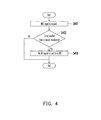
- FIG. 4 is a flowchart of a signal interference handling method provided by an exemplary embodiment of the disclosure executed on a macro/micro cell base station (MBS)-served mobile station (m-MS).
- MMS macro/micro cell base station
- m-MS serving mobile station
- FIG. 5 is a flowchart of a signal interference handling method provided by an exemplary embodiment of the disclosure executed on a home base station (HBS).
- HBS home base station
- FIG. 6 is a flowchart of a signal interference handling method according to an exemplary embodiment of the disclosure.
- FIG. 7 is a flowchart of a signal interference handling method provided by an exemplary embodiment of the disclosure executed on a home base station (HBS).
- HBS home base station
- FIG. 8 is a flowchart of a signal interference handling method according to an exemplary embodiment of the disclosure.
- FIG. 9 is a schematic diagram of a HBS transmission frame according to an exemplary embodiment of the disclosure.
- FIG. 10 is a flowchart of a signal interference handling method provided by an exemplary embodiment of the disclosure executed on a home base station (HBS).
- HBS home base station
- FIG. 11 is a flowchart of a signal interference handling method provided by an exemplary embodiment of the disclosure executed on a m-MS.
- FIG. 1 is a schematic diagram illustrating a cellular system according to an exemplary embodiment of the disclosure.
- the cellular system 1 includes a macro/micro cell base station (MBS) 11, a home base station (HBS) 12, a MBS-served mobile station (m-MS) 13 (served by the MBS 11) and a MS 14 (served by the HBS 12), where the HBS 12 is, for example, a closed subscriber group home base station (CSG HBS) or a femtocell base station, and a coverage range 15 of the HBS 12 is partially overlapped to a coverage range of the MBS 11.
- MBS macro/micro cell base station
- HBS home base station
- m-MS MBS-served mobile station
- MS 14 serving the HBS 12
- the HBS 12 is, for example, a closed subscriber group home base station (CSG HBS) or a femtocell base station
- CSG HBS closed subscriber group home base station
- exemplary embodiments of the disclosure provide a plurality of signal interference handling methods for mitigating or handling the interference of the HBS signal to the MBS signal, so that the m-MS 13 could correctly receive the MBS signal.
- FIG. 2 is a flowchart illustrating a signal interference handling method according to an exemplary embodiment of the disclosure, in which the steps marked by dot lines are non-necessary steps.
- the MBS 11 sends a MBS signal to the m-MS 13.
- the MBS signal is a system control signal.
- the m-MS 13 detects whether there is mutual interference according to the received MBS signal.
- the MBS signal could be severely interfered by the HBS signal, so that the MBS signal received by the m-MS 13 could be incorrect. Therefore, the m-MS 13 could determine whether there is mutual interference by decoding, demodulating the received MBS signal or estimating a signal to interference and noise ratio (SINR).
- SINR signal to interference and noise ratio
- the m-MS 13 detects the mutual interference, so that in step S203, the m-MS 13 sends an interference mitigation (IM) request to the HBS 12.
- IM interference mitigation
- the HBS 12 After the HBS 12 receives the IM request, the HBS 12 directly enters a low duty mode (LDM), where a LDM duration and an activating-deactivating pattern of a LDM setting are predetermined LDM duration and activating-deactivating pattern.
- the LDM duration is an operation duration of the LDM
- the LDM activating-deactivating pattern represents an interlaced distribution of activating periods and deactivating periods in the LDM duration. If the LDM duration is set unlimited or there is no restriction on the LDM duration, it means that the HBS 12 will operate in the LDM continually until receiving any event, signalling or command to stop the LDM.
- the HBS 12 After the HBS 12 receives the IM request, the HBS 12 first determines whether there is any serving mobile station (MS) within the coverage range of the HBS 12, and if there is no serving MS, and there is no MS performing network entry or network re-entry within the coverage range of the HBS 12, the HBS 12 enters the LDM.
- MS serving mobile station
- a step S204 is executed, though the step S204 is not a necessary step.
- the HBS 12 confirms an authentication of the IM requestor (i.e. the m-MS 13) from the MBS 11, and only when the HBS 12 successfully confirms the authentication of the IM requestor, a step S2051 is executed.
- the HBS 12 sets the LDM duration and the activating-deactivating pattern of the LDM setting.
- the LDM setting is a predetermined LDM setting (i.e., the predetermined LDM duration and activating-deactivating pattern are used).
- step S2052 the HBS 12 enters the LDM, and during the activating period of the LDM duration, the HBS 12 is operated in a normal mode, and during the deactivating period of the LDM duration, the HBS 12 and the member MS of the HBS 12 within the coverage range thereof are forbidden to receive signal from a wireless channel and transmit signal to the wireless channel.
- the MBS 11 may continually transmit the MBS signal to the m-MS 13.
- step S206 the MBS 11 transmits another MBS signal to the m-MS 13.
- step S207 the m-MS 13 detects whether there is mutual interference. In this exemplary embodiment, it is assumed that there is mutual interference, so that a step S208 is executed.
- the m-MS 13 sends the IM request to the HBS 12.
- a step S209 is firstly executed, though the step S209 is not a necessary step.
- the HBS 12 confirms the authentication of the IM requestor (i.e., the m-MS 13) from the MBS 11, and only when the HBS 12 successfully confirms the authentication of the IM requestor, the step S2053 is executed.
- the HBS 12 determines whether the LDM setting is required to be adjusted, and if the LDM is required to be adjusted, the HBS 12 reconfigures the LDM duration and the activating-deactivating pattern of the LDM setting. Then, in step S2054, the HBS 12 is continually operated in the LDM.
- the HBS 12 could also transmit response signal to the member MS of the HBS 12 within the coverage range thereof, so that the member MS of the HBS 12 within the coverage range thereof could obtain the interlaced distribution of the activating periods and the deactivating periods in the LDM duration.
- the LDM described in the exemplary embodiment of the disclosure could be a LDM of an IEEE 802.16 system, though the LDM is not limited to the LDM of the IEEE 802.16 system. In other wireless communication standards, although a name of the LDM could be different, as long as an actual effect thereof is the same, it is considered to be within the scope of the disclosure.
- the cellular system 1 is, for example, an IEEE 802.16m system
- the IM request is an advanced air interface ranging request (AAI-RNG-REQ) with an indication of femto interference mitigation.
- the HBS 12 enters the LDM only when there is no serving MS within its coverage range and there is no MS performing network entry or network re-entry within its coverage range.
- the aforementioned activating period is a service available interval (AI)
- the deactivating period is a service unavailable interval (UAI).
- AI service available interval
- UAI service unavailable interval
- the HBS 12 enters the LDM, the HBS 12 is operated in the normal mode during the AI, and the HBS 12 does not transmit any signal to the air interface during the UAI.
- the HBS 12 transmits an advanced air interface registration response (AAI-REG-RSP) to the member MS of the HBS 12 within the coverage range thereof, so that the member MS of the HBS 12 within the coverage range thereof could obtain the interlaced distribution of the AI and the UAI in the LDM duration.
- the AAI-REG-RSP is a message carrying LDM parameter configuration information.
- FIG. 3 is a flowchart illustrating a method for confirming an authentication of the IM requestor according to an exemplary embodiment of the disclosure.
- the m-MS 13 detects the interference
- the m-MS 13 sends the IM request to the HBS 12, and the IM request may include a m-MS identification and an authentication message.
- the HBS 12 may request the m-MS identification and the authentication message from the m-MS 13 after receiving the IM request.
- the step S304 includes a step S302 and a step S303.
- the HBS 12 sends the m-MS identification and the authentication message to the MBS 11. If the MBS 11 determines that the m-MS 13 is a legitimate user according to the m-MS identification and the authentication message, the step S303 is executed. If the MBS 11 determines that the m-MS 13 is an illegitimate user according to the m-MS identification and the authentication message, the MBS 11 sends a rejection message to the HBS 12. In the present exemplary embodiment, it is assumed that the MBS 11 determines that the m-MS 13 is a legitimate user according to the m-MS identification and the authentication message. Therefore, in the step S303, the MBS 11 sends a confirmation message to the HBS 12, so that the HBS 12 could successfully confirm the authentication of the IM requestor.
- FIG. 4 is a flowchart of the signal interference handling method provided by the exemplary embodiment of the disclosure executed on the m-MS.
- the m-MS 13 receives the MBS signal.
- the m-MS 13 detects whether there is mutual interference. If the m-MS 13 does not detect the mutual interference, the signal interference handling method is ended, and if the m-MS 13 detects the mutual interference, a step S403 is executed.
- the m-MS 13 sends the IM request to the HBS 12.
- the IM request may include the m-MS identification and the authentication message.
- the IM request is represented by an indication of femto interference mitigation.
- FIG. 5 is a flowchart of the signal interference handling method provided by the exemplary embodiment of the disclosure executed on the HBS, in which the steps marked by dot lines are non-necessary steps, and if the non-necessary determination-type steps are not executed, determination results thereof could be determined according to system predetermined values.
- step S501 the HBS 12 receives the IM request.
- step S502 the HBS 12 determines whether or not to confirm an authentication of the IM requestor. If the HBS 12 successfully confirms the authentication of the IM requestor, a step S503 is executed, and if the HBS 12 does not successfully confirm the authentication of the IM requestor, the whole signal interference handling method is ended.
- the step S502 is executed to avoid a situation that a malicious m-MS sends the IM request, and the step S502 could be removed from the signal interference handling method.
- step S503 the LDM duration and the activating-deactivating pattern in the LDM setting are set.
- step S504 is executed.
- the HBS 12 is operated in the LDM during the LDM duration.
- step S505 the HBS 12 determines whether the LDM duration is ended. If the HBS 12 determines that the LDM duration is ended, a step S506 is executed, and if the HBS 12 determines that the LDM duration is not ended, a step S508 is executed.
- the steps S505 and S506 are non-necessary steps. In another exemplary embodiment, the HBS 12 may not end the LDM.
- the HBS 12 ends the LDM, and is continually operated in the normal mode.
- the HBS 12 determines whether the IM request is received during the activating period. If the HBS 12 receives the IM request during the activating period, a step S507 is executed, and if the HBS 12 does not receive the IM request during the activating period, the step S504 is executed, so that the HBS 12 is continually operated in the LDM using the previous LDM setting. In the step S507, the HBS 12 determines whether or not the LDM setting is required to be adjusted.
- the step S503 is executed, by which the LDM setting is adjusted, and after the step S503, the step S504 is executed, so that the HBS 12 is operated in the LDM using the new LDM setting. If the HBS 12 determines that the LDM setting is not required to be adjusted, the step S504 is executed, so that the HBS 12 is continually operated in the LDM using the previous LDM setting.
- the steps S507 and S508 could be removed form the signal interference handling method.
- the steps S502, S505-S508 are non-necessary steps.
- FIG. 6 is a flowchart of a signal interference handling method according to an exemplary embodiment of the disclosure, in which the step marked by dot lines is a non-necessary step. Steps S601-S604 are identical to the steps S201-S204 of FIG. 2 , so that detailed descriptions thereof are not repeated, where the step S604 is also a non-necessary step of the signal interference handling method.
- step S605 the HBS 12 communicates with the MBS 11, and sets transmission power and a fractional frequency reuse (FFR) duration of a frequency partition of the HBS signal in a FFR setting
- the FFR refers to that the BS further divides its applicable frequency band, and the divided small frequency bands could be repeatedly used in different communication ranges according to communication demands, environments, conditions and settings, or could be shared by other BSs. Therefore, the frequency used by the HBS 12 for transmitting the HBS signal could be different to a frequency of the MBS signal.
- step S606 the HBS 12 is operated at a communicated frequency partition during the FFR duration, i.e., the HBS 12 uses the frequency and the transmission power of a frequency partition result to transmit the HBS signal.
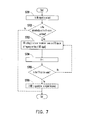
- FIG. 7 is a flowchart of the signal interference handling method provided by the exemplary embodiment of the disclosure executed on the HBS, in which the steps marked by dot lines are non-necessary steps, and if the non-necessary determination-type steps are not executed, determination results thereof could be determined according to system predetermined values.
- Steps S701 and S702 are identical to the steps S501 and S502 of FIG. 5 , so that detailed descriptions thereof are not repeated, where the step S702 is also a non-necessary step of the signal interference handling method.
- the HBS 12 communicates with the MBS 11, and sets the transmission power and the FFR duration of the frequency partition of the HBS signal in the FFR setting.
- step S704 the HBS is operated at the communicated frequency partition during the FFR duration, i.e., the HBS 12 uses the frequency and the transmission power of the frequency partition result to transmit the HBS signal.
- step S705 the HBS 12 detects whether the FFR duration is ended. If the FFR duration is ended, a step S706 is executed, and in the step S706, the HBS 12 is operated in an original frequency (a frequency used before the FFR setting is set or a default frequency), and uses the original frequency to transmit the HBS signal. If the FFR duration is not ended according to the step S705, it is to return to the step S703, and each time before the HBS signal is transmitted, the frequency partition, the transmission power and the FFR duration of the FFR setting are set first.
- an original frequency a frequency used before the FFR setting is set or a default frequency
- FIG. 8 is a flowchart of a signal interference handling method according to an exemplary embodiment of the disclosure, in which the step marked by dot lines is a non-necessary step.
- Steps S801-S804 are identical to the steps S201-S204 of FIG. 2 , so that detailed descriptions thereof are not repeated, where the step S804 is also a non-necessary step of the signal interference handling method.
- step S805 the HBS 12 sends a signal request to the MBS 11.
- step S806 after the MBS 11 receives the signal request, the MBS 11 sends the MBS signal to the HBS 12.
- the HBS 12 transmits the HBS signal and the MBS signal to the m-MS 13 in a multiplexing transmission mode, where the multiplexing transmission mode is to perform different channel encoding to the MBS signal and the HBS signal, and add the encoded MBS signal and the HBS signal for transmitting to the m-MS 13.
- the HBS 12 forwards the MBS signal to the m-MS 13.
- the MBS signal and the HBS signal could be respectively added with a weight thereof, and then the two signals are added to obtain a weighted adding result. If the weights of the two signals are both a unit weight (for example, the weight is equal to 1), a non-weighted adding result is obtained.
- FIG. 9 is a schematic diagram of a HBS transmission frame according to an exemplary embodiment of the disclosure.
- a HBS frame 91 transmitted by the HBS 12 includes encoded HBS signal 92 and encoded MBS signal 93.
- the encoded HBS signal 92 and the encoded MBS signal 93 are superposed and transmitted to the m-MS 13.
- the superposition of multiple encoded signals could be achieved by adding them together, which is also a method of signal multiplexing. Since the channel encodings used in the encoded HBS signal 92 and the encoded MBS signal 93 are different, the m-MS 13 could successfully decode and differentiate the MBS signal from the superposed signal according to the channel encoding used in the encoded MBS signal 93.
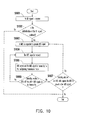
- FIG. 10 is a flowchart of a signal interference handling method provided by the exemplary embodiment of the disclosure executed on the HBS, in which the steps marked by dot lines are non-necessary steps, and if the non-necessary determination-type steps are not executed, determination results thereof could be determined according to system predetermined values.
- Steps S1001 and S1002 are identical to the steps S501 and S502 of FIG. 5 , so that detailed descriptions thereof are not repeated, where the step S1002 is also a non-necessary step of the signal interference handling method.
- the HBS 12 requests the MBS 11 to provide the MBS signal.
- the HBS 12 receives the MBS signal.
- step S1005 the HBS 12 transmits the HBS signal and the MBS signal to the m-MS 13 in the multiplexing transmission mode.
- step S1006 the HBS 12 detects whether the MBS 11 has to provide other MBS signal to be transmitted. If the MBS 11 has to provide other MBS signal to be transmitted, the step S1004 is returned, and the HBS 12 receives the other MBS signal. If the MBS 11 does not have to provide other MBS signal to be transmitted, a step S1007 is executed. In the step S1007, it is detected whether the HBS 12 still requires the MBS 11 to provide other MBS signal. If the HBS 12 still requires the MBS to provide the other MBS signal, then it is return to the step S1003, by which the HBS 12 continually requests the MBS 11 to provide the MBS signal. If the HBS 12 does not require the MBS 11 to provide the other MBS signals, the signal interference handling method is ended.
- the steps 1006 and 1007 are non-necessary steps, which could be removed in other exemplary embodiments.
- FIG. 11 is a flowchart of the signal interference handling method provided by the exemplary embodiment of the disclosure executed on the m-MS. Steps S1101 and S1102 are identical to the steps S401 and S402 of FIG. 4 , so that detailed descriptions thereof are not repeated.
- the m-MS 13 regenerates a waveform of the HBS signal.
- the m-MS 13 subtracts the regenerated waveform of the HBS signal from a superposed waveform of the HBS signal and the MBS signal, so as to eliminate the interference of the HBS signal to the MBS signal.
- the exemplary embodiments of the disclosure provide signal interference handling methods for mitigating or handling the interference of the HBS signal to the MBS signal, and a HBS and a MS using the same methods.
- the signal interference handling methods the m-MS closed to the HBS could correctly receive the MBS signal.
Landscapes
- Engineering & Computer Science (AREA)
- Computer Networks & Wireless Communication (AREA)
- Signal Processing (AREA)
- Computer Security & Cryptography (AREA)
- Quality & Reliability (AREA)
- Mobile Radio Communication Systems (AREA)
Abstract
Description
- The disclosure relates to a signal interference handling method. Particularly, the disclosure relates to a signal interference handling method for handling interference of a home base station (HBS) to a macro/micro cell base station (MBS)-served mobile station (MS) (m-MS), and a HBS and a MS using the same method.
- Development of a cellular system has gradually become mature, and presently not only a macro/micro cell base station (MBS) could serve a mobile station (MS), but a home base station (HBS) could also be established within a coverage range of the MBS to serve the MS. The HBS is, for example, a femtocell base station, and a coverage range thereof is partially overlapped with the coverage range of the MBS.
- The HBS could be a limited access base station, for example, a closed subscriber group home base station (CSG HBS), which does not allow accessing of the MS of a non-registered or non-member user. When the MBS-served MS (m-MS) approaches the HBS, MBS control signal (coming from the MBS) received by the m-MS could be severely interfered by HBS control signal (coming from the HBS), where the HBS control signal is used to control the MS of its subscriber, and is not used to control the m-MS. Therefore, the HBS control signal is a source of interference of
- An exemplary embodiment of the disclosure provides a signal interference handling method, which is adapted to a HBS of a cellular system receive an interference mitigation (IM) request, and the signal interference handling method includes following steps. After the HBS receives the IM request, the HBS enters a LDM, where the IM request is sent by a m-MS of the cellular system when the m-MS detects mutual interference.
- An exemplary embodiment of the disclosure provides a signal interference handling method, which is adapted to a m-MS of a cellular system, and the signal interference handling method includes following steps. The m-MS receives MBS signal, where the MBS signal comes from a MBS of the cellular system. The m-MS determines whether there is mutual interference according to the received MBS signal. The m-MS sends an IM request to a HBS of the cellular system when there is mutual interference.
- An exemplary embodiment of the disclosure provides a home base station (HBS), which is adapted to handle signal interference. The HBS receives an interference mitigation (IM) request. After the HBS receives the IM request, the HBS enters a low duty mode (LDM), where the IM request is sent by a macro/micro cell base station (MBS)-served mobile station (m-MS) when the m-MS detects an interference.
- An exemplary embodiment of the disclosure provides a mobile station (MS), which is adapted to handle signal interference. The MS receives macro/micro cell base station (MBS) signal, where the MBS signal comes from a MBS. The MS determines whether there is mutual interference according to the received MBS signal. The MS sends an interference mitigation (IM) request to a home base station (HBS) when there is mutual interference.
- According to the above descriptions, the exemplary embodiments of the disclosure provide signal interference handling methods for mitigating or handling the interference of the HBS signal to the MBS signal, and a HBS and a MS using the same method. According to the signal interference handling methods, the m-MS closed to the HBS could correctly receive the MBS signal.
- In order to make the aforementioned and other features and advantages of the disclosure comprehensible, several exemplary embodiments accompanied with figures are described in detail below.
- The accompanying drawings are included to provide a further understanding of the disclosure, and are incorporated in and constitute a part of this specification. The drawings illustrate embodiments of the disclosure and, together with the description, serve to explain the principles of the disclosure.
-
FIG. 1 is a schematic diagram illustrating a cellular system according to an exemplary embodiment of the disclosure. -
FIG. 2 is a flowchart illustrating a signal interference handling method according to an exemplary embodiment of the disclosure. -
FIG. 3 is a flowchart illustrating a method for confirming authentication of an interference mitigation (IM) requestor according to an exemplary embodiment of the disclosure. -
FIG. 4 is a flowchart of a signal interference handling method provided by an exemplary embodiment of the disclosure executed on a macro/micro cell base station (MBS)-served mobile station (m-MS). -
FIG. 5 is a flowchart of a signal interference handling method provided by an exemplary embodiment of the disclosure executed on a home base station (HBS). -
FIG. 6 is a flowchart of a signal interference handling method according to an exemplary embodiment of the disclosure. -
FIG. 7 is a flowchart of a signal interference handling method provided by an exemplary embodiment of the disclosure executed on a home base station (HBS). -
FIG. 8 is a flowchart of a signal interference handling method according to an exemplary embodiment of the disclosure. -
FIG. 9 is a schematic diagram of a HBS transmission frame according to an exemplary embodiment of the disclosure. -
FIG. 10 is a flowchart of a signal interference handling method provided by an exemplary embodiment of the disclosure executed on a home base station (HBS). -
FIG. 11 is a flowchart of a signal interference handling method provided by an exemplary embodiment of the disclosure executed on a m-MS. - Firstly, referring to
FIG. 1, FIG. 1 is a schematic diagram illustrating a cellular system according to an exemplary embodiment of the disclosure. Thecellular system 1 includes a macro/micro cell base station (MBS) 11, a home base station (HBS) 12, a MBS-served mobile station (m-MS) 13 (served by the MBS 11) and a MS 14 (served by the HBS 12), where the HBS 12 is, for example, a closed subscriber group home base station (CSG HBS) or a femtocell base station, and acoverage range 15 of theHBS 12 is partially overlapped to a coverage range of theMBS 11. When the m-MS 13 approaches to theHBS 12, MBS signal (comes from the MBS 11) received by the m-MS 13 is probably interfered by HBS signal (coming from the HBS 12). The MBS signal and the HBS signal could be control signals or data signals of the system. Therefore, exemplary embodiments of the disclosure provide a plurality of signal interference handling methods for mitigating or handling the interference of the HBS signal to the MBS signal, so that the m-MS 13 could correctly receive the MBS signal. - Referring to
FIG. 2, FIG. 2 is a flowchart illustrating a signal interference handling method according to an exemplary embodiment of the disclosure, in which the steps marked by dot lines are non-necessary steps. In step S201, the MBS 11 sends a MBS signal to the m-MS 13. In the present exemplary embodiment, the MBS signal is a system control signal. Then, in step S202, the m-MS 13 detects whether there is mutual interference according to the received MBS signal. When the m-MS 13 approaches to theHBS 12, the MBS signal could be severely interfered by the HBS signal, so that the MBS signal received by the m-MS 13 could be incorrect. Therefore, the m-MS 13 could determine whether there is mutual interference by decoding, demodulating the received MBS signal or estimating a signal to interference and noise ratio (SINR). - In the exemplary embodiment of
FIG. 2 , it is assumed that the m-MS 13 detects the mutual interference, so that in step S203, the m-MS 13 sends an interference mitigation (IM) request to theHBS 12. After theHBS 12 receives the IM request, theHBS 12 directly enters a low duty mode (LDM), where a LDM duration and an activating-deactivating pattern of a LDM setting are predetermined LDM duration and activating-deactivating pattern. The LDM duration is an operation duration of the LDM, and the LDM activating-deactivating pattern represents an interlaced distribution of activating periods and deactivating periods in the LDM duration. If the LDM duration is set unlimited or there is no restriction on the LDM duration, it means that theHBS 12 will operate in the LDM continually until receiving any event, signalling or command to stop the LDM. - Another possible implementation is that after the
HBS 12 receives the IM request, theHBS 12 first determines whether there is any serving mobile station (MS) within the coverage range of theHBS 12, and if there is no serving MS, and there is no MS performing network entry or network re-entry within the coverage range of theHBS 12, theHBS 12 enters the LDM. - However, in order to avoid a situation that a malicious m-MS sends the IM request to the
HBS 12, in the exemplary embodiment ofFIG. 2 , before theHBS 12 enters the LDM, a step S204 is executed, though the step S204 is not a necessary step. In the step S204, theHBS 12 confirms an authentication of the IM requestor (i.e. the m-MS 13) from theMBS 11, and only when theHBS 12 successfully confirms the authentication of the IM requestor, a step S2051 is executed. In the step S2051, theHBS 12 sets the LDM duration and the activating-deactivating pattern of the LDM setting. Generally, the LDM setting is a predetermined LDM setting (i.e., the predetermined LDM duration and activating-deactivating pattern are used). - In step S2052, the
HBS 12 enters the LDM, and during the activating period of the LDM duration, theHBS 12 is operated in a normal mode, and during the deactivating period of the LDM duration, theHBS 12 and the member MS of theHBS 12 within the coverage range thereof are forbidden to receive signal from a wireless channel and transmit signal to the wireless channel. However, the MBS 11 may continually transmit the MBS signal to the m-MS 13. For example, in step S206, theMBS 11 transmits another MBS signal to the m-MS 13. Then, in step S207, the m-MS 13 detects whether there is mutual interference. In this exemplary embodiment, it is assumed that there is mutual interference, so that a step S208 is executed. - In the step S208, the m-
MS 13 sends the IM request to theHBS 12. Similarly, in order to avoid the situation that the malicious m-MS sends the IM request to theHBS 12, in the exemplary embodiment ofFIG. 2 , before theHBS 12 executes the step S2053, a step S209 is firstly executed, though the step S209 is not a necessary step. In the step S209, theHBS 12 confirms the authentication of the IM requestor (i.e., the m-MS 13) from theMBS 11, and only when theHBS 12 successfully confirms the authentication of the IM requestor, the step S2053 is executed. In the step S2053, theHBS 12 determines whether the LDM setting is required to be adjusted, and if the LDM is required to be adjusted, theHBS 12 reconfigures the LDM duration and the activating-deactivating pattern of the LDM setting. Then, in step S2054, theHBS 12 is continually operated in the LDM. - It should be noticed that each time when the LDM setting is adjusted, the
HBS 12 could also transmit response signal to the member MS of theHBS 12 within the coverage range thereof, so that the member MS of theHBS 12 within the coverage range thereof could obtain the interlaced distribution of the activating periods and the deactivating periods in the LDM duration. Moreover, the LDM described in the exemplary embodiment of the disclosure could be a LDM of an IEEE 802.16 system, though the LDM is not limited to the LDM of the IEEE 802.16 system. In other wireless communication standards, although a name of the LDM could be different, as long as an actual effect thereof is the same, it is considered to be within the scope of the disclosure. - The
cellular system 1 is, for example, an IEEE 802.16m system, and the IM request is an advanced air interface ranging request (AAI-RNG-REQ) with an indication of femto interference mitigation. In another exemplary embodiment, theHBS 12 enters the LDM only when there is no serving MS within its coverage range and there is no MS performing network entry or network re-entry within its coverage range. - Moreover, when the
cellular system 1 is the IEEE 802.16m system, the aforementioned activating period is a service available interval (AI), and the deactivating period is a service unavailable interval (UAI). When theHBS 12 enters the LDM, theHBS 12 is operated in the normal mode during the AI, and theHBS 12 does not transmit any signal to the air interface during the UAI. TheHBS 12 transmits an advanced air interface registration response (AAI-REG-RSP) to the member MS of theHBS 12 within the coverage range thereof, so that the member MS of theHBS 12 within the coverage range thereof could obtain the interlaced distribution of the AI and the UAI in the LDM duration. In other words, the AAI-REG-RSP is a message carrying LDM parameter configuration information. - Referring to
FIG. 3, FIG. 3 is a flowchart illustrating a method for confirming an authentication of the IM requestor according to an exemplary embodiment of the disclosure. In step S301, when the m-MS 13 detects the interference, the m-MS 13 sends the IM request to theHBS 12, and the IM request may include a m-MS identification and an authentication message. In another exemplary embodiment, theHBS 12 may request the m-MS identification and the authentication message from the m-MS 13 after receiving the IM request. - The step S304 includes a step S302 and a step S303. In the step S302, the
HBS 12 sends the m-MS identification and the authentication message to theMBS 11. If theMBS 11 determines that the m-MS 13 is a legitimate user according to the m-MS identification and the authentication message, the step S303 is executed. If theMBS 11 determines that the m-MS 13 is an illegitimate user according to the m-MS identification and the authentication message, theMBS 11 sends a rejection message to theHBS 12. In the present exemplary embodiment, it is assumed that theMBS 11 determines that the m-MS 13 is a legitimate user according to the m-MS identification and the authentication message. Therefore, in the step S303, theMBS 11 sends a confirmation message to theHBS 12, so that theHBS 12 could successfully confirm the authentication of the IM requestor. - Referring to
FIG. 4, FIG. 4 is a flowchart of the signal interference handling method provided by the exemplary embodiment of the disclosure executed on the m-MS. In step S401, the m-MS 13 receives the MBS signal. Then, in step S402, the m-MS 13 detects whether there is mutual interference. If the m-MS 13 does not detect the mutual interference, the signal interference handling method is ended, and if the m-MS 13 detects the mutual interference, a step S403 is executed. In the step S403, the m-MS 13 sends the IM request to theHBS 12. As described above, the IM request may include the m-MS identification and the authentication message. In the IEEE 802.16 system, the IM request is represented by an indication of femto interference mitigation. - Referring to
FIG. 5, FIG. 5 is a flowchart of the signal interference handling method provided by the exemplary embodiment of the disclosure executed on the HBS, in which the steps marked by dot lines are non-necessary steps, and if the non-necessary determination-type steps are not executed, determination results thereof could be determined according to system predetermined values. First, in step S501, theHBS 12 receives the IM request. Then, in step S502, theHBS 12 determines whether or not to confirm an authentication of the IM requestor. If theHBS 12 successfully confirms the authentication of the IM requestor, a step S503 is executed, and if theHBS 12 does not successfully confirm the authentication of the IM requestor, the whole signal interference handling method is ended. As described above, the step S502 is executed to avoid a situation that a malicious m-MS sends the IM request, and the step S502 could be removed from the signal interference handling method. - In the step S503, the LDM duration and the activating-deactivating pattern in the LDM setting are set. After the setting is completed, a step S504 is executed. In the step S504, the
HBS 12 is operated in the LDM during the LDM duration. In step S505, theHBS 12 determines whether the LDM duration is ended. If theHBS 12 determines that the LDM duration is ended, a step S506 is executed, and if theHBS 12 determines that the LDM duration is not ended, a step S508 is executed. The steps S505 and S506 are non-necessary steps. In another exemplary embodiment, theHBS 12 may not end the LDM. In the step S506, theHBS 12 ends the LDM, and is continually operated in the normal mode. - In the step S508, the
HBS 12 determines whether the IM request is received during the activating period. If theHBS 12 receives the IM request during the activating period, a step S507 is executed, and if theHBS 12 does not receive the IM request during the activating period, the step S504 is executed, so that theHBS 12 is continually operated in the LDM using the previous LDM setting. In the step S507, theHBS 12 determines whether or not the LDM setting is required to be adjusted. If theHBS 12 determines that the LDM setting is required to be adjusted, the step S503 is executed, by which the LDM setting is adjusted, and after the step S503, the step S504 is executed, so that theHBS 12 is operated in the LDM using the new LDM setting. If theHBS 12 determines that the LDM setting is not required to be adjusted, the step S504 is executed, so that theHBS 12 is continually operated in the LDM using the previous LDM setting. - Generally, if the
HBS 12 still receives the IM request during the activating period, it represents that the mutual interference is not effectively mitigated, so that theHBS 12 increases a ratio of the deactivating period, so as to mitigate the signal interference. However, in case that the mutual interference is not effectively mitigated is not considered, the steps S507 and S508 could be removed form the signal interference handling method. In overall, in the exemplary embodiment ofFIG. 5 , the steps S502, S505-S508 are non-necessary steps. - Referring to
FIG. 6, FIG. 6 is a flowchart of a signal interference handling method according to an exemplary embodiment of the disclosure, in which the step marked by dot lines is a non-necessary step. Steps S601-S604 are identical to the steps S201-S204 ofFIG. 2 , so that detailed descriptions thereof are not repeated, where the step S604 is also a non-necessary step of the signal interference handling method. In step S605, theHBS 12 communicates with theMBS 11, and sets transmission power and a fractional frequency reuse (FFR) duration of a frequency partition of the HBS signal in a FFR setting, the FFR refers to that the BS further divides its applicable frequency band, and the divided small frequency bands could be repeatedly used in different communication ranges according to communication demands, environments, conditions and settings, or could be shared by other BSs. Therefore, the frequency used by theHBS 12 for transmitting the HBS signal could be different to a frequency of the MBS signal. Then, in step S606, theHBS 12 is operated at a communicated frequency partition during the FFR duration, i.e., theHBS 12 uses the frequency and the transmission power of a frequency partition result to transmit the HBS signal. - Referring to
FIG. 7, FIG. 7 is a flowchart of the signal interference handling method provided by the exemplary embodiment of the disclosure executed on the HBS, in which the steps marked by dot lines are non-necessary steps, and if the non-necessary determination-type steps are not executed, determination results thereof could be determined according to system predetermined values. Steps S701 and S702 are identical to the steps S501 and S502 ofFIG. 5 , so that detailed descriptions thereof are not repeated, where the step S702 is also a non-necessary step of the signal interference handling method. In step S703, theHBS 12 communicates with theMBS 11, and sets the transmission power and the FFR duration of the frequency partition of the HBS signal in the FFR setting. Then, in step S704, the HBS is operated at the communicated frequency partition during the FFR duration, i.e., theHBS 12 uses the frequency and the transmission power of the frequency partition result to transmit the HBS signal. - Then, in step S705, the
HBS 12 detects whether the FFR duration is ended. If the FFR duration is ended, a step S706 is executed, and in the step S706, theHBS 12 is operated in an original frequency (a frequency used before the FFR setting is set or a default frequency), and uses the original frequency to transmit the HBS signal. If the FFR duration is not ended according to the step S705, it is to return to the step S703, and each time before the HBS signal is transmitted, the frequency partition, the transmission power and the FFR duration of the FFR setting are set first. - Referring to
FIG. 8, FIG. 8 is a flowchart of a signal interference handling method according to an exemplary embodiment of the disclosure, in which the step marked by dot lines is a non-necessary step. Steps S801-S804 are identical to the steps S201-S204 ofFIG. 2 , so that detailed descriptions thereof are not repeated, where the step S804 is also a non-necessary step of the signal interference handling method. In step S805, theHBS 12 sends a signal request to theMBS 11. In step S806, after theMBS 11 receives the signal request, theMBS 11 sends the MBS signal to theHBS 12. In step S807, theHBS 12 transmits the HBS signal and the MBS signal to the m-MS 13 in a multiplexing transmission mode, where the multiplexing transmission mode is to perform different channel encoding to the MBS signal and the HBS signal, and add the encoded MBS signal and the HBS signal for transmitting to the m-MS 13. In other words, theHBS 12 forwards the MBS signal to the m-MS 13. The MBS signal and the HBS signal could be respectively added with a weight thereof, and then the two signals are added to obtain a weighted adding result. If the weights of the two signals are both a unit weight (for example, the weight is equal to 1), a non-weighted adding result is obtained. - Referring to
FIG. 9, FIG. 9 is a schematic diagram of a HBS transmission frame according to an exemplary embodiment of the disclosure. InFIG. 9 , aHBS frame 91 transmitted by theHBS 12 includes encodedHBS signal 92 and encodedMBS signal 93. The encodedHBS signal 92 and the encodedMBS signal 93 are superposed and transmitted to the m-MS 13. The superposition of multiple encoded signals could be achieved by adding them together, which is also a method of signal multiplexing. Since the channel encodings used in the encodedHBS signal 92 and the encodedMBS signal 93 are different, the m-MS 13 could successfully decode and differentiate the MBS signal from the superposed signal according to the channel encoding used in the encodedMBS signal 93. - Referring to
FIG. 10, FIG. 10 is a flowchart of a signal interference handling method provided by the exemplary embodiment of the disclosure executed on the HBS, in which the steps marked by dot lines are non-necessary steps, and if the non-necessary determination-type steps are not executed, determination results thereof could be determined according to system predetermined values. Steps S1001 and S1002 are identical to the steps S501 and S502 ofFIG. 5 , so that detailed descriptions thereof are not repeated, where the step S1002 is also a non-necessary step of the signal interference handling method. In step S1003, theHBS 12 requests theMBS 11 to provide the MBS signal. In step S1004, theHBS 12 receives the MBS signal. In step S1005, theHBS 12 transmits the HBS signal and the MBS signal to the m-MS 13 in the multiplexing transmission mode. - In step S1006, the
HBS 12 detects whether theMBS 11 has to provide other MBS signal to be transmitted. If theMBS 11 has to provide other MBS signal to be transmitted, the step S1004 is returned, and theHBS 12 receives the other MBS signal. If theMBS 11 does not have to provide other MBS signal to be transmitted, a step S1007 is executed. In the step S1007, it is detected whether theHBS 12 still requires theMBS 11 to provide other MBS signal. If theHBS 12 still requires the MBS to provide the other MBS signal, then it is return to the step S1003, by which theHBS 12 continually requests theMBS 11 to provide the MBS signal. If theHBS 12 does not require theMBS 11 to provide the other MBS signals, the signal interference handling method is ended. Thesteps 1006 and 1007 are non-necessary steps, which could be removed in other exemplary embodiments. - Referring to
FIG. 11, FIG. 11 is a flowchart of the signal interference handling method provided by the exemplary embodiment of the disclosure executed on the m-MS. Steps S1101 and S1102 are identical to the steps S401 and S402 ofFIG. 4 , so that detailed descriptions thereof are not repeated. In step S1103, the m-MS 13 regenerates a waveform of the HBS signal. In step S1104, the m-MS 13 subtracts the regenerated waveform of the HBS signal from a superposed waveform of the HBS signal and the MBS signal, so as to eliminate the interference of the HBS signal to the MBS signal. - In summary, the exemplary embodiments of the disclosure provide signal interference handling methods for mitigating or handling the interference of the HBS signal to the MBS signal, and a HBS and a MS using the same methods. According to the signal interference handling methods, the m-MS closed to the HBS could correctly receive the MBS signal.
- It will be apparent to those skilled in the art that various modifications and variations could be made to the structure of the disclosure without departing from the scope or spirit of the disclosure. In view of the foregoing, it is intended that the disclosure cover modifications and variations of this disclosure provided they fall within the scope of the following claims and their equivalents.
Claims (21)
- A signal interference handling method, adapted to a HBS (12) of a cellular system (1), the signal interference handling method comprising:receiving, at the HBS, an IM request; andcharacterized by:the HBS (12) entering a LDM after the HBS (12) receives the IM request, wherein the IM request is sent by a m-MS (13) of the cellular system (1) when the m-MS (13) detects there is mutual interference.
- The signal interference handling method as claimed in claim 1, further comprising:confirming, at the HBS (12), an authentication of the m-MS (13) from a MBS (11) after the HBS (12) receives the IM request; andthe HBS (12) entering the LDM when the HBS (12) successfully confirms the authentication of the m-MS (13).
- The signal interference handling method as claimed in claim 1, further comprising:setting, at the HBS (12), an activating-deactivating pattern and a LDM duration of a LDM setting before the HBS (12) enters the LDM, wherein the LDM duration is an operation time of the LDM, and the LDM activating-deactivating pattern represents an interlaced distribution of activating periods and deactivating periods in the LDM duration.
- The signal interference handling method as claimed in claim 3, further comprising:detecting, at the HBS (12), whether the LDM duration is ended;the HBS (12) returning to a normal mode or continually operating in the LDM when the LDM duration is ended;detecting, at the HBS (12), whether the IM request is received during the activating period when the LDM is not ended;the HBS (12) continually operating in the LDM when the HBS (12) does not receive IM request during the activating period;detecting, at the HBS (12), whether the LDM setting is required to be adjusted when the HBS (12) receives IM request during the activating period; andreconfiguring, at the HBS (12), the activating-deactivating pattern and the LDM duration, and entering the LDM with the latest LDM setting after the reconfiguration when the LDM setting is required to be adjusted.
- The signal interference handling method as claimed in claim 4, wherein the HBS (12) continually operates in the LDM by using the same LDM setting or different LDM settings when the LDM duration is ended.
- The signal interference handling method as claimed in claim 3, wherein the cellular system (1) is an IEEE 802.16m and WiMAX system, the IM request is an advanced air interface ranging request (AAI-RNG-REQ) message with an indication of femto interference mitigation, and the HBS (12) enters the LDM after receiving the AAI-RNG-REQ.
- The signal interference handling method as claimed in claim 1, wherein the HBS (12) first determines whether there is any serving mobile station (MS) within a coverage range (15) of the HBS (12) after the HBS (12) receives the IM request, and the HBS (12) enters the LDM when there is no serving MS (14) and there is no MS performing network entry or re-entry within its coverage range (15).
- The signal interference handling method as claimed in claim 6, wherein the activating period is an available interval (AI), and the deactivating period is an unavailable interval (UAI);
when the HBS (12) enters the LDM, the HBS (12) operates in a normal mode during the AI, and the HBS (12) does not transmit any signal to an air interface during the UAI; and
the HBS (12) transmits a message carrying LDM parameter configuration information to a member MS (14) of the HBS (12) within its coverage range (15) during the AI, so that the MS (14) obtains an interlaced distribution of the AI and the UAI in the LDM duration. - The signal interference handling method as claimed in claim 1, further comprising:sending, at the HBS (12), a MBS signal request to a MBS (11) of the cellular system (1) after the HBS (12) receives an IM request, wherein the IM request is sent by the m-MS (13) when the m-MS (13) detects there is mutual interference;receiving, at the HBS (12), a MBS signal from the MBS (11) after the HBS (12) sends the MBS signal request; andtransmitting, at the HBS (12), a HBS signal and the MBS signal to the m-MS (13) in a multiplexing transmission mode.
- The signal interference handling method as claimed in claim 9, further comprising:confirming, at the HBS (12), an authentication of the m-MS (13) from the MBS (11) after the HBS (12) receives the IM request,; andsending, at the HBS (12), the MBS signal request to the MBS (11) when the HBS (12) successfully confirms the authentication of the m-MS (13).
- The signal interference handling method as claimed in claims 2 or 10, wherein the step of confirming the authentication of the m-MS (13) comprises:sending, at the HBS (12), a m-MS identification and an authentication message to the MBS (11);sending, at the MBS (11), a confirmation message or a rejection message to the HBS (12) according to the m-MS identification and the authentication message; andwherein the IM request comprises the m-MS identification and the authentication message.
- The signal interference handling method as claimed in claim 9, wherein the multiplexing transmission mode is to perform different channel encodings to the MBS signal and the HBS signal, and add the encoded MBS signal and the encoded HBS signal according to weights thereof for transmitting to the m-MS (13).
- The signal interference handling method as claimed in claim 12, further comprising:detecting, at the HBS (12), whether the MBS (11) still has to provide other MBS signal to be transmitted;the HBS (12) continually receiving the other MBS signals when the MBS (11) still has to provide other MBS signal to be transmitted;detecting, at the HBS (12), whether the HBS (12) still requires the MBS (11) to provide other MBS signals when the MBS (11) does not have to provide other MBS signal to be transmitted; andsending, at the HBS (12), the MBS signal request to the MBS (11) of the cellular system (1) when the HBS (12) still requires the MBS (11) to provide other MBS signal.
- A signal interference handling method, adapted to a m-MS (13) of a cellular system (1), the signal interference handling method comprising:receiving, at the m-MS (13), a MBS signal, wherein the MBS signal comes from a MBS (11) of the cellular system;characterized by:determining, at the m-MS (13), whether there is mutual interference according to the received MBS signal; andsending, at the m-MS (13), an IM request to a HBS (12) of the cellular system (1) when there is mutual interference.
- A home base station (HBS) (12), adapted to handle signal interference, wherein,
the HBS(12) is configured to receive an IM request; and
characterized by:the HBS (12) is configured to enter a low duty mode (LDM) after the HBS (12) receives the IM request, wherein the IM request is sent by a macro/micro cell base station (MBS)-served mobile station (m-MS) (13) when the m-MS (13) detects there is mutual interference. - The HBS (12) as claimed in claim 15, wherein,
the HBS (12) is configured to confirm an authentication of the m-MS (13) from the MBS (11) after the HBS (12) receives the IM request; and
the HBS (12) is configured to enter the LDM when the HBS (12) successfully confirms the authentication of the m-MS (13). - The HBS (12) as claimed in claim 15, wherein,
the HBS (12) is configured to send a macro/micro cell base station (MBS) signal request to a MBS (11) after the HBS (12) receives the interference mitigation (IM) request,
the HBS (12) is configured to receive a MBS signal from the MBS (11) after the HBS (12) sends the MBS signal request, and
the HBS (12) is configured to transmit a HBS signal and the MBS signal to the m-MS (13) in a multiplexing transmission mode. - The HBS (12) as claimed in claim 17, wherein,
the HBS (12) is configured to confirm an authentication of the m-MS (13) from the MBS (11) after the HBS (12) receives the IM request, and
the HBS (12) is configured to send the MBS signal request to the MBS (11) when the HBS (12) successfully confirms the authentication of the m-MS (13). - The HBS (12) as claimed in claim 17, wherein the multiplexing transmission mode is to perform different channel encodings to the MBS signal and the HBS signal, and add the encoded MBS signal and the encoded HBS signal according to weights thereof for transmitting to the m-MS (13).
- The HBS (12) as claimed in claim 19, wherein,
the HBS (12) is configured to detect whether the MBS (11) still has to provide other MBS signal to be transmitted;
when the MBS (11) still has to provide other MBS signal to be transmitted, the HBS (12) is configured to continually receive the other MBS signal;
when the MBS (11) does not have to provide other MBS signal to be transmitted, the HBS (12) is configured to detect whether the HBS (12) still requires the MBS (11) to provide other MBS signal; and
when the HBS (12) still requires the MBS (11) to provide other MBS signal, the HBS (12) is configured to send the MBS signal request to the MBS (11). - A mobile station (MS) (13), adapted to handle signal interference, wherein,
the MS (13) is configured to receive a macro/micro cell base station (MBS) signal, wherein the MBS signal comes from a MBS (11);
characterized by:the MS (13) is configured to determine whether there is mutual interference according to the received MBS signal; andthe MS (13) is configured to send an interference mitigation (IM) request to a home base station (HBS) (12) when there is mutual interference.
Applications Claiming Priority (2)
| Application Number | Priority Date | Filing Date | Title |
|---|---|---|---|
| US29076209P | 2009-12-29 | 2009-12-29 | |
| TW99139731A TWI423693B (en) | 2009-12-29 | 2010-11-18 | Signal interference handling method and system and apparatus using the same |
Publications (2)
| Publication Number | Publication Date |
|---|---|
| EP2343944A1 true EP2343944A1 (en) | 2011-07-13 |
| EP2343944B1 EP2343944B1 (en) | 2016-04-06 |
Family
ID=44175771
Family Applications (2)
| Application Number | Title | Priority Date | Filing Date |
|---|---|---|---|
| EP10197248.7A Active EP2343943B1 (en) | 2009-12-29 | 2010-12-29 | Interference control method and home base station using the same |
| EP10197250.3A Active EP2343944B1 (en) | 2009-12-29 | 2010-12-29 | Interference control method and home base station using the same |
Family Applications Before (1)
| Application Number | Title | Priority Date | Filing Date |
|---|---|---|---|
| EP10197248.7A Active EP2343943B1 (en) | 2009-12-29 | 2010-12-29 | Interference control method and home base station using the same |
Country Status (3)
| Country | Link |
|---|---|
| US (1) | US8625556B2 (en) |
| EP (2) | EP2343943B1 (en) |
| CN (1) | CN102111777B (en) |
Families Citing this family (10)
| Publication number | Priority date | Publication date | Assignee | Title |
|---|---|---|---|---|
| US8086180B2 (en) * | 2009-04-21 | 2011-12-27 | Chunghwa Telecom Co., Ltd. | Method for restraining inter-cell interference in a mobile communication system |
| US8755749B2 (en) * | 2009-05-19 | 2014-06-17 | Qualcomm Incorporated | Minimizing interference to non-associated users |
| KR101623182B1 (en) * | 2009-08-28 | 2016-05-23 | 한국전자통신연구원 | Method of low-duty mode operation in femtocell base station |
| WO2011107292A1 (en) * | 2010-03-04 | 2011-09-09 | Nec Europe Ltd. | Method and femtocell base station for supporting wireless connectivity of a mobile station to a cellular network |
| US8730827B2 (en) * | 2010-03-05 | 2014-05-20 | Intel Corporation | Estimating quality of a signal in mobile wireless communication systems |
| GB2480692B (en) * | 2010-05-28 | 2013-06-12 | Toshiba Res Europ Ltd | Radio resource management in femtocells |
| US8599794B2 (en) * | 2010-09-08 | 2013-12-03 | Intel Corporation | Enhanced base station and method for communicating through an enhanced distributed antenna system (eDAS) |
| CN103283294A (en) * | 2011-09-19 | 2013-09-04 | 日电(中国)有限公司 | Method and apparatus for coordinating interference on user equipment |
| US9066357B2 (en) * | 2012-12-31 | 2015-06-23 | Telefonaktiebolaget L M Ericsson (Publ) | Methods and devices for reducing interference in heterogeneous communication networks based on inter-cell interference coordination |
| US10772052B2 (en) * | 2017-06-16 | 2020-09-08 | Qualcomm Incorporated | Controlling coexistent radio systems in a wireless device |
Citations (1)
| Publication number | Priority date | Publication date | Assignee | Title |
|---|---|---|---|---|
| WO2010079999A2 (en) * | 2009-01-09 | 2010-07-15 | Samsung Electronics Co., Ltd. | Method and apparatus for interference mitigation using mobile station signaling |
Family Cites Families (16)
| Publication number | Priority date | Publication date | Assignee | Title |
|---|---|---|---|---|
| US7079812B2 (en) | 2002-05-16 | 2006-07-18 | Cognio, Inc. | Systems and methods for interference mitigation with respect to periodic interferers in short-range wireless applications |
| US9071344B2 (en) | 2005-08-22 | 2015-06-30 | Qualcomm Incorporated | Reverse link interference cancellation |
| US20070202867A1 (en) | 2006-02-24 | 2007-08-30 | Waltho Alan E | Facilitating reuse of frequencies by unlicensed cognitive devices |
| TWI348340B (en) | 2006-05-24 | 2011-09-01 | Unimicron Technology Corp | Method for repairing the circuitry of circuit board |
| JP4640267B2 (en) | 2006-06-13 | 2011-03-02 | パナソニック株式会社 | Wiring equipment and surveillance camera device |
| GB0704099D0 (en) | 2007-03-02 | 2007-04-11 | Vodafone Plc | Arrangement and technique for interference mitigation |
| US8504091B2 (en) | 2008-02-01 | 2013-08-06 | Qualcomm Incorporated | Interference mitigation for control channels in a wireless communication network |
| US8594576B2 (en) | 2008-03-28 | 2013-11-26 | Qualcomm Incorporated | Short-term interference mitigation in an asynchronous wireless network |
| KR101469159B1 (en) * | 2008-05-21 | 2014-12-05 | 삼성전자주식회사 | Apparatus and method for removing interference in a wireless communication system |
| JP5156498B2 (en) * | 2008-06-18 | 2013-03-06 | 株式会社エヌ・ティ・ティ・ドコモ | Base station and mobile communication method |
| US9265049B2 (en) | 2008-07-11 | 2016-02-16 | Qualcomm Incorporated | Method and apparatus for using uplink control information for inter-cell decoding and interference cancellation |
| JP5151997B2 (en) * | 2009-01-08 | 2013-02-27 | 富士通株式会社 | Communication server, radio base station, communication system, and communication method |
| US8588149B2 (en) * | 2009-06-12 | 2013-11-19 | Fujitsu Semiconductor Limited | System and method for adjusting channels in wireless communication |
| US8433345B2 (en) * | 2009-06-17 | 2013-04-30 | Samsung Electronics Co., Ltd | Methods and apparatus to support paging with less interference in multi-tier communication systems |
| US8219086B2 (en) * | 2009-07-06 | 2012-07-10 | Intel Corporation | Low duty mode for femtocell base stations |
| US20110086651A1 (en) * | 2009-08-26 | 2011-04-14 | Samsung Electronics Co. Ltd. | Techniques for interference mitigation in multi-tier communication system |
-
2010
- 2010-12-15 US US12/968,284 patent/US8625556B2/en active Active
- 2010-12-23 CN CN201010603049.8A patent/CN102111777B/en active Active
- 2010-12-29 EP EP10197248.7A patent/EP2343943B1/en active Active
- 2010-12-29 EP EP10197250.3A patent/EP2343944B1/en active Active
Patent Citations (1)
| Publication number | Priority date | Publication date | Assignee | Title |
|---|---|---|---|---|
| WO2010079999A2 (en) * | 2009-01-09 | 2010-07-15 | Samsung Electronics Co., Ltd. | Method and apparatus for interference mitigation using mobile station signaling |
Non-Patent Citations (4)
| Title |
|---|
| CHIEN-CHUN HSU ET AL: "Proposed Text on the Femto Low-Duty Mode Operation", INTERNET CITATION, 17 November 2009 (2009-11-17), XP002627331, Retrieved from the Internet <URL:wirelessman.org/tgm/contrib/C80216m-09_2302r2.doc> [retrieved on 20110303] * |
| JUNGJE SON ET AL: "Message format of AMS measurement configuration and report for Self-organizing network", INTERNET CITATION, 31 August 2009 (2009-08-31), XP002627292, Retrieved from the Internet <URL:wirelessman.org/tgm/contrib/C80216m-09_1871.doc> [retrieved on 20110303] * |
| YING LI ET AL: "Interference mitigation to support overlaid CSG-closed femto ABS", INTERNET CITATION, 18 November 2009 (2009-11-18), XP007917424, Retrieved from the Internet <URL:http://wirelessman.org/tgm/contrib/C80216m-09_2596r2.pdf> [retrieved on 20110303] * |
| YUNG-HAN CHEN ET AL: "SFH Forwarding by a CSG Femto ABS for Interference Control", INTERNET CITATION, 31 December 2009 (2009-12-31), XP002627326, Retrieved from the Internet <URL:wirelessman.org/tgm/contrib/C80216m-09_2979.doc> [retrieved on 20110303] * |
Also Published As
| Publication number | Publication date |
|---|---|
| US20110158168A1 (en) | 2011-06-30 |
| CN102111777B (en) | 2015-03-25 |
| US8625556B2 (en) | 2014-01-07 |
| EP2343944B1 (en) | 2016-04-06 |
| CN102111777A (en) | 2011-06-29 |
| EP2343943B1 (en) | 2015-10-21 |
| EP2343943A1 (en) | 2011-07-13 |
Similar Documents
| Publication | Publication Date | Title |
|---|---|---|
| EP2343943B1 (en) | Interference control method and home base station using the same | |
| JP5739979B2 (en) | System and method for inter-cell interference avoidance in a co-channel network | |
| JP5388955B2 (en) | COMMUNICATION CONTROL METHOD, COMMUNICATION SYSTEM, AND BASE STATION DEVICE | |
| EP3211820A1 (en) | Systems and methods for adaptive transmissions in a wireless network | |
| EP2829124B1 (en) | Transmitting indication of access point loading | |
| CN103096374B (en) | Subscriber equipment is carried out to the method and apparatus of AF panel in heterogeneous network | |
| TW201014410A (en) | Methods and apparatus for uplink and downlink inter-cell interference coordination | |
| EP2642782B1 (en) | Method and a system for enabling a mobile terminal to continue to be served by a home base station | |
| EP3266266A1 (en) | Scheduling of resources adapted to another node's scheduling information in the context of vehicular decentralized cooperative communications | |
| US9668259B2 (en) | Small-scale base station, communication system, and communication method | |
| CN112584375A (en) | Threat detection apparatus for wireless communication system and threat detection method thereof | |
| JP6910292B2 (en) | Communication terminal | |
| JP5467109B2 (en) | Method and device for enabling a mobile terminal to access a wireless cellular telecommunication network | |
| WO2017054618A1 (en) | Interference processing method, base station and network equipment | |
| JP2012506659A5 (en) | ||
| JP5541286B2 (en) | Wireless communication system, base station, wireless communication method and program | |
| CN101998618B (en) | Method for transferring a sequence enabling the identification of the home base station by mobile terminal | |
| JP6468352B2 (en) | Wireless communication system, base station, communication terminal, and wireless communication system control method | |
| GB2631128A (en) | Communication system | |
| CN109565514A (en) | Location information protection | |
| TWI423693B (en) | Signal interference handling method and system and apparatus using the same | |
| US20250338313A1 (en) | Methods and Apparatus for Channel Occupancy Time (COT) Sharing in New Radio (NR) and/or Sidelink-Unlicensed (SL-U) | |
| KR20140037692A (en) | Method for estimating downlink and uplink, base station device and communication system | |
| CN113853007B (en) | Communication method and device | |
| KR102612277B1 (en) | Method and apparatus for controlling priority in device to device communication |
Legal Events
| Date | Code | Title | Description |
|---|---|---|---|
| PUAI | Public reference made under article 153(3) epc to a published international application that has entered the european phase |
Free format text: ORIGINAL CODE: 0009012 |
|
| 17P | Request for examination filed |
Effective date: 20101229 |
|
| AK | Designated contracting states |
Kind code of ref document: A1 Designated state(s): AL AT BE BG CH CY CZ DE DK EE ES FI FR GB GR HR HU IE IS IT LI LT LU LV MC MK MT NL NO PL PT RO RS SE SI SK SM TR |
|
| AX | Request for extension of the european patent |
Extension state: BA ME |
|
| RIC1 | Information provided on ipc code assigned before grant |
Ipc: H04W 72/08 20090101AFI20120217BHEP Ipc: H04W 72/04 20090101ALN20120217BHEP |
|
| 17Q | First examination report despatched |
Effective date: 20130218 |
|
| GRAJ | Information related to disapproval of communication of intention to grant by the applicant or resumption of examination proceedings by the epo deleted |
Free format text: ORIGINAL CODE: EPIDOSDIGR1 |
|
| GRAP | Despatch of communication of intention to grant a patent |
Free format text: ORIGINAL CODE: EPIDOSNIGR1 |
|
| RIC1 | Information provided on ipc code assigned before grant |
Ipc: H04W 72/08 20090101AFI20151015BHEP Ipc: H04W 84/04 20090101ALN20151015BHEP Ipc: H04W 72/04 20090101ALN20151015BHEP Ipc: H04W 12/06 20090101ALN20151015BHEP |
|
| INTG | Intention to grant announced |
Effective date: 20151029 |
|
| RAP1 | Party data changed (applicant data changed or rights of an application transferred) |
Owner name: ACER INCORPORATED |
|
| RIN1 | Information on inventor provided before grant (corrected) |
Inventor name: CHEN, YUNG-HAN Inventor name: CHIU, CHUN-YUAN Inventor name: ZHENG, YAN-XIU |
|
| GRAS | Grant fee paid |
Free format text: ORIGINAL CODE: EPIDOSNIGR3 |
|
| GRAA | (expected) grant |
Free format text: ORIGINAL CODE: 0009210 |
|
| AK | Designated contracting states |
Kind code of ref document: B1 Designated state(s): AL AT BE BG CH CY CZ DE DK EE ES FI FR GB GR HR HU IE IS IT LI LT LU LV MC MK MT NL NO PL PT RO RS SE SI SK SM TR |
|
| REG | Reference to a national code |
Ref country code: GB Ref legal event code: FG4D |
|
| REG | Reference to a national code |
Ref country code: AT Ref legal event code: REF Ref document number: 788995 Country of ref document: AT Kind code of ref document: T Effective date: 20160415 Ref country code: CH Ref legal event code: EP |
|
| REG | Reference to a national code |
Ref country code: IE Ref legal event code: FG4D |
|
| REG | Reference to a national code |
Ref country code: DE Ref legal event code: R096 Ref document number: 602010032014 Country of ref document: DE |
|
| REG | Reference to a national code |
Ref country code: LT Ref legal event code: MG4D Ref country code: NL Ref legal event code: MP Effective date: 20160406 |
|
| REG | Reference to a national code |
Ref country code: AT Ref legal event code: MK05 Ref document number: 788995 Country of ref document: AT Kind code of ref document: T Effective date: 20160406 |
|
| PG25 | Lapsed in a contracting state [announced via postgrant information from national office to epo] |
Ref country code: NL Free format text: LAPSE BECAUSE OF FAILURE TO SUBMIT A TRANSLATION OF THE DESCRIPTION OR TO PAY THE FEE WITHIN THE PRESCRIBED TIME-LIMIT Effective date: 20160406 |
|
| PG25 | Lapsed in a contracting state [announced via postgrant information from national office to epo] |
Ref country code: NO Free format text: LAPSE BECAUSE OF FAILURE TO SUBMIT A TRANSLATION OF THE DESCRIPTION OR TO PAY THE FEE WITHIN THE PRESCRIBED TIME-LIMIT Effective date: 20160706 Ref country code: LT Free format text: LAPSE BECAUSE OF FAILURE TO SUBMIT A TRANSLATION OF THE DESCRIPTION OR TO PAY THE FEE WITHIN THE PRESCRIBED TIME-LIMIT Effective date: 20160406 Ref country code: IS Free format text: LAPSE BECAUSE OF FAILURE TO SUBMIT A TRANSLATION OF THE DESCRIPTION OR TO PAY THE FEE WITHIN THE PRESCRIBED TIME-LIMIT Effective date: 20160806 Ref country code: PL Free format text: LAPSE BECAUSE OF FAILURE TO SUBMIT A TRANSLATION OF THE DESCRIPTION OR TO PAY THE FEE WITHIN THE PRESCRIBED TIME-LIMIT Effective date: 20160406 Ref country code: FI Free format text: LAPSE BECAUSE OF FAILURE TO SUBMIT A TRANSLATION OF THE DESCRIPTION OR TO PAY THE FEE WITHIN THE PRESCRIBED TIME-LIMIT Effective date: 20160406 |
|
| REG | Reference to a national code |
Ref country code: FR Ref legal event code: PLFP Year of fee payment: 7 |
|
| PG25 | Lapsed in a contracting state [announced via postgrant information from national office to epo] |
Ref country code: SE Free format text: LAPSE BECAUSE OF FAILURE TO SUBMIT A TRANSLATION OF THE DESCRIPTION OR TO PAY THE FEE WITHIN THE PRESCRIBED TIME-LIMIT Effective date: 20160406 Ref country code: HR Free format text: LAPSE BECAUSE OF FAILURE TO SUBMIT A TRANSLATION OF THE DESCRIPTION OR TO PAY THE FEE WITHIN THE PRESCRIBED TIME-LIMIT Effective date: 20160406 Ref country code: AT Free format text: LAPSE BECAUSE OF FAILURE TO SUBMIT A TRANSLATION OF THE DESCRIPTION OR TO PAY THE FEE WITHIN THE PRESCRIBED TIME-LIMIT Effective date: 20160406 Ref country code: PT Free format text: LAPSE BECAUSE OF FAILURE TO SUBMIT A TRANSLATION OF THE DESCRIPTION OR TO PAY THE FEE WITHIN THE PRESCRIBED TIME-LIMIT Effective date: 20160808 Ref country code: GR Free format text: LAPSE BECAUSE OF FAILURE TO SUBMIT A TRANSLATION OF THE DESCRIPTION OR TO PAY THE FEE WITHIN THE PRESCRIBED TIME-LIMIT Effective date: 20160707 Ref country code: LV Free format text: LAPSE BECAUSE OF FAILURE TO SUBMIT A TRANSLATION OF THE DESCRIPTION OR TO PAY THE FEE WITHIN THE PRESCRIBED TIME-LIMIT Effective date: 20160406 Ref country code: ES Free format text: LAPSE BECAUSE OF FAILURE TO SUBMIT A TRANSLATION OF THE DESCRIPTION OR TO PAY THE FEE WITHIN THE PRESCRIBED TIME-LIMIT Effective date: 20160406 Ref country code: RS Free format text: LAPSE BECAUSE OF FAILURE TO SUBMIT A TRANSLATION OF THE DESCRIPTION OR TO PAY THE FEE WITHIN THE PRESCRIBED TIME-LIMIT Effective date: 20160406 |
|
| PG25 | Lapsed in a contracting state [announced via postgrant information from national office to epo] |
Ref country code: IT Free format text: LAPSE BECAUSE OF FAILURE TO SUBMIT A TRANSLATION OF THE DESCRIPTION OR TO PAY THE FEE WITHIN THE PRESCRIBED TIME-LIMIT Effective date: 20160406 Ref country code: BE Free format text: LAPSE BECAUSE OF FAILURE TO SUBMIT A TRANSLATION OF THE DESCRIPTION OR TO PAY THE FEE WITHIN THE PRESCRIBED TIME-LIMIT Effective date: 20160406 |
|
| REG | Reference to a national code |
Ref country code: DE Ref legal event code: R097 Ref document number: 602010032014 Country of ref document: DE |
|
| PG25 | Lapsed in a contracting state [announced via postgrant information from national office to epo] |
Ref country code: SK Free format text: LAPSE BECAUSE OF FAILURE TO SUBMIT A TRANSLATION OF THE DESCRIPTION OR TO PAY THE FEE WITHIN THE PRESCRIBED TIME-LIMIT Effective date: 20160406 Ref country code: RO Free format text: LAPSE BECAUSE OF FAILURE TO SUBMIT A TRANSLATION OF THE DESCRIPTION OR TO PAY THE FEE WITHIN THE PRESCRIBED TIME-LIMIT Effective date: 20160406 Ref country code: CZ Free format text: LAPSE BECAUSE OF FAILURE TO SUBMIT A TRANSLATION OF THE DESCRIPTION OR TO PAY THE FEE WITHIN THE PRESCRIBED TIME-LIMIT Effective date: 20160406 Ref country code: DK Free format text: LAPSE BECAUSE OF FAILURE TO SUBMIT A TRANSLATION OF THE DESCRIPTION OR TO PAY THE FEE WITHIN THE PRESCRIBED TIME-LIMIT Effective date: 20160406 Ref country code: EE Free format text: LAPSE BECAUSE OF FAILURE TO SUBMIT A TRANSLATION OF THE DESCRIPTION OR TO PAY THE FEE WITHIN THE PRESCRIBED TIME-LIMIT Effective date: 20160406 |
|
| PLBE | No opposition filed within time limit |
Free format text: ORIGINAL CODE: 0009261 |
|
| STAA | Information on the status of an ep patent application or granted ep patent |
Free format text: STATUS: NO OPPOSITION FILED WITHIN TIME LIMIT |
|
| PG25 | Lapsed in a contracting state [announced via postgrant information from national office to epo] |
Ref country code: SM Free format text: LAPSE BECAUSE OF FAILURE TO SUBMIT A TRANSLATION OF THE DESCRIPTION OR TO PAY THE FEE WITHIN THE PRESCRIBED TIME-LIMIT Effective date: 20160406 |
|
| 26N | No opposition filed |
Effective date: 20170110 |
|
| PG25 | Lapsed in a contracting state [announced via postgrant information from national office to epo] |
Ref country code: SI Free format text: LAPSE BECAUSE OF FAILURE TO SUBMIT A TRANSLATION OF THE DESCRIPTION OR TO PAY THE FEE WITHIN THE PRESCRIBED TIME-LIMIT Effective date: 20160406 |
|
| REG | Reference to a national code |
Ref country code: CH Ref legal event code: PL |
|
| PG25 | Lapsed in a contracting state [announced via postgrant information from national office to epo] |
Ref country code: MC Free format text: LAPSE BECAUSE OF FAILURE TO SUBMIT A TRANSLATION OF THE DESCRIPTION OR TO PAY THE FEE WITHIN THE PRESCRIBED TIME-LIMIT Effective date: 20160406 |
|
| REG | Reference to a national code |
Ref country code: IE Ref legal event code: MM4A |
|
| PG25 | Lapsed in a contracting state [announced via postgrant information from national office to epo] |
Ref country code: LU Free format text: LAPSE BECAUSE OF NON-PAYMENT OF DUE FEES Effective date: 20161229 Ref country code: CH Free format text: LAPSE BECAUSE OF NON-PAYMENT OF DUE FEES Effective date: 20161231 Ref country code: LI Free format text: LAPSE BECAUSE OF NON-PAYMENT OF DUE FEES Effective date: 20161231 |
|
| REG | Reference to a national code |
Ref country code: FR Ref legal event code: PLFP Year of fee payment: 8 |
|
| PG25 | Lapsed in a contracting state [announced via postgrant information from national office to epo] |
Ref country code: IE Free format text: LAPSE BECAUSE OF NON-PAYMENT OF DUE FEES Effective date: 20161229 |
|
| PG25 | Lapsed in a contracting state [announced via postgrant information from national office to epo] |
Ref country code: CY Free format text: LAPSE BECAUSE OF FAILURE TO SUBMIT A TRANSLATION OF THE DESCRIPTION OR TO PAY THE FEE WITHIN THE PRESCRIBED TIME-LIMIT Effective date: 20160406 Ref country code: HU Free format text: LAPSE BECAUSE OF FAILURE TO SUBMIT A TRANSLATION OF THE DESCRIPTION OR TO PAY THE FEE WITHIN THE PRESCRIBED TIME-LIMIT; INVALID AB INITIO Effective date: 20101229 |
|
| PG25 | Lapsed in a contracting state [announced via postgrant information from national office to epo] |
Ref country code: MK Free format text: LAPSE BECAUSE OF FAILURE TO SUBMIT A TRANSLATION OF THE DESCRIPTION OR TO PAY THE FEE WITHIN THE PRESCRIBED TIME-LIMIT Effective date: 20160406 Ref country code: TR Free format text: LAPSE BECAUSE OF FAILURE TO SUBMIT A TRANSLATION OF THE DESCRIPTION OR TO PAY THE FEE WITHIN THE PRESCRIBED TIME-LIMIT Effective date: 20160406 |
|
| PG25 | Lapsed in a contracting state [announced via postgrant information from national office to epo] |
Ref country code: BG Free format text: LAPSE BECAUSE OF FAILURE TO SUBMIT A TRANSLATION OF THE DESCRIPTION OR TO PAY THE FEE WITHIN THE PRESCRIBED TIME-LIMIT Effective date: 20160406 |
|
| PG25 | Lapsed in a contracting state [announced via postgrant information from national office to epo] |
Ref country code: MT Free format text: LAPSE BECAUSE OF NON-PAYMENT OF DUE FEES Effective date: 20161229 |
|
| PG25 | Lapsed in a contracting state [announced via postgrant information from national office to epo] |
Ref country code: AL Free format text: LAPSE BECAUSE OF FAILURE TO SUBMIT A TRANSLATION OF THE DESCRIPTION OR TO PAY THE FEE WITHIN THE PRESCRIBED TIME-LIMIT Effective date: 20160406 |
|
| REG | Reference to a national code |
Ref country code: DE Ref legal event code: R079 Ref document number: 602010032014 Country of ref document: DE Free format text: PREVIOUS MAIN CLASS: H04W0072080000 Ipc: H04W0072540000 |
|
| PGFP | Annual fee paid to national office [announced via postgrant information from national office to epo] |
Ref country code: DE Payment date: 20251104 Year of fee payment: 16 |
|
| PGFP | Annual fee paid to national office [announced via postgrant information from national office to epo] |
Ref country code: GB Payment date: 20251114 Year of fee payment: 16 |
|
| PGFP | Annual fee paid to national office [announced via postgrant information from national office to epo] |
Ref country code: FR Payment date: 20251110 Year of fee payment: 16 |