EP2339809A1 - System and method for selectively providing cryptographic capabilities based on location - Google Patents
System and method for selectively providing cryptographic capabilities based on location Download PDFInfo
- Publication number
- EP2339809A1 EP2339809A1 EP10191675A EP10191675A EP2339809A1 EP 2339809 A1 EP2339809 A1 EP 2339809A1 EP 10191675 A EP10191675 A EP 10191675A EP 10191675 A EP10191675 A EP 10191675A EP 2339809 A1 EP2339809 A1 EP 2339809A1
- Authority
- EP
- European Patent Office
- Prior art keywords
- electronic device
- mobile electronic
- cryptographic
- cryptographic operation
- determining
- Prior art date
- Legal status (The legal status is an assumption and is not a legal conclusion. Google has not performed a legal analysis and makes no representation as to the accuracy of the status listed.)
- Granted
Links
Images


Classifications
-
- H—ELECTRICITY
- H04—ELECTRIC COMMUNICATION TECHNIQUE
- H04L—TRANSMISSION OF DIGITAL INFORMATION, e.g. TELEGRAPHIC COMMUNICATION
- H04L63/00—Network architectures or network communication protocols for network security
- H04L63/10—Network architectures or network communication protocols for network security for controlling access to devices or network resources
-
- H—ELECTRICITY
- H04—ELECTRIC COMMUNICATION TECHNIQUE
- H04L—TRANSMISSION OF DIGITAL INFORMATION, e.g. TELEGRAPHIC COMMUNICATION
- H04L63/00—Network architectures or network communication protocols for network security
- H04L63/10—Network architectures or network communication protocols for network security for controlling access to devices or network resources
- H04L63/107—Network architectures or network communication protocols for network security for controlling access to devices or network resources wherein the security policies are location-dependent, e.g. entities privileges depend on current location or allowing specific operations only from locally connected terminals
Definitions
- a mobile electronic device providing cryptographic functionality includes a processing unit, a location determining module (e.g., a GPS receiver or a mobile phone receiver/transmitter module) operatively coupled to the processing unit that is structured to determine the current location of the mobile electronic device, and a cryptographic module.
- the processing unit is adapted to receive a request to perform a cryptographic operation and determine whether the cryptographic operation is permitted to be performed based on the current location.
- the cryptographic module will perform the cryptographic operation only if it is determined that the cryptographic operation is permitted.
- FIG. 1 is a block diagram of a locationally intelligent mobile electronic device 2 for selectively providing cryptographic capabilities based on location according to one particular embodiment of the present invention.
- the mobile electronic device 2 includes a housing 4 which comprises a tamper detection envelope operatively coupled to tamper detect circuitry 6 provided within the housing 4. Together, the tamper detection envelope of the housing 4 and the tamper detect circuitry 6 detect efforts to tamper with (e.g., access the contents of) the mobile electronic device 2.
- tamper detection envelope of the housing 4 and the tamper detect circuitry 6 detect efforts to tamper with (e.g., access the contents of) the mobile electronic device 2.
- a number of different tamper detection methodologies employing a suitable tamper detection envelope and a suitable tamper detect circuitry 6 are known in the art and thus will not be described in detail herein.
- the mobile electronic device 2 includes a processing unit 12, which may include a microprocessor, a microcontroller, or any other suitable processor, which is operatively coupled to a suitable memory for storing routines to be executed by the processing unit 12.
- the memory which may be separate from and/or internal to the microprocessor, microcontroller or other suitable processor, stores one or more routines for implementing the methods of operation described in greater detail elsewhere herein.
- the cryptographic coprocessor 8 is operatively coupled to the processing unit 12 for exchanging data therewith (e.g., data to be encrypted or decrypted and/or encrypted or decrypted data).
- data e.g., data to be encrypted or decrypted and/or encrypted or decrypted data
- the cryptographic module rather than being in the form of the cryptographic coprocessor 8 separate from the processing unit 12, may be part of the processing unit 12.
- the mobile electronic device 2 further includes non-volatile storage 16 which is operatively coupled to the processing unit 12.
- the cryptographic keys may be stored in the nonvolatile storage 16.
- the I/O devices 18 may further include a mechanism for receiving biometric information of a user, such as a fingerprint reading device for scanning fingerprints, a retinal scanning device for generating a retinal scan, or a digital camera for capturing an image of the face of the user.
- a mechanism for receiving biometric information of a user such as a fingerprint reading device for scanning fingerprints, a retinal scanning device for generating a retinal scan, or a digital camera for capturing an image of the face of the user.
- a mechanism for receiving biometric information of a user such as a fingerprint reading device for scanning fingerprints, a retinal scanning device for generating a retinal scan, or a digital camera for capturing an image of the face of the user.
- the particular types of I/O devices 18 just described are meant to be exemplary, and it should be understood that other types of I/O devices 18 are also possible.
- the mobile electronic device 2 includes a battery 20 for providing power to the components of the mobile electronic device 2 described above.
- the battery 20 is a rechargeable battery such as, without limitation, a rechargeable lithium ion battery.
- a real time clock 22 is coupled to the processing unit 12.
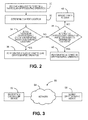
- Figure 2 is a flowchart showing a method of selectively providing cryptographic functionality based on determined location according to one particular embodiment of the invention.
- the method shown in Figure 2 is preferably implemented in the form of one or more routines that are executable by the processing unit 12.
- the method begins at step 30, wherein the processing unit 12 receives a request to perform a particular cryptographic operation.
- the request may be a. request to decrypt certain encrypted data using a particular key and algorithm, or a request to encrypt certain data and/or create a digital signature using a particular key and algorithm.
- the current location of the mobile electronic device 2 is determined. In one embodiment, the current location is determined by determining GPS coordinates using the GPS receiver 10.
- step 42 an error message is provided to the user (through one of the I/O devices 18 such as a display) indicating that the requested operation cannot be performed.
- the processing performed in step 38 may be optional, and instead if the answer in step 34 is no, the processing may proceed directly to step 42 without determining if an alternative cryptographic operation can be performed.
- encryption functionality using the mobile electronic device 2 may be permanently disabled (until reset by a trusted secure management infrastructure) -
- the mobile cryptography device 56 generates a first message and transmits the first message to the encryption controller device 52 through the network 54.
- the encryption controller device 52 receives the first message, authenticates the first message (using any of a number of known techniques) and in response transmits a second message to the mobile cryptography device 56 through the network 54.
- the mobile cryptography device 56 then authenticates the second message (using any of a number of known techniques).
- encryption functionality using the mobile cryptography device 56 may be permanently disabled (until reset by a trusted secure management infrastructure).
Landscapes
- Engineering & Computer Science (AREA)
- Computer Security & Cryptography (AREA)
- Computer Hardware Design (AREA)
- Computing Systems (AREA)
- General Engineering & Computer Science (AREA)
- Computer Networks & Wireless Communication (AREA)
- Signal Processing (AREA)
- Telephone Function (AREA)
- Mobile Radio Communication Systems (AREA)
Abstract
Description
- The present invention relates to cryptography systems, and in particular, to systems and methods for selectively providing cryptographic capabilities based on the location of a mobile cryptographic device.
- In order to protect confidential, sensitive and/or proprietary information, organizations, such as businesses, often store such information on their networks in an encrypted format. In addition, access to such information is sometimes restricted to particular secure locations, such as one or more secure buildings. In order for authorized individuals, such as employees, to gain access to such information, it will be necessary for the individuals to decrypt the encrypted information using an appropriate cryptographic key or keys and cryptographic algorithm. Typically this is done using a computer terminal (located in the secure location) that is provided with access to the network and appropriate required cyrptographic capabilities so that the encrypted data can be decrypted. The individual must also typically authenticate themselves to the computer terminal before access in this manner will be granted. Also, the computer terminal may be used to encrypt data to protect its privacy prior to being stored and/or securely transmitted to an authorized party.
- Individuals are becoming more and more mobile in their daily activities, even within a. secure location as described above. Such individuals use and depend on mobile computing devices such as notebook computers and handheld electronic devices such as PDA and smart phones. Such individuals would like to be able to use a mobile device to gain access to confidential, sensitive and/or proprietary information that is stored in an encrypted manner while they are located within the secure location. The organizations to which the information belongs, however, do not want authorized individuals to be able to use such mobile devices to access the information outside of the secure location in order to protect the privacy and security of the information. In addition, organizations may not want individuals to have the ability to encrypt data, especially using certain higher levels of "strong" cryptography, outside of the secure location. Thus, there is a need for a mobile device and system that will enable authorized individuals to gain access to confidential, sensitive and/or proprietary information that is stored in an encrypted manner and/or encrypt data (e.g., using "strong" cryptography), but only while they are located within a certain defined location, such as a secure location as described above.
- In one embodiment, a method of providing cryptographic functionality is provided that includes receiving a request to perform a cryptographic operation in a mobile electronic device, determining whether the cryptographic operation is permitted to be performed by the mobile electronic device based on the current location of the mobile electronic device, and performing the cryptographic operation in the mobile electronic device only if it is determined that the cryptographic operation is permitted. The method may include determining the current location in the mobile electronic device using, for example, GPS, triangulation by multiple mobile phone towers, or any other suitable method. In another embodiment, the step of determining whether the cryptographic operation is permitted to be performed by the mobile electronic device based on the current location of the mobile electronic device includes determining a round trip communications time between the mobile electronic device and an encryption controller device and determining that the cryptographic operation is permitted to be performed only if the round trip communications time is less than or equal to a threshold level.
- In one particular embodiment, the requested cryptographic operation is based on a certain level of cryptography having a certain strength, and if it is determined that the cryptographic operation is not permitted, the method further includes performing an alternative cryptographic operation based on an alternative level of cryptography having an alternative strength that is less than the certain strength.
- In another embodiment, a mobile electronic device providing cryptographic functionality is provided that includes a processing unit, a location determining module (e.g., a GPS receiver or a mobile phone receiver/transmitter module) operatively coupled to the processing unit that is structured to determine the current location of the mobile electronic device, and a cryptographic module. The processing unit is adapted to receive a request to perform a cryptographic operation and determine whether the cryptographic operation is permitted to be performed based on the current location. The cryptographic module will perform the cryptographic operation only if it is determined that the cryptographic operation is permitted.
- In another embodiment, a system for providing cryptographic functionality is provided that includes an encryption controller device operatively coupled to a network and a mobile cryptography device operatively coupled to a network. The mobile cryptography device includes a cryptographic module and a processing unit, wherein the processing unit is adapted to receive a request to perform a cryptographic operation, determine a round trip communications time between the mobile cryptography device and the encryption controller device through the network, and determine that the cryptographic operation is permitted to be performed only if the round trip communications time is less than or equal to a threshold level, and wherein the cryptographic module will perform the cryptographic operation only if it is determined that the cryptographic operation is permitted.
- Therefore, it should now be apparent that the invention substantially achieves all the above aspects and advantages. Additional aspects and advantages of the invention will be set forth in the description that follows, and in part will be obvious from the description, or may be learned by practice of the invention. Moreover, the aspects and advantages of the invention may be realized and obtained by means of the instrumentalities and combinations particularly pointed out in the appended claims.
- The accompanying drawings illustrate presently preferred embodiments of the invention, and together with the general description given above and the detailed, description given below, serve to explain the principles of the invention. As shown throughout the drawings, like reference numerals designate like or corresponding parts.
-
FIG. 1 is a block diagram of a mobile electronic device for selectively providing cryptographic capabilities based on location according to one particular embodiment of the present invention; -
FIG. 2 is a flowchart showing a method of selectively providing cryptographic functionality based on determined location according to one particular embodiment of the invention -
FIG. 3 is a block diagram of a system for selectively providing cryptographic capabilities based on location according to an alternative embodiment of the present invention; and -
FIG. 4 is a flowchart showing a method of selectively providing cryptographic functionality using the system ofFigure 3 according to one particular embodiment of the invention. - Directional phrases used herein, such as, for example and without limitation, top, bottom, left, right, upper, lower, front, back, and derivatives thereof, relate to the orientation of the elements shown in the drawings and are not limiting upon the claims unless expressly recited therein. As employed, herein, the statement that two or more parts or components are "coupled" together shall mean that the parts are joined or operate together either directly or through one or more intermediate parts or components. As employed herein, the statement that two or more parts or components "engage" one another shall mean that the parts exert a force against one another either directly or through one or more intermediate parts or components. As employed herein, the term "number" shall mean one or an integer greater than one (i.e., a plurality).
-
Figure 1 is a block diagram of a locationally intelligent mobileelectronic device 2 for selectively providing cryptographic capabilities based on location according to one particular embodiment of the present invention. The mobileelectronic device 2 includes ahousing 4 which comprises a tamper detection envelope operatively coupled to tamper detectcircuitry 6 provided within thehousing 4. Together, the tamper detection envelope of thehousing 4 and the tamper detectcircuitry 6 detect efforts to tamper with (e.g., access the contents of) the mobileelectronic device 2. A number of different tamper detection methodologies employing a suitable tamper detection envelope and a suitable tamper detectcircuitry 6 are known in the art and thus will not be described in detail herein. In short, the tamper detection envelope of thehousing 4 and the tamper detectcircuitry 6 are provided in order to protect the cryptographic keys included within thecryptographic coprocessor 8 and the location indicating modules, both described in greater detail below, from tapering and to report any such tamper attempts to theprocessing unit 12, also described below. For example, thetamper detection circuitry 6 may respond to a tamper attempt causing the erasure of the keys in thecryptographic coprocessor 8. Alternatively, theprocessing unit 12 may cause erasure of the keys in thecryptographic coprocessor 8 upon receipt of a report of a tamper attempt. - As seen in
Figure 1 , the mobileelectronic device 2 includes aprocessing unit 12, which may include a microprocessor, a microcontroller, or any other suitable processor, which is operatively coupled to a suitable memory for storing routines to be executed by theprocessing unit 12. Specifically, the memory, which may be separate from and/or internal to the microprocessor, microcontroller or other suitable processor, stores one or more routines for implementing the methods of operation described in greater detail elsewhere herein. - As also described in greater detail herein, the mobile
electronic device 2 is adapted to selectively provide certain predetermined cryptographic capabilities based on the current physical location the mobileelectronic device 2 that may be determined from any of a number of different sources. In the particular, non-limiting embodiment shown inFigure 1 , the mobileelectronic device 2 provides two different location determination methods, specifically global positioning system (GPS) coordinates, and triangulation by multiple mobile phone towers, either or both of which may be used to establish the current location of the mobileelectronic device 2. Thus, mobileelectronic device 2 shown inFigure 1 includes aGPS receiver 10 and a mobile phone receiver/transmitter module 14. which may be a wireless transceiver or separate wireless receiver and transmitter elements, both of which are operatively coupled to theprocessing unit 8. The particular manner in which data relating to the current location of the mobileelectronic device 2 is derived from the outputs received from theGPS receiver 10 and the mobile phone receiver/transmitter module 14 are well known in the art and thus will not be described in greater detail herein. In addition, theGPS receiver 10 and the mobile phone receiver/transmitter module 14 may be used together to provide location information. For example, the mobile phone receiver/transmitter module 14 may be used when a GPS signal is not available. Furthermore, location information may also be determined based on information received from a trusted GPS source external to the mobileelectronic device 2, or based on network traffic including cellular, Wi-Fi, satellite, etc. IP traffic may also be analyzed in an attempt to determine location. Other sensor data, such as accelerometer data, could aid in identifying potential issues with the use of the mobileelectronic device 2. For example, internal navigation based upon a form of dead reckoning, which involves calculating position based upon speed, time and direction as derived from a motion based source such as a plurality of accelerometers, may be used to determine whether the location information provided by other means, such as theGPS receiver 10 or the mobile phone receiver/transmitter module 14, is accurate. Moreover, detection of anomalous data such as large scale jumps in location could be used to identify risk situations that could require further location verification before requested encryption is provided as described herein or, alternatively, that could cause shut down of the mobileelectronic device 2. - Referring again to
Figure 1 , the mobileelectronic device 2 further includes a cryptographic module in the form of acryptographic coprocessor 8 which stores one or more cryptographic keys and associated cryptographic algorithms (which are executed by the cryptographic coprocessor 8) for encrypting and decrypting and/or digitally signing data. In one particular embodiment, thecryptographic coprocessor 8 ofFigure 1 includes cryptographic keys and associated cryptographic algorithms of varying levels and strengths (e.g., bit strengths), different ones of which will be available or not available based on the determined current location of the mobileelectronic device 2. For example, cryptography of a lower level/strength may be available in a wider area (in fact, its use may be unlimited) than, for example, "strong" cryptography, which will be available in a smaller limited area. Thecryptographic coprocessor 8 is operatively coupled to theprocessing unit 12 for exchanging data therewith (e.g., data to be encrypted or decrypted and/or encrypted or decrypted data). In an alternative embodiment, the cryptographic module, rather than being in the form of thecryptographic coprocessor 8 separate from theprocessing unit 12, may be part of theprocessing unit 12. The mobileelectronic device 2 further includesnon-volatile storage 16 which is operatively coupled to theprocessing unit 12. In an alternative embodiment, the cryptographic keys may be stored in thenonvolatile storage 16. - The mobile
electronic device 2 also further includes a number of I/O devices 18 for inputting information into the mobileelectronic device 2 and/or outputting information from the mobileelectronic device 2. For example, the I/O devices 18 may include, without limitation, a keyboard or touchscreen for manually inputting information into the mobileelectronic device 2, a scanner for scam1ing data such as documents and creating an image thereof which may later be processed by theprocessing unit 12 using, for example, optical character recognition (OCR) software, a wireless communications element, such as an. RF transceiver or an infrared transceiver, for wirelessly receiving data from an external source such as another electronic device, or a wired connection port, such, without limitation, a USB connection, for receiving data from another source, such as another external electronic device, via a wired connection. The I/O devices 18 may further include a mechanism for receiving biometric information of a user, such as a fingerprint reading device for scanning fingerprints, a retinal scanning device for generating a retinal scan, or a digital camera for capturing an image of the face of the user. The particular types of I/O devices 18 just described are meant to be exemplary, and it should be understood that other types of I/O devices 18 are also possible. - The mobile
electronic device 2 includes abattery 20 for providing power to the components of the mobileelectronic device 2 described above. Preferably, thebattery 20 is a rechargeable battery such as, without limitation, a rechargeable lithium ion battery. Finally, areal time clock 22 is coupled to theprocessing unit 12. - Furthermore, in accordance with an aspect of the present invention, in the exemplary embodiment, the
non-volatile storage 16 stores information (e.g., in a table form) that, for each cryptographic key and/or algorithm that is available in thecryptographic coprocessor 8, the location or locations (e.g., in the form of GPS or similar coordinates) where that cryptographic key and/or algorithm will be available for use. For example, for a particular cryptographic key and/or algorithm, such as a strong cryptographic key and/or algorithm, the location information stored therewith may define the boundaries of a particular secure building or buildings. As a result, and as described in greater detail below, that particular cryptographic key and/or algorithm will only be able to be used if the determined location of the mobile electronic device is determined to be within the prescribed location (e.g., within the boundaries of a particular secure building or buildings). -
Figure 2 is a flowchart showing a method of selectively providing cryptographic functionality based on determined location according to one particular embodiment of the invention. The method shown inFigure 2 is preferably implemented in the form of one or more routines that are executable by theprocessing unit 12. The method begins atstep 30, wherein theprocessing unit 12 receives a request to perform a particular cryptographic operation. For example, the request may be a. request to decrypt certain encrypted data using a particular key and algorithm, or a request to encrypt certain data and/or create a digital signature using a particular key and algorithm. Next, atstep 32, the current location of the mobileelectronic device 2 is determined. In one embodiment, the current location is determined by determining GPS coordinates using theGPS receiver 10. In another embodiment, the current location is determined using triangulation by multiple mobile phone towers using the mobile phone receiver/transmitter module 14. As noted elsewhere herein, other location determination methods are also possible. Then, atstep 34, theprocessing unit 12 determines whether the particular cryptographic operation that was requested is permitted based on the determined location and the information stored in the non-volatile memory described elsewhere herein. If the answer atstep 34 is yes, then, atstep 36, the particular requested cryptographic operation is performed by thecryptographic coprocessor 8 and the result is returned to theprocessing unit 12. - If, however, the answer at
step 34 is no, then optionally atstep 38, thecryptographic coprocessor 8 can determine if an alternative cryptographic operation can be performed. For example, thecryptographic coprocessor 8 may perform the requested operation (e.g., encrypting certain data or creating a certain digital signature) using a lower level/strength of cryptography (e.g., using a smaller or partially known key (smaller bit strength) or a different cryptography algorithm). In one particular embodiment, multiple levels of cryptography may be available using thecryptographic coprocessor 8, and if the answer atstep 38 is yes, then instep 40 thecryptographic coprocessor 8 may perform the requested operation (e.g., encrypting certain data or creating a certain digital signature) using the alternative cryptographic operation, e.g., the highest level of cryptography that is permitted, based on the determined location. For example, in this particular embodiment, thecryptographic coprocessor 8 may store a table that correlates determined location with maximum allowable cryptographic bit strengths so that the highest level of permitted cryptography may be provided based on determined location. Such a table may be securely updated on an as needed basis. In addition, use restrictions may be placed on the mobileelectronic device 2 that require that it be connected back with a secure management infrastructure on a periodic basis in order to ensure that the data in the table is kept up to date. The processing unit I2 may be programmed such that if the mobileelectronic device 2 does not communicate with the secure management infrastructure within an allotted time, theprocessing unit 12 will disable the mobileelectronic device 2 until it communicates with the secure management infrastructure. If the answer in 38 is no, then instep 42 an error message is provided to the user (through one of the I/O devices 18 such as a display) indicating that the requested operation cannot be performed. As noted above, the processing performed instep 38 may be optional, and instead if the answer instep 34 is no, the processing may proceed directly to step 42 without determining if an alternative cryptographic operation can be performed. - In another alternative embodiment, if the answer at
step step 42, encryption functionality using the mobileelectronic device 2 may be permanently disabled (until reset by a trusted secure management infrastructure) - -
Figure 3 is a block diagram of asystem 50 for selectively providing cryptographic capabilities based on location according to an alternative embodiment of the present invention. Thesystem 50 includes anencryption controller device 52 that is operatively coupled (e.g., by a wired or wireless connection) to anetwork 54. Theencryption controller device 52 is an electronic computing device that includes a processing unit (e.g., similar to processing unit 12), which may include a microprocessor, a microcontroller, or any other suitable processor, which is operatively coupled to a suitable memory for storing routines to be executed by the processing unit for implementing the functionality of theencryption controller device 52 in thesystem 50 as described in greater detail below.Network 54 may be one or more wired and/or wireless communications networks alone or in various combinations, and may include, without limitation, the Internet. - The
system 50 further includes amobile cryptography device 56 that is similar in construction to the mobileelectronic device 2 shown inFigure 1 and described in detail elsewhere herein. In the exemplary embodiment, themobile cryptography device 56 includes a housing similar tohousing 4, tamper detect circuitry similar to tamper detectcircuitry 6, a cryptographic coprocessor similar tocryptographic coprocessor 8, a processing unit similar toprocessing unit 12. nonvolatile storage similar tononvolatile storage 16, I/O devices similar to I/O devices 18, a battery similar to 20, and a real time clock similar toreal time clock 22. In addition,mobile cryptography device 56 further includes a wireless communications module that allows it to conduct wireless communications through thenetwork 54, using for example and without limitation, cellular or Wi-Fi technology. -
Figure 4 is a flowchart showing a method of selectively providing cryptographic functionality using thesystem 50 according to one particular embodiment of the invention. In this embodiment, communications transit time between themobile cryptography device 56 and theencryption controller device 52 is used to indicate the current location of themobile cryptography device 56, and thus whether a requested cryptographic operation should be performed. The method begins atstep 60, wherein the processing unit of themobile cryptography device 56 receives a request to perform a particular cryptographic operation. For example, the request may be a request to decrypt certain encrypted data using a particular key and algorithm, or a request to encrypt certain data and/or create a digital signature using a particular key and algorithm. Next, atstep 62, an authenticated communications exchange is performed betweenmobile cryptography device 56 and theencryption controller device 52. In particular, themobile cryptography device 56 generates a first message and transmits the first message to theencryption controller device 52 through thenetwork 54. Theencryption controller device 52 receives the first message, authenticates the first message (using any of a number of known techniques) and in response transmits a second message to themobile cryptography device 56 through thenetwork 54. Themobile cryptography device 56 then authenticates the second message (using any of a number of known techniques). - At
step 64, themobile cryptography device 56 then determines the round trip communication time for the authenticated communications exchange just described (i.e., the elapsed time between transmission of the first message and receipt of the second message). Next, atstep 66, themobile cryptography device 56 determines whether the requested particular cryptographic operation can be performed based on the determined round trip communication time. In particular, themobile cryptography device 56 will compare the determined round trip communication time to a stored, predetermined threshold time. If the determined round trip communication time is less than or equal to the threshold time, the requested particular cryptographic operation will be permitted. If, however, the determined round trip communication time is greater than the threshold time, the requested particular cryptographic operation will not be permitted. The stored, predetermined threshold time in this embodiment is a round trip communications time that indicates a certain physical distance from theencryption controller device 52 of a device that is communicating with it. That physical distance is, in this embodiment, the outside boundary (based on the location of the encryption controller device 52) for which the requested particular cryptographic operation will be permitted. For instance, in an exemplary embodiment, each microsecond of transit time may be considered to correspond to 30 miles of distance. Thus, the physical location of theencryption controller device 52 is determined in advance to establish this boundary. If the round trip communication time determined instep 64 is greater than the threshold time, this indicates that themobile cryptography device 56 is outside the boundary and the requested particular cryptographic operation will not be permitted. On the other hand, if the round trip communication time determined instep 64 is less than or equal to the threshold time, that indicates that themobile cryptography device 56 is at or inside the boundary and the requested particular cryptographic operation will be permitted. - As seen in
Figure 4 , if the answer atstep 66 is yes, then, atstep 68, the particular requested cryptographic operation is performed by the cryptographic coprocessor and the result is returned, to the processing unit of themobile cryptography device 56. If, however, the answer atstep 66 is no, then, optionally atstep 70, the cryptographic coprocessor of themobile cryptography device 56 can determine if an alternative cryptographic operation can be performed. For example, the cryptographic coprocessor of themobile cryptography device 56 may perform the requested operation (e.g., encrypting certain data or creating a certain digital signature) using a lower level/strength of cryptography (e.g., using a smaller or partially known key (smaller bit strength) or a different cryptography algorithm). In one particular embodiment, multiple levels of cryptography may be available using the cryptographic coprocessor, and if the answer atstep 70 is yes, then atstep 72 the cryptographic coprocessor of themobile cryptography device 56 may perform the requested operation (e.g., encrypting certain data or creating a certain digital signature) using the alternative cryptographic operation, e.g., the highest level of cryptography that is permitted, based on the determined location. For example, in this particular embodiment, the cryptographic coprocessor may store a table that correlates a number of round trip communications times with maximum allowable cryptographic bit strengths so that the highest level of permitted cryptography may be provided based on the determined round trip communications time. Such a table may be securely updated on an as needed basis. In addition, use restrictions may be placed on themobile cryptography device 56 that require that it communicate with a secure management infrastructure on a periodic basis in order to ensure that the data in the table is kept up to date. The processing unit of themobile cryptography device 56 may be programmed such that if themobile cryptography device 56 does not communicate with the secure management infrastructure within an allotted time, the processing unit will disable themobile cryptography device 56 until it communicates with the secure management infrastructure. If the answer instep 70 is no, then atstep 74 an error message is provided to the user (through one of the I/O devices such as a display) indicating that the requested operation cannot be performed. As noted above, the processing performed instep 70 may be optional, and instead if the answer atstep 66 is no, the processing may proceed directly to step 74 without determining if an alternative cryptographic operation can be performed. - In another alternative embodiment, if the answer at
step step 74, encryption functionality using themobile cryptography device 56 may be permanently disabled (until reset by a trusted secure management infrastructure). - In another alternative embodiment, the
encryption controller device 52 can determine the location of themobile cryptography device 56 based on the round trip communications time. If the determined round trip communication time is less than the predetermined threshold, theencryption controller device 52 can provide information required by themobile cryptography device 56 to perform the requested cryptographic operation. For example, a cryptographic key required by themobile cryptography device 56 could be split into two parts, with a first part being maintained by themobile cryptography device 56 and a second part being maintained by theencryption controller device 52. Upon determining that themobile cryptography device 56 is authorized to perform the requested cryptographic operation, theencryption controller device 52 will send the second part of the cryptographic key to themobile cryptography device 56. Thus, if themobile cryptography device 56 is not permitted to perform the requested operation, it will not have the information necessary to perform1 such operation. - White preferred embodiments of the invention have been described and illustrated above, it should be understood that these are exemplary of the invention and are not to be considered as limiting. Additions, deletions, substitutions, and other modifications can be made without departing from the spirit or scope of the present invention. For example, and without limitation, while the invention has been described herein in connection with limiting cryptographic functionality based on location within a specific secure location such as a building or buildings, it may also be used as an export compliant security device. In particular, in such an implementation, certain cryptographic functionality will only be enabled if the location of the device is determined to be within a particular country or countries. Put another way, certain cryptographic functionality (e.g., strong cryptographic functionality) will be disabled once the device is determined to have left certain predetermined countries such as the United States or has entered a country subject to export control. Accordingly, the invention is not to be considered as limited by the foregoing description but is only limited by the scope of the appended claims.
Claims (12)
- A method of providing cryptographic functionality using a mobile electronic device (2) comprising:receiving (30) a request to perform a cryptographic operation in the mobile electronic device (2);determining (34), by a processing device (12) of the mobile electronic device....(2), whether said cryptographic operation is permitted to be performed by said mobile electronic device (2) based on a current location of said mobile electronic device (2); andperforming (36) said cryptographic operation in said mobile electronic device (2) only if it is determined that said cryptographic operation is permitted.
- The method according to claim 1, wherein said determining comprises determining (32) said current location of said mobile electronic device (2).
- The method according to claim 2, wherein said determining (32) said current location of said mobile electronic device (2) comprises determining GPS coordinates of said current location in said mobile electronic device (2).
- The method according to claim 2 or 3, wherein said determining (32) said current location in said mobile electronic device (2) comprises determining said Current location based on triangulation by multiple mobile phone towers.
- The method according to any preceding claim, wherein said requested cryptographic operation is based on a certain level of cryptography having a certain strength, wherein if it is determined that said cryptographic operation is not permitted the method further comprises performing (40) an alternative cryptographic operation based on an alternative level of cryptography, said alternative level of cryptography have an alternative strength that is less than said certain strength.
- The method according to any preceding claim, wherein said determining (34) comprises determining a round trip communications time between said mobile electronic device (2; 56) and an encryption controller device (52) and determining that said cryptographic operation is permitted to be performed only if said round trip communications time is less than or equal to a threshold level.
- The method according to any preceding claim, wherein determining (34) whether said cryptographic operation is permitted to be performed by said mobile electronic device (2) based on a current location of said mobile electronic device comprises detez-uaining whether said current location is within a predetermined boundary.
- A mobile electronic device (2) providing cryptographic functionality, comprising:a processing unit (12);a location determining module (10; 14) operatively coupled to said processing unit (12), said location determining module (10) being structured to determine a current location of said mobile electronic device (2); anda cryptographic module (8);wherein said processing unit (12) is adapted to receive a request to perform a cryptographic operation and determine whether said cryptographic operation is permitted to be performed based on said current location, and wherein said cryptographic module (8) will perform said cryptographic operation only if it is determined that said cryptographic operation is permitted.
- The mobile electronic device according to claim 8, wherein said cryptographic module (8) is part of a cryptographic coprocessor separate from and operatively coupled to said processing unit (12).
- The mobile electronic device according to claim 8 or 9, wherein said location determining module comprises a GPS receiver (10).
- The mobile electronic device according to claim 8, 9 or 10, wherein said location determining module (10) comprises a mobile phone receiver/transmitter module (14).
- The mobile electronic device according to any one of claims 8 to 11, wherein said requested cryptographic operation is based on a certain level of cryptography having a certain strength, wherein if it is determined that said cryptographic operation is not permitted said cryptographic module (8) will perform an alternative cryptographic operation based on an alternative level of cryptography, said alternative level of cryptography have an alternative strength that is less than said certain strength.
Applications Claiming Priority (1)
| Application Number | Priority Date | Filing Date | Title |
|---|---|---|---|
| US12/644,118 US20110154050A1 (en) | 2009-12-22 | 2009-12-22 | System and method for selectively providing cryptographic capabilities based on location |
Publications (2)
| Publication Number | Publication Date |
|---|---|
| EP2339809A1 true EP2339809A1 (en) | 2011-06-29 |
| EP2339809B1 EP2339809B1 (en) | 2012-08-22 |
Family
ID=43856199
Family Applications (1)
| Application Number | Title | Priority Date | Filing Date |
|---|---|---|---|
| EP10191675A Not-in-force EP2339809B1 (en) | 2009-12-22 | 2010-11-18 | System and method for selectively providing cryptographic capabilities based on location |
Country Status (2)
| Country | Link |
|---|---|
| US (1) | US20110154050A1 (en) |
| EP (1) | EP2339809B1 (en) |
Families Citing this family (13)
| Publication number | Priority date | Publication date | Assignee | Title |
|---|---|---|---|---|
| US8730156B2 (en) * | 2010-03-05 | 2014-05-20 | Sony Computer Entertainment America Llc | Maintaining multiple views on a shared stable virtual space |
| US9594921B2 (en) | 2012-03-02 | 2017-03-14 | International Business Machines Corporation | System and method to provide server control for access to mobile client data |
| US9400226B2 (en) | 2013-04-09 | 2016-07-26 | Freescale Semiconductor, Inc. | Methods and apparatus for calibrating transducer-including devices |
| US9365413B2 (en) * | 2013-05-29 | 2016-06-14 | Freescale Semiconductor, Inc. | Transducer-including devices, and methods and apparatus for their calibration |
| US11658810B2 (en) | 2016-03-23 | 2023-05-23 | Telefonaktiebolaget Lm Ericsson (Publ) | Cyber-physical context-dependent cryptography |
| DE102016222617A1 (en) | 2016-11-17 | 2018-05-17 | Siemens Aktiengesellschaft | Protective device and network cabling device for protected transmission of data |
| US10405292B2 (en) * | 2017-08-21 | 2019-09-03 | Here Global B.V. | Supporting a secure terrestrial transmitter based positioning |
| EP3671254A1 (en) | 2018-12-20 | 2020-06-24 | HERE Global B.V. | Service for real-time spoofing/jamming/meaconing warning |
| EP3672305B1 (en) * | 2018-12-20 | 2023-10-25 | HERE Global B.V. | Enabling flexible provision of signature data of position data representing an estimated position |
| EP3672311B1 (en) | 2018-12-20 | 2026-05-27 | HERE Global B.V. | Device-centric learning of manipulated positioning |
| EP3672310B1 (en) | 2018-12-20 | 2026-07-22 | HERE Global B.V. | Identifying potentially manipulated radio signals and/or radio signal parameters based on radio map information |
| EP3671253A1 (en) | 2018-12-20 | 2020-06-24 | HERE Global B.V. | Crowd-sourcing of potentially manipulated radio signals and/or radio signal parameters |
| WO2021001999A1 (en) * | 2019-07-04 | 2021-01-07 | 三菱電機株式会社 | Information processing device and information processing method |
Citations (2)
| Publication number | Priority date | Publication date | Assignee | Title |
|---|---|---|---|---|
| WO1999065207A1 (en) * | 1998-06-12 | 1999-12-16 | Microsoft Corporation | Method and system of security location discrimination |
| WO2006109955A1 (en) * | 2005-04-15 | 2006-10-19 | Lg Electronics Inc. | Method for restricting content usage in digital rights management |
Family Cites Families (7)
| Publication number | Priority date | Publication date | Assignee | Title |
|---|---|---|---|---|
| US6044350A (en) * | 1998-12-24 | 2000-03-28 | Pitney Bowes Inc. | Certificate meter with selectable indemnification provisions |
| GB2348568A (en) * | 1999-03-31 | 2000-10-04 | Ibm | Enabling conformance to legislative requirements for mobile devices |
| US6868407B1 (en) * | 2000-11-02 | 2005-03-15 | Pitney Bowes Inc. | Postage security device having cryptographic keys with a variable key length |
| US7526800B2 (en) * | 2003-02-28 | 2009-04-28 | Novell, Inc. | Administration of protection of data accessible by a mobile device |
| JP3769580B2 (en) * | 2004-05-18 | 2006-04-26 | 株式会社東芝 | Information processing apparatus, information processing method, and information processing program |
| US7779252B2 (en) * | 2006-03-21 | 2010-08-17 | Harris Corporation | Computer architecture for a handheld electronic device with a shared human-machine interface |
| US20080240379A1 (en) * | 2006-08-03 | 2008-10-02 | Pudding Ltd. | Automatic retrieval and presentation of information relevant to the context of a user's conversation |
-
2009
- 2009-12-22 US US12/644,118 patent/US20110154050A1/en not_active Abandoned
-
2010
- 2010-11-18 EP EP10191675A patent/EP2339809B1/en not_active Not-in-force
Patent Citations (2)
| Publication number | Priority date | Publication date | Assignee | Title |
|---|---|---|---|---|
| WO1999065207A1 (en) * | 1998-06-12 | 1999-12-16 | Microsoft Corporation | Method and system of security location discrimination |
| WO2006109955A1 (en) * | 2005-04-15 | 2006-10-19 | Lg Electronics Inc. | Method for restricting content usage in digital rights management |
Non-Patent Citations (2)
| Title |
|---|
| MUHLBAUER ET AL: "Location constraints in digital rights management", COMPUTER COMMUNICATIONS, ELSEVIER SCIENCE PUBLISHERS BV, AMSTERDAM, NL, vol. 31, no. 6, 26 January 2008 (2008-01-26), pages 1173 - 1180, XP022558971, ISSN: 0140-3664 * |
| SHU WANG, JUNGWON MIN AND BYUNG K. YI: "Location Based Services for Mobiles: Technologies and Standards", IEEE INTERNATIONAL CONFERENCE ON COMMUNICATION (ICC) 2008, 19 May 2008 (2008-05-19), Beijing, China, XP002633307, Retrieved from the Internet <URL:http://to.swang.googlepages.com/ICC2008LBSforMobilessimplifiedR2.pdf> [retrieved on 20110418] * |
Also Published As
| Publication number | Publication date |
|---|---|
| EP2339809B1 (en) | 2012-08-22 |
| US20110154050A1 (en) | 2011-06-23 |
Similar Documents
| Publication | Publication Date | Title |
|---|---|---|
| EP2339809B1 (en) | System and method for selectively providing cryptographic capabilities based on location | |
| US9836906B2 (en) | Time synchronization | |
| US10366551B2 (en) | Analytic identity measures for physical access control methods | |
| US11398915B2 (en) | Apparatus and method for two-way authentication | |
| RU158940U1 (en) | STRICT AUTHENTICATION TOKEN WITH VISUAL OUTPUT OF OPEN KEY INFRASTRUCTURE SIGNATURES (PKI) | |
| US20240305979A1 (en) | Perimeter offline secure exchange of access control token | |
| US6948066B2 (en) | Technique for establishing provable chain of evidence | |
| EP2199943B1 (en) | Method and apparatus for evidencing a transaction using location information | |
| KR101613476B1 (en) | Face recognition based authenticable door-lock control system | |
| EP3605997B1 (en) | Method, apparatus and system for securing a mobile application | |
| SG183065A1 (en) | System and method for encrypted smart card pin entry | |
| US20130117572A1 (en) | Portable electronic device, system and method for authenticating a document associated with a geographical location | |
| CN107636663A (en) | The position relational physical properties of use environment are measured to protect the method and apparatus of application | |
| US7023362B2 (en) | Positional information storage system and method, semiconductor memory, and program | |
| KR20190045486A (en) | Method for Managing Distributed Commuting Record | |
| KR20190045495A (en) | Method for Managing Distributed Commuting Record by using Sound Wave Signal | |
| CN107026737B (en) | System for managing passwords through wearable equipment | |
| JP4150281B2 (en) | POSITION INFORMATION STORAGE SYSTEM, POSITION INFORMATION STORAGE METHOD, SEMICONDUCTOR MEMORY, AND PROGRAM | |
| EP4503518A1 (en) | Active access authentication method and device using the same | |
| KR20190044785A (en) | Method for Controlling Distributed Facility Access | |
| JP2008027381A (en) | Authentication system, authentication server, and authentication method | |
| KR101719063B1 (en) | System and method for controlling device | |
| EP2619940A2 (en) | Authentication | |
| KR20200143772A (en) | System, method and apparatus for preventing forgery and falsification of digital id | |
| KR20190044790A (en) | Method for Controlling Distributed Facility Access by using Sound Wave Signal |
Legal Events
| Date | Code | Title | Description |
|---|---|---|---|
| PUAI | Public reference made under article 153(3) epc to a published international application that has entered the european phase |
Free format text: ORIGINAL CODE: 0009012 |
|
| AK | Designated contracting states |
Kind code of ref document: A1 Designated state(s): AL AT BE BG CH CY CZ DE DK EE ES FI FR GB GR HR HU IE IS IT LI LT LU LV MC MK MT NL NO PL PT RO RS SE SI SK SM TR |
|
| AX | Request for extension of the european patent |
Extension state: BA ME |
|
| 17P | Request for examination filed |
Effective date: 20111212 |
|
| GRAP | Despatch of communication of intention to grant a patent |
Free format text: ORIGINAL CODE: EPIDOSNIGR1 |
|
| RIC1 | Information provided on ipc code assigned before grant |
Ipc: H04L 29/06 20060101AFI20120117BHEP |
|
| GRAS | Grant fee paid |
Free format text: ORIGINAL CODE: EPIDOSNIGR3 |
|
| GRAA | (expected) grant |
Free format text: ORIGINAL CODE: 0009210 |
|
| AK | Designated contracting states |
Kind code of ref document: B1 Designated state(s): AL AT BE BG CH CY CZ DE DK EE ES FI FR GB GR HR HU IE IS IT LI LT LU LV MC MK MT NL NO PL PT RO RS SE SI SK SM TR |
|
| REG | Reference to a national code |
Ref country code: GB Ref legal event code: FG4D |
|
| REG | Reference to a national code |
Ref country code: CH Ref legal event code: EP |
|
| REG | Reference to a national code |
Ref country code: IE Ref legal event code: FG4D |
|
| RIN2 | Information on inventor provided after grant (corrected) |
Inventor name: PARKOS, ARTHUR J. Inventor name: RYAN, FREDERICK W., JR. Inventor name: CORDERY, ROBERT A. |
|
| REG | Reference to a national code |
Ref country code: AT Ref legal event code: REF Ref document number: 572458 Country of ref document: AT Kind code of ref document: T Effective date: 20120915 |
|
| REG | Reference to a national code |
Ref country code: DE Ref legal event code: R096 Ref document number: 602010002465 Country of ref document: DE Effective date: 20121018 |
|
| REG | Reference to a national code |
Ref country code: NL Ref legal event code: VDEP Effective date: 20120822 |
|
| REG | Reference to a national code |
Ref country code: AT Ref legal event code: MK05 Ref document number: 572458 Country of ref document: AT Kind code of ref document: T Effective date: 20120822 |
|
| REG | Reference to a national code |
Ref country code: LT Ref legal event code: MG4D Effective date: 20120822 |
|
| PG25 | Lapsed in a contracting state [announced via postgrant information from national office to epo] |
Ref country code: AT Free format text: LAPSE BECAUSE OF FAILURE TO SUBMIT A TRANSLATION OF THE DESCRIPTION OR TO PAY THE FEE WITHIN THE PRESCRIBED TIME-LIMIT Effective date: 20120822 Ref country code: NO Free format text: LAPSE BECAUSE OF FAILURE TO SUBMIT A TRANSLATION OF THE DESCRIPTION OR TO PAY THE FEE WITHIN THE PRESCRIBED TIME-LIMIT Effective date: 20121122 Ref country code: FI Free format text: LAPSE BECAUSE OF FAILURE TO SUBMIT A TRANSLATION OF THE DESCRIPTION OR TO PAY THE FEE WITHIN THE PRESCRIBED TIME-LIMIT Effective date: 20120822 Ref country code: HR Free format text: LAPSE BECAUSE OF FAILURE TO SUBMIT A TRANSLATION OF THE DESCRIPTION OR TO PAY THE FEE WITHIN THE PRESCRIBED TIME-LIMIT Effective date: 20120822 Ref country code: IS Free format text: LAPSE BECAUSE OF FAILURE TO SUBMIT A TRANSLATION OF THE DESCRIPTION OR TO PAY THE FEE WITHIN THE PRESCRIBED TIME-LIMIT Effective date: 20121222 Ref country code: LT Free format text: LAPSE BECAUSE OF FAILURE TO SUBMIT A TRANSLATION OF THE DESCRIPTION OR TO PAY THE FEE WITHIN THE PRESCRIBED TIME-LIMIT Effective date: 20120822 |
|
| PG25 | Lapsed in a contracting state [announced via postgrant information from national office to epo] |
Ref country code: SI Free format text: LAPSE BECAUSE OF FAILURE TO SUBMIT A TRANSLATION OF THE DESCRIPTION OR TO PAY THE FEE WITHIN THE PRESCRIBED TIME-LIMIT Effective date: 20120822 Ref country code: LV Free format text: LAPSE BECAUSE OF FAILURE TO SUBMIT A TRANSLATION OF THE DESCRIPTION OR TO PAY THE FEE WITHIN THE PRESCRIBED TIME-LIMIT Effective date: 20120822 Ref country code: PT Free format text: LAPSE BECAUSE OF FAILURE TO SUBMIT A TRANSLATION OF THE DESCRIPTION OR TO PAY THE FEE WITHIN THE PRESCRIBED TIME-LIMIT Effective date: 20121224 Ref country code: SE Free format text: LAPSE BECAUSE OF FAILURE TO SUBMIT A TRANSLATION OF THE DESCRIPTION OR TO PAY THE FEE WITHIN THE PRESCRIBED TIME-LIMIT Effective date: 20120822 Ref country code: BE Free format text: LAPSE BECAUSE OF FAILURE TO SUBMIT A TRANSLATION OF THE DESCRIPTION OR TO PAY THE FEE WITHIN THE PRESCRIBED TIME-LIMIT Effective date: 20120822 Ref country code: GR Free format text: LAPSE BECAUSE OF FAILURE TO SUBMIT A TRANSLATION OF THE DESCRIPTION OR TO PAY THE FEE WITHIN THE PRESCRIBED TIME-LIMIT Effective date: 20121123 |
|
| PG25 | Lapsed in a contracting state [announced via postgrant information from national office to epo] |
Ref country code: NL Free format text: LAPSE BECAUSE OF FAILURE TO SUBMIT A TRANSLATION OF THE DESCRIPTION OR TO PAY THE FEE WITHIN THE PRESCRIBED TIME-LIMIT Effective date: 20120822 |
|
| PG25 | Lapsed in a contracting state [announced via postgrant information from national office to epo] |
Ref country code: DK Free format text: LAPSE BECAUSE OF FAILURE TO SUBMIT A TRANSLATION OF THE DESCRIPTION OR TO PAY THE FEE WITHIN THE PRESCRIBED TIME-LIMIT Effective date: 20120822 Ref country code: ES Free format text: LAPSE BECAUSE OF FAILURE TO SUBMIT A TRANSLATION OF THE DESCRIPTION OR TO PAY THE FEE WITHIN THE PRESCRIBED TIME-LIMIT Effective date: 20121203 Ref country code: RO Free format text: LAPSE BECAUSE OF FAILURE TO SUBMIT A TRANSLATION OF THE DESCRIPTION OR TO PAY THE FEE WITHIN THE PRESCRIBED TIME-LIMIT Effective date: 20120822 Ref country code: EE Free format text: LAPSE BECAUSE OF FAILURE TO SUBMIT A TRANSLATION OF THE DESCRIPTION OR TO PAY THE FEE WITHIN THE PRESCRIBED TIME-LIMIT Effective date: 20120822 Ref country code: CZ Free format text: LAPSE BECAUSE OF FAILURE TO SUBMIT A TRANSLATION OF THE DESCRIPTION OR TO PAY THE FEE WITHIN THE PRESCRIBED TIME-LIMIT Effective date: 20120822 |
|
| PG25 | Lapsed in a contracting state [announced via postgrant information from national office to epo] |
Ref country code: IT Free format text: LAPSE BECAUSE OF FAILURE TO SUBMIT A TRANSLATION OF THE DESCRIPTION OR TO PAY THE FEE WITHIN THE PRESCRIBED TIME-LIMIT Effective date: 20120822 Ref country code: PL Free format text: LAPSE BECAUSE OF FAILURE TO SUBMIT A TRANSLATION OF THE DESCRIPTION OR TO PAY THE FEE WITHIN THE PRESCRIBED TIME-LIMIT Effective date: 20120822 Ref country code: SK Free format text: LAPSE BECAUSE OF FAILURE TO SUBMIT A TRANSLATION OF THE DESCRIPTION OR TO PAY THE FEE WITHIN THE PRESCRIBED TIME-LIMIT Effective date: 20120822 |
|
| PLBE | No opposition filed within time limit |
Free format text: ORIGINAL CODE: 0009261 |
|
| STAA | Information on the status of an ep patent application or granted ep patent |
Free format text: STATUS: NO OPPOSITION FILED WITHIN TIME LIMIT |
|
| 26N | No opposition filed |
Effective date: 20130523 |
|
| PG25 | Lapsed in a contracting state [announced via postgrant information from national office to epo] |
Ref country code: RS Free format text: LAPSE BECAUSE OF FAILURE TO SUBMIT A TRANSLATION OF THE DESCRIPTION OR TO PAY THE FEE WITHIN THE PRESCRIBED TIME-LIMIT Effective date: 20120822 Ref country code: BG Free format text: LAPSE BECAUSE OF FAILURE TO SUBMIT A TRANSLATION OF THE DESCRIPTION OR TO PAY THE FEE WITHIN THE PRESCRIBED TIME-LIMIT Effective date: 20121122 |
|
| REG | Reference to a national code |
Ref country code: IE Ref legal event code: MM4A |
|
| REG | Reference to a national code |
Ref country code: DE Ref legal event code: R097 Ref document number: 602010002465 Country of ref document: DE Effective date: 20130523 |
|
| PG25 | Lapsed in a contracting state [announced via postgrant information from national office to epo] |
Ref country code: IE Free format text: LAPSE BECAUSE OF NON-PAYMENT OF DUE FEES Effective date: 20121118 |
|
| PG25 | Lapsed in a contracting state [announced via postgrant information from national office to epo] |
Ref country code: MT Free format text: LAPSE BECAUSE OF FAILURE TO SUBMIT A TRANSLATION OF THE DESCRIPTION OR TO PAY THE FEE WITHIN THE PRESCRIBED TIME-LIMIT Effective date: 20120822 Ref country code: AL Free format text: LAPSE BECAUSE OF FAILURE TO SUBMIT A TRANSLATION OF THE DESCRIPTION OR TO PAY THE FEE WITHIN THE PRESCRIBED TIME-LIMIT Effective date: 20120822 Ref country code: CY Free format text: LAPSE BECAUSE OF FAILURE TO SUBMIT A TRANSLATION OF THE DESCRIPTION OR TO PAY THE FEE WITHIN THE PRESCRIBED TIME-LIMIT Effective date: 20120822 |
|
| PG25 | Lapsed in a contracting state [announced via postgrant information from national office to epo] |
Ref country code: MC Free format text: LAPSE BECAUSE OF NON-PAYMENT OF DUE FEES Effective date: 20121130 Ref country code: TR Free format text: LAPSE BECAUSE OF FAILURE TO SUBMIT A TRANSLATION OF THE DESCRIPTION OR TO PAY THE FEE WITHIN THE PRESCRIBED TIME-LIMIT Effective date: 20120822 |
|
| PG25 | Lapsed in a contracting state [announced via postgrant information from national office to epo] |
Ref country code: LU Free format text: LAPSE BECAUSE OF NON-PAYMENT OF DUE FEES Effective date: 20121118 Ref country code: SM Free format text: LAPSE BECAUSE OF FAILURE TO SUBMIT A TRANSLATION OF THE DESCRIPTION OR TO PAY THE FEE WITHIN THE PRESCRIBED TIME-LIMIT Effective date: 20120822 |
|
| PG25 | Lapsed in a contracting state [announced via postgrant information from national office to epo] |
Ref country code: HU Free format text: LAPSE BECAUSE OF FAILURE TO SUBMIT A TRANSLATION OF THE DESCRIPTION OR TO PAY THE FEE WITHIN THE PRESCRIBED TIME-LIMIT Effective date: 20101118 |
|
| REG | Reference to a national code |
Ref country code: CH Ref legal event code: PL |
|
| PG25 | Lapsed in a contracting state [announced via postgrant information from national office to epo] |
Ref country code: MK Free format text: LAPSE BECAUSE OF FAILURE TO SUBMIT A TRANSLATION OF THE DESCRIPTION OR TO PAY THE FEE WITHIN THE PRESCRIBED TIME-LIMIT Effective date: 20120822 Ref country code: LI Free format text: LAPSE BECAUSE OF NON-PAYMENT OF DUE FEES Effective date: 20141130 Ref country code: CH Free format text: LAPSE BECAUSE OF NON-PAYMENT OF DUE FEES Effective date: 20141130 |
|
| REG | Reference to a national code |
Ref country code: FR Ref legal event code: PLFP Year of fee payment: 6 |
|
| REG | Reference to a national code |
Ref country code: FR Ref legal event code: PLFP Year of fee payment: 7 |
|
| REG | Reference to a national code |
Ref country code: FR Ref legal event code: PLFP Year of fee payment: 8 |
|
| PGFP | Annual fee paid to national office [announced via postgrant information from national office to epo] |
Ref country code: FR Payment date: 20171127 Year of fee payment: 8 Ref country code: DE Payment date: 20171129 Year of fee payment: 8 |
|
| PGFP | Annual fee paid to national office [announced via postgrant information from national office to epo] |
Ref country code: GB Payment date: 20171127 Year of fee payment: 8 |
|
| REG | Reference to a national code |
Ref country code: DE Ref legal event code: R119 Ref document number: 602010002465 Country of ref document: DE |
|
| GBPC | Gb: european patent ceased through non-payment of renewal fee |
Effective date: 20181118 |
|
| PG25 | Lapsed in a contracting state [announced via postgrant information from national office to epo] |
Ref country code: DE Free format text: LAPSE BECAUSE OF NON-PAYMENT OF DUE FEES Effective date: 20190601 Ref country code: FR Free format text: LAPSE BECAUSE OF NON-PAYMENT OF DUE FEES Effective date: 20181130 |
|
| PG25 | Lapsed in a contracting state [announced via postgrant information from national office to epo] |
Ref country code: GB Free format text: LAPSE BECAUSE OF NON-PAYMENT OF DUE FEES Effective date: 20181118 |