EP2339538A1 - Artifact-free filet view for virtual endoscopy of lumen structures - Google Patents
Artifact-free filet view for virtual endoscopy of lumen structures Download PDFInfo
- Publication number
- EP2339538A1 EP2339538A1 EP09306321A EP09306321A EP2339538A1 EP 2339538 A1 EP2339538 A1 EP 2339538A1 EP 09306321 A EP09306321 A EP 09306321A EP 09306321 A EP09306321 A EP 09306321A EP 2339538 A1 EP2339538 A1 EP 2339538A1
- Authority
- EP
- European Patent Office
- Prior art keywords
- sampling
- planes
- lumen
- unfolding axis
- sampling planes
- Prior art date
- Legal status (The legal status is an assumption and is not a legal conclusion. Google has not performed a legal analysis and makes no representation as to the accuracy of the status listed.)
- Granted
Links
Images


Classifications
-
- G—PHYSICS
- G06—COMPUTING OR CALCULATING; COUNTING
- G06T—IMAGE DATA PROCESSING OR GENERATION, IN GENERAL
- G06T19/00—Manipulating three-dimensional [3D] models or images for computer graphics
-
- G—PHYSICS
- G06—COMPUTING OR CALCULATING; COUNTING
- G06T—IMAGE DATA PROCESSING OR GENERATION, IN GENERAL
- G06T15/00—Three-dimensional [3D] image rendering
- G06T15/08—Volume rendering
-
- G—PHYSICS
- G06—COMPUTING OR CALCULATING; COUNTING
- G06T—IMAGE DATA PROCESSING OR GENERATION, IN GENERAL
- G06T2215/00—Indexing scheme for image rendering
- G06T2215/08—Gnomonic or central projection
-
- G—PHYSICS
- G06—COMPUTING OR CALCULATING; COUNTING
- G06T—IMAGE DATA PROCESSING OR GENERATION, IN GENERAL
- G06T2219/00—Indexing scheme for manipulating 3D models or images for computer graphics
- G06T2219/021—Flattening
Definitions
- the general field of the invention relates to, without being limited to, medical imaging. It finds applications in virtual endoscopy of substantially any lumen structure or hollow organ such as vessel or intestines, based on volumetric images generated by any suitable imagine technique such as computed tomography, resonance magnetic imaging or the like.
- Virtual endoscopy methods consist in exploring organs by navigating through data volumes acquired by medical imaging systems such as computed tomography scanners or magnetic resonance scanners. The investigations can then be done remotely at any time once the data has been acquired, without the inconvenience of using a real physical (real) endoscope on the patient.
- Medical imaging systems usually produce data sets in the form of 2D images representing the successive slices of a 3D volume.
- the data can be stored in standard file formats such as DICOM, to be subsequently used in various fashions depending on the application.
- the volume of information acquired is usually huge and difficult to analyze by a practitioner without the proper tools for the exploration.
- the great flexibility of numerical methods allows representation and exploration ways of a much higher flexibility and efficiency than direct visual inspection with a physical endoscope for instance.
- Organs can be extracted from the 3D data volume by image segmentation techniques, and displayed with computer tools in ways similar to what would be seen with a physical endoscope. More efficient representation methods can also be used, which bring more meaning for the practitioner.
- the data representation is for instance of major importance for the exploration of hollow organs like intestines or blood vessels, featuring an elongated lumen, because of their tubular geometry and the folds which make the inspection naturally uneasy.
- Applications are for instance virtual colonoscopy, for searching cancerous polyps in the intestine.
- the filet view or dissection view are efficient imaging methods for such organs. They consist in computing an image of a portion of intestine or vessel as if it had been cut longitudinally and open flat. These methods have the advantage of potentially allowing representations with minor spatial deformations, which is important to render properly the size and shapes of the features.
- the document WO 2006/000925 by Dekel et al. discloses a virtual endoscopy method based on what is called in the document a perspective filet view method.
- the method allows imaging the interior of an intestine, but in a way that still introduces important spatial deformations in an unpredictable way, as they depend on the shape of the lumen.
- the purpose of the invention is to propose an imaging method, well adapted in particular for the virtual endoscopy of elongated organs, where spatial deformations and display artifacts are minimized.
- the invention proposes a method for performing virtual endoscopy on a volumetric image of a lumen-defining structure having an elongated lumen, comprising steps of:
- the unfolding axis may substantially follow the center of the lumen.
- the ray casting step may further comprise steps of:
- the unfolded view may comprise series of pixels, each series corresponding to a sampling plane, each pixel corresponding to substantially identical arc length in the structure, said series of pixels being stacked so as to create a 2D image in the same order as the sampling positions of said sampling planes along said unfolding axis.
- the method of the invention may further comprise the step of readjusting the orientation of sampling planes so that said sampling planes do not cross each other inside the lumen.
- the method may further comprise the steps of:
- the method may further comprise the steps of smoothing the variations of orientation of the sampling planes along the unfolding axis before and after the step of readjusting the orientation said sampling planes.
- the method may further comprise the step of inserting additional sampling planes between consecutive existing sampling planes whose intersections with the structure are at some places separated by a distance larger than a pre-defined value.
- the filet view method according to the invention is illustrated on the imaging of a colon, which is an organ difficult to represent because of its irregular shape and numerous folds.
- the data is issued from a computed tomography scanner.
- This configuration is of course just an example of application of the invention without any intention to be limitative.
- the method of the invention can be applied without any loss of generality on any kind of other structures (including liver, blood vessels, ...) for which it may bring relevant information, and by using any kind of data obtained by any investigation system (including magnetic resonance imaging scanners, ).
- the purpose of the invention is to create an unfolded (or flattened) view of the inside of a tubular structure, able to be displayed as a 2D image.
- a first step consists in determining a path or unfolding axis 3.
- This unfolding axis 3 is substantially inside the lumen 2 and follows substantially the shape of the structure 1.
- this unfolding axis 3 follows substantially the center of the lumen 2.
- the axis 3 is determined from a preliminary step of analysis of the data in which the structure 1 is identified.
- a series of sampling planes 6 are defined along that path 3, so that each of them intersects with the path 3 at a sampling point, and so that each of them, at least initially, is substantially perpendicular to the path 3 at that sampling point.
- a 2D filet view image 30 is then built in such a way that the sampling points on the unfolding axis 3 correspond to an X coordinate in the output image, while the directions of the rays cast at a given sampling point correspond to a Y coordinate in the output image.
- the values of the pixels in the 2D filet view image 30 is determined as follows:
- the ray cast extends a ray 4 from the point on the unfolding axis 3. That ray 4 is increased by a predefined step increment until it intersects the wall of the tubular structure 1. That wall is for instance defined by an intensity threshold crossed in the data. Once an intersection has taken place, a normal or perpendicular vector to that wall is calculated at the intersection point using the central difference of the volume intensities at that point. This normal vector is then used to calculate the lighting, from which the pixel intensity on the output image 30 is deduced.
- deformations are due to the fact that a pixel in the 2D image 30, corresponding to a ray 4 sampled with constant angle increment ⁇ , represents a portion of the structure 1 whose dimension (or arc length I1 or I2 in figure 2 ) is not constant but proportional to the length ( r1 or r2 ) of the ray 4.
- theses representations bring also the risk of undersampling some places and missing some details.
- the sampling mode allows preserving a constant wall distance between pixels in the flattened view 30, so that the pixels of the filet view image 30 represent an area of the structure 1 of similar dimension.
- the sampling is done in the sampling plane 6 in such way that the rays 4 intercept a substantially constant arc length I of the structure wall 1. This is achieved by varying the sampling angle increment ⁇ according to the wall distance ri from the unfolding axis 3.
- the method of the invention results in a more realistic filet view image 30 which makes visible an additional information compared to prior art: the variations of diameter of the structure 1.
- the sampling rate of the structure is now substantially constant at least in the Y direction, so there is also much less risk compared to prior art methods to have details blurred by undersampling effects at some places.
- the angular sampling on the sampling planes 6 is preferably done over more that 360°, in order to avoid cutting details in the 2D image which would make them less noticeable. This results in overlapping areas corresponding to the upper and lower part of the filet view image 30. These overlapping areas 31 are made visible on the image 30 by a color coding: they appear for instance in figure 6 in darker tones that the non-overlapping areas 32.
- the sampling planes 6 may intersect each other inside the tubular structure 1 causing artifacts in the output filet view image 30. These artifacts may result in ghost images, with features displayed repetitively in the image 30. This problem is illustrated on figure 1 for the sampling plane 6a.
- the invention further comprises an artifact removal method whose purpose is to readjusts the sampling planes 6 so as to ensure that the following conditions are met in the filet-view image 30:
- the artifact removal method consists in readjusting the orientation of sampling planes 6, in order to avoid mutual crossings of planes inside the lumen 2. So after adjustment some sampling planes 6 are no longer perpendicular to the unfolding axis 3 but the structure 1 is described in an optimal way.
- the artifact-removal algorithm looks at each plane 6 on the unfolding axis 3 and the plane 6 preceding it (starting from the second position on the unfolding axis 3) and calculates whether the planes 6 intersect within the tubular structure lumen 2 ( figure 5a ). If so, the artifact-removal algorithm re-adjusts the orientation of the current plane 6 to move the intersection area between the planes 6 outside the wall of the tubular structure ( figure 5b ). The same process is then repeated for each sampling point corresponding to a sampling plane 6 on the unfolding axis 3.
- the unfolding axis 3 with the final spacing and the necessary sampling planes 6 is obtained by adding intermediate sampling planes 6c.
- the location and the orientation of these intermediate sampling planes 6c are obtained by interpolation between the sampling positions and by interpolation of the orientations of the sampling planes 6b along the rough path 3, using for instance a Catmull-Rom interpolation.
- the result is that the unfolding axis 3 holds as many sampling planes 6c as necessary and no one of these sampling planes 6c crosses another one inside the lumen 2.
- Such smoothing can be done with a sliding mean averaging or low-pass filtering of the variations along the unfolding axis 3 with a Gaussian kernel for instance.
- sampling planes 6 are added in areas where the sampling is not sufficient. The addition of planes is performed after the sampling plane 6 de-intersection. It is done by iteratively inserting a sampling plane 6 halfway between two consecutive sampling planes 6 whose intersections with the structure 1 are at some places separated by a distance larger than a pre-defined value, until no such case remains.
- the artifact-removal method can be used independently of the angular sampling method in the sampling planes. In particular it is also efficient when using a constant-angle sampling method.
Landscapes
- Engineering & Computer Science (AREA)
- Computer Graphics (AREA)
- Physics & Mathematics (AREA)
- General Physics & Mathematics (AREA)
- Theoretical Computer Science (AREA)
- Computer Hardware Design (AREA)
- General Engineering & Computer Science (AREA)
- Software Systems (AREA)
- Apparatus For Radiation Diagnosis (AREA)
Abstract
Description
- The general field of the invention relates to, without being limited to, medical imaging. It finds applications in virtual endoscopy of substantially any lumen structure or hollow organ such as vessel or intestines, based on volumetric images generated by any suitable imagine technique such as computed tomography, resonance magnetic imaging or the like.
- Virtual endoscopy methods consist in exploring organs by navigating through data volumes acquired by medical imaging systems such as computed tomography scanners or magnetic resonance scanners. The investigations can then be done remotely at any time once the data has been acquired, without the inconvenience of using a real physical (real) endoscope on the patient.
- Medical imaging systems usually produce data sets in the form of 2D images representing the successive slices of a 3D volume. The data can be stored in standard file formats such as DICOM, to be subsequently used in various fashions depending on the application.
- The volume of information acquired is usually huge and difficult to analyze by a practitioner without the proper tools for the exploration. In the other hand, the great flexibility of numerical methods allows representation and exploration ways of a much higher flexibility and efficiency than direct visual inspection with a physical endoscope for instance.
- Organs can be extracted from the 3D data volume by image segmentation techniques, and displayed with computer tools in ways similar to what would be seen with a physical endoscope. More efficient representation methods can also be used, which bring more meaning for the practitioner.
- In the other hand, a big care must be taken in avoiding display artifacts due to the algorithms.
- The data representation is for instance of major importance for the exploration of hollow organs like intestines or blood vessels, featuring an elongated lumen, because of their tubular geometry and the folds which make the inspection naturally uneasy. Applications are for instance virtual colonoscopy, for searching cancerous polyps in the intestine.
- The filet view or dissection view are efficient imaging methods for such organs. They consist in computing an image of a portion of intestine or vessel as if it had been cut longitudinally and open flat. These methods have the advantage of potentially allowing representations with minor spatial deformations, which is important to render properly the size and shapes of the features.
- The document
WO 2006/000925 by Dekel et al. discloses a virtual endoscopy method based on what is called in the document a perspective filet view method. The method allows imaging the interior of an intestine, but in a way that still introduces important spatial deformations in an unpredictable way, as they depend on the shape of the lumen. - The purpose of the invention is to propose an imaging method, well adapted in particular for the virtual endoscopy of elongated organs, where spatial deformations and display artifacts are minimized.
- In order to reach that objective, the invention proposes a method for performing virtual endoscopy on a volumetric image of a lumen-defining structure having an elongated lumen, comprising steps of:
- determining an unfolding axis substantially inside the lumen,
- defining sampling planes substantially perpendicular to and intersecting said unfolding axis at sampling positions,
- selecting ray casting directions in said sampling planes, extending radially from the unfolding axis with sampling angles,
- performing ray casting to define pixel values,
- arranging said pixel values into an unfolded view,
- According to an embodiment, the unfolding axis may substantially follow the center of the lumen.
- According to an embodiment, the ray casting step may further comprise steps of:
- extending a ray from the unfolding axis until it intersects the structure,
- calculating the vector normal to the structure at the intersection with the ray,
- calculating the lighting using said normal vector, and
- calculating said pixel value using the lighting.
- According to an embodiment, the unfolded view may comprise series of pixels, each series corresponding to a sampling plane, each pixel corresponding to substantially identical arc length in the structure, said series of pixels being stacked so as to create a 2D image in the same order as the sampling positions of said sampling planes along said unfolding axis.
- According to another aspect, the method of the invention may further comprise the step of readjusting the orientation of sampling planes so that said sampling planes do not cross each other inside the lumen.
- According to an embodiment, the method may further comprise the steps of:
- computing a rough unfolding axis with more widely spaced sampling points and more widely spaced first sampling planes,
- readjusting the orientation of said first sampling planes so that they do not cross each other inside the lumen,
- inserting second sampling planes between first sampling planes with position and orientation obtained by interpolation of positions and orientation of said first sampling planes.
- According to an embodiment, the method may further comprise the steps of smoothing the variations of orientation of the sampling planes along the unfolding axis before and after the step of readjusting the orientation said sampling planes.
- According to another aspect, the method may further comprise the step of inserting additional sampling planes between consecutive existing sampling planes whose intersections with the structure are at some places separated by a distance larger than a pre-defined value.
- It is a further object of the invention to provide a computer program implementing the method.
- The methods according to embodiments of the present invention may be better understood with reference to the drawings, being understood that these drawings are given for illustrative purposes only and are not meant to be limiting. Other aspects, goals and advantages of the invention shall be apparent from the descriptions given hereunder.
-
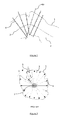
Figure 1 shows a longitudinal section view of an elongated organ with a lumen, and the sampling planes, -
Figure 2 shows a cross section view along a sampling plane of the same organ, with ray casting performed in accordance with prior art methods, -
Figure 3 shows a filet view of the organ, which is a portion of colon, obtained with the method of prior art, -
Figure 4 shows a cross section view along a sampling plane of the organ, with ray casting performed according to the method of the invention, -
Figure 5 shows dispositions of the sampling planes according to the invention, -
Figure 6 shows a filet view of the organ, which is a portion of colon, obtained with the method of the invention. - The filet view method according to the invention is illustrated on the imaging of a colon, which is an organ difficult to represent because of its irregular shape and numerous folds. The data is issued from a computed tomography scanner. This configuration is of course just an example of application of the invention without any intention to be limitative. The method of the invention can be applied without any loss of generality on any kind of other structures (including liver, blood vessels, ...) for which it may bring relevant information, and by using any kind of data obtained by any investigation system (including magnetic resonance imaging scanners, ...).
- As previously explained, the purpose of the invention is to create an unfolded (or flattened) view of the inside of a tubular structure, able to be displayed as a 2D image.
- With reference to
figure 1 , a first step consists in determining a path or unfoldingaxis 3. Thisunfolding axis 3 is substantially inside thelumen 2 and follows substantially the shape of thestructure 1. Preferably, thisunfolding axis 3 follows substantially the center of thelumen 2. Theaxis 3 is determined from a preliminary step of analysis of the data in which thestructure 1 is identified. - Then, a series of
sampling planes 6 are defined along thatpath 3, so that each of them intersects with thepath 3 at a sampling point, and so that each of them, at least initially, is substantially perpendicular to thepath 3 at that sampling point. - Next, series of
rays 4 issued from the sampling points are cast with radial directions in the sampling planes, into thelumen 2. - With reference to
figure 6 , a 2Dfilet view image 30 is then built in such a way that the sampling points on the unfoldingaxis 3 correspond to an X coordinate in the output image, while the directions of the rays cast at a given sampling point correspond to a Y coordinate in the output image. - According to a preferred mode of realization, with no intention to be limitative, the values of the pixels in the 2D
filet view image 30 is determined as follows: The ray cast extends aray 4 from the point on the unfoldingaxis 3. Thatray 4 is increased by a predefined step increment until it intersects the wall of thetubular structure 1. That wall is for instance defined by an intensity threshold crossed in the data. Once an intersection has taken place, a normal or perpendicular vector to that wall is calculated at the intersection point using the central difference of the volume intensities at that point. This normal vector is then used to calculate the lighting, from which the pixel intensity on theoutput image 30 is deduced. - With reference to
figure 2 , in prior art methods such as the one described inWO 2006/000925 , the unfolding of the view is done using a constant angle sampling method, in which thetubular structure 1 is sampled radially using a constant angle increment α between therays 4 cast in the sampling planes. As illustrated infigure 3 , this approach can lead to large deformations in thefilet view image 30 of the flattenedtubular structure 1 in the Y direction if the diameter of that tubular structure varies. These deformations are due to the fact that a pixel in the2D image 30, corresponding to aray 4 sampled with constant angle increment α, represents a portion of thestructure 1 whose dimension (or arc length I1 or I2 infigure 2 ) is not constant but proportional to the length (r1 or r2) of theray 4. In addition to geometrical deformations, theses representations bring also the risk of undersampling some places and missing some details. - With reference to
figure 4 andfigure 6 , in the method according to the invention the sampling mode allows preserving a constant wall distance between pixels in the flattenedview 30, so that the pixels of thefilet view image 30 represent an area of thestructure 1 of similar dimension. The sampling is done in thesampling plane 6 in such way that therays 4 intercept a substantially constant arc length I of thestructure wall 1. This is achieved by varying the sampling angle increment α according to the wall distance ri from the unfoldingaxis 3. The angle increment α from oneray 4 to the next is chosen to be inversely proportional to the wall distance ri, according to the formula:
- As shown in
figure 6 , the method of the invention results in a more realisticfilet view image 30 which makes visible an additional information compared to prior art: the variations of diameter of thestructure 1. In addition, the sampling rate of the structure is now substantially constant at least in the Y direction, so there is also much less risk compared to prior art methods to have details blurred by undersampling effects at some places. - The angular sampling on the sampling planes 6 is preferably done over more that 360°, in order to avoid cutting details in the 2D image which would make them less noticeable. This results in overlapping areas corresponding to the upper and lower part of the
filet view image 30. These overlappingareas 31 are made visible on theimage 30 by a color coding: they appear for instance infigure 6 in darker tones that thenon-overlapping areas 32. - In areas of high curvature, the
sampling planes 6 may intersect each other inside thetubular structure 1 causing artifacts in the outputfilet view image 30. These artifacts may result in ghost images, with features displayed repetitively in theimage 30. This problem is illustrated onfigure 1 for thesampling plane 6a. - In order to correct this problem, the invention further comprises an artifact removal method whose purpose is to readjusts the
sampling planes 6 so as to ensure that the following conditions are met in the filet-view image 30: - There are no artifacts resulting from
subsequent sampling planes 6 that intersect inside thetubular structure lumen 2, causing parts of thetubular structure 1 to be shown repetitively. - There are no features along the tubular structure 1 (above a specific user-set size), which are missed by the scanning because they are located between two sampling
planes 6. - The artifact removal method consists in readjusting the orientation of
sampling planes 6, in order to avoid mutual crossings of planes inside thelumen 2. So after adjustment somesampling planes 6 are no longer perpendicular to the unfoldingaxis 3 but thestructure 1 is described in an optimal way. - With reference to
figure 5 , the artifact-removal algorithm looks at eachplane 6 on the unfoldingaxis 3 and theplane 6 preceding it (starting from the second position on the unfolding axis 3) and calculates whether theplanes 6 intersect within the tubular structure lumen 2 (figure 5a ). If so, the artifact-removal algorithm re-adjusts the orientation of thecurrent plane 6 to move the intersection area between theplanes 6 outside the wall of the tubular structure (figure 5b ). The same process is then repeated for each sampling point corresponding to asampling plane 6 on the unfoldingaxis 3. - In order to avoid side effects due to numerical computation with limited precision and the large size of the
planes 6 compared to their spacing (which is actually very small), it is preferred to do the plane re-adjustment on a "rough unfolding axis" 3 with more widely spaced sampling points and consequently more widely spacedsampling planes 6b. This "rough unfolding axis" 3 is obtained by interpolating the original unfolding axis positions to a pre-defined spacing using for instance a Catmull-Rom Spline method. - Once the widely spaced
sampling planes 6b have been adjusted, the unfoldingaxis 3 with the final spacing and thenecessary sampling planes 6 is obtained by adding intermediate sampling planes 6c. The location and the orientation of theseintermediate sampling planes 6c are obtained by interpolation between the sampling positions and by interpolation of the orientations of the sampling planes 6b along therough path 3, using for instance a Catmull-Rom interpolation. The result is that the unfoldingaxis 3 holds asmany sampling planes 6c as necessary and no one of thesesampling planes 6c crosses another one inside thelumen 2. - In addition to the correction of the crossings of the
sampling planes 6 into thelumen 2, or plane de-intersection step, a smoothing of the variations of the plane orientations can be advantageously done before and after that de-intersection : - The smoothing before the de-intersection helps to avoid problems with planes that are too much intertwined to be corrected properly,
- The smoothing after the de-intersection makes the spacing between planes more even and helps increasing the quality of the final rendering.
- Such smoothing can be done with a sliding mean averaging or low-pass filtering of the variations along the unfolding
axis 3 with a Gaussian kernel for instance. - In addition to plane intersections, high curvature areas also pose the danger that some anatomical feature (e.g. a polyp) may be missed on the outer edge of the curve due to the increased sampling spacing (see
figure 5 ). To avoid this problem,additional sampling planes 6 are added in areas where the sampling is not sufficient. The addition of planes is performed after thesampling plane 6 de-intersection. It is done by iteratively inserting asampling plane 6 halfway between twoconsecutive sampling planes 6 whose intersections with thestructure 1 are at some places separated by a distance larger than a pre-defined value, until no such case remains. - The artifact-removal method can be used independently of the angular sampling method in the sampling planes. In particular it is also efficient when using a constant-angle sampling method.
- While this invention has been described in conjunction with a number of embodiments, it is evident that many alternatives, modifications and variations would be or are apparent to those of ordinary skill in the applicable arts. Accordingly, it is intended to embrace all such alternatives, modifications, equivalents and variations that are within the spirit and scope of this invention.
Claims (9)
- A method for performing virtual endoscopy on a volumetric image of a lumen-defining structure (1) having an elongated lumen (2), comprising steps of:- determining an unfolding axis (3) substantially inside the lumen (2),- defining sampling planes (6) substantially perpendicular to and intersecting said unfolding axis (3) at sampling positions,- selecting ray casting directions (4) in said sampling planes (6), extending radially from the unfolding axis (3) with sampling angles,- performing ray casting to define pixel values,- arranging said pixel values into an unfolded view (30),
wherein said ray casting directions (4) are selected so that the angle increment between them is substantially inversely proportional to the ray propagation distance into the lumen (2), from the unfolding axis (3) to the structure (1). - The method of claim 1, wherein the unfolding axis (3) substantially follows the center of the lumen (2).
- The method of claim 1 or 2, wherein said ray casting further comprises steps of:- extending a ray (4) from the unfolding axis (3) until it intersects the structure (1),- calculating the vector normal to the structure (1) at the intersection with the ray (4),- calculating the lighting using said normal vector, and- calculating said pixel value using the lighting.
- The method of any of the preceding claims, wherein said unfolded view (30) comprises series of pixels, each series corresponding to a sampling plane (6), each pixel corresponding to substantially identical arc length in the structure (1), said series of pixels being stacked so as to create a 2D image in the same order as the sampling positions of said sampling planes (6) along said unfolding axis (3).
- The method of any of the preceding claims, further comprising the step of readjusting the orientation of sampling planes (6) so that said sampling planes (6) do not cross each other inside the lumen (2).
- The method of claim 5, further comprising the steps of:- computing a rough unfolding axis (3) with more widely spaced sampling points and more widely spaced first sampling planes (6b),- readjusting the orientation of said first sampling planes (6b) so that they do not cross each other inside the lumen (2),- inserting second sampling planes (6c) between first sampling planes (6b) with position and orientation obtained by interpolation of positions and orientation of said first sampling planes (6b).
- The method of claim 5 of 6, further comprising the steps of smoothing the variations of orientation of the sampling planes (6) along the unfolding axis (3) before and after the step of readjusting the orientation said sampling planes (6).
- The method of any of the preceding claims, further comprising the step of inserting additional sampling planes (6) between consecutive existing sampling planes (6) whose intersections with the structure (1) are at some places separated by a distance larger than a pre-defined value.
- Computer program implementing the method of any of the preceding claims.
Priority Applications (1)
| Application Number | Priority Date | Filing Date | Title |
|---|---|---|---|
| EP20090306321 EP2339538B1 (en) | 2009-12-23 | 2009-12-23 | Artifact-free filet view for virtual endoscopy of lumen structures |
Applications Claiming Priority (1)
| Application Number | Priority Date | Filing Date | Title |
|---|---|---|---|
| EP20090306321 EP2339538B1 (en) | 2009-12-23 | 2009-12-23 | Artifact-free filet view for virtual endoscopy of lumen structures |
Publications (2)
| Publication Number | Publication Date |
|---|---|
| EP2339538A1 true EP2339538A1 (en) | 2011-06-29 |
| EP2339538B1 EP2339538B1 (en) | 2014-02-12 |
Family
ID=42199930
Family Applications (1)
| Application Number | Title | Priority Date | Filing Date |
|---|---|---|---|
| EP20090306321 Active EP2339538B1 (en) | 2009-12-23 | 2009-12-23 | Artifact-free filet view for virtual endoscopy of lumen structures |
Country Status (1)
| Country | Link |
|---|---|
| EP (1) | EP2339538B1 (en) |
Cited By (2)
| Publication number | Priority date | Publication date | Assignee | Title |
|---|---|---|---|---|
| WO2023109658A1 (en) * | 2021-12-18 | 2023-06-22 | 深圳先进技术研究院 | Custom convolution path method for segmentation of blood vessel wall image |
| CN120931518A (en) * | 2025-07-24 | 2025-11-11 | 深圳麦默康医疗科技有限公司 | Fiber endoscope dynamic mole pattern elimination method based on deep learning |
Citations (1)
| Publication number | Priority date | Publication date | Assignee | Title |
|---|---|---|---|---|
| WO2006000925A2 (en) | 2004-06-23 | 2006-01-05 | Koninklijke Philips Electronics, N.V. | Virtual endoscopy |
-
2009
- 2009-12-23 EP EP20090306321 patent/EP2339538B1/en active Active
Patent Citations (1)
| Publication number | Priority date | Publication date | Assignee | Title |
|---|---|---|---|---|
| WO2006000925A2 (en) | 2004-06-23 | 2006-01-05 | Koninklijke Philips Electronics, N.V. | Virtual endoscopy |
Non-Patent Citations (4)
| Title |
|---|
| A. VILANOVA BARTROLI ET AL: "Virtual Colon Flattening", VISSYM '01 JOINT EUROGRAPHICS - IEEE TCVG SYMPOSIUM ON VISUALIZATION, CONFERENCE PROCEEDINGS, May 2001 (2001-05-01), pages 127 - 136, XP002585534, Retrieved from the Internet <URL:http://www.cg.tuwien.ac.at/research/vis/vismed/ColonFlattening/> [retrieved on 20100601] * |
| ALARK JOSHI: "lecture notes on ray-casting", March 2005 (2005-03-01), XP002585535, Retrieved from the Internet <URL:http://www.cs.umbc.edu/~alark1/cmsc435/lectures/RayCasting4.pdf> [retrieved on 20100601] * |
| SHIN B S ET AL: "Efficient unfolding of virtual endoscopy using linear ray interpolation", COMPUTER METHODS AND PROGRAMS IN BIOMEDICINE, ELSEVIER, AMSTERDAM, NL LNKD- DOI:10.1016/J.CMPB.2008.09.003, vol. 93, no. 2, 1 February 2009 (2009-02-01), pages 174 - 184, XP025770037, ISSN: 0169-2607, [retrieved on 20081023] * |
| VILANOVA BARTROLI A V ET AL: "Nonlinear virtual colon unfolding", VISUALIZATION, 2001. VIS '01. PROCEEDINGS, IEEE, PI LNKD- DOI:10.1109/VISUAL.2001.964540, 1 January 2001 (2001-01-01), pages 411 - 579, XP031172915, ISBN: 978-0-7803-7201-6 * |
Cited By (3)
| Publication number | Priority date | Publication date | Assignee | Title |
|---|---|---|---|---|
| WO2023109658A1 (en) * | 2021-12-18 | 2023-06-22 | 深圳先进技术研究院 | Custom convolution path method for segmentation of blood vessel wall image |
| CN120931518A (en) * | 2025-07-24 | 2025-11-11 | 深圳麦默康医疗科技有限公司 | Fiber endoscope dynamic mole pattern elimination method based on deep learning |
| CN120931518B (en) * | 2025-07-24 | 2026-04-17 | 深圳麦默康医疗科技有限公司 | A Deep Learning-Based Method for Eliminating Dynamic Moiré Patterns in Fiber Optic Endoscopes |
Also Published As
| Publication number | Publication date |
|---|---|
| EP2339538B1 (en) | 2014-02-12 |
Similar Documents
| Publication | Publication Date | Title |
|---|---|---|
| US7167180B1 (en) | Automatic path planning system and method | |
| US8743118B2 (en) | Medical image display device and medical image display method | |
| JP4388104B2 (en) | Image processing method, image processing program, and image processing apparatus | |
| EP2423877A1 (en) | Endoscopic image processing device, method and program | |
| JP5492024B2 (en) | Region division result correction apparatus, method, and program | |
| EP3025303B1 (en) | Multi-modal segmentation of image data | |
| CN101166470A (en) | Image display device and program | |
| CN103971403A (en) | Fast rendering of curved reformation of a 3D tubular structure | |
| JP2017164496A (en) | Medical image processing apparatus and medical image processing program | |
| JP2011212219A (en) | Projection image generation apparatus, method, and program | |
| Auzinger et al. | Vessel visualization using curved surface reformation | |
| US9019272B2 (en) | Curved planar reformation | |
| JP2007144177A (en) | Method and apparatus for semi-automatic segmentation technique for low-contrast tube-shaped objects | |
| JP5194138B2 (en) | Image diagnosis support apparatus, operation method thereof, and image diagnosis support program | |
| JP5415068B2 (en) | Visualization of cut surfaces of curved and elongated structures | |
| EP3389006B1 (en) | Rib unfolding from magnetic resonance images | |
| JP2006000205A (en) | Projection image processing method, projection image processing program, and projection image processing apparatus | |
| EP2339538B1 (en) | Artifact-free filet view for virtual endoscopy of lumen structures | |
| JP5890537B2 (en) | Method and system for generating a multidimensional surface model of a geometric structure | |
| CN1870054B (en) | Method and system for processing medical image data | |
| JP2019114035A (en) | Computer program, image processing device, image processing method and voxel data | |
| JP7155670B2 (en) | Medical image processing apparatus, medical image processing method, program, and data creation method | |
| JP2003518302A (en) | Determination of the shortest path between two points on a polygonal surface by an iterative method | |
| EP2896367B1 (en) | Medical image display device, method, and programme | |
| JP2009514585A (en) | Image processing system and method for displaying silhouette rendering and images during interventional procedures |
Legal Events
| Date | Code | Title | Description |
|---|---|---|---|
| PUAI | Public reference made under article 153(3) epc to a published international application that has entered the european phase |
Free format text: ORIGINAL CODE: 0009012 |
|
| AK | Designated contracting states |
Kind code of ref document: A1 Designated state(s): AT BE BG CH CY CZ DE DK EE ES FI FR GB GR HR HU IE IS IT LI LT LU LV MC MK MT NL NO PL PT RO SE SI SK SM TR |
|
| AX | Request for extension of the european patent |
Extension state: AL BA RS |
|
| 17P | Request for examination filed |
Effective date: 20111208 |
|
| 17Q | First examination report despatched |
Effective date: 20130205 |
|
| RIC1 | Information provided on ipc code assigned before grant |
Ipc: G06T 15/00 20110101ALI20130614BHEP Ipc: G06T 7/00 20060101AFI20130614BHEP Ipc: G06T 19/00 20110101ALI20130614BHEP |
|
| GRAP | Despatch of communication of intention to grant a patent |
Free format text: ORIGINAL CODE: EPIDOSNIGR1 |
|
| INTG | Intention to grant announced |
Effective date: 20130806 |
|
| GRAS | Grant fee paid |
Free format text: ORIGINAL CODE: EPIDOSNIGR3 |
|
| GRAA | (expected) grant |
Free format text: ORIGINAL CODE: 0009210 |
|
| AK | Designated contracting states |
Kind code of ref document: B1 Designated state(s): AT BE BG CH CY CZ DE DK EE ES FI FR GB GR HR HU IE IS IT LI LT LU LV MC MK MT NL NO PL PT RO SE SI SK SM TR |
|
| AX | Request for extension of the european patent |
Extension state: AL BA RS |
|
| REG | Reference to a national code |
Ref country code: GB Ref legal event code: FG4D |
|
| REG | Reference to a national code |
Ref country code: CH Ref legal event code: EP |
|
| REG | Reference to a national code |
Ref country code: AT Ref legal event code: REF Ref document number: 652424 Country of ref document: AT Kind code of ref document: T Effective date: 20140215 |
|
| REG | Reference to a national code |
Ref country code: IE Ref legal event code: FG4D |
|
| REG | Reference to a national code |
Ref country code: DE Ref legal event code: R096 Ref document number: 602009021785 Country of ref document: DE Effective date: 20140327 |
|
| REG | Reference to a national code |
Ref country code: NL Ref legal event code: VDEP Effective date: 20140212 |
|
| REG | Reference to a national code |
Ref country code: AT Ref legal event code: MK05 Ref document number: 652424 Country of ref document: AT Kind code of ref document: T Effective date: 20140212 |
|
| REG | Reference to a national code |
Ref country code: LT Ref legal event code: MG4D |
|
| PG25 | Lapsed in a contracting state [announced via postgrant information from national office to epo] |
Ref country code: NO Free format text: LAPSE BECAUSE OF FAILURE TO SUBMIT A TRANSLATION OF THE DESCRIPTION OR TO PAY THE FEE WITHIN THE PRESCRIBED TIME-LIMIT Effective date: 20140512 Ref country code: LT Free format text: LAPSE BECAUSE OF FAILURE TO SUBMIT A TRANSLATION OF THE DESCRIPTION OR TO PAY THE FEE WITHIN THE PRESCRIBED TIME-LIMIT Effective date: 20140212 Ref country code: IS Free format text: LAPSE BECAUSE OF FAILURE TO SUBMIT A TRANSLATION OF THE DESCRIPTION OR TO PAY THE FEE WITHIN THE PRESCRIBED TIME-LIMIT Effective date: 20140612 |
|
| PG25 | Lapsed in a contracting state [announced via postgrant information from national office to epo] |
Ref country code: PT Free format text: LAPSE BECAUSE OF FAILURE TO SUBMIT A TRANSLATION OF THE DESCRIPTION OR TO PAY THE FEE WITHIN THE PRESCRIBED TIME-LIMIT Effective date: 20140612 Ref country code: CY Free format text: LAPSE BECAUSE OF FAILURE TO SUBMIT A TRANSLATION OF THE DESCRIPTION OR TO PAY THE FEE WITHIN THE PRESCRIBED TIME-LIMIT Effective date: 20140212 Ref country code: FI Free format text: LAPSE BECAUSE OF FAILURE TO SUBMIT A TRANSLATION OF THE DESCRIPTION OR TO PAY THE FEE WITHIN THE PRESCRIBED TIME-LIMIT Effective date: 20140212 Ref country code: ES Free format text: LAPSE BECAUSE OF FAILURE TO SUBMIT A TRANSLATION OF THE DESCRIPTION OR TO PAY THE FEE WITHIN THE PRESCRIBED TIME-LIMIT Effective date: 20140212 Ref country code: AT Free format text: LAPSE BECAUSE OF FAILURE TO SUBMIT A TRANSLATION OF THE DESCRIPTION OR TO PAY THE FEE WITHIN THE PRESCRIBED TIME-LIMIT Effective date: 20140212 Ref country code: NL Free format text: LAPSE BECAUSE OF FAILURE TO SUBMIT A TRANSLATION OF THE DESCRIPTION OR TO PAY THE FEE WITHIN THE PRESCRIBED TIME-LIMIT Effective date: 20140212 Ref country code: SE Free format text: LAPSE BECAUSE OF FAILURE TO SUBMIT A TRANSLATION OF THE DESCRIPTION OR TO PAY THE FEE WITHIN THE PRESCRIBED TIME-LIMIT Effective date: 20140212 |
|
| PG25 | Lapsed in a contracting state [announced via postgrant information from national office to epo] |
Ref country code: HR Free format text: LAPSE BECAUSE OF FAILURE TO SUBMIT A TRANSLATION OF THE DESCRIPTION OR TO PAY THE FEE WITHIN THE PRESCRIBED TIME-LIMIT Effective date: 20140212 Ref country code: BE Free format text: LAPSE BECAUSE OF FAILURE TO SUBMIT A TRANSLATION OF THE DESCRIPTION OR TO PAY THE FEE WITHIN THE PRESCRIBED TIME-LIMIT Effective date: 20140212 Ref country code: LV Free format text: LAPSE BECAUSE OF FAILURE TO SUBMIT A TRANSLATION OF THE DESCRIPTION OR TO PAY THE FEE WITHIN THE PRESCRIBED TIME-LIMIT Effective date: 20140212 |
|
| PG25 | Lapsed in a contracting state [announced via postgrant information from national office to epo] |
Ref country code: DK Free format text: LAPSE BECAUSE OF FAILURE TO SUBMIT A TRANSLATION OF THE DESCRIPTION OR TO PAY THE FEE WITHIN THE PRESCRIBED TIME-LIMIT Effective date: 20140212 Ref country code: CZ Free format text: LAPSE BECAUSE OF FAILURE TO SUBMIT A TRANSLATION OF THE DESCRIPTION OR TO PAY THE FEE WITHIN THE PRESCRIBED TIME-LIMIT Effective date: 20140212 Ref country code: RO Free format text: LAPSE BECAUSE OF FAILURE TO SUBMIT A TRANSLATION OF THE DESCRIPTION OR TO PAY THE FEE WITHIN THE PRESCRIBED TIME-LIMIT Effective date: 20140212 Ref country code: EE Free format text: LAPSE BECAUSE OF FAILURE TO SUBMIT A TRANSLATION OF THE DESCRIPTION OR TO PAY THE FEE WITHIN THE PRESCRIBED TIME-LIMIT Effective date: 20140212 |
|
| REG | Reference to a national code |
Ref country code: DE Ref legal event code: R097 Ref document number: 602009021785 Country of ref document: DE |
|
| PG25 | Lapsed in a contracting state [announced via postgrant information from national office to epo] |
Ref country code: SK Free format text: LAPSE BECAUSE OF FAILURE TO SUBMIT A TRANSLATION OF THE DESCRIPTION OR TO PAY THE FEE WITHIN THE PRESCRIBED TIME-LIMIT Effective date: 20140212 Ref country code: PL Free format text: LAPSE BECAUSE OF FAILURE TO SUBMIT A TRANSLATION OF THE DESCRIPTION OR TO PAY THE FEE WITHIN THE PRESCRIBED TIME-LIMIT Effective date: 20140212 |
|
| PLBE | No opposition filed within time limit |
Free format text: ORIGINAL CODE: 0009261 |
|
| STAA | Information on the status of an ep patent application or granted ep patent |
Free format text: STATUS: NO OPPOSITION FILED WITHIN TIME LIMIT |
|
| 26N | No opposition filed |
Effective date: 20141113 |
|
| REG | Reference to a national code |
Ref country code: DE Ref legal event code: R097 Ref document number: 602009021785 Country of ref document: DE Effective date: 20141113 |
|
| PG25 | Lapsed in a contracting state [announced via postgrant information from national office to epo] |
Ref country code: IT Free format text: LAPSE BECAUSE OF FAILURE TO SUBMIT A TRANSLATION OF THE DESCRIPTION OR TO PAY THE FEE WITHIN THE PRESCRIBED TIME-LIMIT Effective date: 20140212 |
|
| PG25 | Lapsed in a contracting state [announced via postgrant information from national office to epo] |
Ref country code: SI Free format text: LAPSE BECAUSE OF FAILURE TO SUBMIT A TRANSLATION OF THE DESCRIPTION OR TO PAY THE FEE WITHIN THE PRESCRIBED TIME-LIMIT Effective date: 20140212 |
|
| REG | Reference to a national code |
Ref country code: DE Ref legal event code: R119 Ref document number: 602009021785 Country of ref document: DE |
|
| PG25 | Lapsed in a contracting state [announced via postgrant information from national office to epo] |
Ref country code: LU Free format text: LAPSE BECAUSE OF FAILURE TO SUBMIT A TRANSLATION OF THE DESCRIPTION OR TO PAY THE FEE WITHIN THE PRESCRIBED TIME-LIMIT Effective date: 20141223 |
|
| REG | Reference to a national code |
Ref country code: CH Ref legal event code: PL |
|
| GBPC | Gb: european patent ceased through non-payment of renewal fee |
Effective date: 20141223 |
|
| REG | Reference to a national code |
Ref country code: IE Ref legal event code: MM4A |
|
| PG25 | Lapsed in a contracting state [announced via postgrant information from national office to epo] |
Ref country code: GB Free format text: LAPSE BECAUSE OF NON-PAYMENT OF DUE FEES Effective date: 20141223 Ref country code: CH Free format text: LAPSE BECAUSE OF NON-PAYMENT OF DUE FEES Effective date: 20141231 Ref country code: IE Free format text: LAPSE BECAUSE OF NON-PAYMENT OF DUE FEES Effective date: 20141223 Ref country code: LI Free format text: LAPSE BECAUSE OF NON-PAYMENT OF DUE FEES Effective date: 20141231 Ref country code: DE Free format text: LAPSE BECAUSE OF NON-PAYMENT OF DUE FEES Effective date: 20150701 |
|
| REG | Reference to a national code |
Ref country code: FR Ref legal event code: PLFP Year of fee payment: 7 |
|
| PG25 | Lapsed in a contracting state [announced via postgrant information from national office to epo] |
Ref country code: SM Free format text: LAPSE BECAUSE OF FAILURE TO SUBMIT A TRANSLATION OF THE DESCRIPTION OR TO PAY THE FEE WITHIN THE PRESCRIBED TIME-LIMIT Effective date: 20140212 |
|
| PG25 | Lapsed in a contracting state [announced via postgrant information from national office to epo] |
Ref country code: MC Free format text: LAPSE BECAUSE OF FAILURE TO SUBMIT A TRANSLATION OF THE DESCRIPTION OR TO PAY THE FEE WITHIN THE PRESCRIBED TIME-LIMIT Effective date: 20140212 |
|
| PG25 | Lapsed in a contracting state [announced via postgrant information from national office to epo] |
Ref country code: GR Free format text: LAPSE BECAUSE OF FAILURE TO SUBMIT A TRANSLATION OF THE DESCRIPTION OR TO PAY THE FEE WITHIN THE PRESCRIBED TIME-LIMIT Effective date: 20140513 Ref country code: BG Free format text: LAPSE BECAUSE OF FAILURE TO SUBMIT A TRANSLATION OF THE DESCRIPTION OR TO PAY THE FEE WITHIN THE PRESCRIBED TIME-LIMIT Effective date: 20140212 |
|
| PG25 | Lapsed in a contracting state [announced via postgrant information from national office to epo] |
Ref country code: TR Free format text: LAPSE BECAUSE OF FAILURE TO SUBMIT A TRANSLATION OF THE DESCRIPTION OR TO PAY THE FEE WITHIN THE PRESCRIBED TIME-LIMIT Effective date: 20140212 Ref country code: HU Free format text: LAPSE BECAUSE OF FAILURE TO SUBMIT A TRANSLATION OF THE DESCRIPTION OR TO PAY THE FEE WITHIN THE PRESCRIBED TIME-LIMIT; INVALID AB INITIO Effective date: 20091223 Ref country code: MT Free format text: LAPSE BECAUSE OF FAILURE TO SUBMIT A TRANSLATION OF THE DESCRIPTION OR TO PAY THE FEE WITHIN THE PRESCRIBED TIME-LIMIT Effective date: 20140212 |
|
| REG | Reference to a national code |
Ref country code: FR Ref legal event code: PLFP Year of fee payment: 8 |
|
| REG | Reference to a national code |
Ref country code: FR Ref legal event code: PLFP Year of fee payment: 9 |
|
| PG25 | Lapsed in a contracting state [announced via postgrant information from national office to epo] |
Ref country code: MK Free format text: LAPSE BECAUSE OF FAILURE TO SUBMIT A TRANSLATION OF THE DESCRIPTION OR TO PAY THE FEE WITHIN THE PRESCRIBED TIME-LIMIT Effective date: 20140212 |
|
| PGFP | Annual fee paid to national office [announced via postgrant information from national office to epo] |
Ref country code: FR Payment date: 20241219 Year of fee payment: 16 |