EP2336955A1 - Creation of ad hoc social networks based on issue identification - Google Patents
Creation of ad hoc social networks based on issue identification Download PDFInfo
- Publication number
- EP2336955A1 EP2336955A1 EP10195096A EP10195096A EP2336955A1 EP 2336955 A1 EP2336955 A1 EP 2336955A1 EP 10195096 A EP10195096 A EP 10195096A EP 10195096 A EP10195096 A EP 10195096A EP 2336955 A1 EP2336955 A1 EP 2336955A1
- Authority
- EP
- European Patent Office
- Prior art keywords
- issue
- experts
- network
- networks
- external networks
- Prior art date
- Legal status (The legal status is an assumption and is not a legal conclusion. Google has not performed a legal analysis and makes no representation as to the accuracy of the status listed.)
- Ceased
Links
Images


Classifications
-
- G—PHYSICS
- G06—COMPUTING OR CALCULATING; COUNTING
- G06Q—INFORMATION AND COMMUNICATION TECHNOLOGY [ICT] SPECIALLY ADAPTED FOR ADMINISTRATIVE, COMMERCIAL, FINANCIAL, MANAGERIAL OR SUPERVISORY PURPOSES; SYSTEMS OR METHODS SPECIALLY ADAPTED FOR ADMINISTRATIVE, COMMERCIAL, FINANCIAL, MANAGERIAL OR SUPERVISORY PURPOSES, NOT OTHERWISE PROVIDED FOR
- G06Q10/00—Administration; Management
- G06Q10/10—Office automation; Time management
-
- G—PHYSICS
- G06—COMPUTING OR CALCULATING; COUNTING
- G06Q—INFORMATION AND COMMUNICATION TECHNOLOGY [ICT] SPECIALLY ADAPTED FOR ADMINISTRATIVE, COMMERCIAL, FINANCIAL, MANAGERIAL OR SUPERVISORY PURPOSES; SYSTEMS OR METHODS SPECIALLY ADAPTED FOR ADMINISTRATIVE, COMMERCIAL, FINANCIAL, MANAGERIAL OR SUPERVISORY PURPOSES, NOT OTHERWISE PROVIDED FOR
- G06Q10/00—Administration; Management
- G06Q10/06—Resources, workflows, human or project management; Enterprise or organisation planning; Enterprise or organisation modelling
-
- G—PHYSICS
- G06—COMPUTING OR CALCULATING; COUNTING
- G06Q—INFORMATION AND COMMUNICATION TECHNOLOGY [ICT] SPECIALLY ADAPTED FOR ADMINISTRATIVE, COMMERCIAL, FINANCIAL, MANAGERIAL OR SUPERVISORY PURPOSES; SYSTEMS OR METHODS SPECIALLY ADAPTED FOR ADMINISTRATIVE, COMMERCIAL, FINANCIAL, MANAGERIAL OR SUPERVISORY PURPOSES, NOT OTHERWISE PROVIDED FOR
- G06Q30/00—Commerce
- G06Q30/02—Marketing; Price estimation or determination; Fundraising
Definitions
- the system and method relates to the creation of ad hoc social networks, and in particular the on-demand creation of social networks based on identification of issues.
- An external network is crawled (searched) to identify issues that may exist in the external network. Once an issue is identified, internal networks are crawled to determine one or more experts on the issue. A social network of one or more experts is created. This way, the experts can quickly address the issue.
- a template can be created that contains the issue, sub-issues associated with the issue, a ranking of the issues/sub-issues, age of the issue, and a form that allows the experts to interact and address the issue/sub-issues.
- the identified experts can be refined based on their availability to address the issue.
- the template can provide the ability to respond to users of the external networks in a manner consistent with the external networks.
- Figure 1 is a block diagram of a first illustrative system for identifying issues in external network(s) and creating a social network to address the issue.
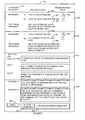
- Figure 2 is a diagram of an illustrative template for creation of a social network to address the issue.
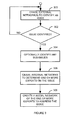
- Figure 3 is a flow diagram of a method for identifying issues in external network(s) and creating a social network to address the issue.
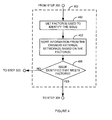
- Figure 4 is a flow diagram of a method for identifying issues in external network(s).
- Figure 5 is a flow diagram of a method for building a template for a social network.
- Figure 1 is a block diagram of a first illustrative system 100 for identifying issue(s) in external network(s) 120 and creating a social network 122 to address the issue(s).
- the first illustrative system 100 comprises external network(s) 120, a server 110, and internal network(s) 130.
- the external network(s) 120 can comprise various types of networks, including but not limited to the Internet 121, social network(s) 122, external blog site(s) 123, and the like.
- the external network 120 can be any type of network where information is posted including Local Area Networks (LAN), Wide Area Networks, and the like.
- the external network 120 is a network that is physically or virtually external to a company, contact center, a resource, and the like.
- the internal network 130 can comprise various types of networks such as a database 131, a web server, email server, Instant Messaging server 133, internal blog site(s) 134, an internal social network 135, and the like.
- the internal network(s) 130 can be any network that is physically or virtually internal to a company, contact center, a resource, and the like.
- the internal network(s) 130 can be a physical internal network 130, or a virtual internal network 130.
- a physical internal network 130 can be an internal network 130 that is isolated by a firewall or some other type of physical device that restricts access.
- a virtual internal network 130 can be a blog site that can be accessed by experts of a company.
- a virtual internal network 130 can be a grouping of employees of a company that converse using different types of communication processes at known sites/networks.
- the server 110 comprises a network crawler 111, a social network generator 112, optionally an Interactive Voice Response (IVR) system 114, and optionally a conferencing system 115.
- the network crawler 111 can be any device/process capable of crawling (i.e., scanning/searching a network) different networks (120, 130).
- the social network generator 112 can be any device/process capable of creating a social network (122, 135) such as a web server, a software application, and the like.
- the social network generator 112 can create a template 113.
- a template 113 can be a form used in the creation of a social network (122, 135).
- the template can be in the form of a web page(s), graphical user interface(s), played message(s), played menu(s) in the Interactive Voice Response (IVR) system 114, and the like.
- the Interactive Voice Response system 114 can be any system capable of playing messages and receiving responses from a user.
- the IVR system 114 can include voice and/or video responses (i.e., recognizing gestures for video responses).
- the conferencing system 115 can be any system capable of conferencing voice and/or video communications.
- the network crawler 111, the social network generator 112, the IVR system 114, and the conference system 115 are illustratively shown in the server 110. However, the network crawler 111, the social network generator 112, the IVR system 114, and the conference system 115 can be separate and/or distributed between different devices/systems.
- the network crawler 111 crawls the external network(s) 120 to identify an issue(s) and sub-issue(s).
- the external network 120 can be crawled to identify the issue.
- U.S. Patent Application No. 12/270,443 discloses a way to crawl a network to identify an issue.
- the network crawler 111 can also crawl some or the entire internal network 130.
- the issue can be identified based on various factors such as: a prior history of a person generating the issue and/or one or more sub-issues, a tone of a discussion, a prominence of a name (e.g., a company name), a prominence of a key word, time spent as a customer, age of the issue and/or sub-issue, a standing of a person making an observation, and the like.
- a prior history of a person generating the issue and/or one or more sub-issues e.g., a company name
- a prominence of a key word e.g., time spent as a customer
- age of the issue and/or sub-issue e.g., a company name
- a standing of a person making an observation e.g., a standing of a person making an observation, and the like.
- the issue/sub-issue can be based on various factors such as positive and/or negative factors.
- the issue may be based on negative factors such as a problem with a product, a negative response to an advertisement, a negative response to a political candidate, and the like.
- the issue can be a positive issue such as a customer's recommendations for a product, a positive response to an advertisement, a positive response to a political candidate, and the like.
- the network crawler 111 crawls the internal network(s) 130 to determine one or more experts on the issue.
- the network crawler 111 can also crawl the external network 130.
- the network crawler 111 can crawl the internal social network 135, a database 131 that has an expert list 132, a web server/email/IM server 133, internal blog sites 134, and the like.
- the network crawler 111 can crawl the expert list 132 to determine if there is an expert associated with the issue(s).
- the expert list 132 can be crawled to determine an expert(s) along with the crawling of other internal networks 130, for example, using keywords related to the issue to potentially identify other experts on the issue.
- the social network generator 112 creates a social network (122, 135) of the one or more experts to address the issue(s).
- the social network 122 can be organized in various ways.
- the social network can be an external blog site 123, an internal blog site 134, and the like.
- the social network 122 can be an audio social network, a video social network, a text-based social network, or any combination of these.
- the conference system 115 can call experts in various ways (e.g., sending an Instant Message with click to join a voice conference call of the experts); this can be based on an availability attribute of the identified experts.
- An availability attribute can be, for example, an Instant Messaging Status, if the expert is on the phone, the expert's calendar, and the like.
- a conference call is set up between the experts.
- the IVR system 114 can provide an audio template 113 that includes a series of IVR menu choices that allow the expert(s) to vocally respond to the issues/sub-issues on the external network(s) 120.
- the issue(s) can be presented to the experts in an audio format.
- Information from the external network(s) 120 where the issue resides can also be presented in an audio format to the experts.
- the vocal response of the expert(s) can be converted to text (if the external network 120 that created the issue requires text) and sent to the appropriate external network(s) 120 that refer to the issue.
- the sent response can be adjusted to fit the capabilities of the external network 120. For example, if one of the external networks 120 only allows text responses of 140 words or less, then the sent text response will be limited to less than 140 words. If a different external network 120 allows text messages of 500 words, then the sent message will be limited to 500 words or less. This can be accomplished by the IVR system 114 notifying the expert(s) of the limit before and/or when approaching the limit of the external network 120. Using this format, the experts can respond appropriately to the external network(s) 120.
- the sent response can address either positive or negative issues. For example, if the issue is a positive feedback by customers in using a product, the sent response could be suggestions by the experts of additional products that can be purchased by customers using the product.
- Figure 2 is a diagram of an illustrative template 113 for creation of a social network (122, 135) to address the issue 200.
- the template 113 in Figure 2 is an illustrative example of a visual template 113 that can be used in a graphical user interface, on a blog site (123, 134), and the like.
- the template 113 creates a format that is used by the experts to address the issue(s) 200 on the external network(s) 120.
- the template 113 is illustratively organized into three sections: the external network section 206, the comment section 210, and the response section 220.
- one issue 200 has been identified on two external networks 120 (shown as network 1 and network 2 in the template 113).
- the issue 200 for external network 1 is that there is a fault X on system ABC.
- Information from the external network 1 (202) is shown (Joe: My system ABC is not working and is costing my company $5,000 a day).
- the shown information from the external network 120 can also be a link that can be clicked on to allow the experts to go to the actual external network 120 (e.g., the post by Joe).
- the issue 200 and the sub-issue 201 for network 1 are ranked 203 (e.g., a ranking of 1-10).
- the ranking 203 can be ordered based on specific keywords, an occurrence of words, a tone of a word, a number of external networks 120 that have the issue 200 and the keyword, and the like.
- the issue 200, the information from external network 2 (202), and the ranking are shown for external network 2 in the external network section 206 for network 2.
- external network 2 a different sub-issue 201 (not an issue 200 if XYZ is also used) is identified.
- the external network sections 206 are each only shown with one example text from the external networks 120. However, there can be multiple texts (e.g., for each post with the issue 200 on each external network 120) with links to each.
- the experts can address the issue 200 and sub-issues 201 in the comment section 210.
- Joe has been identified as a facilitator of the discussion.
- the layout for the comment section 210 is shown as an illustrative example of one of many ways the experts can respond.
- the comment section 210 could use emails, Instant Messaging, voice conferences, video conferences, and the like for communication between the experts.
- response section is adjusted (customized) based on the capabilities of the external network 120.
- external network 1 has a smaller area for entering text because external network 1 can only receive messages of a limited text size (e.g., 100 words).
- External network 2 has a larger area for entering text because external network 2 can receive messages of a larger size (e.g., 1000 words).
- external network 2 can receive and display image documents (e.g., JPEGs, PDFs, and the like).
- an attach diagram button 231 and a path to the image dialog 232 are dynamically created to allow the user to add an image document if necessary.
- the experts can send using the send button 230 the response(s) to the external networks 120 (external network 1 and external network 2).
- an individual send button 230 for each external network 120 can be created.
- Figure 3 is a flow diagram of a method for identifying issues 200 in external network(s) 120 and creating a social network (122, 135) to address the issue 200.
- the network crawler 111, the social network generator 112, the IVR system 114, and the conference system 115 are stored-program-controlled entities, such as a computer or processor, which performs the method of Figures 3-5 by executing a program stored in a storage medium, such as a memory or disk.
- the process begins when the network crawler 111 crawls 300 the external network(s) 120 to identify an issue(s) 200 in the external network(s) 120.
- the network crawler 111 determines if an issue(s) 200 has been identified in step 302. If an issue(s) 200 has not been identified in step 302, the process goes to step 300. Otherwise, if an issue(s) 200 has been identified in step 302, the process goes to step 304.
- the network crawler 111 can optionally identify 304 any sub-issues 201 on the external network(s) 120 where the issue(s) 200/sub-issue 201 was identified.
- the network crawler 111 crawls 306 the internal network(s) 130 to determine one or more experts on the issue(s) 200/sub-issue(s) 201.
- the network crawler can determine different experts based on individual issues 200 and/or individual sub-issues 201.
- the social network generator 112 creates 308 a social network (122, 135) of the one or more experts to address the issue 200.
- the social network can be an external social network 122, an internal social network 135, a combination of both, and the like.
- Figure 4 is a flow diagram of a method for identifying issues 200 in external network(s) 120.
- Figure 4 is an expanded view of step 302 in Figure 3 .
- the network crawler 111 gets 400 factor(s) used to identify the issue 200.
- These factor(s) can be based on a variety of key things such as the tone of the discussion, the number of discussions on a topic, the prominence of the vendor's name, the social network standing of the individual making the observations, how many times the vendor is named, a vendor's product name, looking for key words in conversations, and the like.
- the factors can be inferred, ranked, and/or determined probabilistically based multiple factors.
- the network crawler 111 sorts 402 information from the crawled external network(s) 120 based on the factors to determine if there is an issue 200. For example, the crawler could crawl the external network 120 and determine that at blog site 123 and the external social network 122 the issue of "failure,” “Product ABC,” and "Vendor XYZ" were mentioned in 37 blog postings on blog site 123 and in 26 posts on the external social network 122 in a 30-minute interval; this is in contrast to no posts being recorded the day before. This sudden jump in activity could be triggered based on a threshold of 20 postings in a 24-hour period.
- the network crawler 111 can identify the issue of "53 posts of Failure of Product ABC by Vendor ZYZ in the last 30 minutes.” If there is an identified issue 200 in step 406 the process goes to step 304. If there is not an identified issue 200 in step 406, the process goes to step 300.
- Figure 5 is a flow diagram of a method for building a template 113 for a social network (122, 135).
- Figure 5 is an expanded view of step 308 in Figure 3 .
- the social network generator 112 gets 500 the issue(s) 200 and sub-issues 201.
- the social network generator 112 identifies 502 the external networks 120 that refer to the issue(s) 200/sub-issue(s) 201.
- the social network generator 112 ranks 504 the issue(s) 200/sub-issue(s) 201.
- the social network generator 112 gets 506 the link(s) to the identified external networks 120.
- the links to the identified external networks 120 can be identified during the crawling of the external networks 120.
- the link can be a link to a specific external blog site 123, to the initial thread of a sequence of blogs, a link to a web page, and the like.
- the social network generator 112 gets 508 information 202 from the external networks 120.
- the information 202 can be portions of a post, portions of a blog, a sequence of posts, a sequence of blogs, part of a Really Simple Syndication (RSS) feed, audio files, images, video streams, and the like.
- the social network generator 112 gets 510 an availability attribute(s) for the expert(s).
- the social network generator 112 refines 512 the expert(s) based on the availability attribute(s).
- the social network generator 112 builds 512 a template 113 that is used to build a display (or audio conference/video conference) for conveying the issue(s) 200, the sub-issues 201, the information from the external network 202, the links to the external networks, and the refined expert(s).
- the social network generator 112 creates 516 a social network (122, 135) based on the expert(s), preferably using the template 113. If social network generator 112 determines in step 518 that the expert(s) does not want to send a response, the process stays in step 518. If one of the experts wants to send a response (e.g., one of the experts clicks on the send button 230), the process goes to step 520. If an indication to send a response is detected in step 518, the social network generator 112 adjusts 520 the response(s) to fit within the requirements of the external network 120 where the response is being sent. The social network generator 112 sends 522 the response(s) to the external network(s) 120.
- steps 520 and 522 can be automatically repeated to send a response to the social network (122, 135).
- the methods described in Figures 3-5 can also be used to crawl the same networks to identify any feedback from users to determine if the solution to the issue 200/sub-issue 201 has been effective.
- the feedback can be, for example, the additional comments on a blog site after receiving the response to the issue 200/sub-issue 201.
- each of the expressions “at least one of A, B and C”, “at least one of A, B, or C”, “one or more of A, B, and C", “one or more of A, B, or C" and "A, B, and/or C” means A alone, B alone, C alone, A and B together, A and C together, B and C together, or A, B and C together.
Landscapes
- Business, Economics & Management (AREA)
- Engineering & Computer Science (AREA)
- Strategic Management (AREA)
- Entrepreneurship & Innovation (AREA)
- Human Resources & Organizations (AREA)
- Economics (AREA)
- General Business, Economics & Management (AREA)
- Development Economics (AREA)
- Marketing (AREA)
- Theoretical Computer Science (AREA)
- General Physics & Mathematics (AREA)
- Physics & Mathematics (AREA)
- Tourism & Hospitality (AREA)
- Quality & Reliability (AREA)
- Operations Research (AREA)
- Accounting & Taxation (AREA)
- Finance (AREA)
- Game Theory and Decision Science (AREA)
- Data Mining & Analysis (AREA)
- Educational Administration (AREA)
- Information Transfer Between Computers (AREA)
Abstract
Description
- The system and method relates to the creation of ad hoc social networks, and in particular the on-demand creation of social networks based on identification of issues.
- When issues arise in social networks, identification of an issue to a contact center agent or other resource may be beneficial in order to provide better customer support. Traditional contact centers may only become aware of an issue well after the issue was discussed on different social networks. This may leave the contact center in a position where agents are not properly advised of the issue and how to address the issue with customers. It also allows for an issue to fester instead of addressing it as the issue first surfaces.
- What is needed is not only a way to quickly identify the issue, but also a way to quickly address the issue. This way, agents in the contact center will become aware of the issue earlier and be able to work with customers to resolve the issue; this results in better customer satisfaction.
- The system and method are directed to solving these and other problems and disadvantages of the prior art. An external network is crawled (searched) to identify issues that may exist in the external network. Once an issue is identified, internal networks are crawled to determine one or more experts on the issue. A social network of one or more experts is created. This way, the experts can quickly address the issue.
- As part of the creation of the social network, a template can be created that contains the issue, sub-issues associated with the issue, a ranking of the issues/sub-issues, age of the issue, and a form that allows the experts to interact and address the issue/sub-issues. In addition, the identified experts can be refined based on their availability to address the issue. The template can provide the ability to respond to users of the external networks in a manner consistent with the external networks.
- These and other features and advantages of the system and method will become more apparent from considering the following description of an illustrative embodiment of the system and method together with the drawing, in which:
-
Figure 1 is a block diagram of a first illustrative system for identifying issues in external network(s) and creating a social network to address the issue. -
Figure 2 is a diagram of an illustrative template for creation of a social network to address the issue. -
Figure 3 is a flow diagram of a method for identifying issues in external network(s) and creating a social network to address the issue. -
Figure 4 is a flow diagram of a method for identifying issues in external network(s). -
Figure 5 is a flow diagram of a method for building a template for a social network. -
Figure 1 is a block diagram of a firstillustrative system 100 for identifying issue(s) in external network(s) 120 and creating asocial network 122 to address the issue(s). The firstillustrative system 100 comprises external network(s) 120, aserver 110, and internal network(s) 130. The external network(s) 120 can comprise various types of networks, including but not limited to the Internet 121, social network(s) 122, external blog site(s) 123, and the like. Theexternal network 120 can be any type of network where information is posted including Local Area Networks (LAN), Wide Area Networks, and the like. Theexternal network 120 is a network that is physically or virtually external to a company, contact center, a resource, and the like. - The
internal network 130 can comprise various types of networks such as adatabase 131, a web server, email server, InstantMessaging server 133, internal blog site(s) 134, an internalsocial network 135, and the like. The internal network(s) 130 can be any network that is physically or virtually internal to a company, contact center, a resource, and the like. The internal network(s) 130 can be a physicalinternal network 130, or a virtualinternal network 130. For example, a physicalinternal network 130 can be aninternal network 130 that is isolated by a firewall or some other type of physical device that restricts access. On the other hand, a virtualinternal network 130 can be a blog site that can be accessed by experts of a company. A virtualinternal network 130 can be a grouping of employees of a company that converse using different types of communication processes at known sites/networks. - The
server 110 comprises anetwork crawler 111, asocial network generator 112, optionally an Interactive Voice Response (IVR)system 114, and optionally aconferencing system 115. Thenetwork crawler 111 can be any device/process capable of crawling (i.e., scanning/searching a network) different networks (120, 130). Thesocial network generator 112 can be any device/process capable of creating a social network (122, 135) such as a web server, a software application, and the like. Thesocial network generator 112 can create atemplate 113. Atemplate 113 can be a form used in the creation of a social network (122, 135). The template can be in the form of a web page(s), graphical user interface(s), played message(s), played menu(s) in the Interactive Voice Response (IVR)system 114, and the like. The Interactive VoiceResponse system 114 can be any system capable of playing messages and receiving responses from a user. TheIVR system 114 can include voice and/or video responses (i.e., recognizing gestures for video responses). Theconferencing system 115 can be any system capable of conferencing voice and/or video communications. Thenetwork crawler 111, thesocial network generator 112, theIVR system 114, and theconference system 115 are illustratively shown in theserver 110. However, thenetwork crawler 111, thesocial network generator 112, theIVR system 114, and theconference system 115 can be separate and/or distributed between different devices/systems. - The
network crawler 111 crawls the external network(s) 120 to identify an issue(s) and sub-issue(s). There are various ways theexternal network 120 can be crawled to identify the issue. For example,U.S. Patent Application No. 12/270,443 discloses a way to crawl a network to identify an issue. In addition, thenetwork crawler 111 can also crawl some or the entireinternal network 130. The issue can be identified based on various factors such as: a prior history of a person generating the issue and/or one or more sub-issues, a tone of a discussion, a prominence of a name (e.g., a company name), a prominence of a key word, time spent as a customer, age of the issue and/or sub-issue, a standing of a person making an observation, and the like. - The issue/sub-issue can be based on various factors such as positive and/or negative factors. For example, the issue may be based on negative factors such as a problem with a product, a negative response to an advertisement, a negative response to a political candidate, and the like. The issue can be a positive issue such as a customer's recommendations for a product, a positive response to an advertisement, a positive response to a political candidate, and the like.
- The
network crawler 111 crawls the internal network(s) 130 to determine one or more experts on the issue. In addition, thenetwork crawler 111 can also crawl theexternal network 130. Thenetwork crawler 111 can crawl the internalsocial network 135, adatabase 131 that has anexpert list 132, a web server/email/IM server 133,internal blog sites 134, and the like. Thenetwork crawler 111 can crawl theexpert list 132 to determine if there is an expert associated with the issue(s). Theexpert list 132 can be crawled to determine an expert(s) along with the crawling of otherinternal networks 130, for example, using keywords related to the issue to potentially identify other experts on the issue. Thesocial network generator 112 creates a social network (122, 135) of the one or more experts to address the issue(s). Thesocial network 122 can be organized in various ways. For example, the social network can be anexternal blog site 123, aninternal blog site 134, and the like. Thesocial network 122 can be an audio social network, a video social network, a text-based social network, or any combination of these. - For example, in creating an audio/video social network, the
conference system 115 can call experts in various ways (e.g., sending an Instant Message with click to join a voice conference call of the experts); this can be based on an availability attribute of the identified experts. An availability attribute can be, for example, an Instant Messaging Status, if the expert is on the phone, the expert's calendar, and the like. After identifying the expert(s) and optionally filtering the list based on one or more availability attributes, a conference call is set up between the experts. For the audio portion of the conference call, theIVR system 114 can provide anaudio template 113 that includes a series of IVR menu choices that allow the expert(s) to vocally respond to the issues/sub-issues on the external network(s) 120. The issue(s) can be presented to the experts in an audio format. Information from the external network(s) 120 where the issue resides can also be presented in an audio format to the experts. The vocal response of the expert(s) can be converted to text (if theexternal network 120 that created the issue requires text) and sent to the appropriate external network(s) 120 that refer to the issue. - The sent response (text, voice, and/or video depending on the external network 120) can be adjusted to fit the capabilities of the
external network 120. For example, if one of theexternal networks 120 only allows text responses of 140 words or less, then the sent text response will be limited to less than 140 words. If a differentexternal network 120 allows text messages of 500 words, then the sent message will be limited to 500 words or less. This can be accomplished by theIVR system 114 notifying the expert(s) of the limit before and/or when approaching the limit of theexternal network 120. Using this format, the experts can respond appropriately to the external network(s) 120. - The sent response can address either positive or negative issues. For example, if the issue is a positive feedback by customers in using a product, the sent response could be suggestions by the experts of additional products that can be purchased by customers using the product.
-
Figure 2 is a diagram of anillustrative template 113 for creation of a social network (122, 135) to address theissue 200. Thetemplate 113 inFigure 2 is an illustrative example of avisual template 113 that can be used in a graphical user interface, on a blog site (123, 134), and the like. Thetemplate 113 creates a format that is used by the experts to address the issue(s) 200 on the external network(s) 120. Thetemplate 113 is illustratively organized into three sections: theexternal network section 206, thecomment section 210, and theresponse section 220. - In this illustrative example, one
issue 200 has been identified on two external networks 120 (shown asnetwork 1 andnetwork 2 in the template 113). There is oneexternal network section 206 forexternal network 1 and oneexternal network section 206 fornetwork 2. Theissue 200 forexternal network 1 is that there is a fault X on system ABC. Innetwork 1, there is also an identified sub-issue 201 (cost of fault X on system ABC). Information from the external network 1 (202) is shown (Joe: My system ABC is not working and is costing my company $5,000 a day). The shown information from theexternal network 120 can also be a link that can be clicked on to allow the experts to go to the actual external network 120 (e.g., the post by Joe). Theissue 200 and the sub-issue 201 fornetwork 1 are ranked 203 (e.g., a ranking of 1-10). Theranking 203 can be ordered based on specific keywords, an occurrence of words, a tone of a word, a number ofexternal networks 120 that have theissue 200 and the keyword, and the like. - Likewise, the
issue 200, the information from external network 2 (202), and the ranking are shown forexternal network 2 in theexternal network section 206 fornetwork 2. Forexternal network 2, a different sub-issue 201 (not anissue 200 if XYZ is also used) is identified. Theexternal network sections 206 are each only shown with one example text from theexternal networks 120. However, there can be multiple texts (e.g., for each post with theissue 200 on each external network 120) with links to each. - The experts (Joe, Fred, and Sally) can address the
issue 200 andsub-issues 201 in thecomment section 210. In thecomments section 210, Joe has been identified as a facilitator of the discussion. The layout for thecomment section 210 is shown as an illustrative example of one of many ways the experts can respond. For example, thecomment section 210 could use emails, Instant Messaging, voice conferences, video conferences, and the like for communication between the experts. - Once a solution for the
issue 200 has been determined, the experts can send a response using theresponse section 220. In this example, response section is adjusted (customized) based on the capabilities of theexternal network 120. For example,external network 1 has a smaller area for entering text becauseexternal network 1 can only receive messages of a limited text size (e.g., 100 words).External network 2 has a larger area for entering text becauseexternal network 2 can receive messages of a larger size (e.g., 1000 words). In addition,external network 2 can receive and display image documents (e.g., JPEGs, PDFs, and the like). In response toexternal network 2 being able to handle image documents, an attachdiagram button 231 and a path to theimage dialog 232 are dynamically created to allow the user to add an image document if necessary. The experts can send using thesend button 230 the response(s) to the external networks 120 (external network 1 and external network 2). In this illustrative example, there is onesend button 230 for bothexternal networks 120. However, anindividual send button 230 for eachexternal network 120 can be created. -
Figure 3 is a flow diagram of a method for identifyingissues 200 in external network(s) 120 and creating a social network (122, 135) to address theissue 200. Illustratively, thenetwork crawler 111, thesocial network generator 112, theIVR system 114, and theconference system 115 are stored-program-controlled entities, such as a computer or processor, which performs the method ofFigures 3-5 by executing a program stored in a storage medium, such as a memory or disk. - The process begins when the
network crawler 111 crawls 300 the external network(s) 120 to identify an issue(s) 200 in the external network(s) 120. Thenetwork crawler 111 determines if an issue(s) 200 has been identified instep 302. If an issue(s) 200 has not been identified instep 302, the process goes to step 300. Otherwise, if an issue(s) 200 has been identified instep 302, the process goes to step 304. Thenetwork crawler 111 can optionally identify 304 any sub-issues 201 on the external network(s) 120 where the issue(s) 200/sub-issue 201 was identified. - The
network crawler 111 crawls 306 the internal network(s) 130 to determine one or more experts on the issue(s) 200/sub-issue(s) 201. The network crawler can determine different experts based onindividual issues 200 and/orindividual sub-issues 201. Thesocial network generator 112 creates 308 a social network (122, 135) of the one or more experts to address theissue 200. The social network can be an externalsocial network 122, an internalsocial network 135, a combination of both, and the like. -
Figure 4 is a flow diagram of a method for identifyingissues 200 in external network(s) 120.Figure 4 is an expanded view ofstep 302 inFigure 3 . Afterstep 300, thenetwork crawler 111 gets 400 factor(s) used to identify theissue 200. These factor(s) can be based on a variety of key things such as the tone of the discussion, the number of discussions on a topic, the prominence of the vendor's name, the social network standing of the individual making the observations, how many times the vendor is named, a vendor's product name, looking for key words in conversations, and the like. The factors can be inferred, ranked, and/or determined probabilistically based multiple factors. - The
network crawler 111sorts 402 information from the crawled external network(s) 120 based on the factors to determine if there is anissue 200. For example, the crawler could crawl theexternal network 120 and determine that atblog site 123 and the externalsocial network 122 the issue of "failure," "Product ABC," and "Vendor XYZ" were mentioned in 37 blog postings onblog site 123 and in 26 posts on the externalsocial network 122 in a 30-minute interval; this is in contrast to no posts being recorded the day before. This sudden jump in activity could be triggered based on a threshold of 20 postings in a 24-hour period. The result is that thenetwork crawler 111 can identify the issue of "53 posts of Failure of Product ABC by Vendor ZYZ in the last 30 minutes." If there is an identifiedissue 200 instep 406 the process goes to step 304. If there is not an identifiedissue 200 instep 406, the process goes to step 300. -
Figure 5 is a flow diagram of a method for building atemplate 113 for a social network (122, 135).Figure 5 is an expanded view ofstep 308 inFigure 3 . Afterstep 306 thesocial network generator 112 gets 500 the issue(s) 200 and sub-issues 201. Thesocial network generator 112 identifies 502 theexternal networks 120 that refer to the issue(s) 200/sub-issue(s) 201. Thesocial network generator 112 ranks 504 the issue(s) 200/sub-issue(s) 201. Thesocial network generator 112 gets 506 the link(s) to the identifiedexternal networks 120. The links to the identifiedexternal networks 120 can be identified during the crawling of theexternal networks 120. The link can be a link to a specificexternal blog site 123, to the initial thread of a sequence of blogs, a link to a web page, and the like. - The
social network generator 112 gets 508information 202 from theexternal networks 120. Theinformation 202 can be portions of a post, portions of a blog, a sequence of posts, a sequence of blogs, part of a Really Simple Syndication (RSS) feed, audio files, images, video streams, and the like. Thesocial network generator 112 gets 510 an availability attribute(s) for the expert(s). Thesocial network generator 112 refines 512 the expert(s) based on the availability attribute(s). Thesocial network generator 112 builds 512 atemplate 113 that is used to build a display (or audio conference/video conference) for conveying the issue(s) 200, the sub-issues 201, the information from theexternal network 202, the links to the external networks, and the refined expert(s). - The
social network generator 112 creates 516 a social network (122, 135) based on the expert(s), preferably using thetemplate 113. Ifsocial network generator 112 determines instep 518 that the expert(s) does not want to send a response, the process stays instep 518. If one of the experts wants to send a response (e.g., one of the experts clicks on the send button 230), the process goes to step 520. If an indication to send a response is detected instep 518, thesocial network generator 112 adjusts 520 the response(s) to fit within the requirements of theexternal network 120 where the response is being sent. Thesocial network generator 112 sends 522 the response(s) to the external network(s) 120. - If the
same issue 200 and/or sub-issue 201 are identified on the same or a different social network (122, 135), steps 520 and 522 can be automatically repeated to send a response to the social network (122, 135). The methods described inFigures 3-5 can also be used to crawl the same networks to identify any feedback from users to determine if the solution to theissue 200/sub-issue 201 has been effective. The feedback can be, for example, the additional comments on a blog site after receiving the response to theissue 200/sub-issue 201. - The phrases "at least one", "one or more", and "and/or" are open-ended expressions that are both conjunctive and disjunctive in operation. For example, each of the expressions "at least one of A, B and C", "at least one of A, B, or C", "one or more of A, B, and C", "one or more of A, B, or C" and "A, B, and/or C" means A alone, B alone, C alone, A and B together, A and C together, B and C together, or A, B and C together.
- The term "a" or "an" entity refers to one or more of that entity. As such, the terms "a" (or "an"), "one or more" and "at least one" can be used interchangeably herein. It is also to be noted that the terms "comprising", "including", and "having" can be used interchangeably.
- Of course, various changes and modifications to the illustrative embodiment described above will be apparent to those skilled in the art. These changes and modifications can be made without departing from the spirit and the scope of the system and method and without diminishing its attendant advantages. The above description and associated figures teach the best mode of the invention. The following claims specify the scope of the invention. Note that some aspects of the best mode may not fall within the scope of the invention as specified by the claims. Those skilled in the art will appreciate that the features described above can be combined in various ways to form multiple variations of the invention. As a result, the invention is not limited to the specific embodiments described above, but only by the following claims and their equivalents.
Claims (12)
- A method comprising:crawling one or more external networks to identify an issue in the one or more external networks;crawling one or more internal networks to determine one or more experts on the issue; andcreating a social network of the one or more experts to address the issue.
- The method of claim 1, wherein the issue is identified on a plurality of external networks and the issue further comprises one or more sub-issues and further comprising the step of identifying and ranking in a template, which of the one or more sub-issues are on each of the plurality of networks.
- The method of claim 1, wherein the issue is identified in a plurality of external networks and further comprising the steps of determining the capabilities of the plurality of external networks and creating a template for the social network, wherein the template comprises a response section for at least one of the plurality of external networks based on a determined capability of the at least one of the plurality of external networks.
- The method of claim 1, wherein crawling the one or more internal networks to determine the one or more experts comprises:getting at least one of the experts from an expert list and getting a second one of the experts from crawling the internal network based on a key word related to the issue; orgetting at least one of the experts based on an availability attribute of at least one of the one or more experts.
- The method of claim 1, further comprising the steps of identifying individual ones of the one or more external networks that refer to the issue and sending a response to individual ones of the identified external networks, wherein the response is adjusted to fit the capabilities of the identified networks.
- The method of claim 1, wherein creating the social network comprises creating an audio conference and further comprising the steps of identifying individual ones of the one or more external networks that refer to the issue and creating an Interactive Voice Response menu that allows one of the one or more experts to vocally respond to the individual ones of the identified networks.
- A system comprising:a network crawler configured to crawl one or more external networks to identify an issue in the one or more external networks and crawl one or more internal networks to determine one or more experts on the issue; anda social network generator configured to create a social network of the one or more experts to address the issue.
- The system of claim 7, wherein the issue is identified on a plurality of external networks and the issue further comprises one or more sub-issues, and the network crawler is further configured to identify and rank in a template, which of the one or more sub-issues are on each of the plurality of networks.
- The system of claim 7, wherein the issue is identified in a plurality of external networks, the network crawler is further configured to determine the capabilities of the plurality of external networks, and the social network generator is further configured to create a template for the social network, wherein the template comprises a response section for at least one of the plurality of external networks based on a determined capability of the at least one of the plurality of external networks.
- The system of claim 7, wherein the network crawler is further configured to:crawl the one or more internal networks to determine the one or more experts by getting at least one of the experts from an expert list and getting a second one of the experts from crawling the internal network based on a keyword related to the issue; orthe social network generator is further configured to refine the one or more experts based on an availability attribute of at least one of the one or more experts.
- The system of claim 7, wherein the network crawler is further configured to identify individual ones of the one or more external networks that refer to the issue and send a response to the individual ones of the identified external networks wherein the response is adjusted to fit the capabilities of the identified networks.
- The system of claim 7, wherein creating the social network comprises creating an audio conference and the network crawler is further configured to identify individual ones of the one or more external networks that refer to the issue and an Interactive Voice Response (IVR) system configured to create an IVR menu that allows one of the one or more experts to vocally respond to the individual ones of the identified networks.
Applications Claiming Priority (1)
| Application Number | Priority Date | Filing Date | Title |
|---|---|---|---|
| US12/640,158 US8468102B2 (en) | 2009-12-17 | 2009-12-17 | Creation of ad hoc social networks based on issue identification |
Publications (1)
| Publication Number | Publication Date |
|---|---|
| EP2336955A1 true EP2336955A1 (en) | 2011-06-22 |
Family
ID=43567682
Family Applications (1)
| Application Number | Title | Priority Date | Filing Date |
|---|---|---|---|
| EP10195096A Ceased EP2336955A1 (en) | 2009-12-17 | 2010-12-15 | Creation of ad hoc social networks based on issue identification |
Country Status (2)
| Country | Link |
|---|---|
| US (1) | US8468102B2 (en) |
| EP (1) | EP2336955A1 (en) |
Families Citing this family (12)
| Publication number | Priority date | Publication date | Assignee | Title |
|---|---|---|---|---|
| US9043407B1 (en) * | 2009-06-12 | 2015-05-26 | Avaya Inc. | Interactive user interface to communication-enabled business process platforms method and apparatus |
| US20110153423A1 (en) * | 2010-06-21 | 2011-06-23 | Jon Elvekrog | Method and system for creating user based summaries for content distribution |
| US20110153414A1 (en) * | 2009-12-23 | 2011-06-23 | Jon Elvekrog | Method and system for dynamic advertising based on user actions |
| US8751305B2 (en) | 2010-05-24 | 2014-06-10 | 140 Proof, Inc. | Targeting users based on persona data |
| US9495350B2 (en) * | 2012-09-14 | 2016-11-15 | Avaya Inc. | System and method for determining expertise through speech analytics |
| US20140122988A1 (en) * | 2012-10-30 | 2014-05-01 | FHOOSH, Inc. | Systems and methods for populating user information on electronic forms |
| CA2962432C (en) | 2014-09-23 | 2023-04-18 | FHOOSH, Inc. | Secure high speed data storage, access, recovery, and transmission |
| US10579823B2 (en) | 2014-09-23 | 2020-03-03 | Ubiq Security, Inc. | Systems and methods for secure high speed data generation and access |
| US11489962B2 (en) | 2015-01-06 | 2022-11-01 | Cyara Solutions Pty Ltd | System and methods for automated customer response system mapping and duplication |
| US10291776B2 (en) * | 2015-01-06 | 2019-05-14 | Cyara Solutions Pty Ltd | Interactive voice response system crawler |
| US10778803B2 (en) | 2015-11-18 | 2020-09-15 | International Business Machines Corporation | Sub-social network based on contextual inferencing |
| US11349656B2 (en) | 2018-03-08 | 2022-05-31 | Ubiq Security, Inc. | Systems and methods for secure storage and transmission of a data stream |
Citations (1)
| Publication number | Priority date | Publication date | Assignee | Title |
|---|---|---|---|---|
| US20090271232A1 (en) * | 2008-04-29 | 2009-10-29 | Sap Agdietmar-Hopp Allee 16 Walldorf | Event resolution |
Family Cites Families (9)
| Publication number | Priority date | Publication date | Assignee | Title |
|---|---|---|---|---|
| IL137305A (en) * | 2000-07-13 | 2005-08-31 | Clicksoftware Technologies Ld | Method and system for sharing knowledge |
| US20030004802A1 (en) * | 2001-03-19 | 2003-01-02 | Jeff Callegari | Methods for providing a virtual coupon |
| US7266537B2 (en) * | 2004-01-14 | 2007-09-04 | Intelligent Results | Predictive selection of content transformation in predictive modeling systems |
| US7519566B2 (en) * | 2004-02-11 | 2009-04-14 | Oracle International Corporation | Method and apparatus for automatically and continuously updating prediction models in real time based on data mining |
| US7707251B2 (en) * | 2005-07-14 | 2010-04-27 | Bebo, Inc. | Drawing tool used with social network computer systems |
| US9396269B2 (en) * | 2006-06-28 | 2016-07-19 | Microsoft Technology Licensing, Llc | Search engine that identifies and uses social networks in communications, retrieval, and electronic commerce |
| US8327276B2 (en) * | 2006-08-11 | 2012-12-04 | Microsoft Corporation | Community driven prioritization of customer issues |
| US9582804B2 (en) * | 2006-12-22 | 2017-02-28 | Excalibur Ip, Llc | Link retrofitting of digital media objects |
| US8296278B2 (en) * | 2008-09-17 | 2012-10-23 | Microsoft Corporation | Identifying product issues using forum data |
-
2009
- 2009-12-17 US US12/640,158 patent/US8468102B2/en active Active
-
2010
- 2010-12-15 EP EP10195096A patent/EP2336955A1/en not_active Ceased
Patent Citations (1)
| Publication number | Priority date | Publication date | Assignee | Title |
|---|---|---|---|---|
| US20090271232A1 (en) * | 2008-04-29 | 2009-10-29 | Sap Agdietmar-Hopp Allee 16 Walldorf | Event resolution |
Non-Patent Citations (4)
| Title |
|---|
| HURST M ET AL: "Social Streams Blog Crawler", DATA ENGINEERING, 2009. ICDE '09. IEEE 25TH INTERNATIONAL CONFERENCE ON, IEEE, PISCATAWAY, NJ, USA, 29 March 2009 (2009-03-29), pages 1615 - 1618, XP031447887, ISBN: 978-1-4244-3422-0 * |
| K RAJESH: "Speech Recognition with Enterprise PBX and its applications - excITingIP.com", 11 June 2009 (2009-06-11), XP055297156, Retrieved from the Internet <URL:http://www.excitingip.com/365/speech-recognition-with-enterprise-pbx-and-its-applications/> [retrieved on 20160823] * |
| MEI KOBAYASHI ET AL: "Information Retrieval on the Web", INTERNET CITATION, 25 April 2000 (2000-04-25), XP002206114, Retrieved from the Internet <URL:http://citeseer.nj.nec.com/kobayashi00information.html> [retrieved on 20020715] * |
| QING GAO ET AL: "A high-precision forum crawler based on vertical crawling", NETWORK INFRASTRUCTURE AND DIGITAL CONTENT, 2009. IC-NIDC 2009. IEEE INTERNATIONAL CONFERENCE ON, IEEE, PISCATAWAY, NJ, USA, 6 November 2009 (2009-11-06), pages 362 - 367, XP031586004, ISBN: 978-1-4244-4898-2 * |
Also Published As
| Publication number | Publication date |
|---|---|
| US20110153588A1 (en) | 2011-06-23 |
| US8468102B2 (en) | 2013-06-18 |
Similar Documents
| Publication | Publication Date | Title |
|---|---|---|
| US8468102B2 (en) | Creation of ad hoc social networks based on issue identification | |
| US12125045B2 (en) | Multi-client service system platform | |
| US10635752B2 (en) | Method and system for creating interactive inquiry and assessment bots | |
| EP3809643B1 (en) | Proactive provision of new content to group chat participants | |
| US20210201359A1 (en) | Systems and methods relating to automation for personalizing the customer experience | |
| US10373171B2 (en) | System and method for making engagement offers based on observed navigation path | |
| Sakamoto | Unintended consequences of translation technologies: From project managers’ perspectives | |
| US20200226216A1 (en) | Context-sensitive summarization | |
| US11165723B2 (en) | Methods and systems for a bimodal auto-response mechanism for messaging applications | |
| CN116235177A (en) | Systems and methods related to robotic authoring by mining intent from dialog data using known intents associated with sample utterances | |
| US10127321B2 (en) | Proactive knowledge offering system and method | |
| US20170262529A1 (en) | Sponsor answers and user-approved, system-suggested links in a social search engine | |
| US20120265819A1 (en) | Methods and apparatus for recognizing and acting upon user intentions expressed in on-line conversations and similar environments | |
| US20180123997A1 (en) | Message management in a social networking environment | |
| KR20130027015A (en) | Conversational question and answer | |
| AU2019101812A4 (en) | Proactive knowledge offering system and method | |
| US20200167630A1 (en) | Ideation virtual assistant tools | |
| US20120303614A1 (en) | Automating responses to information queries | |
| US20210142291A1 (en) | Virtual business assistant ai engine for multipoint communication | |
| US11277515B2 (en) | System and method of real-time automated determination of problem interactions | |
| US20250315458A1 (en) | Answer assistance computing system | |
| US20230342864A1 (en) | System and method for automatically responding to negative content | |
| US20230161778A1 (en) | Providing contact information and connection history with collaboration applications | |
| CA3078106A1 (en) | Electronic communication system for providing expert information and method of using same | |
| JP2020064443A (en) | E-mail evaluation device, e-mail evaluation program, e-mail evaluation method, and e-mail evaluation system |
Legal Events
| Date | Code | Title | Description |
|---|---|---|---|
| PUAI | Public reference made under article 153(3) epc to a published international application that has entered the european phase |
Free format text: ORIGINAL CODE: 0009012 |
|
| AK | Designated contracting states |
Kind code of ref document: A1 Designated state(s): AL AT BE BG CH CY CZ DE DK EE ES FI FR GB GR HR HU IE IS IT LI LT LU LV MC MK MT NL NO PL PT RO RS SE SI SK SM TR |
|
| AX | Request for extension of the european patent |
Extension state: BA ME |
|
| 17P | Request for examination filed |
Effective date: 20111222 |
|
| 17Q | First examination report despatched |
Effective date: 20160831 |
|
| STAA | Information on the status of an ep patent application or granted ep patent |
Free format text: STATUS: EXAMINATION IS IN PROGRESS |
|
| APBK | Appeal reference recorded |
Free format text: ORIGINAL CODE: EPIDOSNREFNE |
|
| APBN | Date of receipt of notice of appeal recorded |
Free format text: ORIGINAL CODE: EPIDOSNNOA2E |
|
| APAF | Appeal reference modified |
Free format text: ORIGINAL CODE: EPIDOSCREFNE |
|
| APBT | Appeal procedure closed |
Free format text: ORIGINAL CODE: EPIDOSNNOA9E |
|
| STAA | Information on the status of an ep patent application or granted ep patent |
Free format text: STATUS: THE APPLICATION HAS BEEN REFUSED |
|
| 18R | Application refused |
Effective date: 20190427 |