EP2335977A1 - Foldable step for vehicles - Google Patents
Foldable step for vehicles Download PDFInfo
- Publication number
- EP2335977A1 EP2335977A1 EP09179594A EP09179594A EP2335977A1 EP 2335977 A1 EP2335977 A1 EP 2335977A1 EP 09179594 A EP09179594 A EP 09179594A EP 09179594 A EP09179594 A EP 09179594A EP 2335977 A1 EP2335977 A1 EP 2335977A1
- Authority
- EP
- European Patent Office
- Prior art keywords
- rigid arm
- plate
- stopper
- abutment plate
- arm
- Prior art date
- Legal status (The legal status is an assumption and is not a legal conclusion. Google has not performed a legal analysis and makes no representation as to the accuracy of the status listed.)
- Granted
Links
Images

Classifications
-
- B—PERFORMING OPERATIONS; TRANSPORTING
- B60—VEHICLES IN GENERAL
- B60R—VEHICLES, VEHICLE FITTINGS, OR VEHICLE PARTS, NOT OTHERWISE PROVIDED FOR
- B60R3/00—Arrangements of steps or ladders facilitating access to or on the vehicle, e.g. running-boards
- B60R3/02—Retractable steps or ladders, e.g. movable under shock
Definitions
- the present invention relates to a foldable step for vehicles, comprising a step plate and a pivoting device for pivoting the step plate between a retracted position and an unfolded position.
- Steps, footboards and the like are often used at rescue vehicles to give access to vehicle compartments and lockers in which rescue equipment is stored.
- such lockers can be located in a lateral portion of a fire engine.
- accessing the contents of the locker may be difficult. This is especially the case with lockers located above a wheel of the vehicle, because it is difficult for construction-conditioned reasons to locate a step in the area of the wheel housing.
- this problem can be solved by providing a foldable step under the locker that unfolds a step plate that can easily be entered from the ground.
- the step plate In a stowage position, the step plate is retracted inside a compartment of the vehicle. Only when the step is used in a rescue mission, when the rescue vehicle is stationary, the step plate is unfolded and lowers to be entered by a person.
- the known technical solutions for providing foldable steps are unsatisfactory because they are complicated under cinematic aspects and do not match certain requirements. For example, the unfolding process must be conducted fast and reliably, which is not the case with the known foldable steps.
- the pivoting device for pivoting the step plate comprises a rigid arm that is hinged to a structural part of the vehicle, for example, a console fixed on a superstructure of the vehicle. Due to the hinged arrangement, the rigid arm is turnable around a horizontal axis.
- the step plate is attached rotably around a turning axis parallel to the rotation axis of the rigid arm.
- the pivoting device further comprises an abutment plate standing vertically with respect to the rotation axis of the arm and lying, for example, directly on a lateral surface of the arm and being slidable on this surface.
- the abutment plate can be turned around the rotation axis of the arm until the abutment plate reaches a first stopper. Beyond this first stopper for the abutment plate, the arm can be turned further until it reaches a second stopper that limits the rotation of the arm. It is clear that during this further turning motion of the rigid arm with respect to the abutment plate, its turning movement is decoupled from the abutment plate itself that is stopped by the first stopper.
- the rigid arm and the abutment plate are coupled by a coupling element. After the abutment plate has reached its stopping position at the first stopper, the coupling element allows a further turning movement of the arm with respect to the abutment plate.
- a guiding rod is provided that connects the abutment plate with the step plate.
- the rod is hinged to the abutment plate at a first point being displaced from the turning axis of the rigid arm, and with its other end to the step plate at a second point displaced from the turning axis of the step plate.
- the retracted position of the step plate can be identified with an upright position of the arm in which the step plate is stored within a respective vehicle compartment in a mainly horizontal state.
- the arm can be pivoted around its rotation axis to reach a generally horizontal position.
- the step plate can mainly keep its angular position with respect to the rigid arm (or being just slightly tilted downwards due to its own weight).
- the rigid arm and the abutment plate are coupled by the coupling element so that the arm is not turned with respect to the abutment plate.
- This first phase ends when the abutment plate reaches the first stopper.
- the rigid arm turns further to move against the second stopper with respect to the abutment plate.
- the abutment plate shifts the rod with respect to the rigid arm to turn the step plate with respect to the arm.
- This turning movement can end in a position where the step plate lies flat horizontally on the rigid arm when the arm has reached the second stopper. This means that in the second phase of movement of the rigid arm, the step plate is folded automatically into a horizontal position.
- the coupling element comprises a spring element that is hinged to the abutment plate at a third point and to the rigid arm at a fourth point, in a way that the spring element is compressed during the turning movement of the arm beyond the stopping position of the abutment plate at the first stopper.
- a spring element there are various alternatives for the provision of a spring element.
- a mechanical spring, gas spring strut or the like as a spring element.
- the first stopper and the second stopper are formed by the same stopping surface or arranged at the same angular position with respect to the rotation axis of the rigid arm.
- first stopper and second stopper do not necessarily refer to different elements or structural parts of the vehicle but can denote, for example, one stopping means.
- the first stopper and the second stopper are formed by one side of a stopping block that is fixed to the vehicle structure.
- the first stopper and the second stopper are formed by different sides of a stopping block that is fixed to the vehicle structure.
- the foldable step denoted generally by reference number 10 is attached to a vehicle structure comprising a console 12. Further parts of the vehicle structure are not shown in the figures.
- the driving direction of the vehicle corresponds to an axis standing vertically to the plane of the drawings.
- the foldable step is provided to be unfolded and retracted in a lateral direction of the vehicle, which is the left side in the figures.
- Under the console 12 a wheel housing of the vehicle (not shown) can be provided, whereas in a space arranged over the console 12, a compartment for rescue equipment can be arranged, which may be a locker or the like.
- the vehicle as such can be a rescue vehicle like a fire engine.
- the foldable step 10 comprises a step plate 14 standing horizontally in Fig. 1 and a pivoting device 16 to which the step plate 14 is attached.
- the pivoting device 16 comprises a mechanism to pivot the step plate 14 from a retracted position shown in Fig. 1 to an unfolded position according to Fig. 3 . This mechanism will be described in detail in the following.
- the pivoting device 16 comprises a rigid arm 18 standing vertically in the retracted position of the pivoting device 16 in Fig. 1 .
- the arm 18 On its lower end, the arm 18 is connected to the console 12 in a rotatable manner.
- the arm 18 can turn about a rotation axis 20 being fixed to the console 12 and extending in the driving direction of the vehicle.
- the step plate 14 At the upper free end 22 of the arm 18, the step plate 14 is attached.
- the step plate 14 is connected to the free end 22 of the arm 18 by a turning axis 24 that stands parallel to the rotation axis 20 of the arm 18. Around this turning axis 24, the step plate 14 can turn with respect to the arm. This turning movement is controlled by a guiding rod 26 extending mainly parallel to the extension direction of the arm 18.
- the turning axis 24 and the guiding rod 26 are attached to the left rim 28 of the step plate 14 (left in Fig. 1 ), the upper end of the guiding rod 26 being attached directly to the outer rim 28 of the step plate 14, while the turning axis 24 is displaced inwardly with respect to the upper connection end of the guiding rod 26.
- an abutment plate 30 is attached at the lower end of the rigid arm 18 at the console 12.
- the abutment plate 30 as such is generally V ⁇ shaped, with one arm 32 being connected to the rotation axis 20 with its end and another arm 34 standing almost in a right angle with respect to the first arm 32, the end of the second arm 34 being connected to the lower end of the guiding rod 26. That is, the lower end of the guiding rod 26 is connected to the abutment plate 30 turnable around a first point generally denoted by reference number 36, and being hinged at its upper end at a second turning point 38 at the rim 28 of the plate 14.
- the abutment plate 30 and the rigid arm 18 are additionally coupled by a spring element 40 extending from a central part of the abutment plate 30 towards the free end 22 of the rigid arm 18.
- the spring element 40 is hinged to the abutment plate 30 at the third point 42 where the two arms 32 and 34 of the abutment plate 30 are connected, which could be described as the "elbow" of the abutment plate 30, with its lower end, while its upper end is hinged to the rigid arm 18 at a forth point 44.
- the abutment plate 30 is coupled to the arm 18 by the spring element 40 so that it follows this movement.
- the abutment plate 30 encounters a mechanical resistance during this movement 18 of the arm in a counterclockwise direction, the abutment plate 30 is pressed towards the free end of the arm 22 against the dampening force of the spring element 40.
- the spring element 40 has therefore the function to dampen a turning movement of the abutment plate 30 with respect to the rigid arm 18.
- a stopper plate 50 is flanged on the surface of the console 12 on which the rigid arm is provided.
- This stopper plate 50 provides a stopping surface 52 to which a free side 54 of the arm 32 of the abutment plate 30 can abut, as well as a lower end surface 56 of the rigid arm 18. It is noted that in the position of Fig. 1 , the free surface 54 of the abutment plate 30 and the lower free surface 56 of the rigid arm 18 are displaced by a certain angle around the rotation axis 20. This means that when the rigid arm 18 and the abutment plate 30 are turned together in a counter clockwise direction, as described above, the free surface 54 of the abutment plate 30 will reach the stopping surface 52 of the stopping plate 50 first. This situation is shown in Fig. 2 .
- Fig. 2 shows the contact position between the free surface 54 of the abutment plate 30 and the stopping surface 52 of the stopping plate 50. This position marks the maximum turning position of the abutment plate 30 around the rotation axis 20 in the counterclockwise direction, since the abutment plate 30 cannot be turned any further and is stopped by the stopper plate 50. However, due to the coupling of the abutment plate 30 to the arm 18 by the compressible spring element 40, the rigid arm 18 can turn further in the counter clockwise direction, since the lower free end surface 56 of the rigid arm 18 has not reached the stopper plate 50 yet. Fig.
- FIG. 2 shows a situation where the rigid arm 18 has already been slightly turned with respect to the abutment plate 30, with the effect that the guiding rod 26 has been displaced towards the free end 22 of the arm 18, turning the step plate 14 with respect to the arm 18 and folding it towards to the console 12.
- the step plate 14 is further folded against the arm 18, finally reaching the position of Fig. 3 wherein the free lower end 56 of the rigid arm 18 has also reached the stopped plate 50.
- Fig. 3 shows the completely unfolded position of the step plate 14.
- the process described above is carried out in the backward direction, i.e.
- the rigid arm 18 is turned in the clockwise direction around the rotation axis 20 first while the abutment plate 30 stays in the abutted position to the stopping surface 52 of the stopping plate 50. After the spring element 40 is extracted completely, it carries the abutment plate 30 during the further turning movement of the rigid arm 18 so that both parts, i.e. the abutment plate 30 and the rigid arm 18 are pivoted together.
- the stopping surface 52 serves as one stopper for the abutment plate 30 as well as for the rigid arm, because the stopping plate 50 has a thickness great enough to serve as a stopper for both elements 18 and 30.
- the rigid arm 18 can carry out a further turning movement to reach a second stopper beyond the abutment position of the abutment plate 30 at a first stopper, with the effect that after finishing a first turning phase in which the rigid arm 18 and the abutment plate 30 are moved together, a second turning phase follows in which the rigid arm 18 carries out a turning movement with respect to the abutment plate 30 to unfold the turning step 14.
- the first stopper and the second stopper can be identical or at least be arranged at the same angular position with respect to the rotation axis 20.
- the first stopper and the second stopper can be represented by different sides of a stopping block or stopping plate 50, unlike in the present embodiment, wherein the stopping surface 52 represents the first and second stopper at the same time.
Landscapes
- Engineering & Computer Science (AREA)
- Mechanical Engineering (AREA)
- Vehicle Step Arrangements And Article Storage (AREA)
Abstract
Description
- The present invention relates to a foldable step for vehicles, comprising a step plate and a pivoting device for pivoting the step plate between a retracted position and an unfolded position.
- Steps, footboards and the like are often used at rescue vehicles to give access to vehicle compartments and lockers in which rescue equipment is stored. For example such lockers can be located in a lateral portion of a fire engine. When the locker is located at a high position above the ground, accessing the contents of the locker may be difficult. This is especially the case with lockers located above a wheel of the vehicle, because it is difficult for construction-conditioned reasons to locate a step in the area of the wheel housing.
- Generally this problem can be solved by providing a foldable step under the locker that unfolds a step plate that can easily be entered from the ground. In a stowage position, the step plate is retracted inside a compartment of the vehicle. Only when the step is used in a rescue mission, when the rescue vehicle is stationary, the step plate is unfolded and lowers to be entered by a person. However, the known technical solutions for providing foldable steps are unsatisfactory because they are complicated under cinematic aspects and do not match certain requirements. For example, the unfolding process must be conducted fast and reliably, which is not the case with the known foldable steps.
- It is therefore an object of the present invention to provide a foldable step for a vehicle of the above kind, especially for use in a rescue vehicle, that comprises a simple construction that allows a fast unfolding process to give access to a vehicle compartment located in a high position above the ground, especially above a wheel housing.
- This object is achieved by a foldable step comprising the features of claim 1.
- According to the present invention, the pivoting device for pivoting the step plate comprises a rigid arm that is hinged to a structural part of the vehicle, for example, a console fixed on a superstructure of the vehicle. Due to the hinged arrangement, the rigid arm is turnable around a horizontal axis.
- At the free end of the rigid arm, the step plate is attached rotably around a turning axis parallel to the rotation axis of the rigid arm. The pivoting device further comprises an abutment plate standing vertically with respect to the rotation axis of the arm and lying, for example, directly on a lateral surface of the arm and being slidable on this surface. Together with the rigid arm, the abutment plate can be turned around the rotation axis of the arm until the abutment plate reaches a first stopper. Beyond this first stopper for the abutment plate, the arm can be turned further until it reaches a second stopper that limits the rotation of the arm. It is clear that during this further turning motion of the rigid arm with respect to the abutment plate, its turning movement is decoupled from the abutment plate itself that is stopped by the first stopper.
- The rigid arm and the abutment plate are coupled by a coupling element. After the abutment plate has reached its stopping position at the first stopper, the coupling element allows a further turning movement of the arm with respect to the abutment plate.
- For controlling the movement of the step plate during this turning movement of the rigid arm together with (and further without) the abutment plate, a guiding rod is provided that connects the abutment plate with the step plate. The rod is hinged to the abutment plate at a first point being displaced from the turning axis of the rigid arm, and with its other end to the step plate at a second point displaced from the turning axis of the step plate. By this arrangement, the step plate can be turned around its turning axis with respect to the arm when the arm moves beyond the first stopper towards the second stopper, i.e. when it is turned with respect to the abutment plate.
- The retracted position of the step plate can be identified with an upright position of the arm in which the step plate is stored within a respective vehicle compartment in a mainly horizontal state. To reach the unfolded position, the arm can be pivoted around its rotation axis to reach a generally horizontal position. During a first phase of this unfolding process, the step plate can mainly keep its angular position with respect to the rigid arm (or being just slightly tilted downwards due to its own weight). During this first phase, the rigid arm and the abutment plate are coupled by the coupling element so that the arm is not turned with respect to the abutment plate. This first phase ends when the abutment plate reaches the first stopper. In the second phase of movement, the rigid arm turns further to move against the second stopper with respect to the abutment plate. During this second phase, the abutment plate shifts the rod with respect to the rigid arm to turn the step plate with respect to the arm. This turning movement can end in a position where the step plate lies flat horizontally on the rigid arm when the arm has reached the second stopper. This means that in the second phase of movement of the rigid arm, the step plate is folded automatically into a horizontal position.
- According to one preferred embodiment of the present invention, the coupling element comprises a spring element that is hinged to the abutment plate at a third point and to the rigid arm at a fourth point, in a way that the spring element is compressed during the turning movement of the arm beyond the stopping position of the abutment plate at the first stopper.
- It is noted that there are various alternatives for the provision of a spring element. For example, it can be taken into account to use a mechanical spring, gas spring strut or the like as a spring element.
- Preferably the first stopper and the second stopper are formed by the same stopping surface or arranged at the same angular position with respect to the rotation axis of the rigid arm.
- This means that in the sense of the claims and the present description, the terms "first stopper" and "second stopper" do not necessarily refer to different elements or structural parts of the vehicle but can denote, for example, one stopping means.
- According to one preferred embodiment, the first stopper and the second stopper are formed by one side of a stopping block that is fixed to the vehicle structure.
- According to another preferred embodiment, the first stopper and the second stopper are formed by different sides of a stopping block that is fixed to the vehicle structure.
- In the following the present invention will be further explained with respect to the attached drawings, wherein:
-
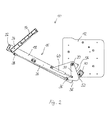
Fig. 1 is a side view of one embodiment of the foldable step according to the present invention in a retracted position of the step plate; -
Fig. 2 is a side view of the foldable step inFig. 1 in an intermediate position between the retracted position of the step plate and an unfolded position;
and -
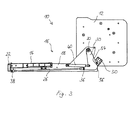
Fig. 3 shows the foldable step according toFigs. 1 and2 in a side view in an unfolded position of the step plate. - In
Fig. 1 , the foldable step denoted generally byreference number 10 is attached to a vehicle structure comprising aconsole 12. Further parts of the vehicle structure are not shown in the figures. The driving direction of the vehicle corresponds to an axis standing vertically to the plane of the drawings. The foldable step is provided to be unfolded and retracted in a lateral direction of the vehicle, which is the left side in the figures. Under theconsole 12, a wheel housing of the vehicle (not shown) can be provided, whereas in a space arranged over theconsole 12, a compartment for rescue equipment can be arranged, which may be a locker or the like. The vehicle as such can be a rescue vehicle like a fire engine. - The
foldable step 10 comprises astep plate 14 standing horizontally inFig. 1 and apivoting device 16 to which thestep plate 14 is attached. Thepivoting device 16 comprises a mechanism to pivot thestep plate 14 from a retracted position shown inFig. 1 to an unfolded position according toFig. 3 . This mechanism will be described in detail in the following. - The
pivoting device 16 comprises arigid arm 18 standing vertically in the retracted position of thepivoting device 16 inFig. 1 . On its lower end, thearm 18 is connected to theconsole 12 in a rotatable manner. Thearm 18 can turn about arotation axis 20 being fixed to theconsole 12 and extending in the driving direction of the vehicle. At the upperfree end 22 of thearm 18, thestep plate 14 is attached. Thestep plate 14 is connected to thefree end 22 of thearm 18 by aturning axis 24 that stands parallel to therotation axis 20 of thearm 18. Around thisturning axis 24, thestep plate 14 can turn with respect to the arm. This turning movement is controlled by aguiding rod 26 extending mainly parallel to the extension direction of thearm 18. Theturning axis 24 and theguiding rod 26 are attached to theleft rim 28 of the step plate 14 (left inFig. 1 ), the upper end of theguiding rod 26 being attached directly to theouter rim 28 of thestep plate 14, while theturning axis 24 is displaced inwardly with respect to the upper connection end of theguiding rod 26. - At the lower end of the
rigid arm 18, anabutment plate 30 is attached. Theabutment plate 30 lies directly on the side surface of thearm 18 and can turn together with thearm 18 about therotation axis 20 of thearm 18 at theconsole 12. Theabutment plate 30 as such is generally V― shaped, with onearm 32 being connected to therotation axis 20 with its end and anotherarm 34 standing almost in a right angle with respect to thefirst arm 32, the end of thesecond arm 34 being connected to the lower end of theguiding rod 26. That is, the lower end of the guidingrod 26 is connected to theabutment plate 30 turnable around a first point generally denoted byreference number 36, and being hinged at its upper end at asecond turning point 38 at therim 28 of theplate 14. When theabutment plate 30 is turned around therotation axis 20 in a clockwise direction inFig. 1 with respect to the rigid arm 18 (i.e. thearm 18 is held in a fixed position), the guidingrod 26 is shifted towards thefree end 22 of thearm 18 to transmit a torque to thestep plate 14 around itsturning axis 24, which will be described later. - The
abutment plate 30 and therigid arm 18 are additionally coupled by aspring element 40 extending from a central part of theabutment plate 30 towards thefree end 22 of therigid arm 18. Thespring element 40 is hinged to theabutment plate 30 at the third point 42 where the twoarms abutment plate 30 are connected, which could be described as the "elbow" of theabutment plate 30, with its lower end, while its upper end is hinged to therigid arm 18 at aforth point 44. When thearm 18 is turned freely around itsrotation axis 20, theabutment plate 30 is coupled to thearm 18 by thespring element 40 so that it follows this movement. However, when theabutment plate 30 encounters a mechanical resistance during thismovement 18 of the arm in a counterclockwise direction, theabutment plate 30 is pressed towards the free end of thearm 22 against the dampening force of thespring element 40. Thespring element 40 has therefore the function to dampen a turning movement of theabutment plate 30 with respect to therigid arm 18. - On the surface of the
console 12 on which the rigid arm is provided, astopper plate 50 is flanged. Thisstopper plate 50 provides a stoppingsurface 52 to which afree side 54 of thearm 32 of theabutment plate 30 can abut, as well as alower end surface 56 of therigid arm 18. It is noted that in the position ofFig. 1 , thefree surface 54 of theabutment plate 30 and the lowerfree surface 56 of therigid arm 18 are displaced by a certain angle around therotation axis 20. This means that when therigid arm 18 and theabutment plate 30 are turned together in a counter clockwise direction, as described above, thefree surface 54 of theabutment plate 30 will reach the stoppingsurface 52 of the stoppingplate 50 first. This situation is shown inFig. 2 . -
Fig. 2 shows the contact position between thefree surface 54 of theabutment plate 30 and the stoppingsurface 52 of the stoppingplate 50. This position marks the maximum turning position of theabutment plate 30 around therotation axis 20 in the counterclockwise direction, since theabutment plate 30 cannot be turned any further and is stopped by thestopper plate 50. However, due to the coupling of theabutment plate 30 to thearm 18 by thecompressible spring element 40, therigid arm 18 can turn further in the counter clockwise direction, since the lowerfree end surface 56 of therigid arm 18 has not reached thestopper plate 50 yet.Fig. 2 shows a situation where therigid arm 18 has already been slightly turned with respect to theabutment plate 30, with the effect that the guidingrod 26 has been displaced towards thefree end 22 of thearm 18, turning thestep plate 14 with respect to thearm 18 and folding it towards to theconsole 12. When therigid arm 18 is further turned around itsrotation axis 20 with respect to theabutment plate 30, thestep plate 14 is further folded against thearm 18, finally reaching the position ofFig. 3 wherein the freelower end 56 of therigid arm 18 has also reached the stoppedplate 50.Fig. 3 shows the completely unfolded position of thestep plate 14. To reach the retracted position ofFig. 1 again, the process described above is carried out in the backward direction, i.e. therigid arm 18 is turned in the clockwise direction around therotation axis 20 first while theabutment plate 30 stays in the abutted position to the stoppingsurface 52 of the stoppingplate 50. After thespring element 40 is extracted completely, it carries theabutment plate 30 during the further turning movement of therigid arm 18 so that both parts, i.e. theabutment plate 30 and therigid arm 18 are pivoted together. - In the present embodiment the stopping
surface 52 serves as one stopper for theabutment plate 30 as well as for the rigid arm, because the stoppingplate 50 has a thickness great enough to serve as a stopper for bothelements abutment plate 30 and therigid arm 18, or at least different stoppingsurfaces 52 for thefree surface 54 of theabutment plate 30 and the freelower surface 56 of thearm 18. To carry out the kinetic movement from the retracted position inFig. 1 to reach the unfolded position inFig. 3 , it should only be provided that therigid arm 18 can carry out a further turning movement to reach a second stopper beyond the abutment position of theabutment plate 30 at a first stopper, with the effect that after finishing a first turning phase in which therigid arm 18 and theabutment plate 30 are moved together, a second turning phase follows in which therigid arm 18 carries out a turning movement with respect to theabutment plate 30 to unfold the turningstep 14. However, as already mentioned, the first stopper and the second stopper can be identical or at least be arranged at the same angular position with respect to therotation axis 20. The first stopper and the second stopper can be represented by different sides of a stopping block or stoppingplate 50, unlike in the present embodiment, wherein the stoppingsurface 52 represents the first and second stopper at the same time.
Claims (5)
- Foldable step (10) for vehicles, comprising a step plate (14) and a pivoting device (16) for pivoting the step plate (14) between a retracted position and an unfolded position,
characterized in that the pivoting device (16) comprises a rigid arm (18) being hinged to a vehicle structure turnable around a horizontal axis (20),
that the step plate (14) is attached to the free end of the rigid arm (18) turnable around a second axis (24) arranged parallel to said rotation axis (20) of the rigid arm (18) ,
that the pivoting device (16) further comprises an abutment plate (30) standing vertically with respect to said rotation axis (20) of the rigid arm (18) and being turnable together with the rigid arm (18) around its rotation axis (20) against a first stopper (50) at the vehicle structure,
as well as a coupling element coupling said rigid arm (18) with said abutment plate and allowing a turning movement of the rigid arm (18) with respect to the abutment plate (30),
said rigid arm (18) being turnable beyond the stopping position of the abutment plate (30) at the first stopper (50) to reach a second stopper (50) at the vehicle structure,
said pivoting device (16) further comprising a rod (26) for connecting the abutment plate (30) with the step plate (14), said rod (26) being hinged to the abutment plate (30) at a first point (36) displaced from the rotation axis (20) of the rigid arm (18) and being hinged with its other end to the step plate (14) at a second point (38) displaced from the turning axis (24) of the step plate (14). - Foldable step according to claim 1, characterized in that said coupling element comprises a spring element (40) being hinged to the abutment plate (30) at a third point (42) displaced from the rotation axis (20) of the rigid arm (18) on one hand and being hinged to the rigid arm (18) at a fourth point (44), in a way that the spring element (40) is compressed during the turning motion of the rigid arm (18) beyond the stopping position of the abutment plate (30) at the first stopper (50).
- Foldable step according to claim 1 or 2, characterized in that the first stopper and the second stopper are formed by the same stopping surface (52) or arranged at the same angular position with respect to the rotation axis (20) of the rigid arm (18).
- Foldable step according to claim 3, characterized in that the first stopper and the second stopper are formed by one side of a stopping block (50) that is fixed to the vehicle structure.
- Foldable step according to claim 1 or 2, characterized in that the first stopper and the second stopper are formed by different sides of a stopping block (50) that is fixed to the vehicle structure.
Priority Applications (2)
| Application Number | Priority Date | Filing Date | Title |
|---|---|---|---|
| ES09179594T ES2431350T3 (en) | 2009-12-17 | 2009-12-17 | Folding step for vehicles |
| EP20090179594 EP2335977B1 (en) | 2009-12-17 | 2009-12-17 | Foldable step for vehicles |
Applications Claiming Priority (1)
| Application Number | Priority Date | Filing Date | Title |
|---|---|---|---|
| EP20090179594 EP2335977B1 (en) | 2009-12-17 | 2009-12-17 | Foldable step for vehicles |
Publications (2)
| Publication Number | Publication Date |
|---|---|
| EP2335977A1 true EP2335977A1 (en) | 2011-06-22 |
| EP2335977B1 EP2335977B1 (en) | 2013-07-24 |
Family
ID=41572403
Family Applications (1)
| Application Number | Title | Priority Date | Filing Date |
|---|---|---|---|
| EP20090179594 Active EP2335977B1 (en) | 2009-12-17 | 2009-12-17 | Foldable step for vehicles |
Country Status (2)
| Country | Link |
|---|---|
| EP (1) | EP2335977B1 (en) |
| ES (1) | ES2431350T3 (en) |
Cited By (2)
| Publication number | Priority date | Publication date | Assignee | Title |
|---|---|---|---|---|
| CN102729613A (en) * | 2012-07-02 | 2012-10-17 | 天津长荣印刷设备股份有限公司 | Dual-purpose pedal device and working method thereof |
| US11279289B2 (en) | 2020-04-06 | 2022-03-22 | Rosenbauer America, Inc. | Step assembly and vehicle |
Citations (4)
| Publication number | Priority date | Publication date | Assignee | Title |
|---|---|---|---|---|
| DE4221171A1 (en) | 1992-06-27 | 1994-01-05 | Iveco Magirus | Boarding slip in fill engine rear axle region - has outwards foldable inner guard of vehicle axis about horizontal swivel axis |
| US20020189899A1 (en) * | 1998-07-10 | 2002-12-19 | Hedley Robert Ian | Platform/access device |
| CN101214801A (en) | 2008-01-07 | 2008-07-09 | 张建明 | Linkage wood clapper structure |
| CN101480518A (en) * | 2008-04-30 | 2009-07-15 | 东莞卢森宝亚永强消防汽车有限公司 | Rear axle overturning pedal of fire-fighting truck |
-
2009
- 2009-12-17 EP EP20090179594 patent/EP2335977B1/en active Active
- 2009-12-17 ES ES09179594T patent/ES2431350T3/en active Active
Patent Citations (4)
| Publication number | Priority date | Publication date | Assignee | Title |
|---|---|---|---|---|
| DE4221171A1 (en) | 1992-06-27 | 1994-01-05 | Iveco Magirus | Boarding slip in fill engine rear axle region - has outwards foldable inner guard of vehicle axis about horizontal swivel axis |
| US20020189899A1 (en) * | 1998-07-10 | 2002-12-19 | Hedley Robert Ian | Platform/access device |
| CN101214801A (en) | 2008-01-07 | 2008-07-09 | 张建明 | Linkage wood clapper structure |
| CN101480518A (en) * | 2008-04-30 | 2009-07-15 | 东莞卢森宝亚永强消防汽车有限公司 | Rear axle overturning pedal of fire-fighting truck |
Cited By (2)
| Publication number | Priority date | Publication date | Assignee | Title |
|---|---|---|---|---|
| CN102729613A (en) * | 2012-07-02 | 2012-10-17 | 天津长荣印刷设备股份有限公司 | Dual-purpose pedal device and working method thereof |
| US11279289B2 (en) | 2020-04-06 | 2022-03-22 | Rosenbauer America, Inc. | Step assembly and vehicle |
Also Published As
| Publication number | Publication date |
|---|---|
| ES2431350T3 (en) | 2013-11-26 |
| EP2335977B1 (en) | 2013-07-24 |
Similar Documents
| Publication | Publication Date | Title |
|---|---|---|
| JP6427472B2 (en) | Work vehicle | |
| WO2014199314A2 (en) | Movable platform assembly with extendable surface | |
| EP2335977B1 (en) | Foldable step for vehicles | |
| KR20160017066A (en) | Apparatus for transferring people and/or goods to or from a vessel | |
| JP2015516332A (en) | Hinged extendable climbing aid | |
| US10682537B2 (en) | Ergonomic SCBA holder | |
| US20060049309A1 (en) | Decoupled steering/planing air vehicle nose landing gear | |
| US20090273154A1 (en) | Step for a vehicle | |
| US8042820B1 (en) | Driver's side large vehicle step | |
| JP2007126010A (en) | Vehicle with elevating device and elevating device | |
| CN103057441A (en) | Seat for use in automobile | |
| JP2003312984A (en) | Foldable driver's cab/pivot unit for tower crane | |
| US10836321B1 (en) | Truck bed ladder | |
| JP2013163400A (en) | Slope device | |
| JP2015214243A (en) | Vehicular table | |
| EP2335975B1 (en) | Foldable platform for vehicles | |
| JP2006149465A (en) | Table armrests and vehicle chairs | |
| CN201350876Y (en) | Movable foot board device for fire engine | |
| CN212313880U (en) | Folding type anti-overturning support and connecting structure with automobile | |
| JP6530265B2 (en) | Outrigger device for on-vehicle crane | |
| CN101480936B (en) | Movable foot pedal device of fire-fighting truck | |
| CN215706007U (en) | Upset ladder and vehicle | |
| JP3850434B1 (en) | Vehicle with lifting device and lifting device | |
| CN113022395B (en) | Automobile and seat thereof | |
| CN204137247U (en) | Lock solid structure and there is the folded bicycle of this lock solid structure |
Legal Events
| Date | Code | Title | Description |
|---|---|---|---|
| PUAI | Public reference made under article 153(3) epc to a published international application that has entered the european phase |
Free format text: ORIGINAL CODE: 0009012 |
|
| AK | Designated contracting states |
Kind code of ref document: A1 Designated state(s): AT BE BG CH CY CZ DE DK EE ES FI FR GB GR HR HU IE IS IT LI LT LU LV MC MK MT NL NO PL PT RO SE SI SK SM TR |
|
| AX | Request for extension of the european patent |
Extension state: AL BA RS |
|
| 17P | Request for examination filed |
Effective date: 20111216 |
|
| 17Q | First examination report despatched |
Effective date: 20120126 |
|
| GRAP | Despatch of communication of intention to grant a patent |
Free format text: ORIGINAL CODE: EPIDOSNIGR1 |
|
| GRAS | Grant fee paid |
Free format text: ORIGINAL CODE: EPIDOSNIGR3 |
|
| GRAA | (expected) grant |
Free format text: ORIGINAL CODE: 0009210 |
|
| AK | Designated contracting states |
Kind code of ref document: B1 Designated state(s): AT BE BG CH CY CZ DE DK EE ES FI FR GB GR HR HU IE IS IT LI LT LU LV MC MK MT NL NO PL PT RO SE SI SK SM TR |
|
| REG | Reference to a national code |
Ref country code: GB Ref legal event code: FG4D |
|
| REG | Reference to a national code |
Ref country code: CH Ref legal event code: EP |
|
| REG | Reference to a national code |
Ref country code: AT Ref legal event code: REF Ref document number: 623206 Country of ref document: AT Kind code of ref document: T Effective date: 20130815 |
|
| REG | Reference to a national code |
Ref country code: IE Ref legal event code: FG4D |
|
| REG | Reference to a national code |
Ref country code: DE Ref legal event code: R096 Ref document number: 602009017377 Country of ref document: DE Effective date: 20130919 |
|
| REG | Reference to a national code |
Ref country code: CH Ref legal event code: NV Representative=s name: N&G PATENT SERVICES SA, CH |
|
| REG | Reference to a national code |
Ref country code: SE Ref legal event code: TRGR |
|
| REG | Reference to a national code |
Ref country code: ES Ref legal event code: FG2A Ref document number: 2431350 Country of ref document: ES Kind code of ref document: T3 Effective date: 20131126 |
|
| REG | Reference to a national code |
Ref country code: NL Ref legal event code: VDEP Effective date: 20130724 |
|
| REG | Reference to a national code |
Ref country code: LT Ref legal event code: MG4D |
|
| PG25 | Lapsed in a contracting state [announced via postgrant information from national office to epo] |
Ref country code: IS Free format text: LAPSE BECAUSE OF FAILURE TO SUBMIT A TRANSLATION OF THE DESCRIPTION OR TO PAY THE FEE WITHIN THE PRESCRIBED TIME-LIMIT Effective date: 20131124 Ref country code: HR Free format text: LAPSE BECAUSE OF FAILURE TO SUBMIT A TRANSLATION OF THE DESCRIPTION OR TO PAY THE FEE WITHIN THE PRESCRIBED TIME-LIMIT Effective date: 20130724 Ref country code: LT Free format text: LAPSE BECAUSE OF FAILURE TO SUBMIT A TRANSLATION OF THE DESCRIPTION OR TO PAY THE FEE WITHIN THE PRESCRIBED TIME-LIMIT Effective date: 20130724 Ref country code: BE Free format text: LAPSE BECAUSE OF FAILURE TO SUBMIT A TRANSLATION OF THE DESCRIPTION OR TO PAY THE FEE WITHIN THE PRESCRIBED TIME-LIMIT Effective date: 20130724 Ref country code: PT Free format text: LAPSE BECAUSE OF FAILURE TO SUBMIT A TRANSLATION OF THE DESCRIPTION OR TO PAY THE FEE WITHIN THE PRESCRIBED TIME-LIMIT Effective date: 20131125 Ref country code: CY Free format text: LAPSE BECAUSE OF FAILURE TO SUBMIT A TRANSLATION OF THE DESCRIPTION OR TO PAY THE FEE WITHIN THE PRESCRIBED TIME-LIMIT Effective date: 20130724 Ref country code: NO Free format text: LAPSE BECAUSE OF FAILURE TO SUBMIT A TRANSLATION OF THE DESCRIPTION OR TO PAY THE FEE WITHIN THE PRESCRIBED TIME-LIMIT Effective date: 20131024 |
|
| PG25 | Lapsed in a contracting state [announced via postgrant information from national office to epo] |
Ref country code: FI Free format text: LAPSE BECAUSE OF FAILURE TO SUBMIT A TRANSLATION OF THE DESCRIPTION OR TO PAY THE FEE WITHIN THE PRESCRIBED TIME-LIMIT Effective date: 20130724 Ref country code: PL Free format text: LAPSE BECAUSE OF FAILURE TO SUBMIT A TRANSLATION OF THE DESCRIPTION OR TO PAY THE FEE WITHIN THE PRESCRIBED TIME-LIMIT Effective date: 20130724 Ref country code: NL Free format text: LAPSE BECAUSE OF FAILURE TO SUBMIT A TRANSLATION OF THE DESCRIPTION OR TO PAY THE FEE WITHIN THE PRESCRIBED TIME-LIMIT Effective date: 20130724 Ref country code: GR Free format text: LAPSE BECAUSE OF FAILURE TO SUBMIT A TRANSLATION OF THE DESCRIPTION OR TO PAY THE FEE WITHIN THE PRESCRIBED TIME-LIMIT Effective date: 20131025 Ref country code: LV Free format text: LAPSE BECAUSE OF FAILURE TO SUBMIT A TRANSLATION OF THE DESCRIPTION OR TO PAY THE FEE WITHIN THE PRESCRIBED TIME-LIMIT Effective date: 20130724 Ref country code: SI Free format text: LAPSE BECAUSE OF FAILURE TO SUBMIT A TRANSLATION OF THE DESCRIPTION OR TO PAY THE FEE WITHIN THE PRESCRIBED TIME-LIMIT Effective date: 20130724 |
|
| PG25 | Lapsed in a contracting state [announced via postgrant information from national office to epo] |
Ref country code: RO Free format text: LAPSE BECAUSE OF FAILURE TO SUBMIT A TRANSLATION OF THE DESCRIPTION OR TO PAY THE FEE WITHIN THE PRESCRIBED TIME-LIMIT Effective date: 20130724 Ref country code: DK Free format text: LAPSE BECAUSE OF FAILURE TO SUBMIT A TRANSLATION OF THE DESCRIPTION OR TO PAY THE FEE WITHIN THE PRESCRIBED TIME-LIMIT Effective date: 20130724 Ref country code: CZ Free format text: LAPSE BECAUSE OF FAILURE TO SUBMIT A TRANSLATION OF THE DESCRIPTION OR TO PAY THE FEE WITHIN THE PRESCRIBED TIME-LIMIT Effective date: 20130724 Ref country code: EE Free format text: LAPSE BECAUSE OF FAILURE TO SUBMIT A TRANSLATION OF THE DESCRIPTION OR TO PAY THE FEE WITHIN THE PRESCRIBED TIME-LIMIT Effective date: 20130724 Ref country code: SK Free format text: LAPSE BECAUSE OF FAILURE TO SUBMIT A TRANSLATION OF THE DESCRIPTION OR TO PAY THE FEE WITHIN THE PRESCRIBED TIME-LIMIT Effective date: 20130724 |
|
| PLBE | No opposition filed within time limit |
Free format text: ORIGINAL CODE: 0009261 |
|
| STAA | Information on the status of an ep patent application or granted ep patent |
Free format text: STATUS: NO OPPOSITION FILED WITHIN TIME LIMIT |
|
| 26N | No opposition filed |
Effective date: 20140425 |
|
| REG | Reference to a national code |
Ref country code: DE Ref legal event code: R097 Ref document number: 602009017377 Country of ref document: DE Effective date: 20140425 |
|
| PG25 | Lapsed in a contracting state [announced via postgrant information from national office to epo] |
Ref country code: LU Free format text: LAPSE BECAUSE OF FAILURE TO SUBMIT A TRANSLATION OF THE DESCRIPTION OR TO PAY THE FEE WITHIN THE PRESCRIBED TIME-LIMIT Effective date: 20131217 Ref country code: MC Free format text: LAPSE BECAUSE OF FAILURE TO SUBMIT A TRANSLATION OF THE DESCRIPTION OR TO PAY THE FEE WITHIN THE PRESCRIBED TIME-LIMIT Effective date: 20130724 |
|
| REG | Reference to a national code |
Ref country code: IE Ref legal event code: MM4A |
|
| PG25 | Lapsed in a contracting state [announced via postgrant information from national office to epo] |
Ref country code: IE Free format text: LAPSE BECAUSE OF NON-PAYMENT OF DUE FEES Effective date: 20131217 |
|
| PG25 | Lapsed in a contracting state [announced via postgrant information from national office to epo] |
Ref country code: SM Free format text: LAPSE BECAUSE OF FAILURE TO SUBMIT A TRANSLATION OF THE DESCRIPTION OR TO PAY THE FEE WITHIN THE PRESCRIBED TIME-LIMIT Effective date: 20130724 |
|
| PG25 | Lapsed in a contracting state [announced via postgrant information from national office to epo] |
Ref country code: TR Free format text: LAPSE BECAUSE OF FAILURE TO SUBMIT A TRANSLATION OF THE DESCRIPTION OR TO PAY THE FEE WITHIN THE PRESCRIBED TIME-LIMIT Effective date: 20130724 |
|
| PG25 | Lapsed in a contracting state [announced via postgrant information from national office to epo] |
Ref country code: HU Free format text: LAPSE BECAUSE OF FAILURE TO SUBMIT A TRANSLATION OF THE DESCRIPTION OR TO PAY THE FEE WITHIN THE PRESCRIBED TIME-LIMIT; INVALID AB INITIO Effective date: 20091217 Ref country code: MK Free format text: LAPSE BECAUSE OF FAILURE TO SUBMIT A TRANSLATION OF THE DESCRIPTION OR TO PAY THE FEE WITHIN THE PRESCRIBED TIME-LIMIT Effective date: 20130724 Ref country code: BG Free format text: LAPSE BECAUSE OF FAILURE TO SUBMIT A TRANSLATION OF THE DESCRIPTION OR TO PAY THE FEE WITHIN THE PRESCRIBED TIME-LIMIT Effective date: 20130724 |
|
| PG25 | Lapsed in a contracting state [announced via postgrant information from national office to epo] |
Ref country code: MT Free format text: LAPSE BECAUSE OF FAILURE TO SUBMIT A TRANSLATION OF THE DESCRIPTION OR TO PAY THE FEE WITHIN THE PRESCRIBED TIME-LIMIT Effective date: 20130724 |
|
| REG | Reference to a national code |
Ref country code: FR Ref legal event code: PLFP Year of fee payment: 7 |
|
| REG | Reference to a national code |
Ref country code: FR Ref legal event code: PLFP Year of fee payment: 8 |
|
| REG | Reference to a national code |
Ref country code: FR Ref legal event code: PLFP Year of fee payment: 9 |
|
| P01 | Opt-out of the competence of the unified patent court (upc) registered |
Effective date: 20230522 |
|
| REG | Reference to a national code |
Ref country code: CH Ref legal event code: U11 Free format text: ST27 STATUS EVENT CODE: U-0-0-U10-U11 (AS PROVIDED BY THE NATIONAL OFFICE) Effective date: 20260101 |
|
| PGFP | Annual fee paid to national office [announced via postgrant information from national office to epo] |
Ref country code: GB Payment date: 20251223 Year of fee payment: 17 |
|
| PGFP | Annual fee paid to national office [announced via postgrant information from national office to epo] |
Ref country code: AT Payment date: 20251218 Year of fee payment: 17 |
|
| PGFP | Annual fee paid to national office [announced via postgrant information from national office to epo] |
Ref country code: IT Payment date: 20251118 Year of fee payment: 17 |
|
| PGFP | Annual fee paid to national office [announced via postgrant information from national office to epo] |
Ref country code: FR Payment date: 20251223 Year of fee payment: 17 |
|
| PGFP | Annual fee paid to national office [announced via postgrant information from national office to epo] |
Ref country code: SE Payment date: 20251222 Year of fee payment: 17 |
|
| PGFP | Annual fee paid to national office [announced via postgrant information from national office to epo] |
Ref country code: ES Payment date: 20260122 Year of fee payment: 17 |
|
| PGFP | Annual fee paid to national office [announced via postgrant information from national office to epo] |
Ref country code: DE Payment date: 20251229 Year of fee payment: 17 |
|
| PGFP | Annual fee paid to national office [announced via postgrant information from national office to epo] |
Ref country code: CH Payment date: 20260101 Year of fee payment: 17 |