EP2334614B1 - Method of treating marine sediments and use of the resulting solid product in mortars or concretes - Google Patents
Method of treating marine sediments and use of the resulting solid product in mortars or concretes Download PDFInfo
- Publication number
- EP2334614B1 EP2334614B1 EP20090783532 EP09783532A EP2334614B1 EP 2334614 B1 EP2334614 B1 EP 2334614B1 EP 20090783532 EP20090783532 EP 20090783532 EP 09783532 A EP09783532 A EP 09783532A EP 2334614 B1 EP2334614 B1 EP 2334614B1
- Authority
- EP
- European Patent Office
- Prior art keywords
- sediment
- sulphoaluminate
- weight
- treated
- binder
- Prior art date
- Legal status (The legal status is an assumption and is not a legal conclusion. Google has not performed a legal analysis and makes no representation as to the accuracy of the status listed.)
- Active
Links
Images


Classifications
-
- C—CHEMISTRY; METALLURGY
- C04—CEMENTS; CONCRETE; ARTIFICIAL STONE; CERAMICS; REFRACTORIES
- C04B—LIME, MAGNESIA; SLAG; CEMENTS; COMPOSITIONS THEREOF, e.g. MORTARS, CONCRETE OR LIKE BUILDING MATERIALS; ARTIFICIAL STONE; CERAMICS; REFRACTORIES; TREATMENT OF NATURAL STONE
- C04B18/00—Use of agglomerated or waste materials or refuse as fillers for mortars, concrete or artificial stone; Treatment of agglomerated or waste materials or refuse, specially adapted to enhance their filling properties in mortars, concrete or artificial stone
- C04B18/02—Agglomerated materials, e.g. artificial aggregates
- C04B18/021—Agglomerated materials, e.g. artificial aggregates agglomerated by a mineral binder, e.g. cement
-
- C—CHEMISTRY; METALLURGY
- C04—CEMENTS; CONCRETE; ARTIFICIAL STONE; CERAMICS; REFRACTORIES
- C04B—LIME, MAGNESIA; SLAG; CEMENTS; COMPOSITIONS THEREOF, e.g. MORTARS, CONCRETE OR LIKE BUILDING MATERIALS; ARTIFICIAL STONE; CERAMICS; REFRACTORIES; TREATMENT OF NATURAL STONE
- C04B28/00—Compositions of mortars, concrete or artificial stone, containing inorganic binders or the reaction product of an inorganic and an organic binder, e.g. polycarboxylate cements
- C04B28/02—Compositions of mortars, concrete or artificial stone, containing inorganic binders or the reaction product of an inorganic and an organic binder, e.g. polycarboxylate cements containing hydraulic cements other than calcium sulfates
- C04B28/04—Portland cements
-
- C—CHEMISTRY; METALLURGY
- C04—CEMENTS; CONCRETE; ARTIFICIAL STONE; CERAMICS; REFRACTORIES
- C04B—LIME, MAGNESIA; SLAG; CEMENTS; COMPOSITIONS THEREOF, e.g. MORTARS, CONCRETE OR LIKE BUILDING MATERIALS; ARTIFICIAL STONE; CERAMICS; REFRACTORIES; TREATMENT OF NATURAL STONE
- C04B28/00—Compositions of mortars, concrete or artificial stone, containing inorganic binders or the reaction product of an inorganic and an organic binder, e.g. polycarboxylate cements
- C04B28/02—Compositions of mortars, concrete or artificial stone, containing inorganic binders or the reaction product of an inorganic and an organic binder, e.g. polycarboxylate cements containing hydraulic cements other than calcium sulfates
- C04B28/06—Aluminous cements
- C04B28/065—Calcium aluminosulfate cements, e.g. cements hydrating into ettringite
-
- C—CHEMISTRY; METALLURGY
- C04—CEMENTS; CONCRETE; ARTIFICIAL STONE; CERAMICS; REFRACTORIES
- C04B—LIME, MAGNESIA; SLAG; CEMENTS; COMPOSITIONS THEREOF, e.g. MORTARS, CONCRETE OR LIKE BUILDING MATERIALS; ARTIFICIAL STONE; CERAMICS; REFRACTORIES; TREATMENT OF NATURAL STONE
- C04B28/00—Compositions of mortars, concrete or artificial stone, containing inorganic binders or the reaction product of an inorganic and an organic binder, e.g. polycarboxylate cements
- C04B28/14—Compositions of mortars, concrete or artificial stone, containing inorganic binders or the reaction product of an inorganic and an organic binder, e.g. polycarboxylate cements containing calcium sulfate cements
- C04B28/145—Calcium sulfate hemi-hydrate with a specific crystal form
-
- C—CHEMISTRY; METALLURGY
- C04—CEMENTS; CONCRETE; ARTIFICIAL STONE; CERAMICS; REFRACTORIES
- C04B—LIME, MAGNESIA; SLAG; CEMENTS; COMPOSITIONS THEREOF, e.g. MORTARS, CONCRETE OR LIKE BUILDING MATERIALS; ARTIFICIAL STONE; CERAMICS; REFRACTORIES; TREATMENT OF NATURAL STONE
- C04B28/00—Compositions of mortars, concrete or artificial stone, containing inorganic binders or the reaction product of an inorganic and an organic binder, e.g. polycarboxylate cements
- C04B28/14—Compositions of mortars, concrete or artificial stone, containing inorganic binders or the reaction product of an inorganic and an organic binder, e.g. polycarboxylate cements containing calcium sulfate cements
- C04B28/16—Compositions of mortars, concrete or artificial stone, containing inorganic binders or the reaction product of an inorganic and an organic binder, e.g. polycarboxylate cements containing calcium sulfate cements containing anhydrite, e.g. Keene's cement
-
- Y—GENERAL TAGGING OF NEW TECHNOLOGICAL DEVELOPMENTS; GENERAL TAGGING OF CROSS-SECTIONAL TECHNOLOGIES SPANNING OVER SEVERAL SECTIONS OF THE IPC; TECHNICAL SUBJECTS COVERED BY FORMER USPC CROSS-REFERENCE ART COLLECTIONS [XRACs] AND DIGESTS
- Y02—TECHNOLOGIES OR APPLICATIONS FOR MITIGATION OR ADAPTATION AGAINST CLIMATE CHANGE
- Y02W—CLIMATE CHANGE MITIGATION TECHNOLOGIES RELATED TO WASTEWATER TREATMENT OR WASTE MANAGEMENT
- Y02W30/00—Technologies for solid waste management
- Y02W30/50—Reuse, recycling or recovery technologies
- Y02W30/91—Use of waste materials as fillers for mortars or concrete
Definitions
- the present invention relates to a method of treating marine or river dredging sediments, especially harbour zone sediments, for the purpose of solidifying them, and also to the use, in mortars or concretes, of the solid material thus obtained.
- these sediments may contain large amounts of heavy metals, particularly of arsenic, chromium and lead, and also of zinc, copper, cadmium and mercury, in amounts of the order of several tens of milligrams/kg of solid dry matter of said sediment.
- These sediments may also contain PCBs. Their particle size is very fine, less than a millimetre, with their average particle size very often being close to a few tens of micrometres.
- treatment of a marine sediment with quick lime at a concentration of approximately 20% allows the sediment to be made very rapidly capable of being handled, in less than two hours, indeed. However, after these two hours, there is little change, or none at all, in its texture.
- quick lime is an extremely dangerous product, since it is converted to slaked lime by a violent and dangerous process. It must therefore be transported and used with precaution. The heat given off is such that, when it is extinguished, the water may begin to boil and project the lime, which is corrosive.
- quick lime or fat lime
- quick lime may fall within the classification of substances which are dangerous or for which, at the least, the manufacturer is required to demonstrate that it can be used in a safe manner.
- the treated sediment is generally discharged to landfill, without being utilized.
- the dredging sediments especially those obtained from harbour zones, contain high levels of heavy metals. Accordingly, the sediments treated with lime, when subjected to leaching, have large soluble fractions and may release the heavy metals over time. They must therefore be sent to special landfills (ultimate waste storage centres).
- the present invention accordingly provides a method of treating marine or river dredging sediments, especially harbour zone sediments, whose free water content is between 40% and 80% by weight, for the purpose of obtaining a solid material which is easy to handle, which is characterized in that it comprises the following successive steps:
- the treatment composition may comprise:
- the treatment composition comprising a sulphoaluminate binder and a sulphate source and also an optional catalyst is a composition which is less dangerous to use than quick lime.
- This composition may be employed with the sediment in a simple procedure which involves simply mixing the sediments with said composition at ambient temperature.
- the setting step is a step of resting the mixture, during which the sulphoaluminate binder undergoes hydration in the presence of the large amount of free water in the dredging sediment.
- a solid, dried-out, compact mixture which has a free water content reduced relative to the initial sediment.
- This free water content is generally less than 20% by weight and may even reach only 10% by weight of the total mixture.
- the sulphoaluminate binder is preferably a sulphoaluminate clinker comprising ye'elimite C4 A3 $ as the major phase (in per cent by weight).
- sulphoaluminate clinker is meant any material resulting from the calcining, at a temperature of between 900°C and 1450°C (clinkerization temperature), of mixtures containing at least one source of lime (for example limestones which have a CaO content of between 50% and 60%), at least one source of alumina (for example bauxites, calcined aluminas or other manufacturing byproducts containing alumina) and at least one source of sulphate (gypsums, chemical gypsum, natural or synthetic anhydrite, plaster, sulphocalcic ash).
- the sulphoaluminate clinker used in the present invention preferably has a 4CaO.3Al 2 O 3 .SO 3 (also referenced C4 A3
- the primary compounds are represented by C for CaO, S for SiO 2 , A for Al 2 O 3 , $ for SO 3 , H for H 2 O, and these will be used throughout the present text.
- this sulphoaluminate clinker contains from 40% to 80% by weight of ye'elimite C4 A3 $, from 5% to 15% by weight of C$ and from 15% to 25% by weight of belite C2S.
- sulphate source it is preferred to use a calcium sulphate selected from anhydrite, gypsum or bassanite (calcium sulphate hemihydrate), which are setting regulators that react with the C4 A3 $ phase of the sulphoaluminate clinker to form ettringite.
- the catalyst makes it possible to accelerate the hydration reactions of the sulphoaluminate binder. In the absence of the catalyst, hydration does take place, but it is very slow and not very advanced.
- This catalyst is preferably a lithium salt, advantageously a soluble salt, selected from lithium carbonate, sulphate or nitrate.
- the advantageous treatment compositions comprise, in per cent by weight:
- a treatment composition of this kind when added to said sediment in proportions of between 1% and 20% by weight of said sediment, provides substantial drying-out of the dredging sediment and also a solidification which allows easy handling.
- Preferred proportions of this composition that are added to the sediments are between 2% and 15% by weight of said sediment, and advantageous results have even been observed for values of less than 8% by weight.
- the treatment composition may further comprise, in addition to the sulphoaluminate binder, the sulphate source and the catalyst as mentioned above, constituting its "active principle", a hydraulic binder selected from Portland cement (cement standardized in accordance with standard NF EN 197-1 (of type I, II, III, IV and V)), a fat lime, a natural hydraulic lime or an artificial hydraulic lime, or a mixture of these binders.
- a hydraulic binder selected from Portland cement (cement standardized in accordance with standard NF EN 197-1 (of type I, II, III, IV and V)), a fat lime, a natural hydraulic lime or an artificial hydraulic lime, or a mixture of these binders.
- the proportion of this further binder in the treatment composition should not, however, exceed preferably 35% by weight, in order to give an acceptable texture.
- a mixture of this kind, constituting a "dilution" of the "active principle”, may exhibit good efficacy, for obtaining a solid material which is easy to handle, but generally less than without dilution.
- the treated sediment may be present, after fractionation, in the form of solid granules which contain a free water content of less than 20% by weight, preferably less than 10% by weight.
- the texture of the treated sediment is measured by means of a texturometer (particularly a TA.XT+ texture analyser, for example, an instrument developed by the company STABLE MICRO SYSTEMS), equipped with a 3 mm 2 cylindrical probe.
- the texture corresponds to the force required to cause the probe to penetrate to a given depth with a given speed (the depth and speed being identical for each sample tested, in this case of 10 mm at 1 mm/min).
- the sediment treated by the method according to the invention gives a force value of at least 10 newtons, preferably at least 15 newtons.
- the resistance to penetration by the cylindrical probe of the texturometer is greater with the treated sediment than with the crude sediment, for which the value is close to 0 newtons.
- This measurement using a texturometer, therefore makes it possible to have a quantitative estimation of the "solid" character of the treated sediment, and to quantify this solidification by the measurement of the intensity of the corresponding force.
- the treated sediment may be subsequently introduced into a concrete or mortar composition, even if the initial crude sediment contained a high level of chlorides (especially when the sediment is a sediment of marine origin, such as harbour dredging sediments).
- the present invention accordingly also relates to a concrete or mortar incorporating a sediment treated in accordance with the above-described method according to the invention.
- the concrete or mortar may contain up to 50% by weight of treated sediments.
- it may be prepared from 10% to 30% by weight of treated sediment and from a CEM III cement, and then has a leachable fraction, determined in accordance with standard NF EN ISO 12457-2, of less than 1% by weight.
- CEM III mainly A, B and C, from the European cements standard NF EN 197-1
- the CEM III/A cement contains from 36% to 65% of slag and from 35% to 64% of clinker, the CEM III/B from 66% to 80% of slag and from 20% to 34% of clinker, and the CEM III/C from 81% to 95% of slag and from 5% to 19% of clinker.
- Concretes were manufactured with proportions of between 200 and 500 kg/m 3 of a CEM III cement of this kind, in the presence of 10% to 50% of sediments treated by the method according to the present invention.
- the method according to the invention therefore makes it possible to render inert (in other words, to immobilize) the heavy metals contained in the crude dredging sediment.
- the river or marine dredging sediments thus treated may therefore be easily recycled (for example into concretes, road platforms or embankments).
- the sediment under study is therefore an ultrafine sediment, characterized by the following solid fractions:
- phase 1 + phase 2 The ultimate objective of the method (phase 1 + phase 2) was to obtain a material which meets the requirements of mechanical strength and leaching of the concrete, with a soluble fraction (that part of the material which is soluble in water after the leaching test according to standard NF EN ISO 12457-2) of less than 1% by weight.
- Texture is one of the four criteria associated with the features of food products. This analysis of the texture allows an objective measurement by a mechanical test.
- the texturometer used is a TA.XT plus texture analyser instrument developed by the STABLE MICRO SYSTEMS company.
- the principle used, in the context of the present invention, is that of measurement by the force (in newtons) opposed to the driven penetration of a probe into the material.
- the probe in this case is a cylindrical probe with a contact surface area of 3 mm 2 .
- This probe is driven into the material (application of a force) and the instrument measures the force opposed to this pressure, and the plot made indicates the resulting force in newtons.
- Example 1 Treatment of the sediment with quick lime
- a "reference synthetic” lime was therefore made, so as to have a formulation reference point, chemical stability and reproducibility of tests.
- This lime is prepared by decarbonation of calcium carbonate for 24 h.
- the preparation protocol involves placing said calcium carbonate in alumina crucibles. Following calcining at 950°C, when the crucibles have cooled to a temperature of 100 to 200°C, the quick lime is placed in a desiccator until the temperature of the lime is close to ambient temperature. The quick lime is then removed from the desiccator and screened to 40 ⁇ m, and finally is placed in a hermetically closed bag, which itself is introduced into a bag of the same kind, in order to ensure the best keeping properties and to prevent its hydration.
- the solid material obtained contains inclusions of unreacted lime.
- the reaction when the lime and sediment are mixed is highly exothermic. Between 1 h and 2 h, the lime begins to modify the sediment, which becomes more consistent and fairly malleable, with an appearance similar to that of a modelling clay. This consistency was not subsequently modified.
- Example 2 Treatment of the sediment according to the invention - Composition F11
- the treatment composition developed here first makes it possible to avoid the dangers of use which are inherent in quick lime.
- the treatment of the same sediment sample as that in Example 1, is carried out using 7% of a composition F11 comprising:
- Treatment composition F11 is added to the sediments placed in the base of the vessel of a mill. Milling is started immediately, followed by a rest time of 30 s, and by milling again for 30 s.
- the measurements with the texturometer are made immediately after the end of milling, taking as time zero the time corresponding to the contacting of the composition with the sediment (see Figure 4 ). The texture is then measured at different intervals.
- the threshold of "manipulability" of a treated sediment is close to a measured texture value corresponding to at least 6 newtons approximately.
- Example 2 According to the same procedure as Example 2, the same sample of sediment was treated with different proportions of treatment composition according to the invention, in comparison with the 20% lime.
- Treatment by the method according to the invention allows the same level of performance as with the lime to be obtained, in proportions which are three times smaller, and results, moreover, in mixtures which are more homogeneous, without any inclusion of unreacted binder, in contrast to the quick lime.
- the weight proportions between the sediment, 93%, and the treatment composition, 7%, are kept constant.
- the preferred treatment composition here is F10, containing 15% of sulphate (anhydrite) and 1% of catalyst.
- the reaction with the clinker and the sulphate produces ettringite, which mobilizes much more water than the clinker alone (F6).
- the treated sediment according to Examples 2 and 3 may be subsequently exploited economically by use in concrete or mortar formulations.
- the treated sediment is in the form of solid granules with a size of between a few millimetres and a few centimetres.
- This granulated material was subsequently used as a component of a concrete formula (phase 2 of the scheme shown in section 2).
- the cement type used was a CEM III A/B or C.
- the range of use is preferably as follows:
- the concrete produced in this example has the following standard formula (percentages by total weight of concrete):
- test specimens used to determine the strength of mortars are produced in moulds of (4x4x16) cm 3 , that of the concretes in moulds of (16 cm in diameter and 32 cm in height), and are kept for 24 to 48 h at 95% humidity after milling. Following demoulding, the mortars and concretes are kept in water at 20°C prior to measurement.
- test specimen undergoes a flexural test and compression test.
- the mortars and concretes thus formulated have mechanical and chemical characteristics which meet the specifications of the intended application, and in particular of class III (with the exception of the soluble fraction, which is in class II) of Directive 2003/33/CE of 19/12/2002, which defines the criteria and procedures for acceptance of wastes in landfills.
- the leachable fraction is less than 1% by weight. This concrete therefore effectively retains heavy metals.
Landscapes
- Chemical & Material Sciences (AREA)
- Engineering & Computer Science (AREA)
- Ceramic Engineering (AREA)
- Structural Engineering (AREA)
- Materials Engineering (AREA)
- Organic Chemistry (AREA)
- Inorganic Chemistry (AREA)
- Chemical Kinetics & Catalysis (AREA)
- Civil Engineering (AREA)
- Crystallography & Structural Chemistry (AREA)
- Treatment Of Sludge (AREA)
- Processing Of Solid Wastes (AREA)
- Catalysts (AREA)
Description
- The present invention relates to a method of treating marine or river dredging sediments, especially harbour zone sediments, for the purpose of solidifying them, and also to the use, in mortars or concretes, of the solid material thus obtained.
- Harbour estuaries are becoming more and more encumbered with marine sediments, which block them and which give rise to an accumulation of potentially toxic substances. Environmental regulations (GEODE, London Convention) prohibit these polluted sediments being discharged in to the sea, and oblige harbour authorities to deposit and treat these materials on land.
- However, the very high fluidity of these materials in the crude state (they contain, indeed, from 40% to 80% of seawater) makes it very difficult to handle them and to treat them on land. Moreover, these sediments may contain large amounts of heavy metals, particularly of arsenic, chromium and lead, and also of zinc, copper, cadmium and mercury, in amounts of the order of several tens of milligrams/kg of solid dry matter of said sediment. These sediments may also contain PCBs. Their particle size is very fine, less than a millimetre, with their average particle size very often being close to a few tens of micrometres.
- Since the marine sediments cannot be immersed in the sea, especially when they are polluted, various methods of treating these sediments have been envisaged, intended in particular to convert the crude polluted sediment in the liquid state into a material which is more solid and is therefore easy to handle.
- One of the most commonly used treatments at present is treatment by reaction with quick lime. This is because the lime reacts instantaneously, and very exothermically, with the water present in the sediment (the increase in temperature may reach 140°C), to form portlandite Ca(OH)2. The removal of the free water from the sediment that accompanies the production of this precipitate, and the evaporation of the free water caused by the exothermy, lead to partial drying of the sediment and hence to its greater manoeuvrability.
- For example, treatment of a marine sediment with quick lime at a concentration of approximately 20% allows the sediment to be made very rapidly capable of being handled, in less than two hours, indeed. However, after these two hours, there is little change, or none at all, in its texture.
- Furthermore, quick lime is an extremely dangerous product, since it is converted to slaked lime by a violent and dangerous process. It must therefore be transported and used with precaution. The heat given off is such that, when it is extinguished, the water may begin to boil and project the lime, which is corrosive. In the context of the new European chemical regulation REACH, quick lime (or fat lime) may fall within the classification of substances which are dangerous or for which, at the least, the manufacturer is required to demonstrate that it can be used in a safe manner.
- Following treatment with the lime, the treated sediment is generally discharged to landfill, without being utilized.
- As was observed earlier, the dredging sediments, especially those obtained from harbour zones, contain high levels of heavy metals. Accordingly, the sediments treated with lime, when subjected to leaching, have large soluble fractions and may release the heavy metals over time. They must therefore be sent to special landfills (ultimate waste storage centres).
- There is therefore a genuine need to provide methods of treatment which on the one hand employ treatment compositions that are less dangerous to use than quick lime and on the other hand allow treated sediments to be obtained that are resistant to leaching, primarily of the heavy metals.
- It is also known from
EP 120 097 a process for treatment of sludges, containing heavy metals and a water content of 50-60 weight percent, with Portland cement and fly-ashes, leading to solid aggregates for a subsequent use in concrete. - The present invention accordingly provides a method of treating marine or river dredging sediments, especially harbour zone sediments, whose free water content is between 40% and 80% by weight, for the purpose of obtaining a solid material which is easy to handle, which is characterized in that it comprises the following successive steps:
- mixing said sediments with a treatment composition comprising a sulphoaluminate binder and at least one other component selected from a sulphate source and a catalyst of the hydration reactions of the sulphoaluminate binder,
- a step of setting said mixture, leading to a compact mixture having a free water content of less than 20% by weight,
- then fractionating said compact mixture.
- The treatment composition may comprise:
- a sulphoaluminate binder and a sulphate source, or
- a sulphoaluminate binder and a catalyst of the hydration reactions of said sulphoaluminate binder, or
- a sulphoaluminate binder, a sulphate source and a catalyst of the hydration reactions of said sulphoaluminate binder.
- In this method according to the invention, the treatment composition comprising a sulphoaluminate binder and a sulphate source and also an optional catalyst is a composition which is less dangerous to use than quick lime. This composition may be employed with the sediment in a simple procedure which involves simply mixing the sediments with said composition at ambient temperature. The setting step is a step of resting the mixture, during which the sulphoaluminate binder undergoes hydration in the presence of the large amount of free water in the dredging sediment.
- Accordingly, after a setting step with a duration of between approximately 1 and 7 days, a solid, dried-out, compact mixture is obtained which has a free water content reduced relative to the initial sediment. This free water content is generally less than 20% by weight and may even reach only 10% by weight of the total mixture.
- Lastly, this compact mixture is fractionated for subsequent use (shovelling or other use).
- The sulphoaluminate binder is preferably a sulphoaluminate clinker comprising ye'elimite C4 A3 $ as the major phase (in per cent by weight). By sulphoaluminate clinker is meant any material resulting from the calcining, at a temperature of between 900°C and 1450°C (clinkerization temperature), of mixtures containing at least one source of lime (for example limestones which have a CaO content of between 50% and 60%), at least one source of alumina (for example bauxites, calcined aluminas or other manufacturing byproducts containing alumina) and at least one source of sulphate (gypsums, chemical gypsum, natural or synthetic anhydrite, plaster, sulphocalcic ash). The sulphoaluminate clinker used in the present invention preferably has a 4CaO.3Al2O3.SO3 (also referenced C4 A3 $) content of more than 30%.
- In the cement jargon, the primary compounds are represented by C for CaO, S for SiO2, A for Al2O3, $ for SO3, H for H2O, and these will be used throughout the present text.
- Advantageously this sulphoaluminate clinker contains from 40% to 80% by weight of ye'elimite C4 A3 $, from 5% to 15% by weight of C$ and from 15% to 25% by weight of belite C2S.
- With regard to the sulphate source, it is preferred to use a calcium sulphate selected from anhydrite, gypsum or bassanite (calcium sulphate hemihydrate), which are setting regulators that react with the C4 A3 $ phase of the sulphoaluminate clinker to form ettringite.
- The catalyst makes it possible to accelerate the hydration reactions of the sulphoaluminate binder. In the absence of the catalyst, hydration does take place, but it is very slow and not very advanced. This catalyst is preferably a lithium salt, advantageously a soluble salt, selected from lithium carbonate, sulphate or nitrate.
- The advantageous treatment compositions comprise, in per cent by weight:
- from 49% to 90%, preferably from 80% to 90%, of sulphoaluminate clinker
- from 9% to 51 %, preferably from 12% to 20%, of calcium sulphate
- up to 1%, preferably from 0.20% to 0.90%, of a lithium salt.
- It has emerged, surprisingly, that a treatment composition of this kind, when added to said sediment in proportions of between 1% and 20% by weight of said sediment, provides substantial drying-out of the dredging sediment and also a solidification which allows easy handling.
- Preferred proportions of this composition that are added to the sediments are between 2% and 15% by weight of said sediment, and advantageous results have even been observed for values of less than 8% by weight.
- The treatment composition may further comprise, in addition to the sulphoaluminate binder, the sulphate source and the catalyst as mentioned above, constituting its "active principle", a hydraulic binder selected from Portland cement (cement standardized in accordance with standard NF EN 197-1 (of type I, II, III, IV and V)), a fat lime, a natural hydraulic lime or an artificial hydraulic lime, or a mixture of these binders. The proportion of this further binder in the treatment composition should not, however, exceed preferably 35% by weight, in order to give an acceptable texture.
- A mixture of this kind, constituting a "dilution" of the "active principle", may exhibit good efficacy, for obtaining a solid material which is easy to handle, but generally less than without dilution.
- In the method according to the invention, and after a step of setting and drying with a duration of between 1 and 7 days approximately, the treated sediment may be present, after fractionation, in the form of solid granules which contain a free water content of less than 20% by weight, preferably less than 10% by weight. The texture of the treated sediment is measured by means of a texturometer (particularly a TA.XT+ texture analyser, for example, an instrument developed by the company STABLE MICRO SYSTEMS), equipped with a 3 mm2 cylindrical probe. The texture corresponds to the force required to cause the probe to penetrate to a given depth with a given speed (the depth and speed being identical for each sample tested, in this case of 10 mm at 1 mm/min). The sediment treated by the method according to the invention gives a force value of at least 10 newtons, preferably at least 15 newtons.
- Thus, the resistance to penetration by the cylindrical probe of the texturometer is greater with the treated sediment than with the crude sediment, for which the value is close to 0 newtons. This measurement, using a texturometer, therefore makes it possible to have a quantitative estimation of the "solid" character of the treated sediment, and to quantify this solidification by the measurement of the intensity of the corresponding force.
- It has been found, moreover, surprisingly that the treated sediment may be subsequently introduced into a concrete or mortar composition, even if the initial crude sediment contained a high level of chlorides (especially when the sediment is a sediment of marine origin, such as harbour dredging sediments).
- The present invention accordingly also relates to a concrete or mortar incorporating a sediment treated in accordance with the above-described method according to the invention. In particular the concrete or mortar may contain up to 50% by weight of treated sediments. For example, it may be prepared from 10% to 30% by weight of treated sediment and from a CEM III cement, and then has a leachable fraction, determined in accordance with standard NF EN ISO 12457-2, of less than 1% by weight.
- Tests were carried out to ascertain that the three types of blast furnace cements CEM III (mainly A, B and C, from the European cements standard NF EN 197-1) are suitable for preparing such concretes or mortars. This is because these cements contain different percentages of blast furnace slag. The CEM III/A cement contains from 36% to 65% of slag and from 35% to 64% of clinker, the CEM III/B from 66% to 80% of slag and from 20% to 34% of clinker, and the CEM III/C from 81% to 95% of slag and from 5% to 19% of clinker.
- Concretes were manufactured with proportions of between 200 and 500 kg/m3 of a CEM III cement of this kind, in the presence of 10% to 50% of sediments treated by the method according to the present invention.
- It has been noted that concretes or mortars of this kind perform substantial trapping of the soluble fraction, in other words the leachable fraction according to the aforementioned standard.
- The method according to the invention therefore makes it possible to render inert (in other words, to immobilize) the heavy metals contained in the crude dredging sediment.
- The river or marine dredging sediments thus treated may therefore be easily recycled (for example into concretes, road platforms or embankments).
- The present invention will be illustrated by non-limiting examples, referring to the figures, in which:
-
Figure 1 shows the particle size analysis of the test dredging sediment; -
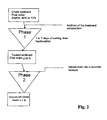
Figure 2 is a block diagram of the method according to the invention; -
Figure 3 shows the change in moisture level of a sediment treated by the method of the present invention, as a function of setting time; -
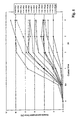
Figure 4 is a collection of plots showing the comparative development of texture (force in newtons) of a sediment treated with different treatment compositions, as a function of contact time; -
Figure 5 is a collection of plots showing the comparative development of texture (force in newtons) of a sediment treated with different treatment compositions, as a function of contact time. - In the examples below the method according to the present invention or according to the prior art, starting from the sediment, was employed.
- The test marine sediment was a sediment removed by pumping from the French port of Dunkirk. Its physicochemical characteristics are as follows:
■ water content: 71.2% by weight
■ density: 1.36 kg/m3
■ dynamic viscosity: 90 mPa.s (for comparison: close to that of olive oil = 100 mPa.s)
■ elemental chemical composition of the dry matter (DM), measured by X-ray fluorescence ― see Table 1, elemental analysis (% by weight), below:TABLE 1 Element Amounts (in % of DM) Loss on ignition (950°C) 32.28% SiO2 32.08% CaO 16.95% Al2O3 6.85% Na2O 4.31% Fe2O3 2.85% MgO 1.88% K2O 1.33% SO3 0.73% TiO2 0.38% P2O5 0.23% MnO 0.05% SrO 0.03% Total + LOI 99.95%
■ other elements assayed - see Table 2TABLE 2 Element Amounts (in % of DM) Stotal 0.54% Cl 4.17% Ctotal 5.59% Cmineral 3.60% Corganic 1.99% Organic matter 3.5%
■ amounts of heavy metals and PCBs ― see Table 3TABLE 3 Element Amounts (in mg/kg of DM) As 25 Cd 2 Cr 72 Cu 232 Hg <3 Ni 18 Pb 650 Zn 430 Total PCBs 0.082
■ mineralogical composition - see Table 4TABLE 4 Mineral Formula Amounts calcite CaCO 3 30% quartz SiO2 30% muscovite KAl2(Si3Al)O10(OH,F)2 10 % halite NaCl 10% syngenite K2Ca(SO4)2.H2O <5% orthoclase KAlSi3O8 <5% mullite Al2(Al2.8Si1.2)O9.6 <5% albite NaAlSi3O8 <5% microcline KAlSi3O8 <5% smectite kaolinite Al-Si-O-OH-H2O <5%
■ granulometry: - Laser particle size analysis of the sediment in ethanol is shown in
Figure 1 , and hence the following main characteristics are apparent:- d0.1 = 3.2 µm d0.5 = 40 µm d0 9= 294 µm
- The sediment under study is therefore an ultrafine sediment, characterized by the following solid fractions:
- clayey fraction < 2 µm: 5%
- loams (between 2 and 63 µm): 55%
- sandy fraction > 63 µm: 40%
- The method according to the invention was applied to the sediment shown above in accordance with the successive steps shown diagrammatically in
Figure 2 . - The ultimate objective of the method (
phase 1 + phase 2) was to obtain a material which meets the requirements of mechanical strength and leaching of the concrete, with a soluble fraction (that part of the material which is soluble in water after the leaching test according to standard NF EN ISO 12457-2) of less than 1% by weight. - On the treated sediment, the "texture" was measured by the procedure below.
- Texture is one of the four criteria associated with the features of food products. This analysis of the texture allows an objective measurement by a mechanical test.
- This measurement was applied to the sediments treated with the treatment composition in order to verify their solid state, and at the same time quantifying said state. The texturometer used is a TA.XT plus texture analyser instrument developed by the STABLE MICRO SYSTEMS company.
- The principle used, in the context of the present invention, is that of measurement by the force (in newtons) opposed to the driven penetration of a probe into the material. The probe in this case is a cylindrical probe with a contact surface area of 3 mm2. This probe is driven into the material (application of a force) and the instrument measures the force opposed to this pressure, and the plot made indicates the resulting force in newtons.
- In the examples shown, the variation in this force was measured primarily as a function of time, in order to make comparisons between the samples tested.
- After the sludge in the harbour zone has been pumped, the alternative to releasing this sediment into the open sea is to treat it with quick lime.
- Quick lime reacts immediately and very exothermically with the water present in the sediment, with a large increase in temperature, according to the reaction CaO + H2O → Ca(OH)2 (portlandite). The removal of the free water from the sediment relative to the formation of this precipitate and the evaporation of the free water due to the exothermic reaction implies a "partial drying" of the sludge and hence a greater manoeuvrability.
- A "reference synthetic" lime was therefore made, so as to have a formulation reference point, chemical stability and reproducibility of tests. This lime is prepared by decarbonation of calcium carbonate for 24 h. The preparation protocol involves placing said calcium carbonate in alumina crucibles. Following calcining at 950°C, when the crucibles have cooled to a temperature of 100 to 200°C, the quick lime is placed in a desiccator until the temperature of the lime is close to ambient temperature. The quick lime is then removed from the desiccator and screened to 40 µm, and finally is placed in a hermetically closed bag, which itself is introduced into a bag of the same kind, in order to ensure the best keeping properties and to prevent its hydration.
- We carried out treatment of the sediment containing 60% of seawater with 20% of quick lime thus prepared, in
phase 1 of the protocol described insection 2 above. The consistency of the treated sediment was measured using the texturometer as described insection 3 above. - It is apparent that the solid material obtained contains inclusions of unreacted lime. The reaction when the lime and sediment are mixed is highly exothermic. Between 1 h and 2 h, the lime begins to modify the sediment, which becomes more consistent and fairly malleable, with an appearance similar to that of a modelling clay. This consistency was not subsequently modified.
- The results shown in
Figure 4 (the plot in the thickest line) show, as a function of time, the change in the texture of this sample of sediment treated with quick lime (CaO). - The quick lime treatment (at a concentration of 20%) of this sample of marine sediment renders it rapidly more manipulable (close to 4 newtons in less than 3 hours). However, its texture thereafter shows little change over time, reaching a maximum value of close to 6 newtons.
- The treatment composition developed here first makes it possible to avoid the dangers of use which are inherent in quick lime. The treatment, of the same sediment sample as that in Example 1, is carried out using 7% of a composition F11 comprising:
- 84.9% of sulphoaluminate clinker (containing approximately 65% of calcium sulphoaluminate C4A3$, 15% of C$ and 20% of belite C2S)
- 15% of anhydrite
- 0.1 % of lithium carbonate
- Treatment composition F11 is added to the sediments placed in the base of the vessel of a mill. Milling is started immediately, followed by a rest time of 30 s, and by milling again for 30 s.
- The measurements with the texturometer are made immediately after the end of milling, taking as time zero the time corresponding to the contacting of the composition with the sediment (see
Figure 4 ). The texture is then measured at different intervals. - It is found that the sediment thus treated has a capacity to dry very rapidly.
- The very rapid hydration of the calcium sulphoaluminate (C4A3$) making up the clinker leads to the formation of hydrated trisulphoaluminate, called ettringite, which contributes to the adsorption of a corresponding amount of water, according to the following equation:

- The introduction of only 7% of this treatment composition gives a treated sediment whose plot of variation (cf.
Figure 3 , black squares) in texture is much higher than the plot obtained with 20% quick lime. This result shows that the treatment composition according to the invention is capable of replacing the lime in proportions which are three times smaller. - It has been observed that the threshold of "manipulability" of a treated sediment is close to a measured texture value corresponding to at least 6 newtons approximately.
- According to the same procedure as Example 2, the same sample of sediment was treated with different proportions of treatment composition according to the invention, in comparison with the 20% lime.
- It is found (see
Figure 3 ) that the sediment treated with the compositions according to the invention dries less quickly than with the quick lime, but, after 6 hours, for proportions of treatment compositions at 7% and 15%, its moisture content is less than 15%. - After 8 hours, all of the samples treated have a moisture content (measured after drying in an oven at 105°C) of close to 10%, or less.
- Taking into account the fact that the target dryness (for achieving effective manipulability) is reached for a moisture percentage of less than 10%, by comparison with the quick lime at 20%, the formulations produced in accordance with the invention all offer the possibility of reaching this dryness very rapidly.
- Treatment by the method according to the invention allows the same level of performance as with the lime to be obtained, in proportions which are three times smaller, and results, moreover, in mixtures which are more homogeneous, without any inclusion of unreacted binder, in contrast to the quick lime.
- We tested different formulas of treatment composition on a sediment containing 59% of free water.
- The weight proportions between the sediment, 93%, and the treatment composition, 7%, are kept constant.
- The test compositions are collated in Table 5 below. The results obtained are shown in
Figure 4 , which shows the penetration force of the probe of the texturometer (N) as a function of contact time of the sediment with the treatment composition.TABLE 5 Composition Component % by weight F6 Sulphoaluminate clinker 99% Li2CO3 1% F8 Sulphoaluminate clinker 30.7 Anhydrite 32.9 CEM I 36.3 Li2CO3 0.1 F9 Sulphoaluminate clinker 30.5 Anhydrite 32.6 CEM I 35.9 Li2CO3 1 F10 Sulphoaluminate clinker 84 Anhydrite 15 Li2CO3 1 F11 Sulphoaluminate clinker 84.9 Anhydrite 15 Li2CO3 0.1 F12 Sulphoaluminate clinker 30.7 Anhydrite 32.9 CEM III 36.3 Li2CO3 0.1 F13 Sulphoaluminate clinker 30.5 Anhydrite 32.6 CEM III 35.9 Li2CO3 1 - The results are fairly conclusive with regard to the justification of a treatment at 7% with an appropriate hydraulic composition (type F10), and indicate that the catalytic effect of the lithium carbonate is better at 1 % by weight.
- The preferred treatment composition here is F10, containing 15% of sulphate (anhydrite) and 1% of catalyst. The reaction with the clinker and the sulphate produces ettringite, which mobilizes much more water than the clinker alone (F6).
- The results of
Figure 4 also show that: - for combinations of a sulphoaluminate clinker + CEM III, in a mixture with anhydrite, even in the presence of catalyst at 1% by weight (compositions F12 and F13), the texture is much lower than that obtained with the lime at 20%;
- the combination of sulphoaluminate clinker with the CEM I, in a mixture with anhydrite, is effective, with slower kinetics (compositions F8 and F9 relative to compositions F10 and F11).
- Tests carried out with the CEM I cement in place of the sulphoaluminate clinker proved to be fruitless: the texturometer at 24 hours did not reach half the value obtained with the sulphoaluminate clinker.
- Formulas PC1 to PC16, tested at a proportion of 7% relative to the sediment, are shown in Table 6 below, the results in
Figure 5 .TABLE 6 Components (% by weight) Components (% by weight) PC1 Sulphoaluminate CK 84.76 PC9 Sulphoaluminate CK 61.33 Anhydrite 14.96 Anhydrite 38.67 Li2CO3 0.29 Li2CO3 0 PC2 Sulphoaluminate CK 49.33 PC10 Sulphoaluminate CK 61.2 Anhydrite 50.34 Anhydrite 38.59 Li2CO3 0.33 Li2CO3 0.21 PC3 Sulphoaluminate CK 49.25 PC11 Sulphoaluminate CK 84.52 Anhydrite 50.25 Anhydrite 14.91 Li2CO3 0.5 Li2CO3 0.57 PC4 Sulphoaluminate CK 72.99 PC12 Sulphoaluminate CK 72.63 Anhydrite 26.77 Anhydrite 26.64 Li2CO3 0.25 Li2CO3 0.73 PC5 Sulphoaluminate CK 49.41 PC13 Sulphoaluminate CK 60.95 Anhydrite 50.42 Anhydrite 38.43 Li2CO3 0.17 Li2CO3 0.62 PC6 Sulphoaluminate CK 73.16 PC14 Sulphoaluminate CK 49.49 Anhydrite 26.84 Anhydrite 50.51 Li2CO3 0 Li2CO3 0 PC7 Sulphoaluminate CK 72.81 PC15 Sulphoaluminate CK 84.28 Anhydrite 26.7 Anhydrite 14.87 Li2CO3 0.49 Li2CO3 0.85 PC8 Sulphoaluminate CK 85 PC16 Sulphoaluminate CK 61.08 Anhydrite 15 Anhydrite 38.51 Li2CO3 0 Li2CO3 0.41 - It is evident in particular, by comparing treatment compositions PC14 and PC3, for example, that the presence of the Li2CO3 "catalyst" allows a doubling in the penetration force of the probe of the texturometer, and hence gives stronger treated sediment.
- Below a force value of approximately 4N, the treated sediment is pasty.
- The treated sediment according to Examples 2 and 3 may be subsequently exploited economically by use in concrete or mortar formulations.
- Following fractionation, the treated sediment is in the form of solid granules with a size of between a few millimetres and a few centimetres.
- This granulated material was subsequently used as a component of a concrete formula (
phase 2 of the scheme shown in section 2). - The cement type used was a CEM III A/B or C.
- To recap, the different CEM III cements are as follows:
- A : 35-65% of clinker; 36-65% of blast furnace slag
- B : 20-34% of clinker; 66-80% of blast furnace slag
- C : 5-19% of clinker; 81-95% of blast furnace slag
- In the concrete formulas according to the present invention, the range of use is preferably as follows:
- Cement: between 200 and 500 kg/m3 of concrete
- Sediment: between 0 and 50% of pretreated sediment
- Granules: approximately 45%
- w/c (water/cement) = 0.3 to 0.7
- The concrete produced in this example has the following standard formula (percentages by total weight of concrete):
- 30% of pretreated sediment (or 650 kg per 1 m3 of concrete)
- 15.3% of CEM III A cement (or 350 kg per 1 m3 of concrete)
- w/c = 0.6
- 45.80% of granules (or 1049 kg per 1 m3 of concrete)
- All of the constituents are mixed in accordance with standard NF EN 196-1 (Cement testing methods - part 1: Determination of mechanical strengths).
- The test specimens used to determine the strength of mortars are produced in moulds of (4x4x16) cm3, that of the concretes in moulds of (16 cm in diameter and 32 cm in height), and are kept for 24 to 48 h at 95% humidity after milling. Following demoulding, the mortars and concretes are kept in water at 20°C prior to measurement.
- Each test specimen undergoes a flexural test and compression test.
- The pieces are subsequently crushed and the particle size is taken to below 4 mm, as stipulated by the leaching standard NF EN ISO 12457-2 (Characterization of waste - Leaching - Compliance test for leaching of fragmented waste materials and sludges, Part 2: one-stage batch test at an US ratio = 10 and a particle size of less than 4 mm). After leaching, measurements were made of the various parameters defined in Directive 2003/33/CE of 19/12/2002.
- The first results on mortar test specimens are set out in Table 7 below:
TABLE 7 Classes according to European Directive 2003/33/CE Crude sediment Control mortar Mortar (based on CEM III+ 30% of preteated sediment at 3.5%) Concrete (based on CEM III + 18% of pretreated sediment at 7%) Interval 28 d 28 d 7d III II I Compressive strength (MPa) 41.32 9.29 6.1 pH 5.5 12.2 12 10 mg / l mg / l mg / l mg/l Soluble fraction 0.4 6 10 6.94 0.72 0.76 0.84 in µg/kg of DM As 500 2000 25000 106.68 <200 <200 <200 Ba 20000 100000 300000 45.15 3399 1227.22 1812.55 Cd 40 1000 5000 <1 <1 <1 <100 Cr 500 10000 70000 <100 <100 <100 <100 Cu 2000 50000 100000 <200 <200 613 651.91 Hg 10 200 2000 <1 <1 <1 <100 Mo 500 10000 30000 91 <100 218 160.37 Ni 400 10000 40000 <100 <100 <100 188.86 Pb 500 10000 50000 <100 <100 <100 <100 Sb 60 700 5000 0.47 0.5 1.22 <200 Se 100 500 7000 7.01 10 26.84 <200 Zn 4000 50000 200000 <200 <200 <200 <200 in mg/kg of DM Cl- 80 0 15000 25000 11123 5 630 1301 F- 10 150 500 <0.4 5 6.41 9 SO4 - 10 00 20000 50000 1985 160 428 1621 Phenol 1 - - <0.025 <0.025 - - The mortars and concretes thus formulated have mechanical and chemical characteristics which meet the specifications of the intended application, and in particular of class III (with the exception of the soluble fraction, which is in class II) of Directive 2003/33/CE of 19/12/2002, which defines the criteria and procedures for acceptance of wastes in landfills.
- In particular, the leachable fraction is less than 1% by weight. This concrete therefore effectively retains heavy metals.
Claims (15)
- Method of treating marine or river dredging sediments, especially harbour zone sediments, whose free water content is between 40% and 80% by weight, for the purpose of obtaining a solid material which is easy to handle, characterized in that it comprises the following successive steps:- mixing said sediments with a treatment composition comprising a sulphoaluminate binder and at least one other component selected from a sulphate source and a catalyst of the hydration reactions of the sulphoaluminate binder,- a step of setting said mixture, leading to a compact mixture having a free water content of less than 20% by weight,- then fractionating said compact mixture.
- Method according to Claim 1, characterized in that the treatment composition comprises a sulphoaluminate binder, a sulphate source and a catalyst of the hydration reactions of said sulphoaluminate binder.
- Process according to Claim 1, characterized in that the treatment composition comprises a sulphoaluminate binder and a sulphate source.
- Method according to Claim 1, characterized in that the treatment composition comprises a sulphoaluminate binder and a catalyst of the hydration reactions of said sulphoaluminate binder.
- Method according to any one of the preceding claims,
characterized in that the sulphoaluminate binder is a sulphoaluminate clinker comprising ye'elimite C4 A3 $ as the major phase. - Method according to Claim 5,
characterized in that the sulphoaluminate clinker contains from 40% to 80% by weight of ye'elimite C4 A3 $, from 5% to 15% by weight of C$ and from 15% to 25% by weight of belite C2S. - Method according to any one of the preceding claims,
characterized in that the sulphate source is a calcium sulphate selected from anhydrite, gypsum or bassanite (calcium sulphate hemihydrate). - Method according to any of the preceding claims,
characterized in that the catalyst is a lithium salt, preferably a soluble salt, selected from lithium carbonate, sulphate or nitrate. - Method according to any of the preceding claims,
characterized in that the treatment composition comprises, in per cent by weight:- from 49% to 90%, preferably from 80% to 90%, of sulphoaluminate clinker- from 9% to 51 %, preferably from 12% to 20%, of calcium sulphate- up to 1%, preferably from 0.20% to 0.90%, of a lithium salt. - Method according to any of the preceding claims,
characterized in that the treatment composition is added to said sediment in proportions of between 1% and 20%, preferably between 2% and 15%, by weight of said sediment. - Method according to any of the preceding claims,
characterized in that the duration of the setting step is between 1 and 7 days approximately, the treated sediment after fractionation being in the form of solid granules containing a free water content of less than 10% by weight. - Method according to any of the preceding claims,
characterized in that the treated sediment is subsequently introduced into a concrete or mortar composition. - Concrete or mortar characterized in that it incorporates a sediment treated in accordance with the method according to any of the preceding claims.
- Concrete or mortar according to Claim 13,
characterized in that it contains up to 50% by weight of treated sediment. - Concrete or mortar according to Claim 14,
characterized in that it is prepared from 10% to 30% by weight of treated sediment and from a CEM III cement.
Applications Claiming Priority (2)
| Application Number | Priority Date | Filing Date | Title |
|---|---|---|---|
| FR0857052A FR2937266B1 (en) | 2008-10-17 | 2008-10-17 | PROCESS FOR TREATING MARINE SEDIMENTS AND USE OF THE SOLID PRODUCT OBTAINED IN MORTAR OR CONCRETE |
| PCT/EP2009/062593 WO2010043495A1 (en) | 2008-10-17 | 2009-09-29 | Method of treating marine sediments and use of the resulting solid product in mortars or concretes |
Publications (2)
| Publication Number | Publication Date |
|---|---|
| EP2334614A1 EP2334614A1 (en) | 2011-06-22 |
| EP2334614B1 true EP2334614B1 (en) | 2012-11-14 |
Family
ID=40689326
Family Applications (1)
| Application Number | Title | Priority Date | Filing Date |
|---|---|---|---|
| EP20090783532 Active EP2334614B1 (en) | 2008-10-17 | 2009-09-29 | Method of treating marine sediments and use of the resulting solid product in mortars or concretes |
Country Status (11)
| Country | Link |
|---|---|
| US (1) | US8123854B2 (en) |
| EP (1) | EP2334614B1 (en) |
| CN (1) | CN102171157A (en) |
| CA (1) | CA2732941C (en) |
| DK (1) | DK2334614T3 (en) |
| EA (1) | EA019715B1 (en) |
| EG (1) | EG26479A (en) |
| ES (1) | ES2399178T3 (en) |
| FR (1) | FR2937266B1 (en) |
| MA (1) | MA32718B1 (en) |
| WO (1) | WO2010043495A1 (en) |
Families Citing this family (12)
| Publication number | Priority date | Publication date | Assignee | Title |
|---|---|---|---|---|
| FR2955320B1 (en) * | 2010-01-20 | 2016-02-26 | Commissariat Energie Atomique | PROCESS FOR PREPARING COMPOSITE MATERIAL FROM WASTE AND MATERIAL THUS OBTAINED |
| FR2990431B1 (en) * | 2012-05-14 | 2014-10-24 | Francais Ciments | NEW HYDRAULIC BINDER BASED ON CLINKER SULFO-ALUMINUM AND ITS USE IN A PROCESS FOR TREATING POLLUTED SOIL |
| FR2990363B1 (en) | 2012-05-14 | 2014-06-06 | Francais Ciments | PROCESS FOR TREATING POLLUTED SOIL WITH A SULFO-ALUMINUM CLINKER HYDRAULIC BINDER AND USE THEREOF FOR STABILIZING POLLUTED SOIL |
| US10450232B2 (en) * | 2014-12-03 | 2019-10-22 | Universidad Nacional De Colombia | Cement formulation based on aluminium sulphate with a specific proportion of Ye'elimite systems |
| CA2971138A1 (en) * | 2015-02-17 | 2016-08-25 | Italcementi S.P.A. | An environmentally sustainable cement composition, its use for inerting dredging sediments/sludges, relative method and apparatus for inerting |
| AU2016276858B2 (en) * | 2015-06-11 | 2018-03-01 | Flemish Government, Department Of Public Works, Maritime Access | Supplementary cementitious materials comprising dredged sediments |
| CN108483954B (en) * | 2018-03-09 | 2020-09-01 | 哈尔滨工业大学 | Preparation method of alkali-activated seafloor sediment cementing material |
| CN109320035A (en) * | 2018-12-11 | 2019-02-12 | 环境保护部华南环境科学研究所 | Cured method and application after a kind of quickening bottom-mud dewatering |
| FR3102985B1 (en) | 2019-11-07 | 2023-03-24 | Artesa | FORMULATION FOR CONCRETE, METHOD FOR PREPARING CONCRETE, CONCRETE OBTAINED AND APPARATUS FOR PREPARING THIS CONCRETE |
| CN112777989B (en) * | 2021-01-07 | 2022-12-09 | 山东大学 | Environment-friendly road pervious concrete and preparation method and application thereof |
| FR3158965A1 (en) | 2024-02-02 | 2025-08-08 | Materrup | METHOD FOR PRODUCING A CONSTRUCTION MATERIAL FROM A CLAY-SILTY MUD, METHOD FOR TREATING SAID MUD AND ASSOCIATED FORMING SYSTEM |
| CN119930255B (en) * | 2025-04-08 | 2025-07-08 | 长沙理工大学 | A solid waste-based high-performance concrete and its preparation method and application |
Family Cites Families (6)
| Publication number | Priority date | Publication date | Assignee | Title |
|---|---|---|---|---|
| EP0120097B1 (en) * | 1983-03-18 | 1988-10-26 | LEONHARD WEISS GmbH & Co. | Process for the solidification of sludges |
| DE4206900A1 (en) * | 1992-03-05 | 1993-09-09 | Friedrich Kadelka | Sludge processing - using water-absorbent granular material and hydraulic bonding agent and additive to increase density to give construction material |
| US8057378B2 (en) * | 2002-03-18 | 2011-11-15 | The Trustees Of Columbia University In The City Of New York | Method of treatment of dredged material for beneficial use |
| EP1561733A1 (en) * | 2004-02-06 | 2005-08-10 | Stichting Geodelft | Construction material based upon a sludge or sludged waste material |
| WO2007097435A1 (en) * | 2006-02-24 | 2007-08-30 | Taiheiyo Cement Corporation | Hardened concrete structure and concrete composition |
| CN101265070A (en) * | 2008-04-17 | 2008-09-17 | 高康 | A kind of sludge curing agent and its application |
-
2008
- 2008-10-17 FR FR0857052A patent/FR2937266B1/en not_active Expired - Fee Related
-
2009
- 2009-09-29 ES ES09783532T patent/ES2399178T3/en active Active
- 2009-09-29 EA EA201100475A patent/EA019715B1/en not_active IP Right Cessation
- 2009-09-29 WO PCT/EP2009/062593 patent/WO2010043495A1/en not_active Ceased
- 2009-09-29 CA CA2732941A patent/CA2732941C/en not_active Expired - Fee Related
- 2009-09-29 EP EP20090783532 patent/EP2334614B1/en active Active
- 2009-09-29 US US13/058,386 patent/US8123854B2/en not_active Expired - Fee Related
- 2009-09-29 DK DK09783532T patent/DK2334614T3/en active
- 2009-09-29 CN CN2009801392110A patent/CN102171157A/en active Pending
-
2011
- 2011-04-12 EG EG2011040567A patent/EG26479A/en active
- 2011-04-15 MA MA33779A patent/MA32718B1/en unknown
Also Published As
| Publication number | Publication date |
|---|---|
| CA2732941C (en) | 2016-11-01 |
| US20110185950A1 (en) | 2011-08-04 |
| EA019715B1 (en) | 2014-05-30 |
| CN102171157A (en) | 2011-08-31 |
| CA2732941A1 (en) | 2010-04-22 |
| EA201100475A1 (en) | 2011-10-31 |
| FR2937266A1 (en) | 2010-04-23 |
| MA32718B1 (en) | 2011-10-02 |
| EP2334614A1 (en) | 2011-06-22 |
| WO2010043495A1 (en) | 2010-04-22 |
| US8123854B2 (en) | 2012-02-28 |
| FR2937266B1 (en) | 2011-07-01 |
| EG26479A (en) | 2013-12-02 |
| ES2399178T3 (en) | 2013-03-26 |
| DK2334614T3 (en) | 2013-02-18 |
Similar Documents
| Publication | Publication Date | Title |
|---|---|---|
| US8123854B2 (en) | Method of treating marine sediments and use of the resulting solid product in mortars or concretes | |
| Saikia et al. | Assessment of Pb-slag, MSWI bottom ash and boiler and fly ash for using as a fine aggregate in cement mortar | |
| Pandey et al. | Investigation on the effects of acidic environment and accelerated carbonation on concrete admixed with rice straw ash and microsilica | |
| Dang et al. | Design of new blended cement based on marine dredged sediment | |
| Park | Hydration and solidification of hazardous wastes containing heavy metals using modified cementitious materials | |
| Saikia et al. | Pre-treatment of municipal solid waste incineration (MSWI) bottom ash for utilisation in cement mortar | |
| Dodoo-Arhin et al. | Awaso bauxite red mud-cement based composites: Characterisation for pavement applications | |
| Keppert et al. | Recycling of fresh concrete slurry waste as supplementary cementing material: Characterization, application and leaching of selected elements | |
| Goyal et al. | Utilization of textile sludge in cement mortar and paste | |
| Rozière et al. | Valorisation of sediments in self-consolidating concrete: Mix-design and microstructure | |
| Luz et al. | Use of sulfoaluminate cement and bottom ash in the solidification/stabilization of galvanic sludge | |
| Minocha et al. | Effect of inorganic materials on the solidification of heavy metal sludge | |
| Ercikdi et al. | Utilization of granulated marble wastes and waste bricks as mineral admixture in cemented paste backfill of sulphide-rich tailings | |
| Couvidat et al. | Feasibility of the reuse of total and processed contaminated marine sediments as fine aggregates in cemented mortars | |
| Wild et al. | Effects of partial substitution of lime with ground granulated blast furnace slag (GGBS) on the strength properties of lime-stabilised sulphate-bearing clay soils | |
| Scribot et al. | A laboratory-scale experimental investigation on the reuse of a modified red mud in ceramic materials production | |
| Menéndez et al. | New methodology for assessing the environmental burden of cement mortars with partial replacement of coal bottom ash and fly ash | |
| Qiao et al. | Investigation into the stabilization/solidification performance of Portland cement through cement clinker phases | |
| Yusuf | Performance of slag blended alkaline activated palm oil fuel ash mortar in sulfate environments | |
| Lange et al. | The influence of mix parameters and binder choice on the carbonation of cement solidified wastes | |
| USRE29783E (en) | Process for treating aqueous chemical waste sludges and compositions produced thereby | |
| James et al. | Strength and microstructure of micro ceramic dust admixed lime stabilized soil | |
| Luz et al. | Valorization of galvanic sludge in sulfoaluminate cement | |
| Domínguez et al. | Synergistic effects of rubber-tire-powder and fluorogypsum in cement-based composite | |
| DK2850042T3 (en) | Method for the treatment of contaminated soil by means of a hydraulic binder based on sulfur aluminum klinker and use thereof for the stabilization of contaminated soil |
Legal Events
| Date | Code | Title | Description |
|---|---|---|---|
| PUAI | Public reference made under article 153(3) epc to a published international application that has entered the european phase |
Free format text: ORIGINAL CODE: 0009012 |
|
| 17P | Request for examination filed |
Effective date: 20110207 |
|
| AK | Designated contracting states |
Kind code of ref document: A1 Designated state(s): AT BE BG CH CY CZ DE DK EE ES FI FR GB GR HR HU IE IS IT LI LT LU LV MC MK MT NL NO PL PT RO SE SI SK SM TR |
|
| AX | Request for extension of the european patent |
Extension state: AL BA RS |
|
| 17Q | First examination report despatched |
Effective date: 20120319 |
|
| GRAP | Despatch of communication of intention to grant a patent |
Free format text: ORIGINAL CODE: EPIDOSNIGR1 |
|
| GRAS | Grant fee paid |
Free format text: ORIGINAL CODE: EPIDOSNIGR3 |
|
| GRAA | (expected) grant |
Free format text: ORIGINAL CODE: 0009210 |
|
| AK | Designated contracting states |
Kind code of ref document: B1 Designated state(s): AT BE BG CH CY CZ DE DK EE ES FI FR GB GR HR HU IE IS IT LI LT LU LV MC MK MT NL NO PL PT RO SE SI SK SM TR |
|
| AX | Request for extension of the european patent |
Extension state: AL BA RS |
|
| REG | Reference to a national code |
Ref country code: GB Ref legal event code: FG4D |
|
| REG | Reference to a national code |
Ref country code: CH Ref legal event code: EP Ref country code: AT Ref legal event code: REF Ref document number: 583891 Country of ref document: AT Kind code of ref document: T Effective date: 20121115 |
|
| REG | Reference to a national code |
Ref country code: IE Ref legal event code: FG4D |
|
| REG | Reference to a national code |
Ref country code: DE Ref legal event code: R096 Ref document number: 602009011244 Country of ref document: DE Effective date: 20130110 |
|
| REG | Reference to a national code |
Ref country code: DK Ref legal event code: T3 |
|
| REG | Reference to a national code |
Ref country code: SE Ref legal event code: TRGR |
|
| REG | Reference to a national code |
Ref country code: NL Ref legal event code: T3 |
|
| REG | Reference to a national code |
Ref country code: ES Ref legal event code: FG2A Ref document number: 2399178 Country of ref document: ES Kind code of ref document: T3 Effective date: 20130326 |
|
| REG | Reference to a national code |
Ref country code: GR Ref legal event code: EP Ref document number: 20130400214 Country of ref document: GR Effective date: 20130225 |
|
| REG | Reference to a national code |
Ref country code: NO Ref legal event code: T2 Effective date: 20121114 |
|
| REG | Reference to a national code |
Ref country code: AT Ref legal event code: MK05 Ref document number: 583891 Country of ref document: AT Kind code of ref document: T Effective date: 20121114 |
|
| REG | Reference to a national code |
Ref country code: LT Ref legal event code: MG4D |
|
| PG25 | Lapsed in a contracting state [announced via postgrant information from national office to epo] |
Ref country code: FI Free format text: LAPSE BECAUSE OF FAILURE TO SUBMIT A TRANSLATION OF THE DESCRIPTION OR TO PAY THE FEE WITHIN THE PRESCRIBED TIME-LIMIT Effective date: 20121114 Ref country code: LT Free format text: LAPSE BECAUSE OF FAILURE TO SUBMIT A TRANSLATION OF THE DESCRIPTION OR TO PAY THE FEE WITHIN THE PRESCRIBED TIME-LIMIT Effective date: 20121114 Ref country code: HR Free format text: LAPSE BECAUSE OF FAILURE TO SUBMIT A TRANSLATION OF THE DESCRIPTION OR TO PAY THE FEE WITHIN THE PRESCRIBED TIME-LIMIT Effective date: 20121114 |
|
| PG25 | Lapsed in a contracting state [announced via postgrant information from national office to epo] |
Ref country code: PL Free format text: LAPSE BECAUSE OF FAILURE TO SUBMIT A TRANSLATION OF THE DESCRIPTION OR TO PAY THE FEE WITHIN THE PRESCRIBED TIME-LIMIT Effective date: 20121114 Ref country code: SI Free format text: LAPSE BECAUSE OF FAILURE TO SUBMIT A TRANSLATION OF THE DESCRIPTION OR TO PAY THE FEE WITHIN THE PRESCRIBED TIME-LIMIT Effective date: 20121114 Ref country code: LV Free format text: LAPSE BECAUSE OF FAILURE TO SUBMIT A TRANSLATION OF THE DESCRIPTION OR TO PAY THE FEE WITHIN THE PRESCRIBED TIME-LIMIT Effective date: 20121114 Ref country code: PT Free format text: LAPSE BECAUSE OF FAILURE TO SUBMIT A TRANSLATION OF THE DESCRIPTION OR TO PAY THE FEE WITHIN THE PRESCRIBED TIME-LIMIT Effective date: 20130314 |
|
| PG25 | Lapsed in a contracting state [announced via postgrant information from national office to epo] |
Ref country code: AT Free format text: LAPSE BECAUSE OF FAILURE TO SUBMIT A TRANSLATION OF THE DESCRIPTION OR TO PAY THE FEE WITHIN THE PRESCRIBED TIME-LIMIT Effective date: 20121114 |
|
| PG25 | Lapsed in a contracting state [announced via postgrant information from national office to epo] |
Ref country code: EE Free format text: LAPSE BECAUSE OF FAILURE TO SUBMIT A TRANSLATION OF THE DESCRIPTION OR TO PAY THE FEE WITHIN THE PRESCRIBED TIME-LIMIT Effective date: 20121114 Ref country code: CZ Free format text: LAPSE BECAUSE OF FAILURE TO SUBMIT A TRANSLATION OF THE DESCRIPTION OR TO PAY THE FEE WITHIN THE PRESCRIBED TIME-LIMIT Effective date: 20121114 Ref country code: SK Free format text: LAPSE BECAUSE OF FAILURE TO SUBMIT A TRANSLATION OF THE DESCRIPTION OR TO PAY THE FEE WITHIN THE PRESCRIBED TIME-LIMIT Effective date: 20121114 |
|
| PG25 | Lapsed in a contracting state [announced via postgrant information from national office to epo] |
Ref country code: RO Free format text: LAPSE BECAUSE OF FAILURE TO SUBMIT A TRANSLATION OF THE DESCRIPTION OR TO PAY THE FEE WITHIN THE PRESCRIBED TIME-LIMIT Effective date: 20121114 |
|
| PLBE | No opposition filed within time limit |
Free format text: ORIGINAL CODE: 0009261 |
|
| STAA | Information on the status of an ep patent application or granted ep patent |
Free format text: STATUS: NO OPPOSITION FILED WITHIN TIME LIMIT |
|
| 26N | No opposition filed |
Effective date: 20130815 |
|
| PG25 | Lapsed in a contracting state [announced via postgrant information from national office to epo] |
Ref country code: CY Free format text: LAPSE BECAUSE OF FAILURE TO SUBMIT A TRANSLATION OF THE DESCRIPTION OR TO PAY THE FEE WITHIN THE PRESCRIBED TIME-LIMIT Effective date: 20121114 |
|
| REG | Reference to a national code |
Ref country code: DE Ref legal event code: R097 Ref document number: 602009011244 Country of ref document: DE Effective date: 20130815 |
|
| REG | Reference to a national code |
Ref country code: CH Ref legal event code: PL |
|
| REG | Reference to a national code |
Ref country code: IE Ref legal event code: MM4A |
|
| PG25 | Lapsed in a contracting state [announced via postgrant information from national office to epo] |
Ref country code: CH Free format text: LAPSE BECAUSE OF NON-PAYMENT OF DUE FEES Effective date: 20130930 Ref country code: IE Free format text: LAPSE BECAUSE OF NON-PAYMENT OF DUE FEES Effective date: 20130929 Ref country code: LI Free format text: LAPSE BECAUSE OF NON-PAYMENT OF DUE FEES Effective date: 20130930 |
|
| PG25 | Lapsed in a contracting state [announced via postgrant information from national office to epo] |
Ref country code: SM Free format text: LAPSE BECAUSE OF FAILURE TO SUBMIT A TRANSLATION OF THE DESCRIPTION OR TO PAY THE FEE WITHIN THE PRESCRIBED TIME-LIMIT Effective date: 20121114 |
|
| PG25 | Lapsed in a contracting state [announced via postgrant information from national office to epo] |
Ref country code: MT Free format text: LAPSE BECAUSE OF FAILURE TO SUBMIT A TRANSLATION OF THE DESCRIPTION OR TO PAY THE FEE WITHIN THE PRESCRIBED TIME-LIMIT Effective date: 20121114 |
|
| PG25 | Lapsed in a contracting state [announced via postgrant information from national office to epo] |
Ref country code: LU Free format text: LAPSE BECAUSE OF NON-PAYMENT OF DUE FEES Effective date: 20130929 Ref country code: HU Free format text: LAPSE BECAUSE OF FAILURE TO SUBMIT A TRANSLATION OF THE DESCRIPTION OR TO PAY THE FEE WITHIN THE PRESCRIBED TIME-LIMIT; INVALID AB INITIO Effective date: 20090929 Ref country code: MK Free format text: LAPSE BECAUSE OF FAILURE TO SUBMIT A TRANSLATION OF THE DESCRIPTION OR TO PAY THE FEE WITHIN THE PRESCRIBED TIME-LIMIT Effective date: 20121114 |
|
| PG25 | Lapsed in a contracting state [announced via postgrant information from national office to epo] |
Ref country code: IS Free format text: LAPSE BECAUSE OF FAILURE TO SUBMIT A TRANSLATION OF THE DESCRIPTION OR TO PAY THE FEE WITHIN THE PRESCRIBED TIME-LIMIT Effective date: 20121114 |
|
| REG | Reference to a national code |
Ref country code: FR Ref legal event code: PLFP Year of fee payment: 8 |
|
| REG | Reference to a national code |
Ref country code: FR Ref legal event code: PLFP Year of fee payment: 9 |
|
| REG | Reference to a national code |
Ref country code: FR Ref legal event code: PLFP Year of fee payment: 10 |
|
| PGFP | Annual fee paid to national office [announced via postgrant information from national office to epo] |
Ref country code: NO Payment date: 20180827 Year of fee payment: 10 |
|
| PGFP | Annual fee paid to national office [announced via postgrant information from national office to epo] |
Ref country code: SE Payment date: 20180919 Year of fee payment: 10 Ref country code: DK Payment date: 20180921 Year of fee payment: 10 Ref country code: BG Payment date: 20180927 Year of fee payment: 10 Ref country code: TR Payment date: 20180913 Year of fee payment: 10 |
|
| PGFP | Annual fee paid to national office [announced via postgrant information from national office to epo] |
Ref country code: ES Payment date: 20181022 Year of fee payment: 10 |
|
| PGFP | Annual fee paid to national office [announced via postgrant information from national office to epo] |
Ref country code: NL Payment date: 20190918 Year of fee payment: 11 |
|
| REG | Reference to a national code |
Ref country code: DK Ref legal event code: EBP Effective date: 20190930 Ref country code: NO Ref legal event code: MMEP |
|
| PG25 | Lapsed in a contracting state [announced via postgrant information from national office to epo] |
Ref country code: SE Free format text: LAPSE BECAUSE OF NON-PAYMENT OF DUE FEES Effective date: 20190930 |
|
| REG | Reference to a national code |
Ref country code: SE Ref legal event code: EUG |
|
| PG25 | Lapsed in a contracting state [announced via postgrant information from national office to epo] |
Ref country code: MC Free format text: LAPSE BECAUSE OF NON-PAYMENT OF DUE FEES Effective date: 20190930 |
|
| PG25 | Lapsed in a contracting state [announced via postgrant information from national office to epo] |
Ref country code: NO Free format text: LAPSE BECAUSE OF NON-PAYMENT OF DUE FEES Effective date: 20190930 Ref country code: GR Free format text: LAPSE BECAUSE OF NON-PAYMENT OF DUE FEES Effective date: 20200416 |
|
| PG25 | Lapsed in a contracting state [announced via postgrant information from national office to epo] |
Ref country code: BG Free format text: LAPSE BECAUSE OF NON-PAYMENT OF DUE FEES Effective date: 20200531 |
|
| GBPC | Gb: european patent ceased through non-payment of renewal fee |
Effective date: 20190929 |
|
| PG25 | Lapsed in a contracting state [announced via postgrant information from national office to epo] |
Ref country code: DK Free format text: LAPSE BECAUSE OF NON-PAYMENT OF DUE FEES Effective date: 20190930 Ref country code: GB Free format text: LAPSE BECAUSE OF NON-PAYMENT OF DUE FEES Effective date: 20190929 |
|
| REG | Reference to a national code |
Ref country code: ES Ref legal event code: FD2A Effective date: 20210129 |
|
| REG | Reference to a national code |
Ref country code: NL Ref legal event code: MM Effective date: 20201001 |
|
| PG25 | Lapsed in a contracting state [announced via postgrant information from national office to epo] |
Ref country code: ES Free format text: LAPSE BECAUSE OF NON-PAYMENT OF DUE FEES Effective date: 20190930 |
|
| PG25 | Lapsed in a contracting state [announced via postgrant information from national office to epo] |
Ref country code: NL Free format text: LAPSE BECAUSE OF NON-PAYMENT OF DUE FEES Effective date: 20201001 |
|
| REG | Reference to a national code |
Ref country code: BE Ref legal event code: PD Owner name: ITALCEMENTI S.P.A.; IT Free format text: DETAILS ASSIGNMENT: CHANGE OF OWNER(S), ASSIGNMENT; FORMER OWNER NAME: CIMENTS FRANCAIS Effective date: 20220211 |
|
| REG | Reference to a national code |
Ref country code: DE Ref legal event code: R081 Ref document number: 602009011244 Country of ref document: DE Owner name: ITALCEMENTI S.P.A., IT Free format text: FORMER OWNER: CIMENTS FRANCAIS, PUTEAUX, FR Ref country code: DE Ref legal event code: R081 Ref document number: 602009011244 Country of ref document: DE Owner name: MATERIALS ITALIA CEMENTI S.P.A., PESCHIERA, IT Free format text: FORMER OWNER: CIMENTS FRANCAIS, PUTEAUX, FR Ref country code: DE Ref legal event code: R081 Ref document number: 602009011244 Country of ref document: DE Owner name: HEIDELBERG MATERIALS ITALIA CEMENTI S.P.A., PE, IT Free format text: FORMER OWNER: CIMENTS FRANCAIS, PUTEAUX, FR Ref country code: DE Ref legal event code: R082 Ref document number: 602009011244 Country of ref document: DE Representative=s name: DEHNS PATENT AND TRADEMARK ATTORNEYS, DE |
|
| PG25 | Lapsed in a contracting state [announced via postgrant information from national office to epo] |
Ref country code: TR Free format text: LAPSE BECAUSE OF NON-PAYMENT OF DUE FEES Effective date: 20190929 |
|
| REG | Reference to a national code |
Ref country code: BE Ref legal event code: PD Owner name: "HEIDELBERG MATERIALS ITALIA CEMENTI S.P.A." IN FORMA ABBREVIATA "HM ITALIA CEMENTI S.P.A."; IT Free format text: DETAILS ASSIGNMENT: CHANGE OF OWNER(S), OTHER; FORMER OWNER NAME: "HEIDELBERG MATERIALS ITALIA CEMENTI S.P.A." IN FORMA ABBREVIATA "HM ITALIA CEMENTI S.P.A." Effective date: 20250131 Ref country code: BE Ref legal event code: HC Owner name: "HEIDELBERG MATERIALS ITALIA CEMENTI S.P.A." IN FORMA ABBREVIATA "HM ITALIA CEMENTI S.P.A."; IT Free format text: DETAILS ASSIGNMENT: CHANGE OF OWNER(S), CHANGE OF OWNER(S) NAME; FORMER OWNER NAME: ITALCEMENTI S.P.A. Effective date: 20250131 |
|
| PGFP | Annual fee paid to national office [announced via postgrant information from national office to epo] |
Ref country code: DE Payment date: 20250929 Year of fee payment: 17 |
|
| PGFP | Annual fee paid to national office [announced via postgrant information from national office to epo] |
Ref country code: IT Payment date: 20250919 Year of fee payment: 17 |
|
| PGFP | Annual fee paid to national office [announced via postgrant information from national office to epo] |
Ref country code: BE Payment date: 20250929 Year of fee payment: 17 |
|
| PGFP | Annual fee paid to national office [announced via postgrant information from national office to epo] |
Ref country code: FR Payment date: 20250925 Year of fee payment: 17 |
|
| REG | Reference to a national code |
Ref country code: DE Ref legal event code: R081 Ref document number: 602009011244 Country of ref document: DE Owner name: MATERIALS ITALIA CEMENTI S.P.A., PESCHIERA, IT Free format text: FORMER OWNER: ITALCEMENTI S.P.A., BERGAMO, IT Ref country code: DE Ref legal event code: R082 Ref document number: 602009011244 Country of ref document: DE Ref country code: DE Ref legal event code: R081 Ref document number: 602009011244 Country of ref document: DE Owner name: HEIDELBERG MATERIALS ITALIA CEMENTI S.P.A., PE, IT Free format text: FORMER OWNER: ITALCEMENTI S.P.A., BERGAMO, IT |
|
| REG | Reference to a national code |
Ref country code: DE Ref legal event code: R081 Ref document number: 602009011244 Country of ref document: DE Owner name: HEIDELBERG MATERIALS ITALIA CEMENTI S.P.A., PE, IT Free format text: FORMER OWNER: MATERIALS ITALIA CEMENTI S.P.A., PESCHIERA, BORROMEO, IT |