EP2334135A1 - Mobile communication method, mobile communication system, and radio base station - Google Patents
Mobile communication method, mobile communication system, and radio base station Download PDFInfo
- Publication number
- EP2334135A1 EP2334135A1 EP09814692A EP09814692A EP2334135A1 EP 2334135 A1 EP2334135 A1 EP 2334135A1 EP 09814692 A EP09814692 A EP 09814692A EP 09814692 A EP09814692 A EP 09814692A EP 2334135 A1 EP2334135 A1 EP 2334135A1
- Authority
- EP
- European Patent Office
- Prior art keywords
- cells
- cell
- mobile station
- radio base
- mobile communication
- Prior art date
- Legal status (The legal status is an assumption and is not a legal conclusion. Google has not performed a legal analysis and makes no representation as to the accuracy of the status listed.)
- Withdrawn
Links
Images
Classifications
-
- H—ELECTRICITY
- H04—ELECTRIC COMMUNICATION TECHNIQUE
- H04W—WIRELESS COMMUNICATION NETWORKS
- H04W72/00—Local resource management
- H04W72/50—Allocation or scheduling criteria for wireless resources
- H04W72/54—Allocation or scheduling criteria for wireless resources based on quality criteria
- H04W72/541—Allocation or scheduling criteria for wireless resources based on quality criteria using the level of interference
-
- H—ELECTRICITY
- H04—ELECTRIC COMMUNICATION TECHNIQUE
- H04W—WIRELESS COMMUNICATION NETWORKS
- H04W24/00—Supervisory, monitoring or testing arrangements
- H04W24/10—Scheduling measurement reports ; Arrangements for measurement reports
-
- H—ELECTRICITY
- H04—ELECTRIC COMMUNICATION TECHNIQUE
- H04W—WIRELESS COMMUNICATION NETWORKS
- H04W72/00—Local resource management
- H04W72/12—Wireless traffic scheduling
- H04W72/1263—Mapping of traffic onto schedule, e.g. scheduled allocation or multiplexing of flows
- H04W72/1268—Mapping of traffic onto schedule, e.g. scheduled allocation or multiplexing of flows of uplink data flows
-
- H—ELECTRICITY
- H04—ELECTRIC COMMUNICATION TECHNIQUE
- H04W—WIRELESS COMMUNICATION NETWORKS
- H04W88/00—Devices specially adapted for wireless communication networks, e.g. terminals, base stations or access point devices
- H04W88/08—Access point devices
-
- H—ELECTRICITY
- H04—ELECTRIC COMMUNICATION TECHNIQUE
- H04W—WIRELESS COMMUNICATION NETWORKS
- H04W36/00—Hand-off or reselection arrangements
- H04W36/16—Performing reselection for specific purposes
- H04W36/18—Performing reselection for specific purposes for allowing seamless reselection, e.g. soft reselection
Definitions
- the present invention relates to a mobile communication method, a mobile communication system and a radio base station.
- the same frequency is configured to be used repeatedly in a plurality of cells.
- Inter-cell interference Such mobile communication systems which are configured to use the same frequency repeatedly in a plurality of cells, however, have an interference ("inter-cell interference”) problem which may occur between adjacent cells.
- each radio base station eNB is configured to determine a frequency to be used in cells under the control of the radio base station eNB, in an autonomously distributed manner.
- the present invention is made in view of the above-described problem and an object thereof is to provide a mobile communication method, a mobile communication system and a radio base station capable of reducing an inter-cell interference in mobile communication systems which are configured to use the same frequency repeatedly in a plurality of cells.
- a first aspect of the present invention is summarized as a mobile communication method including the steps of: determining, at a mobile station, a first cell with the largest interference amount among a plurality of cells in accordance with reception quality of a reference signal in the plurality of cells, when radio links are established between the mobile station and the plurality of cells; transmitting, from the mobile station to the plurality of cells, identification information of the first cell; and scheduling, at a radio base station which manages each of the plurality of cells, to transmit a data signal addressed to the mobile station via a resource that is unusable by the first cell.
- a second aspect of the present invention is summarized as a mobile communication system comprising a mobile station capable of establishing radio links with a plurality of cells, and a radio base station which manages each of the plurality of cells, wherein: the mobile station includes: a reception quality measuring unit configured to determine a first cell with the largest interference amount among a plurality of cells in accordance with reception quality of a reference signal in the plurality of cells, when radio links are established between the mobile station and the plurality of cells; and a transmitting unit configured to transmit, to the plurality of cells, identification information of the first cell; the radio base station includes: a scheduling unit configured to transmit a data signal addressed to the mobile station via a resource that is unusable by the first cell.
- a third aspect of the present invention is summarized as a radio base station including a scheduling unit configured to perform downlink scheduling, wherein, when the scheduling unit receives identification information of a first cell as a cell with the largest interference amount among a plurality of cells from a mobile station having radio links established between the mobile station and a plurality of cells, the scheduling unit is configured to transmit a data signal addressed to the mobile station via a resource that is unusable by the first cell.
- a mobile communication method, a mobile communication system and a radio base station capable of reducing an inter-cell interference in mobile communication systems which are configured to use the same frequency repeatedly in a plurality of cells can be provided.
- the LTE scheme is adopted.
- a plurality of radio base stations eNB are configured to control a mobile communication at each mobile station UE (for example, a mobile station UE#1) in an autonomously distributed manner, by exchanging a control signal with each other via a Backhaul line.
- the present invention can be adaptable not only to the mobile communication system in which the LTE scheme is adopted but also to a mobile communication system in which communication systems other than the LTE scheme are adopted.
- a mobile station UE#1 (hereinafter, UE) according to this embodiment includes: a pilot signal reception unit 11; a measurement report transmission unit 12; a handover command signal reception unit 13; a handover processing unit 14; a reception quality measurement unit 15; a CQI transmission unit 16; and a control signal transmission unit 17.
- the pilot signal reception unit 11 is configured to receive a pilot signal (RS: Reference Signal) transmitted by one or a plurality of cells in which a radio link (specifically, an RRC connection) is established by the mobile station UE.
- RS Reference Signal
- the pilot signal reception unit 11 is configured to receive a pilot signal of a cell that is a measurement object designated by a radio access network apparatus (specifically, a radio base station eNB).
- a radio access network apparatus specifically, a radio base station eNB.
- the measurement report transmission unit 12 is configured to measure a reception quality measured by the pilot signal reception unit 11, based on a reporting criteria designated by the radio access network apparatus (specifically, the radio base station eNB), and to transmit a measurement report intended to notify such measurement result.
- the radio access network apparatus specifically, the radio base station eNB
- the reception quality measured by the measurement report transmission unit 12 may include an RSRQ (Reference Signal Received Quality), an RSRP (Reference Signal Received Power), and a reception SIR (Signal to Interference Ratio).
- RSRQ Reference Signal Received Quality
- RSRP Reference Signal Received Power
- SIR Signal to Interference Ratio
- the handover command signal reception unit 13 is configured to receive a handover command signal to command a start of handover, from the radio access network apparatus (specifically, the radio base station eNB).
- the handover processing unit 14 is configured to perform a handover process, based on the handover command signal received by the handover command signal reception unit 13.
- the reception quality measurement unit 15 is configured to measure the reception quality of the pilot signal transmitted by each of the plurality of cells, when the radio link is established with the plurality of cells by the mobile station UE, i.e., when the mobile station UE is in a soft handover state.
- the reception quality measured by the reception quality measurement unit 15 may include RSRQ, RSRP, reception SIR, etc., similarly to the reception quality measured by the measurement report transmission unit 12.
- the reception quality measurement unit 15 is configured to determine, in accordance with the reception quality of the above-described pilot signals, a first cell with the largest interference amount among the plurality of cells.
- the CQI transmission unit 16 is configured to transmit, to each of the above-described plurality of cells, a channel quality indicator (CQI) corresponding to the reception quality of the pilot signals measured by the reception quality measurement unit 15.
- CQI channel quality indicator
- the control signal transmission unit 17 is configured to transmit, to each of the above-described plurality of cells, control signals including identification information of the first cell determined by the reception quality measurement unit 15.
- the control signal transmission unit 17 may also be configured to transmit the control signals including the identification information of the first cell, only when the interference amount/reception quality from the first cell exceeds a predetermined threshold.
- a radio base station eNB#1/eNB#2 (hereinafter, eNB) according to this embodiment includes: a measurement report reception unit 21; a handover processing unit 22; a handover command signal transmission unit 23; a control signal reception unit 24; a CQI reception unit 25; a scheduling unit 26; and a data signal transmission unit 27.
- the measurement report reception unit 21 is configured to receive a measurement report transmitted by the mobile station UE in which the radio link is established with a cell under the control of the radio base station eNB.
- the handover processing unit 22 is configured to determine whether or not the above-described mobile station UE should start a handover, based on the measurement report received by the measurement report reception unit 21.
- the handover processing unit 22 may be configured to determine whether or not the above-described mobile station UE should start a handover, according to a "cell edge identifier" received from another radio base station.
- the "cell edge identifier" is an identifier indicating that each mobile station UE is present at a cell edge, and is notified to a particular radio base station eNB from each mobile station UE. For example, when a difference in the reception quality of pilot signals of two cells remains within a predetermined threshold value, the mobile station UE may determine that the mobile station UE is present at a cell edge, and notify, to the radio base station eNB managing either one of the two cells, the "cell edge identifier" indicating that each mobile station UE is present at the cell edge.
- the handover command signal transmission unit 23 is configured to transmit, to the mobile station UE for which the handover processing unit 22 has determined that it should start a handover, a handover command signal indicating that situation.
- the control signal reception unit 24 is configured to receive control signals including identification information of the above-described first cell, from the mobile station UE in which a radio link is established with a cell under the control of the radio base station eNB.
- the CQI reception unit 25 is configured to receive the above-described CQI, from the mobile station UE in which the radio link is established with the cell under the control of the radio base station eNB.
- the scheduling unit 26 is configured to perform downlink scheduling.
- the scheduling unit 26 is configured to perform scheduling, in the second cell, to transmit a data signal addressed to the mobile station UE via a resource that is unusable by the first cell.
- the entire frequency band usable in the mobile communication system according to the present embodiment is divided into resources #1 to #3.
- the resource #1 is unusable by the cell #1
- the resource #2 is unusable by the cell #2
- the resource #3 is unusable by the cell #3.
- the scheduling unit 26 performs scheduling to transmit a data signal addressed to the mobile station UE via the resource #1 which is unusable by the cell #1.
- control signal reception unit 24 receives the control signals including the identification information of the cell #2 as the identification information of the above-described first cell, from a mobile station UE in which the radio links are established between with the cells #1 to #3, the scheduling unit 26 performs scheduling to transmit a data signal addressed to the mobile station UE via the resource #2 which is unusable by the cell #2.
- control signal reception unit 24 receives the control signals including the identification information of the cell #3 as the identification information of the above-described first cell, from a mobile station UE in which the radio links are established between with the cells #1 to #3, the scheduling unit 26 performs scheduling to transmit a data signal addressed to the mobile station UE via the resource #3 which is unusable by the cell #3.
- the above-described scheduling may be configured to be performed on a resource block basis, each block being constituted by seven OFDM symbols and twelve subcarriers.
- the scheduling unit 26 may be configured to preferentially assign a downlink resource to a mobile station UE in which radio links are established between with a plurality of cells, i.e., a mobile station UE in a soft handover state.
- the data signal transmission unit 27 is configured to transmit data signals to the mobile station UE via the downlink resource assigned to the mobile station UE by the scheduling unit 26.
- step S101 when the mobile station UE that establishes the radio link with the cell #1 receives the handover command signal from the radio base station eNB managing the cell #1, the operation proceeds to step S102.
- the mobile station UE starts the handover by establishing the radio link between the cell #1 and the cell #2 according to the handover command signal.
- the mobile station UE measures the reception quality of the pilot signals in the cell #1 and the cell #2.
- the mobile station UE detects that an interference amount in the cell #1 is greater than that in the cell #2 in accordance with the measurement result.
- step S104 the mobile station UE transmits, to the cell #1 and the cell #2, a CQI corresponding to the reception quality of the cell #1 and the cell #2, and transmits the control signals including the identification information of the cell #1 as identification information of the first cell with the largest interference amount.
- step S105 the mobile station UE receives the data signals transmitted from the cell #2 via the resource #1 which is unusable by the cell #1.
- the operation of the above-described mobile station UE or radio base station eNB may be implemented by a hardware, may also be implemented by a software module executed by a processor, and may further be implemented by the combination of the both.
- the software module may be arranged in a storing medium of an arbitrary format such as RAM(Random Access Memory), a flash memory, ROM(Read Only Memory), EPROM(Erasable Programmable ROM), EEPROM(Electronically Erasable and Programmable ROM), a register, a hard disk, a removable disk, and CD-ROM.
- RAM Random Access Memory
- flash memory ROM(Read Only Memory)
- EPROM Erasable Programmable ROM
- EEPROM Electrically Erasable and Programmable ROM
- register a hard disk, a removable disk, and CD-ROM.
- Such a storing medium is connected to the processor so that the processor can write and read information into and from the storing medium.
- a storing medium may also be accumulated in the processor.
- Such a storing medium and processor may be arranged in ASIC.
- ASIC may be arranged in the mobile station UE and the radio base station eNB.
- As a discrete component, such a storing medium and processor may be arranged in the mobile station UE and the radio base station eNB.
Landscapes
- Engineering & Computer Science (AREA)
- Computer Networks & Wireless Communication (AREA)
- Signal Processing (AREA)
- Quality & Reliability (AREA)
- Mobile Radio Communication Systems (AREA)
Abstract
Description
- The present invention relates to a mobile communication method, a mobile communication system and a radio base station.
- In mobile communication systems of the LTE (Long Term Evolution) scheme which is currently under standardization in the 3GPP, the same frequency is configured to be used repeatedly in a plurality of cells.
- Such mobile communication systems which are configured to use the same frequency repeatedly in a plurality of cells, however, have an interference ("inter-cell interference") problem which may occur between adjacent cells.
- This problem is especially significant in mobile communication systems in which each radio base station eNB is configured to determine a frequency to be used in cells under the control of the radio base station eNB, in an autonomously distributed manner.
- The present invention is made in view of the above-described problem and an object thereof is to provide a mobile communication method, a mobile communication system and a radio base station capable of reducing an inter-cell interference in mobile communication systems which are configured to use the same frequency repeatedly in a plurality of cells.
- A first aspect of the present invention is summarized as a mobile communication method including the steps of: determining, at a mobile station, a first cell with the largest interference amount among a plurality of cells in accordance with reception quality of a reference signal in the plurality of cells, when radio links are established between the mobile station and the plurality of cells; transmitting, from the mobile station to the plurality of cells, identification information of the first cell; and scheduling, at a radio base station which manages each of the plurality of cells, to transmit a data signal addressed to the mobile station via a resource that is unusable by the first cell.
- A second aspect of the present invention is summarized as a mobile communication system comprising a mobile station capable of establishing radio links with a plurality of cells, and a radio base station which manages each of the plurality of cells, wherein: the mobile station includes: a reception quality measuring unit configured to determine a first cell with the largest interference amount among a plurality of cells in accordance with reception quality of a reference signal in the plurality of cells, when radio links are established between the mobile station and the plurality of cells; and a transmitting unit configured to transmit, to the plurality of cells, identification information of the first cell; the radio base station includes: a scheduling unit configured to transmit a data signal addressed to the mobile station via a resource that is unusable by the first cell.
- A third aspect of the present invention is summarized as a radio base station including a scheduling unit configured to perform downlink scheduling, wherein, when the scheduling unit receives identification information of a first cell as a cell with the largest interference amount among a plurality of cells from a mobile station having radio links established between the mobile station and a plurality of cells, the scheduling unit is configured to transmit a data signal addressed to the mobile station via a resource that is unusable by the first cell.
- As described above, according to the present invention, a mobile communication method, a mobile communication system and a radio base station capable of reducing an inter-cell interference in mobile communication systems which are configured to use the same frequency repeatedly in a plurality of cells can be provided.
-
- [
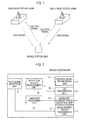
Fig. 1] Fig. 1 is a diagram of an entire configuration of a mobile communication system according to a first embodiment of the present invention. - [
Fig. 2] Fig. 2 is a functional block diagram of the mobile station according to the first embodiment of the present invention. - [
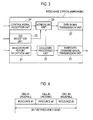
Fig. 3] Fig. 3 is a functional block diagram of a radio base station according to the first embodiment of the present invention. - [
Fig. 4] Fig. 4 is a diagram illustrating a method for transmitting a data signal by a radio base station according to the first embodiment of the present invention. - [
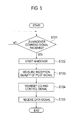
Fig. 5] Fig. 5 is a flowchart illustrating an operation of a mobile station according to the first embodiment of the present invention. - With reference to
Figs. 1 to 4 , a configuration of a mobile communication system according to a first embodiment of the present invention will be described. - As illustrated in
Fig. 1 , in the mobile communication system according to this embodiment, the LTE scheme is adopted. A plurality of radio base stations eNB are configured to control a mobile communication at each mobile station UE (for example, a mobile station UE#1) in an autonomously distributed manner, by exchanging a control signal with each other via a Backhaul line. - The present invention can be adaptable not only to the mobile communication system in which the LTE scheme is adopted but also to a mobile communication system in which communication systems other than the LTE scheme are adopted.
- As illustrated in
Fig. 2 , a mobile station UE#1 (hereinafter, UE) according to this embodiment includes: a pilotsignal reception unit 11; a measurementreport transmission unit 12; a handover commandsignal reception unit 13; ahandover processing unit 14; a receptionquality measurement unit 15; aCQI transmission unit 16; and a controlsignal transmission unit 17. - The pilot
signal reception unit 11 is configured to receive a pilot signal (RS: Reference Signal) transmitted by one or a plurality of cells in which a radio link (specifically, an RRC connection) is established by the mobile station UE. - The pilot
signal reception unit 11 is configured to receive a pilot signal of a cell that is a measurement object designated by a radio access network apparatus (specifically, a radio base station eNB). - The measurement
report transmission unit 12 is configured to measure a reception quality measured by the pilotsignal reception unit 11, based on a reporting criteria designated by the radio access network apparatus (specifically, the radio base station eNB), and to transmit a measurement report intended to notify such measurement result. - Herein, the reception quality measured by the measurement
report transmission unit 12 may include an RSRQ (Reference Signal Received Quality), an RSRP (Reference Signal Received Power), and a reception SIR (Signal to Interference Ratio). - The handover command
signal reception unit 13 is configured to receive a handover command signal to command a start of handover, from the radio access network apparatus (specifically, the radio base station eNB). - The
handover processing unit 14 is configured to perform a handover process, based on the handover command signal received by the handover commandsignal reception unit 13. - The reception
quality measurement unit 15 is configured to measure the reception quality of the pilot signal transmitted by each of the plurality of cells, when the radio link is established with the plurality of cells by the mobile station UE, i.e., when the mobile station UE is in a soft handover state. - In this case, the reception quality measured by the reception
quality measurement unit 15 may include RSRQ, RSRP, reception SIR, etc., similarly to the reception quality measured by the measurementreport transmission unit 12. - The reception
quality measurement unit 15 is configured to determine, in accordance with the reception quality of the above-described pilot signals, a first cell with the largest interference amount among the plurality of cells. - The
CQI transmission unit 16 is configured to transmit, to each of the above-described plurality of cells, a channel quality indicator (CQI) corresponding to the reception quality of the pilot signals measured by the receptionquality measurement unit 15. - The control
signal transmission unit 17 is configured to transmit, to each of the above-described plurality of cells, control signals including identification information of the first cell determined by the receptionquality measurement unit 15. - The control
signal transmission unit 17 may also be configured to transmit the control signals including the identification information of the first cell, only when the interference amount/reception quality from the first cell exceeds a predetermined threshold. - As illustrated in
Fig. 3 , a radio base station eNB#1/eNB#2 (hereinafter, eNB) according to this embodiment includes: a measurementreport reception unit 21; ahandover processing unit 22; a handover commandsignal transmission unit 23; a controlsignal reception unit 24; aCQI reception unit 25; ascheduling unit 26; and a datasignal transmission unit 27. - The measurement
report reception unit 21 is configured to receive a measurement report transmitted by the mobile station UE in which the radio link is established with a cell under the control of the radio base station eNB. - The
handover processing unit 22 is configured to determine whether or not the above-described mobile station UE should start a handover, based on the measurement report received by the measurementreport reception unit 21. - The
handover processing unit 22 may be configured to determine whether or not the above-described mobile station UE should start a handover, according to a "cell edge identifier" received from another radio base station. - In this case, the "cell edge identifier" is an identifier indicating that each mobile station UE is present at a cell edge, and is notified to a particular radio base station eNB from each mobile station UE. For example, when a difference in the reception quality of pilot signals of two cells remains within a predetermined threshold value, the mobile station UE may determine that the mobile station UE is present at a cell edge, and notify, to the radio base station eNB managing either one of the two cells, the "cell edge identifier" indicating that each mobile station UE is present at the cell edge.
- The handover command
signal transmission unit 23 is configured to transmit, to the mobile station UE for which thehandover processing unit 22 has determined that it should start a handover, a handover command signal indicating that situation. - The control
signal reception unit 24 is configured to receive control signals including identification information of the above-described first cell, from the mobile station UE in which a radio link is established with a cell under the control of the radio base station eNB. - The
CQI reception unit 25 is configured to receive the above-described CQI, from the mobile station UE in which the radio link is established with the cell under the control of the radio base station eNB. - The
scheduling unit 26 is configured to perform downlink scheduling. - Specifically, when the control
signal reception unit 24 receives the control signal including identification information of the above-described first cell, from the mobile station UE in which the radio link is established with the cell under the control of the radio base station eNB, thescheduling unit 26 is configured to perform scheduling, in the second cell, to transmit a data signal addressed to the mobile station UE via a resource that is unusable by the first cell. - For example, as illustrated in
Fig. 4 , the entire frequency band usable in the mobile communication system according to the present embodiment is divided intoresources # 1 to #3. Here, theresource # 1 is unusable by thecell # 1, theresource # 2 is unusable by thecell # 2 and theresource # 3 is unusable by thecell # 3. - In this case, when the control
signal reception unit 24 receives the control signals including the identification information of thecell # 1 as the identification information of the above-described first cell, from a mobile station UE in which the radio links are established with thecells # 1 to #3, thescheduling unit 26 performs scheduling to transmit a data signal addressed to the mobile station UE via theresource # 1 which is unusable by thecell # 1. - Further, when the control
signal reception unit 24 receives the control signals including the identification information of thecell # 2 as the identification information of the above-described first cell, from a mobile station UE in which the radio links are established between with thecells # 1 to #3, thescheduling unit 26 performs scheduling to transmit a data signal addressed to the mobile station UE via theresource # 2 which is unusable by thecell # 2. - Further, when the control
signal reception unit 24 receives the control signals including the identification information of thecell # 3 as the identification information of the above-described first cell, from a mobile station UE in which the radio links are established between with thecells # 1 to #3, thescheduling unit 26 performs scheduling to transmit a data signal addressed to the mobile station UE via theresource # 3 which is unusable by thecell # 3. - Here, the above-described scheduling may be configured to be performed on a resource block basis, each block being constituted by seven OFDM symbols and twelve subcarriers.
- The
scheduling unit 26 may be configured to preferentially assign a downlink resource to a mobile station UE in which radio links are established between with a plurality of cells, i.e., a mobile station UE in a soft handover state. - The data
signal transmission unit 27 is configured to transmit data signals to the mobile station UE via the downlink resource assigned to the mobile station UE by thescheduling unit 26. - With reference to
Fig. 5 , an operation of the mobile communication system according to the first embodiment of the present invention which is, specifically, an operation of the mobile station UE will be described. - As illustrated in
Fig. 5 , at step S101, when the mobile station UE that establishes the radio link with thecell # 1 receives the handover command signal from the radio base station eNB managing thecell # 1, the operation proceeds to step S102. - At step S102, the mobile station UE starts the handover by establishing the radio link between the
cell # 1 and thecell # 2 according to the handover command signal. - At step S103, the mobile station UE measures the reception quality of the pilot signals in the
cell # 1 and thecell # 2. Here, the mobile station UE detects that an interference amount in thecell # 1 is greater than that in thecell # 2 in accordance with the measurement result. - In step S104, the mobile station UE transmits, to the
cell # 1 and thecell # 2, a CQI corresponding to the reception quality of thecell # 1 and thecell # 2, and transmits the control signals including the identification information of thecell # 1 as identification information of the first cell with the largest interference amount. - In step S105, the mobile station UE receives the data signals transmitted from the
cell # 2 via theresource # 1 which is unusable by thecell # 1. - With the mobile communication system according to the present embodiment, since scheduling is performed to inhibit the cell with the largest interference amount with respect to the mobile station UE from transmitting data signals, when a mobile station UE has radio links established with a plurality of cells, it is possible to reduce an inter-cell interference in mobile communication systems which are configured to use the same frequency repeatedly in a plurality of cells.
- The operation of the above-described mobile station UE or radio base station eNB may be implemented by a hardware, may also be implemented by a software module executed by a processor, and may further be implemented by the combination of the both.
- The software module may be arranged in a storing medium of an arbitrary format such as RAM(Random Access Memory), a flash memory, ROM(Read Only Memory), EPROM(Erasable Programmable ROM), EEPROM(Electronically Erasable and Programmable ROM), a register, a hard disk, a removable disk, and CD-ROM.
- Such a storing medium is connected to the processor so that the processor can write and read information into and from the storing medium. Such a storing medium may also be accumulated in the processor. Such a storing medium and processor may be arranged in ASIC. Such ASIC may be arranged in the mobile station UE and the radio base station eNB. As a discrete component, such a storing medium and processor may be arranged in the mobile station UE and the radio base station eNB.
- Thus, the present invention has been explained in detail by using the above-described embodiments; however, it is obvious that for persons skilled in the art, the present invention is not limited to the embodiments explained herein. The present invention can be implemented as a corrected, modified mode without departing from the gist and the scope of the present invention defined by the claims. Therefore, the description of the specification is intended for explaining the example only and does not impose any limited meaning to the present invention.
Claims (3)
- A mobile communication method comprising the steps of:determining, at a mobile station, a first cell with the largest interference amount among a plurality of cells in accordance with reception quality of a reference signal in the plurality of cells, when radio links are established between the mobile station and the plurality of cells;transmitting, from the mobile station to the plurality of cells, identification information of the first cell; andscheduling, at a radio base station which manages each of the plurality of cells, to transmit a data signal addressed to the mobile station via a resource that is unusable by the first cell.
- A mobile communication system comprising a mobile station capable of establishing radio links with a plurality of cells, and a radio base station which manages each of the plurality of cells, wherein:the mobile station comprises:a reception quality measuring unit configured to determine a first cell with the largest interference amount among a plurality of cells in accordance with reception quality of a reference signal in the plurality of cells, when radio links are established between the mobile station and the plurality of cells; anda transmitting unit configured to transmit, to the plurality of cells, identification information of the first cell;the radio base station comprises:a scheduling unit configured to transmit a data signal addressed to the mobile station via a resource that is unusable by the first cell.
- A radio base station comprising a scheduling unit configured to perform downlink scheduling, wherein,
when the scheduling unit receives identification information of a first cell as a cell with the largest interference amount among a plurality of cells from a mobile station having radio links established between the mobile station and a plurality of cells, the scheduling unit is configured to transmit a data signal addressed to the mobile station via a resource that is unusable by the first cell.
Applications Claiming Priority (2)
| Application Number | Priority Date | Filing Date | Title |
|---|---|---|---|
| JP2008242652A JP5020209B2 (en) | 2008-09-22 | 2008-09-22 | Mobile communication method, mobile communication system, and radio base station |
| PCT/JP2009/066434 WO2010032848A1 (en) | 2008-09-22 | 2009-09-18 | Mobile communication method, mobile communication system, and radio base station |
Publications (2)
| Publication Number | Publication Date |
|---|---|
| EP2334135A1 true EP2334135A1 (en) | 2011-06-15 |
| EP2334135A4 EP2334135A4 (en) | 2016-06-15 |
Family
ID=42039667
Family Applications (1)
| Application Number | Title | Priority Date | Filing Date |
|---|---|---|---|
| EP09814692.1A Withdrawn EP2334135A4 (en) | 2008-09-22 | 2009-09-18 | MOBILE COMMUNICATION METHOD, MOBILE COMMUNICATION SYSTEM, AND RADIO BASE STATION |
Country Status (6)
| Country | Link |
|---|---|
| US (1) | US20110218009A1 (en) |
| EP (1) | EP2334135A4 (en) |
| JP (1) | JP5020209B2 (en) |
| KR (1) | KR20110056524A (en) |
| CN (1) | CN102160444B (en) |
| WO (1) | WO2010032848A1 (en) |
Families Citing this family (5)
| Publication number | Priority date | Publication date | Assignee | Title |
|---|---|---|---|---|
| KR101729779B1 (en) | 2010-08-31 | 2017-04-24 | 에릭슨 엘지 주식회사 | Apparatus and method for removing other cell interference and mobile telecommunication system using the same technique |
| US9872220B2 (en) | 2011-05-10 | 2018-01-16 | Samsung Electronics Co., Ltd. | Method and apparatus for cell selection in a wireless communication system |
| CN102883330B (en) * | 2011-07-13 | 2017-05-31 | 株式会社Ntt都科摩 | The method and heterogeneous network of a kind of heterogeneous network medium and small interval interference coordination |
| CN104184539B (en) * | 2013-05-23 | 2018-10-19 | 中兴通讯股份有限公司 | A kind of method and device of data wireless links error correction again |
| CN104244335B (en) * | 2013-06-13 | 2019-12-10 | 索尼公司 | Interference coordination method, interference coordination device and measurement device |
Family Cites Families (21)
| Publication number | Priority date | Publication date | Assignee | Title |
|---|---|---|---|---|
| US5854981A (en) * | 1995-08-08 | 1998-12-29 | Telefonaktiebolaget L M Ericsson | Adaptive neighbor cell list |
| US5915221A (en) * | 1995-08-08 | 1999-06-22 | Telefonaktiebolaget Lm Ericsson | Neighbor cell list creation and verification in a telecommunications system |
| US5898928A (en) * | 1996-02-29 | 1999-04-27 | Telefonaktiebolaget Lm Ericsson | Adaptive frequency allocation in a telecommunication system |
| US5901354A (en) * | 1996-04-03 | 1999-05-04 | Motorola, Inc. | Method and apparatus for performing soft-handoff in a wireless communication system |
| US6023459A (en) * | 1996-12-04 | 2000-02-08 | Northern Telecom Limited | Frequency assignment in wireless networks |
| KR100214293B1 (en) * | 1997-05-29 | 1999-08-02 | 윤종용 | Soft Swap Handoff Method in CDMA Cellular System |
| JP3956479B2 (en) * | 1998-04-27 | 2007-08-08 | ソニー株式会社 | Mobile communication system, mobile station and base station |
| US6862449B1 (en) * | 1998-05-14 | 2005-03-01 | Fujitsu Limited | Reducing interference in cellular mobile communications networks |
| JP3479840B2 (en) * | 2000-11-22 | 2003-12-15 | 日本電気株式会社 | Mobile communication control method and system, and mobile station |
| US6731936B2 (en) * | 2001-08-20 | 2004-05-04 | Qualcomm Incorporated | Method and system for a handoff in a broadcast communication system |
| JP3946059B2 (en) * | 2002-03-06 | 2007-07-18 | 株式会社エヌ・ティ・ティ・ドコモ | Mobile station, communication system and communication method |
| US8159998B2 (en) * | 2002-12-27 | 2012-04-17 | Rockstar Bidco Lp | Method and apparatus for improving a transmission signal characteristic of a downlink signal in a time division multiple access wireless communication system |
| JP4378967B2 (en) * | 2003-02-10 | 2009-12-09 | 日本電気株式会社 | Mobile communication system, radio network control apparatus, and resource allocation control method used therefor |
| US8526963B2 (en) * | 2003-10-30 | 2013-09-03 | Qualcomm Incorporated | Restrictive reuse for a wireless communication system |
| BRPI0418710B8 (en) * | 2004-03-30 | 2018-03-20 | Mitsubishi Electric Corp | “communication method and system relating to a multicast multimedia transmission (mbms) service, mobile station, communication method for use at a base station, and, a base station”. |
| US20060133308A1 (en) * | 2004-12-21 | 2006-06-22 | Telefonatiebolaget L M Ericsson | Active set management for packet data services in a mixed capability wireless communication network |
| DE602005015721D1 (en) * | 2005-06-15 | 2009-09-10 | Alcatel Lucent | Uplink interference coordination method in monofrequency networks, base station and mobile network therefor |
| CN1909537A (en) * | 2005-08-02 | 2007-02-07 | 松下电器产业株式会社 | Method for increasing capacity of multiple districts crossing frequency division multiple address-time division multiple address system |
| JP2007068007A (en) * | 2005-09-01 | 2007-03-15 | Matsushita Electric Ind Co Ltd | Communication apparatus and method for controlling interference between networks |
| WO2007044281A1 (en) * | 2005-10-06 | 2007-04-19 | Interdigital Technology Corporation | Method and apparatus for controlling downlink transmission power for ofdma based evolved utra |
| US8289925B2 (en) * | 2007-02-23 | 2012-10-16 | Nokia Corporation | Self optimization of forbidden neighbor cell list |
-
2008
- 2008-09-22 JP JP2008242652A patent/JP5020209B2/en not_active Expired - Fee Related
-
2009
- 2009-09-18 KR KR1020117006582A patent/KR20110056524A/en not_active Withdrawn
- 2009-09-18 CN CN200980137006.0A patent/CN102160444B/en not_active Expired - Fee Related
- 2009-09-18 WO PCT/JP2009/066434 patent/WO2010032848A1/en not_active Ceased
- 2009-09-18 EP EP09814692.1A patent/EP2334135A4/en not_active Withdrawn
- 2009-09-18 US US13/120,357 patent/US20110218009A1/en not_active Abandoned
Non-Patent Citations (1)
| Title |
|---|
| See references of WO2010032848A1 * |
Also Published As
| Publication number | Publication date |
|---|---|
| EP2334135A4 (en) | 2016-06-15 |
| KR20110056524A (en) | 2011-05-30 |
| CN102160444A (en) | 2011-08-17 |
| CN102160444B (en) | 2014-08-20 |
| US20110218009A1 (en) | 2011-09-08 |
| JP5020209B2 (en) | 2012-09-05 |
| WO2010032848A1 (en) | 2010-03-25 |
| JP2010074739A (en) | 2010-04-02 |
Similar Documents
| Publication | Publication Date | Title |
|---|---|---|
| US8923878B2 (en) | Mobile station, radio base station, and mobile communication method | |
| US8340659B2 (en) | Apparatus and method of performing minimization of drive tests | |
| EP2505015B1 (en) | Method of uplink mdt measurement | |
| US20120044922A1 (en) | Mobile communication system, radio base station, and control method | |
| EP3209080B1 (en) | User equipment, node, corresponding methods and computer program product relating to system information acquisition during flexible subframe operation | |
| US9497676B2 (en) | User equipment and measurement method | |
| US20200059841A1 (en) | Mobility and load balancing target selection for unlicensed carriers | |
| EP2487945A1 (en) | Base station device and user device | |
| EP3432678B1 (en) | Device and method of configuring a secondary node and reporting in dual connectivity | |
| US8731558B2 (en) | Mobile station, radio base station, and mobile communication method | |
| US20110195706A1 (en) | Mobile station and mobile communication method | |
| CN103024751A (en) | Interference control method and apparatus | |
| US20130250798A1 (en) | Mobile communication method, radio base station, and mobile station | |
| US20180184317A1 (en) | Measurement method, user equipment, network side device, and measurement apparatus | |
| EP2334135A1 (en) | Mobile communication method, mobile communication system, and radio base station | |
| US10165491B1 (en) | Controlling downlink handover-processing threshold based on uplink TTI bundling | |
| EP2640112A1 (en) | Mobile communication method, mobile station, and wireless base station | |
| EP2472955A1 (en) | Mobile station, wireless base station, mobile communication system, and mobile communication method | |
| WO2010126106A1 (en) | Mobile station and mobile communication system | |
| US20160080985A1 (en) | Mobile communication method and radio base station | |
| EP2487980A1 (en) | Base station device and mobile communication method | |
| EP2487974A1 (en) | Base station apparatus and mobile communication method | |
| WO2013049997A1 (en) | System and method for measurement bandwidth configuration |
Legal Events
| Date | Code | Title | Description |
|---|---|---|---|
| PUAI | Public reference made under article 153(3) epc to a published international application that has entered the european phase |
Free format text: ORIGINAL CODE: 0009012 |
|
| 17P | Request for examination filed |
Effective date: 20110412 |
|
| AK | Designated contracting states |
Kind code of ref document: A1 Designated state(s): AT BE BG CH CY CZ DE DK EE ES FI FR GB GR HR HU IE IS IT LI LT LU LV MC MK MT NL NO PL PT RO SE SI SK SM TR |
|
| AX | Request for extension of the european patent |
Extension state: AL BA RS |
|
| DAX | Request for extension of the european patent (deleted) | ||
| RA4 | Supplementary search report drawn up and despatched (corrected) |
Effective date: 20160519 |
|
| RIC1 | Information provided on ipc code assigned before grant |
Ipc: H04W 72/08 20090101AFI20160512BHEP Ipc: H04W 72/04 20090101ALI20160512BHEP |
|
| 17Q | First examination report despatched |
Effective date: 20180223 |
|
| STAA | Information on the status of an ep patent application or granted ep patent |
Free format text: STATUS: THE APPLICATION HAS BEEN WITHDRAWN |
|
| 18W | Application withdrawn |
Effective date: 20180618 |