EP2333726A1 - Virtual monitoring of aircraft fleet loads - Google Patents
Virtual monitoring of aircraft fleet loads Download PDFInfo
- Publication number
- EP2333726A1 EP2333726A1 EP10251921A EP10251921A EP2333726A1 EP 2333726 A1 EP2333726 A1 EP 2333726A1 EP 10251921 A EP10251921 A EP 10251921A EP 10251921 A EP10251921 A EP 10251921A EP 2333726 A1 EP2333726 A1 EP 2333726A1
- Authority
- EP
- European Patent Office
- Prior art keywords
- aircraft
- coefficients
- data
- virtual load
- load data
- Prior art date
- Legal status (The legal status is an assumption and is not a legal conclusion. Google has not performed a legal analysis and makes no representation as to the accuracy of the status listed.)
- Granted
Links
Images


Classifications
-
- G—PHYSICS
- G07—CHECKING-DEVICES
- G07C—TIME OR ATTENDANCE REGISTERS; REGISTERING OR INDICATING THE WORKING OF MACHINES; GENERATING RANDOM NUMBERS; VOTING OR LOTTERY APPARATUS; ARRANGEMENTS, SYSTEMS OR APPARATUS FOR CHECKING NOT PROVIDED FOR ELSEWHERE
- G07C5/00—Registering or indicating the working of vehicles
- G07C5/006—Indicating maintenance
-
- G—PHYSICS
- G05—CONTROLLING; REGULATING
- G05B—CONTROL OR REGULATING SYSTEMS IN GENERAL; FUNCTIONAL ELEMENTS OF SUCH SYSTEMS; MONITORING OR TESTING ARRANGEMENTS FOR SUCH SYSTEMS OR ELEMENTS
- G05B23/00—Testing or monitoring of control systems or parts thereof
- G05B23/02—Electric testing or monitoring
- G05B23/0205—Electric testing or monitoring by means of a monitoring system capable of detecting and responding to faults
- G05B23/0218—Electric testing or monitoring by means of a monitoring system capable of detecting and responding to faults characterised by the fault detection method dealing with either existing or incipient faults
- G05B23/0224—Process history based detection method, e.g. whereby history implies the availability of large amounts of data
- G05B23/024—Quantitative history assessment, e.g. mathematical relationships between available data; Functions therefor; Principal component analysis [PCA]; Partial least square [PLS]; Statistical classifiers, e.g. Bayesian networks, linear regression or correlation analysis; Neural networks
-
- G—PHYSICS
- G05—CONTROLLING; REGULATING
- G05B—CONTROL OR REGULATING SYSTEMS IN GENERAL; FUNCTIONAL ELEMENTS OF SUCH SYSTEMS; MONITORING OR TESTING ARRANGEMENTS FOR SUCH SYSTEMS OR ELEMENTS
- G05B23/00—Testing or monitoring of control systems or parts thereof
- G05B23/02—Electric testing or monitoring
- G05B23/0205—Electric testing or monitoring by means of a monitoring system capable of detecting and responding to faults
- G05B23/0259—Electric testing or monitoring by means of a monitoring system capable of detecting and responding to faults characterized by the response to fault detection
- G05B23/0283—Predictive maintenance, e.g. involving the monitoring of a system and, based on the monitoring results, taking decisions on the maintenance schedule of the monitored system; Estimating remaining useful life [RUL]
-
- G—PHYSICS
- G06—COMPUTING OR CALCULATING; COUNTING
- G06Q—INFORMATION AND COMMUNICATION TECHNOLOGY [ICT] SPECIALLY ADAPTED FOR ADMINISTRATIVE, COMMERCIAL, FINANCIAL, MANAGERIAL OR SUPERVISORY PURPOSES; SYSTEMS OR METHODS SPECIALLY ADAPTED FOR ADMINISTRATIVE, COMMERCIAL, FINANCIAL, MANAGERIAL OR SUPERVISORY PURPOSES, NOT OTHERWISE PROVIDED FOR
- G06Q10/00—Administration; Management
- G06Q10/06—Resources, workflows, human or project management; Enterprise or organisation planning; Enterprise or organisation modelling
- G06Q10/063—Operations research, analysis or management
- G06Q10/0631—Resource planning, allocation, distributing or scheduling for enterprises or organisations
- G06Q10/06311—Scheduling, planning or task assignment for a person or group
-
- G—PHYSICS
- G07—CHECKING-DEVICES
- G07C—TIME OR ATTENDANCE REGISTERS; REGISTERING OR INDICATING THE WORKING OF MACHINES; GENERATING RANDOM NUMBERS; VOTING OR LOTTERY APPARATUS; ARRANGEMENTS, SYSTEMS OR APPARATUS FOR CHECKING NOT PROVIDED FOR ELSEWHERE
- G07C5/00—Registering or indicating the working of vehicles
- G07C5/008—Registering or indicating the working of vehicles communicating information to a remotely located station
-
- G—PHYSICS
- G07—CHECKING-DEVICES
- G07C—TIME OR ATTENDANCE REGISTERS; REGISTERING OR INDICATING THE WORKING OF MACHINES; GENERATING RANDOM NUMBERS; VOTING OR LOTTERY APPARATUS; ARRANGEMENTS, SYSTEMS OR APPARATUS FOR CHECKING NOT PROVIDED FOR ELSEWHERE
- G07C5/00—Registering or indicating the working of vehicles
- G07C5/08—Registering or indicating performance data other than driving, working, idle, or waiting time, with or without registering driving, working, idle or waiting time
- G07C5/0841—Registering performance data
Definitions
- the maintenance database 108 can also collect additional flight parameters and maintenance information in support of managing the aircraft fleet 112.
- the capabilities of the present invention can be implemented in software, firmware, hardware or some combination thereof.
Landscapes
- Physics & Mathematics (AREA)
- Business, Economics & Management (AREA)
- General Physics & Mathematics (AREA)
- Engineering & Computer Science (AREA)
- Human Resources & Organizations (AREA)
- Economics (AREA)
- Entrepreneurship & Innovation (AREA)
- Strategic Management (AREA)
- Automation & Control Theory (AREA)
- Educational Administration (AREA)
- Operations Research (AREA)
- Quality & Reliability (AREA)
- Tourism & Hospitality (AREA)
- Marketing (AREA)
- General Business, Economics & Management (AREA)
- Game Theory and Decision Science (AREA)
- Theoretical Computer Science (AREA)
- Development Economics (AREA)
- Artificial Intelligence (AREA)
- Evolutionary Computation (AREA)
- Mathematical Physics (AREA)
- Traffic Control Systems (AREA)
Abstract
Description
- The subject matter disclosed herein relates generally to aircraft diagnostics and prognostics. More particularly, the subject matter disclosed herein relates to virtual monitoring of aircraft fleet loads.
- Aircraft have a large number of structural components that are subject to intense structural usage. These components are often expensive to replace. Conventional structural health management policies replace components after a fixed number of flight hours on a given aircraft, regardless of the actual structural usage of the components on the given aircraft. Since the structural components may have a measurable and predictable life cycle, prediction of component deterioration so as to anticipate a potential failure facilitates prolonged operations. Early detection of potential failures or fractures within a structural component provides the ability to perform preventative maintenance and avoid potential component failure.
- Manual inspection is one method of monitoring the health of structural components. Some aircrafts incorporate Health and Usage Monitoring Systems ("HUMS") to monitor the health of critical components and collect operational flight data utilizing on-board sensors and avionic systems. HUMS can create large volumes of data, which may vary in frequency and duration depending on the components monitored.
- According to one aspect of the invention, a computer-implemented method for virtual monitoring of aircraft fleet loads is provided. The method includes calculating virtual load data associated with an aircraft from a set of orthogonal waveforms. The virtual load data provides estimated structural loads on components of the aircraft while in operation. The method also includes calculating a set of coefficients as a function of parametric data and high frequency data associated with the aircraft. The set of coefficients includes fewer data values than the virtual load data. Selectively combining the set of coefficients and the set of orthogonal waveforms produces the virtual load data. The method also includes storing the set of coefficients on the aircraft and transmitting the set of coefficients from the aircraft to a ground-based system configured to perform aircraft fleet management. The ground-based system includes a maintenance database with a copy of the set of orthogonal waveforms in order to reproduce the virtual load data in combination with the received set of coefficients.
- According to another aspect of the invention, a system for virtual monitoring of aircraft fleet loads is provided. The system includes a health and usage monitoring system (HUMS) configured to receive a combination of parametric data and high frequency data associated with an aircraft. The HUMS includes a data storage device configured to store a set of coefficients and a set of orthogonal waveforms as basis waveforms to calculate virtual load data associated with the aircraft. The HUMS also includes a processing circuit configured to execute monitoring logic. The monitoring logic determines the set of coefficients as a function of the parametric data and high frequency data. Selectively combining the set of coefficients and the set of orthogonal waveforms produces the virtual load data. The system also includes a communication interface configured to transmit the set of coefficients from the HUMS to a ground-based system configured to perform aircraft fleet management. The ground-based system includes a maintenance database with a copy of the set of orthogonal waveforms in order to reproduce the virtual load data in combination with a received set of coefficients.
- According to a further aspect of the invention, a computer program product for virtual monitoring of aircraft fleet loads is provided. The computer program product includes a storage medium readable by a processing circuit and storing instructions for execution by the processing circuit for implementing a method. The method includes receiving a set of coefficients from an aircraft to define virtual load data as a function of parametric data and high frequency data associated with the aircraft. The method also includes reading a set of orthogonal waveforms as basis waveforms to calculate the virtual load data associated with the aircraft. The method further includes reproducing the virtual load data by selectively combining the set of coefficients and the set of orthogonal waveforms, where the set of coefficients includes fewer data values than the reproduced virtual load data. The method additionally includes determining damage metrics from the reproduced virtual load data, and storing the damage metrics and the set of coefficients in a maintenance database.
- These and other advantages and features will become more apparent from the following description taken in conjunction with the drawings.
- The subject matter, which is regarded as the invention, is particularly pointed out and distinctly claimed in the claims at the conclusion of the specification. The foregoing and other features, and advantages of the invention are apparent from the following detailed description taken in conjunction with the accompanying drawings in which:
-
FIG. 1 is an example of a system for virtual monitoring of aircraft fleet loads; -
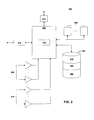
FIG. 2 is a block diagram of an on-board aircraft health and usage monitoring system in accordance with exemplary embodiments; -
FIG. 3 is an example of virtual load data calculations in accordance with exemplary embodiments; and -
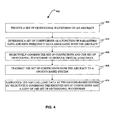
FIG. 4 depicts an exemplary process for virtual monitoring of aircraft fleet loads in accordance with exemplary embodiments. - The detailed description explains embodiments of the invention, together with advantages and features, by way of example with reference to the drawings.
- Exemplary embodiments provide virtual monitoring of aircraft fleet loads. Structural loads experienced by components throughout an aircraft can be monitored to calculate structural usage metrics for these components. Once structural usage metrics are calculated, policies for usage-based maintenance can be implemented. These policies may substantially reduce aircraft maintenance costs while improving aircraft safety and reliability. The structural loads experienced by aircraft components may also be monitored for fault detection and isolation. One example of the use of estimated structural loads for fault detection and isolation is described in
U.S. Patent Application 2010/0161244A . Monitoring of structural loads experienced by aircraft components can also be used to implement flight control laws that limit the loads experienced by the components, thus extending the life of the components. - As used in this specification, the term "load" encompasses the loads themselves (e.g., mechanical loads, electromechanical loads, electromagnetic loads, etc.) as well as responses (e.g., electromechanical responses, electromagnetic responses, optical responses, etc.) to a load; thus, load signals may indicate, for example, force, moment, torque, stress, strain, current, and/or voltage.
- In practice, it is impractical to equip an aircraft deployed for field use with load sensors on all structural elements, as there is substantial material and labor cost associated with the installation of load sensors. The addition of sensors and wiring to convey sensor signals adds substantial weight to the aircraft. Furthermore, the durability of conventional sensors for load measurement may be limited. Thus, virtual load monitoring can be performed to estimate dynamic signals according to a model. To estimate loads, signal information for a given component is calculated by inputting measured state parameters and measured loads into a signal estimation model.
- Virtual monitoring of aircraft structural loads may be performed in real-time onboard an aircraft. The real-time virtual monitoring can leverage real-time estimates of structural loads to produce virtual load data. Load estimation may be triggered based on certain events, such as commencement of a flight maneuver anticipated to produce high structural loads. Accurate estimation of structural loads may be enhanced by the use of high-frequency information, such as signals from on-board accelerometers.
- In exemplary embodiments, virtual monitoring of loads generates estimates of high-frequency load waveforms as virtual load data. The quantity of data associated with high-frequency load estimates for a large number of structural components may be so large that it is impractical to transmit and store all of the data. Providing load estimates generated by virtual monitoring to aircraft operators and original equipment manufacturers (OEMs) enables implementation of usage-based maintenance policies across aircraft fleets. In order to conserve onboard storage space, communication bandwidth and ground-based storage, a set of coefficients used to generate the virtual load data is retained in the aircraft and transmitted to a ground-based system. The set of coefficients includes fewer data values than the virtual load data. Thus, storing and transmitting the set of coefficients enables the virtual load data to be calculated and analyzed locally in an onboard system, as well as reproduced at a ground-based system without requiring storage and transmission of the virtual load data itself.
-
FIG. 1 is an example of asystem 100 for virtual monitoring of aircraft fleet loads. Thesystem 100 includes a ground-basedsystem 102 in communication withremote systems 104 over anetwork 106. The ground-basedsystem 102 can access amaintenance database 108 on a data storage device to read and write data in response to requests from theremote systems 104. In exemplary embodiments, the ground-basedsystem 102 is a high-speed processing device (e.g., a mainframe computer, a desktop computer, a laptop computer, or the like) including at least one processing circuit (e.g., a CPU) capable of reading and executing instructions, and handling numerous interaction requests from theremote systems 104. The ground-basedsystem 102 may also represent a cluster of computer systems collectively performing processes as described in greater detail herein. - In exemplary embodiments, the
remote systems 104 comprise desktop, laptop, general-purpose computer devices, and/or networked devices with processing circuits and I/O interfaces, such as a keyboard and display device. The ground-basedsystem 102 andremote systems 104 can include various computer hardware and software technology known in the art, such as one or more processing units or circuits, volatile and non-volatile memory including removable media, power supplies, network interfaces, support circuitry, operating systems, user interfaces, and the like. Remote users can initiate various tasks locally on theremote systems 104, such as requesting data from the ground-basedsystem 102 viasecure clients 110. Thesecure clients 110 can access web pages or components and execute hypertext transfer protocol (HTTP)-enabled content sourced from the ground-basedsystem 102. The HTTP-enabled content may include secure HTTP, such as HTTP over a secure socket layer (HTTPS). Thesecure clients 110 may support other communication or transfer protocols known in the art. - The
network 106 may be any type of communications network known in the art. For example, thenetwork 106 may be an intranet, extranet, or an internetwork, such as the Internet, or a combination thereof. Thenetwork 106 can include wireless, wired, and/or fiber optic links. Additional computer systems (not depicted) can also be accessed via thenetwork 106 or other networks. - The data storage device upon which the
maintenance database 108 is stored refers to any type of computer readable storage medium and may comprise a secondary storage element, e.g., hard disk drive (HDD), tape, or a storage subsystem that is internal or external to the ground-basedsystem 102. Types of data that may be stored in the data storage device include, for example, various files and databases. - The ground-based
system 102 is also configured to communicate with anaircraft fleet 112 via communication links 114. Theaircraft fleet 112 can include a variety ofaircraft 116, such as fixed-wing and rotorcrafts. In the example depicted inFIG. 1 , eachaircraft 116 is a rotorcraft with amain rotor 118 capable of revolving at a sufficient velocity to sustain flight.Aircraft 116 also includes a health and usage monitoring system (HUMS) 120 configured to receive a combination of low-frequency aircraft state parametric data and high frequency data from low-frequency sensors 122 and high-frequency sensors 124. In an exemplary embodiment, the low-frequency aircraft state parameters are sampled once per revolution of themain rotor 118, and the high-frequency data are sampled more than once per revolution of themain rotor 118. - The communication links 114 can be wireless communication links. The communication links 114 may also support wired and/or optical communication when
aircraft 116 are on the ground and within physical proximity to the ground-basedsystem 102. In exemplary embodiments, theaircraft fleet 112 transmits flight data to the ground-basedsystem 102 for fleet management. - The ground-based
system 102 includesfleet management logic 126 capable of reproducing the virtual load data as calculated on eachaircraft 116. In exemplary embodiments, themaintenance database 108 holds a variety of data for theaircraft fleet 112. Themaintenance database 108 can include sets oforthogonal waveforms 128 to calculate virtual load data associated with theaircraft fleet 112, sets ofcoefficients 130,damage metrics 132, aircraft fleet maintenance schedules 134, and aircraftfleet maintenance policies 136. Thefleet management logic 126 reproduces virtual load data by multiplying a subset of the setsorthogonal waveforms 128 with corresponding coefficients from the sets ofcoefficients 130 to produce weighted waveforms, and sums the weighted waveforms. Thefleet management logic 126 can calculate and store thedamage metrics 132 from the reproduced virtual load data. Thedamage metrics 132 may include per-operation load ranges, per-main rotor revolution load amplitudes, and per-operation load peaks. Thefleet management logic 126 can filter thedamage metrics 132 to locate an operation of interest, for instance, in response to a request from theremote systems 104. Virtual load data can also be reconstructed from a subset of the sets ofcoefficients 130 associated with the filtered damage metrics to support fault-detection and isolation. Although the virtual load data can be stored in themaintenance database 108, it need not be made persistent, as the virtual load data can be reproduced on demand. - The
maintenance database 108 can collect multiple sets ofcoefficients 130 for reproducing virtual load data from multiple missions of theaircraft 116 in addition to fleet-wide data collection and processing. By analyzing fleet-wide damage metrics and fleet virtual load data, the aircraftfleet maintenance schedules 134 can be adjusted according to the aircraftfleet maintenance policies 136. For example, the aircraftfleet maintenance policies 136 can implement usage-based maintenance policies for theaircraft fleet 112, adjusting a requested inspection or replacement interval for specific components as a function of estimated loads versus expected loads. If thedamage metrics 132 indicate that a component is starting to fail as exhibited by out-of-band tolerance performance or virtual loads exceeding an expected operating range for a defined duration, then effected aircraft in theaircraft fleet 112 can be scheduled for maintenance actions by updating the aircraft fleet maintenance schedules 134. Alternatively, if the virtual load data reveals that components are experiencing far lesser loads than anticipated by the aircraftfleet maintenance policies 136, scheduled maintenance actions for effected aircraft in theaircraft fleet 112 may be delayed by updating the aircraft fleet maintenance schedules 134. It will be understood that themaintenance database 108 can also collect additional flight parameters and maintenance information in support of managing theaircraft fleet 112. -
FIG. 2 depicts a block diagram of theHUMS 120 in accordance with exemplary embodiments. TheHUMS 120 can include aprocessing circuit 202 that is interfaced tovolatile memory 204,data storage device 206, low-frequency inputs 208, high-frequency inputs 210,communication interface 212, andintra-aircraft communication interface 214. Theprocessing circuit 202 executesmonitoring logic 216 that performs virtual load monitoring as further described herein. Theprocessing circuit 202 may execute other health and usage logic (not depicted). - The
volatile memory 204 can hold programs and/or data that do not persist upon power cycling. Thedata storage device 206 is a computer-readable storage medium that can include executable programs and data persisting when power is cycled, e.g., non-volatile memory. For example, thedata storage device 206 can include aregression model 218 and a set oforthogonal waveforms 220. Thedata storage device 206 can include multiple components, such as flash memory, EEPROM, NOVRAM, and/or other storage technologies known in the art. The low-frequency inputs 208 may include signal-conditioning circuitry to acquire analog and/or digital inputs from the low-frequency sensors 124 ofFIG. 1 . The high-frequency inputs 210 can include signal-conditioning circuitry to acquire analog and/or digital inputs from the high-frequency sensors 122 ofFIG. 1 . Thecommunication interface 212 supports external communication with thecommunication links 114 ofFIG. 1 , and may be integrated with or separate from theHUMS 120. Theintra-aircraft communication interface 214 enables communication with other electronics on-board theaircraft 116 ofFIG. 1 , such as controllers and avionics systems (not depicted). - In exemplary embodiments, the set of
orthogonal waveforms 220 is defined as a time-invariant set of waveforms for estimating loads on specific components. The set oforthogonal waveforms 220 is a subset of the sets oforthogonal waveforms 128 ofFIG. 1 . Empirical models for virtual monitoring of loads can be constructed using flight test data collected from a heavily instrumented test aircraft. In these tests, the loads of interest are measured using strain gauges and other instrumentation. In addition, other aircraft state measurements are also taken, including both low frequency information and high frequency information. After preprocessing the data, the principal components of a load waveform of interest are computed by taking a singular value decomposition of the set of load estimates recorded over one main rotor revolution when the aircraft is a rotorcraft, such asaircraft 116 ofFIG. 1 . The singular value decomposition generates the set oforthogonal waveforms 220 as basis waveforms, which are ordered by the amount of variance in the data captured by the waveforms. In most cases, a signal can be accurately reconstructed by a relatively small set oforthogonal waveforms 220. - The
regression model 218 defines a mathematical relationship (such as, for example, a linear or quadratic) between available aircraft information, including pilot inputs and attitude, and coefficients for the set oforthogonal waveforms 220. Theregression model 218 may be calculated using least-squares. Load estimates may be computed at least once per revolution of themain rotor 118 ofFIG. 1 , because one revolution of themain rotor 118 is the basic unit of periodicity for structural loads inaircraft 116. The load estimates are computed using parametric data, such as pilot inputs, aircraft attitude, and other aircraft state parameters. The parametric data may be received via the low-frequency inputs 208 and/or theintra-aircraft communication interface 214 when computed by other systems on theaircraft 116. High-frequency data is acquired from the high-frequency inputs 210 and may include strain gauge and accelerometer information sampled more than once per main rotor revolution. Theregression model 218 is applied in order to calculate the set ofcoefficients 222 for the set oforthogonal waveforms 220 using the aircraft state parameters and features of the high-frequency signals. The set ofcoefficients 222 is recalculated and adjusted based on changes to the low-frequency inputs 208 and the high-frequency inputs 210. In exemplary embodiments, the set ofcoefficients 222 is recalculated at least once per revolution of themain rotor 118 ofFIG. 1 . Frequency domain features of the high frequency signals are computed and used in theregression model 218 to relate input signals to the set ofcoefficients 222. - For rotor-system induced loads, dominant frequencies may be in the range of 4-48 Hz, which means that corresponding load estimates are produced at frequencies of 8-96 Hz due to Nyquist-Shannon sampling theorem. For engine-induced vibration, a dominant frequency is about 425 Hz, which means that corresponding load estimates are produced at a frequency of 850 Hz, since the Nyquist-Shannon sampling theorem requires sampling at a rate twice the frequency of interest. Even higher frequencies may be desired for over sampling. Furthermore, real-time load estimates can be calculated on dozens of different components within the
aircraft 116 ofFIG. 1 . Due to the large volume of load estimates, only a portion of the load estimates may be retained in theHUMS 120 to support real-time health monitoring. The set ofcoefficients 222 provide information for waveform shaping but includes fewer data points than the calculated virtual load data. -
FIG. 3 depicts an example of virtualload data calculations 300 in accordance with exemplary embodiments. The virtualload data calculations 300 are performed by themonitoring logic 216 ofFIG. 2 to create many sets of virtual load data. For example,virtual load calculation 302 sums areference signal 304 with multiple products oforthogonal waveforms 306a-306m andcoefficients 308a-308m to producevirtual load data 310. Theorthogonal waveforms 306a-306m are basis waveforms from the set oforthogonal waveforms 220 ofFIG. 2 . Thereference signal 304 may be an initial base coefficient from the set ofcoefficients 222 ofFIG. 2 . Thecoefficients 308a-308m are also from the set ofcoefficients 222, where thecoefficients 308a-308m also have an association with theorthogonal waveforms 306a-306m. Each product of theorthogonal waveforms 306a-306m andcoefficients 308a-308m is a weighted waveform, wherein the sum of the weighted waveforms and thereference signal 304 produces thevirtual load data 310. - A similar process is repeated to generate additional virtual load data. For instance,
virtual load calculation 312 sums areference signal 314 with multiple products oforthogonal waveforms 316a-316m andcoefficients 318a-318m to producevirtual load data 320. Theorthogonal waveforms 316a-316m are basis waveforms from the set oforthogonal waveforms 220 ofFIG. 2 . Thereference signal 314 may be an initial base coefficient from the set ofcoefficients 222 ofFIG. 2 . Thecoefficients 318a-318m are also from the set ofcoefficients 222, where thecoefficients 318a-318m also have an association with theorthogonal waveforms 316a-316m. Each product of theorthogonal waveforms 316a-316m andcoefficients 318a-318m is a weighted waveform, wherein the sum of the weighted waveforms and thereference signal 314 produces thevirtual load data 320. - While each waveform in the
virtual load data coefficients 308a-308m andcoefficients 318a-318m are used to produce thevirtual load data orthogonal waveforms 306a-306m andorthogonal waveforms 316a-316m is predefined and included in the sets oforthogonal waveforms 128 on the ground-support equipment 102 ofFIG. 1 . For example, whereas each set ofvirtual load data coefficients 308a-308m and 318a-318m may include as few as 5 to 10 numbers. Thus, storing and transmitting the set ofcoefficients 222 ofFIG. 2 rather than the sets ofvirtual load data HUMS 120, the ground-basedsystem 102, and thecommunication links 114 ofFIG. 1 . -
FIG. 4 depicts anexemplary process 400 for virtual monitoring of aircraft fleet loads in accordance with exemplary embodiments. Theprocess 400 is described in reference toFIGs. 1-3 . Theprocess 400 can be implemented in thefleet management logic 126 ofFIG. 1 andmonitoring logic 216 ofFIG. 2 . Atblock 402, themonitoring logic 216 receives the set oforthogonal waveforms 220. Thefleet management logic 126 also has access to a copy of the same set oforthogonal waveforms 220, which may be stored in the sets oforthogonal waveforms 128. - At
block 404, themonitoring logic 216 determines the set ofcoefficients 222 as a function of parametric data and high frequency data associated with theaircraft 116. As previously described, the parametric data and high frequency data can be received from a combination of the low-frequency inputs 208, the high-frequency inputs 210, and/or theintra-aircraft communication interface 214. The set ofcoefficients 222 can be calculated using theregression model 218 to map the parametric data and the high-frequency data to the set ofcoefficients 222. - At
block 406, themonitoring logic 216 selectively combines the set ofcoefficients 222 and the set oforthogonal waveforms 220 to produce thevirtual load data FIG. 3 , selectively combining the set ofcoefficients 222 and the set oforthogonal waveforms 220 to producevirtual load data orthogonal waveforms 220 with a corresponding subset of coefficients from the set ofcoefficients 222 to produce weighted waveforms which are summed.Orthogonal waveforms 306a-306m andcoefficients 308a-308m are examples of corresponding subsets to producevirtual load data 310, whileorthogonal waveforms 316a-316m andcoefficients 318a-318m are examples of corresponding subsets to producevirtual load data 320. The reference signals 304 and 306 may be omitted or can be coefficients from the set ofcoefficients 222 normalized to an implied orthogonal waveform of unity. - At
block 408, themonitoring logic 216 transmits the set ofcoefficients 222 from theaircraft 116 to ground-basedsystem 102. Atblock 410, thefleet management logic 126 reproduces thevirtual load data coefficients 222 and a copy of the set oforthogonal waveforms 220. The received set ofcoefficients 222 can be stored as part of the fleet data for theaircraft fleet 112 in the sets ofcoefficients 130. As previously described, the reproducedvirtual load data damage metrics 132, and adjust aircraftfleet maintenance schedules 134 according to aircraftfleet maintenance policies 136. By sending the set ofcoefficients 222 from theaircraft 116 to the ground-basedsystem 102, equivalent data sets can be reproduced on the ground to track and manage performance across theaircraft fleet 112, while minimizing the bandwidth demands on thecommunication links 114 due to the reduced data set size. - Technical effects of exemplary embodiments include estimating aircraft structural loads in real-time onboard the aircraft, transmitting load estimate information to a ground-based system in a compact format, reconstructing high-frequency load estimates, and using these load estimates for usage-based maintenance and fault detection and isolation. The data received and reproduced at the ground-based system can be used to extend the life of aircraft structural components, reduce aircraft maintenance costs, and enhance safety. Logging or transmitting estimates of dozens of loads, at frequencies up to 850 Hz or more, imposes a great burden on data transmission and storage capability of onboard aircraft computers. Furthermore, embodiments of the invention can be used to avoid storing dozens of high frequency load estimates on a ground-based system, which would otherwise require a large amount of storage space and high-bandwidth communication channels.
- The capabilities of the present invention can be implemented in software, firmware, hardware or some combination thereof.
- As described above, embodiments can be embodied in the form of computer-implemented processes and apparatuses for practicing those processes. In exemplary embodiments, the invention is embodied in computer program code executed by one or more processing circuits. Embodiments include computer program code containing instructions embodied in tangible media, such as floppy diskettes, CD-ROMs, hard drives, universal serial bus (USB) flash drives, nonvolatile memory, or any other computer-readable storage medium, wherein, when the computer program code is loaded into and executed by a processing system including a processing circuit, the processing system becomes an apparatus for practicing the invention. Embodiments include computer program code, for example, whether stored in a storage medium, loaded into and/or executed by a computer, or transmitted over some transmission medium, such as over electrical wiring or cabling, through fiber optics, or via electromagnetic radiation, wherein, when the computer program code is loaded into and executed by a processing system, the processing system becomes an apparatus for practicing the invention. When implemented on a microprocessor, the computer program code segments configure the microprocessor to create specific logic circuits.
- While the invention has been described in detail in connection with only a limited number of embodiments, it should be readily understood that the invention is not limited to such disclosed embodiments. Rather, the invention can be modified to incorporate any number of variations, alterations, substitutions or equivalent arrangements not heretofore described, but which are commensurate with the scope of the invention as defined by the claims. Additionally, while various embodiments of the invention have been described, it is to be understood that aspects of the invention may include only some of the described embodiments. Accordingly, the invention is not to be seen as limited by the foregoing description, but is only limited by the scope of the appended claims
Claims (15)
- A computer-implemented method for virtual monitoring of aircraft fleet loads comprising:calculating virtual load data associated with an aircraft from a set of orthogonal waveforms, the virtual load data comprising estimated structural loads on components of the aircraft while in operation;periodically determining a set of coefficients as a function of parametric data and high frequency data associated with the aircraft, wherein the set of coefficients comprises fewer data values than the virtual load data;storing the set of coefficients on the aircraft; andtransmitting the set of coefficients from the aircraft to a ground-based system configured to reproduce the virtual load data based on a copy of the set of orthogonal waveforms and the received set of coefficients.
- The method of claim 1 further comprising:reproducing the virtual load data at the ground-based system by selectively combining the set of received coefficients and the copy of the set of orthogonal waveforms;determining damage metrics from the reproduced virtual load data; andstoring the damage metrics and the received set of coefficients in the maintenance database.
- The method of claim 2 further comprising:collecting multiple sets of coefficients for reproducing fleet virtual load data from multiple missions of the aircraft and additional missions of additional aircraft in an aircraft fleet;reproducing the fleet virtual load data from the multiple sets of coefficients;calculating fleet damage metrics from the fleet virtual load data; andadjusting aircraft fleet maintenance schedules in response to the fleet damage metrics.
- The method of claim 2 or 3 wherein the aircraft is a rotorcraft with a main rotor, and the damage metrics comprise: per-operation load ranges, per-main rotor revolution load amplitudes, and per-operation load peaks, and the method further comprises:filtering the damage metrics to locate an operation of interest; andreconstructing the virtual load data from a subset of the stored received set of coefficients associated with the filtered damage metrics.
- The method of claim 1, 2, 3 or 4 wherein the aircraft is a rotorcraft with a main rotor, and the parametric data comprises low-frequency aircraft state parameters sampled once per revolution of the main rotor, and the high-frequency data is sampled more than once per revolution of the main rotor.
- The method of any preceding claim wherein the aircraft is a rotorcraft with a main rotor, and the set of orthogonal waveforms is an ordered set of load waveforms for one revolution of the main rotor, developed through singular value decomposition of data collected during development flight testing and ordered by an amount of variance.
- The method of any preceding claim further comprising:selectively combining the set of coefficients and the set of orthogonal waveforms to produce the virtual load data by multiplying a subset of the set of orthogonal waveforms with a corresponding subset of coefficients from the set of coefficients to produce weighted waveforms, and summing the weighted waveforms.
- A system for virtual monitoring of aircraft fleet loads, comprising:a health and usage monitoring system configured to receive a combination of parametric data and high frequency data associated with an aircraft, the HUMS comprising:a data storage device configured to store a set of coefficients and a set of orthogonal waveforms as basis waveforms to calculate virtual load data associated with the aircraft, the virtual load data comprising estimated structural loads on components of the aircraft while in operation;a processing circuit configured to execute monitoring logic, the monitoring logic determining the set of coefficients as a function of the parametric data and high frequency data, wherein the set of coefficients comprises fewer data values than the virtual load data, and selectively combining the set of coefficients and the set of orthogonal waveforms produces the virtual load data ; anda communication interface configured to transmit the set of coefficients from the HUMS to a ground-based system configured to perform aircraft fleet management, wherein the ground-based system comprises a maintenance database with a copy of the set of orthogonal waveforms to reproduce the virtual load data in combination with a received set of coefficients .
- The system of claim 8 wherein the ground-based system is configured to perform:reproducing the virtual load data in combination with the received set of coefficients ;determining damage metrics from the reproduced virtual load data; andstoring the damage metrics and the received set of coefficients in the maintenance database.
- The system of claim 9 wherein the ground-based system is further configured to perform:collecting multiple sets of coefficients for reproducing the virtual load data from multiple missions of the aircraft and additional missions of additional aircraft in an aircraft fleet;reproducing fleet virtual load data from the multiple sets of coefficients;calculating fleet damage metrics from the fleet virtual load data; andadjusting aircraft fleet maintenance schedules in response to the fleet damage metrics.
- The system of claim 9 or 10 wherein the aircraft is a rotorcraft with a main rotor, and the damage metrics comprise: per-operation load ranges, per-main rotor revolution load amplitudes, and per-operation load peaks, and the ground-based system is further configured to perform:filtering the damage metrics to locate an operation of interest; andreconstructing the virtual load data from a subset of the stored received set of coefficients associated with the filtered damage metrics.
- The system of claim 8, 9, 10 or 11 wherein the aircraft is a rotorcraft with a main rotor, and the parametric data comprises low-frequency aircraft state parameters sampled once per revolution of the main rotor, and the high-frequency data is sampled more than once per revolution of the main rotor.
- The system of any of claims 8 to 12 wherein the aircraft is a rotorcraft with a main rotor, and the set of orthogonal waveforms is an ordered set of load waveforms for one revolution of the main rotor, developed through singular value decomposition of data collected during development flight testing and ordered by an amount of variance.
- The system of any of claims 8 to 13 wherein the monitoring logic is further configured to perform:calculating the set of coefficients using a regression model to map the parametric data and the high-frequency data to the set of coefficients; andwherein selectively combining the set of coefficients and the set of orthogonal waveforms to produce the virtual load data comprises multiplying a subset of the set of orthogonal waveforms with a corresponding subset of coefficients from the set of coefficients to produce weighted waveforms, and summing the weighted waveforms.
- A computer program product for virtual monitoring of aircraft fleet loads, the computer program product comprising:a storage medium readable by a processing circuit and storing instructions for execution by the processing circuit for implementing a method, the method comprising:receiving a set of coefficients from an aircraft to define virtual load data as a function of parametric data and high frequency data associated with the aircraft;reading a set of orthogonal waveforms as basis waveforms to calculate the virtual load data associated with the aircraft, the virtual load data comprising estimated structural loads on components of the aircraft while in operation;reproducing the virtual load data by selectively combining the set of coefficients and the set of orthogonal waveforms, wherein the set of coefficients comprises fewer data values than the reproduced virtual load data;determining damage metrics from the reproduced virtual load data; andstoring the damage metrics and the set of coefficients in a maintenance database.
Applications Claiming Priority (1)
| Application Number | Priority Date | Filing Date | Title |
|---|---|---|---|
| US26056509P | 2009-11-12 | 2009-11-12 |
Publications (2)
| Publication Number | Publication Date |
|---|---|
| EP2333726A1 true EP2333726A1 (en) | 2011-06-15 |
| EP2333726B1 EP2333726B1 (en) | 2017-05-10 |
Family
ID=43708778
Family Applications (1)
| Application Number | Title | Priority Date | Filing Date |
|---|---|---|---|
| EP10251921.2A Not-in-force EP2333726B1 (en) | 2009-11-12 | 2010-11-12 | Virtual monitoring of aircraft fleet loads |
Country Status (2)
| Country | Link |
|---|---|
| US (1) | US8868284B2 (en) |
| EP (1) | EP2333726B1 (en) |
Cited By (3)
| Publication number | Priority date | Publication date | Assignee | Title |
|---|---|---|---|---|
| EP2653944A3 (en) * | 2012-04-17 | 2016-05-11 | Sikorsky Aircraft Corporation | Hybrid virtual load monitoring system and method |
| US10311202B2 (en) | 2016-04-11 | 2019-06-04 | Airbus Helicopters Deutschland GmbH | Probabilistic load and damage modeling for fatigue life management |
| US11618585B2 (en) | 2019-10-10 | 2023-04-04 | Ge Aviation Systems Limited | Integrated system for improved vehicle maintenance and safety |
Families Citing this family (24)
| Publication number | Priority date | Publication date | Assignee | Title |
|---|---|---|---|---|
| US8615384B2 (en) * | 2007-10-31 | 2013-12-24 | The Boeing Company | Method and apparatus for simulating aircraft data processing systems |
| DE102011001112A1 (en) * | 2011-03-04 | 2012-09-06 | Schneider Electric Automation Gmbh | Method and control device for the low-vibration movement of a movable crane element of a crane system |
| US10023305B2 (en) | 2012-05-10 | 2018-07-17 | Sikorsky Aircraft Corporation | System and method of determining rotor loads and motion |
| EP2725337B1 (en) | 2012-10-24 | 2018-04-11 | AIRBUS HELICOPTERS DEUTSCHLAND GmbH | Fatigue management system and method of operating such a fatigue management system |
| FR3012636B1 (en) * | 2013-10-24 | 2015-12-25 | Snecma | METHOD FOR NON-REGRESSION OF A DESIGN TOOL OF AN AIRCRAFT ENGINE MONITORING SYSTEM |
| FR3014952B1 (en) * | 2013-12-13 | 2016-01-22 | Snecma | PREDICTION OF MAINTENANCE OPERATIONS TO BE APPLIED TO A MOTOR |
| EP3111190A4 (en) * | 2014-02-28 | 2017-11-15 | Sikorsky Aircraft Corporation | Applying virtual monitoring of loads for maintenance benefit |
| US10436059B2 (en) * | 2014-05-12 | 2019-10-08 | Simmonds Precision Products, Inc. | Rotating stall detection through ratiometric measure of the sub-synchronous band spectrum |
| US10593134B2 (en) | 2014-06-16 | 2020-03-17 | Sikorsky Aircraft Corporation | Acceptance testing system |
| US9555710B2 (en) * | 2015-06-18 | 2017-01-31 | Simmonds Precision Products, Inc. | Deep filtering of health and usage management system (HUMS) data |
| US10633107B2 (en) | 2015-07-27 | 2020-04-28 | Sikorsky Aircraft Corporation | Inlet seal for a turboshaft engine |
| US9996692B2 (en) * | 2015-08-06 | 2018-06-12 | The Boeing Company | Method and system for using principal components analysis (PCA) to display trends in aircraft cyber events in real time |
| WO2017053262A1 (en) | 2015-09-25 | 2017-03-30 | Sikorsky Aircraft Corporation | System and method for load-based structural health monitoring of a dynamical system |
| EP3173762B1 (en) | 2015-11-25 | 2020-03-18 | Sikorsky Aircraft Corporation | Systems and methods for fatigue monitoring |
| CN108120589B (en) * | 2016-11-28 | 2021-06-08 | 成都飞机工业(集团)有限责任公司 | Spar web service life extension simulation test method based on outfield service life |
| CN108116693B (en) * | 2016-11-28 | 2022-05-06 | 成都飞机工业(集团)有限责任公司 | Method for prolonging service life of machine group and single machine state comprehensive fatigue |
| EP3336485B1 (en) | 2016-12-15 | 2020-09-23 | Safran Landing Systems UK Limited | Aircraft assembly including deflection sensor |
| US10878645B2 (en) * | 2017-04-19 | 2020-12-29 | Sikorsky Aircraft Corporation | Real time HUMS |
| US11203414B2 (en) * | 2017-09-13 | 2021-12-21 | Sikorsky Aircraft Corporation | Controlling an aircraft based on detecting and mitigating fatiguing conditions and aircraft damage conditions |
| US11061414B2 (en) | 2017-12-20 | 2021-07-13 | General Electric Company | Fleet mission advisor |
| US10974851B2 (en) | 2018-11-09 | 2021-04-13 | Textron Innovations Inc. | System and method for maintaining and configuring rotorcraft |
| CN110968295A (en) * | 2019-10-25 | 2020-04-07 | 中国飞行试验研究院 | A Design Method of Software Architecture of Test Flight Real-time Monitoring System |
| JP7762350B2 (en) * | 2021-10-04 | 2025-10-30 | マツダ株式会社 | Load data analysis method, device, and program |
| US20230135656A1 (en) * | 2021-11-04 | 2023-05-04 | Caterpillar Inc. | Systems and methods for undercarriage wear prediction |
Citations (3)
| Publication number | Priority date | Publication date | Assignee | Title |
|---|---|---|---|---|
| US20060004499A1 (en) * | 2004-06-30 | 2006-01-05 | Angela Trego | Structural health management architecture using sensor technology |
| US20070078528A1 (en) * | 2005-09-21 | 2007-04-05 | Juergen Anke | Predictive fault determination for a non-stationary device |
| US20100161244A1 (en) | 2008-12-18 | 2010-06-24 | Sikorsky Aircraft Corporation | Method and apparatus for monitoring structural health |
Family Cites Families (6)
| Publication number | Priority date | Publication date | Assignee | Title |
|---|---|---|---|---|
| US5596658A (en) * | 1993-06-01 | 1997-01-21 | Lucent Technologies Inc. | Method for data compression |
| WO2005015332A2 (en) * | 2003-08-07 | 2005-02-17 | Sikorsky Aircraft Corporation | Virtual load monitoring system and method |
| US7103507B2 (en) * | 2004-09-28 | 2006-09-05 | Dimitry Gorinevsky | Structure health monitoring system and method |
| US7668667B2 (en) * | 2005-03-07 | 2010-02-23 | Microstrain, Inc. | Miniature stimulating and sensing system |
| US20090083050A1 (en) * | 2007-09-25 | 2009-03-26 | Eltman Joseph T | Compilation and distribution of data for aircraft fleet management |
| US8355830B2 (en) * | 2010-03-30 | 2013-01-15 | Aurora Flight Sciences Corporation | Aircraft health monitoring and design for condition |
-
2010
- 2010-11-04 US US12/939,596 patent/US8868284B2/en active Active
- 2010-11-12 EP EP10251921.2A patent/EP2333726B1/en not_active Not-in-force
Patent Citations (3)
| Publication number | Priority date | Publication date | Assignee | Title |
|---|---|---|---|---|
| US20060004499A1 (en) * | 2004-06-30 | 2006-01-05 | Angela Trego | Structural health management architecture using sensor technology |
| US20070078528A1 (en) * | 2005-09-21 | 2007-04-05 | Juergen Anke | Predictive fault determination for a non-stationary device |
| US20100161244A1 (en) | 2008-12-18 | 2010-06-24 | Sikorsky Aircraft Corporation | Method and apparatus for monitoring structural health |
Cited By (4)
| Publication number | Priority date | Publication date | Assignee | Title |
|---|---|---|---|---|
| EP2653944A3 (en) * | 2012-04-17 | 2016-05-11 | Sikorsky Aircraft Corporation | Hybrid virtual load monitoring system and method |
| US10458863B2 (en) | 2012-04-17 | 2019-10-29 | Sikorsky Aircraft Corporation | Hybrid virtual load monitoring system and method |
| US10311202B2 (en) | 2016-04-11 | 2019-06-04 | Airbus Helicopters Deutschland GmbH | Probabilistic load and damage modeling for fatigue life management |
| US11618585B2 (en) | 2019-10-10 | 2023-04-04 | Ge Aviation Systems Limited | Integrated system for improved vehicle maintenance and safety |
Also Published As
| Publication number | Publication date |
|---|---|
| EP2333726B1 (en) | 2017-05-10 |
| US8868284B2 (en) | 2014-10-21 |
| US20110112878A1 (en) | 2011-05-12 |
Similar Documents
| Publication | Publication Date | Title |
|---|---|---|
| EP2333726B1 (en) | Virtual monitoring of aircraft fleet loads | |
| US10380277B2 (en) | Application of virtual monitoring of loads | |
| US10458863B2 (en) | Hybrid virtual load monitoring system and method | |
| DE60313698T2 (en) | System for monitoring the condition of a vehicle | |
| US7532988B2 (en) | Virtual load monitoring system and method | |
| US8355879B2 (en) | Trending of vibration data taking into account torque effect | |
| DE102018104423A1 (en) | METHOD AND DEVICE FOR MONITORING A VEHICLE-SIDED CONTROL | |
| US20180275044A1 (en) | System and method for load-based structural health monitoring of a dynamical system | |
| US9607451B2 (en) | Method and a system for merging health indicators of a device | |
| WO2018045241A2 (en) | Detection of anomalies in multivariate data | |
| CN113391621B (en) | A method for evaluating the health status of an electric simulation test turntable | |
| EP3332211B1 (en) | Rotorcraft structural fault-detection and isolation using virtual monitoring of loads | |
| US10466139B2 (en) | Rotating body monitoring and alert system and method | |
| JP7034038B2 (en) | Data verification device, condition monitoring device, and data verification method | |
| US10379982B2 (en) | Computer system and method for performing a virtual load test | |
| JP7028133B2 (en) | Control system and control method | |
| Li et al. | A novel scheme of condition monitoring and fault recognition based on time-shift multi-scale weighted slope entropy for rolling bearings under variable speed conditions | |
| CN118331221A (en) | Clamping piece on-line fault diagnosis method, device, equipment and medium of instrument control system | |
| US11048774B1 (en) | Rotating body monitoring and alert system and method | |
| Kourousis | A holistic approach to general aviation aircraft structural failure prevention in Australia | |
| US12613164B1 (en) | Post-operative longitudinal failure analysis using obtained sensor data of a physical machine | |
| KR20160067859A (en) | Method of off-line hybrid system assessment for test monitoring and modification | |
| Azzam et al. | FUMS/spl trade/fusion for improved aircraft MAAAP | |
| Bates et al. | Rotorcraft Dynamic Component Usage Based Maintenance Process | |
| JP2011174766A (en) | Apparatus deterioration evaluation support method and apparatus deterioration evaluation support device |
Legal Events
| Date | Code | Title | Description |
|---|---|---|---|
| PUAI | Public reference made under article 153(3) epc to a published international application that has entered the european phase |
Free format text: ORIGINAL CODE: 0009012 |
|
| AK | Designated contracting states |
Kind code of ref document: A1 Designated state(s): AL AT BE BG CH CY CZ DE DK EE ES FI FR GB GR HR HU IE IS IT LI LT LU LV MC MK MT NL NO PL PT RO RS SE SI SK SM TR |
|
| AX | Request for extension of the european patent |
Extension state: BA ME |
|
| 17P | Request for examination filed |
Effective date: 20111215 |
|
| 17Q | First examination report despatched |
Effective date: 20151207 |
|
| REG | Reference to a national code |
Ref country code: DE Ref legal event code: R079 Ref document number: 602010042206 Country of ref document: DE Free format text: PREVIOUS MAIN CLASS: G07C0005000000 Ipc: G05B0023020000 |
|
| GRAP | Despatch of communication of intention to grant a patent |
Free format text: ORIGINAL CODE: EPIDOSNIGR1 |
|
| RIC1 | Information provided on ipc code assigned before grant |
Ipc: G07C 5/00 20060101ALI20161031BHEP Ipc: G05B 23/02 20060101AFI20161031BHEP Ipc: G06Q 10/06 20120101ALI20161031BHEP Ipc: G07C 5/08 20060101ALI20161031BHEP |
|
| INTG | Intention to grant announced |
Effective date: 20161121 |
|
| GRAS | Grant fee paid |
Free format text: ORIGINAL CODE: EPIDOSNIGR3 |
|
| GRAA | (expected) grant |
Free format text: ORIGINAL CODE: 0009210 |
|
| RIN1 | Information on inventor provided before grant (corrected) |
Inventor name: CYCON, JAMES P. Inventor name: DAVIS, MARK W. Inventor name: ISOM, JOSHUA D. Inventor name: ELLER, EREZ |
|
| AK | Designated contracting states |
Kind code of ref document: B1 Designated state(s): AL AT BE BG CH CY CZ DE DK EE ES FI FR GB GR HR HU IE IS IT LI LT LU LV MC MK MT NL NO PL PT RO RS SE SI SK SM TR |
|
| REG | Reference to a national code |
Ref country code: GB Ref legal event code: FG4D |
|
| REG | Reference to a national code |
Ref country code: AT Ref legal event code: REF Ref document number: 892972 Country of ref document: AT Kind code of ref document: T Effective date: 20170515 Ref country code: CH Ref legal event code: EP |
|
| REG | Reference to a national code |
Ref country code: IE Ref legal event code: FG4D |
|
| REG | Reference to a national code |
Ref country code: DE Ref legal event code: R096 Ref document number: 602010042206 Country of ref document: DE |
|
| REG | Reference to a national code |
Ref country code: NL Ref legal event code: MP Effective date: 20170510 |
|
| REG | Reference to a national code |
Ref country code: LT Ref legal event code: MG4D |
|
| REG | Reference to a national code |
Ref country code: AT Ref legal event code: MK05 Ref document number: 892972 Country of ref document: AT Kind code of ref document: T Effective date: 20170510 |
|
| PG25 | Lapsed in a contracting state [announced via postgrant information from national office to epo] |
Ref country code: ES Free format text: LAPSE BECAUSE OF FAILURE TO SUBMIT A TRANSLATION OF THE DESCRIPTION OR TO PAY THE FEE WITHIN THE PRESCRIBED TIME-LIMIT Effective date: 20170510 Ref country code: HR Free format text: LAPSE BECAUSE OF FAILURE TO SUBMIT A TRANSLATION OF THE DESCRIPTION OR TO PAY THE FEE WITHIN THE PRESCRIBED TIME-LIMIT Effective date: 20170510 Ref country code: LT Free format text: LAPSE BECAUSE OF FAILURE TO SUBMIT A TRANSLATION OF THE DESCRIPTION OR TO PAY THE FEE WITHIN THE PRESCRIBED TIME-LIMIT Effective date: 20170510 Ref country code: GR Free format text: LAPSE BECAUSE OF FAILURE TO SUBMIT A TRANSLATION OF THE DESCRIPTION OR TO PAY THE FEE WITHIN THE PRESCRIBED TIME-LIMIT Effective date: 20170811 Ref country code: AT Free format text: LAPSE BECAUSE OF FAILURE TO SUBMIT A TRANSLATION OF THE DESCRIPTION OR TO PAY THE FEE WITHIN THE PRESCRIBED TIME-LIMIT Effective date: 20170510 Ref country code: FI Free format text: LAPSE BECAUSE OF FAILURE TO SUBMIT A TRANSLATION OF THE DESCRIPTION OR TO PAY THE FEE WITHIN THE PRESCRIBED TIME-LIMIT Effective date: 20170510 Ref country code: NO Free format text: LAPSE BECAUSE OF FAILURE TO SUBMIT A TRANSLATION OF THE DESCRIPTION OR TO PAY THE FEE WITHIN THE PRESCRIBED TIME-LIMIT Effective date: 20170810 |
|
| REG | Reference to a national code |
Ref country code: FR Ref legal event code: PLFP Year of fee payment: 8 |
|
| PG25 | Lapsed in a contracting state [announced via postgrant information from national office to epo] |
Ref country code: LV Free format text: LAPSE BECAUSE OF FAILURE TO SUBMIT A TRANSLATION OF THE DESCRIPTION OR TO PAY THE FEE WITHIN THE PRESCRIBED TIME-LIMIT Effective date: 20170510 Ref country code: BG Free format text: LAPSE BECAUSE OF FAILURE TO SUBMIT A TRANSLATION OF THE DESCRIPTION OR TO PAY THE FEE WITHIN THE PRESCRIBED TIME-LIMIT Effective date: 20170810 Ref country code: SE Free format text: LAPSE BECAUSE OF FAILURE TO SUBMIT A TRANSLATION OF THE DESCRIPTION OR TO PAY THE FEE WITHIN THE PRESCRIBED TIME-LIMIT Effective date: 20170510 Ref country code: RS Free format text: LAPSE BECAUSE OF FAILURE TO SUBMIT A TRANSLATION OF THE DESCRIPTION OR TO PAY THE FEE WITHIN THE PRESCRIBED TIME-LIMIT Effective date: 20170510 Ref country code: PL Free format text: LAPSE BECAUSE OF FAILURE TO SUBMIT A TRANSLATION OF THE DESCRIPTION OR TO PAY THE FEE WITHIN THE PRESCRIBED TIME-LIMIT Effective date: 20170510 Ref country code: IS Free format text: LAPSE BECAUSE OF FAILURE TO SUBMIT A TRANSLATION OF THE DESCRIPTION OR TO PAY THE FEE WITHIN THE PRESCRIBED TIME-LIMIT Effective date: 20170910 Ref country code: NL Free format text: LAPSE BECAUSE OF FAILURE TO SUBMIT A TRANSLATION OF THE DESCRIPTION OR TO PAY THE FEE WITHIN THE PRESCRIBED TIME-LIMIT Effective date: 20170510 |
|
| PG25 | Lapsed in a contracting state [announced via postgrant information from national office to epo] |
Ref country code: SK Free format text: LAPSE BECAUSE OF FAILURE TO SUBMIT A TRANSLATION OF THE DESCRIPTION OR TO PAY THE FEE WITHIN THE PRESCRIBED TIME-LIMIT Effective date: 20170510 Ref country code: DK Free format text: LAPSE BECAUSE OF FAILURE TO SUBMIT A TRANSLATION OF THE DESCRIPTION OR TO PAY THE FEE WITHIN THE PRESCRIBED TIME-LIMIT Effective date: 20170510 Ref country code: CZ Free format text: LAPSE BECAUSE OF FAILURE TO SUBMIT A TRANSLATION OF THE DESCRIPTION OR TO PAY THE FEE WITHIN THE PRESCRIBED TIME-LIMIT Effective date: 20170510 Ref country code: EE Free format text: LAPSE BECAUSE OF FAILURE TO SUBMIT A TRANSLATION OF THE DESCRIPTION OR TO PAY THE FEE WITHIN THE PRESCRIBED TIME-LIMIT Effective date: 20170510 Ref country code: RO Free format text: LAPSE BECAUSE OF FAILURE TO SUBMIT A TRANSLATION OF THE DESCRIPTION OR TO PAY THE FEE WITHIN THE PRESCRIBED TIME-LIMIT Effective date: 20170510 |
|
| REG | Reference to a national code |
Ref country code: DE Ref legal event code: R097 Ref document number: 602010042206 Country of ref document: DE |
|
| PG25 | Lapsed in a contracting state [announced via postgrant information from national office to epo] |
Ref country code: SM Free format text: LAPSE BECAUSE OF FAILURE TO SUBMIT A TRANSLATION OF THE DESCRIPTION OR TO PAY THE FEE WITHIN THE PRESCRIBED TIME-LIMIT Effective date: 20170510 |
|
| PLBE | No opposition filed within time limit |
Free format text: ORIGINAL CODE: 0009261 |
|
| STAA | Information on the status of an ep patent application or granted ep patent |
Free format text: STATUS: NO OPPOSITION FILED WITHIN TIME LIMIT |
|
| 26N | No opposition filed |
Effective date: 20180213 |
|
| PG25 | Lapsed in a contracting state [announced via postgrant information from national office to epo] |
Ref country code: SI Free format text: LAPSE BECAUSE OF FAILURE TO SUBMIT A TRANSLATION OF THE DESCRIPTION OR TO PAY THE FEE WITHIN THE PRESCRIBED TIME-LIMIT Effective date: 20170510 |
|
| PG25 | Lapsed in a contracting state [announced via postgrant information from national office to epo] |
Ref country code: MC Free format text: LAPSE BECAUSE OF FAILURE TO SUBMIT A TRANSLATION OF THE DESCRIPTION OR TO PAY THE FEE WITHIN THE PRESCRIBED TIME-LIMIT Effective date: 20170510 |
|
| PG25 | Lapsed in a contracting state [announced via postgrant information from national office to epo] |
Ref country code: CH Free format text: LAPSE BECAUSE OF NON-PAYMENT OF DUE FEES Effective date: 20171130 Ref country code: LI Free format text: LAPSE BECAUSE OF NON-PAYMENT OF DUE FEES Effective date: 20171130 |
|
| PG25 | Lapsed in a contracting state [announced via postgrant information from national office to epo] |
Ref country code: LU Free format text: LAPSE BECAUSE OF NON-PAYMENT OF DUE FEES Effective date: 20171112 |
|
| REG | Reference to a national code |
Ref country code: BE Ref legal event code: MM Effective date: 20171130 |
|
| REG | Reference to a national code |
Ref country code: IE Ref legal event code: MM4A |
|
| PG25 | Lapsed in a contracting state [announced via postgrant information from national office to epo] |
Ref country code: MT Free format text: LAPSE BECAUSE OF NON-PAYMENT OF DUE FEES Effective date: 20171112 |
|
| PG25 | Lapsed in a contracting state [announced via postgrant information from national office to epo] |
Ref country code: IE Free format text: LAPSE BECAUSE OF NON-PAYMENT OF DUE FEES Effective date: 20171112 |
|
| PG25 | Lapsed in a contracting state [announced via postgrant information from national office to epo] |
Ref country code: BE Free format text: LAPSE BECAUSE OF NON-PAYMENT OF DUE FEES Effective date: 20171130 |
|
| PG25 | Lapsed in a contracting state [announced via postgrant information from national office to epo] |
Ref country code: HU Free format text: LAPSE BECAUSE OF FAILURE TO SUBMIT A TRANSLATION OF THE DESCRIPTION OR TO PAY THE FEE WITHIN THE PRESCRIBED TIME-LIMIT; INVALID AB INITIO Effective date: 20101112 |
|
| PG25 | Lapsed in a contracting state [announced via postgrant information from national office to epo] |
Ref country code: CY Free format text: LAPSE BECAUSE OF NON-PAYMENT OF DUE FEES Effective date: 20170510 |
|
| PG25 | Lapsed in a contracting state [announced via postgrant information from national office to epo] |
Ref country code: MK Free format text: LAPSE BECAUSE OF FAILURE TO SUBMIT A TRANSLATION OF THE DESCRIPTION OR TO PAY THE FEE WITHIN THE PRESCRIBED TIME-LIMIT Effective date: 20170510 |
|
| PG25 | Lapsed in a contracting state [announced via postgrant information from national office to epo] |
Ref country code: TR Free format text: LAPSE BECAUSE OF FAILURE TO SUBMIT A TRANSLATION OF THE DESCRIPTION OR TO PAY THE FEE WITHIN THE PRESCRIBED TIME-LIMIT Effective date: 20170510 |
|
| PG25 | Lapsed in a contracting state [announced via postgrant information from national office to epo] |
Ref country code: PT Free format text: LAPSE BECAUSE OF FAILURE TO SUBMIT A TRANSLATION OF THE DESCRIPTION OR TO PAY THE FEE WITHIN THE PRESCRIBED TIME-LIMIT Effective date: 20170510 |
|
| PG25 | Lapsed in a contracting state [announced via postgrant information from national office to epo] |
Ref country code: AL Free format text: LAPSE BECAUSE OF FAILURE TO SUBMIT A TRANSLATION OF THE DESCRIPTION OR TO PAY THE FEE WITHIN THE PRESCRIBED TIME-LIMIT Effective date: 20170510 |
|
| PGFP | Annual fee paid to national office [announced via postgrant information from national office to epo] |
Ref country code: FR Payment date: 20211124 Year of fee payment: 12 Ref country code: GB Payment date: 20211129 Year of fee payment: 12 Ref country code: DE Payment date: 20211126 Year of fee payment: 12 |
|
| PGFP | Annual fee paid to national office [announced via postgrant information from national office to epo] |
Ref country code: IT Payment date: 20211122 Year of fee payment: 12 |
|
| REG | Reference to a national code |
Ref country code: DE Ref legal event code: R119 Ref document number: 602010042206 Country of ref document: DE |
|
| GBPC | Gb: european patent ceased through non-payment of renewal fee |
Effective date: 20221112 |
|
| PG25 | Lapsed in a contracting state [announced via postgrant information from national office to epo] |
Ref country code: IT Free format text: LAPSE BECAUSE OF NON-PAYMENT OF DUE FEES Effective date: 20221112 Ref country code: GB Free format text: LAPSE BECAUSE OF NON-PAYMENT OF DUE FEES Effective date: 20221112 Ref country code: DE Free format text: LAPSE BECAUSE OF NON-PAYMENT OF DUE FEES Effective date: 20230601 |
|
| PG25 | Lapsed in a contracting state [announced via postgrant information from national office to epo] |
Ref country code: FR Free format text: LAPSE BECAUSE OF NON-PAYMENT OF DUE FEES Effective date: 20221130 |