EP2333581A1 - Estimation of phase and code biases on multiple frequencies with a Kalman filter - Google Patents
Estimation of phase and code biases on multiple frequencies with a Kalman filter Download PDFInfo
- Publication number
- EP2333581A1 EP2333581A1 EP09178573A EP09178573A EP2333581A1 EP 2333581 A1 EP2333581 A1 EP 2333581A1 EP 09178573 A EP09178573 A EP 09178573A EP 09178573 A EP09178573 A EP 09178573A EP 2333581 A1 EP2333581 A1 EP 2333581A1
- Authority
- EP
- European Patent Office
- Prior art keywords
- biases
- state estimator
- satellite
- satellites
- phase
- Prior art date
- Legal status (The legal status is an assumption and is not a legal conclusion. Google has not performed a legal analysis and makes no representation as to the accuracy of the status listed.)
- Withdrawn
Links
- 238000000034 method Methods 0.000 claims abstract description 31
- 230000001934 delay Effects 0.000 claims abstract description 26
- 239000013598 vector Substances 0.000 claims description 9
- 238000013507 mapping Methods 0.000 claims description 5
- 230000009466 transformation Effects 0.000 abstract description 8
- 238000005259 measurement Methods 0.000 description 29
- 239000011159 matrix material Substances 0.000 description 8
- 230000008901 benefit Effects 0.000 description 7
- 230000003416 augmentation Effects 0.000 description 5
- 230000009977 dual effect Effects 0.000 description 5
- 238000013459 approach Methods 0.000 description 4
- 230000008569 process Effects 0.000 description 4
- 230000006872 improvement Effects 0.000 description 3
- 230000035945 sensitivity Effects 0.000 description 3
- 238000004088 simulation Methods 0.000 description 3
- 238000000844 transformation Methods 0.000 description 3
- 230000007812 deficiency Effects 0.000 description 2
- 230000002950 deficient Effects 0.000 description 2
- 230000009467 reduction Effects 0.000 description 2
- 230000007704 transition Effects 0.000 description 2
- 241001031135 Aristea ecklonii Species 0.000 description 1
- 230000001133 acceleration Effects 0.000 description 1
- 230000003321 amplification Effects 0.000 description 1
- 230000015556 catabolic process Effects 0.000 description 1
- 238000012937 correction Methods 0.000 description 1
- 238000006731 degradation reaction Methods 0.000 description 1
- 230000008030 elimination Effects 0.000 description 1
- 238000003379 elimination reaction Methods 0.000 description 1
- 238000003199 nucleic acid amplification method Methods 0.000 description 1
- 230000002123 temporal effect Effects 0.000 description 1
- 230000001131 transforming effect Effects 0.000 description 1
Images



Classifications
-
- G—PHYSICS
- G01—MEASURING; TESTING
- G01S—RADIO DIRECTION-FINDING; RADIO NAVIGATION; DETERMINING DISTANCE OR VELOCITY BY USE OF RADIO WAVES; LOCATING OR PRESENCE-DETECTING BY USE OF THE REFLECTION OR RERADIATION OF RADIO WAVES; ANALOGOUS ARRANGEMENTS USING OTHER WAVES
- G01S19/00—Satellite radio beacon positioning systems; Determining position, velocity or attitude using signals transmitted by such systems
- G01S19/01—Satellite radio beacon positioning systems transmitting time-stamped messages, e.g. GPS [Global Positioning System], GLONASS [Global Orbiting Navigation Satellite System] or GALILEO
- G01S19/03—Cooperating elements; Interaction or communication between different cooperating elements or between cooperating elements and receivers
- G01S19/04—Cooperating elements; Interaction or communication between different cooperating elements or between cooperating elements and receivers providing carrier phase data
-
- G—PHYSICS
- G01—MEASURING; TESTING
- G01S—RADIO DIRECTION-FINDING; RADIO NAVIGATION; DETERMINING DISTANCE OR VELOCITY BY USE OF RADIO WAVES; LOCATING OR PRESENCE-DETECTING BY USE OF THE REFLECTION OR RERADIATION OF RADIO WAVES; ANALOGOUS ARRANGEMENTS USING OTHER WAVES
- G01S19/00—Satellite radio beacon positioning systems; Determining position, velocity or attitude using signals transmitted by such systems
- G01S19/01—Satellite radio beacon positioning systems transmitting time-stamped messages, e.g. GPS [Global Positioning System], GLONASS [Global Orbiting Navigation Satellite System] or GALILEO
- G01S19/13—Receivers
- G01S19/32—Multimode operation in a single same satellite system, e.g. GPS L1/L2
-
- G—PHYSICS
- G01—MEASURING; TESTING
- G01S—RADIO DIRECTION-FINDING; RADIO NAVIGATION; DETERMINING DISTANCE OR VELOCITY BY USE OF RADIO WAVES; LOCATING OR PRESENCE-DETECTING BY USE OF THE REFLECTION OR RERADIATION OF RADIO WAVES; ANALOGOUS ARRANGEMENTS USING OTHER WAVES
- G01S19/00—Satellite radio beacon positioning systems; Determining position, velocity or attitude using signals transmitted by such systems
- G01S19/38—Determining a navigation solution using signals transmitted by a satellite radio beacon positioning system
- G01S19/39—Determining a navigation solution using signals transmitted by a satellite radio beacon positioning system the satellite radio beacon positioning system transmitting time-stamped messages, e.g. GPS [Global Positioning System], GLONASS [Global Orbiting Navigation Satellite System] or GALILEO
- G01S19/42—Determining position
- G01S19/43—Determining position using carrier phase measurements, e.g. kinematic positioning; using long or short baseline interferometry
- G01S19/44—Carrier phase ambiguity resolution; Floating ambiguity; LAMBDA [Least-squares AMBiguity Decorrelation Adjustment] method
Definitions
- a new method for bias estimation on multiple frequencies with a Kalman filter is proposed. It consists of four steps: First, a least-squares estimation of ranges, ionospheric delays, ambiguities, receiver phase biases and satellite phase biases is performed. The code biases are absorbed in the ranges and ionospheric delays, and a subset of ambiguities is mapped to the phase biases to remove linear dependencies between the unknown parameters. In a second step, the accuracy of the bias estimates is efficiently improved by a Kalman filter. The real-valued a posteriori ambiguity estimates are decorrelated by an integer ambiguity transformation to reduce the time of ambiguity resolution.
- float ambiguities Once the float ambiguities have sufficiently converged, they are fixed sequentially in a third step. Finally, a second Kalman filter is used to separate the receiver and satellite code biases and the tropospheric delays from the ranges.
- the global network of 37 Galileo Sensor Stations and two control centers is considered. The simulation results show that the receiver and satellite phase biases can be estimated with an accuracy of 5 mm within a few minutes. The use of measurements on a third frequency enables a three times earlier ambiguity fixing and, thus, a substantial improvement in the bias estimation.
- Integer ambiguity resolution for absolute positioning requires precise estimates of satellite phase, satellite code, receiver phase and receiver code biases. It is known that satellite biases are changing slowly over time, e.g. Ge et al. [1], Gabor and Nerem [2] and Laurichesse and Mercier [3] have observed changes in narrowlane biases of at most 5 cm within a day and of less than 1 mm within 30 seconds.
- a traditional least-squares estimation of phase and code biases for each receiver and satellite is infeasible and not necessary as some biases can not be separated by a network of R reference stations which monitors K satellites on M frequencies. Therefore, 2R receiver code biases and 2K satellite code biases are mapped to the ranges and ionospheric delays, M satellite phase biases are mapped to receiver phase biases, and MR receiver phase biases and M ( K- 1) satellite phase biases are mapped to integer ambiguities. If I denotes the number of integer ambiguities from all receivers on one frequency, then MI-MR-M ( K- 1) ambiguities are kept as integers.
- a Kalman filter is used to estimate the ranges, range rates, ionospheric delays, the biases and the subset of integer ambiguities. Once the float ambiguities have sufficiently converged to integer numbers, an integer decorrelation transformation is applied and a sequential fixing is performed. The fixing improves the bias estimates promptly. As the receiver and satellite code biases on two frequencies are partially absorbed in the range estimates, a second Kalman filter is used to estimate the satellite positions and velocities, the tropospheric zenith delays, R weighted combinations of receiver code biases and K -1 weighted combinations of satellite code biases. Both the bias estimates from the first and second Kalman filter could then be made available by a satellite based augmentation system.
- the proposed method is verified with simulated Galileo measurements from a network of 37 Galileo Sensor Stations.
- the paper shows the achievable bias accuracies, the impact of the network size and the benefit of multiple frequencies.
- An increase in the size of the ground network especially improves the benefit of integer ambiguity resolution, i.e. the standard deviations of the receiver bias estimates of the first Kalman filter are substantially reduced by ambiguity fixing.
- the suggested bias estimation enables integer ambiguity resolution for precise point positioning within a few epochs and a probability of wrong fixing of less than 10 -9 .
- Ambiguity resolution for precise point positioning requires the estimation of phase and code biases by a network of reference stations.
- a least-squares estimation of g r k t n , I 1 , r k t n , N 1 , r k , N 2 , r k , ⁇ m,r , ⁇ m k , b m,r and b m k is infeasible and not necessary even for an arbitrary large number of epochs T, reference stations R and satellites K as the extended geometry matrix becomes rank deficient. This rank deficiency can be removed from Equation (1) by a set of transformations.
- Equations (7) is still rank deficient as biases and ambiguities can not be completely separated.
- There exist three approaches to overcome the remaining rank deficiency of degree 2 R +2( K -1) (with K 27 being the number of satellites): The first one is to map all biases to ambiguities which results in a poor performance as the integer property of the ambiguities is lost.
- the second approach is an inverse mapping, i.e. 2 R +2( K -1) ambiguities are mapped to biases and the remaining ambiguities are kept.
- the third approach uses a search to separate the ambiguities from the biases. In this work, the second approach is analyzed.
- Fig. 1 shows a map of the global network of 37 Galileo Sensor Stations with the two control centers at Oberpfaffenhofen and Fucino. The positions of the 27 Galileo satellites are projected to the earth and indicated as blue stars.
- Each column represents the visible satellites for a particular reference station.
- the blue dots refer to ambiguities that have to be estimated while the red ones are absorbed in the biases.
- the red dots include the ambiguities with the largest satellite index for each reference station as well as the largest reference station index for each satellite, and have been determined by Gaussian elimination. As 5 ambiguities per frequency fulfill both criteria simultaneously, 4 additional ambiguities have to be removed for a full rank measurement sensitivity matrix. The remaining subset of ambiguities has to be estimated for precise bias estimation.
- the proposed bias estimation consists of four steps: First, a least-squares estimation of the transformed ranges ionospheric delays receiver phase biases and and the subset of ambiguities is performed. As the number of unknowns 2 lT +2 l increases dramatically with T, the least-squares estimation is limited to a few epochs.
- a Kalman filter is used to efficiently improve the accuracy of the bias estimates.
- the code noise v n ⁇ N (0, ⁇ v ) is assumed to be uncorrelated between satellites.
- the standard deviations have been set to the Cramer Rao bounds that are shown in Table 1 for the wideband Galileo signals at a carrier to noise power ratio of 45dBHz.
- the phase noise standard deviations have been assumed to be 1 mm.
- the process noise w n ⁇ N(0, ⁇ w ) is assumed to follow a Gaussian distribution with a standard deviation of 1 m for acceleration noise and 1 cm for the ionospheric delay.
- the third step fixes a subset of ambiguities:
- the computation of Z ⁇ includes a large computational burden.
- the partial integer decorrelation is used here to reduce the computational burden while it was originally developed in [4] to find the optimal trade-off between variance reduction and bias amplification.
- the k -th conditional ambiguity estimate is given by N ⁇ k
- the ambiguity fixing immediately improves the accuracy of the bias estimates.
- the positions r r of the 37 Galileo Sensor Stations and the two control centers can be assumed to be known.
- the obtained bias estimates from both Kalman filters could be transmitted by an augmentation system (e.g. Ground or Satellite Based Augmentation System) to enable integer ambiguity resolution for precise point positioning and to improve the positioning accuracy.
- an augmentation system e.g. Ground or Satellite Based Augmentation System
- the obtained satellite position estimates could be compared to the ones from the navigation message to detect and exclude erroneous satellites.
- a 5 mm standard deviation is achieved after 1000 epochs, i.e. less than 2 minutes for a 10 Hz receiver.
- the initial state vector is determined by a least-squares estimation from two epochs.
- the float ambiguity estimates of the Kalman filter converge within 200 epochs sufficiently to enable a probability of wrong fixing of 10 -9 .
- the fixing is performed sequentially with integer decorrelation and reduces the bias uncertainty by a factor between 2 and 4 depending on the satellite, receiver and frequency. Dual frequency code and phase measurements on E1 and E5 have been assumed.
- Fig. 4 shows the impact of the network size R on the achievable bias accuracies.
- the bias estimation does not benefit from a large R as the number of ambiguities plus biases increases with KR .
- the gain in the bias estimation due to fixing depends on R and increases for larger networks due to the additional redundancy.
- the accuracy of bias estimation can be further improved by using measurements on a third frequency.
- the code biases of the third and further frequencies have to be estimated as the range and ionospheric delay have already absorbed the code biases of the first two frequencies.
- M-2R receiver code biases M ( K -1) satellite phase biases
- M -2)( K -1) satellite code biases Ml-MR-M ( K -1) integer ambiguities that are linear independent.
- Fig. 5 and 6 show the benefit of three (E1, E5a, E5b) frequencies for the first step of bias estimation.
- This earlier fixing also reduces the uncertainty of dual frequency bias estimation by a factor of 1.7 for the receiver biases and by a factor of 2.8 for the satellite biases.
- the second Kalman filter depends on H n 2 which has to be estimated by the Newton method at each time step.
- H n 2 which has to be estimated by the Newton method at each time step.
- the error in the satellite bias estimation due to an imperfect estimation of H n 2 shall be analyzed.
- Fig. 7 shows that this contribution remains one to two orders of magnitude below the combined initialization and measurement errors, and, thus, has only a negligible impact on the convergence behaviour of satellite bias estimation. Therefore, the statistical property of H ⁇ n 2 can be ignored.
- Fig. 8 shows the achievable standard deviations of the a posteriori bias estimates as a function of time for all satellites and ground stations.
- the combined ionospheric delays and biases can be used to compute a grid of vertical ionospheric delays.
- This metric represents a metric (or weight) of the l -th grid ionospheric vertical delay for the computation of the ionospheric vertical delay at the ionospheric pierce point for the link between the r- th reference station and k -th satellite.
- the grid vertical ionospheric delays i l , the combined receiver biases b I,r and the combined satellite biases are then determined by a sequential least-squares estimation or a Kalman filter.
- the obtained estimates can then be transmitted by an augmentation system (e.g. Ground or Satellite Based Augmentation System).
- an augmentation system e.g. Ground or Satellite Based Augmentation System.
Landscapes
- Engineering & Computer Science (AREA)
- Radar, Positioning & Navigation (AREA)
- Remote Sensing (AREA)
- Computer Networks & Wireless Communication (AREA)
- Physics & Mathematics (AREA)
- General Physics & Mathematics (AREA)
- Position Fixing By Use Of Radio Waves (AREA)
- Radio Relay Systems (AREA)
Abstract
Method for Determining Biases of Satellite Signals a new method for bias estimation on multiple frequencies with a Kalman filter is proposed. It consists of four steps: First, a least-squares estimation of ranges, ionospheric delays, ambiguities, receiver phase biases and satellite phase biases is performed. The code biases are absorbed in the ranges and ionospheric delays, and a subset of ambiguities is mapped to the phase biases to remove linear dependencies between the unknown parameters. In a second step, the accuracy of the bias estimates is efficiently improved by a Kalman filter. The real-valued a posteriori ambiguity estimates are decorrelated by an integer ambiguity transformation to reduce the time of ambiguity resolution. Once the float ambiguities have sufficiently converged, they are fixed sequentially in a third step. Finally, a second Kalman filter is used to separate the receiver and satellite code biases and the tropospheric delays from the ranges.
Description
- Precise point positioning with integer ambiguity resolution requires precise estimates of satellite phase, satellite code, receiver phase and receiver code biases.
- In this paper, a new method for bias estimation on multiple frequencies with a Kalman filter is proposed. It consists of four steps: First, a least-squares estimation of ranges, ionospheric delays, ambiguities, receiver phase biases and satellite phase biases is performed. The code biases are absorbed in the ranges and ionospheric delays, and a subset of ambiguities is mapped to the phase biases to remove linear dependencies between the unknown parameters. In a second step, the accuracy of the bias estimates is efficiently improved by a Kalman filter. The real-valued a posteriori ambiguity estimates are decorrelated by an integer ambiguity transformation to reduce the time of ambiguity resolution. Once the float ambiguities have sufficiently converged, they are fixed sequentially in a third step. Finally, a second Kalman filter is used to separate the receiver and satellite code biases and the tropospheric delays from the ranges. The global network of 37 Galileo Sensor Stations and two control centers is considered. The simulation results show that the receiver and satellite phase biases can be estimated with an accuracy of 5 mm within a few minutes. The use of measurements on a third frequency enables a three times earlier ambiguity fixing and, thus, a substantial improvement in the bias estimation.
- Integer ambiguity resolution for absolute positioning requires precise estimates of satellite phase, satellite code, receiver phase and receiver code biases. It is known that satellite biases are changing slowly over time, e.g. Ge et al. [1], Gabor and Nerem [2] and Laurichesse and Mercier [3] have observed changes in narrowlane biases of at most 5 cm within a day and of less than 1 mm within 30 seconds.
- A traditional least-squares estimation of phase and code biases for each receiver and satellite is infeasible and not necessary as some biases can not be separated by a network of R reference stations which monitors K satellites on M frequencies. Therefore, 2R receiver code biases and 2K satellite code biases are mapped to the ranges and ionospheric delays, M satellite phase biases are mapped to receiver phase biases, and MR receiver phase biases and M(K-1) satellite phase biases are mapped to integer ambiguities. If I denotes the number of integer ambiguities from all receivers on one frequency, then MI-MR-M(K-1) ambiguities are kept as integers. A Kalman filter is used to estimate the ranges, range rates, ionospheric delays, the biases and the subset of integer ambiguities. Once the float ambiguities have sufficiently converged to integer numbers, an integer decorrelation transformation is applied and a sequential fixing is performed. The fixing improves the bias estimates promptly. As the receiver and satellite code biases on two frequencies are partially absorbed in the range estimates, a second Kalman filter is used to estimate the satellite positions and velocities, the tropospheric zenith delays, R weighted combinations of receiver code biases and K-1 weighted combinations of satellite code biases. Both the bias estimates from the first and second Kalman filter could then be made available by a satellite based augmentation system.
- The proposed method is verified with simulated Galileo measurements from a network of 37 Galileo Sensor Stations. The paper shows the achievable bias accuracies, the impact of the network size and the benefit of multiple frequencies. An increase in the size of the ground network especially improves the benefit of integer ambiguity resolution, i.e. the standard deviations of the receiver bias estimates of the first Kalman filter are substantially reduced by ambiguity fixing. The suggested bias estimation enables integer ambiguity resolution for precise point positioning within a few epochs and a probability of wrong fixing of less than 10-9.
-
-
Figure 1 : Global network of 37 Galileo Sensor Stations, the two Control Centers at Oberpfaffenhofen and Fucino, and the projection of 27 Galileo satellites. -
Figure 2 : Integer ambiguities for the network of 37 Galileo Sensor Stations and the two control centers for a snapshot of 27 Galileo satellites: Each column shows the visible satellites for a particular reference station. The black dots refer to ambiguities that have to be estimated while the white ones are absorbed in the biases. The white dots include the ambiguities with the largest satellite index for each reference station as well as the largest reference station index for each satellite. As 5 ambiguities fulfill both criteria simultaneously, four additional ambiguities have to be removed for a full rank measurement sensitivity matrix. -
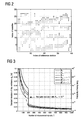
Figure 3 : Accuracy of receiver and satellite bias estimation for Kr=10∀r and R=20: The bias estimation is performed in two steps: A least-squares estimation from two epochs and a Kalman filter to improve the accuracy efficiently. After 200 epochs, the ambiguities can be fixed sequentially with an error rate of less than 10-9 after integer decorrelation. The fixing results in an immediate improvement of the bias estimates. The process noise is characterized by and σ1=1cm, i.e. there is no process noise for biases. -
Figure 4 : Benefit of large network for bias estimation: The fixing of ambiguities (K=10) improves the satellite bias accuracy by afactor 4 for R=20. The bias estimation is performed in two steps: A least-squares estimation from two epochs and a Kalman filter to improve the accuracy efficiently. The float ambiguity estimates are fixed sequentially after integer decorrelation. The process noise is characterized by Sp=1m and σI=1cm. -
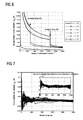
Figure 5 : Benefit of multiple frequencies for bias estimation: A Kalman filter is used to estimate the ranges, range rates, ionospheric delays, receiver and satellites biases for a network of R=20 and K=10. The dual frequency case refers to E1-E5a measurements and the triple frequency case additionally includes E5b measurements. The larger number of frequencies enables an earlier ambiguity fixing with P w=10-9 and, thus, more accurate receiver bias estimates. -
Figure 6 : Benefit of multiple frequencies for bias estimation: A Kalman filter is used to estimate the ranges, range rates, ionospheric delays, receiver and satellites biases for a network of R=20 and K=10. The dual frequency case refers to E1-E5a measurements and the triple frequency case additionally includes E5b measurements. The larger number of frequencies enables an earlier ambiguity fixing with P w=10-9 and, thus, more accurate satellite bias estimates. -
Figure 7 : Impact of imperfect H n (2) estimation on the accuracy of satellite bias estimation: The Newton method is integrated into the second Kalman filter which estimates the satellite positions and velocities, tropospheric zenith delays, receiver and satellite biases. The error in the satellite bias estimation due to an imperfect Ĥ n (2) remains negligible. -
Figure 8 : Standard deviations of bias estimates: The speed of convergence of the posteriori standard deviations
- Ambiguity resolution for precise point positioning requires the estimation of phase and code biases by a network of reference stations. The following model is used for dual frequency undifferenced phase and code measurements of satellite k, receiver r and epoch tn:

where g r denotes the range including the clock offset and tropospheric delay,


- A least-squares estimation of


- First, the code biases of the first and second frequency are mapped to the ranges/ clock offsets and ionospheric delays, i.e.

with
which is obtained by solving the following system of equations for


- The phase biases of the receiver and satellite have to be corrected for the absorbed code biases, i.e.

- A second transformation eliminates the satellite
phase biases 


- Thus, the phase and code measurements of Equation (1) can be rewritten as

- The system of Equations (7) is still rank deficient as biases and ambiguities can not be completely separated. There exist three approaches to overcome the remaining rank deficiency of degree 2R+2(K-1) (with K=27 being the number of satellites): The first one is to map all biases to ambiguities which results in a poor performance as the integer property of the ambiguities is lost. The second approach is an inverse mapping, i.e. 2R+2(K-1) ambiguities are mapped to biases and the remaining ambiguities are kept. The third approach uses a search to separate the ambiguities from the biases. In this work, the second approach is analyzed.
- Clearly, the number of visible satellites and, thus, the number of unknown integer ambiguities depends on the location of the reference station and the measurement epoch.
Fig. 1 shows a map of the global network of 37 Galileo Sensor Stations with the two control centers at Oberpfaffenhofen and Fucino. The positions of the 27 Galileo satellites are projected to the earth and indicated as blue stars. -
Fig. 2 shows the set of l=
- The proposed bias estimation consists of four steps: First, a least-squares estimation of the transformed ranges


- In the second step, a Kalman filter is used to efficiently improve the accuracy of the bias estimates. The phase and code measurements are combined in a vector zn, i.e.

where

with
and the vector N of 2l-2R-2(K-1) integer ambiguities. In this work, the code noise vn ∼ N(0,Σv) is assumed to be uncorrelated between satellites. The standard deviations have been set to the Cramer Rao bounds that are shown in Table 1 for the wideband Galileo signals at a carrier to noise power ratio of 45dBHz. The phase noise standard deviations have been assumed to be 1 mm. - The state space model for x n is given by

with the state transition matrix
where δt represents the interval between two measurements. The process noise wn ∼ N(0,Σw) is assumed to follow a Gaussian distribution with a standard deviation of 1 m for acceleration noise and 1 cm for the ionospheric delay. - The a posteriori state


with the Kalman gain


- The third step fixes a subset of ambiguities: The integer decorrelation transformation Z of Teunissen [5] is applied to the float ambiguity estimates, i.e.

which improves the reliability of sequential ambiguity resolution ('bootstrapping'). As there exist 364 ambiguities inFig. 2 , the computation of Z ∈includes a large computational burden. A partial integer decorrelation as introduced in [4] enables a substantial reduction in the computational effort at the price of a slight degradation in the bias accuracy. It consists of L decorrelation steps, i.e.

where each Z(n) includes an integer decorrelation and a permutation

- The partial integer decorrelation is used here to reduce the computational burden while it was originally developed in [4] to find the optimal trade-off between variance reduction and bias amplification.
- The k -th conditional ambiguity estimate is given by

where

- In the fourth step, the estimated


with the unit vector


- The range corrections from the first Kalman filter can be applied also to the remaining phase and code measurements of both frequencies, i.e.

- The system of transformed measurements in Equations (19) and (21) is solved by a second Kalman filter with the state vector

where ṙk denotes the velocity of the k -th satellite and Tz,r is the tropospheric zenith delay. The positions r r of the 37 Galileo Sensor Stations and the two control centers can be assumed to be known. As the


with the Kalman gain


where the first term represents the impact of the state initialization and the second term describes the impact of the measurements on
- The obtained bias estimates from both Kalman filters could be transmitted by an augmentation system (e.g. Ground or Satellite Based Augmentation System) to enable integer ambiguity resolution for precise point positioning and to improve the positioning accuracy. Moreover, the obtained satellite position estimates could be compared to the ones from the navigation message to detect and exclude erroneous satellites.
-
Fig. 3 shows the temporal evolution of the probability of wrong fixing and the standard deviations of the receiver and satellite bias estimates for Kr=10,r∈{1,...,20}. A 5 mm standard deviation is achieved after 1000 epochs, i.e. less than 2 minutes for a 10 Hz receiver. - The initial state vector is determined by a least-squares estimation from two epochs. The float ambiguity estimates of the Kalman filter converge within 200 epochs sufficiently to enable a probability of wrong fixing of 10-9. The fixing is performed sequentially with integer decorrelation and reduces the bias uncertainty by a factor between 2 and 4 depending on the satellite, receiver and frequency. Dual frequency code and phase measurements on E1 and E5 have been assumed.
-
Fig. 4 shows the impact of the network size R on the achievable bias accuracies. As long as no ambiguities are fixed, the bias estimation does not benefit from a large R as the number of ambiguities plus biases increases with KR. However, the gain in the bias estimation due to fixing depends on R and increases for larger networks due to the additional redundancy. The estimation of E5 satellite biases with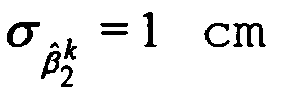
- The accuracy of bias estimation can be further improved by using measurements on a third frequency. However, there is one major difference in the bias transformations that also affects the first Kalman filter: The code biases of the third and further frequencies have to be estimated as the range and ionospheric delay have already absorbed the code biases of the first two frequencies. The extended system of equations is given by


where





- For M frequencies, there exist MR receiver phase biases, (M-2)R receiver code biases, M(K-1) satellite phase biases, (M-2)(K-1) satellite code biases and Ml-MR-M(K-1) integer ambiguities that are linear independent.
-
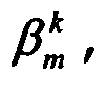
Fig. 5 and6 show the benefit of three (E1, E5a, E5b) frequencies for the first step of bias estimation. The additional use of E5b measurements enables a three times earlier ambiguity fixing with a probability of wrong fixing of P w=10-9. This earlier fixing also reduces the uncertainty of dual frequency bias estimation by a factor of 1.7 for the receiver biases and by a factor of 2.8 for the satellite biases. - Before fixing, the receiver phase biases can be estimated with a higher accuracy than the satellite phase biases as the MR phase measurements of the first satellite are only affected by biases of type βm,r . Both the satellite phase biases and the integer ambiguities have been absorbed by βm,r . On the contrary, the phase measurements of the first receiver are affected by both β m,1 and


- The second Kalman filter depends on


Fig. 7 shows that this contribution remains one to two orders of magnitude below the combined initialization and measurement errors, and, thus, has only a negligible impact on the convergence behaviour of satellite bias estimation. Therefore, the statistical property of
-
Fig. 8 shows the achievable standard deviations of the a posteriori bias estimates as a function of time for all satellites and ground stations. - The combined ionospheric delays and biases can be used to compute a grid of vertical ionospheric delays. The slant ionospheric delay of Equation (2) is modeled as

where m 1 denotes the mapping of the vertical ionospheric delay into the slant delay,


where


- The grid vertical ionospheric delays i l , the combined receiver biases bI,r and the combined satellite biases

- In this paper, a method for bias estimation on multiple frequencies has been proposed. It is based on a Kalman filter as the large number of unknown parameters prevents a least-squares estimation. Linear dependencies between the ranges, ionospheric delays, receiver code biases, receiver phase biases, satellite code biases, satellite phase biases and integer ambiguities have been removed by a set of transformations.
- The simulation results show that the receiver and satellite phase biases can be estimated with an accuracy of 5 mm within a few minutes. The integer ambiguity fixing reduces the uncertainty immediately by a factor of 4 for 20 reference stations. The use of measurements on a third frequency results in a three times earlier ambiguity fixing and, thus, a substantial improvement in the bias estimation. The global network of 37 Galileo Sensor Stations and two control centers has been considered.
Table 1 : Cramer Rao Bounds for C/N 0=45dBHz Signal BW [MHz] Γ [cm] E1 MBOC 20 11.14 E5 Alt-BOC(15,10 ) 51 1.95 E5a BPSK(10) 20 7.83 E5b BPSK(10) 20 7.83 -
- [1] M. Ge, G. Gendt, M. Rothacher, C. Shi and J. Liu, Resolution of GPS carrier-phase ambiguities in Precise Point Positioning (PPP) with daily observations, Journal of Geodesy, Springer, Oct. 2007.
- [2] M. Gabor and S. Nerem, Satellite-satellite single difference phase calibration as applied to ambiguity resolution, Navigation Journal of the Institute of Navigation, vol. 49, no. 4, pp. 223 - 242, 2002.
- [3] D. Laurichesse and F. Mercier, Integer ambiguity resolution on undifferenced GPS phase measurements and its application to PPP, Proc. of ION-GNSS, Forth Worth, USA, Sep. 2007.
- [4] P. Henkel, V. Gomez and C. Günther, Modified LAMBDA for absolute carrier phase positioning in the presence of biases, Proc. of Intern. Technical Meeting (ITM), Anaheim, USA, Jan. 2009.
- [5] P. Teunissen, Success Probability of Integer GPS Ambiguity Rounding and Bootstrapping, Journal of Geodesy, Vol. 72, pp. 606-612, Springer, 1998.
Claims (19)
- A method for determining biases of satellite signals emitted by satellites of a satellite navigation system and received by reference stations comprising:- the satellite signals of the satellites are received by a plurality of reference stations,- the biases of the satellite signals are determined by using the satellite signals received from the satellitescharacterized in that code biases and phase biases of the satellites and reference stations are determined by using a recursive state estimator, which determines besides the biases and the positions of the satellites.
- The method according to Claim 1,
wherein the code biases and phase biases of the satellites and reference stations are determined on at least two frequencies. - The method according to Claim 1 or 2,
wherein a multi-stage recursive state estimator is used, the first stage recursive state estimator estimating ranges, range rates, ionospheric delays, a number of the biases of the reference stations and satellites, as well as ambiguities, the last stage estimating the positions of the satellites, satellite velocities, tropospheric zenith delays, as well as a number of the biases of the reference stations and satellites, and a number of ambiguitues being fixed before the last stage recursive state estimator. - The method according to Claim 3,
wherein the recursive state estimator is a dual-stage recursive state estimator. - The method according to any one of Claims 1 to 4,
wherein in the first stage recursive state estimator, on two frequencies, the code biases are mapped into the ranges and into the ionospheric delays, the phase biases of one satellite are mapped to the phase biases of the reference stations and a subset of integer ambiguities are mapped to the phase biases. - The method according to Claim 5,
wherein, on any further frequency, the code biases are not mappable and are estimated together with the phase biases on all frequencies, on which the recursive state estimator is applied. - The method according to Claim 5 or 6,
wherein in the last stage recursive state estimator a combination of code biases, that have been absorbed in the ranges, are estimated. - The method according to any one of Claims 1 to 4,
wherein in the first stage recursive state estimator, on two frequencies, the phase biases are mapped into the ranges and into the ionospheric delays, the code biases of one satellite are mapped to code biases of the reference stations and a subset of integer ambiguities are mapped to the code biases. - The method according to Claim 8,
wherein, on any further frequency, the phase biases are not mappable and are estimated together with the code biases on all frequencies, on which the recursive state estimator is applied. - The method according to Claim 8 or 9,
wherein in the last stage recursive state estimator a combination of phase biases, that have been absorbed in the ranges, are estimated. - The method according to any one of Claims 5 to 10, wherein for each reference station one integer ambiguity, and
additionally for each satellite one integer ambiguity is combined with phase biases of the reference stations or satellites, wherein the combination is performed for the frequencies, on which the recursive state estimator is applied. - The method according to any one of Claims 3 to 11, wherein the integer ambiguities are sequentially fixed by a partial integer decorrelation, wherein the degree of decorrelation is adapted to the number of ambiguities.
- The method according to any one of Claims 3 to 12, wherein the last stage recursive state estimator includes an iterative approximation of the direction vectors from the satellites to the reference stations and a joint iterative approximation of the mapping functions of the troposheric zenith delays at the location of the reference stations.
- The method according to any one of Claims 1 to 13, wherein a grid of ionospheric vertical delays and a combination of code biases, that have been absorbed in the ionospheric delay, are estimated by the recursive state estimator.
- The method according to any one of Claims 1 to 14, wherein the recursive state estimator is a least-square recursive state estimator.
- The method according to any one of Claims 1 to 15, wherein the recursive state estimator is a Kalman filter.
- The method according to any one of Claims 1 to 16, wherein the positions of the satellites transmitted by the satellites are compared with the positions determined by the recursive state estimator.
- A software product,
wherein the software product contains program code for implementing any one of the methods according to Claim 1 to 17. - A network of reference stations,
wherein the reference station are arranged for performing the method according to Claim 1 to 17.
Priority Applications (3)
| Application Number | Priority Date | Filing Date | Title |
|---|---|---|---|
| EP09178573A EP2333581A1 (en) | 2009-12-09 | 2009-12-09 | Estimation of phase and code biases on multiple frequencies with a Kalman filter |
| US12/964,559 US8451168B2 (en) | 2009-12-09 | 2010-12-09 | Method for determining biases of satellite signals |
| EP10194428.8A EP2336807B1 (en) | 2009-12-09 | 2010-12-09 | Method and software product for determining code and phase biases of satellite signals |
Applications Claiming Priority (1)
| Application Number | Priority Date | Filing Date | Title |
|---|---|---|---|
| EP09178573A EP2333581A1 (en) | 2009-12-09 | 2009-12-09 | Estimation of phase and code biases on multiple frequencies with a Kalman filter |
Publications (1)
| Publication Number | Publication Date |
|---|---|
| EP2333581A1 true EP2333581A1 (en) | 2011-06-15 |
Family
ID=42236488
Family Applications (2)
| Application Number | Title | Priority Date | Filing Date |
|---|---|---|---|
| EP09178573A Withdrawn EP2333581A1 (en) | 2009-12-09 | 2009-12-09 | Estimation of phase and code biases on multiple frequencies with a Kalman filter |
| EP10194428.8A Active EP2336807B1 (en) | 2009-12-09 | 2010-12-09 | Method and software product for determining code and phase biases of satellite signals |
Family Applications After (1)
| Application Number | Title | Priority Date | Filing Date |
|---|---|---|---|
| EP10194428.8A Active EP2336807B1 (en) | 2009-12-09 | 2010-12-09 | Method and software product for determining code and phase biases of satellite signals |
Country Status (2)
| Country | Link |
|---|---|
| US (1) | US8451168B2 (en) |
| EP (2) | EP2333581A1 (en) |
Cited By (8)
| Publication number | Priority date | Publication date | Assignee | Title |
|---|---|---|---|---|
| US20120286991A1 (en) * | 2010-02-14 | 2012-11-15 | Trimble Navigation Limited | GNSS Signal Processing with Regional Augmentation Positioning |
| CN103558613A (en) * | 2013-11-15 | 2014-02-05 | 福建纳威导航科技有限责任公司 | Real-time precise point positioning method without need of precise clock correction |
| ES2444513R1 (en) * | 2012-05-09 | 2014-05-14 | Universidad Complutense De Madrid | PROCEDURE TO ESTIMATE THE POSITION OF A RECEIVER THROUGH GNSS SATELLITES. |
| CN103852799A (en) * | 2014-02-25 | 2014-06-11 | 中国人民解放军92859部队 | Shipborne gravity measurement method based on PPP technology |
| CN108490459A (en) * | 2018-02-12 | 2018-09-04 | 千寻位置网络有限公司 | Precision is applied to the method and system of GNSS location service with risk balance |
| CN109477900A (en) * | 2016-03-18 | 2019-03-15 | 迪尔公司 | Estimation of Inter-Frequency Bias for Ambiguity Resolution in GNSS Receivers |
| CN111190194A (en) * | 2018-11-14 | 2020-05-22 | 千寻位置网络有限公司 | PPP-AR-based SSR post-broadcast integrity monitoring method and device |
| CN111239787A (en) * | 2020-02-28 | 2020-06-05 | 同济大学 | GNSS dynamic Kalman filtering method in cluster autonomous coordination |
Families Citing this family (25)
| Publication number | Priority date | Publication date | Assignee | Title |
|---|---|---|---|---|
| US9651667B2 (en) * | 2007-06-22 | 2017-05-16 | Trimble Inc. | Combined cycle slip indicators for regionally augmented GNSS |
| DE102012202095A1 (en) * | 2011-02-14 | 2012-08-16 | Trimble Navigation Ltd. | Method for processing set of global navigation satellite system signal data for e.g. global positioning system, involves using network ambiguities and ionospheric delays to estimate ionospheric phase bias per satellite |
| US9255993B2 (en) | 2012-02-08 | 2016-02-09 | California Institute Of Technology | Processing satellite data for slant total electron content measurements |
| US9576082B2 (en) | 2012-02-08 | 2017-02-21 | California Institute Of Technology | Ionospheric slant total electron content analysis using global positioning system based estimation |
| DE102012005549B4 (en) * | 2012-03-21 | 2014-04-30 | Astrium Gmbh | DETERMINATION OF GRID IONOSPHERIC VERTICAL DELAY PARAMETERS FOR A SATELLITE-BASED EXPANSION SYSTEM |
| US9213770B1 (en) * | 2012-08-14 | 2015-12-15 | Amazon Technologies, Inc. | De-biased estimated duplication rate |
| US9581698B2 (en) | 2014-02-03 | 2017-02-28 | Honeywell International Inc. | Systems and methods to monitor for false alarms from ionosphere gradient monitors |
| US9678212B2 (en) * | 2014-02-28 | 2017-06-13 | Honeywell International Inc. | Satellite measurement screening to protect the integrity of existing monitors in the presence of amplitude scintillation |
| NL2013472B1 (en) * | 2014-09-15 | 2016-09-28 | Fugro N V | Integer Ambiguity-Fixed Precise Point Positioning method and system. |
| US9817129B2 (en) * | 2014-10-06 | 2017-11-14 | Sierra Nevada Corporation | Monitor based ambiguity verification for enhanced guidance quality |
| US10222483B2 (en) * | 2016-03-18 | 2019-03-05 | Deere & Company | Satellite navigation receiver with improved ambiguity resolution |
| CN106646557B (en) * | 2016-12-26 | 2019-10-18 | 北京国交信通科技发展有限公司 | A marine monitoring buoy based on Beidou satellite-based augmentation system and short message function |
| US12099125B2 (en) | 2018-06-25 | 2024-09-24 | Deere & Company | Adaptive estimation of GNSS satellite biases |
| EP3633409A1 (en) | 2018-10-05 | 2020-04-08 | Spaceopal GmbH | Method for providing a correction information, plurality of reference stations and a central computation unit, gns system and software product and/or network for providing a correction information in a gns system |
| KR102677918B1 (en) * | 2019-06-06 | 2024-06-25 | 스타 알리 인터내셔널 리미티드 | Single-epoch pseudo-range localization under variable ionospheric delay. |
| CN110865401A (en) * | 2019-10-25 | 2020-03-06 | 上海市计量测试技术研究院 | Method for evaluating influence of pseudo-range measurement deviation on satellite TGD parameter resolving precision |
| CN110927757B (en) * | 2019-12-26 | 2022-03-04 | 广东星舆科技有限公司 | Quality control method and device for satellite observation data and positioning device |
| US11578979B2 (en) * | 2020-06-22 | 2023-02-14 | Raytheon Company | Fully automatic survey technology (FAST) |
| EP3933444A1 (en) | 2020-06-30 | 2022-01-05 | Spaceopal GmbH | Method for determining a state parameter of a receiver and an apparatus for performing such a method |
| US11808861B2 (en) * | 2021-01-31 | 2023-11-07 | Deere & Company | Adaptive estimation of GNSS satellite biases |
| CN113219500B (en) * | 2021-03-31 | 2022-04-08 | 成都飞机工业(集团)有限责任公司 | Satellite signal forwarding system used in semi-closed environment |
| CN113514856B (en) * | 2021-04-12 | 2024-01-09 | 国网上海市电力公司 | Cycle slip detection method, device, electronic equipment and readable storage medium |
| CN114002724B (en) * | 2021-12-30 | 2022-03-11 | 自然资源部第三大地测量队 | Control point online real-time rapid analysis method and device based on CORS network |
| CN115664909B (en) * | 2022-11-14 | 2023-04-07 | 南京控维通信科技有限公司 | Phase estimation method suitable for satellite demodulator |
| CN115632701B (en) * | 2022-12-21 | 2023-04-18 | 中南大学 | A low-orbit satellite network data scheduling method, system, device and storage medium |
Citations (2)
| Publication number | Priority date | Publication date | Assignee | Title |
|---|---|---|---|---|
| FR2914430A1 (en) * | 2007-03-29 | 2008-10-03 | Cnes Epic | PROCESS FOR PROCESSING RADIONAVIGATION SIGNALS. |
| US20090184869A1 (en) * | 2008-01-09 | 2009-07-23 | Trimble Navigation Limited, A Corporation Of California | Processing Multi-GNSS data from mixed-type receivers |
Family Cites Families (2)
| Publication number | Priority date | Publication date | Assignee | Title |
|---|---|---|---|---|
| US8018377B2 (en) * | 2009-01-23 | 2011-09-13 | Her Majesty The Queen In Right Of Canada As Represented By The Minister Of Natural Resources | Decoupled clock model with ambiguity datum fixing |
| ES2426865T3 (en) * | 2009-10-08 | 2013-10-25 | Deutsches Zentrum für Luft- und Raumfahrt e.V. | Partial ambiguity resolution for the estimation of multifrequency ionospheric delay |
-
2009
- 2009-12-09 EP EP09178573A patent/EP2333581A1/en not_active Withdrawn
-
2010
- 2010-12-09 US US12/964,559 patent/US8451168B2/en active Active
- 2010-12-09 EP EP10194428.8A patent/EP2336807B1/en active Active
Patent Citations (2)
| Publication number | Priority date | Publication date | Assignee | Title |
|---|---|---|---|---|
| FR2914430A1 (en) * | 2007-03-29 | 2008-10-03 | Cnes Epic | PROCESS FOR PROCESSING RADIONAVIGATION SIGNALS. |
| US20090184869A1 (en) * | 2008-01-09 | 2009-07-23 | Trimble Navigation Limited, A Corporation Of California | Processing Multi-GNSS data from mixed-type receivers |
Non-Patent Citations (8)
Cited By (14)
| Publication number | Priority date | Publication date | Assignee | Title |
|---|---|---|---|---|
| US9201147B2 (en) * | 2008-01-14 | 2015-12-01 | Trimble Navigation Limited | GNSS signal processing with regional augmentation network |
| US20120293367A1 (en) * | 2008-01-14 | 2012-11-22 | Trimble Navigation Limited | GNSS Signal Processing with Regional Augmentation Network |
| US9733359B2 (en) | 2008-01-14 | 2017-08-15 | Trimble Inc. | GNSS signal processing with regional augmentation message |
| US10408941B2 (en) | 2010-02-14 | 2019-09-10 | Trimble Inc. | GNSS regional correction data decoding |
| US20120286991A1 (en) * | 2010-02-14 | 2012-11-15 | Trimble Navigation Limited | GNSS Signal Processing with Regional Augmentation Positioning |
| US9164174B2 (en) * | 2010-02-14 | 2015-10-20 | Trimble Navigation Limited | GNSS signal processing with regional augmentation positioning |
| ES2444513R1 (en) * | 2012-05-09 | 2014-05-14 | Universidad Complutense De Madrid | PROCEDURE TO ESTIMATE THE POSITION OF A RECEIVER THROUGH GNSS SATELLITES. |
| CN103558613A (en) * | 2013-11-15 | 2014-02-05 | 福建纳威导航科技有限责任公司 | Real-time precise point positioning method without need of precise clock correction |
| CN103852799A (en) * | 2014-02-25 | 2014-06-11 | 中国人民解放军92859部队 | Shipborne gravity measurement method based on PPP technology |
| CN109477900A (en) * | 2016-03-18 | 2019-03-15 | 迪尔公司 | Estimation of Inter-Frequency Bias for Ambiguity Resolution in GNSS Receivers |
| CN109477900B (en) * | 2016-03-18 | 2023-07-25 | 迪尔公司 | Estimation of inter-frequency bias for ambiguity resolution in a global navigation satellite system receiver |
| CN108490459A (en) * | 2018-02-12 | 2018-09-04 | 千寻位置网络有限公司 | Precision is applied to the method and system of GNSS location service with risk balance |
| CN111190194A (en) * | 2018-11-14 | 2020-05-22 | 千寻位置网络有限公司 | PPP-AR-based SSR post-broadcast integrity monitoring method and device |
| CN111239787A (en) * | 2020-02-28 | 2020-06-05 | 同济大学 | GNSS dynamic Kalman filtering method in cluster autonomous coordination |
Also Published As
| Publication number | Publication date |
|---|---|
| EP2336807A2 (en) | 2011-06-22 |
| US20110140958A1 (en) | 2011-06-16 |
| US8451168B2 (en) | 2013-05-28 |
| EP2336807B1 (en) | 2019-07-17 |
| EP2336807A3 (en) | 2013-05-22 |
Similar Documents
| Publication | Publication Date | Title |
|---|---|---|
| EP2336807B1 (en) | Method and software product for determining code and phase biases of satellite signals | |
| US11422271B2 (en) | Protection level generation methods and systems for applications using navigation satellite system (NSS) observations | |
| US8094065B2 (en) | Method for processing a set of signals of a global navigation satellite system with at least three carriers | |
| EP1704421B1 (en) | A method for combined use of a local rtk system and a regional, wide-area, or global carrier-phase positioning system | |
| US11681050B2 (en) | System and method for validating GNSS ambiguities | |
| EP2380036B1 (en) | Navigation receiver and method for combined use of a standard rtk system and a global carrier-phase differential positioning system | |
| EP3805803B1 (en) | Positioning method and device | |
| US10082578B2 (en) | PPP-RTK method and system for GNSS signal based position determination | |
| EP2995975B1 (en) | Precise gnss positioning system with improved ambiguity estimation | |
| EP2488827B1 (en) | System and method for compensating for faulty measurements | |
| CN104865587B (en) | Quick locating method based on GEO constellation coarse location for Beidou receiver | |
| EP2320246B1 (en) | Partial ambiguity fixing for multi-frequency ionospheric delay estimation | |
| US12535776B2 (en) | Long-baseline real-time time transfer method based on undifferenced and uncombined PPP-RTK | |
| JP2007510158A (en) | Ambiguity estimation of GNSS signal for three or more carriers | |
| Collins et al. | External ionospheric constraints for improved PPP-AR initialisation and a generalised local augmentation concept | |
| US20110181462A1 (en) | System and Method for Positioning with GNSS Using Multiple Integer Candidates | |
| US20230126547A1 (en) | Machine learning in gnss receivers for improved velocity outputs | |
| Liu et al. | Generating GPS decoupled clock products for precise point positioning with ambiguity resolution | |
| CN120334974A (en) | Single base station PPP-RTK positioning method and equipment | |
| Vollath et al. | Network RTK–concept and performance | |
| CN120334960B (en) | Method for accelerating GNSS real-time satellite clock error estimation convergence | |
| Shu et al. | Performance improvement of real-time PPP ambiguity resolution using a regional integer clock | |
| Bellés et al. | Robust PPP-AR Using M-Estimators for Multi-Fault Scenarios | |
| Wu | On-the-fly GPS ambiguity resolution with inertial aiding | |
| CN120315003B (en) | A PPP-RTK ionospheric slant delay fusion optimization method and device |
Legal Events
| Date | Code | Title | Description |
|---|---|---|---|
| PUAI | Public reference made under article 153(3) epc to a published international application that has entered the european phase |
Free format text: ORIGINAL CODE: 0009012 |
|
| AK | Designated contracting states |
Kind code of ref document: A1 Designated state(s): AT BE BG CH CY CZ DE DK EE ES FI FR GB GR HR HU IE IS IT LI LT LU LV MC MK MT NL NO PL PT RO SE SI SK SM TR |
|
| AX | Request for extension of the european patent |
Extension state: AL BA RS |
|
| STAA | Information on the status of an ep patent application or granted ep patent |
Free format text: STATUS: THE APPLICATION IS DEEMED TO BE WITHDRAWN |
|
| 18D | Application deemed to be withdrawn |
Effective date: 20111216 |