EP2333027A1 - Viscoelastic fluids containing hydroxyethyl cellulose - Google Patents
Viscoelastic fluids containing hydroxyethyl cellulose Download PDFInfo
- Publication number
- EP2333027A1 EP2333027A1 EP10194318A EP10194318A EP2333027A1 EP 2333027 A1 EP2333027 A1 EP 2333027A1 EP 10194318 A EP10194318 A EP 10194318A EP 10194318 A EP10194318 A EP 10194318A EP 2333027 A1 EP2333027 A1 EP 2333027A1
- Authority
- EP
- European Patent Office
- Prior art keywords
- fluid
- solution
- surfactant
- anionic surfactant
- cationic surfactant
- Prior art date
- Legal status (The legal status is an assumption and is not a legal conclusion. Google has not performed a legal analysis and makes no representation as to the accuracy of the status listed.)
- Withdrawn
Links
- 239000012530 fluid Substances 0.000 title claims abstract description 94
- 239000004354 Hydroxyethyl cellulose Substances 0.000 title claims abstract description 26
- 229920000663 Hydroxyethyl cellulose Polymers 0.000 title claims abstract description 26
- 235000019447 hydroxyethyl cellulose Nutrition 0.000 title claims abstract description 26
- 239000003945 anionic surfactant Substances 0.000 claims abstract description 27
- 239000003093 cationic surfactant Substances 0.000 claims abstract description 27
- IJGRMHOSHXDMSA-UHFFFAOYSA-N Atomic nitrogen Chemical compound N#N IJGRMHOSHXDMSA-UHFFFAOYSA-N 0.000 claims abstract description 22
- 230000015572 biosynthetic process Effects 0.000 claims abstract description 18
- 239000007788 liquid Substances 0.000 claims abstract description 16
- 229910052757 nitrogen Inorganic materials 0.000 claims abstract description 14
- 230000002708 enhancing effect Effects 0.000 claims abstract 3
- 239000007789 gas Substances 0.000 claims description 14
- XLYOFNOQVPJJNP-UHFFFAOYSA-N water Substances O XLYOFNOQVPJJNP-UHFFFAOYSA-N 0.000 claims description 12
- 239000004094 surface-active agent Substances 0.000 claims description 10
- 239000003245 coal Substances 0.000 claims description 9
- 229930195733 hydrocarbon Natural products 0.000 claims description 8
- 150000002430 hydrocarbons Chemical group 0.000 claims description 8
- VNWKTOKETHGBQD-UHFFFAOYSA-N methane Chemical compound C VNWKTOKETHGBQD-UHFFFAOYSA-N 0.000 claims description 8
- 238000011068 loading method Methods 0.000 claims description 7
- 239000004215 Carbon black (E152) Substances 0.000 claims description 5
- 239000004088 foaming agent Substances 0.000 claims description 5
- VYPSYNLAJGMNEJ-UHFFFAOYSA-N Silicium dioxide Chemical compound O=[Si]=O VYPSYNLAJGMNEJ-UHFFFAOYSA-N 0.000 claims description 4
- 229940048842 sodium xylenesulfonate Drugs 0.000 claims description 4
- QUCDWLYKDRVKMI-UHFFFAOYSA-M sodium;3,4-dimethylbenzenesulfonate Chemical group [Na+].CC1=CC=C(S([O-])(=O)=O)C=C1C QUCDWLYKDRVKMI-UHFFFAOYSA-M 0.000 claims description 4
- 238000005086 pumping Methods 0.000 claims description 3
- 235000019738 Limestone Nutrition 0.000 claims description 2
- 239000010459 dolomite Substances 0.000 claims description 2
- 229910000514 dolomite Inorganic materials 0.000 claims description 2
- 239000006028 limestone Substances 0.000 claims description 2
- 238000000034 method Methods 0.000 claims 4
- VEXZGXHMUGYJMC-UHFFFAOYSA-M Chloride anion Chemical compound [Cl-] VEXZGXHMUGYJMC-UHFFFAOYSA-M 0.000 claims 1
- QJGQUHMNIGDVPM-UHFFFAOYSA-N nitrogen group Chemical group [N] QJGQUHMNIGDVPM-UHFFFAOYSA-N 0.000 claims 1
- -1 shale Substances 0.000 claims 1
- CURLTUGMZLYLDI-UHFFFAOYSA-N Carbon dioxide Chemical compound O=C=O CURLTUGMZLYLDI-UHFFFAOYSA-N 0.000 abstract description 19
- 229910002092 carbon dioxide Inorganic materials 0.000 abstract description 16
- 239000001569 carbon dioxide Substances 0.000 abstract description 16
- 239000000839 emulsion Substances 0.000 abstract description 4
- 239000000243 solution Substances 0.000 description 16
- 238000005755 formation reaction Methods 0.000 description 10
- 229920000642 polymer Polymers 0.000 description 8
- 239000006260 foam Substances 0.000 description 6
- 239000003921 oil Substances 0.000 description 6
- 239000011236 particulate material Substances 0.000 description 6
- NLXLAEXVIDQMFP-UHFFFAOYSA-N Ammonia chloride Chemical class [NH4+].[Cl-] NLXLAEXVIDQMFP-UHFFFAOYSA-N 0.000 description 5
- 125000000217 alkyl group Chemical group 0.000 description 5
- 239000000499 gel Substances 0.000 description 5
- 230000035699 permeability Effects 0.000 description 5
- WCUXLLCKKVVCTQ-UHFFFAOYSA-M Potassium chloride Chemical compound [Cl-].[K+] WCUXLLCKKVVCTQ-UHFFFAOYSA-M 0.000 description 4
- 239000000463 material Substances 0.000 description 4
- 244000303965 Cyamopsis psoralioides Species 0.000 description 3
- 244000166071 Shorea robusta Species 0.000 description 3
- 235000015076 Shorea robusta Nutrition 0.000 description 3
- 240000008042 Zea mays Species 0.000 description 3
- 235000002017 Zea mays subsp mays Nutrition 0.000 description 3
- 125000002091 cationic group Chemical group 0.000 description 3
- 238000005187 foaming Methods 0.000 description 3
- 240000007049 Juglans regia Species 0.000 description 2
- 235000009496 Juglans regia Nutrition 0.000 description 2
- 235000005824 Zea mays ssp. parviglumis Nutrition 0.000 description 2
- 125000000129 anionic group Chemical group 0.000 description 2
- 239000004927 clay Substances 0.000 description 2
- 235000005822 corn Nutrition 0.000 description 2
- 235000013399 edible fruits Nutrition 0.000 description 2
- 238000010438 heat treatment Methods 0.000 description 2
- 238000005259 measurement Methods 0.000 description 2
- 235000014571 nuts Nutrition 0.000 description 2
- 239000001103 potassium chloride Substances 0.000 description 2
- 235000011164 potassium chloride Nutrition 0.000 description 2
- 239000004576 sand Substances 0.000 description 2
- 239000003381 stabilizer Substances 0.000 description 2
- 235000020234 walnut Nutrition 0.000 description 2
- 239000003180 well treatment fluid Substances 0.000 description 2
- 239000001763 2-hydroxyethyl(trimethyl)azanium Substances 0.000 description 1
- 244000144725 Amygdalus communis Species 0.000 description 1
- 235000011437 Amygdalus communis Nutrition 0.000 description 1
- 244000144730 Amygdalus persica Species 0.000 description 1
- 244000205479 Bertholletia excelsa Species 0.000 description 1
- 235000012284 Bertholletia excelsa Nutrition 0.000 description 1
- 241000167854 Bourreria succulenta Species 0.000 description 1
- 241000723418 Carya Species 0.000 description 1
- 244000068645 Carya illinoensis Species 0.000 description 1
- 235000009025 Carya illinoensis Nutrition 0.000 description 1
- 235000019743 Choline chloride Nutrition 0.000 description 1
- 244000060011 Cocos nucifera Species 0.000 description 1
- 235000013162 Cocos nucifera Nutrition 0.000 description 1
- 241000196324 Embryophyta Species 0.000 description 1
- 240000007817 Olea europaea Species 0.000 description 1
- 241000219000 Populus Species 0.000 description 1
- 244000018633 Prunus armeniaca Species 0.000 description 1
- 235000009827 Prunus armeniaca Nutrition 0.000 description 1
- 235000006040 Prunus persica var persica Nutrition 0.000 description 1
- 241000219492 Quercus Species 0.000 description 1
- 244000186561 Swietenia macrophylla Species 0.000 description 1
- 235000016383 Zea mays subsp huehuetenangensis Nutrition 0.000 description 1
- 239000000654 additive Substances 0.000 description 1
- 230000002411 adverse Effects 0.000 description 1
- 235000020224 almond Nutrition 0.000 description 1
- 235000019270 ammonium chloride Nutrition 0.000 description 1
- 239000007864 aqueous solution Substances 0.000 description 1
- 229910001570 bauxite Inorganic materials 0.000 description 1
- 239000003139 biocide Substances 0.000 description 1
- 239000000919 ceramic Substances 0.000 description 1
- 235000019693 cherries Nutrition 0.000 description 1
- SGMZJAMFUVOLNK-UHFFFAOYSA-M choline chloride Chemical compound [Cl-].C[N+](C)(C)CCO SGMZJAMFUVOLNK-UHFFFAOYSA-M 0.000 description 1
- 229960003178 choline chloride Drugs 0.000 description 1
- 238000004140 cleaning Methods 0.000 description 1
- 239000011247 coating layer Substances 0.000 description 1
- 230000000052 comparative effect Effects 0.000 description 1
- 230000001419 dependent effect Effects 0.000 description 1
- 230000000694 effects Effects 0.000 description 1
- 230000001804 emulsifying effect Effects 0.000 description 1
- 230000007613 environmental effect Effects 0.000 description 1
- 239000011521 glass Substances 0.000 description 1
- 230000005484 gravity Effects 0.000 description 1
- 238000000227 grinding Methods 0.000 description 1
- 229910017053 inorganic salt Inorganic materials 0.000 description 1
- 239000010410 layer Substances 0.000 description 1
- 235000009973 maize Nutrition 0.000 description 1
- 238000004519 manufacturing process Methods 0.000 description 1
- 238000002156 mixing Methods 0.000 description 1
- 238000012986 modification Methods 0.000 description 1
- 230000004048 modification Effects 0.000 description 1
- JCXJVPUVTGWSNB-UHFFFAOYSA-N nitrogen dioxide Inorganic materials O=[N]=O JCXJVPUVTGWSNB-UHFFFAOYSA-N 0.000 description 1
- 230000000149 penetrating effect Effects 0.000 description 1
- 239000011148 porous material Substances 0.000 description 1
- 239000011347 resin Substances 0.000 description 1
- 229920005989 resin Polymers 0.000 description 1
- 238000000518 rheometry Methods 0.000 description 1
- 238000010008 shearing Methods 0.000 description 1
- 230000000638 stimulation Effects 0.000 description 1
- 239000002023 wood Substances 0.000 description 1
Images

Classifications
-
- C—CHEMISTRY; METALLURGY
- C09—DYES; PAINTS; POLISHES; NATURAL RESINS; ADHESIVES; COMPOSITIONS NOT OTHERWISE PROVIDED FOR; APPLICATIONS OF MATERIALS NOT OTHERWISE PROVIDED FOR
- C09K—MATERIALS FOR MISCELLANEOUS APPLICATIONS, NOT PROVIDED FOR ELSEWHERE
- C09K8/00—Compositions for drilling of boreholes or wells; Compositions for treating boreholes or wells, e.g. for completion or for remedial operations
- C09K8/60—Compositions for stimulating production by acting on the underground formation
- C09K8/602—Compositions for stimulating production by acting on the underground formation containing surfactants
-
- C—CHEMISTRY; METALLURGY
- C09—DYES; PAINTS; POLISHES; NATURAL RESINS; ADHESIVES; COMPOSITIONS NOT OTHERWISE PROVIDED FOR; APPLICATIONS OF MATERIALS NOT OTHERWISE PROVIDED FOR
- C09K—MATERIALS FOR MISCELLANEOUS APPLICATIONS, NOT PROVIDED FOR ELSEWHERE
- C09K8/00—Compositions for drilling of boreholes or wells; Compositions for treating boreholes or wells, e.g. for completion or for remedial operations
- C09K8/60—Compositions for stimulating production by acting on the underground formation
- C09K8/62—Compositions for forming crevices or fractures
- C09K8/66—Compositions based on water or polar solvents
- C09K8/68—Compositions based on water or polar solvents containing organic compounds
-
- C—CHEMISTRY; METALLURGY
- C09—DYES; PAINTS; POLISHES; NATURAL RESINS; ADHESIVES; COMPOSITIONS NOT OTHERWISE PROVIDED FOR; APPLICATIONS OF MATERIALS NOT OTHERWISE PROVIDED FOR
- C09K—MATERIALS FOR MISCELLANEOUS APPLICATIONS, NOT PROVIDED FOR ELSEWHERE
- C09K8/00—Compositions for drilling of boreholes or wells; Compositions for treating boreholes or wells, e.g. for completion or for remedial operations
- C09K8/60—Compositions for stimulating production by acting on the underground formation
- C09K8/62—Compositions for forming crevices or fractures
- C09K8/70—Compositions for forming crevices or fractures characterised by their form or by the form of their components, e.g. foams
- C09K8/703—Foams
-
- C—CHEMISTRY; METALLURGY
- C09—DYES; PAINTS; POLISHES; NATURAL RESINS; ADHESIVES; COMPOSITIONS NOT OTHERWISE PROVIDED FOR; APPLICATIONS OF MATERIALS NOT OTHERWISE PROVIDED FOR
- C09K—MATERIALS FOR MISCELLANEOUS APPLICATIONS, NOT PROVIDED FOR ELSEWHERE
- C09K8/00—Compositions for drilling of boreholes or wells; Compositions for treating boreholes or wells, e.g. for completion or for remedial operations
- C09K8/60—Compositions for stimulating production by acting on the underground formation
- C09K8/84—Compositions based on water or polar solvents
- C09K8/86—Compositions based on water or polar solvents containing organic compounds
- C09K8/88—Compositions based on water or polar solvents containing organic compounds macromolecular compounds
- C09K8/90—Compositions based on water or polar solvents containing organic compounds macromolecular compounds of natural origin, e.g. polysaccharides, cellulose
Definitions
- the present invention relates to viscoelastic fluids useful in the fracturing of subterranean formations and includes foamed and emulsified fluids which exhibit high viscosity.
- Subterranean formations of oil and gas wells are often treated by hydraulically fracturing the formations to increase the production of oil or gas.
- Fracturing of the formations is accomplished by pumping fluids into the bore holes of the oil or gas wells under high pressure so that cracks or fissures are opened into the surrounding formation.
- the fluids preferably are loaded with proppants in order to wedge open the cracks or fissures in the formation, and thereby permanently increase permeability and the flow of hydrocarbons from the oil or gas well.
- the viscosity of fracturing fluids is preferably high such that effective volumes of proppant may be carried in the fluid.
- the fracturing fluid's viscosity is proportionally related to the created fracture geometry and fracture width so that more viscous fluids will produce longer and wider fractures.
- the fracturing fluid is typically an aqueous gel or a hydrocarbon gel which contains polymer.
- Such fluids are typically formed by gelling one or more crosslinkable polymers in the aqueous or hydrocarbon fluid. While such fluids are often effective, their use normally requires extensive well clean up. For instance, polymers often leave residues that form cakes which clog the well. In addition, such polymers often leave undesirable traces in the recoverable hydrocarbons that may be expensive to remove.
- U.S. Patent Nos. 6,468,945 and 6,410,489 disclose viscoelastic fluids containing a cationic surfactant and an anionic surfactant which may be foamed or emulsified.
- Such fluids exhibit low dynamic surface tension, are tolerant of recycled treatment water and further are fully compatible with KCl treatment fluids.
- such fluids form viscoelastic gels quickly and may be mixed batch-wise in advance or on-the-fly.
- such fluids are effective at low surfactant loadings and, at such low surfactant loadings, are easily foamed or emulsified using 50%-96% by volume of gas or liquid CO 2 .
- the flow of recoverable hydrocarbons from a subterranean formation may be increased by introducing into the formation during stimulation an aqueous fluid containing an anionic surfactant and a cationic surfactant and hydroxyethyl cellulose (HEC) to create a fracture.
- aqueous fluids described herein have particular applicability in the treatment of low permeability reservoirs including shallow brittle shales, coal bed methane wells as well as conventional reservoirs.
- the anionic surfactant of the fluid is preferably sodium xylene sulfonate and the cationic surfactant is preferably a C 10 to C 24 alkyl trialkyl ("the alkylated moiety") quaternary ammonium chloride salt.
- the alkyl group forming the alkylated moiety is a C 18 alkyl.
- the aqueous fluid may be mixed with from 5% to 96% or more of gaseous foaming agent or liquid CO 2 to form a foam, emulsified or energized fluid.
- Suitable foaming agents include nitrogen and carbon dioxide.
- the gelled fluid exhibits good foaming characteristics at low loadings, such as about 2 L/m 3 , for each of the anionic and cationic surfactants.
- FIG. 1 shows the effect of increased viscosity at 30°C of a viscoelastic fluid described herein which contains cationic and anionic surfactants and hydroxyethyl cellulose (HEC) in contrast to a similar viscoelastic fluid which does not contain HEC.
- FIG. 1 also demonstrates that a synergy exists between HEC and the viscoelastic fluid and that viscosity is adversely affected when guar is used (instead of HEC).
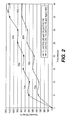
- FIG. 2 shows the viscosity profile of a nitrogen foamed viscoelastic surfactant containing cationic and anionic surfactants with and without HEC at 30°C;
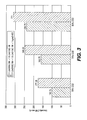
- FIG. 3 shows the viscosity profile at 30°C of a CO 2 emulsified viscoelastic surfactant which contains cationic and anionic surfactants with and without HEC.
- HEC hydroxyethyl cellulose
- the addition of hydroxyethyl cellulose (HEC) to an aqueous fracturing fluid containing an anionic surfactant and a cationic surfactant improves the viscosity of the fluid over a wide range of temperatures.
- the HEC is preferably of high molecular weight. Generally the average molecular weight of the HEC polymer ranges from about 0.75 x 10 6 to about 2 x 10 6 , preferably from about 1.4 x 10 6 to about 1.6 x 10 6 , most preferably about 1.5 X 10 6 .
- the amount of HEC polymer added to the aqueous fracturing fluid is between from about 0.25 to about 5.0 kg/m 3 . The resulting fluid is viscoelastic and micellar in nature.
- the anionic surfactant is preferably sodium xylene sulfonate.
- the cationic surfactant described herein is typically a C 10 to C 24 alkyl trialkyl quaternary ammonium chloride salt.
- the alkyl group forming the alkylated moiety can be a C 10 to C 24 alkyl group, preferably a C 12 to a C 20 alkyl. In a most preferred embodiment, the alkyl group forming the alkylated moiety is a C 18 alkyl.
- aqueous solutions of the anionic surfactant and the cationic surfactant are used.
- the volume ratios of cationic surfactant solution to anionic surfactant solution are dependent on the amount of surfactant in solution.
- the volume ratio of cationic surfactant solution to anionic surfactant solution is typically between from 0.5:1 to 10:1, preferably from 1:1 to 2:1 (based on a 50 vol. % solution of cationic surfactant and a 40 vol. % solution of anionic surfactant).
- the surfactants are typically mixed with water and blended together "on the fly” during a fracturing treatment.
- the water acts as the external phase of the fluid when emulsified or foamed.
- the fluid exhibits the requisite viscosity for fracturing and effective transport of proppant at temperatures between from about 10° C to about 100° C.
- the cationic surfactant solution is added to the water in a quantity of from about 2 L/m 3 to about 30 L/m 3 and the anionic surfactant solution is added to the water in quantities of about 2.0 L/m 3 to about 30 L/m 3 (based on a 50 vol. % solution of cationic surfactant and a 40 vol. % solution of anionic surfactant).
- the resulting viscoelastic gel is capable of transport of conventional proppants such as sand, resin coated sand and sintered bauxite as well as ultra lightweight proppants having an apparent specific gravity of less than about 2.45, such as ground or crushed shells of nuts like walnut, coconut, pecan, almond, ivory nut, brazil nut, etc.; ground and crushed seed shells (including fruit pits) of seeds of fruits such as plum, olive, peach, cherry, apricot, etc.; ground and crushed seed shells of other plants such as maize (e.g., corn cobs or corn kernels), etc.; processed wood materials such as those derived from woods such as oak, hickory, walnut, poplar, mahogany, etc., including such woods that have been processed by grinding, chipping, or other form of particalization, processing, etc.
- conventional proppants such as sand, resin coated sand and sintered bauxite as well as ultra lightweight proppants having an apparent specific gravity
- the proppant may include porous ceramics or organic polymeric particulates.
- the porous particulate material may be treated with a non-porous penetrating material, coating layer or glazing layer.
- the porous particulate material may be a treated particulate material, as defined in U.S. Patent Publication No. 20050028979 wherein (a) the ASG of the treated porous material is less than the ASG of the porous particulate material; (b) the permeability of the treated material is less than the permeability of the porous particulate material; or (c) the porosity of the treated material is less than the porosity of the porous particulate material.
- the amount of proppant in the well treatment fluid is typically between from about 0.5 to about 20.0, preferably between from about 1 to about 12, pounds of proppant per gallon of the viscoelastic fluid.
- the word "energized” refers to a fluid containing two phases whereby less than 63 volume percent of the internal phase is either a gas or a liquid (e.g. nitrogen or liquid CO 2 ).
- the term “foamed” refers to a fluid that contains more than 63 volume percent of the internal phase is either a gas or a liquid.
- Suitable foamed fluids typically have a foam quality greater than or equal to 70%, preferably up to 95% when nitrogen is used and greater than or equal to 70%, preferably up to 85% when liquid CO 2 is used. Foaming a fluid increases the viscosity of the fracturing fluid and allows for a reduction in the amount of water without loss of treatment fluid volume. Further, it is believed that the presence of the HEC in the fluid modifies the surfactant film on the bubbles or dispersed droplets in the foam and emulsion to provide increased foam and emulsion viscosity. While nitrogen and liquid CO 2 are described as examples of a suitable gas or liquid that can be used for the internal phase of the foamed fluid it is to be appreciated that in accordance with the invention, any other gases or fluids known in the art may be utilized.
- the loadings of each of the anionic and cationic surfactants solutions in the gelled foamed, emulsified or energized fluid are about 3 L/m 3 .
- the viscosity of the foamed fluid is at least 25 cP at room temperature.
- the ratio of cationic surfactant to anionic surfactant in the foamed or emulsified fluid is in the range from about 1:1 to about 2:1, by volume.
- the fluid may optionally contain an inorganic salt as a clay stabilizer, such as potassium chloride, choline chloride or ammonium chloride.
- a clay stabilizer such as potassium chloride, choline chloride or ammonium chloride.
- clay stabilizers, foaming agents, biocides and other additives are generally unnecessary in most cases.
- the viscoelastic fluid described herein may be batch-mixed or mixed on-the-fly.
- the fluid exhibits a fairly low surface tension, in the area of about 30 dynes/cm 2 .
- the low surface tension of the fluid aids in rapid flow-back for cleaning up the well after fracturing.
- the fluids described herein are effective as fracturing fluids in any type of well, including high pressure and low pressure wells.
- the fluid is used to treat low pressure wells.
- An example of low pressure wells suitable for using the viscoelastic fluid defined herein are those low pressure wells (of between about 1 to about 100 psi) such as coal bed methane wells. Such wells may or may not produce water. These types of wells are perforated in many coal seams with varying productivity in each zone.
- the viscoelastic fluids described herein find particular applicability in the treatment of low permeability subterranean formations, such as those comprised primarily of sandstone, limestone, dolomite, shale, siltstone, and diatomite, as well as coal.
- the fluids provide a robust alternative in shallow, brittle shales where water cost, availability and disposal has become increasingly expensive and environmentally unacceptable.
- a premixed surfactant FAC-3W was prepared by mixing a 1:1 ratio of C 18 trimethyl quaternary ammonium chloride solution (40%, also known as FAC-1W) to sodium xylene sulfonate solution (50%), at room temperature for five minutes. To 11 L/m 3 FAC-3W was added an additional 1.5 L/m 3 FAC-1W. To the resulting system was then added 1 kg/m 3 HEC (Example 3, FIG. 1) and 1 kg/m 3 underivatized guar (Example 4, FIG. 1 .) The aqueous system was then evaluated using a flow-loop rheometer which was equipped with a constant volume circulating pump and an independent air driven pump.
- FIG. 1 demonstrates the synergy between the fluid containing the cationic surfactant/anionic surfactant (Example 1) and the same fluid containing HEC (Example 3). No synergy was seen with the fluid and guar (Example 4).
- the fluid containing FAC-3W and FAC-1W (Example 1) and the fluid containing the HEC (Example 3) were then foamed with 70-85% nitrogen or 70-80% liquid CO 2 .
- the rheology of the fluid was then evaluated using the flow-loop rheometer at 30° C described in the Examples above. In order to get a 70 quality foam, 95 mls of fluid was loaded into the flow-loop which had a 312 ml capacity. The balance was then filled with 70 vol.% N 2 gas or 70 vol.% liquid CO 2 . After the N 2 or CO 2 was added, the fluid in the circulation loop was foamed/emulsified by shearing it with the aid of the nozzle and the temperature increased with the heating jacket on the loop.
- FIG. 2 shows that addition of 1 kg/m 3 HEC increases foam viscosity 40% to 67% depending on the nitrogen ratio.
- FIG. 3 shows that addition of 1 kg/m 3 HEC increases emulsion viscosity from 30% to 77% depending on the CO 2 ratio. Further, the addition of 1 kg/m 3 HEC increased the base gel viscosity by 21 %.
Landscapes
- Chemical & Material Sciences (AREA)
- Life Sciences & Earth Sciences (AREA)
- General Life Sciences & Earth Sciences (AREA)
- Engineering & Computer Science (AREA)
- Materials Engineering (AREA)
- Organic Chemistry (AREA)
- Emulsifying, Dispersing, Foam-Producing Or Wetting Agents (AREA)
- Detergent Compositions (AREA)
- Liquid Carbonaceous Fuels (AREA)
- Soil Conditioners And Soil-Stabilizing Materials (AREA)
Abstract
Description
- The present invention relates to viscoelastic fluids useful in the fracturing of subterranean formations and includes foamed and emulsified fluids which exhibit high viscosity.
- Subterranean formations of oil and gas wells are often treated by hydraulically fracturing the formations to increase the production of oil or gas. Fracturing of the formations is accomplished by pumping fluids into the bore holes of the oil or gas wells under high pressure so that cracks or fissures are opened into the surrounding formation. The fluids preferably are loaded with proppants in order to wedge open the cracks or fissures in the formation, and thereby permanently increase permeability and the flow of hydrocarbons from the oil or gas well. The viscosity of fracturing fluids is preferably high such that effective volumes of proppant may be carried in the fluid. The fracturing fluid's viscosity is proportionally related to the created fracture geometry and fracture width so that more viscous fluids will produce longer and wider fractures.
- The fracturing fluid is typically an aqueous gel or a hydrocarbon gel which contains polymer. Such fluids are typically formed by gelling one or more crosslinkable polymers in the aqueous or hydrocarbon fluid. While such fluids are often effective, their use normally requires extensive well clean up. For instance, polymers often leave residues that form cakes which clog the well. In addition, such polymers often leave undesirable traces in the recoverable hydrocarbons that may be expensive to remove.
- More recently, interest has shifted to polymer free fluids. Such fluids are much less damaging and clean up faster than fracturing fluids which contain polymers. For instance,
U.S. Patent Nos. 6,468,945 and6,410,489 disclose viscoelastic fluids containing a cationic surfactant and an anionic surfactant which may be foamed or emulsified. Such fluids exhibit low dynamic surface tension, are tolerant of recycled treatment water and further are fully compatible with KCl treatment fluids. In addition, such fluids form viscoelastic gels quickly and may be mixed batch-wise in advance or on-the-fly. In addition, such fluids are effective at low surfactant loadings and, at such low surfactant loadings, are easily foamed or emulsified using 50%-96% by volume of gas or liquid CO2. - While such fluids are suitable for use in conventional oil and gas reservoirs, improved performance of such fluids, especially in non-conventional shale gas and oil, coal bed methane is desired. Such alternatives are particularly desired in shallow, brittle shales where water cost, availability and disposal has become prohibitively expensive and environmental unacceptable.
- The flow of recoverable hydrocarbons from a subterranean formation may be increased by introducing into the formation during stimulation an aqueous fluid containing an anionic surfactant and a cationic surfactant and hydroxyethyl cellulose (HEC) to create a fracture. The aqueous fluids described herein have particular applicability in the treatment of low permeability reservoirs including shallow brittle shales, coal bed methane wells as well as conventional reservoirs.
- The anionic surfactant of the fluid is preferably sodium xylene sulfonate and the cationic surfactant is preferably a C10 to C24 alkyl trialkyl ("the alkylated moiety") quaternary ammonium chloride salt. In a most preferred embodiment, the alkyl group forming the alkylated moiety is a C18 alkyl.
- The aqueous fluid may be mixed with from 5% to 96% or more of gaseous foaming agent or liquid CO2 to form a foam, emulsified or energized fluid. Suitable foaming agents include nitrogen and carbon dioxide. The gelled fluid exhibits good foaming characteristics at low loadings, such as about 2 L/m3, for each of the anionic and cationic surfactants.
- In order to more fully understand the drawings referred to in the detailed description of the present invention, a brief description of each drawing is presented, in which:
-
FIG. 1 shows the effect of increased viscosity at 30°C of a viscoelastic fluid described herein which contains cationic and anionic surfactants and hydroxyethyl cellulose (HEC) in contrast to a similar viscoelastic fluid which does not contain HEC.FIG. 1 also demonstrates that a synergy exists between HEC and the viscoelastic fluid and that viscosity is adversely affected when guar is used (instead of HEC). -
FIG. 2 shows the viscosity profile of a nitrogen foamed viscoelastic surfactant containing cationic and anionic surfactants with and without HEC at 30°C; and -
FIG. 3 shows the viscosity profile at 30°C of a CO2 emulsified viscoelastic surfactant which contains cationic and anionic surfactants with and without HEC. - The addition of hydroxyethyl cellulose (HEC) to an aqueous fracturing fluid containing an anionic surfactant and a cationic surfactant improves the viscosity of the fluid over a wide range of temperatures. The HEC is preferably of high molecular weight. Generally the average molecular weight of the HEC polymer ranges from about 0.75 x 10⁶ to about 2 x 10⁶, preferably from about 1.4 x 10⁶ to about 1.6 x 10⁶, most preferably about 1.5
X 106. The amount of HEC polymer added to the aqueous fracturing fluid is between from about 0.25 to about 5.0 kg/m3. The resulting fluid is viscoelastic and micellar in nature. - The anionic surfactant is preferably sodium xylene sulfonate. The cationic surfactant described herein is typically a C10 to C24 alkyl trialkyl quaternary ammonium chloride salt. The alkyl group forming the alkylated moiety can be a C10 to C24 alkyl group, preferably a C12 to a C20 alkyl. In a most preferred embodiment, the alkyl group forming the alkylated moiety is a C18 alkyl.
- Typically, aqueous solutions of the anionic surfactant and the cationic surfactant are used. The volume ratios of cationic surfactant solution to anionic surfactant solution are dependent on the amount of surfactant in solution. Typically, the volume ratio of cationic surfactant solution to anionic surfactant solution is typically between from 0.5:1 to 10:1, preferably from 1:1 to 2:1 (based on a 50 vol. % solution of cationic surfactant and a 40 vol. % solution of anionic surfactant).
- The surfactants are typically mixed with water and blended together "on the fly" during a fracturing treatment. The water acts as the external phase of the fluid when emulsified or foamed.
- At total surfactant loadings of up to about 6%, but usually less than 1%, the fluid exhibits the requisite viscosity for fracturing and effective transport of proppant at temperatures between from about 10° C to about 100° C.
- In one embodiment, the cationic surfactant solution is added to the water in a quantity of from about 2 L/m3 to about 30 L/m3 and the anionic surfactant solution is added to the water in quantities of about 2.0 L/m3 to about 30 L/m3 (based on a 50 vol. % solution of cationic surfactant and a 40 vol. % solution of anionic surfactant).
- The resulting viscoelastic gel is capable of transport of conventional proppants such as sand, resin coated sand and sintered bauxite as well as ultra lightweight proppants having an apparent specific gravity of less than about 2.45, such as ground or crushed shells of nuts like walnut, coconut, pecan, almond, ivory nut, brazil nut, etc.; ground and crushed seed shells (including fruit pits) of seeds of fruits such as plum, olive, peach, cherry, apricot, etc.; ground and crushed seed shells of other plants such as maize (e.g., corn cobs or corn kernels), etc.; processed wood materials such as those derived from woods such as oak, hickory, walnut, poplar, mahogany, etc., including such woods that have been processed by grinding, chipping, or other form of particalization, processing, etc. Further the proppant may include porous ceramics or organic polymeric particulates. The porous particulate material may be treated with a non-porous penetrating material, coating layer or glazing layer. For instance, the porous particulate material may be a treated particulate material, as defined in
U.S. Patent Publication No. 20050028979 wherein (a) the ASG of the treated porous material is less than the ASG of the porous particulate material; (b) the permeability of the treated material is less than the permeability of the porous particulate material; or (c) the porosity of the treated material is less than the porosity of the porous particulate material. When present, the amount of proppant in the well treatment fluid is typically between from about 0.5 to about 20.0, preferably between from about 1 to about 12, pounds of proppant per gallon of the viscoelastic fluid. - When treating a subterranean formation which is sensitive to water (such as dry coal beds), it is often necessary to minimize the amount of water in the well treatment fluid by energizing with either nitrogen or liquid carbon dioxide (CO2), foaming with a gas, such as nitrogen or emulsifying the fluid with liquid CO2. Typically, the word "energized" refers to a fluid containing two phases whereby less than 63 volume percent of the internal phase is either a gas or a liquid (e.g. nitrogen or liquid CO2). Typically, the term "foamed" refers to a fluid that contains more than 63 volume percent of the internal phase is either a gas or a liquid. Suitable foamed fluids typically have a foam quality greater than or equal to 70%, preferably up to 95% when nitrogen is used and greater than or equal to 70%, preferably up to 85% when liquid CO2 is used. Foaming a fluid increases the viscosity of the fracturing fluid and allows for a reduction in the amount of water without loss of treatment fluid volume. Further, it is believed that the presence of the HEC in the fluid modifies the surfactant film on the bubbles or dispersed droplets in the foam and emulsion to provide increased foam and emulsion viscosity. While nitrogen and liquid CO2 are described as examples of a suitable gas or liquid that can be used for the internal phase of the foamed fluid it is to be appreciated that in accordance with the invention, any other gases or fluids known in the art may be utilized.
- In a preferred embodiment (based on a 50 vol. % solution of cationic surfactant and a 40 vol. % solution of anionic surfactant), the loadings of each of the anionic and cationic surfactants solutions in the gelled foamed, emulsified or energized fluid are about 3 L/m3. At such loadings the viscosity of the foamed fluid is at least 25 cP at room temperature. Typically, the ratio of cationic surfactant to anionic surfactant in the foamed or emulsified fluid is in the range from about 1:1 to about 2:1, by volume.
- The fluid may optionally contain an inorganic salt as a clay stabilizer, such as potassium chloride, choline chloride or ammonium chloride. However, clay stabilizers, foaming agents, biocides and other additives are generally unnecessary in most cases.
- The viscoelastic fluid described herein may be batch-mixed or mixed on-the-fly.
- The fluid exhibits a fairly low surface tension, in the area of about 30 dynes/cm2. The low surface tension of the fluid aids in rapid flow-back for cleaning up the well after fracturing.
- The fluids described herein are effective as fracturing fluids in any type of well, including high pressure and low pressure wells. In a preferred embodiment, the fluid is used to treat low pressure wells. An example of low pressure wells suitable for using the viscoelastic fluid defined herein are those low pressure wells (of between about 1 to about 100 psi) such as coal bed methane wells. Such wells may or may not produce water. These types of wells are perforated in many coal seams with varying productivity in each zone.
- In addition to coal, the viscoelastic fluids described herein find particular applicability in the treatment of low permeability subterranean formations, such as those comprised primarily of sandstone, limestone, dolomite, shale, siltstone, and diatomite, as well as coal. In particular, the fluids provide a robust alternative in shallow, brittle shales where water cost, availability and disposal has become increasingly expensive and environmentally unacceptable.
- The following examples are illustrative of some of the embodiments of the present invention. Other embodiments within the scope of the claims herein will be apparent to one skilled in the art from consideration of the description set forth herein. It is intended that the specification, together with the examples, be considered exemplary only, with the scope and spirit of the invention being indicated by the claims which follow.
- All percentages set forth in the Examples are given in terms of weight units except as may otherwise be indicated.
- A premixed surfactant FAC-3W was prepared by mixing a 1:1 ratio of C18 trimethyl quaternary ammonium chloride solution (40%, also known as FAC-1W) to sodium xylene sulfonate solution (50%), at room temperature for five minutes. To 11 L/m3 FAC-3W was added an additional 1.5 L/m3 FAC-1W. To the resulting system was then added 1 kg/m3 HEC (Example 3,
FIG. 1) and 1 kg/m3 underivatized guar (Example 4,FIG. 1 .) The aqueous system was then evaluated using a flow-loop rheometer which was equipped with a constant volume circulating pump and an independent air driven pump. The flow-loop was further fitted with a 10,000 psi site glass for observation. The temperature was increased to 30° C with the heating jacket on the loop. The pressure was 1,000 psi to more closely simulate well conditions. The viscosity measurements were carried out at a nominal shear rate of 100 S-1. The results are illustrated inFIG. 1 wherein Comparative Example 2 shows the results of 1 kg/m3 HEC by itself.FIG. 1 demonstrates the synergy between the fluid containing the cationic surfactant/anionic surfactant (Example 1) and the same fluid containing HEC (Example 3). No synergy was seen with the fluid and guar (Example 4). - The fluid containing FAC-3W and FAC-1W (Example 1) and the fluid containing the HEC (Example 3) were then foamed with 70-85% nitrogen or 70-80% liquid CO2. The rheology of the fluid was then evaluated using the flow-loop rheometer at 30° C described in the Examples above. In order to get a 70 quality foam, 95 mls of fluid was loaded into the flow-loop which had a 312 ml capacity. The balance was then filled with 70 vol.% N2 gas or 70 vol.% liquid CO2. After the N2 or CO2 was added, the fluid in the circulation loop was foamed/emulsified by shearing it with the aid of the nozzle and the temperature increased with the heating jacket on the loop. The pressure was 1,000 psi to more closely simulate well conditions. The viscosity measurements were carried out at a nominal shear rate of 100 s-1. The results are set forth in
FIG. 2 for nitrogen andFIG. 3 for liquid CO2.FIG. 2 shows that addition of 1 kg/m3 HEC increasesfoam viscosity 40% to 67% depending on the nitrogen ratio.FIG. 3 shows that addition of 1 kg/m3 HEC increases emulsion viscosity from 30% to 77% depending on the CO2 ratio. Further, the addition of 1 kg/m3 HEC increased the base gel viscosity by 21 %. - From the foregoing, it will be observed that numerous variations and modifications may be effected without departing from the true spirit and scope of the novel concepts of the invention.
Claims (15)
- A viscoelastic fluid for enhancing the productivity of a hydrocarbon-bearing formation comprising:(a) an anionic surfactant;(b) a cationic surfactant;(c) hydroxyethyl cellulose; and(d) water
wherein the volume ratio of cationic surfactant in solution to anionic surfactant in solution in the fluid is from 0.5:1 to 10:1 (based on a 50 vol. % solution of cationic surfactant and a 40 vol. % solution of anionic surfactant). - The fluid of claim 1, wherein the anionic surfactant is sodium xylene sulfonate.
- The fluid of claim 1 or 2, wherein the cationic surfactant is N, N, N, trimethyl-1-octadecamonium chloride.
- The fluid of any of claims 1 to 3, wherein the volume ratio of cationic surfactant solution to anionic surfactant solution is from 1:1 to 2:1, based on a 50 vol. % solution of cationic surfactant and a 40 vol. % solution of anionic surfactant.
- The fluid of any of claims 1 to 4, wherein the amount of cationic surfactant in the fluid is between from 2 L/m3 to 50 L/m3 and the amount of anionic surfactant in the fluid is between from 2.0 L/m3 to 30 L/m3.
- The fluid of any of claims 1 to 5, further comprising a proppant.
- The fluid of any of claims 1 to 6, further comprising a gas or gaseous liquid.
- The fluid of any of claims 1 to 6, further comprising a gaseous foaming agent.
- The fluid of claim 8 wherein, at total loadings of surfactant solutions of up to 6% by volume, the fluid delivers viscosity suitable for use as a fracturing fluid at a temperature range from 10°C to 100°C.
- The fluid of claims 8 or 9, wherein the foaming agent is nitrogen or liquid CO2 and is present in a quantity, by volume of 63% to in excess of 96%.
- The fluid of any of claims 1 to 6, wherein the fluid is foamed or energized and wherein the internal phase of the foamed or energized viscoelastic fluid is between from 5 to 63 percent for energized fluids or greater than 63 percent and up to 96 percent for foamed fluids.
- A method for enhancing the productivity of a hydrocarbon-bearing formation penetrated by a well which comprises comprising pumping into the well the viscoelastic fluid of any of claims 1 to 11.
- The method of claim 12, wherein the well is a coal bed methane well.
- A method of fracturing a subterranean formation which comprises pumping the viscoelastic fluid of any of claims 1 to 11 into the formation at a pressure sufficient to fracture the formation.
- The method of claim 14, wherein the hydrocarbon-bearing formation is sandstone, coal, shale, limestone, dolomite, siltstone or diatomite.
Applications Claiming Priority (1)
| Application Number | Priority Date | Filing Date | Title |
|---|---|---|---|
| CA2688202A CA2688202C (en) | 2009-12-11 | 2009-12-11 | Viscoelastic fluids containing hydroxyethyl cellulose |
Publications (1)
| Publication Number | Publication Date |
|---|---|
| EP2333027A1 true EP2333027A1 (en) | 2011-06-15 |
Family
ID=43536605
Family Applications (1)
| Application Number | Title | Priority Date | Filing Date |
|---|---|---|---|
| EP10194318A Withdrawn EP2333027A1 (en) | 2009-12-11 | 2010-12-09 | Viscoelastic fluids containing hydroxyethyl cellulose |
Country Status (7)
| Country | Link |
|---|---|
| US (1) | US20110143970A1 (en) |
| EP (1) | EP2333027A1 (en) |
| AR (1) | AR079359A1 (en) |
| AU (1) | AU2010249292B2 (en) |
| BR (1) | BRPI1010441A2 (en) |
| CA (1) | CA2688202C (en) |
| RU (1) | RU2473585C2 (en) |
Cited By (1)
| Publication number | Priority date | Publication date | Assignee | Title |
|---|---|---|---|---|
| CN107808068A (en) * | 2017-10-25 | 2018-03-16 | 中国石油化工股份有限公司 | A kind of method for the enrichment evaluation of DAMAGE OF TIGHT SAND GAS RESERVOIRS high yield |
Families Citing this family (5)
| Publication number | Priority date | Publication date | Assignee | Title |
|---|---|---|---|---|
| US8691734B2 (en) | 2008-01-28 | 2014-04-08 | Baker Hughes Incorporated | Method of fracturing with phenothiazine stabilizer |
| WO2016032474A1 (en) | 2014-08-28 | 2016-03-03 | Halliburton Energy Services, Inc. | Fracturing fluid and method of use |
| US20180230362A1 (en) * | 2015-10-22 | 2018-08-16 | Halliburton Energy Services, Inc. | Formation Stabilizing Fracturing Fluid and Method of Use |
| CN111234432B (en) * | 2020-02-18 | 2021-03-26 | 四川大学 | Polymer-based CO2-responsive viscoelastic fluid and preparation method thereof |
| US12344798B2 (en) * | 2023-05-31 | 2025-07-01 | Saudi Arabian Oil Company | Foamed acid system stabilized by two dimensional-graphene and surfactant composite for fracturing application |
Citations (6)
| Publication number | Priority date | Publication date | Assignee | Title |
|---|---|---|---|---|
| US6410489B1 (en) | 1998-12-31 | 2002-06-25 | Bj Services Company Canada | Foam-fluid for fracturing subterranean formations |
| US6468945B1 (en) | 1998-12-31 | 2002-10-22 | Bj Services Company Canada | Fluids for fracturing subterranean formations |
| US20050028979A1 (en) | 1996-11-27 | 2005-02-10 | Brannon Harold Dean | Methods and compositions of a storable relatively lightweight proppant slurry for hydraulic fracturing and gravel packing applications |
| WO2008100850A1 (en) * | 2007-02-13 | 2008-08-21 | Bj Services Company | Methods and compositions for improved stimulation of permeable subterranean reservoirs |
| US20100018707A1 (en) * | 2008-07-25 | 2010-01-28 | Wheeler Richard S | Method of fracturing using ultra lightweight proppant suspensions and gaseous streams |
| EP2175004A1 (en) * | 2008-10-09 | 2010-04-14 | Bj Services Company | Method of enhancing fracture conductivity |
Family Cites Families (12)
| Publication number | Priority date | Publication date | Assignee | Title |
|---|---|---|---|---|
| US5229017A (en) * | 1990-03-01 | 1993-07-20 | Dowell Schlumberger Incorporated | Method of enhancing methane production from coal seams by dewatering |
| US6435277B1 (en) * | 1996-10-09 | 2002-08-20 | Schlumberger Technology Corporation | Compositions containing aqueous viscosifying surfactants and methods for applying such compositions in subterranean formations |
| FR2759293B1 (en) * | 1997-02-11 | 1999-04-30 | Ethypharm Lab Prod Ethiques | CISPLATIN-CONTAINING MICROGRANULES, MANUFACTURING METHOD, PHARMACEUTICAL PREPARATION AND USE IN POLYCHEMOTHERAPY OR IN ASSOCIATION WITH RADIOTHERAPY |
| US6875728B2 (en) * | 1999-12-29 | 2005-04-05 | Bj Services Company Canada | Method for fracturing subterranean formations |
| DE60121423T2 (en) * | 2000-02-25 | 2007-02-15 | Sofitech N.V., Uccle | FOAMS FOR USE IN COAL LUBRICATIONS |
| US6605570B2 (en) * | 2001-03-01 | 2003-08-12 | Schlumberger Technology Corporation | Compositions and methods to control fluid loss in surfactant-based wellbore service fluids |
| US6488091B1 (en) * | 2001-06-11 | 2002-12-03 | Halliburton Energy Services, Inc. | Subterranean formation treating fluid concentrates, treating fluids and methods |
| US7152675B2 (en) * | 2003-11-26 | 2006-12-26 | The Curators Of The University Of Missouri | Subterranean hydrogen storage process |
| US20050247447A1 (en) * | 2004-05-10 | 2005-11-10 | Spring Roger L | Angled perforating device for well completions |
| US7244694B2 (en) * | 2004-09-02 | 2007-07-17 | Schlumberger Technology Corporation | Viscoelastic fluids containing nanotubes for oilfield uses |
| US20060272816A1 (en) * | 2005-06-02 | 2006-12-07 | Willberg Dean M | Proppants Useful for Prevention of Scale Deposition |
| RU2368769C2 (en) * | 2007-10-17 | 2009-09-27 | Общество с ограниченной ответственностью "Газпром добыча Оренбург " (ООО "Газпром добыча Оренбург") | Bottom-hole formation zone treatment method |
-
2009
- 2009-12-11 CA CA2688202A patent/CA2688202C/en not_active Expired - Fee Related
-
2010
- 2010-12-09 EP EP10194318A patent/EP2333027A1/en not_active Withdrawn
- 2010-12-10 AR ARP100104576A patent/AR079359A1/en not_active Application Discontinuation
- 2010-12-10 BR BRPI1010441-0A patent/BRPI1010441A2/en not_active Application Discontinuation
- 2010-12-10 AU AU2010249292A patent/AU2010249292B2/en not_active Ceased
- 2010-12-10 US US12/965,297 patent/US20110143970A1/en not_active Abandoned
- 2010-12-13 RU RU2010150700/03A patent/RU2473585C2/en not_active IP Right Cessation
Patent Citations (6)
| Publication number | Priority date | Publication date | Assignee | Title |
|---|---|---|---|---|
| US20050028979A1 (en) | 1996-11-27 | 2005-02-10 | Brannon Harold Dean | Methods and compositions of a storable relatively lightweight proppant slurry for hydraulic fracturing and gravel packing applications |
| US6410489B1 (en) | 1998-12-31 | 2002-06-25 | Bj Services Company Canada | Foam-fluid for fracturing subterranean formations |
| US6468945B1 (en) | 1998-12-31 | 2002-10-22 | Bj Services Company Canada | Fluids for fracturing subterranean formations |
| WO2008100850A1 (en) * | 2007-02-13 | 2008-08-21 | Bj Services Company | Methods and compositions for improved stimulation of permeable subterranean reservoirs |
| US20100018707A1 (en) * | 2008-07-25 | 2010-01-28 | Wheeler Richard S | Method of fracturing using ultra lightweight proppant suspensions and gaseous streams |
| EP2175004A1 (en) * | 2008-10-09 | 2010-04-14 | Bj Services Company | Method of enhancing fracture conductivity |
Cited By (1)
| Publication number | Priority date | Publication date | Assignee | Title |
|---|---|---|---|---|
| CN107808068A (en) * | 2017-10-25 | 2018-03-16 | 中国石油化工股份有限公司 | A kind of method for the enrichment evaluation of DAMAGE OF TIGHT SAND GAS RESERVOIRS high yield |
Also Published As
| Publication number | Publication date |
|---|---|
| AU2010249292A1 (en) | 2011-06-30 |
| US20110143970A1 (en) | 2011-06-16 |
| BRPI1010441A2 (en) | 2013-01-22 |
| AR079359A1 (en) | 2012-01-18 |
| RU2010150700A (en) | 2012-06-20 |
| CA2688202C (en) | 2012-11-13 |
| RU2473585C2 (en) | 2013-01-27 |
| CA2688202A1 (en) | 2011-06-11 |
| AU2010249292B2 (en) | 2013-09-26 |
Similar Documents
| Publication | Publication Date | Title |
|---|---|---|
| US6468945B1 (en) | Fluids for fracturing subterranean formations | |
| US9695353B2 (en) | Foamed fracturing fluids and methods for treating hydrocarbon bearing formations | |
| CN100575661C (en) | Method of treating subterranean formation and aqueous viscoelastic treating fluid | |
| US7913762B2 (en) | Method of fracturing using ultra lightweight proppant suspensions and gaseous streams | |
| CA2671204C (en) | Non-toxic, green fracturing fluid compositions, methods of preparation and methods of use | |
| CA2877676C (en) | Fracturing fluids and methods for treating hydrocarbon-bearing formations | |
| US20100184630A1 (en) | Breaking the rheology of a wellbore fluid by creating phase separation | |
| CA2688202C (en) | Viscoelastic fluids containing hydroxyethyl cellulose | |
| EA011181B1 (en) | Method for treating subterranean formation | |
| AU2010322014B2 (en) | Surfactant based viscoelastic fluids and methods of using the same | |
| CA2926618C (en) | Well treatment fluids containing a zirconium crosslinker and methods of using the same | |
| CA2576157A1 (en) | Stabilizing crosslinked polymer guars and modified guar derivatives | |
| US20100044048A1 (en) | Non-toxic, green fracturing fluid compositions, methods of preparation and methods of use | |
| US20100204069A1 (en) | METHOD OF STIMULATING SUBTERRANEAN FORMATION USING LOW pH FLUID | |
| US20080026957A1 (en) | Treatment and Production of Subterranean Formations with Heteropolysaccharides | |
| US8579029B2 (en) | System, method and treatment fluid for controlling fines migration | |
| US20070244015A1 (en) | Use of Glycols and Polyols to Stabilize Viscoelastic Surfactant Gelled Fluids | |
| RU2664987C2 (en) | Utilization of boron as crosslinking agent in emulsion system | |
| US20190264096A1 (en) | Fracturing fluid composition comprising a bio-based surfactant and method of use | |
| AU2020372299A1 (en) | Energized well treating fluids and methods of using same | |
| US20130048292A1 (en) | Method of using fracturing fluids containing carboxyalkyl tamarind |
Legal Events
| Date | Code | Title | Description |
|---|---|---|---|
| PUAI | Public reference made under article 153(3) epc to a published international application that has entered the european phase |
Free format text: ORIGINAL CODE: 0009012 |
|
| 17P | Request for examination filed |
Effective date: 20101209 |
|
| AK | Designated contracting states |
Kind code of ref document: A1 Designated state(s): AL AT BE BG CH CY CZ DE DK EE ES FI FR GB GR HR HU IE IS IT LI LT LU LV MC MK MT NL NO PL PT RO RS SE SI SK SM TR |
|
| AX | Request for extension of the european patent |
Extension state: BA ME |
|
| GRAC | Information related to communication of intention to grant a patent modified |
Free format text: ORIGINAL CODE: EPIDOSCIGR1 |
|
| GRAP | Despatch of communication of intention to grant a patent |
Free format text: ORIGINAL CODE: EPIDOSNIGR1 |
|
| RIC1 | Information provided on ipc code assigned before grant |
Ipc: C09K 8/70 20060101ALI20120507BHEP Ipc: C09K 8/90 20060101ALI20120507BHEP Ipc: C09K 8/68 20060101ALI20120507BHEP Ipc: C09K 8/60 20060101AFI20120507BHEP |
|
| STAA | Information on the status of an ep patent application or granted ep patent |
Free format text: STATUS: THE APPLICATION IS DEEMED TO BE WITHDRAWN |
|
| 18D | Application deemed to be withdrawn |
Effective date: 20121003 |