EP2333007A1 - Polymer particles containing fluorescent molecule and process for producing same - Google Patents
Polymer particles containing fluorescent molecule and process for producing same Download PDFInfo
- Publication number
- EP2333007A1 EP2333007A1 EP09812888A EP09812888A EP2333007A1 EP 2333007 A1 EP2333007 A1 EP 2333007A1 EP 09812888 A EP09812888 A EP 09812888A EP 09812888 A EP09812888 A EP 09812888A EP 2333007 A1 EP2333007 A1 EP 2333007A1
- Authority
- EP
- European Patent Office
- Prior art keywords
- polymer
- magnetic particles
- fluorescent molecules
- fluorescent molecule
- polymer magnetic
- Prior art date
- Legal status (The legal status is an assumption and is not a legal conclusion. Google has not performed a legal analysis and makes no representation as to the accuracy of the status listed.)
- Granted
Links
Images



Classifications
-
- G—PHYSICS
- G01—MEASURING; TESTING
- G01N—INVESTIGATING OR ANALYSING MATERIALS BY DETERMINING THEIR CHEMICAL OR PHYSICAL PROPERTIES
- G01N33/00—Investigating or analysing materials by specific methods not covered by groups G01N1/00 - G01N31/00
- G01N33/48—Biological material, e.g. blood, urine; Haemocytometers
- G01N33/50—Chemical analysis of biological material, e.g. blood, urine; Testing involving biospecific ligand binding methods; Immunological testing
- G01N33/58—Chemical analysis of biological material, e.g. blood, urine; Testing involving biospecific ligand binding methods; Immunological testing involving labelled substances
- G01N33/582—Chemical analysis of biological material, e.g. blood, urine; Testing involving biospecific ligand binding methods; Immunological testing involving labelled substances with fluorescent label
-
- C—CHEMISTRY; METALLURGY
- C08—ORGANIC MACROMOLECULAR COMPOUNDS; THEIR PREPARATION OR CHEMICAL WORKING-UP; COMPOSITIONS BASED THEREON
- C08J—WORKING-UP; GENERAL PROCESSES OF COMPOUNDING; AFTER-TREATMENT NOT COVERED BY SUBCLASSES C08B, C08C, C08F, C08G or C08H
- C08J3/00—Processes of treating or compounding macromolecular substances
- C08J3/12—Powdering or granulating
-
- C—CHEMISTRY; METALLURGY
- C08—ORGANIC MACROMOLECULAR COMPOUNDS; THEIR PREPARATION OR CHEMICAL WORKING-UP; COMPOSITIONS BASED THEREON
- C08J—WORKING-UP; GENERAL PROCESSES OF COMPOUNDING; AFTER-TREATMENT NOT COVERED BY SUBCLASSES C08B, C08C, C08F, C08G or C08H
- C08J3/00—Processes of treating or compounding macromolecular substances
- C08J3/12—Powdering or granulating
- C08J3/128—Polymer particles coated by inorganic and non-macromolecular organic compounds
-
- G—PHYSICS
- G01—MEASURING; TESTING
- G01N—INVESTIGATING OR ANALYSING MATERIALS BY DETERMINING THEIR CHEMICAL OR PHYSICAL PROPERTIES
- G01N33/00—Investigating or analysing materials by specific methods not covered by groups G01N1/00 - G01N31/00
- G01N33/48—Biological material, e.g. blood, urine; Haemocytometers
- G01N33/50—Chemical analysis of biological material, e.g. blood, urine; Testing involving biospecific ligand binding methods; Immunological testing
- G01N33/53—Immunoassay; Biospecific binding assay; Materials therefor
- G01N33/531—Production of immunochemical test materials
- G01N33/532—Production of labelled immunochemicals
- G01N33/533—Production of labelled immunochemicals with fluorescent label
-
- G—PHYSICS
- G01—MEASURING; TESTING
- G01N—INVESTIGATING OR ANALYSING MATERIALS BY DETERMINING THEIR CHEMICAL OR PHYSICAL PROPERTIES
- G01N33/00—Investigating or analysing materials by specific methods not covered by groups G01N1/00 - G01N31/00
- G01N33/48—Biological material, e.g. blood, urine; Haemocytometers
- G01N33/50—Chemical analysis of biological material, e.g. blood, urine; Testing involving biospecific ligand binding methods; Immunological testing
- G01N33/53—Immunoassay; Biospecific binding assay; Materials therefor
- G01N33/543—Immunoassay; Biospecific binding assay; Materials therefor with an insoluble carrier for immobilising immunochemicals
- G01N33/54313—Immunoassay; Biospecific binding assay; Materials therefor with an insoluble carrier for immobilising immunochemicals the carrier being characterised by its particulate form
- G01N33/54326—Magnetic particles
-
- H—ELECTRICITY
- H01—ELECTRIC ELEMENTS
- H01F—MAGNETS; INDUCTANCES; TRANSFORMERS; SELECTION OF MATERIALS FOR THEIR MAGNETIC PROPERTIES
- H01F1/00—Magnets or magnetic bodies characterised by the magnetic materials therefor; Selection of materials for their magnetic properties
- H01F1/01—Magnets or magnetic bodies characterised by the magnetic materials therefor; Selection of materials for their magnetic properties of inorganic materials
- H01F1/03—Magnets or magnetic bodies characterised by the magnetic materials therefor; Selection of materials for their magnetic properties of inorganic materials characterised by their coercivity
- H01F1/032—Magnets or magnetic bodies characterised by the magnetic materials therefor; Selection of materials for their magnetic properties of inorganic materials characterised by their coercivity of hard-magnetic materials
- H01F1/04—Magnets or magnetic bodies characterised by the magnetic materials therefor; Selection of materials for their magnetic properties of inorganic materials characterised by their coercivity of hard-magnetic materials metals or alloys
- H01F1/06—Magnets or magnetic bodies characterised by the magnetic materials therefor; Selection of materials for their magnetic properties of inorganic materials characterised by their coercivity of hard-magnetic materials metals or alloys in the form of particles, e.g. powder
-
- H—ELECTRICITY
- H01—ELECTRIC ELEMENTS
- H01F—MAGNETS; INDUCTANCES; TRANSFORMERS; SELECTION OF MATERIALS FOR THEIR MAGNETIC PROPERTIES
- H01F1/00—Magnets or magnetic bodies characterised by the magnetic materials therefor; Selection of materials for their magnetic properties
- H01F1/01—Magnets or magnetic bodies characterised by the magnetic materials therefor; Selection of materials for their magnetic properties of inorganic materials
- H01F1/03—Magnets or magnetic bodies characterised by the magnetic materials therefor; Selection of materials for their magnetic properties of inorganic materials characterised by their coercivity
- H01F1/032—Magnets or magnetic bodies characterised by the magnetic materials therefor; Selection of materials for their magnetic properties of inorganic materials characterised by their coercivity of hard-magnetic materials
- H01F1/09—Magnets or magnetic bodies characterised by the magnetic materials therefor; Selection of materials for their magnetic properties of inorganic materials characterised by their coercivity of hard-magnetic materials mixtures of metallic and non-metallic particles; metallic particles having oxide skin
-
- C—CHEMISTRY; METALLURGY
- C08—ORGANIC MACROMOLECULAR COMPOUNDS; THEIR PREPARATION OR CHEMICAL WORKING-UP; COMPOSITIONS BASED THEREON
- C08J—WORKING-UP; GENERAL PROCESSES OF COMPOUNDING; AFTER-TREATMENT NOT COVERED BY SUBCLASSES C08B, C08C, C08F, C08G or C08H
- C08J2327/00—Characterised by the use of homopolymers or copolymers of compounds having one or more unsaturated aliphatic radicals, each having only one carbon-to-carbon double bond, and at least one being terminated by a halogen; Derivatives of such polymers
- C08J2327/02—Characterised by the use of homopolymers or copolymers of compounds having one or more unsaturated aliphatic radicals, each having only one carbon-to-carbon double bond, and at least one being terminated by a halogen; Derivatives of such polymers not modified by chemical after-treatment
- C08J2327/12—Characterised by the use of homopolymers or copolymers of compounds having one or more unsaturated aliphatic radicals, each having only one carbon-to-carbon double bond, and at least one being terminated by a halogen; Derivatives of such polymers not modified by chemical after-treatment containing fluorine atoms
-
- G—PHYSICS
- G01—MEASURING; TESTING
- G01N—INVESTIGATING OR ANALYSING MATERIALS BY DETERMINING THEIR CHEMICAL OR PHYSICAL PROPERTIES
- G01N2458/00—Labels used in chemical analysis of biological material
- G01N2458/40—Rare earth chelates
Definitions
- the present invention relates to polymer particles containing fluorescent molecule, and more particularly relates to polymer particles which contain fluorescent molecules with high presence ratio in a polymer layer thereof and a method for preparation thereof.
- Patent Literature 1 Japanese Patent (Laid Open) No. 2006-88131 (Patent Literature 1) already filed by the same applicant discloses polymer magnetic particles with high dispersibility required for markers while keeping magnetic response properties of magnetic particles.
- Patent Literature 2 Japanese Patent (Laid Open) No. 2008-127454 (Patent Literature 2) already filed by the same applicant discloses multi-functional polymer magnetic particles having a function as a fluorescent marker and the magnetic response performance by incorporating fluorescent molecules within the polymer layer covering the magnetic particle.
- introduction of much fluorescent molecules to the coating polymer layer may be desired so as to realize fluorescence luminance detectable by a known fluorescence detector.
- the present invention has been completed regarding to the above described prior art and an object of the present invention is to provide polymer particles including fluorescent molecules with high presence ratio in the polymer layer and a method for preparation thereof.
- the inventors have been paid much efforts for the method to introduce much more fluorescent molecules in the polymer layer on the polymer particle and have succeeded in enlarging significantly the presence ratio of the fluorescent molecules. That is, the inventors have found that selling the polymer particles in a non-aqueous solvent excluding exclusively water preferably promotes selling of the polymer layer and transfer of the fluorescent molecules to the polymer layer could not protected by water molecules such that much more fluorescent molecule may be introduced into inside of the polymer layer. Furthermore, the inventors have found that addition of water to the reaction system prior to evaporation removal of the non-aqueous solvent prevents dry-up of the polymer particles by the water remained in the reaction system after the evaporation removal of the non-aqueous solvent. The inventors have reached to the present invention by discovering that the polymer particles including fluorescent molecules with high presence ratio of the fluorescent molecules preferably keep high dispersibility using the above described procedures.
- the present invention may provide a method and the method may comprise the steps of:
- a polymer magnetic particles may be provided and the fluorescent molecules may be introduced inside a coating polymer layer and the polymer magnetic particles containing fluorescent molecule may contain at least 100 nmol of the fluorescent molecules per 1 mg of the polymer particles containing fluorescent molecule.
- the coating polymer layer may be formed by a polymer consisting of a monomer component selected from styrene.
- the fluorescent molecules are selected from rare earth metal chelate complexes and the rare earth metal consisting of the rare earth metal chelate complexes may be selected from the group consisting of Europium, Samarium, Terbium and Dysprosium.
- a method for preparing a polymer magnetic particles containing fluorescent molecule may be provided and the method may comprise the steps of:
- the present invention may provide polymer particles having high dispersibility while containing fluorescent molecule with high presence ratio in the polymer layer and the method for preparation thereof.
- Fig. 1 shows a flowchart of a preparation method of the polymer magnetic particles containing fluorescent molecule according to the present embodiment.
- the process 100 may use according to the disclosure of Japanese Patent (Laid-Open) No. 2006-88131 (Patent Literature 1) filed formerly by the present applicant(s) the method described herein below:
- a surface active agent is adsorbed to hydrophilic magnetic particles such as ferrite followed by hydrophobic treatment and then the monomer solution which is able to polymerize via.
- radical addition polymerization such as styrene or glycidyl methacrylate and a surface active agent having nonionic hydrophilic group are added to the ferromagnetic particles followed by addition and mixing of adequate amounts of water followed by sonication to prepare emulsion.
- the emulsion solution such prepared is heated to 60-80 Celsius degrees and then a hydrophilic initiator is added thereto to polymerize the monomers via. an emulsion polymerization.
- the surface active agent may be rinsed to remove from the emulsified particles after the polymerization such that water dispersion solution of the polymer magnetic particles which are formed by coating the magnetic particles by polymer may be obtained.
- the solvent of the water dispersion solution of the polymer magnetic particles i.e, water is replaced with non-aqueous solvent then solids are separated.
- the process 101 may be for example performed according to the following steps: First the water is removed from the water dispersion solution of the polymer magnetic particles by using a centrifugal separator to subject solid-solution separation and then alcohol such as methanol is added to the residual pellets followed by further solid-solution separation and the above routine is repeated for several times to complete this step.
- alcohol such as methanol
- the solution of fluorescent molecules dissolved into non-aqueous solvent (hereafter referred to fluorescent molecule solution) is added to the pellets of the polymer magnetic particles obtained by the solid-solvent separation of the step 101 and then the mixture is subjected to shaking.
- the coating polymer layers of the polymer magnetic particles are swelled by the non-aqueous solvent of the fluorescent molecular solution such that the fluorescent molecules are absorbed inside the swelled polymer together with the non-aqueous solvent.
- the fluorescent molecules introduced into the coating polymer layer may include such as, for example, rare earth metal chelate complexes.
- Rare earth metals included in the rare earth metal chelate complexes may include Samarium, Terbium, and Dysprosium as well as Europium.
- the non-aqueous solvent used as the fluorescent molecule solution and as the solvent for swelling the coating polymer layer may be preferably selected from organic solvents which have affinity with water and have lower boiling point, i.e, higher vapor pressure than that of water.
- acetone may be used as the non-aqueous solvent which includes a hydrophilic group and has the boiling point of 56.5 Celsius degrees.
- the water is added to the above reaction system in the step 103.
- the water to be added may preferably be pure water such as distilled water or milliQ water.
- the amount of the water to be added may preferable be equal to the amount of the non-aqueous solvent of the above reaction system.
- the non-aqueous solvent is removed from the reaction system of the step 103 by evaporation.
- the evaporation removal of the non-aqueous solvent may be conducted by the method such as, for example, reduced pressure treatment, heat treatment, or heating at the reduced pressure under the condition that only the non-aqueous solvent having lower boiling point than water evaporate.
- the non-aqueous solvent absorbed in the coating polymer layer is removed and only the fluorescent molecules are remained in the coating polymer layer.
- the polymer magnetic particles to which the fluorescent molecules are introduced may be prevented from the dry-up thereof so that high dispersibility of the polymer magnetic particles may preferably be maintained.
- the water emulsion of the polymer magnetic particles containing fluorescent molecule with high presence ratio may be prepared.
- the fluorescent molecules at least 100 nmol, preferably not less than 150 nmol, more preferably not less than 200 nm, desirably not less than 250 nmol per 1 mg of the polymer magnetic particles containing fluorescent molecule may be introduced therein.
- the fluorescent molecules at least 4.0 ⁇ 10 5 preferably not less than 6.0 ⁇ 10 5 , more preferably not less than 8.0 ⁇ 10 5 , and desirably not less than 1.0 ⁇ 10 6 molecules per one polymer magnetic particle containing fluorescent molecule may be introduced therein so that the fluorescence luminance sufficiently used as the marker may be attained.
- the polymer magnetic particles containing fluorescent molecule may be provided in the condition with keeping high dispersibility. That is to say, an excellent quantitative performance may be ensured according to the present preparation method.
- much more amounts of the fluorescent molecules may be introduced inside the polymer in the perfectly packed form according to the present preparation method so that the present polymer magnetic particles containing fluorescent molecule may provide stable fluorescence of high luminance in various circumstances such as in cells or in living bodies without affected by outer circumstance.
- the polymer magnetic particles of the present embodiment may be bound with ethylene glycol diglycidyl ether (EGDE), buthylene glycol diglycidyl ether, polyethylene glycol (PEG) on the surface of the coating polymer layer in order to improve binding properties to bioactive substances and the above method for introducing the fluorescence molecules may be similarly applied to the polymer magnetic particles in the condition that spacer molecules are combined thereto.
- EGDE ethylene glycol diglycidyl ether
- PEG polyethylene glycol
- the present invention has been described using the embodiment that the fluorescent molecules are introduced into the coating polymer layer of the polymer magnetic particles which are formed by the hydrophilic magnetic particles such as ferrite as a core; however, the scope of the present invention relates to a general method for introducing the fluorescent molecules into particle shaped polymers. Therefore, it is noted that the present invention should not be understood by limiting the objective of the fluorescent molecules introduction only to the polymer magnetic particles.
- the present invention may be possible to incorporate the fluorescent molecules with high presence ratio as described above within the polymer particles by applying the processes after the step 102 to aqueous emulsion of known polymer particles which do not include magnetic particles and are prepared by known method such as, for example, emulsion polymerization or suspension polymerization and this scope of the present invention will be understood by a person with ordinary skill in the art.
- FeCl 2 aqueous solution was added to NaOH aqueous solution (1M) and the oxidization treatment by NaNO 3 was applied followed by keeping at a constant temperature to precipitate ferrite particles with an average particle size of 40 nm.
- NaOH aqueous solution of 10-undecenoic acid was added to adsorb the undecenoic acid to the saturation thereof and the residual NaOH solution of 10-undecenoic acid was rinsed and removed to obtain hydrophobic ferromagnetic particles.
- aqueous solution of a nonionic surface active agent having PEO chains Emulgen 1150-70 (Kao Co. Ltd.) 0.3g was added followed by sonication to make the particles hydrophilic again by adsorbing the nonionic surface active agent to the hydrophobic ferromagnetic particles and the ferromagnetic particles were dispersed in water.
- the monomer mixture which includes styrene (monomer) 2.7 g, GMA (glycidyl methacrylate, monomer) 0.3g, AIBN (azobis-isobutyronitryl, initiator) 0.025g, DVB (divinyl benzene, crosslinker) 0.08g, and diethyl ether 2.5g, was added to the colloidal dispersion solution and the mixture was subjected to the sonication to obtain the emulsified solution.
- the polymer magnetic particles prepared by the above procedures was modified by binding ethylene glycol diglycidyl ether (EGDE) as the spacer.
- EGDE ethylene glycol diglycidyl ether
- NH 4 OH aqueous solution was added to the slurry of the particles in order to introduce the amino group and the mixture was reacted under controlled pH with HCl aqueous solution to introduce the amino groups by opening the epoxy groups in GMA.
- the amino groups of polymer coated ferrite particles were bound with the epoxy groups of EGDE to the open-ringed amino groups of the polymer magnetic particles by charging excess amounts of EGDE and the stirred under controlled pH with NaOH. After the reaction, water rising was applied thereto by using a magnetic separation operation to obtain aqueous suspension of the polymer magnetic particles modified by EGDE.
- Eu(TTA) 3 (TOPO) 2 complex Eu complex which was coordinated with tenoyltri-fluoro-acetone (1.1 mg was added to acetone 0.22 g to prepare the acetone solution of the fluorescent molecules.
- alcohol rinsing was applied to the polymer magnetic particles to remove hydrophilic substances adsorbed to the polymer layer.
- the aqueous suspension 1 mg of the polymer magnetic particles prepared by the above procedures was subjected to solid-liquid separation by a centrifugal separator to remove water and methanol was added to the residual pellets and the mixture was dispersed and then was subjected to the solid-liquid separation again by the similar procedures; such procedures were repeated for several times.
- the residual pellets after removal of the methanol were used in the following examples and comparative examples.
- the acetone solution containing 1.08g of the fluorescent molecule was added to disperse the polymer magnetic particles in the acetone solution.
- the obtained acetone solution was shaken for 1 hour at a room temperature and then, milliQ water was added to the acetone solution.
- the milliQ water was added in the same amount with the acetone solution.
- the acetone was removed by vacuum heating at 60 Celsius degrees to obtain the aqueous dispersion of the polymer magnetic particles.
- the acetone solution including 1.08 ⁇ mol of the fluorescent molecules was added and mixed to the aqueous suspension.
- the acetone solution of the fluorescent molecules was added in the same amount to the amount of the milliQ water.
- the mixed solution was shaken for 1 hour at the room temperature and the acetone was removed by vacuum heating at 60 Celsius degrees to obtain the aqueous dispersion of the polymer magnetic particles.
- the acetone solution including 1.08 ⁇ mol was added and mixed to the aqueous suspension.
- the acetone solution was shaken for 1 hour at the room temperature and the acetone was removed by vacuum heating at 60 Celsius degrees to obtain the aqueous dispersion of the polymer magnetic particles.
- Example 1 For each of the aqueous suspension obtained Example 1 and Comparative Example 1, the solid-liquid separation was applied by using the centrifugal separator and the obtained pellets were rinsed by dispersing in 0.1% NP-40 (surface active agent "NONIDET” P-40, supplier; NACALAI TESQUE, INC.) solution and then were subjected to the evaluation of dispersibility after dispersing in the water.
- NP-40 surface active agent "NONIDET" P-40, supplier; NACALAI TESQUE, INC.
- the powdery polymer magnetic particles obtained in Comparative Example 2 was similarly added with the solution of 0.1% NP-40 to try to disperse in water.
- the evaluation of the dispersibility was made by results of measurements of weight converted distribution of the particle diameters using a dynamic light scattering method. For measurements of the weight converted distribution of the particle diameter, FPAR-1000 (OTSUKA ELECTRONICS CO., LTD.) was used.
- Fig. 2 shows the result of measurement of the weight converted distribution of the particle diameters for the polymer magnetic particles containing fluorescent molecule of Example 1
- Fig. 3 shows the result of measurement of the weight converted distribution of the particle diameters for the polymer magnetic particles containing fluorescent molecule of Comparative Example 1.
- Fig. 4 shows the result of measurement of the weight converted distribution of the particle diameters for the polymer magnetic particles prior to the introduction of the fluorescent molecules. The polymer magnetic particles prior to the introduction of the fluorescent molecules showed a single peak distribution as shown in Fig. 4 and both of Example 1 and Comparative Example 1 also shows a single peak as their results shown in Fig. 2 and Fig. 3 which were similar to the result shown in Fig.
- the average particle sizes were in any cases to be about 220 nm and then it was confirmed that single particle dispersion was maintained after the introduction of the fluorescent molecules.
- the inventors tried to measure the specimen of Comparative Example 2, the sample polymer magnetic particles were significantly aggregated such that dispersion into water was impossible and then the measurement itself was impossible. From the result of the Example 1, it was shown that the present polymer magnetic particles containing fluorescent molecule had sufficient dispersibility. This fact may ensure excellent quantitative performance in the usage for sensing markers.
- Example 1 the introduction amounts of Eu(TTA) 3 (TOPO) 2 complex.
- the Europium complex was exuded from the polymer magnetic particles introduced with the fluorescent molecules using acetone and the exuded Europium was subjected to quantitative analysis using an Atomic Emission Spectrometry (ICE-OES, Leeman Labs, Inc U.S.A. Apparatus Name: Prodigy ICP).
- ICE-OES Atomic Emission Spectrometry
- Prodigy ICP Prodigy ICP
- the weight of one polymer magnetic particle was derived by the following procedures: the volume ratio of the polymer layer in the present polymer magnetic particle was decided to be about 62 % by a thermal analysis. From the specific weight of magnetite (5.3 g/cm 3 ) and the specific weight of polymer (1.0 g/cm 3 ), the specific weight of the present polymer magnetic particles was estimated to be 1.45 g/cm 3 . On the other hand, the particle size of the polymer magnetic particle of the present invention was determined to be about 200 nm and hence the weight per one polymer magnetic particle was estimated to be 7 ⁇ 10 -15 g.
- Example 1 it was determined that 386 nmol of Europium was introduced to the polymer magnetic particle per 1 mg of the polymer magnetic particles. This means that 1.41 ⁇ 10 6 Europium complexes were introduced into one polymer magnetic particle such that it was determined that in Example 1 the introduction amounts of the fluorescent molecules were increased to be about 7 times than the amounts of Comparative Example 1.
- Each of dispersion solutions (hereafter referred to fluorescent polymer magnetic particle dispersion) of the polymer magnetic particles prepared in Example 1 in four pH solutions of four buffers (acetic acid buffer, boric acid+sodium hydroxide buffer, phosphoric acid buffer, Hepes-NaOH buffer) was prepared.
- Each of the fluorescent polymer magnetic particle dispersions was prepared to be particle concentrations of 20 ⁇ g/ml.
- micellar Eu(TTA) 3 (TOPO) 2 complex was dispersed in the above four kinds of pH solutions to prepare Comparative Examples (hereafter referred to sole Europium dispersion).
- each of the sole Europium dispersion was prepared to their concentration to be 1 nmol/ml.
- Each of the fluorescent polymer magnetic particle dispersions and sole Europium dispersion prepared by the above procedure was measured their fluorescence luminance by using a fluorescence spectrophotometer LS-55 (Perkin Elmer).
- the excitation was set to be 340 nm and the emission was set to be 550-700 nm; the fluorescence intensity at 618 nm was adopted as the fluorescence intensity.
- Slit widths were 10.0 nm both for the excitation and emission.
- Fig. 5 shows the results for the measurements of the fluorescence intensity about the sole Europium dispersion. As shown in Fig. 5 , strong fluorescence was observed at pH of the neutral for the sole Europium dispersion in all buffers; however, the fluorescence intensities decreased promptly at the other pH range and it was found that the fluorescence intensity of Eu(TTA) 3 (TOPO) 2 complex was influenced strongly by pH of the outer circumstance.
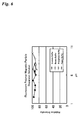
- Fig. 6 shows the result for measurements of fluorescence intensity about the fluorescent polymer magnetic particle dispersion.
- the fluorescent polymer magnetic particle dispersion maintains the strong fluorescence intensities at all of the pH range and the fluorescence intensities thereof did not affected by pH of the outer circumstance.
- the fluorescent polymer magnetic particles dispersion (pH 7.95) and sole Europium dispersion (pH 7.95) prepared by the above described procedure were added with EDTA which is known as a fluorescence quencher and then the fluorescence intensity was measured in the similar condition described above.
- EDTA concentrations were set to five conditions (0 mM, 0.1 mM, 0.3 mM, 1 mM, and 3 mM).
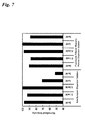
- Fig. 7 shows relations between the fluorescence intensities and the EDTA concentrations each for fluorescent polymer magnetic particle dispersion and sole Europium dispersion.
- the fluorescence starts to decrease about the EDTA concentration of 1 mM in the sole Europium dispersion and the fluorescence intensity decreased to 50% at the EDTA concentration 3 mM.
- the decrease of fluorescence intensity was not observed in the fluorescent polymer magnetic dispersion with respect to increment of the EDTA concentration as shown in Fig. 7 .
- the polymer magnetic particles modified with EGDE prepared in Example 1 was reacted with 3.0 M NH 4 OH for 24 hours at 70 Celsius degrees to introduce the amino groups to terminal epoxy groups of EGDE and then was reacted in 0.5 M dry succinic acid DMF solution for 12 hours (room temperature) to introduce carboxyl groups on the polymer magnetic particles.
- the Europium complexes were introduced using the similar method with Example 1 to prepare carboxylated polymer magnetic particles containing fluorescent molecule were prepared.
- a paraffin slice of the mammary gland CNB specimen was put on a slide glass and then paraffin removal treatment by xylene, hydrophilization treatment by methanol, and rinse with running water (15 min) were applied thereto. Further to the above sample, an antigen activation treatment (room temperature, 30 min) with DAKO Proteinase K (0.4 mg/ml/0.05 M TBS pH 7.5-7.7) was applied and then applied another rinsing with running water was applied followed by a blocking treatment with 5% BSA (20 min).
- Dispersion of the anti-EGFR antibody immobilized polymer magnetic particles containing fluorescent molecule prepared by the above procedure (dispersion solvent: 10 mM Hepes-NaOH (pH 7.9), 50 mM KCl, 1 mM EDTA, 0.1% (w/v) Tween 20) was dropped to the above sample and then a neodymium magnet was placed at back side for 10 min. Then, after the sample was rinsed by TBS, it was sealed by hydrophilic sealant.
- tissue slice of the same mammary gland CNB specimen was prepared by applying immunostaining with a immunoperoxidase protocol (staining solution: Mayer7s Hematoxylin).
- Fig. 8(a) shows a fluorescence microscope photograph of the sample by using the polymer magnetic particles containing fluorescent molecule of Example 1
- Fig. 8(b) shows a fluorescence microscope photograph of the reference sample which was applied with the immunostaining using the immunoperoxidase protocol.
- the immunostaining using the polymer particles containing fluorescent molecule of the present invention provided the immunostaining of cancerous positions with equal contrasts to those of the reference sample.
- the present invention may provide the polymer particles which contain much more fluorescent molecules inside the polymer layer and a method for preparation thereof.
- the polymer particles containing fluorescent molecule may function stably as the fluorescence marker with high luminance and hence, it may be expected to further applicative extensions as useful marker materials in the biosensing fields.
Landscapes
- Health & Medical Sciences (AREA)
- Life Sciences & Earth Sciences (AREA)
- Immunology (AREA)
- Chemical & Material Sciences (AREA)
- Engineering & Computer Science (AREA)
- Molecular Biology (AREA)
- Hematology (AREA)
- Urology & Nephrology (AREA)
- Biomedical Technology (AREA)
- Medicinal Chemistry (AREA)
- Food Science & Technology (AREA)
- General Health & Medical Sciences (AREA)
- Biotechnology (AREA)
- Microbiology (AREA)
- Cell Biology (AREA)
- Pathology (AREA)
- General Physics & Mathematics (AREA)
- Physics & Mathematics (AREA)
- Analytical Chemistry (AREA)
- Biochemistry (AREA)
- Power Engineering (AREA)
- Organic Chemistry (AREA)
- Polymers & Plastics (AREA)
- Chemical Kinetics & Catalysis (AREA)
- Inorganic Chemistry (AREA)
- Compositions Of Macromolecular Compounds (AREA)
- Processes Of Treating Macromolecular Substances (AREA)
- Luminescent Compositions (AREA)
- Medicines Containing Antibodies Or Antigens For Use As Internal Diagnostic Agents (AREA)
Abstract
Description
- The present invention relates to polymer particles containing fluorescent molecule, and more particularly relates to polymer particles which contain fluorescent molecules with high presence ratio in a polymer layer thereof and a method for preparation thereof.
- Recently, extended applications of magnetic particles as marker materials in a biosensing field have been variously studied. In this regards, Japanese Patent (Laid Open) No.
2006-88131 2008-127454 -
- PATENT LITERATURE 1: Japanese Patent (Laid-Open) No.
2006-88131 - PATENT LITERATURE 2: Japanese Patent (Laid-Open) No.
2008-127454 - The present invention has been completed regarding to the above described prior art and an object of the present invention is to provide polymer particles including fluorescent molecules with high presence ratio in the polymer layer and a method for preparation thereof.
- The inventors have been paid much efforts for the method to introduce much more fluorescent molecules in the polymer layer on the polymer particle and have succeeded in enlarging significantly the presence ratio of the fluorescent molecules. That is, the inventors have found that selling the polymer particles in a non-aqueous solvent excluding exclusively water preferably promotes selling of the polymer layer and transfer of the fluorescent molecules to the polymer layer could not protected by water molecules such that much more fluorescent molecule may be introduced into inside of the polymer layer. Furthermore, the inventors have found that addition of water to the reaction system prior to evaporation removal of the non-aqueous solvent prevents dry-up of the polymer particles by the water remained in the reaction system after the evaporation removal of the non-aqueous solvent. The inventors have reached to the present invention by discovering that the polymer particles including fluorescent molecules with high presence ratio of the fluorescent molecules preferably keep high dispersibility using the above described procedures.
- As described above, the present invention may provide a method and the method may comprise the steps of:
- swelling a coating polymer layer of polymer magnetic particles in a non-aqueous solvent dissolving therein fluorescent molecules and absorbing the fluorescent molecules inside the swelled coating polymer layer;
- adding water to the non-aqueous solvent in which the polymer magnetic particles absorbing the fluorescent molecules; and
- removing the non-aqueous solvent by evaporation.
- According to the present invention, a polymer magnetic particles may be provided and the fluorescent molecules may be introduced inside a coating polymer layer and the polymer magnetic particles containing fluorescent molecule may contain at least 100 nmol of the fluorescent molecules per 1 mg of the polymer particles containing fluorescent molecule. In the present invention, the coating polymer layer may be formed by a polymer consisting of a monomer component selected from styrene. Further according to the present invention, the fluorescent molecules are selected from rare earth metal chelate complexes and the rare earth metal consisting of the rare earth metal chelate complexes may be selected from the group consisting of Europium, Samarium, Terbium and Dysprosium.
- Further according to the present invention, a method for preparing a polymer magnetic particles containing fluorescent molecule may be provided and the method may comprise the steps of:
- removing water by solvent substitution from aqueous dispersion of polymer magnetic particles with a non-aqueous solvent and then swelling a coating polymer layer of polymer magnetic particles in a non-aqueous solvent dissolving therein fluorescent molecules and absorbing the fluorescent molecules inside the swelled coating polymer layer;
- adding water to the non-aqueous solvent in which the polymer magnetic particles absorbing the fluorescent molecules; and
- removing the non-aqueous solvent by evaporation. Further according to the present invention, a polymer magnetic particles containing fluorescent molecule, the fluorescent molecules being introduced inside a polymer layer, the polymer magnetic particles containing fluorescent molecule contain at least 100 nmol of the fluorescent molecules per 1 mg of the polymer particles containing fluorescent molecule.
- As described hereinabove, the present invention may provide polymer particles having high dispersibility while containing fluorescent molecule with high presence ratio in the polymer layer and the method for preparation thereof.
-
-
Fig. 1 shows a flowchart of a preparation process of polymer magnetic particles containing fluorescent molecule according to an embodiment of the present invention. -
Fig. 2 shows a result of measurement of weight-converted distribution of particle diameters of the polymer magnetic particles containing fluorescent molecule according to Example 1. -
Fig. 3 shows a result of measurement of weight-converted distribution of particle diameters of the polymer magnetic particles containing fluorescent molecule according to Comparative Example 1. -
Fig. 4 shows a result of measurement of weight-converted distribution of particle diameters of the polymer magnetic particles prior to introduction of fluorescent molecules. -
Fig. 5 shows a result of fluorescence measurement for sole europium dispersion solution. -
Fig. 6 shows a result of fluorescence strength for fluorescent polymer magnetic dispersion solution. -
Fig. 7 shows relations of respective fluorescence strength and ethylenediamine tetra acetic acid (EDTA) concentrations between fluorescent polymer magnetic dispersion solution and and europium dispersion solution. -
Fig. 8 shows photographic images of immunostaining by the polymer magnetic particles containing fluorescent molecule of Example 1. - Hereinafter, the present invention will be explained using embodiments depicted in drawings; however, the present invention must not limited to the embodiments described in the drawings.
- Now, the present invention particularly explained by using the practical example in which the fluorescent molecules are introduced into a coating polymer layer of the polymer magnetic particles having magnetic responsibility.
Fig. 1 shows a flowchart of a preparation method of the polymer magnetic particles containing fluorescent molecule according to the present embodiment. In the explained embodiment, first the water dispersion solution of the polymer magnetic particles is prepared in theprocess 100. Theprocess 100 may use according to the disclosure of Japanese Patent (Laid-Open) No.2006-88131 - First, a surface active agent is adsorbed to hydrophilic magnetic particles such as ferrite followed by hydrophobic treatment and then the monomer solution which is able to polymerize via. radical addition polymerization such as styrene or glycidyl methacrylate and a surface active agent having nonionic hydrophilic group are added to the ferromagnetic particles followed by addition and mixing of adequate amounts of water followed by sonication to prepare emulsion. The emulsion solution such prepared is heated to 60-80 Celsius degrees and then a hydrophilic initiator is added thereto to polymerize the monomers via. an emulsion polymerization. At last, the surface active agent may be rinsed to remove from the emulsified particles after the polymerization such that water dispersion solution of the polymer magnetic particles which are formed by coating the magnetic particles by polymer may be obtained.
- In the
subsequent process step 101, the solvent of the water dispersion solution of the polymer magnetic particles, i.e, water is replaced with non-aqueous solvent then solids are separated. Theprocess 101 may be for example performed according to the following steps: First the water is removed from the water dispersion solution of the polymer magnetic particles by using a centrifugal separator to subject solid-solution separation and then alcohol such as methanol is added to the residual pellets followed by further solid-solution separation and the above routine is repeated for several times to complete this step. The above alcohol rinsing removes hydrophilic materials included in the coating polymer layer such that the swelling of the coating polymer layer may be promoted. - In the
subsequent process step 102, the solution of fluorescent molecules dissolved into non-aqueous solvent (hereafter referred to fluorescent molecule solution) is added to the pellets of the polymer magnetic particles obtained by the solid-solvent separation of thestep 101 and then the mixture is subjected to shaking. In thestep 102, the coating polymer layers of the polymer magnetic particles are swelled by the non-aqueous solvent of the fluorescent molecular solution such that the fluorescent molecules are absorbed inside the swelled polymer together with the non-aqueous solvent. - Here, in the present embodiment, the fluorescent molecules introduced into the coating polymer layer may include such as, for example, rare earth metal chelate complexes. Rare earth metals included in the rare earth metal chelate complexes may include Samarium, Terbium, and Dysprosium as well as Europium.
- In the described embodiment, solvent replacement has been performed in the
former step 101 and then the water is removed from the reaction system of thestep 102. As the result, the swelling of the coating polymer layer is preferably promoted and the migration of the fluorescent molecules into the coating polymer layer could not be prevented by the water molecules so that much more fluorescent molecules may be introduced into the inside of the coating polymer layer. According to the present embodiment, the non-aqueous solvent used as the fluorescent molecule solution and as the solvent for swelling the coating polymer layer may be preferably selected from organic solvents which have affinity with water and have lower boiling point, i.e, higher vapor pressure than that of water. For example in the present embodiment, acetone may be used as the non-aqueous solvent which includes a hydrophilic group and has the boiling point of 56.5 Celsius degrees. - In the
step 102, preferably after the migration of the fluorescent molecules to the coating polymer layer becomes saturated, the water is added to the above reaction system in thestep 103. The water to be added may preferably be pure water such as distilled water or milliQ water. The amount of the water to be added may preferable be equal to the amount of the non-aqueous solvent of the above reaction system. - Lastly, in the
step 104, the non-aqueous solvent is removed from the reaction system of thestep 103 by evaporation. The evaporation removal of the non-aqueous solvent may be conducted by the method such as, for example, reduced pressure treatment, heat treatment, or heating at the reduced pressure under the condition that only the non-aqueous solvent having lower boiling point than water evaporate. As the result, the non-aqueous solvent absorbed in the coating polymer layer is removed and only the fluorescent molecules are remained in the coating polymer layer. Here, because the water added in thestep 103 is present in the reaction system, the polymer magnetic particles to which the fluorescent molecules are introduced may be prevented from the dry-up thereof so that high dispersibility of the polymer magnetic particles may preferably be maintained. Finally, the water emulsion of the polymer magnetic particles containing fluorescent molecule with high presence ratio may be prepared. - According to the above described procedures, the fluorescent molecules at least 100 nmol, preferably not less than 150 nmol, more preferably not less than 200 nm, desirably not less than 250 nmol per 1 mg of the polymer magnetic particles containing fluorescent molecule may be introduced therein. In other words, in the present embodiment, the fluorescent molecules at least 4.0×10⁵, preferably not less than 6.0×10⁵, more preferably not less than 8.0×10⁵, and desirably not less than 1.0×10⁶ molecules per one polymer magnetic particle containing fluorescent molecule may be introduced therein so that the fluorescence luminance sufficiently used as the marker may be attained.
- As described above, the polymer magnetic particles containing fluorescent molecule may be provided in the condition with keeping high dispersibility. That is to say, an excellent quantitative performance may be ensured according to the present preparation method. In addition, much more amounts of the fluorescent molecules may be introduced inside the polymer in the perfectly packed form according to the present preparation method so that the present polymer magnetic particles containing fluorescent molecule may provide stable fluorescence of high luminance in various circumstances such as in cells or in living bodies without affected by outer circumstance.
- The polymer magnetic particles of the present embodiment may be bound with ethylene glycol diglycidyl ether (EGDE), buthylene glycol diglycidyl ether, polyethylene glycol (PEG) on the surface of the coating polymer layer in order to improve binding properties to bioactive substances and the above method for introducing the fluorescence molecules may be similarly applied to the polymer magnetic particles in the condition that spacer molecules are combined thereto.
- As described above, the present invention has been described using the embodiment that the fluorescent molecules are introduced into the coating polymer layer of the polymer magnetic particles which are formed by the hydrophilic magnetic particles such as ferrite as a core; however, the scope of the present invention relates to a general method for introducing the fluorescent molecules into particle shaped polymers. Therefore, it is noted that the present invention should not be understood by limiting the objective of the fluorescent molecules introduction only to the polymer magnetic particles. That is to say, the present invention may be possible to incorporate the fluorescent molecules with high presence ratio as described above within the polymer particles by applying the processes after the
step 102 to aqueous emulsion of known polymer particles which do not include magnetic particles and are prepared by known method such as, for example, emulsion polymerization or suspension polymerization and this scope of the present invention will be understood by a person with ordinary skill in the art. - Now, the present polymer magnetic particles containing fluorescent molecule will be explained more practically by using examples; however, the present invention should not be limited to the examples explained hereinafter.
- FeCl2 aqueous solution was added to NaOH aqueous solution (1M) and the oxidization treatment by NaNO3 was applied followed by keeping at a constant temperature to precipitate ferrite particles with an average particle size of 40 nm. To the 150 mg of this ferrite suspension NaOH aqueous solution of 10-undecenoic acid was added to adsorb the undecenoic acid to the saturation thereof and the residual NaOH solution of 10-undecenoic acid was rinsed and removed to obtain hydrophobic ferromagnetic particles.
- To the above hydrophobic ferromagnetic particles, aqueous solution of a nonionic surface active agent having PEO chains Emulgen 1150-70 (Kao Co. Ltd.) 0.3g was added followed by sonication to make the particles hydrophilic again by adsorbing the nonionic surface active agent to the hydrophobic ferromagnetic particles and the ferromagnetic particles were dispersed in water.
- Next, the monomer mixture which includes styrene (monomer) 2.7 g, GMA (glycidyl methacrylate, monomer) 0.3g, AIBN (azobis-isobutyronitryl, initiator) 0.025g, DVB (divinyl benzene, crosslinker) 0.08g, and diethyl ether 2.5g, was added to the colloidal dispersion solution and the mixture was subjected to the sonication to obtain the emulsified solution.
- Further next, water was added to this emulsified solution until the total amount of the mixture was 125g and then applied sonication followed by heating under stirring at 350 rpm. After 20-30 minutes the temperature was raised to 70 Celsius degrees, the aqueous solution prepared by dissolving a water soluble initiator V-50 (Wako Pure Chemical Industries, Ltd.) 50 mg in water 5 ml was added and the polymerization reaction was conducted for 12 hours. The obtained particles by the emulsion polymerization were rinsed to obtain the aqueous suspension of the polymer magnetic particles which were the ferrite particles were coated by the polymer.
- Furthermore, the polymer magnetic particles prepared by the above procedures was modified by binding ethylene glycol diglycidyl ether (EGDE) as the spacer. First, NH4OH aqueous solution was added to the slurry of the particles in order to introduce the amino group and the mixture was reacted under controlled pH with HCl aqueous solution to introduce the amino groups by opening the epoxy groups in GMA.
- Next, the amino groups of polymer coated ferrite particles were bound with the epoxy groups of EGDE to the open-ringed amino groups of the polymer magnetic particles by charging excess amounts of EGDE and the stirred under controlled pH with NaOH. After the reaction, water rising was applied thereto by using a magnetic separation operation to obtain aqueous suspension of the polymer magnetic particles modified by EGDE.
- Eu(TTA)3(TOPO)2 complex (Eu complex which was coordinated with tenoyltri-fluoro-acetone (1.1 mg was added to acetone 0.22 g to prepare the acetone solution of the fluorescent molecules.
- In order to promote the swelling of the polymer layer of the polymer magnetic particles, alcohol rinsing was applied to the polymer magnetic particles to remove hydrophilic substances adsorbed to the polymer layer. Particularly, the
aqueous suspension 1 mg of the polymer magnetic particles prepared by the above procedures was subjected to solid-liquid separation by a centrifugal separator to remove water and methanol was added to the residual pellets and the mixture was dispersed and then was subjected to the solid-liquid separation again by the similar procedures; such procedures were repeated for several times. In the last solid-liquid separation, the residual pellets after removal of the methanol were used in the following examples and comparative examples. - To the pellets obtained by the above procedures, the acetone solution containing 1.08g of the fluorescent molecule was added to disperse the polymer magnetic particles in the acetone solution. The obtained acetone solution was shaken for 1 hour at a room temperature and then, milliQ water was added to the acetone solution. The milliQ water was added in the same amount with the acetone solution. Then, the acetone was removed by vacuum heating at 60 Celsius degrees to obtain the aqueous dispersion of the polymer magnetic particles.
- To the pellets obtained by the above procedures, milliQ water was added to disperse the polymer magnetic particles, Next, the acetone solution including 1.08 µmol of the fluorescent molecules was added and mixed to the aqueous suspension. Here, the acetone solution of the fluorescent molecules was added in the same amount to the amount of the milliQ water. Lastly, the mixed solution was shaken for 1 hour at the room temperature and the acetone was removed by vacuum heating at 60 Celsius degrees to obtain the aqueous dispersion of the polymer magnetic particles.
- To the pellets obtained by the above procedures, the acetone solution including 1.08µmol was added and mixed to the aqueous suspension. The acetone solution was shaken for 1 hour at the room temperature and the acetone was removed by vacuum heating at 60 Celsius degrees to obtain the aqueous dispersion of the polymer magnetic particles.
- For each of the aqueous suspension obtained Example 1 and Comparative Example 1, the solid-liquid separation was applied by using the centrifugal separator and the obtained pellets were rinsed by dispersing in 0.1% NP-40 (surface active agent "NONIDET" P-40, supplier; NACALAI TESQUE, INC.) solution and then were subjected to the evaluation of dispersibility after dispersing in the water. In addition, the powdery polymer magnetic particles obtained in Comparative Example 2 was similarly added with the solution of 0.1% NP-40 to try to disperse in water. The evaluation of the dispersibility was made by results of measurements of weight converted distribution of the particle diameters using a dynamic light scattering method. For measurements of the weight converted distribution of the particle diameter, FPAR-1000 (OTSUKA ELECTRONICS CO., LTD.) was used.
-
Fig. 2 shows the result of measurement of the weight converted distribution of the particle diameters for the polymer magnetic particles containing fluorescent molecule of Example 1 andFig. 3 shows the result of measurement of the weight converted distribution of the particle diameters for the polymer magnetic particles containing fluorescent molecule of Comparative Example 1.Fig. 4 shows the result of measurement of the weight converted distribution of the particle diameters for the polymer magnetic particles prior to the introduction of the fluorescent molecules. The polymer magnetic particles prior to the introduction of the fluorescent molecules showed a single peak distribution as shown inFig. 4 and both of Example 1 and Comparative Example 1 also shows a single peak as their results shown inFig. 2 andFig. 3 which were similar to the result shown inFig. 4 ; The average particle sizes were in any cases to be about 220 nm and then it was confirmed that single particle dispersion was maintained after the introduction of the fluorescent molecules. Though the inventors tried to measure the specimen of Comparative Example 2, the sample polymer magnetic particles were significantly aggregated such that dispersion into water was impossible and then the measurement itself was impossible. From the result of the Example 1, it was shown that the present polymer magnetic particles containing fluorescent molecule had sufficient dispersibility. This fact may ensure excellent quantitative performance in the usage for sensing markers. - Next, for each of Example 1 and Comparative Example 1, the introduction amounts of Eu(TTA)3(TOPO)2 complex. Particularly, the Europium complex was exuded from the polymer magnetic particles introduced with the fluorescent molecules using acetone and the exuded Europium was subjected to quantitative analysis using an Atomic Emission Spectrometry (ICE-OES, Leeman Labs, Inc U.S.A. Apparatus Name: Prodigy ICP). The results of the quantitative measurements are shown in Table 1 as follows:
-
[Table 1] Europium amounts (nmol) per polymer magnetic particles 1 mgEuropium complex numbers per one polymer magnetic particle <Example 1 386 1.41 × 10⁶ Compatative Example 1 55.1 2.01 × 10⁵ - As shown in Table 1 above, Europium of 55.1 nmol per 1 mg of the polymer magnetic particles in Comparative Example 1. This value, when translated assuming the weight of one polymer magnetic particle to be 6.07 × 10⁻¹⁵ g, means that the Europium complexes of 2.01 × 10⁵ per one polymer magnetic particle were introduced. Here, the weight of one polymer magnetic particle was derived by the following procedures: the volume ratio of the polymer layer in the present polymer magnetic particle was decided to be about 62 % by a thermal analysis. From the specific weight of magnetite (5.3 g/cm3) and the specific weight of polymer (1.0 g/cm3), the specific weight of the present polymer magnetic particles was estimated to be 1.45 g/cm3. On the other hand, the particle size of the polymer magnetic particle of the present invention was determined to be about 200 nm and hence the weight per one polymer magnetic particle was estimated to be 7 × 10-15 g.
- On the other hand, in Example 1, it was determined that 386 nmol of Europium was introduced to the polymer magnetic particle per 1 mg of the polymer magnetic particles. This means that 1.41 × 10⁶ Europium complexes were introduced into one polymer magnetic particle such that it was determined that in Example 1 the introduction amounts of the fluorescent molecules were increased to be about 7 times than the amounts of Comparative Example 1.
- Furthermore, with respect to the polymer magnetic particles prepared in Example 1, it was examined by following procedures that the fluorescent molecules (Eu(TTA)3(TOPO)2 complex) is introduced in the form in which the molecules were closely enclosed into the polymer rather than attached to the surface thereof.
- Each of dispersion solutions (hereafter referred to fluorescent polymer magnetic particle dispersion) of the polymer magnetic particles prepared in Example 1 in four pH solutions of four buffers (acetic acid buffer, boric acid+sodium hydroxide buffer, phosphoric acid buffer, Hepes-NaOH buffer) was prepared. Each of the fluorescent polymer magnetic particle dispersions was prepared to be particle concentrations of 20 µg/ml.
- On the other hand, micellar Eu(TTA)3(TOPO)2 complex was dispersed in the above four kinds of pH solutions to prepare Comparative Examples (hereafter referred to sole Europium dispersion). Here, each of the sole Europium dispersion was prepared to their concentration to be 1 nmol/ml.
- Each of the fluorescent polymer magnetic particle dispersions and sole Europium dispersion prepared by the above procedure was measured their fluorescence luminance by using a fluorescence spectrophotometer LS-55 (Perkin Elmer). In the measurements, the excitation was set to be 340 nm and the emission was set to be 550-700 nm; the fluorescence intensity at 618 nm was adopted as the fluorescence intensity. Slit widths were 10.0 nm both for the excitation and emission.
-
Fig. 5 shows the results for the measurements of the fluorescence intensity about the sole Europium dispersion. As shown inFig. 5 , strong fluorescence was observed at pH of the neutral for the sole Europium dispersion in all buffers; however, the fluorescence intensities decreased promptly at the other pH range and it was found that the fluorescence intensity of Eu(TTA)3(TOPO)2 complex was influenced strongly by pH of the outer circumstance. - On the other hand,
Fig. 6 shows the result for measurements of fluorescence intensity about the fluorescent polymer magnetic particle dispersion. As shown inFig. 6 , the fluorescent polymer magnetic particle dispersion maintains the strong fluorescence intensities at all of the pH range and the fluorescence intensities thereof did not affected by pH of the outer circumstance. - The fluorescent polymer magnetic particles dispersion (pH 7.95) and sole Europium dispersion (pH 7.95) prepared by the above described procedure were added with EDTA which is known as a fluorescence quencher and then the fluorescence intensity was measured in the similar condition described above. Now, EDTA concentrations were set to five conditions (0 mM, 0.1 mM, 0.3 mM, 1 mM, and 3 mM).
-
Fig. 7 shows relations between the fluorescence intensities and the EDTA concentrations each for fluorescent polymer magnetic particle dispersion and sole Europium dispersion. As shown inFig. 7 , the fluorescence starts to decrease about the EDTA concentration of 1 mM in the sole Europium dispersion and the fluorescence intensity decreased to 50% at the EDTA concentration 3 mM. On the other hand, the decrease of fluorescence intensity was not observed in the fluorescent polymer magnetic dispersion with respect to increment of the EDTA concentration as shown inFig. 7 . - The above measurement results indicated that the Europium complex introduced into the fluorescent polymer magnetic particles prepared in Example 1 did not affected by the external circumstance. This fact suggested that the Europium complexes were introduced in the polymer being enclosed closely rather than being attached to the surface of the polymer.
- From the results of Example described above, much more fluorescence molecules might be enclosed perfectly and closely inside of the polymer in the polymer magnetic particles containing fluorescent molecule of the present invention. This fact suggests that the polymer magnetic particles containing fluorescent molecule ensure to supply high luminance fluorescence stably without being affected by the outer circumstance.
- Next, immunostaining (fluorescence immunostaining method) of a mammary gland CNB specimen by immunofluorescence method was performed using the polymer magnetic particle containing fluorescent molecule prepared in Example 1.
- The polymer magnetic particles modified with EGDE prepared in Example 1 was reacted with 3.0 M NH4OH for 24 hours at 70 Celsius degrees to introduce the amino groups to terminal epoxy groups of EGDE and then was reacted in 0.5 M dry succinic acid DMF solution for 12 hours (room temperature) to introduce carboxyl groups on the polymer magnetic particles. To these polymer magnetic particles the Europium complexes were introduced using the similar method with Example 1 to prepare carboxylated polymer magnetic particles containing fluorescent molecule were prepared.
- To 1 mg of the carboxylated polymer magnetic particles containing fluorescent molecule prepared by the above procedure, 200 µl of milliQ solution (20 mg/ml) of EDC (1-ethyl-3-(3-dimethyl aminopropyl) carbodiimide) was added and the mixture was shaken for 30 min. at 4 Celsius degrees to activate carboxyl groups followed by quickly rinsing using the centrifugal separation with milliQ cooled on 500µl of ice and immobilization buffer for the antibody on the particle each for one time. Subsequently, the solution of anti-EGFR antibody of 50 µg equivalence dissolved in 50 µl of the immobilization buffer for the antibody on the particle was added. After the shaking for 2 hours at 4 Celsius degrees, it was performed by addition of 5 µl of 1 M ethanol amine followed by shaking for one day and one night at 4 Celsius degrees. Lastly, five times rinsing with 1 ml of the immobilization buffer for the antibody on the particle were performed and the resulted anti-EGFR antibody immobilized polymer magnetic particles containing fluorescent molecule were stored in dark at 4 Celsius degrees.
- A paraffin slice of the mammary gland CNB specimen was put on a slide glass and then paraffin removal treatment by xylene, hydrophilization treatment by methanol, and rinse with running water (15 min) were applied thereto. Further to the above sample, an antigen activation treatment (room temperature, 30 min) with DAKO Proteinase K (0.4 mg/ml/0.05 M TBS pH 7.5-7.7) was applied and then applied another rinsing with running water was applied followed by a blocking treatment with 5% BSA (20 min).
- Dispersion of the anti-EGFR antibody immobilized polymer magnetic particles containing fluorescent molecule prepared by the above procedure (dispersion solvent: 10 mM Hepes-NaOH (pH 7.9), 50 mM KCl, 1 mM EDTA, 0.1% (w/v) Tween 20) was dropped to the above sample and then a neodymium magnet was placed at back side for 10 min. Then, after the sample was rinsed by TBS, it was sealed by hydrophilic sealant.
- Here, a tissue slice of the same mammary gland CNB specimen was prepared by applying immunostaining with a immunoperoxidase protocol (staining solution: Mayer7s Hematoxylin).
-
Fig. 8(a) shows a fluorescence microscope photograph of the sample by using the polymer magnetic particles containing fluorescent molecule of Example 1 andFig. 8(b) shows a fluorescence microscope photograph of the reference sample which was applied with the immunostaining using the immunoperoxidase protocol. As shown inFig. 8 , it was confirmed that the immunostaining using the polymer particles containing fluorescent molecule of the present invention provided the immunostaining of cancerous positions with equal contrasts to those of the reference sample. - From the results of Examples described hereinabove, it has been confirmed that the necessary and sufficient fluorescence luminance may be supplied when the polymer magnetic particles containing fluorescent molecule of the present invention is applied to the fluorescence marker for the biosensing with using the affinity reaction.
- As explained hereinbefore, the present invention may provide the polymer particles which contain much more fluorescent molecules inside the polymer layer and a method for preparation thereof. The polymer particles containing fluorescent molecule may function stably as the fluorescence marker with high luminance and hence, it may be expected to further applicative extensions as useful marker materials in the biosensing fields.
Claims (11)
- A method for preparing a polymer magnetic particles containing fluorescent molecule, the method comprising the steps of:swelling a coating polymer layer of polymer magnetic particles in a non-aqueous solvent dissolving therein fluorescent molecules and absorbing the fluorescent molecules inside the swelled coating polymer layer;adding water to the non-aqueous solvent in which the polymer magnetic particles absorbing the fluorescent molecules; andremoving the non-aqueous solvent by evaporation.
- The method of claim 1, wherein the non-aqueous solvent has affinity with water and has a lower boiling point and a higher vapor pressure than those of water.
- A polymer magnetic particles containing fluorescent molecule, the fluorescent molecules being introduced inside a coating polymer layer, the polymer magnetic particles containing fluorescent molecule contain at least 100 nmol of the fluorescent molecules per 1 mg of the polymer particles containing fluorescent molecule.
- The polymer magnetic particle containing fluorescent molecule of claim 3, wherein the coating polymer layer is formed by a polymer consisting of a monomer ingredient selected from styrene.
- The polymer magnetic particle containing fluorescent molecule of claims 3 or 4, wherein the fluorescent molecules are selected from rare earth metal chelate complexes.
- The polymer magnetic particle containing fluorescent molecule of claim 5, wherein the rare earth metal consisting of the rare earth metal chelate complexes are selected from the group consisting of Europium, Samarium, Terbium and Dysprosium.
- A method for preparing a polymer magnetic particles containing fluorescent molecule, the method comprising the steps of:removing water by solvent substitution from aqueous dispersion of polymer magnetic particles with a non-aqueous solvent and then swelling a coating polymer layer of polymer magnetic particles in a non-aqueous solvent dissolving therein fluorescent molecules and absorbing the fluorescent molecules inside the swelled coating polymer layer;adding water to the non-aqueous solvent in which the polymer magnetic particles absorbing the fluorescent molecules; andremoving the non-aqueous solvent by evaporation.
- A method for preparing a polymer magnetic particles containing fluorescent molecule, the method comprising the steps of:dispersing a polymer particles in a non-aqueous solvent dissolving therein fluorescent molecules to swell a polymer layer while absorbing the fluorescent molecules inside the swelled polymer layer;adding water to the non-aqueous solvent in which the polymer magnetic particles absorbing the fluorescent molecules; andremoving the non-aqueous solvent by evaporation.
- A polymer magnetic particles containing fluorescent molecule, the fluorescent molecules being introduced inside a polymer layer, the polymer magnetic particles containing fluorescent molecule contain at least 100 nmol of the fluorescent molecules per 1 mg of the polymer particles containing fluorescent molecule.
- A method for immunostaining by a fluorescence antibody method; the method comprising the steps of:providing a tissue slice put on a substrate with the polymer magnetic particles containing fluorescent molecule of any one from claim 3 to claim 6 to which an antigen is immobilized andcausing magnetic guidance forcibly the polymer magnetic particles containing fluorescent molecule toward the tissue slice.
- The fluorescence immunostaining method of claim 10, wherein the magnetic guidance is performed by placing a magnet at the back side of the substrate.
Applications Claiming Priority (2)
| Application Number | Priority Date | Filing Date | Title |
|---|---|---|---|
| JP2008232832 | 2008-09-11 | ||
| PCT/JP2009/004476 WO2010029739A1 (en) | 2008-09-11 | 2009-09-10 | Polymer particles containing fluorescent molecule and process for producing same |
Publications (3)
| Publication Number | Publication Date |
|---|---|
| EP2333007A1 true EP2333007A1 (en) | 2011-06-15 |
| EP2333007A4 EP2333007A4 (en) | 2012-08-01 |
| EP2333007B1 EP2333007B1 (en) | 2014-11-05 |
Family
ID=42005003
Family Applications (1)
| Application Number | Title | Priority Date | Filing Date |
|---|---|---|---|
| EP09812888.7A Active EP2333007B1 (en) | 2008-09-11 | 2009-09-10 | Polymer particles containing fluorescent molecule and process for producing same |
Country Status (5)
| Country | Link |
|---|---|
| US (2) | US9494580B2 (en) |
| EP (1) | EP2333007B1 (en) |
| JP (1) | JP5574492B2 (en) |
| CN (1) | CN102149753B (en) |
| WO (1) | WO2010029739A1 (en) |
Families Citing this family (9)
| Publication number | Priority date | Publication date | Assignee | Title |
|---|---|---|---|---|
| US9327024B2 (en) | 2009-10-30 | 2016-05-03 | Tokyo Institute Of Technology | Polymer coated ferrite fine particles and method for preparing polymer coated ferrite fine particles |
| CN104487845B (en) | 2012-07-06 | 2017-06-20 | 凸版印刷株式会社 | The detecting system of analyte |
| WO2014136776A1 (en) * | 2013-03-08 | 2014-09-12 | コニカミノルタ株式会社 | Resin particles for fluorescent labels |
| US10895571B2 (en) * | 2013-06-06 | 2021-01-19 | Siemens Healthineers Nederland B.V. | Reagents, methods and devices to prevent aggregation in particle based tests for the detection of multimeric target molecules |
| JP7402050B2 (en) * | 2017-12-28 | 2023-12-20 | 積水化学工業株式会社 | Metal complex particles and immunoassay reagents using the same |
| CN110244044B (en) * | 2019-06-13 | 2023-04-11 | 苏州百源基因技术有限公司 | Rare earth dyed magnetic bead and preparation and application thereof |
| CN110961071B (en) * | 2019-12-20 | 2022-05-27 | 湖北海汇化工科技有限公司 | Wastewater treatment agent, preparation method and application thereof, and wastewater treatment method |
| CN112812764B (en) * | 2021-01-07 | 2025-09-19 | 中国人民解放军陆军防化学院 | Water-based sprayable polymer for mustard fluorescence detection and marking and preparation method thereof |
| EP4435048A4 (en) * | 2021-11-26 | 2025-10-22 | Canon Kk | PARTICLES FOR SAMPLE EXAMINATIONS |
Family Cites Families (14)
| Publication number | Priority date | Publication date | Assignee | Title |
|---|---|---|---|---|
| JPH01103631A (en) * | 1987-10-15 | 1989-04-20 | Soken Kagaku Kk | Composite particle containing useful substance and its preparation |
| US6399397B1 (en) * | 1992-09-14 | 2002-06-04 | Sri International | Up-converting reporters for biological and other assays using laser excitation techniques |
| JP4357112B2 (en) * | 1997-10-14 | 2009-11-04 | ルミネックス コーポレイション | Precise fluorescent dyed particles and methods for making and using the same |
| WO2000028598A1 (en) * | 1998-11-10 | 2000-05-18 | Biocrystal Limited | Methods for identification and verification |
| JP2001126909A (en) * | 1999-10-29 | 2001-05-11 | Tokushu Paper Mfg Co Ltd | Magnetic particles and anti-counterfeit paper using the particles |
| GB0228914D0 (en) * | 2002-12-11 | 2003-01-15 | Dynal Biotech Asa | Particles |
| JP5152884B2 (en) | 2004-09-27 | 2013-02-27 | 国立大学法人東京工業大学 | Method for producing polymer-coated ferromagnetic particles and polymer-coated ferromagnetic particles |
| CN101650998B (en) * | 2005-01-20 | 2013-02-06 | 卢米尼克斯股份有限公司 | Microspheres, populations of microspheres, and methods for forming microspheres |
| WO2007029980A1 (en) * | 2005-09-08 | 2007-03-15 | Biterials Co., Ltd. | Magnetic nanoparticle having fluorescent and preparation method thereof and use thereof |
| JP5147039B2 (en) * | 2006-05-17 | 2013-02-20 | 国立大学法人山口大学 | Resin particles and method for producing the same |
| JP5156944B2 (en) | 2006-11-20 | 2013-03-06 | 国立大学法人東京工業大学 | Magnetic polymer particles having fluorescent function and production method thereof |
| CN101066988B (en) * | 2007-05-10 | 2010-05-19 | 复旦大学 | A kind of magnetic metal oxide microsphere with core-shell structure and preparation method thereof |
| CN101952725B (en) | 2007-12-03 | 2014-12-10 | 多摩川精机株式会社 | Biosensing method using coated magnetic microparticles and biosensing device to be used in the method |
| JP5531232B2 (en) | 2007-12-04 | 2014-06-25 | 多摩川精機株式会社 | Polymer-coated inorganic fine particles and method for producing the same |
-
2009
- 2009-09-10 CN CN2009801356862A patent/CN102149753B/en active Active
- 2009-09-10 WO PCT/JP2009/004476 patent/WO2010029739A1/en not_active Ceased
- 2009-09-10 US US13/060,882 patent/US9494580B2/en active Active
- 2009-09-10 EP EP09812888.7A patent/EP2333007B1/en active Active
- 2009-09-10 JP JP2010528640A patent/JP5574492B2/en active Active
-
2015
- 2015-05-06 US US14/705,244 patent/US20150233935A1/en not_active Abandoned
Also Published As
| Publication number | Publication date |
|---|---|
| EP2333007B1 (en) | 2014-11-05 |
| JP5574492B2 (en) | 2014-08-20 |
| WO2010029739A1 (en) | 2010-03-18 |
| JPWO2010029739A1 (en) | 2012-02-02 |
| EP2333007A4 (en) | 2012-08-01 |
| US20110183355A1 (en) | 2011-07-28 |
| CN102149753A (en) | 2011-08-10 |
| CN102149753B (en) | 2013-09-25 |
| US9494580B2 (en) | 2016-11-15 |
| US20150233935A1 (en) | 2015-08-20 |
Similar Documents
| Publication | Publication Date | Title |
|---|---|---|
| US20150233935A1 (en) | Polymer particle containing fluorescent molecule and method for producing the same | |
| Himmelstoß et al. | Long‐term colloidal and chemical stability in aqueous media of NaYF4‐type upconversion nanoparticles modified by ligand‐exchange | |
| Deng et al. | Preparation, characterization, and application of multistimuli‐responsive microspheres with fluorescence‐labeled magnetic cores and thermoresponsive shells | |
| Bhattacharya et al. | Temperature‐, pH‐, and magnetic‐field‐sensitive hybrid microgels | |
| Abdelmonem et al. | Charge and agglomeration dependent in vitro uptake and cytotoxicity of zinc oxide nanoparticles | |
| CN101765562A (en) | Method for producing surface-coated inorganic particles | |
| Blin et al. | Synthesis and in vitro properties of iron oxide nanoparticles grafted with brushed phosphorylcholine and polyethylene glycol | |
| Clara-Rahola et al. | Au@ p4VP core@ shell pH-sensitive nanocomposites suitable for drug entrapment | |
| US7914710B2 (en) | Loading quantum dots into thermo-responsive microgels by reversible transfer from organic solvents to water | |
| Sun et al. | Facile graft of poly (2‐methacryloyloxyethyl phosphorylcholine) onto Fe3O4 nanoparticles by ATRP: Synthesis, properties, and biocompatibility | |
| Mizutani et al. | Preparation of spherical nanocomposites consisting of silica core and polyacrylate shell by emulsion polymerization | |
| Iovescu et al. | Chitosan-polyglycidol complexes to coating iron oxide particles for dye adsorption | |
| CN105435753A (en) | A mesoporous magnetic polymer composite sphere, a preparing method thereof and applications of the composite sphere | |
| Walter et al. | Effect of the Functionalization Process on the Colloidal, Magnetic Resonance Imaging, and Bioelimination Properties of Mono‐or Bisphosphonate‐Anchored Dendronized Iron Oxide Nanoparticles | |
| Li et al. | Preparation of responsive micrometer‐sized microgel particles with a highly functionalized shell | |
| Bilalis et al. | Multi‐responsive polymeric microcontainers for potential biomedical applications: synthesis and functionality evaluation | |
| Upadhyaya et al. | Influence of Magnetic Nanoparticles on PISA Preparation of Poly (Methacrylic Acid)‐b‐Poly (Methylmethacrylate) Nano‐Objects | |
| JP5156944B2 (en) | Magnetic polymer particles having fluorescent function and production method thereof | |
| Liu et al. | Smart polymeric particle encapsulated gadolinium oxide and europium: theranostic probes for magnetic resonance/optical imaging and antitumor drug delivery | |
| Šponarová et al. | The use of oligoperoxide-coated magnetic nanoparticles to label stem cells | |
| Abtahi et al. | Testing a nanoparticle reagent for imaging mass cytometry | |
| Jańczewski et al. | Covalent assembly of functional inorganic nanoparticles by “click” chemistry in water | |
| Mastour Tehrani et al. | Hybrid microgels with confined needle-like lanthanide phosphate nanocrystals | |
| Pikabea et al. | Synthesis and characterization of PDEAEMA‐based magneto‐nanogels: Preliminary results on the biocompatibility with cells of human peripheral blood | |
| Dou et al. | A Facile One‐Pot Synthesis to Dextran‐Based Nanoparticles with Carboxy Functional Groups |
Legal Events
| Date | Code | Title | Description |
|---|---|---|---|
| PUAI | Public reference made under article 153(3) epc to a published international application that has entered the european phase |
Free format text: ORIGINAL CODE: 0009012 |
|
| 17P | Request for examination filed |
Effective date: 20110325 |
|
| AK | Designated contracting states |
Kind code of ref document: A1 Designated state(s): AT BE BG CH CY CZ DE DK EE ES FI FR GB GR HR HU IE IS IT LI LT LU LV MC MK MT NL NO PL PT RO SE SI SK SM TR |
|
| AX | Request for extension of the european patent |
Extension state: AL BA RS |
|
| DAX | Request for extension of the european patent (deleted) | ||
| A4 | Supplementary search report drawn up and despatched |
Effective date: 20120704 |
|
| RIC1 | Information provided on ipc code assigned before grant |
Ipc: G01N 33/543 20060101ALI20120628BHEP Ipc: C08J 3/12 20060101AFI20120628BHEP Ipc: G01N 33/533 20060101ALI20120628BHEP Ipc: H01F 1/00 20060101ALI20120628BHEP |
|
| 17Q | First examination report despatched |
Effective date: 20130325 |
|
| GRAP | Despatch of communication of intention to grant a patent |
Free format text: ORIGINAL CODE: EPIDOSNIGR1 |
|
| RIC1 | Information provided on ipc code assigned before grant |
Ipc: H01F 1/00 20060101ALI20140403BHEP Ipc: H01F 1/09 20060101ALI20140403BHEP Ipc: H01F 1/06 20060101ALI20140403BHEP Ipc: G01N 33/533 20060101ALI20140403BHEP Ipc: C08J 3/12 20060101AFI20140403BHEP Ipc: G01N 33/543 20060101ALI20140403BHEP |
|
| INTG | Intention to grant announced |
Effective date: 20140508 |
|
| GRAS | Grant fee paid |
Free format text: ORIGINAL CODE: EPIDOSNIGR3 |
|
| GRAA | (expected) grant |
Free format text: ORIGINAL CODE: 0009210 |
|
| AK | Designated contracting states |
Kind code of ref document: B1 Designated state(s): AT BE BG CH CY CZ DE DK EE ES FI FR GB GR HR HU IE IS IT LI LT LU LV MC MK MT NL NO PL PT RO SE SI SK SM TR |
|
| REG | Reference to a national code |
Ref country code: GB Ref legal event code: FG4D |
|
| REG | Reference to a national code |
Ref country code: CH Ref legal event code: EP |
|
| REG | Reference to a national code |
Ref country code: AT Ref legal event code: REF Ref document number: 694620 Country of ref document: AT Kind code of ref document: T Effective date: 20141115 |
|
| REG | Reference to a national code |
Ref country code: IE Ref legal event code: FG4D |
|
| REG | Reference to a national code |
Ref country code: DE Ref legal event code: R096 Ref document number: 602009027622 Country of ref document: DE Effective date: 20141218 |
|
| REG | Reference to a national code |
Ref country code: AT Ref legal event code: MK05 Ref document number: 694620 Country of ref document: AT Kind code of ref document: T Effective date: 20141105 |
|
| REG | Reference to a national code |
Ref country code: NL Ref legal event code: VDEP Effective date: 20141105 |
|
| REG | Reference to a national code |
Ref country code: LT Ref legal event code: MG4D |
|
| PG25 | Lapsed in a contracting state [announced via postgrant information from national office to epo] |
Ref country code: ES Free format text: LAPSE BECAUSE OF FAILURE TO SUBMIT A TRANSLATION OF THE DESCRIPTION OR TO PAY THE FEE WITHIN THE PRESCRIBED TIME-LIMIT Effective date: 20141105 Ref country code: PT Free format text: LAPSE BECAUSE OF FAILURE TO SUBMIT A TRANSLATION OF THE DESCRIPTION OR TO PAY THE FEE WITHIN THE PRESCRIBED TIME-LIMIT Effective date: 20150305 Ref country code: NO Free format text: LAPSE BECAUSE OF FAILURE TO SUBMIT A TRANSLATION OF THE DESCRIPTION OR TO PAY THE FEE WITHIN THE PRESCRIBED TIME-LIMIT Effective date: 20150205 Ref country code: FI Free format text: LAPSE BECAUSE OF FAILURE TO SUBMIT A TRANSLATION OF THE DESCRIPTION OR TO PAY THE FEE WITHIN THE PRESCRIBED TIME-LIMIT Effective date: 20141105 Ref country code: LT Free format text: LAPSE BECAUSE OF FAILURE TO SUBMIT A TRANSLATION OF THE DESCRIPTION OR TO PAY THE FEE WITHIN THE PRESCRIBED TIME-LIMIT Effective date: 20141105 Ref country code: NL Free format text: LAPSE BECAUSE OF FAILURE TO SUBMIT A TRANSLATION OF THE DESCRIPTION OR TO PAY THE FEE WITHIN THE PRESCRIBED TIME-LIMIT Effective date: 20141105 Ref country code: IS Free format text: LAPSE BECAUSE OF FAILURE TO SUBMIT A TRANSLATION OF THE DESCRIPTION OR TO PAY THE FEE WITHIN THE PRESCRIBED TIME-LIMIT Effective date: 20150305 |
|
| PG25 | Lapsed in a contracting state [announced via postgrant information from national office to epo] |
Ref country code: GR Free format text: LAPSE BECAUSE OF FAILURE TO SUBMIT A TRANSLATION OF THE DESCRIPTION OR TO PAY THE FEE WITHIN THE PRESCRIBED TIME-LIMIT Effective date: 20150206 Ref country code: LV Free format text: LAPSE BECAUSE OF FAILURE TO SUBMIT A TRANSLATION OF THE DESCRIPTION OR TO PAY THE FEE WITHIN THE PRESCRIBED TIME-LIMIT Effective date: 20141105 Ref country code: PL Free format text: LAPSE BECAUSE OF FAILURE TO SUBMIT A TRANSLATION OF THE DESCRIPTION OR TO PAY THE FEE WITHIN THE PRESCRIBED TIME-LIMIT Effective date: 20141105 Ref country code: HR Free format text: LAPSE BECAUSE OF FAILURE TO SUBMIT A TRANSLATION OF THE DESCRIPTION OR TO PAY THE FEE WITHIN THE PRESCRIBED TIME-LIMIT Effective date: 20141105 Ref country code: SE Free format text: LAPSE BECAUSE OF FAILURE TO SUBMIT A TRANSLATION OF THE DESCRIPTION OR TO PAY THE FEE WITHIN THE PRESCRIBED TIME-LIMIT Effective date: 20141105 Ref country code: AT Free format text: LAPSE BECAUSE OF FAILURE TO SUBMIT A TRANSLATION OF THE DESCRIPTION OR TO PAY THE FEE WITHIN THE PRESCRIBED TIME-LIMIT Effective date: 20141105 Ref country code: CY Free format text: LAPSE BECAUSE OF FAILURE TO SUBMIT A TRANSLATION OF THE DESCRIPTION OR TO PAY THE FEE WITHIN THE PRESCRIBED TIME-LIMIT Effective date: 20141105 |
|
| PG25 | Lapsed in a contracting state [announced via postgrant information from national office to epo] |
Ref country code: EE Free format text: LAPSE BECAUSE OF FAILURE TO SUBMIT A TRANSLATION OF THE DESCRIPTION OR TO PAY THE FEE WITHIN THE PRESCRIBED TIME-LIMIT Effective date: 20141105 Ref country code: SK Free format text: LAPSE BECAUSE OF FAILURE TO SUBMIT A TRANSLATION OF THE DESCRIPTION OR TO PAY THE FEE WITHIN THE PRESCRIBED TIME-LIMIT Effective date: 20141105 Ref country code: CZ Free format text: LAPSE BECAUSE OF FAILURE TO SUBMIT A TRANSLATION OF THE DESCRIPTION OR TO PAY THE FEE WITHIN THE PRESCRIBED TIME-LIMIT Effective date: 20141105 Ref country code: RO Free format text: LAPSE BECAUSE OF FAILURE TO SUBMIT A TRANSLATION OF THE DESCRIPTION OR TO PAY THE FEE WITHIN THE PRESCRIBED TIME-LIMIT Effective date: 20141105 Ref country code: DK Free format text: LAPSE BECAUSE OF FAILURE TO SUBMIT A TRANSLATION OF THE DESCRIPTION OR TO PAY THE FEE WITHIN THE PRESCRIBED TIME-LIMIT Effective date: 20141105 |
|
| REG | Reference to a national code |
Ref country code: DE Ref legal event code: R097 Ref document number: 602009027622 Country of ref document: DE |
|
| PLBE | No opposition filed within time limit |
Free format text: ORIGINAL CODE: 0009261 |
|
| STAA | Information on the status of an ep patent application or granted ep patent |
Free format text: STATUS: NO OPPOSITION FILED WITHIN TIME LIMIT |
|
| 26N | No opposition filed |
Effective date: 20150806 |
|
| PG25 | Lapsed in a contracting state [announced via postgrant information from national office to epo] |
Ref country code: IT Free format text: LAPSE BECAUSE OF FAILURE TO SUBMIT A TRANSLATION OF THE DESCRIPTION OR TO PAY THE FEE WITHIN THE PRESCRIBED TIME-LIMIT Effective date: 20141105 |
|
| PG25 | Lapsed in a contracting state [announced via postgrant information from national office to epo] |
Ref country code: SI Free format text: LAPSE BECAUSE OF FAILURE TO SUBMIT A TRANSLATION OF THE DESCRIPTION OR TO PAY THE FEE WITHIN THE PRESCRIBED TIME-LIMIT Effective date: 20141105 |
|
| PG25 | Lapsed in a contracting state [announced via postgrant information from national office to epo] |
Ref country code: MC Free format text: LAPSE BECAUSE OF FAILURE TO SUBMIT A TRANSLATION OF THE DESCRIPTION OR TO PAY THE FEE WITHIN THE PRESCRIBED TIME-LIMIT Effective date: 20141105 Ref country code: LU Free format text: LAPSE BECAUSE OF FAILURE TO SUBMIT A TRANSLATION OF THE DESCRIPTION OR TO PAY THE FEE WITHIN THE PRESCRIBED TIME-LIMIT Effective date: 20150910 |
|
| REG | Reference to a national code |
Ref country code: CH Ref legal event code: PL |
|
| REG | Reference to a national code |
Ref country code: IE Ref legal event code: MM4A |
|
| PG25 | Lapsed in a contracting state [announced via postgrant information from national office to epo] |
Ref country code: IE Free format text: LAPSE BECAUSE OF NON-PAYMENT OF DUE FEES Effective date: 20150910 Ref country code: CH Free format text: LAPSE BECAUSE OF NON-PAYMENT OF DUE FEES Effective date: 20150930 Ref country code: LI Free format text: LAPSE BECAUSE OF NON-PAYMENT OF DUE FEES Effective date: 20150930 |
|
| REG | Reference to a national code |
Ref country code: FR Ref legal event code: PLFP Year of fee payment: 8 |
|
| PG25 | Lapsed in a contracting state [announced via postgrant information from national office to epo] |
Ref country code: MT Free format text: LAPSE BECAUSE OF FAILURE TO SUBMIT A TRANSLATION OF THE DESCRIPTION OR TO PAY THE FEE WITHIN THE PRESCRIBED TIME-LIMIT Effective date: 20141105 |
|
| PG25 | Lapsed in a contracting state [announced via postgrant information from national office to epo] |
Ref country code: HU Free format text: LAPSE BECAUSE OF FAILURE TO SUBMIT A TRANSLATION OF THE DESCRIPTION OR TO PAY THE FEE WITHIN THE PRESCRIBED TIME-LIMIT; INVALID AB INITIO Effective date: 20090910 Ref country code: SM Free format text: LAPSE BECAUSE OF FAILURE TO SUBMIT A TRANSLATION OF THE DESCRIPTION OR TO PAY THE FEE WITHIN THE PRESCRIBED TIME-LIMIT Effective date: 20141105 Ref country code: BG Free format text: LAPSE BECAUSE OF FAILURE TO SUBMIT A TRANSLATION OF THE DESCRIPTION OR TO PAY THE FEE WITHIN THE PRESCRIBED TIME-LIMIT Effective date: 20141105 |
|
| PG25 | Lapsed in a contracting state [announced via postgrant information from national office to epo] |
Ref country code: TR Free format text: LAPSE BECAUSE OF FAILURE TO SUBMIT A TRANSLATION OF THE DESCRIPTION OR TO PAY THE FEE WITHIN THE PRESCRIBED TIME-LIMIT Effective date: 20141105 |
|
| REG | Reference to a national code |
Ref country code: FR Ref legal event code: PLFP Year of fee payment: 9 |
|
| PG25 | Lapsed in a contracting state [announced via postgrant information from national office to epo] |
Ref country code: BE Free format text: LAPSE BECAUSE OF FAILURE TO SUBMIT A TRANSLATION OF THE DESCRIPTION OR TO PAY THE FEE WITHIN THE PRESCRIBED TIME-LIMIT Effective date: 20141105 |
|
| PG25 | Lapsed in a contracting state [announced via postgrant information from national office to epo] |
Ref country code: MK Free format text: LAPSE BECAUSE OF FAILURE TO SUBMIT A TRANSLATION OF THE DESCRIPTION OR TO PAY THE FEE WITHIN THE PRESCRIBED TIME-LIMIT Effective date: 20141105 |
|
| REG | Reference to a national code |
Ref country code: FR Ref legal event code: PLFP Year of fee payment: 10 |
|
| PGFP | Annual fee paid to national office [announced via postgrant information from national office to epo] |
Ref country code: DE Payment date: 20250919 Year of fee payment: 17 |
|
| PGFP | Annual fee paid to national office [announced via postgrant information from national office to epo] |
Ref country code: GB Payment date: 20250918 Year of fee payment: 17 |
|
| PGFP | Annual fee paid to national office [announced via postgrant information from national office to epo] |
Ref country code: FR Payment date: 20250922 Year of fee payment: 17 |