EP2328843B1 - Method for preparing aqueos solutions of single titanium oxide nanotubes and aqueos solutions of nanotubes obtained with such method - Google Patents
Method for preparing aqueos solutions of single titanium oxide nanotubes and aqueos solutions of nanotubes obtained with such method Download PDFInfo
- Publication number
- EP2328843B1 EP2328843B1 EP09787101A EP09787101A EP2328843B1 EP 2328843 B1 EP2328843 B1 EP 2328843B1 EP 09787101 A EP09787101 A EP 09787101A EP 09787101 A EP09787101 A EP 09787101A EP 2328843 B1 EP2328843 B1 EP 2328843B1
- Authority
- EP
- European Patent Office
- Prior art keywords
- nanotubes
- previous
- titanium oxide
- aqueous
- titanium
- Prior art date
- Legal status (The legal status is an assumption and is not a legal conclusion. Google has not performed a legal analysis and makes no representation as to the accuracy of the status listed.)
- Not-in-force
Links
- 239000002071 nanotube Substances 0.000 title claims description 92
- SOQBVABWOPYFQZ-UHFFFAOYSA-N oxygen(2-);titanium(4+) Chemical compound [O-2].[O-2].[Ti+4] SOQBVABWOPYFQZ-UHFFFAOYSA-N 0.000 title claims description 61
- 238000000034 method Methods 0.000 title claims description 59
- 239000000243 solution Substances 0.000 claims description 65
- GWEVSGVZZGPLCZ-UHFFFAOYSA-N Titan oxide Chemical compound O=[Ti]=O GWEVSGVZZGPLCZ-UHFFFAOYSA-N 0.000 claims description 55
- 239000007864 aqueous solution Substances 0.000 claims description 55
- HEMHJVSKTPXQMS-UHFFFAOYSA-M Sodium hydroxide Chemical compound [OH-].[Na+] HEMHJVSKTPXQMS-UHFFFAOYSA-M 0.000 claims description 38
- XLYOFNOQVPJJNP-UHFFFAOYSA-N water Substances O XLYOFNOQVPJJNP-UHFFFAOYSA-N 0.000 claims description 36
- 238000000527 sonication Methods 0.000 claims description 25
- 239000004408 titanium dioxide Substances 0.000 claims description 22
- FAPWRFPIFSIZLT-UHFFFAOYSA-M Sodium chloride Chemical compound [Na+].[Cl-] FAPWRFPIFSIZLT-UHFFFAOYSA-M 0.000 claims description 18
- 229910052751 metal Inorganic materials 0.000 claims description 16
- 239000002184 metal Substances 0.000 claims description 16
- 235000011121 sodium hydroxide Nutrition 0.000 claims description 15
- OGIDPMRJRNCKJF-UHFFFAOYSA-N titanium oxide Inorganic materials [Ti]=O OGIDPMRJRNCKJF-UHFFFAOYSA-N 0.000 claims description 14
- 238000005119 centrifugation Methods 0.000 claims description 13
- 238000002835 absorbance Methods 0.000 claims description 12
- 150000002739 metals Chemical class 0.000 claims description 12
- 238000010438 heat treatment Methods 0.000 claims description 11
- 239000008237 rinsing water Substances 0.000 claims description 11
- 239000007790 solid phase Substances 0.000 claims description 11
- 239000011780 sodium chloride Substances 0.000 claims description 10
- 239000000126 substance Substances 0.000 claims description 10
- 150000002500 ions Chemical class 0.000 claims description 9
- 150000004677 hydrates Chemical class 0.000 claims description 8
- 239000000203 mixture Substances 0.000 claims description 8
- 239000011734 sodium Substances 0.000 claims description 8
- KDLHZDBZIXYQEI-UHFFFAOYSA-N Palladium Chemical compound [Pd] KDLHZDBZIXYQEI-UHFFFAOYSA-N 0.000 claims description 7
- 239000002253 acid Substances 0.000 claims description 7
- 239000007900 aqueous suspension Substances 0.000 claims description 7
- 238000001914 filtration Methods 0.000 claims description 7
- BASFCYQUMIYNBI-UHFFFAOYSA-N platinum Chemical compound [Pt] BASFCYQUMIYNBI-UHFFFAOYSA-N 0.000 claims description 7
- DGAQECJNVWCQMB-PUAWFVPOSA-M Ilexoside XXIX Chemical compound C[C@@H]1CC[C@@]2(CC[C@@]3(C(=CC[C@H]4[C@]3(CC[C@@H]5[C@@]4(CC[C@@H](C5(C)C)OS(=O)(=O)[O-])C)C)[C@@H]2[C@]1(C)O)C)C(=O)O[C@H]6[C@@H]([C@H]([C@@H]([C@H](O6)CO)O)O)O.[Na+] DGAQECJNVWCQMB-PUAWFVPOSA-M 0.000 claims description 6
- KWYUFKZDYYNOTN-UHFFFAOYSA-M Potassium hydroxide Chemical compound [OH-].[K+] KWYUFKZDYYNOTN-UHFFFAOYSA-M 0.000 claims description 6
- 239000010931 gold Substances 0.000 claims description 6
- 229910052708 sodium Inorganic materials 0.000 claims description 6
- WHXSMMKQMYFTQS-UHFFFAOYSA-N Lithium Chemical compound [Li] WHXSMMKQMYFTQS-UHFFFAOYSA-N 0.000 claims description 5
- ZLMJMSJWJFRBEC-UHFFFAOYSA-N Potassium Chemical compound [K] ZLMJMSJWJFRBEC-UHFFFAOYSA-N 0.000 claims description 5
- 239000003638 chemical reducing agent Substances 0.000 claims description 5
- PCHJSUWPFVWCPO-UHFFFAOYSA-N gold Chemical compound [Au] PCHJSUWPFVWCPO-UHFFFAOYSA-N 0.000 claims description 5
- 229910052737 gold Inorganic materials 0.000 claims description 5
- 229910052744 lithium Inorganic materials 0.000 claims description 5
- 229910021645 metal ion Inorganic materials 0.000 claims description 5
- 229910052700 potassium Inorganic materials 0.000 claims description 5
- 239000011591 potassium Substances 0.000 claims description 5
- 238000002360 preparation method Methods 0.000 claims description 5
- 150000003839 salts Chemical class 0.000 claims description 5
- 150000003608 titanium Chemical class 0.000 claims description 5
- 238000002371 ultraviolet--visible spectrum Methods 0.000 claims description 4
- KJTLSVCANCCWHF-UHFFFAOYSA-N Ruthenium Chemical compound [Ru] KJTLSVCANCCWHF-UHFFFAOYSA-N 0.000 claims description 3
- BQCADISMDOOEFD-UHFFFAOYSA-N Silver Chemical compound [Ag] BQCADISMDOOEFD-UHFFFAOYSA-N 0.000 claims description 3
- 239000011575 calcium Substances 0.000 claims description 3
- GLXDVVHUTZTUQK-UHFFFAOYSA-M lithium;hydroxide;hydrate Chemical compound [Li+].O.[OH-] GLXDVVHUTZTUQK-UHFFFAOYSA-M 0.000 claims description 3
- 238000002156 mixing Methods 0.000 claims description 3
- 239000002105 nanoparticle Substances 0.000 claims description 3
- 239000010955 niobium Substances 0.000 claims description 3
- 229910052763 palladium Inorganic materials 0.000 claims description 3
- 229910052697 platinum Inorganic materials 0.000 claims description 3
- 229910052707 ruthenium Inorganic materials 0.000 claims description 3
- 229910052709 silver Inorganic materials 0.000 claims description 3
- 239000004332 silver Substances 0.000 claims description 3
- OYPRJOBELJOOCE-UHFFFAOYSA-N Calcium Chemical compound [Ca] OYPRJOBELJOOCE-UHFFFAOYSA-N 0.000 claims description 2
- 229910052791 calcium Inorganic materials 0.000 claims description 2
- 238000011534 incubation Methods 0.000 claims description 2
- 229910052758 niobium Inorganic materials 0.000 claims description 2
- GUCVJGMIXFAOAE-UHFFFAOYSA-N niobium atom Chemical compound [Nb] GUCVJGMIXFAOAE-UHFFFAOYSA-N 0.000 claims description 2
- 235000011118 potassium hydroxide Nutrition 0.000 claims description 2
- 229910052706 scandium Inorganic materials 0.000 claims description 2
- SIXSYDAISGFNSX-UHFFFAOYSA-N scandium atom Chemical compound [Sc] SIXSYDAISGFNSX-UHFFFAOYSA-N 0.000 claims description 2
- 229910052720 vanadium Inorganic materials 0.000 claims description 2
- LEONUFNNVUYDNQ-UHFFFAOYSA-N vanadium atom Chemical compound [V] LEONUFNNVUYDNQ-UHFFFAOYSA-N 0.000 claims description 2
- 229910052727 yttrium Inorganic materials 0.000 claims description 2
- VWQVUPCCIRVNHF-UHFFFAOYSA-N yttrium atom Chemical compound [Y] VWQVUPCCIRVNHF-UHFFFAOYSA-N 0.000 claims description 2
- 230000001133 acceleration Effects 0.000 claims 1
- 238000004090 dissolution Methods 0.000 claims 1
- 239000010936 titanium Substances 0.000 description 7
- 239000000725 suspension Substances 0.000 description 6
- VEXZGXHMUGYJMC-UHFFFAOYSA-N Hydrochloric acid Chemical compound Cl VEXZGXHMUGYJMC-UHFFFAOYSA-N 0.000 description 5
- 238000010586 diagram Methods 0.000 description 5
- RTAQQCXQSZGOHL-UHFFFAOYSA-N Titanium Chemical compound [Ti] RTAQQCXQSZGOHL-UHFFFAOYSA-N 0.000 description 4
- 229910052719 titanium Inorganic materials 0.000 description 4
- 150000007513 acids Chemical class 0.000 description 3
- 125000004429 atom Chemical group 0.000 description 3
- 230000008901 benefit Effects 0.000 description 3
- 230000015572 biosynthetic process Effects 0.000 description 3
- 238000010908 decantation Methods 0.000 description 3
- 239000000463 material Substances 0.000 description 3
- 239000012266 salt solution Substances 0.000 description 3
- 239000013049 sediment Substances 0.000 description 3
- 238000001228 spectrum Methods 0.000 description 3
- WCUXLLCKKVVCTQ-UHFFFAOYSA-M Potassium chloride Chemical compound [Cl-].[K+] WCUXLLCKKVVCTQ-UHFFFAOYSA-M 0.000 description 2
- 238000011481 absorbance measurement Methods 0.000 description 2
- 238000013019 agitation Methods 0.000 description 2
- 230000008033 biological extinction Effects 0.000 description 2
- 150000001875 compounds Chemical class 0.000 description 2
- 238000010790 dilution Methods 0.000 description 2
- 239000012895 dilution Substances 0.000 description 2
- 230000003993 interaction Effects 0.000 description 2
- KWGKDLIKAYFUFQ-UHFFFAOYSA-M lithium chloride Chemical compound [Li+].[Cl-] KWGKDLIKAYFUFQ-UHFFFAOYSA-M 0.000 description 2
- 238000004519 manufacturing process Methods 0.000 description 2
- 239000002245 particle Substances 0.000 description 2
- 230000000144 pharmacologic effect Effects 0.000 description 2
- 230000001699 photocatalysis Effects 0.000 description 2
- 238000001556 precipitation Methods 0.000 description 2
- 239000012487 rinsing solution Substances 0.000 description 2
- 238000000926 separation method Methods 0.000 description 2
- 239000012279 sodium borohydride Substances 0.000 description 2
- 229910000033 sodium borohydride Inorganic materials 0.000 description 2
- 229910001415 sodium ion Inorganic materials 0.000 description 2
- 239000007787 solid Substances 0.000 description 2
- 238000002798 spectrophotometry method Methods 0.000 description 2
- XJDNKRIXUMDJCW-UHFFFAOYSA-J titanium tetrachloride Chemical compound Cl[Ti](Cl)(Cl)Cl XJDNKRIXUMDJCW-UHFFFAOYSA-J 0.000 description 2
- 229910004042 HAuCl4 Inorganic materials 0.000 description 1
- HBBGRARXTFLTSG-UHFFFAOYSA-N Lithium ion Chemical group [Li+] HBBGRARXTFLTSG-UHFFFAOYSA-N 0.000 description 1
- QVGXLLKOCUKJST-UHFFFAOYSA-N atomic oxygen Chemical compound [O] QVGXLLKOCUKJST-UHFFFAOYSA-N 0.000 description 1
- 230000005540 biological transmission Effects 0.000 description 1
- 239000000969 carrier Substances 0.000 description 1
- 230000003197 catalytic effect Effects 0.000 description 1
- 239000003153 chemical reaction reagent Substances 0.000 description 1
- 229940079593 drug Drugs 0.000 description 1
- 239000003814 drug Substances 0.000 description 1
- 238000004108 freeze drying Methods 0.000 description 1
- 229910001385 heavy metal Inorganic materials 0.000 description 1
- 125000004435 hydrogen atom Chemical group [H]* 0.000 description 1
- 239000007788 liquid Substances 0.000 description 1
- 229910001416 lithium ion Inorganic materials 0.000 description 1
- 238000005259 measurement Methods 0.000 description 1
- 238000002483 medication Methods 0.000 description 1
- 239000002923 metal particle Substances 0.000 description 1
- 238000012986 modification Methods 0.000 description 1
- 230000004048 modification Effects 0.000 description 1
- 231100000956 nontoxicity Toxicity 0.000 description 1
- 150000005324 oxide salts Chemical class 0.000 description 1
- 239000001301 oxygen Substances 0.000 description 1
- 229910052760 oxygen Inorganic materials 0.000 description 1
- 125000004430 oxygen atom Chemical group O* 0.000 description 1
- 239000000546 pharmaceutical excipient Substances 0.000 description 1
- 239000001103 potassium chloride Substances 0.000 description 1
- 235000011164 potassium chloride Nutrition 0.000 description 1
- 230000002035 prolonged effect Effects 0.000 description 1
- 238000000746 purification Methods 0.000 description 1
- 239000008213 purified water Substances 0.000 description 1
- 230000005855 radiation Effects 0.000 description 1
- 230000002468 redox effect Effects 0.000 description 1
- 230000027756 respiratory electron transport chain Effects 0.000 description 1
- 230000002441 reversible effect Effects 0.000 description 1
- 239000004065 semiconductor Substances 0.000 description 1
- 239000001509 sodium citrate Substances 0.000 description 1
- NLJMYIDDQXHKNR-UHFFFAOYSA-K sodium citrate Chemical compound O.O.[Na+].[Na+].[Na+].[O-]C(=O)CC(O)(CC([O-])=O)C([O-])=O NLJMYIDDQXHKNR-UHFFFAOYSA-K 0.000 description 1
- 239000002904 solvent Substances 0.000 description 1
- 239000002344 surface layer Substances 0.000 description 1
- 238000003786 synthesis reaction Methods 0.000 description 1
- 150000003609 titanium compounds Chemical class 0.000 description 1
- 238000000954 titration curve Methods 0.000 description 1
- 229910021642 ultra pure water Inorganic materials 0.000 description 1
- 239000012498 ultrapure water Substances 0.000 description 1
- 238000002604 ultrasonography Methods 0.000 description 1
- GPPXJZIENCGNKB-UHFFFAOYSA-N vanadium Chemical compound [V]#[V] GPPXJZIENCGNKB-UHFFFAOYSA-N 0.000 description 1
Images




Classifications
-
- C—CHEMISTRY; METALLURGY
- C01—INORGANIC CHEMISTRY
- C01G—COMPOUNDS CONTAINING METALS NOT COVERED BY SUBCLASSES C01D OR C01F
- C01G23/00—Compounds of titanium
- C01G23/04—Oxides; Hydroxides
- C01G23/047—Titanium dioxide
-
- B—PERFORMING OPERATIONS; TRANSPORTING
- B01—PHYSICAL OR CHEMICAL PROCESSES OR APPARATUS IN GENERAL
- B01F—MIXING, e.g. DISSOLVING, EMULSIFYING OR DISPERSING
- B01F23/00—Mixing according to the phases to be mixed, e.g. dispersing or emulsifying
- B01F23/50—Mixing liquids with solids
- B01F23/51—Methods thereof
- B01F23/511—Methods thereof characterised by the composition of the liquids or solids
-
- B—PERFORMING OPERATIONS; TRANSPORTING
- B01—PHYSICAL OR CHEMICAL PROCESSES OR APPARATUS IN GENERAL
- B01F—MIXING, e.g. DISSOLVING, EMULSIFYING OR DISPERSING
- B01F23/00—Mixing according to the phases to be mixed, e.g. dispersing or emulsifying
- B01F23/50—Mixing liquids with solids
- B01F23/55—Mixing liquids with solids the mixture being submitted to electrical, sonic or similar energy
- B01F23/551—Mixing liquids with solids the mixture being submitted to electrical, sonic or similar energy using vibrations
-
- B—PERFORMING OPERATIONS; TRANSPORTING
- B82—NANOTECHNOLOGY
- B82Y—SPECIFIC USES OR APPLICATIONS OF NANOSTRUCTURES; MEASUREMENT OR ANALYSIS OF NANOSTRUCTURES; MANUFACTURE OR TREATMENT OF NANOSTRUCTURES
- B82Y30/00—Nanotechnology for materials or surface science, e.g. nanocomposites
-
- C—CHEMISTRY; METALLURGY
- C01—INORGANIC CHEMISTRY
- C01G—COMPOUNDS CONTAINING METALS NOT COVERED BY SUBCLASSES C01D OR C01F
- C01G23/00—Compounds of titanium
- C01G23/04—Oxides; Hydroxides
- C01G23/047—Titanium dioxide
- C01G23/053—Producing by wet processes, e.g. hydrolysing titanium salts
-
- C—CHEMISTRY; METALLURGY
- C01—INORGANIC CHEMISTRY
- C01P—INDEXING SCHEME RELATING TO STRUCTURAL AND PHYSICAL ASPECTS OF SOLID INORGANIC COMPOUNDS
- C01P2002/00—Crystal-structural characteristics
- C01P2002/80—Crystal-structural characteristics defined by measured data other than those specified in group C01P2002/70
- C01P2002/84—Crystal-structural characteristics defined by measured data other than those specified in group C01P2002/70 by UV- or VIS- data
-
- C—CHEMISTRY; METALLURGY
- C01—INORGANIC CHEMISTRY
- C01P—INDEXING SCHEME RELATING TO STRUCTURAL AND PHYSICAL ASPECTS OF SOLID INORGANIC COMPOUNDS
- C01P2004/00—Particle morphology
- C01P2004/01—Particle morphology depicted by an image
- C01P2004/04—Particle morphology depicted by an image obtained by TEM, STEM, STM or AFM
-
- C—CHEMISTRY; METALLURGY
- C01—INORGANIC CHEMISTRY
- C01P—INDEXING SCHEME RELATING TO STRUCTURAL AND PHYSICAL ASPECTS OF SOLID INORGANIC COMPOUNDS
- C01P2004/00—Particle morphology
- C01P2004/10—Particle morphology extending in one dimension, e.g. needle-like
- C01P2004/13—Nanotubes
-
- C—CHEMISTRY; METALLURGY
- C01—INORGANIC CHEMISTRY
- C01P—INDEXING SCHEME RELATING TO STRUCTURAL AND PHYSICAL ASPECTS OF SOLID INORGANIC COMPOUNDS
- C01P2006/00—Physical properties of inorganic compounds
- C01P2006/40—Electric properties
Definitions
- the present invention relates to a method for preparing aqueous solutions of titanium oxide nanotubes, as well as aqueous solutions of nanotubes obtained with such method.
- titanium dioxide As is known, titanium dioxide (TiO 2 ) is an extremely versatile material present in nature in great quantities in its two crystalline forms, anatase and rutile. Titanium dioxide may be subject to modifications which lead to variations in the oxygen/titanium ratio.
- titanium dioxide and titanium oxides are, specifically, their non-toxicity (TiO 2 is in fact used as an excipient in a wide range of medications), biocompatibility (titanium, a metal widely used in implantology, is coated by a surface layer of dioxide), elevated chemical stability, redox properties, resistance to UV radiation and the fact that they are semiconductors.
- titanium oxide nanotubes have been made by heating titanium oxide in concentrated solutions of alkaline hydrates, such as for example sodium hydrate, at temperatures between 50 and 250 °C.
- alkaline hydrates such as for example sodium hydrate
- the material thus obtained appears as an assembly of crystalline aggregates composed of titanium oxide nanotubes practically insoluble in water.
- the maximum concentrations of TiO 2 obtained after filtration using filters with porosity such as to exclude any particles larger than 200 nm, are around 0.1 mg/l.
- titanium oxide nanotubes are used, as an alternative to crystalline titanium oxide, in processes requiring a large active surface, such as for example in catalytic, photo-catalytic and electrodic processes.
- the purpose of the present invention is to eliminate the drawbacks of the known technique described above, making available a method for preparing aqueous solutions of single titanium oxide nanotubes, which makes it possible to obtain solutions of titanium oxide nanotubes, stable over time, with concentrations of not less than 10 mg/l in terms of titanium dioxide.
- a further purpose of the present invention is that of making available a method for preparing aqueous solutions of titanium oxide nanotubes making it possible to obtain aqueous solutions of single titanium oxide nanotubes stable over wide pH ranges.
- a further purpose of the present invention is to make available a method for preparing aqueous solutions of single titanium oxide nanotubes making it possible to obtain aqueous solutions of single titanium oxide nanotubes which remain stable even if subjected to centrifugal fields of up to about 3 10 4 x g for periods of time of about ten minutes.
- a further purpose of the present invention is to make available a method for preparing aqueous solutions of titanium oxide nanotubes which is operatively simple and economically convenient.
- FIG. 5 shows the absorbance trend of the titanium oxide nanotubes in solution as sonication proceeds, in three suspensions of titanium oxide nanotubes, with different pH conditions, treated according to the method of the invention
- FIG. 6 shows the abosrbance trend of the titanium oxide nanotubes in solution as sonication proceeds, in two suspensions of nanotubes, with different pH conditions and saline concentration, treated according to a particular form of application of the method of the invention
- FIG. 8 shows an image acquired using an atomic microscope of an aqueous solution of titanium oxide nanotubes obtained according to the method of the invention.
- the present invention relates to a method for the preparation of aqueous solutions of single titanium oxide nanotubes, as well as aqueous solutions of titanium oxide nanotubes obtained with such method.
- oxides or oxide salts is taken to mean compounds of tetravalent titanium, such as for example titanium dioxide (TiO 2 ).
- titanium oxide nanotubes is taken to refer to substantially tubular structures of nanometric dimensions, having a general formula H x M y Ti 3 O z , where H indicates a hydrogen atom, M an atom of a metal chosen from the group comprising sodium, potassium and/or lithium, Ti a titanium atom and O an oxygen atom, and X + Y may be between 0 and 2, while Z may be between 5 and 7.
- H indicates a hydrogen atom
- M an atom of a metal chosen from the group comprising sodium, potassium and/or lithium
- Ti a titanium atom and O an oxygen atom and
- X + Y may be between 0 and 2
- Z may be between 5 and 7.
- the type of metal M depends on the composition of the reagent used to produce the nanotubes or on the exchange process to which the ready formed nanotubes were subjected, if any.
- the method for preparing aqueous solutions of single titanium oxide nanotubes comprises the following essential steps:
- the sonication step is performed directly on the aqueous system composed of the nanotubes in a solid phase and of the rinsing water in chemical equilibrium with the nanotubes having a pH between 4 and 10 and specific conductivity of not more than 200 ⁇ S/cm.
- the solid phase composed of the nanotubes is separated, preferably by decantation and/or centrifugation, from the rinsing water in chemical equilibrium with the nanotubes having the aforesaid properties of pH and specific conductivity.
- Water preferably pure, is added to the solid phase obtaining an aqueous system.
- water is added until the mass ratio of water to titanium dioxide is over 10 5 .
- the sonication step is then performed on the aforesaid aqueous system.
- the solutions of titanium oxide nanotubes obtained with the method according to the present invention are stable over time. In fact it was verified that even after periods of longer than 1 month there was no separation of the nanotubes by decantation or precipitation.
- aqueous solutions do not sediment even if subjected to centrifugal fields of 3 10 4 x g for periods of time up to 30 minutes.
- aqueous solutions are also stable over a wide range of pH values, between 4 and 11.
- the solutions are therefore stable for physiological pH values, to the benefit of possible use of the same in biomedical applications.
- the titanium oxide nanotubes present may, in addition, be modified both in the lattice and on their surface with various elements so as to vary the electronic properties and the possibilities of interaction with the environment. This further widens the scope of possible applications of the solutions according to the invention.
- the titanium oxide nanotubes are obtained by heating under agitation titanium dioxide (TiO 2 ) in its various crystalline forms to temperatures ranging from about 50°C to about 250°C in a highly alkaline environment for a period of not less than 1 hour.
- TiO 2 titanium dioxide
- the alkaline environment is created by heating titanium oxides and/or titanium salts in concentrated solutions of one or more alkaline hydrates.
- the hydrates are chosen from the group comprising sodium hydrate, potassium hydrate or lithium hydrate.
- titanium compounds for example titanium tetrachloride (TiCl 4 ).
- the semisolid mass of titanium oxide nanotubes produced is subjected to one or more repeated rinses with water until the rinsing water, meant as the water in chemical equilibrium with the mass of nanotubes, has a pH between 4 and 10 and specific conductivity of not more than 200 ⁇ S/cm.
- the initial semisolid, sticky mass acquires the consistency of a sandy material which tend easily to sediment in water.
- rinses of the quantity of nanotubes are performed with purified water.
- pure water is used for such rinses, that is water subjected to suitable purification so that it has a specific conductivity at 25°C of less than 1 ⁇ S/cm.
- the number of rinses depends on the properties of the mass of nanotubes produced and on the type of aqueous solution used for the rinses.
- At least some of the rinses may be advantageously performed with slightly acid aqueous solutions, for example with diluted solutions of hydrochloric acid.
- the solid phase composed of nanotubes is sonicated in water so as to at least partially solubilise the mass of nanotubes present.
- sonication is performed for at least 5 minutes with a power of not less than 10 watt and a frequency of not less than 30 kHz.
- a power of not less than 10 watt and a frequency of not less than 30 kHz are used.
- solutions with concentrations to the order of 10 mg/l in terms of titanium dioxide are found, as may deducted from the absorbance graphs over time shown in Figures 5 and 6 (which will be commented on henceforth).
- the operating parameters may be modified, increasing, specifically, the power and/or frequency of the sound waves, so as to increase - over the same period of treatment - the concentration of the solutions, or so as to decrease - for the same concentrations - the treatment times.
- Figure 5 shows the trend of absorbance values (A) measured over time for different aqueous solutions of titanium oxide nanotubes obtained with the method according to the invention.
- curve (a) refers to a solution of nanotubes obtained from an aqueous system having a starting pH of 4.8
- curve (b) to a solution obtained from an aqueous system with starting pH of 6.9
- curve (c) to a solution obtained from an aqueous system with starting pH of 5.9.
- diluted aqueous solutions of salts of metals from the group comprising sodium, potassium and/or lithium are added to the aqueous system.
- salts of metals from the group comprising sodium, potassium and/or lithium are added to the aqueous system.
- the addition of such solutions is only made should the aqueous system of nanotubes have a pH over 6.
- an adjustment step of the pH of the aqueous suspension may be foreseen up to values of not less than 6 and not more than 10, by the addition of minimum quantities of acids or bases (for example HCl or NaOH).
- diluted solutions of sodium chloride and/or potassium chloride are used as salt solutions.
- the salt solutions are added to the aqueous system in quantities such that the final concentration of the salts in the aqueous system is in the order of 1 mmol/l (millimole per litre).
- a diluted aqueous solution of NaCl is added to the aqueous suspensions of the nanotubes obtained at the end of the rinsing step so as to achieve a concentration of 1 mmol/l of NaCl in the suspension.
- Figure 6 shows the trend of absorbance values (A) measured over time for two aqueous systems of titanium oxide nanotubes treated with the method according to the invention, to which aqueous solutions of NaCl were added so to reach concentrations of 1 mmol/l of NaCl in the aqueous system.
- Curve (a) refers to a solution of nanotubes obtained from an aqueous system having a starting pH of 6.4
- curve (b) refers to a solution obtained from an aqueous system with starting pH of 4.8.
- a further step of filtration of the aqueous solution of nanotubes is foreseen, so as to eliminate from the solution the residues of nanotubes which have not passed into the solution, present in the form of macro aggregates.
- the filtration is performed using filters with a porosity of 100 nm.
- the mass of nanotubes not solubilised, separated by centrifugation from the suspension obtained at the end of the sonication step may, in turn, be newly subjected to the steps of the method according to the invention.
- the aqueous solutions of titanium oxide nanotubes obtained according to the invention are seen to have a UV-Vis spectrum characterised by a double peak with a primary maximum and a secondary maximum respectively around 245 and 217 nanometres and by an ratio between absorbances at 245 and at 300 nanometres equal to or greater than 5.5.
- the spectrum measured for a solution of nanotubes obtained according to the invention is shown in Figure 7 .
- the ratio of the absorbances measured in the UV-vis spectrum, together with the absence of scattering, indicates that no aggregates of nanotubes are present in the solutions obtained.
- the image clearly shows how the nanotubes (shown as brighter, oval, white-greyish marks) are present as single units.
- the titanium oxide nanotubes present in the solutions obtained according to the invention may, moreover, be modified both in the lattice and on their surface with various ions of elements, so as to alter their electronic characteristics and possibilities of interaction with the environment.
- oxides or salts of metals chosen from the group comprising scandium (Sc), yttrium (Y), vanadium (V) or niobium (Nb) are mixed with the titanium oxides and/or titanium salts, before proceeding with the synthesis of the nanotubes by heating with alkaline hydrates.
- ions of the metals above specified are inserted in the crystalline lattice and/or onto the surface of the nanotubes to be formed.
- the aqueous solutions of titanium oxide nanotubes have titration curves with typical pKa. This makes the reversible exchange of metal ions present in the crystalline lattice of the nanotubes possible.
- a step of treating the aqueous solution of nanotubes with solutions of hydrates and oxides of the metals chosen from the group comprising lithium (Li), sodium (Na), potassium (K) and calcium (Ca), is foreseen for the purpose of generating an ionic exchange with at least part of the metal ions (mainly sodium) already present in the crystalline lattice of said nanotubes.
- the aqueous solution of nanotubes can be treated with acids so as to substitute with H + ions at least part of the metal ions already present in the crystalline lattice of the nanotubes (for example Na + , if the nanotubes have been produced by heating TiO 2 in the presence of NaOH).
- H + ions at least part of the metal ions already present in the crystalline lattice of the nanotubes (for example Na + , if the nanotubes have been produced by heating TiO 2 in the presence of NaOH).
- a step of laying nano-particles of metals chosen from the group comprising palladium (Pd), platinum (Pt), silver (Ag), gold (Au) and/or ruthenium (Ru) on the nanotubes of the aqueous solutions obtained according to the invention is foreseen.
- the laying step foresees:
- Sodium citrate or sodium borohydride may be used as reducing agents.
- a period of incubation of at least 2 hours is foreseen so as to allow the nanotubes in solution to absorb the metal ions.
- the nano-particles of heavy metals deposited on the nanotubes help to modify the electronic characteristics of the nanotubes and the possibility of electron transfer. This may find interesting applications in the electronic sector.
- the insoluble mass of nanotubes was repeatedly rinsed with pure water until the rinsing solutions were characterised by a specific conductivity of about 30 ⁇ S/cm (microSiemens/cm) and pH of 8, obtaining a mass of nanotubes still insoluble in water, but of a sandy consistency.
- a murky solution was obtained, which was centrifuged with fields of about 10 4 xg for a period of time of about 20 minutes.
- the clear solution obtained by centrifugation was then filtered through a filter having a porosity of 100 nm.
- the aqueous solution was seen to have a typical spectrum with an ratio between absorbances at 245 and at 300 nanometres equal to 6.
- the final aqueous solution containing about 80% of the mass of titanium dioxide initially placed to heat in NaOH in the form of solubilised nanotubes, has a concentration of about 3,2 g/l in terms of titanium dioxide.
- the solution remains stable even when the pH value is modified within the range 4-11 by the addition of acids such as hydrochloric acid or bases such as sodium hydrate.
- the insoluble, sandy mass of nanotubes as in example 1 was produced. 20 ml of water was added to the sandy, insoluble mass produced by heating. The resulting mixture was subjected to sonication as in example 1 but for a period of about 12 hours.
- the clear solution obtained after centrifugation and filtration has a concentration of 8 g/l in terms of titanium dioxide.
- the insoluble, sandy mass of nanotubes as in example 1 was produced. 50 ml of 0.1 millimolar NaOH containing 1 millimolar NaCl was added to the sandy, insoluble mass thus produced. The pH of the aqueous suspension thus obtained was 6.4.
- the resulting mixture was sonicated as in example 1 for a period of time of 10 minutes.
- the murky solution obtained was then centrifuged and filtered as in example 1, obtaining a clear solution characterised by a typical spectrum with a ratio between absorbances at 245 and at 300 nanometres equal to 6.
- the clear solution has a concentration of 0.2 g/l in terms of titanium dioxide.
- V 2 O 5 25 mg was added to 200 mg of titanium oxide. After heating at 130 °C for 24 hours with an aqueous solution of sodium hydrate containing 5 mol/l of NaOH a mass of nanotubes insoluble in water was obtained which was repeatedly rinsed with ultrapure water until the rinsing solutions had a specific conductivity of less than 40 microSiemens/cm and pH 7.5. 50 ml of water was added to the sandy mass thus obtained and treated as in example 1.
- the final aqueous solution containing about 80% of the mass of titanium oxides and vanadium placed to heat in NaOH, in the form of solubilised nanotubes, has a concentration of about 3.2 g/l in terms of titanium dioxide.
- the nanotubes present in the solution thus obtained are characterised by the presence of about one atom of V for every 100 atoms of Ti.
- a concentrated solution of lithium chloride brought to a pH value of 10-12 by adding lithium hydrate was added under agitation to an aqueous solution of titanium oxide nanotubes obtained as in example 1, having a concentration of 5 g/l of titanium dioxide.
- aqueous solution of titanium oxide nanotubes obtained as in example 1 having a concentration of 5 g/l of titanium dioxide.
- about 20% of the sodium ions present in the nanotubes were replaced with lithium ions obtaining a solution of nanotubes stable over time.
- a concentrated aqueous solution of cloroauric acid (HAuCl 4 ) was added to a solution of nanotubes having a concentration of 0.3 g/l of titanium dioxide until a final concentration of 0.060 g/l in terms of cloroauric acid was reached.
- the trivalent gold present was reduced to a state of zero valence by addition of an excess of sodium borohydride dissolved in water up to a final concentration of 20 mmol/l.
- the aqueous solution thus obtained, stable and coloured red, is characterised by the presence of single titanium oxide nanotubes having inside them and on their surface metal particles of gold of a size in the order of a nanometre.
- solutions of single titanium oxide nanotubes having concentrations in terms of titanium dioxide varying from the order of 10 mg/l to the order of 10 g/l can be obtained.
- the solutions obtained are stable over time, no separation of the nanotubes by decantation or by precipitation being observed after periods of over one month.
- aqueous solutions are also stable over a wide pH range, which includes physiological values.
- the solutions do not sediment even if subjected to centrifugal fields of up to 3 10 4 xg for periods of time of up to about 30 minutes.
- the method according to the invention makes it possible to obtain such stable aqueous solutions with relatively short treatment times (from a few minutes to about ten hours, excluding the preparation step of the nanotubes).
- the sonication treatment may be conducted using devices available on the market, given that the operating conditions of the treatment are substantially standard.
- the method according to the invention makes it possible to easily modify the composition of the nanotubes. To such purpose one may intervene directly in the preparation step of the nanotubes themselves, or indeed on the nanotubes in solution.
Landscapes
- Chemical & Material Sciences (AREA)
- Organic Chemistry (AREA)
- Engineering & Computer Science (AREA)
- Environmental & Geological Engineering (AREA)
- Dispersion Chemistry (AREA)
- General Life Sciences & Earth Sciences (AREA)
- Geology (AREA)
- Inorganic Chemistry (AREA)
- Chemical Kinetics & Catalysis (AREA)
- Nanotechnology (AREA)
- Life Sciences & Earth Sciences (AREA)
- Composite Materials (AREA)
- Condensed Matter Physics & Semiconductors (AREA)
- General Physics & Mathematics (AREA)
- Materials Engineering (AREA)
- Crystallography & Structural Chemistry (AREA)
- Physics & Mathematics (AREA)
- Inorganic Compounds Of Heavy Metals (AREA)
Description
- Field of application
- The present invention relates to a method for preparing aqueous solutions of titanium oxide nanotubes, as well as aqueous solutions of nanotubes obtained with such method.
- State of the art
- As is known, titanium dioxide (TiO2) is an extremely versatile material present in nature in great quantities in its two crystalline forms, anatase and rutile. Titanium dioxide may be subject to modifications which lead to variations in the oxygen/titanium ratio.
- Among the characteristics making titanium dioxide and titanium oxides in general interesting, are, specifically, their non-toxicity (TiO2 is in fact used as an excipient in a wide range of medications), biocompatibility (titanium, a metal widely used in implantology, is coated by a surface layer of dioxide), elevated chemical stability, redox properties, resistance to UV radiation and the fact that they are semiconductors.
- These characteristics make titanium oxides applicable to a number of sectors.
- In recent years titanium oxide nanotubes have been made by heating titanium oxide in concentrated solutions of alkaline hydrates, such as for example sodium hydrate, at temperatures between 50 and 250 °C. The material thus obtained appears as an assembly of crystalline aggregates composed of titanium oxide nanotubes practically insoluble in water. In aqueous solution the maximum concentrations of TiO2, obtained after filtration using filters with porosity such as to exclude any particles larger than 200 nm, are around 0.1 mg/l.
- In its solid state, or as a suspension of aggregates in water, titanium oxide nanotubes are used, as an alternative to crystalline titanium oxide, in processes requiring a large active surface, such as for example in catalytic, photo-catalytic and electrodic processes.
- The properties associated with the nanometric structure of titanium oxide nanotubes together with the properties of titanium oxides already mentioned make the use of such nanotubes potentially advantageous in numerous applications, especially in the biomedical field, as carriers of active or pharmacological substances.
- Up to today, the limited solubility in water of the titanium oxide nanotubes or the facility with which they form aggregates has however excluded or strongly limited their use in all those applications requiring, or at least preferring, the presence of single nanotubes in aqueous solutions. For example, for biomedical applications it is convenient if the carrier compounds of active and pharmacological substances have a solubility in water of about 10 mg/l, while for photo-catalytic applications it may be convenient to work with aqueous solutions containing nanotubes present in single units.
US/2009/0200991 reports the formation of a solution of TiO2 nanotubes in an anhydrous solvent. - Presentation of the invention
- Consequently, the purpose of the present invention is to eliminate the drawbacks of the known technique described above, making available a method for preparing aqueous solutions of single titanium oxide nanotubes, which makes it possible to obtain solutions of titanium oxide nanotubes, stable over time, with concentrations of not less than 10 mg/l in terms of titanium dioxide.
- A further purpose of the present invention is that of making available a method for preparing aqueous solutions of titanium oxide nanotubes making it possible to obtain aqueous solutions of single titanium oxide nanotubes stable over wide pH ranges.
- A further purpose of the present invention is to make available a method for preparing aqueous solutions of single titanium oxide nanotubes making it possible to obtain aqueous solutions of single titanium oxide nanotubes which remain stable even if subjected to centrifugal fields of up to about 3 104 x g for periods of time of about ten minutes.
- A further purpose of the present invention is to make available a method for preparing aqueous solutions of titanium oxide nanotubes which is operatively simple and economically convenient.
- Brief description of the drawings
- The technical characteristics of the invention, according to the aforesaid purposes, can be clearly seen from the contents of the claims below and the advantages of the same will be even more evident from the detailed description which follows, with reference to the attached drawings which show one or more embodiments purely by way of example and not limited to such, wherein:
- -
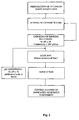
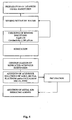
Figures 1 to 4 each show a schematic diagram respectively of four different forms of application of the method according to the invention; - -
Figure 5 shows the absorbance trend of the titanium oxide nanotubes in solution as sonication proceeds, in three suspensions of titanium oxide nanotubes, with different pH conditions, treated according to the method of the invention; - -
Figure 6 shows the abosrbance trend of the titanium oxide nanotubes in solution as sonication proceeds, in two suspensions of nanotubes, with different pH conditions and saline concentration, treated according to a particular form of application of the method of the invention; - -
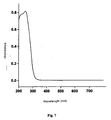
Figure 7 shows the UV-Vis spectrum of an aqueous solution of titanium oxide nanotubes obtained according to the method of the invention; and - -
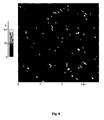
Figure 8 shows an image acquired using an atomic microscope of an aqueous solution of titanium oxide nanotubes obtained according to the method of the invention. - Detailed description
- The present invention relates to a method for the preparation of aqueous solutions of single titanium oxide nanotubes, as well as aqueous solutions of titanium oxide nanotubes obtained with such method.
- Here and hereafter in the description the expression "oxides or oxide salts" is taken to mean compounds of tetravalent titanium, such as for example titanium dioxide (TiO2).
- The expression "titanium oxide nanotubes" is taken to refer to substantially tubular structures of nanometric dimensions, having a general formula HxMyTi3Oz, where H indicates a hydrogen atom, M an atom of a metal chosen from the group comprising sodium, potassium and/or lithium, Ti a titanium atom and O an oxygen atom, and X + Y may be between 0 and 2, while Z may be between 5 and 7. The type of metal M depends on the composition of the reagent used to produce the nanotubes or on the exchange process to which the ready formed nanotubes were subjected, if any.
- According to a general form of application of the invention, the method for preparing aqueous solutions of single titanium oxide nanotubes, comprises the following essential steps:
- - preparing a pre-set quantity of titanium oxide nanotubes;
- - subjecting said pre-set quantity of titanium oxide nanotubes to rinsing with water once or more until the rinsing water, in chemical equilibrium with the nanotubes present in said water as a solid phase, has a pH between 4 and 10 and specific conductivity of not more than 200 µS/cm;
- - subjecting said solid phase to sonication in water obtaining an aqueous suspension in which at least a part of said nanotubes are present in solution as single units; and
- - subjecting said sonicated aqueous suspension to centrifugation obtaining an aqueous solution of single titanium oxide nanotubes with a concentration in terms of titanium dioxide of not less than 10 mg/l.
- The term "sonication" is taken to mean the technique normally used to apply ultrasound waves to liquids in a controlled manner so as to cause the so-called phenomenon of cavitation or the formation of bubbles. The technique itself is known and does not therefore require a specific description.
- According to a particular embodiment, shown in the diagram of
figure 1a , the sonication step is performed directly on the aqueous system composed of the nanotubes in a solid phase and of the rinsing water in chemical equilibrium with the nanotubes having a pH between 4 and 10 and specific conductivity of not more than 200 µS/cm. - According to a particular embodiment, shown in the diagram of
figure 1b , at the end of the rinsing step, the solid phase composed of the nanotubes is separated, preferably by decantation and/or centrifugation, from the rinsing water in chemical equilibrium with the nanotubes having the aforesaid properties of pH and specific conductivity. Water, preferably pure, is added to the solid phase obtaining an aqueous system. Preferably, water is added until the mass ratio of water to titanium dioxide is over 105. The sonication step is then performed on the aforesaid aqueous system. - Surprisingly, it was seen that once the pH and specific conductivity conditions specified above were reached in the aqueous system formed of rinsing water in chemical equilibrium with the titanium oxide nanotubes, subjecting the solid phase composed of nanotubes to sonication in water (directly in the last rinsing water or in an aqueous system obtained by mixing the solid phase separate from the rinsing water with other water), already after a period of time to the order of several minutes solutions of single nanotubes are obtained (after centrifugation) having concentrations in terms of titanium dioxide (TiO2) of 2 orders of magnitude greater than those achievable up to today, in other words solutions with concentrations of not less than 10 mg/l are obtained.
- Advantageously, prolonging the sonication time properly, (with periods of treatment to the order of tens of hours), it is even possible to obtain solutions (after centrifugation) with concentrations of single titanium oxide nanotubes up to the order of 10 g/l.
- The solutions of titanium oxide nanotubes obtained with the method according to the present invention are stable over time. In fact it was verified that even after periods of longer than 1 month there was no separation of the nanotubes by decantation or precipitation.
- The aqueous solutions do not sediment even if subjected to centrifugal fields of 3 104 x g for periods of time up to 30 minutes.
- The aqueous solutions are also stable over a wide range of pH values, between 4 and 11. The solutions are therefore stable for physiological pH values, to the benefit of possible use of the same in biomedical applications.
- As will be clarified below, the titanium oxide nanotubes present may, in addition, be modified both in the lattice and on their surface with various elements so as to vary the electronic properties and the possibilities of interaction with the environment. This further widens the scope of possible applications of the solutions according to the invention.
- According to a preferred form of application of the invention, the titanium oxide nanotubes are obtained by heating under agitation titanium dioxide (TiO2) in its various crystalline forms to temperatures ranging from about 50°C to about 250°C in a highly alkaline environment for a period of not less than 1 hour.
- More specifically, the alkaline environment is created by heating titanium oxides and/or titanium salts in concentrated solutions of one or more alkaline hydrates. Preferably the hydrates are chosen from the group comprising sodium hydrate, potassium hydrate or lithium hydrate.
- At the end of the treatment a semi-solid, sticky mass, insoluble in water, is obtained composed of aggregates of titanium oxide nanotubes and the excess of alkaline hydrates.
- Advantageously, other production processes may be used, starting for example from titanium compounds, for example titanium tetrachloride (TiCl4).
- As mentioned above, the semisolid mass of titanium oxide nanotubes produced is subjected to one or more repeated rinses with water until the rinsing water, meant as the water in chemical equilibrium with the mass of nanotubes, has a pH between 4 and 10 and specific conductivity of not more than 200 µS/cm.
- After rinsing, the initial semisolid, sticky mass acquires the consistency of a sandy material which tend easily to sediment in water.
- According to a preferred applicative solution, rinses of the quantity of nanotubes are performed with purified water.
- Preferably, as shown for example in the diagram in
Figure 1a , pure water is used for such rinses, that is water subjected to suitable purification so that it has a specific conductivity at 25°C of less than 1 µS/cm. - The number of rinses depends on the properties of the mass of nanotubes produced and on the type of aqueous solution used for the rinses.
- According to alternative applicative solutions such as indicated for example in
Figure 1b , given the highly alkaline nature of the nanotubes produced, at least some of the rinses (preferably the first few) may be advantageously performed with slightly acid aqueous solutions, for example with diluted solutions of hydrochloric acid. - As already mentioned, once the aqueous system produced by the rinsing water and the nanotubes in chemical equilibrium has a pH between 4 and 10 and specific conductivity of not more than 200 µS/cm, the solid phase composed of nanotubes is sonicated in water so as to at least partially solubilise the mass of nanotubes present.
- Preferably, sonication is performed for at least 5 minutes with a power of not less than 10 watt and a frequency of not less than 30 kHz. Operating at these parameters, already after a period of time to the order of several minutes, (after centrifugation) solutions with concentrations to the order of 10 mg/l in terms of titanium dioxide are found, as may deducted from the absorbance graphs over time shown in
Figures 5 and 6 (which will be commented on henceforth). - Advantageously, the operating parameters may be modified, increasing, specifically, the power and/or frequency of the sound waves, so as to increase - over the same period of treatment - the concentration of the solutions, or so as to decrease - for the same concentrations - the treatment times.
- To assess the progress of the solubilisation process absorbance measurements of the solutions during sonication treatment were taken over time. The high concentrations of the solutions achieved from the start of treatment make absorbance measurement impossible. The samples taken from the aqueous system containing the mass of partially solubilised nanotubes were therefore centrifuged, filtered using filters having a porosity such as to exclude particles of over 100 nm and diluted in pure water at a dilution ratio of 400.
-
Figure 5 shows the trend of absorbance values (A) measured over time for different aqueous solutions of titanium oxide nanotubes obtained with the method according to the invention. - More in detail, the curve (a) refers to a solution of nanotubes obtained from an aqueous system having a starting pH of 4.8, curve (b) to a solution obtained from an aqueous system with starting pH of 6.9, and curve (c) to a solution obtained from an aqueous system with starting pH of 5.9. In all three cases the concentration of the nanotubes passing into the solution (directly proportional to absorbance) increases over time according to the equation Ct = Co (1-e3-k t), where Ct represents the concentration of the nanotubes in solution at time t, where Co represents the concentration of the nanotubes in solution in an infinite time and k is a kinetic constant, generally having a value between 0.1 and 0.3 hour-1.
- The aqueous systems from which the three solutions derive, of which the absorbance trends are shown, were all subjected to the same sonication treatment, that is at a power of 50 Watt and wave frequency of 47 kHz.
- Applying the Lambert-Beer law (A = C c d, where C is the concentration of the titanium oxide nanotubes in the solution, expressed as mol/L, ε is the molar extinction coefficient of the nanotubes, expressed in L mol-1 cm-1 and d is the optic path in cm), considering a molar extinction coefficient of 104 L mol-1 cm-1 and bearing in mind the dilution of the samples (necessary for measurement of the absorbance), for the three sonicated suspensions with partially solubilised nanotubes, after centrifugation and filtering, the following concentrations expressed in mg/l in terms of titanium dioxide have been measured:
- - curve (a) : at 10 minutes 90 mg/l; at 100
minutes 700 mg/l; at 400 minutes 2000 mg/l; - - curve (b): at 10 minutes 90 mg/l; at 100 minutes 750 mg/l; at 400 minutes 1700 mg/l;
- - curve (c): at 10 minutes 85 mg/l; at 100 minutes 650 mg/l; at 400 minutes 1580 mg/l.
- According to a preferred form of application of the method according to the present invention, shown in the diagram in
Figure 2 , before sonication diluted aqueous solutions of salts of metals from the group comprising sodium, potassium and/or lithium, are added to the aqueous system. As will be explained below the addition of such solutions is only made should the aqueous system of nanotubes have a pH over 6. - Advantageously, to such purpose, as indicated specifically in
Figure 2 , depending on the pH of the aqueous system to be sonicated, an adjustment step of the pH of the aqueous suspension may be foreseen up to values of not less than 6 and not more than 10, by the addition of minimum quantities of acids or bases (for example HCl or NaOH). - Preferably, diluted solutions of sodium chloride and/or potassium chloride are used as salt solutions.
- More specifically the salt solutions are added to the aqueous system in quantities such that the final concentration of the salts in the aqueous system is in the order of 1 mmol/l (millimole per litre).
- According to a particularly preferred embodiment, which foresees production of the nanotubes by heating titanium oxide in the presence of concentrated solutions of NaOH, a diluted aqueous solution of NaCl is added to the aqueous suspensions of the nanotubes obtained at the end of the rinsing step so as to achieve a concentration of 1 mmol/l of NaCl in the suspension.
- Surprisingly it was found that for pH values of not less than 6 the addition of such salt solutions considerably facilitates the solubilisation process of the nanotubes. Contrarily, it was found that the addition of such saline solutions to aqueous systems with a pH lower than 6 inhibits or certainly slows down the solubilisation process.
-
Figure 6 shows the trend of absorbance values (A) measured over time for two aqueous systems of titanium oxide nanotubes treated with the method according to the invention, to which aqueous solutions of NaCl were added so to reach concentrations of 1 mmol/l of NaCl in the aqueous system. Curve (a) refers to a solution of nanotubes obtained from an aqueous system having a starting pH of 6.4, while curve (b) refers to a solution obtained from an aqueous system with starting pH of 4.8. - By comparing the graphs in
Figures 5 and 6 one may observe how the addition of NaCl considerably accelerates the solubilisation process for aqueous systems with a pH over 6, while it considerably inhibits the process for aqueous systems of nanotubes with pH lower than 6. - Using the method according to the invention, at the end of the sonication process, it was found that on average, albeit after varying periods of treatment (depending on the properties of the initial aqueous systems and the operating parameters of sonication), approximately 80% of the quantity in weight of the rinsed titanium oxide nanotubes were solubilised in the form of single nanotubes.
- According to a preferred embodiment of the invention, after the sonication and centrifugation steps, a further step of filtration of the aqueous solution of nanotubes is foreseen, so as to eliminate from the solution the residues of nanotubes which have not passed into the solution, present in the form of macro aggregates.
- More specifically, the filtration is performed using filters with a porosity of 100 nm.
- Advantageously, the mass of nanotubes not solubilised, separated by centrifugation from the suspension obtained at the end of the sonication step may, in turn, be newly subjected to the steps of the method according to the invention.
- From observations made with a transmission electron microscope and with an atomic force microscope, it was possible to verify that at the end of the centrifugation step aqueous solutions containing single nanotubes, open at the extremities, are obtained, characterised by a multilayer structure and varying length, from several tens to a hundred nanometres, an external diameter to the order of around ten nanometres and internal diameter of several nanometres.
- In the case in which the nanotubes have been prepared by subjecting titanium dioxide to prolonged heating in concentrated solutions of sodium hydrate, after lyophilization of the solutions of nanotubes obtained with the method according to the invention, the nanotubes have a composition referable to the general formula NaxTiyOz, with x = 2 ± 0.5, y = 3 ± 0.4, z = 7 ± 1.4.
- On the basis of spectro-photometric measurements, the aqueous solutions of titanium oxide nanotubes obtained according to the invention are seen to have a UV-Vis spectrum characterised by a double peak with a primary maximum and a secondary maximum respectively around 245 and 217 nanometres and by an ratio between absorbances at 245 and at 300 nanometres equal to or greater than 5.5. The spectrum measured for a solution of nanotubes obtained according to the invention is shown in
Figure 7 . - The ratio of the absorbances measured in the UV-vis spectrum, together with the absence of scattering, indicates that no aggregates of nanotubes are present in the solutions obtained.
- The absence of aggregates of nanotubes in the solutions was confirmed by observations made using an atomic force microscope.
Figure 8 shows an image, acquired using an atomic force microscope, of an aqueous solution of nanotubes obtained according to the method of the invention, (the y-axis shown in the image indicates the height, expressed in Angstrom Å = 10-10 m, of the "objects" shown by the microscope in relation to a reference plane). The image clearly shows how the nanotubes (shown as brighter, oval, white-greyish marks) are present as single units. - As already mentioned earlier, the titanium oxide nanotubes present in the solutions obtained according to the invention may, moreover, be modified both in the lattice and on their surface with various ions of elements, so as to alter their electronic characteristics and possibilities of interaction with the environment.
- According to a first particular form of application of the method according to the invention (not shown in the attached figures), during the preparation step of the nanotubes, oxides or salts of metals chosen from the group comprising scandium (Sc), yttrium (Y), vanadium (V) or niobium (Nb) are mixed with the titanium oxides and/or titanium salts, before proceeding with the synthesis of the nanotubes by heating with alkaline hydrates. In this way ions of the metals above specified are inserted in the crystalline lattice and/or onto the surface of the nanotubes to be formed.
- Advantageously, it has been found that the aqueous solutions of titanium oxide nanotubes have titration curves with typical pKa. This makes the reversible exchange of metal ions present in the crystalline lattice of the nanotubes possible.
- According to a second particular form of application of the method according to the invention, illustrated in
Figure 3 , a step of treating the aqueous solution of nanotubes with solutions of hydrates and oxides of the metals chosen from the group comprising lithium (Li), sodium (Na), potassium (K) and calcium (Ca), is foreseen for the purpose of generating an ionic exchange with at least part of the metal ions (mainly sodium) already present in the crystalline lattice of said nanotubes. - Alternatively, the aqueous solution of nanotubes can be treated with acids so as to substitute with H+ ions at least part of the metal ions already present in the crystalline lattice of the nanotubes (for example Na+, if the nanotubes have been produced by heating TiO2 in the presence of NaOH).
- According to a third particular form of application of the method according to the invention, illustrated in
Figure 4 , a step of laying nano-particles of metals chosen from the group comprising palladium (Pd), platinum (Pt), silver (Ag), gold (Au) and/or ruthenium (Ru) on the nanotubes of the aqueous solutions obtained according to the invention is foreseen. - More specifically, the laying step foresees:
- - mixing the solution of nanotubes with aqueous solutions containing ions of the metals chosen from the group comprising palladium, platinum, silver, gold and/or ruthenium; and
- - adding to the mixture reducing agents able to reduce the ions to the metallic state.
- Sodium citrate or sodium borohydride, for example, may be used as reducing agents.
- Preferably, before adding the reducing agents, a period of incubation of at least 2 hours is foreseen so as to allow the nanotubes in solution to absorb the metal ions.
- The nano-particles of heavy metals deposited on the nanotubes help to modify the electronic characteristics of the nanotubes and the possibility of electron transfer. This may find interesting applications in the electronic sector.
- Below several specific examples of application of the method according to the invention are given.
- Example 1
- 0.2 grams of anatase were heated to 130 °C for 24 hours with 20 ml of an aqueous solution of sodium hydrate containing 5 mol/l of NaOH obtaining a mass of titanium oxide nanotubes insoluble in water. The mass is semisolid and has a sticky consistency.
- The insoluble mass of nanotubes was repeatedly rinsed with pure water until the rinsing solutions were characterised by a specific conductivity of about 30 µS/cm (microSiemens/cm) and pH of 8, obtaining a mass of nanotubes still insoluble in water, but of a sandy consistency.
- 50 ml of water were added to the sandy, insoluble mass thus produced. The resulting mixture was subjected to sonication using a sonicator of Ultrasonik Cleaner Model 28X type with a power of 50 W and wave frequency of 47 kHz for 6 hours.
- At the end of sonication a murky solution was obtained, which was centrifuged with fields of about 104xg for a period of time of about 20 minutes. The clear solution obtained by centrifugation was then filtered through a filter having a porosity of 100 nm.
- Using spectro-photometric measurements, the aqueous solution was seen to have a typical spectrum with an ratio between absorbances at 245 and at 300 nanometres equal to 6. The final aqueous solution, containing about 80% of the mass of titanium dioxide initially placed to heat in NaOH in the form of solubilised nanotubes, has a concentration of about 3,2 g/l in terms of titanium dioxide. The solution remains stable even when the pH value is modified within the range 4-11 by the addition of acids such as hydrochloric acid or bases such as sodium hydrate.
- Example 2
- The insoluble, sandy mass of nanotubes as in example 1 was produced. 20 ml of water was added to the sandy, insoluble mass produced by heating. The resulting mixture was subjected to sonication as in example 1 but for a period of about 12 hours. The clear solution obtained after centrifugation and filtration has a concentration of 8 g/l in terms of titanium dioxide.
- Example 3
- The insoluble, sandy mass of nanotubes as in example 1 was produced. 50 ml of 0.1 millimolar NaOH containing 1 millimolar NaCl was added to the sandy, insoluble mass thus produced. The pH of the aqueous suspension thus obtained was 6.4.
- The resulting mixture was sonicated as in example 1 for a period of time of 10 minutes. The murky solution obtained was then centrifuged and filtered as in example 1, obtaining a clear solution characterised by a typical spectrum with a ratio between absorbances at 245 and at 300 nanometres equal to 6. The clear solution has a concentration of 0.2 g/l in terms of titanium dioxide.
- Example 4
- 25 mg of V2O5 was added to 200 mg of titanium oxide. After heating at 130 °C for 24 hours with an aqueous solution of sodium hydrate containing 5 mol/l of NaOH a mass of nanotubes insoluble in water was obtained which was repeatedly rinsed with ultrapure water until the rinsing solutions had a specific conductivity of less than 40 microSiemens/cm and pH 7.5. 50 ml of water was added to the sandy mass thus obtained and treated as in example 1.
- The final aqueous solution, containing about 80% of the mass of titanium oxides and vanadium placed to heat in NaOH, in the form of solubilised nanotubes, has a concentration of about 3.2 g/l in terms of titanium dioxide. The nanotubes present in the solution thus obtained are characterised by the presence of about one atom of V for every 100 atoms of Ti.
- Example 5
- A concentrated solution of lithium chloride brought to a pH value of 10-12 by adding lithium hydrate was added under agitation to an aqueous solution of titanium oxide nanotubes obtained as in example 1, having a concentration of 5 g/l of titanium dioxide. In this way about 20% of the sodium ions present in the nanotubes were replaced with lithium ions obtaining a solution of nanotubes stable over time.
- Example 6
- A concentrated aqueous solution of cloroauric acid (HAuCl4) was added to a solution of nanotubes having a concentration of 0.3 g/l of titanium dioxide until a final concentration of 0.060 g/l in terms of cloroauric acid was reached. After a period of rest of about 8 hours the trivalent gold present was reduced to a state of zero valence by addition of an excess of sodium borohydride dissolved in water up to a final concentration of 20 mmol/l. The aqueous solution thus obtained, stable and coloured red, is characterised by the presence of single titanium oxide nanotubes having inside them and on their surface metal particles of gold of a size in the order of a nanometre.
- Thanks to the method according to the invention, solutions of single titanium oxide nanotubes having concentrations in terms of titanium dioxide varying from the order of 10 mg/l to the order of 10 g/l can be obtained.
- The solutions obtained are stable over time, no separation of the nanotubes by decantation or by precipitation being observed after periods of over one month.
- The aqueous solutions are also stable over a wide pH range, which includes physiological values.
- The solutions do not sediment even if subjected to centrifugal fields of up to 3 104xg for periods of time of up to about 30 minutes.
- The method according to the invention makes it possible to obtain such stable aqueous solutions with relatively short treatment times (from a few minutes to about ten hours, excluding the preparation step of the nanotubes).
- The sonication treatment may be conducted using devices available on the market, given that the operating conditions of the treatment are substantially standard.
- This is to the advantage of the simplicity and economy of the method according to the invention.
- Lastly, the method according to the invention makes it possible to easily modify the composition of the nanotubes. To such purpose one may intervene directly in the preparation step of the nanotubes themselves, or indeed on the nanotubes in solution.
- The invention thus conceived consequently achieves the intended purposes.
- Obviously, in its practical embodiment it may assume forms and configurations different from those illustrated above while remaining within the present scope of protection.
Claims (17)
- Method for preparing aqueous solutions of single titanium oxide nanotubes, comprising the following steps:- preparing a pre-set quantity of titanium oxide nanotubes;- subjecting said pre-set quantity of titanium oxide nanotubes to one or more rinses with water, until the rinsing water, in chemical equilibrium with said nanotubes present in said water as a solid phase, has a pH between 4 and 10 and specific conductivity of not more than 200 µS/cm;- subjecting said solid phase to sonication in water obtaining an aqueous suspension in which at least a part of said nanotubes are present in solution as single units; and- subjecting said sonicated aqueous suspension to centrifugation obtaining an aqueous solution of single titanium oxide nanotubes with a concentration in terms of titanium dioxide of not less than 10 mg/l.
- Method according to claim 1, wherein said sonication step is performed on the aqueous system composed of said rinsing water and said nanotubes.
- Method according to claim 1, wherein said sonication step is performed on the aqueous system composed of said solid phase separated from said rinsing water and mixed with water added until a ratio in mass between water and titanium dioxide of not more than 105 is obtained.
- Method according to one or more of the previous claims, wherein said rinses are performed using pure water.
- Method according to one or more of claims 1 to 3, wherein at least some of said rinses are performed using acid aqueous solutions.
- Method according to one or more of the previous claims, wherein said sonication step is performed for at least 2 minutes with a power of not less than 10 watt and a frequency of not less than 30 kHz.
- Method according to one or more of the previous claims, wherein said centrifugation step is performed with accelerations ranging from 103g to 3104g for maximum periods of time of about 30 minutes.
- Method according to one or more of the previous claims, comprising a filtration step of said aqueous solution of titanium oxides aimed at eliminating the residues of nanotubes which have not passed in solution, said filtration step being preferably performed with filters having porosity of approximately 100 nmn.
- Method according to any of the previous claims, wherein said step of preparing said quantity of titanium oxide nanotubes is achieved by heating titanium oxides and/or titanium salts to temperatures ranging from about 50°C to about 250°C in a highly alkaline environment for a period of not less than 2 hours.
- Method according to the previous claim, wherein said titanium oxides and/or titanium salts are subjected to heating together with one or more alkaline hydrates, preferably chosen from the group comprising sodium hydrate, potassium hydrate or lithium hydrate.
- Method according to any of the previous claims, wherein before said sonication step, diluted aqueous solutions of salts of metals chosen from the group comprising sodium, potassium and/or lithium, preferably sodium chloride, are added to said aqueous system containing said nanotubes, having a pH of not less than 6, so as to promote the dissolution of said nanotubes in water.
- Method according to any of the previous claims, wherein in said preparation step, oxides or salts of metals chosen from the group comprising scandium, yttrium, vanadium and/or niobium are mixed with said titanium oxides or titanium salts so as to insert the ions of said metals into the crystalline lattice of said nanotubes.
- Method according to any of the previous claims, comprising a step of treating said aqueous solution of single nanotubes with solutions of hydrates and oxides of the metals chosen from the group comprising lithium, sodium, potassium and/or calcium, so as to generate an ionic exchange with at least some of the metal ions already present in the crystalline lattice of said nanotubes.
- Method according to any of the previous claims, comprising a step of laying nano-particles of metals chosen from the group comprising palladium, platinum, silver, gold and/or ruthenium on the nanotubes of said aqueous solution, said step comprising:- mixing said solution of nanotubes with aqueous solutions containing ions of said metals; and- adding to said mixture reducing agents able to reduce said ions to the metal state.
- Method according to the previous claim, wherein before adding said reducing agents a period of incubation of at least 2 hours is foreseen so as to allow said nanotubes in solution to absorb said ions.
- Aqueous solution of single titanium oxide nanotubes, characterised by the fact of having a concentration calculated as titanium dioxide of not less than 10 mg/l, of being stable when subjected to centrifugal fields of up to 3104g for periods of time of up to 30 minutes and of being stable over time in a pH range of 4 to 11.
- Aqueous solution according to the previous claim, wherein said aqueous solution has a UV-Vis spectrum which in the 200-300 nm range shows a double peak with a primary maximum and secondary maximum respectively around 245 and 217 nanometres and a ratio between the absorbance at 245 and 300 nanometres equal to or greater than 5.5.
Applications Claiming Priority (2)
| Application Number | Priority Date | Filing Date | Title |
|---|---|---|---|
| ITPD2008A000258A IT1391813B1 (en) | 2008-09-04 | 2008-09-04 | METHOD FOR THE PREPARATION OF AQUEOUS SOLUTIONS OF SINGLE NANOTUBES BASED ON TITANIUM OXIDES AND AQUEOUS SOLUTIONS OF NANOTUBES OBTAINED WITH THIS METHOD |
| PCT/IB2009/053866 WO2010026550A1 (en) | 2008-09-04 | 2009-09-04 | Method for preparing aqueous solutions of single titanium oxide nanotubes and aqueous solutions of nanotubes obtained with such method |
Publications (2)
| Publication Number | Publication Date |
|---|---|
| EP2328843A1 EP2328843A1 (en) | 2011-06-08 |
| EP2328843B1 true EP2328843B1 (en) | 2013-03-13 |
Family
ID=40775959
Family Applications (1)
| Application Number | Title | Priority Date | Filing Date |
|---|---|---|---|
| EP09787101A Not-in-force EP2328843B1 (en) | 2008-09-04 | 2009-09-04 | Method for preparing aqueos solutions of single titanium oxide nanotubes and aqueos solutions of nanotubes obtained with such method |
Country Status (3)
| Country | Link |
|---|---|
| EP (1) | EP2328843B1 (en) |
| IT (1) | IT1391813B1 (en) |
| WO (1) | WO2010026550A1 (en) |
Families Citing this family (1)
| Publication number | Priority date | Publication date | Assignee | Title |
|---|---|---|---|---|
| CN112357955B (en) * | 2020-10-16 | 2022-07-26 | 安徽景成新材料有限公司 | Method for preparing titanium dioxide powder with different morphologies by solid phase method |
Family Cites Families (2)
| Publication number | Priority date | Publication date | Assignee | Title |
|---|---|---|---|---|
| TWI221344B (en) * | 2003-04-10 | 2004-09-21 | Univ Nat Central | Composition of composite polymer electrolyte containing nano-tube and manufacturing method thereof |
| CN101249429A (en) * | 2007-11-12 | 2008-08-27 | 浙江理工大学 | A kind of preparation method of titanium dioxide nanotube photocatalyst with hollow protective layer |
-
2008
- 2008-09-04 IT ITPD2008A000258A patent/IT1391813B1/en active
-
2009
- 2009-09-04 WO PCT/IB2009/053866 patent/WO2010026550A1/en not_active Ceased
- 2009-09-04 EP EP09787101A patent/EP2328843B1/en not_active Not-in-force
Also Published As
| Publication number | Publication date |
|---|---|
| ITPD20080258A1 (en) | 2010-03-05 |
| EP2328843A1 (en) | 2011-06-08 |
| WO2010026550A1 (en) | 2010-03-11 |
| IT1391813B1 (en) | 2012-01-27 |
Similar Documents
| Publication | Publication Date | Title |
|---|---|---|
| Chitoria et al. | A review of ZrO2 nanoparticles applications and recent advancements | |
| Cargnello et al. | Solution-phase synthesis of titanium dioxide nanoparticles and nanocrystals | |
| Niederberger et al. | Benzyl alcohol and titanium tetrachloride a versatile reaction system for the nonaqueous and low-temperature preparation of crystalline and luminescent titania nanoparticles | |
| Rossmanith et al. | Porous anatase nanoparticles with high specific surface area prepared by miniemulsion technique | |
| Lim et al. | Synthesis of TiO2 nanoparticles utilizing hydrated reverse micelles in CO2 | |
| Yin et al. | Novel synthesis of phase-pure nano-particulate anatase and rutile TiO 2 using TiCl 4 aqueous solutions | |
| Niederberger et al. | Tailoring the surface and solubility properties of nanocrystalline titania by a nonaqueous in situ functionalization process | |
| Naghibi et al. | Application of the statistical Taguchi method to optimize TiO2 nanoparticles synthesis by the hydrothermal assisted sol–gel technique | |
| Chang et al. | Characterization of Zr-doped TiO2 nanocrystals prepared by a nonhydrolytic sol− gel method at high temperatures | |
| EP3492116B1 (en) | Bismuth particle x-ray contrast agents | |
| Saxena et al. | Mxene‐Integrated composites for biomedical applications: synthesis, cancer diagnosis, and emerging frontiers | |
| Anžlovar et al. | Impact of inorganic hydroxides on ZnO nanoparticle formation and morphology | |
| AU2012340368B2 (en) | Mesoporous titanium dioxide nanoparticles and process for their production | |
| Jiang et al. | Synthesis of fivefold stellate polyhedral gold nanoparticles with {110}-facets via a seed-mediated growth method | |
| Al-Thabaiti et al. | Shape-directing role of cetyltrimethylammonium bromide on the morphology of extracellular synthesis of silver nanoparticles | |
| Abbasi et al. | Synthesis and properties of silk yarn containing Ag nanoparticles under ultrasound irradiation | |
| Wang et al. | Alginate-intervened hydrothermal synthesis of hydroxyapatite nanocrystals with nanopores | |
| Park et al. | Low alkali bottom-up synthesis of titanate nanotubes using a peroxo titanium complex ion precursor for photocatalysis | |
| Zhang et al. | A study on the synthesis of coarse TiO2 powder with controlled particle sizes and morphology via hydrolysis | |
| Yan et al. | Titanium dioxide nanomaterials | |
| Selmani et al. | Multiscale study of the influence of cationic surfactants on amorphous calcium phosphate precipitation | |
| Lü et al. | Wool keratin-stabilized silver nanoparticles | |
| KR20080107809A (en) | A method comprising increasing the photocatalytic activity of zinc oxide and a composition comprising zinc oxide having increased photocatalytic activity | |
| AU2006352688A1 (en) | Processes for the hydrothermal production of titanium dioxide | |
| Kwon et al. | Synthesis of Au/TiO2 core–shell nanoparticles from titanium isopropoxide and thermal resistance effect of TiO2 shell |
Legal Events
| Date | Code | Title | Description |
|---|---|---|---|
| PUAI | Public reference made under article 153(3) epc to a published international application that has entered the european phase |
Free format text: ORIGINAL CODE: 0009012 |
|
| 17P | Request for examination filed |
Effective date: 20110216 |
|
| AK | Designated contracting states |
Kind code of ref document: A1 Designated state(s): AT BE BG CH CY CZ DE DK EE ES FI FR GB GR HR HU IE IS IT LI LT LU LV MC MK MT NL NO PL PT RO SE SI SK SM TR |
|
| AX | Request for extension of the european patent |
Extension state: AL BA RS |
|
| RAP1 | Party data changed (applicant data changed or rights of an application transferred) |
Owner name: MAGRO, MASSIMILIANO Owner name: TOGNON, GIUSEPPE Owner name: ZENNARO, LUCIO Owner name: SCARPA, MARINA Owner name: VIANELLO, FABIO Owner name: RIGO, ADELIO Owner name: CONSORZIO INTERUNIVERSITARIO "ISTITUTO NAZIONALE D |
|
| RIN1 | Information on inventor provided before grant (corrected) |
Inventor name: SCARPA, MARINA Inventor name: VIANELLO, FABIO Inventor name: MAGRO, MASSIMILIANO Inventor name: RIGO, ADELIO Inventor name: TOGNON, GIUSEPPE Inventor name: ZENNARO, LUCIO |
|
| DAX | Request for extension of the european patent (deleted) | ||
| REG | Reference to a national code |
Ref country code: DE Ref legal event code: R079 Ref document number: 602009013975 Country of ref document: DE Free format text: PREVIOUS MAIN CLASS: C01G0023053000 Ipc: C01G0023000000 |
|
| RIC1 | Information provided on ipc code assigned before grant |
Ipc: C01G 23/08 20060101ALI20120802BHEP Ipc: C01G 23/047 20060101ALI20120802BHEP Ipc: B82Y 30/00 20110101ALI20120802BHEP Ipc: B01F 3/12 20060101ALI20120802BHEP Ipc: C01G 23/053 20060101ALI20120802BHEP Ipc: C01G 23/00 20060101AFI20120802BHEP |
|
| GRAP | Despatch of communication of intention to grant a patent |
Free format text: ORIGINAL CODE: EPIDOSNIGR1 |
|
| GRAS | Grant fee paid |
Free format text: ORIGINAL CODE: EPIDOSNIGR3 |
|
| GRAA | (expected) grant |
Free format text: ORIGINAL CODE: 0009210 |
|
| AK | Designated contracting states |
Kind code of ref document: B1 Designated state(s): AT BE BG CH CY CZ DE DK EE ES FI FR GB GR HR HU IE IS IT LI LT LU LV MC MK MT NL NO PL PT RO SE SI SK SM TR |
|
| REG | Reference to a national code |
Ref country code: GB Ref legal event code: FG4D |
|
| REG | Reference to a national code |
Ref country code: AT Ref legal event code: REF Ref document number: 600700 Country of ref document: AT Kind code of ref document: T Effective date: 20130315 Ref country code: CH Ref legal event code: EP |
|
| REG | Reference to a national code |
Ref country code: IE Ref legal event code: FG4D |
|
| REG | Reference to a national code |
Ref country code: DE Ref legal event code: R096 Ref document number: 602009013975 Country of ref document: DE Effective date: 20130508 |
|
| PG25 | Lapsed in a contracting state [announced via postgrant information from national office to epo] |
Ref country code: LT Free format text: LAPSE BECAUSE OF FAILURE TO SUBMIT A TRANSLATION OF THE DESCRIPTION OR TO PAY THE FEE WITHIN THE PRESCRIBED TIME-LIMIT Effective date: 20130313 Ref country code: NO Free format text: LAPSE BECAUSE OF FAILURE TO SUBMIT A TRANSLATION OF THE DESCRIPTION OR TO PAY THE FEE WITHIN THE PRESCRIBED TIME-LIMIT Effective date: 20130613 Ref country code: ES Free format text: LAPSE BECAUSE OF FAILURE TO SUBMIT A TRANSLATION OF THE DESCRIPTION OR TO PAY THE FEE WITHIN THE PRESCRIBED TIME-LIMIT Effective date: 20130624 Ref country code: SE Free format text: LAPSE BECAUSE OF FAILURE TO SUBMIT A TRANSLATION OF THE DESCRIPTION OR TO PAY THE FEE WITHIN THE PRESCRIBED TIME-LIMIT Effective date: 20130313 Ref country code: BG Free format text: LAPSE BECAUSE OF FAILURE TO SUBMIT A TRANSLATION OF THE DESCRIPTION OR TO PAY THE FEE WITHIN THE PRESCRIBED TIME-LIMIT Effective date: 20130613 |
|
| REG | Reference to a national code |
Ref country code: AT Ref legal event code: MK05 Ref document number: 600700 Country of ref document: AT Kind code of ref document: T Effective date: 20130313 |
|
| REG | Reference to a national code |
Ref country code: NL Ref legal event code: VDEP Effective date: 20130313 |
|
| REG | Reference to a national code |
Ref country code: LT Ref legal event code: MG4D |
|
| PG25 | Lapsed in a contracting state [announced via postgrant information from national office to epo] |
Ref country code: LV Free format text: LAPSE BECAUSE OF FAILURE TO SUBMIT A TRANSLATION OF THE DESCRIPTION OR TO PAY THE FEE WITHIN THE PRESCRIBED TIME-LIMIT Effective date: 20130313 Ref country code: FI Free format text: LAPSE BECAUSE OF FAILURE TO SUBMIT A TRANSLATION OF THE DESCRIPTION OR TO PAY THE FEE WITHIN THE PRESCRIBED TIME-LIMIT Effective date: 20130313 Ref country code: GR Free format text: LAPSE BECAUSE OF FAILURE TO SUBMIT A TRANSLATION OF THE DESCRIPTION OR TO PAY THE FEE WITHIN THE PRESCRIBED TIME-LIMIT Effective date: 20130614 Ref country code: SI Free format text: LAPSE BECAUSE OF FAILURE TO SUBMIT A TRANSLATION OF THE DESCRIPTION OR TO PAY THE FEE WITHIN THE PRESCRIBED TIME-LIMIT Effective date: 20130313 |
|
| PG25 | Lapsed in a contracting state [announced via postgrant information from national office to epo] |
Ref country code: BE Free format text: LAPSE BECAUSE OF FAILURE TO SUBMIT A TRANSLATION OF THE DESCRIPTION OR TO PAY THE FEE WITHIN THE PRESCRIBED TIME-LIMIT Effective date: 20130313 Ref country code: HR Free format text: LAPSE BECAUSE OF FAILURE TO SUBMIT A TRANSLATION OF THE DESCRIPTION OR TO PAY THE FEE WITHIN THE PRESCRIBED TIME-LIMIT Effective date: 20130313 |
|
| PG25 | Lapsed in a contracting state [announced via postgrant information from national office to epo] |
Ref country code: PT Free format text: LAPSE BECAUSE OF FAILURE TO SUBMIT A TRANSLATION OF THE DESCRIPTION OR TO PAY THE FEE WITHIN THE PRESCRIBED TIME-LIMIT Effective date: 20130715 Ref country code: NL Free format text: LAPSE BECAUSE OF FAILURE TO SUBMIT A TRANSLATION OF THE DESCRIPTION OR TO PAY THE FEE WITHIN THE PRESCRIBED TIME-LIMIT Effective date: 20130313 Ref country code: CZ Free format text: LAPSE BECAUSE OF FAILURE TO SUBMIT A TRANSLATION OF THE DESCRIPTION OR TO PAY THE FEE WITHIN THE PRESCRIBED TIME-LIMIT Effective date: 20130313 Ref country code: AT Free format text: LAPSE BECAUSE OF FAILURE TO SUBMIT A TRANSLATION OF THE DESCRIPTION OR TO PAY THE FEE WITHIN THE PRESCRIBED TIME-LIMIT Effective date: 20130313 Ref country code: EE Free format text: LAPSE BECAUSE OF FAILURE TO SUBMIT A TRANSLATION OF THE DESCRIPTION OR TO PAY THE FEE WITHIN THE PRESCRIBED TIME-LIMIT Effective date: 20130313 Ref country code: IS Free format text: LAPSE BECAUSE OF FAILURE TO SUBMIT A TRANSLATION OF THE DESCRIPTION OR TO PAY THE FEE WITHIN THE PRESCRIBED TIME-LIMIT Effective date: 20130713 Ref country code: RO Free format text: LAPSE BECAUSE OF FAILURE TO SUBMIT A TRANSLATION OF THE DESCRIPTION OR TO PAY THE FEE WITHIN THE PRESCRIBED TIME-LIMIT Effective date: 20130313 Ref country code: SK Free format text: LAPSE BECAUSE OF FAILURE TO SUBMIT A TRANSLATION OF THE DESCRIPTION OR TO PAY THE FEE WITHIN THE PRESCRIBED TIME-LIMIT Effective date: 20130313 |
|
| PG25 | Lapsed in a contracting state [announced via postgrant information from national office to epo] |
Ref country code: PL Free format text: LAPSE BECAUSE OF FAILURE TO SUBMIT A TRANSLATION OF THE DESCRIPTION OR TO PAY THE FEE WITHIN THE PRESCRIBED TIME-LIMIT Effective date: 20130313 Ref country code: CY Free format text: LAPSE BECAUSE OF FAILURE TO SUBMIT A TRANSLATION OF THE DESCRIPTION OR TO PAY THE FEE WITHIN THE PRESCRIBED TIME-LIMIT Effective date: 20130313 |
|
| PLBE | No opposition filed within time limit |
Free format text: ORIGINAL CODE: 0009261 |
|
| STAA | Information on the status of an ep patent application or granted ep patent |
Free format text: STATUS: NO OPPOSITION FILED WITHIN TIME LIMIT |
|
| PG25 | Lapsed in a contracting state [announced via postgrant information from national office to epo] |
Ref country code: DK Free format text: LAPSE BECAUSE OF FAILURE TO SUBMIT A TRANSLATION OF THE DESCRIPTION OR TO PAY THE FEE WITHIN THE PRESCRIBED TIME-LIMIT Effective date: 20130313 |
|
| 26N | No opposition filed |
Effective date: 20131216 |
|
| REG | Reference to a national code |
Ref country code: DE Ref legal event code: R097 Ref document number: 602009013975 Country of ref document: DE Effective date: 20131216 |
|
| PG25 | Lapsed in a contracting state [announced via postgrant information from national office to epo] |
Ref country code: MC Free format text: LAPSE BECAUSE OF FAILURE TO SUBMIT A TRANSLATION OF THE DESCRIPTION OR TO PAY THE FEE WITHIN THE PRESCRIBED TIME-LIMIT Effective date: 20130313 |
|
| REG | Reference to a national code |
Ref country code: CH Ref legal event code: PL |
|
| REG | Reference to a national code |
Ref country code: IE Ref legal event code: MM4A |
|
| PG25 | Lapsed in a contracting state [announced via postgrant information from national office to epo] |
Ref country code: IE Free format text: LAPSE BECAUSE OF NON-PAYMENT OF DUE FEES Effective date: 20130904 Ref country code: LI Free format text: LAPSE BECAUSE OF NON-PAYMENT OF DUE FEES Effective date: 20130930 Ref country code: CH Free format text: LAPSE BECAUSE OF NON-PAYMENT OF DUE FEES Effective date: 20130930 |
|
| PGFP | Annual fee paid to national office [announced via postgrant information from national office to epo] |
Ref country code: GB Payment date: 20140919 Year of fee payment: 6 |
|
| PGFP | Annual fee paid to national office [announced via postgrant information from national office to epo] |
Ref country code: DE Payment date: 20141128 Year of fee payment: 6 Ref country code: FR Payment date: 20140930 Year of fee payment: 6 |
|
| PG25 | Lapsed in a contracting state [announced via postgrant information from national office to epo] |
Ref country code: SM Free format text: LAPSE BECAUSE OF FAILURE TO SUBMIT A TRANSLATION OF THE DESCRIPTION OR TO PAY THE FEE WITHIN THE PRESCRIBED TIME-LIMIT Effective date: 20130313 |
|
| PG25 | Lapsed in a contracting state [announced via postgrant information from national office to epo] |
Ref country code: MT Free format text: LAPSE BECAUSE OF FAILURE TO SUBMIT A TRANSLATION OF THE DESCRIPTION OR TO PAY THE FEE WITHIN THE PRESCRIBED TIME-LIMIT Effective date: 20130313 Ref country code: TR Free format text: LAPSE BECAUSE OF FAILURE TO SUBMIT A TRANSLATION OF THE DESCRIPTION OR TO PAY THE FEE WITHIN THE PRESCRIBED TIME-LIMIT Effective date: 20130313 |
|
| PG25 | Lapsed in a contracting state [announced via postgrant information from national office to epo] |
Ref country code: MK Free format text: LAPSE BECAUSE OF FAILURE TO SUBMIT A TRANSLATION OF THE DESCRIPTION OR TO PAY THE FEE WITHIN THE PRESCRIBED TIME-LIMIT Effective date: 20130313 Ref country code: HU Free format text: LAPSE BECAUSE OF FAILURE TO SUBMIT A TRANSLATION OF THE DESCRIPTION OR TO PAY THE FEE WITHIN THE PRESCRIBED TIME-LIMIT; INVALID AB INITIO Effective date: 20090904 Ref country code: LU Free format text: LAPSE BECAUSE OF NON-PAYMENT OF DUE FEES Effective date: 20130904 |
|
| PGFP | Annual fee paid to national office [announced via postgrant information from national office to epo] |
Ref country code: IT Payment date: 20150911 Year of fee payment: 7 |
|
| REG | Reference to a national code |
Ref country code: DE Ref legal event code: R119 Ref document number: 602009013975 Country of ref document: DE |
|
| GBPC | Gb: european patent ceased through non-payment of renewal fee |
Effective date: 20150904 |
|
| REG | Reference to a national code |
Ref country code: FR Ref legal event code: ST Effective date: 20160531 |
|
| PG25 | Lapsed in a contracting state [announced via postgrant information from national office to epo] |
Ref country code: DE Free format text: LAPSE BECAUSE OF NON-PAYMENT OF DUE FEES Effective date: 20160401 Ref country code: GB Free format text: LAPSE BECAUSE OF NON-PAYMENT OF DUE FEES Effective date: 20150904 |
|
| PG25 | Lapsed in a contracting state [announced via postgrant information from national office to epo] |
Ref country code: FR Free format text: LAPSE BECAUSE OF NON-PAYMENT OF DUE FEES Effective date: 20150930 |
|
| PG25 | Lapsed in a contracting state [announced via postgrant information from national office to epo] |
Ref country code: IT Free format text: LAPSE BECAUSE OF NON-PAYMENT OF DUE FEES Effective date: 20160904 |