EP2327949A1 - Improvements relating to armour - Google Patents
Improvements relating to armour Download PDFInfo
- Publication number
- EP2327949A1 EP2327949A1 EP09252112A EP09252112A EP2327949A1 EP 2327949 A1 EP2327949 A1 EP 2327949A1 EP 09252112 A EP09252112 A EP 09252112A EP 09252112 A EP09252112 A EP 09252112A EP 2327949 A1 EP2327949 A1 EP 2327949A1
- Authority
- EP
- European Patent Office
- Prior art keywords
- armour
- ceramic
- portions
- ceramic portions
- elastomer
- Prior art date
- Legal status (The legal status is an assumption and is not a legal conclusion. Google has not performed a legal analysis and makes no representation as to the accuracy of the status listed.)
- Ceased
Links
- 239000000919 ceramic Substances 0.000 claims abstract description 61
- 239000000463 material Substances 0.000 claims abstract description 35
- 239000002861 polymer material Substances 0.000 claims abstract description 11
- 229920001971 elastomer Polymers 0.000 claims description 22
- 239000000806 elastomer Substances 0.000 claims description 22
- 239000011159 matrix material Substances 0.000 claims description 8
- PNEYBMLMFCGWSK-UHFFFAOYSA-N aluminium oxide Inorganic materials [O-2].[O-2].[O-2].[Al+3].[Al+3] PNEYBMLMFCGWSK-UHFFFAOYSA-N 0.000 claims description 6
- 229910052580 B4C Inorganic materials 0.000 claims description 4
- 238000003491 array Methods 0.000 claims description 4
- INAHAJYZKVIDIZ-UHFFFAOYSA-N boron carbide Chemical compound B12B3B4C32B41 INAHAJYZKVIDIZ-UHFFFAOYSA-N 0.000 claims description 4
- 229910010271 silicon carbide Inorganic materials 0.000 claims description 4
- HBMJWWWQQXIZIP-UHFFFAOYSA-N silicon carbide Chemical compound [Si+]#[C-] HBMJWWWQQXIZIP-UHFFFAOYSA-N 0.000 claims description 4
- 239000004744 fabric Substances 0.000 description 7
- 229910010293 ceramic material Inorganic materials 0.000 description 5
- 230000006378 damage Effects 0.000 description 4
- 230000035515 penetration Effects 0.000 description 4
- 239000012634 fragment Substances 0.000 description 3
- 239000002131 composite material Substances 0.000 description 2
- 239000013536 elastomeric material Substances 0.000 description 2
- 229910052751 metal Inorganic materials 0.000 description 2
- 239000002184 metal Substances 0.000 description 2
- 230000004048 modification Effects 0.000 description 2
- 238000012986 modification Methods 0.000 description 2
- 230000035939 shock Effects 0.000 description 2
- 229920002379 silicone rubber Polymers 0.000 description 2
- DJOYTAUERRJRAT-UHFFFAOYSA-N 2-(n-methyl-4-nitroanilino)acetonitrile Chemical compound N#CCN(C)C1=CC=C([N+]([O-])=O)C=C1 DJOYTAUERRJRAT-UHFFFAOYSA-N 0.000 description 1
- 229920000271 Kevlar® Polymers 0.000 description 1
- FYYHWMGAXLPEAU-UHFFFAOYSA-N Magnesium Chemical compound [Mg] FYYHWMGAXLPEAU-UHFFFAOYSA-N 0.000 description 1
- 208000027418 Wounds and injury Diseases 0.000 description 1
- 239000000853 adhesive Substances 0.000 description 1
- 230000001070 adhesive effect Effects 0.000 description 1
- ZEASXVYVFFXULL-UHFFFAOYSA-N amezinium metilsulfate Chemical compound COS([O-])(=O)=O.COC1=CC(N)=CN=[N+]1C1=CC=CC=C1 ZEASXVYVFFXULL-UHFFFAOYSA-N 0.000 description 1
- 229920003235 aromatic polyamide Polymers 0.000 description 1
- 229910002113 barium titanate Inorganic materials 0.000 description 1
- JRPBQTZRNDNNOP-UHFFFAOYSA-N barium titanate Chemical compound [Ba+2].[Ba+2].[O-][Ti]([O-])([O-])[O-] JRPBQTZRNDNNOP-UHFFFAOYSA-N 0.000 description 1
- 230000015556 catabolic process Effects 0.000 description 1
- 238000006731 degradation reaction Methods 0.000 description 1
- 230000007613 environmental effect Effects 0.000 description 1
- 239000012530 fluid Substances 0.000 description 1
- 208000014674 injury Diseases 0.000 description 1
- 229910052749 magnesium Inorganic materials 0.000 description 1
- 239000011777 magnesium Substances 0.000 description 1
- 238000004519 manufacturing process Methods 0.000 description 1
- 210000000056 organ Anatomy 0.000 description 1
- 239000008188 pellet Substances 0.000 description 1
- 230000000149 penetrating effect Effects 0.000 description 1
- 150000004986 phenylenediamines Chemical class 0.000 description 1
- 230000035479 physiological effects, processes and functions Effects 0.000 description 1
- 230000001681 protective effect Effects 0.000 description 1
- VEALVRVVWBQVSL-UHFFFAOYSA-N strontium titanate Chemical compound [Sr+2].[O-][Ti]([O-])=O VEALVRVVWBQVSL-UHFFFAOYSA-N 0.000 description 1
- 229920002994 synthetic fiber Polymers 0.000 description 1
- MHSKRLJMQQNJNC-UHFFFAOYSA-N terephthalamide Chemical compound NC(=O)C1=CC=C(C(N)=O)C=C1 MHSKRLJMQQNJNC-UHFFFAOYSA-N 0.000 description 1
- 230000008719 thickening Effects 0.000 description 1
Images


Classifications
-
- F—MECHANICAL ENGINEERING; LIGHTING; HEATING; WEAPONS; BLASTING
- F41—WEAPONS
- F41H—ARMOUR; ARMOURED TURRETS; ARMOURED OR ARMED VEHICLES; MEANS OF ATTACK OR DEFENCE, e.g. CAMOUFLAGE, IN GENERAL
- F41H5/00—Armour; Armour plates
- F41H5/02—Plate construction
- F41H5/04—Plate construction composed of more than one layer
- F41H5/0414—Layered armour containing ceramic material
- F41H5/0428—Ceramic layers in combination with additional layers made of fibres, fabrics or plastics
-
- F—MECHANICAL ENGINEERING; LIGHTING; HEATING; WEAPONS; BLASTING
- F41—WEAPONS
- F41H—ARMOUR; ARMOURED TURRETS; ARMOURED OR ARMED VEHICLES; MEANS OF ATTACK OR DEFENCE, e.g. CAMOUFLAGE, IN GENERAL
- F41H5/00—Armour; Armour plates
- F41H5/02—Plate construction
- F41H5/04—Plate construction composed of more than one layer
- F41H5/0492—Layered armour containing hard elements, e.g. plates, spheres, rods, separated from each other, the elements being connected to a further flexible layer or being embedded in a plastics or an elastomer matrix
Definitions
- This invention relates to improvements concerning armour.
- the invention relates to improvements concerning body armour intended to mitigate against injury caused by ballistic projectiles, knife or other spike penetration.
- Body armour systems for personal protection have been developed in order to provide protection from ballistic projectile impacts in addition to knife and spike penetration.
- Materials which have been used to provide protection against such threats include metal, ceramics, and synthetic fibres.
- Many current armour systems which provide protection from high velocity projectiles (such as a 9mm or 7.62mm full metal jacketed bullet NIG level IIIA and III threat projectiles respectively) are based upon a jacket with pouches into which ceramic plates can be inserted. These monolithic ceramic plates cover a large area of the torso, protecting vital organs. The ceramic plate inserted into the jacket is selected with consideration of the expected threat to be defeated, thus providing a tailorable system.
- spall liners are used behind the plate and in some cases in front of the plate. These spall liners capture fragments of the ceramic plate and projectile produced on interception of a high velocity projectile.
- monolithic ceramic plates can provide protection against high velocity rounds this protection has a cost.
- the plates are heavy, bulky and also their rigidity all bears a burden upon the wearer and impede manoeuvrability.
- ceramics are hard materials with a crystalline or glassy structure and upon impact a large area of the plate can break up limiting its effectiveness in defeating subsequent impacts. Consequently, a new lighter, more flexible armour system with increased comfort to the wearer is required which offers equivalent or enhanced protection to that offered by current monolithic plate armour.
- armour material comprising a plurality of ceramic portions and polymer material arranged to separate the ceramic portions.
- armour material in accordance with the present invention is lighter, since there is less ceramic material, and more flexible.
- the armour can be made in a variety of shapes so as to conform to human physiology, resulting in an increased level of comfort.
- the tolerance of the armour material to multiple impacts should be increased in comparison to prior known monolithic systems, since one impact should only damage a relatively small number of the ceramic portions.
- the polymer material may be an elastomer.
- Use of an elastomer provides enhanced flexibility to the armour, and also increases the efficiency of dissipation of impact energy.
- the elastomer protects the ceramic portions from damage as a result of general handling of the armour, since small shocks resulting from low energy impacts will be dissipated in the elastomer.
- the armour material of the present invention is expected to exhibit improved damage tolerance in comparison to prior-known armour systems using monolithic ceramic plates.
- the ceramic portions are generally tile-shaped.
- the ceramic portions may be generally pellet-shaped.
- the ceramic portions are arranged in an imbricated pattern. In this way, it is ensured that, in use, all parts of the body protected by the armour are covered by some ceramic material, since the individual ceramic portions overlap.
- the polymer material may be provided as a plurality of tile-shaped portions, and the ceramic and material portions may be arranged alternately in a stack-like configuration. Such configurations are convenient to manufacture.
- the polymer material may be a matrix material in which the ceramic portions are embedded.
- a plurality of layers of ceramic portions may be provided.
- the ceramic portions in each layer may be arranged in a generally regular array, in which case the arrays in adjacent layers may be translated relative to one another. This ensures that the armour provides good coverage of ceramic material, to reduce the risk of a projectile penetrating between individual ceramic portions.
- the polymer material may be a shear-thickening material. Shear thickening materials are thought to provide enhanced protection against knife attack.
- the ceramic portions are formed from one of silicon carbide, boron carbide, and alumina.
- the invention extends to body armour comprising clothing provided with a number of pockets into which armour material as described above is inserted. Because of the increased flexibility of the present armour material in comparison to prior known monolithic ceramic armours, and because the present armour material can be made to better conform to the wearer's shape, it is expected that the present armour material will find application primarily in body armour. However, it is also envisaged to apply the armour material in other protective systems. For example, it could be used for vehicle armour.
- Each ceramic portion 210 is surrounded by the elastomeric matrix material, such that each portion is separated from the others by elastomer.
- elastomer between the ceramic portions, the performance of the armour against multiple strikes is improved, since the shock transferred to ceramic components adjacent to those in the impacted area is reduced as a result of the behaviour of the elastomeric material.
- the ceramic portions are protected against low force impacts caused by general handling of the insert by dissipation of the energy from such impacts within the elastomeric matrix material.
- the insert 200 is encased in a ballistic fabric, such as the polyaramid poly(phenylene diamine terephthalamide) fabric, sold by Du Pont under the registered name of Kevlar ®. Many layers of fabric can be used. On impact of a projectile onto the armour, such fabrics capture fragments of the ceramic portions and fragments of the projectile that are created as a result of the impact.
- Inserts 200 are fabricated in layers in moulds. Elastomer is poured into the mould, and then a first layer of the ceramic portions is arranged on the elastomer. Then, further elastomer is added onto the first layer of tiles, and a second layer of ceramic portions is arranged on the further elastomer. A third layer is added in a similar manner.
- the thickness of the elastomer layers is preferably in the range between approximately 0.5 mm to approximately 5 mm, and in the present embodiment is approximately 1 mm.
- the ceramic portions are, in the present embodiment, 4.4 mm thick 25 mm square tiles fabricated from Sintox FA, a 95% alumina ceramic produced by Morgan Metroc limited.
- the elastomer is a silicon rubber.
- FIG 3 is a schematic illustration of an insert 300 for an armoured vest in accordance with a third embodiment of the invention.
- the second embodiment is similar to the first embodiment except in that the ceramic portions are arranged differently in the elastomeric matrix material. Rather than arranging the tiles in layered arrays, the tiles are arranged vertically in the elastomeric material. By arranging the tiles vertically, additional flexibility is given to the armour insert.
- Figures 4 and 5 illustrate further inserts 400 and 500 in which further different arrangements are provided for the ceramic portions within the elastomer. In inserts 400 and 500, the portions are arranged at varying angles to the vertical.
- FIG. 6 is a schematic illustration of an insert 600 for an armoured jacket in accordance with a further embodiment of the invention.
- Insert 600 comprises a stack of alternate ceramic and elastomer tiles. The tiles are held together by adhesive, and, as in the case of the above-described inserts, provided with spall liner at the front and back of the insert.
- the ceramic tiles are of alumina
- the elastomer tiles are of a silicon rubber.
- FIG. 7 An insert 700 in accordance with a further embodiment of the invention is illustrated schematically in Figure 7 .
- the insert 700 is similar to insert 600, except in that the tiles are stacked at a slight angle to the vertical. This alternative stack arrangement is intended to mitigate against the risk of penetration between ceramic portions.
- any feature described in relation to any one embodiment may be used alone, or in combination with other features described, and may also be used in combination with one or more features of any other of the embodiments, or any combination of any other of the embodiments.
Landscapes
- Engineering & Computer Science (AREA)
- General Engineering & Computer Science (AREA)
- Chemical & Material Sciences (AREA)
- Ceramic Engineering (AREA)
- Aiming, Guidance, Guns With A Light Source, Armor, Camouflage, And Targets (AREA)
- Professional, Industrial, Or Sporting Protective Garments (AREA)
Abstract
There is disclosed armour material comprising a plurality of ceramic portions and polymer material arranged to separate the ceramic portions. Body armour in which the armour material can be applied is also disclosed.
Description
- This invention relates to improvements concerning armour. In particular, the invention relates to improvements concerning body armour intended to mitigate against injury caused by ballistic projectiles, knife or other spike penetration.
- Body armour systems for personal protection have been developed in order to provide protection from ballistic projectile impacts in addition to knife and spike penetration. Materials which have been used to provide protection against such threats include metal, ceramics, and synthetic fibres. Many current armour systems which provide protection from high velocity projectiles (such as a 9mm or 7.62mm full metal jacketed bullet NIG level IIIA and III threat projectiles respectively) are based upon a jacket with pouches into which ceramic plates can be inserted. These monolithic ceramic plates cover a large area of the torso, protecting vital organs. The ceramic plate inserted into the jacket is selected with consideration of the expected threat to be defeated, thus providing a tailorable system. In addition to the ceramic plates spall liners are used behind the plate and in some cases in front of the plate. These spall liners capture fragments of the ceramic plate and projectile produced on interception of a high velocity projectile.
- Although monolithic ceramic plates can provide protection against high velocity rounds this protection has a cost. The plates are heavy, bulky and also their rigidity all bears a burden upon the wearer and impede manoeuvrability. Additionally, ceramics are hard materials with a crystalline or glassy structure and upon impact a large area of the plate can break up limiting its effectiveness in defeating subsequent impacts. Consequently, a new lighter, more flexible armour system with increased comfort to the wearer is required which offers equivalent or enhanced protection to that offered by current monolithic plate armour.
- United States patent, publication number
US 6,745,661 and published United States patent application, publication numberUS2001015157 , disclose armour comprising a plurality of ceramic discus-shaped disks, individually wrapped in a containment wrap. The wrapped disks are laid out in an imbricated pattern and adhered in place between a pair of fibrous layers. It is suggested to use an elastomer layer to seal the resulting panel to prevent degradation from exposure to environmental factors. - In accordance with a first aspect of the present invention, there is provided armour material comprising a plurality of ceramic portions and polymer material arranged to separate the ceramic portions. In comparison to prior known armour systems, using monolithic ceramic plates, armour material in accordance with the present invention is lighter, since there is less ceramic material, and more flexible. Furthermore, the armour can be made in a variety of shapes so as to conform to human physiology, resulting in an increased level of comfort. Moreover, because a potentially large number of separate ceramic portions are included in the armour material, it is expected that the tolerance of the armour material to multiple impacts should be increased in comparison to prior known monolithic systems, since one impact should only damage a relatively small number of the ceramic portions.
- The polymer material may be an elastomer. Use of an elastomer provides enhanced flexibility to the armour, and also increases the efficiency of dissipation of impact energy. Moreover, the elastomer protects the ceramic portions from damage as a result of general handling of the armour, since small shocks resulting from low energy impacts will be dissipated in the elastomer. Thus the armour material of the present invention is expected to exhibit improved damage tolerance in comparison to prior-known armour systems using monolithic ceramic plates.
- In several embodiments of the invention described herein, the ceramic portions are generally tile-shaped. Alternatively, the ceramic portions may be generally pellet-shaped.
- In some exemplary embodiments, the ceramic portions are arranged in an imbricated pattern. In this way, it is ensured that, in use, all parts of the body protected by the armour are covered by some ceramic material, since the individual ceramic portions overlap.
- The polymer material may be provided as a plurality of tile-shaped portions, and the ceramic and material portions may be arranged alternately in a stack-like configuration. Such configurations are convenient to manufacture.
- The polymer material may be a matrix material in which the ceramic portions are embedded.
- A plurality of layers of ceramic portions may be provided. The ceramic portions in each layer may be arranged in a generally regular array, in which case the arrays in adjacent layers may be translated relative to one another. This ensures that the armour provides good coverage of ceramic material, to reduce the risk of a projectile penetrating between individual ceramic portions.
- The polymer material may be a shear-thickening material. Shear thickening materials are thought to provide enhanced protection against knife attack.
- The ceramic portions are formed from one of silicon carbide, boron carbide, and alumina.
- The invention extends to body armour comprising clothing provided with a number of pockets into which armour material as described above is inserted. Because of the increased flexibility of the present armour material in comparison to prior known monolithic ceramic armours, and because the present armour material can be made to better conform to the wearer's shape, it is expected that the present armour material will find application primarily in body armour. However, it is also envisaged to apply the armour material in other protective systems. For example, it could be used for vehicle armour.
- The invention may be performed in various ways, and, by way of example only, embodiments thereof will now be described, with reference to the accompanying drawings in which:
-
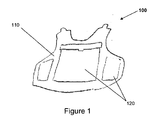
Figure 1 is a schematic illustration of armour in accordance with a first embodiment of the invention; -
Figure 2 is a schematic illustration of an insert to the first embodiment of the invention illustrated inFigure 1 ; and -
Figures 3, 4, 5 ,6, and 7 are schematic illustrations of alternative insert in accordance with a further embodiment of the invention. -
-
Figure 1 is a schematic illustration ofbody armour 100 in accordance with a first embodiment of the present invention.Body armour 100 is the front portion of a vest, and comprises afabric portion 110 that is provided with a number ofpouches 120. Armour inserts, as described below, are inserted into thepouches 120 in order to protect the wearer from hostile fire. It will be appreciated that, in use, a back portion to the armour, as well as further portions to protect further areas of the body, will also be provided. -
Figure 2 is a schematic illustration of aninsert 200 for an armoured jacket in accordance with a second embodiment of the present invention.Insert 200 comprises a plurality ofceramic portions 210 embedded within anelastomeric matrix 220.Portions 210 are each generally rectangular or tile-like in shape, and are arranged in three layers of substantially planar arrays. Each layer is translated relative to those immediately above and below it (as shown inFigure 2 ) such that, when viewed from above, the portions in a first layer extend over gaps between the portions in a second layer. Any gaps between portions in the first layer not covered by portions in a second layer are covered by portions in a third layer. In the present embodiment, three such layers of ceramic portions are provided. - Each
ceramic portion 210 is surrounded by the elastomeric matrix material, such that each portion is separated from the others by elastomer. By including elastomer between the ceramic portions, the performance of the armour against multiple strikes is improved, since the shock transferred to ceramic components adjacent to those in the impacted area is reduced as a result of the behaviour of the elastomeric material. Similarly, the ceramic portions are protected against low force impacts caused by general handling of the insert by dissipation of the energy from such impacts within the elastomeric matrix material. Theinsert 200 is encased in a ballistic fabric, such as the polyaramid poly(phenylene diamine terephthalamide) fabric, sold by Du Pont under the registered name of Kevlar ®. Many layers of fabric can be used. On impact of a projectile onto the armour, such fabrics capture fragments of the ceramic portions and fragments of the projectile that are created as a result of the impact. -
Inserts 200 are fabricated in layers in moulds. Elastomer is poured into the mould, and then a first layer of the ceramic portions is arranged on the elastomer. Then, further elastomer is added onto the first layer of tiles, and a second layer of ceramic portions is arranged on the further elastomer. A third layer is added in a similar manner. The thickness of the elastomer layers is preferably in the range between approximately 0.5 mm to approximately 5 mm, and in the present embodiment is approximately 1 mm. The ceramic portions are, in the present embodiment, 4.4 mm thick 25 mm square tiles fabricated from Sintox FA, a 95% alumina ceramic produced by Morgan Metroc limited. The elastomer is a silicon rubber. -
Figure 3 is a schematic illustration of aninsert 300 for an armoured vest in accordance with a third embodiment of the invention. The second embodiment is similar to the first embodiment except in that the ceramic portions are arranged differently in the elastomeric matrix material. Rather than arranging the tiles in layered arrays, the tiles are arranged vertically in the elastomeric material. By arranging the tiles vertically, additional flexibility is given to the armour insert.Figures 4 and 5 illustratefurther inserts inserts insert 300, but offer additional protection to the wearer since, in the case ofinsert 300, there is a small possibility that an incident projectile may penetrate between the ceramic portions. By angling the ceramic portions relative to the vertical, it will be appreciated that the risk of such penetration is reduced. -
Figure 6 is a schematic illustration of aninsert 600 for an armoured jacket in accordance with a further embodiment of the invention.Insert 600 comprises a stack of alternate ceramic and elastomer tiles. The tiles are held together by adhesive, and, as in the case of the above-described inserts, provided with spall liner at the front and back of the insert. As in the above-described embodiments, the ceramic tiles are of alumina, and the elastomer tiles are of a silicon rubber. - An
insert 700 in accordance with a further embodiment of the invention is illustrated schematically inFigure 7 . Theinsert 700 is similar to insert 600, except in that the tiles are stacked at a slight angle to the vertical. This alternative stack arrangement is intended to mitigate against the risk of penetration between ceramic portions. - Having described various specific embodiments of the invention, it is noted that those skilled in the art will recognise that variations and modifications to the above-described embodiments are possible without departing from the spirit and scope of the invention, which is defined in the accompanying claims. Such variations and modifications will be readily apparent to those skilled in the art. For example, it will be clearly understood that the ceramic portions could be of varying shapes and sizes. Instead of using the above described tile-shaped portions, it may alternatively be desirable to use smaller, pellet shaped ceramic portions embedded in an elastomer matrix. It may also be desirable to use ceramic portions of similar shape to those described above, but of smaller size.
- Furthermore, those skilled in the art will appreciate that many other commonly known ceramic materials, such as barium titanate, strontium titanate, calcium zirconate, magnesium zirconate, silicon carbide or boron carbide, could be used in place of the alumina described in the above embodiments. It will of course be appreciated that it will in general be preferable to select lower cost, more common ceramic materials, such as silicon carbide, boron carbide, or alumina as described above.
- It will also be possible to use a large number of suitable elastomers. Those skilled in the art will appreciate that it may be desirable to use a shear-thickening material in the spall liners so as to provide additional protection against knife or spike attack. It may be desirable to replace the elastomer matrix with a shear-thickening material. Those skilled in the art will readily appreciate that a number of different shear-thickening materials could be used for the purpose, including, for example, that described in published patent application, publication number
US 2007/0029690 . - Moreover, whilst it has been described in the above to encapsulate the elastomer and ceramic composites in a single spall liner, it will be appreciated that it is possible to provide a multi-layered armour insert, comprising a number of layers of the ceramic and elastomer composite separated by ballistic fabrics, or by fabrics impregnated with shear-thickening fluids.
- Finally, it is noted that any feature described in relation to any one embodiment may be used alone, or in combination with other features described, and may also be used in combination with one or more features of any other of the embodiments, or any combination of any other of the embodiments.
Claims (13)
- Armour material comprising a plurality of ceramic portions and polymer material arranged to separate the ceramic portions.
- Armour material as claimed in claim 1 wherein the polymer material is an elastomer.
- Armour material as claimed in claim 1 or claim 2, wherein the ceramic portions are generally tile-shaped.
- Armour material as claimed in claim 1 or claim 2, wherein the ceramic portions are generally pellet-shaped.
- Armour material as claimed in claim 3, wherein the ceramic portions are arranged in an imbricated pattern.
- Armour material as claimed in claim 3 or claim 5, wherein the polymer material is provided as a plurality of tile-shaped portions, and wherein the ceramic and material portions are arranged alternately in a stack-like configuration.
- Armour material as claimed in any one of claims 1 to 5, wherein the polymer material is a matrix material in which the ceramic portions are embedded.
- Armour material as claimed any one of claims 1 to 3, comprising a plurality of layers of ceramic portions.
- Armour material as claimed in claim 8, wherein the ceramic portions in each layer are arranged in a generally regular array, and wherein the arrays in adjacent layers are translated relative to one another.
- Armour material as claimed in claim 1 wherein the polymer material is a shear-thickening material.
- Armour material as claimed in any one of the preceding claims, wherein the ceramic portions are formed from one of silicon carbide, boron carbide, and alumina.
- Armour material substantially as described herein and with reference to Figures 2 to 7 of the accompanying drawings.
- Body armour comprising clothing provided with a number of pockets into which armour material as claimed in any preceding claim is inserted.
Priority Applications (1)
| Application Number | Priority Date | Filing Date | Title |
|---|---|---|---|
| EP09252112A EP2327949A1 (en) | 2009-09-02 | 2009-09-02 | Improvements relating to armour |
Applications Claiming Priority (1)
| Application Number | Priority Date | Filing Date | Title |
|---|---|---|---|
| EP09252112A EP2327949A1 (en) | 2009-09-02 | 2009-09-02 | Improvements relating to armour |
Publications (1)
| Publication Number | Publication Date |
|---|---|
| EP2327949A1 true EP2327949A1 (en) | 2011-06-01 |
Family
ID=41540612
Family Applications (1)
| Application Number | Title | Priority Date | Filing Date |
|---|---|---|---|
| EP09252112A Ceased EP2327949A1 (en) | 2009-09-02 | 2009-09-02 | Improvements relating to armour |
Country Status (1)
| Country | Link |
|---|---|
| EP (1) | EP2327949A1 (en) |
Cited By (3)
| Publication number | Priority date | Publication date | Assignee | Title |
|---|---|---|---|---|
| GB2492585A (en) * | 2011-07-07 | 2013-01-09 | Vestguard Uk Ltd | An Armour System |
| US10286623B2 (en) * | 2015-06-15 | 2019-05-14 | Lockheed Martin Corporation | Composite materials with tapered reinforcements |
| US10869513B2 (en) * | 2016-02-18 | 2020-12-22 | Deutsche Institute Für Textil-Und Faserforschung Denkendorf | Stabbing-proof composite structure, method of manufacturing a composite structure, stabbing-proof insert, and protective textile |
Citations (8)
| Publication number | Priority date | Publication date | Assignee | Title |
|---|---|---|---|---|
| US3431818A (en) * | 1965-04-26 | 1969-03-11 | Aerojet General Co | Lightweight protective armor plate |
| DE2815582A1 (en) * | 1977-12-31 | 1980-03-06 | Harry Apprich | Laminated armour plate - with minute particles embedded in matrix at specified angles |
| EP0028476A1 (en) * | 1979-10-31 | 1981-05-13 | Michael Sacks | Protective shields |
| US20010015157A1 (en) | 1999-04-30 | 2001-08-23 | Neal Murray L. | Encapsulated imbricated armor system |
| US6745661B1 (en) | 1999-04-30 | 2004-06-08 | Pinnacle Armor, Inc. | Method and apparatus for defeating ballistic projectiles |
| WO2005103363A2 (en) * | 2004-04-23 | 2005-11-03 | The United States Of America, As Represented By The Secretary Of The Navy | Armor including a strain rate hardening elastomer |
| US20070029690A1 (en) | 2003-06-25 | 2007-02-08 | Philip Green | Energy absorbing blends |
| US20090114083A1 (en) * | 2006-01-23 | 2009-05-07 | Moore Iii Dan T | Encapsulated ceramic composite armor |
-
2009
- 2009-09-02 EP EP09252112A patent/EP2327949A1/en not_active Ceased
Patent Citations (8)
| Publication number | Priority date | Publication date | Assignee | Title |
|---|---|---|---|---|
| US3431818A (en) * | 1965-04-26 | 1969-03-11 | Aerojet General Co | Lightweight protective armor plate |
| DE2815582A1 (en) * | 1977-12-31 | 1980-03-06 | Harry Apprich | Laminated armour plate - with minute particles embedded in matrix at specified angles |
| EP0028476A1 (en) * | 1979-10-31 | 1981-05-13 | Michael Sacks | Protective shields |
| US20010015157A1 (en) | 1999-04-30 | 2001-08-23 | Neal Murray L. | Encapsulated imbricated armor system |
| US6745661B1 (en) | 1999-04-30 | 2004-06-08 | Pinnacle Armor, Inc. | Method and apparatus for defeating ballistic projectiles |
| US20070029690A1 (en) | 2003-06-25 | 2007-02-08 | Philip Green | Energy absorbing blends |
| WO2005103363A2 (en) * | 2004-04-23 | 2005-11-03 | The United States Of America, As Represented By The Secretary Of The Navy | Armor including a strain rate hardening elastomer |
| US20090114083A1 (en) * | 2006-01-23 | 2009-05-07 | Moore Iii Dan T | Encapsulated ceramic composite armor |
Cited By (3)
| Publication number | Priority date | Publication date | Assignee | Title |
|---|---|---|---|---|
| GB2492585A (en) * | 2011-07-07 | 2013-01-09 | Vestguard Uk Ltd | An Armour System |
| US10286623B2 (en) * | 2015-06-15 | 2019-05-14 | Lockheed Martin Corporation | Composite materials with tapered reinforcements |
| US10869513B2 (en) * | 2016-02-18 | 2020-12-22 | Deutsche Institute Für Textil-Und Faserforschung Denkendorf | Stabbing-proof composite structure, method of manufacturing a composite structure, stabbing-proof insert, and protective textile |
Similar Documents
| Publication | Publication Date | Title |
|---|---|---|
| EP1666830B1 (en) | Armour plate with spall layers | |
| US6035438A (en) | Method and apparatus for defeating ballistic projectiles | |
| EP1071916B1 (en) | Composite armor panel | |
| EP1925903B1 (en) | Armor | |
| US9395159B2 (en) | Embedded-monolith armor | |
| US9188410B2 (en) | Armor having prismatic, tesselated core | |
| EP3471569B1 (en) | Ballistic helmet | |
| IL158045A (en) | Modular armored vehicle system including a combat vehicle chassis with openings and armored plates for covering the same | |
| CN104776755A (en) | Bionic flexible protective gear | |
| US10197363B1 (en) | Porous refractory armor substrate | |
| US20200363163A1 (en) | Armor system with multi-axial reinforcements | |
| WO2010053611A9 (en) | Lightweight multi-component armor | |
| EP1080337B1 (en) | Composite armor plate | |
| US9410772B2 (en) | Ballistic protection configuration | |
| US8151686B2 (en) | Armor module | |
| RU2130159C1 (en) | Bullet-proof panel used in armor protection | |
| US8850946B2 (en) | Armor having prismatic, tesselated core | |
| US8601930B2 (en) | Armour | |
| US9003946B2 (en) | Advancement to the effectiveness of body armor | |
| EP2972057B1 (en) | Vehicle armour | |
| US9709363B2 (en) | Armor system | |
| RU2857264C1 (en) | Ceramic-composite armour panel | |
| RU2855202C1 (en) | Ceramic-composite armour panel | |
| WO2011005275A1 (en) | Armor having prismatic, tesselated core | |
| GB2492585A (en) | An Armour System |
Legal Events
| Date | Code | Title | Description |
|---|---|---|---|
| PUAI | Public reference made under article 153(3) epc to a published international application that has entered the european phase |
Free format text: ORIGINAL CODE: 0009012 |
|
| AK | Designated contracting states |
Kind code of ref document: A1 Designated state(s): AT BE BG CH CY CZ DE DK EE ES FI FR GB GR HR HU IE IS IT LI LT LU LV MC MK MT NL NO PL PT RO SE SI SK SM TR |
|
| AX | Request for extension of the european patent |
Extension state: AL BA RS |
|
| STAA | Information on the status of an ep patent application or granted ep patent |
Free format text: STATUS: THE APPLICATION HAS BEEN REFUSED |
|
| 18R | Application refused |
Effective date: 20110627 |