EP2327407B1 - Prophylactic and/or therapeutic agent for functional gastrointestinal disorders - Google Patents
Prophylactic and/or therapeutic agent for functional gastrointestinal disorders Download PDFInfo
- Publication number
- EP2327407B1 EP2327407B1 EP09816166.4A EP09816166A EP2327407B1 EP 2327407 B1 EP2327407 B1 EP 2327407B1 EP 09816166 A EP09816166 A EP 09816166A EP 2327407 B1 EP2327407 B1 EP 2327407B1
- Authority
- EP
- European Patent Office
- Prior art keywords
- functional
- refaximin
- agent
- preparation
- diarrhea
- Prior art date
- Legal status (The legal status is an assumption and is not a legal conclusion. Google has not performed a legal analysis and makes no representation as to the accuracy of the status listed.)
- Active
Links
Images
Classifications
-
- A—HUMAN NECESSITIES
- A61—MEDICAL OR VETERINARY SCIENCE; HYGIENE
- A61K—PREPARATIONS FOR MEDICAL, DENTAL OR TOILETRY PURPOSES
- A61K31/00—Medicinal preparations containing organic active ingredients
- A61K31/33—Heterocyclic compounds
- A61K31/395—Heterocyclic compounds having nitrogen as a ring hetero atom, e.g. guanethidine or rifamycins
- A61K31/435—Heterocyclic compounds having nitrogen as a ring hetero atom, e.g. guanethidine or rifamycins having six-membered rings with one nitrogen as the only ring hetero atom
- A61K31/439—Heterocyclic compounds having nitrogen as a ring hetero atom, e.g. guanethidine or rifamycins having six-membered rings with one nitrogen as the only ring hetero atom the ring forming part of a bridged ring system, e.g. quinuclidine
-
- A—HUMAN NECESSITIES
- A61—MEDICAL OR VETERINARY SCIENCE; HYGIENE
- A61K—PREPARATIONS FOR MEDICAL, DENTAL OR TOILETRY PURPOSES
- A61K9/00—Medicinal preparations characterised by special physical form
- A61K9/14—Particulate form, e.g. powders, Processes for size reducing of pure drugs or the resulting products, Pure drug nanoparticles
- A61K9/16—Agglomerates; Granulates; Microbeadlets ; Microspheres; Pellets; Solid products obtained by spray drying, spray freeze drying, spray congealing,(multiple) emulsion solvent evaporation or extraction
- A61K9/1605—Excipients; Inactive ingredients
- A61K9/1629—Organic macromolecular compounds
- A61K9/1652—Polysaccharides, e.g. alginate, cellulose derivatives; Cyclodextrin
-
- A—HUMAN NECESSITIES
- A61—MEDICAL OR VETERINARY SCIENCE; HYGIENE
- A61K—PREPARATIONS FOR MEDICAL, DENTAL OR TOILETRY PURPOSES
- A61K9/00—Medicinal preparations characterised by special physical form
- A61K9/20—Pills, tablets, discs, rods
- A61K9/2004—Excipients; Inactive ingredients
- A61K9/2013—Organic compounds, e.g. phospholipids, fats
- A61K9/2018—Sugars, or sugar alcohols, e.g. lactose, mannitol; Derivatives thereof, e.g. polysorbates
-
- A—HUMAN NECESSITIES
- A61—MEDICAL OR VETERINARY SCIENCE; HYGIENE
- A61K—PREPARATIONS FOR MEDICAL, DENTAL OR TOILETRY PURPOSES
- A61K9/00—Medicinal preparations characterised by special physical form
- A61K9/20—Pills, tablets, discs, rods
- A61K9/2004—Excipients; Inactive ingredients
- A61K9/2022—Organic macromolecular compounds
- A61K9/205—Polysaccharides, e.g. alginate, gums; Cyclodextrin
- A61K9/2054—Cellulose; Cellulose derivatives, e.g. hydroxypropyl methylcellulose
-
- A—HUMAN NECESSITIES
- A61—MEDICAL OR VETERINARY SCIENCE; HYGIENE
- A61P—SPECIFIC THERAPEUTIC ACTIVITY OF CHEMICAL COMPOUNDS OR MEDICINAL PREPARATIONS
- A61P1/00—Drugs for disorders of the alimentary tract or the digestive system
-
- A—HUMAN NECESSITIES
- A61—MEDICAL OR VETERINARY SCIENCE; HYGIENE
- A61P—SPECIFIC THERAPEUTIC ACTIVITY OF CHEMICAL COMPOUNDS OR MEDICINAL PREPARATIONS
- A61P1/00—Drugs for disorders of the alimentary tract or the digestive system
- A61P1/02—Stomatological preparations, e.g. drugs for caries, aphtae, periodontitis
-
- A—HUMAN NECESSITIES
- A61—MEDICAL OR VETERINARY SCIENCE; HYGIENE
- A61P—SPECIFIC THERAPEUTIC ACTIVITY OF CHEMICAL COMPOUNDS OR MEDICINAL PREPARATIONS
- A61P1/00—Drugs for disorders of the alimentary tract or the digestive system
- A61P1/04—Drugs for disorders of the alimentary tract or the digestive system for ulcers, gastritis or reflux esophagitis, e.g. antacids, inhibitors of acid secretion, mucosal protectants
-
- A—HUMAN NECESSITIES
- A61—MEDICAL OR VETERINARY SCIENCE; HYGIENE
- A61P—SPECIFIC THERAPEUTIC ACTIVITY OF CHEMICAL COMPOUNDS OR MEDICINAL PREPARATIONS
- A61P1/00—Drugs for disorders of the alimentary tract or the digestive system
- A61P1/06—Anti-spasmodics, e.g. drugs for colics, esophagic dyskinesia
-
- A—HUMAN NECESSITIES
- A61—MEDICAL OR VETERINARY SCIENCE; HYGIENE
- A61P—SPECIFIC THERAPEUTIC ACTIVITY OF CHEMICAL COMPOUNDS OR MEDICINAL PREPARATIONS
- A61P1/00—Drugs for disorders of the alimentary tract or the digestive system
- A61P1/10—Laxatives
-
- A—HUMAN NECESSITIES
- A61—MEDICAL OR VETERINARY SCIENCE; HYGIENE
- A61P—SPECIFIC THERAPEUTIC ACTIVITY OF CHEMICAL COMPOUNDS OR MEDICINAL PREPARATIONS
- A61P1/00—Drugs for disorders of the alimentary tract or the digestive system
- A61P1/12—Antidiarrhoeals
-
- A—HUMAN NECESSITIES
- A61—MEDICAL OR VETERINARY SCIENCE; HYGIENE
- A61P—SPECIFIC THERAPEUTIC ACTIVITY OF CHEMICAL COMPOUNDS OR MEDICINAL PREPARATIONS
- A61P1/00—Drugs for disorders of the alimentary tract or the digestive system
- A61P1/16—Drugs for disorders of the alimentary tract or the digestive system for liver or gallbladder disorders, e.g. hepatoprotective agents, cholagogues, litholytics
-
- Y—GENERAL TAGGING OF NEW TECHNOLOGICAL DEVELOPMENTS; GENERAL TAGGING OF CROSS-SECTIONAL TECHNOLOGIES SPANNING OVER SEVERAL SECTIONS OF THE IPC; TECHNICAL SUBJECTS COVERED BY FORMER USPC CROSS-REFERENCE ART COLLECTIONS [XRACs] AND DIGESTS
- Y02—TECHNOLOGIES OR APPLICATIONS FOR MITIGATION OR ADAPTATION AGAINST CLIMATE CHANGE
- Y02A—TECHNOLOGIES FOR ADAPTATION TO CLIMATE CHANGE
- Y02A50/00—TECHNOLOGIES FOR ADAPTATION TO CLIMATE CHANGE in human health protection, e.g. against extreme weather
- Y02A50/30—Against vector-borne diseases, e.g. mosquito-borne, fly-borne, tick-borne or waterborne diseases whose impact is exacerbated by climate change
Definitions
- the present invention relates to an agent containing refaximin as an effective ingredient for use in a method of preventing and/or treating a functional gastrointestinal disorder, wherein the functional gastrointestinal disorder is a functional dyspepsia with a diarrhea.
- Symptoms such as a diarrhea, a constipation, and an abdominal pain are observed in diseases with various organic changes of the gastrointestinal tract (e.g., an infection of the gastrointestinal tract and a tumor). On the other hand, such symptoms are also observed in many diseases in which no organic abnormality is recognized by an endoscopic examination or an examination using a contrast medium. Regarding diseases expressing these symptoms, global diagnostic criteria have been determined, and Rome III criteria have been published in 2006 as the current diagnostic criteria, which categorize diseases particularly based on the domain where a symptomis expressed. Patients have been classified into various diseases in accordance with these diagnostic criteria and received necessary medical treatments.
- GSRS Gastrointestinal Symptom Rating Scale
- Non-Patent Document 1 the tendency has been to overemphasize stress as the cause of development.
- the diagnostic criteria it has been further expected to clarify the cause of development of each disease or to study the corresponding precise treatment technique in the future.
- JP-61-23192B Patent Document 1 mentions that a compound "refaximin" synthesized as a rifamycin derivative is an antibiotic having an activity to various species of a Gram-positive strain, a Gram-negative strain, an aerobic bacteria, and an anaerobic bacteria.
- refaximin is not absorbed systemically, a first significant characteristic of refaximin is to express no side effect when administered to the human body. Further, due to no systemic absorption, a second significant characteristic is to have neither adverse influence, in blood, to kinetics of other drugs which are used in combination with refaximin nor drug interactions.
- refaximin has been already widely used as a therapeutic agent for intestinal infection, hepatic encephalopathy, and skin infection.
- refaximin has been marketed in the United States as a drug adaptable for the treatment of traveler' s diarrhea (12 years of age or older) caused by noninvasive Escherichia coli [ Annals of Internal Medicine, 142(10), p.805-812, 2005 (Non-Patent Document 2)]; refaximin is useful for preventing or treating bacterial colpopathy [Japanese Patent No.
- refaximin is useful for preventing or treating gastric indigestion caused by Helicobacter pylori [Japanese Patent No. 2755550 ( JP-2755550B , Patent Document 3)]; refaximin is useful for preventing or treating diarrhea caused by cryptosporidiosis [Japanese Patent Application Laid-Open No.
- refaximin has curative activities against a functional gastrointestinal disorder (particularly, a functional gastroduodenal disorder, which is different from irritable bowelsyndrome (IBS)in categories),particularly, an abnormal bowel function such as an abdominal pain, a diarrhea, or a,constipation.
- a functional gastrointestinal disorder particularly, a functional gastroduodenal disorder, which is different from irritable bowelsyndrome (IBS)in categories
- IBS irritable bowelsyndrome
- the present invention relates to an agent containing refaximin as an effective ingredient for use in a method of preventing and/or treating a functional gastrointestinal disorder, wherein the functional gastrointestinal disorder is a functional dyspepsia with a diarrhea.
- the number of stools can be reduced (or controlled or suppressed).
- the present invention can normalize nature of stool.
- the present invention can improve the motility of the intestinal tract.
- the preventive and/or therapeutic agent of the present invention containing refaximin as an effective ingredient is useful for preventing and/or treating a functional gastrointestinal disorder, wherein the functional gastrointestinal disorder is a functional dyspepsia with a diarrhea.
- the preventive and/or therapeutic agent of the invention has curative activities against a functional bowel disorder (such as an abdominal pain, a diarrhea, or a constipation) derived from the above-mentioned diseases. Therefore, according to the present invention, the number of stools can be reduced (or controlled or suppressed) and the nature of stool can be normalized.
- the present invention can improve or enhance the motility of the intestinal tract.
- refaximin which is a general-purpose compound for pharmaceutical preparations and shows no systemic absorption, has less side effects and enough safety.
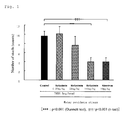
- Fig. 1 is a graph for illustrating results in Example 1.
- the preventive and/or therapeutic agent of the present invention contains refaximin as an effective ingredient.
- Refaximin may be either amorphous or crystalline.
- the crystal form of refaximin is not particularly limited to a specific one and may be various polymorphs (e.g., crystalline polymorphs ⁇ , ⁇ , and ⁇ ).
- Refaximin can be produced by a conventional manner.
- the details of the production process of refaximin may be referred to the Patent Document 1 ( JP-61-23192B ), Japanese Patent Application Laid-Open No. 2007-509904 ( JP-2007-509904A ), and WO 06/94662 .
- Refaximin has curative activities against the above-mentioned functional bowel disorder. Moreover, these curative activities can be realized through an antibacterial action on various bacteria or through a PXR receptor (pregnane X receptor), which is one of intranuclear receptors for protecting the living body from food or extraneous substances.
- PXR receptor pregnane X receptor
- the PXR receptor exists in stomach and duodenum (and other intestinal tract cells or cells involved or engaged in inflammation or immunisation, and the like) and bears or assumes a system for protecting the living body from extraneous substances.
- the PXR receptor functions for the protection of the living body not only in an inflammatory disease but also after recuperation of inflammation or in other functional gastrointestinal disorders with no accompanied by any organic change.
- refaximin is not systemically absorbed (that is, nonabsorbable) and has been used as a pharmaceutical component before. Accordingly, the preventive and/or therapeutic agent of the present invention has less side effects and established safety, and can be safely used for mammals (particularly, e.g., human beings). Further, refaximin has a characteristic that does not produce resistant bacteria even in repeated administration.
- the preventive and/or therapeutic agent of the present invention is effective for the above-mentioned functional gastrointestinal disorder.
- the functional gastrointestinal disorder shows higher incidence in gastroenterology and is an important disease category.
- the functional gastrointestinal disorder is categorized into many diseases by the Rome III criteria.
- gastrointestinal tract disorders expressing no organic disease is classified into A to H: "A: Functional esophageal disorders", “B: Functional gastroduodenal disorders (e.g., a functional dyspepsia) ", “C: Functional bowel disorders (e.g., an irritable bowel syndrome (IBS))", “D: Functional abdominal pain syndrome”, “E: Functional gallbladder and Sphincter of Oddi disorders”, “F: Functional anorectal disorders", “G: Functional disorders: neonates and toddlers”, and “H: Functional disorders: children and adolescents”.
- A Functional esophageal disorders
- B Functional gastroduodenal disorders (e.g., a functional dyspepsia)
- C Functional bowel disorders (e.g., an irritable bowel syndrome (IBS))”
- D Functional abdominal pain syndrome
- E Functional gallbladder and Sphincter of Oddi disorders
- F Functional anorectal disorders
- G Functional disorders: neonates and toddlers
- H Functional
- A Functional esophageal disorders (e.g., A1. Functional heartburn, A2. Functional chest pain of presumed esophageal origin, A3. Functional dysphagia, A4. Globus (globus hystericus; dysphagia))”
- B Functional gastroduodenal disorders (e.g., B1. Functional dyspepsia (FD) (e.g., B1a. Postprandial distress syndrome (PDS), B1b. Epigastric pain syndrome (EPS)), B2. Belching disorders (e.g., B2a. Aerophagia, B2b. Unspecified excessive belching), B3. Nausea and vomiting disorders (e.g., B3a.
- Functional anorectal pain e.g., F2a. Chronic proctalgia (e.g., F2a1. Levator ani syndrome, F2a2. Unspecified functional anorectal pain), F2b. Proctalgia fugax), F3.
- Functional defecation disorders e.g., F3a. Dyssynergic defecation, F3b. Inadequate defecatory propulsion
- G Functional disorders: neonates and toddlers (e.g., G1. Infant regurgitation, G2. Infant rumination syndrome, G3. Cyclic vomiting syndrome, G4. Infant colic, G5. Functional diarrhea)
- H Functional disorders: children and adolescents (e.g., H1.
- FGID Abdominal pain-related functional gastrointestinal disorders
- H2a Functional dyspepsia
- H2c Abdominal migraine
- H2d Childhood functional abdominal pain
- H2d Childhood functional abdominal pain
- H3b Nonretentive fecal incontinence
- the classification includes the following: "B: Functional gastroduodenal disorders (e.g., a functional dyspepsia) ", “C: Functional bowel disorders (e.g., a functional bloating, a functional diarrhea)”, “D: Functional abdominal pain syndrome”, “F: Functional anorectal disorders (e.g., a functional fecal incontinence, a functional anorectal pain, a functional defecation disorder)", “G: Functional disorders: neonates and toddlers (e.g., an infant functional diarrhea)", “H: Functional disorders: children and adolescents (e.g., a childhood functional abdominal pain, a childhood nonretentive fecal incontinence)”.
- B Functional gastroduodenal disorders
- C Functional bowel disorders (e.g., a functional bloating, a functional diarrhea)”
- D Functional abdominal pain syndrome”
- F Functional anorectal disorders (e.g., a functional fecal incontinence, a functional anorect
- the present invention is useful for preventing and/or treating a functional gastroduodenal disorder, wherein the functional gastrointestinal disorder is a functional dyspepsia with a diarrhea, which is included in the Rome III criteria, wherein the functional gastroduodenal disorder includes a functional dyspepsia.
- a functional dyspepsia refers to diseases (symptoms) caused by an abnormal function of the gastrointestinal tract, excluding gastroesophageal reflux disease (GERD) and irritable bowel syndrome (IBS).
- the symptom thereof includes an abdominal pain, a diarrhea, or a constipation in bowel or intestine, and a heartburn, a bothersome postprandial fullness, or a gastralgia in esophagus or stomach.
- GFD gastroesophageal reflux disease
- IBS irritable bowel syndrome
- the symptom thereof includes an abdominal pain, a diarrhea, or a constipation in bowel or intestine, and a heartburn, a bothersome postprandial fullness, or a gastralgia in esophagus or stomach.
- there are some reported symptoms e.g., abnormal motility of the gastrointestinal tract, duodenum juice or fat infusion, hyperalgesia due to balloon distension of the intestinal tract, and nervous system abnormalities
- IBS irritable bowel syndrome
- C Functional bowel disorders
- this disease is different from diseases to which the present invention is applicable.
- IBS is defined as pain associated with change in bowel habit. IBS is distinct from a functional diarrhea characterized by loose stools and no pain, or a functional bloating when there is no change in bowel habit.
- the functional dyspepsia includes bothersome postprandial fullness, early satiation, epigastralgia, or epigastric burning and is differ from IBS in these points.
- the duodenum which is the beginning position of the helical movement of the intestinal tract, plays a role in whole control and regulation of the movement of the intestinal tract and maintains the function of the gastrointestinal tract in cooperation with a lower gastrointestinal tract.
- the abnormal bowel or intestinal function engages with functional dyspepsia significantly. According to the present invention, the movement of the intestinal tract or bowel can be improved or enhanced.
- the above-mentioned diarrhea includes a conventional symptom, for example, osmotic diarrhea, secretory diarrhea, microscopic colitis (collagenous or lymphocytic colitis), exudative diarrhea, diarrhea caused by decrease in absorption time, malabsorptive diarrhea, and paradoxical diarrhea.
- osmotic diarrhea secretory diarrhea
- microscopic colitis collagenous or lymphocytic colitis
- exudative diarrhea diarrhea caused by decrease in absorption time
- malabsorptive diarrhea and paradoxical diarrhea.
- the number of stools can be reduced (or controlled or suppressed), and the nature of stool can be normalized.
- the preventive and/or therapeutic agent of the present invention contains refaximin.
- the agent may comprise refaximin alone as a pharmaceutical or be used as a pharmaceutical composition (or preparation) containing refaximin in combination with a carrier (e.g., a pharmaceutically or physiologically acceptable carrier).
- the carrier may be suitably selected depending on the form of the composition or preparation (that is, the dosage form), the route of administration, and the application.
- the dosage form is not particularly limited to a specific one and may be a solid preparation (for example, powdered preparations, powders, granulated preparations (e.g., granules and microfine granules), spherical or spheroidal preparations, pills, tablets (including sublingual tablets, orally disintegrating tablets, troches, chewable tablet,), capsules (including hard capsules, soft capsules, and microcapsules), dry syrups, suppositories, film-like preparations, and sheet-like preparations), a semisolid preparation (for example, gels, jellys, gumdrop-like preparations, and cake-like or paste preparations), a liquid preparation (for example, solutions, suspensions, emulsions, syrup, elixir, and injectable solutions (or injections)).
- a solid preparation for example, powdered preparations
- the capsules may be a capsule filled with a liquid or a capsule filled with a solid preparation (such as granules).
- the preparation may be a lyophilized preparation.
- the preparation of the present invention may be a preparation releasing the active ingredient(s) at a controlled rate, that is, a sustained release preparation or a rapid-release preparation.
- a method for generating an aerosol is not particularly limited to a specific one.
- a medically effective ingredient and a propellant may be filled in a single hermetic container and sprayed.
- a medically effective ingredient and a compressed gas such as carbon dioxide or nitrogen gas
- the preparation may be an oral dosage form or a parenteral dosage form (for example, collunariums and inhalants).
- the preparation may be topical or local administration form (e.g., solutions such as injections (aqueous injections, non-aqueous injections) and suspensions).
- the preparation of the present invention is practically a solid preparation (particularly, an oral administration form).
- the carrier may be suitably selected, depending on the administration route and the application of preparation, from components (e.g., an excipient, a binder, a disintegrant, a lubricant, and a coating agent) listed in Japanese Pharmacopoeia, (1) Handbook of Pharmaceutical Excipients (Maruzen Company, ltd., (1989 )), (2) Japanese Pharmaceutical Excipients Dictionary 2000 (Yakuji Nippo Ltd., issued March, 2002 ), (3) Japanese Pharmaceutical Excipients Dictionary 2005 (Yakuji Nippo Ltd., issued May, 2005 ), (4) Pharmaceutics, revised fifth edition (Nankodo, Co., Ltd.
- components e.g., an excipient, a binder, a disintegrant, a lubricant, and a coating agent listed in Japanese Pharmacopoeia, (1) Handbook of Pharmaceutical Excipients (Maruzen Company, ltd., (1989 )), (2) Japanese Pharmaceutical Excipients Dictionary 2000 (Yakuji Nippo Ltd.,
- the carrier for a solid preparation is practically at least one member selected from the group consisting of an excipient, a binder, and a disintegrant.
- An additive such as a lipid may be used as the carrier.
- the excipient may include a saccharide or a sugar alcohol such as lactose, white sugar or refined sugar, glucose, sucrose, mannitol, sorbitol, or xylitol; a starch such as a corn starch or a potato starch; a polysaccharide such as a crystalline cellulose (including a microcrystalline cellulose); and silicon dioxide or a silicate such as a light silicic anhydride or a synthetic aluminum silicate.
- a saccharide or a sugar alcohol such as lactose, white sugar or refined sugar, glucose, sucrose, mannitol, sorbitol, or xylitol
- a starch such as a corn starch or a potato starch
- a polysaccharide such as a crystalline cellulose (including a microcrystalline cellulose)
- silicon dioxide or a silicate such as a light silicic anhydride or a synthetic aluminum silicate.
- the binder may include a water-soluble starch such as a pregelatinized starch or a partially pregelatinized starch; a polysaccharide such as agar, gum acacia (or gum arabic), dextrin, sodium alginate, a tragacanth gum, a xanthan gum, a hyaluronic acid, pectin, or a sodium chondroitin sulfate; a synthetic polymer such as a polyvinylpyrrolidone, a poly(vinyl alcohol), a carboxyvinyl polymer, a polyacrylic polymer, a polylactic acid, or a polyethylene glycol; a cellulose ether such as a methyl cellulose, an ethyl cellulose, a carboxymethyl cellulose, a carboxymethyl cellulose sodium, a hydroxyethyl cellulose, a hydroxypropyl cellulose, or a hydroxypropylmethyl cellulose.
- the disintegrant may include calcium carbonate, a carboxymethyl cellulose or a salt thereof (e.g., a carmellose, a carmellose sodium, and a carmellose calcium), a polyvinylpyrrolidone (e.g., a polyvinylpyrrolidone and a crosslinked polyvinylpyrrolidone (crosslinked povidone)), and a low-substituted hydroxypropyl cellulose. These carriers may be used singly or in combination.
- a saccharide or a sugar a cellulose derivative such as an ethyl cellulose or a hydroxyethyl cellulose, a poly(oxyethylene glycol), a cellulose acetate phthalate, a hydroxypropylmethyl cellulose phthalate, a methyl methacrylate-(meth)acrylic acid copolymer, and eudragit (a copolymer of methacrylic acid and acrylic acid).
- a saccharide or a sugar a cellulose derivative such as an ethyl cellulose or a hydroxyethyl cellulose, a poly(oxyethylene glycol), a cellulose acetate phthalate, a hydroxypropylmethyl cellulose phthalate, a methyl methacrylate-(meth)acrylic acid copolymer, and eudragit (a copolymer of methacrylic acid and acrylic acid).
- the coating agent may be an enteric component (e.g., a cellulose phthalate, a hydroxypropylmethyl cellulose phthalate, and a methyl methacrylate- (meth) acrylic acid copolymer) or a gastric soluble component comprising a polymer (e.g., eudragit) containing a basic component such as a dialkylaminoalkyl(meth)acrylate.
- the preparation may be a capsule having such an enteric component or gastric soluble component as a capsule shell.
- an oil-based carrier may include an oil derived from plants or animals (e.g., an oil derived from vegetables such as a jojoba oil, an olive oil, a palm oil, or a cotton seed oil; and an oil derived from animals such as squalene), a mineral oil (e.g., a liquid petrolatum and a silicone oil).
- an oil derived from plants or animals e.g., an oil derived from vegetables such as a jojoba oil, an olive oil, a palm oil, or a cotton seed oil
- an oil derived from animals such as squalene
- a mineral oil e.g., a liquid petrolatum and a silicone oil
- An aqueous carrier may include water (e.g., apurified water or a sterile water, a distilled water for injection), a physiological saline, a Ringer's solution, a glucose solution, a water-soluble organic solvent [for example, a lower aliphatic alcohol such as ethanol or isopropanol; a (poly) alkylene glycol (e.g., ethylene glycol and a poly(ethylene glycol)); and glycerin], dimethyl isosorbide, and dimethylacetamide.
- the carrier of the semisolid preparation may be selected from the carrier of the solid preparation and/or that of the liquid preparation. Further, the carrier of the semisolid preparation may contain a lipid.
- the lipid may include a wax (e.g., a bees wax, a carnauba wax, a cacao butter, a lanolin, a paraffin, and a petrolatum), a higher (or long chain) fatty acid ester [e.g., an alkyl ester of a saturated or unsaturated fatty acid, and an ester of a fatty acid with a polyvalent alcohol (such as a poly(C 2-4 alkylene glycol), glycerin, or a polyglycerin) (e.g., a glyceride)], a hardened (or hydrogenated) oil, a higher alcohol (e.g., a saturated aliphatic alcohol such as stearyl alcohol and an unsaturated aliphatic alcohol such as oleyl alcohol), a higher fatty acid (e.g., linoleic acid, linolenic acid, oleic acid, and stearic acid), and a metallic soap (e.
- additives can be suitably used depending on an administration route, and a dosage form.
- an additive may include, for example, a lubricant (e.g., a talc, magnesium stearate, and a poly(ethylene glycol) 6000), a disintegrant aid, an antioxidation agent or an antioxidant, an emulsifier (e.g., a variety of surfactants such as a nonionic surfactant), a dispersing agent, a suspending agent, a dissolving agent, a dissolution aid, a thickener (e.g., a water-soluble polymer such as a carboxyvinyl polymer, a poly(vinyl alcohol), a carrageen, or a gelatin; and a cellulose ether such as a carboxymethyl cellulose), a pH adjusting agent or a buffer (e.g., a citric acid-sodium citrate buffer), a stabilizer, an antiseptic agent or a preservative (
- the injectable solution usually, the dissolving agent, the dissolution aid, the suspending agent, the buffer, the stabilizer and the preservative may be used as the additive in practical cases.
- the dissolving agent, the dissolution aid, the suspending agent, the buffer, the stabilizer and the preservative may be used as the additive in practical cases.
- a powdery injection which are dissolved or suspended in a solvent before administration, may be added conventional additive (s) used for a powdery injection.
- a topically or locally administering preparation such as an inhalant preparation or a transdermally absorbable preparation
- the additive usually, the dissolution aid, the stabilizer, the buffer, the suspending agent, the emulsifier and the preservative may be practically used.
- the pharmaceutical composition of the present invention may be prepared by using a carrier component in addition to an effective ingredient, and if necessary, an additive and the like, with a conventional preparation manner (for example, a production process described in Japanese Pharmacopoeia 15th editi on or a process in accordance with the production process).
- the solid preparation may be, for example, produced by using a powdery carrier (e.g., a carrier selected from the group consisting of a binder, an excipient, and a disintegrant) together with an effective ingredient (e.g., refaximin, if necessary other components).
- the granules may be prepared by granulating the effective ingredient and the carrier component through extrusion granulation, or spray granulation, and if necessary regulating the size of the resulting granule.
- the tablets may be produced by mixing the granulated matter and the additive if necessary, and compression-molding the resultant mixture.
- the tablets may be coated for masking the taste or imparting enteric property or sustained action thereto with per se known methods.
- the capsules may be prepared by filling granules in a capsule.
- the cake-like or paste solid preparations may be prepared by mixing and kneading the effective ingredient and the powdery carrier together with a wetting component (e.g., the liquid carrier, the gel carrier, the solid or semisolid carrier, and the additive).
- a wetting component e.g., the liquid carrier, the gel carrier, the solid or semisolid carrier, and the additive.
- the powdery preparations may be produced by mixing the effective ingredient and the powdery carrier, and if necessary other components (e.g., other carriers and other additives).
- the refaximin content of the preparation and the amount to be administered (or dose) of the preventive and/or therapeutic agent of the present invention may be suitably selected in accordance with the subject to be administered, the age, body weight, sex, and condition (e.g., a performance status and a condition of a disease) of the subject, the duration (or period or schedule) of administration, the dosage form and the method (or route) of administration.
- the refaximin content of the preparation is, for example, 0.01 to 90% by weight, preferably 0.05 to 80% by weight, and more preferably 0.1 to 70% by weight (e.g., 0.5 to 50% by weight) in terms of a solid content relative to the total amount of the agent.
- the preventive and/or therapeutic agent of the present invention can be used for non-humans or mammals and usually is safely applied for human beings.
- the dose of refaximin is, for example, usually 1 to 3000 mg, preferably 10 to 2000 mg (e.g., 50 to 1700 mg), and more preferably 100 to 1500 mg (e.g., 500 to 1200 mg) to human beings per day when the agent is orally administered to a standard adult (weight of 65 kg).
- the preventive and/or therapeutic agent of the present invention may be administered once a day, or twice or more times (e.g., about twice to fifth times) per day.
- the route of the administration and the optimal amount of the agent are determined.
- the preventive and/or therapeutic agent of the present invention may be used in combination with one or more other drugs as long as the combination does not have an adversely affect.
- the drug which can be administered in combination with the agent (or co-administrable drug) may be a low-molecular weight drug, a polypeptide, an antibody, or a vaccine.
- the drug may include a stomachic, a digestant, a digestive enzyme, an antacid, an antiemetic, an anti-constipation agent or a cathartic, a diarrheatherapeutic drug [e.g., an antimicrobial drug, a stegnotic, an adsorbent, a drug to depress intestinal tract motor, and an intestinal remedy], and a therapeutic drug for digestive ulcer.
- the therapeutic drug for digestive ulcer may include, for example, protective agents against factors causing damages in gastrointestinal tracts [e.g., an anti-stress agent such as antianxiety agent, a counteractive such as an antacid, and a gastric secretory inhibitor such as an anticholinergic drug, an antigastric drug, a muscarine receptor inhibitor, an H2 receptor inhibitor, or a proton pump inhibitor], a protective agent [e.g., a protective agent for ulcer focal site, an incarnant agent, an apophlegmatic, a mucosal microcirculation improver, and a prostaglandin preparation].
- a crude drug or a galenical
- a vitamin compound e.g., vitamin A, vitamin B, vitamin C, vitamin D, and vitamin E
- the dosage form is not particularly limited to a specific one.
- the both may be prepared simultaneously and administered as a single preparation or may be prepared separately and administered simultaneously or separately through the same administration route.
- the both may be prepared separately and administered simultaneously or separately through the different administration route.
- the proportion of the other drugs may be, for example, 0.01 to 500 parts by weight, preferably 0.1 to 100 parts by weight, and more preferably 0.5 to 50 parts by weight relative to 100 parts by weight of refaximin.
- the preventive and/or therapeutic agent of the present invention contains refaximin as an effective ingredient, the agent has an excellent preventing and/or treating effect on a functional dyspepsia with a diarrhea.
- the agent has less side effects and a high safety.
- Each of rats was freely allowed to have an enteral nutritional supplement, ELENTAL (0.25 g/mL; manufactured by Aj inomoto Co., Inc.) contained in a water-feeding bottle for seven days before a treatment with TNBS (2,4,6-trinitrobenzene sulfonic acid).
- the rats were fasted from the day before the TNBS administration day, and drinking water instead of ELENTAL was contained in the water-feeding bottle.
- 10 mL of physiological saline was intrarectally injected to the rat under anesthetization with ethyl ether to wash the enteral content.
- the rat was allowed to stand longer than 2 hours, and 1 mL of 5 or 30 mg/head of TNBS in 40% ethanol/physiological saline (vehicle) was applied (injected) through the rectal injection under anesthetization with pentobarbital. Further, a silicone plug was inserted to the anus of the rat to stay the TNBS solution in the injection site, and the surrounding of the anus was fixed with an adhesive cloth elastic bandage (Elastopore). After about four hours of the TNBS treatment, the Elastopore and the silicone plug were removed from the rat, and 10 mL of physiological saline was intrarectally injected to the rat to discharge the enteral content. The animal was conventionally bled for four weeks from the TNBS treatment to recover from colitis. Moreover, to each of positive control rats, alosetron was orally administered singly before one hour of the stress loading.
- alosetron was orally administered singly before one hour of the stress loading.
- the administration of 100 mg/kg of refaximin decreased the number of stools compared with the control and was significantly effective (p ⁇ 0. 001, Dunnett test).
- the alosetron-administered group showed a significantly effect compared with the control group (p ⁇ 0.001, t-test).
- the defecation inhibition effect of refaximin depended on the dose.
- normalization in the nature of stool was observed in the refaximin-administered group. Accordingly, in the refaximin-administered group, the motility of the intestinal tract was improved.
- the body weight or others was not influenced by the administration of refaximin. Therefore, the safety of refaximin is high to a living body.
- a tablet was obtained in accordance with a usual manner described in Japanese Pharmacopoeia. Incidentally, the following was a proportion (% by weight) in a tablet. Refaximin 5% by weight Lactose 63% by weight Corn starch 30% by weight Guar gum 2% by weight
- a tablet was obtained in accordance with a usual manner described in Japanese Pharmacopoeia. Incidentally, the following was a proportion (% by weight) in a tablet. Refaximin 50% by weight Crystalline cellulose 30% by weight Hydroxypropylmethyl cellulose 5% by weight Magnesium stearate 5% by weight Lactose 10% by weight
- a granule was obtained in accordance with a usual manner described in Japanese Pharmacopoeia.
- a capsule was obtained by filling the resulting granule in a gelatin capsule in an amount of about 250 mg per capsule.
- the following was a proportion (% by weight) relative to 100% by weight of the contents of the capsule.
- Refaximin 40% by weight Crystalline cellulose 25% by weight Carboxymethyl cellulose sodium 5% by weight
Landscapes
- Health & Medical Sciences (AREA)
- Life Sciences & Earth Sciences (AREA)
- Animal Behavior & Ethology (AREA)
- Chemical & Material Sciences (AREA)
- Veterinary Medicine (AREA)
- Medicinal Chemistry (AREA)
- Public Health (AREA)
- General Health & Medical Sciences (AREA)
- Pharmacology & Pharmacy (AREA)
- Engineering & Computer Science (AREA)
- Bioinformatics & Cheminformatics (AREA)
- Epidemiology (AREA)
- General Chemical & Material Sciences (AREA)
- Organic Chemistry (AREA)
- Nuclear Medicine, Radiotherapy & Molecular Imaging (AREA)
- Chemical Kinetics & Catalysis (AREA)
- Biophysics (AREA)
- Molecular Biology (AREA)
- Gastroenterology & Hepatology (AREA)
- Pharmaceuticals Containing Other Organic And Inorganic Compounds (AREA)
- Acyclic And Carbocyclic Compounds In Medicinal Compositions (AREA)
- Nitrogen And Oxygen Or Sulfur-Condensed Heterocyclic Ring Systems (AREA)
- Medicines Containing Plant Substances (AREA)
- Coloring Foods And Improving Nutritive Qualities (AREA)
Description
- The present invention relates to an agent containing refaximin as an effective ingredient for use in a method of preventing and/or treating a functional gastrointestinal disorder, wherein the functional gastrointestinal disorder is a functional dyspepsia with a diarrhea.
- Symptoms such as a diarrhea, a constipation, and an abdominal pain are observed in diseases with various organic changes of the gastrointestinal tract (e.g., an infection of the gastrointestinal tract and a tumor). On the other hand, such symptoms are also observed in many diseases in which no organic abnormality is recognized by an endoscopic examination or an examination using a contrast medium. Regarding diseases expressing these symptoms, global diagnostic criteria have been determined, and Rome III criteria have been published in 2006 as the current diagnostic criteria, which categorize diseases particularly based on the domain where a symptomis expressed. Patients have been classified into various diseases in accordance with these diagnostic criteria and received necessary medical treatments.
- Moreover, many alimentary symptoms which are not categorized by the above diagnostic criteria are also observed. In actual clinical trials, the quality of life (QOL) of patients has been also evaluated. For example, in a clinical trial of a functional dyspepsia, Gastrointestinal Symptom Rating Scale (GSRS) has been widely used for estimating the QOL. The evaluation item includes (1) acid reflex, (2) abdominal pain, (3) indigestion, (4) diarrhea, (5) constipation and others, and has been graded and evaluated.
- Heretofore, it has been difficult to identify a cause of development (or sideration) or to select a diagnostic or treatment technique for a functional gastrointestinal disorder in which no organic or pathologic change has been recognized. As a result, there has been some confusion, distrust, and misunderstanding among physicians, patients, and the general public. In addition, as described in Gastroenterol 130, 1377-1390, 2006 (Non-Patent Document 1), the tendency has been to overemphasize stress as the cause of development. At present, there is insufficient treatment technique for diseases categorized based on the diagnosis by the Rome III criteria or the like, except part of diseases. As the result of the disclosure of the diagnostic criteria, it has been further expected to clarify the cause of development of each disease or to study the corresponding precise treatment technique in the future. Thus, a control substance of a neurotransmitter (serotonin) involving or engaging to the motility of the intestinal tract was developed for a specific functional gastrointestinal disorder. However, after placing on the market, the control substance canceled a sale due to side effects thereof. Thus therapeutic drugs having no side effect have been strongly required.
- On the other hand, Japanese Patent No.
61-23192 JP-61-23192B - Refaximin has been already widely used as a therapeutic agent for intestinal infection, hepatic encephalopathy, and skin infection. In addition, regarding refaximin, the followings are mentioned: refaximin has been marketed in the United States as a drug adaptable for the treatment of traveler' s diarrhea (12 years of age or older) caused by noninvasive Escherichia coli [Annals of Internal Medicine, 142(10), p.805-812, 2005 (Non-Patent Document 2)]; refaximin is useful for preventing or treating bacterial colpopathy [Japanese Patent No.
2834951 JP-2834951B 2755550 JP-2755550B 226645/1998 JP-10-226645A WO 01/11077 - However, findings of refaximin on a functional gastrointestinal disorder (particularly, a functional gastroduodenal disorder) have not been obtained. Moreover, an agent for preventing or treating a functional gastrointestinal disorder (particularly, a functional gastroduodenal disorder) containing refaximin as an effective ingredient has not been known.
-
- Patent Document 1:
JP-61-23192B - Patent Document 2:
JP-2834951B - Patent Document 3:
JP-2755550B - Patent Document 4:
JP-10-226645A - Patent Document 5:
WO 01/11077 -
- Non-Patent Document 1: Gastroenterol 130, 1377-1390, 2006
- Non-Patent Document 2: Annals of Internal Medicine, 142(10), p.805-812, 2005
- Non-Patent Document 3: Annals of Internal Medicine, 145(8), p.557-563, 2006
- It is therefore an object of the present invention to provide an agent useful for preventing and/or treating a functional gastrointestinal disorder.
- The inventors of the present invention made intensive studies to achieve the above objects and finally found that refaximin has curative activities against a functional gastrointestinal disorder (particularly, a functional gastroduodenal disorder, which is different from irritable bowelsyndrome (IBS)in categories),particularly, an abnormal bowel function such as an abdominal pain, a diarrhea, or a,constipation. The present invention was accomplished based on the above findings and further investigations.
- That is, the present invention relates to an agent containing refaximin as an effective ingredient for use in a method of preventing and/or treating a functional gastrointestinal disorder, wherein the functional gastrointestinal disorder is a functional dyspepsia with a diarrhea. According to the present invention, the number of stools can be reduced (or controlled or suppressed). Moreover, the present invention can normalize nature of stool. Further, the present invention can improve the motility of the intestinal tract. These effects of refaximin would be never predicted from conventionally known pharmacological actions of refaximin.
- The preventive and/or therapeutic agent of the present invention containing refaximin as an effective ingredient is useful for preventing and/or treating a functional gastrointestinal disorder, wherein the functional gastrointestinal disorder is a functional dyspepsia with a diarrhea. Further, the preventive and/or therapeutic agent of the invention has curative activities against a functional bowel disorder (such as an abdominal pain, a diarrhea, or a constipation) derived from the above-mentioned diseases. Therefore, according to the present invention, the number of stools can be reduced (or controlled or suppressed) and the nature of stool can be normalized. Furthermore, the present invention can improve or enhance the motility of the intestinal tract. Moreover, refaximin, which is a general-purpose compound for pharmaceutical preparations and shows no systemic absorption, has less side effects and enough safety.
- [
Fig. 1] Fig. 1 is a graph for illustrating results in Example 1. - The preventive and/or therapeutic agent of the present invention contains refaximin as an effective ingredient. Refaximin may be either amorphous or crystalline. The crystal form of refaximin is not particularly limited to a specific one and may be various polymorphs (e.g., crystalline polymorphs α, β, and γ).
- Refaximin can be produced by a conventional manner. For example, the details of the production process of refaximin may be referred to the Patent Document 1 (
JP-61-23192B 2007-509904 JP-2007-509904A WO 06/94662 - Refaximin has curative activities against the above-mentioned functional bowel disorder. Moreover, these curative activities can be realized through an antibacterial action on various bacteria or through a PXR receptor (pregnane X receptor), which is one of intranuclear receptors for protecting the living body from food or extraneous substances. The PXR receptor exists in stomach and duodenum (and other intestinal tract cells or cells involved or engaged in inflammation or immunisation, and the like) and bears or assumes a system for protecting the living body from extraneous substances. The PXR receptor functions for the protection of the living body not only in an inflammatory disease but also after recuperation of inflammation or in other functional gastrointestinal disorders with no accompanied by any organic change. Further, refaximin is not systemically absorbed (that is, nonabsorbable) and has been used as a pharmaceutical component before. Accordingly, the preventive and/or therapeutic agent of the present invention has less side effects and established safety, and can be safely used for mammals (particularly, e.g., human beings). Further, refaximin has a characteristic that does not produce resistant bacteria even in repeated administration.
- The preventive and/or therapeutic agent of the present invention is effective for the above-mentioned functional gastrointestinal disorder. The functional gastrointestinal disorder shows higher incidence in gastroenterology and is an important disease category. The functional gastrointestinal disorder is categorized into many diseases by the Rome III criteria. In the Rome III criteria, gastrointestinal tract disorders expressing no organic disease is classified into A to H: "A: Functional esophageal disorders", "B: Functional gastroduodenal disorders (e.g., a functional dyspepsia) ", "C: Functional bowel disorders (e.g., an irritable bowel syndrome (IBS))", "D: Functional abdominal pain syndrome", "E: Functional gallbladder and Sphincter of Oddi disorders", "F: Functional anorectal disorders", "G: Functional disorders: neonates and toddlers", and "H: Functional disorders: children and adolescents".
- These classifications include the following: "A: Functional esophageal disorders (e.g., A1. Functional heartburn, A2. Functional chest pain of presumed esophageal origin, A3. Functional dysphagia, A4. Globus (globus hystericus; dysphagia))", "B: Functional gastroduodenal disorders (e.g., B1. Functional dyspepsia (FD) (e.g., B1a. Postprandial distress syndrome (PDS), B1b. Epigastric pain syndrome (EPS)), B2. Belching disorders (e.g., B2a. Aerophagia, B2b. Unspecified excessive belching), B3. Nausea and vomiting disorders (e.g., B3a. Chronicidiopathic nausea (CIN), B3b. Functional vomiting, B3c. Cyclic vomiting syndrome (CVS)), B4. Rumination syndrome in adults)", "C: Functional bowel disorders (e.g., C2. Functional bloating, C4. Functional diarrhea, C5. Unspecified functional bowel disorder) ", "D: Functional abdominal pain syndrome (FAPS)", "E. Functional gallbladder and Sphincter of Oddi disorders (e.g., E1. Functional gallbladder disorder, E2. Functional biliary Sphincter of Oddi disorder, E3. Functional pancreatic Sphincter of Oddi disorder)", "F: Functional anorectal disorders (e.g., F1. Functional fecal incontinence, F2. Functional anorectal pain (e.g., F2a. Chronic proctalgia (e.g., F2a1. Levator ani syndrome, F2a2. Unspecified functional anorectal pain), F2b. Proctalgia fugax), F3. Functional defecation disorders (e.g., F3a. Dyssynergic defecation, F3b. Inadequate defecatory propulsion)", "G: Functional disorders: neonates and toddlers (e.g., G1. Infant regurgitation, G2. Infant rumination syndrome, G3. Cyclic vomiting syndrome, G4. Infant colic, G5. Functional diarrhea)", "H: Functional disorders: children and adolescents (e.g., H1. Vomiting and aerophagia (e.g., H1a. Adolescent rumination syndrome, H1b. Cyclic vomiting syndrome (CVS), H1c. Aerophagia), H2. Abdominal pain-related functional gastrointestinal disorders (FGID) (e.g., H2a. Functional dyspepsia (FD), H2c. Abdominal migraine, H2d. Childhood functional abdominal pain (e.g., H2d1. Childhood functional abdominal pain syndrome)), H3. Constipation and incontinence (e.g., H3b. Nonretentive fecal incontinence)".
- Further, the classification includes the following: "B: Functional gastroduodenal disorders (e.g., a functional dyspepsia) ", "C: Functional bowel disorders (e.g., a functional bloating, a functional diarrhea)", "D: Functional abdominal pain syndrome", "F: Functional anorectal disorders (e.g., a functional fecal incontinence, a functional anorectal pain, a functional defecation disorder)", "G: Functional disorders: neonates and toddlers (e.g., an infant functional diarrhea)", "H: Functional disorders: children and adolescents (e.g., a childhood functional abdominal pain, a childhood nonretentive fecal incontinence)".
- In particular, the present invention is useful for preventing and/or treating a functional gastroduodenal disorder, wherein the functional gastrointestinal disorder is a functional dyspepsia with a diarrhea, which is included in the Rome III criteria, wherein the functional gastroduodenal disorder includes a functional dyspepsia.
- A functional dyspepsia, one of the functional gastroduodenal disorders, refers to diseases (symptoms) caused by an abnormal function of the gastrointestinal tract, excluding gastroesophageal reflux disease (GERD) and irritable bowel syndrome (IBS). The symptom thereof includes an abdominal pain, a diarrhea, or a constipation in bowel or intestine, and a heartburn, a bothersome postprandial fullness, or a gastralgia in esophagus or stomach. In the functional dyspepsia, there are some reported symptoms, e.g., abnormal motility of the gastrointestinal tract, duodenum juice or fat infusion, hyperalgesia due to balloon distension of the intestinal tract, and nervous system abnormalities. These symptoms act on the motility of the intestinal tract (Transit time) and trigger abnormal defecation or abnormal form (or appearance) of stool such as a diarrhea or a constipation. Therefore, it is important to evaluate the effects on the functional dyspepsia based on not only the symptom which is the diagnostic criteria but also the QOL evaluation according to GSRS or the like. In actual, regarding diarrhea symptom of the functional dyspepsia, it has been reported that about 80% of patients with functional dyspepsia has abnormal bowel habit (such as defecation), and about 20% of the 80% patients has diarrhea symptom (Aliment Pharmacol Ther. 2006 Jul 14; 24(2): 405). The preventive and/or therapeutic agent of the present invention has beneficial effects on a functional dyspepsia with a diarrhea.
- Incidentally, although IBS (irritable bowel syndrome) is classified as "C: Functional bowel disorders" in the Rome III criteria, this disease is different from diseases to which the present invention is applicable. For example, according to the Rome III criteria, IBS is defined as pain associated with change in bowel habit. IBS is distinct from a functional diarrhea characterized by loose stools and no pain, or a functional bloating when there is no change in bowel habit. Moreover, the functional dyspepsia includes bothersome postprandial fullness, early satiation, epigastralgia, or epigastric burning and is differ from IBS in these points. The duodenum, which is the beginning position of the helical movement of the intestinal tract, plays a role in whole control and regulation of the movement of the intestinal tract and maintains the function of the gastrointestinal tract in cooperation with a lower gastrointestinal tract. The abnormal bowel or intestinal function engages with functional dyspepsia significantly. According to the present invention, the movement of the intestinal tract or bowel can be improved or enhanced.
- In addition, the above-mentioned diarrhea includes a conventional symptom, for example, osmotic diarrhea, secretory diarrhea, microscopic colitis (collagenous or lymphocytic colitis), exudative diarrhea, diarrhea caused by decrease in absorption time, malabsorptive diarrhea, and paradoxical diarrhea. In the present invention, the number of stools can be reduced (or controlled or suppressed), and the nature of stool can be normalized.
- The preventive and/or therapeutic agent of the present invention contains refaximin. The agent may comprise refaximin alone as a pharmaceutical or be used as a pharmaceutical composition (or preparation) containing refaximin in combination with a carrier (e.g., a pharmaceutically or physiologically acceptable carrier).
- With respect to the pharmaceutical composition, the carrier may be suitably selected depending on the form of the composition or preparation (that is, the dosage form), the route of administration, and the application. The dosage form is not particularly limited to a specific one and may be a solid preparation (for example, powdered preparations, powders, granulated preparations (e.g., granules and microfine granules), spherical or spheroidal preparations, pills, tablets (including sublingual tablets, orally disintegrating tablets, troches, chewable tablet,), capsules (including hard capsules, soft capsules, and microcapsules), dry syrups, suppositories, film-like preparations, and sheet-like preparations), a semisolid preparation (for example, gels, jellys, gumdrop-like preparations, and cake-like or paste preparations), a liquid preparation (for example, solutions, suspensions, emulsions, syrup, elixir, and injectable solutions (or injections)). Moreover, sprays or aerosols of the powdered preparations and/or the liquid preparation may be also included. Incidentally, the capsules may be a capsule filled with a liquid or a capsule filled with a solid preparation (such as granules). Moreover, the preparation may be a lyophilized preparation. Further, the preparation of the present invention may be a preparation releasing the active ingredient(s) at a controlled rate, that is, a sustained release preparation or a rapid-release preparation. Incidentally, in aerosols utilized for an inhalant agent, a method for generating an aerosol is not particularly limited to a specific one. For example, a medically effective ingredient and a propellant (e.g., an alternative for chlorofluorocarbon) may be filled in a single hermetic container and sprayed. Moreover, a medically effective ingredient and a compressed gas (such as carbon dioxide or nitrogen gas) may be filled in separate containers and sprayed in the form of a nebulizer or an atomizer. Further, the preparation may be an oral dosage form or a parenteral dosage form (for example, collunariums and inhalants). Furthermore, the preparation may be topical or local administration form (e.g., solutions such as injections (aqueous injections, non-aqueous injections) and suspensions). The preparation of the present invention is practically a solid preparation (particularly, an oral administration form).
- The carrier may be suitably selected, depending on the administration route and the application of preparation, from components (e.g., an excipient, a binder, a disintegrant, a lubricant, and a coating agent) listed in Japanese Pharmacopoeia, (1) Handbook of Pharmaceutical Excipients (Maruzen Company, ltd., (1989)), (2) Japanese Pharmaceutical Excipients Dictionary 2000 (Yakuji Nippo Ltd., issued March, 2002), (3) Japanese Pharmaceutical Excipients Dictionary 2005 (Yakuji Nippo Ltd., issued May, 2005), (4) Pharmaceutics, revised fifth edition (Nankodo, Co., Ltd. (1997)), and (5) Japanese Pharmaceutical Excipients 2003 (Yakuji Nippo Ltd., issued August, 2003). For example, the carrier for a solid preparation is practically at least one member selected from the group consisting of an excipient, a binder, and a disintegrant. An additive such as a lipid may be used as the carrier.
- The excipient may include a saccharide or a sugar alcohol such as lactose, white sugar or refined sugar, glucose, sucrose, mannitol, sorbitol, or xylitol; a starch such as a corn starch or a potato starch; a polysaccharide such as a crystalline cellulose (including a microcrystalline cellulose); and silicon dioxide or a silicate such as a light silicic anhydride or a synthetic aluminum silicate. The binder may include a water-soluble starch such as a pregelatinized starch or a partially pregelatinized starch; a polysaccharide such as agar, gum acacia (or gum arabic), dextrin, sodium alginate, a tragacanth gum, a xanthan gum, a hyaluronic acid, pectin, or a sodium chondroitin sulfate; a synthetic polymer such as a polyvinylpyrrolidone, a poly(vinyl alcohol), a carboxyvinyl polymer, a polyacrylic polymer, a polylactic acid, or a polyethylene glycol; a cellulose ether such as a methyl cellulose, an ethyl cellulose, a carboxymethyl cellulose, a carboxymethyl cellulose sodium, a hydroxyethyl cellulose, a hydroxypropyl cellulose, or a hydroxypropylmethyl cellulose. The disintegrant may include calcium carbonate, a carboxymethyl cellulose or a salt thereof (e.g., a carmellose, a carmellose sodium, and a carmellose calcium), a polyvinylpyrrolidone (e.g., a polyvinylpyrrolidone and a crosslinked polyvinylpyrrolidone (crosslinked povidone)), and a low-substituted hydroxypropyl cellulose. These carriers may be used singly or in combination.
- For example, there maybe used, as the coating agent, a saccharide or a sugar, a cellulose derivative such as an ethyl cellulose or a hydroxyethyl cellulose, a poly(oxyethylene glycol), a cellulose acetate phthalate, a hydroxypropylmethyl cellulose phthalate, a methyl methacrylate-(meth)acrylic acid copolymer, and eudragit (a copolymer of methacrylic acid and acrylic acid). The coating agent may be an enteric component (e.g., a cellulose phthalate, a hydroxypropylmethyl cellulose phthalate, and a methyl methacrylate- (meth) acrylic acid copolymer) or a gastric soluble component comprising a polymer (e.g., eudragit) containing a basic component such as a dialkylaminoalkyl(meth)acrylate. Moreover, the preparation may be a capsule having such an enteric component or gastric soluble component as a capsule shell.
- In the carrier of the liquid preparation, an oil-based carrier may include an oil derived from plants or animals (e.g., an oil derived from vegetables such as a jojoba oil, an olive oil, a palm oil, or a cotton seed oil; and an oil derived from animals such as squalene), a mineral oil (e.g., a liquid petrolatum and a silicone oil). An aqueous carrier may include water (e.g., apurified water or a sterile water, a distilled water for injection), a physiological saline, a Ringer's solution, a glucose solution, a water-soluble organic solvent [for example, a lower aliphatic alcohol such as ethanol or isopropanol; a (poly) alkylene glycol (e.g., ethylene glycol and a poly(ethylene glycol)); and glycerin], dimethyl isosorbide, and dimethylacetamide. Moreover, the carrier of the semisolid preparation may be selected from the carrier of the solid preparation and/or that of the liquid preparation. Further, the carrier of the semisolid preparation may contain a lipid.
- The lipid may include a wax (e.g., a bees wax, a carnauba wax, a cacao butter, a lanolin, a paraffin, and a petrolatum), a higher (or long chain) fatty acid ester [e.g., an alkyl ester of a saturated or unsaturated fatty acid, and an ester of a fatty acid with a polyvalent alcohol (such as a poly(C2-4alkylene glycol), glycerin, or a polyglycerin) (e.g., a glyceride)], a hardened (or hydrogenated) oil, a higher alcohol (e.g., a saturated aliphatic alcohol such as stearyl alcohol and an unsaturated aliphatic alcohol such as oleyl alcohol), a higher fatty acid (e.g., linoleic acid, linolenic acid, oleic acid, and stearic acid), and a metallic soap (e.g., a metal salt of a fatty acid, such as a sodium salt of palm oil fatty acid or calcium stearate).
- In the preparation, known additives can be suitably used depending on an administration route, and a dosage form. Such an additive may include, for example, a lubricant (e.g., a talc, magnesium stearate, and a poly(ethylene glycol) 6000), a disintegrant aid, an antioxidation agent or an antioxidant, an emulsifier (e.g., a variety of surfactants such as a nonionic surfactant), a dispersing agent, a suspending agent, a dissolving agent, a dissolution aid, a thickener (e.g., a water-soluble polymer such as a carboxyvinyl polymer, a poly(vinyl alcohol), a carrageen, or a gelatin; and a cellulose ether such as a carboxymethyl cellulose), a pH adjusting agent or a buffer (e.g., a citric acid-sodium citrate buffer), a stabilizer, an antiseptic agent or a preservative (e.g., a paraben such as methyl paraben or butyl paraben), a fungicide or antibacterial agent (e.g., a benzoic acid compound such as sodium benzoate), an antistatic agent, a corrigent or a masking agent (e.g., sweetening agent), a coloring agent (e.g., a dye and a pigment such as colcothar), a deodorant or a perfume (e.g., an aromatic substance), an algefacient, an antifoaming agent, an isotonizing agent, and a soothing agent. These additives may be used singly or in combination.
- For example, for the injectable solution, usually, the dissolving agent, the dissolution aid, the suspending agent, the buffer, the stabilizer and the preservative may be used as the additive in practical cases. Incidentally, for a powdery injection, which are dissolved or suspended in a solvent before administration, may be added conventional additive (s) used for a powdery injection.
- Moreover, in a topically or locally administering preparation such as an inhalant preparation or a transdermally absorbable preparation, as the additive, usually, the dissolution aid, the stabilizer, the buffer, the suspending agent, the emulsifier and the preservative may be practically used.
- The pharmaceutical composition of the present invention may be prepared by using a carrier component in addition to an effective ingredient, and if necessary, an additive and the like, with a conventional preparation manner (for example, a production process described in Japanese Pharmacopoeia 15th edition or a process in accordance with the production process). The solid preparation may be, for example, produced by using a powdery carrier (e.g., a carrier selected from the group consisting of a binder, an excipient, and a disintegrant) together with an effective ingredient (e.g., refaximin, if necessary other components). For example, the granules may be prepared by granulating the effective ingredient and the carrier component through extrusion granulation, or spray granulation, and if necessary regulating the size of the resulting granule. The tablets may be produced by mixing the granulated matter and the additive if necessary, and compression-molding the resultant mixture. Moreover, if necessary, the tablets may be coated for masking the taste or imparting enteric property or sustained action thereto with per se known methods. The capsules may be prepared by filling granules in a capsule. Further, the cake-like or paste solid preparations may be prepared by mixing and kneading the effective ingredient and the powdery carrier together with a wetting component (e.g., the liquid carrier, the gel carrier, the solid or semisolid carrier, and the additive). Further, the powdery preparations may be produced by mixing the effective ingredient and the powdery carrier, and if necessary other components (e.g., other carriers and other additives).
- The refaximin content of the preparation and the amount to be administered (or dose) of the preventive and/or therapeutic agent of the present invention may be suitably selected in accordance with the subject to be administered, the age, body weight, sex, and condition (e.g., a performance status and a condition of a disease) of the subject, the duration (or period or schedule) of administration, the dosage form and the method (or route) of administration. The refaximin content of the preparation is, for example, 0.01 to 90% by weight, preferably 0.05 to 80% by weight, and more preferably 0.1 to 70% by weight (e.g., 0.5 to 50% by weight) in terms of a solid content relative to the total amount of the agent.
- The preventive and/or therapeutic agent of the present invention can be used for non-humans or mammals and usually is safely applied for human beings. The dose of refaximin is, for example, usually 1 to 3000 mg, preferably 10 to 2000 mg (e.g., 50 to 1700 mg), and more preferably 100 to 1500 mg (e.g., 500 to 1200 mg) to human beings per day when the agent is orally administered to a standard adult (weight of 65 kg). The preventive and/or therapeutic agent of the present invention may be administered once a day, or twice or more times (e.g., about twice to fifth times) per day. Incidentally, in consideration of the condition (e.g., a performance status and a condition of a disease), age, sex, and body weight of the patient, the route of the administration and the optimal amount of the agent are determined.
- The preventive and/or therapeutic agent of the present invention may be used in combination with one or more other drugs as long as the combination does not have an adversely affect.
The drug which can be administered in combination with the agent (or co-administrable drug) may be a low-molecular weight drug, a polypeptide, an antibody, or a vaccine. For example, the drug may include a stomachic, a digestant, a digestive enzyme, an antacid, an antiemetic, an anti-constipation agent or a cathartic, a diarrheatherapeutic drug [e.g., an antimicrobial drug, a stegnotic, an adsorbent, a drug to depress intestinal tract motor, and an intestinal remedy], and a therapeutic drug for digestive ulcer. The therapeutic drug for digestive ulcer may include, for example, protective agents against factors causing damages in gastrointestinal tracts [e.g., an anti-stress agent such as antianxiety agent, a counteractive such as an antacid, and a gastric secretory inhibitor such as an anticholinergic drug, an antigastric drug, a muscarine receptor inhibitor, an H2 receptor inhibitor, or a proton pump inhibitor], a protective agent [e.g., a protective agent for ulcer focal site, an incarnant agent, an apophlegmatic, a mucosal microcirculation improver, and a prostaglandin preparation]. Further, if necessary, a crude drug (or a galenical), a vitamin compound (e.g., vitamin A, vitamin B, vitamin C, vitamin D, and vitamin E), a mineral compound, and an amino acid compound may be used. - When the preventive and/or therapeutic agent of the present invention is used in combination with other drugs, the dosage form is not particularly limited to a specific one. For example, the both may be prepared simultaneously and administered as a single preparation or may be prepared separately and administered simultaneously or separately through the same administration route. Moreover, the both may be prepared separately and administered simultaneously or separately through the different administration route.
- The proportion of the other drugs may be, for example, 0.01 to 500 parts by weight, preferably 0.1 to 100 parts by weight, and more preferably 0.5 to 50 parts by weight relative to 100 parts by weight of refaximin.
- Since the preventive and/or therapeutic agent of the present invention contains refaximin as an effective ingredient, the agent has an excellent preventing and/or treating effect on a functional dyspepsia with a diarrhea. The agent has less side effects and a high safety.
- The following examples are intended to describe this invention in further detail.
- Each of rats was freely allowed to have an enteral nutritional supplement, ELENTAL (0.25 g/mL; manufactured by Aj inomoto Co., Inc.) contained in a water-feeding bottle for seven days before a treatment with TNBS (2,4,6-trinitrobenzene sulfonic acid). The rats were fasted from the day before the TNBS administration day, and drinking water instead of ELENTAL was contained in the water-feeding bottle. On the day of the TNBS treatment (the rat: 8-week-old), 10 mL of physiological saline was intrarectally injected to the rat under anesthetization with ethyl ether to wash the enteral content. After the washing, the rat was allowed to stand longer than 2 hours, and 1 mL of 5 or 30 mg/head of TNBS in 40% ethanol/physiological saline (vehicle) was applied (injected) through the rectal injection under anesthetization with pentobarbital. Further, a silicone plug was inserted to the anus of the rat to stay the TNBS solution in the injection site, and the surrounding of the anus was fixed with an adhesive cloth elastic bandage (Elastopore). After about four hours of the TNBS treatment, the Elastopore and the silicone plug were removed from the rat, and 10 mL of physiological saline was intrarectally injected to the rat to discharge the enteral content. The animal was conventionally bled for four weeks from the TNBS treatment to recover from colitis. Moreover, to each of positive control rats, alosetron was orally administered singly before one hour of the stress loading.
- To each of the rats which recovered from colitis, 0.5% by weight of Tween 80 as control (vehicle) or refaximin (6.25 mg/kg, 25 mg/kg and 100 mg/kg) was orally administered for 9 days. Moreover, to each of positive control rats, alosetron (10 mg/kg) was orally administered singly before one hour of the water-stress loading. On the day of the measurement of the number of stools (the rat: 12-week-old), the animal was allowed to stand on a block (10 cm x 5 cm x 10 cm) installed in a water bath (about 50 x 30 x 40 cm, water depth: 5 cm) for one hour. However, each of animals on which no water environment stress was loaded (normal group) was allowed to stand in a waterless bath. The total number of stools excreted for the one hour after the animal was allowed to stand in the water bath was measured as the number of stools. Moreover, the nature of stools were compared and examined. The measured results are shown in
Fig. 1 . - As apparent from
Fig. 1 , the administration of 100 mg/kg of refaximin decreased the number of stools compared with the control and was significantly effective (p<0. 001, Dunnett test). Incidentally, the alosetron-administered group showed a significantly effect compared with the control group (p<0.001, t-test). Further, the defecation inhibition effect of refaximin depended on the dose. In addition, normalization in the nature of stool was observed in the refaximin-administered group. Accordingly, in the refaximin-administered group, the motility of the intestinal tract was improved. Further, in the refaximin-administered group, compared with the alosetron-administered group, the body weight or others was not influenced by the administration of refaximin. Therefore, the safety of refaximin is high to a living body. - Using the following ingredients, a tablet was obtained in accordance with a usual manner described in Japanese Pharmacopoeia. Incidentally, the following was a proportion (% by weight) in a tablet.
Refaximin 5% by weight Lactose 63% by weight Corn starch 30% by weight Guar gum 2% by weight - Using the following ingredients, a tablet was obtained in accordance with a usual manner described in Japanese Pharmacopoeia. Incidentally, the following was a proportion (% by weight) in a tablet.
Refaximin 50% by weight Crystalline cellulose 30% by weight Hydroxypropylmethyl cellulose 5% by weight Magnesium stearate 5% by weight Lactose 10% by weight - Using the following ingredients, a granule was obtained in accordance with a usual manner described in Japanese Pharmacopoeia. A capsule was obtained by filling the resulting granule in a gelatin capsule in an amount of about 250 mg per capsule. Incidentally, the following was a proportion (% by weight) relative to 100% by weight of the contents of the capsule.
Refaximin 40% by weight Crystalline cellulose 25% by weight Carboxymethyl cellulose sodium 5% by weight Pectin 3% by weight Lactose 27% by weight
Claims (1)
- An agent containing refaximin as an effective ingredient for use in a method of preventing and/or treating a functional gastrointestinal disorder, wherein the functional gastrointestinal disorder is a functional dyspepsia with a diarrhea.
Priority Applications (1)
| Application Number | Priority Date | Filing Date | Title |
|---|---|---|---|
| PL09816166T PL2327407T3 (en) | 2008-09-26 | 2009-09-24 | Prophylactic and/or therapeutic agent for functional gastrointestinal disorders |
Applications Claiming Priority (2)
| Application Number | Priority Date | Filing Date | Title |
|---|---|---|---|
| JP2008248932 | 2008-09-26 | ||
| PCT/JP2009/066533 WO2010035751A1 (en) | 2008-09-26 | 2009-09-24 | Prophylactic and/or therapeutic agent for functional gastrointestinal disorders |
Publications (3)
| Publication Number | Publication Date |
|---|---|
| EP2327407A1 EP2327407A1 (en) | 2011-06-01 |
| EP2327407A4 EP2327407A4 (en) | 2012-02-29 |
| EP2327407B1 true EP2327407B1 (en) | 2014-07-09 |
Family
ID=42059749
Family Applications (1)
| Application Number | Title | Priority Date | Filing Date |
|---|---|---|---|
| EP09816166.4A Active EP2327407B1 (en) | 2008-09-26 | 2009-09-24 | Prophylactic and/or therapeutic agent for functional gastrointestinal disorders |
Country Status (14)
| Country | Link |
|---|---|
| US (1) | US8980872B2 (en) |
| EP (1) | EP2327407B1 (en) |
| JP (1) | JP5567484B2 (en) |
| KR (1) | KR20110071096A (en) |
| CN (1) | CN102164599B (en) |
| AU (1) | AU2009297562B2 (en) |
| BR (1) | BRPI0918997A2 (en) |
| CA (1) | CA2736285C (en) |
| DK (1) | DK2327407T3 (en) |
| ES (1) | ES2496190T3 (en) |
| PL (1) | PL2327407T3 (en) |
| PT (1) | PT2327407E (en) |
| RU (1) | RU2011116400A (en) |
| WO (1) | WO2010035751A1 (en) |
Families Citing this family (4)
| Publication number | Priority date | Publication date | Assignee | Title |
|---|---|---|---|---|
| ITBO20050123A1 (en) | 2005-03-07 | 2005-06-06 | Alfa Wassermann Spa | GASTRORESISTIC PHARMACEUTICAL FORMULATIONS CONTAINING RIFAXIMINA |
| AU2010312309B2 (en) | 2009-10-26 | 2016-10-06 | Thomas Julius Borody | Novel enteric combination therapy |
| NZ776366A (en) * | 2015-05-22 | 2023-02-24 | Univ Minnesota | Methods for treating autism spectrum disorder and associated symptoms |
| JP7285096B2 (en) | 2018-03-28 | 2023-06-01 | 森永乳業株式会社 | COMPOSITION FOR STRESS RELIEF AND PHARMACEUTICAL COMPOSITIONS AND FOOD AND FOOD COMPOSITIONS USING THE COMPOSITION FOR STRESS RELIEF |
Family Cites Families (11)
| Publication number | Priority date | Publication date | Assignee | Title |
|---|---|---|---|---|
| IT1154655B (en) | 1980-05-22 | 1987-01-21 | Alfa Farmaceutici Spa | IMIDAZO-RIFAMYCIN DERIVATIVES METHODS FOR THEIR PREPARATION AND USE AS AN ANTIBACTERIAL ACTION SUBSTANCE |
| JPS6123192A (en) | 1984-07-11 | 1986-01-31 | 三菱電機株式会社 | Manufacture of matrix type display unit |
| IT1253711B (en) | 1991-12-17 | 1995-08-23 | Alfa Wassermann Spa | VAGINAL PHARMACEUTICAL FORMULATIONS CONTAINING RIFAXIMIN AND THEIR USE IN THE TREATMENT OF VAGINAL INFECTIONS |
| IT1264494B1 (en) | 1993-03-23 | 1996-09-24 | Alfa Wassermann Spa | USE OF RIFAXIMIN AND FORMULATIONS THAT CONTAIN IT IN THE TREATMENT OF GASTRIC DYSPEPSIES ORIGINATED BY HELICOBACTER |
| US6861053B1 (en) | 1999-08-11 | 2005-03-01 | Cedars-Sinai Medical Center | Methods of diagnosing or treating irritable bowel syndrome and other disorders caused by small intestinal bacterial overgrowth |
| IT1290679B1 (en) | 1997-02-14 | 1998-12-10 | Alfa Wassermann Spa | USE OF RIFAXIMINE AND OF THE PHARMACEUTICAL COMPOSITIONS THAT CONTAIN IT IN THE TREATMENT OF DIARRHEA FROM CRYPTOSPORIDIOSIS. |
| ITMI20032144A1 (en) | 2003-11-07 | 2005-05-08 | Alfa Wassermann Spa | REFLEXIMINE POLIMORPHIC FORMS, PROCESSES TO OBTAIN THEM AND |
| SI1698630T1 (en) | 2005-03-03 | 2015-01-30 | Alfa Wassermann S.P.A. | New polymorphous forms of rifaximin, processes for their production and use thereof in the medicinal preparations |
| WO2006102536A2 (en) * | 2005-03-23 | 2006-09-28 | University Of Southern California | Treatment of disease conditions through modulation of hydrogen sulfide produced by small intestinal bacterial overgrowth |
| ES2747259T3 (en) * | 2006-03-09 | 2020-03-10 | Salix Pharmaceuticals Inc | Anti-rectal preparation of rifaximin |
| JP5844961B2 (en) | 2006-08-02 | 2016-01-20 | サリックス ファーマシューティカルズ, インコーポレイテッド | Compositions and methods for treating radiation rectal sigmoid colitis |
-
2009
- 2009-09-24 DK DK09816166.4T patent/DK2327407T3/en active
- 2009-09-24 JP JP2010530854A patent/JP5567484B2/en active Active
- 2009-09-24 US US13/061,239 patent/US8980872B2/en active Active
- 2009-09-24 PT PT98161664T patent/PT2327407E/en unknown
- 2009-09-24 ES ES09816166.4T patent/ES2496190T3/en active Active
- 2009-09-24 RU RU2011116400/15A patent/RU2011116400A/en unknown
- 2009-09-24 CA CA2736285A patent/CA2736285C/en active Active
- 2009-09-24 EP EP09816166.4A patent/EP2327407B1/en active Active
- 2009-09-24 KR KR1020117009342A patent/KR20110071096A/en not_active Ceased
- 2009-09-24 BR BRPI0918997A patent/BRPI0918997A2/en not_active Application Discontinuation
- 2009-09-24 CN CN200980137540.1A patent/CN102164599B/en active Active
- 2009-09-24 WO PCT/JP2009/066533 patent/WO2010035751A1/en not_active Ceased
- 2009-09-24 AU AU2009297562A patent/AU2009297562B2/en active Active
- 2009-09-24 PL PL09816166T patent/PL2327407T3/en unknown
Also Published As
| Publication number | Publication date |
|---|---|
| ES2496190T3 (en) | 2014-09-18 |
| KR20110071096A (en) | 2011-06-28 |
| PL2327407T3 (en) | 2014-12-31 |
| AU2009297562B2 (en) | 2015-04-23 |
| PT2327407E (en) | 2014-09-10 |
| BRPI0918997A2 (en) | 2015-12-01 |
| EP2327407A1 (en) | 2011-06-01 |
| WO2010035751A1 (en) | 2010-04-01 |
| CA2736285A1 (en) | 2010-04-01 |
| CN102164599B (en) | 2014-07-23 |
| AU2009297562A1 (en) | 2010-04-01 |
| EP2327407A4 (en) | 2012-02-29 |
| US20110152517A1 (en) | 2011-06-23 |
| US8980872B2 (en) | 2015-03-17 |
| CA2736285C (en) | 2016-08-23 |
| JPWO2010035751A1 (en) | 2012-02-23 |
| CN102164599A (en) | 2011-08-24 |
| JP5567484B2 (en) | 2014-08-06 |
| RU2011116400A (en) | 2012-11-10 |
| DK2327407T3 (en) | 2014-08-25 |
Similar Documents
| Publication | Publication Date | Title |
|---|---|---|
| AU2016213722B2 (en) | Solid dispersion of rifaximin | |
| KR20140075754A (en) | TABLET INCLUDING 7-[4-(4-BENZO[b]THIOPHEN-4-YL-PIPERAZIN-1-YL)BUTOXY]-1H-QUINOLIN-2-ONE OR SALT THEREOF | |
| US20040220205A1 (en) | Pharmaceutical formulation for the efficient administration of apomorphine, 6ar-(-)-n-propyl-norapomorphine and their derivatives and pro-drugs thereof | |
| RU2690685C2 (en) | Pharmaceutical compositions containing alpelisib | |
| CA3208828A1 (en) | Methods and compositions for treating agitation | |
| CA3055777A1 (en) | Deuterated domperidone compositions, methods, and preparation | |
| US20150283248A1 (en) | Pharmaceutical compositions of Linagliptin and process for preparation thereof | |
| EP4054537B1 (en) | Oral formulation of x842 | |
| US8980872B2 (en) | Agent for preventing and/or treating functional gastrointestinal disorder | |
| ES2555927T3 (en) | Compositions of modified release of epalrestat or a derivative thereof and methods for using them | |
| US20170022179A1 (en) | Compositions, dosages, and methods of using tetrahydrocannabinol derivatives | |
| TW202339709A (en) | Compositions of micronized solabegron and methods of use | |
| KR20080080094A (en) | Treatment method of central nervous system disorder using low dose combination of escitalopram and bupropion | |
| JP2010511023A (en) | Memantine formulation | |
| JP2022554231A (en) | Pharmaceutical combinations for the prevention or treatment of irritable bowel syndrome | |
| RU2833428C1 (en) | Oral composition x842 | |
| KR102239649B1 (en) | Use of a thiazolo pyrimidinone for the treatment of inflammatory bowel disease | |
| US11096945B2 (en) | Pharmaceutical compositions of linagliptin and process for preparation thereof | |
| JP2023052054A (en) | Treatment of gastroparesis with triazaspiro[4.5]decanone | |
| KR20250033290A (en) | Pharmaceutical composition comprising a quinolone compound for irritable bowel syndrome | |
| CN105326835A (en) | Medicament for treating functional gastrointestinal disorders | |
| SAJJA | FORMULATION AND IN-VITRO EVALUATION OF ORALLY ADMINISTERED GASTRO-RETENTIVE FLOATING TABLETS OF IMATINIB | |
| HK1259508B (en) | Deuterated domperidone compositions and methods for therapy of disorders | |
| HK1175114B (en) | Solid dispersion of rifaximin | |
| HK1191569B (en) | Modified release compositions of epalrestat or a derivative thereof and methods for using the same |
Legal Events
| Date | Code | Title | Description |
|---|---|---|---|
| PUAI | Public reference made under article 153(3) epc to a published international application that has entered the european phase |
Free format text: ORIGINAL CODE: 0009012 |
|
| 17P | Request for examination filed |
Effective date: 20110225 |
|
| AK | Designated contracting states |
Kind code of ref document: A1 Designated state(s): AT BE BG CH CY CZ DE DK EE ES FI FR GB GR HR HU IE IS IT LI LT LU LV MC MK MT NL NO PL PT RO SE SI SK SM TR |
|
| AX | Request for extension of the european patent |
Extension state: AL BA RS |
|
| DAX | Request for extension of the european patent (deleted) | ||
| RIC1 | Information provided on ipc code assigned before grant |
Ipc: A61P 1/00 20060101ALI20120117BHEP Ipc: A61K 31/439 20060101AFI20120117BHEP Ipc: A61P 1/10 20060101ALI20120117BHEP Ipc: A61P 1/12 20060101ALI20120117BHEP Ipc: A61P 1/06 20060101ALI20120117BHEP |
|
| A4 | Supplementary search report drawn up and despatched |
Effective date: 20120130 |
|
| RIC1 | Information provided on ipc code assigned before grant |
Ipc: A61P 1/00 20060101ALI20120123BHEP Ipc: A61P 1/10 20060101ALI20120123BHEP Ipc: A61P 1/06 20060101ALI20120123BHEP Ipc: A61P 1/12 20060101ALI20120123BHEP Ipc: A61K 31/439 20060101AFI20120123BHEP |
|
| 17Q | First examination report despatched |
Effective date: 20130705 |
|
| REG | Reference to a national code |
Ref country code: DE Ref legal event code: R079 Ref document number: 602009025245 Country of ref document: DE Free format text: PREVIOUS MAIN CLASS: A61K0031439000 Ipc: A61K0009160000 |
|
| GRAP | Despatch of communication of intention to grant a patent |
Free format text: ORIGINAL CODE: EPIDOSNIGR1 |
|
| RIC1 | Information provided on ipc code assigned before grant |
Ipc: A61K 9/20 20060101ALI20131220BHEP Ipc: A61K 31/439 20060101ALI20131220BHEP Ipc: A61K 9/16 20060101AFI20131220BHEP |
|
| INTG | Intention to grant announced |
Effective date: 20140122 |
|
| GRAS | Grant fee paid |
Free format text: ORIGINAL CODE: EPIDOSNIGR3 |
|
| GRAA | (expected) grant |
Free format text: ORIGINAL CODE: 0009210 |
|
| AK | Designated contracting states |
Kind code of ref document: B1 Designated state(s): AT BE BG CH CY CZ DE DK EE ES FI FR GB GR HR HU IE IS IT LI LT LU LV MC MK MT NL NO PL PT RO SE SI SK SM TR |
|
| REG | Reference to a national code |
Ref country code: GB Ref legal event code: FG4D |
|
| REG | Reference to a national code |
Ref country code: CH Ref legal event code: EP Ref country code: AT Ref legal event code: REF Ref document number: 676303 Country of ref document: AT Kind code of ref document: T Effective date: 20140715 |
|
| REG | Reference to a national code |
Ref country code: IE Ref legal event code: FG4D |
|
| REG | Reference to a national code |
Ref country code: RO Ref legal event code: EPE |
|
| REG | Reference to a national code |
Ref country code: DE Ref legal event code: R096 Ref document number: 602009025245 Country of ref document: DE Effective date: 20140821 |
|
| REG | Reference to a national code |
Ref country code: DK Ref legal event code: T3 Effective date: 20140818 |
|
| REG | Reference to a national code |
Ref country code: CH Ref legal event code: NV Representative=s name: BOHEST AG, CH |
|
| REG | Reference to a national code |
Ref country code: PT Ref legal event code: SC4A Free format text: AVAILABILITY OF NATIONAL TRANSLATION Effective date: 20140902 |
|
| REG | Reference to a national code |
Ref country code: ES Ref legal event code: FG2A Ref document number: 2496190 Country of ref document: ES Kind code of ref document: T3 Effective date: 20140918 |
|
| REG | Reference to a national code |
Ref country code: SE Ref legal event code: TRGR |
|
| REG | Reference to a national code |
Ref country code: NL Ref legal event code: T3 |
|
| REG | Reference to a national code |
Ref country code: GR Ref legal event code: EP Ref document number: 20140401794 Country of ref document: GR Effective date: 20141017 |
|
| REG | Reference to a national code |
Ref country code: LT Ref legal event code: MG4D |
|
| REG | Reference to a national code |
Ref country code: PL Ref legal event code: T3 |
|
| PG25 | Lapsed in a contracting state [announced via postgrant information from national office to epo] |
Ref country code: LT Free format text: LAPSE BECAUSE OF FAILURE TO SUBMIT A TRANSLATION OF THE DESCRIPTION OR TO PAY THE FEE WITHIN THE PRESCRIBED TIME-LIMIT Effective date: 20140709 Ref country code: NO Free format text: LAPSE BECAUSE OF FAILURE TO SUBMIT A TRANSLATION OF THE DESCRIPTION OR TO PAY THE FEE WITHIN THE PRESCRIBED TIME-LIMIT Effective date: 20141009 |
|
| PG25 | Lapsed in a contracting state [announced via postgrant information from national office to epo] |
Ref country code: CY Free format text: LAPSE BECAUSE OF FAILURE TO SUBMIT A TRANSLATION OF THE DESCRIPTION OR TO PAY THE FEE WITHIN THE PRESCRIBED TIME-LIMIT Effective date: 20140709 Ref country code: IS Free format text: LAPSE BECAUSE OF FAILURE TO SUBMIT A TRANSLATION OF THE DESCRIPTION OR TO PAY THE FEE WITHIN THE PRESCRIBED TIME-LIMIT Effective date: 20141109 Ref country code: HR Free format text: LAPSE BECAUSE OF FAILURE TO SUBMIT A TRANSLATION OF THE DESCRIPTION OR TO PAY THE FEE WITHIN THE PRESCRIBED TIME-LIMIT Effective date: 20140709 Ref country code: LV Free format text: LAPSE BECAUSE OF FAILURE TO SUBMIT A TRANSLATION OF THE DESCRIPTION OR TO PAY THE FEE WITHIN THE PRESCRIBED TIME-LIMIT Effective date: 20140709 |
|
| REG | Reference to a national code |
Ref country code: HU Ref legal event code: AG4A Ref document number: E021713 Country of ref document: HU |
|
| REG | Reference to a national code |
Ref country code: SK Ref legal event code: T3 Ref document number: E 17867 Country of ref document: SK |
|
| REG | Reference to a national code |
Ref country code: DE Ref legal event code: R097 Ref document number: 602009025245 Country of ref document: DE |
|
| PG25 | Lapsed in a contracting state [announced via postgrant information from national office to epo] |
Ref country code: LU Free format text: LAPSE BECAUSE OF FAILURE TO SUBMIT A TRANSLATION OF THE DESCRIPTION OR TO PAY THE FEE WITHIN THE PRESCRIBED TIME-LIMIT Effective date: 20140924 Ref country code: MC Free format text: LAPSE BECAUSE OF FAILURE TO SUBMIT A TRANSLATION OF THE DESCRIPTION OR TO PAY THE FEE WITHIN THE PRESCRIBED TIME-LIMIT Effective date: 20140709 Ref country code: EE Free format text: LAPSE BECAUSE OF FAILURE TO SUBMIT A TRANSLATION OF THE DESCRIPTION OR TO PAY THE FEE WITHIN THE PRESCRIBED TIME-LIMIT Effective date: 20140709 |
|
| PLBE | No opposition filed within time limit |
Free format text: ORIGINAL CODE: 0009261 |
|
| STAA | Information on the status of an ep patent application or granted ep patent |
Free format text: STATUS: NO OPPOSITION FILED WITHIN TIME LIMIT |
|
| 26N | No opposition filed |
Effective date: 20150410 |
|
| REG | Reference to a national code |
Ref country code: FR Ref legal event code: PLFP Year of fee payment: 7 |
|
| REG | Reference to a national code |
Ref country code: CH Ref legal event code: PUE Owner name: ALFA WASSERMANN S.P.A., IT Free format text: FORMER OWNER: ASKA PHARMACEUTICAL CO., LTD., JP |
|
| REG | Reference to a national code |
Ref country code: DE Ref legal event code: R082 Ref document number: 602009025245 Country of ref document: DE Representative=s name: VON KREISLER SELTING WERNER - PARTNERSCHAFT VO, DE Ref country code: DE Ref legal event code: R081 Ref document number: 602009025245 Country of ref document: DE Owner name: ALFA WASSERMANN S.P.A., ALANNO, IT Free format text: FORMER OWNER: ASKA PHARMACEUTICAL CO., LTD., TOKYO, JP Ref country code: DE Ref legal event code: R082 Ref document number: 602009025245 Country of ref document: DE Representative=s name: DOMPATENT VON KREISLER SELTING WERNER - PARTNE, DE Ref country code: DE Ref legal event code: R081 Ref document number: 602009025245 Country of ref document: DE Owner name: ALFASIGMA S.P.A., IT Free format text: FORMER OWNER: ASKA PHARMACEUTICAL CO., LTD., TOKYO, JP |
|
| PG25 | Lapsed in a contracting state [announced via postgrant information from national office to epo] |
Ref country code: SI Free format text: LAPSE BECAUSE OF FAILURE TO SUBMIT A TRANSLATION OF THE DESCRIPTION OR TO PAY THE FEE WITHIN THE PRESCRIBED TIME-LIMIT Effective date: 20140709 |
|
| REG | Reference to a national code |
Ref country code: GB Ref legal event code: 732E Free format text: REGISTERED BETWEEN 20151105 AND 20151111 |
|
| REG | Reference to a national code |
Ref country code: PT Ref legal event code: PC4A Owner name: ALFA WASSERMANN S.P.A., IT Effective date: 20151207 |
|
| REG | Reference to a national code |
Ref country code: ES Ref legal event code: PC2A Owner name: ALFA WASSERMANN S.P.A Effective date: 20151215 |
|
| REG | Reference to a national code |
Ref country code: FR Ref legal event code: TP Owner name: ALFA WASSERMANN S.P.A., IT Effective date: 20160120 |
|
| REG | Reference to a national code |
Ref country code: NL Ref legal event code: PD Owner name: ALFA WASSERMANN S.P.A.; IT Free format text: DETAILS ASSIGNMENT: VERANDERING VAN EIGENAAR(S), OVERDRACHT; FORMER OWNER NAME: ASKA PHARMACEUTICAL CO., LTD. Effective date: 20151116 |
|
| REG | Reference to a national code |
Ref country code: HU Ref legal event code: FH1C Free format text: FORMER REPRESENTATIVE(S): SZENTPETERI ZSOLT, SBGK SZABADALMI ES UEGYVEDI IRODAK, HU Representative=s name: SBGK SZABADALMI UEGYVIVOEI IRODA, HU Ref country code: HU Ref legal event code: GB9C Owner name: ALFA WASSERMANN S.P.A., IT Free format text: FORMER OWNER(S): ASKA PHARMACEUTICAL CO., LTD., JP |
|
| PG25 | Lapsed in a contracting state [announced via postgrant information from national office to epo] |
Ref country code: SM Free format text: LAPSE BECAUSE OF FAILURE TO SUBMIT A TRANSLATION OF THE DESCRIPTION OR TO PAY THE FEE WITHIN THE PRESCRIBED TIME-LIMIT Effective date: 20140709 |
|
| REG | Reference to a national code |
Ref country code: SK Ref legal event code: PC4A Ref document number: E 17867 Country of ref document: SK Owner name: ALFA WASSERMANN S.P.A., ALANNO, PESCARA, IT Free format text: FORMER OWNER: ASKA PHARMACEUTICAL CO., LTD., MINATO-KU, TOKYO, JP Effective date: 20160517 |
|
| PG25 | Lapsed in a contracting state [announced via postgrant information from national office to epo] |
Ref country code: MT Free format text: LAPSE BECAUSE OF FAILURE TO SUBMIT A TRANSLATION OF THE DESCRIPTION OR TO PAY THE FEE WITHIN THE PRESCRIBED TIME-LIMIT Effective date: 20140709 |
|
| PG25 | Lapsed in a contracting state [announced via postgrant information from national office to epo] |
Ref country code: TR Free format text: LAPSE BECAUSE OF FAILURE TO SUBMIT A TRANSLATION OF THE DESCRIPTION OR TO PAY THE FEE WITHIN THE PRESCRIBED TIME-LIMIT Effective date: 20140709 |
|
| REG | Reference to a national code |
Ref country code: FR Ref legal event code: PLFP Year of fee payment: 8 |
|
| REG | Reference to a national code |
Ref country code: FR Ref legal event code: PLFP Year of fee payment: 9 |
|
| REG | Reference to a national code |
Ref country code: DE Ref legal event code: R082 Ref document number: 602009025245 Country of ref document: DE Representative=s name: DOMPATENT VON KREISLER SELTING WERNER - PARTNE, DE Ref country code: DE Ref legal event code: R081 Ref document number: 602009025245 Country of ref document: DE Owner name: ALFASIGMA S.P.A., IT Free format text: FORMER OWNER: ALFA WASSERMANN S.P.A., ALANNO, PESCARA, IT |
|
| REG | Reference to a national code |
Ref country code: CH Ref legal event code: NV Representative=s name: SCHNEIDER FELDMANN AG PATENT- UND MARKENANWAEL, CH Ref country code: CH Ref legal event code: PFUS Owner name: ALFASIGMA S.P.A., IT Free format text: FORMER OWNER: ALFA WASSERMANN S.P.A., IT |
|
| REG | Reference to a national code |
Ref country code: NL Ref legal event code: PD Owner name: ALFASIGMA S.P.A.; IT Free format text: DETAILS ASSIGNMENT: CHANGE OF OWNER(S), MERGE; FORMER OWNER NAME: ASKA PHARMACEUTICAL CO., LTD. Effective date: 20171121 |
|
| REG | Reference to a national code |
Ref country code: GB Ref legal event code: 732E Free format text: REGISTERED BETWEEN 20171214 AND 20171222 |
|
| REG | Reference to a national code |
Ref country code: ES Ref legal event code: PC2A Owner name: ALFASIGMA S.P.A. Effective date: 20180117 |
|
| REG | Reference to a national code |
Ref country code: BE Ref legal event code: FP Effective date: 20140930 Ref country code: BE Ref legal event code: PD Owner name: ALFA WASSERMANN S.P.A.; IT Free format text: DETAILS ASSIGNMENT: CHANGE OF OWNER(S), AFFECTATION / CESSION; FORMER OWNER NAME: ASKA PHARMACEUTICAL CO., LTD. Effective date: 20151029 Ref country code: BE Ref legal event code: PD Owner name: ALFASIGMA S.P.A.; IT Free format text: DETAILS ASSIGNMENT: CHANGE OF OWNER(S), CESSION; FORMER OWNER NAME: ALFA WASSERMANN S.P.A. Effective date: 20171222 |
|
| REG | Reference to a national code |
Ref country code: SK Ref legal event code: PC4A Ref document number: E 17867 Country of ref document: SK Owner name: ALFASIGMA S.P.A., MILANO (MI), IT Free format text: FORMER OWNER: ALFA WASSERMANN S.P.A., ALANNO, PESCARA, IT Effective date: 20180207 |
|
| REG | Reference to a national code |
Ref country code: FR Ref legal event code: CA Effective date: 20180323 Ref country code: FR Ref legal event code: TP Owner name: ALFASIGMA S.P.A., IT Effective date: 20180323 |
|
| PG25 | Lapsed in a contracting state [announced via postgrant information from national office to epo] |
Ref country code: MK Free format text: LAPSE BECAUSE OF FAILURE TO SUBMIT A TRANSLATION OF THE DESCRIPTION OR TO PAY THE FEE WITHIN THE PRESCRIBED TIME-LIMIT Effective date: 20140709 |
|
| REG | Reference to a national code |
Ref country code: FR Ref legal event code: PLFP Year of fee payment: 10 |
|
| REG | Reference to a national code |
Ref country code: HU Ref legal event code: FH1C Free format text: FORMER REPRESENTATIVE(S): SZENTPETERI ZSOLT, SBGK SZABADALMI ES UEGYVEDI IRODAK, HU Representative=s name: DR. KOCSOMBA NELLI UEGYVEDI IRODA, HU Ref country code: HU Ref legal event code: GB9C Owner name: ALFASIGMA S.P.A., IT Free format text: FORMER OWNER(S): ASKA PHARMACEUTICAL CO., LTD., JP; ALFA WASSERMANN S.P.A., IT |
|
| REG | Reference to a national code |
Ref country code: CH Ref legal event code: PFA Owner name: ALFASIGMA S.P.A., IT Free format text: FORMER OWNER: ALFASIGMA S.P.A., IT |
|
| REG | Reference to a national code |
Ref country code: HU Ref legal event code: HC9C Owner name: ALFASIGMA S.P.A., IT Free format text: FORMER OWNER(S): ASKA PHARMACEUTICAL CO., LTD., JP; ALFA WASSERMANN S.P.A., IT |
|
| P01 | Opt-out of the competence of the unified patent court (upc) registered |
Effective date: 20230418 |
|
| PGFP | Annual fee paid to national office [announced via postgrant information from national office to epo] |
Ref country code: NL Payment date: 20250704 Year of fee payment: 17 |
|
| REG | Reference to a national code |
Ref country code: CH Ref legal event code: U11 Free format text: ST27 STATUS EVENT CODE: U-0-0-U10-U11 (AS PROVIDED BY THE NATIONAL OFFICE) Effective date: 20251001 |
|
| PGFP | Annual fee paid to national office [announced via postgrant information from national office to epo] |
Ref country code: FI Payment date: 20250912 Year of fee payment: 17 Ref country code: PT Payment date: 20250916 Year of fee payment: 17 |
|
| PGFP | Annual fee paid to national office [announced via postgrant information from national office to epo] |
Ref country code: DK Payment date: 20250911 Year of fee payment: 17 Ref country code: DE Payment date: 20250702 Year of fee payment: 17 |
|
| PGFP | Annual fee paid to national office [announced via postgrant information from national office to epo] |
Ref country code: GR Payment date: 20250818 Year of fee payment: 17 |
|
| PGFP | Annual fee paid to national office [announced via postgrant information from national office to epo] |
Ref country code: IT Payment date: 20250825 Year of fee payment: 17 Ref country code: PL Payment date: 20250714 Year of fee payment: 17 |
|
| PGFP | Annual fee paid to national office [announced via postgrant information from national office to epo] |
Ref country code: BE Payment date: 20250703 Year of fee payment: 17 Ref country code: BG Payment date: 20250715 Year of fee payment: 17 Ref country code: HU Payment date: 20250828 Year of fee payment: 17 Ref country code: GB Payment date: 20250703 Year of fee payment: 17 |
|
| PGFP | Annual fee paid to national office [announced via postgrant information from national office to epo] |
Ref country code: FR Payment date: 20250821 Year of fee payment: 17 Ref country code: AT Payment date: 20250827 Year of fee payment: 17 |
|
| PGFP | Annual fee paid to national office [announced via postgrant information from national office to epo] |
Ref country code: SE Payment date: 20250702 Year of fee payment: 17 |
|
| PGFP | Annual fee paid to national office [announced via postgrant information from national office to epo] |
Ref country code: CZ Payment date: 20250828 Year of fee payment: 17 Ref country code: IE Payment date: 20250702 Year of fee payment: 17 |
|
| PGFP | Annual fee paid to national office [announced via postgrant information from national office to epo] |
Ref country code: RO Payment date: 20250828 Year of fee payment: 17 |
|
| PGFP | Annual fee paid to national office [announced via postgrant information from national office to epo] |
Ref country code: SK Payment date: 20250812 Year of fee payment: 17 |
|
| PGFP | Annual fee paid to national office [announced via postgrant information from national office to epo] |
Ref country code: CH Payment date: 20251001 Year of fee payment: 17 |
|
| PGFP | Annual fee paid to national office [announced via postgrant information from national office to epo] |
Ref country code: ES Payment date: 20251014 Year of fee payment: 17 |