EP2325790A1 - Method for approximating user task representations by document-usage clustering - Google Patents
Method for approximating user task representations by document-usage clustering Download PDFInfo
- Publication number
- EP2325790A1 EP2325790A1 EP10188917A EP10188917A EP2325790A1 EP 2325790 A1 EP2325790 A1 EP 2325790A1 EP 10188917 A EP10188917 A EP 10188917A EP 10188917 A EP10188917 A EP 10188917A EP 2325790 A1 EP2325790 A1 EP 2325790A1
- Authority
- EP
- European Patent Office
- Prior art keywords
- document
- documents
- task
- user
- clustering
- Prior art date
- Legal status (The legal status is an assumption and is not a legal conclusion. Google has not performed a legal analysis and makes no representation as to the accuracy of the status listed.)
- Ceased
Links
Images


Classifications
-
- G—PHYSICS
- G06—COMPUTING OR CALCULATING; COUNTING
- G06Q—INFORMATION AND COMMUNICATION TECHNOLOGY [ICT] SPECIALLY ADAPTED FOR ADMINISTRATIVE, COMMERCIAL, FINANCIAL, MANAGERIAL OR SUPERVISORY PURPOSES; SYSTEMS OR METHODS SPECIALLY ADAPTED FOR ADMINISTRATIVE, COMMERCIAL, FINANCIAL, MANAGERIAL OR SUPERVISORY PURPOSES, NOT OTHERWISE PROVIDED FOR
- G06Q10/00—Administration; Management
- G06Q10/10—Office automation; Time management
-
- G—PHYSICS
- G06—COMPUTING OR CALCULATING; COUNTING
- G06Q—INFORMATION AND COMMUNICATION TECHNOLOGY [ICT] SPECIALLY ADAPTED FOR ADMINISTRATIVE, COMMERCIAL, FINANCIAL, MANAGERIAL OR SUPERVISORY PURPOSES; SYSTEMS OR METHODS SPECIALLY ADAPTED FOR ADMINISTRATIVE, COMMERCIAL, FINANCIAL, MANAGERIAL OR SUPERVISORY PURPOSES, NOT OTHERWISE PROVIDED FOR
- G06Q10/00—Administration; Management
- G06Q10/06—Resources, workflows, human or project management; Enterprise or organisation planning; Enterprise or organisation modelling
Definitions
- This disclosure is generally related to task management. More specifically, this disclosure is related to using document-usage footprints to estimate user tasks.
- Task-management systems have been developed to assist these multitasking efforts.
- Task-management systems typically provide some efficient way of switching from one task to another.
- a task-management system needs to have knowledge of how a user's overall workspace is conceptually partitioned into the individual constituent tasks. Note that performing a task often involves the use of multiple applications, documents, and communication mechanisms with others.
- One common problem facing the task-management system is to determine which documents or applications are associated with each task. For example, in order to assist a user with task switching, the system needs to recognize that task switching has occurred when the user opens a document belonging to a different task.
- One embodiment of the present invention provides a system for detecting user tasks.
- the system receives a number of documents, and applies a clustering technique to document-usage footprints of the documents to generate user task representations.
- the document-usage footprint of a respective document is calculated based on access frequencies to other documents within one or more predetermined time periods.
- the predetermined time periods include at least one of: a predetermined time period before the respective document is accessed, a time period during which the respective document is accessed, and a predetermined time period after the respective document is accessed.
- system further calculates an average dwell time for at least one document.
- the dwell time of a document access is calculated by subtracting an idle time from an active time of the document.
- the clustering technique is applied to documents whose average dwell time exceeds a predetermined threshold.
- the clustering technique includes spectral clustering.
- system further obtains user feedback in order to merge and/or split the task representations.
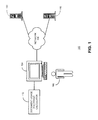
- FIG. 1 presents a diagram illustrating a system for calculating document-usage footprints in accordance with an embodiment of the present invention.
- FIG. 2 presents a diagram illustrating a system for generating a user-task representation in accordance with an embodiment of the present invention.
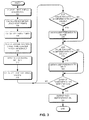
- FIG. 3 presents a flow chart illustrating the process of generating a task representation in accordance with an embodiment of the present invention.
- FIG. 4 illustrates an exemplary computer system for detecting user tasks in accordance with one embodiment of the present invention.
- Table 1 illustrates exemplary document-usage footprints in accordance with an embodiment of the present invention.
- Embodiments of the present invention provide a system for automatically creating a task representation associated with a user task.
- the system calculates usage footprints of a document based on other applications, documents, and people that have been accessed by the user within a predetermined time frame before and after the user accesses the document.
- a clustering technique such as spectral clustering
- the system applies a clustering technique, such as spectral clustering, to create task representations, each including a collection (cluster) of documents and/or applications that are used for accomplishing a particular task.
- the system also filters the documents based on their average dwell times, and uses user feedback to merge or split different task clusters in order to provide accurate task representations.
- a user When a user is performing a certain task, he is most likely to access more than one document and/or application. In addition, he may communicate with other people in order to accomplish the task. People tend to work on a task for a prolonged period of time, and access multiple documents and/or applications within this time period. Therefore, a repeated pattern of opening two or more documents simultaneously or consecutively within a predetermined time period often indicates that these documents may be related to the same user task, thus the same task cluster. To identify task clusters, the system first calculates document-usage footprints. As explained in more detail below in conjunction with FIG. 1 , a document-usage footprint describes a document's usage context instead of its content. Note that a document's usage context measures the temporal correlation among documents.
- FIG. 1 presents a diagram illustrating a system for calculating document-usage footprints in accordance with an embodiment of the present invention.
- a user 102 performs his task on a computer 104, which is coupled to a network 106. While performing the task, user 102 may need to access a number of documents and/or applications. These documents and/or applications can be located on computer 104 or on remote servers, such as servers 108 and 110, which are also coupled to network 106.
- Document-usage footprint calculator 112 monitors the user's usage of documents and/or applications, and calculates document-usage footprints for all accessed documents and/or applications.
- document-usage footprint calculator 112 can calculate the document-usage footprints.
- each document is given a document ID.
- document-usage footprint calculator 112 tracks other documents and/or applications that are accessed by the user within a predetermined time frame that can be before, during, and after the document is accessed.
- a document-usage footprint of a particular document is a list of normalized access-frequencies (normalized against the number of accesses to the particular document) organized by document ID. An entry in the list indicates the access-frequency to a document within certain time periods. For example, the system determines that a document A has been accessed n times by a user.
- the system then marks a number of time periods with predetermined duration, each either before, or during, or after the time period when document A is accessed.
- the system determines that the user has accessed a document B m times during those marked time periods. Consequently, the system can generate a document-usage footprint entry for document A corresponding to a document B as as m / n. If the system determines that during those marked time periods the user makes no access to a document C , the document-usage footprint of document A then includes an entry corresponding to document C as 0.
- Table 1 illustrates exemplary document-usage footprints in accordance with an embodiment of the present invention.
- each row header is a document ID
- the corresponding row is its document-usage footprint.
- a respective cell in the row is the aforementioned normalized access-frequency to a document whose ID is listed as the corresponding column header.
- FIG. 2 presents a diagram illustrating a system for generating a user-task representation in accordance with an embodiment of the present invention.
- System 200 includes a document-usage footprint calculator 202, a document dwell-time calculator 204, a clustering mechanism 206, an evaluation mechanism 208, a cluster merger 210, and a cluster splitter 212.
- document-usage footprint calculator 202 receives timestamps for a number of documents, which indicate the times when the user opens and closes the documents, and calculates document-usage footprints for these documents. Because a task can often be characterized by a number of important documents, such as task reports, that need to be produced over a relatively long time period, the average time that a user works on a document can indicate whether the document is an important task-related document. In order to increase the accuracy of task representation, in one embodiment, the calculated document-usage footprints of all documents are filtered based on their average dwell time, which indicates the duration a user spends working on the document, and is calculated by a document dwell-time calculator 204.
- the document dwell time is defined as the difference between the time a document is active and the time it is idle.
- a document is active when it is the application of focus, such as being in the active window.
- Idle time refers to the time when the document is active but the user is neither moving the mouse (or other pointing device) nor using the keyboard.
- document dwell-time calculator 204 calculates dwell time for every access of a document. These calculated dwell time can be used to select documents whose average dwell time of all accesses is above a predetermined threshold. For example, if a document has been accessed many times, but the average dwell time of all the accesses is below a predetermined threshold, then the system can determine that this particular document is of less importance, thus disregarding it in the future clustering operation.
- clustering mechanism 206 applies a clustering technique, which is a method of unsupervised learning, to the selected documents.
- the document-usage footprint of a particular document can be viewed as a data point for the clustering operation.
- clustering mechanism 206 uses a spectral clustering technique to divide the selected documents into clusters (or subsets of documents).
- clustering mechanism 206 constructs a similarity matrix based on the document-usage footprints of the selected documents. Note that the normalized access frequencies in the footprint correspond to the similarity between documents. For example, in the example shown in Table 1, a similarity matrix can be constructed as: 1 0 0.55 0 0 1 0 0.3 0.24 0.02 1 0 0 0.53 0.01 1 .
- Each row of the above matrix is the document-usage footprint of a document.
- the corresponding document IDs, from top to bottom, for the footprints are A, B, C , and D .
- the similarity matrix can be rearranged as: 1 0.55 0 0 0.24 1 0.02 0 0 0 1 0 0 0.01 0.53 1 .
- the system then divides the matrix into "clusters" based on a user-defined threshold. For example, the system can divide the rearranged matrix into two clusters, each including two documents, shown as follows:
- the system can divide the documents into clusters.
- the system can divide document A-D into two clusters, one including documents A and C , and the other including documents B and D .
- these clusters correspond to the inherent states or distributions of document usage as they occur when a user works on his tasks.
- a cluster typically represents either the whole task or steps of a task.
- a task representation (a collection of documents representing a task) can be a weighted (or probability) list of documents. Different task representations can include the same documents but with different weights (probabilities). In one embodiment, the weight is calculated based on the correlation between documents.
- the clustering result of clustering mechanism 206 is often referred to as initial "machine" representations of the user's task. These results often contain a large number of initial clusters, and these initial clusters may not accurately reflect the user's task.
- evaluation mechanism 208 evaluates the quality of the output of clustering mechanism 206. In one embodiment, three measures, including average cluster purity (ACP), average task purity (ATP), and overall criterion (Q), are used to evaluate the clustering result.
- ACP average cluster purity
- ATP average task purity
- Q overall criterion
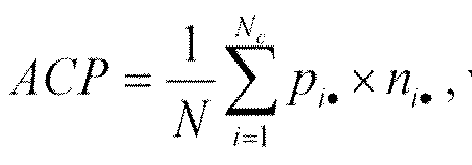
- the ACP is a measure of how well a detected cluster is limited to only one task, and a high ACP value can indicate that the detected clusters are relatively pure, with each cluster corresponding to only one user task.
- the ATP value is a measure of how well one task is limited to only one cluster, and a high ATP value can indicate that a task is likely to be represented by only one cluster.
- N is the total number of observations
- N c the total number of clusters
- N t the total number of tasks
- n ij the total number of observations in cluster i belonging to task j
- n i• the total number of observations in cluster i
- n •j is the total number of observations belonging to task j .
- a larger Q value can indicate better overall performance of the system.
- the system allows the user to provide minimum feedback based on the evaluation result provided by evaluation mechanism 208.
- the system allows the user to select clusters that correspond to the same task representation based on the user's mental task representation.
- an initial "machine" task representation may include 10 clusters and has a high ACP value.
- the documents and/or applications accessed by the user are divided into 10 clusters.
- the user may be actually working on only four tasks, resulting in a mental task representation that includes four clusters (and a low ATP value).
- the user selects clusters that actually include documents and/or applications corresponding to the same task.
- the selected clusters can be sent to cluster merger 210 to be merged together.
- the system allows the user to select document clusters that include documents belonging to multiple tasks.
- a selected cluster can be sent to cluster splitter 212 to be split into multiple clusters.
- the "merging" and “splitting" processes can be repeated iteratively until the clustering result converges toward the user's mental task representation, or until the Q value exceeds a predetermined threshold.
- the system for generating a user-task representation is located on the same computer, such as computer 104, where the user performs his task.
- the system is located on a remote server, such as servers 108 and 110.
- the user-task-representation generation system can generate task representations for multiple users based on their accesses of various documents and/or applications. Note that in a collaborative environment a given task often involves multiple users.
- the system provides task representations that include not only documents but also users.
- FIG. 3 presents a flow chart illustrating the process of generating a task representation in accordance with an embodiment of the present invention.
- the system receives a number of timestamped documents (operation 302), and calculates document-usage footprints for each document based on the timestamps (operation 304).
- the document-usage footprint of a particular document includes normalized access frequencies to other documents within a certain time frame.
- such time frame includes predetermined time periods before, during, and after the particular document is accessed by the user.
- each document is assigned a document ID, and the normalized access frequencies are organized using document IDs.
- the system calculates the dwell time for all accesses of each document (operation 306), and selects documents whose average dwell times exceed a predetermined threshold (operation 308). Note that documents with shorter average dwell times are less important; thus, a task representation may not include such documents.
- the system applies a clustering method to the document-usage footprints of selected documents to obtain an initial "machine" task representation (operation 310).
- the system applies a spectral clustering method.
- the system evaluates the clustering performance by calculating the ACP, ATP, and Q values of the initial "machine" task representation (operation 312). If the system determines that the ATP value is low (compared with a high ACP value) (operation 314), user feedback is obtained to merge clusters corresponding to same tasks (operation 316). Otherwise, the system determines whether the ACP value is low (compared with a high ATP value) (operation 318). If so, user feedback is obtained to split clusters that correspond to multiple tasks (operation 320). If not, the system then determines whether the clustering result converges with the user's mental task representation (operation 322). If so, the system outputs the task representation (operation 324). If not, the system repeats the merging and splitting operation.
- FIG. 4 illustrates an exemplary computer system for detecting user tasks in accordance with one embodiment of the present invention.
- a computer and communication system 400 includes a processor 402, a memory 404, and a storage device 406.
- Storage device 406 stores a task-detection application 408, as well as other applications, such as applications 410 and 412.
- task-detection application 408 is loaded from storage device 406 into memory 404 and then executed by processor 402. While executing the program, processor 402 performs the aforementioned functions.
- Computer and communication system 400 is coupled to an optional display 414, keyboard 416, and pointing device 418.
- the data structures and code described in this detailed description are typically stored on a computer-readable storage medium, which may be any device or medium that can store code and/or data for use by a computer system.
- the computer-readable storage medium includes, but is not limited to, volatile memory, nonvolatile memory, magnetic and optical storage devices such as disk drives, magnetic tape, CDs (compact discs), DVDs (digital versatile discs or digital video discs), or other media capable of storing computer-readable media now known or later developed.
- the methods and processes described in the detailed description section can be embodied as code and/or data, which can be stored in a computer-readable storage medium as described above.
- a computer system reads and executes the code and/or data stored on the computer-readable storage medium, the computer system performs the methods and processes embodied as data structures and code and stored within the computer-readable storage medium.
- modules or apparatus may include, but are not limited to, an application-specific integrated circuit (ASIC) chip, a field-programmable gate array (FPGA), a dedicated or shared processor that executes a particular software module or a piece of code at a particular time, and/or other programmable-logic devices now known or later developed.
- ASIC application-specific integrated circuit
- FPGA field-programmable gate array
- the hardware modules or apparatus When activated, they perform the methods and processes included within them.
Landscapes
- Engineering & Computer Science (AREA)
- Business, Economics & Management (AREA)
- Entrepreneurship & Innovation (AREA)
- Human Resources & Organizations (AREA)
- Strategic Management (AREA)
- Economics (AREA)
- Tourism & Hospitality (AREA)
- Theoretical Computer Science (AREA)
- Operations Research (AREA)
- Quality & Reliability (AREA)
- Marketing (AREA)
- Physics & Mathematics (AREA)
- General Business, Economics & Management (AREA)
- General Physics & Mathematics (AREA)
- Data Mining & Analysis (AREA)
- Development Economics (AREA)
- Educational Administration (AREA)
- Game Theory and Decision Science (AREA)
- Information Retrieval, Db Structures And Fs Structures Therefor (AREA)
- Information Transfer Between Computers (AREA)
- Document Processing Apparatus (AREA)
Abstract
Embodiments of the present invention provide a systems for automatically creating a task representation associated with a user task. The system calculates (304) usage footprints of a document based on other applications, documents, and people that have been accessed by the user within a predetermined time frame before and after the user accesses the document. After obtaining usage footprints of a number of documents, the system applies (310) a clustering technique, such as spectral clustering, to create task representations, each including a collection (cluster) of documents and/or applications that are used for accomplishing a particular task. The system also filters the documents based on their average dwell times, and uses user feedback to merge (316) or split (320) different task clusters in order to provide accurate task representations.
Description
- This disclosure is generally related to task management. More specifically, this disclosure is related to using document-usage footprints to estimate user tasks.
- Modern-day workers often found themselves juggling multiple task and activities. Many task-management systems have been developed to assist these multitasking efforts. Task-management systems typically provide some efficient way of switching from one task to another. In order to facilitate task management and task switching, a task-management system needs to have knowledge of how a user's overall workspace is conceptually partitioned into the individual constituent tasks. Note that performing a task often involves the use of multiple applications, documents, and communication mechanisms with others.
- One common problem facing the task-management system is to determine which documents or applications are associated with each task. For example, in order to assist a user with task switching, the system needs to recognize that task switching has occurred when the user opens a document belonging to a different task.
- Conventional task-detection methods either require high amounts of user feedback, or provide a rather imprecise representation of a user's task. For example, some task-management systems rely on explicit user input for such knowledge, thus generating an extra burden for users. Some task-detection methods automatically learn a user's tasks in a supervised manner, which requires a user to provide task names/labels constantly in order to train the system. Due to the large amount of "extra wark" involved in setting up such systems, normal users tend to reject such approaches. In contrast, unsupervised approaches do not require any feedback from users, but generally provide a poor task-detection result.
- One embodiment of the present invention provides a system for detecting user tasks. During operation, the system receives a number of documents, and applies a clustering technique to document-usage footprints of the documents to generate user task representations.
- In a variation on this embodiment, the document-usage footprint of a respective document is calculated based on access frequencies to other documents within one or more predetermined time periods.
- In a further variation, the predetermined time periods include at least one of: a predetermined time period before the respective document is accessed, a time period during which the respective document is accessed, and a predetermined time period after the respective document is accessed.
- In a variation on this embodiment, the system further calculates an average dwell time for at least one document.
- In a further variation, the dwell time of a document access is calculated by subtracting an idle time from an active time of the document.
- In a further variation, the clustering technique is applied to documents whose average dwell time exceeds a predetermined threshold.
- In a variation on this embodiment, the clustering technique includes spectral clustering.
- In a variation on this embodiment, the system further obtains user feedback in order to merge and/or split the task representations.
-
FIG. 1 presents a diagram illustrating a system for calculating document-usage footprints in accordance with an embodiment of the present invention. -
FIG. 2 presents a diagram illustrating a system for generating a user-task representation in accordance with an embodiment of the present invention. -
FIG. 3 presents a flow chart illustrating the process of generating a task representation in accordance with an embodiment of the present invention. -
FIG. 4 illustrates an exemplary computer system for detecting user tasks in accordance with one embodiment of the present invention. - Table 1 illustrates exemplary document-usage footprints in accordance with an embodiment of the present invention.
- In the figures, like reference numerals refer to the same figure elements.
- Embodiments of the present invention provide a system for automatically creating a task representation associated with a user task. The system calculates usage footprints of a document based on other applications, documents, and people that have been accessed by the user within a predetermined time frame before and after the user accesses the document. After obtaining usage footprints of a number of documents, the system applies a clustering technique, such as spectral clustering, to create task representations, each including a collection (cluster) of documents and/or applications that are used for accomplishing a particular task. The system also filters the documents based on their average dwell times, and uses user feedback to merge or split different task clusters in order to provide accurate task representations.
- When a user is performing a certain task, he is most likely to access more than one document and/or application. In addition, he may communicate with other people in order to accomplish the task. People tend to work on a task for a prolonged period of time, and access multiple documents and/or applications within this time period. Therefore, a repeated pattern of opening two or more documents simultaneously or consecutively within a predetermined time period often indicates that these documents may be related to the same user task, thus the same task cluster. To identify task clusters, the system first calculates document-usage footprints. As explained in more detail below in conjunction with
FIG. 1 , a document-usage footprint describes a document's usage context instead of its content. Note that a document's usage context measures the temporal correlation among documents. -
FIG. 1 presents a diagram illustrating a system for calculating document-usage footprints in accordance with an embodiment of the present invention. In this example, auser 102 performs his task on acomputer 104, which is coupled to anetwork 106. While performing the task,user 102 may need to access a number of documents and/or applications. These documents and/or applications can be located oncomputer 104 or on remote servers, such asservers network 106. Document-usage footprint calculator 112 monitors the user's usage of documents and/or applications, and calculates document-usage footprints for all accessed documents and/or applications. - In order to calculate a usage footprint for a document, the system timestamps each document and/or application when it is opened and closed. Based on these timestamps, document-
usage footprint calculator 112 can calculate the document-usage footprints. During operation, each document is given a document ID. For each document ID, document-usage footprint calculator 112 tracks other documents and/or applications that are accessed by the user within a predetermined time frame that can be before, during, and after the document is accessed. - To calculate a document-usage footprint, the system first counts the number of times a document with a particular document ID has been accessed. Then the system uses the timestamp information to count the number of times other documents and/or applications have been accessed within a predetermined time frame in relation to the opening and closing of the particular document. In one embodiment, a document-usage footprint of a particular document is a list of normalized access-frequencies (normalized against the number of accesses to the particular document) organized by document ID. An entry in the list indicates the access-frequency to a document within certain time periods. For example, the system determines that a document A has been accessed n times by a user. The system then marks a number of time periods with predetermined duration, each either before, or during, or after the time period when document A is accessed. The system then determines that the user has accessed a document B m times during those marked time periods. Consequently, the system can generate a document-usage footprint entry for document A corresponding to a document B as as m/n. If the system determines that during those marked time periods the user makes no access to a document C, the document-usage footprint of document A then includes an entry corresponding to document C as 0. Table 1 illustrates exemplary document-usage footprints in accordance with an embodiment of the present invention. In Table I, each row header is a document ID, and the corresponding row is its document-usage footprint. A respective cell in the row is the aforementioned normalized access-frequency to a document whose ID is listed as the corresponding column header.

-
FIG. 2 presents a diagram illustrating a system for generating a user-task representation in accordance with an embodiment of the present invention.System 200 includes a document-usage footprint calculator 202, a document dwell-time calculator 204, a clustering mechanism 206, anevaluation mechanism 208, acluster merger 210, and acluster splitter 212. - During operation, document-
usage footprint calculator 202 receives timestamps for a number of documents, which indicate the times when the user opens and closes the documents, and calculates document-usage footprints for these documents. Because a task can often be characterized by a number of important documents, such as task reports, that need to be produced over a relatively long time period, the average time that a user works on a document can indicate whether the document is an important task-related document. In order to increase the accuracy of task representation, in one embodiment, the calculated document-usage footprints of all documents are filtered based on their average dwell time, which indicates the duration a user spends working on the document, and is calculated by a document dwell-time calculator 204. The document dwell time is defined as the difference between the time a document is active and the time it is idle. A document is active when it is the application of focus, such as being in the active window. Idle time refers to the time when the document is active but the user is neither moving the mouse (or other pointing device) nor using the keyboard. In one embodiment, document dwell-time calculator 204 calculates dwell time for every access of a document. These calculated dwell time can be used to select documents whose average dwell time of all accesses is above a predetermined threshold. For example, if a document has been accessed many times, but the average dwell time of all the accesses is below a predetermined threshold, then the system can determine that this particular document is of less importance, thus disregarding it in the future clustering operation. - After all documents with average dwell times longer than the threshold are selected, clustering mechanism 206 applies a clustering technique, which is a method of unsupervised learning, to the selected documents. The document-usage footprint of a particular document can be viewed as a data point for the clustering operation. In one embodiment, clustering mechanism 206 uses a spectral clustering technique to divide the selected documents into clusters (or subsets of documents). In a further embodiment, while applying the spectral clustering technique, clustering mechanism 206 constructs a similarity matrix based on the document-usage footprints of the selected documents. Note that the normalized access frequencies in the footprint correspond to the similarity between documents. For example, in the example shown in Table 1, a similarity matrix can be constructed as:

- Each row of the above matrix is the document-usage footprint of a document. The corresponding document IDs, from top to bottom, for the footprints are A, B, C, and D. After applying a clustering technique, the similarity matrix can be rearranged as:

- Note that the document IDs corresponding to the rearranged similarity matrix are now A, C, B, and D, also from top to bottom. In one embodiment, the system then divides the matrix into "clusters" based on a user-defined threshold. For example, the system can divide the rearranged matrix into two clusters, each including two documents, shown as follows:

- Based on the clustering result, the system can divide the documents into clusters. In the example shown above, the system can divide document A-D into two clusters, one including documents A and C, and the other including documents B and D. Note that these clusters correspond to the inherent states or distributions of document usage as they occur when a user works on his tasks. A cluster typically represents either the whole task or steps of a task. Note that a task representation (a collection of documents representing a task) can be a weighted (or probability) list of documents. Different task representations can include the same documents but with different weights (probabilities). In one embodiment, the weight is calculated based on the correlation between documents.
- The clustering result of clustering mechanism 206 is often referred to as initial "machine" representations of the user's task. These results often contain a large number of initial clusters, and these initial clusters may not accurately reflect the user's task. To improve the accuracy of the clustering result,
evaluation mechanism 208 evaluates the quality of the output of clustering mechanism 206. In one embodiment, three measures, including average cluster purity (ACP), average task purity (ATP), and overall criterion (Q), are used to evaluate the clustering result. - The ACP is a measure of how well a detected cluster is limited to only one task, and a high ACP value can indicate that the detected clusters are relatively pure, with each cluster corresponding to only one user task. The ACP value can be calculated as


- By selecting an appropriate clustering threshold, one can obtain initial "machine" task representations that include a large number of initial clusters (compared with the actual number of user tasks), thus obtaining a high ACP value. However, as the number of initial clusters is high (compared with the number of tasks), the ATP value may be low, which means that tasks are mostly likely to be covered by more than one cluster. In order to adapt/synchronize the initial unsupervised "machine" task representations of the user's tasks to an "actual" user task representation, in one embodiment, the system allows the user to provide minimum feedback based on the evaluation result provided by
evaluation mechanism 208. - In one embodiment, if the evaluated ATP value is low (compared with a high ACP value), the system allows the user to select clusters that correspond to the same task representation based on the user's mental task representation. For example, an initial "machine" task representation may include 10 clusters and has a high ACP value. In other words, the documents and/or applications accessed by the user are divided into 10 clusters. However, instead of 10 tasks, the user may be actually working on only four tasks, resulting in a mental task representation that includes four clusters (and a low ATP value). To provide an accurate task representation, the user selects clusters that actually include documents and/or applications corresponding to the same task. The selected clusters can be sent to
cluster merger 210 to be merged together. Similarly, if the ACP value becomes low ( compared with a high ATP value), the system allows the user to select document clusters that include documents belonging to multiple tasks. A selected cluster can be sent tocluster splitter 212 to be split into multiple clusters. In one embodiment, the "merging" and "splitting" processes can be repeated iteratively until the clustering result converges toward the user's mental task representation, or until the Q value exceeds a predetermined threshold. - In one embodiment of the present invention, the system for generating a user-task representation is located on the same computer, such as
computer 104, where the user performs his task. In a further embodiment, the system is located on a remote server, such asservers -
FIG. 3 presents a flow chart illustrating the process of generating a task representation in accordance with an embodiment of the present invention. During operation, the system receives a number of timestamped documents (operation 302), and calculates document-usage footprints for each document based on the timestamps (operation 304). In one embodiment, the document-usage footprint of a particular document includes normalized access frequencies to other documents within a certain time frame. In one embodiment, such time frame includes predetermined time periods before, during, and after the particular document is accessed by the user. In a further embodiment, each document is assigned a document ID, and the normalized access frequencies are organized using document IDs. - Optionally, the system calculates the dwell time for all accesses of each document (operation 306), and selects documents whose average dwell times exceed a predetermined threshold (operation 308). Note that documents with shorter average dwell times are less important; thus, a task representation may not include such documents.
- Subsequently, the system applies a clustering method to the document-usage footprints of selected documents to obtain an initial "machine" task representation (operation 310). In one embodiment, the system applies a spectral clustering method. The system evaluates the clustering performance by calculating the ACP, ATP, and Q values of the initial "machine" task representation (operation 312). If the system determines that the ATP value is low (compared with a high ACP value) (operation 314), user feedback is obtained to merge clusters corresponding to same tasks (operation 316). Otherwise, the system determines whether the ACP value is low (compared with a high ATP value) (operation 318). If so, user feedback is obtained to split clusters that correspond to multiple tasks (operation 320). If not, the system then determines whether the clustering result converges with the user's mental task representation (operation 322). If so, the system outputs the task representation (operation 324). If not, the system repeats the merging and splitting operation.
-
FIG. 4 illustrates an exemplary computer system for detecting user tasks in accordance with one embodiment of the present invention. In one embodiment, a computer andcommunication system 400 includes aprocessor 402, amemory 404, and astorage device 406.Storage device 406 stores a task-detection application 408, as well as other applications, such asapplications detection application 408 is loaded fromstorage device 406 intomemory 404 and then executed byprocessor 402. While executing the program,processor 402 performs the aforementioned functions. Computer andcommunication system 400 is coupled to anoptional display 414,keyboard 416, andpointing device 418. - The data structures and code described in this detailed description are typically stored on a computer-readable storage medium, which may be any device or medium that can store code and/or data for use by a computer system. The computer-readable storage medium includes, but is not limited to, volatile memory, nonvolatile memory, magnetic and optical storage devices such as disk drives, magnetic tape, CDs (compact discs), DVDs (digital versatile discs or digital video discs), or other media capable of storing computer-readable media now known or later developed.
- The methods and processes described in the detailed description section can be embodied as code and/or data, which can be stored in a computer-readable storage medium as described above. When a computer system reads and executes the code and/or data stored on the computer-readable storage medium, the computer system performs the methods and processes embodied as data structures and code and stored within the computer-readable storage medium.
- Furthermore, methods and processes described herein can be included in hardware modules or apparatus. These modules or apparatus may include, but are not limited to, an application-specific integrated circuit (ASIC) chip, a field-programmable gate array (FPGA), a dedicated or shared processor that executes a particular software module or a piece of code at a particular time, and/or other programmable-logic devices now known or later developed. When the hardware modules or apparatus are activated, they perform the methods and processes included within them.
Claims (15)
- A computer-executable method for detecting user tasks, the method comprising:receiving a number of documents; andapplying a clustering technique to document-usage footprints of the documents to generate user task representations.
- The method of claim 1, wherein the document-usage footprint of a respective document is calculated based on access frequencies to other documents within one or more predetermined time periods.
- The method of claim 2, wherein the predetermined time periods include at least one of:a predetermined time period before the respective document is accessed;a predetermined time period within a time period when the respective document is accessed; anda predetermined time period after the respective document is accessed.
- The method of any of the preceding claims, further comprising:calculating an average dwell time for at least one document.
- The method of claim 4, wherein the dwell time of a document access is calculated by subtracting an idle time from an active time of the document.
- The method of claim 4 or claim 5, wherein the clustering technique is applied to documents whose average dwell time exceeds a predetermined threshold.
- The method of any of the preceding claims, wherein the clustering technique includes spectral clustering.
- The method of any of the preceding claims, further comprising:obtaining user feedback in order to merge and/or split the task representations.
- A computer-readable storage medium storing instructions that when executed by a computer cause the computer to perform a method for detecting user tasks according to any of the preceding claims.
- A system for detecting user tasks, the system comprising:a receiving mechanism configured to receive a number of documents; anda clustering mechanism configured to apply a clustering technique, such as spectral clustering, to document-usage footprints of the documents to generate user task representations.
- The system of claim 10, wherein the document-usage footprint of a respective document is calculated based on access frequencies to other documents within one or more predetermined time periods.
- The system of claim 11, wherein the predetermined time periods include at least one of:a predetermined time period before the respective document is accessed;a predetermined time period within a time period when the respective document is accessed; anda predetermined time period after the respective document is accessed.
- The system of any of claims 10 to 12, further comprising a calculation mechanism configured to calculate an average dwell time for at least one document, wherein the dwell time of a document access is preferably calculated by subtracting an idle time from an active time of the document.
- The system of claim 13, wherein the clustering technique is applied to documents whose average dwell time exceeds a predetermined threshold.
- The system of any of claims 10 to 14, further comprising a feedback mechanism configured to obtain user feedback in order to merge and/or split the task representations.
Applications Claiming Priority (1)
| Application Number | Priority Date | Filing Date | Title |
|---|---|---|---|
| US12/623,717 US8290884B2 (en) | 2009-11-23 | 2009-11-23 | Method for approximating user task representations by document-usage clustering |
Publications (1)
| Publication Number | Publication Date |
|---|---|
| EP2325790A1 true EP2325790A1 (en) | 2011-05-25 |
Family
ID=43531126
Family Applications (1)
| Application Number | Title | Priority Date | Filing Date |
|---|---|---|---|
| EP10188917A Ceased EP2325790A1 (en) | 2009-11-23 | 2010-10-26 | Method for approximating user task representations by document-usage clustering |
Country Status (3)
| Country | Link |
|---|---|
| US (1) | US8290884B2 (en) |
| EP (1) | EP2325790A1 (en) |
| JP (1) | JP5833817B2 (en) |
Families Citing this family (9)
| Publication number | Priority date | Publication date | Assignee | Title |
|---|---|---|---|---|
| US10976981B2 (en) * | 2011-07-15 | 2021-04-13 | Vmware, Inc. | Remote desktop exporting |
| JP2013143039A (en) * | 2012-01-11 | 2013-07-22 | Canon Inc | Frequent pattern extraction device, frequent pattern extraction method, and program |
| US9648130B1 (en) * | 2012-07-12 | 2017-05-09 | Inform, Inc. | Finding users in a social network based on document content |
| US9646081B1 (en) | 2014-06-30 | 2017-05-09 | Open Text Corporation | System and method to present a summarized task view in a case management system |
| US10572103B2 (en) * | 2014-09-30 | 2020-02-25 | Apple Inc. | Timeline view of recently opened documents |
| US10033752B2 (en) | 2014-11-03 | 2018-07-24 | Vectra Networks, Inc. | System for implementing threat detection using daily network traffic community outliers |
| WO2016073383A1 (en) | 2014-11-03 | 2016-05-12 | Vectra Networks, Inc. | A system for implementing threat detection using threat and risk assessment of asset-actor interactions |
| US11290614B2 (en) | 2017-08-31 | 2022-03-29 | Xerox Corporation | Automatic grouping method in web based Device Management Applications using unsupervised machine learning algorithm |
| US20220245511A1 (en) * | 2021-02-03 | 2022-08-04 | Siscale AI INC. | Machine learning approach to multi-domain process automation and user feedback integration |
Family Cites Families (11)
| Publication number | Priority date | Publication date | Assignee | Title |
|---|---|---|---|---|
| JPH1139320A (en) * | 1997-07-15 | 1999-02-12 | Toshiba Corp | Document management method, document search method, and document search device |
| US6446061B1 (en) * | 1998-07-31 | 2002-09-03 | International Business Machines Corporation | Taxonomy generation for document collections |
| JP2000172696A (en) * | 1998-12-03 | 2000-06-23 | Toshiba Corp | Document management system |
| JP2002073677A (en) * | 2000-09-05 | 2002-03-12 | Zenrin Co Ltd | Device for collecting personal preference information on reader and information reading support device using the information collecting device |
| US7568148B1 (en) * | 2002-09-20 | 2009-07-28 | Google Inc. | Methods and apparatus for clustering news content |
| US7266559B2 (en) * | 2002-12-05 | 2007-09-04 | Microsoft Corporation | Method and apparatus for adapting a search classifier based on user queries |
| JP2006039810A (en) * | 2004-07-26 | 2006-02-09 | Fuji Xerox Co Ltd | Device for supporting classification |
| US7676761B2 (en) * | 2006-06-30 | 2010-03-09 | Microsoft Corporation | Window grouping |
| JP2009037529A (en) * | 2007-08-03 | 2009-02-19 | Sharp Corp | Bookmark generating apparatus and bookmark generating method |
| JP2009193465A (en) * | 2008-02-15 | 2009-08-27 | Ntt Communications Kk | Information processing apparatus, information providing system, information processing method, and program |
| JP5110037B2 (en) * | 2009-05-22 | 2012-12-26 | 富士ゼロックス株式会社 | Document management system and program |
-
2009
- 2009-11-23 US US12/623,717 patent/US8290884B2/en active Active
-
2010
- 2010-10-26 EP EP10188917A patent/EP2325790A1/en not_active Ceased
- 2010-11-09 JP JP2010250673A patent/JP5833817B2/en not_active Expired - Fee Related
Non-Patent Citations (2)
| Title |
|---|
| DATABASE INSPEC [online] THE INSTITUTION OF ELECTRICAL ENGINEERS, STEVENAGE, GB; 2006, OLIVER N ET AL: "SWISH: semantic analysis of window titles and switching history", Database accession no. 9229738 * |
| EPO: "Mitteilung des Europäischen Patentamts vom 1. Oktober 2007 über Geschäftsmethoden = Notice from the European Patent Office dated 1 October 2007 concerning business methods = Communiqué de l'Office européen des brevets,en date du 1er octobre 2007, concernant les méthodes dans le domaine des activités", JOURNAL OFFICIEL DE L'OFFICE EUROPEEN DES BREVETS.OFFICIAL JOURNAL OF THE EUROPEAN PATENT OFFICE.AMTSBLATTT DES EUROPAEISCHEN PATENTAMTS, OEB, MUNCHEN, DE, vol. 30, no. 11, 1 November 2007 (2007-11-01), pages 592 - 593, XP007905525, ISSN: 0170-9291 * |
Also Published As
| Publication number | Publication date |
|---|---|
| JP2011113563A (en) | 2011-06-09 |
| US8290884B2 (en) | 2012-10-16 |
| JP5833817B2 (en) | 2015-12-16 |
| US20110125679A1 (en) | 2011-05-26 |
Similar Documents
| Publication | Publication Date | Title |
|---|---|---|
| US8290884B2 (en) | Method for approximating user task representations by document-usage clustering | |
| CN119232490B (en) | Network traffic anomaly monitoring method and device based on BiLSTM-Att network | |
| US10970158B2 (en) | Root cause analysis | |
| Zhang et al. | " Why should you trust my explanation?" Understanding uncertainty in LIME explanations | |
| US11386358B2 (en) | Intelligent decision support system | |
| Anantharaman et al. | Large scale predictive analytics for hard disk remaining useful life estimation | |
| EP2854053B1 (en) | Defect prediction method and device | |
| Vitner et al. | Using data envelope analysis to compare project efficiency in a multi-project environment | |
| US20180365521A1 (en) | Method and system for training model by using training data | |
| US11240121B2 (en) | Methods and systems for controlling data backup | |
| US10467547B1 (en) | Normalizing text attributes for machine learning models | |
| US20180232805A1 (en) | User credit rating method and apparatus, and storage medium | |
| US11288453B1 (en) | Key-word identification | |
| EP3047475B1 (en) | System and method for evaluating a cognitive load on a user corresponding to a stimulus | |
| US20170372229A1 (en) | Method and apparatus for managing machine learning process | |
| US20160148094A1 (en) | Computer implemented system for automating the generation of a business decision analytic model | |
| EP3165982A1 (en) | An event analysis apparatus, an event analysis method, and an event analysis program | |
| US20160125159A1 (en) | System for management of health resources | |
| US9081822B2 (en) | Discriminative distance weighting for content-based retrieval of digital pathology images | |
| US8171033B2 (en) | Methods and systems for the determination of thresholds via weighted quantile analysis | |
| CN108959004A (en) | Disk failure prediction technique, device, equipment and computer readable storage medium | |
| US11934486B2 (en) | Systems and methods for data stream using synthetic data | |
| US10394631B2 (en) | Anomaly detection and automated analysis using weighted directed graphs | |
| EP3493081A1 (en) | Systems and methods for segmenting interactive session text | |
| EP3057046A1 (en) | Method and system for employee assesment |
Legal Events
| Date | Code | Title | Description |
|---|---|---|---|
| PUAI | Public reference made under article 153(3) epc to a published international application that has entered the european phase |
Free format text: ORIGINAL CODE: 0009012 |
|
| AK | Designated contracting states |
Kind code of ref document: A1 Designated state(s): AL AT BE BG CH CY CZ DE DK EE ES FI FR GB GR HR HU IE IS IT LI LT LU LV MC MK MT NL NO PL PT RO RS SE SI SK SM TR |
|
| AX | Request for extension of the european patent |
Extension state: BA ME |
|
| 17P | Request for examination filed |
Effective date: 20111125 |
|
| 17Q | First examination report despatched |
Effective date: 20131031 |
|
| STAA | Information on the status of an ep patent application or granted ep patent |
Free format text: STATUS: THE APPLICATION HAS BEEN REFUSED |
|
| 18R | Application refused |
Effective date: 20160602 |