EP2325767A2 - Device and method for scene presentation of structured information - Google Patents
Device and method for scene presentation of structured information Download PDFInfo
- Publication number
- EP2325767A2 EP2325767A2 EP09798099A EP09798099A EP2325767A2 EP 2325767 A2 EP2325767 A2 EP 2325767A2 EP 09798099 A EP09798099 A EP 09798099A EP 09798099 A EP09798099 A EP 09798099A EP 2325767 A2 EP2325767 A2 EP 2325767A2
- Authority
- EP
- European Patent Office
- Prior art keywords
- structured information
- presentation
- information
- scene
- attribute
- Prior art date
- Legal status (The legal status is an assumption and is not a legal conclusion. Google has not performed a legal analysis and makes no representation as to the accuracy of the status listed.)
- Granted
Links
Images



Classifications
-
- H—ELECTRICITY
- H04—ELECTRIC COMMUNICATION TECHNIQUE
- H04N—PICTORIAL COMMUNICATION, e.g. TELEVISION
- H04N21/00—Selective content distribution, e.g. interactive television or video on demand [VOD]
- H04N21/20—Servers specifically adapted for the distribution of content, e.g. VOD servers; Operations thereof
- H04N21/23—Processing of content or additional data; Elementary server operations; Server middleware
- H04N21/234—Processing of video elementary streams, e.g. splicing of video streams or manipulating encoded video stream scene graphs
- H04N21/23412—Processing of video elementary streams, e.g. splicing of video streams or manipulating encoded video stream scene graphs for generating or manipulating the scene composition of objects, e.g. MPEG-4 objects
-
- H—ELECTRICITY
- H04—ELECTRIC COMMUNICATION TECHNIQUE
- H04N—PICTORIAL COMMUNICATION, e.g. TELEVISION
- H04N21/00—Selective content distribution, e.g. interactive television or video on demand [VOD]
- H04N21/40—Client devices specifically adapted for the reception of or interaction with content, e.g. set-top-box [STB]; Operations thereof
- H04N21/43—Processing of content or additional data, e.g. demultiplexing additional data from a digital video stream; Elementary client operations, e.g. monitoring of home network or synchronising decoder's clock; Client middleware
- H04N21/44—Processing of video elementary streams, e.g. splicing a video clip retrieved from local storage with an incoming video stream or rendering scenes according to encoded video stream scene graphs
- H04N21/44012—Processing of video elementary streams, e.g. splicing a video clip retrieved from local storage with an incoming video stream or rendering scenes according to encoded video stream scene graphs involving rendering scenes according to scene graphs, e.g. MPEG-4 scene graphs
-
- H—ELECTRICITY
- H04—ELECTRIC COMMUNICATION TECHNIQUE
- H04N—PICTORIAL COMMUNICATION, e.g. TELEVISION
- H04N21/00—Selective content distribution, e.g. interactive television or video on demand [VOD]
- H04N21/80—Generation or processing of content or additional data by content creator independently of the distribution process; Content per se
- H04N21/81—Monomedia components thereof
- H04N21/8146—Monomedia components thereof involving graphical data, e.g. 3D object, 2D graphics
Definitions
- the present invention relates to a device and method of performing presentation based on access to structured information.
- a first approach is a programmatic approach utilizing a script
- a second approach is a declarative approach defining additional information in the presentation.
- the programmatic approach may be a very useful tool since the approach provides nearly unlimited methods for accessing the structured information.
- the programmatic approach has a burden due to the use of a predefined script language and requires, from a contents writer, more than a certain level of knowledge, and thus, producing Lightweight Application Scene Representation (LASeR) content that is utilized for presentation of the structured information may be difficult. Also, the programmatic approach may not generally utilize an advantage of a declarative language, such as LASeR.
- LASeR Lightweight Application Scene Representation
- the LASeR is a multimedia contents standard appropriate to a low-specification mobile device such as a portable phone, and the like, and a service combining a wireless portal, a mobile TV, a music, a personal service, and the like, may be provided through LASeR contents or an LASeR-based system. Also, a lively dynamic effect, an interactive interface, and the like may be embodied.
- programmatic approach may not utilize the advantages of LASeR being a declarative language.
- the declarative approach that maintains the advantages of LASeR may be more effective in performing presentation of the structured information.
- An extensible Markup Language has been used in various applications. Accordingly, a method of identifying a fragment of a predefined XML data to enable the identified fragment to be used from a different document is required.
- W3C World Wide Web Consortium
- MPEG Moving Picture Experts Group
- An aspect of the present invention may appropriately point to a fragment of the structured information included in a predefined resource, thereby enabling presentation of the structured information even though the structured information is not included in richmedia and the like.
- a scene presentation device including a parsing unit to parse presentation information addressing structured information, and a presentation unit to read the structured information based on the parsing result of the presentation information, and to present a scene.
- MPEG-21 Moving Picture Experts Group-21
- DID Digital Item Declaration
- MPEG-7 Digital Item Declaration
- TV Anytime standard TV Anytime standard
- DVD CBMS Digital Video Broadcasting Convergence of Broadcast and Mobile Services
- a multimedia asset such as an image, a graphic, a short clip of video or an audio, and the like, has been used for communicating with media customers in a more effective way.
- Multimedia service designers have focused their attention on a temporal/spatial configuration of resources, and on an interactive presentation of information based on a user's input.
- an interactive richmedia is used for providing information with respect to contents and service.
- the richmedia is not designed to include a great amount of structured information, thus a method using the richmedia including the metadata may be ineffective.
- Embodiments of the present invention may appropriately point to a fragment of the structured information included in a predefined resource, thereby enabling presentation of the structured information even though the structured information is not included in richmedia and the like.
- the present invention discloses example embodiments as described below.
- FIGS. 1 through 4 embodiments of the present invention will be described in detail with reference to FIGS. 1 through 4 .
- mpeg-pmsi() scheme is a scheme as a pointing scheme for fragments of the structured information.
- the mpeg-pmsi() scheme is intended to be used together with an XPointer framework, for addressing the fragment of the structured information under the LASeR namespace.
- a process for entities addressed by the mpeg-pmsi() scheme may be changed depending on a type of node that uses the mpeg-pmsi() scheme.
- EBNF Extended Backus-Naur Form
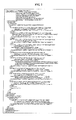
- FIG. 1 illustrates an example of structured information according to an embodiment of the present invention.
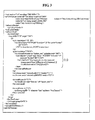
- FIG. 2 illustrates an example where a mpeg-pmsi() scheme is utilized in presentation information according to an embodiment of the present invention.
- a fragment 210 represents addressing text information indicated by a fragment 110 among the structured information of FIG. 1 .
- the fragment 110 may be pointed to by fragment 210 in data including presentation information by using the mpeg-pmsi() scheme as illustrated in FIG. 2 .
- Scalable Vector Graphics (SVG) text reference (tref) element having an xlink attribute is required to search for text information from the referenced XML data and the like.
- the SVG is a language generated based on the XML to represent a two-dimensional (2D) graphic.
- the tref is used for referring to a text included in the structured information, and the SVG indicates how to represent the text referenced through the tref.
- the present embodiment proposes the use of SVG tref element.
- the SVG tref element is defined in a sub-clause 10.6 of [W3CSVG11]
- the SVG tref element is used for enabling data including the presentation information to point to text information indicated by the fragment 110 from the structured information of FIG. 1 , by using the mpeg-pmsi() scheme.
- the structured information may be changed according to its feature over time.
- an Electronic Service Guide (ESG) expressed by a DVB CBMS may be regularly updated to reflect a change occurring in a schedule of a broadcasted program.
- the present embodiment proposes a LASeR externalReference element that is a new container element being capable of identifying the update of the structured information at predefined time intervals.
- the LASeR externalReference element is a container element including all elements that are regularly updated according to an updateInterval attribute.
- the updateInterval attribute may be ignored. Accordingly, the updateInterval attribute is merely used for a Uniform Resource Locator (URL), together with the mpeg-pmsi() scheme. Other URI processing procedure may be performed regardless of the updateInterval attribute.
- URL Uniform Resource Locator
- externalReference element allows children elements.
- the updateInterval attribute means an update interval of all elements and attributes included in a corresponding element.
- the updateInterval attribute may be one of "none", “free”, and " ⁇ Clock-value>”.
- updateInterval attribute is "free”
- the "free” indicates the updateInterval is arbitrary, thus the evaluate the structured information in an arbitrary interval. That is, "free” provides instructions for evaluating the structured information depending on the implementer that embodies a device, at intervals, as opposed to that an author of the presentation that sets the intervals used for evaluating the structured information.
- a security attribute controls a type of update allowed in referenced resources.
- the security attribute is defined in a sub-clause 6.8.53 of ISO/IEC 14496-20.
- FIG. 3 illustrates an example where a LASeR externalReference element is utilized in presentation information according to an embodiment of the present invention.
- updateInterval is set to "600", and thus, a scene is updated by evaluating whether structured information, which is referenced based on a mpeg-pmsi() scheme, is updated at the predefined intervals in the present embodiment,
- the structured information is not referenced by one specific presentation. As an example, contents of the structured information may be changed to a result of another application.
- the structured information is variously referenced, and thus, the structured information may be corrected or changed. Therefore, there is a need for the method of informing that the structured information referenced by a presentation engine is changed.
- the present embodiment discloses an xmlUpdate event where the structured information that is changed is identified.
- the xmlUpdate event may be defined as an Interface Definition Language (IDL) shown in Table 5 as given below.
- Interface xmIUpdateEvent LASeR Event ⁇ readonly attribute DOMString resourceURL; readonly attribute DOMString updatedValue; ⁇ ;
- a resourceURL may identify an updated external resource URL including a mpeg-pmsi() fragment.
- An updatedValue is an updated value pointed by a resource URL.
- FIG. 4 illustrates an example where an xmIUpdate event is utilized in presentation information, that is, in scene representation data.
- a fragment 410 of FIG. 4 shows that structured information of an external resource is referenced using a mpeg-pmsi() scheme.
- the present embodiment determines whether the structured information referenced in the fragment 410 is changed, using the xmlUpdate event, and when the structured information is changed, enables the changed structured information to be referenced again through a handler, thereby performing presentation of a changed scene.
- FIG. 5 is a diagram illustrating a configuration of a scene presentation device according to an embodiment of the present invention.
- the scene presentation device 510 may include a parsing unit 511 and a presentation unit 512.
- the parsing unit 511 parses presentation information addressing structured information.
- the structured information may be metadata specifying what information is to be represented.
- the structured information may be represented using MPEG-21 Digital Item Declaration (DID) standard, and MPEG-7 standard.
- the presentation information may be a scene description scheme indicating how to represent the structured information.
- the presentation information may be represented through a Binary Format for Scenes (BIFS) format and a LASeR format, and also, according to an embodiment of the present invention, a LASeR format may be applicable.
- BIFS Binary Format for Scenes
- LASeR LASeR format
- the presentation unit 512 reads the structured information based on the parsing result of the presentation information, and presents on a scene.
- the LASeR standard is a multimedia contents standard, and is a defined as a scene description format for representing and delivering a huge capacity media service, such as a rich media, to a device having a limited resource, such as a mobile phone. That is, the LASeR is to perform a service in response to a desire for the huge capacity media service in a scene description level.
- a decoder model of a LASeR system may include a decoding buffer, an elementary stream, at least one decoder, and a composition unit.
- the decoder model may decode the decoding buffer where data coded for each elementary stream is stored.
- a result of the decoding may be stored in the composition unit.
- the scene presentation device 510 may correspond to the decoder.
- the presentation information that addresses the structured information may correspond to the elementary stream of the LASeR.
- the presentation information may be stored in the decoding buffer.
- a single scene presentation device 510 may perform parsing of the presentation information, and may read structured information, thereby presenting a scene.
- each of a plurality of scene presentation device 510 may perform parsing of each of the grouped plurality of presentation information, and may read structured information, thereby presenting a scene.
- the scene presentation device 510 may select one of the plurality of presentation information, and may perform parsing of the selected presentation information to read structured information.
- the presentation information may address the structured information based on a predefined scheme. Accordingly, the presentation unit 512 may access a fragment of the structured information addressed by the presentation information, and may present the fragment in the scene.
- the scheme may be defined according to the syntax shown in Table 1 as given above.
- the presentation information may address the structured information by using an SVG tref element.
- the scene presentation device 510 may refer to http:Hwww.etri.re.kr/test-DI.xml that is structured information by using the SVG tref included in the presentation information. Also, the scene presentation device 510 may address structured information of FIG. 1 based on an mpeg-pmsi() scheme in http://www.etrLre.kr/test_DI.xml.
- the scene presentation device 510 may present a FreeTextAnnotation portion indicated by the mpeg-pmsi() scheme of the structured information in the scene.
- text presented in the FreeTextAnnotation portion may be presented in the scene according to a text representation format defined in the SVG.
- the presentation information may include a predefined container element identifying update of the structured information.
- the predefined container element may be defined as an externalReference element that has an updateInterval attribute related to the interval used for evaluating the update of structured information.
- the presentation unit 512 may read the updated structured information based on the parsing result of the presentation information and may present an updated scene.
- the presentation unit 512 evaluates the structured information a single time, and thereafter no more evaluating is required, when the updateInterval attribute is set to "none". Also, the presentation unit 512 presents the updated scene after evaluating the structured information in arbitrary time interval when the updateInterval attribute is set to "free”. Also, the presentation unit 512 evaluates the structured information at " ⁇ Clock-value>" period intervals and presents the updated scene when the updateInterval attribute is fixed as " ⁇ Clock-value>" being greater than "0".
- the presentation unit 512 may evaluate the text in item[3]/Descriptor[1]/Statement[1]/CreationInformation/Title[2]/text() presented in the http://www.etri.re.kr/example.xml indicated by the tref with mpeg-pmsi() scheme, at intervals of 600s, and may present the updated scene.
- the presentation information when the structured information is changed, may include an event used for detecting the change of structured information.
- the event may be defined as an IDL in Table 5 as given above.
- the presentation unit 512 may evaluate the structured information based on the parsing result of the presentation information and may read the changed structured information, thereby presenting a changed scene.
- the method according to the above-described example embodiments may be recorded in computer-readable media including program instructions to implement various operations embodied by a computer.
- the media may also include, alone or in combination with the program instructions, data files, data structures, and the like.
- Examples of computer-readable media include magnetic media such as hard disks, floppy disks, and magnetic tape; optical media such as CD ROM disks and DVDs; magneto-optical media such as optical disks; and hardware devices that are specially configured to store and perform program instructions, such as read-only memory (ROM), random access memory (RAM), flash memory, and the like.
- Examples of program instructions include both machine code, such as produced by a compiler, and files containing higher level code that may be executed by the computer using an interpreter.
- the described hardware devices may be configured to act as one or more software modules in order to perform the operations of the above-described example embodiments, or vice versa.
Landscapes
- Engineering & Computer Science (AREA)
- Multimedia (AREA)
- Signal Processing (AREA)
- Computer Graphics (AREA)
- Two-Way Televisions, Distribution Of Moving Picture Or The Like (AREA)
- Image Generation (AREA)
Abstract
Description
- The present invention relates to a device and method of performing presentation based on access to structured information.
- Several approaches to solve a problem related to presentation of structured information have been proposed.
- A first approach is a programmatic approach utilizing a script, and a second approach is a declarative approach defining additional information in the presentation.
- The programmatic approach may be a very useful tool since the approach provides nearly unlimited methods for accessing the structured information.
- However, the programmatic approach has a burden due to the use of a predefined script language and requires, from a contents writer, more than a certain level of knowledge, and thus, producing Lightweight Application Scene Representation (LASeR) content that is utilized for presentation of the structured information may be difficult. Also, the programmatic approach may not generally utilize an advantage of a declarative language, such as LASeR.
- Here, the LASeR is a multimedia contents standard appropriate to a low-specification mobile device such as a portable phone, and the like, and a service combining a wireless portal, a mobile TV, a music, a personal service, and the like, may be provided through LASeR contents or an LASeR-based system. Also, a lively dynamic effect, an interactive interface, and the like may be embodied.
- Also, the programmatic approach may not utilize the advantages of LASeR being a declarative language.
- Accordingly, the declarative approach that maintains the advantages of LASeR may be more effective in performing presentation of the structured information.
- An extensible Markup Language (XML) has been used in various applications. Accordingly, a method of identifying a fragment of a predefined XML data to enable the identified fragment to be used from a different document is required.
- Responding to the above-described needs, the World Wide Web Consortium (W3C) has developed technologies such as Xpointer framework and Xpath language.
- Moreover, Moving Picture Experts Group (MPEG) has developed a standard related to the identification of a fragment of resources, as a part of an MPEG-21 framework, by utilizing the above described technologies.
- Accordingly, there is a need for a device and method of accessing the structured information based on existing standards, to maintain integrity of standards defined by the MPEG, and to minimize the developing efforts of new solutions.
- An aspect of the present invention may appropriately point to a fragment of the structured information included in a predefined resource, thereby enabling presentation of the structured information even though the structured information is not included in richmedia and the like.
- According to an aspect of an exemplary embodiment, there is provided a scene presentation device, the device including a parsing unit to parse presentation information addressing structured information, and a presentation unit to read the structured information based on the parsing result of the presentation information, and to present a scene.
- According to example embodiments, there may appropriately point to a fragment of the structured information included in a predefined resource, thereby enabling presentation of the structured information even though the structured information is not included in richmedia and the like.
-
-
FIG. 1 illustrates an example of structured information according to an embodiment of the present invention; -
FIG. 2 illustrates an example where a mpeg-pmsi() scheme is utilized in presentation information, that is, in scene representation data, according to an embodiment of the present invention; -
FIG. 3 illustrates an example where a Lightweight Application Scene Representation (LASeR) externalReference element is utilized in presentation information, that is, in scene representation data, according to an embodiment of the present invention; -
FIG. 4 illustrates an example where an xmlUpdate event is utilized in presentation information, that is, in scene representation data; and -
FIG. 5 is a diagram illustrating a configuration of a scene presentation device according to an embodiment of the present invention. - Although a few exemplary embodiments of the present invention have been shown and described, the present invention is not limited to the described exemplary embodiments, wherein like reference numerals refer to the like elements throughout.
- Recently, various structured format standards, such as Moving Picture Experts Group-21 (MPEG-21) Digital Item Declaration (DID), MPEG-7 standard, TV Anytime standard, and Digital Video Broadcasting Convergence of Broadcast and Mobile Services (DVB CBMS) standard, have been developed for representation of metadata with respect to a multimedia presentation.
- Preparing suitable contents based on user's environments is an important key for providing multimedia services.
- Also, an assumption that metadata is mostly constituted by text information is no longer true.
- Recently, a multimedia asset, such as an image, a graphic, a short clip of video or an audio, and the like, has been used for communicating with media customers in a more effective way.
- Multimedia service designers have focused their attention on a temporal/spatial configuration of resources, and on an interactive presentation of information based on a user's input.
- Therefore, an interactive richmedia is used for providing information with respect to contents and service.
- However, the richmedia is not designed to include a great amount of structured information, thus a method using the richmedia including the metadata may be ineffective.
- Accordingly, there is need for a method of appropriately performing presentation of the structured information.
- Embodiments of the present invention may appropriately point to a fragment of the structured information included in a predefined resource, thereby enabling presentation of the structured information even though the structured information is not included in richmedia and the like.
- The present invention discloses example embodiments as described below.
- (a) There may be provided a mechanism for accessing the structured information, thereby enabling temporal/spatial expression of the structured information and enabling change of the structured information through a consistent method. In connection with this, a pointer scheme for the structured information is defined to access a specific fragment of the structured information. In this instance, the pointer scheme is referred to as 'mpeg-presentation and modification of structured information (pmsi)() scheme'.
- (b) A Scalable Vector Graphics text reference (SVG tref) element is used for referencing contents constituted by texts.
- (c) A Lightweight Application Scene Representation (LASeR) externalReference container element for identifying an update of the structured information at predefined time intervals is defined.
- (d) An xmlUpdate event for indicating the change of the referenced structured information is defined.
- Hereinafter, embodiments of the present invention will be described in detail with reference to
FIGS. 1 through 4 . -
(1) mpeg-pmsi() scheme is a scheme as a pointing scheme for fragments of the structured information.
The mpeg-pmsi() scheme is intended to be used together with an XPointer framework, for addressing the fragment of the structured information under the LASeR namespace.
Also, a process for entities addressed by the mpeg-pmsi() scheme may be changed depending on a type of node that uses the mpeg-pmsi() scheme.
(2) Syntax
The mpeg-pmsi() scheme may be defined as an Extended Backus-Naur Form (EBNF) syntax shown in Table I as given below.[Table 1] PointerForStructuredInformation::=PointerForStructuredInformationSchemeName "(" PointerForStructuredInformationSchemeData")" PointerForStructuredInformationSchemeName::="mpeg-pmsi"
(3) Semantics
PointerforStructuredInformationSchemeData in Table 1 is based on a World
Wide Web Consortium (W3C) XPath abbreviated syntax.
Also, the mpeg-pmsi() scheme may support an XPath predicate that is used for filtering out a node-set given from undesired nodes.
As an example, Table 2 given below is an expression indicating a ref attribute of the Resource element. Here, the Resource element is a child element of the Component element having a title attribute of 'video_1'.[Table 2] #mpeg-pmsi(Component[@title='video_1']/Ressource/@ref))
(4) Example
FIG. 1 illustrates an example of structured information according to an embodiment of the present invention.
Also,FIG. 2 illustrates an example where a mpeg-pmsi() scheme is utilized in presentation information according to an embodiment of the present invention. - With reference to
FIG. 2 , afragment 210 represents addressing text information indicated by afragment 110 among the structured information ofFIG. 1 . - That is, to read the
fragment 110 from the predefined structured information as illustrated inFIG. 1 , thefragment 110 may be pointed to byfragment 210 in data including presentation information by using the mpeg-pmsi() scheme as illustrated inFIG. 2 . - In general, specific text information existing within XML data is usually referenced, to express the structured information.
- Scalable Vector Graphics (SVG) text reference (tref) element having an xlink attribute is required to search for text information from the referenced XML data and the like. Here, the SVG is a language generated based on the XML to represent a two-dimensional (2D) graphic. Also, the tref is used for referring to a text included in the structured information, and the SVG indicates how to represent the text referenced through the tref.
- Accordingly, the present embodiment proposes the use of SVG tref element. The SVG tref element is defined in a sub-clause 10.6 of [W3CSVG11]
- Referring to the
fragment 210 ofFIG. 2 , the SVG tref element is used for enabling data including the presentation information to point to text information indicated by thefragment 110 from the structured information ofFIG. 1 , by using the mpeg-pmsi() scheme. - That is, when the text information is referenced from the XML data including the structured information, using the SVG tref element of presentation information and the mpeg-pmsi() scheme is disclosed.
- The structured information may be changed according to its feature over time. As an example, an Electronic Service Guide (ESG) expressed by a DVB CBMS may be regularly updated to reflect a change occurring in a schedule of a broadcasted program.
- Accordingly, there is a need for a mechanism reflecting the update of the structured information when presentation of the structured information is performed.
- In connection with the above, the present embodiment proposes a LASeR externalReference element that is a new container element being capable of identifying the update of the structured information at predefined time intervals.
- The element name and attributes with respect to the LASeR externalReference may be expressed as given in Table 3 below.
[Table 3] Element name Attributes externalReference Id updateInterval security - The LASeR externalReference element is a container element including all elements that are regularly updated according to an updateInterval attribute.
- When the LASeR externalReference element does not include any external reference, the updateInterval attribute may be ignored. Accordingly, the updateInterval attribute is merely used for a Uniform Resource Locator (URL), together with the mpeg-pmsi() scheme. Other URI processing procedure may be performed regardless of the updateInterval attribute.
- Also, externalReference element allows children elements.
- The updateInterval attribute means an update interval of all elements and attributes included in a corresponding element. In this instance, the updateInterval attribute may be one of "none", "free", and "<Clock-value>".
- First, when the updateInterval attribute is "none", "none" indicates to evaluate the structured information only once. That is, whether the structured information is updated is not evaluated again.
- When updateInterval attribute is "free", the "free" indicates the updateInterval is arbitrary, thus the evaluate the structured information in an arbitrary interval. That is, "free" provides instructions for evaluating the structured information depending on the implementer that embodies a device, at intervals, as opposed to that an author of the presentation that sets the intervals used for evaluating the structured information.
- When the updateInterval attribute is "<Clock-value>", "<Clock-value>" indicates to evaluate the structured information at predefined "<Clock-value>" intervals. In this instance, "<Clock-value>" is required to be greater than '0'. That is, when the updateInterval attribute is "<Clock-value>", the author of the presentation may appropriately set the intervals used for evaluating whether the structured information is updated.
- A security attribute controls a type of update allowed in referenced resources. The security attribute is defined in a sub-clause 6.8.53 of ISO/IEC 14496-20.
-
FIG. 3 illustrates an example where a LASeR externalReference element is utilized in presentation information according to an embodiment of the present invention. - Referring to a
fragment 310 ofFIG. 3 , updateInterval is set to "600", and thus, a scene is updated by evaluating whether structured information, which is referenced based on a mpeg-pmsi() scheme, is updated at the predefined intervals in the present embodiment, - (1) Proposal
- The structured information is not referenced by one specific presentation. As an example, contents of the structured information may be changed to a result of another application.
- Accordingly, the structured information is variously referenced, and thus, the structured information may be corrected or changed. Therefore, there is a need for the method of informing that the structured information referenced by a presentation engine is changed.
- In connection with the above, the present embodiment discloses an xmlUpdate event where the structured information that is changed is identified.
- Details with respect to the xmlUpdate event may be expressed as given in Table 4.
[Table 4] Event name Namespace Description Bubble Canc. "xmIUpdate Um:mpeg:mpeg4:laser:2005 Informs the update of Structured Information referenced by the presentation engine No No - The xmlUpdate event may be defined as an Interface Definition Language (IDL) shown in Table 5 as given below.
[Table 5] Interface xmIUpdateEvent:LASeR Event { readonly attribute DOMString resourceURL; readonly attribute DOMString updatedValue; }; - A resourceURL may identify an updated external resource URL including a mpeg-pmsi() fragment.
- An updatedValue is an updated value pointed by a resource URL.
-
FIG. 4 illustrates an example where an xmIUpdate event is utilized in presentation information, that is, in scene representation data. - A
fragment 410 ofFIG. 4 shows that structured information of an external resource is referenced using a mpeg-pmsi() scheme. - Referring to a
fragment 420, the present embodiment determines whether the structured information referenced in thefragment 410 is changed, using the xmlUpdate event, and when the structured information is changed, enables the changed structured information to be referenced again through a handler, thereby performing presentation of a changed scene. - As described above, embodiments for performing presentation with reference to the structured information of the external resource have been described.
- Hereinafter, a scene presentation device that presents a scene by using structured information will be described based on the disclosed embodiments.
-
FIG. 5 is a diagram illustrating a configuration of a scene presentation device according to an embodiment of the present invention. - Referring to
FIG. 5 , thescene presentation device 510 may include aparsing unit 511 and apresentation unit 512. - The
parsing unit 511 parses presentation information addressing structured information. In this instance, the structured information may be metadata specifying what information is to be represented. The structured information may be represented using MPEG-21 Digital Item Declaration (DID) standard, and MPEG-7 standard. Also, the presentation information may be a scene description scheme indicating how to represent the structured information. The presentation information may be represented through a Binary Format for Scenes (BIFS) format and a LASeR format, and also, according to an embodiment of the present invention, a LASeR format may be applicable. - The
presentation unit 512 reads the structured information based on the parsing result of the presentation information, and presents on a scene. - As described above, the LASeR standard is a multimedia contents standard, and is a defined as a scene description format for representing and delivering a huge capacity media service, such as a rich media, to a device having a limited resource, such as a mobile phone. That is, the LASeR is to perform a service in response to a desire for the huge capacity media service in a scene description level.
- A decoder model of a LASeR system may include a decoding buffer, an elementary stream, at least one decoder, and a composition unit. The decoder model may decode the decoding buffer where data coded for each elementary stream is stored. A result of the decoding may be stored in the composition unit.
- In this instance, the
scene presentation device 510 may correspond to the decoder. Also, the presentation information that addresses the structured information may correspond to the elementary stream of the LASeR. The presentation information may be stored in the decoding buffer. - When single presentation information is inputted, a single
scene presentation device 510 may perform parsing of the presentation information, and may read structured information, thereby presenting a scene. - When a grouped plurality of presentation information is inputted, each of a plurality of
scene presentation device 510 may perform parsing of each of the grouped plurality of presentation information, and may read structured information, thereby presenting a scene. - Also, when the grouped plurality of presentation information is inputted and the single
scene presentation device 510 exists, thescene presentation device 510 may select one of the plurality of presentation information, and may perform parsing of the selected presentation information to read structured information. - In this instance, according to an embodiment of the present invention, the presentation information may address the structured information based on a predefined scheme. Accordingly, the
presentation unit 512 may access a fragment of the structured information addressed by the presentation information, and may present the fragment in the scene. - In this instance, the scheme may be defined according to the syntax shown in Table 1 as given above.
- Also, according to an embodiment of the present invention, when the structured information is text information, the presentation information may address the structured information by using an SVG tref element.
- As an example, when
<tref xlink: href="http://www.etri.re.kr/test_DI.xml
#mpeg.pmsi(//mpeg7: FreeTextAnnotationltext())"/> is written in the presentation information ofFIG. 2 , thescene presentation device 510 may refer to http:Hwww.etri.re.kr/test-DI.xml that is structured information by using the SVG tref included in the presentation information. Also, thescene presentation device 510 may address structured information ofFIG. 1 based on an mpeg-pmsi() scheme in http://www.etrLre.kr/test_DI.xml. Thescene presentation device 510 may present a FreeTextAnnotation portion indicated by the mpeg-pmsi() scheme of the structured information in the scene. In this instance, text presented in the FreeTextAnnotation portion may be presented in the scene according to a text representation format defined in the SVG. - Also, according to an embodiment of the present invention, the presentation information may include a predefined container element identifying update of the structured information.
- In this instance, the predefined container element may be defined as an externalReference element that has an updateInterval attribute related to the interval used for evaluating the update of structured information.
- In this instance, the
presentation unit 512 may read the updated structured information based on the parsing result of the presentation information and may present an updated scene. - Also, the
presentation unit 512 evaluates the structured information a single time, and thereafter no more evaluating is required, when the updateInterval attribute is set to "none". Also, thepresentation unit 512 presents the updated scene after evaluating the structured information in arbitrary time interval when the updateInterval attribute is set to "free". Also, thepresentation unit 512 evaluates the structured information at "<Clock-value>" period intervals and presents the updated scene when the updateInterval attribute is fixed as "<Clock-value>" being greater than "0". - As an example, as illustrated in
FIG 3 , when updateInterval is 600, thepresentation unit 512 may evaluate the text in item[3]/Descriptor[1]/Statement[1]/CreationInformation/Title[2]/text() presented in the http://www.etri.re.kr/example.xml indicated by the tref with mpeg-pmsi() scheme, at intervals of 600s, and may present the updated scene. - According to an embodiment of the present invention, when the structured information is changed, the presentation information may include an event used for detecting the change of structured information.
- In this instance, the event may be defined as an IDL in Table 5 as given above.
- In this instance, the
presentation unit 512 may evaluate the structured information based on the parsing result of the presentation information and may read the changed structured information, thereby presenting a changed scene. - The method according to the above-described example embodiments may be recorded in computer-readable media including program instructions to implement various operations embodied by a computer. The media may also include, alone or in combination with the program instructions, data files, data structures, and the like. Examples of computer-readable media include magnetic media such as hard disks, floppy disks, and magnetic tape; optical media such as CD ROM disks and DVDs; magneto-optical media such as optical disks; and hardware devices that are specially configured to store and perform program instructions, such as read-only memory (ROM), random access memory (RAM), flash memory, and the like. Examples of program instructions include both machine code, such as produced by a compiler, and files containing higher level code that may be executed by the computer using an interpreter. The described hardware devices may be configured to act as one or more software modules in order to perform the operations of the above-described example embodiments, or vice versa.
- Although a few embodiments of the present invention have been shown and described, the present invention is not limited to the described embodiments. Instead, it would be appreciated by those skilled in the art that changes may be made to these embodiments without departing from the principles and spirit of the invention, the scope of which is defined by the claims and their equivalents.
Claims (10)
- A scene presentation device, the device comprising:a parsing unit to parse presentation information addressing structured information; anda presentation unit to read the structured information based on the parsing result of the presentation information, and to present a scene.
- The device of claim 1, wherein the presentation unit accesses a fragment of the structured information addressed by the presentation information, and presents the fragment in the scene.
- The device of claim 1, wherein the presentation information addresses the structured information based on a predefined scheme.
- The device of claim 3, wherein the scheme is defined according to the syntax shown as given by:
PointerForStructuredInformation::=PointerForStructuredInformationSchemeName"(" PointerForStructuredInformationSchemeData")" PointerFarStructuredInformationSchemeName::="mpeg-pmsi" - The device of claim 4, wherein the presentation information addresses the structured information by using a Scalable Vector Graphics text reference (SVG tref) element, when the structured information is in a text format.
- The device of claim 1, wherein the presentation information includes a predefined container element identifying an update of the structured information, and the presentation unit reads updated structured information based on the parsing result of the presentation information and presents an updated scene.
- The device of claim 6, wherein the predefined container element is defined as an externalReference element including an updateInterval attribute that is related to an interval used for evaluating the structured information.
- The device of claim 7, wherein the presentation unit evaluates the structured information a single time when an attribute of the updateInterval is "none", presents the updated scene after evaluating the structured information in an arbitrary interval when an attribute of the updatedInterval is "free", and presents the updated scene after evaluating the structured information at "<Clock-value>" period intervals when the attribute of the updateInterval is fixed as the "<Clock-value>" being greater than "0".
- The device of claim 1, wherein, when the structured information is changed, the presentation information includes an event for detecting the change of structured information, and the presentation unit reads the changed structured information based on the parsing result of the presentation information, and presents a changed scene.
- The device of claim 9, wherein the event is defined as an interface definition language (IDL) as given by:
Interface xmIUpdateEvent:LASeR Event { readonly attribute DOMString resourceURL ; readonly attribute DOMString updatedValue; };
Applications Claiming Priority (3)
| Application Number | Priority Date | Filing Date | Title |
|---|---|---|---|
| US8074908P | 2008-07-15 | 2008-07-15 | |
| KR1020090063980A KR101621092B1 (en) | 2008-07-15 | 2009-07-14 | Device and method for scene presentation of structured information |
| PCT/KR2009/003882 WO2010008196A2 (en) | 2008-07-15 | 2009-07-15 | Device and method for scene presentation of structured information |
Publications (3)
| Publication Number | Publication Date |
|---|---|
| EP2325767A2 true EP2325767A2 (en) | 2011-05-25 |
| EP2325767A4 EP2325767A4 (en) | 2012-05-09 |
| EP2325767B1 EP2325767B1 (en) | 2017-10-04 |
Family
ID=41816988
Family Applications (1)
| Application Number | Title | Priority Date | Filing Date |
|---|---|---|---|
| EP09798099.9A Not-in-force EP2325767B1 (en) | 2008-07-15 | 2009-07-15 | Device and method for scene presentation of structured information |
Country Status (5)
| Country | Link |
|---|---|
| US (1) | US20110145697A1 (en) |
| EP (1) | EP2325767B1 (en) |
| KR (1) | KR101621092B1 (en) |
| CN (1) | CN102216927B (en) |
| WO (1) | WO2010008196A2 (en) |
Cited By (1)
| Publication number | Priority date | Publication date | Assignee | Title |
|---|---|---|---|---|
| EP2342633A4 (en) * | 2008-09-26 | 2012-05-09 | Korea Electronics Telecomm | DEVICE AND METHOD FOR UPDATING STRUCTURED INFORMATION |
Families Citing this family (5)
| Publication number | Priority date | Publication date | Assignee | Title |
|---|---|---|---|---|
| KR101531417B1 (en) * | 2008-07-16 | 2015-06-25 | 삼성전자주식회사 | Method and apparatus for transmitting and receiving rich media content |
| KR101903443B1 (en) * | 2012-02-02 | 2018-10-02 | 삼성전자주식회사 | Apparatus and method for transmitting/receiving scene composition information |
| KR102069538B1 (en) * | 2012-07-12 | 2020-03-23 | 삼성전자주식회사 | Method of composing markup for arranging multimedia component |
| CN104035943B (en) * | 2013-03-08 | 2018-07-06 | 联想(北京)有限公司 | Store the method and respective server of data |
| CN114416603B (en) * | 2022-03-31 | 2022-07-12 | 北京搜狐新动力信息技术有限公司 | UI element testing method and device, storage medium and equipment |
Family Cites Families (8)
| Publication number | Priority date | Publication date | Assignee | Title |
|---|---|---|---|---|
| JP2000276493A (en) * | 1999-01-29 | 2000-10-06 | Canon Inc | How to browse electronically accessible resources |
| US7590644B2 (en) * | 1999-12-21 | 2009-09-15 | International Business Machine Corporation | Method and apparatus of streaming data transformation using code generator and translator |
| US7987491B2 (en) * | 2002-05-10 | 2011-07-26 | Richard Reisman | Method and apparatus for browsing using alternative linkbases |
| EP1403778A1 (en) * | 2002-09-27 | 2004-03-31 | Sony International (Europe) GmbH | Adaptive multimedia integration language (AMIL) for adaptive multimedia applications and presentations |
| US20040128342A1 (en) | 2002-12-31 | 2004-07-01 | International Business Machines Corporation | System and method for providing multi-modal interactive streaming media applications |
| WO2008007903A1 (en) * | 2006-07-11 | 2008-01-17 | Electronics And Telecommunications Research Institute | Method and apparatus for displaying the laser contents |
| KR100790191B1 (en) * | 2007-01-16 | 2008-01-02 | 삼성전자주식회사 | Method of providing a broadcast screen using the content of LASERR, DV-H system and terminal for the same |
| WO2008104926A2 (en) * | 2007-02-26 | 2008-09-04 | Nokia Corporation | Script-based system to perform dynamic updates to rich media content and services |
-
2009
- 2009-07-14 KR KR1020090063980A patent/KR101621092B1/en not_active Expired - Fee Related
- 2009-07-15 CN CN2009801362242A patent/CN102216927B/en not_active Expired - Fee Related
- 2009-07-15 US US13/054,337 patent/US20110145697A1/en not_active Abandoned
- 2009-07-15 EP EP09798099.9A patent/EP2325767B1/en not_active Not-in-force
- 2009-07-15 WO PCT/KR2009/003882 patent/WO2010008196A2/en not_active Ceased
Cited By (1)
| Publication number | Priority date | Publication date | Assignee | Title |
|---|---|---|---|---|
| EP2342633A4 (en) * | 2008-09-26 | 2012-05-09 | Korea Electronics Telecomm | DEVICE AND METHOD FOR UPDATING STRUCTURED INFORMATION |
Also Published As
| Publication number | Publication date |
|---|---|
| CN102216927A (en) | 2011-10-12 |
| US20110145697A1 (en) | 2011-06-16 |
| WO2010008196A3 (en) | 2010-11-04 |
| CN102216927B (en) | 2013-11-06 |
| KR20100008349A (en) | 2010-01-25 |
| WO2010008196A2 (en) | 2010-01-21 |
| EP2325767B1 (en) | 2017-10-04 |
| EP2325767A4 (en) | 2012-05-09 |
| KR101621092B1 (en) | 2016-05-16 |
Similar Documents
| Publication | Publication Date | Title |
|---|---|---|
| US7519616B2 (en) | Time references for multimedia objects | |
| KR101206111B1 (en) | Apparatus and method for providing streaming contents | |
| KR101485461B1 (en) | Method for providing application using application information table and apparatus thereof | |
| US20100138736A1 (en) | Delivering multimedia descriptions | |
| EP2325767B1 (en) | Device and method for scene presentation of structured information | |
| US20190286684A1 (en) | Reception device, information processing method in reception device, transmission device, information processing device, and information processing method | |
| US20210211782A1 (en) | Track Format for Carriage of Event Messages | |
| US20020198905A1 (en) | Transport hint table for synchronizing delivery time between multimedia content and multimedia content descriptions | |
| US20130069806A1 (en) | Method and apparatus for encoding and decoding structured data | |
| EP2344951B1 (en) | Conditional processing method and apparatus | |
| US20020120652A1 (en) | Two-stage mapping for application specific markup and binary encoding | |
| CN101513070B (en) | Method and device for displaying lightweight application scene representation content | |
| KR101875074B1 (en) | Apparatus and method for providing streaming contents | |
| US11967153B2 (en) | Information processing apparatus, reproduction processing apparatus, and information processing method | |
| KR101615378B1 (en) | Device and method for updating structured information | |
| CN101335884B (en) | Multimedia data acquiring method and multimedia equipment | |
| KR101310894B1 (en) | Method and apparatus of referencing stream in other SAF session for LASeR service and apparatus for the LASeR service | |
| KR102465142B1 (en) | Apparatus and method for transmitting and receiving signals in a multimedia system | |
| Lim et al. | MPEG Multimedia Scene Representation | |
| KR20040016566A (en) | Method for representing group metadata of mpeg multi-media contents and apparatus for producing mpeg multi-media contents | |
| WO2009045051A2 (en) | Method for providing initial behavior of multimedia application format content and system therefor | |
| Concolato et al. | Playback of mixed multimedia document | |
| KR20120117313A (en) | Apparatus and method for processing scene description contents | |
| AU2001268839A1 (en) | Delivering multimedia descriptions |
Legal Events
| Date | Code | Title | Description |
|---|---|---|---|
| PUAI | Public reference made under article 153(3) epc to a published international application that has entered the european phase |
Free format text: ORIGINAL CODE: 0009012 |
|
| AK | Designated contracting states |
Kind code of ref document: A2 Designated state(s): AT BE BG CH CY CZ DE DK EE ES FI FR GB GR HR HU IE IS IT LI LT LU LV MC MK MT NL NO PL PT RO SE SI SK SM TR |
|
| AX | Request for extension of the european patent |
Extension state: AL BA RS |
|
| 17P | Request for examination filed |
Effective date: 20110504 |
|
| RBV | Designated contracting states (corrected) |
Designated state(s): AT BE BG CH CY CZ DE DK EE ES FI FR GB GR HR HU IE IS IT LI LT LU LV MC MK MT NL NO PL PT RO SE SI SK SM TR |
|
| DAX | Request for extension of the european patent (deleted) | ||
| REG | Reference to a national code |
Ref country code: DE Ref legal event code: R079 Ref document number: 602009048712 Country of ref document: DE Free format text: PREVIOUS MAIN CLASS: G06F0017300000 Ipc: G06F0009440000 |
|
| A4 | Supplementary search report drawn up and despatched |
Effective date: 20120405 |
|
| RIC1 | Information provided on ipc code assigned before grant |
Ipc: H04N 7/24 20110101ALI20120330BHEP Ipc: G06F 9/44 20060101AFI20120330BHEP Ipc: G06F 17/22 20060101ALI20120330BHEP |
|
| RAP1 | Party data changed (applicant data changed or rights of an application transferred) |
Owner name: ELECTRONICS AND TELECOMMUNICATIONS RESEARCH INSTIT |
|
| 17Q | First examination report despatched |
Effective date: 20130312 |
|
| GRAP | Despatch of communication of intention to grant a patent |
Free format text: ORIGINAL CODE: EPIDOSNIGR1 |
|
| INTG | Intention to grant announced |
Effective date: 20170428 |
|
| GRAA | (expected) grant |
Free format text: ORIGINAL CODE: 0009210 |
|
| GRAS | Grant fee paid |
Free format text: ORIGINAL CODE: EPIDOSNIGR3 |
|
| AK | Designated contracting states |
Kind code of ref document: B1 Designated state(s): AT BE BG CH CY CZ DE DK EE ES FI FR GB GR HR HU IE IS IT LI LT LU LV MC MK MT NL NO PL PT RO SE SI SK SM TR |
|
| REG | Reference to a national code |
Ref country code: GB Ref legal event code: FG4D |
|
| REG | Reference to a national code |
Ref country code: CH Ref legal event code: EP |
|
| REG | Reference to a national code |
Ref country code: AT Ref legal event code: REF Ref document number: 934625 Country of ref document: AT Kind code of ref document: T Effective date: 20171015 |
|
| REG | Reference to a national code |
Ref country code: IE Ref legal event code: FG4D |
|
| REG | Reference to a national code |
Ref country code: DE Ref legal event code: R096 Ref document number: 602009048712 Country of ref document: DE |
|
| REG | Reference to a national code |
Ref country code: NL Ref legal event code: MP Effective date: 20171004 |
|
| REG | Reference to a national code |
Ref country code: LT Ref legal event code: MG4D |
|
| REG | Reference to a national code |
Ref country code: AT Ref legal event code: MK05 Ref document number: 934625 Country of ref document: AT Kind code of ref document: T Effective date: 20171004 |
|
| PG25 | Lapsed in a contracting state [announced via postgrant information from national office to epo] |
Ref country code: NL Free format text: LAPSE BECAUSE OF FAILURE TO SUBMIT A TRANSLATION OF THE DESCRIPTION OR TO PAY THE FEE WITHIN THE PRESCRIBED TIME-LIMIT Effective date: 20171004 |
|
| PG25 | Lapsed in a contracting state [announced via postgrant information from national office to epo] |
Ref country code: ES Free format text: LAPSE BECAUSE OF FAILURE TO SUBMIT A TRANSLATION OF THE DESCRIPTION OR TO PAY THE FEE WITHIN THE PRESCRIBED TIME-LIMIT Effective date: 20171004 Ref country code: LT Free format text: LAPSE BECAUSE OF FAILURE TO SUBMIT A TRANSLATION OF THE DESCRIPTION OR TO PAY THE FEE WITHIN THE PRESCRIBED TIME-LIMIT Effective date: 20171004 Ref country code: FI Free format text: LAPSE BECAUSE OF FAILURE TO SUBMIT A TRANSLATION OF THE DESCRIPTION OR TO PAY THE FEE WITHIN THE PRESCRIBED TIME-LIMIT Effective date: 20171004 Ref country code: NO Free format text: LAPSE BECAUSE OF FAILURE TO SUBMIT A TRANSLATION OF THE DESCRIPTION OR TO PAY THE FEE WITHIN THE PRESCRIBED TIME-LIMIT Effective date: 20180104 Ref country code: SE Free format text: LAPSE BECAUSE OF FAILURE TO SUBMIT A TRANSLATION OF THE DESCRIPTION OR TO PAY THE FEE WITHIN THE PRESCRIBED TIME-LIMIT Effective date: 20171004 |
|
| PG25 | Lapsed in a contracting state [announced via postgrant information from national office to epo] |
Ref country code: HR Free format text: LAPSE BECAUSE OF FAILURE TO SUBMIT A TRANSLATION OF THE DESCRIPTION OR TO PAY THE FEE WITHIN THE PRESCRIBED TIME-LIMIT Effective date: 20171004 Ref country code: LV Free format text: LAPSE BECAUSE OF FAILURE TO SUBMIT A TRANSLATION OF THE DESCRIPTION OR TO PAY THE FEE WITHIN THE PRESCRIBED TIME-LIMIT Effective date: 20171004 Ref country code: BG Free format text: LAPSE BECAUSE OF FAILURE TO SUBMIT A TRANSLATION OF THE DESCRIPTION OR TO PAY THE FEE WITHIN THE PRESCRIBED TIME-LIMIT Effective date: 20180104 Ref country code: AT Free format text: LAPSE BECAUSE OF FAILURE TO SUBMIT A TRANSLATION OF THE DESCRIPTION OR TO PAY THE FEE WITHIN THE PRESCRIBED TIME-LIMIT Effective date: 20171004 Ref country code: IS Free format text: LAPSE BECAUSE OF FAILURE TO SUBMIT A TRANSLATION OF THE DESCRIPTION OR TO PAY THE FEE WITHIN THE PRESCRIBED TIME-LIMIT Effective date: 20180204 Ref country code: GR Free format text: LAPSE BECAUSE OF FAILURE TO SUBMIT A TRANSLATION OF THE DESCRIPTION OR TO PAY THE FEE WITHIN THE PRESCRIBED TIME-LIMIT Effective date: 20180105 |
|
| REG | Reference to a national code |
Ref country code: DE Ref legal event code: R097 Ref document number: 602009048712 Country of ref document: DE |
|
| PG25 | Lapsed in a contracting state [announced via postgrant information from national office to epo] |
Ref country code: DK Free format text: LAPSE BECAUSE OF FAILURE TO SUBMIT A TRANSLATION OF THE DESCRIPTION OR TO PAY THE FEE WITHIN THE PRESCRIBED TIME-LIMIT Effective date: 20171004 Ref country code: SK Free format text: LAPSE BECAUSE OF FAILURE TO SUBMIT A TRANSLATION OF THE DESCRIPTION OR TO PAY THE FEE WITHIN THE PRESCRIBED TIME-LIMIT Effective date: 20171004 Ref country code: EE Free format text: LAPSE BECAUSE OF FAILURE TO SUBMIT A TRANSLATION OF THE DESCRIPTION OR TO PAY THE FEE WITHIN THE PRESCRIBED TIME-LIMIT Effective date: 20171004 Ref country code: CZ Free format text: LAPSE BECAUSE OF FAILURE TO SUBMIT A TRANSLATION OF THE DESCRIPTION OR TO PAY THE FEE WITHIN THE PRESCRIBED TIME-LIMIT Effective date: 20171004 |
|
| PLBE | No opposition filed within time limit |
Free format text: ORIGINAL CODE: 0009261 |
|
| STAA | Information on the status of an ep patent application or granted ep patent |
Free format text: STATUS: NO OPPOSITION FILED WITHIN TIME LIMIT |
|
| PG25 | Lapsed in a contracting state [announced via postgrant information from national office to epo] |
Ref country code: IT Free format text: LAPSE BECAUSE OF FAILURE TO SUBMIT A TRANSLATION OF THE DESCRIPTION OR TO PAY THE FEE WITHIN THE PRESCRIBED TIME-LIMIT Effective date: 20171004 Ref country code: PL Free format text: LAPSE BECAUSE OF FAILURE TO SUBMIT A TRANSLATION OF THE DESCRIPTION OR TO PAY THE FEE WITHIN THE PRESCRIBED TIME-LIMIT Effective date: 20171004 Ref country code: SM Free format text: LAPSE BECAUSE OF FAILURE TO SUBMIT A TRANSLATION OF THE DESCRIPTION OR TO PAY THE FEE WITHIN THE PRESCRIBED TIME-LIMIT Effective date: 20171004 Ref country code: RO Free format text: LAPSE BECAUSE OF FAILURE TO SUBMIT A TRANSLATION OF THE DESCRIPTION OR TO PAY THE FEE WITHIN THE PRESCRIBED TIME-LIMIT Effective date: 20171004 |
|
| 26N | No opposition filed |
Effective date: 20180705 |
|
| PGFP | Annual fee paid to national office [announced via postgrant information from national office to epo] |
Ref country code: DE Payment date: 20180620 Year of fee payment: 10 |
|
| PG25 | Lapsed in a contracting state [announced via postgrant information from national office to epo] |
Ref country code: SI Free format text: LAPSE BECAUSE OF FAILURE TO SUBMIT A TRANSLATION OF THE DESCRIPTION OR TO PAY THE FEE WITHIN THE PRESCRIBED TIME-LIMIT Effective date: 20171004 |
|
| REG | Reference to a national code |
Ref country code: CH Ref legal event code: PL |
|
| GBPC | Gb: european patent ceased through non-payment of renewal fee |
Effective date: 20180715 |
|
| PG25 | Lapsed in a contracting state [announced via postgrant information from national office to epo] |
Ref country code: MC Free format text: LAPSE BECAUSE OF FAILURE TO SUBMIT A TRANSLATION OF THE DESCRIPTION OR TO PAY THE FEE WITHIN THE PRESCRIBED TIME-LIMIT Effective date: 20171004 Ref country code: LU Free format text: LAPSE BECAUSE OF NON-PAYMENT OF DUE FEES Effective date: 20180715 |
|
| REG | Reference to a national code |
Ref country code: BE Ref legal event code: MM Effective date: 20180731 |
|
| REG | Reference to a national code |
Ref country code: IE Ref legal event code: MM4A |
|
| PG25 | Lapsed in a contracting state [announced via postgrant information from national office to epo] |
Ref country code: FR Free format text: LAPSE BECAUSE OF NON-PAYMENT OF DUE FEES Effective date: 20180731 Ref country code: LI Free format text: LAPSE BECAUSE OF NON-PAYMENT OF DUE FEES Effective date: 20180731 Ref country code: CH Free format text: LAPSE BECAUSE OF NON-PAYMENT OF DUE FEES Effective date: 20180731 Ref country code: GB Free format text: LAPSE BECAUSE OF NON-PAYMENT OF DUE FEES Effective date: 20180715 Ref country code: IE Free format text: LAPSE BECAUSE OF NON-PAYMENT OF DUE FEES Effective date: 20180715 |
|
| PG25 | Lapsed in a contracting state [announced via postgrant information from national office to epo] |
Ref country code: BE Free format text: LAPSE BECAUSE OF NON-PAYMENT OF DUE FEES Effective date: 20180731 |
|
| PG25 | Lapsed in a contracting state [announced via postgrant information from national office to epo] |
Ref country code: MT Free format text: LAPSE BECAUSE OF NON-PAYMENT OF DUE FEES Effective date: 20180715 |
|
| REG | Reference to a national code |
Ref country code: DE Ref legal event code: R119 Ref document number: 602009048712 Country of ref document: DE |
|
| PG25 | Lapsed in a contracting state [announced via postgrant information from national office to epo] |
Ref country code: TR Free format text: LAPSE BECAUSE OF FAILURE TO SUBMIT A TRANSLATION OF THE DESCRIPTION OR TO PAY THE FEE WITHIN THE PRESCRIBED TIME-LIMIT Effective date: 20171004 |
|
| PG25 | Lapsed in a contracting state [announced via postgrant information from national office to epo] |
Ref country code: DE Free format text: LAPSE BECAUSE OF NON-PAYMENT OF DUE FEES Effective date: 20200201 |
|
| PG25 | Lapsed in a contracting state [announced via postgrant information from national office to epo] |
Ref country code: HU Free format text: LAPSE BECAUSE OF FAILURE TO SUBMIT A TRANSLATION OF THE DESCRIPTION OR TO PAY THE FEE WITHIN THE PRESCRIBED TIME-LIMIT; INVALID AB INITIO Effective date: 20090715 Ref country code: PT Free format text: LAPSE BECAUSE OF FAILURE TO SUBMIT A TRANSLATION OF THE DESCRIPTION OR TO PAY THE FEE WITHIN THE PRESCRIBED TIME-LIMIT Effective date: 20171004 |
|
| PG25 | Lapsed in a contracting state [announced via postgrant information from national office to epo] |
Ref country code: CY Free format text: LAPSE BECAUSE OF FAILURE TO SUBMIT A TRANSLATION OF THE DESCRIPTION OR TO PAY THE FEE WITHIN THE PRESCRIBED TIME-LIMIT Effective date: 20171004 Ref country code: MK Free format text: LAPSE BECAUSE OF NON-PAYMENT OF DUE FEES Effective date: 20171004 |