EP2321356B1 - Monoclonal antibodies against tissue factor pathway inhibitor (tfpi) - Google Patents
Monoclonal antibodies against tissue factor pathway inhibitor (tfpi) Download PDFInfo
- Publication number
- EP2321356B1 EP2321356B1 EP09805438.0A EP09805438A EP2321356B1 EP 2321356 B1 EP2321356 B1 EP 2321356B1 EP 09805438 A EP09805438 A EP 09805438A EP 2321356 B1 EP2321356 B1 EP 2321356B1
- Authority
- EP
- European Patent Office
- Prior art keywords
- seq
- variable region
- chain variable
- homo sapiens
- prt
- Prior art date
- Legal status (The legal status is an assumption and is not a legal conclusion. Google has not performed a legal analysis and makes no representation as to the accuracy of the status listed.)
- Active
Links
Images


Classifications
-
- C—CHEMISTRY; METALLURGY
- C07—ORGANIC CHEMISTRY
- C07K—PEPTIDES
- C07K16/00—Immunoglobulins [IG], e.g. monoclonal or polyclonal antibodies
- C07K16/18—Immunoglobulins [IG], e.g. monoclonal or polyclonal antibodies against material from animals or humans
- C07K16/36—Immunoglobulins [IG], e.g. monoclonal or polyclonal antibodies against material from animals or humans against blood coagulation factors
-
- C—CHEMISTRY; METALLURGY
- C07—ORGANIC CHEMISTRY
- C07K—PEPTIDES
- C07K16/00—Immunoglobulins [IG], e.g. monoclonal or polyclonal antibodies
- C07K16/38—Immunoglobulins [IG], e.g. monoclonal or polyclonal antibodies against protease inhibitors of peptide structure
-
- A—HUMAN NECESSITIES
- A61—MEDICAL OR VETERINARY SCIENCE; HYGIENE
- A61K—PREPARATIONS FOR MEDICAL, DENTAL OR TOILETRY PURPOSES
- A61K39/00—Medicinal preparations containing antigens or antibodies
-
- A—HUMAN NECESSITIES
- A61—MEDICAL OR VETERINARY SCIENCE; HYGIENE
- A61K—PREPARATIONS FOR MEDICAL, DENTAL OR TOILETRY PURPOSES
- A61K39/00—Medicinal preparations containing antigens or antibodies
- A61K39/395—Antibodies; Immunoglobulins; Immune serum, e.g. antilymphocytic serum
-
- A—HUMAN NECESSITIES
- A61—MEDICAL OR VETERINARY SCIENCE; HYGIENE
- A61K—PREPARATIONS FOR MEDICAL, DENTAL OR TOILETRY PURPOSES
- A61K39/00—Medicinal preparations containing antigens or antibodies
- A61K39/395—Antibodies; Immunoglobulins; Immune serum, e.g. antilymphocytic serum
- A61K39/39533—Antibodies; Immunoglobulins; Immune serum, e.g. antilymphocytic serum against materials from animals
- A61K39/3955—Antibodies; Immunoglobulins; Immune serum, e.g. antilymphocytic serum against materials from animals against proteinaceous materials, e.g. enzymes, hormones, lymphokines
-
- A—HUMAN NECESSITIES
- A61—MEDICAL OR VETERINARY SCIENCE; HYGIENE
- A61P—SPECIFIC THERAPEUTIC ACTIVITY OF CHEMICAL COMPOUNDS OR MEDICINAL PREPARATIONS
- A61P33/00—Antiparasitic agents
- A61P33/02—Antiprotozoals, e.g. for leishmaniasis, trichomoniasis, toxoplasmosis
-
- A—HUMAN NECESSITIES
- A61—MEDICAL OR VETERINARY SCIENCE; HYGIENE
- A61P—SPECIFIC THERAPEUTIC ACTIVITY OF CHEMICAL COMPOUNDS OR MEDICINAL PREPARATIONS
- A61P43/00—Drugs for specific purposes, not provided for in groups A61P1/00-A61P41/00
-
- A—HUMAN NECESSITIES
- A61—MEDICAL OR VETERINARY SCIENCE; HYGIENE
- A61P—SPECIFIC THERAPEUTIC ACTIVITY OF CHEMICAL COMPOUNDS OR MEDICINAL PREPARATIONS
- A61P7/00—Drugs for disorders of the blood or the extracellular fluid
- A61P7/04—Antihaemorrhagics; Procoagulants; Haemostatic agents; Antifibrinolytic agents
-
- C—CHEMISTRY; METALLURGY
- C07—ORGANIC CHEMISTRY
- C07K—PEPTIDES
- C07K14/00—Peptides having more than 20 amino acids; Gastrins; Somatostatins; Melanotropins; Derivatives thereof
- C07K14/81—Protease inhibitors
- C07K14/8107—Endopeptidase (E.C. 3.4.21-99) inhibitors
- C07K14/811—Serine protease (E.C. 3.4.21) inhibitors
-
- C—CHEMISTRY; METALLURGY
- C07—ORGANIC CHEMISTRY
- C07K—PEPTIDES
- C07K16/00—Immunoglobulins [IG], e.g. monoclonal or polyclonal antibodies
-
- A—HUMAN NECESSITIES
- A61—MEDICAL OR VETERINARY SCIENCE; HYGIENE
- A61K—PREPARATIONS FOR MEDICAL, DENTAL OR TOILETRY PURPOSES
- A61K39/00—Medicinal preparations containing antigens or antibodies
- A61K2039/505—Medicinal preparations containing antigens or antibodies comprising antibodies
-
- A—HUMAN NECESSITIES
- A61—MEDICAL OR VETERINARY SCIENCE; HYGIENE
- A61K—PREPARATIONS FOR MEDICAL, DENTAL OR TOILETRY PURPOSES
- A61K2300/00—Mixtures or combinations of active ingredients, wherein at least one active ingredient is fully defined in groups A61K31/00 - A61K41/00
-
- C—CHEMISTRY; METALLURGY
- C07—ORGANIC CHEMISTRY
- C07K—PEPTIDES
- C07K2317/00—Immunoglobulins specific features
- C07K2317/20—Immunoglobulins specific features characterized by taxonomic origin
- C07K2317/21—Immunoglobulins specific features characterized by taxonomic origin from primates, e.g. man
-
- C—CHEMISTRY; METALLURGY
- C07—ORGANIC CHEMISTRY
- C07K—PEPTIDES
- C07K2317/00—Immunoglobulins specific features
- C07K2317/30—Immunoglobulins specific features characterized by aspects of specificity or valency
- C07K2317/33—Crossreactivity, e.g. for species or epitope, or lack of said crossreactivity
-
- C—CHEMISTRY; METALLURGY
- C07—ORGANIC CHEMISTRY
- C07K—PEPTIDES
- C07K2317/00—Immunoglobulins specific features
- C07K2317/50—Immunoglobulins specific features characterized by immunoglobulin fragments
- C07K2317/52—Constant or Fc region; Isotype
-
- C—CHEMISTRY; METALLURGY
- C07—ORGANIC CHEMISTRY
- C07K—PEPTIDES
- C07K2317/00—Immunoglobulins specific features
- C07K2317/50—Immunoglobulins specific features characterized by immunoglobulin fragments
- C07K2317/55—Fab or Fab'
-
- C—CHEMISTRY; METALLURGY
- C07—ORGANIC CHEMISTRY
- C07K—PEPTIDES
- C07K2317/00—Immunoglobulins specific features
- C07K2317/50—Immunoglobulins specific features characterized by immunoglobulin fragments
- C07K2317/56—Immunoglobulins specific features characterized by immunoglobulin fragments variable (Fv) region, i.e. VH and/or VL
-
- C—CHEMISTRY; METALLURGY
- C07—ORGANIC CHEMISTRY
- C07K—PEPTIDES
- C07K2317/00—Immunoglobulins specific features
- C07K2317/50—Immunoglobulins specific features characterized by immunoglobulin fragments
- C07K2317/56—Immunoglobulins specific features characterized by immunoglobulin fragments variable (Fv) region, i.e. VH and/or VL
- C07K2317/565—Complementarity determining region [CDR]
-
- C—CHEMISTRY; METALLURGY
- C07—ORGANIC CHEMISTRY
- C07K—PEPTIDES
- C07K2317/00—Immunoglobulins specific features
- C07K2317/70—Immunoglobulins specific features characterized by effect upon binding to a cell or to an antigen
- C07K2317/76—Antagonist effect on antigen, e.g. neutralization or inhibition of binding
-
- C—CHEMISTRY; METALLURGY
- C07—ORGANIC CHEMISTRY
- C07K—PEPTIDES
- C07K2317/00—Immunoglobulins specific features
- C07K2317/90—Immunoglobulins specific features characterized by (pharmaco)kinetic aspects or by stability of the immunoglobulin
- C07K2317/92—Affinity (KD), association rate (Ka), dissociation rate (Kd) or EC50 value
-
- C—CHEMISTRY; METALLURGY
- C07—ORGANIC CHEMISTRY
- C07K—PEPTIDES
- C07K2319/00—Fusion polypeptide
Definitions
- TFPI tissue factor pathway inhibitor
- Blood coagulation is a process by which blood forms stable clots to stop bleeding.
- the process involves a number of proenzymes and procofactors (or "coagulation factors") that are circulating in the blood. Those proenzymes and procofactors interact through several pathways through which they are converted, either sequentially or simultaneously, to the activated form.
- the process results in the activation of prothrombin to thrombin by activated Factor X (FXa) in the presence of Factor Va, ionic calcium, and platelets.
- the activated thrombin in turn induces platelet aggregation and converts fibrinogen into fibrin, which is then cross linked by activated Factor XIII (FXIIIa) to form a clot.
- FXa activated Factor X
- FXIIIa activated Factor XIII
- the process leading to the activation of Factor X can be carried out by two distinct pathways: the contact activation pathway (formerly known as the intrinsic pathway) and the tissue factor pathway (formerly known as the extrinsic pathway). It was previously thought that the coagulation cascade consisted of two pathways of equal importance joined to a common pathway. It is now known that the primary pathway for the initiation of blood coagulation is the tissue factor pathway.
- Factor X can be activated by tissue factor (TF) in combination with activated Factor VII (FVIIa).
- TF tissue factor
- FVIIa activated Factor VII
- the complex of Factor VIIa and its essential cofactor, TF, is a potent initiator of the clotting cascade.
- TFPI tissue factor pathway inhibitor
- FXa tissue factor pathway inhibitor
- TFPI tissue factor pathway inhibitor
- FXa activated Factor X
- blocking TFPI activity can restore FXa and FVIIa/TF activity, thus prolonging the duration of action of the tissue factor pathway and amplifying the generation of FXa, which is the common defect in hemophilia A and B.
- rhTFPI recombinant human TFPI
- PT dilute prothrombin time
- APTT activated partial thromboplastin time
- tissue factor pathway plays an important role not only in physiological coagulation but also in hemorrhage of hemophilia ( Yang et al., Hunan Yi Ke Da Xue Xue Bao, 1997, 22(4): 297-300 ).
- U.S. Patent No. 7,015,194 to Kjalke et al. discloses compositions comprising FVIIa and a TFPI inhibitor, including polyclonal or monoclonal antibodies, or a fragment thereof, for treatment or prophylaxis of bleeding episodes or coagulative treatment.
- a TFPI inhibitor including polyclonal or monoclonal antibodies, or a fragment thereof, for treatment or prophylaxis of bleeding episodes or coagulative treatment.
- the use of such composition to reduce clotting time in normal mammalian plasma is also disclosed.
- a Factor VIII or a variant thereof may be included in the disclosed composition of FVIIa and TFPI inhibitor.
- a combination of FVIII or Factor IX with TFPI monoclonal antibody is not suggested.
- LACI lipoprotein-associated coagulation inhibitor
- TFPI inhibitors including polyclonal or monoclonal antibodies, can be used for cancer treatment (see U.S. Pat. No. 5,902,582 to Hung ).
- antibodies specific for TFPI are needed for treating hematological diseases and cancer.
- therapeutic antibodies for human diseases have been generated using genetic engineering to create murine, chimeric, humanized or fully human antibodies.
- Murine monoclonal antibodies were shown to have limited use as therapeutic agents because of a short serum half-life, an inability to trigger human effector functions, and the production of human antimouse-antibodies.
- Brekke and Sandlie "Therapeutic Antibodies for Human Diseases at the Dawn of the Twenty-first Century," Nature 2, 53, 52-62 (Jan. 2003 ).
- Chimeric antibodies have been shown to give rise to human anti-chimeric antibody responses.
- Humanized antibodies further minimize the mouse component of antibodies.
- a fully human antibody avoids the immunogenicity associated with murine elements completely.
- Therapeutic antibodies have been made through hybridoma technology described by Koehler and Milstein in "Continuous Cultures of Fused Cells Secreting Antibody of Predefined Specificity," Nature 256, 495-497 (1975 ). Fully human antibodies may also be made recombinantly in prokaryotes and eukaryotes. Recombinant production of an antibody in a host cell rather than hybridoma production is preferred for a therapeutic antibody. Recombinant production has the advantages of greater product consistency, likely higher production level, and a controlled manufacture that minimizes or eliminates the presence of animal-derived proteins. For these reasons, it is desirable to have a recombinantly produced monoclonal anti-TFPI antibody.
- Monoclonal antibodies to human tissue factor pathway inhibitor are provided. Further provided are the isolated nucleic acid molecules encoding the same.
- Pharmaceutical compositions comprising the anti-TFPI monoclonal antibodies and their use for the treatment of genetic and acquired deficiencies or defects in coagulation such as hemophilia A and B are also disclosed. Also disclosed are uses of these antibodies for shortening the bleeding time by administering said anti-TFPI monoclonal antibody to a patient in need thereof. Methods for producing a monoclonal antibody that binds human TFPI according to the present invention are also disclosed.
- tissue factor pathway inhibitor or "TFPI” as used herein refers to any variant, isoform and species homolog of human TFPI that is naturally expressed by cells.
- the binding of an antibody of the invention to TFPI reduces the blood clotting time.
- an “antibody” refers to a whole antibody and any antigen binding fragment (i.e., "antigen-binding portion") or single chain thereof.
- the term includes a full-length immunoglobulin molecule (e.g., an IgG antibody) that is naturally occurring or formed by normal immunoglobulin gene fragment recombinatorial processes, or an immunologically active portion of an immunoglobulin molecule, such as an antibody fragment, that retains the specific binding activity.
- an antibody fragment binds with the same antigen that is recognized by the full-length antibody. For example, an anti-TFPI monoclonal antibody fragment binds to an epitope of TFPI.
- the antigen-binding function of an antibody can be performed by fragments of a full-length antibody.
- binding fragments encompassed within the term "antigen-binding portion" of an antibody include (i) a Fab fragment, a monovalent fragment consisting of the V L , V H , C L and C H1 domains; (ii) a F(ab') 2 fragment, a bivalent fragment comprising two Fab fragments linked by a disulfide bridge at the hinge region; (iii) a Fd fragment consisting of the V H and C H1 domains; (iv) a Fv fragment consisting of the V L and V H domains of a single arm of an antibody, (v) a dAb fragment ( Ward et al., (1989) Nature 341:544-546 ), which consists of a V H domain; and (vi) an isolated complementarity determining region (CDR).
- CDR complementarity determining region
- the two domains of the Fv fragment, V L and V H are coded for by separate genes, they can be joined, using recombinant methods, by a synthetic linker that enables them to be made as a single protein chain in which the V L and V H regions pair to form monovalent molecules (known as single chain Fv (scFv); see e.g., Bird et al. (1988) Science 242:423-426 ; and Huston et al (1988) Proc. Natl. Acad. Sci. USA 85:5879-5883 ).
- single chain Fv single chain Fv
- Such single chain antibodies are also intended to be encompassed within the term "antigen-binding portion" of an antibody.
- inhibits binding and “blocks binding” (e.g., referring to inhibition/blocking of binding of TFPI ligand to TFPI) are used interchangeably and encompass both partial and complete inhibition or blocking. Inhibition and blocking are also intended to include any measurable decrease in the binding affinity of TFPI to a physiological substrate when in contact with an anti-TFPI antibody as compared to TFPI not in contact with an anti-TFPI antibody, e.g., the blocking of the interaction of TFPI with factor Xa or blocking the interaction of a TFPI-factor Xa complex with tissue factor, factor VIIa or the complex of tissue factor/factor VIIa by at least about 10%, 20%, 30%, 40%, 50%, 60%, 70%, 80%, 90%, 95%, 96%, 97%, 98%, 99%, or 100%.
- monoclonal antibody or “monoclonal antibody composition” as used herein refer to a preparation of antibody molecules of single molecular composition.
- a monoclonal antibody composition displays a single binding specificity and affinity for a particular epitope.
- human monoclonal antibody refers to antibodies displaying a single binding specificity which have variable and constant regions derived from human germline immunoglobulin sequences.
- the human antibodies of the invention may include amino acid residues not encoded by human germline immunoglobulin sequences (e.g., mutations introduced by random or site-specific mutagenesis in vitro or by somatic mutation in vivo).
- an "isolated antibody,” as used herein, is intended to refer to an antibody which is substantially free of other antibodies having different antigenic specificities (e.g., an isolated antibody that binds to TFPI is substantially free of antibodies that bind antigens other than TFPI).
- An isolated antibody that binds to an epitope, isoform or variant of human TFPI may, however, have cross-reactivity to other related antigens, e.g., from other species (e.g., TFPI species homologs).
- an isolated antibody may be substantially free of other cellular material and/or chemicals.
- telomere binding refers to antibody binding to a predetermined antigen.
- the antibody binds with an affinity of at least about 10 5 M -1 and binds to the predetermined antigen with an affinity that is higher, for example at least two-fold greater, than its affinity for binding to an irrelevant antigen (e.g., BSA, casein) other than the predetermined antigen or a closely-related antigen.
- an irrelevant antigen e.g., BSA, casein
- the term "high affinity" for an IgG antibody refers to a binding affinity of at least about 10 7 M -1 , in some embodiments at least about 10 8 M -1 , in some embodiments at least about 10 9 M -1 , 10 10 M -1 , 10 11 M -1 or greater, e.g., up to 10 13 M -1 or greater.
- “high affinity” binding can vary for other antibody isotypes.
- “high affinity” binding for an IgM isotype refers to a binding affinity of at least about 1.0 x 10 7 M -1 .
- “isotype” refers to the antibody class (e.g., IgM or IgG1) that is encoded by heavy chain constant region genes.
- CDR complementarity-determining region
- CDR1 complementarity-determining region
- CDR2 complementarity-determining region
- CDR3 complementary region specific for antigen-antibody binding.
- An antigen-binding site may include six CDRs, comprising the CDR regions from each of a heavy and a light chain V region.
- “conservative substitutions” refers to modifications of a polypeptide that involve the substitution of one or more amino acids for amino acids having similar biochemical properties that do not result in loss of a biological or biochemical function of the polypeptide.
- a “conservative amino acid substitution” is one in which the amino acid residue is replaced with an amino acid residue having a similar side chain. Families of amino acid residues having similar side chains have been defined in the art.
- amino acids with basic side chains e.g., lysine, arginine, histidine
- acidic side chains e.g., aspartic acid, glutamic acid
- uncharged polar side chains e.g., glycine, asparagine, glutamine, serine, threonine, tyrosine, cysteine
- nonpolar side chains e.g., alanine, valine, leucine, isoleucine, proline, phenylalanine, methionine, tryptophan
- beta-branched side chains e.g., threonine, valine, isoleucine
- aromatic side chains e.g., tyrosine, phenylalanine, tryptophan, histidine. It is envisioned that the antibodies of the present invention may have conservative amino acid substitutions and still retain activity.
- nucleic acids and polypeptides the term “substantial homology” indicates that two nucleic acids or two polypeptides, or designated sequences thereof, when optimally aligned and compared, are identical, with appropriate nucleotide or amino acid insertions or deletions, in at least about 80% of the nucleotides or amino acids, usually at least about 85%, preferably about 90%, 91%, 92%, 93%, 94%, or 95%, more preferably at least about 96%, 97%, 98%, 99%, 99.1%, 99.2%, 99.3%, 99.4%, or 99.5% of the nucleotides or amino acids.
- nucleic acids Alternatively, substantial homology for nucleic acids exists when the segments will hybridize under selective hybridization conditions to the complement of the strand.
- the invention includes nucleic acid sequences and polypeptide sequences having substantial homology to the specific nucleic acid sequences and amino acid sequences recited herein.
- the comparison of sequences and determination of percent identity between two sequences can be accomplished using a mathematical algorithm, such as without limitation the AlignXTM module of VectorNTITM (Invitrogen Corp., Carlsbad, CA).
- AlignXTM the default parameters of multiple alignment are: gap opening penalty: 10; gap extension penalty: 0.05; gap separation penalty range: 8; % identity for alignment delay: 40.
- Another method for determining the best overall match between a query sequence (a sequence of the present invention) and a subject sequence can be determined using the CLUSTALW computer program ( Thompson et al., Nucleic Acids Research, 1994, 2(22): 4673-4680 ), which is based on the algorithm of Higgins et al., (Computer Applications in the Biosciences (CABIOS), 1992, 8(2): 189-191 ).
- CLUSTALW computer program Thompson et al., Nucleic Acids Research, 1994, 2(22): 4673-4680
- Higgins et al. Computer Applications in the Biosciences (CABIOS), 1992, 8(2): 189-191 .
- the result of said global sequence alignment is in percent identity.
- the nucleic acids may be present in whole cells, in a cell lysate, or in a partially purified or substantially pure form.
- a nucleic acid is "isolated” or “rendered substantially pure” when purified away from other cellular components with which it is normally associated in the natural environment.
- standard techniques such as the following may be used: alkaline/SDS treatment, CsCl banding, column chromatography, agarose gel electrophoresis and others well known in the art.
- TFPI-binding antibodies Forty-four TFPI-binding antibodies were identified from panning and screening of human antibody libraries against human TFPI.
- the heavy chain variable region and light chain variable region of each monoclonal antibody were sequenced and their CDR regions were identified.
- the sequence identifier numbers (“SEQ ID NO”) correspond to these regions of each monoclonal antibody are summarized in Table 1.
- Table 1. Summary of the sequence identifier numbers (“SEQ ID NO”) of the heavy chain variable region ("VH”) and light chain variable region ("VL”) of each TFPI-binding monoclonal antibodies.
- the sequence identifier numbers for the CDR regions ("CDR1," "CDR2,” and “CDR3" of each heavy and light chain are also provided.
- N.A. nucleic acid sequence
- A.A. amino acid sequence.
- antibodies further comprising (a) a CDR1 comprising an amino acid sequence selected from the group consisting of SEQ ID NOs: 302-344, (b) a CDR2 comprising an amino acid sequence selected from the group consisting of SEQ ID NOs: 345-387, or (c) both a CDR1 comprising an amino acid sequence selected from the group consisting of SEQ ID NOs: 302-344 and a CDR2 comprising an amino acid sequence selected from the group consisting of SEQ ID NOs: 345-387.
- antibodies that share a CDR3 from one of the light chains of the antibodies identified during panning and screening are directed to an isolated monoclonal antibody that binds to human tissue factor pathway inhibitor, wherein the antibody comprises a CDR3 comprising an amino acid sequence selected from the group consisting of SEQ ID NOs: 259-301.
- antibodies further comprising (a) a CDR1 comprising an amino acid sequence selected from the group consisting of SEQ ID NOs: 173-215, (b) a CDR2 comprising an amino acid sequence selected from the group consisting of SEQ ID NOs: 216-258, or (c) both a CDR1 comprising an amino acid sequence selected from the group consisting of SEQ ID NOs: 173-215 and a CDR2 comprising an amino acid sequence selected from the group consisting of SEQ ID NOs: 216-258.
- antibodies comprising a CDR3 from a heavy chain and a CDR3 from a light chain of the antibodies identified from screening and panning.
- an antibody that binds to human tissue factor pathway inhibitor wherein the antibody comprises a CDR3 comprising an amino acid sequence selected from the group consisting of SEQ ID NOs: 388-430 and a CDR3 comprising an amino acid sequence selected from the group consisting of SEQ ID NOs: 259-301.
- the disclosed antibody further comprises (a) a CDR1 comprising an amino acid sequence selected from the group consisting of SEQ ID NOs: 302-344, (b) a CDR2 comprising an amino acid sequence selected from the group consisting of SEQ ID NOs: 345-387, (c) a CDR1 comprising an amino acid sequence selected from the group consisting of SEQ ID NOs: 173-215, and/or (d) a CDR2 comprising an amino acid sequence selected from the group consisting of SEQ ID NOs: 216-258.
- the disclosed antibody comprises heavy and light chain variable regions comprising:
- antibodies comprising:
- an isolated monoclonal antibody that binds to human tissue factor pathway inhibitor, wherein the antibody comprises a human heavy chain variable region comprising an amino acid sequence having at least 89%, 90%, 91%, 92%, 93%, 94%, 95%, 96%, 97%, 98%, 99%, or 99.5% identity to an amino acid sequence selected from the group consisting of the amino acid sequences set forth in SEQ ID NO:4, SEQ ID NO:8, SEQ ID NO:12, SEQ ID NO:16, SEQ ID NO:20, SEQ ID NO:24, SEQ ID NO:28, SEQ ID NO:32, SEQ ID NO:36, SEQ ID NO:40, SEQ ID NO:44, SEQ ID NO:48, SEQ ID NO:52, SEQ ID NO:56, SEQ ID NO:60, SEQ ID NO:64, SEQ ID NO:68, SEQ ID NO:72, SEQ ID NO:76, SEQ ID NO:80, SEQ ID NO:84, SEQ ID NO:88, SEQ ID NO:
- an isolated monoclonal antibody that binds to human tissue factor pathway inhibitor, wherein the antibody comprises a human light chain variable region comprising an amino acid sequence having at least 93%, 94%, 95%, 96%, 97%, 98%, 99%, or 99.5 % identity to an amino acid sequence selected from the group consisting of the amino acid sequences set forth in SEQ ID NO:2, SEQ ID NO:6, SEQ ID NO:10, SEQ ID NO:14, SEQ ID NO:18, SEQ ID NO:22, SEQ ID NO:26, SEQ ID NO:30, SEQ ID NO:34, SEQ ID NO:38, SEQ ID NO:42, SEQ ID NO:46, SEQ ID NO:50, SEQ ID NO:54, SEQ ID NO:58, SEQ ID NO:62, SEQ ID NO:66, SEQ ID NO:70, SEQ ID NO:74, SEQ ID NO:78, SEQ ID NO:82, SEQ ID NO:86, SEQ ID NO:90, SEQ ID NO:94,
- the recombinant antibodies comprise the heavy and/or light chain CDR3s of the following clones: TP-2A2, TP-2A5.1, TP-2A6, TP-2A8, TP-2A10, TP-2B1, TP-2B3, TP-2B4, TP-2B8, TP-2B9, TP-2C1, TP-2C7, TP-2D7, TP-2E3, TP-2E5, TP-2F9, TP-2G2, TP-2G4, TP-2G5, TP-2G6, TP-2G7, TP-2G9, TP-2H10, TP-3A2, TP-3A3, TP-3A4, TP-3B3, TP-3B4, TP-3C1, TP-3C2, TP-3C3, TP-3D3, TP-3E1, TP-3F1, TP-3F1, TP-3F
- anti-TFPI antibodies comprising: (1) human heavy chain framework regions, a human heavy chain CDR1 region, a human heavy chain CDR2 region, and a human heavy chain CDR3 region, wherein the human heavy chain CDR3 region is the heavy chain CDR3 of TP-2A2, TP-2A5.1, TP-2A6, TP-2A8, TP-2A10, TP-2B1, TP-2B3, TP-2B4, TP-2B8, TP-2B9, TP-2C1, TP-2C7, TP-2D7, TP-2E3, TP-2E5, TP-2F9, TP-2G2, TP-2G4, TP-2G5, TP-2G6, TP-2G7, TP-2G9, TP-2H10, TP-3A2, TP-3A3, TP-3A4, TP-3B3, TP-3B4, TP-3C1, TP-3C2, TP-3C3, TP-3D3, TP-3E1, TP-3F1, TP-3F2, TP-3
- the antibody may further comprise the heavy chain CDR2 and/or the light chain CDR2 of TP-2A2, TP-2A5.1, TP-2A6, TP-2A8, TP-2A10, TP-2B1, TP-2B3, TP-2B4, TP-2B8, TP-2B9, TP-2C1, TP-2C7, TP-2D7, TP-2E3, TP-2E5, TP-2F9, TP-2G2, TP-2G4, TP-2G5, TP-2G6, TP-2G7, TP-2G9, TP-2H10, TP-3A2, TP-3A3, TP-3A4, TP-3B3, TP-3B4, TP-3C1, TP-3C2, TP-3C3, TP-3D3, TP-3E1, TP-3F1, TP-3F2, TP-3G1, TP-3G3, TP-3H2, TP-4A7, TP-4A9, TP-4B7, TP-4E8, TP-4G8, or TP-4H8
- the antibody may further comprise the heavy chain CDR1 and/or the light chain CDR1 of TP-2A2, TP-2A5.1, TP-2A6, TP-2A8, TP-2A10, TP-2B1, TP-2B3, TP-2B4, TP-2B8, TP-2B9, TP-2C1, TP-2C7, TP-2D7, TP-2E3, TP-2E5, TP-2F9, TP-2G2, TP-2G4, TP-2G5, TP-2G6, TP-2G7, TP-2G9, TP-2H10, TP-3A2, TP-3A3, TP-3A4, TP-3B3, TP-3B4, TP-3C1, TP-3C2, TP-3C3, TP-3D3, TP-3E1, TP-3F1, TP-3F2, TP-3G1, TP-3G3, TP-3H2, TP-4A7, TP-4A9, TP-4B7, TP-4E8, TP-4G8, or TP-4H8
- the CDR1, 2, and/or 3 regions of the engineered antibodies described above can comprise the exact amino acid sequence(s) as those of TP-2A2, TP-2A5.1, TP-2A6, TP-2A8, TP-2A10, TP-2B1, TP-2B3, TP-2B4, TP-2B8, TP-2B9, TP-2C1, TP-2C7, TP-2D7, TP-2E3, TP-2E5, TP-2F9, TP-2G2, TP-2G4, TP-2G5, TP-2G6, TP-2G7, TP-2G9, TP-2H10, TP-3A2, TP-3A3, TP-3A4, TP-3B3, TP-3B4, TP-3C1, TP-3C2, TP-3C3, TP-3D3, TP-3E1, TP-3F1, TP-3F2, TP-3G1, TP-3G3, TP-3H2, TP-4A7, TP-4A9, TP-4B7, TP-4E8, TP
- the engineered antibody may be composed of one or more CDRs that are, for example, at least 90%, 91%, 92%, 93%, 94%, 95%, 96%, 97%, 98%, 99% or 99.5% identical to one or more CDRs of TP-2A2, TP-2A5.1, TP-2A6, TP-2A8, TP-2A10, TP-2B1, TP-2B3, TP-2B4, TP-2B8, TP-2B9, TP-2C1, TP-2C7, TP-2D7, TP-2E3, TP-2E5, TP-2F9, TP-2G2, TP-2G4, TP-2G5, TP-2G6, TP-2G7, TP-2G9, TP-2H10, TP-3A2, TP-3A3, TP-3A4, TP-3B3, TP-3B4, TP-3C1, TP-3C2, TP-3C3, TP-3D3, TP-3E1, TP-3F1, TP-3F2, TP-3G1,
- the antibody may be of any of the various classes of antibodies, such as without limitation an IgG1, an IgG2, an IgG3, an IgG4, an IgM, an IgA1, an IgA2, a secretory IgA, an IgD, and an IgE antibody.
- nucleic acid molecules encoding any of the monoclonal antibodies described above.
- the monoclonal antibody may be produced recombinantly by expressing a nucleotide sequence encoding the variable regions of the monoclonal antibody according to the invention in a host cell.
- a nucleic acid containing the nucleotide sequence may be transfected and expressed in a host cell suitable for the production. Accordingly, also disclosed is a method for producing a monoclonal antibody that binds with human TFPI comprising:
- DNAs encoding partial or full-length light and heavy chains obtained by standard molecular biology techniques are inserted into expression vectors such that the genes are operatively linked to transcriptional and translational control sequences.
- operatively linked is intended to mean that an antibody gene is ligated into a vector such that transcriptional and translational control sequences within the vector serve their intended function of regulating the transcription and translation of the antibody gene.
- the expression vector and expression control sequences are chosen to be compatible with the expression host cell used.
- the antibody light chain gene and the antibody heavy chain gene can be inserted into separate vectors or, more typically, both genes are inserted into the same expression vector.
- the antibody genes are inserted into the expression vector by standard methods (e.g., ligation of complementary restriction sites on the antibody gene fragment and vector, or blunt end ligation if no restriction sites are present).
- the light and heavy chain variable regions of the antibodies described herein can be used to create full-length antibody genes of any antibody isotype by inserting them into expression vectors already encoding heavy chain constant and light chain constant regions of the desired isotype such that the V H segment is operatively linked to the C H segment(s) within the vector and the V L segment is operatively linked to the C L segment within the vector.
- the recombinant expression vector can encode a signal peptide that facilitates secretion of the antibody chain from a host cell.
- the antibody chain gene can be cloned into the vector such that the signal peptide is linked in-frame to the amino terminus of the antibody chain gene.
- the signal peptide can be an immunoglobulin signal peptide or a heterologous signal peptide (i.e., a signal peptide from a non-immunoglobulin protein).
- the recombinant expression vectors of the invention carry regulatory sequences that control the expression of the antibody chain genes in a host cell.
- the term "regulatory sequence” is intended to include promoters, enhancers and other expression control elements (e.g., polyadenylation signals) that control the transcription or translation of the antibody chain genes.
- Such regulatory sequences are described, for example, in Goeddel; Gene Expression Technology. Methods in Enzymology 185, Academic Press, San Diego, Calif. (1990 ). It will be appreciated by those skilled in the art that the design of the expression vector, including the selection of regulatory sequences may depend on such factors as the choice of the host cell to be transformed, the level of expression of protein desired, etc.
- regulatory sequences for mammalian host cell expression include viral elements that direct high levels of protein expression in mammalian cells, such as promoters and/or enhancers derived from cytomegalovirus (CMV), Simian Virus 40 (SV40), adenovirus, (e.g., the adenovirus major late promoter (AdMLP)) and polyoma.
- CMV cytomegalovirus
- SV40 Simian Virus 40
- AdMLP adenovirus major late promoter
- nonviral regulatory sequences may be used, such as the ubiquitin promoter or ⁇ -globin promoter.
- the recombinant expression vectors may carry additional sequences, such as sequences that regulate replication of the vector in host cells (e.g., origins of replication) and selectable marker genes.
- the selectable marker gene facilitates selection of host cells into which the vector has been introduced (see, e.g., U.S. Pat. Nos. 4,399,216 , 4,634,665 and 5,179,017, all by Axel et al. ).
- the selectable marker gene confers resistance to drugs, such as G418, hygromycin or methotrexate, on a host cell into which the vector has been introduced.
- selectable marker genes include the dihydrofolate reductase (DHFR) gene (for use in dhfr- host cells with methotrexate selection/amplification) and the neo gene (for G418 selection).
- DHFR dihydrofolate reductase
- neo gene for G418 selection.
- the expression vector(s) encoding the heavy and light chains is transfected into a host cell by standard techniques.
- the various forms of the term "transfection" are intended to encompass a wide variety of techniques commonly used for the introduction of exogenous DNA into a prokaryotic or eukaryotic host cell, e.g., electroporation, calcium-phosphate precipitation, DEAE-dextran transfection and the like.
- mammalian host cells for expressing the recombinant antibodies include Chinese Hamster Ovary (CHO cells) (including dhfr- CHO cells, described in Urlaub and Chasin, (1980) Proc. Natl. Acad. Sci. USA 77:4216-4220 , used with a DHFR selectable marker, e.g., as described in R. J. Kaufman and P. A. Sharp (1982) Mol. Biol. 159:601-621 ), NSO myeloma cells, COS cells, HKB11 cells and SP2 cells.
- Chinese Hamster Ovary CHO cells
- dhfr- CHO cells described in Urlaub and Chasin, (1980) Proc. Natl. Acad. Sci. USA 77:4216-4220 , used with a DHFR selectable marker, e.g., as described in R. J. Kaufman and P. A. Sharp (1982) Mol. Biol. 159:601-621
- the antibodies When recombinant expression vectors encoding antibody genes are introduced into mammalian host cells, the antibodies are produced by culturing the host cells for a period of time sufficient to allow for expression of the antibody in the host cells or secretion of the antibody into the culture medium in which the host cells are grown. Antibodies can be recovered from the culture medium using standard protein purification methods, such as ultrafiltration, size exclusion chromatography, ion exchange chromatography and centrifugation.
- Antibodies interact with target antigens predominantly through amino acid residues that are located in the six heavy and light chain CDRs. For this reason, the amino acid sequences within CDRs are more diverse between individual antibodies than sequences outside of CDRs. See, e.g., Figs. 6 and 7 , in which the CDR regions in the light and heavy variable chains, respectively, of the monoclonal antibody according to the present invention are identified. Because CDR sequences are responsible for most antibody-antigen interactions, it is possible to express recombinant antibodies that mimic the properties of specific naturally occurring antibodies by constructing expression vectors that include CDR sequences from the specific naturally occurring antibody grafted onto framework sequences from a different antibody with different properties (see, e.g., Riechmann, L.
- Such framework sequences can be obtained from public DNA databases that include germline antibody gene sequences. These germline sequences will differ from mature antibody gene sequences because they will not include completely assembled variable genes, which are formed by V(D)J joining during B cell maturation. It is not necessary to obtain the entire DNA sequence of a particular antibody in order to recreate an intact recombinant antibody having binding properties similar to those of the original antibody (see WO 99/45962 ).
- Partial heavy and light chain sequence spanning the CDR regions is typically sufficient for this purpose.
- the partial sequence is used to determine which germline variable and joining gene segments contributed to the recombined antibody variable genes.
- the germline sequence is then used to fill in missing portions of the variable regions.
- Heavy and light chain leader sequences are cleaved during protein maturation and do not contribute to the properties of the final antibody. For this reason, it is necessary to use the corresponding germline leader sequence for expression constructs.
- cloned cDNA sequences can be combined with synthetic oligonucleotides by ligation or PCR amplification.
- variable region can be synthesized as a set of short, overlapping, oligonucleotides and combined by PCR amplification to create an entirely synthetic variable region clone.
- This process has certain advantages such as elimination or inclusion or particular restriction sites, or optimization of particular codons.
- the nucleotide sequences of heavy and light chain transcripts are used to design an overlapping set of synthetic oligonucleotides to create synthetic V sequences with identical amino acid coding capacities as the natural sequences.
- the synthetic heavy and kappa chain sequences can differ from the natural sequences in three ways: strings of repeated nucleotide bases are interrupted to facilitate oligonucleotide synthesis and PCR amplification; optimal translation initiation sites are incorporated according to Kozak's rules ( Kozak, 1991, J. Biol. Chem. 266:19867-19870 ); and HindIII sites are engineered upstream of the translation initiation sites.
- the optimized coding, and corresponding non-coding, strand sequences are broken down into 30-50 nucleotide sections at approximately the midpoint of the corresponding non-coding oligonucleotide.
- the oligonucleotides can be assembled into overlapping double stranded sets that span segments of 150-400 nucleotides.
- the pools are then used as templates to produce PCR amplification products of 150-400 nucleotides.
- a single variable region oligonucleotide set will be broken down into two pools which are separately amplified to generate two overlapping PCR products. These overlapping products are then combined by PCR amplification to form the complete variable region. It may also be desirable to include an overlapping fragment of the heavy or light chain constant region in the PCR amplification to generate fragments that can easily be cloned into the expression vector constructs.
- the reconstructed heavy and light chain variable regions are then combined with cloned promoter, translation initiation, constant region, 3' untranslated, polyadenylation, and transcription termination sequences to form expression vector constructs.
- the heavy and light chain expression constructs can be combined into a single vector, co-transfected, serially transfected, or separately transfected into host cells which are then fused to form a host cell expressing both chains.
- a human anti-TFPI antibody e.g., TP2A8, TP2G6, TP2G7, TP4B7, etc.
- TP2A8 TP2G6, TP2G7, TP4B7, etc.
- one or more CDRs of the specifically identified heavy and light chain regions of the monoclonal antibodies of the invention can be combined recombinantly with known human framework regions and CDRs to create additional, recombinantly-engineered, human anti-TFPI antibodies of the invention.
- a method for preparing an anti-TFPI antibody comprising: preparing an antibody comprising (1) human heavy chain framework regions and human heavy chain CDRs, wherein the human heavy chain CDR3 comprises an amino acid sequence selected from the amino acid sequences of SEQ ID NOs: 388-430 and/or (2) human light chain framework regions and human light chain CDRs, wherein the light chain CDR3 comprises an amino acid sequence selected from the amino acid sequences of SEQ ID NOs: 259-301; wherein the antibody retains the ability to bind to TFPI.
- the method is practiced using other CDRs of the invention.
- compositions comprising therapeutically effective amounts of anti-TFPI monoclonal antibody and a pharmaceutically acceptable carrier.
- “Pharmaceutically acceptable carrier” is a substance that may be added to the active ingredient to help formulate or stabilize the preparation and causes no significant adverse toxicological effects to the patient. Examples of such carriers are well known to those skilled in the art and include water, sugars such as maltose or sucrose, albumin, salts such as sodium chloride, etc. Other carriers are described for example in Remington's Pharmaceutical Sciences by E. W. Martin. Such compositions will contain a therapeutically effective amount of at least one anti-TFPI monoclonal antibody.
- compositions include sterile aqueous solutions or dispersions and sterile powders for the extemporaneous preparation of sterile injectable solutions or dispersion.
- the use of such media and agents for pharmaceutically active substances is known in the art.
- the composition is preferably formulated for parenteral injection.
- the composition can be formulated as a solution, microemulsion, liposome, or other ordered structure suitable to high drug concentration.
- the carrier can be a solvent or dispersion medium containing, for example, water, ethanol, polyol (for example, glycerol, propylene glycol, and liquid polyethylene glycol, and the like), and suitable mixtures thereof.
- Sterile injectable solutions can be prepared by incorporating the active compound in the required amount in an appropriate solvent with one or a combination of ingredients enumerated above, as required, followed by sterilization micro filtration.
- dispersions are prepared by incorporating the active compound into a sterile vehicle that contains a basic dispersion medium and the required other ingredients from those enumerated above.
- some methods of preparation are vacuum drying and freeze-drying (lyophilization) that yield a powder of the active ingredient plus any additional desired ingredient from a previously sterile-filtered solution thereof.
- the monoclonal antibody can be used for therapeutic purposes for treating genetic and acquired deficiencies or defects in coagulation.
- the monoclonal antibodies described above may be used to block the interaction of TFPI with FXa, or to prevent TFPI-dependent inhibition of the TF/FVIIa activity.
- the monoclonal antibody may also be used to restore the TF/FVIIa-driven generation of FXa to bypass the insufficiency of FVIII- or FIX-dependent amplification of FXa.
- the monoclonal antibodies have therapeutic use in the treatment of disorders of hemostasis such as thrombocytopenia, platelet disorders and bleeding disorders (e.g., hemophilia A and hemophilia B). Such disorders may be treated by administering a therapeutically effective amount of the anti-TFPI monoclonal antibody to a patient in need thereof.
- the monoclonal antibodies also have therapeutic use in the treatment of uncontrolled bleeds in indications such as trauma and hemorrhagic stroke.
- a method for shortening the bleeding time comprising administering a therapeutically effective amount of an anti-TFPI monoclonal antibody of the invention to a patient in need thereof.
- the antibodies can be used as monotherapy or in combination with other therapies to address a hemostatic disorder.
- co-administration of one or more antibodies of the invention with a clotting factor such as factor VIIa, factor VIII or factor IX is believed useful for treating hemophilia.
- the antibodies may be used in the treatment of genetic and acquired deficiencies or defects in coagulation via administering (a) a first amount of a monoclonal antibody that binds to human tissue factor pathway inhibitor and (b) a second amount of factor VIII or factor IX, wherein said first and second amounts together are effective for treating said deficiencies or defects.
- the antibodies may also be used in the treatment of genetic and acquired deficiencies or defects in coagulation via administering (a) a first amount of a monoclonal antibody that binds to human tissue factor pathway inhibitor and (b) a second amount of factor VIII or factor IX, wherein said first and second amounts together are effective for treating said deficiencies or defects, and further wherein factor VII is not coadministered.
- a pharmaceutical composition comprising a therapeutically effective amount of the combination of a monoclonal antibody of the invention and factor VIII or factor IX, wherein the composition does not contain factor VII.
- Factor VII includes factor VII and factor VIIa.
- compositions may be parenterally administered to subjects suffering from hemophilia A or B at a dosage and frequency that may vary with the severity of the bleeding episode or, in the case of prophylactic therapy, may vary with the severity of the patient's clotting deficiency.
- compositions may be administered to patients in need as a bolus or by continuous infusion.
- a bolus administration of an inventive antibody present as a Fab fragment may be in an amount of from 0.0025 to 100 mg/kg body weight, 0.025 to 0.25 mg/kg, 0.010 to 0.10 mg/kg or 0.10-0.50 mg/kg.
- an inventive antibody present as an Fab fragment may be administered at 0.001 to 100 mg/kg body weight/minute, 0.0125 to 1.25 mg/kg/min., 0.010 to 0.75 mg/kg/min., 0.010 to 1.0 mg/kg/min. or 0.10-0.50 mg/kg/min.
- dosage amounts may be about 1-10 mg/kg body weight, 2-8 mg/kg, or 5-6 mg/kg.
- Such full-length antibodies would typically be administered by infusion extending for a period of thirty minutes to three hours.
- the frequency of the administration would depend upon the severity of the condition. Frequency could range from three times per week to once every two or three weeks.
- compositions may be administered to patients via subcutaneous injection.
- a dose of 10 to 100 mg anti-TFPI antibody can be administered to patients via subcutaneous injection weekly, biweekly or monthly.
- therapeutically effective amount means an amount of an anti-TFPI monoclonal antibody or of a combination of such antibody and factor VIII or factor IX that is needed to effectively increase the clotting time in vivo or otherwise cause a measurable benefit in vivo to a patient in need.
- the precise amount will depend upon numerous factors, including, but not limited to the components and physical characteristics of the therapeutic composition, intended patient population, individual patient considerations, and the like, and can readily be determined by one skilled in the art.
- Example 1 Panning and screening of human antibody library against human TFPI Panning human antibody library against TFPI
- Anti-TFPI antibodies were selected by panning phage displayed combinatorial human antibody library HuCal Gold ( Rothe et al., J. Mol. Biol., 2008, 376: 1182-1200 ) against human TFPI (American Diagnostica). Briefly, 200 ⁇ l of TFPI (5 ⁇ g/ml) was coated on 96-well Maxisorp plates for overnight at 4°C and the plates were then blocked with a PBS buffer containing 5% milk. After the plates were washed with PBS containing 0.01% Tween-20 (PBST), an aliquot of combinatorial human antibody library was added to the TFPI-coated wells and incubated for 2 hours.
- HuCal Gold Rothe et al., J. Mol. Biol., 2008, 376: 1182-1200
- human TFPI American Diagnostica
- Unbound phage was washed away with PBST, and the antigen-bound phage was eluted with dithiothreitol, infected and amplified in E. coli strain TG1. The phage was rescued by helper phage for next round of panning. A total of three rounds of panning were conducted and the clones from last two rounds were screened against human TFPI in an ELISA assay.
- Fab genes of the phage clones from the second and third round of panning were subcloned into a bacterial expression vector and expressed in E. coli strain TG1.
- the bacterial lysate was added to the wells of the human TFPI-coated Maxisorp plates. After washing, HRP-conjugated goat anti-human Fab was used as a detection antibody and the plates were developed by adding AmplexRed (Invitrogen) with hydrogen peroxide. A signal of at least five-fold higher than the background was considered as positive.
- AmplexRed Invitrogen
- a signal of at least five-fold higher than the background was considered as positive.
- the cross reactivity of the anti-human TFPI antibodies to mouse TFPI was determined by a similar mouse TFPI-binding ELISA. The plates were coated with mouse TFPI (R&D System), BSA and lysozyme. The later two antigens were used as negative controls. A representative set of data is shown in Fig 1 .
- Anti-TFPI antibodies (as Fab fragments) were expressed and purified from the bacterial strain TG1. Briefly, a single colony of bacterial strain TG1 containing the antibody expression plasmid was picked and grown overnight in 8 ml of 2xYT medium in the presence of 34 ⁇ g/ml chloramphenicol and 1% glucose. A volume of 7 ml culture was transferred to 250 ml fresh 2xYT medium containing 34 ⁇ g/ml chloramphenicol and 0.1% glucose. After 3 hours of incubation, 0.5 mM IPTG was added to induce Fab expression. The culture was continued overnight at 25 °C. The culture was centrifuged to pellet the bacterial cells.
- the pellet was then resuspended in a Bug Buster lysis buffer (Novagen). After centrifugation, the supernatant of bacterial lysis was filtered. The Fab fragments were affinity-purified through a Ni-NTA column (Qiagen) according to the manufacturer's instruction.
- Fab antibodies were used to determine EC 50 of anti-TFPI antibodies to human or mouse TFPI. EC 50 was assessed in an ELISA, similarly as described above. The results were analyzed using SoftMax. The binding affinity of anti-TFPI antibodies was determined in a Biacore assay. Briefly, the antigen, either human or mouse TFPI, was immobilized on the CM5-chips using the amine coupling kit (GE HealthCare) according to the instructions of the manufacturer. The amount of immobilized TFPI was adjusted to the mass of the antigen to give approximate 300 RU.
- GE HealthCare the amine coupling kit
- the antibody Fabs were analyzed in mobile phase and at least five different concentrations (0.1, 0.4, 1.6, 6.4 and 25 nM) of the purified antibodies were used in the Biacore assay.
- the kinetics and binding affinity were calculated using Biacore T100 Evaluation software.
- the 24 anti-TFPI Fabs showed various EC 50 to human TFPI (0.09 to 792 nM) and mouse TFPI (0.06 to 1035 nM), and the affinity determined by Biacore was accordingly various to human TFPI (1.25 to 1140 nM). In the Biacore study of the Fabs to mouse TFPI, the variation of affinity was smaller (3.08 to 51.8 nM). Table 3. The binding activity of 24 antibodies against human or mouse TFPI as determined by ELISA and Biacore (hTFPI: human TFPI; mTFPI: mouse TFPI; Neg: signal was less than two fold of background; ND, not done).
- All of the identified anti-TFPI antibodies are fully human Fabs that can be feasibly converted to human IgG as therapeutic agent.
- the selected Fabs were converted to a chimeric antibody containing a mouse IgG constant region, so they are more suitable for testing in mouse model.
- the variable region of the selected antibodies was grafted into a mammalian expression vector containing mouse constant regions.
- the fully assembled IgG molecule was then transfected and expressed in HKB11 cells ( Mei et al., Mol. Biotechnol., 2006, 34: 165-178 ). The culture supernatant was collected and concentrated.
- the anti-TFPI IgG molecules were affinity purified through a Hitrap Protein G column (GE Healthcare) following the manufacturer's instruction.
- Anti-TFPI neutralizing antibodies were selected based on their inhibition of the TFPI activity under three experimental conditions.
- the activity of TFPI was measured using ACTICHROME® TFPI activity assay (American Diagnostica Inc., Stamford, CT), a three stage chromogenic assay to measures the ability of TFPI to inhibit the catalytic activity of the TF/FVIIa complex to activate factor X to factor Xa.
- the neutralizing activity of the anti-TFPI antibody is proportional to the amount of the restored FXa generation.
- purified anti-TFPI antibodies were incubated with human or mouse recombinant TFPI (R&D System) at the indicated concentrations.
- TF/FVIIa and FX were mixed with TF/FVIIa and FX, and the residual activity of the TF/FVIIa complex was then measured using SPECTROZYME® FXa, a highly specific fXa chromogenic substrate. This substrate was cleaved only by FXa generated in the assay, releasing a p-nitroaniline (pNA) chromophore, which was measured at 405 nm.
- pNA p-nitroaniline
- the TFPI activity present in the sample was interpolated from a standard curve constructed using known TFPI activity levels. The assay was performed in an end-point mode. In two other settings, anti-TFPI antibodies were spiked into normal human plasma or hemophilic A plasma, and the restored FXa generation was measured.
- thromboplastin was diluted with PBS or 0.05 M Tris based buffer (pH 7.5) containing 0.1 M sodium chloride, 0.1 % bovine serum albumin and 20 ⁇ M calcium chloride.
- the ROTEM system (Pentapharm GmbH) included a four-channel instrument, a computer, plasma standards, activators and disposable cups and pins.
- Thrombelastographic parameters of ROTEM hemostasis systems included: Clotting Time (CT), which reflects the reaction time (the time required to obtain 2 mm amplitude following the initiation of data collection) to initiate blood clotting; Clot Formation Time (CFT) and the alpha angle to reflect clotting propagation, and the maximum amplitude and the maximum elastic modulus to reflect clot firmness.
- CT Clotting Time
- CFT Clot Formation Time
- the alpha angle to reflect clotting propagation
- the maximum amplitude and the maximum elastic modulus to reflect clot firmness.
- samples were mixed by withdrawing/dispensing 300 ⁇ l of blood or plasma with an automated pipette into ROTEM cups with 20 ⁇ l of CaCl 2 (200 mmol) added, followed immediately by mixing of the sample and initiation of data collection. Data were collected for 2 hr using a computer-controlled (software version 2.96) ROTEM system.
- FIG. 3 shows that TP-2A8-Fab shortened clotting time in human hemophiliac A plasma or mouse hemophiliac A whole blood, alone or in combination with recombinant FVIII, when ROTEM system was initiated with NATEM.
- Fig. 5 shows that anti-TFPI antibodies in IgG format (TP-2A8, TP-3G1, and TP-3C2) shortened clotting times as compared to a negative control mouse IgG antibody. Based on these results and the understanding in the field, the skilled person would expect that these anti-TFPI antibodies also shorten clotting time in combination with recombinant FIX as compared to these antibodies alone.
- both chromogenic assay ACTICHROME and diluted prothrombin time (dPT) were used to test the functional activity of the antibodies obtained from the panning and screening.
- a monoclonal rat anti-TFPI antibody R&D System
- human polyclonal Fab was used as negative control.
- eight of the antibodies inhibited more than 50% of TFPI activity compared with the rat monoclonal antibody (Table 4).
- Example 9 Function of anti-TFPI antibodies following conversion to chimeric IgG
- In-vitro assays of factor Xa generation and diluted prothrombin time indicate that at least six of the 24 anti-TFPI Fabs, TP-2A8, TP-2B3, TP-2G6, TP-3C2, TP-3G1 and TP-4B7, could block TFPI function.
- TP-2A8 anti-TFPI human Fabs
- TP-2B3, TP-2G6, TP-3C2, TP-3G1 and TP-4B7 could block TFPI function.
- the IgG expression vector was transfected into HKB 11 cells, and the expressed antibody was collected in the culture supernatant and purified on Protein G column.
- the 2G6-IgG showed two fold increase of EC 50 binding to human TFPI (from 0.48 nM to 0.22 nM) and 10-fold increase to mouse TFPI (from 5.18 nM to 0.51 nM). IgG-2G6 binding to human and mouse TFPI is shown in Fig. 4 .
- a mouse tail vein transection model has been established for pharmacologic evaluation. This model simulates the wide range of bleeding phenotypes observed between normal individuals and severe hemophiliacs.
- male hemophilia A mice (8 weeks old and 20 to 26 grams) were used. Mice were dosed via tail vein infusion with anti-TFPI monoclonal antibody (40 ⁇ g/mouse), alone or together with a clotting factor such as FVIII (0.1 IU/mouse) prior to the injury. At 24 hours post-dosing, the left vein of the tail at 2.7 mm from the tip (in diameter) was transected. Survival was observed over 24 hours post transection.
- Example 11 Combination of anti-TFPI antibody with recombinant factor VIIa further shortened clotting time and clot formation time
- Example 12 Anti-TFPI antibodies shortened clotting time in FVIII inhibitor-induced human hemophiliac blood
- Selected anti-TFPI antibodies, 2A8 and 4B7 were also tested in a ROTEM assay using neutralizing FVIII antibodies to induce hemophilia in whole blood drawn from non-hemophilic patienst.
- Figure 10 shows that normal human blood has a clotting time of approximately 1000 seconds. In the presence of FVIII neutralizing antibodies (PAH, 100 microgram/mL), the clotting time was prolonged to approximately 5200 seconds. The prolonged clotting time was significantly shortened by addition of an anti-TFPI antibody, 2A8 or 4B7, indicating that anti-TFPI antibody is useful in the treatment of hemophilia patients with inhibitors.
- PHA FVIII neutralizing antibodies
- Example 13 Inhibitory anti-TFPI antibodies bind to Kunitz domain 2 of human TFPI
Landscapes
- Health & Medical Sciences (AREA)
- Chemical & Material Sciences (AREA)
- Life Sciences & Earth Sciences (AREA)
- Medicinal Chemistry (AREA)
- Organic Chemistry (AREA)
- General Health & Medical Sciences (AREA)
- Veterinary Medicine (AREA)
- Immunology (AREA)
- Animal Behavior & Ethology (AREA)
- Pharmacology & Pharmacy (AREA)
- Public Health (AREA)
- Bioinformatics & Cheminformatics (AREA)
- Engineering & Computer Science (AREA)
- Proteomics, Peptides & Aminoacids (AREA)
- Molecular Biology (AREA)
- Genetics & Genomics (AREA)
- Biophysics (AREA)
- Biochemistry (AREA)
- Chemical Kinetics & Catalysis (AREA)
- Nuclear Medicine, Radiotherapy & Molecular Imaging (AREA)
- General Chemical & Material Sciences (AREA)
- Epidemiology (AREA)
- Mycology (AREA)
- Microbiology (AREA)
- Hematology (AREA)
- Endocrinology (AREA)
- Diabetes (AREA)
- Gastroenterology & Hepatology (AREA)
- Tropical Medicine & Parasitology (AREA)
- Peptides Or Proteins (AREA)
- Medicines Containing Antibodies Or Antigens For Use As Internal Diagnostic Agents (AREA)
- Preparation Of Compounds By Using Micro-Organisms (AREA)
- Medicines That Contain Protein Lipid Enzymes And Other Medicines (AREA)
- Pharmaceuticals Containing Other Organic And Inorganic Compounds (AREA)
Description
- The Sequence Listing associated with this application is filed in electronic format via EFS-Web and hereby incorporated by reference into the specification in its entirety. The name of the text file containing the Sequence Listing is
MSB7329PCT_Sequence_Listing_ST25. - Provided are isolated monoclonal antibodies and fragments thereof that bind human tissue factor pathway inhibitor (TFPI) and related inventions.
- Blood coagulation is a process by which blood forms stable clots to stop bleeding. The process involves a number of proenzymes and procofactors (or "coagulation factors") that are circulating in the blood. Those proenzymes and procofactors interact through several pathways through which they are converted, either sequentially or simultaneously, to the activated form. Ultimately, the process results in the activation of prothrombin to thrombin by activated Factor X (FXa) in the presence of Factor Va, ionic calcium, and platelets. The activated thrombin in turn induces platelet aggregation and converts fibrinogen into fibrin, which is then cross linked by activated Factor XIII (FXIIIa) to form a clot.
- The process leading to the activation of Factor X can be carried out by two distinct pathways: the contact activation pathway (formerly known as the intrinsic pathway) and the tissue factor pathway (formerly known as the extrinsic pathway). It was previously thought that the coagulation cascade consisted of two pathways of equal importance joined to a common pathway. It is now known that the primary pathway for the initiation of blood coagulation is the tissue factor pathway.
- Factor X can be activated by tissue factor (TF) in combination with activated Factor VII (FVIIa). The complex of Factor VIIa and its essential cofactor, TF, is a potent initiator of the clotting cascade.
- The tissue factor pathway of coagulation is negatively controlled by tissue factor pathway inhibitor ("TFPI"). TFPI is a natural, FXa-dependent feedback inhibitor of the FVIIa/TF complex. It is a member of the multivalent Kunitz-type serine protease inhibitors. Physiologically, TFPI binds to activated Factor X (FXa) to form a heterodimeric complex, which subsequently interacts with the FVIIa/TF complex to inhibit its activity, thus shutting down the tissue factor pathway of coagulation. In principle, blocking TFPI activity can restore FXa and FVIIa/TF activity, thus prolonging the duration of action of the tissue factor pathway and amplifying the generation of FXa, which is the common defect in hemophilia A and B.
- Indeed, some preliminary experimental evidence has indicated that blocking the TFPI activity by antibodies against TFPI normalizes the prolonged coagulation time or shortens the bleeding time. For instance, Nordfang et al. showed that the prolonged dilute prothrombin time of hemophilia plasma was normalized after treating the plasma with antibodies to TFPI (Thromb. Haemost., 1991, 66(4): 464-467). Similarly, Erhardtsen et al. showed that the bleeding time in hemophilia A rabbit model was significantly shortened by anti-TFPI antibodies (Blood Coagulation and Fibrinolysis, 1995, 6: 388-394). These studies suggest that inhibition of TFPI by anti-TFPI antibodies may be useful for the treatment of hemophilia A or B. Only polyclonal anti-TFPI antibody was used in these studies.
- Using hybridoma techniques, monoclonal antibodies against recombinant human TFPI (rhTFPI) were prepared and identified. See Yang et al., Chin. Med. J., 1998, 111(8): 718-721. The effect of the monoclonal antibody on dilute prothrombin time (PT) and activated partial thromboplastin time (APTT) was tested. Experiments showed that anti-TFPI monoclonal antibody shortened dilute thromboplastin coagulation time of Factor IX deficient plasma. It is suggested that the tissue factor pathway plays an important role not only in physiological coagulation but also in hemorrhage of hemophilia (Yang et al., Hunan Yi Ke Da Xue Xue Bao, 1997, 22(4): 297-300).
-
U.S. Patent No. 7,015,194 to Kjalke et al. discloses compositions comprising FVIIa and a TFPI inhibitor, including polyclonal or monoclonal antibodies, or a fragment thereof, for treatment or prophylaxis of bleeding episodes or coagulative treatment. The use of such composition to reduce clotting time in normal mammalian plasma is also disclosed. It is further suggested that a Factor VIII or a variant thereof may be included in the disclosed composition of FVIIa and TFPI inhibitor. A combination of FVIII or Factor IX with TFPI monoclonal antibody is not suggested. - Welsch, D. J. et al., "Effect of lipoprotein-associated coagulation inhibitor (LACI) on thromboplastin-induced coagulation of normal and hemophiliac plasmas", Thrombosis Res., 64(2): 213-222 (1991), discloses the curative effect on clotting time of hemophilia patients after administration of polyclonal and monoclonal Ab binding to LACI (TFPI), but does not disclose a fully human anti-TFPI mAb or mAb characterized by (any) specific CDRs.
- In addition to the treatment for hemophilia, it has also been suggested that TFPI inhibitors, including polyclonal or monoclonal antibodies, can be used for cancer treatment (see
U.S. Pat. No. 5,902,582 to Hung ). - Accordingly, antibodies specific for TFPI are needed for treating hematological diseases and cancer.
- Generally, therapeutic antibodies for human diseases have been generated using genetic engineering to create murine, chimeric, humanized or fully human antibodies. Murine monoclonal antibodies were shown to have limited use as therapeutic agents because of a short serum half-life, an inability to trigger human effector functions, and the production of human antimouse-antibodies. Brekke and Sandlie, "Therapeutic Antibodies for Human Diseases at the Dawn of the Twenty-first Century," Nature 2, 53, 52-62 (Jan. 2003). Chimeric antibodies have been shown to give rise to human anti-chimeric antibody responses. Humanized antibodies further minimize the mouse component of antibodies. However, a fully human antibody avoids the immunogenicity associated with murine elements completely. Thus, there is a need to develop fully human antibodies to avoid the immunogenicity associated with other forms of genetically engineered monoclonal antibodies. In particular, chronic prophylactic treatment such as would be required for hemophilia treatment with an anti-TFPI monoclonal antibody has a high risk of development of an immune response to the therapy if an antibody with a murine component or murine origin is used due to the frequent dosing required and the long duration of therapy. For example, antibody therapy for hemophilia A may require weekly dosing for the lifetime of a patient. This would be a continual challenge to the immune system. Thus, the need exists for a fully human antibody for antibody therapy for hemophilia and related genetic and acquired deficiencies or defects in coagulation.
- Therapeutic antibodies have been made through hybridoma technology described by Koehler and Milstein in "Continuous Cultures of Fused Cells Secreting Antibody of Predefined Specificity," Nature 256, 495-497 (1975). Fully human antibodies may also be made recombinantly in prokaryotes and eukaryotes. Recombinant production of an antibody in a host cell rather than hybridoma production is preferred for a therapeutic antibody. Recombinant production has the advantages of greater product consistency, likely higher production level, and a controlled manufacture that minimizes or eliminates the presence of animal-derived proteins. For these reasons, it is desirable to have a recombinantly produced monoclonal anti-TFPI antibody.
- Monoclonal antibodies to human tissue factor pathway inhibitor (TFPI) are provided. Further provided are the isolated nucleic acid molecules encoding the same. Pharmaceutical compositions comprising the anti-TFPI monoclonal antibodies and their use for the treatment of genetic and acquired deficiencies or defects in coagulation such as hemophilia A and B are also disclosed. Also disclosed are uses of these antibodies for shortening the bleeding time by administering said anti-TFPI monoclonal antibody to a patient in need thereof. Methods for producing a monoclonal antibody that binds human TFPI according to the present invention are also disclosed.
-
-
Fig. 1 : The binding activity of representative examples of Fabs, selected from the panning and screening, to human TFPI ("h-TFPI") and mouse TFPI ("m-TFPI"). A control Fab against Estradiol-BSA ("EsB") and 12 Fabs (1-4 and 6-13) selected from panning TFPI were tested. Y-axis denotes fluorescence units of ELISA results. -
Fig. 2 : The dose-dependent in vitro functional activity of four representative anti-TFPI antibodies (4B7: TP-4B7, 2A8: TP-2A8, 2G6: TP-2G6, 2G7: TP-2G7) obtained from the panning and screening of a human antibody library as shown by their shortening dPT. The experiment involved 0.5 ug/mL of mTFPI spiked into TFPI depleted plasma. -
Fig. 3 : The in vitro functional activity of anti-TFPI Fab, Fab-2A8 (from TP-2A8), as tested in ROTEM assay. -
Fig. 4 : The binding activity to human TFPI and mouse TFPI of clones TP-2G6 ("2G6") after the conversion to IgG. Δ: IgG-2G6 binding to mouse TFPI; □: IgG-2G6 binding to human TFPI; ▲: control IgG binding to mouse TFPI; ■: control IgG binding to human IgG. -
Fig 5 : The anti-TFPI antibodies TP-2A8 ("2A8"), TP-3G1 ("3G1"), and TP-3C2 ("3C2") shortened the whole blood clotting time in hemophilia A mice as tested in ROTEM assay. Each dot represents one individual hemophilia A mouse. -
Fig. 6 : The amino acid sequence alignment between the variable light chains of anti-TFPI monoclonal antibodies TP-2A10 (SEQ ID NO: 18), TP-2B1 (SEQ ID NO: 22), TP-2A2 (SEQ ID NO: 2), TP-2G2 (SEQ ID NO: 66), TP-2A5.1 (SEQ ID NO: 6), TP-3A3 (SEQ ID NO: 98), TP-2A8 (SEQ ID NO: 14), TP-2B8 (SEQ ID NO: 34), TP-2G7 (SEQ ID NO: 82), TP-4H8 (SEQ ID NO: 170), TP-2G4 (SEQ ID NO: 70), TP-3F2 (SEQ ID NO: 134), TP-2A6 (SEQ ID NO: 10), TP-3A2 (SEQ ID NO: 94), TP-2C1 (SEQ ID NO: 42), TP-3E1 (SEQ ID NO: 126), TP-3F1 (SEQ ID NO: 130), TP-3D3 (SEQ ID NO: 122), TP-4A7 (SEQ ID NO: 150), TP-4G8 (SEQ ID NO: 166), TP-2B3 (SEQ ID NO: 26), TP-2F9 (SEQ ID NO: 62), TP-2G5 (SEQ ID NO: 74), TP-2G6 (SEQ ID NO: 78), TP-2H10 (SEQ ID NO: 90), TP-2B9 (SEQ ID NO: 38), TP-2C7 (SEQ ID NO: 46), TP-3G3 (SEQ ID NO: 142), TP-3C2 (SEQ ID NO: 114), TP-3B4 (SEQ ID NO: 110), TP-2E5 (SEQ ID NO: 58), TP-3C3 (SEQ ID NO: 118), TP-3G1 (SEQ ID NO: 138), TP-2D7 (SEQ ID NO: 50), TP-4B7 (SEQ ID NO: 158), TP-2E3 (SEQ ID NO: 54), TP-2G9 (SEQ ID NO: 86), TP-3C1 (SEQ ID NO: 86), TP-3A4 (SEQ ID NO: 102), TP-2B4 (SEQ ID NO: 30), TP-3H2 (SEQ ID NO: 146), TP-4A9 (SEQ ID NO: 154), TP-4E8 (SEQ ID NO: 162), and TP-3B3 (SEQ ID NO: 106). -
Fig. 7 : The amino acid sequence alignment between the variable heavy chains of anti-TFPI monoclonal antibodies TP-2A10 (SEQ ID NO: 20), TP-3B3 (SEQ ID NO: 108), TP-2G4 (SEQ ID NO: 72), TP-2A5.1 (SEQ ID NO: 8), TP-4A9 (SEQ ID NO: 156), TP-2A8 (SEQ ID NO: 16), TP-2B3 (SEQ ID NO: 28), TP-2B9 (SEQ ID NO: 40), TP-2H10 (SEQ ID NO: 92), TP-3B4 (SEQ ID NO: 112), TP-2C7 (SEQ ID NO: 48), TP-2E3 (SEQ ID NO: 56), TP-3C3 (SEQ ID NO: 120), TP-2G5 (SEQ ID NO: 76), TP-4B7 (SEQ ID NO: 160), TP-2G6 (SEQ ID NO: 80), TP-3C2 (SEQ ID NO: 116), TP-2D7 (SEQ ID NO: 52), TP-3G1 (SEQ ID NO: 140), TP-2E5 (SEQ ID NO: 60), TP-2B8 (SEQ ID NO: 36), TP-3F1 (SEQ ID NO: 132), TP-3A3 (SEQ ID NO: 100), TP-4E8 (SEQ ID NO: 164), TP-4A7 (SEQ ID NO: 152), TP-4H8 (SEQ ID NO: 172), TP-2A6 (SEQ ID NO: 12), TP-2C1 (SEQ ID NO: 44), TP-3G3 (SEQ ID NO: 144), TP-2B1 (SEQ ID NO: 24), TP-2G7 (SEQ ID NO: 84), TP-3H2 (SEQ ID NO: 148), TP-2A2 (SEQ ID NO: 4), TP-3E1 (SEQ ID NO: 128), TP-2G2 (SEQ ID NO: 68), TP-3D3 (SEQ ID NO: 124), TP-2G9 (SEQ ID NO: 88), TP-2B4 (SEQ ID NO: 32), TP-3A2 (SEQ ID NO: 96), TP-2F9 (SEQ ID NO: 64), TP-3A4 (SEQ ID NO: 104), TP-3C1 (SEQ ID NO: 136), TP-3F2 (SEQ ID NO: 136), and TP-4G8 (SEQ ID NO: 168). -
Fig. 8 : Graph showing the survival rate over 24 hours post-tail vein transection for mice treated with (1) the anti-TFPI antibody TP-2A8 ("2A8"), (2) 2A8 and recombinant factor VIII, (3) mouse IgG, and (4) recombinant factor VIII. -
Fig. 9 : Graphs showing clotting time and clot formation time assays for mice treated with the anti-TFPI antibody TP-2A8 ("2A8"), factor VIIa, and the combination of 2A8 and factor VIIa. -
Fig. 10 : Graph showing clotting time for normal human blood treated with a FVIII inhibitor with the anti-TFPI antibody TP-2A8 ("2A8")and anti-TFPI antibody TP-4B7 ("4B7") as compared to FVIII inhibitor alone. - The term "tissue factor pathway inhibitor" or "TFPI" as used herein refers to any variant, isoform and species homolog of human TFPI that is naturally expressed by cells. In a preferred embodiment of the invention, the binding of an antibody of the invention to TFPI reduces the blood clotting time.
- As used herein, an "antibody" refers to a whole antibody and any antigen binding fragment (i.e., "antigen-binding portion") or single chain thereof. The term includes a full-length immunoglobulin molecule (e.g., an IgG antibody) that is naturally occurring or formed by normal immunoglobulin gene fragment recombinatorial processes, or an immunologically active portion of an immunoglobulin molecule, such as an antibody fragment, that retains the specific binding activity. Regardless of structure, an antibody fragment binds with the same antigen that is recognized by the full-length antibody. For example, an anti-TFPI monoclonal antibody fragment binds to an epitope of TFPI. The antigen-binding function of an antibody can be performed by fragments of a full-length antibody. Examples of binding fragments encompassed within the term "antigen-binding portion" of an antibody include (i) a Fab fragment, a monovalent fragment consisting of the VL, VH, CL and CH1 domains; (ii) a F(ab')2 fragment, a bivalent fragment comprising two Fab fragments linked by a disulfide bridge at the hinge region; (iii) a Fd fragment consisting of the VH and CH1 domains; (iv) a Fv fragment consisting of the VL and VH domains of a single arm of an antibody, (v) a dAb fragment (Ward et al., (1989) Nature 341:544-546), which consists of a VH domain; and (vi) an isolated complementarity determining region (CDR). Furthermore, although the two domains of the Fv fragment, VL and VH, are coded for by separate genes, they can be joined, using recombinant methods, by a synthetic linker that enables them to be made as a single protein chain in which the VL and VH regions pair to form monovalent molecules (known as single chain Fv (scFv); see e.g., Bird et al. (1988) Science 242:423-426; and Huston et al (1988) Proc. Natl. Acad. Sci. USA 85:5879-5883). Such single chain antibodies are also intended to be encompassed within the term "antigen-binding portion" of an antibody. These antibody fragments are obtained using conventional techniques known to those with skill in the art, and the fragments are screened for utility in the same manner as are intact antibodies.
- As used herein, the terms "inhibits binding" and "blocks binding" (e.g., referring to inhibition/blocking of binding of TFPI ligand to TFPI) are used interchangeably and encompass both partial and complete inhibition or blocking. Inhibition and blocking are also intended to include any measurable decrease in the binding affinity of TFPI to a physiological substrate when in contact with an anti-TFPI antibody as compared to TFPI not in contact with an anti-TFPI antibody, e.g., the blocking of the interaction of TFPI with factor Xa or blocking the interaction of a TFPI-factor Xa complex with tissue factor, factor VIIa or the complex of tissue factor/factor VIIa by at least about 10%, 20%, 30%, 40%, 50%, 60%, 70%, 80%, 90%, 95%, 96%, 97%, 98%, 99%, or 100%.
- The terms "monoclonal antibody" or "monoclonal antibody composition" as used herein refer to a preparation of antibody molecules of single molecular composition. A monoclonal antibody composition displays a single binding specificity and affinity for a particular epitope. Accordingly, the term "human monoclonal antibody" refers to antibodies displaying a single binding specificity which have variable and constant regions derived from human germline immunoglobulin sequences. The human antibodies of the invention may include amino acid residues not encoded by human germline immunoglobulin sequences (e.g., mutations introduced by random or site-specific mutagenesis in vitro or by somatic mutation in vivo).
- An "isolated antibody," as used herein, is intended to refer to an antibody which is substantially free of other antibodies having different antigenic specificities (e.g., an isolated antibody that binds to TFPI is substantially free of antibodies that bind antigens other than TFPI). An isolated antibody that binds to an epitope, isoform or variant of human TFPI may, however, have cross-reactivity to other related antigens, e.g., from other species (e.g., TFPI species homologs). Moreover, an isolated antibody may be substantially free of other cellular material and/or chemicals.
- As used herein, "specific binding" refers to antibody binding to a predetermined antigen. Typically, the antibody binds with an affinity of at least about 105 M-1 and binds to the predetermined antigen with an affinity that is higher, for example at least two-fold greater, than its affinity for binding to an irrelevant antigen (e.g., BSA, casein) other than the predetermined antigen or a closely-related antigen. The phrases "an antibody recognizing an antigen" and "an antibody specific for an antigen" are used interchangeably herein with the term "an antibody which binds specifically to an antigen."
- As used herein, the term "high affinity" for an IgG antibody refers to a binding affinity of at least about 107M-1, in some embodiments at least about 108M-1, in some embodiments at least about 109M-1, 1010M-1, 1011M-1 or greater, e.g., up to 1013M-1 or greater. However, "high affinity" binding can vary for other antibody isotypes. For example, "high affinity" binding for an IgM isotype refers to a binding affinity of at least about 1.0 x 10⁷M-1. As used herein, "isotype" refers to the antibody class (e.g., IgM or IgG1) that is encoded by heavy chain constant region genes.
- "Complementarity-determining region" or "CDR" refers to one of three hypervariable regions within the variable region of the heavy chain or the variable region of the light chain of an antibody molecule that form the N-terminal antigen-binding surface that is complementary to the three-dimensional structure of the bound antigen. Proceeding from the N-terminus of a heavy or light chain, these complementarity-determining regions are denoted as "CDR1," "CDR2," and "CDR3," respectively. CDRs are involved in antigen-antibody binding, and the CDR3 comprises a unique region specific for antigen-antibody binding. An antigen-binding site, therefore, may include six CDRs, comprising the CDR regions from each of a heavy and a light chain V region.
- As used herein, "conservative substitutions" refers to modifications of a polypeptide that involve the substitution of one or more amino acids for amino acids having similar biochemical properties that do not result in loss of a biological or biochemical function of the polypeptide. A "conservative amino acid substitution" is one in which the amino acid residue is replaced with an amino acid residue having a similar side chain. Families of amino acid residues having similar side chains have been defined in the art. These families include amino acids with basic side chains (e.g., lysine, arginine, histidine), acidic side chains (e.g., aspartic acid, glutamic acid), uncharged polar side chains (e.g., glycine, asparagine, glutamine, serine, threonine, tyrosine, cysteine), nonpolar side chains (e.g., alanine, valine, leucine, isoleucine, proline, phenylalanine, methionine, tryptophan), beta-branched side chains (e.g., threonine, valine, isoleucine), and aromatic side chains (e.g., tyrosine, phenylalanine, tryptophan, histidine). It is envisioned that the antibodies of the present invention may have conservative amino acid substitutions and still retain activity.
- For nucleic acids and polypeptides, the term "substantial homology" indicates that two nucleic acids or two polypeptides, or designated sequences thereof, when optimally aligned and compared, are identical, with appropriate nucleotide or amino acid insertions or deletions, in at least about 80% of the nucleotides or amino acids, usually at least about 85%, preferably about 90%, 91%, 92%, 93%, 94%, or 95%, more preferably at least about 96%, 97%, 98%, 99%, 99.1%, 99.2%, 99.3%, 99.4%, or 99.5% of the nucleotides or amino acids. Alternatively, substantial homology for nucleic acids exists when the segments will hybridize under selective hybridization conditions to the complement of the strand. The invention includes nucleic acid sequences and polypeptide sequences having substantial homology to the specific nucleic acid sequences and amino acid sequences recited herein.
- The percent identity between two sequences is a function of the number of identical positions shared by the sequences (i.e., % homology = # of identical positions / total # of positions x 100), taking into account the number of gaps, and the length of each gap, which need to be introduced for optimal alignment of the two sequences. The comparison of sequences and determination of percent identity between two sequences can be accomplished using a mathematical algorithm, such as without limitation the AlignX™ module of VectorNTI™ (Invitrogen Corp., Carlsbad, CA). For AlignX™, the default parameters of multiple alignment are: gap opening penalty: 10; gap extension penalty: 0.05; gap separation penalty range: 8; % identity for alignment delay: 40. (further details found at http://www.invitrogen.com/site/us/en/home/LINNEA-Online-Guides/LINNEA-Communities/Vector-NTI-Community/Sequence-analysis-and-data-management-software-for-PCs/AlignX-Module-for-Vector-NTI-Advance.reg.us.html).
- Another method for determining the best overall match between a query sequence (a sequence of the present invention) and a subject sequence, also referred to as a global sequence alignment, can be determined using the CLUSTALW computer program (Thompson et al., Nucleic Acids Research, 1994, 2(22): 4673-4680), which is based on the algorithm of Higgins et al., (Computer Applications in the Biosciences (CABIOS), 1992, 8(2): 189-191). In a sequence alignment the query and subject sequences are both DNA sequences. The result of said global sequence alignment is in percent identity. Preferred parameters used in a CLUSTALW alignment of DNA sequences to calculate percent identity via pairwise alignments are: Matrix = IUB, k-tuple = 1, Number of Top Diagonals = 5, Gap Penalty = 3, Gap Open Penalty = 10, Gap Extension Penalty = 0.1. For multiple alignments, the following CLUSTALW parameters are preferred: Gap Opening Penalty = 10, Gap Extension Parameter = 0.05; Gap Separation Penalty Range = 8; % Identity for Alignment Delay = 40.
- The nucleic acids may be present in whole cells, in a cell lysate, or in a partially purified or substantially pure form. A nucleic acid is "isolated" or "rendered substantially pure" when purified away from other cellular components with which it is normally associated in the natural environment. To isolate a nucleic acid, standard techniques such as the following may be used: alkaline/SDS treatment, CsCl banding, column chromatography, agarose gel electrophoresis and others well known in the art.
- Forty-four TFPI-binding antibodies were identified from panning and screening of human antibody libraries against human TFPI. The heavy chain variable region and light chain variable region of each monoclonal antibody were sequenced and their CDR regions were identified. The sequence identifier numbers ("SEQ ID NO") correspond to these regions of each monoclonal antibody are summarized in Table 1.
Table 1. Summary of the sequence identifier numbers ("SEQ ID NO") of the heavy chain variable region ("VH") and light chain variable region ("VL") of each TFPI-binding monoclonal antibodies. The sequence identifier numbers for the CDR regions ("CDR1," "CDR2," and "CDR3") of each heavy and light chain are also provided. N.A.: nucleic acid sequence; A.A.: amino acid sequence. Clone VL VH VL VH N.A. A.A. N.A. A.A. CDR1 CDR2 CDR3 CDR1 CDR2 CDR3 TP-2A2 1 2 3 4 173 216 259 302 345 388 TP-2A5.1 5 6 7 8 174 217 260 303 346 389 TP-2A6 9 10 11 12 175 218 261 304 347 390 TP-2A8 13 14 15 16 176 219 262 305 348 391 TP-2A10 17 18 19 20 177 220 263 306 349 392 TP-2B1 21 22 23 24 178 221 264 307 350 393 TP-2B3 25 26 27 28 179 222 265 308 351 394 TP-2B4 29 30 31 32 180 223 266 309 352 395 TP-2B8 33 34 35 36 181 224 267 310 353 396 TP-2B9 37 38 39 40 182 225 268 311 354 397 TP-2C1 41 42 43 44 183 226 269 312 355 398 TP-2C7 45 46 47 48 184 227 270 313 356 399 TP-2D7 49 50 51 52 185 228 271 314 357 400 TP-2E3 53 54 55 56 186 229 272 315 358 401 TP-2E5 57 58 59 60 187 230 273 316 359 402 TP-2F9 61 62 63 64 188 231 274 317 360 403 TP-2G2 65 66 67 68 189 232 275 318 361 404 TP-2G4 69 70 71 72 190 233 276 319 362 405 TP-2G5 73 74 75 76 191 234 277 320 363 406 TP-2G6 77 78 79 80 192 235 278 321 364 407 TP-2G7 81 82 83 84 193 236 279 322 365 408 TP-2G9 85 86 87 88 194 237 280 323 366 409 TP-2H10 89 90 91 92 195 238 281 324 367 410 TP-3A2 93 94 95 96 196 239 282 325 368 411 TP-3A3 97 98 99 100 197 240 283 326 369 412 TP-3A4 101 102 103 104 198 241 284 327 370 413 TP-3B3 105 106 107 108 199 242 285 328 371 414 TP-3B4 109 110 111 112 200 243 286 329 372 415 TP-3C2 113 114 115 116 201 244 287 330 373 416 TP-3C3 117 118 119 120 202 245 288 331 374 417 TP-3D3 121 122 123 124 203 246 289 332 375 418 TP-3E1 125 126 127 128 204 247 290 333 376 419 TP-3F1 129 130 131 132 205 248 291 334 377 420 TP-3F2 133 134 135 136 206 249 292 335 378 421 TP-3G1 137 138 139 140 207 250 293 336 379 422 TP-3G3 141 142 143 144 208 251 294 337 380 423 TP-3H2 145 146 147 148 209 252 295 338 381 424 TP-4A7 149 150 151 152 210 253 296 339 382 425 TP-4A9 153 154 155 156 211 254 297 340 383 426 TP-4B7 157 158 159 160 212 255 298 341 384 427 TP-4E8 161 162 163 164 213 256 299 342 385 428 TP-4G8 165 166 167 168 214 257 300 343 386 429 TP-4H8 169 170 171 172 215 258 301 344 387 430 TP-3C1 85 86 135 136 194 237 280 335 378 421 - Disclosed are isolated monoclonal antibodies that bind to human tissue factor pathway inhibitor, wherein the antibodies comprise a CDR3 comprising an amino acid sequence selected from the group consisting of SEQ ID NOs: 388-430. These CDR3s are identified from the heavy chains of the antibodies identified during panning and screening. Further disclosed are antibodies further comprising (a) a CDR1 comprising an amino acid sequence selected from the group consisting of SEQ ID NOs: 302-344, (b) a CDR2 comprising an amino acid sequence selected from the group consisting of SEQ ID NOs: 345-387, or (c) both a CDR1 comprising an amino acid sequence selected from the group consisting of SEQ ID NOs: 302-344 and a CDR2 comprising an amino acid sequence selected from the group consisting of SEQ ID NOs: 345-387.
- Further disclosed are antibodies that share a CDR3 from one of the light chains of the antibodies identified during panning and screening. Thus, the present disclosure is directed to an isolated monoclonal antibody that binds to human tissue factor pathway inhibitor, wherein the antibody comprises a CDR3 comprising an amino acid sequence selected from the group consisting of SEQ ID NOs: 259-301. Further disclosed are antibodies further comprising (a) a CDR1 comprising an amino acid sequence selected from the group consisting of SEQ ID NOs: 173-215, (b) a CDR2 comprising an amino acid sequence selected from the group consisting of SEQ ID NOs: 216-258, or (c) both a CDR1 comprising an amino acid sequence selected from the group consisting of SEQ ID NOs: 173-215 and a CDR2 comprising an amino acid sequence selected from the group consisting of SEQ ID NOs: 216-258.
- Further disclosed are antibodies comprising a CDR3 from a heavy chain and a CDR3 from a light chain of the antibodies identified from screening and panning. Thus, disclosed is an antibody that binds to human tissue factor pathway inhibitor, wherein the antibody comprises a CDR3 comprising an amino acid sequence selected from the group consisting of SEQ ID NOs: 388-430 and a CDR3 comprising an amino acid sequence selected from the group consisting of SEQ ID NOs: 259-301. The disclosed antibody further comprises (a) a CDR1 comprising an amino acid sequence selected from the group consisting of SEQ ID NOs: 302-344, (b) a CDR2 comprising an amino acid sequence selected from the group consisting of SEQ ID NOs: 345-387, (c) a CDR1 comprising an amino acid sequence selected from the group consisting of SEQ ID NOs: 173-215, and/or (d) a CDR2 comprising an amino acid sequence selected from the group consisting of SEQ ID NOs: 216-258.
- The disclosed antibody comprises heavy and light chain variable regions comprising:
- (a) a light chain variable region comprising an amino acid sequence comprising SEQ ID NOs: 173, 216 and 259 and a heavy chain variable region comprising an amino acid sequence comprising SEQ ID NOs: 302, 345 and 388;
- (b) a light chain variable region comprising an amino acid sequence comprising SEQ ID NOs: 174, 217 and 260 and a heavy chain variable region comprising an amino acid sequence comprising SEQ ID NOs: 303, 346 and 389;
- (c) a light chain variable region comprising an amino acid sequence comprising SEQ ID NOs: 175, 218 and 261 and a heavy chain variable region comprising an amino acid sequence comprising SEQ ID NOs: 304, 347 and 390;
- (d) a light chain variable region comprising an amino acid sequence comprising SEQ ID NOs: 176, 219 and 262 and a heavy chain variable region comprising an amino acid sequence comprising SEQ ID NOs: 305, 348 and 391;
- (e) a light chain variable region comprising an amino acid sequence comprising SEQ ID NOs: 177, 220 and 263 and a heavy chain variable region comprising an amino acid sequence comprising SEQ ID NOs: 306, 349 and 392;
- (f) a light chain variable region comprising an amino acid sequence comprising SEQ ID NOs: 178, 221 and 264 and a heavy chain variable region comprising an amino acid sequence comprising SEQ ID NOs: 307, 350 and 393;
- (g) a light chain variable region comprising an amino acid sequence comprising SEQ ID NOs: 179, 222 and 265 and a heavy chain variable region comprising an amino acid sequence comprising SEQ ID NOs: 308, 351 and 394;
- (h) a light chain variable region comprising an amino acid sequence comprising SEQ ID NOs: 180, 223 and 266 and a heavy chain variable region comprising an amino acid sequence comprising SEQ ID NOs: 309, 352 and 395;
- (i) a light chain variable region comprising an amino acid sequence comprising SEQ ID NOs: 181, 224 and 267 and a heavy chain variable region comprising an amino acid sequence comprising SEQ ID NOs: 310, 353 and 396;
- (j) a light chain variable region comprising an amino acid sequence comprising SEQ ID NOs: 182, 225 and 268 and a heavy chain variable region comprising an amino acid sequence comprising SEQ ID NOs: 311, 354 and 397;
- (k) a light chain variable region comprising an amino acid sequence comprising SEQ ID NOs: 183, 226 and 269 and a heavy chain variable region comprising an amino acid sequence comprising SEQ ID NOs: 312, 355 and 398;
- (l) a light chain variable region comprising an amino acid sequence comprising SEQ ID NOs: 184, 227 and 270 and a heavy chain variable region comprising an amino acid sequence comprising SEQ ID NOs: 313, 356 and 399;
- (m) a light chain variable region comprising an amino acid sequence comprising SEQ ID NOs: 185, 228 and 271 and a heavy chain variable region comprising an amino acid sequence comprising SEQ ID NOs: 314, 357 and 400;
- (n) a light chain variable region comprising an amino acid sequence comprising SEQ ID NOs: 186, 229 and 272 and a heavy chain variable region comprising an amino acid sequence comprising SEQ ID NOs: 315, 358 and 401;
- (o) a light chain variable region comprising an amino acid sequence comprising SEQ ID NOs: 187, 230 and 273 and a heavy chain variable region comprising an amino acid sequence comprising SEQ ID NOs: 316, 359 and 402;
- (p) a light chain variable region comprising an amino acid sequence comprising SEQ ID NOs: 188, 231 and 274 and a heavy chain variable region comprising an amino acid sequence comprising SEQ ID NOs: 317, 360 and 403;
- (q) a light chain variable region comprising an amino acid sequence comprising SEQ ID NOs: 189, 232 and 275 and a heavy chain variable region comprising an amino acid sequence comprising SEQ ID NOs: 318, 361 and 404;
- (r) a light chain variable region comprising an amino acid sequence comprising SEQ ID NOs: 190, 233 and 276 and a heavy chain variable region comprising an amino acid sequence comprising SEQ ID NOs: 319, 362 and 405;
- (s) a light chain variable region comprising an amino acid sequence comprising SEQ ID NOs: 191, 234 and 277 and a heavy chain variable region comprising an amino acid sequence comprising SEQ ID NOs: 320, 363 and 406;
- (t) a light chain variable region comprising an amino acid sequence comprising SEQ ID NOs: 192, 235 and 278 and a heavy chain variable region comprising an amino acid sequence comprising SEQ ID NOs: 321, 364 and 407;
- (u) a light chain variable region comprising an amino acid sequence comprising SEQ ID NOs: 193, 236 and 279 and a heavy chain variable region comprising an amino acid sequence comprising SEQ ID NOs: 322, 365 and 408;
- (v) a light chain variable region comprising an amino acid sequence comprising SEQ ID NOs: 194, 237 and 280 and a heavy chain variable region comprising an amino acid sequence comprising SEQ ID NOs: 323, 366 and 409;
- (w) a light chain variable region comprising an amino acid sequence comprising SEQ ID NOs: 195, 238 and 281 and a heavy chain variable region comprising an amino acid sequence comprising SEQ ID NOs: 324, 367 and 410;
- (x) a light chain variable region comprising an amino acid sequence comprising SEQ ID NOs: 196, 239 and 282 and a heavy chain variable region comprising an amino acid sequence comprising SEQ ID NOs: 325, 368 and 411;
- (y) a light chain variable region comprising an amino acid sequence comprising SEQ ID NOs: 197, 240 and 283 and a heavy chain variable region comprising an amino acid sequence comprising SEQ ID NOs: 326, 369 and 412;
- (z) a light chain variable region comprising an amino acid sequence comprising SEQ ID NOs: 198, 241 and 284 and a heavy chain variable region comprising an amino acid sequence comprising SEQ ID NOs: 327, 370 and 413;
- (aa) a light chain variable region comprising an amino acid sequence comprising SEQ ID NOs: 199, 242 and 285 and a heavy chain variable region comprising an amino acid sequence comprising SEQ ID NOs: 328, 371 and 414;
- (bb) a light chain variable region comprising an amino acid sequence comprising SEQ ID NOs: 200, 243 and 286 and a heavy chain variable region comprising an amino acid sequence comprising SEQ ID NOs: 329, 372 and 415;
- (cc) a light chain variable region comprising an amino acid sequence comprising SEQ ID NOs: 201, 244 and 287 and a heavy chain variable region comprising an amino acid sequence comprising SEQ ID NOs: 330, 373 and;
- (dd) a light chain variable region comprising an amino acid sequence comprising SEQ ID NOs: 202, 245 and 288 and a heavy chain variable region comprising an amino acid sequence comprising SEQ ID NOs: 331, 374 and 417;
- (ee) a light chain variable region comprising an amino acid sequence comprising SEQ ID NOs: 203, 246 and 289 and a heavy chain variable region comprising an amino acid sequence comprising SEQ ID NOs: 332, 375 and 418;
- (ff) a light chain variable region comprising an amino acid sequence comprising SEQ ID NOs: 204, 247 and 290 and a heavy chain variable region comprising an amino acid sequence comprising SEQ ID NOs: 333, 376 and 419;
- (gg) a light chain variable region comprising an amino acid sequence comprising SEQ ID NOs: 205, 248 and 291 and a heavy chain variable region comprising an amino acid sequence comprising SEQ ID NOs: 334, 377 and 420;
- (hh) a light chain variable region comprising an amino acid sequence comprising SEQ ID NOs: 206, 249 and 292 and a heavy chain variable region comprising an amino acid sequence comprising SEQ ID NOs: 335, 378 and 421;
- (ii) a light chain variable region comprising an amino acid sequence comprising SEQ ID NOs: 207, 250 and 293 and a heavy chain variable region comprising an amino acid sequence comprising SEQ ID NOs: 336, 379 and 422;
- (jj) a light chain variable region comprising an amino acid sequence comprising SEQ ID NOs: 208, 251 and 294 and a heavy chain variable region comprising an amino acid sequence comprising SEQ ID NOs: 337, 380 and 423;
- (kk) a light chain variable region comprising an amino acid sequence comprising SEQ ID NOs: 209, 252 and 295 and a heavy chain variable region comprising an amino acid sequence comprising SEQ ID NOs: 338, 381 and 424;
- (11) a light chain variable region comprising an amino acid sequence comprising SEQ ID NOs: 210, 253 and 296 and a heavy chain variable region comprising an amino acid sequence comprising SEQ ID NOs: 339, 382 and 425;
- (mm) a light chain variable region comprising an amino acid sequence comprising SEQ ID NOs: 211, 254 and 297 and a heavy chain variable region comprising an amino acid sequence comprising SEQ ID NOs: 340, 383 and 426;
- (nn) a light chain variable region comprising an amino acid sequence comprising SEQ ID NOs: 212, 255 and 298 and a heavy chain variable region comprising an amino acid sequence comprising SEQ ID NOs: 341, 384 and 427;
- (oo) a light chain variable region comprising an amino acid sequence comprising SEQ ID NOs: 213, 256 and 299 and a heavy chain variable region comprising an amino acid sequence comprising SEQ ID NOs: 342, 385 and 428;
- (pp) a light chain variable region comprising an amino acid sequence comprising SEQ ID NOs: 214, 257 and 300 and a heavy chain variable region comprising an amino acid sequence comprising SEQ ID NOs: 343, 386 and 429;
- (qq) a light chain variable region comprising an amino acid sequence comprising SEQ ID NOs: 215, 258 and 301 and a heavy chain variable region comprising an amino acid sequence comprising SEQ ID NOs: 344, 387 and 430; or
- (rr) a light chain variable region comprising an amino acid sequence comprising SEQ ID NOs: 194, 237 and 280 and a heavy chain variable region comprising an amino acid sequence comprising SEQ ID NOs: 335, 378 and 421.
- Further disclosed are antibodies comprising:
- (a) a light chain variable region having the polypeptide sequence of SEQ ID NO: 2 and a heavy chain variable region having the polypeptide sequence of SEQ ID NO: 4;
- (b) a light chain variable region having the polypeptide sequence of SEQ ID NO: 6 and a heavy chain variable region having the polypeptide sequence of SEQ ID NO: 8;
- (c) a light chain variable region having the polypeptide sequence of SEQ ID NO: 10 and a heavy chain variable region having the polypeptide sequence of SEQ ID NO: 12;
- (d) a light chain variable region having the polypeptide sequence of SEQ ID NO: 14 and a heavy chain variable region having the polypeptide sequence of SEQ ID NO: 16;
- (e) a light chain variable region having the polypeptide sequence of SEQ ID NO: 18 and a heavy chain variable region having the polypeptide sequence of SEQ ID NO: 20;
- (f) a light chain variable region having the polypeptide sequence of SEQ ID NO: 22 and a heavy chain variable region having the polypeptide sequence of SEQ ID NO: 24;
- (g) a light chain variable region having the polypeptide sequence of SEQ ID NO: 26 and a heavy chain variable region having the polypeptide sequence of SEQ ID NO: 28;
- (h) a light chain variable region having the polypeptide sequence of SEQ ID NO: 30 and a heavy chain variable region having the polypeptide sequence of SEQ ID NO: 32;
- (i) a light chain variable region having the polypeptide sequence of SEQ ID NO: 34 and a heavy chain variable region having the polypeptide sequence of SEQ ID NO: 36;
- (j) a light chain variable region having the polypeptide sequence of SEQ ID NO: 38 and a heavy chain variable region having the polypeptide sequence of SEQ ID NO: 40;
- (k) a light chain variable region having the polypeptide sequence of SEQ ID NO: 42 and a heavy chain variable region having the polypeptide sequence of SEQ ID NO: 44;
- (1) a light chain variable region having the polypeptide sequence of SEQ ID NO: 46 and a heavy chain variable region having the polypeptide sequence of SEQ ID NO: 48;
- (m) a light chain variable region having the polypeptide sequence of SEQ ID NO: 50 and a heavy chain variable region having the polypeptide sequence of SEQ ID NO: 52;
- (n) a light chain variable region having the polypeptide sequence of SEQ ID NO: 54 and a heavy chain variable region having the polypeptide sequence of SEQ ID NO: 56;
- (o) a light chain variable region having the polypeptide sequence of SEQ ID NO: 58 and a heavy chain variable region having the polypeptide sequence of SEQ ID NO: 60;
- (p) a light chain variable region having the polypeptide sequence of SEQ ID NO: 62 and a heavy chain variable region having the polypeptide sequence of SEQ ID NO: 64;
- (q) a light chain variable region having the polypeptide sequence of SEQ ID NO: 66 and a heavy chain variable region having the polypeptide sequence of SEQ ID NO: 68;
- (r) a light chain variable region having the polypeptide sequence of SEQ ID NO: 70 and a heavy chain variable region having the polypeptide sequence of SEQ ID NO: 72;
- (s) a light chain variable region having the polypeptide sequence of SEQ ID NO: 74 and a heavy chain variable region having the polypeptide sequence of SEQ ID NO: 76;
- (t) a light chain variable region having the polypeptide sequence of SEQ ID NO: 78 and a heavy chain variable region having the polypeptide sequence of SEQ ID NO: 80;
- (u) a light chain variable region having the polypeptide sequence of SEQ ID NO: 82 and a heavy chain variable region having the polypeptide sequence of SEQ ID NO: 84;
- (v) a light chain variable region having the polypeptide sequence of SEQ ID NO: 86 and a heavy chain variable region having the polypeptide sequence of SEQ ID NO: 88;
- (w) a light chain variable region having the polypeptide sequence of SEQ ID NO: 90 and a heavy chain variable region having the polypeptide sequence of SEQ ID NO: 92;
- (x) a light chain variable region having the polypeptide sequence of SEQ ID NO: 94 and a heavy chain variable region having the polypeptide sequence of SEQ ID NO: 96;
- (y) a light chain variable region having the polypeptide sequence of SEQ ID NO: 98 and a heavy chain variable region having the polypeptide sequence of SEQ ID NO: 100;
- (z) a light chain variable region having the polypeptide sequence of SEQ ID NO: 102 and a heavy chain variable region having the polypeptide sequence of SEQ ID NO: 104;
- (aa) a light chain variable region having the polypeptide sequence of SEQ ID NO: 106 and a heavy chain variable region having the polypeptide sequence of SEQ ID NO: 108;
- (bb) a light chain variable region having the polypeptide sequence of SEQ ID NO: 110 and a heavy chain variable region having the polypeptide sequence of SEQ ID NO: 112;
- (cc) a light chain variable region having the polypeptide sequence of SEQ ID NO: 114 and a heavy chain variable region having the polypeptide sequence of SEQ ID NO: 116;
- (dd) a light chain variable region having the polypeptide sequence of SEQ ID NO: 118 and a heavy chain variable region having the polypeptide sequence of SEQ ID NO: 120;
- (ee) a light chain variable region having the polypeptide sequence of SEQ ID NO: 122 and a heavy chain variable region having the polypeptide sequence of SEQ ID NO: 124;
- (ff) a light chain variable region having the polypeptide sequence of SEQ ID NO: 126 and a heavy chain variable region having the polypeptide sequence of SEQ ID NO: 128;
- (gg) a light chain variable region having the polypeptide sequence of SEQ ID NO: 130 and a heavy chain variable region having the polypeptide sequence of SEQ ID NO: 132;
- (hh) a light chain variable region having the polypeptide sequence of SEQ ID NO: 134 and a heavy chain variable region having the polypeptide sequence of SEQ ID NO: 136;
- (ii) a light chain variable region having the polypeptide sequence of SEQ ID NO: 138 and a heavy chain variable region having the polypeptide sequence of SEQ ID NO: 140;
- (jj) a light chain variable region having the polypeptide sequence of SEQ ID NO: 142 and a heavy chain variable region having the polypeptide sequence of SEQ ID NO: 144;
- (kk) a light chain variable region having the polypeptide sequence of SEQ ID NO: 146 and a heavy chain variable region having the polypeptide sequence of SEQ ID NO: 148;
- (11) a light chain variable region having the polypeptide sequence of SEQ ID NO: 150 and a heavy chain variable region having the polypeptide sequence of SEQ ID NO: 152;
- (mm) a light chain variable region having the polypeptide sequence of SEQ ID NO: 154 and a heavy chain variable region having the polypeptide sequence of SEQ ID NO: 156;
- (nn) a light chain variable region having the polypeptide sequence of SEQ ID NO: 158 and a heavy chain variable region having the polypeptide sequence of SEQ ID NO: 160;
- (oo) a light chain variable region having the polypeptide sequence of SEQ ID NO: 162 and a heavy chain variable region having the polypeptide sequence of SEQ ID NO: 164;
- (pp) a light chain variable region having the polypeptide sequence of SEQ ID NO: 166 and a heavy chain variable region having the polypeptide sequence of SEQ ID NO: 168;
- (qq) a light chain variable region having the polypeptide sequence of SEQ ID NO: 170 and a heavy chain variable region having the polypeptide sequence of SEQ ID NO: 172; or
- (rr) a light chain variable region having the polypeptide sequence of SEQ ID NO: 86 and a heavy chain variable region having the polypeptide sequence of SEQ ID NO: 136.
- Also disclosed is an isolated monoclonal antibody that binds to human tissue factor pathway inhibitor, wherein the antibody comprises a human heavy chain variable region comprising an amino acid sequence having at least 89%, 90%, 91%, 92%, 93%, 94%, 95%, 96%, 97%, 98%, 99%, or 99.5% identity to an amino acid sequence selected from the group consisting of the amino acid sequences set forth in SEQ ID NO:4, SEQ ID NO:8, SEQ ID NO:12, SEQ ID NO:16, SEQ ID NO:20, SEQ ID NO:24, SEQ ID NO:28, SEQ ID NO:32, SEQ ID NO:36, SEQ ID NO:40, SEQ ID NO:44, SEQ ID NO:48, SEQ ID NO:52, SEQ ID NO:56, SEQ ID NO:60, SEQ ID NO:64, SEQ ID NO:68, SEQ ID NO:72, SEQ ID NO:76, SEQ ID NO:80, SEQ ID NO:84, SEQ ID NO:88, SEQ ID NO:92, SEQ ID NO:96, SEQ ID NO:100, SEQ ID NO:104 SEQ ID NO:108 SEQ ID NO:112, SEQ ID NO:116, SEQ ID NO: 120, SEQ ID NO: 124, SEQ ID NO: 128, SEQ ID NO: 132, SEQ ID NO: 136, SEQ ID NO:140, SEQ ID NO: 144, SEQ ID NO:148, SEQ ID NO: 152, SEQ ID NO:156, SEQ ID NO:160, SEQ ID NO:164, SEQ ID NO:168, and SEQ ID NO:172.
- Also disclosed is an isolated monoclonal antibody that binds to human tissue factor pathway inhibitor, wherein the antibody comprises a human light chain variable region comprising an amino acid sequence having at least 93%, 94%, 95%, 96%, 97%, 98%, 99%, or 99.5 % identity to an amino acid sequence selected from the group consisting of the amino acid sequences set forth in SEQ ID NO:2, SEQ ID NO:6, SEQ ID NO:10, SEQ ID NO:14, SEQ ID NO:18, SEQ ID NO:22, SEQ ID NO:26, SEQ ID NO:30, SEQ ID NO:34, SEQ ID NO:38, SEQ ID NO:42, SEQ ID NO:46, SEQ ID NO:50, SEQ ID NO:54, SEQ ID NO:58, SEQ ID NO:62, SEQ ID NO:66, SEQ ID NO:70, SEQ ID NO:74, SEQ ID NO:78, SEQ ID NO:82, SEQ ID NO:86, SEQ ID NO:90, SEQ ID NO:94, SEQ ID NO:98, SEQ ID NO:102, SEQ ID NO:106 SEQ ID NO:110, SEQ ID NO:114, SEQ ID NO:118, SEQ ID NO:122, SEQ ID NO:126, SEQ ID NO:130, SEQ ID NO:134, SEQ ID NO:138, SEQ ID NO:142, SEQ ID NO:146, SEQ ID NO:150, SEQ ID NO:154, SEQ ID NO:158, SEQ ID NO:162, SEQ ID NO:166, and SEQ ID NO: 170.
- In addition to relying on the antibody descriptions using the sequence identifiers discussed above, some may also be described by reference to the Fab clones isolated in the experiments described herein. In some cases, the recombinant antibodies comprise the heavy and/or light chain CDR3s of the following clones: TP-2A2, TP-2A5.1, TP-2A6, TP-2A8, TP-2A10, TP-2B1, TP-2B3, TP-2B4, TP-2B8, TP-2B9, TP-2C1, TP-2C7, TP-2D7, TP-2E3, TP-2E5, TP-2F9, TP-2G2, TP-2G4, TP-2G5, TP-2G6, TP-2G7, TP-2G9, TP-2H10, TP-3A2, TP-3A3, TP-3A4, TP-3B3, TP-3B4, TP-3C1, TP-3C2, TP-3C3, TP-3D3, TP-3E1, TP-3F1, TP-3F2, TP-3G1, TP-3G3, TP-3H2, TP-4A7, TP-4A9, TP-4B7, TP-4E8, TP-4G8, or TP-4H8. In some cases, the antibodies further can comprise the CDR2s of these antibodies and still further comprise the CDR1s of these antibodies. In other cases, the antibodies can further comprise any combinations of the CDRs.
- Accordingly disclosed are anti-TFPI antibodies comprising: (1) human heavy chain framework regions, a human heavy chain CDR1 region, a human heavy chain CDR2 region, and a human heavy chain CDR3 region, wherein the human heavy chain CDR3 region is the heavy chain CDR3 of TP-2A2, TP-2A5.1, TP-2A6, TP-2A8, TP-2A10, TP-2B1, TP-2B3, TP-2B4, TP-2B8, TP-2B9, TP-2C1, TP-2C7, TP-2D7, TP-2E3, TP-2E5, TP-2F9, TP-2G2, TP-2G4, TP-2G5, TP-2G6, TP-2G7, TP-2G9, TP-2H10, TP-3A2, TP-3A3, TP-3A4, TP-3B3, TP-3B4, TP-3C1, TP-3C2, TP-3C3, TP-3D3, TP-3E1, TP-3F1, TP-3F2, TP-3G1, TP-3G3, TP-3H2, TP-4A7, TP-4A9, TP-4B7, TP-4E8, TP-4G8, or TP-4H8; and (2) human light chain framework regions, a human light chain CDR1 region, a human light chain CDR2 region, and a human light chain CDR3 region, wherein the human light chain CDR3 region is the light chain CDR3 of TP-2A2, TP-2A5.1, TP-2A6, TP-2A8, TP-2A10, TP-2B1, TP-2B3, TP-2B4, TP-2B8, TP-2B9, TP-2C1, TP-2C7, TP-2D7, TP-2E3, TP-2E5, TP-2F9, TP-2G2, TP-2G4, TP-2G5, TP-2G6, TP-2G7, TP-2G9, TP-2H10, TP-3A2, TP-3A3, TP-3A4, TP-3B3, TP-3B4, TP-3C1, TP-3C2, TP-3C3, TP-3D3, TP-3E1, TP-3F1, TP-3F2, TP-3G1, TP-3G3, TP-3H2, TP-4A7, TP-4A9, TP-4B7, TP-4E8, TP-4G8, or TP-4H8, wherein the antibody binds TFPI. The antibody may further comprise the heavy chain CDR2 and/or the light chain CDR2 of TP-2A2, TP-2A5.1, TP-2A6, TP-2A8, TP-2A10, TP-2B1, TP-2B3, TP-2B4, TP-2B8, TP-2B9, TP-2C1, TP-2C7, TP-2D7, TP-2E3, TP-2E5, TP-2F9, TP-2G2, TP-2G4, TP-2G5, TP-2G6, TP-2G7, TP-2G9, TP-2H10, TP-3A2, TP-3A3, TP-3A4, TP-3B3, TP-3B4, TP-3C1, TP-3C2, TP-3C3, TP-3D3, TP-3E1, TP-3F1, TP-3F2, TP-3G1, TP-3G3, TP-3H2, TP-4A7, TP-4A9, TP-4B7, TP-4E8, TP-4G8, or TP-4H8. The antibody may further comprise the heavy chain CDR1 and/or the light chain CDR1 of TP-2A2, TP-2A5.1, TP-2A6, TP-2A8, TP-2A10, TP-2B1, TP-2B3, TP-2B4, TP-2B8, TP-2B9, TP-2C1, TP-2C7, TP-2D7, TP-2E3, TP-2E5, TP-2F9, TP-2G2, TP-2G4, TP-2G5, TP-2G6, TP-2G7, TP-2G9, TP-2H10, TP-3A2, TP-3A3, TP-3A4, TP-3B3, TP-3B4, TP-3C1, TP-3C2, TP-3C3, TP-3D3, TP-3E1, TP-3F1, TP-3F2, TP-3G1, TP-3G3, TP-3H2, TP-4A7, TP-4A9, TP-4B7, TP-4E8, TP-4G8, or TP-4H8.
- The CDR1, 2, and/or 3 regions of the engineered antibodies described above can comprise the exact amino acid sequence(s) as those of TP-2A2, TP-2A5.1, TP-2A6, TP-2A8, TP-2A10, TP-2B1, TP-2B3, TP-2B4, TP-2B8, TP-2B9, TP-2C1, TP-2C7, TP-2D7, TP-2E3, TP-2E5, TP-2F9, TP-2G2, TP-2G4, TP-2G5, TP-2G6, TP-2G7, TP-2G9, TP-2H10, TP-3A2, TP-3A3, TP-3A4, TP-3B3, TP-3B4, TP-3C1, TP-3C2, TP-3C3, TP-3D3, TP-3E1, TP-3F1, TP-3F2, TP-3G1, TP-3G3, TP-3H2, TP-4A7, TP-4A9, TP-4B7, TP-4E8, TP-4G8, or TP-4H8 disclosed herein.
- However, the ordinarily skilled artisan will appreciate that some deviation from the exact CDR sequences of TP-2A2, TP-2A5.1, TP-2A6, TP-2A8, TP-2A10, TP-2B1, TP-2B3, TP-2B4, TP-2B8, TP-2B9, TP-2C1, TP-2C7, TP-2D7, TP-2E3, TP-2E5, TP-2F9, TP-2G2, TP-2G4, TP-2G5, TP-2G6, TP-2G7, TP-2G9, TP-2H10, TP-3A2, TP-3A3, TP-3A4, TP-3B3, TP-3B4, TP-3C1, TP-3C2, TP-3C3, TP-3D3, TP-3E1, TP-3F1, TP-3F2, TP-3G1, TP-3G3, TP-3H2, TP-4A7, TP-4A9, TP-4B7, TP-4E8, TP-4G8, or TP-4H8 may be possible while still retaining the ability of the antibody to bind TFPI effectively. Accordingly, the engineered antibody may be composed of one or more CDRs that are, for example, at least 90%, 91%, 92%, 93%, 94%, 95%, 96%, 97%, 98%, 99% or 99.5% identical to one or more CDRs of TP-2A2, TP-2A5.1, TP-2A6, TP-2A8, TP-2A10, TP-2B1, TP-2B3, TP-2B4, TP-2B8, TP-2B9, TP-2C1, TP-2C7, TP-2D7, TP-2E3, TP-2E5, TP-2F9, TP-2G2, TP-2G4, TP-2G5, TP-2G6, TP-2G7, TP-2G9, TP-2H10, TP-3A2, TP-3A3, TP-3A4, TP-3B3, TP-3B4, TP-3C1, TP-3C2, TP-3C3, TP-3D3, TP-3E1, TP-3F1, TP-3F2, TP-3G1, TP-3G3, TP-3H2, TP-4A7, TP-4A9, TP-4B7, TP-4E8, TP-4G8, or TP-4H8.
- The antibody may be of any of the various classes of antibodies, such as without limitation an IgG1, an IgG2, an IgG3, an IgG4, an IgM, an IgA1, an IgA2, a secretory IgA, an IgD, and an IgE antibody.
- In one embodiment, provided is an isolated fully human monoclonal antibody to human tissue factor pathway inhibitor.
- Also disclosed is an isolated fully human monoclonal antibody to
Kunitz domain 2 of human tissue factor pathway inhibitor. - Also provided are isolated nucleic acid molecules encoding any of the monoclonal antibodies described above.
- The monoclonal antibody may be produced recombinantly by expressing a nucleotide sequence encoding the variable regions of the monoclonal antibody according to the invention in a host cell. With the aid of an expression vector, a nucleic acid containing the nucleotide sequence may be transfected and expressed in a host cell suitable for the production. Accordingly, also disclosed is a method for producing a monoclonal antibody that binds with human TFPI comprising:
- (a) transfecting a nucleic acid molecule encoding a monoclonal antibody of the invention into a host cell,
- (b) culturing the host cell so to express the monoclonal antibody in the host cell, and optionally
- (c) isolating and purifying the produced monoclonal antibody,
- In one example, to express the antibodies, or antibody fragments thereof, DNAs encoding partial or full-length light and heavy chains obtained by standard molecular biology techniques are inserted into expression vectors such that the genes are operatively linked to transcriptional and translational control sequences. In this context, the term "operatively linked" is intended to mean that an antibody gene is ligated into a vector such that transcriptional and translational control sequences within the vector serve their intended function of regulating the transcription and translation of the antibody gene. The expression vector and expression control sequences are chosen to be compatible with the expression host cell used. The antibody light chain gene and the antibody heavy chain gene can be inserted into separate vectors or, more typically, both genes are inserted into the same expression vector. The antibody genes are inserted into the expression vector by standard methods (e.g., ligation of complementary restriction sites on the antibody gene fragment and vector, or blunt end ligation if no restriction sites are present). The light and heavy chain variable regions of the antibodies described herein can be used to create full-length antibody genes of any antibody isotype by inserting them into expression vectors already encoding heavy chain constant and light chain constant regions of the desired isotype such that the VH segment is operatively linked to the CH segment(s) within the vector and the VL segment is operatively linked to the CL segment within the vector. Additionally or alternatively, the recombinant expression vector can encode a signal peptide that facilitates secretion of the antibody chain from a host cell. The antibody chain gene can be cloned into the vector such that the signal peptide is linked in-frame to the amino terminus of the antibody chain gene. The signal peptide can be an immunoglobulin signal peptide or a heterologous signal peptide (i.e., a signal peptide from a non-immunoglobulin protein).
- In addition to the antibody chain encoding genes, the recombinant expression vectors of the invention carry regulatory sequences that control the expression of the antibody chain genes in a host cell. The term "regulatory sequence" is intended to include promoters, enhancers and other expression control elements (e.g., polyadenylation signals) that control the transcription or translation of the antibody chain genes. Such regulatory sequences are described, for example, in Goeddel; Gene Expression Technology. Methods in Enzymology 185, Academic Press, San Diego, Calif. (1990). It will be appreciated by those skilled in the art that the design of the expression vector, including the selection of regulatory sequences may depend on such factors as the choice of the host cell to be transformed, the level of expression of protein desired, etc. Examples of regulatory sequences for mammalian host cell expression include viral elements that direct high levels of protein expression in mammalian cells, such as promoters and/or enhancers derived from cytomegalovirus (CMV), Simian Virus 40 (SV40), adenovirus, (e.g., the adenovirus major late promoter (AdMLP)) and polyoma. Alternatively, nonviral regulatory sequences may be used, such as the ubiquitin promoter or β-globin promoter.
- In addition to the antibody chain genes and regulatory sequences, the recombinant expression vectors may carry additional sequences, such as sequences that regulate replication of the vector in host cells (e.g., origins of replication) and selectable marker genes. The selectable marker gene facilitates selection of host cells into which the vector has been introduced (see, e.g.,
U.S. Pat. Nos. 4,399,216 ,4,634,665 and5,179,017, all by Axel et al. ). For example, typically the selectable marker gene confers resistance to drugs, such as G418, hygromycin or methotrexate, on a host cell into which the vector has been introduced. Examples of selectable marker genes include the dihydrofolate reductase (DHFR) gene (for use in dhfr- host cells with methotrexate selection/amplification) and the neo gene (for G418 selection). - For expression of the light and heavy chains, the expression vector(s) encoding the heavy and light chains is transfected into a host cell by standard techniques. The various forms of the term "transfection" are intended to encompass a wide variety of techniques commonly used for the introduction of exogenous DNA into a prokaryotic or eukaryotic host cell, e.g., electroporation, calcium-phosphate precipitation, DEAE-dextran transfection and the like. Although it is theoretically possible to express the antibodies of the invention in either prokaryotic or eukaryotic host cells, expression of antibodies in eukaryotic cells, and most preferably mammalian host cells, is the most preferred because such eukaryotic cells, and in particular mammalian cells, are more likely than prokaryotic cells to assemble and secrete a properly folded and immunologically active antibody.
- Examples of mammalian host cells for expressing the recombinant antibodies include Chinese Hamster Ovary (CHO cells) (including dhfr- CHO cells, described in Urlaub and Chasin, (1980) Proc. Natl. Acad. Sci. USA 77:4216-4220, used with a DHFR selectable marker, e.g., as described in R. J. Kaufman and P. A. Sharp (1982) Mol. Biol. 159:601-621), NSO myeloma cells, COS cells, HKB11 cells and SP2 cells. When recombinant expression vectors encoding antibody genes are introduced into mammalian host cells, the antibodies are produced by culturing the host cells for a period of time sufficient to allow for expression of the antibody in the host cells or secretion of the antibody into the culture medium in which the host cells are grown. Antibodies can be recovered from the culture medium using standard protein purification methods, such as ultrafiltration, size exclusion chromatography, ion exchange chromatography and centrifugation.
- Antibodies interact with target antigens predominantly through amino acid residues that are located in the six heavy and light chain CDRs. For this reason, the amino acid sequences within CDRs are more diverse between individual antibodies than sequences outside of CDRs. See, e.g.,
Figs. 6 and7 , in which the CDR regions in the light and heavy variable chains, respectively, of the monoclonal antibody according to the present invention are identified. Because CDR sequences are responsible for most antibody-antigen interactions, it is possible to express recombinant antibodies that mimic the properties of specific naturally occurring antibodies by constructing expression vectors that include CDR sequences from the specific naturally occurring antibody grafted onto framework sequences from a different antibody with different properties (see, e.g., Riechmann, L. et al., 1998, Nature 332:323-327; Jones, P. et al., 1986, Nature 321:522-525; and Queen, C. et al., 1989, Proc. Natl. Acad. Sci. U.S.A. 86:10029-10033). Such framework sequences can be obtained from public DNA databases that include germline antibody gene sequences. These germline sequences will differ from mature antibody gene sequences because they will not include completely assembled variable genes, which are formed by V(D)J joining during B cell maturation. It is not necessary to obtain the entire DNA sequence of a particular antibody in order to recreate an intact recombinant antibody having binding properties similar to those of the original antibody (seeWO 99/45962 - The nucleotide sequences of heavy and light chain transcripts are used to design an overlapping set of synthetic oligonucleotides to create synthetic V sequences with identical amino acid coding capacities as the natural sequences. The synthetic heavy and kappa chain sequences can differ from the natural sequences in three ways: strings of repeated nucleotide bases are interrupted to facilitate oligonucleotide synthesis and PCR amplification; optimal translation initiation sites are incorporated according to Kozak's rules (Kozak, 1991, J. Biol. Chem. 266:19867-19870); and HindIII sites are engineered upstream of the translation initiation sites.
- For both the heavy and light chain variable regions, the optimized coding, and corresponding non-coding, strand sequences are broken down into 30-50 nucleotide sections at approximately the midpoint of the corresponding non-coding oligonucleotide. Thus, for each chain, the oligonucleotides can be assembled into overlapping double stranded sets that span segments of 150-400 nucleotides. The pools are then used as templates to produce PCR amplification products of 150-400 nucleotides. Typically, a single variable region oligonucleotide set will be broken down into two pools which are separately amplified to generate two overlapping PCR products. These overlapping products are then combined by PCR amplification to form the complete variable region. It may also be desirable to include an overlapping fragment of the heavy or light chain constant region in the PCR amplification to generate fragments that can easily be cloned into the expression vector constructs.
- The reconstructed heavy and light chain variable regions are then combined with cloned promoter, translation initiation, constant region, 3' untranslated, polyadenylation, and transcription termination sequences to form expression vector constructs. The heavy and light chain expression constructs can be combined into a single vector, co-transfected, serially transfected, or separately transfected into host cells which are then fused to form a host cell expressing both chains.
- Thus, in another aspect, the structural features of a human anti-TFPI antibody, e.g., TP2A8, TP2G6, TP2G7, TP4B7, etc., are used to create structurally related human anti-TFPI antibodies that retain the function of binding to TFPI. More specifically, one or more CDRs of the specifically identified heavy and light chain regions of the monoclonal antibodies of the invention can be combined recombinantly with known human framework regions and CDRs to create additional, recombinantly-engineered, human anti-TFPI antibodies of the invention.
- Accordingly, in another aspect, disclosed is a method for preparing an anti-TFPI antibody comprising: preparing an antibody comprising (1) human heavy chain framework regions and human heavy chain CDRs, wherein the human heavy chain CDR3 comprises an amino acid sequence selected from the amino acid sequences of SEQ ID NOs: 388-430 and/or (2) human light chain framework regions and human light chain CDRs, wherein the light chain CDR3 comprises an amino acid sequence selected from the amino acid sequences of SEQ ID NOs: 259-301; wherein the antibody retains the ability to bind to TFPI. In other embodiments, the method is practiced using other CDRs of the invention.
- Also provided are pharmaceutical compositions comprising therapeutically effective amounts of anti-TFPI monoclonal antibody and a pharmaceutically acceptable carrier. "Pharmaceutically acceptable carrier" is a substance that may be added to the active ingredient to help formulate or stabilize the preparation and causes no significant adverse toxicological effects to the patient. Examples of such carriers are well known to those skilled in the art and include water, sugars such as maltose or sucrose, albumin, salts such as sodium chloride, etc. Other carriers are described for example in Remington's Pharmaceutical Sciences by E. W. Martin. Such compositions will contain a therapeutically effective amount of at least one anti-TFPI monoclonal antibody.
- Pharmaceutically acceptable carriers include sterile aqueous solutions or dispersions and sterile powders for the extemporaneous preparation of sterile injectable solutions or dispersion. The use of such media and agents for pharmaceutically active substances is known in the art. The composition is preferably formulated for parenteral injection. The composition can be formulated as a solution, microemulsion, liposome, or other ordered structure suitable to high drug concentration. The carrier can be a solvent or dispersion medium containing, for example, water, ethanol, polyol (for example, glycerol, propylene glycol, and liquid polyethylene glycol, and the like), and suitable mixtures thereof. In some cases, it will include isotonic agents, for example, sugars, polyalcohols such as mannitol, sorbitol, or sodium chloride in the composition.
- Sterile injectable solutions can be prepared by incorporating the active compound in the required amount in an appropriate solvent with one or a combination of ingredients enumerated above, as required, followed by sterilization micro filtration. Generally, dispersions are prepared by incorporating the active compound into a sterile vehicle that contains a basic dispersion medium and the required other ingredients from those enumerated above. In the case of sterile powders for the preparation of sterile injectable solutions, some methods of preparation are vacuum drying and freeze-drying (lyophilization) that yield a powder of the active ingredient plus any additional desired ingredient from a previously sterile-filtered solution thereof.
- The monoclonal antibody can be used for therapeutic purposes for treating genetic and acquired deficiencies or defects in coagulation. For example, the monoclonal antibodies described above may be used to block the interaction of TFPI with FXa, or to prevent TFPI-dependent inhibition of the TF/FVIIa activity. Additionally, the monoclonal antibody may also be used to restore the TF/FVIIa-driven generation of FXa to bypass the insufficiency of FVIII- or FIX-dependent amplification of FXa.
- The monoclonal antibodies have therapeutic use in the treatment of disorders of hemostasis such as thrombocytopenia, platelet disorders and bleeding disorders (e.g., hemophilia A and hemophilia B). Such disorders may be treated by administering a therapeutically effective amount of the anti-TFPI monoclonal antibody to a patient in need thereof. The monoclonal antibodies also have therapeutic use in the treatment of uncontrolled bleeds in indications such as trauma and hemorrhagic stroke. Thus, also provided is a method for shortening the bleeding time comprising administering a therapeutically effective amount of an anti-TFPI monoclonal antibody of the invention to a patient in need thereof.
- The antibodies can be used as monotherapy or in combination with other therapies to address a hemostatic disorder. For example, co-administration of one or more antibodies of the invention with a clotting factor such as factor VIIa, factor VIII or factor IX is believed useful for treating hemophilia. The antibodies may be used in the treatment of genetic and acquired deficiencies or defects in coagulation via administering (a) a first amount of a monoclonal antibody that binds to human tissue factor pathway inhibitor and (b) a second amount of factor VIII or factor IX, wherein said first and second amounts together are effective for treating said deficiencies or defects. The antibodies may also be used in the treatment of genetic and acquired deficiencies or defects in coagulation via administering (a) a first amount of a monoclonal antibody that binds to human tissue factor pathway inhibitor and (b) a second amount of factor VIII or factor IX, wherein said first and second amounts together are effective for treating said deficiencies or defects, and further wherein factor VII is not coadministered. Also disclosed is a pharmaceutical composition comprising a therapeutically effective amount of the combination of a monoclonal antibody of the invention and factor VIII or factor IX, wherein the composition does not contain factor VII. "Factor VII" includes factor VII and factor VIIa. These combination therapies are likely to reduce the necessary infusion frequency of the clotting factor. By co-administration or combination therapy is meant administration of the two therapeutic drugs each formulated separately or formulated together in one composition, and, when formulated separately, administered either at approximately the same time or at different times, but over the same therapeutic period.
- The pharmaceutical compositions may be parenterally administered to subjects suffering from hemophilia A or B at a dosage and frequency that may vary with the severity of the bleeding episode or, in the case of prophylactic therapy, may vary with the severity of the patient's clotting deficiency.
- The compositions may be administered to patients in need as a bolus or by continuous infusion. For example, a bolus administration of an inventive antibody present as a Fab fragment may be in an amount of from 0.0025 to 100 mg/kg body weight, 0.025 to 0.25 mg/kg, 0.010 to 0.10 mg/kg or 0.10-0.50 mg/kg. For continuous infusion, an inventive antibody present as an Fab fragment may be administered at 0.001 to 100 mg/kg body weight/minute, 0.0125 to 1.25 mg/kg/min., 0.010 to 0.75 mg/kg/min., 0.010 to 1.0 mg/kg/min. or 0.10-0.50 mg/kg/min. for a period of 1-24 hours, 1-12 hours, 2-12 hours, 6-12 hours, 2-8 hours, or 1-2 hours. For administration of an inventive antibody present as a full-length antibody (with full constant regions), dosage amounts may be about 1-10 mg/kg body weight, 2-8 mg/kg, or 5-6 mg/kg. Such full-length antibodies would typically be administered by infusion extending for a period of thirty minutes to three hours. The frequency of the administration would depend upon the severity of the condition. Frequency could range from three times per week to once every two or three weeks.
- Additionally, the compositions may be administered to patients via subcutaneous injection. For example, a dose of 10 to 100 mg anti-TFPI antibody can be administered to patients via subcutaneous injection weekly, biweekly or monthly.
- As used herein, "therapeutically effective amount" means an amount of an anti-TFPI monoclonal antibody or of a combination of such antibody and factor VIII or factor IX that is needed to effectively increase the clotting time in vivo or otherwise cause a measurable benefit in vivo to a patient in need. The precise amount will depend upon numerous factors, including, but not limited to the components and physical characteristics of the therapeutic composition, intended patient population, individual patient considerations, and the like, and can readily be determined by one skilled in the art.
- Anti-TFPI antibodies were selected by panning phage displayed combinatorial human antibody library HuCal Gold (Rothe et al., J. Mol. Biol., 2008, 376: 1182-1200) against human TFPI (American Diagnostica). Briefly, 200 µl of TFPI (5 µg/ml) was coated on 96-well Maxisorp plates for overnight at 4°C and the plates were then blocked with a PBS buffer containing 5% milk. After the plates were washed with PBS containing 0.01% Tween-20 (PBST), an aliquot of combinatorial human antibody library was added to the TFPI-coated wells and incubated for 2 hours. Unbound phage was washed away with PBST, and the antigen-bound phage was eluted with dithiothreitol, infected and amplified in E. coli strain TG1. The phage was rescued by helper phage for next round of panning. A total of three rounds of panning were conducted and the clones from last two rounds were screened against human TFPI in an ELISA assay.
- To select antibody clones that bind to human TFPI, Fab genes of the phage clones from the second and third round of panning were subcloned into a bacterial expression vector and expressed in E. coli strain TG1. The bacterial lysate was added to the wells of the human TFPI-coated Maxisorp plates. After washing, HRP-conjugated goat anti-human Fab was used as a detection antibody and the plates were developed by adding AmplexRed (Invitrogen) with hydrogen peroxide. A signal of at least five-fold higher than the background was considered as positive. The cross reactivity of the anti-human TFPI antibodies to mouse TFPI was determined by a similar mouse TFPI-binding ELISA. The plates were coated with mouse TFPI (R&D System), BSA and lysozyme. The later two antigens were used as negative controls. A representative set of data is shown in
Fig 1 . - After the panning and screening of the HuCal Gold human antibody library against TFPI, DNA sequencing was performed on the positive antibody clones, resulting in 44 unique antibody sequences (Table 2). Among these antibody sequences, 29 were lambda light chains and 15 were kappa light chains. Our analysis of variable region of heavy chains reveals 28 of VH3, 14 of VH6, 1 of VH1 and 1 of VH5.
Table 2. Peptide sequence of variable region of 44 anti-TFPI antibodies Clone VL VH TP-2A2 

TP-2A5.1 

TP-2A6 

TP-2A8 

TP-2A10 

TP-2B1 

TP-2B3 

TP-2B4 

TP-2B8 

TP-2B9 

TP-2C1 

TP-2C7 

TP-2D7 

TP-2E3 

TP-2E5 

TP-2F9 

TP-2G2 

TP-2G4 

TP-2G5 

TP-2G6 

TP-2G7 

TP-2G9 

TP-2H10 

TP-3A2 

TP-3A3 

TP-3A4 

TP-3B3 

TP-3B4 

TP-3C1 

TP-3C2 

TP-3C3 

TP-3D3 

TP-3E1 

TP-3F1 

TP-3F2 

TP-3G1 

TP-3G3 

TP-3H2 

TP-4A7 

TP-4A9 

TP-4B7 

TP-4E8 

TP-4G8 

TP-4H8 

- The above 44 human TFPI-binding clones were also tested for binding to mouse TFPI in ELISA. Nineteen antibodies were found cross-reactive to mouse TFPI. To facilitate the study using mouse hemophilia model, we further characterized these 19 antibodies as well as five antibodies that were specific to human TFPI. A representative set of data is shown in
Fig. 1 . None of these antibodies bound to BSA or lysozyme in ELISA. - Anti-TFPI antibodies (as Fab fragments) were expressed and purified from the bacterial strain TG1. Briefly, a single colony of bacterial strain TG1 containing the antibody expression plasmid was picked and grown overnight in 8 ml of 2xYT medium in the presence of 34 µg/ml chloramphenicol and 1% glucose. A volume of 7 ml culture was transferred to 250 ml fresh 2xYT medium containing 34 µg/ml chloramphenicol and 0.1% glucose. After 3 hours of incubation, 0.5 mM IPTG was added to induce Fab expression. The culture was continued overnight at 25 °C. The culture was centrifuged to pellet the bacterial cells. The pellet was then resuspended in a Bug Buster lysis buffer (Novagen). After centrifugation, the supernatant of bacterial lysis was filtered. The Fab fragments were affinity-purified through a Ni-NTA column (Qiagen) according to the manufacturer's instruction.
- Purified Fab antibodies were used to determine EC50 of anti-TFPI antibodies to human or mouse TFPI. EC50 was assessed in an ELISA, similarly as described above. The results were analyzed using SoftMax. The binding affinity of anti-TFPI antibodies was determined in a Biacore assay. Briefly, the antigen, either human or mouse TFPI, was immobilized on the CM5-chips using the amine coupling kit (GE HealthCare) according to the instructions of the manufacturer. The amount of immobilized TFPI was adjusted to the mass of the antigen to give approximate 300 RU. The antibody Fabs were analyzed in mobile phase and at least five different concentrations (0.1, 0.4, 1.6, 6.4 and 25 nM) of the purified antibodies were used in the Biacore assay. The kinetics and binding affinity were calculated using Biacore T100 Evaluation software.
- As shown in Table 3, the 24 anti-TFPI Fabs showed various EC50 to human TFPI (0.09 to 792 nM) and mouse TFPI (0.06 to 1035 nM), and the affinity determined by Biacore was accordingly various to human TFPI (1.25 to 1140 nM). In the Biacore study of the Fabs to mouse TFPI, the variation of affinity was smaller (3.08 to 51.8 nM).
Table 3. The binding activity of 24 antibodies against human or mouse TFPI as determined by ELISA and Biacore (hTFPI: human TFPI; mTFPI: mouse TFPI; Neg: signal was less than two fold of background; ND, not done). Binding EC50 (nM) Affinity (nM) Antibody clones hTFPI mTFPI hTFPI mTFPI TP-2A2 0.62 1035.88 6.57 29.8 TP-2A5 28.64 14.54 35.4 19.6 TP-2A8 0.09 0.06 1.25 3.08 TP-2B11 11.52 0.52 21.5 16.3 TP-2B3 0.84 20.18 7.40 27.0 TP-2C1 0.40 Neg 2.64 Neg TP-2C7 0.60 0.60 2.01 9.33 TP-2E5 791.60 202.28 115 25.2 TP-2G5 342.52 871.34 42.1 16.1 TP-2G6 0.48 5.18 5.06 46.1 TP-2G7 23.48 Neg 26.9 Neg TP-2G9 10.80 194.42 48.5 35.7 TP-2H10 2.18 32.40 10.2 11.5 TP-3A4 42.84 326.58 21.6 23.7 TP-3B4 35.76 34.62 14.1 20.4 TP-3C1 32.80 108.40 21.6 33.6 TP-3C2 59.00 956.68 17.1 28.5 TP-3G1 74.40 8.68 1140 49.1 TP-3G3 33.60 47.06 16.0 25.7 TP-4A9 0.17 117.68 7.60 Neg TP-4B7 0.74 2.64 15.8 51.8 TP-4E8 36.94 Neg 35.9 ND TP-4G8 846.92 Neg 25.2 ND TP-4H8 72.50 Neg 32.2 ND - All of the identified anti-TFPI antibodies are fully human Fabs that can be feasibly converted to human IgG as therapeutic agent. In this example, however, the selected Fabs were converted to a chimeric antibody containing a mouse IgG constant region, so they are more suitable for testing in mouse model. The variable region of the selected antibodies was grafted into a mammalian expression vector containing mouse constant regions. The fully assembled IgG molecule was then transfected and expressed in HKB11 cells (Mei et al., Mol. Biotechnol., 2006, 34: 165-178). The culture supernatant was collected and concentrated. The anti-TFPI IgG molecules were affinity purified through a Hitrap Protein G column (GE Healthcare) following the manufacturer's instruction.
- Anti-TFPI neutralizing antibodies were selected based on their inhibition of the TFPI activity under three experimental conditions. The activity of TFPI was measured using ACTICHROME® TFPI activity assay (American Diagnostica Inc., Stamford, CT), a three stage chromogenic assay to measures the ability of TFPI to inhibit the catalytic activity of the TF/FVIIa complex to activate factor X to factor Xa. The neutralizing activity of the anti-TFPI antibody is proportional to the amount of the restored FXa generation. In the first setting, purified anti-TFPI antibodies were incubated with human or mouse recombinant TFPI (R&D System) at the indicated concentrations. After incubation, the samples were mixed with TF/FVIIa and FX, and the residual activity of the TF/FVIIa complex was then measured using SPECTROZYME® FXa, a highly specific fXa chromogenic substrate. This substrate was cleaved only by FXa generated in the assay, releasing a p-nitroaniline (pNA) chromophore, which was measured at 405 nm. The TFPI activity present in the sample was interpolated from a standard curve constructed using known TFPI activity levels. The assay was performed in an end-point mode. In two other settings, anti-TFPI antibodies were spiked into normal human plasma or hemophilic A plasma, and the restored FXa generation was measured.
- The dPT assay was carried out essentially as described in Welsch et al., Thrombosis Res., 1991, 64(2): 213-222. Briefly, human normal plasma (FACT, George King Biomedical), human TFPI depleted plasma (American Diagnostica) or hemophilic A plasma (George King Biomedical) were prepared by mixing plasma with 0.1 volumes of control buffer or anti-TFPI antibodies. After incubation for 30 min at 25 °C, plasma samples (100 µl) were combined with 200 µl of appropriately diluted (1:500 dilution) Simplastin (Biometieux) as a source of thromboplastin and the clotting time was determined using a fibrometer STA4 (Stago). Thromboplastin was diluted with PBS or 0.05 M Tris based buffer (pH 7.5) containing 0.1 M sodium chloride, 0.1 % bovine serum albumin and 20 µM calcium chloride.
- The ROTEM system (Pentapharm GmbH) included a four-channel instrument, a computer, plasma standards, activators and disposable cups and pins. Thrombelastographic parameters of ROTEM hemostasis systems included: Clotting Time (CT), which reflects the reaction time (the time required to obtain 2 mm amplitude following the initiation of data collection) to initiate blood clotting; Clot Formation Time (CFT) and the alpha angle to reflect clotting propagation, and the maximum amplitude and the maximum elastic modulus to reflect clot firmness. In the ROTEM assay, 300 µl of fresh citrated whole blood or plasma was assessed. All constituents were reconstituted and mixed according to the manufacturer's instructions, with data collection for the time period required for each system. Briefly, samples were mixed by withdrawing/dispensing 300 µl of blood or plasma with an automated pipette into ROTEM cups with 20 µl of CaCl2 (200 mmol) added, followed immediately by mixing of the sample and initiation of data collection. Data were collected for 2 hr using a computer-controlled (software version 2.96) ROTEM system.
- An exemplary result of ROTEM assay in detecting the effect of anti-TFPI antibodies in shortening blood clotting time is shown in
Fig. 3 and5 .Fig. 3 shows that TP-2A8-Fab shortened clotting time in human hemophiliac A plasma or mouse hemophiliac A whole blood, alone or in combination with recombinant FVIII, when ROTEM system was initiated with NATEM.Fig. 5 shows that anti-TFPI antibodies in IgG format (TP-2A8, TP-3G1, and TP-3C2) shortened clotting times as compared to a negative control mouse IgG antibody. Based on these results and the understanding in the field, the skilled person would expect that these anti-TFPI antibodies also shorten clotting time in combination with recombinant FIX as compared to these antibodies alone. - To investigate the TFPI antibodies in blocking the function of TFPI, both chromogenic assay ACTICHROME and diluted prothrombin time (dPT) were used to test the functional activity of the antibodies obtained from the panning and screening. In both assays, a monoclonal rat anti-TFPI antibody (R&D System) was used as positive control and human polyclonal Fab was used as negative control. In the chromogenic assay, eight of the antibodies inhibited more than 50% of TFPI activity compared with the rat monoclonal antibody (Table 4). In dPT assay, all of these eight anti-TFPI Fabs showed a highly inhibitory effect, shortening the clotting time below 80 seconds, and four of the eight Fabs shortened dPT below 70 seconds. Dose-dependence of four of representative clones in shortening the dPT is shown in
Fig. 2 . However, other human anti-TFPI Fabs with low or no TFPI inhibitory activity also shortened clotting time in dPT. For example, TP-3B4 and TP-2C7, although showing less than 25% inhibitory activity, could shorten the dPT to less than 70 seconds. A simple linear regression analysis of inhibitory activity and dPT suggests significant correlation (p=0.0095) but large variance (R square = 0.258).Table 4. The in vitro functional activity of the anti-TFPI antibodies as determined by their inhibition activity in human TFPI assay and dPT assay. clone % inhibition of hTFPI activity dPT in hemoA plasma (sec) anti-TFPI 100% 63.5 TP- 2B3 100% 74.0 TP- 4B7 100% 53.9 TP-3G1 93% 75.1 TP-3C2 92% 68.9 TP-2G6 86% 62.8 TP- 2A8 100% 57.9 TP-2H10 63% 79.5 TP-2G7 55% 72.2 TP-4G8 39% 73.9 TP-2G5 36% 73.2 TP- 2A5 30% 70.8 TP-4E8 29% 71.9 TP-4H8 28% 76.5 TP- 3B4 25% 69.1 TP-2A2 23% 70.9 TP-2C1 21% 70.9 TP- 3G3 15% 70.7 TP- 2E5 0% 79.0 TP- 3A4 0% 72.3 TP- 3C1 0% 72.3 TP- 2B11 0% 82.6 TP- 2C7 0% 62.5 TP- 2G9 0% 82.7 Untreated 0% 92.9 - One of the anti-TFPI Fab, Fab-2A8, was also tested in ROTEM assay in which either human hemophilia A plasma with a low level of factor VIII or mouse hemophilia A whole blood was used. As shown in
Fig. 3 , comparing a polyclonal rabbit anti-TFPI antibody, Fab-2A8 showed similar activity in human hemophilia A plasma, decreasing clotting time (CT) from 2200 seconds to approximate 1700 seconds. When mouse hemophilia A whole blood was used, the control antibody, rabbit anti-TFPI shortened CT from 2700 seconds to 1000 seconds, whereas Fab-2A8 shorten CT from 2650 seconds to 1700 seconds. These results indicate that Fab-2A8 can significantly shorten clotting time in both human plasma and mouse blood (p = 0.03). - In-vitro assays of factor Xa generation and diluted prothrombin time indicate that at least six of the 24 anti-TFPI Fabs, TP-2A8, TP-2B3, TP-2G6, TP-3C2, TP-3G1 and TP-4B7, could block TFPI function. To facilitate in vivo study using hemophilia A mice, we converted these six anti-TFPI human Fabs into chimeric IgG, using the murine IgG1 isotype. The IgG expression vector was transfected into
HKB 11 cells, and the expressed antibody was collected in the culture supernatant and purified on Protein G column. When a representative clone 2G6-Fab was converted to IgG, the 2G6-IgG showed two fold increase of EC50 binding to human TFPI (from 0.48 nM to 0.22 nM) and 10-fold increase to mouse TFPI (from 5.18 nM to 0.51 nM). IgG-2G6 binding to human and mouse TFPI is shown inFig. 4 . - A mouse tail vein transection model has been established for pharmacologic evaluation. This model simulates the wide range of bleeding phenotypes observed between normal individuals and severe hemophiliacs. For these studies, male hemophilia A mice (8 weeks old and 20 to 26 grams) were used. Mice were dosed via tail vein infusion with anti-TFPI monoclonal antibody (40 µg/mouse), alone or together with a clotting factor such as FVIII (0.1 IU/mouse) prior to the injury. At 24 hours post-dosing, the left vein of the tail at 2.7 mm from the tip (in diameter) was transected. Survival was observed over 24 hours post transection. Survival rate was demonstrated to be dose-dependent when given with recombinant FVIII (data not shown). Data shown in
Fig. 8 were from two separate studies (n = 15 and n = 10, respectively). The results showed that TP-2A8-IgG significantly prolonged the survival of hemophilia A mice as compared to control mouse IgG; and, in combination with recombinant FVIII, displayed a better survival rate than either agent alone. - The combined effect of anti-TFPI antibody and recombinant FVIIa (Novo Nordisk) was assessed in a ROTEM system using EXTEM (1:1000 dilution) and mouse hemophilia A whole blood. The indicated amounts of anti-TFPI antibody, TP-2A8-IgG ("2A8"), and recombinant FVIIa ("FVIIa"), were added into 300 µl of citrated mouse hemophilia A whole blood, and blood clotting was initiated using EXTEM system.
Fig. 9 shows that addition of TP-2A8-IgG or recombinant FVIIa into mouse hemophilia A whole blood shortened clotting time and clot formation time, respectively. Combination of TP-2A8-IgG and recombinant FVIIa ("2A8 + FVIIa") further shortened clotting time and clot formation time, indicating that combination of anti-TFPI antibody with recombinant FVIIa is useful in the treatment of hemophilia patients with or without inhibitors. - Selected anti-TFPI antibodies, 2A8 and 4B7 were also tested in a ROTEM assay using neutralizing FVIII antibodies to induce hemophilia in whole blood drawn from non-hemophilic patienst.
Figure 10 shows that normal human blood has a clotting time of approximately 1000 seconds. In the presence of FVIII neutralizing antibodies (PAH, 100 microgram/mL), the clotting time was prolonged to approximately 5200 seconds. The prolonged clotting time was significantly shortened by addition of an anti-TFPI antibody, 2A8 or 4B7, indicating that anti-TFPI antibody is useful in the treatment of hemophilia patients with inhibitors. - Western blots and ELISA were used to determine which domain(s) of TFPI of the inhibitory antibodies bind. Recombinant full length human TFPI or TFPI domains were used for these studies. ELISA was similar to Example 3. In the Western Blot, human TFPI or domains were run on 4-12% Bis-Tris SDS PAGE running buffer MES (Invitrogen, Carlsbad, CA) and then transferred to cellulose membrane. After incubation with inhibitory antibodies for 10 min, the membrane was washed three times using SNAPid system (Millipore, Billerica, MA). A HRP conjugated donkey anti-mouse antibody (Pierce, Rockford, IL) at 1 to 10,000 dilution was incubated with the membrane for 10 min. After a similar wash step, the membrane was developed using SuperSignal substrate (Pierce, Rockford, IL). Whereas the
control anti-Kunitz domain 1 antibody binds to full length TFPI, truncated TFPI and domains, inhibitory anti-TFPI antibodies only bind to TFPI containingKunitz domain 2. This indicates that binding toKunitz domain 2 is necessary for antibody's inhibitory function.Table 5. The domains bound by antibodies as determined by Western blots and ELISA Anti-K1 mIgG TP-2A8 TP-2B3 TP-2G6 TP-3C2 TP-3G1 TP-4B7 Full length + - + + + + + + K1+K2+K3 + - + + + + + + K1+K2 + - + + + + + + K1 + - - - - - - - -
- <110> Bayer HealthCare LLC
Wang, zhuozhi
Murphy, John
Pan, Junliang
Jiang, Haiyan
Liu, Bing - <120> Monoclonal antibodies against tissue factor pathway inhibitor (TFPI)
- <130> MSB-7329 PCT
- <150>
US 61/085,980
<151> 2008-08-04 - <160> 430
- <170> Patent In version 3.5
- <210> 1
<211> 330
<212> DNA
<213> Homo sapiens - <400> 1

- <210> 2
<211> 110
<212> PRT
<213> Homo sapiens - <400> 2


- <210> 3
<211> 365
<212> DNA
<213> Homo sapiens - <400> 3

- <210> 4
<211> 121
<212> PRT
<213> Homo sapiens - <400> 4

- <210> 5
<211> 327
<212> DNA
<213> Homo sapiens - <400> 5

- <210> 6
<211> 109
<212> PRT
<213> Homo sapiens - <400> 6

- <210> 7
<211> 353
<212> DNA
<213> Homo sapiens - <400> 7


- <210> 8
<211> 117
<212> PRT
<213> Homo sapiens - <400> 8

- <210> 9
<211> 327
<212> DNA
<213> Homo sapiens - <400> 9

- <210> 10
<211> 109
<212> PRT
<213> Homo sapiens - <400> 10

- <210> 11
<211> 365
<212> DNA
<213> Homo sapiens - <400> 11

- <210> 12
<211> 121
<212> PRT
<213> Homo sapiens - <400> 12


- <210> 13
<211> 324
<212> DNA
<213> Homo sapiens - <400> 13

- <210> 14
<211> 108
<212> PRT
<213> Homo sapiens - <400> 14


- <210> 15
<211> 353
<212> DNA
<213> Homo sapiens - <400> 15

- <210> 16
<211> 117
<212> PRT
<213> Homo sapiens - <400> 16

- <210> 17
<211> 327
<212> DNA
<213> Homo sapiens - <400> 17

- <210> 18
<211> 109
<212> PRT
<213> Homo sapiens - <400> 18

- <210> 19
<211> 365
<212> DNA
<213> Homo sapiens - <400> 19


- <210> 20
<211> 121
<212> PRT
<213> Homo sapiens - <400> 20

- <210> 21
<211> 330
<212> DNA
<213> Homo sapiens - <400> 21

- <210> 22
<211> 110
<212> PRT
<213> Homo sapiens - <400> 22

- <210> 23
<211> 350
<212> DNA
<213> Homo sapiens - <400> 23

- <210> 24
<211> 116
<212> PRT
<213> Homo sapiens - <400> 24


- <210> 25
<211> 330
<212> DNA
<213> Homo sapiens - <400> 25

- <210> 26
<211> 110
<212> PRT
<213> Homo sapiens - <400> 26


- <210> 27
<211> 374
<212> DNA
<213> Homo sapiens - <400> 27

- <210> 28
<211> 124
<212> PRT
<213> Homo sapiens - <400> 28

- <210> 29
<211> 330
<212> DNA
<213> Homo sapiens - <400> 29

- <210> 30
<211> 110
<212> PRT
<213> Homo sapiens - <400> 30

- <210> 31
<211> 355
<212> DNA
<213> Homo sapiens - <400> 31

- <210> 32
<211> 118
<212> PRT
<213> Homo sapiens - <400> 32

- <210> 33
<211> 327
<212> DNA
<213> Homo sapiens - <400> 33

- <210> 34
<211> 109
<212> PRT
<213> Homo sapiens - <400> 34


- <210> 35
<211> 353
<212> DNA
<213> Homo sapiens - <400> 35
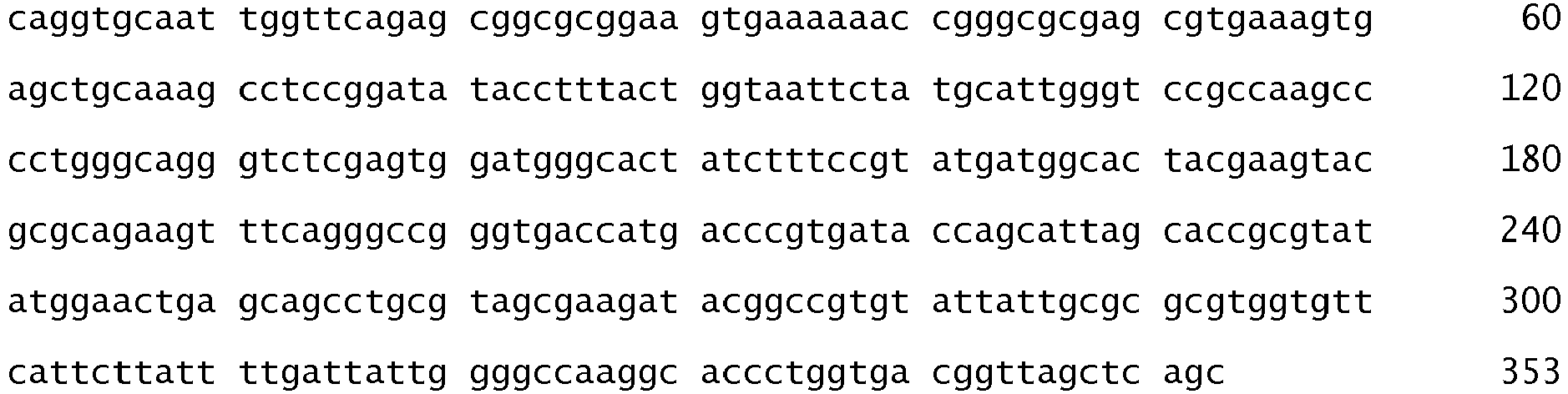
- <210> 36
<211> 117
<212> PRT
<213> Homo sapiens - <400> 36


- <210> 37
<211> 327
<212> DNA
<213> Homo sapiens - <400> 37

- <210> 38
<211> 109
<212> PRT
<213> Homo sapiens - <400> 38


- <210> 39
<211> 365
<212> DNA
<213> Homo sapiens - <400> 39

- <210> 40
<211> 121
<212> PRT
<213> Homo sapiens - <400> 40

- <210> 41
<211> 330
<212> DNA
<213> Homo sapiens - <400> 41

- <210> 42
<211> 110
<212> PRT
<213> Homo sapiens - <400> 42

- <210> 43
<211> 353
<212> DNA
<213> Homo sapiens - <400> 43

- <210> 44
<211> 117
<212> PRT
<213> Homo sapiens - <400> 44

- <210> 45
<211> 327
<212> DNA
<213> Homo sapiens - <400> 45

- <210> 46
<211> 109
<212> PRT
<213> Homo sapiens - <400> 46


- <210> 47
<211> 365
<212> DNA
<213> Homo sapiens - <400> 47

- <210> 48
<211> 121
<212> PRT
<213> Homo sapiens - <400> 48


- <210> 49
<211> 342
<212> DNA
<213> Homo sapiens - <400> 49

- <210> 50
<211> 114
<212> PRT
<213> Homo sapiens - <400> 50


- <210> 51
<211> 371
<212> DNA
<213> Homo sapiens - <400> 51

- <210> 52
<211> 123
<212> PRT
<213> Homo sapiens - <400> 52

- <210> 53
<211> 339
<212> DNA
<213> Homo sapiens - <400> 53

- <210> 54
<211> 113
<212> PRT
<213> Homo sapiens - <400> 54

- <210> 55
<211> 306
<212> DNA
<213> Homo sapiens - <400> 55


- <210> 56
<211> 121
<212> PRT
<213> Homo sapiens - <400> 56

- <210> 57
<211> 327
<212> DNA
<213> Homo sapiens - <400> 57

- <210> 58
<211> 109
<212> PRT
<213> Homo sapiens - <400> 58

- <210> 59
<211> 374
<212> DNA
<213> Homo sapiens - <400> 59

- <210> 60
<211> 124
<212> PRT
<213> Homo sapiens - <400> 60


- <210> 61
<211> 330
<212> DNA
<213> Homo sapiens - <400> 61

- <210> 62
<211> 110
<212> PRT
<213> Homo sapiens - <400> 62


- <210> 63
<211> 351
<212> DNA
<213> Homo sapiens - <400> 63

- <210> 64
<211> 117
<212> PRT
<213> Homo sapiens - <400> 64

- <210> 65
<211> 327
<212> DNA
<213> Homo sapiens - <400> 65

- <210> 66
<211> 109
<212> PRT
<213> Homo sapiens - <400> 66

- <210> 67
<211> 359
<212> DNA
<213> Homo sapiens - <400> 67


- <210> 68
<211> 119
<212> PRT
<213> Homo sapiens - <400> 68

- <210> 69
<211> 330
<212> DNA
<213> Homo sapiens - <400> 69

- <210> 70
<211> 110
<212> PRT
<213> Homo sapiens - <400> 70

- <210> 71
<211> 356
<212> DNA
<213> Homo sapiens - <400> 71

- <210> 72
<211> 118
<212> PRT
<213> Homo sapiens - <400> 72


- <210> 73
<211> 330
<212> DNA
<213> Homo sapiens - <400> 73

- <210> 74
<211> 110
<212> PRT
<213> Homo sapiens - <400> 74


- <210> 75
<211> 365
<212> DNA
<213> Homo sapiens - <400> 75

- <210> 76
<211> 121
<212> PRT
<213> Homo sapiens - <400> 76

- <210> 77
<211> 327
<212> DNA
<213> Homo sapiens - <400> 77

- <210> 78
<211> 109
<212> PRT
<213> Homo sapiens - <400> 78

- <210> 79
<211> 362
<212> DNA
<213> Homo sapiens - <400> 79


- <210> 80
<211> 120
<212> PRT
<213> Homo sapiens - <400> 80

- <210> 81
<211> 330
<212> DNA
<213> Homo sapiens - <400> 81

- <210> 82
<211> 110
<212> PRT
<213> Homo sapiens - <400> 82
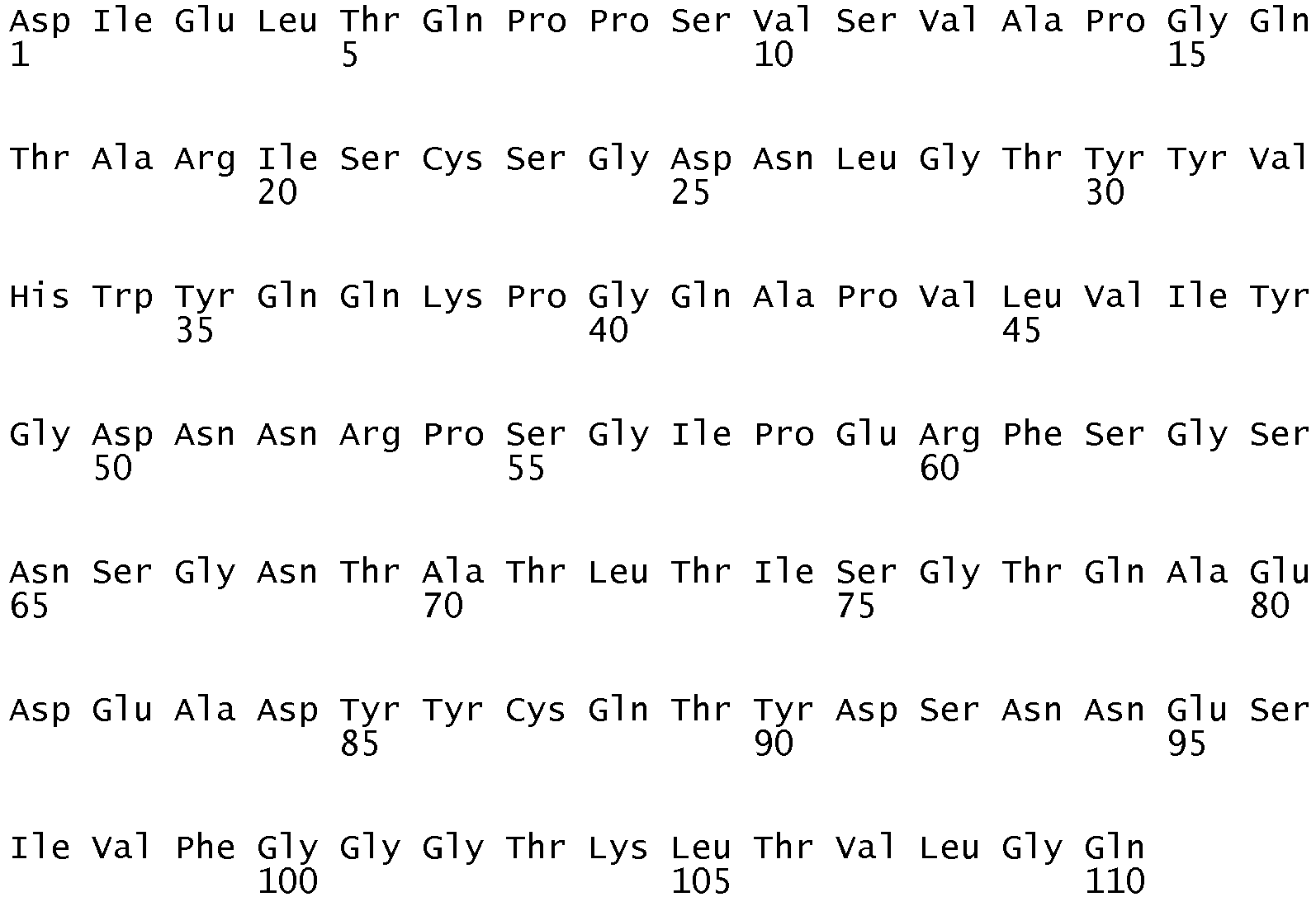
- <210> 83
<211> 368
<212> DNA
<213> Homo sapiens - <400> 83

- <210> 84
<211> 122
<212> PRT
<213> Homo sapiens - <400> 84


- <210> 85
<211> 333
<212> DNA
<213> Homo sapiens - <400> 85

- <210> 86
<211> 111
<212> PRT
<213> Homo sapiens - <400> 86


- <210> 87
<211> 353
<212> DNA
<213> Homo sapiens - <400> 87
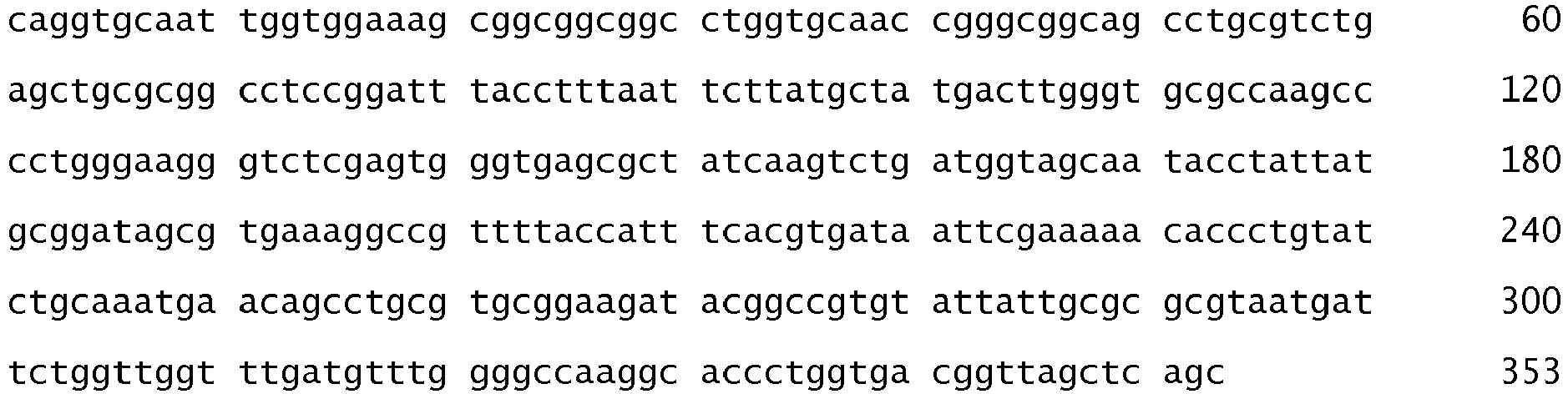
- <210> 88
<211> 117
<212> PRT
<213> Homo sapiens - <400> 88

- <210> 89
<211> 330
<212> DNA
<213> Homo sapiens - <400> 89

- <210> 90
<211> 110
<212> PRT
<213> Homo sapiens - <400> 90

- <210> 91
<211> 365
<212> DNA
<213> Homo sapiens - <400> 91


- <210> 92
<211> 121
<212> PRT
<213> Homo sapiens - <400> 92

- <210> 93
<211> 327
<212> DNA
<213> Homo sapiens - <400> 93

- <210> 94
<211> 109
<212> PRT
<213> Homo sapiens - <400> 94

- <210> 95
<211> 359
<212> DNA
<213> Homo sapiens - <400> 95

- <210> 96
<211> 119
<212> PRT
<213> Homo sapiens - <400> 96


- <210> 97
<211> 327
<212> DNA
<213> Homo sapiens - <400> 97

- <210> 98
<211> 109
<212> PRT
<213> Homo sapiens - <400> 98


- <210> 99
<211> 371
<212> DNA
<213> Homo sapiens - <400> 99

- <210> 100
<211> 123
<212> PRT
<213> Homo sapiens - <400> 100

- <210> 101
<211> 333
<212> DNA
<213> Homo sapiens - <400> 101

- <210> 102
<211> 111
<212> PRT
<213> Homo sapiens - <400> 102

- <210> 103
<211> 347
<212> DNA
<213> Homo sapiens - <400> 103


- <210> 104
<211> 115
<212> PRT
<213> Homo sapiens - <400> 104

- <210> 105
<211> 327
<212> DNA
<213> Homo sapiens - <400> 105

- <210> 106
<211> 109
<212> PRT
<213> Homo sapiens - <400> 106

- <210> 107
<211> 356
<212> DNA
<213> Homo sapiens - <400> 107

- <210> 108
<211> 118
<212> PRT
<213> Homo sapiens - <400> 108


- <210> 109
<211> 327
<212> DNA
<213> Homo sapiens - <400> 109
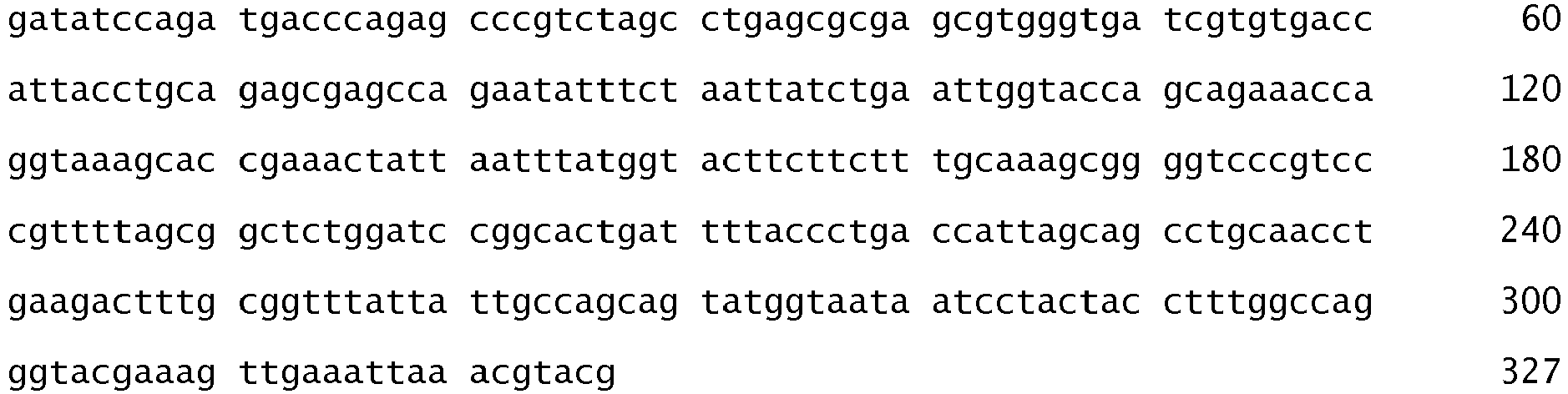
- <210> 110
<211> 109
<212> PRT
<213> Homo sapiens - <400> 110


- <210> 111
<211> 377
<212> DNA
<213> Homo sapiens - <400> 111

- <210> 112
<211> 125
<212> PRT
<213> Homo sapiens - <400> 112

- <210> 113
<211> 327
<212> DNA
<213> Homo sapiens - <400> 113

- <210> 114
<211> 109
<212> PRT
<213> Homo sapiens - <400> 114

- <210> 115
<211> 362
<212> DNA
<213> Homo sapiens - <400> 115
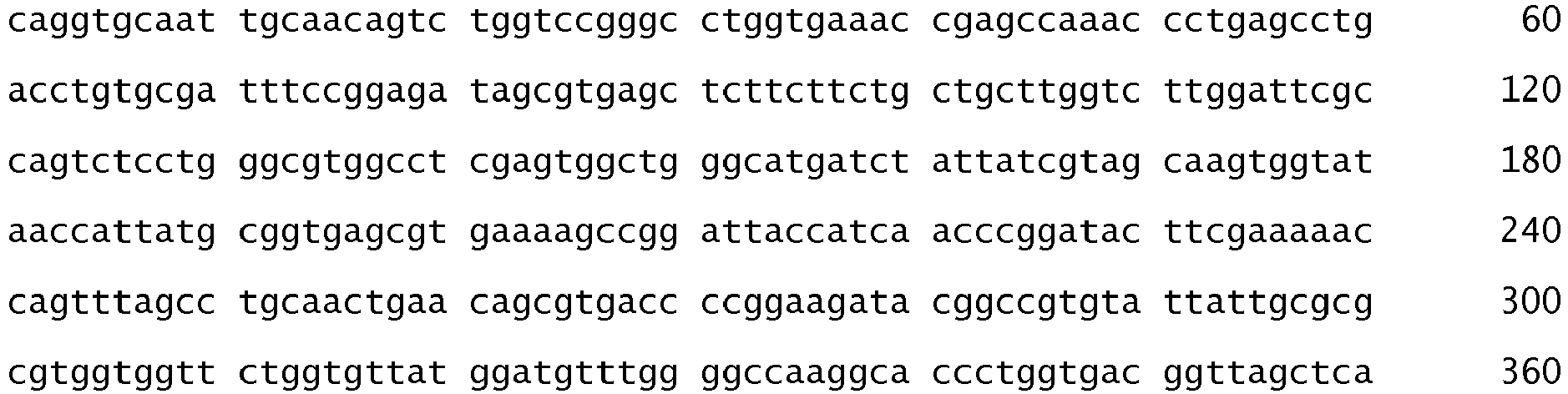

- <210> 116
<211> 120
<212> PRT
<213> Homo sapiens - <400> 116

- <210> 117
<211> 327
<212> DNA
<213> Homo sapiens - <400> 117

- <210> 118
<211> 109
<212> PRT
<213> Homo sapiens - <400> 118
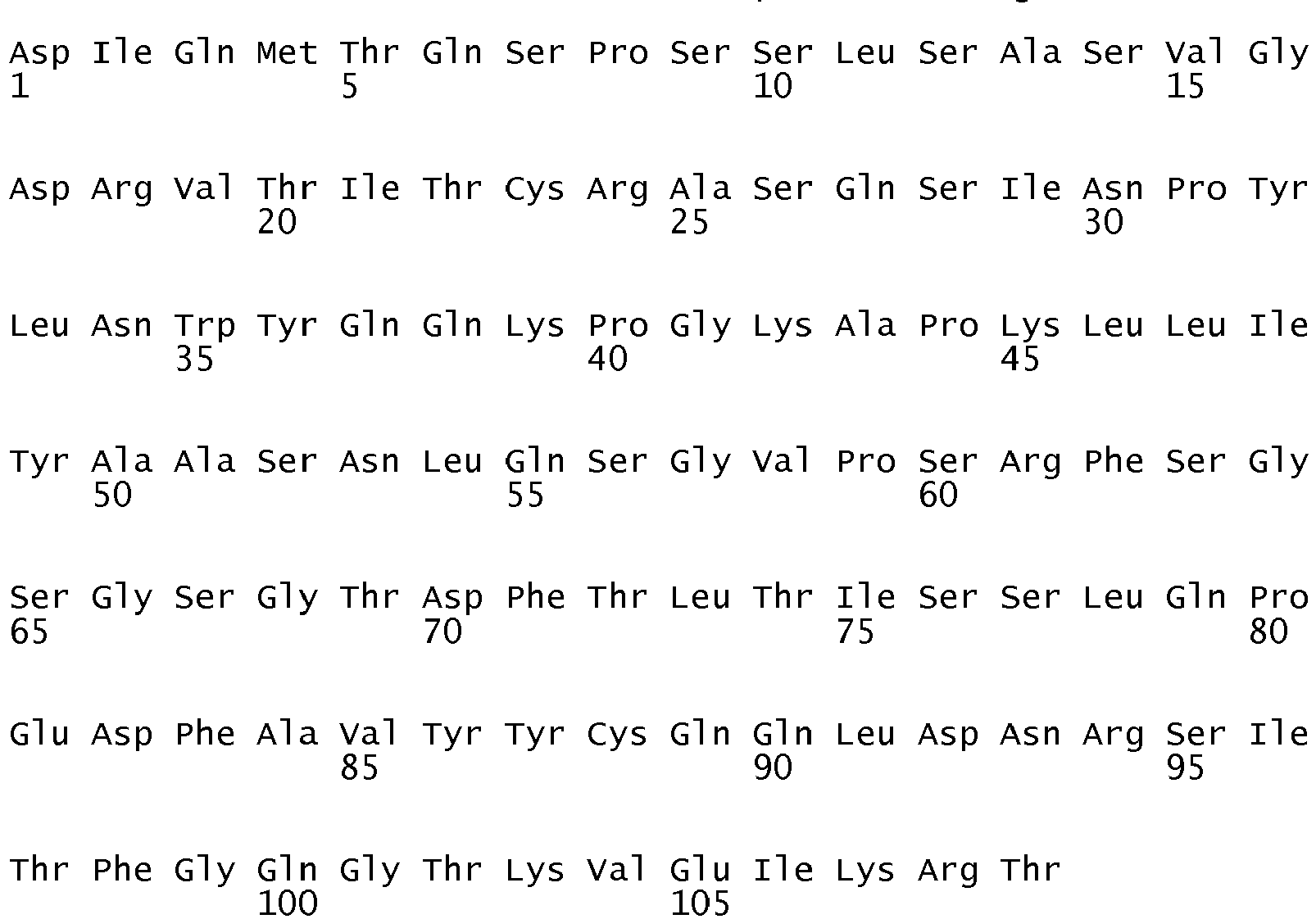
- <210> 119
<211> 371
<212> DNA
<213> Homo sapiens - <400> 119

- <210> 120
<211> 123
<212> PRT
<213> Homo sapiens - <400> 120


- <210> 121
<211> 330
<212> DNA
<213> Homo sapiens - <400> 121

- <210> 122
<211> 110
<212> PRT
<213> Homo sapiens - <400> 122


- <210> 123
<211> 350
<212> DNA
<213> Homo sapiens - <400> 123
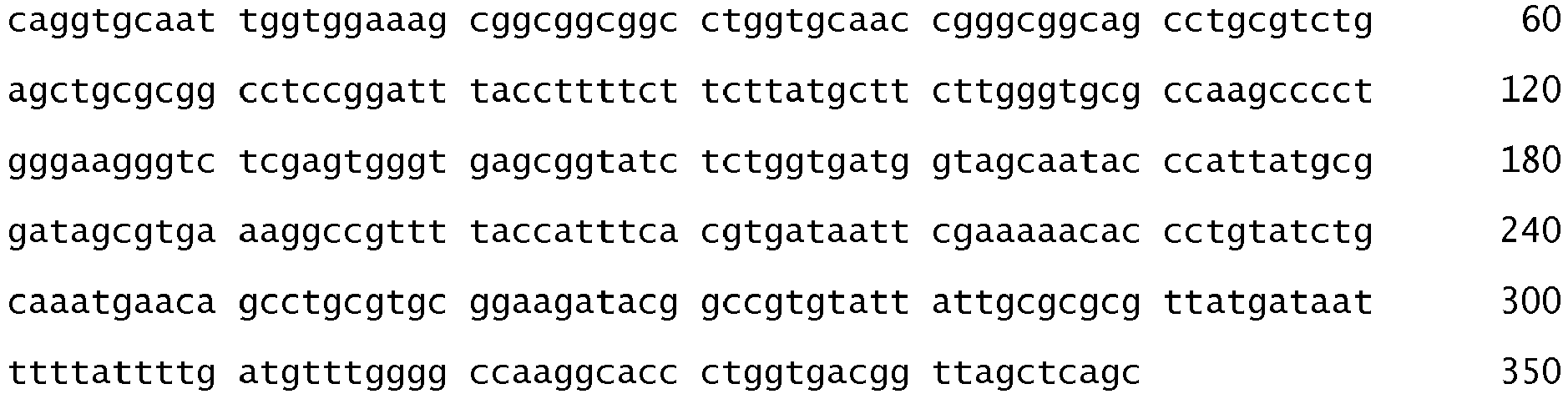
- <210> 124
<211> 116
<212> PRT
<213> Homo sapiens - <400> 124

- <210> 125
<211> 327
<212> DNA
<213> Homo sapiens - <400> 125

- <210> 126
<211> 109
<212> PRT
<213> Homo sapiens - <400> 126

- <210> 127
<211> 377
<212> DNA
<213> Homo sapiens - <400> 127


- <210> 128
<211> 125
<212> PRT
<213> Homo sapiens - <400> 128

- <210> 129
<211> 312
<212> DNA
<213> Homo sapiens - <400> 129

- <210> 130
<211> 104
<212> PRT
<213> Homo sapiens - <400> 130

- <210> 131
<211> 368
<212> DNA
<213> Homo sapiens - <400> 131

- <210> 132
<211> 122
<212> PRT
<213> Homo sapiens - <400> 132

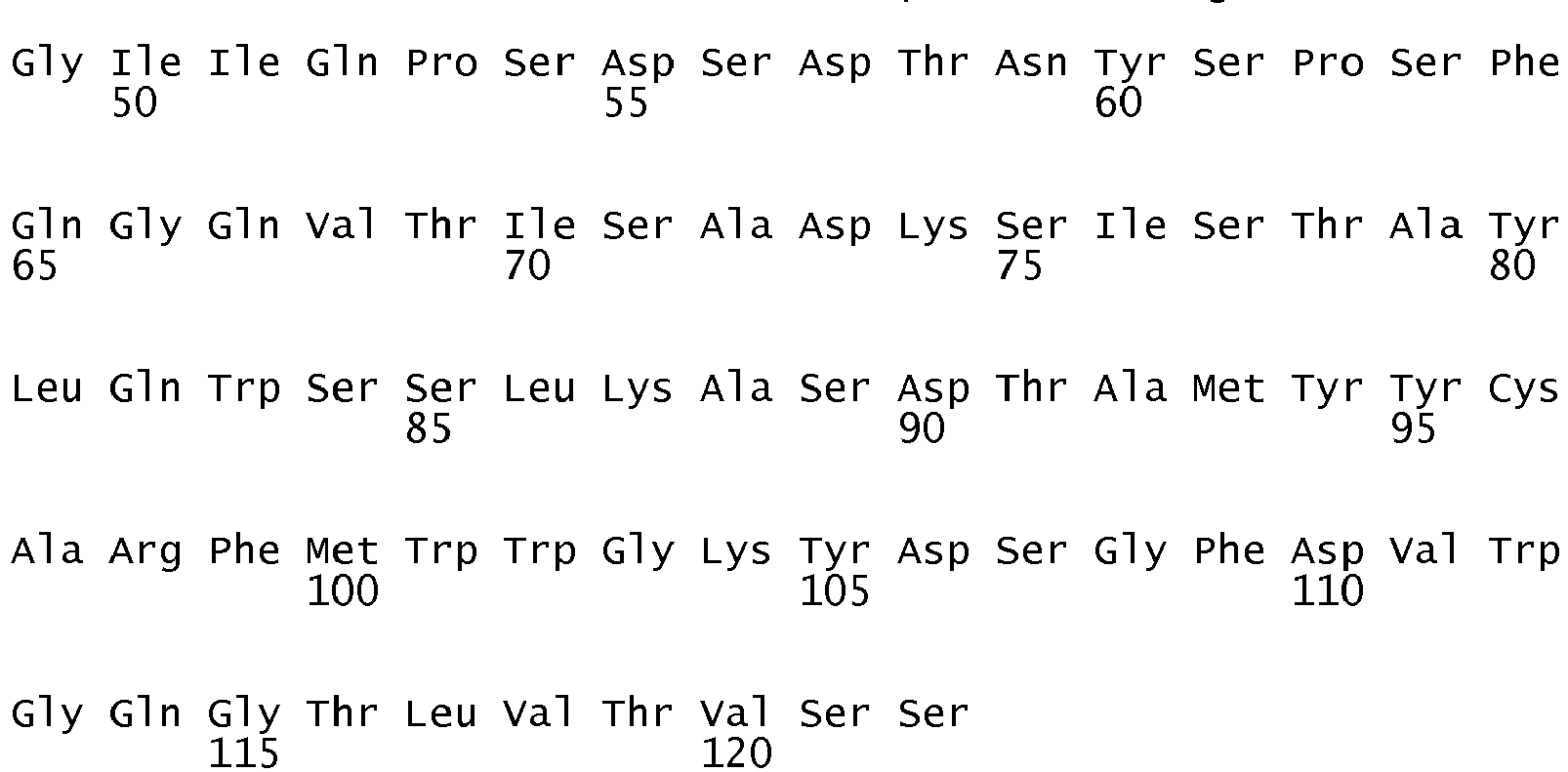
- <210> 133
<211> 327
<212> DNA
<213> Homo sapiens - <400> 133

- <210> 134
<211> 109
<212> PRT
<213> Homo sapiens - <400> 134


- <210> 135
<211> 353
<212> DNA
<213> Homo sapiens - <220>
<221> misc_feature
<222> (156)..(156)
<223> n is a, c, g, or t - <400> 135

- <210> 136
<211> 117
<212> PRT
<213> Homo sapiens - <400> 136


- <210> 137
<211> 327
<212> DNA
<213> Homo sapiens - <400> 137

- <210> 138
<211> 109
<212> PRT
<213> Homo sapiens - <400> 138

- <210> 139
<211> 374
<212> DNA
<213> Homo sapiens - <400> 139


- <210> 140
<211> 124
<212> PRT
<213> Homo sapiens - <400> 140

- <210> 141
<211> 327
<212> DNA
<213> Homo sapiens - <400> 141

- <210> 142
<211> 109
<212> PRT
<213> Homo sapiens - <400> 142

- <210> 143
<211> 353
<212> DNA
<213> Homo sapiens - <400> 143

- <210> 144
<211> 117
<212> PRT
<213> Homo sapiens - <400> 144


- <210> 145
<211> 324
<212> DNA
<213> Homo sapiens - <400> 145

- <210> 146
<211> 108
<212> PRT
<213> Homo sapiens - <400> 146


- <210> 147
<211> 350
<212> DNA
<213> Homo sapiens - <400> 147

- <210> 148
<211> 116
<212> PRT
<213> Homo sapiens - <400> 148

- <210> 149
<211> 327
<212> DNA
<213> Homo sapiens - <400> 149

- <210> 150
<211> 109
<212> PRT
<213> Homo sapiens - <400> 150

- <210> 151
<211> 359
<212> DNA
<213> Homo sapiens - <400> 151


- <210> 152
<211> 119
<212> PRT
<213> Homo sapiens - <400> 152

- <210> 153
<211> 324
<212> DNA
<213> Homo sapiens - <400> 153
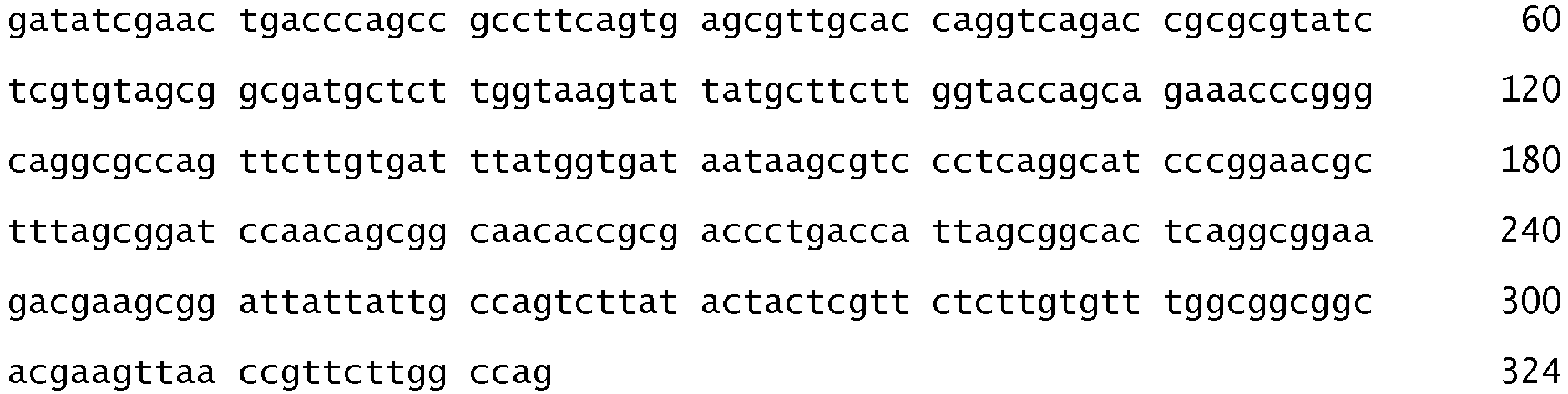
- <210> 154
<211> 108
<212> PRT
<213> Homo sapiens - <400> 154

- <210> 155
<211> 353
<212> DNA
<213> Homo sapiens - <400> 155

- <210> 156
<211> 117
<212> PRT
<213> Homo sapiens - <400> 156


- <210> 157
<211> 342
<212> DNA
<213> Homo sapiens - <400> 157

- <210> 158
<211> 114
<212> PRT
<213> Homo sapiens - <400> 158


- <210> 159
<211> 371
<212> DNA
<213> Homo sapiens - <400> 159

- <210> 160
<211> 123
<212> PRT
<213> Homo sapiens - <400> 160


- <210> 161
<211> 327
<212> DNA
<213> Homo sapiens - <400> 161

- <210> 162
<211> 109
<212> PRT
<213> Homo sapiens - <400> 162

- <210> 163
<211> 356
<212> DNA
<213> Homo sapiens - <400> 163


- <210> 164
<211> 118
<212> PRT
<213> Homo sapiens - <400> 164

- <210> 165
<211> 324
<212> DNA
<213> Homo sapiens - <400> 165
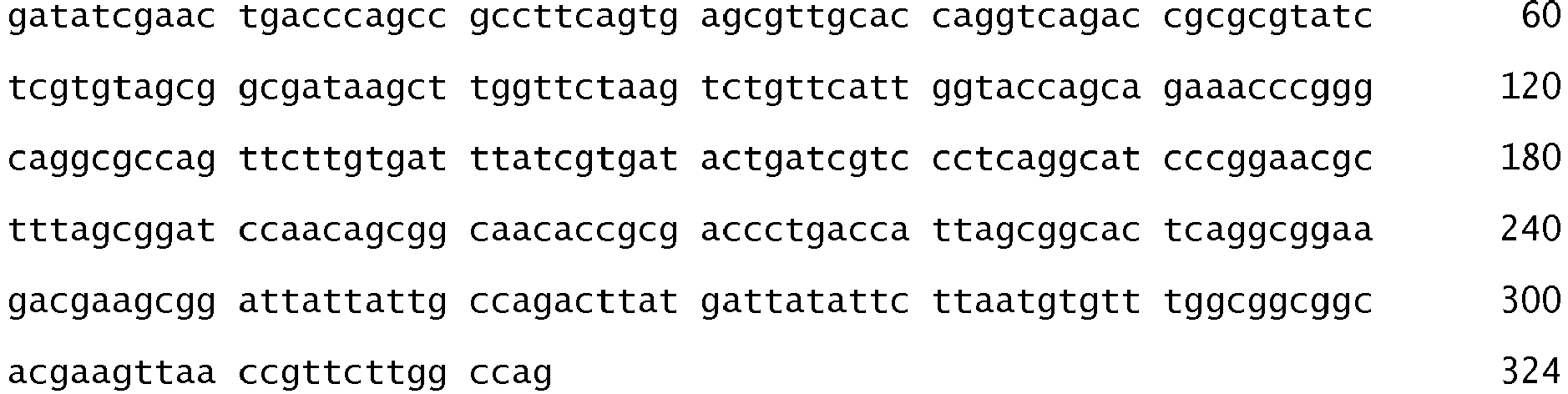
- <210> 166
<211> 108
<212> PRT
<213> Homo sapiens - <400> 166

- <210> 167
<211> 359
<212> DNA
<213> Homo sapiens - <400> 167

- <210> 168
<211> 119
<212> PRT
<213> Homo sapiens - <400> 168

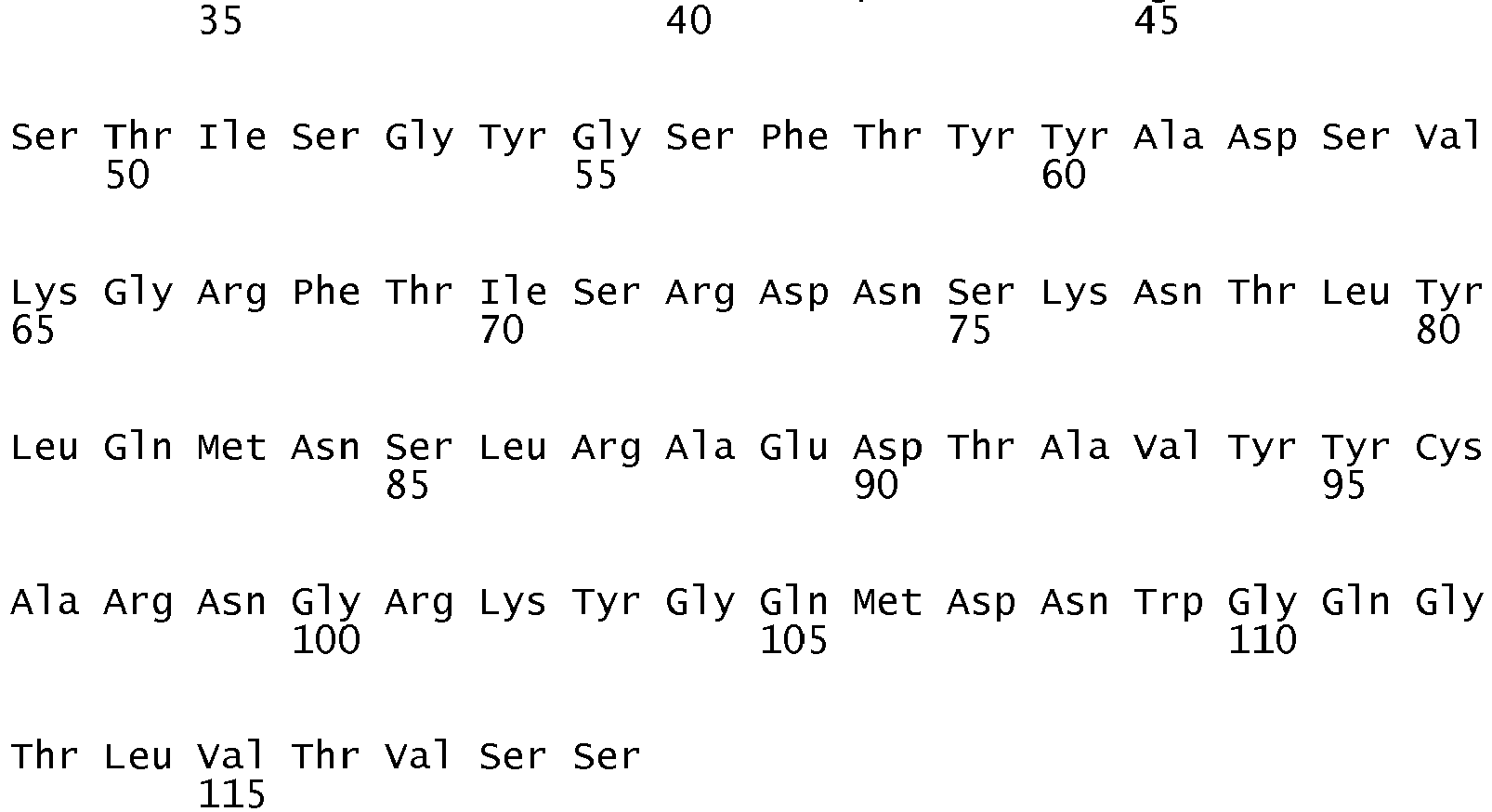
- <210> 169
<211> 333
<212> DNA
<213> Homo sapiens - <400> 169

- <210> 170
<211> 111
<212> PRT
<213> Homo sapiens - <400> 170


- <210> 171
<211> 362
<212> DNA
<213> Homo sapiens - <400> 171

- <210> 172
<211> 120
<212> PRT
<213> Homo sapiens - <400> 172
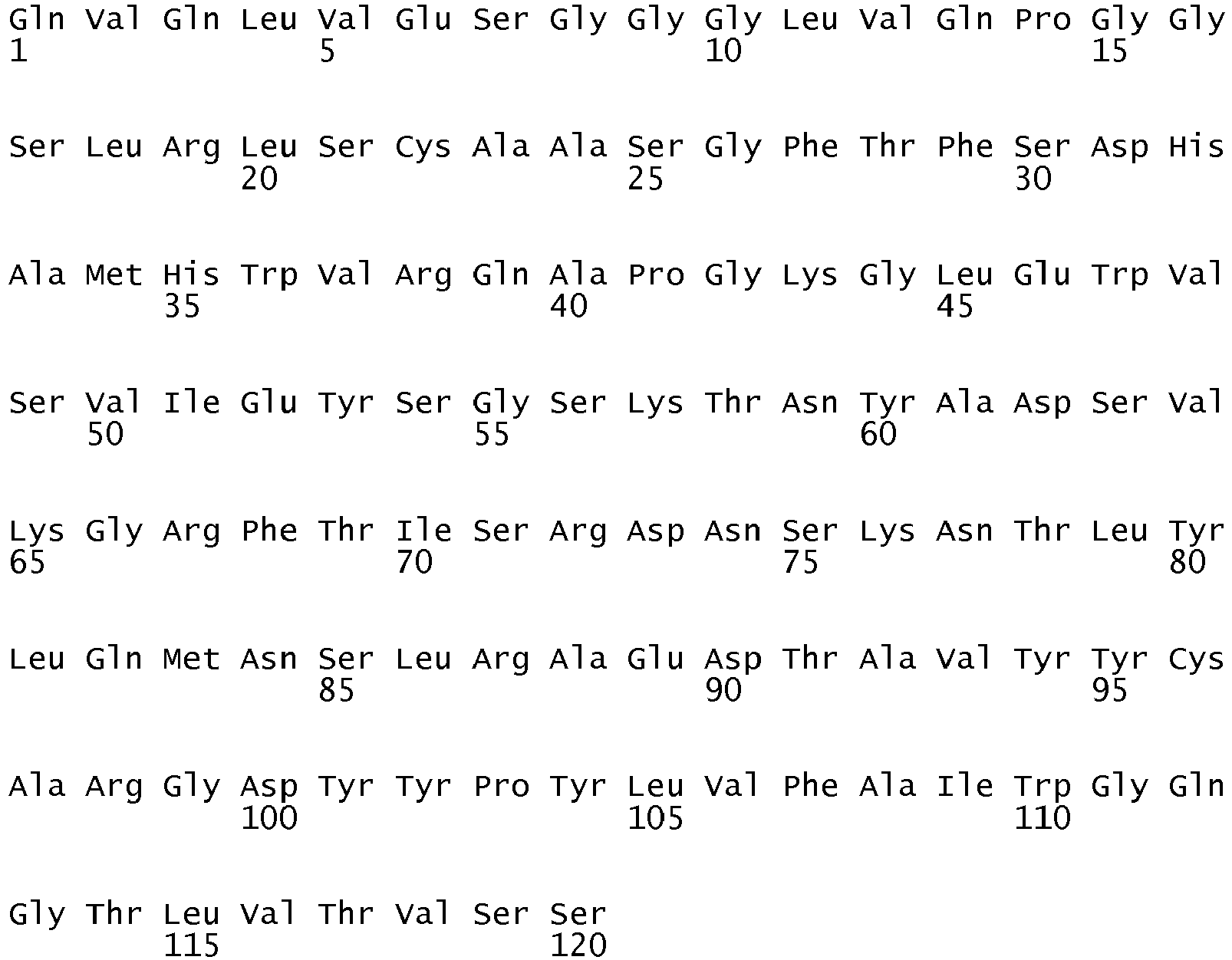
- <210> 173
<211> 11
<212> PRT
<213> Homo sapiens - <400> 173

- <210> 174
<211> 11
<212> PRT
<213> Homo sapiens - <400> 174

- <210> 175
<211> 11
<212> PRT
<213> Homo sapiens - <400> 175

- <210> 176
<211> 11
<212> PRT
<213> Homo sapiens - <400> 176

- <210> 177
<211> 11
<212> PRT
<213> Homo sapiens - <400> 177

- <210> 178
<211> 11
<212> PRT
<213> Homo sapiens - <400> 178

- <210> 179
<211> 12
<212> PRT
<213> Homo sapiens - <400> 179

- <210> 180
<211> 11
<212> PRT
<213> Homo sapiens - <400> 180

- <210> 181
<211> 11
<212> PRT
<213> Homo sapiens - <400> 181

- <210> 182
<211> 11
<212> PRT
<213> Homo sapiens - <400> 182

- <210> 183
<211> 11
<212> PRT
<213> Homo sapiens - <400> 183

- <210> 184
<211> 11
<212> PRT
<213> Homo sapiens - <400> 184

- <210> 185
<211> 16
<212> PRT
<213> Homo sapiens - <400> 185

- <210> 186
<211> 14
<212> PRT
<213> Homo sapiens - <400> 186

- <210> 187
<211> 11
<212> PRT
<213> Homo sapiens - <400> 187

- <210> 188
<211> 12
<212> PRT
<213> Homo sapiens - <400> 188

- <210> 189
<211> 11
<212> PRT
<213> Homo sapiens - <400> 189

- <210> 190
<211> 11
<212> PRT
<213> Homo sapiens - <400> 190

- <210> 191
<211> 12
<212> PRT
<213> Homo sapiens - <400> 191

- <210> 192
<211> 12
<212> PRT
<213> Homo sapiens - <400> 192

- <210> 193
<211> 11
<212> PRT
<213> Homo sapiens - <400> 193

- <210> 194
<211> 14
<212> PRT
<213> Homo sapiens - <400> 194

- <210> 195
<211> 12
<212> PRT
<213> Homo sapiens - <400> 195

- <210> 196
<211> 11
<212> PRT
<213> Homo sapiens - <400> 196

- <210> 197
<211> 11
<212> PRT
<213> Homo sapiens - <400> 197

- <210> 198
<211> 11
<212> PRT
<213> Homo sapiens - <400> 198

- <210> 199
<211> 11
<212> PRT
<213> Homo sapiens - <400> 199

- <210> 200
<211> 11
<212> PRT
<213> Homo sapiens - <400> 200

- <210> 201
<211> 11
<212> PRT
<213> Homo sapiens - <400> 201

- <210> 202
<211> 11
<212> PRT
<213> Homo sapiens - <400> 202

- <210> 203
<211> 11
<212> PRT
<213> Homo sapiens - <400> 203

- <210> 204
<211> 11
<212> PRT
<213> Homo sapiens - <400> 204

- <210> 205
<211> 11
<212> PRT
<213> Homo sapiens - <400> 205

- <210> 206
<211> 11
<212> PRT
<213> Homo sapiens - <400> 206

- <210> 207
<211> 11
<212> PRT
<213> Homo sapiens - <400> 207

- <210> 208
<211> 11
<212> PRT
<213> Homo sapiens - <400> 208

- <210> 209
<211> 11
<212> PRT
<213> Homo sapiens - <400> 209

- <210> 210
<211> 11
<212> PRT
<213> Homo sapiens - <400> 210

- <210> 211
<211> 11
<212> PRT
<213> Homo sapiens - <400> 211

- <210> 212
<211> 16
<212> PRT
<213> Homo sapiens - <400> 212

- <210> 213
<211> 11
<212> PRT
<213> Homo sapiens - <400> 213

- <210> 214
<211> 11
<212> PRT
<213> Homo sapiens - <400> 214

- <210> 215
<211> 11
<212> PRT
<213> Homo sapiens - <400> 215

- <210> 216
<211> 7
<212> PRT
<213> Homo sapiens - <400> 216

- <210> 217
<211> 7
<212> PRT
<213> Homo sapiens - <400> 217

- <210> 218
<211> 6
<212> PRT
<213> Homo sapiens - <400> 218

- <210> 219
<211> 7
<212> PRT
<213> Homo sapiens - <400> 219

- <210> 220
<211> 7
<212> PRT
<213> Homo sapiens - <400> 220

- <210> 221
<211> 7
<212> PRT
<213> Homo sapiens - <400> 221

- <210> 222
<211> 7
<212> PRT
<213> Homo sapiens - <400> 222

- <210> 223
<211> 7
<212> PRT
<213> Homo sapiens - <400> 223

- <210> 224
<211> 7
<212> PRT
<213> Homo sapiens - <400> 224

- <210> 225
<211> 7
<212> PRT
<213> Homo sapiens - <400> 225

- <210> 226
<211> 7
<212> PRT
<213> Homo sapiens - <400> 226

- <210> 227
<211> 7
<212> PRT
<213> Homo sapiens - <400> 227

- <210> 228
<211> 7
<212> PRT
<213> Homo sapiens - <400> 228

- <210> 229
<211> 7
<212> PRT
<213> Homo sapiens - <400> 229

- <210> 230
<211> 7
<212> PRT
<213> Homo sapiens - <400> 230

- <210> 231
<211> 7
<212> PRT
<213> Homo sapiens - <400> 231

- <210> 232
<211> 7
<212> PRT
<213> Homo sapiens - <400> 232

- <210> 233
<211> 7
<212> PRT
<213> Homo sapiens - <400> 233

- <210> 234
<211> 7
<212> PRT
<213> Homo sapiens - <400> 234


- <210> 235
<211> 6
<212> PRT
<213> Homo sapiens - <400> 235

- <210> 236
<211> 7
<212> PRT
<213> Homo sapiens - <400> 236

- <210> 237
<211> 7
<212> PRT
<213> Homo sapiens - <400> 237

- <210> 238
<211> 7
<212> PRT
<213> Homo sapiens - <400> 238

- <210> 239
<211> 7
<212> PRT
<213> Homo sapiens - <400> 239

- <210> 240
<211> 7
<212> PRT
<213> Homo sapiens - <400> 240

- <210> 241
<211> 7
<212> PRT
<213> Homo sapiens - <400> 241

- <210> 242
<211> 7
<212> PRT
<213> Homo sapiens - <400> 242

- <210> 243
<211> 7
<212> PRT
<213> Homo sapiens - <400> 243

- <210> 244
<211> 7
<212> PRT
<213> Homo sapiens - <400> 244

- <210> 245
<211> 7
<212> PRT
<213> Homo sapiens - <400> 245

- <210> 246
<211> 7
<212> PRT
<213> Homo sapiens - <400> 246

- <210> 247
<211> 7
<212> PRT
<213> Homo sapiens - <400> 247

- <210> 248
<211> 7
<212> PRT
<213> Homo sapiens - <400> 248

- <210> 249
<211> 7
<212> PRT
<213> Homo sapiens - <400> 249

- <210> 250
<211> 7
<212> PRT
<213> Homo sapiens - <400> 250

- <210> 251
<211> 7
<212> PRT
<213> Homo sapiens - <400> 251

- <210> 252
<211> 7
<212> PRT
<213> Homo sapiens - <400> 252

- <210> 253
<211> 7
<212> PRT
<213> Homo sapiens - <400> 253

- <210> 254
<211> 7
<212> PRT
<213> Homo sapiens - <400> 254

- <210> 255
<211> 7
<212> PRT
<213> Homo sapiens - <400> 255

- <210> 256
<211> 7
<212> PRT
<213> Homo sapiens - <400> 256

- <210> 257
<211> 7
<212> PRT
<213> Homo sapiens - <400> 257

- <210> 258
<211> 7
<212> PRT
<213> Homo sapiens - <400> 258

- <210> 259
<211> 11
<212> PRT
<213> Homo sapiens - <400> 259

- <210> 260
<211> 10
<212> PRT
<213> Homo sapiens - <400> 260

- <210> 261
<211> 11
<212> PRT
<213> Homo sapiens - <400> 261

- <210> 262
<211> 9
<212> PRT
<213> Homo sapiens - <400> 262

- <210> 263
<211> 10
<212> PRT
<213> Homo sapiens - <400> 263

- <210> 264
<211> 11
<212> PRT
<213> Homo sapiens - <400> 264

- <210> 265
<211> 9
<212> PRT
<213> Homo sapiens - <400> 265

- <210> 266
<211> 11
<212> PRT
<213> Homo sapiens - <400> 266

- <210> 267
<211> 10
<212> PRT
<213> Homo sapiens - <400> 267

- <210> 268
<211> 9
<212> PRT
<213> Homo sapiens - <400> 268

- <210> 269
<211> 10
<212> PRT
<213> Homo sapiens - <400> 269

- <210> 270
<211> 9
<212> PRT
<213> Homo sapiens - <400> 270

- <210> 271
<211> 9
<212> PRT
<213> Homo sapiens - <400> 271

- <210> 272
<211> 11
<212> PRT
<213> Homo sapiens - <400> 272

- <210> 273
<211> 9
<212> PRT
<213> Homo sapiens - <400> 273

- <210> 274
<211> 9
<212> PRT
<213> Homo sapiens - <400> 274

- <210> 275
<211> 10
<212> PRT
<213> Homo sapiens - <400> 275

- <210> 276
<211> 11
<212> PRT
<213> Homo sapiens - <400> 276

- <210> 277
<211> 9
<212> PRT
<213> Homo sapiens - <400> 277

- <210> 278
<211> 9
<212> PRT
<213> Homo sapiens - <400> 278

- <210> 279
<211> 11
<212> PRT
<213> Homo sapiens - <400> 279

- <210> 280
<211> 9
<212> PRT
<213> Homo sapiens - <400> 280

- <210> 281
<211> 9
<212> PRT
<213> Homo sapiens - <400> 281

- <210> 282
<211> 10
<212> PRT
<213> Homo sapiens - <400> 282

- <210> 283
<211> 10
<212> PRT
<213> Homo sapiens - <400> 283

- <210> 284
<211> 12
<212> PRT
<213> Homo sapiens - <400> 284

- <210> 285
<211> 10
<212> PRT
<213> Homo sapiens - <400> 285

- <210> 286
<211> 9
<212> PRT
<213> Homo sapiens - <400> 286

- <210> 287
<211> 9
<212> PRT
<213> Homo sapiens - <400> 287

- <210> 288
<211> 9
<212> PRT
<213> Homo sapiens - <400> 288

- <210> 289
<211> 11
<212> PRT
<213> Homo sapiens - <400> 289

- <210> 290
<211> 10
<212> PRT
<213> Homo sapiens - <400> 290

- <210> 291
<211> 5
<212> PRT
<213> Homo sapiens - <400> 291

- <210> 292
<211> 10
<212> PRT
<213> Homo sapiens - <400> 292

- <210> 293
<211> 9
<212> PRT
<213> Homo sapiens - <400> 293

- <210> 294
<211> 9
<212> PRT
<213> Homo sapiens - <400> 294

- <210> 295
<211> 9
<212> PRT
<213> Homo sapiens - <400> 295

- <210> 296
<211> 10
<212> PRT
<213> Homo sapiens - <400> 296

- <210> 297
<211> 9
<212> PRT
<213> Homo sapiens - <400> 297

- <210> 298
<211> 9
<212> PRT
<213> Homo sapiens - <400> 298

- <210> 299
<211> 10
<212> PRT
<213> Homo sapiens - <400> 299

- <210> 300
<211> 9
<212> PRT
<213> Homo sapiens - <400> 300

- <210> 301
<211> 12
<212> PRT
<213> Homo sapiens - <400> 301

- <210> 302
<211> 5
<212> PRT
<213> Homo sapiens - <400> 302


- <210> 303
<211> 4
<212> PRT
<213> Homo sapiens - <400> 303

- <210> 304
<211> 5
<212> PRT
<213> Homo sapiens - <400> 304

- <210> 305
<211> 5
<212> PRT
<213> Homo sapiens - <400> 305

- <210> 306
<211> 5
<212> PRT
<213> Homo sapiens - <400> 306

- <210> 307
<211> 5
<212> PRT
<213> Homo sapiens - <400> 307

- <210> 308
<211> 7
<212> PRT
<213> Homo sapiens - <400> 308

- <210> 309
<211> 5
<212> PRT
<213> Homo sapiens - <400> 309

- <210> 310
<211> 5
<212> PRT
<213> Homo sapiens - <400> 310

- <210> 311
<211> 7
<212> PRT
<213> Homo sapiens - <400> 311

- <210> 312
<211> 5
<212> PRT
<213> Homo sapiens - <400> 312

- <210> 313
<211> 7
<212> PRT
<213> Homo sapiens - <400> 313

- <210> 314
<211> 7
<212> PRT
<213> Homo sapiens - <400> 314

- <210> 315
<211> 7
<212> PRT
<213> Homo sapiens - <400> 315

- <210> 316
<211> 7
<212> PRT
<213> Homo sapiens - <400> 316

- <210> 317
<211> 5
<212> PRT
<213> Homo sapiens - <400> 317

- <210> 318
<211> 5
<212> PRT
<213> Homo sapiens - <400> 318

- <210> 319
<211> 5
<212> PRT
<213> Homo sapiens - <400> 319

- <210> 320
<211> 7
<212> PRT
<213> Homo sapiens - <400> 320

- <210> 321
<211> 7
<212> PRT
<213> Homo sapiens - <400> 321

- <210> 322
<211> 5
<212> PRT
<213> Homo sapiens - <400> 322

- <210> 323
<211> 5
<212> PRT
<213> Homo sapiens - <400> 323

- <210> 324
<211> 7
<212> PRT
<213> Homo sapiens - <400> 324

- <210> 325
<211> 5
<212> PRT
<213> Homo sapiens - <400> 325

- <210> 326
<211> 5
<212> PRT
<213> Homo sapiens - <400> 326

- <210> 327
<211> 5
<212> PRT
<213> Homo sapiens - <400> 327

- <210> 328
<211> 5
<212> PRT
<213> Homo sapiens - <400> 328

- <210> 329
<211> 7
<212> PRT
<213> Homo sapiens - <400> 329

- <210> 330
<211> 7
<212> PRT
<213> Homo sapiens - <400> 330

- <210> 331
<211> 7
<212> PRT
<213> Homo sapiens - <400> 331

- <210> 332
<211> 4
<212> PRT
<213> Homo sapiens - <400> 332

- <210> 333
<211> 5
<212> PRT
<213> Homo sapiens - <400> 333

- <210> 334
<211> 5
<212> PRT
<213> Homo sapiens - <400> 334

- <210> 335
<211> 5
<212> PRT
<213> Homo sapiens - <400> 335

- <210> 336
<211> 7
<212> PRT
<213> Homo sapiens - <400> 336

- <210> 337
<211> 5
<212> PRT
<213> Homo sapiens - <400> 337

- <210> 338
<211> 5
<212> PRT
<213> Homo sapiens - <400> 338

- <210> 339
<211> 5
<212> PRT
<213> Homo sapiens - <400> 339

- <210> 340
<211> 5
<212> PRT
<213> Homo sapiens - <400> 340

- <210> 341
<211> 7
<212> PRT
<213> Homo sapiens - <400> 341

- <210> 342
<211> 5
<212> PRT
<213> Homo sapiens - <400> 342

- <210> 343
<211> 5
<212> PRT
<213> Homo sapiens - <400> 343

- <210> 344
<211> 5
<212> PRT
<213> Homo sapiens - <400> 344

- <210> 345
<211> 17
<212> PRT
<213> Homo sapiens - <400> 345


- <210> 346
<211> 17
<212> PRT
<213> Homo sapiens - <400> 346

- <210> 347
<211> 17
<212> PRT
<213> Homo sapiens - <400> 347

- <210> 348
<211> 17
<212> PRT
<213> Homo sapiens - <400> 348

- <210> 349
<211> 17
<212> PRT
<213> Homo sapiens - <400> 349

- <210> 350
<211> 17
<212> PRT
<213> Homo sapiens - <400> 350

- <210> 351
<211> 18
<212> PRT
<213> Homo sapiens - <400> 351

- <210> 352
<211> 17
<212> PRT
<213> Homo sapiens - <400> 352

- <210> 353
<211> 17
<212> PRT
<213> Homo sapiens - <400> 353

- <210> 354
<211> 18
<212> PRT
<213> Homo sapiens - <400> 354

- <210> 355
<211> 17
<212> PRT
<213> Homo sapiens - <400> 355

- <210> 356
<211> 18
<212> PRT
<213> Homo sapiens - <400> 356

- <210> 357
<211> 18
<212> PRT
<213> Homo sapiens - <400> 357

- <210> 358
<211> 18
<212> PRT
<213> Homo sapiens - <400> 358

- <210> 359
<211> 18
<212> PRT
<213> Homo sapiens - <400> 359

- <210> 360
<211> 17
<212> PRT
<213> Homo sapiens - <400> 360

- <210> 361
<211> 17
<212> PRT
<213> Homo sapiens - <400> 361

- <210> 362
<211> 17
<212> PRT
<213> Homo sapiens - <400> 362

- <210> 363
<211> 18
<212> PRT
<213> Homo sapiens - <400> 363

- <210> 364
<211> 18
<212> PRT
<213> Homo sapiens - <400> 364

- <210> 365
<211> 17
<212> PRT
<213> Homo sapiens - <400> 365

- <210> 366
<211> 17
<212> PRT
<213> Homo sapiens - <400> 366

- <210> 367
<211> 18
<212> PRT
<213> Homo sapiens - <400> 367

- <210> 368
<211> 17
<212> PRT
<213> Homo sapiens - <400> 368

- <210> 369
<211> 17
<212> PRT
<213> Homo sapiens - <400> 369

- <210> 370
<211> 17
<212> PRT
<213> Homo sapiens - <400> 370

- <210> 371
<211> 17
<212> PRT
<213> Homo sapiens - <400> 371

- <210> 372
<211> 18
<212> PRT
<213> Homo sapiens - <400> 372

- <210> 373
<211> 18
<212> PRT
<213> Homo sapiens - <400> 373

- <210> 374
<211> 18
<212> PRT
<213> Homo sapiens - <400> 374

- <210> 375
<211> 17
<212> PRT
<213> Homo sapiens - <400> 375

- <210> 376
<211> 17
<212> PRT
<213> Homo sapiens - <400> 376

- <210> 377
<211> 17
<212> PRT
<213> Homo sapiens - <400> 377

- <210> 378
<211> 17
<212> PRT
<213> Homo sapiens - <400> 378

- <210> 379
<211> 18
<212> PRT
<213> Homo sapiens - <400> 379

- <210> 380
<211> 17
<212> PRT
<213> Homo sapiens - <400> 380

- <210> 381
<211> 17
<212> PRT
<213> Homo sapiens - <400> 381

- <210> 382
<211> 17
<212> PRT
<213> Homo sapiens - <400> 382

- <210> 383
<211> 17
<212> PRT
<213> Homo sapiens - <400> 383

- <210> 384
<211> 18
<212> PRT
<213> Homo sapiens - <400> 384

- <210> 385
<211> 17
<212> PRT
<213> Homo sapiens - <400> 385

- <210> 386
<211> 17
<212> PRT
<213> Homo sapiens - <400> 386


- <210> 387
<211> 17
<212> PRT
<213> Homo sapiens - <400> 387

- <210> 388
<211> 12
<212> PRT
<213> Homo sapiens - <400> 388

- <210> 389
<211> 9
<212> PRT
<213> Homo sapiens - <400> 389

- <210> 390
<211> 12
<212> PRT
<213> Homo sapiens - <400> 390

- <210> 391
<211> 8
<212> PRT
<213> Homo sapiens - <400> 391

- <210> 392
<211> 12
<212> PRT
<213> Homo sapiens - <400> 392

- <210> 393
<211> 7
<212> PRT
<213> Homo sapiens - <400> 393

- <210> 394
<211> 12
<212> PRT
<213> Homo sapiens - <400> 394

- <210> 395
<211> 9
<212> PRT
<213> Homo sapiens - <400> 395

- <210> 396
<211> 8
<212> PRT
<213> Homo sapiens - <400> 396

- <210> 397
<211> 9
<212> PRT
<213> Homo sapiens - <400> 397

- <210> 398
<211> 8
<212> PRT
<213> Homo sapiens - <400> 398

- <210> 399
<211> 9
<212> PRT
<213> Homo sapiens - <400> 399

- <210> 400
<211> 11
<212> PRT
<213> Homo sapiens - <400> 400

- <210> 401
<211> 9
<212> PRT
<213> Homo sapiens - <400> 401

- <210> 402
<211> 12
<212> PRT
<213> Homo sapiens - <400> 402

- <210> 403
<211> 8
<212> PRT
<213> Homo sapiens - <400> 403

- <210> 404
<211> 10
<212> PRT
<213> Homo sapiens - <400> 404

- <210> 405
<211> 9
<212> PRT
<213> Homo sapiens - <400> 405

- <210> 406
<211> 9
<212> PRT
<213> Homo sapiens - <400> 406

- <210> 407
<211> 8
<212> PRT
<213> Homo sapiens - <400> 407

- <210> 408
<211> 13
<212> PRT
<213> Homo sapiens - <400> 408

- <210> 409
<211> 8
<212> PRT
<213> Homo sapiens - <400> 409

- <210> 410
<211> 9
<212> PRT
<213> Homo sapiens - <400> 410


- <210> 411
<211> 10
<212> PRT
<213> Homo sapiens - <400> 411

- <210> 412
<211> 14
<212> PRT
<213> Homo sapiens - <400> 412

- <210> 413
<211> 6
<212> PRT
<213> Homo sapiens - <400> 413

- <210> 414
<211> 9
<212> PRT
<213> Homo sapiens - <400> 414

- <210> 415
<211> 13
<212> PRT
<213> Homo sapiens - <400> 415

- <210> 416
<211> 8
<212> PRT
<213> Homo sapiens - <400> 416

- <210> 417
<211> 11
<212> PRT
<213> Homo sapiens - <400> 417

- <210> 418
<211> 8
<212> PRT
<213> Homo sapiens - <400> 418

- <210> 419
<211> 16
<212> PRT
<213> Homo sapiens - <400> 419

- <210> 420
<211> 13
<212> PRT
<213> Homo sapiens - <400> 420

- <210> 421
<211> 8
<212> PRT
<213> Homo sapiens - <400> 421

- <210> 422
<211> 12
<212> PRT
<213> Homo sapiens - <400> 422

- <210> 423
<211> 8
<212> PRT
<213> Homo sapiens - <400> 423

- <210> 424
<211> 7
<212> PRT
<213> Homo sapiens - <400> 424

- <210> 425
<211> 10
<212> PRT
<213> Homo sapiens - <400> 425

- <210> 426
<211> 8
<212> PRT
<213> Homo sapiens - <400> 426

- <210> 427
<211> 11
<212> PRT
<213> Homo sapiens - <400> 427

- <210> 428
<211> 9
<212> PRT
<213> Homo sapiens - <400> 428

- <210> 429
<211> 10
<212> PRT
<213> Homo sapiens - <400> 429

- <210> 430
<211> 11
<212> PRT
<213> Homo sapiens - <400> 430

Claims (5)
- An isolated human monoclonal antibody that binds to human tissue factor pathway inhibitor, wherein the antibody comprises heavy and light chain variable regions comprising:(a) a light chain variable region comprising an amino acid sequence comprising SEQ ID NOs: 173, 216 and 259 and a heavy chain variable region comprising an amino acid sequence comprising SEQ ID NOs: 302, 345 and 388; or(b) a light chain variable region comprising an amino acid sequence comprising SEQ ID NOs: 174, 217 and 260 and a heavy chain variable region comprising an amino acid sequence comprising SEQ ID NOs: 303, 346 and 389; or(c) a light chain variable region comprising an amino acid sequence comprising SEQ ID NOs: 176, 219 and 262 and a heavy chain variable region comprising an amino acid sequence comprising SEQ ID NOs: 305, 348 and 391; or(d) a light chain variable region comprising an amino acid sequence comprising SEQ ID NOs: 178, 221 and 264 and a heavy chain variable region comprising an amino acid sequence comprising SEQ ID NOs: 307, 350 and 393; or(e) a light chain variable region comprising an amino acid sequence comprising SEQ ID NOs: 179, 222 and 265 and a heavy chain variable region comprising an amino acid sequence comprising SEQ ID NOs: 308, 351 and 394; or(f) a light chain variable region comprising an amino acid sequence comprising SEQ ID NOs: 184, 227 and 270 and a heavy chain variable region comprising an amino acid sequence comprising SEQ ID NOs: 313, 356 and 399; or(g) a light chain variable region comprising an amino acid sequence comprising SEQ ID NOs: 187, 230 and 273 and a heavy chain variable region comprising an amino acid sequence comprising SEQ ID NOs: 316, 359 and 402; or(h) a light chain variable region comprising an amino acid sequence comprising SEQ ID NOs: 191, 234 and 277 and a heavy chain variable region comprising an amino acid sequence comprising SEQ ID NOs: 320, 363 and 406; or(i) a light chain variable region comprising an amino acid sequence comprising SEQ ID NOs: 192, 235 and 278 and a heavy chain variable region comprising an amino acid sequence comprising SEQ ID NOs: 321, 364 and 407; or(j) a light chain variable region comprising an amino acid sequence comprising SEQ ID NOs: 194, 237 and 280 and a heavy chain variable region comprising an amino acid sequence comprising SEQ ID NOs: 323, 366 and 409; or(k) a light chain variable region comprising an amino acid sequence comprising SEQ ID NOs: 195, 238 and 281 and a heavy chain variable region comprising an amino acid sequence comprising SEQ ID NOs: 324, 367 and 410; or(I) a light chain variable region comprising an amino acid sequence comprising SEQ ID NOs: 198, 241 and 284 and a heavy chain variable region comprising an amino acid sequence comprising SEQ ID NOs: 327, 370 and 413; or(m) a light chain variable region comprising an amino acid sequence comprising SEQ ID NOs: 200, 243 and 286 and a heavy chain variable region comprising an amino acid sequence comprising SEQ ID NOs: 329, 372 and 415; or(n) a light chain variable region comprising an amino acid sequence comprising SEQ ID NOs: 201, 244 and 287 and a heavy chain variable region comprising an amino acid sequence comprising SEQ ID NOs: 330, 373 and 416; or(o) a light chain variable region comprising an amino acid sequence comprising SEQ ID NOs: 207, 250 and 293 and a heavy chain variable region comprising an amino acid sequence comprising SEQ ID NOs: 336, 379 and 422; or(p) a light chain variable region comprising an amino acid sequence comprising SEQ ID NOs: 208, 251 and 294 and a heavy chain variable region comprising an amino acid sequence comprising SEQ ID NOs: 337, 380 and 423; or(q) a light chain variable region comprising an amino acid sequence comprising SEQ ID NOs: 211, 254 and 297 and a heavy chain variable region comprising an amino acid sequence comprising SEQ ID NOs: 340, 383 and 426; or(r) a light chain variable region comprising an amino acid sequence comprising SEQ ID NOs: 212, 255 and 298 and a heavy chain variable region comprising an amino acid sequence comprising SEQ ID NOs: 341, 384 and 427; or(s) a light chain variable region comprising an amino acid sequence comprising SEQ ID NOs: 194, 237 and 280 and a heavy chain variable region comprising an amino acid sequence comprising SEQ ID NOs: 335, 378 and 421.
- The human monoclonal antibody of claim 1, comprising:(a) a light chain variable region having the polypeptide sequence of SEQ ID NO: 2 and a heavy chain variable region having the polypeptide sequence of SEQ ID NO: 4; or(b) a light chain variable region having the polypeptide sequence of SEQ ID NO: 6 and a heavy chain variable region having the polypeptide sequence of SEQ ID NO: 8; or(c) a light chain variable region having the polypeptide sequence of SEQ ID NO: 14 and a heavy chain variable region having the polypeptide sequence of SEQ ID NO: 16; or(d) a light chain variable region having the polypeptide sequence of SEQ ID NO: 22 and a heavy chain variable region having the polypeptide sequence of SEQ ID NO: 24; or(e) a light chain variable region having the polypeptide sequence of SEQ ID NO: 26 and a heavy chain variable region having the polypeptide sequence of SEQ ID NO: 28; or(f) a light chain variable region having the polypeptide sequence of SEQ ID NO: 46 and a heavy chain variable region having the polypeptide sequence of SEQ ID NO: 48; or(g) a light chain variable region having the polypeptide sequence of SEQ ID NO: 58 and a heavy chain variable region having the polypeptide sequence of SEQ ID NO: 60; or(h) a light chain variable region having the polypeptide sequence of SEQ ID NO: 74 and a heavy chain variable region having the polypeptide sequence of SEQ ID NO: 76; or(i) a light chain variable region having the polypeptide sequence of SEQ ID NO: 78 and a heavy chain variable region having the polypeptide sequence of SEQ ID NO: 80; or(j) a light chain variable region having the polypeptide sequence of SEQ ID NO: 86 and a heavy chain variable region having the polypeptide sequence of SEQ ID NO: 88; or(k) a light chain variable region having the polypeptide sequence of SEQ ID NO: 90 and a heavy chain variable region having the polypeptide sequence of SEQ ID NO: 92; or(l) a light chain variable region having the polypeptide sequence of SEQ ID NO: 102 and a heavy chain variable region having the polypeptide sequence of SEQ ID NO: 104; or(m) a light chain variable region having the polypeptide sequence of SEQ ID NO: 110 and a heavy chain variable region having the polypeptide sequence of SEQ ID NO: 112; or(n) a light chain variable region having the polypeptide sequence of SEQ ID NO: 114 and a heavy chain variable region having the polypeptide sequence of SEQ ID NO: 116; or(o) a light chain variable region having the polypeptide sequence of SEQ ID NO: 138 and a heavy chain variable region having the polypeptide sequence of SEQ ID NO: 140; or(p) a light chain variable region having the polypeptide sequence of SEQ ID NO: 142 and a heavy chain variable region having the polypeptide sequence of SEQ ID NO: 144; or(q) a light chain variable region having the polypeptide sequence of SEQ ID NO: 154 and a heavy chain variable region having the polypeptide sequence of SEQ ID NO: 156; or(r) a light chain variable region having the polypeptide sequence of SEQ ID NO: 158 and a heavy chain variable region having the polypeptide sequence of SEQ ID NO: 160; or(s) a light chain variable region having the polypeptide sequence of SEQ ID NO: 86 and a heavy chain variable region having the polypeptide sequence of SEQ ID NO: 136.
- A pharmaceutical composition comprising a therapeutically effective amount of the monoclonal antibody of claim 1 or 2 and a pharmaceutically acceptable carrier.
- A pharmaceutical composition comprising a therapeutically effective amount of the combination of (a) a monoclonal antibody of claim 1 or 2 and (b) factor VIII or factor IX, wherein the composition does not contain factor VII.
- An isolated nucleic acid molecule encoding a monoclonal antibody of claim 1.
Priority Applications (4)
| Application Number | Priority Date | Filing Date | Title |
|---|---|---|---|
| SM20180355T SMT201800355T1 (en) | 2008-08-04 | 2009-08-04 | Monoclonal antibodies against tissue factor pathway inhibitor (tfpi) |
| SI200931862T SI2321356T1 (en) | 2008-08-04 | 2009-08-04 | Monoclonal antibodies against tissue factor pathway inhibitor (tfpi) |
| PL09805438T PL2321356T3 (en) | 2008-08-04 | 2009-08-04 | Monoclonal antibodies against tissue factor pathway inhibitor (tfpi) |
| HRP20181095TT HRP20181095T1 (en) | 2008-08-04 | 2009-08-04 | Monoclonal Antibody Against Tissue Factor Pathway Inhibitor (TFPI) |
Applications Claiming Priority (2)
| Application Number | Priority Date | Filing Date | Title |
|---|---|---|---|
| US8598008P | 2008-08-04 | 2008-08-04 | |
| PCT/US2009/052702 WO2010017196A2 (en) | 2008-08-04 | 2009-08-04 | Monoclonal antibodies against tissue factor pathway inhibitor (tfpi) |
Publications (3)
| Publication Number | Publication Date |
|---|---|
| EP2321356A2 EP2321356A2 (en) | 2011-05-18 |
| EP2321356A4 EP2321356A4 (en) | 2013-02-13 |
| EP2321356B1 true EP2321356B1 (en) | 2018-04-11 |
Family
ID=41664165
Family Applications (1)
| Application Number | Title | Priority Date | Filing Date |
|---|---|---|---|
| EP09805438.0A Active EP2321356B1 (en) | 2008-08-04 | 2009-08-04 | Monoclonal antibodies against tissue factor pathway inhibitor (tfpi) |
Country Status (36)
| Country | Link |
|---|---|
| US (3) | US20120269817A1 (en) |
| EP (1) | EP2321356B1 (en) |
| JP (1) | JP5801194B2 (en) |
| KR (5) | KR101769725B1 (en) |
| CN (4) | CN105944100B (en) |
| AU (3) | AU2009279804C1 (en) |
| BR (2) | BR122017025538A2 (en) |
| CA (4) | CA2733075C (en) |
| CL (3) | CL2011000230A1 (en) |
| CO (1) | CO6351803A2 (en) |
| CR (1) | CR20110066A (en) |
| CU (2) | CU23880B1 (en) |
| CY (1) | CY1120670T1 (en) |
| DK (1) | DK2321356T3 (en) |
| DO (2) | DOP2011000045A (en) |
| EC (1) | ECSP11010810A (en) |
| ES (1) | ES2677329T3 (en) |
| HR (1) | HRP20181095T1 (en) |
| HU (1) | HUE038648T2 (en) |
| IL (4) | IL210987A (en) |
| LT (1) | LT2321356T (en) |
| MX (1) | MX2011001351A (en) |
| MY (1) | MY161844A (en) |
| NZ (2) | NZ714313A (en) |
| PE (2) | PE20110771A1 (en) |
| PH (1) | PH12017502286A1 (en) |
| PL (1) | PL2321356T3 (en) |
| PT (1) | PT2321356T (en) |
| SG (1) | SG10201703066PA (en) |
| SI (1) | SI2321356T1 (en) |
| SM (1) | SMT201800355T1 (en) |
| SV (1) | SV2011003828A (en) |
| TR (1) | TR201807252T4 (en) |
| UA (2) | UA112050C2 (en) |
| WO (1) | WO2010017196A2 (en) |
| ZA (1) | ZA201100888B (en) |
Families Citing this family (31)
| Publication number | Priority date | Publication date | Assignee | Title |
|---|---|---|---|---|
| EP2379096B1 (en) | 2008-12-19 | 2019-10-30 | Baxalta GmbH | Tfpi inhibitors and methods of use |
| WO2010072691A1 (en) * | 2008-12-22 | 2010-07-01 | Novo Nordisk A/S | Antibodies against tissue factor pathway inhibitor |
| SI3409289T1 (en) * | 2010-02-26 | 2020-12-31 | Novo Nordisk A/S | Stable antibody containing compositions |
| AU2016269554B2 (en) * | 2010-03-01 | 2018-12-20 | Bayer Healthcare Llc | Optimized monoclonal antibodies against tissue factor pathway inhibitor (TFPI) |
| PT2542257T (en) * | 2010-03-01 | 2017-10-09 | Bayer Healthcare Llc | Optimized monoclonal antibodies against tissue factor pathway inhibitor (tfpi) |
| AU2013202745B2 (en) * | 2010-03-01 | 2017-01-05 | Bayer Healthcare Llc | Optimized monoclonal antibodies against tissue factor pathway inhibitor (TFPI) |
| ES2983470T3 (en) * | 2010-03-19 | 2024-10-23 | Takeda Pharmaceuticals Co | TFPI inhibitors and methods of use |
| RU2012153786A (en) * | 2010-05-28 | 2014-07-10 | Ново Нордиск А/С | STABLE MULTI-DOSE COMPOSITIONS CONTAINING ANTIBODY AND CONSERVANT |
| TW201212938A (en) | 2010-06-30 | 2012-04-01 | Novo Nordisk As | Antibodies that are capable of specifically binding tissue factor pathway inhibitor |
| US9228022B2 (en) | 2010-06-30 | 2016-01-05 | Novo Nordisk A/S | Antibodies that are capable of specifically binding tissue factor pathway inhibitor |
| ES2722824T3 (en) * | 2011-04-01 | 2019-08-19 | Bayer Healthcare Llc | Monoclonal antibodies against tissue factor pathway inhibitor (TFPI) |
| BR112014022435B1 (en) | 2012-03-21 | 2023-02-14 | Takeda Pharmaceutical Company Limited | TFPI INHIBITORS AND METHODS OF USE |
| WO2013148248A1 (en) * | 2012-03-30 | 2013-10-03 | Bayer Healthcare Llc | Protease-regulated antibodies |
| US9592297B2 (en) | 2012-08-31 | 2017-03-14 | Bayer Healthcare Llc | Antibody and protein formulations |
| CN113788897A (en) | 2013-03-15 | 2021-12-14 | 拜尔健康护理有限责任公司 | anti-TFPI antibody variants with differential binding across pH range that improve pharmacokinetics |
| WO2015007880A1 (en) * | 2013-07-19 | 2015-01-22 | Novo Nordisk A/S | Antibodies recognizing the n-terminal part of tissue factor pathway inhibitor capable of eliciting pro-coagulant activity |
| US11279771B2 (en) | 2014-09-17 | 2022-03-22 | Novo Nordisk A/S | Antibodies capable of binding two epitopes on tissue factor pathway inhibitor (1-161) |
| MX388251B (en) * | 2015-02-25 | 2025-03-19 | Mogam Inst Biomedical Res | NEW ANTIBODY THAT BINDS TO TFPI AND COMPOSITION COMPRISING THE SAME. |
| EP3337827B1 (en) | 2015-08-19 | 2026-07-08 | Pfizer Inc. | Tissue factor pathway inhibitor antibodies and uses thereof |
| JP6419664B2 (en) * | 2015-08-26 | 2018-11-07 | バイエル・ヘルスケア・エルエルシーBayer HealthCare LLC | Monoclonal antibody against tissue factor pathway inhibitor (TFPI) |
| JP6559188B2 (en) * | 2017-07-06 | 2019-08-14 | バイエル・ヘルスケア・エルエルシーBayer HealthCare LLC | Monoclonal antibody against tissue factor pathway inhibitor (TFPI) |
| JP2018038398A (en) * | 2017-09-04 | 2018-03-15 | バイエル・ヘルスケア・エルエルシーBayer HealthCare LLC | Monoclonal antibodies against tissue factor pathway inhibitor (tfpi) |
| JP2018108089A (en) * | 2018-02-19 | 2018-07-12 | バイエル・ヘルスケア・エルエルシーBayer HealthCare LLC | Monoclonal antibody to tissue factor pathway inhibitor (tfpi) |
| CN109053882B (en) * | 2018-08-28 | 2019-08-23 | 东莞市朋志生物科技有限公司 | A binding protein of NS1 protein and application |
| EP3863664A1 (en) | 2018-10-11 | 2021-08-18 | Pfizer Inc. | Dosage regimen for tfpi antagonists |
| JP6848016B2 (en) * | 2019-07-16 | 2021-03-24 | バイエル・ヘルスケア・エルエルシーBayer HealthCare LLC | Monoclonal antibody against tissue factor pathway inhibitor (TFPI) |
| CN112442127A (en) * | 2019-08-29 | 2021-03-05 | 苏州康宁杰瑞生物科技有限公司 | Monoclonal Antibody Against TFPI |
| AU2020385048A1 (en) * | 2019-11-13 | 2022-06-02 | Pfizer Inc. | Stable aqueous anti-TFPI antibody formulation |
| CN112552396B (en) * | 2020-12-30 | 2022-07-12 | 河南中泽生物工程有限公司 | anti-African swine fever virus p54 protein monoclonal antibody, preparation method and application |
| JP2021091720A (en) * | 2021-03-03 | 2021-06-17 | バイエル・ヘルスケア・エルエルシーBayer HealthCare LLC | Monoclonal antibodies against tissue factor pathway inhibitor (tfpi) |
| CN117285632A (en) * | 2022-06-17 | 2023-12-26 | 安源医药科技(上海)有限公司 | Monoclonal antibodies against TFPI and their uses |
Family Cites Families (59)
| Publication number | Priority date | Publication date | Assignee | Title |
|---|---|---|---|---|
| US4399216A (en) | 1980-02-25 | 1983-08-16 | The Trustees Of Columbia University | Processes for inserting DNA into eucaryotic cells and for producing proteinaceous materials |
| US5179017A (en) | 1980-02-25 | 1993-01-12 | The Trustees Of Columbia University In The City Of New York | Processes for inserting DNA into eucaryotic cells and for producing proteinaceous materials |
| US4634665A (en) | 1980-02-25 | 1987-01-06 | The Trustees Of Columbia University In The City Of New York | Processes for inserting DNA into eucaryotic cells and for producing proteinaceous materials |
| US6969586B1 (en) * | 1989-05-16 | 2005-11-29 | Scripps Research Institute | Method for tapping the immunological repertoire |
| US6255458B1 (en) | 1990-08-29 | 2001-07-03 | Genpharm International | High affinity human antibodies and human antibodies against digoxin |
| DK261490D0 (en) * | 1990-10-31 | 1990-10-31 | Novo Nordisk As | NEW PHARMACEUTICAL COMPOUND |
| US5589359A (en) | 1994-08-05 | 1996-12-31 | Chiron Corporation | Chimeric proteins |
| JPH0875736A (en) * | 1994-09-06 | 1996-03-22 | Chemo Sero Therapeut Res Inst | Quantitative method for human tissue factor coagulation inhibitor |
| US5902582A (en) | 1995-09-05 | 1999-05-11 | Chiron Corporation | Use of TFPI inhibitor for treatment of cancer |
| JP3681206B2 (en) * | 1995-12-26 | 2005-08-10 | 株式会社三菱化学ヤトロン | Anti-factor Xa / tissue factor pathway inhibitor complex monoclonal antibody and use thereof |
| US20040052799A1 (en) * | 1996-11-15 | 2004-03-18 | Astra Aktiebolag | Nucleic acid and amino acid sequences relating to Helicobacter pylori for diagnostics and therapeutics |
| WO1999046289A1 (en) * | 1998-03-12 | 1999-09-16 | Human Genome Sciences, Inc. | 31 human secreted proteins |
| WO1999003496A1 (en) * | 1997-07-21 | 1999-01-28 | The University Of North Carolina At Chapel Hill | Factor ix antihemophilic factor with increased clotting activity |
| US6617156B1 (en) * | 1997-08-15 | 2003-09-09 | Lynn A. Doucette-Stamm | Nucleic acid and amino acid sequences relating to Enterococcus faecalis for diagnostics and therapeutics |
| US6551795B1 (en) * | 1998-02-18 | 2003-04-22 | Genome Therapeutics Corporation | Nucleic acid and amino acid sequences relating to pseudomonas aeruginosa for diagnostics and therapeutics |
| JP2000128803A (en) * | 1998-10-19 | 2000-05-09 | Shionogi & Co Ltd | Tissue Factor Pathway Inhibitor-2 Antibody |
| US6914128B1 (en) * | 1999-03-25 | 2005-07-05 | Abbott Gmbh & Co. Kg | Human antibodies that bind human IL-12 and methods for producing |
| US20090087878A9 (en) * | 1999-05-06 | 2009-04-02 | La Rosa Thomas J | Nucleic acid molecules associated with plants |
| US20040031072A1 (en) * | 1999-05-06 | 2004-02-12 | La Rosa Thomas J. | Soy nucleic acid molecules and other molecules associated with transcription plants and uses thereof for plant improvement |
| US20100293669A2 (en) * | 1999-05-06 | 2010-11-18 | Jingdong Liu | Nucleic Acid Molecules and Other Molecules Associated with Plants and Uses Thereof for Plant Improvement |
| JP4623825B2 (en) * | 1999-12-16 | 2011-02-02 | 協和発酵バイオ株式会社 | Novel polynucleotide |
| US20110131679A2 (en) * | 2000-04-19 | 2011-06-02 | Thomas La Rosa | Rice Nucleic Acid Molecules and Other Molecules Associated with Plants and Uses Thereof for Plant Improvement |
| US7834146B2 (en) * | 2000-05-08 | 2010-11-16 | Monsanto Technology Llc | Recombinant polypeptides associated with plants |
| US20040181830A1 (en) * | 2001-05-07 | 2004-09-16 | Kovalic David K. | Nucleic acid molecules and other molecules associated with plants and uses thereof for plant improvement |
| DK1282438T3 (en) * | 2000-05-10 | 2005-11-14 | Novo Nordisk Healthcare Ag | Pharmaceutical composition comprising a factor VIIa and a factor XIII |
| US7015194B2 (en) * | 2000-05-10 | 2006-03-21 | Novo Nordisk A/S | Pharmaceutical composition comprising factor VIIa and anti-TFPI |
| US20020082206A1 (en) * | 2000-05-30 | 2002-06-27 | Leach Martin D. | Novel polynucleotides from atherogenic cells and polypeptides encoded thereby |
| AU2001268427B2 (en) * | 2000-06-16 | 2007-03-29 | Glaxosmithkline Intellectual Property Limited | Antibodies that immunospecifically bind to blys |
| US7214786B2 (en) * | 2000-12-14 | 2007-05-08 | Kovalic David K | Nucleic acid molecules and other molecules associated with plants and uses thereof for plant improvement |
| GB0101879D0 (en) * | 2001-01-24 | 2001-03-07 | Enzyme Res Lab Ltd | Anticoagulants and their uses |
| WO2002094867A2 (en) * | 2001-02-07 | 2002-11-28 | Institut Pasteur | Sequence of the photorhabdus luminescens strain tt01 genome and uses |
| US6891085B2 (en) * | 2001-04-20 | 2005-05-10 | Pioneer Hi-Bred International, Inc. | Nucleic acid encoding the FUS6 antimicrobial polypeptide of Agrotis ipsilon and its use to enhance disease resistance in a plant |
| CA2387401C (en) * | 2001-05-21 | 2004-10-12 | Ecopia Biosciences Inc. | Compositions, methods and systems for the production of enediynes |
| US20040142325A1 (en) * | 2001-09-14 | 2004-07-22 | Liat Mintz | Methods and systems for annotating biomolecular sequences |
| BR0213293A (en) * | 2001-10-15 | 2004-12-21 | Chiron Corp | Use of tfpi or tfpi analog in the treatment of septicemia |
| US20040029129A1 (en) * | 2001-10-25 | 2004-02-12 | Liangsu Wang | Identification of essential genes in microorganisms |
| US20050108791A1 (en) * | 2001-12-04 | 2005-05-19 | Edgerton Michael D. | Transgenic plants with improved phenotypes |
| US20030157082A1 (en) * | 2002-01-31 | 2003-08-21 | Millennium Pharmaceuticals, Inc. | Methods and compositions for treating cancer using 140, 1470, 1686, 2089, 2427, 3702, 5891, 6428, 7181, 7660, 25641, 69583, 49863, 8897, 1682, 17667, 9235, 3703, 14171, 10359, 1660, 1450, 18894, 2088, 32427, 2160, 9252, 9389, 1642, 85269, 10297, 1584, 9525, 14124, 4469, 8990, 2100, 9288, 64698, 10480,20893, 33230,1586, 9943, 16334, 68862, 9011, 14031, 6178, 21225, 1420, 32236, 2099, 2150, 26583, 2784, 8941, 9811, 27444, 50566 or 66428 molecules |
| US7314974B2 (en) * | 2002-02-21 | 2008-01-01 | Monsanto Technology, Llc | Expression of microbial proteins in plants for production of plants with improved properties |
| US20060068386A1 (en) * | 2002-03-04 | 2006-03-30 | Alexei Slesarev | Complete genome and protein sequence of the hyperthermophile methanopyrus kandleri av19 and monophyly of archael methanogens and methods of use thereof |
| CN100412090C (en) * | 2002-05-01 | 2008-08-20 | 舍林股份公司 | Novel thrombomodulin fusion proteins targeting tissue factor as anticoagulants |
| IL149820A0 (en) * | 2002-05-23 | 2002-11-10 | Curetech Ltd | Humanized immunomodulatory monoclonal antibodies for the treatment of neoplastic disease or immunodeficiency |
| WO2004003144A2 (en) * | 2002-07-01 | 2004-01-08 | Human Genome Sciences, Inc. | Antibodies that specifically bind to reg iv |
| DE10239073A1 (en) * | 2002-08-26 | 2004-03-11 | Basf Ag | Fermentative production of sulfur-containing fine chemicals, useful e.g. as feed additive, by culturing bacteria containing heterologous sequence for homoserine O-acetyltransferase |
| CA2515583C (en) * | 2003-03-07 | 2015-07-14 | Diversa Corporation | Hydrolases, nucleic acids encoding them and methods for making and using them |
| EA015363B1 (en) * | 2003-07-18 | 2011-06-30 | Эмджен Инк. | Specific binding agents to hepatocyte growth factor and use thereof |
| US7871610B2 (en) * | 2003-08-12 | 2011-01-18 | Dyax Corp. | Antibodies to Tie1 ectodomain |
| ATE463572T1 (en) * | 2003-12-03 | 2010-04-15 | Univ Rochester | RECOMBINANT FACTOR VIII WITH INCREASED SPECIFIC ACTIVITY |
| WO2005069762A2 (en) * | 2004-01-09 | 2005-08-04 | Novozymes Inc. | Bacillus licheniformis chromosome |
| ZA200705695B (en) * | 2004-12-21 | 2009-02-25 | Astrazeneca Ab | Antibodies directed to angiopoietin-2 and uses thereof |
| US20080148432A1 (en) * | 2005-12-21 | 2008-06-19 | Mark Scott Abad | Transgenic plants with enhanced agronomic traits |
| EP2361933A3 (en) * | 2005-01-26 | 2012-05-02 | Amgen Fremont Inc. | Antibodies against interleukin-1 beta |
| CA2597098C (en) * | 2005-02-08 | 2016-08-02 | Steven R. Ledbetter | Antibodies to tgfbeta |
| US8088976B2 (en) * | 2005-02-24 | 2012-01-03 | Monsanto Technology Llc | Methods for genetic control of plant pest infestation and compositions thereof |
| WO2006092449A2 (en) * | 2005-03-02 | 2006-09-08 | Metanomics Gmbh | Process for the production of fine chemicals |
| WO2007094842A2 (en) * | 2005-12-02 | 2007-08-23 | Genentech, Inc. | Binding polypeptides and uses thereof |
| JP2009540018A (en) * | 2006-06-13 | 2009-11-19 | ザイモジェネティクス, インコーポレイテッド | IL-17 and IL-23 antagonists and methods of use thereof |
| WO2010072691A1 (en) * | 2008-12-22 | 2010-07-01 | Novo Nordisk A/S | Antibodies against tissue factor pathway inhibitor |
| PT2542257T (en) * | 2010-03-01 | 2017-10-09 | Bayer Healthcare Llc | Optimized monoclonal antibodies against tissue factor pathway inhibitor (tfpi) |
-
2009
- 2009-04-08 UA UAA201102585A patent/UA112050C2/en unknown
- 2009-08-04 WO PCT/US2009/052702 patent/WO2010017196A2/en not_active Ceased
- 2009-08-04 MY MYPI2011000526A patent/MY161844A/en unknown
- 2009-08-04 PE PE2011000126A patent/PE20110771A1/en not_active Application Discontinuation
- 2009-08-04 CA CA2733075A patent/CA2733075C/en not_active Expired - Fee Related
- 2009-08-04 US US13/057,728 patent/US20120269817A1/en not_active Abandoned
- 2009-08-04 ES ES09805438.0T patent/ES2677329T3/en active Active
- 2009-08-04 TR TR2018/07252T patent/TR201807252T4/en unknown
- 2009-08-04 KR KR1020167019814A patent/KR101769725B1/en not_active Expired - Fee Related
- 2009-08-04 UA UAA201603041A patent/UA120596C2/en unknown
- 2009-08-04 DK DK09805438.0T patent/DK2321356T3/en active
- 2009-08-04 HU HUE09805438A patent/HUE038648T2/en unknown
- 2009-08-04 JP JP2011522161A patent/JP5801194B2/en not_active Expired - Fee Related
- 2009-08-04 BR BR122017025538-0A patent/BR122017025538A2/en not_active IP Right Cessation
- 2009-08-04 CN CN201610471094.XA patent/CN105944100B/en not_active Expired - Fee Related
- 2009-08-04 PE PE2014001270A patent/PE20141563A1/en not_active Application Discontinuation
- 2009-08-04 CA CA2933259A patent/CA2933259C/en not_active Expired - Fee Related
- 2009-08-04 CA CA3081514A patent/CA3081514C/en not_active Expired - Fee Related
- 2009-08-04 PT PT98054380T patent/PT2321356T/en unknown
- 2009-08-04 EP EP09805438.0A patent/EP2321356B1/en active Active
- 2009-08-04 CN CN201910693357.5A patent/CN110452299A/en active Pending
- 2009-08-04 NZ NZ714313A patent/NZ714313A/en not_active IP Right Cessation
- 2009-08-04 CN CN200980134625.4A patent/CN102143979B/en not_active Expired - Fee Related
- 2009-08-04 KR KR1020197023738A patent/KR20190099341A/en not_active Ceased
- 2009-08-04 CA CA3138035A patent/CA3138035A1/en not_active Abandoned
- 2009-08-04 CN CN201910693224.8A patent/CN110437335A/en active Pending
- 2009-08-04 NZ NZ731392A patent/NZ731392A/en not_active IP Right Cessation
- 2009-08-04 LT LTEP09805438.0T patent/LT2321356T/en unknown
- 2009-08-04 KR KR1020187006852A patent/KR20180029106A/en not_active Ceased
- 2009-08-04 SI SI200931862T patent/SI2321356T1/en unknown
- 2009-08-04 BR BRPI0917418-4A patent/BRPI0917418A2/en not_active IP Right Cessation
- 2009-08-04 MX MX2011001351A patent/MX2011001351A/en active IP Right Grant
- 2009-08-04 KR KR1020117005101A patent/KR101692085B1/en not_active Expired - Fee Related
- 2009-08-04 AU AU2009279804A patent/AU2009279804C1/en not_active Ceased
- 2009-08-04 SG SG10201703066PA patent/SG10201703066PA/en unknown
- 2009-08-04 PL PL09805438T patent/PL2321356T3/en unknown
- 2009-08-04 HR HRP20181095TT patent/HRP20181095T1/en unknown
- 2009-08-04 KR KR1020177000266A patent/KR20170005516A/en not_active Ceased
- 2009-08-04 SM SM20180355T patent/SMT201800355T1/en unknown
-
2011
- 2011-02-01 IL IL210987A patent/IL210987A/en active IP Right Grant
- 2011-02-03 CL CL2011000230A patent/CL2011000230A1/en unknown
- 2011-02-03 CO CO11012635A patent/CO6351803A2/en unknown
- 2011-02-03 ZA ZA2011/00888A patent/ZA201100888B/en unknown
- 2011-02-04 CU CUP2011000031A patent/CU23880B1/en active IP Right Grant
- 2011-02-04 DO DO2011000045A patent/DOP2011000045A/en unknown
- 2011-02-04 SV SV2011003828A patent/SV2011003828A/en unknown
- 2011-02-04 CR CR20110066A patent/CR20110066A/en unknown
- 2011-02-04 EC EC2011010810A patent/ECSP11010810A/en unknown
- 2011-12-19 CU CU20110236A patent/CU23900B1/en active IP Right Grant
-
2016
- 2016-02-26 AU AU2016201230A patent/AU2016201230A1/en not_active Abandoned
- 2016-11-24 CL CL2016003015A patent/CL2016003015A1/en unknown
- 2016-11-24 CL CL2016003014A patent/CL2016003014A1/en unknown
-
2017
- 2017-02-16 IL IL250640A patent/IL250640B/en active IP Right Grant
- 2017-07-07 US US15/644,530 patent/US20170342162A1/en not_active Abandoned
- 2017-12-12 PH PH12017502286A patent/PH12017502286A1/en unknown
-
2018
- 2018-05-29 AU AU2018203753A patent/AU2018203753A1/en not_active Abandoned
- 2018-06-04 US US15/997,481 patent/US20180334509A1/en not_active Abandoned
- 2018-07-11 CY CY181100729T patent/CY1120670T1/en unknown
-
2019
- 2019-11-12 DO DO2019000287A patent/DOP2019000287A/en unknown
-
2020
- 2020-09-06 IL IL277162A patent/IL277162B/en active IP Right Grant
-
2021
- 2021-04-26 IL IL282658A patent/IL282658A/en unknown
Non-Patent Citations (1)
| Title |
|---|
| None * |
Also Published As
Similar Documents
| Publication | Publication Date | Title |
|---|---|---|
| AU2009279804C1 (en) | Monoclonal antibodies against tissue factor pathway inhibitor (TFPI) | |
| EP3345615B1 (en) | Optimized monoclonal antibodies against tissue factor pathway inhibitor (tfpi) | |
| JP6559188B2 (en) | Monoclonal antibody against tissue factor pathway inhibitor (TFPI) | |
| AU2013202752B2 (en) | Monoclonal antibodies against tissue factor pathway inhibitor (TFPI) | |
| JP2018038398A (en) | Monoclonal antibodies against tissue factor pathway inhibitor (tfpi) | |
| JP6848016B2 (en) | Monoclonal antibody against tissue factor pathway inhibitor (TFPI) | |
| JP6419664B2 (en) | Monoclonal antibody against tissue factor pathway inhibitor (TFPI) | |
| AU2016269554B2 (en) | Optimized monoclonal antibodies against tissue factor pathway inhibitor (TFPI) | |
| HK40017438A (en) | Monoclonal antibodies against tissue factor pathway inhibitor (tfpi) | |
| JP2021091720A (en) | Monoclonal antibodies against tissue factor pathway inhibitor (tfpi) | |
| HK40017507A (en) | Monoclonal antibodies against tissue factor pathway inhibitor (tfpi) | |
| JP2018108089A (en) | Monoclonal antibody to tissue factor pathway inhibitor (tfpi) | |
| HK1156635A (en) | Monoclonal antibodies against tissue factor pathway inhibitor (tfpi) | |
| HK1156635B (en) | Monoclonal antibodies against tissue factor pathway inhibitor (tfpi) | |
| HK1226645A (en) | Monoclonal antibodies against tissue factor pathway inhibitor (tfpi) | |
| HK1226645A1 (en) | Monoclonal antibodies against tissue factor pathway inhibitor (tfpi) | |
| HK1226645B (en) | Monoclonal antibodies against tissue factor pathway inhibitor (tfpi) |
Legal Events
| Date | Code | Title | Description |
|---|---|---|---|
| PUAI | Public reference made under article 153(3) epc to a published international application that has entered the european phase |
Free format text: ORIGINAL CODE: 0009012 |
|
| AK | Designated contracting states |
Kind code of ref document: A2 Designated state(s): AT BE BG CH CY CZ DE DK EE ES FI FR GB GR HR HU IE IS IT LI LT LU LV MC MK MT NL NO PL PT RO SE SI SK SM TR |
|
| AX | Request for extension of the european patent |
Extension state: AL BA RS |
|
| 17P | Request for examination filed |
Effective date: 20110504 |
|
| RBV | Designated contracting states (corrected) |
Designated state(s): AT BE BG CH CY CZ DE DK EE ES FI FR GB GR HR HU IE IS IT LI LT LU LV MC MK MT NL NO PL PT RO SE SI SK SM TR |
|
| DAX | Request for extension of the european patent (deleted) | ||
| REG | Reference to a national code |
Ref country code: DE Ref legal event code: R079 Ref document number: 602009051769 Country of ref document: DE Free format text: PREVIOUS MAIN CLASS: C07K0016360000 Ipc: C07K0016380000 |
|
| A4 | Supplementary search report drawn up and despatched |
Effective date: 20130110 |
|
| RIC1 | Information provided on ipc code assigned before grant |
Ipc: C07K 16/38 20060101AFI20130104BHEP Ipc: A61K 39/395 20060101ALI20130104BHEP Ipc: C12P 21/08 20060101ALI20130104BHEP |
|
| RAP1 | Party data changed (applicant data changed or rights of an application transferred) |
Owner name: BAYER HEALTHCARE, LLC |
|
| 17Q | First examination report despatched |
Effective date: 20150721 |
|
| STAA | Information on the status of an ep patent application or granted ep patent |
Free format text: STATUS: EXAMINATION IS IN PROGRESS |
|
| GRAP | Despatch of communication of intention to grant a patent |
Free format text: ORIGINAL CODE: EPIDOSNIGR1 |
|
| STAA | Information on the status of an ep patent application or granted ep patent |
Free format text: STATUS: GRANT OF PATENT IS INTENDED |
|
| INTG | Intention to grant announced |
Effective date: 20171025 |
|
| GRAS | Grant fee paid |
Free format text: ORIGINAL CODE: EPIDOSNIGR3 |
|
| GRAA | (expected) grant |
Free format text: ORIGINAL CODE: 0009210 |
|
| STAA | Information on the status of an ep patent application or granted ep patent |
Free format text: STATUS: THE PATENT HAS BEEN GRANTED |
|
| AK | Designated contracting states |
Kind code of ref document: B1 Designated state(s): AT BE BG CH CY CZ DE DK EE ES FI FR GB GR HR HU IE IS IT LI LT LU LV MC MK MT NL NO PL PT RO SE SI SK SM TR |
|
| REG | Reference to a national code |
Ref country code: GB Ref legal event code: FG4D |
|
| REG | Reference to a national code |
Ref country code: CH Ref legal event code: EP |
|
| REG | Reference to a national code |
Ref country code: AT Ref legal event code: REF Ref document number: 987935 Country of ref document: AT Kind code of ref document: T Effective date: 20180415 |
|
| REG | Reference to a national code |
Ref country code: IE Ref legal event code: FG4D |
|
| REG | Reference to a national code |
Ref country code: DE Ref legal event code: R096 Ref document number: 602009051769 Country of ref document: DE |
|
| REG | Reference to a national code |
Ref country code: RO Ref legal event code: EPE Ref country code: HR Ref legal event code: TUEP Ref document number: P20181095 Country of ref document: HR |
|
| REG | Reference to a national code |
Ref country code: PT Ref legal event code: SC4A Ref document number: 2321356 Country of ref document: PT Date of ref document: 20180717 Kind code of ref document: T Free format text: AVAILABILITY OF NATIONAL TRANSLATION Effective date: 20180711 |
|
| REG | Reference to a national code |
Ref country code: DK Ref legal event code: T3 Effective date: 20180717 |
|
| REG | Reference to a national code |
Ref country code: FR Ref legal event code: PLFP Year of fee payment: 10 |
|
| REG | Reference to a national code |
Ref country code: SE Ref legal event code: TRGR |
|
| REG | Reference to a national code |
Ref country code: ES Ref legal event code: FG2A Ref document number: 2677329 Country of ref document: ES Kind code of ref document: T3 Effective date: 20180801 Ref country code: NL Ref legal event code: FP |
|
| REG | Reference to a national code |
Ref country code: EE Ref legal event code: FG4A Ref document number: 015815 Country of ref document: EE Effective date: 20180711 |
|
| REG | Reference to a national code |
Ref country code: HR Ref legal event code: T1PR Ref document number: P20181095 Country of ref document: HR |
|
| REG | Reference to a national code |
Ref country code: NO Ref legal event code: T2 Effective date: 20180411 |
|
| REG | Reference to a national code |
Ref country code: HU Ref legal event code: AG4A Ref document number: E038648 Country of ref document: HU |
|
| REG | Reference to a national code |
Ref country code: DE Ref legal event code: R097 Ref document number: 602009051769 Country of ref document: DE |
|
| REG | Reference to a national code |
Ref country code: GR Ref legal event code: EP Ref document number: 20180401970 Country of ref document: GR Effective date: 20190109 |
|
| PLBE | No opposition filed within time limit |
Free format text: ORIGINAL CODE: 0009261 |
|
| STAA | Information on the status of an ep patent application or granted ep patent |
Free format text: STATUS: NO OPPOSITION FILED WITHIN TIME LIMIT |
|
| 26N | No opposition filed |
Effective date: 20190114 |
|
| PG25 | Lapsed in a contracting state [announced via postgrant information from national office to epo] |
Ref country code: SM Free format text: LAPSE BECAUSE OF NON-PAYMENT OF DUE FEES Effective date: 20190304 |
|
| REG | Reference to a national code |
Ref country code: HR Ref legal event code: ODRP Ref document number: P20181095 Country of ref document: HR Payment date: 20190724 Year of fee payment: 11 |
|
| PGFP | Annual fee paid to national office [announced via postgrant information from national office to epo] |
Ref country code: LU Payment date: 20190724 Year of fee payment: 11 Ref country code: NL Payment date: 20190724 Year of fee payment: 11 |
|
| PGFP | Annual fee paid to national office [announced via postgrant information from national office to epo] |
Ref country code: NO Payment date: 20190812 Year of fee payment: 11 Ref country code: DK Payment date: 20190813 Year of fee payment: 11 Ref country code: CZ Payment date: 20190730 Year of fee payment: 11 Ref country code: RO Payment date: 20190729 Year of fee payment: 11 Ref country code: MC Payment date: 20190726 Year of fee payment: 11 Ref country code: EE Payment date: 20190731 Year of fee payment: 11 Ref country code: IE Payment date: 20190813 Year of fee payment: 11 Ref country code: SI Payment date: 20190801 Year of fee payment: 11 Ref country code: CY Payment date: 20190729 Year of fee payment: 11 Ref country code: TR Payment date: 20190725 Year of fee payment: 11 Ref country code: LT Payment date: 20190730 Year of fee payment: 11 Ref country code: FI Payment date: 20190812 Year of fee payment: 11 Ref country code: PT Payment date: 20190802 Year of fee payment: 11 Ref country code: SE Payment date: 20190813 Year of fee payment: 11 Ref country code: SK Payment date: 20190729 Year of fee payment: 11 |
|
| PGFP | Annual fee paid to national office [announced via postgrant information from national office to epo] |
Ref country code: GR Payment date: 20190725 Year of fee payment: 11 Ref country code: HR Payment date: 20190724 Year of fee payment: 11 Ref country code: PL Payment date: 20190730 Year of fee payment: 11 Ref country code: BE Payment date: 20190724 Year of fee payment: 11 Ref country code: BG Payment date: 20190730 Year of fee payment: 11 Ref country code: LV Payment date: 20190730 Year of fee payment: 11 Ref country code: MK Payment date: 20190724 Year of fee payment: 11 Ref country code: HU Payment date: 20190730 Year of fee payment: 11 |
|
| PGFP | Annual fee paid to national office [announced via postgrant information from national office to epo] |
Ref country code: IS Payment date: 20190723 Year of fee payment: 11 Ref country code: AT Payment date: 20190725 Year of fee payment: 11 Ref country code: MT Payment date: 20190821 Year of fee payment: 11 |
|
| PGFP | Annual fee paid to national office [announced via postgrant information from national office to epo] |
Ref country code: CH Payment date: 20190819 Year of fee payment: 11 |
|
| REG | Reference to a national code |
Ref country code: AT Ref legal event code: UEP Ref document number: 987935 Country of ref document: AT Kind code of ref document: T Effective date: 20180411 |
|
| REG | Reference to a national code |
Ref country code: HR Ref legal event code: PBON Ref document number: P20181095 Country of ref document: HR Effective date: 20200804 |
|
| REG | Reference to a national code |
Ref country code: NO Ref legal event code: MMEP |
|
| REG | Reference to a national code |
Ref country code: FI Ref legal event code: MAE |
|
| REG | Reference to a national code |
Ref country code: DK Ref legal event code: EBP Effective date: 20200831 |
|
| REG | Reference to a national code |
Ref country code: SE Ref legal event code: EUG |
|
| PG25 | Lapsed in a contracting state [announced via postgrant information from national office to epo] |
Ref country code: MC Free format text: LAPSE BECAUSE OF NON-PAYMENT OF DUE FEES Effective date: 20200831 |
|
| REG | Reference to a national code |
Ref country code: CH Ref legal event code: PL |
|
| REG | Reference to a national code |
Ref country code: NL Ref legal event code: MM Effective date: 20200901 |
|
| REG | Reference to a national code |
Ref country code: AT Ref legal event code: MM01 Ref document number: 987935 Country of ref document: AT Kind code of ref document: T Effective date: 20200804 |
|
| REG | Reference to a national code |
Ref country code: SK Ref legal event code: MM4A Ref document number: E 28152 Country of ref document: SK Effective date: 20200804 |
|
| PG25 | Lapsed in a contracting state [announced via postgrant information from national office to epo] |
Ref country code: LU Free format text: LAPSE BECAUSE OF NON-PAYMENT OF DUE FEES Effective date: 20200804 Ref country code: NO Free format text: LAPSE BECAUSE OF NON-PAYMENT OF DUE FEES Effective date: 20200831 Ref country code: PT Free format text: LAPSE BECAUSE OF NON-PAYMENT OF DUE FEES Effective date: 20210304 Ref country code: FI Free format text: LAPSE BECAUSE OF NON-PAYMENT OF DUE FEES Effective date: 20200804 Ref country code: RO Free format text: LAPSE BECAUSE OF NON-PAYMENT OF DUE FEES Effective date: 20200804 Ref country code: EE Free format text: LAPSE BECAUSE OF NON-PAYMENT OF DUE FEES Effective date: 20200831 Ref country code: CY Free format text: LAPSE BECAUSE OF NON-PAYMENT OF DUE FEES Effective date: 20200804 Ref country code: CZ Free format text: LAPSE BECAUSE OF NON-PAYMENT OF DUE FEES Effective date: 20200804 Ref country code: CH Free format text: LAPSE BECAUSE OF NON-PAYMENT OF DUE FEES Effective date: 20200831 Ref country code: HU Free format text: LAPSE BECAUSE OF NON-PAYMENT OF DUE FEES Effective date: 20200805 Ref country code: GR Free format text: LAPSE BECAUSE OF NON-PAYMENT OF DUE FEES Effective date: 20210304 Ref country code: LI Free format text: LAPSE BECAUSE OF NON-PAYMENT OF DUE FEES Effective date: 20200831 |
|
| REG | Reference to a national code |
Ref country code: BE Ref legal event code: MM Effective date: 20200831 |
|
| PG25 | Lapsed in a contracting state [announced via postgrant information from national office to epo] |
Ref country code: BG Free format text: LAPSE BECAUSE OF NON-PAYMENT OF DUE FEES Effective date: 20210228 Ref country code: AT Free format text: LAPSE BECAUSE OF NON-PAYMENT OF DUE FEES Effective date: 20200804 Ref country code: SE Free format text: LAPSE BECAUSE OF NON-PAYMENT OF DUE FEES Effective date: 20200805 Ref country code: LV Free format text: LAPSE BECAUSE OF NON-PAYMENT OF DUE FEES Effective date: 20200804 |
|
| REG | Reference to a national code |
Ref country code: LT Ref legal event code: MM4D Effective date: 20200804 |
|
| PG25 | Lapsed in a contracting state [announced via postgrant information from national office to epo] |
Ref country code: SK Free format text: LAPSE BECAUSE OF NON-PAYMENT OF DUE FEES Effective date: 20200804 Ref country code: HR Free format text: LAPSE BECAUSE OF NON-PAYMENT OF DUE FEES Effective date: 20200804 |
|
| PG25 | Lapsed in a contracting state [announced via postgrant information from national office to epo] |
Ref country code: LT Free format text: LAPSE BECAUSE OF NON-PAYMENT OF DUE FEES Effective date: 20200804 |
|
| PG25 | Lapsed in a contracting state [announced via postgrant information from national office to epo] |
Ref country code: DK Free format text: LAPSE BECAUSE OF NON-PAYMENT OF DUE FEES Effective date: 20200831 Ref country code: BE Free format text: LAPSE BECAUSE OF NON-PAYMENT OF DUE FEES Effective date: 20200831 Ref country code: IE Free format text: LAPSE BECAUSE OF NON-PAYMENT OF DUE FEES Effective date: 20200804 Ref country code: SI Free format text: LAPSE BECAUSE OF NON-PAYMENT OF DUE FEES Effective date: 20200805 |
|
| REG | Reference to a national code |
Ref country code: SI Ref legal event code: KO00 Effective date: 20210811 |
|
| PG25 | Lapsed in a contracting state [announced via postgrant information from national office to epo] |
Ref country code: NL Free format text: LAPSE BECAUSE OF NON-PAYMENT OF DUE FEES Effective date: 20200901 |
|
| PGFP | Annual fee paid to national office [announced via postgrant information from national office to epo] |
Ref country code: FR Payment date: 20210727 Year of fee payment: 13 Ref country code: IT Payment date: 20210727 Year of fee payment: 13 |
|
| PGFP | Annual fee paid to national office [announced via postgrant information from national office to epo] |
Ref country code: ES Payment date: 20210906 Year of fee payment: 13 Ref country code: GB Payment date: 20210721 Year of fee payment: 13 Ref country code: DE Payment date: 20210720 Year of fee payment: 13 |
|
| PG25 | Lapsed in a contracting state [announced via postgrant information from national office to epo] |
Ref country code: TR Free format text: LAPSE BECAUSE OF NON-PAYMENT OF DUE FEES Effective date: 20200804 Ref country code: MT Free format text: LAPSE BECAUSE OF NON-PAYMENT OF DUE FEES Effective date: 20200804 |
|
| PG25 | Lapsed in a contracting state [announced via postgrant information from national office to epo] |
Ref country code: PL Free format text: LAPSE BECAUSE OF NON-PAYMENT OF DUE FEES Effective date: 20200804 |
|
| REG | Reference to a national code |
Ref country code: DE Ref legal event code: R119 Ref document number: 602009051769 Country of ref document: DE |
|
| GBPC | Gb: european patent ceased through non-payment of renewal fee |
Effective date: 20220804 |
|
| PG25 | Lapsed in a contracting state [announced via postgrant information from national office to epo] |
Ref country code: IT Free format text: LAPSE BECAUSE OF NON-PAYMENT OF DUE FEES Effective date: 20220804 Ref country code: FR Free format text: LAPSE BECAUSE OF NON-PAYMENT OF DUE FEES Effective date: 20220831 Ref country code: DE Free format text: LAPSE BECAUSE OF NON-PAYMENT OF DUE FEES Effective date: 20230301 |
|
| REG | Reference to a national code |
Ref country code: ES Ref legal event code: FD2A Effective date: 20230926 |
|
| PG25 | Lapsed in a contracting state [announced via postgrant information from national office to epo] |
Ref country code: GB Free format text: LAPSE BECAUSE OF NON-PAYMENT OF DUE FEES Effective date: 20220804 Ref country code: ES Free format text: LAPSE BECAUSE OF NON-PAYMENT OF DUE FEES Effective date: 20220805 |
|
| PG25 | Lapsed in a contracting state [announced via postgrant information from national office to epo] |
Ref country code: IS Free format text: LAPSE BECAUSE OF NON-PAYMENT OF DUE FEES Effective date: 20210305 |