EP2320891B1 - Butyrylcholinesterase ligands as diagnostic tools and treatment for deseases of the nervous system - Google Patents
Butyrylcholinesterase ligands as diagnostic tools and treatment for deseases of the nervous system Download PDFInfo
- Publication number
- EP2320891B1 EP2320891B1 EP09810659.4A EP09810659A EP2320891B1 EP 2320891 B1 EP2320891 B1 EP 2320891B1 EP 09810659 A EP09810659 A EP 09810659A EP 2320891 B1 EP2320891 B1 EP 2320891B1
- Authority
- EP
- European Patent Office
- Prior art keywords
- compound
- group
- methyl
- alkyl
- aryl
- Prior art date
- Legal status (The legal status is an assumption and is not a legal conclusion. Google has not performed a legal analysis and makes no representation as to the accuracy of the status listed.)
- Active
Links
- 0 *c1cc(F)c(C(OC(NC2=O)=CC=C2C#N)=O)c(F)c1 Chemical compound *c1cc(F)c(C(OC(NC2=O)=CC=C2C#N)=O)c(F)c1 0.000 description 1
- INFQCCFXGFIXCI-UHFFFAOYSA-N CN1C(C(OC)=O)=CC=CC1=O Chemical compound CN1C(C(OC)=O)=CC=CC1=O INFQCCFXGFIXCI-UHFFFAOYSA-N 0.000 description 1
Images


Classifications
-
- B—PERFORMING OPERATIONS; TRANSPORTING
- B62—LAND VEHICLES FOR TRAVELLING OTHERWISE THAN ON RAILS
- B62B—HAND-PROPELLED VEHICLES, e.g. HAND CARTS OR PERAMBULATORS; SLEDGES
- B62B3/00—Hand carts having more than one axis carrying transport wheels; Steering devices therefor; Equipment therefor
- B62B3/02—Hand carts having more than one axis carrying transport wheels; Steering devices therefor; Equipment therefor involving parts being adjustable, collapsible, attachable, detachable or convertible
- B62B3/022—Hand carts having more than one axis carrying transport wheels; Steering devices therefor; Equipment therefor involving parts being adjustable, collapsible, attachable, detachable or convertible folding down the body to the wheel carriage or by retracting projecting parts
-
- A—HUMAN NECESSITIES
- A61—MEDICAL OR VETERINARY SCIENCE; HYGIENE
- A61K—PREPARATIONS FOR MEDICAL, DENTAL OR TOILETRY PURPOSES
- A61K51/00—Preparations containing radioactive substances for use in therapy or testing in vivo
- A61K51/02—Preparations containing radioactive substances for use in therapy or testing in vivo characterised by the carrier, i.e. characterised by the agent or material covalently linked or complexing the radioactive nucleus
- A61K51/04—Organic compounds
- A61K51/041—Heterocyclic compounds
- A61K51/044—Heterocyclic compounds having nitrogen as a ring hetero atom, e.g. guanethidine, rifamycins
- A61K51/0455—Heterocyclic compounds having nitrogen as a ring hetero atom, e.g. guanethidine, rifamycins having six-membered rings with one nitrogen as the only ring hetero atom
-
- A—HUMAN NECESSITIES
- A61—MEDICAL OR VETERINARY SCIENCE; HYGIENE
- A61P—SPECIFIC THERAPEUTIC ACTIVITY OF CHEMICAL COMPOUNDS OR MEDICINAL PREPARATIONS
- A61P25/00—Drugs for disorders of the nervous system
-
- A—HUMAN NECESSITIES
- A61—MEDICAL OR VETERINARY SCIENCE; HYGIENE
- A61P—SPECIFIC THERAPEUTIC ACTIVITY OF CHEMICAL COMPOUNDS OR MEDICINAL PREPARATIONS
- A61P25/00—Drugs for disorders of the nervous system
- A61P25/28—Drugs for disorders of the nervous system for treating neurodegenerative disorders of the central nervous system, e.g. nootropic agents, cognition enhancers, drugs for treating Alzheimer's disease or other forms of dementia
-
- A—HUMAN NECESSITIES
- A61—MEDICAL OR VETERINARY SCIENCE; HYGIENE
- A61P—SPECIFIC THERAPEUTIC ACTIVITY OF CHEMICAL COMPOUNDS OR MEDICINAL PREPARATIONS
- A61P35/00—Antineoplastic agents
-
- A—HUMAN NECESSITIES
- A61—MEDICAL OR VETERINARY SCIENCE; HYGIENE
- A61P—SPECIFIC THERAPEUTIC ACTIVITY OF CHEMICAL COMPOUNDS OR MEDICINAL PREPARATIONS
- A61P43/00—Drugs for specific purposes, not provided for in groups A61P1/00-A61P41/00
-
- C—CHEMISTRY; METALLURGY
- C07—ORGANIC CHEMISTRY
- C07D—HETEROCYCLIC COMPOUNDS
- C07D207/00—Heterocyclic compounds containing five-membered rings not condensed with other rings, with one nitrogen atom as the only ring hetero atom
- C07D207/02—Heterocyclic compounds containing five-membered rings not condensed with other rings, with one nitrogen atom as the only ring hetero atom with only hydrogen or carbon atoms directly attached to the ring nitrogen atom
- C07D207/04—Heterocyclic compounds containing five-membered rings not condensed with other rings, with one nitrogen atom as the only ring hetero atom with only hydrogen or carbon atoms directly attached to the ring nitrogen atom having no double bonds between ring members or between ring members and non-ring members
- C07D207/10—Heterocyclic compounds containing five-membered rings not condensed with other rings, with one nitrogen atom as the only ring hetero atom with only hydrogen or carbon atoms directly attached to the ring nitrogen atom having no double bonds between ring members or between ring members and non-ring members with hetero atoms or with carbon atoms having three bonds to hetero atoms with at the most one bond to halogen, e.g. ester or nitrile radicals, directly attached to ring carbon atoms
- C07D207/12—Oxygen or sulfur atoms
-
- C—CHEMISTRY; METALLURGY
- C07—ORGANIC CHEMISTRY
- C07D—HETEROCYCLIC COMPOUNDS
- C07D211/00—Heterocyclic compounds containing hydrogenated pyridine rings, not condensed with other rings
- C07D211/04—Heterocyclic compounds containing hydrogenated pyridine rings, not condensed with other rings with only hydrogen or carbon atoms directly attached to the ring nitrogen atom
- C07D211/06—Heterocyclic compounds containing hydrogenated pyridine rings, not condensed with other rings with only hydrogen or carbon atoms directly attached to the ring nitrogen atom having no double bonds between ring members or between ring members and non-ring members
- C07D211/36—Heterocyclic compounds containing hydrogenated pyridine rings, not condensed with other rings with only hydrogen or carbon atoms directly attached to the ring nitrogen atom having no double bonds between ring members or between ring members and non-ring members with hetero atoms or with carbon atoms having three bonds to hetero atoms with at the most one bond to halogen, e.g. ester or nitrile radicals, directly attached to ring carbon atoms
- C07D211/40—Oxygen atoms
- C07D211/44—Oxygen atoms attached in position 4
- C07D211/48—Oxygen atoms attached in position 4 having an acyclic carbon atom attached in position 4
- C07D211/50—Aroyl radical
-
- C—CHEMISTRY; METALLURGY
- C07—ORGANIC CHEMISTRY
- C07D—HETEROCYCLIC COMPOUNDS
- C07D213/00—Heterocyclic compounds containing six-membered rings, not condensed with other rings, with one nitrogen atom as the only ring hetero atom and three or more double bonds between ring members or between ring members and non-ring members
- C07D213/02—Heterocyclic compounds containing six-membered rings, not condensed with other rings, with one nitrogen atom as the only ring hetero atom and three or more double bonds between ring members or between ring members and non-ring members having three double bonds between ring members or between ring members and non-ring members
- C07D213/04—Heterocyclic compounds containing six-membered rings, not condensed with other rings, with one nitrogen atom as the only ring hetero atom and three or more double bonds between ring members or between ring members and non-ring members having three double bonds between ring members or between ring members and non-ring members having no bond between the ring nitrogen atom and a non-ring member or having only hydrogen or carbon atoms directly attached to the ring nitrogen atom
- C07D213/60—Heterocyclic compounds containing six-membered rings, not condensed with other rings, with one nitrogen atom as the only ring hetero atom and three or more double bonds between ring members or between ring members and non-ring members having three double bonds between ring members or between ring members and non-ring members having no bond between the ring nitrogen atom and a non-ring member or having only hydrogen or carbon atoms directly attached to the ring nitrogen atom with hetero atoms or with carbon atoms having three bonds to hetero atoms with at the most one bond to halogen, e.g. ester or nitrile radicals, directly attached to ring carbon atoms
- C07D213/62—Oxygen or sulfur atoms
- C07D213/63—One oxygen atom
- C07D213/64—One oxygen atom attached in position 2 or 6
-
- C—CHEMISTRY; METALLURGY
- C07—ORGANIC CHEMISTRY
- C07D—HETEROCYCLIC COMPOUNDS
- C07D213/00—Heterocyclic compounds containing six-membered rings, not condensed with other rings, with one nitrogen atom as the only ring hetero atom and three or more double bonds between ring members or between ring members and non-ring members
- C07D213/02—Heterocyclic compounds containing six-membered rings, not condensed with other rings, with one nitrogen atom as the only ring hetero atom and three or more double bonds between ring members or between ring members and non-ring members having three double bonds between ring members or between ring members and non-ring members
- C07D213/04—Heterocyclic compounds containing six-membered rings, not condensed with other rings, with one nitrogen atom as the only ring hetero atom and three or more double bonds between ring members or between ring members and non-ring members having three double bonds between ring members or between ring members and non-ring members having no bond between the ring nitrogen atom and a non-ring member or having only hydrogen or carbon atoms directly attached to the ring nitrogen atom
- C07D213/60—Heterocyclic compounds containing six-membered rings, not condensed with other rings, with one nitrogen atom as the only ring hetero atom and three or more double bonds between ring members or between ring members and non-ring members having three double bonds between ring members or between ring members and non-ring members having no bond between the ring nitrogen atom and a non-ring member or having only hydrogen or carbon atoms directly attached to the ring nitrogen atom with hetero atoms or with carbon atoms having three bonds to hetero atoms with at the most one bond to halogen, e.g. ester or nitrile radicals, directly attached to ring carbon atoms
- C07D213/78—Carbon atoms having three bonds to hetero atoms, with at the most one bond to halogen, e.g. ester or nitrile radicals
- C07D213/79—Acids; Esters
-
- B—PERFORMING OPERATIONS; TRANSPORTING
- B62—LAND VEHICLES FOR TRAVELLING OTHERWISE THAN ON RAILS
- B62B—HAND-PROPELLED VEHICLES, e.g. HAND CARTS OR PERAMBULATORS; SLEDGES
- B62B2202/00—Indexing codes relating to type or characteristics of transported articles
- B62B2202/40—Sport articles
- B62B2202/404—Golf articles, e.g. golfbags
-
- B—PERFORMING OPERATIONS; TRANSPORTING
- B62—LAND VEHICLES FOR TRAVELLING OTHERWISE THAN ON RAILS
- B62B—HAND-PROPELLED VEHICLES, e.g. HAND CARTS OR PERAMBULATORS; SLEDGES
- B62B2205/00—Hand-propelled vehicles or sledges being foldable or dismountable when not in use
- B62B2205/12—Collapsible wheels
-
- B—PERFORMING OPERATIONS; TRANSPORTING
- B62—LAND VEHICLES FOR TRAVELLING OTHERWISE THAN ON RAILS
- B62B—HAND-PROPELLED VEHICLES, e.g. HAND CARTS OR PERAMBULATORS; SLEDGES
- B62B2205/00—Hand-propelled vehicles or sledges being foldable or dismountable when not in use
- B62B2205/20—Catches; Locking or releasing an articulation
- B62B2205/24—Catches; Locking or releasing an articulation to hold in the folded position
Definitions
- This invention relates to compounds for the early identification, treatment and diagnosis of Alzheimer's Disease and related diseases of the nervous system, especially as regards their use as contrast agents and/or radioligands in Computer Assisted Tomography, Single Photon Emission Computer Tomography, and/or Positron Emission Tomography. Such compounds also have utility as diagnostics for cancer and multiple sclerosis.
- AD Alzheimer's disease
- AD Alzheimer's disease
- NP neuritic plaques
- NFT neurofibrillary tangles
- AA amyloid angiopathy
- NP neuritic plaques
- NFT neurofibrillary tangles
- AA amyloid angiopathy
- cholinergric cells leads to reductions in the levels of the neurotransmitter acetylcholine (ACh), its synthesizing enzyme choline acetyltransferase, as well as its deactivating enzyme actetylcholinersterase (AChE).
- Determining when to begin therapy for AD is an extremely difficult task, however, because confirmation of the diagnosis of dementias such as AD is difficult at present and can only be truly confirmed by autopsy. Distinguishing between different forms of dementia such as AD, dementia with Lewy bodies, vascular dementia and frontotemporal dementia is challenging. Furthermore, early diagnosis of incipient dementia, such as mild cognitive impairment, becomes imperative for beginning symptomatic therapy, as well as when new disease-modifying AD drugs are developed. Thus, there remains a great need for a means of identifying and diagnosing AD at an early stage.
- Structural imaging such as Computer Assisted Tomography (CAT) and Magnetic Resonance Imaging (MRI) provide information about changes in the brain, such as atrophy, stroke, malignancy and white matter changes, but at a gross anatomical level.
- Functional imaging using Single Photon Emission Computer Tomography (SPECT) and Positron Emission Tomography (PET) are non-specific.
- PET ligands used is 18 fluorodeoxyglucose and, for SPECT, 99m Tc hexa-methyl-propyl-amino oxime (HMPAO) or 99m Tc ethylene dicysteine di-ethyl ester (ECD).
- HMPAO 99m Tc hexa-methyl-propyl-amino oxime
- ECD 99m Tc ethylene dicysteine di-ethyl ester
- a technique of greater utility involves binding to cholinesterases, especially butyrylcholinesterase (BuChE).
- BuChE butyrylcholinesterase
- BuChE is found in all the neuropathological lesions associated with AD (NP, NFT and AA). Amyloid plaques in individuals without dementia are "benign” and they become “malignant", causing dementia, when they are transformed into NP. Importantly, BuChE is found in NP in brains of patients with AD rather than plaques found in brains of elderly individuals without AD.
- WO 2004/074253 discloses a compound defined in the present proviso.
- This application discloses molecules that overcome the shortcomings of previous radioligands and provide specific and long-lived radioligands for diagnosis and for monitoring treatment effects in AD.
- These compounds are specific substrates of BuChE and contain atoms that can be efficiently replaced with radioactive atoms in the moiety that is attached to BuChE for a longer period, to facilitate detection by SPECT or PET scanning.
- Such compounds are of utility in the early diagnosis and treatment of diseases associated with dysregulation of BuChE, including AD and related dementias, multiple sclerosis, and malignant tumors; and can distinguish AD brain from normal brain.
- the invention is directed to BuChE ligands having a radiolabeled moiety that remains in contact with the enzyme after enzymatic cleavage, (e.g. hydrolysis), of the ligand.
- This arrangement allows the radiolabeled moiety to remain in contact with the enzyme for a greater duration.
- the inventions is also directed to the use of therapeutically effective amounts of BuChE ligands which inhibit the enzyme for treatment of diseases associated with dysregulation of BuChE, including AD and related dementias, multiple sclerosis, and malignant tumors to a patient in need thereof.
- BuChE ligands which inhibit the enzyme for treatment of diseases associated with dysregulation of BuChE, including AD and related dementias, multiple sclerosis, and malignant tumors to a patient in need thereof.
- R 1 is selected from the group consisting of hydrogen, cyano, fluoro, iodo, alkyl, and aryl
- R 2 is selected from the group consisting of hydrogen, alkyl, and aryl
- X is selected from the group consisting of CH 2 , CH 2 O, oxygen, OCH 2 , CH 2 S, SCH 2 , N-alkyl, and N-aryl
- Y is an optional spacer group, absent or selected from the group consisting of oxygen, sulfur, NH, N-alkyl, and N-aryl
- Z is selected from the group consisting of alkyl substituted with cyano, fluoro, or iodo and aryl substituted with cyano, fluoro, or iodo.
- R 1 and R 2 arc both hydrogen, X is CH 2 O, Y is absent, and Z is selected from the group consisting of fluorophenyl, cyanophenyl, and iodophenyl. In certain embodiments, Z is selected from the group consisting of 18 F-phenyl, 123 I-phenyl, and 131 I-phenyl. In certain other embodiments, the compound is (6-oxo-1,6-dihydropyridin-2-yl)methyl 4- 123 iodobenzoate.
- R 1 is selected from the group consisting of hydrogen, cyano, fluoro, iodo, aryl, and alkyl
- R 2 is selected from the group consisting of hydrogen, alkyl, and aryl
- X is selected from the group consisting of CH 2 , CH 2 O, oxygen, OCH 2 , CH 2 S, SCH 2 , NH, N-alkyl, and N-aryl
- Y is an optional spacer group, absent or selected from the group consisting of oxygen, sulfur, NH, N-alkyl, and N-aryl
- Z is selected from the group consisting of alkyl substituted with cyano, fluoro, or iodo and aryl substituted with cyano, fluoro, or iodo.
- R 1 and R 2 are hydrogen, X is CH 2 O, Y is absent, and Z is selected from the group consisting of cyanophenyl, fluorophenyl, and iodophenyl. In certain other embodiments, Z is selected from the group consisting of 18 F-phenyl, 123 I-phenyl, and 131 I-phenyl.
- R is selected from the group consisting of alkyl, alkyl-I, alkyl-F, alkyl-CN, aryl-I, aryl-CN, and aryl-F;
- X is an optional spacer group, absent or selected from the group consisting of oxygen, NH, N-alkyl, and N-aryl;
- Y is an optional spacer group, absent or selected from the group consisting of oxygen, sulfur, NH, N-alkyl, and N-aryl; and Z is selected from the group consisting of cyano, fluoro, and iodo.
- R is alkyl
- X is oxygen
- Y is absent or NH
- Z is selected from the group consisting of cyano, fluoro, and iodo. In certain other embodiments, Z is selected from the group consisting of 18 F, 123 I, and 131 I.
- R is selected from the group consisting of alkyl, alkyl-I, alkyl-F, alkyl-CN, aryl-I, aryl-CN, and aryl-F;
- X is an optional spacer group, absent or selected from the group consisting of oxygen, NH, N-alkyl, and N-aryl;
- Y is an optional spacer group, absent or selected from the group of oxygen, sulfur, NH, N-alkyl, and N-aryl; and Z is selected from the group of cyano, fluoro, and iodo.
- R is alkyl
- X is oxygen
- Y is absent
- Z is selected from the group consisting of iodo and cyano.
- Z is selected from the group consisting of 18 F, 123 I, and 131 I.
- the butyrylcholinesterase-specific compound is the compound of formula I and pharmaceutically acceptable salts, thereof.
- the butyrylcholinesterase-specific compound is (6-oxo-1,6-dihydropyridin-2-yl)methyl4- 123 iodobenzoate.
- the invention is also directed to method in which the neurological condition is Alzheimer's disease and related dementias.
- the neurological condition is multiple sclerosis.
- the neurological condition is malignant brain tumor.
- the subject is a human.
- the invention is also directed to method in which the butyrylcholinesterase-specific compound is radiolabeled on a functional group of the compound that remains in contact with the BuChE after enzymatic cleavage of the compound
- the invention is also directed to the use in which the neurological condition is Alzheimer's disease and related dementias.
- the neurological condition is multiple sclerosis.
- the neurological condition is malignant brain tumor.
- the subject is a human.
- butyrylcholinesterase-specific compound is an inhibitor of butyrylcholinesterase is also described.
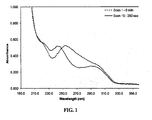
- FIG. 1 is a repetitive scan of 1,6-dihydro-6-oxopyridin-2-yl)methyl 4-iodobenzoate in the presence of BuChE.
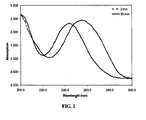
- FIG. 2 is a repetitive scan of (S)-1-methylpyrrolidin-3-yl 4-iodobenzoate in the presence of BuChE.
- FIG. 3 is a repetitive scan of 1-methylpiperidin-4-yl 4-iodobenzoate in the presence of BuChE.
- FIG. 4 is the scintillation count from HPLC purification and collection of (1,6-dihydro-6-oxopyridin-2-yl)methyl 4- 123 iodobenzoate. Radioactivity elution time was consistent with UV/Vis absorbance corresponding to the product.
- one aspect of the present invention is directed to compounds of formula I.
- R 1 is selected from the group consisting of hydrogen, cyano, fluoro, iodo, alkyl, and aryl
- R 2 is selected from the group consisting of hydrogen, alkyl, and aryl
- X is selected from the group consisting of CH 2 , CH 2 O, oxygen, OCH 2 , CH 2 S, SCH 2 , N-alkyl, and N-aryl
- Y is an optional spacer group, absent or selected from the group consisting of oxygen, sulfur, NH, N-alkyl, and N-aryl
- Z is selected from the group consisting of alkyl substituted with cyano, fluoro, or iodo and aryl substituted with cyano, fluoro, or iodo.
- R 1 and R 2 are hydrogen, X is CH 2 O, Y is absent, and Z is phenyl substituted with fluoro, cyano, or iodo. In a more preferred embodiment, Z is more specifically 18 F-phenyl or 123 I-phenyl or 131 I-phenyl. It is to be understood that when Y is absent, Z directly connects to the carbonyl adjacent to Y with a bond order appropriate to the system, after considering, for example, aromaticity and tautomerism as applicable.
- the use of compounds of formula (I) in a method of early detection of Alzheimer's Disease and related dementias comprising administering to a subject an effective quantity of a butyrylchohnesierase-specific compound of formula I and pharmaceutically acceptable salts, thereof; imaging said subject to identify position and relative abundance of said compound in vivo utilizing CT, PET and/or SPECT; and distinguishing said position and relative abundance from reference cases to determine subject's diagnosis.
- said subject is a human, and said imaging is of the subject's brain.
- the use of the compound of formula (I) in a method of early detection of multiple sclerosis comprising administering to a subject an effective quantity of a butyrylcholinesterase-specific compound of formulae I and pharmaceutically acceptable salts, thereof; imaging said subject to identify position and relative abundance of said compound in vivo utilizing computed tomography ("CT"), PET and/or SPECT; and distinguishing said position and relative abundance from reference cases to determine subject's diagnosis.
- CT computed tomography
- PET and/or SPECT and distinguishing said position and relative abundance from reference cases to determine subject's diagnosis.
- said subject is a human
- said imaging is of the subject's brain.
- the use of the compound of formula (I) in a method of early detection of malignant tumors comprising administering to a subject an effective quantity of a butyrylcholinesterase-specific compound of formula I, and pharmaceutically acceptable salts, thereof; imaging said subject to identify position and relative abundance of said compound in vivo utilizing CT, PET and/or SPECT; and distinguishing said position and relative abundance from reference cases to determine subject's diagnosis.
- said subject is a human and said imaging is of the subject's brain.
- the invention relates to a compound of formula (I) for use in a method of treatment of diseases associated with dysregulation of BuChE, including AD and related dementias, multiple sclerosis, and malignant tumors, comprising administering to a subject in need thereof, an effective quantity of a butyrylcholinesterase-specific compound of formula I, and pharmaceutically acceptable salts, thereof.
- tri-alkyl tin derivatives of compounds described above e.g. wherein cyano, iodo, or chloro groups within Z are replaced with a tri-alkyl tin moiety, preferably tri-butyl tin
- the process of making such derivatives is also an embodiment, as is the process of purifying the radiolabeled compounds presented herein.
- the compounds described herein can be considered as probes which, in conjunction with non-invasive neuroimaging techniques such as magnetic resonance spectroscopy ("MRS”) or imaging (“MRI”), or gamma imaging such as positron emission tomography (“PET”) or single-photon emission computed tomography (“SPECT”), can be used to identify neuritic plaques ("NP").
- non-invasive neuroimaging techniques such as magnetic resonance spectroscopy ("MRS") or imaging (“MRI")
- gamma imaging such as positron emission tomography (“PET”) or single-photon emission computed tomography (“SPECT”)
- NP neuritic plaques
- detection instrument availability greatly affects selection of a given label.
- the type of instrument used will guide the selection of the radionuclide or stable isotope. For instance, the radionuclide chosen (e.g. 18 F, 123 I, or 131 I) will have a type of decay detectable by a given type of instrument.
- radiolabeled compounds as described herein can be detected using gamma imaging wherein emitted gamma irradiation of the appropriate wavelength is detected.
- Methods of gamma imaging include, but are not limited to, SPECT and PET.
- the diagnostic or therapeutic compounds are administered to a subject by a route which is effective for diagnostic or therapeutic purposes.
- Suitable routes of administration include but are not limited to oral, subcutaneous, intravenous, sublingual, intraarterial, and intrathecal, intradermal, intracavitary, and intraperitoneal.
- a preferred route of administration is intravenous administration.
- the therapeutic compounds may be administered with a pharmaceutically acceptable vehicle.
- Particularly preferred pharmaceutical compositions are those that, in addition to selectively binding BuChE at high affinity and crossing the blood brain barrier, are also non-toxic at appropriate dosage levels and have a satisfactory duration of effect. Effective quantities will vary depending on such factors as subject weight, age, and potency of a given compound, and can be selected based on qualifying biodistribution and occupancy studies in a similarly sized subject.
- the compounds of the present invention may be incorporated into various pharmaceutically acceptable dosage forms, including but not limited to oral and parenteral dosage forms.
- Oral dosage forms may include tablets, capsules, liquids, and the like.
- Parenteral dosage forms may include, but are not limited to dosage forms for intravenous, subcutaneous, intramuscular, intraperitoneal, intraarterial, and intradermal administration.
- the dosage forms of the present invention will contain a therapeutically effective amount of a compound(s) described herein such that the therapeutically effective dose is sufficient to inhibit BuChE activity in a subject.
- the dosage formulations may also contain pharmaceutically acceptable excipients.
- the compositions of the present invention may contain a pharmaceutically acceptable diluent, including but not limited to monosaccharides, disaccharides, polyhydric alcohols and mixtures of two or more thereof.
- Preferred pharmaceutical diluents include, for example, starch, lactose, dextrose, mannitol, sucrose, microcrystalline cellulose, sorbitol, xylitol, fructose, and mixtures of two or more thereof.
- the pharmaceutical diluent is water-soluble, such as lactose, dextrose, mannitol, sucrose, or mixtures of two or more thereof.
- compositions of the present invention include, but are not limited to, for example, poly(ethylene-vinyl acetate), copolymers of lactic acid and glycolic acid, poly(lactic acid), gelatin, collagen matrices, polysaccharides, poly(D,L lactide), poly(malic acid), poly(caprolactone), celluloses, albumin, starch, casein, dextran, polyesters, ethanol, methacrylate, polyurethane, polyethylene, vinyl polymers, glycols, mixtures thereof and the like.
- excipients may include, but are not limited to, lecithin, gum acacia, cholesterol, tragacanth, stearic acid, benzalkonium chloride, calcium stearate, glyceryl monostearate, cetostearyl alcohol, cetomacrogol emulsifying wax, sorbitan esters, polyoxyethylene alkyl ethers, polyoxyethylene castor oil derivatives, polyoxyethylene sorbitan fatty acid esters, polyethylene glycols, polyoxyethylene stearates, colloidal silicon dioxide, phosphates, sodium dodecylsulfate, carboxymethylcellulose calcium, carboxymethylcellulose sodium, methylcellulose, hydroxyethylcellulose, hydroxypropylcellulose, hydroxypropylmethylcellulose phthalate, noncrystalline cellulose, magnesium aluminum silicate, triethanolamine, polyvinyl alcohol, polyvinylpyrrolidone, sugars and starches. See, for example, Remington: The Science and Practice of Pharmacy, 1995, Genn
- the carrier may be pH-sensitive, thermo-sensitive, thermogelling, arranged for sustained release or a quick burst.
- carriers of different classes may be used in combination for multiple effects, for example, a quick burst followed by sustained release.
- one or more of the compounds in the invention may be encapsulated for delivery.
- the compounds may be encapsulated in biodegradable microspheres, microcapsules, microparticles, or nanospheres.
- the delivery vehicles may be composed of, for example, hyaluronic acid, polyethylene glycol, poly(lactic acid), gelatin, poly(E-caprolactone), or a poly(lactic-glycolic) acid polymer. Combinations may also be used, as, for example, gelatin nanospheres may be coated with a polymer of poly(lactic-glycolic) acid.
- these and other suitable delivery vehicles may be prepared according to protocols known in the art and utilized for delivery of the compounds.
- permeation enhancers include, but are by no means limited to those compounds described in U.S. Pat. Nos. 3,472,931 ; 3,527,864 ; 3,896,238 ; 3,903,256 ; 3,952,099 ; 4,046,886 ; 4,130,643 ; 4,130,667 ; 4,299,826 ; 4,335,115 ; 4,343,798 ; 4,379,454 ; 4,405,616 ; 4,746,515 ; 4,788,062 ; 4,820,720 ; 4,863,738 ; 4,863,970 ; and 5,378,730 ; British Pat. No. 1,011,949 ; and Idson, 1975, J. Pharm. Sci. 64:901-924 .
- the compounds of the invention are used for diagnosis, after a sufficient time has elapsed for the compound to bind BuChE (in a range between 30 minutes and 48 hours, for example), the area of the subject under investigation is examined by routine imaging techniques such as MRS/MRI, SPECT, PET, and CT.
- routine imaging techniques such as MRS/MRI, SPECT, PET, and CT.
- the exact protocol will necessarily vary depending upon factors specific to the patient, as noted above, and depending upon the body site under examination, method of administration and type of label used.
- radioligands compounds with a leaving group such as a tributyl tin, triflates or tosylates is dissolved in an appropriate solvent.
- a leaving group such as a tributyl tin, triflates or tosylates is dissolved in an appropriate solvent.
- the compound is treated with the appropriate reagent to incorporate radio-iodide.
- the exchange for fluorine is done using sodium fluoride.
- TLC thin layer chromatography
- the acetone is then evaporated in vacuo and the product dissolved in dichloromethane, washed with water and the organic solution will be dried over magnesium sulfate and the solvent evaporated in vacuo.
- the product is purified either by crystallization or silica gel column chromatography and characterized using 500 mHz 1 H NMR, 13 C NMR, IR, and high resolution mass spec.
- Radio-iodination labeling involves substitution of the precursor with an appropriate leaving group.
- the chemical reagent grade radionuclides are commercially available ( 123 I NaI, 131 I NaI) as sodium iodide in sodium hydroxide solution.
- Precursors for radio-iodination include molecules with leaving groups such as tri-butyl tin, triflate and tosylate derivatives.
- the radiolabeled molecules are meant to be used for enzymatic assessment and binding assays.
- 131 I Labeling is performed using iodobead or iodogen as a free radical initiator. The precursor is dissolved in an appropriate solvent and incubated with 131 I sodium iodide.
- Radio-fluorination labeling of 18 F can be obtained as either the F - or F 2 form, depending on the irradiation conditions within a cyclotron.
- a common production method of 18 F isotopes involves proton irradiation of [ 18 O] H 2 O to yield [ 18 F] as an F anion.
- a protective synthesis box is used, and reagents for the synthesis of [ 18 F] FDG can be adapted for a simple synthesis using [ 18 F) anion on a triflate derivative of the molecule to be labeled.
- Scheme one shows a method for preparing 6-substituted ester compounds.
- the readily available 6-hydroxypicolinic acid was reduced with lithium aluminum hydride to the corresponding 6-hydroxy methyl 2-hydroxypyridine.
- This can be treated with sodium hydride or butyl lithium to generate the alkoxide ion species which can be reacted with unsubstituted or substituted benzyl acid chlorides to afford a variety of esters of the general formula I.
- Example 4 In Example 4,4.0291 g (106.17 mmol) of lithium aluminum hydride was suspended in 150 mL of THF in a 250 mL RBF under the presence of argon gas and cooled to 0 °C in an ice bath. Then, 9.9990 g (71.88 mmol) of 6-hydroxypicolinic acid was added to the solution. The reaction was warmed to room temperature before being refluxed for 24 hours. The solution was cooled to room temperature and was quenched by 4.0 mL of water, 4.0 mL of 15% NaOH and an additional 12.0 mL of water. The solvent was removed in vacuo and the residue was taken up in 600 mL of refluxing ethanol.
- Example 5 0.2006 grams (1.60 mmole) of 6-(hydroxymethyl)pyridine-2(1H)-one was suspended in 160 mL of THF in a 250 mL round bottom flask under the presence of argon gas. Then, 0.0671 g (1.68 mmole) of 60% NaH dispersed in mineral oil was added and the solution was stirred for 20 min. 0.19 mL (1.58 mmole) of 4-fluorobenzoyl chloride was dissolved in 20 mL of THF and added dropwise into the alcohol reaction mixture at a rate of 10 ⁇ L/min. The reaction stirred for 48 hours under the presence of argon gas before being quenched with 20 mL of water.
- Example 6 0.2055 grams (1.64 mmole) of 6-(hydroxymethyl)pyridine-2(1H)-one was suspended in 160 mL of THF in a 250 mL round bottom flask under the presence of argon gas. Then, 0.0672 g (1.68 mmole) of 60% NaH dispersed in mineral oil was added, and the solution was stirred for 20 min. 0.2638 g (1.59 mmole) of 4-fluorobenzoyl chloride was dissolved in 20 mL of THF and added dropwise into the alcohol reaction mixture at a rate of 10 ⁇ L/min. The reaction was stirred for 48 hours under the presence of argon gas before being quenched with 20 mL of water.
- Example 18 0.1034 g (0.29 mmol) of (6-oxo-1,6-dihydropyridin-2-yl)methyl 4-iodobenzoate and 0.0100 g (0.008 mmol) of tetrakis(triphenylphosphine)palladium(0) were combined in a 250 mL flask, flushed under argon gas and 160 mL of toluene was added to this mixture. Then, 0.33 mL (0.66 mmol) of hexabutylditin was dissolved in 20 mL of toluene and added. The reaction was refluxed for 48 hours in the dark and the solvent removed under reduced pressure.
- Example 22 0.4006 g (2.611 mmol) of methyl 6-oxo-1,6-dihydropyridine-2-carboxylate and 0.4006 g (2.899 mmol) of potassium carbonate were combined in a 25 mL RBF. 1 mL of DMSO followed by 4 mL (64.25 mmol) of methyl iodide was added and the reaction refluxed for 4 hours. The solvent was removed under reduced pressure and the resulting oil was extracted with hot hexanes (8 x 25 mL), the extracts were combined and solvent removed to yield a yellow oil. Recrystallization from hexanes yielded the product as white/yellow crystals (0.1245 g, 28.52%).
- This compound can be used to generate N-methyl-substituted pyridone ligands by a synthetic methodology described above, i.e. reduction to the alcohol, followed by esterification with an acid chloride.
- Other N-substitutions using, as a non-limiting example, moieties of R 2 in Formula I could be had by analogously synthesizing ethyl 1-methyl-6-oxo-1,6-dihydropyridine-2-carboxylate, propyl 1-methyl-6-oxo-1,6-dihydropyridine-2-carboxylate, hexyl 1-methyl-6-oxo-1,6-dihydropyridine-2-carboxylate, phenyl 1-methyl-6-oxo-1,6-dihydropyridine-2-carboxylate, etc.
- Examples 23-28 Acetylcholinesterase in vitro assay.
- AChE stock solution consisted of 240 ⁇ g of human recombinant AChE dissolved in 1.5 mL of 0.1% aq. Gelatin. All ligands used in the assay were dissolved in a minimal amount of acetonitrile to form a ligand solution.
- 0.1 M Phosphate buffer PH 8.0 consisted of 1.2 g of NaH 2 PO 4 dissolved in 100 mL of water and adjusted to the appropriate pH.
- the Assay was carried out by mixing 0.1 ⁇ mole of ligand solution with 5 ⁇ L of AChE stock solution and bringing the volume in a quartz cuvette of 1 cm path length to 1.5 mL with phosphate buffer. Scans using an UltraSpec 2100 Pro UV/Visible spectrophotometer over a wavelength of 200-900 nm monitored the rate of hydrolysis of the ligand by the enzyme. Change of absorbance in the spectrum indicated hydrolysis of the ligand by the enzyme.
- Example 23 AChE analysis of (1,2 dihydro-2-oxopyridin-3-yl)methyl 4-iodobenzoate.
- Example 23 3.5 mg of (1,2 dihydro-2-oxopyridin-3-yl)methyl 4-iodobenzoate was dissolved in 20 mL of acetonitrile. 100 ⁇ L of this solution was placed in a quartz cuvette of 1 cm path length and 1.40 mL of phosphate buffer pH 8.0 was added. The reaction was commenced with the addition of 5 ⁇ L of AChE stock solution. The absorbance was scanned over a range of 200-900 nm every 2 min for a total of 30 min. The results of this experiment generally indicate that enzymatic hydrolysis of the compounds does not occur in the presence of AChE.
- Example 24 AChE analysis of (1,2-dihydro-2-oxopyridin-3-yl)methyl 4-fluorobenzoate.
- Example 24 6.5 mg of (1,2 dihydro-2-oxopyridin-3-yl)methyl 4-fluorobenzoate was dissolved in 10 mL of acetonitrile. 100 ⁇ L of this solution was placed in a quartz cuvette of 1 cm path length and 1.40 mL of phosphate buffer pH 8.0 was added. The reaction was commenced with the addition of 5 ⁇ L of AChE stock solution. The absorbance was scanned over a range of 200-900 nm every 1 min for a total of 20 min. The results of this experiment generally indicate that enzymatic hydrolysis of the compounds does not occur in the presence of AChE.
- Example 25 AChE analysis of (1,2-dihydro-2-oxopyridin-3-yl)methyl 4-cyanobenzoate.
- Example 25 2.5 mg of (1,2 dihydro-2-oxopyridin-3-yl)methyl 4-cyanobenzoate was dissolved in 15 mL of acetonitrile. 100 ⁇ L of this solution was placed in a quartz cuvette of 1 cm path length and 1.40 mL of phosphate buffer pH 8.0 was added. The reaction was commenced with the addition of 5 ⁇ L of AChE stock solution. The absorbance was scanned over a range of 200-900 nm every 1 min for a total of 20 min. The results of this experiment generally indicate that enzymatic hydrolysis of the compounds does not occur in the presence of AChE.
- Example 26 AChE analysis of (1,6-dihydro-6-oxopyridin-2-yl)methyl 4-iodobenzoate.
- Example 26 3.5 mg of (1,6 dihydro-6-oxopyridin-2-yl)methyl 4-iodobenzoate was dissolved in 20 mL of acetonitrile. 100 ⁇ L of this solution was placed in a quartz cuvette of 1 cm path length and 1.40 mL of phosphate buffer pH 8.0 was added. The reaction was commenced with the addition of 5 ⁇ L of AChE stock solution. The absorbance was scanned over a range of 200-900 nm every 1 min for a total of 20 min. The results of this experiment generally indicate that enzymatic hydrolysis of the compounds does not occur in the presence of AChE.
- Example 27 AChE analysis of (1,6-dihydro-6-oxopyridin-2-yl)methyl 4-fluorobenzoate.
- Example 27 2.7 mg of (1,6 dihydro-6-oxopyridin-2-yl)methyl 4-fluorobenzoate was dissolved in 10 mL of acetonitrile. 100 ⁇ L of this solution was placed in a quartz cuvette of 1 cm path length and 1.40 mL of phosphate buffer pH 8.0 was added. The reaction was commenced with the addition of 5 ⁇ L of AChE stock solution. The absorbance was scanned over a range of 200-900 nm every 30 sec for a total of 5.5 min. The results of this experiment generally indicate that enzymatic hydrolysis of the compounds does not occur in the presence of AChE.
- Example 28 AChE analysis of (1,6-dihydro-6-oxopyridin-2-yl)methyl 4-cyanobenzoate .
- Example 28 2.5 mg of (1,6 dihydro-6-oxopyridin-2-yl)methyl 4-cyanobenzoate was dissolved in 8 mL of acetonitrile. 100 ⁇ L of this solution was placed in a quartz cuvette of 1 cm path length and 1.40 mL of phosphate buffer pH 8.0 was added. The reaction was commenced with the addition of 5 ⁇ L of AChE stock solution. The absorbance was scanned over a range of 200-900 mn every 30 sec for a total of 7.5 min. The results of this experiment generally indicate that enzymatic hydrolysis of the compounds does not occur in the presence of AChE.
- Examples 39-54 interaction of the ligands with BuChE was determined by measuring the rate of the hydrolysis of the ligand in a buffered solution containing the enzyme. All ligands used in the assay were dissolved in a minimal amount of acetonitrile to form a ligand solution. 0.1 M Phosphate buffer PH 8.0 was prepared as to the above specifications. The Assay was carried out by mixing 0.1 ⁇ mol of ligand solution with 5 ⁇ L of BuChE stock solution and bringing the volume in a quartz cuvette of 1 cm path length to 1.5 mL with phosphate buffer.
- Example 39 BuChE analysis of (1,2 dihydro-2-oxopyridin-3-yl)methyl 4-iodobenzoate.
- Example 39 3.5 mg of (1,2 dihydro-2-oxopyridin-3-yl)methyl 4-iodobenzoate was dissolved in 20 mL of acetonitrile. 100 ⁇ L of this solution was placed in a quartz cuvette of 1 cm path length and 1.40 mL of phosphate buffer pH 8.0 was added. The reaction was commenced with the addition of 5 ⁇ L of BuChE stock solution. The absorbance was scanned over a range of 200-900 nm every 2 min sec for a total of 30 min. The results of this experiment generally indicate that enzymatic hydrolysis of the compounds does occur in the presence of BuChE.
- Example 40 BuChE analysis of (1,2-dihydro-2-oxopyridin-3-yl)methyl 4-fluorobenzoate.
- Example 40 6.5 mg of (1,2 dihydro-2-oxopyridin-3-yl)methyl 4-fluorobenzoate was dissolved in 10 mL of acetonitrile. 100 ⁇ L of this solution was placed in a quartz cuvette of 1 cm path length and 1.40 mL of phosphate buffer pH 8.0 was added. The reaction was commenced with the addition of 5 ⁇ L of BuChE stock solution. The absorbance was scanned over a range of 200-900 nm every 1 min for a total of 20 min. The results of this experiment generally indicate that enzymatic hydrolysis of the compounds does occur in the presence of BuChE.
- Example 41 BuChE analysis of (1,2-dihydro-2-oxopyridin-3-yl)methyl 4-cyanobenzoate.
- Example 41 2.5 mg of (1,2 dihydro-2-oxopyridin-3-yl)methyl 4-cyanobenzoate was dissolved in 15 mL of acetonitrile. 100 ⁇ L of this solution was placed in a quartz cuvette of 1 cm path length and 1.40 mL of phosphate buffer pH 8.0 was added. The reaction was commenced with the addition of 5 ⁇ L of BuChE stock solution. The absorbance was scanned over a range of 200-900 nm every 2 min for a total of 30 min. The results of this experiment generally indicate that enzymatic hydrolysis of the compounds does occur in the presence of BuChE.
- Example 42 BuChE analysis of (1,6-dihydro-6-oxopyridin-2-yl)methyl 4-iodobenzoate.
- Example 42 3.5 mg of (1,6 dihydro-6-oxopyridin-2-yl)methyl 4-iodobenzoate was dissolved in 20 mL of acetonitrile. 100 ⁇ L of this solution was placed in a quartz cuvette of 1 cm path length and 1.40 mL of phosphate buffer pH 8.0 was added. The reaction was commenced with the addition of 5 ⁇ L of BuChE stock solution. The absorbance was scanned over a range of 200-900 nm every 20 sec for a total of 5 min. The results of this experiment generally indicate that enzymatic hydrolysis of the compounds does occur in the presence of BuChE.
- Example 43 BuChE analysis of (1,6-dihydro-6-oxopyridin-2-yl)methyl 4-fluorobenzoate.
- Example 43 2.7 mg of (1,6 dihydro-6-oxopyridin-2-yl)methyl 4-fluorobenzoate was dissolved in 10 mL of acetonitrile. 100 ⁇ L of this solution was placed in a quartz cuvette of 1 cm path length and 1.40 mL of phosphate buffer pH 8.0 was added. The reaction was commenced with the addition of 5 ⁇ L of BuChE stock solution. The absorbance was scanned over a range of 200-900 nm every 30 sec for a total of 7.5 min. The results of this experiment generally indicate that enzymatic hydrolysis of the compounds does occur in the presence of BuChE.
- Example 44 BuChE analysis of (1,6-dihydro-6-oxopyridin-2-yl)methyl 4-cyanobenzoate.
- Example 44 2.5 mg of (1,6 dihydro-6-oxopyridin-2-yl)methyl 4-cyanobenzoate was dissolved in 8 mL of acetonitrile. 100 ⁇ L of this solution was placed in a quartz cuvette of 1 cm path length and 1.40 mL of phosphate buffer pH 8.0 was added. The reaction was commenced with the addition of 5 ⁇ L of BuChE stock solution. The absorbance was scanned over a range of 200-900 nm every 30 sec for a total of 7.5 min. The results of this experiment generally indicate that enzymatic hydrolysis of the compounds does occur in the presence of BuChE.
- Example 55 K m and relative V max values were determined for compounds identified to be hydrolyzed by BuChE.
- K m substrate concentration at which the reaction rate reaches half of its maximum value
- V max maximum reaction velocity
- Example 56 SPECT imaging using (6-oxo-1,6-dihydropyridin-2-yl)methyl-4- 123 iodobenzoate.
- a rat Shortly after the synthesis and purification detailed in Example 21, a rat was injected with the radiolabeled compound (6-oxo-1,6-dihydropyridin-2-yl)methyl-4- 123 iodobenzoate and SPECT images were taken at regular time points for several hours. After imaging, the rat was sacrificed and perfused. Radiation counts from HPLC attributable to (1,6-dihydro-6-oxopyridin-2-yl)methyl 4- 123 iodobenzoate remaining in the brain fraction are shown in Fig. 4 . This result indicates that the compound penetrates into the brain and can be imaged.
Landscapes
- Chemical & Material Sciences (AREA)
- Organic Chemistry (AREA)
- Health & Medical Sciences (AREA)
- Life Sciences & Earth Sciences (AREA)
- Engineering & Computer Science (AREA)
- Medicinal Chemistry (AREA)
- Pharmacology & Pharmacy (AREA)
- Animal Behavior & Ethology (AREA)
- General Health & Medical Sciences (AREA)
- Public Health (AREA)
- Veterinary Medicine (AREA)
- Nuclear Medicine, Radiotherapy & Molecular Imaging (AREA)
- General Chemical & Material Sciences (AREA)
- Bioinformatics & Cheminformatics (AREA)
- Chemical Kinetics & Catalysis (AREA)
- Biomedical Technology (AREA)
- Neurosurgery (AREA)
- Neurology (AREA)
- Physics & Mathematics (AREA)
- Optics & Photonics (AREA)
- Epidemiology (AREA)
- Proteomics, Peptides & Aminoacids (AREA)
- Transportation (AREA)
- Mechanical Engineering (AREA)
- Combustion & Propulsion (AREA)
- Psychiatry (AREA)
- Hospice & Palliative Care (AREA)
- Medicines Containing Antibodies Or Antigens For Use As Internal Diagnostic Agents (AREA)
- Pharmaceuticals Containing Other Organic And Inorganic Compounds (AREA)
- Hydrogenated Pyridines (AREA)
- Pyridine Compounds (AREA)
- Pyrrole Compounds (AREA)
- Medicines That Contain Protein Lipid Enzymes And Other Medicines (AREA)
Description
- This invention relates to compounds for the early identification, treatment and diagnosis of Alzheimer's Disease and related diseases of the nervous system, especially as regards their use as contrast agents and/or radioligands in Computer Assisted Tomography, Single Photon Emission Computer Tomography, and/or Positron Emission Tomography. Such compounds also have utility as diagnostics for cancer and multiple sclerosis.
- Alzheimer's disease (AD) is a common neurodegenerative disorder causing dementia and a major cause of death. In AD there are three major microscopic features that are recognized as the hallmarks of the disease, namely, neuritic plaques (NP), neurofibrillary tangles (NFT) and amyloid angiopathy (AA). In addition, there is widespread cell loss, particularly of cholinergic neurons in the brain. Loss of cholinergric cells leads to reductions in the levels of the neurotransmitter acetylcholine (ACh), its synthesizing enzyme choline acetyltransferase, as well as its deactivating enzyme actetylcholinersterase (AChE). Reduction of cholinergic neurotransmission leads to some of the symptoms of AD. Because of this reduced cholinergic activity, drugs such as donepezil, metrifonate, rivastigmine, huperzine A, and tetrahydroaminoacridine, which inhibit the activity of cholinesterase and increase the level of ACh, have been used to treat the symptoms (though not the disease progression) of AD.
- Determining when to begin therapy for AD is an extremely difficult task, however, because confirmation of the diagnosis of dementias such as AD is difficult at present and can only be truly confirmed by autopsy. Distinguishing between different forms of dementia such as AD, dementia with Lewy bodies, vascular dementia and frontotemporal dementia is challenging. Furthermore, early diagnosis of incipient dementia, such as mild cognitive impairment, becomes imperative for beginning symptomatic therapy, as well as when new disease-modifying AD drugs are developed. Thus, there remains a great need for a means of identifying and diagnosing AD at an early stage.
- Neuroimaging is increasingly used to assist in diagnosis, but no satisfactory diagnostic tool has heretofore emerged. Structural imaging such as Computer Assisted Tomography (CAT) and Magnetic Resonance Imaging (MRI) provide information about changes in the brain, such as atrophy, stroke, malignancy and white matter changes, but at a gross anatomical level. Functional imaging using Single Photon Emission Computer Tomography (SPECT) and Positron Emission Tomography (PET) are non-specific. For example, one of the PET ligands used is 18fluorodeoxyglucose and, for SPECT, 99mTc hexa-methyl-propyl-amino oxime (HMPAO) or 99mTc ethylene dicysteine di-ethyl ester (ECD). Each of these techniques provides information regarding reduced functional integrity of different parts of the brain, but do not provide information as to why there is reduced function in these regions. More recently, radioligands that bind to the AD-implicated β-amyloid protein have been developed (for example, AV-45). These ligands provide information as to whether, and where, β-amyloid is present in the brain. From a neuropathologic perspective, deposition of amyloid and formation of NP is one of the central mechanisms in the evolution of AD. However, amyloid plaques are also found in brains of elderly individuals who do not have dementia, which limits the applicability of this approach.
- A technique of greater utility involves binding to cholinesterases, especially butyrylcholinesterase (BuChE). Although the level of AChE is reduced in AD, the level of the closely related enzyme BuChE is increased in AD brains. There is a severe loss of basal forebrain cholinergic neurons in AD (Coyle J.T., Price D.L., and DeLong M.R., 1983, Science 219:1184-90), and there is a marked decrease in the levels of AChE and a similarly marked increase in the levels of BuChE (Perry E.K., Perry R.H., Blessed G., and Tomlinson B.E., 1978, Neuropath. Appl. Neurobiol. 4:273-277; Mesulam M-M. and Geula C., 1994, Ann. Neurol. 36:722-727). BuChE is found in all the neuropathological lesions associated with AD (NP, NFT and AA). Amyloid plaques in individuals without dementia are "benign" and they become "malignant", causing dementia, when they are transformed into NP. Importantly, BuChE is found in NP in brains of patients with AD rather than plaques found in brains of elderly individuals without AD. Taken together, these observations show that in brains of patients with AD there is a significant alteration of the biochemical properties of BuChE that alters its normal regulatory role in the brain (Guillozet A.L., Smiley J.F., Mash D.C., and Mesulam M-M., 1997, Ann. Neurol. 42:909-918). As such, high affinity labeling of BuChE, particularly with radioligands, has utility in the early diagnosis of AD.
- Within the context of detecting BuChE in the brain, only one experimental radioligand is available, namely, 1-[11C]-methyl-4-piperidinyl n-butyrate. However, this compound has disadvantages. First, it is labeled with 11C, emitting positrons that can only be detected by PET scanners, which are not as widely available as SPECT scanners. Second, the radioactive label is attached to the molecule in the portion that is an initial leaving group in the mechanism of the enzyme catalyzed hydrolysis of this radiopharmaceutical. Thus, the radioactive atom intended to label the enzyme is lost in the early stages of the reaction, which would lead to short-lived enzyme-detecting capability of this ligand and only show diffuse distribution of the label rather than specific regional distribution of the target enzyme.
- Elzbieta Mikiciuk-Olasik, Indian Journal of Experimental Biology (IJEB), (2007), pp 315-325 discloses many compounds which are AChE / BChE inhibitors (p.317-320) employed to treat Alzheimer's disease.
-
WO 2004/074253 discloses a compound defined in the present proviso. - This application discloses molecules that overcome the shortcomings of previous radioligands and provide specific and long-lived radioligands for diagnosis and for monitoring treatment effects in AD. These compounds are specific substrates of BuChE and contain atoms that can be efficiently replaced with radioactive atoms in the moiety that is attached to BuChE for a longer period, to facilitate detection by SPECT or PET scanning. Such compounds are of utility in the early diagnosis and treatment of diseases associated with dysregulation of BuChE, including AD and related dementias, multiple sclerosis, and malignant tumors; and can distinguish AD brain from normal brain.
- In certain embodiments, the invention is directed to BuChE ligands having a radiolabeled moiety that remains in contact with the enzyme after enzymatic cleavage, (e.g. hydrolysis), of the ligand. This arrangement allows the radiolabeled moiety to remain in contact with the enzyme for a greater duration.
- The inventions is also directed to the use of therapeutically effective amounts of BuChE ligands which inhibit the enzyme for treatment of diseases associated with dysregulation of BuChE, including AD and related dementias, multiple sclerosis, and malignant tumors to a patient in need thereof.
- It is an object of the invention to provide a compound of Formula I and pharmaceutically acceptable salts,
thereof:
- Also described is a compound of Formula II and pharmaceutically acceptable salts, stereo-isomers, polymorphs, metabolites, pro-drugs and combinations thereof:

- Also described is a compound of Formula III and pharmaceutically acceptable salts, stereo-isomers, polymorphs, metabolites, pro-drugs and combinations thereof:

- Also described is a compound of Formulas IVa and IVb and pharmaceutically acceptable salts, polymophs, metabolites, pro-drugs and combinations thereof:


- It is another object of the invention to provide compound of Formula (I) for use in a method of early detection of a neurological condition, comprising administering to a subject an effective quantity of a butyrylcholinesterase-specific compound; imaging the brain of said subject to identify the position and relative abundance of said compound in vivo utilizing a scan selected from the group consisting of CT, PET and SPECT; and distinguishing said position and relative abundance from reference cases to determine subject's diagnosis. The butyrylcholinesterase-specific compound is the compound of formula I and pharmaceutically acceptable salts, thereof. In certain other embodiments, the butyrylcholinesterase-specific compound is (6-oxo-1,6-dihydropyridin-2-yl)methyl4-123iodobenzoate.
- In accordance with any of the above objects, the invention is also directed to method in which the neurological condition is Alzheimer's disease and related dementias. In certain other embodiments, the neurological condition is multiple sclerosis. In certain other embodiments, the neurological condition is malignant brain tumor. In certain other embodiments, the subject is a human.
- In accordance with any of the above objects, the invention is also directed to method in which the butyrylcholinesterase-specific compound is radiolabeled on a functional group of the compound that remains in contact with the BuChE after enzymatic cleavage of the compound
- It is another object of the invention to provide a compound of formula (I) for use in method of treatment of a neurological condition, comprising:
- administering to a subject in need thereof, an effective quantity of the compound. In certain embodiments, the butyrylcholinesterase-specific compound is the compound of formula I and pharmaceutically acceptable salts. In certain other embodiments, the butyrylcholinesterase-specific compound is (6-oxo-1,6-dihydropyridin-2-yl)methyl 4-iodobenzoate.
- In accordance with any of the above objects, the invention is also directed to the use in which the neurological condition is Alzheimer's disease and related dementias. In certain other embodiments, the neurological condition is multiple sclerosis. In certain other embodiments, the neurological condition is malignant brain tumor. In certain other embodiments, the subject is a human.
- In accordance with any of the above objects, a
method in which the butyrylcholinesterase-specific compound is an inhibitor of butyrylcholinesterase is also described. -
FIG. 1 is a repetitive scan of 1,6-dihydro-6-oxopyridin-2-yl)methyl 4-iodobenzoate in the presence of BuChE. -
FIG. 2 is a repetitive scan of (S)-1-methylpyrrolidin-3-yl 4-iodobenzoate in the presence of BuChE. -
FIG. 3 is a repetitive scan of 1-methylpiperidin-4-yl 4-iodobenzoate in the presence of BuChE. -
FIG. 4 is the scintillation count from HPLC purification and collection of (1,6-dihydro-6-oxopyridin-2-yl)methyl 4-123iodobenzoate. Radioactivity elution time was consistent with UV/Vis absorbance corresponding to the product. - In accordance with the above-mentioned objects, one aspect of the present invention is directed to compounds of formula I.
- The present invention is directed to compounds of Formula I and pharmaceutically acceptable salts, thereof:

- In certain embodiments, the use of compounds of formula (I) in a method of early detection of Alzheimer's Disease and related dementias is provided, comprising administering to a subject an effective quantity of a butyrylchohnesierase-specific compound of formula I and pharmaceutically acceptable salts, thereof; imaging said subject to identify position and relative abundance of said compound in vivo utilizing CT, PET and/or SPECT; and distinguishing said position and relative abundance from reference cases to determine subject's diagnosis. In a preferred embodiment, said subject is a human, and said imaging is of the subject's brain.
- In certain embodiments, the use of the compound of formula (I) in a method of early detection of multiple sclerosis is provided, comprising administering to a subject an effective quantity of a butyrylcholinesterase-specific compound of formulae I and pharmaceutically acceptable salts, thereof; imaging said subject to identify position and relative abundance of said compound in vivo utilizing computed tomography ("CT"), PET and/or SPECT; and distinguishing said position and relative abundance from reference cases to determine subject's diagnosis. In a preferred embodiment, said subject is a human, and said imaging is of the subject's brain.
- In certain embodiments, the use of the compound of formula (I) in a method of early detection of malignant tumors is provided, comprising administering to a subject an effective quantity of a butyrylcholinesterase-specific compound of formula I, and pharmaceutically acceptable salts, thereof; imaging said subject to identify position and relative abundance of said compound in vivo utilizing CT, PET and/or SPECT; and distinguishing said position and relative abundance from reference cases to determine subject's diagnosis. In a preferred embodiment, said subject is a human and said imaging is of the subject's brain.
- In certain embodiments, the invention relates to a compound of formula (I) for use in a method of treatment of diseases associated with dysregulation of BuChE, including AD and related dementias, multiple sclerosis, and malignant tumors, comprising administering to a subject in need thereof, an effective quantity of a butyrylcholinesterase-specific compound of formula I, and pharmaceutically acceptable salts, thereof.
- It is of note that stable tri-alkyl tin derivatives of compounds described above (e.g. wherein cyano, iodo, or chloro groups within Z are replaced with a tri-alkyl tin moiety, preferably tri-butyl tin) are novel precursors of utility in the synthesis of radiolabeled compounds presented herein, and therefore present another embodiment. The process of making such derivatives is also an embodiment, as is the process of purifying the radiolabeled compounds presented herein.
- In certain aspects of the invention, the compounds described herein can be considered as probes which, in conjunction with non-invasive neuroimaging techniques such as magnetic resonance spectroscopy ("MRS") or imaging ("MRI"), or gamma imaging such as positron emission tomography ("PET") or single-photon emission computed tomography ("SPECT"), can be used to identify neuritic plaques ("NP"). For in vivo imaging, detection instrument availability greatly affects selection of a given label. The type of instrument used will guide the selection of the radionuclide or stable isotope. For instance, the radionuclide chosen (e.g. 18F, 123I, or 131I) will have a type of decay detectable by a given type of instrument. Another consideration relates to the half-life of the radionuclide. Preferably, the half-life is long enough so that it is still detectable at the time of maximum uptake by the target, but short enough so that the host does not sustain deleterious radiation. Appropriately radiolabeled compounds as described herein can be detected using gamma imaging wherein emitted gamma irradiation of the appropriate wavelength is detected. Methods of gamma imaging include, but are not limited to, SPECT and PET.
- The diagnostic or therapeutic compounds are administered to a subject by a route which is effective for diagnostic or therapeutic purposes. Suitable routes of administration include but are not limited to oral, subcutaneous, intravenous, sublingual, intraarterial, and intrathecal, intradermal, intracavitary, and intraperitoneal. A preferred route of administration is intravenous administration. The therapeutic compounds may be administered with a pharmaceutically acceptable vehicle. Particularly preferred pharmaceutical compositions are those that, in addition to selectively binding BuChE at high affinity and crossing the blood brain barrier, are also non-toxic at appropriate dosage levels and have a satisfactory duration of effect. Effective quantities will vary depending on such factors as subject weight, age, and potency of a given compound, and can be selected based on qualifying biodistribution and occupancy studies in a similarly sized subject.
- The compounds of the present invention may be incorporated into various pharmaceutically acceptable dosage forms, including but not limited to oral and parenteral dosage forms. Oral dosage forms may include tablets, capsules, liquids, and the like. Parenteral dosage forms may include, but are not limited to dosage forms for intravenous, subcutaneous, intramuscular, intraperitoneal, intraarterial, and intradermal administration. The dosage forms of the present invention will contain a therapeutically effective amount of a compound(s) described herein such that the therapeutically effective dose is sufficient to inhibit BuChE activity in a subject.
- In addition to containing a therapeutically effective amount of a compound(s) described herein, the dosage formulations may also contain pharmaceutically acceptable excipients. For example, the compositions of the present invention may contain a pharmaceutically acceptable diluent, including but not limited to monosaccharides, disaccharides, polyhydric alcohols and mixtures of two or more thereof. Preferred pharmaceutical diluents include, for example, starch, lactose, dextrose, mannitol, sucrose, microcrystalline cellulose, sorbitol, xylitol, fructose, and mixtures of two or more thereof.
- In other embodiments, the pharmaceutical diluent is water-soluble, such as lactose, dextrose, mannitol, sucrose, or mixtures of two or more thereof.
- Other suitable excipients for use in the compositions of the present invention include, but are not limited to, for example, poly(ethylene-vinyl acetate), copolymers of lactic acid and glycolic acid, poly(lactic acid), gelatin, collagen matrices, polysaccharides, poly(D,L lactide), poly(malic acid), poly(caprolactone), celluloses, albumin, starch, casein, dextran, polyesters, ethanol, methacrylate, polyurethane, polyethylene, vinyl polymers, glycols, mixtures thereof and the like.
- Other excipients may include, but are not limited to, lecithin, gum acacia, cholesterol, tragacanth, stearic acid, benzalkonium chloride, calcium stearate, glyceryl monostearate, cetostearyl alcohol, cetomacrogol emulsifying wax, sorbitan esters, polyoxyethylene alkyl ethers, polyoxyethylene castor oil derivatives, polyoxyethylene sorbitan fatty acid esters, polyethylene glycols, polyoxyethylene stearates, colloidal silicon dioxide, phosphates, sodium dodecylsulfate, carboxymethylcellulose calcium, carboxymethylcellulose sodium, methylcellulose, hydroxyethylcellulose, hydroxypropylcellulose, hydroxypropylmethylcellulose phthalate, noncrystalline cellulose, magnesium aluminum silicate, triethanolamine, polyvinyl alcohol, polyvinylpyrrolidone, sugars and starches. See, for example, Remington: The Science and Practice of Pharmacy, 1995, Gennaro ed.
- As will be apparent to one knowledgeable in the art, specific excipients known in the art may be selected based on their properties and release characteristics in view of the intended use. Specifically, the carrier may be pH-sensitive, thermo-sensitive, thermogelling, arranged for sustained release or a quick burst. In some embodiments, carriers of different classes may be used in combination for multiple effects, for example, a quick burst followed by sustained release.
- In other embodiments, one or more of the compounds in the invention may be encapsulated for delivery. Specifically, the compounds may be encapsulated in biodegradable microspheres, microcapsules, microparticles, or nanospheres. The delivery vehicles may be composed of, for example, hyaluronic acid, polyethylene glycol, poly(lactic acid), gelatin, poly(E-caprolactone), or a poly(lactic-glycolic) acid polymer. Combinations may also be used, as, for example, gelatin nanospheres may be coated with a polymer of poly(lactic-glycolic) acid. As will be apparent to one knowledgeable in the art, these and other suitable delivery vehicles may be prepared according to protocols known in the art and utilized for delivery of the compounds.
- It is of note that the compounds of the invention may be combined with permeation enhancers known in the art for improving delivery. Examples of permeation enhancers include, but are by no means limited to those compounds described in
U.S. Pat. Nos. 3,472,931 ;3,527,864 ;3,896,238 ;3,903,256 ;3,952,099 ;4,046,886 ;4,130,643 ;4,130,667 ;4,299,826 ;4,335,115 ;4,343,798 ;4,379,454 ;4,405,616 ;4,746,515 ;4,788,062 ;4,820,720 ;4,863,738 ;4,863,970 ; and5,378,730 ; British Pat. No.1,011,949 - When the compounds of the invention are used for diagnosis, after a sufficient time has elapsed for the compound to bind BuChE (in a range between 30 minutes and 48 hours, for example), the area of the subject under investigation is examined by routine imaging techniques such as MRS/MRI, SPECT, PET, and CT. The exact protocol will necessarily vary depending upon factors specific to the patient, as noted above, and depending upon the body site under examination, method of administration and type of label used.
- For the production of radioligands: compounds with a leaving group such as a tributyl tin, triflates or tosylates is dissolved in an appropriate solvent. To exchange the leaving group for iodine, the compound is treated with the appropriate reagent to incorporate radio-iodide. The exchange for fluorine is done using sodium fluoride. These reactions are carried out until the starting material has disappeared using thin layer chromatography, ("TLC") analysis. The acetone is then evaporated in vacuo and the product dissolved in dichloromethane, washed with water and the organic solution will be dried over magnesium sulfate and the solvent evaporated in vacuo. The product is purified either by crystallization or silica gel column chromatography and characterized using 500 mHz 1H NMR, 13C NMR, IR, and high resolution mass spec.
- Radio-iodination labeling involves substitution of the precursor with an appropriate leaving group. The chemical reagent grade radionuclides are commercially available (123I NaI, 131I NaI) as sodium iodide in sodium hydroxide solution. Precursors for radio-iodination include molecules with leaving groups such as tri-butyl tin, triflate and tosylate derivatives. The radiolabeled molecules are meant to be used for enzymatic assessment and binding assays. 131I Labeling is performed using iodobead or iodogen as a free radical initiator. The precursor is dissolved in an appropriate solvent and incubated with 131I sodium iodide.
- Radio-fluorination labeling of 18F can be obtained as either the F- or F2 form, depending on the irradiation conditions within a cyclotron. A common production method of 18F isotopes involves proton irradiation of [18O] H2O to yield [18 F] as an F anion. A protective synthesis box is used, and reagents for the synthesis of [18F] FDG can be adapted for a simple synthesis using [18F) anion on a triflate derivative of the molecule to be labeled.
- The following are presented as examples which should not be construed as further limiting the subject invention.
- Scheme one shows a method for preparing 6-substituted ester compounds. The readily available 6-hydroxypicolinic acid was reduced with lithium aluminum hydride to the corresponding 6-hydroxy methyl 2-hydroxypyridine. This can be treated with sodium hydride or butyl lithium to generate the alkoxide ion species which can be reacted with unsubstituted or substituted benzyl acid chlorides to afford a variety of esters of the general formula I.

- In Example 4,4.0291 g (106.17 mmol) of lithium aluminum hydride was suspended in 150 mL of THF in a 250 mL RBF under the presence of argon gas and cooled to 0 °C in an ice bath. Then, 9.9990 g (71.88 mmol) of 6-hydroxypicolinic acid was added to the solution. The reaction was warmed to room temperature before being refluxed for 24 hours. The solution was cooled to room temperature and was quenched by 4.0 mL of water, 4.0 mL of 15% NaOH and an additional 12.0 mL of water. The solvent was removed in vacuo and the residue was taken up in 600 mL of refluxing ethanol. The hot solution was filtered through celite and the solvent removed in vacuo to produce a light brown solid. This compound was used in subsequent reactions without further purification. The yield of the product, 6-hydroxymethyl-2-pyridone, was 5.2729 g (58.63% Yield). Characterization data of the product was consistent with literature.
- 0.2021 g (1.615 mmol) of the 6-hydroxymethyl-2-pyridone was suspended in 15 mL of THF in a 100 mL RBF under the presence of argon gas and was placed in a -80 °C methanol bath. 1.03 mL (1.648 mmol) of BuLi was added dropwise to the reaction which was stirred for 20 min. 0.4374 grams (1.641 mmol) of 4-iodobenzoyl chloride was dissolved in 15 mL of THF and brought to -80 °C before being added dropwise to the reaction mixture. The reaction was allowed to stir at -80 °C for 48 hours before being warmed to room temperature. The reaction was quenched with 20 mL of water and extracted with ethyl acetate (4 x 20 mL), the organic layers combined and washed with brine (3 x 20 mL), and dried over MgSO4. The solvent was removed in vacuo to produce a brown solid. The product was purified by crystallization from toluene. The yield of the reaction was 0.032 g (5.58% Yield). MP: 206-208 °C. IR (cm-1) 3426.48 (m, broad), υ (O-H), 3126.38 (m, broad), υ (N-H), 1722.45 (m), υ (C=O), 1656.57 (s), 1392.33 (m) υ (C=C aromatic). 1H NMR (DMSO-d6, 500 MHz) δ: 5.12 (s, 2H), 6.35 (d, J=9.1 Hz, 2H), 7.45 (t, J=7.0 Hz, 1H), 7.76 (d, J=4.8 Hz, 2H), 7.94 (d, J=9.0 Hz, 2H), 11.75 (s, 1H). HRMS: m/e, found 377.9598 (M+Na+), Calc. for C13H10INO3Na: 377.9603.
- In Example 5, 0.2006 grams (1.60 mmole) of 6-(hydroxymethyl)pyridine-2(1H)-one was suspended in 160 mL of THF in a 250 mL round bottom flask under the presence of argon gas. Then, 0.0671 g (1.68 mmole) of 60% NaH dispersed in mineral oil was added and the solution was stirred for 20 min. 0.19 mL (1.58 mmole) of 4-fluorobenzoyl chloride was dissolved in 20 mL of THF and added dropwise into the alcohol reaction mixture at a rate of 10 µL/min. The reaction stirred for 48 hours under the presence of argon gas before being quenched with 20 mL of water. The reaction was washed with ethyl acetate (4 x 20 mL), the organic layers combined, washed with saturated NaHCO3 (4 x 20mL), washed with Brine (3 x 20 mL) and finally dried over MgSO4. The solvent was removed in vacuo to produce a dull yellow solid. The compound was purified by column chromatography (methanol/dichloromethane). The result was a fine white powder. (0.1287 grams, 32.48% Yield). 1H NMR (DMSO-d6, 500 MHz) δ: 5.12 (s, 2 H) 6.29 - 6.41 (m, 2 H) 7.38 (t, 2 H) 7.45 (t, 1 H) 8.08 (t, 2 H) 11.74 (s, 1 H).
- In Example 6, 0.2055 grams (1.64 mmole) of 6-(hydroxymethyl)pyridine-2(1H)-one was suspended in 160 mL of THF in a 250 mL round bottom flask under the presence of argon gas. Then, 0.0672 g (1.68 mmole) of 60% NaH dispersed in mineral oil was added, and the solution was stirred for 20 min. 0.2638 g (1.59 mmole) of 4-fluorobenzoyl chloride was dissolved in 20 mL of THF and added dropwise into the alcohol reaction mixture at a rate of 10 µL/min. The reaction was stirred for 48 hours under the presence of argon gas before being quenched with 20 mL of water. The reaction was washed with ethyl acetate (4 x 20 mL), the organic layers combined, washed with saturated NaHCO3 (4 x 20mL), washed with Brine (3 x 20 mL) and finally dried over MgSO4. The solvent was removed in vacuo to produce a dull yellow solid. The compound was purified by column chromatography (methanol/dichloromethane). The result was a fine white powder. (0.0114 grams, 2.73% Yield). 1H NMR (DMSO-d6, 500 MHz) δ: 5.16 (s, 2 H) 6.39 (m, 2 H) 7.45 (t, 1 H) 8.03 (d, 2 H) 8.16 (d, 2 H) 11.78 (s, 1 H).
-

- In Example 18, 0.1034 g (0.29 mmol) of (6-oxo-1,6-dihydropyridin-2-yl)methyl 4-iodobenzoate and 0.0100 g (0.008 mmol) of tetrakis(triphenylphosphine)palladium(0) were combined in a 250 mL flask, flushed under argon gas and 160 mL of toluene was added to this mixture. Then, 0.33 mL (0.66 mmol) of hexabutylditin was dissolved in 20 mL of toluene and added. The reaction was refluxed for 48 hours in the dark and the solvent removed under reduced pressure. The crude oil was purified by flash chromatography through silica gel (4:1 ethyl acetate/hexanes) to give 0.0611 g (39.41%) of (6-oxo-1,6-dihydropyridin-2-yl)methyl 4-(tributylstannyl)benzoate as a yellow oil that solidified upon standing. 1H NMR: 500 MHz, DMSO: 0.84 (t, J = 7.4, 9H), 1.08 (t, J = 8.0, 6H), 1.28 (hex, J =7.4, 6H), 1.50 (quin, J = 7.4, 6H), 5.11 (s, 2H), 6.33 (d, J = 8.9 Hz, 2H), 7.45 (t, J = 7.1 Hz, 1H), 7.76 (d, J = 8.0 Hz, 2H), 7.94 (d, J = 8.0 Hz, 2H), 11.75 (s, 1H).
-

- To a solution of Na123I (6 mCi in 0.1 N NaOH, 30 µL), 100 µL of MeOH was added. 6 µL (7x10⁻⁶ mol) of HCl in water was added, the solution was mixed and briefly centrifuged. After 4 min, 50 µL (3.8590x10⁻⁷ mol) of (6-oxo-1,6-dihydropyridin-2-yl)methyl 4-(tributylstannyl)benzoate (Example 18) in MeOH was added and the reaction mixed. 28 µL (8.3877x10⁻⁸ mol) of N-chlorosuccinimide was added and the solution mixed. After 15 min, the reaction was purified and collected by HPLC (Zorbax eclipse XDB-C18 column, 4.6 x 250 mm, 5 µm). (6-oxo-1,6-dihydropyridin-2-yl)methyl 4-[123I]iodobenzoate eluted between 8.3 and 10.3 min using 80% MeOH - 20% H2O as eluent (1 mL/min). The solvent was removed under a stream of N2 gas and the resulting solid was dissolved in 80% H2O - 20% EtOH for animal injection. The yield of the product was 1.6 mCi (27%).
-

- In Example 22, 0.4006 g (2.611 mmol) of methyl 6-oxo-1,6-dihydropyridine-2-carboxylate and 0.4006 g (2.899 mmol) of potassium carbonate were combined in a 25 mL RBF. 1 mL of DMSO followed by 4 mL (64.25 mmol) of methyl iodide was added and the reaction refluxed for 4 hours. The solvent was removed under reduced pressure and the resulting oil was extracted with hot hexanes (8 x 25 mL), the extracts were combined and solvent removed to yield a yellow oil. Recrystallization from hexanes yielded the product as white/yellow crystals (0.1245 g, 28.52%). Melting Point: 56-57 °C. IR: (Nujol) 3437.61, 1731.13, 1652.94, 1590.77, 1457.45, 1443.48, 1379.43, 1265.53, 1218.08, 1156.78, 1086.06, 900.89, 825.45, 817.06, 765.03, 755.48, 722.85 cm-1. 1H NMR: (500 MHz, CDCl3) 3.67 (s, 3H), 3.91 (s, 3H), 6.71 (dd, J=1.2, 9.1 Hz, 1H), 6.74 (dd, J=1.2, 6.8 Hz, 1H), 7.29 (dd, J=6.7, 9.1 Hz, 1H). 13C NMR: (126 MHz, CDCl3) 33.40, 52.90, 110.42, 124.46, 137.21, 138.21, 162.45, 162.70.
- This compound can be used to generate N-methyl-substituted pyridone ligands by a synthetic methodology described above, i.e. reduction to the alcohol, followed by esterification with an acid chloride. Other N-substitutions using, as a non-limiting example, moieties of R2 in Formula I could be had by analogously synthesizing ethyl 1-methyl-6-oxo-1,6-dihydropyridine-2-carboxylate, propyl 1-methyl-6-oxo-1,6-dihydropyridine-2-carboxylate, hexyl 1-methyl-6-oxo-1,6-dihydropyridine-2-carboxylate, phenyl 1-methyl-6-oxo-1,6-dihydropyridine-2-carboxylate, etc.
- In Examples 23-28, the interaction of the ligands with AChE was determined by measuring the rate of hydrolysis of the ligand in a buffered solution containing the enzyme. AChE stock solution consisted of 240 µg of human recombinant AChE dissolved in 1.5 mL of 0.1% aq. Gelatin. All ligands used in the assay were dissolved in a minimal amount of acetonitrile to form a ligand solution. 0.1 M Phosphate buffer PH 8.0 consisted of 1.2 g of NaH2PO4 dissolved in 100 mL of water and adjusted to the appropriate pH. The Assay was carried out by mixing 0.1 µmole of ligand solution with 5 µL of AChE stock solution and bringing the volume in a quartz cuvette of 1 cm path length to 1.5 mL with phosphate buffer. Scans using an UltraSpec 2100 Pro UV/Visible spectrophotometer over a wavelength of 200-900 nm monitored the rate of hydrolysis of the ligand by the enzyme. Change of absorbance in the spectrum indicated hydrolysis of the ligand by the enzyme.
- In Example 23, 3.5 mg of (1,2 dihydro-2-oxopyridin-3-yl)methyl 4-iodobenzoate was dissolved in 20 mL of acetonitrile. 100 µL of this solution was placed in a quartz cuvette of 1 cm path length and 1.40 mL of phosphate buffer pH 8.0 was added. The reaction was commenced with the addition of 5 µL of AChE stock solution. The absorbance was scanned over a range of 200-900 nm every 2 min for a total of 30 min. The results of this experiment generally indicate that enzymatic hydrolysis of the compounds does not occur in the presence of AChE.
- In Example 24, 6.5 mg of (1,2 dihydro-2-oxopyridin-3-yl)methyl 4-fluorobenzoate was dissolved in 10 mL of acetonitrile. 100 µL of this solution was placed in a quartz cuvette of 1 cm path length and 1.40 mL of phosphate buffer pH 8.0 was added. The reaction was commenced with the addition of 5 µL of AChE stock solution. The absorbance was scanned over a range of 200-900 nm every 1 min for a total of 20 min. The results of this experiment generally indicate that enzymatic hydrolysis of the compounds does not occur in the presence of AChE.
- In Example 25, 2.5 mg of (1,2 dihydro-2-oxopyridin-3-yl)methyl 4-cyanobenzoate was dissolved in 15 mL of acetonitrile. 100 µL of this solution was placed in a quartz cuvette of 1 cm path length and 1.40 mL of phosphate buffer pH 8.0 was added. The reaction was commenced with the addition of 5 µL of AChE stock solution. The absorbance was scanned over a range of 200-900 nm every 1 min for a total of 20 min. The results of this experiment generally indicate that enzymatic hydrolysis of the compounds does not occur in the presence of AChE.
- In Example 26, 3.5 mg of (1,6 dihydro-6-oxopyridin-2-yl)methyl 4-iodobenzoate was dissolved in 20 mL of acetonitrile. 100 µL of this solution was placed in a quartz cuvette of 1 cm path length and 1.40 mL of phosphate buffer pH 8.0 was added. The reaction was commenced with the addition of 5 µL of AChE stock solution. The absorbance was scanned over a range of 200-900 nm every 1 min for a total of 20 min. The results of this experiment generally indicate that enzymatic hydrolysis of the compounds does not occur in the presence of AChE.
- In Example 27, 2.7 mg of (1,6 dihydro-6-oxopyridin-2-yl)methyl 4-fluorobenzoate was dissolved in 10 mL of acetonitrile. 100 µL of this solution was placed in a quartz cuvette of 1 cm path length and 1.40 mL of phosphate buffer pH 8.0 was added. The reaction was commenced with the addition of 5 µL of AChE stock solution. The absorbance was scanned over a range of 200-900 nm every 30 sec for a total of 5.5 min. The results of this experiment generally indicate that enzymatic hydrolysis of the compounds does not occur in the presence of AChE.
- In Example 28, 2.5 mg of (1,6 dihydro-6-oxopyridin-2-yl)methyl 4-cyanobenzoate was dissolved in 8 mL of acetonitrile. 100 µL of this solution was placed in a quartz cuvette of 1 cm path length and 1.40 mL of phosphate buffer pH 8.0 was added. The reaction was commenced with the addition of 5 µL of AChE stock solution. The absorbance was scanned over a range of 200-900 mn every 30 sec for a total of 7.5 min. The results of this experiment generally indicate that enzymatic hydrolysis of the compounds does not occur in the presence of AChE.
- In Examples 39-54, interaction of the ligands with BuChE was determined by measuring the rate of the hydrolysis of the ligand in a buffered solution containing the enzyme. All ligands used in the assay were dissolved in a minimal amount of acetonitrile to form a ligand solution. 0.1 M Phosphate buffer PH 8.0 was prepared as to the above specifications. The Assay was carried out by mixing 0.1 µmol of ligand solution with 5 µL of BuChE stock solution and bringing the volume in a quartz cuvette of 1 cm path length to 1.5 mL with phosphate buffer. Scans using an UltraSpec 2100 Pro UV/Visible spectrophotometer over a wavelength of 200-900 nm monitored the rate of hydrolysis of the ligand by the enzyme. Change of absorbance in the spectrum indicated hydrolysis of the ligand by the enzyme. The results of these experiments generally indicate that enzymatic hydrolysis of the compounds does occur in the presence of BuChE. Coupled with the results of the experiments of Examples 23-38, these results indicates that the compounds disclosed herein generally bind selectively to the enzymatic site of BuChE and not to that of AChE.
- In Example 39, 3.5 mg of (1,2 dihydro-2-oxopyridin-3-yl)methyl 4-iodobenzoate was dissolved in 20 mL of acetonitrile. 100 µL of this solution was placed in a quartz cuvette of 1 cm path length and 1.40 mL of phosphate buffer pH 8.0 was added. The reaction was commenced with the addition of 5 µL of BuChE stock solution. The absorbance was scanned over a range of 200-900 nm every 2 min sec for a total of 30 min. The results of this experiment generally indicate that enzymatic hydrolysis of the compounds does occur in the presence of BuChE.
- In Example 40, 6.5 mg of (1,2 dihydro-2-oxopyridin-3-yl)methyl 4-fluorobenzoate was dissolved in 10 mL of acetonitrile. 100 µL of this solution was placed in a quartz cuvette of 1 cm path length and 1.40 mL of phosphate buffer pH 8.0 was added. The reaction was commenced with the addition of 5 µL of BuChE stock solution. The absorbance was scanned over a range of 200-900 nm every 1 min for a total of 20 min. The results of this experiment generally indicate that enzymatic hydrolysis of the compounds does occur in the presence of BuChE.
- In Example 41, 2.5 mg of (1,2 dihydro-2-oxopyridin-3-yl)methyl 4-cyanobenzoate was dissolved in 15 mL of acetonitrile. 100 µL of this solution was placed in a quartz cuvette of 1 cm path length and 1.40 mL of phosphate buffer pH 8.0 was added. The reaction was commenced with the addition of 5 µL of BuChE stock solution. The absorbance was scanned over a range of 200-900 nm every 2 min for a total of 30 min. The results of this experiment generally indicate that enzymatic hydrolysis of the compounds does occur in the presence of BuChE.
- In Example 42, 3.5 mg of (1,6 dihydro-6-oxopyridin-2-yl)methyl 4-iodobenzoate was dissolved in 20 mL of acetonitrile. 100 µL of this solution was placed in a quartz cuvette of 1 cm path length and 1.40 mL of phosphate buffer pH 8.0 was added. The reaction was commenced with the addition of 5 µL of BuChE stock solution. The absorbance was scanned over a range of 200-900 nm every 20 sec for a total of 5 min. The results of this experiment generally indicate that enzymatic hydrolysis of the compounds does occur in the presence of BuChE.
- In Example 43, 2.7 mg of (1,6 dihydro-6-oxopyridin-2-yl)methyl 4-fluorobenzoate was dissolved in 10 mL of acetonitrile. 100 µL of this solution was placed in a quartz cuvette of 1 cm path length and 1.40 mL of phosphate buffer pH 8.0 was added. The reaction was commenced with the addition of 5 µL of BuChE stock solution. The absorbance was scanned over a range of 200-900 nm every 30 sec for a total of 7.5 min. The results of this experiment generally indicate that enzymatic hydrolysis of the compounds does occur in the presence of BuChE.
- In Example 44, 2.5 mg of (1,6 dihydro-6-oxopyridin-2-yl)methyl 4-cyanobenzoate was dissolved in 8 mL of acetonitrile. 100 µL of this solution was placed in a quartz cuvette of 1 cm path length and 1.40 mL of phosphate buffer pH 8.0 was added. The reaction was commenced with the addition of 5 µL of BuChE stock solution. The absorbance was scanned over a range of 200-900 nm every 30 sec for a total of 7.5 min. The results of this experiment generally indicate that enzymatic hydrolysis of the compounds does occur in the presence of BuChE.
- In Example 55, Km and relative Vmax values were determined for compounds identified to be hydrolyzed by BuChE. The assay was carried out by mixing 1 uL of BuChE stock solution in 1.4 mL of phosphate buffer. Absorbance of this solution was calibrated to zero and the reaction commenced with the addition of 100 µL of a solution of ligand in 100% acetonitrile. The reactions were carried out at room temperature. The rate of change of absorbance (ΔA/min), reflecting the rate of hydrolysis of the ligand by enzyme was recorded every 3 seconds for a total of 36 seconds using a Milton-Roy uv-visible spectrophotometer set at λ = 285 nm.
- A Lineweaver-Burk plot was used in order to determine the Km (substrate concentration at which the reaction rate reaches half of its maximum value), and relative Vmax (maximum reaction velocity), values. Average Michealis-Menten constant and maximum reaction velocity values for a selection compounds (N=3) were measured, and the result is set forth in Table 1 below. Km value for butyrylthiocholine in the presence of BuChE is 30.6 ± 7.0 µM:
Table 1: K m and V max Values Compound Km (µM) Vmax (ΔA min-1) (6-oxo-1,6-dihydropyridin-2-yl)methyl 4-iodobenzoate 40.8 ± 8.5 9.7 ± 1.7 - Shortly after the synthesis and purification detailed in Example 21, a rat was injected with the radiolabeled compound (6-oxo-1,6-dihydropyridin-2-yl)methyl-4-123iodobenzoate and SPECT images were taken at regular time points for several hours. After imaging, the rat was sacrificed and perfused. Radiation counts from HPLC attributable to (1,6-dihydro-6-oxopyridin-2-yl)methyl 4-123iodobenzoate remaining in the brain fraction are shown in
Fig. 4 . This result indicates that the compound penetrates into the brain and can be imaged.
Claims (11)
- A compound of Formula I and pharmaceutically acceptable salts thereof:

and aryl; R2 is selected from the group consisting of hydrogen, alkyl, and aryl; X is selected from the group consisting of CH2, CH2O, oxygen, OCH2, CH2S, SCH2, N-alkyl, and N-aryl; Y is an optional spacer group, absent or selected from the group consisting of oxygen, sulfur, NH, N-alkyl, and N-aryl; and Z is selected from the group consisting of alkyl substituted with cyano, fluoro, or iodo and aryl substituted with cyano, fluoro, or iodo; with the proviso that the compound is not
- The compound of claim 1, wherein R1 and R2 are both hydrogen, X is CH2O, Y is absent, and Z is selected from the group consisting of fluorophenyl, cyanophenyl, and iodophenyl.
- The compound of claim 2, wherein Z is selected from the group consisting of 18F-phenyl, 123I-phenyl, and 131I-phenyl.
- The compound of claim 1, in which the compound is (6-oxo-1,6-dihydropyridin-2-yl)methyl 4-123iodobenzoate.
- A compound of claim 1 for use in a method of early detection of a neurological condition, comprising:imaging the brain of said subject to whom a compound of claim 1 has been administered to identify the position and relative abundance of said compound in vivo utilizing a scan selected from the group consisting of CT, PET, and SPECT;and distinguishing said position and relative abundance from reference cases to determine subject's diagnosis.
- The compound for use of claim 5, in which the compound is (6-oxo-1,6-dihydropyridin-2-yl)methyl 4-123iodobenzoate.
- The compound for use of claim 5, in which the neurological condition is multiple sclerosis.
- The compound for use of claim 5, in which the neurological condition is malignant brain tumor.
- The use of a compound of claim 1 in the manufacture of a medicament for the treatment of a neurological condition.
- The use of claim 9, in which the neurological condition is selected from the group consisting of Alzheimer's disease and related dementias, multiple sclerosis and malignant brain tumor.
- The use of claim 9 in which the medicament is used to treat a human subject.
Applications Claiming Priority (2)
| Application Number | Priority Date | Filing Date | Title |
|---|---|---|---|
| US9286108P | 2008-08-29 | 2008-08-29 | |
| PCT/US2009/055365 WO2010025368A1 (en) | 2008-08-29 | 2009-08-28 | Butyrylcholinesterase ligands as diagnostic tools and treatment for deseases of the nervous system |
Publications (3)
| Publication Number | Publication Date |
|---|---|
| EP2320891A1 EP2320891A1 (en) | 2011-05-18 |
| EP2320891A4 EP2320891A4 (en) | 2011-09-28 |
| EP2320891B1 true EP2320891B1 (en) | 2013-10-09 |
Family
ID=41721953
Family Applications (1)
| Application Number | Title | Priority Date | Filing Date |
|---|---|---|---|
| EP09810659.4A Active EP2320891B1 (en) | 2008-08-29 | 2009-08-28 | Butyrylcholinesterase ligands as diagnostic tools and treatment for deseases of the nervous system |
Country Status (9)
| Country | Link |
|---|---|
| US (1) | US8795630B2 (en) |
| EP (1) | EP2320891B1 (en) |
| JP (1) | JP5734853B2 (en) |
| CN (1) | CN102164598A (en) |
| AU (1) | AU2009285584B2 (en) |
| CA (1) | CA2735118C (en) |
| IL (1) | IL211347A (en) |
| NZ (1) | NZ591824A (en) |
| WO (1) | WO2010025368A1 (en) |
Families Citing this family (6)
| Publication number | Priority date | Publication date | Assignee | Title |
|---|---|---|---|---|
| US20150217004A1 (en) * | 2012-09-05 | 2015-08-06 | Treventis Corporation | Carbamate compounds and methods of use in diseases of the nervous system |
| US20150290158A1 (en) * | 2012-11-09 | 2015-10-15 | Elliott C. Lasser | X-ray contrast media compositions and methods of using the same to treat, reduce or delay the onset of cns inflammation and inflammation associated conditions |
| CN106032383B (en) * | 2015-03-19 | 2019-08-13 | 中国科学院上海药物研究所 | A class of tricyclic analogues, their preparation methods and uses |
| CN109265451B (en) * | 2018-10-09 | 2022-07-15 | 中国药科大学 | Butyrylcholinesterase selective inhibitor and preparation method and use thereof |
| JP6564961B1 (en) * | 2019-03-29 | 2019-08-21 | 日本メジフィジックス株式会社 | Method for producing radioactive iodine-labeled 15- (4-iodophenyl) -3 (R, S) -methylpentadecanoic acid |
| US20230357154A1 (en) * | 2019-08-08 | 2023-11-09 | Treventis Corporation | Butyrylcholinesterase compounds and use in diseases of the nervous system |
Family Cites Families (12)
| Publication number | Priority date | Publication date | Assignee | Title |
|---|---|---|---|---|
| AR208500A1 (en) * | 1972-06-14 | 1977-02-15 | Merck & Co Inc | PROCEDURE FOR THE PREPARATION OF OXAZOLE (4,5-B) -PYRIDINES DERIVATIVES |
| US4038396A (en) * | 1975-02-24 | 1977-07-26 | Merck & Co., Inc. | Anti-inflammatory oxazole[4,5-b]pyridines |
| JPH0495071A (en) | 1990-08-10 | 1992-03-27 | Kyorin Pharmaceut Co Ltd | Carbamic acid derivative |
| JPH06263733A (en) | 1993-01-14 | 1994-09-20 | Sankyo Co Ltd | Benzene derivative |
| ES2255170T3 (en) | 1997-07-09 | 2006-06-16 | Axonyx | HIGHLY SELECTIVE BUTIRILCOLINESTERASE INHIBITORS FOR THE TREATMENT AND DIAGNOSIS OF DEMENCIES AND ALZHEIMER'S DISEASE. |
| PA8507801A1 (en) * | 1999-12-03 | 2002-08-26 | Agouron Pharma | ANTIPICORNAVIRAL COMPOUNDS AND COMPOSITIONS, THEIR PHARMACEUTICAL USES AND THE MATERIALS FOR SYNTHESIS |
| US6436972B1 (en) * | 2000-04-10 | 2002-08-20 | Dalhousie University | Pyridones and their use as modulators of serine hydrolase enzymes |
| AU2003298514A1 (en) * | 2002-05-17 | 2004-05-04 | Eisai Co., Ltd. | Methods and compositions using cholinesterase inhibitors |
| WO2004074253A1 (en) | 2003-02-22 | 2004-09-02 | Merck Patent Gmbh | Cyanopyridone derivatives as liquid crystals |
| JP2006077006A (en) | 2004-08-13 | 2006-03-23 | Eisai Co Ltd | Therapeutic agent against hyperactive bladder with age |
| AU2005316540A1 (en) | 2004-12-16 | 2006-06-22 | Vertex Pharmaceuticals Incorporated | Pyrid-2-ones useful as inhibitors of Tec family protein kinases for the treatment of inflammatory, proliferative and immunologically-mediated diseases |
| WO2007035428A1 (en) * | 2005-09-15 | 2007-03-29 | Bristol-Myers Squibb Company | Met kinase inhibitors |
-
2009
- 2009-08-28 EP EP09810659.4A patent/EP2320891B1/en active Active
- 2009-08-28 US US13/061,000 patent/US8795630B2/en active Active
- 2009-08-28 CA CA2735118A patent/CA2735118C/en active Active
- 2009-08-28 JP JP2011525232A patent/JP5734853B2/en active Active
- 2009-08-28 CN CN2009801377017A patent/CN102164598A/en active Pending
- 2009-08-28 WO PCT/US2009/055365 patent/WO2010025368A1/en not_active Ceased
- 2009-08-28 AU AU2009285584A patent/AU2009285584B2/en not_active Ceased
- 2009-08-28 NZ NZ591824A patent/NZ591824A/en not_active IP Right Cessation
-
2011
- 2011-02-22 IL IL211347A patent/IL211347A/en active IP Right Grant
Also Published As
| Publication number | Publication date |
|---|---|
| CN102164598A (en) | 2011-08-24 |
| JP5734853B2 (en) | 2015-06-17 |
| EP2320891A4 (en) | 2011-09-28 |
| US20110212026A1 (en) | 2011-09-01 |
| CA2735118C (en) | 2016-02-23 |
| HK1157227A1 (en) | 2012-06-29 |
| WO2010025368A1 (en) | 2010-03-04 |
| AU2009285584B2 (en) | 2015-04-02 |
| IL211347A (en) | 2015-11-30 |
| CA2735118A1 (en) | 2010-03-04 |
| AU2009285584A1 (en) | 2010-03-04 |
| EP2320891A1 (en) | 2011-05-18 |
| JP2012501343A (en) | 2012-01-19 |
| US8795630B2 (en) | 2014-08-05 |
| NZ591824A (en) | 2013-07-26 |
Similar Documents
| Publication | Publication Date | Title |
|---|---|---|
| CA2419420C (en) | Thioflavin derivatives for use in antemortem diagnosis of alzheimer's disease and in vivo imaging and prevention of amyloid deposition | |
| L Cole et al. | Radiosyntheses using fluorine-18: the art and science of late stage fluorination | |
| US8795630B2 (en) | Butyrylcholinesterase ligands as diagnostic tools and treatment for diseases of the nervous system | |
| TW201018678A (en) | Novel heteroaryl substituted benzothiazoles | |
| EP2042501B1 (en) | Compound having affinity for amyloid | |
| AU2012259929A1 (en) | Novel compound having affinity for amyloid | |
| KR20100112424A (en) | 2-aryl benzothiophene derivatives or pharmaceutically acceptable salts thereof, preparation method thereof, and phrmaceutical composition for the diagnosis or treatment of degenerative brain disease containing the same as an active ingredient | |
| EP2714682B1 (en) | Novel tetrahydroisoquinoline compounds for use in the diagnosis and treatment of neurodegenerative diseases | |
| WO2000018403A1 (en) | Radiolabeled neurokinin-1 receptor antagonists | |
| Gao et al. | Synthesis of carbon-11-labeled isonicotinamides as new potential PET agents for imaging of GSK-3 enzyme in Alzheimer’s disease | |
| HK1157227B (en) | Butyrylcholinesterase ligands as diagnostic tools and treatment for deseases of the nervous system | |
| CN101636395A (en) | Novel 2-heteroaryl substituted indoles 695 | |
| CA2285516C (en) | Dopamine transporter imaging agents | |
| US12138321B2 (en) | Half-curcuminoids as amyloid-β PET imaging agents | |
| Leea et al. | Synthesis and biological evaluation of 1-(4-[18F] fluorobenzyl)-4-[(5, 6-dimethoxy-1-oxoindan-2-yl) methyl] piperidine for in vivo studies of acetylcholinesterase | |
| Bormans et al. | Synthesis of carbon-11-and fluorine-18-labeled 1-methyl-4-piperidyl-4′-fluorobenzoate and their biodistribution in mice | |
| Wang et al. | Facile synthesis and initial PET imaging of novel potential heart acetylcholinesterase imaging agents [11C] pyridostigmine and its analogs | |
| Zhang et al. | N-[18F] fluoroethyl-4-piperidyl acetate ([18F] FEtP4A): A PET tracer for imaging brain acetylcholinesterase in vivo | |
| EP2247316B1 (en) | Imaging the central nervous system | |
| Kumar et al. | 18F‐FESB: synthesis and automated radiofluorination of a novel 18F‐labeled pet tracer for β‐amyloid plaques | |
| US7354935B2 (en) | Radiolabeled neurokinin-1 receptor antagonists | |
| US20150217004A1 (en) | Carbamate compounds and methods of use in diseases of the nervous system | |
| Mejri et al. | A 1-methyl-4-piperidinyl cytectrene carboxylate labeled by the technetium 99m, a radiotracer for rat brain acetylcholinesterase activity | |
| Yue et al. | Radiosynthesis and evaluation of a fluorine-18 labeled radioligand targeting vesicular acetylcholine transporter | |
| WO2021026429A1 (en) | Butyrylcholinesterase compounds and use in diseases of the nervous system |
Legal Events
| Date | Code | Title | Description |
|---|---|---|---|
| PUAI | Public reference made under article 153(3) epc to a published international application that has entered the european phase |
Free format text: ORIGINAL CODE: 0009012 |
|
| 17P | Request for examination filed |
Effective date: 20110219 |
|
| AK | Designated contracting states |
Kind code of ref document: A1 Designated state(s): AT BE BG CH CY CZ DE DK EE ES FI FR GB GR HR HU IE IS IT LI LT LU LV MC MK MT NL NO PL PT RO SE SI SK SM TR |
|
| AX | Request for extension of the european patent |
Extension state: AL BA RS |
|
| RIC1 | Information provided on ipc code assigned before grant |
Ipc: C07D 213/64 20060101ALI20110817BHEP Ipc: A61K 31/40 20060101AFI20110817BHEP Ipc: C07D 213/79 20060101ALI20110817BHEP Ipc: A61P 25/28 20060101ALI20110817BHEP |
|
| A4 | Supplementary search report drawn up and despatched |
Effective date: 20110826 |
|
| RIC1 | Information provided on ipc code assigned before grant |
Ipc: C07D 207/12 20060101ALI20111026BHEP Ipc: A61P 25/28 20060101ALI20111026BHEP Ipc: C07D 213/79 20060101ALI20111026BHEP Ipc: C07D 211/50 20060101ALI20111026BHEP Ipc: A61K 31/40 20060101AFI20111026BHEP Ipc: C07D 213/64 20060101ALI20111026BHEP |
|
| DAX | Request for extension of the european patent (deleted) | ||
| REG | Reference to a national code |
Ref country code: HK Ref legal event code: DE Ref document number: 1157227 Country of ref document: HK |
|
| 17Q | First examination report despatched |
Effective date: 20121015 |
|
| GRAP | Despatch of communication of intention to grant a patent |
Free format text: ORIGINAL CODE: EPIDOSNIGR1 |
|
| GRAS | Grant fee paid |
Free format text: ORIGINAL CODE: EPIDOSNIGR3 |
|
| GRAA | (expected) grant |
Free format text: ORIGINAL CODE: 0009210 |
|
| AK | Designated contracting states |
Kind code of ref document: B1 Designated state(s): AT BE BG CH CY CZ DE DK EE ES FI FR GB GR HR HU IE IS IT LI LT LU LV MC MK MT NL NO PL PT RO SE SI SK SM TR |
|
| REG | Reference to a national code |
Ref country code: GB Ref legal event code: FG4D |
|
| REG | Reference to a national code |
Ref country code: CH Ref legal event code: EP Ref country code: AT Ref legal event code: REF Ref document number: 635255 Country of ref document: AT Kind code of ref document: T Effective date: 20131015 |
|
| REG | Reference to a national code |
Ref country code: IE Ref legal event code: FG4D |
|
| REG | Reference to a national code |
Ref country code: DE Ref legal event code: R096 Ref document number: 602009019392 Country of ref document: DE Effective date: 20131205 |
|
| REG | Reference to a national code |
Ref country code: HK Ref legal event code: GR Ref document number: 1157227 Country of ref document: HK |
|
| REG | Reference to a national code |
Ref country code: AT Ref legal event code: MK05 Ref document number: 635255 Country of ref document: AT Kind code of ref document: T Effective date: 20131009 |
|
| REG | Reference to a national code |
Ref country code: NL Ref legal event code: VDEP Effective date: 20131009 |
|
| PG25 | Lapsed in a contracting state [announced via postgrant information from national office to epo] |
Ref country code: SI Free format text: LAPSE BECAUSE OF FAILURE TO SUBMIT A TRANSLATION OF THE DESCRIPTION OR TO PAY THE FEE WITHIN THE PRESCRIBED TIME-LIMIT Effective date: 20131009 |
|
| REG | Reference to a national code |
Ref country code: LT Ref legal event code: MG4D |
|
| PG25 | Lapsed in a contracting state [announced via postgrant information from national office to epo] |
Ref country code: FI Free format text: LAPSE BECAUSE OF FAILURE TO SUBMIT A TRANSLATION OF THE DESCRIPTION OR TO PAY THE FEE WITHIN THE PRESCRIBED TIME-LIMIT Effective date: 20131009 Ref country code: NO Free format text: LAPSE BECAUSE OF FAILURE TO SUBMIT A TRANSLATION OF THE DESCRIPTION OR TO PAY THE FEE WITHIN THE PRESCRIBED TIME-LIMIT Effective date: 20140109 Ref country code: IS Free format text: LAPSE BECAUSE OF FAILURE TO SUBMIT A TRANSLATION OF THE DESCRIPTION OR TO PAY THE FEE WITHIN THE PRESCRIBED TIME-LIMIT Effective date: 20140209 Ref country code: SE Free format text: LAPSE BECAUSE OF FAILURE TO SUBMIT A TRANSLATION OF THE DESCRIPTION OR TO PAY THE FEE WITHIN THE PRESCRIBED TIME-LIMIT Effective date: 20131009 Ref country code: NL Free format text: LAPSE BECAUSE OF FAILURE TO SUBMIT A TRANSLATION OF THE DESCRIPTION OR TO PAY THE FEE WITHIN THE PRESCRIBED TIME-LIMIT Effective date: 20131009 Ref country code: BE Free format text: LAPSE BECAUSE OF FAILURE TO SUBMIT A TRANSLATION OF THE DESCRIPTION OR TO PAY THE FEE WITHIN THE PRESCRIBED TIME-LIMIT Effective date: 20131009 Ref country code: HR Free format text: LAPSE BECAUSE OF FAILURE TO SUBMIT A TRANSLATION OF THE DESCRIPTION OR TO PAY THE FEE WITHIN THE PRESCRIBED TIME-LIMIT Effective date: 20131009 Ref country code: LT Free format text: LAPSE BECAUSE OF FAILURE TO SUBMIT A TRANSLATION OF THE DESCRIPTION OR TO PAY THE FEE WITHIN THE PRESCRIBED TIME-LIMIT Effective date: 20131009 |
|
| PG25 | Lapsed in a contracting state [announced via postgrant information from national office to epo] |
Ref country code: AT Free format text: LAPSE BECAUSE OF FAILURE TO SUBMIT A TRANSLATION OF THE DESCRIPTION OR TO PAY THE FEE WITHIN THE PRESCRIBED TIME-LIMIT Effective date: 20131009 Ref country code: LV Free format text: LAPSE BECAUSE OF FAILURE TO SUBMIT A TRANSLATION OF THE DESCRIPTION OR TO PAY THE FEE WITHIN THE PRESCRIBED TIME-LIMIT Effective date: 20131009 Ref country code: ES Free format text: LAPSE BECAUSE OF FAILURE TO SUBMIT A TRANSLATION OF THE DESCRIPTION OR TO PAY THE FEE WITHIN THE PRESCRIBED TIME-LIMIT Effective date: 20131009 Ref country code: PL Free format text: LAPSE BECAUSE OF FAILURE TO SUBMIT A TRANSLATION OF THE DESCRIPTION OR TO PAY THE FEE WITHIN THE PRESCRIBED TIME-LIMIT Effective date: 20131009 Ref country code: CY Free format text: LAPSE BECAUSE OF FAILURE TO SUBMIT A TRANSLATION OF THE DESCRIPTION OR TO PAY THE FEE WITHIN THE PRESCRIBED TIME-LIMIT Effective date: 20131009 |
|
| PG25 | Lapsed in a contracting state [announced via postgrant information from national office to epo] |
Ref country code: PT Free format text: LAPSE BECAUSE OF FAILURE TO SUBMIT A TRANSLATION OF THE DESCRIPTION OR TO PAY THE FEE WITHIN THE PRESCRIBED TIME-LIMIT Effective date: 20140210 |
|
| REG | Reference to a national code |
Ref country code: DE Ref legal event code: R097 Ref document number: 602009019392 Country of ref document: DE |
|
| PG25 | Lapsed in a contracting state [announced via postgrant information from national office to epo] |
Ref country code: EE Free format text: LAPSE BECAUSE OF FAILURE TO SUBMIT A TRANSLATION OF THE DESCRIPTION OR TO PAY THE FEE WITHIN THE PRESCRIBED TIME-LIMIT Effective date: 20131009 |
|
| PLBE | No opposition filed within time limit |
Free format text: ORIGINAL CODE: 0009261 |
|
| STAA | Information on the status of an ep patent application or granted ep patent |
Free format text: STATUS: NO OPPOSITION FILED WITHIN TIME LIMIT |
|
| PG25 | Lapsed in a contracting state [announced via postgrant information from national office to epo] |
Ref country code: SK Free format text: LAPSE BECAUSE OF FAILURE TO SUBMIT A TRANSLATION OF THE DESCRIPTION OR TO PAY THE FEE WITHIN THE PRESCRIBED TIME-LIMIT Effective date: 20131009 Ref country code: RO Free format text: LAPSE BECAUSE OF FAILURE TO SUBMIT A TRANSLATION OF THE DESCRIPTION OR TO PAY THE FEE WITHIN THE PRESCRIBED TIME-LIMIT Effective date: 20131009 Ref country code: CZ Free format text: LAPSE BECAUSE OF FAILURE TO SUBMIT A TRANSLATION OF THE DESCRIPTION OR TO PAY THE FEE WITHIN THE PRESCRIBED TIME-LIMIT Effective date: 20131009 Ref country code: IT Free format text: LAPSE BECAUSE OF FAILURE TO SUBMIT A TRANSLATION OF THE DESCRIPTION OR TO PAY THE FEE WITHIN THE PRESCRIBED TIME-LIMIT Effective date: 20131009 |
|
| 26N | No opposition filed |
Effective date: 20140710 |
|
| PG25 | Lapsed in a contracting state [announced via postgrant information from national office to epo] |
Ref country code: DK Free format text: LAPSE BECAUSE OF FAILURE TO SUBMIT A TRANSLATION OF THE DESCRIPTION OR TO PAY THE FEE WITHIN THE PRESCRIBED TIME-LIMIT Effective date: 20131009 |
|
| REG | Reference to a national code |
Ref country code: DE Ref legal event code: R097 Ref document number: 602009019392 Country of ref document: DE Effective date: 20140710 |
|
| PG25 | Lapsed in a contracting state [announced via postgrant information from national office to epo] |
Ref country code: LU Free format text: LAPSE BECAUSE OF FAILURE TO SUBMIT A TRANSLATION OF THE DESCRIPTION OR TO PAY THE FEE WITHIN THE PRESCRIBED TIME-LIMIT Effective date: 20140828 Ref country code: MC Free format text: LAPSE BECAUSE OF FAILURE TO SUBMIT A TRANSLATION OF THE DESCRIPTION OR TO PAY THE FEE WITHIN THE PRESCRIBED TIME-LIMIT Effective date: 20131009 |
|
| REG | Reference to a national code |
Ref country code: CH Ref legal event code: PL |
|
| PG25 | Lapsed in a contracting state [announced via postgrant information from national office to epo] |
Ref country code: LI Free format text: LAPSE BECAUSE OF NON-PAYMENT OF DUE FEES Effective date: 20140831 Ref country code: CH Free format text: LAPSE BECAUSE OF NON-PAYMENT OF DUE FEES Effective date: 20140831 |
|
| REG | Reference to a national code |
Ref country code: IE Ref legal event code: MM4A |
|
| PG25 | Lapsed in a contracting state [announced via postgrant information from national office to epo] |
Ref country code: IE Free format text: LAPSE BECAUSE OF NON-PAYMENT OF DUE FEES Effective date: 20140828 |
|
| PG25 | Lapsed in a contracting state [announced via postgrant information from national office to epo] |
Ref country code: SM Free format text: LAPSE BECAUSE OF FAILURE TO SUBMIT A TRANSLATION OF THE DESCRIPTION OR TO PAY THE FEE WITHIN THE PRESCRIBED TIME-LIMIT Effective date: 20131009 |
|
| PG25 | Lapsed in a contracting state [announced via postgrant information from national office to epo] |
Ref country code: GR Free format text: LAPSE BECAUSE OF FAILURE TO SUBMIT A TRANSLATION OF THE DESCRIPTION OR TO PAY THE FEE WITHIN THE PRESCRIBED TIME-LIMIT Effective date: 20140110 Ref country code: MT Free format text: LAPSE BECAUSE OF FAILURE TO SUBMIT A TRANSLATION OF THE DESCRIPTION OR TO PAY THE FEE WITHIN THE PRESCRIBED TIME-LIMIT Effective date: 20131009 Ref country code: BG Free format text: LAPSE BECAUSE OF FAILURE TO SUBMIT A TRANSLATION OF THE DESCRIPTION OR TO PAY THE FEE WITHIN THE PRESCRIBED TIME-LIMIT Effective date: 20131009 |
|
| PG25 | Lapsed in a contracting state [announced via postgrant information from national office to epo] |
Ref country code: HU Free format text: LAPSE BECAUSE OF FAILURE TO SUBMIT A TRANSLATION OF THE DESCRIPTION OR TO PAY THE FEE WITHIN THE PRESCRIBED TIME-LIMIT; INVALID AB INITIO Effective date: 20090828 Ref country code: TR Free format text: LAPSE BECAUSE OF FAILURE TO SUBMIT A TRANSLATION OF THE DESCRIPTION OR TO PAY THE FEE WITHIN THE PRESCRIBED TIME-LIMIT Effective date: 20131009 |
|
| REG | Reference to a national code |
Ref country code: FR Ref legal event code: PLFP Year of fee payment: 8 |
|
| REG | Reference to a national code |
Ref country code: FR Ref legal event code: PLFP Year of fee payment: 9 |
|
| PG25 | Lapsed in a contracting state [announced via postgrant information from national office to epo] |
Ref country code: MK Free format text: LAPSE BECAUSE OF FAILURE TO SUBMIT A TRANSLATION OF THE DESCRIPTION OR TO PAY THE FEE WITHIN THE PRESCRIBED TIME-LIMIT Effective date: 20131009 |
|
| REG | Reference to a national code |
Ref country code: FR Ref legal event code: PLFP Year of fee payment: 10 |
|
| PGFP | Annual fee paid to national office [announced via postgrant information from national office to epo] |
Ref country code: DE Payment date: 20250827 Year of fee payment: 17 |
|
| PGFP | Annual fee paid to national office [announced via postgrant information from national office to epo] |
Ref country code: GB Payment date: 20250827 Year of fee payment: 17 |
|
| PGFP | Annual fee paid to national office [announced via postgrant information from national office to epo] |
Ref country code: FR Payment date: 20250825 Year of fee payment: 17 |