EP2320346A1 - Computer system and method with anti-malware - Google Patents
Computer system and method with anti-malware Download PDFInfo
- Publication number
- EP2320346A1 EP2320346A1 EP10251520A EP10251520A EP2320346A1 EP 2320346 A1 EP2320346 A1 EP 2320346A1 EP 10251520 A EP10251520 A EP 10251520A EP 10251520 A EP10251520 A EP 10251520A EP 2320346 A1 EP2320346 A1 EP 2320346A1
- Authority
- EP
- European Patent Office
- Prior art keywords
- agent
- oob
- platform
- manageability engine
- band
- Prior art date
- Legal status (The legal status is an assumption and is not a legal conclusion. Google has not performed a legal analysis and makes no representation as to the accuracy of the status listed.)
- Ceased
Links
Images


Classifications
-
- G—PHYSICS
- G06—COMPUTING OR CALCULATING; COUNTING
- G06F—ELECTRIC DIGITAL DATA PROCESSING
- G06F21/00—Security arrangements for protecting computers, components thereof, programs or data against unauthorised activity
- G06F21/50—Monitoring users, programs or devices to maintain the integrity of platforms, e.g. of processors, firmware or operating systems
- G06F21/52—Monitoring users, programs or devices to maintain the integrity of platforms, e.g. of processors, firmware or operating systems during program execution, e.g. stack integrity ; Preventing unwanted data erasure; Buffer overflow
- G06F21/53—Monitoring users, programs or devices to maintain the integrity of platforms, e.g. of processors, firmware or operating systems during program execution, e.g. stack integrity ; Preventing unwanted data erasure; Buffer overflow by executing in a restricted environment, e.g. sandbox or secure virtual machine
-
- G—PHYSICS
- G06—COMPUTING OR CALCULATING; COUNTING
- G06F—ELECTRIC DIGITAL DATA PROCESSING
- G06F21/00—Security arrangements for protecting computers, components thereof, programs or data against unauthorised activity
- G06F21/50—Monitoring users, programs or devices to maintain the integrity of platforms, e.g. of processors, firmware or operating systems
- G06F21/55—Detecting local intrusion or implementing counter-measures
Definitions
- Malware (or malicious code) is a catch-all term used to refer to various types of software that can cause problems or damage a computer. It encompasses viruses, worms, Trojan horses, macro viruses, and backdoors. Malware has evolved to be increasingly more stealthy and targeted. Anti-malware techniques have also evolved to understand and redress the stealthy behavior of malware. Current approaches to anti-malware use tamper-resistant software (TRS) mechanisms to protect their in-band security agents (within the confines of an operating platform operating system) in system memory. Such approaches, however, themselves, are susceptible to software attacks and thus may be flawed. Accordingly, new approaches for protecting platforms against malware may be desired.
- TRS tamper-resistant software
- approaches may provide an out-of-band (OOB) agent to protect a platform.
- OOB agent may be able to use non-TRS methods to measure and protect an in-band security agent.
- a manageability engine can provide out of band connectivity to the in-band and out-of-band security agents and provide access to the system memory resources without having to rely on OS services. This can be used for a trusted anti-malware and remediation service.
- Different embodiments of the invention may incorporate any combination of some or all of the following features: (1) protected execution environment and guaranteed execution of a local security agent, (2), trusted systems visibility and eventing capability available to a local security agent , (3) out of band (OOB) channel to interact with a remote security agent, (4) OOB persistent storage for local security agents.
- OOB out of band
- Figure 1 shows a platform 100 with anti-malware protection in accordance with some embodiments. It comprises a CPU 105, system memory 112. BIOS memory 130, OOB (out-of-band) management engine 140, and secure non-vollatile memory 150, coupled as shown and communicatively linked with network 120 (e.g., TCP/IP network such as the world wide web).
- network 120 e.g., TCP/IP network such as the world wide web.
- the CPU 105 may be implemented with any suitable processor chip (or chips) including but not limited to single core devices, multi-core devices, and so-called system on chip (SOC) implementations. It uses system memory 112 (e.g., combination of cache memory, internal/external random access memory and hard-drive including flash hard-drive memory) to execute software code.
- OS operating system
- the CPU 105 may execute an operating system (OS) 104, such as a Microsoft WindowsTM OS, Linux OS, or AppleTM OS, and an OOB security agent 110, which runs below the OS and is thus said to be out-of-band.
- OS operating system
- the OS has a kernel (OS core), which may incorporate an in-band (IB) security agent 108. together, the IB and OOB security agents cooperate to protect the platform 100 from malware.
- the IB security agent (or simply, IB agent) operates from within the OS kernel and interacts with the OOB security agent (or simply OOB agent) to protect the platform.
- the IB agent is protected by the OOB agent (when the OOB agent is active) and interacts with an online security agent service 122, which may verify that the IB agent application is in a correct state for the security agent service 122 to provision service-specific assets for the platform.
- the IB agent may operate in accordance with policies defined by the OOB agent and/or the security agent service. In turn, the IB agent gives context to the OOB agent, e.g., recognizing patterns, registry change requests, etc., which the OOB agent may use for defining or revising the policies.
- the OS is not trusted, i.e., it is assumed to be otherwise accessible by malware. So, the IB agent operates in a distrusted, OS environment.
- the OOB agent runs beneath the OS, e.g., in virtualized, trusted memory space that is not part of the OS memory space. It is implemented and controlled via the OOB management engine.
- the OOB management engine may be implemented with any suitable out-of-band scheme. for example, it could be implemented with firmware that is part of a separate chipset function, e.g., manageability engine, or alternatively, it could be implemented in or as a service processor, e.g., that is part of a network interface controller (NIC). Being out-of-band (OOB), it is capable of operating even when the OS is not running.
- OOB out-of-band
- the OOB management engine 140 through the OOB agent, enforces page-based access control and monitoring policies for memory pages belonging to the protected IB agent 108 executing within the OS context.
- the OS is un-trusted in this model, so the IB agent is measured and protected by the OOB agent, which derives from the manageability engine.
- a mechanism of page-based protection is described in U.S. App. Ser. No. 11/395,488 , titled: INTRA-PARTITIONING OF SOFTWARE COMPONENTS WITHIN AN EXECUTION ENVIRONMENT, filed on March 30, 2006, (publication US2007/0006175 ) which is incorporated by reference herein.
- the OOB security agent 110 may be provided to the manageability engine in any suitable manner. For example, it could come on a CD-ROM and stored, for example, in secure non-volatile memory 150, or it could be Part of firmware, incorporated into the manageability engine when it is made or at a later time. It could be self-launching, or it could be enabled and launched via the manageability engine 140 in response to a request from the security agent service 122.
- BIOS the BIOS is launched and once it initial boot-up tasks are done, it hands off bot-up to the manageability engine, which then loads the OOB agent securely into memory (e.g., via a virtualization and/or other secure method outside of OS space). Once the OOB agent is loaded, it may then initiate the OS, itself, to load and launch.
- a mechanism for verifying the integrity of the OOB code may be stored in the CPU or BIOS and then verified by the CPU when the OOB agent is loaded for execution.
- the OOB agent may also provide memory snapshots, e.g., to be stored in secure non-volatile memory 150 (e.g., hash audits), as well as events for areas of memory that are monitored based on policies from the in-band agent.
- the OOB agent also may help the in-band agent establish the areas that should be monitored by providing the information from specific CPU registers that are setup by the target OS environment.
- the Security agent service may be implemented in any suitable way from an appropriate, accessible network server. It may be implemented as a remote (cloud) service where off-line anti-malware analysis may be performed on provided memory (e.g., system memory) snapshots. The service may also verify that the IB agent has been appropriately measured by the OOB agent through use of the secure OOB network channel to provision credentials that are protected by the OOB agent.
- the secure OOB channel is used to connect the platform to the security agent service. It comprises the network interface 144 and virtual redirect blocks 142 in the manageability engine 140.
- the network interface 144 provides a network interface (as with a NIC) for the service 122 to communicate with the platform even when the OS is not active. It also allows the manageability engine 140 to communicate with the service 122 when a malware may have compromised the integrity of the IB channel.
- the virtual redirect 142 provides a channel from the manageability engine 140 and/or service 122 to the CPU and to boot and BIOS functionality. So, for example, it may allow the manageability engine 140 and/or service 122 to emulate a CD Drive or serial link and implement a boot, with the OOB agent interjected as previously described.
- the network interface 144 allows for attestation from the IB agent that it is running protected. It also allows the service 122 to receive alerts from the IB agent if/when local IB and/or OOB agent analysis detects an issue that may need remediation. It also allows the service 122 to provision policies to the IB agent and facilitate remediation of the platform after the in-band analysis has been completed.
- FIG 2 shows an exemplary implementation of the platform of Figure 1 using IntelTM AMT (Active Management Technology), which may be part of Intel's vProTM technology.
- chipsets may include a manageability engine (ME)240, which in turn, may include an IDE-R (IDE redirect) feature, along with an OOB net stack (network interface). It also may include a trusted memory services layer (TMSL), which may be used to implement the OOB agent in Figure 1 .
- Some CPUs may also include a TXT (trusted execution technology) capability, a hardware rooted signature checker that can be used to verify the integrity of the OOB agent (TMSL in this case) before it is launched.
- TXT trusted execution technology
- TMSL hardware rooted signature checker
- the IDE-R enables network boot operations. It may be used to provide the TMSL for launch via a virtual media image to the local platform. (This may be needed only for the initial download.) In general, the IDE-R provides for redirect serial and IDE communications for a managed client from a management console regardless of the boot and power state of the managed client. The client need only have the AMT capability, a connection to a power source, and a network connection.
- the secure non-volatile memory may be implemented with an IntelTM AMT 3PDS (third party data storage) device. It may be used to store policies, as well as hashes of audit logs, created by the TMSL.
- a 3PDS is typically implemented with flash memory. It may be used to store logs to be sent back to the service 122.
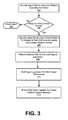
- Figure 3 shows a routine for loading and launching an OOB agent from an online service.
- the service assesses platform's capabilities and status.
- the service may assess platform capabilities through a secure dialogue with the manageability engine.
- the service 122 after downloading the software, if necessary, may initiate the service by rebooting the platform and setting a virtual redirect (IDE-R boot) option to active.
- the service provisions keys/policies for the OOB agent (e.g., TMSL).
- the platform is re-booted, causing the OOB and IB agents to launch.
- the OOB agent may launch the OS in a guest OS environment, where the IB agent is also launched.
- the running IB and OOB agents work with each other to protect the platform against malware attacks.
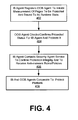
- Figure 4 shows a routine for running malware protection using the IB and OOB agents.
- the IB Agent registers with the OOB Agent (e.g., TMSL) to initiate measurement of system memory pages it wants to protect and bind them to its runtime state.
- OOB Agent e.g., TMSL
- the OOB agent measures the IB agent and protects it. for example, it may perform page protection as described in the afor mentioned incorporated patent application No US2007/0006175 .
- the OOB Agent may measure and protect the pages that contain code and data for the IB agent, among other things.
- the IB agent may not have local knowledge of these protections and may only try to access services that are available to it.
- the OOB agent may also create protected memory channels with the IB security agent.
- the IB agent may contact the service 122 to confirm protected operation. For example, it may do this via an OOB agent created quote (signed hash of the IB agent).
- the service can then provision anti-malware rules/policies (e.g., create or update them) to the IB agent. If the service can verify that the IB agent is protected by the OOB agent, the service may then provision (signed) rules into the protected IB agent via protected memory space (protected by the OOB agent).
- the OOB agent may also store (e.g., in secure non-volatile memory 150) these authentication tokens into a special protected storage area reserved for its own use.
- the IB agent may use the OOB agent services to read memory or set memory event handlers with access permissions for a specific physical or virtual memory page. All accesses to the monitored memory could, for example, cause events to be reported via protected memory channels into the security agent. Unknown events or behaviors could cause the IB agent to take a memory snapshot via the OOB agent and save it, e.g., in protected non-volatile memory, with hashes and audits saved and made available for online service 122.
- the invention provides a system, comprising a platform having a CPU with an associated OS and an out-of-band (OOB) capable manageability engine; and a remote security agent service to be linked to the platform via the manageability engine; wherein an OOB agent is to be executed outside of the OS to protect the platform from malware.
- OOB out-of-band
- the remote service is the provide the OOB agent to the platform.
- the system may comprise an in-band agent to run within the OS.
- Coupled is used to indicate that two or more elements are in direct physical or electrical contact with each other.
- Connected is used to indicate that two or more elements are in direct physical or electrical contact with each other.
- Connected is used to indicate that two or more elements are in direct physical or electrical contact with each other.
- Connected is used to indicate that two or more elements are in direct physical or electrical contact with each other.
- Connected is used to indicate that two or more elements are in direct physical or electrical contact with each other.
- Coupled is used to indicate that two or more elements co-operate or interact with each other, but they may or may not be in direct physical or electrical contact.
- IC semiconductor integrated circuit
- PDA programmable logic arrays
- signal conductor lines are represented with lines. Some may be thicker, to indicate more constituent signal paths, have a number label, to indicate a number of constituent signal paths, and/or have arrows at one or more ends, to indicate primary information flow direction. This, however, should not be construed in a limiting manner. Rather, such added detail may be used in connection with one or more exemplary embodiments to facilitate easier understanding of a circuit. Any represented signal lines, whether or not having additional information, may actually comprise one or more signals that may travel in multiple directions and may be implemented with any suitable type of signal scheme, e.g., digital or analog lines implemented with differential pairs, optical fiber lines, and/or single-ended lines.
Landscapes
- Engineering & Computer Science (AREA)
- Computer Security & Cryptography (AREA)
- Software Systems (AREA)
- Theoretical Computer Science (AREA)
- Computer Hardware Design (AREA)
- Physics & Mathematics (AREA)
- General Engineering & Computer Science (AREA)
- General Physics & Mathematics (AREA)
- Storage Device Security (AREA)
Abstract
In some embodiments, approaches may provide an out-of-band (OOB) agent to protect a platform. The OOB agent may be able to use non-TRS methods to measure and protect an in-band security agent. In some embodiments, a manageability engine can provide out of band connectivity to the in-band and out-of-band security agents and provide access to the system memory resources without having to rely on OS services. This can be used for a trusted anti-malware and remediation service.
Description
- Malware (or malicious code) is a catch-all term used to refer to various types of software that can cause problems or damage a computer. It encompasses viruses, worms, Trojan horses, macro viruses, and backdoors. Malware has evolved to be increasingly more stealthy and targeted. Anti-malware techniques have also evolved to understand and redress the stealthy behavior of malware. Current approaches to anti-malware use tamper-resistant software (TRS) mechanisms to protect their in-band security agents (within the confines of an operating platform operating system) in system memory. Such approaches, however, themselves, are susceptible to software attacks and thus may be flawed. Accordingly, new approaches for protecting platforms against malware may be desired.
- Embodiments of the invention are illustrated by way of example, and not by way of limitation, in the figures of the accompanying drawings in which like reference numerals refer to similar elements.
-
Figure 1 is a block diagram of a platform with an anti-malware solution in accordance with some embodiments. -
Figure 2 shows a more particular implementation of the solution shown inFigure 1 . -
Figure 3 is a flow diagram of a routine for implementing an anti-malware system in accordance with some embodiments. -
Figure 4 is a flow diagram showing a routine for protecting a platform against malware in accordance with some embodiments. - It has been observed that conventional anti-malware solutions do not generally have secure execution environments. They also may not have trusted visibility into the operating system they are trying to secure. For example, traditional anti-malware applications may rely on the operating system (OS), itself, to make system calls in order to get files and file portions from memory. Unfortunately, malware can subvert these channels because they can operate within the OS. Accordingly, new approaches may be desired.
- In some embodiments, approaches may provide an out-of-band (OOB) agent to protect a platform. The OOB agent may be able to use non-TRS methods to measure and protect an in-band security agent. In some embodiments, a manageability engine can provide out of band connectivity to the in-band and out-of-band security agents and provide access to the system memory resources without having to rely on OS services. This can be used for a trusted anti-malware and remediation service.
- Different embodiments of the invention may incorporate any combination of some or all of the following features: (1) protected execution environment and guaranteed execution of a local security agent, (2), trusted systems visibility and eventing capability available to a local security agent , (3) out of band (OOB) channel to interact with a remote security agent, (4) OOB persistent storage for local security agents.
-
Figure 1 shows aplatform 100 with anti-malware protection in accordance with some embodiments. It comprises a CPU 105,system memory 112. BIOS memory 130, OOB (out-of-band)management engine 140, and securenon-vollatile memory 150, coupled as shown and communicatively linked with network 120 (e.g., TCP/IP network such as the world wide web). It should be appreciated that for simplicity, these blocks have been presented as distinct entities but in practice, depending on design concerns and the state of semiconductor technology, may be implemented as separate chips, in a single chip, or in any suitable combination of one or more devices. - The CPU 105 may be implemented with any suitable processor chip (or chips) including but not limited to single core devices, multi-core devices, and so-called system on chip (SOC) implementations. It uses system memory 112 (e.g., combination of cache memory, internal/external random access memory and hard-drive including flash hard-drive memory) to execute software code. When running, the CPU 105 may execute an operating system (OS) 104, such as a Microsoft Windows™ OS, Linux OS, or Apple™ OS, and an
OOB security agent 110, which runs below the OS and is thus said to be out-of-band. The OS has a kernel (OS core), which may incorporate an in-band (IB) security agent 108. together, the IB and OOB security agents cooperate to protect theplatform 100 from malware. - The IB security agent (or simply, IB agent) operates from within the OS kernel and interacts with the OOB security agent (or simply OOB agent) to protect the platform. The IB agent is protected by the OOB agent (when the OOB agent is active) and interacts with an online security agent service 122, which may verify that the IB agent application is in a correct state for the security agent service 122 to provision service-specific assets for the platform. The IB agent may operate in accordance with policies defined by the OOB agent and/or the security agent service. In turn, the IB agent gives context to the OOB agent, e.g., recognizing patterns, registry change requests, etc., which the OOB agent may use for defining or revising the policies.
- With this platform model, the OS is not trusted, i.e., it is assumed to be otherwise accessible by malware. So, the IB agent operates in a distrusted, OS environment. On the other hand, in cooperation with the manageability engine, the OOB agent runs beneath the OS, e.g., in virtualized, trusted memory space that is not part of the OS memory space. It is implemented and controlled via the OOB management engine.
- The OOB management engine may be implemented with any suitable out-of-band scheme. for example, it could be implemented with firmware that is part of a separate chipset function, e.g., manageability engine, or alternatively, it could be implemented in or as a service processor, e.g., that is part of a network interface controller (NIC). Being out-of-band (OOB), it is capable of operating even when the OS is not running.
- In some embodiments, the
OOB management engine 140, through the OOB agent, enforces page-based access control and monitoring policies for memory pages belonging to the protected IB agent 108 executing within the OS context. The OS is un-trusted in this model, so the IB agent is measured and protected by the OOB agent, which derives from the manageability engine. A mechanism of page-based protection is described inU.S. App. Ser. No. 11/395,488 US2007/0006175 ) which is incorporated by reference herein. - The OOB
security agent 110 may be provided to the manageability engine in any suitable manner. For example, it could come on a CD-ROM and stored, for example, in securenon-volatile memory 150, or it could be Part of firmware, incorporated into the manageability engine when it is made or at a later time. It could be self-launching, or it could be enabled and launched via themanageability engine 140 in response to a request from the security agent service 122. - In many cases, it will be loaded for CPU execution in the following manner. Initially, the BIOS is launched and once it initial boot-up tasks are done, it hands off bot-up to the manageability engine, which then loads the OOB agent securely into memory (e.g., via a virtualization and/or other secure method outside of OS space). Once the OOB agent is loaded, it may then initiate the OS, itself, to load and launch.
- In some embodiments, there may be a mechanism for verifying the integrity of the OOB code. for example, a checksum (or other suitable metric) may be stored in the CPU or BIOS and then verified by the CPU when the OOB agent is loaded for execution.
- The OOB agent may also provide memory snapshots, e.g., to be stored in secure non-volatile memory 150 (e.g., hash audits), as well as events for areas of memory that are monitored based on policies from the in-band agent. The OOB agent also may help the in-band agent establish the areas that should be monitored by providing the information from specific CPU registers that are setup by the target OS environment.
- The Security agent service may be implemented in any suitable way from an appropriate, accessible network server. It may be implemented as a remote (cloud) service where off-line anti-malware analysis may be performed on provided memory (e.g., system memory) snapshots. The service may also verify that the IB agent has been appropriately measured by the OOB agent through use of the secure OOB network channel to provision credentials that are protected by the OOB agent.
- The secure OOB channel is used to connect the platform to the security agent service. It comprises the
network interface 144 andvirtual redirect blocks 142 in themanageability engine 140. Thenetwork interface 144 provides a network interface (as with a NIC) for the service 122 to communicate with the platform even when the OS is not active. It also allows themanageability engine 140 to communicate with the service 122 when a malware may have compromised the integrity of the IB channel. - The
virtual redirect 142 provides a channel from themanageability engine 140 and/or service 122 to the CPU and to boot and BIOS functionality. So, for example, it may allow themanageability engine 140 and/or service 122 to emulate a CD Drive or serial link and implement a boot, with the OOB agent interjected as previously described. Thenetwork interface 144 allows for attestation from the IB agent that it is running protected. It also allows the service 122 to receive alerts from the IB agent if/when local IB and/or OOB agent analysis detects an issue that may need remediation. It also allows the service 122 to provision policies to the IB agent and facilitate remediation of the platform after the in-band analysis has been completed. -
Figure 2 shows an exemplary implementation of the platform ofFigure 1 using Intel™ AMT (Active Management Technology), which may be part of Intel's vPro™ technology. For example, chipsets may include a manageability engine (ME)240, which in turn, may include an IDE-R (IDE redirect) feature, along with an OOB net stack (network interface). It also may include a trusted memory services layer (TMSL), which may be used to implement the OOB agent inFigure 1 . Some CPUs may also include a TXT (trusted execution technology) capability, a hardware rooted signature checker that can be used to verify the integrity of the OOB agent (TMSL in this case) before it is launched. - The IDE-R enables network boot operations. It may be used to provide the TMSL for launch via a virtual media image to the local platform. (This may be needed only for the initial download.) In general, the IDE-R provides for redirect serial and IDE communications for a managed client from a management console regardless of the boot and power state of the managed client. The client need only have the AMT capability, a connection to a power source, and a network connection.
- In some embodiments, the secure non-volatile memory may be implemented with an Intel™ AMT 3PDS (third party data storage) device. It may be used to store policies, as well as hashes of audit logs, created by the TMSL. A 3PDS is typically implemented with flash memory. It may be used to store logs to be sent back to the service 122.
-
Figure 3 shows a routine for loading and launching an OOB agent from an online service. At 302, the service assesses platform's capabilities and status. The service may assess platform capabilities through a secure dialogue with the manageability engine. - At 304, it proceeds to 306 if the platform is suitable for IB and OOB security, as discussed above. Otherwise, it may check again at a
later time 303. - At 306, the service 122, after downloading the software, if necessary, may initiate the service by rebooting the platform and setting a virtual redirect (IDE-R boot) option to active. The service provisions keys/policies for the OOB agent (e.g., TMSL). At 308, the platform is re-booted, causing the OOB and IB agents to launch. With such a boot, at 310, the OOB agent may launch the OS in a guest OS environment, where the IB agent is also launched. Finally, at 312, the running IB and OOB agents work with each other to protect the platform against malware attacks.
-
Figure 4 shows a routine for running malware protection using the IB and OOB agents. At 402, the IB Agent registers with the OOB Agent (e.g., TMSL) to initiate measurement of system memory pages it wants to protect and bind them to its runtime state. - At 404, the OOB agent, e.g., using a provisioned manifest, measures the IB agent and protects it. for example, it may perform page protection as described in the afor mentioned incorporated patent application No
US2007/0006175 . The OOB Agent may measure and protect the pages that contain code and data for the IB agent, among other things. The IB agent may not have local knowledge of these protections and may only try to access services that are available to it. The OOB agent may also create protected memory channels with the IB security agent. - At 406, the IB agent may contact the service 122 to confirm protected operation. For example, it may do this via an OOB agent created quote (signed hash of the IB agent). The service can then provision anti-malware rules/policies (e.g., create or update them) to the IB agent. If the service can verify that the IB agent is protected by the OOB agent,
the service may then provision (signed) rules into the protected IB agent via protected memory space (protected by the OOB agent). The OOB agent may also store (e.g., in secure non-volatile memory 150) these authentication tokens into a special protected storage area reserved for its own use. - At 408, the IB agent may use the OOB agent services to read memory or set memory event handlers with access permissions for a specific physical or virtual memory page. All accesses to the monitored memory could, for example, cause events to be reported via protected memory channels into the security agent. Unknown events or behaviors could cause the IB agent to take a memory snapshot via the OOB agent and save it, e.g., in protected non-volatile memory, with hashes and audits saved and made available for online service 122.
- According to another aspect, the invention provides a system, comprising a platform having a CPU with an associated OS and an out-of-band (OOB) capable manageability engine; and a remote security agent service to be linked to the platform via the manageability engine; wherein an OOB agent is to be executed outside of the OS to protect the platform from malware. Preferably the remote service is the provide the OOB agent to the platform. In addition, the system may comprise an in-band agent to run within the OS.
- In the preceding description, numerous specific details have been set forth. However, it is understood that embodiments of the invention may be practiced without these specific details. In other instances, well-known circuits, structures and techniques may have not been shown in detail in order not to obscure an understanding of the description. With this in mind, references to "one embodiment", "an embodiment", "example embodiment", "various embodiments", etc., indicate that the embodiment(s) of the invention so described may include particular features, structures, or characteristics, but not every embodiment necessarily includes the particular features, structures, or characteristics. Further, some embodiments may have some, all, or none of the features described for other embodiments.
- In the preceding description and following claims, the following terms should be construed as follows: The terms "coupled" and "connected," along with their derivatives, may be used. It should be understood that these terms are not intended as synonyms for each other. Rather, in particular embodiments, "connected" is used to indicate that two or more elements are in direct physical or electrical contact with each other. "Coupled" is used to indicate that two or more elements co-operate or interact with each other, but they may or may not be in direct physical or electrical contact.
- The invention is not limited to the embodiments described, but can be practiced with modification and alteration within the spirit and scope of the appended claims. For example, it should be appreciated that the present invention is applicable for use with all types of semiconductor integrated circuit ("IC") chips. Examples of these IC chips include but are not limited to processors, controllers, chip set components, programmable logic arrays (PLA), memory chips, network chips, and the like.
- It should also be appreciated that in some of the drawings, signal conductor lines are represented with lines. Some may be thicker, to indicate more constituent signal paths, have a number label, to indicate a number of constituent signal paths, and/or have arrows at one or more ends, to indicate primary information flow direction. This, however, should not be construed in a limiting manner. Rather, such added detail may be used in connection with one or more exemplary embodiments to facilitate easier understanding of a circuit. Any represented signal lines, whether or not having additional information, may actually comprise one or more signals that may travel in multiple directions and may be implemented with any suitable type of signal scheme, e.g., digital or analog lines implemented with differential pairs, optical fiber lines, and/or single-ended lines.
- It should be appreciated that example sizes/models/values/ranges may have been given, although the present invention is not limited to the same. As manufacturing techniques (e.g., photolithography) mature over time, it is expected that devices of smaller size could be manufactured. In addition, well known power/ground connections to IC chips and other components may or may not be shown within the FIGS, for simplicity of illustration and discussion, and so as not to obscure the invention. Further, arrangements may be shown in block diagram form in order to avoid obscuring the invention, and also in view of the fact that specifics with respect to implementation of such block diagram arrangements are highly dependent upon the platform within which the present invention is to be implemented, i.e., such specifics should be well within purview of one skilled in the art. Where specific details (e.g., circuits) are set forth in order to describe example embodiments of the invention, it should be apparent to one skilled in the art that the invention can be practiced without, or with variation of, these specific details. The description is thus to be regarded as illustrative instead of limiting.
Claims (15)
- A computing platform, comprising:a CPU to execute an operating system (OS) having associated OS memory space; anda manageability engine that can operate when the operating system is not running, the manageability engine to provide an out-of-band (OOB) security agent to protect code in the OS memory space, the OOB security agent to run outside of the OS.
- The platform of claim 1, wherein the OOB agent is to run in the CPU beneath the OS.
- The platform of claim 1, comprising an in-band (IB) agent to run within the OS.
- The platform of claim 3, in which the IB agent is to notify the OOB agent of possible malware activity.
- The platform of claim 3, in which the OOB agent is to protect the IB agent from malware.
- The platform of claim 1, in which the manageability engine comprises a network interface to provide a secure OOB channel to an external security agent service.
- The platform of claim 1, in which the manageability engine is implemented in a chip with firmware for the OOB agent.
- The platform of claim 1, in which the manageability engine is implemented in a network interface controller.
- The platform of claim 1, in which the manageability engine comprises a virtual redirect, which can enable a remote re-boot of the CPU to activate the OOB agent.
- The platform of claim 1, in which the CPU has logic to validate the integrity of the OOB code.
- An apparatus, comprising:one or more chips with a manageability engine and non-volatile memory to store an out-of-band (OOB) security agent to protect a platform against malware.
- The apparatus of claim 11, in which the manageability engine comprises a virtual redirect function to reboot the platform in order to activate the OOB agent.
- The apparatus of claim 11, in which the manageability engine comprises a network interface to provide OOB network connectivity to the platform.
- The apparatus of claim 11, in which the OOB agent is to provide to the non-volatile memory hash audit data from the platform to be analyzed by a remote security service to be linked with the manageability engine via a secure OOB channel.
- The apparatus of claim 11, in which the OOB agent is to run in a layer beneath a system operating system for the platform.
Priority Applications (1)
| Application Number | Priority Date | Filing Date | Title |
|---|---|---|---|
| EP12008387.8A EP2605173A1 (en) | 2009-09-25 | 2010-08-27 | Computer system and method with anti-malware |
Applications Claiming Priority (2)
| Application Number | Priority Date | Filing Date | Title |
|---|---|---|---|
| US27753209P | 2009-09-25 | 2009-09-25 | |
| US12/658,876 US8635705B2 (en) | 2009-09-25 | 2010-02-17 | Computer system and method with anti-malware |
Publications (1)
| Publication Number | Publication Date |
|---|---|
| EP2320346A1 true EP2320346A1 (en) | 2011-05-11 |
Family
ID=43781832
Family Applications (2)
| Application Number | Title | Priority Date | Filing Date |
|---|---|---|---|
| EP10251520A Ceased EP2320346A1 (en) | 2009-09-25 | 2010-08-27 | Computer system and method with anti-malware |
| EP12008387.8A Ceased EP2605173A1 (en) | 2009-09-25 | 2010-08-27 | Computer system and method with anti-malware |
Family Applications After (1)
| Application Number | Title | Priority Date | Filing Date |
|---|---|---|---|
| EP12008387.8A Ceased EP2605173A1 (en) | 2009-09-25 | 2010-08-27 | Computer system and method with anti-malware |
Country Status (5)
| Country | Link |
|---|---|
| US (1) | US8635705B2 (en) |
| EP (2) | EP2320346A1 (en) |
| JP (1) | JP5164285B2 (en) |
| KR (1) | KR101242224B1 (en) |
| CN (1) | CN102035651B (en) |
Families Citing this family (28)
| Publication number | Priority date | Publication date | Assignee | Title |
|---|---|---|---|---|
| US12401619B2 (en) * | 2010-01-26 | 2025-08-26 | Frampton E. Ellis | Computer or microchip with a secure system bios having a separate private network connection to a separate private network |
| EP2410453A1 (en) | 2010-06-21 | 2012-01-25 | Samsung SDS Co. Ltd. | Anti-malware device, server, and method of matching malware patterns |
| KR101274348B1 (en) * | 2010-06-21 | 2013-07-30 | 삼성에스디에스 주식회사 | Anti-Malware Device, Server and Pattern Matching Method |
| KR101279213B1 (en) | 2010-07-21 | 2013-06-26 | 삼성에스디에스 주식회사 | Device and method for providing soc-based anti-malware service, and interface method |
| WO2012119218A1 (en) | 2011-03-09 | 2012-09-13 | Irdeto Canada Corporation | Method and system for dynamic platform security in a device operating system |
| WO2013048434A1 (en) * | 2011-09-30 | 2013-04-04 | Intel Corporation | Out-of-band remote authentication |
| WO2013077867A1 (en) * | 2011-11-22 | 2013-05-30 | Intel Corporation | Access control for non-volatile random access memory across platform agents |
| US9183390B2 (en) * | 2011-12-22 | 2015-11-10 | Intel Corporation | Systems and methods for providing anti-malware protection on storage devices |
| US9270657B2 (en) | 2011-12-22 | 2016-02-23 | Intel Corporation | Activation and monetization of features built into storage subsystems using a trusted connect service back end infrastructure |
| WO2013095568A1 (en) * | 2011-12-22 | 2013-06-27 | Intel Corporation | Systems and methods for providing anti-malware protection and malware forensics on storage devices |
| US20150143071A1 (en) * | 2011-12-30 | 2015-05-21 | Ravi L. Sahita | Memory event notification |
| KR20140116510A (en) * | 2012-03-28 | 2014-10-02 | 인텔 코오퍼레이션 | Conditional limited service grant based on device verification |
| KR101643072B1 (en) | 2012-03-30 | 2016-08-10 | 인텔 코포레이션 | Providing an immutable antivirus payload for internet ready compute nodes |
| US9218462B2 (en) * | 2012-04-25 | 2015-12-22 | Hewlett Packard Enterprise Development Lp | Authentication using lights-out management credentials |
| US9164775B2 (en) * | 2013-01-14 | 2015-10-20 | Dell Products L.P. | Method and apparatus for performing an out of band job |
| JP6203370B2 (en) * | 2013-03-15 | 2017-09-27 | アメリカン メガトレンズ インコーポレイテッド | System and method for web-based virtual media redirection |
| US9424425B2 (en) | 2013-05-31 | 2016-08-23 | Microsoft Technology Licensing, Llc | Protecting anti-malware processes |
| WO2014209269A1 (en) | 2013-06-24 | 2014-12-31 | Intel Corporation | A protected memory view for nested page table access by virtual machine guests |
| US20150215414A1 (en) * | 2014-01-27 | 2015-07-30 | Safe Frontier Llc | Out of band electronic signaling |
| JP6260303B2 (en) | 2014-01-29 | 2018-01-17 | 富士通株式会社 | Arithmetic processing device and control method of arithmetic processing device |
| RU2580030C2 (en) | 2014-04-18 | 2016-04-10 | Закрытое акционерное общество "Лаборатория Касперского" | System and method for distribution virus scan tasks between virtual machines in virtual network |
| US10261489B2 (en) | 2015-04-15 | 2019-04-16 | Indegy Ltd. | Detection of mis-configuration and hostile attacks in industrial control networks using active querying |
| CN107636672B (en) * | 2015-06-02 | 2020-11-17 | 华为技术有限公司 | Electronic device and method in electronic device |
| US9710393B2 (en) | 2015-06-25 | 2017-07-18 | Intel Corporation | Dynamic page table edit control |
| US10515023B2 (en) | 2016-02-29 | 2019-12-24 | Intel Corporation | System for address mapping and translation protection |
| KR102024053B1 (en) * | 2017-12-28 | 2019-09-24 | 주식회사 안랩 | Behavior based real- time access control system and control method |
| WO2021101562A1 (en) | 2019-11-22 | 2021-05-27 | Hewlett-Packard Development Company, L.P. | Security inspections |
| US20250371196A1 (en) * | 2024-05-31 | 2025-12-04 | Fortinet, Inc. | Out-of-band file integrity check |
Citations (2)
| Publication number | Priority date | Publication date | Assignee | Title |
|---|---|---|---|---|
| US20070005992A1 (en) * | 2005-06-30 | 2007-01-04 | Travis Schluessler | Signed manifest for run-time verification of software program identity and integrity |
| US20070006175A1 (en) | 2005-06-30 | 2007-01-04 | David Durham | Intra-partitioning of software components within an execution environment |
Family Cites Families (53)
| Publication number | Priority date | Publication date | Assignee | Title |
|---|---|---|---|---|
| US7254133B2 (en) * | 2002-07-15 | 2007-08-07 | Intel Corporation | Prevention of denial of service attacks |
| JP2004171412A (en) | 2002-11-21 | 2004-06-17 | Ntt Data Corp | Virtual PC rental device, program to be executed by computer, and virtual PC rental system |
| US10110632B2 (en) * | 2003-03-31 | 2018-10-23 | Intel Corporation | Methods and systems for managing security policies |
| US7788669B2 (en) * | 2003-05-02 | 2010-08-31 | Microsoft Corporation | System for isolating first computing environment from second execution environment while sharing resources by copying data from first portion to second portion of memory |
| US20050071668A1 (en) * | 2003-09-30 | 2005-03-31 | Yoon Jeonghee M. | Method, apparatus and system for monitoring and verifying software during runtime |
| US7840763B2 (en) * | 2004-03-12 | 2010-11-23 | Sca Technica, Inc. | Methods and systems for achieving high assurance computing using low assurance operating systems and processes |
| US20050216759A1 (en) * | 2004-03-29 | 2005-09-29 | Rothman Michael A | Virus scanning of input/output traffic of a computer system |
| JP2007226277A (en) | 2004-04-02 | 2007-09-06 | Matsushita Electric Ind Co Ltd | Virtual machine alteration inspection method and virtual machine alteration inspection device |
| US7558966B2 (en) * | 2004-06-09 | 2009-07-07 | Intel Corporation | Notifying remote administrator of platform integrity determination |
| US20060095961A1 (en) * | 2004-10-29 | 2006-05-04 | Priya Govindarajan | Auto-triage of potentially vulnerable network machines |
| US20060095551A1 (en) * | 2004-10-29 | 2006-05-04 | Leung John C K | Extensible service processor architecture |
| US7797749B2 (en) * | 2004-11-03 | 2010-09-14 | Intel Corporation | Defending against worm or virus attacks on networks |
| US7536479B2 (en) * | 2004-11-09 | 2009-05-19 | Intel Corporation | Local and remote network based management of an operating system-independent processor |
| US7409719B2 (en) * | 2004-12-21 | 2008-08-05 | Microsoft Corporation | Computer security management, such as in a virtual machine or hardened operating system |
| US7739517B2 (en) * | 2005-03-31 | 2010-06-15 | Intel Corporation | Hardware-based authentication of a software program |
| US8839450B2 (en) * | 2007-08-02 | 2014-09-16 | Intel Corporation | Secure vault service for software components within an execution environment |
| US20070002994A1 (en) * | 2005-06-30 | 2007-01-04 | Ofir Kanter | Clock jitter estimation apparatus, systems, and methods |
| US20070011491A1 (en) * | 2005-06-30 | 2007-01-11 | Priya Govindarajan | Method for platform independent management of devices using option ROMs |
| US8090919B2 (en) * | 2007-12-31 | 2012-01-03 | Intel Corporation | System and method for high performance secure access to a trusted platform module on a hardware virtualization platform |
| US7822978B2 (en) * | 2005-07-22 | 2010-10-26 | Intel Corporation | Quiescing a manageability engine |
| US20070073800A1 (en) * | 2005-09-29 | 2007-03-29 | Intel Corporation | Provisioning, configuring, and managing a platform in a network |
| US7930728B2 (en) * | 2006-01-06 | 2011-04-19 | Intel Corporation | Mechanism to support rights management in a pre-operating system environment |
| US7917916B2 (en) * | 2006-06-20 | 2011-03-29 | Lenovo (Singapore) Pte. Ltd | IT administrator initiated remote hardware independent imaging technology |
| US20080005359A1 (en) * | 2006-06-30 | 2008-01-03 | Khosravi Hormuzd M | Method and apparatus for OS independent platform based network access control |
| US8286238B2 (en) | 2006-09-29 | 2012-10-09 | Intel Corporation | Method and apparatus for run-time in-memory patching of code from a service processor |
| US7882318B2 (en) * | 2006-09-29 | 2011-02-01 | Intel Corporation | Tamper protection of software agents operating in a vitual technology environment methods and apparatuses |
| US8347378B2 (en) * | 2006-12-12 | 2013-01-01 | International Business Machines Corporation | Authentication for computer system management |
| US20080148390A1 (en) * | 2006-12-14 | 2008-06-19 | Zimmer Vincent J | Secure program launch |
| US8099574B2 (en) * | 2006-12-27 | 2012-01-17 | Intel Corporation | Providing protected access to critical memory regions |
| US20080162809A1 (en) * | 2006-12-28 | 2008-07-03 | Rothman Michael A | Operating system-independent remote accessibility to disk storage |
| US8099786B2 (en) * | 2006-12-29 | 2012-01-17 | Intel Corporation | Embedded mechanism for platform vulnerability assessment |
| US8380987B2 (en) | 2007-01-25 | 2013-02-19 | Microsoft Corporation | Protection agents and privilege modes |
| US8701187B2 (en) * | 2007-03-29 | 2014-04-15 | Intel Corporation | Runtime integrity chain verification |
| US8411868B2 (en) * | 2007-03-30 | 2013-04-02 | Intel Corporation | Intruder traceability for shared security associations |
| US8984265B2 (en) * | 2007-03-30 | 2015-03-17 | Intel Corporation | Server active management technology (AMT) assisted secure boot |
| US20080244758A1 (en) * | 2007-03-30 | 2008-10-02 | Ravi Sahita | Systems and methods for secure association of hardward devices |
| US20080244268A1 (en) * | 2007-03-30 | 2008-10-02 | David Durham | End-to-end network security with traffic visibility |
| US8645704B2 (en) * | 2007-05-07 | 2014-02-04 | Intel Corporation | Protecting caller function from undesired access by callee function |
| US20090007100A1 (en) * | 2007-06-28 | 2009-01-01 | Microsoft Corporation | Suspending a Running Operating System to Enable Security Scanning |
| US20090070574A1 (en) * | 2007-09-06 | 2009-03-12 | Rothman Michael A | Remote diagnostic apparatus |
| US9178884B2 (en) * | 2007-09-07 | 2015-11-03 | Intel Corporation | Enabling access to remote entities in access controlled networks |
| US20090089497A1 (en) * | 2007-09-28 | 2009-04-02 | Yuriy Bulygin | Method of detecting pre-operating system malicious software and firmware using chipset general purpose direct memory access hardware capabilities |
| US7797748B2 (en) * | 2007-12-12 | 2010-09-14 | Vmware, Inc. | On-access anti-virus mechanism for virtual machine architecture |
| US8438618B2 (en) * | 2007-12-21 | 2013-05-07 | Intel Corporation | Provisioning active management technology (AMT) in computer systems |
| US8364973B2 (en) * | 2007-12-31 | 2013-01-29 | Intel Corporation | Dynamic generation of integrity manifest for run-time verification of software program |
| JP2009181373A (en) | 2008-01-31 | 2009-08-13 | Hitachi Ltd | Method of storing/reproducing network reception history, and information processor |
| JP2009187134A (en) | 2008-02-04 | 2009-08-20 | Ricoh Co Ltd | Information processing device, information processing device activation control method, program, and recording medium |
| US8417945B2 (en) * | 2008-06-30 | 2013-04-09 | Intel Corporation | Detection and reporting of virtualization malware in computer processor environments |
| US20100083381A1 (en) * | 2008-09-30 | 2010-04-01 | Khosravi Hormuzd M | Hardware-based anti-virus scan service |
| US8832454B2 (en) * | 2008-12-30 | 2014-09-09 | Intel Corporation | Apparatus and method for runtime integrity verification |
| US8225317B1 (en) * | 2009-04-17 | 2012-07-17 | Symantec Corporation | Insertion and invocation of virtual appliance agents through exception handling regions of virtual machines |
| US8214902B2 (en) * | 2009-06-19 | 2012-07-03 | Intel Corporation | Determination by circuitry of presence of authorized and/or malicious data |
| US8490189B2 (en) * | 2009-09-25 | 2013-07-16 | Intel Corporation | Using chipset-based protected firmware for host software tamper detection and protection |
-
2010
- 2010-02-17 US US12/658,876 patent/US8635705B2/en active Active
- 2010-08-02 JP JP2010173785A patent/JP5164285B2/en active Active
- 2010-08-27 EP EP10251520A patent/EP2320346A1/en not_active Ceased
- 2010-08-27 EP EP12008387.8A patent/EP2605173A1/en not_active Ceased
- 2010-09-20 KR KR1020100092731A patent/KR101242224B1/en active Active
- 2010-09-27 CN CN201010507771.1A patent/CN102035651B/en active Active
Patent Citations (2)
| Publication number | Priority date | Publication date | Assignee | Title |
|---|---|---|---|---|
| US20070005992A1 (en) * | 2005-06-30 | 2007-01-04 | Travis Schluessler | Signed manifest for run-time verification of software program identity and integrity |
| US20070006175A1 (en) | 2005-06-30 | 2007-01-04 | David Durham | Intra-partitioning of software components within an execution environment |
Non-Patent Citations (3)
| Title |
|---|
| "Intel Active Management Technology", INTERNET CITATION, 15 September 2009 (2009-09-15), pages 1 - 11, XP007916810, Retrieved from the Internet <URL:http://en.wikipedia.org/w/index.php?title=Intel_Active_Management_Tec hnology&oldid=314056304> [retrieved on 20100120] * |
| INTEL: "Intel TM Active Management Technology System Defense and Agent Presence Overview", 20070201, no. Version 3.0.4, 1 February 2007 (2007-02-01), pages 1 - 26, XP007910365, Retrieved from the Internet <URL:http://cache-www.intel.com/cd/00/00/32/09/320960_320960.pdf> * |
| JISOO YANG ET AL: "Using Hypervisor to Provide Data Secrecy for User Applications on a Per-Page Basis", 2008 ACM SIGPLAN/SIGOPS INTERNATIONAL CONFERENCE ON VIRTUAL EXECUTION ENVIRONMENTS (VEE '08). MARCH 5 7, 2008, SEATTLE, WA, ACM, US, 1 January 2008 (2008-01-01), pages 71 - 80, XP007911422, ISBN: 978-1-59593-796-4 * |
Also Published As
| Publication number | Publication date |
|---|---|
| US8635705B2 (en) | 2014-01-21 |
| CN102035651B (en) | 2014-08-27 |
| KR101242224B1 (en) | 2013-03-11 |
| JP5164285B2 (en) | 2013-03-21 |
| US20110078799A1 (en) | 2011-03-31 |
| KR20110033798A (en) | 2011-03-31 |
| JP2011070654A (en) | 2011-04-07 |
| EP2605173A1 (en) | 2013-06-19 |
| CN102035651A (en) | 2011-04-27 |
Similar Documents
| Publication | Publication Date | Title |
|---|---|---|
| US8635705B2 (en) | Computer system and method with anti-malware | |
| US11531759B2 (en) | Trusted updates | |
| JP5978365B2 (en) | System and method for performing network access control in a virtual environment | |
| Shabtai et al. | Securing Android-powered mobile devices using SELinux | |
| EP3314861B1 (en) | Detection of malicious thread suspension | |
| US9319380B2 (en) | Below-OS security solution for distributed network endpoints | |
| RU2667598C1 (en) | Control of the presence of the agent for self-restoring | |
| KR101643072B1 (en) | Providing an immutable antivirus payload for internet ready compute nodes | |
| US20170180318A1 (en) | Dual Memory Introspection for Securing Multiple Network Endpoints | |
| US20170090929A1 (en) | Hardware-assisted software verification and secure execution | |
| US9245122B1 (en) | Anti-malware support for firmware | |
| EP3314499B1 (en) | Temporary process deprivileging | |
| EP3029564B1 (en) | System and method for providing access to original routines of boot drivers | |
| US9912528B2 (en) | Security content over a management band | |
| Hudson et al. | Thunderstrike | |
| Alba Cerveró | UEFI-based Malware | |
| Weinstein | A security hygienic smart charger for mobile devices |
Legal Events
| Date | Code | Title | Description |
|---|---|---|---|
| PUAI | Public reference made under article 153(3) epc to a published international application that has entered the european phase |
Free format text: ORIGINAL CODE: 0009012 |
|
| 17P | Request for examination filed |
Effective date: 20100923 |
|
| AK | Designated contracting states |
Kind code of ref document: A1 Designated state(s): AL AT BE BG CH CY CZ DE DK EE ES FI FR GB GR HR HU IE IS IT LI LT LU LV MC MK MT NL NO PL PT RO SE SI SK SM TR |
|
| AX | Request for extension of the european patent |
Extension state: BA ME RS |
|
| STAA | Information on the status of an ep patent application or granted ep patent |
Free format text: STATUS: THE APPLICATION HAS BEEN REFUSED |
|
| 18R | Application refused |
Effective date: 20130105 |