EP2319613A1 - Method for the dry dispersion of nanoparticles and the production of hierarchical structures and coatings - Google Patents
Method for the dry dispersion of nanoparticles and the production of hierarchical structures and coatings Download PDFInfo
- Publication number
- EP2319613A1 EP2319613A1 EP09800098A EP09800098A EP2319613A1 EP 2319613 A1 EP2319613 A1 EP 2319613A1 EP 09800098 A EP09800098 A EP 09800098A EP 09800098 A EP09800098 A EP 09800098A EP 2319613 A1 EP2319613 A1 EP 2319613A1
- Authority
- EP
- European Patent Office
- Prior art keywords
- nanoparticles
- particles
- mixer
- substrate
- dispersion
- Prior art date
- Legal status (The legal status is an assumption and is not a legal conclusion. Google has not performed a legal analysis and makes no representation as to the accuracy of the status listed.)
- Granted
Links
Images





Classifications
-
- B—PERFORMING OPERATIONS; TRANSPORTING
- B01—PHYSICAL OR CHEMICAL PROCESSES OR APPARATUS IN GENERAL
- B01F—MIXING, e.g. DISSOLVING, EMULSIFYING OR DISPERSING
- B01F23/00—Mixing according to the phases to be mixed, e.g. dispersing or emulsifying
- B01F23/60—Mixing solids with solids
-
- C—CHEMISTRY; METALLURGY
- C04—CEMENTS; CONCRETE; ARTIFICIAL STONE; CERAMICS; REFRACTORIES
- C04B—LIME, MAGNESIA; SLAG; CEMENTS; COMPOSITIONS THEREOF, e.g. MORTARS, CONCRETE OR LIKE BUILDING MATERIALS; ARTIFICIAL STONE; CERAMICS; REFRACTORIES; TREATMENT OF NATURAL STONE
- C04B35/00—Shaped ceramic products characterised by their composition; Ceramics compositions; Processing powders of inorganic compounds preparatory to the manufacturing of ceramic products
- C04B35/622—Forming processes; Processing powders of inorganic compounds preparatory to the manufacturing of ceramic products
- C04B35/626—Preparing or treating the powders individually or as batches ; preparing or treating macroscopic reinforcing agents for ceramic products, e.g. fibres; mechanical aspects section B
- C04B35/628—Coating the powders or the macroscopic reinforcing agents
- C04B35/62802—Powder coating materials
- C04B35/62805—Oxide ceramics
- C04B35/62826—Iron group metal oxides
-
- B—PERFORMING OPERATIONS; TRANSPORTING
- B01—PHYSICAL OR CHEMICAL PROCESSES OR APPARATUS IN GENERAL
- B01F—MIXING, e.g. DISSOLVING, EMULSIFYING OR DISPERSING
- B01F31/00—Mixers with shaking, oscillating, or vibrating mechanisms
-
- B—PERFORMING OPERATIONS; TRANSPORTING
- B01—PHYSICAL OR CHEMICAL PROCESSES OR APPARATUS IN GENERAL
- B01J—CHEMICAL OR PHYSICAL PROCESSES, e.g. CATALYSIS OR COLLOID CHEMISTRY; THEIR RELEVANT APPARATUS
- B01J21/00—Catalysts comprising the elements, oxides, or hydroxides of magnesium, boron, aluminium, carbon, silicon, titanium, zirconium, or hafnium
-
- B—PERFORMING OPERATIONS; TRANSPORTING
- B01—PHYSICAL OR CHEMICAL PROCESSES OR APPARATUS IN GENERAL
- B01J—CHEMICAL OR PHYSICAL PROCESSES, e.g. CATALYSIS OR COLLOID CHEMISTRY; THEIR RELEVANT APPARATUS
- B01J35/00—Catalysts, in general, characterised by their form or physical properties
- B01J35/40—Catalysts, in general, characterised by their form or physical properties characterised by dimensions, e.g. grain size
- B01J35/45—Nanoparticles
-
- B—PERFORMING OPERATIONS; TRANSPORTING
- B82—NANOTECHNOLOGY
- B82Y—SPECIFIC USES OR APPLICATIONS OF NANOSTRUCTURES; MEASUREMENT OR ANALYSIS OF NANOSTRUCTURES; MANUFACTURE OR TREATMENT OF NANOSTRUCTURES
- B82Y30/00—Nanotechnology for materials or surface science, e.g. nanocomposites
-
- C—CHEMISTRY; METALLURGY
- C04—CEMENTS; CONCRETE; ARTIFICIAL STONE; CERAMICS; REFRACTORIES
- C04B—LIME, MAGNESIA; SLAG; CEMENTS; COMPOSITIONS THEREOF, e.g. MORTARS, CONCRETE OR LIKE BUILDING MATERIALS; ARTIFICIAL STONE; CERAMICS; REFRACTORIES; TREATMENT OF NATURAL STONE
- C04B35/00—Shaped ceramic products characterised by their composition; Ceramics compositions; Processing powders of inorganic compounds preparatory to the manufacturing of ceramic products
-
- C—CHEMISTRY; METALLURGY
- C04—CEMENTS; CONCRETE; ARTIFICIAL STONE; CERAMICS; REFRACTORIES
- C04B—LIME, MAGNESIA; SLAG; CEMENTS; COMPOSITIONS THEREOF, e.g. MORTARS, CONCRETE OR LIKE BUILDING MATERIALS; ARTIFICIAL STONE; CERAMICS; REFRACTORIES; TREATMENT OF NATURAL STONE
- C04B35/00—Shaped ceramic products characterised by their composition; Ceramics compositions; Processing powders of inorganic compounds preparatory to the manufacturing of ceramic products
- C04B35/622—Forming processes; Processing powders of inorganic compounds preparatory to the manufacturing of ceramic products
- C04B35/626—Preparing or treating the powders individually or as batches ; preparing or treating macroscopic reinforcing agents for ceramic products, e.g. fibres; mechanical aspects section B
- C04B35/628—Coating the powders or the macroscopic reinforcing agents
- C04B35/62889—Coating the powders or the macroscopic reinforcing agents with a discontinuous coating layer
-
- C—CHEMISTRY; METALLURGY
- C04—CEMENTS; CONCRETE; ARTIFICIAL STONE; CERAMICS; REFRACTORIES
- C04B—LIME, MAGNESIA; SLAG; CEMENTS; COMPOSITIONS THEREOF, e.g. MORTARS, CONCRETE OR LIKE BUILDING MATERIALS; ARTIFICIAL STONE; CERAMICS; REFRACTORIES; TREATMENT OF NATURAL STONE
- C04B35/00—Shaped ceramic products characterised by their composition; Ceramics compositions; Processing powders of inorganic compounds preparatory to the manufacturing of ceramic products
- C04B35/622—Forming processes; Processing powders of inorganic compounds preparatory to the manufacturing of ceramic products
- C04B35/626—Preparing or treating the powders individually or as batches ; preparing or treating macroscopic reinforcing agents for ceramic products, e.g. fibres; mechanical aspects section B
- C04B35/628—Coating the powders or the macroscopic reinforcing agents
- C04B35/62892—Coating the powders or the macroscopic reinforcing agents with a coating layer consisting of particles
-
- C—CHEMISTRY; METALLURGY
- C09—DYES; PAINTS; POLISHES; NATURAL RESINS; ADHESIVES; COMPOSITIONS NOT OTHERWISE PROVIDED FOR; APPLICATIONS OF MATERIALS NOT OTHERWISE PROVIDED FOR
- C09C—TREATMENT OF INORGANIC MATERIALS, OTHER THAN FIBROUS FILLERS, TO ENHANCE THEIR PIGMENTING OR FILLING PROPERTIES ; PREPARATION OF CARBON BLACK ; PREPARATION OF INORGANIC MATERIALS WHICH ARE NO SINGLE CHEMICAL COMPOUNDS AND WHICH ARE MAINLY USED AS PIGMENTS OR FILLERS
- C09C1/00—Treatment of specific inorganic materials other than fibrous fillers; Preparation of carbon black
- C09C1/40—Compounds of aluminium
- C09C1/407—Aluminium oxides or hydroxides
-
- C—CHEMISTRY; METALLURGY
- C09—DYES; PAINTS; POLISHES; NATURAL RESINS; ADHESIVES; COMPOSITIONS NOT OTHERWISE PROVIDED FOR; APPLICATIONS OF MATERIALS NOT OTHERWISE PROVIDED FOR
- C09C—TREATMENT OF INORGANIC MATERIALS, OTHER THAN FIBROUS FILLERS, TO ENHANCE THEIR PIGMENTING OR FILLING PROPERTIES ; PREPARATION OF CARBON BLACK ; PREPARATION OF INORGANIC MATERIALS WHICH ARE NO SINGLE CHEMICAL COMPOUNDS AND WHICH ARE MAINLY USED AS PIGMENTS OR FILLERS
- C09C3/00—Treatment in general of inorganic materials, other than fibrous fillers, to enhance their pigmenting or filling properties
- C09C3/04—Physical treatment, e.g. grinding or treatment with ultrasonic vibrations
-
- C—CHEMISTRY; METALLURGY
- C09—DYES; PAINTS; POLISHES; NATURAL RESINS; ADHESIVES; COMPOSITIONS NOT OTHERWISE PROVIDED FOR; APPLICATIONS OF MATERIALS NOT OTHERWISE PROVIDED FOR
- C09C—TREATMENT OF INORGANIC MATERIALS, OTHER THAN FIBROUS FILLERS, TO ENHANCE THEIR PIGMENTING OR FILLING PROPERTIES ; PREPARATION OF CARBON BLACK ; PREPARATION OF INORGANIC MATERIALS WHICH ARE NO SINGLE CHEMICAL COMPOUNDS AND WHICH ARE MAINLY USED AS PIGMENTS OR FILLERS
- C09C3/00—Treatment in general of inorganic materials, other than fibrous fillers, to enhance their pigmenting or filling properties
- C09C3/06—Treatment with inorganic compounds
- C09C3/063—Coating
-
- D—TEXTILES; PAPER
- D01—NATURAL OR MAN-MADE THREADS OR FIBRES; SPINNING
- D01F—CHEMICAL FEATURES IN THE MANUFACTURE OF ARTIFICIAL FILAMENTS, THREADS, FIBRES, BRISTLES OR RIBBONS; APPARATUS SPECIALLY ADAPTED FOR THE MANUFACTURE OF CARBON FILAMENTS
- D01F8/00—Conjugated, i.e. bi- or multicomponent, artificial filaments or the like; Manufacture thereof
-
- B—PERFORMING OPERATIONS; TRANSPORTING
- B01—PHYSICAL OR CHEMICAL PROCESSES OR APPARATUS IN GENERAL
- B01F—MIXING, e.g. DISSOLVING, EMULSIFYING OR DISPERSING
- B01F33/00—Other mixers; Mixing plants; Combinations of mixers
- B01F33/25—Mixers with loose mixing elements, e.g. loose balls in a receptacle
- B01F33/251—Mixers with loose mixing elements, e.g. loose balls in a receptacle using balls as loose mixing element
-
- B—PERFORMING OPERATIONS; TRANSPORTING
- B01—PHYSICAL OR CHEMICAL PROCESSES OR APPARATUS IN GENERAL
- B01J—CHEMICAL OR PHYSICAL PROCESSES, e.g. CATALYSIS OR COLLOID CHEMISTRY; THEIR RELEVANT APPARATUS
- B01J23/00—Catalysts comprising metals or metal oxides or hydroxides, not provided for in group B01J21/00
- B01J23/70—Catalysts comprising metals or metal oxides or hydroxides, not provided for in group B01J21/00 of the iron group metals or copper
- B01J23/74—Iron group metals
-
- B—PERFORMING OPERATIONS; TRANSPORTING
- B01—PHYSICAL OR CHEMICAL PROCESSES OR APPARATUS IN GENERAL
- B01J—CHEMICAL OR PHYSICAL PROCESSES, e.g. CATALYSIS OR COLLOID CHEMISTRY; THEIR RELEVANT APPARATUS
- B01J23/00—Catalysts comprising metals or metal oxides or hydroxides, not provided for in group B01J21/00
- B01J23/70—Catalysts comprising metals or metal oxides or hydroxides, not provided for in group B01J21/00 of the iron group metals or copper
- B01J23/76—Catalysts comprising metals or metal oxides or hydroxides, not provided for in group B01J21/00 of the iron group metals or copper combined with metals, oxides or hydroxides provided for in groups B01J23/02 - B01J23/36
- B01J23/80—Catalysts comprising metals or metal oxides or hydroxides, not provided for in group B01J21/00 of the iron group metals or copper combined with metals, oxides or hydroxides provided for in groups B01J23/02 - B01J23/36 with zinc, cadmium or mercury
-
- B—PERFORMING OPERATIONS; TRANSPORTING
- B01—PHYSICAL OR CHEMICAL PROCESSES OR APPARATUS IN GENERAL
- B01J—CHEMICAL OR PHYSICAL PROCESSES, e.g. CATALYSIS OR COLLOID CHEMISTRY; THEIR RELEVANT APPARATUS
- B01J37/00—Processes, in general, for preparing catalysts; Processes, in general, for activation of catalysts
- B01J37/04—Mixing
-
- C—CHEMISTRY; METALLURGY
- C01—INORGANIC CHEMISTRY
- C01P—INDEXING SCHEME RELATING TO STRUCTURAL AND PHYSICAL ASPECTS OF SOLID INORGANIC COMPOUNDS
- C01P2002/00—Crystal-structural characteristics
- C01P2002/80—Crystal-structural characteristics defined by measured data other than those specified in group C01P2002/70
- C01P2002/82—Crystal-structural characteristics defined by measured data other than those specified in group C01P2002/70 by IR- or Raman-data
-
- C—CHEMISTRY; METALLURGY
- C01—INORGANIC CHEMISTRY
- C01P—INDEXING SCHEME RELATING TO STRUCTURAL AND PHYSICAL ASPECTS OF SOLID INORGANIC COMPOUNDS
- C01P2004/00—Particle morphology
- C01P2004/01—Particle morphology depicted by an image
- C01P2004/03—Particle morphology depicted by an image obtained by SEM
-
- C—CHEMISTRY; METALLURGY
- C01—INORGANIC CHEMISTRY
- C01P—INDEXING SCHEME RELATING TO STRUCTURAL AND PHYSICAL ASPECTS OF SOLID INORGANIC COMPOUNDS
- C01P2004/00—Particle morphology
- C01P2004/60—Particles characterised by their size
- C01P2004/64—Nanometer sized, i.e. from 1-100 nanometer
-
- C—CHEMISTRY; METALLURGY
- C04—CEMENTS; CONCRETE; ARTIFICIAL STONE; CERAMICS; REFRACTORIES
- C04B—LIME, MAGNESIA; SLAG; CEMENTS; COMPOSITIONS THEREOF, e.g. MORTARS, CONCRETE OR LIKE BUILDING MATERIALS; ARTIFICIAL STONE; CERAMICS; REFRACTORIES; TREATMENT OF NATURAL STONE
- C04B2235/00—Aspects relating to ceramic starting mixtures or sintered ceramic products
- C04B2235/02—Composition of constituents of the starting material or of secondary phases of the final product
- C04B2235/30—Constituents and secondary phases not being of a fibrous nature
- C04B2235/32—Metal oxides, mixed metal oxides, or oxide-forming salts thereof, e.g. carbonates, nitrates, (oxy)hydroxides, chlorides
- C04B2235/3217—Aluminum oxide or oxide forming salts thereof, e.g. bauxite, alpha-alumina
-
- C—CHEMISTRY; METALLURGY
- C04—CEMENTS; CONCRETE; ARTIFICIAL STONE; CERAMICS; REFRACTORIES
- C04B—LIME, MAGNESIA; SLAG; CEMENTS; COMPOSITIONS THEREOF, e.g. MORTARS, CONCRETE OR LIKE BUILDING MATERIALS; ARTIFICIAL STONE; CERAMICS; REFRACTORIES; TREATMENT OF NATURAL STONE
- C04B2235/00—Aspects relating to ceramic starting mixtures or sintered ceramic products
- C04B2235/02—Composition of constituents of the starting material or of secondary phases of the final product
- C04B2235/30—Constituents and secondary phases not being of a fibrous nature
- C04B2235/32—Metal oxides, mixed metal oxides, or oxide-forming salts thereof, e.g. carbonates, nitrates, (oxy)hydroxides, chlorides
- C04B2235/3284—Zinc oxides, zincates, cadmium oxides, cadmiates, mercury oxides, mercurates or oxide forming salts thereof
-
- C—CHEMISTRY; METALLURGY
- C04—CEMENTS; CONCRETE; ARTIFICIAL STONE; CERAMICS; REFRACTORIES
- C04B—LIME, MAGNESIA; SLAG; CEMENTS; COMPOSITIONS THEREOF, e.g. MORTARS, CONCRETE OR LIKE BUILDING MATERIALS; ARTIFICIAL STONE; CERAMICS; REFRACTORIES; TREATMENT OF NATURAL STONE
- C04B2235/00—Aspects relating to ceramic starting mixtures or sintered ceramic products
- C04B2235/02—Composition of constituents of the starting material or of secondary phases of the final product
- C04B2235/50—Constituents or additives of the starting mixture chosen for their shape or used because of their shape or their physical appearance
- C04B2235/54—Particle size related information
- C04B2235/5418—Particle size related information expressed by the size of the particles or aggregates thereof
- C04B2235/5436—Particle size related information expressed by the size of the particles or aggregates thereof micrometer sized, i.e. from 1 to 100 micron
-
- Y—GENERAL TAGGING OF NEW TECHNOLOGICAL DEVELOPMENTS; GENERAL TAGGING OF CROSS-SECTIONAL TECHNOLOGIES SPANNING OVER SEVERAL SECTIONS OF THE IPC; TECHNICAL SUBJECTS COVERED BY FORMER USPC CROSS-REFERENCE ART COLLECTIONS [XRACs] AND DIGESTS
- Y10—TECHNICAL SUBJECTS COVERED BY FORMER USPC
- Y10S—TECHNICAL SUBJECTS COVERED BY FORMER USPC CROSS-REFERENCE ART COLLECTIONS [XRACs] AND DIGESTS
- Y10S977/00—Nanotechnology
- Y10S977/70—Nanostructure
- Y10S977/773—Nanoparticle, i.e. structure having three dimensions of 100 nm or less
-
- Y—GENERAL TAGGING OF NEW TECHNOLOGICAL DEVELOPMENTS; GENERAL TAGGING OF CROSS-SECTIONAL TECHNOLOGIES SPANNING OVER SEVERAL SECTIONS OF THE IPC; TECHNICAL SUBJECTS COVERED BY FORMER USPC CROSS-REFERENCE ART COLLECTIONS [XRACs] AND DIGESTS
- Y10—TECHNICAL SUBJECTS COVERED BY FORMER USPC
- Y10S—TECHNICAL SUBJECTS COVERED BY FORMER USPC CROSS-REFERENCE ART COLLECTIONS [XRACs] AND DIGESTS
- Y10S977/00—Nanotechnology
- Y10S977/902—Specified use of nanostructure
-
- Y—GENERAL TAGGING OF NEW TECHNOLOGICAL DEVELOPMENTS; GENERAL TAGGING OF CROSS-SECTIONAL TECHNOLOGIES SPANNING OVER SEVERAL SECTIONS OF THE IPC; TECHNICAL SUBJECTS COVERED BY FORMER USPC CROSS-REFERENCE ART COLLECTIONS [XRACs] AND DIGESTS
- Y10—TECHNICAL SUBJECTS COVERED BY FORMER USPC
- Y10S—TECHNICAL SUBJECTS COVERED BY FORMER USPC CROSS-REFERENCE ART COLLECTIONS [XRACs] AND DIGESTS
- Y10S977/00—Nanotechnology
- Y10S977/902—Specified use of nanostructure
- Y10S977/904—Specified use of nanostructure for medical, immunological, body treatment, or diagnosis
- Y10S977/906—Drug delivery
Definitions
- the present invention relates to a process for the dispersion of synthetic or natural nanoparticles and nanocomposite materials and their applications in several sectors, most notably the sectors of ceramics, coatings, polymers, construction, paints, catalysis, pharmaceuticals and powdery materials in general.
- Nanoparticles are usually used in combination with other compounds, whether nanoparticulate or not, and serve largely as a precursor of the so-called nanocomposites, which are composite-type materials in which one of the elements that comprises it has a nanoscale size, under 100 nm, in at least one of its dimensions. Materials with one dimension of a nanoscale range may have spherical, laminar or fibrillar morphology, among others.
- nanoparticles dispersed in materials matrixes generally introduces significant improvements in the properties of the nanocomposite material and, depending on its nature, can include various electrical, magnetic, optical, catalytic, etc. features.
- the high specific surface of the nanoparticles causes them to agglomerate, thus dramatically reducing their effectiveness and modifying their properties with regard to the dispersed state.
- the agglomeration degree is a factor, therefore, to be avoided in order to achieve the greatest effectiveness of the nanoparticles.
- Most of the different treatments used to achieve dispersion of the nanoparticles are based on the so-called wet-type processes with the presence of a solvent which, when removed, causes the occurrence of the re-agglomeration.
- a standard process consists of the dilution of the nanoparticles in a deagglomerating solvent by using mechanical, magnetic or ultrasonic means.
- a representative example of this type of process is to shake nanoparticles in a liquid medium together with other particles of a size between 200 and 1,000 greater than that of the nanoparticles so as to prevent the formation of agglomerates while introducing a low-pollution after removal of these particles [ JP2005087972 ].
- a more usual process consists of the addition of surfactants such as amphiphilic molecules in aqueous suspensions of nanoparticles in a way that favours the dispersion of the same in cosmetic, pharmaceutical, food, etc. applications [ EP1293248 , W02006106521 or W02008013785 ].
- Another type of process that has recently begun to be used without using solvents are the so-called dry treatments.
- these processes are effective deagglomerations, such as: a) silica nanoparticles by using supercritical fluid techniques with carbon dioxide for modifying the surface of nanoparticles with different additives such as silane treatments, to obtain non-agglomerated nanoparticles [ Li L., Urushihara Y., Matsui J., J. Chem Eng Jap.
- One aspect common to different processes used for dry dispersion is the use of high-energy processes to achieve particle deagglomeration.
- nanoparticles with a modified surface by electric charges and further vacuum drying processing means that suspensions can be prepared in liquid medium which are deposited onto substrates electrically charged with opposite sign and thus form coatings with nanoparticle suspension. [ JP2007016317 ].
- Electrostatic forces are related to the net electric charge at the surface of a particle, being higher for particles of insulating materials.
- the electrostatic charge corresponds to the electric charge accumulated on the surface particles of the agglomerate.
- the forces holding the particles together in the agglomerates are of the van der Waals type.
- the origin of van der Waals forces lies in the molecular interactions due to polarization processes inherent in the material. The van der Waals forces are thus dominant when the distance between two particles is less than 10 -9 m.
- Dispersion among the particles was performed by attrition milling processes in an aqueous medium and the interaction between the two types of particles was determined by X-ray photoelectron spectroscopy and Raman spectroscopy.
- the interaction consisted of a surface reduction of cobalt particles, indicating the presence of an electrochemical reaction between the particles.
- the agglomerates of such particles present an accumulation of electrostatic charge of opposite sign and hence the attraction between these particles can be at the origin of this phenomenon.
- This invention proposes a low shear method for the dry dispersion of nanoparticles on other particles or substrates of varied morphology (circular, planar, in the form of thread) and nature (organic, inorganic and polymeric, etc.), which allows the production of a new class of materials in which particles are scattered over larger particles and even the formation of coatings on various substrates is achieved.
- This process is characterized by the absence of solvents during the same, i.e. it is a dry process that does not require high shear rates.
- the dispersion of nanoparticles in a dry medium object of the present invention is based on altering the cohesive forces that hold together the particles of the same type by means of adhesive forces that occur between particles of a different nature or between particles and a substrate.
- the embodiment of the present invention requires the homogenization by appropriate means of a mixture of two materials where one material is nanoscale or at least one of its dimensions, that is, less than 100 nm. In this manner, a product is obtained consisting of a material with a particle distribution consisting of nanoparticles dispersed and anchored by short-range forces on nanoparticles or particles of different morphology or on substrates.
- a first aspect of the present invention relates to a method for dispersing nanoparticles, of one or more types, in which at least one type of nanoparticle has a size less than 100nm in at least one of its dimensions, in other support particles or in a substrate.
- the process comprises the stirring of said nanoparticles along with other support particles or substrate, in a dry medium.
- the interaction forces between particles are of an adhesive and cohesive type such as electrostatic forces and van der Waals forces.
- the electrostatic forces in particles come from a net charge or excessive charge on the particle.
- the particles can acquire the charge in different ways such as coming into contact with other materials, by corona ions or induction in an external electric field. These are forces that prevail in dielectric materials or poor conductors.
- Particles or clusters of particles in presenting an electrostatic charge of the same nature tend to repel each other while particles of different charges have an attractive force.
- Charged dielectric particles adhere to metal if their resistivity is high [ Bailey A. G., Powder Technology (1984), 37, 71-85 ] whereby their surface is modified generally with organic compounds, for dry paint applications.
- the electrostatic charge is highly dependent on external conditions and in particular the presence of moisture reduces the presence of said charge.
- van der Waals forces The origin of van der Waals forces is a molecular interaction due to different polarization mechanisms.
- the polarization of atoms and molecules is inherent to all materials and is less dependent on external conditions. Because they are short-range interactions, the magnitude of the van der Waals forces is particularly sensitive to the microscopic structure of the surface.
- the surface Regarding nanoparticles or particles with at least one dimension in the nanoscale range, the surface is an important part of all involved atoms, thus polarization phenomena on the surface are predominant.
- the van der Waals forces holding the two nanoparticles together are symmetrical, while the van der Waals forces between two different nanoparticles or between a nanoparticle and a sub-micron or micrometric particle, or between a nanoparticle and a substrate, are not.
- This invention uses these principles for effective dispersion of nanoparticles and particles in which at least one dimension is in nanoscale range, i.e. less than 100nm.
- a first aspect of the present invention refers to a method for dispersing nanoparticles, of the same or different morphology and / or nature, wherein at least one of these types of nanoparticles is characterized in that its size is smaller than 100 nm, at least in one of its dimension. Preferably less than 75 nm, and more preferably between 1 and 50 nm.
- the dispersion is carried out on other support particles or on a substrate and comprises its shaking in a dry medium.
- the nanoparticles are added for dispersion in a proportion lower than 5% by weight relative to the support particles. More preferably in a proportion lower than 3% by weight relative to the support particles and even more preferably between 0.03 and 2% by weight relative to the support particles.
- the dispersion of the aforementioned nanoparticles is characterized by the thickness of the nanoparticle coating on the substrate and this coating preferably being below 100 nm and even more preferably below 50 nm.
- the nanoparticles to be dispersed may present a different morphology to the spherical one, such as laminar or fibrillar morphology, its fundamental characteristic being that at least one dimension is nanoscale, and particularly below 100 nm.
- the nanoparticles or support particles are independently selected from the list comprising inorganic materials such as metal oxides, hydroxides, carbonates, sulphates, phosphates, silicates, borates, aluminates, etc.., organic materials such as thermostable or thermo-melted polymers or resins, etc., or materials made of metal. More preferably the nanoparticles are one or more silicates such as sepiolite, or one or more metal oxides, preferably selected from the list comprising oxides of aluminium, cobalt, copper, tin, nickel, silicon, titanium or zinc. As an example, but not limited thereto, Al 2 O 3 , Co 3 O 4 , CuO, NiO, SiO 2 , SnO 2 , TiO 2 , ZnO, etc.
- inorganic materials such as metal oxides, hydroxides, carbonates, sulphates, phosphates, silicates, borates, aluminates, etc..
- organic materials such as thermostable or
- these nanoparticles can be dispersed singly or in combination with other particles of the same or different nature and of the same size or not.
- the key feature of these combinations is that at least one of these types of nanoparticles is smaller than 100 nm in size, in at least one of its dimensions.
- the support particles are defined as particles that are superior to the nano range and serve to disperse the nanoparticles described above or combinations thereof.
- These are preferably metal oxides such as, but not limited thereto, oxides of aluminium, nickel or zinc. More preferably Al 2 O 3 , NiO or ZnO (See FIGURE 2 ).
- the process of mixing nanoparticles and support particles is performed for example, but not limited thereto, in a Turbula type low speed stirring mixer.
- the mixer is partially charged with particles and nanoparticles to be dispersed so as to promote during homogenization collisions between clusters of different powder materials used.
- Particles and nanoparticles are previously dried in an oven at 60°C overnight, although the process is equally effective without a drying process or after a thermal process at temperatures without the formation of sintering necks between nanoparticles, such as but not limited to 400°C 2 hours.
- the percentage of nanoparticles that can be dispersed on a support particle has a limit that depends on the nature of both materials, surface characteristics, their morphology and their sizes.
- the mixtures resulting from said processes are characterized by an effective dispersion for a range or percentage of nanoparticles.
- FIGURE 4 It being found that, for a superior range along with the dispersed nanoparticles, a ratio of non-dispersed nanoparticle clusters is obtained.
- the process can be characterized depending on the nature of the materials used as well as by showing interactions in the UV range, characteristics of the polarization processes that take place between particles and nanoparticles such as London forces by induced dipoles. See for example FIGURE 5 . Likewise, by modifying the crystalline lattice vibrations when the nanoparticles are dispersed.
- FIGURE 6 By modifying the crystalline lattice vibrations when the nanoparticles are dispersed.
- the dispersion process can be extended to more than one type of nanoparticle being able to combine several types of nanoparticles simultaneously or by developing a more complex hierarchical structure, such as by initially dispersing smaller nanoparticles on larger ones and in turn dispersing this grouping on a support particle.
- the dispersion of different nanoparticles is limited by the nature of the materials used, their surface characteristics, their morphologies and sizes.
- a particular case of dispersion is one in which support particles are replaced by a substrate. Therefore, in another preferred embodiment, the nanoparticles, or combinations thereof, described above, are dispersed in a substrate instead of support particles.
- the substrate used in this process is selected from among a ceramic, glass, polymeric, metallic type material, or composite or hybrid materials. More preferably it is selected from the list comprising alumina, monocrystalline silicon, ceramic glaze, polyamide, polypropylene, a metal alloy such as kovar or any combination thereof.
- the support particles or substrate may have a varied morphology (circular, planar, in the form of thread) and nature (organic, inorganic, polymeric, etc.).
- the dispersion occurs within a mixer where the substrate is located. After the characteristic stirring process of the shaker mixer, there is a deposition of nanoparticles on the substrate surface.
- the nanoparticles used are similar in type to those mentioned in the dispersion on support particles.
- the elimination by air pressure of excess nanoparticles deposited results in one or more layers of nanoparticles dispersed on the surface of the substrate with a thickness usually less than 100 nm (see FIGURE 7 ).
- air pressure eliminates excess nanoparticles dispersed on the substrate.
- the types of materials used as substrates can be of different nature the same as the support particles; some examples are shown in FIGURE 8 .
- the layers of dielectric nanoparticles deposited are of a greater thickness and may even be thicker than 100 nm due to the attractive force exerted by the substrate on such materials.
- removal by dry soft polishing results in the elimination of nanoparticles dispersed while producing a filling of such defects with the nanoparticles (see for example FIGURE 9 ).
- the stirring in this process is carried out in a shaker mixer.
- the shaker mixer can be used with ceramic ball charge, such as alumina balls 2 mm in diameter, so as to facilitate the process.
- the Turbula type shaker mixer can be substituted with another type of mixer such as for example a V powder mixer, a drum mixer, a free drop mixer, a concrete mixer type, an Eirich type intensive mixer, or any mixer with features similar to those referred, regardless of the brand name.
- the resulting dispersion of the process described is subjected to thermal treatment.
- one aspect of the present invention is directed to the dispersion of nanoparticles on support particles or substrate obtainable by the method described, as well as nanostructures with a hierarchical structure obtainable once the dispersions have undergone thermal treatment.
- a final aspect of the present invention relates to the use of the dispersion of nanoparticles on support particles or substrate or of the nanostructures in different applications.
- a family of applications consists of those in which the support particle forms the final compound matrix, or at least a constituent of said matrix.
- the nanoparticles are added to the matrix in the process of shaping the material and the high degree of dispersion achieved promotes the dispersion of nanoparticles in the final nanocomposite.
- the existing agglomerated nanoparticles are added to the nanocomposite along with the dispersed nanoparticles.
- the fluidity of the mixture helps the handling, dosing and processing of nanoparticles that would otherwise be difficult.
- Another type of application is obtaining products through subsequent thermal treatments leading either to the anchoring of the nanoparticles by partial reaction at the interface or the formation of a nanoscale coating on the support particles or the substrate. The thermal process required will be determined by the corresponding equilibrium phase diagrams and kinetically activated by the high surface reactivity of the nanoparticles. These processes thus serve to obtain materials that are not possible by other techniques or require complex techniques to obtain them.
- Products obtained include hierarchical structures consisting of nanoparticles dispersed on the outside of support particles or substrates, anchored by an interface of a different chemical nature or by the formation of a new compound consisting of a coating embedded in the support particle or substrate, this coating being characterized in that it is of a nano type. These materials thus obtained can be used in new processes of forming composite and nanocomposite materials.
- the dispersions obtained can be used in various industry sectors such as ceramics, coatings, polymers, construction, paints, catalysts, pharmaceuticals and powdery materials in general.
- Example 1 A method for obtaining Co 3 O 4 nanoparticles dispersed on Al 2 O 3 support particles.
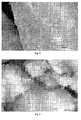
- the container was emptied and the resulting mixture showed an effective dispersion Co 3 O 4 nanoparticles on the Al 2 O 3 support particles, as shown in Figure 1 .
- an effective dispersion was obtained according to the reflectance curve in Figure 4 .
- non-dispersed agglomerates are obtained along with the dispersed nanoparticles.
- Example 2 A method for obtaining sepiolite nanoparticles dispersed on a substrate of glass fibre in the form of thread.
- Example 3 A method for obtaining NiO nanoparticles dispersed on a monocrystalline Si substrate with native oxide layer.
- a flat monocrystalline Si substrate with a 2 cm 2 surface area was fixed by means of adhesive tape on the inside of the lid of the closed container used in the Turbula type shaker mixer. 1 gram of NiO nanoparticles smaller than 20 nm is introduced into the container. The mixture was stirred at a speed of 42 rpm for 3 minutes. Once the substrate had been removed, excess nanoparticles deposited on the surface were removed using a compressed air pistol at 4 bar pressure. The thickness of the layer of dispersed NiO nanoparticles was 30 nm determined by ellipsometry.
- Example 4 A method for obtaining dispersion of sepiolite-type fibrillar clay whose fibre diameter is below 50 nm on polyamide particles.
- Example 5 A method for obtaining a cobalt spinel coating on Al 2 O 3 support particles.
- the container was emptied and the resulting mixture placed in an alumina crucible of 99% underwent a thermal treatment at 1,000 °C for 2 hours using a heating rate of 5 °C / min. and cooling according to the oven.
- the final product was characterized by a coating of alumina particles consisting of a spinel type crystal structure corresponding to a zinc and cobalt aluminate.
- the colour intensity determined by CieLab coordinates showed a difference in tone less than a 4- ⁇ E as regards to a commercial pigment.
- the pigment described in this example uses only 20% by weight of cobalt necessary to obtain the commercial pigment.
Landscapes
- Chemical & Material Sciences (AREA)
- Engineering & Computer Science (AREA)
- Organic Chemistry (AREA)
- Ceramic Engineering (AREA)
- Manufacturing & Machinery (AREA)
- Materials Engineering (AREA)
- Structural Engineering (AREA)
- Chemical Kinetics & Catalysis (AREA)
- Inorganic Chemistry (AREA)
- Nanotechnology (AREA)
- Crystallography & Structural Chemistry (AREA)
- General Physics & Mathematics (AREA)
- Condensed Matter Physics & Semiconductors (AREA)
- Composite Materials (AREA)
- Physics & Mathematics (AREA)
- General Chemical & Material Sciences (AREA)
- Textile Engineering (AREA)
- Pigments, Carbon Blacks, Or Wood Stains (AREA)
- Paints Or Removers (AREA)
- Compositions Of Macromolecular Compounds (AREA)
- Surface Treatment Of Glass Fibres Or Filaments (AREA)
- Compounds Of Alkaline-Earth Elements, Aluminum Or Rare-Earth Metals (AREA)
- Application Of Or Painting With Fluid Materials (AREA)
- Glanulating (AREA)
- Mixers With Rotating Receptacles And Mixers With Vibration Mechanisms (AREA)
- Silicon Compounds (AREA)
Abstract
Description
- The present invention relates to a process for the dispersion of synthetic or natural nanoparticles and nanocomposite materials and their applications in several sectors, most notably the sectors of ceramics, coatings, polymers, construction, paints, catalysis, pharmaceuticals and powdery materials in general.
- The use of nanoparticles is growing dramatically in different industry areas. The unstoppable rise in applications in recent years is based on a growing availability of different types of nanoparticles of an oxidic or non-oxidic nature, with an organic or inorganic structure, and obtained in a synthetic or extractive way. Nanoparticles are usually used in combination with other compounds, whether nanoparticulate or not, and serve largely as a precursor of the so-called nanocomposites, which are composite-type materials in which one of the elements that comprises it has a nanoscale size, under 100 nm, in at least one of its dimensions. Materials with one dimension of a nanoscale range may have spherical, laminar or fibrillar morphology, among others. The addition of nanoparticles dispersed in materials matrixes generally introduces significant improvements in the properties of the nanocomposite material and, depending on its nature, can include various electrical, magnetic, optical, catalytic, etc. features. The high specific surface of the nanoparticles causes them to agglomerate, thus dramatically reducing their effectiveness and modifying their properties with regard to the dispersed state. The agglomeration degree is a factor, therefore, to be avoided in order to achieve the greatest effectiveness of the nanoparticles. Most of the different treatments used to achieve dispersion of the nanoparticles are based on the so-called wet-type processes with the presence of a solvent which, when removed, causes the occurrence of the re-agglomeration. In many cases, the solvents used are not environmentally friendly. A standard process consists of the dilution of the nanoparticles in a deagglomerating solvent by using mechanical, magnetic or ultrasonic means. A representative example of this type of process is to shake nanoparticles in a liquid medium together with other particles of a size between 200 and 1,000 greater than that of the nanoparticles so as to prevent the formation of agglomerates while introducing a low-pollution after removal of these particles [
JP2005087972 - A more usual process consists of the addition of surfactants such as amphiphilic molecules in aqueous suspensions of nanoparticles in a way that favours the dispersion of the same in cosmetic, pharmaceutical, food, etc. applications [
EP1293248 ,W02006106521 orW02008013785 ]. - Another type of process that has recently begun to be used without using solvents are the so-called dry treatments. Examples of these processes are effective deagglomerations, such as: a) silica nanoparticles by using supercritical fluid techniques with carbon dioxide for modifying the surface of nanoparticles with different additives such as silane treatments, to obtain non-agglomerated nanoparticles [Li L., Urushihara Y., Matsui J., J. Chem Eng Jap. (2007) 40, 11, 993-998]; b) submicron particles, greater than 100 nm, deposited on larger organic particles produced by using high shear rotor using speeds greater than 50 ms-1 [
W02007112805 ]; c) coatings of inorganic particles with organic particles that serve as a polymer matrix are achieved due to the effects of shear stress; and d) similar coatings of two or more components are produced using short intense thermal cycles to cause a fusion of polymer particles that serve as a matrix [US20040181 09 ]. - One aspect common to different processes used for dry dispersion is the use of high-energy processes to achieve particle deagglomeration.
- One field of application of dispersed nanoparticles is the formation of coatings in the form of thin films or thick films on specific substrates. In these processes, the dispersion of nanoparticles requires the use of solvents and surface-modifying agents. The use of inorganic nanoparticle dispersions with organic elements such as polymers or waxes enables, by applying electrostatic or magnetic fields, the formation of columnar structure coatings on substrates such as wood, textiles, plastics, paper, leather, glass, ceramics and metals [
W02006084413 ]. The use of nanoparticles based on talc, calcium carbonate, silica clay and plastic in a suspension can be used to form barrier coatings on cellulosic or inorganic material substrates [W02004074574 ]. Nanoparticles with a modified surface by electric charges and further vacuum drying processing means that suspensions can be prepared in liquid medium which are deposited onto substrates electrically charged with opposite sign and thus form coatings with nanoparticle suspension. [JP2007016317 - From a general point of view, the processes used to date to disperse nanoparticles are based on changing the surface characteristics of nanoparticles to prevent these from agglomerating. The main forces that occur between particles are of a cohesive type (if it occurs between the particles of the same material) or adhesive type (if they exist between different materials or with a substrate). The major forces contributing to this type of particle interactions are electrostatic forces and van der Waals forces [Feng, J. Q., and Hays, D. A. Powder Technology (2003) 135-136, 65-75]. Electrostatic forces are related to the net electric charge at the surface of a particle, being higher for particles of insulating materials. For agglomerated particles, or nanoparticles, the electrostatic charge corresponds to the electric charge accumulated on the surface particles of the agglomerate. On the contrary, the forces holding the particles together in the agglomerates are of the van der Waals type. The origin of van der Waals forces lies in the molecular interactions due to polarization processes inherent in the material. The van der Waals forces are thus dominant when the distance between two particles is less than 10-9m.
- The experiments relating to this invention have their origin in the search of physical and chemical phenomena that give rise to a ferromagnetic type interface at room temperature in materials among submicron particles of ZnO and CO3O4 which possess diamagnetic and paramagnetic responses respectively at said temperature [Martín-González, M. S., Fernandez, J.F., Rubio-Marcos, F., Lorite, I., Costa-Kramer, J. L., Quesada, A., Bañares, M. A., Fierro, J. L. G., Journal of Applied Physics (2008), 103, 083905]. Dispersion among the particles was performed by attrition milling processes in an aqueous medium and the interaction between the two types of particles was determined by X-ray photoelectron spectroscopy and Raman spectroscopy. The interaction consisted of a surface reduction of cobalt particles, indicating the presence of an electrochemical reaction between the particles. The agglomerates of such particles present an accumulation of electrostatic charge of opposite sign and hence the attraction between these particles can be at the origin of this phenomenon.
- This invention proposes a low shear method for the dry dispersion of nanoparticles on other particles or substrates of varied morphology (circular, planar, in the form of thread) and nature (organic, inorganic and polymeric, etc.), which allows the production of a new class of materials in which particles are scattered over larger particles and even the formation of coatings on various substrates is achieved. This process is characterized by the absence of solvents during the same, i.e. it is a dry process that does not require high shear rates.
- The dispersion of nanoparticles in a dry medium object of the present invention is based on altering the cohesive forces that hold together the particles of the same type by means of adhesive forces that occur between particles of a different nature or between particles and a substrate. The embodiment of the present invention requires the homogenization by appropriate means of a mixture of two materials where one material is nanoscale or at least one of its dimensions, that is, less than 100 nm. In this manner, a product is obtained consisting of a material with a particle distribution consisting of nanoparticles dispersed and anchored by short-range forces on nanoparticles or particles of different morphology or on substrates. Depending on the characteristics of nanocrystalline materials to be dispersed and of the support particles or substrate, and due to the nature of the forces used, dispersion is effectively produced for a given number of nanoparticles. Above the optimum rate of nanoparticles dispersed and in conjunction with them, clusters of nanoparticles mixed with support particles are also obtained. The products thus obtained are used as precursors for the production of nanostructured materials or nanocomposites wherein their processing is part of a dispersion of nanoparticles on the material that will serve as a matrix. A subsequent heat treatment permits either a partial reaction of the nanoparticles with the support or substrate anchoring them effectively, or a new compound consisting of a coating embedded in the support particle or substrate.
- Therefore, a first aspect of the present invention relates to a method for dispersing nanoparticles, of one or more types, in which at least one type of nanoparticle has a size less than 100nm in at least one of its dimensions, in other support particles or in a substrate. The process comprises the stirring of said nanoparticles along with other support particles or substrate, in a dry medium.
- Throughout the description and claims, the word "comprises" and its variations are not intended to exclude other technical features, additives, components or steps. For those skilled in the art, other objects, advantages and characteristics of the invention will emerge in part from the description and in part from the practice of the invention.
- To complement the description being made and in order to help better understand the characteristics of the invention, according to a detailed description thereof, a set of drawings is attached as an integral part of this description for illustrative purposes and without limiting the scope of the invention.
-
-
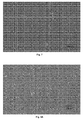
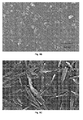
Figure 1 .- Represents micrographs of Field Emission Scanning Electron Microscopy showing CO3O4 nanoparticles dispersed on Al2O3 support particles. -
Figure 2 .- Represents micrographs of Field Emission Scanning Electron Microscopy showing CO3O4 nanoparticles dispersed on support particles of ZnO. -
Figure 3 .- Represents micrographs of Field Emission Scanning Electron Microscopy, showing a) NiO nanoparticles dispersed on support Al2O3 particles, b) SiO2 nanoparticles dispersed on a polyamide support particle, c) sepiolite type fibrillar clay fibres with a diameter below 50 nm dispersed on polyamide support particles. -
Figure 4 .- Shows the UV reflectance curve based on the weight percentage of Co3O4 nanoparticles dispersed on Al2O3 support particles of an average size of 6 µm. Nonlinearity is observed in the mixture characterized in a first phase for low contents in nanoparticles by a sharp decrease in UV reflectance related to an effective dispersion of nanoparticles and in a second phase for higher nanoparticle content in which nanoparticle clusters coexist along with the dispersed nanoparticles. -
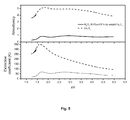
Figure 5 .- Shows a comparison of spectra of agglomerated Co3O4 nanoparticles and a hierarchical structure consisting of 1% by weight of Co3O nanoparticles dispersed on alumina support particles with an average size of 6 µm a) absorbance spectrum, A. and b) Extinction coefficient spectrum. Both spectra show a new level of energy in the range of 2.5-3 eV for the hierarchical structure. -
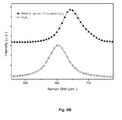
Fig 6 .- a) Shows the variation of Raman shift for the most intense peak of Raman spectra for Co3O4 depending on the percentage by weight of nanoparticles of Co3O4 dispersed on alumina support particles with an average size of 6 µm, b) Raman spectra corresponding to the most intense peak of Co3O4 for agglomerated Co3O4 nanoparticles and a hierarchical structure consisting of 1% by weight of Co3O nanoparticles dispersed on alumina support particles with an average size of 6 µm. -
Figure 7 .- Shows micrographs of Field Emission Scanning Electron Microscopy showing Co3O4 nanoparticles dispersed on a Al2O3 substrate sintered and polished to a mirror. -
Figure 8 .- Shows micrographs of Field Emission Scanning Electron Microscopy, showing a) nanoparticles of NiO dispersed on a monocrystalline Si substrate, b) Co3O4 nanoparticles dispersed on a glassy substrate forming a crystalline glaze stoneware support porcelain, c) sepiolite type fibrillar clay fibres with a diameter below 50 nm functionalized with a hydrogenated tallow trimethyl type protonated quaternary amine, 3MTH, dispersed over a monocrystalline Si substrate, d) sepiolite type fibrillar clay fibres with a diameter less than 50 nm dispersed on a polypropylene substrate, and e) Co3O4 nanoparticles dispersed on a Kovar alloy metallic substrate. -
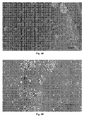
Figure 9 .- Shows micrographs of Field Emission Scanning Electron Microscopy showing a defect of the Al2O3 substrate sintered and polished to a mirror filled with Co3O4 nanoparticles after a dry grinding process of the dispersed layer of nanoparticles. -
Fig.10 .- Represents micrographs of Field Emission Scanning Electron Microscopy showing sepiolite nanoparticles dispersed on a polymetric substrate in thread form, a) 0.2 mm glass fibre, b) 3 mm glass fibre. - The interaction forces between particles are of an adhesive and cohesive type such as electrostatic forces and van der Waals forces. The electrostatic forces in particles come from a net charge or excessive charge on the particle. The particles can acquire the charge in different ways such as coming into contact with other materials, by corona ions or induction in an external electric field. These are forces that prevail in dielectric materials or poor conductors. Particles or clusters of particles in presenting an electrostatic charge of the same nature tend to repel each other while particles of different charges have an attractive force. Charged dielectric particles adhere to metal if their resistivity is high [Bailey A. G., Powder Technology (1984), 37, 71-85] whereby their surface is modified generally with organic compounds, for dry paint applications. The electrostatic charge is highly dependent on external conditions and in particular the presence of moisture reduces the presence of said charge.
- The origin of van der Waals forces is a molecular interaction due to different polarization mechanisms. The polarization of atoms and molecules is inherent to all materials and is less dependent on external conditions. Because they are short-range interactions, the magnitude of the van der Waals forces is particularly sensitive to the microscopic structure of the surface. Regarding nanoparticles or particles with at least one dimension in the nanoscale range, the surface is an important part of all involved atoms, thus polarization phenomena on the surface are predominant. Thus the van der Waals forces holding the two nanoparticles together are symmetrical, while the van der Waals forces between two different nanoparticles or between a nanoparticle and a sub-micron or micrometric particle, or between a nanoparticle and a substrate, are not. This invention uses these principles for effective dispersion of nanoparticles and particles in which at least one dimension is in nanoscale range, i.e. less than 100nm.
- Therefore, a first aspect of the present invention refers to a method for dispersing nanoparticles, of the same or different morphology and / or nature, wherein at least one of these types of nanoparticles is characterized in that its size is smaller than 100 nm, at least in one of its dimension. Preferably less than 75 nm, and more preferably between 1 and 50 nm. The dispersion is carried out on other support particles or on a substrate and comprises its shaking in a dry medium. Preferably the nanoparticles are added for dispersion in a proportion lower than 5% by weight relative to the support particles. More preferably in a proportion lower than 3% by weight relative to the support particles and even more preferably between 0.03 and 2% by weight relative to the support particles. When using a substrate, the dispersion of the aforementioned nanoparticles is characterized by the thickness of the nanoparticle coating on the substrate and this coating preferably being below 100 nm and even more preferably below 50 nm.
- The nanoparticles to be dispersed may present a different morphology to the spherical one, such as laminar or fibrillar morphology, its fundamental characteristic being that at least one dimension is nanoscale, and particularly below 100 nm.
- In a preferred embodiment, the nanoparticles or support particles are independently selected from the list comprising inorganic materials such as metal oxides, hydroxides, carbonates, sulphates, phosphates, silicates, borates, aluminates, etc.., organic materials such as thermostable or thermo-melted polymers or resins, etc., or materials made of metal. More preferably the nanoparticles are one or more silicates such as sepiolite, or one or more metal oxides, preferably selected from the list comprising oxides of aluminium, cobalt, copper, tin, nickel, silicon, titanium or zinc. As an example, but not limited thereto, Al2O3, Co3O4, CuO, NiO, SiO2, SnO2, TiO2, ZnO, etc.
- As described above, these nanoparticles can be dispersed singly or in combination with other particles of the same or different nature and of the same size or not. The key feature of these combinations is that at least one of these types of nanoparticles is smaller than 100 nm in size, in at least one of its dimensions.
- Regarding the support particles, they are defined as particles that are superior to the nano range and serve to disperse the nanoparticles described above or combinations thereof. These are preferably metal oxides such as, but not limited thereto, oxides of aluminium, nickel or zinc. More preferably Al2O3, NiO or ZnO (See
FIGURE 2 ). - The process of mixing nanoparticles and support particles is performed for example, but not limited thereto, in a Turbula type low speed stirring mixer. The mixer is partially charged with particles and nanoparticles to be dispersed so as to promote during homogenization collisions between clusters of different powder materials used. Particles and nanoparticles are previously dried in an oven at 60°C overnight, although the process is equally effective without a drying process or after a thermal process at temperatures without the formation of sintering necks between nanoparticles, such as but not limited to 400°
C 2 hours. Collisions between particles and clusters of nanoparticles generated even in low speed regimes result in the breaking of such clusters and, as a result, the nanoparticles are dispersed on the surface of the support particles giving rise to a new kind of material with a hierarchical structure in which the nanoparticles are supported on the outer surface of the support particles (see for exampleFIGURE 1 ). - The percentage of nanoparticles that can be dispersed on a support particle has a limit that depends on the nature of both materials, surface characteristics, their morphology and their sizes. The mixtures resulting from said processes are characterized by an effective dispersion for a range or percentage of nanoparticles.
FIGURE 4 . It being found that, for a superior range along with the dispersed nanoparticles, a ratio of non-dispersed nanoparticle clusters is obtained. The process can be characterized depending on the nature of the materials used as well as by showing interactions in the UV range, characteristics of the polarization processes that take place between particles and nanoparticles such as London forces by induced dipoles. See for exampleFIGURE 5 . Likewise, by modifying the crystalline lattice vibrations when the nanoparticles are dispersed.FIGURE 6 . - The dispersion process can be extended to more than one type of nanoparticle being able to combine several types of nanoparticles simultaneously or by developing a more complex hierarchical structure, such as by initially dispersing smaller nanoparticles on larger ones and in turn dispersing this grouping on a support particle. In any case, the dispersion of different nanoparticles is limited by the nature of the materials used, their surface characteristics, their morphologies and sizes.
- A particular case of dispersion is one in which support particles are replaced by a substrate. Therefore, in another preferred embodiment, the nanoparticles, or combinations thereof, described above, are dispersed in a substrate instead of support particles. The substrate used in this process is selected from among a ceramic, glass, polymeric, metallic type material, or composite or hybrid materials. More preferably it is selected from the list comprising alumina, monocrystalline silicon, ceramic glaze, polyamide, polypropylene, a metal alloy such as kovar or any combination thereof.
- A particular case is that the support particles or substrate may have a varied morphology (circular, planar, in the form of thread) and nature (organic, inorganic, polymeric, etc.).
- The dispersion occurs within a mixer where the substrate is located. After the characteristic stirring process of the shaker mixer, there is a deposition of nanoparticles on the substrate surface. The nanoparticles used are similar in type to those mentioned in the dispersion on support particles. The elimination by air pressure of excess nanoparticles deposited results in one or more layers of nanoparticles dispersed on the surface of the substrate with a thickness usually less than 100 nm (see
FIGURE 7 ). - Therefore, in a preferred embodiment, air pressure eliminates excess nanoparticles dispersed on the substrate.
- As described above, the types of materials used as substrates can be of different nature the same as the support particles; some examples are shown in
FIGURE 8 . In the case of metallic substrates, it has been observed that the layers of dielectric nanoparticles deposited are of a greater thickness and may even be thicker than 100 nm due to the attractive force exerted by the substrate on such materials. When using substrates which have defects or pores, which can be deliberately induced or produced by different technologies, removal by dry soft polishing results in the elimination of nanoparticles dispersed while producing a filling of such defects with the nanoparticles (see for exampleFIGURE 9 ). - The stirring in this process, both in the case of support particles and substrates, is carried out in a shaker mixer. The shaker mixer can be used with ceramic ball charge, such as
alumina balls 2 mm in diameter, so as to facilitate the process. The Turbula type shaker mixer can be substituted with another type of mixer such as for example a V powder mixer, a drum mixer, a free drop mixer, a concrete mixer type, an Eirich type intensive mixer, or any mixer with features similar to those referred, regardless of the brand name. - In a preferred embodiment, the resulting dispersion of the process described is subjected to thermal treatment.
- For all the above, one aspect of the present invention is directed to the dispersion of nanoparticles on support particles or substrate obtainable by the method described, as well as nanostructures with a hierarchical structure obtainable once the dispersions have undergone thermal treatment.
- The processes described above lead to an effective dispersion of nanoparticles on support particles or substrates. These structures characterized by the processes described above can be used in a wide range of applications in different fields. Therefore, a final aspect of the present invention relates to the use of the dispersion of nanoparticles on support particles or substrate or of the nanostructures in different applications. A family of applications consists of those in which the support particle forms the final compound matrix, or at least a constituent of said matrix. The nanoparticles are added to the matrix in the process of shaping the material and the high degree of dispersion achieved promotes the dispersion of nanoparticles in the final nanocomposite. In those mixtures in which the percentage of nanoparticles is in excess of the effective dispersion limit, the existing agglomerated nanoparticles are added to the nanocomposite along with the dispersed nanoparticles. In the latter case, the fluidity of the mixture helps the handling, dosing and processing of nanoparticles that would otherwise be difficult. Another type of application is obtaining products through subsequent thermal treatments leading either to the anchoring of the nanoparticles by partial reaction at the interface or the formation of a nanoscale coating on the support particles or the substrate. The thermal process required will be determined by the corresponding equilibrium phase diagrams and kinetically activated by the high surface reactivity of the nanoparticles. These processes thus serve to obtain materials that are not possible by other techniques or require complex techniques to obtain them. Products obtained include hierarchical structures consisting of nanoparticles dispersed on the outside of support particles or substrates, anchored by an interface of a different chemical nature or by the formation of a new compound consisting of a coating embedded in the support particle or substrate, this coating being characterized in that it is of a nano type. These materials thus obtained can be used in new processes of forming composite and nanocomposite materials.
- Therefore, the dispersions obtained can be used in various industry sectors such as ceramics, coatings, polymers, construction, paints, catalysts, pharmaceuticals and powdery materials in general.
- The following examples are provided by way of illustration and are not intended to limit the scope of the present invention.
- 5 g of Al2O3 particles with an average particle size of -6 µm and 0.05 grams of Co3O4 nanoparticles with an average size below 50 nm were used. The two ceramic powders were added to a closed tubular nylon container, with a volume of 60 cm3 of a Turbula type shaker mixer, occupying ¼ of the available volume. The container was stirred at a speed of 30 rpm for 5 minutes.
- The container was emptied and the resulting mixture showed an effective dispersion Co3O4 nanoparticles on the Al2O3 support particles, as shown in
Figure 1 . By modifying the percentage of nanoparticles from 0.03% by weight to 5% by weight, an effective dispersion was obtained according to the reflectance curve inFigure 4 . For higher weight percentages of nanoparticles in the mix, non-dispersed agglomerates are obtained along with the dispersed nanoparticles. - 5 grams of fibre glass were used, having an average length of 3mm and a diameter of 10 µm, and 5% by weight of sepiolite fibrillar particles with an average length of 1.5 µM and an average diameter of 40 nm. The two materials were added to a closed tubular nylon container, with a volume of 60 cm3 of Turbula type shaker mixer. The container was stirred at a speed of 60 rpm for 10 minutes. The container was emptied and the resulting mixture showed an effective dispersion of sepiolite nanoparticles on glass fibre yarns as shown in
Figure 10 . - A flat monocrystalline Si substrate with a 2 cm2 surface area was fixed by means of adhesive tape on the inside of the lid of the closed container used in the Turbula type shaker mixer. 1 gram of NiO nanoparticles smaller than 20 nm is introduced into the container. The mixture was stirred at a speed of 42 rpm for 3 minutes. Once the substrate had been removed, excess nanoparticles deposited on the surface were removed using a compressed air pistol at 4 bar pressure. The thickness of the layer of dispersed NiO nanoparticles was 30 nm determined by ellipsometry.
- 1,000 grams of polyamide particles were used with a size of about -200 µm and irregular morphology along with 30 grams of sepiolite with an average length of 1.5 µm and an average diameter of 40 nm. Both materials were introduced into a stainless steel bowl of an Eirich type intensive laboratory mixer occupying about 1/3 of the actual volume. The mixer turned at a speed of 30 rpm with blades that rotate in opposite directions at 40 rpm. The mixing process was performed for 10 minutes. The resulting product consisted of sepiolite fibres dispersed on the surface of the polyamide particles.
- 1 gram of ZnO particles was used with an average particle size of - 400 nm and 3 grams of CO3O4 nanoparticles with an average size below 50 nm. Both ceramic powders were introduced in a closed tubular nylon container with a volume of 60 cm3 of a Turbula type shaker mixer, occupying 1/3 of the available volume. The container was stirred at a speed of 30 rpm for 5 minutes. The container was emptied and 0.25 grams of the resulting mixture were used along with 5 grams of Al2O3 particles with an average particle size of -6 µM. The new mixture was introduced in the container described above occupying ¼ of the available volume. The container was stirred at a speed of 60 rpm for 5 minutes. The container was emptied and the resulting mixture placed in an alumina crucible of 99% underwent a thermal treatment at 1,000 °C for 2 hours using a heating rate of 5 °C / min. and cooling according to the oven. The final product was characterized by a coating of alumina particles consisting of a spinel type crystal structure corresponding to a zinc and cobalt aluminate. The colour intensity determined by CieLab coordinates showed a difference in tone less than a 4-ΔE as regards to a commercial pigment. The pigment described in this example uses only 20% by weight of cobalt necessary to obtain the commercial pigment.
Claims (16)
- A method for the dispersion of nanoparticles with a size less than 100nm in at least one dimension, in support other particles or in a substrate comprising their stirring in a dry medium.
- A method according to claim 1, wherein the nanoparticles are added for dispersion at a rate less than 5% by weight respect to the support particles.
- A method according to claim 1, wherein the excess of nanoparticles dispersed on the substrate is removed by air pressure resulting in a nanoparticle coating with a thickness of less than 100 nm.
- A method according to any of claims 1 to 3, wherein the nanoparticles or the support particles are independently selected from the list of materials comprising inorganic, organic or metallic materials.
- A method according to claim 4, wherein the nanoparticles are of the same or different nature and are selected from the list comprising metal oxides, hydroxides, carbonates, sulphates, phosphates, silicates, borates, aluminates, thermostable polymers, thermo-melted polymers, polymer resins or any combination thereof.
- A method according to claim 5 wherein the nanoparticles are of the same or different nature and are selected from the list comprising sepiolite, alumina oxide, cobalt, copper, tin, nickel, silicon, titanium, zinc or any combination thereof.
- A method according to claim 4, wherein the support particles are aluminium or zinc oxides.
- A method according to claim 1, wherein the substrate is selected from the list comprising ceramic, glass, polymer or metal materials.
- A method according to claim 8, wherein the substrate is selected from the list comprising alumina, monocrystalline silicon, polyamide, polypropylene or kovar alloy.
- A method according to claim 1, wherein the support particles or the substrates can be of a varied morphology.
- A method according to any of claims 1 to 10, wherein the stirring is carried out in a shaker mixer.
- A method according to claim 11, wherein the shaker mixer is selected from a ball charged shaker, a turbula mixer, a V powder mixer, a drum mixer, a free drop type mixer, a concrete mixer type or an Eirich type intensive mixer.
- A method according to any of claims 1 to 12, wherein the resulting dispersion is subjected to thermal treatment.
- The dispersion of nanoparticles on support particles or substrate obtainable by the process according to any of claims 1 to 13.
- Nanostructures with hierarchical structure obtainable by the process according to any of claims 1 to 13.
- Use of the dispersions according to claim 14, or of the nanostructures according to claim 15, for the preparation of materials selected from the list comprising composite materials, ceramics, polymers, paints, cements, catalysts or drugs.
Applications Claiming Priority (2)
| Application Number | Priority Date | Filing Date | Title |
|---|---|---|---|
| ES200802177A ES2332079B1 (en) | 2008-07-22 | 2008-07-22 | PROCEDURE FOR THE DISPERSION OF DRY NANOPARTICLES AND THE OBTAINING OF HIERARCHICAL STRUCTURES AND COATINGS. |
| PCT/ES2009/070299 WO2010010220A1 (en) | 2008-07-22 | 2009-07-21 | Method for the dry dispersion of nanoparticles and the production of hierarchical structures and coatings |
Publications (3)
| Publication Number | Publication Date |
|---|---|
| EP2319613A1 true EP2319613A1 (en) | 2011-05-11 |
| EP2319613A4 EP2319613A4 (en) | 2013-03-06 |
| EP2319613B1 EP2319613B1 (en) | 2017-06-14 |
Family
ID=41501863
Family Applications (1)
| Application Number | Title | Priority Date | Filing Date |
|---|---|---|---|
| EP09800098.7A Active EP2319613B1 (en) | 2008-07-22 | 2009-07-21 | Method for the dry dispersion of nanoparticles |
Country Status (10)
| Country | Link |
|---|---|
| US (1) | US8859002B2 (en) |
| EP (1) | EP2319613B1 (en) |
| JP (1) | JP5667562B2 (en) |
| KR (1) | KR20110040945A (en) |
| CN (1) | CN102099100B (en) |
| BR (1) | BRPI0911023A2 (en) |
| DK (1) | DK2319613T3 (en) |
| ES (1) | ES2332079B1 (en) |
| RU (1) | RU2520477C2 (en) |
| WO (1) | WO2010010220A1 (en) |
Cited By (3)
| Publication number | Priority date | Publication date | Assignee | Title |
|---|---|---|---|---|
| WO2012164054A1 (en) * | 2011-06-02 | 2012-12-06 | Fábrica Nacional De Moneda Y Timbre - Real Casa De La Moneda | Use of raman markers for authenticating security documents |
| RU2541496C2 (en) * | 2013-03-04 | 2015-02-20 | Марат Мухамадеевич Галеев | Method of dispersing nano- or microparticles, their mixing with polymer particles and device for its implementation |
| WO2017041875A1 (en) * | 2015-09-10 | 2017-03-16 | Merck Patent Gmbh | Light-converting material |
Families Citing this family (6)
| Publication number | Priority date | Publication date | Assignee | Title |
|---|---|---|---|---|
| ES2374470B1 (en) * | 2010-08-06 | 2012-12-26 | Consejo Superior De Investigaciones Científicas (Csic) | HIERARCHICALLY ORGANIZED CATALYSTS THROUGH DRY ROAD NANODISPERSION. |
| EP2505618A1 (en) | 2011-04-01 | 2012-10-03 | Fábrica Nacional De Moneda Y Timbre | Use of electromagnetic wave absorbing markers for the aunthentication of security documents |
| KR101814455B1 (en) * | 2015-12-02 | 2018-01-04 | 희성촉매 주식회사 | A three-way catalyst comprising Ph-Rh alloy |
| CN106312057B (en) * | 2016-09-13 | 2020-11-17 | 上海交通大学 | Powder metallurgy preparation method of nano-particle reinforced superfine crystal metal matrix composite material |
| CN109461577B (en) * | 2018-11-01 | 2020-07-17 | 电子科技大学 | Preparation method and application of dielectric energy storage composite material |
| ES2972259B2 (en) | 2022-11-04 | 2024-11-27 | Consejo Superior Investigacion | HIERARCHICAL COMPOSITE MATERIAL OF TITANIUM OXIDE DISPERSED IN MINERAL SUPPORT AND PROCEDURE FOR OBTAINING IT |
Family Cites Families (24)
| Publication number | Priority date | Publication date | Assignee | Title |
|---|---|---|---|---|
| DE3476343D1 (en) * | 1983-04-22 | 1989-03-02 | Mathis Technik | Process and device for feeding a mixer |
| US6756173B2 (en) * | 2000-12-27 | 2004-06-29 | Xerox Corporation | Toner with increased amount of surface additives and increased surface additive adhesion |
| ES2306684T3 (en) | 2001-09-17 | 2008-11-16 | Nanopart-C S.A. | NEW DISPERSABLE COLLOIDAL SYSTEM BASED ON CALIXARENO IN THE FORM OF NANOPARTICLES. |
| US20050227911A1 (en) | 2001-09-28 | 2005-10-13 | Solubest Ltd. | Hydrophilic dispersions of nanoparticles of inclusion complexes of macromolecules |
| US6680279B2 (en) * | 2002-01-24 | 2004-01-20 | General Motors Corporation | Nanostructured catalyst particle/catalyst carrier particle system |
| US7105201B2 (en) | 2002-07-26 | 2006-09-12 | H.B. Fuller Licensing & Financing, Inc. | Versatile processes for preparing and using novel composite particles in powder coating compositions |
| US6798127B2 (en) * | 2002-10-09 | 2004-09-28 | Nano-Proprietary, Inc. | Enhanced field emission from carbon nanotubes mixed with particles |
| US6942897B2 (en) | 2003-02-19 | 2005-09-13 | The Board Of Trustees Of Western Michigan University | Nanoparticle barrier-coated substrate and method for making the same |
| DE10308722A1 (en) * | 2003-02-28 | 2004-09-09 | Degussa Ag | Homogenization of nanoscale powders |
| JP2005087972A (en) | 2003-09-19 | 2005-04-07 | Matsushita Electric Works Ltd | Nanoparticle distribution method |
| WO2005084175A2 (en) * | 2003-10-16 | 2005-09-15 | The Regents Of The University Of California | Nanostructures, nanogrooves, and nanowires |
| JPWO2005040065A1 (en) * | 2003-10-29 | 2007-03-01 | 住友精密工業株式会社 | Method for producing carbon nanotube dispersed composite material |
| US20060058427A1 (en) * | 2004-09-15 | 2006-03-16 | O'neill Julia C | Power-controlled bonding of resin or (co)polymer powder and flake materials |
| CN1268479C (en) * | 2004-10-08 | 2006-08-09 | 天津市德昊科技开发有限公司 | Size distribution method for micro powder |
| CN2788893Y (en) * | 2005-02-07 | 2006-06-21 | 天津德昊超微新材料有限公司 | Ultra fine powder mixing machine |
| WO2006084413A1 (en) | 2005-02-14 | 2006-08-17 | Tex-A-Tec Ag | Method for coating support materials with nanoparticle-containing dispersions |
| KR100741242B1 (en) | 2005-07-05 | 2007-07-19 | 삼성전자주식회사 | Method for Dispersing Nanoparticles and Method for Producing Nanoparticles Thin Film Using the Same |
| DE502006003904D1 (en) * | 2005-09-27 | 2009-07-16 | Eth Zuerich | PROCESS FOR ATTACHING NANOPARTICLES TO SUBSTRATE PARTICLES |
| RU2302371C1 (en) * | 2005-10-05 | 2007-07-10 | Институт химической физики им. Н.Н. Семенова РАН (ИХФ РАН) | Method for producing one-wall carbon nanotube, device for realization of the method and method for producing composite carbon targets |
| DE102006025848A1 (en) * | 2006-03-29 | 2007-10-04 | Byk-Chemie Gmbh | Production of nanoparticles, in particular nanoparticle composites, starting from powder agglomerates |
| CN101089054A (en) * | 2006-06-15 | 2007-12-19 | 山东科技大学 | A method for solid-liquid separation, dispersion and drying of nanomaterials |
| WO2008013785A2 (en) | 2006-07-24 | 2008-01-31 | Singh-Broemer And Company, Inc. | Solid nanoparticle formulation of water insoluble pharmaceutical substances with reduced ostwald ripening |
| US20080152913A1 (en) * | 2006-12-22 | 2008-06-26 | 3M Innovative Properties Company | Method of making compositions including particles |
| WO2009025955A1 (en) * | 2007-08-23 | 2009-02-26 | University Of Virginia Patent Foundation | Immobilized metallic nanoparticles as unique materials for therapeutic and biosensor applications |
-
2008
- 2008-07-22 ES ES200802177A patent/ES2332079B1/en active Active
-
2009
- 2009-07-21 US US13/055,166 patent/US8859002B2/en active Active
- 2009-07-21 DK DK09800098.7T patent/DK2319613T3/en active
- 2009-07-21 CN CN200980128494.9A patent/CN102099100B/en active Active
- 2009-07-21 EP EP09800098.7A patent/EP2319613B1/en active Active
- 2009-07-21 RU RU2011106377/05A patent/RU2520477C2/en active
- 2009-07-21 KR KR1020117004005A patent/KR20110040945A/en not_active Ceased
- 2009-07-21 WO PCT/ES2009/070299 patent/WO2010010220A1/en not_active Ceased
- 2009-07-21 JP JP2011519200A patent/JP5667562B2/en active Active
- 2009-07-21 BR BRPI0911023A patent/BRPI0911023A2/en not_active Application Discontinuation
Cited By (9)
| Publication number | Priority date | Publication date | Assignee | Title |
|---|---|---|---|---|
| WO2012164054A1 (en) * | 2011-06-02 | 2012-12-06 | Fábrica Nacional De Moneda Y Timbre - Real Casa De La Moneda | Use of raman markers for authenticating security documents |
| CN103635331A (en) * | 2011-06-02 | 2014-03-12 | 国家造币印钞厂-皇家造币厂 | Use of Raman markers for authenticating security documents |
| JP2014522330A (en) * | 2011-06-02 | 2014-09-04 | ファブリカ、ナシオナル、デ、モネダ、イ、ティンブレ−レアル、カサ、デ、ラ、モネダ | Using Raman markers to authenticate the authenticity of security documents |
| US9196107B2 (en) | 2011-06-02 | 2015-11-24 | Fábrica Nacional de Moneda y Timbre-Real Casa de la Moneda | Use of Raman markers for authenticating security documents |
| CN103635331B (en) * | 2011-06-02 | 2016-04-06 | 国家造币印钞厂-皇家造币厂 | Uses of Raman Markers for Authenticating Security Documents |
| RU2541496C2 (en) * | 2013-03-04 | 2015-02-20 | Марат Мухамадеевич Галеев | Method of dispersing nano- or microparticles, their mixing with polymer particles and device for its implementation |
| WO2017041875A1 (en) * | 2015-09-10 | 2017-03-16 | Merck Patent Gmbh | Light-converting material |
| US10557081B2 (en) | 2015-09-10 | 2020-02-11 | Merck Patent Gmbh | Light-converting material |
| EP3653686A1 (en) * | 2015-09-10 | 2020-05-20 | Merck Patent GmbH | Light converting material |
Also Published As
| Publication number | Publication date |
|---|---|
| US8859002B2 (en) | 2014-10-14 |
| US20120107405A1 (en) | 2012-05-03 |
| ES2332079A1 (en) | 2010-01-25 |
| KR20110040945A (en) | 2011-04-20 |
| JP2011530394A (en) | 2011-12-22 |
| WO2010010220A1 (en) | 2010-01-28 |
| CN102099100A (en) | 2011-06-15 |
| EP2319613A4 (en) | 2013-03-06 |
| JP5667562B2 (en) | 2015-02-12 |
| RU2011106377A (en) | 2012-08-27 |
| RU2520477C2 (en) | 2014-06-27 |
| EP2319613B1 (en) | 2017-06-14 |
| DK2319613T3 (en) | 2017-09-04 |
| CN102099100B (en) | 2017-08-08 |
| ES2332079B1 (en) | 2010-10-27 |
| BRPI0911023A2 (en) | 2016-10-11 |
Similar Documents
| Publication | Publication Date | Title |
|---|---|---|
| EP2319613B1 (en) | Method for the dry dispersion of nanoparticles | |
| TWI353373B (en) | Composites of inorganic and/or organic micropartic | |
| Barhoum et al. | Effect of cationic and anionic surfactants on the application of calcium carbonate nanoparticles in paper coating | |
| CA2653073C (en) | Composites of inorganic and/or organic microparticles and nano-dolomite particles | |
| KR101945383B1 (en) | Synthesis, capping and dispersion of nanocrystals | |
| CN100364655C (en) | Chemomechanical Preparation of Functional Colloids | |
| US9909011B2 (en) | Method for coating the surface of inorganic solid particles, especially titanium dioxide pigment particles | |
| CN114555719B (en) | Composite particles and methods of manufacturing composite particles | |
| CN101454074B (en) | Production of nanoparticles, especially nanoparticle composites, from powder agglomerates | |
| Joni et al. | Dispersion of amorphous silica nanoparticles via beads milling process and their particle size analysis, hydrophobicity and anti-bacterial activity | |
| JP2004107622A (en) | Covered pigment particle with precipitated calcium carbonate | |
| He et al. | The preparation and electrorheological behavior of bowl-like titanium oxide nanoparticles | |
| WO2008041729A1 (en) | Process for producing dispersion of fine metal compound particles and the dispersion | |
| Jesionowski et al. | The influence of filler modification on its aggregation and dispersion behaviour in silica/PBT composite | |
| US9132482B2 (en) | Method for the dry granulation of nanometric particles | |
| EP3289595B1 (en) | Compositions including blends of hydrophobic and non-hydrophobic inorganic particulate material for use in covering products | |
| TW202239712A (en) | Composite particles and method for producing composite particles | |
| Chen et al. | Effect of boehmite nanorods on the properties of glycidoxypropyl-trimethoxysilane (GPTS) hybrid coatings | |
| US7704604B2 (en) | Silicate coating and method of coating by acoustic excitation | |
| JP5177333B2 (en) | Fine orange pigment, paint and resin composition using the fine orange pigment | |
| JPS63176308A (en) | Zirconia based particle having treated surface and production thereof | |
| Okuyama et al. | Technology innovation in the nanoparticle Project—Synthesis of nanoparticles and Nanocomposites—[Translated] | |
| Sagmeister et al. | In‐situ dispersion of ZrO2 nano‐particles coated with pentacene | |
| Guan et al. | Modification with boehmite-derived alumina nanoparticles enhances mechanical properties of resin | |
| Peng et al. | Surface modification of titanium dioxide for electrophoretic particles |
Legal Events
| Date | Code | Title | Description |
|---|---|---|---|
| PUAI | Public reference made under article 153(3) epc to a published international application that has entered the european phase |
Free format text: ORIGINAL CODE: 0009012 |
|
| 17P | Request for examination filed |
Effective date: 20110222 |
|
| AK | Designated contracting states |
Kind code of ref document: A1 Designated state(s): AT BE BG CH CY CZ DE DK EE ES FI FR GB GR HR HU IE IS IT LI LT LU LV MC MK MT NL NO PL PT RO SE SI SK SM TR |
|
| AX | Request for extension of the european patent |
Extension state: AL BA RS |
|
| DAX | Request for extension of the european patent (deleted) | ||
| A4 | Supplementary search report drawn up and despatched |
Effective date: 20130201 |
|
| RIC1 | Information provided on ipc code assigned before grant |
Ipc: B01J 21/00 20060101ALI20130128BHEP Ipc: B05D 1/00 20060101ALI20130128BHEP Ipc: D01F 8/00 20060101ALI20130128BHEP Ipc: B01F 3/18 20060101AFI20130128BHEP Ipc: C04B 35/00 20060101ALI20130128BHEP |
|
| 17Q | First examination report despatched |
Effective date: 20140225 |
|
| RIC1 | Information provided on ipc code assigned before grant |
Ipc: C04B 35/628 20060101ALI20161117BHEP Ipc: C09C 1/40 20060101ALI20161117BHEP Ipc: B01J 23/74 20060101ALI20161117BHEP Ipc: B01J 35/00 20060101ALI20161117BHEP Ipc: C09C 3/06 20060101ALI20161117BHEP Ipc: B01F 13/00 20060101ALI20161117BHEP Ipc: C09C 3/04 20060101AFI20161117BHEP Ipc: B82Y 30/00 20110101ALI20161117BHEP Ipc: B01J 23/80 20060101ALI20161117BHEP |
|
| REG | Reference to a national code |
Ref country code: DE Ref legal event code: R079 Ref document number: 602009046635 Country of ref document: DE Free format text: PREVIOUS MAIN CLASS: B01F0003180000 Ipc: B01J0037040000 |
|
| GRAP | Despatch of communication of intention to grant a patent |
Free format text: ORIGINAL CODE: EPIDOSNIGR1 |
|
| STAA | Information on the status of an ep patent application or granted ep patent |
Free format text: STATUS: GRANT OF PATENT IS INTENDED |
|
| RIC1 | Information provided on ipc code assigned before grant |
Ipc: C09C 3/04 20060101ALI20161222BHEP Ipc: B01J 37/04 20060101AFI20161222BHEP Ipc: B01J 35/00 20060101ALI20161222BHEP Ipc: B01J 23/74 20060101ALI20161222BHEP Ipc: B01F 13/00 20060101ALI20161222BHEP Ipc: B01J 23/80 20060101ALI20161222BHEP Ipc: C04B 35/628 20060101ALI20161222BHEP Ipc: C09C 3/06 20060101ALI20161222BHEP Ipc: B82Y 30/00 20110101ALI20161222BHEP Ipc: C09C 1/40 20060101ALI20161222BHEP |
|
| INTG | Intention to grant announced |
Effective date: 20170124 |
|
| GRAS | Grant fee paid |
Free format text: ORIGINAL CODE: EPIDOSNIGR3 |
|
| GRAA | (expected) grant |
Free format text: ORIGINAL CODE: 0009210 |
|
| STAA | Information on the status of an ep patent application or granted ep patent |
Free format text: STATUS: THE PATENT HAS BEEN GRANTED |
|
| AK | Designated contracting states |
Kind code of ref document: B1 Designated state(s): AT BE BG CH CY CZ DE DK EE ES FI FR GB GR HR HU IE IS IT LI LT LU LV MC MK MT NL NO PL PT RO SE SI SK SM TR |
|
| REG | Reference to a national code |
Ref country code: GB Ref legal event code: FG4D |
|
| REG | Reference to a national code |
Ref country code: CH Ref legal event code: EP Ref country code: AT Ref legal event code: REF Ref document number: 900443 Country of ref document: AT Kind code of ref document: T Effective date: 20170615 |
|
| REG | Reference to a national code |
Ref country code: IE Ref legal event code: FG4D |
|
| REG | Reference to a national code |
Ref country code: DE Ref legal event code: R096 Ref document number: 602009046635 Country of ref document: DE Ref country code: FR Ref legal event code: PLFP Year of fee payment: 9 |
|
| REG | Reference to a national code |
Ref country code: DK Ref legal event code: T3 Effective date: 20170828 |
|
| REG | Reference to a national code |
Ref country code: NL Ref legal event code: MP Effective date: 20170614 |
|
| REG | Reference to a national code |
Ref country code: LT Ref legal event code: MG4D |
|
| PG25 | Lapsed in a contracting state [announced via postgrant information from national office to epo] |
Ref country code: NO Free format text: LAPSE BECAUSE OF FAILURE TO SUBMIT A TRANSLATION OF THE DESCRIPTION OR TO PAY THE FEE WITHIN THE PRESCRIBED TIME-LIMIT Effective date: 20170914 Ref country code: GR Free format text: LAPSE BECAUSE OF FAILURE TO SUBMIT A TRANSLATION OF THE DESCRIPTION OR TO PAY THE FEE WITHIN THE PRESCRIBED TIME-LIMIT Effective date: 20170915 Ref country code: HR Free format text: LAPSE BECAUSE OF FAILURE TO SUBMIT A TRANSLATION OF THE DESCRIPTION OR TO PAY THE FEE WITHIN THE PRESCRIBED TIME-LIMIT Effective date: 20170614 Ref country code: FI Free format text: LAPSE BECAUSE OF FAILURE TO SUBMIT A TRANSLATION OF THE DESCRIPTION OR TO PAY THE FEE WITHIN THE PRESCRIBED TIME-LIMIT Effective date: 20170614 Ref country code: ES Free format text: LAPSE BECAUSE OF FAILURE TO SUBMIT A TRANSLATION OF THE DESCRIPTION OR TO PAY THE FEE WITHIN THE PRESCRIBED TIME-LIMIT Effective date: 20170614 Ref country code: LT Free format text: LAPSE BECAUSE OF FAILURE TO SUBMIT A TRANSLATION OF THE DESCRIPTION OR TO PAY THE FEE WITHIN THE PRESCRIBED TIME-LIMIT Effective date: 20170614 |
|
| REG | Reference to a national code |
Ref country code: AT Ref legal event code: MK05 Ref document number: 900443 Country of ref document: AT Kind code of ref document: T Effective date: 20170614 |
|
| PG25 | Lapsed in a contracting state [announced via postgrant information from national office to epo] |
Ref country code: NL Free format text: LAPSE BECAUSE OF FAILURE TO SUBMIT A TRANSLATION OF THE DESCRIPTION OR TO PAY THE FEE WITHIN THE PRESCRIBED TIME-LIMIT Effective date: 20170614 Ref country code: BG Free format text: LAPSE BECAUSE OF FAILURE TO SUBMIT A TRANSLATION OF THE DESCRIPTION OR TO PAY THE FEE WITHIN THE PRESCRIBED TIME-LIMIT Effective date: 20170914 Ref country code: LV Free format text: LAPSE BECAUSE OF FAILURE TO SUBMIT A TRANSLATION OF THE DESCRIPTION OR TO PAY THE FEE WITHIN THE PRESCRIBED TIME-LIMIT Effective date: 20170614 Ref country code: SE Free format text: LAPSE BECAUSE OF FAILURE TO SUBMIT A TRANSLATION OF THE DESCRIPTION OR TO PAY THE FEE WITHIN THE PRESCRIBED TIME-LIMIT Effective date: 20170614 |
|
| PG25 | Lapsed in a contracting state [announced via postgrant information from national office to epo] |
Ref country code: EE Free format text: LAPSE BECAUSE OF FAILURE TO SUBMIT A TRANSLATION OF THE DESCRIPTION OR TO PAY THE FEE WITHIN THE PRESCRIBED TIME-LIMIT Effective date: 20170614 Ref country code: CZ Free format text: LAPSE BECAUSE OF FAILURE TO SUBMIT A TRANSLATION OF THE DESCRIPTION OR TO PAY THE FEE WITHIN THE PRESCRIBED TIME-LIMIT Effective date: 20170614 Ref country code: SK Free format text: LAPSE BECAUSE OF FAILURE TO SUBMIT A TRANSLATION OF THE DESCRIPTION OR TO PAY THE FEE WITHIN THE PRESCRIBED TIME-LIMIT Effective date: 20170614 Ref country code: RO Free format text: LAPSE BECAUSE OF FAILURE TO SUBMIT A TRANSLATION OF THE DESCRIPTION OR TO PAY THE FEE WITHIN THE PRESCRIBED TIME-LIMIT Effective date: 20170614 Ref country code: AT Free format text: LAPSE BECAUSE OF FAILURE TO SUBMIT A TRANSLATION OF THE DESCRIPTION OR TO PAY THE FEE WITHIN THE PRESCRIBED TIME-LIMIT Effective date: 20170614 |
|
| PG25 | Lapsed in a contracting state [announced via postgrant information from national office to epo] |
Ref country code: IS Free format text: LAPSE BECAUSE OF FAILURE TO SUBMIT A TRANSLATION OF THE DESCRIPTION OR TO PAY THE FEE WITHIN THE PRESCRIBED TIME-LIMIT Effective date: 20171014 Ref country code: SM Free format text: LAPSE BECAUSE OF FAILURE TO SUBMIT A TRANSLATION OF THE DESCRIPTION OR TO PAY THE FEE WITHIN THE PRESCRIBED TIME-LIMIT Effective date: 20170614 Ref country code: PL Free format text: LAPSE BECAUSE OF FAILURE TO SUBMIT A TRANSLATION OF THE DESCRIPTION OR TO PAY THE FEE WITHIN THE PRESCRIBED TIME-LIMIT Effective date: 20170614 |
|
| REG | Reference to a national code |
Ref country code: CH Ref legal event code: PL |
|
| REG | Reference to a national code |
Ref country code: DE Ref legal event code: R097 Ref document number: 602009046635 Country of ref document: DE |
|
| PG25 | Lapsed in a contracting state [announced via postgrant information from national office to epo] |
Ref country code: MC Free format text: LAPSE BECAUSE OF FAILURE TO SUBMIT A TRANSLATION OF THE DESCRIPTION OR TO PAY THE FEE WITHIN THE PRESCRIBED TIME-LIMIT Effective date: 20170614 |
|
| REG | Reference to a national code |
Ref country code: IE Ref legal event code: MM4A |
|
| PLBE | No opposition filed within time limit |
Free format text: ORIGINAL CODE: 0009261 |
|
| STAA | Information on the status of an ep patent application or granted ep patent |
Free format text: STATUS: NO OPPOSITION FILED WITHIN TIME LIMIT |
|
| PG25 | Lapsed in a contracting state [announced via postgrant information from national office to epo] |
Ref country code: IE Free format text: LAPSE BECAUSE OF NON-PAYMENT OF DUE FEES Effective date: 20170721 Ref country code: CH Free format text: LAPSE BECAUSE OF NON-PAYMENT OF DUE FEES Effective date: 20170731 Ref country code: LI Free format text: LAPSE BECAUSE OF NON-PAYMENT OF DUE FEES Effective date: 20170731 |
|
| 26N | No opposition filed |
Effective date: 20180315 |
|
| REG | Reference to a national code |
Ref country code: BE Ref legal event code: MM Effective date: 20170731 |
|
| PG25 | Lapsed in a contracting state [announced via postgrant information from national office to epo] |
Ref country code: LU Free format text: LAPSE BECAUSE OF NON-PAYMENT OF DUE FEES Effective date: 20170721 |
|
| REG | Reference to a national code |
Ref country code: FR Ref legal event code: PLFP Year of fee payment: 10 |
|
| PG25 | Lapsed in a contracting state [announced via postgrant information from national office to epo] |
Ref country code: SI Free format text: LAPSE BECAUSE OF FAILURE TO SUBMIT A TRANSLATION OF THE DESCRIPTION OR TO PAY THE FEE WITHIN THE PRESCRIBED TIME-LIMIT Effective date: 20170614 Ref country code: BE Free format text: LAPSE BECAUSE OF NON-PAYMENT OF DUE FEES Effective date: 20170731 |
|
| PG25 | Lapsed in a contracting state [announced via postgrant information from national office to epo] |
Ref country code: MT Free format text: LAPSE BECAUSE OF NON-PAYMENT OF DUE FEES Effective date: 20170721 |
|
| PG25 | Lapsed in a contracting state [announced via postgrant information from national office to epo] |
Ref country code: HU Free format text: LAPSE BECAUSE OF FAILURE TO SUBMIT A TRANSLATION OF THE DESCRIPTION OR TO PAY THE FEE WITHIN THE PRESCRIBED TIME-LIMIT; INVALID AB INITIO Effective date: 20090721 |
|
| PG25 | Lapsed in a contracting state [announced via postgrant information from national office to epo] |
Ref country code: CY Free format text: LAPSE BECAUSE OF NON-PAYMENT OF DUE FEES Effective date: 20170614 |
|
| PG25 | Lapsed in a contracting state [announced via postgrant information from national office to epo] |
Ref country code: MK Free format text: LAPSE BECAUSE OF FAILURE TO SUBMIT A TRANSLATION OF THE DESCRIPTION OR TO PAY THE FEE WITHIN THE PRESCRIBED TIME-LIMIT Effective date: 20170614 |
|
| PG25 | Lapsed in a contracting state [announced via postgrant information from national office to epo] |
Ref country code: TR Free format text: LAPSE BECAUSE OF FAILURE TO SUBMIT A TRANSLATION OF THE DESCRIPTION OR TO PAY THE FEE WITHIN THE PRESCRIBED TIME-LIMIT Effective date: 20170614 |
|
| PG25 | Lapsed in a contracting state [announced via postgrant information from national office to epo] |
Ref country code: PT Free format text: LAPSE BECAUSE OF FAILURE TO SUBMIT A TRANSLATION OF THE DESCRIPTION OR TO PAY THE FEE WITHIN THE PRESCRIBED TIME-LIMIT Effective date: 20170614 |
|
| PGFP | Annual fee paid to national office [announced via postgrant information from national office to epo] |
Ref country code: DK Payment date: 20240725 Year of fee payment: 16 |
|
| PGFP | Annual fee paid to national office [announced via postgrant information from national office to epo] |
Ref country code: DE Payment date: 20250729 Year of fee payment: 17 |
|
| PGFP | Annual fee paid to national office [announced via postgrant information from national office to epo] |
Ref country code: IT Payment date: 20250721 Year of fee payment: 17 |
|
| PGFP | Annual fee paid to national office [announced via postgrant information from national office to epo] |
Ref country code: GB Payment date: 20250728 Year of fee payment: 17 |
|
| PGFP | Annual fee paid to national office [announced via postgrant information from national office to epo] |
Ref country code: FR Payment date: 20250725 Year of fee payment: 17 |
|
| REG | Reference to a national code |
Ref country code: DK Ref legal event code: EBP Effective date: 20250731 |