EP2318427B1 - Glucocorticoids attached to nitrate esters via an aromatic linker in position 21 and their use in ophthalmology - Google Patents
Glucocorticoids attached to nitrate esters via an aromatic linker in position 21 and their use in ophthalmology Download PDFInfo
- Publication number
- EP2318427B1 EP2318427B1 EP20090780232 EP09780232A EP2318427B1 EP 2318427 B1 EP2318427 B1 EP 2318427B1 EP 20090780232 EP20090780232 EP 20090780232 EP 09780232 A EP09780232 A EP 09780232A EP 2318427 B1 EP2318427 B1 EP 2318427B1
- Authority
- EP
- European Patent Office
- Prior art keywords
- ono
- compound
- formula
- integer
- straight
- Prior art date
- Legal status (The legal status is an assumption and is not a legal conclusion. Google has not performed a legal analysis and makes no representation as to the accuracy of the status listed.)
- Active
Links
- 239000003862 glucocorticoid Substances 0.000 title 1
- 150000002823 nitrates Chemical class 0.000 title 1
- 229940037128 systemic glucocorticoids Drugs 0.000 title 1
- 150000001875 compounds Chemical class 0.000 claims description 211
- 229910004679 ONO2 Inorganic materials 0.000 claims description 70
- 238000011282 treatment Methods 0.000 claims description 33
- 125000004169 (C1-C6) alkyl group Chemical group 0.000 claims description 18
- 125000004435 hydrogen atom Chemical group [H]* 0.000 claims description 16
- 210000001525 retina Anatomy 0.000 claims description 16
- 125000004432 carbon atom Chemical group C* 0.000 claims description 15
- 208000002780 macular degeneration Diseases 0.000 claims description 15
- 230000003637 steroidlike Effects 0.000 claims description 15
- 125000003161 (C1-C6) alkylene group Chemical group 0.000 claims description 12
- 208000037265 diseases, disorders, signs and symptoms Diseases 0.000 claims description 11
- 201000010099 disease Diseases 0.000 claims description 10
- 239000003814 drug Substances 0.000 claims description 10
- 206010012688 Diabetic retinal oedema Diseases 0.000 claims description 9
- 201000011190 diabetic macular edema Diseases 0.000 claims description 9
- 206010064930 age-related macular degeneration Diseases 0.000 claims description 8
- 229910052801 chlorine Inorganic materials 0.000 claims description 8
- 210000002189 macula lutea Anatomy 0.000 claims description 8
- 125000001893 nitrooxy group Chemical group [O-][N+](=O)O* 0.000 claims description 8
- 206010012689 Diabetic retinopathy Diseases 0.000 claims description 7
- 125000006832 (C1-C10) alkylene group Chemical group 0.000 claims description 6
- 125000004178 (C1-C4) alkyl group Chemical group 0.000 claims description 6
- 229910052760 oxygen Inorganic materials 0.000 claims description 6
- 239000000546 pharmaceutical excipient Substances 0.000 claims description 6
- 229910052717 sulfur Inorganic materials 0.000 claims description 6
- 229910052799 carbon Inorganic materials 0.000 claims description 5
- 239000008194 pharmaceutical composition Substances 0.000 claims description 5
- 150000003839 salts Chemical class 0.000 claims description 4
- 125000006833 (C1-C5) alkylene group Chemical group 0.000 claims 1
- 125000002947 alkylene group Chemical group 0.000 claims 1
- XEKOWRVHYACXOJ-UHFFFAOYSA-N Ethyl acetate Chemical compound CCOC(C)=O XEKOWRVHYACXOJ-UHFFFAOYSA-N 0.000 description 165
- VLKZOEOYAKHREP-UHFFFAOYSA-N n-Hexane Chemical compound CCCCCC VLKZOEOYAKHREP-UHFFFAOYSA-N 0.000 description 90
- YMWUJEATGCHHMB-UHFFFAOYSA-N Dichloromethane Chemical compound ClCCl YMWUJEATGCHHMB-UHFFFAOYSA-N 0.000 description 63
- 238000006243 chemical reaction Methods 0.000 description 54
- -1 p-methoxybenzylidene, butylidene Chemical group 0.000 description 52
- 229960001347 fluocinolone acetonide Drugs 0.000 description 46
- FEBLZLNTKCEFIT-VSXGLTOVSA-N fluocinolone acetonide Chemical compound C1([C@@H](F)C2)=CC(=O)C=C[C@]1(C)[C@]1(F)[C@@H]2[C@@H]2C[C@H]3OC(C)(C)O[C@@]3(C(=O)CO)[C@@]2(C)C[C@@H]1O FEBLZLNTKCEFIT-VSXGLTOVSA-N 0.000 description 45
- 210000001508 eye Anatomy 0.000 description 39
- 239000000243 solution Substances 0.000 description 38
- WEVYAHXRMPXWCK-UHFFFAOYSA-N Acetonitrile Chemical compound CC#N WEVYAHXRMPXWCK-UHFFFAOYSA-N 0.000 description 30
- WYURNTSHIVDZCO-UHFFFAOYSA-N Tetrahydrofuran Chemical compound C1CCOC1 WYURNTSHIVDZCO-UHFFFAOYSA-N 0.000 description 27
- ZMXDDKWLCZADIW-UHFFFAOYSA-N N,N-Dimethylformamide Chemical compound CN(C)C=O ZMXDDKWLCZADIW-UHFFFAOYSA-N 0.000 description 25
- 238000000034 method Methods 0.000 description 25
- YXFVVABEGXRONW-UHFFFAOYSA-N Toluene Chemical compound CC1=CC=CC=C1 YXFVVABEGXRONW-UHFFFAOYSA-N 0.000 description 24
- 230000004410 intraocular pressure Effects 0.000 description 23
- VYPSYNLAJGMNEJ-UHFFFAOYSA-N Silicium dioxide Chemical compound O=[Si]=O VYPSYNLAJGMNEJ-UHFFFAOYSA-N 0.000 description 22
- CSCPPACGZOOCGX-UHFFFAOYSA-N Acetone Chemical compound CC(C)=O CSCPPACGZOOCGX-UHFFFAOYSA-N 0.000 description 21
- 239000000047 product Substances 0.000 description 21
- 238000003818 flash chromatography Methods 0.000 description 20
- VHYFNPMBLIVWCW-UHFFFAOYSA-N 4-Dimethylaminopyridine Chemical compound CN(C)C1=CC=NC=C1 VHYFNPMBLIVWCW-UHFFFAOYSA-N 0.000 description 18
- 239000003480 eluent Substances 0.000 description 18
- 239000002904 solvent Substances 0.000 description 18
- 150000003431 steroids Chemical class 0.000 description 18
- 230000000694 effects Effects 0.000 description 17
- RTZKZFJDLAIYFH-UHFFFAOYSA-N Diethyl ether Chemical compound CCOCC RTZKZFJDLAIYFH-UHFFFAOYSA-N 0.000 description 16
- 238000012360 testing method Methods 0.000 description 16
- UHOVQNZJYSORNB-UHFFFAOYSA-N Benzene Chemical compound C1=CC=CC=C1 UHOVQNZJYSORNB-UHFFFAOYSA-N 0.000 description 15
- 102100033902 Endothelin-1 Human genes 0.000 description 15
- 101800004490 Endothelin-1 Proteins 0.000 description 15
- 239000000203 mixture Substances 0.000 description 15
- YNDXUCZADRHECN-JNQJZLCISA-N triamcinolone acetonide Chemical compound C1CC2=CC(=O)C=C[C@]2(C)[C@]2(F)[C@@H]1[C@@H]1C[C@H]3OC(C)(C)O[C@@]3(C(=O)CO)[C@@]1(C)C[C@@H]2O YNDXUCZADRHECN-JNQJZLCISA-N 0.000 description 15
- 229960002117 triamcinolone acetonide Drugs 0.000 description 15
- 238000002347 injection Methods 0.000 description 14
- 239000007924 injection Substances 0.000 description 14
- XLYOFNOQVPJJNP-UHFFFAOYSA-N water Substances O XLYOFNOQVPJJNP-UHFFFAOYSA-N 0.000 description 14
- 108010073929 Vascular Endothelial Growth Factor A Proteins 0.000 description 13
- 102000005789 Vascular Endothelial Growth Factors Human genes 0.000 description 13
- 108010019530 Vascular Endothelial Growth Factors Proteins 0.000 description 13
- SQGYOTSLMSWVJD-UHFFFAOYSA-N silver(1+) nitrate Chemical compound [Ag+].[O-]N(=O)=O SQGYOTSLMSWVJD-UHFFFAOYSA-N 0.000 description 13
- 241001465754 Metazoa Species 0.000 description 12
- JGFZNNIVVJXRND-UHFFFAOYSA-N N,N-Diisopropylethylamine (DIPEA) Chemical compound CCN(C(C)C)C(C)C JGFZNNIVVJXRND-UHFFFAOYSA-N 0.000 description 12
- HEDRZPFGACZZDS-MICDWDOJSA-N Trichloro(2H)methane Chemical compound [2H]C(Cl)(Cl)Cl HEDRZPFGACZZDS-MICDWDOJSA-N 0.000 description 12
- 239000012044 organic layer Substances 0.000 description 12
- 238000003786 synthesis reaction Methods 0.000 description 11
- 0 COC(NC=*)([N+]1[I-]C1)OC Chemical compound COC(NC=*)([N+]1[I-]C1)OC 0.000 description 10
- PMZURENOXWZQFD-UHFFFAOYSA-L Sodium Sulfate Chemical compound [Na+].[Na+].[O-]S([O-])(=O)=O PMZURENOXWZQFD-UHFFFAOYSA-L 0.000 description 10
- ZWEHNKRNPOVVGH-UHFFFAOYSA-N 2-Butanone Chemical compound CCC(C)=O ZWEHNKRNPOVVGH-UHFFFAOYSA-N 0.000 description 9
- 229960000549 4-dimethylaminophenol Drugs 0.000 description 9
- 229940079593 drug Drugs 0.000 description 9
- 239000003960 organic solvent Substances 0.000 description 9
- 229910052938 sodium sulfate Inorganic materials 0.000 description 9
- 235000011152 sodium sulphate Nutrition 0.000 description 9
- 241000700159 Rattus Species 0.000 description 8
- 238000005259 measurement Methods 0.000 description 8
- 238000005160 1H NMR spectroscopy Methods 0.000 description 7
- COXVTLYNGOIATD-HVMBLDELSA-N CC1=C(C=CC(=C1)C1=CC(C)=C(C=C1)\N=N\C1=C(O)C2=C(N)C(=CC(=C2C=C1)S(O)(=O)=O)S(O)(=O)=O)\N=N\C1=CC=C2C(=CC(=C(N)C2=C1O)S(O)(=O)=O)S(O)(=O)=O Chemical compound CC1=C(C=CC(=C1)C1=CC(C)=C(C=C1)\N=N\C1=C(O)C2=C(N)C(=CC(=C2C=C1)S(O)(=O)=O)S(O)(=O)=O)\N=N\C1=CC=C2C(=CC(=C(N)C2=C1O)S(O)(=O)=O)S(O)(=O)=O COXVTLYNGOIATD-HVMBLDELSA-N 0.000 description 7
- 210000001742 aqueous humor Anatomy 0.000 description 7
- 239000000460 chlorine Substances 0.000 description 7
- 125000001309 chloro group Chemical group Cl* 0.000 description 7
- 229960003699 evans blue Drugs 0.000 description 7
- 229910052740 iodine Inorganic materials 0.000 description 7
- 238000002360 preparation method Methods 0.000 description 7
- 125000006239 protecting group Chemical group 0.000 description 7
- VEXZGXHMUGYJMC-UHFFFAOYSA-N Hydrochloric acid Chemical compound Cl VEXZGXHMUGYJMC-UHFFFAOYSA-N 0.000 description 6
- 102000004889 Interleukin-6 Human genes 0.000 description 6
- 108090001005 Interleukin-6 Proteins 0.000 description 6
- 229910002651 NO3 Inorganic materials 0.000 description 6
- NHNBFGGVMKEFGY-UHFFFAOYSA-N Nitrate Chemical compound [O-][N+]([O-])=O NHNBFGGVMKEFGY-UHFFFAOYSA-N 0.000 description 6
- JUJWROOIHBZHMG-UHFFFAOYSA-N Pyridine Chemical compound C1=CC=NC=C1 JUJWROOIHBZHMG-UHFFFAOYSA-N 0.000 description 6
- ZMANZCXQSJIPKH-UHFFFAOYSA-N Triethylamine Chemical compound CCN(CC)CC ZMANZCXQSJIPKH-UHFFFAOYSA-N 0.000 description 6
- 108060008682 Tumor Necrosis Factor Proteins 0.000 description 6
- 150000001338 aliphatic hydrocarbons Chemical class 0.000 description 6
- 230000015572 biosynthetic process Effects 0.000 description 6
- 238000011156 evaluation Methods 0.000 description 6
- RAXXELZNTBOGNW-UHFFFAOYSA-N imidazole Natural products C1=CNC=N1 RAXXELZNTBOGNW-UHFFFAOYSA-N 0.000 description 6
- 230000004044 response Effects 0.000 description 6
- YLQBMQCUIZJEEH-UHFFFAOYSA-N tetrahydrofuran Natural products C=1C=COC=1 YLQBMQCUIZJEEH-UHFFFAOYSA-N 0.000 description 6
- RYHBNJHYFVUHQT-UHFFFAOYSA-N 1,4-Dioxane Chemical compound C1COCCO1 RYHBNJHYFVUHQT-UHFFFAOYSA-N 0.000 description 5
- LFQSCWFLJHTTHZ-UHFFFAOYSA-N Ethanol Chemical compound CCO LFQSCWFLJHTTHZ-UHFFFAOYSA-N 0.000 description 5
- 208000022873 Ocular disease Diseases 0.000 description 5
- FAPWRFPIFSIZLT-UHFFFAOYSA-M Sodium chloride Chemical compound [Na+].[Cl-] FAPWRFPIFSIZLT-UHFFFAOYSA-M 0.000 description 5
- 102000000852 Tumor Necrosis Factor-alpha Human genes 0.000 description 5
- 238000001727 in vivo Methods 0.000 description 5
- 229940100601 interleukin-6 Drugs 0.000 description 5
- YQUVCSBJEUQKSH-UHFFFAOYSA-N protochatechuic acid Natural products OC(=O)C1=CC=C(O)C(O)=C1 YQUVCSBJEUQKSH-UHFFFAOYSA-N 0.000 description 5
- 230000002207 retinal effect Effects 0.000 description 5
- 239000000377 silicon dioxide Substances 0.000 description 5
- 229910001961 silver nitrate Inorganic materials 0.000 description 5
- AJPJDKMHJJGVTQ-UHFFFAOYSA-M sodium dihydrogen phosphate Chemical compound [Na+].OP(O)([O-])=O AJPJDKMHJJGVTQ-UHFFFAOYSA-M 0.000 description 5
- 229910000162 sodium phosphate Inorganic materials 0.000 description 5
- 230000000699 topical effect Effects 0.000 description 5
- WKOLLVMJNQIZCI-UHFFFAOYSA-N vanillic acid Chemical compound COC1=CC(C(O)=O)=CC=C1O WKOLLVMJNQIZCI-UHFFFAOYSA-N 0.000 description 5
- TUUBOHWZSQXCSW-UHFFFAOYSA-N vanillic acid Natural products COC1=CC(O)=CC(C(O)=O)=C1 TUUBOHWZSQXCSW-UHFFFAOYSA-N 0.000 description 5
- LMDZBCPBFSXMTL-UHFFFAOYSA-N 1-ethyl-3-(3-dimethylaminopropyl)carbodiimide Chemical compound CCN=C=NCCCN(C)C LMDZBCPBFSXMTL-UHFFFAOYSA-N 0.000 description 4
- ZCYVEMRRCGMTRW-UHFFFAOYSA-N 7553-56-2 Chemical group [I] ZCYVEMRRCGMTRW-UHFFFAOYSA-N 0.000 description 4
- ZHNUHDYFZUAESO-UHFFFAOYSA-N Formamide Chemical compound NC=O ZHNUHDYFZUAESO-UHFFFAOYSA-N 0.000 description 4
- 241000283973 Oryctolagus cuniculus Species 0.000 description 4
- YGYAWVDWMABLBF-UHFFFAOYSA-N Phosgene Chemical compound ClC(Cl)=O YGYAWVDWMABLBF-UHFFFAOYSA-N 0.000 description 4
- UIIMBOGNXHQVGW-UHFFFAOYSA-M Sodium bicarbonate Chemical compound [Na+].OC([O-])=O UIIMBOGNXHQVGW-UHFFFAOYSA-M 0.000 description 4
- 238000003556 assay Methods 0.000 description 4
- 229910052794 bromium Inorganic materials 0.000 description 4
- 238000011685 brown norway rat Methods 0.000 description 4
- 208000028867 ischemia Diseases 0.000 description 4
- 239000011780 sodium chloride Substances 0.000 description 4
- MEKOFIRRDATTAG-UHFFFAOYSA-N 2,2,5,8-tetramethyl-3,4-dihydrochromen-6-ol Chemical compound C1CC(C)(C)OC2=C1C(C)=C(O)C=C2C MEKOFIRRDATTAG-UHFFFAOYSA-N 0.000 description 3
- WFDIJRYMOXRFFG-UHFFFAOYSA-N Acetic anhydride Chemical compound CC(=O)OC(C)=O WFDIJRYMOXRFFG-UHFFFAOYSA-N 0.000 description 3
- IAZDPXIOMUYVGZ-UHFFFAOYSA-N Dimethylsulphoxide Chemical compound CS(C)=O IAZDPXIOMUYVGZ-UHFFFAOYSA-N 0.000 description 3
- 208000010412 Glaucoma Diseases 0.000 description 3
- 239000007995 HEPES buffer Substances 0.000 description 3
- DGAQECJNVWCQMB-PUAWFVPOSA-M Ilexoside XXIX Chemical compound C[C@@H]1CC[C@@]2(CC[C@@]3(C(=CC[C@H]4[C@]3(CC[C@@H]5[C@@]4(CC[C@@H](C5(C)C)OS(=O)(=O)[O-])C)C)[C@@H]2[C@]1(C)O)C)C(=O)O[C@H]6[C@@H]([C@H]([C@@H]([C@H](O6)CO)O)O)O.[Na+] DGAQECJNVWCQMB-PUAWFVPOSA-M 0.000 description 3
- 206010025421 Macule Diseases 0.000 description 3
- HEMHJVSKTPXQMS-UHFFFAOYSA-M Sodium hydroxide Chemical compound [OH-].[Na+] HEMHJVSKTPXQMS-UHFFFAOYSA-M 0.000 description 3
- 238000002835 absorbance Methods 0.000 description 3
- 125000000217 alkyl group Chemical group 0.000 description 3
- 238000004458 analytical method Methods 0.000 description 3
- FJDQFPXHSGXQBY-UHFFFAOYSA-L caesium carbonate Chemical compound [Cs+].[Cs+].[O-]C([O-])=O FJDQFPXHSGXQBY-UHFFFAOYSA-L 0.000 description 3
- 229910000024 caesium carbonate Inorganic materials 0.000 description 3
- 239000003795 chemical substances by application Substances 0.000 description 3
- 230000004087 circulation Effects 0.000 description 3
- 239000012043 crude product Substances 0.000 description 3
- 206010012601 diabetes mellitus Diseases 0.000 description 3
- UAOMVDZJSHZZME-UHFFFAOYSA-N diisopropylamine Chemical compound CC(C)NC(C)C UAOMVDZJSHZZME-UHFFFAOYSA-N 0.000 description 3
- KPUWHANPEXNPJT-UHFFFAOYSA-N disiloxane Chemical class [SiH3]O[SiH3] KPUWHANPEXNPJT-UHFFFAOYSA-N 0.000 description 3
- 238000002474 experimental method Methods 0.000 description 3
- 230000001435 haemodynamic effect Effects 0.000 description 3
- 125000002887 hydroxy group Chemical group [H]O* 0.000 description 3
- 230000005764 inhibitory process Effects 0.000 description 3
- 239000011630 iodine Substances 0.000 description 3
- 230000004660 morphological change Effects 0.000 description 3
- 125000000449 nitro group Chemical group [O-][N+](*)=O 0.000 description 3
- 150000007530 organic bases Chemical class 0.000 description 3
- 230000002265 prevention Effects 0.000 description 3
- 238000000746 purification Methods 0.000 description 3
- UMJSCPRVCHMLSP-UHFFFAOYSA-N pyridine Natural products COC1=CC=CN=C1 UMJSCPRVCHMLSP-UHFFFAOYSA-N 0.000 description 3
- 229910052708 sodium Inorganic materials 0.000 description 3
- 239000011734 sodium Substances 0.000 description 3
- FVAUCKIRQBBSSJ-UHFFFAOYSA-M sodium iodide Chemical compound [Na+].[I-] FVAUCKIRQBBSSJ-UHFFFAOYSA-M 0.000 description 3
- 239000000725 suspension Substances 0.000 description 3
- 210000001519 tissue Anatomy 0.000 description 3
- IKDHVMDABUMCLO-UHFFFAOYSA-N 4-bromobutyl nitrate Chemical compound [O-][N+](=O)OCCCCBr IKDHVMDABUMCLO-UHFFFAOYSA-N 0.000 description 2
- WKBOTKDWSSQWDR-UHFFFAOYSA-N Bromine atom Chemical group [Br] WKBOTKDWSSQWDR-UHFFFAOYSA-N 0.000 description 2
- 208000002177 Cataract Diseases 0.000 description 2
- HEDRZPFGACZZDS-UHFFFAOYSA-N Chloroform Chemical compound ClC(Cl)Cl HEDRZPFGACZZDS-UHFFFAOYSA-N 0.000 description 2
- 102000004127 Cytokines Human genes 0.000 description 2
- 108090000695 Cytokines Proteins 0.000 description 2
- GSNUFIFRDBKVIE-UHFFFAOYSA-N DMF Natural products CC1=CC=C(C)O1 GSNUFIFRDBKVIE-UHFFFAOYSA-N 0.000 description 2
- QOSSAOTZNIDXMA-UHFFFAOYSA-N Dicylcohexylcarbodiimide Chemical compound C1CCCCC1N=C=NC1CCCCC1 QOSSAOTZNIDXMA-UHFFFAOYSA-N 0.000 description 2
- KRHYYFGTRYWZRS-UHFFFAOYSA-M Fluoride anion Chemical compound [F-] KRHYYFGTRYWZRS-UHFFFAOYSA-M 0.000 description 2
- WSFSSNUMVMOOMR-UHFFFAOYSA-N Formaldehyde Chemical compound O=C WSFSSNUMVMOOMR-UHFFFAOYSA-N 0.000 description 2
- PIWKPBJCKXDKJR-UHFFFAOYSA-N Isoflurane Chemical compound FC(F)OC(Cl)C(F)(F)F PIWKPBJCKXDKJR-UHFFFAOYSA-N 0.000 description 2
- 239000002841 Lewis acid Substances 0.000 description 2
- CDBYLPFSWZWCQE-UHFFFAOYSA-L Sodium Carbonate Chemical compound [Na+].[Na+].[O-]C([O-])=O CDBYLPFSWZWCQE-UHFFFAOYSA-L 0.000 description 2
- DKGAVHZHDRPRBM-UHFFFAOYSA-N Tert-Butanol Chemical compound CC(C)(C)O DKGAVHZHDRPRBM-UHFFFAOYSA-N 0.000 description 2
- 108010021119 Trichosanthin Proteins 0.000 description 2
- 150000001241 acetals Chemical class 0.000 description 2
- 239000003963 antioxidant agent Substances 0.000 description 2
- 230000003078 antioxidant effect Effects 0.000 description 2
- 210000000709 aorta Anatomy 0.000 description 2
- 125000005605 benzo group Chemical group 0.000 description 2
- WPYMKLBDIGXBTP-UHFFFAOYSA-N benzoic acid Chemical compound OC(=O)C1=CC=CC=C1 WPYMKLBDIGXBTP-UHFFFAOYSA-N 0.000 description 2
- 125000001797 benzyl group Chemical group [H]C1=C([H])C([H])=C(C([H])=C1[H])C([H])([H])* 0.000 description 2
- 230000033228 biological regulation Effects 0.000 description 2
- NYENCOMLZDQKNH-UHFFFAOYSA-K bis(trifluoromethylsulfonyloxy)bismuthanyl trifluoromethanesulfonate Chemical compound [Bi+3].[O-]S(=O)(=O)C(F)(F)F.[O-]S(=O)(=O)C(F)(F)F.[O-]S(=O)(=O)C(F)(F)F NYENCOMLZDQKNH-UHFFFAOYSA-K 0.000 description 2
- 238000009835 boiling Methods 0.000 description 2
- ZCCIPPOKBCJFDN-UHFFFAOYSA-N calcium nitrate Chemical compound [Ca+2].[O-][N+]([O-])=O.[O-][N+]([O-])=O ZCCIPPOKBCJFDN-UHFFFAOYSA-N 0.000 description 2
- 239000003054 catalyst Substances 0.000 description 2
- 230000008602 contraction Effects 0.000 description 2
- 210000004087 cornea Anatomy 0.000 description 2
- 229960000710 cyclopentolate hydrochloride Drugs 0.000 description 2
- RHKZVMUBMXGOLL-UHFFFAOYSA-N cyclopentolate hydrochloride Chemical compound Cl.C1CCCC1(O)C(C(=O)OCCN(C)C)C1=CC=CC=C1 RHKZVMUBMXGOLL-UHFFFAOYSA-N 0.000 description 2
- 229960003957 dexamethasone Drugs 0.000 description 2
- UREBDLICKHMUKA-CXSFZGCWSA-N dexamethasone Chemical compound C1CC2=CC(=O)C=C[C@]2(C)[C@]2(F)[C@@H]1[C@@H]1C[C@@H](C)[C@@](C(=O)CO)(O)[C@@]1(C)C[C@@H]2O UREBDLICKHMUKA-CXSFZGCWSA-N 0.000 description 2
- 238000002571 electroretinography Methods 0.000 description 2
- 230000004406 elevated intraocular pressure Effects 0.000 description 2
- 206010014801 endophthalmitis Diseases 0.000 description 2
- LNTHITQWFMADLM-UHFFFAOYSA-N gallic acid Chemical compound OC(=O)C1=CC(O)=C(O)C(O)=C1 LNTHITQWFMADLM-UHFFFAOYSA-N 0.000 description 2
- 238000010438 heat treatment Methods 0.000 description 2
- JYGXADMDTFJGBT-VWUMJDOOSA-N hydrocortisone Chemical compound O=C1CC[C@]2(C)[C@H]3[C@@H](O)C[C@](C)([C@@](CC4)(O)C(=O)CO)[C@@H]4[C@@H]3CCC2=C1 JYGXADMDTFJGBT-VWUMJDOOSA-N 0.000 description 2
- 208000027866 inflammatory disease Diseases 0.000 description 2
- 230000002757 inflammatory effect Effects 0.000 description 2
- 229960002725 isoflurane Drugs 0.000 description 2
- 150000007517 lewis acids Chemical class 0.000 description 2
- IIPYXGDZVMZOAP-UHFFFAOYSA-N lithium nitrate Chemical compound [Li+].[O-][N+]([O-])=O IIPYXGDZVMZOAP-UHFFFAOYSA-N 0.000 description 2
- YIXJRHPUWRPCBB-UHFFFAOYSA-N magnesium nitrate Chemical compound [Mg+2].[O-][N+]([O-])=O.[O-][N+]([O-])=O YIXJRHPUWRPCBB-UHFFFAOYSA-N 0.000 description 2
- FBSFWRHWHYMIOG-UHFFFAOYSA-N methyl 3,4,5-trihydroxybenzoate Chemical compound COC(=O)C1=CC(O)=C(O)C(O)=C1 FBSFWRHWHYMIOG-UHFFFAOYSA-N 0.000 description 2
- 230000000877 morphologic effect Effects 0.000 description 2
- PSHKMPUSSFXUIA-UHFFFAOYSA-N n,n-dimethylpyridin-2-amine Chemical compound CN(C)C1=CC=CC=N1 PSHKMPUSSFXUIA-UHFFFAOYSA-N 0.000 description 2
- 238000011587 new zealand white rabbit Methods 0.000 description 2
- PRGUDWLMFLCODA-UHFFFAOYSA-N oxybuprocaine hydrochloride Chemical compound [Cl-].CCCCOC1=CC(C(=O)OCC[NH+](CC)CC)=CC=C1N PRGUDWLMFLCODA-UHFFFAOYSA-N 0.000 description 2
- 125000000636 p-nitrophenyl group Chemical group [H]C1=C([H])C(=C([H])C([H])=C1*)[N+]([O-])=O 0.000 description 2
- 125000000538 pentafluorophenyl group Chemical group FC1=C(F)C(F)=C(*)C(F)=C1F 0.000 description 2
- BWHMMNNQKKPAPP-UHFFFAOYSA-L potassium carbonate Chemical compound [K+].[K+].[O-]C([O-])=O BWHMMNNQKKPAPP-UHFFFAOYSA-L 0.000 description 2
- FGIUAXJPYTZDNR-UHFFFAOYSA-N potassium nitrate Chemical compound [K+].[O-][N+]([O-])=O FGIUAXJPYTZDNR-UHFFFAOYSA-N 0.000 description 2
- 210000001747 pupil Anatomy 0.000 description 2
- 230000009467 reduction Effects 0.000 description 2
- 229920006395 saturated elastomer Polymers 0.000 description 2
- 229910000030 sodium bicarbonate Inorganic materials 0.000 description 2
- VWDWKYIASSYTQR-UHFFFAOYSA-N sodium nitrate Chemical compound [Na+].[O-][N+]([O-])=O VWDWKYIASSYTQR-UHFFFAOYSA-N 0.000 description 2
- 238000011301 standard therapy Methods 0.000 description 2
- 230000009885 systemic effect Effects 0.000 description 2
- BCNZYOJHNLTNEZ-UHFFFAOYSA-N tert-butyldimethylsilyl chloride Chemical compound CC(C)(C)[Si](C)(C)Cl BCNZYOJHNLTNEZ-UHFFFAOYSA-N 0.000 description 2
- FPGGTKZVZWFYPV-UHFFFAOYSA-M tetrabutylammonium fluoride Chemical compound [F-].CCCC[N+](CCCC)(CCCC)CCCC FPGGTKZVZWFYPV-UHFFFAOYSA-M 0.000 description 2
- 229960002372 tetracaine Drugs 0.000 description 2
- GKCBAIGFKIBETG-UHFFFAOYSA-N tetracaine Chemical compound CCCCNC1=CC=C(C(=O)OCCN(C)C)C=C1 GKCBAIGFKIBETG-UHFFFAOYSA-N 0.000 description 2
- 238000002560 therapeutic procedure Methods 0.000 description 2
- QAXBVGVYDCAVLV-UHFFFAOYSA-N tiletamine Chemical compound C=1C=CSC=1C1(NCC)CCCCC1=O QAXBVGVYDCAVLV-UHFFFAOYSA-N 0.000 description 2
- 229960005294 triamcinolone Drugs 0.000 description 2
- GFNANZIMVAIWHM-OBYCQNJPSA-N triamcinolone Chemical compound O=C1C=C[C@]2(C)[C@@]3(F)[C@@H](O)C[C@](C)([C@@]([C@H](O)C4)(O)C(=O)CO)[C@@H]4[C@@H]3CCC2=C1 GFNANZIMVAIWHM-OBYCQNJPSA-N 0.000 description 2
- 230000002792 vascular Effects 0.000 description 2
- 230000006442 vascular tone Effects 0.000 description 2
- BPICBUSOMSTKRF-UHFFFAOYSA-N xylazine Chemical compound CC1=CC=CC(C)=C1NC1=NCCCS1 BPICBUSOMSTKRF-UHFFFAOYSA-N 0.000 description 2
- ONDPHDOFVYQSGI-UHFFFAOYSA-N zinc nitrate Chemical compound [Zn+2].[O-][N+]([O-])=O.[O-][N+]([O-])=O ONDPHDOFVYQSGI-UHFFFAOYSA-N 0.000 description 2
- NXLNNXIXOYSCMB-UHFFFAOYSA-N (4-nitrophenyl) carbonochloridate Chemical compound [O-][N+](=O)C1=CC=C(OC(Cl)=O)C=C1 NXLNNXIXOYSCMB-UHFFFAOYSA-N 0.000 description 1
- 125000000008 (C1-C10) alkyl group Chemical group 0.000 description 1
- KSEBMYQBYZTDHS-HWKANZROSA-M (E)-Ferulic acid Natural products COC1=CC(\C=C\C([O-])=O)=CC=C1O KSEBMYQBYZTDHS-HWKANZROSA-M 0.000 description 1
- BNMNQUBPZZSXQU-UHFFFAOYSA-N 1,3-dioxole-4-carboxylic acid Chemical compound OC(=O)C1=COCO1 BNMNQUBPZZSXQU-UHFFFAOYSA-N 0.000 description 1
- NNHYAHOTXLASEA-UHFFFAOYSA-N 1-(dimethoxymethyl)-4-methoxybenzene Chemical compound COC(OC)C1=CC=C(OC)C=C1 NNHYAHOTXLASEA-UHFFFAOYSA-N 0.000 description 1
- UJSBDRNPLDBTRZ-UHFFFAOYSA-N 1-[2-(2-chloroethoxy)ethoxy]ethanol Chemical compound CC(O)OCCOCCCl UJSBDRNPLDBTRZ-UHFFFAOYSA-N 0.000 description 1
- AXEKAQJQAIRDNX-UHFFFAOYSA-N 2-[2-(2-nitrooxyethoxy)ethoxy]ethyl 4-hydroxy-3-methoxybenzoate Chemical compound COC1=CC(C(=O)OCCOCCOCCO[N+]([O-])=O)=CC=C1O AXEKAQJQAIRDNX-UHFFFAOYSA-N 0.000 description 1
- JKMHFZQWWAIEOD-UHFFFAOYSA-N 2-[4-(2-hydroxyethyl)piperazin-1-yl]ethanesulfonic acid Chemical compound OCC[NH+]1CCN(CCS([O-])(=O)=O)CC1 JKMHFZQWWAIEOD-UHFFFAOYSA-N 0.000 description 1
- FPQQSJJWHUJYPU-UHFFFAOYSA-N 3-(dimethylamino)propyliminomethylidene-ethylazanium;chloride Chemical compound Cl.CCN=C=NCCCN(C)C FPQQSJJWHUJYPU-UHFFFAOYSA-N 0.000 description 1
- BOEVIRPWHKSWKU-UHFFFAOYSA-N 4-[tert-butyl(dimethyl)silyl]oxy-3-methoxybenzoic acid Chemical compound COC1=CC(C(O)=O)=CC=C1O[Si](C)(C)C(C)(C)C BOEVIRPWHKSWKU-UHFFFAOYSA-N 0.000 description 1
- ASZLNERHQCGUGE-UHFFFAOYSA-N 4-nitrooxybutyl 4-hydroxy-3-methoxybenzoate Chemical compound COC1=CC(C(=O)OCCCCO[N+]([O-])=O)=CC=C1O ASZLNERHQCGUGE-UHFFFAOYSA-N 0.000 description 1
- HYPQRPPMRXVVCY-UHFFFAOYSA-N 4-nitrooxybutyl 7-hydroxy-2-(4-methoxyphenyl)-1,3-benzodioxole-5-carboxylate Chemical compound C1=CC(OC)=CC=C1C1OC2=C(O)C=C(C(=O)OCCCCO[N+]([O-])=O)C=C2O1 HYPQRPPMRXVVCY-UHFFFAOYSA-N 0.000 description 1
- AEOGBGWAXMPFCJ-UHFFFAOYSA-N 5,6-dinitrooxyhexyl 4-[tert-butyl(dimethyl)silyl]oxy-3-methoxybenzoate Chemical compound COC1=CC(C(=O)OCCCCC(CO[N+]([O-])=O)O[N+]([O-])=O)=CC=C1O[Si](C)(C)C(C)(C)C AEOGBGWAXMPFCJ-UHFFFAOYSA-N 0.000 description 1
- DJKJGZIAFXRPGI-UHFFFAOYSA-N 5,6-dinitrooxyhexyl 4-hydroxy-3-methoxybenzoate Chemical compound COC1=CC(C(=O)OCCCCC(CO[N+]([O-])=O)O[N+]([O-])=O)=CC=C1O DJKJGZIAFXRPGI-UHFFFAOYSA-N 0.000 description 1
- RIMXEJYJXDBLIE-UHFFFAOYSA-N 6-bromohex-1-ene Chemical compound BrCCCCC=C RIMXEJYJXDBLIE-UHFFFAOYSA-N 0.000 description 1
- KFSJPBPYAHUPBP-UHFFFAOYSA-N 7-hydroxy-2-(4-methoxyphenyl)-1,3-benzodioxole-5-carboxylic acid Chemical compound C1=CC(OC)=CC=C1C1OC2=C(O)C=C(C(O)=O)C=C2O1 KFSJPBPYAHUPBP-UHFFFAOYSA-N 0.000 description 1
- 206010002091 Anaesthesia Diseases 0.000 description 1
- 201000004569 Blindness Diseases 0.000 description 1
- OBSGJQIWJLWCCZ-UHFFFAOYSA-N CC(C)(C)[Si+](C)(C)Oc(ccc(C(OCCOCCOCCCl)=O)c1)c1OC Chemical compound CC(C)(C)[Si+](C)(C)Oc(ccc(C(OCCOCCOCCCl)=O)c1)c1OC OBSGJQIWJLWCCZ-UHFFFAOYSA-N 0.000 description 1
- QWOJMRHUQHTCJG-UHFFFAOYSA-N CC([CH2-])=O Chemical compound CC([CH2-])=O QWOJMRHUQHTCJG-UHFFFAOYSA-N 0.000 description 1
- UXVMQQNJUSDDNG-UHFFFAOYSA-L Calcium chloride Chemical compound [Cl-].[Cl-].[Ca+2] UXVMQQNJUSDDNG-UHFFFAOYSA-L 0.000 description 1
- 244000025254 Cannabis sativa Species 0.000 description 1
- 229920002134 Carboxymethyl cellulose Polymers 0.000 description 1
- ZAMOUSCENKQFHK-UHFFFAOYSA-N Chlorine atom Chemical compound [Cl] ZAMOUSCENKQFHK-UHFFFAOYSA-N 0.000 description 1
- 208000017667 Chronic Disease Diseases 0.000 description 1
- 229940126062 Compound A Drugs 0.000 description 1
- 208000006069 Corneal Opacity Diseases 0.000 description 1
- 206010012438 Dermatitis atopic Diseases 0.000 description 1
- 206010012442 Dermatitis contact Diseases 0.000 description 1
- 238000002965 ELISA Methods 0.000 description 1
- 206010048554 Endothelial dysfunction Diseases 0.000 description 1
- 206010015719 Exsanguination Diseases 0.000 description 1
- WQZGKKKJIJFFOK-GASJEMHNSA-N Glucose Natural products OC[C@H]1OC(O)[C@H](O)[C@@H](O)[C@@H]1O WQZGKKKJIJFFOK-GASJEMHNSA-N 0.000 description 1
- GVGLGOZIDCSQPN-PVHGPHFFSA-N Heroin Chemical compound O([C@H]1[C@H](C=C[C@H]23)OC(C)=O)C4=C5[C@@]12CCN(C)[C@@H]3CC5=CC=C4OC(C)=O GVGLGOZIDCSQPN-PVHGPHFFSA-N 0.000 description 1
- NLDMNSXOCDLTTB-UHFFFAOYSA-N Heterophylliin A Natural products O1C2COC(=O)C3=CC(O)=C(O)C(O)=C3C3=C(O)C(O)=C(O)C=C3C(=O)OC2C(OC(=O)C=2C=C(O)C(O)=C(O)C=2)C(O)C1OC(=O)C1=CC(O)=C(O)C(O)=C1 NLDMNSXOCDLTTB-UHFFFAOYSA-N 0.000 description 1
- 239000007836 KH2PO4 Substances 0.000 description 1
- YQEZLKZALYSWHR-UHFFFAOYSA-N Ketamine Chemical compound C=1C=CC=C(Cl)C=1C1(NC)CCCCC1=O YQEZLKZALYSWHR-UHFFFAOYSA-N 0.000 description 1
- 206010024214 Lenticular opacities Diseases 0.000 description 1
- 208000001344 Macular Edema Diseases 0.000 description 1
- 206010025415 Macular oedema Diseases 0.000 description 1
- WJAJPNHVVFWKKL-UHFFFAOYSA-N Methoxamine Chemical compound COC1=CC=C(OC)C(C(O)C(C)N)=C1 WJAJPNHVVFWKKL-UHFFFAOYSA-N 0.000 description 1
- GRYLNZFGIOXLOG-UHFFFAOYSA-N Nitric acid Chemical compound O[N+]([O-])=O GRYLNZFGIOXLOG-UHFFFAOYSA-N 0.000 description 1
- 206010069093 Non-infectious endophthalmitis Diseases 0.000 description 1
- 206010030113 Oedema Diseases 0.000 description 1
- 241000283977 Oryctolagus Species 0.000 description 1
- 208000037273 Pathologic Processes Diseases 0.000 description 1
- 206010069091 Pseudoendophthalmitis Diseases 0.000 description 1
- 201000004681 Psoriasis Diseases 0.000 description 1
- 206010038848 Retinal detachment Diseases 0.000 description 1
- 206010057430 Retinal injury Diseases 0.000 description 1
- BGDKAVGWHJFAGW-UHFFFAOYSA-N Tropicamide Chemical compound C=1C=CC=CC=1C(CO)C(=O)N(CC)CC1=CC=NC=C1 BGDKAVGWHJFAGW-UHFFFAOYSA-N 0.000 description 1
- 208000034698 Vitreous haemorrhage Diseases 0.000 description 1
- 208000027418 Wounds and injury Diseases 0.000 description 1
- GDSCFOSHSOWNDL-UHFFFAOYSA-N Zolasepam Chemical compound N=1CC(=O)N(C)C(N(N=C2C)C)=C2C=1C1=CC=CC=C1F GDSCFOSHSOWNDL-UHFFFAOYSA-N 0.000 description 1
- DHKHKXVYLBGOIT-UHFFFAOYSA-N acetaldehyde Diethyl Acetal Natural products CCOC(C)OCC DHKHKXVYLBGOIT-UHFFFAOYSA-N 0.000 description 1
- 229910052784 alkaline earth metal Inorganic materials 0.000 description 1
- 238000001949 anaesthesia Methods 0.000 description 1
- 230000037005 anaesthesia Effects 0.000 description 1
- 229940006133 antiglaucoma drug and miotics carbonic anhydrase inhibitors Drugs 0.000 description 1
- 210000002376 aorta thoracic Anatomy 0.000 description 1
- 210000001367 artery Anatomy 0.000 description 1
- 125000003118 aryl group Chemical group 0.000 description 1
- 201000008937 atopic dermatitis Diseases 0.000 description 1
- 238000013475 authorization Methods 0.000 description 1
- 229960004311 betamethasone valerate Drugs 0.000 description 1
- SNHRLVCMMWUAJD-SUYDQAKGSA-N betamethasone valerate Chemical compound C1CC2=CC(=O)C=C[C@]2(C)[C@]2(F)[C@@H]1[C@@H]1C[C@H](C)[C@@](C(=O)CO)(OC(=O)CCCC)[C@@]1(C)C[C@@H]2O SNHRLVCMMWUAJD-SUYDQAKGSA-N 0.000 description 1
- 230000017531 blood circulation Effects 0.000 description 1
- 230000008081 blood perfusion Effects 0.000 description 1
- 238000009530 blood pressure measurement Methods 0.000 description 1
- GDTBXPJZTBHREO-UHFFFAOYSA-N bromine Substances BrBr GDTBXPJZTBHREO-UHFFFAOYSA-N 0.000 description 1
- 239000000872 buffer Substances 0.000 description 1
- KTUQUZJOVNIKNZ-UHFFFAOYSA-N butan-1-ol;hydrate Chemical compound O.CCCCO KTUQUZJOVNIKNZ-UHFFFAOYSA-N 0.000 description 1
- 125000000484 butyl group Chemical group [H]C([*])([H])C([H])([H])C([H])([H])C([H])([H])[H] 0.000 description 1
- 239000001110 calcium chloride Substances 0.000 description 1
- 229910001628 calcium chloride Inorganic materials 0.000 description 1
- 239000003489 carbonate dehydratase inhibitor Substances 0.000 description 1
- PFKFTWBEEFSNDU-UHFFFAOYSA-N carbonyldiimidazole Chemical compound C1=CN=CN1C(=O)N1C=CN=C1 PFKFTWBEEFSNDU-UHFFFAOYSA-N 0.000 description 1
- 230000003532 cataractogenesis Effects 0.000 description 1
- 230000008859 change Effects 0.000 description 1
- 239000003153 chemical reaction reagent Substances 0.000 description 1
- 238000002512 chemotherapy Methods 0.000 description 1
- 210000000038 chest Anatomy 0.000 description 1
- 210000003287 ciliary artery Anatomy 0.000 description 1
- 210000004240 ciliary body Anatomy 0.000 description 1
- 239000007979 citrate buffer Substances 0.000 description 1
- JNGZXGGOCLZBFB-IVCQMTBJSA-N compound E Chemical compound N([C@@H](C)C(=O)N[C@@H]1C(N(C)C2=CC=CC=C2C(C=2C=CC=CC=2)=N1)=O)C(=O)CC1=CC(F)=CC(F)=C1 JNGZXGGOCLZBFB-IVCQMTBJSA-N 0.000 description 1
- 208000010247 contact dermatitis Diseases 0.000 description 1
- 239000003246 corticosteroid Substances 0.000 description 1
- 229960001334 corticosteroids Drugs 0.000 description 1
- 230000001186 cumulative effect Effects 0.000 description 1
- 230000006378 damage Effects 0.000 description 1
- 230000006735 deficit Effects 0.000 description 1
- 230000001419 dependent effect Effects 0.000 description 1
- 238000005906 dihydroxylation reaction Methods 0.000 description 1
- 229940043279 diisopropylamine Drugs 0.000 description 1
- 150000002009 diols Chemical group 0.000 description 1
- 208000035475 disorder Diseases 0.000 description 1
- 239000002552 dosage form Substances 0.000 description 1
- 231100000673 dose–response relationship Toxicity 0.000 description 1
- 210000005069 ears Anatomy 0.000 description 1
- 230000002500 effect on skin Effects 0.000 description 1
- 239000000839 emulsion Substances 0.000 description 1
- 230000008694 endothelial dysfunction Effects 0.000 description 1
- 229910052564 epsomite Inorganic materials 0.000 description 1
- 238000011067 equilibration Methods 0.000 description 1
- VTQQEZHRJXXXFJ-UHFFFAOYSA-N ethyl 4-[tert-butyl(dimethyl)silyl]oxy-3-methoxybenzoate Chemical compound CCOC(=O)C1=CC=C(O[Si](C)(C)C(C)(C)C)C(OC)=C1 VTQQEZHRJXXXFJ-UHFFFAOYSA-N 0.000 description 1
- 210000000887 face Anatomy 0.000 description 1
- KSEBMYQBYZTDHS-HWKANZROSA-N ferulic acid Chemical compound COC1=CC(\C=C\C(O)=O)=CC=C1O KSEBMYQBYZTDHS-HWKANZROSA-N 0.000 description 1
- 229940114124 ferulic acid Drugs 0.000 description 1
- KSEBMYQBYZTDHS-UHFFFAOYSA-N ferulic acid Natural products COC1=CC(C=CC(O)=O)=CC=C1O KSEBMYQBYZTDHS-UHFFFAOYSA-N 0.000 description 1
- 235000001785 ferulic acid Nutrition 0.000 description 1
- 239000012530 fluid Substances 0.000 description 1
- 230000009760 functional impairment Effects 0.000 description 1
- 229940074391 gallic acid Drugs 0.000 description 1
- 235000004515 gallic acid Nutrition 0.000 description 1
- 238000002695 general anesthesia Methods 0.000 description 1
- FVIZARNDLVOMSU-UHFFFAOYSA-N ginsenoside K Natural products C1CC(C2(CCC3C(C)(C)C(O)CCC3(C)C2CC2O)C)(C)C2C1C(C)(CCC=C(C)C)OC1OC(CO)C(O)C(O)C1O FVIZARNDLVOMSU-UHFFFAOYSA-N 0.000 description 1
- ZTQSADJAYQOCDD-UHFFFAOYSA-N ginsenoside-Rd2 Natural products C1CC(C2(CCC3C(C)(C)C(OC4C(C(O)C(O)C(CO)O4)O)CCC3(C)C2CC2O)C)(C)C2C1C(C)(CCC=C(C)C)OC(C(C(O)C1O)O)OC1COC1OCC(O)C(O)C1O ZTQSADJAYQOCDD-UHFFFAOYSA-N 0.000 description 1
- 239000008103 glucose Substances 0.000 description 1
- XLYOFNOQVPJJNP-ZSJDYOACSA-N heavy water Substances [2H]O[2H] XLYOFNOQVPJJNP-ZSJDYOACSA-N 0.000 description 1
- 125000000623 heterocyclic group Chemical group 0.000 description 1
- GAHXCBQLMGWJDJ-UHFFFAOYSA-N hex-5-enyl 4-[tert-butyl(dimethyl)silyl]oxy-3-methoxybenzoate Chemical compound COC1=CC(C(=O)OCCCCC=C)=CC=C1O[Si](C)(C)C(C)(C)C GAHXCBQLMGWJDJ-UHFFFAOYSA-N 0.000 description 1
- KTAKOZSSNGUOBJ-UHFFFAOYSA-N hex-5-enyl 4-hydroxy-3-methoxybenzoate Chemical compound COC1=CC(C(=O)OCCCCC=C)=CC=C1O KTAKOZSSNGUOBJ-UHFFFAOYSA-N 0.000 description 1
- 229960000890 hydrocortisone Drugs 0.000 description 1
- 229910052739 hydrogen Inorganic materials 0.000 description 1
- XLYOFNOQVPJJNP-UHFFFAOYSA-M hydroxide Chemical compound [OH-] XLYOFNOQVPJJNP-UHFFFAOYSA-M 0.000 description 1
- 238000003384 imaging method Methods 0.000 description 1
- 238000000338 in vitro Methods 0.000 description 1
- 208000015181 infectious disease Diseases 0.000 description 1
- 230000002458 infectious effect Effects 0.000 description 1
- 239000004615 ingredient Substances 0.000 description 1
- 208000014674 injury Diseases 0.000 description 1
- 150000007529 inorganic bases Chemical class 0.000 description 1
- 238000003780 insertion Methods 0.000 description 1
- 230000037431 insertion Effects 0.000 description 1
- 238000011835 investigation Methods 0.000 description 1
- 150000002496 iodine Chemical class 0.000 description 1
- MVFCKEFYUDZOCX-UHFFFAOYSA-N iron(2+);dinitrate Chemical compound [Fe+2].[O-][N+]([O-])=O.[O-][N+]([O-])=O MVFCKEFYUDZOCX-UHFFFAOYSA-N 0.000 description 1
- 210000004731 jugular vein Anatomy 0.000 description 1
- 229960003299 ketamine Drugs 0.000 description 1
- 238000013532 laser treatment Methods 0.000 description 1
- 239000010410 layer Substances 0.000 description 1
- 210000005240 left ventricle Anatomy 0.000 description 1
- 125000005647 linker group Chemical group 0.000 description 1
- 230000007774 longterm Effects 0.000 description 1
- 201000010230 macular retinal edema Diseases 0.000 description 1
- 239000012528 membrane Substances 0.000 description 1
- 229960005192 methoxamine Drugs 0.000 description 1
- IXAHMPMPTPWHII-UHFFFAOYSA-N methyl 7-hydroxy-2-(4-methoxyphenyl)-1,3-benzodioxole-5-carboxylate Chemical compound O1C=2C(O)=CC(C(=O)OC)=CC=2OC1C1=CC=C(OC)C=C1 IXAHMPMPTPWHII-UHFFFAOYSA-N 0.000 description 1
- IBKQQKPQRYUGBJ-UHFFFAOYSA-N methyl gallate Natural products CC(=O)C1=CC(O)=C(O)C(O)=C1 IBKQQKPQRYUGBJ-UHFFFAOYSA-N 0.000 description 1
- 125000004170 methylsulfonyl group Chemical group [H]C([H])([H])S(*)(=O)=O 0.000 description 1
- 229910000402 monopotassium phosphate Inorganic materials 0.000 description 1
- 210000005036 nerve Anatomy 0.000 description 1
- 229910017604 nitric acid Inorganic materials 0.000 description 1
- 210000001636 ophthalmic artery Anatomy 0.000 description 1
- 230000003287 optical effect Effects 0.000 description 1
- 230000036542 oxidative stress Effects 0.000 description 1
- 230000009054 pathological process Effects 0.000 description 1
- 230000037361 pathway Effects 0.000 description 1
- 230000000144 pharmacologic effect Effects 0.000 description 1
- YNPNZTXNASCQKK-UHFFFAOYSA-N phenanthrene Chemical compound C1=CC=C2C3=CC=CC=C3C=CC2=C1 YNPNZTXNASCQKK-UHFFFAOYSA-N 0.000 description 1
- 229960001802 phenylephrine Drugs 0.000 description 1
- SONNWYBIRXJNDC-VIFPVBQESA-N phenylephrine Chemical compound CNC[C@H](O)C1=CC=CC(O)=C1 SONNWYBIRXJNDC-VIFPVBQESA-N 0.000 description 1
- 230000002980 postoperative effect Effects 0.000 description 1
- 229910000027 potassium carbonate Inorganic materials 0.000 description 1
- GNSKLFRGEWLPPA-UHFFFAOYSA-M potassium dihydrogen phosphate Chemical compound [K+].OP(O)([O-])=O GNSKLFRGEWLPPA-UHFFFAOYSA-M 0.000 description 1
- 235000010333 potassium nitrate Nutrition 0.000 description 1
- 239000004323 potassium nitrate Substances 0.000 description 1
- 239000002243 precursor Substances 0.000 description 1
- 229960005205 prednisolone Drugs 0.000 description 1
- 150000003254 radicals Chemical class 0.000 description 1
- 238000011552 rat model Methods 0.000 description 1
- 238000011160 research Methods 0.000 description 1
- 230000000284 resting effect Effects 0.000 description 1
- 230000004264 retinal detachment Effects 0.000 description 1
- HZXJVDYQRYYYOR-UHFFFAOYSA-K scandium(iii) trifluoromethanesulfonate Chemical compound [Sc+3].[O-]S(=O)(=O)C(F)(F)F.[O-]S(=O)(=O)C(F)(F)F.[O-]S(=O)(=O)C(F)(F)F HZXJVDYQRYYYOR-UHFFFAOYSA-K 0.000 description 1
- 238000005834 sharpless asymmetric dihydroxylation reaction Methods 0.000 description 1
- 229910000029 sodium carbonate Inorganic materials 0.000 description 1
- 235000009518 sodium iodide Nutrition 0.000 description 1
- 235000010344 sodium nitrate Nutrition 0.000 description 1
- 239000004317 sodium nitrate Substances 0.000 description 1
- 238000013222 sprague-dawley male rat Methods 0.000 description 1
- 229910001220 stainless steel Inorganic materials 0.000 description 1
- 239000010935 stainless steel Substances 0.000 description 1
- 201000005428 steroid-induced glaucoma Diseases 0.000 description 1
- 238000001356 surgical procedure Methods 0.000 description 1
- 238000007910 systemic administration Methods 0.000 description 1
- 125000001981 tert-butyldimethylsilyl group Chemical group [H]C([H])([H])[Si]([H])(C([H])([H])[H])[*]C(C([H])([H])[H])(C([H])([H])[H])C([H])([H])[H] 0.000 description 1
- 125000005207 tetraalkylammonium group Chemical group 0.000 description 1
- 230000001225 therapeutic effect Effects 0.000 description 1
- AWLILQARPMWUHA-UHFFFAOYSA-M thiopental sodium Chemical compound [Na+].CCCC(C)C1(CC)C(=O)NC([S-])=NC1=O AWLILQARPMWUHA-UHFFFAOYSA-M 0.000 description 1
- 210000000115 thoracic cavity Anatomy 0.000 description 1
- 229960004523 tiletamine Drugs 0.000 description 1
- JOXIMZWYDAKGHI-UHFFFAOYSA-N toluene-4-sulfonic acid Chemical compound CC1=CC=C(S(O)(=O)=O)C=C1 JOXIMZWYDAKGHI-UHFFFAOYSA-N 0.000 description 1
- 125000002088 tosyl group Chemical group [H]C1=C([H])C(=C([H])C([H])=C1C([H])([H])[H])S(*)(=O)=O 0.000 description 1
- QURCVMIEKCOAJU-UHFFFAOYSA-N trans-isoferulic acid Natural products COC1=CC=C(C=CC(O)=O)C=C1O QURCVMIEKCOAJU-UHFFFAOYSA-N 0.000 description 1
- 125000000026 trimethylsilyl group Chemical group [H]C([H])([H])[Si]([*])(C([H])([H])[H])C([H])([H])[H] 0.000 description 1
- 125000002221 trityl group Chemical group [H]C1=C([H])C([H])=C([H])C([H])=C1C([*])(C1=C(C(=C(C(=C1[H])[H])[H])[H])[H])C1=C([H])C([H])=C([H])C([H])=C1[H] 0.000 description 1
- 229960004791 tropicamide Drugs 0.000 description 1
- 102000003390 tumor necrosis factor Human genes 0.000 description 1
- JABYJIQOLGWMQW-UHFFFAOYSA-N undec-4-ene Chemical compound CCCCCCC=CCCC JABYJIQOLGWMQW-UHFFFAOYSA-N 0.000 description 1
- 230000008728 vascular permeability Effects 0.000 description 1
- 230000001196 vasorelaxation Effects 0.000 description 1
- 210000004127 vitreous body Anatomy 0.000 description 1
- 238000005406 washing Methods 0.000 description 1
- 238000005303 weighing Methods 0.000 description 1
- 229960001600 xylazine Drugs 0.000 description 1
- 229960001366 zolazepam Drugs 0.000 description 1
Images


Classifications
-
- C—CHEMISTRY; METALLURGY
- C07—ORGANIC CHEMISTRY
- C07J—STEROIDS
- C07J71/00—Steroids in which the cyclopenta(a)hydrophenanthrene skeleton is condensed with a heterocyclic ring
- C07J71/0005—Oxygen-containing hetero ring
- C07J71/0026—Oxygen-containing hetero ring cyclic ketals
- C07J71/0031—Oxygen-containing hetero ring cyclic ketals at positions 16, 17
-
- A—HUMAN NECESSITIES
- A61—MEDICAL OR VETERINARY SCIENCE; HYGIENE
- A61P—SPECIFIC THERAPEUTIC ACTIVITY OF CHEMICAL COMPOUNDS OR MEDICINAL PREPARATIONS
- A61P27/00—Drugs for disorders of the senses
-
- A—HUMAN NECESSITIES
- A61—MEDICAL OR VETERINARY SCIENCE; HYGIENE
- A61P—SPECIFIC THERAPEUTIC ACTIVITY OF CHEMICAL COMPOUNDS OR MEDICINAL PREPARATIONS
- A61P27/00—Drugs for disorders of the senses
- A61P27/02—Ophthalmic agents
-
- A—HUMAN NECESSITIES
- A61—MEDICAL OR VETERINARY SCIENCE; HYGIENE
- A61P—SPECIFIC THERAPEUTIC ACTIVITY OF CHEMICAL COMPOUNDS OR MEDICINAL PREPARATIONS
- A61P29/00—Non-central analgesic, antipyretic or antiinflammatory agents, e.g. antirheumatic agents; Non-steroidal antiinflammatory drugs [NSAID]
-
- A—HUMAN NECESSITIES
- A61—MEDICAL OR VETERINARY SCIENCE; HYGIENE
- A61P—SPECIFIC THERAPEUTIC ACTIVITY OF CHEMICAL COMPOUNDS OR MEDICINAL PREPARATIONS
- A61P5/00—Drugs for disorders of the endocrine system
-
- A—HUMAN NECESSITIES
- A61—MEDICAL OR VETERINARY SCIENCE; HYGIENE
- A61P—SPECIFIC THERAPEUTIC ACTIVITY OF CHEMICAL COMPOUNDS OR MEDICINAL PREPARATIONS
- A61P5/00—Drugs for disorders of the endocrine system
- A61P5/38—Drugs for disorders of the endocrine system of the suprarenal hormones
- A61P5/44—Glucocorticosteroids; Drugs increasing or potentiating the activity of glucocorticosteroids
-
- A—HUMAN NECESSITIES
- A61—MEDICAL OR VETERINARY SCIENCE; HYGIENE
- A61P—SPECIFIC THERAPEUTIC ACTIVITY OF CHEMICAL COMPOUNDS OR MEDICINAL PREPARATIONS
- A61P9/00—Drugs for disorders of the cardiovascular system
- A61P9/10—Drugs for disorders of the cardiovascular system for treating ischaemic or atherosclerotic diseases, e.g. antianginal drugs, coronary vasodilators, drugs for myocardial infarction, retinopathy, cerebrovascula insufficiency, renal arteriosclerosis
-
- C—CHEMISTRY; METALLURGY
- C07—ORGANIC CHEMISTRY
- C07J—STEROIDS
- C07J41/00—Normal steroids containing one or more nitrogen atoms not belonging to a hetero ring
- C07J41/0033—Normal steroids containing one or more nitrogen atoms not belonging to a hetero ring not covered by C07J41/0005
- C07J41/005—Normal steroids containing one or more nitrogen atoms not belonging to a hetero ring not covered by C07J41/0005 the 17-beta position being substituted by an uninterrupted chain of only two carbon atoms, e.g. pregnane derivatives
Definitions
- the invention relates to nitrooxy derivatives of steroids, methods for their preparation, pharmaceutical compositions containing these compounds, and methods of using these compounds and compositions for treating ocular diseases, in particular diabetic macular edema, diabetic retinopathy, macular degeneration, age-related macular degeneration and other diseases of retina and macula lutea.
- the retina is the part of the eye that is sensitive to light.
- the macula lutea is the region of the retina that allows us to read and recognize faces.
- Diseases of the macula such as age-related macular degeneration and diabetic macular edema, account for major causes of blindness.
- drugs have been investigated for their effects on blinding disorders.
- these drugs are delivered to the macula and retina via surgical procedures such as intravitreal or periorbital injections, or via systemic routes. Surgical methods often require repeated injections and may lead to serious ocular complications, including endophthalmitis, retinal detachment, and vitreous hemorrhage.
- intravitreal triamcinolone acetonide for the treatment of diffuse macular edema, refractory to laser treatment.
- Intravitreal triamcinolone injections are however associated with many ocular complications.
- the complications of intravitreal triamcinolone therapy include steroid induced elevation of intraocular pressure, cataractogenesis, postoperative infectious and non-infectious endophthalmitis, and pseudo-endophthalmitis.
- steroids and carbonic anhydrase inhibitors as major efficacy are used in symptomatic therapy, but their effectiveness is not established and their administration for a long time leads to occurrence of side effects such as cataract, steroid induced elevation of intraocular pressure, glaucoma, and infections thus continuous use of these drugs in chronic diseases, such as diabetes mellitus, is difficult under the circumstances.
- EP 0929565 discloses compounds of general formula B-X 1 -NO 2 wherein B contains a steroid residue, in particular hydrocortisone, and X 1 is a bivalent connecting bridge which is a benzyl ring, an alkyl chain or a ether.
- B contains a steroid residue, in particular hydrocortisone
- X 1 is a bivalent connecting bridge which is a benzyl ring, an alkyl chain or a ether.
- the compounds may be used in the treatment of ocular disorders.
- EP 1 475 386 discloses compounds of formula A-B-C-NO 2 wherein A contains a steroid residue and B-C is a bivalent connecting bridge which contains an antioxidant residue.
- the compounds may be used in the treatment of oxidative stress and/or endothelial dysfunctions.
- the antioxidant linker is linked to the 21-OH of the steroid through a carboxylic group forming an ester bond.
- WO 03/64443 discloses compounds of general formula B-X 1 -NO 2 wherein B contains a steroid residue and X 1 is a bivalent connecting bridge which is a benzyl ring or a heterocyclic linker. The compounds may be used in the treatment of ocular diseases
- WO 07/025632 discloses compounds of formula R-Z-X-ONO 2 wherein R-X contains triamcinolone acetonide, betamethasone valerate or prednisolone ethylcarbonate residue and X 1 is a bivalent connecting bridge which is an aromatic ring, an alkyl chain, an ether, ferulic acid, vanillic acid or an heterocyclic ring.
- the compounds may be used in the treatment of skin or mucosal membrane diseases and in particular in the treatment of atopic dermatitis, contact dermatitis and psoriasis.
- Another object of the present invention to provide nitrooxy-derivatives of steroids for the prevention or the treatment of ocular diseases, in particular diabetic macular degeneration, diabetic retinopathy, age-related macular degeneration and other diseases of retina and macula lutea.
- ocular diseases in particular diabetic macular degeneration, diabetic retinopathy, age-related macular degeneration and other diseases of retina and macula lutea.
- these compounds reduce the side effects associated with the standard therapy with steroids.
- one or more of these compounds possess improved pharmacological activity compared to current standard therapy.
- An object of the present invention is a compound of formula (I) or a salt thereof wherein R 1 is OH, R 2 is CH 3 , or R 1 and R 2 taken together are the group of formula (II) R 3 is a hydrogen atom or F and R 4 is F or Cl, with the proviso that:
- R 1 is OH, R 2 is CH 3 , R 3 is a hydrogen atom and R 4 is F; R 1 and R 4 are linked to the carbon atoms 17 and 9 of the steroidal structure in position ⁇ , R 2 is linked to the carbon atom 16 of the steroidal structure in position ⁇ ; R is: or wherein Y is selected from:
- R 1 is OH, R 2 is CH 3 , R 3 is a hydrogen atom and R 4 is Cl; R 1 and R 4 are linked to the carbon atoms 17 and 9 of the steroidal structure in position ⁇ , R 2 is linked to the carbon atom 16 of the steroidal structure in position ⁇ ; R is: or wherein Y is selected from:
- a compound of formula (I) for treating ocular diseases in particular diabetic macular edema, diabetic retinopathy, macular degeneration, age-related macular degeneration and other diseases of retina and macula lutea.
- a preferred compound is the compound of formula (1) above reported.
- a compound of formula (I) including the compounds of formula (I) wherein R 1 and R 2 taken together are the group of formula (II) R 4 is F and R 3 is a hydrogen atom, and R is the group of formula (III) wherein and Y is -R 5 -CH(ONO 2 )R 6 and R 6 is H, for the use in the prevention or in the treatment of diabetic macular edema, diabetic retinopathy, macular degeneration, age-related macular degeneration and other diseases of retina and macula lutea, in particular diabetic macular edema.
- a preferred compound for this use known for treatment of dermal conditions from WO-07/025632 , is the compound of formula (18)
- a pharmaceutical composition comprising a pharmaceutically effective amount of a compound of formula (I) and/or a salt or stereoisomer thereof and at lest an ophthalmically acceptable excipient in a suitable form for intravitreal or periorbital administration.
- excipient is used herein to describe any ingredient other than the compound(s) of the invention.
- the choice of the excipient will to a large extent depend on factors such as the particular mode of administration, the effect of the excipient on the stability, and the nature of the dosage form.
- composition wherein the compound of the invention is administered as a suspension or emulsion in an ophthalmically acceptable vehicle.
- the compounds of the invention intended for pharmaceutical use may be administered as crystalline or amorphous products.
- the compounds of the invention intended for pharmaceutical use may be administered alone or in combination with one or more other compounds of the invention.
- the utility of the compounds of the invention as medical agents for the treatment or prevention of diabetic macula edema, diabetic retinopathy, macular degeneration, age-related macular degeneration and other diseases of retina and macula lutea is demonstrated by the activity of the compounds in conventional assays.
- the residue was purified by flash chromatography (Biotage System, Cartridge column FLASH 65+MTM KP-Sil, eluent: gradient n-hexane/ethyl acetate 95/5 (500 ml), to n-hexane/ethyl acetate 1/1 during 4000 ml, n-hexane/ethyl acetate 1/1 (500 ml)).
- the product (5.88 g) was obtained.
- the residue was purified by flash chromatography (Biotage System, Cartridge column FLASH 65+MTM KP-Sil, eluent: gradient n-hexane/ethyl acetate 93/7 (500 ml), to n-hexane/ethyl acetate 1/1 during 4000 ml, n-hexane/ethyl acetate 1/1 (500 ml)).
- the product (3.50 g) was obtained.
- the residue was purified by flash chromatography, (Biotage System, column FLASH 40+MTM KP-Sil, eluent: gradient n-hexane/ethyl acetate 9/1 (200 ml), to n-hexane/ethyl acetate 3/7 during 2000 ml, n-hexane/ethyl acetate 3/7 (600 ml)).
- the product (0.29 g) was obtained.
- the residue was purified by flash chromatography (Biotage System, column FLASH 40+MTM KP-Sil, eluent: gradient n-hexane/ethyl acetate 95/5 (200 ml), to n-hexane/ethyl acetate 7/3 during 2000 ml, n-hexane/ethyl acetate 3/7 (400 ml)).
- the product (0.59 g) was obtained.
- the residue was purified by flash chromatography (Biotage System, column FLASH 40+MTM KP-Sil, eluent: gradient n-hexane/ethyl acetate 9/1 (400 ml), to n-hexane/ethyl acetate 7/3 during 2000 ml, n-hexane/ethyl acetate 7/3 (400 ml)).
- the product (1.19 g) was obtained.
- the residue was purified by flash chromatography (Biotage System, column FLASH 40+MTM KP-Sil, eluent: gradient n-hexane/ethyl acetate 9/1 (200 ml), to n-hexane/ethyl acetate 1/1 during 1000 ml, n-hexane/ethyl acetate 1/1 (200 ml), to n-hexane/ethyl acetate 4/6 during 200 ml, n-hexane/ethyl acetate 4/6 (400 ml)).
- the product (0.9 g) was obtained.
- the residue was purified by flash chromatography (Biotage System, column FLASH 40+MTM KP-Sil, eluent: gradient n-hexane/ethyl acetate 8/2 (200 ml), to n-hexane/ethyl acetate 2/8 during 2400 ml, n-hexane/ethyl acetate 2/8 (400 ml)).
- the product (0.67 g) was obtained.
- the residue was purified by flash chromatography (Biotage System, Cartridge column FLASH 40+MTM KP-Sil, eluent: gradient n-hexane/ethyl acetate 9/1 (40 ml), to n-hexane/ethyl acetate 6/4 during 2000 ml, n-hexane/ethyl acetate 6/4 (400 ml)).
- the product (1.25 g) was obtained.
- the residue was purified by flash chromatography (Biotage System, column FLASH 40+MTM KP-Sil, eluent: gradient n-hexane/ethyl acetate 9/1 (600 ml), to n-hexane/ethyl acetate 6/4 during 2000 ml, n-hexane/ethyl acetate 6/4 (400 ml)).
- the product (1.37 g) was obtained.
- the residue was purified by flash chromatography (Biotage System, column FLASH 40+MTM KP-Sil, eluent: gradient n-hexane/ethyl acetate 9/1 (600 ml), to n-hexane/ethyl acetate 1/1 during 2000 ml, n-hexane/ethyl acetate 1/1 (400 ml)).
- the product (0.76 g) was obtained.
- the residue was purified by flash chromatography (Biotage System, column FLASH 40+MTM KP-Sil, eluent: gradient n-hexane/ethyl acetate 8/2 (200 ml), to ethyl acetate 100% during 2400 ml, ethyl acetate 100% (400 ml)).
- the product (0.70 g) was obtained.
- the residue was purified by flash chromatography (Biotage System, SNAP Cartridge silica 100 g, eluent: gradient n-hexane/ethyl acetate 9/1 (200 ml), to n-hexane/ethyl acetate 1/1 during 1200 ml, n-hexane/ethyl acetate 1/1 (400 ml)).
- the product (4.36 g) was obtained.
- the residue was purified by flash chromatography (Biotage System, SNAP Cartridge silica 100 g, eluent: gradient n-hexane/ethyl acetate 9/1 (200 ml), to n-hexane/ethyl acetate 3/7 during 1200 ml, n-hexane/ethyl acetate 3/7 (400 ml)).
- the product (0.979 g) was obtained.
- the residue was purified by flash chromatography (Biotage System, purified by flash chromatography (Biotage System, SNAP Cartridge silica 100 g, eluent: gradient acetone/dichloromethane 5/95 (200 ml), to acetone/dichloromethane 2/8 during 900 ml, to acetone/dichloromethane 3/7 during 600 ml).
- the product (0.344 g) was obtained.
- the residue was purified by flash chromatography (Biotage System, SNAP Cartridge silica 100 g, eluent: gradient n-hexane/ethyl acetate 9/1 (200 ml), to n-hexane/ethyl acetate 3/7 during 1200 ml, n-hexane/ethyl acetate 3/7 (400 ml)).
- the product (0.819 g) was obtained.
- the residue was purified by flash chromatography (Biotage System, purified by flash chromatography (Biotage System, SNAP Cartridge silica 100g, eluent: gradient acetone/dichloromethane 5/95 (200 ml), to acetone/dichloromethane 3/7 during 900 ml, acetone/dichloromethane 3/7 (200 ml).
- the product (0.245 g) was obtained.
- Example 7 (Compound (18)) 4-(nitrooxy)butyl 4-((2-((9R,10S,11S,13S,16R,17S)-9-fluoro-11-hydroxy-16,17-(1-methylethylidenebis(oxy))-10,13-dimethyl-3-oxo-6,7,8,9,10,11,12,13,14,15,16,17-dodecahydro-3H-cyclopenta[a]phenanthren-17-yl)-2-oxoethoxy)carbonyloxy)-3-methoxybenzoate
- Example F1 Assay on vascular tone
- the ability of the compounds of the invention to induce vasorelaxation in comparison to precursor compounds was tested in vitro in isolated rabbit thoracic aorta preparations ( Wanstall J.C. et al., Br. J. Pharmacol., 134:463-472, 2001 ). Male New Zealand rabbits (1,8-2 Kg) were used. The animals were anaesthetized with sodium thiopental (50 mg/kg, iv), sacrificed by exsanguinations and then the thorax was opened and the aorta dissected.
- the aortas were placed immediately in Krebs-HEPES buffer (pH 7.4; composition mM: NaCl 130.0, KCl 3.7, NaHCO 3 14.9, KH 2 PO 4 1.2, MgSO 4 ⁇ 7H 2 O 1.2, Glucose 11.0, HEPES 10.0, CaCl 2 •2H 2 O 1.6) and cut into ring segments (4-5 mm in length).
- Each ring was placed in a 5 ml tissue bath filled with Krebs-HEPES buffer (37°C) aerated with 95% O 2 and 5% CO 2 and was then attached to a force transducer (Grass FT03), connected to a BIOPAC MP150 System for measurement of the isometric tension 2 .
- the preparations were allowed to equilibrate for 1 h at a resting tension of 2 g with changes of the buffer every 15 minutes and then stimulated by exposure to 90 mM KCl (3 times) with intervening washings. After equilibration, the rings were precontracted submaximally with methoxamine (3 ⁇ M) and, when the contraction reach a steady state a cumulative concentration-response curve to the test compounds was obtained. The time intervals between doses were based on the time needed to reach a full a steady state response. Responses to test compounds were expressed as a percentage of residual contraction and plotted against concentration of test compound. EC 50 values (where EC 50 is the concentration producing 50% of the maximum relaxation to the test compound) were interpolated from these plots.
- Table 1 Assay on vascular tone Test Compound EC 50 ( ⁇ M) FC no effect Compound (1) 2.2 Compound (3) 0.21 ⁇ 0.07 Compound (5) 0.83 ⁇ 0.25 Compound (6) 1.44 ⁇ 0.41 TAAC no effect Compound (18) 1.56 Compound (10) 2.35 ⁇ 0.98
- VEGF Vascular endothelial growth factor
- VEGF vascular endothelial growth factor
- CMC carboxymethyl cellulose
- the compounds of the invention were compared to corresponding steroid cores at equimolar doses.
- compound (1) was dosed at 42.4 and 84.7 ⁇ g/eye, respectively.
- Control animals received vehicle.
- Compound (18) was similarly dosed alongside triamcinolone acetonide for comparison. Retinal vascular leakage was measured as described previously ( Xu, Q., et al. Invest. Ophthalmol. Vis. Sci., 42:789-794, 2001 ).
- rats were anesthetized with ketamine (80 mg/kg) and xylazine (4 mg/kg) IP. Then 45 mg/kg Evans blue (EB) was injected into the jugular vein. The dye was allowed to circulate for 2 hours. The chest cavity was opened and rats then perfused with 1 % formalin in 0.5 M citrate buffer (pH 3.5, 37°C) through the left ventricle. Retinas were carefully dissected from enucleated eyes, placed in pre-weighed Eppendorf tubes, dried in speed vacuum overnight and dry weights recorded.
- citrate buffer pH 3.5, 37°C
- Evans blue was extracted by incubating each retina in 120 ⁇ l formamide for 18 hours at 70°C, centrifuged for 2 hours at 6000 rpm. Absorbance of 60 ⁇ l of extract was measured at 620 nm and background absorbance was determined at 740 nm. Net absorbance was calculated by subtracting the background 740 nm from that at 620 nm. Measurement of a standard curve of Evans blue in formamide was also done and Evans blue leakage expressed as ⁇ l/g/h was calculated as shown below: EB ng / ml ⁇ 120 ⁇ l ⁇ 1000 / dry weight retina mg ⁇ circulation time h ⁇ plasma EB ng / ml ⁇ 100
- the compound (1) was compared to corresponding steroid core and to the des-nitro analog at equimolar doses. For example, to compare to fluocinolone acetonide at both 25 and 50 ⁇ g/eye, compound (1) was dosed at 42.4 and 84.7 ⁇ g/eye, respectively. The des-nitro analog of compound (1) was dosed at 39.1 ⁇ g/eye (equivalent for 25 ⁇ g FC). Control animals received vehicle. Five measurements were averaged for each time point. IOP measurements were taken at one and two weeks after intravitreal injection of test compounds. Baseline IOP in the Brown Norway rats was 18 mm Hg.
- IOP increased by 4 mm Hg with 25 ⁇ g/eye and 3 mm Hg with 50 ⁇ g/eye, respectively. This was maintained after two weeks (p ⁇ 0.05). However, injection of compound (1) at 25 or 50 ⁇ g/eye equivalent (42.4 and 84.7 ⁇ g/eye, respectively) caused no change in IOP at one or two week time points ( Figure 3 ).
- Ischemia model of optic injury was obtained throughout by injection, twice a week, for 6 weeks, of endothelin-1 (ET-1) 250 nM, 500 ⁇ l of sterile saline, into the posterior vitreous body of both eyes, using a lachrymal cannula, under general anesthesia produced by tiletamine plus zolazepam (Zoletil 100, 0.05 mg/kg) plus xilazine (Xilor 2%, 0.05 ml/kg) i.m.
- FC Fluocinolone acetonide
- IVT intravitreally
- Intraocular pressure was measured twice a using a Tono-Pen XL (Medtronic Solan. USA) as described by Maren's group ( Exp. Eye Res. (1992) 55: 73-79 ; Exp. Eye Res. (1993) 57: 67-78 ) with a two-point standard pressure measurement.
- Two independent investigators C.U. and R.M., using the same tonometer performed IOP measurement.
- the Electroretinogram (ERG) was performed in basal condition (T0), before the start of drug treatment (T2) and at the end of drug treatment (T6). Slit lamp and indirect funduscopic examinations were performed on all eyes before the study began. Animals demonstrating corneal or lens opacity or retinal damage before the study were excluded. Topical anaesthesia was applied using one drop 0.2% oxybuprocaine hydrochloride (Novesine, Sandoz). The eyes were dilated by topical application of tropicamide (1%), adapted to darkness for at least 2 hours, and standard ERGs recorded in both eyes using corneal electrodes. The reference and ground electrodes were made of stainless steel surgical needles, and were inserted into the ears.
- the ERG signals were recorded using Retimax (CSO, Florence, Italy).
- An average of three separate ERGs was determined for each eye.
- the amplitude (uV) of a- and b- waves were calculated for each step.
- the baseline values were compared to the response obtained at T2 and at the end of treatment (T6).
- ET-1 treatment significantly reduced the amplitude of photopic erg cone (T2, p ⁇ 0.05 versus T0 and T6 p ⁇ 0.05 versus T0).
- Aqueous humor samples were withdrawn from both anterior and posterior chamber fluids of each eye before ET-1 administration (T0), before the administration of Compound (1) or fluorocinolone acetonide (T2), and at the end of treatments (T6). The same volume of saline were reintroduced every time. The aqueous humor samples were immediately frozen at -80°C until use.
- Tumor necrosis factor (TNF ⁇ ) and interleukin 6 (IL-6) were determined in aqueous humor with a commercial kit using an ELISA method (Amersham Pharmacia Biotech). The minimum detectable concentrations were 0.10 pg/ml for IL-6 and TNF ⁇ . The interassay coefficient of variation was 0.7% for all assays.
- the eyes of each animal was enucleated, cornea and crystalline were removed and the eyes was paraformaldehyde-fixed. Then samples were dehydrated with increasing alcohol concentration (50°-75°-95°-100°). After 95° alcohol treatment, the eyes were divided into two parts following a longitudinal plain from cornea to insertion of optical nerve. Thus the samples were paraffin-embedded. Section 8 ⁇ m thick were stained with Haematoxylin-Eosin. Microscopical fields were registered by digitizing camera applied a light microscope with a 20x and 40x objective. On the digitized images was performed a morphological analysis of retinal tissue.
Landscapes
- Health & Medical Sciences (AREA)
- Organic Chemistry (AREA)
- Chemical & Material Sciences (AREA)
- General Health & Medical Sciences (AREA)
- Bioinformatics & Cheminformatics (AREA)
- Engineering & Computer Science (AREA)
- Life Sciences & Earth Sciences (AREA)
- Public Health (AREA)
- Medicinal Chemistry (AREA)
- Nuclear Medicine, Radiotherapy & Molecular Imaging (AREA)
- Chemical Kinetics & Catalysis (AREA)
- Pharmacology & Pharmacy (AREA)
- Veterinary Medicine (AREA)
- Animal Behavior & Ethology (AREA)
- General Chemical & Material Sciences (AREA)
- Diabetes (AREA)
- Endocrinology (AREA)
- Urology & Nephrology (AREA)
- Vascular Medicine (AREA)
- Cardiology (AREA)
- Heart & Thoracic Surgery (AREA)
- Pain & Pain Management (AREA)
- Rheumatology (AREA)
- Ophthalmology & Optometry (AREA)
- Steroid Compounds (AREA)
- Pharmaceuticals Containing Other Organic And Inorganic Compounds (AREA)
Description
- The invention relates to nitrooxy derivatives of steroids, methods for their preparation, pharmaceutical compositions containing these compounds, and methods of using these compounds and compositions for treating ocular diseases, in particular diabetic macular edema, diabetic retinopathy, macular degeneration, age-related macular degeneration and other diseases of retina and macula lutea.
- The retina is the part of the eye that is sensitive to light. The macula lutea is the region of the retina that allows us to read and recognize faces. Diseases of the macula, such as age-related macular degeneration and diabetic macular edema, account for major causes of blindness.
To combat these diseases, a variety of drugs have been investigated for their effects on blinding disorders.
Currently, these drugs are delivered to the macula and retina via surgical procedures such as intravitreal or periorbital injections, or via systemic routes. Surgical methods often require repeated injections and may lead to serious ocular complications, including endophthalmitis, retinal detachment, and vitreous hemorrhage. Likewise, systemic administration is associated with a variety of potential systemic side effects and with the difficulty of delivering therapeutic levels of the drugs to the retina.
Recently, there have been many reports of the effectiveness of intravitreal triamcinolone acetonide for the treatment of diffuse macular edema, refractory to laser treatment. Intravitreal triamcinolone injections are however associated with many ocular complications. The complications of intravitreal triamcinolone therapy include steroid induced elevation of intraocular pressure, cataractogenesis, postoperative infectious and non-infectious endophthalmitis, and pseudo-endophthalmitis. - At present chemotherapy, steroids and carbonic anhydrase inhibitors as major efficacy are used in symptomatic therapy, but their effectiveness is not established and their administration for a long time leads to occurrence of side effects such as cataract, steroid induced elevation of intraocular pressure, glaucoma, and infections thus continuous use of these drugs in chronic diseases, such as diabetes mellitus, is difficult under the circumstances.
-
EP 0929565 discloses compounds of general formula B-X1-NO2 wherein B contains a steroid residue, in particular hydrocortisone, and X1 is a bivalent connecting bridge which is a benzyl ring, an alkyl chain or a ether. The compounds may be used in the treatment of ocular disorders. -
EP 1 475 386 discloses compounds of formula A-B-C-NO2 wherein A contains a steroid residue and B-C is a bivalent connecting bridge which contains an antioxidant residue. The compounds may be used in the treatment of oxidative stress and/or endothelial dysfunctions.
In the disclosed compounds the antioxidant linker is linked to the 21-OH of the steroid through a carboxylic group forming an ester bond. -
WO 03/64443 -
WO 07/025632 - F. Galassi et al. Br J Ophthalmology 2006, 90, 1414-1419 discloses the effects of an dexamethasone 21-[(4-nitrooxymethyl)]benzoate in a model of experimental corticosteroid-induced glaucoma in the rabbit. The NO-releasing dexamethasone was administered topically twice a day, the results show that the compound may prevent the intraocular pressure increase, the impairment of retro bulbar circulation, and the morphological changes in the ciliary bodies possibly induced by topical treatment with corticosteroids.
- It is an object of the present invention to provide nitrooxy-derivatives of steroids for treating inflammatory diseases.
- Another object of the present invention to provide nitrooxy-derivatives of steroids for the prevention or the treatment of ocular diseases, in particular diabetic macular degeneration, diabetic retinopathy, age-related macular degeneration and other diseases of retina and macula lutea. In one aspect of the invention, one or more of these compounds reduce the side effects associated with the standard therapy with steroids. In a further embodiment, one or more of these compounds possess improved pharmacological activity compared to current standard therapy.
- An object of the present invention is a compound of formula (I) or a salt thereof

R1 is OH, R2 is CH3, or R1 and R2 taken together are the group of formula (II)
- when R1 is OH and R2 is CH3, R3 is a hydrogen atom;
- when R1 and R2 taken together are the group of formula (II), R4 is F;
- 1) -R5-CH(ONO2)R6
- 2) -R5-CH (ONO2) - (CR7R8) n-CH (ONO2) R9
- 3) -[(CH2)o-X]p-(CH2)q-CH(ONO2)R9
- 4) -[(CH2)o- (X)]p-(CH2)q-CH(ONO2)-(CR7R8)n-CH(ONO2)R9 wherein
- In another embodiment of the invention, there is provided a compound of formula (I)

R4 is F, R3 is F, and
R1 and R2 taken together are the group of formula (II)
R is:

Y is selected from: - 1) -R5-CH(ONO2)R6
- 2) -R5-CH(ONO2)-(CR7R8)n-CH(ONO2)R9
- 3) -[(CH2)o-X]p-(CH2)q-CH(ONO2)R9
- 4) - [(CH2)o-(X)]p(CH2)qCH(ONO2)-(CR7R8)n-CH(ONO2)R9
- In another aspect of the invention, there is provided a compound of formula (I)

R1 and R2 taken together are the group of formula (II)
R1, R2 and R4 are linked to the carbon atoms in 17, 16 and 9 of the steroidal structure in position α;
R is:

Y is selected from: - 1) -R5-CH(ONO2)R6
- 2) -R5-CH (ONO2)-(CR7R8)n-CH(ONO2)R9
- 3) -[(CH2)o-X]p-(CH2)q-CH(ONO2)R9
- 4) -[(CH2)o-(X)]p-(CH2)q-CH(ONO2)-(CR7R8) n-CH(ONO2)R9
- In another aspect of the invention, there is provided a compound of formula (I)

R1 is OH, R2 is CH3, R3 is a hydrogen atom and R4 is F;
R1 and R4 are linked to thecarbon atoms 17 and 9 of the steroidal structure in position α, R2 is linked to thecarbon atom 16 of the steroidal structure in position β;
R is:

Y is selected from: - 1) -R5-CH(ONO2)R6
- 2) -R5-CH(ONO2)-(CR7R8)n-CH(ONO2)R9
- 3) -[(CH2)o-X]p-(CH2)q-CH(ONO2)R9
- 4) -[(CH2)o-(X)]p-(CH2)q-CH(ONO2)-(CR7R8)n-CH(ONO2)R9
- In another aspect of the invention, there is provided a compound of formula (I)

R1 is OH, R2 is CH3, R3 is a hydrogen atom and R4 is Cl;
R1 and R4 are linked to thecarbon atoms 17 and 9 of the steroidal structure in position α, R2 is linked to thecarbon atom 16 of the steroidal structure in position β;
R is:

Y is selected from: - 1) -R5-CH(ONO2)R6
- 2) -R5-CH(ONO2)-(CR7R8)n-CH(ONO2)R9
- 3) -[(CH2)o-X]p-(CH2)q-CH(ONO2)R9
- 4) -[(CH2)o-(X)]p-(CH2)q-CH(ONO2)-(CR7R8)n-CH(ONO2)R9
- In another aspect of the invention, there is provided a compound selected from the following group:


- In another aspect of the invention, there is provided a compound of formula (I) for treating inflammatory diseases.
- In another aspect of the invention, there is provided a compound of formula (I) for treating ocular diseases, in particular diabetic macular edema, diabetic retinopathy, macular degeneration, age-related macular degeneration and other diseases of retina and macula lutea. A preferred compound is the compound of formula (1) above reported.
- In another aspect of the invention, there is provided a compound of formula (I) including the compounds of formula (I) wherein R1 and R2 taken together are the group of formula (II)

WO-07/025632 
- In yet another aspect of the invention, there is provided a pharmaceutical composition comprising a pharmaceutically effective amount of a compound of formula (I) and/or a salt or stereoisomer thereof and at lest an ophthalmically acceptable excipient in a suitable form for intravitreal or periorbital administration.
- The term "excipient" is used herein to describe any ingredient other than the compound(s) of the invention. The choice of the excipient will to a large extent depend on factors such as the particular mode of administration, the effect of the excipient on the stability, and the nature of the dosage form.
- In still another aspect of the invention, there is provided a pharmaceutical composition wherein the compound of the invention is administered as a suspension or emulsion in an ophthalmically acceptable vehicle.
- The compounds of the invention intended for pharmaceutical use may be administered as crystalline or amorphous products. The compounds of the invention intended for pharmaceutical use may be administered alone or in combination with one or more other compounds of the invention.
- The utility of the compounds of the invention as medical agents for the treatment or prevention of diabetic macula edema, diabetic retinopathy, macular degeneration, age-related macular degeneration and other diseases of retina and macula lutea is demonstrated by the activity of the compounds in conventional assays.
-
- 1) The compound of general formula (I) wherein R1, R2, R3 and R4 are as above defined, the radical R is as defined in formulae III and IV wherein Y is as above defined, can be obtained:
- 1.1) by reacting a compound of formula (V),


W1 is H when W is -C (O) -Cl or
W1 is -C(O)-Cl or -CO-O-Ra when W is H, wherein Ra is pentafluorophenyl or 4-nitrophenyl, P1 is a diol protecting group such as acetal, such as p-methoxybenzylidene, butylidene, and those described in T. W. Greene "Protective groups in organic synthesis", Harvard University Press, 1980, 2nd edition. - 1.1.a) the reaction of a compound of formula (V) wherein W is H with a compound of formula (VII) or (VIII) wherein W1 is -C(O)-Cl, or
the reaction of a compound of formula (V) wherein W is -C(O)-Cl with a compound of formula (VII) or (VIII) wherein W1 is H, may be carried out in presence of an organic base such as N,N-dimethylamino pyridine (DMAP), triethylamine, pyridine. The reaction is carried out in an inert organic solvent such as N,N'-dimethylformamide, tetrahydrofuran, benzene, toluene, dioxane, a polyhalogenated aliphatic hydrocarbon at a temperature from -20°C and 40°C. The reaction is completed within a time range from 30 minutes to 36 hours - 1.1.b) the reaction of a compound of formula (V) wherein W is H with a compound of formula (VII) or (VIII) wherein W1 is -C(O)-O-Ra, wherein Ra is as above defined, may be carried out in presence of a catalyst, such as DMAP or in the presence of DMAP and a Lewis acid such as Sc(OTf)3 or Bi(OTf)3. The reaction is carried out in an inert organic solvent such as N,N'-dimethylformamide, tetrahydrofuran, benzene, toluene, dioxane, a polyhalogenated aliphatic hydrocarbon at a temperature from - 20°C and 40°C. The reaction is completed within a time range from 30 minutes to 36 hours;
- 1.2) optionally deprotecting the compounds obtained in step 1.1.a) or 1.1.b) according to methods described in T. W. Greene "Protective groups in organic synthesis", Harvard University Press, 1980, 2nd edition. Hydrochloric acid in tetrahydrofurane is the preferred method for removing acetal protecting group.
-
- 2) The compounds of formula (V) wherein:
- W is H and R1 is OH, R2 is CH3, R3 is a hydrogen atom, R4 is F or Cl;
- or W is H, R3 is a hydrogen atom or F, R4 is F and
R1 and R2 taken together are the group of formula (II)
- 2.1) The compounds of formula (V) wherein W is -C(O)-Cl or -COO-Ra and R1, R2, R3 and R4 are as above defined can be obtained from the corresponding commercially available compounds of formula (V) wherein W is H using methods known in the literature.
-
- 3) The compounds of formula (VII) or (VIII) wherein W1 is H, P1 is as above defined and
Y is:- R5-CH(ONO2)R6
- [(CH2)o-X]p-(CH2)q-CH(ONO2)R9
- 3.1.a) by reacting a compound of formula (IX) or (X),

with a compound of formula (XI) or (XII)
HO-R5-CH(Q)R6 (XI)
or
HO-[(CH2)o-X]p-(CH2)q-CH(Q)R9 (XII)
wherein R5, R6, R9, o, p and q are as above defined and Q is ONO2 or Q1, wherein Q1 is a chlorine atom, a bromine atom, a iodine atom, a mesyl group or a tosyl group,
in the presence of a condensing agent such as dicyclohexylcarbodiimide (DCC), N'-(3-dimethylaminopropyl)-N-ethylcarbodiimide hydrochloride (EDAC), N,N'-carbonyldiimidazole (CDI), optionally in the presence of a base, for example DMAP.
The reaction is carried out in an inert organic solvent dry such as N,N'-dimethylformamide, tetrahydrofuran, benzene, toluene, dioxane, a polyhalogenated aliphatic hydrocarbon at a temperature from -20°C and 50°C. The reaction is completed within a time range from 30 minutes to 36 hours; - 3.1.b) by reacting a compound of formula (IX) or (X) as above reported
with a compound of formula (XIII) or (XIV)
W3-R5-CH (Q) R6 (XIII)
or
W3-[(CH2)o-X]p-(CH2)q-CH(Q)R9 (XIV)
wherein R5, R6 R9, o, p, q and Q are as above defined and W3 is Cl, Br, I,
in the presence of a organic base such as 1,8-diazabiciclo[5.4.0]undec-7-ene (DBU), N,N-diisopropylethyl amine, diisopropylamine or an inorganic base such as alkaline-earth metal carbonate or hydroxide, potassium carbonate, cesium carbonate, in an inert organic solvent such as N,N'-dimethylformamide, tetrahydrofuran, acetone, methyl ethyl ketone, acetonitrile, a polyhalogenated aliphatic hydrocarbon at a temperature from -20°C and 40°C, preferably from 5°C to 25°C. The reaction is completed within a time range from 1 to 8 hours. When W3 is chosen among chlorine or bromine the reaction is carried out in presence an iodine salts such as KI. - 3.1.c) by reacting a compound of formula (IXa) or (Xa)

with a compound of formula (XI) or (XII)
HO-R5-CH(Q)R6 (XI)
or
HO-[(CH2)o-X]p-(CH2)q-CH(Q)R9 (XII)
wherein R5, R6, R9, o, p, q and Q are as above defined,
in the presence of a catalyst, such as DMAP or in the presence of DMAP and a Lewis acid such as Sc(OTf)3 or Bi(OTf)3.
The reaction is carried out in an inert organic solvent such as N,N'-dimethylformamide, tetrahydrofuran, benzene, toluene, dioxane, a polyhalogenated aliphatic hydrocarbon at a temperature from -20°C and 40°C. The reaction is completed within a time range from 30 minutes to 36 hours; - 3.1.d) by reacting a compound of formula (IXb) or (Xb)

HO-R5-CH(Q)R6 (XI)
or
HO-[(CH2)o-X]p-(CH2)q-CH(Q)R9 (XII)
wherein R5, R6, R9, o, p, q and Q are as above defined,
in the presence of an organic base such as N,N-dimethylamino pyridine (DMAP), triethylamine, pyridine. The reaction is carried out in an inert organic solvent such as N,N'-dimethylformamide, tetrahydrofuran, benzene, toluene, dioxane, a polyhalogenated aliphatic hydrocarbon at a temperature from-20°C and 40°C. The reaction is completed within a time range from 30 minutes to 36 hours. - 3.2) by reacting the compound obtained in the steps 3.1.a)-3.1.d) wherein Q is Q1, with a nitrate source such as silver nitrate, lithium nitrate, sodium nitrate, potassium nitrate, magnesium nitrate, calcium nitrate, iron nitrate, zinc nitrate or tetraalkylammonium nitrate (wherein alkyl is C1-C10 alkyl) in a suitable organic solvent such as acetonitrile, tetrahydrofurane, methyl ethyl ketone, ethyl acetate, DMF, the reaction is carried out, in the dark, at a temperature from room temperature to the boiling temperature of the solvent. Alternatively the reaction with AgNO3 can be performed under microwave irradiation in solvents such acetonitrile or THF at temperatures in the range between about 100-180°C for time range about 1-60 min. Preferred nitrate source is silver nitrate and
- 3.3) optionally removing the hydroxyl protective group P according to the methods described in T. W. Greene "Protective groups in organic synthesis", Harvard University Press, 1980, 2nd edition. Fluoride ion is the preferred method for removing the silyl ether group.
- 4) The compounds of formula (VII) or (VIII) wherein W1 is H, P1 is as above defined and
Y is- R5-CH(ONO2)-(CR7R8)n-CH(ONO2)Rg
- [(CH2)o-X]p-(CH2)q-CH(ONO2)-(CR7R8)n-CH(ONO2)R9
can be prepared as follows: - 4.1.a) by reacting a compound of formula (IX) or (X) as above reported,
with a compound of formula (XV) or (XVI)
HO-R5-CH=CH-R9 (XV)
HO-[(CH2)o-X]p-(CH2)q-CH=CH-R9 (XVI)
wherein R5, o, p, q, X and R9 are as above defined,
according to the method described in 3.1.a); - 4.1.b) by reacting a compound of formula (IX) or (X) as above reported,
with a compound of formula (XVII) or (XVIII)
W3-R5-CH=CH-R9 (XVII)
W3-[(CH2)o-X]p-(CH2)q-CH=CH-R9 (XVIII)
wherein R5, o, p, q, X and R9 are as above defined and W3 is Cl, Br, I,
according to the method described in 3.1.b) - 4.1.c) by reacting a compound of formula (IXa) or (Xa) as above reported,
with a compound of formula (XV) or (XVI)
HO-R5-CH=CH-R9 (XV)
HO-[(CH2)o-X]p-(CH2)qCH=CH-R9 (XVI)
wherein R5, o, p, q, X and R9 are as above defined,
according to the method described in 3.1.c) - 4.1.d) by reacting a compound of formula (IXb) or (Xb) as above reported with a compound of formula (XV) or (XVI)
HO-R5-CH=CH-R9 (XV)
HO-[(CH2)o-X]p-(CH2)q-CH=CH-R9 (XVI)
wherein R5, o, p, q, X and R9 are as above defined,
according to the method described in 3.1.d) - 4.2.a) by reacting a compound of formula (VIIA) or (VIIIA)

and Y' is:- R5-CH=CH-R9
- [(CH2)o-X]p-(CH2)qCH=CH-R9
with a nitrate source such as silver nitrate, in presence of iodine in a suitable organic solvent such as acetonitrile, tetrahydrofurane, methyl ethyl ketone, ethyl acetate, DMF, the reaction is carried out, in the dark, at a temperature from-20°C to the boiling temperature of the solvent. Alternatively the reaction can be performed under microwave irradiation in solvents such acetonitrile or THF at temperatures in the range between about 100-180°C for time range about 1-60 min. Alternatively - 4.2.b) by dihydroxylation of the double bond of the compound of formula (VIIA) or (VIIIA) above defined to obtain a compound (VIIB) or (VIIIB)

and Y" is:- R5-CH(OH)-CH(OH)-R9
- [(CH2)o-X]p-(CH2)q-CH(OH)-CH(OH)-R9
with a reagent for Sharpless asymmetric dihydroxylation such as ADmix alpha or ADmix beta in a mixture water/tert-butanol, at a temperature from -20°C and 30°C, preferably from -5°C to 5°C. The reaction is completed within a time range from 1 to 24 hours. - 4.3) by reacting the compound obtained in the steps 4.2.b) with nitric acid and acetic anhydride in a suitable organic solvent such as methylene chloride, in a temperature range from -50°C to 0°C according to methods well known in the literature.
- 4.4) optionally deprotecting the compounds obtained in step 4.2.a) or 4.3) as described in T. W. Greene "Protective groups in organic synthesis", Harvard University Press, 1980, 2nd edition. Fluoride ion is the preferred method for removing silyl ether protecting group.
- 5) The compounds of formula (VII) or (VIII) wherein W1 is H, P1 is as above defined and
Y is- R5-CH(ONO2)-(CR7R8)n-CH(ONO2)R9
- [(CH2)o-X]p-(CH2)q-CH(ONO2)-(CR7R8)n-CH(ONO2)R9
can be prepared as follows: - 5.1) by reacting a compound of formula (IX) or (X) as above reported
with a compound of formula (XIX) or (XX)
W3-R5-CH(Q2)-(CR7R8)n-CH(Q2)R9 (XIX)
or
W3-[(CH2)o-X]p-(CH2q-CH(Q2)-q-CH(Q2)-(CR7R8)n-CH(Q2)R9 (XX)
wherein R5, R9, R7, R8, n, o, p and q are as above defined, Q2 is ONO2 or OH and W3 is Cl, Br, I, according to the method described in 3.1.b); - 5.2) by reacting the compound obtained in the steps 5.1) wherein Q is OH, with a nitrate source according to the method described in 4.3);
- 5.3) optionally removing the hydroxyl protective group P according to the method described in 3.3);
- Preparation of compounds (IX), (IXa), (IXb), (X), (Xa) and (Xb) 5) The compounds of formula (IX), (IXa), (IXb), (X), (Xa) and (Xb) wherein P, P1 and Rb are as above described, can be prepared starting from vanillic acid or gallic acid, which are commercially available, according to method known in the literature.
-
- 6.1) The compounds of formula (XI)-(XIV) wherein R5, R6, R9, o, p, q and W3 are as above defined and Q is Q1 wherein Q1 is as above defined, are commercially available or can be obtained according methods known in the literature.
- 6.2) The compounds of formula (XI) - (XIV) wherein R5, R6, R9, o, p, q and W3 are as above defined and Q is ONO2 can be obtained from the corresponding compounds wherein Q is Q1 by reaction with a nitrate source as above described.
- 6.3) The compounds of formula (XV) - (XX) wherein W3, R5, R9, R7, R8, n, o, p and q are as above defined, are commercially available or can be obtained according to methods known in the literature.
-

-

- To a solution of vanillic acid (5.0 g, 29.73 mmol) in N,N-dimethylformamide (50 ml), cesium carbonate (9.68 g, 29.73 mmol) was added. The reaction was cooled at 0°C and a 20% solution of 1-bromo-4-(nitrooxy)butane in dichloromethane (29.45 g) was added. The reaction was stirred at room temperature for 69 hours. The mixture was poured into a 5% aqueous NaH2PO4 solution and extracted with diethyl ether (3x70ml) The organic layers were washed with water (70 ml), dried over sodium sulfate and concentrated under reduced pressure. The residue was purified by flash chromatography (Biotage System, Cartridge column FLASH 65+M™ KP-Sil, eluent: gradient n-hexane/ethyl acetate 95/5 (500 ml), to n-hexane/ethyl acetate 1/1 during 4000 ml, n-hexane/ethyl acetate 1/1 (500 ml)). The product (5.88 g) was obtained.
-

- To a solution of compound A (2.94 g, 10.30 mmol) in dichloromethane (50 ml), cooled at 0°C, pyridine (1.01 ml, 10.30 mmol) and p-nitrophenyl chloroformate (2.07 ml, 10.30 mmol) were added. The reaction was stirred at room temperature for 16 hours. The mixture was washed with 1M aqueous HCl (2x50ml), the organic layer was dried over sodium sulfate and concentrated under reduced pressure. The residue was purified by flash chromatography (Biotage System, Cartridge column FLASH 65+M™ KP-Sil, eluent: gradient n-hexane/ethyl acetate 93/7 (500 ml), to n-hexane/ethyl acetate 1/1 during 4000 ml, n-hexane/ethyl acetate 1/1 (500 ml)). The product (3.50 g) was obtained.
- To a solution of compound B (1.00 g, 2.28 mmol) in chloroform (30 ml), scandium triflate (0.10 g, 0.22 mmol) and DMAP (0.54 g, 4.56 mmol) were added. The reaction was cooled at 0°C and fluocinolone acetonide (0.99 g, 2.28 mmol) was added. The reaction was stirred at room temperature for 28 hours. The mixture was diluted with dichloromethane (30 ml), washed with 5% NaH2PO4 and then with saturated aqueous sodium carbonate. The organic layer was dried over sodium sulfate and concentrated under reduced pressure. The residue was purified by flash chromatography, (Biotage System, column FLASH 40+M™ KP-Sil, eluent: gradient n-hexane/
ethyl acetate 9/1 (200 ml), to n-hexane/ethyl acetate 3/7 during 2000 ml, n-hexane/ethyl acetate 3/7 (600 ml)). The product (0.29 g) was obtained.
The product was crystallized by n-hexane/ethyl acetate
M.p.= 199-200°C
1H-NMR: (DMSO), δ: 7.65 (2H, d); 7.38 (1H, d); 7.27 (1H, d); 5.60 (1H, dm); 5.50 (1H, s); 5.35 (2H, m); 4.60 (2H, t); 4.35 (2H, t); 4.20 (1H, m); 3.89 (3H, s); 2.75-2.50 (2H, m); 2.25 (1H, m); 2.00 (2H, m); 1.90-1.30 (13H, m); 1.15 (3H, s); 0.83 (3H, s). -

-

- To a solution of vanillic acid (0.6 g, 3.56 mmol) in N,N-dimethylformamide (7 ml), diisopropylethylamine (0.93 ml, 5.35 mmol) and 6-bromohex-1-ene (0.71 ml, 5.35 mmol) were added. The reaction was stirred at 50° for 8 hours. The solvent was evaporated under vacuum. The residue was purified by flash chromatography (Biotage System, column FLASH 40+M™ KP-Sil, eluent: gradient n-hexane/ethyl acetate 95/5 (200 ml), to n-hexane/ethyl acetate 7/3 during 2000 ml, n-hexane/ethyl acetate 3/7 (400 ml)). The product (0.59 g) was obtained.
-

- To a solution of compound D (1.16 g, 4.64 mmol) in N,N-dimethylformamide (30 ml), imidazole (1.18 g, 17.40 mmol) and tert-butyldimethylchlorosilane (1.31 g, 8.7 mmol) were added. The reaction was stirred at room temperature for 12 hours. The mixture was poured in water (50 ml) solution and extracted with diethyl ether (3x50ml) The organic layers were dried over sodium sulfate and concentrated under reduced pressure. The residue was purified by flash chromatography (Biotage System, column FLASH 40+M™ KP-Sil, eluent: n-hexane/ethyl acetate 95/5. The product (1.56 g) was obtained.
-

- To a solution of compound E (1.4 g, 3.97 mmol) in acetonitrile (30 ml), silver nitrate (0.8 g, 4.77 mmol) was added. The reaction was cooled at -15°C and iodine (1.21 g, 4.77 mmol) was added. The reaction was stirred at -15°C for 20 minutes. The temperature was risen to 25°C and iodine (2.7 g, 15.9 mmol) was added. The reaction was heated to 100°C for 60 minutes under microwave irradiation. The resulting mixture was cooled, filtered and the solvent was removed under reduced pressure. The residue was purified by flash chromatography (Biotage System, column FLASH 40+M™ KP-Sil, eluent: gradient n-hexane/
ethyl acetate 9/1 (400 ml), to n-hexane/ethyl acetate 7/3 during 2000 ml, n-hexane/ethyl acetate 7/3 (400 ml)). The product (1.19 g) was obtained. -

- To a solution of compound F (1.19 g, 2.43 mmol) in tetrahydrofurane (40 ml) cooled at -0°C, a solution of tetrabutylamonium floride 1M in tetrahydrofurane (2.43 ml, 2.43 mmol) was added. The reaction was stirred at 0°C for 20 minutes. The mixture was poured into a 5% aqueous NaH2PO4 solution and extracted with ethyl acetate (3x50ml) The organic layers were washed with water (50 ml), dried over sodium sulfate and concentrated under reduced pressure. The residue was purified by flash chromatography (Biotage System, column FLASH 40+M™ KP-Sil, eluent: gradient n-hexane/
ethyl acetate 9/1 (200 ml), to n-hexane/ethyl acetate 1/1 during 1000 ml, n-hexane/ethyl acetate 1/1 (200 ml), to n-hexane/ethyl acetate 4/6 during 200 ml, n-hexane/ethyl acetate 4/6 (400 ml)). The product (0.9 g) was obtained. -

- To a solution of fluocinolone acetonide (1.2 g, 2.65 mmol) in tetrahydrofurane (24 ml), cooled at 0°C and under N2, a 20% toluene solution of phosgene (5.58 ml, 10.6 mmol) was added. The reaction was stirred at 0°C for 30 minutes and at room temperature for 12 hours. The excess of phosgene was removed by heating at 40°C for 45 minutes. The solvent was evaporated under vacuum. The crude product was used in the next step without any purification.
- To a solution of compound H (0.56 g, 1.09 mmol) in dichloromethane (24 ml), diisopropylethylamine (0.21 ml, 1.2 mmol) was added. The reaction was cooled at 0°C and a solution of compound G (0.45 g, 1.2 mmol) in dichloromethane (3 ml) was added. The reaction was stirred at room temperature for 12 hours. The solvent was evaporated under vacuum. The residue was purified by flash chromatography (Biotage System, column FLASH 40+M™ KP-Sil, eluent: gradient n-hexane/
ethyl acetate 8/2 (200 ml), to n-hexane/ethyl acetate 2/8 during 2400 ml, n-hexane/ethyl acetate 2/8 (400 ml)). The product (0.67 g) was obtained.
1H-NMR: (CDCl3) , δ: 7.70 (2H, d); 7.30 (1H, d); 7.07 (1H, d); 6.45 (1H, s); 6.38 (1H, dd); 5.52-5.28 (2H, m); 5.16-4.91 (2H, dd); 5.04 (1H, d); 4.74 (1H, dd); 4.50 (1H, m); 4.43-4.35 (3H, m); 3.95 (3H, s); 2.60-2.10 (4H, m); 1.90-1.47 (16H, m); 1.25 (3H,s); 0.95 (3H, s). -

-

- To a solution of vanillic acid (2.0 g, 11.89 mmol) in N,N-dimethylformamide (50 ml), imidazole (4.04 g, 59.45 mmol) and tert-butyldimethylchlorosilane (4.48 g, 29.72 mmol) were added. The reaction was stirred at room temperature for 24 hours. he mixture was poured in water (70 ml) solution and extracted with diethyl ether (3x70ml) The organic layers were dried over sodium sulfate and concentrated under reduced pressure. The residue was purified by flash chromatography (Biotage System, column FLASH 40+M™ KP-C18 HS, eluent: gradient acetonitrile/water 65/35 (600 ml), to acetonitrile/water 80/20 during 1200 ml). The product (0.70 g) was obtained.
-

- To a solution of compound J (1.25 g, 4.42 mmol) in dichloromethane (60 ml), 2-(chloroethoxy)-ethoxy ethanol (0.83 g, 5.75 mmol) and DMAP (cat. amount) were added. The reaction was cooled at 0°C and EDAC (1.10 g, 5.75 mmol) was added. The reaction was stirred at room temperature for 12 hours. The solvent was evaporated under vacuum. The residue was purified by flash chromatography (Biotage System, Cartridge column FLASH 40+M™ KP-Sil, eluent: gradient n-hexane/
ethyl acetate 9/1 (40 ml), to n-hexane/ethyl acetate 6/4 during 2000 ml, n-hexane/ethyl acetate 6/4 (400 ml)). The product (1.25 g) was obtained. -

- To a solution of compound K (1.53 g, 3.54 mmol) in acetonitrile (45 ml), sodium iodide (3.18 g, 21.24 mmol) was added. The reaction was heated to 120°C for 20 minutes under microwave irradiation. The resulting mixture was cooled, filtered and the solvent was removed under reduced pressure. To a solution of residue in acetonitrile (45 ml), silver nitrate (2.04 g, 14.16 mmol) was added. The reaction was heated to 120°C for 5 minutes under microwave irradiation. The resulting mixture was cooled, filtered and the solvent was removed under reduced pressure. The residue was purified by flash chromatography (Biotage System, column FLASH 40+M™ KP-Sil, eluent: gradient n-hexane/
ethyl acetate 9/1 (600 ml), to n-hexane/ethyl acetate 6/4 during 2000 ml, n-hexane/ethyl acetate 6/4 (400 ml)). The product (1.37 g) was obtained. -

- To a solution of compound L (1.10 g, 2.4 mmol) in tetrahydrofurane (40 ml) cooled at -0°C, a solution of tetrabutylamonium floride 1M in tetrahydrofurane (2.4 ml, 2.4 mmol) was added. The reaction was stirred at 0°C for 20 minutes. The mixture was poured into a 5% aqueous NaH2PO4 solution (100 ml) and extracted with ethyl acetate (3x50ml) The organic layers were washed with water (100 ml), dried over sodium sulfate and concentrated under reduced pressure. The residue was purified by flash chromatography (Biotage System, column FLASH 40+M™ KP-Sil, eluent: gradient n-hexane/
ethyl acetate 9/1 (600 ml), to n-hexane/ethyl acetate 1/1 during 2000 ml, n-hexane/ethyl acetate 1/1 (400 ml)). The product (0.76 g) was obtained. - To a solution of compound H (0.508 g, 0.98 mmol) in dichloromethane (15 ml), diisopropylethylamine (0.18 ml, 1.06 mmol) was added. The reaction was cooled at 0°C and a solution of compound M (0,37 g, 1.08 mmol) in dichloromethane (3 ml) was added. The reaction was stirred at room temperature for 12 hours. The solvent was evaporated under vacuum. The residue was purified by flash chromatography (Biotage System, column FLASH 40+M™ KP-Sil, eluent: gradient n-hexane/
ethyl acetate 8/2 (200 ml), toethyl acetate 100% during 2400 ml,ethyl acetate 100% (400 ml)). The product (0.70 g) was obtained.
1H-NMR: (CDCl3) , δ: 7.70 (2H, d); 7.30 (1H, d); 7.07 (1H, d); 6.45 (1H, s); 6.38 (1H, dd); 5.52-5.32 (1H, m); 5.15-4.91 (2H, dd); 5.04 (1H, d); 4.57-4.49(4H, m): 4.41 (1H, m); 3.95 (3H, s); 3.84 (2H, dd); 3.78 (2H, dd); 3.68(4H, m); 2.60-2.10 (4H, m); 1.90-1.47 (10H, m); 1.25 (3H,s); 0.95 (3H, s). -

-

- To a suspension of methyl gallate (10 g, 54.3 mmol) in toluene (25 ml), p-toluensulfonic acid (29 mg) and p-anisaldehyde dimethylacetal (11.56 ml, 67.88 mmol) were added. The reaction was refluxed for 1.5 hours with continuous removal of water. The mixture was diluted with dichloromethane (70 ml) and washed with a saturated aqueous NaHCO3 solution (100 ml) and extracted with ethyl acetate (3x50 ml) The organic layer was washed with water (100 ml), dried over sodium ulphate and concentrated under reduced pressure. The residue was crystallized by n-hexane. The product (8.6 g) was obtained.
-

- To a suspension of compound O (8.6 g, 28.41 mmol) in water/ethanol 5/95 (260 ml), sodium hydroxide (2.5 ml, 62.5 mmol) was added. The reaction was refluxed for 15 hours The solvent was evaporated under vacuum. The residue was dissolved in water (150 ml) and extracted with ethyl acetate (100 ml). The aqueous layer was acidified to pH 4 with 1N aqueous HCl and extracted with ethyl acetate (6x50 ml) The organic layers were dried over sodium ulphate and concentrated under reduced pressure. The crude product (5.78 g) was used in the next step without any purification.
-

- To a solution of compound P (5.78 g, 20.05 mmol) in N,N-dimethylformamide (50 ml), cesium carbonate (6.52 g, 20.05 mmol) was added. The reaction was cooled at 0°C and a 20% solution of 1-bromo-4-(nitrooxy)butane in dichloromethane (19.85 g) was added. The reaction was stirred at room temperature for 40 hours. The mixture was poured into a 5% aqueous NaH2PO4 solution and extracted with diethyl ether (2x70ml) The organic layers were washed with water (50 ml), dried over sodium ulphate and concentrated under reduced pressure. The residue was purified by flash chromatography (Biotage System, SNAP Cartridge silica 100 g, eluent: gradient n-hexane/
ethyl acetate 9/1 (200 ml), to n-hexane/ethyl acetate 1/1 during 1200 ml, n-hexane/ethyl acetate 1/1 (400 ml)). The product (4.36 g) was obtained. -

- To a solution of compound Q (0.519 g, 1.28 mmol) in dichloromethane (13 ml), diisopropylethylamine (0.179 ml, 1.28 mmol) was added. The reaction was cooled at 0°C and a solution of compound H (0,6 g, 1.16 mmol) in dichloromethane (3 ml) was added. The reaction was stirred at room temperature for 16 hours. The solvent was evaporated under vacuum. The residue was purified by flash chromatography (Biotage System, SNAP Cartridge silica 100 g, eluent: gradient n-hexane/
ethyl acetate 9/1 (200 ml), to n-hexane/ethyl acetate 3/7 during 1200 ml, n-hexane/ethyl acetate 3/7 (400 ml)). The product (0.979 g) was obtained. - To a solution of compound R (0.97 g, 1.09 mmol) in tetrahydrofurane (22.4 ml), 1N aqueous HCl (22.4 ml) was added. The reaction was stirred at room temperature for 17 hours. The solvent was evaporated under vacuum. The residue was extracted with ethyl acetate (2x30ml) The organic layers were dried over sodium sulphate and concentrated under reduced pressure. The residue was purified by flash chromatography (Biotage System, purified by flash chromatography (Biotage System, SNAP Cartridge silica 100 g, eluent: gradient acetone/dichloromethane 5/95 (200 ml), to acetone/
dichloromethane 2/8 during 900 ml, to acetone/dichloromethane 3/7 during 600 ml). The product (0.344 g) was obtained.
1H-NMR: (CDCl3), δ: 7.51 (2H, dd); 7.14 (1H, d); 6.47 (1H, s); 6.40 (1H, dd); 5.52-5.32 (1H, m); 5.24-4.93 (2H, dd); 5.03 (1H, d); 4.53 (2H, t): 4.43-4.33 (3H, m); 2.54-2.17 (4H, m); 2.00-1.65 (8H, m); 1.53 (3H, s); 1.47 (3H,s); 1.25 (3H,s); 0.94 (3H, s) . -

-

- To a solution of triamcinolone acetonide (3 g, 6.9 mmol) in tetrahydrofurane (33 ml), cooled at 0°C and under N2, a 20% toluene solution of phosgene (21.8 ml, 41.4 mmol) was added. The reaction was stirred at 0°C for 1 hour and at room temperature for 17 hours. The excess of phosgene was removed by heating at 40°C for 30 minutes. The solvent was evaporated under vacuum. The crude product was used in the next step without any purification.
-

- To a solution of compound Q (0.583 g, 1.32 mmol) in dichloromethane (14 ml), diisopropylethylamine (0.231 ml, 1.32 mmol) was added. The reaction was cooled at 0°C and a solution of compound S (0,6 g, 1.2 mmol) in dichloromethane (3 ml) was added. The reaction was stirred at room temperature for 16 hours. The solvent was evaporated under vacuum. The residue was purified by flash chromatography (Biotage System, SNAP Cartridge silica 100 g, eluent: gradient n-hexane/
ethyl acetate 9/1 (200 ml), to n-hexane/ethyl acetate 3/7 during 1200 ml, n-hexane/ethyl acetate 3/7 (400 ml)). The product (0.819 g) was obtained. - To a solution of compound T (0.81 g, 0.93 mmol) in tetrahydrofurane (19.5 ml), 1N aqueous HCl (19.5 ml) was added. The reaction was stirred at room temperature for 18 hours. The solvent was evaporated under vacuum. The residue was extracted with ethyl acetate (2x30ml) The organic layers were dried over sodium sulfate and concentrated under reduced pressure. The residue was purified by flash chromatography (Biotage System, purified by flash chromatography (Biotage System, SNAP Cartridge silica 100g, eluent: gradient acetone/dichloromethane 5/95 (200 ml), to acetone/dichloromethane 3/7 during 900 ml, acetone/dichloromethane 3/7 (200 ml). The product (0.245 g) was obtained.
1H-NMR: (CDCl3), δ: 7.51 (2H, dd); 7.23 (1H, d); 6.38 (1H, s); 6.18 (1H, dd); 5.21-4.90 (2H, dd); 5.03 (1H, d); 4.53 (2H, t): 4.41-4.32 (3H, m); 2.69-2.35 (4H, m); 2.00-1.65 (10H, m); 1.53 (3H, s); 1.45 (3H,s); 1.24 (3H,s); 0.94 (3H, s). -

- The compound was synthesized using the procedure described in example 3 starting from compound S and compound M.
1H-NMR: (CDCl3), δ: 7.71 (2H, d); 7.26 (1H, d); 7.15 (1H, d); 6.31 (1H, dd); 6.12 (1H, s); 5.12 (1H, d); 4.91 (1H, d); 5.01 (2H, d); 4.56 (2H, m); 4. 49 (2H, t): 4.40 (1H, m); 3.95 (3H, s); 3.79 (2H, t); 3.76 (2H, m); 3.67 (4H, m); 2.65-2.35 (4H, m); 2.15-2.00 (1H, m); 1.92-1.84 (1H, m); 1.72-1.55 (2H, m); 1.51 (3H, s); 1.45 (3H,s); 1.25 (5H, m); 0.93 (3H, s). -

- The compound was synthesized using the procedure described in example 1 starting from triamcinolone acetonide and compound B.
1H-NMR: (CDCl3), δ: 7.65 (2H, m); 7.26 (1H, d); 7.17 (1H, d); 6.40 (1H, dd); 6.10 (1H, s); 5.11-4.84 (2H, dd); 4.99 (1H, d); 4.53 (2H, t); 4.37 (2H, t); 3.93 (3H, s); 2.71-2.30 (5H, m); 2.00-1.50 (6H, m); 1.87 (4H, m); 1.50 (3H, s); 1.41 (3H, s); 1.22 (3H, s); 0.92 (3H, s). -
- Compound (1) described in Ex. 1
- Compound (3) described in Ex. 2
- Compound (5) described in Ex. 3
- Compound (6) described in Ex. 4
- Compound (10) described in Ex. 5
- Compound (18) described in Ex. 7
-
- Fluocinolone acetonide (FC)
- Triamcinolone acetonide (TAAC)
- The ability of the compounds of the invention to induce vasorelaxation in comparison to precursor compounds was tested in vitro in isolated rabbit thoracic aorta preparations (Wanstall J.C. et al., Br. J. Pharmacol., 134:463-472, 2001). Male New Zealand rabbits (1,8-2 Kg) were used. The animals were anaesthetized with sodium thiopental (50 mg/kg, iv), sacrificed by exsanguinations and then the thorax was opened and the aorta dissected. The aortas were placed immediately in Krebs-HEPES buffer (pH 7.4; composition mM: NaCl 130.0, KCl 3.7, NaHCO3 14.9, KH2PO4 1.2, MgSO4·7H2O 1.2, Glucose 11.0, HEPES 10.0, CaCl2•2H2O 1.6) and cut into ring segments (4-5 mm in length). Each ring was placed in a 5 ml tissue bath filled with Krebs-HEPES buffer (37°C) aerated with 95% O2 and 5% CO2 and was then attached to a force transducer (Grass FT03), connected to a BIOPAC MP150 System for measurement of the isometric tension 2. The preparations were allowed to equilibrate for 1 h at a resting tension of 2 g with changes of the buffer every 15 minutes and then stimulated by exposure to 90 mM KCl (3 times) with intervening washings. After equilibration, the rings were precontracted submaximally with methoxamine (3 µM) and, when the contraction reach a steady state a cumulative concentration-response curve to the test compounds was obtained. The time intervals between doses were based on the time needed to reach a full a steady state response.
Responses to test compounds were expressed as a percentage of residual contraction and plotted against concentration of test compound. EC50 values (where EC50 is the concentration producing 50% of the maximum relaxation to the test compound) were interpolated from these plots.
As shown in Table 1, the test compounds were able to induce relaxation in a concentration-dependent manner.Table 1: Assay on vascular tone Test Compound EC50 (µM) FC no effect Compound (1) 2.2 Compound (3) 0.21 ± 0.07 Compound (5) 0.83±0.25 Compound (6) 1.44±0.41 TAAC no effect Compound (18) 1.56 Compound (10) 2.35±0.98 - Evaluation of the efficacy of the compounds of the invention in an in vivo VEGF-induced leakage rat model.
Vascular endothelial growth factor (VEGF) activates common pathways of vascular leakage associated with various pathological processes including diabetic macular edema (DME) Test compounds: - Compound (1) disclosed in Example 1
- Fluocinolone acetonide (FC): reference compound of compound (1)
- Compound (18) described in Example 7
- Triamcinolone acetonide (TAAC): reference compound of compound (18)
- Male Sprague Dawley rats (~250g; Charles River laboratory) were anesthetized with isoflurane inhalation and a drop of 0.5% tetracaine was topically applied on the eyes. Pupils were dilated with 1% topical cyclopentolate hydrochloride to see the needle to guide the intravitreal injection. Recombinant rat vascular endothelial growth factor (VEGF; 100 ng/eye) or VEGF at 100 ng/eye plus test compounds were prepared in 0.5% carboxymethyl cellulose (CMC) in sterile saline and was injected into the vitreous with a 30-gauge needle (Xu, Q., et al. Invest. Ophthalmol. Vis. Sci., 42:789-794, 2001). The compounds of the invention were compared to corresponding steroid cores at equimolar doses. For example, to compare to fluocinolone acetonide at both 25 and 50 µg/eye, compound (1) was dosed at 42.4 and 84.7 µg/eye, respectively. Control animals received vehicle. Compound (18) was similarly dosed alongside triamcinolone acetonide for comparison.
Retinal vascular leakage was measured as described previously (Xu, Q., et al. Invest. Ophthalmol. Vis. Sci., 42:789-794, 2001). After about 18 hours post injection of test compounds, rats were anesthetized with ketamine (80 mg/kg) and xylazine (4 mg/kg) IP. Then 45 mg/kg Evans blue (EB) was injected into the jugular vein. The dye was allowed to circulate for 2 hours. The chest cavity was opened and rats then perfused with 1 % formalin in 0.5 M citrate buffer (pH 3.5, 37°C) through the left ventricle. Retinas were carefully dissected from enucleated eyes, placed in pre-weighed Eppendorf tubes, dried in speed vacuum overnight and dry weights recorded. Evans blue was extracted by incubating each retina in 120 µl formamide for 18 hours at 70°C, centrifuged for 2 hours at 6000 rpm. Absorbance of 60 µl of extract was measured at 620 nm and background absorbance was determined at 740 nm. Net absorbance was calculated by subtracting the background 740 nm from that at 620 nm. Measurement of a standard curve of Evans blue in formamide was also done and Evans blue leakage expressed as µl/g/h was calculated as shown below:
- As shown in
Figure 1a below, intravitreal injection of 100 ng VEGF resulted in a 3.5-fold increase (n = 17, P<0.05) invascular permeability 18 hours after injection. Treatment with 25 µg/eye of fluocinolone acetonide and 42.4 µg/eye of compound (1) inhibited the VEGF-induced leakage by 86.1% and 77.1%, respectively (Figures 1a and 1b , n = 9, P<0.05). Similarly a 10 µg/eye dose of triamcinolone acetonide and its equivalent dose of compound (18) caused reduction by 67.5% and 54.3%, respectively (Figures 2a and 2b ). In all cases, the inhibition of leakage was similar in magnitude for both compounds of the invention (compounds (1) and (18)) and its corresponding steroid core. -
- Compound (1) disclosed in Example 1
- Fluocinolone acetonide (FC): reference compound
- Des-nitro analog of compound (1): Butyl 4-((2-((6S,9R,10S,11S,13S,16R,17S)-6,9-difluoro-11-hydroxy-16,17-16,17-(1-methylethylidenebis(oxy))-10,13-dimethyl-3-oxo-6,7,8,9,10,11,12,13,14,15,16,17-dodecahydro-3H-cyclopenta[a] phenanthren-17-yl)-2-oxoethoxy)carbonyloxy)-3-methoxybenzoate.
- Male Brown Norway rats (250-275g; Charles River laboratory) were acclimated for a week before IOP measurements. Baseline IOP measurements with Tonolab Tonometer (Tiolat Inc) were done in conscious rats (Pease, M. E., et al J. Glaucoma, 15:512-519, 2006) before intravitreal injection of test compounds. Then the rats were anesthetized with isoflurane inhalation and a drop of 0.5% tetracaine was topically applied on the eyes. Pupils were dilated with 1% topical cyclopentolate hydrochloride and 2.5% phenylephrine HCl to see the needle to aim the intravitreal injection of test compounds. The compound (1) was compared to corresponding steroid core and to the des-nitro analog at equimolar doses. For example, to compare to fluocinolone acetonide at both 25 and 50 µg/eye, compound (1) was dosed at 42.4 and 84.7 µg/eye, respectively. The des-nitro analog of compound (1) was dosed at 39.1 µg/eye (equivalent for 25 µg FC). Control animals received vehicle.
Five measurements were averaged for each time point. IOP measurements were taken at one and two weeks after intravitreal injection of test compounds.
Baseline IOP in the Brown Norway rats was 18 mm Hg. As shown inFigure 3 below, one week after injection of fluocinolone acetonide, IOP increased by 4 mm Hg with 25 µg/eye and 3 mm Hg with 50 µg/eye, respectively. This was maintained after two weeks (p<0.05). However, injection of compound (1) at 25 or 50 µg/eye equivalent (42.4 and 84.7 µg/eye, respectively) caused no change in IOP at one or two week time points (Figure 3 ). In another experiment seen inFigure 4 below, des-nitro analog of compound (1) at 25 µg/eye equivalent (39.1 µg/eye) and fluocinolone acetonide (FC) at 25 µg/eye caused increase in IOP compared to compound (1) at 25 µg/eye equivalent (42.4 µg/eye). - Evaluation of the efficacy of the compounds on intraocular pressure, ocular haemodynamics and on retina protection and evaluation of inflammatory cytokines content in aqueous humor in an in vivo endothelin-1 (ET-1) induced ischemia in New Zealand White rabbits.
-
- Compound (1) of Example 1
- Fluocinolone acetonide (FC): reference compound
- Twenty adult male New Zealand Albino rabbits weighing 2-2.5 Kg were used for the experiments. The animals were divided in two groups for the specific treatment chosen. The experimental procedures were conform to those of the Association for Research in Vision and Ophthalmology Resolution on the use of animals and in agreement with the Good Laboratory Practice for the use of animals and were conducted upon authorization of Italian regulation on protection of animals used for experimental and other scientific purpose (DM 116/1992) as well as with the European Union Regulations (OJ of ECL 358/1, 12/12/1986). The rabbits were kept in individual cages, food and water was provided ad libitum. The animals were maintained on a 12-12 h light/dark cycle in a temperature controlled room (22°-23°C).
- Ischemia model of optic injury was obtained throughout by injection, twice a week, for 6 weeks, of endothelin-1 (ET-1) 250 nM, 500 µl of sterile saline, into the posterior vitreous body of both eyes, using a lachrymal cannula, under general anesthesia produced by tiletamine plus zolazepam (
Zoletil 100, 0.05 mg/kg) plus xilazine (Xilor 2%, 0.05 ml/kg) i.m. - Fluocinolone acetonide (FC)(0.5 mg/eye in 100 µl of vehicle) or Compound (1) (0.5 mg equivalent/eye in 100 µl of vehicle) were instilled intravitreally (IVT) two weeks after the start of ET-1 treatment (T2), in one eyes, the same volume of vehicle was instilled in the other eye.
- Intraocular pressure (IOP) was measured twice a using a Tono-Pen XL (Medtronic Solan. USA) as described by Maren's group (Exp. Eye Res. (1992) 55: 73-79; Exp. Eye Res. (1993) 57: 67-78) with a two-point standard pressure measurement. Two independent investigators (C.U. and R.M.), using the same tonometer performed IOP measurement.
- The data reported in Table 2 show that ET-1 treatment did not modify the IOP in New Zealand White rabbits. Fluocinolone acetonide increased intraocular pressure following ET-1 induced ischemia, on the contrary intraocular pressure following ET-1 induced ischemia was not modified with Compound (1).
Table 2: Effect of Fluocinolone acetonide (FC) or compound (1) vs vehicle on IOP . IOP was taken before daily drug treatment IOP (mmHG) Vehicle FC* Vehicle Compound (1) basal 13.00±2.83 13.50±0.17: 12.60±2.01 12.70±1.89 ET-1 13.50±0.71 13.00±2.83 12.80±1.55 13.30±1.49 I week 14.00±2.83 15.50±0.71 13.30±1.49 15.30±0.95 II week 14.40±0.71 19.00±0.00 13.60±1.96 15.00±1.33 III week 15.00±1.41 19.00±1.41 13.40±1.51 13.50±1.08 IV week 13.50±1.27 20.80±0.71 14.20±2.15 13.20±1.23 V week 13.30±1.77 22.20±0.00 14.10±2:64 15.00±2.45 VI week 13.00±1.56 21.10±0.00 14.80±2.90 15.22±1.09 * p<0,001 vs vehicle (N = 10). - The Electroretinogram (ERG) was performed in basal condition (T0), before the start of drug treatment (T2) and at the end of drug treatment (T6). Slit lamp and indirect funduscopic examinations were performed on all eyes before the study began. Animals demonstrating corneal or lens opacity or retinal damage before the study were excluded. Topical anaesthesia was applied using one drop 0.2% oxybuprocaine hydrochloride (Novesine, Sandoz). The eyes were dilated by topical application of tropicamide (1%), adapted to darkness for at least 2 hours, and standard ERGs recorded in both eyes using corneal electrodes. The reference and ground electrodes were made of stainless steel surgical needles, and were inserted into the ears. The ERG signals were recorded using Retimax (CSO, Florence, Italy). The dark-adapted scotopic response (rod response) and scotopic flash response (photopic erg cone), were recorded. Flashes varied in intensity from -2.50 to + 0.4 log scot cd s/m2. An average of three separate ERGs was determined for each eye. The amplitude (uV) of a- and b- waves were calculated for each step. The baseline values were compared to the response obtained at T2 and at the end of treatment (T6).
ET-1 treatment significantly reduced the amplitude of photopic erg cone (T2, p<0.05 versus T0 and T6 p<0.05 versus T0). Results reported in Table 3 show that eyes treated with Fluocinolone acetonide (FC) or Compound (1) exhibited significantly (p<0.05 versus vehicle) less reduction in the ERG wave amplitude than those treated with vehicle. Moreover, Compound (1) was slightly more effective than Fluocinolone acetonide.Table 3: Effect of compound (1) or fluocinolone acetonide (FC) vs vehicle on photopic erg cone after ET-1 treatment. Photopic erg cone (amplitude (µV)) Basal Vehicle FC Compound (1) 147.41±7.43 68.85±6.41 136.34±11.98 140.94±6.22 * p<0,001 vs vehicle (N=8). - Haemodynamic evaluations were performed using an eco-color-doppler DynaView TM II SSD-1700 (Aloka Holding Europe AG, Milan, Italy). All animals underwent Color Doppler Imaging (CDI) investigation before ET-1 injection (T0), before the start of drug instillation (T2) and at the end of the drug treatment (T6). Special attention was devoted to the evaluation of ophthalmic and ciliary artery circulation. Blood flow velocities were measured for each vessel and the Pourcelot Resistance Index (RI) was calculated (Galassi F. et al., Acta Opht. Scand Suppl. (2000) 37-38).
Data reported in table 4 show that Fluocinolone acetonide significantly increased (p<0.001 versus vehicle) the resistance index in opthalmic artery indicating a decrease in blood perfusion; this effect was not evident with compound (1) treatment.Table 4: Effect of Compound (1) or Fluocinolone acetonide (FC) vs vehicle on ocular haemodinamic evaluated as resistance index Resistence Index Basal After 2 weeks After 6 weeks Vehicle 0.46±0.07 0.44±0.06 0.48±0.05 FC 0.45±0.06 0.45±0.06 0.60±0.04 Compound (1) 0.43±0.06 0.43±0.08 0.41±0.03 * p<0,001 vs vehicle ( N = 10). - Aqueous humor samples were withdrawn from both anterior and posterior chamber fluids of each eye before ET-1 administration (T0), before the administration of Compound (1) or fluorocinolone acetonide (T2), and at the end of treatments (T6). The same volume of saline were reintroduced every time. The aqueous humor samples were immediately frozen at -80°C until use.
Tumor necrosis factor (TNFα) and interleukin 6 (IL-6) were determined in aqueous humor with a commercial kit using an ELISA method (Amersham Pharmacia Biotech). The minimum detectable concentrations were 0.10 pg/ml for IL-6 and TNFα. The interassay coefficient of variation was 0.7% for all assays. Data reported in table 5 show that ET-1 treatment significantly increased TNFα, IL-6 and VEGF content in aqueous humor samples and that Compound (1) counteracted these effects more efficaciously than fluocinolone acetonide (FC).Table 5: Effects Compound (1) and fluocinolone acetonide (FC) on TNFα, IL-6 and VEGF content in aqueous humor. TNFα (pg/ml) VEGF (pg/ml) IL6 (pg/ml) Basal 0.55±0.44 - 0.67±0.43 Vehicle 27.00±4.30 166.76±4.54 20.47±2.97 FC 20.76±1.74 114.58±5.61 16.82±0.98 Compound (1) 18.93±0.98 105.79±1.98 15.70±1.73 * p<0,001 vs vehicle (N=6). - The eyes of each animal was enucleated, cornea and crystalline were removed and the eyes was paraformaldehyde-fixed. Then samples were dehydrated with increasing alcohol concentration (50°-75°-95°-100°). After 95° alcohol treatment, the eyes were divided into two parts following a longitudinal plain from cornea to insertion of optical nerve. Thus the samples were paraffin-embedded.
Section 8 µm thick were stained with Haematoxylin-Eosin. Microscopical fields were registered by digitizing camera applied a light microscope with a 20x and 40x objective. On the digitized images was performed a morphological analysis of retinal tissue.
The analysis of retinal tissues showed that long term ET-1 treatment induced profound morphological changes thereby confirming the functional impairment observed in ERG measurements. These morphological changes were not equally present in animals treated with Compound (1), whereas Fluocinolone acetonide was not effective. -
-
Figure 1a : Measured retinal leakage in VEGF-induced rats: control, treated with compound (1) and its corresponding steroid core, fluocinolone acetonide (FC) -
Figure 1b : Resultant percent inhibition of leakage by FC and compound (1), derived fromFigure 1a -
Figure 2a : Measured retinal leakage in VEGF-induced rats: control, treated with compound (18) and its corresponding steroid core, triamcinolone acetonide (TAAC) -
Figure 2b : Resultant percent inhibition of leakage by compound (18) and its corresponding steroid core, triamcinolone acetonide (TAAC), derived fromFigure 2a -
Figure 3 : In vivo IOP effects of intravitreally administered fluocinolone acetonide versus compound (1) in Brown Norway rats -
Figure 4 : in vivo IOP effects of intravitreally administered fluocinolone acetonide (FC), compound (1), and des-nitro analog of compound (1) in Brown Norway rats
R is:


Y is selected from:
R6 is H or a straight or branched C1-C6 alkyl, preferably R6 is H or -CH3;
R7 and R8 at each occurrence are independently H or a straight or branched C1-C6 alkyl; preferably R7 and R8 at each occurrence are independently H or CH3;
R9 is H or a straight or branched C1-C6 alkyl, preferably R9 is H or -CH3;
n is an integer from 0 to 6; preferably n is 0 or 1;
o is an integer from 1 to 6; preferably o is an integer from 2 to 4, more preferably o is 2;
p is an integer from 1 to 6; preferably p is an integer from 1 to 4; more preferably p is 1 or 2;
q is an integer from 0 to 6; preferably q is from 0 to 4, more preferably is 0 or 1;
X is O, S or NR10 wherein R10 is H or a C1-C4 alkyl; preferably X is O;
with the proviso that the invention does not include the compounds of formula (I) wherein R1 and R2 taken together are the group of formula (II)

R5 is a straight or branched C1-C10 alkylene; preferably R5 is a straight C1-C6 alkylene;
R6 is H or a straight or branched C1-C6 alkyl, preferably R6 is H or -CH3;
R7 and R8 at each occurrence are independently H or a straight or branched C1-C6 alkyl; preferably R7 and R8 at each occurrence are independently H or CH3;
R9 is H or a straight or branched C1-C6 alkyl, preferably R9 is H or -CH3;
n is an integer from 0 to 6; preferably n is 0 or 1;
o is an integer from 1 to 6; preferably o is an integer from 2 to 4, more preferably o is 1;
p is an integer from 1 to 6; preferably p is an integer from 1 to 4; more preferably p is 1 or 2;
q is an integer from 0 to 6; preferably q is from 0 to 4, more preferably is 0 or 1;
X is O, S or NR10 wherein R10 is H or a C1-C4 alkyl; preferably X is O.
R5 is a straight or branched C1-C10 alkylene; preferably R5 is a straight C1-C6 alkylene;
R6 is a straight or branched C1-C6 alkyl, preferably R6 is -CH3;
R7 and R8 at each occurrence are independently H or a straight or branched C1-C6 alkyl; preferably R7 and R8 at each occurrence are independently H or CH3;
R9 is H or a straight or branched C1-C6 alkyl, preferably R9 is H or -CH3;
n is an integer from 0 to 6; preferably n is 0 or 1;
o is an integer from 1 to 6; preferably o is an integer from 2 to 4, more preferably o is 2;
p is an integer from 1 to 6; preferably p is an integer from 1 to 4; more preferably p is 1 or 2;
q is an integer from 0 to 6; preferably q is from 0 to 4, more preferably is 0 or 1;
X is O, S or NR10 wherein R10 is H or a C1-C4 alkyl; preferably X is O.
R5 is a straight or branched C1-C10 alkylene; preferably R5 is a straight C1-C6 alkylene;
R6 is H or a straight or branched C1-C6 alkyl, preferably R6 is H or -CH3;
R7 and R8 at each occurrence are independently H or a straight or branched C1-C6 alkyl; preferably R7 and R8 at each occurrence are independently H or CH3;
R9 is H or a straight or branched C1-C6 alkyl, preferably R9 is H or -CH3;
n is an integer from 0 to 6; preferably n is 0 or 1;
o is an integer from 1 to 6; preferably o is an integer from 2 to 4, more preferably o is 2;
p is an integer from 1 to 6; preferably p is an integer from 1 to 4; more preferably p is 1 or 2;
q is an integer from 0 to 6; preferably q is from 0 to 4, more preferably is 0 or 1;
X is O, S or NR10 wherein R10 is H or a C1-C4 alkyl; preferably X is O.
R5 is a straight or branched C1-C10 alkylene; preferably R5 is a straight C1-C6 alkylene;
R6 is H or a straight or branched C1-C6 alkyl, preferably R6 is H or -CH3;
R7 and R8 at each occurrence are independently H or a straight or branched C1-C6 alkyl; preferably R7 and R8 at each occurrence are independently H or CH3;
R9 is H or a straight or branched C1-C6 alkyl, preferably R9 is H or -CH3;
n is an integer from 0 to 6; preferably n is 0 or 1;
o is an integer from 1 to 6; preferably o is an integer from 2 to 4, more preferably o is 2;
p is an integer from 1 to 6; preferably p is an integer from 1 to 4; more preferably p is 1 or 2;
q is an integer from 0 to 6; preferably q is from 0 to 4, more preferably is 0 or 1;
X is O, S or NR10 wherein R10 is H or a C1-C4 alkyl; preferably X is O.
Preferred R are:


Claims (21)
- A compound of formula (I) or a salt thereof

R1 is OH, R2 is CH3, or R1 and R2 taken together are the group of formula (II)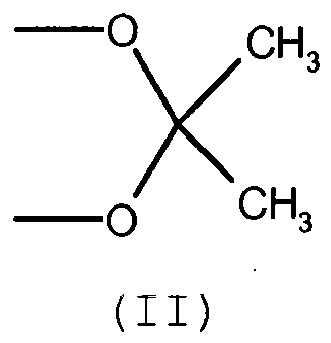
with the proviso that:- when R1 is OH and R2 is CH3, R3 is a hydrogen atom;- when R1 and R2 taken together are the group of formula (II), R4 is F;R1, R2, R3 and R4 are linked to the carbon atoms in 17, 16, 6 and 9 of the steroidal structure in position α or β;
R is:

Y is selected from:1) -R5-CH(ONO2)R62) -R5-CH(ONO2)-(CR7R8)n-CH(ONO2) R93) - [(CH2)o-X]p-(CH2)q-CH(ONO2) R94) - [(CH2)o-(X)]p(CH2)q-CH(ONO2)-(CR7R8)n-CH(ONO2)R9wherein
R5 is a straight or branched C1-C10 alkylene;
R6 is H or a straight or branched C1-C6 alkyl;
R7 and R8 at each occurrence are independently H or a straight or branched C1-C6 alkyl;
R9 is H or a straight or branched C1-C6 alkyl;
n is an integer from 0 to 6;
o is an integer from 1 to 6;
p is an integer from 1 to 6;
q is an integer from 0 to 6;
X is O, S or NR10 wherein R10 is H or a C1-C4 alkyl; preferably X is O;
excluding the compounds of formula (I) wherein R1 and R2 taken together are the group of formula (II)
- A compound according to claim 1 wherein R4 is F, R3 is F, R1 and R2 taken together are the group of formula (II) R1, R2, R3 and R4 are linked to the carbon atoms in 17, 16, 6 and 9 of the steroidal structure in position α.
- A compound according to claim 2 wherein Y is:
1) -R5-CH(ONO2)R6
wherein R5 is a straight C1-C5 alkylene and R6 is H or -CH3; or
2) -R5-CH(ONO2)-(CR7R8)n-CH(ONO2)R9
wherein
R5 is a straight C1-C6 alkylene, R9 is H, R7 and R8 at each occurrence are independently H or CH3 and
n is 0 or 1;
or
3) -[(CH2)o-X]p-(CH2)q-CH(ONO2)R9
wherein
R9 is H,
o is an integer from 2 to 4,
p is an integer from 1 to 4,
q is from 0 to 4 and X is O; - A compound according to claim 1 wherein R1 and R2 taken together are the group of formula (II),
R4 is F and R3 is a hydrogen atom and
R1, R2, R3 and R4 are linked to the carbon atoms in 17, 16, 6 and 9 of the steroidal structure in position α. - A compound according to claim 4 wherein Y is:
1) -R5-CH(ONO2)R6
wherein R5 is a straight C1-C6 alkylene and R6 is -CH3;
or
2) -R5-CH(ONO2)-(CR7R8)n-CH(ONO2)R9
wherein
R5 is a straight C1-C6 alkylene, R9 is H,
R7 and R8 at each occurrence are independently H or CH3,
n is 0 or 1;
or
3) -[(CH2)o-X]p-(CH2)q-CH(ONO2)R9
wherein
R9 is H,
o is an integer from 2 to 4,
p is an integer from 1 to 4,
q is from 0 to 4 and X is O. - A compound according to claim 1 wherein
R1 is OH, R2 is CH3, R3 is a hydrogen atom, R4 is F, and R1 and R4 are linked to the carbon atoms 17 and 9 of the steroidal structure in position α, R2 is linked to the carbon atom 16 of the steroidal structure in position β. - A compound according to claim 6 wherein Y is:
1) -R5-CH(ONO2)R6
wherein R5 is a straight C1-C6 alkylene and R6 is H or -CH3; or
2) -R5-CH(ONO2)-(CR7R8)n-CH(ONO2)R9
wherein
R5 is a straight C1-C6 alkylene and R9 is H;
R7 and R8 at each occurrence are independently H or CH3;
n is 0 or 1;
or
3) -[(CH2)o-X]p-(CH2)q-CH(ONO2)R9
wherein
R9 is H,
o is an integer from 2 to 4,
p is an integer from 1 to 4,
q is from 0 to 4 and X is O. - A compound according to claim 1 wherein
R1 is OH, R2 is CH3, R3 is a hydrogen atom and R4 is Cl;
R1 and R4 are linked to the carbon atoms 17 and 9 of the steroidal structure in position α, R2 is linked to the carbon atom 16 of the steroidal structure in position β. - A compound according to claim 8 wherein
Y is
1) -R5-CH(ONO2)R6
wherein R5 is a straight C1-C6 alkylene and R6 is H or -CH3; or
2) -R5-CH(ONO2)-(CR7R8)n-CH(ONO2)R9
wherein
R5 is a straight C1-C6 alkylene and R9 is H;
R7 and R8 at each occurrence are independently H or CH3;
n is 0 or 1;
or
3) -[(CH2)o-X]p-(CH2)q-CH(ONO2)R9
wherein
R9 is H,
o is an integer from 2 to 4,
p is an integer from 1 to 4,
q is from 0 to 4 and X is O; - A compound according to claim 1 selected from:


- A compound according to claim 1 of formula (1):

- A compound according to any one of claims 1 to 11 for use as medicament.
- A compound according to any one of claims 1 to 11 for use in the treatment of diabetic macular edema.
- A compound according to any one of claims 1 to 11 for use in the treatment of diabetic retinopathy.
- A compound according to any one of claims 1 to 11 for use in the treatment of macular degeneration.
- A compound according to any one of claims 1 to 11 for use in the treatment of age-related macular degeneration.
- A compound according to any one of claims 1 to 11 for use in the treatment of diseases of retina and macula lutea.
- Pharmaceutical composition comprising a pharmaceutically effective amount of at least a compound according to any of claims 1 to 11 and ophthalmically acceptable excipients in a suitable form for intravitreal or periorbital administration.
- A compound of formula (I) or a salt thereof

R1 and R2 taken together are the group of formula (II)
R1, R2 and R4 are linked to the carbon atoms in 17, 16 and 9 of the steroidal structure in position α;
R is:
- The compound for use according to claim 19 of formula (18)

- A pharmaceutical composition comprising a pharmaceutically effective amount of at least a compound of claims 19 or 20 and ophthalmically acceptable excipients in a suitable form for intravitreal or periorbital administration.
Priority Applications (2)
| Application Number | Priority Date | Filing Date | Title |
|---|---|---|---|
| SI200930830T SI2318427T1 (en) | 2008-07-31 | 2009-07-07 | Glucocorticoids attached to nitrate esters via an aromatic linker in position 21 and their use in ophthalmology |
| PL09780232T PL2318427T3 (en) | 2008-07-31 | 2009-07-07 | Glucocorticoids attached to nitrate esters via an aromatic linker in position 21 and their use in ophthalmology |
Applications Claiming Priority (3)
| Application Number | Priority Date | Filing Date | Title |
|---|---|---|---|
| US8529408P | 2008-07-31 | 2008-07-31 | |
| US12289608P | 2008-12-16 | 2008-12-16 | |
| PCT/EP2009/058572 WO2010012567A1 (en) | 2008-07-31 | 2009-07-07 | Glucocorticoids attached to nitrate esters via an aromatic linker in position 21 and their use in ophthalmology |
Publications (2)
| Publication Number | Publication Date |
|---|---|
| EP2318427A1 EP2318427A1 (en) | 2011-05-11 |
| EP2318427B1 true EP2318427B1 (en) | 2013-10-23 |
Family
ID=41170981
Family Applications (1)
| Application Number | Title | Priority Date | Filing Date |
|---|---|---|---|
| EP20090780232 Active EP2318427B1 (en) | 2008-07-31 | 2009-07-07 | Glucocorticoids attached to nitrate esters via an aromatic linker in position 21 and their use in ophthalmology |
Country Status (20)
| Country | Link |
|---|---|
| US (2) | US8518920B2 (en) |
| EP (1) | EP2318427B1 (en) |
| JP (1) | JP5520948B2 (en) |
| KR (1) | KR20110041496A (en) |
| CN (1) | CN102131821B (en) |
| AR (1) | AR075263A1 (en) |
| AU (1) | AU2009277381B2 (en) |
| BR (1) | BRPI0916702A2 (en) |
| CA (1) | CA2731513C (en) |
| DK (1) | DK2318427T3 (en) |
| ES (1) | ES2442720T3 (en) |
| IL (1) | IL210477A0 (en) |
| MX (1) | MX2011001119A (en) |
| NZ (1) | NZ590454A (en) |
| PL (1) | PL2318427T3 (en) |
| PT (1) | PT2318427E (en) |
| RU (1) | RU2501804C2 (en) |
| SI (1) | SI2318427T1 (en) |
| WO (1) | WO2010012567A1 (en) |
| ZA (1) | ZA201100636B (en) |
Families Citing this family (5)
| Publication number | Priority date | Publication date | Assignee | Title |
|---|---|---|---|---|
| JP5791064B2 (en) * | 2009-07-17 | 2015-10-07 | エア・ウォーター株式会社 | Pharmaceutical composition |
| ES2847883T3 (en) * | 2010-12-17 | 2021-08-04 | Glaxo Group Ltd | Use of LP-PLA2 inhibitors in the treatment and prevention of eye diseases |
| WO2013133980A1 (en) * | 2012-03-05 | 2013-09-12 | Bausch & Lomb Incorporated | Nitroxy derivatives of soft steroids |
| JP6150945B2 (en) * | 2013-07-01 | 2017-06-21 | エルジー・ケム・リミテッド | Polyorganosiloxane compound, production method and copolycarbonate resin containing the same |
| CN110862318B (en) * | 2019-10-24 | 2022-05-13 | 甘肃省化工研究院有限责任公司 | Preparation method of tert-butyl substituted hydroxybenzoate |
Family Cites Families (9)
| Publication number | Priority date | Publication date | Assignee | Title |
|---|---|---|---|---|
| US5824669A (en) * | 1996-03-22 | 1998-10-20 | Nitromed, Inc. | Nitrosated and nitrosylated compounds and compositions and their use for treating respiratory disorders |
| US5985862A (en) * | 1996-05-02 | 1999-11-16 | G.D. Searle & Co. | Pharmaceutical compositions having steroid nitrate ester derivatives useful as anti-inflammatory drugs |
| US5837698A (en) * | 1996-05-02 | 1998-11-17 | G. D. Searle & Co. | Steroid nitrite and nitrate ester derivatives useful as anti-inflammatory drugs |
| IT1285770B1 (en) * | 1996-10-04 | 1998-06-18 | Nicox Sa | CORTICOID COMPOUNDS |
| DE10133665A1 (en) * | 2001-07-11 | 2003-01-30 | Boehringer Ingelheim Pharma | Carboxylic acid derivatives, medicaments containing these compounds, their use and preparation |
| ITMI20020148A1 (en) * | 2002-01-29 | 2003-07-29 | Nicox Sa | NEW CORTICOSTEROIDS |
| EP1336602A1 (en) * | 2002-02-13 | 2003-08-20 | Giovanni Scaramuzzino | Nitrate prodrugs able to release nitric oxide in a controlled and selective way and their use for prevention and treatment of inflammatory, ischemic and proliferative diseases |
| CN101300265A (en) | 2005-09-02 | 2008-11-05 | 尼科克斯公司 | Nitro-acyloxy glucocorticoid derivatives |
| ES2324007A1 (en) * | 2007-10-25 | 2009-07-28 | Ferrer Internacional, S.A. | Amorphous form of (11beta,16alpha)-9-fluoro-11-hydroxy-16,17-[(1-methylethyliden)bis(oxy)]-21-[[4- [(nitrooxy)methyl]benzoyl]oxy]-pregna-1,4-dien-3,20-dione |
-
2009
- 2009-07-07 NZ NZ59045409A patent/NZ590454A/en not_active IP Right Cessation
- 2009-07-07 CA CA2731513A patent/CA2731513C/en not_active Expired - Fee Related
- 2009-07-07 EP EP20090780232 patent/EP2318427B1/en active Active
- 2009-07-07 SI SI200930830T patent/SI2318427T1/en unknown
- 2009-07-07 US US13/056,921 patent/US8518920B2/en not_active Expired - Fee Related
- 2009-07-07 JP JP2011520413A patent/JP5520948B2/en not_active Expired - Fee Related
- 2009-07-07 CN CN200980131143.3A patent/CN102131821B/en not_active Expired - Fee Related
- 2009-07-07 PL PL09780232T patent/PL2318427T3/en unknown
- 2009-07-07 DK DK09780232T patent/DK2318427T3/en active
- 2009-07-07 PT PT97802326T patent/PT2318427E/en unknown
- 2009-07-07 BR BRPI0916702A patent/BRPI0916702A2/en not_active Application Discontinuation
- 2009-07-07 RU RU2011106173/04A patent/RU2501804C2/en not_active IP Right Cessation
- 2009-07-07 ES ES09780232T patent/ES2442720T3/en active Active
- 2009-07-07 WO PCT/EP2009/058572 patent/WO2010012567A1/en not_active Ceased
- 2009-07-07 MX MX2011001119A patent/MX2011001119A/en active IP Right Grant
- 2009-07-07 AU AU2009277381A patent/AU2009277381B2/en not_active Ceased
- 2009-07-07 KR KR20117002369A patent/KR20110041496A/en not_active Ceased
- 2009-07-31 AR ARP090102958 patent/AR075263A1/en unknown
-
2011
- 2011-01-06 IL IL210477A patent/IL210477A0/en unknown
- 2011-01-25 ZA ZA2011/00636A patent/ZA201100636B/en unknown
-
2013
- 2013-07-19 US US13/946,794 patent/US9012435B2/en not_active Expired - Fee Related
Also Published As
| Publication number | Publication date |
|---|---|
| AR075263A1 (en) | 2011-03-23 |
| EP2318427A1 (en) | 2011-05-11 |
| MX2011001119A (en) | 2011-03-02 |
| US20110144073A1 (en) | 2011-06-16 |
| CA2731513C (en) | 2016-09-20 |
| NZ590454A (en) | 2012-09-28 |
| US8518920B2 (en) | 2013-08-27 |
| CA2731513A1 (en) | 2010-02-04 |
| SI2318427T1 (en) | 2014-02-28 |
| PT2318427E (en) | 2014-01-22 |
| CN102131821A (en) | 2011-07-20 |
| CN102131821B (en) | 2014-08-27 |
| AU2009277381B2 (en) | 2014-04-24 |
| RU2011106173A (en) | 2012-09-10 |
| JP5520948B2 (en) | 2014-06-11 |
| ZA201100636B (en) | 2011-10-26 |
| WO2010012567A1 (en) | 2010-02-04 |
| HK1160142A1 (en) | 2012-08-10 |
| DK2318427T3 (en) | 2014-01-20 |
| ES2442720T3 (en) | 2014-02-13 |
| RU2501804C2 (en) | 2013-12-20 |
| KR20110041496A (en) | 2011-04-21 |
| US20130303499A1 (en) | 2013-11-14 |
| PL2318427T3 (en) | 2014-05-30 |
| JP2011529461A (en) | 2011-12-08 |
| AU2009277381A1 (en) | 2010-02-04 |
| IL210477A0 (en) | 2011-03-31 |
| US9012435B2 (en) | 2015-04-21 |
| BRPI0916702A2 (en) | 2015-11-10 |
Similar Documents
| Publication | Publication Date | Title |
|---|---|---|
| CA2180325C (en) | Methods of inhibiting angiogenesis and tumor growth, and treating ophthalmologic conditions with angiostatic and therapeutic steroids | |
| US9012435B2 (en) | Glucocorticoids attached to nitrate esters via an aromatic linker in position 21 and their use in ophthalmology | |
| US8906892B2 (en) | 4-pregenen-11β-17-21-triol-3,20-dione derivatives | |
| SK281802B6 (en) | Novel steroid esters | |
| US20090264394A1 (en) | Nitrooxy derivatives of glucocorticoids | |
| US5888995A (en) | Steroid esters | |
| EP2986288B1 (en) | Quinone based nitric oxide donating compounds for ophthalmic use | |
| US20110130375A1 (en) | New no-releasing steroids for the treatment of retina and macula lutea diseases | |
| HK1160142B (en) | Glucocorticoids attached to nitrate esters via an aromatic linker in position 21 and their use in ophthalmology | |
| JP2025541393A (en) | Novel glucocorticoids, their preparation and use | |
| DK168631B1 (en) | Corticoid derivatives, process for preparing the corticoid derivatives, pharmaceutical composition containing the corticoid derivatives and intermediates | |
| DZ et al. | SA| FR/FR]; Taissounières IIB4-1681 route des Do-kind of regional protection available): ARIPO (BW, GH | |
| WO2025256615A1 (en) | Crystal form of new glucocorticoid | |
| CN115558013A (en) | A kind of steroid phosphate compound and its application | |
| JPH09500907A (en) | Steroid glycoside | |
| WO2013133980A1 (en) | Nitroxy derivatives of soft steroids | |
| HK1200367B (en) | 4-pregenen-11ss-17-21-triol-3, 20-dione derivatives for the treatment of ocular conditions |
Legal Events
| Date | Code | Title | Description |
|---|---|---|---|
| PUAI | Public reference made under article 153(3) epc to a published international application that has entered the european phase |
Free format text: ORIGINAL CODE: 0009012 |
|
| 17P | Request for examination filed |
Effective date: 20110216 |
|
| AK | Designated contracting states |
Kind code of ref document: A1 Designated state(s): AT BE BG CH CY CZ DE DK EE ES FI FR GB GR HR HU IE IS IT LI LT LU LV MC MK MT NL NO PL PT RO SE SI SK SM TR |
|
| AX | Request for extension of the european patent |
Extension state: AL BA RS |
|
| 17Q | First examination report despatched |
Effective date: 20121122 |
|
| GRAP | Despatch of communication of intention to grant a patent |
Free format text: ORIGINAL CODE: EPIDOSNIGR1 |
|
| INTG | Intention to grant announced |
Effective date: 20130620 |
|
| GRAS | Grant fee paid |
Free format text: ORIGINAL CODE: EPIDOSNIGR3 |
|
| GRAA | (expected) grant |
Free format text: ORIGINAL CODE: 0009210 |
|
| RAP1 | Party data changed (applicant data changed or rights of an application transferred) |
Owner name: NICOX S.A. |
|
| AK | Designated contracting states |
Kind code of ref document: B1 Designated state(s): AT BE BG CH CY CZ DE DK EE ES FI FR GB GR HR HU IE IS IT LI LT LU LV MC MK MT NL NO PL PT RO SE SI SK SM TR |
|
| AX | Request for extension of the european patent |
Extension state: AL BA RS |
|
| REG | Reference to a national code |
Ref country code: GB Ref legal event code: FG4D |
|
| REG | Reference to a national code |
Ref country code: CH Ref legal event code: EP |
|
| REG | Reference to a national code |
Ref country code: AT Ref legal event code: REF Ref document number: 637556 Country of ref document: AT Kind code of ref document: T Effective date: 20131115 |
|
| REG | Reference to a national code |
Ref country code: IE Ref legal event code: FG4D |
|
| REG | Reference to a national code |
Ref country code: RO Ref legal event code: EPE Ref country code: DE Ref legal event code: R096 Ref document number: 602009019656 Country of ref document: DE Effective date: 20131219 |
|
| REG | Reference to a national code |
Ref country code: CH Ref legal event code: NV Representative=s name: ISLER AND PEDRAZZINI AG, CH |
|
| REG | Reference to a national code |
Ref country code: DK Ref legal event code: T3 Effective date: 20140117 |
|
| REG | Reference to a national code |
Ref country code: PT Ref legal event code: SC4A Free format text: AVAILABILITY OF NATIONAL TRANSLATION Effective date: 20140115 |
|
| REG | Reference to a national code |
Ref country code: DE Ref legal event code: R082 Ref document number: 602009019656 Country of ref document: DE Representative=s name: VON KREISLER SELTING WERNER, DE Ref country code: DE Ref legal event code: R082 Ref document number: 602009019656 Country of ref document: DE Representative=s name: VON KREISLER SELTING WERNER - PARTNERSCHAFT VO, DE Ref country code: DE Ref legal event code: R082 Ref document number: 602009019656 Country of ref document: DE Representative=s name: DOMPATENT VON KREISLER SELTING WERNER - PARTNE, DE |
|
| REG | Reference to a national code |
Ref country code: SE Ref legal event code: TRGR |
|
| REG | Reference to a national code |
Ref country code: NL Ref legal event code: T3 |
|
| REG | Reference to a national code |
Ref country code: ES Ref legal event code: FG2A Ref document number: 2442720 Country of ref document: ES Kind code of ref document: T3 Effective date: 20140213 |
|
| REG | Reference to a national code |
Ref country code: LT Ref legal event code: MG4D |
|
| PG25 | Lapsed in a contracting state [announced via postgrant information from national office to epo] |
Ref country code: LT Free format text: LAPSE BECAUSE OF FAILURE TO SUBMIT A TRANSLATION OF THE DESCRIPTION OR TO PAY THE FEE WITHIN THE PRESCRIBED TIME-LIMIT Effective date: 20131023 Ref country code: HR Free format text: LAPSE BECAUSE OF FAILURE TO SUBMIT A TRANSLATION OF THE DESCRIPTION OR TO PAY THE FEE WITHIN THE PRESCRIBED TIME-LIMIT Effective date: 20131023 Ref country code: FI Free format text: LAPSE BECAUSE OF FAILURE TO SUBMIT A TRANSLATION OF THE DESCRIPTION OR TO PAY THE FEE WITHIN THE PRESCRIBED TIME-LIMIT Effective date: 20131023 Ref country code: NO Free format text: LAPSE BECAUSE OF FAILURE TO SUBMIT A TRANSLATION OF THE DESCRIPTION OR TO PAY THE FEE WITHIN THE PRESCRIBED TIME-LIMIT Effective date: 20140123 Ref country code: IS Free format text: LAPSE BECAUSE OF FAILURE TO SUBMIT A TRANSLATION OF THE DESCRIPTION OR TO PAY THE FEE WITHIN THE PRESCRIBED TIME-LIMIT Effective date: 20140223 |
|
| PG25 | Lapsed in a contracting state [announced via postgrant information from national office to epo] |
Ref country code: CY Free format text: LAPSE BECAUSE OF FAILURE TO SUBMIT A TRANSLATION OF THE DESCRIPTION OR TO PAY THE FEE WITHIN THE PRESCRIBED TIME-LIMIT Effective date: 20131023 Ref country code: LV Free format text: LAPSE BECAUSE OF FAILURE TO SUBMIT A TRANSLATION OF THE DESCRIPTION OR TO PAY THE FEE WITHIN THE PRESCRIBED TIME-LIMIT Effective date: 20131023 |
|
| REG | Reference to a national code |
Ref country code: PL Ref legal event code: T3 |
|
| REG | Reference to a national code |
Ref country code: DE Ref legal event code: R097 Ref document number: 602009019656 Country of ref document: DE |
|
| PG25 | Lapsed in a contracting state [announced via postgrant information from national office to epo] |
Ref country code: EE Free format text: LAPSE BECAUSE OF FAILURE TO SUBMIT A TRANSLATION OF THE DESCRIPTION OR TO PAY THE FEE WITHIN THE PRESCRIBED TIME-LIMIT Effective date: 20131023 |
|
| REG | Reference to a national code |
Ref country code: HU Ref legal event code: AG4A Ref document number: E020132 Country of ref document: HU |
|
| PG25 | Lapsed in a contracting state [announced via postgrant information from national office to epo] |
Ref country code: SK Free format text: LAPSE BECAUSE OF FAILURE TO SUBMIT A TRANSLATION OF THE DESCRIPTION OR TO PAY THE FEE WITHIN THE PRESCRIBED TIME-LIMIT Effective date: 20131023 |
|
| PGFP | Annual fee paid to national office [announced via postgrant information from national office to epo] |
Ref country code: TR Payment date: 20140627 Year of fee payment: 6 |
|
| PLBE | No opposition filed within time limit |
Free format text: ORIGINAL CODE: 0009261 |
|
| STAA | Information on the status of an ep patent application or granted ep patent |
Free format text: STATUS: NO OPPOSITION FILED WITHIN TIME LIMIT |
|
| 26N | No opposition filed |
Effective date: 20140724 |
|
| REG | Reference to a national code |
Ref country code: DE Ref legal event code: R097 Ref document number: 602009019656 Country of ref document: DE Effective date: 20140724 |
|
| PG25 | Lapsed in a contracting state [announced via postgrant information from national office to epo] |
Ref country code: LU Free format text: LAPSE BECAUSE OF FAILURE TO SUBMIT A TRANSLATION OF THE DESCRIPTION OR TO PAY THE FEE WITHIN THE PRESCRIBED TIME-LIMIT Effective date: 20140707 |
|
| REG | Reference to a national code |
Ref country code: FR Ref legal event code: PLFP Year of fee payment: 7 |
|
| PGFP | Annual fee paid to national office [announced via postgrant information from national office to epo] |
Ref country code: PT Payment date: 20150624 Year of fee payment: 7 Ref country code: CZ Payment date: 20150624 Year of fee payment: 7 Ref country code: MC Payment date: 20150626 Year of fee payment: 7 |
|
| PGFP | Annual fee paid to national office [announced via postgrant information from national office to epo] |
Ref country code: PL Payment date: 20150629 Year of fee payment: 7 Ref country code: IE Payment date: 20150622 Year of fee payment: 7 |
|
| PGFP | Annual fee paid to national office [announced via postgrant information from national office to epo] |
Ref country code: NL Payment date: 20150630 Year of fee payment: 7 |
|
| PGFP | Annual fee paid to national office [announced via postgrant information from national office to epo] |
Ref country code: RO Payment date: 20150702 Year of fee payment: 7 Ref country code: CH Payment date: 20150713 Year of fee payment: 7 Ref country code: DK Payment date: 20150706 Year of fee payment: 7 |
|
| PGFP | Annual fee paid to national office [announced via postgrant information from national office to epo] |
Ref country code: SI Payment date: 20150623 Year of fee payment: 7 Ref country code: SE Payment date: 20150720 Year of fee payment: 7 Ref country code: AT Payment date: 20150731 Year of fee payment: 7 Ref country code: BE Payment date: 20150715 Year of fee payment: 7 Ref country code: HU Payment date: 20150703 Year of fee payment: 7 |
|
| PG25 | Lapsed in a contracting state [announced via postgrant information from national office to epo] |
Ref country code: SM Free format text: LAPSE BECAUSE OF FAILURE TO SUBMIT A TRANSLATION OF THE DESCRIPTION OR TO PAY THE FEE WITHIN THE PRESCRIBED TIME-LIMIT Effective date: 20131023 |
|
| REG | Reference to a national code |
Ref country code: FR Ref legal event code: PLFP Year of fee payment: 8 |
|
| PG25 | Lapsed in a contracting state [announced via postgrant information from national office to epo] |
Ref country code: GR Free format text: LAPSE BECAUSE OF FAILURE TO SUBMIT A TRANSLATION OF THE DESCRIPTION OR TO PAY THE FEE WITHIN THE PRESCRIBED TIME-LIMIT Effective date: 20140124 Ref country code: BG Free format text: LAPSE BECAUSE OF FAILURE TO SUBMIT A TRANSLATION OF THE DESCRIPTION OR TO PAY THE FEE WITHIN THE PRESCRIBED TIME-LIMIT Effective date: 20131023 Ref country code: MT Free format text: LAPSE BECAUSE OF FAILURE TO SUBMIT A TRANSLATION OF THE DESCRIPTION OR TO PAY THE FEE WITHIN THE PRESCRIBED TIME-LIMIT Effective date: 20131023 |
|
| PGFP | Annual fee paid to national office [announced via postgrant information from national office to epo] |
Ref country code: ES Payment date: 20160617 Year of fee payment: 8 |
|
| PGFP | Annual fee paid to national office [announced via postgrant information from national office to epo] |
Ref country code: FR Payment date: 20160629 Year of fee payment: 8 |
|
| PGFP | Annual fee paid to national office [announced via postgrant information from national office to epo] |
Ref country code: GB Payment date: 20160706 Year of fee payment: 8 Ref country code: DE Payment date: 20160729 Year of fee payment: 8 Ref country code: IT Payment date: 20160711 Year of fee payment: 8 |
|
| PG25 | Lapsed in a contracting state [announced via postgrant information from national office to epo] |
Ref country code: BE Free format text: LAPSE BECAUSE OF NON-PAYMENT OF DUE FEES Effective date: 20160731 |
|
| PG25 | Lapsed in a contracting state [announced via postgrant information from national office to epo] |
Ref country code: CZ Free format text: LAPSE BECAUSE OF NON-PAYMENT OF DUE FEES Effective date: 20160707 |
|
| REG | Reference to a national code |
Ref country code: DK Ref legal event code: EBP Effective date: 20170131 |
|
| REG | Reference to a national code |
Ref country code: CH Ref legal event code: PL |
|
| REG | Reference to a national code |
Ref country code: NL Ref legal event code: MM Effective date: 20160801 |
|
| REG | Reference to a national code |
Ref country code: SE Ref legal event code: EUG |
|
| REG | Reference to a national code |
Ref country code: AT Ref legal event code: MM01 Ref document number: 637556 Country of ref document: AT Kind code of ref document: T Effective date: 20160707 |
|
| PG25 | Lapsed in a contracting state [announced via postgrant information from national office to epo] |
Ref country code: MC Free format text: LAPSE BECAUSE OF NON-PAYMENT OF DUE FEES Effective date: 20160801 |
|
| PG25 | Lapsed in a contracting state [announced via postgrant information from national office to epo] |
Ref country code: NL Free format text: LAPSE BECAUSE OF NON-PAYMENT OF DUE FEES Effective date: 20160801 Ref country code: SE Free format text: LAPSE BECAUSE OF NON-PAYMENT OF DUE FEES Effective date: 20160708 Ref country code: RO Free format text: LAPSE BECAUSE OF NON-PAYMENT OF DUE FEES Effective date: 20160707 Ref country code: CH Free format text: LAPSE BECAUSE OF NON-PAYMENT OF DUE FEES Effective date: 20160731 Ref country code: HU Free format text: LAPSE BECAUSE OF NON-PAYMENT OF DUE FEES Effective date: 20160708 Ref country code: LI Free format text: LAPSE BECAUSE OF NON-PAYMENT OF DUE FEES Effective date: 20160731 |
|
| REG | Reference to a national code |
Ref country code: IE Ref legal event code: MM4A |
|
| PG25 | Lapsed in a contracting state [announced via postgrant information from national office to epo] |
Ref country code: AT Free format text: LAPSE BECAUSE OF NON-PAYMENT OF DUE FEES Effective date: 20160707 Ref country code: PT Free format text: LAPSE BECAUSE OF NON-PAYMENT OF DUE FEES Effective date: 20170109 Ref country code: SI Free format text: LAPSE BECAUSE OF NON-PAYMENT OF DUE FEES Effective date: 20160708 |
|
| REG | Reference to a national code |
Ref country code: SI Ref legal event code: KO00 Effective date: 20170406 |
|
| PG25 | Lapsed in a contracting state [announced via postgrant information from national office to epo] |
Ref country code: IE Free format text: LAPSE BECAUSE OF NON-PAYMENT OF DUE FEES Effective date: 20160707 |
|
| PG25 | Lapsed in a contracting state [announced via postgrant information from national office to epo] |
Ref country code: DK Free format text: LAPSE BECAUSE OF NON-PAYMENT OF DUE FEES Effective date: 20160731 |
|
| REG | Reference to a national code |
Ref country code: DE Ref legal event code: R119 Ref document number: 602009019656 Country of ref document: DE |
|
| PG25 | Lapsed in a contracting state [announced via postgrant information from national office to epo] |
Ref country code: PL Free format text: LAPSE BECAUSE OF NON-PAYMENT OF DUE FEES Effective date: 20160707 |
|
| GBPC | Gb: european patent ceased through non-payment of renewal fee |
Effective date: 20170707 |
|
| REG | Reference to a national code |
Ref country code: FR Ref legal event code: ST Effective date: 20180330 |
|
| PG25 | Lapsed in a contracting state [announced via postgrant information from national office to epo] |
Ref country code: DE Free format text: LAPSE BECAUSE OF NON-PAYMENT OF DUE FEES Effective date: 20180201 Ref country code: GB Free format text: LAPSE BECAUSE OF NON-PAYMENT OF DUE FEES Effective date: 20170707 |
|
| PG25 | Lapsed in a contracting state [announced via postgrant information from national office to epo] |
Ref country code: FR Free format text: LAPSE BECAUSE OF NON-PAYMENT OF DUE FEES Effective date: 20170731 |
|
| PG25 | Lapsed in a contracting state [announced via postgrant information from national office to epo] |
Ref country code: MK Free format text: LAPSE BECAUSE OF FAILURE TO SUBMIT A TRANSLATION OF THE DESCRIPTION OR TO PAY THE FEE WITHIN THE PRESCRIBED TIME-LIMIT Effective date: 20131023 |
|
| PG25 | Lapsed in a contracting state [announced via postgrant information from national office to epo] |
Ref country code: IT Free format text: LAPSE BECAUSE OF NON-PAYMENT OF DUE FEES Effective date: 20170707 |
|
| REG | Reference to a national code |
Ref country code: ES Ref legal event code: FD2A Effective date: 20181106 |
|
| PG25 | Lapsed in a contracting state [announced via postgrant information from national office to epo] |
Ref country code: ES Free format text: LAPSE BECAUSE OF NON-PAYMENT OF DUE FEES Effective date: 20170708 |
|
| PG25 | Lapsed in a contracting state [announced via postgrant information from national office to epo] |
Ref country code: TR Free format text: LAPSE BECAUSE OF NON-PAYMENT OF DUE FEES Effective date: 20160707 |