EP2316089B1 - Software reputation establishment and monitoring system and method - Google Patents
Software reputation establishment and monitoring system and method Download PDFInfo
- Publication number
- EP2316089B1 EP2316089B1 EP09767475.8A EP09767475A EP2316089B1 EP 2316089 B1 EP2316089 B1 EP 2316089B1 EP 09767475 A EP09767475 A EP 09767475A EP 2316089 B1 EP2316089 B1 EP 2316089B1
- Authority
- EP
- European Patent Office
- Prior art keywords
- module
- reputation
- behavior
- expected
- recorded
- Prior art date
- Legal status (The legal status is an assumption and is not a legal conclusion. Google has not performed a legal analysis and makes no representation as to the accuracy of the status listed.)
- Active
Links
Images


Classifications
-
- G—PHYSICS
- G06—COMPUTING OR CALCULATING; COUNTING
- G06F—ELECTRIC DIGITAL DATA PROCESSING
- G06F21/00—Security arrangements for protecting computers, components thereof, programs or data against unauthorised activity
- G06F21/50—Monitoring users, programs or devices to maintain the integrity of platforms, e.g. of processors, firmware or operating systems
- G06F21/55—Detecting local intrusion or implementing counter-measures
-
- G—PHYSICS
- G06—COMPUTING OR CALCULATING; COUNTING
- G06F—ELECTRIC DIGITAL DATA PROCESSING
- G06F11/00—Error detection; Error correction; Monitoring
- G06F11/30—Monitoring
- G06F11/34—Recording or statistical evaluation of computer activity, e.g. of down time, of input/output operation ; Recording or statistical evaluation of user activity, e.g. usability assessment
- G06F11/3409—Recording or statistical evaluation of computer activity, e.g. of down time, of input/output operation ; Recording or statistical evaluation of user activity, e.g. usability assessment for performance assessment
-
- G—PHYSICS
- G06—COMPUTING OR CALCULATING; COUNTING
- G06F—ELECTRIC DIGITAL DATA PROCESSING
- G06F11/00—Error detection; Error correction; Monitoring
- G06F11/30—Monitoring
- G06F11/34—Recording or statistical evaluation of computer activity, e.g. of down time, of input/output operation ; Recording or statistical evaluation of user activity, e.g. usability assessment
- G06F11/3452—Performance evaluation by statistical analysis
-
- G—PHYSICS
- G06—COMPUTING OR CALCULATING; COUNTING
- G06F—ELECTRIC DIGITAL DATA PROCESSING
- G06F11/00—Error detection; Error correction; Monitoring
- G06F11/36—Prevention of errors by analysis, debugging or testing of software
- G06F11/3604—Analysis of software for verifying properties of programs
-
- G—PHYSICS
- G06—COMPUTING OR CALCULATING; COUNTING
- G06F—ELECTRIC DIGITAL DATA PROCESSING
- G06F2201/00—Indexing scheme relating to error detection, to error correction, and to monitoring
- G06F2201/865—Monitoring of software
Definitions
- the present invention relates to computer system security. More particularly, the present invention relates to a system and method of establishing and monitoring trust of a module of a computer system.
- a behavior blocking system heuristically monitors modules and blocks suspicious behavior that the behavior blocking system considers as malicious based on the trust level of the module. Accordingly, assessing the trust level of a module is very important in behavior blocking.
- US2005/086500 discloses a system and a method for detecting intrusions is disclosed.
- knowledge of a module's behavior when the module's reputation is formed is obtained. If the module's behavior changes, this change is detected. In one embodiment, upon a determination that the module's behavior has changed, the module's original reputation is lost. In this manner, malicious trusted modules are detected and defeated.
- knowledge of a module's behavior when the module's reputation is formed is obtained in a CREATE REPUTATION MANIFEST OF EXPECTED BEHAVIOR OF MODULE OPERATION 210 ( FIG. 2 ). If the module's behavior changes, this change is detected in a BEHAVIOR DEVIATES FROM EXPECTED BEHAVIOR CHECK OPERATION 306 ( FIG. 3 ). In one embodiment, upon a determination that the module's behavior has changed, the module's original reputation is lost in a TAKE PROTECTIVE ACTION OPERATION 308 ( FIG. 3 ). In this manner, malicious trusted modules are detected and defeated.
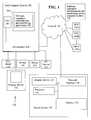
- FIG. 1 is a diagram of a client-server system 100 that includes a software reputation establishment and monitoring application 106 executing on a host computer system 102 in accordance with one embodiment.
- Host computer system 102 typically includes a central processing unit (CPU) 108, sometimes called a processor 108, an input/output (I/O) interface 110, and a memory 114.
- Host computer system 102 further includes standard devices like a keyboard 116, a mouse 118, a printer 120, and a display device 122, as well as one or more standard input/output (I/O) devices 123, such as a compact disk (CD) or DVD drive, floppy disk drive, or other digital or waveform ports for inputting data to and outputting data from host computer system 102.
- CPU central processing unit
- I/O input/output
- I/O input/output
- software reputation establishment and monitoring application 106 is loaded into host computer system 102 via I/O device 123, such as from a CD, DVD, or floppy disk containing software reputation establishment and monitoring application 106.
- Host computer system 102 is coupled to a server system 130 of computer system 100 by a network 124.
- Server system 130 typically includes a display device 132, a processor 134, a memory 136, and a network interface 138.
- Host computer system 102 is also coupled to a plurality of host computer systems 103A, 103B, ..., 103n, collectively host computer systems 103, similar to host computer system 102 by network 124. Further, host computer system 102 is coupled to a software reputation establishment and monitoring server computer system 140, sometimes called a back end reputation system, similar to server system 130 by network 124.
- Network 124 can be any network or network system that is of interest to a user.
- network interface 138 and I/O interface 110 include analog modems, digital modems, or a network interface card.
- Software reputation establishment and monitoring application 106 is stored, for example, in memory 114 of host computer system 102 and executed on host computer system 102.
- host computer system 102 The particular type of and configuration of host computer system 102, host computer systems 103, software reputation establishment and monitoring server computer system 140, and server system 130 are not essential to this embodiment.
- malicious code is defined as any computer program, module, set of modules, or code that enters a computer system environment without an authorized user's knowledge and/or without an authorized user's consent.
- FIG. 2 is a flow diagram of a software reputation establishment process 200 in accordance with one embodiment. Referring now to FIGS. 1 and 2 together, in one embodiment, execution of software reputation establishment and monitoring application 106 by processor 108 results in the operations of software reputation establishment process 200 as described below.
- EXECUTE UNKNOWN MODULE OPERATION 204 an unknown module, sometimes called software, is executed.
- a module includes executable code.
- a module is part of an application.
- a module is a plugin to the Internet Explorer® application, for example, is an Adobe® Flash® module.
- a module is an entire application.
- an application is a program or group of programs designed for end-users. More particularly, applications (also called end-user programs) include database programs, word processors, and spreadsheets, although there are many different types of applications.
- an application and/or module is an executable file.
- An executable file is a file who's contents are meant to be interpreted as a program by a computer.
- an executable file has a .exe extension (an EXE file) but has other extensions such as .net in other embodiments.
- An application and/or module is executed using any one of a number of techniques as will be recognized by one of ordinary skill in the art having the benefit of this disclosure, and the particular technique used is not essential to this embodiment.
- a module is either a known module or an unknown module.
- a known module is a module that has an associated reputation manifest as discussed further below.
- an unknown module is a module that does not have an associated reputation manifest.
- MONITOR AND RECORD BEHAVIOR OF MODULE OPERATION 206 the behavior, sometimes called actions, of the executed module is monitored and recorded. More particularly, upon executing the unknown module in EXECUTE UNKNOWN MODULE OPERATION 204, the unknown module performs actions, and these actions are referred to as behavior.
- Illustrative behavior of a module include: (1) whether the module changes system wide settings; (2) what type of files are accessed by the module; (3) whether the module is a startup program; and (4) any other behavior of the module of interest.
- which behavior is monitored and recorded is configurable, e.g., by a user or system administrator.
- the module is executed, monitored and recorded in several different installations, e.g., on different computer systems and/or operating systems.
- the module is executed, monitored and recorded on host computer systems 102, 103.
- the behavior of the module is monitored and recorded.
- the recorded behavior of the module as well as the characteristics of the installation is collected from each installation, e.g., at a back end reputation system such as software reputation establishment and monitoring server computer system 140, and aggregated.
- the module is executed, monitored and recorded at a single installation, e.g., on a single computer system such as host computer system 102 and/or on a single operating system.
- DETERMINE REPUTATION OF MODULE OPERATION 208 the reputation of the module is determined, e.g., from the monitored and recorded behavior of the module. In one embodiment, once enough copies of the module have been monitored and recorded, the module has been executed for a sufficient amount of time, and/or the behavior for the module has otherwise been sufficiently observed, the reputation for the module is established.
- a reputation is the overall trustworthiness of the module as determined by a security vendor or security product.
- a reputation is measured by a reputation score in one embodiment, although can be measured using any one of a number of techniques as will be recognized by one of ordinary skill in the art having the benefit of this disclosure, and the particular technique used is not essential.
- the privileges of a module are directly related to the module's reputation. The more trusted is the module, the greater are the privileges afforded to the module.
- the module is determined to be untrustworthy, i.e., the trustworthiness of the module is that the module is untrustworthy.
- the module is determined to be trustworthy (trusted), i.e., the trustworthiness of the module is that the module is trustworthy.
- trustworthiness can be defined with a great degree of granularity such that there are many levels of trustworthiness (trust).
- the reputation of the module is based on criteria other than the monitored and recorded behavior of the module and thus DETERMINE REPUTATION OF MODULE OPERATION 208 is an optional operation.
- a software publisher publishes legitimate modules for a period of time.
- the module is identified as being trustworthy, i.e., the reputation for the module is that the module is trusted.
- an established legitimate software publisher e.g., Microsoft® Corporation
- publishes the module As the module is published by an established legitimate software publisher, the module is identified as being trustworthy, i.e., the reputation for the module is that the module is trusted.
- the reputation of the module is established in DETERMINE REPUTATION OF MODULE OPERATION 208 or is established otherwise.
- the particular technique used to establish the reputation of a module is not essential. However, in accordance with one embodiment, as described below, the established reputation is contingent upon the module behaving the same as when the reputation was established.
- the expected behavior of the module is the behavior of the module monitored and recorded in MONITOR AND RECORD BEHAVIOR OF MODULE OPERATION 206. Stated another way, the expected behavior of the module is the observed normal behavior of the module.
- a reputation manifest is a collection, e.g., list, of the expected behavior of the module.
- the reputation manifest includes: (1) system wide settings that are changed by the module, if any; (2) the types of files that are accessed by the module, if any; (3) that the module is a startup program, if true; and (4) any other monitored and recorded behavior of the module.
- CREATE REPUTATION MANIFEST OF EXPECTED BEHAVIOR OF MODULE OPERATION 210 flow moves to an ASSOCIATE REPUTATION MANIFEST WITH REPUTATION OPERATION 212.
- ASSOCIATE REPUTATION MANIFEST WITH REPUTATION OPERATION 212 the reputation manifest created in CREATE REPUTATION MANIFEST OF EXPECTED BEHAVIOR OF MODULE OPERATION 210 is associated with the established reputation of the module. More particularly, the established reputation is associated, i.e., linked, with the expected behavior of the module.
- the module maintains the established reputation of the module.
- maintaining the established reputation is contingent upon the module behaving in the expected manner, i.e., in accordance with the expected behavior.
- the reputation of the module is determined in DETERMINE REPUTATION OF MODULE OPERATION 208 based on the monitored and recorded behavior of the module in MONITOR AND RECORD BEHAVIOR OF MODULE OPERATION 206, maintaining the established reputation is contingent upon the module behaving in the same manner as when the module's reputation was initially established.
- a module is described herein as behaving in accordance with a reputation manifest, in light of this disclosure, those of skill in the art will understand this to mean that the behavior (actions) of the module are the same or substantially similar to the behavior (actions) listed or otherwise collected in the reputation manifest.
- FIG. 3 is a flow diagram of a software reputation monitoring process 300 in accordance with one embodiment. Referring now to FIGS. 1 and 3 together, in one embodiment, execution of software reputation establishment and monitoring module 106 by processor 108 results in the operations of software reputation monitoring process 300 as described below.
- BEHAVIOR BY MONITORED MODULE CHECK OPERATION 304 a determination is made as to whether a monitored module is taking action, i.e., whether there is behavior by a monitored module.
- BEHAVIOR BY MONITORED MODULE CHECK OPERATION 304 If there is no behavior by a monitored module, flow remains at BEHAVIOR BY MONITORED MODULE CHECK OPERATION 304. Conversely, if there is behavior by monitored module, flow moves from BEHAVIOR BY MONITORED MODULE CHECK OPERATION 304 to a BEHAVIOR DEVIATES FROM EXPECTED BEHAVIOR CHECK OPERATION 306. In BEHAVIOR DEVIATES FROM EXPECTED BEHAVIOR CHECK OPERATION 306, a determination is made as to whether the behavior of the monitored module deviates found the expected behavior of the monitored module. Stated another way, a determination is made as to whether the behavior of the module has changed from the expected behavior.
- a reputation and reputation manifest of expected behavior of the module are downloaded to host computer system 102, e.g., from software reputation establishment and monitoring server computer system 140.
- the reputation and reputation manifest of expected behavior of the module are created on host computer system 102 as described above.
- a monitored module is a module that has an established reputation with associated reputation manifest, i.e., is expected to behave in a certain manner. Accordingly, if there is behavior by a monitored module, this behavior is compared to the expected behavior of the module in BEHAVIOR DEVIATES FROM EXPECTED BEHAVIOR CHECK OPERATION 306.
- any deviation from the expected behavior is sufficient to reach a conclusion that the behavior of the monitored module deviates found the expected behavior of the monitored module.
- a certain amount of change in behavior is allowed before a conclusion is reached that the behavior of the monitored module deviates found the expected behavior of the monitored module.
- TAKE PROTECTIVE ACTION OPERATION 308 protective action is taken, e.g., the established reputation of the module is revoked.
- the module loses its reputation, i.e., is assigned a lower reputation, so that the privileges associated with the original reputation are also lost or reduced.
- the module loses its reputation, i.e., is assigned a lower reputation, so that the privileges associated with the original reputation are also lost or reduced.
- actions that would have been allowed for the module at the module's original reputation are subject to increased scrutiny and/or blocked based on the lower reputation, the lower reputation being that the module is less trustworthy than at the original reputation.
- an alert that the module has lost its reputation and/or of the changed behavior of the module is generated in TAKE PROTECTIVE ACTION OPERATION 308.
- the alert is issued to a back end reputation system such as software reputation establishment and monitoring server computer system 140, a user, an administrator, or otherwise logged.
- a warning that the module's reputation is unknown is issued to new users considering installation of the module.
- the warning is issued from software reputation establishment and monitoring server computer system 140 to host computer systems 103. This allows the new users, e.g., of host computer systems 103, to make a better educated decision on whether to install the module or not.
- the changed behavior of the module is blocked in TAKE PROTECTIVE ACTION OPERATION 308.
- TAKE PROTECTIVE ACTION OPERATION 308 While certain examples of protective action are set forth above, in light of this disclosure, those of skill in the art will understand that a wide variety of protective actions can be taken in TAKE PROTECTIVE ACTION OPERATION 308.
- the change in behavior of the module is legitimate, i.e., is not associated with malicious code.
- the module loses its original reputation since the new behavior was not factored into the original reputation decision.
- a new reputation is created for the module based upon and incorporating the new behavior.
- the change in behavior of the module is malicious, i.e., is associated with malicious code.
- black-list anti-malware solution were used. More particularly, a list of known malicious code, sometimes called a black-list, was used to determine whether a module was malicious or not.
- white-list anti-malware solutions are increasingly being used. More particularly, a list of known trusted modules, sometimes called a white-list, is used to determine whether a module is allowed to execute.
- the secure white lists provide strong identity for modules running on a system. In one example, the reputation of the contributing author of a module is attributed to the module itself.
- a problem occurs when a trusted module, e.g., a module on a white list, turns out to the malicious, i.e., contains malicious code.
- This malicious trusted module problem is the invariable outcome of a system which only allows trusted modules to execute. Attackers embed malicious code into a trusted module creating a malicious trusted module to exploit the host computer system, e.g., to steal end users data and monetize that theft.
- attackers to gain the trust and confidence to be placed on the white list, attackers publish legitimate modules for some period of time. Once placed on the white list, the attackers create a malicious module that is placed on the white list based on the past record of the attacker of publishing legitimate modules.
- an attacker becomes an insider to an established software company and inserts malicious code into a module of the established software company.
- This malicious module is placed on the white list based on the fact that the module is published by the established software company.
- a malicious trusted module can be created using any one of a number of techniques as will be recognized by one of ordinary skill in the art having the benefit of this disclosure, and the particular technique used is not essential.
- the new image editing module Image.exe does not have an assigned reputation manifest of expected behavior of the module and thus is an unknown module.
- the image editing module Image.exe is executed in EXECUTE UNKNOWN MODULE OPERATION 204, and the behavior is monitored and recorded in MONITOR AND RECORD BEHAVIOR OF MODULE OPERATION 206.
- the new image editing module Image.exe does not make changes to host computer system 102 which require User Account Control (UAC) approval and only modifies image files.
- UAC User Account Control
- the image editing module Image.exe is determined to be a trusted module in DETERMINE REPUTATION OF MODULE OPERATION 208.
- a reputation manifest of expected behavior i.e., the behavior monitored and recorded in MONITOR AND RECORD BEHAVIOR OF MODULE OPERATION 206, of the image editing module Image.exe is created in CREATE REPUTATION MANIFEST OF EXPECTED BEHAVIOR OF MODULE OPERATION 210.
- the reputation manifest is associated with the reputation in ASSOCIATE REPUTATION MANIFEST WITH REPUTATION OPERATION 212.
- malicious code within the image editing module Image.exe i.e., a malicious trusted module, hooks system services and changes system files.
- software reputation establishment and monitoring application 106 is referred to as an application, this is illustrative only.
- Software reputation establishment and monitoring application 106 should be capable of being called from an application or the operating system.
- an application is generally defined to be any executable code.
- those of skill in the art having the benefit of this disclosure will understand that when it is said that an application or an operation takes some action, the action is the result of executing one or more instructions by a processor.
- Other network configurations other than client-server configurations e.g., peer-to-peer, web-based, intranet, and internet network configurations, are used in other embodiments.
- a computer program product comprises a tangible storage medium configured to store computer readable code in accordance with an embodiment.
- Some examples of computer program products are CD-ROM discs, DVDs, ROM cards, floppy discs, magnetic tapes, computer hard drives, and servers on a network
- this medium belongs to the computer system itself. However, the medium is also removed from the computer system.
- software reputation establishment and monitoring application 106 is stored in memory that is physically located in a location different from processor 108, e.g., memory 136 of server system 130.
- Processor 108 should be coupled to the memory 136. This could be accomplished in a client-server system, or alternatively via a connection to another computer via modems and analog lines, or digital interfaces and a digital carrier line.
- host computer system 102 and/or server system 130 is a portable computer, a workstation, a two-way pager, a cellular telephone, a digital wireless telephone, a personal digital assistant, a server computer, an Internet appliance, or any other device that includes components that execute software reputation establishment and monitoring application 106 in accordance with at least one of the embodiments as described herein.
- host computer system 102 and/or server system 130 is comprised of multiple different computers, wireless devices, cellular telephones, digital telephones, two-way pagers, personal digital assistants, server computers, or any desired combination of these devices that are interconnected to perform the methods as described herein.
- software reputation establishment and monitoring application 106 in accordance with one embodiment can be implemented in a wide variety of computer system configurations.
- software reputation establishment and monitoring application 106 could be stored as different modules in memories of different devices.
- software reputation establishment and monitoring application 106 could initially be stored in server system 130, and as necessary, a portion of software reputation establishment and monitoring application 106 could be transferred to host computer system 102 and executed on host computer system 102. Consequently, part of the software reputation establishment and monitoring functionality would be executed on processor 134 of server system 130, and another part would be executed on processor 108 of host computer system 102.
- those of skill in the art can implement various embodiments in a wide variety of physical hardware configurations using an operating system and computer programming language of interest to the user.
- software reputation establishment and monitoring application 106 is stored in memory 136 of server system 130.
- Software reputation establishment and monitoring application 106 is transferred over network 124 to memory 114 in host computer system 102.
- network interface 138 and I/O interface 110 would include analog modems, digital modems, or a network interface card. If modems are used, network 124 includes a communications network, and software reputation establishment and monitoring application 106 is downloaded via the communications network.
Landscapes
- Engineering & Computer Science (AREA)
- Computer Security & Cryptography (AREA)
- Software Systems (AREA)
- Theoretical Computer Science (AREA)
- Computer Hardware Design (AREA)
- Physics & Mathematics (AREA)
- General Engineering & Computer Science (AREA)
- General Physics & Mathematics (AREA)
- Debugging And Monitoring (AREA)
- Storage Device Security (AREA)
Description
- The present invention relates to computer system security. More particularly, the present invention relates to a system and method of establishing and monitoring trust of a module of a computer system.
- A behavior blocking system heuristically monitors modules and blocks suspicious behavior that the behavior blocking system considers as malicious based on the trust level of the module. Accordingly, assessing the trust level of a module is very important in behavior blocking.
US2005/086500 discloses a system and a method for detecting intrusions is disclosed. - According to the invention, the method according to claim 1 and the system according to claim 11 are provided.
- In accordance with one embodiment, knowledge of a module's behavior when the module's reputation is formed is obtained. If the module's behavior changes, this change is detected. In one embodiment, upon a determination that the module's behavior has changed, the module's original reputation is lost. In this manner, malicious trusted modules are detected and defeated.
- Embodiments are best understood by reference to the following detailed description when read in conjunction with the accompanying drawings.
-
-
FIG. 1 is a diagram of a client-server system that includes a software reputation establishment and monitoring application executing on a host computer system in accordance with one embodiment; -
FIG. 2 is a flow diagram of a software reputation establishment process in accordance with one embodiment; and -
FIG. 3 is a flow diagram of a software reputation monitoring process in accordance with one embodiment. - Common reference numerals are used throughout the drawings and detailed description to indicate like elements.
- In accordance with one embodiment, knowledge of a module's behavior when the module's reputation is formed is obtained in a CREATE REPUTATION MANIFEST OF EXPECTED BEHAVIOR OF MODULE OPERATION 210 (
FIG. 2 ). If the module's behavior changes, this change is detected in a BEHAVIOR DEVIATES FROM EXPECTED BEHAVIOR CHECK OPERATION 306 (FIG. 3 ). In one embodiment, upon a determination that the module's behavior has changed, the module's original reputation is lost in a TAKE PROTECTIVE ACTION OPERATION 308 (FIG. 3 ). In this manner, malicious trusted modules are detected and defeated. - More particularly,
FIG. 1 is a diagram of a client-server system 100 that includes a software reputation establishment andmonitoring application 106 executing on ahost computer system 102 in accordance with one embodiment. -
Host computer system 102, sometimes called a client or user device, typically includes a central processing unit (CPU) 108, sometimes called aprocessor 108, an input/output (I/O)interface 110, and amemory 114.Host computer system 102 further includes standard devices like akeyboard 116, amouse 118, aprinter 120, and adisplay device 122, as well as one or more standard input/output (I/O)devices 123, such as a compact disk (CD) or DVD drive, floppy disk drive, or other digital or waveform ports for inputting data to and outputting data fromhost computer system 102. - In one embodiment, software reputation establishment and
monitoring application 106 is loaded intohost computer system 102 via I/O device 123, such as from a CD, DVD, or floppy disk containing software reputation establishment andmonitoring application 106. -
Host computer system 102 is coupled to aserver system 130 ofcomputer system 100 by anetwork 124.Server system 130 typically includes adisplay device 132, aprocessor 134, amemory 136, and anetwork interface 138. -
Host computer system 102 is also coupled to a plurality ofhost computer systems host computer system 102 bynetwork 124. Further,host computer system 102 is coupled to a software reputation establishment and monitoringserver computer system 140, sometimes called a back end reputation system, similar toserver system 130 bynetwork 124. - Network 124 can be any network or network system that is of interest to a user. In various embodiments,
network interface 138 and I/O interface 110 include analog modems, digital modems, or a network interface card. - Software reputation establishment and
monitoring application 106 is stored, for example, inmemory 114 ofhost computer system 102 and executed onhost computer system 102. - The particular type of and configuration of
host computer system 102, host computer systems 103, software reputation establishment and monitoringserver computer system 140, andserver system 130 are not essential to this embodiment. - Herein, in one embodiment, malicious code is defined as any computer program, module, set of modules, or code that enters a computer system environment without an authorized user's knowledge and/or without an authorized user's consent.
-
FIG. 2 is a flow diagram of a software reputation establishment process 200 in accordance with one embodiment. Referring now toFIGS. 1 and2 together, in one embodiment, execution of software reputation establishment andmonitoring application 106 byprocessor 108 results in the operations of software reputation establishment process 200 as described below. - From an
ENTER OPERATION 202, flow moves to an EXECUTEUNKNOWN MODULE OPERATION 204. In EXECUTEUNKNOWN MODULE OPERATION 204, an unknown module, sometimes called software, is executed. - Generally, a module includes executable code. In one embodiment, a module is part of an application. For example, a module is a plugin to the Internet Explorer® application, for example, is an Adobe® Flash® module. In yet another embodiment, a module is an entire application.
- In one embodiment, an application is a program or group of programs designed for end-users. More particularly, applications (also called end-user programs) include database programs, word processors, and spreadsheets, although there are many different types of applications.
- In one embodiment, an application and/or module is an executable file. An executable file is a file who's contents are meant to be interpreted as a program by a computer. In one example, an executable file has a .exe extension (an EXE file) but has other extensions such as .net in other embodiments. An application and/or module is executed using any one of a number of techniques as will be recognized by one of ordinary skill in the art having the benefit of this disclosure, and the particular technique used is not essential to this embodiment.
- As used herein, a module is either a known module or an unknown module. A known module is a module that has an associated reputation manifest as discussed further below. In contrast, an unknown module is a module that does not have an associated reputation manifest.
- For EXECUTE
UNKNOWN MODULE OPERATION 204, flow moves to a MONITOR AND RECORD BEHAVIOR OFMODULE OPERATION 206. - In MONITOR AND RECORD BEHAVIOR OF
MODULE OPERATION 206, the behavior, sometimes called actions, of the executed module is monitored and recorded. More particularly, upon executing the unknown module in EXECUTEUNKNOWN MODULE OPERATION 204, the unknown module performs actions, and these actions are referred to as behavior. Illustrative behavior of a module include: (1) whether the module changes system wide settings; (2) what type of files are accessed by the module; (3) whether the module is a startup program; and (4) any other behavior of the module of interest. Illustratively, which behavior is monitored and recorded is configurable, e.g., by a user or system administrator. - In one embodiment, the module is executed, monitored and recorded in several different installations, e.g., on different computer systems and/or operating systems. For example, the module is executed, monitored and recorded on
host computer systems 102, 103. At each installation, the behavior of the module is monitored and recorded. The recorded behavior of the module as well as the characteristics of the installation is collected from each installation, e.g., at a back end reputation system such as software reputation establishment and monitoringserver computer system 140, and aggregated. - In another embodiment, the module is executed, monitored and recorded at a single installation, e.g., on a single computer system such as
host computer system 102 and/or on a single operating system. - From MONITOR AND RECORD BEHAVIOR OF
MODULE OPERATION 206, flow moves, optionally, to a DETERMINE REPUTATION OFMODULE OPERATION 208. In DETERMINE REPUTATION OFMODULE OPERATION 208, the reputation of the module is determined, e.g., from the monitored and recorded behavior of the module. In one embodiment, once enough copies of the module have been monitored and recorded, the module has been executed for a sufficient amount of time, and/or the behavior for the module has otherwise been sufficiently observed, the reputation for the module is established. - A reputation is the overall trustworthiness of the module as determined by a security vendor or security product. A reputation is measured by a reputation score in one embodiment, although can be measured using any one of a number of techniques as will be recognized by one of ordinary skill in the art having the benefit of this disclosure, and the particular technique used is not essential.
- In one embodiment, the privileges of a module are directly related to the module's reputation. The more trusted is the module, the greater are the privileges afforded to the module.
- To illustrate, if a module is found to install spyware, viruses, Trojan horses, or other malicious code, the module is determined to be untrustworthy, i.e., the trustworthiness of the module is that the module is untrustworthy. Conversely, if a module is found to be safe, the module is determined to be trustworthy (trusted), i.e., the trustworthiness of the module is that the module is trustworthy. Although two examples of trustworthiness are provided, trustworthiness can be defined with a great degree of granularity such that there are many levels of trustworthiness (trust).
- In another embodiment, the reputation of the module is based on criteria other than the monitored and recorded behavior of the module and thus DETERMINE REPUTATION OF
MODULE OPERATION 208 is an optional operation. To illustrate, assume the case where a software publisher publishes legitimate modules for a period of time. In accordance with this example, if the module has been published by this same software publisher, the module is identified as being trustworthy, i.e., the reputation for the module is that the module is trusted. - In accordance with another example, assume the case where an established legitimate software publisher, e.g., Microsoft® Corporation, publishes the module. As the module is published by an established legitimate software publisher, the module is identified as being trustworthy, i.e., the reputation for the module is that the module is trusted.
- Accordingly, the reputation of the module is established in DETERMINE REPUTATION OF
MODULE OPERATION 208 or is established otherwise. The particular technique used to establish the reputation of a module is not essential. However, in accordance with one embodiment, as described below, the established reputation is contingent upon the module behaving the same as when the reputation was established. - From DETERMINE REPUTATION OF MODULE OPERATION 208 (or from MONITOR AND RECORD BEHAVIOR OF
MODULE OPERATION 206 in the event that DETERMINE REPUTATION OFMODULE OPERATION 208 is not performed), flow moves to a CREATE REPUTATION MANIFEST OF EXPECTED BEHAVIOR OFMODULE OPERATION 210. In CREATE REPUTATION MANIFEST OF EXPECTED BEHAVIOR OFMODULE OPERATION 210, a reputation manifest of expected behavior of the module is created based on the monitored and recorded behavior of the module (OPERATION 206). - More particularly, the expected behavior of the module is the behavior of the module monitored and recorded in MONITOR AND RECORD BEHAVIOR OF
MODULE OPERATION 206. Stated another way, the expected behavior of the module is the observed normal behavior of the module. - A reputation manifest is a collection, e.g., list, of the expected behavior of the module. Illustratively, in accordance with the example above, the reputation manifest includes: (1) system wide settings that are changed by the module, if any; (2) the types of files that are accessed by the module, if any; (3) that the module is a startup program, if true; and (4) any other monitored and recorded behavior of the module.
- From CREATE REPUTATION MANIFEST OF EXPECTED BEHAVIOR OF
MODULE OPERATION 210, flow moves to an ASSOCIATE REPUTATION MANIFEST WITHREPUTATION OPERATION 212. In ASSOCIATE REPUTATION MANIFEST WITHREPUTATION OPERATION 212, the reputation manifest created in CREATE REPUTATION MANIFEST OF EXPECTED BEHAVIOR OFMODULE OPERATION 210 is associated with the established reputation of the module. More particularly, the established reputation is associated, i.e., linked, with the expected behavior of the module. - As demonstrated below in reference to software
reputation monitoring process 300 ofFIG. 3 , as long as the module behaves in accordance with the expected behavior in the reputation manifest, the module maintains the established reputation of the module. However, maintaining the established reputation is contingent upon the module behaving in the expected manner, i.e., in accordance with the expected behavior. - In one particular embodiment, when the reputation of the module is determined in DETERMINE REPUTATION OF
MODULE OPERATION 208 based on the monitored and recorded behavior of the module in MONITOR AND RECORD BEHAVIOR OFMODULE OPERATION 206, maintaining the established reputation is contingent upon the module behaving in the same manner as when the module's reputation was initially established. - Although a module is described herein as behaving in accordance with a reputation manifest, in light of this disclosure, those of skill in the art will understand this to mean that the behavior (actions) of the module are the same or substantially similar to the behavior (actions) listed or otherwise collected in the reputation manifest.
- From ASSOCIATE REPUTATION MANIFEST WITH
REPUTATION OPERATION 212, flow moves to and exits atEXIT OPERATION 214. -
FIG. 3 is a flow diagram of a softwarereputation monitoring process 300 in accordance with one embodiment. Referring now toFIGS. 1 and3 together, in one embodiment, execution of software reputation establishment andmonitoring module 106 byprocessor 108 results in the operations of softwarereputation monitoring process 300 as described below. - From an
ENTER OPERATION 302, flow moves to a BEHAVIOR BY MONITOREDMODULE CHECK OPERATION 304. In BEHAVIOR BY MONITORED MODULE CHECK OPERATION 304 a determination is made as to whether a monitored module is taking action, i.e., whether there is behavior by a monitored module. - If there is no behavior by a monitored module, flow remains at BEHAVIOR BY MONITORED
MODULE CHECK OPERATION 304. Conversely, if there is behavior by monitored module, flow moves from BEHAVIOR BY MONITOREDMODULE CHECK OPERATION 304 to a BEHAVIOR DEVIATES FROM EXPECTEDBEHAVIOR CHECK OPERATION 306. In BEHAVIOR DEVIATES FROM EXPECTEDBEHAVIOR CHECK OPERATION 306, a determination is made as to whether the behavior of the monitored module deviates found the expected behavior of the monitored module. Stated another way, a determination is made as to whether the behavior of the module has changed from the expected behavior. - In one embodiment, a reputation and reputation manifest of expected behavior of the module are downloaded to
host computer system 102, e.g., from software reputation establishment and monitoringserver computer system 140. In another embodiment, the reputation and reputation manifest of expected behavior of the module are created onhost computer system 102 as described above. - In one embodiment, a monitored module is a module that has an established reputation with associated reputation manifest, i.e., is expected to behave in a certain manner. Accordingly, if there is behavior by a monitored module, this behavior is compared to the expected behavior of the module in BEHAVIOR DEVIATES FROM EXPECTED
BEHAVIOR CHECK OPERATION 306. - The behavior can be compared using any one of a number of techniques as will be recognized by one of ordinary skill in the art having the benefit of this disclosure and the particular technique used is not essential. In one embodiment, any deviation from the expected behavior is sufficient to reach a conclusion that the behavior of the monitored module deviates found the expected behavior of the monitored module. In another embodiment, a certain amount of change in behavior is allowed before a conclusion is reached that the behavior of the monitored module deviates found the expected behavior of the monitored module.
- If a determination is made that the behavior does not deviate from the expected behavior, flow moves from BEHAVIOR DEVIATES FROM EXPECTED
BEHAVIOR CHECK OPERATION 306 and exits at anEXIT OPERATION 310 or returns to BEHAVIOR BY MONITOREDMODULE CHECK OPERATION 304. In this event, the module is behaving as expected and no further action is taken. - In contrast, if a determination is made that the behavior does deviate from the expected behavior, flow moves from BEHAVIOR DEVIATES FROM EXPECTED
BEHAVIOR CHECK OPERATION 306 to a TAKEPROTECTIVE ACTION OPERATION 308. In TAKEPROTECTIVE ACTION OPERATION 308, protective action is taken, e.g., the established reputation of the module is revoked. - In one embodiment, the module loses its reputation, i.e., is assigned a lower reputation, so that the privileges associated with the original reputation are also lost or reduced. To illustrate, actions that would have been allowed for the module at the module's original reputation are subject to increased scrutiny and/or blocked based on the lower reputation, the lower reputation being that the module is less trustworthy than at the original reputation.
- Further, in one embodiment, an alert that the module has lost its reputation and/or of the changed behavior of the module is generated in TAKE
PROTECTIVE ACTION OPERATION 308. The alert is issued to a back end reputation system such as software reputation establishment and monitoringserver computer system 140, a user, an administrator, or otherwise logged. - Based on this alert, in one embodiment, a warning that the module's reputation is unknown is issued to new users considering installation of the module. For example, the warning is issued from software reputation establishment and monitoring
server computer system 140 to host computer systems 103. This allows the new users, e.g., of host computer systems 103, to make a better educated decision on whether to install the module or not. - In another embodiment, the changed behavior of the module is blocked in TAKE
PROTECTIVE ACTION OPERATION 308. Although certain examples of protective action are set forth above, in light of this disclosure, those of skill in the art will understand that a wide variety of protective actions can be taken in TAKEPROTECTIVE ACTION OPERATION 308. - In certain instances, the change in behavior of the module is legitimate, i.e., is not associated with malicious code. However, the module loses its original reputation since the new behavior was not factored into the original reputation decision. In one embodiment, a new reputation is created for the module based upon and incorporating the new behavior.
- In other instances, the change in behavior of the module is malicious, i.e., is associated with malicious code. To illustrate, traditionally, black-list anti-malware solution were used. More particularly, a list of known malicious code, sometimes called a black-list, was used to determine whether a module was malicious or not.
- More recently, white-list anti-malware solutions are increasingly being used. More particularly, a list of known trusted modules, sometimes called a white-list, is used to determine whether a module is allowed to execute. The secure white lists provide strong identity for modules running on a system. In one example, the reputation of the contributing author of a module is attributed to the module itself.
- However, a problem occurs when a trusted module, e.g., a module on a white list, turns out to the malicious, i.e., contains malicious code. This malicious trusted module problem is the invariable outcome of a system which only allows trusted modules to execute. Attackers embed malicious code into a trusted module creating a malicious trusted module to exploit the host computer system, e.g., to steal end users data and monetize that theft.
- In one example, to gain the trust and confidence to be placed on the white list, attackers publish legitimate modules for some period of time. Once placed on the white list, the attackers create a malicious module that is placed on the white list based on the past record of the attacker of publishing legitimate modules.
- In another example, an attacker becomes an insider to an established software company and inserts malicious code into a module of the established software company. This malicious module is placed on the white list based on the fact that the module is published by the established software company. Although a couple of examples are provided, a malicious trusted module can be created using any one of a number of techniques as will be recognized by one of ordinary skill in the art having the benefit of this disclosure, and the particular technique used is not essential.
- To detect and defeat malicious trusted modules, knowledge of a module's behavior when the module's reputation is formed is obtained in CREATE REPUTATION MANIFEST OF EXPECTED BEHAVIOR OF
MODULE OPERATION 210 of software reputation establishment process 200 ofFIG. 2 as set forth above. If the module's behavior changes, this change is detected in BEHAVIOR DEVIATES FROM EXPECTEDBEHAVIOR CHECK OPERATION 306 of softwarereputation monitoring process 300 ofFIG. 3 . In one embodiment, upon a determination that the module's behavior has changed, the module's reputation is changed, e.g., lost, in TAKEPROTECTIVE ACTION OPERATION 308 as discussed above. - As a hypothetical example, presume a software publisher creates a new image editing module Image.exe. The new image editing module Image.exe does not have an assigned reputation manifest of expected behavior of the module and thus is an unknown module.
- Accordingly, referring again to
FIG. 2 , the image editing module Image.exe is executed in EXECUTEUNKNOWN MODULE OPERATION 204, and the behavior is monitored and recorded in MONITOR AND RECORD BEHAVIOR OFMODULE OPERATION 206. Illustratively, the new image editing module Image.exe does not make changes tohost computer system 102 which require User Account Control (UAC) approval and only modifies image files. - Based on this behavior, the image editing module Image.exe is determined to be a trusted module in DETERMINE REPUTATION OF
MODULE OPERATION 208. A reputation manifest of expected behavior, i.e., the behavior monitored and recorded in MONITOR AND RECORD BEHAVIOR OFMODULE OPERATION 206, of the image editing module Image.exe is created in CREATE REPUTATION MANIFEST OF EXPECTED BEHAVIOR OFMODULE OPERATION 210. The reputation manifest is associated with the reputation in ASSOCIATE REPUTATION MANIFEST WITHREPUTATION OPERATION 212. - Referring now to
FIG. 3 , during use of the image editing module Image.exe, a determination is made that the image editing module Image.exe behavior has changed in BEHAVIOR DEVIATES FROM EXPECTEDBEHAVIOR CHECK OPERATION 306. Illustratively, malicious code within the image editing module Image.exe, i.e., a malicious trusted module, hooks system services and changes system files. - However, this malicious behavior is blocked and an alert is issued in TAKE
PROTECTIVE ACTION OPERATION 308. As this example demonstrates, malicious trusted modules are detected and defeated in accordance with various embodiments. - Referring again to
FIG. 1 , although software reputation establishment andmonitoring application 106 is referred to as an application, this is illustrative only. Software reputation establishment andmonitoring application 106 should be capable of being called from an application or the operating system. In one embodiment, an application is generally defined to be any executable code. Moreover, those of skill in the art having the benefit of this disclosure will understand that when it is said that an application or an operation takes some action, the action is the result of executing one or more instructions by a processor. - While embodiments have been described for a client-server configuration, an embodiment is carried out using any suitable hardware configuration or means involving a personal computer, a workstation, a portable device, or a network of computer devices. Other network configurations other than client-server configurations, e.g., peer-to-peer, web-based, intranet, and internet network configurations, are used in other embodiments.
- Herein, a computer program product comprises a tangible storage medium configured to store computer readable code in accordance with an embodiment. Some examples of computer program products are CD-ROM discs, DVDs, ROM cards, floppy discs, magnetic tapes, computer hard drives, and servers on a network
- As illustrated in
FIG. 1 , this medium belongs to the computer system itself. However, the medium is also removed from the computer system. For example, software reputation establishment andmonitoring application 106 is stored in memory that is physically located in a location different fromprocessor 108, e.g.,memory 136 ofserver system 130.Processor 108 should be coupled to thememory 136. This could be accomplished in a client-server system, or alternatively via a connection to another computer via modems and analog lines, or digital interfaces and a digital carrier line. - More specifically, in one embodiment,
host computer system 102 and/orserver system 130 is a portable computer, a workstation, a two-way pager, a cellular telephone, a digital wireless telephone, a personal digital assistant, a server computer, an Internet appliance, or any other device that includes components that execute software reputation establishment andmonitoring application 106 in accordance with at least one of the embodiments as described herein. Similarly, in another embodiment,host computer system 102 and/orserver system 130 is comprised of multiple different computers, wireless devices, cellular telephones, digital telephones, two-way pagers, personal digital assistants, server computers, or any desired combination of these devices that are interconnected to perform the methods as described herein. - In view of this disclosure, software reputation establishment and
monitoring application 106 in accordance with one embodiment can be implemented in a wide variety of computer system configurations. In addition, software reputation establishment andmonitoring application 106 could be stored as different modules in memories of different devices. For example, software reputation establishment andmonitoring application 106 could initially be stored inserver system 130, and as necessary, a portion of software reputation establishment andmonitoring application 106 could be transferred tohost computer system 102 and executed onhost computer system 102. Consequently, part of the software reputation establishment and monitoring functionality would be executed onprocessor 134 ofserver system 130, and another part would be executed onprocessor 108 ofhost computer system 102. In view of this disclosure, those of skill in the art can implement various embodiments in a wide variety of physical hardware configurations using an operating system and computer programming language of interest to the user. - In yet another embodiment, software reputation establishment and
monitoring application 106 is stored inmemory 136 ofserver system 130. Software reputation establishment andmonitoring application 106 is transferred overnetwork 124 tomemory 114 inhost computer system 102. In this embodiment,network interface 138 and I/O interface 110 would include analog modems, digital modems, or a network interface card. If modems are used,network 124 includes a communications network, and software reputation establishment andmonitoring application 106 is downloaded via the communications network. - This disclosure provides exemplary embodiments. The scope is not limited by these exemplary embodiments. Numerous variations, whether explicitly provided for by the specification or implied by the specification or not, may be implemented by one of skill in the art in view of this disclosure.
Claims (8)
- A computer-implemented method comprising:recording (206) behavior of a module executing on a first computing system (102, 103), said recorded behavior being an expected behavior of said module on the first computer system;collecting the recorded behavior and characteristics of the first computing system (102, 103) at a second computing system (140);determining (208) a reputation, using the second computing system (140) and the recorded behavior, of said module contingent upon said module behaving in accordance with said expected behavior, wherein the reputation is the overall trustworthiness of the module, wherein the reputation for the module is established once enough copies of the module have been monitored and recorded;determining (306) that a new behavior of said module deviates from said expected behavior by more than a certain amount of change; andresponsive (308) to the determination that the new behavior deviates from the expected behavior by more than the certain amount of change, taking protective action, wherein taking protective action comprises revoking said reputation, wherein said revoking said reputation comprises assigning said module a lower reputation, so that privileges associated with the original reputation are lost or reduced.
- The computer-implemented method of Claim 1 further comprising associating said expected behavior with said reputation of said module.
- The computer-implemented method of Claim 2 wherein said associating said expected behavior with a reputation of said module comprises:creating a reputation manifest of said expected behavior, the reputation manifest comprising types of files that are accessed by the module and whether the module is a startup program; andassociating said reputation manifest with said reputation.
- The computer-implemented method of Claim 3 wherein said reputation manifest is a collection of said expected behavior.
- The computer-implemented method of Claim 1 further comprising executing said module, wherein upon said execution, said module performs said behavior.
- The computer-implemented method of Claim 1 wherein said behavior of said module comprises behavior of said module at several installations.
- The computer-implemented method of Claim 1 wherein upon a determination that said new behavior of said module does not deviate from said expected behavior, said computer-implemented method further comprising taking no further action.
- A system comprising:one ore more memories (114) having stored therein a software reputation establishment and monitoring application (106); andone or more processors (108) coupled to the one or more memories, wherein execution of said software reputation establishment and monitoring application generates a method comprising:recording behavior of a module executing on a first computing system (102, 103), said recorded behavior being an expected behavior of said module on the first computing system;collecting the recorded behavior and characteristics of the first computing system (102, 103) at a second computing system (140);determining a reputation, using a second computing system (140) and the recorded behavior, of said module contingent upon said module behaving in accordance with said expected behavior, wherein the reputation is the overall trustworthiness of the module, wherein the reputation for the module is established once enough copies of the module have been monitored and recorded;determining that a new behavior of said module deviates from said expected behavior by more than a certain amount of change; andresponsive to the determination that the new behavior deviates from the expected behavior by more than the certain amount of change, taking protective action, wherein taking protective action comprises revoking said reputation, wherein said revoking said reputation comprises assigning said module a lower reputation, so that privileges associated with the original reputation are lost or reduced.
Applications Claiming Priority (2)
| Application Number | Priority Date | Filing Date | Title |
|---|---|---|---|
| US12/141,440 US9779234B2 (en) | 2008-06-18 | 2008-06-18 | Software reputation establishment and monitoring system and method |
| PCT/US2009/046700 WO2009155165A1 (en) | 2008-06-18 | 2009-06-09 | Software reputation establishment and monitoring system and method |
Publications (2)
| Publication Number | Publication Date |
|---|---|
| EP2316089A1 EP2316089A1 (en) | 2011-05-04 |
| EP2316089B1 true EP2316089B1 (en) | 2016-11-30 |
Family
ID=41134664
Family Applications (1)
| Application Number | Title | Priority Date | Filing Date |
|---|---|---|---|
| EP09767475.8A Active EP2316089B1 (en) | 2008-06-18 | 2009-06-09 | Software reputation establishment and monitoring system and method |
Country Status (5)
| Country | Link |
|---|---|
| US (1) | US9779234B2 (en) |
| EP (1) | EP2316089B1 (en) |
| JP (1) | JP5736305B2 (en) |
| CN (1) | CN102037472B (en) |
| WO (1) | WO2009155165A1 (en) |
Families Citing this family (12)
| Publication number | Priority date | Publication date | Assignee | Title |
|---|---|---|---|---|
| US8312536B2 (en) | 2006-12-29 | 2012-11-13 | Symantec Corporation | Hygiene-based computer security |
| US8079085B1 (en) * | 2008-10-20 | 2011-12-13 | Trend Micro Incorporated | Reducing false positives during behavior monitoring |
| US8904520B1 (en) * | 2009-03-19 | 2014-12-02 | Symantec Corporation | Communication-based reputation system |
| DE102011117855A1 (en) * | 2011-11-08 | 2013-05-08 | Joachim Linz | A method for assessing and mitigating risks through smart phone applications. |
| US9589129B2 (en) | 2012-06-05 | 2017-03-07 | Lookout, Inc. | Determining source of side-loaded software |
| US9407443B2 (en) | 2012-06-05 | 2016-08-02 | Lookout, Inc. | Component analysis of software applications on computing devices |
| US9208215B2 (en) | 2012-12-27 | 2015-12-08 | Lookout, Inc. | User classification based on data gathered from a computing device |
| US10834109B2 (en) * | 2014-12-23 | 2020-11-10 | Mcafee, Llc | Determining a reputation for a process |
| CA2982463C (en) | 2015-05-01 | 2019-03-05 | Lookout, Inc. | Determining source of side-loaded software |
| US10218697B2 (en) | 2017-06-09 | 2019-02-26 | Lookout, Inc. | Use of device risk evaluation to manage access to services |
| JP7156098B2 (en) * | 2019-03-06 | 2022-10-19 | コニカミノルタ株式会社 | Information processing device, function executability determination method, and function executability determination program |
| CN111027067A (en) * | 2019-11-25 | 2020-04-17 | 深圳传音控股股份有限公司 | Malware identification method, server and storage medium based on big data analysis |
Family Cites Families (53)
| Publication number | Priority date | Publication date | Assignee | Title |
|---|---|---|---|---|
| US6092147A (en) * | 1997-04-15 | 2000-07-18 | Sun Microsystems, Inc. | Virtual machine with securely distributed bytecode verification |
| US6167521A (en) * | 1997-08-29 | 2000-12-26 | International Business Machines Corporation | Securely downloading and executing code from mutually suspicious authorities |
| US6560611B1 (en) * | 1998-10-13 | 2003-05-06 | Netarx, Inc. | Method, apparatus, and article of manufacture for a network monitoring system |
| US6725377B1 (en) * | 1999-03-12 | 2004-04-20 | Networks Associates Technology, Inc. | Method and system for updating anti-intrusion software |
| US6775779B1 (en) * | 1999-04-06 | 2004-08-10 | Microsoft Corporation | Hierarchical trusted code for content protection in computers |
| US7185367B2 (en) * | 1999-05-11 | 2007-02-27 | Cylant, Inc. | Method and system for establishing normal software system behavior and departures from normal behavior |
| US7181768B1 (en) * | 1999-10-28 | 2007-02-20 | Cigital | Computer intrusion detection system and method based on application monitoring |
| US6862696B1 (en) * | 2000-05-03 | 2005-03-01 | Cigital | System and method for software certification |
| US6892178B1 (en) * | 2000-06-02 | 2005-05-10 | Open Ratings Inc. | Method and system for ascribing a reputation to an entity from the perspective of another entity |
| US7093239B1 (en) * | 2000-07-14 | 2006-08-15 | Internet Security Systems, Inc. | Computer immune system and method for detecting unwanted code in a computer system |
| US6931545B1 (en) * | 2000-08-28 | 2005-08-16 | Contentguard Holdings, Inc. | Systems and methods for integrity certification and verification of content consumption environments |
| US20020174422A1 (en) * | 2000-09-28 | 2002-11-21 | The Regents Of The University Of California | Software distribution system |
| US6983380B2 (en) * | 2001-02-06 | 2006-01-03 | Networks Associates Technology, Inc. | Automatically generating valid behavior specifications for intrusion detection |
| US7191438B2 (en) * | 2001-02-23 | 2007-03-13 | Lenovo (Singapore) Pte, Ltd. | Computer functional architecture and a locked down environment in a client-server architecture |
| US20020194490A1 (en) * | 2001-06-18 | 2002-12-19 | Avner Halperin | System and method of virus containment in computer networks |
| US6990534B2 (en) * | 2001-07-20 | 2006-01-24 | Flowfinity Wireless, Inc. | Method for a proactive browser system for implementing background frame maintenance and asynchronous frame submissions |
| JP2003067210A (en) * | 2001-08-22 | 2003-03-07 | Just Syst Corp | PROGRAM EXECUTION PREVENTION DEVICE, PROGRAM EXECUTION PREVENTION METHOD, PROGRAM FOR CAUSING COMPUTER TO EXECUTE THE METHOD, AND COMPUTER-READABLE RECORDING MEDIUM RECORDING THE PROGRAM |
| US7174566B2 (en) * | 2002-02-01 | 2007-02-06 | Intel Corporation | Integrated network intrusion detection |
| US6880149B2 (en) * | 2002-04-01 | 2005-04-12 | Pace Anti-Piracy | Method for runtime code integrity validation using code block checksums |
| US7487543B2 (en) * | 2002-07-23 | 2009-02-03 | International Business Machines Corporation | Method and apparatus for the automatic determination of potentially worm-like behavior of a program |
| US7020802B2 (en) * | 2002-10-17 | 2006-03-28 | Sun Microsystems, Inc. | Method and apparatus for monitoring and recording computer system performance parameters |
| US7051322B2 (en) * | 2002-12-06 | 2006-05-23 | @Stake, Inc. | Software analysis framework |
| US7305663B1 (en) * | 2002-12-18 | 2007-12-04 | Advanced Micro Devices, Inc. | System and method for state-based profiling of multiprocessor systems |
| US20040205419A1 (en) * | 2003-04-10 | 2004-10-14 | Trend Micro Incorporated | Multilevel virus outbreak alert based on collaborative behavior |
| US7546598B2 (en) * | 2003-09-03 | 2009-06-09 | Sap Aktiengesellschaft | Measuring software system performance using benchmarks |
| US7464158B2 (en) * | 2003-10-15 | 2008-12-09 | International Business Machines Corporation | Secure initialization of intrusion detection system |
| US20050091535A1 (en) * | 2003-10-24 | 2005-04-28 | Microsoft Corporation | Application identity for software products |
| US7743420B2 (en) * | 2003-12-02 | 2010-06-22 | Imperva, Inc. | Dynamic learning method and adaptive normal behavior profile (NBP) architecture for providing fast protection of enterprise applications |
| AU2003298193A1 (en) * | 2003-12-17 | 2005-07-05 | Telecom Italia S.P.A. | Method and apparatus for monitoring operation of processing systems, related network and computer program product therefor |
| FR2864654B1 (en) * | 2003-12-30 | 2007-02-23 | Trusted Logic | METHOD FOR DETERMINING OPERATIONAL CHARACTERISTICS OF A PROGRAM |
| US7506330B2 (en) * | 2004-02-12 | 2009-03-17 | International Business Machines Corporation | Method and apparatus for identifying differences in runs of a computer program due to code changes |
| US7752662B2 (en) * | 2004-02-20 | 2010-07-06 | Imperva, Inc. | Method and apparatus for high-speed detection and blocking of zero day worm attacks |
| US7984304B1 (en) * | 2004-03-02 | 2011-07-19 | Vmware, Inc. | Dynamic verification of validity of executable code |
| EP1756708A4 (en) * | 2004-06-04 | 2010-04-07 | Fortify Software Inc | Apparatus and method for developing, testing and monitoring secure software |
| US20050278178A1 (en) * | 2004-06-10 | 2005-12-15 | International Business Machines Corporation | System and method for intrusion decision-making in autonomic computing environments |
| US7487545B2 (en) * | 2004-06-17 | 2009-02-03 | International Business Machines Corporation | Probabilistic mechanism to determine level of security for a software package |
| US8640114B2 (en) * | 2006-09-07 | 2014-01-28 | Oracle America, Inc. | Method and apparatus for specification and application of a user-specified filter in a data space profiler |
| US7788536B1 (en) * | 2004-12-21 | 2010-08-31 | Zenprise, Inc. | Automated detection of problems in software application deployments |
| US7475387B2 (en) * | 2005-01-04 | 2009-01-06 | International Business Machines Corporation | Problem determination using system run-time behavior analysis |
| WO2006094271A2 (en) * | 2005-03-02 | 2006-09-08 | Markmonitor, Inc. | Distribution of trust data |
| US7856658B2 (en) * | 2005-06-20 | 2010-12-21 | Lijit Networks, Inc. | Method and system for incorporating trusted metadata in a computing environment |
| US20070044151A1 (en) * | 2005-08-22 | 2007-02-22 | International Business Machines Corporation | System integrity manager |
| US20070180522A1 (en) * | 2006-01-30 | 2007-08-02 | Bagnall Robert J | Security system and method including individual applications |
| KR100791290B1 (en) * | 2006-02-10 | 2008-01-04 | 삼성전자주식회사 | Apparatus and method for using behavioral application information between devices |
| JP2008021274A (en) * | 2006-06-15 | 2008-01-31 | Interlex Inc | Process monitoring device and method |
| US20080016339A1 (en) * | 2006-06-29 | 2008-01-17 | Jayant Shukla | Application Sandbox to Detect, Remove, and Prevent Malware |
| FI20060665A0 (en) * | 2006-07-07 | 2006-07-07 | Nokia Corp | deviation detection |
| JP2008077548A (en) * | 2006-09-25 | 2008-04-03 | Matsushita Electric Ind Co Ltd | Mobile communication terminal, mobile communication method, mobile communication program, mobile communication system |
| US8185953B2 (en) * | 2007-03-08 | 2012-05-22 | Extrahop Networks, Inc. | Detecting anomalous network application behavior |
| US9378373B2 (en) * | 2007-09-24 | 2016-06-28 | Symantec Corporation | Software publisher trust extension application |
| KR101489244B1 (en) * | 2007-12-24 | 2015-02-04 | 삼성전자 주식회사 | Virtual machine monitor based program execution system and control method thereof |
| US8700642B2 (en) * | 2010-03-22 | 2014-04-15 | Microsoft Corporation | Software agent for monitoring content relevance |
| US8646072B1 (en) * | 2011-02-08 | 2014-02-04 | Symantec Corporation | Detecting misuse of trusted seals |
-
2008
- 2008-06-18 US US12/141,440 patent/US9779234B2/en not_active Expired - Fee Related
-
2009
- 2009-06-09 WO PCT/US2009/046700 patent/WO2009155165A1/en not_active Ceased
- 2009-06-09 JP JP2011514694A patent/JP5736305B2/en not_active Expired - Fee Related
- 2009-06-09 EP EP09767475.8A patent/EP2316089B1/en active Active
- 2009-06-09 CN CN200980118751.0A patent/CN102037472B/en active Active
Also Published As
| Publication number | Publication date |
|---|---|
| JP5736305B2 (en) | 2015-06-17 |
| CN102037472B (en) | 2015-07-01 |
| EP2316089A1 (en) | 2011-05-04 |
| WO2009155165A1 (en) | 2009-12-23 |
| US20090319998A1 (en) | 2009-12-24 |
| US9779234B2 (en) | 2017-10-03 |
| WO2009155165A8 (en) | 2010-08-12 |
| JP2011525662A (en) | 2011-09-22 |
| CN102037472A (en) | 2011-04-27 |
Similar Documents
| Publication | Publication Date | Title |
|---|---|---|
| US9779234B2 (en) | Software reputation establishment and monitoring system and method | |
| KR102835949B1 (en) | System and method for cloud-based control-plane event monitor | |
| Javaheri et al. | Detection and elimination of spyware and ransomware by intercepting kernel-level system routines | |
| US9378373B2 (en) | Software publisher trust extension application | |
| US9183377B1 (en) | Unauthorized account monitoring system and method | |
| KR102116573B1 (en) | Dynamic reputation indicators for optimizing computer security operations | |
| US7975308B1 (en) | Method and apparatus to secure user confidential data from untrusted browser extensions | |
| US9888032B2 (en) | Method and system for mitigating the effects of ransomware | |
| US9098706B1 (en) | Installer trust chain validation | |
| US8448218B2 (en) | Method and apparatus for a cryptographically assisted computer system designed to deter viruses and malware via enforced accountability | |
| US20170171229A1 (en) | System and method for determining summary events of an attack | |
| Lee et al. | Ransomware prevention technique using key backup | |
| EP3270317B1 (en) | Dynamic security module server device and operating method thereof | |
| Hamid et al. | Analysis of techniques for detection and removal of zero-day attacks (zda) | |
| Milosevic et al. | Malware threats and solutions for trustworthy mobile systems design | |
| TWI817062B (en) | Method and system for detecting web shell using process information | |
| JP5711824B2 (en) | Vulnerability detection apparatus and method | |
| Qurashi | Securing hypervisors in cloud computing environments against malware injection | |
| US8490195B1 (en) | Method and apparatus for behavioral detection of malware in a computer system | |
| US9785775B1 (en) | Malware management | |
| Rao et al. | Malicious software and anti-virus software | |
| EP3535681B1 (en) | System and method for detecting and for alerting of exploits in computerized systems | |
| Helmer et al. | Anomalous intrusion detection system for hostile Java applets | |
| Wu et al. | Self-healing spyware: detection, and remediation | |
| Niu et al. | Introduction of Android malware detection |
Legal Events
| Date | Code | Title | Description |
|---|---|---|---|
| PUAI | Public reference made under article 153(3) epc to a published international application that has entered the european phase |
Free format text: ORIGINAL CODE: 0009012 |
|
| 17P | Request for examination filed |
Effective date: 20110114 |
|
| AK | Designated contracting states |
Kind code of ref document: A1 Designated state(s): AT BE BG CH CY CZ DE DK EE ES FI FR GB GR HR HU IE IS IT LI LT LU LV MC MK MT NL NO PL PT RO SE SI SK TR |
|
| AX | Request for extension of the european patent |
Extension state: AL BA RS |
|
| DAX | Request for extension of the european patent (deleted) | ||
| 17Q | First examination report despatched |
Effective date: 20131120 |
|
| REG | Reference to a national code |
Ref country code: DE Ref legal event code: R079 Ref document number: 602009042803 Country of ref document: DE Free format text: PREVIOUS MAIN CLASS: G06F0021000000 Ipc: G06F0021550000 |
|
| GRAP | Despatch of communication of intention to grant a patent |
Free format text: ORIGINAL CODE: EPIDOSNIGR1 |
|
| RIC1 | Information provided on ipc code assigned before grant |
Ipc: G06F 21/55 20130101AFI20160614BHEP |
|
| INTG | Intention to grant announced |
Effective date: 20160628 |
|
| GRAS | Grant fee paid |
Free format text: ORIGINAL CODE: EPIDOSNIGR3 |
|
| GRAA | (expected) grant |
Free format text: ORIGINAL CODE: 0009210 |
|
| AK | Designated contracting states |
Kind code of ref document: B1 Designated state(s): AT BE BG CH CY CZ DE DK EE ES FI FR GB GR HR HU IE IS IT LI LT LU LV MC MK MT NL NO PL PT RO SE SI SK TR |
|
| REG | Reference to a national code |
Ref country code: CH Ref legal event code: EP Ref country code: GB Ref legal event code: FG4D |
|
| REG | Reference to a national code |
Ref country code: AT Ref legal event code: REF Ref document number: 850404 Country of ref document: AT Kind code of ref document: T Effective date: 20161215 |
|
| REG | Reference to a national code |
Ref country code: IE Ref legal event code: FG4D |
|
| REG | Reference to a national code |
Ref country code: DE Ref legal event code: R096 Ref document number: 602009042803 Country of ref document: DE |
|
| PG25 | Lapsed in a contracting state [announced via postgrant information from national office to epo] |
Ref country code: LV Free format text: LAPSE BECAUSE OF FAILURE TO SUBMIT A TRANSLATION OF THE DESCRIPTION OR TO PAY THE FEE WITHIN THE PRESCRIBED TIME-LIMIT Effective date: 20161130 |
|
| REG | Reference to a national code |
Ref country code: LT Ref legal event code: MG4D |
|
| REG | Reference to a national code |
Ref country code: NL Ref legal event code: MP Effective date: 20161130 |
|
| REG | Reference to a national code |
Ref country code: AT Ref legal event code: MK05 Ref document number: 850404 Country of ref document: AT Kind code of ref document: T Effective date: 20161130 |
|
| PG25 | Lapsed in a contracting state [announced via postgrant information from national office to epo] |
Ref country code: SE Free format text: LAPSE BECAUSE OF FAILURE TO SUBMIT A TRANSLATION OF THE DESCRIPTION OR TO PAY THE FEE WITHIN THE PRESCRIBED TIME-LIMIT Effective date: 20161130 Ref country code: LT Free format text: LAPSE BECAUSE OF FAILURE TO SUBMIT A TRANSLATION OF THE DESCRIPTION OR TO PAY THE FEE WITHIN THE PRESCRIBED TIME-LIMIT Effective date: 20161130 Ref country code: GR Free format text: LAPSE BECAUSE OF FAILURE TO SUBMIT A TRANSLATION OF THE DESCRIPTION OR TO PAY THE FEE WITHIN THE PRESCRIBED TIME-LIMIT Effective date: 20170301 Ref country code: NO Free format text: LAPSE BECAUSE OF FAILURE TO SUBMIT A TRANSLATION OF THE DESCRIPTION OR TO PAY THE FEE WITHIN THE PRESCRIBED TIME-LIMIT Effective date: 20170228 |
|
| REG | Reference to a national code |
Ref country code: FR Ref legal event code: PLFP Year of fee payment: 9 |
|
| PG25 | Lapsed in a contracting state [announced via postgrant information from national office to epo] |
Ref country code: PL Free format text: LAPSE BECAUSE OF FAILURE TO SUBMIT A TRANSLATION OF THE DESCRIPTION OR TO PAY THE FEE WITHIN THE PRESCRIBED TIME-LIMIT Effective date: 20161130 Ref country code: PT Free format text: LAPSE BECAUSE OF FAILURE TO SUBMIT A TRANSLATION OF THE DESCRIPTION OR TO PAY THE FEE WITHIN THE PRESCRIBED TIME-LIMIT Effective date: 20170330 Ref country code: AT Free format text: LAPSE BECAUSE OF FAILURE TO SUBMIT A TRANSLATION OF THE DESCRIPTION OR TO PAY THE FEE WITHIN THE PRESCRIBED TIME-LIMIT Effective date: 20161130 Ref country code: ES Free format text: LAPSE BECAUSE OF FAILURE TO SUBMIT A TRANSLATION OF THE DESCRIPTION OR TO PAY THE FEE WITHIN THE PRESCRIBED TIME-LIMIT Effective date: 20161130 Ref country code: FI Free format text: LAPSE BECAUSE OF FAILURE TO SUBMIT A TRANSLATION OF THE DESCRIPTION OR TO PAY THE FEE WITHIN THE PRESCRIBED TIME-LIMIT Effective date: 20161130 Ref country code: HR Free format text: LAPSE BECAUSE OF FAILURE TO SUBMIT A TRANSLATION OF THE DESCRIPTION OR TO PAY THE FEE WITHIN THE PRESCRIBED TIME-LIMIT Effective date: 20161130 |
|
| PG25 | Lapsed in a contracting state [announced via postgrant information from national office to epo] |
Ref country code: NL Free format text: LAPSE BECAUSE OF FAILURE TO SUBMIT A TRANSLATION OF THE DESCRIPTION OR TO PAY THE FEE WITHIN THE PRESCRIBED TIME-LIMIT Effective date: 20161130 |
|
| PG25 | Lapsed in a contracting state [announced via postgrant information from national office to epo] |
Ref country code: SK Free format text: LAPSE BECAUSE OF FAILURE TO SUBMIT A TRANSLATION OF THE DESCRIPTION OR TO PAY THE FEE WITHIN THE PRESCRIBED TIME-LIMIT Effective date: 20161130 Ref country code: EE Free format text: LAPSE BECAUSE OF FAILURE TO SUBMIT A TRANSLATION OF THE DESCRIPTION OR TO PAY THE FEE WITHIN THE PRESCRIBED TIME-LIMIT Effective date: 20161130 Ref country code: RO Free format text: LAPSE BECAUSE OF FAILURE TO SUBMIT A TRANSLATION OF THE DESCRIPTION OR TO PAY THE FEE WITHIN THE PRESCRIBED TIME-LIMIT Effective date: 20161130 Ref country code: CZ Free format text: LAPSE BECAUSE OF FAILURE TO SUBMIT A TRANSLATION OF THE DESCRIPTION OR TO PAY THE FEE WITHIN THE PRESCRIBED TIME-LIMIT Effective date: 20161130 Ref country code: DK Free format text: LAPSE BECAUSE OF FAILURE TO SUBMIT A TRANSLATION OF THE DESCRIPTION OR TO PAY THE FEE WITHIN THE PRESCRIBED TIME-LIMIT Effective date: 20161130 |
|
| PG25 | Lapsed in a contracting state [announced via postgrant information from national office to epo] |
Ref country code: IT Free format text: LAPSE BECAUSE OF FAILURE TO SUBMIT A TRANSLATION OF THE DESCRIPTION OR TO PAY THE FEE WITHIN THE PRESCRIBED TIME-LIMIT Effective date: 20161130 Ref country code: BE Free format text: LAPSE BECAUSE OF FAILURE TO SUBMIT A TRANSLATION OF THE DESCRIPTION OR TO PAY THE FEE WITHIN THE PRESCRIBED TIME-LIMIT Effective date: 20161130 Ref country code: BG Free format text: LAPSE BECAUSE OF FAILURE TO SUBMIT A TRANSLATION OF THE DESCRIPTION OR TO PAY THE FEE WITHIN THE PRESCRIBED TIME-LIMIT Effective date: 20170228 |
|
| REG | Reference to a national code |
Ref country code: DE Ref legal event code: R097 Ref document number: 602009042803 Country of ref document: DE |
|
| PLBE | No opposition filed within time limit |
Free format text: ORIGINAL CODE: 0009261 |
|
| STAA | Information on the status of an ep patent application or granted ep patent |
Free format text: STATUS: NO OPPOSITION FILED WITHIN TIME LIMIT |
|
| 26N | No opposition filed |
Effective date: 20170831 |
|
| PG25 | Lapsed in a contracting state [announced via postgrant information from national office to epo] |
Ref country code: SI Free format text: LAPSE BECAUSE OF FAILURE TO SUBMIT A TRANSLATION OF THE DESCRIPTION OR TO PAY THE FEE WITHIN THE PRESCRIBED TIME-LIMIT Effective date: 20161130 |
|
| PG25 | Lapsed in a contracting state [announced via postgrant information from national office to epo] |
Ref country code: MC Free format text: LAPSE BECAUSE OF FAILURE TO SUBMIT A TRANSLATION OF THE DESCRIPTION OR TO PAY THE FEE WITHIN THE PRESCRIBED TIME-LIMIT Effective date: 20161130 |
|
| REG | Reference to a national code |
Ref country code: CH Ref legal event code: PL |
|
| REG | Reference to a national code |
Ref country code: IE Ref legal event code: MM4A |
|
| PG25 | Lapsed in a contracting state [announced via postgrant information from national office to epo] |
Ref country code: LU Free format text: LAPSE BECAUSE OF NON-PAYMENT OF DUE FEES Effective date: 20170609 Ref country code: LI Free format text: LAPSE BECAUSE OF NON-PAYMENT OF DUE FEES Effective date: 20170630 Ref country code: IE Free format text: LAPSE BECAUSE OF NON-PAYMENT OF DUE FEES Effective date: 20170609 Ref country code: CH Free format text: LAPSE BECAUSE OF NON-PAYMENT OF DUE FEES Effective date: 20170630 |
|
| REG | Reference to a national code |
Ref country code: FR Ref legal event code: PLFP Year of fee payment: 10 |
|
| PG25 | Lapsed in a contracting state [announced via postgrant information from national office to epo] |
Ref country code: MT Free format text: LAPSE BECAUSE OF NON-PAYMENT OF DUE FEES Effective date: 20170609 |
|
| PG25 | Lapsed in a contracting state [announced via postgrant information from national office to epo] |
Ref country code: HU Free format text: LAPSE BECAUSE OF FAILURE TO SUBMIT A TRANSLATION OF THE DESCRIPTION OR TO PAY THE FEE WITHIN THE PRESCRIBED TIME-LIMIT; INVALID AB INITIO Effective date: 20090609 |
|
| PG25 | Lapsed in a contracting state [announced via postgrant information from national office to epo] |
Ref country code: CY Free format text: LAPSE BECAUSE OF NON-PAYMENT OF DUE FEES Effective date: 20161130 |
|
| PGFP | Annual fee paid to national office [announced via postgrant information from national office to epo] |
Ref country code: GB Payment date: 20190522 Year of fee payment: 11 |
|
| PG25 | Lapsed in a contracting state [announced via postgrant information from national office to epo] |
Ref country code: MK Free format text: LAPSE BECAUSE OF FAILURE TO SUBMIT A TRANSLATION OF THE DESCRIPTION OR TO PAY THE FEE WITHIN THE PRESCRIBED TIME-LIMIT Effective date: 20161130 |
|
| REG | Reference to a national code |
Ref country code: DE Ref legal event code: R082 Ref document number: 602009042803 Country of ref document: DE Ref country code: DE Ref legal event code: R082 Ref document number: 602009042803 Country of ref document: DE Representative=s name: BOSCH JEHLE PATENTANWALTSGESELLSCHAFT MBH, DE |
|
| REG | Reference to a national code |
Ref country code: DE Ref legal event code: R081 Ref document number: 602009042803 Country of ref document: DE Owner name: CA, INC., SAN JOSE, US Free format text: FORMER OWNER: SYMANTEC CORPORATION, MOUNTAIN VIEW, CALIF., US |
|
| PG25 | Lapsed in a contracting state [announced via postgrant information from national office to epo] |
Ref country code: TR Free format text: LAPSE BECAUSE OF FAILURE TO SUBMIT A TRANSLATION OF THE DESCRIPTION OR TO PAY THE FEE WITHIN THE PRESCRIBED TIME-LIMIT Effective date: 20161130 |
|
| REG | Reference to a national code |
Ref country code: DE Ref legal event code: R082 Ref document number: 602009042803 Country of ref document: DE Representative=s name: BOSCH JEHLE PATENTANWALTSGESELLSCHAFT MBH, DE |
|
| PG25 | Lapsed in a contracting state [announced via postgrant information from national office to epo] |
Ref country code: IS Free format text: LAPSE BECAUSE OF FAILURE TO SUBMIT A TRANSLATION OF THE DESCRIPTION OR TO PAY THE FEE WITHIN THE PRESCRIBED TIME-LIMIT Effective date: 20170330 |
|
| REG | Reference to a national code |
Ref country code: GB Ref legal event code: 732E Free format text: REGISTERED BETWEEN 20200730 AND 20200805 |
|
| GBPC | Gb: european patent ceased through non-payment of renewal fee |
Effective date: 20200609 |
|
| PG25 | Lapsed in a contracting state [announced via postgrant information from national office to epo] |
Ref country code: GB Free format text: LAPSE BECAUSE OF NON-PAYMENT OF DUE FEES Effective date: 20200609 |
|
| PGFP | Annual fee paid to national office [announced via postgrant information from national office to epo] |
Ref country code: FR Payment date: 20250520 Year of fee payment: 17 |
|
| PGFP | Annual fee paid to national office [announced via postgrant information from national office to epo] |
Ref country code: DE Payment date: 20250710 Year of fee payment: 17 |