EP2314638A2 - Method for preparing polylactate and copolymer thereof using a mutant microorganism with enhanced polylactate, and the copolymer producing capability thereof - Google Patents

Method for preparing polylactate and copolymer thereof using a mutant microorganism with enhanced polylactate, and the copolymer producing capability thereof Download PDF

Info

Publication number
EP2314638A2
EP2314638A2 EP09770374A EP09770374A EP2314638A2 EP 2314638 A2 EP2314638 A2 EP 2314638A2 EP 09770374 A EP09770374 A EP 09770374A EP 09770374 A EP09770374 A EP 09770374A EP 2314638 A2 EP2314638 A2 EP 2314638A2
Authority
EP
European Patent Office
Prior art keywords
acid
coa
hydroxy
lactate
cis
Prior art date
Legal status (The legal status is an assumption and is not a legal conclusion. Google has not performed a legal analysis and makes no representation as to the accuracy of the status listed.)
Withdrawn
Application number
EP09770374A
Other languages
German (de)
French (fr)
Other versions
EP2314638A4 (en
Inventor
Taek Ho Yang
Si Jae Park
Tae Wan Kim
Sang Yup Lee
Yu Kyung Jung
Current Assignee (The listed assignees may be inaccurate. Google has not performed a legal analysis and makes no representation or warranty as to the accuracy of the list.)
LG Chem Ltd
Korea Advanced Institute of Science and Technology KAIST
Original Assignee
LG Chem Ltd
Korea Advanced Institute of Science and Technology KAIST
Priority date (The priority date is an assumption and is not a legal conclusion. Google has not performed a legal analysis and makes no representation as to the accuracy of the date listed.)
Filing date
Publication date
Application filed by LG Chem Ltd, Korea Advanced Institute of Science and Technology KAIST filed Critical LG Chem Ltd
Publication of EP2314638A2 publication Critical patent/EP2314638A2/en
Publication of EP2314638A4 publication Critical patent/EP2314638A4/en
Withdrawn legal-status Critical Current

Links

Images

Classifications

    • CCHEMISTRY; METALLURGY
    • C12BIOCHEMISTRY; BEER; SPIRITS; WINE; VINEGAR; MICROBIOLOGY; ENZYMOLOGY; MUTATION OR GENETIC ENGINEERING
    • C12PFERMENTATION OR ENZYME-USING PROCESSES TO SYNTHESISE A DESIRED CHEMICAL COMPOUND OR COMPOSITION OR TO SEPARATE OPTICAL ISOMERS FROM A RACEMIC MIXTURE
    • C12P7/00Preparation of oxygen-containing organic compounds
    • C12P7/40Preparation of oxygen-containing organic compounds containing a carboxyl group including Peroxycarboxylic acids
    • C12P7/56Lactic acid
    • CCHEMISTRY; METALLURGY
    • C08ORGANIC MACROMOLECULAR COMPOUNDS; THEIR PREPARATION OR CHEMICAL WORKING-UP; COMPOSITIONS BASED THEREON
    • C08GMACROMOLECULAR COMPOUNDS OBTAINED OTHERWISE THAN BY REACTIONS ONLY INVOLVING UNSATURATED CARBON-TO-CARBON BONDS
    • C08G63/00Macromolecular compounds obtained by reactions forming a carboxylic ester link in the main chain of the macromolecule
    • C08G63/02Polyesters derived from hydroxycarboxylic acids or from polycarboxylic acids and polyhydroxy compounds
    • C08G63/06Polyesters derived from hydroxycarboxylic acids or from polycarboxylic acids and polyhydroxy compounds derived from hydroxycarboxylic acids
    • CCHEMISTRY; METALLURGY
    • C08ORGANIC MACROMOLECULAR COMPOUNDS; THEIR PREPARATION OR CHEMICAL WORKING-UP; COMPOSITIONS BASED THEREON
    • C08GMACROMOLECULAR COMPOUNDS OBTAINED OTHERWISE THAN BY REACTIONS ONLY INVOLVING UNSATURATED CARBON-TO-CARBON BONDS
    • C08G63/00Macromolecular compounds obtained by reactions forming a carboxylic ester link in the main chain of the macromolecule
    • C08G63/02Polyesters derived from hydroxycarboxylic acids or from polycarboxylic acids and polyhydroxy compounds
    • C08G63/06Polyesters derived from hydroxycarboxylic acids or from polycarboxylic acids and polyhydroxy compounds derived from hydroxycarboxylic acids
    • C08G63/08Lactones or lactides
    • CCHEMISTRY; METALLURGY
    • C12BIOCHEMISTRY; BEER; SPIRITS; WINE; VINEGAR; MICROBIOLOGY; ENZYMOLOGY; MUTATION OR GENETIC ENGINEERING
    • C12NMICROORGANISMS OR ENZYMES; COMPOSITIONS THEREOF; PROPAGATING, PRESERVING, OR MAINTAINING MICROORGANISMS; MUTATION OR GENETIC ENGINEERING; CULTURE MEDIA
    • C12N1/00Microorganisms; Compositions thereof; Processes of propagating, maintaining or preserving microorganisms or compositions thereof; Processes of preparing or isolating a composition containing a microorganism; Culture media therefor
    • C12N1/20Bacteria; Culture media therefor
    • CCHEMISTRY; METALLURGY
    • C12BIOCHEMISTRY; BEER; SPIRITS; WINE; VINEGAR; MICROBIOLOGY; ENZYMOLOGY; MUTATION OR GENETIC ENGINEERING
    • C12NMICROORGANISMS OR ENZYMES; COMPOSITIONS THEREOF; PROPAGATING, PRESERVING, OR MAINTAINING MICROORGANISMS; MUTATION OR GENETIC ENGINEERING; CULTURE MEDIA
    • C12N15/00Mutation or genetic engineering; DNA or RNA concerning genetic engineering, vectors, e.g. plasmids, or their isolation, preparation or purification; Use of hosts therefor
    • C12N15/09Recombinant DNA-technology
    • C12N15/11DNA or RNA fragments; Modified forms thereof; Non-coding nucleic acids having a biological activity
    • C12N15/52Genes encoding for enzymes or proenzymes
    • CCHEMISTRY; METALLURGY
    • C12BIOCHEMISTRY; BEER; SPIRITS; WINE; VINEGAR; MICROBIOLOGY; ENZYMOLOGY; MUTATION OR GENETIC ENGINEERING
    • C12PFERMENTATION OR ENZYME-USING PROCESSES TO SYNTHESISE A DESIRED CHEMICAL COMPOUND OR COMPOSITION OR TO SEPARATE OPTICAL ISOMERS FROM A RACEMIC MIXTURE
    • C12P21/00Preparation of peptides or proteins
    • C12P21/02Preparation of peptides or proteins having a known sequence of two or more amino acids, e.g. glutathione
    • CCHEMISTRY; METALLURGY
    • C12BIOCHEMISTRY; BEER; SPIRITS; WINE; VINEGAR; MICROBIOLOGY; ENZYMOLOGY; MUTATION OR GENETIC ENGINEERING
    • C12PFERMENTATION OR ENZYME-USING PROCESSES TO SYNTHESISE A DESIRED CHEMICAL COMPOUND OR COMPOSITION OR TO SEPARATE OPTICAL ISOMERS FROM A RACEMIC MIXTURE
    • C12P7/00Preparation of oxygen-containing organic compounds
    • C12P7/62Carboxylic acid esters
    • C12P7/625Polyesters of hydroxy carboxylic acids

Definitions

  • the present invention relates to a method of preparing polylactate and a copolymer thereof using a mutant microorganism having enhanced capability to produce the polylactate and the copolymer thereof.
  • Polylactate is a typical biodegradable polymer derived from lactate, and is highly applicable in general-purpose or medical polymers.
  • PLA has been synthesized by polymerizing lactates produced by microbial fermentation, but this direct polymerization of lactates can produce only PLA having a low molecular weight (1000 to 5000 daltons).
  • low molecular weight PLAs obtained by the direct polymerization of lactates may be polymerized into higher molecular weight PLAs using a chain coupling agent.
  • the method of producing high molecular weight PLA widely used in recent years includes converting lactate into lactide, and subjecting a ring of the lactide to a ring-opening condensation reaction to synthesize PLAs.
  • polyhydroxyalkanoate is polyester which is accumulated in a microorganism as an energy or carbon source storage material when there are excessive carbon sources but a lack of other nutrients such as phosphorus, nitrogen, magnesium and oxygen.
  • the PHA is known as an alternative for conventional synthetic plastics since it has similar properties to conventional synthetic polymers derived from petroleum and shows perfect biodegradability.
  • an enzyme converting metabolic products of the microorganism into a PHA monomer and a PHA synthase synthesizing a PHA polymer using the PHA monomer are essentially required.
  • the PHA synthase synthesizes PHA using hydroxyacyl-CoA as a substrate.
  • PLA and a copolymer thereof are naturally produced or produced in recombinant cells or plants since hydroalkanoate, such as lactate hydroxylated at the carbon-2 position, is not suitable for substrate specificity of PHA synthase.
  • the inventors can successfully synthesize PLA and a PLA copolymer using a Clostridium propionicum- derived propionyl-CoA transferase and a polyhydroxyalkanoate synthase of Pseudomonas sp. 6-19 using the lactyl-CoA as a substrate (Korean Patent Application No. 10-2005-0043798 ).
  • the conventional developed microorganisms still have low capability to produce PLA and a PLA copolymer, and thus development of a microorganism having improved capability to produce the PLA and PLA copolymer is required.
  • an object of the present invention is to provide a method of effectively preparing polylactate (PLA) or copolymers thereof using a mutant microorganism effectively producing the PLA or copolymers thereof.
  • One aspect of the present invention provides a method of preparing polylactate (PLA) or copolymers thereof using a mutant microorganism in which at least one gene participating in a coenzyme A (CoA) donor- and lactate-producing pathway is genetically manipulated to increase the productivity of a CoA donor and lactate.
  • PLA polylactate
  • CoA coenzyme A
  • amounts of the coenzyme A donor and the lactate are simultaneously increased in a microbial metabolic pathway to enable effective biosynthesis of polylactate (PLA) and a hydroxyalkanoate-lactate copolymer having high content of lactate, which is industrially useful.
  • lactyl CoA that is a polylactate (PLA) monomer should be increased to effectively synthesize PLA or a copolymer thereof.
  • a metabolic flux within a microorganism should be changed to increase an amount of a CoA donor required for biosynthesis of lactyl CoA and increase an amount of a major precursor substrate, lactate, as well.
  • Biosynthesis efficiency of the lactyl CoA is not highly improved even by the increase in amount of the CoA donor or the lactate. Therefore, the present invention is intended to increase amounts of the CoA donor and the lactate at the same time in the microbial metabolic pathway, thereby increasing biosynthesis efficiency of the PLA or a copolymer thereof and increasing a content of lactate in a polymer.
  • a method of supplying lactate from the outside of cells to introduce lactate into the cells by means of a lactate transporter and a method of using intracellular lactate generated from glucose in an anaerobic condition are provided.
  • lactate is supplied from the outside of the cells
  • the uptake of the lactate may be restricted.
  • the lactate supplied from the outside of the cells is transferred into the cells while being converted into pyruvate by D-lactate dehydrogenase and L-lactate dehydrogenase present in a cell membrane of Escherichia coli.
  • the present invention is intended to select a pathway of generating lactate using glucose and synthesizing the lactyl-CoA from the lactate, and then genetically manipulate a microbial metabolic pathway so as to increase the production of lactyl CoA.
  • the present invention aims to provide a method of preparing PLA or a hydroxyalkanoate-lactate copolymer.
  • the method includes preparing a mutant microorganism in which at least one gene participating in a CoA donor- and lactate-producing pathway is genetically manipulated to increase the production of a CoA donor and lactate; incubating the mutant microorganism in a medium containing glucose or glucose and hydroxyalkanoate; and recovering PLA or a hydroxyalkanoate-lactate copolymer from the mutant microorganism.
  • the CoA donor may be acetyl CoA.
  • the acetyl CoA may highly become a coenzyme donor in the microbial metabolic pathway in which glucose is used to synthesize lactate.
  • a gene coding for an enzyme participating in an acetate-producing pathway in a microorganism or a gene coding for an enzyme participating in an ethanol-producing pathway may be inactivated, or a gene coding for an enzyme re-converting acetate into acetyl CoA may be amplified.
  • An amount of the acetyl CoA may also be further increased by inactivating or amplifying at least two of the genes.
  • the coenzyme A donor that is able to provide the coenzyme A may include ⁇ -ketoadipyl-CoA, ⁇ -butyrobetanyl-CoA, (R)-methylmalonyl-CoA, (S)-methyl-malonyl-CoA, 2'-(5"-phosphoribosyl)-3'-dephospho-CoA, 2'-(5"-triphosphoribosyl)-3'-dephospho-CoA, 3,4-dihydroxyphenylacetyl-CoA, 3-hydroxyadipyl-CoA, 3-hydroxybutyryl-CoA, 3-hydroxyphenylacetyl-CoA, 3-methylcrotonyl-CoA, 4-hydroxyphenylacetyl-CoA, cis-dihydrodiol derivatives of phenylacetyl-CoA, ⁇ 2-enoyl-CoA, 2-trans-4-cis
  • a gene coding for an enzyme participating in a phosphoenolpyruvate-consuming reaction in the microorganism may be inactivated, or a gene coding for an enzyme participating in conversion of pyruvate into lactate may be amplified as well.
  • An amount of the lactate may also be further increased by inactivating or amplifying at least two of the genes.
  • intracellular lactate generally generated from glucose in an anaerobic condition cells are first sufficiently incubated in an aerobic condition to grow the cells, and the aerobic condition should be changed into an anaerobic condition or a microanaerobic condition to generate lactate.
  • an effective production system in which both the cell growth and the production of a polymer using intracellular lactate are realized through a one-step culture may be constructed.
  • any microorganism that can synthesize PLA or a copolymer thereof may be used.
  • a microorganism may include a bacterium, a yeast, a mold, etc.
  • the bacterium may include the genera Alcaligenes, Pseudomonas, Escherichia, Ralstonia, Bacillus, Corynebacterium, etc., but the present invention is not particularly limited thereto.
  • the bacterium may be Escherichia coli (E. coli).
  • E. coli Escherichia coli
  • a mutant E.coli prepared by genetically manipulating E. coli XL1-Blue is disclosed, but the present invention is not particularly limited thereto.
  • an enzyme participating in the acetate-producing pathway may be, for example, acetate kinase, and a gene coding for the enzyme may be ackA.
  • an enzyme participating in the major ethanol-producing pathway may be, for example, acetaldehyde dehydrogenase, and a gene coding for the enzyme may be adhE.
  • an enzyme re-converting the acetate into acetyl CoA may be, for example, acetyl CoA synthetase, and a gene coding for the enzyme may be acs.
  • an enzyme participating in the phosphoenolpyruvate-consuming reaction may be, for example, phosphoenolpyruvate carboxylase, and a gene coding for the enzyme may be ppc.
  • an enzyme participating in the conversion of the pyruvate into lactate may be, for example, lactate dehydrogenase, and a gene coding for the enzyme may be ldhA.
  • both the gene coding for the enzyme participating in the acetate-producing pathway and the gene coding for the enzyme participating in the phosphoenolpyruvate-consuming reaction may be inactivated, and the gene coding for the enzyme participating in the conversion of the pyruvate into lactate may be amplified.
  • the gene coding for the enzyme participating in the acetate-producing pathway may be inactivated and the gene coding for the enzyme re-converting the acetate into acetyl CoA may be amplified, and at the same time the gene coding for the enzyme participating in the phosphoenolpyruvate-consuming reaction may be inactivated and the gene coding for the enzyme participating in the conversion of the pyruvate into lactate may be amplified.
  • the term “inactivate or inactivating” refers to preventing transcription of a gene due to mutation or preventing translation of the transcribed mRNA into an intact protein.
  • the gene may be mutated by deleting some of the gene or modifying a nucleotide sequence of the gene.
  • the term "amplify or amplifying” refers to a process in which an expression level of a gene is higher than an endogenous expression level of the gene.
  • at least one of the genes may be introduced and amplified in the microorganism.
  • at least one gene to be amplified is present in a microorganism before mutation of the microorganism, at least one gene may be further introduced into the microorganism in the same manner, or a preexisting gene may be genetically manipulated to increase an expression level of the gene.
  • the expression of the gene may be amplified by substituting a strong promoter for a native promoter serving to induce the expression of the gene. Therefore, the amplification of the gene may be induced by the substitution of the native promoter with the strong promoter according to one embodiment of the present invention.
  • a strong promoter include a trc promoter, a tac promoter, a T7 promoter, a lac promoter, etc.
  • the mutant microorganism may be further manipulated to increase amount of pyruvate.
  • Pyruvate is a common precursor of lactate and acetyl CoA that is one of the CoA donors.
  • the amount of pyruvate is increased, the acetyl coenzyme A and the lactate are increased in amount.
  • the mutant microorganism may be a microorganism in which at least one of the following genes may be further attenuated or inactivated to increase the amount of the pyruvate: aceE, aceF, lpdA, pfkA, pfkB, tpiA, sdhA, sdhB, sdhC, sdhD, fumA, fumB, fumC, eptB, gpmA, gpmB, ptsG, mdh, ppc, pgi, glgC, sucA, sucB, ribA, folE, pflB, etc.
  • genes, aceE, aceF and lpdA, coding for pyruvate dehydrogenase converting pyruvate into acetyl CoA, or a gene, pflB, coding for pyruvate formate liase converting pyruvate into formate is attenuated or inactivated amounts of acetyl CoA and lactate are increased with an increase of the pyruvate.
  • a metabolic flux from malate to pyruvate may be enhanced by attenuating or inactivating a gene, mdh, coding for malate dehydrogenase converting malate into oxaloacetate.
  • the metabolic flux to pyruvate may be enhanced by attenuating or inactivating a gene, ptsG, coding for one member of a phosphotransferase enzyme family serving to take up glucose while consuming a precursor, phosphoenolpyruvate, of the pyruvate, or a gene, tpiA, coding for triose phosphate isomerase converting glyceraldehyde 3-phosphate into dihydroxyacetone phosphate during a glycolytic pathway in which glucose is converted into pyruvate.
  • ptsG coding for one member of a phosphotransferase enzyme family serving to take up glucose while consuming a precursor, phosphoenolpyruvate, of the pyruvate
  • tpiA coding for triose phosphate isomerase converting glyceraldehyde 3-phosphate into dihydroxyacetone phosphate during a glycolytic pathway in which glucose is converted into pyruvate.
  • PLA When the mutant microorganism is incubated in a glucose-containing medium, PLA may be obtained from the microorganism. Also, when the mutant microorganism is incubated in a medium containing glucose and hydroxyalkanoate, a hydroxyalkanoate-lactate copolymer may be obtained from the microorganism. A kind of the hydroxyalkanoate-lactate copolymer may be varied according to the kind of the hydroxyalkanoate included in the medium.
  • the hydroxyalkanoate may include at least one selected from the group consisting of 3-hydroxybutyrate, 3-hydroxyvalerate, 4-hydroxybutyrate, medium-chain length (D)-3-hydroxycarboxylic acid having 6 to 14 carbon atoms, 2-hydroxypropionic acid, 3-hydroxypropionic acid, 3-hydroxyhexanoic acid, 3-hydroxyheptanoic acid, 3-hydroxyoctanoic acid, 3-hydroxynonanoic acid, 3-hydroxydecanoic acid, 3-hydroxyundecanoic acid, 3-hydroxydodecanoic acid, 3-hydroxytetradecanoic acid, 3-hydroxyhexadecanoic acid, 4-hydroxyvalerate, 4-hydroxyhexanoic acid, 4-hydroxyheptanoic acid, 4-hydroxyoctanoic acid, 4-hydroxydecanoic acid, 5-hydroxyvaleric acid, 5-hydroxyhexanoic acid, 6-hydroxydodecanoic acid, 3-hydroxy-4-pentenoic acid, 3-hydroxy-4-trans-hex
  • One embodiment of the present invention discloses a method of effectively producing poly(D-lactate) and poly(3-hydroxybutyrate-co-D-lactate) having a high content of lactate by genetically manipulating E. coli XL1-Blue. According to the method of the present invention, it is possible to prepare various kinds of poly(hydroxyalkanoate-lactate).
  • a mutant E. coli that effectively produces PLA or a copolymer thereof was prepared from E. coli XL1-Blue in this Example 1 by inactivating a gene, ackA, coding for an enzyme participating in an acetate-producing pathway or a gene, adhE, coding for an enzyme participating in an ethanol-producing pathway or amplifying a gene, acs, coding for an enzyme re-converting acetate into acetyl coenzyme A (CoA), and simultaneously inactivating a gene, ppc, coding for an enzyme participating in a phosphoenolpyruvate-consuming reaction or amplifying a gene, ldhA, coding for an enzyme participating in conversion of pyruvate into lactate, and transforming the mutant E.
  • ackA coding for an enzyme participating in an acetate-producing pathway or a gene
  • adhE coding for an enzyme participating in an ethanol-producing pathway or amplifying a gene
  • acs coding for an enzyme
  • FIG. 1 shows an endogenous metabolic pathway of a mutant microorganism in which an ackA, adhE, acs, ppc or ldhA gene is inactivated or amplified to enhance the productivity of PLA and a copolymer thereof.
  • Example 1-1 Preparation of Mutant Microorganism Having Increased Amounts of Acetyl-CoA and Lactate
  • An ackA, adhE or ppc gene was deleted from E. coli XL1-Blue (Stratagene) by a one-step inactivation method ( Warner et al., PNAS, 6;97(12):6640-6645, 2000 ) using the following primers.
  • a pMlocX vector [ Lee, K.H., Park, J.H., Kim, T.Y., Kim, H.U. & Lee, S.Y. Systems metabolic engineering of Escherichia coli for L-threonine production. Molecular systems biology 3, 149(2007 )] was used as a template, and a pair of primers SEQ ID NOS: 1 and 3 were used to conduct primary PCR. Then, the resulting DNA fragment was used as template, and a pair of primers SEQ ID NOS: 2 and 4 were used to conduct secondary primer-extension PCR.
  • the DNA fragment obtained in the secondary PCR was electroporated into competent cells (electroporation-competent cells) of XL1-Blue in which ⁇ -red recombinase was expressed and XL1-Blue-derived mutant strains to prepare an ackA gene-deleted mutant strain.
  • colony PCR was conducted using a pair of primers SEQ ID NOS: 5 and 6.
  • pairs of primers SEQ ID NOS: 7 and 9 and SEQ ID NOS: 8 and 10 were sequentially used in the same manner.
  • a pair of primers SEQ ID NO: 11 and 12 were used.
  • pairs of primers SEQ ID NOS: 13 and 15 and SEQ ID NOS: 14 and 16 were also sequentially used in the same manner.
  • a pair of primers SEQ ID NOS: 17 and 18 were used.
  • acs and ldhA genes were amplified in the same manner as described in Example 1-1-1 by substituting native promoters of the acs and ldha genes on E. coli chromosomal DNA with a trc promoter that is one of strong promoters, respectively, using a one-step inactivation method ( Warner et al., PNAS, 6;97(12):6640-6645, 2000 ).
  • a pMloxC vector was used as a template to conduct primary PCR using a pair of primers SEQ ID NOS: 19 and 22. Then, the resulting DNA fragment was used as a template to conduct secondary PCR using a pair of primers SEQ ID NOS: 20 and 23. The DNA fragment obtained in the secondary PCR was used as a template to conduct tertiary PCR using a pair of primers SEQ ID NOS: 21 and 24, thereby obtaining a final DNA fragment.
  • the final DNA fragment was electroporated into competent cells (electroporation-competent cells) of XL1-Blue in which ⁇ -red recombinase was expressed and XL1-Blue-derived mutant strains to prepare a mutant strain in which the native promoter of the acs gene was substituted with the trc promoter.
  • colony PCR was conducted using a pair of primers SEQ ID NOS: 25 and 26.
  • pairs of primers SEQ ID NOS: 27 and 30, SEQ ID NOS: 28 and 31, and SEQ ID NOS: 29 and 32 were also sequentially used, and a pair of primers SEQ ID NOS: 33 and 34 were used to confirm the substitution.
  • a mutant microorganism JLX1-9 in which various combinations of the ackA, adhE, acs, ppc and ldhA genes were inactivated or amplified was prepared in the same manner as in Example 1-1-1 or 1-1-2.
  • E. coli XL1-Blue-derived mutant strains prepared in the method and their chromosomal DNA characteristics are listed in the following Table 1.
  • Table 1 Mutant Strains Chromosomal DNA Characteristics JLX1 XB, ⁇ ackA JLX2 XB ptrc-ldhA JLX3 XB ⁇ ppc JLX4 XB ⁇ ackA ptrc-ldhA JLX5 XB ptrc-ldhA ⁇ ppc JLX6 XB ⁇ ackA ⁇ ppc JLX7 XB ⁇ ackA ptrc-ldhA ⁇ ppc JLX8 XB ⁇ ackA ptrc-ldhA ⁇ ppc ptrc-acs JLX9 XB ⁇ ackA ptrc-ldhA ⁇ ppc ptrc-acs J
  • Example 1-2 Construction of Recombinant Vector Containing PHA Synthase and Propionyl-CoA-Transferase Genes
  • a PHA synthase (phaC1 Ps6-19 ) gene derived from Pseudomonas sp. 6-19 (KCTC 11027BP)
  • the total DNA of Pseudomonas sp. 6-19 was extracted, a pair of primers having base sequences of SEQ ID NOS: 35 and 36 were constructed based on a sequence of the phaC1 Ps6-19 gene (AeJin, SONG, Master's Thesis, Department of Chemical and Biomolecular Engineering, KAIST, 2004), and PCR was conducted to obtain a phaC1 Ps6-19 gene.
  • PCR products were electrophoresized on an agarose gel to confirm the presence of a gene fragment having a size of 1.7 kbp, which corresponds to the phaC1 Ps6-19 gene.
  • a DNA fragment containing a Ralstonia eutropha H16-derived PHB-producing operon was digested with BamHI/EcoRI from a pSYL105 vector ( Lee et al., Biotech. Bioeng., 1994, 44:1337-1347 ), and inserted into a BamHI/EcoRI recognition site of pBluescript II (Stratagene) to construct a pReCAB recombinant vector.
  • a pReCAB vector constitutively expresses PHA synthase (phaC RE ) and monomer-supplying enzymes (phaA RE & phaB RE ) by a PHB operon promoter, and works well in E. coli ( Lee et al., Biotech. Bioeng., 1994, 44:1337-1347 ).
  • the pReCAB vector was digested with BstBI/SbfI to remove the PHA synthase (phaC RE ) of R. eutropha H16. Then, the phaC1 Ps6-19 gene obtained above was inserted into a BstBI/SbfI recognition site to prepare a pPs619C1-ReAB recombinant vector.
  • an endogenous BstBI site was first removed without a change in amino acids using a site directed mutagenesis (SDM) method, and primers having base sequences of SEQ ID NOS: 37 and 38, SEQ ID NOS: 39 and 40, SEQ ID NO: 41 and SEQ ID NO: 42 were used to conduct overlapping PCR so as to add a BstBI/SbfI recognition site.
  • SDM site directed mutagenesis
  • E.coli XL-1Blue (Stratagene) was transformed with the pPs619C1-ReAB recombinant vector, and grown in a PHB detection medium (a Luria Bertani (LB) agar, 20 g/L glucose, 0.5 ⁇ g/ml Nile red). As a result, the PHB synthesis was not observed.
  • a PHB detection medium a Luria Bertani (LB) agar, 20 g/L glucose, 0.5 ⁇ g/ml Nile red.
  • SCL short chain length
  • E.coli XL-1Blue was transformed with these recombinant vectors, and grown in a PHB detection medium (an LB agar, 20 g/L glucose, 0.5 ⁇ g/ml Nile red). As a result, it was confirmed that PHB was produced in both of the E. coli XL-1Blue transformed with the pPs619C1200-ReAB and the E.coli XL-1Blue transformed with the pPs619C1300-ReAB.
  • 3HB-CoA was produced from glucose by the monomer-supplying enzymes, phaA RE and phaB RE , and SCL variants (phaC1 Ps6-19 200 & phaC1 Ps6-19 300) of the phaC1 Ps6-19 synthase synthesized PHB using the 3HB-CoA as a substrate.
  • a fragment obtained by subjecting chromosomal DNA of C. propionicum to PCR using primers SEQ ID NOS: 49 and 50 was used as cp-pct.
  • an NdeI site originally present in wild-type CP-PCT was removed using an SDM method for the ease of cloning.
  • primers having base sequences of SEQ ID NOS: 51 and 52 were also used to conduct overlapping PCR.
  • the pPs619C1300-ReAB vector containing an SCL mutant of the phaC1 Ps6-19 synthase, phaC1 Ps6 - 19 300 was digested with Sbf I lNde I to remove the R. eutrophus H16-derived monomer-supplying enzymes (phaA RE & phaB RE ), and the PCR-cloned CP-PCT gene was then inserted into the Sbf I lNde I recognition site to prepare a pPs619C1300-CPPCT recombinant vector.
  • a constitutive expression system in which lactyl-CoA is weakly expressed but constitutively expressed with growth of a microorganism was used to synthesize a lactate polymer and a lactate copolymer.
  • the pPs619C1300-CPPCT prepared in Example 1-2-1 was used as a template, and a pair of primers SEQ ID NOS: 53 and 54 were used to conduct error-prone PCR in a condition where Mn 2+ is supplemented and there is a difference in concentrations of dNTPs.
  • PCR was conducted in a common condition using the pair of primers SEQ ID NOS: 53 and 54.
  • the pPs619C1300-CPPCT vector containing phaC1 Ps6-19 300 which is an SCL mutant of phaC1 ps6-19 synthase, was digested with Sbf I/ Nde I to remove wild-type cp-pct, and a ligation mixture in which the amplified variant PCR fragment was inserted into an Sbf I/ Nde I recognition site was prepared, and introduced into E. coli JM109 to prepare a CP-PCT library with a scale of approximately 10 ⁇ 5 .
  • the prepared CP-PCT library was grown for 3 days in a polymer detection medium (an LB agar, 20 g/L glucose, 1 g/L 3HB, 0.5 ⁇ g/ml Nile red), and then screened to confirm whether a polymer was generated, thereby primarily selecting approximately 80 candidates.
  • the candidates were grown for 4 days in a liquid medium (an LB agar, 20 g/L glucose, 1 g/L 3HB, 100 mg/L ampicillin, 37 °C) under a polymer generation condition, and analyzed using fluorescence-activated cell sorting (FACS), thereby selecting two final samples.
  • a polymer detection medium an LB agar, 20 g/L glucose, 1 g/L 3HB, 0.5 ⁇ g/ml Nile red
  • FACS fluorescence-activated cell sorting
  • Random mutation was conducted again in the Error-prone PCR method using the finally screened variants (CP-PCT Variant 512, CP-PCT Variant 522), thereby obtaining CP-PCT variants 531-536 as listed in the following Table 4.
  • the pPs619C1300-CPPCT vector was digested with Sbf I lNde I to remove a CPPCT portion, and a ligation mixture in which the amplified CpPct532 PCR fragment was inserted into a Sbf I/ Nde I recognition site was prepared to prepare a pPs619C1300-CPPCT532 vector.
  • PLA and a PLA copolymer are synthesized using PHA synthase that does not effectively use lactyl-CoA, their synthesis efficiency is very low. Therefore, use of PHA synthase that can effectively use lactyl-CoA is very important in synthesis of the PLA and the PLA copolymer. Accordingly, the inventors have found a system capable of preparing a lactate polymer and a lactate copolymer in high efficiency using a variant of the polyhydroxyalkanoate synthase in the Pseudomonas sp. 6-19 and using lactyl-CoA as a substrate.
  • a Pseudomonas sp. 6-19-derived PHA synthase variant (phaC1 Ps6-19 400) having an amino acid sequence mutated at E130D, S325T, S477R and Q481M was prepared, based on the phaC1 Ps6-19 synthase variant (phaC1 Ps6-19 300) prepared in Example 1-2-1, using an SDM method using a pair of primers: SEQ ID NOS: 55 and 56.
  • E. coli JM109 was transformed with a recombinant vector (pPs619C1400-CPPCT532) obtained using the resutling variant, and grown in a polymer detection medium (an LB agar, 20 g/L glucose, 2 g/L 3HB, 0.5 ⁇ g/ml Nile red) supplemented with 3HB. As a result, the production of the polymer was confirmed.
  • a recombinant vector pPs619C1400-CPPCT532
  • a polymer detection medium an LB agar, 20 g/L glucose, 2 g/L 3HB, 0.5 ⁇ g/ml Nile red
  • PLA and a PLA copolymer are synthesized using PHA synthase that does not effectively use lactyl-CoA, their synthesis efficiency is very low. Therefore, use of PHA synthase that can effectively use lactyl-CoA is very important in synthesis of the PLA and the PLA copolymer. Therefore, a Pseudomonas sp.
  • E.coli JM109 was transformed with a recombinant vector (pPs619C1310-CPPCT532) obtained using the resulting variant, and grown in a polymer detection medium (an LB agar, 20 g/L glucose, 2 g/L 3HB, 0.5 ⁇ g/ml Nile red) supplemented with 3HB. As a result, the production of the polymer was confirmed.
  • a recombinant vector pPs619C1310-CPPCT532
  • a polymer detection medium an LB agar, 20 g/L glucose, 2 g/L 3HB, 0.5 ⁇ g/ml Nile red
  • a mutant microorganism that effectively produces PLA and poly(3-hydroxybutyrate-co-lactate) was prepared by introducing the pPs619C1400-CPPCT532 or the pPs619C1310-CPPCT532 vector prepared in Examples 1-2-3 and 1-2-4 into the mutant microorganism in which the amounts of the acetyl-CoA and the lactate were increased as prepared in Example 1-1.
  • the mutant microorganism was screened on an LB plate medium supplemented with 10 ⁇ g/ml tetracycline, 100 ⁇ g/ml ampicillin and 20 g/L glucose.
  • the transformed strain was inoculated in 10 ml of an LB medium, and pre-incubated at 30 °C for 12 hours.
  • the resulting mixture was incubated at 30 °C for 72 to 96 hours at 200 rpm.
  • 2 g/L of DL-3-hydroxybutyrate sodium salt (ACROS) was fed once or twice at the beginning of culturing to produce a poly(3-hydroxybutyrate-co-lactate) copolymer.
  • 4 g/L of succinate was supplemented to incubate a strain whose cells were hardly grown due to deletion of the ppc gene among the mutated strains.
  • 1mM IPTG was supplemented at OD600 of approximately 0.5 to express the ldhA and acs genes whose promoters were substituted with the trc promoter.
  • a culture solution was centrifuged to recover a pallet.
  • the recovered pallet was washed three times with distilled water, and dried at 100 °C for 24 hours in an oven. Then, some of the dried pallet was taken, and subjected to a gas chromatography (GC) assay to measure a content of P(3HB-co-LA) synthesized in the cells.
  • GC gas chromatography
  • Reference materials used in this assay were a P(3HB-co-3HV) copolymer (a content of 3HV in the copolymer accounts for a weight ratio of approximately 12%) and a PLA homopolymer.
  • the microorganism was incubated in different culture volumes.
  • an XB/p400-532 strain was incubated in 250 ml flasks containing 50 ml, 100 ml and 150 ml of media, respectively.
  • the XB/p400-532 strain was a strain into which the pPs619C1400-CPPCT532 vector was introduced without manipulating the metabolic flux of E. coli XL1-Blue.
  • the mutant microorganism JLX7/p400-532 was incubated in a culture volume of 100 ml, a content of P(3HB-co-LA) was increased 1.62 times, compared to when the XB/p400-532 was used as the host strain, and a concentration of the polymer was also increased 2.98 times.
  • the LA fraction in the polymer was increased from 40.45 mol% to 63.95 mol% (1.58 times).
  • An increase and control of the LA fraction is the key to improve a strain as much as the LA fraction in the PLA copolymer having an important effect on physical properties of the polymer.
  • the LA fraction was increased from 14.32 mol% to 49.55 mol% (approximately 3.46 times) when the mutant microorganism JLX7/p400-532 was incubated in a culture volume of 50 ml, whereas, when the mutant microorganism JLX7/p400-532 was incubated in a culture volume of 1000 ml, an increase in the LA fraction was relatively low, that is, the LA fraction was increased from 40.45 mol% to 63.95 mol% (1.58 times), but had the highest absolute value (63.95 mol%).
  • an increase in the LA fraction was relatively high in the 50 ml culture, but had a highest value of approximately 50 mol%, which does not exceed the highest value (63.95 mol%) in the 100 ml culture. This indicates that the culture condition in addition to metabolic engineering at a gene level is a regulatory factor that should be optimized to produce PLA and a copolymer thereof.
  • glucose was added as a carbon source to an MR medium used as a base medium, and 10 ⁇ g/ml tetracycline, 100 ⁇ g/ml ampicillin and 10 ⁇ g/ml thiamine were added as markers.
  • 2 g/L of DL-3-hydroxybutyrate sodium salt (ACROS) was fed once (M20 in the case of a p310-532 vector) or twice (M18 in the case of a p400-532 vector) at the beginning of culture, and incubated at 30 °C for 72 hours at 200 rpm.
  • ACROS DL-3-hydroxybutyrate sodium salt
  • the production of the polymer was affected by the activities of all enzymes that directly affect the metabolic flux of the host strain and the production of the polymer. Therefore, as listed in Tables 7 and 8, it was seen that an LA fraction in the produced polymer and a content of the polymer were changed even in the same host cells according to the activities of the used enzymes. Nonetheless, it was revealed that the productivity of the polymer was generally excellent in the case of the JLX5, JLX7 or JLX8 strain.
  • both the p400-532 and p310-532 host cells were the XB wild-type strains, they did not produce the PLA homopolymer and the P(3HB-co-LA) copolymer having an LA content of 50 mol% or more, whereas the JLX 7, JLX8 or JLX9 strains produced 3 to 10 wt% the PLA homopolymer and 13 to 65 wt% the P(3HB-co-LA) copolymer having an LA content of 50 to 86 mol%.

Landscapes

  • Chemical & Material Sciences (AREA)
  • Organic Chemistry (AREA)
  • Life Sciences & Earth Sciences (AREA)
  • Health & Medical Sciences (AREA)
  • Engineering & Computer Science (AREA)
  • Zoology (AREA)
  • Wood Science & Technology (AREA)
  • Genetics & Genomics (AREA)
  • Bioinformatics & Cheminformatics (AREA)
  • Biotechnology (AREA)
  • Chemical Kinetics & Catalysis (AREA)
  • General Engineering & Computer Science (AREA)
  • Microbiology (AREA)
  • Biochemistry (AREA)
  • General Health & Medical Sciences (AREA)
  • General Chemical & Material Sciences (AREA)
  • Molecular Biology (AREA)
  • Medicinal Chemistry (AREA)
  • Biomedical Technology (AREA)
  • Polymers & Plastics (AREA)
  • Proteomics, Peptides & Aminoacids (AREA)
  • Tropical Medicine & Parasitology (AREA)
  • Virology (AREA)
  • Physics & Mathematics (AREA)
  • Biophysics (AREA)
  • Plant Pathology (AREA)
  • Preparation Of Compounds By Using Micro-Organisms (AREA)
  • Micro-Organisms Or Cultivation Processes Thereof (AREA)

Abstract

Provided is a method of preparing polylactate (PLA) or a copolymer thereof using a mutant microorganism in which a gene participating in a coenzyme A (CoA) donor- and lactate-producing pathway is genetically manipulated to increase the productivity of a CoA donor and lactate. Amounts of the CoA donor and the lactate are simultaneously increased in a microbial metabolic pathway to enable effective biosynthesis of PLA and a hydroxyalkanoate-lactate copolymer having a high content of lactate, which is industrially useful.

Description

    [Technical Field]
  • The present invention relates to a method of preparing polylactate and a copolymer thereof using a mutant microorganism having enhanced capability to produce the polylactate and the copolymer thereof.
  • [Background Art]
  • Polylactate (PLA) is a typical biodegradable polymer derived from lactate, and is highly applicable in general-purpose or medical polymers. In recent years, PLA has been synthesized by polymerizing lactates produced by microbial fermentation, but this direct polymerization of lactates can produce only PLA having a low molecular weight (1000 to 5000 daltons). In order to synthesize PLA of 100,000 daltons or more, low molecular weight PLAs obtained by the direct polymerization of lactates may be polymerized into higher molecular weight PLAs using a chain coupling agent. However, this method of preparing a higher molecular weight PLA has problems in that its processes are complicated due to addition of a solvent or a chain coupling agent, and removing the solvent or chain coupling agent is difficult as well. The method of producing high molecular weight PLA widely used in recent years includes converting lactate into lactide, and subjecting a ring of the lactide to a ring-opening condensation reaction to synthesize PLAs.
  • Meanwhile, polyhydroxyalkanoate (PHA) is polyester which is accumulated in a microorganism as an energy or carbon source storage material when there are excessive carbon sources but a lack of other nutrients such as phosphorus, nitrogen, magnesium and oxygen. The PHA is known as an alternative for conventional synthetic plastics since it has similar properties to conventional synthetic polymers derived from petroleum and shows perfect biodegradability.
  • In order to produce PHA from a microorganism, an enzyme converting metabolic products of the microorganism into a PHA monomer and a PHA synthase synthesizing a PHA polymer using the PHA monomer are essentially required.
  • The PHA synthase synthesizes PHA using hydroxyacyl-CoA as a substrate. However, there are no cases where PLA and a copolymer thereof are naturally produced or produced in recombinant cells or plants since hydroalkanoate, such as lactate hydroxylated at the carbon-2 position, is not suitable for substrate specificity of PHA synthase. In order to provide lactyl-CoA, the inventors can successfully synthesize PLA and a PLA copolymer using a Clostridium propionicum-derived propionyl-CoA transferase and a polyhydroxyalkanoate synthase of Pseudomonas sp. 6-19 using the lactyl-CoA as a substrate (Korean Patent Application No. 10-2005-0043798 ).
  • However, the conventional developed microorganisms still have low capability to produce PLA and a PLA copolymer, and thus development of a microorganism having improved capability to produce the PLA and PLA copolymer is required.
  • [Disclosure] [Technical Problem]
  • Therefore, an object of the present invention is to provide a method of effectively preparing polylactate (PLA) or copolymers thereof using a mutant microorganism effectively producing the PLA or copolymers thereof.
  • [Technical Solution]
  • One aspect of the present invention provides a method of preparing polylactate (PLA) or copolymers thereof using a mutant microorganism in which at least one gene participating in a coenzyme A (CoA) donor- and lactate-producing pathway is genetically manipulated to increase the productivity of a CoA donor and lactate.
  • [Advantageous Effects]
  • According to the present invention, amounts of the coenzyme A donor and the lactate are simultaneously increased in a microbial metabolic pathway to enable effective biosynthesis of polylactate (PLA) and a hydroxyalkanoate-lactate copolymer having high content of lactate, which is industrially useful.
  • [Description of Drawings]
  • These and other features, aspects, and advantages of preferred embodiments of the present invention will be more fully described in the following detailed description, taken accompanying drawing. In the drawing:
    • FIG. 1 shows an endogenous metabolic pathway of a mutant microorganism in which an ackA, adhE, acs, ppc or ldhA gene is inactivated or amplified to enhance the productivity of polylactate (PLA) and a copolymer thereof.
    [Best Mode]
  • Production of lactyl CoA that is a polylactate (PLA) monomer should be increased to effectively synthesize PLA or a copolymer thereof. For this purpose, a metabolic flux within a microorganism should be changed to increase an amount of a CoA donor required for biosynthesis of lactyl CoA and increase an amount of a major precursor substrate, lactate, as well. Biosynthesis efficiency of the lactyl CoA is not highly improved even by the increase in amount of the CoA donor or the lactate. Therefore, the present invention is intended to increase amounts of the CoA donor and the lactate at the same time in the microbial metabolic pathway, thereby increasing biosynthesis efficiency of the PLA or a copolymer thereof and increasing a content of lactate in a polymer.
  • For the supply of lactate, a method of supplying lactate from the outside of cells to introduce lactate into the cells by means of a lactate transporter and a method of using intracellular lactate generated from glucose in an anaerobic condition are provided. When lactate is supplied from the outside of the cells, the uptake of the lactate may be restricted. Also, the lactate supplied from the outside of the cells is transferred into the cells while being converted into pyruvate by D-lactate dehydrogenase and L-lactate dehydrogenase present in a cell membrane of Escherichia coli. This is not compatible with the objects of the present invention to increase the productivity of lactyl CoA. Therefore, the present invention is intended to select a pathway of generating lactate using glucose and synthesizing the lactyl-CoA from the lactate, and then genetically manipulate a microbial metabolic pathway so as to increase the production of lactyl CoA.
  • For this purpose, the present invention aims to provide a method of preparing PLA or a hydroxyalkanoate-lactate copolymer. Here, the method includes preparing a mutant microorganism in which at least one gene participating in a CoA donor- and lactate-producing pathway is genetically manipulated to increase the production of a CoA donor and lactate; incubating the mutant microorganism in a medium containing glucose or glucose and hydroxyalkanoate; and recovering PLA or a hydroxyalkanoate-lactate copolymer from the mutant microorganism.
  • According to one embodiment of the present invention, the CoA donor may be acetyl CoA. For the CoA donor, the acetyl CoA may highly become a coenzyme donor in the microbial metabolic pathway in which glucose is used to synthesize lactate.
  • In order to increase an amount of the acetyl CoA that is one of the CoA donors, a gene coding for an enzyme participating in an acetate-producing pathway in a microorganism or a gene coding for an enzyme participating in an ethanol-producing pathway may be inactivated, or a gene coding for an enzyme re-converting acetate into acetyl CoA may be amplified. An amount of the acetyl CoA may also be further increased by inactivating or amplifying at least two of the genes.
  • In order to produce lactyl CoA, in addition to the acetyl CoA, the coenzyme A donor that is able to provide the coenzyme A may include β-ketoadipyl-CoA, γ-butyrobetanyl-CoA, (R)-methylmalonyl-CoA, (S)-methyl-malonyl-CoA, 2'-(5"-phosphoribosyl)-3'-dephospho-CoA, 2'-(5"-triphosphoribosyl)-3'-dephospho-CoA, 3,4-dihydroxyphenylacetyl-CoA, 3-hydroxyadipyl-CoA, 3-hydroxybutyryl-CoA, 3-hydroxyphenylacetyl-CoA, 3-methylcrotonyl-CoA, 4-hydroxyphenylacetyl-CoA, cis-dihydrodiol derivatives of phenylacetyl-CoA, Δ2-enoyl-CoA, 2-trans-4-cis-dienoyl-CoA, 3-hydroxyacyl-CoA, 3-ketoacyl-CoA, cis-2-enoyl-CoA, cis-3-enoyl-CoA, trans-2-enoyl-CoA, trans-3-enoyl-CoA, cis-2,3-dehydroacyl-CoA, D-3-dihydroxyacyl-CoA, fatty acyl CoA, long-chain acyl-CoA, trans,trans-Δ2-Δ4-dienoyl-CoA, very long chain fatty acyl-CoA, CoA derivatives, acetoacetyl-CoA, acetyl-CoA, ω-carboxyacyl-CoA, acyl-CoA, L-3-hydroxyacyl-CoA, butyryl-CoA, coenzyme A (CoA), a coenzyme-A-group (CoA), coumaroyl-CoA, crotonobetainyl-CoA, crotonyl-CoA, D-carnitinyl-CoA, dephospho-CoA, formyl-CoA, isovaleryl-CoA, L-carnitinyl-CoA, malonyl-CoA, O-succinylbenzoyl-CoA, oxalyl-CoA, palmitoyl CoA, phenylacetyl-CoA, pimeloyl-CoA, propionyl-CoA, succinyl-CoA, trans-Δ2,cis-Δ4-decadienoyl-CoA, trans-Δ2-decenoyl-CoA, lactyl CoA, etc. When the CoA other than the acetyl CoA is used as the CoA donor, a kind of the inactivated or amplified genes may be changed to increase an amount of these coenzyme A donors.
  • In order to increase an amount of lactate in a metabolic flux in a microorganism, a gene coding for an enzyme participating in a phosphoenolpyruvate-consuming reaction in the microorganism may be inactivated, or a gene coding for an enzyme participating in conversion of pyruvate into lactate may be amplified as well. An amount of the lactate may also be further increased by inactivating or amplifying at least two of the genes. In order to employ intracellular lactate generally generated from glucose in an anaerobic condition, cells are first sufficiently incubated in an aerobic condition to grow the cells, and the aerobic condition should be changed into an anaerobic condition or a microanaerobic condition to generate lactate. However, when the gene is manipulated to increase an amount of the lactate as described above, an effective production system in which both the cell growth and the production of a polymer using intracellular lactate are realized through a one-step culture may be constructed.
  • In the present invention, any microorganism that can synthesize PLA or a copolymer thereof may be used. Such a microorganism may include a bacterium, a yeast, a mold, etc. For example, the bacterium may include the genera Alcaligenes, Pseudomonas, Escherichia, Ralstonia, Bacillus, Corynebacterium, etc., but the present invention is not particularly limited thereto. According to one embodiment of the present invention, the bacterium may be Escherichia coli (E. coli). According to one embodiment of the present invention, a mutant E.coli prepared by genetically manipulating E. coli XL1-Blue is disclosed, but the present invention is not particularly limited thereto.
  • According to one embodiment of the present invention, an enzyme participating in the acetate-producing pathway may be, for example, acetate kinase, and a gene coding for the enzyme may be ackA.
  • According to one embodiment of the present invention, an enzyme participating in the major ethanol-producing pathway may be, for example, acetaldehyde dehydrogenase, and a gene coding for the enzyme may be adhE.
  • According to one embodiment of the present invention, an enzyme re-converting the acetate into acetyl CoA may be, for example, acetyl CoA synthetase, and a gene coding for the enzyme may be acs.
  • According to one embodiment of the present invention, an enzyme participating in the phosphoenolpyruvate-consuming reaction may be, for example, phosphoenolpyruvate carboxylase, and a gene coding for the enzyme may be ppc.
  • According to one embodiment of the present invention, an enzyme participating in the conversion of the pyruvate into lactate may be, for example, lactate dehydrogenase, and a gene coding for the enzyme may be ldhA.
  • According to another embodiment of the present invention, in the mutant microorganism, both the gene coding for the enzyme participating in the acetate-producing pathway and the gene coding for the enzyme participating in the phosphoenolpyruvate-consuming reaction may be inactivated, and the gene coding for the enzyme participating in the conversion of the pyruvate into lactate may be amplified.
  • According to still another embodiment of the present invention, in the mutant microorganism, the gene coding for the enzyme participating in the acetate-producing pathway may be inactivated and the gene coding for the enzyme re-converting the acetate into acetyl CoA may be amplified, and at the same time the gene coding for the enzyme participating in the phosphoenolpyruvate-consuming reaction may be inactivated and the gene coding for the enzyme participating in the conversion of the pyruvate into lactate may be amplified.
  • In the present invention, the term "inactivate or inactivating" refers to preventing transcription of a gene due to mutation or preventing translation of the transcribed mRNA into an intact protein. In order to "inactivate" a gene, the gene may be mutated by deleting some of the gene or modifying a nucleotide sequence of the gene.
  • In the present invention, the term "amplify or amplifying" refers to a process in which an expression level of a gene is higher than an endogenous expression level of the gene. When no genes to be amplified are present in a microorganism before mutation of the microorganism, at least one of the genes may be introduced and amplified in the microorganism. When at least one gene to be amplified is present in a microorganism before mutation of the microorganism, at least one gene may be further introduced into the microorganism in the same manner, or a preexisting gene may be genetically manipulated to increase an expression level of the gene. For example, when a gene whose expression is amplified is present in a microorganism to be mutated, the expression of the gene may be amplified by substituting a strong promoter for a native promoter serving to induce the expression of the gene. Therefore, the amplification of the gene may be induced by the substitution of the native promoter with the strong promoter according to one embodiment of the present invention. Examples of such a strong promoter include a trc promoter, a tac promoter, a T7 promoter, a lac promoter, etc.
  • The mutant microorganism may be further manipulated to increase amount of pyruvate. Pyruvate is a common precursor of lactate and acetyl CoA that is one of the CoA donors. When the amount of pyruvate is increased, the acetyl coenzyme A and the lactate are increased in amount. Therefore, according to still another embodiment of the present invention, the mutant microorganism may be a microorganism in which at least one of the following genes may be further attenuated or inactivated to increase the amount of the pyruvate: aceE, aceF, lpdA, pfkA, pfkB, tpiA, sdhA, sdhB, sdhC, sdhD, fumA, fumB, fumC, eptB, gpmA, gpmB, ptsG, mdh, ppc, pgi, glgC, sucA, sucB, ribA, folE, pflB, etc. For example, when genes, aceE, aceF and lpdA, coding for pyruvate dehydrogenase converting pyruvate into acetyl CoA, or a gene, pflB, coding for pyruvate formate liase converting pyruvate into formate is attenuated or inactivated, amounts of acetyl CoA and lactate are increased with an increase of the pyruvate. Also, a metabolic flux from malate to pyruvate may be enhanced by attenuating or inactivating a gene, mdh, coding for malate dehydrogenase converting malate into oxaloacetate. Alternatively, the metabolic flux to pyruvate may be enhanced by attenuating or inactivating a gene, ptsG, coding for one member of a phosphotransferase enzyme family serving to take up glucose while consuming a precursor, phosphoenolpyruvate, of the pyruvate, or a gene, tpiA, coding for triose phosphate isomerase converting glyceraldehyde 3-phosphate into dihydroxyacetone phosphate during a glycolytic pathway in which glucose is converted into pyruvate.
  • When the mutant microorganism is incubated in a glucose-containing medium, PLA may be obtained from the microorganism. Also, when the mutant microorganism is incubated in a medium containing glucose and hydroxyalkanoate, a hydroxyalkanoate-lactate copolymer may be obtained from the microorganism. A kind of the hydroxyalkanoate-lactate copolymer may be varied according to the kind of the hydroxyalkanoate included in the medium.
  • According to one embodiment of the present invention, the hydroxyalkanoate may include at least one selected from the group consisting of 3-hydroxybutyrate, 3-hydroxyvalerate, 4-hydroxybutyrate, medium-chain length (D)-3-hydroxycarboxylic acid having 6 to 14 carbon atoms, 2-hydroxypropionic acid, 3-hydroxypropionic acid, 3-hydroxyhexanoic acid, 3-hydroxyheptanoic acid, 3-hydroxyoctanoic acid, 3-hydroxynonanoic acid, 3-hydroxydecanoic acid, 3-hydroxyundecanoic acid, 3-hydroxydodecanoic acid, 3-hydroxytetradecanoic acid, 3-hydroxyhexadecanoic acid, 4-hydroxyvalerate, 4-hydroxyhexanoic acid, 4-hydroxyheptanoic acid, 4-hydroxyoctanoic acid, 4-hydroxydecanoic acid, 5-hydroxyvaleric acid, 5-hydroxyhexanoic acid, 6-hydroxydodecanoic acid, 3-hydroxy-4-pentenoic acid, 3-hydroxy-4-trans-hexenoic acid, 3-hydroxy-4-cis-hexenoic acid, 3-hydroxy-5-hexenoic acid, 3-hydroxy-6-trans-octenoic acid, 3-hydroxy-6-cis-octenoic acid, 3-hydroxy-7-octenoic acid, 3-hydroxy-8-nonenoic acid, 3-hydroxy-9-decenoic acid, 3-hydroxy-5-cis-dodecenoic acid, 3-hydroxy-6-cis-dodecenoic acid, 3-hydroxy-5-cis-tetradecenoic acid, 3-hydroxy-7-cis-tetradecenoic acid, 3-hydroxy-5,8-cis-cis-tetradecenoic acid, 3-hydroxy-4-methylvaleric acid, 3-hydroxy-4-methylhexanoic acid, 3-hydroxy-5-methylhexanoic acid, 3-hydroxy-6-methylheptanoic acid, 3-hydroxy-4-methyloctanoic acid, 3-hydroxy-5-methyloctanoic acid, 3-hydroxy-6-methyloctanoic acid, 3-hydroxy-7-methyloctanoic acid, 3-hydroxy-6-methylnonanoic acid, 3-hydroxy-7-methylnonanoic acid, 3-hydroxy-8-methylnonanoic acid, 3-hydroxy-7-methyldecanoic acid, 3-hydroxy-9-methyldecanoic acid, 3-hydroxy-7-methyl-6-octenoic acid, malic acid, 3-hydroxysuccinic acid-methyl ester, 3-hydroxyadipinic acid-methyl ester, 3-hydroxysuberic acid-methyl ester, 3-hydroxyazelaic acid-methyl ester, 3-hydroxysebacic acid-methyl ester, 3-hydroxysuberic acid-ethyl ester, 3-hydroxysebacic acid-ethyl ester, 3-hydroxypimelic acid-propyl ester, 3-hydroxysebacic acid-benzil ester, 3-hydroxy-8-acetoxyoctanoic acid, 3-hydroxy-9-acetoxynonanoic acid, phenoxy-3-hydroxybutyrate, phenoxy-3-hydroxyvalerate, phenoxy-3-hydroxyheptanoic acid, phenoxy-3-hydroxyoctanoic acid, para-cyanophenoxy-3-hydroxybutyrate, para-cyanophenoxy-3-hydroxyvalerate, paracyanophenoxy-3-hydroxyhexanoic acid, para-nitrophenoxy-3-hydroxyhexanoic acid, 3-hydroxy-5-phenylvaleric acid, 3-hydroxy-5-cyclohexylbutyric acid, 3,12-dihydroxydodecanoic acid, 3,8-dihydroxy-5-cis-tetradecenoic acid, 3-hydroxy-4,5-epoxydecanoic acid, 3-hydroxy-6,7-epoxydodecanoic acid, 3-hydroxy-8,9-epoxy-5,6-cis-tetradecanoic acid, 7-cyano-3-hydroxyheptanoic acid, 9-cyano-3-hydroxynonanoic acid, 3-hydroxy-7-fluoroheptanoic acid, 3-hydroxy-9-fluorononanoic acid, 3-hydroxy-6-chlorohexanoic acid, 3-hydroxy-8-chlorooctanoic acid, 3-hydroxy-6-bromohexanoic acid, 3-hydroxy-8-bromooctanoic acid, 3-hydroxy-11-bromoundecanoic acid, 3-hydroxy-2-butenoic acid, 6-hydroxy-3-dodecenoic acid, 3-hydroxy-2-methylbutyric acid, 3-hydroxy-2-methylvaleric acid, and 3-hydroxy-2,6-dimethyl-5-heptenoic acid.
  • [Mode for Invention]
  • One embodiment of the present invention discloses a method of effectively producing poly(D-lactate) and poly(3-hydroxybutyrate-co-D-lactate) having a high content of lactate by genetically manipulating E. coli XL1-Blue. According to the method of the present invention, it is possible to prepare various kinds of poly(hydroxyalkanoate-lactate).
  • Hereinafter, the advantages and characteristics of the present invention and a method for achieving the advantages and characteristics will now be described in more detail referring to the following examples. However, the description proposed herein is just a preferable example for the purpose of illustrations only, not intended to limit the scope of the invention, so it should be understood that other equivalents and modifications could be made thereto without departing from the spirit and scope of the invention. Therefore, the examples of the present invention are provided to complete the disclosure of the present invention and completely inform a person having an ordinary skill in the art to which the present invention pertains of the scope of the present invention, and thus the present invention is merely defined by the scope of the appended claims.
  • Example 1: Preparation of Mutant Microorganism that Effectively Produces PLA and 3-Hydroxybutyrate-Lactate Copolymer
  • A mutant E. coli that effectively produces PLA or a copolymer thereof was prepared from E. coli XL1-Blue in this Example 1 by inactivating a gene, ackA, coding for an enzyme participating in an acetate-producing pathway or a gene, adhE, coding for an enzyme participating in an ethanol-producing pathway or amplifying a gene, acs, coding for an enzyme re-converting acetate into acetyl coenzyme A (CoA), and simultaneously inactivating a gene, ppc, coding for an enzyme participating in a phosphoenolpyruvate-consuming reaction or amplifying a gene, ldhA, coding for an enzyme participating in conversion of pyruvate into lactate, and transforming the mutant E. coli with a recombinant vector containing a PHA synthase gene and a propionyl-CoA-transferase gene. FIG. 1 shows an endogenous metabolic pathway of a mutant microorganism in which an ackA, adhE, acs, ppc or ldhA gene is inactivated or amplified to enhance the productivity of PLA and a copolymer thereof.
  • Example 1-1: Preparation of Mutant Microorganism Having Increased Amounts of Acetyl-CoA and Lactate 1-1-1: Deletion of ackA, adhE or ppc Gene
  • An ackA, adhE or ppc gene was deleted from E. coli XL1-Blue (Stratagene) by a one-step inactivation method (Warner et al., PNAS, 6;97(12):6640-6645, 2000) using the following primers.
  • For deletion of the ackA gene, a pMlocX vector [Lee, K.H., Park, J.H., Kim, T.Y., Kim, H.U. & Lee, S.Y. Systems metabolic engineering of Escherichia coli for L-threonine production. Molecular systems biology 3, 149(2007)] was used as a template, and a pair of primers SEQ ID NOS: 1 and 3 were used to conduct primary PCR. Then, the resulting DNA fragment was used as template, and a pair of primers SEQ ID NOS: 2 and 4 were used to conduct secondary primer-extension PCR. The DNA fragment obtained in the secondary PCR was electroporated into competent cells (electroporation-competent cells) of XL1-Blue in which λ-red recombinase was expressed and XL1-Blue-derived mutant strains to prepare an ackA gene-deleted mutant strain. In order to confirm the deletion of the ackA gene, colony PCR was conducted using a pair of primers SEQ ID NOS: 5 and 6.
  • For deletion of the ppc gene, pairs of primers SEQ ID NOS: 7 and 9 and SEQ ID NOS: 8 and 10, were sequentially used in the same manner. In order to confirm the deletion of the ppc gene, a pair of primers SEQ ID NO: 11 and 12 were used.
  • For deletion of the adhE gene, pairs of primers SEQ ID NOS: 13 and 15 and SEQ ID NOS: 14 and 16 were also sequentially used in the same manner. In order to confirm the deletion of the adhE gene, a pair of primers SEQ ID NOS: 17 and 18 were used.
  • 1-1-2: Amplification of acs or ldhA Gene
  • acs and ldhA genes were amplified in the same manner as described in Example 1-1-1 by substituting native promoters of the acs and ldha genes on E. coli chromosomal DNA with a trc promoter that is one of strong promoters, respectively, using a one-step inactivation method (Warner et al., PNAS, 6;97(12):6640-6645, 2000).
  • In order to substitute the native promoter of the acs gene with the trc promoter, a pMloxC vector was used as a template to conduct primary PCR using a pair of primers SEQ ID NOS: 19 and 22. Then, the resulting DNA fragment was used as a template to conduct secondary PCR using a pair of primers SEQ ID NOS: 20 and 23. The DNA fragment obtained in the secondary PCR was used as a template to conduct tertiary PCR using a pair of primers SEQ ID NOS: 21 and 24, thereby obtaining a final DNA fragment. Then, the final DNA fragment was electroporated into competent cells (electroporation-competent cells) of XL1-Blue in which λ-red recombinase was expressed and XL1-Blue-derived mutant strains to prepare a mutant strain in which the native promoter of the acs gene was substituted with the trc promoter. In order to confirm the substitution of the promoter of the acs gene, colony PCR was conducted using a pair of primers SEQ ID NOS: 25 and 26.
  • In order to substitute the native promoter of the ldhA gene with the trc promoter, pairs of primers SEQ ID NOS: 27 and 30, SEQ ID NOS: 28 and 31, and SEQ ID NOS: 29 and 32 were also sequentially used, and a pair of primers SEQ ID NOS: 33 and 34 were used to confirm the substitution.
  • 1-1-3: Preparation of Mutant Microorganism whose ackA, adhE, acs, ppc or ldhA Gene is Inactivated or Amplified
  • A mutant microorganism JLX1-9 in which various combinations of the ackA, adhE, acs, ppc and ldhA genes were inactivated or amplified was prepared in the same manner as in Example 1-1-1 or 1-1-2.
  • The E. coli XL1-Blue-derived mutant strains prepared in the method and their chromosomal DNA characteristics are listed in the following Table 1. Table 1
    Mutant Strains Chromosomal DNA Characteristics
    JLX1 XB, Δ ackA
    JLX2 XB ptrc-ldhA
    JLX3 XB Δppc
    JLX4 XB ΔackA ptrc-ldhA
    JLX5 XB ptrc-ldhA Δ ppc
    JLX6 XB Δ ackA Δ ppc
    JLX7 XB Δ ackA ptrc-ldhA Δ ppc
    JLX8 XB Δ ackA ptrc-ldhA Δ ppc ptrc-acs
    JLX9 XB Δ ackA ptrc-ldhA Δ ppc ptrc-acs Δ adhE
  • Example 1-2: Construction of Recombinant Vector Containing PHA Synthase and Propionyl-CoA-Transferase Genes 1-2-1. Construction of pPs619C1300-CPPCT Recombinant Vector
  • In order to isolate a PHA synthase (phaC1Ps6-19) gene derived from Pseudomonas sp. 6-19 (KCTC 11027BP), the total DNA of Pseudomonas sp. 6-19 was extracted, a pair of primers having base sequences of SEQ ID NOS: 35 and 36 were constructed based on a sequence of the phaC1Ps6-19 gene (AeJin, SONG, Master's Thesis, Department of Chemical and Biomolecular Engineering, KAIST, 2004), and PCR was conducted to obtain a phaC1Ps6-19 gene. PCR products were electrophoresized on an agarose gel to confirm the presence of a gene fragment having a size of 1.7 kbp, which corresponds to the phaC1Ps6-19 gene.
  • An operon-type constitutive expression system in which a monomer-supplying enzyme and synthase are expressed together was introduced to induce expression of the phaC1Ps6-19 synthase.
  • A DNA fragment containing a Ralstonia eutropha H16-derived PHB-producing operon was digested with BamHI/EcoRI from a pSYL105 vector (Lee et al., Biotech. Bioeng., 1994, 44:1337-1347), and inserted into a BamHI/EcoRI recognition site of pBluescript II (Stratagene) to construct a pReCAB recombinant vector.
  • It is widely known that a pReCAB vector constitutively expresses PHA synthase (phaCRE) and monomer-supplying enzymes (phaARE & phaBRE) by a PHB operon promoter, and works well in E. coli (Lee et al., Biotech. Bioeng., 1994, 44:1337-1347). The pReCAB vector was digested with BstBI/SbfI to remove the PHA synthase (phaCRE) of R. eutropha H16. Then, the phaC1Ps6-19 gene obtained above was inserted into a BstBI/SbfI recognition site to prepare a pPs619C1-ReAB recombinant vector.
  • In order to prepare a fragment of the phaC1Ps6-19 synthase gene having both ends corresponding respectively to the BstBI/SbfI recognition sites, an endogenous BstBI site was first removed without a change in amino acids using a site directed mutagenesis (SDM) method, and primers having base sequences of SEQ ID NOS: 37 and 38, SEQ ID NOS: 39 and 40, SEQ ID NO: 41 and SEQ ID NO: 42 were used to conduct overlapping PCR so as to add a BstBI/SbfI recognition site.
  • In order to confirm the PHB synthesis of the phaC1Ps6-19 synthase, E.coli XL-1Blue (Stratagene) was transformed with the pPs619C1-ReAB recombinant vector, and grown in a PHB detection medium (a Luria Bertani (LB) agar, 20 g/L glucose, 0.5 µg/ml Nile red). As a result, the PHB synthesis was not observed.
  • Three domains of amino acids affecting short chain length (SCL) activities were found through amino acid sequence analysis, and phaC1Ps6-19 synthase variants as listed in the following Table 2 were prepared using an SDM method using pairs of primers SEQ ID NOS: 43 to 48. Table 2
    Recombinant Vector Nucleotide Substitution Amino Acid Substitution Primers
    pPs619C1200-ReAB AGC →ACC S325T SEQ ID NOS: 43/44
    CAG →ATG Q481M SEQ ID NOS: 45/46
    pPs619C1300-RcAB GAA →GAT E130D SEQ ID NOS: 47/48
    AGC →ACC S325T SEQ ID NOS: 43/44
    CAG →ATG Q481M SEQ ID NOS: 45/46
  • E.coli XL-1Blue was transformed with these recombinant vectors, and grown in a PHB detection medium (an LB agar, 20 g/L glucose, 0.5 µg/ml Nile red). As a result, it was confirmed that PHB was produced in both of the E. coli XL-1Blue transformed with the pPs619C1200-ReAB and the E.coli XL-1Blue transformed with the pPs619C1300-ReAB.
  • That is, 3HB-CoA was produced from glucose by the monomer-supplying enzymes, phaARE and phaBRE, and SCL variants (phaC1Ps6-19200 & phaC1Ps6-19300) of the phaC1Ps6-19 synthase synthesized PHB using the 3HB-CoA as a substrate.
  • In order to construct an operon-type constitutive expression system in which propionyl-CoA transferase is expressed together to provide a monomer, lactyl-CoA, required for synthesis of PLA and a PLA copolymer, Clostridium propionicum-derived propionyl-CoA transferase (CP-PCT) was used.
  • A fragment obtained by subjecting chromosomal DNA of C. propionicum to PCR using primers SEQ ID NOS: 49 and 50 was used as cp-pct. In this case, an NdeI site originally present in wild-type CP-PCT was removed using an SDM method for the ease of cloning. For addition of a SbfI/NdeI recognition site, primers having base sequences of SEQ ID NOS: 51 and 52 were also used to conduct overlapping PCR.
  • The pPs619C1300-ReAB vector containing an SCL mutant of the phaC1Ps6-19 synthase, phaC1Ps6-19300, was digested with SbfIlNdeI to remove the R. eutrophus H16-derived monomer-supplying enzymes (phaARE & phaBRE), and the PCR-cloned CP-PCT gene was then inserted into the SbfIlNdeI recognition site to prepare a pPs619C1300-CPPCT recombinant vector.
  • 1-2-2. Construction of pPs619C1300-CPPCT532 Recombinant Vector
  • It is known that, when CP-PCT is over-expressed in E. coli, it causes severe metabolic disorders, thereby causing toxicity. All the recombinant E. coli died with addition of an inducer in an IPTG-induced expression system using a tac promoter or a T7 promoter widely used for expression of a recombinant protein.
  • Therefore, development of a mutant of the C. propionicum propionate CoA transferase that can effectively provide lactyl-CoA is required.
  • For this purpose, a constitutive expression system in which lactyl-CoA is weakly expressed but constitutively expressed with growth of a microorganism was used to synthesize a lactate polymer and a lactate copolymer.
  • In order to introduce a random mutation into cp-pct, the pPs619C1300-CPPCT prepared in Example 1-2-1 was used as a template, and a pair of primers SEQ ID NOS: 53 and 54 were used to conduct error-prone PCR in a condition where Mn2+ is supplemented and there is a difference in concentrations of dNTPs.
  • Then, in order to amplify a PCR fragment including random mutation, PCR was conducted in a common condition using the pair of primers SEQ ID NOS: 53 and 54.
  • The pPs619C1300-CPPCT vector containing phaC1Ps6-19300, which is an SCL mutant of phaC1ps6-19 synthase, was digested with SbfI/NdeI to remove wild-type cp-pct, and a ligation mixture in which the amplified variant PCR fragment was inserted into an SbfI/NdeI recognition site was prepared, and introduced into E. coli JM109 to prepare a CP-PCT library with a scale of approximately 10^5. The prepared CP-PCT library was grown for 3 days in a polymer detection medium (an LB agar, 20 g/L glucose, 1 g/L 3HB, 0.5 µg/ml Nile red), and then screened to confirm whether a polymer was generated, thereby primarily selecting approximately 80 candidates. The candidates were grown for 4 days in a liquid medium (an LB agar, 20 g/L glucose, 1 g/L 3HB, 100 mg/L ampicillin, 37 °C) under a polymer generation condition, and analyzed using fluorescence-activated cell sorting (FACS), thereby selecting two final samples.
  • A gene sequence analysis was conducted to locate mutations of the prepared CP-PCT variants. The results are listed in the following Table 3. Table 3
    Recombinant Vector Nucleotide Substitution
    CP-PCT Variant 512 A1200G
    CP-PCT Variant 522 T78C, T669C, A1125G, T1158C
  • Random mutation was conducted again in the Error-prone PCR method using the finally screened variants (CP-PCT Variant 512, CP-PCT Variant 522), thereby obtaining CP-PCT variants 531-536 as listed in the following Table 4. Table 4
    Recombinant Vector Mutations Silent Mutations
    CP-PCT Variant 531 Gly335Asp A1200G
    CP-PCT Variant 532 Ala243Thr A1200G
    CP-PCT Variant 533 Asp65Gly T669C, A1125G, T1158C
    CP-PCT Variant 534 Asp257Asn A1200G
    CP-PCT Variant 535 Asp654sn T669C, A1125G, T1158C
    CP-PCT Variant 536 Thr 19911e T669C, A1125G, T1158C
  • Then, in order to amplify a PCR fragment containing CpPct532 mutation, the primers of SEQ ID NO: 53 and 54 were used to conduct PCR under a common condition. The pPs619C1300-CPPCT vector was digested with SbfIlNdeI to remove a CPPCT portion, and a ligation mixture in which the amplified CpPct532 PCR fragment was inserted into a SbfI/NdeI recognition site was prepared to prepare a pPs619C1300-CPPCT532 vector.
  • 1-2-3. Preparation of pPs619C1400-CPPCT532 (p400-532) Recombinant Vector
  • When PLA and a PLA copolymer are synthesized using PHA synthase that does not effectively use lactyl-CoA, their synthesis efficiency is very low. Therefore, use of PHA synthase that can effectively use lactyl-CoA is very important in synthesis of the PLA and the PLA copolymer. Accordingly, the inventors have found a system capable of preparing a lactate polymer and a lactate copolymer in high efficiency using a variant of the polyhydroxyalkanoate synthase in the Pseudomonas sp. 6-19 and using lactyl-CoA as a substrate.
  • A Pseudomonas sp. 6-19-derived PHA synthase variant (phaC1Ps6-19400) having an amino acid sequence mutated at E130D, S325T, S477R and Q481M was prepared, based on the phaC1Ps6-19 synthase variant (phaC1Ps6-19300) prepared in Example 1-2-1, using an SDM method using a pair of primers: SEQ ID NOS: 55 and 56.
  • E. coli JM109 was transformed with a recombinant vector (pPs619C1400-CPPCT532) obtained using the resutling variant, and grown in a polymer detection medium (an LB agar, 20 g/L glucose, 2 g/L 3HB, 0.5 µg/ml Nile red) supplemented with 3HB. As a result, the production of the polymer was confirmed.
  • 1-2-4. Preparation of pPs619C1310-CPPCT532 (p310-532) Recombinant Vector
  • When PLA and a PLA copolymer are synthesized using PHA synthase that does not effectively use lactyl-CoA, their synthesis efficiency is very low. Therefore, use of PHA synthase that can effectively use lactyl-CoA is very important in synthesis of the PLA and the PLA copolymer. Therefore, a Pseudomonas sp. 6-19-derived PHA synthase variant (phaC1Ps6-19310) having an amino acid sequence mutated at E130D, S477F and Q481K was prepared, based on the phaC1Ps6-19 synthase variant (phaC1Ps6-19300) prepared in Example 1-2-1, using an SDM method using pairs of primers SEQ ID NOS: 57, 58, 59 and 60.
  • E.coli JM109 was transformed with a recombinant vector (pPs619C1310-CPPCT532) obtained using the resulting variant, and grown in a polymer detection medium (an LB agar, 20 g/L glucose, 2 g/L 3HB, 0.5 µg/ml Nile red) supplemented with 3HB. As a result, the production of the polymer was confirmed.
  • 1-3. Preparation of Mutant Microorganism that Effectively Produces PLA and 3-Hydroxybutyrate-Lactate Copolymer
  • A mutant microorganism that effectively produces PLA and poly(3-hydroxybutyrate-co-lactate) was prepared by introducing the pPs619C1400-CPPCT532 or the pPs619C1310-CPPCT532 vector prepared in Examples 1-2-3 and 1-2-4 into the mutant microorganism in which the amounts of the acetyl-CoA and the lactate were increased as prepared in Example 1-1.
  • The mutant microorganism was screened on an LB plate medium supplemented with 10 µg/ml tetracycline, 100 µg/ml ampicillin and 20 g/L glucose. The transformed strain was inoculated in 10 ml of an LB medium, and pre-incubated at 30 °C for 12 hours. Then, 1 ml of the pre-culture solution was inoculated with 10 µg/ml tetracycline, 100 µg/ml ampicillin and 10 µg/ml thiamine into a 250 ml flask containing 100 ml of a medium prepared by mixing 20 g of glucose, 6.67 g of KH2PO4, 4 g of (NH4)2HPO4, 0.8 g of citric acid, 0.8 g of MgSO4 · 7H2O, and 5 ml of a trace metal solution (including 10 g of FeSO4 · 7H2O, 1.35 g of CaCl2, 2.25 g of ZnSO4 · 7H2O, 0.5 g of MnSO4 · 4H2O, 1 g of CuSO4 · 5H2O, 0.106 g of (NH4)6Mo7O24 · 4H2O, 0.23 g of Na2B4O7 · 10H2O, 10 ml of 35% HCl per 1 L of distilled water) per 1 L of distilled water, pH of the medium being adjusted to 7.0 using 10N NaOH. Then, the resulting mixture was incubated at 30 °C for 72 to 96 hours at 200 rpm. In this case, 2 g/L of DL-3-hydroxybutyrate sodium salt (ACROS) was fed once or twice at the beginning of culturing to produce a poly(3-hydroxybutyrate-co-lactate) copolymer. 4 g/L of succinate was supplemented to incubate a strain whose cells were hardly grown due to deletion of the ppc gene among the mutated strains. Also, 1mM IPTG was supplemented at OD600 of approximately 0.5 to express the ldhA and acs genes whose promoters were substituted with the trc promoter.
  • When the incubation was completed, a culture solution was centrifuged to recover a pallet. The recovered pallet was washed three times with distilled water, and dried at 100 °C for 24 hours in an oven. Then, some of the dried pallet was taken, and subjected to a gas chromatography (GC) assay to measure a content of P(3HB-co-LA) synthesized in the cells. Reference materials used in this assay were a P(3HB-co-3HV) copolymer (a content of 3HV in the copolymer accounts for a weight ratio of approximately 12%) and a PLA homopolymer. Approximately 3 to10 wt% of a PLA homopolymer can be generated by the metabolic manipulations, production of the P(3HB-co-LA) copolymer showed excellently improved effects such as an increase of an LA fraction in a polymer of 1.7 to 4.3 times and an increase in content of the polymer of 1.4 to 27.3 times.
  • Example 2: Comparison of Productivity of Polymer according to Culture Volume Condition in Mutant Microorganism that Effectively Produces PLA and 3-Hydroxybutyrate-Lactate Copolymer
  • In order to determine an effect of a culture condition and thus a lactate production level on cell growth of a microorganism and generation of P(3HB-co-LA), the microorganism was incubated in different culture volumes. For this purpose, an XB/p400-532 strain was incubated in 250 ml flasks containing 50 ml, 100 ml and 150 ml of media, respectively. The XB/p400-532 strain was a strain into which the pPs619C1400-CPPCT532 vector was introduced without manipulating the metabolic flux of E. coli XL1-Blue.
  • The results of the production of the polymer according to the culture volume conditions in the XB/p400-532 strain are listed in the following Table 5. Table 5
    Culture Volume (ml) Generated Polymer
    50 P(3HB-co-19.86 mol% LA) 24.46 wt%
    100 P(3HB-co-39.43mol% LA) 34.43 wt%
    150 P(3HB-co-43.85 mol% LA) 36.93 wt%
  • As a medium volume increased, the cell growth was relatively slowed with formation of a (micro)anaerobic condition as it was expected, and a content of the polymer increased approximately 1.5 times. Also a lactate (LA) fraction in the polymer increased 2.2 times as production of lactate increased under the (micro)anaerobic condition.
  • In order to determine an effect of a JLX7/p400-532 of the present invention which was metabolically manipulated based on the above-mentioned facts, a flask culture was conducted in culture volumes of 50 ml and 100 ml.
  • The results of the production of the polymer according to the culture volume conditions in the XB/p400-532 strain and the mutant microorganism JLX7/p400-532 of the present invention are listed in the following Table 6. Table 6
    Culture Volume (ml) Polymer-Producing Strains and Production Results
    XB/p400-532 JLX7/p400-532
    50 P(3HB-co-14.32 mol% LA) P(3HB-co-49.55 mol% LA)
    26.72 wt% 33.06 wt%
    100 P(3HB-co-40.45 mol% LA) P(3HB-co-63.95 mol% LA)
    34.93 wt% 56.73 wt%
  • When the mutant microorganism JLX7/p400-532 was incubated in a culture volume of 50 ml, a content of P(3HB-co-LA) was increased 1.24 times, compared to when the XB/p400-532 was used as a host strain, and a concentration of the polymer was also increased 1.98 times. In addition, an LA fraction in the polymer was increased from 14.32 mol% to 49.55 mol% (approximately 3.46 times). When the mutant microorganism JLX7/p400-532 was incubated in a culture volume of 100 ml, a content of P(3HB-co-LA) was increased 1.62 times, compared to when the XB/p400-532 was used as the host strain, and a concentration of the polymer was also increased 2.98 times. In addition, the LA fraction in the polymer was increased from 40.45 mol% to 63.95 mol% (1.58 times).
  • An increase and control of the LA fraction is the key to improve a strain as much as the LA fraction in the PLA copolymer having an important effect on physical properties of the polymer.
  • The LA fraction was increased from 14.32 mol% to 49.55 mol% (approximately 3.46 times) when the mutant microorganism JLX7/p400-532 was incubated in a culture volume of 50 ml, whereas, when the mutant microorganism JLX7/p400-532 was incubated in a culture volume of 1000 ml, an increase in the LA fraction was relatively low, that is, the LA fraction was increased from 40.45 mol% to 63.95 mol% (1.58 times), but had the highest absolute value (63.95 mol%). That is, an increase in the LA fraction was relatively high in the 50 ml culture, but had a highest value of approximately 50 mol%, which does not exceed the highest value (63.95 mol%) in the 100 ml culture. This indicates that the culture condition in addition to metabolic engineering at a gene level is a regulatory factor that should be optimized to produce PLA and a copolymer thereof.
  • Example 3: Comparison of Productivity of Polymer in Mutant Microorganism According to Combinations of Mutant Genes
  • An effect of a combination of genetic mutations applied to the mutant microorganism of the present invention on an increase in productivity of the polymer was confirmed.
  • As described above, 20 g/L glucose was added as a carbon source to an MR medium used as a base medium, and 10 µg/ml tetracycline, 100 µg/ml ampicillin and 10 µg/ml thiamine were added as markers. Also, 2 g/L of DL-3-hydroxybutyrate sodium salt (ACROS) was fed once (M20 in the case of a p310-532 vector) or twice (M18 in the case of a p400-532 vector) at the beginning of culture, and incubated at 30 °C for 72 hours at 200 rpm.
  • When the XB and JLX1 strains were used as the host strains, they were incubated under the above-mentioned condition without addition of additional items, and when the JLX3, JLX5, JLX6, JLX7 and JLX8 strains were used, 4 g/L succinate was further fed at the beginning of culture so as to relieve inhibition of cell growth by deletion of the ppc gene. When the JLX2, JLX4, JLX5, JLX7 and JLX8 strains were used, 1mM IPTG was added at OD600 of approximately 0.5 to induce expression of a ptrc-ldhA gene or ptrc-ldhA and ptrc-acs genes.
  • The productivities of the polymers in the mutant microorganisms, in which the XB wild-type strain and the JLX1, JLX2, JLX3, JLX4, JLX5, JLX6 and JLX7 strains listed in Table 1 were used as the host strain and the p400-532 vector was introduced into each strain, are listed in the following Table 7. Table 7
    Host Strains Polymer-Producing Results
    XB Wild Type P(3HB-co-40.44 mol% LA) 34.73 wt%
    JLX1 P(3HB-co-37.34 mol% LA) 15.86 wt%
    JLX2 P(3HB-co-45.10 mol% LA) 48.82 wt%
    JLX3 P(3HB-co-45.85 mol% LA) 52.26 wt%
    JLX4 P(3HB-co-44.98 mol% LA) 28.48 wt%
    JLX5 P(3HB-co-50.83 mol% LA) 56.14 wt%
    JLX6 P(3HB-co-36.89 mol% LA) 45.27 wt%
    JLX7 P(3HB-co-63.95 mol% LA) 55.53 wt%
  • Also, the productivities of the polymers in the mutant microorganisms, in which the XB wild-type strain and the JLX1, JLX2, JLX3, JLX4, JLX5, JLX6, JLX7 and JLX8 strains listed in Table 1 were used as the host strain and the p310-532 vector was introduced into each strain, are listed in the following Table 8. Table 8
    Host Strains Polymer-Producing Results
    XB Wild Type P(3HB-co-14.39 mol% LA) 1.13 wt%
    JLX1 P(3HB-co-26.18 mol% LA) 11.48 wt%
    JLX2 P(3HB-co-39.09 mol% LA) 20.74 wt%
    JLX3 P(3HB-co-38.76 mol% LA) 6.09 wt%
    JLX4 P(3HB-co-35.78 mol% LA) 17.54 wt%
    JLX5 P(3HB-co-60.78 mol% LA) 14.11 wt%
    JLX6 P(3HB-co-39.24 mol% LA) 13.20 wt%
    JLX7 P(3HB-co-58.16 mol% LA) 16.16 wt%
    JLX8 P(3HB-co-61.52 mol% LA) 30.90 wt%
  • The production of the polymer was affected by the activities of all enzymes that directly affect the metabolic flux of the host strain and the production of the polymer. Therefore, as listed in Tables 7 and 8, it was seen that an LA fraction in the produced polymer and a content of the polymer were changed even in the same host cells according to the activities of the used enzymes. Nonetheless, it was revealed that the productivity of the polymer was generally excellent in the case of the JLX5, JLX7 or JLX8 strain.
  • Example 4: Comparison of Productivity of Polymer According to Amount of Supplied 3-Hydroxybutyrate
  • For biosynthesis of a PLA homopolymer and a P(3HB-co-LA) copolymer having a high content of lactate (LA), the productivities of these polymers were determined by adjusting an amount of supplied 3-hydroxybutyrate(3HB).
  • When the XB wild-type strain and the JLX7 strain were used as host strains and the p400-532 vector was introduced into each strain, the productivities of the polymers according to the amounts (0, 0.5, 1, 2, 4 and 8 g/L) of the supplied 3HB are listed in the following Table 9. Table 9
    3-HB Concentration (g/L) Polymer-Producing Strains and Production Results
    XB/p400-532 JLX7/p400-532
    0 No Polymer Produced PLA 10.44 wt%
    0.5 - P(3HB-co-86.16 mol% LA) 31.35 wt%
    1 - P(3HB-co-80. 73 mol% LA) 41.93 wt%
    2 P(3HB-co-40.45 mol% LA) 34.93 wt% P(3HB-co-69.13 mol% LA) 49.15 wt%
    4 - P(3HB-co-61.01 mol% LA) 55.34 wt%
    8 - P(3HB-co-33.32 mol% LA) 60.76 wt%
  • When the XB wild-type strain and the JLX7, JLX8 and JLX9 strains were used as host strains and the p310-532 vector was introduced into each strain, the productivities of the polymers according to the amounts (0, 0.5, 1, 2 and 4 g/L) of the supplied 3HB are listed in the following Table 10. Table 10
    3-HB Concentration (g/L) Polymer-Producing Strains and Production Resutls
    XB/p310-532 JLX7/p310-532 JLX8/p310-532 JLX9/p310-532
    0 No Polymer Produced PLA 3.18 wt% PLA 3.16 wt% -
    0.5 No Polymer Produced P(3HB-co-80.41 mol% LA) 12.87 wt% P(3HB-co-78.23 mol% LA) 13.97 wt% P(3HB-co-77.9 mol% LA) 14.43 wt%
    1 P(3HB-co-45.17 mol% LA) 0.23 wt% P(3HB-co-72.04 mol% LA) 19.43 wt% P(3HB-co-72.81 mol% LA) 23.55 wt% P(3HB-co-71.15 mol% LA) 24.06 wt%
    2 P(3HB-co- 24 mol% LA) 0.875 wt% P(3HB-co-60.68 mol% LA) 26.82 wt% P(3HB-co-59.38 mol% LA) 36.32 wt% P(3HB-co-62.25 mol% LA) 37.02 wt%
    4 - - P(3HB-co-55.4. mol% LA) 64.75 wt% P(3HB-co-57.06 mol% LA) 60.72 wt%
  • When both the p400-532 and p310-532 host cells were the XB wild-type strains, they did not produce the PLA homopolymer and the P(3HB-co-LA) copolymer having an LA content of 50 mol% or more, whereas the JLX 7, JLX8 or JLX9 strains produced 3 to 10 wt% the PLA homopolymer and 13 to 65 wt% the P(3HB-co-LA) copolymer having an LA content of 50 to 86 mol%.
  • The present invention has been described in detail. However, it should be understood that the detailed description and specific examples, while indicating preferred embodiments of the invention, are given by way of illustration only, since various changes and modifications within the scope of the invention will become apparent to those skilled in the art from this detailed description.
    • <110> LG CHEMICAL LTD.
      KOREA ADVANCED INSTITUTE OF SCIENCE AND TECHNOLOGY
    • <120> METHOD FOR PREPARING POLYLACTATE AND COPOLYMER THEREOF USING A MUTANT MICROORGANISM WITH ENHANCED POLYLACTATE, AND THE COPOLYMER PRODUCING CAPABILITY THEREOF
    • <150> KR10-2008-0059779
      <151> 2008-06-24
    • <160> 60
    • <170> KopatentIn 1.71
    • <210> 1
      <211> 71
      <212> DNA
      <213> Artificial Sequence
    • <220>
      <223> FDackA1 primer
    • <400> 1
      Figure imgb0001
    • <210> 2
      <211> 70
      <212> DNA
      <213> Artificial Sequence
    • <220>
      <223> FDackA2 primer
    • <400> 2
      Figure imgb0002
    • <210> 3
      <211> 70
      <212> DNA
      <213> Artificial Sequence
    • <220>
      <223> RDackA1 primer
    • <400> 3
      Figure imgb0003
    • <210> 4
      <211> 71
      <212> DNA
      <213> Artificial Sequence
    • <220>
      <223> RDackA2 primer
    • <400> 4
      Figure imgb0004
    • <210> 5
      <211> 25
      <212> DNA
      <213> Artificial Sequence
    • <220>
      <223> CupKOackA primer
    • <400> 5
      tgtgcaaatt cacaactcag cggga   25
    • <210> 6
      <211> 25
      <212> DNA
      <213> Artificial Sequence
    • <220>
      <223> CdoKOackA primer
    • <400> 6
      tggttccggt agggatcagc ataat   25
    • <210> 7
      <211> 71
      <212> DNA
      <213> Artificial Sequence
    • <220>
      <223> FDppc1 primer
    • <400> 7
      Figure imgb0005
    • <210> 8
      <211> 70
      <212> DNA
      <213> Artificial Sequence
    • <220>
      <223> FDppc2 primer
    • <400> 8
      Figure imgb0006
    • <210> 9
      <211> 70
      <212> DNA
      <213> Artificial Sequence
    • <220>
      <223> RDppc1 primer
    • <400> 9
      Figure imgb0007
    • <210> 10
      <211> 70
      <212> DNA
      <213> Artificial Sequence
    • <220>
      <223> RDppc2 primer
    • <400> 10
      Figure imgb0008
    • <210> 11
      <211> 22
      <212> DNA
      <213> Artificial Sequence
    • <220>
      <223> Cupppc primer
    • <400> 11
      cgcatcttat ccgacctaca cc   22
    • <210> 12
      <211> 21
      <212> DNA
      <213> Artificial Sequence
    • <220>
      <223> Cdoppc primer
    • <400> 12
      cacgagggtt tgcagaagag g   21
    • <210> 13
      <211> 71
      <212> DNA
      <213> Artificial Sequence
    • <220>
      <223> FDadhE1 primer
    • <400> 13
      Figure imgb0009
    • <210> 14
      <211> 70
      <212> DNA
      <213> Artificial Sequence
    • <220>
      <223> FDadhE2 primer
    • <400> 14
      Figure imgb0010
    • <210> 15
      <211> 70
      <212> DNA
      <213> Artificial Sequence
    • <220>
      <223> RDadhE1 primer
    • <400> 15
      Figure imgb0011
    • <210> 16
      <211> 70
      <212> DNA
      <213> Artificial Sequence
    • <220>
      <223> RDadhE2 primer
    • <400> 16
      Figure imgb0012
    • <210> 17
      <211> 29
      <212> DNA
      <213> Artificial Sequence
    • <220>
      <223> CupKOadhE primer
    • <400> 17
      gatttggatc acgtaatcag tacccagaa   29
    • <210> 18
      <211> 26
      <212> DNA
      <213> Artificial Sequence
    • <220>
      <223> CdoKOadhE primer
    • <400> 18
      ggaaggtgtt ctgcaaatag ttgtgc   26
    • <210> 19
      <211> 61
      <212> DNA
      <213> Artificial Sequence
    • <220>
      <223> FPacs1 primer
    • <400> 19
      Figure imgb0013
    • <210> 20
      <211> 60
      <212> DNA
      <213> Artificial Sequence
    • <220>
      <223> FPacs2 primer
    • <400> 20
      Figure imgb0014
    • <210> 21
      <211> 60
      <212> DNA
      <213> Artificial Sequence
    • <220>
      <223> FPacs3 primer
    • <400> 21
      Figure imgb0015
    • <210> 22
      <211> 77
      <212> DNA
      <213> Artificial Sequence
    • <220>
      <223> RPacs1 primer
    • <400> 22
      Figure imgb0016
    • <210> 23
      <211> 81
      <212> DNA
      <213> Artificial Sequence
    • <220>
      <223> RPacs2 primer
    • <400> 23
      Figure imgb0017
    • <210> 24
      <211> 70
      <212> DNA
      <213> Artificial Sequence
    • <220>
      <223> RPacs3 primer
    • <400> 24
      Figure imgb0018
    • <210> 25
      <211> 20
      <212> DNA
      <213> Artificial Sequence
    • <220>
      <223> CUPacs primer
    • <400> 25
      agctgaagat acggcgtgcg   20
    • <210> 26
      <211> 20
      <212> DNA
      <213> Artificial Sequence
    • <220>
      <223> CDOacs primer
    • <400> 26
      tcgccccaga aggtatcagg   20
    • <210> 27
      <211> 60
      <212> DNA
      <213> Artificial Sequence
    • <220>
      <223> FPldhA1 primer
    • <400> 27
      Figure imgb0019
    • <210> 28
      <211> 62
      <212> DNA
      <213> Artificial Sequence
    • <220>
      <223> FPldhA2 primer
    • <400> 28
      Figure imgb0020
    • <210> 29
      <211> 60
      <212> DNA
      <213> Artificial Sequence
    • <220>
      <223> FPldhA3 primer
    • <400> 29
      Figure imgb0021
    • <210> 30
      <211> 77
      <212> DNA
      <213> Artificial Sequence
    • <220>
      <223> RPldhA1 primer
    • <400> 30
      Figure imgb0022
    • <210> 31
      <211> 81
      <212> DNA
      <213> Artificial Sequence
    • <220>
      <223> RPldhA2 primer
    • <400> 31
      Figure imgb0023
    • <210> 32
      <211> 71
      <212> DNA
      <213> Artificial Sequence
    • <220>
      <223> RPldhA3 primer
    • <400> 32
      Figure imgb0024
    • <210> 33
      <211> 27
      <212> DNA
      <213> Artificial Sequence
    • <220>
      <223> CupldhA primer
    • <400> 33
      aagcagaatc aagttctacc gtgccga   27
    • <210> 34
      <211> 25
      <212> DNA
      <213> Artificial Sequence
    • <220>
      <223> CdoldhA primer
    • <400> 34
      agccattggc agttttagcg gtttt   25
    • <210> 35
      <211> 35
      <212> DNA
      <213> Artificial Sequence
    • <220>
      <223> forward primer for phaC1Ps6-19
    • <400> 35
      gagagacaat caaatcatga gtaacaagag taacg   35
    • <210> 36
      <211> 33
      <212> DNA
      <213> Artificial Sequence
    • <220>
      <223> reverse primer for phaC1Ps6-19
    • <400> 36
      cactcatgca agcgtcaccg ttcgtgcacg tac   33
    • <210> 37
      <211> 20
      <212> DNA
      <213> Artificial Sequence
    • <220>
      <223> primer for addition of BstBI/SbfI recognition site
    • <400> 37
      atgcccggag ccggttcgaa   20
    • <210> 38
      <211> 35
      <212> DNA
      <213> Artificial Sequence
    • <220>
      <223> primer for addition of BstBI/SbfI recognition site
    • <400> 38
      cgttactctt gttactcatg atttgattgt ctctc   35
    • <210> 39
      <211> 35
      <212> DNA
      <213> Artificial Sequence
    • <220>
      <223> primer for addition of BstBI/SbfI recognition site
    • <400> 39
      gagagacaat caaatcatga gtaacaagag taacg   35
    • <210> 40
      <211> 33
      <212> DNA
      <213> Artificial Sequence
    • <220>
      <223> primer for addition of BstBI/SbfI recognition site
    • <400> 40
      cactcatgca agcgtcaccg ttcgtgcacg tac   33
    • <210> 41
      <211> 33
      <212> DNA
      <213> Artificial Sequence
    • <220>
      <223> primer for addition of BstBI/SbfI recognition site
    • <400> 41
      gtacgtgcac gaacggtgac gcttgcatga gtg   33
    • <210> 42
      <211> 20
      <212> DNA
      <213> Artificial Sequence
    • <220>
      <223> primer for addition of BstBI/SbfI recognition site
    • <400> 42
      aacgggaggg aacctgcagg   20
    • <210> 43
      <211> 33
      <212> DNA
      <213> Artificial Sequence
    • <220>
      <223> forward primer for S325T substitution
    • <400> 43
      ctgaccttgc tggtgaccgt gcttgatacc acc   33
    • <210> 44
      <211> 33
      <212> DNA
      <213> Artificial Sequence
    • <220>
      <223> reverse primer for S325T substitution
    • <400> 44
      ggtggtatca agcacggtca ccagcaaggt cag   33
    • <210> 45
      <211> 36
      <212> DNA
      <213> Artificial Sequence
    • <220>
      <223> forward primer for Q481M substitution
    • <400> 45
      cgagcagcgg gcatatcatg agcatcctga acccgc   36
    • <210> 46
      <211> 36
      <212> DNA
      <213> Artificial Sequence
    • <220>
      <223> reverse primer for for Q481M substitution
    • <400> 46
      gcgggttcag gatgctcatg atatgcccgc tgctcg   36
    • <210> 47
      <211> 33
      <212> DNA
      <213> Artificial Sequence
    • <220>
      <223> forward primer for E130D substitution
    • <400> 47
      atcaacctca tgaccgatgc gatggcgccg acc   33
    • <210> 48
      <211> 33
      <212> DNA
      <213> Artificial Sequence
    • <220>
      <223> reverse primer for E130D substitution
    • <400> 48
      ggtcggcgcc atcgcatcgg tcatgaggtt gat   33
    • <210> 49
      <211> 39
      <212> DNA
      <213> Artificial Sequence
    • <220>
      <223> forward primer for amplification of cp-pct
    • <400> 49
      ggaattcatg agaaaggttc ccattattac cgcagatga   39
    • <210> 50
      <211> 46
      <212> DNA
      <213> Artificial Sequence
    • <220>
      <223> reverse primer for amplification of cp-pct
    • <400> 50
      gctctagatt aggacttcat ttccttcaga cccattaagc cttctg   46
    • <210> 51
      <211> 32
      <212> DNA
      <213> Artificial Sequence
    • <220>
      <223> forward primer for addition of SbfI/NdeI recognition site
    • <400> 51
      aggcctgcag gcggataaca atttcacaca gg   32
    • <210> 52
      <211> 31
      <212> DNA
      <213> Artificial Sequence
    • <220>
      <223> reverse primer for addition of SbfI/NdeI recognition site
    • <400> 52
      gcccatatgt ctagattagg acttcatttc c   31
    • <210> 53
      <211> 18
      <212> DNA
      <213> Artificial Sequence
    • <220>
      <223> forward primer for random mutation
    • <400> 53
      cgccggcagg cctgcagg   18
    • <210> 54
      <211> 20
      <212> DNA
      <213> Artificial Sequence
    • <220>
      <223> reverse primer for random mutation
    • <400> 54
      ggcaggtcag cccatatgtc   20
    • <210> 55
      <211> 27
      <212> DNA
      <213> Artificial Sequence
    • <220>
      <223> forward primer for phaC1Ps6-19400 having E130D, S325T, S477R, and Q481M mutation
    • <400> 55
      ttcgtgctgt cgagcagagg gcatatc   27
    • <210> 56
      <211> 27
      <212> DNA
      <213> Artificial Sequence
    • <220>
      <223> reverse primer for phaC1Ps6-19400 having E130D, S325T, S477R, and Q481M mutation
    • <400> 56
      gatatgccct ctgctcgaca gcacgaa   27
    • <210> 57
      <211> 30
      <212> DNA
      <213> Artificial Sequence
    • <220>
      <223> forward primer for phaC1Ps6-19400 having E130D, S477F, and Q481K mutation
    • <400> 57
      gaattcgtgc tgtcgagctt tgggcatatc   30
    • <210> 58
      <211> 30
      <212> DNA
      <213> Artificial Sequence
    • <220>
      <223> reverse primer for phaC1Ps6-19400 having E130D, S477F, and Q481K mutation
    • <400> 58
      gatatgccca aagctcgaca gcacgaattc   30
    • <210> 59
      <211> 28
      <212> DNA
      <213> Artificial Sequence
    • <220>
      <223> forward primer for phaC1Ps6-19400 having E130D, S477F, and Q481K mutation
    • <400> 59
      gggcatatca aaagcatcct gaacccgc   28
    • <210> 60
      <211> 28
      <212> DNA
      <213> Artificial Sequence
    • <220>
      <223> reverse primer for phaC1Ps6-19400 having E130D, S477F, and Q481K mutation
    • <400> 60
      gcgggttcag gatgcttttg atatgccc   28
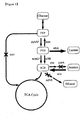
Claims (18)

  1. A method of preparing polylactate (PLA) or a hydroxyalkanoate-lactate copolymer, comprising:
    preparing a mutant microorganism in which at least one gene participating in coenzyme A (CoA) donor- and lactate-producing pathways is genetically manipulated to increase the productivity of a CoA donor and lactate;
    incubating the mutant microorganism in a medium containing glucose or glucose and hydroxyalkanoate; and
    recovering PLA or a hydroxyalkanoate-lactate copolymer from the mutant microorganism.
  2. The method according to claim 1, wherein the CoA donor is selected from the group consisting of acetyl-CoA, β-ketoadipyl-CoA, γ-butyrobetanyl-CoA, (R)-methylmalonyl-CoA, (S)-methyl-malonyl-CoA, 2'-(5"-phosphoribosyl)-3'-dephospho-CoA, 2'-(5"-triphosphoribosyl)-3'-dephospho-CoA, 3,4-dihydroxyphenylacetyl-CoA, 3-hydroxyadipyl-CoA, 3-hydroxybutyryl-CoA, 3-hydroxyphenylacetyl-CoA, 3-methylcrotonyl-CoA, 4-hydroxyphenylacetyl-CoA, cis-dihydrodiol derivatives of phenylacetyl-CoA, Δ2-enoyl-CoA, 2-trans-4-cis-dienoyl-CoA, 3-hydroxyacyl-CoA, 3-ketoacyl-CoA, cis-2-enoyl-CoA, cis-3-enoyl-CoA, trans-2-enoyl-CoA, trans-3-enoyl-CoA, cis-2,3-dehydroacyl-CoA, D-3-dihydroxyacyl-CoA, fatty acyl CoA, long-chain acyl-CoA, trans,trans-Δ2-Δ4-dienoyl-CoA, very long chain fatty acyl-CoA, CoA derivatives, acetoacetyl-CoA, acetyl-CoA, ω-carboxyacyl-CoA, acyl-CoA, L-3-hydroxyacyl-CoA, butyryl-CoA, CoA, a coenzyme-A-group (CoA), coumaroyl-CoA, crotonobetainyl-CoA, crotonyl-CoA, D-carnitinyl-CoA, dephospho-CoA, formyl-CoA, isovaleryl-CoA, L-carnitinyl-CoA, malonyl-CoA, O-succinylbenzoyl-CoA, oxalyl-CoA, palmitoyl CoA, phenylacetyl-CoA, pimeloyl-CoA, propionyl-CoA, succinyl-CoA, trans-Δ2,cis-Δ4-decadienoyl-CoA, trans-Δ2-decenoyl-CoA, and lactyl CoA.
  3. The method according to claim 1, wherein a gene coding for an enzyme participating in an acetate-producing pathway or a gene coding for an enzyme participating in an ethanol-producing pathway is inactivated in the mutant microorganism or a gene coding for an enzyme re-converting acetate into acetyl CoA is amplified to increase the productivity of the CoA donor.
  4. The method according to claim 1, wherein a gene coding for an enzyme participating in a phosphoenolpyruvate-consuming reaction is inactivated in the mutant microorganism, or a gene coding for an enzyme participating in conversion of pyruvate into lactate is amplified to increase the productivity of the lactate.
  5. The method according to claim 1, wherein the mutant microorganism is selected from the group consisting of a bacterium, a yeast and a mold.
  6. The method according to claim 5, wherein the bacterium is selected from the group consisting of the genera Alcaligenes, Pseudomonas, Escherichia, Ralstonia, Bacillus and Corynebacterium.
  7. The method according to claim 5, wherein the bacterium is Escherichia coli.
  8. The method according to claim 3, wherein the gene coding for the enzyme participating in the acetate-producing pathway is ackA.
  9. The method according to claim 3, wherein the gene coding for the enzyme participating in the ethanol-producing pathway is adhE.
  10. The method according to claim 3, wherein the gene coding for the enzyme re-converting the acetate into the acetyl CoA is acs.
  11. The method according to claim 4, wherein the gene coding for the enzyme participating in the phosphoenolpyruvate-consuming reaction is ppc.
  12. The method according to claim 4, wherein the gene coding for the enzyme participating in the conversion of the pyruvate into the lactate is ldhA.
  13. The method according to claim 1, wherein, in the mutant microorganism, the gene coding for the enzyme participating in the acetate-producing pathway is inactivated to increase the productivity of the CoA donor, the gene coding for the enzyme participating in the phosphoenolpyruvate-consuming reaction is inactivated, and the gene coding for the enzyme participating in the conversion of pyruvate into lactate is amplified to increase the productivity of the lactate.
  14. The method according to claim 1, wherein, in the mutant microorganism, the gene coding for the enzyme participating in the acetate-producing pathway is inactivated, the gene coding for the enzyme re-converting acetate into acetyl CoA is amplified to increase the productivity of the CoA donor, the gene coding for the enzyme participating in the phosphoenolpyruvate-consuming reaction is inactivated, and the gene coding for the enzyme participating in the conversion of pyruvate into lactate is amplified to increase the productivity of the lactate.
  15. The method according to claim 3 or 4, wherein the amplification of the genes is performed by substitution of a native promoter with a strong promoter.
  16. The method according to claim 15, wherein the strong promoter is selected from the group consisting of a trc promoter, a tac promoter, a T7 promoter and a lac promoter.
  17. The method according to any one of claims 8 to 12, wherein the mutant microorganism has at least one gene further attenuated or inactivated, which is selected from the group consisting of aceE, aceF, lpdA, pfkA, pfkB, tpiA, sdhA, sdhB, sdhC, sdhD, fumA, fumB, fumC, eptB, gpmA, gpmB, ptsG, mdh, pgi, glgC, sucA, sucB, ribA, folE and pflB.
  18. The method according to claim 1, wherein the hydroxyalkanoate is selected from the group consisting of 3-hydroxybutyrate, 3-hydroxyvalerate, 4-hydroxybutyrate, medium-chain length (D)-3-hydroxycarboxylic acid having 6 to 14 carbon atoms, 2-hydroxypropionic acid, 3-hydroxypropionic acid, 3-hydroxyhexanoic acid, 3-hydroxyheptanoic acid, 3-hydroxyoctanoic acid, 3-hydroxynonanoic acid, 3-hydroxydecanoic acid, 3-hydroxyundecanoic acid, 3-hydroxydodecanoic acid, 3-hydroxytetradecanoic acid, 3-hydroxyhexadecanoic acid, 4-hydroxyvalerate, 4-hydroxyhexanoic acid, 4-hydroxyheptanoic acid, 4-hydroxyoctanoic acid, 4-hydroxydecanoic acid, 5-hydroxyvaleric acid, 5-hydroxyhexanoic acid, 6-hydroxydodecanoic acid, 3-hydroxy-4-pentenoic acid, 3-hydroxy-4-trans-hexenoic acid, 3-hydroxy-4-cis-hexenoic acid, 3-hydroxy-5-hexenoic acid, 3-hydroxy-6-trans-octenoic acid, 3-hydroxy-6-cis-octenoic acid, 3-hydroxy-7-octenoic acid, 3-hydroxy-8-nonenoic acid, 3-hydroxy-9-decenoic acid, 3-hydroxy-5-cis-dodecenoic acid, 3-hydroxy-6-cis-dodecenoic acid, 3-hydroxy-5-cis-tetradecenoic acid, 3-hydroxy-7-cis-tetradecenoic acid, 3-hydroxy-5,8-cis-cis-tetradecenoic acid, 3-hydroxy-4-methylvaleric acid, 3-hydroxy-4-methylhexanoic acid, 3-hydroxy-5-methylhexanoic acid, 3-hydroxy-6-methylheptanoic acid, 3-hydroxy-4-methyloctanoic acid, 3-hydroxy-5-methyloctanoic acid, 3-hydroxy-6-methyloctanoic acid, 3-hydroxy-7-methyloctanoic acid, 3-hydroxy-6-methylnonanoic acid, 3-hydroxy-7-methylnonanoic acid, 3-hydroxy-8-methylnonanoic acid, 3-hydroxy-7-methyldecanoic acid, 3-hydroxy-9-methyldecanoic acid, 3-hydroxy-7-methyl-6-octenoic acid, malic acid, 3-hydroxysuccinic acid-methyl ester, 3-hydroxyadipinic acid-methyl ester, 3-hydroxysuberic acid-methyl ester, 3-hydroxyazelaic acid-methyl ester, 3-hydroxysebacic acid-methyl ester, 3-hydroxysuberic acid-ethyl ester, 3-hydroxysebacic acid-ethyl ester, 3-hydroxypimelic acid-propyl ester, 3-hydroxysebacic acid-benzil ester, 3-hydroxy-8-acetoxyoctanoic acid, 3-hydroxy-9-acetoxynonanoic acid, phenoxy-3-hydroxybutyrate, phenoxy-3-hydroxyvalerate, phenoxy-3-hydroxyheptanoic acid, phenoxy-3-hydroxyoctanoic acid, para-cyanophenoxy-3-hydroxybutyrate, para-cyanophenoxy-3-hydroxyvalerate, para-cyanophenoxy-3-hydroxyhexanoic acid, para-nitrophenoxy-3-hydroxyhexanoic acid, 3-hydroxy-5-phenylvaleric acid, 3-hydroxy-5-cyclohexylbutyric acid, 3,12-dihydroxydodecanoic acid, 3,8-dihydroxy-5-cis-tetradecenoic acid, 3-hydroxy-4,5-epoxydecanoic acid, 3-hydroxy-6,7-epoxydodecanoic acid, 3-hydroxy-8,9-epoxy-5,6-cis-tetradecanoic acid, 7-cyano-3-hydroxyheptanoic acid, 9-cyano-3-hydroxynonanoic acid, 3-hydroxy-7-fluoroheptanoic acid, 3-hydroxy-9-fluorononanoic acid, 3-hydroxy-6-chlorohexanoic acid, 3-hydroxy-8-chlorooctanoic acid, 3-hydroxy-6-bromohexanoic acid, 3-hydroxy-8-bromooctanoic acid, 3-hydroxy-11-bromoundecanoic acid, 3-hydroxy-2-butenoic acid, 6-hydroxy-3-dodecenoic acid, 3-hydroxy-2-methylbutyric acid, 3-hydroxy-2-methylvaleric acid, and 3-hydroxy-2,6-dimethyl-5-heptenoic acid.
EP09770374A 2008-06-24 2009-06-24 METHOD FOR THE PRODUCTION OF POLYLACTATE AND COPOLYMER AGAINST A MUTANT MICROORGANISM WITH IMPROVED POLYLACTATE AND COPOLYMER-PRODUCING SKILL Withdrawn EP2314638A4 (en)

Applications Claiming Priority (2)

Application Number Priority Date Filing Date Title
KR20080059779 2008-06-24
PCT/KR2009/003389 WO2009157702A2 (en) 2008-06-24 2009-06-24 Method for preparing polylactate and copolymer thereof using a mutant microorganism with enhanced polylactate, and the copolymer producing capability thereof

Publications (2)

Publication Number Publication Date
EP2314638A2 true EP2314638A2 (en) 2011-04-27
EP2314638A4 EP2314638A4 (en) 2012-09-05

Family

ID=41445100

Family Applications (1)

Application Number Title Priority Date Filing Date
EP09770374A Withdrawn EP2314638A4 (en) 2008-06-24 2009-06-24 METHOD FOR THE PRODUCTION OF POLYLACTATE AND COPOLYMER AGAINST A MUTANT MICROORGANISM WITH IMPROVED POLYLACTATE AND COPOLYMER-PRODUCING SKILL

Country Status (8)

Country Link
US (1) US9120891B2 (en)
EP (1) EP2314638A4 (en)
JP (1) JP5541809B2 (en)
KR (1) KR101114912B1 (en)
CN (1) CN102164986B (en)
AU (1) AU2009263165B2 (en)
BR (1) BRPI0914741A2 (en)
WO (1) WO2009157702A2 (en)

Cited By (4)

* Cited by examiner, † Cited by third party
Publication number Priority date Publication date Assignee Title
EP2636744A1 (en) * 2007-08-14 2013-09-11 LG Chem, Ltd. Mutant of propionyl-CoA transferase from Clostridium propionicum and preparing method for PLA or PLA copolymer using the same
EP2960326A4 (en) * 2014-05-09 2016-11-30 Cj Cheiljedang Corp MICROORGANISM THAT CAN IMPROVE LACTIC ACID PRODUCTION AND METHOD FOR PRODUCING LACTIC ACID USING THE SAME
EP3309247A4 (en) * 2015-06-12 2019-01-09 Cj Cheiljedang Corporation Microorganism having improved production of lactic acid and method for producing lactic acid by using same
IT201800007846A1 (en) * 2018-08-03 2020-02-03 Università Degli Studi Di Milano - Bicocca PROCEDURE FOR THE CELLULAR BIOSYNTHESIS OF POLY-LACTIC ACID AND POLY-LACTIC ACID

Families Citing this family (6)

* Cited by examiner, † Cited by third party
Publication number Priority date Publication date Assignee Title
KR101575585B1 (en) 2011-03-11 2015-12-21 한국과학기술원 Recombinant Microorganism Having Producing Poly(lactate-co-glycolate) from Glucose and Preparing Method of Poly(lactate-co-glycolate) Using Thereof
CN109439606B (en) * 2018-11-14 2022-06-28 中国科学院青岛生物能源与过程研究所 A kind of genetically engineered bacteria for improving phloroglucinol yield and its construction method and application
CN110396180B (en) * 2019-06-14 2021-09-24 南京先进生物材料与过程装备研究院有限公司 Method for precisely preparing aliphatic polyester by utilizing betaine
US11725220B1 (en) 2020-08-26 2023-08-15 National Technology & Engineering Solutions Of Sandia, Llc Production of fusel lactates via biocatalysis
CN113736814A (en) * 2021-09-29 2021-12-03 上海交通大学 Gene engineering strain for producing polylactic acid and method for producing polylactic acid
CN118813434B (en) * 2024-06-13 2025-05-20 陕西海斯夫生物工程有限公司 Recombinant cerevisiae yeast with high polylactic acid production, construction method and application thereof

Family Cites Families (8)

* Cited by examiner, † Cited by third party
Publication number Priority date Publication date Assignee Title
US5371002A (en) 1989-06-07 1994-12-06 James Madison University Method of production of poly-beta-hydroxyalkanoate copolymers
DE60336757D1 (en) * 2002-09-12 2011-05-26 Metabolix Inc PRODUCTION OF POLYHYDROXYALKANOATE BY COENZYME A-DEPENDENT ALDEHYDE DEHYDROGENASE WAYS
WO2005033324A1 (en) 2003-09-30 2005-04-14 Mitsui Chemicals, Inc. Biocatalyst for producing d-lactic acid
KR100979694B1 (en) * 2005-05-24 2010-09-02 한국과학기술원 Cells or plants having a polylactate or its copolymer generating ability, and a method for producing the polylactate or its copolymer
JP5565938B2 (en) 2006-11-21 2014-08-06 エルジー・ケム・リミテッド Copolymer containing 4-hydroxybutyrate unit and lactate unit and method for producing the same
AU2007322532B2 (en) * 2006-11-21 2012-02-02 Korea Advanced Institute Of Science And Technology Mutants of PHA synthase from Pseudomonas sp.6-19 and method for preparing lactate homopolymer or copolymer using the same
AU2007322529B2 (en) * 2006-11-21 2013-07-04 Korea Advanced Institute Of Science And Technology Copolymer containing 3-hydroxyalkanoate unit and lactate unit, and its manufacturing method
KR101037354B1 (en) * 2007-09-07 2011-05-26 한국과학기술원 Recombinant microorganisms capable of producing polylactic acid or polylactic acid copolymers from sucrose and methods of preparing polylactic acid or lactic acid copolymers from sucrose using such microorganisms

Non-Patent Citations (6)

* Cited by examiner, † Cited by third party
Title
CHANG D-E ET AL: "Acetate metabolism in a pta mutant of Escherichia coli W3110: Importance of maintaining acetyl coenzyme a flux for growth and survival", JOURNAL OF BACTERIOLOGY, AMERICAN SOCIETY FOR MICROBIOLOGY, WASHINGTON, DC; US, vol. 181, no. 21, 1 November 1999 (1999-11-01), pages 6656-6663, XP002334444, ISSN: 0021-9193 *
HENRY LIN ET AL: "Acetyl-CoA synthetase overexpression in Escherichia coli demonstrates more efficient acetate assimilation and lower acetate accumulation: a potential tool in metabolic engineering", APPLIED MICROBIOLOGY AND BIOTECHNOLOGY, SPRINGER, BERLIN, DE, vol. 71, no. 6, 22 February 2006 (2006-02-22), pages 870-874, XP019421965, ISSN: 1432-0614, DOI: 10.1007/S00253-005-0230-4 *
See also references of WO2009157702A2 *
U. GENSCHEL: "Coenzyme A Biosynthesis: Reconstruction of the Pathway in Archaea and an Evolutionary Scenario Based on Comparative Genomics", MOLECULAR BIOLOGY AND EVOLUTION, vol. 21, no. 7, 19 March 2004 (2004-03-19) , pages 1242-1251, XP55032386, ISSN: 0737-4038, DOI: 10.1093/molbev/msh119 *
YANG Y T ET AL: "Redistribution of metabolic fluxes in Escherichia coli with fermentative lactate dehydrogenase overexpression and deletion", METABOLIC ENGINEERING, ACADEMIC PRESS, US, vol. 1, no. 2, 1 April 1999 (1999-04-01), pages 141-152, XP002227141, ISSN: 1096-7176, DOI: 10.1006/MBEN.1998.0111 *
YU KYUNG JUNG ET AL: "Metabolic engineering of Escherichia coli for the production of polylactic acid and its copolymers", BIOTECHNOLOGY AND BIOENGINEERING, vol. 105, no. 1, 1 January 2010 (2010-01-01), pages 161-171, XP55032360, ISSN: 0006-3592, DOI: 10.1002/bit.22548 *

Cited By (7)

* Cited by examiner, † Cited by third party
Publication number Priority date Publication date Assignee Title
EP2636744A1 (en) * 2007-08-14 2013-09-11 LG Chem, Ltd. Mutant of propionyl-CoA transferase from Clostridium propionicum and preparing method for PLA or PLA copolymer using the same
EP2960326A4 (en) * 2014-05-09 2016-11-30 Cj Cheiljedang Corp MICROORGANISM THAT CAN IMPROVE LACTIC ACID PRODUCTION AND METHOD FOR PRODUCING LACTIC ACID USING THE SAME
EP3309247A4 (en) * 2015-06-12 2019-01-09 Cj Cheiljedang Corporation Microorganism having improved production of lactic acid and method for producing lactic acid by using same
IT201800007846A1 (en) * 2018-08-03 2020-02-03 Università Degli Studi Di Milano - Bicocca PROCEDURE FOR THE CELLULAR BIOSYNTHESIS OF POLY-LACTIC ACID AND POLY-LACTIC ACID
WO2020025694A1 (en) * 2018-08-03 2020-02-06 Università Degli Studi Di Milano - Bicocca Process for cellular biosynthesis of poly d-lactic acid and poly l-lactic acid
CN112601809A (en) * 2018-08-03 2021-04-02 米兰-比科卡大学 Method for cell biosynthesis of poly-D-lactic acid and poly-L-lactic acid
US11697831B2 (en) 2018-08-03 2023-07-11 Università Degli Studi Di Milano-Bicocca Cell able to produce poly l-lactic acid

Also Published As

Publication number Publication date
CN102164986A (en) 2011-08-24
BRPI0914741A2 (en) 2019-09-24
WO2009157702A3 (en) 2010-04-22
EP2314638A4 (en) 2012-09-05
US9120891B2 (en) 2015-09-01
WO2009157702A2 (en) 2009-12-30
AU2009263165A1 (en) 2009-12-30
JP2011525807A (en) 2011-09-29
KR20100002177A (en) 2010-01-06
US20110201067A1 (en) 2011-08-18
CN102164986B (en) 2013-12-25
AU2009263165B2 (en) 2012-06-28
JP5541809B2 (en) 2014-07-09
KR101114912B1 (en) 2012-02-14

Similar Documents

Publication Publication Date Title
US9120891B2 (en) Method for preparing polylactate and copolymer thereof using a mutant microorganism with enhanced polylactate, and the copolymer producing capability thereof
Meng et al. Production and characterization of poly (3-hydroxypropionate-co-4-hydroxybutyrate) with fully controllable structures by recombinant Escherichia coli containing an engineered pathway
JP5626735B2 (en) Recombinant Ralstonia eutropha having ability to produce polylactic acid or polylactic acid copolymer and method for producing polylactic acid or polylactic acid copolymer using the same
JP7001596B2 (en) A transformant that produces a copolymerized PHA containing 3 HH units, and a method for producing the PHA.
US8420357B2 (en) Recombinant microorganism capable of producing polylactate or polylactate copolymer from sucrose and method for producing polylactate or polylactate copolymer from sucrose using the same
Zhou et al. Production of 3-hydroxypropionate homopolymer and poly (3-hydroxypropionate-co-4-hydroxybutyrate) copolymer by recombinant Escherichia coli
KR101328567B1 (en) Recombinant Microorganism Producing polyhydroxyalkanoate (PHA) containing 2-hydroxybutyrate (2HB) monomer and Preparing Method of PHA containing 2HB Using Thereof
EP2818561A1 (en) Utilization of the novel, environmental isolates Pseudomonas sp. IPB-B26 and N-128 for the efficient high yield production of mcl/lcl-PHAs
JP6854909B2 (en) Method for producing polyhydroxyalkanoate using 2-hydroxyisocaproate-CoA transferase
JP4960033B2 (en) Method for producing copolymerized polyester using microorganisms having reduced enzyme activity
WO2010003463A1 (en) Method for polymerising glycolic acid with microorganisms
JP2008086238A (en) Method for producing polyhydroxyalkanoate
JP7764034B2 (en) Block copolymer and method for producing same
US20110118434A1 (en) Method for polymerising glycolic acid with microorganisms
US20240060099A1 (en) Poly-3-hydroxyalkanoates having vinyl moieties and method of producing such
David et al. Metabolic Engineering of Microorganisms for the Production of Lactate‐Containing Polyesters
JP2025097299A (en) Recombinant hydrogen-oxidizing bacteria and method for producing polyhydroxyalkanoic acid
WO2024101063A1 (en) Production method for polyhydroxyalkanoate
KR20170027578A (en) Method for preparing copolymer comprising 4-hydroxybutyrate and lactate as repeating unit using glucose

Legal Events

Date Code Title Description
PUAI Public reference made under article 153(3) epc to a published international application that has entered the european phase

Free format text: ORIGINAL CODE: 0009012

17P Request for examination filed

Effective date: 20101222

AK Designated contracting states

Kind code of ref document: A2

Designated state(s): AT BE BG CH CY CZ DE DK EE ES FI FR GB GR HR HU IE IS IT LI LT LU LV MC MK MT NL NO PL PT RO SE SI SK TR

AX Request for extension of the european patent

Extension state: AL BA RS

DAX Request for extension of the european patent (deleted)
A4 Supplementary search report drawn up and despatched

Effective date: 20120802

RIC1 Information provided on ipc code assigned before grant

Ipc: C08G 63/91 20060101AFI20120727BHEP

17Q First examination report despatched

Effective date: 20150518

STAA Information on the status of an ep patent application or granted ep patent

Free format text: STATUS: THE APPLICATION IS DEEMED TO BE WITHDRAWN

18D Application deemed to be withdrawn

Effective date: 20170627

