EP2313370B1 - 5-heterocyclylalkyl-3-hydroxy-2-phenylcyclopent-2-enones as herbicides - Google Patents
5-heterocyclylalkyl-3-hydroxy-2-phenylcyclopent-2-enones as herbicides Download PDFInfo
- Publication number
- EP2313370B1 EP2313370B1 EP09772473.6A EP09772473A EP2313370B1 EP 2313370 B1 EP2313370 B1 EP 2313370B1 EP 09772473 A EP09772473 A EP 09772473A EP 2313370 B1 EP2313370 B1 EP 2313370B1
- Authority
- EP
- European Patent Office
- Prior art keywords
- alkyl
- haloalkyl
- haloalkoxy
- alkoxy
- halogen
- Prior art date
- Legal status (The legal status is an assumption and is not a legal conclusion. Google has not performed a legal analysis and makes no representation as to the accuracy of the status listed.)
- Active
Links
- 0 C*(CC1)OC=C1P Chemical compound C*(CC1)OC=C1P 0.000 description 15
- ULKOSZIQFJGRSH-UHFFFAOYSA-N CC(C)(C)C(N1CCC(CC(CC(C2c3c(C)cc(C)cc3C)=O)C2=O)CC1)=O Chemical compound CC(C)(C)C(N1CCC(CC(CC(C2c3c(C)cc(C)cc3C)=O)C2=O)CC1)=O ULKOSZIQFJGRSH-UHFFFAOYSA-N 0.000 description 1
- CHNSNBGOYTUBFY-UHFFFAOYSA-N CC(C)(C)C(OC(CC(CC1COCCC1)C1=O)=C1c1c(C)cc(C)cc1C)=O Chemical compound CC(C)(C)C(OC(CC(CC1COCCC1)C1=O)=C1c1c(C)cc(C)cc1C)=O CHNSNBGOYTUBFY-UHFFFAOYSA-N 0.000 description 1
- SECGGGUFEYMKLQ-UHFFFAOYSA-N CC(C)(C)C(OC(CC(CCC1CCOCC1)C1=O)=C1c1c(C)cc(C)cc1C)=O Chemical compound CC(C)(C)C(OC(CC(CCC1CCOCC1)C1=O)=C1c1c(C)cc(C)cc1C)=O SECGGGUFEYMKLQ-UHFFFAOYSA-N 0.000 description 1
- UPXJQOJROZVOAM-UHFFFAOYSA-N CC(C)S(N1CCC(CC(CC(C2c3c(C)cc(C)cc3C)=O)C2=O)CC1)(=O)=O Chemical compound CC(C)S(N1CCC(CC(CC(C2c3c(C)cc(C)cc3C)=O)C2=O)CC1)(=O)=O UPXJQOJROZVOAM-UHFFFAOYSA-N 0.000 description 1
- GJPYMKNPNHHWNQ-VXLYETTFSA-N CC(N(CC1)CC1/C=C(\CC(OC(C)=O)=C1c2c(C)cc(C)cc2C)/C1=O)=O Chemical compound CC(N(CC1)CC1/C=C(\CC(OC(C)=O)=C1c2c(C)cc(C)cc2C)/C1=O)=O GJPYMKNPNHHWNQ-VXLYETTFSA-N 0.000 description 1
- IPYNVGGYYOOVQA-UHFFFAOYSA-N CC(N1CCC(CC(CC(C2c3c(C)cc(C)cc3C)=O)C2=O)CC1)=O Chemical compound CC(N1CCC(CC(CC(C2c3c(C)cc(C)cc3C)=O)C2=O)CC1)=O IPYNVGGYYOOVQA-UHFFFAOYSA-N 0.000 description 1
- KPYUTOSOEUZFHL-UHFFFAOYSA-N CCS(OC(CC(CC1COCC1)C1=O)=C1c1c(C)cc(C)cc1C)(=O)=O Chemical compound CCS(OC(CC(CC1COCC1)C1=O)=C1c1c(C)cc(C)cc1C)(=O)=O KPYUTOSOEUZFHL-UHFFFAOYSA-N 0.000 description 1
- ALPGEFKYTWTZPQ-UHFFFAOYSA-N CCc(cc1)c(C(C(CC2CC3CCOCC3)=O)C2=O)cc1-c(cc1)ccc1Cl Chemical compound CCc(cc1)c(C(C(CC2CC3CCOCC3)=O)C2=O)cc1-c(cc1)ccc1Cl ALPGEFKYTWTZPQ-UHFFFAOYSA-N 0.000 description 1
- LKMLPUHYOMCJOI-UHFFFAOYSA-N Cc1c(C(C(CC2)=O)C2=O)c(C)cc(F)c1 Chemical compound Cc1c(C(C(CC2)=O)C2=O)c(C)cc(F)c1 LKMLPUHYOMCJOI-UHFFFAOYSA-N 0.000 description 1
- MCPWHSZLMOUMKG-UHFFFAOYSA-N Cc1cc(-c(cc2)ccc2F)cc(C)c1C(C(CC1CC2CCOCC2)=O)C1=O Chemical compound Cc1cc(-c(cc2)ccc2F)cc(C)c1C(C(CC1CC2CCOCC2)=O)C1=O MCPWHSZLMOUMKG-UHFFFAOYSA-N 0.000 description 1
- DIFHTRYKMDDRIH-UHFFFAOYSA-N Cc1cc(-c2ccc(C(F)(F)F)cc2)cc(C)c1C(C(CC1CC2COCC2)=O)[NH+]1[O-] Chemical compound Cc1cc(-c2ccc(C(F)(F)F)cc2)cc(C)c1C(C(CC1CC2COCC2)=O)[NH+]1[O-] DIFHTRYKMDDRIH-UHFFFAOYSA-N 0.000 description 1
- KDZHAMJUUHUBDW-UHFFFAOYSA-N Cc1cc(-c2ccccc2)cc(C)c1C(C(C(C1)C(C2COCC2)O)=O)=C1OC Chemical compound Cc1cc(-c2ccccc2)cc(C)c1C(C(C(C1)C(C2COCC2)O)=O)=C1OC KDZHAMJUUHUBDW-UHFFFAOYSA-N 0.000 description 1
- KAQITQLHABMSKR-UHFFFAOYSA-N Cc1cc(C(N2CCC(CC(CC(C3c4c(C)cc(C)cc4C)=O)C3=O)CC2)=O)ccc1 Chemical compound Cc1cc(C(N2CCC(CC(CC(C3c4c(C)cc(C)cc4C)=O)C3=O)CC2)=O)ccc1 KAQITQLHABMSKR-UHFFFAOYSA-N 0.000 description 1
- AVQDMRMTGNKHBE-UHFFFAOYSA-N Cc1cc(C)c(C(C(C(C2)C(C3CCOCC3)O)=O)=C2OC)c(C)c1 Chemical compound Cc1cc(C)c(C(C(C(C2)C(C3CCOCC3)O)=O)=C2OC)c(C)c1 AVQDMRMTGNKHBE-UHFFFAOYSA-N 0.000 description 1
- ULKXKOFCSNJTEO-UHFFFAOYSA-N Cc1cc(C)c(C(C(C(C2)C(C3CCSCC3)O)=O)=C2OC)c(C)c1 Chemical compound Cc1cc(C)c(C(C(C(C2)C(C3CCSCC3)O)=O)=C2OC)c(C)c1 ULKXKOFCSNJTEO-UHFFFAOYSA-N 0.000 description 1
- KQBRJPMQJBNSPG-UHFFFAOYSA-N Cc1cc(C)c(C(C(C(CC(CC2)CCN2C(C2CC2)=O)C2)=O)=C2OC(C2CC2)=O)c(C)c1 Chemical compound Cc1cc(C)c(C(C(C(CC(CC2)CCN2C(C2CC2)=O)C2)=O)=C2OC(C2CC2)=O)c(C)c1 KQBRJPMQJBNSPG-UHFFFAOYSA-N 0.000 description 1
- NJGFGVOLVCGEOD-HZHRSRAPSA-N Cc1cc(C)c(C(C(C/C2=C\C3CCN(Cc4ccccc4)CC3)=O)C2=O)c(C)c1 Chemical compound Cc1cc(C)c(C(C(C/C2=C\C3CCN(Cc4ccccc4)CC3)=O)C2=O)c(C)c1 NJGFGVOLVCGEOD-HZHRSRAPSA-N 0.000 description 1
- YJLXDVGHWSXHFW-UHFFFAOYSA-N Cc1cc(C)c(C(C(CC2(CC3COCC3)COC)=O)C2=O)c(C)c1 Chemical compound Cc1cc(C)c(C(C(CC2(CC3COCC3)COC)=O)C2=O)c(C)c1 YJLXDVGHWSXHFW-UHFFFAOYSA-N 0.000 description 1
- ZRZWSDCWVHVXPM-MDZDMXLPSA-N Cc1cc(C)c(C(C(CC2CC(CC3)CCN3C(/C=C/c3ccccc3)=O)=O)C2=O)c(C)c1 Chemical compound Cc1cc(C)c(C(C(CC2CC(CC3)CCN3C(/C=C/c3ccccc3)=O)=O)C2=O)c(C)c1 ZRZWSDCWVHVXPM-MDZDMXLPSA-N 0.000 description 1
- RUEPYMSJEZEMNI-UHFFFAOYSA-N Cc1cc(C)c(C(C(CC2CC(CC3)CCN3C(C3CCCC3)=O)=O)C2=O)c(C)c1 Chemical compound Cc1cc(C)c(C(C(CC2CC(CC3)CCN3C(C3CCCC3)=O)=O)C2=O)c(C)c1 RUEPYMSJEZEMNI-UHFFFAOYSA-N 0.000 description 1
- OBOPGEGZJYNINZ-UHFFFAOYSA-N Cc1cc(C)c(C(C(CC2CC(CC3)CCN3C(COC)=O)=O)C2=O)c(C)c1 Chemical compound Cc1cc(C)c(C(C(CC2CC(CC3)CCN3C(COC)=O)=O)C2=O)c(C)c1 OBOPGEGZJYNINZ-UHFFFAOYSA-N 0.000 description 1
- REINIRJMGXDFOC-UHFFFAOYSA-N Cc1cc(C)c(C(C(CC2CC(CC3)CCN3C(Sc3ccccc3)=O)=O)C2=O)c(C)c1 Chemical compound Cc1cc(C)c(C(C(CC2CC(CC3)CCN3C(Sc3ccccc3)=O)=O)C2=O)c(C)c1 REINIRJMGXDFOC-UHFFFAOYSA-N 0.000 description 1
- KYGXXMUIIKWJSZ-UHFFFAOYSA-N Cc1cc(C)c(C(C(CC2CC3COCC3)=O)=C2OC(c2ccccc2)=O)c(C)c1 Chemical compound Cc1cc(C)c(C(C(CC2CC3COCC3)=O)=C2OC(c2ccccc2)=O)c(C)c1 KYGXXMUIIKWJSZ-UHFFFAOYSA-N 0.000 description 1
- IZYYETDIVDYEOR-UHFFFAOYSA-N Cc1cc(C)c(C(C(CC2CCC3CCOCC3)=O)C2=O)c(C)c1 Chemical compound Cc1cc(C)c(C(C(CC2CCC3CCOCC3)=O)C2=O)c(C)c1 IZYYETDIVDYEOR-UHFFFAOYSA-N 0.000 description 1
- GVVNGTRWWQBPIO-UHFFFAOYSA-N Cc1cc(C2CC2)cc(C)c1C(C(CC1CC2CCOCC2)=O)C1=O Chemical compound Cc1cc(C2CC2)cc(C)c1C(C(CC1CC2CCOCC2)=O)C1=O GVVNGTRWWQBPIO-UHFFFAOYSA-N 0.000 description 1
- SOZLTVDYWMVMTE-UHFFFAOYSA-N Cc1cc(F)cc(C)c1C(C(CC1CC2CCOCC2)=O)C1=O Chemical compound Cc1cc(F)cc(C)c1C(C(CC1CC2CCOCC2)=O)C1=O SOZLTVDYWMVMTE-UHFFFAOYSA-N 0.000 description 1
- GXAGYMKIMXCLIK-UHFFFAOYSA-N O=C(CC(CC1CCOCC1)C1=O)C1c(ccc(Cl)c1)c1Cl Chemical compound O=C(CC(CC1CCOCC1)C1=O)C1c(ccc(Cl)c1)c1Cl GXAGYMKIMXCLIK-UHFFFAOYSA-N 0.000 description 1
Classifications
-
- C—CHEMISTRY; METALLURGY
- C07—ORGANIC CHEMISTRY
- C07D—HETEROCYCLIC COMPOUNDS
- C07D309/00—Heterocyclic compounds containing six-membered rings having one oxygen atom as the only ring hetero atom, not condensed with other rings
- C07D309/02—Heterocyclic compounds containing six-membered rings having one oxygen atom as the only ring hetero atom, not condensed with other rings having no double bonds between ring members or between ring members and non-ring members
- C07D309/04—Heterocyclic compounds containing six-membered rings having one oxygen atom as the only ring hetero atom, not condensed with other rings having no double bonds between ring members or between ring members and non-ring members with only hydrogen atoms, hydrocarbon or substituted hydrocarbon radicals, directly attached to ring carbon atoms
-
- A—HUMAN NECESSITIES
- A01—AGRICULTURE; FORESTRY; ANIMAL HUSBANDRY; HUNTING; TRAPPING; FISHING
- A01N—PRESERVATION OF BODIES OF HUMANS OR ANIMALS OR PLANTS OR PARTS THEREOF; BIOCIDES, e.g. AS DISINFECTANTS, AS PESTICIDES OR AS HERBICIDES; PEST REPELLANTS OR ATTRACTANTS; PLANT GROWTH REGULATORS
- A01N43/00—Biocides, pest repellants or attractants, or plant growth regulators containing heterocyclic compounds
- A01N43/02—Biocides, pest repellants or attractants, or plant growth regulators containing heterocyclic compounds having rings with one or more oxygen or sulfur atoms as the only ring hetero atoms
- A01N43/04—Biocides, pest repellants or attractants, or plant growth regulators containing heterocyclic compounds having rings with one or more oxygen or sulfur atoms as the only ring hetero atoms with one hetero atom
- A01N43/06—Biocides, pest repellants or attractants, or plant growth regulators containing heterocyclic compounds having rings with one or more oxygen or sulfur atoms as the only ring hetero atoms with one hetero atom five-membered rings
- A01N43/08—Biocides, pest repellants or attractants, or plant growth regulators containing heterocyclic compounds having rings with one or more oxygen or sulfur atoms as the only ring hetero atoms with one hetero atom five-membered rings with oxygen as the ring hetero atom
-
- A—HUMAN NECESSITIES
- A01—AGRICULTURE; FORESTRY; ANIMAL HUSBANDRY; HUNTING; TRAPPING; FISHING
- A01N—PRESERVATION OF BODIES OF HUMANS OR ANIMALS OR PLANTS OR PARTS THEREOF; BIOCIDES, e.g. AS DISINFECTANTS, AS PESTICIDES OR AS HERBICIDES; PEST REPELLANTS OR ATTRACTANTS; PLANT GROWTH REGULATORS
- A01N43/00—Biocides, pest repellants or attractants, or plant growth regulators containing heterocyclic compounds
- A01N43/02—Biocides, pest repellants or attractants, or plant growth regulators containing heterocyclic compounds having rings with one or more oxygen or sulfur atoms as the only ring hetero atoms
- A01N43/04—Biocides, pest repellants or attractants, or plant growth regulators containing heterocyclic compounds having rings with one or more oxygen or sulfur atoms as the only ring hetero atoms with one hetero atom
- A01N43/06—Biocides, pest repellants or attractants, or plant growth regulators containing heterocyclic compounds having rings with one or more oxygen or sulfur atoms as the only ring hetero atoms with one hetero atom five-membered rings
- A01N43/10—Biocides, pest repellants or attractants, or plant growth regulators containing heterocyclic compounds having rings with one or more oxygen or sulfur atoms as the only ring hetero atoms with one hetero atom five-membered rings with sulfur as the ring hetero atom
-
- A—HUMAN NECESSITIES
- A01—AGRICULTURE; FORESTRY; ANIMAL HUSBANDRY; HUNTING; TRAPPING; FISHING
- A01N—PRESERVATION OF BODIES OF HUMANS OR ANIMALS OR PLANTS OR PARTS THEREOF; BIOCIDES, e.g. AS DISINFECTANTS, AS PESTICIDES OR AS HERBICIDES; PEST REPELLANTS OR ATTRACTANTS; PLANT GROWTH REGULATORS
- A01N43/00—Biocides, pest repellants or attractants, or plant growth regulators containing heterocyclic compounds
- A01N43/02—Biocides, pest repellants or attractants, or plant growth regulators containing heterocyclic compounds having rings with one or more oxygen or sulfur atoms as the only ring hetero atoms
- A01N43/04—Biocides, pest repellants or attractants, or plant growth regulators containing heterocyclic compounds having rings with one or more oxygen or sulfur atoms as the only ring hetero atoms with one hetero atom
- A01N43/14—Biocides, pest repellants or attractants, or plant growth regulators containing heterocyclic compounds having rings with one or more oxygen or sulfur atoms as the only ring hetero atoms with one hetero atom six-membered rings
- A01N43/16—Biocides, pest repellants or attractants, or plant growth regulators containing heterocyclic compounds having rings with one or more oxygen or sulfur atoms as the only ring hetero atoms with one hetero atom six-membered rings with oxygen as the ring hetero atom
-
- A—HUMAN NECESSITIES
- A01—AGRICULTURE; FORESTRY; ANIMAL HUSBANDRY; HUNTING; TRAPPING; FISHING
- A01N—PRESERVATION OF BODIES OF HUMANS OR ANIMALS OR PLANTS OR PARTS THEREOF; BIOCIDES, e.g. AS DISINFECTANTS, AS PESTICIDES OR AS HERBICIDES; PEST REPELLANTS OR ATTRACTANTS; PLANT GROWTH REGULATORS
- A01N43/00—Biocides, pest repellants or attractants, or plant growth regulators containing heterocyclic compounds
- A01N43/02—Biocides, pest repellants or attractants, or plant growth regulators containing heterocyclic compounds having rings with one or more oxygen or sulfur atoms as the only ring hetero atoms
- A01N43/04—Biocides, pest repellants or attractants, or plant growth regulators containing heterocyclic compounds having rings with one or more oxygen or sulfur atoms as the only ring hetero atoms with one hetero atom
- A01N43/14—Biocides, pest repellants or attractants, or plant growth regulators containing heterocyclic compounds having rings with one or more oxygen or sulfur atoms as the only ring hetero atoms with one hetero atom six-membered rings
- A01N43/18—Biocides, pest repellants or attractants, or plant growth regulators containing heterocyclic compounds having rings with one or more oxygen or sulfur atoms as the only ring hetero atoms with one hetero atom six-membered rings with sulfur as the ring hetero atom
-
- A—HUMAN NECESSITIES
- A01—AGRICULTURE; FORESTRY; ANIMAL HUSBANDRY; HUNTING; TRAPPING; FISHING
- A01N—PRESERVATION OF BODIES OF HUMANS OR ANIMALS OR PLANTS OR PARTS THEREOF; BIOCIDES, e.g. AS DISINFECTANTS, AS PESTICIDES OR AS HERBICIDES; PEST REPELLANTS OR ATTRACTANTS; PLANT GROWTH REGULATORS
- A01N43/00—Biocides, pest repellants or attractants, or plant growth regulators containing heterocyclic compounds
- A01N43/02—Biocides, pest repellants or attractants, or plant growth regulators containing heterocyclic compounds having rings with one or more oxygen or sulfur atoms as the only ring hetero atoms
- A01N43/04—Biocides, pest repellants or attractants, or plant growth regulators containing heterocyclic compounds having rings with one or more oxygen or sulfur atoms as the only ring hetero atoms with one hetero atom
- A01N43/20—Biocides, pest repellants or attractants, or plant growth regulators containing heterocyclic compounds having rings with one or more oxygen or sulfur atoms as the only ring hetero atoms with one hetero atom three- or four-membered rings
-
- A—HUMAN NECESSITIES
- A01—AGRICULTURE; FORESTRY; ANIMAL HUSBANDRY; HUNTING; TRAPPING; FISHING
- A01N—PRESERVATION OF BODIES OF HUMANS OR ANIMALS OR PLANTS OR PARTS THEREOF; BIOCIDES, e.g. AS DISINFECTANTS, AS PESTICIDES OR AS HERBICIDES; PEST REPELLANTS OR ATTRACTANTS; PLANT GROWTH REGULATORS
- A01N43/00—Biocides, pest repellants or attractants, or plant growth regulators containing heterocyclic compounds
- A01N43/02—Biocides, pest repellants or attractants, or plant growth regulators containing heterocyclic compounds having rings with one or more oxygen or sulfur atoms as the only ring hetero atoms
- A01N43/24—Biocides, pest repellants or attractants, or plant growth regulators containing heterocyclic compounds having rings with one or more oxygen or sulfur atoms as the only ring hetero atoms with two or more hetero atoms
- A01N43/26—Biocides, pest repellants or attractants, or plant growth regulators containing heterocyclic compounds having rings with one or more oxygen or sulfur atoms as the only ring hetero atoms with two or more hetero atoms five-membered rings
- A01N43/28—Biocides, pest repellants or attractants, or plant growth regulators containing heterocyclic compounds having rings with one or more oxygen or sulfur atoms as the only ring hetero atoms with two or more hetero atoms five-membered rings with two hetero atoms in positions 1,3
-
- A—HUMAN NECESSITIES
- A01—AGRICULTURE; FORESTRY; ANIMAL HUSBANDRY; HUNTING; TRAPPING; FISHING
- A01N—PRESERVATION OF BODIES OF HUMANS OR ANIMALS OR PLANTS OR PARTS THEREOF; BIOCIDES, e.g. AS DISINFECTANTS, AS PESTICIDES OR AS HERBICIDES; PEST REPELLANTS OR ATTRACTANTS; PLANT GROWTH REGULATORS
- A01N43/00—Biocides, pest repellants or attractants, or plant growth regulators containing heterocyclic compounds
- A01N43/02—Biocides, pest repellants or attractants, or plant growth regulators containing heterocyclic compounds having rings with one or more oxygen or sulfur atoms as the only ring hetero atoms
- A01N43/24—Biocides, pest repellants or attractants, or plant growth regulators containing heterocyclic compounds having rings with one or more oxygen or sulfur atoms as the only ring hetero atoms with two or more hetero atoms
- A01N43/32—Biocides, pest repellants or attractants, or plant growth regulators containing heterocyclic compounds having rings with one or more oxygen or sulfur atoms as the only ring hetero atoms with two or more hetero atoms six-membered rings
-
- A—HUMAN NECESSITIES
- A01—AGRICULTURE; FORESTRY; ANIMAL HUSBANDRY; HUNTING; TRAPPING; FISHING
- A01N—PRESERVATION OF BODIES OF HUMANS OR ANIMALS OR PLANTS OR PARTS THEREOF; BIOCIDES, e.g. AS DISINFECTANTS, AS PESTICIDES OR AS HERBICIDES; PEST REPELLANTS OR ATTRACTANTS; PLANT GROWTH REGULATORS
- A01N43/00—Biocides, pest repellants or attractants, or plant growth regulators containing heterocyclic compounds
- A01N43/34—Biocides, pest repellants or attractants, or plant growth regulators containing heterocyclic compounds having rings with one nitrogen atom as the only ring hetero atom
- A01N43/36—Biocides, pest repellants or attractants, or plant growth regulators containing heterocyclic compounds having rings with one nitrogen atom as the only ring hetero atom five-membered rings
-
- A—HUMAN NECESSITIES
- A01—AGRICULTURE; FORESTRY; ANIMAL HUSBANDRY; HUNTING; TRAPPING; FISHING
- A01N—PRESERVATION OF BODIES OF HUMANS OR ANIMALS OR PLANTS OR PARTS THEREOF; BIOCIDES, e.g. AS DISINFECTANTS, AS PESTICIDES OR AS HERBICIDES; PEST REPELLANTS OR ATTRACTANTS; PLANT GROWTH REGULATORS
- A01N43/00—Biocides, pest repellants or attractants, or plant growth regulators containing heterocyclic compounds
- A01N43/34—Biocides, pest repellants or attractants, or plant growth regulators containing heterocyclic compounds having rings with one nitrogen atom as the only ring hetero atom
- A01N43/40—Biocides, pest repellants or attractants, or plant growth regulators containing heterocyclic compounds having rings with one nitrogen atom as the only ring hetero atom six-membered rings
-
- A—HUMAN NECESSITIES
- A01—AGRICULTURE; FORESTRY; ANIMAL HUSBANDRY; HUNTING; TRAPPING; FISHING
- A01N—PRESERVATION OF BODIES OF HUMANS OR ANIMALS OR PLANTS OR PARTS THEREOF; BIOCIDES, e.g. AS DISINFECTANTS, AS PESTICIDES OR AS HERBICIDES; PEST REPELLANTS OR ATTRACTANTS; PLANT GROWTH REGULATORS
- A01N43/00—Biocides, pest repellants or attractants, or plant growth regulators containing heterocyclic compounds
- A01N43/48—Biocides, pest repellants or attractants, or plant growth regulators containing heterocyclic compounds having rings with two nitrogen atoms as the only ring hetero atoms
- A01N43/56—1,2-Diazoles; Hydrogenated 1,2-diazoles
-
- A—HUMAN NECESSITIES
- A01—AGRICULTURE; FORESTRY; ANIMAL HUSBANDRY; HUNTING; TRAPPING; FISHING
- A01N—PRESERVATION OF BODIES OF HUMANS OR ANIMALS OR PLANTS OR PARTS THEREOF; BIOCIDES, e.g. AS DISINFECTANTS, AS PESTICIDES OR AS HERBICIDES; PEST REPELLANTS OR ATTRACTANTS; PLANT GROWTH REGULATORS
- A01N43/00—Biocides, pest repellants or attractants, or plant growth regulators containing heterocyclic compounds
- A01N43/72—Biocides, pest repellants or attractants, or plant growth regulators containing heterocyclic compounds having rings with nitrogen atoms and oxygen or sulfur atoms as ring hetero atoms
- A01N43/80—Biocides, pest repellants or attractants, or plant growth regulators containing heterocyclic compounds having rings with nitrogen atoms and oxygen or sulfur atoms as ring hetero atoms five-membered rings with one nitrogen atom and either one oxygen atom or one sulfur atom in positions 1,2
-
- A—HUMAN NECESSITIES
- A01—AGRICULTURE; FORESTRY; ANIMAL HUSBANDRY; HUNTING; TRAPPING; FISHING
- A01N—PRESERVATION OF BODIES OF HUMANS OR ANIMALS OR PLANTS OR PARTS THEREOF; BIOCIDES, e.g. AS DISINFECTANTS, AS PESTICIDES OR AS HERBICIDES; PEST REPELLANTS OR ATTRACTANTS; PLANT GROWTH REGULATORS
- A01N43/00—Biocides, pest repellants or attractants, or plant growth regulators containing heterocyclic compounds
- A01N43/72—Biocides, pest repellants or attractants, or plant growth regulators containing heterocyclic compounds having rings with nitrogen atoms and oxygen or sulfur atoms as ring hetero atoms
- A01N43/84—Biocides, pest repellants or attractants, or plant growth regulators containing heterocyclic compounds having rings with nitrogen atoms and oxygen or sulfur atoms as ring hetero atoms six-membered rings with one nitrogen atom and either one oxygen atom or one sulfur atom in positions 1,4
-
- A—HUMAN NECESSITIES
- A01—AGRICULTURE; FORESTRY; ANIMAL HUSBANDRY; HUNTING; TRAPPING; FISHING
- A01N—PRESERVATION OF BODIES OF HUMANS OR ANIMALS OR PLANTS OR PARTS THEREOF; BIOCIDES, e.g. AS DISINFECTANTS, AS PESTICIDES OR AS HERBICIDES; PEST REPELLANTS OR ATTRACTANTS; PLANT GROWTH REGULATORS
- A01N43/00—Biocides, pest repellants or attractants, or plant growth regulators containing heterocyclic compounds
- A01N43/90—Biocides, pest repellants or attractants, or plant growth regulators containing heterocyclic compounds having two or more relevant hetero rings, condensed among themselves or with a common carbocyclic ring system
-
- A—HUMAN NECESSITIES
- A01—AGRICULTURE; FORESTRY; ANIMAL HUSBANDRY; HUNTING; TRAPPING; FISHING
- A01N—PRESERVATION OF BODIES OF HUMANS OR ANIMALS OR PLANTS OR PARTS THEREOF; BIOCIDES, e.g. AS DISINFECTANTS, AS PESTICIDES OR AS HERBICIDES; PEST REPELLANTS OR ATTRACTANTS; PLANT GROWTH REGULATORS
- A01N47/00—Biocides, pest repellants or attractants, or plant growth regulators containing organic compounds containing a carbon atom not being member of a ring and having no bond to a carbon or hydrogen atom, e.g. derivatives of carbonic acid
-
- A—HUMAN NECESSITIES
- A01—AGRICULTURE; FORESTRY; ANIMAL HUSBANDRY; HUNTING; TRAPPING; FISHING
- A01N—PRESERVATION OF BODIES OF HUMANS OR ANIMALS OR PLANTS OR PARTS THEREOF; BIOCIDES, e.g. AS DISINFECTANTS, AS PESTICIDES OR AS HERBICIDES; PEST REPELLANTS OR ATTRACTANTS; PLANT GROWTH REGULATORS
- A01N47/00—Biocides, pest repellants or attractants, or plant growth regulators containing organic compounds containing a carbon atom not being member of a ring and having no bond to a carbon or hydrogen atom, e.g. derivatives of carbonic acid
- A01N47/02—Biocides, pest repellants or attractants, or plant growth regulators containing organic compounds containing a carbon atom not being member of a ring and having no bond to a carbon or hydrogen atom, e.g. derivatives of carbonic acid the carbon atom having no bond to a nitrogen atom
- A01N47/06—Biocides, pest repellants or attractants, or plant growth regulators containing organic compounds containing a carbon atom not being member of a ring and having no bond to a carbon or hydrogen atom, e.g. derivatives of carbonic acid the carbon atom having no bond to a nitrogen atom containing —O—CO—O— groups; Thio analogues thereof
-
- A—HUMAN NECESSITIES
- A01—AGRICULTURE; FORESTRY; ANIMAL HUSBANDRY; HUNTING; TRAPPING; FISHING
- A01N—PRESERVATION OF BODIES OF HUMANS OR ANIMALS OR PLANTS OR PARTS THEREOF; BIOCIDES, e.g. AS DISINFECTANTS, AS PESTICIDES OR AS HERBICIDES; PEST REPELLANTS OR ATTRACTANTS; PLANT GROWTH REGULATORS
- A01N47/00—Biocides, pest repellants or attractants, or plant growth regulators containing organic compounds containing a carbon atom not being member of a ring and having no bond to a carbon or hydrogen atom, e.g. derivatives of carbonic acid
- A01N47/08—Biocides, pest repellants or attractants, or plant growth regulators containing organic compounds containing a carbon atom not being member of a ring and having no bond to a carbon or hydrogen atom, e.g. derivatives of carbonic acid the carbon atom having one or more single bonds to nitrogen atoms
- A01N47/10—Carbamic acid derivatives, i.e. containing the group —O—CO—N<; Thio analogues thereof
- A01N47/16—Carbamic acid derivatives, i.e. containing the group —O—CO—N<; Thio analogues thereof the nitrogen atom being part of a heterocyclic ring
-
- A—HUMAN NECESSITIES
- A01—AGRICULTURE; FORESTRY; ANIMAL HUSBANDRY; HUNTING; TRAPPING; FISHING
- A01N—PRESERVATION OF BODIES OF HUMANS OR ANIMALS OR PLANTS OR PARTS THEREOF; BIOCIDES, e.g. AS DISINFECTANTS, AS PESTICIDES OR AS HERBICIDES; PEST REPELLANTS OR ATTRACTANTS; PLANT GROWTH REGULATORS
- A01N47/00—Biocides, pest repellants or attractants, or plant growth regulators containing organic compounds containing a carbon atom not being member of a ring and having no bond to a carbon or hydrogen atom, e.g. derivatives of carbonic acid
- A01N47/08—Biocides, pest repellants or attractants, or plant growth regulators containing organic compounds containing a carbon atom not being member of a ring and having no bond to a carbon or hydrogen atom, e.g. derivatives of carbonic acid the carbon atom having one or more single bonds to nitrogen atoms
- A01N47/28—Ureas or thioureas containing the groups >N—CO—N< or >N—CS—N<
- A01N47/38—Ureas or thioureas containing the groups >N—CO—N< or >N—CS—N< containing the group >N—CO—N< where at least one nitrogen atom is part of a heterocyclic ring; Thio analogues thereof
-
- A—HUMAN NECESSITIES
- A01—AGRICULTURE; FORESTRY; ANIMAL HUSBANDRY; HUNTING; TRAPPING; FISHING
- A01N—PRESERVATION OF BODIES OF HUMANS OR ANIMALS OR PLANTS OR PARTS THEREOF; BIOCIDES, e.g. AS DISINFECTANTS, AS PESTICIDES OR AS HERBICIDES; PEST REPELLANTS OR ATTRACTANTS; PLANT GROWTH REGULATORS
- A01N53/00—Biocides, pest repellants or attractants, or plant growth regulators containing cyclopropane carboxylic acids or derivatives thereof
-
- A—HUMAN NECESSITIES
- A01—AGRICULTURE; FORESTRY; ANIMAL HUSBANDRY; HUNTING; TRAPPING; FISHING
- A01N—PRESERVATION OF BODIES OF HUMANS OR ANIMALS OR PLANTS OR PARTS THEREOF; BIOCIDES, e.g. AS DISINFECTANTS, AS PESTICIDES OR AS HERBICIDES; PEST REPELLANTS OR ATTRACTANTS; PLANT GROWTH REGULATORS
- A01N55/00—Biocides, pest repellants or attractants, or plant growth regulators, containing organic compounds containing elements other than carbon, hydrogen, halogen, oxygen, nitrogen and sulfur
-
- C—CHEMISTRY; METALLURGY
- C07—ORGANIC CHEMISTRY
- C07D—HETEROCYCLIC COMPOUNDS
- C07D207/00—Heterocyclic compounds containing five-membered rings not condensed with other rings, with one nitrogen atom as the only ring hetero atom
- C07D207/02—Heterocyclic compounds containing five-membered rings not condensed with other rings, with one nitrogen atom as the only ring hetero atom with only hydrogen or carbon atoms directly attached to the ring nitrogen atom
- C07D207/04—Heterocyclic compounds containing five-membered rings not condensed with other rings, with one nitrogen atom as the only ring hetero atom with only hydrogen or carbon atoms directly attached to the ring nitrogen atom having no double bonds between ring members or between ring members and non-ring members
- C07D207/08—Heterocyclic compounds containing five-membered rings not condensed with other rings, with one nitrogen atom as the only ring hetero atom with only hydrogen or carbon atoms directly attached to the ring nitrogen atom having no double bonds between ring members or between ring members and non-ring members with hydrocarbon radicals, substituted by hetero atoms, attached to ring carbon atoms
-
- C—CHEMISTRY; METALLURGY
- C07—ORGANIC CHEMISTRY
- C07D—HETEROCYCLIC COMPOUNDS
- C07D207/00—Heterocyclic compounds containing five-membered rings not condensed with other rings, with one nitrogen atom as the only ring hetero atom
- C07D207/46—Heterocyclic compounds containing five-membered rings not condensed with other rings, with one nitrogen atom as the only ring hetero atom with hetero atoms directly attached to the ring nitrogen atom
- C07D207/48—Sulfur atoms
-
- C—CHEMISTRY; METALLURGY
- C07—ORGANIC CHEMISTRY
- C07D—HETEROCYCLIC COMPOUNDS
- C07D211/00—Heterocyclic compounds containing hydrogenated pyridine rings, not condensed with other rings
- C07D211/04—Heterocyclic compounds containing hydrogenated pyridine rings, not condensed with other rings with only hydrogen or carbon atoms directly attached to the ring nitrogen atom
- C07D211/06—Heterocyclic compounds containing hydrogenated pyridine rings, not condensed with other rings with only hydrogen or carbon atoms directly attached to the ring nitrogen atom having no double bonds between ring members or between ring members and non-ring members
- C07D211/08—Heterocyclic compounds containing hydrogenated pyridine rings, not condensed with other rings with only hydrogen or carbon atoms directly attached to the ring nitrogen atom having no double bonds between ring members or between ring members and non-ring members with hydrocarbon or substituted hydrocarbon radicals directly attached to ring carbon atoms
- C07D211/18—Heterocyclic compounds containing hydrogenated pyridine rings, not condensed with other rings with only hydrogen or carbon atoms directly attached to the ring nitrogen atom having no double bonds between ring members or between ring members and non-ring members with hydrocarbon or substituted hydrocarbon radicals directly attached to ring carbon atoms with substituted hydrocarbon radicals attached to ring carbon atoms
- C07D211/30—Heterocyclic compounds containing hydrogenated pyridine rings, not condensed with other rings with only hydrogen or carbon atoms directly attached to the ring nitrogen atom having no double bonds between ring members or between ring members and non-ring members with hydrocarbon or substituted hydrocarbon radicals directly attached to ring carbon atoms with substituted hydrocarbon radicals attached to ring carbon atoms with hydrocarbon radicals, substituted by doubly bound oxygen or sulfur atoms or by two oxygen or sulfur atoms singly bound to the same carbon atom
- C07D211/32—Heterocyclic compounds containing hydrogenated pyridine rings, not condensed with other rings with only hydrogen or carbon atoms directly attached to the ring nitrogen atom having no double bonds between ring members or between ring members and non-ring members with hydrocarbon or substituted hydrocarbon radicals directly attached to ring carbon atoms with substituted hydrocarbon radicals attached to ring carbon atoms with hydrocarbon radicals, substituted by doubly bound oxygen or sulfur atoms or by two oxygen or sulfur atoms singly bound to the same carbon atom by oxygen atoms
-
- C—CHEMISTRY; METALLURGY
- C07—ORGANIC CHEMISTRY
- C07D—HETEROCYCLIC COMPOUNDS
- C07D211/00—Heterocyclic compounds containing hydrogenated pyridine rings, not condensed with other rings
- C07D211/92—Heterocyclic compounds containing hydrogenated pyridine rings, not condensed with other rings with a hetero atom directly attached to the ring nitrogen atom
- C07D211/94—Oxygen atom, e.g. piperidine N-oxide
-
- C—CHEMISTRY; METALLURGY
- C07—ORGANIC CHEMISTRY
- C07D—HETEROCYCLIC COMPOUNDS
- C07D211/00—Heterocyclic compounds containing hydrogenated pyridine rings, not condensed with other rings
- C07D211/92—Heterocyclic compounds containing hydrogenated pyridine rings, not condensed with other rings with a hetero atom directly attached to the ring nitrogen atom
- C07D211/96—Sulfur atom
-
- C—CHEMISTRY; METALLURGY
- C07—ORGANIC CHEMISTRY
- C07D—HETEROCYCLIC COMPOUNDS
- C07D307/00—Heterocyclic compounds containing five-membered rings having one oxygen atom as the only ring hetero atom
- C07D307/02—Heterocyclic compounds containing five-membered rings having one oxygen atom as the only ring hetero atom not condensed with other rings
- C07D307/04—Heterocyclic compounds containing five-membered rings having one oxygen atom as the only ring hetero atom not condensed with other rings having no double bonds between ring members or between ring members and non-ring members
- C07D307/06—Heterocyclic compounds containing five-membered rings having one oxygen atom as the only ring hetero atom not condensed with other rings having no double bonds between ring members or between ring members and non-ring members with only hydrogen atoms or radicals containing only hydrogen and carbon atoms, directly attached to ring carbon atoms
-
- C—CHEMISTRY; METALLURGY
- C07—ORGANIC CHEMISTRY
- C07D—HETEROCYCLIC COMPOUNDS
- C07D307/00—Heterocyclic compounds containing five-membered rings having one oxygen atom as the only ring hetero atom
- C07D307/02—Heterocyclic compounds containing five-membered rings having one oxygen atom as the only ring hetero atom not condensed with other rings
- C07D307/04—Heterocyclic compounds containing five-membered rings having one oxygen atom as the only ring hetero atom not condensed with other rings having no double bonds between ring members or between ring members and non-ring members
- C07D307/10—Heterocyclic compounds containing five-membered rings having one oxygen atom as the only ring hetero atom not condensed with other rings having no double bonds between ring members or between ring members and non-ring members with substituted hydrocarbon radicals attached to ring carbon atoms
- C07D307/12—Radicals substituted by oxygen atoms
-
- C—CHEMISTRY; METALLURGY
- C07—ORGANIC CHEMISTRY
- C07D—HETEROCYCLIC COMPOUNDS
- C07D317/00—Heterocyclic compounds containing five-membered rings having two oxygen atoms as the only ring hetero atoms
- C07D317/08—Heterocyclic compounds containing five-membered rings having two oxygen atoms as the only ring hetero atoms having the hetero atoms in positions 1 and 3
- C07D317/10—Heterocyclic compounds containing five-membered rings having two oxygen atoms as the only ring hetero atoms having the hetero atoms in positions 1 and 3 not condensed with other rings
- C07D317/14—Heterocyclic compounds containing five-membered rings having two oxygen atoms as the only ring hetero atoms having the hetero atoms in positions 1 and 3 not condensed with other rings with substituted hydrocarbon radicals attached to ring carbon atoms
- C07D317/26—Radicals substituted by doubly bound oxygen or sulfur atoms or by two such atoms singly bound to the same carbon atom
-
- C—CHEMISTRY; METALLURGY
- C07—ORGANIC CHEMISTRY
- C07D—HETEROCYCLIC COMPOUNDS
- C07D319/00—Heterocyclic compounds containing six-membered rings having two oxygen atoms as the only ring hetero atoms
- C07D319/10—1,4-Dioxanes; Hydrogenated 1,4-dioxanes
- C07D319/12—1,4-Dioxanes; Hydrogenated 1,4-dioxanes not condensed with other rings
-
- C—CHEMISTRY; METALLURGY
- C07—ORGANIC CHEMISTRY
- C07D—HETEROCYCLIC COMPOUNDS
- C07D335/00—Heterocyclic compounds containing six-membered rings having one sulfur atom as the only ring hetero atom
- C07D335/02—Heterocyclic compounds containing six-membered rings having one sulfur atom as the only ring hetero atom not condensed with other rings
-
- C—CHEMISTRY; METALLURGY
- C07—ORGANIC CHEMISTRY
- C07D—HETEROCYCLIC COMPOUNDS
- C07D401/00—Heterocyclic compounds containing two or more hetero rings, having nitrogen atoms as the only ring hetero atoms, at least one ring being a six-membered ring with only one nitrogen atom
- C07D401/02—Heterocyclic compounds containing two or more hetero rings, having nitrogen atoms as the only ring hetero atoms, at least one ring being a six-membered ring with only one nitrogen atom containing two hetero rings
- C07D401/06—Heterocyclic compounds containing two or more hetero rings, having nitrogen atoms as the only ring hetero atoms, at least one ring being a six-membered ring with only one nitrogen atom containing two hetero rings linked by a carbon chain containing only aliphatic carbon atoms
-
- C—CHEMISTRY; METALLURGY
- C07—ORGANIC CHEMISTRY
- C07D—HETEROCYCLIC COMPOUNDS
- C07D405/00—Heterocyclic compounds containing both one or more hetero rings having oxygen atoms as the only ring hetero atoms, and one or more rings having nitrogen as the only ring hetero atom
- C07D405/02—Heterocyclic compounds containing both one or more hetero rings having oxygen atoms as the only ring hetero atoms, and one or more rings having nitrogen as the only ring hetero atom containing two hetero rings
- C07D405/06—Heterocyclic compounds containing both one or more hetero rings having oxygen atoms as the only ring hetero atoms, and one or more rings having nitrogen as the only ring hetero atom containing two hetero rings linked by a carbon chain containing only aliphatic carbon atoms
-
- C—CHEMISTRY; METALLURGY
- C07—ORGANIC CHEMISTRY
- C07D—HETEROCYCLIC COMPOUNDS
- C07D409/00—Heterocyclic compounds containing two or more hetero rings, at least one ring having sulfur atoms as the only ring hetero atoms
- C07D409/02—Heterocyclic compounds containing two or more hetero rings, at least one ring having sulfur atoms as the only ring hetero atoms containing two hetero rings
- C07D409/06—Heterocyclic compounds containing two or more hetero rings, at least one ring having sulfur atoms as the only ring hetero atoms containing two hetero rings linked by a carbon chain containing only aliphatic carbon atoms
-
- C—CHEMISTRY; METALLURGY
- C07—ORGANIC CHEMISTRY
- C07D—HETEROCYCLIC COMPOUNDS
- C07D413/00—Heterocyclic compounds containing two or more hetero rings, at least one ring having nitrogen and oxygen atoms as the only ring hetero atoms
- C07D413/02—Heterocyclic compounds containing two or more hetero rings, at least one ring having nitrogen and oxygen atoms as the only ring hetero atoms containing two hetero rings
- C07D413/06—Heterocyclic compounds containing two or more hetero rings, at least one ring having nitrogen and oxygen atoms as the only ring hetero atoms containing two hetero rings linked by a carbon chain containing only aliphatic carbon atoms
-
- C—CHEMISTRY; METALLURGY
- C07—ORGANIC CHEMISTRY
- C07D—HETEROCYCLIC COMPOUNDS
- C07D491/00—Heterocyclic compounds containing in the condensed ring system both one or more rings having oxygen atoms as the only ring hetero atoms and one or more rings having nitrogen atoms as the only ring hetero atoms, not provided for by groups C07D451/00 - C07D459/00, C07D463/00, C07D477/00 or C07D489/00
- C07D491/12—Heterocyclic compounds containing in the condensed ring system both one or more rings having oxygen atoms as the only ring hetero atoms and one or more rings having nitrogen atoms as the only ring hetero atoms, not provided for by groups C07D451/00 - C07D459/00, C07D463/00, C07D477/00 or C07D489/00 in which the condensed system contains three hetero rings
- C07D491/18—Bridged systems
-
- C—CHEMISTRY; METALLURGY
- C07—ORGANIC CHEMISTRY
- C07F—ACYCLIC, CARBOCYCLIC OR HETEROCYCLIC COMPOUNDS CONTAINING ELEMENTS OTHER THAN CARBON, HYDROGEN, HALOGEN, OXYGEN, NITROGEN, SULFUR, SELENIUM OR TELLURIUM
- C07F7/00—Compounds containing elements of Groups 4 or 14 of the Periodic Table
- C07F7/02—Silicon compounds
- C07F7/08—Compounds having one or more C—Si linkages
- C07F7/0803—Compounds with Si-C or Si-Si linkages
- C07F7/081—Compounds with Si-C or Si-Si linkages comprising at least one atom selected from the elements N, O, halogen, S, Se or Te
- C07F7/0812—Compounds with Si-C or Si-Si linkages comprising at least one atom selected from the elements N, O, halogen, S, Se or Te comprising a heterocyclic ring
Definitions
- the present invention relates to novel, herbicidally active cyclic diones, and derivatives thereof, to processes for their preparation, to compositions comprising those compounds, and to their use in controlling weeds, especially in crops of useful plants, or in inhibiting undesired plant growth.
- Cyclic diones compounds having herbicidal action are described, for example, in WO96/25395 , WO01/74770 and WO96/03366 .
- Novel cyclopentadione compounds, and derivatives thereof, having herbicidal and growth-inhibiting properties have now been found.
- the present invention accordingly relates to compounds of formula (I) wherein
- each alkyl moiety either alone or as part of a larger group is a straight or branched chain and is, for example, methyl, ethyl, n -propyl, n -butyl, n -pentyl, n -hexyl, isopropyl, n- butyl, sec -butyl, isobutyl, tert -butyl or neopentyl.
- alkyl groups are suitably C 1 -C 6 alkyl groups, but are preferably C 1 -C 4 alkyl groups, and, more preferably, C 1 -C 2 alkyl groups.
- Alkenyl and alkynyl moieties can be in the form of straight or branched chains, and the alkenyl moieties, where appropriate, can be of either the ( E )- or ( Z )-configuration. Examples are vinyl, allyl and propargyl.
- Alkenyl and alkynyl moieties can contain one or more double and/or triple bonds in any combination. It is understood, that allenyl and alkylinylalkenyl are included in these terms.
- Halogen is fluorine, chlorine, bromine or iodine.
- Haloalkyl groups are alkyl groups which are substituted with one or more of the same or different halogen atoms and are, for example, CF 3 , CF 2 Cl, CF 2 H, CCl 2 H, FCH 2 , ClCH 2 , BrCH 2 , CH 3 CHF, (CH 3 ) 2 CF, CF 3 CH 2 or CHF 2 CH 2 .
- heteroaryl refers to an aromatic ring system containing at least one heteroatom and consisting either of a single ring or of two or more fused rings.
- single rings will contain up to three and bicyclic systems up to four heteroatoms which will preferably be chosen from nitrogen, oxygen and sulphur.
- Examples of such groups include furyl, thienyl, pyrrolyl, pyrazolyl, imidazolyl, 1,2,3-triazolyl, 1,2,4-triazolyl, oxazolyl, isoxazolyl, thiazolyl, isothiazolyl, 1,2,4-oxadiazolyl, 1,3,4-oxadiazolyl, 1,2,5-oxadiazolyl, 1,2,3-thiadiazolyl, 1,2,4-thiadiazolyl, 1,3,4-thiadiazolyl, 1,2,5-thiadiazolyl, pyridyl, pyrimidinyl, pyridazinyl, pyrazinyl, 1,2,3-triazinyl, 1,2,4-triazinyl, 1,3,5-triazinyl, benzofuryl, benzisofuryl, benzothienyl, benzisothienyl, indolyl, isoindolyl, in
- heteroaromatic radicals include pyridyl, pyrimidinyl, triazinyl, thienyl, furyl, oxazolyl, isoxazolyl, 2,1,3-benzoxadiazolyl and thiazolyl.
- Another group of preferred heteroaryls comprises furyl, thienyl, pyrazolyl, 1,2,3-triazolyl, 1,2,4-triazolyl, pyridyl, pyrimidinyl, pyridazinyl, pyrazinyl, quinolinyl, isoquinolinyl, cinnolinyl, quinazolinyl or quinoxalinyl.
- heterocyclyl preferably refers to a non-aromatic, preferably monocyclic or bicyclic ring systems containing up to 8 atoms including at least one (preferably one or two) heteroatoms selected from O, S and N.
- rings examples include 1,3-dithiane, 1,3-dioxane, 1,4-dioxane, morpholine, thiomorpholin, piperazine, tetrahydropyran, piperidine, thiane, 1,3-dioxolane, tetrahydrofuran, tetrahydrothiophene, pirolidine, imidazoline, azetidine, oxetane, thietane, aziridine, epoxide and thiirane.
- heterocyclic radicals include 1,3-dioxane, morpholine, thiomorpholin, tetrahydropyran, 1,3-dioxolane, tetrahydrofuran and tetrahydrothiophene
- Cycloalkyl includes preferably cyclopropyl, cyclobutyl, cyclopentyl and cyclohexyl.
- substituents are independently selected from halogen, C 1 -C 6 alkyl, C 1 -C 6 haloalkyl, C 1 -C 6 alkoxy, C 1 -C 6 haloalkoxy, C 1 -C 6 alkylthio, C 1 -C 6 alkylsulfinyl, C 1 -C 6 alkylsulfonyl, nitro and cyano.
- dialkylamino substituents include those where the dialkyl groups together with the N atom to which they are attached form a five, six or seven-membered heterocyclic ring which may contain one or two further heteroatoms selected from O, N or S and which is optionally substituted by one or two independently selected C 1 -C 6 alkyl groups.
- heterocyclic rings are formed by joining two groups on an N atom, the resulting rings are suitably pyrrolidine, piperidine, thiomorpholine and morpholine each of which may be substituted by one or two independently selected C 1 -C 6 alkyl groups.
- the invention relates also to the salts which the compounds of formula I are able to form with amines, alkali metal and alkaline earth metal bases or quaternary ammonium bases.
- alkali metal and alkaline earth metal hydroxides as salt formers, special mention should be made of the hydroxides of lithium, sodium, potassium, magnesium and calcium, but especially the hydroxides of sodium and potassium.
- the compounds of formula I according to the invention also include hydrates which may be formed during the salt formation.
- amines suitable for ammonium salt formation include ammonia as well as primary, secondary and tertiary C 1 -C 18 alkylamines, C 1 -C 4 hydroxyalkylamines and C 2 -C 4 -alkoxyalkylamines, for example methylamine, ethylamine, n -propylamine, isopropylamine, the four butylamine isomers, n -amylamine, isoamylamine, hexylamine, heptylamine, octyl-amine, nonylamine, decylamine, pentadecylamine, hexadecylamine, heptadecylamine, octadecylamine, methylethylamine, methylisopropylamine, methylhexylamine, methyl-nonylamine, methylpentadecylamine, methyloctadecyl
- Preferred quaternary ammonium bases suitable for salt formation correspond, for example, to the formula [N(R a R b R c R d )]OH wherein R a , R b , R c and R d are each independently of the others C 1 -C 4 alkyl.
- Further suitable tetraalkylammonium bases with other anions can be obtained, for example, by anion exchange reactions.
- Agriculturally acceptable metals are alkali metal or alkaline earth metal ions, for example sodium, potassium, magnesium and calcium ions, and transition metal ions, for example copper and iron atoms.
- Suitable ammonium ions are NH 4 + , alkylammonium, dialkylammonium, triakylammonium and tetraalkylammonium ions.
- Suitable sulfonium ions are trialkylsulfonium ions, for example trimethylsulfonium ions.
- the latentiating groups G are selected to allow its removal by one or a combination of biochemical, chemical or physical processes to afford compounds of formula I where G is H before, during or following application to the treated area or plants. Examples of these processes include enzymatic cleavage, chemical hydrolysis and photoloysis. Compounds bearing such groups G may offer certain advantages, such as improved penetration of the cuticula of the plants treated, increased tolerance of crops, improved compatibility or stability in formulated mixtures containing other herbicides, herbicide safeners, plant growth regulators, fungicides or insecticides, or reduced leaching in soils.
- the latentiating group G is a group -C(X a )-R a or -C(X b )-X c -R b , and the meanings of X a , R a , X b , X c and R b are as defined above.
- G is hydrogen, an alkali metal or alkaline earth metal, where hydrogen is especially preferred.
- compounds of formula (I) may exist in different isomeric forms.
- G is hydrogen
- compounds of formula (I) may exist in different tautomeric forms:
- R 1 is methyl, ethyl or methoxy.
- R 2 and R 3 are independently hydrogen, halogen, C 1 -C 6 alkyl, C 1 -C 6 alkoxy, C 2 -C 6 alkenyl, C 2 -C 6 alkynyl, C 2 -C 6 haloalkynyl, phenyl or phenyl substituted by C 1 -C 4 alkyl, C 1 -C 3 haloalkyl, cyano, nitro, halogen or C 1 -C 3 alkylsulfonyl, and, more preferably, R 2 and R 3 are independently hydrogen, chlorine, bromine, methyl, methoxy, ethyl, ethoxy, ethenyl, ethynyl, phenyl or phenyl substituted by methyl, trifluoromethyl, cyano, nitro, fluorine, chlorine or methylsulfonyl.
- R 2 and R 3 are independently thienyl, thienyl substituted by C 1 -C 3 alkyl, C 1 -C 3 haloalkyl, C 1 -C 3 alkoxy, C 1 -C 3 haloalkoxy, cyano, nitro, halogen, C 1 -C 3 alkylthio, C 1 -C 3 alkylsulfinyl or C 1 -C 3 alkylsulfonyl, furyl, furyl substituted by C 1 -C 3 alkyl, C 1 -C 3 haloalkyl, C 1 -C 3 alkoxy, C 1 -C 3 haloalkoxy, cyano, nitro, halogen, C 1 -C 3 alkylthio, C 1 -C 3 alkylsulfinyl or C 1 -C 3 alkylsulfonyl, pyrazolyl, pyrazolyl substituted
- R 3 is hydrogen
- R 4 is hydrogen, methyl, ethyl, n -propyl, iso -propyl, halomethyl, haloethyl, halogen, vinyl, ethynyl, methoxy, ethoxy, halomethoxy or haloethoxy, and more preferably R 4 is hydrogen, methyl, ethyl, chlorine, bromine, ethenyl, ethynyl, methoxy or ethoxy.
- R 1 , R 2 and R 4 are metyl and R 3 is hydrogen.
- R 5 is hydrogen, halogen, C 1 -C 6 alkyl, C 1 -C 6 haloalkyl, C 1 -C 6 alkoxy or C 1 -C 6 haloalkoxy, and, more preferably, R 5 is hydrogen or methyl.
- R 6 and R 7 independently are hydrogen, halogen, C 1 -C 6 alkyl, C 1 -C 6 haloalkyl, C 1 -C 6 alkoxy or C 1 -C 6 haloalkoxy, and, more preferably, R 6 and R 7 independently are hydrogen or methyl.
- R 8 and R 9 independently are hydrogen, halogen, C 1 -C 6 alkyl, C 1 -C 6 haloalkyl, C 1 -C 6 alkoxy or C 1 -C 6 haloalkoxy,and, more preferably, R 8 and R 9 independently are hydrogen or methyl.
- Preferred saturated or mono-unsaturated rings Q are those of the formula wherein
- Groups Q 1 , Q 2 , Q 3 , Q 4 , Q 5 , Q 6 , Q 7 , Q 25 , Q 26 , Q 27 , Q 28 , Q 29 , Q 86 , Q 87 , Q 88 , Q 89 , Q 90 are more preferred, and groups Q 1 to Q 7 are particularly preferred.
- R and R' are independently hydrogen, C 1 -C 4 alkyl, C 1 -C 4 haloalkyl, C 1 -C 4 alkoxy or C 1 -C 4 haloalkoxy
- R" is hydrogen, C 1 -C 4 alkyl, C 1 -C 4 haloalkyl, C 1 -C 4 alkoxy, C 1 -C 4 haloalkoxy or C 1 -C 6 haloalkylcarbonyl.
- n 0, 1 and 2.
- n is 1 or 2 and most preferably m is 1.
- Certain compounds of formula (I) are alkenes, and as such undergo further reactions typical of alkenes to give additional compounds of formula (I) according to known procedures.
- Example of such reaction include, but are not restricted to, halogenation or hydrogenation wherein R 5 and R 6 form a bond
- compounds of formula (I) may contain a aromatic moiety bearing one or more substituents capable of being transformed into alternative substituents under known conditions, and that these compounds may themselves serve as intermediates in the preparation of additional compounds of formula (I).
- compounds of formula (I) wherein R 1 , R 2 , R 3 or R 4 is alkenyl or alkynyl may be reduced to compounds of formula (I) wherein R 1 , R 2 , R 3 or R 4 is alkyl under known conditions and compounds of formula (I) wherein R 1 , R 2 , R 3 or R 4 is halogen, preferably bromide or iodine, may undergo a cross-coupling reaction with a suitable coupling partner under conditions described in the literature for Suzuki-Miyaura, Sonogashira and related cross-coupling reactions to give additional compounds of formula (I) (see, for example, O'Brien, C. J. and Organ, M. G. Angew. Chem. Int. Ed. (2007), 46, 2768-2813 ; Suzuki, A. Journal of Organometallic Chemistry (2002), 653, 83 ; Miyaura N. and Suzuki, A. Chem. Rev. (1995), 95, 2457-2483 ).
- G is C 1 -C 8 alkyl, C 2 -C 8 haloalkyl, phenylC 1 -C 8 alkyl (wherein the phenyl may optionally be substituted by C 1 -C 3 alkyl, C 1 -C 3 haloalkyl, C 1 -C 3 alkoxy, C 1 -C 3 haloalkoxy, C 1 -C 3 alkylthio, C 1 -C 3 alkylsufinyl, C 1 -C 3 alkylsulfonyl, halogen, cyano or by nitro), heteroarylC 1 -C 8 alkyl (wherein the heteroaryl may optionally be substituted by C 1 -C 3 alkyl, C 1 -C 3 haloalkyl, C 1 -C 3 alkoxy, C 1 -C 3 haloalkoxy, C 1 -C 3 alkylthio, C 1 -C 3
- Isomeric compounds of formula (I) may be formed.
- compounds of formula (A) may give rise to two isomeric compounds of formula (I), or to isomeric mixtures of compounds of formula (I).
- This invention covers both isomeric compounds of formula (I), together with mixtures of these compounds in any ratio.
- acylation of cyclic 1,3-diones may be effected by procedures similar to those described, for example, in US4551547 , US4175135 , US4422870 , US4659372 and US4436666 .
- diones of formula (A) may be treated with the acylating agent in the presence of at least one equivalent of a suitable base, optionally in the presence of a suitable solvent.
- the base may be inorganic, such as an alkali metal carbonate or hydroxide, or a metal hydride, or an organic base such as a tertiary amine or metal alkoxide.
- suitable inorganic bases include sodium carbonate, sodium or potassium hydroxide, sodium hydride
- suitable organic bases include trialkylamines, such as trimethylamine and triethylamine, pyridines or other amine bases such as 1,4-diazobicyclo[2.2.2]octane and 1,8-diazabicyclo[5.4.0]undec-7-ene.
- Preferred bases include triethylamine and pyridine.
- Suitable solvents for this reaction are selected to be compatible with the reagents and include ethers such as tetrahydrofuran and 1,2-dimethoxyethane and halogenated solvents such as dichloromethane and chloroform.
- acylating agent is a carboxylic acid
- acylation is preferably effected in the presence of a coupling agent such as 2-chloro-1-methylpyridinium iodide, N,N '-dicyclohexylcarbodiimide, 1-(3-dimethylaminopropyl)-3-ethylcarbodiimide and N,N '-carbodiimidazole, and optionally a base such as triethylamine or pyridine in a suitable solvent such as tetrahydrofuran, dichloromethane or acetonitrile.
- a coupling agent such as 2-chloro-1-methylpyridinium iodide, N,N '-dicyclohexylcarbodiimide, 1-(3-dimethylaminopropyl)-3-ethylcarbodiimide and N,N '-carbodiimidazole
- a base such as triethylamine
- Phosphorylation of cyclic-1,3-diones may be effected using a phosphoryl halide or thiophosphoryl halide and a base by procedures analogous to those described in US4409153 .
- Sulfonylation of compounds of formula (A) may be achieved using an alkyl or aryl sulfonyl halide, preferably in the presence of at least one equivalent of base, for example by the procedure of Kowalski, C. J. and Fields, K. W. J. Org. Chem. (1981), 46, 197 .
- Compounds of formula (A) may be prepared from a compounds of formula (I) by hydrolysis, preferably in the presence of an acid catalyst such as hydrochloric acid and optionally in the presence of a suitable solvent such as tetrahydrofuran or acetone preferably between 25 °C and 150 °C under conventional heating or under microwave irradiation.
- an acid catalyst such as hydrochloric acid
- a suitable solvent such as tetrahydrofuran or acetone preferably between 25 °C and 150 °C under conventional heating or under microwave irradiation.
- compounds of formula (A) may be prepared by the cyclisation of a compound of formula (B) or a compound of formula (C), wherein R"' is hydrogen or an alkyl group, preferably in the presence of an acid or base, and optionally in the presence of a suitable solvent, by analogous methods to those described by T. N. Wheeler, US4209532 .
- Compounds of formula (B) or compounds of formula (C) wherein R"' is hydrogen may be cyclised under acidic conditions, preferably in the presence of a strong acid such as sulfuric acid, polyphosphoric acid or Eaton's reagent, optionally in the presence of a suitable solvent such as acetic acid, toluene or dichloromethane.
- Compounds of formula (B) or compounds of formula (C) wherein R'" is alkyl (preferably methyl or ethyl), may be cyclised under acidic or basic conditions, preferably in the presence of at least one equivalent of a strong base such as potassium tert -butoxide, lithium diisopropylamide or sodium hydride and in a solvent such as tetrahydrofuran, toluene, dimethylsulfoxide or N,N -dimethylformamide.
- a strong base such as potassium tert -butoxide, lithium diisopropylamide or sodium hydride
- a solvent such as tetrahydrofuran, toluene, dimethylsulfoxide or N,N -dimethylformamide.
- Compounds of formula (B) and compounds of formula (C), wherein R'" is H may be esterified to, respectively, compounds of formula (B) and compounds of formula (C), wherein R'" is alkyl, under standard conditions, for example by heating with an alkyl alcohol, ROH, in the presence of an acid catalyst.
- Compounds of formula (B) and compounds of formula (C), wherein R'" is H may be prepared, respectively, by saponification of a compounds of formula (D) and compounds of formula (E) wherein R'"' is alkyl (preferably methyl or ethyl), under standard conditions, followed by acidification of the reaction mixture to effect decarboxylation, by similar processes to those described, for example, by T. N. Wheeler, US4209532 .
- Compounds of formula (D) and compounds of formula (E), wherein R"" is alkyl may be prepared by treating, respectively, compounds of formula (F) with suitable carboxylic acid chlorides of formula (G) or suitable carboxylic acid chlorides of formula (H) under basic conditions.
- suitable bases include potassium tert -butoxide, sodium bis(trimethylsilyl)amide and lithium diisopropylamide and the reaction is preferably conducted in a suitable solvent (such as tetrahydrofuran or toluene) at a temperature of between -80 °C and 30 °C.
- compounds of formula (D) and compounds of formula (E), wherein R"" is H may be prepared by treating a compound of formula (F) with a suitable base (such as potassium tert -butoxide, sodium bis(trimethylsilyl)amide and lithium diisopropylamide) in a suitable solvent (such as tetrahydrofuran or toluene) at a suitable temperature (between-80 °C and 30 °C) and reacting the resulting anion with a suitable anhydride of formula (J):
- a suitable base such as potassium tert -butoxide, sodium bis(trimethylsilyl)amide and lithium diisopropylamide
- a suitable solvent such as tetrahydrofuran or toluene
- Compounds of formula (F) are known compounds, or may be prepared from known compounds by known methods.
- Compounds of formula (J) may be prepared, for example, by analogous methods to those described by Ballini, R. et al. Synthesis (2002), (5), 681-685 ; Bergmeier, S. C. and Ismail, K. A. Synthesis (2000), (10), 1369-1371 ; Groutas, W. C. et al. J. Med. Chem. (1989), 32 (7), 1607-11 and Bernhard, K. and Lincke, H. Helv. Chim. Acta (1946), 29, 1457-1466 .
- Compounds of formula (G) or compounds of formula (H) may be prepared from a compound of formula (J) by treatment with an alkyl alcohol, R"'-OH, in the presence of a base, such as dimethylaminopyridine or an alkaline metal alkoxide (see, for example, Buser, S. and Vasella, A. Helv. Chim. Acta, (2005), 88, 3151 and M. Hart et al. Bioorg. Med. Chem. Letters, (2004), 14, 1969 ), followed by treatment of the resulting acid with a chlorinating reagent such as oxalyl chloride or thionyl chloride under known conditions (see, for example, Santelli-Rouvier. C. Tetrahedron Lett. (1984), 25 (39), 4371 ; Walba D. and Wand, M. Tetrahedron Lett. (1982), 23 (48), 4995 ; Cason, J. Org. Synth. Coll. Vol. III, (169), 1955 ).
- compounds of formula (I) may be prepared by treating compounds of formula (K) with compounds of formula (L) wherein LG is a leaving group such as halogen (preferably iodide or bromide) or an activated alcohol (preferably mesylate or tosylate) under basic conditions.
- Suitable bases include lithium diisopropylamide, sodium hexamethyldisilazide, potassium tert -butoxide and the reaction is preferably conducted in a suitable solvent (such as tetrahydrofuran) at a temperature between -80 °C and 30 °C
- compounds of formula (K) wherein G is C 1 -C 6 alkyl may be prepared by alkylation of compounds of formula (K), wherein G is hydrogen under known conditions or by known methods (see, for example, Eberhardt, U. et al. Chem. Ber. (1983), 116 (1), 119-135 ).
- compounds of formula (I) where R 5 and R 6 form a bond can be prepared from compounds of formula (M) by known methods (see for example Nagaoka, H. et al. Tetrahedron Letters (1985), 26 (41), 5053-5056 ; Nagaoka, H. et al. J. Am. Chem. Soc. (1986), 108 (16), 5019-5021 ; Zuki, M. et al. Bull. Chem. Soc. Japan (1988), 61(4), 1299-1312 ; Enholm, E. J. et al. J. Org. Chem. (1996), 61 (16), 5384-5390 ; Clive, D. L. J. et al.
- Compounds of formula (M) may be prepared by treating compounds of formula (K) (in which R 5 is hydrogen) with compounds of formula (N) under basic conditions.
- Suitable bases include lithium diisopropylamide, sodium hexamethyldisilazide, potassium tert-butoxide and the reaction is preferably conducted in a suitable solvent (such as tetrahydrofuran) at a temperature between -80 °C and 30 °C
- Compounds of formula (I) may be prepared by reacting a compounds of formula (O) (wherein G is C 1 -C 4 alkyl, and Hal is a halogen, preferably bromine or iodine), with aryl boronic acids, Ar-B(OH) 2 of formula (P) or aryl boronate esters in the presence of a suitable palladium catalyst (for example 0.001-50% palladium(II) acetate with respect to compound (O)) and a base (for example 1 to 10 equivalents potassium phosphate with respect to compound (O)) and preferably in the presence of a suitable ligand (for example 0.001-50% (2-dicyclohexylphosphino)-2',6'-dimethoxybiphenyl with respect to compound (O)), and in a suitable solvent (for example toluene or 1,2-dimethoxyethane), preferably between 25 °C and
- Compounds of formula (O) may be prepared by halogenating compounds of formula (Q), followed by alkylation of the resulting halide of formula (R) with a C 1 -C 4 alkyl halide or tri-C 1 -C 4 alkylorthoformate under known conditions, for example by the procedures of Shepherd R. G. et al. J. Chem. Soc. Perkin Trans. 1 (1987), 2153-2155 and Lin Y. -L. et al. Bioorg. Med. Chem. (2002), 10, 685-690 .
- compounds of formula (O) may be prepared by alkylating a compound of formula (Q) with a C 1-4 alkyl halide or a tri-C 1-4 -alkylorthoformate, and halogenating the resulting enone of formula (S) under known conditions (see for example Song, Y. S. et al. Tetrahedron Lett. (2005), 46 (36), 5987-5990 ; Kuethe, J. T. et al. J. Org. Chem. (2002), 67(17), 5993-6000 ; Belmont, D. T. et al. J. Org. Chem. 1985, 50 (21), 4102-4107 ).
- Compounds of formula (S) may be prepared by treating compounds of formula (T) with compounds of formula (L) wherein LG is a leaving group such as halogen (preferably iodide or bromide) or an activated alcohol (preferably mesylate or tosylate) under basic conditions.
- Suitable bases include lithium diisopropylamide, sodium hexamethyldisilazide, potassium tert -butoxide and the reaction is preferably conducted in a suitable solvent (such as tetrahydrofuran) at a temperature between -80 °C and 30 °C (see, for example, Gulias, M. et al. Org. Lett. (2003), 5(11), 1975-1977 ; Altenbach, R. J.
- Compounds of formula (U) may be prepared by treating compounds of formula (T) with compounds of formula (N) under basic conditions.
- Suitable bases include lithium diisopropylamide, sodium hexamethyldisilazide, potassium tert -butoxide and the reaction is preferably conducted in a suitable (such as tetrahydrofuran) at a temperature between -80 °C and 30 °C (see, for example, Aleman, J. et al. Chem. Comm. (2007), (38), 3921-3923 ).
- Compounds of formula (P) may be prepared from an aryl halide of formula (V), wherein Hal is bromine or iodine, by known methods (see, for example, Thompson W. et al. J. Org. Chem. (1984), 49, 5237 and R. Hawkins et al. J. Am. Chem. Soc. (1960), 82, 3053 ).
- an aryl halide of formula (V) may be treated with an alkyl lithium or alkyl magnesium halide in a suitable solvent, preferably diethyl ether or tetrahydrofuran, at a temperature of between -80 °C and 30 °C, and the aryl magnesium or aryl lithium reagent obtained may then be reacted with a trialkyl borate (preferably trimethylborate) to give an aryl dialkylboronate which may be hydrolysed to provide a boronic acid of formula (P) under acidic conditions.
- a suitable solvent preferably diethyl ether or tetrahydrofuran
- a compound of formula (V) may be reacted with a cyclic boronate ester derived from a 1,2- or a 1,3-alkanediol such as pinacol, 2,2-dimethyl-1,3-propanediol and 2-methyl-2,4-pentanediol) under known conditions (see, for example, Miyaura N. et al. J. Org. Chem. (1995), 60, 7508 , and Zhu W. et al. Org. Lett. (2006), 8 (2), 261 ), and the resulting boronate ester may be hydrolysed under acidic conditions to give a boronic acid of formula (P).
- a cyclic boronate ester derived from a 1,2- or a 1,3-alkanediol such as pinacol, 2,2-dimethyl-1,3-propanediol and 2-methyl-2,4-pentanediol
- Aryl halides of formula (V) are known, or may be prepared from known compounds by known methods.
- aryl halides of formula (V) may be prepared from anilines of formula (W) by known methods, for example the Sandmeyer reaction, via the corresponding diazonium salts.
- Anilines of formula (W) are known compounds, or may be made from known compounds, by known methods.
- Compounds of formula (Q) may be prepared from compounds of formula (S) by hydrolysis, preferably in the presence of an acid catalyst such as hydrochloric acid and optionally in the presence of a suitable solvent such as tetrahydrofuran or acetone preferably between 25 °C and 150 °C under conventional heating or under microwave irradiation.
- an acid catalyst such as hydrochloric acid
- a suitable solvent such as tetrahydrofuran or acetone preferably between 25 °C and 150 °C under conventional heating or under microwave irradiation.
- compounds of formula (Q) can be made from known compounds by known methods (see for example Manukina, T. A. et al. Zhurnal Organicheskoi Khimii (1986), 22(4), 873-4 ; Mellor, M. et al. Synth. Commun. 1979, 9 (1), 1-4 ).
- compounds of formula (A) may be prepared by reacting compounds of formula (Q) with suitable aryl halides (such as aryl-iodides, aryl-bromides or aryl-chlorides), Ar-Hal of formula (V), or suitable C 1 -C 6 alkylsulfonates (preferably mesylate) or C 1 -C 6 haloalkylsulfonates (preferably triflate) or an arylsulfonates (preferable tosylate) in the presence of a suitable palladium catalyst (for example 0.001-50% palladium(II) acetate with respect to compounds of formula (Q)) and a base (for example 1 to 10 equivalents potassium phosphate with respect to compounds of formula (Q)) and preferably in the presence of a suitable ligand (for example 0.001-50% (2-dicyclohexylphosphino)-2',4',6'-triisopropylbiphenyl
- compounds of formula (A) may be prepared by reacting compounds of formula (Q) with suitable aryl halides (such as an aryl-iodides), Ar-Hal of formula (V), in the presence of a suitable copper catalyst (for example 0.001-50% copper(I) iodide with respect to compounds of formula (Q)) and a base (for example 1 to 10 equivalents potassium carbonate with respect to compounds of formula (Q)) and preferably in the presence of a suitable ligand (for example 0.001-50% L-proline with respect to compounds of formula (Q)), and in a suitable solvent (for example dimethylsulfoxide), preferably between 25 °C and 200 °C.
- suitable aryl halides such as an aryl-iodides
- a suitable copper catalyst for example 0.001-50% copper(I) iodide with respect to compounds of formula (Q)
- a base for example 1 to 10 equivalents potassium carbonate with respect to compounds
- Additional compounds of formula (A) may be prepared by reacting compounds of formula (Q) with organolead reagents of formula (X) under conditions described, for example, by Pinhey, J. Pure and Appl. Chem. (1996), 68 (4), 819 and by Moloney M. et al. Tetrahedron Lett. (2002), 43, 3407 .
- the organolead reagent of formula (X) may be prepared from a boronic acid of formula (P), a stannane of formula (Y), wherein R'"' is C 1 -C 4 alkyl or by direct plumbation of a compound of formula (Z) with lead tetraacetate according to known procedures.
- Further compounds of formula (A) may be prepared by reacting compounds of formula (Q) with suitable triarylbismuth compounds under conditions described, for example, by Fedorov, A. U. et al. Russ. Chem. Bull. Int. Ed. (2005), 54 (11), 2602 and by Koech P. et al. J. Am. Chem. Soc. (2004), 126 (17), 5350 and references therein.
- Additional compounds of formula (A) may be prepared by reacting an iodonium ylide of formula (AA), wherein Ar is an optionally substituted phenyl group, and an aryl boronic acid of formula (P), in the presence of a suitable palladium catalyst, a base and in a suitable solvent.
- Suitable palladium catalysts are generally palladium(II) or palladium(O) complexes, for example palladium(II) dihalides, palladium(II) acetate, palladium(II) sulfate, bis(triphenylphosphine)-palladium(II) dichloride, bis(tricyclopentylphosphine)palladium(II) dichloride, bis(tricyclohexyl-phosphine)palladium(II) dichloride, bis(dibenzylideneacetone)palladium(0) or tetrakis-(triphenylphosphine)palladium(0).
- palladium(II) dihalides palladium(II) acetate, palladium(II) sulfate, bis(triphenylphosphine)-palladium(II) dichloride, bis(tricyclopentylphosphine)palladium(II
- the palladium catalyst can also be prepared in situ from palladium(II) or palladium(0) compounds by complexing with the desired ligands, by, for example, combining the palladium(II) salt to be complexed, for example palladium(II) dichloride (PdCl 2 ) or palladium(II) acetate (Pd(OAc) 2 ), together with the desired ligand, for example triphenyl-phosphine (PPh 3 ), tricyclopentylphosphine, tricyclohexylphosphine, 2-dicyclohexylphosphino-2',6'-dimethoxybiphenyl or 2-dicyclohexylphosphino-2',4',6'-triisopropylbiphenyl and the selected solvent, with a compound of formula (AA), the arylboronic acid of formula (P), and a base.
- AA the arylboronic acid of formula (P)
- bidendate ligands for example 1,1'-bis(diphenylphosphino)ferrocene or 1,2-bis(diphenylphosphino)ethane.
- the palladium catalysts are used in an amount of from 0.001 to 50 mol %, preferably in an amount of from 0.1 to 15 mol %, based on the compound of formula (AA).
- the reaction may also be carried out in the presence of other additives, such as tetralkylammonium salts, for example, tetrabutylammonium bromide.
- the palladium catalyst is palladium acetate, the base is lithium hydroxide and the solvent is aqueous 1,2-dimethoxyethane.
- a compound of formula (AA) may be prepared from a compound of formula (Q) by treatment with a hypervalent iodine reagent such as a (diacetoxy)iodobenzene or an iodosylbenzene and a base such as aqueous sodium carbonate, lithium hydroxide or sodium hydroxide in a solvent such as water or an aqueous alcohol such as aqueous ethanol according to the procedures of Schank K. et al. Synthesis (1983), 392 , Moriarty R. M. et al. J. Am. Chem. Soc. (1985), 107, 1375 or of Yang Z. et al. Org. Lett. (2002), 4 (19), 3333 .
- a hypervalent iodine reagent such as a (diacetoxy)iodobenzene or an iodosylbenzene and a base such as aqueous sodium carbonate, lithium hydroxide or
- Additional compounds of formula (A) may be prepared by the pinacol rearrangement of compounds of formula (AB) or compounds of formula (AC) wherein R"""" is C 1 -C 4 alkyl (preferably methyl) under acidic conditions (see, for example, Eberhardt, U. et. al. Chem. Ber. (1983), 116(1), 119-35 and Wheeler, T. N. US4283348 )
- Compounds of formula (AB) and compounds of formula (AC) may be prepared by treating compounds of formula (AD) with compounds of formula (AE) in the presence of an acid (such as titanium tetrachloride or magnesium iodide) optionally in a suitable solvent (such as dichloromethane) at a temperature between -80 °C and 30 °C (see, for example, Li, W.-D. Z. and Zhang, X.-X. Org. Lett. (2002), 4(20), 3485-3488 ; Shimada, J. et al. J. Am. Chem. Soc. (1984), 106(6), 1759-73 ; Eberhardt, U. et. al. Chem. Ber. (1983), 116(1), 119-35 and Wheeler, T. N. US4283348 ).
- an acid such as titanium tetrachloride or magnesium iodide
- a suitable solvent such as dichloromethane
- Compounds of formula (AE) may be prepared from compounds of formula (AF) where in R"' is an alkyl group (preferably methyl) in the presence of chloro tri-C 1 -C 4 alkyl silyl and a metal (preferably sodium) in a suitable solvent (such as toluene or diethyl ether) at a temperature between 20 °C and 150 °C (see, for example, Blanchard, A. N. and Burnell, D. J. Tetrahedron Lett. (2001), 42(29), 4779-4781 and Salaun, J. et al. Tetrahedron (1989), 45(10), 3151-62 ).
- a suitable solvent such as toluene or diethyl ether
- Compounds of formula (AF) are analogous to compounds of formula (H) and compounds of formula (G) and may be prepared by know methods analogous to those describe for compounds of formula (H) and compounds of formula (G).
- Additional compounds of formula (I) may be prepared wherein R 5 and R 6 form a bond and R 7 R 7 is C 1 -C 6 alkylsulfonate (preferably mesylate) or C 1 -C 6 haloalkylsulfonate (preferably triflate) or an arylsulfonate (preferable tosylate) may be prepared from compounds of formula (AG) following known procedures ( Specklin et al. J. Org. Chem. 2008, 73(19), 7845-7848 ).
- Compounds of formula (AG) may be prepared from compounds of formula (AH) under basic or acidic conditions. For example of a procedure see G. Quinkert et al. Helv. Chim. Acta, 1986, 69(3), 469-537 .
- Compounds of formula (AH) may be prepared by reaction of compounds of formula (K) wherein R 5 is hydrogen with acids chloride of formula (AJ) in the presence of a base.
- Compounds of formula (AJ) are known or may be made by known methods from known compounds.
- compounds of formula (AG) can be prepared from compounds of formula (M) using known oxidative procedures (see for example D. B. Dess and J. C. Martin J. Org. Chem. 1983, 48 (22), 4155-4156 ).
- the compounds of formula (I) according to the invention can be used as herbicides in unmodified form, as obtained in the synthesis, but they are generally formulated into herbicidal compositions in a variety of ways using formulation adjuvants, such as carriers, solvents and surface-active substances.
- the formulations can be in various physical forms, for example in the form of dusting powders, gels, wettable powders, water-dispersible granules, water-dispersible tablets, effervescent compressed tablets, emulsifiable concentrates, microemulsifiable concentrates, oil-in-water emulsions, oil flowables, aqueous dispersions, oily dispersions, suspoemulsions, capsule suspensions, emulsifiable granules, soluble liquids, water-soluble concentrates (with water or a water-miscible organic solvent as carrier), impregnated polymer films or in other forms known, for example, from the Manual on Development and Use of FAO Specifications for Plant Protection Products, 5th Edition, 1999.
- Such formulations can either be used directly or are diluted prior to use.
- Diluted formulations can be prepared, for example, with water, liquid fertilisers, micro-nutrients, biological organisms, oil or solvents.
- the formulations can be prepared, for example, by mixing the active ingredient with formulation adjuvants in order to obtain compositions in the form of finely divided solids, granules, solutions, dispersions or emulsions.
- the active ingredients can also be formulated with other adjuvants, for example finely divided solids, mineral oils, vegetable oils, modified vegetable oils, organic solvents, water, surface-active substances or combinations thereof.
- the active ingredients can also be contained in very fine microcapsules consisting of a polymer.
- Microcapsules contain the active ingredients in a porous carrier. This enables the active ingredients to be released into their surroundings in controlled amounts (e.g. slow release).
- Microcapsules usually have a diameter of from 0.1 to 500 microns. They contain active ingredients in an amount of about from 25 to 95 % by weight of the capsule weight.
- the active ingredients can be present in the form of a monolithic solid, in the form of fine particles in solid or liquid dispersion or in the form of a suitable solution.
- the encapsulating membranes comprise, for example, natural and synthetic gums, cellulose, styrenebutadiene copolymers, polyacrylonitrile, polyacrylate, polyester, polyamides, polyureas, polyurethane or chemically modified polymers and starch xanthates or other polymers that are known to the person skilled in the art in this connection.
- cellulose styrenebutadiene copolymers
- polyacrylonitrile polyacrylate
- polyester polyamides
- polyureas polyurethane or chemically modified polymers
- starch xanthates or other polymers starch xanthates or other polymers that are known to the person skilled in the art in this connection.
- liquid carriers there may be used: water, toluene, xylene, petroleum ether, vegetable oils, acetone, methyl ethyl ketone, cyclohexanone, acid anhydrides, acetonitrile, acetophenone, amyl acetate, 2-butanone, butylenes carbonate, chlorobenzene, cyclohexane, cyclohexanol, alkyl esters of acetic acid, diacetone alcohol, 1,2-dichloropropane, diethanolamine, p-diethylbenzene, diethylene glycol, diethylene glycol abietate, diethylene glycol butyl ether, diethylene glycol ethyl ether, diethylene glycol methyl ether, N,N-dimethylformamide, dimethyl sulfoxide, 1,4-dioxane, dipropylene glycol,
- Water is generally the carrier of choice for the dilution of the concentrates.
- Suitable solid carriers are, for example, talc, titanium dioxide, pyrophyllite clay, silica, attapulgite clay, kieselguhr, limestone, calcium carbonate, bentonite, calcium montomorillonite, cottonseed husks, wheatmeal, soybean flour, pumice, wood flour, ground walnut shells, lignin and similar materials, as described, for example, in CFR 180.1001. (c) & (d).
- a large number of surface-active substances can advantageously be used both in solid and in liquid formulations, especially in those formulations which can be diluted with a carrier prior to use.
- Surface-active substances may be anionic, cationic, non-ionic or polymeric and they may be used as emulsifiying, wetting or suspending agents or for other purposes.
- Typical surface-active substances include, for example, salts of alkyl sulfates, such as diethanolammonium lauryl sulfate; salts of alkylarylsulfonates, such as calcium dodecylbenzenesulfonate; alkylphenol-alkylene oxide addition products, such as nonylphenol ethoxylate; alcohol-alkylene oxide addition products, such as tridecyl alcohol ethoxylate; soaps, such as sodium stearate; salts of alkylnaphthalenesulfonates, such as sodium dibutylnaphthalenesulfonate; dialkyl esters of sulfosuccinate salts, such as sodium di(2-ethylhexyl)sulfosuccinate; sorbitol esters, such as sorbitol oleate; quaternary amines, such as lauryl trimethylammonium chloride, polyethylene glycol esters of fatty acids,
- Further adjuvants which can usually be used in pesticidal formulations include crystallisation inhibitors, viscosity-modifying substances, suspending agents, dyes, anti-oxidants, foaming agents, light absorbers, mixing aids, anti-foams, complexing agents, neutralising or pH-modifying substances and buffers, corrosion-inhibitors, fragrances, wetting agents, absorption improvers, micronutrients, plasticisers, glidants, lubricants, dispersants, thickeners, anti-freezes, microbiocides, and also liquid and solid fertilisers.
- the formulations may also comprise additional active substances, for example further herbicides, herbicide safeners, plant growth regulators, fungicides or insecticides
- compositions according to the invention can additionally include an additive comprising an oil of vegetable or animal origin, a mineral oil, alkyl esters of such oils or mixtures of such oils and oil derivatives.
- the amount of oil additive used in the composition according to the invention is generally from 0.01 to 10 %, based on the spray mixture.
- the oil additive can be added to the spray tank in the desired concentration after the spray mixture has been prepared.
- Preferred oil additives comprise mineral oils or an oil of vegetable origin, for example rapeseed oil, olive oil or sunflower oil, emulsified vegetable oil, such as AMIGO® (Rhône-Poulenc Canada Inc.), alkyl esters of oils of vegetable origin, for example the methyl derivatives, or an oil of animal origin, such as fish oil or beef tallow.
- a preferred additive contains, for example, as active components essentially 80 % by weight alkyl esters of fish oils and 15 % by weight methylated rapeseed oil, and also 5 % by weight of customary emulsifiers and pH modifiers.
- Especially preferred oil additives comprise alkyl esters of C 8 -C 22 fatty acids, especially the methyl derivatives of C 12 -C 18 fatty acids, for example the methyl esters of lauric acid, palmitic acid and oleic acid, being important. Those esters are known as methyl laurate (CAS-111-82-0), methyl palmitate (CAS-112-39-0) and methyl oleate (CAS-112-62-9).
- a preferred fatty acid methyl ester derivative is Emery@ 2230 and 2231 (Cognis GmbH). Those and other oil derivatives are also known from the Compendium of Herbicide Adjuvants, 5th Edition, Southern Illinois University, 2000 .
- the application and action of the oil additives can be further improved by combining them with surface-active substances, such as non-ionic, anionic or cationic surfactants.
- surface-active substances such as non-ionic, anionic or cationic surfactants.
- suitable anionic, non-ionic and cationic surfactants are listed on pages 7 and 8 of WO 97/34485 .
- Preferred surface-active substances are anionic surfactants of the dodecyl-benzylsulfonate type, especially the calcium salts thereof, and also non-ionic surfactants of the fatty alcohol ethoxylate type. Special preference is given to ethoxylated C 12 -C 22 fatty alcohols having a degree of ethoxylation of from 5 to 40.
- Examples of commercially available surfactants are the Genapol types (Clariant AG).
- silicone surfactants especially polyalkyl-oxide-modified heptamethyltrisiloxanes, which are commercially available e.g. as Silwet L-77®, and also perfluorinated surfactants.
- concentration of surface-active substances in relation to the total additive is generally from 1 to 30 % by weight.
- oil additives that consist of mixtures of oils or mineral oils or derivatives thereof with surfactants are Edenor ME SU®, Turbocharge® (Syngenta AG, CH) and Actipron® (BP Oil UK Limited, GB).
- the said surface-active substances may also be used in the formulations alone, that is to say without oil additives.
- oil additive/surfactant mixture can contribute to a further enhancement of action.
- Suitable solvents are, for example, Solvesso® (ESSO) and Aromatic Solvent® (Exxon Corporation). The concentration of such solvents can be from 10 to 80 % by weight of the total weight.
- Such oil additives which may be in admixture with solvents, are described, for example, in US-A-4 834 908 .
- a commercially available oil additive disclosed therein is known by the name MERGE® (BASF Corporation).
- Further oil additives that are preferred according to the invention are SCORE® (Syngenta Crop Protection Canada) and Adigor® (Syngenta Crop Protection Canada).
- alkylpyrrolidones e.g. Agrimax®
- formulations of alkylpyrrolidones such as, for example, Agrimax®
- synthetic latices such as, for example, polyacrylamide, polyvinyl compounds or poly-1-p-menthene (e.g. Bond®, Courier® or Emerald®)
- propionic acid for example Eurogkem Pen-e-trate®
- the herbicidal formulations generally contain from 0.1 to 99 % by weight, especially from 0.1 to 95 % by weight, of a compound of formula I and from 1 to 99.9 % by weight of a formulation adjuvant, which preferably includes from 0 to 25 % by weight of a surface-active substance. Whereas commercial products will preferably be formulated as concentrates, the end user will normally employ dilute formulations.
- the rate of application of the compounds of formula I may vary within wide limits and depends upon the nature of the soil, the method of application (pre- or post-emergence; seed dressing; application to the seed furrow; no tillage application etc.), the crop plant, the weed or grass to be controlled, the prevailing climatic conditions, and other factors governed by the method of application, the time of application and the target crop.
- the compounds of formula I according to the invention are generally applied at a rate of 1-2000 g/ha, preferably 1- 1000 g / ha and most preferably at 1- 500 g / ha.
- Emulsifiable concentrates active ingredient: 1 to 95 %, preferably 60 to 90 % surface-active agent: 1 to 30 %, preferably 5 to 20 % liquid carrier: 1 to 80 %, preferably 1 to 35 %
- Dusts active ingredient: 0.1 to 10 %, preferably 0.1 to 5 % solid carrier: 99.9 to 90 %, preferably 99.9 to 99 %
- Suspension concentrates active ingredient: 5 to 75 %, preferably 10 to 50 % water: 94 to 24 %, preferably 88 to 30 % surface-active agent: 1 to 40 %, preferably 2 to 30 %
- Wettable powders active ingredient: 0.5 to 90 %, preferably 1 to 80 % surface-active agent: 0.5 to 20 %, preferably 1 to 15 % solid carrier: 5 to 95 %, preferably 15 to 90 %
- Granules active ingredient: 0.1 to 30 %, preferably 0.1 to 15
- Emulsifiable concentrates a) b) c) d) active ingredient 5% 10% 25% 50% calcium dodecylbenzenesulfonate 6% 8% 6% 8% castor oil polyglycol ether 4% - 4% 4% (36 mol of ethylene oxide) octylphenol polyglycol ether - 4% - 2% (7-8 mol of ethylene oxide) NMP - - 10% 20% arom. hydrocarbon 85% 78% 55% 16% mixture C 9 -C 12
- Emulsions of any desired concentration can be prepared from such concentrates by dilution with water. F2. Solutions a) b) c) d) active ingredient 5% 10% 50% 90% 1-methoxy-3-(3-methoxy-propoxy)-propane - 20% 20% - polyethylene glycol MW 400 20% 10% - - NMP - - 30% 10% arom. hydrocarbon 75% 60% - - mixture C 9 -C 12
- the solutions are suitable for application in the form of microdrops.
- F3. Wettable powders a) b) c) d) active ingredient 5% 25% 50 % 80% sodium lignosulfonate 4% - 3% - sodium lauryl sulfate 2% 3% - 4% sodium diisobutylnaphthalene-sulfonate - 6% 5% 6 % octylphenol polyglycol ether - 1% 2% - (7-8 mol of ethylene oxide) highly disperse silicic acid 1 % 3% 5% 10% kaolin 88 % 62% 35% -
- the active ingredient is thoroughly mixed with the adjuvants and the mixture is thoroughly ground in a suitable mill, yielding wettable powders which can be diluted with water to give suspensions of any desired concentration.
- F4. Coated granules a) b) c) active ingredient 0.1 % 5% 15% highly disperse silicic acid 0.9 % 2% 2% inorg. carrier 99.0 % 93 % 83 % (diameter 0.1 - 1 mm) e.g. CaCO 3 or SiO 2
- the active ingredient is dissolved in methylene chloride, the solution is sprayed onto the carrier and the solvent is subsequently evaporated off in vacuo.
- F5. Coated granules a) b) c) active ingredient 0.1 % 5% 15% polyethylene glycol MW 200 1.0 % 2% 3% highly disperse silicic acid 0.9 % 1 % 2% inorg. carrier 98.0 % 92 % 80 % (diameter 0.1 - 1 mm) e.g. CaCO 3 or SiO 2
- the active ingredient is mixed and ground with the adjuvants and the mixture is moistened with water. The resulting mixture is extruded and then dried in a stream of air.
- F7. Dusts a) b) c) active ingredient 0.1 % 1 % 5 % talcum 39.9 % 49 % 35 % kaolin 60.0 % 50 % 60 %
- Ready-to-use dusts are obtained by mixing the active ingredient with the carriers and grinding the mixture in a suitable mill.
- Suspension concentrates a) b) c) d) active ingredient 3 % 10% 25% 50 % ethylene glycol 5 % 5% 5% nonylphenol polyglycol ether - 1 % 2% - (15 mol of ethylene oxide) sodium lignosulfonate 3 % 3% 4% 5% carboxymethylcellulose 1 % 1 % 1 % 1 % 37 % aqueous formaldehyde 0.2 % % 0.2 % % 0.2 % solution silicone oil emulsion 0.8 % 0.8 % 0.8 % % 0.8 % water 87 % 79 % 62 % 38 %
- the finely ground active ingredient is intimately mixed with the adjuvants, yielding a suspension concentrate from which suspensions of any desired concentration can be prepared by dilution with water.
- the invention relates also to a method for the selective control of grasses and weeds in crops of useful plants, and for non-selective weed control, which comprises treating the useful plants or the area under cultivation or the locus thereof with a compound of formula I.
- Crops of useful plants in which the compositions according to the invention can be used include especially cereals, in particular wheat and barley, rice, corn, rape, sugarbeet, sugarcane, soybean, cotton, sunflower, peanut and plantation crops.
- crops is to be understood as also including crops that have been rendered tolerant to herbicides or classes of herbicides (for example ALS, GS, EPSPS, PPO and HPPD inhibitors) as a result of conventional methods of breeding or genetic engineering.
- herbicides or classes of herbicides for example ALS, GS, EPSPS, PPO and HPPD inhibitors
- An example of a crop that has been rendered tolerant e.g. to imidazolinones, such as imazamox, by conventional methods of breeding is Clearfield® summer rape (Canola).
- crops that have been rendered tolerant to herbicides by genetic engineering methods include e.g. glyphosate- and glufosinate-resistant maize varieties commercially available under the trade names RoundupReady® and LibertyLink®.
- the weeds to be controlled may be both monocotyledonous and dicotyledonous weeds, such as, for example, Stellaria, Nasturtium, Agrostis, Digitaria, Avena, Setaria, Sinapis, Lolium, Solanum, Echinochloa, Scirpus, Monochoria, Sagittaria, Bromus, Alopecurus, Sorghum, Rottboellia, Cyperus, Abutilon, Sida, Xanthium, Amaranthus, Chenopodium, Ipomoea, Chrysanthemum, Galium, Viola and Veronica. Control of monocotyledonous weeds, in particular Agrostis, Avena, Setaria, Lolium, Echinochloa, Bromus, Alopecurus and Sorghum is very extensive.
- Crops are also to be understood as being those which have been rendered resistant to harmful insects by genetic engineering methods, for example Bt maize (resistant to European corn borer), Bt cotton (resistant to cotton boll weevil) and also Bt potatoes (resistant to Colorado beetle).
- Bt maize are the Bt-176 maize hybrids of NK® (Syngenta Seeds).
- the Bt toxin is a protein that is formed naturally by Bacillus thuringiensis soil bacteria.
- Examples of toxins and transgenic plants able to synthesise such toxins are described in EP-A-451 878 , EP-A-374 753 , WO 93/07278 , WO 95/34656 , WO 03/052073 and EP-A-427 529 .
- Examples of transgenic plants that contain one or more genes which code for an insecticidal resistance and express one or more toxins are KnockOut® (maize), Yield Gard® (maize), NuCOTIN33B® (cotton), Bollgard® (cotton), NewLeaf® (potatoes), NatureGard® and Protexcta®. Plant crops and their seed material can be resistant to herbicides and at the same time also to insect feeding ("stacked" transgenic events).
- Seed can, for example, have the ability to express an insecticidally active Cry3 protein and at the same time be glyphosate-tolerant.
- the term "crops" is to be understood as also including crops obtained as a result of conventional methods of breeding or genetic engineering which contain so-called output traits (e.g. improved flavour, storage stability, nutritional content).
- Areas under cultivation are to be understood as including land where the crop plants are already growing as well as land intended for the cultivation of those crop plants.
- the compounds of formula I according to the invention can also be used in combination with further herbicides.
- the compound of the formula I is one of those compounds listed in Tables 1 to 102 below.
- the following mixtures of the compound of formula I are especially important:
- the mixing partners for the compound of formula I may also be in the form of esters or salts, as mentioned e.g. in The Pesticide Manual, 12th Edition (BCPC) 2000 .
- the compounds of formula I according to the invention can also be used in combination with safeners.
- the compound of the formula I is one of those compounds listed in Tables 1 to 102 below.
- Benoxacor, cloquintocet-mexyl, cyprosulfamide, mefenpyr-diethyl and N-(2-methoxybenzoyl)-4-[(methylaminocarbonyl)amino]benzenesulfonamide are especially preferred, where cloquintocet-mexyl is particularly valuable.
- the rate of application of safener relative to the herbicide is largely dependent upon the mode of application.
- the herbicidal compositions according to the invention are suitable for all methods of application customary in agriculture, such as, for example, pre-emergence application, post-emergence application and seed dressing.
- the safeners can be used for pretreating the seed material of the crop plant (dressing the seed or seedlings) or introduced into the soil before or after sowing, followed by the application of the (unsafened) compound of the formula (I), optionally in combination with a co-herbicide. It can, however, also be applied alone or together with the herbicide before or after emergence of the plants. The treatment of the plants or the seed material with the safener can therefore take place in principle independently of the time of application of the herbicide.
- the treatment of the plant by simultaneous application of herbicide and safener is generally preferred.
- the rate of application of safener relative to herbicide is largely dependent upon the mode of application.
- In the case of field treatment generally from 0.001 to 5.0 kg of safener/ha, preferably from 0.001 to 0.5 kg of safener/ha, are applied.
- seed dressing generally from 0.001 to 10 g of safener/kg of seed, preferably from 0.05 to 2 g of safener/kg of seed, are applied.
- safener solutions which contain the active ingredient in a concentration of from 1 to 10 000 ppm, preferably from 100 to 1000 ppm.
- reaction mixture is partitioned between ethyl acetate (150 ml) and water (150 ml), and the organic layer is removed, Silica gel is added to the organic layer, the solvent is evaporated under reduced pressure and the residue is purified by flash chromatography on silica gel to give 2-(2,4,6-trimethylphenyl)-3-methoxy-cyclopent-2-enone (6.2 g).
- aqueous phase is further extracted with ethyl acetate (3 x 100 ml) and then all organic fractions are combined, dried over anhydrous sodium sulphate and concentrated in vacuo.
- the resulting material is purified by column chromatography on silica gel to afford 2-(3,5-dimethylbiphenyl-4-yl)-3-methoxy cyclopent-2-enone (0.7 g) as a white solid.
- reaction mixture is then filtered through diatomaceous earth and concentrated to give a crude product which is purified by flash chromatography (hexane/ethyl acetate) to afford 2-(3,5-dimethylbiphenyl-4-yl)-4-(tetrahydrofuran-3ylmethyl)-cyclopentane-1,3-dione (0.12 g).
- reaction mixture is quenched with ice cold water (1000 ml) and extracted with ethyl acetate (3 x 250 ml), dried over anhydrous sodium sulphate, filtered and the filtrate is concentrated in vacuo to give a residue which is purified by flash chromatography (hexane/ethyl acetate) to afford (4-Fluoro-2,6-dimethylphenyl)furan-2-ylmethanol (6 g).
- reaction mixture is then filtered through diatomaceous earth and concentrated to give a crude product which is purified by flash chromatography (hexane/ethyl acetate) to afford 2-(4-fluoro-2,6-dimethylphenyl)-4-[tetrahydropyran-4-ylmethyl)-cyclopentane-1,3-dione (0.13 g).
- reaction mixture is then concentrated to give a crude product which is purified by flash chromatography (hexane/ethyl acetate) to afford 2-(4-bromo-2,6-dimethylphenyl)-4-(tetrahydropyran-4-ylmethyl)cyclopentane-1,3-dione (0.09 g).
- reaction mixture is then filtered through diatomaceous earth and concentrated to give a crude product which is purified by flash chromatography (hexane/ethyl acetate) to afford 2-(2,6-dimethylphenyl)-4-(tetrahydropyran-4-ylmethyl)cyclopentane-1,3-dione (0.12 g).
- T138 ⁇ ppm 1.33 (m, 3H), 1.66 (m, 3H), 1.88 (m, 1H), 2.05 (s, 6H), 2.29 (m, 1H), 2.78 (m, 2H), 3.38 (m, 2H), 3.9 (m, 2H), 7.21 (s, 2H).
- Table 1 covers 262 compounds of the following type: where G, R 5 , R 6 , R 7 , R 8 and R 9 are all hydrogen, and R 1 , R 2 , R 3 and R 4 are as described in Table 1 below: Compound Number R 1 R 2 R 3 R 4 1.001 CH 3 H H H 1.002 CH 3 CH 3 H H 1.003 CH 3 H CH 3 H 1.004 CH 3 H H CH 3 1.005 CH 3 CH 3 CH 3 H 1.006 CH 3 CH 3 H CH 3 1.007 CH 3 CH 3 CH 3 CH 3 1.008 CH 3 Cl H H 1.009 CH 3 Cl H CH 3 1.010 CH 3 Cl H OCH 3 1.011 CH 3 H Cl H 1.012 CH 3 H H Cl 1.013 CH 3 CH 3 Cl H 1.014 CH 3 CH 3 H Cl 1.015 CH 3 H Cl CH 3 1.016 CH 3 CH 3 Cl CH 3 1.017 CH 3 Br H H 1.018 CH 3 Br H CH 3 1.019 CH 3 Br H OCH 3 1.020 CH 3 H Br H 1.021 CH 3 H
- Table 2 covers 262 compounds of the following type where G, R 5 , R 6 , R 8 and R 9 are hydrogen, R 7 is methyl and R 1 , R 2 , R 3 and R 4 are as described in Table 1.
- Table 3 covers 262 compounds of the following type where G and R 5 , R 8 and R 9 are hydrogen, R 6 and R 7 are methyl and R 1 , R 2 , R 3 and R 4 are as described in Table 1.
- Table 4 covers 262 compounds of the following type: where G, R 5 , R 6 , R 7 , R 8 and R 9 are all hydrogen, and R 1 , R 2 , R 3 and R 4 are as described in Table 1.
- Table 5 covers 262 compounds of the following type where G, R 5 , R 6 , R 8 and R 9 are hydrogen, R 7 is methyl and R 1 , R 2 , R 3 and R 4 are as described in Table 1.
- Table 6 covers 262 compounds of the following type where G and R 5 , R 8 and R 9 are hydrogen, R 6 and R 7 are methyl and R 1 , R 2 , R 3 and R 4 are as described in Table 1.
- Table 7 covers 262 compounds of the following type: where G, R 5 , R 6 , R 7 , R 8 and R 9 are all hydrogen, and R 1 , R 2 , R 3 and R 4 are as described in Table 1.
- Table 8 covers 262 compounds of the following type where G, R 5 , R 6 , R 8 and R 9 are hydrogen, R 7 is methyl and R 1 , R 2 , R 3 and R 4 are as described in Table 1.
- Table 9 covers 262 compounds of the following type where G and R 5 , R 8 and R 9 are hydrogen, R 6 and R 7 are methyl and R 1 , R 2 , R 3 and R 4 are as described in Table 1.
- Table 10 covers 262 compounds of the following type: where G, R 5 , R 6 , R 7 , R 8 and R 9 are all hydrogen, and R 1 , R 2 , R 3 and R 4 are as described in Table 1.
- Table 11 covers 262 compounds of the following type where G, R 5 , R 6 , R 8 and R 9 are hydrogen, R 7 is methyl and R 1 , R 2 , R 3 and R 4 are as described in Table 1.
- Table 12 covers 262 compounds of the following type where G and R 5 , R 8 and R 9 are hydrogen, R 6 and R 7 are methyl and R 1 , R 2 , R 3 and R 4 are as described in Table 1.
- Table 13 covers 262 compounds of the following type: where G, R 5 , R 6 , R 7 , R 8 and R 9 are all hydrogen, and R 1 , R 2 , R 3 and R 4 are as described in Table 1.
- Table 14 covers 262 compounds of the following type where G, R 5 , R 6 , R 8 and R 9 are hydrogen, R 7 is methyl and R 1 , R 2 , R 3 and R 4 are as described in Table 1.
- Table 15 covers 262 compounds of the following type where G and R 5 , R 8 and R 9 are hydrogen, R 6 and R 7 are methyl and R 1 , R 2 , R 3 and R 4 are as described in Table 1.
- Table 16 covers 262 compounds of the following type: where G, R 5 , R 6 , R 7 , R 8 and R 9 are all hydrogen, and R 1 , R 2 , R 3 and R 4 are as described in Table 1.
- Table 17 covers 262 compounds of the following type where G, R 5 , R 6 , R 8 and R 9 are hydrogen, R 7 is methyl and R 1 , R 2 , R 3 and R 4 are as described in Table 1.
- Table 18 covers 262 compounds of the following type where G and R 5 , R 8 and R 9 are hydrogen, R 6 and R 7 are methyl and R 1 , R 2 , R 3 and R 4 are as described in Table 1.
- Table 19 covers 262 compounds of the following type: where G, R 5 , R 6 , R 7 , R 8 and R 9 are all hydrogen, and R 1 , R 2 , R 3 and R 4 are as described in Table 1.
- Table 20 covers 262 compounds of the following type where G, R 5 , R 6 , R 8 and R 9 are hydrogen, R 7 is methyl and R 1 , R 2 , R 3 and R 4 are as described in Table 1.
- Table 21 covers 262 compounds of the following type where G and R 5 , R 8 and R 9 are hydrogen, R 6 and R 7 are methyl and R 1 , R 2 , R 3 and R 4 are as described in Table 1.
- Table 22 covers 262 compounds of the following type: where G, R 5 , R 6 , R 7 , R 8 and R 9 are all hydrogen, and R 1 , R 2 , R 3 and R 4 are as described in Table 1.
- Table 23 covers 262 compounds of the following type where G, R 5 , R 6 , R 8 and R 9 are hydrogen, R 7 is methyl and R 1 , R 2 , R 3 and R 4 are as described in Table 1.
- Table 24 covers 262 compounds of the following type where G and R 5 , R 8 and R 9 are hydrogen, R 6 and R 7 are methyl and R 1 , R 2 , R 3 and R 4 are as described in Table 1.
- Table 25 covers 262 compounds of the following type: where G, R 5 , R 6 , R 7 , R 8 and R 9 are all hydrogen, and R 1 , R 2 , R 3 and R 4 are as described in Table 1.
- Table 26 covers 262 compounds of the following type where G, R 5 , R 6 , R 8 and R 9 are hydrogen, R 7 is methyl and R 1 , R 2 , R 3 and R 4 are as described in Table 1.
- Table 27 covers 262 compounds of the following type where G and R 5 , R 8 and R 9 are hydrogen, R 6 and R 7 are methyl and R 1 , R 2 , R 3 and R 4 are as described in Table 1.
- Table 28 covers 262 compounds of the following type: where G, R 5 , R 6 , R 7 , R 8 and R 9 are all hydrogen, and R 1 , R 2 , R 3 and R 4 are as described in Table 1.
- Table 29 covers 262 compounds of the following type where G, R 5 , R 6 , R 8 and R 9 are hydrogen, R 7 is methyl and R 1 , R 2 , R 3 and R 4 are as described in Table 1.
- Table 30 covers 262 compounds of the following type where G and R 5 , R 8 and R 9 are hydrogen, R 6 and R 7 are methyl and R 1 , R 2 , R 3 and R 4 are as described in Table 1.
- Table 31 covers 262 compounds of the following type: where G, R 5 , R 6 , R 7 , R 8 and R 9 are all hydrogen, and R 1 , R 2 , R 3 and R 4 are as described in Table 1.
- Table 32 covers 262 compounds of the following type where G, R 5 , R 6 , R 8 and R 9 are hydrogen, R 7 is methyl and R 1 , R 2 , R 3 and R 4 are as described in Table 1.
- Table 33 covers 262 compounds of the following type where G and R 5 , R 8 and R 9 are hydrogen, R 6 and R 7 are methyl and R 1 , R 2 , R 3 and R 4 are as described in Table 1.
- Table 34 covers 262 compounds of the following type: where G, R 5 , R 6 , R 7 , R 8 and R 9 are all hydrogen, and R 1 , R 2 , R 3 and R 4 are as described in Table 1.
- Table 35 covers 262 compounds of the following type where G, R 5 , R 6 , R 8 and R 9 are hydrogen, R 7 is methyl and R 1 , R 2 , R 3 and R 4 are as described in Table 1.
- Table 36 covers 262 compounds of the following type where G and R 5 , R 8 and R 9 are hydrogen, R 6 and R 7 are methyl and R 1 , R 2 , R 3 and R 4 are as described in Table 1.
- Table 37 covers 262 compounds of the following type: where G, R 5 , R 6 , R 7 , R 8 and R 9 are all hydrogen, and R 1 , R 2 , R 3 and R 4 are as described in Table 1.
- Table 38 covers 262 compounds of the following type where G, R 5 , R 6 , R 8 and R 9 are hydrogen, R 7 is methyl and R 1 , R 2 , R 3 and R 4 are as described in Table 1.
- Table 39 covers 262 compounds of the following type where G and R 5 , R 8 and R 9 are hydrogen, R 6 and R 7 are methyl and R 1 , R 2 , R 3 and R 4 are as described in Table 1.
- Table 40 covers 262 compounds of the following type: where G, R 5 , R 6 , R 7 , R 8 and R 9 are all hydrogen, and R 1 , R 2 , R 3 and R 4 are as described in Table 1.
- Table 41 covers 262 compounds of the following type where G, R 5 , R 6 , R 8 and R 9 are hydrogen, R 7 is methyl and R 1 , R 2 , R 3 and R 4 are as described in Table 1.
- Table 42 covers 262 compounds of the following type where G and R 5 , R 8 and R 9 are hydrogen, R 6 and R 7 are methyl and R 1 , R 2 , R 3 and R 4 are as described in Table 1.
- Table 43 covers 262 compounds of the following type: where G, R 5 , R 6 , R 7 , R 8 and R 9 are all hydrogen, and R 1 , R 2 , R 3 and R 4 are as described in Table 1.
- Table 44 covers 262 compounds of the following type where G, R 5 , R 6 , R 8 and R 9 are hydrogen, R 7 is methyl and R 1 , R 2 , R 3 and R 4 are as described in Table 1.
- Table 45 covers 262 compounds of the following type where G and R 5 , R 8 and R 9 are hydrogen, R 6 and R 7 are methyl and R 1 , R 2 , R 3 and R 4 are as described in Table 1.
- Table 46 covers 262 compounds of the following type: where G, R 5 , R 6 , R 7 , R 8 and R 9 are all hydrogen, and R 1 , R 2 , R 3 and R 4 are as described in Table 1.
- Table 47 covers 262 compounds of the following type where G, R 5 , R 6 , R 8 and R 9 are hydrogen, R 7 is methyl and R 1 , R 2 , R 3 and R 4 are as described in Table 1.
- Table 48 covers 262 compounds of the following type where G and R 5 , R 8 and R 9 are hydrogen, R 6 and R 7 are methyl and R 1 , R 2 , R 3 and R 4 are as described in Table 1.
- Table 49 covers 262 compounds of the following type: where G, R 5 , R 6 , R 7 , R 8 and R 9 are all hydrogen, and R 1 , R 2 , R 3 and R 4 are as described in Table 1.
- Table 50 covers 262 compounds of the following type where G, R 5 , R 6 , R 8 and R 9 are hydrogen, R 7 is methyl and R 1 , R 2 , R 3 and R 4 are as described in Table 1.
- Table 51 covers 262 compounds of the following type where G and R 5 , R 8 and R 9 are hydrogen, R 6 and R 7 are methyl and R 1 , R 2 , R 3 and R 4 are as described in Table 1.
- Table 52 covers 262 compounds of the following type: where G, R 5 , R 6 , R 7 , R 8 and R 9 are all hydrogen, and R 1 , R 2 , R 3 and R 4 are as described in Table 1.
- Table 53 covers 262 compounds of the following type where G, R 5 , R 6 , R 8 and R 9 are hydrogen, R 7 is methyl and R 1 , R 2 , R 3 and R 4 are as described in Table 1.
- Table 54 covers 262 compounds of the following type where G and R 5 , R 8 and R 9 are hydrogen, R 6 and R 7 are methyl and R 1 , R 2 , R 3 and R 4 are as described in Table 1.
- Table 55 covers 262 compounds of the following type: where G, R 5 , R 6 , R 7 , R 8 and R 9 are all hydrogen, and R 1 , R 2 , R 3 and R 4 are as described in Table 1.
- Table 56 covers 262 compounds of the following type where G, R 5 , R 6 , R 8 and R 9 are hydrogen, R 7 is methyl and R 1 , R 2 , R 3 and R 4 are as described in Table 1.
- Table 57 covers 262 compounds of the following type where G and R 5 , R 8 and R 9 are hydrogen, R 6 and R 7 are methyl and R 1 , R 2 , R 3 and R 4 are as described in Table 1.
- Table 58 covers 262 compounds of the following type: where G, R 5 , R 6 , R 7 , R 8 and R 9 are all hydrogen, and R 1 , R 2 , R 3 and R 4 are as described in Table 1.
- Table 59 covers 262 compounds of the following type where G, R 5 , R 6 , R 8 and R 9 are hydrogen, R 7 is methyl and R 1 , R 2 , R 3 and R 4 are as described in Table 1.
- Table 60 covers 262 compounds of the following type where G and R 5 , R 8 and R 9 are hydrogen, R 6 and R 7 are methyl and R 1 , R 2 , R 3 and R 4 are as described in Table 1.
- Table 61 covers 262 compounds of the following type: where G, R 5 , R 6 , R 7 , R 8 and R 9 are all hydrogen, and R 1 , R 2 , R 3 and R 4 are as described in Table 1.
- Table 62 covers 262 compounds of the following type where G, R 5 , R 6 , R 8 and R 9 are hydrogen, R 7 is methyl and R 1 , R 2 , R 3 and R 4 are as described in Table 1.
- Table 63 covers 262 compounds of the following type where G and R 5 , R 8 and R 9 are hydrogen, R 6 and R 7 are methyl and R 1 , R 2 , R 3 and R 4 are as described in Table 1.
- Table 64 covers 262 compounds of the following type: where G, R 5 , R 6 , R 7 , R 8 and R 9 are all hydrogen, and R 1 , R 2 , R 3 and R 4 are as described in Table 1.
- Table 65 covers 262 compounds of the following type where G, R 5 , R 6 , R 8 and R 9 are hydrogen, R 7 is methyl and R 1 , R 2 , R 3 and R 4 are as described in Table 1.
- Table 66 covers 262 compounds of the following type where G and R 5 , R 8 and R 9 are hydrogen, R 6 and R 7 are methyl and R 1 , R 2 , R 3 and R 4 are as described in Table 1.
- Table 67 covers 262 compounds of the following type: where G, R 5 , R 6 , R 7 , R 8 and R 9 are all hydrogen, and R 1 , R 2 , R 3 and R 4 are as described in Table 1.
- Table 68 covers 262 compounds of the following type where G, R 5 , R 6 , R 8 and R 9 are hydrogen, R 7 is methyl and R 1 , R 2 , R 3 and R 4 are as described in Table 1.
- Table 69 covers 262 compounds of the following type where G and R 5 , R 8 and R 9 are hydrogen, R 6 and R 7 are methyl and R 1 , R 2 , R 3 and R 4 are as described in Table 1.
- Table 70 covers 262 compounds of the following type: where G, R 5 , R 6 , R 7 , R 8 and R 9 are all hydrogen, and R 1 , R 2 , R 3 and R 4 are as described in Table 1.
- Table 71 covers 262 compounds of the following type where G, R 5 , R 6 , R 8 and R 9 are hydrogen, R 7 is methyl and R 1 , R 2 , R 3 and R 4 are as described in Table 1.
- Table 72 covers 262 compounds of the following type where G and R 5 , R 8 and R 9 are hydrogen, R 6 and R 7 are methyl and R 1 , R 2 , R 3 and R 4 are as described in Table 1.
- Table 73 covers 262 compounds of the following type: where G, R 5 , R 6 , R 7 , R 8 and R 9 are all hydrogen, and R 1 , R 2 , R 3 and R 4 are as described in Table 1.
- Table 74 covers 262 compounds of the following type where G, R 5 , R 6 , R 8 and R 9 are hydrogen, R 7 is methyl and R 1 , R 2 , R 3 and R 4 are as described in Table 1.
- Table 75 covers 262 compounds of the following type where G and R 5 , R 8 and R 9 are hydrogen, R 6 and R 7 are methyl and R 1 , R 2 , R 3 and R 4 are as described in Table 1.
- Table 76 covers 262 compounds of the following type: where G, R 5 , R 6 , R 7 , R 8 and R 9 are all hydrogen, and R 1 , R 2 , R 3 and R 4 are as described in Table 1.
- Table 77 covers 262 compounds of the following type where G, R 5 , R 6 , R 8 and R 9 are hydrogen, R 7 is methyl and R 1 , R 2 , R 3 and R 4 are as described in Table 1.
- Table 78 covers 262 compounds of the following type where G and R 5 , R 8 and R 9 are hydrogen, R 6 and R 7 are methyl and R 1 , R 2 , R 3 and R 4 are as described in Table 1.
- Table 79 covers 262 compounds of the following type: where G, R 5 , R 6 , R 7 , R 8 and R 9 are all hydrogen, and R 1 , R 2 , R 3 and R 4 are as described in Table 1.
- Table 80 covers 262 compounds of the following type where G, R 5 , R 6 , R 8 and R 9 are hydrogen, R 7 is methyl and R 1 , R 2 , R 3 and R 4 are as described in Table 1.
- Table 81 covers 262 compounds of the following type where G and R 5 , R 8 and R 9 are hydrogen, R 6 and R 7 are methyl and R 1 , R 2 , R 3 and R 4 are as described in Table 1.
- Table 82 covers 262 compounds of the following type: where G, R 5 , R 6 , R 7 , R 8 and R 9 are all hydrogen, and R 1 , R 2 , R 3 and R 4 are as described in Table 1.
- Table 83 covers 262 compounds of the following type where G, R 5 , R 6 , R 8 and R 9 are hydrogen, R 7 is methyl and R 1 , R 2 , R 3 and R 4 are as described in Table 1.
- Table 84 covers 262 compounds of the following type where G and R 5 , R 8 and R 9 are hydrogen, R 6 and R 7 are methyl and R 1 , R 2 , R 3 and R 4 are as described in Table 1.
- Table 85 covers 262 compounds of the following type: where G, R 5 , R 6 , R 7 , R 8 and R 9 are all hydrogen, and R 1 , R 2 , R 3 and R 4 are as described in Table 1.
- Table 86 covers 262 compounds of the following type where G, R 5 , R 6 , R 8 and R 9 are hydrogen, R 7 is methyl and R 1 , R 2 , R 3 and R 4 are as described in Table 1.
- Table 87 covers 262 compounds of the following type where G and R 5 , R 8 and R 9 are hydrogen, R 6 and R 7 are methyl and R 1 , R 2 , R 3 and R 4 are as described in Table 1.
- Table 88 covers 262 compounds of the following type: where G, R 5 , R 6 , R 7 , R 8 and R 9 are all hydrogen, and R 1 , R 2 , R 3 and R 4 are as described in Table 1.
- Table 89 covers 262 compounds of the following type where G, R 5 , R 6 , R 8 and R 9 are hydrogen, R 7 is methyl and R 1 , R 2 , R 3 and R 4 are as described in Table 1.
- Table 90 covers 262 compounds of the following type where G and R 5 , R 8 and R 9 are hydrogen, R 6 and R 7 are methyl and R 1 , R 2 , R 3 and R 4 are as described in Table 1.
- Table 91 covers 262 compounds of the following type: where G, R 5 , R 6 , R 7 , R 8 and R 9 are all hydrogen, and R 1 , R 2 , R 3 and R 4 are as described in Table 1.
- Table 92 covers 262 compounds of the following type where G, R 5 , R 6 , R 8 and R 9 are hydrogen, R 7 is methyl and R 1 , R 2 , R 3 and R 4 are as described in Table 1.
- Table 93 covers 262 compounds of the following type where G and R 5 , R 8 and R 9 are hydrogen, R 6 and R 7 are methyl and R 1 , R 2 , R 3 and R 4 are as described in Table 1.
- Table 94 covers 262 compounds of the following type: where G, R 5 , R 6 , R 7 , R 8 and R 9 are all hydrogen, and R 1 , R 2 , R 3 and R 4 are as described in Table 1.
- Table 95 covers 262 compounds of the following type where G, R 5 , R 6 , R 8 and R 9 are hydrogen, R 7 is methyl and R 1 , R 2 , R 3 and R 4 are as described in Table 1.
- Table 96 covers 262 compounds of the following type where G and R 5 , R 8 and R 9 are hydrogen, R 6 and R 7 are methyl and R 1 , R 2 , R 3 and R 4 are as described in Table 1.
- Table 97 covers 262 compounds of the following type: where G, R 5 , R 6 , R 7 , R 8 and R 9 are all hydrogen, and R 1 , R 2 , R 3 and R 4 are as described in Table 1.
- Table 98 covers 262 compounds of the following type where G, R 5 , R 6 , R 8 and R 9 are hydrogen, R 7 is methyl and R 1 , R 2 , R 3 and R 4 are as described in Table 1.
- Table 99 covers 262 compounds of the following type where G and R 5 , R 8 and R 9 are hydrogen, R 6 and R 7 are methyl and R 1 , R 2 , R 3 and R 4 are as described in Table 1.
- Table 100 covers 262 compounds of the following type: where G, R 5 , R 6 , R 7 , R 8 and R 9 are all hydrogen, and R 1 , R 2 , R 3 and R 4 are as described in Table 1.
- Table 101 covers 262 compounds of the following type where G, R 5 , R 6 , R 8 and R 9 are hydrogen, R 7 is methyl and R 1 , R 2 , R 3 and R 4 are as described in Table 1.
- Table 102 covers 262 compounds of the following type where G and R 5 , R 8 and R 9 are hydrogen, R 6 and R 7 are methyl and R 1 , R 2 , R 3 and R 4 are as described in Table 1.
- Alopecurus myosuroides Alopecurus myosuroides (ALOMY), Avena fatua (AVEFA), Lolium perenne (LOLPE), Setaria faberi (SETFA), Digitaria sanguinalis (DIGSA), Echinochloa crus-galli (ECHCG)
- Seeds of a variety of test species were sown in standard soil in pots. After cultivation for one day (pre-emergence) or after 8 days cultivation (post-emergence) under controlled conditions in a glasshouse (at 24/16°C, day/night; 14 hours light; 65 % humidity), the plants were sprayed with an aqueous spray solution derived from the formulation of the technical active ingredient in acetone / water (50:50) solution containing 0.5% Tween 20 (polyoxyethelyene sorbitan monolaurate, CAS RN 9005-64-5).
- LPE Lolium perenne
- Alopecurus myosuroides Alopecurus myosuroides
- EHCG Echinochloa crus-galli
- AVEFA Avena fatua
- Seeds of the Winter Wheat variety 'Hereward' were seed treated with a wettable powder formulation of the cereal herbicide safener, cloquintocet mexyl, at a rate of 0.5 grams per kilogram of dry seed prior to the initiation of glasshouse testing.
- One seed was sown per 1.5 inch plastic pot into a sandy loam soil at a depth of 1 cm, 8 days prior to application of the test compounds and was watered and grown under controlled conditions in a glasshouse (at 24/16°C, day/night; 14 hours light; 65 % humidity).
- the plants were sprayed Post-emergence with an aqueous spray solution derived from the formulation of the technical active ingredient in acetone / water (50:50) solution containing 0.5% Tween 20 (polyoxyethelyene sorbitan monolaurate, CAS RN 9005-64-5).
Landscapes
- Life Sciences & Earth Sciences (AREA)
- Chemical & Material Sciences (AREA)
- Organic Chemistry (AREA)
- Wood Science & Technology (AREA)
- Environmental Sciences (AREA)
- Plant Pathology (AREA)
- Health & Medical Sciences (AREA)
- Engineering & Computer Science (AREA)
- Dentistry (AREA)
- General Health & Medical Sciences (AREA)
- Agronomy & Crop Science (AREA)
- Zoology (AREA)
- Pest Control & Pesticides (AREA)
- Agricultural Chemicals And Associated Chemicals (AREA)
- Plural Heterocyclic Compounds (AREA)
- Organic Low-Molecular-Weight Compounds And Preparation Thereof (AREA)
- Pyrrole Compounds (AREA)
- Heterocyclic Compounds That Contain Two Or More Ring Oxygen Atoms (AREA)
- Heterocyclic Compounds Containing Sulfur Atoms (AREA)
- Furan Compounds (AREA)
- Hydrogenated Pyridines (AREA)
- Pyrane Compounds (AREA)
- Acyclic And Carbocyclic Compounds In Medicinal Compositions (AREA)
Description
- The present invention relates to novel, herbicidally active cyclic diones, and derivatives thereof, to processes for their preparation, to compositions comprising those compounds, and to their use in controlling weeds, especially in crops of useful plants, or in inhibiting undesired plant growth.
- Cyclic diones compounds having herbicidal action are described, for example, in
WO96/25395 WO01/74770 WO96/03366 - Novel cyclopentadione compounds, and derivatives thereof, having herbicidal and growth-inhibiting properties have now been found.
- The present invention accordingly relates to compounds of formula (I)

- R1 is hydrogen, methyl, ethyl, n-propyl, iso-propyl, halomethyl, haloethyl, halogen, vinyl, ethynyl, methoxy, ethoxy, halomethoxy, haloethoxy, cyclopropyl or halocyclopropyl,
- R2 and R3 are independently hydrogen, halogen, C1-C6alkyl, C1-C6haloalkyl, C1-C6alkoxy, C1-C6haloalkoxy, C2-C6alkenyl, C2-C6haloalkenyl, C2-C6alkynyl, C2-C6haloalkynyl, C3-C6alkenyloxy, C3-C6haloalkenyloxy, C3-C6alkynyloxy, C3-C6cycloalkyl, C1-C6alkylthio, C1-C6alkylsulfinyl, C1-C6alkylsulfonyl, C1-C6alkoxysulfonyl, C1-C6haloalkoxysulfonyl, cyano, nitro, phenyl, phenyl substituted by C1-C4alkyl, C1-C3haloalkyl, C1-C3alkoxy, C1-C3haloalkoxy, cyano, nitro, halogen, C1-C3alkylthio, C1-C3alkylsulfinyl or C1-C3alkylsulfonyl, or heteroaryl or heteroaryl substituted by C1-C4alkyl, C1-C3haloalkyl, C1-C3alkoxy, C1-C3haloalkoxy, cyano, nitro, halogen, C1-C3alkylthio, C1-C3alkylsulfinyl or C1-C3alkylsulfonyl, R4 is hydrogen, C1-C6alkyl, C1-C6haloalkyl, C1-C6alkoxy, C1-C6haloalkoxy, C2-C6alkenyl, C2-C6haloalkenyl, C2-C6alkynyl, C3-C6alkenyloxy, C3-C6haloalkenyloxy, C3-C6alkynyloxy, C3-C6cycloalkyl, C1-C6alkylthio, C1-C6alkylsulfinyl, C1-C6alkylsulfonyl, C1-C6alkoxysulfonyl, C1-C6haloalkoxysulfonyl or cyano,
- R5, R6, R7, R8 and R9 are independently hydrogen, halogen, C1-C6alkyl, C1-C6haloalkyl, C1-C6alkoxy, C1-C6haloalkoxy, C2-C6alkenyl, C2-C6haloalkenyl, C2-C6alkynyl, C3-C6alkenyloxy, C3-C6haloalkenyloxy, C3-C6alkynyloxy, C3-C6cycloalkyl, C1-C6alkylthio, C1-C6alkylsulfinyl, C1-C6alkylsulfonyl, C1-C6haloalkylsulfonyl, C1-C6alkoxysulfonyl, C1-C6haloalkoxysulfonyl, cyano, nitro, phenyl, phenyl substituted by C1-C4alkyl, C1-C3haloalkyl, C1-C3alkoxy, C1-C3haloalkoxy, cyano, nitro, halogen, C1-C3alkylthio, C1-C3alkylsulfinyl or C1-C3alkylsulfonyl, or heteroaryl or heteroaryl substituted by C1-C4alkyl, C1-C3haloalkyl, C1-C3alkoxy, C1-C3haloalkoxy, cyano, nitro, halogen, C1-C3alkylthio, C1-C3alkylsulfinyl, C1-C3alkylsulfonyl, or benzyl or benzyl substituted by C1-C4alkyl, C1-C3haloalkyl, C1-C3alkoxy, C1-C3haloalkoxy, cyano, nitro, halogen, C1-C3alkylthio, C1-C3alkylsulfinyl or C1-C3alkylsulfonyl, or C3-C6cycloalkylC1-C3alkyl in which a ring or chain methylene group is optionally replaced by an oxygen or sulfur atom or
- R6 and R7 or R8 and R9 together with the carbon atoms to which they are attached form an optionally substituted 3- to 8-membered ring, optionally containing an oxygen, sulphur or nitrogen atom; wherein the optional substituents on the ring are present when the ring formed by R6 and R7 or R8 and R9 is a substituted heterocyclyl group, in which case the one or more substituents are independently selected from halogen, C1-C6alkyl, C1-C6haloalkyl, C1-C6alkoxy, C1-C6haloalkoxy, C1-C6alkylthio, C1-C6alkylsulfinyl, C1-C6alkylsulfonyl, nitro and cyano, or
- R5 and R6 together form a bond,
- Q is C3-C8 saturated or mono-unsaturated heterocyclyl containing at least one heteroatom selected from O, N and S, unsubstituted or substituted by a residue of formula =O, =N-R10 or C1-C4alkyl, C1-C4haloalkyl, C1-C4alkoxyC1-C2alkyl, C3-C6cycloalkyl, phenyl, phenyl substituted by C1-C4alkyl, C1-C3haloalkyl, C1-C3alkoxy, C1-C3haloalkoxy, cyano, nitro, halogen, C1-C3alkylthio, C1-C3alkylsulfinyl or C1-C3alkylsulfonyl, where R10 is C1-C6alkyl, C1-C6haloalkyl, C3-C7cycloalkyl, C1-C6alkoxy, C1-C6haloalkoxy, C1-C6alkylsulfinyl, C1-C6alkylsulfonyl, C1-C6alkylcarbonyl, C1-C6haloalkylcarbonyl, C1-C6alkoxycarbonyl, C1-C6alkylaminocarbonyl, C2-C8dialkylaminocarbonyl, C1-C6haloalkylsulfinyl or C1-C6haloalkylsulfonyl,
- m is 1, 2 or 3,
- where R6 or R7 can have different meanings when m is 2 or 3, and
- G is hydrogen or an agriculturally acceptable metal, sulfonium, ammonium or latentiating group;
- wherein, when G is a latentiating group then G is selected from the groups C1-C8alkyl, C2-C8 haloalkyl, phenylC1-C8alkyl (wherein the phenyl is optionally substituted by C1-C3alkyl, C1-C3haloalkyl, C1-C3alkoxy, C1-C3haloalkoxy, C1-C3alkylthio, C1-C3alkylsulfinyl, C1-C3 alkylsulfonyl, halogen, cyano or by nitro), heteroarylC1-C8alkyl (wherein the heteroaryl is optionally substituted by C1-C3alkyl, C1-C3haloalkyl, C1-C3alkoxy, C1-C3haloalkoxy, C1-C3alkylthio, C1-C3alkylsulfinyl, C1-C3 alkylsulfonyl, halogen, cyano or by nitro), C3-C8 alkenyl, C3-C8 haloalkenyl, C3-C8 alkynyl, C(Xa)-Ra, C(Xb)-Xc-Rb, C(Xd)-N(Rc)-Rd, -SO2-Re, -P(Xe)(Rf)-R9 and CH2-Xf-Rh; wherein:
- Xa, Xb, Xc, Xd, Xe and Xf are independently of each other oxygen or sulfur;
- Ra is H, C1-C18alkyl, C2-C18alkenyl, C2-C18alkynyl, C1-C10haloalkyl, C1-C10cyanoalkyl, C1-C10nitroalkyl, C1-C10aminoalkyl, C1-C5alkylaminoC1-C5alkyl, C2-C8dialkylaminoC1-C5alkyl, C3-C7cycloalkylC1-C5alkyl, C1-C5alkoxyC1-C5alkyl, C3-C5alkenyloxlyC1-C5alkyl, C3-C5alkynylC1-C5oxyalkyl, C1-C5alkylthioC1-C5alkyl, C1-C5alkylsulfinylC1-C5alkyl, C1-C5alkylsulfonylC1-C5alkyl, C2-C8alkylideneaminoxyC1-C5alkyl, C1-C5alkylcarbonylC1-C5alkyl, C1-C5alkoxycarbonylC1-C5alkyl, aminocarbonylC1-C5alkyl, C1-C5alkylaminocarbonylC1-C5alkyl, C2-C8dialkylaminocarbonylC1-C5alkyl, C1-C5alkylcarbonylaminoC1-C5alkyl, N-C1-C5alkylcarbonyl-N-C1-C5alkylaminoC1-C5alkyl, C3-C6trialkylsilylC1-C5alkyl, phenylC1-C5alkyl (wherein the phenyl is optionally substituted by C1-C3alkyl, C1-C3haloalkyl, C1-C3alkoxy, C1-C3haloalkoxy, C1-C3alkylthio, C1-C3alkylsulfinyl, C1-C3alkylsulfonyl, halogen, cyano, or by nitro), heteroarylC1-C5alkyl (wherein the heteroaryl is optionally substituted by C1-C3alkyl, C1-C3haloalkyl, C1-C3alkoxy, C1-C3haloalkoxy, C1-C3alkylthio, C1-C3alkylsulfinyl, C1-C3alkylsulfonyl, halogen, cyano, or by nitro), C2-C5haloalkenyl, C3-C8cycloalkyl; phenyl or phenyl substituted by C1-C3alkyl, C1-C3haloalkyl, C1-C3alkoxy, C1-C3haloalkoxy, halogen, cyano or nitro; or heteroaryl or heteroaryl substituted by C1-C3 alkyl, C1-C3haloalkyl, C1-C3alkoxy, C1-C3haloalkoxy, halogen, cyano or nitro;
- Rb is C1-C18alkyl, C3-C18alkenyl, C3-C18alkynyl, C2-C10haloalkyl, C1-C10cyanoalkyl, C1-C10nitroalkyl, C2-C10aminoalkyl, C1-C5alkylaminoC1-C5alkyl, C2-C8dialkylaminoC1-C5alkyl, C3-C7cycloalkylC1-C5alkyl, C1-C5alkoxyC1-C5alkyl, C3-C5alkenyloxyC1-C5alkyl, C3-C5alkynyloxyC1-C5alkyl, C1-C5alkylthioC1-C5alkyl, C1-C5alkylsulfinylC1-C5alkyl, C1-C5alkylsulfonylC1-C5alkyl, C2-C8alkylideneaminoxyC1-C5alkyl, C1-C5alkylcarbonylC1-C5alkyl, C1-C5alkoxycarbonylC1-C5alkyl, aminocarbonylC1-C5alkyl, C1-C5alkylaminocarbonylC1-C5alkyl, C2-C8dialkylaminocarbonylC1-C5alkyl, C1-C5alkylcarbonylaminoC1-C5alkyl, N-C1-C5alkylcarbonyl-N-C1-C5alkylaminoC1-C5alkyl, C3-C6trialkylsilylC1-C5alkyl, phenylC1-C5alkyl (wherein the phenyl is optionally substituted by C1-C3alkyl, C1-C3haloalkyl, C1-C3alkoxy, C1-C3haloalkoxy, C1-C3alkylthio, C1-C3alkylsulfinyl, C1-C3alkylsulfonyl, halogen, cyano, or by nitro), heteroarylC1-C5alkyl (wherein the heteroaryl is optionally substituted by C1-C3alkyl, C1-C3haloalkyl, C1-C3alkoxy, C1-C3haloalkoxy, C1-C3alkylthio, C1-C3alkylsulfinyl, C1-C3alkylsulfonyl, halogen, cyano, or by nitro), C3-C5haloalkenyl, C3-C8cycloalkyl; phenyl or phenyl substituted by C1-C3alkyl, C1-C3haloalkyl, C1-C3alkoxy, C1-C3haloalkoxy, halogen, cyano or nitro; or heteroaryl or heteroaryl substituted by C1-C3 alkyl, C1-C3haloalkyl, C1-C3alkoxy, C1-C3haloalkoxy, halogen, cyano or nitro; and
- Rc and Rd are each independently of each other hydrogen, C1-C10alkyl, C3-C10alkenyl, C3-C10alkynyl, C2-C10haloalkyl, C1-C10cyanoalkyl, C1-C10nitroalkyl, C1-C10aminoalkyl, C1-C5alkylaminoC1-C5alkyl, C2-C8dialkylaminoC1-C5alkyl, C3-C7cycloalkylC1-C5alkyl, C1-C5alkoxyC1-C5alkyl, C3-C5alkenyloxyC1-C5alkyl, C3-C5alkynyloxyC1-C5alkyl, C1-C5alkylthioC1-C5alkyl, C1-C5alkylsulfinylC1-C5alkyl, C1-C5alkylsulfonylC1-C5alkyl, C2-C8alkylideneaminoxyC1-C5alkyl, C1-C5alkylcarbonylC1-C5alkyl, C1-C5alkoxycarbonylC1-C5alkyl, aminocarbonylC1-C5alkyl, C1-C5alkylaminocarbonylC1-C5alkyl, C2-C8dialkylaminocarbonylC1-C5alkyl, C1-C5alkylcarbonylaminoC1-C5alkyl, N-C1-C5alkylcarbonyl-N-C2-C5alkylaminoalkyl, C3-C6trialkylsilylC1-C5alkyl, phenylC,-CSalkyl (wherein the phenyl is optionally substituted by C1-C3alkyl, C1-C3haloalkyl, C1-C3alkoxy, C1-C3haloalkoxy, C1-C3alkylthio, C1-C3alkylsulfinyl, C1-C3alkylsulfonyl, halogen, cyano, or by nitro), heteroarylC1-C5alkyl (wherein the heteroaryl is optionally substituted by C1-C3alkyl, C1-C3haloalkyl, C1-C3alkoxy, C1-C3haloalkoxy, C1-C3alkylthio, C1-C3alkylsulfinyl, C1-C3alkylsulfonyl, halogen, cyano, or by nitro), C2-C5haloalkenyl, C3-C8cycloalkyl; phenyl or phenyl substituted by C1-C3alkyl, C1-C3haloalkyl, C1-C3alkoxy, C1-C3haloalkoxy, halogen, cyano or nitro; heteroaryl or heteroaryl substituted by C1-C3 alkyl, C1-C3haloalkyl, C1-C3alkoxy, C1-C3haloalkoxy, halogen, cyano or nitro; heteroarylamino or heteroarylamino substituted by C1-C3 alkyl, C1-C3haloalkyl, C1-C3alkoxy, C1-C3haloalkoxy, halogen, cyano or nitro; diheteroarylamino or diheteroarylamino substituted by C1-C3 alkyl, C1-C3haloalkyl, C1-C3alkoxy, C1-C3haloalkoxy, halogen, cyano or nitro; phenylamino or phenylamino substituted by C1-C3alkyl, C1-C3haloalkyl, C1-C3alkoxy, C1-C3haloalkoxy, halogen, cyano or by nitro; diphenylamino or diphenylamino substituted by C1-C3alkyl, C1-C3haloalkyl, C1-C3alkoxy, C1-C3haloalkoxy, halogen, cyano or by nitro; or C3-C7cycloalkylamino, di-C3-C7cycloalkylamino or C3-C7cycloalkoxy;
- or Rc and Rd may join together to form a 3-7 membered ring, optionally containing one heteroatom selected from O or S; and
- Re is C1-C10alkyl, C2-C10alkenyl, C2-C10alkynyl, C1-C10haloalkyl, C1-C10cyanoalkyl, C1-C10nitroalkyl, C1-C10aminoalkyl, C1-C5alkylaminoC1-C5alkyl, C2-C8dialkylaminoC1-C5alkyl, C3-C7cycloalkylC1-C5alkyl, C1-C5alkoxyC1-C5alkyl, C3-C5alkenyloxyC1-C5alkyl, C3-C5alkynyloxyC1-C5alkyl, C1-C5alkylthioC1-C5alkyl, C1-C5alkylsulfinylC1-C5alkyl, C1-C5alkylsulfonylC1-C5alkyl, C2-C8alkylideneaminoxyC1-C5alkyl, C1-C5alklcarbonylC1-C5alkyl, C1-C5alkoxycarbonylC1-C5alkyl, aminocarbonylC1-C5alkyl, C1-C5alkylkaminocarbonylC1-C5alkyl, C2-C8dialkylaminocarbonylC1-C5alkyl, C1-C5alkylcarbonylaminoC1-C5alkyl, N-C1-C5alkylcarbonyl-N-C1-C5alkylaminoC1-C5alkyl, C3-C6trialkylsilylC1-C5alkyl, phenylC1-C5alkyl (wherein the phenyl is optionally substituted by C1-C3alkyl, C1-C3haloalkyl, C1-C3alkoxy, C1-C3haloalkoxy, C1-C3alkylthio, C1-C3alkylsulfinyl, C1-C3alkylsulfonyl, halogen, cyano, or by nitro), heteroarylC1-C5alkyl (wherein the heteroaryl is optionally substituted by C1-C3alkyl, C1-C3haloalkyl, C1-C3alkoxy, C1-C3haloalkoxy, C1-C3alkylthio, C1-C3alkylsulfinyl, C1-C3alkylsulfonyl, halogen, cyano, or by nitro), C2-C5haloalkenyl, C3-C8cycloalkyl; phenyl or phenyl substituted by C1-C3alkyl, C1-C3haloalkyl, C1-C3alkoxy, C1-C3haloalkoxy, halogen, cyano or nitro; heteroaryl or heteroaryl substituted by C1-C3 alkyl, C1-C3haloalkyl, C1-C3alkoxy, C1-C3haloalkoxy, halogen, cyano or by nitro; heteroarylamino or heteroarylamino substituted by C1-C3 alkyl, C1-C3haloalkyl, C1-C3alkoxy, C1-C3haloalkoxy, halogen, cyano or by nitro; diheteroarylamino or diheteroarylamino substituted by C1-C3 alkyl, C1-C3haloalkyl, C1-C3alkoxy, C1-C3haloalkoxy, halogen, cyano or nitro; phenylamino or phenylamino substituted by C1-C3alkyl, C1-C3haloalkyl, C1-C3alkoxy, C1-C3haloalkoxy, halogen, cyano or nitro; diphenylamino or diphenylamino substituted by C1-C3alkyl, C1-C3haloalkyl, C1-C3alkoxy, C1-C3haloalkoxy, halogen, cyano or nitro; or C3-C7cycloalkylamino, diC3-C7cycloalkylamino, C3-C7cycloalkoxy, C1-C10alkoxy, C1-C10haloalkoxy, C1-C5alkylamino or C2-C8dialkylamino;
- Rf and Rg are are each independently of each other C1-C10alkyl, C2-C10alkenyl, C2-C10alkynyl, C1-C10alkoxy, C1-C10haloalkyl, C1-C10cyanoalkyl, C1-C10nitroalkyl, C1-C10aminoalkyl, C1-C5alkylaminoC1-C5alkyl, C2-C8dialkylaminoC1-C5alkyl, C3-C7cycloalkylC1-C5alkyl, C1-C5alkoxyC1-C5alkyl, C3-C5alkenyloxyC1-C5alkyl, C3-C5alkynyloxyC1-C5alkyl, C1-C5alkylthioC1-C5alkyl, C1C5alkylsulfinylC1-C5alkyl, C1-C5alkylsulfonylC1-C5alkyl, C2-C8alkylideneaminoxyC1-C5alkyl, C1-C5alkylcarbonylC1-C5alkyl, C1-C5alkoxycarbonylC1-C5alkyl, aminocarbonylC1-C5alkyl, C1-C5alkylaminocarbonylC1-C5alkyl, C2-C8dialkylaminocarbonylC1-C5alkyl, C1-C5alkylcarbonylaminoC1-C5alkyl, N-C1-C5alkylcarbonyl-N-C2-C5alkylaminoalkyl, C3-C6trialkylsilylC1-C5alkyl, phenylC1-C5alkyl (wherein the phenyl is optionally substituted by C1-C3alkyl, C1-C3haloalkyl, C1-C3alkoxy, C1-C3haloalkoxy, C1-C3alkylthio, C1-C3alkylsulfinyl, C1-C3alkylsulfonyl, halogen, cyano, or by nitro), heteroarylC1-C5alkyl (wherein the heteroaryl is optionally substituted by C1-C3alkyl, C1-C3haloalkyl, C1-C3alkoxy, C1-C3haloalkoxy, C1-C3alkylthio, C1-C3alkylsulfinyl, C1-C3alkylsulfonyl, halogen, cyano, or by nitro), C2-C5haloalkenyl, C3-C8cycloalkyl; phenyl or phenyl substituted by C1-C3alkyl, C1-C3haloalkyl, C1-C3alkoxy, C1-C3haloalkoxy, halogen, cyano or nitro; heteroaryl or heteroaryl substituted by C1-C3 alkyl, C1-C3haloalkyl, C1-C3alkoxy, C1-C3haloalkoxy, halogen, cyano or by nitro; heteroarylamino or heteroarylamino substituted by C1-C3 alkyl, C1-C3haloalkyl, C1-C3alkoxy, C1-C3haloalkoxy, halogen, cyano or by nitro; diheteroarylamino or diheteroarylamino substituted by C1-C3 alkyl, C1-C3haloalkyl, C1-C3alkoxy, C1-C3haloalkoxy, halogen, cyano or nitro; phenylamino or phenylamino substituted by C1-C3alkyl, C1-C3haloalkyl, C1-C3alkoxy, C1-C3haloalkoxy, halogen, cyano or nitro; diphenylamino or diphenylamino substituted by C1-C3alkyl, C1-C3haloalkyl, C1-C3alkoxy, C1-C3haloalkoxy, halogen, cyano or nitro; or C3-C7cycloalkylamino, diC3-C7cycloalkylamino, C3-C7cycloalkoxy, C1-C10haloalkoxy, C1-C5alkylamino or C2-C8dialkylamino; or benzyloxy or phenoxy, wherein the benzyl and phenyl groups may in turn be substituted by C1-C3alkyl, C1-C3haloalkyl, C1-C3alkoxy, C1-C3haloalkoxy, halogen, cyano or nitro; and
- Rh is C1-C10alkyl, C3-C10alkenyl, C3-C10alkynyl, C1-C10haloalkyl, C1-C10cyanoalkyl, C1-C10nitroalkyl, C2-C10aminoalkyl, C1-C5alkylaminoC1-C5alkyl, C2-C8dialkylaminoC1-C5alkyl, C3-C7cycloalkylC1-C5alkyl, C1-C5alkoxyC1-C5alkyl, C3-C5alkenyloxyC1-C5alkyl, C3-C5alkynyloxyC1-C5alkyl, C1-C5alkylthioC1-C5alkyl, C1-C5alkylsulfinylC1-C5alkyl, C1-C5alkylsulfonylC1-C5alkyl, C2-C8alkylideneaminoxyC1-C5alkyl, C1-C5alkylcarbonylC1-C5alkyl, C1-C5alkoxycarbonylC1-C5alkyl, aminocarbonylC1-C5alkyl, C1-C5alkylaminocarbonylC1-C5alkyl, C2-C8dialkylaminocarbonylC1-C5alkyl, C1-C5alkylcarbonylaminoC1-C5alkyl, N-C1-C5alkylcarbonyl-N-C1-C5alkylaminoC1-C5alkyl, C3-C6trialkylsilylC1-C5alkyl, phenylC1-C5alkyl (wherein the phenyl is optionally substituted by C1-C3alkyl, C1-C3haloalkyl, C1-C3alkoxy, C1-C3haloalkoxy, C1-C3alkylthio, C1-C3alkylsulfinyl, C1-C3 alkylsulfonyl, halogen, cyano or by nitro), heteroarylC1-C5alkyl (wherein the heteroaryl is optionally substituted by C1-C3alkyl, C1-C3haloalkyl, C1-C3alkoxy, C1-C3haloalkoxy, C1-C3alkylthio, C1-C3alkylsulfinyl, C1-C3 alkylsulfonyl, halogen, cyano or by nitro), phenoxyC1-C5alkyl (wherein the phenyl is optionally substituted by C1-C3alkyl, C1-C3haloalkyl, C1-C3alkoxy, C1-C3haloalkoxy, C1-C3alkylthio, C1-C3alkylsulfinyl, C1-C3 alkylsulfonyl, halogen, cyano or by nitro), heteroaryloxyC1-C5alkyl (wherein the heteroaryl is optionally substituted by C1-C3alkyl, C1-C3haloalkyl, C1-C3alkoxy, C1-C3haloalkoxy, C1-C3alkylthio, C1-C3alkylsulfinyl, C1-C3 alkylsulfonyl, halogen, cyano or by nitro), C3-C5haloalkenyl, C3-C8cycloalkyl; phenyl or phenyl substituted by C1-C3alkyl, C1-C3haloalkyl, C1-C3alkoxy, C1-C3haloalkoxy, halogen or by nitro; or heteroaryl or heteroaryl substituted by C1-C3alkyl, C1-C3haloalkyl, C1- C3alkoxy, C1-C3haloalkoxy, halogen, cyano or by nitro;
- the term "heteroaryl" means an aromatic ring system containing at least one heteroatom and consisting either of a single ring or of two fused rings.
- In the substituent definitions of the compounds of the formula I, each alkyl moiety either alone or as part of a larger group (such as alkoxy, alkylthio, alkylcarbonyl, alkylaminocarbonyl and dialkylaminocarbonyl is a straight or branched chain and is, for example, methyl, ethyl, n-propyl, n-butyl, n-pentyl, n-hexyl, isopropyl, n-butyl, sec-butyl, isobutyl, tert-butyl or neopentyl. The alkyl groups are suitably C1-C6 alkyl groups, but are preferably C1-C4 alkyl groups, and, more preferably, C1-C2alkyl groups.
Alkenyl and alkynyl moieties can be in the form of straight or branched chains, and the alkenyl moieties, where appropriate, can be of either the (E)- or (Z)-configuration. Examples are vinyl, allyl and propargyl. Alkenyl and alkynyl moieties can contain one or more double and/or triple bonds in any combination. It is understood, that allenyl and alkylinylalkenyl are included in these terms. - Halogen is fluorine, chlorine, bromine or iodine.
- Haloalkyl groups are alkyl groups which are substituted with one or more of the same or different halogen atoms and are, for example, CF3, CF2Cl, CF2H, CCl2H, FCH2, ClCH2, BrCH2, CH3CHF, (CH3)2CF, CF3CH2 or CHF2CH2.
- The term "heteroaryl" refers to an aromatic ring system containing at least one heteroatom and consisting either of a single ring or of two or more fused rings. Preferably, single rings will contain up to three and bicyclic systems up to four heteroatoms which will preferably be chosen from nitrogen, oxygen and sulphur. Examples of such groups include furyl, thienyl, pyrrolyl, pyrazolyl, imidazolyl, 1,2,3-triazolyl, 1,2,4-triazolyl, oxazolyl, isoxazolyl, thiazolyl, isothiazolyl, 1,2,4-oxadiazolyl, 1,3,4-oxadiazolyl, 1,2,5-oxadiazolyl, 1,2,3-thiadiazolyl, 1,2,4-thiadiazolyl, 1,3,4-thiadiazolyl, 1,2,5-thiadiazolyl, pyridyl, pyrimidinyl, pyridazinyl, pyrazinyl, 1,2,3-triazinyl, 1,2,4-triazinyl, 1,3,5-triazinyl, benzofuryl, benzisofuryl, benzothienyl, benzisothienyl, indolyl, isoindolyl, indazolyl, benzothiazolyl, benzisothiazolyl, benzoxazolyl, benzisoxazolyl, benzimidazolyl, 2,1,3-benzoxadiazole, quinolinyl, isoquinolinyl, cinnolinyl, phthalazinyl, quinazolinyl, quinoxalinyl, naphthyridinyl, benzotriazinyl, purinyl, pteridinyl and indolizinyl.
Preferred examples of heteroaromatic radicals include pyridyl, pyrimidinyl, triazinyl, thienyl, furyl, oxazolyl, isoxazolyl, 2,1,3-benzoxadiazolyl and thiazolyl.
Another group of preferred heteroaryls comprises furyl, thienyl, pyrazolyl, 1,2,3-triazolyl, 1,2,4-triazolyl, pyridyl, pyrimidinyl, pyridazinyl, pyrazinyl, quinolinyl, isoquinolinyl, cinnolinyl, quinazolinyl or quinoxalinyl. - The term "heterocyclyl" preferably refers to a non-aromatic, preferably monocyclic or bicyclic ring systems containing up to 8 atoms including at least one (preferably one or two) heteroatoms selected from O, S and N. Examples of such rings include 1,3-dithiane, 1,3-dioxane, 1,4-dioxane, morpholine, thiomorpholin, piperazine, tetrahydropyran, piperidine, thiane, 1,3-dioxolane, tetrahydrofuran, tetrahydrothiophene, pirolidine, imidazoline, azetidine, oxetane, thietane, aziridine, epoxide and thiirane.
Preferred examples of heterocyclic radicals include 1,3-dioxane, morpholine, thiomorpholin, tetrahydropyran, 1,3-dioxolane, tetrahydrofuran and tetrahydrothiophene Cycloalkyl includes preferably cyclopropyl, cyclobutyl, cyclopentyl and cyclohexyl. - For substituted heterocyclyl groups, unless otherwise stated, it is preferred that one or more substituents are independently selected from halogen, C1-C6alkyl, C1-C6haloalkyl, C1-C6alkoxy, C1-C6haloalkoxy, C1-C6alkylthio, C1-C6alkylsulfinyl, C1-C6alkylsulfonyl, nitro and cyano. It is to be understood that dialkylamino substituents include those where the dialkyl groups together with the N atom to which they are attached form a five, six or seven-membered heterocyclic ring which may contain one or two further heteroatoms selected from O, N or S and which is optionally substituted by one or two independently selected C1-C6alkyl groups. When heterocyclic rings are formed by joining two groups on an N atom, the resulting rings are suitably pyrrolidine, piperidine, thiomorpholine and morpholine each of which may be substituted by one or two independently selected C1-C6alkyl groups.
- The invention relates also to the salts which the compounds of formula I are able to form with amines, alkali metal and alkaline earth metal bases or quaternary ammonium bases. Among the alkali metal and alkaline earth metal hydroxides as salt formers, special mention should be made of the hydroxides of lithium, sodium, potassium, magnesium and calcium, but especially the hydroxides of sodium and potassium. The compounds of formula I according to the invention also include hydrates which may be formed during the salt formation.
- Examples of amines suitable for ammonium salt formation include ammonia as well as primary, secondary and tertiary C1-C18alkylamines, C1-C4hydroxyalkylamines and C2-C4-alkoxyalkylamines, for example methylamine, ethylamine, n-propylamine, isopropylamine, the four butylamine isomers, n-amylamine, isoamylamine, hexylamine, heptylamine, octyl-amine, nonylamine, decylamine, pentadecylamine, hexadecylamine, heptadecylamine, octadecylamine, methylethylamine, methylisopropylamine, methylhexylamine, methyl-nonylamine, methylpentadecylamine, methyloctadecylamine, ethylbutylamine, ethylheptyl-amine, ethyloctylamine, hexylheptylamine, hexyloctylamine, dimethylamine, diethylamine, di-n-propylamine, diisopropylamine, di-n-butylamine, di-n-amylamine, diisoamylamine, dihexylamine, diheptylamine, dioctylamine, ethanolamine, n-propanolamine, isopropanolamine, N,N-diethanolamine, N-ethylpropanolamine, N-butylethanolamine, allylamine, n-but-2-enylamine, n-pent-2-enylamine, 2,3-dimethylbut-2-enylamine, dibut-2-enylamine, n-hex-2-enylamine, propylenediamine, trimethylamine, triethylamine, tri-n-propylamine, triisopropylamine, tri-n-butylamine, triisobutylamine, tri-sec-butylamine, tri-n-amylamine, methoxyethylamine and ethoxyethylamine; heterocyclic amines, for example pyridine, quinoline, isoquinoline, morpholine, piperidine, pyrrolidine, indoline, quinuclidine and azepine; primary arylamines, for example anilines, methoxyanilines, ethoxyanilines, o-, m- and p-toluidines, phenylenediamines, benzidines, naphthylamines and o-, m- and p-chloroanilines; but especially triethylamine, isopropylamine and diisopropylamine.
- Preferred quaternary ammonium bases suitable for salt formation correspond, for example, to the formula [N(Ra Rb Rc Rd)]OH wherein Ra, Rb, Rc and Rd are each independently of the others C1-C4alkyl. Further suitable tetraalkylammonium bases with other anions can be obtained, for example, by anion exchange reactions.
- Agriculturally acceptable metals are alkali metal or alkaline earth metal ions, for example sodium, potassium, magnesium and calcium ions, and transition metal ions, for example copper and iron atoms. Suitable ammonium ions are NH4 +, alkylammonium, dialkylammonium, triakylammonium and tetraalkylammonium ions. Suitable sulfonium ions are trialkylsulfonium ions, for example trimethylsulfonium ions.
- It should be understood that in those compounds of formula I, where G is a metal, ammonium or sulfonium as mentioned above and as such represents a cation, the corresponding negative charge is largely delocalised across the O-C=C-C=O unit.
- The latentiating groups G are selected to allow its removal by one or a combination of biochemical, chemical or physical processes to afford compounds of formula I where G is H before, during or following application to the treated area or plants. Examples of these processes include enzymatic cleavage, chemical hydrolysis and photoloysis. Compounds bearing such groups G may offer certain advantages, such as improved penetration of the cuticula of the plants treated, increased tolerance of crops, improved compatibility or stability in formulated mixtures containing other herbicides, herbicide safeners, plant growth regulators, fungicides or insecticides, or reduced leaching in soils.
- In particular, the latentiating group G is a group -C(Xa)-Ra or -C(Xb)-Xc-Rb, and the meanings of Xa, Ra, Xb, Xc and Rb are as defined above.
- It is preferred that G is hydrogen, an alkali metal or alkaline earth metal, where hydrogen is especially preferred.
- Depending on the nature of the substituents, compounds of formula (I) may exist in different isomeric forms. When G is hydrogen, for example, compounds of formula (I) may exist in different tautomeric forms:

- This invention covers all such isomers and tautomers and mixtures thereof in all proportions. Also, when substituents contain double bonds, cis- and trans-isomers can exist. These isomers, too, are within the scope of the claimed compounds of the formula (I).
- In a preferred group of compounds of the formula (I), R1 is methyl, ethyl or methoxy.
- Preferably, R2 and R3 are independently hydrogen, halogen, C1-C6alkyl, C1-C6alkoxy, C2-C6alkenyl, C2-C6alkynyl, C2-C6haloalkynyl, phenyl or phenyl substituted by C1-C4alkyl, C1-C3haloalkyl, cyano, nitro, halogen or C1-C3alkylsulfonyl, and, more preferably, R2 and R3 are independently hydrogen, chlorine, bromine, methyl, methoxy, ethyl, ethoxy, ethenyl, ethynyl, phenyl or phenyl substituted by methyl, trifluoromethyl, cyano, nitro, fluorine, chlorine or methylsulfonyl.
- In another group of preferred compounds of formula (I), R2 and R3 are independently thienyl, thienyl substituted by C1-C3alkyl, C1-C3haloalkyl, C1-C3alkoxy, C1-C3haloalkoxy, cyano, nitro, halogen, C1-C3alkylthio, C1-C3alkylsulfinyl or C1-C3alkylsulfonyl, furyl, furyl substituted by C1-C3alkyl, C1-C3haloalkyl, C1-C3alkoxy, C1-C3haloalkoxy, cyano, nitro, halogen, C1-C3alkylthio, C1-C3alkylsulfinyl or C1-C3alkylsulfonyl, pyrazolyl, pyrazolyl substituted by C1-C3alkyl, C1-C3haloalkyl, C1-C3alkoxy, C1-C3haloalkoxy, cyano, nitro, halogen, C1-C3alkylthio, C1-C3alkylsulfinyl or C1-C3alkylsulfonyl, thiazolyl, thiazolyl substituted by C1-C3alkyl, C1-C3haloalkyl, C1-C3alkoxy, C1-C3haloalkoxy, cyano, nitro, halogen, C1-C3alkylthio, C1-C3alkylsulfinyl or C1-C3alkylsulfonyl, oxazolyl, oxazolyl substituted by C1-C3alkyl, C1-C3haloalkyl, C1-C3alkoxy, C1-C3haloalkoxy, cyano, nitro, halogen, C1-C3alkylthio, C1-C3alkylsulfinyl or C1-C3alkylsulfonyl, isothiazolyl, isothiazolyl substituted by C1-C3alkyl, C1-C3haloalkyl, C1-C3alkoxy, C1-C3haloalkoxy, cyano, nitro, halogen, C1-C3alkylthio, C1-C3alkylsulfinyl or C1-C3alkylsulfonyl, isoxazolyl, isoxazolyl substituted by C1-C3alkyl, C1-C3haloalkyl, C1-C3alkoxy, C1-C3haloalkoxy, cyano, nitro, halogen, C1-C3alkylthio, C1-C3alkylsulfinyl or C1-C3alkylsulfonyl, triazolyl, triazolyl substituted by C1-C3alkyl, C1-C3haloalkyl, C1-C3alkoxy, C1-C3haloalkoxy, cyano, nitro, halogen, C1-C3alkylthio, C1-C3alkylsulfinyl or C1-C3alkylsulfonyl, oxadiazolyl, oxadiazolyl substituted by C1-C3alkyl, C1-C3haloalkyl, C1-C3alkoxy, C1-C3haloalkoxy, cyano, nitro, halogen, C1-C3alkylthio, C1-C3alkylsulfinyl or C1-C3alkylsulfonyl, thiadiazolyl, thiadiazolyl substituted by C1-C3alkyl, C1-C3haloalkyl, C1-C3alkoxy, C1-C3haloalkoxy, cyano, nitro, halogen, C1-C3alkylthio, C1-C3alkylsulfinyl or C1-C3alkylsulfonyl, tetrazolyl, tetrazolyl substituted by C1-C3alkyl, C1-C3haloalkyl, C1-C3alkoxy, C1-C3haloalkoxy, cyano, nitro, halogen, C1-C3alkylthio, C1-C3alkylsulfinyl or C1-C3alkylsulfonyl, pyridyl, pyridyl substituted by C1-C3alkyl, C1-C3haloalkyl, C1-C3alkoxy, C1-C3haloalkoxy, cyano, nitro, halogen, C1-C3alkylthio, C1-C3alkylsulfinyl or C1-C3alkylsulfonyl, pyrimidinyl, pyrimidinyl substituted by C1-C3alkyl, C1-C3haloalkyl, C1-C3alkoxy, C1-C3haloalkoxy, cyano, nitro, halogen, C1-C3alkylthio, C1-C3alkylsulfinyl or C1-C3alkylsulfonyl, pyridazinyl, pyridazinyl substituted by C1-C3alkyl, C1-C3haloalkyl, C1-C3alkoxy, C1-C3haloalkoxy, cyano, nitro, halogen, C1-C3alkylthio, C1-C3alkylsulfinyl or C1-C3alkylsulfonyl, pyrazinyl or pyrazinyl substituted by C1-C3alkyl, C1-C3haloalkyl, C1-C3alkoxy, C1-C3haloalkoxy, cyano, nitro, halogen, C1-C3alkylthio, C1-C3alkylsulfinyl or C1-C3alkylsulfonyl, triazinyl or triazinyl substituted by C1-C3alkyl, C1-C3haloalkyl, C1-C3alkoxy, C1-C3haloalkoxy, cyano, nitro, halogen, C1-C3alkylthio, C1-C3alkylsulfinyl or C1-C3alkylsulfonyl.
- Preferably, R3 is hydrogen.
- Preferably, R4 is hydrogen, methyl, ethyl, n-propyl, iso-propyl, halomethyl, haloethyl, halogen, vinyl, ethynyl, methoxy, ethoxy, halomethoxy or haloethoxy, and more preferably R4 is hydrogen, methyl, ethyl, chlorine, bromine, ethenyl, ethynyl, methoxy or ethoxy.
- Preferably, R1, R2 and R4 are metyl and R3 is hydrogen.
- In another preferred group of the compounds of the formula (I), R5 is hydrogen, halogen, C1-C6alkyl, C1-C6haloalkyl, C1-C6alkoxy or C1-C6haloalkoxy, and, more preferably, R5 is hydrogen or methyl.
- Preferably, in the compounds of the formula (I), R6 and R7 independently are hydrogen, halogen, C1-C6alkyl, C1-C6haloalkyl, C1-C6alkoxy or C1-C6haloalkoxy, and, more preferably, R6 and R7 independently are hydrogen or methyl.
- In another preferred group of the compounds of the formula (I) R8 and R9 independently are hydrogen, halogen, C1-C6alkyl, C1-C6haloalkyl, C1-C6alkoxy or C1-C6haloalkoxy,and, more preferably, R8 and R9 independently are hydrogen or methyl.
- Preferred saturated or mono-unsaturated rings Q are those of the formula









- R is hydrogen, halogen, C1-C6alkyl, C1-C6haloalkyl, C1-C6alkoxy, C1-C6haloalkoxy, C2-C6alkenyl, C2-C6haloalkenyl, C2-C6alkynyl, C2-C6haloalkynyl, C3-C6alkenyloxy, C3-C6haloalkenyloxy, C3-C6alkynyloxy, C3-C6cycloalkyl, C1-C6alkylthio, C1-C6alkylsulfinyl, C1-C6alkylsulfonyl, C1-C6alkoxysulfonyl, C1-C6haloalkoxysulfonyl, cyano, nitro, phenyl, phenyl substituted by C1-C4alkyl, C1-C3haloalkyl, C1-C3alkoxy, C1-C3haloalkoxy, cyano, nitro, halogen, C1-C3alkylthio, C1-C3alkylsulfinyl or C1-C3alkylsulfonyl, or heteroaryl or heteroaryl substituted by C1-C4alkyl, C1-C3haloalkyl, C1-C3alkoxy, C1-C3haloalkoxy, cyano, nitro, halogen, C1-C3alkylthio, C1-C3alkylsulfinyl or C1-C3alkylsulfonyl,
- R' is hydrogen, C1-C6alkyl, C1-C6haloalkyl, C3-C7cycloalkyl, C1-C6alkoxy, C1-C6haloalkoxy, C1-C6alkylsulfinyl, C1-C6alkylsulfonyl, C1-C6alkylcarbonyl, C1-C6haloalkylcarbonyl, C1-C6alkoxycarbonyl, C1-C6alkylaminocarbonyl, C2-C8dialkylaminocarbonyl, C6-C10arylsulfonyl, C6-C10arylcarbonyl, C6-C10arylaminocarbonyl, C7-C16arylalkylaminocarbonyl, C1-C9hetarylsulfonyl, C1-C9hetarylcarbonyl, C1-C9hetarylaminocarbonyl, C2-C15hetarylalkylaminocarbonyl,
- R" is hydrogen, C1-C6alkyl, C1-C6haloalkyl, C3-C7cycloalkyl, C1-C6alkoxy, C1-C6haloalkoxy, C1-C6alkylsulfinyl, C1-C6alkylsulfonyl, C1-C6alkylcarbonyl, C1-C6haloalkylcarbonyl, C1-C6alkoxycarbonyl, C1-C6alkylaminocarbonyl, C2-C8dialkylaminocarbonyl, C1-C6haloalkylsulfinyl or C1-C6haloalkylsulfonyl,
- n is 0, 1, 2, 3 or 4 and
- A denotes the position of attachment to the -(CR6R7)m- moiety.
- Groups Q1, Q2, Q3, Q4, Q5, Q6, Q7, Q25, Q26, Q27, Q28, Q29, Q86, Q87, Q88, Q89, Q90 are more preferred, and groups Q1 to Q7 are particularly preferred.
- Preferably, R and R' are independently hydrogen, C1-C4alkyl, C1-C4haloalkyl, C1-C4alkoxy or C1-C4haloalkoxy, and R" is hydrogen, C1-C4alkyl, C1-C4haloalkyl, C1-C4alkoxy, C1-C4haloalkoxy or C1-C6haloalkylcarbonyl.
- Preferably, n is 0, 1 and 2.
- Preferably, in the compounds of the formula (I), m is 1 or 2 and most preferably m is 1.
- Certain compounds of formula (I) are alkenes, and as such undergo further reactions typical of alkenes to give additional compounds of formula (I) according to known procedures. Example of such reaction include, but are not restricted to, halogenation or hydrogenation

- Compounds of formula (I) wherein R5 and R6 form a bond and R7 is halogen (preferably chloride or bromide) or R7 is C1-C6alkylsulfonate (preferably mesylate) or C1-C6haloalkylsulfonate (preferably triflate) or an arylsulfonate (preferable tosylate) may undergo a cross-coupling reaction with a suitable coupling partner under conditions described in the literature for Suzuki-Miyaura, Sonogashira and related cross-coupling reactions to give additional compounds of formula (I) (see, for example, O'Brien, C. J. and Organ, M. G. Angew. Chem. Int. Ed. (2007), 46, 2768-2813; Suzuki, A. Journal of Organometallic Chemistry (2002), 653, 83; Miyaura N. and Suzuki, A. Chem. Rev. (1995), 95, 2457-2483).
- Those skilled in the art will appreciate that compounds of formula (I) may contain a aromatic moiety bearing one or more substituents capable of being transformed into alternative substituents under known conditions, and that these compounds may themselves serve as intermediates in the preparation of additional compounds of formula (I).
- For example, compounds of formula (I) wherein R1, R2, R3 or R4 is alkenyl or alkynyl, may be reduced to compounds of formula (I) wherein R1, R2, R3 or R4 is alkyl under known conditions and compounds of formula (I) wherein R1, R2, R3 or R4 is halogen, preferably bromide or iodine, may undergo a cross-coupling reaction with a suitable coupling partner under conditions described in the literature for Suzuki-Miyaura, Sonogashira and related cross-coupling reactions to give additional compounds of formula (I) (see, for example, O'Brien, C. J. and Organ, M. G. Angew. Chem. Int. Ed. (2007), 46, 2768-2813; Suzuki, A. Journal of Organometallic Chemistry (2002), 653, 83; Miyaura N. and Suzuki, A. Chem. Rev. (1995), 95, 2457-2483).
- Compounds of formula (I) wherein G is C1-C8alkyl, C2-C8haloalkyl, phenylC1-C8alkyl (wherein the phenyl may optionally be substituted by C1-C3alkyl, C1-C3haloalkyl, C1-C3alkoxy, C1-C3haloalkoxy, C1-C3alkylthio, C1-C3alkylsufinyl, C1-C3alkylsulfonyl, halogen, cyano or by nitro), heteroarylC1-C8alkyl (wherein the heteroaryl may optionally be substituted by C1-C3alkyl, C1-C3haloalkyl, C1-C3alkoxy, C1-C3haloalkoxy, C1-C3alkylthio, C1-C3alkylsufinyl, C1-C3alkylsulfonyl, halogen, cyano or by nitro), C3-C8 alkenyl, C3-C8haloalkenyl, C3-C8alkynyl, C(Xa)-Ra, C(Xb)-Xc-Rb, C(Xd)-N(Rc)-Rd, -SO2-Re, -P(Xe)(Rf)-Rg or CH2-Xf-Rh where Xa, Xb, Xc, Xd, Xe, Xf, Ra, Rb, Rc, Rd, Re, Rf, Rg and Rh are as defined above may be prepared by treating compounds of formula (A), which are compounds of formula (I) wherein G is H, with a reagent G-Z, wherein G-Z is alkylating agent such as an alkyl halide (the definition of alkyl halides includes simple C1-C8alkyl halides such as methyl iodide and ethyl iodide, substituted alkyl halides such as chloromethyl alkyl ethers, Cl-CH2-Xf-Rh, wherein Xf is oxygen, and chloromethyl alkyl sulfides Cl-CH2-Xf-Rh, wherein Xf is sulfur), a C1-C8alkyl sulfonate, or a di-C1-C8alkyl sulfate, or with a C3-C8alkenyl halide, or with a C3-C8alkynyl halide, or with an acylating agent such as a carboxylic acid, HO-C(Xa)Ra, wherein Xa is oxygen, an acid chloride, Cl-C(Xa)Ra, wherein Xa is oxygen, or acid anhydride, [RaC(Xa)]2O, wherein Xa is oxygen, or an isocyanate, RcN=C=O, or a carbamoyl chloride, Cl-C(Xd)-N(Rc)-Rd (wherein Xd is oxygen and with the proviso that neither Rc nor Rd is hydrogen), or a thiocarbamoyl chloride Cl-C(Xd)-N(Rc)-Rd (wherein Xd is sulfur and with the proviso that neither Rc nor Rd is hydrogen) or a chloroformate, Cl-C(Xb)-Xc-Rb, (wherein Xb and Xc are oxygen), or a chlorothioformate Cl-C(Xb)-Xc-Rb(wherein Xb is oxygen and Xc is sulfur), or a chlorodithioformate Cl-C(Xb)-Xc-Rb, (wherein Xb and Xc are sulfur),or an isothiocyanate, RcN=C=S, or by sequential treatment with carbon disulfide and an alkylating agent, or with a phosphorylating agent such as a phosphoryl chloride, Cl-P(Xe)(Rf)-Rg or with a sulfonylating agent such as a sulfonyl chloride Cl-SO2-Re, preferably in the presence of at least one equivalent of base.
- Isomeric compounds of formula (I) may be formed. For example, compounds of formula (A) may give rise to two isomeric compounds of formula (I), or to isomeric mixtures of compounds of formula (I). This invention covers both isomeric compounds of formula (I), together with mixtures of these compounds in any ratio.

- The O-alkylation of cyclic 1,3-diones is known; suitable methods are described, for example, in
US4436666 . Alternative procedures have been reported by Pizzorno, M. T. and Albonico, S. M. Chem. Ind. (London) (1972), 425; Born, H. et al. J. Chem. Soc. (1953), 1779; Constantino, M. G. et al. Synth. Commun. (1992), 22 (19), 2859; Tian, Y. et al. Synth. Commun. (1997), 27 (9), 1577; Chandra Roy, S. et al., Chem. Lett. (2006), 35 (1), 16; Zubaidha, P. K. et al. Tetrahedron Lett. (2004), 45, 7187 and by Zwanenburg, B. et al. Tetrahedron (2005), 45 (22), 7109. - The acylation of cyclic 1,3-diones may be effected by procedures similar to those described, for example, in
US4551547 ,US4175135 ,US4422870 ,US4659372 andUS4436666 . Typically diones of formula (A) may be treated with the acylating agent in the presence of at least one equivalent of a suitable base, optionally in the presence of a suitable solvent. The base may be inorganic, such as an alkali metal carbonate or hydroxide, or a metal hydride, or an organic base such as a tertiary amine or metal alkoxide. Examples of suitable inorganic bases include sodium carbonate, sodium or potassium hydroxide, sodium hydride, and suitable organic bases include trialkylamines, such as trimethylamine and triethylamine, pyridines or other amine bases such as 1,4-diazobicyclo[2.2.2]octane and 1,8-diazabicyclo[5.4.0]undec-7-ene. Preferred bases include triethylamine and pyridine. Suitable solvents for this reaction are selected to be compatible with the reagents and include ethers such as tetrahydrofuran and 1,2-dimethoxyethane and halogenated solvents such as dichloromethane and chloroform. Certain bases, such as pyridine and triethylamine, may be employed successfully as both base and solvent. For cases where the acylating agent is a carboxylic acid, acylation is preferably effected in the presence of a coupling agent such as 2-chloro-1-methylpyridinium iodide, N,N'-dicyclohexylcarbodiimide, 1-(3-dimethylaminopropyl)-3-ethylcarbodiimide and N,N'-carbodiimidazole, and optionally a base such as triethylamine or pyridine in a suitable solvent such as tetrahydrofuran, dichloromethane or acetonitrile. Suitable procedures are described, for example, by Zhang, W. and Pugh, G. Tetrahedron Lett. (1999), 40 (43), 7595 and Isobe, T. and Ishikawa, T. J. Org. Chem. (1999), 64 (19) 6984. - Phosphorylation of cyclic-1,3-diones may be effected using a phosphoryl halide or thiophosphoryl halide and a base by procedures analogous to those described in
US4409153 . - Sulfonylation of compounds of formula (A) may be achieved using an alkyl or aryl sulfonyl halide, preferably in the presence of at least one equivalent of base, for example by the procedure of Kowalski, C. J. and Fields, K. W. J. Org. Chem. (1981), 46, 197.
- Compounds of formula (A) may be prepared from a compounds of formula (I) by hydrolysis, preferably in the presence of an acid catalyst such as hydrochloric acid and optionally in the presence of a suitable solvent such as tetrahydrofuran or acetone preferably between 25 °C and 150 °C under conventional heating or under microwave irradiation.

- In a further approach, compounds of formula (A) may be prepared by the cyclisation of a compound of formula (B) or a compound of formula (C), wherein R"' is hydrogen or an alkyl group, preferably in the presence of an acid or base, and optionally in the presence of a suitable solvent, by analogous methods to those described by
T. N. Wheeler, US4209532 . Compounds of formula (B) or compounds of formula (C) wherein R"' is hydrogen may be cyclised under acidic conditions, preferably in the presence of a strong acid such as sulfuric acid, polyphosphoric acid or Eaton's reagent, optionally in the presence of a suitable solvent such as acetic acid, toluene or dichloromethane.

- Compounds of formula (B) or compounds of formula (C) wherein R'" is alkyl (preferably methyl or ethyl), may be cyclised under acidic or basic conditions, preferably in the presence of at least one equivalent of a strong base such as potassium tert-butoxide, lithium diisopropylamide or sodium hydride and in a solvent such as tetrahydrofuran, toluene, dimethylsulfoxide or N,N-dimethylformamide.
- Compounds of formula (B) and compounds of formula (C), wherein R'" is H, may be esterified to, respectively, compounds of formula (B) and compounds of formula (C), wherein R'" is alkyl, under standard conditions, for example by heating with an alkyl alcohol, ROH, in the presence of an acid catalyst.
- Compounds of formula (B) and compounds of formula (C), wherein R'" is H, may be prepared, respectively, by saponification of a compounds of formula (D) and compounds of formula (E) wherein R'"' is alkyl (preferably methyl or ethyl), under standard conditions, followed by acidification of the reaction mixture to effect decarboxylation, by similar processes to those described, for example, by
T. N. Wheeler, US4209532 .
- Compounds of formula (D) and compounds of formula (E), wherein R"" is alkyl, may be prepared by treating, respectively, compounds of formula (F) with suitable carboxylic acid chlorides of formula (G) or suitable carboxylic acid chlorides of formula (H) under basic conditions. Suitable bases include potassium tert-butoxide, sodium bis(trimethylsilyl)amide and lithium diisopropylamide and the reaction is preferably conducted in a suitable solvent (such as tetrahydrofuran or toluene) at a temperature of between -80 °C and 30 °C. Alternatively, compounds of formula (D) and compounds of formula (E), wherein R"" is H, may be prepared by treating a compound of formula (F) with a suitable base (such as potassium tert-butoxide, sodium bis(trimethylsilyl)amide and lithium diisopropylamide) in a suitable solvent (such as tetrahydrofuran or toluene) at a suitable temperature (between-80 °C and 30 °C) and reacting the resulting anion with a suitable anhydride of formula (J):

- Compounds of formula (F) are known compounds, or may be prepared from known compounds by known methods.
- Compounds of formula (J) may be prepared, for example, by analogous methods to those described by Ballini, R. et al. Synthesis (2002), (5), 681-685; Bergmeier, S. C. and Ismail, K. A. Synthesis (2000), (10), 1369-1371; Groutas, W. C. et al. J. Med. Chem. (1989), 32 (7), 1607-11 and Bernhard, K. and Lincke, H. Helv. Chim. Acta (1946), 29, 1457-1466.
- Compounds of formula (G) or compounds of formula (H) may be prepared from a compound of formula (J) by treatment with an alkyl alcohol, R"'-OH, in the presence of a base, such as dimethylaminopyridine or an alkaline metal alkoxide (see, for example, Buser, S. and Vasella, A. Helv. Chim. Acta, (2005), 88, 3151 and M. Hart et al. Bioorg. Med. Chem. Letters, (2004), 14, 1969), followed by treatment of the resulting acid with a chlorinating reagent such as oxalyl chloride or thionyl chloride under known conditions (see, for example, Santelli-Rouvier. C. Tetrahedron Lett. (1984), 25 (39), 4371; Walba D. and Wand, M. Tetrahedron Lett. (1982), 23 (48), 4995; Cason, J. Org. Synth. Coll. Vol. III, (169), 1955).

- Compounds of formula (G) and compounds of formula (H) may be made from known compounds by known methods. For example, analogous methods to obtain compounds of formula (G) and compounds of formula (H) are described by Bergmeier, S. C. and Ismail, K. A. Synthesis (2000), (10), 1369-1371.
- In an further approach to compounds of formula (I) may be prepared by treating compounds of formula (K) with compounds of formula (L) wherein LG is a leaving group such as halogen (preferably iodide or bromide) or an activated alcohol (preferably mesylate or tosylate) under basic conditions. Suitable bases include lithium diisopropylamide, sodium hexamethyldisilazide, potassium tert-butoxide and the reaction is preferably conducted in a suitable solvent (such as tetrahydrofuran) at a temperature between -80 °C and 30 °C
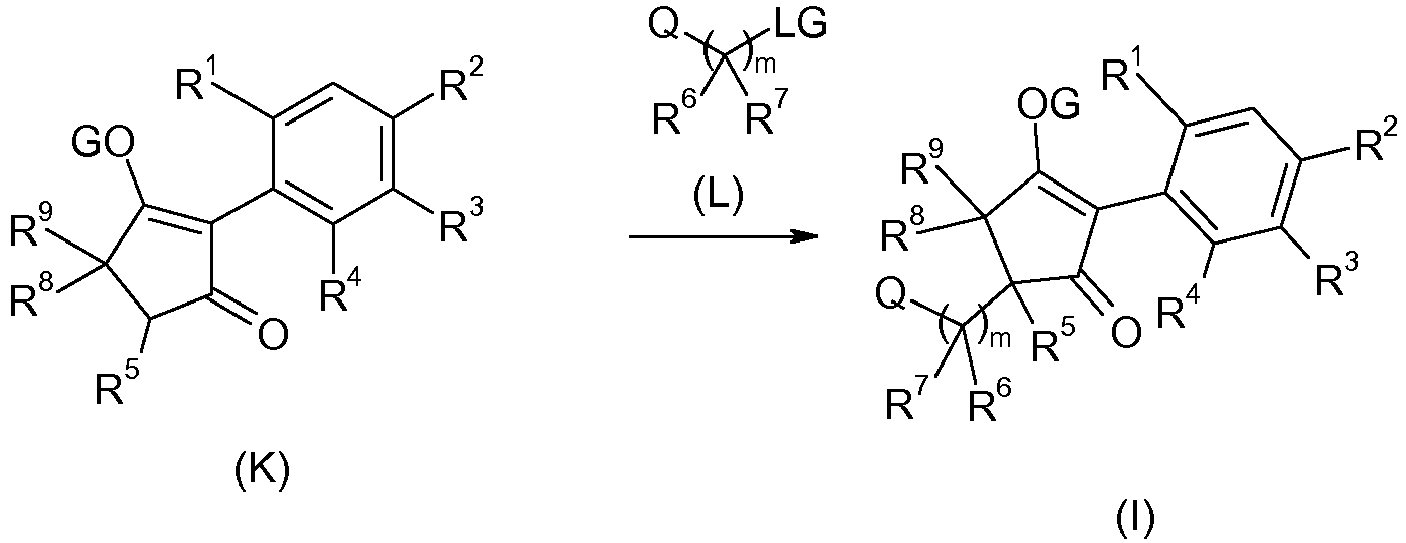
- Compounds of formula (L) are known, or may be made known compounds by known methods (see for example:
WO2006016178 ; Ueno, H. et al. J. Med. Chem. (2005), 48(10), 3586-3604; Kanoh, S. et al. Tetrahedron (2002), 58(35), 7049-7064; Strachan, J.-P. et al. J. Org. Chem. (2006), 71(26), 9909-9911). - Compounds of formula (K) are known compounds or may be made from known compounds by known methods (see, for example, Song, Y. S. S. et al. Tetrahedron Lett. (2005), 46 (46), 5987-5990; Kuethe, J. T. et al. J. Org. Chem. (2002), 67(17), 5993-6000).
- Alternatively, compounds of formula (K) wherein G is C1-C6alkyl may be prepared by alkylation of compounds of formula (K), wherein G is hydrogen under known conditions or by known methods (see, for example, Eberhardt, U. et al. Chem. Ber. (1983), 116 (1), 119-135).
- Compounds of formula (K), wherein G is hydrogen, are known, or may be prepared from known compounds by known methods (see, for example, Nguyen, H. N. et al. J. Am. Chem. Soc. (2003), 125 (39), 11818-11819; Bonjoch, J. et al. Tetrahedron (2001), 57(28), 6011-6017; Fox, J. M. et al. J. Am. Chem. Soc. (2000), 122(7), 1360-1370;
US4338122 ;US4283348 ). - Alternatively, compounds of formula (I) where R5 and R6 form a bond can be prepared from compounds of formula (M) by known methods (see for example Nagaoka, H. et al. Tetrahedron Letters (1985), 26 (41), 5053-5056; Nagaoka, H. et al. J. Am. Chem. Soc. (1986), 108 (16), 5019-5021; Zuki, M. et al. Bull. Chem. Soc. Japan (1988), 61(4), 1299-1312; Enholm, E. J. et al. J. Org. Chem. (1996), 61 (16), 5384-5390; Clive, D. L. J. et al. Tetrahedron (2001), 57 (18), 3845-3858; Bartoli, G. et al. J. Org. Chem. (2002), 67 (25), 9111-9114. Jung, M. E. et al. Chem. Comm. (2003), (2), 196-197;
EP1433772 ;JP2004203844 IN194295 
- Compounds of formula (M) may be prepared by treating compounds of formula (K) (in which R5 is hydrogen) with compounds of formula (N) under basic conditions. Suitable bases include lithium diisopropylamide, sodium hexamethyldisilazide, potassium tert-butoxide and the reaction is preferably conducted in a suitable solvent (such as tetrahydrofuran) at a temperature between -80 °C and 30 °C

- Compounds of formula (N) are known, or may be made from known compounds by known methods.
- Compounds of formula (I) (wherein G is C1-C4alkyl) may be prepared by reacting a compounds of formula (O) (wherein G is C1-C4alkyl, and Hal is a halogen, preferably bromine or iodine), with aryl boronic acids, Ar-B(OH)2 of formula (P) or aryl boronate esters in the presence of a suitable palladium catalyst (for example 0.001-50% palladium(II) acetate with respect to compound (O)) and a base (for example 1 to 10 equivalents potassium phosphate with respect to compound (O)) and preferably in the presence of a suitable ligand (for example 0.001-50% (2-dicyclohexylphosphino)-2',6'-dimethoxybiphenyl with respect to compound (O)), and in a suitable solvent (for example toluene or 1,2-dimethoxyethane), preferably between 25 °C and 200 °C under conventional heating or under microwave irradiation (see, for example, Song, Y. S. S. et al. Tetrahedron Lett. (2005), 46 (46), 5987-5990; Kuethe, J. T. et al. J. Org. Chem. (2002), 67(17), 5993-6000).

- Compounds of formula (O) may be prepared by halogenating compounds of formula (Q), followed by alkylation of the resulting halide of formula (R) with a C1-C4alkyl halide or tri-C1-C4alkylorthoformate under known conditions, for example by the procedures of Shepherd R. G. et al. J. Chem. Soc. Perkin Trans. 1 (1987), 2153-2155 and Lin Y. -L. et al. Bioorg. Med. Chem. (2002), 10, 685-690. Alternatively, compounds of formula (O) may be prepared by alkylating a compound of formula (Q) with a C1-4 alkyl halide or a tri-C1-4-alkylorthoformate, and halogenating the resulting enone of formula (S) under known conditions (see for example Song, Y. S. et al. Tetrahedron Lett. (2005), 46 (36), 5987-5990; Kuethe, J. T. et al. J. Org. Chem. (2002), 67(17), 5993-6000; Belmont, D. T. et al. J. Org. Chem. 1985, 50 (21), 4102-4107).
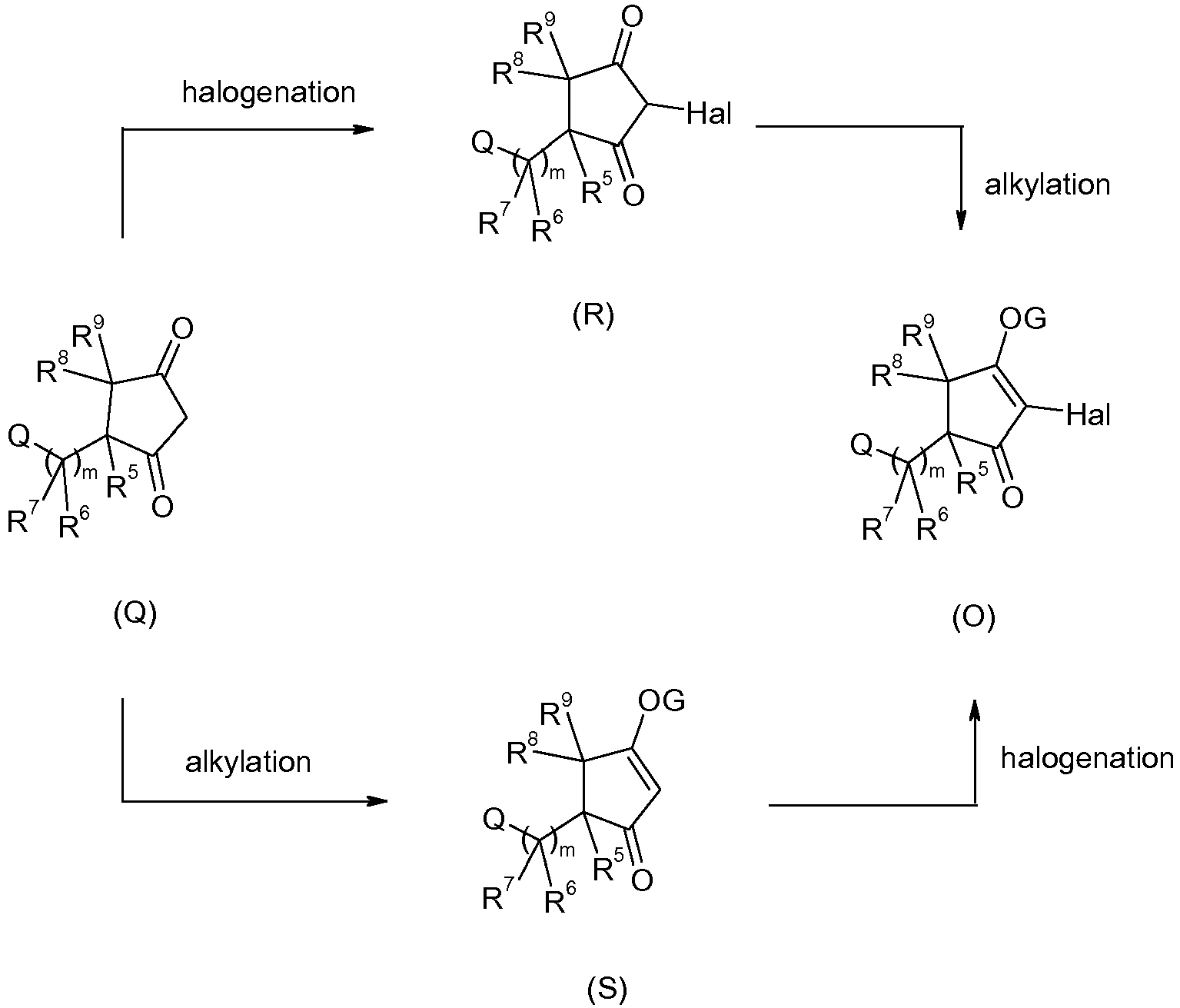
- Compounds of formula (S) may be prepared by treating compounds of formula (T) with compounds of formula (L) wherein LG is a leaving group such as halogen (preferably iodide or bromide) or an activated alcohol (preferably mesylate or tosylate) under basic conditions. Suitable bases include lithium diisopropylamide, sodium hexamethyldisilazide, potassium tert-butoxide and the reaction is preferably conducted in a suitable solvent (such as tetrahydrofuran) at a temperature between -80 °C and 30 °C (see, for example, Gulias, M. et al. Org. Lett. (2003), 5(11), 1975-1977; Altenbach, R. J. et al. J. Med. Chem. (2006), 49 (23), 6869-6887; Snowden, R. L. Tetrahedron (1986), 42 (12), 3277-90; Oppolzer, W. et al. Helv. Chim. Acta (1980), 63 (4), 788-92; Mellor, M. et al. Synth. Commun. 1979, 9 (1), 1-4).

- Compounds of formula (T) are known, or may be made from known compounds by known methods.
- Alternatively compounds of formula (S) where R5 and R6 from a bond can be prepared from compounds of formula (U) by known methods (see, for example, Nagaoka, H. et al. Tetrahedron Letters (1985), 26 (41), 5053-5056; Nagaoka, H. et al. J. Am. Chem. Soc. (1986), 108 (16), 5019-5021; Zuki, M. et al. Bull. Chem. Soc. Japan (1988), 61(4), 1299-1312; Enholm, E. J. et al. J. Org. Chem. (1996), 61 (16), 5384-5390; Clive, D. L. J. et al. Tetrahedron (2001), 57 (18), 3845-3858; Bartoli, G. et al. J. Org. Chem. (2002), 67 (25), 9111-9114. Jung, M. E. et al. Chem. Comm. (2003), (2), 196-197;
EP1433772 ;JP2004203844 IN194295 
- Compounds of formula (U) may be prepared by treating compounds of formula (T) with compounds of formula (N) under basic conditions. Suitable bases include lithium diisopropylamide, sodium hexamethyldisilazide, potassium tert-butoxide and the reaction is preferably conducted in a suitable (such as tetrahydrofuran) at a temperature between -80 °C and 30 °C (see, for example, Aleman, J. et al. Chem. Comm. (2007), (38), 3921-3923).

- Compounds of formula (P) may be prepared from an aryl halide of formula (V), wherein Hal is bromine or iodine, by known methods (see, for example, Thompson W. et al. J. Org. Chem. (1984), 49, 5237 and R. Hawkins et al. J. Am. Chem. Soc. (1960), 82, 3053). For example, an aryl halide of formula (V) may be treated with an alkyl lithium or alkyl magnesium halide in a suitable solvent, preferably diethyl ether or tetrahydrofuran, at a temperature of between -80 °C and 30 °C, and the aryl magnesium or aryl lithium reagent obtained may then be reacted with a trialkyl borate (preferably trimethylborate) to give an aryl dialkylboronate which may be hydrolysed to provide a boronic acid of formula (P) under acidic conditions.

- Alternatively a compound of formula (V) may be reacted with a cyclic boronate ester derived from a 1,2- or a 1,3-alkanediol such as pinacol, 2,2-dimethyl-1,3-propanediol and 2-methyl-2,4-pentanediol) under known conditions (see, for example, Miyaura N. et al. J. Org. Chem. (1995), 60, 7508, and Zhu W. et al. Org. Lett. (2006), 8 (2), 261), and the resulting boronate ester may be hydrolysed under acidic conditions to give a boronic acid of formula (P).
- Aryl halides of formula (V) are known, or may be prepared from known compounds by known methods. For example, aryl halides of formula (V) may be prepared from anilines of formula (W) by known methods, for example the Sandmeyer reaction, via the corresponding diazonium salts.

- Anilines of formula (W) are known compounds, or may be made from known compounds, by known methods.
- Alternatively compounds of formula (V) can be made by halogenations of the corresponding known compounds, by known methods.
- Compounds of formula (Q) may be prepared from compounds of formula (S) by hydrolysis, preferably in the presence of an acid catalyst such as hydrochloric acid and optionally in the presence of a suitable solvent such as tetrahydrofuran or acetone preferably between 25 °C and 150 °C under conventional heating or under microwave irradiation.

- Alternatively, compounds of formula (Q) can be made from known compounds by known methods (see for example Manukina, T. A. et al. Zhurnal Organicheskoi Khimii (1986), 22(4), 873-4; Mellor, M. et al. Synth. Commun. 1979, 9 (1), 1-4).
- In a further approach, compounds of formula (A) may be prepared by reacting compounds of formula (Q) with suitable aryl halides (such as aryl-iodides, aryl-bromides or aryl-chlorides), Ar-Hal of formula (V), or suitable C1-C6alkylsulfonates (preferably mesylate) or C1-C6haloalkylsulfonates (preferably triflate) or an arylsulfonates (preferable tosylate) in the presence of a suitable palladium catalyst (for example 0.001-50% palladium(II) acetate with respect to compounds of formula (Q)) and a base (for example 1 to 10 equivalents potassium phosphate with respect to compounds of formula (Q)) and preferably in the presence of a suitable ligand (for example 0.001-50% (2-dicyclohexylphosphino)-2',4',6'-triisopropylbiphenyl with respect to compounds of formula (Q)), and in a suitable solvent (for example dioxane or 1,2-dimethoxyethane), preferably between 25 °C and 200 °C. Similar couplings are known in the literature (see for example, Belmont, D. T. et al. J. Org. Chem. 1985, 50 (21), 4102-4107; Fox, J. M. et al. J. Am. Chem. Soc. (2000), 122 (7), 1360-1370;
B. Hong et al. WO 2005/000233 ). Alternatively, compounds of formula (A) may be prepared by reacting compounds of formula (Q) with suitable aryl halides (such as an aryl-iodides), Ar-Hal of formula (V), in the presence of a suitable copper catalyst (for example 0.001-50% copper(I) iodide with respect to compounds of formula (Q)) and a base (for example 1 to 10 equivalents potassium carbonate with respect to compounds of formula (Q)) and preferably in the presence of a suitable ligand (for example 0.001-50% L-proline with respect to compounds of formula (Q)), and in a suitable solvent (for example dimethylsulfoxide), preferably between 25 °C and 200 °C. Similar couplings are known in the literature for aryl halides (see, for example, Jiang, Y. et al. Synlett (2005), 18, 2731-2734).
- Additional compounds of formula (A) may be prepared by reacting compounds of formula (Q) with organolead reagents of formula (X) under conditions described, for example, by Pinhey, J. Pure and Appl. Chem. (1996), 68 (4), 819 and by Moloney M. et al. Tetrahedron Lett. (2002), 43, 3407.
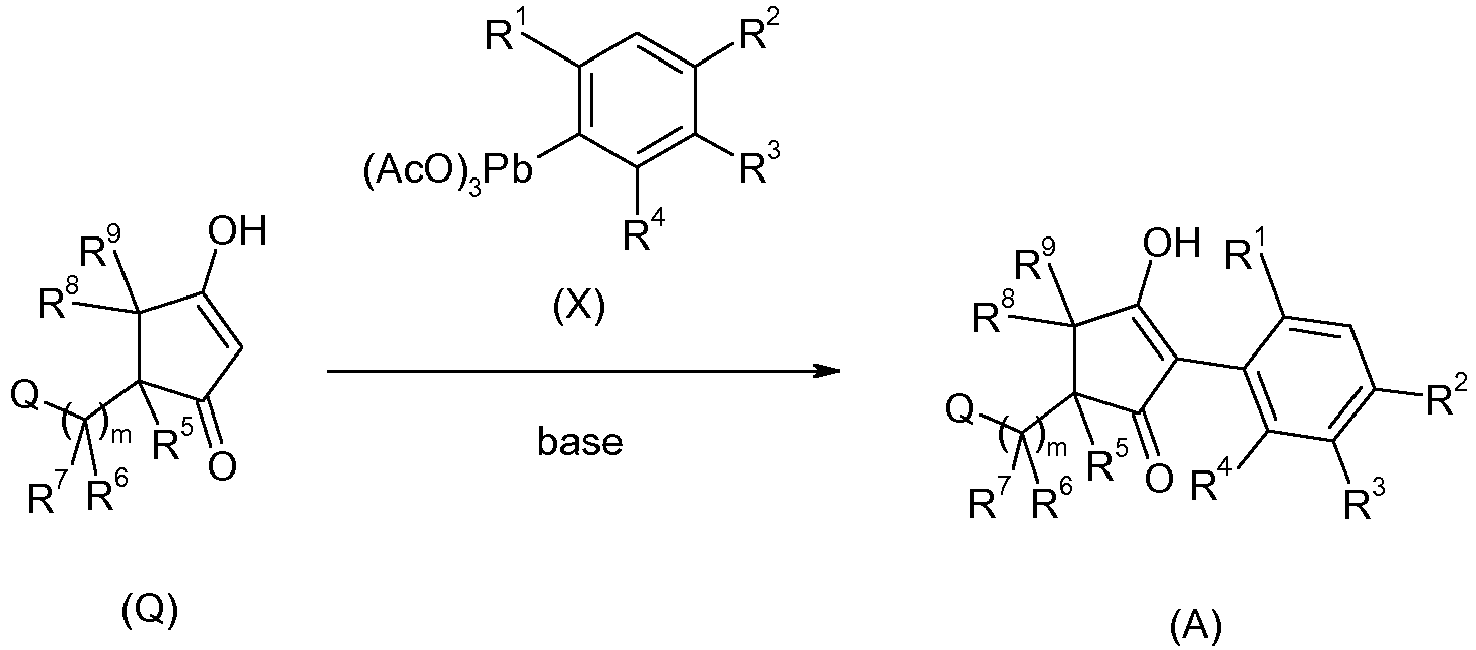
- The organolead reagent of formula (X) may be prepared from a boronic acid of formula (P), a stannane of formula (Y), wherein R'"' is C1-C4 alkyl or by direct plumbation of a compound of formula (Z) with lead tetraacetate according to known procedures.

- Further compounds of formula (A) may be prepared by reacting compounds of formula (Q) with suitable triarylbismuth compounds under conditions described, for example, by Fedorov, A. U. et al. Russ. Chem. Bull. Int. Ed. (2005), 54 (11), 2602 and by Koech P. et al. J. Am. Chem. Soc. (2004), 126 (17), 5350 and references therein.
- Additional compounds of formula (A) may be prepared by reacting an iodonium ylide of formula (AA), wherein Ar is an optionally substituted phenyl group, and an aryl boronic acid of formula (P), in the presence of a suitable palladium catalyst, a base and in a suitable solvent.

- Suitable palladium catalysts are generally palladium(II) or palladium(O) complexes, for example palladium(II) dihalides, palladium(II) acetate, palladium(II) sulfate, bis(triphenylphosphine)-palladium(II) dichloride, bis(tricyclopentylphosphine)palladium(II) dichloride, bis(tricyclohexyl-phosphine)palladium(II) dichloride, bis(dibenzylideneacetone)palladium(0) or tetrakis-(triphenylphosphine)palladium(0). The palladium catalyst can also be prepared in situ from palladium(II) or palladium(0) compounds by complexing with the desired ligands, by, for example, combining the palladium(II) salt to be complexed, for example palladium(II) dichloride (PdCl2) or palladium(II) acetate (Pd(OAc)2), together with the desired ligand, for example triphenyl-phosphine (PPh3), tricyclopentylphosphine, tricyclohexylphosphine, 2-dicyclohexylphosphino-2',6'-dimethoxybiphenyl or 2-dicyclohexylphosphino-2',4',6'-triisopropylbiphenyl and the selected solvent, with a compound of formula (AA), the arylboronic acid of formula (P), and a base. Also suitable are bidendate ligands, for example 1,1'-bis(diphenylphosphino)ferrocene or 1,2-bis(diphenylphosphino)ethane. By heating the reaction medium, the palladium(II) complex or palladium(0) complex desired for the C-C coupling reaction is thus formed in situ, and then initiates the C-C coupling reaction.
- The palladium catalysts are used in an amount of from 0.001 to 50 mol %, preferably in an amount of from 0.1 to 15 mol %, based on the compound of formula (AA). The reaction may also be carried out in the presence of other additives, such as tetralkylammonium salts, for example, tetrabutylammonium bromide. Preferably the palladium catalyst is palladium acetate, the base is lithium hydroxide and the solvent is aqueous 1,2-dimethoxyethane.
- A compound of formula (AA) may be prepared from a compound of formula (Q) by treatment with a hypervalent iodine reagent such as a (diacetoxy)iodobenzene or an iodosylbenzene and a base such as aqueous sodium carbonate, lithium hydroxide or sodium hydroxide in a solvent such as water or an aqueous alcohol such as aqueous ethanol according to the procedures of Schank K. et al. Synthesis (1983), 392, Moriarty R. M. et al. J. Am. Chem. Soc. (1985), 107, 1375 or of Yang Z. et al. Org. Lett. (2002), 4 (19), 3333.

- Additional compounds of formula (A) may be prepared by the pinacol rearrangement of compounds of formula (AB) or compounds of formula (AC) wherein R"""" is C1-C4 alkyl (preferably methyl) under acidic conditions (see, for example, Eberhardt, U. et. al. Chem. Ber. (1983), 116(1), 119-35 and
Wheeler, T. N. US4283348 )
- Compounds of formula (AB) and compounds of formula (AC) may be prepared by treating compounds of formula (AD) with compounds of formula (AE) in the presence of an acid (such as titanium tetrachloride or magnesium iodide) optionally in a suitable solvent (such as dichloromethane) at a temperature between -80 °C and 30 °C (see, for example, Li, W.-D. Z. and Zhang, X.-X. Org. Lett. (2002), 4(20), 3485-3488; Shimada, J. et al. J. Am. Chem. Soc. (1984), 106(6), 1759-73; Eberhardt, U. et. al. Chem. Ber. (1983), 116(1), 119-35 and
Wheeler, T. N. US4283348 ).
- Compounds of formula (AD) are known or may be made by known methods from compounds of formula (V) or compounds of formula (Z).
- Compounds of formula (AE) may be prepared from compounds of formula (AF) where in R"' is an alkyl group (preferably methyl) in the presence of chloro tri-C1-C4alkyl silyl and a metal (preferably sodium) in a suitable solvent (such as toluene or diethyl ether) at a temperature between 20 °C and 150 °C (see, for example, Blanchard, A. N. and Burnell, D. J. Tetrahedron Lett. (2001), 42(29), 4779-4781 and Salaun, J. et al. Tetrahedron (1989), 45(10), 3151-62).

- Compounds of formula (AF) are analogous to compounds of formula (H) and compounds of formula (G) and may be prepared by know methods analogous to those describe for compounds of formula (H) and compounds of formula (G).
- Additional compounds of formula (I) may be prepared wherein R5 and R6 form a bond and R7 R7 is C1-C6alkylsulfonate (preferably mesylate) or C1-C6haloalkylsulfonate (preferably triflate) or an arylsulfonate (preferable tosylate) may be prepared from compounds of formula (AG) following known procedures (Specklin et al. J. Org. Chem. 2008, 73(19), 7845-7848).

- Compounds of formula (AG) may be prepared from compounds of formula (AH) under basic or acidic conditions. For example of a procedure see G. Quinkert et al. Helv. Chim. Acta, 1986, 69(3), 469-537.

- Compounds of formula (AH) may be prepared by reaction of compounds of formula (K) wherein R5 is hydrogen with acids chloride of formula (AJ) in the presence of a base.
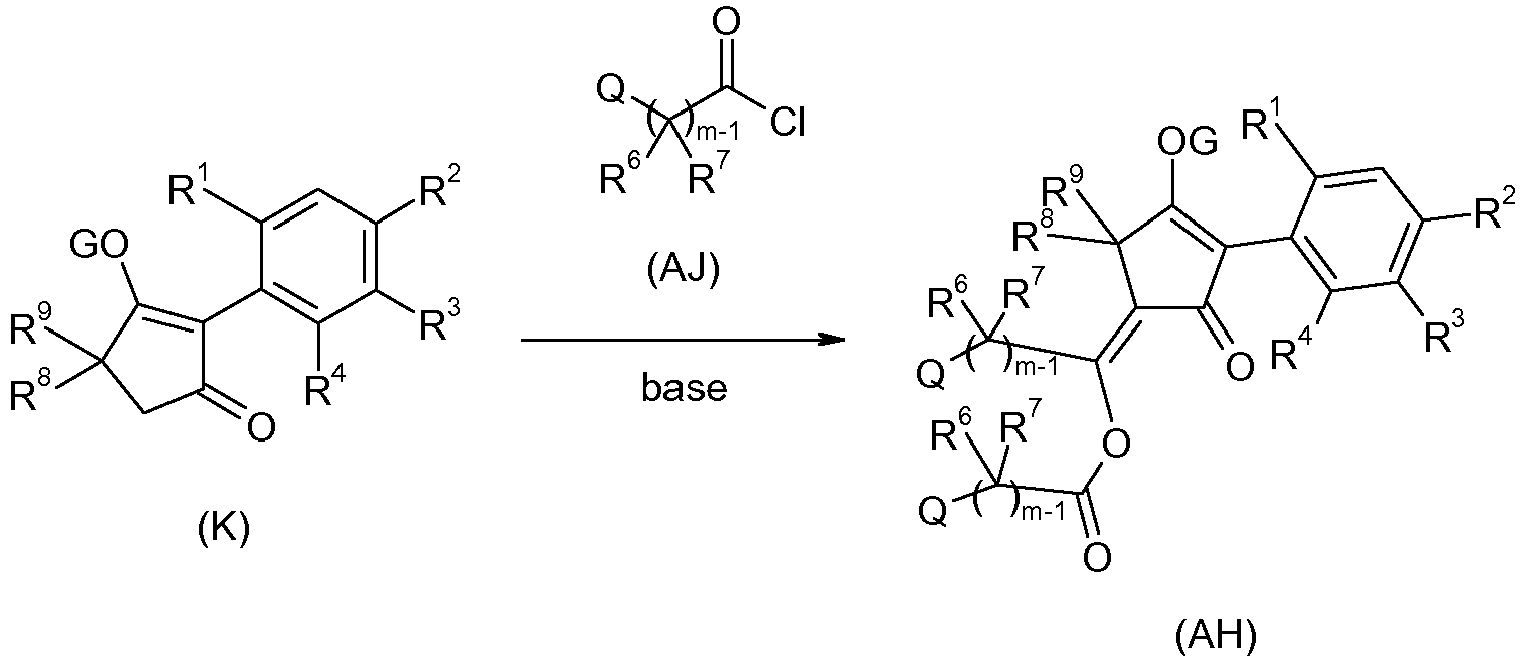
- Alternatively, compounds of formula (AG) can be prepared from compounds of formula (M) using known oxidative procedures (see for example D. B. Dess and J. C. Martin J. Org. Chem. 1983, 48 (22), 4155-4156).

- The compounds of formula (I) according to the invention can be used as herbicides in unmodified form, as obtained in the synthesis, but they are generally formulated into herbicidal compositions in a variety of ways using formulation adjuvants, such as carriers, solvents and surface-active substances. The formulations can be in various physical forms, for example in the form of dusting powders, gels, wettable powders, water-dispersible granules, water-dispersible tablets, effervescent compressed tablets, emulsifiable concentrates, microemulsifiable concentrates, oil-in-water emulsions, oil flowables, aqueous dispersions, oily dispersions, suspoemulsions, capsule suspensions, emulsifiable granules, soluble liquids, water-soluble concentrates (with water or a water-miscible organic solvent as carrier), impregnated polymer films or in other forms known, for example, from the Manual on Development and Use of FAO Specifications for Plant Protection Products, 5th Edition, 1999. Such formulations can either be used directly or are diluted prior to use. Diluted formulations can be prepared, for example, with water, liquid fertilisers, micro-nutrients, biological organisms, oil or solvents.
- The formulations can be prepared, for example, by mixing the active ingredient with formulation adjuvants in order to obtain compositions in the form of finely divided solids, granules, solutions, dispersions or emulsions. The active ingredients can also be formulated with other adjuvants, for example finely divided solids, mineral oils, vegetable oils, modified vegetable oils, organic solvents, water, surface-active substances or combinations thereof.
- The active ingredients can also be contained in very fine microcapsules consisting of a polymer. Microcapsules contain the active ingredients in a porous carrier. This enables the active ingredients to be released into their surroundings in controlled amounts (e.g. slow release). Microcapsules usually have a diameter of from 0.1 to 500 microns. They contain active ingredients in an amount of about from 25 to 95 % by weight of the capsule weight. The active ingredients can be present in the form of a monolithic solid, in the form of fine particles in solid or liquid dispersion or in the form of a suitable solution. The encapsulating membranes comprise, for example, natural and synthetic gums, cellulose, styrenebutadiene copolymers, polyacrylonitrile, polyacrylate, polyester, polyamides, polyureas, polyurethane or chemically modified polymers and starch xanthates or other polymers that are known to the person skilled in the art in this connection. Alternatively it is possible for very fine microcapsules to be formed wherein the active ingredient is present in the form of finely divided particles in a solid matrix of a base substance, but in that case the microcapsule is not encapsulated.
- The formulation adjuvants suitable for the preparation of the compositions according to the invention are known per se. As liquid carriers there may be used: water, toluene, xylene, petroleum ether, vegetable oils, acetone, methyl ethyl ketone, cyclohexanone, acid anhydrides, acetonitrile, acetophenone, amyl acetate, 2-butanone, butylenes carbonate, chlorobenzene, cyclohexane, cyclohexanol, alkyl esters of acetic acid, diacetone alcohol, 1,2-dichloropropane, diethanolamine, p-diethylbenzene, diethylene glycol, diethylene glycol abietate, diethylene glycol butyl ether, diethylene glycol ethyl ether, diethylene glycol methyl ether, N,N-dimethylformamide, dimethyl sulfoxide, 1,4-dioxane, dipropylene glycol, dipropylene glycol methyl ether, dipropylene glycol dibenzoate, diproxitol, alkylpyrrolidone, ethyl acetate, 2-ethyl hexanol, ethylene carbonate, 1,1,1-trichloroethane, 2-heptanone, alpha-pinene, d-limonene, ethyl lactate, ethylene glycol, ethylene glycol butyl ether, ethylene glycol methyl ether, gamma-butyrolactone, glycerol, glycerol acetate, glycerol diacetate, glycerol triacetate, hexadecane, hexylene glycol, isoamyl acetate, isobornyl acetate, isooctane, isophorone, isopropylbenzene, isopropyl myristate, lactic acid, laurylamine, mesityl oxide, methoxypropanol, methyl isoamyl ketone, methyl isobutyl ketone, methyl laurate, methyl octanoate, methyl oleate, methylene chloride, m-xylene, n-hexane, n-octylamine, octadecanoic acid, octylamine acetate, oleic acid, oleylamine, o-xylene, phenol, polyethylene glycol (PEG 400), propionic acid, propyl lactate, propylene carbonate,propylene glycol, propylene glycol methyl ether, p-xylene, toluene, triethyl phosphate, triethylene glycol, xylenesulfonic acid, paraffin, mineral oil, trichloroethylene, perchloroethylene, ethyl acetate, amyl acetate, butyl acetate, propylene glycol methyl ether, diethylene glycol methyl ether, methanol, ethanol, isopropanol, and higher molecular weight alcohols, such as amyl alcohol, tetrahydrofurfuryl alcohol, hexanol, octanol, ethylene glycol, propylene glycol, glycerol, N-methyl-2-pyrrolidone and the like. Water is generally the carrier of choice for the dilution of the concentrates. Suitable solid carriers are, for example, talc, titanium dioxide, pyrophyllite clay, silica, attapulgite clay, kieselguhr, limestone, calcium carbonate, bentonite, calcium montomorillonite, cottonseed husks, wheatmeal, soybean flour, pumice, wood flour, ground walnut shells, lignin and similar materials, as described, for example, in CFR 180.1001. (c) & (d).
- A large number of surface-active substances can advantageously be used both in solid and in liquid formulations, especially in those formulations which can be diluted with a carrier prior to use. Surface-active substances may be anionic, cationic, non-ionic or polymeric and they may be used as emulsifiying, wetting or suspending agents or for other purposes. Typical surface-active substances include, for example, salts of alkyl sulfates, such as diethanolammonium lauryl sulfate; salts of alkylarylsulfonates, such as calcium dodecylbenzenesulfonate; alkylphenol-alkylene oxide addition products, such as nonylphenol ethoxylate; alcohol-alkylene oxide addition products, such as tridecyl alcohol ethoxylate; soaps, such as sodium stearate; salts of alkylnaphthalenesulfonates, such as sodium dibutylnaphthalenesulfonate; dialkyl esters of sulfosuccinate salts, such as sodium di(2-ethylhexyl)sulfosuccinate; sorbitol esters, such as sorbitol oleate; quaternary amines, such as lauryl trimethylammonium chloride, polyethylene glycol esters of fatty acids, such as polyethylene glycol stearate; block copolymers of ethylene oxide and propylene oxide; and salts of mono- and di-alkyl phosphate esters; and also further substances described e.g. in "McCutcheon's Detergents and Emulsifiers Annual", MC Publishing Corp., Ridgewood, New Jersey, 1981.
- Further adjuvants which can usually be used in pesticidal formulations include crystallisation inhibitors, viscosity-modifying substances, suspending agents, dyes, anti-oxidants, foaming agents, light absorbers, mixing aids, anti-foams, complexing agents, neutralising or pH-modifying substances and buffers, corrosion-inhibitors, fragrances, wetting agents, absorption improvers, micronutrients, plasticisers, glidants, lubricants, dispersants, thickeners, anti-freezes, microbiocides, and also liquid and solid fertilisers.
- The formulations may also comprise additional active substances, for example further herbicides, herbicide safeners, plant growth regulators, fungicides or insecticides
- The compositions according to the invention can additionally include an additive comprising an oil of vegetable or animal origin, a mineral oil, alkyl esters of such oils or mixtures of such oils and oil derivatives. The amount of oil additive used in the composition according to the invention is generally from 0.01 to 10 %, based on the spray mixture. For example, the oil additive can be added to the spray tank in the desired concentration after the spray mixture has been prepared. Preferred oil additives comprise mineral oils or an oil of vegetable origin, for example rapeseed oil, olive oil or sunflower oil, emulsified vegetable oil, such as AMIGO® (Rhône-Poulenc Canada Inc.), alkyl esters of oils of vegetable origin, for example the methyl derivatives, or an oil of animal origin, such as fish oil or beef tallow. A preferred additive contains, for example, as active components essentially 80 % by weight alkyl esters of fish oils and 15 % by weight methylated rapeseed oil, and also 5 % by weight of customary emulsifiers and pH modifiers. Especially preferred oil additives comprise alkyl esters of C8-C22 fatty acids, especially the methyl derivatives of C12-C18 fatty acids, for example the methyl esters of lauric acid, palmitic acid and oleic acid, being important. Those esters are known as methyl laurate (CAS-111-82-0), methyl palmitate (CAS-112-39-0) and methyl oleate (CAS-112-62-9). A preferred fatty acid methyl ester derivative is Emery@ 2230 and 2231 (Cognis GmbH). Those and other oil derivatives are also known from the Compendium of Herbicide Adjuvants, 5th Edition, Southern Illinois University, 2000.
- The application and action of the oil additives can be further improved by combining them with surface-active substances, such as non-ionic, anionic or cationic surfactants. Examples of suitable anionic, non-ionic and cationic surfactants are listed on pages 7 and 8 of
WO 97/34485 - The said surface-active substances may also be used in the formulations alone, that is to say without oil additives.
- Furthermore, the addition of an organic solvent to the oil additive/surfactant mixture can contribute to a further enhancement of action. Suitable solvents are, for example, Solvesso® (ESSO) and Aromatic Solvent® (Exxon Corporation).The concentration of such solvents can be from 10 to 80 % by weight of the total weight. Such oil additives, which may be in admixture with solvents, are described, for example, in
US-A-4 834 908 . A commercially available oil additive disclosed therein is known by the name MERGE® (BASF Corporation). Further oil additives that are preferred according to the invention are SCORE® (Syngenta Crop Protection Canada) and Adigor® (Syngenta Crop Protection Canada). - In addition to the oil additives listed above, in order to enhance the activity of the compositions according to the invention it is also possible for formulations of alkylpyrrolidones, (e.g. Agrimax®) to be added to the spray mixture. Formulations of synthetic latices, such as, for example, polyacrylamide, polyvinyl compounds or poly-1-p-menthene (e.g. Bond®, Courier® or Emerald®) can also be used. Solutions that contain propionic acid, for example Eurogkem Pen-e-trate®, can also be mixed into the spray mixture as activity-enhancing agents.
- The herbicidal formulations generally contain from 0.1 to 99 % by weight, especially from 0.1 to 95 % by weight, of a compound of formula I and from 1 to 99.9 % by weight of a formulation adjuvant, which preferably includes from 0 to 25 % by weight of a surface-active substance. Whereas commercial products will preferably be formulated as concentrates, the end user will normally employ dilute formulations.
- The rate of application of the compounds of formula I may vary within wide limits and depends upon the nature of the soil, the method of application (pre- or post-emergence; seed dressing; application to the seed furrow; no tillage application etc.), the crop plant, the weed or grass to be controlled, the prevailing climatic conditions, and other factors governed by the method of application, the time of application and the target crop. The compounds of formula I according to the invention are generally applied at a rate of 1-2000 g/ha, preferably 1- 1000 g / ha and most preferably at 1- 500 g / ha.
- Preferred formulations have especially the following compositions:
(% = percent by weight):
Emulsifiable concentrates:active ingredient: 1 to 95 %, preferably 60 to 90 % surface-active agent: 1 to 30 %, preferably 5 to 20 % liquid carrier: 1 to 80 %, preferably 1 to 35 %
Dusts:active ingredient: 0.1 to 10 %, preferably 0.1 to 5 % solid carrier: 99.9 to 90 %, preferably 99.9 to 99 %
Suspension concentrates:active ingredient: 5 to 75 %, preferably 10 to 50 % water: 94 to 24 %, preferably 88 to 30 % surface-active agent: 1 to 40 %, preferably 2 to 30 %
Wettable powders:active ingredient: 0.5 to 90 %, preferably 1 to 80 % surface-active agent: 0.5 to 20 %, preferably 1 to 15 % solid carrier: 5 to 95 %, preferably 15 to 90 %
Granules:active ingredient: 0.1 to 30 %, preferably 0.1 to 15 % solid carrier: 99.5 to 70 %, preferably 97 to 85 % - The following Examples further illustrate, but do not limit, the invention.
F1. Emulsifiable concentrates a) b) c) d) active ingredient 5% 10% 25% 50% calcium dodecylbenzenesulfonate 6% 8% 6% 8% castor oil polyglycol ether 4% - 4% 4% (36 mol of ethylene oxide) octylphenol polyglycol ether - 4% - 2% (7-8 mol of ethylene oxide) NMP - - 10% 20% arom. hydrocarbon 85% 78% 55% 16% mixture C9-C12 - Emulsions of any desired concentration can be prepared from such concentrates by dilution with water.
F2. Solutions a) b) c) d) active ingredient 5% 10% 50% 90% 1-methoxy-3-(3-methoxy-propoxy)-propane - 20% 20% - polyethylene glycol MW 400 20% 10% - - NMP - - 30% 10% arom. hydrocarbon 75% 60% - - mixture C9-C12 - The solutions are suitable for application in the form of microdrops.
F3. Wettable powders a) b) c) d) active ingredient 5% 25% 50 % 80% sodium lignosulfonate 4% - 3% - sodium lauryl sulfate 2% 3% - 4% sodium diisobutylnaphthalene-sulfonate - 6% 5% 6 % octylphenol polyglycol ether - 1% 2% - (7-8 mol of ethylene oxide) highly disperse silicic acid 1 % 3% 5% 10% kaolin 88 % 62% 35% - - The active ingredient is thoroughly mixed with the adjuvants and the mixture is thoroughly ground in a suitable mill, yielding wettable powders which can be diluted with water to give suspensions of any desired concentration.
F4. Coated granules a) b) c) active ingredient 0.1 % 5% 15% highly disperse silicic acid 0.9 % 2% 2% inorg. carrier 99.0 % 93 % 83 % (diameter 0.1 - 1 mm) e.g. CaCO3 or SiO2 - The active ingredient is dissolved in methylene chloride, the solution is sprayed onto the carrier and the solvent is subsequently evaporated off in vacuo.
F5. Coated granules a) b) c) active ingredient 0.1 % 5% 15% polyethylene glycol MW 200 1.0 % 2% 3% highly disperse silicic acid 0.9 % 1 % 2% inorg. carrier 98.0 % 92 % 80 % (diameter 0.1 - 1 mm) e.g. CaCO3 or SiO2 - The finely ground active ingredient is applied uniformly, in a mixer, to the carrier moistened with polyethylene glycol. Non-dusty coated granules are obtained in this manner.
F6. Extruder granules a) b) c) d) active ingredient 0.1 % 3 % 5 % 15 % sodium lignosulfonate 1.5 % 2 % 3 % 4 % carboxymethylcellulose 1.4 % 2 % 2 % 2 % kaolin 97.0 % 93 % 90 % 79 % - The active ingredient is mixed and ground with the adjuvants and the mixture is moistened with water. The resulting mixture is extruded and then dried in a stream of air.
F7. Dusts a) b) c) active ingredient 0.1 % 1 % 5 % talcum 39.9 % 49 % 35 % kaolin 60.0 % 50 % 60 % - Ready-to-use dusts are obtained by mixing the active ingredient with the carriers and grinding the mixture in a suitable mill.
F8. Suspension concentrates a) b) c) d) active ingredient 3 % 10% 25% 50 % ethylene glycol 5 % 5% 5% 5% nonylphenol polyglycol ether - 1 % 2% - (15 mol of ethylene oxide) sodium lignosulfonate 3 % 3% 4% 5% carboxymethylcellulose 1 % 1 % 1 % 1 % 37 % aqueous formaldehyde 0.2 % 0.2 % 0.2 % 0.2 % solution silicone oil emulsion 0.8 % 0.8 % 0.8 % 0.8 % water 87 % 79 % 62 % 38 % - The finely ground active ingredient is intimately mixed with the adjuvants, yielding a suspension concentrate from which suspensions of any desired concentration can be prepared by dilution with water.
- The invention relates also to a method for the selective control of grasses and weeds in crops of useful plants, and for non-selective weed control, which comprises treating the useful plants or the area under cultivation or the locus thereof with a compound of formula I. Crops of useful plants in which the compositions according to the invention can be used include especially cereals, in particular wheat and barley, rice, corn, rape, sugarbeet, sugarcane, soybean, cotton, sunflower, peanut and plantation crops.
- The term "crops" is to be understood as also including crops that have been rendered tolerant to herbicides or classes of herbicides (for example ALS, GS, EPSPS, PPO and HPPD inhibitors) as a result of conventional methods of breeding or genetic engineering. An example of a crop that has been rendered tolerant e.g. to imidazolinones, such as imazamox, by conventional methods of breeding is Clearfield® summer rape (Canola). Examples of crops that have been rendered tolerant to herbicides by genetic engineering methods include e.g. glyphosate- and glufosinate-resistant maize varieties commercially available under the trade names RoundupReady® and LibertyLink®. The weeds to be controlled may be both monocotyledonous and dicotyledonous weeds, such as, for example, Stellaria, Nasturtium, Agrostis, Digitaria, Avena, Setaria, Sinapis, Lolium, Solanum, Echinochloa, Scirpus, Monochoria, Sagittaria, Bromus, Alopecurus, Sorghum, Rottboellia, Cyperus, Abutilon, Sida, Xanthium, Amaranthus, Chenopodium, Ipomoea, Chrysanthemum, Galium, Viola and Veronica. Control of monocotyledonous weeds, in particular Agrostis, Avena, Setaria, Lolium, Echinochloa, Bromus, Alopecurus and Sorghum is very extensive.
- Crops are also to be understood as being those which have been rendered resistant to harmful insects by genetic engineering methods, for example Bt maize (resistant to European corn borer), Bt cotton (resistant to cotton boll weevil) and also Bt potatoes (resistant to Colorado beetle). Examples of Bt maize are the Bt-176 maize hybrids of NK® (Syngenta Seeds). The Bt toxin is a protein that is formed naturally by Bacillus thuringiensis soil bacteria. Examples of toxins and transgenic plants able to synthesise such toxins are described in
EP-A-451 878 EP-A-374 753 WO 93/07278 WO 95/34656 WO 03/052073 EP-A-427 529 - Areas under cultivation are to be understood as including land where the crop plants are already growing as well as land intended for the cultivation of those crop plants.
- The compounds of formula I according to the invention can also be used in combination with further herbicides. Preferably, in these mixtures, the compound of the formula I is one of those compounds listed in Tables 1 to 102 below. The following mixtures of the compound of formula I are especially important:
- compound of formula I + acetochlor, compound of formula I + acifluorfen, compound of formula I + acifluorfen-sodium, compound of formula I + aclonifen, compound of formula I + acrolein, compound of formula I + alachlor, compound of formula I + alloxydim, compound of formula I + allyl alcohol, compound of formula I + ametryn, compound of formula I + amicarbazone, compound of formula I + amidosulfuron, compound of formula I + aminopyralid, compound of formula I + amitrole, compound of formula I + ammonium sulfamate, compound of formula I + anilofos, compound of formula I + asulam, compound of formula I + atraton, compound of formula I + atrazine, compound of formula I + azimsulfuron, compound of formula I + BCPC, compound of formula I + beflubutamid, compound of formula I + benazolin, compound of formula I + benfluralin, compound of formula I + benfuresate, compound of formula I + bensulfuron, compound of formula I + bensulfuron-methyl, compound of formula I + bensulide, compound of formula I + bentazone, compound of formula I + benzfendizone, compound of formula I + benzobicyclon, compound of formula I + benzofenap, compound of formula I + bifenox, compound of formula I + bilanafos, compound of formula I + bispyribac, compound of formula I + bispyribac-sodium, compound of formula I + borax, compound of formula I + bromacil, compound of formula I + bromobutide, compound of formula I + bromoxynil, compound of formula I + butachlor, compound of formula I + butafenacil, compound of formula I + butamifos, compound of formula I + butralin, compound of formula I + butroxydim, compound of formula I + butylate, compound of formula I + cacodylic acid, compound of formula I + calcium chlorate, compound of formula I + cafenstrole, compound of formula I + carbetamide, compound of formula I + carfentrazone, compound of formula I + carfentrazone-ethyl, compound of formula I + CDEA, compound of formula I + CEPC, compound of formula I + chlorflurenol, compound of formula I + chlorflurenol-methyl, compound of formula I + chloridazon, compound of formula I + chlorimuron, compound of formula I + chlorimuron-ethyl, compound of formula I + chloroacetic acid, compound of formula I + chlorotoluron, compound of formula I + chlorpropham, compound of formula I + chlorsulfuron, compound of formula I + chlorthal, compound of formula I + chlorthaldimethyl, compound of formula I + cinidon-ethyl, compound of formula I + cinmethylin, compound of formula I + cinosulfuron, compound of formula I + cisanilide, compound of formula I + clethodim, compound of formula I + clodinafop, compound of formula I + clodinafop-propargyl, compound of formula I + clomazone, compound of formula I + clomeprop, compound of formula I + clopyralid, compound of formula I + cloransulam, compound of formula I + cloransulam-methyl, compound of formula I + CMA, compound of formula I + 4-CPB, compound of formula I + CPMF, compound of formula I + 4-CPP, compound of formula I + CPPC, compound of formula I + cresol, compound of formula I + cumyluron, compound of formula I + cyanamide, compound of formula I + cyanazine, compound of formula I + cycloate, compound of formula I + cyclosulfamuron, compound of formula I + cycloxydim, compound of formula I + cyhalofop, compound of formula I + cyhalofop-butyl, compound of formula I + 2,4-D, compound of formula I + 3,4-DA, compound of formula I + daimuron, compound of formula I + dalapon, compound of formula I + dazomet, compound of formula I + 2,4-DB, compound of formula I + 3,4-DB, compound of formula I + 2,4-DEB, compound of formula I + desmedipham, compound of formula I + dicamba, compound of formula I + dichlobenil, compound of formula I + ortho-dichlorobenzene, compound of formula I + para-dichlorobenzene, compound of formula I + dichlorprop, compound of formula I + dichlorprop-P, compound of formula I + diclofop, compound of formula I + diclofop-methyl, compound of formula I + diclosulam, compound of formula I + difenzoquat, compound of formula I + difenzoquat metilsulfate, compound of formula I + diflufenican, compound of formula I + diflufenzopyr, compound of formula I + dimefuron, compound of formula I + dimepiperate, compound of formula I + dimethachlor, compound of formula I + dimethametryn, compound of formula I + dimethenamid, compound of formula I + dimethenamid-P, compound of formula I + dimethipin, compound of formula I + dimethylarsinic acid, compound of formula I + dinitramine, compound of formula I + dinoterb, compound of formula I + diphenamid, compound of formula I + diquat, compound of formula I + diquat dibromide, compound of formula I + dithiopyr, compound of formula I + diuron, compound of formula I + DNOC, compound of formula I + 3,4-DP, compound of formula I + DSMA, compound of formula I + EBEP, compound of formula I + endothal, compound of formula I + EPTC, compound of formula I + esprocarb, compound of formula I + ethalfluralin, compound of formula I + ethametsulfuron, compound of formula I + ethametsulfuron-methyl, compound of formula I + ethofumesate, compound of formula I + ethoxyfen, compound of formula I + ethoxysulfuron, compound of formula I + etobenzanid, compound of formula I + fenoxaprop-P, compound of formula I + fenoxaprop-P-ethyl, compound of formula I + fentrazamide, compound of formula I + ferrous sulfate, compound of formula I + flamprop-M, compound of formula I + flazasulfuron, compound of formula I + florasulam, compound of formula I + fluazifop, compound of formula I + fluazifop-butyl, compound of formula I + fluazifop-P, compound of formula I + fluazifop-P-butyl, compound of formula I + flucarbazone, compound of formula I + flucarbazone-sodium, compound of formula I + flucetosulfuron, compound of formula I + fluchloralin, compound of formula I + flufenacet, compound of formula I + flufenpyr, compound of formula I + flufenpyr-ethyl, compound of formula I + flumetsulam, compound of formula I + flumiclorac, compound of formula I + flumiclorac-pentyl, compound of formula I + flumioxazin, compound of formula I + fluometuron, compound of formula I + fluoroglycofen, compound of formula I + fluoroglycofen-ethyl, compound of formula I + flupropanate, compound of formula I + flupyrsulfuron, compound of formula I + flupyrsulfuron-methyl-sodium, compound of formula I + flurenol, compound of formula I + fluridone, compound of formula I + flurochloridone, compound of formula I + fluroxypyr, compound of formula I + flurtamone, compound of formula I + fluthiacet, compound of formula I + fluthiacet-methyl, compound of formula I + fomesafen, compound of formula I + foramsulfuron, compound of formula I + fosamine, compound of formula I + glufosinate, compound of formula I + glufosinate-ammonium, compound of formula I + glyphosate, compound of formula I + halosulfuron, compound of formula I + halosulfuron-methyl, compound of formula I + haloxyfop, compound of formula I + haloxyfop-P, compound of formula I + HC-252, compound of formula I + hexazinone, compound of formula I + imazamethabenz, compound of formula I + imazamethabenz-methyl, compound of formula I + imazamox, compound of formula I + imazapic, compound of formula I + imazapyr, compound of formula I + imazaquin, compound of formula I + imazethapyr, compound of formula I + imazosulfuron, compound of formula I + indanofan, compound of formula I + iodomethane, compound of formula I + iodosulfuron, compound of formula I + iodosulfuron-methyl-sodium, compound of formula I + ioxynil, compound of formula I + isoproturon, compound of formula I + isouron, compound of formula I + isoxaben, compound of formula I + isoxachlortole, compound of formula I + isoxaflutole, compound of formula I + karbutilate, compound of formula I + lactofen, compound of formula I + lenacil, compound of formula I + linuron, compound of formula I + MAA, compound of formula I + MAMA, compound of formula I + MCPA, compound of formula I + MCPA-thioethyl, compound of formula I + MCPB, compound of formula I + mecoprop, compound of formula I + mecoprop-P, compound of formula I + mefenacet, compound of formula I + mefluidide, compound of formula I + mesosulfuron, compound of formula I + mesosulfuron-methyl, compound of formula I + mesotrione, compound of formula I + metam, compound of formula I + metamifop, compound of formula I + metamitron, compound of formula I + metazachlor, compound of formula I + methabenzthiazuron, compound of formula I + methylarsonic acid, compound of formula I + methyldymron, compound of formula I + methyl isothiocyanate, compound of formula I + metobenzuron, compound of formula I + metolachlor, compound of formula I + S-metolachlor, compound of formula I + metosulam, compound of formula I + metoxuron, compound of formula I + metribuzin, compound of formula I + metsulfuron, compound of formula I + metsulfuron-methyl, compound of formula I + MK-616, compound of formula I + molinate, compound of formula I + monolinuron, compound of formula I + MSMA, compound of formula I + naproanilide, compound of formula I + napropamide, compound of formula I + naptalam, compound of formula I + neburon, compound of formula I + nicosulfuron, compound of formula I + nonanoic acid, compound of formula I + norflurazon, compound of formula I + oleic acid (fatty acids), compound of formula I + orbencarb, compound of formula I + orthosulfamuron, compound of formula I + oryzalin, compound of formula I + oxadiargyl, compound of formula I + oxadiazon, compound of formula I + oxasulfuron, compound of formula I + oxaziclomefone, compound of formula I + oxyfluorfen, compound of formula I + paraquat, compound of formula I + paraquat dichloride, compound of formula I + pebulate, compound of formula I + pendimethalin, compound of formula I + penoxsulam, compound of formula I + pentachlorophenol, compound of formula I + pentanochlor, compound of formula I + pentoxazone, compound of formula I + pethoxamid, compound of formula I + petrolium oils, compound of formula I + phenmedipham, compound of formula I + phenmedipham-ethyl, compound of formula I + picloram, compound of formula I + picolinafen, compound of formula I + pinoxaden, compound of formula I + piperophos, compound of formula I + potassium arsenite, compound of formula I + potassium azide, compound of formula I + pretilachlor, compound of formula I + primisulfuron, compound of formula I + primisulfuron-methyl, compound of formula I + prodiamine, compound of formula I + profluazol, compound of formula I + profoxydim, compound of formula I + prometon, compound of formula I + prometryn, compound of formula I + propachlor, compound of formula I + propanil, compound of formula I + propaquizafop, compound of formula I + propazine, compound of formula I + propham, compound of formula I + propisochlor, compound of formula I + propoxycarbazone, compound of formula I + propoxycarbazone-sodium, compound of formula I + propyzamide, compound of formula I + prosulfocarb, compound of formula I + prosulfuron, compound of formula I + pyraclonil, compound of formula I + pyraflufen, compound of formula I + pyraflufen-ethyl, compound of formula I + pyrazolynate, compound of formula I + pyrazosulfuron, compound of formula I + pyrazosulfuron-ethyl, compound of formula I + pyrazoxyfen, compound of formula I + pyribenzoxim, compound of formula I + pyributicarb, compound of formula I + pyridafol, compound of formula I + pyridate, compound of formula I + pyriftalid, compound of formula I + pyriminobac, compound of formula I + pyriminobac-methyl, compound of formula I + pyrimisulfan, compound of formula I + pyrithiobac, compound of formula I + pyrithiobac-sodium, compound of formula I + quinclorac, compound of formula I + quinmerac, compound of formula I + quinoclamine, compound of formula I + quizalofop, compound of formula I + quizalofop-P, compound of formula I + rimsulfuron, compound of formula I + sethoxydim, compound of formula I + siduron, compound of formula I + simazine, compound of formula I + simetryn, compound of formula I + SMA, compound of formula I + sodium arsenite, compound of formula I + sodium azide, compound of formula I + sodium chlorate, compound of formula I + sulcotrione, compound of formula I + sulfentrazone, compound of formula I + sulfometuron, compound of formula I + sulfometuron-methyl, compound of formula I + sulfosate, compound of formula I + sulfosulfuron, compound of formula I + sulfuric acid, compound of formula I + tar oils, compound of formula I + 2,3,6-TBA, compound of formula I + TCA, compound of formula I + TCA-sodium, compound of formula I + tebuthiuron, compound of formula I + tepraloxydim, compound of formula I + terbacil, compound of formula I + terbumeton, compound of formula I + terbuthylazine, compound of formula I + terbutryn, compound of formula I + thenylchlor, compound of formula I + thiazopyr, compound of formula I + thifensulfuron, compound of formula I + thifensulfuron-methyl, compound of formula I + thiobencarb, compound of formula I + tiocarbazil, compound of formula I + topramezone, compound of formula I + tralkoxydim, compound of formula I + tri-allate, compound of formula I + triasulfuron, compound of formula I + triaziflam, compound of formula I + tribenuron, compound of formula I + tribenuron-methyl, compound of formula I + tricamba, compound of formula I + triclopyr, compound of formula I + trietazine, compound of formula I + trifloxysulfuron, compound of formula I + trifloxysulfuron-sodium, compound of formula I + trifluralin, compound of formula I + triflusulfuron, compound of formula I + triflusulfuron-methyl, compound of formula I + trihydroxytriazine, compound of formula I + tritosulfuron, compound of formula I + [3-[2-chloro-4-fluoro-5-(1-methyl-6-trifluoromethyl-2,4-dioxo-1,2,3,4-tetrahydropyrimidin-3-yl)phenoxy]-2-pyridyloxy]acetic acid ethyl ester (CAS RN 353292-31-6), compound of formula I + 4-[(4,5-dihydro-3-methoxy-4-methyl-5-oxo)-1 H-1,2,4-triazol-1-ylcarbonylsulfamoyl]-5-methylthiophene-3-carboxylic acid (BAY636), compound of formula I + BAY747 (CAS RN 335104-84-2), compound of formula I + topramezone (CAS RN 210631-68-8), compound of formula I + 4-hydroxy-3-[[2-[(2-methoxyethoxy)methyl]-6-(trifluoromethyl)-3-pyridinyl]carbonyl]-bicyclo[3.2.1]oct-3-en-2-one (CAS RN 352010-68-5), and compound of formula I + 4-hydroxy-3-[[2-(3-methoxypropyl)-6-(difluoromethyl)-3-pyridinyl]carbonyl]-bicyclo[3.2.1]oct-3-en-2-one.
- The mixing partners for the compound of formula I may also be in the form of esters or salts, as mentioned e.g. in The Pesticide Manual, 12th Edition (BCPC) 2000.
- The compounds of formula I according to the invention can also be used in combination with safeners. Preferably, in these mixtures, the compound of the formula I is one of those compounds listed in Tables 1 to 102 below. The following mixtures with safeners, especially, come into consideration:
- compound of formula I + cloquintocet-mexyl, compound of formula I + cloquintocet acid and salts thereof, compound of formula I + fenchlorazole-ethyl, compound of formula I + fenchlorazole acid and salts thereof, compound of formula I + mefenpyr-diethyl, compound of formula I + mefenpyr diacid, compound of formula I + isoxadifen-ethyl, compound of formula I + isoxadifen acid, compound of formula I + furilazole, compound of formula I + furilazole R isomer, compound of formula (I) + N-(2-methoxybenzoyl)-4-[(methylaminocarbonyl)amino]benzenesulfonamide, compound of formula I + benoxacor, compound of formula I + dichlormid, compound of formula I + AD-67, compound of formula I + oxabetrinil, compound of formula I + cyometrinil, compound of formula I + cyometrinil Z-isomer, compound of formula I + fenclorim, compound of formula I + cyprosulfamide, compound of formula I + naphthalic anhydride, compound of formula I + flurazole, compound of formula I + CL 304,415, compound of formula I + dicyclonon, compound of formula I + fluxofenim, compound of formula I + DKA-24, compound of formula I + R-29148 and compound of formula I + PPG-1292. A safening effect can also be observed for the mixtures compound of the formula I + dymron, compound of the formula I + MCPA, compound of the formula I + mecoprop and compound of the formula I + mecoprop-P.
- The above-mentioned safeners and herbicides are described, for example, in the Pesticide Manual, Twelfth Edition, British Crop Protection Council, 2000. R-29148 is described, for example by P.B. Goldsbrough et al., Plant Physiology, (2002), Vol. 130 pp. 1497-1505 and references therein, PPG-1292 is known from
WO09211761 EP365484 - Benoxacor, cloquintocet-mexyl, cyprosulfamide, mefenpyr-diethyl and N-(2-methoxybenzoyl)-4-[(methylaminocarbonyl)amino]benzenesulfonamide are especially preferred, where cloquintocet-mexyl is particularly valuable.
- The rate of application of safener relative to the herbicide is largely dependent upon the mode of application. In the case of field treatment, generally from 0.001 to 5.0 kg of safener/ha, preferably from 0.001 to 0.5 kg of safener/ha, and generally from 0.001 to 2 kg of herbicide/ha, but preferably from 0.005 to 1 kg/ha, are applied.
- The herbicidal compositions according to the invention are suitable for all methods of application customary in agriculture, such as, for example, pre-emergence application, post-emergence application and seed dressing. Depending upon the intended use, the safeners can be used for pretreating the seed material of the crop plant (dressing the seed or seedlings) or introduced into the soil before or after sowing, followed by the application of the (unsafened) compound of the formula (I), optionally in combination with a co-herbicide. It can, however, also be applied alone or together with the herbicide before or after emergence of the plants. The treatment of the plants or the seed material with the safener can therefore take place in principle independently of the time of application of the herbicide. The treatment of the plant by simultaneous application of herbicide and safener (e.g. in the form of a tank mixture) is generally preferred. The rate of application of safener relative to herbicide is largely dependent upon the mode of application. In the case of field treatment, generally from 0.001 to 5.0 kg of safener/ha, preferably from 0.001 to 0.5 kg of safener/ha, are applied. In the case of seed dressing, generally from 0.001 to 10 g of safener/kg of seed, preferably from 0.05 to 2 g of safener/kg of seed, are applied. When the safener is applied in liquid form, with seed soaking, shortly before sowing, it is advantageous to use safener solutions which contain the active ingredient in a concentration of from 1 to 10 000 ppm, preferably from 100 to 1000 ppm.
- It is preferred to apply the other herbicide together with one of the safeners mentioned above.
- The following examples illustrate the invention further but do not limit the invention.
- Those skilled in the art will appreciate that certain compounds described below are β-ketoenols, and as such may exist as a single tautomer or as a mixture of keto-enol and diketone tautomers, as described, for example by J. March, Advanced Organic Chemistry, third edition, John Wiley and Sons. The compounds are shown in Table T1 as a single enol tautomer, but it should be inferred that this description covers both the diketone form and any possible enols which could arise through tautomerism. Furthermore, some of the compounds in Table T1 and Table P1 are drawn as single enantiomers for the purposes of simplicity, but unless specified as single enantiomers these structures should be construed as representing a mixture of enantiomers. Within the detailed experimental section the diketone tautomer is chosen for naming purposes, even if the predominant tautomer is the enol form.
- Where more than one tautomer observed in proton NMR, the data shown are for the mixture of tautomers.
-

-

- To a suspension of 2-bromo-3-methoxy-cyclopent-2-enone (6.75 g, 35.3 mmol), 2,4,6-trimethylphenyl boronic acid (6.99 g, 42.6 mmol) and freshly ground potassium phosphate (15 g, 70.6 mmol) in degassed toluene (180ml) under nitrogen are added Pd(OAc)2 (159mg, 0.71 mmol) and S-Phos (579 mg, 1.41 mmol), and the reaction heated to 90 °C with stirring under N2 for 4 hours. The reaction mixture is partitioned between ethyl acetate (150 ml) and water (150 ml), and the organic layer is removed, Silica gel is added to the organic layer, the solvent is evaporated under reduced pressure and the residue is purified by flash chromatography on silica gel to give 2-(2,4,6-trimethylphenyl)-3-methoxy-cyclopent-2-enone (6.2 g).
-

- To a solution of N-ethyl-N,N-diisopropylamine (527µl, 3.76mmol) in THF (5 ml) under N2 at -78 °C is added, dropwise, a 2.5M solution of butyllithium in hexane (1.32 ml, 3.3 mmol) and the reaction allowed to stir at -78 °C for 20 minutes. This pale yellow solution is then added dropwise, over a period of 10 minutes, to a solution of 2-(2,4,6-trimethylphenyl)-3-methoxy-cyclopent-2-enone (691 ml, 3 mmol) in THF (5 ml) under N2, which is pre-cooled to -78 °C. The resulting solution is allowed to stir at -78 °C for 40 minutes. A solution of tetrahydropyran-4-carbaldehyde (377 mg, 3.3 mmol) in THF (1 ml) is then added in one portion, the reaction mixture is stirred at -78 °C for 30 minutes before being allowed to warm to room temperature over a period of 60 minutes. The reaction was quenched by the addition of saturated aqueous ammonium chloride (50 ml) and extracted with ethyl acetate (2 x 50 ml). The combined organics were purified by flash chromatography to give 5-[hydroxy-(tetrahydro-pyran-4-yl)-methyl]-3-methoxy-2-(2,4,6-trimethyl-phenyl)-cyclopent-2-enone (648 mg).
-

- To a solution of 5-[hydroxy-(tetrahydro-pyran-4-yl)-methyl]-3-methoxy-2-(2,4,6-trimethyl-phenyl)-cyclopent-2-enone (408 mg, 1.18 mmol) in acetone (2 ml) is added a 2N solution of hydrochloric acid (2 ml) and the resulting solution is heated to 130 °C by microwave irradiation for 90 minutes. The reaction mixture was diluted with 2N hydrochloric acid (25 ml), and extracted with ethyl acetate (2 x 25 ml). The combined organics are washed with brine (25 ml), dried over magnesium sulphate, filtered and concentrated in vacuuo to give 4-[1-(tetrahydro-pyran-4-yl)-meth-(E)-ylidene]-2-(2,4,6-trimethyl-phenyl)-cyclopentane-1,3-dione (302mg).
-

- To a solution of 4-[1-(tetrahydro-pyran-4-yl)-meth-(E)-ylidene]-2-(2,4,6-trimethyl-phenyl)-cyclopentane-1,3-dione (270 mg, 0.86 mmol) in ethanol (10 ml) was added 10% palladium on charcoal (27 mg) and the resulting solution stirred under hydrogen (3 bar) for 5 hours at room temperature. The reaction mixture was then filtered through a pad of celite, which was washed with methanol, and the filtrated concentrated in vacuuo to give 4-(tetrahydro-pyran-4-ylmethyl)-2-(2,4,6-trimethyl-phenyl)-cyclopentane-1,3-dione (258mg).
-

- To a solution of 4-(tetrahydro-pyran-4-ylmethyl)-2-(2,4,6-trimethyl-phenyl)-cyclopentane-1,3-dione (100 mg, 0.25 mmol) in dichloromethane (5 ml) and triethylamine (140 µl, 1 mmol) is added the pivaloyl chloride (91 µl, 1 mmol) at room temperature. The reaction mixture is stirred overnight at room tempreature. Silica gel is added to the crude reaction mixture, the solvent is evaporated under reduced pressure and the residue is purified by flash chromatography on silica gel to give 2,2-dimethyl-propionic acid 3-oxo-4-(tetrahydro-pyran-4-ylmethyl)-2-(2,4,6-trimethyl-phenyl)-cyclopent-1-enyl ester (102 mg).
-

-

- To a mixture of 2-(4-bromo-2,6-dimethylphenyl)-3-methoxy-cyclopent-2-enone (1 g, 3.4 mmol), cesium fluoride (1.5 g, 9.87 mmol), phenylboronic acid (0.5 g, 4.1 mmol) and [1,1'-bis(diphenylphosphino)ferrocene]dichloro-palladium(II) (0.44 g, 0.54 mmol) is added degassed dimethoxyethane (10 ml) and the resulting suspension is stirred under nitrogen for 45 minutes then heated at 80 °C for 4 hrs. After cooling to room temperature the reaction mixture is acidified with 1 N aqueous hydrochloric acid. The aqueous phase is further extracted with ethyl acetate (3 x 100 ml) and then all organic fractions are combined, dried over anhydrous sodium sulphate and concentrated in vacuo. The resulting material is purified by column chromatography on silica gel to afford 2-(3,5-dimethylbiphenyl-4-yl)-3-methoxy cyclopent-2-enone (0.7 g) as a white solid.
-

- To a solution of 2-(3,5-Dimethylbiphenyl-4-yl)-3-methoxy cyclopent-2-enone (0.6 g, 2.05 mmol) in tetrahydrofuran (12 ml) is added 1 molar solution of lithium bis(trimethylsilyl)amide in THF (2.5 ml, 2.5 mmol) under nitrogen atmosphere at -75 °C. The resulting solution is stirred at -75 °C for 40 minutes and to this mixture, a solution of 3-tetrahydrofurancarboxaldehyde (0.42 g, 4.1 mmol) in THF is added over 20 minutes. The resulting solution is stirred at -75 °C for 2 hours. The cooling bath is removed and the mixture is allowed to reach room temperature, then stirred for 2 hours. The reaction mixture is quenched with ice cold water (100 ml) and extracted with ethyl acetate (3 x 75 ml, dried over anhydrous sodium sulphate, filtered and the filtrate is concentrated in vacuo to give a residue (1.1 g) which is used as such for the next step.
-

- A mixture of 2-(3,5-Dimethylbiphenyl-4-yl)-5-[hydroxyl-(tetrahydrofuran-3-yl)-methyl]-3-methoxy-cyclopent-2-enone (1.1 g, 2.8 mmol), acetone (21 ml) and 2N hydrochloric acid (10 ml) is heated under microwave conditions at 130 °C for 40 minutes. The organic solvent is evaporated under vacuo, diluted with water (100 ml) and extracted with ethyl acetate (3 x 100 ml). The combined organic extracts are combined, washed with water and brine, dried over anhydrous sodium sulphate, filtered and the filtrate is concentrated in vacuo. The residue is purified by column chromatography on silica gel to give 2-(3,5-dimethylbiphenyl-4-yl)-4-[1-(tetrahydrofuran-3-yl)methylidene]-cyclopentane-1,3-dione (0.29 g).
-

- To a solution of 2-(3,5-dimethylbiphenyl-4-yl)-4-[1-(tetrahydrofuran-3-yl)methylidene]-cyclopentane-1,3-dione (0.29 g, 0.8 mmol) in methanol (10 ml) is added 10% palladium on carbon (0.06 g), followed by stirring under a 1 bar hydrogen atmosphere for 8 hours. The reaction mixture is then filtered through diatomaceous earth and concentrated to give a crude product which is purified by flash chromatography (hexane/ethyl acetate) to afford 2-(3,5-dimethylbiphenyl-4-yl)-4-(tetrahydrofuran-3ylmethyl)-cyclopentane-1,3-dione (0.12 g).
-

-

- To a solution of 5-fluoro-2-iodo-1,3-xylene (11 g, 44 mmol) in tetrahydrofuran (110 ml) is added 1.6 molar solution of n-butyl lithium in hexane (33 ml, 52 mmol) under nitrogen atmosphere at -75 °C. The resulting solution is stirred at -75 °C for 60 minutes and to this mixture, a solution of furfural (6.3 g, 65.6 mmol) in THF (20 ml) is added over 20 minutes. The resulting solution is stirred at -75 °C for 2 hours. The cooling bath is removed and the mixture is allowed to reach room temperature, and then stirred for 5 hours. The reaction mixture is quenched with ice cold water (1000 ml) and extracted with ethyl acetate (3 x 250 ml), dried over anhydrous sodium sulphate, filtered and the filtrate is concentrated in vacuo to give a residue which is purified by flash chromatography (hexane/ethyl acetate) to afford (4-Fluoro-2,6-dimethylphenyl)furan-2-ylmethanol (6 g).
-

- A mixture of (4-fluoro-2,6-dimethylphenyl)furan-2-ylmethanol (6 g, 27 mmol), acetone (150 ml), water (24 ml) and orthophosphoric acid (0.6 ml) is heated under microwave conditions at 120 °C for 50 minutes. The organic solvent is evaporated under vacuo, diluted with water (150 ml) and extracted with ethylacetate (3 x 100 ml). The combined organic extracts are combined, washed with water and brine, dried over anhydrous sodium sulphate, filtered and the filtrate is concentrated in vacuo. The residue is purified by column chromatography on silica gel to give 5-(4-fluoro-2,6-dimethylphenyl)-4-hydroxy cyclopent-2-enone (3 g).
-

- To a solution of 5-(4-fluoro-2,6-dimethylphenyl)-4-hydroxy cyclopent-2-enone (3 g, 13.6 mmol) in acetone (36 ml) is added freshly prepared Jones reagent (24 ml) at 0 °C. The resulting solution is stirred at 0 °C for 60 minutes. The reaction mixture is quenched with ice cold isopropyl alcohol (25 ml) and stirred for one hour. The organics evaporated under vacuo and extracted with ethyl acetate, dried over anhydrous sodium sulphate, filtered and the filtrate is concentrated in vacuo to give a residue which is purified by flash chromatography (hexane/ethyl acetate) to afford 2-(4-fluoro-2,6-dimethylphenyl) cyclopent-4-ene-1,3-dione (2.9 g).
-

- To a solution of 2-(4-fluoro-2,6-dimethylphenyl) cyclopent-4-ene-1,3-dione (2.9 g, 13.3 mmol) in acetic acid (116 ml) is added zinc powder (6 g, 91.7 mmol) at 25-30 °C. The resulting solution is stirred at 25-30 °C for 16 hours. The reaction mixture is then filtered through diatomaceous earth and concentrated to give a crude product (2.9 g) which is used for the next step.
-

- To a solution of 2-(4-fluoro-2,6-dimethylphenyl)-cyclopentane-1,3-dione (2.9 g, 13.3 mmol) in tetrahydrofuran (290 ml)is added anhydrous potassium carbonate (22 g, 159 mmol) and iodomethane (22.6 g, 159 mmol. The resulting mixture is stirred at 25-30 °C for 16 hours. The organic layer is evaporated, reaction mixture is quenched with water (150 ml) and extracted with ethylacetate (3 x 100 ml). The combined organic extracts are combined, washed with water and brine, dried over anhydrous sodium sulphate, filtered and the filtrate is concentrated in vacuo. The residue is purified by column chromatography on silica gel to give 2-(4-fluoro-2,6-dimethylphenyl)-3-methoxy-cyclopent-2-enone (2 g).
-

- To a solution of 2-(4-fluoro-2,6-dimethylphenyl)-3-methoxy-cyclopent-2-enone (0.5 g, 2.1 mmol) in tetrahydrofuran (10 ml) is added 1 molar solution of lithium bis(trimethylsilyl)amide in THF (2.7 ml) under nitrogen atmosphere at -75 °C. The resulting solution is stirred at -75 °C for 40 minutes and to this mixture, a solution of 3-tetrahydrofurancarboxaldehyde (0.5 g, 4.38 mmol) in THF is added over 20 minutes. The resulting solution is stirred at -75 °C for 2 hours. The cooling bath is removed and the mixture is allowed to reach room temperature and then stirred for 2 hours. The reaction mixture is quenched with ice cold water (100 ml) and extracted with ethyl acetate (3 x 75 ml), dried over anhydrous sodium sulphate, filtered and the filtrate is concentrated in vacuo to give a residue (0.7 g) which is used as such for the next step.
-

- A mixture of 2-(4-fluoro-2,6-dimethylphenyl)-3-methoxy-5-[1-tetrahydropyran-4-yl)-ethyl]-cyclopent-2-enone (0.7 g, 2 mmol), acetone (10 ml) and 2N hydrochloric acid (10 ml) is heated under microwave conditions at 130 °C for 40 minutes. The organic solvent is evaporated under vacuo , diluted with water (100 ml) and extracted with ethylacetate (3 x 75 ml). The combined organic extracts are combined, washed with water and brine, dried over anhydrous sodium sulphate, filtered and the filtrate is concentrated in vacuo. The residue is purified by column chromatography on silica gel to give 2-(4-fluoro-2,6-dimethylphenyl)-4-[1-(tetrahydropyran-4-yl)-methylidene]-cyclopentane-1,3-dione (0.23 g).
-

- To a solution of 2-(4-fluoro-2,6-dimethylphenyl)-4-[1-(tetrahydropyran-4-yl)-methylidene]-cyclopentane-1,3-dione (0.14 g, 0.44 mmol) in methanol (3 ml) is added 10% palladium on carbon (1.5 mg), followed by stirring under a 1 bar hydrogen atmosphere for 8 hours. The reaction mixture is then filtered through diatomaceous earth and concentrated to give a crude product which is purified by flash chromatography (hexane/ethyl acetate) to afford 2-(4-fluoro-2,6-dimethylphenyl)-4-[tetrahydropyran-4-ylmethyl)-cyclopentane-1,3-dione (0.13 g).
-

- To a solution of 2-(4-bromo-2,6-dimethylphenyl)-4-[1-(tetrahydropyran-4-yl)-methylidene]-cyclopentane-1,3-dione (0.1 g, 0.26 mmol) in methanol (100 ml) is subjected to hydrogenation under H-Cube conditions using 10% platinum carbon under a 20 bar hydrogen atmosphere. The reaction mixture is then concentrated to give a crude product which is purified by flash chromatography (hexane/ethyl acetate) to afford 2-(4-bromo-2,6-dimethylphenyl)-4-(tetrahydropyran-4-ylmethyl)cyclopentane-1,3-dione (0.09 g).
-

- To a solution of 2-(4-bromo-2,6-dimethylphenyl)-4-[1-(tetrahydropyran-4-yl)-methylidene]-cyclopentane-1,3-dione (0.3 g, 0.8 mmol) in methanol (5 ml) is added 10% palladium on carbon (0.06 g), followed by stirring under a 1 bar hydrogen atmosphere for 8 hours. The reaction mixture is then filtered through diatomaceous earth and concentrated to give a crude product which is purified by flash chromatography (hexane/ethyl acetate) to afford 2-(2,6-dimethylphenyl)-4-(tetrahydropyran-4-ylmethyl)cyclopentane-1,3-dione (0.12 g).
-

- A mixture of 2-(4-bromo-2,6-dimethylphenyl)-4-(tetrahydropyran-4-ylmethyl)cyclopentane-1,3-dione (0.1 g, 0.26 mmol), potassium phosphate (0.11 g, 0.53 mmol), cyclopropyl boronic acid (0.09 g, 1.05 mmol) and tetrakis(triphenylphosphine)palladium (0) (0.06 g, 0.053 mmol), toluene (2ml), dimethoxyethane (0.5 ml) and water (0.5 ml) is heated under microwave conditions at 130 °C for 22 minutes. The organic solvent is evaporated under vacuo , diluted with water and extracted with ethylacetate (3 x 25 ml). The combined organic extracts are combined, washed with water and brine, dried over anhydrous sodium sulphate, filtered and the filtrate is concentrated in vacuo. The residue is purified by column chromatography on silica gel followed by preparative HPLC to give 2-(4-cyclopropyl-2,6-dimethyl-phenyl)-4-(tetrahydropyran-4-ylmethyl)-cyclopentane-1,3-dione (0.012 g).
-

-

- To a solution of 2-(2,4,6-trimethylphenyl)-3-methoxy-cyclopent-2-enone (9.05 g, 39.21 mmol) in THF (150 ml) under N2 at -78 °C is added, dropwise over a period of 30 minutes, lithium diisopropylamide solution (24 ml, 43.24 mmol, 1.8 M in hexane / THF / ethylbenzene), and the reaction allowed to stir at this temperature for a further 30 minutes. 4-Formyl-piperidine-1-carboxylic acid tert-butyl ester (10 g, 43.24 mmol) is then added in one portion and the reaction kept at -78 °C for 30 minutes, before being allowed to warm gradually to room temperature over a period of 60 minutes. Potassium tert-butoxide (7.28 g, 64.86 mmol) is then added in one portion and the reaction stirred at room temperature for a further 2 hours.
The reaction is quenched by the addition of saturated aqueous ammonium chloride solution (500 ml), and extracted with ethyl acetate (500 ml). The organic layer is removed, silica gel is added to the organic layer, the solvent is evaporated under reduced pressure and the residue is purified by flash chromatography on silica gel to give 4-[4-methoxy-2-oxo-3-(2,4,6-trimethyl-phenyl)-cyclopent-3-en-(E)-ylidenemethyl]-piperidine-1-carboxylic acid tert-butyl ester (15.33 g) -
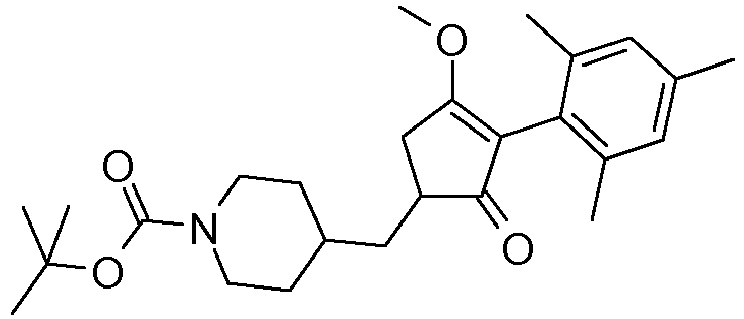
- To a solution of 4-[4-methoxy-2-oxo-3-(2,4,6-trimethyl-phenyl)-cyclopent-3-en-(E)-ylidenemethyl]-piperidine-1-carboxylic acid tert-butyl ester (15.33 g, 36.02 mmol) in ethanol (150ml) is added 10% palladium on activated charcoal (1.53 g) and the reaction stirred under hydrogen (4 bar) for hours. The reaction is filtered through a pad of Celite and the solvent removed under reduced pressure to give 4-[4-methoxy-2-oxo-3-(2,4,6-trimethyl-phenyl)-cyclopent-3-enylmethyl]-piperidine-1-carboxylic acid tert-butyl ester (15.4 g)
-

- To a solution of 4-[4-methoxy-2-oxo-3-(2,4,6-trimethyl-phenyl)-cyclopent-3-enylmethyl]-piperidine-1-carboxylic acid tert-butyl ester (15.4 g, 36 mmol) in acetone (100 ml) is added 2N HCl (100 ml) and the reaction heated to reflux for 4 hours. The solvent is removed under reduced pressure to give 4-[2,4-dioxo-3-(2,4,6-trimethyl-phenyl)-cyclopentylmethyl]-piperidinium hydrochloride (12.58 g)
-

- To a suspension of 4-[2,4-dioxo-3-(2,4,6-trimethyl-phenyl)-cyclopentylmethyl]-piperidinium hydrochloride (175 mg, 0.5 mmol) in DCM (5 ml) is added triethylamine (697 µl, 5 mmol), followed by cyclopropyl carbonyl chloride (608 µl, 4.5 mmol) and the reaction stirred at room temperature for 5 hours. Silica gel is added to the crude reaction, the solvent is evaporated under reduced pressure and the residue is purified by flash chromatography on silica gel to give cyclopropanecarboxylic acid 4-(1-cyclopropanecarbonyl-piperidin-4-ylmethyl)-3-oxo-2-(2,4,6-trimethyl-phenyl)-cyclopent-1-enyl ester (162 mg)
-

- To a suspension of 4-(1-cyclopropanecarbonyl-piperidin-4-ylmethyl)-3-oxo-2-(2,4,6-trimethyl-phenyl)-cyclopent-1-enyl ester (162 mg, 0.36 mmol) in methanol is added potassium carbonate (149 mg, 1.08 mmol) and the reaction stirred at room temperature for 4 hours. The solvent is removed under reduced pressure and the residue dissolved in water (2 ml). 2N HCl (3 ml) is then added, and the resulting precipitate is filtered off, washed with hexane and air dried to give 4-(1-cyclopropanecarbonyl-piperidin-4-ylmethyl)-2-(2,4,6-trimethyl-phenyl)-cyclopentane-1,3-dione (72 mg).
-

- A 0.5 M solution of sodium methoxide in methanol (2 ml, 1 mmol) is added to the 4-(tetrahydro-pyran-4-ylmethyl)-2-(2,4,6-trimethyl-phenyl)-cyclopentane-1,3-dione (314 mg, 1 mmol) at room temperature under nitrogen. The reaction mixture was stirred at room tempretautre for 15 minutes. The reaction mixture was evaporated under reduced pressure to give the sodium salt of the 4-(tetrahydro-pyran-4-ylmethyl)-2-(2,4,6-trimethyl-phenyl)-cyclopentane-1,3-dione (336 mg).
- Where more than one tautomer or rotational conformer is observed in the proton NMR spectrum, the data shown below are for the mixture of isomers and conformers.
- Unless otherwise stated, proton NMR spectra were recorded at ambient temperature.
- Compounds characterised by HPLC-MS were analysed using one of three methods described below.
- Compounds characterised by HPLC-MS were analysed using a Waters 2795 HPLC equipped with a Waters Atlantis dC18 column (column length 20 mm, internal diameter of column 3 mm, particle size 3 micron, temperature 40 °C), Waters photodiode array and Micromass ZQ2000. The analysis was conducted using a three minutes run time, according to the following gradient table:
Time (mins) Solvent A (%) Solvent B (%) Flow (ml / mn) 0.00 90.0 10.0 2.00 0.25 90.0 10.0 2.00 2.00 10.0 90.0 2.00 2.50 10.0 90.0 2.00 2.60 90.0 10.0 2.00 3.0 90.0 10.0 2.00 Solvent A: H2O containing 0.1 % HCOOH
Solvent B: CH3CN containing 0.1% HCOOH - Compounds characterised by HPLC-MS were analysed using an Waters 2777 injector with a 1525 micro pump HPLC equipped with a Waters Atlantis dC18 IS column (column length 20 mm, internal diameter of column 3 mm, particle size 3 micron), Waters 2996 photodiode array, Waters 2420 ELSD and Micromass ZQ2000. The analysis was conducted using a three minutes run time, according to the following gradient table:
Time (mins) Solvent A (%) Solvent B (%) Flow (ml / mn) 0.00 95.0 5 1.300 2.50 0.00 100 1.300 2.80 0.00 100 1.300 2.90 95.0 5 1.300 Solvent A: H2O with 0.05% TFA
Solvent B: CH3CN with 0.05% TFA - Compounds characterised by HPLC-MS were analysed using a Finnigan Surveyor MSQ Plus equipped with a Waters Xterra column (column length 50 mm, internal diameter of column 4.6 mm, particle size 3.5 micron, temperature 40 °C), Waters photodiode array and Micromass ZQ2000. The analysis was conducted using a six minutes run time, according to the following gradient table:
Time (mins) Solvent A (%) Solvent B (%) Flow (ml / mn) 0.00 90.0 10.0 1.30 3.80 0.00 100 1.30 4.80 0.00 100 1.30 5.00 90.0 10.0 1.30 6.00 90.0 10.0 1.30 Solvent A: H2O containing 0.05% HCOOH
Solvent B: CH3CN containing 0.05% HCOOHTable T1 Compound Number Structure 1H nmr (CDCl3 unless stated), LC/MS or other physical data T1 
δ ppm 1.05-1.10 (m, 6H), 1.29-1.45 (m, 3H), 1.49-1.57 (m, 1H), 1.62-1.72 (m, 3H), 1.90-1.96 (m, 2H), 2.32-2.39 (m, 8H), 3.36-3.43 (m, 2H), 3.93-3.99 (m, 2H) T2 
δ ppm 1.14 (t, 3H), 1.28-1.43 (m, 3H), 1.58-1.74 (m, 3H), 1.85-1.97 (m, 1H), 2.50 (q, 2H), 2.61-3.10 (m, 3 H), 3.30-3.47 (m, 2H), 3.89-4.02 (m, 2H), 7.24 (d, 1H), 7.38-7.41 (m, 2H), 7.42 (d, 1H), 7.45-7.49 (m, 2H). 7.55 (dd, 1H) T3 
δ ppm 1.50-1.58 (m, 2H), 1.66-1.82 (m, 3H), 2.09 (s, 6H), 2.27 (s, 3H), 2.32-2.43 (m, 1H), 2.69-2.82 (m, 1H), 2.96 (s, 1H), 3.35-3.48 (m, 2H), 3.67-3.76 (m, 1H), 3.99-4.11 (m, 2H), 6.90 (s, 2H) T4 
δ ppm 1.29-1.46 (m, 3H), 1.61-1.76 (m, 3H), 1.86-1.98 (m, 1H), 2.08 (d, 6H), 2.28 (s, 3H), 2.37 (d (br), 1H), 2.80-2.95 (m, 2H), 3.35-3.47 (m, 2H), 3.92-4.04 (m, 2H), 6.92 (s, 2H) T5 
δ ppm 1.48-1.68 (m, 2H), 2.05-2.13 (m, 8H), 2.28 (s, 3H), 2.33-2.46 (m, 2H), 2.80-2.98 (m (br), 2H), 3.36-3.47 (m, 1H), 3.78 (dd, 1H), 3.86-3.92 (m, 1H), 3.95 (dd, 1H), 6.92 (s, 2H) T6 
δ ppm 1.46-1.61 (m, 2H), 1.66-1.86 (m, 1H), 1.93-2.05 (m, 2H), 2.07-2.09 (m, 6H), 2.27 (s, 3H), 2.65-2.83 (m, 6H), 2.91-3.05 (m, 1H), 3.67 (d, 1H), 6.90 (s, 2H) T7 
δ ppm 1.41-1.53 (m, 1H), 1.85-2.02 (m, 4H), 2.05-2.10 (m, 6H), 2.12-2.25 (m, 2H), 2.28 (s, 3H), 2.30-2.38 (m, 1H), 2.83-3.14 (m, 6H), 6.93 (s, 2H) T8 
δ ppm 1.51-1.73 (m, 4H), 2.10 (s, 6H), 2.29 (s, 3H), 2.40-2.55 (m, 1H), 3.13 (s, 2H), 3.48 (td, 2H), 3.92-4.06 (m, 2H), 6.01 (s, 1H), 6.94 (s, 2H) T9 
δ ppm 1.67 (m, 2H), 1.98-2.08 (m, 2H), 2.10 (s, 6H), 2.27-2.30 (m, 4H), 2.63-2.83 (m, 4H), 3.09 (s, 2H), 6.00 (d, 1H), 6.94 (s, 2H) T10 
δ ppm 2.10 (s, 6H), 2.13-2.25 (m, 5H), 2.29 (s, 3H), 2.44-2.62 (m, 1H), 2.99-3.27 (m, 6H), 6.02 (d, 1H), 6.94 (s, 2H) T11 
LC-MS (Method A) ES+: MH+ = 345 rt = 1.17 min T12 
LC-MS (Method A) ES+: MH+ = 441 T13 
LC-MS (Method A) ES+: MH+ = 402 rt = 1.31 min 
LC-MS (Method A) ES+: MH+ = 313 T14 rt = 1.39 min 
LC-MS (Method A) ES+: MH+ = 354 T15 rt = 1.27 min 
LC-MS (Method A) ES+: MH+ = 315 T16 rt = 1.34 min 
LC-MS (Method A) ES+: MH+ = 299 T17 rt = 1.27 min 
LC-MS (Method A) ES+: MH+ = 301 T18 rt = 1.36 min 
LC-MS (Method A) ES+: MH+ = 299 T19 rt = 1.32 min T20 
δ ppm 1.19-1.38 (m, 2H), 1.52-1.72 (m, 3H), 2.05 (s, 6H), 2.03-2.07 (m, 2H), 2.25 (s, 3H), 2.94 (s, 2H), 3.24-3.30 (m, 2H), 3.79-2.83 (m, 2H), 6.21 (t, 1H), 6.87 (s, 2H) 
LC-MS (Method B) ES+: MH+ = 329 T21 rt = 1.34 min 
LC-MS (Method A) ES+: MH+ = 344 T22 rt = 1.27 min 
LC-MS (Method A) ES+: MH+ = 344 T23 rt = 1.19 min 
LC-MS (Method A) ES+: MH+ = 356 T24 rt = 1.29 min 
LC-MS (Method B) ES+: MH+ = 343 T25 rt = 1.33 min 
LC-MS (Method A) ES+: MH+ = 315 T26 rt = 1.46 min 
LC-MS (Method B) ES+: MH+ = 345 T27 rt = 1.10 min 
LC-MS (Method A) ES+: MH+ = 329 T28 rt = 1.52 min 
LC-MS (Method B) ES+: MH+ = 315 T29 rt = 1.24 min 
LC-MS (Method B) ES+: MH+ = 315 T30 rt = 1.21 min 
LC-MS (Method A) ES+: MH+ = 376 T31 rt = 1.29 min 
LC-MS (Method A) ES+: MH+ = 356 T32 rt = 1.36 min 
LC-MS (Method A) ES+: MH+ = 386 T33 rt = 1.51 min 
LC-MS (Method A) ES+: MH+ = 402 T34 rt = 1.42 min 
LC-MS (Method A) ES+: MH+ = 342 T35 rt = 1.21 min 
LC-MS (Method A) ES+: MH+ = 378 T36 rt = 1.29 min 
LC-MS (Method A) ES+: MH+ = 341 T37 rt = 1.44 min 
LC-MS (Method A) ES+: MH+ = 359 T38 rt = 1.22 min 
LC-MS (Method A) ES+: MH+ = 343 T39 rt = 1.42 min 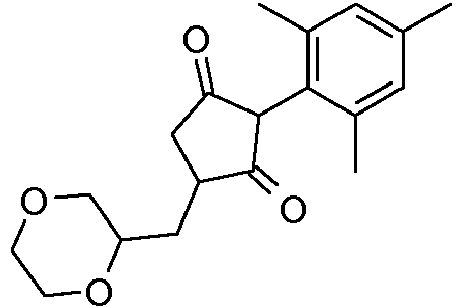
LC-MS (Method A) ES+: MH+ = 317 T40 rt = 1.22 min 
LC-MS (Method A) ES+: MH+ = 404 T41 rt = 1.41 min 
LC-MS (Method A) ES+: MH+ = 446 T42 rt = 1.66 min 
LC-MS (Method A) ES+: MH+ = 358 T43 rt = 1.34 min 
LC-MS (Method A) ES+: MH+ = 329 T44 rt = 1.59 min T45 
δ (DMSO-d6) ppm 1.45 (m, 2H), 1.59 (m, 2H), 2.01 (s, 6H), 3.08 (br, s), 3.37 (m, 2H), 3.87 (m, 2H), 5.75 (s, 1H), 6.04 (br s, 1H), 7.27 (s, 2H). 
LC-MS (Method A) ES+: MH+ = 354 T46 rt = 1.32 min 
LC-MS (Method A) ES+: MH+ = 390 T47 rt = 1.38 min 
LC-MS (Method A) ES+: MH+ = 356 T48 rt = 1.38 min 
LC-MS (Method B) ES+: MH+ = 315 T49 rt = 1.34 min 
LC-MS (Method B) ES+: MH+ = 329 T50 rt = 1.29 min 
LC-MS (Method A) ES+: MH+ = 392 T51 rt = 1.36 min 
LC-MS (Method C) ES-: M-H+ = 299 Rt= 4.75 mins T52 Melting point: 165-167 °C 
LC-MS (Method A) ES+: MH+ = 314 T53 rt = 1.09 min 
LC-MS (Method A) ES+: MH+ = 412 T54 rt = 1.63 min 
LC-MS (Method A) ES+: MH+ = 414 T55 rt = 1.61 min 
LC-MS (Method B) ES+: MH+ = 327 T56 rt = 1.39 min 
LC-MS (Method B) ES+: MH+ = 341 T57 rt = 1.39 min 
LC-MS (Method B) ES+: MH+ = 343 T58 rt = 1.34 min 
LC-MS (Method B) ES+: MH+ = 313 T59 rt = 1.29 min 
LC-MS (Method A) ES+: MH+ = 426, 424 T60 rt = 1.56 min T61 
Melting point: 230-232 °C 
LC-MS (Method C) ES-: M-H+ = 407, 409 rt= 5.77 min T62 Melting point: 242-244 °C T63 
Melting point: 115-117 °C T64 
Melting point: 232-233 °C T65 
Melting point: 225-227 °C 
LC-MS (Method C) ES+: MH+ = 375 T66 rt= 4.93 min 
LC-MS (Method C) ES+: MH+ = 377 T67 rt= 4.05 min 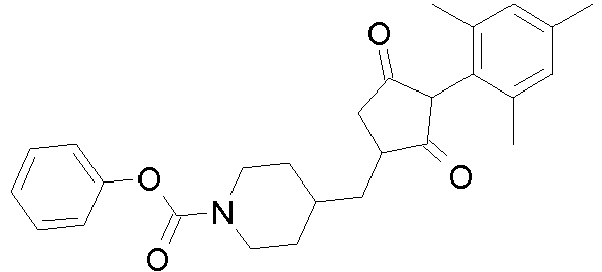
LC-MS (Method B) ES+: MH+ = 434 T68 rt = 1.61 min 
LC-MS (Method B) ES+: MH+ = 414 T69 rt = 1.64 min 
LC-MS (Method B) ES+: MH+ = 418 T70 rt = 1.44 min 
LC-MS (Method B) ES+: MH+ = 490, 488, 486 T71 rt = 1.61 min 
LC-MS (Method B) ES+: MH+ = 432 T72 rt = 1.49 min 
LC-MS (Method B) ES+: MH+ = 454, 452 T73 rt = 1.55 min 
LC-MS (Method B) ES+: MH+ = 490, 488, 486 T74 rt = 1.64 min 
LC-MS (Method B) ES+: MH+ = 436 T75 rt = 1.48 min 
LC-MS (Method B) ES+: MH+ = 454, 452 T76 rt = 1.56 min 
LC-MS (Method B) ES+: MH+ = 494 T77 rt = 1.70 min 
LC-MS (Method B) ES+: MH+ = 432 T78 rt = 1.52 min 
LC-MS (Method B) ES+: MH+ = 398 T79 rt = 1.47 min 
LC-MS (Method B) ES+: MH+ = 384 T80 rt = 1.38 min 
LC-MS (Method B) ES+: MH+ = 386 T81 rt = 1.25 min 
LC-MS (Method B) ES+: MH+ = 432 T82 rt = 1.49 min 
LC-MS (Method B) ES+: MH+ = 370 T83 rt = 1.32 min 
LC-MS (Method B) ES+: MH+ = 384 T84 rt = 1.39 min 
LC-MS (Method B) ES+: MH+ = 398 T85 rt = 1.48 min 
LC-MS (Method B) ES+: MH+ = 492, 490, 488 T86 rt = 1.71 min 
LC-MS (Method B) ES+: MH+ = 406, 404 T87 rt = 1.42 min 
LC-MS (Method B) ES+: MH+ = 382 T88 rt = 1.36 min 
LC-MS (Method B) ES+: MH+ = 424 T89 rt = 1.55 min 
LC-MS (Method B) ES+: MH+ = 408 T90 rt = 1.38 min 
LC-MS (Method B) ES+: MH+ = 454 T91 rt = 1.60 min 
LC-MS (Method B) ES+: MH+ = 490, 488 T92 rt = 1.70 min T93 

LC-MS (Method B) ES+: MH+ = 392 T94 rt = 1.34 min 
LC-MS (Method B) ES+: MH+ = 406 T95 rt = 1.39 min 
LC-MS (Method B) ES+: MH+ = 434 T96 rt = 1.60 min 
LC-MS (Method B) ES+: MH+ = 448 T97 rt = 1.47 min 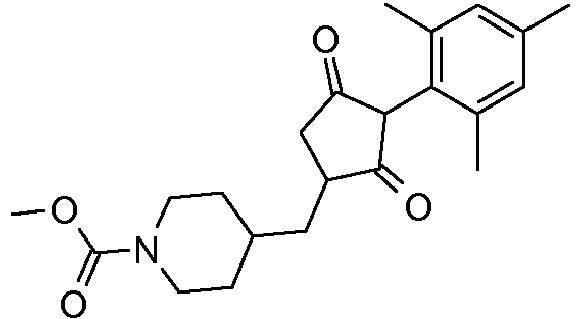
LC-MS (Method B) ES+: MH+ = 372 T98 rt = 1.40 min 
LC-MS (Method B) ES+: MH+ = 486 T99 rt = 1.60 min 
LC-MS (Method B) ES+: MH+ = 427 T100 rt = 1.31 min 
LC-MS (Method B) ES+: MH+ = 398 T101 rt = 1.51 min 
LC-MS (Method B) ES+: MH+ = 384 T102 rt = 1.51 min 
LC-MS (Method B) ES+: MH+ = 422, 420 T103 rt = 1.52 min 
LC-MS (Method B) ES+: MH+ = 396 T104 rt = 1.41 min 
LC-MS (Method B) ES+: MH+ = 462, 460, 458 T105 rt = 1.64 min 
LC-MS (Method B) ES+: MH+ = 509, 507, 505 T106 rt = 1.58 min 
LC-MS (Method B) ES+: MH+ = 400 T107 rt = 1.54 min 
LC-MS (Method B) ES+: MH+ = 386 T108 rt = 1.46 min 
LC-MS (Method B) ES+: MH+ = 468 T109 rt = 1.65 min 
LC-MS (Method B) ES+: MH+ = 424 T110 rt = 1.44 min 
LC-MS (Method B) ES+: MH+ = 455, 453 T111 rt = 1.42 min 
LC-MS (Method B) ES+: MH+ = 446 T112 rt = 1.66 min 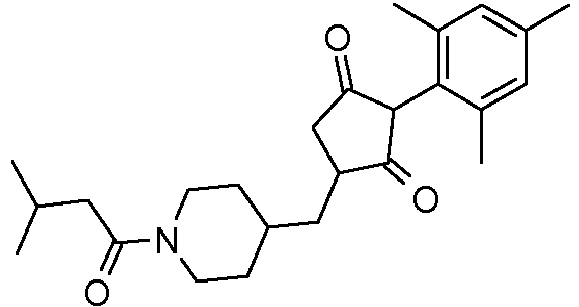
LC-MS (Method B) ES+: MH+ = 398 T113 rt = 1.44 min 
LC-MS (Method B) ES+: MH+ = 410 T114 rt = 1.50 min 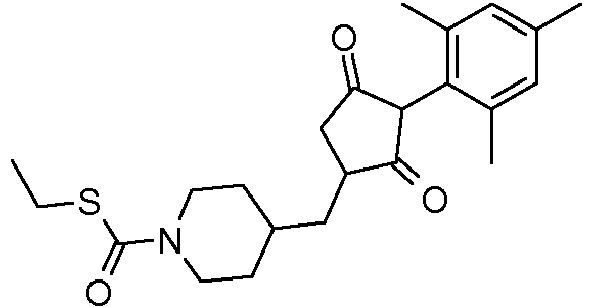
LC-MS (Method B) ES+: MH+ = 402 T115 rt = 1.56 min 
LC-MS (Method B) ES+: MH+ = 444 T116 rt = 1.55 min 
LC-MS (Method B) ES+: MH+ = 478 T117 rt = 1.54 min 
LC-MS (Method B) ES+: MH+ = 437 T118 rt = 1.35 min 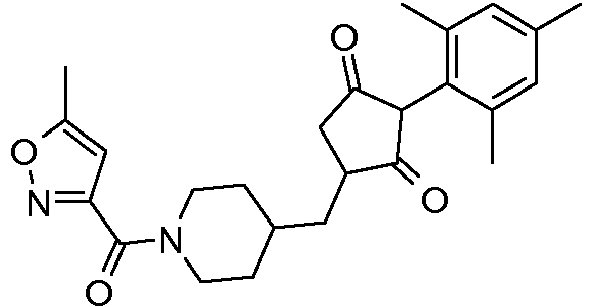
LC-MS (Method B) ES+: MH+ = 423 T119 rt = 1.42 min 
LC-MS (Method B) ES+: MH+ = 425 T120 rt = 1.51 min 
LC-MS (Method B) ES+: MH+ = 436 T121 rt = 1.36 min 
LC-MS (Method B) ES+: MH+ = 432 T122 rt = 1.52 min 
LC-MS (Method B) ES+: MH+ = 416 T123 rt = 1.38 min 
LC-MS (Method B) ES+: MH+ = 472 T124 rt = 1.35 min 
LC-MS (Method B) ES+: MH+ = 450 T125 rt = 1.67 min T126 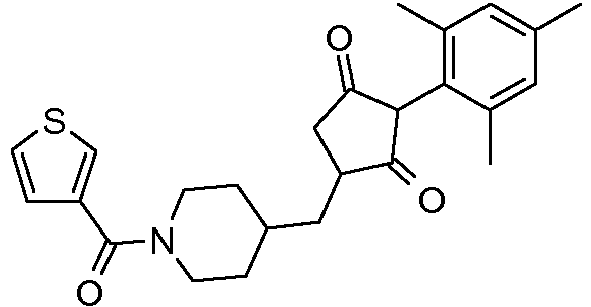

LC-MS (Method A) ES+: MH+ = 396 T127 rt = 1.12 min 
LC-MS (Method A) ES+: MH+ = 410 T128 rt = 1.21 min 
LC-MS (Method A) ES+: MH+ = 412 T129 rt = 1.14 min 
LC-MS (Method A) ES+: MH+ = 303 T130 rt = 1.26 min 
LC-MS (Method A) ES+: MH+ = 428 T131 rt = 1.46 min 
LC-MS (Method C) ES-: M-H+ = 425, 427 T132 rt= 4.50 mins 
LC-MS (Method C) ES-: M-H+ = 441 T133 rt= 4.47 mins T134 
δ ppm 1.64-1.62 (m, 4H), 2.5 (m, 1H), 3.16 (s, 2H), 3.52-3.46 (m, 2H), 4.02-3.98 (m, 2H), 6.03 (d, 1H), 6.26 (s, 1H), 7.29-7.25 (m, 4H), 7.56 (d, 2H). T135 
Melting point: 135-137 °C 
LC-MS (Method C) ES+: MH+ = 445 T136 rt= 4.43 mins T137 
δ (CD3OD) ppm 1.8-1.5 (m, 6H), 2.07 (s, 3H), 2.08 (s, 3H), 2.67-2.59 (m, 2H), 3.2 (m, 2H), 3.35 (m, 2H), 3.9 (m, 2H), 7.22 (s, 2H), 7.58 (d, 2H), 7.67 (d, 2H). T138 
δ ppm 1.33 (m, 3H), 1.66 (m, 3H), 1.88 (m, 1H), 2.05 (s, 6H), 2.29 (m, 1H), 2.78 (m, 2H), 3.38 (m, 2H), 3.9 (m, 2H), 7.21 (s, 2H). T139 
δ ppm 1.4 (m, 4H), 1.7 (m, 2H), 1.9 (m, 1H),2.18(2xs,6H),2.4(br, 1H),2.9 (br, 2H), 3.4 (m, 2H), 3.97 (m, 2H), 7.14 (m, 1H), 7.2 (m, 1H), 7.28 (s, 2H), 7.32 (d, 1H), 7.4 (m, 1H). 
LC-MS (Method C) ES+: MH+ = 380 T140 rt= 3.98 min 
LC-MS (Method A) ES+: MH+ = 368 T141 rt = 1.29 min 
LC-MS (Method A) ES+: MH+ = 370 T142 rt = 1.39 min 
LC-MS (Method A) ES+: MH+ = 384 T143 rt = 1.39 min 
LC-MS (Method A) ES+: MH+ = 382 T144 rt = 1.36 min 
LC-MS (Method A) ES+: MH+ = 420, 418 T145 rt = 1.41 min 
LC-MS (Method A) ES+: MH+ = 410 T146 rt = 1.38 min 
LC-MS (Method A) ES+: MH+ = 394 T147 rt = 1.31 min 
LC-MS (Method A) ES+: MH+ = 423 T148 rt = 1.27 min 
LC-MS (Method A) ES+: MH+ = 421 T149 rt = 1.65 min 
LC-MS (Method A) ES+: MH+ = 391 T150 rt = 1.62 min 
LC-MS (Method A) ES+: MH+ = 391 T151 rt = 1.65 min 
LC-MS (Method A) ES+: MH+ = 329 T152 rt = 1.45 min 
LC-MS (Method A) ES+: MH+ = 345 T153 rt = 1.38 min 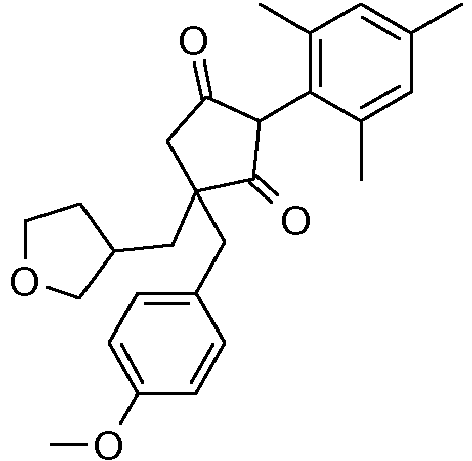
LC-MS (Method A) ES+: MH+ = 421 T154 rt = 1.60 min 
LC-MS (Method A) ES+: MH+ = 411 T155 rt = 1.81 min 
LC-MS (Method A) ES+: MH+ = 315 T156 rt = 1.37 min T157 
δ ppm 1.6 (m, 2H), 2.10 (m, 2H), 2.20 (s, 6H), 2.40 (m, 2H), 2.90 (br, 2H), 3.40 (m, 1H), 3.76 (m, 1H), 3.90 (m, 2H), 7.31 (s, 2H), 7.66 (m, 4H). T158 
δ ppm 1.60 (m, 2H), 2.05 (m, 2H), 2.10 (s, 6H), 2.40 (m, 2H), 2.90 (m, 2H), 3.40 (m, 1H), 3.78 (m, 1H), 3.9 (m, 2H), 7.10 (t, 2H), 7.25 (s, 2H), 7.5 (m, 2H). T159 
δ ppm 1.4 (br, 2H), 1.9 (br, 2H), 2.09 (s, 3H), 2.1 (s, 3H), 2.22 (d, 2H), 2.6 (m, 2H), 3.2 (m, 1H), 3.62 (m, 1H), 3.76 (m, 2H), 7.25 (s, 2H), 7.32 (d, 1H), 7.39 (t, 2H), 7.52 (d, 2H). T160 
δ ppm 1.33 (m, 3H), 1.4 (m, 1H), 1.55 (m, 1H), 1.95 (m, 1H), 2.01 (s, 3H), 2.03 (s, 3H), 2.10 (m, 1H), 2.29-2.17 (m, 2H), 2.75-2.57 (m, 2H), 3.3 (m, 1H), 3.69 (m, 1H), 3.82 (m, 2H), 7.17 (s, 2H), 
LC-MS (Method A) ES+: MH+ = 442 T161 rt = 1.66 min 
LC-MS (Method A) ES+: MH+ = 396 T162 rt = 1.51 min 
LC-MS (Method A) ES+: MH+ = 410 T163 rt = 1.59 min 
LC-MS (Method A) ES+: MH+ = 301 T164 rt = 1.31 min 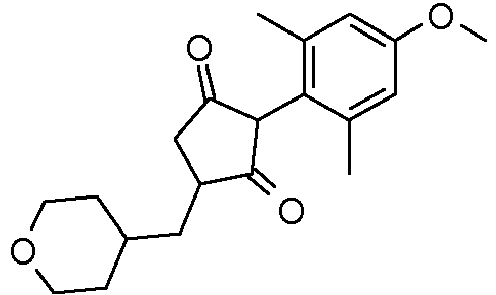
LC-MS (Method A) ES+: MH+ = 331 T165 rt = 1.27 min 
LC-MS (Method A) ES+: MH+ = 341, 343,345 T166 rt = 1.39 min 
LC-MS (Method A) ES+: MH+ = 321, 323 T167 rt = 1.39 min 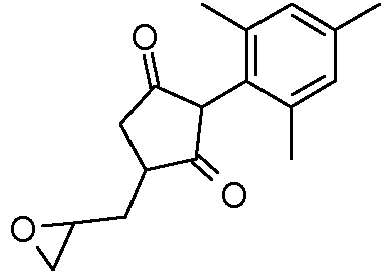
LC-MS (Method A) ES+: MH+ = 273 T168 rt = 1.26 min T169 
δ ppm 1.33 (m, 3H), 1.65 (m, 3H), 1.9 (m, 1H), 2.08 (s, 3H), 2.09 (s, 3H), 2.35 (d, 1H), 2.85 (d, 2H), 3.39 (m, 2H), 3.97 (m, 2H), 7.09 (s, 2H). T170 
δ ppm 1.42 (m, 3H), 1.70 (m, 3H), 1.89 (m, 1H), 2.08 (s, 3H), 2.10 (s, 3H), 2.34 (d, 1H), 2.85 (d, 2H), 3.39 (m, 2H), 3.97 (m, 2H), 6.8 (d, 2H). 
LC-MS (Method C) ES+: MH+ = 305 T171 rt = 3.37 min 
LC-MS (Method A) ES+: MH+ = 425 T172 rt = 1.83 min T173 
δ ppm 0.65 (m, 2H), 0.9 (m, 2H), 1.41 (m, 3H), 1.68 (m, 3H), 1.80 (m, 1H), 1.90 (m, 1H), 2.07 (s, 6H), 2.35 (br, 1H), 2.8 (br, 2H), 3.38 (m, 2H), 3.96 (m, 2H), 6.78 (s, 2H) 
LC-MS (Method A) ES+: MH+ = 349, 351 T174 rt = 1.48 min 
LC-MS (Method A) ES+: MH+ = 287 T175 rt = 1.24 min 
LC-MS (Method A) ES+: MH+ = 351, 353 T176 rt = 1.35 min 
LC-MS (Method A) ES+: MH+ = 371. T177 rt = 1.51 min 
LC-MS (Method A) ES+: MH+ = 315. T178 rt = 1.31 min Table P1 Compound Number Structure 1H nmr (CDCl3 unless stated), or other physical data P1 
δ ppm 1.21 (t, 3H), 1.32-1.47 (m, 3H), 1.61-1.70 (m, 2H), 1.72-1.82 (m, 1H), 1.91-2.02 (m, 1H), 2.42-2.58 (m, 3H), 2.65-2.77 (m, 1H), 3.00 (dd, 1H), 3.35-3.45 (m, 2H), 3.84 (s, 3H), 3.95-4.04 (m, 2H), 7.24 (d, 1H), 7.38-7.41 (m, 2H), 7.42 (d, 1H), 7.45-7.49 (m, 2H). 7.55 (dd, 1H) P2 
δ ppm 1.53 (d, 2H), 1.70-1.79 (m, 2H), 1.85 (td, 1H), 2.09 (d, 6H), 2.26 (s, 3H), 2.50 (dd, 1H), 2.73-2.81 (m, 1H), 2.83-2.94 (m, 1H), 3.33-3.48 (m, 2H), 3.61 (d, 1H), 3.74 (s, 3H), 4.01-4.10 (m, 2H), 4.58 (s, 1H), 6.87 (s, 2H) P3 
δ ppm 1.11 (s, 9H), 1.53 (d, 2H), 1.69-1.91 (m, 3H), 2.06 (d, 6H), 2.26 (s, 3H), 2.78-2.86 (m, 3H), 2.89 (ddd, 1H), 3.13 (dd, 1H), 3.33-3.47 (m, 2H), 3.69 (d, 1H), 4.05 (td, 2H), 4.13 (s, 3H), 6.85 (s, 2H) P4 
δ ppm 1.28-1.46 (m, 3H), 1.61-1.70 (m, 2H), 1.70-1.79 (m, 1H), 1.94 (ddd, 1H), 2.08 (d, 6H), 2.26 (s, 3H), 2.44 (dd, 1H), 2.66-2.77 (m, 1H), 2.97 (dd, 1H), 3.35-3.48 (m, 2H), 3.73 (s, 3H), 3.95-4.05 (m, 2H), 6.87 (s, 2H) P5 
δ ppm 1.09 (s, 9H), 1.28-1.46 (m, 3H), 1.59-1.69 (m, 2H), 1.70-1.77 (m, 1H), 1.94 (ddd, 1H), 2.05 (d, 6H), 2.25 (s, 3H), 2.70 (dd, 1H), 2.76-2.86 (m, 1H), 3.16 (dd, 1H), 3.33-3.45 (m, 2H), 3.91-4.07 (m, 2H), 6.84 (s, 2H) P6 
δ ppm 1.58-1.68 (m, 4H), 2.12 (s, 6H), 2.27 (s, 3H), 2.37-2.54 (m, 1H), 3.09 (d, 2H), 3.49 (td, 2H), 3.55 (s, 3H), 3.96-4.07 (m, 2H), 5.92 (d, 1H), 6.88 (s, 2H) P7 
δ ppm 1.09 (s, 9H), 1.58-1.66 (m, 2H), 2.05 (d, 6H), 2.07-2.15 (m, 2H), 2.25 (s, 3H), 2.35-2.45 (m, 1H), 2.64-2.79 (m, 2H), 3.17 (dd, 1H), 3.40 (dt, 1H), 3.79 (ddd, 1H), 3.89 (ddd, 1H), 3.97 (t, 1H), 6.84 (s, 2H) P8 
δ ppm 1.44-1.52 (m, 1H), 1.79 (ddd, 1H), 1.88-1.95 (m, 1H), 1.96-2.03 (m, 2H), 2.08 (d, 6H), 2.26 (s, 3H), 2.44 (dd, 1H), 2.66-2.74 (m, 4H), 2.75-2.81 (m, 1H), 2.82-2.92 (m, 1H), 3.59 (dd, 1H), 3.74 (s, 3H), 4.75 (s, 1H), 6.87 (s, 2H) P9 
δ ppm 1.11 (s, 9H), 1.70 (ddd, 2H), 1.97-2.06 (m, 2H), 2.07 (s, 6H), 2.26 (s, 3H), 2.28-2.40 (m, 1H), 2.62-2.80 (m, 4H), 3.59 (d, 2H), 6.57 (d, 1H), 6.85 (s, 2H) P10 
δ ppm 1.11 (s, 9H), 1.48-1.53 (m, 1H), 1.74-1.84 (m, 1H), 1.88-1.95 (m, 1H), 1.96-2.02 (m, 2H), 2.05 (d, 6H), 2.26 (s, 3H), 2.63-2.73 (m, 4H), 2.74-2.82 (m, 1H), 2.90 (ddd, 1H), 3.10 (dd, 1H), 3.67 (dd, 1H), 4.32 (s, 1H), 6.85 (s, 2H) P11 
LC-MS (Method A) ES+: MH+ = 397 rt = 1.95 min 
LC-MS (Method A) ES+: MH+ = 315 P12 rt = 1.37 min 
LC-MS (Method A) ES+: MH+ = 371 P13 rt = 1.83 min 
LC-MS (Method A) ES+: MH+ = 369 P14 rt = 1.73 min 
LC-MS (Method A) ES+: MH+ = 411 P15 rt = 1.95 min 
LC-MS (Method A) ES+: MH+ = 413 P16 rt = 2.00 min 
LC-MS (Method A) ES+: MH+ = 405 P17 rt = 1.81 min 
LC-MS (Method A) ES+: MH+ = 435 P18 rt = 1.81 min 
LC-MS (Method A) ES+: MH+ = 359 P19 rt = 1.56 min P20 
LC-MS (Method A) ES+: MH+ = 387 P21 
LC-MS (Method A) ES+: MH+ = 373 P22 
LC-MS (Method A) ES+: MH+ = 415 P23 
LC-MS (Method A) ES+: MH+ = 401 P24 
LC-MS (Method A) ES+: MH+ = 415 P25 
LC-MS (Method A) ES+: MH+ = 385 
LC-MS (Method A) ES+: MH+ = 421 P26 rt = 1.83 min 
LC-MS (Method A) ES+: MH+ = 393 P27 rt = 1.64 min 
LC-MS (Method A) ES+: MH+ = 405 P28 rt = 1.66 min 
LC-MS (Method A) ES+: MH+ = 412 P29 rt = 1.73 min 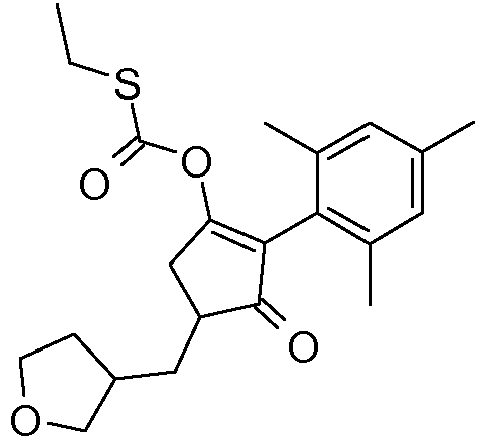
LC-MS (Method A) ES+: MH+ = 389 P30 rt = 1.83 min 
LC-MS (Method A) ES+: MH+ = 387 P31 rt = 1.78 min 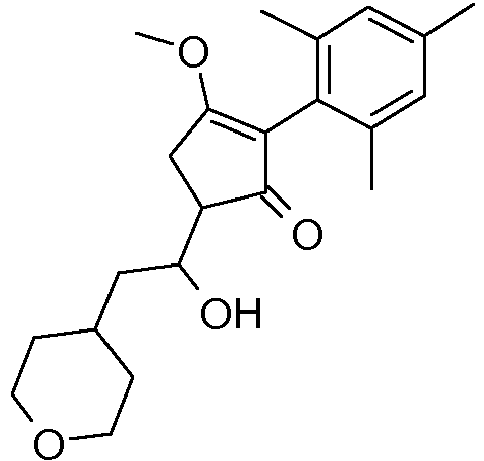
LC-MS (Method B) ES+: MH+ = 359 P32 rt = 1.26 min P33 
LC-MS (Method A) ES+: MH+ = 345 
LC-MS (Method A) ES+: MH+ = 413 P34 rt = 2.03 min 
LC-MS (Method B) ES+: MH+ = 357 P35 rt = 1.44 min P36 
LC-MS (Method A) ES+: MH+ = 315 
LC-MS (Method A) ES+: M+H+ = 399 P37 rt = 1.98 min P38 
LC-MS (Method A) ES+: MH+ = 329 P39 
LC-MS (Method A) ES+: MH+ = 342 P40 
LC-MS (Method A) ES+: MH+ = 430 
LC-MS (Method A) ES+: MH+ = 361 P41 rt = 1.54 min P42 
LC-MS (Method A) ES+: MH+ = 382 
LC-MS (Method A) ES+: MH+ = 401 P43 rt = 1.77 min 
LC-MS (Method B) ES+: MH+ = 419 P44 rt = 1.84 min 
LC-MS (Method A) ES+: MH+ = 373 P45 rt = 1.64 min 
LC-MS (Method A) ES+: MH+ = 454 P46 rt = 1.51 min 
LC-MS (Method A) ES+: MH+ = 474 P47 rt = 1.91 min 
LC-MS (Method A) ES+: MH+ = 506 P48 rt = 1.85 min 
LC-MS (Method A) ES+: MH+ = 401 P49 rt = 1.81 min 
LC-MS (Method A) ES+: MH+ = 386 P50 rt = 1.53 min 
LC-MS (Method A) ES+: MH+ = 428 P51 rt = 1.88 min 
LC-MS (Method A) ES+: MH+ = 359 P52 rt = 1.46 min 
LC-MS (Method A) ES+: MH+ = 512 P53 rt = 2.03 min 
LC-MS (Method A) ES+: MH+ = 514 P54 rt = 2.03 min 
LC-MS (Method A) ES+: MH+ = 448 P55 rt = 1.78 min 
LC-MS (Method A) ES+: MH+ = 430 P56 rt = 1.64 min 
LC-MS (Method A) ES+: MH+ = 436 P57 rt = 1.56 mins 
LC-MS (Method A) ES+: MH+ = 440 P58 rt = 1.71 mins 
LC-MS (Method A) ES+: MH+ = 468 P59 rt = 1.85 mins 
LC-MS (Method A) ES+: MH+ = 540, 538, 536 P60 rt = 1.85 mins 
LC-MS (Method A) ES+: MH+ = 520 P61 rt = 1.76 mins 
LC-MS (Method A) ES+: MH+ = 488 P62 rt = 1.63 mins 
LC-MS (Method A) ES+: MH+ = 546 P63 rt = 1.66 mins 
LC-MS (Method A) ES+: MH+ = 582, 580, 578 P64 rt = 1.86 mins 
LC-MS (Method A) ES+: MH+ = 426 P65 rt = 1.78 mins P66 
Melting point: 82-84 °C P67 
δ ppm (D2O) 1.20-1.40 (m, 3H), 1.60-1.85 (m, 4H), 2.01 (s, 6H), 2.15-2.25 (m, 4H), 2.60-2.70 (m, 2H), 3.40-3.55 (m, 2H), 3.90-4.05 (m, 2H), 6.91 (s, 2H) P68 
δ ppm (D2O) 1.20-1.40 (m, 3H), 1.60-1.85 (m, 4H), 2.01 (s, 6H), 2.15-2.25 (m, 4H), 2.60-2.70 (m, 2H), 3.40-3.55 (m, 2H), 3.90-4.05 (m, 2H), 6.91 (s, 2H) 
LC-MS (Method A) ES+: MH+ = 327 P69 rt = 1.54 mins 
LC-MS (Method A) ES+: MH+ = 405 P70 rt = 1.75 mins 
LC-MS (Method A) ES+: MH+ = 435 P71 rt = 1.81 mins - The compounds of the following Tables 1 to 102 can be obtained in an analogous manner.
- Table 1 covers 262 compounds of the following type:

Compound Number R1 R2 R3 R4 1.001 CH3 H H H 1.002 CH3 CH3 H H 1.003 CH3 H CH3 H 1.004 CH3 H H CH3 1.005 CH3 CH3 CH3 H 1.006 CH3 CH3 H CH3 1.007 CH3 CH3 CH3 CH3 1.008 CH3 Cl H H 1.009 CH3 Cl H CH3 1.010 CH3 Cl H OCH3 1.011 CH3 H Cl H 1.012 CH3 H H Cl 1.013 CH3 CH3 Cl H 1.014 CH3 CH3 H Cl 1.015 CH3 H Cl CH3 1.016 CH3 CH3 Cl CH3 1.017 CH3 Br H H 1.018 CH3 Br H CH3 1.019 CH3 Br H OCH3 1.020 CH3 H Br H 1.021 CH3 H H Br 1.022 CH3 CH3 Br H 1.023 CH3 CH3 H Br 1.024 CH3 H Br CH3 1.025 CH3 CH3 Br CH3 1.026 CH3 CH3O H H 1.027 CH3 CH3O H CH3 1.028 CH3 CH3O H Cl 1.029 CH3 CH3O H Br 1.030 CH3 CH3CH2O H H 1.031 CH3 CH3CH2O H CH3 1.032 CH3 CH3CH2O H Cl 1.033 CH3 CH3CH2O H Br 1.034 CH3 H CH3O H 1.035 CH3 H H CH3O 1.036 CH3 CH3 CH3O H 1.037 CH3 CH3 H CH3O 1.038 CH3 H CH3O CH3 1.039 CH3 CH3 CH3O CH3 1.040 CH3 -CH=CH2 H CH3 1.041 CH3 CH3 H -CH=CH2 1.042 CH3 -C.CH H CH3 1.043 CH3 CH3 H -C.CH 1.044 CH3 -CH=CH2 H -CH=CH2 1.045 CH3 CH2CH3 H CH3 1.046 CH3 phenyl H CH3 1.047 CH3 2-fluorophenyl H CH3 1.048 CH3 2-chlorophenyl H CH3 1.049 CH3 2-trifluoromethylphenyl H CH3 1.050 CH3 2-nitrophenyl H CH3 1.051 CH3 2-methylphenyl H CH3 1.052 CH3 2-methanesulfonylphenyl H CH3 1.053 CH3 2-cyanophenyl H CH3 1.054 CH3 3-fluorophenyl H CH3 1.055 CH3 3-chlorophenyl H CH3 1.056 CH3 3-trifluoromethylphenyl H CH3 1.057 CH3 3-nitrophenyl H CH3 1.058 CH3 3-methylphenyl H CH3 1.059 CH3 3-methanesulfonylphenyl H CH3 1.060 CH3 3-cyanophenyl H CH3 1.061 CH3 4-fluorophenyl H CH3 1.062 CH3 4-chlorophenyl H CH3 1.063 CH3 4-bromophenyl H CH3 1.064 CH3 4-difluoromethoxyphenyl H CH3 1.065 CH3 2-fluoro-4-chlorophenyl H CH3 1.066 CH3 2-chloro-4-chlorophenyl H CH3 1.067 CH3 2-methyl-4-chlorophenyl H CH3 1.068 CH3 4-trifluoromethylphenyl H CH3 1.069 CH3 4-nitrophenyl H CH3 1.070 CH3 4-methylphenyl H CH3 1.071 CH3 4-methanesulfonylphenyl H CH3 1.072 CH3 4-cyanophenyl H CH3 1.073 CH3 H phenyl H 1.074 CH3 H 2-fluorophenyl H 1.075 CH3 H 2-chlorophenyl H 1.076 CH3 H 2-trifluoromethylphenyl H 1.077 CH3 H 2-nitrophenyl H 1.078 CH3 H 2-methylphenyl H 1.079 CH3 H 2-methylsulfonylphenyl H 1.080 CH3 H 2-cyanophenyl H 1.081 CH3 H 3-fluorophenyl H 1.082 CH3 H 3-chlorophenyl H 1.083 CH3 H 3-trifluoromethylphenyl H 1.084 CH3 H 3-nitrophenyl H 1.085 CH3 H 3-methylphenyl H 1.086 CH3 H 3-methylsulfonylphenyl H 1.087 CH3 H 3-cyanophenyl H 1.088 CH3 H 4-fluorophenyl H 1.089 CH3 H 4-chlorophenyl H 1.090 CH3 H 4-bromophenyl H 1.091 CH3 H 4-difluoromethoxyphenyl H 1.092 CH3 H 2-fluoro-4-chlorophenyl H 1.093 CH3 H 2-chloro-4-chlorophenyl H 1.094 CH3 H 2-methyl-4-chlorophenyl H 1.095 CH3 H 4-trifluoromethylphenyl H 1.096 CH3 H 4-nitrophenyl H 1.097 CH3 H 4-methylphenyl H 1.098 CH3 H 4-methylsulfonylphenyl H 1.099 CH3 H 4-cyanophenyl H 1.100 CH2CH3 H H H 1.101 CH2CH3 CH3 H H 1.102 CH2CH3 H CH3 H 1.103 CH2CH3 H H CH3 1.104 CH2CH3 CH3 CH3 H 1.105 CH2CH3 CH3 H CH3 1.106 CH2CH3 CH3 CH3 CH3 1.107 CH2CH3 Cl H H 1.108 CH2CH3 Cl H CH3 1.109 CH2CH3 Cl H OCH3 1.110 CH2CH3 H Cl H 1.111 CH2CH3 H H Cl 1.112 CH2CH3 CH3 Cl H 1.113 CH2CH3 CH3 H Cl 1.114 CH2CH3 H Cl CH3 1.115 CH2CH3 CH3 Cl CH3 1.116 CH2CH3 Br H H 1.117 CH2CH3 Br H CH3 1.118 CH2CH3 Br H OCH3 1.119 CH2CH3 H Br H 1.120 CH2CH3 H H Br 1.121 CH2CH3 CH3 Br H 1.122 CH2CH3 CH3 H Br 1.123 CH2CH3 H Br CH3 1.124 CH2CH3 CH3 Br CH3 1.125 CH2CH3 CH3O H H 1.126 CH2CH3 CH3O H CH3 1.127 CH2CH3 CH3O H Cl 1.128 CH2CH3 CH3O H Br 1.129 CH2CH3 CH3CH2O H H 1.130 CH2CH3 CH3CH2O H CH3 1.131 CH2CH3 CH3CH2O H Cl 1.132 CH2CH3 CH3CH2O H Br 1.133 CH2CH3 H CH3O H 1.134 CH2CH3 H H CH3O 1.135 CH2CH3 CH3 CH3O H 1.136 CH2CH3 CH3 H CH3O 1.137 CH2CH3 H CH3O CH3 1.138 CH2CH3 CH3 CH3O CH3 1.139 CH2CH3 -CH=CH2 H CH3 1.140 CH2CH3 CH3 H -CH=CH2 1.141 CH2CH3 -C.CH H CH3 1.142 CH2CH3 CH3 H -C.CH 1.143 CH2CH3 -CH=CH2 H -CH=CH2 1.144 CH2CH3 CH2CH3 H CH3 1.145 CH2CH3 phenyl H CH3 1.146 CH2CH3 2-fluorophenyl H CH3 1.147 CH2CH3 2-chlorophenyl H CH3 1.148 CH2CH3 2-trifluoromethylphenyl H CH3 1.149 CH2CH3 2-nitrophenyl H CH3 1.150 CH2CH3 2-methylphenyl H CH3 1.151 CH2CH3 2-methylsulfonylphenyl H CH3 1.152 CH2CH3 2-cyanophenyl H CH3 1.153 CH2CH3 3-fluorophenyl H CH3 1.154 CH2CH3 3-chlorophenyl H CH3 1.155 CH2CH3 3-trifluoromethylphenyl H CH3 1.156 CH2CH3 3-nitrophenyl H CH3 1.157 CH2CH3 3-methylphenyl H CH3 1.158 CH2CH3 3-methylsulfonylphenyl H CH3 1.159 CH2CH3 3-cyanophenyl H CH3 1.160 CH2CH3 4-fluorophenyl H CH3 1.161 CH2CH3 4-chlorophenyl H CH3 1.162 CH2CH3 4-bromophenyl H CH3 1.163 CH2CH3 4-difluoromethoxyphenyl H CH3 1.164 CH2CH3 2-fluoro-4-chlorophenyl H CH3 1.165 CH2CH3 2-chloro-4-chlorophenyl H CH3 1.166 CH2CH3 2-methyl-4-chlorophenyl H CH3 1.167 CH2CH3 4-trifluoromethylphenyl H CH3 1.168 CH2CH3 4-nitrophenyl H CH3 1.169 CH2CH3 4-methylphenyl H CH3 1.170 CH2CH3 4-methylsulfonylphenyl H CH3 1.171 CH2CH3 4-cyanophenyl H CH3 1.172 CH2CH3 H phenyl H 1.173 CH2CH3 H 2-fluorophenyl H 1.174 CH2CH3 H 2-chlorophenyl H 1.175 CH2CH3 H 2-trifluoromethylphenyl H 1.176 CH2CH3 H 2-nitrophenyl H 1.177 CH2CH3 H 2-methylphenyl H 1.178 CH2CH3 H 2-methylsulfonylphenyl H 1.179 CH2CH3 H 2-cyanophenyl H 1.180 CH2CH3 H 3-fluorophenyl H 1.181 CH2CH3 H 3-chlorophenyl H 1.182 CH2CH3 H 3-trifluoromethylphenyl H 1.183 CH2CH3 H 3-nitrophenyl H 1.184 CH2CH3 H 3-methylphenyl H 1.185 CH2CH3 H 3-methylsulfonylphenyl H 1.186 CH2CH3 H 3-cyanophenyl H 1.187 CH2CH3 H 4-fluorophenyl H 1.188 CH2CH3 H 4-chlorophenyl H 1.189 CH2CH3 H 4-bromophenyl H 1.190 CH2CH3 H 4-difluoromethoxyphenyl H 1.191 CH2CH3 H 2-fluoro-4-chlorophenyl H 1.192 CH2CH3 H 2-chloro-4-chlorophenyl H 1.193 CH2CH3 H 2-methyl-4-chlorophenyl H 1.194 CH2CH3 H 4-trifluoromethylphenyl H 1.195 CH2CH3 H 4-nitrophenyl H 1.196 CH2CH3 H 4-methylphenyl H 1.197 CH2CH3 H 4-methylsulfonylphenyl H 1.198 CH2CH3 H 4-cyanophenyl H 1.199 CH2CH3 CH3 H CH2CH3 1.200 CH2CH3 CH2CH3 H CH2CH3 1.201 CH2CH3 Cl H CH2CH3 1.202 CH2CH3 Br H CH2CH3 1.203 CHZCH3 NO2 H CH2CH3 1.204 CH2CH3 CH3O H CH2CH3 1.205 CH2CH3 CH3S H CH2CH3 1.206 CH2CH3 CH3SO2 H CH2CH3 1.207 CH2CH3 CH2=CH H CH2CH3 1.208 CH2CH3 -C.CH H CH2CH3 1.209 CH2CH3 phenyl H CH2CH3 1.210 CH2CH3 2-fluorophenyl H CH2CH3 1.211 CH2CH3 2-chlorophenyl H CH2CH3 1.212 CH2CH3 2-trifluoromethylphenyl H CH2CH3 1.213 CH2CH3 2-nitrophenyl H CH2CH3 1.214 CH2CH3 2-methylphenyl H CH2CH3 1.215 CH2CH3 2-methylsulfonylphenyl H CH2CH3 1.216 CH2CH3 2-cyanophenyl H CH2CH3 1.217 CH2CH3 3-fluorophenyl H CH2CH3 1.218 CH2CH3 3-chlorophenyl H CH2CH3 1.219 CH2CH3 3-trifluoromethylphenyl H CH2CH3 1.220 CH2CH3 3-nitrophenyl H CH2CH3 1.221 CH2CH3 3-methylphenyl H CH2CH3 1.222 CH2CH3 3-methylsulfonylphenyl H CH2CH3 1.223 CH2CH3 3-cyanophenyl H CH2CH3 1.224 CH2CH3 4-fluorophenyl H CH2CH3 1.225 CH2CH3 4-chlorophenyl H CH2CH3 1.226 CH2CH3 4-bromophenyl H CH2CH3 1.227 CH2CH3 4-difluoromethoxyphenyl H CH2CH3 1.228 CH2CH3 2-fluoro-4-chlorophenyl H CH2CH3 1.229 CH2CH3 2-chloro-4-chlorophenyl H CH2CH3 1.230 CH2CH3 2-methyl-4-chlorophenyl H CH2CH3 1.231 CH2CH3 4-trifluoromethylphenyl H CH2CH3 1.232 CH2CH3 4-nitrophenyl H CH2CH3 1.233 CH2CH3 4-methylphenyl H CH2CH3 1.234 CH2CH3 4-methylsulfonylphenyl H CH2CH3 1.235 CH2CH3 4-cyanophenyl H CH2CH3 1.236 OCH3 H phenyl H 1.237 OCH3 H 2-fluorophenyl H 1.238 OCH3 H 2-chlorophenyl H 1.239 OCH3 H 2-trifluoromethylphenyl H 1.240 OCH3 H 2-nitrophenyl H 1.241 OCH3 H 2-methylphenyl H 1.242 OCH3 H 2-methylsulfonylphenyl H 1.243 OCH3 H 2-cyanophenyl H 1.244 OCH3 H 3-fluorophenyl H 1.245 OCH3 H 3-chlorophenyl H 1.246 OCH3 H 3-trifluoromethylphenyl H 1.247 OCH3 H 3-nitrophenyl H 1.248 OCH3 H 3-methylphenyl H 1.249 OCH3 H 3-methylsulfonylphenyl H 1.250 OCH3 H 3-cyanophenyl H 1.251 OCH3 H 4-fluorophenyl H 1.252 OCH3 H 4-chlorophenyl H 1.253 OCH3 H 4-bromophenyl H 1.254 OCH3 H 4-difluoromethoxyphenyl H 1.255 OCH3 H 2-fluoro-4-chlorophenyl H 1.256 OCH3 H 2-chloro-4-chlorophenyl H 1.257 OCH3 H 2-methyl-4-chlorophenyl H 1.258 OCH3 H 4-trifluoromethylphenyl H 1.259 OCH3 H 4-nitrophenyl H 1.260 OCH3 H 4-methylphenyl H 1.261 OCH3 H 4-methylsulfonylphenyl H 1.262 OCH3 H 4-cyanophenyl H - Table 2 covers 262 compounds of the following type
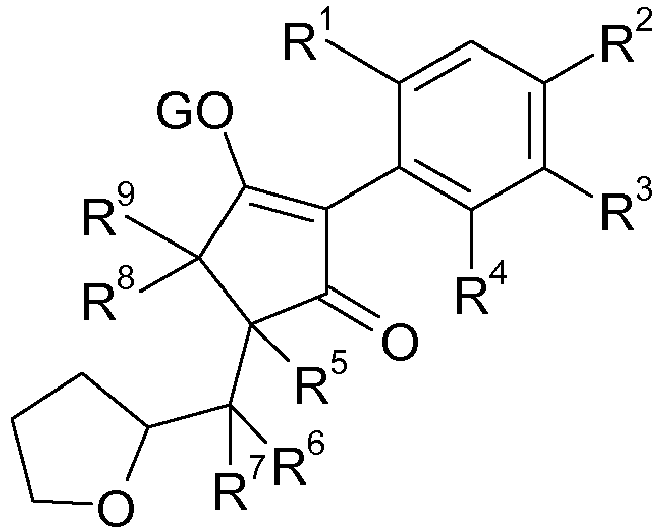
- Table 3 covers 262 compounds of the following type

- Table 4 covers 262 compounds of the following type:

- Table 5 covers 262 compounds of the following type

- Table 6 covers 262 compounds of the following type

- Table 7 covers 262 compounds of the following type:
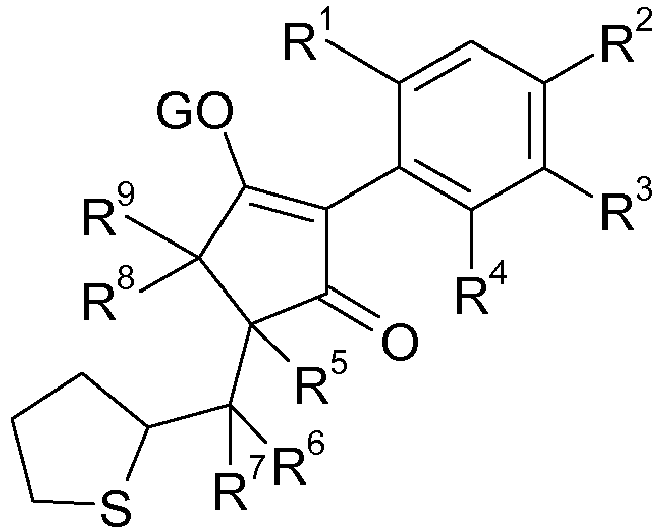
- Table 8 covers 262 compounds of the following type

- Table 9 covers 262 compounds of the following type

- Table 10 covers 262 compounds of the following type:

- Table 11 covers 262 compounds of the following type

- Table 12 covers 262 compounds of the following type

- Table 13 covers 262 compounds of the following type:

- Table 14 covers 262 compounds of the following type

- Table 15 covers 262 compounds of the following type

- Table 16 covers 262 compounds of the following type:

- Table 17 covers 262 compounds of the following type

- Table 18 covers 262 compounds of the following type

- Table 19 covers 262 compounds of the following type:

- Table 20 covers 262 compounds of the following type

- Table 21 covers 262 compounds of the following type

- Table 22 covers 262 compounds of the following type:

- Table 23 covers 262 compounds of the following type

- Table 24 covers 262 compounds of the following type
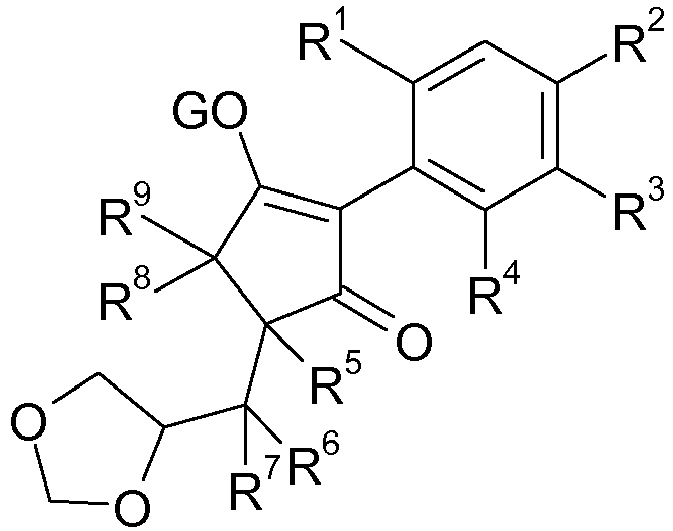
- Table 25 covers 262 compounds of the following type:

- Table 26 covers 262 compounds of the following type

- Table 27 covers 262 compounds of the following type

- Table 28 covers 262 compounds of the following type:

- Table 29 covers 262 compounds of the following type

- Table 30 covers 262 compounds of the following type

- Table 31 covers 262 compounds of the following type:

- Table 32 covers 262 compounds of the following type

- Table 33 covers 262 compounds of the following type

- Table 34 covers 262 compounds of the following type:

- Table 35 covers 262 compounds of the following type

- Table 36 covers 262 compounds of the following type

- Table 37 covers 262 compounds of the following type:

- Table 38 covers 262 compounds of the following type

- Table 39 covers 262 compounds of the following type
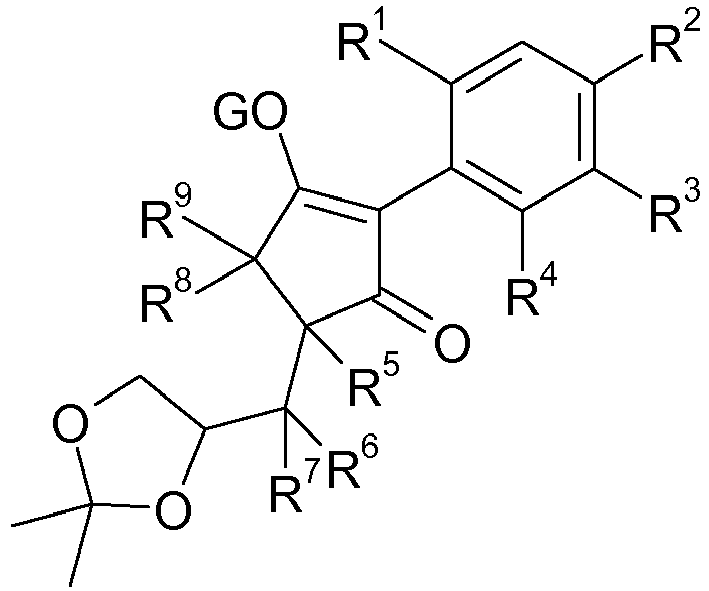
- Table 40 covers 262 compounds of the following type:

- Table 41 covers 262 compounds of the following type
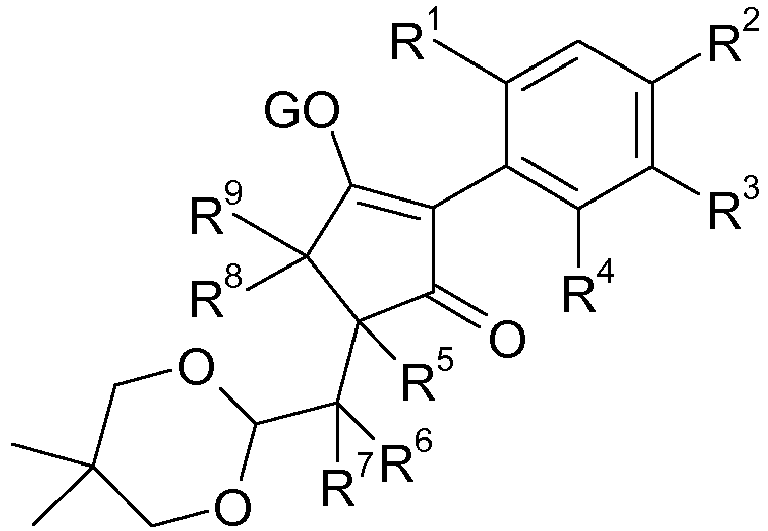
Table 42 covers 262 compounds of the following type
- Table 43 covers 262 compounds of the following type:

- Table 44 covers 262 compounds of the following type

- Table 45 covers 262 compounds of the following type

- Table 46 covers 262 compounds of the following type:

- Table 47 covers 262 compounds of the following type

- Table 48 covers 262 compounds of the following type

- Table 49 covers 262 compounds of the following type:

- Table 50 covers 262 compounds of the following type

- Table 51 covers 262 compounds of the following type

- Table 52 covers 262 compounds of the following type:

- Table 53 covers 262 compounds of the following type

- Table 54 covers 262 compounds of the following type

- Table 55 covers 262 compounds of the following type:

- Table 56 covers 262 compounds of the following type

- Table 57 covers 262 compounds of the following type
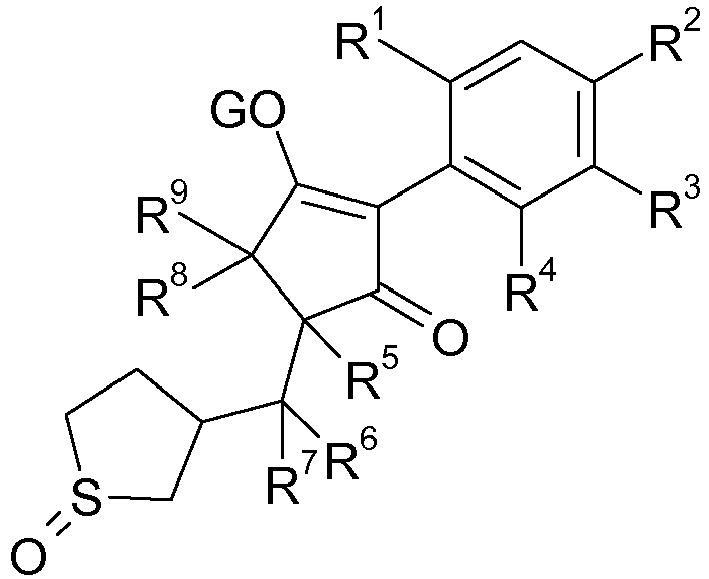
- Table 58 covers 262 compounds of the following type:

- Table 59 covers 262 compounds of the following type

- Table 60 covers 262 compounds of the following type
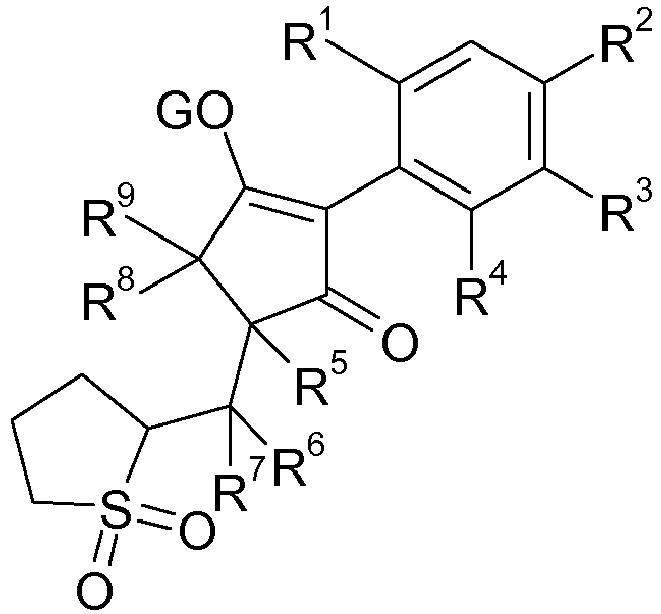
- Table 61 covers 262 compounds of the following type:

- Table 62 covers 262 compounds of the following type

- Table 63 covers 262 compounds of the following type

- Table 64 covers 262 compounds of the following type:

- Table 65 covers 262 compounds of the following type

- Table 66 covers 262 compounds of the following type

- Table 67 covers 262 compounds of the following type:

- Table 68 covers 262 compounds of the following type

- Table 69 covers 262 compounds of the following type

- Table 70 covers 262 compounds of the following type:

- Table 71 covers 262 compounds of the following type

- Table 72 covers 262 compounds of the following type

- Table 73 covers 262 compounds of the following type:

- Table 74 covers 262 compounds of the following type

- Table 75 covers 262 compounds of the following type

- Table 76 covers 262 compounds of the following type:

- Table 77 covers 262 compounds of the following type

- Table 78 covers 262 compounds of the following type

- Table 79 covers 262 compounds of the following type:

- Table 80 covers 262 compounds of the following type

- Table 81 covers 262 compounds of the following type

- Table 82 covers 262 compounds of the following type:

- Table 83 covers 262 compounds of the following type

- Table 84 covers 262 compounds of the following type

- Table 85 covers 262 compounds of the following type:

- Table 86 covers 262 compounds of the following type

- Table 87 covers 262 compounds of the following type

- Table 88 covers 262 compounds of the following type:
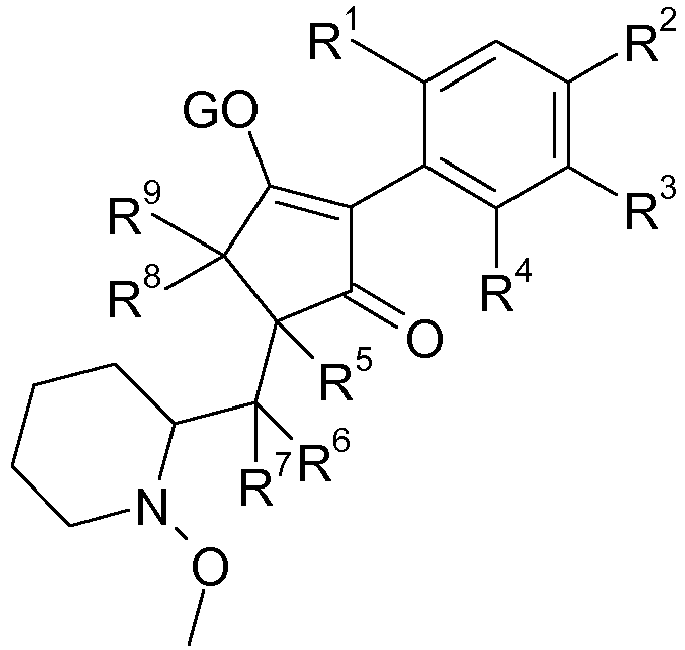
- Table 89 covers 262 compounds of the following type

- Table 90 covers 262 compounds of the following type

- Table 91 covers 262 compounds of the following type:

- Table 92 covers 262 compounds of the following type

- Table 93 covers 262 compounds of the following type

- Table 94 covers 262 compounds of the following type:

- Table 95 covers 262 compounds of the following type

- Table 96 covers 262 compounds of the following type

- Table 97 covers 262 compounds of the following type:

- Table 98 covers 262 compounds of the following type

- Table 99 covers 262 compounds of the following type

- Table 100 covers 262 compounds of the following type:
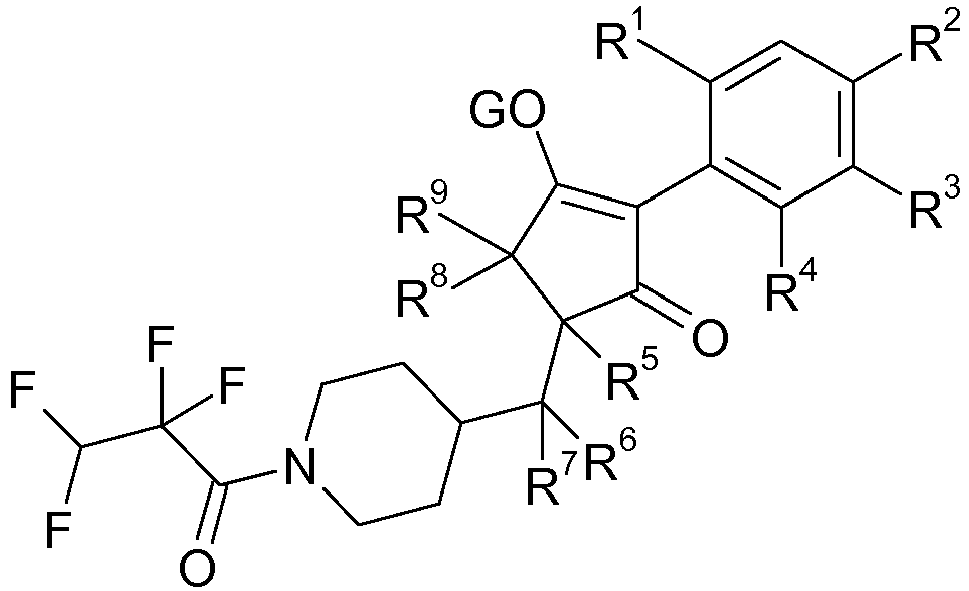
- Table 101 covers 262 compounds of the following type

- Table 102 covers 262 compounds of the following type

- Seeds of a variety of test species were sown in standard soil in pots. After cultivation for one day (pre-emergence) or after 10 days cultivation (post-emergence) under controlled conditions in a glasshouse, the plants were sprayed with an aqueous spray solution derived from the formulation of the technical active ingredient in 0.6 ml acetone and 45 ml formulation solution containing 10.6% Emulsogen EL (Registry number 61791-12-6), 42.2% N-methyl pyrrolidone, 42.2% dipropylene glycol monomethyl ether (Registry number 34590-94-8) and 0.2 % X-77 (Registry number 11097-66-8). The test plants were then grown in a greenhouse under optimum conditions until, 14 or 15 days later for post-emergence and 19 or 20 days for pre-emergence, the test was evaluated (100 = total damage to plant; 0 = no damage to plant).
-
Compound Number Rate g/ha ALOMY AVEFA LOLPE SETFA DIGSA ECHCG T1 500 100 90 100 70 100 80 T2 500 70 10 90 70 80 70 -
Compound Number Rate g/ha ALOMY AVEFA LOLPE SETFA DIGSA ECHCG T1 125 100 90 100 70 100 100 T2 125 80 40 20 100 100 100 T4 250 100 90 100 90 90 100 T5 250 100 80 100 30 50 80 T8 250 100 90 100 100 80 100 P5 250 100 100 100 80 70 100 - Seeds of a variety of test species were sown in standard soil in pots. After cultivation for one day (pre-emergence) or after 8 days cultivation (post-emergence) under controlled conditions in a glasshouse (at 24/16°C, day/night; 14 hours light; 65 % humidity), the plants were sprayed with an aqueous spray solution derived from the formulation of the technical active ingredient in acetone / water (50:50) solution containing 0.5% Tween 20 (polyoxyethelyene sorbitan monolaurate, CAS RN 9005-64-5).
- The test plants were then grown in a glasshouse under controlled conditions in a glasshouse (at 24/16°C, day/night; 14 hours light; 65 % humidity) and watered twice daily. After 13 days for pre and post-emergence, the test was evaluated (100 = total damage to plant; 0 = no damage to plant).
-
Compound Number Rate g/ha LOLPE ALOMY ECHCG AVEFA T3 250 60 50 20 50 T4 250 100 100 100 90 T5 250 100 100 100 80 T7 250 80 70 100 50 T8 250 100 100 100 100 T9 250 60 20 20 0 T10 250 90 70 70 40 T11 250 70 30 20 0 T12 250 100 100 100 100 T13 250 30 30 10 0 T14 250 100 100 100 100 T15 250 100 70 100 100 T16 250 100 100 100 80 T17 250 100 100 100 100 T18 250 100 100 100 70 T21 250 100 100 90 70 T22 250 100 100 100 90 T23 250 100 100 100 100 T24 250 100 100 100 90 T26 250 100 70 100 60 T27 250 100 90 80 60 T29 250 100 70 90 50 T30 250 90 60 80 30 T31 250 90 80 80 90 T32 250 100 70 100 90 T33 250 90 60 90 50 T34 250 90 70 100 70 T35 250 70 30 40 10 T36 250 90 90 100 90 T37 250 100 100 100 90 T38 250 70 90 100 40 T39 250 100 100 100 100 T40 250 100 100 100 80 T41 250 90 70 100 90 T42 250 0 0 20 0 T43 250 100 80 100 100 T44 250 100 90 60 20 T46 250 10 50 10 10 T47 250 60 20 40 50 T48 250 90 90 100 90 T50 250 100 100 100 100 T51 250 100 80 80 90 T52 250 100 100 80 80 T53 250 40 30 0 0 T54 250 100 80 100 50 T55 250 100 80 90 60 T58 250 100 90 100 90 T59 250 100 90 100 90 T60 250 10 10 0 0 T61 250 90 70 90 80 T62 250 100 80 100 70 T63 250 100 70 100 90 T64 250 100 50 100 90 T65 250 80 70 100 80 T66 250 80 90 100 80 T67 250 100 90 100 90 T68 250 90 30 50 40 T69 250 10 0 20 10 T70 250 70 20 60 70 T71 250 30 20 10 20 T72 250 60 30 80 20 T73 250 80 40 80 80 T74 250 30 30 50 20 T75 250 80 30 70 70 T76 250 60 30 60 20 T77 250 0 0 0 0 T78 250 30 20 30 0 T79 250 90 60 60 20 T80 250 100 70 70 70 T81 250 80 80 60 80 T82 250 90 50 60 50 T83 250 90 60 90 70 T84 250 90 50 60 50 T85 250 60 60 30 20 T86 250 100 60 50 30 T87 250 100 90 60 90 T88 250 100 90 80 90 T89 250 70 50 60 10 T90 250 60 40 50 60 T91 250 70 20 60 40 T92 250 30 30 40 10 T93 250 90 60 90 60 T94 250 90 90 80 90 T95 250 100 90 60 90 T96 250 60 20 20 10 T97 250 70 30 60 30 T98 250 90 70 90 80 T99 250 60 20 60 30 T100 250 90 60 70 60 T101 250 50 20 50 30 T102 250 70 50 50 30 T103 250 30 30 10 20 T104 250 70 60 90 60 T105 250 60 20 40 30 T106 250 20 20 20 30 T107 250 70 80 70 60 T108 250 50 10 60 40 T109 250 0 0 0 0 T110 250 50 30 70 30 T111 250 90 40 80 40 T112 250 50 40 30 20 T113 250 70 60 90 70 T114 250 40 50 60 20 T118 250 40 40 30 20 T119 250 80 40 100 30 T120 250 20 30 30 10 T121 250 80 30 90 60 T122 250 50 20 70 20 T123 250 60 60 60 60 T124 250 20 20 30 10 T126 250 60 30 50 40 T128 250 50 70 60 40 T130 250 100 70 30 10 T131 250 90 70 100 70 T132 250 70 20 90 70 T135 250 40 0 60 30 T138 250 90 80 90 70 T139 250 80 70 90 60 T140 250 70 60 90 50 T141 250 80 80 80 80 T142 250 70 90 90 80 T143 250 100 80 100 50 T144 250 70 80 90 70 T145 250 50 60 20 30 T146 250 90 70 70 50 T147 250 30 50 40 10 T148 250 50 70 30 40 T149 250 20 30 30 10 T151 250 30 20 40 10 T156 250 100 80 100 70 T157 250 10 10 40 0 T158 250 90 80 100 70 T159 250 70 50 100 30 T160 250 90 30 70 40 T161 250 90 30 100 60 T162 250 70 40 50 50 T163 250 80 50 60 60 P5 250 100 100 100 80 P7 250 100 100 100 90 P9 250 40 30 20 0 P11 250 100 100 100 100 P13 250 100 100 100 90 P14 250 100 100 100 80 P15 250 100 100 100 90 P16 250 100 100 100 90 P17 250 100 100 90 90 P18 250 100 100 90 80 P20 250 100 100 80 90 P23 250 100 100 100 80 P24 250 100 100 90 90 P25 250 90 100 90 80 P26 250 100 100 90 80 P27 250 100 100 80 80 P28 250 100 70 20 30 P29 250 90 50 0 20 P30 250 100 100 80 90 P31 250 100 100 100 90 P34 250 100 90 100 90 P37 250 100 100 70 70 P42 250 40 30 30 0 P43 250 100 100 100 100 P44 250 100 100 100 90 P45 250 100 100 100 100 P46 250 90 70 100 60 P47 250 60 30 60 50 P48 250 80 70 40 60 P49 250 100 80 100 60 P50 250 100 100 100 100 P51 250 100 100 100 100 P53 250 100 60 90 70 P54 250 100 80 100 70 P55 250 100 100 100 90 P56 250 100 100 100 90 P57 250 60 50 30 70 P58 250 80 70 80 70 P59 250 80 50 70 30 P60 250 80 30 50 0 P61 250 90 50 80 30 P63 250 70 50 70 40 P64 250 80 70 80 70 P65 250 90 60 80 60 P67 250 100 80 90 90 P68 250 100 90 100 90 P71 250 100 90 100 100 -
Compound Number Rate g/ha LOLPE ALOMY ECHCG AVEFA T3 250 70 40 70 70 T4 250 100 100 100 100 T5 250 100 100 100 90 T6 250 10 20 10 0 T7 250 80 100 90 90 T8 250 100 100 100 100 T9 250 80 60 80 30 T10 250 70 70 80 80 T11 250 50 60 70 30 T12 250 100 100 100 100 T13 250 30 10 40 0 T14 250 100 100 100 100 T15 250 100 100 100 100 T16 250 100 100 100 100 T17 250 100 90 100 100 T18 250 100 80 90 70 T21 250 90 90 80 90 T22 250 100 90 100 100 T23 250 100 90 100 100 T24 250 100 90 100 100 T26 250 80 60 60 70 T27 250 80 70 80 70 T29 250 90 70 80 60 T30 250 80 80 80 70 T31 250 70 90 80 90 T32 250 90 90 90 90 T33 250 60 60 60 70 T34 250 90 90 100 100 T35 250 70 70 70 60 T36 250 80 80 90 90 T37 250 100 90 100 100 T38 250 100 100 100 100 T39 250 100 90 100 100 T40 250 100 80 100 90 T41 250 100 100 100 100 T42 250 20 0 30 0 T43 250 100 90 80 90 T44 250 70 60 80 40 T46 250 40 60 60 50 T47 250 30 30 60 50 T48 250 70 90 100 90 T50 250 100 100 100 100 T51 250 60 70 70 80 T52 250 90 90 100 80 T54 250 70 80 80 80 T55 250 60 70 70 50 T58 250 90 100 100 90 T59 250 100 90 90 100 T60 250 20 30 10 10 T61 250 90 90 100 100 T62 250 90 90 100 100 T63 250 90 90 90 100 T64 250 90 90 100 100 T65 250 90 90 100 100 T66 250 60 90 100 90 T67 250 100 90 100 100 T68 250 90 60 90 90 T69 250 30 30 20 30 T70 250 80 70 80 100 T71 250 40 30 70 80 T72 250 80 50 90 80 T73 250 80 90 90 100 T74 250 40 70 100 90 T75 250 100 90 90 100 T76 250 40 90 90 100 T77 250 40 30 20 40 T78 250 50 40 70 40 T79 250 60 60 70 80 T80 250 90 90 80 100 T81 250 90 90 80 100 T82 250 90 90 80 100 T83 250 90 80 70 100 T84 250 100 90 90 100 T85 250 90 90 80 90 T86 250 70 40 80 80 T87 250 90 70 70 90 T88 250 90 90 90 100 T89 250 40 30 40 20 T90 250 80 70 80 100 T91 250 50 40 50 90 T92 250 20 30 40 60 T93 250 70 60 60 70 T94 250 90 100 90 100 T95 250 100 90 70 100 T96 250 60 60 40 40 T97 250 60 70 80 70 T98 250 100 100 90 100 T99 250 50 70 90 90 T100 250 80 90 60 90 T101 250 40 40 20 40 T102 250 80 90 40 90 T103 250 50 50 30 60 T104 250 80 70 70 90 T105 250 50 30 30 40 T106 250 30 40 30 10 T107 250 90 70 60 90 T108 250 70 70 40 70 T110 250 50 30 40 80 T111 250 80 80 70 90 T112 250 30 40 30 30 T113 250 100 90 70 100 T114 250 50 40 30 40 T116 250 90 60 50 90 T118 250 30 60 40 80 T119 250 90 90 90 80 T120 250 30 30 10 20 T121 250 90 80 80 100 T122 250 80 60 70 30 T123 250 70 80 60 90 T124 250 20 30 20 30 T126 250 70 50 60 70 T127 250 20 20 20 10 T128 250 50 40 50 90 T130 250 90 60 60 70 T131 250 100 90 90 90 T132 250 70 70 100 80 T133 250 0 20 90 30 T135 250 70 80 90 80 T136 250 30 50 60 70 T138 250 90 90 70 90 T139 250 90 90 100 90 T140 250 90 90 90 60 T141 250 70 80 60 90 T142 250 70 90 60 90 T143 250 60 60 60 80 T144 250 80 80 80 90 T145 250 40 60 30 50 T146 250 80 80 70 90 T147 250 40 60 50 70 T148 250 70 80 60 100 T149 250 40 30 20 40 T151 250 20 30 40 10 T152 250 30 20 10 10 T153 250 20 10 10 20 T156 250 100 90 70 90 T157 250 30 30 60 50 T158 250 100 100 100 100 T159 250 100 90 100 90 T160 250 100 40 70 60 T161 250 100 70 90 90 T162 250 90 60 70 80 T163 250 100 90 90 100 P4 250 30 60 20 40 P5 250 100 100 100 90 P7 250 100 100 90 80 P9 250 40 30 50 10 P11 250 100 90 100 90 P13 250 100 90 100 90 P14 250 100 90 90 90 P15 250 100 100 100 90 P16 250 100 100 100 100 P17 250 100 100 100 90 P18 250 100 90 90 90 P20 250 100 100 100 90 P23 250 100 90 90 90 P24 250 100 90 90 90 P25 250 100 90 100 90 P26 250 100 100 100 90 P27 250 100 80 90 80 P28 250 100 70 60 70 P29 250 100 80 30 70 P30 250 100 100 90 100 P31 250 100 90 100 90 P34 250 100 80 60 90 P37 250 90 90 90 90 P42 250 40 60 70 70 P43 250 100 100 100 90 P44 250 100 100 100 100 P45 250 100 100 90 100 P46 250 80 90 70 90 P47 250 60 70 50 60 P48 250 90 90 90 100 P49 250 100 80 100 90 P50 250 100 100 100 100 P51 250 100 100 100 100 P53 250 20 60 70 40 P54 250 40 70 80 50 P55 250 100 90 100 100 P56 250 100 90 90 100 P57 250 60 80 70 80 P58 250 90 90 70 90 P59 250 80 90 70 80 P60 250 70 80 40 80 P61 250 90 90 90 90 P62 250 80 70 70 70 P63 250 80 90 70 90 P64 250 90 100 90 100 P65 250 90 90 90 90 P67 250 100 100 100 100 P68 250 100 90 100 90 P69 250 40 0 80 20 P71 250 100 100 100 90 - Seeds of the Winter Wheat variety 'Hereward' were sown in standard soil in pots. After 8 days cultivation under controlled conditions in a glasshouse (at 24/16°C, day/night; 14 hours light; 65 % humidity), the plants were sprayed with an aqueous spray solution derived from the formulation of the technical active ingredient in acetone / water (50:50) solution containing 0.5% Tween 20 (polyoxyethelyene sorbitan monolaurate, CAS RN 9005-64-5).
- Seeds of the Winter Wheat variety 'Hereward' were seed treated with a wettable powder formulation of the cereal herbicide safener, cloquintocet mexyl, at a rate of 0.5 grams per kilogram of dry seed prior to the initiation of glasshouse testing. One seed was sown per 1.5 inch plastic pot into a sandy loam soil at a depth of 1 cm, 8 days prior to application of the test compounds and was watered and grown under controlled conditions in a glasshouse (at 24/16°C, day/night; 14 hours light; 65 % humidity). The plants were sprayed Post-emergence with an aqueous spray solution derived from the formulation of the technical active ingredient in acetone / water (50:50) solution containing 0.5% Tween 20 (polyoxyethelyene sorbitan monolaurate, CAS RN 9005-64-5).
- The test plants were then grown in a glasshouse under controlled conditions in a glasshouse (at 24/16°C, day/night; 14 hours light; 65 % humidity) and watered twice daily. After 13 days for pre and post-emergence, the test was evaluated (100 = total damage to plant; 0 = no damage to plant).
Compound Number Rate g/ha Winter Wheat (Hereward) Winter Wheat (Hereward) + cloquintocet mexyl T4 250 70 40 T5 250 80 20 T8 250 90 80 T10 250 60 20 T12 250 70 60 T14 250 80 60 T16 250 80 20 T17 250 70 50 T22 250 80 70 T37 250 80 70 T39 250 80 70 T40 250 60 10 T41 250 90 80 T62 250 80 70 T64 250 80 70 T66 250 50 20 T67 250 70 30 T75 250 60 50 T84 250 70 60 T88 250 70 50 T98 250 90 60 P5 250 60 30 P7 250 70 0 P11 250 80 70 P13 250 70 10 P16 250 70 0 P17 250 70 0 P20 250 40 0 P43 250 50 40 P44 250 70 40 P56 250 90 60
Claims (25)
- A compound of formula I
 R1 is hydrogen, methyl, ethyl, n-propyl, iso-propyl, halomethyl, haloethyl, halogen, vinyl, ethynyl, methoxy, ethoxy, halomethoxy, haloethoxy, cyclopropyl or halocyclopropyl,R2 and R3 are independently hydrogen, halogen, C1-C6alkyl, C1-C6haloalkyl, C1-C6alkoxy, C1-C6haloalkoxy, C2-C6alkenyl, C2-C6haloalkenyl, C2-C6alkynyl, C2-C6haloalkynyl, C3-C6alkenyloxy, C3-C6haloalkenyloxy, C3-C6alkynyloxy, C3-C6cycloalkyl, C1-Caalkylthio, C1-C6alkylsulfinyl, C1-C6alkylsulfonyl, C1-C6alkoxysulfonyl, C1-C6haloalkoxysulfonyl, cyano, nitro, phenyl, phenyl substituted by C1-C4alkyl, C1-C3haloalkyl, C1-C3alkoxy, C1-C3haloalkoxy, cyano, nitro, halogen, C1-C3alkylthio, C1-C3alkylsulfinyl or C1-C3alkylsulfonyl; or heteroaryl or heteroaryl substituted by C1-C4alkyl, C1-C3haloalkyl, C1-C3alkoxy, C1-C3haloalkoxy, cyano, nitro, halogen, C1-C3alkylthio, C1-C3alkylsulfinyl or C1-C3alkylsulfonyl;R4 is hydrogen, C1-C6alkyl, C1-C6haloalkyl, C1-C6alkoxy, C1-C6haloalkoxy, C2-C6alkenyl, C2-C6haloalkenyl, C2-C6alkynyl, C3-C6alkenyloxy, C3-C6haloalkenyloxy, C3-C6alkynyloxy, C3-C6cycloalkyl, C1-C6alkylthio, C1-C6alkylsulfinyl, C1-C6alkylsulfonyl, C1-C6alkoxysulfonyl, C1-C6haloalkoxysulfonyl or cyano;R5, R6, R7, R8 and R9 are independently hydrogen, halogen, C1-C6alkyl, C1-C6haloalkyl, C1-C6alkoxy, C1-C6haloalkoxy, C2-C6alkenyl, C2-C6haloalkenyl, C2-C6alkynyl, C3-C6alkenyloxy, C3-C6haloalkenyloxy, C3-C6alkynyloxy, C3-C6cycloalkyl, C1-C6alkylthio, C1-C6alkylsulfinyl, C1-C6alkylsulfonyl, C1-C6haloalkylsulfonyl, C1-C6alkoxysulfonyl, C1-C6haloalkoxysulfonyl, cyano, nitro, phenyl, phenyl substituted by C1-C4alkyl, C1-C3haloalkyl, C1-C3alkoxy, C1-C3haloalkoxy, cyano, nitro, halogen, C1-C3alkylthio, C1-C3alkylsulfinyl or C1-C3alkylsulfonyl; or heteroaryl or heteroaryl substituted by C1-C4alkyl, C1-C3haloalkyl, C1-C3alkoxy, C1-C3haloalkoxy, cyano, nitro, halogen, C1-C3alkylthio, C1-C3alkylsulfinyl, or C1-C3alkylsulfonyl; or benzyl or benzyl substituted by C1-C4alkyl, C1-C3haloalkyl, C1-C3alkoxy, C1-C3haloalkoxy, cyano, nitro, halogen, C1-C3alkylthio, C1-C3alkylsulfinyl or C1-C3alkylsulfonyl; or C3-C6cycloalkylC1-C3alkyl in which a ring or chain methylene group is optionally replaced by an oxygen or sulfur atom; orR6 and R7 or R8 and R9 together with the carbon atoms to which they are attached form an optionally substituted 3- to 8-membered ring, optionally containing an oxygen, sulphur or nitrogen atom; wherein the optional substituents on the ring are present when the ring formed by R6 and R7 or R8 and R9 is a substituted heterocyclyl group, in which case the one or more substituents are independently selected from halogen, C1-C6alkyl, C1-C6haloalkyl, C1-C6alkoxy, C1-C6haloalkoxy, C1-C6alkylthio, C1-C6alkylsulfinyl, C1-C6alkylsulfonyl, nitro and cyano;orR5 and R6 together form a bond;Q is C3-C8 saturated or mono-unsaturated heterocyclyl containing at least one heteroatom selected from O, N and S, unsubstituted or substituted by a residue of formula =O, =N-R10 or C1-C4alkyl, C1-C4haloalkyl, C1-C4alkoxyC1-C2alkyl, C3-C6cycloalkyl, phenyl, or phenyl substituted by C1-C4alkyl, C1-C3haloalkyl, C1-C3alkoxy, C1-C3haloalkoxy, cyano, nitro, halogen, C1-C3alkylthio, C1-C3alkylsulfinyl or C1-C3alkylsulfonyl; where R10 is C1-C6alkyl, C1-C6haloalkyl, C3-C7cycloalkyl, C1-C6alkoxy, C1-C6haloalkoxy, C1-C6alkylsulfinyl, C1-C6alkylsulfonyl, C1-C6alkylcarbonyl, C1-C6haloalkylcarbonyl, C1-C6alkoxycarbonyl, C1-C6alkylaminocarbonyl, C2-C8dialkylaminocarbonyl, C1-C6haloalkylsulfinyl or C1-C6haloalkylsulfonyl;m is 1, 2 or 3;where R6 or R7 can have different meanings when m is 2 or 3; andG is hydrogen or an agriculturally acceptable metal, sulfonium, ammonium or latentiating group;wherein, when G is a latentiating group then G is selected from the groups C1-C8alkyl, C2-C8 haloalkyl, phenylC1-C8alkyl (wherein the phenyl is optionally substituted by C1-C3alkyl, C1-C3haloalkyl, C1-C3alkoxy, C1-C3haloalkoxy, C1-C3alkylthio, C1-C3alkylsulfinyl, C1-C3 alkylsulfonyl, halogen, cyano or by nitro), heteroarylC1-C8alkyl (wherein the heteroaryl is optionally substituted by C1-C3alkyl, C1-C3haloalkyl, C1-C3alkoxy, C1-C3haloalkoxy, C1-C3alkylthio, C1-C3alkylsulfinyl, C1-C3 alkylsulfonyl, halogen, cyano or by nitro), C3-C8 alkenyl, C3-C8 haloalkenyl, C3-C8 alkynyl, C(Xa)-Ra, C(Xb)-Xc-Rb, C(Xd)-N(Rc)-Rd, -SO2-Re, -P(Xe)(Rf)-Rg and CH2-Xf-Rh; wherein:Xa, Xb, Xc, Xd, Xe and Xf are independently of each other oxygen or sulfur;Ra is H, C1-C18alkyl, C2-C18alkenyl, C2-C18alkynyl, C1-C10haloalkyl, C1-C10cyanoalkyl, C1-C10nitroalkyl, C1-C10aminoalkyl, C1-C5alkylaminoC1-C5alkyl, C2-C8dialkylaminoC1-C5alkyl, C3-C7cycloalkylC1-C5alkyl, C1-C5alkoxyC1-C5alkyl, C3-C5alkenyloxyC1-C5alkyl, C3-C5alkynylC1-C5oxyalkyl, C1-C5alkylthioC1-C5alkyl, C1-C5alkylsulfinylC1-C5alkyl, C1-C5alkylsulfonylC1-C5alkyl, C2-C8alkylideneaminoxyC1-C5alkyl, C1-C5alkylcarbonylC1-C5alkyl, C1-C5alkoxycarbonylC1-C5alkyl, aminocarbonylC1-C5alkyl, C1-C5alkylaminocarbonylC1-C5alkyl, C2-C8dialkylaminocarbonylC1-C5alkyl, C1-C5alkylcarbonylaminoC1-C5alkyl, N-C1-C5alkylcarbonyl-N-C1-C5alkylaminoC1-C5alkyl, C3-C6trialkylsilylC1-C5alkyl, phenylC1-C5alkyl (wherein the phenyl is optionally substituted by C1-C3alkyl, C1-C3haloalkyl, C1-C3alkoxy, C1-C3haloalkoxy, C1-C3alkylthio, C1-C3alkylsulfinyl, C1-C3alkylsulfonyl, halogen, cyano, or by nitro), heteroarylC1-C5alkyl (wherein the heteroaryl is optionally substituted by C1-C3alkyl, C1-C3haloalkyl, C1-C3alkoxy, C1-C3haloalkoxy, C1-C3alkylthio, C1-C3alkylsulfinyl, C1-C3alkylsulfonyl, halogen, cyano, or by nitro), C2-C5haloalkenyl, C3-C8cycloalkyl; phenyl or phenyl substituted by C1-C3alkyl, C1-C3haloalkyl, C1-C3alkoxy, C1-C3haloalkoxy, halogen, cyano or nitro; or heteroaryl or heteroaryl substituted by C1-C3 alkyl, C1-C3haloalkyl, C1-C3alkoxy, C1-C3haloalkoxy, halogen, cyano or nitro;Rb is C1-C18alkyl, C3-C18alkenyl, C3-C18alkynyl, C2-C10haloalkyl, C1-C10cyanoalkyl, C1-C10nitroalkyl, C2-C10aminoalkyl, C1-C5alkylaminoC1-C5alkyl, C2-C8dialkylaminoC1-C5alkyl, C3-C7cycloalkylC1-C5alkyl, C1-C5alkoxyC1-C5alkyl, C3-C5alkenyloxyC1-C5alkyl, C3-C5alkynyloxyC1-C5alkyl, C1-C5alkylthioC1-C5alkyl, C1-C5alkylsulfinylC1-C5alkyl, C1-C5alkylsulfonylC1-C5alkyl, C2-C8alkylideneaminoxyC1-C5alkyl, C1-C5alkylcarbonylC1-C5alkyl, C1-C5alkoxycarbonylC1-C5alkyl, aminocarbonylC1-C5alkyl, C1-C5alkylaminocarbonylC1-C5alkyl, C2-C8dialkylaminocarbonylC1-C5alkyl, C1-C5alkylcarbonylaminoC1-C5alkyl, N-C1-C5alkylcarbonyl-N-C1-C5alkylaminoC1-C5alkyl, C3-C6trialkylsilylC1-C5alkyl, phenylC1-C5alkyl (wherein the phenyl is optionally substituted by C1-C3alkyl, C1-C3haloalkyl, C1-C3alkoxy, C1-C3haloalkoxy, C1-C3alkylthio, C1-C3alkylsulfinyl, C1-C3alkylsulfonyl, halogen, cyano, or by nitro), heteroarylC1-C5alkyl (wherein the heteroaryl is optionally substituted by C1-C3alkyl, C1-C3haloalkyl, C1-C3alkoxy, C1-C3haloalkoxy, C1-C3alkylthio, C1-C3alkylsulfinyl, C1-C3alkylsulfonyl, halogen, cyano, or by nitro), C3-C5haloalkenyl, C3-C8cycloalkyl; phenyl or phenyl substituted by C1-C3alkyl, C1-C3haloalkyl, C1-C3alkoxy, C1-C3haloalkoxy, halogen, cyano or nitro; or heteroaryl or heteroaryl substituted by C1-C3 alkyl, C1-C3haloalkyl, C1-C3alkoxy, C1-C3haloalkoxy, halogen, cyano or nitro; andRc and Rd are each independently of each other hydrogen, C1-C10alkyl, C3-C10alkenyl, C3-C10alkynyl, C2-C10haloalkyl, C1-C10cyanoalkyl, C1-C10nitroalkyl, C1-C10aminoalkyl, C1-C5alkylaminoC1-C5alkyl, C2-C8dialkylaminoC1-C5alkyl, C3-C7cycloalkylC1-C5alkyl, C1-C5alkoxyC1-C5alkyl, C3-C5alkenyloxyC1-C5alkyl, C3-C5alkynyloxyC1-C5alkyl, C1-C5alkylthioC1-C5alkyl, C1-C5alkylsulfinylC1-C5alkyl, C1-C5alkylsulfonylC1-C5alkyl, C2-C8alkylideneaminoxyC1-C5alkyl, C1-C5alkylcarbonylC1-C5alkyl, C1-C5alkoxycarbonylC1-C5alkyl, aminocarbonylC1-C5alkyl, C1-C5alkylaminocarbonylC1-C5alkyl, C2-C8dialkylaminocarbonylC1-C5alkyl, C1-C5alkylcarbonylaminoC1-C5alkyl, N-C1-C5alkylcarbonyl-N-C2-C5alkylaminoalkyl, C3-C6trialkylsilylC1-C5alkyl, phenylC1-C5alkyl (wherein the phenyl is optionally substituted by C1-C3alkyl, C1-C3haloalkyl, C1-C3alkoxy, C1-C3haloalkoxy, C1-C3alkylthio, C1-C3alkylsulfinyl, C1-C3alkylsulfonyl, halogen, cyano, or by nitro), heteroarylC1-C5alkyl (wherein the heteroaryl is optionally substituted by C1-C3alkyl, C1-C3haloalkyl, C1-C3alkoxy, C1-C3haloalkoxy, C1-C3alkylthio, C1-C3alkylsulfinyl, C1-C3alkylsulfonyl, halogen, cyano, or by nitro), C2-C5haloalkenyl, C3-C8cycloalkyl; phenyl or phenyl substituted by C1-C3alkyl, C1-C3haloalkyl, C1-C3alkoxy, C1-C3haloalkoxy, halogen, cyano or nitro; heteroaryl or heteroaryl substituted by C1-C3 alkyl, C1-C3haloalkyl, C1-C3alkoxy, C1-C3haloalkoxy, halogen, cyano or nitro; heteroarylamino or heteroarylamino substituted by C1-C3 alkyl, C1-C3haloalkyl, C1-C3alkoxy, C1-C3haloalkoxy, halogen, cyano or nitro; diheteroarylamino or diheteroarylamino substituted by C1-C3 alkyl, C1-C3haloalkyl, C1-C3alkoxy, C1-C3haloalkoxy, halogen, cyano or nitro; phenylamino or phenylamino substituted by C1-C3alkyl, C1-C3haloalkyl, C1-C3alkoxy, C1-C3haloalkoxy, halogen, cyano or by nitro; diphenylamino or diphenylamino substituted by C1-C3alkyl, C1-C3haloalkyl, C1-C3alkoxy, C1-C3haloalkoxy, halogen, cyano or by nitro; or C3-C7cycloalkylamino, di-C3-C7cycloalkylamino or C3-C7cycloalkoxy;or Rc and Rd may join together to form a 3-7 membered ring, optionally containing one heteroatom selected from O or S; andRe is C1-C10alkyl, C2-C10alkenyl, C2-C10alkynyl, C1-C10haloalkyl, C1-C10cyanoalkyl, C1-C10nitroalkyl, C1-C10aminoalkyl, C1-C5alkylaminoC1-C5alkyl, C2-C8dialkylaminoC1-C5alkyl, C3-C7cycloalkylC1-C5alkyl, C1-C5alkoxyC1-C5alkyl, C3-C5alkenyloxyC1-C5alkyl, C3-C5alkynyloxyC1-C5alkyl, C1-C5alkylthioC1-C5alkyl, C1-C5alkylsulfinylC1-C5alkyl, C1-C5alkylsulfonylC1-C5alkyl, C2-C8alkylideneaminoxyC1-C5alkyl, C1-C5alkylcarbonylC1-C5alkyl, C1-C5alkoxycarbonylC1-C5alkyl, aminocarbonylC1-C5alkyl, C1-C5alkylaminocarbonylC1-C5alkyl, C2-C8dialkylaminocarbonylC1-C5alkyl, C1-C5alkylcarbonylaminoC1-C5alkyl, N-C1-C5alkylcarbonyl-N-C1-C5alkylaminoC1-C5alkyl, C3-C6trialkylsilylC1-C5alkyl, phenylC1-C5alkyl (wherein the phenyl is optionally substituted by C1-C3alkyl, C1-C3haloalkyl, C1-C3alkoxy, C1-C3haloalkoxy, C1-C3alkylthio, C1-C3alkylsulfinyl, C1-C3alkylsulfonyl, halogen, cyano, or by nitro), heteroarylC1-C5alkyl (wherein the heteroaryl is optionally substituted by C1-C3alkyl, C1-C3haloalkyl, C1-C3alkoxy, C1-C3haloalkoxy, C1-C3alkylthio, C1-C3alkylsulfinyl, C1-C3alkylsulfonyl, halogen, cyano, or by nitro), C2-C5haloalkenyl, C3-C8cycloalkyl; phenyl or phenyl substituted by C1-C3alkyl, C1-C3haloalkyl, C1-C3alkoxy, C1-C3haloalkoxy, halogen, cyano or nitro; heteroaryl or heteroaryl substituted by C1-C3 alkyl, C1-C3haloalkyl, C1-C3alkoxy, C1-C3haloalkoxy, halogen, cyano or by nitro; heteroarylamino or heteroarylamino substituted by C1-C3 alkyl, C1-C3haloalkyl, C1-C3alkoxy, C1-C3haloalkoxy, halogen, cyano or by nitro; diheteroarylamino or diheteroarylamino substituted by C1-C3 alkyl, C1-C3haloalkyl, C1-C3alkoxy, C1-C3haloalkoxy, halogen, cyano or nitro; phenylamino or phenylamino substituted by C1-C3alkyl, C1-C3haloalkyl, C1-C3alkoxy, C1-C3haloalkoxy, halogen, cyano or nitro; diphenylamino or diphenylamino substituted by C1-C3alkyl, C1-C3haloalkyl, C1-C3alkoxy, C1-C3haloalkoxy, halogen, cyano or nitro; or C3-C7cycloalkylamino, diC3-C7cycloalkylamino, C3-C7cycloalkoxy, C1-C10alkoxy, C1-C10haloalkoxy, C1-C5alkylamino or C2-C8dialkylamino;Rf and Rg are are each independently of each other C1-C10alkyl, C2-C10alkenyl, C2-C10alkynyl, C1-C10alkoxy, C1-C10haloalkyl, C1-C10cyanoalkyl, C1-C10nitroalkyl, C1-C10aminoalkyl, C1-C5alkylaminoC1-C5alkyl, C2-C8dialkylaminoC1-C5alkyl, C3-C7cycloalkylC1-C5alkyl, C1-C5alkoxyC1-C5alkyl, C3-C5alkenyloxyC1-C5alkyl, C3-C5alkynyloxyC1-C5alkyl, C1-C5alkylthioC1-C5alkyl, C1-C5alkylsulfinylC1-C5alkyl, C1-C5alkylsulfonylC1-C5alkyl, C2-C8alkylideneaminoxyC1-C5alkyl, C1-C5alkylcarbonylC1-C5alkyl, C1-C5alkoxycarbonylC1-C5alkyl, aminocarbonylC1-C5alkyl, C1-C5alkylaminocarbonylC1-C5alkyl, C2-C8dialkylaminocarbonylC1-C5alkyl, C1-C5alkylcarbonylaminoC1-C5alkyl, N-C1-C5alkylcarbonyl-N-C2-C5alkylaminoalkyl, C3-C6trialkylsilylC1-C5alkyl, phenylC1-C5alkyl (wherein the phenyl is optionally substituted by C1-C3alkyl, C1-C3haloalkyl, C1-C3alkoxy, C1-C3haloalkoxy, C1-C3alkylthio, C1-C3alkylsulfinyl, C1-C3alkylsulfonyl, halogen, cyano, or by nitro), heteroarylC1-C5alkyl (wherein the heteroaryl is optionally substituted by C1-C3alkyl, C1-C3haloalkyl, C1-C3alkoxy, C1-C3haloalkoxy, C1-C3alkylthio, C1-C3alkylsulfinyl, C1-C3alkylsulfonyl, halogen, cyano, or by nitro), C2-C5haloalkenyl, C3-C8cycloalkyl; phenyl or phenyl substituted by C1-C3alkyl, C1-C3haloalkyl, C1-C3alkoxy, C1-C3haloalkoxy, halogen, cyano or nitro; heteroaryl or heteroaryl substituted by C1-C3 alkyl, C1-C3haloalkyl, C1-C3alkoxy, C1-C3haloalkoxy, halogen, cyano or by nitro; heteroarylamino or heteroarylamino substituted by C1-C3 alkyl, C1-C3haloalkyl, C1-C5alkoxy, C1-C3haloalkoxy, halogen, cyano or by nitro; diheteroarylamino or diheteroarylamino substituted by C1-C3 alkyl, C1-C3haloalkyl, C1-C3alkoxy, C1-C3haloalkoxy, halogen, cyano or nitro; phenylamino or phenylamino substituted by C1-C3alkyl, C1-C3haloalkyl, C1-C3alkoxy, C1-C3haloalkoxy, halogen, cyano or nitro; diphenylamino or diphenylamino substituted by C1-C3alkyl, C1-C3haloalkyl, C1-C3alkoxy, C1-C3haloalkoxy, halogen, cyano or nitro; or C3-C7cycloalkylamino, diC3-C7cycloalkylamino, C3-C7cycloalkoxy, C1-C10haloalkoxy, C1-C5alkylamino or C2-C8dialkylamino; or benzyloxy or phenoxy, wherein the benzyl and phenyl groups may in turn be substituted by C1-C3alkyl, C1-C3haloalkyl, C1-C3alkoxy, C1-C3haloalkoxy, halogen, cyano or nitro; andRh is C1-C10alkyl, C3-C10alkenyl, C3-C10alkynyl, C1-C10haloalkyl, C1-C10cyanoalkyl, C1-C10nitroalkyl, C2-C10aminoalkyl, C1-C5alkylaminoC1-C5alkyl, C2-C8dialkylaminoC1-C5alkyl, C3-C7cycloalkylC1-C5alkyl, C1-C5alkoxyC1-C5alkyl, C3-C5alkenyloxyC1-C5alkyl, C3-C5alkynyloxyC1-C5alkyl, C1-C5alkylthioC1-C5alkyl, C1-C5alkylsulfinylC1-C5alkyl, C1-C5alkylsulfonylC1-C5alkyl, C2-C8alkylideneaminoxyC1-C5alkyl, C1-C5alkylcarbonylC1-C5alkyl, C1-C5alkoxycarbonylC1-C5alkyl, aminocarbonylC1-C5alkyl, C1-C5alkylaminocarbonylC1-C5alkyl, C2-C8dialkylaminocarbonylC1-C5alkyl, C1-C5alkylcarbonylaminoC1-C5alkyl, N-C1-C5alkylcarbonyl-N-C1-C5alkylaminoC1-C5alkyl, C3-C6trialkylsilylC1-C5alkyl, phenylC1-C5alkyl (wherein the phenyl is optionally substituted by C1-C3alkyl, C1-C3haloalkyl, C1-C3alkoxy, C1-C3haloalkoxy, C1-C3alkylthio, C1-C3alkylsulfinyl, C1-C3 alkylsulfonyl, halogen, cyano or by nitro), heteroarylC1-C5alkyl (wherein the heteroaryl is optionally substituted by C1-C3alkyl, C1-C3haloalkyl, C1-C3alkoxy, C1-C3haloalkoxy, C1-C3alkylthio, C1-C3alkylsulfinyl, C1-C3 alkylsulfonyl, halogen, cyano or by nitro), phenoxyC1-C5alkyl (wherein the phenyl is optionally substituted by C1-C3alkyl, C1-C3haloalkyl, C1-C3alkoxy, C1-C3haloalkoxy, C1-C3alkylthio, C1-C3alkylsulfinyl, C1-C3 alkylsulfonyl, halogen, cyano or by nitro), heteroaryloxyC1-C5alkyl (wherein the heteroaryl is optionally substituted by C1-C3alkyl, C1-C3haloalkyl, C1-C3alkoxy, C1-C3haloalkoxy, C1-C3alkylthio, C1-C3alkylsulfinyl, C1-C3 alkylsulfonyl, halogen, cyano or by nitro), C3-C5haloalkenyl, C3-C8cycloalkyl; phenyl or phenyl substituted by C1-C3alkyl, C1-C3haloalkyl, C1-C3alkoxy, C1-C3haloalkoxy, halogen or by nitro; or heteroaryl or heteroaryl substituted by C1-C3alkyl, C1-C3haloalkyl, C1-C3alkoxy, C1-C3haloalkoxy, halogen, cyano or by nitro;and wherein:the term "heteroaryl" means an aromatic ring system containing at least one heteroatom and consisting either of a single ring or of two fused rings.
 - A compound according to claim 1, wherein:
haloalkyl groups are CF3, CF2Cl, CF2H, CCl2H, FCH2, ClCH2, BrCH2, CH3CHF, CF3CH2 or CHF2CH2;
the term "heteroaryl" means an aromatic ring system containing at least one heteroatom and consisting either of a single ring or of two fused rings; wherein a single ring contains up to three heteroatoms chosen from nitrogen, oxygen and sulphur, and a bicyclic system contains up to four heteroatoms chosen from nitrogen, oxygen and sulphur; and
the term "heterocyclyl" means a non-aromatic monocyclic or bicyclic ring system containing up to 8 atoms including at least one heteroatom selected from O, S and N. - A compound according to claim 1 or 2, wherein R1 is methyl, ethyl or methoxy.
- A compound according to claim 1, 2 or 3, wherein R2 and R3 are independently hydrogen, halogen, C1-C6alkyl, C1-C6alkoxy, C2-C6alkenyl, C2-C6alkynyl, C2-C6haloalkynyl, phenyl, or phenyl substituted by C1-C4alkyl, C1-C3haloalkyl, cyano, nitro, halogen or C1-C3alkylsulfonyl.
- A compound according to claim 4, wherein R2 and R3 are independently hydrogen, chlorine, bromine, methyl, methoxy, ethyl, ethoxy, ethenyl, ethynyl, phenyl, or phenyl substituted by methyl, trifluoromethyl, cyano, nitro, fluorine, chlorine or methylsulfonyl.
- A compound according to claim 1, 2 or 3, wherein R2 and R3 are independently thienyl; thienyl substituted by C1-C3alkyl, C1-C3haloalkyl, C1-C3alkoxy, C1-C3haloalkoxy, cyano, nitro, halogen, C1-C3alkylthio, C1-C3alkylsulfinyl or C1-C3alkylsulfonyl; furyl; furyl substituted by C1-C3alkyl, C1-C3haloalkyl, C1-C3alkoxy, C1-C3haloalkoxy, cyano, nitro, halogen, C1-C3alkylthio, C1-C3alkylsulfinyl or C1-C3alkylsulfonyl; pyrazolyl; pyrazolyl substituted by C1-C3alkyl, C1-C3haloalkyl, C1-C3alkoxy, C1-C3haloalkoxy, cyano, nitro, halogen, C1-C3alkylthio, C1-C3alkylsulfinyl or C1-C3alkylsulfonyl; thiazolyl; thiazolyl substituted by C1-C3alkyl, C1-C3haloalkyl, C1-C3alkoxy, C1-C3haloalkoxy, cyano, nitro, halogen, C1-C3alkylthio, C1-C3alkylsulfinyl or C1-C3alkylsulfonyl; oxazolyl; oxazolyl substituted by C1-C3alkyl, C1-C3haloalkyl, C1-C3alkoxy, C1-C3haloalkoxy, cyano, nitro, halogen, C1-C3alkylthio, C1-C3alkylsulfinyl or C1-C3alkylsulfonyl; isothiazolyl; isothiazolyl substituted by C1-C3alkyl, C1-C3haloalkyl, C1-C3alkoxy, C1-C3haloalkoxy, cyano, nitro, halogen, C1-C3alkylthio, C1-C3alkylsulfinyl or C1-C3alkylsulfonyl; isoxazolyl; isoxazolyl substituted by C1-C3alkyl, C1-C3haloalkyl, C1-C3alkoxy, C1-C3haloalkoxy, cyano, nitro, halogen, C1-C3alkylthio, C1-C3alkylsulfinyl or C1-C3alkylsulfonyl; triazolyl; triazolyl substituted by C1-C3alkyl, C1-C3haloalkyl, C1-C3alkoxy, C1-C3haloalkoxy, cyano, nitro, halogen, C1-C3alkylthio, C1-C3alkylsulfinyl or C1-C3alkylsulfonyl; oxadiazolyl; oxadiazolyl substituted by C1-C3alkyl, C1-C3haloalkyl, C1-C3alkoxy, C1-C3haloalkoxy, cyano, nitro, halogen, C1-C3alkylthio, C1-C3alkylsulfinyl or C1-C3alkylsulfonyl; thiadiazolyl; thiadiazolyl substituted by C1-C3alkyl, C1-C3haloalkyl, C1-C3alkoxy, C1-C3haloalkoxy, cyano, nitro, halogen, C1-C3alkylthio, C1-C3alkylsulfinyl or C1-C3alkylsulfonyl; tetrazolyl; tetrazolyl substituted by C1-C3alkyl, C1-C3haloalkyl, C1-C5alkoxy, C1-C3haloalkoxy, cyano, nitro, halogen, C1-C3alkylthio, C1-C3alkylsulfinyl or C1-C3alkylsulfonyl; pyridyl; pyridyl substituted by C1-C3alkyl, C1-C3haloalkyl, C1-C3alkoxy, C1-C3haloalkoxy, cyano, nitro, halogen, C1-C3alkylthio, C1-C3alkylsulfinyl or C1-C3alkylsulfonyl; pyrimidinyl; pyrimidinyl substituted by C1-C3alkyl, C1-C3haloalkyl, C1-C3alkoxy, C1-C3haloalkoxy, cyano, nitro, halogen, C1-C3alkylthio, C1-C3alkylsulfinyl or C1-C3alkylsulfonyl; pyridazinyl; pyridazinyl substituted by C1-C3alkyl, C1-C3haloalkyl, C1-C3alkoxy, C1-C3haloalkoxy, cyano, nitro, halogen, C1-C3alkylthio, C1-C3alkylsulfinyl or C1-C3alkylsulfonyl; pyrazinyl or pyrazinyl substituted by C1-C3alkyl, C1-C3haloalkyl, C1-C3alkoxy, C1-C3haloalkoxy, cyano, nitro, halogen, C1-C3alkylthio, C1-C3alkylsulfinyl or C1-C3alkylsulfonyl; or triazinyl or triazinyl substituted by C1-C3alkyl, C1-C3haloalkyl, C1-C3alkoxy, C1-C3haloalkoxy, cyano, nitro, halogen, C1-C3alkylthio, C1-C3alkylsulfinyl or C1-C3alkylsulfonyl.
- A compound according to any one of claims 1 to 6, wherein R3 is hydrogen.
- A compound according to any one of claims 1 to 7, wherein R4 is hydrogen, methyl, ethyl, n-propyl, iso-propyl, halomethyl, haloethyl, halogen, vinyl, ethynyl, methoxy, ethoxy, halomethoxy or haloethoxy.
- A compound according to claim 8, wherein R4 is hydrogen, methyl, ethyl, chlorine, bromine, ethenyl, ethynyl, methoxy or ethoxy.
- A compound according to any one of claims 1 to 9, wherein R5 is hydrogen, halogen, C1-C6alkyl, C1-C6haloalkyl, C1-C6alkoxy or C1-C6haloalkoxy.
- A compound according to any one of claims 1 to 10, wherein R6 and R7 independently are hydrogen, halogen, C1-C6alkyl, C1-C6haloalkyl, C1-C6alkoxy or C1-C6haloalkoxy.
- A compound according to any one of claims 1 to 11, wherein R8 and R9 independently are hydrogen, halogen, C1-C6alkyl, C1-C6haloalkyl, C1-C6alkoxy or C1-C6haloalkoxy.
- A compound according to claim 10, 11 or 12, wherein:R5 is hydrogen or methyl;R6 and R7 independently are hydrogen or methyl; andR8 and R9 independently are hydrogen or methyl.
- A compound according to any one of claims 1 to 13, wherein Q is selected from those of the formula


 R is hydrogen, halogen, C1-C6alkyl, C1-C6haloalkyl, C1-C6alkoxy, C1-C6haloalkoxy, C2-C6alkenyl, C2-C6haloalkenyl, C2-C6alkynyl, C2-C6haloalkynyl, C3-C6alkenyloxy, C3-C6haloalkenyloxy, C3-C6alkynyloxy, C3-C6cycloalkyl, C1-C6alkylthio, C1-C6alkylsulfinyl, C1-C6alkylsulfonyl, C1-C6alkoxysulfonyl, C1-C6haloalkoxysulfonyl, cyano, nitro, phenyl; phenyl substituted by C1-C4alkyl, C1-C3haloalkyl, C1-C3alkoxy, C1-C3haloalkoxy, cyano, nitro, halogen, C1-C3alkylthio, C1-C3alkylsulfinyl or C1-C3alkylsulfonyl; or heteroaryl or heteroaryl substituted by C1-C4alkyl, C1-C3haloalkyl, C1-C3altkoxy, C1-C3haloalkoxy, cyano, nitro, halogen, C1-C3alkylthio, C1-C3alkylsulfinyl or C1-C3alkylsulfonyl;R' is hydrogen, C1-C6alkyl, C1-C6haloalkyl, C3-C7cycloalkyl, C1-C6alkoxy, C1-C6haloalkoxy, C1-C6alkylsulfinyl, C1-C6alkylsulfonyl, C1-C6alkylcarbonyl, C1-C6haloalkylcarbonyl, C1-C6alkoxycarbonyl, C1-C6alkylaminocarbonyl, C2-C8dialkylaminocarbonyl, C6-C10arylsulfonyl, C6-C10arylcarbonyl, C6-C10arylaminocarbonyl, C7-C16arylalkylaminocarbonyl, C1-C9hetarylsulfonyl, C1-C9hetarylcarbonyl, C1-C9hetarylaminocarbonyl, or C2-C15hetarylalkylaminocarbonyl;R" is hydrogen, C1-C6alkyl, C1-C6haloalkyl, C3-C7cycloalkyl, C1-C6alkoxy, C1-C6haloalkoxy, C1-C6alkylsulfinyl, C1-C6alkylsulfonyl, C1-C6alkylcarbonyl, C1-C6haloalkylcarbonyl, C1-C6alkoxycarbonyl, C1-C6alkylaminocarbonyl, C2-C8dialkylaminocarbonyl, C1-C6haloalkylsulfinyl or C1-C6haloalkylsulfonyl;n is 0, 1, 2, 3 or 4; andA denotes the position of attachment to the -(CR6R7)m- moiety.
 - A compound according to claim 14, wherein Q is selected from groups Q1, Q2, Q3, Q4, Q5, Q6, Q7, Q25, Q26, Q27, Q28, Q29, Q86, Q87, Q88, Q89, or Q90.
- A compound according to claim 15, wherein Q is selected from groups Q1 to Q7.
- A compound according to claim 14, 15 or 16, wherein R and R' are independently hydrogen, C1-C4alkyl, C1-C4haloalkyl, C1-C4alkoxy or C1-C4haloalkoxy; and R" is hydrogen, C1-C4alkyl, C1-C4haloalkyl, C1-C4alkoxy, C1-C4haloalkoxy or C1-C6haloalkylcarbonyl.
- A compound according to claim 14, 15, 16 or 17, wherein n is 0, 1 or 2.
- A compound according to any one of claims 1 to 18, wherein m is 1.
- A compound according to any one of claims 1 to 19, wherein, when G is a latentiating group then G is a group -C(Xa)-Ra or -C(Xb)-Xc-Rb, wherein the meanings of Xa, Ra, Xb, Xc and Rb are as defined in claim 1.
- A compound according to any one of claims 1 to 19, wherein G is hydrogen, an alkali metal or an alkaline earth metal.
- A herbicidal composition, which, in addition to comprising formulation adjuvants, comprises a herbicidally effective amount of a compound of formula I as defined in any one of claims 1 to 21.
- A combination comprising a compound of formula (I), as defined in any one of claims 1 to 21, and a further herbicide.
- A method of controlling grasses and weeds in crops of useful plants, which comprises applying a herbicidally effective amount of a compound of formula I as defined in any one of claims 1 to 21, or of a composition comprising such a compound, to the plants or to the locus thereof.
- A method as claimed in claim 24, wherein the composition is used, and wherein the crops of useful plants are cereals, rice, corn, rape, sugarbeet, sugarcane, soybean, cotton, sunflower, peanut or plantation crops.
Priority Applications (1)
| Application Number | Priority Date | Filing Date | Title |
|---|---|---|---|
| PL09772473T PL2313370T3 (en) | 2008-07-03 | 2009-07-01 | 5-heterocyclylalkyl-3-hydroxy-2-phenylcyclopent-2-enones as herbicides |
Applications Claiming Priority (2)
| Application Number | Priority Date | Filing Date | Title |
|---|---|---|---|
| GB0812310A GB0812310D0 (en) | 2008-07-03 | 2008-07-03 | Novel herbicides |
| PCT/EP2009/058250 WO2010000773A1 (en) | 2008-07-03 | 2009-07-01 | 5-heterocyclylalkyl-3-hydroxy-2-phenylcyclopent-2-enones as herbicides |
Publications (2)
| Publication Number | Publication Date |
|---|---|
| EP2313370A1 EP2313370A1 (en) | 2011-04-27 |
| EP2313370B1 true EP2313370B1 (en) | 2015-08-19 |
Family
ID=39718015
Family Applications (1)
| Application Number | Title | Priority Date | Filing Date |
|---|---|---|---|
| EP09772473.6A Active EP2313370B1 (en) | 2008-07-03 | 2009-07-01 | 5-heterocyclylalkyl-3-hydroxy-2-phenylcyclopent-2-enones as herbicides |
Country Status (24)
| Country | Link |
|---|---|
| US (1) | US9096560B2 (en) |
| EP (1) | EP2313370B1 (en) |
| JP (1) | JP5524959B2 (en) |
| KR (1) | KR20110031221A (en) |
| CN (1) | CN102112439B (en) |
| AR (1) | AR072459A1 (en) |
| AU (1) | AU2009265680B2 (en) |
| BR (1) | BRPI0914107B1 (en) |
| CA (1) | CA2729724C (en) |
| CL (1) | CL2009001513A1 (en) |
| CO (1) | CO6341609A2 (en) |
| DK (1) | DK2313370T3 (en) |
| EA (1) | EA021735B1 (en) |
| ES (1) | ES2553418T3 (en) |
| GB (1) | GB0812310D0 (en) |
| HU (1) | HUE028084T2 (en) |
| IL (1) | IL210202A0 (en) |
| MX (1) | MX2010014311A (en) |
| NZ (1) | NZ590055A (en) |
| PL (1) | PL2313370T3 (en) |
| TW (1) | TW201014819A (en) |
| UA (1) | UA103625C2 (en) |
| WO (1) | WO2010000773A1 (en) |
| ZA (1) | ZA201009220B (en) |
Families Citing this family (21)
| Publication number | Priority date | Publication date | Assignee | Title |
|---|---|---|---|---|
| GB0715454D0 (en) | 2007-08-08 | 2007-09-19 | Syngenta Ltd | Novel herbicides |
| GB0715576D0 (en) | 2007-08-09 | 2007-09-19 | Syngenta Ltd | Novel herbicides |
| GB0822834D0 (en) | 2008-12-15 | 2009-01-21 | Syngenta Ltd | Novel herbicides |
| GB0912385D0 (en) | 2009-07-16 | 2009-08-26 | Syngenta Ltd | Novel herbicides |
| ES2579928T3 (en) | 2009-07-31 | 2016-08-17 | Syngenta Limited | Herbicidally active cyclic dionas substituted with herbicidally active or derivatives thereof |
| CA2784083A1 (en) * | 2009-12-18 | 2011-06-23 | Syngenta Limited | Method of combating and controlling pests |
| DE102010008644A1 (en) | 2010-02-15 | 2011-08-18 | Bayer Schering Pharma Aktiengesellschaft, 13353 | Cyclic ketoenols for therapy |
| EP2719680A1 (en) | 2010-11-02 | 2014-04-16 | Bayer Intellectual Property GmbH | Phenyl-substituted bicycle octane 1.3 dion derivatives |
| EP2661424B1 (en) * | 2011-01-05 | 2016-10-12 | Syngenta Participations AG | 4-(ortho-substituted-phenyl)-5-oxo-2,5-dihydro-1h-pyrrole compounds as pesticides |
| AR089051A1 (en) * | 2011-11-30 | 2014-07-23 | Syngenta Ltd | COMPOUNDS OF 2- (REPLACED PHENYLL) -CICLOPENTAN-1,3-DIONA AND DERIVATIVES OF THE SAME |
| CN103896827B (en) * | 2012-12-24 | 2016-09-07 | 中化蓝天集团有限公司 | The substituted Dihydropyridone derivative of trifluoromethyl, its preparation method and application |
| PL2986593T3 (en) * | 2013-04-19 | 2017-12-29 | Syngenta Limited | Herbicidally active 2-(substituted-phenyl)-cyclopentane-1,3-dione compounds and derivatives thereof |
| US10696686B2 (en) * | 2013-05-30 | 2020-06-30 | Syngenta Limited | Herbicidally active (alkynyl-phenyl)-substituted cyclic dione compounds and derivatives thereof |
| GB201310047D0 (en) * | 2013-06-05 | 2013-07-17 | Syngenta Ltd | Compounds |
| GB201418567D0 (en) * | 2014-10-20 | 2014-12-03 | Syngenta Participations Ag | Improvements in or relating to organic compounds |
| GB201418764D0 (en) | 2014-10-22 | 2014-12-03 | Syngenta Participations Ag | Improvements in or relating to organic compounds |
| US10136640B2 (en) | 2014-12-18 | 2018-11-27 | Nissan Chemical Corporation | Ketone or oxime compound, and herbicide |
| WO2017217553A1 (en) * | 2016-06-17 | 2017-12-21 | 日産化学工業株式会社 | Oxime compound and herbicide |
| GB201621626D0 (en) * | 2016-12-19 | 2017-02-01 | Syngenta Participations Ag | Improvements in or relating to organic compounds |
| WO2018131690A1 (en) * | 2017-01-13 | 2018-07-19 | 日産化学工業株式会社 | Ketone or oxime compound and herbicide |
| EP4359396A1 (en) * | 2021-06-23 | 2024-05-01 | Basf Se | Herbicidal aryldihydrofurane carboxylates |
Family Cites Families (60)
| Publication number | Priority date | Publication date | Assignee | Title |
|---|---|---|---|---|
| PT67818A (en) | 1977-03-28 | 1978-04-01 | Union Carbide Corp | Process for the synthesis of biocidal 2-aryl-1,3-cycloalkanedionas and their enol esters |
| US4256659A (en) | 1977-03-28 | 1981-03-17 | Union Carbide Corporation | Method of preparing 2-aryl-1,3-cyclohexanedione compounds |
| US4209532A (en) | 1977-03-28 | 1980-06-24 | Union Carbide Corporation | Biocidal 2-aryl-1,3-cyclohexane dione compounds and alkali metal and ammonium salts thereof |
| US4659372A (en) | 1977-03-28 | 1987-04-21 | Union Carbide Corporation | Biocidal 2-aryl-1,3-cyclohexanedione enol ester compounds |
| US4175135A (en) | 1978-07-18 | 1979-11-20 | Union Carbide Corporation | Method of controlling acarina ectoparasites on warmblooded animals by orally administering to the animal an ectoparasitically effective amount of a 2-aryl-1,3-cyclohexanedione compound, and alkali metal salts, ammonium salts and enol esters thereof |
| US4283348A (en) | 1978-09-22 | 1981-08-11 | Union Carbide Corporation | Method of preparing 2-aryl-3-cyclopentanedione compounds |
| US4526723A (en) | 1978-09-27 | 1985-07-02 | Union Carbide Corporation | Biocidal enol esters of non-ortho substituted 2-aryl-1-3-cycloalkanedione compounds |
| US4338122A (en) | 1979-09-26 | 1982-07-06 | Union Carbide Corporation | Biocidal 2-aryl-1,3-cyclopentanedione compounds and alkali metal and ammonium salts thereof |
| US4409153A (en) | 1980-03-28 | 1983-10-11 | Union Carbide Corporation | O-(2-Aryl-3-oxo-1-cyclohexenyl) phosphates |
| US4551547A (en) * | 1980-11-10 | 1985-11-05 | Union Carbide Corporation | Biocidal 2-aryl-1, 3-cyclopentanedione enol ester compounds |
| US4489012A (en) | 1982-02-23 | 1984-12-18 | Union Carbide Corporation | Enol-phosphorous esters of 2-aryl-1,3-cycloalkanediones compounds |
| DE3239368A1 (en) * | 1982-10-23 | 1984-04-26 | Karl Engelhard Fabrik pharmazeutischer Präparate, 6000 Frankfurt | Compounds with a cyclopentene ring containing hydroxy, oxo and aryl groups, process for their preparation and pharmaceutical preparations containing these compounds |
| SE461700B (en) * | 1988-08-15 | 1990-03-19 | Ovidiu Tanasescu | DEVICE FOR WATER CLEANING OF FLOORS |
| ES2150575T3 (en) | 1994-07-07 | 2000-12-01 | Bayer Ag | DERIVATIVES OF 3-ARILCICLOPENTAN-1,3-DIONA. |
| BR9508300A (en) | 1994-07-21 | 1998-07-14 | Bayer Ag | 2- (2,4,6 trimethylphenyl) -cyclopentane-1,3-dione derivatives |
| GB9418762D0 (en) * | 1994-09-16 | 1994-11-02 | Bayer Ag | Use of substituted cyclopentane-DI-and-triones |
| AU4715896A (en) | 1995-02-13 | 1996-09-04 | Bayer Aktiengesellschaft | 2-phenyl-substituted heterocyclic 1,3-ketonols as herbicides and pesticides |
| ES2184858T3 (en) | 1995-05-09 | 2003-04-16 | Bayer Cropscience Ag | CETOENOLES ALQUIL-DIHALOGENOFENIL SUBSTITUTED AS PESTICIDES AND HERBICIDES. |
| DE19538218A1 (en) | 1995-10-13 | 1997-04-17 | Bayer Ag | Cyclopentane-1,3-dione derivatives |
| US6515184B1 (en) | 1995-10-13 | 2003-02-04 | Bayer Aktiengesellschaft | Cyclopentane-1,3-dione derivatives, herbicidal and pesticidal compositions containing them, methods of using them to combat pests and weeds and process for the preparation thereof |
| DE19708607A1 (en) | 1997-03-03 | 1998-09-10 | Bayer Ag | 2-arylcyclopentane-1,3-diones |
| DE19808261A1 (en) | 1998-02-27 | 1999-10-28 | Bayer Ag | Arylphenyl substituted cyclic ketoenols |
| JP3652986B2 (en) * | 1998-03-13 | 2005-05-25 | シンジェンタ パーティシペーションズ アクチェンゲゼルシャフト | Herbicidally active 3-hydroxy-4-aryl-5-oxopyrazoline derivatives |
| DE19813354A1 (en) * | 1998-03-26 | 1999-09-30 | Bayer Ag | Arylphenyl substituted cyclic ketoenols |
| JP2002524554A (en) | 1998-09-15 | 2002-08-06 | シンジェンタ パーティシペーションズ アクチェンゲゼルシャフト | Pyridine ketones useful as herbicides |
| DE19854147A1 (en) | 1998-11-24 | 2000-05-25 | Basf Ag | Control of cocaine addiction comprises administration of N-substituted azabicycloalkane derivative |
| WO2000047585A1 (en) | 1999-02-11 | 2000-08-17 | Novartis Ag | 3-hydroxy-4-aryl-5-pyrazoline derivatives as herbicides |
| ATE281433T1 (en) * | 1999-05-05 | 2004-11-15 | Aventis Pharma Ltd | SUBSTITUTED PYRROLIDINES AS CELL ADHESION INHIBITORS |
| WO2000068196A1 (en) | 1999-05-11 | 2000-11-16 | Sankyo Company,Limited | N-substituted dihydropyrrole derivatives |
| DE19935963A1 (en) * | 1999-07-30 | 2001-02-01 | Bayer Ag | Biphenyl substituted cyclic ketoenols |
| PL356456A1 (en) | 1999-09-07 | 2004-06-28 | Syngenta Participations Ag | Novel herbicides |
| HU229958B1 (en) | 1999-09-07 | 2015-03-30 | Syngenta Participations Ag | Phenyl substituted hetercyclic compounds as herbicides, preparation and use thereof |
| DE10016544A1 (en) * | 2000-04-03 | 2001-10-11 | Bayer Ag | New phenyl-substituted cyclic keto-enol compounds useful e.g. as insecticides, acaricides, nematocides, acaricides, herbicides, ectoparasiticides, antifouling agents or intermediates |
| DE10029077A1 (en) * | 2000-06-13 | 2001-12-20 | Bayer Ag | New heterocyclic-substituted thiazole derivatives, useful as total or selective herbicides, insecticides, acaricides, nematocides, ectoparasiticides or antifouling agents |
| DE10139465A1 (en) | 2001-08-10 | 2003-02-20 | Bayer Cropscience Ag | Herbicidal composition, especially for selective weed control in crops such as cereals, containing cyclic keto enol derivative herbicide and safener, e.g. cloquintocet-mexyl or mefenpyr-diethyl |
| DE10249055A1 (en) | 2002-10-22 | 2004-05-06 | Bayer Cropscience Ag | 2-Phenyl-2-substituted-1,3-diketones |
| GT200300290A (en) | 2002-12-30 | 2004-10-13 | NEW HERBICIDES | |
| DE10311300A1 (en) | 2003-03-14 | 2004-09-23 | Bayer Cropscience Ag | New 2-alkoxy-4-halo-6-alkylphenyl-substituted (hetero)cyclic ketoenols, useful as total or selective herbicides and pesticides, e.g. insecticides, acaricides and nematocides for plant protection |
| DE10326386A1 (en) | 2003-06-12 | 2004-12-30 | Bayer Cropscience Ag | N-heterocyclyl-phenyl-substituted cyclic ketoenols |
| DE10354629A1 (en) | 2003-11-22 | 2005-06-30 | Bayer Cropscience Ag | 2-ethyl-4,6-dimethyl-phenyl substituted spirocyclic tetramic acid derivatives |
| DE102004014620A1 (en) | 2004-03-25 | 2005-10-06 | Bayer Cropscience Ag | 2,4,6-phenyl-substituted cyclic ketoenols |
| DE102004035133A1 (en) * | 2004-07-20 | 2006-02-16 | Bayer Cropscience Ag | Selective insecticides based on substituted cyclic ketoenols and safeners |
| DE102004041529A1 (en) | 2004-08-27 | 2006-03-02 | Bayer Cropscience Gmbh | Herbicide combinations with special ketoenols |
| DE102004044827A1 (en) | 2004-09-16 | 2006-03-23 | Bayer Cropscience Ag | Iodine-phenyl-substituted cyclic ketoenols |
| GB0427901D0 (en) | 2004-12-21 | 2005-01-19 | Univ Cranfield | Virtual imprinting |
| DE102005059471A1 (en) | 2005-12-13 | 2007-07-12 | Bayer Cropscience Ag | Herbicidal compositions with improved action |
| DE102006000971A1 (en) | 2006-01-07 | 2007-07-12 | Bayer Cropscience Ag | 2,4,6-trialkylphenyl-substituted cyclopentane-1,3-diones |
| DE102006007882A1 (en) * | 2006-02-21 | 2007-08-30 | Bayer Cropscience Ag | New cyclic keto enol derivatives useful for controlling animal pests and/or unwanted plant growth |
| DE102006018828A1 (en) | 2006-04-22 | 2007-10-25 | Bayer Cropscience Ag | Alkoxyalkyl-substituted cyclic ketoenols |
| DE102006025874A1 (en) | 2006-06-02 | 2007-12-06 | Bayer Cropscience Ag | Alkoxyalkyl-substituted cyclic ketoenols |
| EP2102181B1 (en) | 2006-12-14 | 2014-06-18 | Syngenta Participations AG | 4-phenyl-pyrane-3,5-diones, 4-phenyl-thiopyrane-3,5-diones and cyclohexanetriones as novel herbicides |
| GB0704653D0 (en) | 2007-03-09 | 2007-04-18 | Syngenta Participations Ag | Novel herbicides |
| GB0704652D0 (en) | 2007-03-09 | 2007-04-18 | Syngenta Participations Ag | Novel herbicides |
| GB0710223D0 (en) | 2007-05-29 | 2007-07-11 | Syngenta Ltd | Novel Herbicides |
| GB0819205D0 (en) * | 2008-10-20 | 2008-11-26 | Syngenta Ltd | Novel herbicides |
| GB0822834D0 (en) * | 2008-12-15 | 2009-01-21 | Syngenta Ltd | Novel herbicides |
| GB0912385D0 (en) * | 2009-07-16 | 2009-08-26 | Syngenta Ltd | Novel herbicides |
| ES2579928T3 (en) * | 2009-07-31 | 2016-08-17 | Syngenta Limited | Herbicidally active cyclic dionas substituted with herbicidally active or derivatives thereof |
| CA2784083A1 (en) * | 2009-12-18 | 2011-06-23 | Syngenta Limited | Method of combating and controlling pests |
| EP2661424B1 (en) * | 2011-01-05 | 2016-10-12 | Syngenta Participations AG | 4-(ortho-substituted-phenyl)-5-oxo-2,5-dihydro-1h-pyrrole compounds as pesticides |
-
2008
- 2008-07-03 GB GB0812310A patent/GB0812310D0/en not_active Ceased
-
2009
- 2009-07-01 ES ES09772473.6T patent/ES2553418T3/en active Active
- 2009-07-01 UA UAA201101185A patent/UA103625C2/en unknown
- 2009-07-01 BR BRPI0914107-3A patent/BRPI0914107B1/en active IP Right Grant
- 2009-07-01 US US13/002,343 patent/US9096560B2/en active Active
- 2009-07-01 CA CA2729724A patent/CA2729724C/en active Active
- 2009-07-01 AU AU2009265680A patent/AU2009265680B2/en active Active
- 2009-07-01 NZ NZ590055A patent/NZ590055A/en not_active IP Right Cessation
- 2009-07-01 EA EA201170132A patent/EA021735B1/en not_active IP Right Cessation
- 2009-07-01 HU HUE09772473A patent/HUE028084T2/en unknown
- 2009-07-01 JP JP2011515449A patent/JP5524959B2/en not_active Expired - Fee Related
- 2009-07-01 EP EP09772473.6A patent/EP2313370B1/en active Active
- 2009-07-01 AR ARP090102459 patent/AR072459A1/en active IP Right Grant
- 2009-07-01 DK DK09772473.6T patent/DK2313370T3/en active
- 2009-07-01 MX MX2010014311A patent/MX2010014311A/en not_active Application Discontinuation
- 2009-07-01 CN CN2009801294512A patent/CN102112439B/en active Active
- 2009-07-01 WO PCT/EP2009/058250 patent/WO2010000773A1/en not_active Ceased
- 2009-07-01 KR KR20117002737A patent/KR20110031221A/en not_active Withdrawn
- 2009-07-01 PL PL09772473T patent/PL2313370T3/en unknown
- 2009-07-02 CL CL2009001513A patent/CL2009001513A1/en unknown
- 2009-07-02 TW TW98122383A patent/TW201014819A/en unknown
-
2010
- 2010-12-22 ZA ZA2010/09220A patent/ZA201009220B/en unknown
- 2010-12-23 IL IL210202A patent/IL210202A0/en unknown
-
2011
- 2011-01-18 CO CO11004798A patent/CO6341609A2/en not_active Application Discontinuation
Also Published As
| Publication number | Publication date |
|---|---|
| UA103625C2 (en) | 2013-11-11 |
| CL2009001513A1 (en) | 2009-10-23 |
| AR072459A1 (en) | 2010-09-01 |
| TW201014819A (en) | 2010-04-16 |
| JP5524959B2 (en) | 2014-06-18 |
| JP2011526597A (en) | 2011-10-13 |
| CN102112439A (en) | 2011-06-29 |
| GB0812310D0 (en) | 2008-08-13 |
| CN102112439B (en) | 2013-07-24 |
| DK2313370T3 (en) | 2015-11-30 |
| EP2313370A1 (en) | 2011-04-27 |
| PL2313370T3 (en) | 2016-01-29 |
| ES2553418T3 (en) | 2015-12-09 |
| CA2729724C (en) | 2016-04-19 |
| CO6341609A2 (en) | 2011-11-21 |
| ZA201009220B (en) | 2011-09-28 |
| IL210202A0 (en) | 2011-03-31 |
| EA021735B1 (en) | 2015-08-31 |
| US20110263428A1 (en) | 2011-10-27 |
| CA2729724A1 (en) | 2010-01-07 |
| NZ590055A (en) | 2012-06-29 |
| HUE028084T2 (en) | 2016-11-28 |
| KR20110031221A (en) | 2011-03-24 |
| US9096560B2 (en) | 2015-08-04 |
| WO2010000773A1 (en) | 2010-01-07 |
| MX2010014311A (en) | 2011-02-15 |
| AU2009265680A1 (en) | 2010-01-07 |
| BRPI0914107A2 (en) | 2021-04-27 |
| BRPI0914107B1 (en) | 2022-01-11 |
| EA201170132A1 (en) | 2011-08-30 |
| AU2009265680B2 (en) | 2014-05-22 |
Similar Documents
| Publication | Publication Date | Title |
|---|---|---|
| US9096560B2 (en) | 5-heterocyclylalkyl-3-hydroxy-2-phenylcyclopent-2-enones as herbicides | |
| US8754242B2 (en) | Herbicides | |
| EP2155645B1 (en) | Herbicidally active bicyclic 1,3-dione compounds | |
| EP2134699B1 (en) | 2-aryl-5-heterocyclyl-cyclohexane-1,3-dione compounds and their use as herbicides | |
| EP2173755B1 (en) | Novel herbicides | |
| EP2375898B1 (en) | Novel herbicides | |
| EP2387569A1 (en) | Novel herbicides | |
| US8741806B2 (en) | Herbicides | |
| WO2010057880A1 (en) | Novel herbicides |
Legal Events
| Date | Code | Title | Description |
|---|---|---|---|
| PUAI | Public reference made under article 153(3) epc to a published international application that has entered the european phase |
Free format text: ORIGINAL CODE: 0009012 |
|
| 17P | Request for examination filed |
Effective date: 20110203 |
|
| AK | Designated contracting states |
Kind code of ref document: A1 Designated state(s): AT BE BG CH CY CZ DE DK EE ES FI FR GB GR HR HU IE IS IT LI LT LU LV MC MK MT NL NO PL PT RO SE SI SK TR |
|
| AX | Request for extension of the european patent |
Extension state: AL BA RS |
|
| RAX | Requested extension states of the european patent have changed |
Extension state: RS Payment date: 20110404 |
|
| RIN1 | Information on inventor provided before grant (corrected) |
Inventor name: TARGETT, SARAH Inventor name: VINER, RUSSELL Inventor name: RUSSELL, CLAIRE, JANET Inventor name: JEANMART, STEPHANE, ANDRE, MARIE Inventor name: TAYLOR, JOHN, BENJAMIN Inventor name: MATHEWS, CHRISTOPHER, JOHN Inventor name: TYTE, MELLONEY Inventor name: WHITTINGHAM, WILLIAM, GUY Inventor name: GOVENKAR, MANGALA Inventor name: CORDINGLEY, MATTHEW, ROBERT Inventor name: WAILES, JEFFREY, STEVEN |
|
| 17Q | First examination report despatched |
Effective date: 20110803 |
|
| RAX | Requested extension states of the european patent have changed |
Extension state: RS Payment date: 20110404 |
|
| GRAP | Despatch of communication of intention to grant a patent |
Free format text: ORIGINAL CODE: EPIDOSNIGR1 |
|
| INTG | Intention to grant announced |
Effective date: 20150309 |
|
| GRAS | Grant fee paid |
Free format text: ORIGINAL CODE: EPIDOSNIGR3 |
|
| GRAA | (expected) grant |
Free format text: ORIGINAL CODE: 0009210 |
|
| AK | Designated contracting states |
Kind code of ref document: B1 Designated state(s): AT BE BG CH CY CZ DE DK EE ES FI FR GB GR HR HU IE IS IT LI LT LU LV MC MK MT NL NO PL PT RO SE SI SK TR |
|
| AX | Request for extension of the european patent |
Extension state: RS |
|
| REG | Reference to a national code |
Ref country code: GB Ref legal event code: FG4D |
|
| REG | Reference to a national code |
Ref country code: CH Ref legal event code: EP |
|
| REG | Reference to a national code |
Ref country code: IE Ref legal event code: FG4D |
|
| REG | Reference to a national code |
Ref country code: AT Ref legal event code: REF Ref document number: 743685 Country of ref document: AT Kind code of ref document: T Effective date: 20150915 |
|
| REG | Reference to a national code |
Ref country code: DE Ref legal event code: R096 Ref document number: 602009033035 Country of ref document: DE |
|
| REG | Reference to a national code |
Ref country code: RO Ref legal event code: EPE |
|
| REG | Reference to a national code |
Ref country code: DK Ref legal event code: T3 Effective date: 20151125 |
|
| REG | Reference to a national code |
Ref country code: SE Ref legal event code: TRGR |
|
| REG | Reference to a national code |
Ref country code: ES Ref legal event code: FG2A Ref document number: 2553418 Country of ref document: ES Kind code of ref document: T3 Effective date: 20151209 |
|
| REG | Reference to a national code |
Ref country code: AT Ref legal event code: MK05 Ref document number: 743685 Country of ref document: AT Kind code of ref document: T Effective date: 20150819 |
|
| REG | Reference to a national code |
Ref country code: LT Ref legal event code: MG4D |
|
| REG | Reference to a national code |
Ref country code: NL Ref legal event code: MP Effective date: 20150819 |
|
| PG25 | Lapsed in a contracting state [announced via postgrant information from national office to epo] |
Ref country code: LV Free format text: LAPSE BECAUSE OF FAILURE TO SUBMIT A TRANSLATION OF THE DESCRIPTION OR TO PAY THE FEE WITHIN THE PRESCRIBED TIME-LIMIT Effective date: 20150819 Ref country code: NO Free format text: LAPSE BECAUSE OF FAILURE TO SUBMIT A TRANSLATION OF THE DESCRIPTION OR TO PAY THE FEE WITHIN THE PRESCRIBED TIME-LIMIT Effective date: 20151119 Ref country code: GR Free format text: LAPSE BECAUSE OF FAILURE TO SUBMIT A TRANSLATION OF THE DESCRIPTION OR TO PAY THE FEE WITHIN THE PRESCRIBED TIME-LIMIT Effective date: 20151120 Ref country code: FI Free format text: LAPSE BECAUSE OF FAILURE TO SUBMIT A TRANSLATION OF THE DESCRIPTION OR TO PAY THE FEE WITHIN THE PRESCRIBED TIME-LIMIT Effective date: 20150819 Ref country code: LT Free format text: LAPSE BECAUSE OF FAILURE TO SUBMIT A TRANSLATION OF THE DESCRIPTION OR TO PAY THE FEE WITHIN THE PRESCRIBED TIME-LIMIT Effective date: 20150819 |
|
| PG25 | Lapsed in a contracting state [announced via postgrant information from national office to epo] |
Ref country code: IS Free format text: LAPSE BECAUSE OF FAILURE TO SUBMIT A TRANSLATION OF THE DESCRIPTION OR TO PAY THE FEE WITHIN THE PRESCRIBED TIME-LIMIT Effective date: 20151219 Ref country code: PT Free format text: LAPSE BECAUSE OF FAILURE TO SUBMIT A TRANSLATION OF THE DESCRIPTION OR TO PAY THE FEE WITHIN THE PRESCRIBED TIME-LIMIT Effective date: 20151221 Ref country code: AT Free format text: LAPSE BECAUSE OF FAILURE TO SUBMIT A TRANSLATION OF THE DESCRIPTION OR TO PAY THE FEE WITHIN THE PRESCRIBED TIME-LIMIT Effective date: 20150819 |
|
| PG25 | Lapsed in a contracting state [announced via postgrant information from national office to epo] |
Ref country code: NL Free format text: LAPSE BECAUSE OF FAILURE TO SUBMIT A TRANSLATION OF THE DESCRIPTION OR TO PAY THE FEE WITHIN THE PRESCRIBED TIME-LIMIT Effective date: 20150819 |
|
| PG25 | Lapsed in a contracting state [announced via postgrant information from national office to epo] |
Ref country code: SK Free format text: LAPSE BECAUSE OF FAILURE TO SUBMIT A TRANSLATION OF THE DESCRIPTION OR TO PAY THE FEE WITHIN THE PRESCRIBED TIME-LIMIT Effective date: 20150819 Ref country code: EE Free format text: LAPSE BECAUSE OF FAILURE TO SUBMIT A TRANSLATION OF THE DESCRIPTION OR TO PAY THE FEE WITHIN THE PRESCRIBED TIME-LIMIT Effective date: 20150819 |
|
| REG | Reference to a national code |
Ref country code: DE Ref legal event code: R097 Ref document number: 602009033035 Country of ref document: DE |
|
| REG | Reference to a national code |
Ref country code: FR Ref legal event code: PLFP Year of fee payment: 8 |
|
| PLBE | No opposition filed within time limit |
Free format text: ORIGINAL CODE: 0009261 |
|
| STAA | Information on the status of an ep patent application or granted ep patent |
Free format text: STATUS: NO OPPOSITION FILED WITHIN TIME LIMIT |
|
| 26N | No opposition filed |
Effective date: 20160520 |
|
| PG25 | Lapsed in a contracting state [announced via postgrant information from national office to epo] |
Ref country code: SI Free format text: LAPSE BECAUSE OF FAILURE TO SUBMIT A TRANSLATION OF THE DESCRIPTION OR TO PAY THE FEE WITHIN THE PRESCRIBED TIME-LIMIT Effective date: 20150819 |
|
| REG | Reference to a national code |
Ref country code: HU Ref legal event code: AG4A Ref document number: E028084 Country of ref document: HU |
|
| REG | Reference to a national code |
Ref country code: CH Ref legal event code: PL |
|
| PG25 | Lapsed in a contracting state [announced via postgrant information from national office to epo] |
Ref country code: MC Free format text: LAPSE BECAUSE OF FAILURE TO SUBMIT A TRANSLATION OF THE DESCRIPTION OR TO PAY THE FEE WITHIN THE PRESCRIBED TIME-LIMIT Effective date: 20150819 |
|
| PG25 | Lapsed in a contracting state [announced via postgrant information from national office to epo] |
Ref country code: CH Free format text: LAPSE BECAUSE OF NON-PAYMENT OF DUE FEES Effective date: 20160731 Ref country code: LI Free format text: LAPSE BECAUSE OF NON-PAYMENT OF DUE FEES Effective date: 20160731 |
|
| REG | Reference to a national code |
Ref country code: FR Ref legal event code: PLFP Year of fee payment: 9 |
|
| PG25 | Lapsed in a contracting state [announced via postgrant information from national office to epo] |
Ref country code: IE Free format text: LAPSE BECAUSE OF NON-PAYMENT OF DUE FEES Effective date: 20160701 |
|
| PG25 | Lapsed in a contracting state [announced via postgrant information from national office to epo] |
Ref country code: LU Free format text: LAPSE BECAUSE OF NON-PAYMENT OF DUE FEES Effective date: 20160701 |
|
| PG25 | Lapsed in a contracting state [announced via postgrant information from national office to epo] |
Ref country code: CY Free format text: LAPSE BECAUSE OF FAILURE TO SUBMIT A TRANSLATION OF THE DESCRIPTION OR TO PAY THE FEE WITHIN THE PRESCRIBED TIME-LIMIT Effective date: 20150819 |
|
| REG | Reference to a national code |
Ref country code: FR Ref legal event code: PLFP Year of fee payment: 10 |
|
| PG25 | Lapsed in a contracting state [announced via postgrant information from national office to epo] |
Ref country code: MK Free format text: LAPSE BECAUSE OF FAILURE TO SUBMIT A TRANSLATION OF THE DESCRIPTION OR TO PAY THE FEE WITHIN THE PRESCRIBED TIME-LIMIT Effective date: 20150819 Ref country code: MT Free format text: LAPSE BECAUSE OF NON-PAYMENT OF DUE FEES Effective date: 20160731 Ref country code: HR Free format text: LAPSE BECAUSE OF FAILURE TO SUBMIT A TRANSLATION OF THE DESCRIPTION OR TO PAY THE FEE WITHIN THE PRESCRIBED TIME-LIMIT Effective date: 20150819 |
|
| PGFP | Annual fee paid to national office [announced via postgrant information from national office to epo] |
Ref country code: CZ Payment date: 20210618 Year of fee payment: 13 |
|
| PGFP | Annual fee paid to national office [announced via postgrant information from national office to epo] |
Ref country code: DK Payment date: 20210625 Year of fee payment: 13 Ref country code: BE Payment date: 20210618 Year of fee payment: 13 Ref country code: PL Payment date: 20210621 Year of fee payment: 13 Ref country code: TR Payment date: 20210630 Year of fee payment: 13 |
|
| PGFP | Annual fee paid to national office [announced via postgrant information from national office to epo] |
Ref country code: BG Payment date: 20210630 Year of fee payment: 13 Ref country code: IT Payment date: 20210719 Year of fee payment: 13 |
|
| PGFP | Annual fee paid to national office [announced via postgrant information from national office to epo] |
Ref country code: ES Payment date: 20210805 Year of fee payment: 13 Ref country code: SE Payment date: 20210709 Year of fee payment: 13 Ref country code: HU Payment date: 20210626 Year of fee payment: 13 Ref country code: RO Payment date: 20210701 Year of fee payment: 13 |
|
| PG25 | Lapsed in a contracting state [announced via postgrant information from national office to epo] |
Ref country code: CZ Free format text: LAPSE BECAUSE OF NON-PAYMENT OF DUE FEES Effective date: 20220701 |
|
| REG | Reference to a national code |
Ref country code: DK Ref legal event code: EBP Effective date: 20220731 |
|
| REG | Reference to a national code |
Ref country code: SE Ref legal event code: EUG |
|
| REG | Reference to a national code |
Ref country code: BE Ref legal event code: MM Effective date: 20220731 |
|
| PG25 | Lapsed in a contracting state [announced via postgrant information from national office to epo] |
Ref country code: SE Free format text: LAPSE BECAUSE OF NON-PAYMENT OF DUE FEES Effective date: 20220702 Ref country code: RO Free format text: LAPSE BECAUSE OF NON-PAYMENT OF DUE FEES Effective date: 20220701 |
|
| PG25 | Lapsed in a contracting state [announced via postgrant information from national office to epo] |
Ref country code: HU Free format text: LAPSE BECAUSE OF NON-PAYMENT OF DUE FEES Effective date: 20220702 Ref country code: BE Free format text: LAPSE BECAUSE OF NON-PAYMENT OF DUE FEES Effective date: 20220731 |
|
| PG25 | Lapsed in a contracting state [announced via postgrant information from national office to epo] |
Ref country code: IT Free format text: LAPSE BECAUSE OF NON-PAYMENT OF DUE FEES Effective date: 20220701 Ref country code: DK Free format text: LAPSE BECAUSE OF NON-PAYMENT OF DUE FEES Effective date: 20220731 |
|
| REG | Reference to a national code |
Ref country code: ES Ref legal event code: FD2A Effective date: 20230825 |
|
| PG25 | Lapsed in a contracting state [announced via postgrant information from national office to epo] |
Ref country code: ES Free format text: LAPSE BECAUSE OF NON-PAYMENT OF DUE FEES Effective date: 20220702 |
|
| PG25 | Lapsed in a contracting state [announced via postgrant information from national office to epo] |
Ref country code: PL Free format text: LAPSE BECAUSE OF NON-PAYMENT OF DUE FEES Effective date: 20220701 |
|
| PG25 | Lapsed in a contracting state [announced via postgrant information from national office to epo] |
Ref country code: BG Free format text: LAPSE BECAUSE OF NON-PAYMENT OF DUE FEES Effective date: 20220701 |
|
| PG25 | Lapsed in a contracting state [announced via postgrant information from national office to epo] |
Ref country code: TR Free format text: LAPSE BECAUSE OF NON-PAYMENT OF DUE FEES Effective date: 20220701 |
|
| PGFP | Annual fee paid to national office [announced via postgrant information from national office to epo] |
Ref country code: DE Payment date: 20250728 Year of fee payment: 17 |
|
| PGFP | Annual fee paid to national office [announced via postgrant information from national office to epo] |
Ref country code: GB Payment date: 20250722 Year of fee payment: 17 |
|
| PGFP | Annual fee paid to national office [announced via postgrant information from national office to epo] |
Ref country code: FR Payment date: 20250725 Year of fee payment: 17 |