EP2309574A1 - Method for improving robustness of solid oxide fuel cell stacks - Google Patents
Method for improving robustness of solid oxide fuel cell stacks Download PDFInfo
- Publication number
- EP2309574A1 EP2309574A1 EP10175864A EP10175864A EP2309574A1 EP 2309574 A1 EP2309574 A1 EP 2309574A1 EP 10175864 A EP10175864 A EP 10175864A EP 10175864 A EP10175864 A EP 10175864A EP 2309574 A1 EP2309574 A1 EP 2309574A1
- Authority
- EP
- European Patent Office
- Prior art keywords
- anodes
- solid oxide
- oxide fuel
- accordance
- fuel cell
- Prior art date
- Legal status (The legal status is an assumption and is not a legal conclusion. Google has not performed a legal analysis and makes no representation as to the accuracy of the status listed.)
- Granted
Links
- 238000000034 method Methods 0.000 title claims abstract description 30
- 239000000446 fuel Substances 0.000 title claims abstract description 21
- 239000007787 solid Substances 0.000 title claims abstract description 19
- 239000000463 material Substances 0.000 claims abstract description 13
- 230000015556 catabolic process Effects 0.000 claims abstract description 12
- 238000006731 degradation reaction Methods 0.000 claims abstract description 12
- OKTJSMMVPCPJKN-UHFFFAOYSA-N Carbon Chemical compound [C] OKTJSMMVPCPJKN-UHFFFAOYSA-N 0.000 claims abstract description 11
- 229910052799 carbon Inorganic materials 0.000 claims abstract description 11
- NINIDFKCEFEMDL-UHFFFAOYSA-N Sulfur Chemical compound [S] NINIDFKCEFEMDL-UHFFFAOYSA-N 0.000 claims abstract description 8
- 229910052717 sulfur Inorganic materials 0.000 claims abstract description 8
- 239000011593 sulfur Substances 0.000 claims abstract description 8
- 230000000607 poisoning effect Effects 0.000 claims abstract description 7
- 231100000572 poisoning Toxicity 0.000 claims abstract description 6
- 230000001590 oxidative effect Effects 0.000 claims abstract description 4
- 239000010970 precious metal Substances 0.000 claims description 5
- 229910052684 Cerium Inorganic materials 0.000 claims description 4
- XEEYBQQBJWHFJM-UHFFFAOYSA-N Iron Chemical compound [Fe] XEEYBQQBJWHFJM-UHFFFAOYSA-N 0.000 claims description 4
- KJTLSVCANCCWHF-UHFFFAOYSA-N Ruthenium Chemical compound [Ru] KJTLSVCANCCWHF-UHFFFAOYSA-N 0.000 claims description 4
- GWXLDORMOJMVQZ-UHFFFAOYSA-N cerium Chemical compound [Ce] GWXLDORMOJMVQZ-UHFFFAOYSA-N 0.000 claims description 4
- 239000006193 liquid solution Substances 0.000 claims description 4
- 229910052707 ruthenium Inorganic materials 0.000 claims description 4
- 239000012808 vapor phase Substances 0.000 claims description 4
- 239000010949 copper Substances 0.000 claims description 3
- 229910052751 metal Inorganic materials 0.000 claims description 3
- 239000002184 metal Substances 0.000 claims description 3
- 229910044991 metal oxide Inorganic materials 0.000 claims description 3
- 150000004706 metal oxides Chemical class 0.000 claims description 3
- 150000002739 metals Chemical group 0.000 claims description 3
- RYGMFSIKBFXOCR-UHFFFAOYSA-N Copper Chemical compound [Cu] RYGMFSIKBFXOCR-UHFFFAOYSA-N 0.000 claims description 2
- ATJFFYVFTNAWJD-UHFFFAOYSA-N Tin Chemical compound [Sn] ATJFFYVFTNAWJD-UHFFFAOYSA-N 0.000 claims description 2
- 229910017052 cobalt Inorganic materials 0.000 claims description 2
- 239000010941 cobalt Substances 0.000 claims description 2
- GUTLYIVDDKVIGB-UHFFFAOYSA-N cobalt atom Chemical compound [Co] GUTLYIVDDKVIGB-UHFFFAOYSA-N 0.000 claims description 2
- 229910052802 copper Inorganic materials 0.000 claims description 2
- PCHJSUWPFVWCPO-UHFFFAOYSA-N gold Chemical compound [Au] PCHJSUWPFVWCPO-UHFFFAOYSA-N 0.000 claims description 2
- 229910052737 gold Inorganic materials 0.000 claims description 2
- 239000010931 gold Substances 0.000 claims description 2
- 229910052742 iron Inorganic materials 0.000 claims description 2
- WPBNNNQJVZRUHP-UHFFFAOYSA-L manganese(2+);methyl n-[[2-(methoxycarbonylcarbamothioylamino)phenyl]carbamothioyl]carbamate;n-[2-(sulfidocarbothioylamino)ethyl]carbamodithioate Chemical compound [Mn+2].[S-]C(=S)NCCNC([S-])=S.COC(=O)NC(=S)NC1=CC=CC=C1NC(=S)NC(=O)OC WPBNNNQJVZRUHP-UHFFFAOYSA-L 0.000 claims 1
- 239000011135 tin Substances 0.000 claims 1
- 238000001764 infiltration Methods 0.000 description 15
- 230000008595 infiltration Effects 0.000 description 15
- 238000004519 manufacturing process Methods 0.000 description 5
- PXHVJJICTQNCMI-UHFFFAOYSA-N nickel Substances [Ni] PXHVJJICTQNCMI-UHFFFAOYSA-N 0.000 description 3
- 230000003647 oxidation Effects 0.000 description 2
- 238000007254 oxidation reaction Methods 0.000 description 2
- 239000002574 poison Substances 0.000 description 2
- 231100000614 poison Toxicity 0.000 description 2
- 239000004215 Carbon black (E152) Substances 0.000 description 1
- UFHFLCQGNIYNRP-UHFFFAOYSA-N Hydrogen Chemical compound [H][H] UFHFLCQGNIYNRP-UHFFFAOYSA-N 0.000 description 1
- PWHULOQIROXLJO-UHFFFAOYSA-N Manganese Chemical compound [Mn] PWHULOQIROXLJO-UHFFFAOYSA-N 0.000 description 1
- 238000013459 approach Methods 0.000 description 1
- QVGXLLKOCUKJST-UHFFFAOYSA-N atomic oxygen Chemical compound [O] QVGXLLKOCUKJST-UHFFFAOYSA-N 0.000 description 1
- 230000015572 biosynthetic process Effects 0.000 description 1
- 230000001010 compromised effect Effects 0.000 description 1
- 238000005336 cracking Methods 0.000 description 1
- 230000007423 decrease Effects 0.000 description 1
- 230000032798 delamination Effects 0.000 description 1
- 239000011521 glass Substances 0.000 description 1
- 229930195733 hydrocarbon Natural products 0.000 description 1
- 150000002430 hydrocarbons Chemical class 0.000 description 1
- 229910052739 hydrogen Inorganic materials 0.000 description 1
- 239000001257 hydrogen Substances 0.000 description 1
- 229910052748 manganese Inorganic materials 0.000 description 1
- 239000011572 manganese Substances 0.000 description 1
- 229910052759 nickel Inorganic materials 0.000 description 1
- 229910052760 oxygen Inorganic materials 0.000 description 1
- 239000001301 oxygen Substances 0.000 description 1
- 238000007789 sealing Methods 0.000 description 1
- 238000005245 sintering Methods 0.000 description 1
- 238000000629 steam reforming Methods 0.000 description 1
Images
Classifications
-
- H—ELECTRICITY
- H01—ELECTRIC ELEMENTS
- H01M—PROCESSES OR MEANS, e.g. BATTERIES, FOR THE DIRECT CONVERSION OF CHEMICAL ENERGY INTO ELECTRICAL ENERGY
- H01M4/00—Electrodes
- H01M4/86—Inert electrodes with catalytic activity, e.g. for fuel cells
- H01M4/88—Processes of manufacture
- H01M4/8878—Treatment steps after deposition of the catalytic active composition or after shaping of the electrode being free-standing body
- H01M4/8892—Impregnation or coating of the catalyst layer, e.g. by an ionomer
-
- H—ELECTRICITY
- H01—ELECTRIC ELEMENTS
- H01M—PROCESSES OR MEANS, e.g. BATTERIES, FOR THE DIRECT CONVERSION OF CHEMICAL ENERGY INTO ELECTRICAL ENERGY
- H01M4/00—Electrodes
- H01M4/86—Inert electrodes with catalytic activity, e.g. for fuel cells
- H01M4/88—Processes of manufacture
- H01M4/8878—Treatment steps after deposition of the catalytic active composition or after shaping of the electrode being free-standing body
-
- H—ELECTRICITY
- H01—ELECTRIC ELEMENTS
- H01M—PROCESSES OR MEANS, e.g. BATTERIES, FOR THE DIRECT CONVERSION OF CHEMICAL ENERGY INTO ELECTRICAL ENERGY
- H01M8/00—Fuel cells; Manufacture thereof
- H01M8/10—Fuel cells with solid electrolytes
- H01M8/12—Fuel cells with solid electrolytes operating at high temperature, e.g. with stabilised ZrO2 electrolyte
- H01M8/124—Fuel cells with solid electrolytes operating at high temperature, e.g. with stabilised ZrO2 electrolyte characterised by the process of manufacturing or by the material of the electrolyte
-
- H—ELECTRICITY
- H01—ELECTRIC ELEMENTS
- H01M—PROCESSES OR MEANS, e.g. BATTERIES, FOR THE DIRECT CONVERSION OF CHEMICAL ENERGY INTO ELECTRICAL ENERGY
- H01M8/00—Fuel cells; Manufacture thereof
- H01M8/24—Grouping of fuel cells, e.g. stacking of fuel cells
- H01M8/2404—Processes or apparatus for grouping fuel cells
-
- H—ELECTRICITY
- H01—ELECTRIC ELEMENTS
- H01M—PROCESSES OR MEANS, e.g. BATTERIES, FOR THE DIRECT CONVERSION OF CHEMICAL ENERGY INTO ELECTRICAL ENERGY
- H01M8/00—Fuel cells; Manufacture thereof
- H01M8/24—Grouping of fuel cells, e.g. stacking of fuel cells
- H01M8/241—Grouping of fuel cells, e.g. stacking of fuel cells with solid or matrix-supported electrolytes
- H01M8/2425—High-temperature cells with solid electrolytes
-
- H—ELECTRICITY
- H01—ELECTRIC ELEMENTS
- H01M—PROCESSES OR MEANS, e.g. BATTERIES, FOR THE DIRECT CONVERSION OF CHEMICAL ENERGY INTO ELECTRICAL ENERGY
- H01M4/00—Electrodes
- H01M4/86—Inert electrodes with catalytic activity, e.g. for fuel cells
- H01M2004/8678—Inert electrodes with catalytic activity, e.g. for fuel cells characterised by the polarity
- H01M2004/8684—Negative electrodes
-
- H—ELECTRICITY
- H01—ELECTRIC ELEMENTS
- H01M—PROCESSES OR MEANS, e.g. BATTERIES, FOR THE DIRECT CONVERSION OF CHEMICAL ENERGY INTO ELECTRICAL ENERGY
- H01M8/00—Fuel cells; Manufacture thereof
- H01M8/10—Fuel cells with solid electrolytes
- H01M8/12—Fuel cells with solid electrolytes operating at high temperature, e.g. with stabilised ZrO2 electrolyte
- H01M2008/1293—Fuel cells with solid oxide electrolytes
-
- Y—GENERAL TAGGING OF NEW TECHNOLOGICAL DEVELOPMENTS; GENERAL TAGGING OF CROSS-SECTIONAL TECHNOLOGIES SPANNING OVER SEVERAL SECTIONS OF THE IPC; TECHNICAL SUBJECTS COVERED BY FORMER USPC CROSS-REFERENCE ART COLLECTIONS [XRACs] AND DIGESTS
- Y02—TECHNOLOGIES OR APPLICATIONS FOR MITIGATION OR ADAPTATION AGAINST CLIMATE CHANGE
- Y02E—REDUCTION OF GREENHOUSE GAS [GHG] EMISSIONS, RELATED TO ENERGY GENERATION, TRANSMISSION OR DISTRIBUTION
- Y02E60/00—Enabling technologies; Technologies with a potential or indirect contribution to GHG emissions mitigation
- Y02E60/30—Hydrogen technology
- Y02E60/50—Fuel cells
-
- Y—GENERAL TAGGING OF NEW TECHNOLOGICAL DEVELOPMENTS; GENERAL TAGGING OF CROSS-SECTIONAL TECHNOLOGIES SPANNING OVER SEVERAL SECTIONS OF THE IPC; TECHNICAL SUBJECTS COVERED BY FORMER USPC CROSS-REFERENCE ART COLLECTIONS [XRACs] AND DIGESTS
- Y02—TECHNOLOGIES OR APPLICATIONS FOR MITIGATION OR ADAPTATION AGAINST CLIMATE CHANGE
- Y02P—CLIMATE CHANGE MITIGATION TECHNOLOGIES IN THE PRODUCTION OR PROCESSING OF GOODS
- Y02P70/00—Climate change mitigation technologies in the production process for final industrial or consumer products
- Y02P70/50—Manufacturing or production processes characterised by the final manufactured product
-
- Y—GENERAL TAGGING OF NEW TECHNOLOGICAL DEVELOPMENTS; GENERAL TAGGING OF CROSS-SECTIONAL TECHNOLOGIES SPANNING OVER SEVERAL SECTIONS OF THE IPC; TECHNICAL SUBJECTS COVERED BY FORMER USPC CROSS-REFERENCE ART COLLECTIONS [XRACs] AND DIGESTS
- Y10—TECHNICAL SUBJECTS COVERED BY FORMER USPC
- Y10T—TECHNICAL SUBJECTS COVERED BY FORMER US CLASSIFICATION
- Y10T29/00—Metal working
- Y10T29/49—Method of mechanical manufacture
- Y10T29/49002—Electrical device making
- Y10T29/49108—Electric battery cell making
- Y10T29/49115—Electric battery cell making including coating or impregnating
Definitions
- the present invention relates to solid oxide fuel cells (SOFCs); more particularly, to a method and apparatus for reducing susceptibility of SOFC anodes to sulfur poisoning and carbon-based degradation and/or for improving electrochemical performance of a fuel cell stack by infiltration of the anodes; and most particularly, to an improved method for infiltrating the anode.
- SOFCs solid oxide fuel cells
- Solid Oxide Fuel Cells contain Ni-based anodes which are sensitive to sulfur poisoning and or carbon based degradation. Infiltration of the anode with materials that allow the anode to be more robust to these poisons is a known prior art strategy for improving robustness of cells. Such infiltration is best performed with the nickel in the anodes in a reduced, metallic state.
- Shaaban et al. disclose a steam reforming process of hydrocarbon in order to produce hydrogen for use in fuel cells by minimizing the amount of sulfur.
- Some benefits of the improved method are that a reduction/oxidation step is not needed prior to stack fabrication; cell strength is not compromised by having to increase porosity; and the method is cost-effective and does not add any net extra steps in manufacture.
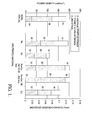
- FIG. 1 is a double-ordinate histogram showing the poisoning effect of H 2 S exposure and rate of carbon degradation in an SOFC when the anode has been previously infiltrated by various materials in accordance with the present invention.
- An improved method for infiltrating the anodes of solid oxide fuel cells in accordance with the present invention to reduce sulfur poisoning and/or carbon-based degradation comprises the steps of:
- an optional step may be desirable, that of removably closing the anode ports during infiltration. Obviously, the anode ports are reopened after the infiltration process is completed to permit use of the SOFC stack.
- initial power density 10 (left ordinate) is shown as a function of type of material infiltrated into an SOFC anode in accordance with a method of the present invention, the left bar being a non-infiltration check SOFC.
- Power density 20 is shown for 10 hours after exposure of the SOFC anode to a stream of H 2 S.
- Hourly percent rate of second stage degradation 30 is shown on the right ordinate.
Landscapes
- Engineering & Computer Science (AREA)
- Manufacturing & Machinery (AREA)
- Chemical & Material Sciences (AREA)
- Chemical Kinetics & Catalysis (AREA)
- Electrochemistry (AREA)
- General Chemical & Material Sciences (AREA)
- Life Sciences & Earth Sciences (AREA)
- Sustainable Development (AREA)
- Sustainable Energy (AREA)
- Fuel Cell (AREA)
- Inert Electrodes (AREA)
Abstract
Description
- The present invention relates to solid oxide fuel cells (SOFCs); more particularly, to a method and apparatus for reducing susceptibility of SOFC anodes to sulfur poisoning and carbon-based degradation and/or for improving electrochemical performance of a fuel cell stack by infiltration of the anodes; and most particularly, to an improved method for infiltrating the anode.
- Solid Oxide Fuel Cells contain Ni-based anodes which are sensitive to sulfur poisoning and or carbon based degradation. Infiltration of the anode with materials that allow the anode to be more robust to these poisons is a known prior art strategy for improving robustness of cells. Such infiltration is best performed with the nickel in the anodes in a reduced, metallic state.
- In
US 2004/0006914 Shaaban et al. disclose a steam reforming process of hydrocarbon in order to produce hydrogen for use in fuel cells by minimizing the amount of sulfur. - A drawback of prior art strategies and methods for infiltration is that the anode needs to have more porosity in the oxidized cell which reduces strength of the anode. If the cell is reduced and then infiltration is done prior to fabrication of the stack, keeping the cell reduced during stack fabrication is a problem because air can be useful in the sealing process, especially when using sintered glass seals.
- On the other hand, it is very difficult to first reduce a cell, then infiltrate the anode, and then re-oxidize the cell before fabricating a stack, without causing the cell to crack.
- What is needed in the art is an improved process for infiltrating an SOFC anode to at least partially protect the anode from exogenous poisons.
- It is a principal object of the present invention to infiltrate all the SOFC anodes in an SOFC stack without causing any of the cells to subsequently crack.
- Briefly described, an improved method for infiltrating the anodes of SOFC cells in accordance with the present invention comprises the following steps:
- a) oxidize all the individual SOFCs to be stacked before building a stack (or start with individual SOFCs that have been previously oxidized before building a stack);
- b) build a complete SOFC stack;
- c) reduce all the stacked SOFC anodes; and
- d) infiltrate all the stacked SOFC anodes with poison-preventing materials by either vapor-phase or liquid solution permeation.
- Some benefits of the improved method are that a reduction/oxidation step is not needed prior to stack fabrication; cell strength is not compromised by having to increase porosity; and the method is cost-effective and does not add any net extra steps in manufacture.
- The present invention will now be described, by way of example, with reference to the accompanying drawing in which
FIG. 1 is a double-ordinate histogram showing the poisoning effect of H2S exposure and rate of carbon degradation in an SOFC when the anode has been previously infiltrated by various materials in accordance with the present invention. - The exemplification set out herein illustrates one preferred embodiment of the invention, in one form, and such exemplification is not to be construed as limiting the scope of the invention in any manner.
- It is known in the art to infiltrate an individual cell before building the cells into a stack. In one known method, it is known to first reduce an oxidized individual cell then to infiltrate the cell before re-oxidizing it and then building the cells into a stack. This method is very difficult to perform and frequently causes delamination of the individual cell. In another known method, the porosity of an oxidized individual cell is first increased then the individual cell is infiltrated before the individual cells are built into a stack. This method substantially decreases individual cell strength.
- An improved method for infiltrating the anodes of solid oxide fuel cells in accordance with the present invention to reduce sulfur poisoning and/or carbon-based degradation comprises the steps of:
- a) Oxidizing in known fashion the anodes of all of a set of individual SOFCs prior to being stacked. Oxidation of the anodes permits subsequent assembly of a complete SOFC stack without regard to shielding the anodes from oxygen. Exposure to air can also be an important element in forming the internal seals in an SOFC stack. As mentioned above, it is very difficult to first reduce each individual cell, then infiltrate the cells, and then oxidize the cells without cracking or delaminating any of the cells, before fabrication of an SOFC stack.
- b) Building a complete SOFC stack having all the anodes in an oxidized state;
- c) Reducing in known fashion all the anodes in the SOFC stack. The anodes are now ready for service in accordance with the prior art.
- d) Infiltrating all the stacked SOFC anodes with poison-preventing materials by vapor-phase permeation or liquid solution permeation.
- The operations of oxidizing, reducing, infiltrating and building are all known in the prior art. However, these prior art operations have not heretofore been performed in the novel sequence disclosed herein.
- Prior to infiltrating, an optional step may be desirable, that of removably closing the anode ports during infiltration. Obviously, the anode ports are reopened after the infiltration process is completed to permit use of the SOFC stack.
- Infiltration is performed in known fashion by a vapor-phase process or by liquid solution permeation by different metals and metal oxides that can benefit power performance of the stack. For example, copper, ruthenium, and/or cerium have been shown to improve robustness to sulfur poisoning; tin, gold, and/or other precious metals have been shown to improve robustness to carbon formation (degradation); and iron, cobalt, manganese and/or other precious/semi-precious metals have been shown to improve electrochemical performance of the stack. Infiltration may be carried out at sintering temperature and/or at close to room temperature.
- Referring to
FIG. 1 , initial power density 10 (left ordinate) is shown as a function of type of material infiltrated into an SOFC anode in accordance with a method of the present invention, the left bar being a non-infiltration check SOFC.Power density 20 is shown for 10 hours after exposure of the SOFC anode to a stream of H2S. Hourly percent rate ofsecond stage degradation 30 is shown on the right ordinate. - In this demonstration, it is seen that:
- a) infiltration by Cu produces about the same power density as the check after 10 hours and a somewhat higher rate of carbon degradation;
- b) infiltration by ruthenium alone produces higher initial and 10-hour power densities but at a cost of a higher rate of carbon degradation;
- c) infiltration by cerium alone is inferior in all respects to the check;
- d) infiltration by ruthenium and cerium together produces a superior initial power density and a relatively small loss in power density after ten hours; and the carbon degradation rate approaches zero after 150-200 hours. This infiltration combination is clearly the best of any examined in this demonstration.
Claims (10)
- A method for forming a solid oxide fuel cell stack from a plurality of individual solid oxide fuel cells, wherein the anodes of the solid oxide fuel cells are infiltrated by one or more materials for making the anodes less susceptible to sulfur poisoning and/or carbon degradation and/or for improving the electrochemical performance of the stack, the method comprising the steps of:a) building said solid oxide fuel cell stack with all of said anodes in an oxidized state;b) reducing all of said anodes in said solid oxide fuel cell stack;
andc) infiltrating all of said anodes with at least one of said materials. - A method in accordance with Claim 1 comprising the further step, prior to the building step, of oxidizing the anodes of said plurality of individual solid oxide fuel cells.
- A method in accordance with any of the preceding claim comprising the further steps of removably closing the ports of said anodes prior to said infiltrating step and opening said ports after said infiltrating step.
- A method in accordance with any of the preceding claim wherein said material for making said anodes less susceptible to sulfur is selected from the group consisting of metals and metal oxides.
- A method in accordance with Claim 4 wherein said metals and metal oxides are selected from the group consisting of copper, ruthenium, cerium, and combinations thereof.
- A method in accordance with any of the preceding claim wherein said material for making said anodes less susceptible to carbon degradation is selected from the group consisting of tin, gold, precious metals, and combinations thereof.
- A method in accordance with any of the preceding claim wherein said material for improving the electrochemical performance of the stack is selected from the group consisting of iron, cobalt, manganese, precious metals, semi-precious metals, and combinations thereof.
- A method in accordance with any of the preceding claimwherein said infiltrating step is carried out by vapor-phase permeation.
- A method in accordance with any of the claim 1 to 7 wherein said infiltrating step is carried out by liquid solution permeation.
- A solid oxide fuel cell stack formed from a plurality of individual solid oxide fuel cells by a method including the steps of:a) building said solid oxide fuel cell stack with all of said anodes in an oxidized state;b) reducing all of said anodes in said solid oxide fuel cells tack;
andc) infiltrating all of said anodes with at least one of said materials.
Applications Claiming Priority (1)
| Application Number | Priority Date | Filing Date | Title |
|---|---|---|---|
| US12/564,324 US7833674B2 (en) | 2009-09-22 | 2009-09-22 | Method for improving robustness of solid oxide fuel cell stacks |
Publications (2)
| Publication Number | Publication Date |
|---|---|
| EP2309574A1 true EP2309574A1 (en) | 2011-04-13 |
| EP2309574B1 EP2309574B1 (en) | 2013-05-01 |
Family
ID=42231434
Family Applications (1)
| Application Number | Title | Priority Date | Filing Date |
|---|---|---|---|
| EP10175864.7A Not-in-force EP2309574B1 (en) | 2009-09-22 | 2010-09-08 | Method for improving robustness of solid oxide fuel cell stacks |
Country Status (2)
| Country | Link |
|---|---|
| US (1) | US7833674B2 (en) |
| EP (1) | EP2309574B1 (en) |
Families Citing this family (3)
| Publication number | Priority date | Publication date | Assignee | Title |
|---|---|---|---|---|
| EP2638587B1 (en) * | 2010-11-11 | 2015-03-04 | The Technical University of Denmark | Method for producing a solid oxide cell stack |
| EP3340349A1 (en) | 2016-12-21 | 2018-06-27 | sunfire GmbH | Sulfur tolerant catalyst for solid oxide fuel cell and production method |
| US11283084B2 (en) | 2017-05-03 | 2022-03-22 | The Regents Of The University Of California | Fabrication processes for solid state electrochemical devices |
Citations (6)
| Publication number | Priority date | Publication date | Assignee | Title |
|---|---|---|---|---|
| DE19817510A1 (en) * | 1997-04-30 | 1998-11-05 | Dow Chemical Co | Flat solid oxide fuel cell stack |
| US20040006914A1 (en) | 2002-07-10 | 2004-01-15 | Shaaban Aly H. | Compact distillates fuel processor with effective sulfur removal process |
| US20050214612A1 (en) * | 1999-07-31 | 2005-09-29 | The Regents Of The University Of California | Solid state electrochemical composite |
| US20060269813A1 (en) * | 2005-05-31 | 2006-11-30 | Seabaugh Matthew M | Supported ceramic membranes and electrochemical cells and cell stacks including the same |
| EP1760817A1 (en) * | 2005-08-31 | 2007-03-07 | Technical University of Denmark | Reversible solid oxide fuell cell stack and method for preparing same |
| US20090136821A1 (en) * | 2007-11-13 | 2009-05-28 | Bloom Energy Corporation | Electrolyte supported cell designed for longer life and higher power |
Family Cites Families (5)
| Publication number | Priority date | Publication date | Assignee | Title |
|---|---|---|---|---|
| US4454207A (en) * | 1983-07-13 | 1984-06-12 | The United States Of America As Represented By The United States Department Of Energy | Steam reforming of fuel to hydrogen in fuel cells |
| US5589285A (en) * | 1993-09-09 | 1996-12-31 | Technology Management, Inc. | Electrochemical apparatus and process |
| US5670270A (en) * | 1995-11-16 | 1997-09-23 | The Dow Chemical Company | Electrode structure for solid state electrochemical devices |
| US6682842B1 (en) * | 1999-07-31 | 2004-01-27 | The Regents Of The University Of California | Composite electrode/electrolyte structure |
| US7879754B2 (en) * | 2008-04-21 | 2011-02-01 | Battelle Memorial Institute | Sulfur-tolerant catalyst systems |
-
2009
- 2009-09-22 US US12/564,324 patent/US7833674B2/en active Active
-
2010
- 2010-09-08 EP EP10175864.7A patent/EP2309574B1/en not_active Not-in-force
Patent Citations (6)
| Publication number | Priority date | Publication date | Assignee | Title |
|---|---|---|---|---|
| DE19817510A1 (en) * | 1997-04-30 | 1998-11-05 | Dow Chemical Co | Flat solid oxide fuel cell stack |
| US20050214612A1 (en) * | 1999-07-31 | 2005-09-29 | The Regents Of The University Of California | Solid state electrochemical composite |
| US20040006914A1 (en) | 2002-07-10 | 2004-01-15 | Shaaban Aly H. | Compact distillates fuel processor with effective sulfur removal process |
| US20060269813A1 (en) * | 2005-05-31 | 2006-11-30 | Seabaugh Matthew M | Supported ceramic membranes and electrochemical cells and cell stacks including the same |
| EP1760817A1 (en) * | 2005-08-31 | 2007-03-07 | Technical University of Denmark | Reversible solid oxide fuell cell stack and method for preparing same |
| US20090136821A1 (en) * | 2007-11-13 | 2009-05-28 | Bloom Energy Corporation | Electrolyte supported cell designed for longer life and higher power |
Non-Patent Citations (1)
| Title |
|---|
| KUROKAWA ET AL: "Y-doped SrTiO3 based sulfur tolerant anode for solid oxide fuel cells", JOURNAL OF POWER SOURCES, ELSEVIER SA, CH, vol. 164, no. 2, 20 January 2007 (2007-01-20), pages 510 - 518, XP005737099, ISSN: 0378-7753, DOI: 10.1016/J.JPOWSOUR.2006.11.048 * |
Also Published As
| Publication number | Publication date |
|---|---|
| US20100143762A1 (en) | 2010-06-10 |
| US7833674B2 (en) | 2010-11-16 |
| EP2309574B1 (en) | 2013-05-01 |
Similar Documents
| Publication | Publication Date | Title |
|---|---|---|
| Dogdibegovic et al. | High performance metal-supported solid oxide fuel cells with infiltrated electrodes | |
| US9005846B2 (en) | Substrate made of porous metal or metal alloy, preparation method thereof, and HTE or SOFC cells with a metal support comprising this substrate | |
| AU2006259739B2 (en) | Interconnects for solid oxide fuel cells and ferritic stainless steels adapted for use with solid oxide fuel cells | |
| JP5208518B2 (en) | Method for producing a reversible solid oxide fuel cell | |
| US6663999B2 (en) | Method of fabricating an assembly comprising an anode-supported electrolyte, and ceramic cell comprising such an assembly | |
| US20060286433A1 (en) | Interconnects for solid oxide fuel cells and ferritic stainless steels adapted for use with solid oxide fuel cells | |
| US10347930B2 (en) | Perimeter electrolyte reinforcement layer composition for solid oxide fuel cell electrolytes | |
| US20060286432A1 (en) | Interconnects for solid oxide fuel cells and ferritic stainless steels adapted for use with solid oxide fuel cells | |
| CN101454932B (en) | Interconnector for a fuel cell stack, and method for production | |
| JP2009506507A (en) | Reversible solid oxide fuel cell stack and method for preparing the same | |
| EP2309574B1 (en) | Method for improving robustness of solid oxide fuel cell stacks | |
| TW202239043A (en) | Wet sprayed coatings for interconnects for soec and sofc | |
| US20110159173A1 (en) | Conductive coating for solid oxide fuel cells | |
| KR100979052B1 (en) | Separator for flat solid oxide fuel cell, fuel cell comprising same and method for manufacturing same | |
| US8182965B2 (en) | Optimized cell configurations for stable LSCF-based solid oxide fuel cells | |
| US20240347739A1 (en) | Inert atmosphere sintering of electrochemical cell stack interconnects | |
| KR102094489B1 (en) | Method for fabricating metal-supported solid oxide fuel cell using ex-situ bonding and metal-supported solid oxide fuel cell fabricated by the same | |
| KR20100137719A (en) | Solid oxide fuel cell and manufacturing method thereof | |
| KR102196248B1 (en) | Catalyst interlayer for the fuel electrode of thin electrolyte solid oxide cell and process of forming the same | |
| JP2011192460A (en) | Power generation cell unit of solid oxide fuel cell and its manufacturing method | |
| EP2712012A2 (en) | A method of manufacturing a fuel cell stack having an electrically conductive interconnect. | |
| Aarva et al. | From energy policies to active components in solid oxide fuel cells: state-of-the-art and the way ahead | |
| Jiang | Nano‐structured Electrodes of Solid Oxide Fuel Cells by Infiltration | |
| JP2025068228A (en) | Solid oxide electrochemical cell stack, solid oxide electrochemical cell, interconnector, and method for manufacturing solid oxide electrochemical cell | |
| AU2011244954B2 (en) | Interconnects for solid oxide fuel cells and ferritic stainless steels adapted for use with solid oxide fuel cells |
Legal Events
| Date | Code | Title | Description |
|---|---|---|---|
| PUAI | Public reference made under article 153(3) epc to a published international application that has entered the european phase |
Free format text: ORIGINAL CODE: 0009012 |
|
| AK | Designated contracting states |
Kind code of ref document: A1 Designated state(s): AL AT BE BG CH CY CZ DE DK EE ES FI FR GB GR HR HU IE IS IT LI LT LU LV MC MK MT NL NO PL PT RO SE SI SK SM TR |
|
| AX | Request for extension of the european patent |
Extension state: BA ME RS |
|
| 17P | Request for examination filed |
Effective date: 20111013 |
|
| RIC1 | Information provided on ipc code assigned before grant |
Ipc: H01M 8/12 20060101ALI20121009BHEP Ipc: H01M 4/88 20060101AFI20121009BHEP Ipc: H01M 8/24 20060101ALI20121009BHEP |
|
| GRAP | Despatch of communication of intention to grant a patent |
Free format text: ORIGINAL CODE: EPIDOSNIGR1 |
|
| GRAS | Grant fee paid |
Free format text: ORIGINAL CODE: EPIDOSNIGR3 |
|
| GRAA | (expected) grant |
Free format text: ORIGINAL CODE: 0009210 |
|
| AK | Designated contracting states |
Kind code of ref document: B1 Designated state(s): AL AT BE BG CH CY CZ DE DK EE ES FI FR GB GR HR HU IE IS IT LI LT LU LV MC MK MT NL NO PL PT RO SE SI SK SM TR |
|
| REG | Reference to a national code |
Ref country code: GB Ref legal event code: FG4D |
|
| REG | Reference to a national code |
Ref country code: AT Ref legal event code: REF Ref document number: 610414 Country of ref document: AT Kind code of ref document: T Effective date: 20130515 Ref country code: CH Ref legal event code: EP |
|
| REG | Reference to a national code |
Ref country code: IE Ref legal event code: FG4D |
|
| REG | Reference to a national code |
Ref country code: DE Ref legal event code: R096 Ref document number: 602010006620 Country of ref document: DE Effective date: 20130627 |
|
| REG | Reference to a national code |
Ref country code: AT Ref legal event code: MK05 Ref document number: 610414 Country of ref document: AT Kind code of ref document: T Effective date: 20130501 |
|
| REG | Reference to a national code |
Ref country code: NL Ref legal event code: VDEP Effective date: 20130501 |
|
| REG | Reference to a national code |
Ref country code: LT Ref legal event code: MG4D |
|
| PG25 | Lapsed in a contracting state [announced via postgrant information from national office to epo] |
Ref country code: GR Free format text: LAPSE BECAUSE OF FAILURE TO SUBMIT A TRANSLATION OF THE DESCRIPTION OR TO PAY THE FEE WITHIN THE PRESCRIBED TIME-LIMIT Effective date: 20130802 Ref country code: SE Free format text: LAPSE BECAUSE OF FAILURE TO SUBMIT A TRANSLATION OF THE DESCRIPTION OR TO PAY THE FEE WITHIN THE PRESCRIBED TIME-LIMIT Effective date: 20130501 Ref country code: AT Free format text: LAPSE BECAUSE OF FAILURE TO SUBMIT A TRANSLATION OF THE DESCRIPTION OR TO PAY THE FEE WITHIN THE PRESCRIBED TIME-LIMIT Effective date: 20130501 Ref country code: FI Free format text: LAPSE BECAUSE OF FAILURE TO SUBMIT A TRANSLATION OF THE DESCRIPTION OR TO PAY THE FEE WITHIN THE PRESCRIBED TIME-LIMIT Effective date: 20130501 Ref country code: SI Free format text: LAPSE BECAUSE OF FAILURE TO SUBMIT A TRANSLATION OF THE DESCRIPTION OR TO PAY THE FEE WITHIN THE PRESCRIBED TIME-LIMIT Effective date: 20130501 Ref country code: ES Free format text: LAPSE BECAUSE OF FAILURE TO SUBMIT A TRANSLATION OF THE DESCRIPTION OR TO PAY THE FEE WITHIN THE PRESCRIBED TIME-LIMIT Effective date: 20130812 Ref country code: IS Free format text: LAPSE BECAUSE OF FAILURE TO SUBMIT A TRANSLATION OF THE DESCRIPTION OR TO PAY THE FEE WITHIN THE PRESCRIBED TIME-LIMIT Effective date: 20130901 Ref country code: NO Free format text: LAPSE BECAUSE OF FAILURE TO SUBMIT A TRANSLATION OF THE DESCRIPTION OR TO PAY THE FEE WITHIN THE PRESCRIBED TIME-LIMIT Effective date: 20130801 Ref country code: LT Free format text: LAPSE BECAUSE OF FAILURE TO SUBMIT A TRANSLATION OF THE DESCRIPTION OR TO PAY THE FEE WITHIN THE PRESCRIBED TIME-LIMIT Effective date: 20130501 Ref country code: PT Free format text: LAPSE BECAUSE OF FAILURE TO SUBMIT A TRANSLATION OF THE DESCRIPTION OR TO PAY THE FEE WITHIN THE PRESCRIBED TIME-LIMIT Effective date: 20130902 |
|
| PG25 | Lapsed in a contracting state [announced via postgrant information from national office to epo] |
Ref country code: HR Free format text: LAPSE BECAUSE OF FAILURE TO SUBMIT A TRANSLATION OF THE DESCRIPTION OR TO PAY THE FEE WITHIN THE PRESCRIBED TIME-LIMIT Effective date: 20130501 Ref country code: BG Free format text: LAPSE BECAUSE OF FAILURE TO SUBMIT A TRANSLATION OF THE DESCRIPTION OR TO PAY THE FEE WITHIN THE PRESCRIBED TIME-LIMIT Effective date: 20130801 Ref country code: CY Free format text: LAPSE BECAUSE OF FAILURE TO SUBMIT A TRANSLATION OF THE DESCRIPTION OR TO PAY THE FEE WITHIN THE PRESCRIBED TIME-LIMIT Effective date: 20130501 Ref country code: PL Free format text: LAPSE BECAUSE OF FAILURE TO SUBMIT A TRANSLATION OF THE DESCRIPTION OR TO PAY THE FEE WITHIN THE PRESCRIBED TIME-LIMIT Effective date: 20130501 |
|
| PG25 | Lapsed in a contracting state [announced via postgrant information from national office to epo] |
Ref country code: LV Free format text: LAPSE BECAUSE OF FAILURE TO SUBMIT A TRANSLATION OF THE DESCRIPTION OR TO PAY THE FEE WITHIN THE PRESCRIBED TIME-LIMIT Effective date: 20130501 |
|
| PG25 | Lapsed in a contracting state [announced via postgrant information from national office to epo] |
Ref country code: BE Free format text: LAPSE BECAUSE OF FAILURE TO SUBMIT A TRANSLATION OF THE DESCRIPTION OR TO PAY THE FEE WITHIN THE PRESCRIBED TIME-LIMIT Effective date: 20130501 Ref country code: DK Free format text: LAPSE BECAUSE OF FAILURE TO SUBMIT A TRANSLATION OF THE DESCRIPTION OR TO PAY THE FEE WITHIN THE PRESCRIBED TIME-LIMIT Effective date: 20130501 Ref country code: CZ Free format text: LAPSE BECAUSE OF FAILURE TO SUBMIT A TRANSLATION OF THE DESCRIPTION OR TO PAY THE FEE WITHIN THE PRESCRIBED TIME-LIMIT Effective date: 20130501 Ref country code: SK Free format text: LAPSE BECAUSE OF FAILURE TO SUBMIT A TRANSLATION OF THE DESCRIPTION OR TO PAY THE FEE WITHIN THE PRESCRIBED TIME-LIMIT Effective date: 20130501 Ref country code: EE Free format text: LAPSE BECAUSE OF FAILURE TO SUBMIT A TRANSLATION OF THE DESCRIPTION OR TO PAY THE FEE WITHIN THE PRESCRIBED TIME-LIMIT Effective date: 20130501 |
|
| PG25 | Lapsed in a contracting state [announced via postgrant information from national office to epo] |
Ref country code: NL Free format text: LAPSE BECAUSE OF FAILURE TO SUBMIT A TRANSLATION OF THE DESCRIPTION OR TO PAY THE FEE WITHIN THE PRESCRIBED TIME-LIMIT Effective date: 20130501 Ref country code: RO Free format text: LAPSE BECAUSE OF FAILURE TO SUBMIT A TRANSLATION OF THE DESCRIPTION OR TO PAY THE FEE WITHIN THE PRESCRIBED TIME-LIMIT Effective date: 20130501 Ref country code: IT Free format text: LAPSE BECAUSE OF FAILURE TO SUBMIT A TRANSLATION OF THE DESCRIPTION OR TO PAY THE FEE WITHIN THE PRESCRIBED TIME-LIMIT Effective date: 20130501 |
|
| PLBE | No opposition filed within time limit |
Free format text: ORIGINAL CODE: 0009261 |
|
| STAA | Information on the status of an ep patent application or granted ep patent |
Free format text: STATUS: NO OPPOSITION FILED WITHIN TIME LIMIT |
|
| 26N | No opposition filed |
Effective date: 20140204 |
|
| PG25 | Lapsed in a contracting state [announced via postgrant information from national office to epo] |
Ref country code: MC Free format text: LAPSE BECAUSE OF FAILURE TO SUBMIT A TRANSLATION OF THE DESCRIPTION OR TO PAY THE FEE WITHIN THE PRESCRIBED TIME-LIMIT Effective date: 20130501 |
|
| REG | Reference to a national code |
Ref country code: DE Ref legal event code: R097 Ref document number: 602010006620 Country of ref document: DE Effective date: 20140204 |
|
| REG | Reference to a national code |
Ref country code: FR Ref legal event code: ST Effective date: 20140530 |
|
| REG | Reference to a national code |
Ref country code: IE Ref legal event code: MM4A |
|
| PG25 | Lapsed in a contracting state [announced via postgrant information from national office to epo] |
Ref country code: IE Free format text: LAPSE BECAUSE OF NON-PAYMENT OF DUE FEES Effective date: 20130908 |
|
| PG25 | Lapsed in a contracting state [announced via postgrant information from national office to epo] |
Ref country code: FR Free format text: LAPSE BECAUSE OF NON-PAYMENT OF DUE FEES Effective date: 20130930 |
|
| REG | Reference to a national code |
Ref country code: CH Ref legal event code: PL |
|
| GBPC | Gb: european patent ceased through non-payment of renewal fee |
Effective date: 20140908 |
|
| PG25 | Lapsed in a contracting state [announced via postgrant information from national office to epo] |
Ref country code: SM Free format text: LAPSE BECAUSE OF FAILURE TO SUBMIT A TRANSLATION OF THE DESCRIPTION OR TO PAY THE FEE WITHIN THE PRESCRIBED TIME-LIMIT Effective date: 20130501 |
|
| PG25 | Lapsed in a contracting state [announced via postgrant information from national office to epo] |
Ref country code: MT Free format text: LAPSE BECAUSE OF FAILURE TO SUBMIT A TRANSLATION OF THE DESCRIPTION OR TO PAY THE FEE WITHIN THE PRESCRIBED TIME-LIMIT Effective date: 20130501 Ref country code: TR Free format text: LAPSE BECAUSE OF FAILURE TO SUBMIT A TRANSLATION OF THE DESCRIPTION OR TO PAY THE FEE WITHIN THE PRESCRIBED TIME-LIMIT Effective date: 20130501 |
|
| PG25 | Lapsed in a contracting state [announced via postgrant information from national office to epo] |
Ref country code: CH Free format text: LAPSE BECAUSE OF NON-PAYMENT OF DUE FEES Effective date: 20140930 Ref country code: LU Free format text: LAPSE BECAUSE OF NON-PAYMENT OF DUE FEES Effective date: 20130908 Ref country code: LI Free format text: LAPSE BECAUSE OF NON-PAYMENT OF DUE FEES Effective date: 20140930 Ref country code: HU Free format text: LAPSE BECAUSE OF FAILURE TO SUBMIT A TRANSLATION OF THE DESCRIPTION OR TO PAY THE FEE WITHIN THE PRESCRIBED TIME-LIMIT; INVALID AB INITIO Effective date: 20100908 Ref country code: MK Free format text: LAPSE BECAUSE OF FAILURE TO SUBMIT A TRANSLATION OF THE DESCRIPTION OR TO PAY THE FEE WITHIN THE PRESCRIBED TIME-LIMIT Effective date: 20130501 Ref country code: GB Free format text: LAPSE BECAUSE OF NON-PAYMENT OF DUE FEES Effective date: 20140908 |
|
| PGFP | Annual fee paid to national office [announced via postgrant information from national office to epo] |
Ref country code: DE Payment date: 20150929 Year of fee payment: 6 |
|
| REG | Reference to a national code |
Ref country code: DE Ref legal event code: R119 Ref document number: 602010006620 Country of ref document: DE |
|
| PG25 | Lapsed in a contracting state [announced via postgrant information from national office to epo] |
Ref country code: DE Free format text: LAPSE BECAUSE OF NON-PAYMENT OF DUE FEES Effective date: 20170401 |
|
| PG25 | Lapsed in a contracting state [announced via postgrant information from national office to epo] |
Ref country code: AL Free format text: LAPSE BECAUSE OF FAILURE TO SUBMIT A TRANSLATION OF THE DESCRIPTION OR TO PAY THE FEE WITHIN THE PRESCRIBED TIME-LIMIT Effective date: 20130501 |