EP2309455A1 - Image signature based image registration method and method for signature calculation - Google Patents
Image signature based image registration method and method for signature calculation Download PDFInfo
- Publication number
- EP2309455A1 EP2309455A1 EP10176219A EP10176219A EP2309455A1 EP 2309455 A1 EP2309455 A1 EP 2309455A1 EP 10176219 A EP10176219 A EP 10176219A EP 10176219 A EP10176219 A EP 10176219A EP 2309455 A1 EP2309455 A1 EP 2309455A1
- Authority
- EP
- European Patent Office
- Prior art keywords
- image
- sequence
- images
- parts
- signatures
- Prior art date
- Legal status (The legal status is an assumption and is not a legal conclusion. Google has not performed a legal analysis and makes no representation as to the accuracy of the status listed.)
- Granted
Links
Images



Classifications
-
- H—ELECTRICITY
- H04—ELECTRIC COMMUNICATION TECHNIQUE
- H04L—TRANSMISSION OF DIGITAL INFORMATION, e.g. TELEGRAPHIC COMMUNICATION
- H04L9/00—Cryptographic mechanisms or cryptographic arrangements for secret or secure communications; Network security protocols
- H04L9/32—Cryptographic mechanisms or cryptographic arrangements for secret or secure communications; Network security protocols including means for verifying the identity or authority of a user of the system or for message authentication, e.g. authorization, entity authentication, data integrity or data verification, non-repudiation, key authentication or verification of credentials
-
- H—ELECTRICITY
- H10—SEMICONDUCTOR DEVICES; ELECTRIC SOLID-STATE DEVICES NOT OTHERWISE PROVIDED FOR
- H10W—GENERIC PACKAGES, INTERCONNECTIONS, CONNECTORS OR OTHER CONSTRUCTIONAL DETAILS OF DEVICES COVERED BY CLASS H10
- H10W40/00—Arrangements for thermal protection or thermal control
- H10W40/40—Arrangements for thermal protection or thermal control involving heat exchange by flowing fluids
- H10W40/47—Arrangements for thermal protection or thermal control involving heat exchange by flowing fluids by flowing liquids, e.g. forced water cooling
-
- F—MECHANICAL ENGINEERING; LIGHTING; HEATING; WEAPONS; BLASTING
- F28—HEAT EXCHANGE IN GENERAL
- F28F—DETAILS OF HEAT-EXCHANGE AND HEAT-TRANSFER APPARATUS, OF GENERAL APPLICATION
- F28F13/00—Arrangements for modifying heat-transfer, e.g. increasing, decreasing
- F28F13/16—Arrangements for modifying heat-transfer, e.g. increasing, decreasing by applying an electrostatic field to the body of the heat-exchange medium
-
- F—MECHANICAL ENGINEERING; LIGHTING; HEATING; WEAPONS; BLASTING
- F28—HEAT EXCHANGE IN GENERAL
- F28F—DETAILS OF HEAT-EXCHANGE AND HEAT-TRANSFER APPARATUS, OF GENERAL APPLICATION
- F28F13/00—Arrangements for modifying heat-transfer, e.g. increasing, decreasing
- F28F13/18—Arrangements for modifying heat-transfer, e.g. increasing, decreasing by applying coatings, e.g. radiation-absorbing, radiation-reflecting; by surface treatment, e.g. polishing
-
- F—MECHANICAL ENGINEERING; LIGHTING; HEATING; WEAPONS; BLASTING
- F28—HEAT EXCHANGE IN GENERAL
- F28F—DETAILS OF HEAT-EXCHANGE AND HEAT-TRANSFER APPARATUS, OF GENERAL APPLICATION
- F28F13/00—Arrangements for modifying heat-transfer, e.g. increasing, decreasing
- F28F13/18—Arrangements for modifying heat-transfer, e.g. increasing, decreasing by applying coatings, e.g. radiation-absorbing, radiation-reflecting; by surface treatment, e.g. polishing
- F28F13/182—Arrangements for modifying heat-transfer, e.g. increasing, decreasing by applying coatings, e.g. radiation-absorbing, radiation-reflecting; by surface treatment, e.g. polishing especially adapted for evaporator or condenser surfaces
-
- F—MECHANICAL ENGINEERING; LIGHTING; HEATING; WEAPONS; BLASTING
- F28—HEAT EXCHANGE IN GENERAL
- F28F—DETAILS OF HEAT-EXCHANGE AND HEAT-TRANSFER APPARATUS, OF GENERAL APPLICATION
- F28F13/00—Arrangements for modifying heat-transfer, e.g. increasing, decreasing
- F28F13/18—Arrangements for modifying heat-transfer, e.g. increasing, decreasing by applying coatings, e.g. radiation-absorbing, radiation-reflecting; by surface treatment, e.g. polishing
- F28F13/185—Heat-exchange surfaces provided with microstructures or with porous coatings
-
- G—PHYSICS
- G06—COMPUTING OR CALCULATING; COUNTING
- G06F—ELECTRIC DIGITAL DATA PROCESSING
- G06F21/00—Security arrangements for protecting computers, components thereof, programs or data against unauthorised activity
- G06F21/30—Authentication, i.e. establishing the identity or authorisation of security principals
-
- G—PHYSICS
- G06—COMPUTING OR CALCULATING; COUNTING
- G06T—IMAGE DATA PROCESSING OR GENERATION, IN GENERAL
- G06T1/00—General purpose image data processing
- G06T1/0021—Image watermarking
-
- G—PHYSICS
- G06—COMPUTING OR CALCULATING; COUNTING
- G06T—IMAGE DATA PROCESSING OR GENERATION, IN GENERAL
- G06T7/00—Image analysis
- G06T7/30—Determination of transform parameters for the alignment of images, i.e. image registration
- G06T7/37—Determination of transform parameters for the alignment of images, i.e. image registration using transform domain methods
-
- G—PHYSICS
- G06—COMPUTING OR CALCULATING; COUNTING
- G06T—IMAGE DATA PROCESSING OR GENERATION, IN GENERAL
- G06T7/00—Image analysis
- G06T7/30—Determination of transform parameters for the alignment of images, i.e. image registration
- G06T7/38—Registration of image sequences
-
- G—PHYSICS
- G06—COMPUTING OR CALCULATING; COUNTING
- G06V—IMAGE OR VIDEO RECOGNITION OR UNDERSTANDING
- G06V40/00—Recognition of biometric, human-related or animal-related patterns in image or video data
- G06V40/30—Writer recognition; Reading and verifying signatures
-
- F—MECHANICAL ENGINEERING; LIGHTING; HEATING; WEAPONS; BLASTING
- F28—HEAT EXCHANGE IN GENERAL
- F28F—DETAILS OF HEAT-EXCHANGE AND HEAT-TRANSFER APPARATUS, OF GENERAL APPLICATION
- F28F2245/00—Coatings; Surface treatments
- F28F2245/04—Coatings; Surface treatments hydrophobic
-
- G—PHYSICS
- G06—COMPUTING OR CALCULATING; COUNTING
- G06T—IMAGE DATA PROCESSING OR GENERATION, IN GENERAL
- G06T2207/00—Indexing scheme for image analysis or image enhancement
- G06T2207/10—Image acquisition modality
- G06T2207/10016—Video; Image sequence
-
- G—PHYSICS
- G06—COMPUTING OR CALCULATING; COUNTING
- G06T—IMAGE DATA PROCESSING OR GENERATION, IN GENERAL
- G06T2207/00—Indexing scheme for image analysis or image enhancement
- G06T2207/20—Special algorithmic details
- G06T2207/20048—Transform domain processing
- G06T2207/20064—Wavelet transform [DWT]
-
- G—PHYSICS
- G06—COMPUTING OR CALCULATING; COUNTING
- G06T—IMAGE DATA PROCESSING OR GENERATION, IN GENERAL
- G06T2207/00—Indexing scheme for image analysis or image enhancement
- G06T2207/20—Special algorithmic details
- G06T2207/20076—Probabilistic image processing
Definitions
- the invention relates to the general domain of image registration.
- the invention relates more specifically to a method for registration of images of a first sequence with images of a second sequence from signatures associated with these images and a method for signature calculation for these images with a view to registering them.
- the invention relates to a method for temporal registration of a first sequence of first images and a second sequence of second images, a signature being associated with each of the first and second images.
- the method for temporal registration comprises the following steps for:
- the method for registration according to the invention advantageously enables the images of the first sequence to be precisely registered with the images of the second sequence while limiting the memory required. It also limits the calculation cost.
- the comparison of the totality of a signature with the totality of other signatures is carried out only rarely.
- the steps c) to f) are reiterated with other parts of first signatures and corresponding parts of second signatures until for each first image of the first sequence the value representative of the quality of registration of the first image is greater than the threshold.
- the second parts comprise the first parts.
- the second parts and the first parts are disjointed.
- the first parts comprise low frequency wavelet coefficients and the second parts comprise high frequency wavelet coefficients.
- the signatures comprise wavelet coefficients and for at least one of the first and second sequences, the wavelet coefficients are coded.
- the method for registration comprises, in addition, before each of the comparison steps, a step of decoding signature parts, the comparison steps being applied on the decoded signature parts.
- the invention also relates to a method for calculation of signatures for images of a sequence of images with a view to registering the sequence with another sequence of images.
- the method for calculation of signatures comprises for a current image of the sequence the following steps for:
- the at least one part of the wavelet coefficients is defined in such a way that an energy value of wavelet coefficients of the at least one part is greater than a threshold value.
- the at least one part of the wavelet coefficients is defined in such a way that an entropy value of wavelet coefficients of the at least one part is greater than a threshold value.
- the progressive coding step implements one of the coding methods belonging to a set of progressive coding methods comprising:
- the energy value is defined as being the sum of squares of wavelet coefficients of the at least one part.
- the energy value is defined as being the sum of squares of wavelet coefficients of the at least one part weighted by a weight dependent on the sub-band and on the resolution level to which belongs the coefficient.
- the invention relates to a method for registration of a first sequence Seq 1 of N1 images I t ⁇ 1 1 1 ⁇ t ⁇ 1 ⁇ N ⁇ 1 and a second sequence Seq 2 of N2 second images I t ⁇ 2 2 1 ⁇ t ⁇ 2 ⁇ N ⁇ 2 , where N1 and N2 are integers.
- N1 and N2 are integers.
- S t ⁇ 1 1 for a first image I t ⁇ 1 1 respectively S t ⁇ 2 2 for a second image I t ⁇ 2 2 .
- the set of signatures of first images forms a signature of the first sequence Seq1 and the set of signatures of second images form a signature of the second sequence Seq2.
- first parts of signatures S t ⁇ 1 1 1 ⁇ t ⁇ 1 ⁇ N ⁇ 1 of first images of seq1 are compared with corresponding parts of signatures S t ⁇ 2 2 1 ⁇ t ⁇ 2 ⁇ N ⁇ 2 of second images of Seq2.
- the signatures S t ⁇ 1 1 1 ⁇ t ⁇ 1 ⁇ N ⁇ 1 and S t ⁇ 2 2 1 ⁇ t ⁇ 2 ⁇ N ⁇ 2 are all calculated according to the same method for calculation of signatures as for example that described in relation to figure 2 .
- each image of the first sequence is compared with each image of the second sequence for example by calculating a distance between each signature pair, noted as d S t ⁇ 1 1 ⁇ S t ⁇ 2 2 .
- S t ⁇ 1 1 and S t ⁇ 2 2 refer to the first parts of signatures.
- Such a distance is small when the images I t ⁇ 1 1 and I t ⁇ 2 2 are visually close and great when they are visually very different.
- the null coefficients are added in the shorter of the two signatures so that they have the same length as the longest of the two signatures.
- the distance d(.,.) is the mean quadratic error calculated between the two signatures S t ⁇ 1 1 and S t ⁇ 2 2 .
- this distance is the weighted sum of the mean quadratic error calculated between the two signatures S t ⁇ 1 1 and S t ⁇ 2 2 and an a priori term.
- the a priori term depends for example on the distances calculated between the image signatures that temporally precede the images I t ⁇ 1 1 and I t ⁇ 2 2 .
- the a priori term is the minimum distance among the following distances: d ⁇ S t ⁇ 1 1 ⁇ S t 2 - 1 2 , d ⁇ S t 1 - 1 1 ⁇ S t 2 - 1 2 and d ⁇ S t 1 - 1 1 ⁇ S t 2 2 .
- more images that temporally precede the images I t ⁇ 1 1 and I t ⁇ 2 2 are taken into account in the calculation of the a priori term.
- the a priori term enables account to be taken of the temporal neighbourhood of images to be registered.
- each first image I t ⁇ 1 1 is temporally registered with one of the second images I t ⁇ 2 2 according to the result of the comparison step 10. For example, each image I t ⁇ 1 1 is registered with the image I t ⁇ 2 2 with which the distance calculated in step 10 is lowest.
- the steps 10 and 12 are for example carried out by a dynamic programming type algorithm as described in the patent application W02007045680 published 26/04/2007 and also in the document " spatial temporal and histogram video registration for digital watermark detection", by Cheng H. et al published at ICIP in 2003 (vol.2, pp 735-738 ).
- the last image I N ⁇ 1 1 of the first sequence is registered with the second image I t ⁇ 2 2 for which the distance calculated in step 10 is lowest.
- the first images of the first sequence are then registered according to the dynamic programming algorithm in the inverse temporal order, the first image I 1 1 being registered last. For each registered image I t ⁇ 1 1 , the images that precede it temporally will be considered, and that which is the most probable will be determined, according to the distances calculated in step 10. One thus proceed step by step.
- a value C representative of the registration quality is calculated for each first image. For example, this value is calculated comparing the following distances: d S t ⁇ 1 1 ⁇ S t 2 2 , d ⁇ S t 1 1 ⁇ S t 2 - 1 2 and d ⁇ S t 1 1 ⁇ S t 2 + 1 2 . If these three distances are very close then the registration quality is not good. More specifically, the probability is high of having a poor registration of the image I t ⁇ 1 1 .
- C min ( d S t ⁇ 1 1 ⁇ S t 2 2 - d ⁇ S t 1 1 ⁇ S t 2 - 1 2 ;
- ) .
- a first sub-sequence comprising this first image and the images of the first sequence Seq1 temporally surrounding this first image are defined as well as a second corresponding sub-sequence comprising the second image with which the first image was registered in step 12 and images of the second sequence Seq2 temporally surrounding this second image,
- Step 18 for each first sub-sequence, second parts of signatures of first images of the first sub-sequence are compared with the corresponding parts of signatures of second images of the second corresponding sub-sequence.
- the second parts of signatures are different to first parts of signatures, for example they are disjointed or the second parts include the first parts and comprise additional coefficients.
- Step 18 is identical to step 10, except in operating on the sub-sequences Seq1 and Seq2 and on the second parts of signatures different to first parts of signatures.
- each first image I t ⁇ 1 1 of each first sub-sequence is temporally registered with one of the second images I t ⁇ 2 2 of the second corresponding sub-sequence according to the result of the comparison step 18.
- Steps 10 to 12 lead to a first registration that is more or less coarse but less costly in terms of CPU and memory.
- Steps 18 to 20 enable this registration to be improved on the sub-sequences, i.e. those for which the registration is insufficient.
- the steps 14 to 20 are reiterated with other parts of first signatures and corresponding parts of second signatures until for each first image of the first sequence the value C representative of the quality of registration of this first image is greater than the threshold T.
- the signatures of the first and/or second images are coded in binary form.
- the registration method comprises in addition before each of the comparison steps 10 and 18, a step of decoding parts of signatures of the first and/or the second images, the comparison steps 10 and 18 being applied on the parts of signatures of the first and/or second decoded image.
- the invention relates to a method for calculation of signatures for images of a sequence of images for registration of this sequence with another sequence of images.
- a difference image D h is determined pixel by pixel between a current image and one of the images temporally surrounding the current image.
- the difference image D h is transformed into wavelet coefficients, for example using a Haar or Daubechies transform.
- the method also comprises a step 26 of coding.
- the step 26 at least one part of the wavelet coefficients are coded hierarchically.
- a SPIHT Set Partitioning in Hierarchical Trees
- EZW embedded Zero-tree Wavelet
- Such algorithms code the wavelet coefficients in hierarchical form such that the low frequency coefficients that represent the most important information are coded and thus transmitted first. As soon as the first bits are received, the decoding can begin and thus a coarse approximation of the difference image D h can be obtained.
- Such algorithms are thus used to represent a signature hierarchically in coded form.
- the part of coded wavelet coefficients is defined such that an energy level value or entropy of wavelet coefficients of this part is greater than a threshold value E T . More specifically at each step of coding of new wavelet coefficients of a difference image D h , the energy level or entropy of coded coefficients is calculated up to this instant and this energy level or entropy is compared with the threshold value E T . If the energy level or entropy is less than E T , then more wavelet coefficients are coded for this difference image D h .
- the energy level is for example equal to the sum squared of wavelet coefficients.
- the entropy can be estimated by measuring the binary bitrate of coded coefficients.
- the registration method described in reference to figure 1 is applied to signatures comprising wavelet coefficients calculated as described previously in reference to figure 2 and 3 .
- the first parts of the signature comprise low frequency wavelet coefficients and the second parts of signatures comprise higher frequency wavelet coefficients.
- the wavelet coefficients are coded for at least one of the first and second sequences, i.e. for images of the sequence.
- the method for registration comprises, in addition, before each of the comparison steps, a step of decoding of signature parts, the comparison steps being applied on the decoded signature parts.
- the invention also relates to a registration device 3 described in reference to figure 4 .
- the registration device 3 comprises a first input 30 to receive the first signatures S t ⁇ 1 1 1 ⁇ t ⁇ 1 ⁇ N ⁇ 1 and a second input 32 to receive the second signatures S t ⁇ 2 2 1 ⁇ t ⁇ 2 ⁇ N ⁇ 2 . It comprises connected to these inputs a registration module 34 able to implement the steps 10, 12, 16, 18 and 20 of the registration method according to the invention. It also comprises a module for calculation 36 of values representative of the registration quality. The calculation module 36 is able to implement step 14 of the registration method according to the invention and to inform the image registration module 34 for which there exists a doubt concerning the registration quality.
- the registration module 34 defines thus in accordance with step 16 the sub-sequences in order to operate the steps 18 and 20. It comprises moreover an output module 38.
- the registration device 3 also comprises signature decoding modules 31 and 32.
- the inputs 30 and 32 are able to receive first signatures S t ⁇ 1 1 1 ⁇ t ⁇ 1 ⁇ N ⁇ 1 and second signatures S t ⁇ 2 2 1 ⁇ t ⁇ 2 ⁇ N ⁇ 2 in coded form for example in accordance with step 26 of the signature calculation method described in reference to figure 3 .
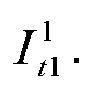
- the registration device 3 comprises an input 40 instead of the input 32 to receive images I t ⁇ 1 1 1 ⁇ t ⁇ 1 ⁇ N ⁇ 1 .
- the registration device 3 also comprises a signature calculation module 42. This module is able to implement steps 22 and 24 of the signature calculation method described in reference to figure 2 .
- a third variant is shown in figure 7 .
- This variant is a combination of the first and second variants.
- the modules identical to the modules shown in figures 5 and 6 are identified using the same numerical references.
- the invention can be used to register a sequence of pirated images with a sequence of original images.
Landscapes
- Engineering & Computer Science (AREA)
- Physics & Mathematics (AREA)
- General Engineering & Computer Science (AREA)
- Theoretical Computer Science (AREA)
- General Physics & Mathematics (AREA)
- Thermal Sciences (AREA)
- Mechanical Engineering (AREA)
- Computer Security & Cryptography (AREA)
- Computer Vision & Pattern Recognition (AREA)
- Chemical & Material Sciences (AREA)
- Crystallography & Structural Chemistry (AREA)
- Human Computer Interaction (AREA)
- Multimedia (AREA)
- Computer Networks & Wireless Communication (AREA)
- Signal Processing (AREA)
- Computer Hardware Design (AREA)
- Software Systems (AREA)
- Compression Or Coding Systems Of Tv Signals (AREA)
- Image Analysis (AREA)
Abstract
a) comparing (10) the first parts of signatures of first images with corresponding parts of signatures of second images,
b) temporally registering (12) each first image with one of the second images according to the result of the comparison,
c) calculating (14) for each first image a value of quality representative of the quality of its registration,
d) defining (16), for each first image for which the quality value is less than a threshold, a first sub-sequence from the first sequence and a second sub-sequence from the second sequence,
e) comparing (18), for each first sub-sequence, second parts of signatures of first images of the first sub-sequence with corresponding parts of signatures of second images of the second corresponding sub-sequence, and
b) temporally registering (20) each first image of the first sub-sequence with one of the second images of the second sub-sequence according to the result of the comparison.
Description
- The invention relates to the general domain of image registration.
- The invention relates more specifically to a method for registration of images of a first sequence with images of a second sequence from signatures associated with these images and a method for signature calculation for these images with a view to registering them.
- To temporally register two image sequences it is known in the art to compare the signatures associated with these images. The signatures are determined from the content of the images. The bigger the signature size, the more the registration is precise in particular for images belonging to sequences with low level motion. To be precise such registration methods thus require a lot of memory space to store the signatures and also a lot of calculation time to compare the signatures.
- The purpose of the invention is to overcome at least one of the disadvantages of the prior art. For this purpose, the invention relates to a method for temporal registration of a first sequence of first images and a second sequence of second images, a signature being associated with each of the first and second images. The method for temporal registration comprises the following steps for:
- a) comparing first parts of signatures of the first images with corresponding parts of signatures of second images, called the first comparison step,
- b) temporally registering each first image of the first sequence with one of the second images according to the result of the first comparison step,
- c) calculating for each first image a value representative of the registration quality of the first image,
- d) defining, for each first image for which the representative value of the registration quality is less than a threshold, a first sub-sequence comprising the first image and images of the first sequence temporally surrounding the first image and a second sub-sequence comprising the second image with which the first image is registered and images of the second sequence temporally surrounding the second image,
- e) comparing, for each first sub-sequence, second parts of signatures of first images of the first sub-sequence with corresponding parts of signatures of second images of the second corresponding sub-sequence, called the second comparison step, the second parts of signatures being different from first parts of signatures, and
- b) temporally registering each first image of the first sub-sequence with one of the second images of the second sub-sequence according to the result of the second comparison step.
- The method for registration according to the invention advantageously enables the images of the first sequence to be precisely registered with the images of the second sequence while limiting the memory required. It also limits the calculation cost. The comparison of the totality of a signature with the totality of other signatures is carried out only rarely.
- According to a particular aspect of the invention, the steps c) to f) are reiterated with other parts of first signatures and corresponding parts of second signatures until for each first image of the first sequence the value representative of the quality of registration of the first image is greater than the threshold.
- According to a particular characteristic of the invention, the second parts comprise the first parts.
- According to another particular characteristic of the invention, the second parts and the first parts are disjointed.
- According to a particular characteristic of the invention, the first parts comprise low frequency wavelet coefficients and the second parts comprise high frequency wavelet coefficients.
- According to a particular characteristic of the invention, the signatures comprise wavelet coefficients and for at least one of the first and second sequences, the wavelet coefficients are coded. In this case, the method for registration comprises, in addition, before each of the comparison steps, a step of decoding signature parts, the comparison steps being applied on the decoded signature parts.
- The invention also relates to a method for calculation of signatures for images of a sequence of images with a view to registering the sequence with another sequence of images. The method for calculation of signatures comprises for a current image of the sequence the following steps for:
- determining a difference image pixel by pixel between the current image and one of the images temporally surrounding the current image,
- transforming the difference image into wavelet coefficients, and
- coding hierarchically at least one part of the wavelet coefficients.
- According to a particular characteristic of the invention, the at least one part of the wavelet coefficients is defined in such a way that an energy value of wavelet coefficients of the at least one part is greater than a threshold value. According to a particular characteristic of the invention, the at least one part of the wavelet coefficients is defined in such a way that an entropy value of wavelet coefficients of the at least one part is greater than a threshold value. Advantageously, the progressive coding step implements one of the coding methods belonging to a set of progressive coding methods comprising:
- the coding method SPIHT, and
- the coding method EZW.
- According to a particular characteristic of the invention, the energy value is defined as being the sum of squares of wavelet coefficients of the at least one part.
- According to a particular characteristic of the invention, the energy value is defined as being the sum of squares of wavelet coefficients of the at least one part weighted by a weight dependent on the sub-band and on the resolution level to which belongs the coefficient.
- The invention will be better understood and illustrated by means of embodiments and advantageous implementations, by no means limiting, with reference to the figures in the appendix, wherein:
-
figure 1 shows a registration method according to the invention, -
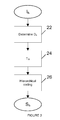
figure 2 shows a signature calculation method according to the invention, -
figure 3 shows a signature calculation method according to a variant of the invention, and -
figures 4 to 7 show different variants of a registration device according to the invention. - In reference to
figure 1 , the invention relates to a method for registration of a first sequence Seq1 of N1 images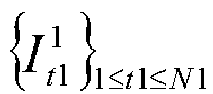


- During a
step 10, first parts of signatures


figure 2 . During this step ofcomparison 10, each image of the first sequence is compared with each image of the second sequence for example by calculating a distance between each signature pair, noted as


- During a
step 12, each first image

comparison step 10. For example, each image

step 10 is lowest. - According to a variant, the
steps W02007045680 published 26/04/2007 and also in the document "spatial temporal and histogram video registration for digital watermark detection", by Cheng H. et al published at ICIP in 2003 (vol.2, pp 735-738). - In this case, the last image


step 10 is lowest. The first images of the first sequence are then registered according to the dynamic programming algorithm in the inverse temporal order, the first image

step 10. One thus proceed step by step. - During a
step 14, a value C representative of the registration quality is calculated for each first image. For example, this value is calculated comparing the following distances:



- During a
step 16, for each first image for which the representative value of the registration quality is less than a threshold T, a first sub-sequence comprising this first image and the images of the first sequence Seq1 temporally surrounding this first image are defined as well as a second corresponding sub-sequence comprising the second image with which the first image was registered instep 12 and images of the second sequence Seq2 temporally surrounding this second image, - During a
step 18, for each first sub-sequence, second parts of signatures of first images of the first sub-sequence are compared with the corresponding parts of signatures of second images of the second corresponding sub-sequence. The second parts of signatures are different to first parts of signatures, for example they are disjointed or the second parts include the first parts and comprise additional coefficients.Step 18 is identical to step 10, except in operating on the sub-sequences Seq1 and Seq2 and on the second parts of signatures different to first parts of signatures. - During a
step 20, each first image

comparison step 18. -
Steps 10 to 12 lead to a first registration that is more or less coarse but less costly in terms of CPU and memory.Steps 18 to 20 enable this registration to be improved on the sub-sequences, i.e. those for which the registration is insufficient. - According to a variant, the
steps 14 to 20 are reiterated with other parts of first signatures and corresponding parts of second signatures until for each first image of the first sequence the value C representative of the quality of registration of this first image is greater than the threshold T. - According to another variant, the signatures of the first and/or second images are coded in binary form. According to this variant, the registration method comprises in addition before each of the comparison steps 10 and 18, a step of decoding parts of signatures of the first and/or the second images, the comparison steps 10 and 18 being applied on the parts of signatures of the first and/or second decoded image.
- In reference to
figure 2 , the invention relates to a method for calculation of signatures for images of a sequence of images for registration of this sequence with another sequence of images. - During a
step 22, a difference image Dh is determined pixel by pixel between a current image and one of the images temporally surrounding the current image. - During a
step 24, the difference image Dh is transformed into wavelet coefficients, for example using a Haar or Daubechies transform. - According to a variant shown in
figure 3 , the method also comprises astep 26 of coding. During thestep 26, at least one part of the wavelet coefficients are coded hierarchically. For example, a SPIHT (Set Partitioning in Hierarchical Trees) type or EZW (Embedded Zero-tree Wavelet) type coding algorithm. Such algorithms code the wavelet coefficients in hierarchical form such that the low frequency coefficients that represent the most important information are coded and thus transmitted first. As soon as the first bits are received, the decoding can begin and thus a coarse approximation of the difference image Dh can be obtained. Such algorithms are thus used to represent a signature hierarchically in coded form. The part of coded wavelet coefficients is defined such that an energy level value or entropy of wavelet coefficients of this part is greater than a threshold value ET. More specifically at each step of coding of new wavelet coefficients of a difference image Dh, the energy level or entropy of coded coefficients is calculated up to this instant and this energy level or entropy is compared with the threshold value ET. If the energy level or entropy is less than ET, then more wavelet coefficients are coded for this difference image Dh. The energy level is for example equal to the sum squared of wavelet coefficients. The entropy can be estimated by measuring the binary bitrate of coded coefficients. - According to a specific embodiment, the registration method described in reference to
figure 1 is applied to signatures comprising wavelet coefficients calculated as described previously in reference tofigure 2 and3 . Advantageously, the first parts of the signature comprise low frequency wavelet coefficients and the second parts of signatures comprise higher frequency wavelet coefficients. - According to a variant, the wavelet coefficients are coded for at least one of the first and second sequences, i.e. for images of the sequence. The method for registration comprises, in addition, before each of the comparison steps, a step of decoding of signature parts, the comparison steps being applied on the decoded signature parts.
- The invention also relates to a
registration device 3 described in reference tofigure 4 . Theregistration device 3 comprises afirst input 30 to receive the first signatures
second input 32 to receive the second signatures
registration module 34 able to implement thesteps calculation 36 of values representative of the registration quality. Thecalculation module 36 is able to implementstep 14 of the registration method according to the invention and to inform theimage registration module 34 for which there exists a doubt concerning the registration quality. Theregistration module 34 defines thus in accordance withstep 16 the sub-sequences in order to operate thesteps output module 38. - According to a first variant shown in
figure 5 , theregistration device 3 also comprisessignature decoding modules inputs 

step 26 of the signature calculation method described in reference tofigure 3 . According to a second variant shown infigure 6 , theregistration device 3 comprises aninput 40 instead of theinput 32 to receive images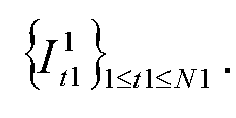
registration device 3 also comprises asignature calculation module 42. This module is able to implementsteps figure 2 . - A third variant is shown in
figure 7 . This variant is a combination of the first and second variants. In this figure, the modules identical to the modules shown infigures 5 and 6 are identified using the same numerical references. - Naturally, the invention is not limited to the embodiment examples mentioned above.
- In particular, those skilled in the art may apply any variant to the stated embodiments and combine them to benefit from their various advantages. It can be directly generalised to any progressive coding diagram. Other coding types such as SVC can be used, conjointly with a bitrate allocation mechanism that guarantees that the information of greatest visual importance is coded in priority.
- Advantageously the invention can be used to register a sequence of pirated images with a sequence of original images.
Claims (12)
- Method for temporal registration of a first sequence of first images and a second sequence of second images, to each of the first and second images being associated a signature, said method being characterized in that it comprises the following steps:a) comparing (10) first parts of signatures of said first images with corresponding parts of signatures of said second images, called the first comparison step,b) temporally registering (12) each first image of said first sequence with one of the second images according to the result of said first comparison step,c) calculating (14) for each first image a value representative of the registration quality of said first image,d) defining (16), for each first image for which the value representative of the registration quality is less than a threshold, a first sub-sequence comprising said first image and images of said first sequence temporally surrounding said first image and a second sub-sequence comprising the second image with which said first image is registered and images of the second sequence temporally surrounding said second image,e) comparing (18), for each first sub-sequence, second parts of signatures of said first images of said first sub-sequence with corresponding parts of signatures of said second images of said second corresponding sub-sequence, called the second comparison step, said second parts of signatures being different from said first parts of signatures, andb) temporally registering (20) each first image of said first sub-sequence with one of the second images of said second sub-sequence according to the result of said second comparison step.
- Method according to claim 1, wherein the steps c) to f) are reiterated with other parts of said first signatures and corresponding parts of said second signatures until for each first image of said first sequence said value representative of the quality of registration of said first image is greater than said threshold.
- Method according to claim 1 or 2, wherein said second parts comprise said first parts.
- Method according to claim 1 or 2, wherein said second parts and said first parts are disjointed.
- Method according to claim 1 or 2, wherein the first parts comprise low frequency wavelet coefficients and said second parts comprise high frequency wavelet coefficients.
- Method according to any of claims 1 to 5, wherein said signatures comprise wavelet coefficients and wherein for at least one of said first and second sequences, said wavelet coefficients are coded, said method further comprises before each of said comparison steps, a step of decoding of said signature parts, said comparison steps being applied on decoded signature parts.
- Method according to any of claims 1 to 6, wherein each of said signatures is calculated according to the following steps:- determining (22) a difference image pixel by pixel between the image with which the signature is associated, called current image, and one of the images temporally surrounding said current image,- transforming (24) said difference image into wavelet coefficients, and- coding (26) hierarchically at least one part of said wavelet coefficients.
- Method according to claim 7, wherein said at least one part of said wavelet coefficients is defined in such a way that an energy value of wavelet coefficients of said at least one part is greater than a threshold value.
- Method according to claim 7, wherein said at least one part of said wavelet coefficients is defined in such a way that an entropy value of wavelet coefficients of said at least one part is greater than a threshold value.
- Method according to any of claims 7 to 9, wherein the hierarchical coding step (26) implements one of the coding methods belonging to a set of hierarchical coding methods comprising:- the coding method SPIHT, and- the coding method EZW.
- Method according to claim 8, wherein said energy value is defined as being the sum of squares of wavelet coefficients of said at least one part.
- Method according to claim 8, wherein said energy value is defined as being the sum of squares of wavelet coefficients of said at least one part weighted by a weight dependent on the sub-band and on the resolution level to which belongs said coefficient.
Applications Claiming Priority (1)
| Application Number | Priority Date | Filing Date | Title |
|---|---|---|---|
| FR0956302 | 2009-09-14 |
Publications (2)
| Publication Number | Publication Date |
|---|---|
| EP2309455A1 true EP2309455A1 (en) | 2011-04-13 |
| EP2309455B1 EP2309455B1 (en) | 2013-03-06 |
Family
ID=42062275
Family Applications (1)
| Application Number | Title | Priority Date | Filing Date |
|---|---|---|---|
| EP10176219A Not-in-force EP2309455B1 (en) | 2009-09-14 | 2010-09-10 | Image signature based image registration method and method for signature calculation |
Country Status (5)
| Country | Link |
|---|---|
| US (1) | US8442326B2 (en) |
| EP (1) | EP2309455B1 (en) |
| JP (1) | JP5676184B2 (en) |
| KR (1) | KR101714788B1 (en) |
| CN (1) | CN102024255B (en) |
Families Citing this family (2)
| Publication number | Priority date | Publication date | Assignee | Title |
|---|---|---|---|---|
| US9225879B2 (en) * | 2013-12-27 | 2015-12-29 | TCL Research America Inc. | Method and apparatus for video sequential alignment |
| US11176452B2 (en) | 2017-02-28 | 2021-11-16 | Cisco Technology, Inc. | Method and system for piracy detection |
Citations (1)
| Publication number | Priority date | Publication date | Assignee | Title |
|---|---|---|---|---|
| WO2007045680A1 (en) | 2005-10-21 | 2007-04-26 | Thomson Licensing | Method and device for temporally realigning multimedia documents |
Family Cites Families (7)
| Publication number | Priority date | Publication date | Assignee | Title |
|---|---|---|---|---|
| JP4176364B2 (en) * | 2002-03-22 | 2008-11-05 | 富士通株式会社 | Image association apparatus, image association method, and image association program |
| JP3960151B2 (en) * | 2002-07-09 | 2007-08-15 | ソニー株式会社 | Similar time series detection method and apparatus, and program |
| KR100453687B1 (en) * | 2002-07-13 | 2004-10-20 | 한국전자통신연구원 | Online signature verification apparatus by using mapping between geometric extremes and method thereof |
| US20060195860A1 (en) * | 2005-02-25 | 2006-08-31 | Eldering Charles A | Acting on known video entities detected utilizing fingerprinting |
| US9177209B2 (en) * | 2007-12-17 | 2015-11-03 | Sinoeast Concept Limited | Temporal segment based extraction and robust matching of video fingerprints |
| CN101231742B (en) * | 2008-01-08 | 2011-01-05 | 北京大学 | Method and device for embedding and extracting digital watermark in binary text image |
| US8233722B2 (en) * | 2008-06-27 | 2012-07-31 | Palo Alto Research Center Incorporated | Method and system for finding a document image in a document collection using localized two-dimensional visual fingerprints |
-
2010
- 2010-09-07 JP JP2010199581A patent/JP5676184B2/en not_active Expired - Fee Related
- 2010-09-10 EP EP10176219A patent/EP2309455B1/en not_active Not-in-force
- 2010-09-13 KR KR1020100089381A patent/KR101714788B1/en not_active Expired - Fee Related
- 2010-09-13 CN CN201010284087.1A patent/CN102024255B/en not_active Expired - Fee Related
- 2010-09-14 US US12/807,779 patent/US8442326B2/en not_active Expired - Fee Related
Patent Citations (1)
| Publication number | Priority date | Publication date | Assignee | Title |
|---|---|---|---|---|
| WO2007045680A1 (en) | 2005-10-21 | 2007-04-26 | Thomson Licensing | Method and device for temporally realigning multimedia documents |
Non-Patent Citations (3)
| Title |
|---|
| CHENG H. ET AL.: "spatial temporal and histogram video registration for digital watermark detection", ICIP, vol. 2, 2003, pages 735 - 738 |
| CHUPEAU B ET AL: "Temporal Video Registration for Watermark Detection", 1 January 2006, ACOUSTICS, SPEECH AND SIGNAL PROCESSING, 2006. ICASSP 2006 PROCEEDINGS . 2006 IEEE INTERNATIONAL CONFERENCE ON TOULOUSE, FRANCE 14-19 MAY 2006, PISCATAWAY, NJ, USA,IEEE, PISCATAWAY, NJ, USA, PAGE(S) II - II, ISBN: 9781424404698, XP031100563 * |
| MASSOUDI A ET AL: "A Video Fingerprint Based on Visual Digest and Local Fingerprints", IMAGE PROCESSING, 2006 IEEE INTERNATIONAL CONFERENCE ON, IEEE, PI LNKD- DOI:10.1109/ICIP.2006.312834, 1 October 2006 (2006-10-01), pages 2297 - 2300, XP031049132, ISBN: 978-1-4244-0480-3 * |
Also Published As
| Publication number | Publication date |
|---|---|
| CN102024255B (en) | 2015-01-07 |
| KR101714788B1 (en) | 2017-03-09 |
| EP2309455B1 (en) | 2013-03-06 |
| US20110064265A1 (en) | 2011-03-17 |
| CN102024255A (en) | 2011-04-20 |
| US8442326B2 (en) | 2013-05-14 |
| JP2011065642A (en) | 2011-03-31 |
| JP5676184B2 (en) | 2015-02-25 |
| KR20110029094A (en) | 2011-03-22 |
Similar Documents
| Publication | Publication Date | Title |
|---|---|---|
| JP4226897B2 (en) | How to embed a digital watermark in digital image data | |
| US6895101B2 (en) | System and method for embedding information in digital signals | |
| EP1005231A1 (en) | Data compression using adaptive bit allocation and hybrid lossless entropy encoding | |
| JP5076150B2 (en) | Image coding apparatus, image coding method, and image coding program | |
| Liu et al. | Icmh-net: Neural image compression towards both machine vision and human vision | |
| CN101640803A (en) | Progressive distribution type encoding and decoding method and device for multispectral image | |
| EP2309455B1 (en) | Image signature based image registration method and method for signature calculation | |
| KR101026081B1 (en) | Reversible Watermark Insertion, Extraction, and Restoration of Original Image | |
| Zhang et al. | Spatial-temporal context model for remote sensing imagery compression | |
| KR101802334B1 (en) | Method and apparatus for encoding and decoding binary image using an adaptive template | |
| EP2587803A1 (en) | Methods for coding and reconstructing a pixel block and corresponding devices. | |
| KR20140096395A (en) | Method for decoding picture in form of bit-stream | |
| KR20210078350A (en) | Lossless Compression Method for Hyperspectral Image Processing | |
| Hui et al. | A novel high payload steganography scheme based on absolute moment block truncation coding | |
| Weng et al. | Adaptive reversible data hiding based on a local smoothness estimator | |
| CN106327470A (en) | Image enhancement processing detection method and device | |
| US7342517B2 (en) | Apparatus and method of binary image compression | |
| JP4645948B2 (en) | Decoding device and program | |
| Gaucel et al. | On-board compression of hyperspectral satellite data using band-reordering | |
| JP4743884B2 (en) | Image coding apparatus and control method thereof | |
| Pinho | Region-based near-lossless image compression | |
| JP4743883B2 (en) | Image coding apparatus and control method thereof | |
| Deng | Adaptive predictor combination for lossless image coding | |
| JPH0918350A (en) | Encoding / decoding device and encoding / decoding method | |
| KR101370706B1 (en) | Apparatus and method for preprocessing of video coder |
Legal Events
| Date | Code | Title | Description |
|---|---|---|---|
| PUAI | Public reference made under article 153(3) epc to a published international application that has entered the european phase |
Free format text: ORIGINAL CODE: 0009012 |
|
| AK | Designated contracting states |
Kind code of ref document: A1 Designated state(s): AL AT BE BG CH CY CZ DE DK EE ES FI FR GB GR HR HU IE IS IT LI LT LU LV MC MK MT NL NO PL PT RO SE SI SK SM TR |
|
| AX | Request for extension of the european patent |
Extension state: BA ME RS |
|
| 17P | Request for examination filed |
Effective date: 20110928 |
|
| GRAP | Despatch of communication of intention to grant a patent |
Free format text: ORIGINAL CODE: EPIDOSNIGR1 |
|
| RIC1 | Information provided on ipc code assigned before grant |
Ipc: G06T 7/00 20060101AFI20120521BHEP Ipc: G06T 1/00 20060101ALI20120521BHEP |
|
| GRAJ | Information related to disapproval of communication of intention to grant by the applicant or resumption of examination proceedings by the epo deleted |
Free format text: ORIGINAL CODE: EPIDOSDIGR1 |
|
| GRAP | Despatch of communication of intention to grant a patent |
Free format text: ORIGINAL CODE: EPIDOSNIGR1 |
|
| GRAS | Grant fee paid |
Free format text: ORIGINAL CODE: EPIDOSNIGR3 |
|
| GRAA | (expected) grant |
Free format text: ORIGINAL CODE: 0009210 |
|
| AK | Designated contracting states |
Kind code of ref document: B1 Designated state(s): AL AT BE BG CH CY CZ DE DK EE ES FI FR GB GR HR HU IE IS IT LI LT LU LV MC MK MT NL NO PL PT RO SE SI SK SM TR |
|
| REG | Reference to a national code |
Ref country code: GB Ref legal event code: FG4D |
|
| REG | Reference to a national code |
Ref country code: AT Ref legal event code: REF Ref document number: 600001 Country of ref document: AT Kind code of ref document: T Effective date: 20130315 Ref country code: CH Ref legal event code: EP |
|
| REG | Reference to a national code |
Ref country code: IE Ref legal event code: FG4D |
|
| REG | Reference to a national code |
Ref country code: DE Ref legal event code: R096 Ref document number: 602010005214 Country of ref document: DE Effective date: 20130502 |
|
| REG | Reference to a national code |
Ref country code: DE Ref legal event code: R084 Ref document number: 602010005214 Country of ref document: DE Effective date: 20130309 |
|
| REG | Reference to a national code |
Ref country code: AT Ref legal event code: MK05 Ref document number: 600001 Country of ref document: AT Kind code of ref document: T Effective date: 20130306 |
|
| PG25 | Lapsed in a contracting state [announced via postgrant information from national office to epo] |
Ref country code: ES Free format text: LAPSE BECAUSE OF FAILURE TO SUBMIT A TRANSLATION OF THE DESCRIPTION OR TO PAY THE FEE WITHIN THE PRESCRIBED TIME-LIMIT Effective date: 20130617 Ref country code: NO Free format text: LAPSE BECAUSE OF FAILURE TO SUBMIT A TRANSLATION OF THE DESCRIPTION OR TO PAY THE FEE WITHIN THE PRESCRIBED TIME-LIMIT Effective date: 20130606 Ref country code: SE Free format text: LAPSE BECAUSE OF FAILURE TO SUBMIT A TRANSLATION OF THE DESCRIPTION OR TO PAY THE FEE WITHIN THE PRESCRIBED TIME-LIMIT Effective date: 20130306 Ref country code: AT Free format text: LAPSE BECAUSE OF FAILURE TO SUBMIT A TRANSLATION OF THE DESCRIPTION OR TO PAY THE FEE WITHIN THE PRESCRIBED TIME-LIMIT Effective date: 20130306 Ref country code: LT Free format text: LAPSE BECAUSE OF FAILURE TO SUBMIT A TRANSLATION OF THE DESCRIPTION OR TO PAY THE FEE WITHIN THE PRESCRIBED TIME-LIMIT Effective date: 20130306 Ref country code: BG Free format text: LAPSE BECAUSE OF FAILURE TO SUBMIT A TRANSLATION OF THE DESCRIPTION OR TO PAY THE FEE WITHIN THE PRESCRIBED TIME-LIMIT Effective date: 20130606 |
|
| REG | Reference to a national code |
Ref country code: NL Ref legal event code: VDEP Effective date: 20130306 |
|
| REG | Reference to a national code |
Ref country code: LT Ref legal event code: MG4D |
|
| PG25 | Lapsed in a contracting state [announced via postgrant information from national office to epo] |
Ref country code: FI Free format text: LAPSE BECAUSE OF FAILURE TO SUBMIT A TRANSLATION OF THE DESCRIPTION OR TO PAY THE FEE WITHIN THE PRESCRIBED TIME-LIMIT Effective date: 20130306 Ref country code: SI Free format text: LAPSE BECAUSE OF FAILURE TO SUBMIT A TRANSLATION OF THE DESCRIPTION OR TO PAY THE FEE WITHIN THE PRESCRIBED TIME-LIMIT Effective date: 20130306 Ref country code: GR Free format text: LAPSE BECAUSE OF FAILURE TO SUBMIT A TRANSLATION OF THE DESCRIPTION OR TO PAY THE FEE WITHIN THE PRESCRIBED TIME-LIMIT Effective date: 20130607 Ref country code: LV Free format text: LAPSE BECAUSE OF FAILURE TO SUBMIT A TRANSLATION OF THE DESCRIPTION OR TO PAY THE FEE WITHIN THE PRESCRIBED TIME-LIMIT Effective date: 20130306 |
|
| PG25 | Lapsed in a contracting state [announced via postgrant information from national office to epo] |
Ref country code: BE Free format text: LAPSE BECAUSE OF FAILURE TO SUBMIT A TRANSLATION OF THE DESCRIPTION OR TO PAY THE FEE WITHIN THE PRESCRIBED TIME-LIMIT Effective date: 20130306 Ref country code: HR Free format text: LAPSE BECAUSE OF FAILURE TO SUBMIT A TRANSLATION OF THE DESCRIPTION OR TO PAY THE FEE WITHIN THE PRESCRIBED TIME-LIMIT Effective date: 20130306 |
|
| PG25 | Lapsed in a contracting state [announced via postgrant information from national office to epo] |
Ref country code: EE Free format text: LAPSE BECAUSE OF FAILURE TO SUBMIT A TRANSLATION OF THE DESCRIPTION OR TO PAY THE FEE WITHIN THE PRESCRIBED TIME-LIMIT Effective date: 20130306 Ref country code: NL Free format text: LAPSE BECAUSE OF FAILURE TO SUBMIT A TRANSLATION OF THE DESCRIPTION OR TO PAY THE FEE WITHIN THE PRESCRIBED TIME-LIMIT Effective date: 20130306 Ref country code: PT Free format text: LAPSE BECAUSE OF FAILURE TO SUBMIT A TRANSLATION OF THE DESCRIPTION OR TO PAY THE FEE WITHIN THE PRESCRIBED TIME-LIMIT Effective date: 20130708 Ref country code: IS Free format text: LAPSE BECAUSE OF FAILURE TO SUBMIT A TRANSLATION OF THE DESCRIPTION OR TO PAY THE FEE WITHIN THE PRESCRIBED TIME-LIMIT Effective date: 20130706 Ref country code: SK Free format text: LAPSE BECAUSE OF FAILURE TO SUBMIT A TRANSLATION OF THE DESCRIPTION OR TO PAY THE FEE WITHIN THE PRESCRIBED TIME-LIMIT Effective date: 20130306 Ref country code: RO Free format text: LAPSE BECAUSE OF FAILURE TO SUBMIT A TRANSLATION OF THE DESCRIPTION OR TO PAY THE FEE WITHIN THE PRESCRIBED TIME-LIMIT Effective date: 20130306 Ref country code: CZ Free format text: LAPSE BECAUSE OF FAILURE TO SUBMIT A TRANSLATION OF THE DESCRIPTION OR TO PAY THE FEE WITHIN THE PRESCRIBED TIME-LIMIT Effective date: 20130306 |
|
| PG25 | Lapsed in a contracting state [announced via postgrant information from national office to epo] |
Ref country code: PL Free format text: LAPSE BECAUSE OF FAILURE TO SUBMIT A TRANSLATION OF THE DESCRIPTION OR TO PAY THE FEE WITHIN THE PRESCRIBED TIME-LIMIT Effective date: 20130306 |
|
| PLBE | No opposition filed within time limit |
Free format text: ORIGINAL CODE: 0009261 |
|
| STAA | Information on the status of an ep patent application or granted ep patent |
Free format text: STATUS: NO OPPOSITION FILED WITHIN TIME LIMIT |
|
| PG25 | Lapsed in a contracting state [announced via postgrant information from national office to epo] |
Ref country code: DK Free format text: LAPSE BECAUSE OF FAILURE TO SUBMIT A TRANSLATION OF THE DESCRIPTION OR TO PAY THE FEE WITHIN THE PRESCRIBED TIME-LIMIT Effective date: 20130306 |
|
| 26N | No opposition filed |
Effective date: 20131209 |
|
| PG25 | Lapsed in a contracting state [announced via postgrant information from national office to epo] |
Ref country code: IT Free format text: LAPSE BECAUSE OF FAILURE TO SUBMIT A TRANSLATION OF THE DESCRIPTION OR TO PAY THE FEE WITHIN THE PRESCRIBED TIME-LIMIT Effective date: 20130306 |
|
| REG | Reference to a national code |
Ref country code: DE Ref legal event code: R097 Ref document number: 602010005214 Country of ref document: DE Effective date: 20131209 |
|
| PG25 | Lapsed in a contracting state [announced via postgrant information from national office to epo] |
Ref country code: MC Free format text: LAPSE BECAUSE OF FAILURE TO SUBMIT A TRANSLATION OF THE DESCRIPTION OR TO PAY THE FEE WITHIN THE PRESCRIBED TIME-LIMIT Effective date: 20130306 |
|
| REG | Reference to a national code |
Ref country code: IE Ref legal event code: MM4A |
|
| PG25 | Lapsed in a contracting state [announced via postgrant information from national office to epo] |
Ref country code: IE Free format text: LAPSE BECAUSE OF NON-PAYMENT OF DUE FEES Effective date: 20130910 |
|
| REG | Reference to a national code |
Ref country code: CH Ref legal event code: PL |
|
| GBPC | Gb: european patent ceased through non-payment of renewal fee |
Effective date: 20140910 |
|
| PG25 | Lapsed in a contracting state [announced via postgrant information from national office to epo] |
Ref country code: SM Free format text: LAPSE BECAUSE OF FAILURE TO SUBMIT A TRANSLATION OF THE DESCRIPTION OR TO PAY THE FEE WITHIN THE PRESCRIBED TIME-LIMIT Effective date: 20130306 |
|
| PG25 | Lapsed in a contracting state [announced via postgrant information from national office to epo] |
Ref country code: MT Free format text: LAPSE BECAUSE OF FAILURE TO SUBMIT A TRANSLATION OF THE DESCRIPTION OR TO PAY THE FEE WITHIN THE PRESCRIBED TIME-LIMIT Effective date: 20130306 Ref country code: TR Free format text: LAPSE BECAUSE OF FAILURE TO SUBMIT A TRANSLATION OF THE DESCRIPTION OR TO PAY THE FEE WITHIN THE PRESCRIBED TIME-LIMIT Effective date: 20130306 Ref country code: CY Free format text: LAPSE BECAUSE OF FAILURE TO SUBMIT A TRANSLATION OF THE DESCRIPTION OR TO PAY THE FEE WITHIN THE PRESCRIBED TIME-LIMIT Effective date: 20130306 |
|
| PG25 | Lapsed in a contracting state [announced via postgrant information from national office to epo] |
Ref country code: CH Free format text: LAPSE BECAUSE OF NON-PAYMENT OF DUE FEES Effective date: 20140930 Ref country code: LI Free format text: LAPSE BECAUSE OF NON-PAYMENT OF DUE FEES Effective date: 20140930 Ref country code: GB Free format text: LAPSE BECAUSE OF NON-PAYMENT OF DUE FEES Effective date: 20140910 Ref country code: MK Free format text: LAPSE BECAUSE OF FAILURE TO SUBMIT A TRANSLATION OF THE DESCRIPTION OR TO PAY THE FEE WITHIN THE PRESCRIBED TIME-LIMIT Effective date: 20130306 Ref country code: LU Free format text: LAPSE BECAUSE OF NON-PAYMENT OF DUE FEES Effective date: 20130910 Ref country code: HU Free format text: LAPSE BECAUSE OF FAILURE TO SUBMIT A TRANSLATION OF THE DESCRIPTION OR TO PAY THE FEE WITHIN THE PRESCRIBED TIME-LIMIT; INVALID AB INITIO Effective date: 20100910 |
|
| REG | Reference to a national code |
Ref country code: FR Ref legal event code: PLFP Year of fee payment: 6 |
|
| REG | Reference to a national code |
Ref country code: FR Ref legal event code: PLFP Year of fee payment: 7 |
|
| REG | Reference to a national code |
Ref country code: DE Ref legal event code: R082 Ref document number: 602010005214 Country of ref document: DE Representative=s name: DEHNS, DE Ref country code: DE Ref legal event code: R082 Ref document number: 602010005214 Country of ref document: DE Representative=s name: DEHNS PATENT AND TRADEMARK ATTORNEYS, DE Ref country code: DE Ref legal event code: R082 Ref document number: 602010005214 Country of ref document: DE Representative=s name: HOFSTETTER, SCHURACK & PARTNER PATENT- UND REC, DE |
|
| REG | Reference to a national code |
Ref country code: FR Ref legal event code: PLFP Year of fee payment: 8 |
|
| REG | Reference to a national code |
Ref country code: FR Ref legal event code: PLFP Year of fee payment: 9 |
|
| REG | Reference to a national code |
Ref country code: FR Ref legal event code: TP Owner name: THOMSON LICENSING DTV, FR Effective date: 20180830 |
|
| PG25 | Lapsed in a contracting state [announced via postgrant information from national office to epo] |
Ref country code: AL Free format text: LAPSE BECAUSE OF FAILURE TO SUBMIT A TRANSLATION OF THE DESCRIPTION OR TO PAY THE FEE WITHIN THE PRESCRIBED TIME-LIMIT Effective date: 20130306 |
|
| REG | Reference to a national code |
Ref country code: DE Ref legal event code: R082 Ref document number: 602010005214 Country of ref document: DE Representative=s name: DEHNS, DE Ref country code: DE Ref legal event code: R081 Ref document number: 602010005214 Country of ref document: DE Owner name: INTERDIGITAL MADISON PATENT HOLDINGS, FR Free format text: FORMER OWNER: THOMSON LICENSING, ISSY-LES-MOULINEAUX, FR Ref country code: DE Ref legal event code: R082 Ref document number: 602010005214 Country of ref document: DE Representative=s name: DEHNS PATENT AND TRADEMARK ATTORNEYS, DE |
|
| P01 | Opt-out of the competence of the unified patent court (upc) registered |
Effective date: 20230514 |
|
| PGFP | Annual fee paid to national office [announced via postgrant information from national office to epo] |
Ref country code: FR Payment date: 20230926 Year of fee payment: 14 Ref country code: DE Payment date: 20230928 Year of fee payment: 14 |
|
| REG | Reference to a national code |
Ref country code: DE Ref legal event code: R119 Ref document number: 602010005214 Country of ref document: DE |
|
| PG25 | Lapsed in a contracting state [announced via postgrant information from national office to epo] |
Ref country code: DE Free format text: LAPSE BECAUSE OF NON-PAYMENT OF DUE FEES Effective date: 20250401 |
|
| PG25 | Lapsed in a contracting state [announced via postgrant information from national office to epo] |
Ref country code: FR Free format text: LAPSE BECAUSE OF NON-PAYMENT OF DUE FEES Effective date: 20240930 |