EP2305643A1 - New histone deacetylase inhibitors based simultaneously on trisubstituted 1h-pyrroles and aromatic and heteroaromatic spacers - Google Patents
New histone deacetylase inhibitors based simultaneously on trisubstituted 1h-pyrroles and aromatic and heteroaromatic spacers Download PDFInfo
- Publication number
- EP2305643A1 EP2305643A1 EP09382193A EP09382193A EP2305643A1 EP 2305643 A1 EP2305643 A1 EP 2305643A1 EP 09382193 A EP09382193 A EP 09382193A EP 09382193 A EP09382193 A EP 09382193A EP 2305643 A1 EP2305643 A1 EP 2305643A1
- Authority
- EP
- European Patent Office
- Prior art keywords
- compound
- pyrrole
- group
- carbonyl
- phenyl
- Prior art date
- Legal status (The legal status is an assumption and is not a legal conclusion. Google has not performed a legal analysis and makes no representation as to the accuracy of the status listed.)
- Withdrawn
Links
- 125000003118 aryl group Chemical group 0.000 title claims abstract description 16
- KAESVJOAVNADME-UHFFFAOYSA-N Pyrrole Chemical class C=1C=CNC=1 KAESVJOAVNADME-UHFFFAOYSA-N 0.000 title abstract description 5
- 239000003276 histone deacetylase inhibitor Substances 0.000 title description 5
- 229940121372 histone deacetylase inhibitor Drugs 0.000 title 1
- 150000001875 compounds Chemical class 0.000 claims abstract description 110
- 238000000034 method Methods 0.000 claims abstract description 54
- 238000002360 preparation method Methods 0.000 claims abstract description 43
- 206010028980 Neoplasm Diseases 0.000 claims abstract description 14
- 201000011510 cancer Diseases 0.000 claims abstract description 14
- OKKJLVBELUTLKV-UHFFFAOYSA-N Methanol Chemical compound OC OKKJLVBELUTLKV-UHFFFAOYSA-N 0.000 claims description 39
- 150000003839 salts Chemical class 0.000 claims description 39
- 239000000203 mixture Substances 0.000 claims description 36
- 239000012453 solvate Substances 0.000 claims description 29
- 239000000651 prodrug Substances 0.000 claims description 26
- 229940002612 prodrug Drugs 0.000 claims description 26
- 238000006243 chemical reaction Methods 0.000 claims description 17
- WQDUMFSSJAZKTM-UHFFFAOYSA-N Sodium methoxide Chemical compound [Na+].[O-]C WQDUMFSSJAZKTM-UHFFFAOYSA-N 0.000 claims description 16
- -1 heteroaryl radical Chemical class 0.000 claims description 16
- 239000003814 drug Substances 0.000 claims description 14
- JUJWROOIHBZHMG-UHFFFAOYSA-N Pyridine Chemical compound C1=CC=NC=C1 JUJWROOIHBZHMG-UHFFFAOYSA-N 0.000 claims description 13
- 125000004432 carbon atom Chemical group C* 0.000 claims description 12
- 125000001997 phenyl group Chemical group [H]C1=C([H])C([H])=C(*)C([H])=C1[H] 0.000 claims description 12
- 150000003512 tertiary amines Chemical class 0.000 claims description 12
- 125000004169 (C1-C6) alkyl group Chemical group 0.000 claims description 10
- 125000001072 heteroaryl group Chemical group 0.000 claims description 10
- 125000000041 C6-C10 aryl group Chemical group 0.000 claims description 9
- 230000008569 process Effects 0.000 claims description 9
- WTDHULULXKLSOZ-UHFFFAOYSA-N Hydroxylamine hydrochloride Chemical compound Cl.ON WTDHULULXKLSOZ-UHFFFAOYSA-N 0.000 claims description 8
- 230000004913 activation Effects 0.000 claims description 8
- 239000003153 chemical reaction reagent Substances 0.000 claims description 8
- 125000006273 (C1-C3) alkyl group Chemical group 0.000 claims description 7
- 125000002915 carbonyl group Chemical group [*:2]C([*:1])=O 0.000 claims description 7
- 125000003178 carboxy group Chemical group [H]OC(*)=O 0.000 claims description 7
- 150000002148 esters Chemical class 0.000 claims description 7
- 229910052757 nitrogen Inorganic materials 0.000 claims description 7
- 239000003960 organic solvent Substances 0.000 claims description 7
- 239000008194 pharmaceutical composition Substances 0.000 claims description 7
- 239000000546 pharmaceutical excipient Substances 0.000 claims description 7
- UMJSCPRVCHMLSP-UHFFFAOYSA-N pyridine Natural products COC1=CC=CN=C1 UMJSCPRVCHMLSP-UHFFFAOYSA-N 0.000 claims description 7
- 229910052799 carbon Inorganic materials 0.000 claims description 6
- KJFMBFZCATUALV-UHFFFAOYSA-N phenolphthalein Chemical compound C1=CC(O)=CC=C1C1(C=2C=CC(O)=CC=2)C2=CC=CC=C2C(=O)O1 KJFMBFZCATUALV-UHFFFAOYSA-N 0.000 claims description 6
- YLQBMQCUIZJEEH-UHFFFAOYSA-N tetrahydrofuran Natural products C=1C=COC=1 YLQBMQCUIZJEEH-UHFFFAOYSA-N 0.000 claims description 6
- 125000006570 (C5-C6) heteroaryl group Chemical group 0.000 claims description 5
- 125000001570 methylene group Chemical group [H]C([H])([*:1])[*:2] 0.000 claims description 5
- IRPKGHDXTSHWAC-UHFFFAOYSA-N n-[3-[2-(hydroxyamino)-2-oxoethyl]phenyl]-3-(4-methoxyphenyl)-5-phenyl-1h-pyrrole-2-carboxamide Chemical compound C1=CC(OC)=CC=C1C1=C(C(=O)NC=2C=C(CC(=O)NO)C=CC=2)NC(C=2C=CC=CC=2)=C1 IRPKGHDXTSHWAC-UHFFFAOYSA-N 0.000 claims description 5
- 125000002924 primary amino group Chemical group [H]N([H])* 0.000 claims description 5
- PRGIDXCMQOBJCD-UHFFFAOYSA-N 3-(4-fluorophenyl)-n-[[5-(hydroxycarbamoyl)furan-2-yl]methyl]-5-phenyl-1h-pyrrole-2-carboxamide Chemical compound O1C(C(=O)NO)=CC=C1CNC(=O)C1=C(C=2C=CC(F)=CC=2)C=C(C=2C=CC=CC=2)N1 PRGIDXCMQOBJCD-UHFFFAOYSA-N 0.000 claims description 4
- CJPQHCIMSKHOBF-UHFFFAOYSA-N 3-(4-methoxyphenyl)-5-phenyl-n-[[4-(pyridin-2-ylcarbamoyl)phenyl]methyl]-1h-pyrrole-2-carboxamide Chemical compound C1=CC(OC)=CC=C1C1=C(C(=O)NCC=2C=CC(=CC=2)C(=O)NC=2N=CC=CC=2)NC(C=2C=CC=CC=2)=C1 CJPQHCIMSKHOBF-UHFFFAOYSA-N 0.000 claims description 4
- JLNSWVQTKSDVIG-UHFFFAOYSA-N 3-(4-methoxyphenyl)-5-phenyl-n-[[4-(pyrimidin-2-ylcarbamoyl)phenyl]methyl]-1h-pyrrole-2-carboxamide Chemical compound C1=CC(OC)=CC=C1C1=C(C(=O)NCC=2C=CC(=CC=2)C(=O)NC=2N=CC=CN=2)NC(C=2C=CC=CC=2)=C1 JLNSWVQTKSDVIG-UHFFFAOYSA-N 0.000 claims description 4
- QTDGOLQQCBXUSF-UHFFFAOYSA-N 5-(furan-3-yl)-n-[[4-(hydroxycarbamoyl)phenyl]methyl]-3-(4-hydroxyphenyl)-1h-pyrrole-2-carboxamide Chemical compound C1=CC(C(=O)NO)=CC=C1CNC(=O)C1=C(C=2C=CC(O)=CC=2)C=C(C2=COC=C2)N1 QTDGOLQQCBXUSF-UHFFFAOYSA-N 0.000 claims description 4
- KZVZDNHKHYIMMB-UHFFFAOYSA-N 6-[[[3-(4-fluorophenyl)-5-thiophen-2-yl-1h-pyrrole-2-carbonyl]amino]methyl]-n-hydroxypyridine-3-carboxamide Chemical compound N1=CC(C(=O)NO)=CC=C1CNC(=O)C1=C(C=2C=CC(F)=CC=2)C=C(C=2SC=CC=2)N1 KZVZDNHKHYIMMB-UHFFFAOYSA-N 0.000 claims description 4
- YTPLMLYBLZKORZ-UHFFFAOYSA-N Divinylene sulfide Natural products C=1C=CSC=1 YTPLMLYBLZKORZ-UHFFFAOYSA-N 0.000 claims description 4
- KYQCOXFCLRTKLS-UHFFFAOYSA-N Pyrazine Chemical compound C1=CN=CC=N1 KYQCOXFCLRTKLS-UHFFFAOYSA-N 0.000 claims description 4
- 125000002887 hydroxy group Chemical group [H]O* 0.000 claims description 4
- 125000001434 methanylylidene group Chemical group [H]C#[*] 0.000 claims description 4
- ZDHSUDUPVXTZHM-UHFFFAOYSA-N n-[5-(hydroxycarbamoyl)furan-2-yl]-3-(4-methoxyphenyl)-5-phenyl-1h-pyrrole-2-carboxamide Chemical compound C1=CC(OC)=CC=C1C1=C(C(=O)NC=2OC(=CC=2)C(=O)NO)NC(C=2C=CC=CC=2)=C1 ZDHSUDUPVXTZHM-UHFFFAOYSA-N 0.000 claims description 4
- XITXYBKGWMUUIQ-UHFFFAOYSA-N n-[[4-(hydroxycarbamoyl)phenyl]methyl]-3-(4-hydroxyphenyl)-5-phenyl-1h-pyrrole-2-carboxamide Chemical compound C1=CC(C(=O)NO)=CC=C1CNC(=O)C1=C(C=2C=CC(O)=CC=2)C=C(C=2C=CC=CC=2)N1 XITXYBKGWMUUIQ-UHFFFAOYSA-N 0.000 claims description 4
- LFEKORZSWOREFY-UHFFFAOYSA-N n-[[4-(hydroxycarbamoyl)phenyl]methyl]-3-(4-hydroxyphenyl)-5-thiophen-2-yl-1h-pyrrole-2-carboxamide Chemical compound C1=CC(C(=O)NO)=CC=C1CNC(=O)C1=C(C=2C=CC(O)=CC=2)C=C(C=2SC=CC=2)N1 LFEKORZSWOREFY-UHFFFAOYSA-N 0.000 claims description 4
- GPGGCNQZIWRUGW-UHFFFAOYSA-N n-[[4-(hydroxycarbamoyl)phenyl]methyl]-5-(4-hydroxyphenyl)-3-thiophen-3-yl-1h-pyrrole-2-carboxamide Chemical compound C1=CC(C(=O)NO)=CC=C1CNC(=O)C1=C(C2=CSC=C2)C=C(C=2C=CC(O)=CC=2)N1 GPGGCNQZIWRUGW-UHFFFAOYSA-N 0.000 claims description 4
- HXVFEQPXJNUVNL-UHFFFAOYSA-N n-[[4-[(2-aminophenyl)carbamoyl]phenyl]methyl]-3-(4-methoxyphenyl)-5-phenyl-1h-pyrrole-2-carboxamide Chemical compound C1=CC(OC)=CC=C1C1=C(C(=O)NCC=2C=CC(=CC=2)C(=O)NC=2C(=CC=CC=2)N)NC(C=2C=CC=CC=2)=C1 HXVFEQPXJNUVNL-UHFFFAOYSA-N 0.000 claims description 4
- CNOWOXXSYNLOJR-UHFFFAOYSA-N 3-(4-fluorophenyl)-5-(furan-3-yl)-n-[[4-(hydroxycarbamoyl)phenyl]methyl]-1h-pyrrole-2-carboxamide Chemical compound C1=CC(C(=O)NO)=CC=C1CNC(=O)C1=C(C=2C=CC(F)=CC=2)C=C(C2=COC=C2)N1 CNOWOXXSYNLOJR-UHFFFAOYSA-N 0.000 claims description 3
- BUXPYIKGVMPYJG-UHFFFAOYSA-N 3-(4-methoxyphenyl)-5-phenyl-n-[[4-(2-sulfanylethylcarbamoyl)phenyl]methyl]-1h-pyrrole-2-carboxamide Chemical compound C1=CC(OC)=CC=C1C1=C(C(=O)NCC=2C=CC(=CC=2)C(=O)NCCS)NC(C=2C=CC=CC=2)=C1 BUXPYIKGVMPYJG-UHFFFAOYSA-N 0.000 claims description 3
- OUFJXJJAONPLLU-UHFFFAOYSA-N 3-(furan-3-yl)-n-[[4-(hydroxycarbamoyl)phenyl]methyl]-5-(4-hydroxyphenyl)-1h-pyrrole-2-carboxamide Chemical compound C1=CC(C(=O)NO)=CC=C1CNC(=O)C1=C(C2=COC=C2)C=C(C=2C=CC(O)=CC=2)N1 OUFJXJJAONPLLU-UHFFFAOYSA-N 0.000 claims description 3
- 238000006460 hydrolysis reaction Methods 0.000 claims description 3
- 125000004433 nitrogen atom Chemical group N* 0.000 claims description 3
- 229910052717 sulfur Inorganic materials 0.000 claims description 3
- 125000004434 sulfur atom Chemical group 0.000 claims description 3
- 229930192474 thiophene Natural products 0.000 claims description 3
- VHUUQVKOLVNVRT-UHFFFAOYSA-N Ammonium hydroxide Chemical compound [NH4+].[OH-] VHUUQVKOLVNVRT-UHFFFAOYSA-N 0.000 claims description 2
- PCNDJXKNXGMECE-UHFFFAOYSA-N Phenazine Natural products C1=CC=CC2=NC3=CC=CC=C3N=C21 PCNDJXKNXGMECE-UHFFFAOYSA-N 0.000 claims description 2
- 150000007933 aliphatic carboxylic acids Chemical class 0.000 claims description 2
- 125000003368 amide group Chemical group 0.000 claims description 2
- 239000000908 ammonium hydroxide Substances 0.000 claims description 2
- 150000003863 ammonium salts Chemical class 0.000 claims description 2
- 150000002240 furans Chemical class 0.000 claims description 2
- 125000001841 imino group Chemical group [H]N=* 0.000 claims description 2
- RGHXWDVNBYKJQH-UHFFFAOYSA-N nitroacetic acid Chemical compound OC(=O)C[N+]([O-])=O RGHXWDVNBYKJQH-UHFFFAOYSA-N 0.000 claims description 2
- 238000007254 oxidation reaction Methods 0.000 claims description 2
- 125000004430 oxygen atom Chemical group O* 0.000 claims description 2
- 150000003577 thiophenes Chemical class 0.000 claims description 2
- 238000005904 alkaline hydrolysis reaction Methods 0.000 claims 1
- 125000000467 secondary amino group Chemical class [H]N([*:1])[*:2] 0.000 claims 1
- 102000003964 Histone deacetylase Human genes 0.000 abstract description 15
- 108090000353 Histone deacetylase Proteins 0.000 abstract description 15
- 230000002401 inhibitory effect Effects 0.000 abstract description 4
- 230000005764 inhibitory process Effects 0.000 abstract description 4
- 230000001225 therapeutic effect Effects 0.000 abstract description 3
- 230000031018 biological processes and functions Effects 0.000 abstract 1
- IAZDPXIOMUYVGZ-WFGJKAKNSA-N Dimethyl sulfoxide Chemical compound [2H]C([2H])([2H])S(=O)C([2H])([2H])[2H] IAZDPXIOMUYVGZ-WFGJKAKNSA-N 0.000 description 80
- 238000005160 1H NMR spectroscopy Methods 0.000 description 26
- XEKOWRVHYACXOJ-UHFFFAOYSA-N Ethyl acetate Chemical compound CCOC(C)=O XEKOWRVHYACXOJ-UHFFFAOYSA-N 0.000 description 24
- 239000000463 material Substances 0.000 description 24
- 238000001644 13C nuclear magnetic resonance spectroscopy Methods 0.000 description 23
- HEDRZPFGACZZDS-MICDWDOJSA-N Trichloro(2H)methane Chemical compound [2H]C(Cl)(Cl)Cl HEDRZPFGACZZDS-MICDWDOJSA-N 0.000 description 22
- 239000000243 solution Substances 0.000 description 22
- LFQSCWFLJHTTHZ-UHFFFAOYSA-N Ethanol Chemical compound CCO LFQSCWFLJHTTHZ-UHFFFAOYSA-N 0.000 description 20
- ZMANZCXQSJIPKH-UHFFFAOYSA-N Triethylamine Chemical compound CCN(CC)CC ZMANZCXQSJIPKH-UHFFFAOYSA-N 0.000 description 18
- 239000007864 aqueous solution Substances 0.000 description 18
- 230000002829 reductive effect Effects 0.000 description 15
- YMWUJEATGCHHMB-UHFFFAOYSA-N Dichloromethane Chemical compound ClCCl YMWUJEATGCHHMB-UHFFFAOYSA-N 0.000 description 13
- 239000007832 Na2SO4 Substances 0.000 description 12
- PMZURENOXWZQFD-UHFFFAOYSA-L Sodium Sulfate Chemical compound [Na+].[Na+].[O-]S([O-])(=O)=O PMZURENOXWZQFD-UHFFFAOYSA-L 0.000 description 12
- UIIMBOGNXHQVGW-UHFFFAOYSA-M Sodium bicarbonate Chemical compound [Na+].OC([O-])=O UIIMBOGNXHQVGW-UHFFFAOYSA-M 0.000 description 12
- HEMHJVSKTPXQMS-UHFFFAOYSA-M Sodium hydroxide Chemical compound [OH-].[Na+] HEMHJVSKTPXQMS-UHFFFAOYSA-M 0.000 description 12
- 229910052938 sodium sulfate Inorganic materials 0.000 description 12
- XLYOFNOQVPJJNP-UHFFFAOYSA-N water Substances O XLYOFNOQVPJJNP-UHFFFAOYSA-N 0.000 description 12
- ZMXDDKWLCZADIW-UHFFFAOYSA-N N,N-Dimethylformamide Chemical compound CN(C)C=O ZMXDDKWLCZADIW-UHFFFAOYSA-N 0.000 description 11
- FAPWRFPIFSIZLT-UHFFFAOYSA-M Sodium chloride Chemical compound [Na+].[Cl-] FAPWRFPIFSIZLT-UHFFFAOYSA-M 0.000 description 11
- 238000003556 assay Methods 0.000 description 11
- SJRJJKPEHAURKC-UHFFFAOYSA-N N-Methylmorpholine Chemical compound CN1CCOCC1 SJRJJKPEHAURKC-UHFFFAOYSA-N 0.000 description 9
- 125000004122 cyclic group Chemical group 0.000 description 9
- 229920006395 saturated elastomer Polymers 0.000 description 9
- 210000004027 cell Anatomy 0.000 description 8
- QTBSBXVTEAMEQO-UHFFFAOYSA-N Acetic acid Chemical compound CC(O)=O QTBSBXVTEAMEQO-UHFFFAOYSA-N 0.000 description 7
- IJGRMHOSHXDMSA-UHFFFAOYSA-N Atomic nitrogen Chemical compound N#N IJGRMHOSHXDMSA-UHFFFAOYSA-N 0.000 description 7
- 239000000758 substrate Substances 0.000 description 7
- RTZKZFJDLAIYFH-UHFFFAOYSA-N Diethyl ether Chemical compound CCOCC RTZKZFJDLAIYFH-UHFFFAOYSA-N 0.000 description 6
- XTHFKEDIFFGKHM-UHFFFAOYSA-N Dimethoxyethane Chemical compound COCCOC XTHFKEDIFFGKHM-UHFFFAOYSA-N 0.000 description 6
- IAZDPXIOMUYVGZ-UHFFFAOYSA-N Dimethylsulphoxide Chemical compound CS(C)=O IAZDPXIOMUYVGZ-UHFFFAOYSA-N 0.000 description 6
- 101001035024 Homo sapiens Histone deacetylase 1 Proteins 0.000 description 6
- VEXZGXHMUGYJMC-UHFFFAOYSA-N Hydrochloric acid Chemical compound Cl VEXZGXHMUGYJMC-UHFFFAOYSA-N 0.000 description 6
- YXFVVABEGXRONW-UHFFFAOYSA-N Toluene Chemical compound CC1=CC=CC=C1 YXFVVABEGXRONW-UHFFFAOYSA-N 0.000 description 6
- 239000002253 acid Substances 0.000 description 6
- 229940079593 drug Drugs 0.000 description 6
- 239000003112 inhibitor Substances 0.000 description 6
- 125000002496 methyl group Chemical group [H]C([H])([H])* 0.000 description 6
- 108090000765 processed proteins & peptides Proteins 0.000 description 6
- 239000011541 reaction mixture Substances 0.000 description 6
- 229910000030 sodium bicarbonate Inorganic materials 0.000 description 6
- 239000011780 sodium chloride Substances 0.000 description 6
- NGOHZGHIINCZLA-UHFFFAOYSA-N 3-(4-fluorophenyl)-5-thiophen-2-yl-1h-pyrrole-2-carboxylic acid Chemical compound OC(=O)C=1NC(C=2SC=CC=2)=CC=1C1=CC=C(F)C=C1 NGOHZGHIINCZLA-UHFFFAOYSA-N 0.000 description 5
- DDKZYFYIUFPAHC-UHFFFAOYSA-N 4-[[[3-(4-methoxyphenyl)-5-phenyl-1h-pyrrole-2-carbonyl]amino]methyl]benzoic acid Chemical compound C1=CC(OC)=CC=C1C1=C(C(=O)NCC=2C=CC(=CC=2)C(O)=O)NC(C=2C=CC=CC=2)=C1 DDKZYFYIUFPAHC-UHFFFAOYSA-N 0.000 description 5
- 102100039996 Histone deacetylase 1 Human genes 0.000 description 5
- 101001032118 Homo sapiens Histone deacetylase 8 Proteins 0.000 description 5
- 102000001708 Protein Isoforms Human genes 0.000 description 5
- 108010029485 Protein Isoforms Proteins 0.000 description 5
- 208000037265 diseases, disorders, signs and symptoms Diseases 0.000 description 5
- 230000000694 effects Effects 0.000 description 5
- 239000003826 tablet Substances 0.000 description 5
- 0 **C1=*C[C@@](CC(*)=O)N=C*1 Chemical compound **C1=*C[C@@](CC(*)=O)N=C*1 0.000 description 4
- GQHTUMJGOHRCHB-UHFFFAOYSA-N 2,3,4,6,7,8,9,10-octahydropyrimido[1,2-a]azepine Chemical compound C1CCCCN2CCCN=C21 GQHTUMJGOHRCHB-UHFFFAOYSA-N 0.000 description 4
- CZYSQXIMIMBOBN-UHFFFAOYSA-N 3-(4-methoxyphenyl)-5-phenyl-1h-pyrrole-2-carboxylic acid Chemical compound C1=CC(OC)=CC=C1C1=C(C(O)=O)NC(C=2C=CC=CC=2)=C1 CZYSQXIMIMBOBN-UHFFFAOYSA-N 0.000 description 4
- OKTJSMMVPCPJKN-UHFFFAOYSA-N Carbon Chemical compound [C] OKTJSMMVPCPJKN-UHFFFAOYSA-N 0.000 description 4
- 102000004190 Enzymes Human genes 0.000 description 4
- 108090000790 Enzymes Proteins 0.000 description 4
- 102100021455 Histone deacetylase 3 Human genes 0.000 description 4
- 102100038715 Histone deacetylase 8 Human genes 0.000 description 4
- 101001035011 Homo sapiens Histone deacetylase 2 Proteins 0.000 description 4
- 101000899282 Homo sapiens Histone deacetylase 3 Proteins 0.000 description 4
- 101000899330 Homo sapiens Histone deacetylase 6 Proteins 0.000 description 4
- DTQVDTLACAAQTR-UHFFFAOYSA-N Trifluoroacetic acid Chemical compound OC(=O)C(F)(F)F DTQVDTLACAAQTR-UHFFFAOYSA-N 0.000 description 4
- 239000012298 atmosphere Substances 0.000 description 4
- 201000010099 disease Diseases 0.000 description 4
- 229910052736 halogen Inorganic materials 0.000 description 4
- 150000002367 halogens Chemical class 0.000 description 4
- 125000004435 hydrogen atom Chemical group [H]* 0.000 description 4
- 239000012044 organic layer Substances 0.000 description 4
- CTSLXHKWHWQRSH-UHFFFAOYSA-N oxalyl chloride Chemical compound ClC(=O)C(Cl)=O CTSLXHKWHWQRSH-UHFFFAOYSA-N 0.000 description 4
- 239000000047 product Substances 0.000 description 4
- 125000006850 spacer group Chemical group 0.000 description 4
- 125000001424 substituent group Chemical group 0.000 description 4
- AQRLNPVMDITEJU-UHFFFAOYSA-N triethylsilane Chemical compound CC[SiH](CC)CC AQRLNPVMDITEJU-UHFFFAOYSA-N 0.000 description 4
- 241000701447 unidentified baculovirus Species 0.000 description 4
- ASOKPJOREAFHNY-UHFFFAOYSA-N 1-Hydroxybenzotriazole Chemical compound C1=CC=C2N(O)N=NC2=C1 ASOKPJOREAFHNY-UHFFFAOYSA-N 0.000 description 3
- GGSQXFUQAMHQMV-UHFFFAOYSA-N 4-(aminomethyl)-n-pyridin-2-ylbenzamide;hydrochloride Chemical compound Cl.C1=CC(CN)=CC=C1C(=O)NC1=CC=CC=N1 GGSQXFUQAMHQMV-UHFFFAOYSA-N 0.000 description 3
- GTHIWOYOBLUMPY-UHFFFAOYSA-N 5-(furan-3-yl)-3-(4-hydroxyphenyl)-1h-pyrrole-2-carboxylic acid Chemical compound OC(=O)C=1NC(C2=COC=C2)=CC=1C1=CC=C(O)C=C1 GTHIWOYOBLUMPY-UHFFFAOYSA-N 0.000 description 3
- WEVYAHXRMPXWCK-UHFFFAOYSA-N Acetonitrile Chemical compound CC#N WEVYAHXRMPXWCK-UHFFFAOYSA-N 0.000 description 3
- PEDCQBHIVMGVHV-UHFFFAOYSA-N Glycerine Chemical compound OCC(O)CO PEDCQBHIVMGVHV-UHFFFAOYSA-N 0.000 description 3
- 102100039999 Histone deacetylase 2 Human genes 0.000 description 3
- 102100022537 Histone deacetylase 6 Human genes 0.000 description 3
- 241001465754 Metazoa Species 0.000 description 3
- WWGBHDIHIVGYLZ-UHFFFAOYSA-N N-[4-[3-[[[7-(hydroxyamino)-7-oxoheptyl]amino]-oxomethyl]-5-isoxazolyl]phenyl]carbamic acid tert-butyl ester Chemical compound C1=CC(NC(=O)OC(C)(C)C)=CC=C1C1=CC(C(=O)NCCCCCCC(=O)NO)=NO1 WWGBHDIHIVGYLZ-UHFFFAOYSA-N 0.000 description 3
- QAOWNCQODCNURD-UHFFFAOYSA-N Sulfuric acid Chemical compound OS(O)(=O)=O QAOWNCQODCNURD-UHFFFAOYSA-N 0.000 description 3
- 229960000583 acetic acid Drugs 0.000 description 3
- 125000001797 benzyl group Chemical group [H]C1=C([H])C([H])=C(C([H])=C1[H])C([H])([H])* 0.000 description 3
- 230000015572 biosynthetic process Effects 0.000 description 3
- 210000004899 c-terminal region Anatomy 0.000 description 3
- 125000004093 cyano group Chemical group *C#N 0.000 description 3
- 238000010511 deprotection reaction Methods 0.000 description 3
- INVTYAOGFAGBOE-UHFFFAOYSA-N entinostat Chemical compound NC1=CC=CC=C1NC(=O)C(C=C1)=CC=C1CNC(=O)OCC1=CC=CN=C1 INVTYAOGFAGBOE-UHFFFAOYSA-N 0.000 description 3
- 239000000945 filler Substances 0.000 description 3
- 125000000524 functional group Chemical group 0.000 description 3
- RAXXELZNTBOGNW-UHFFFAOYSA-N imidazole Natural products C1=CNC=N1 RAXXELZNTBOGNW-UHFFFAOYSA-N 0.000 description 3
- 230000000670 limiting effect Effects 0.000 description 3
- OCFQHQCYJISNLA-UHFFFAOYSA-N methyl 6-[[[3-(4-fluorophenyl)-5-thiophen-2-yl-1h-pyrrole-2-carbonyl]amino]methyl]pyridine-3-carboxylate Chemical compound N1=CC(C(=O)OC)=CC=C1CNC(=O)C1=C(C=2C=CC(F)=CC=2)C=C(C=2SC=CC=2)N1 OCFQHQCYJISNLA-UHFFFAOYSA-N 0.000 description 3
- 125000000449 nitro group Chemical group [O-][N+](*)=O 0.000 description 3
- 239000002244 precipitate Substances 0.000 description 3
- 125000006239 protecting group Chemical group 0.000 description 3
- 238000003786 synthesis reaction Methods 0.000 description 3
- LMDZBCPBFSXMTL-UHFFFAOYSA-N 1-ethyl-3-(3-dimethylaminopropyl)carbodiimide Chemical compound CCN=C=NCCCN(C)C LMDZBCPBFSXMTL-UHFFFAOYSA-N 0.000 description 2
- HZAXFHJVJLSVMW-UHFFFAOYSA-N 2-Aminoethan-1-ol Chemical compound NCCO HZAXFHJVJLSVMW-UHFFFAOYSA-N 0.000 description 2
- ICSNLGPSRYBMBD-UHFFFAOYSA-N 2-aminopyridine Chemical compound NC1=CC=CC=N1 ICSNLGPSRYBMBD-UHFFFAOYSA-N 0.000 description 2
- AMFGQEXHEUSIHE-UHFFFAOYSA-N 3-(4-hydroxyphenyl)-5-phenyl-1h-pyrrole-2-carboxylic acid Chemical compound OC(=O)C=1NC(C=2C=CC=CC=2)=CC=1C1=CC=C(O)C=C1 AMFGQEXHEUSIHE-UHFFFAOYSA-N 0.000 description 2
- DPKPNPAZPYFQLM-UHFFFAOYSA-N 3-(4-methoxyphenyl)-5-phenyl-n-[[4-[(2-sulfanylphenyl)carbamoyl]phenyl]methyl]-1h-pyrrole-2-carboxamide Chemical compound C1=CC(OC)=CC=C1C1=C(C(=O)NCC=2C=CC(=CC=2)C(=O)NC=2C(=CC=CC=2)S)NC(C=2C=CC=CC=2)=C1 DPKPNPAZPYFQLM-UHFFFAOYSA-N 0.000 description 2
- FPQQSJJWHUJYPU-UHFFFAOYSA-N 3-(dimethylamino)propyliminomethylidene-ethylazanium;chloride Chemical compound Cl.CCN=C=NCCCN(C)C FPQQSJJWHUJYPU-UHFFFAOYSA-N 0.000 description 2
- NHQDETIJWKXCTC-UHFFFAOYSA-N 3-chloroperbenzoic acid Chemical compound OOC(=O)C1=CC=CC(Cl)=C1 NHQDETIJWKXCTC-UHFFFAOYSA-N 0.000 description 2
- KDCGOANMDULRCW-UHFFFAOYSA-N 7H-purine Chemical compound N1=CNC2=NC=NC2=C1 KDCGOANMDULRCW-UHFFFAOYSA-N 0.000 description 2
- HEDRZPFGACZZDS-UHFFFAOYSA-N Chloroform Chemical compound ClC(Cl)Cl HEDRZPFGACZZDS-UHFFFAOYSA-N 0.000 description 2
- FBPFZTCFMRRESA-FSIIMWSLSA-N D-Glucitol Natural products OC[C@H](O)[C@H](O)[C@@H](O)[C@H](O)CO FBPFZTCFMRRESA-FSIIMWSLSA-N 0.000 description 2
- 102100038720 Histone deacetylase 9 Human genes 0.000 description 2
- SIKJAQJRHWYJAI-UHFFFAOYSA-N Indole Chemical compound C1=CC=C2NC=CC2=C1 SIKJAQJRHWYJAI-UHFFFAOYSA-N 0.000 description 2
- KFZMGEQAYNKOFK-UHFFFAOYSA-N Isopropanol Chemical compound CC(C)O KFZMGEQAYNKOFK-UHFFFAOYSA-N 0.000 description 2
- TWRXJAOTZQYOKJ-UHFFFAOYSA-L Magnesium chloride Chemical compound [Mg+2].[Cl-].[Cl-] TWRXJAOTZQYOKJ-UHFFFAOYSA-L 0.000 description 2
- SMWDFEZZVXVKRB-UHFFFAOYSA-N Quinoline Chemical compound N1=CC=CC2=CC=CC=C21 SMWDFEZZVXVKRB-UHFFFAOYSA-N 0.000 description 2
- 239000004480 active ingredient Substances 0.000 description 2
- 125000002015 acyclic group Chemical group 0.000 description 2
- 125000001931 aliphatic group Chemical group 0.000 description 2
- 235000001014 amino acid Nutrition 0.000 description 2
- 239000012131 assay buffer Substances 0.000 description 2
- 239000002585 base Substances 0.000 description 2
- IOJUPLGTWVMSFF-UHFFFAOYSA-N benzothiazole Chemical compound C1=CC=C2SC=NC2=C1 IOJUPLGTWVMSFF-UHFFFAOYSA-N 0.000 description 2
- 239000002775 capsule Substances 0.000 description 2
- 238000003381 deacetylation reaction Methods 0.000 description 2
- TXFOLHZMICYNRM-UHFFFAOYSA-N dichlorophosphoryloxybenzene Chemical compound ClP(Cl)(=O)OC1=CC=CC=C1 TXFOLHZMICYNRM-UHFFFAOYSA-N 0.000 description 2
- 238000010790 dilution Methods 0.000 description 2
- 239000012895 dilution Substances 0.000 description 2
- ZUOUZKKEUPVFJK-UHFFFAOYSA-N diphenyl Chemical compound C1=CC=CC=C1C1=CC=CC=C1 ZUOUZKKEUPVFJK-UHFFFAOYSA-N 0.000 description 2
- 238000009472 formulation Methods 0.000 description 2
- 239000012362 glacial acetic acid Substances 0.000 description 2
- 108010074724 histone deacetylase 3 Proteins 0.000 description 2
- 229910052739 hydrogen Inorganic materials 0.000 description 2
- 239000001257 hydrogen Substances 0.000 description 2
- XLYOFNOQVPJJNP-UHFFFAOYSA-M hydroxide Chemical compound [OH-] XLYOFNOQVPJJNP-UHFFFAOYSA-M 0.000 description 2
- 125000002349 hydroxyamino group Chemical group [H]ON([H])[*] 0.000 description 2
- 239000007788 liquid Substances 0.000 description 2
- HQKMJHAJHXVSDF-UHFFFAOYSA-L magnesium stearate Chemical compound [Mg+2].CCCCCCCCCCCCCCCCCC([O-])=O.CCCCCCCCCCCCCCCCCC([O-])=O HQKMJHAJHXVSDF-UHFFFAOYSA-L 0.000 description 2
- GEKPDVXWCPRPFT-UHFFFAOYSA-N methyl 4-[[[5-(furan-3-yl)-3-(4-hydroxyphenyl)-1h-pyrrole-2-carbonyl]amino]methyl]benzoate Chemical compound C1=CC(C(=O)OC)=CC=C1CNC(=O)C1=C(C=2C=CC(O)=CC=2)C=C(C2=COC=C2)N1 GEKPDVXWCPRPFT-UHFFFAOYSA-N 0.000 description 2
- QKHKBMRVWQVVIO-UHFFFAOYSA-N methyl 5-[[[3-(4-fluorophenyl)-5-thiophen-2-yl-1h-pyrrole-2-carbonyl]amino]methyl]pyrazine-2-carboxylate Chemical compound C1=NC(C(=O)OC)=CN=C1CNC(=O)C1=C(C=2C=CC(F)=CC=2)C=C(C=2SC=CC=2)N1 QKHKBMRVWQVVIO-UHFFFAOYSA-N 0.000 description 2
- BXHPTCROHZIPQW-UHFFFAOYSA-N methyl 5-[[[3-(4-fluorophenyl)-5-thiophen-2-yl-1h-pyrrole-2-carbonyl]amino]methyl]pyridine-2-carboxylate Chemical compound C1=NC(C(=O)OC)=CC=C1CNC(=O)C1=C(C=2C=CC(F)=CC=2)C=C(C=2SC=CC=2)N1 BXHPTCROHZIPQW-UHFFFAOYSA-N 0.000 description 2
- 238000002156 mixing Methods 0.000 description 2
- NZQURHGJPWLUTR-UHFFFAOYSA-N n-[4-(hydroxycarbamoyl)phenyl]-3-(4-methoxyphenyl)-5-phenyl-1h-pyrrole-2-carboxamide Chemical compound C1=CC(OC)=CC=C1C1=C(C(=O)NC=2C=CC(=CC=2)C(=O)NO)NC(C=2C=CC=CC=2)=C1 NZQURHGJPWLUTR-UHFFFAOYSA-N 0.000 description 2
- 238000007911 parenteral administration Methods 0.000 description 2
- 239000001267 polyvinylpyrrolidone Substances 0.000 description 2
- 235000013855 polyvinylpyrrolidone Nutrition 0.000 description 2
- 229920000036 polyvinylpyrrolidone Polymers 0.000 description 2
- 102000004196 processed proteins & peptides Human genes 0.000 description 2
- 235000018102 proteins Nutrition 0.000 description 2
- 102000004169 proteins and genes Human genes 0.000 description 2
- 108090000623 proteins and genes Proteins 0.000 description 2
- 150000003233 pyrroles Chemical class 0.000 description 2
- 150000003254 radicals Chemical class 0.000 description 2
- 238000010992 reflux Methods 0.000 description 2
- AKHNMLFCWUSKQB-UHFFFAOYSA-L sodium thiosulfate Chemical compound [Na+].[Na+].[O-]S([O-])(=O)=S AKHNMLFCWUSKQB-UHFFFAOYSA-L 0.000 description 2
- 239000007787 solid Substances 0.000 description 2
- 239000000600 sorbitol Substances 0.000 description 2
- 235000010356 sorbitol Nutrition 0.000 description 2
- 238000006467 substitution reaction Methods 0.000 description 2
- 239000000725 suspension Substances 0.000 description 2
- VZCYOOQTPOCHFL-UHFFFAOYSA-N trans-butenedioic acid Natural products OC(=O)C=CC(O)=O VZCYOOQTPOCHFL-UHFFFAOYSA-N 0.000 description 2
- 125000002023 trifluoromethyl group Chemical group FC(F)(F)* 0.000 description 2
- 125000002221 trityl group Chemical group [H]C1=C([H])C([H])=C([H])C([H])=C1C([*])(C1=C(C(=C(C(=C1[H])[H])[H])[H])[H])C1=C([H])C([H])=C([H])C([H])=C1[H] 0.000 description 2
- 239000003981 vehicle Substances 0.000 description 2
- NDDLLTAIKYHPOD-ISLYRVAYSA-N (2e)-6-chloro-2-(6-chloro-4-methyl-3-oxo-1-benzothiophen-2-ylidene)-4-methyl-1-benzothiophen-3-one Chemical compound S/1C2=CC(Cl)=CC(C)=C2C(=O)C\1=C1/SC(C=C(Cl)C=C2C)=C2C1=O NDDLLTAIKYHPOD-ISLYRVAYSA-N 0.000 description 1
- VHIUBOVQMBDSKI-ZZXKWVIFSA-N (e)-1-(furan-3-yl)-3-(4-hydroxyphenyl)prop-2-en-1-one Chemical compound C1=CC(O)=CC=C1\C=C\C(=O)C1=COC=C1 VHIUBOVQMBDSKI-ZZXKWVIFSA-N 0.000 description 1
- TUACRTLXMOTXHL-VMPITWQZSA-N (e)-3-(4-fluorophenyl)-1-thiophen-2-ylprop-2-en-1-one Chemical compound C1=CC(F)=CC=C1\C=C\C(=O)C1=CC=CS1 TUACRTLXMOTXHL-VMPITWQZSA-N 0.000 description 1
- XUFXKBJMCRJATM-FMIVXFBMSA-N (e)-3-(4-methoxyphenyl)-1-phenylprop-2-en-1-one Chemical compound C1=CC(OC)=CC=C1\C=C\C(=O)C1=CC=CC=C1 XUFXKBJMCRJATM-FMIVXFBMSA-N 0.000 description 1
- BWDQBBCUWLSASG-MDZDMXLPSA-N (e)-n-hydroxy-3-[4-[[2-hydroxyethyl-[2-(1h-indol-3-yl)ethyl]amino]methyl]phenyl]prop-2-enamide Chemical compound C=1NC2=CC=CC=C2C=1CCN(CCO)CC1=CC=C(\C=C\C(=O)NO)C=C1 BWDQBBCUWLSASG-MDZDMXLPSA-N 0.000 description 1
- GEYOCULIXLDCMW-UHFFFAOYSA-N 1,2-phenylenediamine Chemical compound NC1=CC=CC=C1N GEYOCULIXLDCMW-UHFFFAOYSA-N 0.000 description 1
- AVFZOVWCLRSYKC-UHFFFAOYSA-N 1-methylpyrrolidine Chemical compound CN1CCCC1 AVFZOVWCLRSYKC-UHFFFAOYSA-N 0.000 description 1
- HYZJCKYKOHLVJF-UHFFFAOYSA-N 1H-benzimidazole Chemical compound C1=CC=C2NC=NC2=C1 HYZJCKYKOHLVJF-UHFFFAOYSA-N 0.000 description 1
- YBYIRNPNPLQARY-UHFFFAOYSA-N 1H-indene Natural products C1=CC=C2CC=CC2=C1 YBYIRNPNPLQARY-UHFFFAOYSA-N 0.000 description 1
- PXBFMLJZNCDSMP-UHFFFAOYSA-N 2-Aminobenzamide Chemical class NC(=O)C1=CC=CC=C1N PXBFMLJZNCDSMP-UHFFFAOYSA-N 0.000 description 1
- NGNBDVOYPDDBFK-UHFFFAOYSA-N 2-[2,4-di(pentan-2-yl)phenoxy]acetyl chloride Chemical compound CCCC(C)C1=CC=C(OCC(Cl)=O)C(C(C)CCC)=C1 NGNBDVOYPDDBFK-UHFFFAOYSA-N 0.000 description 1
- QKNYBSVHEMOAJP-UHFFFAOYSA-N 2-amino-2-(hydroxymethyl)propane-1,3-diol;hydron;chloride Chemical compound Cl.OCC(N)(CO)CO QKNYBSVHEMOAJP-UHFFFAOYSA-N 0.000 description 1
- NEAQRZUHTPSBBM-UHFFFAOYSA-N 2-hydroxy-3,3-dimethyl-7-nitro-4h-isoquinolin-1-one Chemical class C1=C([N+]([O-])=O)C=C2C(=O)N(O)C(C)(C)CC2=C1 NEAQRZUHTPSBBM-UHFFFAOYSA-N 0.000 description 1
- ZMDPQXFWLLKHTK-UHFFFAOYSA-N 2-tritylsulfanylaniline Chemical compound NC1=CC=CC=C1SC(C=1C=CC=CC=1)(C=1C=CC=CC=1)C1=CC=CC=C1 ZMDPQXFWLLKHTK-UHFFFAOYSA-N 0.000 description 1
- SLSXAHLRIYRHBE-UHFFFAOYSA-N 2-tritylsulfanylethylazanium;chloride Chemical compound Cl.C=1C=CC=CC=1C(C=1C=CC=CC=1)(SCCN)C1=CC=CC=C1 SLSXAHLRIYRHBE-UHFFFAOYSA-N 0.000 description 1
- MAUCONCHVWBMHK-UHFFFAOYSA-N 3-[(dimethylamino)methyl]-N-[2-[4-[(hydroxyamino)-oxomethyl]phenoxy]ethyl]-2-benzofurancarboxamide Chemical compound O1C2=CC=CC=C2C(CN(C)C)=C1C(=O)NCCOC1=CC=C(C(=O)NO)C=C1 MAUCONCHVWBMHK-UHFFFAOYSA-N 0.000 description 1
- MBBYQJHCOBCWDY-UHFFFAOYSA-N 4-(aminomethyl)-n-pyrimidin-2-ylbenzamide;hydrochloride Chemical compound Cl.C1=CC(CN)=CC=C1C(=O)NC1=NC=CC=N1 MBBYQJHCOBCWDY-UHFFFAOYSA-N 0.000 description 1
- LNKHBRDWRIIROP-UHFFFAOYSA-N 4-[[(2-methylpropan-2-yl)oxycarbonylamino]methyl]benzoic acid Chemical compound CC(C)(C)OC(=O)NCC1=CC=C(C(O)=O)C=C1 LNKHBRDWRIIROP-UHFFFAOYSA-N 0.000 description 1
- PWWCDTYUYPOAIU-DHZHZOJOSA-N 4-hydroxychalcone Chemical compound C1=CC(O)=CC=C1\C=C\C(=O)C1=CC=CC=C1 PWWCDTYUYPOAIU-DHZHZOJOSA-N 0.000 description 1
- ZCYVEMRRCGMTRW-UHFFFAOYSA-N 7553-56-2 Chemical compound [I] ZCYVEMRRCGMTRW-UHFFFAOYSA-N 0.000 description 1
- 244000215068 Acacia senegal Species 0.000 description 1
- QTBSBXVTEAMEQO-UHFFFAOYSA-M Acetate Chemical compound CC([O-])=O QTBSBXVTEAMEQO-UHFFFAOYSA-M 0.000 description 1
- QGZKDVFQNNGYKY-UHFFFAOYSA-O Ammonium Chemical compound [NH4+] QGZKDVFQNNGYKY-UHFFFAOYSA-O 0.000 description 1
- USFZMSVCRYTOJT-UHFFFAOYSA-N Ammonium acetate Chemical compound N.CC(O)=O USFZMSVCRYTOJT-UHFFFAOYSA-N 0.000 description 1
- 239000005695 Ammonium acetate Substances 0.000 description 1
- 241000416162 Astragalus gummifer Species 0.000 description 1
- WKBOTKDWSSQWDR-UHFFFAOYSA-N Bromine atom Chemical compound [Br] WKBOTKDWSSQWDR-UHFFFAOYSA-N 0.000 description 1
- VRKSQUMVULPLMI-UHFFFAOYSA-N COC1C=CC(c2c(C(Nc(cc3)ccc3C(NO)=O)=O)[nH]c(-c3ccccc3)c2)=CC1 Chemical compound COC1C=CC(c2c(C(Nc(cc3)ccc3C(NO)=O)=O)[nH]c(-c3ccccc3)c2)=CC1 VRKSQUMVULPLMI-UHFFFAOYSA-N 0.000 description 1
- OYPRJOBELJOOCE-UHFFFAOYSA-N Calcium Chemical compound [Ca] OYPRJOBELJOOCE-UHFFFAOYSA-N 0.000 description 1
- 206010008342 Cervix carcinoma Diseases 0.000 description 1
- ZAMOUSCENKQFHK-UHFFFAOYSA-N Chlorine atom Chemical compound [Cl] ZAMOUSCENKQFHK-UHFFFAOYSA-N 0.000 description 1
- 229910021554 Chromium(II) chloride Inorganic materials 0.000 description 1
- KRKNYBCHXYNGOX-UHFFFAOYSA-K Citrate Chemical compound [O-]C(=O)CC(O)(CC([O-])=O)C([O-])=O KRKNYBCHXYNGOX-UHFFFAOYSA-K 0.000 description 1
- 229920002261 Corn starch Polymers 0.000 description 1
- FBPFZTCFMRRESA-JGWLITMVSA-N D-glucitol Chemical compound OC[C@H](O)[C@@H](O)[C@H](O)[C@H](O)CO FBPFZTCFMRRESA-JGWLITMVSA-N 0.000 description 1
- YZCKVEUIGOORGS-OUBTZVSYSA-N Deuterium Chemical compound [2H] YZCKVEUIGOORGS-OUBTZVSYSA-N 0.000 description 1
- FEWJPZIEWOKRBE-JCYAYHJZSA-N Dextrotartaric acid Chemical compound OC(=O)[C@H](O)[C@@H](O)C(O)=O FEWJPZIEWOKRBE-JCYAYHJZSA-N 0.000 description 1
- 241000588724 Escherichia coli Species 0.000 description 1
- PIICEJLVQHRZGT-UHFFFAOYSA-N Ethylenediamine Chemical compound NCCN PIICEJLVQHRZGT-UHFFFAOYSA-N 0.000 description 1
- PXGOKWXKJXAPGV-UHFFFAOYSA-N Fluorine Chemical compound FF PXGOKWXKJXAPGV-UHFFFAOYSA-N 0.000 description 1
- VZCYOOQTPOCHFL-OWOJBTEDSA-N Fumaric acid Chemical compound OC(=O)\C=C\C(O)=O VZCYOOQTPOCHFL-OWOJBTEDSA-N 0.000 description 1
- 208000012895 Gastric disease Diseases 0.000 description 1
- 108010010803 Gelatin Proteins 0.000 description 1
- WQZGKKKJIJFFOK-GASJEMHNSA-N Glucose Natural products OC[C@H]1OC(O)[C@H](O)[C@@H](O)[C@@H]1O WQZGKKKJIJFFOK-GASJEMHNSA-N 0.000 description 1
- DHMQDGOQFOQNFH-UHFFFAOYSA-N Glycine Chemical compound NCC(O)=O DHMQDGOQFOQNFH-UHFFFAOYSA-N 0.000 description 1
- 229920000084 Gum arabic Polymers 0.000 description 1
- 102100021454 Histone deacetylase 4 Human genes 0.000 description 1
- 102100021453 Histone deacetylase 5 Human genes 0.000 description 1
- 102000006947 Histones Human genes 0.000 description 1
- 108010033040 Histones Proteins 0.000 description 1
- 241000282412 Homo Species 0.000 description 1
- 101000899259 Homo sapiens Histone deacetylase 4 Proteins 0.000 description 1
- 101000899255 Homo sapiens Histone deacetylase 5 Proteins 0.000 description 1
- 101001032113 Homo sapiens Histone deacetylase 7 Proteins 0.000 description 1
- 101001032092 Homo sapiens Histone deacetylase 9 Proteins 0.000 description 1
- 101000582254 Homo sapiens Nuclear receptor corepressor 2 Proteins 0.000 description 1
- 101001035694 Homo sapiens Polyamine deacetylase HDAC10 Proteins 0.000 description 1
- UFHFLCQGNIYNRP-UHFFFAOYSA-N Hydrogen Chemical compound [H][H] UFHFLCQGNIYNRP-UHFFFAOYSA-N 0.000 description 1
- CPELXLSAUQHCOX-UHFFFAOYSA-N Hydrogen bromide Chemical compound Br CPELXLSAUQHCOX-UHFFFAOYSA-N 0.000 description 1
- 206010020751 Hypersensitivity Diseases 0.000 description 1
- DGAQECJNVWCQMB-PUAWFVPOSA-M Ilexoside XXIX Chemical compound C[C@@H]1CC[C@@]2(CC[C@@]3(C(=CC[C@H]4[C@]3(CC[C@@H]5[C@@]4(CC[C@@H](C5(C)C)OS(=O)(=O)[O-])C)C)[C@@H]2[C@]1(C)O)C)C(=O)O[C@H]6[C@@H]([C@H]([C@@H]([C@H](O6)CO)O)O)O.[Na+] DGAQECJNVWCQMB-PUAWFVPOSA-M 0.000 description 1
- GUBGYTABKSRVRQ-QKKXKWKRSA-N Lactose Natural products OC[C@H]1O[C@@H](O[C@H]2[C@H](O)[C@@H](O)C(O)O[C@@H]2CO)[C@H](O)[C@@H](O)[C@H]1O GUBGYTABKSRVRQ-QKKXKWKRSA-N 0.000 description 1
- FYYHWMGAXLPEAU-UHFFFAOYSA-N Magnesium Chemical compound [Mg] FYYHWMGAXLPEAU-UHFFFAOYSA-N 0.000 description 1
- 206010027476 Metastases Diseases 0.000 description 1
- AFVFQIVMOAPDHO-UHFFFAOYSA-N Methanesulfonic acid Chemical compound CS(O)(=O)=O AFVFQIVMOAPDHO-UHFFFAOYSA-N 0.000 description 1
- 229920000168 Microcrystalline cellulose Polymers 0.000 description 1
- DTERQYGMUDWYAZ-ZETCQYMHSA-N N(6)-acetyl-L-lysine Chemical group CC(=O)NCCCC[C@H]([NH3+])C([O-])=O DTERQYGMUDWYAZ-ZETCQYMHSA-N 0.000 description 1
- JGFZNNIVVJXRND-UHFFFAOYSA-N N,N-Diisopropylethylamine (DIPEA) Chemical compound CCN(C(C)C)C(C)C JGFZNNIVVJXRND-UHFFFAOYSA-N 0.000 description 1
- AHVYPIQETPWLSZ-UHFFFAOYSA-N N-methyl-pyrrolidine Natural products CN1CC=CC1 AHVYPIQETPWLSZ-UHFFFAOYSA-N 0.000 description 1
- 229910002651 NO3 Inorganic materials 0.000 description 1
- 206010061309 Neoplasm progression Diseases 0.000 description 1
- NHNBFGGVMKEFGY-UHFFFAOYSA-N Nitrate Chemical compound [O-][N+]([O-])=O NHNBFGGVMKEFGY-UHFFFAOYSA-N 0.000 description 1
- USFCXYCHZVBIKD-UHFFFAOYSA-N OC(c([nH]c(-c1ccc[s]1)c1)c1C(C=C1)=CCC1F)=O Chemical compound OC(c([nH]c(-c1ccc[s]1)c1)c1C(C=C1)=CCC1F)=O USFCXYCHZVBIKD-UHFFFAOYSA-N 0.000 description 1
- KMNOHBJPOKHVSP-QFIPXVFZSA-N O[C@@H](c1ccc(CNC(c([nH]c(-c(cc2)ccc2O)c2)c2-c2c[o]cc2)=O)cc1)NO Chemical compound O[C@@H](c1ccc(CNC(c([nH]c(-c(cc2)ccc2O)c2)c2-c2c[o]cc2)=O)cc1)NO KMNOHBJPOKHVSP-QFIPXVFZSA-N 0.000 description 1
- 108700020796 Oncogene Proteins 0.000 description 1
- MUBZPKHOEPUJKR-UHFFFAOYSA-N Oxalic acid Chemical compound OC(=O)C(O)=O MUBZPKHOEPUJKR-UHFFFAOYSA-N 0.000 description 1
- 235000019483 Peanut oil Nutrition 0.000 description 1
- 102100039388 Polyamine deacetylase HDAC10 Human genes 0.000 description 1
- ZLMJMSJWJFRBEC-UHFFFAOYSA-N Potassium Chemical compound [K] ZLMJMSJWJFRBEC-UHFFFAOYSA-N 0.000 description 1
- CZPWVGJYEJSRLH-UHFFFAOYSA-N Pyrimidine Chemical compound C1=CN=CN=C1 CZPWVGJYEJSRLH-UHFFFAOYSA-N 0.000 description 1
- DBMJMQXJHONAFJ-UHFFFAOYSA-M Sodium laurylsulphate Chemical compound [Na+].CCCCCCCCCCCCOS([O-])(=O)=O DBMJMQXJHONAFJ-UHFFFAOYSA-M 0.000 description 1
- 239000004141 Sodium laurylsulphate Substances 0.000 description 1
- 229920002472 Starch Polymers 0.000 description 1
- QAOWNCQODCNURD-UHFFFAOYSA-L Sulfate Chemical compound [O-]S([O-])(=O)=O QAOWNCQODCNURD-UHFFFAOYSA-L 0.000 description 1
- NINIDFKCEFEMDL-UHFFFAOYSA-N Sulfur Chemical group [S] NINIDFKCEFEMDL-UHFFFAOYSA-N 0.000 description 1
- 229920001615 Tragacanth Polymers 0.000 description 1
- RTKIYFITIVXBLE-UHFFFAOYSA-N Trichostatin A Natural products ONC(=O)C=CC(C)=CC(C)C(=O)C1=CC=C(N(C)C)C=C1 RTKIYFITIVXBLE-UHFFFAOYSA-N 0.000 description 1
- GSEJCLTVZPLZKY-UHFFFAOYSA-N Triethanolamine Chemical compound OCCN(CCO)CCO GSEJCLTVZPLZKY-UHFFFAOYSA-N 0.000 description 1
- YZCKVEUIGOORGS-NJFSPNSNSA-N Tritium Chemical compound [3H] YZCKVEUIGOORGS-NJFSPNSNSA-N 0.000 description 1
- 102000004243 Tubulin Human genes 0.000 description 1
- 108090000704 Tubulin Proteins 0.000 description 1
- 208000006105 Uterine Cervical Neoplasms Diseases 0.000 description 1
- 239000000205 acacia gum Substances 0.000 description 1
- 235000010489 acacia gum Nutrition 0.000 description 1
- 239000002671 adjuvant Substances 0.000 description 1
- 150000001447 alkali salts Chemical class 0.000 description 1
- 208000030961 allergic reaction Diseases 0.000 description 1
- XAGFODPZIPBFFR-UHFFFAOYSA-N aluminium Chemical compound [Al] XAGFODPZIPBFFR-UHFFFAOYSA-N 0.000 description 1
- 229910052782 aluminium Inorganic materials 0.000 description 1
- 238000010640 amide synthesis reaction Methods 0.000 description 1
- 150000001408 amides Chemical class 0.000 description 1
- 150000001413 amino acids Chemical class 0.000 description 1
- 229940043376 ammonium acetate Drugs 0.000 description 1
- 235000019257 ammonium acetate Nutrition 0.000 description 1
- 239000005557 antagonist Substances 0.000 description 1
- 229940058303 antinematodal benzimidazole derivative Drugs 0.000 description 1
- 230000006907 apoptotic process Effects 0.000 description 1
- 125000003435 aroyl group Chemical group 0.000 description 1
- 125000004429 atom Chemical group 0.000 description 1
- QVGXLLKOCUKJST-UHFFFAOYSA-N atomic oxygen Chemical group [O] QVGXLLKOCUKJST-UHFFFAOYSA-N 0.000 description 1
- NCNRHFGMJRPRSK-MDZDMXLPSA-N belinostat Chemical compound ONC(=O)\C=C\C1=CC=CC(S(=O)(=O)NC=2C=CC=CC=2)=C1 NCNRHFGMJRPRSK-MDZDMXLPSA-N 0.000 description 1
- 150000001556 benzimidazoles Chemical class 0.000 description 1
- WPYMKLBDIGXBTP-UHFFFAOYSA-N benzoic acid Chemical compound OC(=O)C1=CC=CC=C1 WPYMKLBDIGXBTP-UHFFFAOYSA-N 0.000 description 1
- WQZGKKKJIJFFOK-VFUOTHLCSA-N beta-D-glucose Chemical compound OC[C@H]1O[C@@H](O)[C@H](O)[C@@H](O)[C@@H]1O WQZGKKKJIJFFOK-VFUOTHLCSA-N 0.000 description 1
- 125000002619 bicyclic group Chemical group 0.000 description 1
- 239000011230 binding agent Substances 0.000 description 1
- 230000033228 biological regulation Effects 0.000 description 1
- 239000004305 biphenyl Substances 0.000 description 1
- 235000010290 biphenyl Nutrition 0.000 description 1
- GDTBXPJZTBHREO-UHFFFAOYSA-N bromine Substances BrBr GDTBXPJZTBHREO-UHFFFAOYSA-N 0.000 description 1
- 229910052794 bromium Inorganic materials 0.000 description 1
- 239000006172 buffering agent Substances 0.000 description 1
- 239000011575 calcium Substances 0.000 description 1
- 229910052791 calcium Inorganic materials 0.000 description 1
- 239000001506 calcium phosphate Substances 0.000 description 1
- 229910000389 calcium phosphate Inorganic materials 0.000 description 1
- 235000011010 calcium phosphates Nutrition 0.000 description 1
- 150000004657 carbamic acid derivatives Chemical class 0.000 description 1
- 150000001721 carbon Chemical group 0.000 description 1
- 239000011203 carbon fibre reinforced carbon Substances 0.000 description 1
- 150000001735 carboxylic acids Chemical class 0.000 description 1
- 230000003197 catalytic effect Effects 0.000 description 1
- 150000001768 cations Chemical class 0.000 description 1
- 230000021164 cell adhesion Effects 0.000 description 1
- 230000010261 cell growth Effects 0.000 description 1
- 210000003169 central nervous system Anatomy 0.000 description 1
- 201000010881 cervical cancer Diseases 0.000 description 1
- 239000000460 chlorine Substances 0.000 description 1
- 229910052801 chlorine Inorganic materials 0.000 description 1
- 238000004587 chromatography analysis Methods 0.000 description 1
- XBWRJSSJWDOUSJ-UHFFFAOYSA-L chromium(ii) chloride Chemical compound Cl[Cr]Cl XBWRJSSJWDOUSJ-UHFFFAOYSA-L 0.000 description 1
- 238000002648 combination therapy Methods 0.000 description 1
- 238000007796 conventional method Methods 0.000 description 1
- 239000008120 corn starch Substances 0.000 description 1
- 229940099112 cornstarch Drugs 0.000 description 1
- 230000001086 cytosolic effect Effects 0.000 description 1
- 230000006196 deacetylation Effects 0.000 description 1
- 238000013461 design Methods 0.000 description 1
- 229910052805 deuterium Inorganic materials 0.000 description 1
- 238000011161 development Methods 0.000 description 1
- 239000008121 dextrose Substances 0.000 description 1
- ZWWWLCMDTZFSOO-UHFFFAOYSA-N diethoxyphosphorylformonitrile Chemical compound CCOP(=O)(C#N)OCC ZWWWLCMDTZFSOO-UHFFFAOYSA-N 0.000 description 1
- FKGKZBBDJSKCIS-UHFFFAOYSA-N diethyl-[[6-[[4-(hydroxycarbamoyl)phenyl]carbamoyloxymethyl]naphthalen-2-yl]methyl]azanium;chloride;hydrate Chemical compound O.[Cl-].C1=CC2=CC(C[NH+](CC)CC)=CC=C2C=C1COC(=O)NC1=CC=C(C(=O)NO)C=C1 FKGKZBBDJSKCIS-UHFFFAOYSA-N 0.000 description 1
- 239000003085 diluting agent Substances 0.000 description 1
- FFHWGQQFANVOHV-UHFFFAOYSA-N dimethyldioxirane Chemical compound CC1(C)OO1 FFHWGQQFANVOHV-UHFFFAOYSA-N 0.000 description 1
- JZBWUTVDIDNCMW-UHFFFAOYSA-L dipotassium;oxido sulfate Chemical compound [K+].[K+].[O-]OS([O-])(=O)=O JZBWUTVDIDNCMW-UHFFFAOYSA-L 0.000 description 1
- 239000007884 disintegrant Substances 0.000 description 1
- 150000002019 disulfides Chemical class 0.000 description 1
- 208000002173 dizziness Diseases 0.000 description 1
- 239000002552 dosage form Substances 0.000 description 1
- 231100000673 dose–response relationship Toxicity 0.000 description 1
- 239000003937 drug carrier Substances 0.000 description 1
- 238000007908 dry granulation Methods 0.000 description 1
- 239000000839 emulsion Substances 0.000 description 1
- 239000002702 enteric coating Substances 0.000 description 1
- 238000009505 enteric coating Methods 0.000 description 1
- 229950005837 entinostat Drugs 0.000 description 1
- 150000002118 epoxides Chemical class 0.000 description 1
- FTKASJMIPSSXBP-UHFFFAOYSA-N ethyl 2-nitroacetate Chemical compound CCOC(=O)C[N+]([O-])=O FTKASJMIPSSXBP-UHFFFAOYSA-N 0.000 description 1
- SDYNWICTIPEEEJ-UHFFFAOYSA-N ethyl 3-(4-methoxyphenyl)-2,5-dioxo-5-phenylpentanoate Chemical compound C=1C=C(OC)C=CC=1C(C(=O)C(=O)OCC)CC(=O)C1=CC=CC=C1 SDYNWICTIPEEEJ-UHFFFAOYSA-N 0.000 description 1
- NVOYPNKHUWWSGH-UHFFFAOYSA-N ethyl 3-(4-methoxyphenyl)-2-nitro-5-oxo-5-phenylpentanoate Chemical compound C=1C=C(OC)C=CC=1C(C(C(=O)OCC)[N+]([O-])=O)CC(=O)C1=CC=CC=C1 NVOYPNKHUWWSGH-UHFFFAOYSA-N 0.000 description 1
- AEVJKLCNHZGCJA-UHFFFAOYSA-N ethyl 3-(4-methoxyphenyl)-5-phenyl-1h-pyrrole-2-carboxylate Chemical compound CCOC(=O)C=1NC(C=2C=CC=CC=2)=CC=1C1=CC=C(OC)C=C1 AEVJKLCNHZGCJA-UHFFFAOYSA-N 0.000 description 1
- 125000001495 ethyl group Chemical group [H]C([H])([H])C([H])([H])* 0.000 description 1
- 230000005284 excitation Effects 0.000 description 1
- 238000002474 experimental method Methods 0.000 description 1
- 238000000605 extraction Methods 0.000 description 1
- 238000011049 filling Methods 0.000 description 1
- 239000000706 filtrate Substances 0.000 description 1
- 239000011737 fluorine Substances 0.000 description 1
- 229910052731 fluorine Inorganic materials 0.000 description 1
- 238000005558 fluorometry Methods 0.000 description 1
- 239000012458 free base Substances 0.000 description 1
- 239000008273 gelatin Substances 0.000 description 1
- 229920000159 gelatin Polymers 0.000 description 1
- 235000019322 gelatine Nutrition 0.000 description 1
- 235000011852 gelatine desserts Nutrition 0.000 description 1
- 239000008187 granular material Substances 0.000 description 1
- 125000005842 heteroatom Chemical group 0.000 description 1
- VBZWSGALLODQNC-UHFFFAOYSA-N hexafluoroacetone Chemical class FC(F)(F)C(=O)C(F)(F)F VBZWSGALLODQNC-UHFFFAOYSA-N 0.000 description 1
- 102000045898 human HDAC1 Human genes 0.000 description 1
- 102000047036 human HDAC2 Human genes 0.000 description 1
- 102000054908 human HDAC6 Human genes 0.000 description 1
- 102000054168 human HDAC8 Human genes 0.000 description 1
- 102000044699 human NCOR2 Human genes 0.000 description 1
- 150000004677 hydrates Chemical class 0.000 description 1
- 150000002430 hydrocarbons Chemical group 0.000 description 1
- XMBWDFGMSWQBCA-UHFFFAOYSA-N hydrogen iodide Chemical compound I XMBWDFGMSWQBCA-UHFFFAOYSA-N 0.000 description 1
- 230000007062 hydrolysis Effects 0.000 description 1
- NPZTUJOABDZTLV-UHFFFAOYSA-N hydroxybenzotriazole Substances O=C1C=CC=C2NNN=C12 NPZTUJOABDZTLV-UHFFFAOYSA-N 0.000 description 1
- 238000000338 in vitro Methods 0.000 description 1
- 238000001727 in vivo Methods 0.000 description 1
- 125000003454 indenyl group Chemical group C1(C=CC2=CC=CC=C12)* 0.000 description 1
- PZOUSPYUWWUPPK-UHFFFAOYSA-N indole Natural products CC1=CC=CC2=C1C=CN2 PZOUSPYUWWUPPK-UHFFFAOYSA-N 0.000 description 1
- RKJUIXBNRJVNHR-UHFFFAOYSA-N indolenine Natural products C1=CC=C2CC=NC2=C1 RKJUIXBNRJVNHR-UHFFFAOYSA-N 0.000 description 1
- 150000007529 inorganic bases Chemical class 0.000 description 1
- 229910052500 inorganic mineral Inorganic materials 0.000 description 1
- 239000011630 iodine Substances 0.000 description 1
- 229910052740 iodine Inorganic materials 0.000 description 1
- 238000002955 isolation Methods 0.000 description 1
- 125000001449 isopropyl group Chemical group [H]C([H])([H])C([H])(*)C([H])([H])[H] 0.000 description 1
- ZLTPDFXIESTBQG-UHFFFAOYSA-N isothiazole Chemical compound C=1C=NSC=1 ZLTPDFXIESTBQG-UHFFFAOYSA-N 0.000 description 1
- 239000008101 lactose Substances 0.000 description 1
- 239000010410 layer Substances 0.000 description 1
- 208000032839 leukemia Diseases 0.000 description 1
- 239000003446 ligand Substances 0.000 description 1
- 229910003002 lithium salt Inorganic materials 0.000 description 1
- 159000000002 lithium salts Chemical class 0.000 description 1
- 239000000314 lubricant Substances 0.000 description 1
- 239000011777 magnesium Substances 0.000 description 1
- 229910052749 magnesium Inorganic materials 0.000 description 1
- 229910001629 magnesium chloride Inorganic materials 0.000 description 1
- 235000019359 magnesium stearate Nutrition 0.000 description 1
- 229940049920 malate Drugs 0.000 description 1
- VZCYOOQTPOCHFL-UPHRSURJSA-N maleic acid Chemical compound OC(=O)\C=C/C(O)=O VZCYOOQTPOCHFL-UPHRSURJSA-N 0.000 description 1
- BJEPYKJPYRNKOW-UHFFFAOYSA-N malic acid Chemical compound OC(=O)C(O)CC(O)=O BJEPYKJPYRNKOW-UHFFFAOYSA-N 0.000 description 1
- IWYDHOAUDWTVEP-UHFFFAOYSA-M mandelate Chemical compound [O-]C(=O)C(O)C1=CC=CC=C1 IWYDHOAUDWTVEP-UHFFFAOYSA-M 0.000 description 1
- 230000010534 mechanism of action Effects 0.000 description 1
- 230000009401 metastasis Effects 0.000 description 1
- 206010061289 metastatic neoplasm Diseases 0.000 description 1
- NBTOZLQBSIZIKS-UHFFFAOYSA-N methoxide Chemical compound [O-]C NBTOZLQBSIZIKS-UHFFFAOYSA-N 0.000 description 1
- GIZCKBSSWNIUMZ-UHFFFAOYSA-N methyl 4-(aminomethyl)benzoate;hydrochloride Chemical compound Cl.COC(=O)C1=CC=C(CN)C=C1 GIZCKBSSWNIUMZ-UHFFFAOYSA-N 0.000 description 1
- OKEADUUWMOOEMY-UHFFFAOYSA-N methyl 4-[[[3-(4-fluorophenyl)-5-(furan-3-yl)-1h-pyrrole-2-carbonyl]amino]methyl]benzoate Chemical compound C1=CC(C(=O)OC)=CC=C1CNC(=O)C1=C(C=2C=CC(F)=CC=2)C=C(C2=COC=C2)N1 OKEADUUWMOOEMY-UHFFFAOYSA-N 0.000 description 1
- DNXBGHKQQDLFGJ-UHFFFAOYSA-N methyl 4-[[[3-(4-hydroxyphenyl)-5-phenyl-1h-pyrrole-2-carbonyl]amino]methyl]benzoate Chemical compound C1=CC(C(=O)OC)=CC=C1CNC(=O)C1=C(C=2C=CC(O)=CC=2)C=C(C=2C=CC=CC=2)N1 DNXBGHKQQDLFGJ-UHFFFAOYSA-N 0.000 description 1
- XIMLMXAZWANWQC-UHFFFAOYSA-N methyl 4-[[[3-(4-methoxyphenyl)-5-phenyl-1h-pyrrole-2-carbonyl]amino]methyl]benzoate Chemical compound C1=CC(C(=O)OC)=CC=C1CNC(=O)C1=C(C=2C=CC(OC)=CC=2)C=C(C=2C=CC=CC=2)N1 XIMLMXAZWANWQC-UHFFFAOYSA-N 0.000 description 1
- LNLANIJRJDKDJZ-UHFFFAOYSA-N methyl 5-(aminomethyl)pyrazine-2-carboxylate;hydrochloride Chemical compound Cl.COC(=O)C1=CN=C(CN)C=N1 LNLANIJRJDKDJZ-UHFFFAOYSA-N 0.000 description 1
- FXMBAWLIJSRTKK-UHFFFAOYSA-N methyl 5-(aminomethyl)pyridine-2-carboxylate;hydrochloride Chemical compound Cl.COC(=O)C1=CC=C(CN)C=N1 FXMBAWLIJSRTKK-UHFFFAOYSA-N 0.000 description 1
- ACICMJBJQPLWKY-UHFFFAOYSA-N methyl 6-(aminomethyl)pyridine-3-carboxylate;hydrochloride Chemical compound Cl.COC(=O)C1=CC=C(CN)N=C1 ACICMJBJQPLWKY-UHFFFAOYSA-N 0.000 description 1
- FMXOEQQPVONPBU-UHFFFAOYSA-N methylidene(dioxido)azanium Chemical compound [O-][N+]([O-])=C FMXOEQQPVONPBU-UHFFFAOYSA-N 0.000 description 1
- 235000019813 microcrystalline cellulose Nutrition 0.000 description 1
- 239000008108 microcrystalline cellulose Substances 0.000 description 1
- 229940016286 microcrystalline cellulose Drugs 0.000 description 1
- 235000010755 mineral Nutrition 0.000 description 1
- 239000011707 mineral Substances 0.000 description 1
- 239000002480 mineral oil Substances 0.000 description 1
- 235000010446 mineral oil Nutrition 0.000 description 1
- 125000002950 monocyclic group Chemical group 0.000 description 1
- XEUHFUCGFDCNQA-UHFFFAOYSA-N n-[6-(hydroxyamino)-6-oxohexyl]-3-(4-methoxyphenyl)-5-phenyl-1h-pyrrole-2-carboxamide Chemical compound C1=CC(OC)=CC=C1C1=C(C(=O)NCCCCCC(=O)NO)NC(C=2C=CC=CC=2)=C1 XEUHFUCGFDCNQA-UHFFFAOYSA-N 0.000 description 1
- ZOFCVTKBZCTOHM-UHFFFAOYSA-N n-[7-(hydroxyamino)-7-oxoheptyl]-1h-pyrrole-2-carboxamide Chemical compound ONC(=O)CCCCCCNC(=O)C1=CC=CN1 ZOFCVTKBZCTOHM-UHFFFAOYSA-N 0.000 description 1
- 125000004108 n-butyl group Chemical group [H]C([H])([H])C([H])([H])C([H])([H])C([H])([H])* 0.000 description 1
- MUTBJZVSRNUIHA-UHFFFAOYSA-N n-hydroxy-2-(4-naphthalen-2-ylsulfonylpiperazin-1-yl)pyrimidine-5-carboxamide Chemical compound N1=CC(C(=O)NO)=CN=C1N1CCN(S(=O)(=O)C=2C=C3C=CC=CC3=CC=2)CC1 MUTBJZVSRNUIHA-UHFFFAOYSA-N 0.000 description 1
- 125000000740 n-pentyl group Chemical group [H]C([H])([H])C([H])([H])C([H])([H])C([H])([H])C([H])([H])* 0.000 description 1
- 125000004123 n-propyl group Chemical group [H]C([H])([H])C([H])([H])C([H])([H])* 0.000 description 1
- 125000001624 naphthyl group Chemical group 0.000 description 1
- 239000013642 negative control Substances 0.000 description 1
- QJGQUHMNIGDVPM-UHFFFAOYSA-N nitrogen group Chemical group [N] QJGQUHMNIGDVPM-UHFFFAOYSA-N 0.000 description 1
- 239000012457 nonaqueous media Substances 0.000 description 1
- 239000003921 oil Substances 0.000 description 1
- 235000019198 oils Nutrition 0.000 description 1
- 150000007524 organic acids Chemical class 0.000 description 1
- 230000003647 oxidation Effects 0.000 description 1
- 229910052760 oxygen Inorganic materials 0.000 description 1
- 239000001301 oxygen Chemical group 0.000 description 1
- FPOHNWQLNRZRFC-ZHACJKMWSA-N panobinostat Chemical compound CC=1NC2=CC=CC=C2C=1CCNCC1=CC=C(\C=C\C(=O)NO)C=C1 FPOHNWQLNRZRFC-ZHACJKMWSA-N 0.000 description 1
- 239000000312 peanut oil Substances 0.000 description 1
- 239000003208 petroleum Substances 0.000 description 1
- 229940124531 pharmaceutical excipient Drugs 0.000 description 1
- 150000003013 phosphoric acid derivatives Chemical class 0.000 description 1
- 150000003014 phosphoric acid esters Chemical class 0.000 description 1
- 239000006187 pill Substances 0.000 description 1
- 239000003495 polar organic solvent Substances 0.000 description 1
- 239000002798 polar solvent Substances 0.000 description 1
- 239000013641 positive control Substances 0.000 description 1
- 239000011591 potassium Substances 0.000 description 1
- 229910052700 potassium Inorganic materials 0.000 description 1
- 239000012286 potassium permanganate Substances 0.000 description 1
- 239000003586 protic polar solvent Substances 0.000 description 1
- 238000000746 purification Methods 0.000 description 1
- 150000003222 pyridines Chemical class 0.000 description 1
- 125000000714 pyrimidinyl group Chemical class 0.000 description 1
- WRHZVMBBRYBTKZ-UHFFFAOYSA-N pyrrole-2-carboxylic acid Chemical class OC(=O)C1=CC=CN1 WRHZVMBBRYBTKZ-UHFFFAOYSA-N 0.000 description 1
- 125000000168 pyrrolyl group Chemical group 0.000 description 1
- 230000001105 regulatory effect Effects 0.000 description 1
- 238000012552 review Methods 0.000 description 1
- 150000003335 secondary amines Chemical class 0.000 description 1
- 238000013207 serial dilution Methods 0.000 description 1
- 239000008159 sesame oil Substances 0.000 description 1
- 235000011803 sesame oil Nutrition 0.000 description 1
- 229910000077 silane Inorganic materials 0.000 description 1
- 150000004756 silanes Chemical class 0.000 description 1
- 239000011734 sodium Substances 0.000 description 1
- 229910052708 sodium Inorganic materials 0.000 description 1
- 235000017557 sodium bicarbonate Nutrition 0.000 description 1
- QDRKDTQENPPHOJ-UHFFFAOYSA-N sodium ethoxide Chemical compound [Na+].CC[O-] QDRKDTQENPPHOJ-UHFFFAOYSA-N 0.000 description 1
- 235000019333 sodium laurylsulphate Nutrition 0.000 description 1
- 229940079832 sodium starch glycolate Drugs 0.000 description 1
- 239000008109 sodium starch glycolate Substances 0.000 description 1
- 229920003109 sodium starch glycolate Polymers 0.000 description 1
- 239000008247 solid mixture Substances 0.000 description 1
- 238000007614 solvation Methods 0.000 description 1
- 239000003549 soybean oil Substances 0.000 description 1
- 235000012424 soybean oil Nutrition 0.000 description 1
- 238000010561 standard procedure Methods 0.000 description 1
- 229940032147 starch Drugs 0.000 description 1
- 235000019698 starch Nutrition 0.000 description 1
- 239000008107 starch Substances 0.000 description 1
- 239000008174 sterile solution Substances 0.000 description 1
- 239000000126 substance Substances 0.000 description 1
- KDYFGRWQOYBRFD-UHFFFAOYSA-L succinate(2-) Chemical compound [O-]C(=O)CCC([O-])=O KDYFGRWQOYBRFD-UHFFFAOYSA-L 0.000 description 1
- 150000003457 sulfones Chemical class 0.000 description 1
- 239000011593 sulfur Chemical group 0.000 description 1
- 239000013589 supplement Substances 0.000 description 1
- 239000004094 surface-active agent Substances 0.000 description 1
- 208000024891 symptom Diseases 0.000 description 1
- 239000006188 syrup Substances 0.000 description 1
- 235000020357 syrup Nutrition 0.000 description 1
- VAZAPHZUAVEOMC-UHFFFAOYSA-N tacedinaline Chemical compound C1=CC(NC(=O)C)=CC=C1C(=O)NC1=CC=CC=C1N VAZAPHZUAVEOMC-UHFFFAOYSA-N 0.000 description 1
- 229940095064 tartrate Drugs 0.000 description 1
- 125000000999 tert-butyl group Chemical group [H]C([H])([H])C(*)(C([H])([H])[H])C([H])([H])[H] 0.000 description 1
- VLLMWSRANPNYQX-UHFFFAOYSA-N thiadiazole Chemical compound C1=CSN=N1.C1=CSN=N1 VLLMWSRANPNYQX-UHFFFAOYSA-N 0.000 description 1
- 150000003568 thioethers Chemical class 0.000 description 1
- RSPCKAHMRANGJZ-UHFFFAOYSA-N thiohydroxylamine Chemical class SN RSPCKAHMRANGJZ-UHFFFAOYSA-N 0.000 description 1
- 150000003573 thiols Chemical group 0.000 description 1
- YONPGGFAJWQGJC-UHFFFAOYSA-K titanium(iii) chloride Chemical compound Cl[Ti](Cl)Cl YONPGGFAJWQGJC-UHFFFAOYSA-K 0.000 description 1
- JOXIMZWYDAKGHI-UHFFFAOYSA-N toluene-4-sulfonic acid Chemical class CC1=CC=C(S(O)(=O)=O)C=C1 JOXIMZWYDAKGHI-UHFFFAOYSA-N 0.000 description 1
- 238000011200 topical administration Methods 0.000 description 1
- 230000000699 topical effect Effects 0.000 description 1
- 239000000196 tragacanth Substances 0.000 description 1
- 235000010487 tragacanth Nutrition 0.000 description 1
- 229940116362 tragacanth Drugs 0.000 description 1
- QORWJWZARLRLPR-UHFFFAOYSA-H tricalcium bis(phosphate) Chemical compound [Ca+2].[Ca+2].[Ca+2].[O-]P([O-])([O-])=O.[O-]P([O-])([O-])=O QORWJWZARLRLPR-UHFFFAOYSA-H 0.000 description 1
- RTKIYFITIVXBLE-QEQCGCAPSA-N trichostatin A Chemical compound ONC(=O)/C=C/C(/C)=C/[C@@H](C)C(=O)C1=CC=C(N(C)C)C=C1 RTKIYFITIVXBLE-QEQCGCAPSA-N 0.000 description 1
- 229910052722 tritium Inorganic materials 0.000 description 1
- 230000004614 tumor growth Effects 0.000 description 1
- 230000005751 tumor progression Effects 0.000 description 1
- 235000013311 vegetables Nutrition 0.000 description 1
- WAEXFXRVDQXREF-UHFFFAOYSA-N vorinostat Chemical compound ONC(=O)CCCCCCC(=O)NC1=CC=CC=C1 WAEXFXRVDQXREF-UHFFFAOYSA-N 0.000 description 1
- 229960000237 vorinostat Drugs 0.000 description 1
- 238000005550 wet granulation Methods 0.000 description 1
- 239000000080 wetting agent Substances 0.000 description 1
Classifications
-
- C—CHEMISTRY; METALLURGY
- C07—ORGANIC CHEMISTRY
- C07D—HETEROCYCLIC COMPOUNDS
- C07D405/00—Heterocyclic compounds containing both one or more hetero rings having oxygen atoms as the only ring hetero atoms, and one or more rings having nitrogen as the only ring hetero atom
- C07D405/02—Heterocyclic compounds containing both one or more hetero rings having oxygen atoms as the only ring hetero atoms, and one or more rings having nitrogen as the only ring hetero atom containing two hetero rings
- C07D405/04—Heterocyclic compounds containing both one or more hetero rings having oxygen atoms as the only ring hetero atoms, and one or more rings having nitrogen as the only ring hetero atom containing two hetero rings directly linked by a ring-member-to-ring-member bond
-
- C—CHEMISTRY; METALLURGY
- C07—ORGANIC CHEMISTRY
- C07D—HETEROCYCLIC COMPOUNDS
- C07D207/00—Heterocyclic compounds containing five-membered rings not condensed with other rings, with one nitrogen atom as the only ring hetero atom
- C07D207/02—Heterocyclic compounds containing five-membered rings not condensed with other rings, with one nitrogen atom as the only ring hetero atom with only hydrogen or carbon atoms directly attached to the ring nitrogen atom
- C07D207/30—Heterocyclic compounds containing five-membered rings not condensed with other rings, with one nitrogen atom as the only ring hetero atom with only hydrogen or carbon atoms directly attached to the ring nitrogen atom having two double bonds between ring members or between ring members and non-ring members
- C07D207/34—Heterocyclic compounds containing five-membered rings not condensed with other rings, with one nitrogen atom as the only ring hetero atom with only hydrogen or carbon atoms directly attached to the ring nitrogen atom having two double bonds between ring members or between ring members and non-ring members with hetero atoms or with carbon atoms having three bonds to hetero atoms with at the most one bond to halogen, e.g. ester or nitrile radicals, directly attached to ring carbon atoms
-
- A—HUMAN NECESSITIES
- A61—MEDICAL OR VETERINARY SCIENCE; HYGIENE
- A61K—PREPARATIONS FOR MEDICAL, DENTAL OR TOILETRY PURPOSES
- A61K31/00—Medicinal preparations containing organic active ingredients
- A61K31/33—Heterocyclic compounds
- A61K31/395—Heterocyclic compounds having nitrogen as a ring hetero atom, e.g. guanethidine or rifamycins
- A61K31/40—Heterocyclic compounds having nitrogen as a ring hetero atom, e.g. guanethidine or rifamycins having five-membered rings with one nitrogen as the only ring hetero atom, e.g. sulpiride, succinimide, tolmetin, buflomedil
-
- A—HUMAN NECESSITIES
- A61—MEDICAL OR VETERINARY SCIENCE; HYGIENE
- A61K—PREPARATIONS FOR MEDICAL, DENTAL OR TOILETRY PURPOSES
- A61K31/00—Medicinal preparations containing organic active ingredients
- A61K31/33—Heterocyclic compounds
- A61K31/395—Heterocyclic compounds having nitrogen as a ring hetero atom, e.g. guanethidine or rifamycins
- A61K31/40—Heterocyclic compounds having nitrogen as a ring hetero atom, e.g. guanethidine or rifamycins having five-membered rings with one nitrogen as the only ring hetero atom, e.g. sulpiride, succinimide, tolmetin, buflomedil
- A61K31/4025—Heterocyclic compounds having nitrogen as a ring hetero atom, e.g. guanethidine or rifamycins having five-membered rings with one nitrogen as the only ring hetero atom, e.g. sulpiride, succinimide, tolmetin, buflomedil not condensed and containing further heterocyclic rings, e.g. cromakalim
-
- A—HUMAN NECESSITIES
- A61—MEDICAL OR VETERINARY SCIENCE; HYGIENE
- A61P—SPECIFIC THERAPEUTIC ACTIVITY OF CHEMICAL COMPOUNDS OR MEDICINAL PREPARATIONS
- A61P3/00—Drugs for disorders of the metabolism
- A61P3/08—Drugs for disorders of the metabolism for glucose homeostasis
- A61P3/10—Drugs for disorders of the metabolism for glucose homeostasis for hyperglycaemia, e.g. antidiabetics
-
- A—HUMAN NECESSITIES
- A61—MEDICAL OR VETERINARY SCIENCE; HYGIENE
- A61P—SPECIFIC THERAPEUTIC ACTIVITY OF CHEMICAL COMPOUNDS OR MEDICINAL PREPARATIONS
- A61P31/00—Antiinfectives, i.e. antibiotics, antiseptics, chemotherapeutics
- A61P31/10—Antimycotics
-
- A—HUMAN NECESSITIES
- A61—MEDICAL OR VETERINARY SCIENCE; HYGIENE
- A61P—SPECIFIC THERAPEUTIC ACTIVITY OF CHEMICAL COMPOUNDS OR MEDICINAL PREPARATIONS
- A61P35/00—Antineoplastic agents
-
- C—CHEMISTRY; METALLURGY
- C07—ORGANIC CHEMISTRY
- C07D—HETEROCYCLIC COMPOUNDS
- C07D401/00—Heterocyclic compounds containing two or more hetero rings, having nitrogen atoms as the only ring hetero atoms, at least one ring being a six-membered ring with only one nitrogen atom
- C07D401/02—Heterocyclic compounds containing two or more hetero rings, having nitrogen atoms as the only ring hetero atoms, at least one ring being a six-membered ring with only one nitrogen atom containing two hetero rings
- C07D401/12—Heterocyclic compounds containing two or more hetero rings, having nitrogen atoms as the only ring hetero atoms, at least one ring being a six-membered ring with only one nitrogen atom containing two hetero rings linked by a chain containing hetero atoms as chain links
-
- C—CHEMISTRY; METALLURGY
- C07—ORGANIC CHEMISTRY
- C07D—HETEROCYCLIC COMPOUNDS
- C07D403/00—Heterocyclic compounds containing two or more hetero rings, having nitrogen atoms as the only ring hetero atoms, not provided for by group C07D401/00
- C07D403/02—Heterocyclic compounds containing two or more hetero rings, having nitrogen atoms as the only ring hetero atoms, not provided for by group C07D401/00 containing two hetero rings
- C07D403/12—Heterocyclic compounds containing two or more hetero rings, having nitrogen atoms as the only ring hetero atoms, not provided for by group C07D401/00 containing two hetero rings linked by a chain containing hetero atoms as chain links
-
- C—CHEMISTRY; METALLURGY
- C07—ORGANIC CHEMISTRY
- C07D—HETEROCYCLIC COMPOUNDS
- C07D405/00—Heterocyclic compounds containing both one or more hetero rings having oxygen atoms as the only ring hetero atoms, and one or more rings having nitrogen as the only ring hetero atom
- C07D405/02—Heterocyclic compounds containing both one or more hetero rings having oxygen atoms as the only ring hetero atoms, and one or more rings having nitrogen as the only ring hetero atom containing two hetero rings
- C07D405/12—Heterocyclic compounds containing both one or more hetero rings having oxygen atoms as the only ring hetero atoms, and one or more rings having nitrogen as the only ring hetero atom containing two hetero rings linked by a chain containing hetero atoms as chain links
-
- C—CHEMISTRY; METALLURGY
- C07—ORGANIC CHEMISTRY
- C07D—HETEROCYCLIC COMPOUNDS
- C07D409/00—Heterocyclic compounds containing two or more hetero rings, at least one ring having sulfur atoms as the only ring hetero atoms
- C07D409/02—Heterocyclic compounds containing two or more hetero rings, at least one ring having sulfur atoms as the only ring hetero atoms containing two hetero rings
- C07D409/04—Heterocyclic compounds containing two or more hetero rings, at least one ring having sulfur atoms as the only ring hetero atoms containing two hetero rings directly linked by a ring-member-to-ring-member bond
Definitions
- the present invention relates to new compounds derived from trisubstituted pyrroles and conformationally restricted intermediate aromatic rings, with the procedures for their preparation and with the use thereof as drugs for the treatment of cancer in pharmaceutical compositions due to their inhibitory action over class I and class II histone deacetylases.
- Histone deacetylases constitute an interesting therapeutic target for the treatment of cancer (cf. P. A. Marks et al. Nature Rev. Cancer2001, 1, 194 ; J. E. Bolden et al. Nature Rev. Drug Discov.2006, 5, 769 ; P. Gallinari et al. Cell Res. 2007, 17, 195 ; K. B. Glaser Biochem. Pharmacol. 2007, 74, 659 ; L. Pan et al. Cell. Mol. Immunol. 2007, 4, 337 ; M. Haberland et al. Nature Rev. Genetics 2009, 10, 32 ; Y. Zhang et al. Curr. Med. Chem. 2008, 15, 2840 ; S. Ropero, M. Esteller Mol. Oncol. 2007, 1, 19 ) and other diseases such as those related to central nervous system (cf. A. G. Kazantsev, L. M. Thompson Nature Rev. Drug Discov.2006, 7, 854 ).
- HDACis HDAC inhibitors
- the general structure of these inhibitors consists of a cyclic structure, a spacer and a chelating group capable of binding to the Zn (II) cation of the active center of the different HDAC isoforms that belong to the class I (HDAC1, HDAC2, HDAC3 and HDAC8), class II (HDAC4, HDAC5, HDAC6, HDAC7, HDAC9 and HDAC10) and class IV (HDAC11).
- HDAC1, HDAC2, HDAC3 and HDAC8 class II
- HDAC4, HDAC5, HDAC6, HDAC7, HDAC9 and HDAC10 class IV
- HDAC11 class IV
- chelating groups capable of binding to the Zn cation in the different isoforms of HDAC several functional groups have been developed, such as, inter alia, carboxylic acids, hydroxamic acids, methyl and trifluoromethyl ketones, epoxides, sulfides and disulfides, o-aminobenzamides, N-hydroxyformyl derivatives, mercaptoamides, sulfones and phosphones (cf. M. Paris et al. op. cit .; T. Suzuki, N. Miyata, op. cit .).
- HDACis As spacer groups that connect the chelating group with the opposite side of the inhibitors, aliphatic linear chains and aromatic and heteroaromatic groups have been described.
- HDACis that incorporate aromatic and heteroaromatic spacers the following can be mentioned: Belinostat (PXD101), Panobinostat (LBH-589), CRA-024781, MGDC0103, Entinostat (MS-275, also described as SNDX-275), ITF2357, JNJ-16241199, Tacedinaline (CI-994) and LAQ-824 (cf. M. Paris et al. op. cit. and cited references).
- the present invention describes the chemical synthesis and the HDACi activity of novel trisubstituted pyrrolic derivatives connected with the chelating groups through aromatic and heteroaromatic groups, that show inhibitory activity against several HDAC isoforms, in particular those belonging to class I and II.
- the present invention has as an object the pyrrole derivatives of general formula (I): or salts, solvates or prodrugs thereof.
- Another object of the present invention is a process for the preparation of a compound of general formula (I).
- Another aspect of the present invention relates to a compound of general formula (I), or a salt, solvate or prodrug thereof, for use as a medicament.
- Another aspect of the present invention relates to a compound of general formula (I), or a salt, solvate or prodrug thereof, for use as a medicament for the treatment of cancer.
- Another aspect of the present invention relates to the use of a compound of general formula (I), or a salt, solvate or prodrug thereof, in the preparation of a medicament for the treatment of cancer.
- the present invention is directed to a method of treating cancer comprising of administering to a patient needing such treatment, a therapeutically effective amount of at least one compound of general formula (I) or a salt, solvate or prodrug thereof.
- the compounds of general formula (I) are useful for the treatment of various types of cancer by restricting tumor growth or other processes that stop the development of primary or metastatic tumors, through the inhibition of certain histone deacetylases.
- this invention has as an object a pharmaceutical composition
- a pharmaceutical composition comprising of at least one compound of general formula (I), or a salt, solvate or prodrug thereof, and at least one pharmaceutically acceptable excipient.
- the present invention provides compounds derived from 2,3,5-trisubstituted 1 H -pyrrole rings that have the following formula (I): where:
- R 1 and R 2 represent, independently of each other, an optionally substituted phenyl group or an optionally substituted 5 or 6 membered heteroaryl group. More preferably, R 1 and R 2 represent, independently, an optionally substituted phenyl group, an optionally substituted furan or an optionally substituted thiophene.
- R 1 and R 2 represent a substituted group
- substituents are preferably selected from a C 1 -C 3 alkyl group, a halogen, a nitro group, a cyano group, OR', SR', SOR', SO 2 R', NR'R", C(O)R', C(O)OR', C(O)NR'R" or OC(O)R'; where R' and R" are selected, independently, between a hydrogen atom, a C 1 -C 3 alkyl group, preferably a methyl, or a C 6 -C 10 aryl group, preferably a phenyl.
- R 1 and R 2 represent, independently, a group selected from:
- At least one of the groups A or M is a methylene group. According to another particular embodiment, at least one of the groups A or M is a single bond. In a preferred embodiment A is a methylene group. In another preferred embodiment M is a single bond.
- W represents a hydroxyl group (-OH); a C 1 -C 6 alkyl group, preferably an optionally substituted C 1 -C 3 alkyl group; a 5 or 6 membered heteroaryl group, preferably a 5 or 6 membered heteroaryl group containing nitrogen, preferably an optionally substituted pyridine or pyrimidine group; or a C 6 -C 10 aryl group, preferably an optionally substituted phenyl group.
- W represents a substituted group
- substituents are selected preferably between a C 1 -C 3 alkyl, halogen, nitro, cyano, OR', SR', SOR', SO 2 R', NR'R", C(O)R', C(O)OR', C(O)NR'R” or OC(O)R'; where R' and R" are selected, independently, from a hydrogen atom, a C 1 -C 3 alkyl group, preferably a methyl, or a C 6 -C 10 aryl group, preferably a phenyl.
- W represents a group selected from:
- the compounds of general formula (I) are selected from:
- C 1 -C 6 alkyl refers to a linear or branched hydrocarbon chain consisting of carbon and hydrogen atoms, containing no unsaturation, having from 1 to 6 carbon atoms, preferably between 1 and 3 (“C 1 -C 3 alkyl”), and which is attached to the rest of the molecule through a single bond, including for example and in a non limiting sense, methyl, ethyl, n-propyl, i-propyl, n-butyl, t-butyl , n-pentyl, etc..
- C 6 -C 10 aryl refers to an aromatic group having 6 to 10 carbon atoms, comprising 1, 2 or 3 aromatic rings, linked by a carbon-carbon bond or condensed, including for example and in a non limiting sense, phenyl, naphthyl, biphenyl, indenyl, etc.
- aryl refers to phenyl.
- Heteroaryl refers to a stable 3 to 10 membered aromatic ring, preferably a 5 or 6 membered aromatic ring, which consists of carbon atoms and from one to five heteroatoms selected from nitrogen, oxygen and sulfur.
- the heteroaryl radical may be a monocyclic, bicyclic or tricyclic ring system, which may include condensed ring systems; and nitrogen, carbon or sulfur atoms in the heteroaryl radical may be optionally oxidized; and the nitrogen atom may be optionally quaternized.
- heteroaryl examples include, but are not limited to, benzimidazole, benzothiazole, furan, thiophene, pyrrole, pyridine, pyrimidine, isothiazole, imidazole, indole, purine, quinoline, thiadiazole.
- halogen refers to bromine, chlorine, iodine or fluorine.
- substituents include, for example and in a non limiting sense, C 1-6 alkyl, C 6 -C 10 aryl, heteroaryl, halogen, cyano, nitro, trifluoromethyl, -N(R')(R"), -OR', -SR', -SOR', -SO 2 R' -C(O)R', -C(O)OR', -C(O)N(R')(R"), -OC(O)R'; where R' and R" are independently selected from hydrogen, C 1 -C 6 alkyl, aryl, heteroaryl and trifluoromethyl.
- the compounds of formula (I) may be in the form of salts, preferably as pharmaceutically acceptable salts, as solvates or as prodrugs.
- pharmaceutically acceptable salts refers to salts which, when administered to the recipient, can provide (directly or indirectly) a compound as described in the present document.
- “Pharmaceutically acceptable” preferably refers to compositions and molecular entities that are physiologically tolerable and do not usually produce an allergic reaction or a similar unfavorable reaction as gastric disorders, dizziness and suchlike, when administered to a human or animal.
- the term “pharmaceutically acceptable” means it is approved by a regulatory agency of a state or federal government or is included in the U.S. Pharmacopoeia or other generally recognized pharmacopoeia for use in animals, and more particularly in humans.
- salts can be accomplished by methods known in the art.
- the pharmaceutically acceptable salts of compounds provided herein are synthesized from the original compound, which contains basic residues, by conventional chemical methods.
- such salts are prepared, for example, by reacting free base forms of these compounds with the appropriate base or acid in water or in an organic solvent or in a mixture of both.
- non-aqueous media like ether, ethyl acetate, ethanol, isopropanol or acetonitrile are preferred.
- acid addition salts include mineral acid addition salts such as, e.g.
- hydrochloride, hydrobromide, hydroiodide, sulfate, nitrate, phosphate salts and organic acid addition salts such as, for example, acetate, maleate, fumarate, citrate, oxalate, succinate, tartrate, malate, mandelate, methanesulfonate and p-toluenesulfonate salts.
- base addition salts include inorganic salts such as, for example, sodium, potassium, calcium, ammonium, magnesium, aluminum and lithium salts, and organic salts such as, for example, ethylenediamine, ethanolamine, N , N -dialkylenethanolamine, triethanolamine, glucamine and basic salts of aminoacids.
- prodrug is used in its broadest sense and encompasses those derivatives that are converted in vivo into the compounds of the invention. Experts in the art would readily produce such derivatives, and include, depending on the functional groups present in the molecule and without limitation, the following derivatives of the present compounds: esters, amino acid esters, phosphate esters, esters of metallic salt sulfonates, carbamates and amides.
- solvate is to be understood as any form of the active compound of the invention which has another molecule (most likely a polar solvent) attached to it through noncovalent bonds.
- solvates include hydrates and alcoholates, for example methanolate.
- the compounds of the invention can be in crystalline form, either as free compounds or as solvates. Methods of solvation are known within the art. In a particular embodiment the solvate is a hydrate.
- Salts, solvates and prodrugs can be prepared by methods known in the state of the art. Note that the non-pharmaceutically acceptable salts, solvates and prodrugs also fall within the scope of the invention because they can be useful in preparing pharmaceutically acceptable salts, solvates or prodrugs.
- the compounds of the invention also seek to include compounds that differ only in the presence of one or more isotopically enriched atoms.
- compounds having the present structures except for the replacement of a hydrogen by a deuterium or tritium, or the replacement of a carbon by a carbon enriched in 11 C, 13 C or 14 C or a 15 N enriched nitrogen are within the scope of this invention.
- Another aspect of the invention refers to different procedures to obtain compounds of general formula (I).
- the following methods A to C describe the procedures for obtaining compounds of general formula (I), or salts, solvates or prodrugs thereof, among which include compounds of formula (la).
- Method A represents a procedure for the preparation of compounds of general formula (la): where R 1 , R 2 , A, M, X, Y and Z have the meaning given above, which comprises reacting:
- the reaction mixture made up of the four compounds of phases a) to d) can be made by adding one of the components to the mixture formed by the three other components in an organic solvent and at a temperature ranging from -85°C to +25°C, preferably at temperatures close to 0°C. After completion of the addition, the reaction mixture is stirred until completion of the reaction, while reaching room temperature. Upon completion of the amide formation, the ester obtained following the mentioned procedure is added to a mixture of hydroxylamine hydrochloride and phenolphtalein in the presence of an excess of sodium methoxide in methanol. Once the reaction is completed, after the corresponding treatment, compounds of general formula (Ia) are obtained.
- Method B represents a process for the preparation of compounds of general formula (I), which comprises:
- Method C represents a process for the preparation of compounds of general formula (I), which comprises of the reaction of a mixture made up of:
- the reaction mixture made up of the four compounds of phases a) to d) can be made by adding one of the components to the mixture formed by the three other components in an organic solvent and at a temperature ranging from -85°C to +25°C, preferably at temperatures close to 0°C. After completion of the addition, the reaction mixture is stirred until completion of the reaction, while reaching room temperature. Upon completion of the reaction, after the corresponding isolation and purification methods, compounds of general formula (I) are obtained.
- Methods A-C may include protection and deprotection steps of functional groups, if necessary.
- Protecting groups and methods of protection and deprotection are well known to the skilled in the art. Illustrative examples of such protecting groups are described in Green T.W. et al. "Protective Groups in Organic Synthesis", 3rd Edition (1999), Ed. John Wiley & Sons .
- the deprotection reaction is carried out preferably by reaction with a trisubstituted silane, preferably triethylsilane, an acid, preferably trifluoroacetic acid, a suitable organic solvent, preferably dichloromethane, and a salt of basic character, preferably sodium bicarbonate.
- a trisubstituted silane preferably triethylsilane
- an acid preferably trifluoroacetic acid
- a suitable organic solvent preferably dichloromethane
- a salt of basic character preferably sodium bicarbonate
- the reagent or group of reagents for the activation of the carboxyl group is preferably oxalyl chloride, phenyl dichlorophosphate, diethyl cyanophosphonate (DEPC), or the 1-hydroxybenzotriazole (HOBt) and N -(3-dimethylaminopropyl)- N '-ethylcarbodiimide (EDC) system.
- the organic solvent is preferably a polar organic solvent, most preferred is N,N- dimethylformamide or 1,2-dimethoxyethane, and the tertiary amine is preferably selected among triethylamine, pyridine, N -methylpyrrolidine or N -methylmorpholine.
- the resulting mixture is stirred at a temperature ranging from +50°C to +100°C.
- the resulting product consisting of a mixture of diastereomers of ⁇ -nitro- ⁇ -oxoester of general formula (X): may be oxidized to a compound of general formula (XI).
- the oxidation step is performed in the presence of potassium permanganate, dimethyldioxirane, potassium peroxomonosulfate (Oxone TM ), titanium (III) chloride, m-chloroperoxybenzoic acid (MCPBA), freshly prepared chromium (II) chloride or mixtures thereof.
- the compound of general formula (X) is treated with an excess of sodium methoxide in methanol or sodium ethoxide in ethanol at a temperature ranging from -25°C to +50°C, preferably at temperatures close to +25°C.
- the nitronate thus obtained is hydrolyzed in the presence of a strong acid and a protic solvent at a temperature ranging from -85°C to 0°C, preferably at temperatures close to -25°C.
- a preferred embodiment refers to the use of methanol and sulfuric acid to yield the corresponding ⁇ , ⁇ -dioxoesters of general formula (XI):
- 1 H -Pyrrole-2-carboxylic acids of general formula (II) are obtained by treatment of previously described esters of formula (XI) with ammonium hydroxide or an ammonium salt of an aliphatic carboxylic acid of less than 5 carbon atoms in the presence of acetic acid at a temperature ranging from +25°C to + 100°C, and subsequent hydrolysis, preferably in the presence of an alkaline hydroxide, water, an alcohol and a cyclic or acyclic ether, at a temperature between 0°C and 100°C, preferably at temperatures close to the range from +50°C to +100°C yielding, after the corresponding treatment, the compounds of general formula (II).
- Another aspect of the present invention relates to a compound of general formula (I) or a salt, solvate or prodrug thereof, for use as a medicament.
- Another aspect of the present invention relates to a compound of general formula (I) or a salt, solvate or prodrug thereof, for use as a medicament for the treatment of cancer.
- Another aspect of the present invention relates to the use of a compound of general formula (I) or a salt, solvate or prodrug thereof, in the preparation of a medicament for the treatment of cancer.
- HDACs histone deacetylases involved in the regulation of processes related to apoptosis, cell growth, tumor progression, cancer metastasis, cell adhesion and others.
- HDACs histones or cytoplasmic proteins such as tubulin, as well as their normal catalytic activation, namely the deacetylation of ⁇ -N-acetyl lysine residues present in these proteins.
- Another aspect of the invention relates to a pharmaceutical composition
- a pharmaceutical composition comprising at least one compound of general formula (I) or a salt, solvate or prodrug thereof, and at least one pharmaceutically acceptable excipient.
- the compounds of the present invention can be used with at least another drug to provide a combination therapy.
- This other drug or drugs may be part of the same composition, or may be provided as a separate composition and can be administered at the same time or at different times.
- treatment means administration of a compound or a formulation of the invention to prevent, improve or eliminate the disease or one or more symptoms associated with the disease.
- Treatment also encompasses preventing, improving or eliminating the physiological sequelae of the disease.
- excipient refers to a vehicle, diluent or adjuvant that is administered with the active ingredient.
- Such pharmaceutical excipients can be sterile liquids, such as water and oils, including those of petroleum, animal, vegetable or synthetic origin, such as peanut oil, soybean oil, mineral oil, sesame oil and similars. Water or saline aqueous solutions and aqueous dextrose and glycerol, particularly for injectable solutions, are preferably used as vehicles. Suitable pharmaceutical vehicles are described in " Remington's Pharmaceutical Sciences” by E.W. Martin, 1995 .
- compositions include any solid composition (tablets, pills, capsules, granules, etc.) or liquid composition (solutions, suspensions or emulsions) for oral, topical or parenteral administration.
- compositions are in oral delivery form.
- Pharmaceutical forms suitable for oral administration may be tablets and capsules and may contain conventional excipients known in the art such as binders, for example syrup, gum arabic, gelatin, sorbitol, tragacanth or polyvinylpyrrolidone; fillers, for example lactose, sugar, cornstarch, calcium phosphate, sorbitol or glycine; lubricants for the preparation of tablets, for example magnesium stearate; disintegrants, for example starch, polyvinylpyrrolidone, sodium starch glycolate or microcrystalline cellulose; or pharmaceutically acceptable wetting agents such as sodium lauryl sulphate.
- binders for example syrup, gum arabic, gelatin, sorbitol, tragacanth or polyvinylpyrrolidone
- fillers for example lactose, sugar, cornstarch, calcium phosphate, sorbitol or glycine
- lubricants for the preparation of tablets, for example
- Solid oral compositions can be prepared by conventional methods of blending, filling or preparation of tablets. Repeated blending operations can be used to distribute the active ingredient in all the compositions that use large amounts of fillers. Such operations are conventional in the art.
- the tablets can be prepared, for example, by dry or wet granulation and optionally can be coated by well known methods in normal pharmaceutical practice, in particular using a enteric coating.
- compositions can also be adapted for parenteral administration, such as sterile solutions, suspensions or lyophilized products in the appropriate unit dosage form.
- Suitable excipients such as fillers, buffering agents or surfactants can be used.
- the mentioned formulations will be prepared using standard methods such as those described or referred to in the Spanish and U.S. Pharmacopoeias and similar reference texts.
- the effective amount of a compound of the invention to be administered will depend on the relative efficacy of the compound chosen, the severity of the disorder being treated and the patient's weight.
- the active compounds will normally be administered one or more times a day for example 1, 2, 3 or 4 times daily, with typical total daily doses in the range from 0.01 up to 1000 mg/kg/day
- Triethylamine (4.22 ml, 30.25 mol), 1-hydroxybenzotriazole (0.81 g, 6.0 mmol), N -(3-dimethylaminopropyl)- N '-ethylcarbodiimide hydrochloride (1.17 g, 6.0 mmol) and N -methylmorpholine (0.61 ml, 5.5 mmol) were added subsequently, and the mixture was stirred for 2h at 0°C, and for an additional 96h at room temperature.
- This material was prepared using a method substantially similar to that of Example 5 from 3-(4-fluorophenyl)-5-(2-thienyl)-1H-pyrrole-2-carboxylic acid and methyl 5-(aminomethyl)pyrazine-2-carboxylate hydrochloride, yielding the title compound.
- Triethylamine (0.40 ml, 2.87 mol), 1-hydroxybenzotriazole (0.101 g, 0.75 mmol) and N -(3-dimethylaminopropyl)- N '-ethylcarbodiimide hydrochloride (0.144 g, 0.75 mmol) were added subsequently, and the mixture was stirred for 2h at 0°C, and for an additional 96h at room temperature.
- Trifluoroacetic acid (0.49 ml, 6.4 mmol) and triethylsilane (0.09 ml, 0.55 mmol) were added subsequently, and the resulting mixture was stirred at room temperature for 2h.
- NaHCO 3 (7.7 ml, saturated aqueous solution) was added and the resulting mixture was stirred for 30 min.
- the organic layer was separated and the aqueous layer was extracted with CH 2 Cl 2 (3 x 15 ml).
- This material was prepared using a method substantially similar to that of Example 22 from 4-[( ⁇ [3-(4-methoxyphenyl)-5-phenyl-1 H -pyrrol-2-yl]carbonyl ⁇ amino)methyl]benzoic acid and 2-(tritylsulfanyl)ethanamine hydrochloride, yielding the title compound.
- This material was prepared using a method substantially similar to that of Example 5 from 3-(4-methoxyphenyl)-5-phenyl-1 H-pyrrole-2-carboxylic acid and 4-(aminomethyl)- N -pyridin-2-ylbenzamide hydrochloride, yielding the title compound.
- 3-(4-Methoxyphenyl)-5-phenyl- N - ⁇ 4-[(pyridin-2-ylamino)carbonyl] benzyl ⁇ -1 H -pyrrole-2-carboxamide Yield 71%; m.p.
- This material was prepared using a method substantially similar to that of Example 5 from 3-(4-methoxyphenyl)-5-phenyl-1 H -pyrrole-2-carboxylic acid and 4-(aminomethyl)- N -pyrimidin-2-ylbenzamide hydrochloride, yielding the title compound.
- 3-(4-Methoxyphenyl)-5-phenyl- N - ⁇ 4-[(pyrimidin-2-ylamino) carbonyl]benzyl ⁇ -1 H -pyrrole-2-carboxamide Yield 58%; m.p.
- Example 27 In vitro inhibitory activity of histone deacetylase human isoforms HDAC1, 2, 3, 6 and 8, and HeLa cell line nuclear extract (IC50 data).
- Substrate peptides All HDAC assays were performed using acetylated AMC-labeled peptide substrate:
- Assay buffer 50 mM Tris-HCl, pH 8.0, 137 mM NaCl, 2.7 mM KCI, 1 mM MgCl 2 (supplement with 1 mg/ml BSA for dilution) (BioMol Cat. # KI-143).
- the reaction was allowed to develop for 45 minutes at 30°C with 5% CO 2 ; then the fluorescent signal was measured with an excitation wavelength at 360 nm and an emission wavelength at 460 nm in a microplate-reading fluorometer (GeminiXS; Molecular Devices, Sunnyvale, CA).
- a curve of Deacetylated Standard (Biomol, Cat. # KI-142; made from 100 ⁇ M with 1:2 dilution and 10-doses, 6 ⁇ l) allowed the conversion of fluorescent signal into micromoles of deacetylated product. All experiments were performed in triplicate. IC50 was calculated by fitting the experimental data to a dose-response curve. DMSO was used as negative control; Trichostatin A (Biomol Cat.
Landscapes
- Chemical & Material Sciences (AREA)
- Organic Chemistry (AREA)
- Health & Medical Sciences (AREA)
- General Health & Medical Sciences (AREA)
- Veterinary Medicine (AREA)
- Public Health (AREA)
- Medicinal Chemistry (AREA)
- Animal Behavior & Ethology (AREA)
- Life Sciences & Earth Sciences (AREA)
- Pharmacology & Pharmacy (AREA)
- Chemical Kinetics & Catalysis (AREA)
- Nuclear Medicine, Radiotherapy & Molecular Imaging (AREA)
- Diabetes (AREA)
- General Chemical & Material Sciences (AREA)
- Epidemiology (AREA)
- Communicable Diseases (AREA)
- Emergency Medicine (AREA)
- Endocrinology (AREA)
- Engineering & Computer Science (AREA)
- Bioinformatics & Cheminformatics (AREA)
- Hematology (AREA)
- Obesity (AREA)
- Oncology (AREA)
- Pharmaceuticals Containing Other Organic And Inorganic Compounds (AREA)
- Plural Heterocyclic Compounds (AREA)
- Pyrrole Compounds (AREA)
Abstract
The present invention refers to compounds derived from trisubstituted 1H-pyrrole rings and aromatic rings, which have the following formula (I):
as well as to the procedure for their preparation and the use thereof for the treatment of cancer by inhibiting histone deacetylases and the therapeutic use of biological processes related to the mentioned inhibition.
Description
- The present invention relates to new compounds derived from trisubstituted pyrroles and conformationally restricted intermediate aromatic rings, with the procedures for their preparation and with the use thereof as drugs for the treatment of cancer in pharmaceutical compositions due to their inhibitory action over class I and class II histone deacetylases.
- Histone deacetylases (HDAC) constitute an interesting therapeutic target for the treatment of cancer (cf. P. A. Marks et al. Nature Rev. Cancer2001, 1, 194; J. E. Bolden et al. Nature Rev. Drug Discov.2006, 5, 769; P. Gallinari et al. Cell Res. 2007, 17, 195; K. B. Glaser Biochem. Pharmacol. 2007, 74, 659; L. Pan et al. Cell. Mol. Immunol. 2007, 4, 337; M. Haberland et al. Nature Rev. Genetics 2009, 10, 32; Y. Zhang et al. Curr. Med. Chem. 2008, 15, 2840; S. Ropero, M. Esteller Mol. Oncol. 2007, 1, 19) and other diseases such as those related to central nervous system (cf. A. G. Kazantsev, L. M. Thompson Nature Rev. Drug Discov.2006, 7, 854).
- Several families of HDAC inhibitors (HDACis) have been designed, whose general structures can be found in different reviews (cf. A. Villar-Garea, M. Esteller Int. J. Cancer 2004, 112, 171; T. A. Miller et al. J. Med. Chem. 2003, 46, 5097; T. Suzuki, N. Miyata Curr. Med. Chem.2005, 12, 2867; M. Paris et al. J. Med. Chem.2008, 51, 1505). The general structure of these inhibitors consists of a cyclic structure, a spacer and a chelating group capable of binding to the Zn (II) cation of the active center of the different HDAC isoforms that belong to the class I (HDAC1, HDAC2, HDAC3 and HDAC8), class II (HDAC4, HDAC5, HDAC6, HDAC7, HDAC9 and HDAC10) and class IV (HDAC11). Despite having a similar inhibition mode, occasionally some selectivity in the inhibition of different HDAC isoforms has been observed (cf. J. C. Wong et al. J. Am. Chem. Soc. 2003, 125, 5586; G. Estiu et al. J. Med. Chem. 2008, 51, 2898). The mentioned selectivity is of therapeutic interest (cf. K. V. Butler, A. P. Kozikowski Curr. Pharm. Design 2008, 14, 505; T. C. Karagiannis, A. EI-Osta Leukemia 2007, 21, 61).
- Among the chelating groups capable of binding to the Zn cation in the different isoforms of HDAC, several functional groups have been developed, such as, inter alia, carboxylic acids, hydroxamic acids, methyl and trifluoromethyl ketones, epoxides, sulfides and disulfides, o-aminobenzamides, N-hydroxyformyl derivatives, mercaptoamides, sulfones and phosphones (cf. M. Paris et al. op. cit.; T. Suzuki, N. Miyata, op. cit.). As spacer groups that connect the chelating group with the opposite side of the inhibitors, aliphatic linear chains and aromatic and heteroaromatic groups have been described. As examples of HDACis that incorporate aromatic and heteroaromatic spacers the following can be mentioned: Belinostat (PXD101), Panobinostat (LBH-589), CRA-024781, MGDC0103, Entinostat (MS-275, also described as SNDX-275), ITF2357, JNJ-16241199, Tacedinaline (CI-994) and LAQ-824 (cf. M. Paris et al. op. cit. and cited references).
- On the other hand, as terminal groups that are on the opposite side of the chelating groups of the inhibitors, several cyclic, heteroaromatic and aromatic systems have been studied (cf. M. Paris et al. op. cit.; T. A. Miller op. cit.; T. Suzuki, N. Miyata op. cit.). In particular, the following groups have been used for this purpose or as spacers: 2,4-substituted-1H-pyrroles, with aroyl groups in position 4 (cf. S. Massa et al. J. Med. Chem. 1990, 33, 2845; S. Massa et al. J. Med. Chem. 2001, 44, 2069; A. Mai et al. J. Med. Chem. 2003, 46, 512) or cinnamoyl groups at the same position (cf. D. Chen et al. Benzimidazole derivatives: Preparation and pharmaceutical applications.
WO/2005/028447, 2005 ; S. Inoue et al. Cancer Res. 2006, 66, 6785). Likewise, concerning the monosubstituted 1H-pyrroles, the use of N-(7-(hydroxyamino)-7-oxoheptyl)-1H-pyrrol-2-carboxamide as HDACi has been described (cf. Y. Dai et al. Bioorg. Med. Chem. Lett. 2003, 13, 1897). Finally, some of the authors of the present invention have described the synthesis of tri- and tetrasubstituted 1H-pyrroles (cf. A. Arrieta et al. J. Org. Chem. 2007, 72, 4313) as well as their use as terminal groups in the obtention of HDACis (cf. A. Zubia et al. Oncogene 2009, 28, 1477; D. Otaegui et al. Cancer Chemother. Pharm. 2009, 64, 153; D. Otaegui et al. J. Chromatography B 2008, 870, 109; F. P. Cossío et al. Nuevos derivados pirrólicos con actividad inhibidora de desacetilasas de histonasWO/2007/074176, 2005 ). However, in that case only the activity of inhibitors containing pyrrole rings with linear aliphatic chains as spacers is described. The activity of 3,5-substituted 2-carboxamide-1H-pyrroles connected with the chelating groups through structures containing aromatic or heteroaromatic rings is unknown. - Within this context, the present invention describes the chemical synthesis and the HDACi activity of novel trisubstituted pyrrolic derivatives connected with the chelating groups through aromatic and heteroaromatic groups, that show inhibitory activity against several HDAC isoforms, in particular those belonging to class I and II.
- The present invention has as an object the pyrrole derivatives of general formula (I):

- Likewise, another object of the present invention is a process for the preparation of a compound of general formula (I).
- Another aspect of the present invention relates to a compound of general formula (I), or a salt, solvate or prodrug thereof, for use as a medicament.
- Another aspect of the present invention relates to a compound of general formula (I), or a salt, solvate or prodrug thereof, for use as a medicament for the treatment of cancer.
- Another aspect of the present invention relates to the use of a compound of general formula (I), or a salt, solvate or prodrug thereof, in the preparation of a medicament for the treatment of cancer.
- According to another aspect, the present invention is directed to a method of treating cancer comprising of administering to a patient needing such treatment, a therapeutically effective amount of at least one compound of general formula (I) or a salt, solvate or prodrug thereof.
- According to a particular embodiment, the compounds of general formula (I) are useful for the treatment of various types of cancer by restricting tumor growth or other processes that stop the development of primary or metastatic tumors, through the inhibition of certain histone deacetylases.
- Finally, this invention has as an object a pharmaceutical composition comprising of at least one compound of general formula (I), or a salt, solvate or prodrug thereof, and at least one pharmaceutically acceptable excipient.
- First, the present invention provides compounds derived from 2,3,5-trisubstituted 1H-pyrrole rings that have the following formula (I):

- R1 and R2 represent, independently of each other, an optionally substituted C6-C10 aryl radical or an optionally substituted heteroaryl radical,
- A and M represent, independently of each other, a methylene group or a single bond, in which case the adjacent aromatic ring would be attached directly to the amide group,
- The Y=Z group represents indistinctly an oxygen atom (-O-), a sulfur atom (-S-), a cis-vinylidene group (-CH=CH-), an imino group (-N=CH- or -CH=N-), or a methine group with a sp2-hybridized carbon atom (=CH-),
- X represents indistinctly a methine group (=CH-), a cis-vinylidene group (-CH=CH-) or a nitrogen atom (=N-),
- W represents equally a hydroxyl group (-OH), an optionally substituted C1-C6 alkyl group, an optionally substituted heteroaryl group or an optionally substituted C6-C10 aryl group,
- or a salt, solvate or prodrug thereof.
- According to a preferred embodiment, R1 and R2 represent, independently of each other, an optionally substituted phenyl group or an optionally substituted 5 or 6 membered heteroaryl group. More preferably, R1 and R2 represent, independently, an optionally substituted phenyl group, an optionally substituted furan or an optionally substituted thiophene.
- According to a particular embodiment, when R1 and R2 represent a substituted group, such substituents are preferably selected from a C1-C3 alkyl group, a halogen, a nitro group, a cyano group, OR', SR', SOR', SO2R', NR'R", C(O)R', C(O)OR', C(O)NR'R" or OC(O)R'; where R' and R" are selected, independently, between a hydrogen atom, a C1-C3 alkyl group, preferably a methyl, or a C6-C10 aryl group, preferably a phenyl.
- According to a particular embodiment, R1 and R2 represent, independently, a group selected from:


- According to a particular embodiment, at least one of the groups A or M is a methylene group. According to another particular embodiment, at least one of the groups A or M is a single bond. In a preferred embodiment A is a methylene group. In another preferred embodiment M is a single bond.
- According to a particular embodiment, Y=Z and X form together with the carbon atoms which they are attached to, a phenyl, a pyridine, a pyrazine or a furan ring.
- According to a particular embodiment, W represents a hydroxyl group (-OH); a C1-C6 alkyl group, preferably an optionally substituted C1-C3 alkyl group; a 5 or 6 membered heteroaryl group, preferably a 5 or 6 membered heteroaryl group containing nitrogen, preferably an optionally substituted pyridine or pyrimidine group; or a C6-C10 aryl group, preferably an optionally substituted phenyl group.
- According to a particular embodiment, when W represents a substituted group, such substituents are selected preferably between a C1-C3 alkyl, halogen, nitro, cyano, OR', SR', SOR', SO2R', NR'R", C(O)R', C(O)OR', C(O)NR'R" or OC(O)R'; where R' and R" are selected, independently, from a hydrogen atom, a C1-C3 alkyl group, preferably a methyl, or a C6-C10 aryl group, preferably a phenyl.
- According to a particular embodiment, W represents a group selected from:

- In a preferred embodiment, the compounds of general formula (I) are selected from:
- [1] 5-(3-Furyl)-N-{4-[(hydroxyamino)carbonyl]benzyl}-3-(4-hydroxyphenyl)-1H-pyrrole-2-carboxamide, with the following structural formula:

- [2] N-{4-[(Hydroxyamino)carbonyl]benzyl}-3-(4-hydroxyphenyl)-5-phenyl-1H-pyrrole-2-carboxamide, with the following structural formula:

- [3] 6-[({[3-(4-Fluorophenyl)-5-(2-thienyl)-1H-pyrrol-2-yl]carbonyl}amino)methyl]-N-hydroxynicotinamide, with the following structural formula:

- [4] 3-(4-Fluorophenyl)-5-(3-furyl)-N-{4-[(hydroxyamino)carbonyl]benzyl}-1H-pyrrole-2-carboxamide, with the following structural formula:

- [5] N-{4-[(Hydroxyamino)carbonyl]benzyl}-3-(4-hydroxyphenyl)-5-(2-thienyl)-1H-pyrrole-2-carboxamide, with the following structural formula:

- [6] N-{5-[(Hydroxyamino)carbonyl]-2-furyl}-3-(4-methoxyphenyl)-5-phenyl-1H-pyrrole-2-carboxamide, with the following structural formula:

- [7] 3-(4-Fluorophenyl)-N-({5-[(hydroxyamino)carbonyl]-2-furyl}methyl)-5-phenyl-1H-pyrrole-2-carboxamide, with the following structural formula:

- [8] N-{3-[2-(hydroxyamino)-2-oxoethyl]phenyl}-3-(4-methoxyphenyl)-5-phenyl-1H-pyrrole-2-carboxamide, with the following structural formula:

- [9] N-{4-[(Hydroxyamino)carbonyl]benzyl}-5-(4-hydroxyphenyl)-3-(3-thienyl)-1H-pyrrole-2-carboxamide, with the following structural formula:

- [10] 3-(3-Furyl)-N-{4-[(hydroxyamino)carbonyl]benzyl}-5-(4-hydroxyphenyl)-1H-pyrrole-2-carboxamide, with the following structural formula:

- [11] N-(4-{[(2-Aminophenyl)amino]carbonyl}benzyl)-3-(4-methoxyphenyl)-5-phenyl-1H-pyrrole-2-carboxamide, with the following structural formula:

- [12] 3-(4-Methoxyphenyl)-5-phenyl-N-(4-{[(2-sulfanylphenyl)amino]carbonyl} benzyl)-1 H-pyrrole-2-carboxamide, with the following structural formula:

- [13] 3-(4-Methoxyphenyl)-5-phenyl-N-(4-{[(2-sulfanylethyl)amino]carbonyl} benzyl)-1H-pyrrole-2-carboxamide, with the following structural formula:

- [14] 3-(4-Methoxyphenyl)-5-phenyl-N-{4-[(pyridin-2-ylamino)carbonyl]benzyl}-1H-pyrrole-2-carboxamide, with the following structural formula:

- [15] 3-(4-Methoxyphenyl)-5-phenyl-N-{4-[(pyrimidin-2-ylamino)carbonyl] benzyl}-1H-pyrrole-2-carboxamide, with the following structural formula:

- In the context of the present invention, the following terms have the meanings detailed below:
- The term "C1-C6 alkyl" refers to a linear or branched hydrocarbon chain consisting of carbon and hydrogen atoms, containing no unsaturation, having from 1 to 6 carbon atoms, preferably between 1 and 3 ("C1-C3 alkyl"), and which is attached to the rest of the molecule through a single bond, including for example and in a non limiting sense, methyl, ethyl, n-propyl, i-propyl, n-butyl, t-butyl , n-pentyl, etc..
- The term "C6-C10 aryl" refers to an aromatic group having 6 to 10 carbon atoms, comprising 1, 2 or 3 aromatic rings, linked by a carbon-carbon bond or condensed, including for example and in a non limiting sense, phenyl, naphthyl, biphenyl, indenyl, etc. Preferably "aryl" refers to phenyl.
- "Heteroaryl" refers to a stable 3 to 10 membered aromatic ring, preferably a 5 or 6 membered aromatic ring, which consists of carbon atoms and from one to five heteroatoms selected from nitrogen, oxygen and sulfur. For the purposes of this invention, the heteroaryl radical may be a monocyclic, bicyclic or tricyclic ring system, which may include condensed ring systems; and nitrogen, carbon or sulfur atoms in the heteroaryl radical may be optionally oxidized; and the nitrogen atom may be optionally quaternized. Examples of such heteroaryl include, but are not limited to, benzimidazole, benzothiazole, furan, thiophene, pyrrole, pyridine, pyrimidine, isothiazole, imidazole, indole, purine, quinoline, thiadiazole.
- The term "halogen" refers to bromine, chlorine, iodine or fluorine.
- As commonly understood in this technical area, there may be a degree of substitution in the radicals defined above. Thus, there may be substitution in either group of the present invention. References in this document with respect to substituted groups in the groups of the present invention indicate that the specified radical may be substituted in one or more positions available with one or more substituents. These substituents include, for example and in a non limiting sense, C1-6 alkyl, C6-C10 aryl, heteroaryl, halogen, cyano, nitro, trifluoromethyl, -N(R')(R"), -OR', -SR', -SOR', -SO2R' -C(O)R', -C(O)OR', -C(O)N(R')(R"), -OC(O)R'; where R' and R" are independently selected from hydrogen, C1-C6 alkyl, aryl, heteroaryl and trifluoromethyl.
- The compounds of formula (I) may be in the form of salts, preferably as pharmaceutically acceptable salts, as solvates or as prodrugs.
- The term "pharmaceutically acceptable salts" refers to salts which, when administered to the recipient, can provide (directly or indirectly) a compound as described in the present document. "Pharmaceutically acceptable" preferably refers to compositions and molecular entities that are physiologically tolerable and do not usually produce an allergic reaction or a similar unfavorable reaction as gastric disorders, dizziness and suchlike, when administered to a human or animal. Preferably, the term "pharmaceutically acceptable" means it is approved by a regulatory agency of a state or federal government or is included in the U.S. Pharmacopoeia or other generally recognized pharmacopoeia for use in animals, and more particularly in humans.
- The preparation of salts can be accomplished by methods known in the art. For example, the pharmaceutically acceptable salts of compounds provided herein are synthesized from the original compound, which contains basic residues, by conventional chemical methods. Generally, such salts are prepared, for example, by reacting free base forms of these compounds with the appropriate base or acid in water or in an organic solvent or in a mixture of both. In general, non-aqueous media like ether, ethyl acetate, ethanol, isopropanol or acetonitrile are preferred. Examples of acid addition salts include mineral acid addition salts such as, e.g. hydrochloride, hydrobromide, hydroiodide, sulfate, nitrate, phosphate salts and organic acid addition salts such as, for example, acetate, maleate, fumarate, citrate, oxalate, succinate, tartrate, malate, mandelate, methanesulfonate and p-toluenesulfonate salts. Examples of base addition salts include inorganic salts such as, for example, sodium, potassium, calcium, ammonium, magnesium, aluminum and lithium salts, and organic salts such as, for example, ethylenediamine, ethanolamine, N,N-dialkylenethanolamine, triethanolamine, glucamine and basic salts of aminoacids.
- The term "prodrug" is used in its broadest sense and encompasses those derivatives that are converted in vivo into the compounds of the invention. Experts in the art would readily produce such derivatives, and include, depending on the functional groups present in the molecule and without limitation, the following derivatives of the present compounds: esters, amino acid esters, phosphate esters, esters of metallic salt sulfonates, carbamates and amides.
- The term "solvate" according to this invention is to be understood as any form of the active compound of the invention which has another molecule (most likely a polar solvent) attached to it through noncovalent bonds. Examples of solvates include hydrates and alcoholates, for example methanolate. The compounds of the invention can be in crystalline form, either as free compounds or as solvates. Methods of solvation are known within the art. In a particular embodiment the solvate is a hydrate.
- Salts, solvates and prodrugs can be prepared by methods known in the state of the art. Note that the non-pharmaceutically acceptable salts, solvates and prodrugs also fall within the scope of the invention because they can be useful in preparing pharmaceutically acceptable salts, solvates or prodrugs.
- The compounds of the invention also seek to include compounds that differ only in the presence of one or more isotopically enriched atoms. For example, compounds having the present structures except for the replacement of a hydrogen by a deuterium or tritium, or the replacement of a carbon by a carbon enriched in 11C, 13C or 14C or a 15N enriched nitrogen are within the scope of this invention.
- Another aspect of the invention refers to different procedures to obtain compounds of general formula (I). The following methods A to C describe the procedures for obtaining compounds of general formula (I), or salts, solvates or prodrugs thereof, among which include compounds of formula (la).
- Method A represents a procedure for the preparation of compounds of general formula (la):

- a) A compound of formula (II);

- b) A compound of formula (III),

- c) At least one reagent for the activation of the carboxyl group; and
- d) A tertiary amine, preferably a tertiary amine selected from among the cyclic or acyclic aliphatic amines with C3-C10 carbon atoms and the alkano-aromatic amines with C9-C15 carbon atoms,
- For the aims of the invention, the reaction mixture made up of the four compounds of phases a) to d) can be made by adding one of the components to the mixture formed by the three other components in an organic solvent and at a temperature ranging from -85°C to +25°C, preferably at temperatures close to 0°C. After completion of the addition, the reaction mixture is stirred until completion of the reaction, while reaching room temperature. Upon completion of the amide formation, the ester obtained following the mentioned procedure is added to a mixture of hydroxylamine hydrochloride and phenolphtalein in the presence of an excess of sodium methoxide in methanol. Once the reaction is completed, after the corresponding treatment, compounds of general formula (Ia) are obtained.
- Method B represents a process for the preparation of compounds of general formula (I), which comprises:
- a) preparing a compound of general formula (IV) as described in Method A,
- b) subjecting the mentioned compound to a hydrolysis reaction, preferably in the presence of an alkaline hydroxide, water, an alcohol and a cyclic or acyclic ether, at a temperature ranging from 0°C to 100°C, preferably at temperatures close to the range of 50°C to +100°C, to yield an acid of general formula (V)

- c) reacting the compound of formula (V) with a compound of general formula (VI)
H2N-W (VI),
- Method C represents a process for the preparation of compounds of general formula (I), which comprises of the reaction of a mixture made up of:
- a) A compound of general formula (II)

- b) A compound of general formula (VII),

- c) At least one reagent for the activation of the carboxyl group; and
- d) A tertiary amine, preferably a tertiary amine selected among the cyclic or acyclic aliphatic amines with C3-C10 carbon atoms and the alkano-aromatic amines with C9-C15 carbon atoms.
- For the aims of the invention, the reaction mixture made up of the four compounds of phases a) to d) can be made by adding one of the components to the mixture formed by the three other components in an organic solvent and at a temperature ranging from -85°C to +25°C, preferably at temperatures close to 0°C. After completion of the addition, the reaction mixture is stirred until completion of the reaction, while reaching room temperature. Upon completion of the reaction, after the corresponding isolation and purification methods, compounds of general formula (I) are obtained.
- Methods A-C may include protection and deprotection steps of functional groups, if necessary. Protecting groups and methods of protection and deprotection are well known to the skilled in the art. Illustrative examples of such protecting groups are described in Green T.W. et al. "Protective Groups in Organic Synthesis", 3rd Edition (1999), Ed. John Wiley & Sons.
- According to a particular embodiment, when using a trityl group (triphenylmethyl) as a thiol protecting group in any of the compounds of the invention, the deprotection reaction is carried out preferably by reaction with a trisubstituted silane, preferably triethylsilane, an acid, preferably trifluoroacetic acid, a suitable organic solvent, preferably dichloromethane, and a salt of basic character, preferably sodium bicarbonate.
- As a common element for methods A-C, the reagent or group of reagents for the activation of the carboxyl group is preferably oxalyl chloride, phenyl dichlorophosphate, diethyl cyanophosphonate (DEPC), or the 1-hydroxybenzotriazole (HOBt) and N-(3-dimethylaminopropyl)-N'-ethylcarbodiimide (EDC) system. Also, the organic solvent is preferably a polar organic solvent, most preferred is N,N-dimethylformamide or 1,2-dimethoxyethane, and the tertiary amine is preferably selected among triethylamine, pyridine, N-methylpyrrolidine or N-methylmorpholine.
- The preparation of compounds of formula (II) described above is performed by a process which comprises reacting a mixture formed by:
- a) A α,β-unsaturated carbonylic compound with the following formula (VIII):

- b) An ester of the nitroacetic acid of general formula (IX):
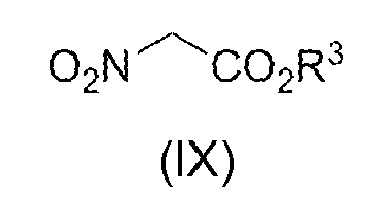
- c) A primary, secondary or tertiary amine, or an inorganic base. Preferably a cyclic or acyclic aliphatic or monounsaturated tertiary amine. More preferably, triethylamine, N,N-diisopropyl ethylamine (DIPEA), N-methyl morpholine, 1,8-diazabicyclo[5.4.0]undec-7-ene (DBU), or mixtures thereof.
- The resulting mixture is stirred at a temperature ranging from +50°C to +100°C. Upon completion of the reaction, the resulting product, consisting of a mixture of diastereomers of α-nitro-δ-oxoester of general formula (X):


- 1H-Pyrrole-2-carboxylic acids of general formula (II) are obtained by treatment of previously described esters of formula (XI) with ammonium hydroxide or an ammonium salt of an aliphatic carboxylic acid of less than 5 carbon atoms in the presence of acetic acid at a temperature ranging from +25°C to + 100°C, and subsequent hydrolysis, preferably in the presence of an alkaline hydroxide, water, an alcohol and a cyclic or acyclic ether, at a temperature between 0°C and 100°C, preferably at temperatures close to the range from +50°C to +100°C yielding, after the corresponding treatment, the compounds of general formula (II).
- Another aspect of the present invention relates to a compound of general formula (I) or a salt, solvate or prodrug thereof, for use as a medicament.
- Another aspect of the present invention relates to a compound of general formula (I) or a salt, solvate or prodrug thereof, for use as a medicament for the treatment of cancer.
- Another aspect of the present invention relates to the use of a compound of general formula (I) or a salt, solvate or prodrug thereof, in the preparation of a medicament for the treatment of cancer.
- The mechanism of action of these compounds is explained by their antagonist properties against histone deacetylases involved in the regulation of processes related to apoptosis, cell growth, tumor progression, cancer metastasis, cell adhesion and others. These properties prevent the binding of HDACs to their natural ligands, which can be histones or cytoplasmic proteins such as tubulin, as well as their normal catalytic activation, namely the deacetylation of ε-N-acetyl lysine residues present in these proteins.
- Another aspect of the invention relates to a pharmaceutical composition comprising at least one compound of general formula (I) or a salt, solvate or prodrug thereof, and at least one pharmaceutically acceptable excipient.
- The compounds of the present invention can be used with at least another drug to provide a combination therapy. This other drug or drugs may be part of the same composition, or may be provided as a separate composition and can be administered at the same time or at different times.
- The term "treatment" or "treating" in the context of this document means administration of a compound or a formulation of the invention to prevent, improve or eliminate the disease or one or more symptoms associated with the disease. "Treatment" also encompasses preventing, improving or eliminating the physiological sequelae of the disease.
- The term "excipient" refers to a vehicle, diluent or adjuvant that is administered with the active ingredient. Such pharmaceutical excipients can be sterile liquids, such as water and oils, including those of petroleum, animal, vegetable or synthetic origin, such as peanut oil, soybean oil, mineral oil, sesame oil and similars. Water or saline aqueous solutions and aqueous dextrose and glycerol, particularly for injectable solutions, are preferably used as vehicles. Suitable pharmaceutical vehicles are described in "Remington's Pharmaceutical Sciences" by E.W. Martin, 1995.
- Examples of pharmaceutical compositions include any solid composition (tablets, pills, capsules, granules, etc.) or liquid composition (solutions, suspensions or emulsions) for oral, topical or parenteral administration.
- In a preferred embodiment the pharmaceutical compositions are in oral delivery form. Pharmaceutical forms suitable for oral administration may be tablets and capsules and may contain conventional excipients known in the art such as binders, for example syrup, gum arabic, gelatin, sorbitol, tragacanth or polyvinylpyrrolidone; fillers, for example lactose, sugar, cornstarch, calcium phosphate, sorbitol or glycine; lubricants for the preparation of tablets, for example magnesium stearate; disintegrants, for example starch, polyvinylpyrrolidone, sodium starch glycolate or microcrystalline cellulose; or pharmaceutically acceptable wetting agents such as sodium lauryl sulphate.
- Solid oral compositions can be prepared by conventional methods of blending, filling or preparation of tablets. Repeated blending operations can be used to distribute the active ingredient in all the compositions that use large amounts of fillers. Such operations are conventional in the art. The tablets can be prepared, for example, by dry or wet granulation and optionally can be coated by well known methods in normal pharmaceutical practice, in particular using a enteric coating.
- Pharmaceutical compositions can also be adapted for parenteral administration, such as sterile solutions, suspensions or lyophilized products in the appropriate unit dosage form. Suitable excipients such as fillers, buffering agents or surfactants can be used.
- The mentioned formulations will be prepared using standard methods such as those described or referred to in the Spanish and U.S. Pharmacopoeias and similar reference texts.
- In general, the effective amount of a compound of the invention to be administered will depend on the relative efficacy of the compound chosen, the severity of the disorder being treated and the patient's weight. However, the active compounds will normally be administered one or more times a day for example 1, 2, 3 or 4 times daily, with typical total daily doses in the range from 0.01 up to 1000 mg/kg/day
- In order to facilitate the understanding of the preceding ideas, some examples of embodiment of the present invention are described below. These examples are merely illustrative.
-

- A solution of (2E)-3-(4-methoxyphenyl)-1-phenylprop-2-en-1-one (5 g, 20.98 mmol) and ethyl nitroacetate (2.32 ml, 20.98 mmol) in triethylamine (8.77 ml, 62.94 mmol) was stirred at 75°C for 4h. Ethyl acetate (500 ml) was added and the solution obtained was washed with HCl 1N (4 x 250 ml), dried over Na2SO4 and evaporated under reduced pressure, to obtain 7.21 g of ethyl 3-(4-methoxyphenyl)-2-nitro-5-oxo-5-phenylpentanoate.
- To this material a 0.5 M solution of sodium methoxide in methanol (58.2 ml) was added and the mixture was stirred for 4h. Then it was poured over a mixture of H2SO4 (12 ml) and MeOH (59 ml) at -20°C. The resulting mixture was stirred at -20°C for 5 minutes, and then allowed to reach room temperature. H2O (50 ml) was added, methanol was removed under reduced pressure and the resulting aqueous solution was extracted with CH2Cl2 (2 x 1000 ml). The combined organic layers were washed with NaOH (2 x 360 ml, 1% aqueous solution) and with NaCl (2 x 360 ml, saturated aqueous solution), dried over Na2SO4 and evaporated under reduced pressure, to obtain 5.14 g of ethyl 3-(4-methoxyphenyl)-2,5-dioxo-5-phenylpentanoate.
- To this material ammonium acetate (4.53 g, 11.75 mmol) and glacial acetic acid (7.2 ml) were added, and the mixture was stirred at 75°C for 1h. After reaching room temperature, ethyl acetate (800 ml) was added and the resulting solution was washed with NaHCO3 (3 x 200 ml, saturated aqueous solution), dried over Na2SO4 and evaporated under reduced pressure, to obtain 3.28 g of ethyl 3-(4-methoxyphenyl)- 5-phenyl-1H-pyrrole-2-carboxylate. This material was dissolved in ethanol (105 ml) and ethyleneglycol dimethyl ether (3 ml) and 10% NaOH (38.4 ml, aqueous solution) was added dropwise. The resulting mixture was stirred under reflux and the progress of the reaction was monitored by TLC. Upon completion of the reaction, ethanol was removed under reduced pressure and the resulting aqueous solution was cooled to 0°C, neutralized with HCl 6N and extracted with ethyl acetate (3x100 ml). The combined organic layers were dried over Na2SO4 and evaporated under reduced pressure, to obtain 2.86 g of 3-(4-methoxyphenyl)-5-phenyl-1H-pyrrole-2-carboxylic acid: Yield 41 %; m.p. 198°C (dec.); IR 3467, 1643 cm-1; 1H-NMR (500 MHz, δ ppm, DMSO-d6) 11.72 (s, 1H), 7.88 (d, 2H, J = 7.7 Hz), 7.51 (d, 2H, J = 8.4 Hz), 7.38 (t, 2H, J = 7.6 Hz), 7.26 (t, 1H, J = 7.2 Hz), 6.91 (d, 2H, J = 8.4 Hz), 6.69 (s, 1H), 3.78 (s, 3H), 3.34 (sb, 1H); 13C-NMR (126 MHz, δ ppm, DMSO-d6) 162.5, 157.9, 134.4, 131.3, 131.2, 130.3, 128.6, 127.9, 127.0, 125.1, 119.8, 113.0, 112.9, 109.3, 55.0, 54.9.
-

- This material was prepared using a method substantially similar to that of Example 1 from (2E)-3-(4-hydroxyphenyl)-1-phenylprop-2-en-1-one, yielding the title compound. 3-(4-Hydroxyphenyl)-5-phenyl-1H-pyrrole-2-carboxylic acid: Yield 53%; m.p. 192-193°C; IR 3466, 3321, 1644, 1504, 1252, 1142, 804, 747 cm-1; 1H-NMR (500 MHz, δ ppm, DMSO-d6) 12.14 (sb, 1H), 11.63 (s, 1H), 9.29 (s, 1H), 7.87 (d, J = 7.5 Hz, 2H), 7.38 (m, 4H), 7.27 (t, J = 7.3 Hz, 1H), 6.74 (d, J = 8.3 Hz, 2H), 6.64 (s, 1H); 13C-NMR (75 MHz, δ ppm, DMSO-d6) 162.0, 156.2, 134.9, 132.4, 131.2, 130.4, 128.5, 127.1, 126.1, 125.2, 118.7, 114.4, 109.4.
-

- This material was prepared using a method substantially similar to that of Example 1 from (2E)-3-(4-fluorophenyl)-1-(2-thienyl)prop-2-en-1-one, yielding the title compound. 3-(4-Fluorophenyl)-5-(2-thienyl)-1H-pyrrole-2-carboxylic acid: Yield 56%; m.p. 194-195°C; IR 3425, 1635, 1380 cm-1; 1H-NMR (300 MHz, δ ppm, DMSO-d6) 7.92 (s, 1H), 7.82 (dd, J = 8.5 Hz, J' = 5.9 Hz, 2H), 7.53 (s, 1H), 7.36 (d, J = 5.1 Hz, 1H), 7.10 - 6.99 (m, 4H), 6.41 (s, 1H); 13C-NMR (126 MHz, δ ppm, DMSO-d6) 163.2, 161.5, 161.2, 145.0, 134.1, 132.8, 130.9, 130.8, 129.5, 129.4, 128.5, 127.8, 126.9, 115.4, 115.3, 113.8, 108.1.
-
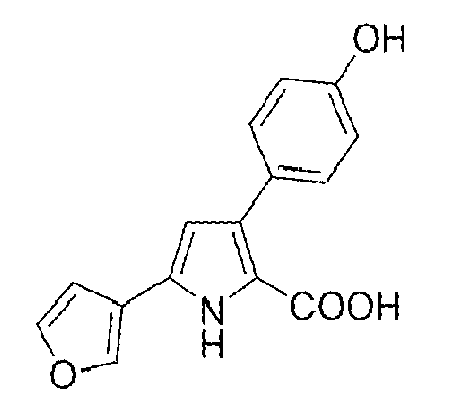
- This material was prepared using a method substantially similar to that of Example 1 from (2E)-1-(3-furyl)-3-(4-hydroxyphenyl)prop-2-en-1-one, yielding the title compound. 5-(3-Furyl)-3-(4-hydroxyphenyl)-1H-pyrrole-2-carboxylic acid: Yield 52%; m.p. 154-156°C; IR 3431, 3326, 1652, 1507, 1252, 1145, 782 cm-1; 1H-NMR (300 MHz, δ ppm, DMSO-d6) 11.47 (s, 1H), 9.31 (sb, 1H), 8.22 (s, 1H), 7.66 (t, J = 1.7 Hz, 1H), 7.42 (d, J = 8.0 Hz, 2H), 6.97 (s, 1H), 6.71 (d, J = 8.6 Hz, 2H), 6.42 (s, 1H); 13C-NMR (126 MHz, δ ppm, DMSO-d6) 163.1, 156.0, 143.6, 139.1, 136.6, 132.1, 130.3, 127.0, 126.4, 118.2, 114.4, 109.0, 108.9.
-

- A solution of 5-(3-furyl)-3-(4-hydroxyphenyl)-1H-pyrrole-2-carboxylic acid (1.45 g, 5.5 mmol) and methyl 4-(aminomethyl)benzoate hydrochloride (1.10 g, 5.5 mmol) in DMF (27.5 ml) was cooled to 0°C. Triethylamine (4.22 ml, 30.25 mol), 1-hydroxybenzotriazole (0.81 g, 6.0 mmol), N-(3-dimethylaminopropyl)-N'-ethylcarbodiimide hydrochloride (1.17 g, 6.0 mmol) and N-methylmorpholine (0.61 ml, 5.5 mmol) were added subsequently, and the mixture was stirred for 2h at 0°C, and for an additional 96h at room temperature. Ethyl acetate (400 ml) was added, and the obtained solution was washed with water (75 ml), Na2S2O3 1N (75 ml, aqueous solution), water (75 ml), NaHCO3 (75 ml, saturated aqueous solution), and NaCl (75 ml, saturated aqueous solution), dried over Na2SO4 and evaporated under reduced pressure, to obtain 1.43 g (3.47 mmol) of methyl 4-[({[5-(3-furyl)-3-(4-hydroxyphenyl)-1H-pyrrol-2-yl]carbonyl}amlno)methyl]benzoate: Yield 63%; m.p. 223-224°C; IR 3390, 3321, 1700, 1616, 1532, 1272 cm-1; 1H-NMR (500 MHz, δ ppm, DMSO-d6) 11.51 (s, 1H), 9.35 (s, 1H), 8.13 (s, 1H), 7.91 (d, J = 8.2 Hz, 2H), 7.67 (tb, 1H), 7.37 (d, J = 8.3 Hz, 3H), 7.26 (d, J = 8.5 Hz, 2H), 6.93 (d, J = 0.9 Hz, 1H), 6.73 (d, J = 8.5 Hz, 2H), 6.38 (d, J = 2.6 Hz, 1H), 4.45 (d, J = 5.8 Hz, 2H), 3.85 (s, 3H); 13C-NMR (126 MHz, δ ppm, DMSO-d6) 166.0, 161.2, 156.3, 145.0, 143.6, 138.5, 129.9, 129.1, 128.1, 127.5, 127.4, 126.0, 125.9, 121.3, 118.2, 115.1, 108.7, 108.3, 51.9, 42.1.
-

- This material was prepared using a method substantially similar to that of Example 5 from 3-(4-fluorophenyl)-5-(2-thienyl)-1H-pyrrole-2-carboxylic acid and methyl 6-(aminomethyl)nicotinate hydrochloride, yielding the title compound.Methyl 6-[({[3-(4-fluorophenyl)-5-(2-thienyl)-1H-pyrrol-2-yl]carbonyl} amino)methyl]nicotinate: Yield 91%; m.p. 174-176°C; IR 3378, 3245, 1723, 1618, 1505, 1433, 1218, 1113, 843 cm-1; 1H-NMR (500 MHz, δ ppm, CDCl3) 9.45 (sb, 1H), 8.95 (s, 1H), 8.21 (dd, J = 8.1 Hz, J' = 2.1 Hz, 1H), 7.48 (dd, J = 8.6 Hz, J' = 5.4 Hz, 2H), 7.31 - 7.23 (m, 2H), 7.21 (d, J = 3.6 Hz, 1H), 7.15 (t, J = 8.6 Hz, 2H), 7.06 (dd, J = 5.0 Hz, J' = 3.7 Hz, 1H), 6.88 (tb, J = 4.6 Hz, 1H), 6.40 (d, J = 3.0 Hz, 1H), 4.65 (d, J = 5.0 Hz, 2H), 3.96 (s, 3H); 13C-NMR (126 MHz, δ ppm, DMSO-d6) 165.9, 162.9, 161.0, 157.9, 150.0, 142.4, 138.7, 138.3, 136.7, 130.8, 128.6, 128.0, 127.6, 127.2, 122.6, 122.4, 119.3, 116.2, 116.0, 109.1, 51.5, 48.7.
-

- This material was prepared using a method substantially similar to that of Example 5 from 3-(4-fluorophenyl)-5-(2-thienyl)-1H-pyrrole-2-carboxylic acid and methyl 5-(aminomethyl)pyridine-2-carboxylate hydrochloride, yielding the title compound. Methyl 5-[({[3-(4-fluorophenyl)-5-(2-thienyl)-1H-pyrrol-2-yl]carbonyl}amino)methyl]pyridine-2-carboxylate: Yield 66%; m.p. 174-175°C; IR 3398, 3255, 1733, 1643, 1541, 1432, 1258, 1121 cm-1; 1H-NMR (500 MHz, δ ppm, CDCl3) 9.59 (sb, 1H), 8.56 (s, 1H), 8.07 (d, J = 8.0 Hz, 1H), 7.66 (dd, J = 8.0 Hz, J' = 2.1 Hz, 1H), 7.41 (dd, J = 5.3 Hz, J' = 2.1 Hz, 2H), 7.25 (dd, J = 5.1 Hz, J' = 1.0 Hz, 1H), 7.22 (dd, J = 3.6 Hz, J'= 1.0 Hz, 1H), 7.10 (t, J = 8.6 Hz, 2H), 7.05 (dd, J = 5.0 Hz, J'= 3.6 Hz, 1H), 6.38 (d, J = 3.0 Hz, 1H), 6.01 (tb, J = 5.9 Hz, 1H), 4.53 (d, J = 6.1 Hz, 2H), 4.01 (s, 3H); 13C-NMR (126 MHz, δ ppm, CDCl3) 165.6, 163.8, 161.8, 161.4, 149.1, 147.3, 137.9, 136.2, 134.3, 131.4, 131.3, 131.2, 129.7, 128.1, 127.6, 125.2, 124.8, 123.5, 121.6, 116.5, 116.3, 110.4, 53.1, 40.8.
-

- This material was prepared using a method substantially similar to that of Example 5 from 3-(4-fluorophenyl)-5-(2-thienyl)-1H-pyrrole-2-carboxylic acid and methyl 5-(aminomethyl)pyrazine-2-carboxylate hydrochloride, yielding the title compound. Methyl 5-[({[3-(4-fluorophenyl)-5-(2-thienyl)-1H-pyrrol-2-yl]carbonyl}amino)methyl]pyrazine-2-carboxylate: Yield 76%; 1H-NMR (500 MHz, δ ppm, CDCl3) 9.47 (sb, 1H), 9.07 (s, 1H), 8.64 (s, 1H), 7.47 (dd, J = 8.3 Hz, J' = 5.5 Hz, 2H), 7.24 (d, J = 4.5 Hz, 1H), 7.21 (d, J = 3.0 Hz, 1H), 7.16 (t, J = 8.6 Hz, 2H), 7.06 (dd, J = 4.5 Hz, J' = 4.1 Hz, 1H), 6.64 (t, J = 4.6 Hz, 1H), 6.40 (d, J = 2.9 Hz, 1H), 4.72 (d, J = 5.2 Hz, 2H), 4.04 (s, 3H).
-

- To a solution of hydroxylamine hydrochloride (0.48 g, 7.5 mmol) and phenolphtalein (1 mg) in methanol (1.25 ml) under inert atmosphere, an aliquot of sodium methoxide in methanol (taken from a solution of 2.70 g, 50 mmol of sodium methoxide in 10 ml of methanol) was added dropwise until a permanent pink color was observed. Methyl 4-[({[5-(3-furyl)-3-(4-hydroxyphenyl)-1H-pyrrol-2-yl]carbonyl}amino)methyl]benzoate (0.52 g, 1.25 mmol) and sodium methoxide in methanol (12.5 mmol, 2.46 ml of the previously prepared solution) were subsequently added. The reaction mixture was stirred for 26h, the formation of a dense precipitate being observed. Water (3 ml) was added, and this solution was acidified with glacial acetic acid and extracted with CH2Cl2 (3 x 10 ml). The combined organic fractions were dried over Na2SO4 and evaporated under reduced pressure, to obtain 0.49 g of 5-(3-furyl)-N-{4-[(hydroxyamino)carbonyl]benzyl}-3-(4-hydroxyphenyl)-1H-pyrrole-2-carboxamide: Yield 94%; m.p. 159-160°C; IR 3406, 3243, 1626, 1526, 1268 cm-1; 1H-NMR (500 MHz, δ ppm, DMSO-d6) 11.50 (s, 1H), 11.13 (s, 1H), 9.36 (s, 1H), 8.94 (s, 1H), 8.13 (s, 1H), 7.69 (d, J = 8.1 Hz, 2H), 7.67 (tb, 1H), 7.34 (t, J = 5.7 Hz, 1H), 7.30 (d, J = 8.0 Hz, 2H), 7.26 (d, J = 8.4 Hz, 2H), 6.93 (s, 1H), 6.74 (d, J = 8.4 Hz, 2H), 6.37 (d, J = 2.5 Hz, 1H), 4.41 (d, J = 5.8 Hz, 2H); 13C-NMR (126 MHz, δ ppm, DMSO-d6) 164.0, 161.2, 156.3, 143.6, 142.6, 138.5, 131.2, 129.9, 127.4, 127.1, 126.8, 125.9, 121.3, 118.2, 115.1, 108.7, 108.3, 42.0.
-

- This material was prepared using a method substantially similar to that of Example 9 from methyl 4-[({[3-(4-hydroxyphenyl)-5-phenyl-1H-pyrrol-2-yl] carbonyl}amino)methyl]benzoate, yielding the title compound. N-{4-[(Hydroxyamino)carbonyl]benzyl}-3-(4-hydroxyphenyl)-5-phenyl-1H-pyrrole-2-carboxamide: Yield 69%; m.p. 139-141°C; IR 3407, 3251, 1627, 1527, 1494, 1260 cm-1; 1H-NMR (500 MHz, δ ppm, DMSO-d6) 11.48 (s, 1H), 11.14 (s, 1H), 9.32 (s, 1H), 8.94 (s, 1H), 7.79 (d, J = 7.9 Hz, 3H), 7.71 (d, J = 8.1 Hz, 2H), 7.39 (t, J = 7.6 Hz, 2H), 7.34 (d, J = 8.0 Hz, 2H), 7.31 (d, J = 8.4 Hz, 2H), 7.25 (t, J = 7.2 Hz, 1H), 6.73 (d, J = 8.4 Hz, 2H), 6.61 (d, J = 2.5 Hz, 1H), 4.44 (d, J = 5.6 Hz, 2H); 13C-NMR (126 MHz, δ ppm, DMSO-d6) 164.1, 161.2, 156.2, 142.7, 141.1, 132.9, 131.6, 129.9, 128.7, 128.6, 127.2, 126.8, 126.7, 125.0, 124.6, 122.4, 114.8, 108.4, 42.1.
-

- This material was prepared using a method substantially similar to that of Example 9 from methyl 6-[({[3-(4-fluorophenyl)-5-(2-thienyl)-1H-pyrrol-2-yl]carbonyl}amino)methyl]nicotinate, yielding the title compound. 6-[({[3-(4-Fluorophenyl)-5-(2-thienyl)-1H-pyrrol-2-yl]carbonyl}amino)methyl]-N-hydroxynicotinamide: Yield 96%; m.p. 151-152°C; IR 3406, 3202, 1620, 1547, 1504 cm-1; 1H-NMR (500 MHz, δ ppm, DMSO-d6) 11.80 (s, 1H), 11.33 (s, 1H), 9.13 (s, 1H), 8.81 (s, 1H), 8.11 - 8.04 (m, 2H), 7.54 (dd, J = 8.5 Hz, J' = 5.8 Hz, 2H), 7.51 (d, J = 3.4 Hz, 1H), 7.46 (d, J = 5.0 Hz, 1H), 7.42 (d, J = 8.2 Hz, 1H), 7.15 (t, J = 8.9 Hz, 2H), 7.10 (dd, J = 4.9 Hz, J' = 3.7 Hz, 1H), 6.47 (d, J = 2.1 Hz, 1H), 4.54 (d, J = 5.6 Hz, 2H); 13C-NMR (126 MHz, δ ppm, DMSO-d6) 162.6, 162.2, 161.0, 160.9, 160.2, 147.2, 135.2, 134.4, 131.6, 131.5, 130.9, 130.8, 128.0, 127.9, 127.3, 126.9, 124.5, 123.3, 122.4, 120.9, 114.8, 114.6, 108.7, 44.2.
-

- This material was prepared using a method substantially similar to that of Example 9 from methyl 4-[({[3-(4-fluorophenyl)-5-(3-furyl)-1H-pyrrol-2-yl]carbonyl}amino)methyl]benzoate, yielding the title compound. 3-(4-Fluorophenyl)-5-(3-furyl)-N-{4-[(hydroxyamino)carbonyl]benzyl}-1H-pyrrole-2-carboxamlde: Yield 72%; m.p. 162-164°C; IR 3427, 3378, 3206, 1627, 1538, 1293, 1012 cm-1; 1H-NMR (200 MHz, δ ppm, DMSO-d6) 11.70 (s, 1H), 11.20 (sb, 1H), 9.04 (sb, 1H), 8.13 (s, 1H), 7.96 (tb, J = 5.4 Hz, 1H), 7.72-7.68 (m, 3H), 7.48 (dd, J = 8.3 Hz, J' = 5.8 Hz, 2H), 7.33 (d, J = 8.0 Hz, 2H), 7.14 (t, J = 8.8 Hz, 2H), 6.93 (s, 1H), 6.48 (s, 1H), 4.41 (d, J = 5.4 Hz, 2H); 13C-NMR (126 MHz, δ ppm, DMSO-d6) 164.0, 161.9, 161.0, 160.0, 143.7, 142.7, 138.5, 131.9, 131.8, 131.2, 130.6, 130.6, 127.2, 126.8, 126.5, 125.9, 121.8, 118.1, 114.7, 114.6, 108.7, 108.2, 42.1.
-

- This material was prepared using a method substantially similar to that of Example 9, yielding the title compound. N-4-[(Hydroxyamlno)carbonyl] benzyl}-3-(4-hydroxyphenyl)-5-(2-thienyl)-1H-pyrrole-2-carboxamide: Yield 64%; m.p. 171-172°C; IR 3415, 3255, 1639, 1545, 1503, 1260 cm-1; 1H-NMR (500 MHz, δ ppm, DMSO-d6) 11.66 (s, 1H), 11.14 (sb, 1H), 9.35 (sb, 1H), 8.95 (sb, 1H), 7.70 (d, J = 7.6 Hz, 2H), 7.67 (t, J = 5.7 Hz, 1H), 7.49 (d, J = 3.5 Hz, 1H), 7.42 (d, J = 4.9 Hz, 1H), 7.32 (d, J = 7.9 Hz, 2H), 7.28 (d, J = 7.8 Hz, 2H), 7.07 (dd, J = 4.9 Hz, J' = 3.7 Hz, 1H), 6.72 (d, J = 8.0 Hz, 2H), 6.36 (s, 1H), 4.42 (d, J = 5.7 Hz, 2H); 13C-NMR (126 MHz, δ ppm, DMSO-d6) 161.0, 156.2, 142.6, 134.6, 131.2, 129.9, 128.0, 127.8, 127.7, 127.1, 126.7, 125.6, 124.1, 122.9, 122.0, 114.9, 108.4, 42.1.
-

- This material was prepared using a method substantially similar to that of Example 9, yielding the title compound. N-{4-[(Hydroxyamino)carbonyl] benzyl}-5-(4-hydroxyphenyl)-3-(3-thienyl)-1H-pyrrole-2-carboxamide: Yield 97%; m.p. 121-122°C; IR 3373, 3199, 1652, 1612, 1536, 1501, 1270 cm-1; 1H-NMR (300 MHz, δ ppm, DMSO-d6) 11.24 (s, 1H), 11.15 (s, 1H), 9.51 (s, 1H), 8.95 (s, 1H), 8.17 (t, J = 5.6 Hz, 1H), 7.81 (dd, J = 2.6 Hz, J'= 1.2 Hz, 1H), 7.72 (d, J = 8.2 Hz, 2H), 7.60 (d, J = 8.6 Hz, 2H), 7.48-7.42 (m, 2H), 7.40 (d, J = 8.1 Hz, 2H), 6.80 (d, J = 8.6 Hz, 2H), 6.64 (d, J = 2.5 Hz, 1H), 4.49 (d, J = 5.6 Hz, 2H); 13C-RMN (126 MHz, δ ppm, DMSO-d6) 164.0, 161.0, 156.7, 142.8, 135.9, 133.6, 131.3, 129.1, 127.2, 126.8, 126.1, 124.5, 123.6, 122.6, 121.9, 121.4, 115.4, 106.9, 42.1.
-

- This material was prepared using a method substantially similar to that of Example 9, yielding the title compound. 3-(3-Furyl)-N-{4-[(hydroxyamino) carbonyl]benzyl}-5-(4-hydroxyphenyl)-1H-pyrrole-2-carboxamlde: Yield 92%; m.p. 122-123°C; IR 3390, 3245, 1655, 1614, 1539, 1264 cm-1; 1H-NMR (300 MHz, δ ppm, DMSO-d6) 11.15 (s, 2H), 9.53 (s, 1H), 8.95 (s, 1H), 8.29 (t, J = 5.7 Hz, 1H), 8.25 (d, J = 0.9 Hz, 1H), 7.73 (d, J = 8.2 Hz, 2H), 7.61 (t, J = 1.7 Hz, 1H), 7.57 (d, J = 8.7 Hz, 2H), 7.42 (d, J = 8.2 Hz, 2H), 6.89 (d, J = 1.2 Hz, 1H), 6.82 (d, J = 8.7 Hz, 2H), 6.69 (d, J = 2.6 Hz, 1H), 4.52 (d, J = 5.6 Hz, 2H); 13C-RMN (126 MHz, δ ppm, DMSO-d6) 164.0, 160.7, 156.8, 142.9, 142.2, 140.9, 133.9, 131.3, 129.3, 127.2, 126.9, 126.1, 122.6, 120.9, 120.3, 119.6, 115.5, 111.4, 106.3, 42.0.
-

- This material was prepared using a method substantially similar to that of Example 9, yielding the title compound. N-{5-[(hydroxyamino)carbonyl]-2-furyl}-3-(4-methoxyphenyl)-5-phenyl-1H-pyrrole-2-carboxamide: Yield 74%; m.p. 160-162°C; IR 3344, 3210, 1638, 1525, 1247, 1035 cm-1; 1H-NMR (500MHz, δ ppm, DMSO-d6) 11.65 (s, 1H), 11.02 (s, 1H), 10.85 (sb, 1H), 8.98 (s, 1H), 7.82 (d, J = 7.7 Hz, 2H), 7.50 (d, J = 8.6 Hz, 2H), 7.45 (t, J = 7.7 Hz, 2H), 7.32 (t, J = 7.3 Hz, 1H), 7.08 (d, J = 3.0 Hz, 1H), 6.94 (d, J = 8.6 Hz, 2H), 6.75 (s, 1H), 6.36 (d, J = 3.5 Hz, 1H), 3.79 (s, 3H); 13C-NMR (126 MHz, δ ppm, DMSO-d6) 158.1, 156.8, 149.1, 137.5, 134.1, 131.6, 131.2, 130.1, 128.7, 127.6, 127.3, 124.6, 120.5, 113.2, 109.2, 94.6, 55.0, 54.8.
-

- This material was prepared using a method substantially similar to that of Example 9, yielding the title compound. 3-(4-Fluorophenyl)-N-({5-[(hydroxyamino)carbonyl]-2-furyl}methyl)-5-phenyl-1H-pyrrole-2-carboxamide: Yield 78%; m.p. 152-153°C; IR 3408, 3239, 1635, 1527, 1493, 1214, 1041 cm-1; 1H-NMR (500 MHz, δ ppm, DMSO-d6) 11.62 (s, 1H), 11.05 (s, 1H), 9.06 (s, 1H), 8.18 (t, J = 5.4 Hz, 1H), 7.79 (d, J = 7.4 Hz, 2H), 7.54 (dd, J = 8.6 Hz, 5.7, 2H), 7.41 (t, J = 7.7 Hz, 2H), 7.27 (t, J = 7.3 Hz, 1H), 7.14 (t, J = 8.9 Hz, 2H), 6.99 (s, 1H), 6.72 (s, 1H), 6.41 (d, J = 3.2 Hz, 1H), 4.45 (d, J = 5.4 Hz, 2H); 13C-NMR (126 MHz, δ ppm, DMSO-d6) 161.9, 160.7, 160.0, 156.5, 154.5, 145.0, 133.1, 131.8, 131.8, 131.4, 130.6, 130.6, 128.6, 127.7, 126.9, 124.6, 122.5, 114.5, 114.3, 113.5, 108.6, 108.4, 35.7.
-

- This material was prepared using a method substantially similar to that of Example 9, yielding the title compound. N-{3-[2-(Hydroxyamino)-2-oxoethyl]phenyl}-3-(4-methoxyphenyl)-5-phenyl-1H-pyrrole-2-carboxamide: Yield 82%; m.p. 205-206°C; IR 3431, 3369, 3202, 1645, 1553, 1448, 1256 cm-1; 1H-NMR (500 MHz, δ ppm, DMSO-d6) 11.75 (s, 1H), 10.66 (s, 1H), 9.55 (s, 1H), 8.82 (s, 1H), 7.84 (d, J = 7.7 Hz, 2H), 7.55 (s, 1H), 7.50 (d, J = 7.8 Hz, 2H), 7.45-7.41 (m, 3H), 7.28 (t, J = 7.2 Hz, 1H), 7.23 (t, J = 7.8 Hz, 1H), 6.97-6.92 (m, 3H), 6.75 (s, 1H), 3.78 (s, 3H), 3.25 (s, 2H); 13C-NMR (126 MHz, δ ppm, DMSO-d6) 166.8, 159.5, 158.0, 139.0, 136.4, 133.2, 131.5, 129.7, 128.6, 128.3, 127.7, 126.9, 124.6, 123.9, 122.9, 120.1, 117.8, 113.5, 108.3, 55.0, 36.5.
-

- This material was prepared using a method substantially similar to that of Example 9, yielding the title compound. N-{4-[(hydroxyamino)carbonyl] phenyl}-3-(4-methoxyphenyl)-5-phenyl-1H-pyrrole-2-carboxamide: Yield 95%; m.p. 234-235°C; IR 3349, 3247, 1637, 1528, 1438, 1245 cm-1; 1H-NMR (500 MHz, δ ppm, DMSO-d6) 11.84 (s, 1H), 11.10 (s, 1H), 9.81 (s, 1H), 8.93 (sb, 1H), 7.86 (d, J = 7.6 Hz, 2H), 7.72 (d, J = 8.4 Hz, 2H), 7.66 (d, J = 8.5 Hz, 2H), 7.50 (d, J = 8.4 Hz, 2H), 7.43 (t, J = 7.5 Hz, 2H), 7.29 (t, J = 7.2 Hz, 1H), 6.94 (d, J = 8.4 Hz, 2H), 6.78 (db, J = 1.9 Hz, 1H), 3.77 (s, 3H); 13C-NMR (126 MHz, δ ppm, DMSO-d6) 163.9, 159.8, 158.1, 141.7, 133.6, 131.4, 129.8, 129.1, 128.7, 127.6, 127.1, 127.0, 124.7, 122.7, 118.7, 113.5, 108.4, 55.0.
-

- To a solution of methyl 4-[({[3-(4-methoxyphenyl)-5-phenyl-1H-pyrrol-2-yl]carbonyl}amino)methyl]benzoate (1.5 g, 3.41 mmol) dissolved in ethanol (85 ml) and ethyleneglycol dimethyl ether (3.41 ml), 10% NaOH (34.1 ml, aqueous solution) was added dropwise. The resulting mixture was stirred under reflux and the progress of the reaction was monitored by TLC. Upon completion of the reaction, ethanol was removed under reduced pressure and the resulting aqueous solution was cooled to 0°C, neutralized with HCl 6N and extracted with ethyl acetate (3x100 ml). The combined organic layers were dried over Na2SO4 and evaporated under reduced pressure, to obtain 1.26 g of 4-[({[3-(4-methoxyphenyl)-5-phenyl-1H-pyrrol-2-yl]carbonyl}amino)methyl] benzoic acid: Yield 88 %; m.p. 260°C (dec); IR 3408, 3268, 1684, 1525, 1496, 1264 cm-1; 1H-NMR (300 MHz, δ ppm, DMSO-d6) 11.57 (s, 1H), 8.00 (t, J = 5.9 Hz, 1H), 7.90 (d, J = 8.2 Hz, 2H), 7.80 (d, J = 7.3 Hz, 2H), 7.46-7.35 (m, 7H), 7.27 (d, J = 7.0 Hz, 1H), 6.88 (d, J = 8.8 Hz, 2H), 6.67 (d, J = 2.2 Hz, 1H), 4.47 (d, J = 5.5 Hz, 2H), 3.76 (s, 3H); 13C-NMR (126 MHz, δ ppm, DMSO-d6) 167.1, 160.9, 157.9, 144.8, 133.0, 131.5, 130.1, 129.2, 128.8, 128.5, 128.0, 127.3, 126.7, 124.6, 122.3, 113.1, 108.5, 55.0, 42.0.
-

- A solution of 4-[({[3-(4-methoxyphenyl)-5-phenyl-1H-pyrrol-2-yl] carbonyl}amino)methyl]benzoic acid (0.213 g, 0.5 mmol) and phenylenediamine (0.108 g, 1.0 mmol) in DMF (10 ml) was cooled to 0°C. Triethylamine (0.40 ml, 2.87 mol), 1-hydroxybenzotriazole (0.101 g, 0.75 mmol) and N-(3-dimethylaminopropyl)-N'-ethylcarbodiimide hydrochloride (0.144 g, 0.75 mmol) were added subsequently, and the mixture was stirred for 2h at 0°C, and for an additional 96h at room temperature. Ethyl acetate (40 ml) was added, and the obtained solution was washed with water (7 ml), Na2S2O3 1N (7 ml, aqueous solution), water (7 ml), NaHCO3 (7 ml, saturated aqueous solution), and NaCl (7 ml, saturated aqueous solution), dried over Na2SO4 and evaporated under reduced pressure, to obtain 0.142 g (0.27 mmol) of N-(4-{[(2-aminophenyl)amino]carbonyl}benzyl)-3-(4-methoxyphenyl)-5-phenyl-1H-pyrrole-2-carboxamide: Yield 55%; m.p. 142-143°C (dec); IR 3407, 3296, 1627, 1530, 1493, 1246 cm-1; 1H-NMR (300 MHz, δ ppm, DMSO-d6) 11.54 (s, 1H), 9.61 (s, 1H), 7.95 (d, J = 7.8 Hz, 3H), 7.80 (d, J = 7.4 Hz, 2H), 7.45-7.38 (m, 6H), 7.26 (t, J = 7.3 Hz, 1H), 7.17 (d, J = 7.7 Hz, 1H), 6.97 (dt, J = 8.0 Hz, J' = 1.4 Hz, 1H), 6.90 (d, J = 8.7 Hz, 2H), 6.79 (dd, J = 7.9 Hz, J' = 1.1 Hz , 1H), 6.67 (d, J = 2.6 Hz, 1H), 6.60 (dt, J = 7.5 Hz, J' = 1.0 Hz, 1H), 4.86 (s, 2H), 4.49 (d, J = 5.7 Hz, 2H), 3.77 (s, 3H); 13C-NMR (126 MHz, δ ppm, DMSO-d6) 165.0, 161.1, 157.9, 143.0, 142.9, 133.1, 132.9, 131.5, 129.9, 128.6, 127.9, 127.8, 127.7, 127.1, 126.7, 126.6, 126.4, 124.5, 123.3, 122.6, 116.2, 116.1, 113.4, 108.3, 55.0, 42.1.
-

- To a solution of phenyl dichlorophosphate (0.1 ml, 0.625 mmol) in DMF (0.1 ml) at 0°C under inert atmosphere, was added dropwise a solution of 4-[({[3-(4-methoxyphenyl)-5-phenyl-1H-pyrrol-2-yl]carbonyl}amino)methyl] benzoic acid (0.206 g, 0.5 mmol) in CH2Cl2 (2.5 ml), and the resulting mixture was stirred at room temperature for 10 minutes. 2-(Tritylsulfanyl)aniline (0.404 g, 1.0 mmol) and triethylamine (4.17 ml, 30 mmol) were added subsequently, and the mixture was stirred at room temperature for 16h. Ethyl acetate (40 ml) was added, and the obtained solution was washed with HCl 0.1N (3 x 7 ml), water (7 ml), and NaOH 1N (3 x 7 ml), dried over Na2SO4 and evaporated under reduced pressure. This material was dissolved in CH2Cl2 (5 ml), and cooled to 0°C. Trifluoroacetic acid (0.49 ml, 6.4 mmol) and triethylsilane (0.09 ml, 0.55 mmol) were added subsequently, and the resulting mixture was stirred at room temperature for 2h. NaHCO3 (7.7 ml, saturated aqueous solution) was added and the resulting mixture was stirred for 30 min. The organic layer was separated and the aqueous layer was extracted with CH2Cl2 (3 x 15 ml). The combined organic fractions were dried over Na2SO4 and evaporated under reduced pressure, to obtain 0.216 g (0.404 mmol) of 3-(4-methoxyphenyl)-5-phenyl-N-(4-{[(2-sulfanylphenyl)amino]carbonyl}benzyl)-1H-pyrrole-2-carboxamide: Yield 81%; m.p. 134-135°C; IR 3407, 3384, 3233, 1681, 1638, 1525, 1493, 1249 cm-1; 1H-NMR (300 MHz, δ ppm, CDCl3) 10.22 (s, 1H), 8.93 (s, 1H), 8.48 (dd, J = 8.3 Hz, J' = 1.0 Hz, 1H), 7.63 (d, J = 8.3 Hz, 4H), 7.43-7.35 (m, 6H), 7.34 - 7.20 (m, 4H), 6.97-6.90 (m, 3H), 6.49 (d, J = 3.0 Hz, 1H), 6.24 (t, J = 6.0 Hz, 1H), 4.51 (d, J = 6.0 Hz, 2H), 3.81 (s, 3H); 13C-NMR (126 MHz, δ ppm, DMSO-d6) 165.4, 161.2, 158.0, 143.5, 135.9, 133.5, 133.0, 132.3, 131.6, 129.9, 128.7, 127.9, 127.8, 127.6, 127.4, 127.1, 126.9, 126.8, 124.6, 123.9, 122.6, 114.0, 113.4, 108.3, 55.0, 42.2.
-

- This material was prepared using a method substantially similar to that of Example 22 from 4-[({[3-(4-methoxyphenyl)-5-phenyl-1H-pyrrol-2-yl]carbonyl}amino)methyl]benzoic acid and 2-(tritylsulfanyl)ethanamine hydrochloride, yielding the title compound. 3-(4-methoxyphenyl)-5-phenyl-N-(4-{[(2-sulfanylethyl)amino]carbonyl}benzyl)-1H-pyrrole-2 carboxamide: Yield 70%; m.p. 131-132°C; IR 3396, 3280, 1635, 1524, 1499, 1246 cm-1; 1H-NMR (500 MHz, δ ppm, CDCl3) 9.99 (s, 1H), 7.72 (d, J = 8.1 Hz, 2H), 7.59 (d, J = 7.6 Hz, 2H), 7.38 (t, J = 7.7 Hz, 2H), 7.35 (d, J = 8.5 Hz, 2H), 7.28 (t, J = 7.5 Hz, 1H), 7.17 (d, J = 8.0 Hz, 2H), 7.03 (t, J = 5.5 Hz, 1H), 6.89 (d, J = 8.5 Hz, 2H), 6.47 (d, J = 2.9 Hz, 1H), 6.17 (t, J = 5.8 Hz, 1H), 4.45 (d, J = 5.9 Hz, 2H), 3.85 - 3.73 (m, 5H), 2.97 (t, J = 6.2 Hz, 2H), 1.62 (s, 1H); 13C-NMR (75 MHz, δ ppm, CDCl3) 167.7, 161.7, 159.6, 142.4, 134.6, 133.4, 131.6, 130.8, 129.6, 129.2, 128.7, 128.5, 128.3, 127.7, 127.6, 124.9, 122.3, 114.7, 109.8, 55.6, 43.1, 39.5, 38.4, 29.9.
-

- To a solution of 4-{[(tert-butoxycarbonyl)amino]methyl}benzoic acid (0.75 g, 3 mmol) in toluene (12 ml) under inert atmosphere, were added anhydrous DMF (0.03 ml), pyridine (1.5 ml, 18.62 mmol) and oxalyl chloride (0.52 ml, 6 mmol), and the resulting mixture was stirred for 6 h, the formation of a precipitate being observed. This precipitate was filtered off and washed with toluene. The combined filtrates were dried over Na2SO4 and evaporated under reduced pressure, to obtain the corresponding acid chloride. This solid was dissolved in pyridine (9.3 ml, 115 mmol) under inert atmosphere, and 2-aminopyridine (0.31 g, 3.3 mmol) was added. The resulting mixture was stirred for 16h. CHCl3 (100 ml) was added and the resulting solution was washed with NaHCO3 (3 x 15 ml, saturated aqueous solution), and NaCl (3 x 15 ml, saturated aqueous solution), dried over Na2SO4 and evaporated under reduced pressure. The obtained material was dissolved in methanol (100 ml) and the resulting solution was cooled to 0°C. HCl 6N (7.5 ml) was added, and the reaction mixture was stirred at room temperature for 16h. The solution was concentrated in vacuo to give 0.406g (1.54 mmol) of 4-(aminomethyl)-N-pyridin-2-ylbenzamide hydrochloride: Yield 51%; m.p. 258-259°C; IR 3442, 3303, 1672, 1609, 1571, 1437, 1249 cm-1; 1H-NMR (500 MHz, δ ppm, DMSO-d6) 10.89 (s, 1H), 8.41 (d, J = 3.4 Hz, 1H), 8.39 - 8.31 (m, 3H), 8.19 (d, J = 8.4 Hz, 1H), 8.09 (d, J = 8.0, 2H), 7.89 (t, J = 7.6 Hz, 1H), 7.61 (d, J = 8.0, 2H), 7.21 (t, J = 5.6 Hz, 1H), 4.12 (d, J = 5.4 Hz, 2H); 13C-NMR (126 MHz, δ ppm, DMSO-d6) 165.9, 150.6, 144.7, 141.1, 138.5, 133.0, 128.8, 128.3, 120.2, 115.6, 41.7.
-

- This material was prepared using a method substantially similar to that of Example 5 from 3-(4-methoxyphenyl)-5-phenyl-1 H-pyrrole-2-carboxylic acid and 4-(aminomethyl)-N-pyridin-2-ylbenzamide hydrochloride, yielding the title compound. 3-(4-Methoxyphenyl)-5-phenyl-N-{4-[(pyridin-2-ylamino)carbonyl] benzyl}-1H-pyrrole-2-carboxamide: Yield 71%; m.p. 196°C (dec.); IR 3402, 3239, 1623, 1536, 1432, 1304, 1246 cm-1; 1H-NMR (300 MHz, δ ppm, CDCl3) 9.75 (s, 1H), 8.77 (s, 1H), 8.39 (d, J = 8.4 Hz, 1H), 8.29 (d, J = 4.8 Hz, 1H), 7.88 (d, J = 8.3 Hz, 2H), 7.77 (dt, J = 7.0 Hz, J' = 1.8 Hz, 1H), 7.57 (d, J = 7.2 Hz, 2H), 7.45 - 7.27 (m, 7H), 7.07 (ddd, J = 7.3 Hz, J' = 5.0 Hz, J" = 0.8 Hz, 1H), 6.90 (d, J = 8.7 Hz, 2H), 6.49 (d, J = 3.0 Hz, 1H), 6.13 (t, J = 5.8 Hz, 1H), 4.52 (d, J = 5.9 Hz, 2H), 3.82 (s, 3H); 13C-NMR (75 MHz, δ ppm, CDCl3) 165.7, 161.6, 159.7, 151.9, 148.1, 143.0, 138.8, 134.7, 133.6, 131.6, 130.9, 129.2, 128.3, 127.9, 127.8, 127.7, 125.0, 122.4, 120.1, 114.7, 109.9, 55.6, 43.1.
-

- This material was prepared using a method substantially similar to that of Example 5 from 3-(4-methoxyphenyl)-5-phenyl-1H-pyrrole-2-carboxylic acid and 4-(aminomethyl)-N-pyrimidin-2-ylbenzamide hydrochloride, yielding the title compound. 3-(4-Methoxyphenyl)-5-phenyl-N-{4-[(pyrimidin-2-ylamino) carbonyl]benzyl}-1H-pyrrole-2-carboxamide: Yield 58%; m.p. 190-191°C; IR 3396, 3251, 1623, 1571, 1525, 1429, 1243 cm-1; 1H-NMR (300 MHz, δ ppm, CDCl3) 9.72 (s, 1H), 8.83 (s, 1H), 8.66 (d, J = 4.9 Hz, 2H), 7.88 (d, J = 8.3 Hz, 3H), 7.57 (d, J = 7.1 Hz, 2H), 7.44-7.23 (m, 6H), 7.06 (t, J = 4.9 Hz, 1H), 6.90 (d, J = 8.7 Hz, 2H), 6.49 (d, J = 3.1 Hz, 1H), 6.12 (t, J = 5.8 Hz, 1H), 4.51 (d, J = 5.9 Hz, 2H), 3.82 (s, 3H); 13C-NMR (75 MHz, δ ppm, CDCl3) 164.9, 161.6, 159.7, 158.7, 158.2, 143.1, 134.7, 133.6, 131.6, 130.9, 129.2, 128.4, 128.2, 127.9, 127.6, 125.0, 122.3, 117.1, 114.7, 109.9, 55.6, 43.1.
- Substrate peptides : All HDAC assays were performed using acetylated AMC-labeled peptide substrate:
- Substrate for HDAC1, 2, 3, 6 and HeLa nuclear extract assays: Acetylated fluorogenic peptide from p53 residues 379-382 (RHKKAc) (BioMol Cat. # KI-104).
- Substrate for HDAC8 assays: Acetylated fluorogenic peptide from p53 residues 379-382 (RHKAcKAc) (BioMol Cat. # KI-178).
- Assay buffer. 50 mM Tris-HCl, pH 8.0, 137 mM NaCl, 2.7 mM KCI, 1 mM MgCl2 (supplement with 1 mg/ml BSA for dilution) (BioMol Cat. # KI-143).
-
- HDAC1 assay: 75 nM Human HDAC1 (GenBank Accession No. NM_004964): Full length with C-terminal GST tag, MW= 79.9 kDa, expressed by baculovirus expression system in Sf9 cells (BioMol Cat. # SE-456).
- HDAC2 assay: 5 nM Human HDAC2 (GenBank Accession No. Q92769): Full length with C-terminal His tag, MW= 60 kDa, expressed by baculovirus expression system in Sf9 cells (BioMol Cat. # SE-500).
- HDAC3 assay: 2.3 nM Human HDAC3/NcoR2 (GenBank Accession No. NM_003883 for HDAC3, GenBank Accession No.NM_00631 2 for NcoR2): Complex of human HDAC3, full length with C-terminal His tag, MW= 49.7 kDa, and human NCOR2, N-terminal GST tag, MW= 39 kDa, co-expressed in baculovirus expression system (BioMol Cat. # SE-507).
- HDAC6 assay: 13 nM Human HDAC6 (GenBank Accession No. BC069243): Full length with N-terminal GST tag, MW= 159 kDa, expressed by baculovirus expression system in Sf9 cells (BioMol Cat. # SE-508).
- HDAC8 assay: 119 nM Human HDAC8 (GenBank Accession No. NM018486): Full length, MW=42 kDa, expressed in an E. coli expression system (BioMol Cat. # SE-145).
- HeLaNuclear Extract assay: 25 ng/µl Nuclear Extract from HeLa Cells: Prepared by high salt extraction of HeLa nuclei (human cervical cancer cell line), this extract is a rich source of HDAC activity (BioMol Cat. # KI-140).
- 50 µM of substrate peptide (see 'substrate peptides' section above) and an optimal concentration of the corresponding enzyme (see 'enzymes' section above) in the assay buffer and 1% final concentration of DMSO were incubated in the presence of gradient concentrations of inhibitors (10-dose IC50 mode with 3-fold serial dilution) at 30°C for 2 h. The reactions were carried out in a 96-well microplate for fluorometry in a 50 µl reaction volume. After the deacetylation reaction, Fluor-de-Lys-Developer (BioMol Cat. # KI-105) was added to each well to digest the deacetylated substrate, thus producing the fluorescent signal. The reaction was allowed to develop for 45 minutes at 30°C with 5% CO2; then the fluorescent signal was measured with an excitation wavelength at 360 nm and an emission wavelength at 460 nm in a microplate-reading fluorometer (GeminiXS; Molecular Devices, Sunnyvale, CA). A curve of Deacetylated Standard (Biomol, Cat. # KI-142; made from 100 µM with 1:2 dilution and 10-doses, 6 µl) allowed the conversion of fluorescent signal into micromoles of deacetylated product. All experiments were performed in triplicate. IC50 was calculated by fitting the experimental data to a dose-response curve. DMSO was used as negative control; Trichostatin A (Biomol Cat. # GR-309), SAHA (suberoylanilide hydroxamic acid, obtained in house) and Kendine 91 (IUPAC name: N-[6-(hydroxyamino)-6-oxohexyl]-3-(4-methoxyphenyl)-5-phenyl-1H-pyrrole-2-carboxamide, obtained in house) were used as positive control inhibitors.
Compound IC50 (nM) of enzyme activity HDAC1 HDAC2 HDAC3 HDAC6 HDAC8 HeLa SAHA 254,2 1045 460,4 44,8 335,2 24,5 Kendine 91 508,3 1690 612,9 34,9 146 43,0 Example 9 218,7 629,7 226,3 1,9 126,6 20,9 Example 10 473,1 1393 512,3 10,8 340,1 34,0 Example 11 744,5 2529 753,7 52 180,6 68,3 Example 12 383,7 1147 451,3 42,8 124,2 46,4 Example 13 737,7 1859 589,3 17,7 402,3 43,0 Example 14 84,2 317,8 123,9 0,53 64,1 6,7 Example 15 49,9 144,4 46,1 0,7 74,8 3,4

wherein R1, R2, A, M, X, Y, Z and W have the meaning given above.
Claims (15)
- Compound of general formula (I),
 R1 and R2 represent, independently of each other, an optionally substituted C6-C10 aryl radical or an optionally substituted heteroaryl radical;A and M represent, independently of each other, a methylene group or a single bond, in which case the adjacent aromatic ring would be attached directly to the amide group;the Y=Z group represents together and indistinctly an oxygen atom (-O-), a sulfur atom (-S-), a cis-vinylidene group (-CH=CH-), an imino group (-N=CH- or -CH=N-),or a methine group with a sp2-hybridized carbon atom (=CH-);X represents indistinctly a methine group (=CH-), a cis-vinylidene group (-CH=CH-) or a nitrogen atom (=N-);W represents equally a hydroxyl group (-OH), an optionally substituted C1-C6 alkyl group, an optionally substituted heteroaryl group or an optionally substituted C6-C10 aryl group;or a salt, solvate or prodrug thereof.
 - Compound according to claim 1, wherein R1 and R2 represent, independently of each other, an optionally substituted phenyl group or an optionally substituted 5 or 6 membered heteroaryl group.
- Compound according to claim 2, wherein R1 and R2 represent, independently of each other, an optionally substituted phenyl group, an optionally substituted furan or an optionally substituted thiophene.
- Compound according to any of the preceding claims, wherein at least one of the groups A or M is a methylene group.
- Compound according to any of claims 1-3, wherein at least one of the groups A or M is a single bond.
- Compound according to any of the preceding claims, wherein Y=Z and X form together with the carbon atoms to which they are attached, a phenyl, a pyridine, a pyrazine or a furan ring.
- Compound according to any of the preceding claims, wherein W represents a hydroxyl group (-OH), an optionally substituted C1-C3 alkyl group, an optionally substituted 5 or 6 membered heteroaryl group, or an optionally substituted phenyl group.
- Compound of general formula (I) according to any of the preceding claims selected from:[1] 5-(3-Furyl)-N-{4-[(hydroxyamino)carbonyl]benzyl}-3-(4-hydroxyphenyl)-1H-pyrrole-2-carboxamide, with the following structural formula:
 [2] N-{4-[(Hydroxyamino)carbonyl]benzyl}-3-(4-hydroxyphenyl)-5-phenyl-1H-pyrrole-2-carboxamide, with the following structural formula:
 [3] 6-[({[3-(4-Fluorophenyl)-5-(2-thienyl)-1H-pyrrol-2-yl]carbonyl}amino)methyl]-N-hydroxynicotinamide, with the following structural formula:
 [4] 3-(4-Fluorophenyl)-5-(3-furyl)-N-{4-[(hydroxyamino)carbonyl]benzyl}-1H-pyrrole-2-carboxamide, with the following structural formula:
 [5] N-{4-[(Hydroxyamino)carbonyl]benzyl}-3-(4-hydroxyphenyl)-5-(2-thienyl)-1H-pyrrole-2-carboxamide, with the following structural formula:
 [6] N-{5-[(Hydroxyamino)carbonyl]-2-furyl}-3-(4-methoxyphenyl)-5-phenyl-1H-pyrrole-2-carboxamide, with the following structural formula:
 [7] 3-(4-Fluorophenyl)-N-({5-[(hydroxyamino)carbonyl]-2-furyl}methyl}-5-phenyl-1H-pyrrole-2-carboxamide, with the following structural formula:
 [8] N-{3-[2-(hydroxyamino)-2-oxoethyl]phenyl}-3-(4-methoxyphenyl)-5-phenyl-1H-pyrrole-2-carboxamide, with the following structural formula:
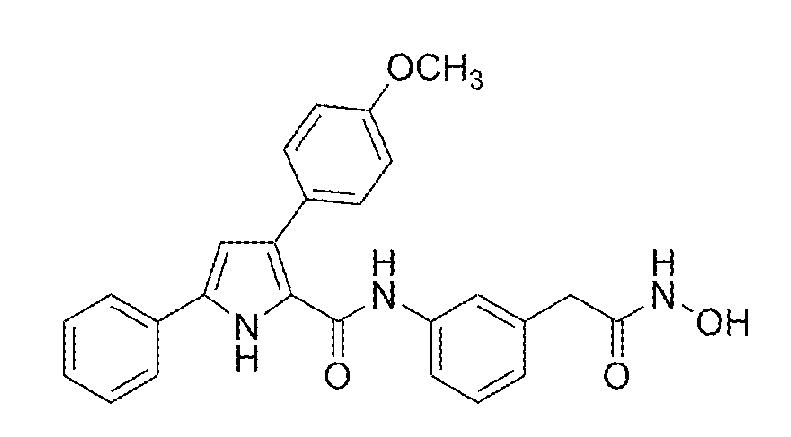 [9] N-{4-[(Hydroxyamino)carbonyl]benzyl}-5-(4-hydroxyphenyl)-3-(3-thienyl)-1H-pyrrole-2-carboxamide, with the following structural formula:
 [10] 3-(3-Furyl)-N-{4-[(hydroxyamino)carbonyl]benzyl}-5-(4-hydroxyphenyl)-1H-pyrrole-2-carboxamide, with the following structural formula:
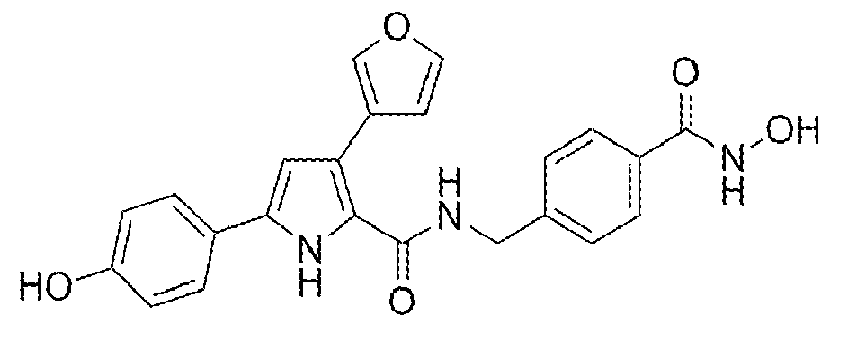 [11] N-(4-{[(2-Aminophenyl)amino]carbonyl}benzyl)-3-(4-methoxyphenyl)-5-phenyl-1H-pyrrole-2-carboxamide, with the following structural formula:
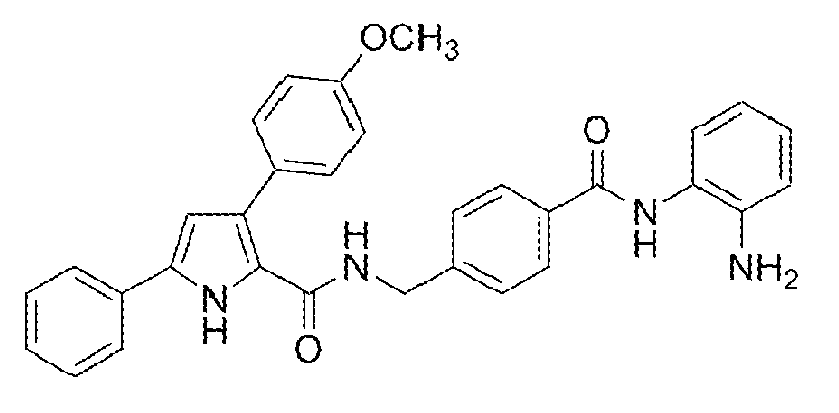 [12] 3-(4-Methoxyphenyl)-5-phenyl-N-(4-{[(2-sulkfanylphenyl)amino]carbonyl} benzyl)-1H-pyrrole-2-carboxamide, with the following structural formula:
 [13] 3-(4-Methoxyphenyl)-5-phenyl-N-(4-{[(2-sulfanylethyl)amino]carbonyl} benzyl)-1 H-pyrrole-2-carboxamide, with the following structural formula:
 [14] 3-(4-Methoxyphenyl)-5-phenyl-N-{4-[(pyridin-2-ylamino)carbonyl]benzyl}-1H-pyrrole-2-carboxamide, with the following structural formula:
 [15] 3-(4-Methoxyphenyl)-5-phenyl-N-{4-[(pyrimidin-2-ylamino)carbonyl] benzyl}-1 H-pyrrole-2-carboxamide, with the following structural formula:or a salt, solvate or prodrug thereof.
- Process for the preparation of a compound of general formula (Ia):
 a) A compound of formula (II);
 b) A compound of formula (III),
 c) At least one reagent for the activation of the carboxyl group; andd) A tertiary amine,to obtain a compound of general formula (IV):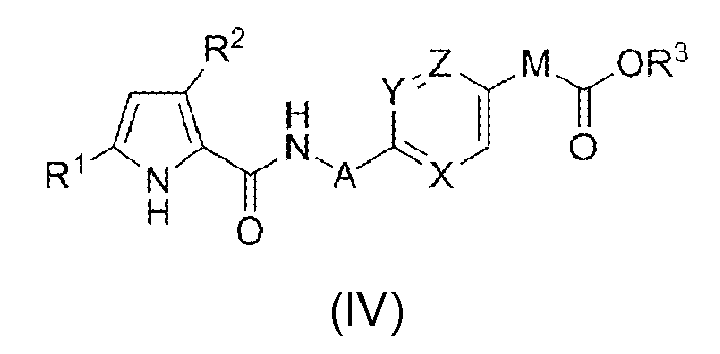
- Process for the preparation of a compound of general formula (I), or a salt, solvate or prodrug thereof, as defined in any of claims 1-8, that comprises:a) preparing a compound of general formula (IV) as described in claim 9,
 b) subjecting the mentioned compound to a hydrolysis reaction, to yield a compound of general formula (V):
 c) reacting the compound of formula (V) with a compound of general formula (VI):
H2N-W (VI),
in the presence of a reagent for the activation of the carboxyl group, an organic solvent and a tertiary amine,
wherein R1, R2, A, M, X, Y, Z and W have the meaning given in claim 1. - Process for the preparation of a compound of general formula (I), or a salt, solvate or prodrug thereof, as defined in any of claims 1-8, which comprises the reaction of a mixture comprising:a) A compound of general formula (II);
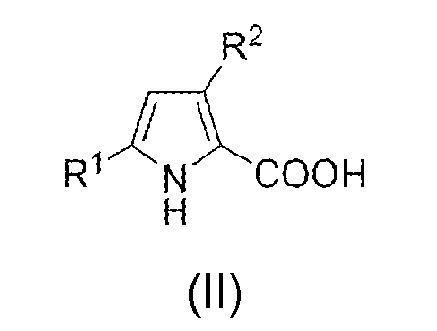 b) A compound of general formula (VII),
 c) At least one reagent for the activation of the carboxyl group; andd) A tertiary amine
 - Procedure for the preparation of a compound of general formula (II),
 a) Reacting a α,β-unsaturated carbonylic compound with the following formula (VIII):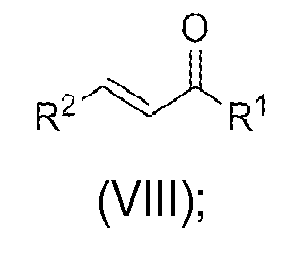

 b) Subjecting the mentioned compound of formula (X) to an oxidation reaction to yield a compound of general formula (XI)
 c) Treating the mentioned esters of general formula (XI) with ammonium hydroxide or an ammonium salt of an aliphatic carboxylic acid of less than 5 carbon atoms, and subsequent alkaline hydrolysis.
 - Compound of formula (I) according to any of claims 1 to 8, or a pharmaceutically acceptable salt, solvate or prodrug thereof, for use as a medicament.
- Compound of formula (I) according to any of claims 1 to 8, or a pharmaceutically acceptable salt, solvate or prodrug thereof, for use as a medicament for the treatment of cancer.
- Pharmaceutical composition that comprises at least a compound of formula (I) according to any of claims 1 to 8, or a pharmaceutically acceptable salt, solvate or prodrug thereof, and a pharmaceutically acceptable excipient.
Priority Applications (18)
| Application Number | Priority Date | Filing Date | Title |
|---|---|---|---|
| EP09382193A EP2305643A1 (en) | 2009-10-02 | 2009-10-02 | New histone deacetylase inhibitors based simultaneously on trisubstituted 1h-pyrroles and aromatic and heteroaromatic spacers |
| EP10763676.3A EP2483242B1 (en) | 2009-10-02 | 2010-10-01 | New histone deacetylase inhibitors based simultaneously on trisubstituted 1h-pyrroles and aromatic and heteroaromatic spacers |
| PL10763676T PL2483242T3 (en) | 2009-10-02 | 2010-10-01 | New histone deacetylase inhibitors based simultaneously on trisubstituted 1h-pyrroles and aromatic and heteroaromatic spacers |
| PT107636763T PT2483242E (en) | 2009-10-02 | 2010-10-01 | New histone deacetylase inhibitors based simultaneously on trisubstituted 1h-pyrroles and aromatic and heteroaromatic spacers |
| AU2010302572A AU2010302572B2 (en) | 2009-10-02 | 2010-10-01 | New histone deacetylase inhibitors based simultaneously on trisubstituted 1H-pyrroles and aromatic and heteroaromatic spacers |
| HK13100810.3A HK1173450B (en) | 2009-10-02 | 2010-10-01 | New histone deacetylase inhibitors based simultaneously on trisubstituted 1h-pyrroles and aromatic and heteroaromatic spacers |
| IN3129DEN2012 IN2012DN03129A (en) | 2009-10-02 | 2010-10-01 | |
| ES10763676.3T ES2452868T3 (en) | 2009-10-02 | 2010-10-01 | New histone deacetylase inhibitors based simultaneously on 1H-trisubstituted pyrroles and aromatic and heteroaromatic spacers |
| KR1020127011407A KR101754940B1 (en) | 2009-10-02 | 2010-10-01 | New histone deacetylase inhibitors based simultaneously on trisubstituted 1h-pyrroles and aromatic and heteroaromatic spacers |
| RU2012117885/04A RU2549885C2 (en) | 2009-10-02 | 2010-10-01 | 2,3,5-trisubstituted pyrrols, based pharmaceutical composition and drug, method for preparing compounds (versions) |
| PCT/EP2010/064653 WO2011039353A1 (en) | 2009-10-02 | 2010-10-01 | New histone deacetylase inhibitors based simultaneously on trisubstituted 1h-pyrroles and aromatic and heteroaromatic spacers |
| BR112012007411A BR112012007411B8 (en) | 2009-10-02 | 2010-10-01 | compound, process for its preparation and pharmaceutical composition containing it |
| US13/499,839 US8685992B2 (en) | 2009-10-02 | 2010-10-01 | Histone deacetylase inhibitors based simultaneously on trisubstituted 1H-pyrroles and aromatic and heteroaromatic spacers |
| CA2776351A CA2776351C (en) | 2009-10-02 | 2010-10-01 | New histone deacetylase inhibitors based simultaneously on trisubstituted 1h-pyrroles and aromatic and heteroaromatic spacers |
| JP2012531445A JP5746185B2 (en) | 2009-10-02 | 2010-10-01 | Novel histone deacetylase inhibitors based simultaneously on trisubstituted 1H-pyrroles and aromatic and heteroaromatic spacers |
| MX2012003988A MX2012003988A (en) | 2009-10-02 | 2010-10-01 | New histone deacetylase inhibitors based simultaneously on trisubstituted 1h-pyrroles and aromatic and heteroaromatic spacers. |
| CN201080052814.XA CN102648177B (en) | 2009-10-02 | 2010-10-01 | New histone deacetylase inhibitors based simultaneously on trisubstituted 1H-pyrroles and aromatic and heteroaromatic spacers |
| IL218995A IL218995A (en) | 2009-10-02 | 2012-04-02 | 2, 3, 5-trisubstituted 1h-pyrrole derivatives and pharmaceutical compositions comprising them |
Applications Claiming Priority (1)
| Application Number | Priority Date | Filing Date | Title |
|---|---|---|---|
| EP09382193A EP2305643A1 (en) | 2009-10-02 | 2009-10-02 | New histone deacetylase inhibitors based simultaneously on trisubstituted 1h-pyrroles and aromatic and heteroaromatic spacers |
Publications (1)
| Publication Number | Publication Date |
|---|---|
| EP2305643A1 true EP2305643A1 (en) | 2011-04-06 |
Family
ID=41716282
Family Applications (2)
| Application Number | Title | Priority Date | Filing Date |
|---|---|---|---|
| EP09382193A Withdrawn EP2305643A1 (en) | 2009-10-02 | 2009-10-02 | New histone deacetylase inhibitors based simultaneously on trisubstituted 1h-pyrroles and aromatic and heteroaromatic spacers |
| EP10763676.3A Active EP2483242B1 (en) | 2009-10-02 | 2010-10-01 | New histone deacetylase inhibitors based simultaneously on trisubstituted 1h-pyrroles and aromatic and heteroaromatic spacers |
Family Applications After (1)
| Application Number | Title | Priority Date | Filing Date |
|---|---|---|---|
| EP10763676.3A Active EP2483242B1 (en) | 2009-10-02 | 2010-10-01 | New histone deacetylase inhibitors based simultaneously on trisubstituted 1h-pyrroles and aromatic and heteroaromatic spacers |
Country Status (16)
| Country | Link |
|---|---|
| US (1) | US8685992B2 (en) |
| EP (2) | EP2305643A1 (en) |
| JP (1) | JP5746185B2 (en) |
| KR (1) | KR101754940B1 (en) |
| CN (1) | CN102648177B (en) |
| AU (1) | AU2010302572B2 (en) |
| BR (1) | BR112012007411B8 (en) |
| CA (1) | CA2776351C (en) |
| ES (1) | ES2452868T3 (en) |
| IL (1) | IL218995A (en) |
| IN (1) | IN2012DN03129A (en) |
| MX (1) | MX2012003988A (en) |
| PL (1) | PL2483242T3 (en) |
| PT (1) | PT2483242E (en) |
| RU (1) | RU2549885C2 (en) |
| WO (1) | WO2011039353A1 (en) |
Cited By (4)
| Publication number | Priority date | Publication date | Assignee | Title |
|---|---|---|---|---|
| WO2014178606A1 (en) | 2013-04-29 | 2014-11-06 | Chong Kun Dang Pharmaceutical Corp. | Novel compounds for selective histone deacetylase inhibitors, and pharmaceutical composition comprising the same |
| EP3318256A1 (en) * | 2016-11-08 | 2018-05-09 | Quimatryx, S.L | Compounds for the treatment of autoimmune diseases |
| WO2018215799A1 (en) * | 2017-05-26 | 2018-11-29 | Oxford University Innovation Limited | Inhibitors of metallo-beta-lactamases |
| CN114634489A (en) * | 2022-04-19 | 2022-06-17 | 奎马特里克斯有限公司 | Crystalline forms |
Families Citing this family (13)
| Publication number | Priority date | Publication date | Assignee | Title |
|---|---|---|---|---|
| AU2011313853A1 (en) * | 2010-10-11 | 2013-05-02 | Auckland Uniservices Limited | Substituted benzamides and their uses |
| WO2016126726A1 (en) | 2015-02-02 | 2016-08-11 | Forma Therapeutics, Inc. | Bicyclic [4,6,0] hydroxamic acids as hdac6 inhibitors |
| WO2016126721A1 (en) | 2015-02-02 | 2016-08-11 | Forma Therapeutics, Inc. | 3-aryl-bicyclic [4,5,0] hydroxamic acids as hdac inhibitors |
| US20180251425A1 (en) * | 2015-08-17 | 2018-09-06 | University Of Mysore | 2,3,5 trisubstituted pyrrole derivatives as topoisomerase inhibitors and therapeutic uses thereof |
| EP3472131B1 (en) | 2016-06-17 | 2020-02-19 | Forma Therapeutics, Inc. | 2-spiro-5- and 6-hydroxamic acid indanes as hdac inhibitors |
| CN107793375A (en) * | 2016-08-31 | 2018-03-13 | 中国科学院上海药物研究所 | A kind of series connection of aryl 2,2 ' double thiazole class compound and its production and use |
| CN110938055A (en) * | 2018-09-21 | 2020-03-31 | 华东师范大学 | Six-membered ring formamide compound and synthesis method and application thereof |
| ES2984772T3 (en) | 2019-04-17 | 2024-10-31 | Quimatryx S L | 1,3,4-Oxadiazole derivatives as histone deacetylase inhibitors |
| CN112516142B (en) * | 2020-12-11 | 2021-10-15 | 北京华氏精恒医药科技有限公司 | Pharmaceutical composition with HDAC (Histone deacetylase) inhibitory activity, preparation method and application thereof |
| CN112225737B (en) * | 2020-12-11 | 2021-04-09 | 北京鑫开元医药科技有限公司 | Compound with HDAC (Histone deacetylase) inhibitory activity, preparation method, composition and application |
| CN116813560A (en) * | 2022-03-28 | 2023-09-29 | 上海科技大学 | Triazole amide compound, and preparation method and application thereof |
| CN114558004B (en) * | 2022-03-29 | 2023-08-11 | 奎马特里克斯有限公司 | QTX125 pharmaceutical formulations |
| CN114652715B (en) * | 2022-04-29 | 2023-04-25 | 奎马特里克斯有限公司 | Combination therapy |
Citations (3)
| Publication number | Priority date | Publication date | Assignee | Title |
|---|---|---|---|---|
| WO2005028447A1 (en) | 2003-09-22 | 2005-03-31 | S*Bio Pte Ltd | Benzimidazole derivates: preparation and pharmaceutical applications |
| WO2006108864A2 (en) * | 2005-04-15 | 2006-10-19 | Dominion Pharmakine S.L. | New nitrogenated trans-stilbene analogs, method for the obtention and medical applications thereof |
| WO2007074176A1 (en) | 2005-12-27 | 2007-07-05 | Universidad Del Pais Vasco - Euskal Herriko Unibertsitatea (Upv-Ehu) | Novel pyrrole derivatives with histone deacetylase inhibitor activity |
Family Cites Families (4)
| Publication number | Priority date | Publication date | Assignee | Title |
|---|---|---|---|---|
| UA76977C2 (en) * | 2001-03-02 | 2006-10-16 | Icos Corp | Aryl- and heteroaryl substituted chk1 inhibitors and their use as radiosensitizers and chemosensitizers |
| MXPA06005915A (en) * | 2003-12-05 | 2006-06-27 | Warner Lambert Co | N-alkyl pyrroles as hmg-coa reductase inhibitors. |
| US7754717B2 (en) * | 2005-08-15 | 2010-07-13 | Amgen Inc. | Bis-aryl amide compounds and methods of use |
| BRPI0817897A2 (en) * | 2007-11-02 | 2019-09-24 | Methylgene Inc | compound, composition, and methods for inhibiting hdac activity, and treating a disease responsive to an hdac activity inhibitor |
-
2009
- 2009-10-02 EP EP09382193A patent/EP2305643A1/en not_active Withdrawn
-
2010
- 2010-10-01 EP EP10763676.3A patent/EP2483242B1/en active Active
- 2010-10-01 IN IN3129DEN2012 patent/IN2012DN03129A/en unknown
- 2010-10-01 KR KR1020127011407A patent/KR101754940B1/en active Active
- 2010-10-01 CA CA2776351A patent/CA2776351C/en active Active
- 2010-10-01 WO PCT/EP2010/064653 patent/WO2011039353A1/en not_active Ceased
- 2010-10-01 CN CN201080052814.XA patent/CN102648177B/en active Active
- 2010-10-01 AU AU2010302572A patent/AU2010302572B2/en active Active
- 2010-10-01 US US13/499,839 patent/US8685992B2/en active Active
- 2010-10-01 RU RU2012117885/04A patent/RU2549885C2/en not_active IP Right Cessation
- 2010-10-01 BR BR112012007411A patent/BR112012007411B8/en active IP Right Grant
- 2010-10-01 JP JP2012531445A patent/JP5746185B2/en active Active
- 2010-10-01 ES ES10763676.3T patent/ES2452868T3/en active Active
- 2010-10-01 PT PT107636763T patent/PT2483242E/en unknown
- 2010-10-01 PL PL10763676T patent/PL2483242T3/en unknown
- 2010-10-01 MX MX2012003988A patent/MX2012003988A/en active IP Right Grant
-
2012
- 2012-04-02 IL IL218995A patent/IL218995A/en not_active IP Right Cessation
Patent Citations (3)
| Publication number | Priority date | Publication date | Assignee | Title |
|---|---|---|---|---|
| WO2005028447A1 (en) | 2003-09-22 | 2005-03-31 | S*Bio Pte Ltd | Benzimidazole derivates: preparation and pharmaceutical applications |
| WO2006108864A2 (en) * | 2005-04-15 | 2006-10-19 | Dominion Pharmakine S.L. | New nitrogenated trans-stilbene analogs, method for the obtention and medical applications thereof |
| WO2007074176A1 (en) | 2005-12-27 | 2007-07-05 | Universidad Del Pais Vasco - Euskal Herriko Unibertsitatea (Upv-Ehu) | Novel pyrrole derivatives with histone deacetylase inhibitor activity |
Non-Patent Citations (27)
| Title |
|---|
| A. ARRIETA ET AL., J. ORG. CHEM., vol. 72, 2007, pages 4313 |
| A. G. KAZANTSEV; L. M. THOMPSON, NATURE REV. DRUG DISCOV., vol. 7, 2006, pages 854 |
| A. MAI ET AL., J. MED. CHEM., vol. 46, 2003, pages 512 |
| A. VILLAR-GAREA; M. ESTELLER, INT. J. CANCER, vol. 112, 2004, pages 171 |
| A. ZUBIA ET AL., ONCOGENE, vol. 28, 2009, pages 1477 |
| D. OTAEGUI ET AL., CANCER CHEMOTHER. PHARM., vol. 64, 2009, pages 153 |
| D. OTAEGUI ET AL., J. CHROMATOGRAPHY B, vol. 870, 2008, pages 109 |
| G. ESTIU ET AL., J. MED. CHEM., vol. 51, 2008, pages 2898 |
| GREEN T.W. ET AL.: "Protective Groups in Organic Synthesis", 1999, JOHN WILEY & SONS |
| J. C. WONG ET AL., J. AM. CHEM. SOC., vol. 125, 2003, pages 5586 |
| J. E. BOLDEN ET AL., NATURE REV. DRUG DISCOV., vol. 5, 2006, pages 769 |
| K. B. GLASER, BIOCHEM. PHARMACOL., vol. 74, 2007, pages 659 |
| K. V. BUTLER; A. P. KOZIKOWSKI, CURR. PHARM. DESIGN, vol. 14, 2008, pages 505 |
| L. PAN ET AL., CELL. MOL. IMMUNOL., vol. 4, 2007, pages 337 |
| M. HABERLAND ET AL., NATURE REV. GENETICS, vol. 10, 2009, pages 32 |
| M. PARIS ET AL., J. MED. CHEM., vol. 51, 2008, pages 1505 |
| P. A. MARKS ET AL., NATURE REV. CANCER, vol. 1, 2001, pages 194 |
| P. GALLINARI ET AL., CELL RES., vol. 17, 2007, pages 195 |
| S. INOUE ET AL., CANCER RES., vol. 66, 2006, pages 6785 |
| S. MASSA ET AL., J. MED. CHEM., vol. 33, 1990, pages 2845 |
| S. MASSA ET AL., J. MED. CHEM., vol. 44, 2001, pages 2069 |
| S. ROPERO; M. ESTELLER, MOL. ONCOL., vol. 1, 2007, pages 19 |
| T. A. MILLER ET AL., J. MED. CHEM., vol. 46, 2003, pages 5097 |
| T. C. KARAGIANNIS; A. EI-OSTA, LEUKEMIA, vol. 21, 2007, pages 61 |
| T. SUZUKI; N. MIYATA, CURR. MED. CHEM., vol. 12, 2005, pages 2867 |
| Y. DAI ET AL., BIOORG. MED. CHEM. LETT., vol. 13, 2003, pages 1897 |
| Y. ZHANG ET AL., CURR. MED. CHEM., vol. 15, 2008, pages 2840 |
Cited By (9)
| Publication number | Priority date | Publication date | Assignee | Title |
|---|---|---|---|---|
| WO2014178606A1 (en) | 2013-04-29 | 2014-11-06 | Chong Kun Dang Pharmaceutical Corp. | Novel compounds for selective histone deacetylase inhibitors, and pharmaceutical composition comprising the same |
| EP2991982A4 (en) * | 2013-04-29 | 2016-09-14 | Chong Kun Dang Pharm Corp | NOVEL COMPOUNDS FOR SELECTIVE HISTONE DEACETYLASE INHIBITORS AND PHARMACEUTICAL COMPOSITION COMPRISING THE SAME |
| US9878986B2 (en) | 2013-04-29 | 2018-01-30 | Chong Kun Dang Pharmaceutical Corp. | Compounds for selective histone deacetylase inhibitors, and pharmaceutical composition comprising the same |
| EP3318256A1 (en) * | 2016-11-08 | 2018-05-09 | Quimatryx, S.L | Compounds for the treatment of autoimmune diseases |
| WO2018087082A1 (en) * | 2016-11-08 | 2018-05-17 | Quimatryx, S.L. | Compounds for the treatment of autoimmune diseases |
| WO2018215799A1 (en) * | 2017-05-26 | 2018-11-29 | Oxford University Innovation Limited | Inhibitors of metallo-beta-lactamases |
| US11413272B2 (en) | 2017-05-26 | 2022-08-16 | Oxford University Innovation Limited | Inhibitors of metallo-beta-lactamases |
| CN114634489A (en) * | 2022-04-19 | 2022-06-17 | 奎马特里克斯有限公司 | Crystalline forms |
| WO2023202787A1 (en) * | 2022-04-19 | 2023-10-26 | Quimatryx, S.L. | Crystalline forms |
Also Published As
| Publication number | Publication date |
|---|---|
| MX2012003988A (en) | 2012-07-23 |
| IL218995A0 (en) | 2012-06-28 |
| US20120196885A1 (en) | 2012-08-02 |
| CA2776351C (en) | 2017-10-31 |
| KR20120091176A (en) | 2012-08-17 |
| ES2452868T3 (en) | 2014-04-03 |
| WO2011039353A1 (en) | 2011-04-07 |
| IN2012DN03129A (en) | 2015-09-18 |
| US8685992B2 (en) | 2014-04-01 |
| RU2012117885A (en) | 2013-11-10 |
| CN102648177A (en) | 2012-08-22 |
| JP5746185B2 (en) | 2015-07-08 |
| BR112012007411B1 (en) | 2020-12-15 |
| AU2010302572A8 (en) | 2012-05-24 |
| BR112012007411A2 (en) | 2016-12-06 |
| RU2549885C2 (en) | 2015-05-10 |
| AU2010302572A1 (en) | 2012-05-17 |
| EP2483242A1 (en) | 2012-08-08 |
| CN102648177B (en) | 2015-01-07 |
| IL218995A (en) | 2016-11-30 |
| EP2483242B1 (en) | 2013-12-11 |
| BR112012007411B8 (en) | 2021-05-25 |
| JP2013506637A (en) | 2013-02-28 |
| CA2776351A1 (en) | 2011-04-07 |
| HK1173450A1 (en) | 2013-05-16 |
| AU2010302572B2 (en) | 2016-10-20 |
| PT2483242E (en) | 2014-03-17 |
| PL2483242T3 (en) | 2014-05-30 |
| KR101754940B1 (en) | 2017-07-06 |
Similar Documents
| Publication | Publication Date | Title |
|---|---|---|
| AU2010302572B2 (en) | New histone deacetylase inhibitors based simultaneously on trisubstituted 1H-pyrroles and aromatic and heteroaromatic spacers | |
| JP4481344B2 (en) | Chroman-substituted benzimidazole derivatives and their use as acid pump inhibitors | |
| ES2402362T3 (en) | Proton-pump inhibitor | |
| KR101559597B1 (en) | 5-membered heterocyclic compound | |
| EP2508510A1 (en) | Hydroxyphenyl pyrrole compounds containing an hydroxamic acid as hdac inhibitors and medicinal applications thereof | |
| ES2319529T3 (en) | NEW DERIVATIVES OF BENCIMIDAZOL. | |
| JP2011502133A (en) | Inhibitors of histone deacetylase | |
| ES2335519T3 (en) | PIRROL DERIVATIVES THAT HAVE ANALOGONIST ACTIVITY OF THE CRTH2 RECEIVER. | |
| JP2009542752A (en) | Substituted isoxazolines, pharmaceutical compositions containing them, methods for preparing them, and uses thereof | |
| WO2006102760A1 (en) | Inhibitors of histone deacetylase | |
| JP2010508288A (en) | Heterocyclic amide compounds useful as kinase inhibitors | |
| JP2008525434A (en) | New compounds | |
| CN101389610B (en) | Novel benzimidazole derivatives as vanilloid receptor 1 (vrl) inhibitors | |
| WO2010032461A1 (en) | Nitrogen-containing fused ring compound | |
| JP2010514824A (en) | Substituted N- (4-cyano-1H-pyrazol-3-yl) methylamine derivatives, their preparation and their therapeutic use | |
| HK1173450B (en) | New histone deacetylase inhibitors based simultaneously on trisubstituted 1h-pyrroles and aromatic and heteroaromatic spacers | |
| WO2024033293A1 (en) | Difluoro- and trifluoro-acetyl hydrazides as selective hdac6 inhibitors | |
| AU2008318244B2 (en) | Inhibitors of histone deacetylase | |
| HK1196614B (en) | Triazolone compounds as mpges-1 inhibitors | |
| HK1121755B (en) | New compounds iii |
Legal Events
| Date | Code | Title | Description |
|---|---|---|---|
| PUAI | Public reference made under article 153(3) epc to a published international application that has entered the european phase |
Free format text: ORIGINAL CODE: 0009012 |
|
| AK | Designated contracting states |
Kind code of ref document: A1 Designated state(s): AT BE BG CH CY CZ DE DK EE ES FI FR GB GR HR HU IE IS IT LI LT LU LV MC MK MT NL NO PL PT RO SE SI SK SM TR |
|
| STAA | Information on the status of an ep patent application or granted ep patent |
Free format text: STATUS: THE APPLICATION IS DEEMED TO BE WITHDRAWN |
|
| 18D | Application deemed to be withdrawn |
Effective date: 20111006 |