EP2298362B1 - Responsive paramagnetic MRI contrast agents - Google Patents
Responsive paramagnetic MRI contrast agents Download PDFInfo
- Publication number
- EP2298362B1 EP2298362B1 EP10176761A EP10176761A EP2298362B1 EP 2298362 B1 EP2298362 B1 EP 2298362B1 EP 10176761 A EP10176761 A EP 10176761A EP 10176761 A EP10176761 A EP 10176761A EP 2298362 B1 EP2298362 B1 EP 2298362B1
- Authority
- EP
- European Patent Office
- Prior art keywords
- iii
- paramagnetic
- protons
- cest
- bisdotamgly
- Prior art date
- Legal status (The legal status is an assumption and is not a legal conclusion. Google has not performed a legal analysis and makes no representation as to the accuracy of the status listed.)
- Expired - Lifetime
Links
Images

Classifications
-
- A—HUMAN NECESSITIES
- A61—MEDICAL OR VETERINARY SCIENCE; HYGIENE
- A61K—PREPARATIONS FOR MEDICAL, DENTAL OR TOILETRY PURPOSES
- A61K49/00—Preparations for testing in vivo
- A61K49/0002—General or multifunctional contrast agents, e.g. chelated agents
-
- A—HUMAN NECESSITIES
- A61—MEDICAL OR VETERINARY SCIENCE; HYGIENE
- A61K—PREPARATIONS FOR MEDICAL, DENTAL OR TOILETRY PURPOSES
- A61K49/00—Preparations for testing in vivo
- A61K49/06—Nuclear magnetic resonance [NMR] contrast preparations; Magnetic resonance imaging [MRI] contrast preparations
- A61K49/08—Nuclear magnetic resonance [NMR] contrast preparations; Magnetic resonance imaging [MRI] contrast preparations characterised by the carrier
- A61K49/10—Organic compounds
- A61K49/101—Organic compounds the carrier being a complex-forming compound able to form MRI-active complexes with paramagnetic metals
- A61K49/106—Organic compounds the carrier being a complex-forming compound able to form MRI-active complexes with paramagnetic metals the complex-forming compound being cyclic, e.g. DOTA
Definitions
- This invention refers to a method based on CEST procedure for the in vivo, ex vivo , or in vitro determination of physical or chemical parameters of diagnostic interest wherein said parameter is pH comprising the use of at least one CEST responsive paramagnetic contrast agent.
- CAs Magnetic Resonance Imaging
- MRI Magnetic Resonance Imaging
- contrast agents chemicals able to promote marked changes in the relaxation rates of the tissue protons.
- CAs are classified as positive or negative agents.
- the positive CAs are represented by paramagnetic complexes, mostly containing Gd(III) or Mn(II) ions, which affect the relaxation rates of the bulk water through the exchange of the water molecules in their coordination spheres ( Caravan P, et al. Chem Rev 1999, 99:2293-2352 ; the Chemistry of Contrast Agents in Medical Magnetic Resonance Imaging.
- T 1 and T 2 Chichester, UK: John Wiley & Sons; 2001. p 45-120 ). Their effect is similar on T 1 and T 2 but, being T 1 usually significantly longer than T 2 in most biological tissues, their effect is more often exploited in T 1 -weighted images, thus resulting in brighter spots in the images.
- CEDST Chemical Exchange Dependent Saturation Transfer
- Suitable contrast agents for this technique include at least one chemically exchangeable proton.
- the efficacy of most prior art contrast agents is related to the different cellular uptake of the administered complex compound or to the different distribution thereof through the extracellular spaces of the targeted organ or tissue. No contrast is detectable if the uptake between the target and the surrounding tissue is similar.
- the prior art contrast agents are expressly addressed to the production of images of the targeted tissue or organ and, generally, are unable to act as reporter of specific physical or chemical parameters of the examined tissue which could represent a quantitative assessment of a physio/pathological state.
- WO 00/66180 discloses a method for enhancing the contrast of MRI images which comprise the administration of a CEST MRI contrast agent including at least one chemical group endowed with appropriate proton exchange and chemical shift properties to function effectively for performing CEST MRI analyses in vivo as well as for the the determination of physical or chemical parameters such as pH and temperature both in vivo and in vitro.
- a ratiometric method for the pH measurement which is independent on the contrast agent concentration is also disclosed.
- All the agents disclosed by Balaban and co-workers as useful to practice the claimed method are diamagnetic organic molecules having OH or NH exchangeable protons.
- the mobile protons of a contrast agent for a CEST application must possess a fast exchange rate ( k ex ) with water protons, but slower than the coalescence condition, wherein this condition is suitably reached when k ex ⁇ v ⁇ 1/2 ⁇ , where ⁇ v is the chemical shift separation in Hz between the two exchanging pools.
- k ex fast exchange rate
- ⁇ v the chemical shift separation in Hz between the two exchanging pools.
- larger ⁇ v values enable the exploitation of higher k ex values, thus resulting in an enhanced CEST effect.
- the diamagnetic systems claimed by Balaban are advantageously endowed with adequately short relaxation rates, but the chemical shifts separation from their NH or OH exchangeable protons signals and the bulk water signal is only within 1-5 ppm. So, the saturation of these mobile protons, avoiding the saturation of the bulk water or protein bound water, could actually present a considerable difficulty. Beside the small ⁇ v values, a further limit of such diamagnetic agents is represented by the high concentration thereof which is usually required to generate a sufficiently large CEST effect, resulting in a high probability of toxic or physiological effect in vivo.
- WO 02/43775 is prior-art according to Art. 54(3) EPC. It discloses paramagnetic metal ion-based macrocyclic CEST contrast agents which comprises a tetraazacyclododecane ligand wherein pendent arms includes amide groups, a paramagnetic metal ion coordinated to the ligand and a water molecule associated with it. Said agents are reported to be useful for producing image contrast based on a magnetization transfer mechanism.
- the present invention is defined in present claims 1-6 and relates to a method based on the CEST procedure for the in vivo, in vitro or ex vivo determination of a physical or chemical parameter of diagnostic interest wherein said parameter is pH which includes the administration of a responsive paramagnetic CEST contrast agent.
- the paramagnetic contrast agent for use in the method of the invention is a responsive agent, i.e. an agent which combines the characterising features of a CEST agent with the fact that the saturation transfer effect that it enables is sensitive to the physical or chemical parameter of diagnostic interest, wherein said parameter is pH. Accordingly, the contrast agent for use in the method of the invention is a paramagnetic compound which is able, to generate a saturation transfer (ST) effect that only correlates to the pH.
- ST saturation transfer
- a CEST paramagnetic contrast agent is administered which is endowed with at least two magnetically different mobile protons or proton pools allowing the registration of CEST MR image responsive for the pH and independent on the administered contrast agent concentration.
- the responsive paramagnetic agent for use in the method of the invention includes a chelated complex of a paramagnetic metal ion.
- Preferred paramagnetic metal ions are selected in the group consisting of: iron (II) (high spin), iron (III), cobalt (II), copper (II), nickel (II), praseodymium (III), neodymium (III), dysprosium (III), erbium (III), terbium (III), holmium (III), thulium (III), ytterbium (III), and europium (III).
- the chelating ligand of the paramagnetic complex for the use in the method of the invention is as defined in claim 1.
- the ST effect shown by the lanthanide chelated complex according to the invention is markedly sensitive to the pH wherein this allows their advantageous use in the method of the invention for the determination of said parameters either in vivo or in vitro.
- the irradiation at ⁇ off allows the evaluation of the direct saturation effects on the water signal.
- R 1irr is conceptually different from R 1 , it is likely that R 1irr is higher for paramagnetic systems than diamagnetic agent and, furthermore, it depends on both the concentration of the metal complex and the k ex value.
- Equation 1 indicates that the ST efficiency depends upon the concentration of the exchanging protons and therefore on the concentration of the contrast agent ( n[C] ). This finding makes the measurement of the diagnostic parameter of interest dependent on the contrast agent concentration. So, while no problems occur when the determination of said parameters is performed in vitro, where the concentration may be determined, an accurate in vivo determination thereof without knowing the local concentration of the administered agent is not possible.
- the relationship between the concentration of the paramagnetic agent and the ST effect is not linear, unlike what is commonly observed for the relaxation enhancing ability of the conventional Gd(III)-based contrast agents.
- This problem may be solved by considering two pools of magnetically different labile protons whose ST effect shows a different dependence from the physico-chemical parameter of interest according to the method of the invention.
- a single paramagnetic compound having at least two magnetically non equivalent pools of mobile protons in exchange with the bulk water protons is used.
- the selective irradiation is performed on the two different pools of mobile protons.
- a ratiometric method is then exploited in order to remove the dependence of the ST effect from the absolute concentration of the administered contrast agent and to allow the determination of the physico-chemical parameter of interest both in vitro (ex vivo ) and in vivo independently from the local concentration of the agent.
- a contrast agent for use in this method includes a paramagnetic complex or a physiologically acceptable salt thereof wherein the chelating ligand consist of a dimeric ligand which includes two equal chelating units each of them is endowed with at least one pool of mobile protons and the two metal ions are suitably selected among the transition or Ln(III) metal ions of the present claim 1 on the basis of their ability to induce a different ST effect through the involvement of the two sets of mobile protons pools.
- the mobile protons pools are preferably represented: the first, by the water protons coordinated to the metal ion of the first moiety, and the second by mobile protons bound to nitrogen, atoms of the second moiety.
- the mobile protons pools belong, the first to the water protons coordinated to the Eu(III) metal ion and the second to the amide groups coordinated to the Yb(III) of the dimeric complex compound [Eu-Yb(bisDOTAMGLy)] of formula
- the (bisDOTAMGLy) dimeric chelating ligand as well as chelated complexes thereof with two transition or Ln(III) paramagnetic metal ions are new and constitute a further object of the present invention.
- a responsive paramagnetic CEST contrast agent is administered endowed with at least two different exchangeable proton or protons pools of which the first is only responsive for the physical or chemical parameter of diagnostic interest and the second shows a CEST effect which only depends on the local agent concentration.
- the selective irradiation is performed of the two different pools of mobile protons and the determination of the physical or chemical parameter of interest both in vitro (ex vivo) and in vivo is obtained which is independent on the local contrast agent concentration.
- An object of the invention is the use of a CEST contrast agent comprising a paramagnetic chelate complex as defined in the present claim 1 for the preparation of a pharmaceutical composition for the determination of the pH in a human or animal body organ, fluid or tissue by use of CEST MR Imaging.
- paramagnetic compound is the [Eu-Yb(bisDOTAMGLy)] chelated complex.
- the invention relates to a pharmaceutical composition which includes, together with a physiologically tolerable carrier, a CEST contrast agent comprising a paramagnetic chelate complex, as defined in the present claims 4 or 5 or a physiologically acceptable salt thereof.
- This pharmaceutical composition preferably includes, together with a physiologically tolerable carrier, [Eu-Yb(bisDOTAMGLy)] or a physiologically acceptable salt thereof.
- the pharmaceutical preparations according to the invention can be suitably injected intravasally (for instance intravenously, intraarterially, intraventricularly, and so on) or used by way of intrathecal, intraperitoneal, intralymphatic, intracavital, oral or enteral administration.
- the injectable pharmaceutical formulations are typically prepared by dissolving the active ingredient(s) and the pharmaceutically acceptable excipients in water of suitable purity from the pharmacological point of view.
- the resulting formulation is suitably sterilised and can be use as such or it can alternatively be lyophilised and reconstructed before the use.
- formulations can be administered in concentrations depending on the diagnostic requirements, at a dose ranging from 0.01 to 0.5 mmol/kg body weight.
- R 1irr The presence of two R 1irr values, one for each pool of labile proton irradiated, is due to the fact that, in principle, R lirr depends on the exchange rate between the bulk water and the irradiated mobile protons which is different for the two proton pools.
- a good candidate as pH responsive CEST agent may be any paramagnetic complex compound which includes a Ln(III) metal ion or a transition metal and a chelating ligand which comprises at least one mobile proton whose chemical exchange with the water protons undergoes a basic or acid catalysis.
- any paramagnetic complex whose structure changes according to the pH in such a way to induce a chemical shift modification of the mobile proton(s) thereof can equally be used as pH responsive CEST agent.
- Suitable pH responsive CEST agents further include all the paramagnetic complex compounds wherein the number of water molecules coordinated to the paramagnetic metal centre changes depending on the pH and a change of the relaxation rate of the bulk water protons occurs.
- a pH responsive agent of this kind is represented, for example, by a Ln(III) chelated complex of the chelating Ligand H of formula
- the Ln(III) ion is nona-coordinated and two mobile water molecules are bound to the metal centre.
- the sulphonamide group is deprotonated it becomes able to coordinate the metal ion which result to be octa-coordinated (no water molecules coordinated to it).
- the chemical shift of the 6 exchangeable amide protons on the three pendent arms depends on the molar ratio between the protonated and the deprotonated form of the complex, that is to say with the pH of the solution. In this way the saturation transfer effect upon irradiation of the amide protons of the complex (in the protonated or in the deprotonated form) is sensitive to the pH of the surrounding medium.
- a further example of pH responsive paramagnetic CEST agent is represented by the Eu-DOTAM-hydrazide (ligand B) chelated complex.
- ligand B a proton dissociation, occurring at pH above 6.5, causes a significant acceleration of the exchange rate of the water molecule bound to Eu(III) ion on passing from the condition of slow exchange ( k ex ⁇ ⁇ 1/2 ⁇ ) at pH ⁇ 6.5 to the coalescence ( k ex ⁇ > 1/2 ⁇ ) between the two signals.
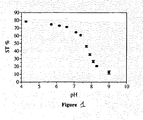
- the ST observed upon irradiation at the resonance frequency of the water protons bound to the Eu(III) ion decreases at pH values higher than 6.5 ( Figure 1 ).
- the experiment has been carried out by irradiating the two pools of mobile protons for 2 seconds with the same modality of irradiation (selective e-burp pulses) reported above for this complex.
- the chelating ligand was synthesized according to the following steps:
- the saponification of the tetraester was carried out in 200 mL of ethanol/water (1:1) solution at 60°C. NaOH 1 N (232 mL) was added to maintain the pH of the solution constant (pH 11) for almost 45'. The reaction was complete after 1 h heating. The resulting orange solution was cooled down and acidified at pH 2.2 with HCl. The DOTAM-Gly ligand was separated from such solution by liquid chromatography (solid-phase: Amberlite ® XAD-1600; eluent: water). Yield: 88%. The ligand has been characterized by MALDI-TOF Mass Spectrometry (calc. for C 32 H 40 N 8 O 12 , 632.63 amu; found 633.55 (MH + )).
- the Ln(III)-DOTAM-Gly complexes were prepared by mixing equimolar amount (0.3 mmol) of the ligand and the corresponding Ln(III) chloride in 10 mL of water (room temperature, pH 8, 30').
- the recovered chelate complexes have been characterized by means of their 1 H-NMR spectra. The recovered data were consistent with the expected structures.
- the high resolution work has been carried out on a Bruker Avance 300 spectrometer operating at 7.05 T.
- the saturation transfer experiments were carried out at 312°K by irradiating the sample with a continuous wave presaturation square pulse (power of 1050 Hz) or by using a proper train of e-burp1 selective pulses. Four scans and 4 dummy scans were used for all the experiments.
- NMR imaging was performed using a 7.05 T Bruker PharmaScan having actively shielded gradients 300 mT/m) and running ParaVison 2.1.1 software.
- Standard PDW proto density weighted images
- SE spin-echo imaging sequence (using Hermite shaped 90° and 180° pulses).
- a 2.25 Watt square shaped saturation pulse was applied for 4 s in the pre-delay of the spin-echo sequence. Two images were acquired, one with saturation of the amide protons at - 4794 Hz from bulk water protons and the other with the rf irradiation offset at 4794 Hz.
Landscapes
- Health & Medical Sciences (AREA)
- Epidemiology (AREA)
- Life Sciences & Earth Sciences (AREA)
- Animal Behavior & Ethology (AREA)
- General Health & Medical Sciences (AREA)
- Public Health (AREA)
- Veterinary Medicine (AREA)
- Nuclear Medicine, Radiotherapy & Molecular Imaging (AREA)
- Chemical & Material Sciences (AREA)
- Medicinal Chemistry (AREA)
- Radiology & Medical Imaging (AREA)
- Medicines Containing Antibodies Or Antigens For Use As Internal Diagnostic Agents (AREA)
- Magnetic Resonance Imaging Apparatus (AREA)
- Nitrogen Condensed Heterocyclic Rings (AREA)
Abstract
Description
- This invention refers to a method based on CEST procedure for the in vivo, ex vivo, or in vitro determination of physical or chemical parameters of diagnostic interest wherein said parameter is pH comprising the use of at least one CEST responsive paramagnetic contrast agent.
- It is now well established that the potential of Magnetic Resonance Imaging (MRI) procedures can be further enhanced when this diagnostic modality is applied in conjunction with the administration of contrast agents (CAs), i.e. chemicals able to promote marked changes in the relaxation rates of the tissue protons. According to the major effects they produce on images, CAs are classified as positive or negative agents. The positive CAs are represented by paramagnetic complexes, mostly containing Gd(III) or Mn(II) ions, which affect the relaxation rates of the bulk water through the exchange of the water molecules in their coordination spheres (Caravan P, et al. Chem Rev 1999, 99:2293-2352; the Chemistry of Contrast Agents in Medical Magnetic Resonance Imaging. Chichester, UK: John Wiley & Sons; 2001. p 45-120). Their effect is similar on T1 and T2 but, being T1 usually significantly longer than T2 in most biological tissues, their effect is more often exploited in T1-weighted images, thus resulting in brighter spots in the images.
- On the contrary, negative CAs are used to shorten T2, leading to an improved contrast by reducing the water signal in T2-weighted images.
- Furthermore, it was early reported that chemicals containing mobile protons may act as T2-agents through the reduction of the water proton relaxation time via exchange processes (Aime S et al., Invest Radiol 1988; 23(Suppl 1):S267-S2706).
- A different way to efficiently reduce water signal occurs when a proper radiofrequency pulse (rf) is applied at the resonance frequency of an exchangeable proton saturating it. This results in a net decrease of the bulk water signal intensity owing to a saturation transfer effect.
- This alternative MRI contrast-enhancing technique is named Chemical Exchange Dependent Saturation Transfer (CEDST or, more commonly, CEST) (Balaban RS.: Young IR, editor. Methods in Biomedical Magnetic Resonance Imaging and Spectroscopy. Chichester, UK: John Wiley & Sons; 2000. Vol.1. p 661-6667).
- Suitable contrast agents for this technique include at least one chemically exchangeable proton.
- The efficacy of most prior art contrast agents, either the conventional T1 and T2-reducing MRI contrast agents or the CEST agents, is related to the different cellular uptake of the administered complex compound or to the different distribution thereof through the extracellular spaces of the targeted organ or tissue. No contrast is detectable if the uptake between the target and the surrounding tissue is similar.
- Moreover, the prior art contrast agents are expressly addressed to the production of images of the targeted tissue or organ and, generally, are unable to act as reporter of specific physical or chemical parameters of the examined tissue which could represent a quantitative assessment of a physio/pathological state.
- Otherwise,
WO 00/66180 - All the agents disclosed by Balaban and co-workers as useful to practice the claimed method are diamagnetic organic molecules having OH or NH exchangeable protons.
- In general, the mobile protons of a contrast agent for a CEST application must possess a fast exchange rate (kex ) with water protons, but slower than the coalescence condition, wherein this condition is suitably reached when kex Δv ∼1/2π, where Δv is the chemical shift separation in Hz between the two exchanging pools. In this context, larger Δv values enable the exploitation of higher kex values, thus resulting in an enhanced CEST effect.
- The diamagnetic systems claimed by Balaban are advantageously endowed with adequately short relaxation rates, but the chemical shifts separation from their NH or OH exchangeable protons signals and the bulk water signal is only within 1-5 ppm. So, the saturation of these mobile protons, avoiding the saturation of the bulk water or protein bound water, could actually present a considerable difficulty. Beside the small Δv values, a further limit of such diamagnetic agents is represented by the high concentration thereof which is usually required to generate a sufficiently large CEST effect, resulting in a high probability of toxic or physiological effect in vivo.
-
WO 02/43775 - The specification cites the effect of the pH on the residence lifetime at 298K, τM 298, (τM= 1/kex) for protons associated with the amides in the pendent arms and the pH dependence of the Magnetization Transfer effect obtained while saturating two magnetically different exchangeable protons associated to the same amide group of one of claimed compounds (figure 25 and experiment 13, respectively). In particular the document discloses the chelate DOTAM-Gly with Eu3+, identified as Eu(2)-, and its use for determining the pH.
- The present invention is defined in present claims 1-6 and relates to a method based on the CEST procedure for the in vivo, in vitro or ex vivo determination of a physical or chemical parameter of diagnostic interest wherein said parameter is pH which includes the administration of a responsive paramagnetic CEST contrast agent.
- The paramagnetic contrast agent for use in the method of the invention is a responsive agent, i.e. an agent which combines the characterising features of a CEST agent with the fact that the saturation transfer effect that it enables is sensitive to the physical or chemical parameter of diagnostic interest, wherein said parameter is pH. Accordingly, the contrast agent for use in the method of the invention is a paramagnetic compound which is able, to generate a saturation transfer (ST) effect that only correlates to the pH.
- In the method according to the invention, a CEST paramagnetic contrast agent is administered which is endowed with at least two magnetically different mobile protons or proton pools allowing the registration of CEST MR image responsive for the pH and independent on the administered contrast agent concentration.
- The responsive paramagnetic agent for use in the method of the invention includes a chelated complex of a paramagnetic metal ion. Preferred paramagnetic metal ions are selected in the group consisting of: iron (II) (high spin), iron (III), cobalt (II), copper (II), nickel (II), praseodymium (III), neodymium (III), dysprosium (III), erbium (III), terbium (III), holmium (III), thulium (III), ytterbium (III), and europium (III).
- Lanthanide (III), also referred to as Ln(III), metal ions are particularly preferred.
- The chelating ligand of the paramagnetic complex for the use in the method of the invention is as defined in claim 1.
- The ST effect shown by the lanthanide chelated complex according to the invention is markedly sensitive to the pH wherein this allows their advantageous use in the method of the invention for the determination of said parameters either in vivo or in vitro.
- According to the method of the invention the amount of saturation transfer is related to the physical or chemical parameters of diagnostic interest, wherein said parameter is pH according to the following equation:

- According to this equation, the saturation transfer effect observed is conveniently quantified as (1- MS/M0) wherein MS refers to the intensity of the water signal upon irradiation at the frequency corresponding to the mobile protons resonance (νon) and M0 indicates the water signal intensity measured upon irradiation at the frequency ν off where ν off = - ν on and νwater = 0.
- The irradiation at ν off allows the evaluation of the direct saturation effects on the water signal.
- As indicated by equation 1, the ST effect is dependent on:
- the irradiation time, t;
- the pseudo first order kinetic constant rate of the irradiated protons kex ;
- the number of irradiated mobile protons n;
- the longitudinal relaxation rate of the bulk water upon irradiation of the mobile protons, R1irr ;
- the molar concentration of the paramagnetic agent, [C] and of the bulk water protons, [H2O] (111.2 M in pure water).
- One can safely assume that all the paramagnetic chelates preferred for the use in the method of the invention possess an exchangeable water molecule coordinated to the metal centre. For this reason, though R1irr is conceptually different from R1 , it is likely that R1irr is higher for paramagnetic systems than diamagnetic agent and, furthermore, it depends on both the concentration of the metal complex and the kex value.
- Equation 1 indicates that the ST efficiency depends upon the concentration of the exchanging protons and therefore on the concentration of the contrast agent (n[C]). This finding makes the measurement of the diagnostic parameter of interest dependent on the contrast agent concentration. So, while no problems occur when the determination of said parameters is performed in vitro, where the concentration may be determined, an accurate in vivo determination thereof without knowing the local concentration of the administered agent is not possible.
- The relationship between the concentration of the paramagnetic agent and the ST effect is not linear, unlike what is commonly observed for the relaxation enhancing ability of the conventional Gd(III)-based contrast agents. In fact, the steady-state value of the ST effect is determined by:

- So, in spite of the limited role played by the concentration on the efficacy of a CEST contrast agent, the precise knowledge of the local concentration of the agent is still a necessary requisite for an accurate determination in vivo of the parameter to be monitored.
- This problem may be solved by considering two pools of magnetically different labile protons whose ST effect shows a different dependence from the physico-chemical parameter of interest according to the method of the invention.
- In this method for the determination of the pH independently on the local contrast agent concentration, a single paramagnetic compound having at least two magnetically non equivalent pools of mobile protons in exchange with the bulk water protons is used.
- According to this method, the selective irradiation is performed on the two different pools of mobile protons. A ratiometric method is then exploited in order to remove the dependence of the ST effect from the absolute concentration of the administered contrast agent and to allow the determination of the physico-chemical parameter of interest both in vitro (ex vivo) and in vivo independently from the local concentration of the agent.
- A contrast agent for use in this method includes a paramagnetic complex or a physiologically acceptable salt thereof wherein the chelating ligand consist of a dimeric ligand which includes two equal chelating units each of them is endowed with at least one pool of mobile protons and the two metal ions are suitably selected among the transition or Ln(III) metal ions of the present claim 1 on the basis of their ability to induce a different ST effect through the involvement of the two sets of mobile protons pools. The mobile protons pools are preferably represented: the first, by the water protons coordinated to the metal ion of the first moiety, and the second by mobile protons bound to nitrogen, atoms of the second moiety.
- More preferably, the mobile protons pools belong, the first to the water protons coordinated to the Eu(III) metal ion and the second to the amide groups coordinated to the Yb(III) of the dimeric complex compound [Eu-Yb(bisDOTAMGLy)] of formula

- The (bisDOTAMGLy) dimeric chelating ligand as well as chelated complexes thereof with two transition or Ln(III) paramagnetic metal ions are new and constitute a further object of the present invention.
- In the method according to the invention for the determination of the pH independently on the local contrast agent concentration a responsive paramagnetic CEST contrast agent is administered endowed with at least two different exchangeable proton or protons pools of which the first is only responsive for the physical or chemical parameter of diagnostic interest and the second shows a CEST effect which only depends on the local agent concentration.
- According to this method, the selective irradiation is performed of the two different pools of mobile protons and the determination of the physical or chemical parameter of interest both in vitro (ex vivo) and in vivo is obtained which is independent on the local contrast agent concentration.
- An object of the invention is the use of a CEST contrast agent comprising a paramagnetic chelate complex as defined in the present claim 1 for the preparation of a pharmaceutical composition for the determination of the pH in a human or animal body organ, fluid or tissue by use of CEST MR Imaging.
- Preferably said paramagnetic compound is the [Eu-Yb(bisDOTAMGLy)] chelated complex.
- In a further aspect the invention relates to a pharmaceutical composition which includes, together with a physiologically tolerable carrier, a CEST contrast agent comprising a paramagnetic chelate complex, as defined in the
present claims - This pharmaceutical composition preferably includes, together with a physiologically tolerable carrier, [Eu-Yb(bisDOTAMGLy)] or a physiologically acceptable salt thereof.
- The pharmaceutical preparations according to the invention can be suitably injected intravasally (for instance intravenously, intraarterially, intraventricularly, and so on) or used by way of intrathecal, intraperitoneal, intralymphatic, intracavital, oral or enteral administration.
- The injectable pharmaceutical formulations are typically prepared by dissolving the active ingredient(s) and the pharmaceutically acceptable excipients in water of suitable purity from the pharmacological point of view. The resulting formulation is suitably sterilised and can be use as such or it can alternatively be lyophilised and reconstructed before the use.
- These formulations can be administered in concentrations depending on the diagnostic requirements, at a dose ranging from 0.01 to 0.5 mmol/kg body weight.
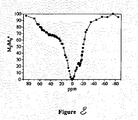
- CEST spectra of a solution containing 16 mM of Eu-DOTAM-Gly and 20 mM of Yb-DOTAM-Gly at pH 8.1 (7.05 T, 312°K, irradiation power 25 µT, irradiation time 4 s) were registered and the results are included in
Figure 2 . Interestingly, the detection of a "peak" (very broad) centred at about 50 ppm (downfield the water signal) is a clear indication of the saturation transfer occurring when the coordinated water protons of Eu-DOTAM-Gly are irradiated. - The ratiometric method on which is based the method according to the invention is derived from a re-arrangement of equation 1 and it is expressed by the following equation:

- The same equation holds also if one single compound with two pools of mobile protons is considered, but, in this case, Kconc is obviously equal to 1.
- Generally speaking, a good candidate as pH responsive CEST agent may be any paramagnetic complex compound which includes a Ln(III) metal ion or a transition metal and a chelating ligand which comprises at least one mobile proton whose chemical exchange with the water protons undergoes a basic or acid catalysis.
- Moreover, any paramagnetic complex whose structure changes according to the pH in such a way to induce a chemical shift modification of the mobile proton(s) thereof can equally be used as pH responsive CEST agent.
- Suitable pH responsive CEST agents further include all the paramagnetic complex compounds wherein the number of water molecules coordinated to the paramagnetic metal centre changes depending on the pH and a change of the relaxation rate of the bulk water protons occurs. A pH responsive agent of this kind is represented, for example, by a Ln(III) chelated complex of the chelating Ligand H of formula

- When the sulphonamide group is in the protonated form, the Ln(III) ion is nona-coordinated and two mobile water molecules are bound to the metal centre. On the contrary, when the sulphonamide group is deprotonated it becomes able to coordinate the metal ion which result to be octa-coordinated (no water molecules coordinated to it). The chemical shift of the 6 exchangeable amide protons on the three pendent arms depends on the molar ratio between the protonated and the deprotonated form of the complex, that is to say with the pH of the solution. In this way the saturation transfer effect upon irradiation of the amide protons of the complex (in the protonated or in the deprotonated form) is sensitive to the pH of the surrounding medium.
- A further example of pH responsive paramagnetic CEST agent is represented by the Eu-DOTAM-hydrazide (ligand B) chelated complex. In this compound a proton dissociation, occurring at pH above 6.5, causes a significant acceleration of the exchange rate of the water molecule bound to Eu(III) ion on passing from the condition of slow exchange (kex Δν < 1/2π) at pH < 6.5 to the coalescence (kex Δν > 1/2π) between the two signals. Indeed, the ST observed upon irradiation at the resonance frequency of the water protons bound to the Eu(III) ion (Δν of 15000 Hz) decreases at pH values higher than 6.5 (
Figure 1 ). - We have checked the validity of the method of the invention for the pH determination in vitro when a single paramagnetic complex endowed with two magnetically non equivalent pools of mobile protons is used. In
Figure 4 the pH dependence of the ratiometric plot (amide protons over coordinated water protons) for a 30 mM solution of Eu-DOTAM-Gly at 312°K and 7.05 T is reported. - The experiment has been carried out by irradiating the two pools of mobile protons for 2 seconds with the same modality of irradiation (selective e-burp pulses) reported above for this complex.
- The pH dependence of the ST effect has been also assessed for the [Yb-Eu(bisDOTAM-Gly)] derivative (30 mM, 312 K, irradiation power 25 µT, irradiation time 4 s) and the result, under the form of the ratiometric plot (amide protons of Yb(III) versus metal bound water protons of Eu(III)), is showed in
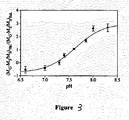
Figure 5 . The sensitivity of the ratiometric plot to the pH of the solution for the dimer is lower than the mixture of Eu(III) and Yb(III)-DOTAMGly (Figure 3 ). It is likely that this difference is due to the lower Kconc value (1 vs 1.25) for the dimer. Nevertheless, the sensitivity of the dimer is higher than that one observed when the single Eu(III)-DOTAMGly complex (Figure 4 ) is used. -
-
Figure 1 : pH dependence resulting by the irradiation of the mobile water protons coordinated to Eu-DOTAM-hydrazide (30mM; pH 7.4, B0 =7.05 T, 312 K, irradiation time 2s, irradiation power 15.7 µT). -
Figure 2 : CEST spectra of a solution containing 16 mM of Eu-DOTAM-Gly and 20 mM of Yb-DOTAM-Gly at pH 8.1 (B0 = 7.05 T, 312 K, irradiation time 4s, irradiation power 25 µT). -
Figure 3 : pH dependence resulting by the exploitation of the ratiometric method (Eu-DOTAM-Gly concentration 10 mM, Yb-DOTAM-Gly concentration 12.5 mM; 7.05 T, 312 K, irradiation time 4s, irradiation power 25 µT). The error bars indicate the standard deviation of 5 independent measurements. -
Figure 4 : pH dependence resulting by the exploitation of the ratiometric method of a 30 mM solution of Eu-DOTAM-Gly (7.05 T, 312 K, irradiation time 2s). The saturation has been performed by using a train of 270° e-burp1 pulse (20 ms each, power 1.2 µT) for the amide protons and a train of 90° e-burp1 pulse (1 ms each, power 15.7 µT) for the metal bound water protons. -
Figure 5 : pH dependence resulting by the exploitation of the ratiometric method for the Yb-Eu-bisDOTAM-Gly dimer (agent concentration 30 mM, B0 = 7.05 T, 312 K, irradiation time 4s, irradiation power 25 µT). - Figure 13: Temperature dependence resulting by the irradiation of the mobile water protons coordinated to Eu-DOTAM-hydrazide (30mM; pH 7.4, B0 =7.05 T, 312 K, irradiation time 2s, irradiation power 15.7 µT).).
- The preparation of the disclosed compounds has been performed according to procedures and synthesis steps well known to a man skilled in the art. Non limiting examples are included below.
-

- The chelating ligand was synthesized according to the following steps:
- a) exhaustive alkylation of TAZA (TAZA = 1,3,5,7-tetraazacyclododecane, 0.075 mol) with N-(2-Bromoethanoyl) ethyl glycinate (0.3 mol) in the presence of 0.3 mol of K2CO3 as base to give the corresponding tetraethyl ester derivative.
The reaction was carried out in acetonitrile by heating at 70°C for 6 h. After removal of the undissolved materials by filtration, the product was simply obtained by evaporating the solvent. Yield: 91.4%
N-(2-Bromoethanoyl) ethyl glycinate was syntetisized according to the published procedure. (Kataki R, et al. J Chem Soc Perkin Trans 2 1992; 8:1347-1351). - b) controlled saponification of the tetraethyl ester and isolation of the desired tetracarboxylic acid.
- The saponification of the tetraester was carried out in 200 mL of ethanol/water (1:1) solution at 60°C. NaOH 1 N (232 mL) was added to maintain the pH of the solution constant (pH 11) for almost 45'. The reaction was complete after 1 h heating. The resulting orange solution was cooled down and acidified at pH 2.2 with HCl. The DOTAM-Gly ligand was separated from such solution by liquid chromatography (solid-phase: Amberlite ® XAD-1600; eluent: water). Yield: 88%.
The ligand has been characterized by MALDI-TOF Mass Spectrometry (calc. for C32H40N8O12, 632.63 amu; found 633.55 (MH + )). - The Ln(III)-DOTAM-Gly complexes were prepared by mixing equimolar amount (0.3 mmol) of the ligand and the corresponding Ln(III) chloride in 10 mL of water (room temperature,
pH 8, 30'). The recovered chelate complexes have been characterized by means of their 1H-NMR spectra. The recovered data were consistent with the expected structures. - The synthesis has been carried out through the following steps:
- Synthesis of N-(Benzyl-oxy carbonyl)-N'-(bromoacetyl)hydrazine (dichloro-methane, 0°C)

- Synthesis of 1,4,7,10-tetra{2-[N'-(benzyl-oxy-carbonyl)hydrazino]-2-oxo-ethyl}-1,4,7,10-tetraazacyclododecane (acetonitrile, room temperature):

- Synthesis of ligand B (methanol, room temperature)

-

- The global preparation has been performed according to a procedure schematized below:


- Those skilled in the art should realize that, by use of the above scheme and by suitably changing the chelated metal ion any dimeric contrast agent according to the method of the invention can be easily obtained.
- The high resolution work has been carried out on a Bruker Avance 300 spectrometer operating at 7.05 T.
- The saturation transfer experiments were carried out at 312°K by irradiating the sample with a continuous wave presaturation square pulse (power of 1050 Hz) or by using a proper train of e-burp1 selective pulses. Four scans and 4 dummy scans were used for all the experiments.
- NMR imaging was performed using a 7.05 T Bruker PharmaScan having actively shielded gradients 300 mT/m) and running ParaVison 2.1.1 software. Standard PDW (proton density weighted images) were obtained using a SE (spin-echo) imaging sequence (using Hermite shaped 90° and 180° pulses). NMR image adopted parameters were (TR/TE/NE= 3.0 s/18.3 ms/1); FOV (Field Of View) 30x30 mm2; slice thickness 2 mm and image matrix 256x256 points. A 2.25 Watt square shaped saturation pulse was applied for 4 s in the pre-delay of the spin-echo sequence. Two images were acquired, one with saturation of the amide protons at - 4794 Hz from bulk water protons and the other with the rf irradiation offset at 4794 Hz.
Claims (6)
- The use of a responsive CEST paramagnetic contrast agent comprising a paramagnetic chelated complex endowed with at least two magnetically non equivalent pools of mobile protons in chemical exchange with the water medium protons whose saturation capability is correlated to a physical or chemical parameter of diagnostic interest, wherein said parameter is pH, in a CEST based MRI procedure for the determination of the pH in a human or animal body organ, fluid or tissue, wherein the chelating ligand of the paramagnetic complex is the dimeric ligand (bisDOTAMGLy) and the paramagnetic ions are selected from the group consisting of iron (II) (high spin), iron (III), cobalt (II), copper (II), nickel (II), praseodymium(III), neodymium (III), dysprosium (III), erbium (III), terbium (III), holmium (III), thulium (III), ytterbium (III), and europium (III), or a physiologically acceptable salt thereof.
- The use according to claim 1 wherein the determination of said parameter is carried out in vivo, in vitro or ex vivo.
- The use according to claim 1 wherein the chelate complex is [Eu-Yb(bisDOTAMGLy)].
- A compound selected among the (bisDOTAMGLy) dimeric chelating ligand, the chelated complexes thereof with two transition or Ln(III) metal ions selected from the group consisting of iron (II) (high spin), iron (III), cobalt (II), copper (II), nickel (II), praseodymium(III), neodymium (III), dysprosium (III), erbium (III), terbium (III), holmium (III), thulium (III), ytterbium (III), and europium (III), and their physiologically acceptable salts.
- A compound according to claim 4 selected from the Eu-Yb(bisDOTAMGLy) and the physiologically acceptable salt thereof.
- A pharmaceutical composition comprising a compound according to any one of claims 4 or 5 together with a physiologically tolerable carrier.
Priority Applications (1)
| Application Number | Priority Date | Filing Date | Title |
|---|---|---|---|
| EP10176761A EP2298362B1 (en) | 2002-01-29 | 2003-01-27 | Responsive paramagnetic MRI contrast agents |
Applications Claiming Priority (3)
| Application Number | Priority Date | Filing Date | Title |
|---|---|---|---|
| EP20020001178 EP1331012A1 (en) | 2002-01-29 | 2002-01-29 | Responsive paramagnetic MRI contrast agents |
| EP10176761A EP2298362B1 (en) | 2002-01-29 | 2003-01-27 | Responsive paramagnetic MRI contrast agents |
| EP03702538A EP1469890B1 (en) | 2002-01-29 | 2003-01-27 | Responsive paramagnetic mri contrast agents |
Related Parent Applications (1)
| Application Number | Title | Priority Date | Filing Date |
|---|---|---|---|
| EP03702538.4 Division | 2003-01-27 |
Publications (2)
| Publication Number | Publication Date |
|---|---|
| EP2298362A1 EP2298362A1 (en) | 2011-03-23 |
| EP2298362B1 true EP2298362B1 (en) | 2013-03-13 |
Family
ID=8185284
Family Applications (3)
| Application Number | Title | Priority Date | Filing Date |
|---|---|---|---|
| EP20020001178 Withdrawn EP1331012A1 (en) | 2002-01-29 | 2002-01-29 | Responsive paramagnetic MRI contrast agents |
| EP03702538A Expired - Lifetime EP1469890B1 (en) | 2002-01-29 | 2003-01-27 | Responsive paramagnetic mri contrast agents |
| EP10176761A Expired - Lifetime EP2298362B1 (en) | 2002-01-29 | 2003-01-27 | Responsive paramagnetic MRI contrast agents |
Family Applications Before (2)
| Application Number | Title | Priority Date | Filing Date |
|---|---|---|---|
| EP20020001178 Withdrawn EP1331012A1 (en) | 2002-01-29 | 2002-01-29 | Responsive paramagnetic MRI contrast agents |
| EP03702538A Expired - Lifetime EP1469890B1 (en) | 2002-01-29 | 2003-01-27 | Responsive paramagnetic mri contrast agents |
Country Status (6)
| Country | Link |
|---|---|
| US (2) | US7524483B2 (en) |
| EP (3) | EP1331012A1 (en) |
| JP (3) | JP4850391B2 (en) |
| AT (1) | ATE519505T1 (en) |
| DK (2) | DK1469890T3 (en) |
| WO (1) | WO2003063912A1 (en) |
Families Citing this family (21)
| Publication number | Priority date | Publication date | Assignee | Title |
|---|---|---|---|---|
| AU4656400A (en) * | 1999-04-21 | 2000-11-17 | Government of The United States of America, as represented by The Secretary Department of Health & Human Services, The National Institutes of Health, The | Method for enhancing contrast produced by mri |
| EP1331012A1 (en) * | 2002-01-29 | 2003-07-30 | BRACCO IMAGING S.p.A. | Responsive paramagnetic MRI contrast agents |
| EP1466629A1 (en) * | 2003-04-11 | 2004-10-13 | BRACCO IMAGING S.p.A. | Adducts between magnetic resonance shift reagents and substrates containing exchangeable protons for "CEST" applications |
| WO2006032705A2 (en) * | 2004-09-23 | 2006-03-30 | Guerbet | Contrast agents encapsulating systems for cest imaging |
| WO2006114765A2 (en) * | 2005-04-26 | 2006-11-02 | Koninklijke Philips Electronics N.V. | Mri involving contrast agent with time modulated contrast enhancement |
| ATE439866T1 (en) | 2005-04-26 | 2009-09-15 | Koninkl Philips Electronics Nv | CONTRAST AGENTS FOR MAGNETIC RESONANCE IMAGING WITH CEST-ACTIVE PARAMAGNETIC COMPLEX |
| EP1889086B1 (en) * | 2005-04-26 | 2010-01-13 | Koninklijke Philips Electronics N.V. | Method for using cest contrast agents in mri |
| US20060275217A1 (en) * | 2005-05-06 | 2006-12-07 | Caravan Peter D | Chemical exchange saturation transfer contrast agents |
| US7610077B2 (en) * | 2005-12-08 | 2009-10-27 | General Electric Compnay | Quantitation of sample properties using contrast enhancement from saturation transfer |
| US8003078B2 (en) * | 2006-03-29 | 2011-08-23 | Barnes-Jewish Hospital | Targeted MR imaging agents |
| EP2035044B1 (en) * | 2006-06-09 | 2013-10-16 | Koninklijke Philips N.V. | Elimination of contrast agent concentration dependency in mri |
| EP2205986B1 (en) * | 2007-09-26 | 2013-07-03 | The Johns Hopkins University | Frequency referencing for chemical exchange saturation transfer (cest) mri |
| ES2712881T3 (en) | 2008-12-02 | 2019-05-16 | Univ Melbourne | Macrocyclic conjugates containing nitrogen as radiopharmaceuticals |
| US20120330132A1 (en) | 2009-12-07 | 2012-12-27 | Paul Sorajja | Device for the Delineation of Cardiovascular or Other Anatomical Structures |
| CN102741700A (en) | 2010-01-06 | 2012-10-17 | 株式会社资生堂 | Reference material for NMR, sample tube for NMR, capillary for NMR, and method for determining NMR spectrum of sample |
| WO2012006038A2 (en) * | 2010-06-28 | 2012-01-12 | The Board Of Regents, The University Of Texas System | Agents and compounds for imaging and other applications, and methods of use and synthesis thereof |
| EP2457594A1 (en) * | 2010-11-05 | 2012-05-30 | Bracco Imaging S.p.A | Cest systems exhibiting a concentration independent responsiveness |
| WO2012155076A2 (en) * | 2011-05-11 | 2012-11-15 | The Research Foundation Of State University Of New York | Imaging contrast agents and uses thereof |
| DK2788353T3 (en) | 2011-12-06 | 2022-08-15 | Clarity Pharmaceuticals Ltd | CAGE AMININE LIGANDERS FOR METALLO-RADIOPHARMACEUTICALS |
| WO2016179264A1 (en) * | 2015-05-04 | 2016-11-10 | Duke University | Magnetic resonance imaging (mri) systems and methods using adiabatic tip-down and matched adiabatic flip-back pulses |
| CN108369266B (en) * | 2015-12-23 | 2021-08-06 | 伯拉考成像股份公司 | Ratiometric Pulse CEST Imaging |
Family Cites Families (7)
| Publication number | Priority date | Publication date | Assignee | Title |
|---|---|---|---|---|
| US5190744A (en) * | 1990-03-09 | 1993-03-02 | Salutar | Methods for detecting blood perfusion variations by magnetic resonance imaging |
| JP3759765B2 (en) * | 1994-03-28 | 2006-03-29 | 第一製薬株式会社 | Liposome |
| CN1148812A (en) | 1994-03-28 | 1997-04-30 | 尼科梅德成像有限公司 | Liposomes |
| AU4656400A (en) * | 1999-04-21 | 2000-11-17 | Government of The United States of America, as represented by The Secretary Department of Health & Human Services, The National Institutes of Health, The | Method for enhancing contrast produced by mri |
| US6875419B2 (en) | 2000-11-20 | 2005-04-05 | Board Of Regents The University Of Texas System | Paramagnetic metal ion-based macrocyclic magnetization transfer contrast agents and method of use |
| EP1302465A1 (en) | 2001-10-11 | 2003-04-16 | BRACCO IMAGING S.p.A. | Enhanced substrate imaging by reversible binding to a paramagnetic complex |
| EP1331012A1 (en) * | 2002-01-29 | 2003-07-30 | BRACCO IMAGING S.p.A. | Responsive paramagnetic MRI contrast agents |
-
2002
- 2002-01-29 EP EP20020001178 patent/EP1331012A1/en not_active Withdrawn
-
2003
- 2003-01-27 US US10/502,701 patent/US7524483B2/en not_active Expired - Lifetime
- 2003-01-27 AT AT03702538T patent/ATE519505T1/en not_active IP Right Cessation
- 2003-01-27 WO PCT/EP2003/000796 patent/WO2003063912A1/en not_active Ceased
- 2003-01-27 JP JP2003563601A patent/JP4850391B2/en not_active Expired - Fee Related
- 2003-01-27 DK DK03702538.4T patent/DK1469890T3/en active
- 2003-01-27 EP EP03702538A patent/EP1469890B1/en not_active Expired - Lifetime
- 2003-01-27 DK DK10176761.4T patent/DK2298362T3/en active
- 2003-01-27 EP EP10176761A patent/EP2298362B1/en not_active Expired - Lifetime
-
2009
- 2009-04-03 US US12/418,155 patent/US8318134B2/en not_active Expired - Fee Related
- 2009-11-19 JP JP2009264106A patent/JP4796643B2/en not_active Expired - Fee Related
-
2011
- 2011-07-08 JP JP2011151981A patent/JP2011235125A/en not_active Withdrawn
Also Published As
| Publication number | Publication date |
|---|---|
| JP4850391B2 (en) | 2012-01-11 |
| US8318134B2 (en) | 2012-11-27 |
| JP4796643B2 (en) | 2011-10-19 |
| DK2298362T3 (en) | 2013-06-10 |
| EP1331012A1 (en) | 2003-07-30 |
| JP2010088901A (en) | 2010-04-22 |
| US20050191243A1 (en) | 2005-09-01 |
| JP2005515842A (en) | 2005-06-02 |
| US7524483B2 (en) | 2009-04-28 |
| DK1469890T3 (en) | 2011-11-14 |
| EP1469890B1 (en) | 2011-08-10 |
| ATE519505T1 (en) | 2011-08-15 |
| US20090234221A1 (en) | 2009-09-17 |
| JP2011235125A (en) | 2011-11-24 |
| EP2298362A1 (en) | 2011-03-23 |
| EP1469890A1 (en) | 2004-10-27 |
| WO2003063912A1 (en) | 2003-08-07 |
Similar Documents
| Publication | Publication Date | Title |
|---|---|---|
| US8318134B2 (en) | Responsive paramagnetic MRI contrast agents | |
| Tweedle | The ProHance story: the making of a novel MRI contrast agent | |
| Polasek et al. | Is macrocycle a synonym for kinetic inertness in Gd (III) complexes? Effect of coordinating and non-coordinating substituents on inertness and relaxivity of Gd (III) chelates with DO3A-like ligands | |
| JP2005515842A6 (en) | Responsive paramagnetic MRI contrast agent | |
| EP2635311B1 (en) | Cest systems exhibiting a concentration independent responsiveness | |
| CN109641900B (en) | chelating compound | |
| Lowe | Activated MR contrast agents | |
| JP2005504027A (en) | Multidentate aza ligands capable of complexing metal ions and their use in diagnosis and therapy | |
| Ali et al. | Albumin-binding PARACEST agents | |
| Parac‐Vogt et al. | Synthesis, characterization, and pharmacokinetic evaluation of a potential MRI contrast agent containing two paramagnetic centers with albumin binding affinity | |
| KR102724256B1 (en) | Dimer contrast agent | |
| Jian et al. | Chiral pyclen-based heptadentate chelates as highly stable MRI contrast agents | |
| Garda et al. | Small, Fluorinated Mn2+ Chelate as an Efficient 1H and 19F MRI Probe | |
| US5554357A (en) | Magnetic resonance imaging agents containing hydrazide moieties | |
| Thompson et al. | Hetero-Tripodal Hydroxypyridonate Gadolinium Complexes: Syntheses, Relaxometric Properties, Water Exchange Dynamics, and Human Serum Albumin Binding1 | |
| Tei et al. | Optimizing the relaxivity at high fields: systematic variation of the rotational dynamics in polynuclear Gd-complexes based on the AAZTA ligand | |
| EP1355913A1 (en) | Paramagnetic metal-phthalocyanine complex compounds and contrast agent using the same | |
| Nwe et al. | PARACEST properties of a dinuclear neodymium (III) complex bound to DNA or carbonate | |
| La Cava et al. | Synthesis, characterization, and biodistribution of a dinuclear gadolinium complex with improved properties as a blood pool MRI agent | |
| EP1302465A1 (en) | Enhanced substrate imaging by reversible binding to a paramagnetic complex | |
| Pushparaj et al. | Trinuclear Gd (III) metal complex with amide core display remarkable enhancement in relaxivity | |
| Werner et al. | Effect of a mesitylene‐based ligand cap on the relaxometric properties of Gd (III) hydroxypyridonate MRI contrast agents | |
| US20110021765A1 (en) | Fluorinated lanthanide probes for 19f magnetic resonance applications | |
| El Sayed et al. | Mn (II) MRI contrast agents supported by unsymmetric pyridinophane-picolinate ligands | |
| Pushparaj et al. | Development of Novel Dinuclear [Gd (III) DO3VA] Complexes Decorated with Isovaleric acid as MRI Contrast Agents for Tumor Diagnosis |
Legal Events
| Date | Code | Title | Description |
|---|---|---|---|
| PUAI | Public reference made under article 153(3) epc to a published international application that has entered the european phase |
Free format text: ORIGINAL CODE: 0009012 |
|
| AC | Divisional application: reference to earlier application |
Ref document number: 1469890 Country of ref document: EP Kind code of ref document: P |
|
| AK | Designated contracting states |
Kind code of ref document: A1 Designated state(s): AT BE BG CH CY CZ DE DK EE ES FI FR GB GR HU IE IT LI LU MC NL PT SE SI SK TR |
|
| 17P | Request for examination filed |
Effective date: 20110412 |
|
| 17Q | First examination report despatched |
Effective date: 20120210 |
|
| GRAP | Despatch of communication of intention to grant a patent |
Free format text: ORIGINAL CODE: EPIDOSNIGR1 |
|
| GRAC | Information related to communication of intention to grant a patent modified |
Free format text: ORIGINAL CODE: EPIDOSCIGR1 |
|
| GRAS | Grant fee paid |
Free format text: ORIGINAL CODE: EPIDOSNIGR3 |
|
| GRAP | Despatch of communication of intention to grant a patent |
Free format text: ORIGINAL CODE: EPIDOSNIGR1 |
|
| GRAA | (expected) grant |
Free format text: ORIGINAL CODE: 0009210 |
|
| AC | Divisional application: reference to earlier application |
Ref document number: 1469890 Country of ref document: EP Kind code of ref document: P |
|
| AK | Designated contracting states |
Kind code of ref document: B1 Designated state(s): AT BE BG CH CY CZ DE DK EE ES FI FR GB GR HU IE IT LI LU MC NL PT SE SI SK TR |
|
| REG | Reference to a national code |
Ref country code: GB Ref legal event code: FG4D |
|
| REG | Reference to a national code |
Ref country code: CH Ref legal event code: EP Ref country code: AT Ref legal event code: REF Ref document number: 600401 Country of ref document: AT Kind code of ref document: T Effective date: 20130315 |
|
| REG | Reference to a national code |
Ref country code: IE Ref legal event code: FG4D |
|
| REG | Reference to a national code |
Ref country code: DE Ref legal event code: R096 Ref document number: 60343533 Country of ref document: DE Effective date: 20130508 |
|
| REG | Reference to a national code |
Ref country code: SE Ref legal event code: TRGR |
|
| REG | Reference to a national code |
Ref country code: DK Ref legal event code: T3 |
|
| PG25 | Lapsed in a contracting state [announced via postgrant information from national office to epo] |
Ref country code: ES Free format text: LAPSE BECAUSE OF FAILURE TO SUBMIT A TRANSLATION OF THE DESCRIPTION OR TO PAY THE FEE WITHIN THE PRESCRIBED TIME-LIMIT Effective date: 20130624 Ref country code: BG Free format text: LAPSE BECAUSE OF FAILURE TO SUBMIT A TRANSLATION OF THE DESCRIPTION OR TO PAY THE FEE WITHIN THE PRESCRIBED TIME-LIMIT Effective date: 20130613 |
|
| REG | Reference to a national code |
Ref country code: NL Ref legal event code: T3 |
|
| REG | Reference to a national code |
Ref country code: AT Ref legal event code: MK05 Ref document number: 600401 Country of ref document: AT Kind code of ref document: T Effective date: 20130313 |
|
| PG25 | Lapsed in a contracting state [announced via postgrant information from national office to epo] |
Ref country code: SI Free format text: LAPSE BECAUSE OF FAILURE TO SUBMIT A TRANSLATION OF THE DESCRIPTION OR TO PAY THE FEE WITHIN THE PRESCRIBED TIME-LIMIT Effective date: 20130313 Ref country code: GR Free format text: LAPSE BECAUSE OF FAILURE TO SUBMIT A TRANSLATION OF THE DESCRIPTION OR TO PAY THE FEE WITHIN THE PRESCRIBED TIME-LIMIT Effective date: 20130614 Ref country code: FI Free format text: LAPSE BECAUSE OF FAILURE TO SUBMIT A TRANSLATION OF THE DESCRIPTION OR TO PAY THE FEE WITHIN THE PRESCRIBED TIME-LIMIT Effective date: 20130313 |
|
| PG25 | Lapsed in a contracting state [announced via postgrant information from national office to epo] |
Ref country code: BE Free format text: LAPSE BECAUSE OF FAILURE TO SUBMIT A TRANSLATION OF THE DESCRIPTION OR TO PAY THE FEE WITHIN THE PRESCRIBED TIME-LIMIT Effective date: 20130313 |
|
| PG25 | Lapsed in a contracting state [announced via postgrant information from national office to epo] |
Ref country code: EE Free format text: LAPSE BECAUSE OF FAILURE TO SUBMIT A TRANSLATION OF THE DESCRIPTION OR TO PAY THE FEE WITHIN THE PRESCRIBED TIME-LIMIT Effective date: 20130313 Ref country code: AT Free format text: LAPSE BECAUSE OF FAILURE TO SUBMIT A TRANSLATION OF THE DESCRIPTION OR TO PAY THE FEE WITHIN THE PRESCRIBED TIME-LIMIT Effective date: 20130313 Ref country code: PT Free format text: LAPSE BECAUSE OF FAILURE TO SUBMIT A TRANSLATION OF THE DESCRIPTION OR TO PAY THE FEE WITHIN THE PRESCRIBED TIME-LIMIT Effective date: 20130715 Ref country code: SK Free format text: LAPSE BECAUSE OF FAILURE TO SUBMIT A TRANSLATION OF THE DESCRIPTION OR TO PAY THE FEE WITHIN THE PRESCRIBED TIME-LIMIT Effective date: 20130313 Ref country code: CZ Free format text: LAPSE BECAUSE OF FAILURE TO SUBMIT A TRANSLATION OF THE DESCRIPTION OR TO PAY THE FEE WITHIN THE PRESCRIBED TIME-LIMIT Effective date: 20130313 |
|
| PLBE | No opposition filed within time limit |
Free format text: ORIGINAL CODE: 0009261 |
|
| STAA | Information on the status of an ep patent application or granted ep patent |
Free format text: STATUS: NO OPPOSITION FILED WITHIN TIME LIMIT |
|
| 26N | No opposition filed |
Effective date: 20131216 |
|
| REG | Reference to a national code |
Ref country code: DE Ref legal event code: R097 Ref document number: 60343533 Country of ref document: DE Effective date: 20131216 |
|
| PG25 | Lapsed in a contracting state [announced via postgrant information from national office to epo] |
Ref country code: MC Free format text: LAPSE BECAUSE OF FAILURE TO SUBMIT A TRANSLATION OF THE DESCRIPTION OR TO PAY THE FEE WITHIN THE PRESCRIBED TIME-LIMIT Effective date: 20130313 Ref country code: LU Free format text: LAPSE BECAUSE OF FAILURE TO SUBMIT A TRANSLATION OF THE DESCRIPTION OR TO PAY THE FEE WITHIN THE PRESCRIBED TIME-LIMIT Effective date: 20140127 |
|
| REG | Reference to a national code |
Ref country code: IE Ref legal event code: MM4A |
|
| PG25 | Lapsed in a contracting state [announced via postgrant information from national office to epo] |
Ref country code: IE Free format text: LAPSE BECAUSE OF NON-PAYMENT OF DUE FEES Effective date: 20140127 |
|
| REG | Reference to a national code |
Ref country code: FR Ref legal event code: PLFP Year of fee payment: 14 |
|
| PG25 | Lapsed in a contracting state [announced via postgrant information from national office to epo] |
Ref country code: CY Free format text: LAPSE BECAUSE OF FAILURE TO SUBMIT A TRANSLATION OF THE DESCRIPTION OR TO PAY THE FEE WITHIN THE PRESCRIBED TIME-LIMIT Effective date: 20130313 |
|
| PG25 | Lapsed in a contracting state [announced via postgrant information from national office to epo] |
Ref country code: TR Free format text: LAPSE BECAUSE OF FAILURE TO SUBMIT A TRANSLATION OF THE DESCRIPTION OR TO PAY THE FEE WITHIN THE PRESCRIBED TIME-LIMIT Effective date: 20130313 Ref country code: HU Free format text: LAPSE BECAUSE OF FAILURE TO SUBMIT A TRANSLATION OF THE DESCRIPTION OR TO PAY THE FEE WITHIN THE PRESCRIBED TIME-LIMIT; INVALID AB INITIO Effective date: 20030127 |
|
| REG | Reference to a national code |
Ref country code: FR Ref legal event code: PLFP Year of fee payment: 15 |
|
| REG | Reference to a national code |
Ref country code: FR Ref legal event code: PLFP Year of fee payment: 16 |
|
| PGFP | Annual fee paid to national office [announced via postgrant information from national office to epo] |
Ref country code: CH Payment date: 20210203 Year of fee payment: 19 Ref country code: NL Payment date: 20210126 Year of fee payment: 19 Ref country code: IT Payment date: 20210122 Year of fee payment: 19 Ref country code: FR Payment date: 20210125 Year of fee payment: 19 |
|
| PGFP | Annual fee paid to national office [announced via postgrant information from national office to epo] |
Ref country code: DE Payment date: 20210127 Year of fee payment: 19 Ref country code: GB Payment date: 20210128 Year of fee payment: 19 Ref country code: SE Payment date: 20210127 Year of fee payment: 19 Ref country code: DK Payment date: 20210127 Year of fee payment: 19 |
|
| REG | Reference to a national code |
Ref country code: DE Ref legal event code: R119 Ref document number: 60343533 Country of ref document: DE |
|
| REG | Reference to a national code |
Ref country code: DK Ref legal event code: EBP Effective date: 20220131 |
|
| REG | Reference to a national code |
Ref country code: SE Ref legal event code: EUG |
|
| REG | Reference to a national code |
Ref country code: CH Ref legal event code: PL |
|
| REG | Reference to a national code |
Ref country code: NL Ref legal event code: MM Effective date: 20220201 |
|
| GBPC | Gb: european patent ceased through non-payment of renewal fee |
Effective date: 20220127 |
|
| PG25 | Lapsed in a contracting state [announced via postgrant information from national office to epo] |
Ref country code: SE Free format text: LAPSE BECAUSE OF NON-PAYMENT OF DUE FEES Effective date: 20220128 Ref country code: NL Free format text: LAPSE BECAUSE OF NON-PAYMENT OF DUE FEES Effective date: 20220201 Ref country code: GB Free format text: LAPSE BECAUSE OF NON-PAYMENT OF DUE FEES Effective date: 20220127 Ref country code: DE Free format text: LAPSE BECAUSE OF NON-PAYMENT OF DUE FEES Effective date: 20220802 |
|
| PG25 | Lapsed in a contracting state [announced via postgrant information from national office to epo] |
Ref country code: FR Free format text: LAPSE BECAUSE OF NON-PAYMENT OF DUE FEES Effective date: 20220131 |
|
| PG25 | Lapsed in a contracting state [announced via postgrant information from national office to epo] |
Ref country code: LI Free format text: LAPSE BECAUSE OF NON-PAYMENT OF DUE FEES Effective date: 20220131 Ref country code: CH Free format text: LAPSE BECAUSE OF NON-PAYMENT OF DUE FEES Effective date: 20220131 |
|
| PG25 | Lapsed in a contracting state [announced via postgrant information from national office to epo] |
Ref country code: IT Free format text: LAPSE BECAUSE OF NON-PAYMENT OF DUE FEES Effective date: 20220127 Ref country code: DK Free format text: LAPSE BECAUSE OF NON-PAYMENT OF DUE FEES Effective date: 20220131 |