EP2297175B1 - Mrna cap analogs - Google Patents
Mrna cap analogs Download PDFInfo
- Publication number
- EP2297175B1 EP2297175B1 EP09759412.1A EP09759412A EP2297175B1 EP 2297175 B1 EP2297175 B1 EP 2297175B1 EP 09759412 A EP09759412 A EP 09759412A EP 2297175 B1 EP2297175 B1 EP 2297175B1
- Authority
- EP
- European Patent Office
- Prior art keywords
- recited
- rna
- analogs
- compound
- gpp
- Prior art date
- Legal status (The legal status is an assumption and is not a legal conclusion. Google has not performed a legal analysis and makes no representation as to the accuracy of the status listed.)
- Active
Links
- 0 C[n]1c(N=C(*)NC2=O)c2nc1 Chemical compound C[n]1c(N=C(*)NC2=O)c2nc1 0.000 description 5
- VUUPVSDSPZJFFN-UHFFFAOYSA-N CNC(NC1=O)=Nc2c1nc[n]2C Chemical compound CNC(NC1=O)=Nc2c1nc[n]2C VUUPVSDSPZJFFN-UHFFFAOYSA-N 0.000 description 1
- UUWJNBOCAPUTBK-UHFFFAOYSA-N C[n]1c(N=C(N)NC2=O)c2nc1 Chemical compound C[n]1c(N=C(N)NC2=O)c2nc1 UUWJNBOCAPUTBK-UHFFFAOYSA-N 0.000 description 1
- YVUZUNMTEUIDKC-YEFCAQKCSA-M NC(NC1=O)=Nc2c1nc[n]2[C@@H](C1O)O[C@H](COP([n]2cncc2)([O-])=O)C1O Chemical compound NC(NC1=O)=Nc2c1nc[n]2[C@@H](C1O)O[C@H](COP([n]2cncc2)([O-])=O)C1O YVUZUNMTEUIDKC-YEFCAQKCSA-M 0.000 description 1
Images






Classifications
-
- C—CHEMISTRY; METALLURGY
- C07—ORGANIC CHEMISTRY
- C07H—SUGARS; DERIVATIVES THEREOF; NUCLEOSIDES; NUCLEOTIDES; NUCLEIC ACIDS
- C07H21/00—Compounds containing two or more mononucleotide units having separate phosphate or polyphosphate groups linked by saccharide radicals of nucleoside groups, e.g. nucleic acids
-
- A—HUMAN NECESSITIES
- A61—MEDICAL OR VETERINARY SCIENCE; HYGIENE
- A61P—SPECIFIC THERAPEUTIC ACTIVITY OF CHEMICAL COMPOUNDS OR MEDICINAL PREPARATIONS
- A61P3/00—Drugs for disorders of the metabolism
- A61P3/08—Drugs for disorders of the metabolism for glucose homeostasis
- A61P3/10—Drugs for disorders of the metabolism for glucose homeostasis for hyperglycaemia, e.g. antidiabetics
-
- A—HUMAN NECESSITIES
- A61—MEDICAL OR VETERINARY SCIENCE; HYGIENE
- A61P—SPECIFIC THERAPEUTIC ACTIVITY OF CHEMICAL COMPOUNDS OR MEDICINAL PREPARATIONS
- A61P35/00—Antineoplastic agents
-
- C—CHEMISTRY; METALLURGY
- C07—ORGANIC CHEMISTRY
- C07H—SUGARS; DERIVATIVES THEREOF; NUCLEOSIDES; NUCLEOTIDES; NUCLEIC ACIDS
- C07H21/00—Compounds containing two or more mononucleotide units having separate phosphate or polyphosphate groups linked by saccharide radicals of nucleoside groups, e.g. nucleic acids
- C07H21/02—Compounds containing two or more mononucleotide units having separate phosphate or polyphosphate groups linked by saccharide radicals of nucleoside groups, e.g. nucleic acids with ribosyl as saccharide radical
-
- C—CHEMISTRY; METALLURGY
- C12—BIOCHEMISTRY; BEER; SPIRITS; WINE; VINEGAR; MICROBIOLOGY; ENZYMOLOGY; MUTATION OR GENETIC ENGINEERING
- C12N—MICROORGANISMS OR ENZYMES; COMPOSITIONS THEREOF; PROPAGATING, PRESERVING, OR MAINTAINING MICROORGANISMS; MUTATION OR GENETIC ENGINEERING; CULTURE MEDIA
- C12N15/00—Mutation or genetic engineering; DNA or RNA concerning genetic engineering, vectors, e.g. plasmids, or their isolation, preparation or purification; Use of hosts therefor
- C12N15/09—Recombinant DNA-technology
- C12N15/63—Introduction of foreign genetic material using vectors; Vectors; Use of hosts therefor; Regulation of expression
- C12N15/67—General methods for enhancing the expression
-
- C—CHEMISTRY; METALLURGY
- C12—BIOCHEMISTRY; BEER; SPIRITS; WINE; VINEGAR; MICROBIOLOGY; ENZYMOLOGY; MUTATION OR GENETIC ENGINEERING
- C12P—FERMENTATION OR ENZYME-USING PROCESSES TO SYNTHESISE A DESIRED CHEMICAL COMPOUND OR COMPOSITION OR TO SEPARATE OPTICAL ISOMERS FROM A RACEMIC MIXTURE
- C12P21/00—Preparation of peptides or proteins
- C12P21/02—Preparation of peptides or proteins having a known sequence of two or more amino acids, e.g. glutathione
Definitions
- This invention pertains to new dinucleotide cap analogs and their uses, RNA molecules containing these analogs, the use of these analogs in RNA synthesis, the use of these analogs in peptide and protein synthesis, the use of these analogs to inhibit translation, and other uses.
- RNA Ribonucleic acid
- RNA Ribonucleic acid
- mRNA Messenger RNA
- mRNA messenger RNA
- the cap contains a 5'-5' triphosphate linkage between two nucleosides and a 7-methyl group on a guanine ring distal to the RNA polymer chain.
- Some other forms of RNA are also capped, e.g., small nuclear RNAs (snRNAs). RNA capping regulates intracellular molecular activities, including RNA stability and translational efficiency.
- capped RNA molecules in vitro is useful because it allows one to prepare RNA molecules that will function properly in a variety of biological applications. Such applications include both research applications and commercial production of polypeptides, e.g ., producing in a cell-free translation system polypeptides containing an "unnatural" amino acid at a specific site, or producing in cultured cells polypeptides that require post-translational modification for activity or stability. Because capped RNA molecules are more stable and bind more readily to the cell's translational machinery, translation of capped RNAs proceeds for a considerably longer time than is the case for non-capped RNAs, resulting in greater production of protein.
- the method most frequently used to make capped RNAs in vitro is to transcribe a DNA template with either a bacterial or bacteriophage RNA polymerase in the presence of all four ribonucleoside triphosphates and a cap dinucleotide such as m 7 G(5')ppp(5')G (also called m 7 GpppG).
- the RNA polymerase initiates transcription with a nucleophilic attack by the 3'-OH of the Guo moiety of m 7 GpppG on the ⁇ -phosphate of the next templated nucleoside triphosphate, resulting in the intermediate m 7 GpppGpN.
- the formation of the competing GTP-initiated product pppGpN is suppressed by setting the molar ratio of m 7 GpppG to GTP between 5 and 10 in the transcription reaction mixture.
- the 5'-capped mRNAs produced with m 7 GpppG can take either of two forms, one containing the cap analog incorporated in the correct, forward orientation [m 7 G(5')ppp(5')GpNp...], and one containing the analog in the reverse orientation [G(5')ppp(5')m 7 GpNp...]. The latter are not recognized as capped mRNAs by the cell's translational machinery and decrease the translational efficiency of synthetic mRNA preparations.
- RNA transcripts are incorporated into RNA transcripts exclusively in the forward orientation and are therefore called “anti-reverse cap analogs” (ARCAs).
- ARCA-capped mRNAs had translational efficiencies that were two-fold higher than transcripts capped with m 7 GpppG (Stepinski et al., 2001).
- mRNAs capped with ARCAs are translated 2- to 2.5-fold more efficiently than those capped with m 7 GpppG. See E. Grudzien et al., "Differential inhibition of mRNA degradation pathways by novel cap analogs," J. Biol. Chem., vol. 281, pp. 1857-1867 (2006 ).
- the amount of protein produced from synthetic mRNAs introduced into cultured mammalian cells is limited by the natural degradation of mRNA.
- One in vivo pathway for mRNA degradation begins with the removal of the mRNA cap. This removal is catalyzed by a heterodimeric pyrophosphatase, which contains a regulatory subunit (Dcp1) and a catalytic subunit (Dcp2).
- the catalytic subunit cleaves between the ⁇ and ⁇ phosphate groups of the triphosphate bridge.
- mRNA capped with m 2 7.3'- O Gpp CH2 pG had lower overall translational efficiency, presumably because m 2 7.3'- O Gpp CH2 pG has a lower binding affinity for elF4E than that of m 2 7.3'- O GpppG.
- the eukaryotic translation initiation factor eIF4E is involved in bringing the capped mRNA to the ribosome for translation.
- RNA, vol. 13, pp. 1745-1755 showed that mRNAs capped with S-ARCAs modified at the ⁇ phosphate were resistant to hydrolysis by recombinant human Dcp2 in vitro. Furthermore, mRNA capped with one ⁇ S-ARCA diastereomer had a longer half-life when introduced into mammalian cells than that of the corresponding ARCA-capped mRNA; and it also had a greater translational efficiency in cells. The first of these properties presumably resulted from the resistance of the ⁇ S-ARCA to hydrolysis by Dcp2, and the second property presumably resulted from the higher affinity of the ⁇ -S-ARCA for eIF4E.
- mRNA cap analogs Another use for synthetic mRNA cap analogs is to inhibit cap-dependent translation by competition with capped mRNA for binding to elF4E. See A. Cai et al., "Quantitative assessment of mRNA cap analogues as inhibitors of in vitro translation," Biochemistry, vol. 38, pp. 8538-8547 (1999 ); and E. Grudzien et al., "Novel cap analogs for in vitro synthesis of mRNAs with high translational efficiency," RNA, vol. 10, pp. 1479-1487 (2004 ).
- cap analogs to inhibit translation has potential therapeutic significance.
- Many types of cancer cells overexpress eIF4E, which can lead to increased expression of proteins that promote oncogenesis and metastasis.
- eIF4E eIF4E
- siRNA antisense oligonucleotides
- a specific elF4E repressor can inhibit tumor growth and oncogenesis.
- J. R. Graff et al. "Therapeutic suppression of translation initiation factor elF4E expression reduces tumor growth without toxicity," J. Clin.
- cap analogs are specific inhibitors of elF4E activity and are therefore potentially useful as agents for treating oncogenesis and metastasis, immunosuppression in organ transplantation, and other medical conditions.
- these potential uses for cap analogs have never previously been demonstrated in vivo, in part due to the instability of cap analogs in intracellular conditions.
- ⁇ -S-ARCAs are strong inhibitors of translation in a cell-free system, presumably due to their high binding affinity for elF4E.
- the ⁇ -modified analogs are resistant to hydrolysis by the human DcpS enzyme, which is a scavenger pyrophosphatase responsible for degradation of this type of compound.
- a boranophosphate modification in which one of the non-bridging O atoms is replaced with a borane group (BH 3 - ) (sometimes called the BH 3 -analogs).
- a phosphoroselenoate modification in which one of the non-bridging O atoms is replaced with a selenium atom (sometimes called the Se-analogs).
- the phosphorothioate, boranophosphate, and phosphoroselenoate groups all replace non-bridging oxygen atoms and share some chemical and biochemical properties. However, there are also differences among these groups.
- the P-X bond lengths differ (where X denotes S, Se, or BH 3 ), the van der Waals radii of the X groups differ, and the affinity of the X groups for various divalent and other metal cations differ.
- X denotes S, Se, or BH 3
- the van der Waals radii of the X groups differ
- the affinity of the X groups for various divalent and other metal cations differ.
- Boranophosphate polyphosphate dinucleoside analogs are described in published patent application US2006/0287271 , as are their use against diseases modulated by P2Y receptors, e.g ., type 2 diabetes and cancer.
- Boranophosphate nucleotide analogs have similarities with phosphorothioate analogs due to similar bond angles, pK a values, and P-diastereoisomerism. However, in some cases they are as much as 10-fold more resistant to enzymatic hydrolysis than their phosphorothioate counterparts. They are also more lipophilic than phosphorothioates, which may help them to penetrate cell membranes and reach intracellular translational machinery. Boranophosphate analogs can also be used in boron neutron capture therapy (BNCT). See B.R. Shaw et al., "Reading, Writing and Modulating Genetic Information with Boranophosphate Mimics of Nucleotides, DNA and RNA," Ann. N.Y. Acad.
- BNCT boron neutron capture therapy
- Phosphoroselenoate nucleotide analogs are similar to phosphorothioates and boranophosphates due to their similar bond angles, pK a values, P-diastereoisomerism, and resistance to enzymatic degradation.
- Phosphoroselenoates can be very useful in nucleic acid crystallography because Se can be used in the multi-wavelength anomalous dispersion (MAD) technique.
- MAD multi-wavelength anomalous dispersion
- the novel dinucleotide cap analogs are modified at various phosphate positions with a boranophosphate group or a phosphoroselenoate group.
- the novel analogs have broad utility as reagents in the preparation of capped mRNAs. They have increased stability both in vitro and in vivo. They may be used as inhibitors of cap-dependent translation.
- the boranophosphate or phosphoroselenoate group has a 2'-0 or 3'-0-alkyl group, preferably a methyl group, producing analogs called BH 3 -ARCAs or Se-ARCAs.
- ARCAs may be modified with ⁇ -, ⁇ -, or ⁇ -boranophosphate or phosphoroselenoate groups. Selection of the type and location of modification modulates the activity of proteins that recognize the cap during synthesis, processing, nucleo-cytoplasmic export, translation, and degradation of mRNA.
- Table 1 lists several BH 3 -analogs and Se-analogs that have been or will be synthesized and characterized by chemical, biophysical, biochemical, and molecular biological methods.
- Compounds that are particularly favorable in mRNA caps include the ⁇ -BH 3 -ARCAs and ⁇ -Se-ARCAs.
- Compounds that are particularly favorable as translation inhibitors include the ⁇ - and ⁇ - BH 3 -analogs and ⁇ -Se-analogs. Table 1.
- b Gua is guanine (Formula 2a) and m 7 Gua is 7-methylguanine (Formula 2b, in which X is CH 3 ).
- Y 1 , Y 2 , Y 3 , and Y 4 are selected from the group consisting of O, Se and BH 3 ; the various Y i groups may be the same or different, wherein i is 1, 2, 3 or 4; and at least one Y i is BH 3 or Se.
- R is selected from the group consisting of
- a compound as described, wherein W is R2 is OH; R1 is H or OCH 3 ; X is methyl; and n 0; and only one of Y 1 , Y 2 , and Y 3 is BH 3 or Se.
- RNA molecule whose 5' end incorporates a compound as described.
- RNA molecule whose 5' end incorporates a compound as described.
- RNA molecule as described, wherein R is selected from the group consisting of
- a method of synthesizing, in vitro or in vivo, an RNA molecule as described comprising reacting ATP, CTP, UTP, and GTP, a composition as recited, and polynucleotide template in the presence of RNA polymerase, under conditions conductive to transcription by the RNA polymerase of the polynucleotide template into an RNA copy; whereby some of the RNA copies will incorporate the compound to make an RNA molecule as described.
- a method for synthesizing a protein or peptide in vitro comprising translating an RNA molecule as described in a cell-free protein synthesis system, wherein the RNA molecule comprises an open reading frame, under conditions conductive to translating the open reading frame of the RNA molecule into the protein or peptide encoded by the open reading frame.
- a method for synthesizing a protein or peptide in vivo or in cultured cells comprising translating an RNA molecule as described in vivo or in cultured cells, wherein the RNA molecule comprises an open reading frame, under conditions conductive to translating the open reading frame of the RNA molecule into the protein or peptide encoded by the open reading frame.
- R1 is OCH 3 ;
- R2 is OH;
- R3 is OH;
- R4 is OH;
- n is 0;
- Y 1 is O;
- Y 2 is Se;
- Y 3 is O;
- W is and R is
- Fig. 1 depicts a synthesis of cap analogs with a boranophosphate group at the ⁇ -position of the 5',5'-triphosphate bridge.
- Fig. 2 depicts a synthesis of cap analogs with a boranophosphate group at the ⁇ -position of the 5',5'-triphosphate bridge.
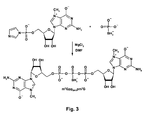
- Fig. 3 depicts a synthesis of m 7 Gpp BH3 pm 7 G (method II).
- Fig. 4 depicts a synthesis of m 2 7.2'-O Gpp BH3 pG.
- Fig. 5 depicts a synthesis of m 2 7.2'-O Gpp Se pG.
- Fig. 6 depicts a synthesis of m 7 Gp Se ppG.
- Fig. 7 depicts relative in vitro translational efficiencies of firefly luciferase mRNAs capped with ApppG (non-functional cap analog), m 7 GpppG, m 2 7.3'-O GpppG, the boranophosphate cap analogs m 7 Gpp BH3 pG (diastereomeric 1:1 mixture), and m 7 Gpp BH3 pm 7 G.
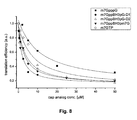
- Fig. 8 depicts the inhibition of in vitro luciferase mRNA translation by boranophosphate cap analogs.
- Fig. 9 depicts inhibition of in vitro luciferase mRNA translation by boranophosphate cap analogs incubated in rabbit reticulocyte lysate for 60 min before the start of translation.
- Fig. 10 depicts in vitro translational efficiencies of firefly luciferase mRNAs capped with ApppG, m 7 GpppG, m 2 7.3'-O GpppG, and the phosphoroselenoate cap analogs m 2 7.2'-O Gpp Se pG (D1) and (D2).
- Fig. 11 depicts inhibition of in vitro luciferase mRNA translation by phosphoroselenoate cap analogs.
- Fig. 12 depicts inhibition of in vitro luciferase mRNA translation by phosphoroselenoate cap analogs incubated in rabbit reticulocyte lysate for 60 min before the start of translation.
- Fig. 13 depicts relative in vitro translational efficiencies of firefly luciferase mRNAs bearing A 31 poly-A tail, 5'-capped with various analogs.
- Fig. 14 depicts measurements of the stability of luciferase mRNAs capped with various analogs and having a 60-base poly(A) tail in cultured HeLa cells following nucleoporation.
- Fig. 15 depicts the translational efficiency of luciferase mRNAs capped with various analogs and bearing a 60-nt poly(A) tail in cultured HeLa cells following nucleoporation.
- a mononucleotide is converted to a reactive imidazolide derivative, which is then coupled to another mononucleotide in DMF in the presence of excess ZnCl 2 .
- the ZnCl 2 significantly enhances the solubility of the reactants in organic solvents, inhibits hydrolysis of imidazolide derivatives, and accelerates the reaction rate.
- Other metal chlorides such as MnCl 2 , CdCl 2 or MgCl 2 may also be used to mediate pyrophosphate bond formation, but are generally less efficient than ZnCl 2 . See M.
- Fig. 1 depicts the synthesis of analogs modified at the ⁇ -position.
- guanosine 5'-(H-phosphonate) was silated with N,O-bis(trimethylsilyl)acetamide (BSA).
- BSA N,O-bis(trimethylsilyl)acetamide
- the resulting intermediate, bis(trimethylsilyl)phosphite was boronated by treatment with a BH 3 •SMe 2 complex, without isolation.
- Subsequent desilylation and purification by ion-exchange chromatography afforded the desired guanosine 5'-boranophosphate at ⁇ 30% yield.
- guanosine 5'-boranophosphate was coupled with the imidazolide derivative of m 7 GDP or of m 2 7.2'-O GDP, respectively, in a 9:1 DMF/water mixture in the presence of excess MgCl 2 .
- the result was a mixture of two P-diastereomers that were then separated by reverse phase (RP) HPLC.
- the diastereomers were termed D1 and D2, accordingly to their elution order from the RP HPLC column.
- Fig. 2 depicts the synthesis of analogs modified at the ⁇ -position.
- the boranophosphate triethylammonium salt was obtained by a modification of the procedure of V. Nahum et al., "Boranophosphate salts as an excellent mimic of phosphate salts: preparation, characterization, and properties," Eur. J. Inorg. Chem., vol. 20, pp. 4124-4131 (2004 ).
- tris(trimethylsilyl) phosphite was boronated with the BH 3 •SMe 2 complex.
- This compound was subsequently treated with methyl iodide in DMSO to introduce a methyl group at the guanosine N7 position.
- the reaction produced a mixture of monomethylated and dimethylated cap analogs (m 7 Gpp BH3 pG and m 7 Gpp BH3 pm 7 G).
- the ratio of these products can be controlled by adjusting the reaction conditions.
- m 7 Gpp BH3 pG was formed as a major product ( ⁇ 70% yield).
- m 7 Gpp BH3 pm 7 G was the predominant product ( ⁇ 50%).
- Fig. 5 depicts the synthesis of m 2 7.2'-O Gpp Se pG.
- the selenophosphate (PSeO 3 -3 ) was prepared by a modification of the method described in R. Glass et al., "Selenophosphate,” Meth. Enzymol., vol. 252, pp. 309-315 (1995 ).
- Trimethylsilyl phosphite was treated with selenium in pyridine to give trimethylsilyl selenophosphate, which was then desilylated by methanol in the presence of triethylamine to give the selenophosphate triethylammonium salt.
- This compound was coupled with the imidazolide derivative of 7,2'-O-dimethylguanosine 5'-monophosphate (m 2 7.2'-O GMP-Im) to give 7,2'-O-dimethylguanosine 5'-O-(2-selenodiphoshpate) (m 2 7.2'-O GDP ⁇ Se).
- Anhydrous ZnCl 2 was used to mediate the coupling reaction; the ZnCl 2 dramatically increased the solubility of the reagents in DMF, and also accelerated the reaction rate. The reaction was very rapid; essentially 100% conversion of m 2 7.2'-O GMP-Im into m 2 7.2'-O GDPISe was observed by RP HPLC after 15 min.
- the m 2 7.2'-O GDP ⁇ Se was unstable in acidic aqueous solutions (being hydrolyzed to m 2 7.2'-O GMP), and only moderately stable in neutral or basic solutions. Thus, care was taken to maintain the pH at 7 or above during purification of m 2 7.2'-O GDP ⁇ Se, which allowed the product to be isolated with 80% yield after ion-exchange chromatography.
- the m 2 7.2'-O GDP ⁇ Se was then coupled with the imidazolide derivative of GMP in the presence of excess ZnCl 2 .
- the products were characterized by mass spectrometry, 1 H NMR, and 31 P NMR to confirm structures and homogeneity.
- the D1 and D2 isomers of m 2 7.2'-O Gpp Se pG were stable in aqueous solution, did not undergo appreciable hydrolysis or oxidation, and could be stored as solids, protected from moisture at -20°C, for at least three months.
- Example 1 General procedures for isolation and characterization of cap analogs. Intermediate nucleotides were separated by ion-exchange chromatography on a DEAE-Sephadex A-25 column (HCO 3 - form) with a linear gradient of triethylammonium bicarbonate (TEAB) in deionized water. After evaporation under reduced pressure with addition of ethanol, the intermediates were isolated as triethylammonium salts. Final products (the cap analogs) were further separated by semi-preparative RP HPLC and, after repeated freeze-drying, were isolated as ammonium salts.
- TEAB triethylammonium bicarbonate
- Analytical HPLC was performed on an Agilent Technologies 1200 Series apparatus, using a Supelcosil LC-18-T RP column (4.6 x 250 mm, flow rate 1.3 ml/min) with a linear gradient of 0%-25% methanol in 0.05 M ammonium acetate buffer (pH 5.9). Eluting compounds were detected with a UV-Vis detector (at 260 nm), and a fluorescence detector (excitation at 280 nm and emission at 337 nm).
- Example 2 General procedure for synthesis of nucleotide imidazolide derivatives. GMP-Im, m 2 7.2'-O GMP-Im, GDP-Im, and m 2 7.2'-O GDP-Im were prepared as described by T. Mukaiyama et al., "Phosphorylation by oxidation-reduction condensation. Preparation of active phosphorylating reagents," M. Bull. Chem. Soc. Jpn., vol. 44, p. 2284 (1971 ).
- the nucleotide (1 equiv., TEA salt), imidazole (8 equiv.), and 2,2'-dithiodipyridine (3 equiv.) were mixed in DMF (-2.5 ml/100 mg of nucleotide).
- Triethylamine (2 equiv.) and triphenylphosphine (3 equiv.) were added, and the mixture was stirred for 6-8 h.
- the product was precipitated from the reaction mixture with a solution of anhydrous NaClO 4 (1 equiv. per negative charge) in dry acetone (-8 ml per ml of DMF). After cooling at 4° C, the precipitate was filtered, washed repeatedly with cold, dry acetone, and dried in vacuum over P 4 O 10. Yields were 80%-100%.
- the reaction mixture was diluted with water (80 ml), adjusted to pH ⁇ 1.5 with solid NaHCO 3 and heated to 70°C for 1 h.
- the solution was allowed to cool to room temperature, adjusted to pH -6 with NaHCO 3 diluted with 80 ml of water, and subjected to chromatography on DEAE Sephadex with a 0-0.9 M gradient of TEAB. Fractions eluting at 0.6-0.65 M TEAB and containing ⁇ 3.0 mmol of product were collected, evaporated, and dried in a vacuum dessicator over P 2 O 5 . This produced 1.34 g of guanosine 5'-(H-phosphonate) triethylammonium salt (yield 75%).
- Guanosine 5'-O-boranophosphate, triethylammonium salt Guanosine 5'-(H-phosphonate) (1.03 g, 2.3 mmol) was placed in a round-bottom flask and suspended in 30 ml of dry acetonitrile. The flask was sealed with a rubber septum and flushed with argon for 30 min. N,O-bistrimethylsilylacetamide (11.3 ml, 46 mmol) was injected through a syringe, and the mixture was vigorously stirred until a clear solution was obtained, and was then stirred for an additional 30 min.
- Example 5 Synthesis of m 7 Gppp BH3 G. To a mixture of GMPBH 3 (50 mg, 0.089 mmol, TEA salt) and m 7 GDP-Im (100 mg, 0.18 mmol, sodium salt) in 2.5 ml of DMF/H 2 O (9:1) was added anhydrous MgCl 2 (110 mg, 1.16 mmol) portionwise, and the mixture was vigorously shaken until all reagents were dissolved. The solution was stirred at RT for 3 days, and then the reaction was quenched by addition of EDTA (430 mg, 1.16 mmol) in 25 ml of water with pH adjusted to -6 by addition of solid NaHCO 3 .
- GMPBH 3 50 mg, 0.089 mmol, TEA salt
- m 7 GDP-Im 100 mg, 0.18 mmol, sodium salt
- Example 6 m 2 7.2'-O Gppp BH3 G.
- GMPBH 3 (30 mg, 0.053 mmol, TEA salt) and m 2 7.2'-O GDP-Im (60 mg, 0.11 mmol, sodium salt) in 1.5 ml of DMF/H 2 O (9:1) was added anhydrous MgCl 2 (80 mg, 0.85 mmol) portionwise, and the mixture was vigorously shaken until all reagents were dissolved. The solution was stirred at room temperature for 4 days, and then the reaction was quenched by addition of EDTA (320 mg, 0.85 mmol) in 25 ml water with pH adjusted to -6 by addition of solid NaHCO 3 .
- EDTA 320 mg, 0.85 mmol
- Example 7 Boranophosphate triethylammonium salt. This salt was prepared by a modification of the procedure of V. Nahum et al., "Boranophosphate Salts as an Excellent Mimic of Phosphate Salts: Preparation, Characterization, and Properties," J. Inorg. Chem. vol. 20, pp. 4124-4131 (2004 ). Tris(trimethylsilyl)phosphite (600 ⁇ l, 1.8 mmol) was added to a round-bottom flask containing 5 ml dry acetonitrile. The flask was sealed with a rubber septum and flushed with argon for 30 min.
- N,O-bistrimethylsilylacetamide (1.5 ml, 5.4 mmol) was injected through a syringe. After 30 min., the solution was cooled in an ice-bath, and a 2 M solution of BH 3 •SMe 2 complex in THF (1.35 ml) was added. After 5 min, the flask was removed from the ice bath, and stirring continued for 30 min. The solution was then evaporated under reduced pressure to an oily residue, placed again in the ice bath, treated with 20 ml of methanol and 0.5 ml of triethylamine, and was then stirred for 2 h at room temperature. The solution was evaporated to dryness, and the residue was dried over P 2 O 5 .
- Example 8 Gpp BH3 pG.
- the imidazolide derivative of GMP (GMP-Im) (200 mg, 0.46 mmol, sodium salt) and the previously obtained boranophosphate triethylammonium salt (70 mg, 0.23 mmol) were suspended in 4 ml of DMF, and anhydrous MgCl 2 (380 mg, 4 mmol) was added portionwise. After 1 h the reaction was quenched by addition of EDTA (1.48 mg, 4 mmol) in 40 ml of water, and the pH was adjusted to -6 by addition of solid NaHCO 3 . The product was separated on DEAE Sephadex with a 0-1.2 M gradient of TEAB.
- Example 9 m 7 Gpp BH3 pG.
- Gpp BH3 pG 35 mg, TEA salt
- DMSO DMSO
- 20 ⁇ l of methyl iodide were added.
- the reaction was quenched by addition of 15 ml water, and the pH was adjusted to ⁇ 7 with solid NaHCO 3 .
- Products were separated on DEAE Sephadex with a 0-1.2 M gradient of TEAB.
- a diastereomeric mixture of m 7 Gpp BH3 pG (550 optical density units) was collected and the solvent was evaporated. The product was then dissolved in a small amount of water and converted to the sodium salt on Dowex resin.
- Diastereomers were subsequently resolved by semi-preparative HPLC, and freeze-dried three times. Yields after HPLC separation were 10.2 mg of m 7 Gpp BH3 pG (D1) and 9.8 mg of m 7 Gpp BH3 pG (D2) as NH 4 + salts (37.2 % and 35.6 %, respectively).
- ESI MS (-) m / z :799.13 (calc. for C 21 H 31 N 10 O 17 P 3 B: 799.12).
- Example 10 m 7 Gpp BH3 pm 7 G (Method I).
- Gpp BH3 pG 50 mg, 800 optical density units, TEA salt
- DMSO 1.0 ml of DMSO
- 30 ⁇ l of methyl iodide were added.
- an additional 30 ⁇ l of methyl iodide were added.
- the reaction was quenched by adding 15 ml water and adjusted to pH -7 with solid NaHCO 3 .
- Products were separated on DEAE Sephadex with a 0-1.2 M gradient of TEAB.
- m 7 Gpp BH3 pm 7 G 200 optical units density was collected, evaporated, and converted into the sodium salt on Dowex resin.
- Example 11 m 7 Gpp BH3 pm 7 G (Method II).
- the imidazolide derivative of m 7 GMP (m 7 GMP-Im) 225 mg, 0.5 mmol, sodium salt
- boranophosphate triethylammonium salt 75 mg, 0.25 mmol, sodium salt
- anhydrous MgCl 2 380 mg, 4 mmol
- the product was separated on DEAE Sephadex with a 0-1.1 M gradient of TEAB.
- Example 12 m 2 7,2'-O Gpp BH3 pG.
- m 2 7,2'-O GMP-Im 15 mg, 0.03 mmol, sodium salt
- boranophosphate triethylammonium salt 30 mg, 0.1 mmol
- anhydrous MgCl 2 40 mg, 0.4 mmol
- GMP-Im 40 mg, 0.09 mmol
- MgCl 2 40 mg
- Example 13 Selenophosphate triethylammonium salt.
- a suspension of selenium (160 mg, 2 mmol) in pyridine (1 ml) was added dropwise through a syringe into a septum-sealed and argon-bubbled solution of tris(trimethylsilyl) phosphite (600 ⁇ l, 1.8 mmol) in dry CH 3 CN (20 ml). The resulting solution was held at room temperature for 30 min, and was then evaporated to dryness. Then a solution of triethylamine (500 ⁇ l, 3.6 mmol) in MeOH (20 ml) was added, and the mixture was stirred at room temperature for 2 h. The solvent was removed under reduced pressure and the residue re-evaporated twice with methanol. The product, which was obtained as an oily, yellowish residue, was used without further treatment in the following reaction:
- Example 14 7,2'-O-dimethylguanosine 5'-O-(2-selenodiphosphate) (m 2 7,2-O GDP ⁇ Se).
- Example 15 m 2 7,2-O -OGpp Se PG. m 2 7,2-O GDP ⁇ Se (250 mg, 0.35 mmol) and GMP-Im (250 mg, 0.50 mmol) were suspended in 5 ml of DMF, and anhydrous ZnCl 2 (480 mg, 3.5 mmol) was added. The resulting solution was kept at room temperature for 2 days. The reaction was quenched by adding disodium EDTA (1.3 g, 3.5 mmol) in 100 ml of water, and neutralized with solid NaHCO 3 . Products were isolated on DEAE Sephadex with a 0-1.2 M gradient of TEAB. Finally, the diastereomers were separated by semi-preparative HPLC and freeze-dried three times.
- Example 16 7-methylguanosine 5'-O-(H-phosphonate).
- guanosine 5'-O-(H-phosphonate) 260 mg, 0.65 mmol
- DMSO DMSO
- methyl iodide 322 ⁇ l, 5.2 mmol
- the reaction was quenched by diluting with 200 ml of water, and the reaction mixture was extracted three times with ether. The remaining ether was removed from the aqueous layer under reduced pressure, and the product was isolated on DEAE Sephadex with a 0-0.7 M gradient of TEAB.
- Example 17 7-methylguanosine 5'-O-phosphoroselenoate (m 7 GMPSe, triethylammonium salt).
- 7-methylguanosine 5'-(H-phosphonate) 200 mg, 0.43 mmol
- the flask was sealed with a rubber septum and flushed with argon for 30 min.
- N,O-bistrimethylsilylacetamide (11.3 ml, 46 mmol) was injected through a syringe. The mixture was vigorously stirred until a clear solution was obtained, and was then stirred for an additional 30 min.
- Example 18 m 7 Gp Se ppG.
- m 7 Gp se ppG To a suspension of m 7 GMPSe (10 mg, 0.021 mmol) and GDP-Im (15 mg, 0.027 mmol) in DMF (0.8 ml) was added anhydrous ZnCl 2 (30 mg, 0.22 mmol). The reaction was maintained at room temperature for 2 days, and was then quenched by adding 90 mg of disodium EDTA in 10 ml of water, and neutralized with solid NaHCO 3 . The diastereomers were separated by RP HPLC. Yields were 2 mg of m 7 Gp se ppG (D1) and 2.5 mg of m 7 Gp Se ppG (D2) as NH 4 + salts (10% and 13%, respectively).
- ESI MS (-) m / z 865.02 (calc for C 21 H 28 N 10 O 17 P 3 80 Se 865.00).
- Example 19 Measuring binding affinities to eIF4E. Fluorescence titration measurements were carried out on an LS-50B or LS-55 spectrofluorometer (Perkin Elmer Co.) at 20.0 ⁇ 0.2°C in 50 mM HEPES/KOH (pH 7.2), 0.5 mM EDTA, and 1 mM DTT, with ionic strength adjusted to 150 mM by addition of KCl. Various cap analogue solutions, of increasing concentration, were added in 1 ⁇ l aliquots to 1.4 ml of 0.1 or 0.2 ⁇ M protein solutions.
- the concentration of protein was allowed to be a free parameter in the equilibrium equation, to determine the amount of "active" protein.
- Example 20 Assay of susceptibility to DcpS.
- Human DcpS was expressed in Escherichia coli as described in L. Cohen et al., "Nematode m7GpppG and m32,2.7GpppG decapping: activities in Ascaris embryos and characterization of C. elegans scavenger DcpS," RNA, vol. 10, pp. 1609-1624 (2004 ).
- a 15 ⁇ M solution of the protein in 20 mM Tris buffer, pH 7.5, containing 50 mM KCI, 0.2 mM EDTA, 1 mM DTT, 0.5 mM PMSF, and 20% glycerol was stored at -80°C until used.
- Enzymatic reactions were carried out at 30°C in 500 ⁇ l of 50 mM Tris-HCl, pH 7.9, containing 20 mM MgCl 2 and 60 mM (NH 4 ) 2 SO 4 .
- a 40 ⁇ M solution of the selected cap analog was treated with 5.0 ⁇ l of DcpS for 120 min.
- a 100- ⁇ l sample was collected from the reaction mixture and deactivated by incubation at 90°C for 2 min.
- Samples were analyzed without further treatment by analytical RP HPLC with a linear gradient of methanol in 0.1 M KH 2 PO 4 , pH 6.0, from 0 - 50 % over 15 min.
- Example 21 Synthesis of mRNAs capped with BH 3 and Se-analogs.
- Method I for analogs m 7 Gpp BH3 pG (D1/D2 mix) and m 7 Gpp BH3 pm 7 G).
- a DNA template for in vitro transcription was synthesized by PCR from the plasmid SP6p -5'UTR ⁇ - globin-LUCiferase. The template contained the SP6 promoter followed by the 5'-UTR sequence of rabbit ⁇ -globin mRNA and the entire firefly luciferase mRNA coding region.
- a typical in vitro transcription reaction mixture (50 ⁇ l) contained SP6 transcription buffer (Fermentas, cat. no.
- EP0131 2 ⁇ g of DNA template, 2 U/ ⁇ l RiboLock Ribonuclease Inhibitor (Fermentas), 2 mM each of ATP, CTP, and UTP, 0.1 mM GTP, and 1 mM dinucleotide cap analog.
- the reaction mixture was incubated at 37°C for 5 min before the addition of SP6 RNA polymerase (Fermentas) to a final concentration of 2 U/ ⁇ l. After 30 min of incubation at 37°C, GTP was added to a final concentration of 1 mM, and the reaction continued for an additional 90 min.
- RNA transcripts were purified on DEPC-treated Sephadex G-50 spin columns (Pharmacia). The integrity of transcripts was confirmed by electrophoresis on a non-denaturating, 1% agarose gel. Concentrations were determined spectrophotometrically. The transcripts were stored at - 80°C until used.
- Example 21 Synthesis of mRNAs capped with BH 3 and Se-analogs.
- Method II for analogs m 27,2-O Gpp BH3 pG (D1), m 2 7,2'-OGpp BH3 pG (D2), m 2 7,2'-O Gppp BH3 G (D1), m 2 7,2-O Gppp BH3 G (D2), m 2 7,2-O Gppp Se pG (D1),and m 2 7,2-O Gpp Se pG (D2), m 7 Gpp BH3 pG (D1), m 7 Gpp BH3 pm 7 G, m 2 7,2-O Gpp s pG (D1) and m 2 7,2'-O Gpp s pG (D2)).
- polyadenylated luciferase mRNAs were synthesized in vitro by PCR from a dsDNA template that contained the SP6 promoter, the 5'-UTR sequence of rabbit ⁇ -globin mRNA, the entire firefly luciferase coding region, and 31 adenosine residues.
- a typical transcription reaction mixture (40 ⁇ l) contained SP6 transcription buffer (Fermentas), 0.7 ug of DNA template, 1 U/ ⁇ l RiboLock Ribonuclease Inhibitor (Fermentas), 0.5 mM each of ATP, CTP, and UTP, 0.1 mM GTP, and 0.5 mM dinucleotide cap analog.
- RNA transcripts were purified with NucAway Spin Columns (Ambion). The integrity of transcripts and quantitation was performed as in Method I.
- Example 22 Translation efficiency of capped mRNAs in an in vitro system.
- a micrococcal nuclease-treated rabbit reticulocyte lysate system (Flexi Rabbit Reticulocyte Lysate System, Promega) was used for in vitro translation. Translation reactions were performed in 10 ⁇ l for 60 min at 30°C.
- a typical reaction mixture contained 40% reticulocyte lysate, the 20 "standard" amino acids (0.01 mM each), MgCl 2 (1.2 mM) . potassium acetate (170 mM), and mRNA (five different concentrations of each transcript, ranging from 0.25 to 4 ⁇ g/ml). Luciferase activity was measured in a luminometer (Glomax, Promega).
- Example 23 Inhibition of cap-dependent translation in vitro by BH 3 -analogs .
- In vitro translation reactions were performed in 12.5 ⁇ l for 60 min at 30°C under conditions favorable for cap-dependent translation. In some cases, the reaction mixture was incubated for 60 min at 30°C prior to adding the dinucleotide cap analog (inhibitor) and m 2 7,3'-O GpppG-capped luciferase mRNA to start translation. In other cases, to analyze biological stability, the cap analog was incubated in the translation mixture for 60 min at 30°C prior to adding the luciferase mRNA to start translation.
- a typical reaction mixture contained 56% reticulocyte lysate, the 20 "standard” amino acids (0.01 mM each), MgCl 2 (1.2 mM), potassium acetate (170 mM), RiboLock Ribonuclease Inhibitor (0.32 U/ ⁇ l), cap analog solution (1/10 of total reaction volume), and m 2 7,3'-O GpppG-capped Luciferase RNA.
- the transcript was not polyadenylated, but instead had a 59-base 3'-UTR. Reactions were performed with cap analog concentrations ranging from 0.12 to 100 ⁇ M. Luciferase activity was measured in a luminometer.
- IC 50 values defined as the concentration of cap analog that resulted in 50% inhibition.
- the data are presented in Table 2.
- Example 24 Results of biophysical and biochemical characterization of BH 3 - and Se- analogs.
- the binding affinities of eukaryotic eIF4E for various cap analogs were determined by fluorescence quenching. This biophysical test allows one to predict the potential efficacy of cap analogs in translation. Those having higher affinities for eIF4E than the unmodified cap analog (m 7 GpppG) are expected to be better recognized by the translational machinery, leading to higher translational efficiencies. They also are expected to compete more effectively with unmodified mRNA when free cap dinucleotides are used to inhibit translation. See generally E.
- Example 25 Translational efficiencies of mRNAs capped with BH 3 - and Se-analogs. Translational efficiencies were determined by in vitro translation. mRNAs capped with the new analogs were generally found to have higher translational efficiencies than mRNAs capped with the unmodified parent compounds (Tables 4 and 5). Particularly high translational efficiencies were observed for analogs that were incorporated into mRNA exclusively in the correct orientation (BH 3 -ARCAs, Se-ARCAs, and m 7 Gpp BH3 Pm 7 G).
- Example 26 Susceptibility of the new analogs to degradation by DcpS was also determined. Unexpectedly, it was found that all ⁇ -BH 3 -analogs were resistant to hydrolysis by DcpS (Table 2). Since J. Kowalska et al. (2008) showed that the corresponding ⁇ -phosphorothioate cap analogs were all susceptible to DcpS, this result indicates that different phosphate modifications at the same position of the triphosphate bridge can have different biochemical consequences. For Se-analogs, by contrast, only those modified in the ⁇ position were resistant to DcpS (Table 3).
- Example 27 The BH 3 -analogs as inhibitors of in vitro cap-dependent translation.
- Two type of experiments were carried out. In one set of experiments (condition A), a cap analog was added to the translation system together with luciferase mRNA. In the other set of experiments (condition B), the cap analog was incubated in the translation system for 60 min before addition of mRNA.
- condition A a cap analog was added to the translation system together with luciferase mRNA.
- condition B the cap analog was incubated in the translation system for 60 min before addition of mRNA.
- BH 3 -and Se-analogs were found to be strong inhibitors of translation (Tables 2 and 3).
- incubation of some of these analogs did not impair their inhibitory properties, which is presumably a reflection of their resistance to pyrophosphatase attack.
- DcpS the stability of analogs in the translation system.
- Example 28 Measurement of translational efficiency and mRNA decay in cultured HeLa cells. Nucleoporation was used to deliver RNA into HeLa cells with a Nucleofector II (Amaxa Biosystems), following the manufacture's recommended protocols. One microgram of RNA was introduced into 10 6 cells in Nucleofector Solution V, using program T-024.
- luciferase synthesis cells were divided into several Eppendorf tubes, placed in a water bath at 37°C, and shaken.
- 2 ⁇ 10 5 cells were lysed in 200 ⁇ l of Luciferase Cell Culture Lysis Reagent (Promega). Luciferase activity of cell extracts was measured according to the manufacturer's recommended protocol.
- RNAs were further purified using the RNeasy ® mini kit and analyzed by real-time PCR.
- Reverse transcription was performed on 400 ng of RNA in 20- ⁇ l reaction mixtures containing 5.5 mM MgCl 2 , 500 ⁇ M of each dNTP, 2.5 ⁇ M random hexamers, 0.2 units of RNase inhibitor, and 0.8 units of MultiScribe reverse transcriptase (Applied Biosystems). Reaction mixtures were incubated at 25°C for 10 min, 48°C for 30 min, and 95°C for 5 min. Quantitative real-time PCR was performed with specific primers designed for each mRNA with the Beacon Designer tool (Bio-Rad). Luciferase mRNA levels were determined by PCR using primers designed to amplify bases 226-398 from the 5' end.
- Mouse GAPDH mRNA levels were determined (as control) by the same method and in the same RNA samples using primers specific for mouse GAPDH. Amplification and detection were performed with the iCycler IQ real time PCR detection system in 25- ⁇ l reaction mixtures containing 5 ⁇ l of the transcription reaction mixture (50 ng of cDNA), 12.5 ⁇ l of IQ SYBRgreen Supermix, and 0.3 mM primers (Bio-Rad). The incubation conditions were 3 min at 95 °C for polymerase activation, followed by 40 cycles, each of 15 s at 95 °C and 1 min at 60 °C. Luciferase mRNA levels were calculated using the absolute standard curve method as described in User Bulletin No.
- Luciferase mRNA was then normalized by comparison to the measured level of mouse GAPDH mRNA in each sample, which was an indicator of total cellular RNA purified from a cell extract. Luciferase mRNA remaining at each time point was converted to a percent of the RNA present at zero time, and the results were plotted as log 10 ([RNA]) versus time to determine t 1 ⁇ 2 . Results are presented in Figure 14 .
Landscapes
- Chemical & Material Sciences (AREA)
- Health & Medical Sciences (AREA)
- Life Sciences & Earth Sciences (AREA)
- Organic Chemistry (AREA)
- Engineering & Computer Science (AREA)
- Genetics & Genomics (AREA)
- Biochemistry (AREA)
- Molecular Biology (AREA)
- General Health & Medical Sciences (AREA)
- Biotechnology (AREA)
- Wood Science & Technology (AREA)
- Zoology (AREA)
- Bioinformatics & Cheminformatics (AREA)
- General Engineering & Computer Science (AREA)
- Microbiology (AREA)
- General Chemical & Material Sciences (AREA)
- Chemical Kinetics & Catalysis (AREA)
- Biomedical Technology (AREA)
- Diabetes (AREA)
- Plant Pathology (AREA)
- Proteomics, Peptides & Aminoacids (AREA)
- Physics & Mathematics (AREA)
- Medicinal Chemistry (AREA)
- Biophysics (AREA)
- Nuclear Medicine, Radiotherapy & Molecular Imaging (AREA)
- Pharmacology & Pharmacy (AREA)
- Veterinary Medicine (AREA)
- Public Health (AREA)
- Animal Behavior & Ethology (AREA)
- Emergency Medicine (AREA)
- Endocrinology (AREA)
- Hematology (AREA)
- Obesity (AREA)
- Pharmaceuticals Containing Other Organic And Inorganic Compounds (AREA)
- Saccharide Compounds (AREA)
- Preparation Of Compounds By Using Micro-Organisms (AREA)
Description
- The development of this invention was partially funded by the United States government under grant number R01 GM20818 awarded by the National Institute of General Medical Sciences of the National Institutes of Health. The United States government has certain rights in this invention.
- The development of this invention was partially funded by the Government of Poland under grant number PBZ-MNiSW-07/I/2007 awarded by the National Science Support Project 2008-2010.
- This invention pertains to new dinucleotide cap analogs and their uses, RNA molecules containing these analogs, the use of these analogs in RNA synthesis, the use of these analogs in peptide and protein synthesis, the use of these analogs to inhibit translation, and other uses.
- Ribonucleic acid (RNA) is a single-stranded, linear polymer of nucleotides. Each nucleotide unit contains a nitrogenous base, a ribose sugar, and a phosphate group. There are several types of RNA molecules. Messenger RNA (mRNA) molecules are those whose nucleotide sequence determines the amino acid composition of proteins. In eukaryotes, the 5'-ends of most mRNAs are blocked, or "capped" with a modified guanine nucleotide. The cap contains a 5'-5' triphosphate linkage between two nucleosides and a 7-methyl group on a guanine ring distal to the RNA polymer chain. Some other forms of RNA are also capped, e.g., small nuclear RNAs (snRNAs). RNA capping regulates intracellular molecular activities, including RNA stability and translational efficiency.
- The ability to synthesize capped RNA molecules in vitro is useful because it allows one to prepare RNA molecules that will function properly in a variety of biological applications. Such applications include both research applications and commercial production of polypeptides, e.g., producing in a cell-free translation system polypeptides containing an "unnatural" amino acid at a specific site, or producing in cultured cells polypeptides that require post-translational modification for activity or stability. Because capped RNA molecules are more stable and bind more readily to the cell's translational machinery, translation of capped RNAs proceeds for a considerably longer time than is the case for non-capped RNAs, resulting in greater production of protein.
- The method most frequently used to make capped RNAs in vitro is to transcribe a DNA template with either a bacterial or bacteriophage RNA polymerase in the presence of all four ribonucleoside triphosphates and a cap dinucleotide such as m7G(5')ppp(5')G (also called m7GpppG). The RNA polymerase initiates transcription with a nucleophilic attack by the 3'-OH of the Guo moiety of m7GpppG on the α-phosphate of the next templated nucleoside triphosphate, resulting in the intermediate m7GpppGpN. The formation of the competing GTP-initiated product pppGpN is suppressed by setting the molar ratio of m7GpppG to GTP between 5 and 10 in the transcription reaction mixture. The 5'-capped mRNAs produced with m7GpppG can take either of two forms, one containing the cap analog incorporated in the correct, forward orientation [m7G(5')ppp(5')GpNp...], and one containing the analog in the reverse orientation [G(5')ppp(5')m7GpNp...]. The latter are not recognized as capped mRNAs by the cell's translational machinery and decrease the translational efficiency of synthetic mRNA preparations. This problem can be averted by the use of cap analogs that have O-methyl or deoxy modifications at either the C2' or C3' positions of m7Guo. See J. Stepinski et al., "Synthesis and properties of mRNAs containing the novel "anti-reverse" cap analogues 7-methyl(3'-O-methyl)GpppG and 7-methyl(3'-deoxy)GpppG," RNA, vol. 7, pp. 1486-1495 (2001); and J. Jemielity et al., "Novel 'anti-reverse' cap analogues with superior translational properties," RNA, vol. 9, pp. 1108-1122 (2003). These cap analogs are incorporated into RNA transcripts exclusively in the forward orientation and are therefore called "anti-reverse cap analogs" (ARCAs). In a rabbit reticulocyte lysate (RRL) translation system, ARCA-capped mRNAs had translational efficiencies that were two-fold higher than transcripts capped with m7GpppG (Stepinski et al., 2001). In cultured mammalian cells, mRNAs capped with ARCAs are translated 2- to 2.5-fold more efficiently than those capped with m7GpppG. See E. Grudzien et al., "Differential inhibition of mRNA degradation pathways by novel cap analogs," J. Biol. Chem., vol. 281, pp. 1857-1867 (2006).
- The amount of protein produced from synthetic mRNAs introduced into cultured mammalian cells is limited by the natural degradation of mRNA. One in vivo pathway for mRNA degradation begins with the removal of the mRNA cap. This removal is catalyzed by a heterodimeric pyrophosphatase, which contains a regulatory subunit (Dcp1) and a catalytic subunit (Dcp2). The catalytic subunit cleaves between the α and β phosphate groups of the triphosphate bridge.
- E. Grudzien et al. (2006) described a cap analog, m2 7.3'-O GppCH2pG, in which a methylene group replaced the O atom between the a and β phosphate groups. mRNAs capped with this analog were resistant to hydrolysis by recombinant human Dcp2 in vitro. When introduced into cultured cells, mRNAs capped with the analog m2 7.3'-O GppCH2pG were more stable than those capped with m2 7.3'-O GpppG. However, the mRNA capped with m2 7.3'-O GppCH2pG had lower overall translational efficiency, presumably because m2 7.3'-O GppCH2pG has a lower binding affinity for elF4E than that of m2 7.3'-O GpppG. The eukaryotic translation initiation factor eIF4E is involved in bringing the capped mRNA to the ribosome for translation.
- J. Kowalska et al., "Synthesis and characterization of mRNA cap analogs containing phosphorothioate substitutions that bind tightly to elF4E and are resistant to the decapping pyrophosphatase DcpS," RNA, vol. 14, pp. 1119-1131 (2008) described syntheses of three ARCAs in which one of the three non-bridging O atoms in the triphosphate chain was replaced with an S atom. Each of these phosphorothioate analogs (also called S-ARCAs) was synthesized as a mixture of diastereomers that could be separated chromatographically to make pure diastereomers. The binding affinity of the phosphorothioate cap analogs to elF4E was equal to or, in some cases, greater than that of m7GpppG.
- E. Grudzien et al., "Phosphorothioate cap analogs stabilize mRNA and increase translational efficiency in mammalian cells," RNA, vol. 13, pp. 1745-1755 (2007) showed that mRNAs capped with S-ARCAs modified at the β phosphate were resistant to hydrolysis by recombinant human Dcp2 in vitro. Furthermore, mRNA capped with one β S-ARCA diastereomer had a longer half-life when introduced into mammalian cells than that of the corresponding ARCA-capped mRNA; and it also had a greater translational efficiency in cells. The first of these properties presumably resulted from the resistance of the β S-ARCA to hydrolysis by Dcp2, and the second property presumably resulted from the higher affinity of the β-S-ARCA for eIF4E.
- Another use for synthetic mRNA cap analogs is to inhibit cap-dependent translation by competition with capped mRNA for binding to elF4E. See A. Cai et al., "Quantitative assessment of mRNA cap analogues as inhibitors of in vitro translation," Biochemistry, vol. 38, pp. 8538-8547 (1999); and E. Grudzien et al., "Novel cap analogs for in vitro synthesis of mRNAs with high translational efficiency," RNA, vol. 10, pp. 1479-1487 (2004).
- The ability of cap analogs to inhibit translation has potential therapeutic significance. Many types of cancer cells overexpress eIF4E, which can lead to increased expression of proteins that promote oncogenesis and metastasis. See A. De Benedetti et al., "elF-4E expression and its role in malignancies and metastases," Oncogene, vol. 23, pp. 3189-3199 (2004). Reducing elF4E expression with siRNA, antisense oligonucleotides, or a specific elF4E repressor can inhibit tumor growth and oncogenesis. See J. R. Graff et al., "Therapeutic suppression of translation initiation factor elF4E expression reduces tumor growth without toxicity," J. Clin. Investigation, vol. 117, pp. 2638-2648 (2007); and T. Herbert, "Rapid induction of apoptosis by peptides that bind initiation factor eIF4E," Curr. Biol., vol. 10, pp. 793-796 (2000). In addition, the translational activity of elF4E can be suppressed by saturating the cells with competing, translationally deficient cap analogs.
- Some synthetic cap analogs are specific inhibitors of elF4E activity and are therefore potentially useful as agents for treating oncogenesis and metastasis, immunosuppression in organ transplantation, and other medical conditions. However, these potential uses for cap analogs have never previously been demonstrated in vivo, in part due to the instability of cap analogs in intracellular conditions.
- J. Kowalska et al. (2008) demonstrated that γ-S-ARCAs are strong inhibitors of translation in a cell-free system, presumably due to their high binding affinity for elF4E. The γ-modified analogs are resistant to hydrolysis by the human DcpS enzyme, which is a scavenger pyrophosphatase responsible for degradation of this type of compound.
- Other modifications can help protect capped mRNA against enzymatic degradation. One example is a boranophosphate modification, in which one of the non-bridging O atoms is replaced with a borane group (BH3 -) (sometimes called the BH3-analogs). Another example is a phosphoroselenoate modification, in which one of the non-bridging O atoms is replaced with a selenium atom (sometimes called the Se-analogs). The phosphorothioate, boranophosphate, and phosphoroselenoate groups all replace non-bridging oxygen atoms and share some chemical and biochemical properties. However, there are also differences among these groups. For example, the P-X bond lengths differ (where X denotes S, Se, or BH3), the van der Waals radii of the X groups differ, and the affinity of the X groups for various divalent and other metal cations differ. These differing chemical properties alter the biological activities of cap analogs with these groups, including their interactions with cap-binding proteins and their susceptibility to enzymatic degradation.
- Boranophosphate mononucleotides and boranophosphate polyphosphate dinucleotides were reviewed by P. Li et al., "Nucleoside and oligonucleoside boranophosphates: chemistry and properties," Chem. Rev., vol. 107, pp. 4746-4796 (2007).
- Boranophosphate polyphosphate dinucleoside analogs are described in published patent application
US2006/0287271 , as are their use against diseases modulated by P2Y receptors, e.g.,type 2 diabetes and cancer. - Boranophosphate nucleotide analogs have similarities with phosphorothioate analogs due to similar bond angles, pKa values, and P-diastereoisomerism. However, in some cases they are as much as 10-fold more resistant to enzymatic hydrolysis than their phosphorothioate counterparts. They are also more lipophilic than phosphorothioates, which may help them to penetrate cell membranes and reach intracellular translational machinery. Boranophosphate analogs can also be used in boron neutron capture therapy (BNCT). See B.R. Shaw et al., "Reading, Writing and Modulating Genetic Information with Boranophosphate Mimics of Nucleotides, DNA and RNA," Ann. N.Y. Acad. Sci., vol. 1201, pp23-29 (2003); and J. Summers et al., "Boranophosphates as Mimics of Natural Phosphodiesters in DNA", Current Medicinal Chemistry, vol. 8, pp 1147-1155 (2001).
- Phosphoroselenoate analogs of nucleoside di- and triphosphates modified in the α position were described in K. Misiura et al., "Synthesis of nucleoside α-thiotriphosphates via an oxathiaphospholane approach," Org. Lett., vol. 7, pp 2217-2220 (2005); P. Li et al., "Synthesis of α-P-modified nucleoside diphosphates with ethylenediamine," J. Am. Chem. Soc., vol. 127, pp. 16782-16783 (2005); N. Carrasco et al., "Enzymatic synthesis of phosphoroselenoate DNA using thymidine 5'-(α-P-seleno)triphosphate and DNA polymerase for x-ray crystallography via MAD," J. Am. Chem. Soc., vol. 126, pp. 448-449 (2004); and N. Carrasco et al., "Efficient enzymatic synthesis of phosphoroselenoate RNA by using adenosine 5'-(α-P-seleno)triphosphate, Angew. Chem. Int. Ed., vol. 45, pp. 94-97 (2006). However, to the knowledge of the inventors, there have been no prior reports of nucleoside polyphosphate analogs modified in any position other than the α position, nor of dinucleoside polyphosphates modified at any position.
- Phosphoroselenoate nucleotide analogs are similar to phosphorothioates and boranophosphates due to their similar bond angles, pKa values, P-diastereoisomerism, and resistance to enzymatic degradation. Phosphoroselenoates can be very useful in nucleic acid crystallography because Se can be used in the multi-wavelength anomalous dispersion (MAD) technique. See J. Wilds et al., "Selenium-assisted nucleic acid crystallography: use of phosphoroselenoates for MAD phasing of a DNA structure," J. Am. Chem. Soc., vol. 124, pp 14910-14916 (2002); N. Carrasco et al. (2004); N. Carrasco et al. (2006); and P.S. Pallan et al., "Selenium modification of nucleic acids: preparation of phosphoroselenoate derivatives for crystallographic phasing of nucleic acid structures," Nat. Protoc., vol. 2, pp. 640-646 (2007).
- See also our work on anti-reverse cap mRNA analogs described in
U.S. Patent No. 7,074,596 ; and published international patent applicationWO 2008/157688 . - We have discovered a new class of dinucleotide cap analogs. The novel dinucleotide cap analogs are modified at various phosphate positions with a boranophosphate group or a phosphoroselenoate group. The novel analogs have broad utility as reagents in the preparation of capped mRNAs. They have increased stability both in vitro and in vivo. They may be used as inhibitors of cap-dependent translation. Optionally, the boranophosphate or phosphoroselenoate group has a 2'-0 or 3'-0-alkyl group, preferably a methyl group, producing analogs called BH3-ARCAs or Se-ARCAs. ARCAs may be modified with α-, β-, or γ-boranophosphate or phosphoroselenoate groups. Selection of the type and location of modification modulates the activity of proteins that recognize the cap during synthesis, processing, nucleo-cytoplasmic export, translation, and degradation of mRNA.
- Table 1 lists several BH3-analogs and Se-analogs that have been or will be synthesized and characterized by chemical, biophysical, biochemical, and molecular biological methods. Compounds that are particularly favorable in mRNA caps include the β-BH3-ARCAs and β-Se-ARCAs. Compounds that are particularly favorable as translation inhibitors include the β- and γ- BH3-analogs and γ-Se-analogs.
Table 1. BH3- and Se-analogs Compound namea X Y Z R Nb m7GpppBH3G (D1) BH3 O O H Gua m7GpppBH3G (D2) BH3 O O H Gua m7GppBH3pG (D1) O BH3 O H Gua m7GppBH3pG (D2) O BH3 O H Gua m7GppBH3pm7G O BH3 O H m7Gua m7GpBH3ppG (D1)' O O BH3 H Gua m7GpBH3ppG (D2)' O O BH3 H Gua m2 7,2-OGpppBH3G (D1) BH3 O O CH3 Gua m2 7,2-OGpppBH3G (D2) BH3 O O CH3 Gua m2 7,2-OGppBH3pG (D1) O BH3 O CH3 Gua m2 7,2-OGppBH3pG (D2) O BH3 O CH3 Gua m2 7,2-OGpBH3ppG (D1)' O O BH3 CH3 Gua m2 7,2-OGPBH3ppG (D2)' O O BH3 CH3 Gua m7GpppSeG (D1)' Se O O H Gua m7GpppSeG (D2)' Se O O H Gua m7GppSepG (D1)' O Se O H Gua m7GppSepG (D2)' O Se O H Gua m7GppSepm7G' O Se O H m7Gua m7GpSeppG (D1) O O Se H Gua m7GpSeppG (D2) O O Se H Gua m2 7,2'-OGpppSeG (D1)' Se O O CH3 Gua m2 7,2'-OGpppSeG (D2)' Se O O CH3 Gua m2 7,2'-OGppSepG (D1) O Se O CH3 Gua m2 7,2'-OGppSepG (D2) O Se O CH3 Gua m2 7,2-OGpSeppG (D1)' O O Se CH3 Gua m2 7,2-OGpSeppG (D2)' O O Se CH3 Gua aD1 and D2 refer to diastereomers.
bGua is guanine (Formula 2a) and m7Gua is 7-methylguanine (Formula 2b, in which X is CH3).
Compounds that are expected to have favorable properties, but that had not yet been synthesized as of the international filing date of the present PCT application. - The following paragraphs describe various aspects and embodiments of the invention.
- One or more of the following compounds, or a stereoisomer of one or more of the following compounds, or mixtures of stereoisomers of one or more of the following compounds, or a salt or salts of any of them:

- wherein Y1, Y2, Y3, and Y4 are selected from the group consisting of O, BH3, and Se; the various Y i groups may be the same or different, wherein i is 1, 2, 3, or 4; and at least one Y i is BH3 or Se;
- n is 0 or 1;
- R is selected from the group consisting of:

- R3 and R4 are selected from the group consisting of H, OH, OCH3 and OCH2CH3; and R3 and R4 may be the same or different;
- W is selected from the group consisting of

- R1 and R2 are selected from the group consisting of H, OH, OCH3, or OCH2CH3; and R1 and R2 may be the same or different; and
- X is selected from the group consisting of methyl, ethyl, propyl, butyl, benzyl, substituted benzyl, methylenenaphthyl, and substituted methylenenaphthyl.
- A compound as described, wherein Y1, Y2, Y3, and Y4 are selected from the group consisting of O, Se and BH3; the various Y i groups may be the same or different, wherein i is 1, 2, 3 or 4; and at least one Y i is BH3 or Se.
- A compound as described, wherein R is selected from the group consisting of

- A compound as described, wherein W is

- A compound as described, wherein , if n = 0, then Y2 or Y3 is BH3 or Se and wherein, if n = 1 then Y2, Y3, or Y4 is BH3 or Se.
- An RNA molecule whose 5' end incorporates a compound as described.
- An RNA molecule whose 5' end incorporates a compound as described.
- An RNA molecule as described, wherein R is selected from the group consisting of

- A method of synthesizing, in vitro or in vivo, an RNA molecule as described, said method comprising reacting ATP, CTP, UTP, and GTP, a composition as recited, and polynucleotide template in the presence of RNA polymerase, under conditions conductive to transcription by the RNA polymerase of the polynucleotide template into an RNA copy; whereby some of the RNA copies will incorporate the compound to make an RNA molecule as described.
- A method for synthesizing a protein or peptide in vitro, said method comprising translating an RNA molecule as described in a cell-free protein synthesis system, wherein the RNA molecule comprises an open reading frame, under conditions conductive to translating the open reading frame of the RNA molecule into the protein or peptide encoded by the open reading frame.
- A method for synthesizing a protein or peptide in vivo or in cultured cells, said method comprising translating an RNA molecule as described in vivo or in cultured cells, wherein the RNA molecule comprises an open reading frame, under conditions conductive to translating the open reading frame of the RNA molecule into the protein or peptide encoded by the open reading frame.
- Compound as described for use in a method of wholly or partially inhibiting the translation of RNA into protein or peptide in a system that translates RNA into protein or peptide.
- Compound as described for use in a method as described, wherein the system is a native RNA translation system of a living organism.
- A composition as described, wherein R1 is OCH3; R2 is OH; R3 is OH; R4 is OH; n is 0; Y1 is O; Y2 is Se; Y3 is O; W is


-
Fig. 1 depicts a synthesis of cap analogs with a boranophosphate group at the α-position of the 5',5'-triphosphate bridge. -
Fig. 2 depicts a synthesis of cap analogs with a boranophosphate group at the β-position of the 5',5'-triphosphate bridge. -
Fig. 3 depicts a synthesis of m7GppBH3pm7G (method II). -
Fig. 4 depicts a synthesis of m2 7.2'-OGppBH3pG. -
Fig. 5 depicts a synthesis of m2 7.2'-OGppSepG. -
Fig. 6 depicts a synthesis of m7GpSeppG. -
Fig. 7 depicts relative in vitro translational efficiencies of firefly luciferase mRNAs capped with ApppG (non-functional cap analog), m7GpppG, m2 7.3'-OGpppG, the boranophosphate cap analogs m7GppBH3pG (diastereomeric 1:1 mixture), and m7GppBH3pm7G. -
Fig. 8 depicts the inhibition of in vitro luciferase mRNA translation by boranophosphate cap analogs. -
Fig. 9 depicts inhibition of in vitro luciferase mRNA translation by boranophosphate cap analogs incubated in rabbit reticulocyte lysate for 60 min before the start of translation. -
Fig. 10 depicts in vitro translational efficiencies of firefly luciferase mRNAs capped with ApppG, m7GpppG, m2 7.3'-OGpppG, and the phosphoroselenoate cap analogs m2 7.2'-OGppSepG (D1) and (D2). -
Fig. 11 depicts inhibition of in vitro luciferase mRNA translation by phosphoroselenoate cap analogs. -
Fig. 12 depicts inhibition of in vitro luciferase mRNA translation by phosphoroselenoate cap analogs incubated in rabbit reticulocyte lysate for 60 min before the start of translation. -
Fig. 13 depicts relative in vitro translational efficiencies of firefly luciferase mRNAs bearing A31 poly-A tail, 5'-capped with various analogs. -
Fig. 14 depicts measurements of the stability of luciferase mRNAs capped with various analogs and having a 60-base poly(A) tail in cultured HeLa cells following nucleoporation. -
Fig. 15 depicts the translational efficiency of luciferase mRNAs capped with various analogs and bearing a 60-nt poly(A) tail in cultured HeLa cells following nucleoporation. - The chemical synthesis of the boranophosphate and phosphoroselenoate cap analogs was a modification of reported synthetic schemes for other analogs. See M. Kadokura et al., "Efficient synthesis of γ-methyl-capped guanosine 5'-triphosphate as a 5'-terminal unique structure of U6 RNA via a new triphosphate bond formation involving activation of methyl phosphorimidazolidate using ZnCl2 as a catalyst in DMF under anhydrous conditions," Tetrahedron Lett., vol. 38, pp. 8359-8362 (1997); J. Stepinski et al. (2001); M. Kalek et al., "Enzymatically stable 5'mRNA cap analogs," Bioorg. Med. Chem., vol. 14, pp. 3223-3230 (2006); and J. Kowalska et al. (2008).
- A mononucleotide is converted to a reactive imidazolide derivative, which is then coupled to another mononucleotide in DMF in the presence of excess ZnCl2. The ZnCl2 significantly enhances the solubility of the reactants in organic solvents, inhibits hydrolysis of imidazolide derivatives, and accelerates the reaction rate. Other metal chlorides such as MnCl2, CdCl2 or MgCl2 may also be used to mediate pyrophosphate bond formation, but are generally less efficient than ZnCl2. See M. Kadokura et al., "Efficient synthesis of γ-methyl-capped guanosine 5'-triphosphate as a 5'-terminal unique structure of U6 RNA via a new triphosphate bond formation involving activation of methyl phosphorimidazolidate using ZnCl2 as a catalyst in DMF under anhydrous conditions," Tetrahedron Lett., vol. 38, pp. 8359-8362 (1997).
- A generally similar synthetic scheme was used to synthesize cap analogs containing phosphate-boranophosphate and phosphate-phosphoroselenoate bonds. However, for boranophosphate analogs, best results were obtained using MgCl2 rather than ZnCl2 as the coupling mediator. In the presence of ZnCl2, coupling reactions also occurred, but were accompanied by significant side-reactions related to P-BH3 bond cleavage under the acidic conditions produced by ZnCl2.
-
Fig. 1 depicts the synthesis of analogs modified at the α-position. We first developed a method for the synthesis of the intermediate guanosine 5'-boranophosphate. Guanosine 5'-(H-phosphonate) was silated with N,O-bis(trimethylsilyl)acetamide (BSA). The resulting intermediate, bis(trimethylsilyl)phosphite, was boronated by treatment with a BH3•SMe2 complex, without isolation. Subsequent desilylation and purification by ion-exchange chromatography afforded the desired guanosine 5'-boranophosphate at ~30% yield. To obtain the cap analog m7GpppBH3G, or its ARCA counterpart, m2 7.2-OGpppBH3G, guanosine 5'-boranophosphate was coupled with the imidazolide derivative of m7GDP or of m2 7.2'-OGDP, respectively, in a 9:1 DMF/water mixture in the presence of excess MgCl2. In both cases, the result was a mixture of two P-diastereomers that were then separated by reverse phase (RP) HPLC. The diastereomers were termed D1 and D2, accordingly to their elution order from the RP HPLC column. -
Fig. 2 depicts the synthesis of analogs modified at the β-position. The boranophosphate triethylammonium salt was obtained by a modification of the procedure of V. Nahum et al., "Boranophosphate salts as an excellent mimic of phosphate salts: preparation, characterization, and properties," Eur. J. Inorg. Chem., vol. 20, pp. 4124-4131 (2004). In the original procedure, tris(trimethylsilyl) phosphite was boronated with the BH3•SMe2 complex. Subsequent desililation in methanol in the presence of an appropriate base (e.g., ammonia, tributylamine, etc.), followed by evaporation to dryness, afforded the boranophosphate as the corresponding salt (ammonium, tributylammonium, etc.). However, the product was contaminated with the phosphonic acid salt (up to 20%). This contamination was probably the result of partial hydrolysis of tris(trimethylsilyl)phosphite to bis(trimethylsilyl)phosphite under reaction conditions that were not perfectly anhydrous (the bis compound did not undergo the subsequent boranation). We overcame this problem by adding excess silating reagent (BSA) to the reaction mixture, which inhibited formation of bis(trimethylsilyl)phosphite. The boranophosphate triethylammonium salt obtained in this way was coupled with excess guanosine monophosphate imidazolide derivative to produce asymmetrical diguanosine 5',5"-(2-boranotriphosphate) (GppBH3pG,Fig. 2 ). - This compound was subsequently treated with methyl iodide in DMSO to introduce a methyl group at the guanosine N7 position. The reaction produced a mixture of monomethylated and dimethylated cap analogs (m7GppBH3pG and m7GppBH3pm7G). The ratio of these products can be controlled by adjusting the reaction conditions. In the presence of a -4X excess of methyl iodide, m7GppBH3pG was formed as a major product (~70% yield). With an -8X - 10X excess of methyl iodide, m7GppBH3pm7G was the predominant product (~50%). However, a preferred route to the latter product was to couple boranophosphate with a 7-methylguanosine imidazolide derivative, which allowed us to isolate the product with 34% yield, but in a one-step synthesis. See
Fig. 3 . - Initial attempts to obtain the intermediate 7,2'-O-dimethylguanosine 5'-(2-boranodiphosphate) (m2 7.2'-OGDPβBH3), useful for synthesis of β-BH3-ARCAs (m2 7.2'-OGppBH3pG), showed poor success. We coupled m2 7.2'-OGMP-Im and excess boranophosphate triethylammonium salt in the presence of MgCl2. Although an MS ESI(-) analysis of the coupling products showed that the desired product had been formed, it was not possible to isolate it in sufficient amounts. The compound may undergo relatively fast hydrolysis in aqueous solutions, making separation by ion-exchange chromatography practically impossible. So we developed an alternative synthesis of m2 7.2'-OGppBH3pG, by reacting m2 7.2'-OGMP-Im with excess boranophosphate in the presence of MgCl2 to produce m2 7.2'-OGDPβBH3, which then, without isolation, was coupled with excess GMP-Im. See
Fig. 4 . -
Fig. 5 depicts the synthesis of m2 7.2'-OGppSepG. The selenophosphate (PSeO3 -3) was prepared by a modification of the method described in R. Glass et al., "Selenophosphate," Meth. Enzymol., vol. 252, pp. 309-315 (1995). Trimethylsilyl phosphite was treated with selenium in pyridine to give trimethylsilyl selenophosphate, which was then desilylated by methanol in the presence of triethylamine to give the selenophosphate triethylammonium salt. This compound was coupled with the imidazolide derivative of 7,2'-O-dimethylguanosine 5'-monophosphate (m2 7.2'-OGMP-Im) to give 7,2'-O-dimethylguanosine 5'-O-(2-selenodiphoshpate) (m2 7.2'-OGDPβSe). Anhydrous ZnCl2 was used to mediate the coupling reaction; the ZnCl2 dramatically increased the solubility of the reagents in DMF, and also accelerated the reaction rate. The reaction was very rapid; essentially 100% conversion of m2 7.2'-OGMP-Im into m2 7.2'-OGDPISe was observed by RP HPLC after 15 min. The m2 7.2'-OGDPβSe was unstable in acidic aqueous solutions (being hydrolyzed to m2 7.2'-OGMP), and only moderately stable in neutral or basic solutions. Thus, care was taken to maintain the pH at 7 or above during purification of m2 7.2'-OGDPβSe, which allowed the product to be isolated with 80% yield after ion-exchange chromatography. The m2 7.2'-OGDPβSe was then coupled with the imidazolide derivative of GMP in the presence of excess ZnCl2. Two peaks were observed by RP HPLC, corresponding to two m2 7.1'-OGppSepG diastereomers, which were designated D1 and D2 according to their elution order. However, the coupling proceeded slowly, and complete disappearance of m2 7.2'-OGDPβSe took about two days. The extended reaction time allowed partial hydrolysis of m2 7.2'-OGDPβSe to m2 7.2'-OGMP, and only a moderate reaction yield (40% conversion by HPLC, 25% isolated). The diastereomeric mixture of m2 7.2'-OGppSepG after isolation by ion-exchange chromatography was successfully resolved into pure diastereomers by RP HPLC. The products were characterized by mass spectrometry, 1H NMR, and 31P NMR to confirm structures and homogeneity. The D1 and D2 isomers of m2 7.2'-OGppSepG were stable in aqueous solution, did not undergo appreciable hydrolysis or oxidation, and could be stored as solids, protected from moisture at -20°C, for at least three months. - Other BH3- and Se- analogs have also been and will also be produced by reactions generally analogous to those depicted in
Figs. 1-6 . - Example 1. General procedures for isolation and characterization of cap analogs. Intermediate nucleotides were separated by ion-exchange chromatography on a DEAE-Sephadex A-25 column (HCO3 - form) with a linear gradient of triethylammonium bicarbonate (TEAB) in deionized water. After evaporation under reduced pressure with addition of ethanol, the intermediates were isolated as triethylammonium salts. Final products (the cap analogs) were further separated by semi-preparative RP HPLC and, after repeated freeze-drying, were isolated as ammonium salts. Analytical HPLC was performed on an Agilent Technologies 1200 Series apparatus, using a Supelcosil LC-18-T RP column (4.6 x 250 mm, flow rate 1.3 ml/min) with a linear gradient of 0%-25% methanol in 0.05 M ammonium acetate buffer (pH 5.9). Eluting compounds were detected with a UV-Vis detector (at 260 nm), and a fluorescence detector (excitation at 280 nm and emission at 337 nm). Semipreparative HPLC was performed on a Waters 600E Multisolvent Delivery System apparatus and a Waters Discovery RP Amide C16 reverse phase column (21.2 mm x 250 mm, flow rate 5.0 ml/min) with a linear gradient of methanol in 0.05 M ammonium acetate buffer (pH 5.9), and UV detection at 260 nm. 1H NMR and 31P NMR spectra were recorded at 25° C on a Varian UNITY-plus spectrometer at 399.94 MHz and 161.90 MHz, respectively. 1H NMR chemical shifts were determined relative to sodium 3-trimethylsilyl-[2,2,3,3-D4]-propionate (TSP) in D2O as an internal standard. 31P NMR chemical shifts were determined relative to 20% phosphorus acid in D2O as an external standard. Mass spectra in electrospray negative ion mode [(ESI MS (-)) were recorded on a
Micromass QToF 1 MS spectrometer. Solvents and other reagents were purchased from Sigma-Aldrich, and were used without further treatment unless otherwise stated. Acetonitrile and acetone were distilled over P2O5 and stored over 4 A molecular sieves before use. GMP and GDP were converted into triethylammonium salts with a Dowex 50 WX8 ion-exchange resin. m2 7-2'-OGMP and m2 7.2'-OGDP were prepared as previously reported by J. Jemielity et al. (2003). - Example 2. General procedure for synthesis of nucleotide imidazolide derivatives. GMP-Im, m2 7.2'-OGMP-Im, GDP-Im, and m2 7.2'-OGDP-Im were prepared as described by T. Mukaiyama et al., "Phosphorylation by oxidation-reduction condensation. Preparation of active phosphorylating reagents," M. Bull. Chem. Soc. Jpn., vol. 44, p. 2284 (1971). The nucleotide (1 equiv., TEA salt), imidazole (8 equiv.), and 2,2'-dithiodipyridine (3 equiv.) were mixed in DMF (-2.5 ml/100 mg of nucleotide). Triethylamine (2 equiv.) and triphenylphosphine (3 equiv.) were added, and the mixture was stirred for 6-8 h. The product was precipitated from the reaction mixture with a solution of anhydrous NaClO4 (1 equiv. per negative charge) in dry acetone (-8 ml per ml of DMF). After cooling at 4° C, the precipitate was filtered, washed repeatedly with cold, dry acetone, and dried in vacuum over P4O10. Yields were 80%-100%.
- Example 3. Guanosine 5'-(H-phosphonate). This preparation followed that of M. Yoshikawa et al., "Studies of phosphorylation. IV. The phosphorylation of nucleosides with phosphorus trihalide," Bull. Chem. Soc. Jpn., vol. 43, pp. 456-461 (1970). 2',3'-O,O-isopropylidene guanosine (1.3 g, 4.0 mmol) was suspended in 19.5 ml of trimethylphosphate and cooled to 0°C on ice. PCl3 (1.06 ml, 12.1 mmol) was added, and the mixture was stirred at 0°C for 1 h. The reaction mixture was diluted with water (80 ml), adjusted to pH ~1.5 with solid NaHCO3 and heated to 70°C for 1 h. The solution was allowed to cool to room temperature, adjusted to pH -6 with NaHCO3 diluted with 80 ml of water, and subjected to chromatography on DEAE Sephadex with a 0-0.9 M gradient of TEAB. Fractions eluting at 0.6-0.65 M TEAB and containing ~3.0 mmol of product were collected, evaporated, and dried in a vacuum dessicator over P2O5. This produced 1.34 g of guanosine 5'-(H-phosphonate) triethylammonium salt (yield 75%). ESI MS (-) m/z: 346.08 (calc. for C10H13N5O7P: 346.06). 1H NMR δ (ppm): 8.08 (1H, s, H8); 6.73 (1H, d, J = 640 Hz, H-P); 5.93 (1 H, d, J = -5.4 Hz, H1'); 4.77 (1 H, t, J = -5,4 Hz); 4.48 (1 H, t, J = 3,2 Hz); 4.32 (1 H, m, H4'); 4.11 (2H, m, H5' and H5"). 31P NMR δ (ppm): 7.07 (1P, dt, J = 640 Hz, J = 6.0 Hz).
- Example 4. Guanosine 5'-O-boranophosphate, triethylammonium salt. Guanosine 5'-(H-phosphonate) (1.03 g, 2.3 mmol) was placed in a round-bottom flask and suspended in 30 ml of dry acetonitrile. The flask was sealed with a rubber septum and flushed with argon for 30 min. N,O-bistrimethylsilylacetamide (11.3 ml, 46 mmol) was injected through a syringe, and the mixture was vigorously stirred until a clear solution was obtained, and was then stirred for an additional 30 min. The solution was then cooled in an ice bath, and a 2 M solution of BH3•SMe2 complex in THF (5.7 ml, 11.5 mmol) was added. After 5 min, the flask was removed from the ice bath, and stirring continued for 30 min. The solution was evaporated under reduced pressure to an oily residue, placed again in an ice bath, treated with 60 ml of methanol and 3 ml of 2 M ammonia in ethanol, and then stirred for 2 h at RT. The solution was evaporated under reduced pressure to dryness, dissolved in 100 ml of water, and extracted once with 20 ml diethyl ether. The ether was removed from the aqueous layer under reduced pressure. The products were separated on DEAE Sephadex with a 0-0.9 M gradient of TEAB. Fractions containing 13,200 optical density units of product were evaporated to dryness, dissolved in water, and freeze-dried to yield 410 mg of guanosine 5'-O-boranophosphate triethylammonium salt (32%). ESI MS (-) m/z: 360.13 (calc for C10H16N5O7P11B: 360.09). 1H NMR δ (ppm): 8.17 (1H, s, H8); 5.82 (1H, d, J=6.0 Hz, H1'); 4.74 (1H, t, H2'); 4.47 (1H, t, H3'); 4.32 (1H, m, H4'), 4.03 (2H, m, H5' and H5"). 31P NMR δ (ppm): 79.05 (1 P, -qq, J= 158 Hz, J= 22.5 Hz).
- Example 5. Synthesis of m7GpppBH3G. To a mixture of GMPBH3(50 mg, 0.089 mmol, TEA salt) and m7GDP-Im (100 mg, 0.18 mmol, sodium salt) in 2.5 ml of DMF/H2O (9:1) was added anhydrous MgCl2 (110 mg, 1.16 mmol) portionwise, and the mixture was vigorously shaken until all reagents were dissolved. The solution was stirred at RT for 3 days, and then the reaction was quenched by addition of EDTA (430 mg, 1.16 mmol) in 25 ml of water with pH adjusted to -6 by addition of solid NaHCO3. Products were separated on DEAE Sephadex with a 0-1.2 M gradient of TEAB. A diastereomeric mixture of m7GpppBH3G was obtained (685 optical density units). Diastereomers were resolved by semi-preparative HPLC and freeze-dried three times. The yield after HPLC separation was 13.4 mg of m7GpppBH3G (D1) and 7.3 mg of m7GpppBH3G (D2) (18% and 9.8 %, respectively). ESI MS (-) m/z:799.22 (calc. for C21H31N10O17P3B: 799.12). D1: 1H NMR δ (ppm): 8.93 (1H, s. H8 m7G); 7.99 (1H, s, H8 G); 5.79 (1H, d, J = 3.2 Hz, H1' m7G); 5.73 (1H, d, J = 6.0 Hz, H1' G); 4.59 (1 H, -t, H2' G); 4.48 (1 H, dd, J= 4.4 Hz, J= 3.2 Hz, H2' m7G); 4.40 (1 H, m, H3; G); 4.37 (1H, m, H3' m7G); 4.27 (3H, overlapped m, H4', H5', H5"); 4.13 (3H, overlapped m, H4', H5', H5"); 3.95 (3H, s, CH3); 0.34 (3H, broad m, BH3). 31P NMR δ (ppm): 84.07 (1P, m, Pα (PBH3)); -11.29 (1P, d, J = 19.4 Hz, Pγ); -22.95 (1P, dd, J = 19.4 Hz, J= 30.0 Hz, Pβ). D2: 1H NMR δ (ppm): 8.87 (1H, s. H8 m7G); 7.95 (1H, s, H8 G); 5.79 (1H, d, J = ~ 2 Hz, H1' m7G); 5.68 (1H, d, J = 5.4 Hz, H1' G); 4.62 (1H, -t, H2' G); 4.50 (1H, -t, H2' m7G); 4.41 (1H, m, H3' G); 4.37 (1H, m, H3' m7G); 4.25 (3H, overlapped m, H4', H5', H5"); 4.15 (3H, overlapped m, H4', H5', H5"); 3.93 (3H, s, CH3); 0.34 (3H, broad m, BH3). 31P NMR δ (ppm): 84.0 (1P, m, Pα (PBH3)); - 11.38 (1 P, s, Pγ); -22.88 (1 P, s, Pβ).
- Example 6. m2 7.2'-OGpppBH3G. To a mixture of GMPBH3 (30 mg, 0.053 mmol, TEA salt) and m2 7.2'-OGDP-Im (60 mg, 0.11 mmol, sodium salt) in 1.5 ml of DMF/H2O (9:1) was added anhydrous MgCl2 (80 mg, 0.85 mmol) portionwise, and the mixture was vigorously shaken until all reagents were dissolved. The solution was stirred at room temperature for 4 days, and then the reaction was quenched by addition of EDTA (320 mg, 0.85 mmol) in 25 ml water with pH adjusted to -6 by addition of solid NaHCO3. Products were separated on DEAE Sephadex with a 0-1.2 M gradient of TEAB. A diastereomeric mixture of m2 7.2'-OGpppBH3G was obtained (520 optical density units). The diastereomers were resolved by semi-preparative HPLC and freeze-dried three times. The yield after HPLC separation was 6.1 mg of m2 7.2'-OGpppBH3G (D1) and 3.7 mg of m2 7.2-OGpppBH3G (D2) (13.4% and 8.0 %, respectively). ESI MS (-) m/z: 813.15 (calc. for C22H33N10O17P3 11B: 813.13). D1:1H NMR δ (ppm): 9.03 (1H, s, H8 m7G); 8,09 (1H, s, H8G); 5.95 (1H, d, J = 2.7 Hz, H1' m7G); 5.84 (1H, d, J = 6.0 Hz, H1' G); 4.70 (1H, dd, J= 6.0 Hz, J= 5.1 Hz, H2' G); 4.56 (1H, ~t, H3' m7G); 4.50 (1 H, dd, J = 3.5 Hz, 5.1 Hz, H3' G); 4.41 (1 H, m, H5' G); 4.34 (2H, m, overlapped H4' m7G, H4'G); 4.27 (2H, m overlapped, H2' m7G, H5"G); 4.24 (2H, m, H5', H5" m7G); 4.08 (3H, s, N-CH3); 3.60 (3H, s, O-CH3), 0.40 (3H, m, BH3). 31P NMR δ (ppm): 83.7 (1P, m, Pα (PBH3)), -11.30 (1P, d, J = 19,5 Hz, Pγ); -22.91 (1P,dd, J = 19.5 Hz, J = 30.0 Hz, Pβ). D2: 1H NMR δ (ppm): 8.98 (1H, s, H8 m7G); 8.06 (1H, s, H8G); 5.96 (1H, d, J = 2.7 Hz, H1' m7G); 5.79 (1H, d, J = 5.9 Hz, H1' G); 4.61 (1H, -t, H2' G); 4.50 (1H, ~t, H3' m7G); 4.45 (1 H, dd, J = 3.5 Hz, 5.1 Hz, H3' G); 4.34 (2H, m (overlapped), H4' m7G, H5' G); 4.26 (3H, m (overlapped), H2' m7G, H4' G, H5"G); 4.20 (2H, m, H5', H5" m7G); 4.06 (3H, s, N-CH3); 3.61 (3H, s, O-CH3), 0.40 (3H, m, BH3). 31P NMR δ (ppm): 83.7 (1 P, m, Pα (PBH3)), -11.41 (1P, d, J =19.0 Hz,Pγ); -22.87 (1P,dd, J = 19.0 Hz, J = 32.0 Hz Pβ).
- Example 7. Boranophosphate triethylammonium salt. This salt was prepared by a modification of the procedure of V. Nahum et al., "Boranophosphate Salts as an Excellent Mimic of Phosphate Salts: Preparation, Characterization, and Properties," J. Inorg. Chem. vol. 20, pp. 4124-4131 (2004). Tris(trimethylsilyl)phosphite (600 µl, 1.8 mmol) was added to a round-bottom flask containing 5 ml dry acetonitrile. The flask was sealed with a rubber septum and flushed with argon for 30 min. N,O-bistrimethylsilylacetamide (1.5 ml, 5.4 mmol) was injected through a syringe. After 30 min., the solution was cooled in an ice-bath, and a 2 M solution of BH3•SMe2 complex in THF (1.35 ml) was added. After 5 min, the flask was removed from the ice bath, and stirring continued for 30 min. The solution was then evaporated under reduced pressure to an oily residue, placed again in the ice bath, treated with 20 ml of methanol and 0.5 ml of triethylamine, and was then stirred for 2 h at room temperature. The solution was evaporated to dryness, and the residue was dried over P2O5. The yield of [HN(CH2CH3)3]2HPO3BH3 was 530 mg (17.8 mmol) (97%, contaminated with acetamide). This boranophosphate triethylammonium salt was stored at 4°C, and was used for further reactions in this form. 1H NMR δ (ppm): 0.33 (-dq, JB-H = 87.8 Hz, JP-H = 22.3 Hz). 31P NMR δ (ppm): 84.3 ( -qq, JP-B = 147 Hz, JP-H = 22.3 Hz).
- Example 8. GppBH3pG. The imidazolide derivative of GMP (GMP-Im) (200 mg, 0.46 mmol, sodium salt) and the previously obtained boranophosphate triethylammonium salt (70 mg, 0.23 mmol) were suspended in 4 ml of DMF, and anhydrous MgCl2 (380 mg, 4 mmol) was added portionwise. After 1 h the reaction was quenched by addition of EDTA (1.48 mg, 4 mmol) in 40 ml of water, and the pH was adjusted to -6 by addition of solid NaHCO3. The product was separated on DEAE Sephadex with a 0-1.2 M gradient of TEAB. After evaporation 165 mg (4,000 optical density units at 260 nm) of GppBH3pG triethylammonium salt were obtained (65% yield). ESI MS (-) m/z:785.12 (calc for. C20H29N10O17P3B: 785.10). 1H NMR δ (ppm): 8.11 (1H, s, H8 GA*); 8.09 (1H, s, H8 GB); 5.84 (2H, d, J = 5.2 Hz, H1' GAB); 4.69 (2H, -t, J=5.1 Hz, H2' GAB); 4.50 (1H, ~t, H3' GAorB); 4.49 (1 H, -t, H3' GAorB); 4.31 (2H, m, H4' GAB); 4.24 (4H, m, H5' GAB, H5" GAB). 31P NMR δ (ppm): 75.10 (1 P, m, Pβ(PBH3)), -11.20 (1PA*, -dt, J = 30.2 Hz, J = -5Hz), -11.28 (1PB*, ~dt, J = 30.2 Hz, J = -5Hz). *A and B denote signals from diastereotopic nuclei.
- Example 9. m7GppBH3pG. GppBH3pG (35 mg, TEA salt) was dissolved in 1.5 ml of DMSO, and 20 µl of methyl iodide were added. After 4 h, the reaction was quenched by addition of 15 ml water, and the pH was adjusted to ~7 with solid NaHCO3. Products were separated on DEAE Sephadex with a 0-1.2 M gradient of TEAB. A diastereomeric mixture of m7GppBH3pG (550 optical density units) was collected and the solvent was evaporated. The product was then dissolved in a small amount of water and converted to the sodium salt on Dowex resin. Diastereomers were subsequently resolved by semi-preparative HPLC, and freeze-dried three times. Yields after HPLC separation were 10.2 mg of m7GppBH3pG (D1) and 9.8 mg of m7GppBH3pG (D2) as NH4 + salts (37.2 % and 35.6 %, respectively). ESI MS (-) m/z:799.13 (calc. for C21H31N10O17P3B: 799.12). D1: 1H NMR δ (ppm): 8.02 (1H, s, H8G); 5.89 (1H, d, J = 3.0 Hz, H8 m7G); 5.80 (1H, d, J = 6.2 Hz, H8G); 4.68 (1H, -t, H2' G); 4.51 (1H, -t, H2' m7G); 4.50 (1H, -t, H3' G); 4.42 (1H, -t, H3' G); 4.35 (3H, m (overlapped), H4', H5', H5" G); 4.22 (3H, m (overlapped), H4', H5', H5" m7G), 4.06 (3H, s, CH3 ), 0.53 (3H, m, BH3 ). 31P NMR δ (ppm): 75.1 (1P, m, Pβ(PBH3)), -11.3 (2P, -d, JPα-Pβ = 30.7 Hz, Pα and Pγ). D2: 1H NMR δ (ppm): 8.04 (1H, s, H8G); 5.92 (1H, d, J = 3,0 Hz, H8 m7G); 5.82 (1H, d, J = 6,2 Hz, H8G); 4.68 (1H, -t, H2' G); 4.51 (1H, -t, H2' m7G); 4.50 (1H, -t, H3' G); 4.42 (1H, -t, H3' G); 4.35 (3H, m (overlapped), H4', H5', H5" G); 4.22 (3H, m (overlapped), H4', H5', H5" m7G), 4.06 (3H, s, CH3 ); 0.53 (3H, m, BH3). 31P NMR δ (ppm): 75.13 (1P, m, Pβ (PBH3)), -11.31 (2P, -d, JPα-Pβ = 30.7 Hz, Py and Pα).
- Example 10. m7GppBH3pm7G (Method I). GppBH3pG (50 mg, 800 optical density units, TEA salt) was dissolved in 1.0 ml of DMSO, and 30 µl of methyl iodide were added. After 2 h, an additional 30 µl of methyl iodide were added. After 2 h, the reaction was quenched by adding 15 ml water and adjusted to pH -7 with solid NaHCO3. Products were separated on DEAE Sephadex with a 0-1.2 M gradient of TEAB. m7GppBH3pm7G (200 optical units density) was collected, evaporated, and converted into the sodium salt on Dowex resin. Finally, the product was precipitated with ethanol and dried over P2O5. The yield was 22 mg of m7GppBH3pm7G (sodium salt) (54%). ESI MS (-) m/z: 813.10 (calc for. C22H33N10O17P3 11B: 813.13). 1H NMR δ (ppm): 9.02 (2H, s, H8 m7G); 6.04 (2H, d, J = 3.7 Hz, H2' G); 4.67 (2H, -t, H2' m7G); 4.53 (2H, -t, H3' m7G); 4.40 (2H, m, H4' m7G); 4.36 (2H, m, H5' m7G); 4.23 (2H, m, H5" m7G); 4.13 (6H, s, CH3); 0.44 (3H, m, BH3). 31P NMR δ (ppm): 74.90 (1P, m, Pβ(PBH3)), -11.33 (1PA, -d, JPα-Pβ = 31.0 Hz), -11.36 (1PB*, -d, JPa-Pβ = 31.0 Hz). *A and B denote diastereotopic nuclei.
- Example 11. m7GppBH3pm7G (Method II). The imidazolide derivative of m7GMP (m7GMP-Im) (225 mg, 0.5 mmol, sodium salt) and boranophosphate triethylammonium salt (75 mg, 0.25 mmol, sodium salt) were suspended in 4 ml of DMF, and anhydrous MgCl2 (380 mg, 4 mmol) was added portionwise. After 1 h the reaction was quenched by adding EDTA (1.48 mg, 4 mmol) in 40 ml of water, and the pH was adjusted to -6 by addition of solid NaHCO3. The product was separated on DEAE Sephadex with a 0-1.1 M gradient of TEAB. After evaporation of solvent, the product was dissolved in a small amount of water and converted into the sodium salt on Dowex resin. After precipitation with ethanol and drying over P2O5. 150 mg of m7GppBH3pm7G sodium salt were obtained (34% yield). (Spectral data are given under the description of Method I above.)
- Example 12. m2 7,2'-OGppBH3pG. To a suspension of m2 7,2'-OGMP-Im (15 mg, 0.03 mmol, sodium salt) and boranophosphate triethylammonium salt (30 mg, 0.1 mmol) in 0.5 ml of DMF, anhydrous MgCl2 (40 mg, 0.4 mmol) was added portionwise, and the mixture was shaken until reagents dissolved (1-2 min). Then GMP-Im (40 mg, 0.09 mmol) and MgCl2 (40 mg) were added to the reaction mixture. The reaction was quenched after 5 h by addition of EDTA (0.8 mmol) in 10 ml of water, and the pH was adjusted to ∼6 with solid NaHCO3. Products were separated by semi-preparative HPLC and freeze-dried three times. Yields were 5.1 mg of m2 7.2-OGppBH3pG (D1) and 4.8 mg of m2 7,2-O-OGppBH3pG (D2) as NH4 + salts (18% and 17%, respectively). ESI MS (-) m/z: 813.14 (calc. for C22H33N10O17P3 11B: 813.13). D1:1H NMR δ (ppm): 9.04 (1H, s, H8 m7G); 8.10 (1H, s, H8G); 5.97 (1H, d, J = 2.9 Hz, H1' m7G); 5.80 (1H, d, J = 5.9 Hz, H1' G); 4.70 (1H, -t, H2' G); 4.56 (1H, -t, H3' m7G); 4.50 (1H, -t Hz, H3' G); 4.41 (1H, m, H5' G); 4.34 (2H, m, overlapped H4' m7G, H4'G); 4.27 (2H, m overlapped, H2' m7G, H5"G); 4.24 (2H, m, H5', H5" m7G); 4.08 (3H, s, N-CH 3); 3.59 (3H, s, O-CH 3), 0.45 (3H, m, BH 3). 31P NMR δ (ppm): 75.12 (1P, m, Pβ(PBH3)), -11.09 (2P, ∼d, JPα-Pβ = 30.7 Hz, Pα and Pγ). D2: 1H NMR δ (ppm): 9.00 (1H, s, H8 m7G); 8.08 (1H, s, H8G); 5.96 (1 H, d, J = 2.9 Hz, H1' m7G); 5.81 (1 H, d, J = 5.9 Hz, H1' G); 4.70 (1H, -t, H2' G); 4.55 (1H, -t, H3' m7G); 4.48 (1H, -t, H3' G); 4.40 (2H, m (overlapped), H4' m7G, H5' G); 4.30 (3H, m (overlapped), H2' m7G, H4' G, H5"G); 4.25 (2H, m, H5', H5" m7G); 4.07 (3H, s, N-CH 3); 3,62 (3H, s, O-CH 3), 0.45 (3H, m, BH 3). 31P NMR δ (ppm): 75.12 (1 P, m, Pβ(PBH3)), -11,11 (2P, -d, JPα-Pβ = 30,7 Hz, Pα and Pγ).
- Example 13. Selenophosphate triethylammonium salt. A suspension of selenium (160 mg, 2 mmol) in pyridine (1 ml) was added dropwise through a syringe into a septum-sealed and argon-bubbled solution of tris(trimethylsilyl) phosphite (600 µl, 1.8 mmol) in dry CH3CN (20 ml). The resulting solution was held at room temperature for 30 min, and was then evaporated to dryness. Then a solution of triethylamine (500 µl, 3.6 mmol) in MeOH (20 ml) was added, and the mixture was stirred at room temperature for 2 h. The solvent was removed under reduced pressure and the residue re-evaporated twice with methanol. The product, which was obtained as an oily, yellowish residue, was used without further treatment in the following reaction:
- Example 14. 7,2'-O-dimethylguanosine 5'-O-(2-selenodiphosphate) (m2 7,2-OGDPβSe). To a suspension of 7,2'-O-dimethylguanosine 5'-O-phosphate imidazolide (250 mg, 0.43 mmol) and selenophosphate triethylammonium salt (prepared from 600 µl of (Me3SiO)3P) in 5 ml of DMF, was added anhydrous ZnCl2 (590 mg, 4.30 mmol) and the mixture was vigorously shaken until all reagents dissolved (3 min). The resulting solution was stirred for 20 min at room temperature, and the reaction was then quenched by adding a solution of disodium EDTA (1.6 g, 4.30 mmol) and 800 mg of NaHCO3 in 300 ml of water. The pH was adjusted to -7 with solid NaHCO3 as necessary. The product was isolated on DEAE Sephadex with a 0-1.0 M gradient of TEAB. The yield was 254 mg (0.35 mmol) of m2 7,2-O-OGDPβSe as the TEA salt (81%). ESI MS (-) m/z: 553.85 (calc. for C12H18N5O10P2 80Se: 533.97).
- Example 15. m2 7,2-O-OGppSePG. m2 7,2-OGDPβSe (250 mg, 0.35 mmol) and GMP-Im (250 mg, 0.50 mmol) were suspended in 5 ml of DMF, and anhydrous ZnCl2 (480 mg, 3.5 mmol) was added. The resulting solution was kept at room temperature for 2 days. The reaction was quenched by adding disodium EDTA (1.3 g, 3.5 mmol) in 100 ml of water, and neutralized with solid NaHCO3. Products were isolated on DEAE Sephadex with a 0-1.2 M gradient of TEAB. Finally, the diastereomers were separated by semi-preparative HPLC and freeze-dried three times. Yields were 40 mg (0.045 mmol) of m2 7,2-OGppSepG (D1) and 35 mg (0.040 mmol) of m2 7,2-OGppSepG (D2) as NH4 + salts (13% and 11 %, respectively). ESI MS (-) m/z: 878.99 (calc. for C22H30N10O17P3 80Se: 879.02). D1:1H NMR δ (ppm): 9.02 (1H, s, H8 m7G); 8.04 (1H, s, H8G); 5.97 (1H, d, J = 2.4 Hz, H1' m7G); 5.81 (1H, d, J = 6.3 Hz, H1' G); 4.69 (1H, -t, H2' G); 4.55 (1H, -t, H3' m7G); 4.54 (1H, ∼t, H3' G); 4.43 (1H, m, H5' G); 4.32 (2H, overlapped m, H4'G, H5"G); 4.26 (4H, m overlapped, H2' m7G, H4' m7G, H5' m7G, H5" m7G); 4.06 (3H, s, N-CH 3); 3.59 (3H, s, O-CH 3). 31P NMR δ (ppm): 17.4 (1P, -t, J = 29.6 Hz, Pβ(PBH3)), -12.4 (2P, -d, J = 29.6 Hz, Pα and Pγ. D2: 1H NMR δ (ppm): 9.01 (1H, s, H8 m7G); 8.03 (1H, s, H8G); 5.94 (1H, d, J = 2.7 Hz, H1' m7G); 5.79 (1H, d, J = 6.1 Hz, H1' G); 4.68 (1H, -t, H2' G); 4.56 (1H, -t, H3' m7G); 4.50 (1H, -t, H3' G); 4.41 (1H, m, H5' G), 4.32 (3H, overlapped m, H4'G, H5"G, ); 4.26 (3H, overlapped m, H4' m7G, H5' m7G, H5" m7G); 4.07 (3H, s, N-CH 3); 3.58 (3H, s, O-CH 3), 0.45 (3H, m, BH 3). 31P NMR δ (ppm): 17.4 (1 P, -t, J = 29.6 Hz, Pβ(PBH3)), -12.4 (2P, -d, J = 29.6 Hz, Pα and Pγ).
- Example 16. 7-methylguanosine 5'-O-(H-phosphonate). To guanosine 5'-O-(H-phosphonate) (260 mg, 0.65 mmol) dissolved in DMSO (10 ml) was added methyl iodide (322 µl, 5.2 mmol), and the solution was stirred in a stoppered flask for 3 h. The reaction was quenched by diluting with 200 ml of water, and the reaction mixture was extracted three times with ether. The remaining ether was removed from the aqueous layer under reduced pressure, and the product was isolated on DEAE Sephadex with a 0-0.7 M gradient of TEAB. After evaporation and drying over P2O5, 200 mg (0.43 mmol) of product were obtained as a triethylammonium salt (66%). ESI MS (-) m/z: 360.06 (calc for C11H15N5O7P1 360.07).
- Example 17. 7-methylguanosine 5'-O-phosphoroselenoate (m7GMPSe, triethylammonium salt). 7-methylguanosine 5'-(H-phosphonate) (200 mg, 0.43 mmol) was placed in a round-bottom flask and suspended in 20 ml of dry acetonitrile. The flask was sealed with a rubber septum and flushed with argon for 30 min. Then N,O-bistrimethylsilylacetamide (11.3 ml, 46 mmol) was injected through a syringe. The mixture was vigorously stirred until a clear solution was obtained, and was then stirred for an additional 30 min. Selenium (40 mg, 0.5 mmol) in pyridine (0.5 ml) was then added, and stirring continued for another 30 min. The solution was evaporated under reduced pressure to an oily residue, a solution of triethylamine (60 µl, 0.43 mmol) in methanol (40 ml) was added, and the resulting mixture was stirred for 2 h. The solution was evaporated and the product was dissolved in 100 ml of water and filtered through a paper filter. The product was isolated on DEAE Sephadex with a 0-0.9 M gradient of TEAB. The fractions after evaporation and freeze-drying yielded 93 mg of 7-methylguanosine 5'-O-phosphoroselenoate triethylammonium salt (45%). ESI MS (-) m/z: 439.97 (calc for C11H15N5O7P80Se 439.98).
- Example 18. m7GpSeppG. To a suspension of m7GMPSe (10 mg, 0.021 mmol) and GDP-Im (15 mg, 0.027 mmol) in DMF (0.8 ml) was added anhydrous ZnCl2 (30 mg, 0.22 mmol). The reaction was maintained at room temperature for 2 days, and was then quenched by adding 90 mg of disodium EDTA in 10 ml of water, and neutralized with solid NaHCO3. The diastereomers were separated by RP HPLC. Yields were 2 mg of m7GpseppG (D1) and 2.5 mg of m7GpSeppG (D2) as NH4 +salts (10% and 13%, respectively). ESI MS (-) m/z: 865.02 (calc for C21H28N10O17P3 80Se 865.00).
- Example 19. Measuring binding affinities to eIF4E. Fluorescence titration measurements were carried out on an LS-50B or LS-55 spectrofluorometer (Perkin Elmer Co.) at 20.0 ± 0.2°C in 50 mM HEPES/KOH (pH 7.2), 0.5 mM EDTA, and 1 mM DTT, with ionic strength adjusted to 150 mM by addition of KCl. Various cap analogue solutions, of increasing concentration, were added in 1 µl aliquots to 1.4 ml of 0.1 or 0.2 µM protein solutions. Fluorescence intensities were measured with excitation at 280 nm or 295 nm with 2.2 nm bandwidth, and detection at 337 nm with 4 nm bandwidth and a 290-nm cut-off filter. The data were corrected for sample dilution and inner filter effects. Equilibrium association constants (K as) were determined by fitting the theoretical dependence of fluorescence intensity on cap analog concentration to the experimental data, as otherwise described in A. Niedźwiecka et al., "Biophysical studies of eIF4E cap-binding protein: recognition of mRNA 5' cap structure and synthetic fragments of eIF4G and 4E-BP1 proteins," J. Mol. Biol., vol. 312, pp. 615-635 (2002). The concentration of protein was allowed to be a free parameter in the equilibrium equation, to determine the amount of "active" protein. The final Kas was calculated as a weighted average of three to ten independent titrations, with the weights taken as the reciprocals of the squares of the numerical standard deviations. Numerical nonlinear least-square regression analysis was performed using ORGIN 6.0 (Microcal Software Inc., USA).
- Example 20. Assay of susceptibility to DcpS. Human DcpS was expressed in Escherichia coli as described in L. Cohen et al., "Nematode m7GpppG and m32,2.7GpppG decapping: activities in Ascaris embryos and characterization of C. elegans scavenger DcpS," RNA, vol. 10, pp. 1609-1624 (2004). A 15 µM solution of the protein in 20 mM Tris buffer, pH 7.5, containing 50 mM KCI, 0.2 mM EDTA, 1 mM DTT, 0.5 mM PMSF, and 20% glycerol was stored at -80°C until used. Enzymatic reactions were carried out at 30°C in 500 µl of 50 mM Tris-HCl, pH 7.9, containing 20 mM MgCl2 and 60 mM (NH4)2SO4. A 40 µM solution of the selected cap analog was treated with 5.0 µl of DcpS for 120 min. At times of 10, 30, 60, and 120 min, a 100-µl sample was collected from the reaction mixture and deactivated by incubation at 90°C for 2 min. Samples were analyzed without further treatment by analytical RP HPLC with a linear gradient of methanol in 0.1 M KH2PO4, pH 6.0, from 0 - 50 % over 15 min.
- Example 21. Synthesis of mRNAs capped with BH3 and Se-analogs. Method I (for analogs m7GppBH3pG (D1/D2 mix) and m7GppBH3pm7G). A DNA template for in vitro transcription was synthesized by PCR from the plasmid SP6p-5'UTR β-globin-LUCiferase. The template contained the SP6 promoter followed by the 5'-UTR sequence of rabbit β-globin mRNA and the entire firefly luciferase mRNA coding region. A typical in vitro transcription reaction mixture (50 µl) contained SP6 transcription buffer (Fermentas, cat. no. EP0131), 2 µg of DNA template, 2 U/µl RiboLock Ribonuclease Inhibitor (Fermentas), 2 mM each of ATP, CTP, and UTP, 0.1 mM GTP, and 1 mM dinucleotide cap analog. The reaction mixture was incubated at 37°C for 5 min before the addition of SP6 RNA polymerase (Fermentas) to a final concentration of 2 U/µl. After 30 min of incubation at 37°C, GTP was added to a final concentration of 1 mM, and the reaction continued for an additional 90 min. The reaction mixtures were then treated with 1 U of DNase RQ1 (RNAse-free, Promega) per µg of template DNA in transcription buffer at 37°C for 20 min. RNA transcripts were purified on DEPC-treated Sephadex G-50 spin columns (Pharmacia). The integrity of transcripts was confirmed by electrophoresis on a non-denaturating, 1% agarose gel. Concentrations were determined spectrophotometrically. The transcripts were stored at - 80°C until used.
- Example 21. Synthesis of mRNAs capped with BH3 and Se-analogs. Method II (for analogs m27,2-OGppBH3pG (D1),
m 27,2'-OGppBH3pG (D2), m2 7,2'-OGpppBH3G (D1), m2 7,2-OGpppBH3G (D2), m2 7,2-OGpppSepG (D1),and m2 7,2-OGppSepG (D2), m7GppBH3pG (D1), m7GppBH3pm7G, m2 7,2-OGppspG (D1) and m2 7,2'-OGppspG (D2)). Capped, polyadenylated luciferase mRNAs were synthesized in vitro by PCR from a dsDNA template that contained the SP6 promoter, the 5'-UTR sequence of rabbit β-globin mRNA, the entire firefly luciferase coding region, and 31 adenosine residues. A typical transcription reaction mixture (40 µl) contained SP6 transcription buffer (Fermentas), 0.7 ug of DNA template, 1 U/µl RiboLock Ribonuclease Inhibitor (Fermentas), 0.5 mM each of ATP, CTP, and UTP, 0.1 mM GTP, and 0.5 mM dinucleotide cap analog. The reaction mixture was incubated at 37°C for 5 min before addition of SP6 RNA polymerase (Fermentas) to a final concentration of 1 U/µl, and incubation then continued for 45 min at 37°C. The reaction mixture was treated with DNase as in Method I. RNA transcripts were purified with NucAway Spin Columns (Ambion). The integrity of transcripts and quantitation was performed as in Method I. - Example 22. Translation efficiency of capped mRNAs in an in vitro system. A micrococcal nuclease-treated rabbit reticulocyte lysate system (Flexi Rabbit Reticulocyte Lysate System, Promega) was used for in vitro translation. Translation reactions were performed in 10 µl for 60 min at 30°C. A typical reaction mixture contained 40% reticulocyte lysate, the 20 "standard" amino acids (0.01 mM each), MgCl2 (1.2 mM). potassium acetate (170 mM), and mRNA (five different concentrations of each transcript, ranging from 0.25 to 4 µg/ml). Luciferase activity was measured in a luminometer (Glomax, Promega). Linear regression was used to fit the data points (luciferase activity versus concentration of mRNA transcript), and translational efficiency was defined as the slope of this line. The relative translational efficiencies of the test mRNAs were compared to that of m7GpppG-capped luciferase mRNA, the latter being defined as 1.0.
- Example 23. Inhibition of cap-dependent translation in vitro by BH3-analogs. In vitro translation reactions were performed in 12.5 µl for 60 min at 30°C under conditions favorable for cap-dependent translation. In some cases, the reaction mixture was incubated for 60 min at 30°C prior to adding the dinucleotide cap analog (inhibitor) and m2 7,3'-OGpppG-capped luciferase mRNA to start translation. In other cases, to analyze biological stability, the cap analog was incubated in the translation mixture for 60 min at 30°C prior to adding the luciferase mRNA to start translation. A typical reaction mixture contained 56% reticulocyte lysate, the 20 "standard" amino acids (0.01 mM each), MgCl2 (1.2 mM), potassium acetate (170 mM), RiboLock Ribonuclease Inhibitor (0.32 U/µl), cap analog solution (1/10 of total reaction volume), and m2 7,3'-OGpppG-capped Luciferase RNA. The transcript was not polyadenylated, but instead had a 59-base 3'-UTR. Reactions were performed with cap analog concentrations ranging from 0.12 to 100 µM. Luciferase activity was measured in a luminometer. From the measurements we calculated IC50 values, defined as the concentration of cap analog that resulted in 50% inhibition. The program OriginPro8 (OriginLab) was used for curve fitting with the equation qLUC = Z / (1 + I / IC50) + N, where qLUC is the activity of luciferase synthesized in the presence of cap analog, Z is the activity of luciferase synthesized in the absence of cap analog, N is the activity of luciferase synthesized in a cap-independent manner, and I is the cap analog concentration. The data are presented in Table 2.
Table 2 Biophysical and biochemical characterization of BH3-analogs Cap analog Cap analog / eIF4E affinity (K AS) µM -1 Susceptibility to DcpS In vitro translational efficiency Inhibition of in vitro translation (IC50, µM) method I method // condition A condition B m7GpppG 9.4 ± 0.4 hydrolyzed 1.00 1.00 8.3 ± 0.2 (n=21) 35.1 ± 10.8 m7Gpppm7G 5.0 ± 0.2 hydrolyzed N.D. N.D. N.D. N.D. m7GpppBH3G (D1) 14.5 ± 0.2 hydrolyzed N.D. N.D. 3.2 ± 0.3 (n = 2) 9.2 ± 1.9 (n = 2) m7GpppBH3G (D2) 14.4 ± 0.6 hydrolyzed N.D. N.D. 3.1 ± 0.2 (n = 2) 16.4 ± 0.8 (n = 2) m7GppBH3pG (D1) 44 ± 2 resistant 1.41 ± 0.26 1.91 ± 0.37 1.6 ± 0.3 (n = 4) 1.3 ± 0.1 (n=5) m7GppBH3pG (D2) 13.0 ± 0.2 resistant (det. for D1/D2 1:1 mixture) N.D. 4.5 ± 0.5 (n=3) 3.5 ± 0.9 (n = 3) m7GppBH3pm7G 11.1 ± 0.2 resistant 2.81 ± 0.16 3.56 ± 0.04 3.0 ± 0.1 (n = 3) 3.0 ± 0.2 (n = 4) m2 7,2'-OGpppG 10.8 ± 0.3 hydrolyzed N.D. N.D. N.D. N.D. m2 7,3'-OGpppG 10.2 ± 0.3 hydrolyzed 2.73 ± 0.25 1.82 ± 0.20 N.D. N.D. m2 7,2'-OGpppBH3 G (D1) 15.3 ± 0.2 hydrolyzed N.D. 2.83 ± 0.63 N.D. N.D. m2 7,2'-OGpppBH3G (D2) 14.4 ± 0.2 hydrolyzed N.D. 1.84 ± 0.11 N.D. N.D. m2 7,2'-OGppBH3pG (D1) 39.4 ± 1.2 resistant N.D. 2.66 ± 1.11 N.D. N.D. M2 7,2'-OGppBH3pG (D2) 13.2 ± 0.2 resistant N.D. 3.35 ± 0.26 N.D. N.D. - Example 24. Results of biophysical and biochemical characterization of BH3- and Se- analogs. The binding affinities of eukaryotic eIF4E for various cap analogs were determined by fluorescence quenching. This biophysical test allows one to predict the potential efficacy of cap analogs in translation. Those having higher affinities for eIF4E than the unmodified cap analog (m7GpppG) are expected to be better recognized by the translational machinery, leading to higher translational efficiencies. They also are expected to compete more effectively with unmodified mRNA when free cap dinucleotides are used to inhibit translation. See generally E. Grudzien-Nogalska et al., "Synthesis of anti-reverse cap analogs (ARCAs) and their applications in mRNA translation and stability," Methods Enzymol., vol. 431, pp. 203-227 (2007). The results showed that the association constants for all BH3- and Se-analogs tested were similar to or higher than those of their unmodified counterparts. See Tables 2 and 3.
Table 3 Biophysical and biochemical characterization of Se-analogs Cap analog Cap analog-eIF4E affinity (K AS) µM-1 Susceptibility to DcpS In vitro translational efficiency (method II) Inhibition of in vitro translation (IC50, µM) condition A condition B m7GpppG 9.4 ± 0.4 hydrolyzed 1.00 8.3 ± 0.2 (n = 21) 35.1 ± 10.8 m2 7,2'-OGpppG 10.8 ± 0.3 hydrolyzed N.D. N.D. N.D. m2 7,3'-OGpppG 10.2 ± 0.3 hydrolyzed 1.82 ± 0.20 N.D. N.D. m2 7,2'-OGppSepG (D1) 38.5 ± 0.7 hydrolyzed 2.24 ± 0.28 8.4 ± 1.4 (n = 3) 14.7 ± 1.6 (n=1) m2 7,2'-OGppSepG (D2) 19.0 ± 0.5 hydrolyzed 2.31 ± 0.22 3.9 ± 0.5 (n = 3) 11.4 ± 7.2 (n=1) m7GpSppG (D1) N.D. resistant N.D. N.D. N.D. m7GpSeppG (D2) N.D. resistant N.D. N.D. N.D. - Example 25. Translational efficiencies of mRNAs capped with BH3- and Se-analogs. Translational efficiencies were determined by in vitro translation. mRNAs capped with the new analogs were generally found to have higher translational efficiencies than mRNAs capped with the unmodified parent compounds (Tables 4 and 5). Particularly high translational efficiencies were observed for analogs that were incorporated into mRNA exclusively in the correct orientation (BH3-ARCAs, Se-ARCAs, and m7GppBH3Pm7G).
Table 4 Translational efficiency in vitro of luciferase mRNA capped with modified dinucleotide boranophosphate cap analogs Cap analog Translation efficiency in comparison with m7GpppG-LUC mRNA Experiment No. Mean (SD) 1 2 3 4 ApppG 0.34 0.55 0.53 0.48 0.48 (0.09) m7GpppG 1.00 1.00 1.00 1.00 1.00 m2 7,3'-OGpppG 2.53 2.92 2.96 2.50 2.73 (0.25) m7GPPBH3pGa 1.66 1.42 1.14 - 1.41 (0.26) m7GppBH3pm7G - 2.63 2.91 2.89 2.81 (0.16) a1:1 mixture of D1 and D2 Table 5 In vitro translational efficiency of luciferase mRNA bearing a 31-base poly(A) tail and capped with boranophosphate or phosphoroselenoate cap analogs Cap analog Translation efficiency in comparison to m7GpppG-LUC-(A)31 mRNA Experiment No. Mean (SD) 1 2 3 4 5 ApppG 0.27 0.16 0.14 0.19 0.18 0.19 (0.05) m7GpppG 1.00 1.00 1.00 1.00 1.00 1.00 m2 7,3'-OGpppG 1.98 1.66 1.61 1.77 2.08 1.82 (0.20) m2 7,2'-OGppSepG(D1) 2.05 2.09 2.16 2.65 - 2.24 (0.28) m2 7,2-OGppSepG (D2) 2.53 2.31 2.09 - - 2.31 (0.22) m2 7,2'-OGppBH3pG(D1) - - - 1.87 3.44 2.66 (1.11) M2 7,2'-OGppBH3pG (D2) - - - 3.16 3.53 3.35 (0.26) m7GppBH3pG D1) - - - 1.65 2.17 1.91 (0.37) m2 7,2'-OGpppBH3G(D1) - - - 2.38 3.28 2.83 (0.63) m2 7,2'-OGpppBH3G(D2) - - - 1.76 1.92 1.84 (0.11) m2 7,2'-OGppspG(D1) - - - 2.92 2.83 2.88 (0.06) m2 7,2'-OGppspG(D2) - - - 3.20 3.02 3.11 (0.13) m7GPPBH3pm7G - - - - 3.56 3.56 (0.04) - Example 26. Susceptibility of the new analogs to degradation by DcpS was also determined. Unexpectedly, it was found that all β-BH3-analogs were resistant to hydrolysis by DcpS (Table 2). Since J. Kowalska et al. (2008) showed that the corresponding β-phosphorothioate cap analogs were all susceptible to DcpS, this result indicates that different phosphate modifications at the same position of the triphosphate bridge can have different biochemical consequences. For Se-analogs, by contrast, only those modified in the γ position were resistant to DcpS (Table 3).
- Example 27. The BH3-analogs as inhibitors of in vitro cap-dependent translation. Two type of experiments were carried out. In one set of experiments (condition A), a cap analog was added to the translation system together with luciferase mRNA. In the other set of experiments (condition B), the cap analog was incubated in the translation system for 60 min before addition of mRNA. In both types of experiment, BH3-and Se-analogs were found to be strong inhibitors of translation (Tables 2 and 3). Moreover, in contrast to m7GpppG, incubation of some of these analogs did not impair their inhibitory properties, which is presumably a reflection of their resistance to pyrophosphatase attack. There was a correlation between the resistance to hydrolysis by DcpS and the stability of analogs in the translation system.
- Example 28. Measurement of translational efficiency and mRNA decay in cultured HeLa cells. Nucleoporation was used to deliver RNA into HeLa cells with a Nucleofector II (Amaxa Biosystems), following the manufacture's recommended protocols. One microgram of RNA was introduced into 106 cells in Nucleofector Solution V, using program T-024.
- For measurement of luciferase synthesis, cells were divided into several Eppendorf tubes, placed in a water bath at 37°C, and shaken. For protein extraction, 2 × 10⁵ cells were lysed in 200 µl of Luciferase Cell Culture Lysis Reagent (Promega). Luciferase activity of cell extracts was measured according to the manufacturer's recommended protocol.
- To measure mRNA stability, cells were distributed into 35-mm cell culture dishes and placed at 37 °C in a 5% CO2, humidified atmosphere. Cells were harvested at various times and washed twice with PBS. For cytoplasmic RNA extraction, 2 x 10⁵ cells were lysed in 175 µl of 50 mM Tris-HCl, pH 8.0, 140 mM NaCl, 1.5 mM MgCl2, 0.5% (v/v) Igepal (Sigma), and 1 mM dithiothreitol. RNAs were further purified using the RNeasy® mini kit and analyzed by real-time PCR. Reverse transcription was performed on 400 ng of RNA in 20-µl reaction mixtures containing 5.5 mM MgCl2, 500 µM of each dNTP, 2.5 µM random hexamers, 0.2 units of RNase inhibitor, and 0.8 units of MultiScribe reverse transcriptase (Applied Biosystems). Reaction mixtures were incubated at 25°C for 10 min, 48°C for 30 min, and 95°C for 5 min. Quantitative real-time PCR was performed with specific primers designed for each mRNA with the Beacon Designer tool (Bio-Rad). Luciferase mRNA levels were determined by PCR using primers designed to amplify bases 226-398 from the 5' end. Mouse GAPDH mRNA levels were determined (as control) by the same method and in the same RNA samples using primers specific for mouse GAPDH. Amplification and detection were performed with the iCycler IQ real time PCR detection system in 25-µl reaction mixtures containing 5 µl of the transcription reaction mixture (50 ng of cDNA), 12.5 µl of IQ SYBRgreen Supermix, and 0.3 mM primers (Bio-Rad). The incubation conditions were 3 min at 95 °C for polymerase activation, followed by 40 cycles, each of 15 s at 95 °C and 1 min at 60 °C. Luciferase mRNA levels were calculated using the absolute standard curve method as described in User Bulletin No. 2 for the ABI Prism 7700 Sequence Detection System. Luciferase mRNA was then normalized by comparison to the measured level of mouse GAPDH mRNA in each sample, which was an indicator of total cellular RNA purified from a cell extract. Luciferase mRNA remaining at each time point was converted to a percent of the RNA present at zero time, and the results were plotted as log10([RNA]) versus time to determine t½. Results are presented in
Figure 14 . - The translational efficiencies of various luciferase mRNAs were determined by normalizing the rate of luciferase synthesis to the concentration of luciferase mRNA present in cells at zero time. Results are presented in
Figure 15 .
Claims (14)
- One or more of the following compounds, or a stereoisomer of one or more of the following compounds, or mixtures of stereoisomers of one or more of the following compounds, or a salt or salts of any of them:
 wherein Y1, Y2, Y3, and Y4 are selected from the group consisting of O, BH3, and Se; the various Y i groups may be the same or different, wherein i is 1, 2, 3, or 4; and at least one Y i is BH3 or Se;n is 0 or 1;R is selected from the group consisting of:
 R3 and R4 are selected from the group consisting of H, OH, OCH3 and OCH2CH3; and R3 and R4 may be the same or different;W is selected from the group consisting of
 R1 and R2 are selected from the group consisting of H, OH, OCH3, or OCH2CH3; and R1 and R2 may be the same or different; andX is selected from the group consisting of methyl, ethyl, propyl, butyl, benzyl, substituted benzyl, methylenenaphthyl, and substituted methylenenaphthyl.
 - A compound as recited in Claim 1; wherein Y1, Y2, Y3, and Y4 are selected from the group consisting of O, Se and BH3; the various Y i groups may be the same or different, wherein i is 1, 2, 3 or 4; and at least one Y i is BH3 or Se.
- A compound as recited in Claim 2, wherein R is selected from the group consisting of
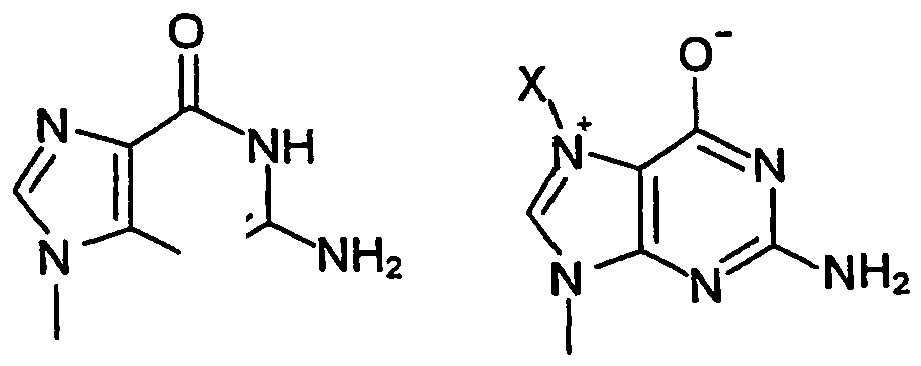
- A compound as recited in Claim 2, wherein W is

- A compound as recited in Claim 2; wherein, if n = 0, then Y2 or Y3 is BH3 or Se. and wherein, if n = 1 then Y2, Y3, or Y4 is BH3 or Se.
- An RNA molecule whose 5' end incorporates a compound as recited in Claim 2.
- An RNA molecule whose 5' end incorporates a compound as recited in Claim 5.
- An RNA molecule as recited in Claim 7, wherein R is selected from the group consisting of
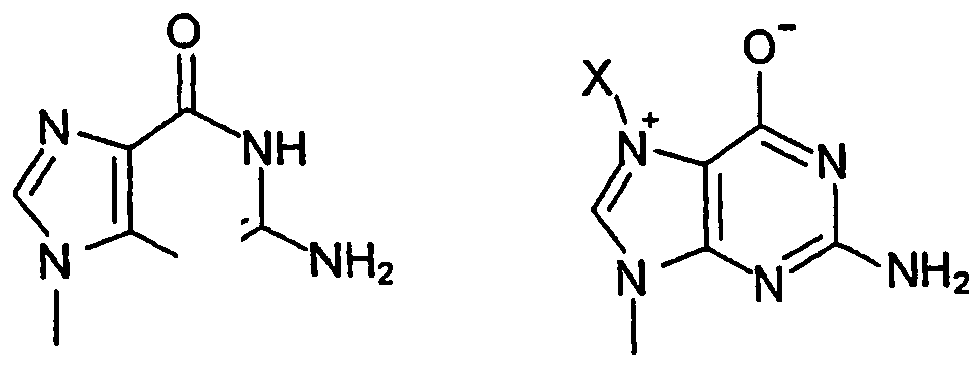
- A method of synthesizing, in vitro or in vivo, an RNA molecule as recited in Claim 6, said method comprising reacting ATP, CTP, UTP, and GTP, a composition as recited, and polynucleotide template in the presence of RNA polymerase, under conditions conductive to transcription by the RNA polymerase of the polynucleotide template into an RNA copy; whereby some of the RNA copies will incorporate the compound to make an RNA molecule as recited in Claim 6.
- A method for synthesizing a protein or peptide in vitro, said method comprising translating an RNA molecule as recited in Claim 6 in a cell-free protein synthesis system, wherein the RNA molecule comprises an open reading frame, under conditions conductive to translating the open reading frame of the RNA molecule into the protein or peptide encoded by the open reading frame.
- A method for synthesizing a protein or peptide in vivo or in cultured cells, said method comprising translating an RNA molecule as recited in Claim 6 in vivo or in cultured cells, wherein the RNA molecule comprises an open reading frame, under conditions conductive to translating the open reading frame of the RNA molecule into the protein or peptide encoded by the open reading frame.
- Compound as recited in claim 2 for use in a method of wholly or partially inhibiting the translation of RNA into protein or peptide in a system that translates RNA into protein or peptide.
- Compound as recited in claim 2 for use in a method as recited in claim 12, wherein the system is a native RNA translation system of a living organism.
- A composition as recited in Claim 2; wherein R1 is OCH3; R2 is OH; R3 is OH; R4 is OH; n is 0; Y1 is O; Y2 is Se; Y3 is O; W is


Priority Applications (1)
| Application Number | Priority Date | Filing Date | Title |
|---|---|---|---|
| PL09759412T PL2297175T3 (en) | 2008-06-06 | 2009-06-04 | Mrna cap analogs |
Applications Claiming Priority (2)
| Application Number | Priority Date | Filing Date | Title |
|---|---|---|---|
| PL385388A PL215513B1 (en) | 2008-06-06 | 2008-06-06 | New borane phosphate analogs of dinucleotides, their application, RNA particle, method of obtaining RNA and method of obtaining peptides or protein |
| PCT/US2009/046249 WO2009149253A2 (en) | 2008-06-06 | 2009-06-04 | Mrna cap analogs |
Publications (3)
| Publication Number | Publication Date |
|---|---|
| EP2297175A2 EP2297175A2 (en) | 2011-03-23 |
| EP2297175A4 EP2297175A4 (en) | 2011-06-15 |
| EP2297175B1 true EP2297175B1 (en) | 2013-08-07 |
Family
ID=41398862
Family Applications (1)
| Application Number | Title | Priority Date | Filing Date |
|---|---|---|---|
| EP09759412.1A Active EP2297175B1 (en) | 2008-06-06 | 2009-06-04 | Mrna cap analogs |
Country Status (8)
| Country | Link |
|---|---|
| US (1) | US8519110B2 (en) |
| EP (1) | EP2297175B1 (en) |
| JP (1) | JP5715560B2 (en) |
| AU (1) | AU2009256131B2 (en) |
| CA (1) | CA2727091C (en) |
| ES (1) | ES2425781T3 (en) |
| PL (2) | PL215513B1 (en) |
| WO (1) | WO2009149253A2 (en) |
Families Citing this family (289)
| Publication number | Priority date | Publication date | Assignee | Title |
|---|---|---|---|---|
| CA2807552A1 (en) | 2010-08-06 | 2012-02-09 | Moderna Therapeutics, Inc. | Engineered nucleic acids and methods of use thereof |
| EP2857499A1 (en) | 2010-10-01 | 2015-04-08 | Moderna Therapeutics, Inc. | Engineered nucleic acids and methods of use thereof |
| CA2831613A1 (en) | 2011-03-31 | 2012-10-04 | Moderna Therapeutics, Inc. | Delivery and formulation of engineered nucleic acids |
| US9464124B2 (en) | 2011-09-12 | 2016-10-11 | Moderna Therapeutics, Inc. | Engineered nucleic acids and methods of use thereof |
| PT3682905T (en) | 2011-10-03 | 2022-04-07 | Modernatx Inc | Modified nucleosides, nucleotides, and nucleic acids, and uses thereof |
| ES2923757T3 (en) | 2011-12-16 | 2022-09-30 | Modernatx Inc | Modified mRNA compositions |
| WO2013151664A1 (en) | 2012-04-02 | 2013-10-10 | modeRNA Therapeutics | Modified polynucleotides for the production of proteins |
| WO2013143555A1 (en) * | 2012-03-26 | 2013-10-03 | Biontech Ag | Rna formulation for immunotherapy |
| US9572897B2 (en) | 2012-04-02 | 2017-02-21 | Modernatx, Inc. | Modified polynucleotides for the production of cytoplasmic and cytoskeletal proteins |
| US10501512B2 (en) | 2012-04-02 | 2019-12-10 | Modernatx, Inc. | Modified polynucleotides |
| US9283287B2 (en) | 2012-04-02 | 2016-03-15 | Moderna Therapeutics, Inc. | Modified polynucleotides for the production of nuclear proteins |
| WO2014093924A1 (en) | 2012-12-13 | 2014-06-19 | Moderna Therapeutics, Inc. | Modified nucleic acid molecules and uses thereof |
| PT2922554T (en) | 2012-11-26 | 2022-06-28 | Modernatx Inc | Terminally modified rna |
| CN103254260B (en) * | 2013-02-07 | 2015-11-11 | 江西科技师范大学 | The method of symmetric double nucleoside diphosphate disodium salt is synthesized by nucleosides hydrogen monophosphite |
| US10258698B2 (en) | 2013-03-14 | 2019-04-16 | Modernatx, Inc. | Formulation and delivery of modified nucleoside, nucleotide, and nucleic acid compositions |
| WO2014144767A1 (en) | 2013-03-15 | 2014-09-18 | Moderna Therapeutics, Inc. | Ion exchange purification of mrna |
| US8980864B2 (en) | 2013-03-15 | 2015-03-17 | Moderna Therapeutics, Inc. | Compositions and methods of altering cholesterol levels |
| US10077439B2 (en) | 2013-03-15 | 2018-09-18 | Modernatx, Inc. | Removal of DNA fragments in mRNA production process |
| EP2971033B8 (en) * | 2013-03-15 | 2019-07-10 | ModernaTX, Inc. | Manufacturing methods for production of rna transcripts |
| EP4279610A3 (en) | 2013-03-15 | 2024-01-03 | ModernaTX, Inc. | Ribonucleic acid purification |
| PL3019619T3 (en) | 2013-07-11 | 2022-01-10 | Modernatx, Inc. | Compositions comprising synthetic polynucleotides encoding crispr related proteins and synthetic sgrnas and methods of use |
| WO2015034925A1 (en) | 2013-09-03 | 2015-03-12 | Moderna Therapeutics, Inc. | Circular polynucleotides |
| CA2923029A1 (en) | 2013-09-03 | 2015-03-12 | Moderna Therapeutics, Inc. | Chimeric polynucleotides |
| US10023626B2 (en) | 2013-09-30 | 2018-07-17 | Modernatx, Inc. | Polynucleotides encoding immune modulating polypeptides |
| EP3052511A4 (en) | 2013-10-02 | 2017-05-31 | Moderna Therapeutics, Inc. | Polynucleotide molecules and uses thereof |
| KR20160067219A (en) | 2013-10-03 | 2016-06-13 | 모더나 세라퓨틱스, 인코포레이티드 | Polynucleotides encoding low density lipoprotein receptor |
| SG11201604198YA (en) | 2013-12-30 | 2016-07-28 | Curevac Ag | Methods for rna analysis |
| EP3090060B2 (en) | 2013-12-30 | 2025-05-21 | CureVac Manufacturing GmbH | Methods for rna analysis |
| SG11201608605QA (en) | 2014-06-10 | 2016-12-29 | Curevac Ag | Methods and means for enhancing rna production |
| US10286086B2 (en) | 2014-06-19 | 2019-05-14 | Modernatx, Inc. | Alternative nucleic acid molecules and uses thereof |
| AU2015289656A1 (en) | 2014-07-16 | 2017-02-16 | Modernatx, Inc. | Circular polynucleotides |
| WO2016011226A1 (en) | 2014-07-16 | 2016-01-21 | Moderna Therapeutics, Inc. | Chimeric polynucleotides |
| EP3171895A1 (en) | 2014-07-23 | 2017-05-31 | Modernatx, Inc. | Modified polynucleotides for the production of intrabodies |
| EP3461904A1 (en) | 2014-11-10 | 2019-04-03 | ModernaTX, Inc. | Alternative nucleic acid molecules containing reduced uracil content and uses thereof |
| US10676499B2 (en) | 2014-12-16 | 2020-06-09 | Novartis Ag | 3′ end caps, 5′ end caps and combinations thereof for therapeutic RNA |
| EP4019635A1 (en) | 2015-03-25 | 2022-06-29 | Editas Medicine, Inc. | Crispr/cas-related methods, compositions and components |
| AU2016251687C1 (en) | 2015-04-22 | 2023-07-27 | CureVac SE | RNA containing composition for treatment of tumor diseases |
| CA2985615A1 (en) | 2015-05-11 | 2016-11-17 | Editas Medicine, Inc. | Crispr/cas-related methods and compositions for treating hiv infection and aids |
| CA2986310A1 (en) | 2015-05-11 | 2016-11-17 | Editas Medicine, Inc. | Optimized crispr/cas9 systems and methods for gene editing in stem cells |
| DK3303583T3 (en) | 2015-05-29 | 2020-07-13 | Curevac Real Estate Gmbh | METHOD FOR PREPARATION AND PURIFICATION OF RNA, INCLUDING AT LEAST ONE STEP FOR TANGENTIAL FLOW FILTRATION |
| US11911415B2 (en) | 2015-06-09 | 2024-02-27 | Editas Medicine, Inc. | CRISPR/Cas-related methods and compositions for improving transplantation |
| EP4239080A3 (en) | 2015-07-01 | 2023-11-01 | CureVac Manufacturing GmbH | Method for analysis of an rna molecule |
| WO2017049286A1 (en) | 2015-09-17 | 2017-03-23 | Moderna Therapeutics, Inc. | Polynucleotides containing a morpholino linker |
| HRP20220156T1 (en) | 2015-09-17 | 2022-04-15 | Modernatx, Inc. | Compounds and compositions for intracellular delivery of therapeutic agents |
| EP4101930A1 (en) | 2015-09-17 | 2022-12-14 | ModernaTX, Inc. | Polynucleotides containing a stabilizing tail region |
| EP3359670B2 (en) | 2015-10-05 | 2024-02-14 | ModernaTX, Inc. | Methods for therapeutic administration of messenger ribonucleic acid drugs |
| WO2017066789A1 (en) * | 2015-10-16 | 2017-04-20 | Modernatx, Inc. | Mrna cap analogs with modified sugar |
| US11866754B2 (en) | 2015-10-16 | 2024-01-09 | Modernatx, Inc. | Trinucleotide mRNA cap analogs |
| DK3362461T3 (en) | 2015-10-16 | 2022-05-09 | Modernatx Inc | MRNA-CAP ANALOGS WITH MODIFIED PHOSPHAT BINDING |
| CA3001351A1 (en) | 2015-10-21 | 2017-04-27 | Editas Medicine, Inc. | Crispr/cas-related methods and compositions for treating hepatitis b virus |
| CN109312338B (en) | 2015-10-30 | 2022-09-27 | 爱迪塔斯医药公司 | CRISPR/CAS related methods and compositions for treating herpes simplex virus |
| RS63051B1 (en) | 2015-12-22 | 2022-04-29 | Modernatx Inc | Compounds and compositions for intracellular delivery of agents |
| EP3394280A1 (en) | 2015-12-23 | 2018-10-31 | CureVac AG | Method of rna in vitro transcription using a buffer containing a dicarboxylic acid or tricarboxylic acid or a salt thereof |
| SMT202200310T1 (en) | 2015-12-23 | 2022-09-14 | Modernatx Inc | Methods of using ox40 ligand encoding polynucleotides |
| US20190241658A1 (en) | 2016-01-10 | 2019-08-08 | Modernatx, Inc. | Therapeutic mRNAs encoding anti CTLA-4 antibodies |
| PL415967A1 (en) * | 2016-01-29 | 2017-07-31 | Univ Warszawski | 5'-thiophosphate analogs of 5' mRNA (capu) end, method for obtaining them and applications |
| US12612654B2 (en) | 2016-02-12 | 2026-04-28 | CureVac SE | Method for analyzing RNA |
| US20190049414A1 (en) | 2016-02-15 | 2019-02-14 | Curevac Ag | Method for analyzing by-products of rna in vitro transcription |
| EP3423595A1 (en) | 2016-03-03 | 2019-01-09 | CureVac AG | Rna analysis by total hydrolysis |
| WO2017162265A1 (en) | 2016-03-21 | 2017-09-28 | Biontech Rna Pharmaceuticals Gmbh | Trans-replicating rna |
| WO2017162266A1 (en) | 2016-03-21 | 2017-09-28 | Biontech Rna Pharmaceuticals Gmbh | Rna replicon for versatile and efficient gene expression |
| EP3442590A2 (en) | 2016-04-13 | 2019-02-20 | Modernatx, Inc. | Lipid compositions and their uses for intratumoral polynucleotide delivery |
| EP4631970A3 (en) | 2016-05-04 | 2026-01-07 | CureVac SE | Nucleic acid molecules and uses thereof |
| EP4233898A3 (en) | 2016-05-04 | 2023-11-01 | CureVac SE | Influenza mrna vaccines |
| EP3452499A2 (en) | 2016-05-06 | 2019-03-13 | Juno Therapeutics, Inc. | Genetically engineered cells and methods of making the same |
| US11001861B2 (en) | 2016-05-18 | 2021-05-11 | Modernatx, Inc. | Polynucleotides encoding galactose-1-phosphate uridylyltransferase for the treatment of galactosemia type 1 |
| AU2017268396B2 (en) | 2016-05-18 | 2023-05-18 | Modernatx, Inc. | Polynucleotides encoding citrin for the treatment of citrullinemia type 2 |
| JP7114485B2 (en) | 2016-05-18 | 2022-08-08 | モデルナティエックス インコーポレイテッド | Polynucleotides encoding α-galactosidase A for the treatment of Fabry disease |
| PL3458083T3 (en) | 2016-05-18 | 2023-03-13 | Modernatx, Inc. | Polynucleotides encoding interleukin-12 (il12) and uses thereof |
| CA3024624A1 (en) | 2016-05-18 | 2017-11-23 | Modernatx, Inc. | Polynucleotides encoding porphobilinogen deaminase for the treatment of acute intermittent porphyria |
| US12128113B2 (en) | 2016-05-18 | 2024-10-29 | Modernatx, Inc. | Polynucleotides encoding JAGGED1 for the treatment of Alagille syndrome |
| WO2017201332A1 (en) | 2016-05-18 | 2017-11-23 | Modernatx, Inc. | Polynucleotides encoding acyl-coa dehydrogenase, very long-chain for the treatment of very long-chain acyl-coa dehydrogenase deficiency |
| RS63625B1 (en) | 2016-05-18 | 2022-10-31 | Modernatx Inc | IRNA COMBINATIONS ENCODING IMMUNOMODULATING POLYPEPTIDES AND THEIR USE |
| EP3468537A1 (en) | 2016-06-14 | 2019-04-17 | Modernatx, Inc. | Stabilized formulations of lipid nanoparticles |
| US12385034B2 (en) | 2016-06-24 | 2025-08-12 | Modernatx, Inc. | Methods and apparatus for filtration |
| CN109715205A (en) | 2016-08-19 | 2019-05-03 | 库瑞瓦格股份公司 | RNA use for cancer treatment |
| KR20190093816A (en) | 2016-10-26 | 2019-08-26 | 큐어백 아게 | Lipid nanoparticle mRNA vaccine |
| EP3538067A1 (en) | 2016-11-08 | 2019-09-18 | Modernatx, Inc. | Stabilized formulations of lipid nanoparticles |
| WO2018115527A2 (en) | 2016-12-23 | 2018-06-28 | Curevac Ag | Mers coronavirus vaccine |
| WO2018115507A2 (en) | 2016-12-23 | 2018-06-28 | Curevac Ag | Henipavirus vaccine |
| AU2018224387B2 (en) | 2017-02-22 | 2024-08-08 | Crispr Therapeutics Ag | Compositions and methods for gene editing |
| JP7332478B2 (en) | 2017-03-15 | 2023-08-23 | モデルナティエックス インコーポレイテッド | Lipid nanoparticle formulation |
| RS63953B1 (en) | 2017-03-15 | 2023-02-28 | Modernatx Inc | Compound and compositions for intracellular delivery of therapeutic agents |
| WO2018208998A1 (en) | 2017-05-10 | 2018-11-15 | The Regents Of The University Of California | Directed editing of cellular rna via nuclear delivery of crispr/cas9 |
| EP4253544A3 (en) | 2017-05-18 | 2023-12-20 | ModernaTX, Inc. | Modified messenger rna comprising functional rna elements |
| AU2018270111B2 (en) | 2017-05-18 | 2022-07-14 | Modernatx, Inc. | Polynucleotides encoding tethered interleukin-12 (IL12) polypeptides and uses thereof |
| US20200131498A1 (en) | 2017-06-14 | 2020-04-30 | Modernatx, Inc. | Polynucleotides encoding methylmalonyl-coa mutase |
| EP3638678B1 (en) | 2017-06-14 | 2025-12-03 | ModernaTX, Inc. | Compounds and compositions for intracellular delivery of agents |
| EP3638292A1 (en) | 2017-06-14 | 2020-04-22 | ModernaTX, Inc. | Polynucleotides encoding coagulation factor viii |
| US10034951B1 (en) | 2017-06-21 | 2018-07-31 | New England Biolabs, Inc. | Use of thermostable RNA polymerases to produce RNAs having reduced immunogenicity |
| JP7722629B2 (en) | 2017-07-04 | 2025-08-13 | キュアバック エスイー | Novel nucleic acid molecules |
| US20200362382A1 (en) | 2017-08-18 | 2020-11-19 | Modernatx, Inc. | Methods of preparing modified rna |
| US11602557B2 (en) | 2017-08-22 | 2023-03-14 | Cure Vac SE | Bunyavirales vaccine |
| MX2020002348A (en) | 2017-08-31 | 2020-10-08 | Modernatx Inc | Methods of making lipid nanoparticles. |
| US12291717B2 (en) | 2017-09-13 | 2025-05-06 | Biontech Rna Pharmaceuticals Gmbh | RNA replicon for reprogramming somatic cells |
| AU2018333530B2 (en) | 2017-09-13 | 2024-05-30 | Biontech Cell & Gene Therapies Gmbh | RNA replicon for expressing a T cell receptor or an artificial T cell receptor |
| EP3681901B1 (en) | 2017-09-13 | 2024-03-27 | BioNTech SE | Method of enhancing rna expression in a cell |
| SG11202003247RA (en) | 2017-11-08 | 2020-05-28 | Curevac Ag | Rna sequence adaptation |
| US11939601B2 (en) | 2017-11-22 | 2024-03-26 | Modernatx, Inc. | Polynucleotides encoding phenylalanine hydroxylase for the treatment of phenylketonuria |
| JP7424976B2 (en) | 2017-11-22 | 2024-01-30 | モダーナティエックス・インコーポレイテッド | Polynucleotide encoding propionyl-CoA carboxylase alpha and beta subunits for the treatment of propionic acidemia |
| EP3714048B1 (en) | 2017-11-22 | 2025-04-09 | ModernaTX, Inc. | Polynucleotides encoding ornithine transcarbamylase for the treatment of urea cycle disorders |
| US11931406B2 (en) | 2017-12-13 | 2024-03-19 | CureVac SE | Flavivirus vaccine |
| CN111511928A (en) | 2017-12-21 | 2020-08-07 | 库瑞瓦格股份公司 | Linear double-stranded DNA coupled to a single support or tag and method for preparing the linear double-stranded DNA |
| US11802146B2 (en) | 2018-01-05 | 2023-10-31 | Modernatx, Inc. | Polynucleotides encoding anti-chikungunya virus antibodies |
| EP3773702A2 (en) | 2018-04-05 | 2021-02-17 | CureVac AG | Novel yellow fever nucleic acid molecules for vaccination |
| US20210163928A1 (en) | 2018-04-11 | 2021-06-03 | Modernatx, Inc. | Messenger rna comprising functional rna elements |
| CA3091558A1 (en) | 2018-04-17 | 2019-10-24 | Curevac Ag | Novel rsv rna molecules and compositions for vaccination |
| FR3081169B1 (en) * | 2018-05-15 | 2020-06-19 | Messenger Biopharma | SUBSTITUTION OF THE HAT OF MESSENGER RNAS BY TWO RNA SEQUENCES INTRODUCED AT THEIR 5 'END |
| US20210260178A1 (en) | 2018-06-27 | 2021-08-26 | Curevac Ag | Novel lassa virus rna molecules and compositions for vaccination |
| WO2020023390A1 (en) | 2018-07-25 | 2020-01-30 | Modernatx, Inc. | Mrna based enzyme replacement therapy combined with a pharmacological chaperone for the treatment of lysosomal storage disorders |
| MA53545A (en) | 2018-09-02 | 2021-07-14 | Modernatx Inc | POLYNUCLEOTIDES ENCODED FOR VERY LONG CHAIN ACYL-COA DEHYDROGENASE FOR THE TREATMENT OF VERY LONG CHAIN ACYL-COA DEHYDROGENASE DEFICIENCY |
| JP2022500436A (en) | 2018-09-13 | 2022-01-04 | モダーナティエックス・インコーポレイテッドModernaTX, Inc. | Polynucleotide encoding glucose-6-phosphatase for treating glycogen storage disease |
| US12644102B2 (en) | 2018-09-13 | 2026-06-02 | Modernatx, Inc. | Polynucleotides encoding branched-chain alpha-ketoacid dehydrogenase complex E1-α, E1-β, and E2 subunits for the treatment of maple syrup urine disease |
| MA53615A (en) | 2018-09-14 | 2021-07-21 | Modernatx Inc | POLYNUCLEOTIDES ENCODED FOR POLYPEPTIDE A1, OF THE URIDINE DIPHOSPHATE GLYCOSYLTRANSFERASE 1 FAMILY, FOR THE TREATMENT OF CRIGLER-NAJJAR SYNDROME |
| EP3853202A1 (en) | 2018-09-19 | 2021-07-28 | ModernaTX, Inc. | Compounds and compositions for intracellular delivery of therapeutic agents |
| US12090235B2 (en) | 2018-09-20 | 2024-09-17 | Modernatx, Inc. | Preparation of lipid nanoparticles and methods of administration thereof |
| WO2020069169A1 (en) | 2018-09-27 | 2020-04-02 | Modernatx, Inc. | Polynucleotides encoding arginase 1 for the treatment of arginase deficiency |
| CA3114892A1 (en) | 2018-10-04 | 2020-04-09 | New England Biolabs, Inc. | Methods and compositions for increasing capping efficiency of transcribed rna |
| US11072808B2 (en) * | 2018-10-04 | 2021-07-27 | New England Biolabs, Inc. | Methods and compositions for increasing capping efficiency of transcribed RNA |
| AU2019410737A1 (en) | 2018-12-21 | 2021-06-10 | CureVac SE | RNA for malaria vaccines |
| CA3122645A1 (en) | 2018-12-21 | 2020-06-25 | Curevac Ag | Methods for rna analysis |
| CN113939282A (en) | 2019-01-31 | 2022-01-14 | 摩登纳特斯有限公司 | Method for preparing lipid nanoparticles |
| KR20210133218A (en) | 2019-01-31 | 2021-11-05 | 모더나티엑스, 인크. | Vortex mixer and associated method, system and apparatus thereof |
| EP3920950A1 (en) | 2019-02-08 | 2021-12-15 | CureVac AG | Coding rna administered into the suprachoroidal space in the treatment of ophtalmic diseases |
| US12637682B2 (en) | 2019-04-16 | 2026-05-26 | The Regents Of The University Of California | Protein translational control |
| WO2020227642A1 (en) | 2019-05-08 | 2020-11-12 | Modernatx, Inc. | Compositions for skin and wounds and methods of use thereof |
| WO2020227615A1 (en) | 2019-05-08 | 2020-11-12 | Modernatx, Inc. | Polynucleotides encoding methylmalonyl-coa mutase for the treatment of methylmalonic acidemia |
| EP3986452A1 (en) | 2019-06-18 | 2022-04-27 | CureVac AG | Rotavirus mrna vaccine |
| EP3987027A1 (en) | 2019-06-24 | 2022-04-27 | ModernaTX, Inc. | Endonuclease-resistant messenger rna and uses thereof |
| MA56517A (en) | 2019-06-24 | 2022-04-27 | Modernatx Inc | MESSENGER RNA COMPRISING FUNCTIONAL RNA ELEMENTS AND THEIR USES |
| WO2021026358A1 (en) | 2019-08-07 | 2021-02-11 | Moderna TX, Inc. | Compositions and methods for enhanced delivery of agents |
| WO2021028439A1 (en) | 2019-08-14 | 2021-02-18 | Curevac Ag | Rna combinations and compositions with decreased immunostimulatory properties |
| CA3158013A1 (en) | 2019-10-15 | 2021-04-22 | Modernatx, Inc. | Mrnas encoding granulocyte-macrophage colony stimulating factor for treating parkinson's disease |
| CA3162019A1 (en) | 2019-12-20 | 2021-06-24 | Gemma NAVARRO | Lipid nanoparticles for delivery of nucleic acids |
| DE202021004130U1 (en) | 2020-02-04 | 2022-10-26 | Curevac Ag | Coronavirus Vaccine |
| US12194089B2 (en) | 2020-02-04 | 2025-01-14 | CureVac SE | Coronavirus vaccine |
| PL432884A1 (en) * | 2020-02-12 | 2021-08-16 | Uniwersytet Warszawski | New analogs of the 5 'end cap of mRNA, the RNA molecule containing them, their applications and the method of synthesizing RNA and peptide molecules |
| WO2021204179A1 (en) | 2020-04-09 | 2021-10-14 | Suzhou Abogen Biosciences Co., Ltd. | Nucleic acid vaccines for coronavirus |
| TWI899203B (en) | 2020-04-09 | 2025-10-01 | 大陸商蘇州艾博生物科技有限公司 | Lipid nanoparticle composition |
| CN118490818A (en) | 2020-04-22 | 2024-08-16 | 生物技术欧洲股份公司 | Coronavirus vaccine |
| AU2021270587A1 (en) | 2020-05-14 | 2022-12-08 | Modernatx, Inc. | LNP compositions comprising an mRNA therapeutic and an effector molecule |
| WO2021239880A1 (en) | 2020-05-29 | 2021-12-02 | Curevac Ag | Nucleic acid based combination vaccines |
| AU2021285812A1 (en) | 2020-06-01 | 2023-01-05 | Modernatx, Inc. | Phenylalanine hydroxylase variants and uses thereof |
| WO2021247535A1 (en) | 2020-06-01 | 2021-12-09 | Modernatx, Inc. | Lipid nanoparticles containing polynucleotides encoding glucose-6-phosphatase and uses thereof |
| JP7769644B2 (en) | 2020-06-04 | 2025-11-13 | バイオエヌテック エスエー | RNA replicons for versatile and efficient gene expression |
| IL299196A (en) | 2020-06-23 | 2023-02-01 | Modernatx Inc | Lnp compositions comprising mrna therapeutics with extended half-life |
| AU2021301922A1 (en) | 2020-06-30 | 2023-02-02 | Suzhou Abogen Biosciences Co., Ltd. | Lipid compounds and lipid nanoparticle compositions |
| JP2023535225A (en) | 2020-07-24 | 2023-08-16 | ストランド セラピューティクス インコーポレイテッド | Lipid nanoparticles containing modified nucleotides |
| EP4172194A1 (en) | 2020-07-31 | 2023-05-03 | CureVac SE | Nucleic acid encoded antibody mixtures |
| TW202214566A (en) | 2020-08-20 | 2022-04-16 | 大陸商蘇州艾博生物科技有限公司 | Lipid compounds and lipid nanoparticle compositions |
| WO2022043551A2 (en) | 2020-08-31 | 2022-03-03 | Curevac Ag | Multivalent nucleic acid based coronavirus vaccines |
| CN116368226A (en) | 2020-09-04 | 2023-06-30 | 维乎医疗有限公司 | Compositions and methods for capping RNA |
| MX2023004371A (en) | 2020-10-14 | 2023-07-26 | George Mason Res Foundation Inc | IONIZABLE LIPIDS, AND METHODS OF MANUFACTURE AND USE THEREOF. |
| CA3199784A1 (en) | 2020-11-13 | 2022-05-19 | Modernatx, Inc. | Polynucleotides encoding cystic fibrosis transmembrane conductance regulator for the treatment of cystic fibrosis |
| US20230414516A1 (en) | 2020-11-16 | 2023-12-28 | BioNTech SE | Enhanced formulation stabilization and improved lyophilization processes |
| KR20230129432A (en) | 2020-12-09 | 2023-09-08 | 비온테크 에스이 | RNA manufacturing |
| MX2023007574A (en) | 2020-12-22 | 2023-09-29 | CureVac SE | Rna vaccine against sars-cov-2 variants. |
| US20240299309A1 (en) | 2020-12-22 | 2024-09-12 | CureVac SE | Pharmaceutical composition comprising lipid-based carriers encapsulating rna for multidose administration |
| KR20230129479A (en) | 2021-01-08 | 2023-09-08 | 스트랜드 세러퓨틱스 인코포레이티드 | Expression constructs and uses thereof |
| CN116615472A (en) | 2021-01-14 | 2023-08-18 | 苏州艾博生物科技有限公司 | Polymer-conjugated lipid compounds and lipid nanoparticle compositions |
| WO2022152109A2 (en) | 2021-01-14 | 2022-07-21 | Suzhou Abogen Biosciences Co., Ltd. | Lipid compounds and lipid nanoparticle compositions |
| CA3170747A1 (en) | 2021-01-27 | 2022-08-04 | Moritz THRAN | Method of reducing the immunostimulatory properties of in vitro transcribed rna |
| WO2022174079A1 (en) | 2021-02-12 | 2022-08-18 | Modernatx, Inc. | Lnp compositions comprising payloads for in vivo therapy |
| WO2022204369A1 (en) | 2021-03-24 | 2022-09-29 | Modernatx, Inc. | Polynucleotides encoding methylmalonyl-coa mutase for the treatment of methylmalonic acidemia |
| US20240207374A1 (en) | 2021-03-24 | 2024-06-27 | Modernatx, Inc. | Lipid nanoparticles containing polynucleotides encoding glucose-6-phosphatase and uses thereof |
| US20240189449A1 (en) | 2021-03-24 | 2024-06-13 | Modernatx, Inc. | Lipid nanoparticles and polynucleotides encoding ornithine transcarbamylase for the treatment of ornithine transcarbamylase deficiency |
| WO2022204390A1 (en) | 2021-03-24 | 2022-09-29 | Modernatx, Inc. | Lipid nanoparticles containing polynucleotides encoding phenylalanine hydroxylase and uses thereof |
| WO2022204380A1 (en) | 2021-03-24 | 2022-09-29 | Modernatx, Inc. | Lipid nanoparticles containing polynucleotides encoding propionyl-coa carboxylase alpha and beta subunits and uses thereof |
| EP4313152A1 (en) | 2021-03-26 | 2024-02-07 | GlaxoSmithKline Biologicals S.A. | Immunogenic compositions |
| EP4312988A2 (en) | 2021-03-31 | 2024-02-07 | CureVac SE | Syringes containing pharmaceutical compositions comprising rna |
| US20240175005A1 (en) | 2021-03-31 | 2024-05-30 | Modernatx, Inc. | PURIFICATION AND RECYCLING OF mRNA NUCLEOTIDE CAPS |
| JP2024512780A (en) | 2021-04-01 | 2024-03-19 | モデルナティエックス インコーポレイテッド | Method for identification and ratio determination of RNA species in multivalent RNA compositions |
| WO2022234417A1 (en) | 2021-05-03 | 2022-11-10 | Pfizer Inc. | Immunogenic composition against influenza |
| CA3171589A1 (en) | 2021-05-03 | 2022-11-03 | Moritz THRAN | Improved nucleic acid sequence for cell type specific expression |
| WO2022234416A1 (en) | 2021-05-03 | 2022-11-10 | Pfizer Inc. | Vaccination against pneumoccocal and covid-19 infections |
| CA3218544A1 (en) | 2021-05-03 | 2022-11-10 | Pfizer Inc. | Vaccination against bacterial and betacoronavirus infections |
| WO2022246020A1 (en) | 2021-05-19 | 2022-11-24 | Modernatx, Inc. | Polynucleotides encoding methylmalonyl-coa mutase for the treatment of methylmalonic acidemia |
| AU2022281746B2 (en) | 2021-05-24 | 2025-01-16 | Suzhou Abogen Biosciences Co., Ltd. | Lipid compounds and lipid nanoparticle compositions |
| US20240384277A1 (en) | 2021-06-15 | 2024-11-21 | Modernatx, Inc. | Engineered polynucleotides for cell-type or microenvironment-specific expression |
| US20240376445A1 (en) | 2021-06-22 | 2024-11-14 | Modernatx, Inc. | Polynucleotides encoding uridine diphosphate glycosyltransferase 1 family, polypeptide a1 for the treatment of crigler-najjar syndrome |
| US20240316165A1 (en) | 2021-07-12 | 2024-09-26 | Modernatx, Inc. | Polynucleotides encoding propionyl-coa carboxylase alpha and beta subunits for the treatment of propionic acidemia |
| WO2023009499A1 (en) | 2021-07-27 | 2023-02-02 | Modernatx, Inc. | Polynucleotides encoding glucose-6-phosphatase for the treatment of glycogen storage disease type 1a (gsd1a) |
| WO2023007019A1 (en) | 2021-07-30 | 2023-02-02 | CureVac SE | Cap analogs having an acyclic linker to the guanine derivative nucleobase |
| EP4377331A2 (en) | 2021-07-30 | 2024-06-05 | CureVac SE | Mrnas for treatment or prophylaxis of liver diseases |
| AU2021461416A1 (en) | 2021-08-24 | 2024-02-22 | BioNTech SE | In vitro transcription technologies |
| IL309502A (en) | 2021-09-03 | 2024-02-01 | CureVac SE | Novel lipid nanoparticles for delivery of nucleic acids comprising phosphatidylserine |
| EP4763287A2 (en) | 2021-09-03 | 2026-06-24 | CureVac SE | Novel lipid nanoparticles for delivery of nucleic acids |
| US20250017867A1 (en) | 2021-10-01 | 2025-01-16 | Modernatx, Inc. | Polynucleotides encoding relaxin for the treatment of fibrosis and/or cardiovascular disease |
| JP7883580B2 (en) | 2021-10-08 | 2026-07-01 | スージョウ・アボジェン・バイオサイエンシズ・カンパニー・リミテッド | Lipid compounds and lipid nanoparticle compositions |
| CN116064598B (en) | 2021-10-08 | 2024-03-12 | 苏州艾博生物科技有限公司 | Coronavirus nucleic acid vaccine |
| AR127312A1 (en) | 2021-10-08 | 2024-01-10 | Suzhou Abogen Biosciences Co Ltd | LIPID COMPOUNDS AND LIPID NANOPARTICLE COMPOSITIONS |
| KR20240099256A (en) | 2021-10-08 | 2024-06-28 | 화이자 인코포레이티드 | Immunogenic LNP compositions and methods thereof |
| US20250236883A1 (en) | 2021-10-18 | 2025-07-24 | BioNTech SE | Modified replicable rna and related compositions and their use |
| EP4419708A1 (en) | 2021-10-18 | 2024-08-28 | BioNTech SE | Methods for determining mutations for increasing modified replicable rna function and related compositions and their use |
| EP4426340A1 (en) | 2021-11-01 | 2024-09-11 | ModernaTX, Inc. | Polynucleotides encoding integrin beta-6 and methods of use thereof |
| AU2022391744A1 (en) | 2021-11-18 | 2024-06-27 | Cornell University | Microrna-dependent mrna switches for tissue-specific mrna-based therapies |
| US12186387B2 (en) | 2021-11-29 | 2025-01-07 | BioNTech SE | Coronavirus vaccine |
| EP4448002A1 (en) | 2021-12-17 | 2024-10-23 | Pfizer Inc. | Polynucleotide compositions and uses thereof |
| JP2025502599A (en) | 2021-12-23 | 2025-01-28 | スージョウ・アボジェン・バイオサイエンシズ・カンパニー・リミテッド | Lipid Compounds and Lipid Nanoparticle Compositions |
| WO2023138786A1 (en) | 2022-01-21 | 2023-07-27 | BioNTech SE | Analysis of rna molecules using catalytic nucleic acids |
| EP4469091A1 (en) | 2022-01-28 | 2024-12-04 | CureVac SE | Nucleic acid encoded transcription factor inhibitors |
| EP4479085A1 (en) | 2022-02-18 | 2024-12-25 | ModernaTX, Inc. | Mrnas encoding checkpoint cancer vaccines and uses thereof |
| WO2023166425A1 (en) | 2022-03-01 | 2023-09-07 | Crispr Therapeutics Ag | Methods and compositions for treating angiopoietin-like 3 (angptl3) related conditions |
| US20230293646A1 (en) | 2022-03-21 | 2023-09-21 | Crispr Therapeutics Ag | Methods and compositions for treating lipoprotein-related diseases |
| WO2023183909A2 (en) | 2022-03-25 | 2023-09-28 | Modernatx, Inc. | Polynucleotides encoding fanconi anemia, complementation group proteins for the treatment of fanconi anemia |
| WO2023196399A1 (en) | 2022-04-06 | 2023-10-12 | Modernatx, Inc. | Lipid nanoparticles and polynucleotides encoding argininosuccinate lyase for the treatment of argininosuccinic aciduria |
| EP4508201A1 (en) | 2022-04-14 | 2025-02-19 | ModernaTX, Inc. | Rna polymerase variants |
| AU2023262576A1 (en) | 2022-04-26 | 2024-10-10 | Strand Therapeutics Inc. | Lipid nanoparticles comprising venezuelan equine encephalitis (vee) replicon and uses thereof |
| WO2023213378A1 (en) | 2022-05-02 | 2023-11-09 | BioNTech SE | Replicon compositions and methods of using same for the treatment of diseases |
| WO2023215498A2 (en) | 2022-05-05 | 2023-11-09 | Modernatx, Inc. | Compositions and methods for cd28 antagonism |
| CA3248209A1 (en) | 2022-05-25 | 2023-11-30 | CureVac SE | Nucleic acid based vaccine encoding an escherichia coli fimh antigenic polypeptide |
| US11878055B1 (en) | 2022-06-26 | 2024-01-23 | BioNTech SE | Coronavirus vaccine |
| WO2024017479A1 (en) | 2022-07-21 | 2024-01-25 | BioNTech SE | Multifunctional cells transiently expressing an immune receptor and one or more cytokines, their use and methods for their production |
| EP4562163A1 (en) | 2022-07-26 | 2025-06-04 | ModernaTX, Inc. | Engineered polynucleotides for temporal control of expression |
| CA3262766A1 (en) | 2022-07-28 | 2024-02-01 | Stemcell Technologies Canada Inc. | Polynucleotides encoding linked antigens and uses thereof |
| JP2025527583A (en) | 2022-08-18 | 2025-08-22 | スージョウ・アボジェン・バイオサイエンシズ・カンパニー・リミテッド | Lipid nanoparticle composition |
| WO2024056856A1 (en) | 2022-09-15 | 2024-03-21 | BioNTech SE | Systems and compositions comprising trans-amplifying rna vectors with mirna |
| US20250387764A1 (en) | 2022-09-15 | 2025-12-25 | Pfizer Inc. | Coaxial flow device for nanoparticle preparation and manufacturing equipment including such device |
| CA3267272A1 (en) | 2022-09-26 | 2024-04-04 | Glaxosmithkline Biologicals Sa | Influenza virus vaccines |
| US20260130987A1 (en) | 2022-10-19 | 2026-05-14 | Pfizer Inc. | Vaccination against pneumoccocal and covid-19 infections |
| WO2024089638A1 (en) | 2022-10-28 | 2024-05-02 | Glaxosmithkline Biologicals Sa | Nucleic acid based vaccine |
| WO2024097639A1 (en) | 2022-10-31 | 2024-05-10 | Modernatx, Inc. | Hsa-binding antibodies and binding proteins and uses thereof |
| US20260191905A1 (en) | 2022-12-01 | 2026-07-09 | Modernatx, Inc. | Gpc3-specific antibodies, binding domains, and related proteins and uses thereof |
| WO2024119117A1 (en) * | 2022-12-02 | 2024-06-06 | Prime Medicine, Inc. | Modified 5' cap for mrna and methods of use thereof |
| WO2024130158A1 (en) | 2022-12-16 | 2024-06-20 | Modernatx, Inc. | Lipid nanoparticles and polynucleotides encoding extended serum half-life interleukin-22 for the treatment of metabolic disease |
| US20260216313A1 (en) | 2022-12-23 | 2026-07-30 | Pfizer Inc. | Lipid particle compositions and methods of use thereof |
| EP4648793A1 (en) | 2023-01-11 | 2025-11-19 | ModernaTX, Inc. | Personalized cancer vaccines |
| WO2024154061A1 (en) | 2023-01-18 | 2024-07-25 | Pfizer Inc. | Compositions and methods for stabilizing rna |
| US20260226091A1 (en) | 2023-01-31 | 2026-08-06 | CureVac SE | Cap analogs with 5'-terminal acyclic guanosine derivative |
| WO2024160936A1 (en) | 2023-02-03 | 2024-08-08 | Glaxosmithkline Biologicals Sa | Rna formulation |
| WO2024165146A1 (en) | 2023-02-07 | 2024-08-15 | Biontech Cell & Gene Therapies Gmbh | Immune effector cells stably and transiently expressing nucleic acids |
| EP4665390A1 (en) | 2023-02-13 | 2025-12-24 | Pfizer Inc. | Immunogenic composition against influenza |
| GB202302092D0 (en) | 2023-02-14 | 2023-03-29 | Glaxosmithkline Biologicals Sa | Analytical method |
| WO2024178305A1 (en) | 2023-02-24 | 2024-08-29 | Modernatx, Inc. | Compositions of mrna-encoded il-15 fusion proteins and methods of use thereof for treating cancer |
| WO2024182301A2 (en) | 2023-02-27 | 2024-09-06 | Modernatx, Inc. | Lipid nanoparticles and polynucleotides encoding galactose-1-phosphate uridylyltransferase (galt) for the treatment of galactosemia |
| KR20250153298A (en) | 2023-03-08 | 2025-10-24 | 큐어백 에스이 | Novel lipid nanoparticle formulations for nucleic acid delivery |
| WO2024197033A1 (en) | 2023-03-21 | 2024-09-26 | Modernatx, Inc. | Polynucleotides encoding relaxin for the treatment of heart failure |
| WO2024206126A1 (en) | 2023-03-27 | 2024-10-03 | Modernatx, Inc. | Cd16-binding antibodies and uses thereof |
| WO2024206329A1 (en) | 2023-03-27 | 2024-10-03 | Modernatx, Inc. | Nucleic acid molecules encoding bi-specific secreted engagers and uses thereof |
| WO2024200820A1 (en) | 2023-03-30 | 2024-10-03 | Ose Immunotherapeutics | Method of synthesis of targeted lipid nanoparticle and uses thereof |
| JP2026512425A (en) | 2023-03-30 | 2026-04-16 | オーエスイー・イミュノセラピューティクス | Lipid-based nanoparticles targeted to activated immune cells for the expression of immune cell-enhancing molecules and their use |
| KR20260003656A (en) | 2023-04-12 | 2026-01-07 | 스트랜드 세러퓨틱스 인코포레이티드 | Synthetic circuit and its uses |
| EP4694922A1 (en) | 2023-04-14 | 2026-02-18 | BioNTech SE | Hiv vaccine |
| JP2026518411A (en) | 2023-04-27 | 2026-06-08 | グラクソスミスクライン バイオロジカルズ ソシエテ アノニム | Influenza virus vaccine |
| EP4701657A1 (en) | 2023-04-27 | 2026-03-04 | GlaxoSmithKline Biologicals S.A. | Influenza virus vaccines |
| EP4704816A1 (en) | 2023-05-03 | 2026-03-11 | ModernaTX, Inc. | Polynucleotides encoding cystic fibrosis transmembrane conductance regulator for the treatment of cystic fibrosis |
| WO2024230934A1 (en) | 2023-05-11 | 2024-11-14 | CureVac SE | Therapeutic nucleic acid for the treatment of ophthalmic diseases |
| EP4464713A1 (en) | 2023-05-18 | 2024-11-20 | Siec Badawcza Lukasiewicz - PORT Polski Osrodek Rozwoju Technologii | Circular rna analogs, preparation and application thereof |
| JP2026521505A (en) | 2023-06-14 | 2026-06-30 | ファイザー・インク | Methods for stabilizing RNA |
| WO2025022290A1 (en) | 2023-07-21 | 2025-01-30 | Crispr Therapeutics Ag | Modulating expression of alas1 (5'-aminolevulinate synthase 1) gene |
| KR20260042228A (en) | 2023-07-24 | 2026-03-30 | 스트랜드 세러퓨틱스 인코포레이티드 | RNA-based synthetic circuit for producing engineered immune cells for in vitro cell therapy |
| KR20260046366A (en) | 2023-07-25 | 2026-04-07 | 스트랜드 세러퓨틱스 인코포레이티드 | Polynucleotide containing a microRNA non-targeting sensor and its uses |
| EP4754109A2 (en) | 2023-08-03 | 2026-06-10 | TriLink BioTechnologies, LLC | Cap analogs and methods of use thereof |
| WO2025042806A2 (en) | 2023-08-21 | 2025-02-27 | Modernatx, Inc. | C-met binding antibodies, nucleic acids encoding same, and methods of use |
| WO2025051381A1 (en) | 2023-09-08 | 2025-03-13 | BioNTech SE | Methods and compositions for localized expression of administered rna |
| AU2024342024A1 (en) | 2023-09-13 | 2026-03-26 | Pfizer Inc. | Immunogenic compositions against influenza |
| WO2025059290A1 (en) | 2023-09-14 | 2025-03-20 | Modernatx, Inc. | Polynucleotides encoding phenylalanine hydroxylase for the treatment of phenylketonuria |
| WO2025072482A1 (en) | 2023-09-27 | 2025-04-03 | Modernatx, Inc. | Immunoglobulin a protease polypeptides, polynucleotides, and uses thereof |
| EP4788369A2 (en) | 2023-10-06 | 2026-08-12 | Pfizer Inc. | Immunogenic compositions |
| US20250332245A1 (en) | 2023-11-15 | 2025-10-30 | Pfizer Inc. | Immunogenic compositions against influenza |
| AU2024384477A1 (en) | 2023-11-21 | 2026-05-21 | Modernatx, Inc. | Polynucleotides encoding cystic fibrosis transmembrane conductance regulator for the treatment of cystic fibrosis |
| WO2025132839A1 (en) | 2023-12-21 | 2025-06-26 | Glaxosmithkline Biologicals Sa | Influenza virus vaccines |
| KR20250106372A (en) | 2024-01-02 | 2025-07-10 | 한국과학기술원 | Hairpin structure nucleic acid molecules capable of modulating innate immune response and uses thereof |
| WO2025171182A1 (en) | 2024-02-08 | 2025-08-14 | Iovance Biotherapeutics, Inc. | Treatment of cancer patients with tumor infiltrating lymphocyte therapies in combination with cancer vaccine |
| WO2025181704A2 (en) | 2024-02-27 | 2025-09-04 | Crispr Therapeutics Ag | Rt editing compositions and methods |
| WO2025184429A1 (en) | 2024-02-28 | 2025-09-04 | Modernatx, Inc. | Bromodomain and extra-terminal domain (bet) epigenetic reader decoy |
| WO2025186726A1 (en) | 2024-03-05 | 2025-09-12 | Crispr Therapeutics Ag | Modulating expression of agt (angiotensinogen) gene |
| WO2025186725A2 (en) | 2024-03-06 | 2025-09-12 | Pfizer Inc. | Improved lnp formulations and uses thereof |
| TW202602467A (en) | 2024-03-11 | 2026-01-16 | 美商輝瑞股份有限公司 | Immunogenic compositions comprising conjugated escherichia coli saccharides and uses thereof |
| US20260061042A1 (en) | 2024-03-26 | 2026-03-05 | Pfizer Inc. | Polynucleotide compositions and uses thereof |
| GB202404607D0 (en) | 2024-03-29 | 2024-05-15 | Glaxosmithkline Biologicals Sa | RNA formulation |
| WO2025212851A2 (en) | 2024-04-03 | 2025-10-09 | Orbital Therapeutics, Inc. | mRNA COMPOSITIONS AND USES THEREOF IN VARICELLA ZOSTER VIRUS VACCINES |
| WO2025217591A1 (en) | 2024-04-12 | 2025-10-16 | Strand Therapeutics Inc. | Human-derived synthetic regulators and uses thereof |
| WO2025238563A1 (en) | 2024-05-17 | 2025-11-20 | Pfizer Inc. | Coaxial mixing device for nanoparticle preparation and manufacturing equipment including such mixing device |
| WO2025255199A1 (en) | 2024-06-05 | 2025-12-11 | Modernatx, Inc. | Argininosuccinate synthase 1 and argininosuccinate lyase polypeptides and polynucleotides and uses thereof |
| WO2026025031A1 (en) | 2024-07-26 | 2026-01-29 | Modernatx, Inc. | Mrna encoding mageb2 tcer molecule |
| WO2026044055A1 (en) | 2024-08-23 | 2026-02-26 | Modernatx, Inc. | Muc16 binding molecules, nucleic acids encoding same, and methods of use |
| WO2026075820A1 (en) | 2024-10-03 | 2026-04-09 | Modernatx, Inc. | 4-1bb binding molecules, nucleic acids encoding same, and methods of use |
| WO2026085234A1 (en) | 2024-10-18 | 2026-04-23 | Modernatx, Inc. | 3' untranslated region sequences for extending messenger ribonucleic acids half-life |
| WO2026088119A1 (en) | 2024-10-24 | 2026-04-30 | Pfizer Inc. | Lipidated tlr7/8 modulators as adjuvants and uses thereof |
| WO2026096575A1 (en) | 2024-10-29 | 2026-05-07 | Modernatx, Inc. | Mrna encoding concatemeric prame epitope polypeptide |
| WO2026106497A2 (en) | 2024-11-18 | 2026-05-21 | Sieć Badawcza Łukasiewicz – Port Polski Osrodek Rozwoju Technologii | Functionalized circular rna and methods and intermediates for their production |
| WO2026112050A2 (en) | 2024-11-21 | 2026-05-28 | Modernatx, Inc. | Claudin 6 binding molecules, nucleic acids encoding same, and methods of use |
| WO2026122882A2 (en) | 2024-12-06 | 2026-06-11 | Modernatx, Inc. | Solid tumor t cell engagers and uses thereof |
| WO2026126175A2 (en) | 2024-12-15 | 2026-06-18 | Pfizer Inc. | Immunogenic compositions against influenza |
| US20260166136A1 (en) | 2024-12-18 | 2026-06-18 | Pfizer Inc. | Immunogenic compositions and uses thereof |
| WO2026151698A1 (en) | 2025-01-07 | 2026-07-16 | Modernatx, Inc. | Lag3 binding molecules, nucleic acids encoding same, and methods of use |
| WO2026155976A1 (en) | 2025-01-14 | 2026-07-23 | Modernatx, Inc. | Pd-1 binding proteins, nucleic acids encoding same, and methods of use |
| WO2026165118A1 (en) | 2025-01-29 | 2026-08-06 | Strand Therapeutics Inc. | Polynucleotides comprising detargeting sensors and uses thereof |
Family Cites Families (4)
| Publication number | Priority date | Publication date | Assignee | Title |
|---|---|---|---|---|
| NZ277616A (en) * | 1993-11-16 | 1997-12-19 | Genta Inc | Synthetic oligomers having phosphonate internucleosidyl linkages of undefined chirality mixed with non-phosphate internucleosidyl linkages |
| US6060456A (en) * | 1993-11-16 | 2000-05-09 | Genta Incorporated | Chimeric oligonucleoside compounds |
| US7074596B2 (en) * | 2002-03-25 | 2006-07-11 | Board Of Supervisors Of Louisiana State University And Agricultural And Mechanical College | Synthesis and use of anti-reverse mRNA cap analogues |
| US7368439B2 (en) * | 2005-06-15 | 2008-05-06 | Bar - Ilan University | Dinucleoside poly(borano)phosphate derivatives and uses thereof |
-
2008
- 2008-06-06 PL PL385388A patent/PL215513B1/en unknown
-
2009
- 2009-06-04 ES ES09759412T patent/ES2425781T3/en active Active
- 2009-06-04 CA CA2727091A patent/CA2727091C/en active Active
- 2009-06-04 EP EP09759412.1A patent/EP2297175B1/en active Active
- 2009-06-04 AU AU2009256131A patent/AU2009256131B2/en active Active
- 2009-06-04 US US12/996,243 patent/US8519110B2/en active Active
- 2009-06-04 PL PL09759412T patent/PL2297175T3/en unknown
- 2009-06-04 WO PCT/US2009/046249 patent/WO2009149253A2/en not_active Ceased
- 2009-06-04 JP JP2011512643A patent/JP5715560B2/en active Active
Also Published As
| Publication number | Publication date |
|---|---|
| US8519110B2 (en) | 2013-08-27 |
| JP5715560B2 (en) | 2015-05-07 |
| CA2727091C (en) | 2017-05-09 |
| CA2727091A1 (en) | 2009-12-10 |
| AU2009256131A1 (en) | 2009-12-10 |
| WO2009149253A2 (en) | 2009-12-10 |
| EP2297175A2 (en) | 2011-03-23 |
| PL2297175T3 (en) | 2014-01-31 |
| WO2009149253A3 (en) | 2010-03-25 |
| PL215513B1 (en) | 2013-12-31 |
| EP2297175A4 (en) | 2011-06-15 |
| PL385388A1 (en) | 2009-12-07 |
| ES2425781T3 (en) | 2013-10-17 |
| US20110092574A1 (en) | 2011-04-21 |
| AU2009256131B2 (en) | 2013-05-30 |
| JP2011522542A (en) | 2011-08-04 |
Similar Documents
| Publication | Publication Date | Title |
|---|---|---|
| US8519110B2 (en) | mRNA cap analogs | |
| JP7788558B2 (en) | Cap Analogs and Their Uses | |
| EP2167523B1 (en) | Synthesis and use of anti-reverse phosphorothioate analogs of the messenger rna cap | |
| JP7728181B2 (en) | Reagents and methods for replication, transcription and translation in semisynthetic organisms | |
| US10696709B2 (en) | Phosphotriazole MRNA 5′-end cap analogs, composition comprising the same, RNA molecule incorporating the same, uses thereof and method of synthesizing RNA molecule, protein or peptide | |
| JP2026012181A (en) | Novel mRNA 5'-end cap analogs modified in the phosphate residue, RNA molecules incorporating same, their uses, and methods for synthesizing RNA molecules or peptides | |
| Jemielity et al. | Synthetic mRNA cap analogs with a modified triphosphate bridge–synthesis, applications and prospects | |
| JP7144050B2 (en) | 5'-Phosphorothiolate mRNA 5'-Terminal (Cap) Analogs, mRNAs Containing Them, Methods of Obtaining Them and Methods of Using Them | |
| HK1242326A (en) | Synthesis and use of anti-reverse phosphorothioate analogs of the messenger rna cap | |
| HK1242326A1 (en) | Synthesis and use of anti-reverse phosphorothioate analogs of the messenger rna cap | |
| CA3296778A1 (en) | Novel modified trinucleotide capping derivative, and mrna into which capping derivative is introduced | |
| HK1200461B (en) | Synthesis and use of anti-reverse phosphorothioate analogs of the messenger rna cap | |
| HK1242326B (en) | Synthesis and use of anti-reverse phosphorothioate analogs of the messenger rna cap | |
| PL214850B1 (en) | RNA molecule, the manner of obtaining of RNA and the manner of obtaining of peptites and proteins |
Legal Events
| Date | Code | Title | Description |
|---|---|---|---|
| PUAI | Public reference made under article 153(3) epc to a published international application that has entered the european phase |
Free format text: ORIGINAL CODE: 0009012 |
|
| 17P | Request for examination filed |
Effective date: 20101215 |
|
| AK | Designated contracting states |
Kind code of ref document: A2 Designated state(s): AT BE BG CH CY CZ DE DK EE ES FI FR GB GR HR HU IE IS IT LI LT LU LV MC MK MT NL NO PL PT RO SE SI SK TR |
|
| AX | Request for extension of the european patent |
Extension state: AL BA RS |
|
| A4 | Supplementary search report drawn up and despatched |
Effective date: 20110513 |
|
| DAX | Request for extension of the european patent (deleted) | ||
| 17Q | First examination report despatched |
Effective date: 20120410 |
|
| GRAP | Despatch of communication of intention to grant a patent |
Free format text: ORIGINAL CODE: EPIDOSNIGR1 |
|
| GRAS | Grant fee paid |
Free format text: ORIGINAL CODE: EPIDOSNIGR3 |
|
| GRAA | (expected) grant |
Free format text: ORIGINAL CODE: 0009210 |
|
| AK | Designated contracting states |
Kind code of ref document: B1 Designated state(s): AT BE BG CH CY CZ DE DK EE ES FI FR GB GR HR HU IE IS IT LI LT LU LV MC MK MT NL NO PL PT RO SE SI SK TR |
|
| REG | Reference to a national code |
Ref country code: GB Ref legal event code: FG4D |
|
| REG | Reference to a national code |
Ref country code: CH Ref legal event code: NV Representative=s name: ISLER AND PEDRAZZINI AG, CH Ref country code: CH Ref legal event code: EP Ref country code: AT Ref legal event code: REF Ref document number: 625739 Country of ref document: AT Kind code of ref document: T Effective date: 20130815 |
|
| REG | Reference to a national code |
Ref country code: IE Ref legal event code: FG4D |
|
| REG | Reference to a national code |
Ref country code: DE Ref legal event code: R082 Ref document number: 602009017828 Country of ref document: DE Representative=s name: ZSP PATENTANWAELTE PARTG MBB, DE Ref country code: DE Ref legal event code: R082 Ref document number: 602009017828 Country of ref document: DE Representative=s name: ZSP PATENTANWAELTE PARTNERSCHAFTSGESELLSCHAFT, DE |
|
| REG | Reference to a national code |
Ref country code: DE Ref legal event code: R096 Ref document number: 602009017828 Country of ref document: DE Effective date: 20131010 |
|
| REG | Reference to a national code |
Ref country code: ES Ref legal event code: FG2A Ref document number: 2425781 Country of ref document: ES Kind code of ref document: T3 Effective date: 20131017 |
|
| REG | Reference to a national code |
Ref country code: NL Ref legal event code: T3 |
|
| REG | Reference to a national code |
Ref country code: LT Ref legal event code: MG4D |
|
| PG25 | Lapsed in a contracting state [announced via postgrant information from national office to epo] |
Ref country code: PT Free format text: LAPSE BECAUSE OF FAILURE TO SUBMIT A TRANSLATION OF THE DESCRIPTION OR TO PAY THE FEE WITHIN THE PRESCRIBED TIME-LIMIT Effective date: 20131209 Ref country code: LT Free format text: LAPSE BECAUSE OF FAILURE TO SUBMIT A TRANSLATION OF THE DESCRIPTION OR TO PAY THE FEE WITHIN THE PRESCRIBED TIME-LIMIT Effective date: 20130807 Ref country code: HR Free format text: LAPSE BECAUSE OF FAILURE TO SUBMIT A TRANSLATION OF THE DESCRIPTION OR TO PAY THE FEE WITHIN THE PRESCRIBED TIME-LIMIT Effective date: 20130807 Ref country code: NO Free format text: LAPSE BECAUSE OF FAILURE TO SUBMIT A TRANSLATION OF THE DESCRIPTION OR TO PAY THE FEE WITHIN THE PRESCRIBED TIME-LIMIT Effective date: 20131107 Ref country code: SE Free format text: LAPSE BECAUSE OF FAILURE TO SUBMIT A TRANSLATION OF THE DESCRIPTION OR TO PAY THE FEE WITHIN THE PRESCRIBED TIME-LIMIT Effective date: 20130807 Ref country code: CY Free format text: LAPSE BECAUSE OF FAILURE TO SUBMIT A TRANSLATION OF THE DESCRIPTION OR TO PAY THE FEE WITHIN THE PRESCRIBED TIME-LIMIT Effective date: 20130710 Ref country code: IS Free format text: LAPSE BECAUSE OF FAILURE TO SUBMIT A TRANSLATION OF THE DESCRIPTION OR TO PAY THE FEE WITHIN THE PRESCRIBED TIME-LIMIT Effective date: 20131207 |
|
| REG | Reference to a national code |
Ref country code: PL Ref legal event code: T3 |
|
| PG25 | Lapsed in a contracting state [announced via postgrant information from national office to epo] |
Ref country code: LV Free format text: LAPSE BECAUSE OF FAILURE TO SUBMIT A TRANSLATION OF THE DESCRIPTION OR TO PAY THE FEE WITHIN THE PRESCRIBED TIME-LIMIT Effective date: 20130807 Ref country code: SI Free format text: LAPSE BECAUSE OF FAILURE TO SUBMIT A TRANSLATION OF THE DESCRIPTION OR TO PAY THE FEE WITHIN THE PRESCRIBED TIME-LIMIT Effective date: 20130807 Ref country code: GR Free format text: LAPSE BECAUSE OF FAILURE TO SUBMIT A TRANSLATION OF THE DESCRIPTION OR TO PAY THE FEE WITHIN THE PRESCRIBED TIME-LIMIT Effective date: 20131108 Ref country code: FI Free format text: LAPSE BECAUSE OF FAILURE TO SUBMIT A TRANSLATION OF THE DESCRIPTION OR TO PAY THE FEE WITHIN THE PRESCRIBED TIME-LIMIT Effective date: 20130807 |
|
| PG25 | Lapsed in a contracting state [announced via postgrant information from national office to epo] |
Ref country code: CY Free format text: LAPSE BECAUSE OF FAILURE TO SUBMIT A TRANSLATION OF THE DESCRIPTION OR TO PAY THE FEE WITHIN THE PRESCRIBED TIME-LIMIT Effective date: 20130807 |
|
| PG25 | Lapsed in a contracting state [announced via postgrant information from national office to epo] |
Ref country code: SK Free format text: LAPSE BECAUSE OF FAILURE TO SUBMIT A TRANSLATION OF THE DESCRIPTION OR TO PAY THE FEE WITHIN THE PRESCRIBED TIME-LIMIT Effective date: 20130807 Ref country code: RO Free format text: LAPSE BECAUSE OF FAILURE TO SUBMIT A TRANSLATION OF THE DESCRIPTION OR TO PAY THE FEE WITHIN THE PRESCRIBED TIME-LIMIT Effective date: 20130807 Ref country code: CZ Free format text: LAPSE BECAUSE OF FAILURE TO SUBMIT A TRANSLATION OF THE DESCRIPTION OR TO PAY THE FEE WITHIN THE PRESCRIBED TIME-LIMIT Effective date: 20130807 Ref country code: DK Free format text: LAPSE BECAUSE OF FAILURE TO SUBMIT A TRANSLATION OF THE DESCRIPTION OR TO PAY THE FEE WITHIN THE PRESCRIBED TIME-LIMIT Effective date: 20130807 Ref country code: EE Free format text: LAPSE BECAUSE OF FAILURE TO SUBMIT A TRANSLATION OF THE DESCRIPTION OR TO PAY THE FEE WITHIN THE PRESCRIBED TIME-LIMIT Effective date: 20130807 |
|
| PLBE | No opposition filed within time limit |
Free format text: ORIGINAL CODE: 0009261 |
|
| STAA | Information on the status of an ep patent application or granted ep patent |
Free format text: STATUS: NO OPPOSITION FILED WITHIN TIME LIMIT |
|
| 26N | No opposition filed |
Effective date: 20140508 |
|
| REG | Reference to a national code |
Ref country code: DE Ref legal event code: R097 Ref document number: 602009017828 Country of ref document: DE Effective date: 20140508 |
|
| PG25 | Lapsed in a contracting state [announced via postgrant information from national office to epo] |
Ref country code: MC Free format text: LAPSE BECAUSE OF FAILURE TO SUBMIT A TRANSLATION OF THE DESCRIPTION OR TO PAY THE FEE WITHIN THE PRESCRIBED TIME-LIMIT Effective date: 20130807 Ref country code: LU Free format text: LAPSE BECAUSE OF FAILURE TO SUBMIT A TRANSLATION OF THE DESCRIPTION OR TO PAY THE FEE WITHIN THE PRESCRIBED TIME-LIMIT Effective date: 20140604 |
|
| REG | Reference to a national code |
Ref country code: IE Ref legal event code: MM4A |
|
| PG25 | Lapsed in a contracting state [announced via postgrant information from national office to epo] |
Ref country code: IE Free format text: LAPSE BECAUSE OF NON-PAYMENT OF DUE FEES Effective date: 20140604 |
|
| PG25 | Lapsed in a contracting state [announced via postgrant information from national office to epo] |
Ref country code: MT Free format text: LAPSE BECAUSE OF FAILURE TO SUBMIT A TRANSLATION OF THE DESCRIPTION OR TO PAY THE FEE WITHIN THE PRESCRIBED TIME-LIMIT Effective date: 20130807 |
|
| REG | Reference to a national code |
Ref country code: FR Ref legal event code: PLFP Year of fee payment: 8 |
|
| PG25 | Lapsed in a contracting state [announced via postgrant information from national office to epo] |
Ref country code: BG Free format text: LAPSE BECAUSE OF FAILURE TO SUBMIT A TRANSLATION OF THE DESCRIPTION OR TO PAY THE FEE WITHIN THE PRESCRIBED TIME-LIMIT Effective date: 20130807 |
|
| PG25 | Lapsed in a contracting state [announced via postgrant information from national office to epo] |
Ref country code: HU Free format text: LAPSE BECAUSE OF FAILURE TO SUBMIT A TRANSLATION OF THE DESCRIPTION OR TO PAY THE FEE WITHIN THE PRESCRIBED TIME-LIMIT; INVALID AB INITIO Effective date: 20090604 |
|
| REG | Reference to a national code |
Ref country code: FR Ref legal event code: PLFP Year of fee payment: 9 |
|
| PG25 | Lapsed in a contracting state [announced via postgrant information from national office to epo] |
Ref country code: MK Free format text: LAPSE BECAUSE OF FAILURE TO SUBMIT A TRANSLATION OF THE DESCRIPTION OR TO PAY THE FEE WITHIN THE PRESCRIBED TIME-LIMIT Effective date: 20130807 |
|
| REG | Reference to a national code |
Ref country code: FR Ref legal event code: PLFP Year of fee payment: 10 |
|
| REG | Reference to a national code |
Ref country code: DE Ref legal event code: R082 Ref document number: 602009017828 Country of ref document: DE Representative=s name: ZWICKER SCHNAPPAUF & PARTNER PATENTANWAELTE PA, DE |
|
| P01 | Opt-out of the competence of the unified patent court (upc) registered |
Effective date: 20230529 |
|
| P02 | Opt-out of the competence of the unified patent court (upc) changed |
Effective date: 20230529 |
|
| PGFP | Annual fee paid to national office [announced via postgrant information from national office to epo] |
Ref country code: ES Payment date: 20250718 Year of fee payment: 17 |
|
| PGFP | Annual fee paid to national office [announced via postgrant information from national office to epo] |
Ref country code: IT Payment date: 20250630 Year of fee payment: 17 |
|
| PGFP | Annual fee paid to national office [announced via postgrant information from national office to epo] |
Ref country code: CH Payment date: 20250701 Year of fee payment: 17 |
|
| REG | Reference to a national code |
Ref country code: CH Ref legal event code: U11 Free format text: ST27 STATUS EVENT CODE: U-0-0-U10-U11 (AS PROVIDED BY THE NATIONAL OFFICE) Effective date: 20260701 |
|
| PGFP | Annual fee paid to national office [announced via postgrant information from national office to epo] |
Ref country code: GB Payment date: 20260623 Year of fee payment: 18 Ref country code: PL Payment date: 20260526 Year of fee payment: 18 |
|
| PGFP | Annual fee paid to national office [announced via postgrant information from national office to epo] |
Ref country code: DE Payment date: 20260623 Year of fee payment: 18 |
|
| PGFP | Annual fee paid to national office [announced via postgrant information from national office to epo] |
Ref country code: AT Payment date: 20260618 Year of fee payment: 18 |
|
| PGFP | Annual fee paid to national office [announced via postgrant information from national office to epo] |
Ref country code: BE Payment date: 20260622 Year of fee payment: 18 |
|
| PGFP | Annual fee paid to national office [announced via postgrant information from national office to epo] |
Ref country code: NL Payment date: 20260622 Year of fee payment: 18 Ref country code: TR Payment date: 20260602 Year of fee payment: 18 |
|
| PGFP | Annual fee paid to national office [announced via postgrant information from national office to epo] |
Ref country code: FR Payment date: 20260622 Year of fee payment: 18 |