EP2296389B1 - Method and system for generating an identity identifier of a key - Google Patents
Method and system for generating an identity identifier of a key Download PDFInfo
- Publication number
- EP2296389B1 EP2296389B1 EP09765394.3A EP09765394A EP2296389B1 EP 2296389 B1 EP2296389 B1 EP 2296389B1 EP 09765394 A EP09765394 A EP 09765394A EP 2296389 B1 EP2296389 B1 EP 2296389B1
- Authority
- EP
- European Patent Office
- Prior art keywords
- key
- identifier
- ciphering
- sgsn
- set identifier
- Prior art date
- Legal status (The legal status is an assumption and is not a legal conclusion. Google has not performed a legal analysis and makes no representation as to the accuracy of the status listed.)
- Not-in-force
Links
- 238000000034 method Methods 0.000 title claims description 76
- 238000012546 transfer Methods 0.000 claims description 125
- 238000013507 mapping Methods 0.000 claims description 99
- 238000000605 extraction Methods 0.000 claims description 53
- 238000010295 mobile communication Methods 0.000 claims description 4
- 230000011664 signaling Effects 0.000 description 10
- 230000003993 interaction Effects 0.000 description 5
- 238000010586 diagram Methods 0.000 description 4
- 238000004891 communication Methods 0.000 description 3
- 230000000977 initiatory effect Effects 0.000 description 2
- 238000005259 measurement Methods 0.000 description 2
- 230000001960 triggered effect Effects 0.000 description 2
- 230000001419 dependent effect Effects 0.000 description 1
- 238000012545 processing Methods 0.000 description 1
- 238000003672 processing method Methods 0.000 description 1
Images


Classifications
-
- H—ELECTRICITY
- H04—ELECTRIC COMMUNICATION TECHNIQUE
- H04L—TRANSMISSION OF DIGITAL INFORMATION, e.g. TELEGRAPHIC COMMUNICATION
- H04L9/00—Cryptographic mechanisms or cryptographic arrangements for secret or secure communications; Network security protocols
- H04L9/08—Key distribution or management, e.g. generation, sharing or updating, of cryptographic keys or passwords
- H04L9/0816—Key establishment, i.e. cryptographic processes or cryptographic protocols whereby a shared secret becomes available to two or more parties, for subsequent use
- H04L9/0819—Key transport or distribution, i.e. key establishment techniques where one party creates or otherwise obtains a secret value, and securely transfers it to the other(s)
- H04L9/083—Key transport or distribution, i.e. key establishment techniques where one party creates or otherwise obtains a secret value, and securely transfers it to the other(s) involving central third party, e.g. key distribution center [KDC] or trusted third party [TTP]
-
- H—ELECTRICITY
- H04—ELECTRIC COMMUNICATION TECHNIQUE
- H04L—TRANSMISSION OF DIGITAL INFORMATION, e.g. TELEGRAPHIC COMMUNICATION
- H04L9/00—Cryptographic mechanisms or cryptographic arrangements for secret or secure communications; Network security protocols
- H04L9/32—Cryptographic mechanisms or cryptographic arrangements for secret or secure communications; Network security protocols including means for verifying the identity or authority of a user of the system or for message authentication, e.g. authorization, entity authentication, data integrity or data verification, non-repudiation, key authentication or verification of credentials
- H04L9/321—Cryptographic mechanisms or cryptographic arrangements for secret or secure communications; Network security protocols including means for verifying the identity or authority of a user of the system or for message authentication, e.g. authorization, entity authentication, data integrity or data verification, non-repudiation, key authentication or verification of credentials involving a third party or a trusted authority
-
- H—ELECTRICITY
- H04—ELECTRIC COMMUNICATION TECHNIQUE
- H04W—WIRELESS COMMUNICATION NETWORKS
- H04W12/00—Security arrangements; Authentication; Protecting privacy or anonymity
- H04W12/04—Key management, e.g. using generic bootstrapping architecture [GBA]
- H04W12/041—Key generation or derivation
-
- H—ELECTRICITY
- H04—ELECTRIC COMMUNICATION TECHNIQUE
- H04W—WIRELESS COMMUNICATION NETWORKS
- H04W12/00—Security arrangements; Authentication; Protecting privacy or anonymity
- H04W12/04—Key management, e.g. using generic bootstrapping architecture [GBA]
- H04W12/047—Key management, e.g. using generic bootstrapping architecture [GBA] without using a trusted network node as an anchor
- H04W12/0471—Key exchange
-
- H—ELECTRICITY
- H04—ELECTRIC COMMUNICATION TECHNIQUE
- H04W—WIRELESS COMMUNICATION NETWORKS
- H04W36/00—Hand-off or reselection arrangements
- H04W36/0005—Control or signalling for completing the hand-off
- H04W36/0011—Control or signalling for completing the hand-off for data sessions of end-to-end connection
- H04W36/0033—Control or signalling for completing the hand-off for data sessions of end-to-end connection with transfer of context information
- H04W36/0038—Control or signalling for completing the hand-off for data sessions of end-to-end connection with transfer of context information of security context information
-
- H—ELECTRICITY
- H04—ELECTRIC COMMUNICATION TECHNIQUE
- H04L—TRANSMISSION OF DIGITAL INFORMATION, e.g. TELEGRAPHIC COMMUNICATION
- H04L2209/00—Additional information or applications relating to cryptographic mechanisms or cryptographic arrangements for secret or secure communication H04L9/00
- H04L2209/80—Wireless
-
- H—ELECTRICITY
- H04—ELECTRIC COMMUNICATION TECHNIQUE
- H04L—TRANSMISSION OF DIGITAL INFORMATION, e.g. TELEGRAPHIC COMMUNICATION
- H04L2463/00—Additional details relating to network architectures or network communication protocols for network security covered by H04L63/00
- H04L2463/041—Additional details relating to network architectures or network communication protocols for network security covered by H04L63/00 using an encryption or decryption engine integrated in transmitted data
-
- H—ELECTRICITY
- H04—ELECTRIC COMMUNICATION TECHNIQUE
- H04L—TRANSMISSION OF DIGITAL INFORMATION, e.g. TELEGRAPHIC COMMUNICATION
- H04L2463/00—Additional details relating to network architectures or network communication protocols for network security covered by H04L63/00
- H04L2463/061—Additional details relating to network architectures or network communication protocols for network security covered by H04L63/00 applying further key derivation, e.g. deriving traffic keys from a pair-wise master key
-
- H—ELECTRICITY
- H04—ELECTRIC COMMUNICATION TECHNIQUE
- H04L—TRANSMISSION OF DIGITAL INFORMATION, e.g. TELEGRAPHIC COMMUNICATION
- H04L63/00—Network architectures or network communication protocols for network security
- H04L63/08—Network architectures or network communication protocols for network security for authentication of entities
Definitions
- the present invention relates to the field of mobile communications, and in particular to a method and system for generating an identifier of a key when a user equipment (UE) transfers from an evolved UMTS terrestrial radio access network (EUTRAN) to a universal terrestrial radio access network (UTRAN) or a global system for mobile communications (GSM) or an enhanced data rate for GSM evolution (EDGE) radio access network (GERAN, GSM/EDGE radio access network).
- EUTRAN evolved UMTS terrestrial radio access network
- UTRAN universal terrestrial radio access network
- GSM global system for mobile communications
- EDGE enhanced data rate for GSM evolution
- GERAN GSM/EDGE radio access network
- a 3rd generation partnership project (3GPP) evolved packet system (EPS) comprises an EUTRAN and an EPS core network (EPC, evolved packet core).
- 3GPP 3rd generation partnership project
- EPC evolved packet core
- the EPC comprises a mobility management entity (MME).
- MME takes charge of operations related to a control plane, such as mobility management, signaling processing of a non-access stratum (NAS), and management of a user security mode.
- the MME stores a root key of the EUTRAN, that is, a key of an access security management entity (K ASME ), and uses the K ASME and an uplink non-access stratum sequence number (NAS SQN) to generate a root key of an access stratum which is used by an evolved Node B (eNB), that is, an eNB key (K eNB ).
- eNB evolved Node B
- K eNB evolved Node B
- a key set identifier for access security management entity (KSI ASME ) or a key set identifier for an SGSN (KSI SGSN ) is an identifier of the key K ASME (or called the key sequence number), which is used for performing identification and retrieval of a key between a UE and a network side and has a length of 3 bits. If the K ASME is directly generated through an authentication and key association (AKA) of the EPS, the KSI ASME is used as the identifier of the K ASME ; and if the K ASME is generated by mapping a key of the UMTS or the GERAN, the KSI SGSN is used as the identifier of the K ASME .
- AKA authentication and key association
- the UE or the network side may inform the other party through the KSI ASME that the other party may use a designated key that is previously stored, so as to establish a security context, thereby avoiding performing the authentication and key association (AKA) for each connection and saving network resources.
- AKA authentication and key association
- the UE sets the KSI ASME to be '111'.
- the base station device is an eNB, which mainly takes charge of wireless communication, wireless communication management and mobility context management.
- the device in charge of the management of packet domain mobility context and/or management of a user security mode is a serving GPRS support node (SGSN).
- the SGSN further takes charge of the authentication and security management of the UTRAN of the UMTS and stores a key set including an integrity key (IK) and a ciphering key (CK).
- IK integrity key
- CK ciphering key
- the identifier of the key set is a key set identifier (KSI)
- the function and the usage of the KSI are similar to that of the KSI ASME in the EPS, both are used for performing identification and retrieval of a key between the UE and the network side, besides the KSI also has a length of 3 bits.
- the KSI When the KSI is equal to '111', it means that no keys can be used and the KSI is invalid.
- the SGSN checks whether the KSI stored by itself is the same as that sent by the UE and, if so, the SGSN uses the stored key set to establish a security context through association and sends the KSI back to the UE to confirm the key the SGSN uses.
- the UE sets the KSI to be '111' and sends the KSI to the SGSN; after checking that the KSI is '111', the SGSN sends an authentication request message to an HLR/HSS, then the UE and the network side re-performs an AKA to generate a new key set.
- the device in charge of management of the packet domain mobility context and/or management of a user security mode is also an SGSN
- the SGSN takes charge of the authentication and security management of a GSM/EDGE radio access network (GERAN), and stores a ciphering key (Kc) of the GERAN; and the identifier of the Kc is a ciphering key sequence number (CKSN), the function and usage of the CKSN are identical to that of the KSI.
- the MME When the UE transfers from the EUTRAN to the UTRAN, the MME generates an IK and a CK for a target network using the K ASME and sends the generated IK and CK to the SGSN, the UE and the SGSN use the IK and the CK to associate a corresponding security algorithm to establish a UTRAN security context.
- the transfer includes the following two types: a transfer which is performed when a radio resource control (RRC) is in an active state, and a transfer which is performed when the UE is in an idle state.
- RRC radio resource control
- the transfer in an active state includes a handover and so on, and the transfer in an idle state includes a routing area update, an attachment request and so on.
- the MME When the UE transfers from the EUTRAN to the GERAN, the MME generates a CK and an IK using the K ASME (with the key generation method that is the same as the method used during the transfer to the UMTS), and then sends the generated IK and CK to the SGSN, and the SGSN uses the IK and the CK to generate the key Kc for the GERAN.
- the KSI ASME , the KSI and the CKSN are all generated at the network side during an authentication process and then sent to the UE via an authentication request.
- the MME generates the IK and the CK which are needed by the UTRAN or GERAN for the target network during the transfer from the EUTRAN to the UTRAN or the GERAN, no corresponding identifiers are provided for this pair of keys.
- the UE and the SGSN can neither retrieve the generated key during the transfer nor reuse this pair of keys.
- the UE and the network side When the UE and the network side reestablish an RRC or other connections, as the stored keys cannot be used, the UE and the network side have no choice but to perform an AKA first so as to regenerate new keys and then establish a wireless connection. This will undoubtedly increase the signaling overheads of the UE and the network side and delay the time for the normal communication between the UE and the network side, and as a result, the satisfaction level of the user is reduced.
- KSI ASME EPS ASME key identifier
- the key set identifier is allocated by the network and sent with the authentication request message to the mobile station where it is stored together with the K ASME .
- KSI ASME in EPS corresponds to KSI in UMTS and CKSN in GSM.
- the present invention aims to solve the problem in existing techniques that a generated key which a K ASME is mapped into during the transferring process cannot be reused for not being provided with an identifier after a UE transfers from an EUTRAN to a UTRAN or GERAN.
- the present invention provides a method for generating an identifier of a key, which comprises that: when a user equipment (UE) transfers from an evolved UMTS terrestrial radio access network (EUTRAN) to a universal terrestrial radio access network (UTRAN), a mobility management entity (MME) and the UE generate a key set identifier of a UTRAN system by mapping a key set identifier for an access security management entity; and the MME sends a serving GPRS support node (SGSN) the key set identifier of the UTRAN system, along with a ciphering key and an integrity key of the system; wherein the generation mode of the mapping may be as follows: the UE and the MME may directly assign the value of the key set identifier of the UTRAN system to be the sum of the value of the key set identifier of the access security management entity key and a constant which is appointed by the UE and a network side.
- SGSN serving GPRS support node
- the MME may generate an integrity key and a ciphering key using the key of the access security management entity, generate an identifier of the integrity key and the ciphering key, that is, a key set identifier, by mapping the key set identifier of the access security management entity key, and send the integrity key, the ciphering key and the key set identifier to the SGSN via a user information extraction response message; and the SGSN may store the ciphering key, the integrity key and the key set identifier.
- the request message sent by the UE to the SGSN for transferring to the UTRAN in an idle state may be a routing area update request message; correspondingly, the user information extraction request message may be a context request message, and the user information extraction response message may be a context response.
- the request message sent by the UE to the SGSN for transferring to the UTRAN in an idle state may be an attachment request message; correspondingly, the user information extraction request message may be an identification request message, and the user information extraction response message may be an identification response.
- the UE may generate a key set identifier by mapping the key set identifier of the access security management entity key, and store the key set identifier, along with the integrity key and the ciphering key which are generated from the key of the access security management entity.
- the MME may generate an integrity key and a ciphering key using the key of the access security management entity, generate an identifier of the integrity key and the ciphering key, that is, a key set identifier, by mapping the key set identifier of the access security management entity key, and send the integrity key, the ciphering key and the key set identifier to the SGSN via a forward redirecting request message; the SGSN may store the ciphering key, the integrity key and the key set identifier; and after receiving a handover command sent by the network side, the UE may generate a key set identifier by mapping the key set identifier of the access security management entity key and store the key set identifier, along with the integrity key and the ciphering key which are generated from the key of the access security management entity.
- RRC radio source control
- a key is associated by the network side and the UE before the UE transfers, and if the identifier of the key associated before the transfer is the same as that of the system key which is generated by mapping the key set identifier of the access security management entity key during the transferring process, then the key stored in the SGSN and the UE before the transfer may be deleted.
- the present invention also provides a method for generating an identifier of a key, which comprises that: when a UE transfers from an EUTRAN to a global system for mobile communications (GSM) or an enhanced data rate for GSM evolution radio access network (GERAN), an MME generates an identifier of a ciphering key and an integrity key by mapping a key set identifier for an access security management entity, and sends the ciphering key, the integrity key and the identifier thereof to an SGSN; the SGSN assigns the value of the identifier of the ciphering key and the integrity key to an identifier of a ciphering key of the GSM or GERAN, that is, the sequence number of the ciphering key; and the UE generates the identifier of the ciphering key of the GSM or GERAN by mapping the key set identifier of the access security management entity key; wherein the generation mode of the mapping may be as follows: the MME may directly assign the value of the identifier of the
- the MME may generate an integrity key, a ciphering key and an identifier thereof, and send the integrity key, the ciphering key and the identifier thereof to the SGSN via a user information extraction response message.
- the request message sent by the UE to the SGSN for transferring to the GSM or GERAN in an idle state may be a routing area update request message; correspondingly, the user information extraction request message may be a context request message, and the user information extraction response message may be a context response.
- the request message sent by the UE to the SGSN for transferring to the GSM or GERAN in an idle state may be an attachment request message; correspondingly, the user information extraction request message may be an identification request message, and the user information extraction response message may be an identification response.
- the UE may generate an identifier of a ciphering key of the GSM or GERAN by mapping the key set identifier of the access security management entity key, and store the identifier of the ciphering key of the GSM or GERAN, along with the ciphering key of the GSM or GERAN which is generated from the key of the access security management entity.
- the message sent by the UE to the SGSN for indicating the completion of the transfer to the GSM or GERAN in an idle state may be a routing area update completion message or an attachment completion message.
- the MME may generate a ciphering key, an integrity key and an identifier thereof, and send the integrity key, the ciphering key and the identifier thereof to the SGSN via a forward redirecting request message; and after receiving a handover command sent by the network side, the UE may generate a ciphering key of the GSM or GERAN and an identifier thereof.
- RRC radio resource control
- the key stored in the SGSN and the UE before the transfer may be deleted.
- the present invention provides a system for generating an identifier of a key, which comprises a UE, a mobility management entity (MME) and a serving GPRS support node (SGSN), wherein the UE is used for mapping a key set identifier for an access security management entity into a key set identifier of a UTRAN system when the UE transfers from an EUTRAN to a UTRAN; the MME is used for mapping a key set identifier of the access security management entity key into a key set identifier of the UTRAN system when the UE transfers from the EUTRAN to the UTRAN and sending the obtained identifier to the SGSN; the mapping mode is as follows: the UE and the MME directly assign the value of the key set identifier of the UTRAN system key set to be that of the key set identifier of the access security management entity key, or to be the sum of the value of the key set identifier of the access security management entity key and a constant which is appointed by the UE and a network
- the present invention also provides a system for generating an identifier of a key, which comprises a UE, a mobility management entity (MME) and a serving GPRS support node (SGSN), wherein the UE is used for generating an identifier of a ciphering key of a GSM or GERAN by mapping a key set identifier for an access security management entity when transferring from an EUTRAN to the GSM or GERAN; the MME is used for generating an identifier of a ciphering key and an integrity key by mapping a key set identifier of the access security management entity key when the UE transfers from the EUTRAN to the GSM or GERAN, and sending the ciphering key, the integrity key and the identifier thereof to the SGSN; the SGSN is used for receiving the ciphering key, the integrity key and the identifier thereof which are sent by the MME, and assigning the value of the identifier of the ciphering key and the integrity key to the identifier
- the UE may comprise:
- mapping the KSI ASME into the KSI or CKSN the above method and system for generating a key set identifier, simultaneously guarantee that there are no repeated codes in the value of the KSI/CKSN and the values of previously-stored key set identifiers, and therefore solve the problem in existing techniques that the key obtained through mapping cannot be reused for not being provided with an identifier when the UE transfers from the EUTRAN to the UTRAN/GERAN.
- the present invention provides a method and system for generating a key set identifier when a UE transfers from an EUTRAN to a UTRAN/GERAN.
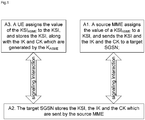
- Fig. 1 is a schematic diagram illustrating the specific implementation of a method for generating a key set identifier when a UE transfers from an EUTRAN to a UTRAN according to the present invention. The method comprises the following steps:
- the source MME and the UE may also make the value of the KSI equal to the sum of the value of the KSI ASME and a constant.
- the constant is determined by the UE and a network side together.
- the sum of the value of the KSI ASME and the constant should not be '111', and if the sum of the value of the KSI ASME and the constant is just '111', the UE and the network side are required to determine the sum of the value of the KSI ASME and the constant to be another value, such as, a next value '000' or other values.
- a key is associated by the UE and the SGSN at the network side before the transfer, and if the value of the KSI associated before the transfer is the same as that of the generated KSI which the KSI ASME is mapped into during the transferring process, then the keys stored in the UE and the target SGSN before the transfer are deleted.
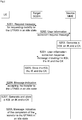
- Fig. 2 illustrates a first embodiment of the method according to the present invention, which depicts a flow of the method for generating an identifier of a key when a UE transfers from an EUTRAN to a UTRAN in an idle state.
- the method comprises the following steps:
- Fig. 3 illustrates a second embodiment of the method according to the present invention, which depicts a flow of the method for generating an identifier of a key when a UE transfers from an EUTRAN to a UTRAN in an idle state, the method comprises the following steps:
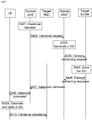
- Fig. 4 illustrates a third embodiment of the method according to the present invention, which refers to the transfer when an RRC is in an active state, that is, a flow of the method for generating an identifier of a key during the transfer from an EUTRAN to a UTRAN, the method comprises the following steps:
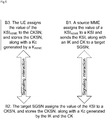
- Fig. 5 is a schematic diagram illustrating the specific implementation of a method for generating a key set identifier during the transfer from an EUTRAN to a GERAN according to the present invention, the method comprises the following steps:
- the UE may also make the CKSN equal to the sum of the value of the KSI ASME and a constant
- the source MME may also make the value of the KSI equal to the sum of the value of the KSI ASME and a constant, wherein the above two constants are determined by the UE and a network side together, and the sum of the value of the KSI ASME and the constant should not be '111', and if the sum of the value of the KSI ASME and the constant is just '111', the UE and the network side are required to determine the sum of the value of the KSI ASME and the constant to be another value, such as, a next value '000' or other values.
- Fig. 7 illustrates a fifth embodiment of the method according to the present invention, which depicts a flow of the method for generating an identifier of a key when a UE transfers from an EUTRAN to a GERAN in an idle state, the method comprises the following steps:
- Fig. 8 illustrates a sixth embodiment of the method according to the present invention, which depicts a flow of the method for generating an identifier of a key during mobility from an EUTRAN to a GERAN when an RRC is in an active state, the method comprises the following steps:
- the source MME and the UE may also make the value of the identifier of a key of the target system equal to the sum of the value of the KSI ASME and a constant, wherein the constant is determined by the UE and the network side together, and the sum of the value of the KSI ASME and the constant should not be '111', and if the sum of the value of the KSI ASME and the constant is just '111', the UE and the network side are required to determine the sum of the value of the KSI ASME and the constant to be another value, such as, a next value '000' or other values.
- the format of the KSI ASME is the same as that of the KSI SGSN , only the KSI ASME is taken as an example for description in the above embodiments, the processing method of the KSI SGSN is the same as that of the KSI ASME , therefore description relating to the KSI SGSN is not repeated in the present invention.
- the present invention provides a system for generating an identifier of a key, which is suitable for generating an identifier of a key when a UE transfers from an EUTRAN to a UTRAN, the system comprises: a UE, a mobility management entity (MME) and a serving GPRS support node (SGSN), wherein:
- MME mobility management entity
- SGSN serving GPRS support node
- the UE comprises:
- the MME unit comprises:
- the SGSN comprises:
- mapping the value of the KSI ASME in the EUTRAN into the value of the KSI in the UTRAN By mapping the value of the KSI ASME in the EUTRAN into the value of the KSI in the UTRAN, the above method and system for generating a key set identifier, simultaneously guarantee that there are no repeated codes in the KSI and the previously-stored key sequence numbers, and solve the problem in existing techniques that the IK and the CK which are obtained through mapping cannot be reused for not being provided with an identifier when a UE transfers from the EUTRAN to the UTRAN.
- the present invention also provides a system for generating an identifier of a key, which is suitable for generating an identifier of a key when a UE transfers from an EUTRAN to a GERAN, the system comprises a UE, a mobility management entity (MME) and a serving GPRS support node (SGSN), wherein:
- the UE comprises:
- the mobility management comprises:
- the SGSN comprises:
- the method and system in the above embodiments for generating a key set identifier By mapping the value of the KSI ASME into the value of the CKSN, the method and system in the above embodiments for generating a key set identifier, simultaneously guarantee that there are no repeated codes in the CKSN and the key sequence number previously stored by the SGSN, and therefore solve the problem in existing techniques that the IK, the CK or the Kc which the K ASME is mapped into cannot be reused for not being provided with an identifier when the UE transfers from the EUTRAN to the UTRAN or GERAN.
- the IK, the CK or the Kc can be reused after the transfer, the interaction signaling is reduced between the UE and the network side, and the satisfaction level of the user on the use of the network is improved.
- all the modules or steps of the present invention can be realized by universal computing devices, and can be centralized on a single computing device or distributed on a network consisting of multiple computing devices, and optionally can be realized by program codes executable to computing devices, therefore all the modules or steps can be stored in a storage device to be executed by computing devices, or it can be realized by making all the modules or steps into integrated circuit modules respectively, or making multiple modules or steps of them into a single integrated circuit module, thus the present invention is not limited to the combination of any specific hardware and software.
- the above method and system for generating an identifier of a key By mapping the value of a KSI ASME into the value of a CKSN, the above method and system for generating an identifier of a key, simultaneously guarantee that there are no repeated codes in the CKSN and the key sequence number previously stored by an SGSN, and therefore solve the problem in existing techniques that, the IK, the CK or the Kc which a K ASME is mapped into cannot be reused for not being provided with an identifier when a UE transfers from an EUTRAN to a UTRAN or GERAN; thereby the method and system of the present invention make the IK, the CK or the Kc can be reused after the transfer, reducing the interaction signaling between the UE and a network side, improving the satisfaction level of the user on the use of the network, and therefore has high industrial applicability.
Landscapes
- Engineering & Computer Science (AREA)
- Computer Security & Cryptography (AREA)
- Computer Networks & Wireless Communication (AREA)
- Signal Processing (AREA)
- Mobile Radio Communication Systems (AREA)
Description
- The present invention relates to the field of mobile communications, and in particular to a method and system for generating an identifier of a key when a user equipment (UE) transfers from an evolved UMTS terrestrial radio access network (EUTRAN) to a universal terrestrial radio access network (UTRAN) or a global system for mobile communications (GSM) or an enhanced data rate for GSM evolution (EDGE) radio access network (GERAN, GSM/EDGE radio access network).
- A 3rd generation partnership project (3GPP) evolved packet system (EPS) comprises an EUTRAN and an EPS core network (EPC, evolved packet core).
- The EPC comprises a mobility management entity (MME). The MME takes charge of operations related to a control plane, such as mobility management, signaling processing of a non-access stratum (NAS), and management of a user security mode. The MME stores a root key of the EUTRAN, that is, a key of an access security management entity (KASME), and uses the KASME and an uplink non-access stratum sequence number (NAS SQN) to generate a root key of an access stratum which is used by an evolved Node B (eNB), that is, an eNB key (KeNB). A key set identifier for access security management entity (KSIASME) or a key set identifier for an SGSN (KSISGSN) is an identifier of the key KASME (or called the key sequence number), which is used for performing identification and retrieval of a key between a UE and a network side and has a length of 3 bits. If the KASME is directly generated through an authentication and key association (AKA) of the EPS, the KSIASME is used as the identifier of the KASME; and if the KASME is generated by mapping a key of the UMTS or the GERAN, the KSISGSN is used as the identifier of the KASME.
- When a connection is established between a UE and a network side, the UE or the network side may inform the other party through the KSIASME that the other party may use a designated key that is previously stored, so as to establish a security context, thereby avoiding performing the authentication and key association (AKA) for each connection and saving network resources. When a key needs to be deleted due to the expiration of the lifetime or other reasons, the UE sets the KSIASME to be '111'.
- In the EUTRAN, the base station device is an eNB, which mainly takes charge of wireless communication, wireless communication management and mobility context management.
- In a 3GPP universal mobile telecommunication system (UMTS), the device in charge of the management of packet domain mobility context and/or management of a user security mode is a serving GPRS support node (SGSN). The SGSN further takes charge of the authentication and security management of the UTRAN of the UMTS and stores a key set including an integrity key (IK) and a ciphering key (CK). The identifier of the key set is a key set identifier (KSI), the function and the usage of the KSI are similar to that of the KSIASME in the EPS, both are used for performing identification and retrieval of a key between the UE and the network side, besides the KSI also has a length of 3 bits. When the KSI is equal to '111', it means that no keys can be used and the KSI is invalid. When an association is needed between the UE and the SGSN to establish a UMTS secure connection, if the UE has stored a key that can be used, it sends the stored KSI to the SGSN, the SGSN checks whether the KSI stored by itself is the same as that sent by the UE and, if so, the SGSN uses the stored key set to establish a security context through association and sends the KSI back to the UE to confirm the key the SGSN uses. If no keys that can be used are stored in the UE, the UE sets the KSI to be '111' and sends the KSI to the SGSN; after checking that the KSI is '111', the SGSN sends an authentication request message to an HLR/HSS, then the UE and the network side re-performs an AKA to generate a new key set.
- In a GSM/EDGE system, the device in charge of management of the packet domain mobility context and/or management of a user security mode is also an SGSN, the SGSN takes charge of the authentication and security management of a GSM/EDGE radio access network (GERAN), and stores a ciphering key (Kc) of the GERAN; and the identifier of the Kc is a ciphering key sequence number (CKSN), the function and usage of the CKSN are identical to that of the KSI.
- When the UE transfers from the EUTRAN to the UTRAN, the MME generates an IK and a CK for a target network using the KASME and sends the generated IK and CK to the SGSN, the UE and the SGSN use the IK and the CK to associate a corresponding security algorithm to establish a UTRAN security context. The transfer includes the following two types: a transfer which is performed when a radio resource control (RRC) is in an active state, and a transfer which is performed when the UE is in an idle state. The transfer in an active state includes a handover and so on, and the transfer in an idle state includes a routing area update, an attachment request and so on.
- When the UE transfers from the EUTRAN to the GERAN, the MME generates a CK and an IK using the KASME (with the key generation method that is the same as the method used during the transfer to the UMTS), and then sends the generated IK and CK to the SGSN, and the SGSN uses the IK and the CK to generate the key Kc for the GERAN.
- In existing techniques, the KSIASME, the KSI and the CKSN are all generated at the network side during an authentication process and then sent to the UE via an authentication request. However, although the MME generates the IK and the CK which are needed by the UTRAN or GERAN for the target network during the transfer from the EUTRAN to the UTRAN or the GERAN, no corresponding identifiers are provided for this pair of keys. Once the transfer is completed, the UE and the SGSN can neither retrieve the generated key during the transfer nor reuse this pair of keys. When the UE and the network side reestablish an RRC or other connections, as the stored keys cannot be used, the UE and the network side have no choice but to perform an AKA first so as to regenerate new keys and then establish a wireless connection. This will undoubtedly increase the signaling overheads of the UE and the network side and delay the time for the normal communication between the UE and the network side, and as a result, the satisfaction level of the user is reduced.
- "Security Architecture", 3GPP TS 33.401 V2.0.0, 1 May 2008 discloses that the EPS ASME key identifier (KSIASME) is a number which is associated with the KASME derived during authentication. The key set identifier is allocated by the network and sent with the authentication request message to the mobile station where it is stored together with the KASME. KSIASME in EPS corresponds to KSI in UMTS and CKSN in GSM.
- The invention is defined in the independent claims. Additional features of the invention are provided in the dependent claims. The embodiments and/or examples disclosed in the following description which are not covered by the appended claims are considered as not being part of the present invention.
- The present invention aims to solve the problem in existing techniques that a generated key which a KASME is mapped into during the transferring process cannot be reused for not being provided with an identifier after a UE transfers from an EUTRAN to a UTRAN or GERAN.
- In order to solve the above technical problem, the present invention provides a method for generating an identifier of a key, which comprises that: when a user equipment (UE) transfers from an evolved UMTS terrestrial radio access network (EUTRAN) to a universal terrestrial radio access network (UTRAN), a mobility management entity (MME) and the UE generate a key set identifier of a UTRAN system by mapping a key set identifier for an access security management entity; and the MME sends a serving GPRS support node (SGSN) the key set identifier of the UTRAN system, along with a ciphering key and an integrity key of the system;
wherein the generation mode of the mapping may be as follows: the UE and the MME may directly assign the value of the key set identifier of the UTRAN system to be the sum of the value of the key set identifier of the access security management entity key and a constant which is appointed by the UE and a network side. - Further, when the UE transfers from the EUTRAN to the UTRAN in an idle state, after receiving a user information extraction request message sent by the SGSN, the MME may generate an integrity key and a ciphering key using the key of the access security management entity, generate an identifier of the integrity key and the ciphering key, that is, a key set identifier, by mapping the key set identifier of the access security management entity key, and send the integrity key, the ciphering key and the key set identifier to the SGSN via a user information extraction response message; and the SGSN may store the ciphering key, the integrity key and the key set identifier.
- Preferably, the request message sent by the UE to the SGSN for transferring to the UTRAN in an idle state may be a routing area update request message; correspondingly, the user information extraction request message may be a context request message, and the user information extraction response message may be a context response.
- Preferably, the request message sent by the UE to the SGSN for transferring to the UTRAN in an idle state may be an attachment request message; correspondingly, the user information extraction request message may be an identification request message, and the user information extraction response message may be an identification response.
- Further, after determining to transfer to the UTRAN in an idle state and before correspondingly sending the SGSN a message indicative of the completion of the transfer to the UTRAN in an idle state, the UE may generate a key set identifier by mapping the key set identifier of the access security management entity key, and store the key set identifier, along with the integrity key and the ciphering key which are generated from the key of the access security management entity.
- Preferably, the message sent by the UE to the SGSN for indicating the completion of the transfer to the UTRAN in an idle state may be a routing area update completion message or an attachment completion message.
- Further, when the UE transfers from the EUTRAN to the UTRAN under the condition that a radio source control (RRC) is in an active state, after receiving a handover request, the MME may generate an integrity key and a ciphering key using the key of the access security management entity, generate an identifier of the integrity key and the ciphering key, that is, a key set identifier, by mapping the key set identifier of the access security management entity key, and send the integrity key, the ciphering key and the key set identifier to the SGSN via a forward redirecting request message; the SGSN may store the ciphering key, the integrity key and the key set identifier; and after receiving a handover command sent by the network side, the UE may generate a key set identifier by mapping the key set identifier of the access security management entity key and store the key set identifier, along with the integrity key and the ciphering key which are generated from the key of the access security management entity.
- Further, if a key is associated by the network side and the UE before the UE transfers, and if the identifier of the key associated before the transfer is the same as that of the system key which is generated by mapping the key set identifier of the access security management entity key during the transferring process, then the key stored in the SGSN and the UE before the transfer may be deleted.
- The present invention also provides a method for generating an identifier of a key, which comprises that: when a UE transfers from an EUTRAN to a global system for mobile communications (GSM) or an enhanced data rate for GSM evolution radio access network (GERAN),
an MME generates an identifier of a ciphering key and an integrity key by mapping a key set identifier for an access security management entity, and sends the ciphering key, the integrity key and the identifier thereof to an SGSN;
the SGSN assigns the value of the identifier of the ciphering key and the integrity key to an identifier of a ciphering key of the GSM or GERAN, that is, the sequence number of the ciphering key; and
the UE generates the identifier of the ciphering key of the GSM or GERAN by mapping the key set identifier of the access security management entity key;
wherein the generation mode of the mapping may be as follows: the MME may directly assign the value of the identifier of the ciphering key and the integrity key to be the sum of the value of the key set identifier of the access security management entity key and a constant which is appointed by the UE and a network side; and the UE may directly assign the value of the identifier of the ciphering key of the GSM or GERAN to be the sum of the value of the key set identifier of the access security management entity key and a constant which is appointed by the UE and the network side. - Further, when the UE transfers from the EUTRAN to the GSM or GERAN in an idle state, after receiving a user information extraction request message, the MME may generate an integrity key, a ciphering key and an identifier thereof, and send the integrity key, the ciphering key and the identifier thereof to the SGSN via a user information extraction response message.
- Preferably, the request message sent by the UE to the SGSN for transferring to the GSM or GERAN in an idle state may be a routing area update request message; correspondingly, the user information extraction request message may be a context request message, and the user information extraction response message may be a context response.
- Preferably, the request message sent by the UE to the SGSN for transferring to the GSM or GERAN in an idle state may be an attachment request message; correspondingly, the user information extraction request message may be an identification request message, and the user information extraction response message may be an identification response.
- Further, after determining to transfer to the GSM or GERAN in an idle state and before correspondingly sending the SGSN a message indicative of the completion of the transfer to the GSM or GERAN in an idle state, the UE may generate an identifier of a ciphering key of the GSM or GERAN by mapping the key set identifier of the access security management entity key, and store the identifier of the ciphering key of the GSM or GERAN, along with the ciphering key of the GSM or GERAN which is generated from the key of the access security management entity.
- Preferably, the message sent by the UE to the SGSN for indicating the completion of the transfer to the GSM or GERAN in an idle state may be a routing area update completion message or an attachment completion message.
- Further, when the UE transfers from the EUTRAN to a UTRAN under the condition that a radio resource control (RRC) is in an active state, after receiving a handover request, the MME may generate a ciphering key, an integrity key and an identifier thereof, and send the integrity key, the ciphering key and the identifier thereof to the SGSN via a forward redirecting request message; and after receiving a handover command sent by the network side, the UE may generate a ciphering key of the GSM or GERAN and an identifier thereof.
- Further, if a key is associated by the network side and the UE before the UE transfers, and if the identifier of the key associated before the transfer is the same as that of the ciphering key of the GSM or GERAN which is generated through mapping during the transferring process, then the key stored in the SGSN and the UE before the transfer may be deleted.
- The present invention provides a system for generating an identifier of a key, which comprises a UE, a mobility management entity (MME) and a serving GPRS support node (SGSN), wherein
the UE is used for mapping a key set identifier for an access security management entity into a key set identifier of a UTRAN system when the UE transfers from an EUTRAN to a UTRAN;
the MME is used for mapping a key set identifier of the access security management entity key into a key set identifier of the UTRAN system when the UE transfers from the EUTRAN to the UTRAN and sending the obtained identifier to the SGSN;
the mapping mode is as follows: the UE and the MME directly assign the value of the key set identifier of the UTRAN system key set to be that of the key set identifier of the access security management entity key, or to be the sum of the value of the key set identifier of the access security management entity key and a constant which is appointed by the UE and a network side;
Further, the UE may comprise: - a first key set identifier mapping unit, for generating an identifier of an integrity key and a ciphering key through mapping, and mapping the value of the identifier of the key of the root key access security management entity of the EUTRAN plus an appointed constant, to the identifier of the integrity key and the ciphering key;
- a first key and identifier thereof storing unit, for storing the ciphering key, the integrity key and the identifier of the ciphering key and the integrity key that is generated by the first key set identifier mapping unit;
- the MME may comprise:
- a second key set identifier mapping unit, for generating an identifier of an integrity key and a ciphering key, and mapping the value of the identifier of the key of the root key access security management entity of the EUTRAN plus an appointed constant, to the identifier of the integrity key and the ciphering key;
- a security parameter sending unit, for sending the SGSN the ciphering key, the integrity key, and the identifier of the ciphering key and the integrity key which is generated by the second key set identifier mapping unit;
- the SGSN may comprise:
- a security parameter receiving unit, for receiving the ciphering key, the integrity key and the identifier thereof which are sent by the MME;
- a third key and identifier thereof storing unit, which is used for storing the received ciphering key and integrity key and the identifier thereof.
- The present invention also provides a system for generating an identifier of a key, which comprises a UE, a mobility management entity (MME) and a serving GPRS support node (SGSN), wherein
the UE is used for generating an identifier of a ciphering key of a GSM or GERAN by mapping a key set identifier for an access security management entity when transferring from an EUTRAN to the GSM or GERAN;
the MME is used for generating an identifier of a ciphering key and an integrity key by mapping a key set identifier of the access security management entity key when the UE transfers from the EUTRAN to the GSM or GERAN, and sending the ciphering key, the integrity key and the identifier thereof to the SGSN;
the SGSN is used for receiving the ciphering key, the integrity key and the identifier thereof which are sent by the MME, and assigning the value of the identifier of the ciphering key and the integrity key to the identifier of the ciphering key of the GSM or GERAN;
the mapping generation mode is as follows: the MME directly assigns the value of the identifier of the ciphering key and the integrity key to be the sum of the value of the key set identifier of the access security management entity key and a constant which is appointed by the UE and a network side, and the UE directly assigns the value of the identifier of the ciphering key of the GSM or GERAN to be that of the key set identifier of the access security management entity key, or to be the sum of the value of the identifier of the key of the access security management entity and a constant which is appointed by the UE and the network side. - Further, the UE may comprise:
- a first key set identifier mapping unit, for mapping the value of the identifier of the key of the root key access security management entity of the EUTRAN plus a constant, to the identifier of the ciphering key of the GSM or GERAN;
- a first key and identifier thereof storing unit, which is used for storing the ciphering key of the GSM or GERAN and the identifier thereof;
- the MME may comprise:
- a second key set identifier mapping unit, for generating an identifier of the integrity key and the ciphering key, and mapping the value of the key set identifier of the access security management entity key plus a constant, to the identifier of the integrity key and the ciphering key;
- a security parameter sending unit, for sending the SGSN the ciphering key, the integrity key, and the identifier of the ciphering key and the integrity key that is generated by the second key set identifier mapping unit;
- the SGSN may comprise:
- a security parameter receiving unit, for receiving the ciphering key, the integrity key and the identifier thereof which are sent by the MME;
- a third key set identifier mapping unit, for assigning the value of the ciphering key, the integrity key and the identifier thereof to the identifier of the ciphering key of the GSM or GERAN;
- a third key and identifier thereof storing unit, which is used for storing the ciphering key of the GSM or GERAN and the identifier thereof.
- By mapping the KSIASME into the KSI or CKSN, the above method and system for generating a key set identifier, simultaneously guarantee that there are no repeated codes in the value of the KSI/CKSN and the values of previously-stored key set identifiers, and therefore solve the problem in existing techniques that the key obtained through mapping cannot be reused for not being provided with an identifier when the UE transfers from the EUTRAN to the UTRAN/GERAN.
-
-
Fig. 1 is a schematic diagram illustrating the specific implementation of a method for generating a key set identifier during the transfer from an EUTRAN to a UTRAN according to the present invention; -
Fig. 2 is a flowchart illustrating the signaling implementation of a first embodiment according to the method of the present invention; -
Fig. 3 is a flowchart illustrating the signaling implementation of a second embodiment according to the method of the present invention; -
Fig. 4 is a flowchart illustrating the signaling implementation of a third embodiment according to the method of the present invention; -
Fig. 5 is a schematic diagram illustrating the specific implementation of a method for generating a key set identifier during the transfer from an EUTRAN to a GERAN according to the present invention; -
Fig. 6 is a flowchart illustrating the implementation of a fourth embodiment according to the method of the present invention; -
Fig. 7 is a flowchart illustrating the signaling implementation of a fifth embodiment according to the method of the present invention; -
Fig. 8 is a flowchart illustrating the signaling implementation of a sixth embodiment according to the method of the present invention. - In order to reuse the key generated by a KASME and reduce the signaling interaction between a UE and a network side, it is required to generate an identifier for a key during transferring process. For this reason, the present invention provides a method and system for generating a key set identifier when a UE transfers from an EUTRAN to a UTRAN/GERAN.
- The present invention is illustrated below in detail by reference to the accompanying drawings in combination with the embodiments.
-
Fig. 1 is a schematic diagram illustrating the specific implementation of a method for generating a key set identifier when a UE transfers from an EUTRAN to a UTRAN according to the present invention. The method comprises the following steps: - A1, after receiving a request message, a source MME maps a KSIASME into a KSI, that is, assigns the value of the KSIASME to the KSI to make KSI = KSIASME, and then sends a target SGSN the KSI, along with an IK and CK which are generated by the KASME via an interaction message of the source MME and the target SGSN;
- A2, after receiving the KSI, the IK and the CK which are sent by the source MME, the target SGSN stores the KSI, the IK and the CK and sends the UE a message indicative of the completion of KSI mapping;
- A3, the UE maps the KSIASME into the KSI, that is, assigns the value of the KSIASME to the KSI to make KSI = KSIASME, and stores the KSI, along with the IK and CK which are generated by the KASME.
- Herein, the source MME and the UE may also make the value of the KSI equal to the sum of the value of the KSIASME and a constant. The constant is determined by the UE and a network side together. The sum of the value of the KSIASME and the constant should not be '111', and if the sum of the value of the KSIASME and the constant is just '111', the UE and the network side are required to determine the sum of the value of the KSIASME and the constant to be another value, such as, a next value '000' or other values.
- If a key is associated by the UE and the SGSN at the network side before the transfer, and if the value of the KSI associated before the transfer is the same as that of the generated KSI which the KSIASME is mapped into during the transferring process, then the keys stored in the UE and the target SGSN before the transfer are deleted.
-
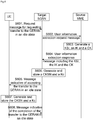
Fig. 2 illustrates a first embodiment of the method according to the present invention, which depicts a flow of the method for generating an identifier of a key when a UE transfers from an EUTRAN to a UTRAN in an idle state. The method comprises the following steps: - S201, the UE determines to transfer to the UTRAN in an idle state and sends a target SGSN a request message for requesting transfer to the UTRAN in an idle state;
herein, the request message for requesting transfer to the UTRAN in an idle state may be a routing area update request or an attachment request; - S202, after receiving the request message sent by the UE for requesting transfer to the UTRAN in an idle state, the target SGSN sends a source MME a user information extraction request message corresponding to the request message for requesting transfer to the UTRAN in an idle state;
herein, the 'corresponding' refers to a type correspondence between the user information extraction request message sent by the target SGSN to the source MME and the request message received by the target SGSN for requesting transfer to the UTRAN in an idle state;
for example, if in step S201 the request message sent by the UE to the target SGSN is a routing area update request, then the user information extraction request message is a context request message in this step;
for another example, if in step S201 the request message sent by the UE to the target SGSN is an attachment request, then the user information extraction request message is an identification request message in this step; - S203, after receiving the user information extraction request message sent by the target SGSN, the source MME assigns the value of the KSIASME to the KSI, that is, makes KSI = KSIASME, and generates an IK and a CK using the KSIASME;
- S204, the source MME sends the target SGSN a user information extraction response message including the KSI, the IK and the CK, wherein:
- if in step S203 the source MME receives a context request message from the target SGSN, then the user information extraction response message is a context response message in this step;
- if in step S203 the source MME receives an identification request message from the target SGSN, then the user information extraction response message is an identification response message in this step;
- S205, after receiving the KSI, the IK and the CK which are sent by the source MME, the target SGSN stores the KSI, the IK and the CK;
- S206, the target SGSN sends the UE a message indicative of accepting the transfer to the UTRAN in an idle state, so as to inform the UE of the successful mapping of the identifier of a key of a network side, wherein:
- if in step S201 the request message sent by the UE to the target SGSN is a routing area update request, then the message indicative of accepting the transfer to the UTRAN in an idle state is a routing area update accept message in this step;
- if in step S201 the request message sent by the UE to the target SGSN is an attachment request, then the message indicative of accepting the transfer to the UTRAN in an idle state is an attachment accept message in this step;
- S207, the UE assigns the value of the KSIASME to the KSI, that is, makes KSIASME = KSI, and stores the KSI, along with the IK and CK which are generated by the KASME; and
- S208, the UE sends the target SGSN a message indicative of the completion of the transfer to the UTRAN in an idle state, wherein
if in step S201 the request message sent by the UE to the target SGSN is a routing area update request, then the message indicative of the completion of the transfer to the UTRAN in an idle state is a routing area update completion message in this step;
if in step S201 the request message sent by the UE to the target SGSN is an attachment request, then the message indicative of the completion of the transfer to the UTRAN in an idle state is an attachment completion message in this step. -
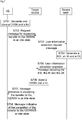
Fig. 3 illustrates a second embodiment of the method according to the present invention, which depicts a flow of the method for generating an identifier of a key when a UE transfers from an EUTRAN to a UTRAN in an idle state, the method comprises the following steps: - S301, the UE determines to transfer to the UTRAN in an idle state, assigns the value of a KSIASME to a KSI, that is, makes KSI = KSIASME, and stores the KSI, along with an IK and CK which are generated by the KASME;
- S302, the UE sends a target SGSN a request message for requesting transfer to the UTRAN in an idle state;
herein, the request message for requesting transfer to the UTRAN in an idle state is a routing area update request or an attachment request; - S303, after receiving the request message sent by the UE for requesting transfer to the UTRAN in an idle state, the target SGSN sends a source MME a user information extraction request message corresponding to the request message for requesting transfer to the UTRAN in an idle state, wherein
if in step S302 the request message sent by the UE to the target SGSN is a routing area update request, then the user information extraction request message is a context request message in this step;
and if in step S302 the request message sent by the UE to the target SGSN is an attachment request, then the user information extraction request message is an identification request message in this step; - S304, after receiving the user information extraction request message sent by the target SGSN, the source MME assigns the value of the KSIASME to the KSI, that is, makes KSI = KSIASME, and generates an IK and a CK using the KASME;
- S305, the source MME sends the target SGSN a user information extraction response message including the KSI, the IK and the CK, wherein:
- if in step S304 the source MME receives a context request message from the target SGSN, then the user information extraction response message is a context response message in this step;
- if in step S304 the source MME receives an identification request message from the target SGSN, then the user information extraction response message is an identification response message in this step;
- S306, after receiving the KSI, the IK and the CK which are sent by the source MME, the target SGSN stores the KSI along with the IK and the CK;
- S307, the target SGSN sends the UE a message indicative of accepting the transfer to the UTRAN in an idle state, so as to inform the UE of the successful mapping of the identifier of a key of a network side, wherein:
- if in step 302 the request message sent by the UE to the target SGSN is a routing area update request, then the message indicative of accepting the transfer to the UTRAN in an idle state is a routing area update accept message in this step;
- if in step S302 the request message sent by the UE to the target SGSN is an attachment request, then the message indicative of accepting the transfer to the UTRAN in an idle state is an attachment accept message in this step; and
- S308, the UE sends the target SGSN a message indicative of the completion of the transfer to the UTRAN in an idle state, wherein
if in step S302 the request message sent by the UE to the target SGSN is a routing area update request, then the message indicative of the completion of the transfer to the UTRAN in an idle state is a routing area update completion message in this step;
if in step S302 the request message sent by the UE to the target SGSN is an attachment request, then the message indicative of the completion of the transfer to the UTRAN in an idle state is an attachment completion message in this step. -
Fig. 4 illustrates a third embodiment of the method according to the present invention, which refers to the transfer when an RRC is in an active state, that is, a flow of the method for generating an identifier of a key during the transfer from an EUTRAN to a UTRAN, the method comprises the following steps: - S401, a source eNB determines to initiate a handover;
herein, the determining of the source eNB on the initiation of a handover may be triggered based on a measurement report sent by a UE to the eNB, or the eNB determines to initiate the transfer based on other reasons; - S402, the source eNB sends a handover request to a source MME;
- S403, after receiving the handover request, the source MME assigns the value of a KSIASME to a KSI, that is, makes KSI = KSIASME, and generates an IK and a CK using the KASME;
- S404, the source MME sends a target SGSN a forward redirecting request including the KSI, the IK and the CK;
- S405, the target SGSN stores the KSI along with the IK and the CK;
- S406, the target SGSN sends the source MME a forward redirecting response message, so as to inform the source MME that the target network is ready for a handover;
- S407, the source MME sends a handover command to the source eNB;
- S408, the source eNB sends an EUTRAN handover command to the UE;
- S409, after receiving the handover command, the UE assigns the value of the KSIASME to the KSI, that is, makes KSI = KSIASME, generates an IK and a CK using the KASME, and stores the KSI along with the IK and the CK; and
- S410, the UE sends a handover success message to a target radio network controller (RNC) to inform the RNC of the successful generation of the KSI of a network side.
-
Fig. 5 is a schematic diagram illustrating the specific implementation of a method for generating a key set identifier during the transfer from an EUTRAN to a GERAN according to the present invention, the method comprises the following steps: - B1, after receiving a relevant request message, a source MME maps a KSIASME into a KSI, that is, assigns the value of the KSIASME to the KSI to make KSI = KSIASME, and then sends a target SGSN the KSI, along with an IK and CK which are generated by the KASME via an interaction message of the source MME and the target SGSN;
- B2, after receiving the KSI, the IK and the CK which are sent by the source MME, the target SGSN assigns the value of the KSI to a CKSN, that is, makes CKSN = KSI, stores the CKSN, along with a Kc generated by the IK and the CK, and sends a UE a message indicative of the completion of CKSN mapping;
- B3, the UE maps the KSIASME into the CKSN, that is, assigns the value of the KSIASME to the CKSN to make CKSN = KSIASME, and stores the CKSN, along with a Kc generated by the KASME.
- Herein, the UE may also make the CKSN equal to the sum of the value of the KSIASME and a constant, the source MME may also make the value of the KSI equal to the sum of the value of the KSIASME and a constant, wherein the above two constants are determined by the UE and a network side together, and the sum of the value of the KSIASME and the constant should not be '111', and if the sum of the value of the KSIASME and the constant is just '111', the UE and the network side are required to determine the sum of the value of the KSIASME and the constant to be another value, such as, a next value '000' or other values.
- In this method, if a key is associated by the UE and the SGSN at the network side before the transfer, and if the value of the identifier CKSN of the key is the same as that of the CKSN which the KSIASME is mapped into during the transferring process, then the keys stored in the UE and the target SGSN before the transfer are deleted.
-
Fig. 6 illustrates a fourth embodiment of the method according to the present invention, which depicts a flow of the method for generating an identifier of a key when a UE transfers from an EUTRAN to a GERAN in an idle state, the method comprises the following steps: - S601, the UE determines to transfer to the GERAN in an idle state and sends a target SGSN a request message for requesting transfer to the GERAN in an idle state;
herein, the request message for requesting transfer to the GERAN in an idle state may be a routing area update request or an attachment request; - S602, after receiving the request message sent by the UE for requesting transfer to the GERAN in an idle state, the target SGSN sends a source MME a user information extraction request message corresponding to the request message for requesting transfer to the GERAN in an idle state, wherein:
- if in step S601 the request message sent by the UE to the target SGSN is a routing area update request, then the user information extraction request message is a context request message in this step;
- if in step S601 the request message sent by the UE to the target SGSN is an attachment request, then the user information extraction request message is an identification request message in this step;
- S603, after receiving the user information extraction request message sent by the target SGSN, the source MME assigns the value of the KSIASME to a KSI, that is, makes KSI = KSIASME, and generates an IK and a CK using a KASME;
- S604, the source MME sends the target SGSN a user information extraction response message including the KSI, the IK and the CK, wherein:
- if in step S603 the source MME receives a context request message from the target SGSN, then the user information extraction response message is a context response message in this step;
- if in step S603 the source MME receives an identification request message from the target SGSN, then the user information extraction response message is an identification response message in this step;
- S605, after receiving the KSI, the IK and the CK which are sent by the source MME, the target SGSN assigns the value of the KSI to a CKSN, and stores the CKSN, along with a Kc generated by the IK and the CK;
- S606, the target SGSN sends the UE a message indicative of accepting the transfer to the GERAN in an idle state, so as to inform the UE of the successful mapping of the identifier of a key of a network side, wherein:
- if in step S601 the request message sent by the UE to the target SGSN is a routing area update request, then the message indicative of accepting the transfer to the GERAN in an idle state is a routing area update accept message in this step;
- if in step S601 the request message sent by the UE to the target SGSN is an attachment request, then the message indicative of accepting the transfer to the GERAN in an idle state is an attachment accept message in this step;
- S607, the UE assigns the value of the KSIASME to the CKSN, that is, makes CKSN = KSIASME, and stores the CKSN, along with a Kc generated by the KASME; and
- S608, the UE sends the target SGSN a message indicative of the completion of the transfer to the GERAN in an idle state, wherein:
- if in step S601 the request message sent by the UE to the target SGSN is a routing area update request, then the message indicative of the completion of the transfer to the GERAN in an idle state is a routing area update completion message in this step;
- if in step S601 the request message sent by the UE to the target SGSN is an attachment request, then the message indicative of the completion of the transfer to the GERAN in an idle state is an attachment completion message in this step.
-
Fig. 7 illustrates a fifth embodiment of the method according to the present invention, which depicts a flow of the method for generating an identifier of a key when a UE transfers from an EUTRAN to a GERAN in an idle state, the method comprises the following steps: - S701, the UE determines to transfer to the GERAN in an idle state, assigns the value of a KSIASME to a CKSN, that is, makes CKSN = KSIASME, and stores the CKSN, along with a Kc generated by the KASME;
- S702, the UE sends a target SGSN a request message for requesting transfer to the GERAN in an idle state;
herein, the request message for requesting transfer to the GERAN in an idle state is a routing area update request or an attachment request; - S703, after receiving the request message sent by the UE for requesting transfer to the GERAN in an idle state, the target SGSN sends a source MME a user information extraction request message corresponding to the request message for requesting transfer to the GERAN in an idle state, wherein:
- if in step S702 the request message sent by the UE to the target SGSN is a routing area update request, then the user information extraction request message is a context request message in this step;
- if in step S702 the request message sent by the UE to the target SGSN is an attachment request, then the user information extraction request message is an identification request message in this step;
- S704, after receiving the user information extraction request message sent by the target SGSN, the source MME assigns the value of the KSIASME to a KSI, that is, makes KSI = KSIASME, and generates an IK and a CK using the KASME;
- S705, the source MME sends the target SGSN a user information extraction response message including the KSI, the IK and the CK, wherein:
- if in step S704 the source MME receives a context request message from the target SGSN, then the user information extraction response message is a context response message in this step;
- if in step S704 the source MME receives an identification request message from the target SGSN, then the user information extraction response message is an identification response message in this step;
- S706, after receiving the KSI, the IK and the CK which are sent by the source MME, the target SGSN assigns the value of the KSI to the CKSN, and stores the CKSN ,along with a Kc generated by the IK and the CK;
- S707, the target SGSN sends the UE a message indicative of accepting the transfer to the GERAN in an idle state, so as to inform the UE of the successful mapping of the identifier of a key of a network side, wherein:
- if in step S702 the request message sent by the UE to the target SGSN is a routing area update request, then the message indicative of accepting the transfer to the GERAN in an idle state is a routing area update accept message in this step;
- if in step S702 the request message sent by the UE to the target SGSN is an attachment request, then the message indicative of accepting the transfer to the GERAN in an idle state is an attachment accept message in this step; and
- S708, the UE sends the target SGSN a message indicative of the completion of the transfer to the GERAN in an idle state, wherein:
- if in step S702 the request message sent by the UE to the target SGSN is a routing area update request, then the message indicative of the completion of the transfer to the GERAN in an idle state is a routing area update completion message in this step;
- if in step S702 the request message sent by the UE to the target SGSN is an attachment request, then the message indicative of the completion of the transfer to the GERAN in an idle state is an attachment completion message in this step.
-
Fig. 8 illustrates a sixth embodiment of the method according to the present invention, which depicts a flow of the method for generating an identifier of a key during mobility from an EUTRAN to a GERAN when an RRC is in an active state, the method comprises the following steps: - S801, a source eNB determines to initiate a handover;
herein, the determining of the source eNB on the initiation of a handover may be triggered based on a measurement report sent by a UE to the eNB, or the eNB determines to initiate the transfer based on other reasons; - S802, the source eNB sends a handover request to a source MME;
- S803, after receiving the handover request, the source MME assigns the value of a KSIASME to a KSI, that is, makes KSI = KSIASME, and generates an IK and a CK using the KASME;
- S804, the source MME sends a target SGSN a forward redirecting request including the KSI, the IK and the CK;
- S805, the target SGSN assigns the value of the KSI to a CKSN, that is, makes CKSN = KSI, and stores the CKSN, along with a Kc generated by the IK and the CK;
- S806, the target SGSN sends the source MME a forward redirecting response message, so as to inform the source MME that the target network is ready for a handover;
- S807, the source MME sends a handover command to the source eNB;
- S808, the source eNB sends an EUTRAN handover command to the UE;
- S809, after receiving the handover command, the UE assigns the value of the KSIASME to the CKSN, that is, makes CKSN = KSIASME, generates a Kc using the KASME, and stores the generated CKSN and Kc; and
- S810, the UE sends a handover success message to a target RNC or BSS to inform the target RNC or BSS of the successful mapping of the CKSN of a network side.
- In the above six embodiments, the source MME and the UE may also make the value of the identifier of a key of the target system equal to the sum of the value of the KSIASME and a constant, wherein the constant is determined by the UE and the network side together, and the sum of the value of the KSIASME and the constant should not be '111', and if the sum of the value of the KSIASME and the constant is just '111', the UE and the network side are required to determine the sum of the value of the KSIASME and the constant to be another value, such as, a next value '000' or other values.
- The KSIASME and the KSISGSN have been introduced in above descriptions, the format of the KSIASME is the same as that of the KSISGSN, only the KSIASME is taken as an example for description in the above embodiments, the processing method of the KSISGSN is the same as that of the KSIASME, therefore description relating to the KSISGSN is not repeated in the present invention.
- The present invention provides a system for generating an identifier of a key, which is suitable for generating an identifier of a key when a UE transfers from an EUTRAN to a UTRAN, the system comprises: a UE, a mobility management entity (MME) and a serving GPRS support node (SGSN), wherein:
- the UE is used for mapping a KSIASME of the EUTRAN into an identifier of a system key of the UTRAN;
- the MME is used for mapping the KSIASME into an identifier of a system key of the UTRAN and sending the identifier to the target SGSN;
- the SGSN is used for receiving and storing the identifier of the system key and the ciphering key and the integrity key which are sent by the MME;
- the mapping mode is as follows: the MME and the UE directly make the value of the identifier of the system key equal to that of the KSIASME, or equal to the sum of the value of the KSIASME and a constant which is determined by the UE and a network side together.
- Further, the UE comprises:
- a first key set identifier mapping unit, for generating an identifier KSI of an IK and a CK, and mapping the value of the identifier KSIASME of a key of a root key access security management entity of the EUTRAN, or the value of the identifier KSIASME plus an appointed constant to the KSI;
- a first key and identifier thereof storing unit, which is used for storing the system keys of the UTRAN, namely the IK and CK, and the identifier KSI of the system keys generated by the first key set identifier mapping unit;
- a message receiving unit for receiving a key set identifier mapping success message sent from the network side; and
- a message sending unit for sending a request message to the network side.
- Further, the MME unit comprises:
- a second key set identifier mapping unit, for generating an identifier KSI of the IK and the CK, and mapping the value of the KSIASME, or the value of the KSIASME plus an appointed constant to the KSI;
- a security parameter sending unit, for sending the identifier KSI of the system keys generated by the second key set identifier mapping unit and the IK and the CK to the SGSN; and
- a request message receiving unit for receiving a key set identifier mapping request.
- Further, the SGSN comprises:
- a security parameter receiving unit, for receiving the IK and the CK and the identifier KSI thereof which are sent by the MME;
- a third key and identifier thereof storing unit, which is used for storing the received identifier KSI, and the IK and the CK thereof;
- a message sending unit, for informing the UE of a message indicative of the completion of the generation of an identifier of the network side.
- By mapping the value of the KSIASME in the EUTRAN into the value of the KSI in the UTRAN, the above method and system for generating a key set identifier, simultaneously guarantee that there are no repeated codes in the KSI and the previously-stored key sequence numbers, and solve the problem in existing techniques that the IK and the CK which are obtained through mapping cannot be reused for not being provided with an identifier when a UE transfers from the EUTRAN to the UTRAN.
- The present invention also provides a system for generating an identifier of a key, which is suitable for generating an identifier of a key when a UE transfers from an EUTRAN to a GERAN, the system comprises a UE, a mobility management entity (MME) and a serving GPRS support node (SGSN), wherein:
- the UE is used for generating an identifier CKSN of a ciphering key Kc of the GERAN by mapping a key set identifier for an access security management entity;
- the MME is used for generating an identifier of a ciphering key and an integrity key by mapping a key set identifier of the access security management entity key, and sending the ciphering key, the integrity key and the identifier thereof to the SGSN; and
- the SGSN is used for receiving the ciphering key, the integrity key and identifier thereof which are sent by the MME, and assigning the value of the identifier to the identifier CKSN of the ciphering key Kc of the GERAN.
- Further, the UE comprises:
- a first key set identifier mapping unit, for generating an identifier CKSN of a Kc, and mapping the value of a key set of the access security management entity keyidentifier of the access security management entity key (KSIASME), or the value of the identifier KSIASME plus an appointed constant to the CKSN;
- a first key and identifier thereof storing unit, which is used for storing the key Kc generated by a first key generating unit and the identifier CKSN of the key generated by the first key set identifier mapping unit;
- a message receiving unit for receiving a key set identifier mapping completion message sent from a network side; and
- a message sending unit for sending a request message to inform the network side of performing key set identifier mapping.
- Further, the mobility management comprises:
- a second key set identifier mapping unit, for generating an identifier KSI of the IK and the CK and mapping the value of the KSIASME, or the value of the KSIASME plus an appointed constant to the KSI;
- a security parameter sending unit for sending the SGSN the IK and the CK, and the identifier KSI of the IK and the CK which is generated by the second key set identifier mapping unit;
- a request message receiving unit for receiving a key set identifier mapping request.
- Further, the SGSN comprises:
- a security parameter receiving unit, for receiving the keys of IK and CK, and the identifier KSI thereof which are sent by the MME;
- a third key set identifier mapping unit, for assigning the value of the KSI to the CKSN;
- a third key and identifier thereof storing unit, which is used for storing the key Kc and the identifier CKSN thereof; and
- a message sending unit for informing the UE of a message indicative of the completion of the generation of an identifier of the network side.
- By mapping the value of the KSIASME into the value of the CKSN, the method and system in the above embodiments for generating a key set identifier, simultaneously guarantee that there are no repeated codes in the CKSN and the key sequence number previously stored by the SGSN, and therefore solve the problem in existing techniques that the IK, the CK or the Kc which the KASME is mapped into cannot be reused for not being provided with an identifier when the UE transfers from the EUTRAN to the UTRAN or GERAN. By using the method and system, the IK, the CK or the Kc can be reused after the transfer, the interaction signaling is reduced between the UE and the network side, and the satisfaction level of the user on the use of the network is improved.
- Apparently, it should be understood by those skilled in the art that all the modules or steps of the present invention can be realized by universal computing devices, and can be centralized on a single computing device or distributed on a network consisting of multiple computing devices, and optionally can be realized by program codes executable to computing devices, therefore all the modules or steps can be stored in a storage device to be executed by computing devices, or it can be realized by making all the modules or steps into integrated circuit modules respectively, or making multiple modules or steps of them into a single integrated circuit module, thus the present invention is not limited to the combination of any specific hardware and software.
- By mapping the value of a KSIASME into the value of a CKSN, the above method and system for generating an identifier of a key, simultaneously guarantee that there are no repeated codes in the CKSN and the key sequence number previously stored by an SGSN, and therefore solve the problem in existing techniques that, the IK, the CK or the Kc which a KASME is mapped into cannot be reused for not being provided with an identifier when a UE transfers from an EUTRAN to a UTRAN or GERAN; thereby the method and system of the present invention make the IK, the CK or the Kc can be reused after the transfer, reducing the interaction signaling between the UE and a network side, improving the satisfaction level of the user on the use of the network, and therefore has high industrial applicability.
Claims (20)
- A method for generating an identifier of a key, comprising:when a user equipment, UE transfers from an evolved UMTS terrestrial radio access network, EUTRAN to a universal terrestrial radio access network, UTRAN, a mobility management entity, MME and the UE generating a key set identifier of a UTRAN system by mapping a key set identifier of an access security management entity key; and the MME sending a serving GPRS support node, SGSN the key set identifier of the UTRAN system, along with a ciphering key and an integrity key of the system;wherein the generation method of the mapping comprises: the UE and the MME directly assign the value of the key set identifier of the UTRAN system to be the sum of the value of the key set identifier of the access security management entity key and a constant which is appointed by the UE and network side.
- The method according to claim 1, wherein when the UE transfers from the EUTRAN to the UTRAN in an idle state, after receiving a user information extraction request message sent by the UE to the SGSN, the MME generates an integrity key and a ciphering key using the key of the access security management entity, generates an identifier of the integrity key and the ciphering key, that is, a key set identifier, by mapping the key set identifier for the access security management entity, and sends the integrity key, the ciphering key and the key set identifier to the SGSN via a user information extraction response message; and the SGSN stores the ciphering key, the integrity key and the key set identifier.
- The method according to claim 2, wherein the request message sent by the UE to the SGSN for transferring to the UTRAN in an idle state is a routing area update request message;
correspondingly, the user information extraction request message is a context request message; and
the user information extraction response message is a context response. - The method according to claim 2, wherein the request message sent by the UE to the SGSN for transferring to the UTRAN in an idle state is an attachment request message;
correspondingly, the user information extraction request message is an identification request message; and
the user information extraction response message is an identification response. - The method according to claim 1, wherein after determining to transfer to the UTRAN in an idle state and before correspondingly sending the SGSN a message indicative of the completion of the transfer to the UTRAN in an idle state, the UE generates a key set identifier by mapping the key set identifier of the access security management entity key, and stores the key set identifier, along with the integrity key and the ciphering key which are generated from the key of the access security management entity.
- The method according to claim 5, wherein the message sent by the UE to the SGSN for indicating the completion of the transfer to the UTRAN in an idle state is a routing area update completion message or an attachment completion message.
- The method according to claim 1, wherein when the UE transfers from the EUTRAN to the UTRAN under the condition that a radio resource control, RRC is in an active state, after receiving a handover request, the MME generates an integrity key and a ciphering key using the key of the access security management entity, generates an identifier of the integrity key and the ciphering key, that is, a key set identifier, by mapping the key set identifier of the access security management entity key, and sends the integrity key, the ciphering key and the key set identifier to the SGSN via a forward redirecting request message; the SGSN stores the ciphering key, the integrity key and the key set identifier; and after receiving a handover command sent by the network side, the UE generates a key set identifier by mapping the key set identifier of the access security management entity key and stores the key set identifier, along with the integrity key and the ciphering key which are generated from the key of the access security management entity.
- The method according to claim 1, wherein if a key is associated by the network side and the UE before the UE transfers, and if the key set identifier associated before the transfer is the same as that of the system key which is generated by mapping the key set identifier of the access security management entity key during the transferring process, then the keys stored in the SGSN and the UE before the transfer are deleted.
- A method for generating an identifier of a key, comprising :when a UE transfers from an EUTRAN to a global system for mobile communications, GSM or an enhanced data rate for GSM evolution radio access network, GERAN,an MME generating an identifier of a ciphering key and an integrity key by mapping a key set identifier for an access security management entity, and sending the ciphering key, the integrity key and the identifier thereof to an SGSN;the SGSN assigning the value of the identifier of the ciphering key and the integrity key to an identifier of a ciphering key of the GSM or GERAN, that is, the sequence number of the ciphering key; andthe UE generating the identifier of the ciphering key of the GSM or GERAN by mapping the key set identifier of the access security management entity key;wherein the generation mode of the mapping comprises: the MME directly assigns the value of the identifier of the ciphering key and the integrity key to be the sum of the value of the key set identifier of the access security management entity key and a constant which is appointed by the UE and a network side; and the UE directly assigns the value of the identifier of the ciphering key of the GSM or GERAN to be the sum of the value of the key set identifier of the access security management entity key and a constant which is appointed by the UE and the network side.
- The method according to claim 9, wherein when the UE transfers from the EUTRAN to the GSM or GERAN in an idle state, after receiving a user information extraction request message sent by the UE to the SGSN, the MME generates an integrity key, a ciphering key and an identifier thereof, and sends the integrity key, the ciphering key and the identifier thereof to the SGSN via a user information extraction response message.
- The method according to claim 10, wherein the request message sent by the UE to the SGSN for transferring to the GSM or GERAN in an idle state is a routing area update request message;
correspondingly, the request message corresponding to the user information extraction request message is a context request message; and
the user information extraction response message is a context response. - The method according to claim 10, wherein the request message sent by the UE to the SGSN for transferring to the GSM or GERAN in an idle state is an attachment request message;
correspondingly, the user information extraction request message is an identification request message; and
the user information extraction response message is an identification response. - The method according to claim 9, wherein after determining to transfer to the GSM or GERAN in an idle state and before correspondingly sending the SGSN a message indicative of the completion of the transfer to the GSM or GERAN in an idle state, the UE generates an identifier of a ciphering key of the GSM or GERAN by mapping the key set identifier of the access security management entity key, and stores the identifier of the ciphering key of the GSM or GERAN, along with the ciphering key of the GSM or GERAN which is generated from the key of the access security management entity.
- The method according to claim 13, wherein the message sent by the UE to the SGSN for indicating the completion of the transfer to the GSM or GERAN in an idle state is a routing area update completion message or an attachment completion message.
- The method according to claim 9, wherein when the UE transfers from the EUTRAN to a UTRAN under the condition that a radio resource control (RRC) is in an active state, after receiving a handover request, the MME generates a ciphering key, an integrity key and an identifier thereof, and sends the integrity key, the ciphering key and the identifier thereof to the SGSN via a forward redirecting request message; and after receiving a handover command sent by the network side, the UE generates a ciphering key of the GSM or GERAN and an identifier thereof.
- The method according to claim 9, wherein if a key is associated by the network side and the UE before the UE transfers, and if the identifier of the key associated before the transfer is the same as that of the ciphering key of the GSM or GERAN which is generated through mapping during the transferring process, then the key stored in the SGSN and the UE before the transfer is deleted.
- A system for generating an identifier of a key , which is suitable for generating an identifier of a system key when a UE transfers from an EUTRAN to a UTRAN, comprising: a UE, a mobility management entity, MME and a serving GPRS support node, SGSN, wherein:the UE being used for mapping a key set identifier for an access security management entity into a key set identifier of a UTRAN system;the MME being used for mapping a key set identifier for the access security management entity into a key set identifier of the UTRAN system and sending the obtained identifier to the SGSN;the mapping mode being as follows: the UE and the MME directly assign the value of the key set identifier of the UTRAN system to be the sum of the value of the key set identifier of the access security management entity key and a constant which is appointed by the UE and a network side.
- The system according to claim 17, wherein,
the UE comprises:a first key set identifier mapping unit, for generating an identifier of an integrity key and a ciphering key through mapping, and mapping the value of a key set identifier of the access security management entity key, KSIASME plus an appointed constant, to the identifier of the integrity key and the ciphering key;a first key and identifier thereof storing unit, which is used for storing the ciphering key, the integrity key and the identifier of the ciphering key and the integrity key which is generated by the first key set identifier mapping unit;the MME comprises:a second key set identifier mapping unit, for generating an identifier of an integrity key and a ciphering key, and mapping the value of a key set identifier of the access security management entity key, KSIASME plus an appointed constant, to the identifier of the integrity key and the ciphering key;a security parameter sending unit, for sending the SGSN the ciphering key, the integrity key, and the identifier of the ciphering key and the integrity key which is generated by the second key set identifier mapping unit;the SGSN comprises:a security parameter receiving unit, for receiving the ciphering key, the integrity key and the identifier thereof which are sent by the MME;a third key and identifier thereof storing unit, which is used for storing the received ciphering key and integrity key and the identifier thereof. - A system for generating an identifier of a key , which is suitable for generating an identifier of a system key when a UE transfers from an EUTRAN to a GSM or GERAN, comprising: a UE, a mobility management entity, MME and a serving GPRS support node, SGSN, wherein,
the UE being used for generating an identifier of a ciphering key of the GSM or GERAN by mapping a key set identifier for an access security management entity;
the MME being used for generating an identifier of a ciphering key and an integrity key by mapping a key set identifier for the access security management entity, and sending the ciphering key, the integrity key and the identifier thereof to the SGSN;
the SGSN being used for receiving the ciphering key, the integrity key and the identifier thereof which are sent by the MME, and assigning the value of the identifier of the ciphering key and the integrity key to the identifier of the ciphering key of the GSM or GERAN;
the mapping generation mode being as follows: the MME directly assigning the value of the identifier of the ciphering key and the integrity key to be the sum of the value of the key set identifier of the access security management entity key and a constant which is appointed by the UE and a network side, and the UE directly assigning the value of the identifier of the ciphering key of the GSM or GERAN to be the sum of the value of the key set identifier of the access security management entity key and a constant which is appointed by the UE and the network side. - The system according to claim 19, wherein,
the UE comprises:a first key set identifier mapping unit, for mapping the value of a key set identifier of the access security management entity key, KSIASME plus a constant, to the identifier of the ciphering key of the GSM or GERAN;a first key and identifier thereof storing unit, which is used for storing the ciphering key of the GSM or GERAN and the identifier thereof;the MME comprises:a second key set identifier mapping unit, for generating an identifier of the integrity key and the ciphering key, and mapping the value of the key set identifier of the access security management entity key plus a constant, to the identifier of the integrity key and the ciphering key;a security parameter sending unit, for sending the SGSN the ciphering key, the integrity key, and the identifier of the ciphering key and the integrity key which is generated by the second key set identifier mapping unit;the SGSN comprises:a security parameter receiving unit, for receiving the ciphering key, the integrity key and the identifier thereof which are sent by the MME;a third key set identifier mapping unit, for assigning the value of the ciphering key, the integrity key and the identifier thereof to the identifier of the ciphering key of the GSM or GERAN;a third key and identifier thereof storing unit, which is used for storing the ciphering key of the GSM or GERAN and the identifier thereof.
Applications Claiming Priority (2)
| Application Number | Priority Date | Filing Date | Title |
|---|---|---|---|
| CNA2008101004733A CN101299666A (en) | 2008-06-16 | 2008-06-16 | Method and system for generating key identity identifier |
| PCT/CN2009/072279 WO2009152755A1 (en) | 2008-06-16 | 2009-06-15 | Method and system for generating an identity identifier of a key |
Publications (3)
| Publication Number | Publication Date |
|---|---|
| EP2296389A1 EP2296389A1 (en) | 2011-03-16 |
| EP2296389A4 EP2296389A4 (en) | 2015-03-25 |
| EP2296389B1 true EP2296389B1 (en) | 2019-05-22 |
Family
ID=40079363
Family Applications (1)
| Application Number | Title | Priority Date | Filing Date |
|---|---|---|---|
| EP09765394.3A Not-in-force EP2296389B1 (en) | 2008-06-16 | 2009-06-15 | Method and system for generating an identity identifier of a key |
Country Status (4)
| Country | Link |
|---|---|
| US (2) | US8750515B2 (en) |
| EP (1) | EP2296389B1 (en) |
| CN (1) | CN101299666A (en) |
| WO (1) | WO2009152755A1 (en) |
Families Citing this family (20)
| Publication number | Priority date | Publication date | Assignee | Title |
|---|---|---|---|---|
| HUE031465T2 (en) | 2006-11-01 | 2017-07-28 | ERICSSON TELEFON AB L M (publ) | Telecommunication systems and encryption of control messages in such systems |
| CN101299666A (en) * | 2008-06-16 | 2008-11-05 | 中兴通讯股份有限公司 | Method and system for generating key identity identifier |
| CN101299884B (en) * | 2008-06-16 | 2012-10-10 | 中兴通讯股份有限公司 | Method and system for generating cryptographic-key identification identifier when transferring user equipment |
| CN101771990B (en) * | 2008-12-31 | 2013-03-20 | 华为技术有限公司 | Key acquisition method, equipment and system |
| EP2486749B1 (en) * | 2009-10-05 | 2014-06-04 | Telefonaktiebolaget L M Ericsson (PUBL) | Method and arrangement in a telecommunication system |
| WO2011137580A1 (en) * | 2010-05-04 | 2011-11-10 | Qualcomm Incorporated | Shared circuit switched security context |
| KR102051492B1 (en) * | 2011-04-15 | 2020-01-08 | 삼성전자주식회사 | Method and Apparatus for Providing Machine-to-Machine Service |
| CN102833743B (en) * | 2011-06-17 | 2016-12-07 | 中兴通讯股份有限公司 | Transmission, update method and the relevant device of public warning system key updating information |
| US9942210B2 (en) * | 2012-05-23 | 2018-04-10 | Nokia Technologies Oy | Key derivation method and apparatus for local access under control of a cellular network |
| US9712600B2 (en) * | 2012-12-06 | 2017-07-18 | Facebook, Inc. | Transmission of notifications for retrieving an application on a mobile client device |
| WO2014182339A1 (en) * | 2013-05-09 | 2014-11-13 | Intel IP Corporation | Small data communications |
| JP6555258B2 (en) * | 2013-10-30 | 2019-08-07 | 日本電気株式会社 | Mobile communication system, ProSe Function, UE and method |
| US20160050568A1 (en) * | 2014-08-12 | 2016-02-18 | Vodafone Ip Licensing Limited | Machine-to-machine cellular communication security |
| US9992670B2 (en) | 2014-08-12 | 2018-06-05 | Vodafone Ip Licensing Limited | Machine-to-machine cellular communication security |
| WO2017084043A1 (en) * | 2015-11-18 | 2017-05-26 | Alcatel-Lucent Shanghai Bell Co., Ltd. | Handover between e-utran and wlan |
| US10542463B2 (en) * | 2017-02-05 | 2020-01-21 | Nokia Of America Corporation | System and method for secure cell redirection in wireless networks |
| CN108632815B (en) | 2017-03-24 | 2020-02-21 | 华为技术有限公司 | Communication method and device |
| JP6996824B2 (en) * | 2017-05-04 | 2022-01-17 | ホアウェイ・テクノロジーズ・カンパニー・リミテッド | Key acquisition methods and devices, as well as communication systems |
| TWI717717B (en) * | 2018-04-10 | 2021-02-01 | 新加坡商 聯發科技(新加坡)私人有限公司 | Improvement method for incorrect ksi handling in mobile communications |
| CN110910143B (en) * | 2019-11-21 | 2025-02-18 | 腾讯科技(深圳)有限公司 | Identity generation method, device, related nodes and medium |
Family Cites Families (22)
| Publication number | Priority date | Publication date | Assignee | Title |
|---|---|---|---|---|
| US7079499B1 (en) * | 1999-09-08 | 2006-07-18 | Nortel Networks Limited | Internet protocol mobility architecture framework |
| KR100640479B1 (en) * | 2004-06-07 | 2006-10-30 | 삼성전자주식회사 | System and Method for Optimizing Handover Procedure in Mobile Broadband Wireless Access System |
| CN100394827C (en) * | 2004-09-10 | 2008-06-11 | 上海贝尔阿尔卡特股份有限公司 | Method for deactivating multimedia broadcast multicast service and related equipment |
| CN1294785C (en) | 2004-09-30 | 2007-01-10 | 华为技术有限公司 | Switching method between systems |
| CN1889426B (en) | 2005-06-30 | 2010-08-25 | 联想(北京)有限公司 | Method and system for realizing network safety storing and accessing |
| TWI393414B (en) * | 2005-07-06 | 2013-04-11 | Nokia Corp | Secure session keys context |
| CN100551148C (en) | 2005-09-01 | 2009-10-14 | 华为技术有限公司 | A Realization Method of System Switching in Encrypted Mode |
| CN1941695B (en) | 2005-09-29 | 2011-12-21 | 华为技术有限公司 | Method and system for generating and distributing key during initial access network process |
| US7864731B2 (en) | 2006-01-04 | 2011-01-04 | Nokia Corporation | Secure distributed handover signaling |
| CN101411115B (en) * | 2006-03-31 | 2012-06-06 | 三星电子株式会社 | System and method for optimizing authentication procedure during inter access system handovers |
| CN101277513B (en) * | 2007-03-27 | 2011-07-20 | 厦门致晟科技有限公司 | Method for ciphering wireless mobile terminal communication |
| CN101309500B (en) * | 2007-05-15 | 2011-07-20 | 华为技术有限公司 | Method and device for security negotiation when switching between different wireless access technologies |
| US9049629B2 (en) * | 2007-06-18 | 2015-06-02 | Qualcomm Incorporated | Method and apparatus for fast inter-system handover |
| CN101102600B (en) * | 2007-06-29 | 2012-07-04 | 中兴通讯股份有限公司 | Secret key processing method for switching between different mobile access systems |
| CN101083839B (en) * | 2007-06-29 | 2013-06-12 | 中兴通讯股份有限公司 | Cipher key processing method for switching among different mobile access systems |
| CN101145932B (en) | 2007-10-15 | 2011-08-24 | 中兴通讯股份有限公司 | A realization method and system for program stream secret key in mobile multi-media broadcast service |
| US8145195B2 (en) * | 2008-04-14 | 2012-03-27 | Nokia Corporation | Mobility related control signalling authentication in mobile communications system |
| US9706395B2 (en) * | 2008-04-28 | 2017-07-11 | Nokia Technologies Oy | Intersystem mobility security context handling between different radio access networks |
| US20090270098A1 (en) * | 2008-04-29 | 2009-10-29 | Gallagher Michael D | Method and Apparatus for User Equipment Registration in a Voice over Long Term Evolution via Generic Access |
| EP2283668B1 (en) * | 2008-06-13 | 2018-11-14 | Nokia Technologies Oy | Providing fresh security context during intersystem mobility |
| CN101299666A (en) * | 2008-06-16 | 2008-11-05 | 中兴通讯股份有限公司 | Method and system for generating key identity identifier |
| CN101299884B (en) | 2008-06-16 | 2012-10-10 | 中兴通讯股份有限公司 | Method and system for generating cryptographic-key identification identifier when transferring user equipment |
-
2008
- 2008-06-16 CN CNA2008101004733A patent/CN101299666A/en active Pending
-
2009
- 2009-06-15 WO PCT/CN2009/072279 patent/WO2009152755A1/en not_active Ceased
- 2009-06-15 EP EP09765394.3A patent/EP2296389B1/en not_active Not-in-force
- 2009-06-15 US US12/997,253 patent/US8750515B2/en active Active
-
2014
- 2014-04-24 US US14/261,039 patent/US9713001B2/en not_active Expired - Fee Related
Non-Patent Citations (1)
| Title |
|---|
| None * |
Also Published As
| Publication number | Publication date |
|---|---|
| EP2296389A1 (en) | 2011-03-16 |
| CN101299666A (en) | 2008-11-05 |
| WO2009152755A1 (en) | 2009-12-23 |
| US8750515B2 (en) | 2014-06-10 |
| US20110123029A1 (en) | 2011-05-26 |
| US20140233737A1 (en) | 2014-08-21 |
| EP2296389A4 (en) | 2015-03-25 |
| US9713001B2 (en) | 2017-07-18 |
Similar Documents
| Publication | Publication Date | Title |
|---|---|---|
| EP2296389B1 (en) | Method and system for generating an identity identifier of a key | |
| Huang et al. | Wo zhang da le | |
| EP3591891B1 (en) | Method and apparatus for updating key in an active state | |
| KR101167781B1 (en) | System and method for authenticating a context transfer | |
| EP2290875B1 (en) | Generating method and system for key identity identifier at the time when user device transfers | |
| CN103220674B (en) | A kind of method, system and device of preventing degraded attack when terminal moving | |
| CN101232731B (en) | Method and system for UE to generate cryptographic key switching from UTRAN to EUTRAN | |
| CN101931951B (en) | Method, device and system for secret key deduction | |
| CN101267668B (en) | Key generation method, Apparatus and system | |
| CN101610506B (en) | Method and device for preventing network security out of sync | |
| CN101772021A (en) | Method of handling security configuration in a wireless communication system and related communication device | |
| CN111328112B (en) | A method, device and system for security context isolation | |
| EP3905743B1 (en) | Re-establishing a radio resource control connection | |
| JP2020504521A (en) | Re-establishment of radio resource control connection | |
| US11943830B2 (en) | Link re-establishment method, apparatus, and system |
Legal Events
| Date | Code | Title | Description |
|---|---|---|---|
| PUAI | Public reference made under article 153(3) epc to a published international application that has entered the european phase |
Free format text: ORIGINAL CODE: 0009012 |
|
| 17P | Request for examination filed |
Effective date: 20110117 |
|
| AK | Designated contracting states |
Kind code of ref document: A1 Designated state(s): AT BE BG CH CY CZ DE DK EE ES FI FR GB GR HR HU IE IS IT LI LT LU LV MC MK MT NL NO PL PT RO SE SI SK TR |
|
| AX | Request for extension of the european patent |
Extension state: AL BA RS |
|
| DAX | Request for extension of the european patent (deleted) | ||
| A4 | Supplementary search report drawn up and despatched |
Effective date: 20150225 |
|
| RIC1 | Information provided on ipc code assigned before grant |
Ipc: H04W 12/04 20090101AFI20150219BHEP Ipc: H04W 36/00 20090101ALI20150219BHEP Ipc: H04L 29/06 20060101ALI20150219BHEP Ipc: H04L 9/08 20060101ALI20150219BHEP Ipc: H04L 9/32 20060101ALI20150219BHEP |
|
| STAA | Information on the status of an ep patent application or granted ep patent |
Free format text: STATUS: EXAMINATION IS IN PROGRESS |
|
| 17Q | First examination report despatched |
Effective date: 20170703 |
|
| GRAP | Despatch of communication of intention to grant a patent |
Free format text: ORIGINAL CODE: EPIDOSNIGR1 |
|
| STAA | Information on the status of an ep patent application or granted ep patent |
Free format text: STATUS: GRANT OF PATENT IS INTENDED |
|
| INTG | Intention to grant announced |
Effective date: 20181212 |
|
| GRAS | Grant fee paid |
Free format text: ORIGINAL CODE: EPIDOSNIGR3 |
|
| GRAA | (expected) grant |
Free format text: ORIGINAL CODE: 0009210 |
|
| STAA | Information on the status of an ep patent application or granted ep patent |
Free format text: STATUS: THE PATENT HAS BEEN GRANTED |
|
| AK | Designated contracting states |
Kind code of ref document: B1 Designated state(s): AT BE BG CH CY CZ DE DK EE ES FI FR GB GR HR HU IE IS IT LI LT LU LV MC MK MT NL NO PL PT RO SE SI SK TR |
|
| REG | Reference to a national code |
Ref country code: GB Ref legal event code: FG4D |
|
| REG | Reference to a national code |
Ref country code: CH Ref legal event code: EP |
|
| REG | Reference to a national code |
Ref country code: IE Ref legal event code: FG4D |
|
| REG | Reference to a national code |
Ref country code: DE Ref legal event code: R096 Ref document number: 602009058500 Country of ref document: DE |
|
| REG | Reference to a national code |
Ref country code: AT Ref legal event code: REF Ref document number: 1137580 Country of ref document: AT Kind code of ref document: T Effective date: 20190615 |
|
| REG | Reference to a national code |
Ref country code: NL Ref legal event code: MP Effective date: 20190522 |
|
| REG | Reference to a national code |
Ref country code: LT Ref legal event code: MG4D |
|
| PG25 | Lapsed in a contracting state [announced via postgrant information from national office to epo] |
Ref country code: SE Free format text: LAPSE BECAUSE OF FAILURE TO SUBMIT A TRANSLATION OF THE DESCRIPTION OR TO PAY THE FEE WITHIN THE PRESCRIBED TIME-LIMIT Effective date: 20190522 Ref country code: ES Free format text: LAPSE BECAUSE OF FAILURE TO SUBMIT A TRANSLATION OF THE DESCRIPTION OR TO PAY THE FEE WITHIN THE PRESCRIBED TIME-LIMIT Effective date: 20190522 Ref country code: PT Free format text: LAPSE BECAUSE OF FAILURE TO SUBMIT A TRANSLATION OF THE DESCRIPTION OR TO PAY THE FEE WITHIN THE PRESCRIBED TIME-LIMIT Effective date: 20190922 Ref country code: LT Free format text: LAPSE BECAUSE OF FAILURE TO SUBMIT A TRANSLATION OF THE DESCRIPTION OR TO PAY THE FEE WITHIN THE PRESCRIBED TIME-LIMIT Effective date: 20190522 Ref country code: NL Free format text: LAPSE BECAUSE OF FAILURE TO SUBMIT A TRANSLATION OF THE DESCRIPTION OR TO PAY THE FEE WITHIN THE PRESCRIBED TIME-LIMIT Effective date: 20190522 Ref country code: FI Free format text: LAPSE BECAUSE OF FAILURE TO SUBMIT A TRANSLATION OF THE DESCRIPTION OR TO PAY THE FEE WITHIN THE PRESCRIBED TIME-LIMIT Effective date: 20190522 Ref country code: NO Free format text: LAPSE BECAUSE OF FAILURE TO SUBMIT A TRANSLATION OF THE DESCRIPTION OR TO PAY THE FEE WITHIN THE PRESCRIBED TIME-LIMIT Effective date: 20190822 Ref country code: HR Free format text: LAPSE BECAUSE OF FAILURE TO SUBMIT A TRANSLATION OF THE DESCRIPTION OR TO PAY THE FEE WITHIN THE PRESCRIBED TIME-LIMIT Effective date: 20190522 |
|
| PG25 | Lapsed in a contracting state [announced via postgrant information from national office to epo] |
Ref country code: GR Free format text: LAPSE BECAUSE OF FAILURE TO SUBMIT A TRANSLATION OF THE DESCRIPTION OR TO PAY THE FEE WITHIN THE PRESCRIBED TIME-LIMIT Effective date: 20190823 Ref country code: LV Free format text: LAPSE BECAUSE OF FAILURE TO SUBMIT A TRANSLATION OF THE DESCRIPTION OR TO PAY THE FEE WITHIN THE PRESCRIBED TIME-LIMIT Effective date: 20190522 Ref country code: BG Free format text: LAPSE BECAUSE OF FAILURE TO SUBMIT A TRANSLATION OF THE DESCRIPTION OR TO PAY THE FEE WITHIN THE PRESCRIBED TIME-LIMIT Effective date: 20190822 |
|
| REG | Reference to a national code |
Ref country code: AT Ref legal event code: MK05 Ref document number: 1137580 Country of ref document: AT Kind code of ref document: T Effective date: 20190522 |
|
| PG25 | Lapsed in a contracting state [announced via postgrant information from national office to epo] |
Ref country code: DK Free format text: LAPSE BECAUSE OF FAILURE TO SUBMIT A TRANSLATION OF THE DESCRIPTION OR TO PAY THE FEE WITHIN THE PRESCRIBED TIME-LIMIT Effective date: 20190522 Ref country code: AT Free format text: LAPSE BECAUSE OF FAILURE TO SUBMIT A TRANSLATION OF THE DESCRIPTION OR TO PAY THE FEE WITHIN THE PRESCRIBED TIME-LIMIT Effective date: 20190522 Ref country code: EE Free format text: LAPSE BECAUSE OF FAILURE TO SUBMIT A TRANSLATION OF THE DESCRIPTION OR TO PAY THE FEE WITHIN THE PRESCRIBED TIME-LIMIT Effective date: 20190522 Ref country code: RO Free format text: LAPSE BECAUSE OF FAILURE TO SUBMIT A TRANSLATION OF THE DESCRIPTION OR TO PAY THE FEE WITHIN THE PRESCRIBED TIME-LIMIT Effective date: 20190522 Ref country code: CZ Free format text: LAPSE BECAUSE OF FAILURE TO SUBMIT A TRANSLATION OF THE DESCRIPTION OR TO PAY THE FEE WITHIN THE PRESCRIBED TIME-LIMIT Effective date: 20190522 Ref country code: SK Free format text: LAPSE BECAUSE OF FAILURE TO SUBMIT A TRANSLATION OF THE DESCRIPTION OR TO PAY THE FEE WITHIN THE PRESCRIBED TIME-LIMIT Effective date: 20190522 |
|
| REG | Reference to a national code |
Ref country code: CH Ref legal event code: PL |
|
| REG | Reference to a national code |
Ref country code: DE Ref legal event code: R097 Ref document number: 602009058500 Country of ref document: DE |
|
| PG25 | Lapsed in a contracting state [announced via postgrant information from national office to epo] |
Ref country code: IT Free format text: LAPSE BECAUSE OF FAILURE TO SUBMIT A TRANSLATION OF THE DESCRIPTION OR TO PAY THE FEE WITHIN THE PRESCRIBED TIME-LIMIT Effective date: 20190522 Ref country code: MC Free format text: LAPSE BECAUSE OF FAILURE TO SUBMIT A TRANSLATION OF THE DESCRIPTION OR TO PAY THE FEE WITHIN THE PRESCRIBED TIME-LIMIT Effective date: 20190522 |
|
| PLBE | No opposition filed within time limit |
Free format text: ORIGINAL CODE: 0009261 |
|
| REG | Reference to a national code |
Ref country code: BE Ref legal event code: MM Effective date: 20190630 |
|
| STAA | Information on the status of an ep patent application or granted ep patent |
Free format text: STATUS: NO OPPOSITION FILED WITHIN TIME LIMIT |
|
| PG25 | Lapsed in a contracting state [announced via postgrant information from national office to epo] |
Ref country code: TR Free format text: LAPSE BECAUSE OF FAILURE TO SUBMIT A TRANSLATION OF THE DESCRIPTION OR TO PAY THE FEE WITHIN THE PRESCRIBED TIME-LIMIT Effective date: 20190522 |
|
| 26N | No opposition filed |
Effective date: 20200225 |
|
| PG25 | Lapsed in a contracting state [announced via postgrant information from national office to epo] |
Ref country code: IE Free format text: LAPSE BECAUSE OF NON-PAYMENT OF DUE FEES Effective date: 20190615 Ref country code: PL Free format text: LAPSE BECAUSE OF FAILURE TO SUBMIT A TRANSLATION OF THE DESCRIPTION OR TO PAY THE FEE WITHIN THE PRESCRIBED TIME-LIMIT Effective date: 20190522 |
|
| PG25 | Lapsed in a contracting state [announced via postgrant information from national office to epo] |
Ref country code: LU Free format text: LAPSE BECAUSE OF NON-PAYMENT OF DUE FEES Effective date: 20190615 Ref country code: BE Free format text: LAPSE BECAUSE OF NON-PAYMENT OF DUE FEES Effective date: 20190630 Ref country code: SI Free format text: LAPSE BECAUSE OF FAILURE TO SUBMIT A TRANSLATION OF THE DESCRIPTION OR TO PAY THE FEE WITHIN THE PRESCRIBED TIME-LIMIT Effective date: 20190522 Ref country code: LI Free format text: LAPSE BECAUSE OF NON-PAYMENT OF DUE FEES Effective date: 20190630 Ref country code: CH Free format text: LAPSE BECAUSE OF NON-PAYMENT OF DUE FEES Effective date: 20190630 |
|
| PG25 | Lapsed in a contracting state [announced via postgrant information from national office to epo] |
Ref country code: CY Free format text: LAPSE BECAUSE OF FAILURE TO SUBMIT A TRANSLATION OF THE DESCRIPTION OR TO PAY THE FEE WITHIN THE PRESCRIBED TIME-LIMIT Effective date: 20190522 |
|
| PG25 | Lapsed in a contracting state [announced via postgrant information from national office to epo] |
Ref country code: IS Free format text: LAPSE BECAUSE OF FAILURE TO SUBMIT A TRANSLATION OF THE DESCRIPTION OR TO PAY THE FEE WITHIN THE PRESCRIBED TIME-LIMIT Effective date: 20190922 |
|
| PG25 | Lapsed in a contracting state [announced via postgrant information from national office to epo] |
Ref country code: MT Free format text: LAPSE BECAUSE OF FAILURE TO SUBMIT A TRANSLATION OF THE DESCRIPTION OR TO PAY THE FEE WITHIN THE PRESCRIBED TIME-LIMIT Effective date: 20190522 Ref country code: HU Free format text: LAPSE BECAUSE OF FAILURE TO SUBMIT A TRANSLATION OF THE DESCRIPTION OR TO PAY THE FEE WITHIN THE PRESCRIBED TIME-LIMIT; INVALID AB INITIO Effective date: 20090615 |
|
| PG25 | Lapsed in a contracting state [announced via postgrant information from national office to epo] |
Ref country code: MK Free format text: LAPSE BECAUSE OF FAILURE TO SUBMIT A TRANSLATION OF THE DESCRIPTION OR TO PAY THE FEE WITHIN THE PRESCRIBED TIME-LIMIT Effective date: 20190522 |
|
| REG | Reference to a national code |
Ref country code: FR Ref legal event code: PLFP Year of fee payment: 15 |
|
| PGFP | Annual fee paid to national office [announced via postgrant information from national office to epo] |
Ref country code: FR Payment date: 20230411 Year of fee payment: 15 Ref country code: DE Payment date: 20230418 Year of fee payment: 15 |
|
| PGFP | Annual fee paid to national office [announced via postgrant information from national office to epo] |
Ref country code: GB Payment date: 20230427 Year of fee payment: 15 |
|
| REG | Reference to a national code |
Ref country code: DE Ref legal event code: R119 Ref document number: 602009058500 Country of ref document: DE |
|
| GBPC | Gb: european patent ceased through non-payment of renewal fee |
Effective date: 20240615 |
|
| PG25 | Lapsed in a contracting state [announced via postgrant information from national office to epo] |
Ref country code: DE Free format text: LAPSE BECAUSE OF NON-PAYMENT OF DUE FEES Effective date: 20250101 |
|
| PG25 | Lapsed in a contracting state [announced via postgrant information from national office to epo] |
Ref country code: FR Free format text: LAPSE BECAUSE OF NON-PAYMENT OF DUE FEES Effective date: 20240630 |
|
| PG25 | Lapsed in a contracting state [announced via postgrant information from national office to epo] |
Ref country code: GB Free format text: LAPSE BECAUSE OF NON-PAYMENT OF DUE FEES Effective date: 20240615 |