EP2296000A1 - Parallel excitation of nuclear spins with local SAR control - Google Patents
Parallel excitation of nuclear spins with local SAR control Download PDFInfo
- Publication number
- EP2296000A1 EP2296000A1 EP09290696A EP09290696A EP2296000A1 EP 2296000 A1 EP2296000 A1 EP 2296000A1 EP 09290696 A EP09290696 A EP 09290696A EP 09290696 A EP09290696 A EP 09290696A EP 2296000 A1 EP2296000 A1 EP 2296000A1
- Authority
- EP
- European Patent Office
- Prior art keywords
- sample
- sar
- value
- excitation
- local
- Prior art date
- Legal status (The legal status is an assumption and is not a legal conclusion. Google has not performed a legal analysis and makes no representation as to the accuracy of the status listed.)
- Granted
Links
- 230000005284 excitation Effects 0.000 title claims abstract description 62
- 238000000034 method Methods 0.000 claims abstract description 62
- 238000009826 distribution Methods 0.000 claims abstract description 28
- 238000005457 optimization Methods 0.000 claims abstract description 26
- 238000010521 absorption reaction Methods 0.000 claims abstract description 8
- 230000001419 dependent effect Effects 0.000 claims abstract description 8
- 238000004088 simulation Methods 0.000 claims description 8
- 238000013507 mapping Methods 0.000 claims description 7
- 241001465754 Metazoa Species 0.000 claims description 4
- 238000005259 measurement Methods 0.000 claims description 2
- 238000013421 nuclear magnetic resonance imaging Methods 0.000 claims description 2
- 238000005070 sampling Methods 0.000 claims description 2
- 230000036962 time dependent Effects 0.000 claims description 2
- 238000009827 uniform distribution Methods 0.000 claims 1
- 239000000523 sample Substances 0.000 description 28
- 238000013461 design Methods 0.000 description 17
- 229940079593 drug Drugs 0.000 description 14
- 239000003814 drug Substances 0.000 description 14
- 230000005540 biological transmission Effects 0.000 description 13
- 230000005684 electric field Effects 0.000 description 6
- 230000005415 magnetization Effects 0.000 description 5
- 238000012935 Averaging Methods 0.000 description 4
- 238000003384 imaging method Methods 0.000 description 4
- 238000001727 in vivo Methods 0.000 description 4
- 230000002123 temporal effect Effects 0.000 description 4
- 238000013459 approach Methods 0.000 description 3
- 210000004556 brain Anatomy 0.000 description 3
- 239000011159 matrix material Substances 0.000 description 3
- 230000000116 mitigating effect Effects 0.000 description 3
- 230000035945 sensitivity Effects 0.000 description 3
- 239000000654 additive Substances 0.000 description 2
- 230000000996 additive effect Effects 0.000 description 2
- 238000004458 analytical method Methods 0.000 description 2
- 238000004422 calculation algorithm Methods 0.000 description 2
- 238000002595 magnetic resonance imaging Methods 0.000 description 2
- 238000012544 monitoring process Methods 0.000 description 2
- 238000001208 nuclear magnetic resonance pulse sequence Methods 0.000 description 2
- 239000000126 substance Substances 0.000 description 2
- 241000699694 Gerbillinae Species 0.000 description 1
- 238000005481 NMR spectroscopy Methods 0.000 description 1
- 238000003491 array Methods 0.000 description 1
- 230000015572 biosynthetic process Effects 0.000 description 1
- 238000004364 calculation method Methods 0.000 description 1
- 238000005094 computer simulation Methods 0.000 description 1
- 238000011217 control strategy Methods 0.000 description 1
- 230000005672 electromagnetic field Effects 0.000 description 1
- 230000010354 integration Effects 0.000 description 1
- 229920006395 saturated elastomer Polymers 0.000 description 1
- 230000001629 suppression Effects 0.000 description 1
- XLYOFNOQVPJJNP-UHFFFAOYSA-N water Substances O XLYOFNOQVPJJNP-UHFFFAOYSA-N 0.000 description 1
Images

Classifications
-
- G—PHYSICS
- G01—MEASURING; TESTING
- G01R—MEASURING ELECTRIC VARIABLES; MEASURING MAGNETIC VARIABLES
- G01R33/00—Arrangements or instruments for measuring magnetic variables
- G01R33/20—Arrangements or instruments for measuring magnetic variables involving magnetic resonance
- G01R33/28—Details of apparatus provided for in groups G01R33/44 - G01R33/64
- G01R33/32—Excitation or detection systems, e.g. using radio frequency signals
- G01R33/34—Constructional details, e.g. resonators, specially adapted to MR
- G01R33/341—Constructional details, e.g. resonators, specially adapted to MR comprising surface coils
- G01R33/3415—Constructional details, e.g. resonators, specially adapted to MR comprising surface coils comprising arrays of sub-coils, i.e. phased-array coils with flexible receiver channels
-
- G—PHYSICS
- G01—MEASURING; TESTING
- G01R—MEASURING ELECTRIC VARIABLES; MEASURING MAGNETIC VARIABLES
- G01R33/00—Arrangements or instruments for measuring magnetic variables
- G01R33/20—Arrangements or instruments for measuring magnetic variables involving magnetic resonance
- G01R33/24—Arrangements or instruments for measuring magnetic variables involving magnetic resonance for measuring direction or magnitude of magnetic fields or magnetic flux
- G01R33/246—Spatial mapping of the RF magnetic field B1
-
- G—PHYSICS
- G01—MEASURING; TESTING
- G01R—MEASURING ELECTRIC VARIABLES; MEASURING MAGNETIC VARIABLES
- G01R33/00—Arrangements or instruments for measuring magnetic variables
- G01R33/20—Arrangements or instruments for measuring magnetic variables involving magnetic resonance
- G01R33/28—Details of apparatus provided for in groups G01R33/44 - G01R33/64
- G01R33/288—Provisions within MR facilities for enhancing safety during MR, e.g. reduction of the specific absorption rate [SAR], detection of ferromagnetic objects in the scanner room
-
- G—PHYSICS
- G01—MEASURING; TESTING
- G01R—MEASURING ELECTRIC VARIABLES; MEASURING MAGNETIC VARIABLES
- G01R33/00—Arrangements or instruments for measuring magnetic variables
- G01R33/20—Arrangements or instruments for measuring magnetic variables involving magnetic resonance
- G01R33/44—Arrangements or instruments for measuring magnetic variables involving magnetic resonance using nuclear magnetic resonance [NMR]
- G01R33/48—NMR imaging systems
- G01R33/54—Signal processing systems, e.g. using pulse sequences ; Generation or control of pulse sequences; Operator console
- G01R33/56—Image enhancement or correction, e.g. subtraction or averaging techniques, e.g. improvement of signal-to-noise ratio and resolution
- G01R33/561—Image enhancement or correction, e.g. subtraction or averaging techniques, e.g. improvement of signal-to-noise ratio and resolution by reduction of the scanning time, i.e. fast acquiring systems, e.g. using echo-planar pulse sequences
- G01R33/5611—Parallel magnetic resonance imaging, e.g. sensitivity encoding [SENSE], simultaneous acquisition of spatial harmonics [SMASH], unaliasing by Fourier encoding of the overlaps using the temporal dimension [UNFOLD], k-t-broad-use linear acquisition speed-up technique [k-t-BLAST], k-t-SENSE
- G01R33/5612—Parallel RF transmission, i.e. RF pulse transmission using a plurality of independent transmission channels
-
- G—PHYSICS
- G01—MEASURING; TESTING
- G01R—MEASURING ELECTRIC VARIABLES; MEASURING MAGNETIC VARIABLES
- G01R33/00—Arrangements or instruments for measuring magnetic variables
- G01R33/20—Arrangements or instruments for measuring magnetic variables involving magnetic resonance
- G01R33/44—Arrangements or instruments for measuring magnetic variables involving magnetic resonance using nuclear magnetic resonance [NMR]
- G01R33/48—NMR imaging systems
- G01R33/54—Signal processing systems, e.g. using pulse sequences ; Generation or control of pulse sequences; Operator console
- G01R33/56—Image enhancement or correction, e.g. subtraction or averaging techniques, e.g. improvement of signal-to-noise ratio and resolution
- G01R33/565—Correction of image distortions, e.g. due to magnetic field inhomogeneities
- G01R33/5659—Correction of image distortions, e.g. due to magnetic field inhomogeneities caused by a distortion of the RF magnetic field, e.g. spatial inhomogeneities of the RF magnetic field
Definitions
- the invention relates to a method of exciting nuclear spins in a sample, in particular a human or animal body or a part thereof such as a human head, and to the application of such a method to magnetic nuclear resonance imaging (MRI).
- MRI magnetic nuclear resonance imaging
- the invention applies to MRI systems using parallel transmission and is particularly aimed at reducing, or otherwise control, the local specific absorption rate (SAR) of the sample.
- SAR local specific absorption rate
- SAR Specific absorption rate
- RF radio frequency
- High magnetic field (B 0 ) MRI yields an improved signal to noise ratio, and therefore a better image quality.
- the spin resonance frequency, or Larmor frequency is proportional to the external field strength; as a result, high field strength MRI requires high-frequency RF (B 1 + ) fields to excite the nuclear spins.
- B 1 + high-frequency RF
- the SAR distribution in the body can be computed as a function of the local conductivity of the sample ( ⁇ ( r ) expressed in S/m), its local mass density ( ⁇ ( r ), expressed in g/m 3 ), the duration of the pulse (L, in s) and the local electric field strength ( E ( r , t ) in V/m):
- SAR r ⁇ ⁇ r 2 ⁇ ⁇ r ⁇ 1 L ⁇ 0 L E ⁇ r ⁇ ⁇ t 2 ⁇ dt
- a safety factor can then be determined to guaranty patient safety. More precisely, current clinical MRI scanners are provided with a SAR monitor consisting of a device that measures the power transmitted to the transmit coil(s). Based on simulations performed by the manufacturer, a formula is derived to calculate if the maximum allowed power, based on the patients weight and length. In a normal scanner this approach allows sufficient power for clinical MRI applications.
- Wave interferences inside the sample also lead to an inhomogeneous excitation fields (B 1 + ), and therefore to an inhomogeneous excitation profile within the sample, resulting in inhomogeneous tissue contrast and signal intensity.
- B 1 + inhomogeneous excitation fields
- several methods have been proposed to achieve homogenous excitation profiles at high field strengths, including alternative coil designs [4, 5], shaped pulses [6, 7] and parallel transmission [8].
- Parallel transmission is a particularly promising method to produce homogeneous excitations profiles at high field strengths [9 - 11] due to the increased number of degrees of freedom.
- This technique is based on the use of a plurality of transmit coils which are driven in parallel, independently from each other, to emit respective radio-frequency excitation pulses.
- the possibility to control phase and amplitude of each coil element allows excitation pulses of short duration with good homogeneity at high fields [10 - 12]. But these additional degrees of freedom also make the problem of controlling the local SAR values much more complex.
- the individual coil electric field contributions ( E n ( r , t ) are provided by numerical simulations in the presence of a numerical model of the sample (i.e. a human head).
- temporal averaging was proposed as a method to reduce the local SAR [22, 23]: alternating between pulses in an MRI sequence, with different SAR distributions, out of a set of excitation pulses that share the desired excitation characteristics, i.e. spin flip angle and phase, the time average maximum local SAR can be reduced. It was suggested that pulses suitable for this purpose could be found by adding a limited number of control points during pulse design [24], i.e. by imposing a quadratic SAR constraint at these particular points. It was also shown that different k-space trajectories could produce different SAR distributions [25]. However, no method has been disclosed so far describing the design of pulses with different local SAR distributions and demonstrating comparable excitation properties within the set of RF pulses.
- the invention aims at providing such a method.
- an object of the present invention is a method of exciting nuclear spins in a sample, wherein a plurality of transmit coils are driven in parallel to emit respective radio-frequency excitation pulses, the method comprising computing the phases and/or amplitudes of said excitation pulses by solving an optimization problem for minimizing the difference between the excitation distribution within said sample and a target excitation distribution.
- the method of the invention is characterized in that :
- excitation pulses constitute the solution of a suitable optimization problem ensures a satisfactory homogeneity of the sample excitation; the cost function allows control of the local SAR distribution.
- Control of the local SAR distribution can comprise minimizing the local SAR maximum value within the sample. Alternatively or additionally it can comprise ensuring that the local SAR takes its maximum value within a predetermined region of the sample, which in turn allows temporal averaging.
- a further object of the present invention is a method of performing nuclear magnetic resonance imaging of a sample comprising:
- the sample can be a human or animal body, or a part thereof such as a human head.
- a human head (Fig. 1 , H) is imaged in vivo using a MRI probe P constituted by eight stripline magnetic dipoles (individual transmit-receive coils) C 1 - C 8 distributed in 40-degrees increments on a cylindrical surface of 27.6 cm diameter leaving an open space in front of the eyes of the patient (see figure 1 ).
- Finite element simulations ([28]) provides the B 1 + maps of the individual coils of probe P, i.e. the maps of the RF excitation field emitted by each of the magnetic dipoles C 1 - C 8 .
- B 1 + maps can also be measured using special pulse sequences [26, 27].
- Imaging is performed in the k-space using spokes trajectories, a method that has been demonstrated in vivo to produce homogeneous flip angles for slice selective excitation [10, 11, 25].
- the RF pulses to be transmitted by each individual coil can be designed, for a given k-space trajectory, using the spatial domain method described by document [1].
- m r ⁇ i ⁇ m 0 ⁇ B 1 + r ⁇ ⁇ ⁇ 0 T ⁇ b t ⁇ e i ⁇ ⁇ B 0 r ⁇ ⁇ t - T ⁇ e i ⁇ r ⁇ ⁇ k ⁇ t ⁇ dt
- ⁇ is the gyromagnetic ratio
- m 0 is the equilibrium magnetization magnitude
- T is the pulse length
- e i ⁇ B 0 ( r ) (t-T) represents the phase acquired due to main field inhomogeneity ⁇ B 0 ( r ).
- the optimization problem used for pulse design can be written: min b tot ⁇ d - A tot ⁇ b tot ⁇ 2 2 + ⁇ ⁇ ⁇ b tot ⁇ 2 2 where ⁇ 2 designates the ubiquitous L 2 norm, i.e. the square root of the sum of squares of the elements.
- the present inventors have discovered that using several independent Tikhonov parameters, associated to respective individual transmit coils - or to respective subsets of said coils - allow the control of the local SAR distribution in parallel excitation MRI.
- Tikhonov parameters associated to respective individual transmit coils - or to respective subsets of said coils - allow the control of the local SAR distribution in parallel excitation MRI.
- use of more than one Tikhonov parameter was considered of purely theoretical interest, and for practical pulse design a single parameter was generally used (see document [1]).
- the optimization problem used for pulse design becomes: min b tot ⁇ d - A tot ⁇ b tot ⁇ 2 2 + ⁇ ⁇ M ⁇ b tot ⁇ 2 2
- ⁇ M diag ⁇ 1 ⁇ ⁇ 1 ⁇ ⁇ 2 ⁇ ⁇ 2 ⁇ ⁇ N , where N is the number of coils (eight, in the specific embodiment considered here).
- the diagonal of the ⁇ M matrix contains N times N t elements, where N t is as above the number of time points defining the waveform to be played on each coil.
- the weighting factor can also vary over time, e.g. by taking N t different values during each group of pulses.
- coil-dependent Tikhonov parameters are set by means of iterative optimization.
- an excitation RF pulse is designed based on a set of identical Tikhonov parameters.
- the 10-gram average local SAR-maps is calculated using the returned RF pulse, the previously mentioned E field maps and the anatomical model of the head, providing ⁇ (r) and ⁇ (r) as required by Equation 1.
- the 10-gram average is a quantity specified by the governmental institutions and it is equal to the SAR averaged over 10-gram of biological tissue (alternatively, the 1-gram average, or any other average, could also be used).
- Each iteration of the design algorithm consists in an update of at least one Tikhonov parameter, introduced according to a predetermined criterion, as it will be discussed later.
- the procedure can then be stopped if desired local SAR criteria have been satisfied, a maximum number of iterations is reached, or the maximum local SAR drops below a given threshold.
- a flow-chart of the procedure is illustrated in Figure 2 .
- the method of the invention can be used to reduce the local SAR maximum value within the sample.
- coil-dependent Tikhonov parameters are updated by increasing the weight of the coil(s) which is (are) considered as contributing the most to said SAR maximum, therefore introducing a higher penalty on the RF power emitted by said coil(s).
- the Tikhonov parameter of the coil element which is closest to the spatial location of the 10-gram maximum local SAR value can be incremented by a predetermined amount, which can be constant or function of said maximum local SAR value. It is also possible to increment the Tikhonov parameters of more than one coil, the increment value depending on the distance between the spatial location of the maximum local SAR value and each coil.
- the Tikhonov parameter of the coil transmitting the highest RF power, or of all the coils whose RF power exceeds a predetermined standard can be increased.
- the method of the invention can be used to ensure that the local SAR takes its maximum value within a predetermined region of the sample. This can be obtained by incrementing the Tikhonov coefficient of the transmit coil which is closest to the local SAR maximum within the sample, excluding a predetermined region thereof: this way, after a few iterations, the "true" local SAR maximum will almost certainly be located within said predetermined region. Alternatively, a similar result can be obtained by incrementing the Tikhonov coefficient of the coil transmitting the highest RF-power, but excluding the coil (or a set of coils) which is (are) nearest to said predetermined region of the sample. Controlling the location of the local SAR maximum is useful as it allows moving the "hot spots" within the sample, providing temporal averaging of the local SAR.
- Some embodiments of the invention require the determination of the local SAR spatial distribution. This can be obtained by numerical simulations based on equation 2 (see [18, 19]), or by direct (references [2], [15 - 17]) or indirect (temperature, see reference [31]) measurements. Other embodiments only require the knowledge of the power emitted by each individual coil; this information is provided by conventional "SAR monitors".
- the invention has been described on the basis of conventional spatial domain optimization. However, this limitation is not essential: other design strategies exist, operating e.g. in the k-space [8]. All the design strategies which lead to an optimization problem can be modified according to the present invention. For example, document [29] describes a modified spatial domain method, wherein the phase of transverse magnetization m(r) is neglected.
- Tikhonov parameters are a particular class of weighting coefficients used to introduce cost functions in optimization problems.
- Other kind of cost functions, linear or nonlinear, can also be used to carry out the invention.
- slice selective excitation pulses with a homogeneous excitation profile were designed using the 5 "spokes" k-space trajectory of figure 3 , panel d.
- the optimisation procedure was used to position the maximum local SAR at four different positions by systematically neglecting the SAR in one of the four axial quadrants of the human head during the optimization procedure.
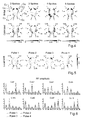
- figure 5 shows how the maximum local SAR, forming a well-defined "hot spot” (dark spot on the figure) is moved from the left side of the back of the head ("pulse 1") to the left side of the front of the head (“pulse 2”), then to the right side of the front of the head (“pulse 3") and finally to the right side of the back of the head (“pulse 4").
- a correlation between the location of the hot spot and the values of the Tikhonov parameters is clearly visible.
- the flip angle and excitation phases obtained with the four "pulses” are comparable, as indicated by the respective complex correlation coefficients (Table 2).
- Figure 6 illustrates plots of the magnitude of the excitation pulses played at the different coils elements.
- the SAR hot spot location corresponds to where the highest peak RF amplitude is played.
- a coil dependent Tikhonov parameter therefore allows moving that hot spot around by reducing the integrated RF power over the corresponding coils.
Landscapes
- Physics & Mathematics (AREA)
- Condensed Matter Physics & Semiconductors (AREA)
- General Physics & Mathematics (AREA)
- Health & Medical Sciences (AREA)
- General Health & Medical Sciences (AREA)
- Nuclear Medicine, Radiotherapy & Molecular Imaging (AREA)
- Radiology & Medical Imaging (AREA)
- Engineering & Computer Science (AREA)
- Signal Processing (AREA)
- High Energy & Nuclear Physics (AREA)
- Magnetic Resonance Imaging Apparatus (AREA)
Abstract
■ said optimization problem includes a cost function depending on the power emitted by said transmit coils through respective coil-dependent weighting coefficients; and in that
■ the phases and/or amplitudes of the excitation pulses are computed iteratively, each iteration step comprising: solving said optimization problem based on present values of the weighting coefficient, and subsequently updating the value of at least one of said coefficients so as to control in a predetermined way the local specific absorption rate - SAR - distribution within the sample.
Description
- The invention relates to a method of exciting nuclear spins in a sample, in particular a human or animal body or a part thereof such as a human head, and to the application of such a method to magnetic nuclear resonance imaging (MRI).
- The invention applies to MRI systems using parallel transmission and is particularly aimed at reducing, or otherwise control, the local specific absorption rate (SAR) of the sample.
- Specific absorption rate (SAR) is defined as the power absorbed per unit mass of tissue by a body exposed to a radio frequency (RF) electromagnetic field. For safety reasons, both global (averaged over the whole exposed body) and local (averaged over a small mass of tissue, typically 1g or 10g) SAR limits are enforced.
- The problem of high local SAR plays a particularly important role in high-magnetic field MRI. High magnetic field (B0) MRI yields an improved signal to noise ratio, and therefore a better image quality. The spin resonance frequency, or Larmor frequency is proportional to the external field strength; as a result, high field strength MRI requires high-frequency RF (B1 +) fields to excite the nuclear spins. Due to the dielectric properties of the human or animal body, the wavelengths inside the body are reduced considerably compared to vacuum; as a consequence a complex pattern of wave interferences occurs inside the sample so that a highly inhomogeneous magnetic and electric field distribution can emerge. At a magnetic field strength of the order of 3T (for body MRI) or 7T (for head MRI) this can lead to the appearance of "hot spots" with high local SAR.
- For known probe geometries with fixed amplitude and phase relations between coil elements, the SAR distribution in the body can be computed as a function of the local conductivity of the sample (σ(
r ) expressed in S/m), its local mass density (ρ(r ), expressed in g/m3), the duration of the pulse (L, in s) and the local electric field strength (E (r ,t) in V/m):
- Based on computer simulations, a safety factor can then be determined to guaranty patient safety. More precisely, current clinical MRI scanners are provided with a SAR monitor consisting of a device that measures the power transmitted to the transmit coil(s). Based on simulations performed by the manufacturer, a formula is derived to calculate if the maximum allowed power, based on the patients weight and length. In a normal scanner this approach allows sufficient power for clinical MRI applications.
- Wave interferences inside the sample also lead to an inhomogeneous excitation fields (B1 +), and therefore to an inhomogeneous excitation profile within the sample, resulting in inhomogeneous tissue contrast and signal intensity. As many MRI applications need homogeneous B1 + fields to yield high quality images, several methods have been proposed to achieve homogenous excitation profiles at high field strengths, including alternative coil designs [4, 5], shaped pulses [6, 7] and parallel transmission [8].
- Parallel transmission is a particularly promising method to produce homogeneous excitations profiles at high field strengths [9 - 11] due to the increased number of degrees of freedom. This technique is based on the use of a plurality of transmit coils which are driven in parallel, independently from each other, to emit respective radio-frequency excitation pulses. The possibility to control phase and amplitude of each coil element, allows excitation pulses of short duration with good homogeneity at high fields [10 - 12]. But these additional degrees of freedom also make the problem of controlling the local SAR values much more complex. Indeed, in the case of parallel excitation, an almost infinite number of different pulse schemes can be implemented, each resulting in a different field distribution; as a consequence, merely monitoring the RF power transmitted by each coil is no longer sufficient, and the SAR distribution has to be computed, for each pulse scheme of interest, by applying equation (1) above, where the electric field (
E (r ,t) is given by the complex sum of the scaled (αn (t)) electric fields for each coil (E n(r ,t) - linearity being generally admitted:
- In turn, the individual coil electric field contributions (
E n(r ,t) are provided by numerical simulations in the presence of a numerical model of the sample (i.e. a human head). - Detailed analysis shows that, using parallel transmission at 7 Tesla, the worst-case scenario engenders the formation of an area with very high SAR (hot spot) [14]. It has also been shown that for tailor made excitation pulses the local SAR can be relatively large [13].
- Several methods have been proposed in the last few years to reduce the SAR during parallel transmission.
- Zelinski [20] showed that, if the electric field distribution is known, global SAR minimization can be encompassed in the design procedure of the excitation pulse. It has also been shown that different minimization algorithms can converge to pulses with different SAR distributions [21].
- More recently, temporal averaging was proposed as a method to reduce the local SAR [22, 23]: alternating between pulses in an MRI sequence, with different SAR distributions, out of a set of excitation pulses that share the desired excitation characteristics, i.e. spin flip angle and phase, the time average maximum local SAR can be reduced. It was suggested that pulses suitable for this purpose could be found by adding a limited number of control points during pulse design [24], i.e. by imposing a quadratic SAR constraint at these particular points. It was also shown that different k-space trajectories could produce different SAR distributions [25]. However, no method has been disclosed so far describing the design of pulses with different local SAR distributions and demonstrating comparable excitation properties within the set of RF pulses.
- More generally, no known method exists for designing parallel transmission excitation schemes allowing control of the local SAR distribution within the sample. The invention aims at providing such a method.
- According to
claim 1, an object of the present invention is a method of exciting nuclear spins in a sample, wherein a plurality of transmit coils are driven in parallel to emit respective radio-frequency excitation pulses, the method comprising computing the phases and/or amplitudes of said excitation pulses by solving an optimization problem for minimizing the difference between the excitation distribution within said sample and a target excitation distribution. The method of the invention is characterized in that: - ■ said optimization problem includes a cost function depending on the power emitted by said transmit coils through respective coil-dependent (and possibly time-dependent) weighting coefficients; and in that
- ■ the phases and/or amplitudes of the excitation pulses are computed iteratively, each iteration step comprising: solving said optimization problem based on present values of the weighting coefficient, and subsequently updating the value of at least one of said coefficients so as to control in a predetermined way the local specific absorption rate - SAR - distribution within the sample.
- The fact that excitation pulses constitute the solution of a suitable optimization problem ensures a satisfactory homogeneity of the sample excitation; the cost function allows control of the local SAR distribution.
- "Control" of the local SAR distribution can comprise minimizing the local SAR maximum value within the sample. Alternatively or additionally it can comprise ensuring that the local SAR takes its maximum value within a predetermined region of the sample, which in turn allows temporal averaging.
- Particular embodiments of the method of the invention constitute the object of depending claims 1 - 15.
- According to claim 16, a further object of the present invention is a method of performing nuclear magnetic resonance imaging of a sample comprising:
- determining a k-space trajectory for sampling the volume of said sample; and
- exciting nuclear spins in said sample by a method according to the invention, the optimization problem being solved for said k-space trajectory.
- Advantageously, the sample can be a human or animal body, or a part thereof such as a human head.
- Additional features and advantages of the present invention will become apparent from the subsequent description, taken in conjunction with the accompanying drawings, which show:
-
Figure 1 , a multi-coil MRI probe, suitable for carrying out the invention, used to image a human head; -
Figure 2 , a flow-chart of a pulse design method according to the invention; -
Figure 3 , four different k-space trajectories of the "spoke" type, suitable for for carrying out the invention; -
Figure 4 , SAR maps illustrating the reduction of the local SAR maximum value obtained by a first embodiment of the invention; -
Figure 5 , SAR maps illustrating the control of the local SAR maximum position obtained by a second embodiment of the invention; and -
Figure 6 , the plots of the RF amplitudes of the excitation pulses of the embodiment offigure 5 . - The invention will be described on the basis of a specific example, wherein a human head (
Fig. 1 , H) is imaged in vivo using a MRI probe P constituted by eight stripline magnetic dipoles (individual transmit-receive coils) C1 - C8 distributed in 40-degrees increments on a cylindrical surface of 27.6 cm diameter leaving an open space in front of the eyes of the patient (seefigure 1 ). Finite element simulations ([28]) provides the B1 + maps of the individual coils of probe P, i.e. the maps of the RF excitation field emitted by each of the magnetic dipoles C1 - C8. As known in the prior art, B1 + maps can also be measured using special pulse sequences [26, 27]. - Imaging is performed in the k-space using spokes trajectories, a method that has been demonstrated in vivo to produce homogeneous flip angles for slice selective excitation [10, 11, 25].
- The RF pulses to be transmitted by each individual coil can be designed, for a given k-space trajectory, using the spatial domain method described by document [1]. The small-tip-angle approximation allows the transverse plane magnetization m(r), indicative of sample excitation, to be approximated by the Fourier integral of an excitation k-space trajectory ((t)=[kx (t),ky (t),kz (t)]) weighted by a complex RF pulse (b(t)) and spatially weighted by the coil's complex transmit sensitivity (B 1 +(
 )).
)).

where γ is the gyromagnetic ratio, m0 is the equilibrium magnetization magnitude, T is the pulse length, and eiγΔB0 (r )(t-T) represents the phase acquired due to main field inhomogeneity ΔB 0(r ). The k-space trajectory (k t) is described by the time-reversed integration over a predefined set of gradient (Gi (u)) waveforms to be played during excitation i.e. for example for its x component
- Exploiting linearity, in the small-tip-angle regime,
Equation 3 can be generalized (Equation 4) by summation over the coil elements available for parallel transmission:
where N represents the total number of coils, as a column vector,
equation 4 can be approximated by:
where

- One wants to find a set of N RF waveforms bn (t) leading to a (discretized) magnetization profile which is as close as possible to a target profileThis is an inverse problem, and more precisely an optimization problem. According to the prior art, a single scalar Tikhonov parameter (λ) is introduced [1] in order to ensure that this optimization problem is wellconditioned. Effectively, the Tikhonov parameter introduces a cost function proportional to the integrated RF power, thereby suppressing solutions with large RF amplitudes. Accordingly, the optimization problem used for pulse design can be written:


where ∥·∥2 designates the ubiquitous L2 norm, i.e. the square root of the sum of squares of the elements. - The present inventors have discovered that using several independent Tikhonov parameters, associated to respective individual transmit coils - or to respective subsets of said coils - allow the control of the local SAR distribution in parallel excitation MRI. In the past, use of more than one Tikhonov parameter was considered of purely theoretical interest, and for practical pulse design a single parameter was generally used (see document [1]).
- According to the invention - or, more precisely, a particular embodiment thereof - the optimization problem used for pulse design becomes:

where
- In a generalization of the method, the weighting factor can also vary over time, e.g. by taking Nt different values during each group of pulses. In this case, equation (7) is changed by replacing λi (i=1 - N) by λ i
, 1 - λ iNt , and becomes
- According to the invention, coil-dependent Tikhonov parameters are set by means of iterative optimization. First, an excitation RF pulse is designed based on a set of identical Tikhonov parameters. Subsequently, the 10-gram average local SAR-maps is calculated using the returned RF pulse, the previously mentioned E field maps and the anatomical model of the head, providing σ(r) and ρ(r) as required by
Equation 1. The 10-gram average is a quantity specified by the governmental institutions and it is equal to the SAR averaged over 10-gram of biological tissue (alternatively, the 1-gram average, or any other average, could also be used). Each iteration of the design algorithm consists in an update of at least one Tikhonov parameter, introduced according to a predetermined criterion, as it will be discussed later. Depending on the application, the procedure can then be stopped if desired local SAR criteria have been satisfied, a maximum number of iterations is reached, or the maximum local SAR drops below a given threshold. A flow-chart of the procedure is illustrated inFigure 2 . - The method of the invention can be used to reduce the local SAR maximum value within the sample. To achieve such a goal, coil-dependent Tikhonov parameters are updated by increasing the weight of the coil(s) which is (are) considered as contributing the most to said SAR maximum, therefore introducing a higher penalty on the RF power emitted by said coil(s). For example, at each iteration, the Tikhonov parameter of the coil element which is closest to the spatial location of the 10-gram maximum local SAR value can be incremented by a predetermined amount, which can be constant or function of said maximum local SAR value. It is also possible to increment the Tikhonov parameters of more than one coil, the increment value depending on the distance between the spatial location of the maximum local SAR value and each coil. Alternatively, the Tikhonov parameter of the coil transmitting the highest RF power, or of all the coils whose RF power exceeds a predetermined standard, can be increased.
- Alternatively, the method of the invention can be used to ensure that the local SAR takes its maximum value within a predetermined region of the sample. This can be obtained by incrementing the Tikhonov coefficient of the transmit coil which is closest to the local SAR maximum within the sample, excluding a predetermined region thereof: this way, after a few iterations, the "true" local SAR maximum will almost certainly be located within said predetermined region. Alternatively, a similar result can be obtained by incrementing the Tikhonov coefficient of the coil transmitting the highest RF-power, but excluding the coil (or a set of coils) which is (are) nearest to said predetermined region of the sample. Controlling the location of the local SAR maximum is useful as it allows moving the "hot spots" within the sample, providing temporal averaging of the local SAR.
- Other control strategies of the local SAR distribution can be implemented, depending on the specific aim to be reached.
- Some embodiments of the invention require the determination of the local SAR spatial distribution. This can be obtained by numerical simulations based on equation 2 (see [18, 19]), or by direct (references [2], [15 - 17]) or indirect (temperature, see reference [31]) measurements. Other embodiments only require the knowledge of the power emitted by each individual coil; this information is provided by conventional "SAR monitors". The invention has been described on the basis of conventional spatial domain optimization. However, this limitation is not essential: other design strategies exist, operating e.g. in the k-space [8]. All the design strategies which lead to an optimization problem can be modified according to the present invention. For example, document [29] describes a modified spatial domain method, wherein the phase of transverse magnetization m(r) is neglected.
- In the description above, small flip angles have been assumed in order to obtain a linear equation for m(r). This is by no means essential, at least in principle, but use of a nonlinear equation for m(r) would make the numerical solution of the optimization problem extremely heavy. It should be noted that "additive" methods exist to generalize the linear approach to large flip angles [30, 32].
- Tikhonov parameters are a particular class of weighting coefficients used to introduce cost functions in optimization problems. Other kind of cost functions, linear or nonlinear, can also be used to carry out the invention.
- The technical results of the invention will be now discussed in detail with reference to two specific examples, illustrated by
figures 3 to 6 . - In the first example slice selective excitation pulses with a homogeneous excitation profile were designed using a "spokes" shaped k-space trajectory. Results obtained using four exemplary k-space trajectories, comprising 2, 3, 4, and 5-spokes respectively are compared. On
figure 3 , panels a to d illustrate said spokes trajectories in the (kx, ky) plane. Such trajectories can be generated by appropriate magnetic field gradient waveforms, as it is well known in the art of MRI. - Simulated B1 + maps were used for pulse design, and the
E (r ,t) fields provided by simulations were used to calculate the local SAR distributions. The initial pulses were calculated by solving the optimization problem of equation (7), all the Tikhonov parameters being identically set to 10-5. The top row infigure 4 shows (in gray scale, where darker gray indicates higher SAR) the 10-gram local SAR distribution in the transverse slice containing the maximum 10-gram SAR over the head. Excitation pulses were optimized over 200 iterations of the coil dependent Tikhonov parameters. At each iteration the Tikhonov parameter associated with the coil element closest to the maximum 10-gram local SAR was increased by 5×10⁻⁷. Optimized coil element dependent Tikhonov parameters (in 10-5 units), and 10-gram local SAR distributions are shown in the bottom rowFigure 4 . Using the presented method, for 200 iterations, the maximum 10-gram local SAR was reduced by more than a factor of 2 at the cost of a roughly 1-2% increase in flip angle error defined as the root mean square error of the flip angle, divided by the target flip angle (see table 1 here below).Table 1 Initial excitation pulse Optimized excitation pulse Maximum Global Flip Maximum Global Flip local SAR SAR angle local SAR SAR angle error error 2 Spokes 23.03 2.78 6.8% 9.62 2.30 10.2% 3 Spokes 7.84 1.14 4.7% 3.69 1.06 6.7% 4 Spokes 5.14 0.75 3.4% 2.60 0.64 5.2% 5 Spokes 3.64 0.49 3.1 % 1.60 0.41 4.5% - In the second example, slice selective excitation pulses with a homogeneous excitation profile were designed using the 5 "spokes" k-space trajectory of
figure 3 , panel d. The optimisation procedure was used to position the maximum local SAR at four different positions by systematically neglecting the SAR in one of the four axial quadrants of the human head during the optimization procedure. The results are illustrated onfigure 5 , which shows how the maximum local SAR, forming a well-defined "hot spot" (dark spot on the figure) is moved from the left side of the back of the head ("pulse 1") to the left side of the front of the head ("pulse 2"), then to the right side of the front of the head ("pulse 3") and finally to the right side of the back of the head ("pulse 4"). A correlation between the location of the hot spot and the values of the Tikhonov parameters is clearly visible. The flip angle and excitation phases obtained with the four "pulses" are comparable, as indicated by the respective complex correlation coefficients (Table 2).Table 2 Pulse 1Pulse 2Pulse 3Pulse 4Pulse 11 0.94+0.00i 0.96+0.01 i 0.95+0.01 i Pulse 2 1 0.90+0.01 i 0.94+0.00 i Pulse 3 1 0.95+0.00 i Pulse 4 1 -
Figure 6 illustrates plots of the magnitude of the excitation pulses played at the different coils elements. As expected, the SAR hot spot location corresponds to where the highest peak RF amplitude is played. A coil dependent Tikhonov parameter therefore allows moving that hot spot around by reducing the integrated RF power over the corresponding coils. - In a MRI sequence, RF pulse and gradient / acquisition blocks are repeated a large number of times. Hence by using cyclically the 4 different and optimized pulses, with the same duty cycle, it is possible to obtain an average SAR map whose maximum can be reduced up to a factor of 4 compared to if only one pulse was used. Or, in other words, for the same maximum local SAR, it is possible to acquire
data 4 times faster, a gain which is highly appreciable to obtain high resolution in vivo data in a reasonable time. Thisnumber 4 is only given as an example; it can be further increased via more optimization and calculations. -
- [1] "Spatial domain method for the design of RF pulses in multicoil parallel excitation", W. Grissom, C.Y. Yip, Z. Zhang, V.A. Stenger, J.A. Fessler, and D. C. Noll, Magnetic Resonance in Medicine, 56, pp. 620-629 (2006).
- [2] "Parallel Excitation With an Array of Transmit Coils", Y. Zhu, Magnetic Resonance in Medicine 51:775-784 (2004)
- [3] "Autocalibrated Accelerated Parallel Excitation (Transmit-GRAPPA)" M.A. Giswold, S. Kannengiesser, M. Muller and P.M. Jakob, Proc. Intl. Soc. Mag. Reson. Med. 13, page 2435 (2005)
- [4] "Travelling-wave nuclear magnetic resonance", D.O. Brunner, N.D. Zanche, J. Fröhlich, J. Paska, and K.P. Pruessmann, Nature, 457, pp. 994-998 (2009).
- [5] "Initial results of cardiac imaging at 7 tesla", C.J. Snyder, L. Delabarre, G.J. Metzger, P.-F. van de Moortele, C. Akgun, K. Ugurbil, and J.T. Vaughan. Magnetic Resonance Imaging, 61, pp. 517 - 524 (2009).
- [6] "Counteracting radio frequency inhomogeneity in the human brain at 7 Tesla using strongly modulated pulses", N. Boulant, N. Mangin, and A. Amadon, Magnetic Resonance in Medicine, 61, pp. 1165-1172 (2009).
- [7] Berstein MA, King KF, Zhou XJ, "Handbook of MRI Pulse Sequences", London: Elsevier Academic Press; 2004.
- [8] "Transmit SENSE", U. Katscher, P. Bornert, C.Leussler, and JS vd Brink, Magnetic Resonance in Medicine, 49, pp. 144-150 (2003).
- [9] "Parallel RF transmission with eight channels at 3 Tesla", K. Setsompop, L.L. Wald, V. Alagappan, B. Gagoski, F. Hebrank, U. Fontius, F. Schmitt, and E. Adalsteinsson, Magnetic Resonance in Medicine, 56, pp. 1163-1171 (2006).
- [10] "Slice-Selective RF Pulses for In Vivo B1+ Inhomogeneity Mitigation at 7 Tesla Using Parallel RF Excitation With a 16-Element Coil", K Setsompop, V. Alagappan, B. Gagoski, T. Witzel, J. Polimeni, A. Potthast, F. Hebrank, U. Fontius, F. Schmitt, L.L. Wald, and E. Adalsteinsson, Magnetic Resonance in Medicine, 60, pp. 1422-1432 (2008).
- [11] "Broadband Slab Selection with B1□ Mitigation at 7T via Parallel Spectral-Spatial Excitation", K Setsompop, V. Alagappan, B. Gagoski, A. Potthast, F. Hebrank, U. Fontius, F. Schmitt, LL Wald, and E Adalsteinsson, Magnetic Resonance in Medicine, 61, pp 493-500 (2009).
- [12] "Experimental analysis of parallel excitation using dedicated coil setups and simultaneous RF transmission on multiple channels", P. Ullmann, S. Junge, M.Wick, F. Seifert, W. Ruhm, and J. Hennig, Magnetic Resonance in Medicine, 54, pp. 994-1001 (2005).
- [13] "Specific Absorption Rate Studies of the Parallel Transmission of Inner-Volume Excitations at 7 Tesla", A.C. Zelinski, L.M. Angelone, V.K. Goyal, G. Bonmassar, E. Adalsteinsson and L.L. Wald, Journal of magnetic resonance imaging, 28, pp. 1005-1008 (2008).
- [14] "A Conservative Method for Ensuring Safety within Transmit Arrays",C.M. Collins, Z. Wang, and M.B. Smith. 15th Proceedings of the Annual Meeting of the ISMRM, p 1092 (2007).
- [15] "Determination of Electric Conductivity and Local SAR via B1 Mapping.",U. katcher, T. Voigt, C Findeklee, P. Vernickel, K. Nehrke, and O. Doessel. 16th Proceedings of the Annual Meeting of the ISMRM, p 1191 (2008).
- [16] "Towards Direct B1 Based Local SAR Estimation", M.A. Cloos, and G. Bonmassar. 17th Proceedings of the Annual Meeting of the ISMRM, p 3037 (2009).
- [17] "Imaging Conductivity and Local SAR of the Human Brain",T. Voigt, O. Doessel, and U. Katscher, 17th Proceedings of the Annual Meeting of the ISMRM, p 4513 (2009).
- [18] "Real-time global and local SAR monitoring for parallel transmission systems", I. Graesslin, S. Biederer, B. Annighoefer, H Hofmann, H. Stahl, P. Vernickle, U. Katscher, D. Glaesel, and P Harvey , 17th Proceedings of the Annual Meeting of the ISMRM, p 302 (2009)
- [19] "Fast E1, B1 and SAR simulation with the use of graphics processors", L. Kini, L.L. Wald, and E. Adalsteinsson, 17th Proceedings of the Annual Meeting of the ISMRM, p 4776 (2009).
- [20] "Designing RF pulses with optimal specific absorption rate (SAR) characteristics and exploring excitation fidelity, SAR fidelity, and pulse duration tradeoffs", A.C. Zelinski, V.K. Goyal, L. Angelone, G. Bonmassar, L.L. Wald, and E. Adalsteinsson, 15th Proceedings of the Annual Meeting of the ISMRM, p 1699 (2007).
- [21] "Pulse design methods for reduction of specific absorption rate in parallel RF excitation", A.C. Zelinski, K. Setsompop, V. Alagappan, B.A. Gagoski, L. Angelone, G. Bonmassar, U. Fontius, F. Schmitt, E. Adalstelnsson, and L.L. Wald, 15th Proceedings of the Annual Meeting of the ISMRM, p 1698 (2007).
- [22] "SAR hotspot reduction by temporal averaging in parallel transmission", I. Graesslin, J. Weller, B. Annighoefer, S. Biederer, U. Katscher, T. Nielsen, P. Harvey, and P Bornmet , 17th Proceedings of the Annual Meeting of the ISMRM, p 176 (2009).
- [23] "A Minimum SAR RF Pulse Design Approach for Parallel Tx with Local Hot Spot Suppression and Exact Fidelity Constraint", I. Graesslin, F Schweser, B. Annighoefer, S Biederer, U Katscher, K. Nehrke, H Stahl, H Dingemans, G Mens, and P Börnert, 16th Proceedings of the Annual Meeting of the ISMRM, p 621 (2008).
- [24] "SAR reduction in transmit SENSE using adapted excitation k-space trajectories", X. Wu, C. C Akgun, J.T. Vaughan, K. Gerbil, and P.-F. van der Moortele, 15th Proceedings of the Annual Meeting of the ISMRM, p 673 (2007).
- [25] "Fast slice-selective radio-frequency excitation pulses for mitigating B+l inhomogeneity in the human brain at 7 Tesla", A.C. Zelinski, L.L. Wald, K. Setsompop, V. Alagappan, B.A. Gagoski, V.K. Goyal, and E. Adalsteinsson, Magnetic Resonance in Medicine, 59, pp. 1355-1364 (2008).
- [26] "Saturated Double-Angle Method for Rapid B1+ Mapping", C.H. Cunningham, J.M. Pauly, and K.S. Nayak, Magnetic Resonance in Medicine, 55, pp. 1326-1333 (2006).
- [27] "Actual flip-angle imaging in the pulsed steady state: A method for rapid three-dimensional mapping of the transmitted radiofrequency field", V.L. Yarnykh, Magnetic Resonance in Medicine, 57, pp. 192-200 (2007).
- [28] " Large-Scale Simulations Including a Human-Body Model for MRI" Vogel MH, and Kleihorst RP. Microwave Symposium IEEE/MTT-S, pp. 1345-1348 (2007)
- [29] "Magnitude Least Squares Optimization for Parallel Radio Frequency Excitation Desin Demonstrated at 7 Tesla With Eight Channels", K. Setsompop et al., Magnetic Resonance in Medicine, 59, pp. 908-915 (2008).
- [30] "A Noniterative Method to Design Large-Tip-Angle Multidimensional Spatially-Selective Radio Frequency Pulses for Parallel Transmission ", D. Xu et al., Magnetic Resonance in Medicine, 58, pp. 326-334 (2007).
- [31]"Temperature Mapping Using the Water Proton Chemical Shift: A Chemical Shift Selective Phase Mapping Method", J. Kuroda et al. MRM 38:845-851 (1997).
- [32]"Additive Angle Method for Fast Large-Tip-Angle RF Pulse Design in Parallel Excitation", W. A. Grissom et al. Magnetic Resonance in Medicine, 59:779-787 (2008).
Claims (17)
- A method of exciting nuclear spins in a sample (H), wherein a plurality of transmit coils (C1-C8) are driven in parallel to emit respective radio-frequency excitation pulses, the method comprising computing the phases and/or amplitudes of said excitation pulses by solving an optimization problem for minimizing the difference between the excitation distribution within said sample and a target excitation distribution, and being characterized in that:■ said optimization problem includes a cost function depending on the power emitted by said transmit coils through respective coil-dependent weighting coefficients; and in that■ the phases and/or amplitudes of the excitation pulses are computed iteratively, each iteration step comprising: solving said optimization problem based on present values of the weighting coefficient, and subsequently updating the value of at least one of said coefficients so as to control in a predetermined way the local specific absorption rate - SAR - distribution within the sample.
- A method according to any of the preceding claims wherein the value of at least one of said weighting coefficients is updated so as to reduce the local SAR maximum value within the sample.
- A method according to claim 2 comprising, at each iteration step, an increment of the value of the weighting coefficient of at least the transmit coil which is closest to the local SAR maximum within the sample.
- A method according to claim 3 comprising determining, at each iteration step, the point of the sample volume where the local SAR takes its maximum value, by a method chosen between:- numerical simulation;- direct SAR measurement via B1 + mapping; and- temperature mapping.
- A method according to claim 2 comprising, at each iteration step, an increment of the value of the weighting coefficient of at least the transmit coil which transmits the greatest radio-frequency power.
- A method according to claim 2 comprising, at each iteration step, an increment of the value of the weighting coefficient of at least the transmit coil or coils whose transmitted radio-frequency power exceeds a predetermined threshold.
- A method according to claim 1 wherein the value of at least one of said weighting coefficients is updated so as to ensure that the local SAR takes its maximum value within a predetermined region of the sample.
- A method according to claim 7 wherein the value of at least one of said weighting coefficients is updated so as to reduce the local SAR maximum value within the sample, excluding said predetermined region thereof.
- A method according to claim 8 wherein , at each iteration step, the value of the weighting coefficient of at least the transmit coil which is closest to the local SAR maximum within the sample, excluding said predetermined region thereof, is increased.
- A method according to claim 7 comprising, at each iteration step, an increment of the value of the weighting coefficient of at least the transmit coil which transmits the greatest radio-frequency power, excluding a set of coils which are nearest to said predetermined region of the sample.
- A method of exciting nuclear spins in a sample, wherein a method according to any of claims 7 to 10 is repeated at least twice by changing the predetermined region of the sample where the local SAR takes its maximum value.
- A method according to any of the preceding claims, wherein the cost function depends linearly on the power emitted by said transmit coils, and wherein said weighting coefficients are Tikhonov parameters.
- A method according to any of the preceding claims, wherein said target excitation distribution is a uniform distribution within the sample or a region thereof.
- A method according to any of the preceding claims, wherein said optimization problem is solved in the spatial domain.
- A method according to any of the preceding claims, wherein said weighting coefficients are time-dependent.
- A method of performing nuclear magnetic resonance imaging of a sample comprising:- determining a k-space trajectory for sampling the volume of said sample; and- exciting nuclear spins in said sample by a method according to any of the preceding claims, the optimization problem being solved for said k-space trajectory.
- A method according to any of the preceding claims wherein the sample is a human or animal body, or a part thereof.
Priority Applications (3)
| Application Number | Priority Date | Filing Date | Title |
|---|---|---|---|
| EP09290696.5A EP2296000B1 (en) | 2009-09-10 | 2009-09-10 | Parallel excitation of nuclear spins with local SAR control |
| PCT/IB2010/002199 WO2011030198A1 (en) | 2009-09-10 | 2010-08-19 | Parallel excitation of nuclear spins with local sar control |
| US13/394,744 US20120197106A1 (en) | 2009-09-10 | 2010-08-19 | Parallel Excitation of Nuclear Spins With Local SAR Control |
Applications Claiming Priority (1)
| Application Number | Priority Date | Filing Date | Title |
|---|---|---|---|
| EP09290696.5A EP2296000B1 (en) | 2009-09-10 | 2009-09-10 | Parallel excitation of nuclear spins with local SAR control |
Publications (2)
| Publication Number | Publication Date |
|---|---|
| EP2296000A1 true EP2296000A1 (en) | 2011-03-16 |
| EP2296000B1 EP2296000B1 (en) | 2014-03-12 |
Family
ID=41509816
Family Applications (1)
| Application Number | Title | Priority Date | Filing Date |
|---|---|---|---|
| EP09290696.5A Not-in-force EP2296000B1 (en) | 2009-09-10 | 2009-09-10 | Parallel excitation of nuclear spins with local SAR control |
Country Status (3)
| Country | Link |
|---|---|
| US (1) | US20120197106A1 (en) |
| EP (1) | EP2296000B1 (en) |
| WO (1) | WO2011030198A1 (en) |
Cited By (1)
| Publication number | Priority date | Publication date | Assignee | Title |
|---|---|---|---|---|
| US12265144B2 (en) | 2022-02-07 | 2025-04-01 | Siemens Healthineers Ag | Method for exciting nuclear spins |
Families Citing this family (5)
| Publication number | Priority date | Publication date | Assignee | Title |
|---|---|---|---|---|
| WO2012063162A1 (en) * | 2010-11-09 | 2012-05-18 | Koninklijke Philips Electronics N.V. | Magnetic resonance imaging and radiotherapy apparatus with at least two-transmit-and receive channels |
| DE102012215255B3 (en) | 2012-08-28 | 2014-02-27 | Siemens Aktiengesellschaft | Control of a magnetic resonance system taking into account current component-related B1 field maximum values |
| JP6101352B2 (en) * | 2013-08-27 | 2017-03-22 | 株式会社日立製作所 | Magnetic resonance imaging apparatus and imaging parameter determination method |
| JP6345534B2 (en) * | 2013-10-16 | 2018-06-20 | キヤノンメディカルシステムズ株式会社 | MRI equipment |
| US9380541B1 (en) | 2015-06-02 | 2016-06-28 | Qualcomm Incorporated | Managing specific absorption rate distribution to maximize transmit power of a wireless device |
Citations (2)
| Publication number | Priority date | Publication date | Assignee | Title |
|---|---|---|---|---|
| US20070247155A1 (en) * | 2006-04-20 | 2007-10-25 | Yudong Zhu | Sar reduction in mr imaging with parallel rf transmission |
| US20090108842A1 (en) * | 2007-10-30 | 2009-04-30 | Hideta Habara | Magnetic resonance imaging apparatus and radio frequency pulse waveform generating method |
Family Cites Families (6)
| Publication number | Priority date | Publication date | Assignee | Title |
|---|---|---|---|---|
| US7309986B2 (en) * | 2005-03-21 | 2007-12-18 | The Trustees Of The University Of Pennsylvania | Methods and apparatus for magnetic resonance imaging in inhomogeneous fields |
| WO2007098190A2 (en) * | 2006-02-21 | 2007-08-30 | Beth Israel Deaconess Medical Center, Inc. | Magnetic resonance imaging and radio frequency impedance mapping methods and apparatus |
| US8941380B2 (en) * | 2008-04-16 | 2015-01-27 | Koninkijke Philips N.V. | Real-time local and global SAR estimation for patient safety and improved scanning performance |
| CN102159965B (en) * | 2008-09-17 | 2014-09-24 | 皇家飞利浦电子股份有限公司 | B1-mapping and b1l-shimming for mri |
| US8148985B2 (en) * | 2008-10-15 | 2012-04-03 | Massachusetts Institute Of Technology | Method for reducing maximum local specific absorption rate in magnetic resonance imaging |
| DE102009030721B4 (en) * | 2009-06-26 | 2013-04-04 | Siemens Aktiengesellschaft | SAR calculation for multi-channel MR transmission systems |
-
2009
- 2009-09-10 EP EP09290696.5A patent/EP2296000B1/en not_active Not-in-force
-
2010
- 2010-08-19 WO PCT/IB2010/002199 patent/WO2011030198A1/en not_active Ceased
- 2010-08-19 US US13/394,744 patent/US20120197106A1/en not_active Abandoned
Patent Citations (2)
| Publication number | Priority date | Publication date | Assignee | Title |
|---|---|---|---|---|
| US20070247155A1 (en) * | 2006-04-20 | 2007-10-25 | Yudong Zhu | Sar reduction in mr imaging with parallel rf transmission |
| US20090108842A1 (en) * | 2007-10-30 | 2009-04-30 | Hideta Habara | Magnetic resonance imaging apparatus and radio frequency pulse waveform generating method |
Non-Patent Citations (41)
| Title |
|---|
| A.C. ZELINSKI ET AL.: "Designing RF pulses with optimal specific absorption rate (SAR) characteristics and exploring excitation fidelity, SAR fidelity, and pulse duration tradeoffs", 15TH PROCEEDINGS OF THE ANNUAL MEETING OF THE ISMRM, 2007, pages 1699 |
| A.C. ZELINSKI ET AL.: "Fast slice-selective radio-frequency excitation pulses for mitigating B+1 inhomogeneity in the human brain at 7 Tesla", MAGNETIC RESONANCE IN MEDICINE, vol. 59, 2008, pages 1355 - 1364 |
| A.C. ZELINSKI ET AL.: "Pulse design methods for reduction of specific absorption rate in parallel RF excitation", 15TH PROCEEDINGS OF THE ANNUAL MEETING OF THE ISMRM, 2007, pages 1698 |
| A.C. ZELINSKI ET AL.: "Specific Absorption Rate Studies of the Parallel Transmission of Inner-Volume Excitations at 7 Tesla", JOURNAL OF MAGNETIC RESONANCE IMAGING, vol. 28, 2008, pages 1005 - 1008 |
| BERSTEIN MA; KING KF; ZHOU XJ: "Handbook of MRI Pulse Sequences", 2004, ELSEVIER ACADEMIC PRESS |
| BRUNNER D O ET AL: "Enforcing strict constraints in multiple-channel RF pulse optimization", INTERNATIONAL SOCIETY FOR MAGNETIC RESONANCE IN MEDICINE.SCIENTIFIC MEETING AND EXHIBITION. PROCEEDINGS, INTERNATIONAL SOCIETY FOR MAGNETIC RESONANCE IN MEDICINE, US, vol. 15, 1 January 2007 (2007-01-01), pages 1690, XP002533631, ISSN: 1524-6965 * |
| C.H. CUNNINGHAM; J.M. PAULY; K.S. NAYAK: "Saturated Double-Angle Method for Rapid Bl+ Mapping", MAGNETIC RESONANCE IN MEDICINE, vol. 55, 2006, pages 1326 - 1333 |
| C.J. SNYDER ET AL.: "Initial results of cardiac imaging at 7 tesla", MAGNETIC RESONANCE IMAGING, vol. 61, 2009, pages 517 - 524 |
| C.M. COLLINS; Z. WANG; M.B. SMITH.: "A Conservative Method for Ensuring Safety within Transmit Arrays", 15TH PROCEEDINGS OF THE ANNUAL MEETING OF THE ISMRM, 2007, pages 1092 |
| D. XU ET AL.: "A Noniterative Method to Design Large-Tip-Angle Multidimensional Spatially-Selective Radio Frequency Pulses for Parallel Transmission", MAGNETIC RESONANCE IN MEDICINE, vol. 58, 2007, pages 326 - 334 |
| D.O. BRUNNER ET AL.: "Travelling-wave nuclear magnetic resonance", NATURE, vol. 457, 2009, pages 994 - 998 |
| GRAESSLIN I ET AL: "SAR hotspot reduction by temporal averaging in parallel transmission", PROCEEDINGS OF THE INTERNATIONAL SOCIETY FOR MAGNETIC RESONANCE IN MEDICINE, 17TH SCIENTIFIC MEETING AND EXHIBITION, HONOLULU, HAWAII, USA, 18-24 APRIL 2009, 18 April 2009 (2009-04-18), pages 176, XP002564610 * |
| GRAESSLIN, J. ET AL.: "SAR hotspot reduction by temporal averaging in parallel transmission", 17TH PROCEEDINGS OF THE ANNUAL MEETING OF THE ISMRM, 2009, pages 176 |
| GRISSOM W ET AL: "Spatial domain method for the design of RF pulses in multicoil parallel excitation", MAGNETIC RESONANCE IN MEDICINE, ACADEMIC PRESS, DULUTH, MN, US, vol. 56, no. 3, 1 September 2006 (2006-09-01), pages 620 - 629, XP002475615, ISSN: 0740-3194 * |
| I. GRAESSLIN ET AL.: "A Minimum SAR RF Pulse Design Approach for Parallel Tx with Local Hot Spot Suppression and Exact Fidelity Constraint", 16TH PROCEEDINGS OF THE ANNUAL MEETING OF THE ISMRM, 2008, pages 621 |
| I. GRAESSLIN ET AL.: "Real-time global and local SAR monitoring for parallel transmission systems", 17TH PROCEEDINGS OF THE ANNUAL MEETING OF THE ISMRM, 2009, pages 302 |
| IBRAHIM T S ET AL: "A Whole-Body 7 Tesla RF Excitation Scheme with Much Improved B1+ Field Homogeneity and Local/Global SARs over Quadrature Excitation", INTERNATIONAL SOCIETY FOR MAGNETIC RESONANCE IN MEDICINE.SCIENTIFIC MEETING AND EXHIBITION. PROCEEDINGS, INTERNATIONAL SOCIETY FOR MAGNETIC RESONANCE IN MEDICINE, US, vol. 15, 1 January 2007 (2007-01-01), pages 1013, XP002533630, ISSN: 1524-6965 * |
| J. KURODA ET AL.: "Temperature Mapping Using the Water Proton Chemical Shift: A Chemical Shift Selective Phase Mapping Method", MRM, vol. 38, 1997, pages 845 - 851 |
| K SETSOMPOP ET AL.: "Broadband Slab Selection with B1 0 Mitigation at 7T via Parallel Spectral-Spatial Excitation", MAGNETIC RESONANCE IN MEDICINE, vol. 61, 2009, pages 493 - 500 |
| K SETSOMPOP ET AL.: "Slice-Selective RF Pulses for In Vivo B1 Inhomogeneity Mitigation at 7 Tesla Using Parallel RF Excitation With a 16-Element Coil", MAGNETIC RESONANCE IN MEDICINE, vol. 60, 2008, pages 1422 - 1432 |
| K. SETSOMPOP ET AL.: "Magnitude Least Squares Optimization for Parallel Radio Frequency Excitation Desin Demonstrated at 7 Tesla With Eight Channels", MAGNETIC RESONANCE IN MEDICINE, vol. 59, 2008, pages 908 - 915 |
| K. SETSOMPOP ET AL.: "Parallel RF transmission with eight channels at 3 Tesla", MAGNETIC RESONANCE IN MEDICINE, vol. 56, 2006, pages 1163 - 1171 |
| L. KINI; L.L. WALD; E. ADALSTEINSSON: "Fast E1, B1 and SAR simulation with the use of graphics processors", 17TH PROCEEDINGS OF THE ANNUAL MEETING OF THE ISMRM, 2009, pages 4776 |
| LATTANZI R ET AL: "Electrodynamic constraints on homogeneity and radiofrequency power deposition in multiple coil excitations", MAGNETIC RESONANCE IN MEDICINE, ACADEMIC PRESS, DULUTH, MN, US, vol. 61, 22 January 2009 (2009-01-22), pages 315 - 334, XP002564611 * |
| M.A. CLOOS; G. BONMASSAR: "Towards Direct B1 Based Local SAR Estimation", 17TH PROCEEDINGS OF THE ANNUAL MEETING OF THE ISMRM, 2009, pages 3037 |
| M.A. GISWOLD ET AL.: "Autocalibrated Accelerated Parallel Excitation (Transmit-GRAPPA)", PROC. INTL. SOC. MAG. RESON. MED., vol. 13, 2005, pages 2435 |
| N. BOULANT; N. MANGIN; A. AMADON: "Counteracting radio frequency inhomogeneity in the human brain at 7 Tesla using strongly modulated pulses", MAGNETIC RESONANCE IN MEDICINE, vol. 61, 2009, pages 1165 - 1172 |
| P. ULLMANN ET AL.: "Experimental analysis of parallel excitation using dedicated coil setups and simultaneous RF transmission on multiple channels", J. HENNIG, MAGNETIC RESONANCE IN MEDICINE, vol. 54, 2005, pages 994 - 1001 |
| T. VOIGT; O. DOESSEL; U. KATSCHER: "Imaging Conductivity and Local SAR of the Human Brain", 17TH PROCEEDINGS OF THE ANNUAL MEETING OF THE ISMRM, 2009, pages 4513 |
| U. KATCHER ET AL.: "Determination of Electric Conductivity and Local SAR via B1 Mapping", 16TH PROCEEDINGS OF THE ANNUAL MEETING OF THE ISMRM, 2008, pages 1191 |
| U. KATSCHER ET AL.: "Transmit SENSE", MAGNETIC RESONANCE IN MEDICINE, vol. 49, 2003, pages 144 - 150 |
| V.L. YARNYKH: "Actual flip-angle imaging in the pulsed steady state: A method for rapid three-dimensional mapping of the transmitted radiofrequency field", MAGNETIC RESONANCE IN MEDICINE, vol. 57, 2007, pages 192 - 200 |
| VAN DEN BERG C A T ET AL: "Simultaneous B1+ Homogenization and Specific Absorption Rate Hotspot Suppression Using a Magnetic Resonance Phased Array Transmit Coil", MAGNETIC RESONANCE IN MEDICINE, ACADEMIC PRESS, DULUTH, MN, US, vol. 57, 1 January 2007 (2007-01-01), pages 577 - 586, XP002533629, ISSN: 0740-3194 * |
| VOGEL MH; KLEIHORST RP.: "Large-Scale Simulations Including a Human-Body Model for MRI", MICROWAVE SYMPOSIUM IEEE/MTT-S, 2007, pages 1345 - 1348 |
| W. A. GRISSOM ET AL.: "Additive Angle Method for Fast Large-Tip-Angle RF Pulse Design in Parallel Excitation", MAGNETIC RESONANCE IN MEDICINE, vol. 59, 2008, pages 779 - 787 |
| W. GRISSOM ET AL.: "Spatial domain method for the design of RF pulses in multicoil parallel excitation", MAGNETIC RESONANCE IN MEDICINE, vol. 56, 2006, pages 620 - 629 |
| X. WU ET AL.: "SAR reduction in transmit SENSE using adapted excitation k-space trajectories", 15TH PROCEEDINGS OF THE ANNUAL MEETING OF THE ISMRM, 2007, pages 673 |
| Y. ZHU: "Parallel Excitation With an Array of Transmit Coils", MAGNETIC RESONANCE IN MEDICINE, vol. 51, 2004, pages 775 - 784 |
| YINAN LIU ET AL: "Minimal-SAR RF pulse optimization for parallel transmission in MRI", ENGINEERING IN MEDICINE AND BIOLOGY SOCIETY, 2008. EMBS 2008. 30TH ANNUAL INTERNATIONAL CONFERENCE OF THE IEEE, IEEE, PISCATAWAY, NJ, USA, 20 August 2008 (2008-08-20), pages 5774 - 5777, XP031509326, ISBN: 978-1-4244-1814-5 * |
| YIP C-Y ET AL: "Iterative RF Pulse Design for Multidimensional, Small-Tip-Angle Selective Excitation", MAGNETIC RESONANCE IN MEDICINE, ACADEMIC PRESS, DULUTH, MN, US, vol. 54, 1 January 2005 (2005-01-01), pages 908 - 917, XP002554152, ISSN: 0740-3194, [retrieved on 20050909] * |
| ZELINSKI A C ET AL: "Designing RF Pulses With Optimal Specific Absorption Rate (SAR) Characteristics And Exploring Excitation Fidelity, SAR And Pulse Duration Tradeoffs", INTERNATIONAL SOCIETY FOR MAGNETIC RESONANCE IN MEDICINE.SCIENTIFIC MEETING AND EXHIBITION. PROCEEDINGS, INTERNATIONAL SOCIETY FOR MAGNETIC RESONANCE IN MEDICINE, US, vol. 15, 1 January 2007 (2007-01-01), pages 1699, XP002533633, ISSN: 1524-6965 * |
Cited By (1)
| Publication number | Priority date | Publication date | Assignee | Title |
|---|---|---|---|---|
| US12265144B2 (en) | 2022-02-07 | 2025-04-01 | Siemens Healthineers Ag | Method for exciting nuclear spins |
Also Published As
| Publication number | Publication date |
|---|---|
| US20120197106A1 (en) | 2012-08-02 |
| EP2296000B1 (en) | 2014-03-12 |
| WO2011030198A1 (en) | 2011-03-17 |
Similar Documents
| Publication | Publication Date | Title |
|---|---|---|
| EP1991887B1 (en) | High field magnetic resonance | |
| Boer et al. | Multislice 1H MRSI of the human brain at 7 T using dynamic B0 and B1 shimming | |
| JP5826251B2 (en) | Method and apparatus for compensating for B1 inhomogeneities in magnetic resonance imaging by non-selective tuning RF pulses | |
| Snyder et al. | Comparison between eight‐and sixteen‐channel TEM transceive arrays for body imaging at 7 T | |
| US7633293B2 (en) | Radio frequency field localization for magnetic resonance | |
| Webb et al. | Parallel transmit and receive technology in high‐field magnetic resonance neuroimaging | |
| Childs et al. | Impact of number of channels on RF shimming at 3T | |
| US8508227B2 (en) | Method for position dependent change in the magnetization in an object in a magnetic resonance experiment | |
| Seifert et al. | Patient safety concept for multichannel transmit coils | |
| Wu et al. | Mitigating transmit B1 inhomogeneity in the liver at 7T using multi-spoke parallel transmit RF pulse design | |
| Steensma et al. | Introduction of the snake antenna array: geometry optimization of a sinusoidal dipole antenna for 10.5 T body imaging with lower peak SAR | |
| Zelinski et al. | Specific absorption rate studies of the parallel transmission of inner‐volume excitations at 7T | |
| CN103154761B (en) | Virtual Coil Simulation in Parallel Transmit MRI | |
| Sbrizzi et al. | Fast design of local N‐gram‐specific absorption rate–optimized radiofrequency pulses for parallel transmit systems | |
| EP2296000B1 (en) | Parallel excitation of nuclear spins with local SAR control | |
| US20100066362A1 (en) | Method for Obtaining Amplitude and Phase Profiles of RF Pulses for Spatially Selective Excitation | |
| US7385396B2 (en) | SAR reduction in MR imaging with parallel RF transmission | |
| US7336145B1 (en) | Method for designing RF excitation pulses in magnetic resonance tomography | |
| Sharma et al. | Low peak power multiband spokes pulses for B1+ inhomogeneity‐compensated simultaneous multislice excitation in high field MRI | |
| Orzada et al. | Time‐interleaved acquisition of modes: an analysis of SAR and image contrast implications | |
| Massire et al. | Design of non-selective refocusing pulses with phase-free rotation axis by gradient ascent pulse engineering algorithm in parallel transmission at 7 T | |
| Hoffmann et al. | Human brain imaging at 9.4 T using a tunable patch antenna for transmission | |
| Gilbert et al. | A radiofrequency coil to facilitate B shimming and parallel imaging acceleration in three dimensions at 7 T | |
| Wu et al. | Parallel excitation in the human brain at 9.4 T counteracting k‐space errors with RF pulse design | |
| Ipek | Radio-frequency coils for ultra-high field magnetic resonance |
Legal Events
| Date | Code | Title | Description |
|---|---|---|---|
| PUAI | Public reference made under article 153(3) epc to a published international application that has entered the european phase |
Free format text: ORIGINAL CODE: 0009012 |
|
| AK | Designated contracting states |
Kind code of ref document: A1 Designated state(s): AT BE BG CH CY CZ DE DK EE ES FI FR GB GR HR HU IE IS IT LI LT LU LV MC MK MT NL NO PL PT RO SE SI SK SM TR |
|
| AX | Request for extension of the european patent |
Extension state: AL BA RS |
|
| 17P | Request for examination filed |
Effective date: 20110516 |
|
| 17Q | First examination report despatched |
Effective date: 20130114 |
|
| GRAP | Despatch of communication of intention to grant a patent |
Free format text: ORIGINAL CODE: EPIDOSNIGR1 |
|
| INTG | Intention to grant announced |
Effective date: 20131120 |
|
| GRAS | Grant fee paid |
Free format text: ORIGINAL CODE: EPIDOSNIGR3 |
|
| GRAA | (expected) grant |
Free format text: ORIGINAL CODE: 0009210 |
|
| AK | Designated contracting states |
Kind code of ref document: B1 Designated state(s): AT BE BG CH CY CZ DE DK EE ES FI FR GB GR HR HU IE IS IT LI LT LU LV MC MK MT NL NO PL PT RO SE SI SK SM TR |
|
| REG | Reference to a national code |
Ref country code: GB Ref legal event code: FG4D |
|
| REG | Reference to a national code |
Ref country code: CH Ref legal event code: EP |
|
| REG | Reference to a national code |
Ref country code: AT Ref legal event code: REF Ref document number: 656652 Country of ref document: AT Kind code of ref document: T Effective date: 20140315 |
|
| REG | Reference to a national code |
Ref country code: IE Ref legal event code: FG4D |
|
| REG | Reference to a national code |
Ref country code: DE Ref legal event code: R096 Ref document number: 602009022373 Country of ref document: DE Effective date: 20140424 |
|
| REG | Reference to a national code |
Ref country code: CH Ref legal event code: NV Representative=s name: ISLER AND PEDRAZZINI AG, CH |
|
| REG | Reference to a national code |
Ref country code: NL Ref legal event code: T3 |
|
| PG25 | Lapsed in a contracting state [announced via postgrant information from national office to epo] |
Ref country code: NO Free format text: LAPSE BECAUSE OF FAILURE TO SUBMIT A TRANSLATION OF THE DESCRIPTION OR TO PAY THE FEE WITHIN THE PRESCRIBED TIME-LIMIT Effective date: 20140612 Ref country code: LT Free format text: LAPSE BECAUSE OF FAILURE TO SUBMIT A TRANSLATION OF THE DESCRIPTION OR TO PAY THE FEE WITHIN THE PRESCRIBED TIME-LIMIT Effective date: 20140312 |
|
| REG | Reference to a national code |
Ref country code: AT Ref legal event code: MK05 Ref document number: 656652 Country of ref document: AT Kind code of ref document: T Effective date: 20140312 |
|
| REG | Reference to a national code |
Ref country code: LT Ref legal event code: MG4D |
|
| PG25 | Lapsed in a contracting state [announced via postgrant information from national office to epo] |
Ref country code: FI Free format text: LAPSE BECAUSE OF FAILURE TO SUBMIT A TRANSLATION OF THE DESCRIPTION OR TO PAY THE FEE WITHIN THE PRESCRIBED TIME-LIMIT Effective date: 20140312 Ref country code: CY Free format text: LAPSE BECAUSE OF FAILURE TO SUBMIT A TRANSLATION OF THE DESCRIPTION OR TO PAY THE FEE WITHIN THE PRESCRIBED TIME-LIMIT Effective date: 20140312 Ref country code: SE Free format text: LAPSE BECAUSE OF FAILURE TO SUBMIT A TRANSLATION OF THE DESCRIPTION OR TO PAY THE FEE WITHIN THE PRESCRIBED TIME-LIMIT Effective date: 20140312 |
|
| PG25 | Lapsed in a contracting state [announced via postgrant information from national office to epo] |
Ref country code: LV Free format text: LAPSE BECAUSE OF FAILURE TO SUBMIT A TRANSLATION OF THE DESCRIPTION OR TO PAY THE FEE WITHIN THE PRESCRIBED TIME-LIMIT Effective date: 20140312 Ref country code: HR Free format text: LAPSE BECAUSE OF FAILURE TO SUBMIT A TRANSLATION OF THE DESCRIPTION OR TO PAY THE FEE WITHIN THE PRESCRIBED TIME-LIMIT Effective date: 20140312 |
|
| PG25 | Lapsed in a contracting state [announced via postgrant information from national office to epo] |
Ref country code: RO Free format text: LAPSE BECAUSE OF FAILURE TO SUBMIT A TRANSLATION OF THE DESCRIPTION OR TO PAY THE FEE WITHIN THE PRESCRIBED TIME-LIMIT Effective date: 20140312 Ref country code: IS Free format text: LAPSE BECAUSE OF FAILURE TO SUBMIT A TRANSLATION OF THE DESCRIPTION OR TO PAY THE FEE WITHIN THE PRESCRIBED TIME-LIMIT Effective date: 20140712 Ref country code: BE Free format text: LAPSE BECAUSE OF FAILURE TO SUBMIT A TRANSLATION OF THE DESCRIPTION OR TO PAY THE FEE WITHIN THE PRESCRIBED TIME-LIMIT Effective date: 20140312 Ref country code: BG Free format text: LAPSE BECAUSE OF FAILURE TO SUBMIT A TRANSLATION OF THE DESCRIPTION OR TO PAY THE FEE WITHIN THE PRESCRIBED TIME-LIMIT Effective date: 20140612 Ref country code: EE Free format text: LAPSE BECAUSE OF FAILURE TO SUBMIT A TRANSLATION OF THE DESCRIPTION OR TO PAY THE FEE WITHIN THE PRESCRIBED TIME-LIMIT Effective date: 20140312 Ref country code: CZ Free format text: LAPSE BECAUSE OF FAILURE TO SUBMIT A TRANSLATION OF THE DESCRIPTION OR TO PAY THE FEE WITHIN THE PRESCRIBED TIME-LIMIT Effective date: 20140312 |
|
| PGFP | Annual fee paid to national office [announced via postgrant information from national office to epo] |
Ref country code: NL Payment date: 20140828 Year of fee payment: 6 Ref country code: CH Payment date: 20140915 Year of fee payment: 6 Ref country code: DE Payment date: 20140911 Year of fee payment: 6 |
|
| PG25 | Lapsed in a contracting state [announced via postgrant information from national office to epo] |
Ref country code: PL Free format text: LAPSE BECAUSE OF FAILURE TO SUBMIT A TRANSLATION OF THE DESCRIPTION OR TO PAY THE FEE WITHIN THE PRESCRIBED TIME-LIMIT Effective date: 20140312 Ref country code: AT Free format text: LAPSE BECAUSE OF FAILURE TO SUBMIT A TRANSLATION OF THE DESCRIPTION OR TO PAY THE FEE WITHIN THE PRESCRIBED TIME-LIMIT Effective date: 20140312 Ref country code: SK Free format text: LAPSE BECAUSE OF FAILURE TO SUBMIT A TRANSLATION OF THE DESCRIPTION OR TO PAY THE FEE WITHIN THE PRESCRIBED TIME-LIMIT Effective date: 20140312 Ref country code: ES Free format text: LAPSE BECAUSE OF FAILURE TO SUBMIT A TRANSLATION OF THE DESCRIPTION OR TO PAY THE FEE WITHIN THE PRESCRIBED TIME-LIMIT Effective date: 20140312 |
|
| PGFP | Annual fee paid to national office [announced via postgrant information from national office to epo] |
Ref country code: GB Payment date: 20140917 Year of fee payment: 6 |
|
| REG | Reference to a national code |
Ref country code: DE Ref legal event code: R097 Ref document number: 602009022373 Country of ref document: DE |
|
| PG25 | Lapsed in a contracting state [announced via postgrant information from national office to epo] |
Ref country code: PT Free format text: LAPSE BECAUSE OF FAILURE TO SUBMIT A TRANSLATION OF THE DESCRIPTION OR TO PAY THE FEE WITHIN THE PRESCRIBED TIME-LIMIT Effective date: 20140714 |
|
| PLBE | No opposition filed within time limit |
Free format text: ORIGINAL CODE: 0009261 |
|
| STAA | Information on the status of an ep patent application or granted ep patent |
Free format text: STATUS: NO OPPOSITION FILED WITHIN TIME LIMIT |
|
| PG25 | Lapsed in a contracting state [announced via postgrant information from national office to epo] |
Ref country code: DK Free format text: LAPSE BECAUSE OF FAILURE TO SUBMIT A TRANSLATION OF THE DESCRIPTION OR TO PAY THE FEE WITHIN THE PRESCRIBED TIME-LIMIT Effective date: 20140312 |
|
| PGFP | Annual fee paid to national office [announced via postgrant information from national office to epo] |
Ref country code: FR Payment date: 20140930 Year of fee payment: 6 |
|
| 26N | No opposition filed |
Effective date: 20141215 |
|
| REG | Reference to a national code |
Ref country code: DE Ref legal event code: R097 Ref document number: 602009022373 Country of ref document: DE Effective date: 20141215 |
|
| PG25 | Lapsed in a contracting state [announced via postgrant information from national office to epo] |
Ref country code: IT Free format text: LAPSE BECAUSE OF FAILURE TO SUBMIT A TRANSLATION OF THE DESCRIPTION OR TO PAY THE FEE WITHIN THE PRESCRIBED TIME-LIMIT Effective date: 20140312 |
|
| PG25 | Lapsed in a contracting state [announced via postgrant information from national office to epo] |
Ref country code: LU Free format text: LAPSE BECAUSE OF FAILURE TO SUBMIT A TRANSLATION OF THE DESCRIPTION OR TO PAY THE FEE WITHIN THE PRESCRIBED TIME-LIMIT Effective date: 20140910 Ref country code: MC Free format text: LAPSE BECAUSE OF FAILURE TO SUBMIT A TRANSLATION OF THE DESCRIPTION OR TO PAY THE FEE WITHIN THE PRESCRIBED TIME-LIMIT Effective date: 20140312 |
|
| REG | Reference to a national code |
Ref country code: IE Ref legal event code: MM4A |
|
| PG25 | Lapsed in a contracting state [announced via postgrant information from national office to epo] |
Ref country code: SI Free format text: LAPSE BECAUSE OF FAILURE TO SUBMIT A TRANSLATION OF THE DESCRIPTION OR TO PAY THE FEE WITHIN THE PRESCRIBED TIME-LIMIT Effective date: 20140312 |
|
| PG25 | Lapsed in a contracting state [announced via postgrant information from national office to epo] |
Ref country code: IE Free format text: LAPSE BECAUSE OF NON-PAYMENT OF DUE FEES Effective date: 20140910 |
|
| REG | Reference to a national code |
Ref country code: DE Ref legal event code: R119 Ref document number: 602009022373 Country of ref document: DE |
|
| PG25 | Lapsed in a contracting state [announced via postgrant information from national office to epo] |
Ref country code: SM Free format text: LAPSE BECAUSE OF FAILURE TO SUBMIT A TRANSLATION OF THE DESCRIPTION OR TO PAY THE FEE WITHIN THE PRESCRIBED TIME-LIMIT Effective date: 20140312 |
|
| REG | Reference to a national code |
Ref country code: CH Ref legal event code: PL |
|
| GBPC | Gb: european patent ceased through non-payment of renewal fee |
Effective date: 20150910 |
|
| REG | Reference to a national code |
Ref country code: NL Ref legal event code: MM Effective date: 20151001 |
|
| PG25 | Lapsed in a contracting state [announced via postgrant information from national office to epo] |
Ref country code: GR Free format text: LAPSE BECAUSE OF FAILURE TO SUBMIT A TRANSLATION OF THE DESCRIPTION OR TO PAY THE FEE WITHIN THE PRESCRIBED TIME-LIMIT Effective date: 20140613 Ref country code: MT Free format text: LAPSE BECAUSE OF FAILURE TO SUBMIT A TRANSLATION OF THE DESCRIPTION OR TO PAY THE FEE WITHIN THE PRESCRIBED TIME-LIMIT Effective date: 20140312 |
|
| REG | Reference to a national code |
Ref country code: FR Ref legal event code: ST Effective date: 20160531 |
|
| PG25 | Lapsed in a contracting state [announced via postgrant information from national office to epo] |
Ref country code: DE Free format text: LAPSE BECAUSE OF NON-PAYMENT OF DUE FEES Effective date: 20160401 Ref country code: HU Free format text: LAPSE BECAUSE OF FAILURE TO SUBMIT A TRANSLATION OF THE DESCRIPTION OR TO PAY THE FEE WITHIN THE PRESCRIBED TIME-LIMIT; INVALID AB INITIO Effective date: 20090910 Ref country code: LI Free format text: LAPSE BECAUSE OF NON-PAYMENT OF DUE FEES Effective date: 20150930 Ref country code: CH Free format text: LAPSE BECAUSE OF NON-PAYMENT OF DUE FEES Effective date: 20150930 Ref country code: GB Free format text: LAPSE BECAUSE OF NON-PAYMENT OF DUE FEES Effective date: 20150910 Ref country code: TR Free format text: LAPSE BECAUSE OF FAILURE TO SUBMIT A TRANSLATION OF THE DESCRIPTION OR TO PAY THE FEE WITHIN THE PRESCRIBED TIME-LIMIT Effective date: 20140312 |
|
| PG25 | Lapsed in a contracting state [announced via postgrant information from national office to epo] |
Ref country code: FR Free format text: LAPSE BECAUSE OF NON-PAYMENT OF DUE FEES Effective date: 20150930 Ref country code: NL Free format text: LAPSE BECAUSE OF NON-PAYMENT OF DUE FEES Effective date: 20151001 |
|
| PG25 | Lapsed in a contracting state [announced via postgrant information from national office to epo] |
Ref country code: MK Free format text: LAPSE BECAUSE OF FAILURE TO SUBMIT A TRANSLATION OF THE DESCRIPTION OR TO PAY THE FEE WITHIN THE PRESCRIBED TIME-LIMIT Effective date: 20140312 |