EP2294260B1 - Sonochemical coating of textiles with metal oxide nanoparticles for antimicrobial fabrics - Google Patents
Sonochemical coating of textiles with metal oxide nanoparticles for antimicrobial fabrics Download PDFInfo
- Publication number
- EP2294260B1 EP2294260B1 EP09773041.0A EP09773041A EP2294260B1 EP 2294260 B1 EP2294260 B1 EP 2294260B1 EP 09773041 A EP09773041 A EP 09773041A EP 2294260 B1 EP2294260 B1 EP 2294260B1
- Authority
- EP
- European Patent Office
- Prior art keywords
- mixture
- metal oxide
- textiles
- textile
- irradiating
- Prior art date
- Legal status (The legal status is an assumption and is not a legal conclusion. Google has not performed a legal analysis and makes no representation as to the accuracy of the status listed.)
- Active
Links
Images




Classifications
-
- D—TEXTILES; PAPER
- D06—TREATMENT OF TEXTILES OR THE LIKE; LAUNDERING; FLEXIBLE MATERIALS NOT OTHERWISE PROVIDED FOR
- D06M—TREATMENT, NOT PROVIDED FOR ELSEWHERE IN CLASS D06, OF FIBRES, THREADS, YARNS, FABRICS, FEATHERS OR FIBROUS GOODS MADE FROM SUCH MATERIALS
- D06M11/00—Treating fibres, threads, yarns, fabrics or fibrous goods made from such materials, with inorganic substances or complexes thereof; Such treatment combined with mechanical treatment, e.g. mercerising
- D06M11/32—Treating fibres, threads, yarns, fabrics or fibrous goods made from such materials, with inorganic substances or complexes thereof; Such treatment combined with mechanical treatment, e.g. mercerising with oxygen, ozone, ozonides, oxides, hydroxides or percompounds; Salts derived from anions with an amphoteric element-oxygen bond
- D06M11/36—Treating fibres, threads, yarns, fabrics or fibrous goods made from such materials, with inorganic substances or complexes thereof; Such treatment combined with mechanical treatment, e.g. mercerising with oxygen, ozone, ozonides, oxides, hydroxides or percompounds; Salts derived from anions with an amphoteric element-oxygen bond with oxides, hydroxides or mixed oxides; with salts derived from anions with an amphoteric element-oxygen bond
- D06M11/38—Oxides or hydroxides of elements of Groups 1 or 11 of the Periodic Table
- D06M11/42—Oxides or hydroxides of copper, silver or gold
-
- D—TEXTILES; PAPER
- D06—TREATMENT OF TEXTILES OR THE LIKE; LAUNDERING; FLEXIBLE MATERIALS NOT OTHERWISE PROVIDED FOR
- D06M—TREATMENT, NOT PROVIDED FOR ELSEWHERE IN CLASS D06, OF FIBRES, THREADS, YARNS, FABRICS, FEATHERS OR FIBROUS GOODS MADE FROM SUCH MATERIALS
- D06M10/00—Physical treatment of fibres, threads, yarns, fabrics or fibrous goods made from such materials, e.g. by ultrasonic waves, corona discharge, irradiation, electric currents or magnetic fields; Physical treatment combined with treatment with chemical compounds or elements
- D06M10/02—Sonic or ultrasonic waves; Corona discharge
-
- D—TEXTILES; PAPER
- D06—TREATMENT OF TEXTILES OR THE LIKE; LAUNDERING; FLEXIBLE MATERIALS NOT OTHERWISE PROVIDED FOR
- D06M—TREATMENT, NOT PROVIDED FOR ELSEWHERE IN CLASS D06, OF FIBRES, THREADS, YARNS, FABRICS, FEATHERS OR FIBROUS GOODS MADE FROM SUCH MATERIALS
- D06M11/00—Treating fibres, threads, yarns, fabrics or fibrous goods made from such materials, with inorganic substances or complexes thereof; Such treatment combined with mechanical treatment, e.g. mercerising
- D06M11/32—Treating fibres, threads, yarns, fabrics or fibrous goods made from such materials, with inorganic substances or complexes thereof; Such treatment combined with mechanical treatment, e.g. mercerising with oxygen, ozone, ozonides, oxides, hydroxides or percompounds; Salts derived from anions with an amphoteric element-oxygen bond
- D06M11/36—Treating fibres, threads, yarns, fabrics or fibrous goods made from such materials, with inorganic substances or complexes thereof; Such treatment combined with mechanical treatment, e.g. mercerising with oxygen, ozone, ozonides, oxides, hydroxides or percompounds; Salts derived from anions with an amphoteric element-oxygen bond with oxides, hydroxides or mixed oxides; with salts derived from anions with an amphoteric element-oxygen bond
- D06M11/44—Oxides or hydroxides of elements of Groups 2 or 12 of the Periodic Table; Zincates; Cadmates
-
- D—TEXTILES; PAPER
- D06—TREATMENT OF TEXTILES OR THE LIKE; LAUNDERING; FLEXIBLE MATERIALS NOT OTHERWISE PROVIDED FOR
- D06M—TREATMENT, NOT PROVIDED FOR ELSEWHERE IN CLASS D06, OF FIBRES, THREADS, YARNS, FABRICS, FEATHERS OR FIBROUS GOODS MADE FROM SUCH MATERIALS
- D06M16/00—Biochemical treatment of fibres, threads, yarns, fabrics, or fibrous goods made from such materials, e.g. enzymatic
-
- Y—GENERAL TAGGING OF NEW TECHNOLOGICAL DEVELOPMENTS; GENERAL TAGGING OF CROSS-SECTIONAL TECHNOLOGIES SPANNING OVER SEVERAL SECTIONS OF THE IPC; TECHNICAL SUBJECTS COVERED BY FORMER USPC CROSS-REFERENCE ART COLLECTIONS [XRACs] AND DIGESTS
- Y10—TECHNICAL SUBJECTS COVERED BY FORMER USPC
- Y10T—TECHNICAL SUBJECTS COVERED BY FORMER US CLASSIFICATION
- Y10T442/00—Fabric [woven, knitted, or nonwoven textile or cloth, etc.]
- Y10T442/20—Coated or impregnated woven, knit, or nonwoven fabric which is not [a] associated with another preformed layer or fiber layer or, [b] with respect to woven and knit, characterized, respectively, by a particular or differential weave or knit, wherein the coating or impregnation is neither a foamed material nor a free metal or alloy layer
- Y10T442/2525—Coating or impregnation functions biologically [e.g., insect repellent, antiseptic, insecticide, bactericide, etc.]
Definitions
- the present invention relates to a system for preparing antimicrobial fabrics, coated with metal oxide nanoparticles by a novel sonochemical method.
- Antibacterial fabrics are widely used for production of outdoor clothes, under-wear, bed-linen, and bandages. Antimicrobial resistance is very important in textile materials, having effects amongst others on comfort for the wearer.
- the deposition of metal oxides known to possess antimicrobial activity, namely ZnO, MgO and CuO, can significantly extent the applications of textile fabrics and prolong the period of their use.
- Zinc oxide has been recognized as a mild antimicrobial agent, non toxic wound healing agent, and sunscreen agent. Because it reflects both UVA and UVB rays, zinc oxide can be used in ointments, creams and lotions to protect against sunburn and other damage to the skin caused by ultraviolet lights [ Godfrey H.R. Alternative Therapy Health Medicine, 7 (2001) 49 ]. At the same time ZnO is an inorganic oxide stable against temperatures encountered in normal textile use, contributing to its long functional lifetime without color change or oxidation. The antibacterial properties of MgO and CuO nanoparticles were also demonstrated [ Controllable preparation of Nano-MgO and investigation of its bactericidal properties. Huang L., Li D.Q, Lin Y.
- An antimicrobial formulation containing ZnO powder, binding agent, and dispersing agent was used to protect cotton and cotton-polyester fabrics [" Microbial Detection, Surface Morphology, and Thermal Stability of Cotton and Cotton/Polyester Fabrics Treated with Antimicrobial Formulations by a Radiation Method". Zohby M. H., Kareem H. A., El-Naggar A. M., Hassan, M. S., J. Appl. Polym. Sci. 89 (2003) 2604 ] This formulation was applied to fabrics under high energy radiation of Co-60 ⁇ or electron beam irradiation and then subjected for fixation by thermal treatment.
- the present invention comprises a system and method for sonochemical dispersion of metal oxide nanoparticles onto textiles.
- MO nanocrystals are between 10nm and 1000nm in diameter.
- sonochemical irradiation hereinafter refers to exposure to sonic power, generally in the ultrasonic range of frequencies.
- ⁇ sonochemistry ' refers to the study or use of sonochemical irradiation.
- nanoparticles ' hereinafter refers to particles of size ranging from about 10 micrometers to about 10 nanometers.
- ' oxide ' hereinafter refers to any inorganic oxide such as ZnO, MgO, CuO, and the like. In the following when ZnO is used specifically, it is used in exemplary fashion and can be replaced by any oxide as will be obvious to one skilled in the art.
- the term 'plurality' refers hereinafter to any positive integer e.g, 1,5, or 10.
- sonochemical irradiation is a suitable method for synthesis of nanomaterials, and their deposition/insertion on/into ceramic and polymer supports.
- One of the many advantages demonstrated for sonochemistry is that a homogeneous dispersion of the nanoparticles on the surface of the substrate is achieved in one step. In this step the nanoparticles of the desired products are formed and accelerated onto/into the surface or body of the polymer or ceramics via microjets or shock waves that are created when a sonochemically produced bubble collapses near a solid's surface.
- the current patent is based on the work done by the inventors - see The Reparation of Metal-Polymer Composite Materials using Ultrasound Radiation, S. Wizel, R. Prozorov, Y.
- the use of the sonochemical method helps to achieve all the principal requirements of the antimicrobial textile coated with nanomaterials: small particle size, regular shape, and homogeneous distribution of ZnO nanoparticles on the fabrics.
- ultrasonic shockwaves effectively blast the oxide nanocrystals onto a fabric's surface at such speed that it causes local melting of the substrate, guaranteeing firm embedding of the nanocrystals within the textile fibers.
- Textiles sonochemically impregnated with ZnO displays outstanding antimicrobial activity in the case of both gram-positive and gram-negative bacteria.
- the coating process can be accomplished without producing nanoparticles 'in house', by adding nanoparticles obtained by some other means to solution and ultrasonically treating as above in steps 2-5.
- the yield (amount of nanoparticles on the textile) in this case would be lower but enough to get antibacterial properties.
- the textile composite so produced contains on the order of 1 wt % of metal oxide (MO).
- MO metal oxide
- the MO nanocrystals are of size ⁇ 150 nm, and are homogeneously distributed on the surfaces of the textile fibers.
- the metal oxide concentration in the fabrics prepared as above can be varied in the range 0.5-10.0%.
- Fig. 1 displays XRD patterns of fabrics coated with zinc oxide, confirming the presence of ZnO nanocrystals.
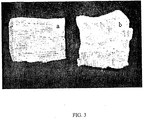
- the homogeneous distribution of ZnO nanocrystals on the textile fibers was demonstrated in high-resolution SEM micrographs ( Fig. 2 ). After sonochemical deposition of ZnO nanocrystals on the fabrics the color and texture of the material didn't change ( Fig.3 ).
- sample ZnO-1 has diameter ⁇ 8nm
- sample ZnO-2 has diameter ⁇ 275nm
- sample ZnO-3 has diameter ⁇ 600nm.
- Table 1 bacteria population reduction for different grainsizes and treatment times. E . coli S.
- the textiles sonochemically impregnated with ZnO demonstrate high stability; the amount of ZnO remaining in the textile after 50 washing cycles remains constant.
- the stability of nanoparticles on the fabric was measured after 50 washing cycles by both TEM measurements, and titrating the fabric with EDTA to determine the amount of ZnO.
Landscapes
- Engineering & Computer Science (AREA)
- Textile Engineering (AREA)
- Life Sciences & Earth Sciences (AREA)
- Chemical & Material Sciences (AREA)
- Biochemistry (AREA)
- Chemical Kinetics & Catalysis (AREA)
- General Chemical & Material Sciences (AREA)
- Microbiology (AREA)
- Physics & Mathematics (AREA)
- Plasma & Fusion (AREA)
- Chemical Or Physical Treatment Of Fibers (AREA)
- Agricultural Chemicals And Associated Chemicals (AREA)
Description
- The present invention relates to a system for preparing antimicrobial fabrics, coated with metal oxide nanoparticles by a novel sonochemical method.
- Antibacterial fabrics are widely used for production of outdoor clothes, under-wear, bed-linen, and bandages. Antimicrobial resistance is very important in textile materials, having effects amongst others on comfort for the wearer. The deposition of metal oxides known to possess antimicrobial activity, namely ZnO, MgO and CuO, can significantly extent the applications of textile fabrics and prolong the period of their use.
- Zinc oxide has been recognized as a mild antimicrobial agent, non toxic wound healing agent, and sunscreen agent. Because it reflects both UVA and UVB rays, zinc oxide can be used in ointments, creams and lotions to protect against sunburn and other damage to the skin caused by ultraviolet lights [Godfrey H.R. Alternative Therapy Health Medicine, 7 (2001) 49]. At the same time ZnO is an inorganic oxide stable against temperatures encountered in normal textile use, contributing to its long functional lifetime without color change or oxidation. The antibacterial properties of MgO and CuO nanoparticles were also demonstrated [Controllable preparation of Nano-MgO and investigation of its bactericidal properties. Huang L., Li D.Q, Lin Y. J., Wei M., Evans D.G., Duan X. L. Inorganic Biochemistry, 99 (2005) 986, and Antbacterial Vermiculite Nano -Material. Li B., Yu S., Hwang J. Y., Shi S. Journal of Minerals & Materials Characterization & Engineering, 1 (2002) 61].
- An antimicrobial formulation containing ZnO powder, binding agent, and dispersing agent was used to protect cotton and cotton-polyester fabrics ["Microbial Detection, Surface Morphology, and Thermal Stability of Cotton and Cotton/Polyester Fabrics Treated with Antimicrobial Formulations by a Radiation Method". Zohby M. H., Kareem H. A., El-Naggar A. M., Hassan, M. S., J. Appl. Polym. Sci. 89 (2003) 2604] This formulation was applied to fabrics under high energy radiation of Co-60 γ or electron beam irradiation and then subjected for fixation by thermal treatment. A superior antimicrobial finish was achieved with cotton fabrics containing 2 wt% ZnO and with cotton-polyester fabrics containing 1 wt% ZnO. The particle size of ZnO in these samples according to SEM measurement was 3 - 5 µm. In spite of good antimicrobial activity, the disadvantages of this method are the use of additional binding and dispersing agent, and requirements of high energy radiation and an additional stage of thermal curing. It was also reported that ZnO-soluble starch nanocomposite was impregnated onto cotton fabrics to impart antibacterial and UV- protection functions with ZnO concentration 0.6-0.8 wt% [Functional finishing of cotton fabrics using zinc oxide - soluble starch nanocompo sites. Vigneshwaran N., Kumar S., Kathe A. A., Varadarajan P., Prasad V., Nanotechnology 17 (2006) 5087]. The particle size of ZnO in zinc oxide-starch composition was reported as 38 nm. However, in this work the special stabilizing agent, namely, acrylic binder is used which should undergo the additional stage of polymerization at 140°C.
- Hence, an improved method of dispersion metal oxide nanoparticles onto textiles is still a long felt need.
- In order to understand the invention and to see how it may be implemented in practice, a plurality of embodiments will now be described, by way of non-limiting example only, with reference to the accompanying drawings, in which
-
FIG. 1 presents an XRD pattern indicating hexagonal phase of ZnO matching PDF file: 89-7102. -
FIG. 2A-C presents HR SEM images of the fabric coated with ZnO: a -before coating, b - after coating, c- high magnification of figure b.. -
FIG. 3A, B present images of fabric coated with ZnO: a - before coating, b - after coating. -
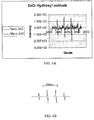
FIG. 4A , B presents a Comparing hydroxyl radicals generated from microscale and nanoscale ZnO, using DMPO as a spin-trapping agent and Theoretical (Computer) simulation of the ESR spectrum of hydroxyl radicals. -
FIG. 5 presents the amount of the hydroxyl radicals in a medium containing both ZnO and bacteria. -
FIG.6 presents ESR hydroxyl radical spectra of water suspensions with different ZnO samples. - The present invention comprises a system and method for sonochemical dispersion of metal oxide nanoparticles onto textiles.
- It is within the core of the present invention to provide a method for ultrasonic impregnation of textiles with metal oxide nanoparticles consisting of steps of:
- a. preparing a water - ethanol solution;
- b. adding M(Ac)2 to said solution, forming a mixture;
- c. immersing said textiles in said mixture;
- d. adjusting the pH of said mixture to basic pH by means of addition of aqueous ammonia;
- e. purging said mixture to remove traces of CO2/air;
- f. irradiating said mixture with a high intensity ultrasonic power;
- g. washing said textile with water to remove traces of ammonia;
- h. further washing said textile with ethanol, and drying in air,
- It is further within provision of the invention to provide the aforementioned method where said water - ethanol solution is in a ratio of approximately 1:9.
- It is further within provision of the invention to provide the aforementioned method where M(Ac)2 is added in a concentration of between 0.002 and 0.02 M.
- It is further within provision of the invention to provide the aforementioned method where said basic pH is approximately 8.
- It is further within provision of the invention to provide the aforementioned method where said step of purging is carried out with argon for 1 hour.
- It is further within provision of the invention to provide the aforementioned method where said step of irradiating said mixture is carried out for 1 hour.
- It is further within provision of the invention to provide the aforementioned method where said step of irradiating said mixture is carried out by means of an ultrasonic horn.
- It is further within provision of the invention to provide the aforementioned method where said step of irradiating said mixture is carried out using ultrasonic waves at a frequency of approximately 20 kHz.
- It is further within provision of the invention to provide the aforementioned method where said step of irradiating said mixture is carried out using ultrasonic waves at a power of approximately 1.5 kW
- It is further within provision of the invention to provide the aforementioned method where said step of irradiating said mixture is carried out under a flow of argon It is further within provision of the invention to provide the aforementioned method where said step of irradiating said mixture is carried out at approximately 30°C.
- It is further within provision of the invention to provide the aforementioned method where said textile composite contains between 0.1 wt % and 10 wt % of metal oxide (MO).
- It is further within provision of the invention to provide the aforementioned method where MO nanocrystals are between 10nm and 1000nm in diameter.
- It is further within provision of the invention to provide textiles imparted with bacteriostatic properties by means of ultrasonic irradiation of said textiles in an aqueous metal oxide mixture, thereby attaining uniform impregnation of said textiles with metal oxide nanoparticles.
- While the invention is susceptible to various modifications and alternative forms, specific embodiments thereof have been shown by way of example in the drawings and will herein be described in detail. It should be understood, however, that it is not intended to limit the invention to the particular forms disclosed, but on the contrary, the intention is to cover all modifications, equivalents, and alternatives falling within the spirit and scope of the invention as defined by the appended claims.
- The following description is provided, alongside all chapters of the present invention, so as to enable any person skilled in the art to make use of said invention and sets forth the best modes contemplated by the inventor of carrying out this invention. Various modifications, however, will remain apparent to those skilled in the art, since the generic principles of the present invention have been defined specifically to provide a means and method for providing a wood-resin composite.
- In the following detailed description, numerous specific details are set forth in order to provide a thorough understanding of embodiments of the present invention. However, those skilled in the art will understand that such embodiments may be practiced without these specific details. Reference throughout this specification to "one embodiment" or "an embodiment" means that a particular feature, structure, or characteristic described in connection with the embodiment is included in at least one embodiment of the invention.
- The term 'sonochemical irradiation' hereinafter refers to exposure to sonic power, generally in the ultrasonic range of frequencies.
- The term `sonochemistry' refers to the study or use of sonochemical irradiation.
- The term 'nanoparticles' hereinafter refers to particles of size ranging from about 10 micrometers to about 10 nanometers.
- The term 'oxide' hereinafter refers to any inorganic oxide such as ZnO, MgO, CuO, and the like. In the following when ZnO is used specifically, it is used in exemplary fashion and can be replaced by any oxide as will be obvious to one skilled in the art. The term 'plurality' refers hereinafter to any positive integer e.g, 1,5, or 10.
- It is within provision of the instant invention to offer a new process for preparation of textiles impregnated with nanometric oxide particles. The sonochemical method is applied for the deposition of ZnO nanocrystals on textile materials to impart them excellent antimicrobial activity. A comparison of the suggested ZnO - textile nanocomposite shows a clear advantage of the ultrasound radiation over all other available methods as will be described below.
- We have demonstrated that sonochemical irradiation is a suitable method for synthesis of nanomaterials, and their deposition/insertion on/into ceramic and polymer supports. One of the many advantages demonstrated for sonochemistry is that a homogeneous dispersion of the nanoparticles on the surface of the substrate is achieved in one step. In this step the nanoparticles of the desired products are formed and accelerated onto/into the surface or body of the polymer or ceramics via microjets or shock waves that are created when a sonochemically produced bubble collapses near a solid's surface. The current patent is based on the work done by the inventors - see The Reparation of Metal-Polymer Composite Materials using Ultrasound Radiation, S. Wizel, R. Prozorov, Y. Cohen, D. Aurbach, S. Margel, A. Gedanken. J. Mater. Res. 13,(1998) 211; Preparation of amorphous magnetite nanoparticles embedded in polyvinylulcohol using ultrasound radiation". R. Vijaykumar, Y. Mastai, A. Gedanken, Y. S. Cohen, Yair Cohen, D. Aurbach, J. Mater. Chem. 10 (2000) 1125; Sonochemical Deposition of Silver Nanoparticles on Silica Spheres V. G. Pol, D.. Srivastava, O. Palchik, V. Palchik, M. A. Slifkin, A. M. Weiss. A. Gedanken, Langmuir, 18, (2002) 3352; Syntheses and Characterization of Zinc Oxide-PVA Nanocomposite by Ultrasound Irradiation and the Effect of the
- Crystal Growth of the Zinc Oxide" R. Vijayakumar, R. Elgamiel, O. Palchik, A. Gedanken, J. Crystal Growth and Design, 250 (2003) 409; Sonochemical Deposition of Silver Nanoparticles on Wool Fibers. L. Hadad, N. Perkas, Y. Gofer, J. Calderon-Moreno, A. Ghule, A. Gedanken,. J. Appl. Polym. Sci. 104 (2007)1732. These publications studied the deposition of large variety of nanoparticles on different kinds of substrates. The deposition was conducted either with materials that were dissolved in the irradiated solution or dispersed (not dissolved) in the solution.
- The use of the sonochemical method helps to achieve all the principal requirements of the antimicrobial textile coated with nanomaterials: small particle size, regular shape, and homogeneous distribution of ZnO nanoparticles on the fabrics. Amongst the advantages of using ultrasound over other methods is that ultrasonic shockwaves effectively blast the oxide nanocrystals onto a fabric's surface at such speed that it causes local melting of the substrate, guaranteeing firm embedding of the nanocrystals within the textile fibers. Textiles sonochemically impregnated with ZnO displays outstanding antimicrobial activity in the case of both gram-positive and gram-negative bacteria.
- An experimental procedure was developed as follows for testing and evaluation purposes. Other routes will be obvious to one skilled in the art, and the following is provided only by way of example.
-
- 1. A textile sample (such as a cotton square of about 100 cm2) is placed in a 0.002 - 0.02 M solution of M(Ac)2, (where M stands for metals Zn, Mg, Cu; and Ac stands for acetate ion) in a water : ethanol (1:9) solution.
- 2. The pH is adjusted to 8 with an aqueous solution of ammonia.
- 3. The reaction mixture is then purged with argon for 1 hour in order to remove traces of CO2/air.
- 4. The solution is irradiated for 1 hour with a high intensity ultrasonic horn (Ti-horn, 20 kHz, 1.5 kW at 70 % efficiency) under a flow of argon at 30°C.
- 5. The textile is washed thoroughly with water to remove traces of ammonia, then further washed with ethanol and dried in air.
- It is also within provision of the invention to prepare the metal solutions as above using metal nitrates or other salts, as will be obvious to one skilled in the art.
- As will also be obvious to one skilled in the art, the coating process can be accomplished without producing nanoparticles 'in house', by adding nanoparticles obtained by some other means to solution and ultrasonically treating as above in steps 2-5. The yield (amount of nanoparticles on the textile) in this case would be lower but enough to get antibacterial properties.
- A sample coated by the above process with MO was tested for its antibacterial properties with gram-positive (S. aureusa) and gram-negative (E. coli) cultures. Antibacterial effects were shown in treated textiles even at a coating concentration of less than 1%, for all metal oxides mentioned above (Zn, Mg, Cu). We observed 98% reduction of the two strains of the bacteria after 1hour.
- Our experiments have also demonstrated that antibacterial treatment of ZnO coated bandages can increase the sensitivity of bacteria cells to two kinds of antibiotics; a 43% additional reduction in colonies was detected for Chloramphenicol due to the metal oxide and 34% for Ampicillin. The concentrations of antibiotics used in these experiments were much lower than those normally expected to cause any significant change in the bacteria growth. Thus, our results indicate a cooperative or synergic effect of metal oxide textile impregnation and antibiotic treatment.
- The textile composite so produced contains on the order of 1 wt % of metal oxide (MO). The MO nanocrystals are of size ~150 nm, and are homogeneously distributed on the surfaces of the textile fibers.
- The metal oxide concentration in the fabrics prepared as above can be varied in the range 0.5-10.0%.
- We now refer to
Fig. 1 which displays XRD patterns of fabrics coated with zinc oxide, confirming the presence of ZnO nanocrystals. The homogeneous distribution of ZnO nanocrystals on the textile fibers was demonstrated in high-resolution SEM micrographs (Fig. 2 ). After sonochemical deposition of ZnO nanocrystals on the fabrics the color and texture of the material didn't change (Fig.3 ). - As is known in the art, the existence of free radicals can aid in destruction of bacteria. In our investigation, the generation of both active oxygen species (O2 - and OH-) from the ZnO powder was demonstrated using ESR measurements. Moreover, we found that at the nanoscale regime of ZnO particle size, the amount of the generated OH. was considerably higher than that of the microscale size, probably due to a higher specific surface area of the smaller particles (
Fig 4 ). Similar spectra were obtained when a piece of ZnO-cotton coated bandage was introduced in the ESR tube. These results are in good agreement with the measured influence of particle size on the antibacterial activity of ZnO powders, as it was found that the antibacterial activity of ZnO increased with decreasing particle size. This is supported by the following table of results measuring bacteria reduction for two bacteria types (E. coli and S. aureusa) after various treatment times, for different particle sizes of ZnO crystallites. Sample ZnO-1 has diameter ~8nm, sample ZnO-2 has diameter ~275nm, and sample ZnO-3 has diameter ~600nm.Table 1 - bacteria population reduction for different grainsizes and treatment times. E. coli S. aureus Sample Duration of treatment [h] [CFU mL-1] N/N0 % Reduction in viability [CFU mL-1] N/N0 %Reduction in viability ZnO.1 0 6.5 × 10⁷ 1 0 1.2 × 10⁷ 1 0 1 5.2 × 10⁶ 8.0 × 10⁻² 92 3.5 × 10⁶ 2.9 × 10⁻¹ 71 2 6.5 × 10⁵ 1.0 × 10⁻² 99 2.0 × 10⁶ 1.7 × 10⁻¹ 83 3 1.3 × 10⁵ 2.0 × 10⁻³ 99.8 2.4 × 10⁵ 2.0 × 10⁻² 98 ZnO.2 0 6.5 × 10⁷ 1 0 1.2 × 10⁷ 1 0 1 1.0 × 10⁷ 1.6 × 10⁻¹ 84 6.4 × 10⁶ 5.3 × 10⁻¹ 47 2 3.3 × 10⁶ 5.1 × 10⁻² 95 4.1 × 10⁶ 3.4 × 10⁻¹ 66 3 3.3 × 10⁵ 2.0 × 10⁻³ 99.5 1.3 × 10⁶ 1.1 × 10⁻¹ 89 ZnO.3 0 6.5 × 10⁷ 1 0 1.2 × 10⁷ 1 0 1 2.0 × 10⁷ 3.1 × 10⁻¹ 69 1.0 × 10⁷ 8.7 × 10⁻¹ 13 2 1.69 × 10⁷ 2.6 × 10⁻¹ 74 8.2 × 10⁶ 5.8 × 10⁻¹ 42 3 8.5 × 10⁶ 21.3 × 10⁻¹ 87 3.8 × 10⁶ 12 × 10-1 68 - As is clear from the table above, the bacteria populations are reduced with greater exposure time and smaller ZnO grain size. The above explanation for these results is further substantiated in
Fig. 6 which presents ESR hydroxyl radical spectra of water suspensions with different ZnO samples, showing clearly that as the grainsize decreases the hydroxyl signal increases. - The textiles sonochemically impregnated with ZnO demonstrate high stability; the amount of ZnO remaining in the textile after 50 washing cycles remains constant. The stability of nanoparticles on the fabric was measured after 50 washing cycles by both TEM measurements, and titrating the fabric with EDTA to determine the amount of ZnO.
- In another experiment, we measured the amount of the hydroxyl radicals in a medium containing both ZnO and bacteria (e.coli and s.aurrearsa in saline). An enhancement of the amount of hydroxyl radicals could be detected comparing to samples without the bacteria (
Fig.5 ). We assume that this enhancement comes from an oxidative stress of the bacteria in a medium containing the ZnO.
Claims (12)
- A method of ultrasonic impregnation of textiles with metal oxide nanoparticles comprising the steps of:a. preparing a water-ethanol solution;b. adding M(Ac)2 to said solution, forming a mixture;c. immersing said textiles in said mixture;d. adjusting the pH of said mixture to basic pH by means of addition of aqueous ammonia;e. purging said mixture to remove traces of CO2/air;f. irradiating said mixture with a high intensity ultrasonic power;g. washing said textile with water to remove traces of ammonia; andh. further washing said textile with ethanol, and drying in air,said method characterized in that said M is selected from a group consisting of Zn, Mg or Cu and; further wherein said irradiating is performed at ultrasonic range of frequencies such that a bacteriostatic textile-metal oxide composite containing homogenously impregnated metal oxide nanoparticles is produced.
- The method of claim 1, characterized by said water-ethanol solution is in a ratio of approximately 1:9; further wherein said M(Ac)2 is added in a concentration of between 0.002 and 0.02M..
- The method of claim 1, where said basic pH is approximately 8.
- The method of claim 1, where said step of purging is carried out with argon for 1 hour.
- The method of claim 1, wherein at least one of the following is being held true (a) said step of irradiating said mixture is carried out for 1 hour; (b) said step of irradiating said mixture is carried out at approximately 30°C; (c) said step of irradiating said mixture is carried out by an ultrasonic horn; (d) said step of irradiating said mixture is carried out by an ultrasonic waves at a frequency of approximately 20 kHz; (e) said step of irradiating said mixture is carried out by ultrasonic waves at a power of approximately 1.5 kW; (f) said step of irradiating said mixture is carried out by a flow of argon.
- The method of claim 1, wherein said textile composite contains between 0.1 wt% and 10 wt. % of metal oxide (MO).
- The method of claim 1, wherein MO nanocrystals are between 10nm and 1000nm in diameter.
- The method of claim 1, wherein said M is Zn such that a metal oxide textile impregnation that shows a synergic effect with an antibiotic treatment is produced, further wherein the antibiotic used in the antibiotic treatment is Chloramphenicol and/or Ampicillin.
- Textiles imparted with bacteriostatic properties comprising metal oxide (MO) nanoparticles; said MO comprises M selected from the group consisting of Zn, Mg or Cu; said metal oxide (MO) nanoparticles are uniformly impregnated onto said textiles by the ultrasonochemical method according to any one of the preceding claims such that MO nanocrystals are firmly embedded within the textile fibers.
- The textiles of claim 9, wherein said M is Zn such that said textiles show a synergic effect with antibiotic treatment, further wherein the antibiotic used in the antibiotic treatment is Chloramphenicol and/or Ampicillin.
- The textiles of claim 9, where said textile composite contains between 0.1 wt.%and 10 wt.% of metal oxide (MO); further wherein said MO nanocrystals are between 10nm and 1000nm in diameter.
- A textile uniformly impregnated with metal oxide (MO) nanoparticles according to claim 10 for use in an antibacterial treatment.
Applications Claiming Priority (2)
| Application Number | Priority Date | Filing Date | Title |
|---|---|---|---|
| US12947208P | 2008-06-30 | 2008-06-30 | |
| PCT/IL2009/000645 WO2010001386A1 (en) | 2008-06-30 | 2009-06-29 | Sonochemical coating of textiles with metal oxide nanoparticles for antimicrobial fabrics |
Publications (3)
| Publication Number | Publication Date |
|---|---|
| EP2294260A1 EP2294260A1 (en) | 2011-03-16 |
| EP2294260A4 EP2294260A4 (en) | 2012-01-25 |
| EP2294260B1 true EP2294260B1 (en) | 2016-11-02 |
Family
ID=41465537
Family Applications (1)
| Application Number | Title | Priority Date | Filing Date |
|---|---|---|---|
| EP09773041.0A Active EP2294260B1 (en) | 2008-06-30 | 2009-06-29 | Sonochemical coating of textiles with metal oxide nanoparticles for antimicrobial fabrics |
Country Status (4)
| Country | Link |
|---|---|
| US (1) | US9315937B2 (en) |
| EP (1) | EP2294260B1 (en) |
| ES (1) | ES2612907T3 (en) |
| WO (1) | WO2010001386A1 (en) |
Families Citing this family (29)
| Publication number | Priority date | Publication date | Assignee | Title |
|---|---|---|---|---|
| US10370789B2 (en) * | 2008-06-30 | 2019-08-06 | Bar Ilan University | Sonochemical coating of textiles with metal oxide nanoparticles for antimicrobial fabrics |
| US20130233799A1 (en) * | 2012-02-21 | 2013-09-12 | Technion Research & Development Foundation Ltd. | Filtration module |
| CN104350198B (en) * | 2012-04-24 | 2017-03-08 | 阿葛曼技术有限公司 | Apply method and the system for the method for chemical compound to synthesis and surface of natural fibers |
| CO6880015A1 (en) * | 2012-08-28 | 2014-02-28 | Univ Ind De Santander | Useful material in the removal of contaminants in liquid matrices |
| WO2014181329A1 (en) * | 2013-05-06 | 2014-11-13 | Bar-Ilan University | Doped metal oxide nanoparticles of and uses thereof |
| PL224478B1 (en) | 2013-06-03 | 2016-12-30 | Eko Styl Spółka Z Ograniczoną Odpowiedzialnością | Method for dressing fabrics in the process of washing |
| US11840797B1 (en) | 2014-11-26 | 2023-12-12 | Microban Products Company | Textile formulation and product with odor control |
| GB201421497D0 (en) * | 2014-12-03 | 2015-01-14 | Univ Coventry | Method |
| CN104589441B (en) * | 2015-01-05 | 2017-01-25 | 福州大学 | A Simple Method for Preparing ZnO Coating on Wood Surface |
| US10064273B2 (en) | 2015-10-20 | 2018-08-28 | MR Label Company | Antimicrobial copper sheet overlays and related methods for making and using |
| RU2615693C1 (en) * | 2015-11-02 | 2017-04-06 | Федеральное государственное автономное образовательное учреждение высшего образования "Национальный исследовательский Томский государственный университет" (ТГУ, НИ ТГУ) | Method of producing materials with anti-bacterial properties based on cotton fabric modified by nanoparticles of zinc oxide |
| US11098444B2 (en) | 2016-01-07 | 2021-08-24 | Tommie Copper Ip, Inc. | Cotton performance products and methods of their manufacture |
| US10138653B1 (en) | 2016-03-03 | 2018-11-27 | William Christian Weber | Insulated tent |
| EP3235926A1 (en) * | 2016-04-18 | 2017-10-25 | Bar-Ilan University | Sonochemical coating method |
| US12054879B2 (en) | 2016-12-15 | 2024-08-06 | Microban Products Company | Odor control composition and treatment method |
| EP3652194A1 (en) | 2017-07-13 | 2020-05-20 | Ramot at Tel-Aviv University Ltd. | Self-assembled hybrid hydrogels formed of a short aromatic peptide and an aromatic amino acid |
| US20200337301A1 (en) | 2017-07-30 | 2020-10-29 | IMI Tami Institute for Research and Development ltd | Antimicrobial coating material comprising nanocrystalline cellulose and magnesium oxide and method of preparation thereof |
| WO2019102459A1 (en) * | 2017-11-24 | 2019-05-31 | Bar-Ilan University | Sonochemical coating of surfaces with superhydrophobic particles |
| CA3099233A1 (en) * | 2018-05-31 | 2019-12-05 | Argaman Technologies Ltd. | A method and system for the application of chemical compounds to natural fibers and treated fibers obtained therefrom |
| US11072884B2 (en) | 2018-10-16 | 2021-07-27 | Imam Abdulrahman Bin Faisal University | Method of making an antimicrobial textile |
| CN111253719B (en) * | 2019-11-18 | 2022-03-15 | 厦门翔鹭化纤股份有限公司 | Organic zinc antibacterial PET granules and preparation method thereof |
| CN111253718B (en) * | 2019-11-18 | 2022-03-15 | 厦门翔鹭化纤股份有限公司 | Organic zinc antibacterial master batch for spinning and preparation method thereof |
| CN111270335B (en) * | 2019-11-18 | 2023-03-24 | 厦门翔鹭化纤股份有限公司 | Antibacterial polyester fiber and preparation method thereof |
| US11001505B1 (en) | 2020-06-16 | 2021-05-11 | King Saud University | Copper oxide nanoparticles synthesized using Rhatany root extract |
| CN112121234A (en) * | 2020-08-21 | 2020-12-25 | 中国科学院金属研究所 | Controllable and durable anti-infection orthopedic implant and preparation method thereof |
| US20240032543A1 (en) * | 2020-12-10 | 2024-02-01 | Claros Technologies Inc. | Antimicrobial and antiviral nanocomposites sheets |
| US11993866B2 (en) * | 2020-12-16 | 2024-05-28 | Korea University Research And Business Foundation | Super-amphiphilic fiber-nanowire composite and application |
| CN115125725A (en) * | 2022-07-19 | 2022-09-30 | 武汉纺织大学 | High-durability antibacterial finishing method for pure cotton non-scouring and bleaching non-woven fabric |
| US12416073B2 (en) | 2023-01-19 | 2025-09-16 | Institute For Plasma Research | Plasma based system for generating antimicrobial coating on flexible polymeric substrates and process thereof |
Citations (1)
| Publication number | Priority date | Publication date | Assignee | Title |
|---|---|---|---|---|
| WO2007032001A2 (en) * | 2005-09-12 | 2007-03-22 | Bar-Ilan University | Method for preparation of silver-polymer composites by sonochemical deposition |
Family Cites Families (10)
| Publication number | Priority date | Publication date | Assignee | Title |
|---|---|---|---|---|
| US4207071A (en) * | 1979-02-01 | 1980-06-10 | Dow Corning Corporation | Durable modification of fibrous substrates using a polyoxyethylene-containing silane and articles therefrom |
| US5466722A (en) * | 1992-08-21 | 1995-11-14 | Stoffer; James O. | Ultrasonic polymerization process |
| US5656037A (en) * | 1995-12-28 | 1997-08-12 | The United States Of America As Represented By The Secretary Of Agriculture | Reaction products of magnesium acetate and hydrogen peroxide for imparting antibacterial activity to fibrous substrates |
| US20030017336A1 (en) * | 2001-07-16 | 2003-01-23 | Bar-Ilan Univeristy | Nanoscale metal particles and method of preparing same |
| US7141518B2 (en) | 2003-10-16 | 2006-11-28 | Kimberly-Clark Worldwide, Inc. | Durable charged particle coatings and materials |
| US20060021642A1 (en) * | 2004-07-30 | 2006-02-02 | Sliwa John W Jr | Apparatus and method for delivering acoustic energy through a liquid stream to a target object for disruptive surface cleaning or treating effects |
| US20060141015A1 (en) * | 2004-12-07 | 2006-06-29 | Centre Des Technologies Textiles | Antimicrobial material |
| US7468332B2 (en) * | 2005-09-02 | 2008-12-23 | Jamshid Avloni | Electroconductive woven and non-woven fabric |
| JP4847106B2 (en) * | 2005-11-18 | 2011-12-28 | 保土谷化学工業株式会社 | Carbon fiber structure |
| CN100355976C (en) | 2006-01-13 | 2007-12-19 | 浙江理工大学 | Method for in-situ generating inorganic nanoparticles in textile |
-
2009
- 2009-06-29 EP EP09773041.0A patent/EP2294260B1/en active Active
- 2009-06-29 US US12/997,276 patent/US9315937B2/en active Active
- 2009-06-29 ES ES09773041.0T patent/ES2612907T3/en active Active
- 2009-06-29 WO PCT/IL2009/000645 patent/WO2010001386A1/en not_active Ceased
Patent Citations (1)
| Publication number | Priority date | Publication date | Assignee | Title |
|---|---|---|---|---|
| WO2007032001A2 (en) * | 2005-09-12 | 2007-03-22 | Bar-Ilan University | Method for preparation of silver-polymer composites by sonochemical deposition |
Also Published As
| Publication number | Publication date |
|---|---|
| ES2612907T3 (en) | 2017-05-19 |
| EP2294260A1 (en) | 2011-03-16 |
| EP2294260A4 (en) | 2012-01-25 |
| US20110097957A1 (en) | 2011-04-28 |
| WO2010001386A1 (en) | 2010-01-07 |
| US9315937B2 (en) | 2016-04-19 |
Similar Documents
| Publication | Publication Date | Title |
|---|---|---|
| US9315937B2 (en) | Sonochemical coating of textiles with metal oxide nanoparticles for antimicrobial fabrics | |
| US10370789B2 (en) | Sonochemical coating of textiles with metal oxide nanoparticles for antimicrobial fabrics | |
| Perelshtein et al. | Sonochemical coating of silver nanoparticles on textile fabrics (nylon, polyester and cotton) and their antibacterial activity | |
| Perelshtein et al. | Antibacterial properties of an in situ generated and simultaneously deposited nanocrystalline ZnO on fabrics | |
| Buşilă et al. | Synthesis and characterization of antimicrobial textile finishing based on Ag: ZnO nanoparticles/chitosan biocomposites | |
| Ravindra et al. | Fabrication of antibacterial cotton fibres loaded with silver nanoparticles via “Green Approach” | |
| Zille et al. | Application of nanotechnology in antimicrobial finishing of biomedical textiles | |
| Patel et al. | Surface functionalization of electrospun PAN nanofibers with ZnO–Ag heterostructure nanoparticles: Synthesis and antibacterial study | |
| Shafei et al. | ZnO/carboxymethyl chitosan bionano-composite to impart antibacterial and UV protection for cotton fabric | |
| US8834917B2 (en) | Nanoparticle composition and process thereof | |
| Elbarbary et al. | Radiation synthesis and characterization of polyvinyl alcohol/chitosan/silver nanocomposite membranes: antimicrobial and blood compatibility studies | |
| Edis et al. | Copper-based Nanoparticles, their chemistry and Antibacterial properties: A review | |
| Subramani et al. | An ecofriendly route to enhance the antibacterial and textural properties of cotton fabrics using herbal nanoparticles from Azadirachta indica (neem) | |
| Yoon et al. | Fabrication of Ag-doped ZnO/PAN composite nanofibers by electrospinning: Photocatalytic and antiviral activities | |
| Abou El-Kheir et al. | Potential applications of nanotechnology in functionalization of synthetic fibres (a review) | |
| CN108648843B (en) | A kind of composite material and preparation method thereof | |
| Sheikh et al. | Antimicrobial Efficacy of Metal-Doped Titanium Dioxide Nanoparticles: A Comprehensive Review. | |
| Li et al. | Organic-inorganic hybrid based on co-assembly of polyoxometalate and dopamine for synthesis of nanostructured Ag | |
| Jin et al. | Novel synthesis of Ag NPs on polymer fabrics by a green method for antibacterial performance | |
| Perelshtein et al. | Making the hospital a safer place by the sonochemical coating of textiles by antibacterial nanoparticles | |
| Gedanken et al. | Imparting pharmaceutical applications to the surface of fabrics for wound and skin care by ultrasonic waves | |
| Kachare et al. | Surfactants Increase the Durability and Antibacterial Performance of ZnO-Coated Cotton | |
| Vatansever et al. | Production of antibacterial polyvinylpyrrolidone nanofibers containing silver nanoparticles via electrospinning method | |
| Liao et al. | Magnesium-ion-doped silica nanosheets as degradable drug carriers with enhanced antibacterial activity and cellular uptake | |
| El Sayed et al. | Gamma irradiation induced surface modification of silk fabrics for antibacterial application |
Legal Events
| Date | Code | Title | Description |
|---|---|---|---|
| PUAI | Public reference made under article 153(3) epc to a published international application that has entered the european phase |
Free format text: ORIGINAL CODE: 0009012 |
|
| 17P | Request for examination filed |
Effective date: 20110111 |
|
| AK | Designated contracting states |
Kind code of ref document: A1 Designated state(s): AT BE BG CH CY CZ DE DK EE ES FI FR GB GR HR HU IE IS IT LI LT LU LV MC MK MT NL NO PL PT RO SE SI SK TR |
|
| AX | Request for extension of the european patent |
Extension state: AL BA RS |
|
| DAX | Request for extension of the european patent (deleted) | ||
| A4 | Supplementary search report drawn up and despatched |
Effective date: 20111228 |
|
| RIC1 | Information provided on ipc code assigned before grant |
Ipc: D06M 16/00 20060101AFI20111220BHEP Ipc: D06P 1/00 20060101ALI20111220BHEP Ipc: D06M 10/02 20060101ALI20111220BHEP Ipc: A61L 2/00 20060101ALI20111220BHEP Ipc: D06M 11/44 20060101ALI20111220BHEP Ipc: D06M 11/42 20060101ALI20111220BHEP |
|
| 17Q | First examination report despatched |
Effective date: 20150224 |
|
| GRAP | Despatch of communication of intention to grant a patent |
Free format text: ORIGINAL CODE: EPIDOSNIGR1 |
|
| INTG | Intention to grant announced |
Effective date: 20160614 |
|
| GRAS | Grant fee paid |
Free format text: ORIGINAL CODE: EPIDOSNIGR3 |
|
| GRAA | (expected) grant |
Free format text: ORIGINAL CODE: 0009210 |
|
| AK | Designated contracting states |
Kind code of ref document: B1 Designated state(s): AT BE BG CH CY CZ DE DK EE ES FI FR GB GR HR HU IE IS IT LI LT LU LV MC MK MT NL NO PL PT RO SE SI SK TR |
|
| REG | Reference to a national code |
Ref country code: GB Ref legal event code: FG4D |
|
| REG | Reference to a national code |
Ref country code: AT Ref legal event code: REF Ref document number: 841987 Country of ref document: AT Kind code of ref document: T Effective date: 20161115 Ref country code: CH Ref legal event code: EP |
|
| REG | Reference to a national code |
Ref country code: IE Ref legal event code: FG4D |
|
| REG | Reference to a national code |
Ref country code: DE Ref legal event code: R096 Ref document number: 602009042122 Country of ref document: DE |
|
| REG | Reference to a national code |
Ref country code: CH Ref legal event code: NV Representative=s name: MICHELI AND CIE SA, CH Ref country code: NL Ref legal event code: FP |
|
| PG25 | Lapsed in a contracting state [announced via postgrant information from national office to epo] |
Ref country code: LV Free format text: LAPSE BECAUSE OF FAILURE TO SUBMIT A TRANSLATION OF THE DESCRIPTION OR TO PAY THE FEE WITHIN THE PRESCRIBED TIME-LIMIT Effective date: 20161102 |
|
| REG | Reference to a national code |
Ref country code: LT Ref legal event code: MG4D |
|
| REG | Reference to a national code |
Ref country code: AT Ref legal event code: MK05 Ref document number: 841987 Country of ref document: AT Kind code of ref document: T Effective date: 20161102 |
|
| PG25 | Lapsed in a contracting state [announced via postgrant information from national office to epo] |
Ref country code: SE Free format text: LAPSE BECAUSE OF FAILURE TO SUBMIT A TRANSLATION OF THE DESCRIPTION OR TO PAY THE FEE WITHIN THE PRESCRIBED TIME-LIMIT Effective date: 20161102 Ref country code: GR Free format text: LAPSE BECAUSE OF FAILURE TO SUBMIT A TRANSLATION OF THE DESCRIPTION OR TO PAY THE FEE WITHIN THE PRESCRIBED TIME-LIMIT Effective date: 20170203 Ref country code: LT Free format text: LAPSE BECAUSE OF FAILURE TO SUBMIT A TRANSLATION OF THE DESCRIPTION OR TO PAY THE FEE WITHIN THE PRESCRIBED TIME-LIMIT Effective date: 20161102 Ref country code: NO Free format text: LAPSE BECAUSE OF FAILURE TO SUBMIT A TRANSLATION OF THE DESCRIPTION OR TO PAY THE FEE WITHIN THE PRESCRIBED TIME-LIMIT Effective date: 20170202 |
|
| REG | Reference to a national code |
Ref country code: ES Ref legal event code: FG2A Ref document number: 2612907 Country of ref document: ES Kind code of ref document: T3 Effective date: 20170519 |
|
| PG25 | Lapsed in a contracting state [announced via postgrant information from national office to epo] |
Ref country code: HR Free format text: LAPSE BECAUSE OF FAILURE TO SUBMIT A TRANSLATION OF THE DESCRIPTION OR TO PAY THE FEE WITHIN THE PRESCRIBED TIME-LIMIT Effective date: 20161102 Ref country code: PT Free format text: LAPSE BECAUSE OF FAILURE TO SUBMIT A TRANSLATION OF THE DESCRIPTION OR TO PAY THE FEE WITHIN THE PRESCRIBED TIME-LIMIT Effective date: 20170302 Ref country code: AT Free format text: LAPSE BECAUSE OF FAILURE TO SUBMIT A TRANSLATION OF THE DESCRIPTION OR TO PAY THE FEE WITHIN THE PRESCRIBED TIME-LIMIT Effective date: 20161102 Ref country code: FI Free format text: LAPSE BECAUSE OF FAILURE TO SUBMIT A TRANSLATION OF THE DESCRIPTION OR TO PAY THE FEE WITHIN THE PRESCRIBED TIME-LIMIT Effective date: 20161102 Ref country code: IS Free format text: LAPSE BECAUSE OF FAILURE TO SUBMIT A TRANSLATION OF THE DESCRIPTION OR TO PAY THE FEE WITHIN THE PRESCRIBED TIME-LIMIT Effective date: 20170302 Ref country code: PL Free format text: LAPSE BECAUSE OF FAILURE TO SUBMIT A TRANSLATION OF THE DESCRIPTION OR TO PAY THE FEE WITHIN THE PRESCRIBED TIME-LIMIT Effective date: 20161102 |
|
| REG | Reference to a national code |
Ref country code: FR Ref legal event code: PLFP Year of fee payment: 9 |
|
| PG25 | Lapsed in a contracting state [announced via postgrant information from national office to epo] |
Ref country code: CZ Free format text: LAPSE BECAUSE OF FAILURE TO SUBMIT A TRANSLATION OF THE DESCRIPTION OR TO PAY THE FEE WITHIN THE PRESCRIBED TIME-LIMIT Effective date: 20161102 Ref country code: DK Free format text: LAPSE BECAUSE OF FAILURE TO SUBMIT A TRANSLATION OF THE DESCRIPTION OR TO PAY THE FEE WITHIN THE PRESCRIBED TIME-LIMIT Effective date: 20161102 Ref country code: SK Free format text: LAPSE BECAUSE OF FAILURE TO SUBMIT A TRANSLATION OF THE DESCRIPTION OR TO PAY THE FEE WITHIN THE PRESCRIBED TIME-LIMIT Effective date: 20161102 Ref country code: EE Free format text: LAPSE BECAUSE OF FAILURE TO SUBMIT A TRANSLATION OF THE DESCRIPTION OR TO PAY THE FEE WITHIN THE PRESCRIBED TIME-LIMIT Effective date: 20161102 Ref country code: RO Free format text: LAPSE BECAUSE OF FAILURE TO SUBMIT A TRANSLATION OF THE DESCRIPTION OR TO PAY THE FEE WITHIN THE PRESCRIBED TIME-LIMIT Effective date: 20161102 |
|
| REG | Reference to a national code |
Ref country code: DE Ref legal event code: R097 Ref document number: 602009042122 Country of ref document: DE |
|
| PG25 | Lapsed in a contracting state [announced via postgrant information from national office to epo] |
Ref country code: BE Free format text: LAPSE BECAUSE OF FAILURE TO SUBMIT A TRANSLATION OF THE DESCRIPTION OR TO PAY THE FEE WITHIN THE PRESCRIBED TIME-LIMIT Effective date: 20161102 Ref country code: BG Free format text: LAPSE BECAUSE OF FAILURE TO SUBMIT A TRANSLATION OF THE DESCRIPTION OR TO PAY THE FEE WITHIN THE PRESCRIBED TIME-LIMIT Effective date: 20170202 |
|
| PLBE | No opposition filed within time limit |
Free format text: ORIGINAL CODE: 0009261 |
|
| STAA | Information on the status of an ep patent application or granted ep patent |
Free format text: STATUS: NO OPPOSITION FILED WITHIN TIME LIMIT |
|
| 26N | No opposition filed |
Effective date: 20170803 |
|
| PG25 | Lapsed in a contracting state [announced via postgrant information from national office to epo] |
Ref country code: SI Free format text: LAPSE BECAUSE OF FAILURE TO SUBMIT A TRANSLATION OF THE DESCRIPTION OR TO PAY THE FEE WITHIN THE PRESCRIBED TIME-LIMIT Effective date: 20161102 |
|
| PG25 | Lapsed in a contracting state [announced via postgrant information from national office to epo] |
Ref country code: MC Free format text: LAPSE BECAUSE OF FAILURE TO SUBMIT A TRANSLATION OF THE DESCRIPTION OR TO PAY THE FEE WITHIN THE PRESCRIBED TIME-LIMIT Effective date: 20161102 |
|
| PG25 | Lapsed in a contracting state [announced via postgrant information from national office to epo] |
Ref country code: LU Free format text: LAPSE BECAUSE OF NON-PAYMENT OF DUE FEES Effective date: 20170629 |
|
| REG | Reference to a national code |
Ref country code: FR Ref legal event code: PLFP Year of fee payment: 10 |
|
| PG25 | Lapsed in a contracting state [announced via postgrant information from national office to epo] |
Ref country code: MT Free format text: LAPSE BECAUSE OF NON-PAYMENT OF DUE FEES Effective date: 20170629 |
|
| PG25 | Lapsed in a contracting state [announced via postgrant information from national office to epo] |
Ref country code: HU Free format text: LAPSE BECAUSE OF FAILURE TO SUBMIT A TRANSLATION OF THE DESCRIPTION OR TO PAY THE FEE WITHIN THE PRESCRIBED TIME-LIMIT; INVALID AB INITIO Effective date: 20090629 |
|
| PG25 | Lapsed in a contracting state [announced via postgrant information from national office to epo] |
Ref country code: CY Free format text: LAPSE BECAUSE OF NON-PAYMENT OF DUE FEES Effective date: 20161102 |
|
| PG25 | Lapsed in a contracting state [announced via postgrant information from national office to epo] |
Ref country code: MK Free format text: LAPSE BECAUSE OF FAILURE TO SUBMIT A TRANSLATION OF THE DESCRIPTION OR TO PAY THE FEE WITHIN THE PRESCRIBED TIME-LIMIT Effective date: 20161102 |
|
| PG25 | Lapsed in a contracting state [announced via postgrant information from national office to epo] |
Ref country code: TR Free format text: LAPSE BECAUSE OF FAILURE TO SUBMIT A TRANSLATION OF THE DESCRIPTION OR TO PAY THE FEE WITHIN THE PRESCRIBED TIME-LIMIT Effective date: 20161102 |
|
| PGFP | Annual fee paid to national office [announced via postgrant information from national office to epo] |
Ref country code: NL Payment date: 20230613 Year of fee payment: 15 Ref country code: IE Payment date: 20230613 Year of fee payment: 15 Ref country code: FR Payment date: 20230613 Year of fee payment: 15 Ref country code: DE Payment date: 20230609 Year of fee payment: 15 |
|
| PGFP | Annual fee paid to national office [announced via postgrant information from national office to epo] |
Ref country code: GB Payment date: 20230526 Year of fee payment: 15 Ref country code: ES Payment date: 20230706 Year of fee payment: 15 Ref country code: CH Payment date: 20230702 Year of fee payment: 15 |
|
| PGFP | Annual fee paid to national office [announced via postgrant information from national office to epo] |
Ref country code: IT Payment date: 20240626 Year of fee payment: 16 |
|
| REG | Reference to a national code |
Ref country code: DE Ref legal event code: R119 Ref document number: 602009042122 Country of ref document: DE |
|
| REG | Reference to a national code |
Ref country code: CH Ref legal event code: PL |
|
| REG | Reference to a national code |
Ref country code: NL Ref legal event code: MM Effective date: 20240701 |
|
| GBPC | Gb: european patent ceased through non-payment of renewal fee |
Effective date: 20240629 |
|
| PG25 | Lapsed in a contracting state [announced via postgrant information from national office to epo] |
Ref country code: NL Free format text: LAPSE BECAUSE OF NON-PAYMENT OF DUE FEES Effective date: 20240701 |
|
| PG25 | Lapsed in a contracting state [announced via postgrant information from national office to epo] |
Ref country code: NL Free format text: LAPSE BECAUSE OF NON-PAYMENT OF DUE FEES Effective date: 20240701 |
|
| PG25 | Lapsed in a contracting state [announced via postgrant information from national office to epo] |
Ref country code: DE Free format text: LAPSE BECAUSE OF NON-PAYMENT OF DUE FEES Effective date: 20250101 |
|
| PG25 | Lapsed in a contracting state [announced via postgrant information from national office to epo] |
Ref country code: IE Free format text: LAPSE BECAUSE OF NON-PAYMENT OF DUE FEES Effective date: 20240629 |
|
| PG25 | Lapsed in a contracting state [announced via postgrant information from national office to epo] |
Ref country code: CH Free format text: LAPSE BECAUSE OF NON-PAYMENT OF DUE FEES Effective date: 20240630 |
|
| PG25 | Lapsed in a contracting state [announced via postgrant information from national office to epo] |
Ref country code: FR Free format text: LAPSE BECAUSE OF NON-PAYMENT OF DUE FEES Effective date: 20240630 |
|
| PG25 | Lapsed in a contracting state [announced via postgrant information from national office to epo] |
Ref country code: GB Free format text: LAPSE BECAUSE OF NON-PAYMENT OF DUE FEES Effective date: 20240629 |
|
| REG | Reference to a national code |
Ref country code: ES Ref legal event code: FD2A Effective date: 20250805 |
|
| PG25 | Lapsed in a contracting state [announced via postgrant information from national office to epo] |
Ref country code: ES Free format text: LAPSE BECAUSE OF NON-PAYMENT OF DUE FEES Effective date: 20240630 |
|
| PG25 | Lapsed in a contracting state [announced via postgrant information from national office to epo] |
Ref country code: IT Free format text: LAPSE BECAUSE OF NON-PAYMENT OF DUE FEES Effective date: 20250629 |