EP2292572A1 - Process for the separation of aromatic compounds from a mixture - Google Patents
Process for the separation of aromatic compounds from a mixture Download PDFInfo
- Publication number
- EP2292572A1 EP2292572A1 EP09169647A EP09169647A EP2292572A1 EP 2292572 A1 EP2292572 A1 EP 2292572A1 EP 09169647 A EP09169647 A EP 09169647A EP 09169647 A EP09169647 A EP 09169647A EP 2292572 A1 EP2292572 A1 EP 2292572A1
- Authority
- EP
- European Patent Office
- Prior art keywords
- ionic liquid
- aromatics
- stream
- aromatic compounds
- rich
- Prior art date
- Legal status (The legal status is an assumption and is not a legal conclusion. Google has not performed a legal analysis and makes no representation as to the accuracy of the status listed.)
- Ceased
Links
- 150000001491 aromatic compounds Chemical class 0.000 title claims abstract description 58
- 238000000034 method Methods 0.000 title claims abstract description 41
- 239000000203 mixture Substances 0.000 title claims abstract description 31
- 238000000926 separation method Methods 0.000 title claims description 10
- 239000002608 ionic liquid Substances 0.000 claims abstract description 84
- 238000000605 extraction Methods 0.000 claims abstract description 35
- 229930195733 hydrocarbon Natural products 0.000 claims abstract description 23
- 150000002430 hydrocarbons Chemical class 0.000 claims abstract description 23
- 239000004215 Carbon black (E152) Substances 0.000 claims abstract description 21
- 150000001338 aliphatic hydrocarbons Chemical class 0.000 claims abstract description 19
- 125000001931 aliphatic group Chemical group 0.000 claims abstract description 14
- 238000004064 recycling Methods 0.000 claims abstract description 3
- 239000007789 gas Substances 0.000 claims description 32
- 239000003463 adsorbent Substances 0.000 claims description 27
- 239000007788 liquid Substances 0.000 claims description 18
- 125000000217 alkyl group Chemical group 0.000 claims description 12
- RAXXELZNTBOGNW-UHFFFAOYSA-N 1H-imidazole Chemical compound C1=CNC=N1 RAXXELZNTBOGNW-UHFFFAOYSA-N 0.000 claims description 11
- 125000004432 carbon atom Chemical group C* 0.000 claims description 11
- UHOVQNZJYSORNB-UHFFFAOYSA-N Benzene Chemical compound C1=CC=CC=C1 UHOVQNZJYSORNB-UHFFFAOYSA-N 0.000 claims description 9
- YXFVVABEGXRONW-UHFFFAOYSA-N Toluene Chemical compound CC1=CC=CC=C1 YXFVVABEGXRONW-UHFFFAOYSA-N 0.000 claims description 9
- 125000000129 anionic group Chemical group 0.000 claims description 7
- OKTJSMMVPCPJKN-UHFFFAOYSA-N Carbon Chemical group [C] OKTJSMMVPCPJKN-UHFFFAOYSA-N 0.000 claims description 6
- XEEYBQQBJWHFJM-UHFFFAOYSA-N Iron Chemical compound [Fe] XEEYBQQBJWHFJM-UHFFFAOYSA-N 0.000 claims description 6
- UFWIBTONFRDIAS-UHFFFAOYSA-N Naphthalene Chemical compound C1=CC=CC2=CC=CC=C21 UFWIBTONFRDIAS-UHFFFAOYSA-N 0.000 claims description 4
- PXHVJJICTQNCMI-UHFFFAOYSA-N Nickel Chemical compound [Ni] PXHVJJICTQNCMI-UHFFFAOYSA-N 0.000 claims description 4
- 150000004945 aromatic hydrocarbons Chemical class 0.000 claims description 4
- 238000009833 condensation Methods 0.000 claims description 3
- 230000005494 condensation Effects 0.000 claims description 3
- 229910052742 iron Inorganic materials 0.000 claims description 3
- 239000008096 xylene Substances 0.000 claims description 3
- ZOXJGFHDIHLPTG-UHFFFAOYSA-N Boron Chemical compound [B] ZOXJGFHDIHLPTG-UHFFFAOYSA-N 0.000 claims description 2
- RYGMFSIKBFXOCR-UHFFFAOYSA-N Copper Chemical compound [Cu] RYGMFSIKBFXOCR-UHFFFAOYSA-N 0.000 claims description 2
- GYHNNYVSQQEPJS-UHFFFAOYSA-N Gallium Chemical compound [Ga] GYHNNYVSQQEPJS-UHFFFAOYSA-N 0.000 claims description 2
- CTQNGGLPUBDAKN-UHFFFAOYSA-N O-Xylene Chemical compound CC1=CC=CC=C1C CTQNGGLPUBDAKN-UHFFFAOYSA-N 0.000 claims description 2
- HCHKCACWOHOZIP-UHFFFAOYSA-N Zinc Chemical compound [Zn] HCHKCACWOHOZIP-UHFFFAOYSA-N 0.000 claims description 2
- 239000004411 aluminium Substances 0.000 claims description 2
- 229910052782 aluminium Inorganic materials 0.000 claims description 2
- XAGFODPZIPBFFR-UHFFFAOYSA-N aluminium Chemical compound [Al] XAGFODPZIPBFFR-UHFFFAOYSA-N 0.000 claims description 2
- 229910052796 boron Inorganic materials 0.000 claims description 2
- 229910017052 cobalt Inorganic materials 0.000 claims description 2
- 239000010941 cobalt Substances 0.000 claims description 2
- GUTLYIVDDKVIGB-UHFFFAOYSA-N cobalt atom Chemical compound [Co] GUTLYIVDDKVIGB-UHFFFAOYSA-N 0.000 claims description 2
- 229910052802 copper Inorganic materials 0.000 claims description 2
- 239000010949 copper Substances 0.000 claims description 2
- 229910052733 gallium Inorganic materials 0.000 claims description 2
- 229910052738 indium Inorganic materials 0.000 claims description 2
- APFVFJFRJDLVQX-UHFFFAOYSA-N indium atom Chemical compound [In] APFVFJFRJDLVQX-UHFFFAOYSA-N 0.000 claims description 2
- 229910052759 nickel Inorganic materials 0.000 claims description 2
- 230000000737 periodic effect Effects 0.000 claims description 2
- 229910052725 zinc Inorganic materials 0.000 claims description 2
- 239000011701 zinc Substances 0.000 claims description 2
- 125000001424 substituent group Chemical group 0.000 description 23
- 150000001875 compounds Chemical class 0.000 description 14
- -1 nitrogen-containing cation Chemical class 0.000 description 14
- IJGRMHOSHXDMSA-UHFFFAOYSA-N Atomic nitrogen Chemical group N#N IJGRMHOSHXDMSA-UHFFFAOYSA-N 0.000 description 13
- 150000001450 anions Chemical class 0.000 description 10
- 229910052757 nitrogen Chemical group 0.000 description 9
- JUJWROOIHBZHMG-UHFFFAOYSA-N Pyridine Chemical group C1=CC=NC=C1 JUJWROOIHBZHMG-UHFFFAOYSA-N 0.000 description 7
- 239000000047 product Substances 0.000 description 7
- XLYOFNOQVPJJNP-UHFFFAOYSA-N water Substances O XLYOFNOQVPJJNP-UHFFFAOYSA-N 0.000 description 7
- CURLTUGMZLYLDI-UHFFFAOYSA-N Carbon dioxide Chemical compound O=C=O CURLTUGMZLYLDI-UHFFFAOYSA-N 0.000 description 6
- 238000001179 sorption measurement Methods 0.000 description 6
- 125000003118 aryl group Chemical group 0.000 description 5
- 125000002091 cationic group Chemical group 0.000 description 5
- 238000005194 fractionation Methods 0.000 description 5
- 125000000623 heterocyclic group Chemical group 0.000 description 5
- 238000002844 melting Methods 0.000 description 5
- 230000008018 melting Effects 0.000 description 5
- QJGQUHMNIGDVPM-UHFFFAOYSA-N nitrogen group Chemical group [N] QJGQUHMNIGDVPM-UHFFFAOYSA-N 0.000 description 5
- 150000003839 salts Chemical class 0.000 description 5
- KDCGOANMDULRCW-UHFFFAOYSA-N 7H-purine Chemical compound N1=CNC2=NC=NC2=C1 KDCGOANMDULRCW-UHFFFAOYSA-N 0.000 description 4
- KYQCOXFCLRTKLS-UHFFFAOYSA-N Pyrazine Chemical group C1=CN=CC=N1 KYQCOXFCLRTKLS-UHFFFAOYSA-N 0.000 description 4
- SMWDFEZZVXVKRB-UHFFFAOYSA-N Quinoline Chemical compound N1=CC=CC2=CC=CC=C21 SMWDFEZZVXVKRB-UHFFFAOYSA-N 0.000 description 4
- VYPSYNLAJGMNEJ-UHFFFAOYSA-N Silicium dioxide Chemical compound O=[Si]=O VYPSYNLAJGMNEJ-UHFFFAOYSA-N 0.000 description 4
- 150000007824 aliphatic compounds Chemical class 0.000 description 4
- 238000009835 boiling Methods 0.000 description 4
- 238000010438 heat treatment Methods 0.000 description 4
- 125000005842 heteroatom Chemical group 0.000 description 4
- AWJUIBRHMBBTKR-UHFFFAOYSA-N isoquinoline Chemical compound C1=NC=CC2=CC=CC=C21 AWJUIBRHMBBTKR-UHFFFAOYSA-N 0.000 description 4
- QGZKDVFQNNGYKY-UHFFFAOYSA-O Ammonium Chemical compound [NH4+] QGZKDVFQNNGYKY-UHFFFAOYSA-O 0.000 description 3
- ZAMOUSCENKQFHK-UHFFFAOYSA-N Chlorine atom Chemical compound [Cl] ZAMOUSCENKQFHK-UHFFFAOYSA-N 0.000 description 3
- RWRDLPDLKQPQOW-UHFFFAOYSA-N Pyrrolidine Chemical group C1CCNC1 RWRDLPDLKQPQOW-UHFFFAOYSA-N 0.000 description 3
- 229910002092 carbon dioxide Inorganic materials 0.000 description 3
- 239000001569 carbon dioxide Substances 0.000 description 3
- 229910052801 chlorine Inorganic materials 0.000 description 3
- 239000000460 chlorine Substances 0.000 description 3
- 125000001183 hydrocarbyl group Chemical group 0.000 description 3
- 238000000622 liquid--liquid extraction Methods 0.000 description 3
- 230000007935 neutral effect Effects 0.000 description 3
- 238000000638 solvent extraction Methods 0.000 description 3
- ZCYVEMRRCGMTRW-UHFFFAOYSA-N 7553-56-2 Chemical compound [I] ZCYVEMRRCGMTRW-UHFFFAOYSA-N 0.000 description 2
- UJOBWOGCFQCDNV-UHFFFAOYSA-N 9H-carbazole Chemical compound C1=CC=C2C3=CC=CC=C3NC2=C1 UJOBWOGCFQCDNV-UHFFFAOYSA-N 0.000 description 2
- WKBOTKDWSSQWDR-UHFFFAOYSA-N Bromine atom Chemical compound [Br] WKBOTKDWSSQWDR-UHFFFAOYSA-N 0.000 description 2
- PXGOKWXKJXAPGV-UHFFFAOYSA-N Fluorine Chemical compound FF PXGOKWXKJXAPGV-UHFFFAOYSA-N 0.000 description 2
- SIKJAQJRHWYJAI-UHFFFAOYSA-N Indole Chemical compound C1=CC=C2NC=CC2=C1 SIKJAQJRHWYJAI-UHFFFAOYSA-N 0.000 description 2
- 239000002841 Lewis acid Substances 0.000 description 2
- PCNDJXKNXGMECE-UHFFFAOYSA-N Phenazine Chemical group C1=CC=CC2=NC3=CC=CC=C3N=C21 PCNDJXKNXGMECE-UHFFFAOYSA-N 0.000 description 2
- NQRYJNQNLNOLGT-UHFFFAOYSA-N Piperidine Chemical group C1CCNCC1 NQRYJNQNLNOLGT-UHFFFAOYSA-N 0.000 description 2
- ATUOYWHBWRKTHZ-UHFFFAOYSA-N Propane Chemical compound CCC ATUOYWHBWRKTHZ-UHFFFAOYSA-N 0.000 description 2
- KAESVJOAVNADME-UHFFFAOYSA-N Pyrrole Chemical group C=1C=CNC=1 KAESVJOAVNADME-UHFFFAOYSA-N 0.000 description 2
- NINIDFKCEFEMDL-UHFFFAOYSA-N Sulfur Chemical group [S] NINIDFKCEFEMDL-UHFFFAOYSA-N 0.000 description 2
- GWEVSGVZZGPLCZ-UHFFFAOYSA-N Titan oxide Chemical compound O=[Ti]=O GWEVSGVZZGPLCZ-UHFFFAOYSA-N 0.000 description 2
- 230000002378 acidificating effect Effects 0.000 description 2
- PNEYBMLMFCGWSK-UHFFFAOYSA-N aluminium oxide Inorganic materials [O-2].[O-2].[O-2].[Al+3].[Al+3] PNEYBMLMFCGWSK-UHFFFAOYSA-N 0.000 description 2
- GDTBXPJZTBHREO-UHFFFAOYSA-N bromine Substances BrBr GDTBXPJZTBHREO-UHFFFAOYSA-N 0.000 description 2
- 229910052794 bromium Inorganic materials 0.000 description 2
- 239000001273 butane Substances 0.000 description 2
- 150000001768 cations Chemical class 0.000 description 2
- 239000000356 contaminant Substances 0.000 description 2
- 125000004093 cyano group Chemical group *C#N 0.000 description 2
- IYYZUPMFVPLQIF-UHFFFAOYSA-N dibenzothiophene Chemical compound C1=CC=C2C3=CC=CC=C3SC2=C1 IYYZUPMFVPLQIF-UHFFFAOYSA-N 0.000 description 2
- 229910052731 fluorine Inorganic materials 0.000 description 2
- 239000011737 fluorine Substances 0.000 description 2
- 229910052736 halogen Inorganic materials 0.000 description 2
- 150000002367 halogens Chemical class 0.000 description 2
- 125000001072 heteroaryl group Chemical group 0.000 description 2
- 229910052740 iodine Inorganic materials 0.000 description 2
- 239000011630 iodine Substances 0.000 description 2
- 150000007517 lewis acids Chemical class 0.000 description 2
- 239000012263 liquid product Substances 0.000 description 2
- 239000012528 membrane Substances 0.000 description 2
- IJDNQMDRQITEOD-UHFFFAOYSA-N n-butane Chemical compound CCCC IJDNQMDRQITEOD-UHFFFAOYSA-N 0.000 description 2
- OFBQJSOFQDEBGM-UHFFFAOYSA-N n-pentane Natural products CCCCC OFBQJSOFQDEBGM-UHFFFAOYSA-N 0.000 description 2
- 125000004433 nitrogen atom Chemical group N* 0.000 description 2
- BASFCYQUMIYNBI-UHFFFAOYSA-N platinum Chemical compound [Pt] BASFCYQUMIYNBI-UHFFFAOYSA-N 0.000 description 2
- CPNGPNLZQNNVQM-UHFFFAOYSA-N pteridine Chemical compound N1=CN=CC2=NC=CN=C21 CPNGPNLZQNNVQM-UHFFFAOYSA-N 0.000 description 2
- UMJSCPRVCHMLSP-UHFFFAOYSA-N pyridine Chemical group COC1=CC=CN=C1 UMJSCPRVCHMLSP-UHFFFAOYSA-N 0.000 description 2
- 229920006395 saturated elastomer Polymers 0.000 description 2
- 239000000377 silicon dioxide Substances 0.000 description 2
- 239000010457 zeolite Substances 0.000 description 2
- FCEHBMOGCRZNNI-UHFFFAOYSA-N 1-benzothiophene Chemical class C1=CC=C2SC=CC2=C1 FCEHBMOGCRZNNI-UHFFFAOYSA-N 0.000 description 1
- IQQRAVYLUAZUGX-UHFFFAOYSA-N 1-butyl-3-methylimidazolium Chemical compound CCCCN1C=C[N+](C)=C1 IQQRAVYLUAZUGX-UHFFFAOYSA-N 0.000 description 1
- LJVQHXICFCZRJN-UHFFFAOYSA-N 1h-1,2,4-triazole-5-carboxylic acid Chemical compound OC(=O)C1=NC=NN1 LJVQHXICFCZRJN-UHFFFAOYSA-N 0.000 description 1
- CTTJWXVQRJUJQW-UHFFFAOYSA-N 2,2-dioctyl-3-sulfobutanedioic acid Chemical compound CCCCCCCCC(C(O)=O)(C(C(O)=O)S(O)(=O)=O)CCCCCCCC CTTJWXVQRJUJQW-UHFFFAOYSA-N 0.000 description 1
- 125000003903 2-propenyl group Chemical group [H]C([*])([H])C([H])=C([H])[H] 0.000 description 1
- QTBSBXVTEAMEQO-UHFFFAOYSA-M Acetate Chemical compound CC([O-])=O QTBSBXVTEAMEQO-UHFFFAOYSA-M 0.000 description 1
- KKUKTXOBAWVSHC-UHFFFAOYSA-N Dimethylphosphate Chemical compound COP(O)(=O)OC KKUKTXOBAWVSHC-UHFFFAOYSA-N 0.000 description 1
- BDAGIHXWWSANSR-UHFFFAOYSA-M Formate Chemical compound [O-]C=O BDAGIHXWWSANSR-UHFFFAOYSA-M 0.000 description 1
- JVTAAEKCZFNVCJ-UHFFFAOYSA-M Lactate Chemical compound CC(O)C([O-])=O JVTAAEKCZFNVCJ-UHFFFAOYSA-M 0.000 description 1
- 239000002879 Lewis base Substances 0.000 description 1
- AFVFQIVMOAPDHO-UHFFFAOYSA-M Methanesulfonate Chemical compound CS([O-])(=O)=O AFVFQIVMOAPDHO-UHFFFAOYSA-M 0.000 description 1
- ZCQWOFVYLHDMMC-UHFFFAOYSA-N Oxazole Chemical group C1=COC=N1 ZCQWOFVYLHDMMC-UHFFFAOYSA-N 0.000 description 1
- 229910019142 PO4 Inorganic materials 0.000 description 1
- ABLZXFCXXLZCGV-UHFFFAOYSA-N Phosphorous acid Chemical class OP(O)=O ABLZXFCXXLZCGV-UHFFFAOYSA-N 0.000 description 1
- 239000004793 Polystyrene Substances 0.000 description 1
- CZPWVGJYEJSRLH-UHFFFAOYSA-N Pyrimidine Chemical group C1=CN=CN=C1 CZPWVGJYEJSRLH-UHFFFAOYSA-N 0.000 description 1
- UCKMPCXJQFINFW-UHFFFAOYSA-N Sulphide Chemical compound [S-2] UCKMPCXJQFINFW-UHFFFAOYSA-N 0.000 description 1
- 239000005864 Sulphur Substances 0.000 description 1
- ZMZDMBWJUHKJPS-UHFFFAOYSA-M Thiocyanate anion Chemical compound [S-]C#N ZMZDMBWJUHKJPS-UHFFFAOYSA-M 0.000 description 1
- 229910021536 Zeolite Inorganic materials 0.000 description 1
- 150000001336 alkenes Chemical class 0.000 description 1
- 239000002168 alkylating agent Substances 0.000 description 1
- 229940100198 alkylating agent Drugs 0.000 description 1
- VSCWAEJMTAWNJL-UHFFFAOYSA-K aluminium trichloride Chemical compound Cl[Al](Cl)Cl VSCWAEJMTAWNJL-UHFFFAOYSA-K 0.000 description 1
- QVGXLLKOCUKJST-UHFFFAOYSA-N atomic oxygen Chemical compound [O] QVGXLLKOCUKJST-UHFFFAOYSA-N 0.000 description 1
- XYOVOXDWRFGKEX-UHFFFAOYSA-N azepine Chemical group N1C=CC=CC=C1 XYOVOXDWRFGKEX-UHFFFAOYSA-N 0.000 description 1
- WPYMKLBDIGXBTP-UHFFFAOYSA-N benzoic acid Chemical compound OC(=O)C1=CC=CC=C1 WPYMKLBDIGXBTP-UHFFFAOYSA-N 0.000 description 1
- 230000015572 biosynthetic process Effects 0.000 description 1
- 150000001642 boronic acid derivatives Chemical class 0.000 description 1
- 125000004369 butenyl group Chemical group C(=CCC)* 0.000 description 1
- 239000006227 byproduct Substances 0.000 description 1
- 150000007942 carboxylates Chemical class 0.000 description 1
- 239000003054 catalyst Substances 0.000 description 1
- 229920002301 cellulose acetate Polymers 0.000 description 1
- 238000003889 chemical engineering Methods 0.000 description 1
- 238000006243 chemical reaction Methods 0.000 description 1
- 238000001816 cooling Methods 0.000 description 1
- XLJMAIOERFSOGZ-UHFFFAOYSA-M cyanate Chemical compound [O-]C#N XLJMAIOERFSOGZ-UHFFFAOYSA-M 0.000 description 1
- 125000004122 cyclic group Chemical group 0.000 description 1
- IYYZUPMFVPLQIF-ALWQSETLSA-N dibenzothiophene Chemical class C1=CC=CC=2[34S]C3=C(C=21)C=CC=C3 IYYZUPMFVPLQIF-ALWQSETLSA-N 0.000 description 1
- HNPSIPDUKPIQMN-UHFFFAOYSA-N dioxosilane;oxo(oxoalumanyloxy)alumane Chemical compound O=[Si]=O.O=[Al]O[Al]=O HNPSIPDUKPIQMN-UHFFFAOYSA-N 0.000 description 1
- 238000004090 dissolution Methods 0.000 description 1
- 238000000895 extractive distillation Methods 0.000 description 1
- 239000000446 fuel Substances 0.000 description 1
- 150000004820 halides Chemical class 0.000 description 1
- 150000002390 heteroarenes Chemical class 0.000 description 1
- ZMZDMBWJUHKJPS-UHFFFAOYSA-N hydrogen thiocyanate Natural products SC#N ZMZDMBWJUHKJPS-UHFFFAOYSA-N 0.000 description 1
- 150000004693 imidazolium salts Chemical class 0.000 description 1
- 150000003949 imides Chemical class 0.000 description 1
- PZOUSPYUWWUPPK-UHFFFAOYSA-N indole Natural products CC1=CC=CC2=C1C=CN2 PZOUSPYUWWUPPK-UHFFFAOYSA-N 0.000 description 1
- RKJUIXBNRJVNHR-UHFFFAOYSA-N indolenine Natural products C1=CC=C2CC=NC2=C1 RKJUIXBNRJVNHR-UHFFFAOYSA-N 0.000 description 1
- 125000001905 inorganic group Chemical group 0.000 description 1
- 229910001410 inorganic ion Inorganic materials 0.000 description 1
- 150000002500 ions Chemical class 0.000 description 1
- CYPPCCJJKNISFK-UHFFFAOYSA-J kaolinite Chemical compound [OH-].[OH-].[OH-].[OH-].[Al+3].[Al+3].[O-][Si](=O)O[Si]([O-])=O CYPPCCJJKNISFK-UHFFFAOYSA-J 0.000 description 1
- 229910052622 kaolinite Inorganic materials 0.000 description 1
- 150000007527 lewis bases Chemical class 0.000 description 1
- JZMJDSHXVKJFKW-UHFFFAOYSA-M methyl sulfate(1-) Chemical compound COS([O-])(=O)=O JZMJDSHXVKJFKW-UHFFFAOYSA-M 0.000 description 1
- 125000000449 nitro group Chemical group [O-][N+](*)=O 0.000 description 1
- 125000000962 organic group Chemical group 0.000 description 1
- 229910052760 oxygen Inorganic materials 0.000 description 1
- 239000001301 oxygen Substances 0.000 description 1
- 125000002255 pentenyl group Chemical group C(=CCCC)* 0.000 description 1
- 238000005191 phase separation Methods 0.000 description 1
- 235000021317 phosphate Nutrition 0.000 description 1
- XYFCBTPGUUZFHI-UHFFFAOYSA-O phosphonium Chemical compound [PH4+] XYFCBTPGUUZFHI-UHFFFAOYSA-O 0.000 description 1
- 125000005496 phosphonium group Chemical group 0.000 description 1
- 150000004714 phosphonium salts Chemical class 0.000 description 1
- 150000003013 phosphoric acid derivatives Chemical class 0.000 description 1
- 125000004437 phosphorous atom Chemical group 0.000 description 1
- 229910052698 phosphorus Chemical group 0.000 description 1
- 229910052697 platinum Inorganic materials 0.000 description 1
- 125000003367 polycyclic group Chemical group 0.000 description 1
- 229920000642 polymer Polymers 0.000 description 1
- 229920001296 polysiloxane Polymers 0.000 description 1
- 229920002223 polystyrene Polymers 0.000 description 1
- 239000001294 propane Substances 0.000 description 1
- 125000002577 pseudohalo group Chemical group 0.000 description 1
- 238000000746 purification Methods 0.000 description 1
- PBMFSQRYOILNGV-UHFFFAOYSA-N pyridazine Chemical group C1=CC=NN=C1 PBMFSQRYOILNGV-UHFFFAOYSA-N 0.000 description 1
- JUJWROOIHBZHMG-UHFFFAOYSA-O pyridinium Chemical compound C1=CC=[NH+]C=C1 JUJWROOIHBZHMG-UHFFFAOYSA-O 0.000 description 1
- WRHZVMBBRYBTKZ-UHFFFAOYSA-N pyrrole-2-carboxylic acid Chemical class OC(=O)C1=CC=CN1 WRHZVMBBRYBTKZ-UHFFFAOYSA-N 0.000 description 1
- 150000003242 quaternary ammonium salts Chemical class 0.000 description 1
- 238000011084 recovery Methods 0.000 description 1
- 238000002407 reforming Methods 0.000 description 1
- 238000011172 small scale experimental method Methods 0.000 description 1
- 239000002904 solvent Substances 0.000 description 1
- 239000011877 solvent mixture Substances 0.000 description 1
- 239000000126 substance Substances 0.000 description 1
- CBXCPBUEXACCNR-UHFFFAOYSA-N tetraethylammonium Chemical compound CC[N+](CC)(CC)CC CBXCPBUEXACCNR-UHFFFAOYSA-N 0.000 description 1
- SZWHXXNVLACKBV-UHFFFAOYSA-N tetraethylphosphanium Chemical compound CC[P+](CC)(CC)CC SZWHXXNVLACKBV-UHFFFAOYSA-N 0.000 description 1
- QEMXHQIAXOOASZ-UHFFFAOYSA-N tetramethylammonium Chemical compound C[N+](C)(C)C QEMXHQIAXOOASZ-UHFFFAOYSA-N 0.000 description 1
- 238000005979 thermal decomposition reaction Methods 0.000 description 1
- 150000003568 thioethers Chemical class 0.000 description 1
- ZMANZCXQSJIPKH-UHFFFAOYSA-O triethylammonium ion Chemical compound CC[NH+](CC)CC ZMANZCXQSJIPKH-UHFFFAOYSA-O 0.000 description 1
- RXJKFRMDXUJTEX-UHFFFAOYSA-O triethylphosphanium Chemical compound CC[PH+](CC)CC RXJKFRMDXUJTEX-UHFFFAOYSA-O 0.000 description 1
- ITMCEJHCFYSIIV-UHFFFAOYSA-M triflate Chemical compound [O-]S(=O)(=O)C(F)(F)F ITMCEJHCFYSIIV-UHFFFAOYSA-M 0.000 description 1
- 125000002023 trifluoromethyl group Chemical group FC(F)(F)* 0.000 description 1
- GETQZCLCWQTVFV-UHFFFAOYSA-N trimethylamine Chemical compound CN(C)C GETQZCLCWQTVFV-UHFFFAOYSA-N 0.000 description 1
- 150000003738 xylenes Chemical class 0.000 description 1
Images
Classifications
-
- C—CHEMISTRY; METALLURGY
- C07—ORGANIC CHEMISTRY
- C07B—GENERAL METHODS OF ORGANIC CHEMISTRY; APPARATUS THEREFOR
- C07B63/00—Purification; Separation; Stabilisation; Use of additives
- C07B63/04—Use of additives
-
- C—CHEMISTRY; METALLURGY
- C07—ORGANIC CHEMISTRY
- C07C—ACYCLIC OR CARBOCYCLIC COMPOUNDS
- C07C7/00—Purification; Separation; Use of additives
- C07C7/10—Purification; Separation; Use of additives by extraction, i.e. purification or separation of liquid hydrocarbons with the aid of liquids
-
- C—CHEMISTRY; METALLURGY
- C10—PETROLEUM, GAS OR COKE INDUSTRIES; TECHNICAL GASES CONTAINING CARBON MONOXIDE; FUELS; LUBRICANTS; PEAT
- C10G—CRACKING HYDROCARBON OILS; PRODUCTION OF LIQUID HYDROCARBON MIXTURES, e.g. BY DESTRUCTIVE HYDROGENATION, OLIGOMERISATION, POLYMERISATION; RECOVERY OF HYDROCARBON OILS FROM OIL-SHALE, OIL-SAND, OR GASES; REFINING MIXTURES MAINLY CONSISTING OF HYDROCARBONS; REFORMING OF NAPHTHA; MINERAL WAXES
- C10G21/00—Refining of hydrocarbon oils, in the absence of hydrogen, by extraction with selective solvents
- C10G21/06—Refining of hydrocarbon oils, in the absence of hydrogen, by extraction with selective solvents characterised by the solvent used
- C10G21/12—Organic compounds only
- C10G21/20—Nitrogen-containing compounds
Definitions
- Ionic liquids are known in the art and are organic molten salts that are liquid at relatively low temperatures, suitably up to 150 °C. Suitable melting points may range from -100 to 100 °C, preferably from 0 to 80°C, most preferably below from 0 to 20 °C. Ionic liquids are generally known and described in, e.g., EP-A 1854786 , WO-A 01/40150 , US-B 7019188 , US-A 4359596 and the references cited in US-B 7019188 .
- the cationic moiety of the ionic liquid advantageously comprises a quaternary nitrogen or phosphorus atom. Hence, ionic liquids comprise ammonium and phosphonium compounds.
- Such compounds suitably comprise one or more organic substituent groups, in particular alkyl groups with 1 to 12 carbon atoms.
- the phosphonium and ammonium moieties comprise three or four alkyl groups.
- suitable ammonium and phosphonium groups include trimethylammonium, tetramethyl ammonium, triethylammonium, tetraethylammonium, triethylphosphonium and tetraethylphosphonium.
- such moieties provide suitable ionic liquids. Since nitrogen-containing ionic liquids provide the better results, the ionic liquid preferably comprises a nitrogen-containing cationic moiety.
- the cationic moiety is preferably selected from the group consisting of (N-R 1 )-pyridinium and 1-R 2- 3-R 3 -imidazolium, wherein R 1 , R 2 and R 3 are alkyl groups with 1 to 6 carbon atoms.
- R 1 , R 2 and R 3 are alkyl groups with 1 to 6 carbon atoms.
- the alkyl group is suitably linear.
- Such pyridinium and imidazolium moieties may bear one or more further substituents.
- the pyridinium moiety may contain one or more further hydrocarbyl, preferably alkyl substituents with 1 to 6 carbon atoms. If the pyridinium moiety contains more than one substituent the melting point of the resulting salt tends to increase to undesirable levels.
- Preferred anions for use in the present invention include alkyl or haloalkyl methanamides (for example tristrifluoromethanesulphonylamide), alkyl or haloalkyl sulphonylamides (for example bistrifluoromethane-sulphonylamide, also referred to as bis(trifyl)imide or bistriflamide), alkyl or haloalkyl sulphates (for example methylsulphate and octylsulphate), alkyl or haloalkyl sulphonates (for example methanesulphonate, trifluoromethanesulphonate and dioctylsulphosuccinate), carboxylates (for example methanoate, ethanoate, benzoate and lactate), dicyanamide ([N(CN) 2 ]-), azolates (for example 1,2,4-triazolate), phosphates or phosphonates (for example dimethylphosphate and
- Suitable conditions at which the contact of the aromatics-depleted aliphatic stream with the adsorbent takes place include a temperature of from 20 to 80 °C and a pressure of from 0.1 to 20 bar. It is evident that such a treatment is more energy-friendly than fractionation. This adsorption treatment also prevents thermal decomposition of the ionic liquid.
Landscapes
- Chemical & Material Sciences (AREA)
- Organic Chemistry (AREA)
- Oil, Petroleum & Natural Gas (AREA)
- Engineering & Computer Science (AREA)
- Chemical Kinetics & Catalysis (AREA)
- General Chemical & Material Sciences (AREA)
- Analytical Chemistry (AREA)
- Water Supply & Treatment (AREA)
- Organic Low-Molecular-Weight Compounds And Preparation Thereof (AREA)
- Production Of Liquid Hydrocarbon Mixture For Refining Petroleum (AREA)
Abstract
Aromatic compounds are separated from a mixture comprising such aromatic compounds and aliphatic hydrocarbons in a process which comprises;
(a) contacting the mixture with an ionic liquid in an extraction zone to yield an aromatics-rich ionic liquid stream and an aromatics-depleted aliphatic stream;
(b) feeding at least a portion of the aromatics-rich ionic liquid stream to a stripping zone;
(c) stripping the aromatics-rich ionic liquid with a non-aqueous stripping gas to obtain an aromatics-rich hydrocarbon stream and a purified ionic liquid stream; and
(d) recycling the purified ionic liquid stream to the extraction zone.
(a) contacting the mixture with an ionic liquid in an extraction zone to yield an aromatics-rich ionic liquid stream and an aromatics-depleted aliphatic stream;
(b) feeding at least a portion of the aromatics-rich ionic liquid stream to a stripping zone;
(c) stripping the aromatics-rich ionic liquid with a non-aqueous stripping gas to obtain an aromatics-rich hydrocarbon stream and a purified ionic liquid stream; and
(d) recycling the purified ionic liquid stream to the extraction zone.
Description
- The present invention relates to a process for the separation of aromatic compounds from a mixture comprising such aromatic compounds and aliphatic hydrocarbons.
- In refinery processes a number of streams become available that contain aromatic and aliphatic compounds. It is often desirable to separate the aromatic compounds from the aliphatic compounds. Separation of aromatic compounds may be desirable when the aromatic compounds contain heteroatoms such as sulphur or nitrogen. Although removal of such heteroatom-containing compounds is commonly achieved by hydrodesulphurisation and hydrodenitrification processes, it is also possible to remove such compounds by extraction with ionic liquids.
- Such a process has been described in
EP-A 1854786 . This known process relates to the extraction of aromatic compounds, such as dibenzothiophene and derivatives thereof, from a mixture with at least one aliphatic hydrocarbon by contacting the mixture with an ionic liquid, which is a salt in the liquid state having a cation comprising an aromatic nitrogen-containing heterocyclic ring system. The ring system comprises an electron-withdrawing substituent, such as a cyano group. The nature of the anion is stated not to be crucial. - In
WO-A 01/40150 WO-A 01/40150 - Various refinery streams may comprise mixtures of aliphatic and aromatic compounds. Examples include naphtha streams that have been subjected to reforming, e.g., with a platinum catalyst. It may be desirable to obtain pure aromatic compounds from such streams.
US-B 7019188 relates to a process for the extraction of olefins and aromatics using an ionic liquid that comprises a heterocyclic cationic group, e.g., 1-butyl-3-methylimidazolium, and tetrafluoroborate as anion. - The above documents describe small-scale experiments and do not address the design of a commercial-scale process. A proposal for a commercial design has been provided by S T Anjan, Chemical Engineering Progress, 2006, 102 (12) 30-39. This article describes a conventional aromatic extraction process comprising a liquid-liquid extraction column, a water wash for the aliphatic phase and a steam stripper for the aromatics-solvent mixture obtained. The solvent is subsequently recovered in a vacuum flash column. The article already indicates that this design has several drawbacks. Therefore, in the article another design is proposed for processes that use ionic liquids. This new design retains the liquid-liquid extraction column and the water wash for the aliphatic hydrocarbon fraction. The mixture of ionic liquid and aromatics is separated in a flash vessel to obtain the aromatics as top product and the ionic liquid as the bottom product that is subsequently recycled to the extraction column. This new design requires that all aromatic compounds need to be evaporated which requires much energy. The new design also ignores an additional drawback, viz., that certain types of ionic liquids decompose on contact with water or steam, e.g. ionic liquids containing chloroaluminate, tetrafluoroborate or hexafluorophosphate anions. Since this new design retains the water wash, this additional drawback is not overcome.
- The present invention aims at overcoming the above-mentioned drawbacks.
- Accordingly, the present invention provides a process for the separation of aromatic compounds from a mixture comprising such aromatic compounds and aliphatic hydrocarbons, which process comprises;
- (a) contacting the mixture with an ionic liquid in an extraction zone to yield an aromatics-rich ionic liquid stream and an aromatics-depleted aliphatic stream;
- (b) feeding at least a portion of the aromatics-rich ionic liquid stream to a stripping zone;
- (c) stripping the aromatics-rich ionic liquid with a non-aqueous stripping gas to obtain an aromatics-rich hydrocarbon stream and a purified ionic liquid stream; and
- (d) recycling the purified ionic liquid stream to the extraction zone.
- The aromatic compound that is separated from the mixture may be any aromatic organic compound. Examples include sulphur- and/or nitrogen-containing aromatic compounds that are found as contaminants in refinery streams. Such compounds can be benzothiophene compounds, more in particular alkyl-substituted dibenzothiophene compounds. Such compounds are sometimes referred to as refractory sulphides and are difficult to remove with mild hydrodesulphurisation. Therefore, such heteroatom-containing compounds may suitably be subjected to the process of the present invention in order to remove these contaminants from refinery streams. However, since the process is found to be excellently suitable to recover aromatic compounds in large proportions for use in, e.g., gasoline fuel or chemical conversions, it is, preferred that the aromatic compound to be separated is a hydrocarbon that does not comprise a heteroatom. Suitable compounds include hydrocarbon aromatics with 6 to 12 carbon atoms in the ring. Suitably, the aromatic compounds may comprise one or more C1-C6 substituents. Although the substituents may be unsaturated, it is preferred that the C1-C6 substituents are alkyl groups. The present process is excellently suitable for the removal of benzene, toluene, xylene (o-, m-, p- and mixtures) and naphthalene from hydrocarbon mixtures.
- The process of the present invention may be appli-ed to a variety of feedstocks. Hence, the amounts of aliphatic and aromatic compounds in the mixture may vary within wide ranges. The process of the present invention is suitably applied to mixtures that comprise from 1 to 95 %wt of aromatic compounds, preferably 10 to 75%wt of aromatic compounds, based on the total weight of the mixture.
- Ionic liquids are known in the art and are organic molten salts that are liquid at relatively low temperatures, suitably up to 150 °C. Suitable melting points may range from -100 to 100 °C, preferably from 0 to 80°C, most preferably below from 0 to 20 °C. Ionic liquids are generally known and described in, e.g.,
EP-A 1854786 ,WO-A 01/40150 US-B 7019188 ,US-A 4359596 and the references cited inUS-B 7019188 . The cationic moiety of the ionic liquid advantageously comprises a quaternary nitrogen or phosphorus atom. Hence, ionic liquids comprise ammonium and phosphonium compounds. Such compounds suitably comprise one or more organic substituent groups, in particular alkyl groups with 1 to 12 carbon atoms. Preferably, the phosphonium and ammonium moieties comprise three or four alkyl groups. Examples of suitable ammonium and phosphonium groups include trimethylammonium, tetramethyl ammonium, triethylammonium, tetraethylammonium, triethylphosphonium and tetraethylphosphonium. According toWO-A 01/40150 US-B 7019188 andEP-A 1854786 the nitrogen-containing cationic moiety is preferably a heterocyclic group, more preferably, a heteroaromatic group. The ionic liquid can be formed by reacting the nitrogen-containing heterocyclic, or heteroaromatic, compound with an alkylating agent to form a quaternary ammonium salt and by reacting the salt with a Lewis acid to form the ionic liquid. Examples of nitrogen-containing heterocyclic rings that may be used in the formation of ionic liquids include pyrrole, pyrrolidine, imidazole, oxazole, piperidine, azepine, pyridine, pyrazine, pyrimidine, pyridazine, but also polycyclic rings, such as quinoline, isoquinoline, pteridine, indole, purine and carbazole. Since heteroaromatic compounds are preferred the nitrogen-containing ring is preferably selected from pyridine, imidazole, quinoline, isoquinoline, pteridine, pyrazine or purine. - When the cationic moiety comprises a nitrogen-containing heterocyclic group, this group is preferably substituted. Substituents are suitably positioned on the nitrogen atom, but advantageously, one or more substituents are also located on one or more of the carbon atoms in the ring of the heterocyclic group. The substituents can be selected from a wide group of organic and inorganic groups, including halides, cyano, nitro, trifluoromethyl, sulphide and alkylsulphide groups. Preferably, the substituents are hydrocarbyl groups, optionally interrupted by a one or more of oxygen, nitrogen and sulphur atoms. Such substituents have suitably from 1 to 16 carbon atoms. If the substituent has too many carbon atoms the melting point of the salt may increase so that it may require too high a temperature to become economically useful in the process of the present invention. Therefore, the substituent on the cationic moiety advantageously has from 1 to 6 carbon atoms. The substituent need not necessarily be saturated. Especially, when a substituent is bound to a nitrogen atom in the ring, the substituent may be unsaturated, e.g., an allyl, butenyl, isobutenyl or pentenyl group. However, advantageously the substituents are saturated, more preferably, the substituent is an alkyl group with 1 to 6 carbon atoms. Therefore, the cationic moiety is preferably selected from the group consisting of (N-R1)-pyridinium and 1-R2-3-R3-imidazolium, wherein R1, R2 and R3 are alkyl groups with 1 to 6 carbon atoms. When the alkyl substituent contains more than 3 carbon atoms, the alkyl group is suitably linear. Such pyridinium and imidazolium moieties may bear one or more further substituents. Suitably the pyridinium moiety may contain one or more further hydrocarbyl, preferably alkyl substituents with 1 to 6 carbon atoms. If the pyridinium moiety contains more than one substituent the melting point of the resulting salt tends to increase to undesirable levels. Therefore, the pyridinium group preferably contains up to one further substituent. The further substituent may be positioned on the o-, m-, or p-position, wherein the o- and m-positions are preferred, since such compounds tend to have the lower melting points. Imidazolium moieties may also comprise one or more hydrocarbyl, suitably alkyl substituents. The imidazolium moiety preferably contains not more than one further substituent. Preferably, the substituent is positioned on the 2-position since imidazolium compounds with an alkyl group on the 2-position tend to be more stable.
- The anionic moiety of the ionic liquid can be selected from a wide range of ions. Anions may be selected from organic and inorganic ions. In general, larger, less symmetrical anions are more likely to result in an ionic liquid than smaller, symmetrical anions. Preferred anions for use in the present invention include alkyl or haloalkyl methanamides (for example tristrifluoromethanesulphonylamide), alkyl or haloalkyl sulphonylamides (for example bistrifluoromethane-sulphonylamide, also referred to as bis(trifyl)imide or bistriflamide), alkyl or haloalkyl sulphates (for example methylsulphate and octylsulphate), alkyl or haloalkyl sulphonates (for example methanesulphonate, trifluoromethanesulphonate and dioctylsulphosuccinate), carboxylates (for example methanoate, ethanoate, benzoate and lactate), dicyanamide ([N(CN)2]-), azolates (for example 1,2,4-triazolate), phosphates or phosphonates (for example dimethylphosphate and hexafluorophosphate), perhalides, pseudohalides (for example cyanate and thiocyanide), and various fluorinated anions (for example tetrafluoroborate, perfluoroalkylfluorophosphates, and fluorinated borates). Preferably, the anionic moiety comprises an element selected from the Groups IB, IIA, IIB, IIIA and VIII of the Periodic Table of the Elements. More preferably, suitable elements are selected from the group consisting of boron, aluminium, gallium, indium, copper, zinc, cobalt, nickel and iron. The anionic moiety may contain as halogen fluorine, chlorine, bromine or iodine. Since the application of bromine and iodine may result in high melting temperatures and since fluorine may be environmentally undesirable the anionic moiety preferably comprises chlorine. Most preferably, the anionic moiety comprises iron and halogen, suitably chlorine. Excellent results are obtainable with ionic liquids having tetrachloroferrate as anion.
- The contact between the mixture and the ionic liquid in the extraction zone can be carried out in any way known in the art. The two streams may be contacted with each other in a co-current way. Since the transfer of aromatic compounds from the mixture into the ionic liquid occurs better in a counter-current way, the streams are preferably contacted in a counter-current way. It is possible to incur a gas-liquid contact wherein the mixture has been rendered gaseous and subsequently put into contact with the ionic liquid. This operation is generally known as extractive distillation. Evidently, that means that the extraction zone has to be operated at elevated temperature. Although this operation is a feasible option, such an operation requires a significant energy input. The extraction zone is preferably operated in a liquid-liquid extraction mode. The extraction zone is, therefore, advantageously operated at a temperature of 20 to 100 °C, and a pressure of 0.1 to 20 bar. The skilled person can vary the period during which the contact takes place in accordance with the amount of aromatic compounds in the mixture, the nature of the ionic liquid and the desired purity. Preferably the contact in the extraction zone will be from 1 s to 10 hr, preferably from 30 s to 1 hr, depending on the type of contact equipment. A high-gravity rotating bed contactor, e.g., as the one described in
US-B 7344126 or in D Saha, Heat and Mass Transfer, 45 (No. 4), 2009, pages 451-457, can be operated at very short contact times. A rotating disk contactor may take longer residence times, up to 1 hr or more. - The extraction operation yields an aromatics-depleted aliphatic stream. Generally, the aromatics-depleted aliphatic stream may comprise still some aromatic compounds and traces of ionic liquid. It may be advantageous to purify this stream. It may be feasible to purify the stream by fractionation or flashing. This operation is very suitable to separate the relatively low-boiling hydrocarbons from the relatively high boiling ionic liquids. Since the boiling points of at least some of the aliphatic hydrocarbons and aromatic compounds can be close the fractionation of these compounds may be difficult. It is, therefore, preferred to contact the aromatics-depleted aliphatic stream with an adsorbent to yield a purified aliphatic stream and fat adsorbent comprising ionic liquid and, optionally some aromatic compounds. The purified aliphatic stream can be recovered as product or be subjected to further treatment such as fractionation or purification, as desired.
- The fat adsorbent is preferably freed from ionic liquid by contacting the fat adsorbent with a liquid stream capable of dissolving the ionic liquid. The liquid stream advantageously comprises an aromatic hydrocarbon, since this dissolves the ionic liquid easily. It is most preferred to apply aromatic compounds that are the same as those, which are being separated in the present process. The aromatic compound may be a pure chemical compound, but it may also consist of a mixture of aromatic hydrocarbons, e.g., a mixture of benzene, toluene and/or one or more xylenes. The liquid stream is suitably used at ambient temperature to avoid unnecessary costs. However, it may be advantageous to apply heated liquids, e.g., from 30 to 100 °C, to facilitate the dissolution of ionic liquids. After the ionic liquid has been removed from the adsorbent, adsorbed aromatics and compounds from the liquid that is being used to remove the ionic liquid can be removed by lowering the pressure to vaporise the adsorbed compounds. Alternatively, the adsorbent may be heated. Evidently, combinations of pressure reduction and heating is feasible. The pressure reduction is suitably such that the reduced pressure ranges from 0.05 to 10 bar. Suitably the pressure is reduced by 10 to 20 bar. Heating may be done such that the temperature of the heated adsorbent is from 50 to 200 °C. If desired, traces of aromatic compounds may be removed subsequently by stripping the adsorbent with a stripping gas, such as carbon dioxide or nitrogen.
- In lieu of pressure reduction and/or heating, the adsorbent may alternatively be subjected to stripping with a stripping gas, such as carbon dioxide and/or nitrogen or a C1-4 hydrocarbon, in order to remove any adsorbed aromatic compounds.
- Since the process is preferably conducted in a continuous fashion, the process employs more than one adsorption zone so that when fat adsorbent in one adsorption zone is freed from ionic liquid and aromatic compounds, another adsorption zone is used for the contact of the adsorbent with the aromatics-depleted aliphatic stream. Suitably the number of adsorption zones ranges from 2 to 4. The freed ionic liquid, optionally together with aromatic compounds, is preferably recycled to the extraction zone. Thereto the ionic liquid and aromatic compounds may be fed directly into the extraction zone, or be combined with the ionic liquid or mixture before each of those is introduced into the extraction zone.
- The skilled person may select the adsorbent from a variety of compounds. The preferred adsorbent is selected from the group consisting of carbon, activated carbon, zeolites, such as zeolite X, Y, clays, such as kaolinite, refractory oxides, such as alumina, silica alumina, silica and titania, porous polymers, such as polystyrene and cellulose acetate, and membranes, e.g. polysiloxanes. The preferred adsorbent is activated carbon. Suitable conditions at which the contact of the aromatics-depleted aliphatic stream with the adsorbent takes place include a temperature of from 20 to 80 °C and a pressure of from 0.1 to 20 bar. It is evident that such a treatment is more energy-friendly than fractionation. This adsorption treatment also prevents thermal decomposition of the ionic liquid.
- At least a portion of the aromatics-rich ionic liquid is fed to the stripping zone. Preferably the entire product of the extraction is fed to the stripping zone. In this way the yield of aromatics is optimised and all of the ionic liquid is used for the extraction.
- In the stripping zone the aromatics-rich ionic liquid is subjected to a treatment with a non-aqueous stripping gas. By non-aqueous is understood that the stripping gas contains at most 5 vol.% of water or steam. Since some ionic liquids might decompose in contact with water the use of a non-aqueous stripping gas overcomes such problems. The stripping gas suitably contains less than 2 vol. % of water or steam, and is preferably substantially water-free. The stripping gas may be selected from a variety of gases that are inert for ionic liquids. Suitable examples include carbon dioxide and nitrogen. Preferably a hydrocarbon stripping gas is being used.
- From the stripping zone a purified stream of ionic liquid is obtained. In accordance with the present process this stream is recycled to the extraction zone. The other product of the stripping zone is an aromatics-rich hydrocarbon stream. This stream comprises the stripping gas and the aromatic compounds that were entrained with the stripping gas. It may be that the aromatics-rich ionic liquid stream from the extraction zone also contains traces of aliphatic hydrocarbons. Such aliphatic hydrocarbons are also entrained with the stripping gas. In order to separate the stripping gas from the entrained aromatic compounds and any aliphatic hydrocarbons that have also been entrained the aromatics-rich hydrocarbon stream is preferably separated into two fractions. The one fraction suitably comprises the stripping gas and any light hydrocarbon that may have been present in the aromatics-rich ionic liquid stream, whereas the aromatic compounds are contained in the other fraction. The separation into a volatile fraction and a liquid fraction may be accomplished in any feasible way. Separation can be accomplished by separation via a membrane which allows the passage of stripping gas molecules but retains aromatic compounds. Preferably the separation is achieved by separating the aromatics-rich hydrocarbon stream into a volatile fraction and a liquid fraction. The volatile fraction contains the stripping gas and the liquid fraction contains the aromatic compounds. Such a separation can be done via fractionation, but is preferably achieved via cooling and condensation of the aromatic compounds. The volatile fraction thus obtained is preferably fed to the stripping zone and used as stripping gas. According to a preferred embodiment of the present invention the stripping gas is a hydrocarbon stripping gas. As such a stripping gas any aliphatic hydrocarbon with a lower boiling point than the aromatic compounds can suitably be applied. Such gas may be a byproduct of the process, e.g. C1-4 cracked products, a designated light gas, such as propane and/or butane, or any other hydrocarbon gas that is easy to separate from the aromatic compounds.
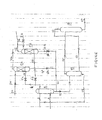
- The invention will be further illustrated by means of the Figure that shows a simplified flow scheme of the process according to the present invention.
- The Figure shows a hydrocarbon mixture comprising aromatic compounds and at least on aliphatic hydrocarbon being fed into an extraction zone 2 via a line 3. In the extraction zone 2 the hydrocarbon mixture is contacted in counter-current fashion with an ionic liquid that is introduced into the extraction zone 2 via a line 1. The extraction zone may be provided with different internals to promote the transfer process, such as plate trays, bubble caps and various types of baffles. The aliphatic hydrocarbons that result from the extraction are withdrawn via a line 4 that is split into a line 4a and a line 4b. Via valves 6a and 6b the supply of aliphatic hydrocarbons to adsorber columns 5a and 5b can be controlled. When the valve 6b is closed and valve 6a is open, the aliphatic hydrocarbons in lines 4 and 4a are subjected to adsorption in the column 5a. Traces of aromatic compounds and ionic liquid that may be entrained with the aliphatic hydrocarbons are adsorbed on the adsorbent bed that is contained in the adsorber column 5a. In parallel adsorbed aromatic compounds and ionic liquid that has previously been adsorbed by the adsorbent in the adsorber column 5b are being freed from the adsorbent bed in adsorber column 5b by passing a heated aromatic liquid product stream through the bed that has been introduced via a line 8b and an open valve 9b. A similar line 8a and a similar valve 9a for supplying such aromatic liquid stream to the adsorber column 5a are closed. The heated aromatic liquid stream releases the ionic liquid from the adsorbent, and the mixture of aromatic liquid product and ionic liquid is withdrawn via a line 10b.
- Remaining aromatic compounds in the adsorber column 5b may be suitably removed by lowering the pressure to vaporise these aromatic compounds. Suitable pressures range from 0.7 to 0.1 bar. Alternatively, remaining aromatic compounds may be removed from the adsorbent bed by using a stripping gas, e.g. nitrogen. The aromatic compounds may subsequently be recovered from the stripping gas by condensation and phase separation.
- Freed aromatic compounds are discharged from the adsorber column 5b via the line 10b and an open valve 18b and passed to
line 10. A similar discharge line 10a and valve 18a from adsorber column 5a are closed. A purified aliphatic hydrocarbons stream is obtained from adsorber column 5a and recovered via a line 7a. A similar line 7b is provided at adsorber column 5b, but is closed when line 7a is used for the recovery of purified aliphatic hydrocarbons. - When the adsorbent bed in the column 5a is rich in aromatic compounds and/or ionic liquid the operations for the columns 5a and 5b switches.
- The aromatic compounds and ionic liquid from
line 10 are added to a line 11 that withdraws the aromatics-rich ionic liquid from the extraction zone 2. The combined streams are fed to a stripping column 2 where they are contacted with a stripping hydrocarbon gas, e.g., butane, that is passed into the stripping column 12 via aline 13. Purified ionic liquid is withdrawn from the bottom of the stripping column 12 via a line 14 and combined with the ionic liquid in line 1 that is passed to the extraction zone 2. - The aromatics-rich hydrocarbon stream, comprising stripping gas and aromatic compounds and, optionally, traces of aliphatic hydrocarbons, is passed via a line 15 from the stripping column 12 to a condenser 16 wherein the aromatics-rich hydrocarbon stream is separated into a volatile fraction and a liquid fraction. The liquid fraction, i.e., the condensate, contains the aromatic hydrocarbons and this is recovered as product via a line 17. The volatile fraction comprises the stripping gas and, optionally, other gaseous hydrocarbons, and is withdrawn from the condenser 16 via the
line 13 and passed to the stripping column for use as stripping gas. - It will be evident that the flow scheme is schematic only and auxiliary equipment, such as compressors, pumps, expanders, control equipment and heating means, like furnaces and heat exchangers, has not been shown.
Claims (15)
- Process for the separation of aromatic compounds from a mixture comprising such aromatic compounds and aliphatic hydrocarbons, which process comprises;(a) contacting the mixture with an ionic liquid in an extraction zone to yield an aromatics-rich ionic liquid stream and an aromatics-depleted aliphatic stream;(b) feeding at least a portion of the aromatics-rich ionic liquid stream to a stripping zone;(c) stripping the aromatics-rich ionic liquid with a non-aqueous stripping gas to obtain an aromatics-rich hydrocarbon stream and a purified ionic liquid stream; and(d) recycling the purified ionic liquid stream to the extraction zone.
- Process as claimed in claim 1, wherein the mixture comprises from 10 to 75%wt of aromatic compounds, based on the total weight of the mixture.
- Process as claimed in claim 1 or 2, wherein the aromatic compounds are selected from the group consisting of benzene, toluene, xylene and naphthalene.
- Process as claimed in any one of claims 1 to 3, wherein the ionic liquid comprises a nitrogen-containing cationic moiety.
- Process as claimed in claim 4, wherein the nitrogen-containing anionic moiety has been selected from the group consisting of (N-R1)-pyridinium and 1-R2-3-R3-imidazolium, wherein R1, R2 and R3 are alkyl groups with 1 to 6 carbon atoms.
- Process as claimed in any one of claims 1 to 5, wherein the ionic liquid comprises an anionic moiety comprising an element selected from Groups IB, IIA, IIB, IIIA and VIII of the Periodic Table of Elements.
- Process as claimed in claim 6, wherein the anionic moiety comprises an element selected from the group consisting of boron, aluminium, gallium, indium, copper, zinc, cobalt, nickel and iron.
- Process as claimed in any one of claims 1 to 7, wherein the extraction zone is operated at a temperature of 30 to 150°C, a pressure of 0.1 to 20 bar and a residence time of 30 s to 1 hr.
- Process as claimed in any one of claims 1 to 8, wherein the aromatics-depleted aliphatic stream is contacted with an adsorbent to obtain a purified aliphatic stream and a fat adsorbent comprising ionic liquid.
- Process as claimed in claim 9, wherein the fat adsorbent is freed from ionic liquid by contacting the fat adsorbent with a liquid stream capable of dissolving the ionic liquid, preferably an aromatic hydrocarbon.
- Process as claimed in claim 10, wherein the freed ionic liquid, optionally with aromatic compounds, is recycled to the extraction zone.
- Process as claimed in any one of claims 9 to 11, wherein the adsorbent is activated carbon.
- Process as claimed in any one of claims 9 to 12, wherein the conditions of the contact of the aromatics-depleted aliphatic stream with the adsorbent include a temperature of from 30 to 80°C and a pressure of from 0.1 to 20 bar.
- Process as claimed in any one of claims 1 to 13, wherein the aromatics-rich hydrocarbon stream is separated into a volatile fraction and a liquid fraction.
- Process as claimed in claim 14, wherein the aromatics-rich hydrocarbon stream is separated into a volatile fraction and a liquid fraction by means of condensation.
Priority Applications (2)
| Application Number | Priority Date | Filing Date | Title |
|---|---|---|---|
| EP09169647A EP2292572A1 (en) | 2009-09-07 | 2009-09-07 | Process for the separation of aromatic compounds from a mixture |
| PCT/EP2010/063037 WO2011026975A1 (en) | 2009-09-07 | 2010-09-06 | Process for the separation of aromatic compounds from a mixture |
Applications Claiming Priority (1)
| Application Number | Priority Date | Filing Date | Title |
|---|---|---|---|
| EP09169647A EP2292572A1 (en) | 2009-09-07 | 2009-09-07 | Process for the separation of aromatic compounds from a mixture |
Publications (1)
| Publication Number | Publication Date |
|---|---|
| EP2292572A1 true EP2292572A1 (en) | 2011-03-09 |
Family
ID=41507961
Family Applications (1)
| Application Number | Title | Priority Date | Filing Date |
|---|---|---|---|
| EP09169647A Ceased EP2292572A1 (en) | 2009-09-07 | 2009-09-07 | Process for the separation of aromatic compounds from a mixture |
Country Status (2)
| Country | Link |
|---|---|
| EP (1) | EP2292572A1 (en) |
| WO (1) | WO2011026975A1 (en) |
Cited By (3)
| Publication number | Priority date | Publication date | Assignee | Title |
|---|---|---|---|---|
| US20100261945A1 (en) * | 2009-04-08 | 2010-10-14 | Samsung Engineering Co., Ltd. | Method of separating aromatic compound from mixture containing aromatic compound and aliphatic compound |
| US20180187100A1 (en) * | 2017-01-04 | 2018-07-05 | Saudi Arabian Oil Company | Hydrocracking process and system including separation of heavy poly nuclear aromatics from recycle by ionic liquids and solid adsorbents |
| CN117924541A (en) * | 2022-10-13 | 2024-04-26 | 中国石油化工股份有限公司 | Method and system for removing volatile components from polymer solutions |
Citations (7)
| Publication number | Priority date | Publication date | Assignee | Title |
|---|---|---|---|---|
| FR1296990A (en) * | 1961-08-07 | 1962-06-22 | Shell Int Research | Separation of liquid hydrocarbon mixtures using a polar selective solvent, normally gaseous, liquefied |
| US4359596A (en) | 1981-08-03 | 1982-11-16 | Exxon Research And Engineering Co. | Liquid salt extraction of aromatics from process feed streams |
| EP0562815A1 (en) * | 1992-03-27 | 1993-09-29 | Exxon Research And Engineering Company | Aromatic hydrocarbons separation from aromatic/non-aromatic mixtures |
| WO2001040150A1 (en) | 1999-12-01 | 2001-06-07 | Akzo Nobel N.V. | Process for the extraction of an aromatic compoung from an aliphatic phase using a non-neutral ionic liavin |
| US7019188B2 (en) | 2002-06-14 | 2006-03-28 | Nova Chemicals (International) S.A. | Use of ionic liquids to separate olefins, diolefins and aromatics |
| EP1854786A1 (en) | 2006-09-04 | 2007-11-14 | BP p.l.c. | Ionic liquids and their use in extraction processes |
| US7344126B2 (en) | 2005-02-24 | 2008-03-18 | Zhejiang University Of Technology | Equipment of multi-rotors zigzag high-gravity rotating beds |
-
2009
- 2009-09-07 EP EP09169647A patent/EP2292572A1/en not_active Ceased
-
2010
- 2010-09-06 WO PCT/EP2010/063037 patent/WO2011026975A1/en not_active Ceased
Patent Citations (7)
| Publication number | Priority date | Publication date | Assignee | Title |
|---|---|---|---|---|
| FR1296990A (en) * | 1961-08-07 | 1962-06-22 | Shell Int Research | Separation of liquid hydrocarbon mixtures using a polar selective solvent, normally gaseous, liquefied |
| US4359596A (en) | 1981-08-03 | 1982-11-16 | Exxon Research And Engineering Co. | Liquid salt extraction of aromatics from process feed streams |
| EP0562815A1 (en) * | 1992-03-27 | 1993-09-29 | Exxon Research And Engineering Company | Aromatic hydrocarbons separation from aromatic/non-aromatic mixtures |
| WO2001040150A1 (en) | 1999-12-01 | 2001-06-07 | Akzo Nobel N.V. | Process for the extraction of an aromatic compoung from an aliphatic phase using a non-neutral ionic liavin |
| US7019188B2 (en) | 2002-06-14 | 2006-03-28 | Nova Chemicals (International) S.A. | Use of ionic liquids to separate olefins, diolefins and aromatics |
| US7344126B2 (en) | 2005-02-24 | 2008-03-18 | Zhejiang University Of Technology | Equipment of multi-rotors zigzag high-gravity rotating beds |
| EP1854786A1 (en) | 2006-09-04 | 2007-11-14 | BP p.l.c. | Ionic liquids and their use in extraction processes |
Non-Patent Citations (3)
| Title |
|---|
| ANJAN S T: "Ionic Liquids for Aromatic Extraction: Are They ready?", CHEMICAL ENGINEERING PROGRESS, AMERICAN INSTITUTE OF CHEMICAL ENGINEERS, NEW YORK, NY, US, vol. 102, no. 12, 1 December 2006 (2006-12-01), pages 30 - 39, XP001539945, ISSN: 0360-7275 * |
| D SAHA, HEAT AND MASS TRANSFER, vol. 45, no. 4, 2009, pages 451 - 457 |
| S T ANJAN, CHEMICAL ENGINEERING PROGRESS, vol. 102, no. 12, 2006, pages 30 - 39 |
Cited By (7)
| Publication number | Priority date | Publication date | Assignee | Title |
|---|---|---|---|---|
| US20100261945A1 (en) * | 2009-04-08 | 2010-10-14 | Samsung Engineering Co., Ltd. | Method of separating aromatic compound from mixture containing aromatic compound and aliphatic compound |
| US20180187100A1 (en) * | 2017-01-04 | 2018-07-05 | Saudi Arabian Oil Company | Hydrocracking process and system including separation of heavy poly nuclear aromatics from recycle by ionic liquids and solid adsorbents |
| WO2018129022A1 (en) * | 2017-01-04 | 2018-07-12 | Saudi Arabian Oil Company | Hydrocracking process and system including separation of heavy poly nuclear aromatics from recycle by ionic liquids and solid adsorbents |
| CN110168057A (en) * | 2017-01-04 | 2019-08-23 | 沙特阿拉伯石油公司 | Method for hydrogen cracking and system comprising heavy polynuclear aromatic hydrocarbons are separated from recycling by ionic liquid and solid absorbent |
| KR20190104037A (en) * | 2017-01-04 | 2019-09-05 | 사우디 아라비안 오일 컴퍼니 | Hydrocracking Process and System Including Separation of Heavy Polynuclear Aromatic Compounds from Recycle by Ionic Liquid and Solids Adsorption |
| US10920157B2 (en) | 2017-01-04 | 2021-02-16 | Saudi Arabian Oil Company | Hydrocracking process and system including separation of heavy poly nuclear aromatics from recycle by ionic liquids and solid adsorbents |
| CN117924541A (en) * | 2022-10-13 | 2024-04-26 | 中国石油化工股份有限公司 | Method and system for removing volatile components from polymer solutions |
Also Published As
| Publication number | Publication date |
|---|---|
| WO2011026975A1 (en) | 2011-03-10 |
Similar Documents
| Publication | Publication Date | Title |
|---|---|---|
| WO2018129022A4 (en) | Hydrocracking process and system including separation of heavy poly nuclear aromatics from recycle by ionic liquids and solid adsorbents | |
| US4982049A (en) | Purification of hydrocarbonaceous fractions | |
| US20220177786A1 (en) | Recovery of aliphatic hydrocarbons | |
| EP2817393B1 (en) | Regeneration of selective solvents for extractive processes | |
| NO330703B1 (en) | Combined process for improved hydrogen treatment of diesel fuels | |
| EP1854786A1 (en) | Ionic liquids and their use in extraction processes | |
| JP2013542174A5 (en) | ||
| JPH0680019B2 (en) | Method for separating aromatics from hydrocarbon mixtures | |
| US20070221538A1 (en) | Method and Apparatus for Converting and Removing Organosulfur and Other Oxidizable Compounds from Distillate Fuels, and Compositions Obtained Thereby | |
| AU2013221804A1 (en) | Processes for converting hydrogen sulfide to carbon disulfide | |
| WO2011026975A1 (en) | Process for the separation of aromatic compounds from a mixture | |
| US11248073B2 (en) | Manufacturing polymers of thiophene, benzothiophene, and their alkylated derivatives | |
| CN103664498B (en) | Method for separating styrene from hydrocarbon mixture by extractive distillation | |
| CN110372580A (en) | A kind of separation method of 2- chloropyridine and 3- chloropyridine | |
| CN103360200B (en) | A kind of double solvents of recycling vinyl benzene with abstraction distillation from hydrocarbon mixture and method | |
| Najmuddin et al. | Liquid-liquid extraction of naphthenic acid using thiocyanate based ionic liquids | |
| US8524046B2 (en) | Distillation column pressure control | |
| Gao et al. | Extractive distillation of benzene, toluene, and xylenes from pyrolysis gasoline using methylsulfonylethane as a cosolvent | |
| CN112552951A (en) | Composite extracting agent suitable for removing aromatic hydrocarbons in low-content aromatic hydrocarbon straight-run naphtha and application method thereof | |
| US2777800A (en) | Solvent extraction of hydrocarbon oils | |
| WO2005040308A2 (en) | Method and apparatus for converting and removing organosulfur and other oxidizable compounds from distillate fuels, and compositions obtained thereby | |
| US2388135A (en) | Recovery of hydrogen fluoride | |
| US2974179A (en) | Separation of straight chain hydrocarbons with zeolitic molecular sieves and h2s desorbent | |
| CN110092358A (en) | A kind of processing method of waste sulfuric acid from alkylation | |
| CN105085152A (en) | Novel extraction process for aromatic hydrocarbons |
Legal Events
| Date | Code | Title | Description |
|---|---|---|---|
| PUAI | Public reference made under article 153(3) epc to a published international application that has entered the european phase |
Free format text: ORIGINAL CODE: 0009012 |
|
| AK | Designated contracting states |
Kind code of ref document: A1 Designated state(s): AT BE BG CH CY CZ DE DK EE ES FI FR GB GR HR HU IE IS IT LI LT LU LV MC MK MT NL NO PL PT RO SE SI SK SM TR |
|
| AX | Request for extension of the european patent |
Extension state: AL BA RS |
|
| STAA | Information on the status of an ep patent application or granted ep patent |
Free format text: STATUS: THE APPLICATION HAS BEEN REFUSED |
|
| 18R | Application refused |
Effective date: 20110414 |