EP2290932A1 - Methods and systems for application procedure management - Google Patents
Methods and systems for application procedure management Download PDFInfo
- Publication number
- EP2290932A1 EP2290932A1 EP09172805A EP09172805A EP2290932A1 EP 2290932 A1 EP2290932 A1 EP 2290932A1 EP 09172805 A EP09172805 A EP 09172805A EP 09172805 A EP09172805 A EP 09172805A EP 2290932 A1 EP2290932 A1 EP 2290932A1
- Authority
- EP
- European Patent Office
- Prior art keywords
- event
- sensor
- detected
- electronic device
- display unit
- Prior art date
- Legal status (The legal status is an assumption and is not a legal conclusion. Google has not performed a legal analysis and makes no representation as to the accuracy of the status listed.)
- Granted
Links
Images



Classifications
-
- H—ELECTRICITY
- H04—ELECTRIC COMMUNICATION TECHNIQUE
- H04W—WIRELESS COMMUNICATION NETWORKS
- H04W52/00—Power management, e.g. Transmission Power Control [TPC] or power classes
- H04W52/02—Power saving arrangements
- H04W52/0209—Power saving arrangements in terminal devices
- H04W52/0251—Power saving arrangements in terminal devices using monitoring of local events, e.g. events related to user activity
-
- H—ELECTRICITY
- H04—ELECTRIC COMMUNICATION TECHNIQUE
- H04M—TELEPHONIC COMMUNICATION
- H04M19/00—Current supply arrangements for telephone systems
- H04M19/02—Current supply arrangements for telephone systems providing ringing current or supervisory tones, e.g. dialling tone or busy tone
- H04M19/04—Current supply arrangements for telephone systems providing ringing current or supervisory tones, e.g. dialling tone or busy tone the ringing-current being generated at the substations
-
- H—ELECTRICITY
- H04—ELECTRIC COMMUNICATION TECHNIQUE
- H04M—TELEPHONIC COMMUNICATION
- H04M2250/00—Details of telephonic subscriber devices
- H04M2250/12—Details of telephonic subscriber devices including a sensor for measuring a physical value, e.g. temperature or motion
-
- H—ELECTRICITY
- H04—ELECTRIC COMMUNICATION TECHNIQUE
- H04W—WIRELESS COMMUNICATION NETWORKS
- H04W52/00—Power management, e.g. Transmission Power Control [TPC] or power classes
- H04W52/02—Power saving arrangements
- H04W52/0209—Power saving arrangements in terminal devices
- H04W52/0261—Power saving arrangements in terminal devices managing power supply demand, e.g. depending on battery level
- H04W52/0267—Power saving arrangements in terminal devices managing power supply demand, e.g. depending on battery level by controlling user interface components
- H04W52/027—Power saving arrangements in terminal devices managing power supply demand, e.g. depending on battery level by controlling user interface components by controlling a display operation or backlight unit
-
- Y—GENERAL TAGGING OF NEW TECHNOLOGICAL DEVELOPMENTS; GENERAL TAGGING OF CROSS-SECTIONAL TECHNOLOGIES SPANNING OVER SEVERAL SECTIONS OF THE IPC; TECHNICAL SUBJECTS COVERED BY FORMER USPC CROSS-REFERENCE ART COLLECTIONS [XRACs] AND DIGESTS
- Y02—TECHNOLOGIES OR APPLICATIONS FOR MITIGATION OR ADAPTATION AGAINST CLIMATE CHANGE
- Y02D—CLIMATE CHANGE MITIGATION TECHNOLOGIES IN INFORMATION AND COMMUNICATION TECHNOLOGIES [ICT], I.E. INFORMATION AND COMMUNICATION TECHNOLOGIES AIMING AT THE REDUCTION OF THEIR OWN ENERGY USE
- Y02D30/00—Reducing energy consumption in communication networks
- Y02D30/70—Reducing energy consumption in communication networks in wireless communication networks
Definitions
- the disclosure relates generally to power management, and, more particularly to methods and systems for power management via application procedure management.
- a handheld device may have telecommunication capabilities, e-mail message capabilities, an advanced address book management system, a media playback system, and various other functions. Due to increased convenience and functions of the devices, these devices have become necessities of life.
- a battery can provide operational power to internal units, such as a processing unit, and a display unit of a portable device. Since the portable device has limited power, and related hardware and power are required when various applications are being executed in the portable device, efficiently managing application procedures may greatly affect power management.
- an event is received, wherein the event defines a normal procedure and a specific procedure.
- a sensor is activated to detect a presence of at least one object. If the presence of the object is not detected by the sensor, the normal procedure for the event is performed. If the presence of the object is detected by the sensor, the specific procedure for the event is performed.
- an event is received, wherein the event defines a normal procedure.
- a sensor is activated to detect a presence of at least one object. If the presence of the object is detected by the sensor, the execution of at least one operation in the normal procedure for the event is canceled.
- an event is received.
- a sensor is activated to detect a presence of at least one object. If the presence of the object is detected by the sensor, a display unit of an electronic device is inactivated.
- An embodiment of a system for application procedure management includes a sensor, a storage unit, and a processing unit.
- the storage unit records a normal procedure and a specific procedure for an event.
- the processing unit receives the event, and in response to the event, activates the sensor to detect a presence of at least one object. If the presence of the object is not detected by the sensor, the processing unit performs the normal procedure for the event. If the presence of the object is detected by the sensor, the processing unit performs the specific procedure for the event.
- An embodiment of a system for application procedure management includes a sensor, a storage unit, and a processing unit.
- the storage unit records a normal procedure for an event.
- the processing unit receives the event, and in response to the event, activates the sensor to detect a presence of at least one object. If the presence of the object is detected by the sensor, the processing unit cancels the execution of at least one operation in the normal procedure for the event.
- An embodiment of a system for application procedure management includes a display unit, a sensor, and a processing unit.
- the processing unit receives the event, and in response to the event, activates the sensor to detect a presence of at least one object. If the presence of the object is detected by the sensor, the processing unit inactivates the display unit.
- the performed specific procedure is to ignore the event.
- the performed specific procedure is generation of a voice via a speaker unit of the electronic device.
- the performed specific procedure is generation of a crescendo voice via a speaker unit of the electronic device.
- Methods and systems for application procedure management may take the form of a program code embodied in a tangible media.
- the program code When the program code is loaded into and executed by a machine, the machine becomes an apparatus for practicing the disclosed method.
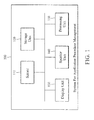
- Fig. 1 is a schematic diagram illustrating an embodiment of a system for application procedure management of the invention
- Fig. 2 is a schematic diagram illustrating an embodiment of a storage unit of the invention
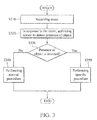
- Fig. 3 is a flowchart of an embodiment of a method for application procedure management of the invention.
- Fig. 4 is a flowchart of another embodiment of a method for application procedure management of the invention.
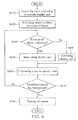
- Fig. 5 is a flowchart of an embodiment of a method for application procedure management of the invention when a physical button is pressed.
- Fig. 6 is a flowchart of an embodiment of a method for application procedure management of the invention when an event requesting to activate a display unit is received.
- Fig. 1 is a schematic diagram illustrating an embodiment of a system for application procedure management of the invention.
- the system for application procedure management 100 can be used in an electronic device, such as a portable device comprising handheld devices such as a PDA (Personal Digital Assistant), a smart phone, a mobile phone, a MID (Mobile Internet Device, MID), and a Netbook.
- a portable device comprising handheld devices such as a PDA (Personal Digital Assistant), a smart phone, a mobile phone, a MID (Mobile Internet Device, MID), and a Netbook.
- the system for application procedure management 100 comprises a sensor 110, a storage unit 120, a display unit 130, a speaker unit 140, and a processing unit 150.
- the sensor 110 can detect a presence of at least one object. That is, the sensor 110 can detect whether the object is close to the electronic device. For example, when the electronic device is placed in a pocket or a bag, the sensor 110 can detect the presence of the object.
- the sensor 110 may be an infrared proximity sensor set nearby the earphone (not shown) of the electronic device.
- the storage unit 120 can store a normal procedure 121 and a specific procedure 122 for a respective event, as shown in Fig. 2 .
- the event may be pressing at least one physical button of the electronic device, and/or a reception of an event, such as an incoming call or a notification requesting to activate the display unit 130 of the electronic device.
- the normal procedure 121 can define execution steps needed to be performed when the corresponding event is received. Each step can comprise at least one operation, the hardware required for the operation, and others.
- the specif procedure 122 may be a subset of the normal procedure 121. That is, the specific procedure 122 may comprises a part of the execution steps defined in the normal procedure 121. It is understood that, in some embodiments, the storage unit 120 can only store the normal procedure 121 for the event. The use of the normal event 121 and the specific procedure 122 is discussed later.
- the display unit 130 can display related data, and/or related figures and interfaces.
- the speaker unit 140 can generate voices.
- the processing unit 150 performs the method for application procedure management of the invention, which will be discussed further in the following paragraphs.
- Fig. 3 is a flowchart of an embodiment of a method for application procedure management of the invention.
- the method for application procedure management can be used for an electronic device, such as a portable device comprising handheld devices such as a PDA, a smart phone, a mobile phone, an MID, and a Netbook.
- step S310 an event is received.
- the event may be pressing at least one physical button of the electronic device, and/or a reception of an event, such as an incoming call or a notification requesting to activate the display unit 130.
- step S320 in response to the event, the sensor 110 is activated (turned on) to detect a presence of at least one object. If the presence of the object is not detected by the sensor 110 (No in step S330), in step S340, the normal procedure for the event is performed. If the presence of the object is detected by the sensor 110 (Yes in step S330), in step S350, the specific procedure for the event is performed.
- the normal procedure can define execution steps needed to be performed when the corresponding event is received, wherein each step can comprise at least one operation, the hardware required for the operation, and others.
- the specific procedure may be a subset of the normal procedure.
- the performed specific procedure is inactivating the display unit 130, and/or ignoring of the event. Note that, in some embodiments, after the specific procedure is performed, the sensor 110 can be turned off.
- Fig. 4 is a flowchart of another embodiment of a method for application procedure management of the invention.
- the method for application procedure management can be used for an electronic device, such as a portable device comprising handheld devices such as a PDA, a smart phone, a mobile phone, an MID, and a Netbook.
- step S410 an event is received.
- the event may be pressing at least one physical button of the electronic device, and/or a reception of an event, such as an incoming call or a notification requesting to activate the display unit 130.
- step S420 in response to the event, the sensor 110 is activated to detect a presence of at least one object. If the presence of the object is not detected by the sensor 110 (No in step S430), in step S440, the normal procedure for the event is performed. If the presence of the object is detected by the sensor 110 (Yes in step S430), in step S450, the display unit 130 is inactivated, and/or the event is ignored. Note that, in some embodiments, inactivating the display unit 130 means inactivating a backlight of the display unit 130.
- the normal procedure for the event may comprise a step of activation of the display unit 130.
- the execution of at least one operation defined in the normal procedure can be canceled.
- the step of activation of the display unit 130 in the normal procedure can be canceled.
- other steps such as generation of voices via the speaker unit 140 for the event can be also performed.
- Fig. 5 is a flowchart of an embodiment of a method for application procedure management of the invention when a physical button is pressed.
- step S510 a physical button of the electronic device is pressed, and in step S520, in response to the press of the physical button, the sensor 110 is activated to detect a presence of at least one object. If the presence of the object is not detected by the sensor 110 (No in step S530), in step S540, a keystroke corresponding to the physical button is transmitted to an OS (Operating System) of the electronic device. Then, in step S560, the sensor 110 is turned off. If the presence of the object is detected by the sensor 110 (Yes in step S530), in step S550, the keystroke corresponding to the physical button is not transmitted to the OS of the electronic device. Then, in step S560, the sensor 110 is turned off. Note that, since the OS does not receive the keystroke corresponding to the physical button, the display unit 130 is not activated.
- Fig. 6 is a flowchart of an embodiment of a method for application procedure management of the invention when an event requesting to activate a display unit is received.
- step S610 an event, such as an incoming call or a notification requesting to activate the display unit 130 of the electronic device is received.
- step S620 in response to the reception of the event, the sensor 110 is activated to detect a presence of at least one object. If the presence of the object is not detected by the sensor 110 (No in step S630), in step S640, the display unit 130 is activated, and in step S660, a voice is generated via the speaker unit 140. If the presence of the object is detected by the sensor 110 (Yes in step S630), in step S650, the display unit 130 is inactivated, and in step S660, a voice is generated via the speaker unit 140. In some embodiments, a crescendo voice can be generated via the speaker unit 140.
- step S670 it is determined whether a predefined period has been passed. It is understood that, in some embodiments, the predefined period may be a display time of the backlight defined by the display unit. If the predefined period has not been passed (No in step S670), the procedure returns to step S630. It is understood that, once the presence of the object is not detected by the sensor 110, the display unit 130 can be activated. If the predefined period has been passed (Yes in step S670), in step S680, the sensor 110 is turned off. It is understood that, in some embodiments, when the event, such as an incoming call or a notification requesting to activate the display unit 130 of the electronic device is terminated, the sensor 110 can be directly turned off.
- the electronic device may be set into a silent mode and/or a vibrate mode.
- the electronic device When the sensor 110 detects the presence of the object, and the electronic device is not in the silent mode, the electronic device will vibrate to notify users of the reception of the event. Additionally, in some embodiments, when the sensor 110 detects the presence of the object, and the electronic device is not in the silent mode and is not placed at a stable horizontal surface, the electronic device will vibrate to notify users of the reception of the event. Note that, in some embodiments, even if the electronic device is set to not vibrate, the electronic device can still vibrate to notify users the reception of the event.
- a crescendo voice can be generated via the speaker unit 140 to notify users the reception of the event.
- the electronic device will stop the generation of the crescendo voice.
- the methods and systems can perform power management by managing application procedures.
- the display unit can be inactivated, thus saving power consumption for the electronic device.
- Methods and systems for application procedure management may take the form of a program code (i.e., executable instructions) embodied in tangible media, such as floppy diskettes, CD-ROMS, hard drives, or any other machine-readable storage medium, wherein, when the program code is loaded into and executed by a machine, such as a computer, the machine thereby becomes an apparatus for practicing the methods.
- the methods may also be embodied in the form of a program code transmitted over some transmission medium, such as electrical wiring or cabling, through fiber optics, or via any other form of transmission, wherein, when the program code is received and loaded into and executed by a machine, such as a computer, the machine becomes an apparatus for practicing the disclosed methods.
- the program code When implemented on a general-purpose processor, the program code combines with the processor to provide a unique apparatus that operates analogously to application specific logic circuits.
Landscapes
- Engineering & Computer Science (AREA)
- Signal Processing (AREA)
- Computer Networks & Wireless Communication (AREA)
- Telephone Function (AREA)
Abstract
Description
- This Application claims priority of Taiwan Patent Application No.
098128478, filed on August 25, 2009 - The disclosure relates generally to power management, and, more particularly to methods and systems for power management via application procedure management.
- Recently, portable devices, such as handheld devices, have become more and more technically advanced and multifunctional. For example, a handheld device may have telecommunication capabilities, e-mail message capabilities, an advanced address book management system, a media playback system, and various other functions. Due to increased convenience and functions of the devices, these devices have become necessities of life.
- Generally, a battery can provide operational power to internal units, such as a processing unit, and a display unit of a portable device. Since the portable device has limited power, and related hardware and power are required when various applications are being executed in the portable device, efficiently managing application procedures may greatly affect power management.
- Methods and systems for application procedure management are provided.
- In an embodiment of a method for application procedure management, an event is received, wherein the event defines a normal procedure and a specific procedure. In response to the event, a sensor is activated to detect a presence of at least one object. If the presence of the object is not detected by the sensor, the normal procedure for the event is performed. If the presence of the object is detected by the sensor, the specific procedure for the event is performed.
- In an embodiment of a method for application procedure management, an event is received, wherein the event defines a normal procedure. In response to the event, a sensor is activated to detect a presence of at least one object. If the presence of the object is detected by the sensor, the execution of at least one operation in the normal procedure for the event is canceled.
- In an embodiment of a method for application procedure management, an event is received. In response to the event, a sensor is activated to detect a presence of at least one object. If the presence of the object is detected by the sensor, a display unit of an electronic device is inactivated.
- An embodiment of a system for application procedure management includes a sensor, a storage unit, and a processing unit. The storage unit records a normal procedure and a specific procedure for an event. The processing unit receives the event, and in response to the event, activates the sensor to detect a presence of at least one object. If the presence of the object is not detected by the sensor, the processing unit performs the normal procedure for the event. If the presence of the object is detected by the sensor, the processing unit performs the specific procedure for the event.
- An embodiment of a system for application procedure management includes a sensor, a storage unit, and a processing unit. The storage unit records a normal procedure for an event. The processing unit receives the event, and in response to the event, activates the sensor to detect a presence of at least one object. If the presence of the object is detected by the sensor, the processing unit cancels the execution of at least one operation in the normal procedure for the event.
- An embodiment of a system for application procedure management includes a display unit, a sensor, and a processing unit. The processing unit receives the event, and in response to the event, activates the sensor to detect a presence of at least one object. If the presence of the object is detected by the sensor, the processing unit inactivates the display unit.
- In some embodiments, when the event is pressing a physical button of the electronic device, and the presence of the object is detected by the sensor, the performed specific procedure is to ignore the event.
- In some embodiments, when the event is reception of an incoming call or a notification requesting to activate a display unit by the electronic device, and the presence of the object is detected by the sensor, the performed specific procedure is generation of a voice via a speaker unit of the electronic device.
- In some embodiments, when the event is reception of an incoming call by the electronic device, and the presence of the object is detected by the sensor, the performed specific procedure is generation of a crescendo voice via a speaker unit of the electronic device.
- Methods and systems for application procedure management may take the form of a program code embodied in a tangible media. When the program code is loaded into and executed by a machine, the machine becomes an apparatus for practicing the disclosed method.
- The invention will become more fully understood by referring to the following detailed description with reference to the accompanying drawings, wherein:
-
Fig. 1 is a schematic diagram illustrating an embodiment of a system for application procedure management of the invention; -
Fig. 2 is a schematic diagram illustrating an embodiment of a storage unit of the invention; -
Fig. 3 is a flowchart of an embodiment of a method for application procedure management of the invention; -
Fig. 4 is a flowchart of another embodiment of a method for application procedure management of the invention; -
Fig. 5 is a flowchart of an embodiment of a method for application procedure management of the invention when a physical button is pressed; and -
Fig. 6 is a flowchart of an embodiment of a method for application procedure management of the invention when an event requesting to activate a display unit is received. - Methods and systems for application procedure management are provided.
-
Fig. 1 is a schematic diagram illustrating an embodiment of a system for application procedure management of the invention. The system forapplication procedure management 100 can be used in an electronic device, such as a portable device comprising handheld devices such as a PDA (Personal Digital Assistant), a smart phone, a mobile phone, a MID (Mobile Internet Device, MID), and a Netbook. - The system for
application procedure management 100 comprises asensor 110, astorage unit 120, adisplay unit 130, aspeaker unit 140, and aprocessing unit 150. Thesensor 110 can detect a presence of at least one object. That is, thesensor 110 can detect whether the object is close to the electronic device. For example, when the electronic device is placed in a pocket or a bag, thesensor 110 can detect the presence of the object. In some embodiments, thesensor 110 may be an infrared proximity sensor set nearby the earphone (not shown) of the electronic device. Thestorage unit 120 can store anormal procedure 121 and aspecific procedure 122 for a respective event, as shown inFig. 2 . In some embodiments, the event may be pressing at least one physical button of the electronic device, and/or a reception of an event, such as an incoming call or a notification requesting to activate thedisplay unit 130 of the electronic device. In some embodiments, thenormal procedure 121 can define execution steps needed to be performed when the corresponding event is received. Each step can comprise at least one operation, the hardware required for the operation, and others. In some embodiments, thespecif procedure 122 may be a subset of thenormal procedure 121. That is, thespecific procedure 122 may comprises a part of the execution steps defined in thenormal procedure 121. It is understood that, in some embodiments, thestorage unit 120 can only store thenormal procedure 121 for the event. The use of thenormal event 121 and thespecific procedure 122 is discussed later. Thedisplay unit 130 can display related data, and/or related figures and interfaces. Thespeaker unit 140 can generate voices. Theprocessing unit 150 performs the method for application procedure management of the invention, which will be discussed further in the following paragraphs. -
Fig. 3 is a flowchart of an embodiment of a method for application procedure management of the invention. The method for application procedure management can be used for an electronic device, such as a portable device comprising handheld devices such as a PDA, a smart phone, a mobile phone, an MID, and a Netbook. - In step S310, an event is received. As described, the event may be pressing at least one physical button of the electronic device, and/or a reception of an event, such as an incoming call or a notification requesting to activate the
display unit 130. In step S320, in response to the event, thesensor 110 is activated (turned on) to detect a presence of at least one object. If the presence of the object is not detected by the sensor 110 (No in step S330), in step S340, the normal procedure for the event is performed. If the presence of the object is detected by the sensor 110 (Yes in step S330), in step S350, the specific procedure for the event is performed. As described, the normal procedure can define execution steps needed to be performed when the corresponding event is received, wherein each step can comprise at least one operation, the hardware required for the operation, and others. The specific procedure may be a subset of the normal procedure. In some embodiments, the performed specific procedure is inactivating thedisplay unit 130, and/or ignoring of the event. Note that, in some embodiments, after the specific procedure is performed, thesensor 110 can be turned off. -
Fig. 4 is a flowchart of another embodiment of a method for application procedure management of the invention. The method for application procedure management can be used for an electronic device, such as a portable device comprising handheld devices such as a PDA, a smart phone, a mobile phone, an MID, and a Netbook. - In step S410, an event is received. Similarly, the event may be pressing at least one physical button of the electronic device, and/or a reception of an event, such as an incoming call or a notification requesting to activate the
display unit 130. In step S420, in response to the event, thesensor 110 is activated to detect a presence of at least one object. If the presence of the object is not detected by the sensor 110 (No in step S430), in step S440, the normal procedure for the event is performed. If the presence of the object is detected by the sensor 110 (Yes in step S430), in step S450, thedisplay unit 130 is inactivated, and/or the event is ignored. Note that, in some embodiments, inactivating thedisplay unit 130 means inactivating a backlight of thedisplay unit 130. It is understood that, in some embodiments, the normal procedure for the event may comprise a step of activation of thedisplay unit 130. When the sensor detects the presence of the object, the execution of at least one operation defined in the normal procedure can be canceled. In other words, the step of activation of thedisplay unit 130 in the normal procedure can be canceled. Note that, in some embodiments, when the sensor detects the presence of the object, in addition to inactivating thedisplay unit 130, and/or ignoring of the event, other steps, such as generation of voices via thespeaker unit 140 for the event can be also performed. -
Fig. 5 is a flowchart of an embodiment of a method for application procedure management of the invention when a physical button is pressed. - In step S510, a physical button of the electronic device is pressed, and in step S520, in response to the press of the physical button, the
sensor 110 is activated to detect a presence of at least one object. If the presence of the object is not detected by the sensor 110 (No in step S530), in step S540, a keystroke corresponding to the physical button is transmitted to an OS (Operating System) of the electronic device. Then, in step S560, thesensor 110 is turned off. If the presence of the object is detected by the sensor 110 (Yes in step S530), in step S550, the keystroke corresponding to the physical button is not transmitted to the OS of the electronic device. Then, in step S560, thesensor 110 is turned off. Note that, since the OS does not receive the keystroke corresponding to the physical button, thedisplay unit 130 is not activated. -
Fig. 6 is a flowchart of an embodiment of a method for application procedure management of the invention when an event requesting to activate a display unit is received. - In step S610, an event, such as an incoming call or a notification requesting to activate the
display unit 130 of the electronic device is received. In step S620, in response to the reception of the event, thesensor 110 is activated to detect a presence of at least one object. If the presence of the object is not detected by the sensor 110 (No in step S630), in step S640, thedisplay unit 130 is activated, and in step S660, a voice is generated via thespeaker unit 140. If the presence of the object is detected by the sensor 110 (Yes in step S630), in step S650, thedisplay unit 130 is inactivated, and in step S660, a voice is generated via thespeaker unit 140. In some embodiments, a crescendo voice can be generated via thespeaker unit 140. Note that, in some embodiments, although the display unit is not activated, thespeaker unit 140 can be activated according to the operation defined in the normal procedure. In step S670, it is determined whether a predefined period has been passed. It is understood that, in some embodiments, the predefined period may be a display time of the backlight defined by the display unit. If the predefined period has not been passed (No in step S670), the procedure returns to step S630. It is understood that, once the presence of the object is not detected by thesensor 110, thedisplay unit 130 can be activated. If the predefined period has been passed (Yes in step S670), in step S680, thesensor 110 is turned off. It is understood that, in some embodiments, when the event, such as an incoming call or a notification requesting to activate thedisplay unit 130 of the electronic device is terminated, thesensor 110 can be directly turned off. - Note that, in some embodiments, the electronic device may be set into a silent mode and/or a vibrate mode. When the
sensor 110 detects the presence of the object, and the electronic device is not in the silent mode, the electronic device will vibrate to notify users of the reception of the event. Additionally, in some embodiments, when thesensor 110 detects the presence of the object, and the electronic device is not in the silent mode and is not placed at a stable horizontal surface, the electronic device will vibrate to notify users of the reception of the event. Note that, in some embodiments, even if the electronic device is set to not vibrate, the electronic device can still vibrate to notify users the reception of the event. Further, when thesensor 110 detects the presence of the object, and the electronic device is not in the silent mode or the vibrate mode and is not placed at a stable horizontal surface, a crescendo voice can be generated via thespeaker unit 140 to notify users the reception of the event. Note that, in some embodiments, when thesensor 110 does not detect the presence of the object or when the event, such as an incoming call or a notification requesting to activate thedisplay unit 130 of the electronic device is terminated, the electronic device will stop the generation of the crescendo voice. - Therefore, the methods and systems can perform power management by managing application procedures. When the sensor of the electronic device detects a presence of an object, the display unit can be inactivated, thus saving power consumption for the electronic device.
- Methods and systems for application procedure management, or certain aspects or portions thereof, may take the form of a program code (i.e., executable instructions) embodied in tangible media, such as floppy diskettes, CD-ROMS, hard drives, or any other machine-readable storage medium, wherein, when the program code is loaded into and executed by a machine, such as a computer, the machine thereby becomes an apparatus for practicing the methods. The methods may also be embodied in the form of a program code transmitted over some transmission medium, such as electrical wiring or cabling, through fiber optics, or via any other form of transmission, wherein, when the program code is received and loaded into and executed by a machine, such as a computer, the machine becomes an apparatus for practicing the disclosed methods. When implemented on a general-purpose processor, the program code combines with the processor to provide a unique apparatus that operates analogously to application specific logic circuits.
- While the invention has been described by way of example and in terms of preferred embodiment, it is to be understood that the invention is not limited thereto. Those who are skilled in this technology can still make various alterations and modifications without departing from the scope and spirit of this invention. Therefore, the scope of the present invention shall be defined and protected by the following claims and their equivalents.
Claims (15)
- A method for application procedure management for use in an electronic device, comprising:receiving an event, wherein the event defines a normal procedure and a specific procedure;in response to the event, activating a sensor;detecting a presence of at least one object by the sensor;if the presence of the object is not detected by the sensor, performing the normal procedure for the event; andif the presence of the object is detected by the sensor, performing the specific procedure for the event.
- The method of claim 1, wherein when the event is pressing a physical button of the electronic device, and the presence of the object is detected by the sensor, the performed specific procedure comprises ignoring of the event.
- The method of claim 2, wherein when the event is pressing the physical button of the electronic device, and the presence of the object is detected by the sensor, the performed specific procedure comprises inactivating a display unit of the electronic device.
- The method of claim 1, wherein when the event is reception of an incoming call or a notification requesting to activate a display unit of the electronic device by the electronic device, and the presence of the object is detected by the sensor, the performed specific procedure comprises inactivating a display unit.
- The method of claim 4, wherein when the event is the reception of the incoming call or the notification requesting to activate the display unit of the electronic device by the electronic device, and the presence of the object is detected by the sensor, the performed specific procedure further comprises generation of a voice via a speaker unit of the electronic device.
- The method of claim 4, further comprising:continuously determining whether the presence of the object is detected by the sensor during a predefined period; andwhen the presence of the object is not detected by the sensor, activating the display unit.
- The method of claim 6, further comprising turning off the sensor when the predefined period has been passed.
- The method of claims 1, wherein when the event is reception of an incoming call by the electronic device, and the presence of the object is detected by the sensor, the performed specific procedure comprises generation of a crescendo voice via a speaker unit of the electronic device.
- The method of claim 1, wherein when the presence of the object is detected by the sensor, the performed specific procedure comprises inactivating a display unit of the electronic device.
- The method of claim 1, further comprising turning off the sensor after the specific procedure is performed.
- A method for application procedure management for use in an electronic device, comprising:receiving an event, wherein the event defines a normal procedure;in response to the event, activating a sensor;detecting a presence of at least one object by the sensor; andif the presence of the object is detected by the sensor, canceling the execution of at least one operation in the normal procedure for the event.
- A system for application procedure management for use in an electronic device, comprising:a sensor;a storage unit recording a normal procedure and a specific procedure for an event; anda processing unit receiving the event, and in response to the event, activating the sensor to detect a presence of at least one object, performing the normal procedure for the event if the presence of the object is not detected by the sensor, and performing the specific procedure for the event if the presence of the object is detected by the sensor.
- The system of claim 12, further comprising at least one physical button, wherein when the event is pressing the physical button, and the presence of the object is detected by the sensor, the performed specific procedure comprises ignoring of the event.
- The system of claim 13, further comprising a display unit, wherein when the event is pressing the physical button, and the presence of the object is detected by the sensor, the performed specific procedure comprises inactivating a display unit.
- The system of claim 12, further comprising a display unit, wherein when the event is reception of an incoming call or a notification requesting to activate the display unit, and the presence of the object is detected by the sensor, the performed specific procedure comprises inactivating a display unit.
Applications Claiming Priority (1)
| Application Number | Priority Date | Filing Date | Title |
|---|---|---|---|
| TW098128478A TWI412996B (en) | 2009-08-25 | 2009-08-25 | Methods and systems for application procedure management, and computer program products thereof |
Publications (2)
| Publication Number | Publication Date |
|---|---|
| EP2290932A1 true EP2290932A1 (en) | 2011-03-02 |
| EP2290932B1 EP2290932B1 (en) | 2017-09-27 |
Family
ID=41508294
Family Applications (1)
| Application Number | Title | Priority Date | Filing Date |
|---|---|---|---|
| EP09172805.5A Active EP2290932B1 (en) | 2009-08-25 | 2009-10-12 | Methods and systems for application procedure management |
Country Status (3)
| Country | Link |
|---|---|
| US (1) | US8532719B2 (en) |
| EP (1) | EP2290932B1 (en) |
| TW (1) | TWI412996B (en) |
Cited By (1)
| Publication number | Priority date | Publication date | Assignee | Title |
|---|---|---|---|---|
| EP2600218A1 (en) * | 2011-11-29 | 2013-06-05 | Huawei Device Co., Ltd. | Method for controlling screen state of mobile device and related mobile device |
Families Citing this family (2)
| Publication number | Priority date | Publication date | Assignee | Title |
|---|---|---|---|---|
| WO2014002906A1 (en) * | 2012-06-25 | 2014-01-03 | 京セラ株式会社 | Electronic device, control method and control program |
| CN106413060B (en) * | 2016-10-24 | 2019-11-08 | 北京小米移动软件有限公司 | Screen state control method and device |
Citations (5)
| Publication number | Priority date | Publication date | Assignee | Title |
|---|---|---|---|---|
| EP1213899A2 (en) | 1994-05-11 | 2002-06-12 | Nec Corporation | Portable telephone set |
| US20040214594A1 (en) | 2003-04-28 | 2004-10-28 | Motorola, Inc. | Device having smart user alert |
| US20070004470A1 (en) | 2003-06-17 | 2007-01-04 | Norman Goris | System and method for conserving battery power in a mobile station |
| US20070075965A1 (en) | 2005-09-30 | 2007-04-05 | Brian Huppi | Automated response to and sensing of user activity in portable devices |
| WO2009096643A1 (en) | 2008-02-01 | 2009-08-06 | Lg Electronics Inc. | A user interface for mobile devices |
Family Cites Families (7)
| Publication number | Priority date | Publication date | Assignee | Title |
|---|---|---|---|---|
| US4166358A (en) * | 1977-03-25 | 1979-09-04 | General Time Corporation | Solid state alarm for clock-radio |
| JP3578082B2 (en) * | 2000-12-20 | 2004-10-20 | 株式会社デンソー | Processing execution device and recording medium |
| TWM292709U (en) * | 2005-11-04 | 2006-06-21 | Jr-Peng Jang | Personalized parameter setting apparatus for infrared detector |
| TW200832214A (en) * | 2007-01-16 | 2008-08-01 | Asustek Comp Inc | Portable computer |
| WO2008032214A2 (en) | 2007-11-09 | 2008-03-20 | Viking Life-Saving Equipment A/S | A bag for hermetically enclosing an inflatable liferaft |
| US20090195704A1 (en) * | 2008-02-06 | 2009-08-06 | Qwind Pty Ltd | Power saving device |
| CN201213634Y (en) | 2008-03-04 | 2009-04-01 | 英华达(南京)科技有限公司 | Electric device capable of automatically controlling display screen to display digital image |
-
2009
- 2009-08-25 TW TW098128478A patent/TWI412996B/en active
- 2009-10-12 EP EP09172805.5A patent/EP2290932B1/en active Active
- 2009-12-08 US US12/633,529 patent/US8532719B2/en active Active
Patent Citations (5)
| Publication number | Priority date | Publication date | Assignee | Title |
|---|---|---|---|---|
| EP1213899A2 (en) | 1994-05-11 | 2002-06-12 | Nec Corporation | Portable telephone set |
| US20040214594A1 (en) | 2003-04-28 | 2004-10-28 | Motorola, Inc. | Device having smart user alert |
| US20070004470A1 (en) | 2003-06-17 | 2007-01-04 | Norman Goris | System and method for conserving battery power in a mobile station |
| US20070075965A1 (en) | 2005-09-30 | 2007-04-05 | Brian Huppi | Automated response to and sensing of user activity in portable devices |
| WO2009096643A1 (en) | 2008-02-01 | 2009-08-06 | Lg Electronics Inc. | A user interface for mobile devices |
Cited By (1)
| Publication number | Priority date | Publication date | Assignee | Title |
|---|---|---|---|---|
| EP2600218A1 (en) * | 2011-11-29 | 2013-06-05 | Huawei Device Co., Ltd. | Method for controlling screen state of mobile device and related mobile device |
Also Published As
| Publication number | Publication date |
|---|---|
| EP2290932B1 (en) | 2017-09-27 |
| US20110054650A1 (en) | 2011-03-03 |
| TW201108112A (en) | 2011-03-01 |
| US8532719B2 (en) | 2013-09-10 |
| TWI412996B (en) | 2013-10-21 |
Similar Documents
| Publication | Publication Date | Title |
|---|---|---|
| US9037455B1 (en) | Limiting notification interruptions | |
| RU2605359C2 (en) | Touch control method and portable terminal supporting same | |
| CN102484496B (en) | The method of the generation of notice missed event and the mobile terminal of use the method | |
| US20140024414A1 (en) | Electronic device, operation control method, and operation control program | |
| US20120028625A1 (en) | System and method for generating a message notification based on sensory detection | |
| US20080281940A1 (en) | Advertising on a portable communication device | |
| US20130078958A1 (en) | System and method for managing transient notifications using sensors | |
| WO2007114066A1 (en) | Portable terminal and function operation control method | |
| US20130252571A1 (en) | Speech recognition based emergency situation alert service in mobile terminal | |
| RU2014117239A (en) | ENERGY SAVING MODE FOR ELECTRONIC DEVICE, AND ALSO RELEVANT DEVICES AND METHOD | |
| KR20110137190A (en) | Power management method of mobile communication terminal and mobile communication terminal using same | |
| US9299057B2 (en) | Message search method and electronic device | |
| US20100279661A1 (en) | Portable electronic device | |
| TW201520896A (en) | A method for operating a program and a device thereof | |
| CN103477374B (en) | Vibration control | |
| CN104144250A (en) | Method and device for prompting events on terminal | |
| CN103019768A (en) | Method for realizing booting task and communication terminal | |
| WO2020103008A1 (en) | Audio detection method, computer readable storage medium, and electronic device | |
| CN103544457B (en) | The recognition methods of a kind of near field communication tag, device and mobile terminal | |
| TWI514258B (en) | Methods and systems for voice management, and related computer program products | |
| WO2014010272A1 (en) | Communication device, control method therefor, and program | |
| US8532719B2 (en) | Methods and systems for application procedure management | |
| US20160353407A1 (en) | Methods and systems for notification management between an electronic device and a wearable electronic device | |
| CN108307048B (en) | A message output method and device and mobile terminal | |
| US20060284848A1 (en) | System and method for saving power |
Legal Events
| Date | Code | Title | Description |
|---|---|---|---|
| PUAI | Public reference made under article 153(3) epc to a published international application that has entered the european phase |
Free format text: ORIGINAL CODE: 0009012 |
|
| 17P | Request for examination filed |
Effective date: 20091013 |
|
| AK | Designated contracting states |
Kind code of ref document: A1 Designated state(s): AT BE BG CH CY CZ DE DK EE ES FI FR GB GR HR HU IE IS IT LI LT LU LV MC MK MT NL NO PL PT RO SE SI SK SM TR |
|
| AX | Request for extension of the european patent |
Extension state: AL BA RS |
|
| 17Q | First examination report despatched |
Effective date: 20120203 |
|
| RAP1 | Party data changed (applicant data changed or rights of an application transferred) |
Owner name: HTC CORPORATION |
|
| STAA | Information on the status of an ep patent application or granted ep patent |
Free format text: STATUS: EXAMINATION IS IN PROGRESS |
|
| GRAP | Despatch of communication of intention to grant a patent |
Free format text: ORIGINAL CODE: EPIDOSNIGR1 |
|
| STAA | Information on the status of an ep patent application or granted ep patent |
Free format text: STATUS: GRANT OF PATENT IS INTENDED |
|
| INTG | Intention to grant announced |
Effective date: 20170612 |
|
| GRAS | Grant fee paid |
Free format text: ORIGINAL CODE: EPIDOSNIGR3 |
|
| GRAA | (expected) grant |
Free format text: ORIGINAL CODE: 0009210 |
|
| STAA | Information on the status of an ep patent application or granted ep patent |
Free format text: STATUS: THE PATENT HAS BEEN GRANTED |
|
| AK | Designated contracting states |
Kind code of ref document: B1 Designated state(s): AT BE BG CH CY CZ DE DK EE ES FI FR GB GR HR HU IE IS IT LI LT LU LV MC MK MT NL NO PL PT RO SE SI SK SM TR |
|
| REG | Reference to a national code |
Ref country code: GB Ref legal event code: FG4D |
|
| REG | Reference to a national code |
Ref country code: CH Ref legal event code: EP |
|
| REG | Reference to a national code |
Ref country code: AT Ref legal event code: REF Ref document number: 932986 Country of ref document: AT Kind code of ref document: T Effective date: 20171015 |
|
| REG | Reference to a national code |
Ref country code: IE Ref legal event code: FG4D |
|
| REG | Reference to a national code |
Ref country code: DE Ref legal event code: R096 Ref document number: 602009048534 Country of ref document: DE |
|
| REG | Reference to a national code |
Ref country code: NL Ref legal event code: FP |
|
| PG25 | Lapsed in a contracting state [announced via postgrant information from national office to epo] |
Ref country code: HR Free format text: LAPSE BECAUSE OF FAILURE TO SUBMIT A TRANSLATION OF THE DESCRIPTION OR TO PAY THE FEE WITHIN THE PRESCRIBED TIME-LIMIT Effective date: 20170927 Ref country code: FI Free format text: LAPSE BECAUSE OF FAILURE TO SUBMIT A TRANSLATION OF THE DESCRIPTION OR TO PAY THE FEE WITHIN THE PRESCRIBED TIME-LIMIT Effective date: 20170927 Ref country code: SE Free format text: LAPSE BECAUSE OF FAILURE TO SUBMIT A TRANSLATION OF THE DESCRIPTION OR TO PAY THE FEE WITHIN THE PRESCRIBED TIME-LIMIT Effective date: 20170927 Ref country code: LT Free format text: LAPSE BECAUSE OF FAILURE TO SUBMIT A TRANSLATION OF THE DESCRIPTION OR TO PAY THE FEE WITHIN THE PRESCRIBED TIME-LIMIT Effective date: 20170927 Ref country code: NO Free format text: LAPSE BECAUSE OF FAILURE TO SUBMIT A TRANSLATION OF THE DESCRIPTION OR TO PAY THE FEE WITHIN THE PRESCRIBED TIME-LIMIT Effective date: 20171227 |
|
| REG | Reference to a national code |
Ref country code: LT Ref legal event code: MG4D |
|
| REG | Reference to a national code |
Ref country code: AT Ref legal event code: MK05 Ref document number: 932986 Country of ref document: AT Kind code of ref document: T Effective date: 20170927 |
|
| PG25 | Lapsed in a contracting state [announced via postgrant information from national office to epo] |
Ref country code: BG Free format text: LAPSE BECAUSE OF FAILURE TO SUBMIT A TRANSLATION OF THE DESCRIPTION OR TO PAY THE FEE WITHIN THE PRESCRIBED TIME-LIMIT Effective date: 20171227 Ref country code: LV Free format text: LAPSE BECAUSE OF FAILURE TO SUBMIT A TRANSLATION OF THE DESCRIPTION OR TO PAY THE FEE WITHIN THE PRESCRIBED TIME-LIMIT Effective date: 20170927 Ref country code: GR Free format text: LAPSE BECAUSE OF FAILURE TO SUBMIT A TRANSLATION OF THE DESCRIPTION OR TO PAY THE FEE WITHIN THE PRESCRIBED TIME-LIMIT Effective date: 20171228 |
|
| PG25 | Lapsed in a contracting state [announced via postgrant information from national office to epo] |
Ref country code: CZ Free format text: LAPSE BECAUSE OF FAILURE TO SUBMIT A TRANSLATION OF THE DESCRIPTION OR TO PAY THE FEE WITHIN THE PRESCRIBED TIME-LIMIT Effective date: 20170927 Ref country code: ES Free format text: LAPSE BECAUSE OF FAILURE TO SUBMIT A TRANSLATION OF THE DESCRIPTION OR TO PAY THE FEE WITHIN THE PRESCRIBED TIME-LIMIT Effective date: 20170927 Ref country code: RO Free format text: LAPSE BECAUSE OF FAILURE TO SUBMIT A TRANSLATION OF THE DESCRIPTION OR TO PAY THE FEE WITHIN THE PRESCRIBED TIME-LIMIT Effective date: 20170927 |
|
| PG25 | Lapsed in a contracting state [announced via postgrant information from national office to epo] |
Ref country code: AT Free format text: LAPSE BECAUSE OF FAILURE TO SUBMIT A TRANSLATION OF THE DESCRIPTION OR TO PAY THE FEE WITHIN THE PRESCRIBED TIME-LIMIT Effective date: 20170927 Ref country code: SK Free format text: LAPSE BECAUSE OF FAILURE TO SUBMIT A TRANSLATION OF THE DESCRIPTION OR TO PAY THE FEE WITHIN THE PRESCRIBED TIME-LIMIT Effective date: 20170927 Ref country code: IT Free format text: LAPSE BECAUSE OF FAILURE TO SUBMIT A TRANSLATION OF THE DESCRIPTION OR TO PAY THE FEE WITHIN THE PRESCRIBED TIME-LIMIT Effective date: 20170927 Ref country code: SM Free format text: LAPSE BECAUSE OF FAILURE TO SUBMIT A TRANSLATION OF THE DESCRIPTION OR TO PAY THE FEE WITHIN THE PRESCRIBED TIME-LIMIT Effective date: 20170927 Ref country code: EE Free format text: LAPSE BECAUSE OF FAILURE TO SUBMIT A TRANSLATION OF THE DESCRIPTION OR TO PAY THE FEE WITHIN THE PRESCRIBED TIME-LIMIT Effective date: 20170927 Ref country code: IS Free format text: LAPSE BECAUSE OF FAILURE TO SUBMIT A TRANSLATION OF THE DESCRIPTION OR TO PAY THE FEE WITHIN THE PRESCRIBED TIME-LIMIT Effective date: 20180127 |
|
| REG | Reference to a national code |
Ref country code: CH Ref legal event code: PL |
|
| REG | Reference to a national code |
Ref country code: DE Ref legal event code: R097 Ref document number: 602009048534 Country of ref document: DE |
|
| PG25 | Lapsed in a contracting state [announced via postgrant information from national office to epo] |
Ref country code: MC Free format text: LAPSE BECAUSE OF FAILURE TO SUBMIT A TRANSLATION OF THE DESCRIPTION OR TO PAY THE FEE WITHIN THE PRESCRIBED TIME-LIMIT Effective date: 20170927 |
|
| REG | Reference to a national code |
Ref country code: IE Ref legal event code: MM4A |
|
| REG | Reference to a national code |
Ref country code: FR Ref legal event code: ST Effective date: 20180629 |
|
| PG25 | Lapsed in a contracting state [announced via postgrant information from national office to epo] |
Ref country code: LU Free format text: LAPSE BECAUSE OF NON-PAYMENT OF DUE FEES Effective date: 20171012 Ref country code: LI Free format text: LAPSE BECAUSE OF NON-PAYMENT OF DUE FEES Effective date: 20171031 Ref country code: CH Free format text: LAPSE BECAUSE OF NON-PAYMENT OF DUE FEES Effective date: 20171031 Ref country code: DK Free format text: LAPSE BECAUSE OF FAILURE TO SUBMIT A TRANSLATION OF THE DESCRIPTION OR TO PAY THE FEE WITHIN THE PRESCRIBED TIME-LIMIT Effective date: 20170927 |
|
| PLBE | No opposition filed within time limit |
Free format text: ORIGINAL CODE: 0009261 |
|
| STAA | Information on the status of an ep patent application or granted ep patent |
Free format text: STATUS: NO OPPOSITION FILED WITHIN TIME LIMIT |
|
| REG | Reference to a national code |
Ref country code: BE Ref legal event code: MM Effective date: 20171031 |
|
| GBPC | Gb: european patent ceased through non-payment of renewal fee |
Effective date: 20171227 |
|
| PG25 | Lapsed in a contracting state [announced via postgrant information from national office to epo] |
Ref country code: PL Free format text: LAPSE BECAUSE OF FAILURE TO SUBMIT A TRANSLATION OF THE DESCRIPTION OR TO PAY THE FEE WITHIN THE PRESCRIBED TIME-LIMIT Effective date: 20170927 Ref country code: BE Free format text: LAPSE BECAUSE OF NON-PAYMENT OF DUE FEES Effective date: 20171031 Ref country code: FR Free format text: LAPSE BECAUSE OF NON-PAYMENT OF DUE FEES Effective date: 20171127 |
|
| 26N | No opposition filed |
Effective date: 20180628 |
|
| PG25 | Lapsed in a contracting state [announced via postgrant information from national office to epo] |
Ref country code: MT Free format text: LAPSE BECAUSE OF NON-PAYMENT OF DUE FEES Effective date: 20171012 |
|
| PG25 | Lapsed in a contracting state [announced via postgrant information from national office to epo] |
Ref country code: IE Free format text: LAPSE BECAUSE OF NON-PAYMENT OF DUE FEES Effective date: 20171012 |
|
| PG25 | Lapsed in a contracting state [announced via postgrant information from national office to epo] |
Ref country code: SI Free format text: LAPSE BECAUSE OF FAILURE TO SUBMIT A TRANSLATION OF THE DESCRIPTION OR TO PAY THE FEE WITHIN THE PRESCRIBED TIME-LIMIT Effective date: 20170927 Ref country code: GB Free format text: LAPSE BECAUSE OF NON-PAYMENT OF DUE FEES Effective date: 20171227 |
|
| PG25 | Lapsed in a contracting state [announced via postgrant information from national office to epo] |
Ref country code: HU Free format text: LAPSE BECAUSE OF FAILURE TO SUBMIT A TRANSLATION OF THE DESCRIPTION OR TO PAY THE FEE WITHIN THE PRESCRIBED TIME-LIMIT; INVALID AB INITIO Effective date: 20091012 |
|
| PG25 | Lapsed in a contracting state [announced via postgrant information from national office to epo] |
Ref country code: CY Free format text: LAPSE BECAUSE OF NON-PAYMENT OF DUE FEES Effective date: 20170927 |
|
| PG25 | Lapsed in a contracting state [announced via postgrant information from national office to epo] |
Ref country code: MK Free format text: LAPSE BECAUSE OF FAILURE TO SUBMIT A TRANSLATION OF THE DESCRIPTION OR TO PAY THE FEE WITHIN THE PRESCRIBED TIME-LIMIT Effective date: 20170927 |
|
| PG25 | Lapsed in a contracting state [announced via postgrant information from national office to epo] |
Ref country code: TR Free format text: LAPSE BECAUSE OF FAILURE TO SUBMIT A TRANSLATION OF THE DESCRIPTION OR TO PAY THE FEE WITHIN THE PRESCRIBED TIME-LIMIT Effective date: 20170927 |
|
| PG25 | Lapsed in a contracting state [announced via postgrant information from national office to epo] |
Ref country code: PT Free format text: LAPSE BECAUSE OF FAILURE TO SUBMIT A TRANSLATION OF THE DESCRIPTION OR TO PAY THE FEE WITHIN THE PRESCRIBED TIME-LIMIT Effective date: 20170927 |
|
| P01 | Opt-out of the competence of the unified patent court (upc) registered |
Effective date: 20230602 |
|
| PGFP | Annual fee paid to national office [announced via postgrant information from national office to epo] |
Ref country code: NL Payment date: 20250912 Year of fee payment: 17 |
|
| PGFP | Annual fee paid to national office [announced via postgrant information from national office to epo] |
Ref country code: DE Payment date: 20250902 Year of fee payment: 17 |