EP2289799A2 - Aircraft cruise speed control - Google Patents
Aircraft cruise speed control Download PDFInfo
- Publication number
- EP2289799A2 EP2289799A2 EP10009023A EP10009023A EP2289799A2 EP 2289799 A2 EP2289799 A2 EP 2289799A2 EP 10009023 A EP10009023 A EP 10009023A EP 10009023 A EP10009023 A EP 10009023A EP 2289799 A2 EP2289799 A2 EP 2289799A2
- Authority
- EP
- European Patent Office
- Prior art keywords
- flight
- engine
- cruise control
- signal
- speed
- Prior art date
- Legal status (The legal status is an assumption and is not a legal conclusion. Google has not performed a legal analysis and makes no representation as to the accuracy of the status listed.)
- Granted
Links
Images

Classifications
-
- B—PERFORMING OPERATIONS; TRANSPORTING
- B64—AIRCRAFT; AVIATION; COSMONAUTICS
- B64D—EQUIPMENT FOR FITTING IN OR TO AIRCRAFT; FLIGHT SUITS; PARACHUTES; ARRANGEMENT OR MOUNTING OF POWER PLANTS OR PROPULSION TRANSMISSIONS IN AIRCRAFT
- B64D31/00—Power plant control systems; Arrangement of power plant control systems in aircraft
- B64D31/02—Initiating means
- B64D31/06—Initiating means actuated automatically
- B64D31/08—Initiating means actuated automatically for keeping cruising speed constant
-
- F—MECHANICAL ENGINEERING; LIGHTING; HEATING; WEAPONS; BLASTING
- F02—COMBUSTION ENGINES; HOT-GAS OR COMBUSTION-PRODUCT ENGINE PLANTS
- F02C—GAS-TURBINE PLANTS; AIR INTAKES FOR JET-PROPULSION PLANTS; CONTROLLING FUEL SUPPLY IN AIR-BREATHING JET-PROPULSION PLANTS
- F02C9/00—Controlling gas-turbine plants; Controlling fuel supply in air- breathing jet-propulsion plants
- F02C9/26—Control of fuel supply
- F02C9/44—Control of fuel supply responsive to the speed of aircraft, e.g. Mach number control, optimisation of fuel consumption
Definitions
- the invention relates generally to aircraft control systems and, more particularly, to controlling an aircraft flight speed.
- the Full Authority Digital Engine Control is an electronic system used for controlling aircraft engine performance.
- the FADEC receives a signal from the throttle lever or the autopilot system and, among other things, digitally calculates and precisely controls the fuel flow rate to the engines providing precise thrust.
- An autopilot system generally automates the aircraft handling during take-off, ascent, level, descent, approach and landing phases of flight.
- Typical autopilot systems incorporate an auto-throttle for controlling the speed of the aircraft.
- An autopilot system is complex and expensive and is submitted to very high reliability standards as malfunction can impact safety.
- the invention provides methods for controlling the flight speed of engine-propelled aircraft.
- the methods may be implemented by computerized control systems, such as flight control systems comprising FADECs.
- such methods comprise receiving a cruise control request signal for engaging a cruise control mode of operation of the engine; receiving a flight stability condition signal indicative of whether a flight stability condition is met, wherein the flight stability condition is met when the aircraft is in a stable flight path and in one of flight level transition and final approach; activating the cruise control mode upon receipt of the cruise control request signal and when the flight stability condition is met; receiving a flight speed signal indicative of the flight speed; and in the cruise control mode, automatically adjusting only a thrust setting of the engine within a given range according to the flight speed signal to maintain the flight stability condition.
- the invention provides flight speed control systems for controlling the flight speed of engine propelled aircraft.
- such systems can comprise a first input for receiving a cruise control request signal for engaging a cruise control mode of operation of the engine; a second input for receiving a flight stability condition signal indicative of whether a flight stability condition is met, wherein the flight stability condition is met when the aircraft is in a stable flight path and in one of flight level transition and final approach; a logic circuit for activating a cruise control mode upon receipt of the cruise control request signal and when the flight stability condition is met; a third input for receiving a flight speed signal indicative of the flight speed; and an engine controller in the cruise control mode configured for adjusting only a thrust setting of the engine within a given range according to the flight speed signal to maintain the flight stability condition while in the cruise control mode.
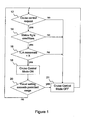
- Figure 1 is a flow chart illustrating cruise control logic, according to one embodiment of the invention.
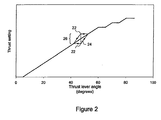
- Figure 2 is a graph illustrating the authority of a cruise control system in accordance with the relation between the throttle lever angle and the corresponding thrust setting;
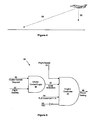
- Figure 3 is a block diagram of a flight speed control system
- Figure 4 is a schematic of an aircraft incorporating the present system.
- Figure 5 is similar to Figure 3 , depicting another example.
- Figure 1 illustrates the behavior of the Cruise Control Logic (CCL).
- the pilot engages cruise control by activating a Cruise Control request, i.e., selecting "cruise control ON", in step 12.
- the Full Authority Digital Engine Control FADEC
- FADEC Full Authority Digital Engine Control
- cruise control mode in step 18 if and only if certain aircraft flight conditions, altitude and attitude for example, are stable (step 14) and, optionally, the pilot thrust instruction is stable (step 16), i.e., Throttle Lever Angle (TLA) movements do not exceed a specified amount.
- TLA Throttle Lever Angle
- the FADEC system modulates the engine fuel flow, by controlling the throttle position, to substantially maintain the flight speed constant.
- the authority of modulation is sized to allow a reasonable period for unattended throttle operation, but is not intended to maintain speed throughout the entire flight.
- cruise control mode While cruise control mode (step 18) is activated, a misalignment of thrust setting-to-throttle lever angle may gradually grow until the authority assigned to the CCL is no longer adequate to maintain the target speed, i.e. the thrust setting exceeds the given permitted range (step 20). At this point, the cruise control mode is deactivated (step 22) and the pilot needs to readjust the throttle and reactivate the cruise control.
- the cruise control mode can be deactivated by either one of the following conditions: the pilot switches cruise control OFF, flight conditions are no longer stable, throttle lever has been moved or a throttle movement is applied beyond the amount equivalent to the authority of the CCL. Alternatively, some of these deactivation conditions can be omitted.
- FIG. 2 shows the relation between the throttle lever angle and the corresponding thrust setting used by the FADEC to control fuel flow.
- the throttle lever angle remains unchanged, unless the pilot applies a movement to the throttle lever to deactivate the cruise control mode, while the throttle position, and accordingly the corresponding thrust setting, is adjusted to maintain a constant flight speed.
- a misalignment of thrust setting-to-throttle lever angle relation thus gradually grows. Since the authority of the cruise control logic is limited to relatively narrow fluctuations, the cruise control mode is deactivated when the misalignment reaches a given limit 22, i.e. when the throttle position goes beyond a given range 24.
- a reset dead band 26 is integrated to the system. The reset dead band 26 provides a path to return to the thrust setting-to-throttle lever angle curve when exiting the cruise control mode.
- FIG. 3 show an embodiment of the flight speed control system 48 which controls the flight speed of an aircraft.
- the flight control system 48 comprises a first input for receiving a cruise control request signal 34 for engaging a cruise control mode of operation of the aircraft engine.
- the flight control system 48 further comprises a second input for receiving a flight stability condition signal 37 indicative of whether a flight stability condition is met.
- flight stability condition signal comprises both an altitude stability signal 36 and an attitude stability signal 38.
- the flight control system 48 further comprises a logic circuit for activating a cruise control mode, and hence for producing a cruise control mode (CCM) activation signal 42, upon receipt of the cruise control request signal 34 and when the flight stability condition is met.
- CCM cruise control mode
- the flight control system 48 also comprises a third input for receiving a flight speed signal 40 indicative of the flight speed of the aircraft.
- the flight control system 48 comprises an engine controller 32 for adjusting a thrust setting 46 of the engine within a given range according to the flight speed signal 40 to maintain the flight speed substantially constant while in the cruise control mode.
- the flight control system 48 comprises a fourth input for receiving a signal indicative of a stability of a pilot thrust instruction 44.
- the pilot thrust instruction is the throttle lever angle.
- a cruise speed control system with “vertical active” modes in which stability requirements are defined to provide, for example, a constant approach speed, or constant rate of descent or other requirement, as discussed further out below.
- pilot workload is high during landing approach, particularly in modulating the engine thrust required to stay on a desired glide path or vertical approach speed while other aircraft systems are readied for landing.
- the present cruise speed control system can allow the pilot to focus attention on other aspects of approach while approach speed is automatically regulated, as will now be described.
- the cruise speed control system when in the altitude hold mode the cruise speed control system commands the engine FADECs (within an operating range) to hold the selected cruise speed.
- the cruise speed control system when in a vertical active mode (except speed on elevator), commands the engine FADECs to automatically maintain the desired speed, while on a stabilized slope or path during any flight level transition, as well as during final approach, as for example, to maintain a desired glide path 50 or vertical approach speed 52 (see Figure 4 ).
- the path may be pre-selected, e.g.
- ILS Instrument Landing System
- WAAS Wide Area Augmentation System
- a cruise control request 12 is set when a specified set of conditions is established, such as when a pilot request is received.
- Flight stability requirements are met (14) in this example when a specified set of conditions have been established and maintained, such as constant glide slope condition and/or a constant vertical speed condition during final approach, or any other stabilized aircraft path during any flight level transition. Any suitable parameters may be polled or computed, etc. to allow the control system to monitor the condition(s).
- Thrust Lever Angle (TLA) movement is periodically or continuously checked (16) to verify that TLA is within 2 degrees of the original TLA when the cruise speed control was engaged.
- Selection of suitable glide slope/path may be set either by the pilot or the aircraft's navigation computer.
- the path is typically determined by the ILS ground-based system.
- the aircraft is set on the desired slope first before engaging the cruise speed control system, and may be set on the slope by the pilot manually or automatically by the aircraft's computer system.
- the cruise speed control system will automatically check, prior to engagement, to determine whether the aircraft is on a stable path.
- the cruise speed control is not activated, and a "fail" flag may be set, and a corresponding indication displayed in the cockpit.
- the cruise speed control is likewise set to disengage upon the satisfaction of a suitable conditions(s), such as when any of the above conditions is no longer satisfied.
- a suitable indication may be displayed in the cockpit.
- the cruise speed control function controls the airspeed of the aircraft by augmenting the engine speed (N1) control reference within the FADEC.
- the control system polls parameters such as aircraft speed, rate of descent, etc. (as the case may be) during operation, computes necessary changes to aircraft speed in order to stay within control parameters, and then biases the FADEC N1 signal (which is, basically, a control signal in the FADEC which determines engine speed) as appropriate, e.g. to increase N1 or decrease N1 if need be, in order to maintain the aircraft within cruise control parameters.
- the N1 augmentation command authority may be limited, as desired. For example, N1 augmentation authority may be limited to ⁇ 15% N1 during normal aircraft operation.
- N1 augmentation may be faded out linearly over 2 seconds if the disengagement occurred due to a failure in the function or a pilot disengage request received.
- N1 augmentation may be kept constant while the TLA is moving and then faded out linearly over 2 seconds after TLA has remained within +/-0.02 deg for a specified period of time, if the function disengages because of a TLA movement above the desired threshold.
- An example TLA threshold is +/-2 degrees.
- the cruise speed control may have any suitable set of conditions for engagement/disengagement, including more, less or different conditions than those specified in this example.
- a cruise control request signal 34 for engaging a cruise control mode of operation of the aircraft engine is received by the flight control system 48.
- Flight stability requirements are then verified and, if present, a flight stability signal 37 indicative of whether a flight stability condition is met is received by the flight control system 48.
- the flight stability condition signal comprises one or more signals indicating the aircraft is on a constant glide slope, or has a constant approach speed, or both, as desired.
- the flight control system 48 further comprises other features already described above.
- the engine controller 32 adjusts the thrust setting 46 of the engine (e.g. by suitable augmenting N1, or by other suitable method) within a given range according to the flight speed signal 40 to maintain the desired flight characteristic, such as glide path, vertical approach speed, etc. substantially constant while in the cruise control mode.
- Allowable N1 limits for control authority may be any suitable.
- a lower N1 limit may be 5% above engine idle N1.
- the N1 upper limit may be fixed or may vary depending on the current portion of the flight cycle.
- the upper N1 limit may be set to maximum cruise N1, whereas in any other flight mode the upper N1 limit may be set to the maximum climb N1. This may be used to place limits on the Authority of the cruise speed control system.
- the limited authority of the cruise speed control system provides an arrangement which is beneficial to pilots and yet still allows for a simple control system which is relatively inexpensive and easy to certify as airworthy.
- the present arrangement provides a cruise speed control system which may be operated in a one-engine inoperative (OEI) situation, i.e. when one engine is shut down in flight, and the aircraft is powered only by the other engine.
- OEI mode may be engaged manually by the pilot, or automatically when FADEC senses an OEI event has occurred (e.g. one engine is above idle speed and the other engine is not) while the cruise control system is already engaged, or in any other suitable manner.
- the cruise speed control operates substantially as described above, however, since only half of the engine power is now available to the pilot (i.e. because only one engine is providing thrust), in this example of the N1 augmentation command authority is be doubled relative to the authority available during normal twin engine operation (e.g. in this example, ⁇ 30% N1), to allow sufficient authority to maintain the aircraft within the desired cruise control parameters.
- the system may of course be adapted to any suitable multi-engine arrangement.
- the system described herein offer an alternative to the auto-throttle integrated in an aircraft autopilot system by restricting the conditions in which the system operates.
- the proposed system removes the auto-throttle function from the autopilot system, and hence the aircraft speed control, and gives it directly to the Full Authority Digital Engine Control (FADEC).
- FADEC Full Authority Digital Engine Control
- Cruise Control Logic CCL
- Cruise Control Mode CCM is available to the pilot only when stable flight conditions are communicated to the FADEC.
Landscapes
- Engineering & Computer Science (AREA)
- Aviation & Aerospace Engineering (AREA)
- Chemical & Material Sciences (AREA)
- Combustion & Propulsion (AREA)
- Mechanical Engineering (AREA)
- General Engineering & Computer Science (AREA)
- Control Of Vehicle Engines Or Engines For Specific Uses (AREA)
- Controls For Constant Speed Travelling (AREA)
Abstract
Description
- This is application is a continuation-in-part of United States Patent Application No.
11/615,038 filed December 22, 2006 - The invention relates generally to aircraft control systems and, more particularly, to controlling an aircraft flight speed.
- The Full Authority Digital Engine Control (FADEC) is an electronic system used for controlling aircraft engine performance. The FADEC receives a signal from the throttle lever or the autopilot system and, among other things, digitally calculates and precisely controls the fuel flow rate to the engines providing precise thrust.
- An autopilot system generally automates the aircraft handling during take-off, ascent, level, descent, approach and landing phases of flight. Typical autopilot systems incorporate an auto-throttle for controlling the speed of the aircraft. An autopilot system is complex and expensive and is submitted to very high reliability standards as malfunction can impact safety.
- Accordingly, there is a need for an aircraft control system with reduced complexity.
- In one aspect the invention provides methods for controlling the flight speed of engine-propelled aircraft. The methods may be implemented by computerized control systems, such as flight control systems comprising FADECs. In various embodiments such methods comprise receiving a cruise control request signal for engaging a cruise control mode of operation of the engine; receiving a flight stability condition signal indicative of whether a flight stability condition is met, wherein the flight stability condition is met when the aircraft is in a stable flight path and in one of flight level transition and final approach; activating the cruise control mode upon receipt of the cruise control request signal and when the flight stability condition is met; receiving a flight speed signal indicative of the flight speed; and in the cruise control mode, automatically adjusting only a thrust setting of the engine within a given range according to the flight speed signal to maintain the flight stability condition.
- In a further aspect the invention provides flight speed control systems for controlling the flight speed of engine propelled aircraft. In various embodiments such systems can comprise a first input for receiving a cruise control request signal for engaging a cruise control mode of operation of the engine; a second input for receiving a flight stability condition signal indicative of whether a flight stability condition is met, wherein the flight stability condition is met when the aircraft is in a stable flight path and in one of flight level transition and final approach; a logic circuit for activating a cruise control mode upon receipt of the cruise control request signal and when the flight stability condition is met; a third input for receiving a flight speed signal indicative of the flight speed; and an engine controller in the cruise control mode configured for adjusting only a thrust setting of the engine within a given range according to the flight speed signal to maintain the flight stability condition while in the cruise control mode.
- Further details of these and other aspects of the present invention will be apparent from the detailed description and figures included below.
- Reference is now made to the accompanying Figures, in which:
-
Figure 1 is a flow chart illustrating cruise control logic, according to one embodiment of the invention; -
Figure 2 is a graph illustrating the authority of a cruise control system in accordance with the relation between the throttle lever angle and the corresponding thrust setting; -
Figure 3 is a block diagram of a flight speed control system; -
Figure 4 is a schematic of an aircraft incorporating the present system; and -
Figure 5 is similar toFigure 3 , depicting another example. -
Figure 1 illustrates the behavior of the Cruise Control Logic (CCL). The pilot engages cruise control by activating a Cruise Control request, i.e., selecting "cruise control ON", instep 12. The Full Authority Digital Engine Control (FADEC) then engages cruise control mode instep 18 if and only if certain aircraft flight conditions, altitude and attitude for example, are stable (step 14) and, optionally, the pilot thrust instruction is stable (step 16), i.e., Throttle Lever Angle (TLA) movements do not exceed a specified amount. - In cruise control mode (step 18), the FADEC system modulates the engine fuel flow, by controlling the throttle position, to substantially maintain the flight speed constant. The authority of modulation is sized to allow a reasonable period for unattended throttle operation, but is not intended to maintain speed throughout the entire flight.
- While cruise control mode (step 18) is activated, a misalignment of thrust setting-to-throttle lever angle may gradually grow until the authority assigned to the CCL is no longer adequate to maintain the target speed, i.e. the thrust setting exceeds the given permitted range (step 20). At this point, the cruise control mode is deactivated (step 22) and the pilot needs to readjust the throttle and reactivate the cruise control. The cruise control mode can be deactivated by either one of the following conditions: the pilot switches cruise control OFF, flight conditions are no longer stable, throttle lever has been moved or a throttle movement is applied beyond the amount equivalent to the authority of the CCL. Alternatively, some of these deactivation conditions can be omitted.
-
Figure 2 shows the relation between the throttle lever angle and the corresponding thrust setting used by the FADEC to control fuel flow. In cruise control mode, the throttle lever angle remains unchanged, unless the pilot applies a movement to the throttle lever to deactivate the cruise control mode, while the throttle position, and accordingly the corresponding thrust setting, is adjusted to maintain a constant flight speed. A misalignment of thrust setting-to-throttle lever angle relation thus gradually grows. Since the authority of the cruise control logic is limited to relatively narrow fluctuations, the cruise control mode is deactivated when the misalignment reaches a givenlimit 22, i.e. when the throttle position goes beyond a givenrange 24. In order to smoothly exit from the cruise control mode and return to pilot control with monotonic throttle movements, a resetdead band 26 is integrated to the system. The resetdead band 26 provides a path to return to the thrust setting-to-throttle lever angle curve when exiting the cruise control mode. -
Figure 3 show an embodiment of the flightspeed control system 48 which controls the flight speed of an aircraft. Theflight control system 48 comprises a first input for receiving a cruisecontrol request signal 34 for engaging a cruise control mode of operation of the aircraft engine. Theflight control system 48 further comprises a second input for receiving a flightstability condition signal 37 indicative of whether a flight stability condition is met. In the embodiment shown inFigure 3 , flight stability condition signal comprises both analtitude stability signal 36 and anattitude stability signal 38. Theflight control system 48 further comprises a logic circuit for activating a cruise control mode, and hence for producing a cruise control mode (CCM)activation signal 42, upon receipt of the cruisecontrol request signal 34 and when the flight stability condition is met. Theflight control system 48 also comprises a third input for receiving aflight speed signal 40 indicative of the flight speed of the aircraft. Finally, theflight control system 48 comprises anengine controller 32 for adjusting athrust setting 46 of the engine within a given range according to theflight speed signal 40 to maintain the flight speed substantially constant while in the cruise control mode. Alternatively, theflight control system 48 comprises a fourth input for receiving a signal indicative of a stability of apilot thrust instruction 44. The stability of the pilot thrust instruction acting as a further condition for activating the cruise control mode. In an embodiment, the pilot thrust instruction is the throttle lever angle. - In addition or in the alternative to the "altitude hold" mode described above, in another example of the present arrangement there is provided a cruise speed control system with "vertical active" modes in which stability requirements are defined to provide, for example, a constant approach speed, or constant rate of descent or other requirement, as discussed further out below. Unlike cruise, pilot workload is high during landing approach, particularly in modulating the engine thrust required to stay on a desired glide path or vertical approach speed while other aircraft systems are readied for landing. By allowing for simplified FADEC control of thrust on approach when certain preconditions are satisfied, the present cruise speed control system can allow the pilot to focus attention on other aspects of approach while approach speed is automatically regulated, as will now be described.
- As described above, when in the altitude hold mode the cruise speed control system commands the engine FADECs (within an operating range) to hold the selected cruise speed. Alternately, when in a vertical active mode (except speed on elevator), the cruise speed control system commands the engine FADECs to automatically maintain the desired speed, while on a stabilized slope or path during any flight level transition, as well as during final approach, as for example, to maintain a desired
glide path 50 or vertical approach speed 52 (seeFigure 4 ). The path may be pre-selected, e.g. such as an Instrument Landing System (ILS) glide slope or Wide Area Augmentation System (WAAS) glide path, or another path which, for example, accounts for a higher speed if turbulence or high winds are present, or air traffic control so instructs, and so on. - Accordingly, referring again to
Figure 1 , acruise control request 12 is set when a specified set of conditions is established, such as when a pilot request is received. Flight stability requirements are met (14) in this example when a specified set of conditions have been established and maintained, such as constant glide slope condition and/or a constant vertical speed condition during final approach, or any other stabilized aircraft path during any flight level transition. Any suitable parameters may be polled or computed, etc. to allow the control system to monitor the condition(s). Thrust Lever Angle (TLA) movement is periodically or continuously checked (16) to verify that TLA is within 2 degrees of the original TLA when the cruise speed control was engaged. - Selection of suitable glide slope/path may be set either by the pilot or the aircraft's navigation computer. In the case of an ILS approach, the path is typically determined by the ILS ground-based system. The aircraft is set on the desired slope first before engaging the cruise speed control system, and may be set on the slope by the pilot manually or automatically by the aircraft's computer system. As mentioned, the cruise speed control system will automatically check, prior to engagement, to determine whether the aircraft is on a stable path.
- If any of these conditions is not met, the cruise speed control is not activated, and a "fail" flag may be set, and a corresponding indication displayed in the cockpit. The cruise speed control is likewise set to disengage upon the satisfaction of a suitable conditions(s), such as when any of the above conditions is no longer satisfied. Upon deactivation, a suitable indication may be displayed in the cockpit.
- Once activated, in this example, the cruise speed control function controls the airspeed of the aircraft by augmenting the engine speed (N1) control reference within the FADEC. Hence the control system polls parameters such as aircraft speed, rate of descent, etc. (as the case may be) during operation, computes necessary changes to aircraft speed in order to stay within control parameters, and then biases the FADEC N1 signal (which is, basically, a control signal in the FADEC which determines engine speed) as appropriate, e.g. to increase N1 or decrease N1 if need be, in order to maintain the aircraft within cruise control parameters. The N1 augmentation command authority may be limited, as desired. For example, N1 augmentation authority may be limited to ±15% N1 during normal aircraft operation.
- In the event of disengagement of the cruise speed control function, the existing N1 augmentation command is faded out according to the reset
dead band 26 described above. For example, N1 augmentation may be faded out linearly over 2 seconds if the disengagement occurred due to a failure in the function or a pilot disengage request received. In another example, N1 augmentation may be kept constant while the TLA is moving and then faded out linearly over 2 seconds after TLA has remained within +/-0.02 deg for a specified period of time, if the function disengages because of a TLA movement above the desired threshold. An example TLA threshold is +/-2 degrees. - Depending on the requirement desired to be met, the cruise speed control may have any suitable set of conditions for engagement/disengagement, including more, less or different conditions than those specified in this example.
- In use, referring to
Figure 5 , when cruise speed control is requested by the pilot on landing approach, a cruisecontrol request signal 34 for engaging a cruise control mode of operation of the aircraft engine is received by theflight control system 48. Flight stability requirements are then verified and, if present, aflight stability signal 37 indicative of whether a flight stability condition is met is received by theflight control system 48. In the embodiment shown inFigure 5 , the flight stability condition signal comprises one or more signals indicating the aircraft is on a constant glide slope, or has a constant approach speed, or both, as desired. Theflight control system 48 further comprises other features already described above. - When a request is received, other requirements for cruise control enablement are required 40, such as whether the aircraft is on the ground, whether the aircraft air speed (e.g. calibrated air speed, Mach number, etc.) is within an allowable range, the engine N1 reference is within allowable limits for cruise speed control operation, and whether there is any previous cruise control action still being executed, such as a dead band reset activity (described above) from a previous cruise control system activation. Whether these requirements exist may be determined in any suitable manner and by any suitable portion of the overall control system. As described with respect to the first example above, once all conditions are verified, the
engine controller 32 adjusts the thrust setting 46 of the engine (e.g. by suitable augmenting N1, or by other suitable method) within a given range according to theflight speed signal 40 to maintain the desired flight characteristic, such as glide path, vertical approach speed, etc. substantially constant while in the cruise control mode. - Allowable N1 limits for control authority may be any suitable. For example a lower N1 limit may be 5% above engine idle N1. The N1 upper limit may be fixed or may vary depending on the current portion of the flight cycle. For example, in a constant altitude mode during twin-engine operation, the upper N1 limit may be set to maximum cruise N1, whereas in any other flight mode the upper N1 limit may be set to the maximum climb N1. This may be used to place limits on the Authority of the cruise speed control system. As discussed, the limited authority of the cruise speed control system provides an arrangement which is beneficial to pilots and yet still allows for a simple control system which is relatively inexpensive and easy to certify as airworthy.
- Referring again to
Figure 5 , in another aspect the present arrangement provides a cruise speed control system which may be operated in a one-engine inoperative (OEI) situation, i.e. when one engine is shut down in flight, and the aircraft is powered only by the other engine. OEI mode may be engaged manually by the pilot, or automatically when FADEC senses an OEI event has occurred (e.g. one engine is above idle speed and the other engine is not) while the cruise control system is already engaged, or in any other suitable manner. - In OEI operation, the cruise speed control operates substantially as described above, however, since only half of the engine power is now available to the pilot (i.e. because only one engine is providing thrust), in this example of the N1 augmentation command authority is be doubled relative to the authority available during normal twin engine operation (e.g. in this example, ± 30% N1), to allow sufficient authority to maintain the aircraft within the desired cruise control parameters. The system may of course be adapted to any suitable multi-engine arrangement.
- The system described herein offer an alternative to the auto-throttle integrated in an aircraft autopilot system by restricting the conditions in which the system operates. The proposed system removes the auto-throttle function from the autopilot system, and hence the aircraft speed control, and gives it directly to the Full Authority Digital Engine Control (FADEC). Cruise Control Logic (CCL) is incorporated into the FADEC. Cruise Control Mode (CCM) is available to the pilot only when stable flight conditions are communicated to the FADEC.
- The above description is meant to be exemplary only, and one skilled in the art will recognize that changes may be made to the embodiments described without departing from the scope of the invention disclosed. Still other modifications which fall within the scope of the present invention will be apparent to those skilled in the art, in light of a review of this disclosure, and such modifications are intended to fall within the appended claims.
Claims (10)
- A method for controlling a flight speed of an engine propelled aircraft, the method comprising:in a computerized control system:receiving a cruise control request signal for engaging a cruise control mode of operation of the engine;receiving a flight stability condition signal indicative of whether a flight stability condition is met, wherein the flight stability condition is met when the aircraft is in a stable flight path and in one of flight level transition and final approach;activating the cruise control mode upon receipt of the cruise control request signal and when the flight stability condition is met;receiving a flight speed signal indicative of the flight speed; andin the cruise control mode, automatically adjusting only a thrust setting of the engine within a given range according to the flight speed signal to maintain the flight stability condition.
- The method as claimed in claim 1, wherein the step of adjusting the thrust setting includes the step of adjusting an engine speed (N1) signal within an engine control system of the aircraft.
- The method as claimed in claim 2, further comprising deactivating the cruise control mode when flight stability condition is no longer met, and wherein the step of deactivating includes smoothly fading out any N1 signal adjustment to zero.
- The method as claimed in claim 3, wherein the adjustment is faded out linearly over 2 seconds if the disengagement occurred due to a failure in the function or a pilot disengage request received.
- The method as claimed in claim 3, wherein thrust lever angle is moving when the at least one stability criterion is no longer met, and wherein the step of deactivating includes keeping any N1 adjustment substantially constant while the thrust lever angle is moving and then fading out any N1 signal adjustment to zero once thrust lever angle movement substantially ceases.
- The method as claimed in claim 1, wherein the aircraft has a plurality of prime mover engines, the method further comprising entering an OEI mode when one of the engines is inoperative, wherein in said mode said thrust setting given range is increased for a remainder of the plurality of engine.
- The method as claimed in claim 6, further comprising receiving an OEI signal indicative of said engine being inoperative and wherein the OEI mode is entered automatically upon receipt of the OEI signal.
- A flight speed control system for controlling a flight speed of an engine propelled aircraft, the system comprising:a first input for receiving a cruise control request signal for engaging a cruise control mode of operation of the engine;a second input for receiving a flight stability condition signal indicative of whether a flight stability condition is met, wherein the flight stability condition is met when the aircraft is in a stable flight path and in one of flight level transition and final approach;a logic circuit for activating a cruise control mode upon receipt of the cruise control request signal and when the flight stability condition is met;a third input for receiving a flight speed signal indicative of the flight speed; andan engine controller in the cruise control mode configured for adjusting only a thrust setting of the engine within a given range according to the flight speed signal to maintain the flight stability condition while in the cruise control mode.
- The flight speed control system as claimed in claim 8, wherein the logic circuit includes an apparatus for adjusting an engine speed (N1) signal in the engine controller.
- The flight speed control system as claimed in claim 8, wherein the aircraft has a plurality of prime mover engines, the system further comprising a fourth input for receiving a OEI-engine inoperative signal, and wherein the upon receipt of such signal the engine controller is configured to increase said thrust setting given range for a remainder of the plurality of engines.
Applications Claiming Priority (1)
| Application Number | Priority Date | Filing Date | Title |
|---|---|---|---|
| US12/550,878 US7949440B2 (en) | 2006-12-22 | 2009-08-31 | Aircraft cruise speed control |
Publications (3)
| Publication Number | Publication Date |
|---|---|
| EP2289799A2 true EP2289799A2 (en) | 2011-03-02 |
| EP2289799A3 EP2289799A3 (en) | 2013-06-19 |
| EP2289799B1 EP2289799B1 (en) | 2016-01-27 |
Family
ID=43012524
Family Applications (1)
| Application Number | Title | Priority Date | Filing Date |
|---|---|---|---|
| EP10009023.2A Active EP2289799B1 (en) | 2009-08-31 | 2010-08-31 | Aircraft cruise speed control |
Country Status (4)
| Country | Link |
|---|---|
| US (1) | US7949440B2 (en) |
| EP (1) | EP2289799B1 (en) |
| CN (1) | CN102126560B (en) |
| BR (1) | BRPI1002884B1 (en) |
Cited By (1)
| Publication number | Priority date | Publication date | Assignee | Title |
|---|---|---|---|---|
| WO2014055124A1 (en) * | 2012-10-01 | 2014-04-10 | United Technologies Corporation | Method of defining gas turbine engine control ratings |
Families Citing this family (21)
| Publication number | Priority date | Publication date | Assignee | Title |
|---|---|---|---|---|
| US8682562B2 (en) * | 2009-05-08 | 2014-03-25 | Rolls-Royce Corporation | Turbine engine thrust scheduling |
| US8634972B2 (en) * | 2011-08-30 | 2014-01-21 | General Electric Company | Method and system for integrating engine control and flight control system |
| RU2476920C1 (en) * | 2011-09-16 | 2013-02-27 | Открытое акционерное общество "ОКБ Сухого" | Multi-task aircraft control data system |
| CN103455036B (en) * | 2012-06-05 | 2018-04-27 | 国家电网公司 | A kind of scene aerial patrol method and aircraft |
| US9758252B2 (en) | 2012-08-23 | 2017-09-12 | General Electric Company | Method, system, and apparatus for reducing a turbine clearance |
| WO2016015310A1 (en) | 2014-07-31 | 2016-02-04 | 深圳市大疆创新科技有限公司 | Method and device for controlling auto-stop of aircraft, and aircraft |
| CN105314120B (en) * | 2014-07-31 | 2017-09-29 | 深圳市大疆创新科技有限公司 | A kind of control method, device and the aircraft of aircraft autostop |
| US9828108B2 (en) * | 2016-03-10 | 2017-11-28 | The Boeing Company | Automated flight throttle control |
| US10604268B2 (en) * | 2017-02-22 | 2020-03-31 | Pratt & Whitney Canada Corp. | Autothrottle control for turboprop engines |
| US10946972B2 (en) | 2017-12-08 | 2021-03-16 | Pratt & Whitney Canada Corp. | Method and system for controlling thrust of an engine |
| US10864994B2 (en) * | 2018-06-29 | 2020-12-15 | The Boeing Company | Low throttle rate command compensation via full authority engine trim |
| US11377223B2 (en) * | 2018-10-29 | 2022-07-05 | Pratt & Whitney Canada Corp. | Autothrottle control system on turbopropeller-powered aircraft |
| US11725597B2 (en) | 2019-02-08 | 2023-08-15 | Pratt & Whitney Canada Corp. | System and method for exiting an asymmetric engine operating regime |
| US11987375B2 (en) | 2019-02-08 | 2024-05-21 | Pratt & Whitney Canada Corp. | System and method for operating engines of an aircraft in an asymmetric operating regime |
| US11203420B2 (en) * | 2019-05-03 | 2021-12-21 | Pratt & Whitney Canada Corp. | System and method for controlling engine speed in multi-engine aircraft |
| CN111498123B (en) * | 2020-04-15 | 2022-05-06 | 中国航空工业集团公司西安飞机设计研究所 | A method for determining the speed of throttle stick push rod |
| CN111846250B (en) * | 2020-07-23 | 2022-02-22 | 中国商用飞机有限责任公司 | Method and system for controlling speed and attitude modes of an aircraft |
| CN112558625B (en) * | 2020-12-17 | 2021-07-20 | 北京北航天宇长鹰无人机科技有限公司 | A method for controlling cruise of an aircraft and the aircraft |
| FR3118807A1 (en) * | 2021-01-13 | 2022-07-15 | Dassault Aviation | AIRCRAFT PILOT SYSTEM, AIRCRAFT AND ASSOCIATED METHOD |
| CN115180163B (en) * | 2022-08-18 | 2025-02-25 | 中国商用飞机有限责任公司 | A speed protection method and device for aircraft |
| CN115447791B (en) * | 2022-10-11 | 2025-05-23 | 中国航空工业集团公司西安飞机设计研究所 | Aircraft automatic throttle thrust control method and device |
Family Cites Families (41)
| Publication number | Priority date | Publication date | Assignee | Title |
|---|---|---|---|---|
| US3638092A (en) | 1970-12-14 | 1972-01-25 | Collins Radio Co | Altitude preselect and capture system |
| US3742325A (en) | 1971-02-02 | 1973-06-26 | Intercontinental Dynamics Corp | Plural input mode servo driven air data computer |
| US3848833A (en) | 1972-07-14 | 1974-11-19 | Sperry Rand Corp | Aircraft automatic flight control system |
| US3840200A (en) | 1973-03-19 | 1974-10-08 | Boeing Co | Turbulence compensated throttle control system |
| US3880385A (en) | 1973-09-28 | 1975-04-29 | Bendix Corp | Flight control system hardover monitor with provisions for preventing nuisance alarms |
| US3887148A (en) | 1973-12-19 | 1975-06-03 | Sperry Rand Corp | Aircraft glide slope coupler and landing system |
| US4043526A (en) | 1976-02-23 | 1977-08-23 | The United States Of America As Represented By The Secretary Of The Navy | Autopilot hardover failure protection system |
| US4569021A (en) | 1978-08-07 | 1986-02-04 | The Boeing Company | Full flight regime autothrottle control system |
| US4205814A (en) | 1978-08-07 | 1980-06-03 | The Boeing Company | Mach hold control circuit for autothrottle system |
| US4357663A (en) | 1979-12-03 | 1982-11-02 | The Boeing Company | Method and apparatus for aircraft pitch and thrust axes control |
| US5031102A (en) * | 1979-12-03 | 1991-07-09 | The Boeing Company | Method and apparatus for aircraft pitch and thrust axes control |
| US4471437A (en) * | 1980-04-04 | 1984-09-11 | Nippon Soken, Inc. | Overdrive control apparatus |
| US4490793A (en) * | 1981-12-21 | 1984-12-25 | Sperry Corporation | Cruise speed control for aircraft performance management system |
| US4467429A (en) | 1982-01-13 | 1984-08-21 | The United States Of America As Represented By The Secretary Of The Air Force | Aircraft thrust control scheme for terrain following system |
| US4488236A (en) * | 1982-04-16 | 1984-12-11 | United Technologies Corporation | Helicopter cruise fuel conserving engine control |
| US4471439A (en) | 1982-09-20 | 1984-09-11 | The Boeing Company | Method and apparatus for aircraft pitch and thrust axes control |
| US4536843A (en) | 1982-09-30 | 1985-08-20 | The Boeing Company | Total energy based flight control system |
| US4641268A (en) * | 1983-01-27 | 1987-02-03 | Sperry Corporation | Cruise airspeed control for aircraft |
| US4609988A (en) | 1983-03-17 | 1986-09-02 | Sperry Corporation | Automatic prediction and capture of a preselected altitude for aircraft |
| US4599698A (en) | 1983-05-02 | 1986-07-08 | United Technologies Corporation | Aircraft trim actuator shutdown monitor system and method |
| US4589616A (en) | 1984-01-24 | 1986-05-20 | Sperry Corporation | Cruise airspeed control of aircraft altitude capture |
| FR2580034B1 (en) | 1985-04-03 | 1987-05-29 | Aerospatiale | |
| US4767085A (en) | 1986-10-27 | 1988-08-30 | Grumman Aerospace Corporation | Synthetic speed stability flight control system |
| US4912642A (en) | 1987-09-03 | 1990-03-27 | The Boeing Company | Coordinated engine autothrottle |
| US5029778A (en) * | 1989-09-11 | 1991-07-09 | The Boeing Company | Throttle control system having real-time-computed thrust vs throttle position function |
| GB2237899B (en) | 1989-11-10 | 1994-05-11 | Fokker Aircraft Bv | Automated approach speed control for an airplane |
| US5056027A (en) | 1990-02-26 | 1991-10-08 | Honeywell Inc. | Apparatus and method for a smooth transition between calibrated airspeed control of an aircraft and mach number control of an aircraft |
| US5517819A (en) | 1994-12-19 | 1996-05-21 | General Electric Company | Engine full authority digital engine control automatic mach hold |
| US5833177A (en) | 1995-05-15 | 1998-11-10 | The Boeing Company | Autopilot/flight director overspeed protection system |
| US5746392A (en) | 1995-05-15 | 1998-05-05 | The Boeing Company | Autopilot/flight director underspeed protection system |
| US5615118A (en) * | 1995-12-11 | 1997-03-25 | Frank; Robert K. | Onboard aircraft flight path optimization system |
| US5908176A (en) | 1997-01-14 | 1999-06-01 | The United States Of America As Represented By The Administrator Of The National Aeronautics And Space Administration | In-flight adaptive performance optimization (APO) control using redundant control effectors of an aircraft |
| US5978715A (en) * | 1997-10-15 | 1999-11-02 | Dassault Aviation | Apparatus and method for aircraft display and control |
| US6186447B1 (en) | 1997-11-10 | 2001-02-13 | The Boeing Company | Autothrottle retard rate control system |
| US6578794B1 (en) | 2000-11-28 | 2003-06-17 | General Electric Co. | Methods and systems for jet engine overthrust protection |
| US20030034902A1 (en) * | 2001-08-17 | 2003-02-20 | Dickau John Eugene | Automatic pilot control system (ACS) for GLOC and ILOC, with aircraft following systems |
| US7088264B2 (en) * | 2002-03-14 | 2006-08-08 | Honeywell International Inc. | Flight safety system monitoring combinations of state values |
| CN100519337C (en) * | 2005-09-12 | 2009-07-29 | 贝尔直升机泰克斯特龙公司 | Automatic velocity control system for aircraft |
| ES2409405T3 (en) * | 2006-03-03 | 2013-06-26 | David Posva | Aircraft capable of stationary flight, flying quickly forward, planning, taking off at short distances, landing at short distances, taking off and landing vertically |
| US7774106B2 (en) * | 2006-12-22 | 2010-08-10 | Pratt - Whitney Canada Corp. | Cruise control FADEC logic |
| US8774987B2 (en) * | 2007-12-17 | 2014-07-08 | The Boeing Company | Vertical gust suppression system for transport aircraft |
-
2009
- 2009-08-31 US US12/550,878 patent/US7949440B2/en active Active
-
2010
- 2010-08-31 CN CN201010535313.9A patent/CN102126560B/en active Active
- 2010-08-31 EP EP10009023.2A patent/EP2289799B1/en active Active
- 2010-08-31 BR BRPI1002884A patent/BRPI1002884B1/en active IP Right Grant
Non-Patent Citations (1)
| Title |
|---|
| None |
Cited By (3)
| Publication number | Priority date | Publication date | Assignee | Title |
|---|---|---|---|---|
| WO2014055124A1 (en) * | 2012-10-01 | 2014-04-10 | United Technologies Corporation | Method of defining gas turbine engine control ratings |
| US9909510B2 (en) | 2012-10-01 | 2018-03-06 | United Technologies Corporation | Method of defining gas turbine engine control ratings |
| US10808629B2 (en) | 2012-10-01 | 2020-10-20 | Raytheon Technologies Corporation | Method of defining gas turbine engine control ratings |
Also Published As
| Publication number | Publication date |
|---|---|
| CN102126560B (en) | 2016-02-10 |
| EP2289799A3 (en) | 2013-06-19 |
| US7949440B2 (en) | 2011-05-24 |
| BRPI1002884B1 (en) | 2020-04-14 |
| US20090326745A1 (en) | 2009-12-31 |
| BRPI1002884A2 (en) | 2012-05-29 |
| CN102126560A (en) | 2011-07-20 |
| EP2289799B1 (en) | 2016-01-27 |
Similar Documents
| Publication | Publication Date | Title |
|---|---|---|
| EP2289799B1 (en) | Aircraft cruise speed control | |
| US11999499B2 (en) | Autothrottle control for turboprop engines | |
| CA2586960C (en) | Cruise control fadec logic | |
| US9785153B2 (en) | Four-dimensional navigation of an aircraft | |
| EP2282247B1 (en) | Four-dimensional guidance of an aircraft | |
| US8447442B2 (en) | Method for assisting in rejoining a vertical descent trajectory and associated device | |
| EP2135147B1 (en) | Flight management system for generating variable thrust cutback during aircraft departure | |
| EP2149075B1 (en) | Method of generating variable thrust cutback during aircraft departure | |
| US11560236B2 (en) | System and method for controlling a takeoff thrust | |
| EP2423773A1 (en) | Four-dimensional guidance of an aircraft | |
| US20190055004A1 (en) | System and Method for Rotorcraft Collective Power Hold | |
| WO1993006354A1 (en) | Power management system for turbine engines | |
| US20080215196A1 (en) | Method and system used by an aircraft to follow a descent trajectory matched with a time schedule | |
| CN115427304B (en) | Hybrid propulsion system for helicopter | |
| US20030066927A1 (en) | Automatic control device for a helicopter and automatic control system comprising such a device | |
| CA2029558C (en) | Automated approach speed control for an airplane | |
| US20050261810A1 (en) | Flight control indicator displaying the aircraft's thrust information | |
| CN119370328A (en) | A method and system for thrust management control of civil aircraft | |
| US12492006B2 (en) | Engine control method for economy mode operation | |
| Spless et al. | Effects on helicopter dynamics in case of engine failure during intended single engine operation | |
| RU2380280C2 (en) | Automatic speed control system for aircraft |
Legal Events
| Date | Code | Title | Description |
|---|---|---|---|
| PUAI | Public reference made under article 153(3) epc to a published international application that has entered the european phase |
Free format text: ORIGINAL CODE: 0009012 |
|
| AK | Designated contracting states |
Kind code of ref document: A2 Designated state(s): AL AT BE BG CH CY CZ DE DK EE ES FI FR GB GR HR HU IE IS IT LI LT LU LV MC MK MT NL NO PL PT RO SE SI SK SM TR |
|
| AX | Request for extension of the european patent |
Extension state: BA ME RS |
|
| PUAL | Search report despatched |
Free format text: ORIGINAL CODE: 0009013 |
|
| AK | Designated contracting states |
Kind code of ref document: A3 Designated state(s): AL AT BE BG CH CY CZ DE DK EE ES FI FR GB GR HR HU IE IS IT LI LT LU LV MC MK MT NL NO PL PT RO SE SI SK SM TR |
|
| AX | Request for extension of the european patent |
Extension state: BA ME RS |
|
| RIC1 | Information provided on ipc code assigned before grant |
Ipc: F02C 9/44 20060101ALI20130510BHEP Ipc: B64D 31/08 20060101AFI20130510BHEP |
|
| 17P | Request for examination filed |
Effective date: 20131219 |
|
| GRAP | Despatch of communication of intention to grant a patent |
Free format text: ORIGINAL CODE: EPIDOSNIGR1 |
|
| INTG | Intention to grant announced |
Effective date: 20150713 |
|
| GRAS | Grant fee paid |
Free format text: ORIGINAL CODE: EPIDOSNIGR3 |
|
| RAP1 | Party data changed (applicant data changed or rights of an application transferred) |
Owner name: EMBRAER S.A. Owner name: PRATT & WHITNEY CANADA CORP. |
|
| GRAA | (expected) grant |
Free format text: ORIGINAL CODE: 0009210 |
|
| AK | Designated contracting states |
Kind code of ref document: B1 Designated state(s): AL AT BE BG CH CY CZ DE DK EE ES FI FR GB GR HR HU IE IS IT LI LT LU LV MC MK MT NL NO PL PT RO SE SI SK SM TR |
|
| REG | Reference to a national code |
Ref country code: GB Ref legal event code: FG4D |
|
| REG | Reference to a national code |
Ref country code: CH Ref legal event code: EP |
|
| REG | Reference to a national code |
Ref country code: AT Ref legal event code: REF Ref document number: 772557 Country of ref document: AT Kind code of ref document: T Effective date: 20160215 |
|
| REG | Reference to a national code |
Ref country code: IE Ref legal event code: FG4D |
|
| REG | Reference to a national code |
Ref country code: DE Ref legal event code: R096 Ref document number: 602010030290 Country of ref document: DE |
|
| REG | Reference to a national code |
Ref country code: LT Ref legal event code: MG4D |
|
| REG | Reference to a national code |
Ref country code: NL Ref legal event code: MP Effective date: 20160127 |
|
| REG | Reference to a national code |
Ref country code: AT Ref legal event code: MK05 Ref document number: 772557 Country of ref document: AT Kind code of ref document: T Effective date: 20160127 |
|
| PG25 | Lapsed in a contracting state [announced via postgrant information from national office to epo] |
Ref country code: NL Free format text: LAPSE BECAUSE OF FAILURE TO SUBMIT A TRANSLATION OF THE DESCRIPTION OR TO PAY THE FEE WITHIN THE PRESCRIBED TIME-LIMIT Effective date: 20160127 |
|
| PG25 | Lapsed in a contracting state [announced via postgrant information from national office to epo] |
Ref country code: ES Free format text: LAPSE BECAUSE OF FAILURE TO SUBMIT A TRANSLATION OF THE DESCRIPTION OR TO PAY THE FEE WITHIN THE PRESCRIBED TIME-LIMIT Effective date: 20160127 Ref country code: IT Free format text: LAPSE BECAUSE OF FAILURE TO SUBMIT A TRANSLATION OF THE DESCRIPTION OR TO PAY THE FEE WITHIN THE PRESCRIBED TIME-LIMIT Effective date: 20160127 Ref country code: NO Free format text: LAPSE BECAUSE OF FAILURE TO SUBMIT A TRANSLATION OF THE DESCRIPTION OR TO PAY THE FEE WITHIN THE PRESCRIBED TIME-LIMIT Effective date: 20160427 Ref country code: GR Free format text: LAPSE BECAUSE OF FAILURE TO SUBMIT A TRANSLATION OF THE DESCRIPTION OR TO PAY THE FEE WITHIN THE PRESCRIBED TIME-LIMIT Effective date: 20160428 Ref country code: HR Free format text: LAPSE BECAUSE OF FAILURE TO SUBMIT A TRANSLATION OF THE DESCRIPTION OR TO PAY THE FEE WITHIN THE PRESCRIBED TIME-LIMIT Effective date: 20160127 Ref country code: FI Free format text: LAPSE BECAUSE OF FAILURE TO SUBMIT A TRANSLATION OF THE DESCRIPTION OR TO PAY THE FEE WITHIN THE PRESCRIBED TIME-LIMIT Effective date: 20160127 |
|
| REG | Reference to a national code |
Ref country code: FR Ref legal event code: PLFP Year of fee payment: 7 |
|
| PG25 | Lapsed in a contracting state [announced via postgrant information from national office to epo] |
Ref country code: LV Free format text: LAPSE BECAUSE OF FAILURE TO SUBMIT A TRANSLATION OF THE DESCRIPTION OR TO PAY THE FEE WITHIN THE PRESCRIBED TIME-LIMIT Effective date: 20160127 Ref country code: PT Free format text: LAPSE BECAUSE OF FAILURE TO SUBMIT A TRANSLATION OF THE DESCRIPTION OR TO PAY THE FEE WITHIN THE PRESCRIBED TIME-LIMIT Effective date: 20160527 Ref country code: LT Free format text: LAPSE BECAUSE OF FAILURE TO SUBMIT A TRANSLATION OF THE DESCRIPTION OR TO PAY THE FEE WITHIN THE PRESCRIBED TIME-LIMIT Effective date: 20160127 Ref country code: IS Free format text: LAPSE BECAUSE OF FAILURE TO SUBMIT A TRANSLATION OF THE DESCRIPTION OR TO PAY THE FEE WITHIN THE PRESCRIBED TIME-LIMIT Effective date: 20160527 Ref country code: PL Free format text: LAPSE BECAUSE OF FAILURE TO SUBMIT A TRANSLATION OF THE DESCRIPTION OR TO PAY THE FEE WITHIN THE PRESCRIBED TIME-LIMIT Effective date: 20160127 Ref country code: SE Free format text: LAPSE BECAUSE OF FAILURE TO SUBMIT A TRANSLATION OF THE DESCRIPTION OR TO PAY THE FEE WITHIN THE PRESCRIBED TIME-LIMIT Effective date: 20160127 Ref country code: AT Free format text: LAPSE BECAUSE OF FAILURE TO SUBMIT A TRANSLATION OF THE DESCRIPTION OR TO PAY THE FEE WITHIN THE PRESCRIBED TIME-LIMIT Effective date: 20160127 |
|
| REG | Reference to a national code |
Ref country code: DE Ref legal event code: R097 Ref document number: 602010030290 Country of ref document: DE |
|
| PG25 | Lapsed in a contracting state [announced via postgrant information from national office to epo] |
Ref country code: EE Free format text: LAPSE BECAUSE OF FAILURE TO SUBMIT A TRANSLATION OF THE DESCRIPTION OR TO PAY THE FEE WITHIN THE PRESCRIBED TIME-LIMIT Effective date: 20160127 Ref country code: DK Free format text: LAPSE BECAUSE OF FAILURE TO SUBMIT A TRANSLATION OF THE DESCRIPTION OR TO PAY THE FEE WITHIN THE PRESCRIBED TIME-LIMIT Effective date: 20160127 |
|
| PG25 | Lapsed in a contracting state [announced via postgrant information from national office to epo] |
Ref country code: SM Free format text: LAPSE BECAUSE OF FAILURE TO SUBMIT A TRANSLATION OF THE DESCRIPTION OR TO PAY THE FEE WITHIN THE PRESCRIBED TIME-LIMIT Effective date: 20160127 Ref country code: SK Free format text: LAPSE BECAUSE OF FAILURE TO SUBMIT A TRANSLATION OF THE DESCRIPTION OR TO PAY THE FEE WITHIN THE PRESCRIBED TIME-LIMIT Effective date: 20160127 Ref country code: CZ Free format text: LAPSE BECAUSE OF FAILURE TO SUBMIT A TRANSLATION OF THE DESCRIPTION OR TO PAY THE FEE WITHIN THE PRESCRIBED TIME-LIMIT Effective date: 20160127 Ref country code: RO Free format text: LAPSE BECAUSE OF FAILURE TO SUBMIT A TRANSLATION OF THE DESCRIPTION OR TO PAY THE FEE WITHIN THE PRESCRIBED TIME-LIMIT Effective date: 20160127 |
|
| PLBE | No opposition filed within time limit |
Free format text: ORIGINAL CODE: 0009261 |
|
| STAA | Information on the status of an ep patent application or granted ep patent |
Free format text: STATUS: NO OPPOSITION FILED WITHIN TIME LIMIT |
|
| PG25 | Lapsed in a contracting state [announced via postgrant information from national office to epo] |
Ref country code: BE Free format text: LAPSE BECAUSE OF FAILURE TO SUBMIT A TRANSLATION OF THE DESCRIPTION OR TO PAY THE FEE WITHIN THE PRESCRIBED TIME-LIMIT Effective date: 20160127 |
|
| 26N | No opposition filed |
Effective date: 20161028 |
|
| PG25 | Lapsed in a contracting state [announced via postgrant information from national office to epo] |
Ref country code: BG Free format text: LAPSE BECAUSE OF FAILURE TO SUBMIT A TRANSLATION OF THE DESCRIPTION OR TO PAY THE FEE WITHIN THE PRESCRIBED TIME-LIMIT Effective date: 20160427 Ref country code: SI Free format text: LAPSE BECAUSE OF FAILURE TO SUBMIT A TRANSLATION OF THE DESCRIPTION OR TO PAY THE FEE WITHIN THE PRESCRIBED TIME-LIMIT Effective date: 20160127 |
|
| PG25 | Lapsed in a contracting state [announced via postgrant information from national office to epo] |
Ref country code: MC Free format text: LAPSE BECAUSE OF FAILURE TO SUBMIT A TRANSLATION OF THE DESCRIPTION OR TO PAY THE FEE WITHIN THE PRESCRIBED TIME-LIMIT Effective date: 20160127 |
|
| REG | Reference to a national code |
Ref country code: CH Ref legal event code: PL |
|
| PG25 | Lapsed in a contracting state [announced via postgrant information from national office to epo] |
Ref country code: LI Free format text: LAPSE BECAUSE OF NON-PAYMENT OF DUE FEES Effective date: 20160831 Ref country code: CH Free format text: LAPSE BECAUSE OF NON-PAYMENT OF DUE FEES Effective date: 20160831 |
|
| REG | Reference to a national code |
Ref country code: IE Ref legal event code: MM4A |
|
| REG | Reference to a national code |
Ref country code: FR Ref legal event code: PLFP Year of fee payment: 8 |
|
| PG25 | Lapsed in a contracting state [announced via postgrant information from national office to epo] |
Ref country code: IE Free format text: LAPSE BECAUSE OF NON-PAYMENT OF DUE FEES Effective date: 20160831 |
|
| PG25 | Lapsed in a contracting state [announced via postgrant information from national office to epo] |
Ref country code: LU Free format text: LAPSE BECAUSE OF NON-PAYMENT OF DUE FEES Effective date: 20160831 |
|
| PG25 | Lapsed in a contracting state [announced via postgrant information from national office to epo] |
Ref country code: CY Free format text: LAPSE BECAUSE OF FAILURE TO SUBMIT A TRANSLATION OF THE DESCRIPTION OR TO PAY THE FEE WITHIN THE PRESCRIBED TIME-LIMIT Effective date: 20160127 Ref country code: HU Free format text: LAPSE BECAUSE OF FAILURE TO SUBMIT A TRANSLATION OF THE DESCRIPTION OR TO PAY THE FEE WITHIN THE PRESCRIBED TIME-LIMIT; INVALID AB INITIO Effective date: 20100831 |
|
| PG25 | Lapsed in a contracting state [announced via postgrant information from national office to epo] |
Ref country code: TR Free format text: LAPSE BECAUSE OF FAILURE TO SUBMIT A TRANSLATION OF THE DESCRIPTION OR TO PAY THE FEE WITHIN THE PRESCRIBED TIME-LIMIT Effective date: 20160127 Ref country code: MT Free format text: LAPSE BECAUSE OF NON-PAYMENT OF DUE FEES Effective date: 20160831 Ref country code: MK Free format text: LAPSE BECAUSE OF FAILURE TO SUBMIT A TRANSLATION OF THE DESCRIPTION OR TO PAY THE FEE WITHIN THE PRESCRIBED TIME-LIMIT Effective date: 20160127 |
|
| REG | Reference to a national code |
Ref country code: FR Ref legal event code: PLFP Year of fee payment: 9 |
|
| PG25 | Lapsed in a contracting state [announced via postgrant information from national office to epo] |
Ref country code: AL Free format text: LAPSE BECAUSE OF FAILURE TO SUBMIT A TRANSLATION OF THE DESCRIPTION OR TO PAY THE FEE WITHIN THE PRESCRIBED TIME-LIMIT Effective date: 20160127 |
|
| PGFP | Annual fee paid to national office [announced via postgrant information from national office to epo] |
Ref country code: DE Payment date: 20250827 Year of fee payment: 16 |
|
| PGFP | Annual fee paid to national office [announced via postgrant information from national office to epo] |
Ref country code: GB Payment date: 20250826 Year of fee payment: 16 |
|
| PGFP | Annual fee paid to national office [announced via postgrant information from national office to epo] |
Ref country code: FR Payment date: 20250825 Year of fee payment: 16 |