EP2287238A2 - Heat-shrinkable polyester film - Google Patents
Heat-shrinkable polyester film Download PDFInfo
- Publication number
- EP2287238A2 EP2287238A2 EP09746777A EP09746777A EP2287238A2 EP 2287238 A2 EP2287238 A2 EP 2287238A2 EP 09746777 A EP09746777 A EP 09746777A EP 09746777 A EP09746777 A EP 09746777A EP 2287238 A2 EP2287238 A2 EP 2287238A2
- Authority
- EP
- European Patent Office
- Prior art keywords
- heat
- film
- polyester film
- shrinkable polyester
- longitudinal
- Prior art date
- Legal status (The legal status is an assumption and is not a legal conclusion. Google has not performed a legal analysis and makes no representation as to the accuracy of the status listed.)
- Granted
Links
Images
Classifications
-
- C—CHEMISTRY; METALLURGY
- C08—ORGANIC MACROMOLECULAR COMPOUNDS; THEIR PREPARATION OR CHEMICAL WORKING-UP; COMPOSITIONS BASED THEREON
- C08J—WORKING-UP; GENERAL PROCESSES OF COMPOUNDING; AFTER-TREATMENT NOT COVERED BY SUBCLASSES C08B, C08C, C08F, C08G or C08H
- C08J5/00—Manufacture of articles or shaped materials containing macromolecular substances
- C08J5/18—Manufacture of films or sheets
-
- C—CHEMISTRY; METALLURGY
- C08—ORGANIC MACROMOLECULAR COMPOUNDS; THEIR PREPARATION OR CHEMICAL WORKING-UP; COMPOSITIONS BASED THEREON
- C08J—WORKING-UP; GENERAL PROCESSES OF COMPOUNDING; AFTER-TREATMENT NOT COVERED BY SUBCLASSES C08B, C08C, C08F, C08G or C08H
- C08J2367/00—Characterised by the use of polyesters obtained by reactions forming a carboxylic ester link in the main chain; Derivatives of such polymers
- C08J2367/02—Polyesters derived from dicarboxylic acids and dihydroxy compounds
-
- Y—GENERAL TAGGING OF NEW TECHNOLOGICAL DEVELOPMENTS; GENERAL TAGGING OF CROSS-SECTIONAL TECHNOLOGIES SPANNING OVER SEVERAL SECTIONS OF THE IPC; TECHNICAL SUBJECTS COVERED BY FORMER USPC CROSS-REFERENCE ART COLLECTIONS [XRACs] AND DIGESTS
- Y10—TECHNICAL SUBJECTS COVERED BY FORMER USPC
- Y10T—TECHNICAL SUBJECTS COVERED BY FORMER US CLASSIFICATION
- Y10T428/00—Stock material or miscellaneous articles
- Y10T428/13—Hollow or container type article [e.g., tube, vase, etc.]
- Y10T428/1328—Shrinkable or shrunk [e.g., due to heat, solvent, volatile agent, restraint removal, etc.]
- Y10T428/1331—Single layer [continuous layer]
-
- Y—GENERAL TAGGING OF NEW TECHNOLOGICAL DEVELOPMENTS; GENERAL TAGGING OF CROSS-SECTIONAL TECHNOLOGIES SPANNING OVER SEVERAL SECTIONS OF THE IPC; TECHNICAL SUBJECTS COVERED BY FORMER USPC CROSS-REFERENCE ART COLLECTIONS [XRACs] AND DIGESTS
- Y10—TECHNICAL SUBJECTS COVERED BY FORMER USPC
- Y10T—TECHNICAL SUBJECTS COVERED BY FORMER US CLASSIFICATION
- Y10T428/00—Stock material or miscellaneous articles
- Y10T428/13—Hollow or container type article [e.g., tube, vase, etc.]
- Y10T428/1352—Polymer or resin containing [i.e., natural or synthetic]
-
- Y—GENERAL TAGGING OF NEW TECHNOLOGICAL DEVELOPMENTS; GENERAL TAGGING OF CROSS-SECTIONAL TECHNOLOGIES SPANNING OVER SEVERAL SECTIONS OF THE IPC; TECHNICAL SUBJECTS COVERED BY FORMER USPC CROSS-REFERENCE ART COLLECTIONS [XRACs] AND DIGESTS
- Y10—TECHNICAL SUBJECTS COVERED BY FORMER USPC
- Y10T—TECHNICAL SUBJECTS COVERED BY FORMER US CLASSIFICATION
- Y10T428/00—Stock material or miscellaneous articles
- Y10T428/13—Hollow or container type article [e.g., tube, vase, etc.]
- Y10T428/1352—Polymer or resin containing [i.e., natural or synthetic]
- Y10T428/1397—Single layer [continuous layer]
-
- Y—GENERAL TAGGING OF NEW TECHNOLOGICAL DEVELOPMENTS; GENERAL TAGGING OF CROSS-SECTIONAL TECHNOLOGIES SPANNING OVER SEVERAL SECTIONS OF THE IPC; TECHNICAL SUBJECTS COVERED BY FORMER USPC CROSS-REFERENCE ART COLLECTIONS [XRACs] AND DIGESTS
- Y10—TECHNICAL SUBJECTS COVERED BY FORMER USPC
- Y10T—TECHNICAL SUBJECTS COVERED BY FORMER US CLASSIFICATION
- Y10T428/00—Stock material or miscellaneous articles
- Y10T428/31504—Composite [nonstructural laminate]
- Y10T428/31786—Of polyester [e.g., alkyd, etc.]
Definitions
- the present invention relates to a heat-shrinkable polyester film which is useful for use as an adhesive label for a container such as a glass bottle.
- Heat-shrinkable films formed of polyvinyl chloride or polystyrene have been extensively used as a shrinkable film for labeling bottles. Such conventional heat-shrinkable films, however, have problems in that a polyvinyl chloride film generates chlorine-based gas when burned and a polystyrene film has poor printability. Also, in recycling PET bottles, non-PET labels have to be removed therefrom in advance. To solve such problems, there have been developed heat-shrinkable polyester films.
- a glass bottle labeled with a heat-shrinkable film is difficult to recycle because individual or business consumers must remove labels before recycling, or a label remover must be employed. Therefore, glass bottles have been commonly labeled with a paper label which can be easily removed from the bottle by washing.
- the conventional heat-shrinkable label prepared using uniaxially film has the problems of a poor die-cutting property and an unsatisfactory removal rate from a glass bottle.
- a heat-shrinkable polyester film having a heat-shrinkage of 20 % or more in both the longitudinal and transverse directions when treated with 80 °C water for 30 seconds, and a bidirectional balance parameter A of formula (1) in the range of 0.25 to 2.5:
- A M D - M S / T D - T S in which, A is the bidirectional balance parameter;
- M D and T D are elongations (%) at break in the longitudinal and transverse directions, respectively;
- M S and T S are strengths (kg/mm 2 ) at break in the longitudinal and transverse directions, respectively, A being calculated with the numerical values of M D , M S , T D , and T S as defined above, disregarding the units thereof.
- the heat-shrinkable polyester film according to the present invention has a good die-cutting property which facilitates preparation of an adhesive label, and can be easily removed from a container such as a glass bottle for recycling at a considerably reduced cost.
- the heat-shrinkable polyester film of the present invention has a heat-shrinkage of 20 % or more, preferably 25 to 60 %, in both the longitudinal and transverse directions when treated with 80 °C water for 30 seconds.
- the inventive film has a bidirectional balance parameter A of the formula (1) in the range of 0.25 to 2.5. When the bidirectional balance parameter is either less than 0.25 or more than 2.5, the molecular arrangement becomes set in line with one direction (longitudinal or transverse direction) so that the die-cutting property deteriorates or the bidirectional shrinkage decreases to lower the removal rate when washed.
- the polyester resin used in the heat-shrinkage polyester film of the present invention may be prepared by reacting an acid component such as terephthalic acid, isophthalic acid, and naphthalene dicarboxylic acid with a diol component such as ethylenediol, propanediol, butanediol, hexanediol, ethylene glycol, neopentyl glycol, and 1,4-cyclohexanedimethanol.
- an acid component such as terephthalic acid, isophthalic acid, and naphthalene dicarboxylic acid
- a diol component such as ethylenediol, propanediol, butanediol, hexanediol, ethylene glycol, neopentyl glycol, and 1,4-cyclohexanedimethanol.
- the diol component comprises at least one C 3-6 diol selected from the group consisting of propanediol, butanediol, hexanediol, and neopentyl glycol, among which neopentyl glycol is the most preferable.
- the polyester resin used in the inventive film preferably has a glass transition temperature (Tg) of 55 to 85 °C.
- the heat-shrinkable polyester film of the present invention may comprise one of the polyesters listed above or a polyester blend in which two or more polyesters mixed.
- the heat-shrinkable polyester film of the present invention comprises a polyethylene terephthalate repeating unit in an amount of 60 to 95 wt% based on the total weight of the film.
- the heat-shrinkable polyester film of the present invention may be prepared by drawing in the longitudinal and transverse directions, either simultaneously or sequentially.
- the drawing ratios in both the longitudinal and transverse directions are preferably in the range of 2.5 to 4.5, more preferably 3.0 to 4.0.
- the difference of the drawing ratios in the longitudinal and transverse directions is preferably 1.0 or less. When the difference falls within the above range, the film can be die-cut more uniformly in the longitudinal and transverse directions.
- the drawing in the transverse direction may be conducted in a conventional manner, but preferably conducted in two stages having a neutral section therebetween so as to enhance the die-cutting property.
- the drawing temperature is preferably in the range of 80 to 120 °C.
- the film is cooled at a temperature which is lower than the glass transition temperature (Tg) of the feedstock polyester resin so as to enhance a smoothness of the final film.
- Tg glass transition temperature
- the heat-shrinkable polyester film of the present invention may further comprise other additives such as inorganic or organic lubricant for enhancing slipperiness, coloring agent, antioxidant, compatibilizer, antistatic agents, and UV absorber, to the extent they do not adversely affect the film properties.
- additives such as inorganic or organic lubricant for enhancing slipperiness, coloring agent, antioxidant, compatibilizer, antistatic agents, and UV absorber, to the extent they do not adversely affect the film properties.
- a thickness of the heat-shrinkable polyester film of the present invention is not limited, but preferably 10 to 200 ⁇ m, more preferably 30 to 60 ⁇ m when used as a heat-shrinkable film for a label.
- the heat-shrinkable polyester film of the present invention exhibits a good die-cutting property when used in preparation of an adhesive label from the adhesive-coated film and has a high removal rate when washed with hot water for recycling a container such as a glass bottle labeled therewith. Accordingly, the inventive film is very useful for use as an adhesive label for a reusable glass bottle as well as other use such as shrinkable plastic wrap, bundle wrap, and so on.
- polyester resin 100 parts by mole of dimethyl terephthalate, 20 parts by mole of neopentyl glycol, and 80 parts by mole of ethylene glycol were copolymerized to prepare a polyester resin (Tg: 70-75 °C), and then, an inorganic lubricant for enhancing driving property was added thereto in an amount corresponding to 400 ppm.
- the polyester resin was then melted at 280 °C, extruded through a T-die, and cooled using a casting roller, to obtain an undrawn film.
- the undrawn film was drawn in the longitudinal direction at a drawing ratio of 3.6 using preheated rolls at 85 °C having different peripheral velocities.
- the resulting film was then drawn in the transverse direction at a drawing ratio of 3.6 using a tenter with blowing hot air at 95 to 105 °C, passed through a neutral section, and then further drawn at a drawing ratio of 1.1 with blowing hot air at 85 to 95 °C (total drawing ratio: 3.6 x 1.1.)
- the drawn film was cooled at 60 °C without further heat-treatment to prepare the final film.
- the undrawn film obtained by the same procedures as in Example 1 was drawn in the longitudinal direction at a drawing ratio of 3.4 using preheated rolls at 85 °C having different peripheral velocities.
- the resulting film was then drawn in the transverse direction at a drawing ratio of 4.0 using a tenter with blowing hot air at 95 to 105 °C.
- the drawn film was cooled at 60 °C without further heat-treatment to prepare the final film.
- the undrawn film obtained by the same procedures as in Example 1 was drawn in the transverse direction at a drawing ratio of 4.5 using a tenter with blowing hot air at 95 to 105 °C without drawing in the longitudinal direction.
- the drawn film was heat-treated at 85 °C to prepare the final film.
- the undrawn film obtained by the same procedures as in Example 1 was drawn in the longitudinal direction at a drawing ratio of 1.5 using preheated rolls at 80 °C having different peripheral velocities.
- the resulting film was then drawn in the transverse direction at a drawing ratio of 4.0 using a tenter with blowing hot air at 95 to 105 °C.
- the drawn film was heat-treated at 85 °C to prepare the final film.
- Example 2 The procedures of Example 2 were repeated except that the heat-treatment was not conducted, to prepare the final film.
- the undrawn film obtained by the same procedures as in Example 1 was drawn in the longitudinal direction at a drawing ratio of 3.5 using preheated rolls at 85 °C having different peripheral velocities.
- the resulting film was then drawn in the transverse direction at a drawing ratio of 2.0 using a tenter with blowing hot air at 95 to 105 °C.
- the drawn film was heat-treated at 85 °C to prepare the final film.
- the strength (kg/mm 2 ) and elongation (%) at break were measured according to ASTM D 882 using a 100 mm x 15 mm film sample at an elongation rate of 200 mm/min and an interval between chucks of 50 mm with a universal tester (UTM 4206-001, available from Instron Inc.) The same procedures as above were repeated 5 times in the longitudinal and transverse directions, respectively, to obtain average values.
- bidirectional balance parameter (A) (M D - M S ) / (T D - T S ) was calculated (wherein, M D and T D are elongations (%) at break in the longitudinal and transverse directions, respectively, M S and T S are strengths at break (kg/mm 2 ) in the longitudinal and transverse directions, respectively, A being calculated with the numerical values of M D , M S , T D , and T S as defined above, disregarding the units thereof.)
- a film was die-cut into at least 1000 pieces to calculate the defective rate for no-cut pieces.
- a film was coated with an adhesive layer and die-cut to obtain adhesive labels, and then at least 1000 glass bottles were labeled with the adhesive labels. After 3 days, the labeled glass bottles were heat-treated with 80 °C water for 30 seconds, and the glass bottles whose label was removed were counted to obtain the label removal rate. Good : removal rate of 99 % or more Decent: removal rate of 97 ⁇ 99 % Poor : removal rate of 97 % or less Table 2 Test Example Comparative Example 1 2 1 2 3 4 Strength at break (kg/mm 2 ) L.D. 22 20 6 12 12 21 T.D. 23 29 20 21 20 14 Elongation at break (%) L.D. 126 115 542 410 400 106 T.D.
- the inventive films of Examples 1 and 2 have a bidirectional balance parameter in the range of 0.25 to 2.5 and exhibit more excellent properties in bidirectional heat-shrinkage, die-cutting and label removal in comparison with the films of Comparative Examples 1 to 4. Accordingly, the inventive film has a good processability in preparation of an adhesive label and can be easily removed from a container for recycling.
Landscapes
- Chemical & Material Sciences (AREA)
- Engineering & Computer Science (AREA)
- Manufacturing & Machinery (AREA)
- Materials Engineering (AREA)
- Health & Medical Sciences (AREA)
- Chemical Kinetics & Catalysis (AREA)
- Medicinal Chemistry (AREA)
- Polymers & Plastics (AREA)
- Organic Chemistry (AREA)
- Manufacture Of Macromolecular Shaped Articles (AREA)
- Shaping By String And By Release Of Stress In Plastics And The Like (AREA)
Abstract
Description
- The present invention relates to a heat-shrinkable polyester film which is useful for use as an adhesive label for a container such as a glass bottle.
- Heat-shrinkable films formed of polyvinyl chloride or polystyrene have been extensively used as a shrinkable film for labeling bottles. Such conventional heat-shrinkable films, however, have problems in that a polyvinyl chloride film generates chlorine-based gas when burned and a polystyrene film has poor printability. Also, in recycling PET bottles, non-PET labels have to be removed therefrom in advance. To solve such problems, there have been developed heat-shrinkable polyester films.
- A glass bottle labeled with a heat-shrinkable film, on the other hand, is difficult to recycle because individual or business consumers must remove labels before recycling, or a label remover must be employed. Therefore, glass bottles have been commonly labeled with a paper label which can be easily removed from the bottle by washing.
- Recently, a label for glass bottles which is prepared by die-cutting a uniaxially heat-shrinkable film after printing and coating has been developed. Such heat-shrinkable adhesive label can be easily removed from a glass bottle due to its shrinking property by washing with hot water.
- However, the conventional heat-shrinkable label prepared using uniaxially film has the problems of a poor die-cutting property and an unsatisfactory removal rate from a glass bottle.
- Accordingly, it is an object of the present invention to provide a heat-shrinkable polyester film which has a satisfactory die-cutting property in preparation of an adhesive label and an improved shrinkage in both the longitudinal and transverse directions so that it can be removed easily from a recycling container by washing at a considerably reduced cost.
- In accordance with one aspect of the present invention, there is provided a heat-shrinkable polyester film having a heat-shrinkage of 20 % or more in both the longitudinal and transverse directions when treated with 80 °C water for 30 seconds, and a bidirectional balance parameter A of formula (1) in the range of 0.25 to 2.5:

in which, A is the bidirectional balance parameter; MD and TD are elongations (%) at break in the longitudinal and transverse directions, respectively; MS and TS are strengths (kg/mm2) at break in the longitudinal and transverse directions, respectively, A being calculated with the numerical values of MD, MS, TD, and TS as defined above, disregarding the units thereof. - The heat-shrinkable polyester film according to the present invention has a good die-cutting property which facilitates preparation of an adhesive label, and can be easily removed from a container such as a glass bottle for recycling at a considerably reduced cost.
- The above and other objects and features of the present invention will become apparent from the following description of the invention, when taken in conjunction with the accompanying drawing, which shows:
-
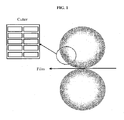
Fig. 1 : a schematic drawing for evaluating a die-cutting property of a film using a Thompson cutter. - Hereinafter, the present invention is described in detail.
- The heat-shrinkable polyester film of the present invention has a heat-shrinkage of 20 % or more, preferably 25 to 60 %, in both the longitudinal and transverse directions when treated with 80 °C water for 30 seconds. The inventive film has a bidirectional balance parameter A of the formula (1) in the range of 0.25 to 2.5. When the bidirectional balance parameter is either less than 0.25 or more than 2.5, the molecular arrangement becomes set in line with one direction (longitudinal or transverse direction) so that the die-cutting property deteriorates or the bidirectional shrinkage decreases to lower the removal rate when washed.
- The polyester resin used in the heat-shrinkage polyester film of the present invention may be prepared by reacting an acid component such as terephthalic acid, isophthalic acid, and naphthalene dicarboxylic acid with a diol component such as ethylenediol, propanediol, butanediol, hexanediol, ethylene glycol, neopentyl glycol, and 1,4-cyclohexanedimethanol. Preferably, the diol component comprises at least one C3-6diol selected from the group consisting of propanediol, butanediol, hexanediol, and neopentyl glycol, among which neopentyl glycol is the most preferable. The polyester resin used in the inventive film preferably has a glass transition temperature (Tg) of 55 to 85 °C.
- The heat-shrinkable polyester film of the present invention may comprise one of the polyesters listed above or a polyester blend in which two or more polyesters mixed.
- Preferably, the heat-shrinkable polyester film of the present invention comprises a polyethylene terephthalate repeating unit in an amount of 60 to 95 wt% based on the total weight of the film.
- The heat-shrinkable polyester film of the present invention may be prepared by drawing in the longitudinal and transverse directions, either simultaneously or sequentially. The drawing ratios in both the longitudinal and transverse directions are preferably in the range of 2.5 to 4.5, more preferably 3.0 to 4.0.
- The difference of the drawing ratios in the longitudinal and transverse directions is preferably 1.0 or less. When the difference falls within the above range, the film can be die-cut more uniformly in the longitudinal and transverse directions.
- The drawing in the transverse direction may be conducted in a conventional manner, but preferably conducted in two stages having a neutral section therebetween so as to enhance the die-cutting property.
- The drawing temperature is preferably in the range of 80 to 120 °C.
- Preferably, after the drawing process as above, the film is cooled at a temperature which is lower than the glass transition temperature (Tg) of the feedstock polyester resin so as to enhance a smoothness of the final film.
- The heat-shrinkable polyester film of the present invention may further comprise other additives such as inorganic or organic lubricant for enhancing slipperiness, coloring agent, antioxidant, compatibilizer, antistatic agents, and UV absorber, to the extent they do not adversely affect the film properties.
- A thickness of the heat-shrinkable polyester film of the present invention is not limited, but preferably 10 to 200 µm, more preferably 30 to 60 µm when used as a heat-shrinkable film for a label.
- The heat-shrinkable polyester film of the present invention exhibits a good die-cutting property when used in preparation of an adhesive label from the adhesive-coated film and has a high removal rate when washed with hot water for recycling a container such as a glass bottle labeled therewith. Accordingly, the inventive film is very useful for use as an adhesive label for a reusable glass bottle as well as other use such as shrinkable plastic wrap, bundle wrap, and so on.
- Hereinafter, the following examples are intended to illustrate the present invention. However, these examples are not to be construed to limit the scope of the invention.
- 100 parts by mole of dimethyl terephthalate, 20 parts by mole of neopentyl glycol, and 80 parts by mole of ethylene glycol were copolymerized to prepare a polyester resin (Tg: 70-75 °C), and then, an inorganic lubricant for enhancing driving property was added thereto in an amount corresponding to 400 ppm. The polyester resin was then melted at 280 °C, extruded through a T-die, and cooled using a casting roller, to obtain an undrawn film.
- The undrawn film was drawn in the longitudinal direction at a drawing ratio of 3.6 using preheated rolls at 85 °C having different peripheral velocities. The resulting film was then drawn in the transverse direction at a drawing ratio of 3.6 using a tenter with blowing hot air at 95 to 105 °C, passed through a neutral section, and then further drawn at a drawing ratio of 1.1 with blowing hot air at 85 to 95 °C (total drawing ratio: 3.6 x 1.1.) The drawn film was cooled at 60 °C without further heat-treatment to prepare the final film.
- The undrawn film obtained by the same procedures as in Example 1 was drawn in the longitudinal direction at a drawing ratio of 3.4 using preheated rolls at 85 °C having different peripheral velocities. The resulting film was then drawn in the transverse direction at a drawing ratio of 4.0 using a tenter with blowing hot air at 95 to 105 °C. The drawn film was cooled at 60 °C without further heat-treatment to prepare the final film.
- The undrawn film obtained by the same procedures as in Example 1 was drawn in the transverse direction at a drawing ratio of 4.5 using a tenter with blowing hot air at 95 to 105 °C without drawing in the longitudinal direction. The drawn film was heat-treated at 85 °C to prepare the final film.
- The undrawn film obtained by the same procedures as in Example 1 was drawn in the longitudinal direction at a drawing ratio of 1.5 using preheated rolls at 80 °C having different peripheral velocities. The resulting film was then drawn in the transverse direction at a drawing ratio of 4.0 using a tenter with blowing hot air at 95 to 105 °C. The drawn film was heat-treated at 85 °C to prepare the final film.
- The procedures of Example 2 were repeated except that the heat-treatment was not conducted, to prepare the final film.
- The undrawn film obtained by the same procedures as in Example 1 was drawn in the longitudinal direction at a drawing ratio of 3.5 using preheated rolls at 85 °C having different peripheral velocities. The resulting film was then drawn in the transverse direction at a drawing ratio of 2.0 using a tenter with blowing hot air at 95 to 105 °C. The drawn film was heat-treated at 85 °C to prepare the final film.
- The processes for preparing the final film from an undrawn film were summarized in Table 1.
Table 1 Process Example Comparative Example 1 2 1 2 3 4 Drawing in the longitudinal direction Temp.(°C) 85 85 × 80 80 85 Drawing ratio 3.6 3.4 × 1.5 1.5 3.5 Drawing in the transverse direction 1 s t Temp.(°C) 95-105 95-105 95-105 95-105 95-105 95-105 Drawing ratio 3.6 4.0 4.5 4.0 4.0 2.0 2 n d Temp.(°C) 85-95 × × × × × Drawing ratio 1.1 × × × × × Heat-treatment Temp.(°C) × × 85 85 × 85 Cooling Temp.(°C) 60 60 × × × × - The heat-shrinkable polyester films prepared in the examples and comparative examples were evaluated by the following methods and the results are summarized in Table 2.
- The strength (kg/mm2) and elongation (%) at break were measured according to ASTM D 882 using a 100 mm x 15 mm film sample at an elongation rate of 200 mm/min and an interval between chucks of 50 mm with a universal tester (UTM 4206-001, available from Instron Inc.) The same procedures as above were repeated 5 times in the longitudinal and transverse directions, respectively, to obtain average values.
- Using the results of Test (1) above, bidirectional balance parameter (A) = (MD - MS) / (TD - TS) was calculated (wherein, MD and TD are elongations (%) at break in the longitudinal and transverse directions, respectively, MS and TS are strengths at break (kg/mm2) in the longitudinal and transverse directions, respectively, A being calculated with the numerical values of MD, MS, TD, and TS as defined above, disregarding the units thereof.)
- A film specimen of 10 x 10 cm was obtained by cutting in line with the primary shrinkage direction, the film specimen was put into 70, 80, 90 or 100 °C water for 30 seconds, the change in the film length in the longitudinal or transverse direction was measured, and the heat-shrinkage was calculated by the following formula:

- Using a Thompson cutter which is generally used in die-cutting process, a film was die-cut into at least 1000 pieces to calculate the defective rate for no-cut pieces.
- Good : defective rate of 2 % or less
- Decent: defective rate of 2 ~ 5 %
- Poor : defective rate of 5 % or more
- A film was coated with an adhesive layer and die-cut to obtain adhesive labels, and then at least 1000 glass bottles were labeled with the adhesive labels. After 3 days, the labeled glass bottles were heat-treated with 80 °C water for 30 seconds, and the glass bottles whose label was removed were counted to obtain the label removal rate.
Good : removal rate of 99 % or more
Decent: removal rate of 97 ~ 99 %
Poor : removal rate of 97 % or lessTable 2 Test Example Comparative Example 1 2 1 2 3 4 Strength at break
(kg/mm2)L.D. 22 20 6 12 12 21 T.D. 23 29 20 21 20 14 Elongation at break
(%)L.D. 126 115 542 410 400 106 T.D. 110 100 85 110 105 380 Bidirectional balance
parameter1.19 1.16 8.2 4.47 4.56 0.23 Heat-shrinkage
(%)70°C L.D. 16 13 1.0 5 5 15 T.D. 37 35 32 35 38 10 80°C L.D. 36 31 1.0 13 13 32 T.D. 60 55 68 64 68 15 90°C L.D. 42 35 1.5 18 18 38 T.D. 67 62 75 72 74 21 100°C L.D. 43 36 1.0 19 19 43 T.D. 70 65 76 74 75 26 Die-cutting property Good Poor Poor Poor Poor Poor Label removal rate Good Good Poor Decent Decent Decent * L.D. : longitudinal direction, T.D.: transverse direction - As shown in Table 1, the inventive films of Examples 1 and 2 have a bidirectional balance parameter in the range of 0.25 to 2.5 and exhibit more excellent properties in bidirectional heat-shrinkage, die-cutting and label removal in comparison with the films of Comparative Examples 1 to 4. Accordingly, the inventive film has a good processability in preparation of an adhesive label and can be easily removed from a container for recycling.
- While the embodiments of the subject invention have been described and illustrated, it is obvious that various changes and modifications can be made thereto by those of ordinary skill in the art without departing from the spirit and scope of the present invention which should be limited only by the scope of the appended claims.
Claims (7)
- A heat-shrinkable polyester film having a heat-shrinkage of 20 % or more in both the longitudinal and transverse directions when treated with 80 °C water for 30 seconds, and a bidirectional balance parameter A of formula (1) in the range 0.25 to 2.5:

in which, A is the bidirectional balance parameter; MD and TD are elongations (%) at break in the longitudinal and transverse directions, respectively; MS and TS are strengths (kg/mm2) at break in the longitudinal and transverse directions, respectively, A being calculated with the numerical values of MD, MS, TD, and TS as defined above, disregarding the units thereof. - The heat-shrinkable polyester film of claim 1, wherein the feedstock polyester resin is prepared by reacting an acid component selected from the group consisting of terephthalic acid, isophthalic acid, and naphthalene dicarboxylic acid with a diol component selected from the group consisting of ethylenediol, propanediol, butanediol, hexanediol, ethylene glycol, neopentyl glycol, and 1,4-cyclohexanedimethanol.
- The heat-shrinkable polyester film of claim 1, which comprises a polyethylene terephthalate repeating unit in an amount of 60 to 90 wt% based on the total weight of the film.
- The heat-shrinkable polyester film of claim 1, which is drawn in both the longitudinal and transverse directions at a drawing ratio of 2.5 to 4.5.
- The heat-shrinkable polyester film of claim 4, wherein the difference of the drawing ratios in the longitudinal and transverse directions is 1.0 or less.
- The heat-shrinkable polyester film of claim 1, which is drawn at a temperature in the range from 80 to 120 °C.
- The heat-shrinkable polyester film of claim 1, which is prepared by drawing and then cooling at a temperature which is lower than the glass transition temperature (Tg) of the feedstock polyester resin.
Applications Claiming Priority (2)
| Application Number | Priority Date | Filing Date | Title |
|---|---|---|---|
| KR20080045610 | 2008-05-16 | ||
| PCT/KR2009/002587 WO2009139598A2 (en) | 2008-05-16 | 2009-05-15 | Heat-shrinkable polyester film |
Publications (3)
| Publication Number | Publication Date |
|---|---|
| EP2287238A2 true EP2287238A2 (en) | 2011-02-23 |
| EP2287238A4 EP2287238A4 (en) | 2014-12-10 |
| EP2287238B1 EP2287238B1 (en) | 2016-02-24 |
Family
ID=41319180
Family Applications (1)
| Application Number | Title | Priority Date | Filing Date |
|---|---|---|---|
| EP09746777.3A Active EP2287238B1 (en) | 2008-05-16 | 2009-05-15 | Heat-shrinkable polyester film |
Country Status (6)
| Country | Link |
|---|---|
| US (1) | US8512833B2 (en) |
| EP (1) | EP2287238B1 (en) |
| JP (1) | JP5307234B2 (en) |
| KR (1) | KR101219525B1 (en) |
| CN (1) | CN102015849A (en) |
| WO (1) | WO2009139598A2 (en) |
Families Citing this family (13)
| Publication number | Priority date | Publication date | Assignee | Title |
|---|---|---|---|---|
| US9418577B2 (en) * | 2011-03-18 | 2016-08-16 | Kolon Industries, Inc. | Polyester-based metalizing film |
| EP2687370B1 (en) * | 2011-03-18 | 2020-04-29 | Kolon Industries, Inc. | Polyester-based deposition film |
| US20130199700A1 (en) * | 2012-02-02 | 2013-08-08 | Avery Dennison Corporation | Low Modulus Shrink Compliant Films |
| KR101645697B1 (en) | 2014-09-17 | 2016-08-12 | 삼성중공업 주식회사 | Pedestal crane |
| KR102654779B1 (en) | 2016-11-24 | 2024-04-03 | 에스케이케미칼 주식회사 | Mdo thermoresistant heat-shrinkable multilayer film |
| KR102654778B1 (en) | 2016-11-24 | 2024-04-03 | 에스케이케미칼 주식회사 | Mdo thermoresistant heat-shrinkable film |
| CN111443416B (en) * | 2017-09-15 | 2022-06-17 | 东洋纺株式会社 | Polarizing plate and liquid crystal display device |
| US10543656B2 (en) | 2018-01-11 | 2020-01-28 | Eastman Chemical Company | Tough shrinkable films |
| CN109263387A (en) * | 2018-09-06 | 2019-01-25 | 苏州艾迈实业有限公司 | A cosmetic packaging material paste gradient color fairy refinery fine sand glitter diamond film process |
| JP7530370B2 (en) | 2018-10-08 | 2024-08-07 | イーストマン ケミカル カンパニー | Crystallizable shrinkable films and thermoformable sheets made from resin blends |
| US12522695B2 (en) | 2019-10-08 | 2026-01-13 | Eastman Chemical Company | Catalyst systems for crystallizable reactor grade resins with recycled content |
| JP6862079B1 (en) * | 2020-04-30 | 2021-04-21 | タキロンシーアイ株式会社 | How to manufacture polyester shrink film and how to use polyester shrink film |
| DE112020007130T5 (en) * | 2020-04-30 | 2023-03-16 | Bonset America Corporation | Polyester-based shrink film |
Family Cites Families (24)
| Publication number | Priority date | Publication date | Assignee | Title |
|---|---|---|---|---|
| US2465319A (en) * | 1941-07-29 | 1949-03-22 | Du Pont | Polymeric linear terephthalic esters |
| US3554976A (en) * | 1968-07-24 | 1971-01-12 | Du Pont | Preparation of copolyesters |
| US4020141A (en) * | 1974-06-13 | 1977-04-26 | E. I. Du Pont De Nemours And Company | Method of making heat-sealable, heat-shrinkable, biaxially oriented polyester film |
| JPH08192464A (en) * | 1995-01-19 | 1996-07-30 | Kanebo Ltd | Polyester heat-shrinkable film |
| JPH08302035A (en) * | 1995-04-27 | 1996-11-19 | Kanebo Ltd | Polyester-based heat-shrinkable film |
| JP4525870B2 (en) * | 1998-03-30 | 2010-08-18 | 東洋紡績株式会社 | Heat-shrinkable polyester film |
| JPH11246684A (en) * | 1998-03-04 | 1999-09-14 | Toray Ind Inc | Heat shrink polyester film |
| JP2001011214A (en) * | 1999-07-01 | 2001-01-16 | Okura Ind Co Ltd | Biodegradable heat shrinkable film |
| DE60014530T2 (en) * | 1999-07-27 | 2006-03-09 | SKC Co., Ltd., Suwon | Heat-shrinkable polyester film and process for its preparation |
| KR100503991B1 (en) * | 1999-10-08 | 2005-07-27 | 에스케이씨 주식회사 | Heat-shrinkable polyester film and method for manufacturing the same |
| WO2001010928A1 (en) * | 1999-08-09 | 2001-02-15 | E.I. Du Pont De Nemours And Company | Biodegradable oriented aromatic polyester film and method of manufacture |
| US6362306B1 (en) * | 1999-08-17 | 2002-03-26 | Eastman Chemical Company | Reactor grade copolyesters for shrink film applications |
| JP2002046175A (en) * | 2000-07-31 | 2002-02-12 | Mitsubishi Rayon Co Ltd | Heat shrinkable polyester film |
| KR100566449B1 (en) * | 2001-04-26 | 2006-03-31 | 도요 보세키 가부시키가이샤 | Heat Shrinkable Polyester Film Roll |
| JP3767511B2 (en) * | 2001-04-26 | 2006-04-19 | 東洋紡績株式会社 | Heat-shrinkable polyester film roll |
| ATE450559T1 (en) * | 2001-09-26 | 2009-12-15 | Toyo Boseki | HEAT SHRINKABLE POLYESTER FILM |
| JP3739311B2 (en) * | 2001-11-21 | 2006-01-25 | 旭化成ライフ&リビング株式会社 | Biodegradable film |
| JP4243926B2 (en) * | 2001-12-13 | 2009-03-25 | 旭化成ケミカルズ株式会社 | Biodegradable heat shrinkable film and shrink package using the same |
| JP4439778B2 (en) * | 2001-12-19 | 2010-03-24 | 三菱瓦斯化学株式会社 | Heat shrink film |
| JP4439777B2 (en) * | 2001-12-19 | 2010-03-24 | 三菱瓦斯化学株式会社 | Polyester resin for heat shrink film and heat shrink film |
| DE60308428T2 (en) * | 2002-02-14 | 2007-09-13 | Toyo Boseki K.K. | Heat shrinkable polyester films |
| AU2003292769A1 (en) * | 2002-12-24 | 2004-08-10 | Toyo Boseki Kabushiki Kasisha | Heat shrinking polyester film |
| JP2007216458A (en) * | 2006-02-15 | 2007-08-30 | Toyobo Co Ltd | Heat-shrinkable polyester film and heat-shrinkable label |
| JP2008030371A (en) * | 2006-07-31 | 2008-02-14 | Toyobo Co Ltd | Heat-shrinkable polyester film roll |
-
2009
- 2009-05-15 CN CN2009801161474A patent/CN102015849A/en active Pending
- 2009-05-15 KR KR1020107025328A patent/KR101219525B1/en active Active
- 2009-05-15 US US12/992,544 patent/US8512833B2/en active Active
- 2009-05-15 EP EP09746777.3A patent/EP2287238B1/en active Active
- 2009-05-15 WO PCT/KR2009/002587 patent/WO2009139598A2/en not_active Ceased
- 2009-05-15 JP JP2011509419A patent/JP5307234B2/en active Active
Also Published As
| Publication number | Publication date |
|---|---|
| JP5307234B2 (en) | 2013-10-02 |
| CN102015849A (en) | 2011-04-13 |
| EP2287238B1 (en) | 2016-02-24 |
| EP2287238A4 (en) | 2014-12-10 |
| KR20110000579A (en) | 2011-01-03 |
| US20110065893A1 (en) | 2011-03-17 |
| WO2009139598A3 (en) | 2010-03-04 |
| WO2009139598A2 (en) | 2009-11-19 |
| KR101219525B1 (en) | 2013-01-11 |
| JP2011521050A (en) | 2011-07-21 |
| US8512833B2 (en) | 2013-08-20 |
Similar Documents
| Publication | Publication Date | Title |
|---|---|---|
| EP2287238B1 (en) | Heat-shrinkable polyester film | |
| EP1414904B1 (en) | Polyester blends and heat shrinkable films made therefrom | |
| US8632865B2 (en) | Heat-shrinkable polyester film | |
| EP1120352B1 (en) | Heat-shrinkable polyester films | |
| EP2556945B1 (en) | Heat shrinkable polyester film, method for producing same, and packaged body | |
| EP1264680B1 (en) | Heat-shrinkable polyester films | |
| WO2009151290A2 (en) | Heat-shrinkable polyester film | |
| KR100913290B1 (en) | Heat-shrinkable laminated film and heat-shrinkable label using same | |
| EP1448679B1 (en) | Heat-shrinkable polyester film | |
| EP2408850B1 (en) | Heat-shrinkable polyester film and preparation method thereof | |
| JP2000169601A (en) | Heat-shrinkable polyester film | |
| JP2008280370A (en) | Thermally shrinkable polyester-based film | |
| KR100560214B1 (en) | Opening polyester film for easy opening | |
| JP3349545B2 (en) | Packaging material | |
| WO2005123814A1 (en) | Anti-cracking heat shrinkable polyester film | |
| KR100625367B1 (en) | Biaxially drawn polyester film | |
| JP2008188842A (en) | Heat-shrinkable polyester film | |
| JP5015448B2 (en) | Heat shrinkable polyester film | |
| JP3708059B2 (en) | Heat-shrinkable polylactic acid-based biaxially stretched film and method for producing the same | |
| KR100560215B1 (en) | Twisted Polyester Film | |
| KR100572992B1 (en) | Laminated polyester film and its manufacturing method | |
| KR0175594B1 (en) | Preparation method of antistatic biaxially oriented polyester film | |
| JP2000273208A (en) | Aliphatic polyester-based resin film | |
| JP2517995C (en) |
Legal Events
| Date | Code | Title | Description |
|---|---|---|---|
| PUAI | Public reference made under article 153(3) epc to a published international application that has entered the european phase |
Free format text: ORIGINAL CODE: 0009012 |
|
| 17P | Request for examination filed |
Effective date: 20101112 |
|
| AK | Designated contracting states |
Kind code of ref document: A2 Designated state(s): AT BE BG CH CY CZ DE DK EE ES FI FR GB GR HR HU IE IS IT LI LT LU LV MC MK MT NL NO PL PT RO SE SI SK TR |
|
| AX | Request for extension of the european patent |
Extension state: AL BA RS |
|
| DAX | Request for extension of the european patent (deleted) | ||
| A4 | Supplementary search report drawn up and despatched |
Effective date: 20141107 |
|
| RIC1 | Information provided on ipc code assigned before grant |
Ipc: C08J 5/18 20060101AFI20141031BHEP |
|
| GRAP | Despatch of communication of intention to grant a patent |
Free format text: ORIGINAL CODE: EPIDOSNIGR1 |
|
| GRAS | Grant fee paid |
Free format text: ORIGINAL CODE: EPIDOSNIGR3 |
|
| INTG | Intention to grant announced |
Effective date: 20151125 |
|
| GRAA | (expected) grant |
Free format text: ORIGINAL CODE: 0009210 |
|
| AK | Designated contracting states |
Kind code of ref document: B1 Designated state(s): AT BE BG CH CY CZ DE DK EE ES FI FR GB GR HR HU IE IS IT LI LT LU LV MC MK MT NL NO PL PT RO SE SI SK TR |
|
| REG | Reference to a national code |
Ref country code: GB Ref legal event code: FG4D |
|
| REG | Reference to a national code |
Ref country code: CH Ref legal event code: EP |
|
| REG | Reference to a national code |
Ref country code: AT Ref legal event code: REF Ref document number: 776718 Country of ref document: AT Kind code of ref document: T Effective date: 20160315 |
|
| REG | Reference to a national code |
Ref country code: IE Ref legal event code: FG4D |
|
| REG | Reference to a national code |
Ref country code: DE Ref legal event code: R096 Ref document number: 602009036471 Country of ref document: DE |
|
| REG | Reference to a national code |
Ref country code: FR Ref legal event code: PLFP Year of fee payment: 8 |
|
| REG | Reference to a national code |
Ref country code: LT Ref legal event code: MG4D |
|
| REG | Reference to a national code |
Ref country code: NL Ref legal event code: MP Effective date: 20160224 |
|
| REG | Reference to a national code |
Ref country code: AT Ref legal event code: MK05 Ref document number: 776718 Country of ref document: AT Kind code of ref document: T Effective date: 20160224 |
|
| PG25 | Lapsed in a contracting state [announced via postgrant information from national office to epo] |
Ref country code: FI Free format text: LAPSE BECAUSE OF FAILURE TO SUBMIT A TRANSLATION OF THE DESCRIPTION OR TO PAY THE FEE WITHIN THE PRESCRIBED TIME-LIMIT Effective date: 20160224 Ref country code: IT Free format text: LAPSE BECAUSE OF FAILURE TO SUBMIT A TRANSLATION OF THE DESCRIPTION OR TO PAY THE FEE WITHIN THE PRESCRIBED TIME-LIMIT Effective date: 20160224 Ref country code: ES Free format text: LAPSE BECAUSE OF FAILURE TO SUBMIT A TRANSLATION OF THE DESCRIPTION OR TO PAY THE FEE WITHIN THE PRESCRIBED TIME-LIMIT Effective date: 20160224 Ref country code: HR Free format text: LAPSE BECAUSE OF FAILURE TO SUBMIT A TRANSLATION OF THE DESCRIPTION OR TO PAY THE FEE WITHIN THE PRESCRIBED TIME-LIMIT Effective date: 20160224 Ref country code: NO Free format text: LAPSE BECAUSE OF FAILURE TO SUBMIT A TRANSLATION OF THE DESCRIPTION OR TO PAY THE FEE WITHIN THE PRESCRIBED TIME-LIMIT Effective date: 20160524 Ref country code: GR Free format text: LAPSE BECAUSE OF FAILURE TO SUBMIT A TRANSLATION OF THE DESCRIPTION OR TO PAY THE FEE WITHIN THE PRESCRIBED TIME-LIMIT Effective date: 20160525 |
|
| PG25 | Lapsed in a contracting state [announced via postgrant information from national office to epo] |
Ref country code: SE Free format text: LAPSE BECAUSE OF FAILURE TO SUBMIT A TRANSLATION OF THE DESCRIPTION OR TO PAY THE FEE WITHIN THE PRESCRIBED TIME-LIMIT Effective date: 20160224 Ref country code: LV Free format text: LAPSE BECAUSE OF FAILURE TO SUBMIT A TRANSLATION OF THE DESCRIPTION OR TO PAY THE FEE WITHIN THE PRESCRIBED TIME-LIMIT Effective date: 20160224 Ref country code: BE Free format text: LAPSE BECAUSE OF NON-PAYMENT OF DUE FEES Effective date: 20160531 Ref country code: PT Free format text: LAPSE BECAUSE OF FAILURE TO SUBMIT A TRANSLATION OF THE DESCRIPTION OR TO PAY THE FEE WITHIN THE PRESCRIBED TIME-LIMIT Effective date: 20160624 Ref country code: NL Free format text: LAPSE BECAUSE OF FAILURE TO SUBMIT A TRANSLATION OF THE DESCRIPTION OR TO PAY THE FEE WITHIN THE PRESCRIBED TIME-LIMIT Effective date: 20160224 Ref country code: LT Free format text: LAPSE BECAUSE OF FAILURE TO SUBMIT A TRANSLATION OF THE DESCRIPTION OR TO PAY THE FEE WITHIN THE PRESCRIBED TIME-LIMIT Effective date: 20160224 Ref country code: PL Free format text: LAPSE BECAUSE OF FAILURE TO SUBMIT A TRANSLATION OF THE DESCRIPTION OR TO PAY THE FEE WITHIN THE PRESCRIBED TIME-LIMIT Effective date: 20160224 Ref country code: AT Free format text: LAPSE BECAUSE OF FAILURE TO SUBMIT A TRANSLATION OF THE DESCRIPTION OR TO PAY THE FEE WITHIN THE PRESCRIBED TIME-LIMIT Effective date: 20160224 |
|
| PG25 | Lapsed in a contracting state [announced via postgrant information from national office to epo] |
Ref country code: EE Free format text: LAPSE BECAUSE OF FAILURE TO SUBMIT A TRANSLATION OF THE DESCRIPTION OR TO PAY THE FEE WITHIN THE PRESCRIBED TIME-LIMIT Effective date: 20160224 Ref country code: DK Free format text: LAPSE BECAUSE OF FAILURE TO SUBMIT A TRANSLATION OF THE DESCRIPTION OR TO PAY THE FEE WITHIN THE PRESCRIBED TIME-LIMIT Effective date: 20160224 |
|
| REG | Reference to a national code |
Ref country code: DE Ref legal event code: R097 Ref document number: 602009036471 Country of ref document: DE |
|
| PG25 | Lapsed in a contracting state [announced via postgrant information from national office to epo] |
Ref country code: RO Free format text: LAPSE BECAUSE OF FAILURE TO SUBMIT A TRANSLATION OF THE DESCRIPTION OR TO PAY THE FEE WITHIN THE PRESCRIBED TIME-LIMIT Effective date: 20160224 Ref country code: CZ Free format text: LAPSE BECAUSE OF FAILURE TO SUBMIT A TRANSLATION OF THE DESCRIPTION OR TO PAY THE FEE WITHIN THE PRESCRIBED TIME-LIMIT Effective date: 20160224 Ref country code: SK Free format text: LAPSE BECAUSE OF FAILURE TO SUBMIT A TRANSLATION OF THE DESCRIPTION OR TO PAY THE FEE WITHIN THE PRESCRIBED TIME-LIMIT Effective date: 20160224 |
|
| PG25 | Lapsed in a contracting state [announced via postgrant information from national office to epo] |
Ref country code: LU Free format text: LAPSE BECAUSE OF FAILURE TO SUBMIT A TRANSLATION OF THE DESCRIPTION OR TO PAY THE FEE WITHIN THE PRESCRIBED TIME-LIMIT Effective date: 20160515 Ref country code: BE Free format text: LAPSE BECAUSE OF FAILURE TO SUBMIT A TRANSLATION OF THE DESCRIPTION OR TO PAY THE FEE WITHIN THE PRESCRIBED TIME-LIMIT Effective date: 20160224 |
|
| PLBE | No opposition filed within time limit |
Free format text: ORIGINAL CODE: 0009261 |
|
| REG | Reference to a national code |
Ref country code: CH Ref legal event code: PL |
|
| STAA | Information on the status of an ep patent application or granted ep patent |
Free format text: STATUS: NO OPPOSITION FILED WITHIN TIME LIMIT |
|
| PG25 | Lapsed in a contracting state [announced via postgrant information from national office to epo] |
Ref country code: CH Free format text: LAPSE BECAUSE OF NON-PAYMENT OF DUE FEES Effective date: 20160531 Ref country code: LI Free format text: LAPSE BECAUSE OF NON-PAYMENT OF DUE FEES Effective date: 20160531 |
|
| 26N | No opposition filed |
Effective date: 20161125 |
|
| REG | Reference to a national code |
Ref country code: IE Ref legal event code: MM4A |
|
| PG25 | Lapsed in a contracting state [announced via postgrant information from national office to epo] |
Ref country code: BG Free format text: LAPSE BECAUSE OF FAILURE TO SUBMIT A TRANSLATION OF THE DESCRIPTION OR TO PAY THE FEE WITHIN THE PRESCRIBED TIME-LIMIT Effective date: 20160524 Ref country code: SI Free format text: LAPSE BECAUSE OF FAILURE TO SUBMIT A TRANSLATION OF THE DESCRIPTION OR TO PAY THE FEE WITHIN THE PRESCRIBED TIME-LIMIT Effective date: 20160224 |
|
| REG | Reference to a national code |
Ref country code: FR Ref legal event code: PLFP Year of fee payment: 9 |
|
| PG25 | Lapsed in a contracting state [announced via postgrant information from national office to epo] |
Ref country code: IE Free format text: LAPSE BECAUSE OF NON-PAYMENT OF DUE FEES Effective date: 20160515 |
|
| REG | Reference to a national code |
Ref country code: FR Ref legal event code: PLFP Year of fee payment: 10 |
|
| PG25 | Lapsed in a contracting state [announced via postgrant information from national office to epo] |
Ref country code: HU Free format text: LAPSE BECAUSE OF FAILURE TO SUBMIT A TRANSLATION OF THE DESCRIPTION OR TO PAY THE FEE WITHIN THE PRESCRIBED TIME-LIMIT; INVALID AB INITIO Effective date: 20090515 Ref country code: CY Free format text: LAPSE BECAUSE OF FAILURE TO SUBMIT A TRANSLATION OF THE DESCRIPTION OR TO PAY THE FEE WITHIN THE PRESCRIBED TIME-LIMIT Effective date: 20160224 |
|
| PG25 | Lapsed in a contracting state [announced via postgrant information from national office to epo] |
Ref country code: IS Free format text: LAPSE BECAUSE OF FAILURE TO SUBMIT A TRANSLATION OF THE DESCRIPTION OR TO PAY THE FEE WITHIN THE PRESCRIBED TIME-LIMIT Effective date: 20160224 Ref country code: MK Free format text: LAPSE BECAUSE OF FAILURE TO SUBMIT A TRANSLATION OF THE DESCRIPTION OR TO PAY THE FEE WITHIN THE PRESCRIBED TIME-LIMIT Effective date: 20160224 Ref country code: MC Free format text: LAPSE BECAUSE OF FAILURE TO SUBMIT A TRANSLATION OF THE DESCRIPTION OR TO PAY THE FEE WITHIN THE PRESCRIBED TIME-LIMIT Effective date: 20160224 Ref country code: TR Free format text: LAPSE BECAUSE OF FAILURE TO SUBMIT A TRANSLATION OF THE DESCRIPTION OR TO PAY THE FEE WITHIN THE PRESCRIBED TIME-LIMIT Effective date: 20160224 Ref country code: MT Free format text: LAPSE BECAUSE OF NON-PAYMENT OF DUE FEES Effective date: 20160531 |
|
| REG | Reference to a national code |
Ref country code: DE Ref legal event code: R081 Ref document number: 602009036471 Country of ref document: DE Owner name: SK MICROWORKS CO., LTD., SUWON-SI, KR Free format text: FORMER OWNER: SKC CO., LTD., SUWON-SI, KR Ref country code: DE Ref legal event code: R081 Ref document number: 602009036471 Country of ref document: DE Owner name: MICROWORKS CO., LTD., JINCHEON-GUN, KR Free format text: FORMER OWNER: SKC CO., LTD., SUWON-SI, KR |
|
| REG | Reference to a national code |
Ref country code: GB Ref legal event code: 732E Free format text: REGISTERED BETWEEN 20230420 AND 20230426 |
|
| PGFP | Annual fee paid to national office [announced via postgrant information from national office to epo] |
Ref country code: DE Payment date: 20250320 Year of fee payment: 17 |
|
| REG | Reference to a national code |
Ref country code: DE Ref legal event code: R081 Ref document number: 602009036471 Country of ref document: DE Owner name: MICROWORKS CO., LTD., JINCHEON-GUN, KR Free format text: FORMER OWNER: SK MICROWORKS CO., LTD., SUWON-SI, GYEONGGI-DO, KR |
|
| REG | Reference to a national code |
Ref country code: GB Ref legal event code: 732E Free format text: REGISTERED BETWEEN 20260129 AND 20260204 |
|
| PGFP | Annual fee paid to national office [announced via postgrant information from national office to epo] |
Ref country code: GB Payment date: 20260324 Year of fee payment: 18 |
|
| PGFP | Annual fee paid to national office [announced via postgrant information from national office to epo] |
Ref country code: FR Payment date: 20260323 Year of fee payment: 18 |