EP2286403B1 - Method to determine the impact of a proposed dental modification on the temporomandibular joint - Google Patents
Method to determine the impact of a proposed dental modification on the temporomandibular joint Download PDFInfo
- Publication number
- EP2286403B1 EP2286403B1 EP09738175.0A EP09738175A EP2286403B1 EP 2286403 B1 EP2286403 B1 EP 2286403B1 EP 09738175 A EP09738175 A EP 09738175A EP 2286403 B1 EP2286403 B1 EP 2286403B1
- Authority
- EP
- European Patent Office
- Prior art keywords
- computer
- patient
- displacement
- virtual
- proposed dental
- Prior art date
- Legal status (The legal status is an assumption and is not a legal conclusion. Google has not performed a legal analysis and makes no representation as to the accuracy of the status listed.)
- Not-in-force
Links
- 210000001738 temporomandibular joint Anatomy 0.000 title description 48
- 238000012986 modification Methods 0.000 title description 43
- 230000004048 modification Effects 0.000 title description 43
- 238000000034 method Methods 0.000 title description 28
- 230000033001 locomotion Effects 0.000 description 70
- 210000001847 jaw Anatomy 0.000 description 35
- 210000004513 dentition Anatomy 0.000 description 22
- 230000036346 tooth eruption Effects 0.000 description 22
- 238000006073 displacement reaction Methods 0.000 description 19
- 238000012545 processing Methods 0.000 description 19
- 238000011282 treatment Methods 0.000 description 17
- 238000003745 diagnosis Methods 0.000 description 16
- 206010043220 Temporomandibular joint syndrome Diseases 0.000 description 15
- 230000000694 effects Effects 0.000 description 11
- 208000028911 Temporomandibular Joint disease Diseases 0.000 description 8
- 230000005499 meniscus Effects 0.000 description 8
- 210000002455 dental arch Anatomy 0.000 description 6
- 238000004364 calculation method Methods 0.000 description 5
- 238000004590 computer program Methods 0.000 description 5
- 230000006870 function Effects 0.000 description 5
- 210000002050 maxilla Anatomy 0.000 description 5
- 238000004088 simulation Methods 0.000 description 5
- 238000004458 analytical method Methods 0.000 description 4
- 210000004373 mandible Anatomy 0.000 description 4
- 238000005259 measurement Methods 0.000 description 4
- 210000003205 muscle Anatomy 0.000 description 4
- 230000003287 optical effect Effects 0.000 description 4
- 230000008707 rearrangement Effects 0.000 description 4
- 230000003068 static effect Effects 0.000 description 4
- 208000012659 Joint disease Diseases 0.000 description 3
- 208000002193 Pain Diseases 0.000 description 3
- 230000008901 benefit Effects 0.000 description 3
- 238000013461 design Methods 0.000 description 3
- 238000011156 evaluation Methods 0.000 description 3
- 238000002595 magnetic resonance imaging Methods 0.000 description 3
- 239000011505 plaster Substances 0.000 description 3
- 238000003860 storage Methods 0.000 description 3
- 208000024891 symptom Diseases 0.000 description 3
- 230000002123 temporal effect Effects 0.000 description 3
- 238000012800 visualization Methods 0.000 description 3
- 230000002159 abnormal effect Effects 0.000 description 2
- 210000003484 anatomy Anatomy 0.000 description 2
- 230000006399 behavior Effects 0.000 description 2
- 230000008859 change Effects 0.000 description 2
- 238000004891 communication Methods 0.000 description 2
- 238000002591 computed tomography Methods 0.000 description 2
- 230000006378 damage Effects 0.000 description 2
- 208000037265 diseases, disorders, signs and symptoms Diseases 0.000 description 2
- 230000001771 impaired effect Effects 0.000 description 2
- 230000001939 inductive effect Effects 0.000 description 2
- 238000002559 palpation Methods 0.000 description 2
- 238000012546 transfer Methods 0.000 description 2
- 230000001960 triggered effect Effects 0.000 description 2
- 206010019233 Headaches Diseases 0.000 description 1
- 208000000112 Myalgia Diseases 0.000 description 1
- 230000004913 activation Effects 0.000 description 1
- 230000006978 adaptation Effects 0.000 description 1
- 238000013459 approach Methods 0.000 description 1
- 206010003246 arthritis Diseases 0.000 description 1
- 230000005540 biological transmission Effects 0.000 description 1
- 206010006514 bruxism Diseases 0.000 description 1
- 238000007408 cone-beam computed tomography Methods 0.000 description 1
- 238000010276 construction Methods 0.000 description 1
- 238000013500 data storage Methods 0.000 description 1
- 230000001419 dependent effect Effects 0.000 description 1
- 238000001514 detection method Methods 0.000 description 1
- 230000002542 deteriorative effect Effects 0.000 description 1
- 238000002405 diagnostic procedure Methods 0.000 description 1
- 238000003748 differential diagnosis Methods 0.000 description 1
- 201000010099 disease Diseases 0.000 description 1
- 208000035475 disorder Diseases 0.000 description 1
- 238000009826 distribution Methods 0.000 description 1
- 230000004064 dysfunction Effects 0.000 description 1
- 238000005516 engineering process Methods 0.000 description 1
- 239000000446 fuel Substances 0.000 description 1
- 231100000869 headache Toxicity 0.000 description 1
- 230000003993 interaction Effects 0.000 description 1
- 230000003447 ipsilateral effect Effects 0.000 description 1
- 238000002372 labelling Methods 0.000 description 1
- 230000004807 localization Effects 0.000 description 1
- 210000004359 mandibular condyle Anatomy 0.000 description 1
- 238000004519 manufacturing process Methods 0.000 description 1
- 238000013178 mathematical model Methods 0.000 description 1
- 230000007246 mechanism Effects 0.000 description 1
- 230000005055 memory storage Effects 0.000 description 1
- 238000007491 morphometric analysis Methods 0.000 description 1
- 208000015004 muscle tenderness Diseases 0.000 description 1
- 230000002093 peripheral effect Effects 0.000 description 1
- 230000010076 replication Effects 0.000 description 1
- 230000033458 reproduction Effects 0.000 description 1
- 230000002441 reversible effect Effects 0.000 description 1
- 238000012502 risk assessment Methods 0.000 description 1
- 210000003625 skull Anatomy 0.000 description 1
- 210000003582 temporal bone Anatomy 0.000 description 1
- 230000000007 visual effect Effects 0.000 description 1
Images


Classifications
-
- A—HUMAN NECESSITIES
- A61—MEDICAL OR VETERINARY SCIENCE; HYGIENE
- A61C—DENTISTRY; APPARATUS OR METHODS FOR ORAL OR DENTAL HYGIENE
- A61C11/00—Dental articulators, i.e. for simulating movement of the temporo-mandibular joints; Articulation forms or mouldings
-
- G—PHYSICS
- G09—EDUCATION; CRYPTOGRAPHY; DISPLAY; ADVERTISING; SEALS
- G09B—EDUCATIONAL OR DEMONSTRATION APPLIANCES; APPLIANCES FOR TEACHING, OR COMMUNICATING WITH, THE BLIND, DEAF OR MUTE; MODELS; PLANETARIA; GLOBES; MAPS; DIAGRAMS
- G09B23/00—Models for scientific, medical, or mathematical purposes, e.g. full-sized devices for demonstration purposes
- G09B23/28—Models for scientific, medical, or mathematical purposes, e.g. full-sized devices for demonstration purposes for medicine
- G09B23/283—Models for scientific, medical, or mathematical purposes, e.g. full-sized devices for demonstration purposes for medicine for dentistry or oral hygiene
-
- A—HUMAN NECESSITIES
- A61—MEDICAL OR VETERINARY SCIENCE; HYGIENE
- A61C—DENTISTRY; APPARATUS OR METHODS FOR ORAL OR DENTAL HYGIENE
- A61C13/00—Dental prostheses; Making same
- A61C13/0003—Making bridge-work, inlays, implants or the like
- A61C13/0004—Computer-assisted sizing or machining of dental prostheses
-
- A—HUMAN NECESSITIES
- A61—MEDICAL OR VETERINARY SCIENCE; HYGIENE
- A61C—DENTISTRY; APPARATUS OR METHODS FOR ORAL OR DENTAL HYGIENE
- A61C19/00—Dental auxiliary appliances
- A61C19/04—Measuring instruments specially adapted for dentistry
- A61C19/05—Measuring instruments specially adapted for dentistry for determining occlusion
Definitions
- the present invention relates to the field of dentistry, and more particular to the use of computer technology for image-assisted risk assessment/evaluation of proposed dental treatments.
- the present invention in particular relates to a method and apparatus for determining the impact of a proposed dental modification on the temporomandibular joint(s), e.g. to obtain information relating to that impact.
- the invention is also related to the use of a virtual articulator to determine the impact of a proposed dental modification on the temporomandibular joint(s).
- This dental modification includes, but is not limited to, the replacement of one or more teeth by artificial teeth, the replacement of one or more parts of a tooth by a prosthetic reconstruction such as a dental crown or veneer, the rearrangement of one or more existing teeth (orthodontic treatment), the distraction of one or both jaws in order to reposition the teeth (orthognatic treatment) and/or modifications of the occlusal surfaces of the teeth.
- Temporomandibular disorders or temporomandibular joint dysfunction refer to conditions producing abnormal, incomplete, or impaired function of the temporomandibular joint(s) which can cause pain in the area of the temporomandibular joint (TMJ) and/or problems using the jaw.
- TMJ temporomandibular joint
- Typical causes are injuries to jaw, head or neck, diseases like arthritis, the patient's bite (i.e. the way teeth fit together), dental treatments, bruxism... which result in extreme stresses on the joint and its surroundings. Symptoms observed in patients who suffer from TMD can vary from headache, jaw clicking, limited jaw function to impaired hearing.
- Temporomandibular joint disorders are mainly associated with the dorsal part of the meniscus (articulating disc) that separates the condyle from the temporal bone of the skull.
- This dorsal part of the meniscus is termed 'bilaminar zone'.
- TMJ dysfunction is characterized by an anteriorly displaced meniscus, causing the bilaminar zone to serve as the articulating surface, a function for which it is not suitable. The dislocated meniscus causes discomfort and pain.
- Dental modifications that for example force the condyles more or less posteriorly can provoke or fuel these effects and should therefore be avoided as much as possible.
- a dental modification e.g. prosthetic restoration, veneering, orthodontic treatment, orthognatic treatment
- Mechanical articulators are either 'arcon' typed or 'non-arcon' typed.
- Arcon articulators are characterized by a lower frame which carry a pair of condylar replicas and an upper frame possessing guides which receive the condyles and permit the upper part to move.
- the condylar replicas thus always remain stationary on an arcon articulator.
- the condylar replicas are attached to the upper frame which moves along the condylar guidance on the fixed lower frame.
- US Patent 4,836,218 (Method and apparatus for the acoustic detection and analysis of joint disorders) describes a non-invasive method and apparatus for detecting and analyzing joint disorders utilizing an acoustic signal processing technique, particularly well suited for differential diagnosis of the temporomandibular joint.
- the diagnostic procedure and apparatus graphically correlates joint induced sound patterns relative to the joint position in time and space thereby providing a quantitative approach for the diagnosis of specific joint disorders.
- Patent application WO 2005/079699 A1 (A method and system for morphometric analysis of human dental occlusal function and uses thereof) describes a method for determining and predicting temporomandibular (TMJ) motion and to use the predictive model to prepare improved TMJ replacement joints, improved crowns, cap or bridge contouring, improved teeth alignments and placements, and improved mouth guard and dentures.
- the model predicts the motion of the mandibular condyle by a rotation around the instantaneous rotation axis which is determined based on a pivot condyle and the wear surfaces on two teeth, one on the posterior ipsi-lateral jaw and one on the anterior contralateral jaw.
- a virtual articulator is capable of constructing a kinematic model of the jaw movement, thereby it is not limited to specific types of dentitions.
- Canadian patent CA 2,350,839 (System and method for virtual articulator) claims a virtual articulator, described as a 3D representation of the upper and lower dental arches in spatial relation to each other, including data defining a constraint of motion between those upper and lower dental arches. Also claimed by this patent application are a simulation analyzer, said to simulate motion and to analyze resulting contacts on portions of upper and lower arches and a design module to design or modify a prosthesis using this contact data. The resulting contacts are points of contact or forces of contact.
- Patent application WO 99/15100 discloses a computer implemented method of creating a dental model for use in dental articulation includes providing a first set of digital data corresponding to an upper arch image of at least a portion of an upper dental arch of a patient, providing a second set of digital data corresponding to a lower arch image of at least a portion of a lower dental arch of the patient, and providing hinge axis data representative of the spatial orientation of at least one of the upper and lower dental arches relative to a condylar axis of the patient.
- a reference hinge axis is created relative to the upper and lower arch images based on the hinge axis data.”
- An object of the present invention is the provision of a virtual articulator not being limited to one particular movement of the jaw as well as methods of operating the same and software for carrying out the methods.
- the virtual articulator and method used for the current invention starts from one or more given dental modifications and provides feedback, e.g. provides information, about their impact on the temporomandibular joint.
- feedback e.g. provides information
- suggestions can be provided to the user in order to have an optimal impact related to an existing or a potential temporomandibular joint disorder. It is an advantage of the current invention to provide a virtual articulator which exhibits specific behaviour to take into account the influence of a dental treatment on the patient's temporomandibular joint.
- the present invention is not limited to a specific type of dentition or a specific type of dental treatment.
- the invention applies to dental treatments which are specifically meant to treat a temporomandibular joint disorder. Their impact on the patient's temporomandibular joint can be assessed and information relating to alternative treatments can be compared in this respect.
- the invention also applies to dental modifications in general, providing the user information to estimate the risk of inducing a temporomandibular joint disorder.
- the present invention relates in one aspect to non-diagnostic gaining of information about a patient's temporomandibular joint.
- a virtual articulator is used to determine the impact of a proposed dental modification on the temporomandibular joint(s).
- An articulator is a mechanical instrument, which is used to examine the static and dynamic contact relationships between the occlusal surfaces of both dental arches. It mimics the human temporomandibular joints and jaws and consists of an upper and a lower member to which maxillary and mandibular casts may be attached in order to simulate some or all mandibular movements. Different settings regarding the jaw morphology and mandibular movement can be adjusted on a mechanical articulator. Those values are set using patient-specific data or average values known from literature.
- a virtual articulator establishes the static and dynamic contact relationships in a virtual environment.
- the input for a virtual articulator is digital information of at least a part of the patient's upper and lower dentitions.
- This digital information can be obtained by several methods, e.g. a ⁇ CT scan of dental impressions, a ⁇ CT or optical scan of plaster casts, intra-oral scanning, medical CT or CBCT scanning...
- Digital information of (a part of) the patients upper and lower dentitions obtained in this ways is termed a 'digital model'.
- a virtual articulator simulates forward, backward, left lateral, right lateral, opening and closing mandibular movements as constrained by, on the one hand, the geometric restrictions imposed by the mathematical modeling of the temporomandibular joint and, on the other hand, the tooth contacts encountered during the movement (e.g. preventing the teeth from intersecting each other during movement).
- a virtual articulator is also compatible with data originating from electronic measurements of the patient's actual functional movements. Examples of such measuring systems are Condylocomp (Dentron, Germany) and the Jaw Motion Analyzer (Zebris, Germany). Apart from providing a playback of these movements, a virtual articulator is also capable of constructing a movement model based on this data in order to simulate mandibular movement in case a change has been made to the model(s) of the dentition.
- a virtual articulator is able to visualize the simulated mandibular movement by a moving upper dentition (similar to the mechanical articulator where the upper part usually moves) or a moving lower dentition (similar to the anatomical situation).
- the mathematical model of the temporomandibular joint included in a virtual articulator can be parametric and parameters can be set either using patient-specific data or average values known from literature. The same principle applies to the condylar guidance of the virtual articulator which represents the anatomical temporal fossa. Further a virtual articulator can include an exact model of the patient's temporomandibular joint (i.e. realistic geometry), which can be retrieved from patient specific images like CT, MRI...
- a virtual articulator is also capable of calculating and visualizing the resulting occlusal contacts.
- a virtual articulator can be extended to take into account muscle data (e.g. attachment points, muscle dimensions, activation levels%) in order to simulate the mandibular movement in an anatomical way, copying the real biomechanics of the jaws and the temporomandibular joints.
- muscle data e.g. attachment points, muscle dimensions, activation levels
- a virtual articulator exhibits specific behaviour to gain information about, e.g. to analyze the impact of a dental treatment on the patient's temporomandibular joint, where this impact should be understood as inducing a temporomandibular joint disorder or worsening its symptoms and effects.
- the impact analysis can be done based on a diagnosis that was observed on the patient.
- Such a diagnosis describes in a quantitative or a qualitative way an undesired effect on the temporomandibular joint, caused by at least one parameter related to the movement of the jaw. Examples of such parameters are, but not limited to, the amount of jaw movement in a certain direction, the speed at which a certain jaw movement is carried out and the angle around which a rotational jaw movement is carried out.
- Examples of undesired effects that can be triggered are, but not limited to, joint sounds, muscle tenderness, the maximal range of mandibular motion and pain on palpation.
- Useful information or alternatively, a diagnosis can either be observed directly or indirectly on the patient, where in the last case, the information can be gained or the diagnosis is made for example based on a medical image showing the anatomy of the patient's temporomandibular joint.
- the virtual articulator of the current invention can then be used to evaluate any or all of these parameters when a dental modification is applied.
- the proposed dental modification can be categorised as being a safe or a non-safe dental modification.
- a 'safe' dental modification will not exceed the boundary or boundaries defined by the diagnosis and a 'non-safe' modification implies a risk for causing or aggravating TMD because of the occurrence of one of the parameters of the diagnosis.
- the categorisation of the outcome can for example be realised by the visualisation of color codes representing safe and unsafe movement, the production of a noise signal and so on.
- Suggestions can be provided to the user to alter a non-safe dental modification in order to make it safe.
- the virtual articulator of the current invention can still be used to assess the impact on the temporomandibular joint.
- the evaluation results in a relative difference in condylar displacement between the existing dental context and the modified dental context, for each movement simulated.
- This relative condylar displacement characterizes the effect on each of the condyles of the modified dental context in comparison to the existing dental context. This difference provides useful information that can then be interpreted by the user.
- Methods of the present invention are computer based.
- the present invention also provides a computer program product comprising code segments, which, when executed on a computing device implement any of the methods of the present invention.
- a virtual articulator can be used in several ways to determine the impact of a proposed dental modification on the temporomandibular joint(s).
- a prerequisite for the use of a virtual articulator is digital information of at least a part of the patient's upper and/or lower dentitions.
- This information can be taken from physical reproductions like impressions or plaster casts, e.g. by taking an optical scan or a CT scan of an impression or digitising the information in any other way. He information can also be obtained directly from the patient, e.g. an Xray scan, a CT scan, an MRI scan, a PET scan, etc.
- said digital information should be imported and positioned in the virtual articulator. Both a relative positioning of the upper and lower dentition with respect to each other and an absolute positioning of the upper and lower dentition in the virtual articulator should be performed.
- the relative positioning captures the patient's bite and can be obtained by a registration with a digitized bite registration or it can be done semiautomatically when a digitized bite registration is not available.
- the absolute positioning is meant to transfer the relation between the condyles and the maxilla from the patient to the articulator so that the model of the upper dentition is located in the same three-dimensional position with respect to the condylar replications on the articulator. Since the virtual articulator is used for calculating the resulting condylar displacement of a proposed dental treatment, it is obvious that this relation should correspond to the anatomical situation (as much as possible).
- An optional step in the use of the virtual articulator is the input of a diagnosis describing in a quantitative or a qualitative way the effect on (e.g. one or more of the symptoms of TMD / the temporomandibular joint) of at least one parameter related to the movement of the jaw.
- a diagnosis describing in a quantitative or a qualitative way the effect on (e.g. one or more of the symptoms of TMD / the temporomandibular joint) of at least one parameter related to the movement of the jaw.
- the observed parameters are entered quantitatively or qualitatively or they can also be indicated on a schematic representation of the temporomandibular joint.
- jaw movements can be simulated with the virtual articulator. These movements are either generated by a kinematic model or they can be the playback of electronically measured movement data on the patient.
- Either all or certain functional movements are executed and optionally, the tooth contact pattern is generated for each functional movement.
- at least one dental modification is applied.
- This dental modification can be the result of a modification of this or another digital model of the patient's dentition (e.g. the rearrangement of one or more teeth, the adaptation of one or more the occlusal surfaces, the addition or removal of one or more teeth, ).
- the virtual articulator is used with the same settings and the same functional movements are executed. Since the existing dentition has been changed, the tooth contacts during the movement may have changed also.
- the new tooth contacts are compared with the reference tooth contacts generated with the unmodified model (of the dentition) and the effect on any of the parameters as described in the diagnosis or the effect on the movement of the condyles is derived from this information.
- This method has the advantage that all functional movements available with the virtual articulator can be tried out and their impact on temporomandibular can be taken into consideration.
- Another way of using a virtual articulator to determine the impact of a proposed dental modification on the temporomandibular joint(s) is by simulating the movement of the jaws when closing the mouth. Due to the occurring tooth contacts, the original rotational character gets an additional translational component causing a posterior displacement of the condyles. The closing movement is simulated on a virtual articulator both for the unmodified and the modified model. The amount of posterior displacement is compared in both situations and the relative difference is computed.
- the diagnosis that can serve as the input for this way of using the virtual articulator is TMJ and muscle palpation. Again such a diagnosis defines the boundary or boundaries of the 'safe' zone. Any dental modification that exceeds one of these boundaries will be categorised as 'non-safe'.
- a virtual articulator provides a number of advantages over a mechanical articulator which makes it suitable determine the impact of a proposed dental modification on the temporomandibular joint(s).
- a virtual articulator is not limited by physical stops as is the case with a mechanical articulator.
- the condylar replicas on a mechanical articulator are restricted in their movements due to the physical boundaries of the simulated joint. This is for example the case for simulation of the movement when closing the jaws and prevents the plaster cast from moving into maximal occlusion. It is especially this boundary movement that is of interest for the current invention and which is possible with the virtual articulator of the current invention.
- a typical mechanical articulator is also not suitable to take custom parts like a custom condylar replica or custom shaped temporal fossa. This is however possible with a virtual articulator.
- a virtual articulator allows to quantitatively compare a number of simulations easily because the simulated movements are reproducible, repeatable, durable and stable.
- the virtual articulator is used, at least the following steps will be performed to assess the impact of a proposed dental modification on the temporomandibular joint and the risk of causing/deteriorating a temporomandibular disorder.
- the boundaries within which the parameters can vary safely are known.
- the value of the parameter during the movement is compared with the boundaries. If the boundary of a certain parameter is exceeded, the dental modification will be categorised as non-safe.
- one or more virtual functional movements are simulated and the position and movement of the condyles is calculated, which represents their reference positions in the existing, untreated situation.
- One or more dental modifications are applied to the digital model and for each modification, the same one or more functional movements are simulated.
- Such dental modifications include, but are not limited to, the replacement of one or more teeth by artificial teeth, the replacement of one or more parts of a tooth by a prosthetic reconstruction such as a dental crown or veneer, the rearrangement of one or more existing teeth (orthodontic treatment), the distraction of one or both jaws in order to reposition the teeth (orthognatic treatment) and modifications of the occlusal surfaces of the teeth.
- the difference in condylar position with respect to the untreated situation is considered for each contact point.
- the contact point is labeled negative, together with the value of anterior or posterior displacement.
- the contact point is labeled positive when the difference reveals a posterior displacement of the tooth contact on the mandible or an anterior displacement of the tooth contact on the maxilla.
- the overall effect is calculated as the sum of all signed, quantified displacements during the movement. A positive end result should be interpreted as having no harm in contributing to TMD.
- the user can decide based on the amount of displacement of the condyles, whether the dental modification is allowable (i.e. does not include the risk for TMD) or not.
- This method default works with positive and negative values, assuming that the risk of temporomandibular joint disorder is triggered when the condyles displace posteriorly.
- the user can also predefine ranges of values that will be used to automatically interpret the positive or negative outcome as being for example safe, risky, not safe and so on.
- the methods and virtual articulator of the present invention can be implemented on a computing system which can be utilized with the methods and in a system according to the present invention including computer programs.
- a computer may include a video display terminal, a data input means such as a keyboard, and a graphic user interface indicating means such as a mouse.
- Computer may be implemented as a general purpose computer, e.g. a UNIX workstation or a personal computer.
- the computer includes a Central Processing Unit (“CPU”), such as a conventional microprocessor of which a Pentium processor supplied by Intel Corp. USA is only an example, and a number of other units interconnected via bus system.
- the bus system may be any suitable bus system.
- the computer includes at least one memory.
- Memory may include any of a variety of data storage devices known to the skilled person such as random-access memory (“RAM”), read-only memory (“ROM”), non-volatile read/write memory such as a hard disc as known to the skilled person.
- computer may further include random-access memory (“RAM”), read-only memory (“ROM”), as well as a display adapter for connecting system bus to a video display terminal, and an optional input/output (I/O) adapter for connecting peripheral devices (e.g., disk and tape drives) to system bus.
- RAM random-access memory
- ROM read-only memory
- I/O input/output
- the video display terminal can be the visual output of computer, which can be any suitable display device such as a CRT-based video display well-known in the art of computer hardware.
- video display terminal can be replaced with a LCD-based or a gas plasma-based flat-panel display.
- Computer further includes user an interface adapter for connecting a keyboard, mouse, optional speaker.
- the relevant data required the digital model may be input directly into the computer using the keyboard or from storage devices, after which a processor carries out a method in accordance with the present invention.
- the relevant data may be provided on a suitable signal storage medium such as a diskette, a replaceable hard disc, an optical storage device such as a CD-ROM or DVD-ROM, a magnetic tape or similar.
- the results of the method may be transmitted to a further near or remote location.
- a communications adapter may connect the computer to a data network such as the Internet, an Intranet a Local or Wide Area network (LAN or WAN) or a CAN.
- the computer also includes a graphical user interface that resides within machine-readable media to direct the operation of the computer.
- Any suitable machine-readable media may retain the graphical user interface, such as a random access memory (RAM), a read-only memory (ROM), a magnetic diskette, magnetic tape, or optical disk (the last three being located in disk and tape drives).
- Any suitable operating system and associated graphical user interface e.g., Microsoft Windows, Linux
- the computer includes a control program that resides within computer memory storage. The control program contains instructions that when executed on the CPU allow the computer to carry out the operations described with respect to any of the methods of the present invention.
- the present invention also provides a computer program product for carrying out the method of the present invention and this can reside in any suitable memory.
- a computer program product for carrying out the method of the present invention and this can reside in any suitable memory.
- Examples of computer readable signal bearing media include: recordable type media such as floppy disks and CD ROMs and transmission type media such as digital and analogue communication links.
- the present invention also includes a software product which when executed on a suitable computing device carries out any of the methods of the present invention.
- Suitable software can be obtained by programming in a suitable high level language such as C and compiling on a suitable compiler for the target computer processor or in an interpreted language such as Java and then compiled on a suitable compiler for implementation with the Java Virtual Machine.
- the present invention provides software, e.g. a computer program having code segments that provide a program that, when executed on a processing engine, provides a virtual simulation of an articulator.
- the software may include code segments that provide, when executed on the processing engine: loading a digital dental model of a patient into a computer running the virtual articulator simulation program.
- the software may include code segments that provide, when executed on the processing engine, simulation of one or more virtual functional movements.
- the software may also include code segments that provide, when executed on the processing engine, evaluation of at least one parameter related to the movement of the jaw when a dental modification is applied, the at least one parameter related to the movement of the jaw being selected from at least the amount of jaw movement in a certain direction, the speed at which a certain jaw movement is carried out and an angle around which a rotational jaw movement is carried out.
- the software may include code segments that provide, when executed on the processing engine: calculation of the position and movement of the condyles, which represents their reference positions in an existing, untreated situation, as well as application of one or more dental modifications to the digital model and for each modification, the same one or more functional movements are simulated whereby for each dental modification, the difference in condylar position with respect to the untreated situation is considered for each contact point.
- the software may include code segments that provide, when executed on the processing engine, a labelling such that when the difference reveals an anterior displacement of the tooth contact on the mandible or a posterior displacement of the tooth contact on the maxilla, the contact point is labeled negative, together with the value of anterior or posterior displacement, and the contact point is labeled positive when the difference reveals a posterior displacement of the tooth contact on the mandible or an anterior displacement of the tooth contact on the maxilla.
- the software may include code segments that provide, when executed on the processing engine, calculation of the overall effect as the sum of all signed, quantified displacements during the movement.
- the software may include code segments that provide, when executed on the processing engine: a replacement when the dental modifications include replacement of one or more teeth by artificial teeth, the replacement being of one or more parts of a tooth by a prosthetic reconstruction such as a dental crown or veneer, the rearrangement of one or more existing teeth (orthodontic treatment), the distraction of one or both jaws in order to reposition the teeth (orthognatic treatment) or modifications of the occlusal surfaces of the teeth.
- the software may include code segments that provide, when executed on the processing engine, combination of digital models of the upper and lower dentition of the patient with data obtained from a volumetric scan of the jaw.
- the software may include code segments that provide, when executed on the processing engine, use of the data either to optimize certain parameters of the model or use directly in the calculations as such.
- the software may include code segments that provide, when executed on the processing engine, that the virtual articulator simulates forward, backward, left lateral, right lateral, opening and closing mandibular movements as constrained by, on the one hand, the geometric restrictions imposed by the mathematical modeling of the temporomandibular joint and, on the other hand, the tooth contacts encountered during the movement.
- the software may include code segments that provide, when executed on the processing engine, a playback of movements.
- the software may include code segments that provide, when executed on the processing engine, construction of a movement model based on the data in order to simulate mandibular movement following a change to the model(s) of the dentition.
- the software may include code segments that provide, when executed on the processing engine, visualization of the simulated mandibular movement by a moving upper dentition or a moving lower dentition.
- the software may include code segments that provide, when executed on the processing engine: calculation and visualizing of the occlusal contacts.
- the software may include code segments that provide, when executed on the processing engine: simulation of the mandibular movement in an anatomical way that copies the real biomechanics of the jaws and the temporomandibular joints by taking into account muscle data.
- the software may include code segments that provide, when executed on the processing engine: visualisation of color codes representing safe and unsafe movement.
Landscapes
- Health & Medical Sciences (AREA)
- Engineering & Computer Science (AREA)
- Oral & Maxillofacial Surgery (AREA)
- General Physics & Mathematics (AREA)
- Epidemiology (AREA)
- Physics & Mathematics (AREA)
- General Health & Medical Sciences (AREA)
- Public Health (AREA)
- Medicinal Chemistry (AREA)
- Mathematical Analysis (AREA)
- Veterinary Medicine (AREA)
- Medical Informatics (AREA)
- Animal Behavior & Ethology (AREA)
- Life Sciences & Earth Sciences (AREA)
- Algebra (AREA)
- Computational Mathematics (AREA)
- Dentistry (AREA)
- Chemical & Material Sciences (AREA)
- Mathematical Optimization (AREA)
- Mathematical Physics (AREA)
- Pure & Applied Mathematics (AREA)
- Business, Economics & Management (AREA)
- Educational Administration (AREA)
- Educational Technology (AREA)
- Theoretical Computer Science (AREA)
- Dental Tools And Instruments Or Auxiliary Dental Instruments (AREA)
- Dental Prosthetics (AREA)
Description
- The present invention relates to the field of dentistry, and more particular to the use of computer technology for image-assisted risk assessment/evaluation of proposed dental treatments. The present invention in particular relates to a method and apparatus for determining the impact of a proposed dental modification on the temporomandibular joint(s), e.g. to obtain information relating to that impact.
- The invention is also related to the use of a virtual articulator to determine the impact of a proposed dental modification on the temporomandibular joint(s). This dental modification includes, but is not limited to, the replacement of one or more teeth by artificial teeth, the replacement of one or more parts of a tooth by a prosthetic reconstruction such as a dental crown or veneer, the rearrangement of one or more existing teeth (orthodontic treatment), the distraction of one or both jaws in order to reposition the teeth (orthognatic treatment) and/or modifications of the occlusal surfaces of the teeth.
- Temporomandibular disorders or temporomandibular joint dysfunction (TMD) refer to conditions producing abnormal, incomplete, or impaired function of the temporomandibular joint(s) which can cause pain in the area of the temporomandibular joint (TMJ) and/or problems using the jaw. Typical causes are injuries to jaw, head or neck, diseases like arthritis, the patient's bite (i.e. the way teeth fit together), dental treatments, bruxism... which result in extreme stresses on the joint and its surroundings. Symptoms observed in patients who suffer from TMD can vary from headache, jaw clicking, limited jaw function to impaired hearing.
- Temporomandibular joint disorders are mainly associated with the dorsal part of the meniscus (articulating disc) that separates the condyle from the temporal bone of the skull. This dorsal part of the meniscus is termed 'bilaminar zone'. In normal TMJ function, the intermediate part of the meniscus forms -both under static and dynamic conditions- the contact between the head of the condyle and the articular eminence. TMJ dysfunction is characterized by an anteriorly displaced meniscus, causing the bilaminar zone to serve as the articulating surface, a function for which it is not suitable. The dislocated meniscus causes discomfort and pain.
- Dental modifications that for example force the condyles more or less posteriorly can provoke or fuel these effects and should therefore be avoided as much as possible. Unfortunately, the influence of a dental modification (e.g. prosthetic restoration, veneering, orthodontic treatment, orthognatic treatment...) on the temporomandibular joint is rarely investigated. This is mainly due to practical considerations since the temporomandibular joint cannot be assessed directly. The same applies for dental interventions which make use of a mechanical articulator, a device which represents the temporomandibular joint and jaws and to which physical models of the patient's upper and lower jaw are attached in order to simulate jaw movement. Mechanical articulators are either 'arcon' typed or 'non-arcon' typed. Arcon articulators are characterized by a lower frame which carry a pair of condylar replicas and an upper frame possessing guides which receive the condyles and permit the upper part to move. The condylar replicas thus always remain stationary on an arcon articulator. On non-arcon articulators, the reverse applies: the condylar replicas are attached to the upper frame which moves along the condylar guidance on the fixed lower frame.
- Mechanical articulators are not suitable to determine the impact of a proposed dental modification on the temporomandibular joint(s). In both arcon and non-arcon articulator designs, the condylar path of movement never deviates from the constraining condylar guidance. It is exactly this deviation that is essential to determine whether a proposed dental modification will result in an increased risk of occurrence of TMD or further exacerbate a TMD disorder that was already present.
-
US Patent 4,836,218 (Method and apparatus for the acoustic detection and analysis of joint disorders) describes a non-invasive method and apparatus for detecting and analyzing joint disorders utilizing an acoustic signal processing technique, particularly well suited for differential diagnosis of the temporomandibular joint. The diagnostic procedure and apparatus graphically correlates joint induced sound patterns relative to the joint position in time and space thereby providing a quantitative approach for the diagnosis of specific joint disorders. - Patent application
WO 2005/079699 A1 (A method and system for morphometric analysis of human dental occlusal function and uses thereof) describes a method for determining and predicting temporomandibular (TMJ) motion and to use the predictive model to prepare improved TMJ replacement joints, improved crowns, cap or bridge contouring, improved teeth alignments and placements, and improved mouth guard and dentures. The model predicts the motion of the mandibular condyle by a rotation around the instantaneous rotation axis which is determined based on a pivot condyle and the wear surfaces on two teeth, one on the posterior ipsi-lateral jaw and one on the anterior contralateral jaw. This model only considers the movement trajectory of the non-pivot condyle, which comes down to a rotation around the pivot-condyle, determined by at least two user-indicated planes of wear. Drawbacks of this model are the need for user interaction and the limited applicability since it only considers rotation of the jaw around a fixed-held condyle. This movement is not representative for the range of natural functional movements. Another drawback of the model mentioned is that its application is limited to patients who possess clearly visible worn occlusal surfaces since it would otherwise not be possible to indicate the contact planes. - A virtual articulator is capable of constructing a kinematic model of the jaw movement, thereby it is not limited to specific types of dentitions.
- Canadian patent
CA 2,350,839 (System and method for virtual articulator) claims a virtual articulator, described as a 3D representation of the upper and lower dental arches in spatial relation to each other, including data defining a constraint of motion between those upper and lower dental arches. Also claimed by this patent application are a simulation analyzer, said to simulate motion and to analyze resulting contacts on portions of upper and lower arches and a design module to design or modify a prosthesis using this contact data. The resulting contacts are points of contact or forces of contact. -
US Patent 6,152,731 (Methods for use in dental articulation) claims a computer implemented method of creating a three dimensional dental model for use in dental articulation. - "Patent
application WO 99/15100 - The known virtual articulators mentioned above are unsuitable for the purpose of the present invention since their aim is to either determine an optimal dental modification, where 'optimal' means best suited given one or more criteria related to the tooth contacts occurring at that particular dental modification. Moreover, since the virtual articulators of the above-mentioned patent applications only analyze the resulting tooth contacts, they do not allow proper determination of the impact of the dental modification on the temporomandibular joint(s).
- An object of the present invention is the provision of a virtual articulator not being limited to one particular movement of the jaw as well as methods of operating the same and software for carrying out the methods.
- The virtual articulator and method used for the current invention starts from one or more given dental modifications and provides feedback, e.g. provides information, about their impact on the temporomandibular joint. As a result of this analysis, suggestions can be provided to the user in order to have an optimal impact related to an existing or a potential temporomandibular joint disorder. It is an advantage of the current invention to provide a virtual articulator which exhibits specific behaviour to take into account the influence of a dental treatment on the patient's temporomandibular joint.
- The present invention is not limited to a specific type of dentition or a specific type of dental treatment. On the one hand, the invention applies to dental treatments which are specifically meant to treat a temporomandibular joint disorder. Their impact on the patient's temporomandibular joint can be assessed and information relating to alternative treatments can be compared in this respect. On the other hand, the invention also applies to dental modifications in general, providing the user information to estimate the risk of inducing a temporomandibular joint disorder. Thus the present invention relates in one aspect to non-diagnostic gaining of information about a patient's temporomandibular joint.
- A virtual articulator is used to determine the impact of a proposed dental modification on the temporomandibular joint(s). An articulator is a mechanical instrument, which is used to examine the static and dynamic contact relationships between the occlusal surfaces of both dental arches. It mimics the human temporomandibular joints and jaws and consists of an upper and a lower member to which maxillary and mandibular casts may be attached in order to simulate some or all mandibular movements. Different settings regarding the jaw morphology and mandibular movement can be adjusted on a mechanical articulator. Those values are set using patient-specific data or average values known from literature.
- A virtual articulator establishes the static and dynamic contact relationships in a virtual environment. The input for a virtual articulator is digital information of at least a part of the patient's upper and lower dentitions. This digital information can be obtained by several methods, e.g. a µCT scan of dental impressions, a µCT or optical scan of plaster casts, intra-oral scanning, medical CT or CBCT scanning... Digital information of (a part of) the patients upper and lower dentitions obtained in this ways is termed a 'digital model'. A virtual articulator simulates forward, backward, left lateral, right lateral, opening and closing mandibular movements as constrained by, on the one hand, the geometric restrictions imposed by the mathematical modeling of the temporomandibular joint and, on the other hand, the tooth contacts encountered during the movement (e.g. preventing the teeth from intersecting each other during movement). A virtual articulator is also compatible with data originating from electronic measurements of the patient's actual functional movements. Examples of such measuring systems are Condylocomp (Dentron, Germany) and the Jaw Motion Analyzer (Zebris, Germany). Apart from providing a playback of these movements, a virtual articulator is also capable of constructing a movement model based on this data in order to simulate mandibular movement in case a change has been made to the model(s) of the dentition.
- A virtual articulator is able to visualize the simulated mandibular movement by a moving upper dentition (similar to the mechanical articulator where the upper part usually moves) or a moving lower dentition (similar to the anatomical situation).
- The mathematical model of the temporomandibular joint included in a virtual articulator can be parametric and parameters can be set either using patient-specific data or average values known from literature. The same principle applies to the condylar guidance of the virtual articulator which represents the anatomical temporal fossa. Further a virtual articulator can include an exact model of the patient's temporomandibular joint (i.e. realistic geometry), which can be retrieved from patient specific images like CT, MRI...
- A virtual articulator is also capable of calculating and visualizing the resulting occlusal contacts.
- A virtual articulator can be extended to take into account muscle data (e.g. attachment points, muscle dimensions, activation levels...) in order to simulate the mandibular movement in an anatomical way, copying the real biomechanics of the jaws and the temporomandibular joints.
- Moreover, a virtual articulator exhibits specific behaviour to gain information about, e.g. to analyze the impact of a dental treatment on the patient's temporomandibular joint, where this impact should be understood as inducing a temporomandibular joint disorder or worsening its symptoms and effects. The impact analysis can be done based on a diagnosis that was observed on the patient. Such a diagnosis describes in a quantitative or a qualitative way an undesired effect on the temporomandibular joint, caused by at least one parameter related to the movement of the jaw. Examples of such parameters are, but not limited to, the amount of jaw movement in a certain direction, the speed at which a certain jaw movement is carried out and the angle around which a rotational jaw movement is carried out. Examples of undesired effects that can be triggered are, but not limited to, joint sounds, muscle tenderness, the maximal range of mandibular motion and pain on palpation. Useful information or alternatively, a diagnosis, can either be observed directly or indirectly on the patient, where in the last case, the information can be gained or the diagnosis is made for example based on a medical image showing the anatomy of the patient's temporomandibular joint.
- If medical information, e.g. a diagnosis, is available, it can be provided as an additional input to the virtual articulator of the current invention. The virtual articulator can then be used to evaluate any or all of these parameters when a dental modification is applied. Dependent on the presence or absence of one of the parameters causing an undesired effect as described by the diagnosis, the proposed dental modification can be categorised as being a safe or a non-safe dental modification. A 'safe' dental modification will not exceed the boundary or boundaries defined by the diagnosis and a 'non-safe' modification implies a risk for causing or aggravating TMD because of the occurrence of one of the parameters of the diagnosis.
- The categorisation of the outcome can for example be realised by the visualisation of color codes representing safe and unsafe movement, the production of a noise signal and so on.
- Suggestions can be provided to the user to alter a non-safe dental modification in order to make it safe.
- If a diagnosis is not available or it is not provided as input, the virtual articulator of the current invention can still be used to assess the impact on the temporomandibular joint. In this situation, the evaluation results in a relative difference in condylar displacement between the existing dental context and the modified dental context, for each movement simulated. This relative condylar displacement characterizes the effect on each of the condyles of the modified dental context in comparison to the existing dental context. This difference provides useful information that can then be interpreted by the user.
- Methods of the present invention are computer based. The present invention also provides a computer program product comprising code segments, which, when executed on a computing device implement any of the methods of the present invention.
- Embodiments of the invention will be described, by way of example only, with reference to the accompanying drawings in which:
-
Figure 1 shows a schematic TMJ in static conditions where the meniscus is located normally, i.e. normal TMJ at rest; -
Figure 2 shows a schematic TMJ in dynamic conditions: the meniscus forms the contact between the head of the condyle and the articular eminence, i.e. normal TMJ during movement; -
Figure 3 shows a schematic TMJ in dynamic conditions where the meniscus is dislocated, causing the bilaminar zone to serve as the articulating surface, i.e. an abnormal TMJ during movement; -
Figure 4 shows a mechanical articulator; -
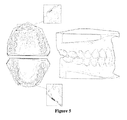
Figure 5 shows an example view of the virtual articulator. - In the following detailed description of the preferred embodiments, reference is made to the accompanying drawings, which form a part hereof, and within which are shown by way of illustration specific embodiments by which the invention may be practiced. The drawings described are only schematic and are non-limiting. In the drawings, the size of some of the elements may be exaggerated and not drawn on scale for illustrative purposes. Those skilled in the art will recognize that other embodiments may be utilized and structural changes may be made to the described embodiments without departing from the scope of the invention. The scope of the invention is defined by the claims. Furthermore, the terms first, second, third and the like in the description and in the claims, are used for distinguishing between similar elements and not necessarily for describing a sequential or chronological order. It is to be understood that the terms so used are interchangeable under appropriate circumstances and that the embodiments of the invention described herein are capable of operation in other sequences than described or illustrated herein.
- Moreover, the terms top, bottom, over, under and the like in the description and the claims are used for descriptive purposes and not necessarily for describing relative positions. It is to be understood that the terms so used are interchangeable under appropriate circumstances and that the embodiments of the invention described herein are capable of operation in other orientations than described or illustrated herein.
- It is to be noticed that the term "comprising", used in the claims, should not be interpreted as being restricted to the means listed thereafter; it does not exclude other elements or steps. Thus, the scope of the expression "a device comprising means A and B" should not be limited to devices consisting only of components A and B. It means that with respect to the present invention, the only relevant components of the device are A and B.
- In accordance with different embodiments of the present invention, a virtual articulator can be used in several ways to determine the impact of a proposed dental modification on the temporomandibular joint(s).
- As an example, two ways of using such a virtual articulator will be explained as two separate embodiments of the invention.
- A prerequisite for the use of a virtual articulator is digital information of at least a part of the patient's upper and/or lower dentitions. This information can be taken from physical reproductions like impressions or plaster casts, e.g. by taking an optical scan or a CT scan of an impression or digitising the information in any other way. He information can also be obtained directly from the patient, e.g. an Xray scan, a CT scan, an MRI scan, a PET scan, etc. Next, said digital information should be imported and positioned in the virtual articulator. Both a relative positioning of the upper and lower dentition with respect to each other and an absolute positioning of the upper and lower dentition in the virtual articulator should be performed. The relative positioning captures the patient's bite and can be obtained by a registration with a digitized bite registration or it can be done semiautomatically when a digitized bite registration is not available. The absolute positioning is meant to transfer the relation between the condyles and the maxilla from the patient to the articulator so that the model of the upper dentition is located in the same three-dimensional position with respect to the condylar replications on the articulator. Since the virtual articulator is used for calculating the resulting condylar displacement of a proposed dental treatment, it is obvious that this relation should correspond to the anatomical situation (as much as possible).
- Several positioning options exist, including, but not limited to the following items:
- Positioning based on medical images (e.g. X-ray, CT, MRI, ...) showing both (a part of) the dentition and the temporomandibular joint. By registering the image's temporomandibular joints with the condylar replicas on the virtual articulator, a fully equivalent positioning to the anatomical situation is obtained.
- Positioning based on measurements taken directly on the patient or on photographs of the patient's face. These measurements start from the patient's condyles and measure the distance to at least three well-defined points on the upper dentition. The localisation of the patient's intercondylar axis is similar to the average or simple facebow which uses average anatomic landmarks. The well-defined points are identified on the digitized upper dentition which is positioned with respect to the intercondylar axis based on the measurements.
- Positioning based on average anatomical values. These positioning methods are similar to the ones used on a mechanical articulator when no facebow transfer is used.
- An optional step in the use of the virtual articulator is the input of a diagnosis describing in a quantitative or a qualitative way the effect on (e.g. one or more of the symptoms of TMD / the temporomandibular joint) of at least one parameter related to the movement of the jaw. For this optional diagnostical input, the observed parameters are entered quantitatively or qualitatively or they can also be indicated on a schematic representation of the temporomandibular joint.
- Next, jaw movements can be simulated with the virtual articulator. These movements are either generated by a kinematic model or they can be the playback of electronically measured movement data on the patient.
- Either all or certain functional movements are executed and optionally, the tooth contact pattern is generated for each functional movement. Next, at least one dental modification is applied. This dental modification can be the result of a modification of this or another digital model of the patient's dentition (e.g. the rearrangement of one or more teeth, the adaptation of one or more the occlusal surfaces, the addition or removal of one or more teeth, ...). The virtual articulator is used with the same settings and the same functional movements are executed. Since the existing dentition has been changed, the tooth contacts during the movement may have changed also. The new tooth contacts are compared with the reference tooth contacts generated with the unmodified model (of the dentition) and the effect on any of the parameters as described in the diagnosis or the effect on the movement of the condyles is derived from this information. This method has the advantage that all functional movements available with the virtual articulator can be tried out and their impact on temporomandibular can be taken into consideration.
- Another way of using a virtual articulator to determine the impact of a proposed dental modification on the temporomandibular joint(s) is by simulating the movement of the jaws when closing the mouth. Due to the occurring tooth contacts, the original rotational character gets an additional translational component causing a posterior displacement of the condyles. The closing movement is simulated on a virtual articulator both for the unmodified and the modified model. The amount of posterior displacement is compared in both situations and the relative difference is computed. The diagnosis that can serve as the input for this way of using the virtual articulator is TMJ and muscle palpation. Again such a diagnosis defines the boundary or boundaries of the 'safe' zone. Any dental modification that exceeds one of these boundaries will be categorised as 'non-safe'.
- A virtual articulator provides a number of advantages over a mechanical articulator which makes it suitable determine the impact of a proposed dental modification on the temporomandibular joint(s). A virtual articulator is not limited by physical stops as is the case with a mechanical articulator. The condylar replicas on a mechanical articulator are restricted in their movements due to the physical boundaries of the simulated joint. This is for example the case for simulation of the movement when closing the jaws and prevents the plaster cast from moving into maximal occlusion. It is especially this boundary movement that is of interest for the current invention and which is possible with the virtual articulator of the current invention.
- A typical mechanical articulator is also not suitable to take custom parts like a custom condylar replica or custom shaped temporal fossa. This is however possible with a virtual articulator.
- Moreover, a virtual articulator allows to quantitatively compare a number of simulations easily because the simulated movements are reproducible, repeatable, durable and stable.
- Irrespective of how the virtual articulator is used, at least the following steps will be performed to assess the impact of a proposed dental modification on the temporomandibular joint and the risk of causing/deteriorating a temporomandibular disorder. In case a diagnosis is available, the boundaries within which the parameters can vary safely, are known. For each of these parameters and for each proposed modification, the value of the parameter during the movement is compared with the boundaries. If the boundary of a certain parameter is exceeded, the dental modification will be categorised as non-safe.
- In case no diagnosis is available, one or more virtual functional movements are simulated and the position and movement of the condyles is calculated, which represents their reference positions in the existing, untreated situation. One or more dental modifications are applied to the digital model and for each modification, the same one or more functional movements are simulated. Such dental modifications include, but are not limited to, the replacement of one or more teeth by artificial teeth, the replacement of one or more parts of a tooth by a prosthetic reconstruction such as a dental crown or veneer, the rearrangement of one or more existing teeth (orthodontic treatment), the distraction of one or both jaws in order to reposition the teeth (orthognatic treatment) and modifications of the occlusal surfaces of the teeth. For each dental modification, the difference in condylar position with respect to the untreated situation is considered for each contact point. When the difference reveals an anterior displacement of the tooth contact on the mandible or a posterior displacement of the tooth contact on the maxilla, the contact point is labeled negative, together with the value of anterior or posterior displacement. Similar, the contact point is labeled positive when the difference reveals a posterior displacement of the tooth contact on the mandible or an anterior displacement of the tooth contact on the maxilla. The overall effect is calculated as the sum of all signed, quantified displacements during the movement. A positive end result should be interpreted as having no harm in contributing to TMD. For a negative end result, the user can decide based on the amount of displacement of the condyles, whether the dental modification is allowable (i.e. does not include the risk for TMD) or not. This method default works with positive and negative values, assuming that the risk of temporomandibular joint disorder is triggered when the condyles displace posteriorly. In this respect, the user can also predefine ranges of values that will be used to automatically interpret the positive or negative outcome as being for example safe, risky, not safe and so on.
- It is also possible to combine the digital models of the upper and lower dentition with data obtained from CT images of the jaw. This data can either be used to optimize certain parameters of the kinematic model or it can be used directly in the calculations as such, i.e. to have a realistic temporomandibular joint (condyles and temporal fossa). This allows a more detailed analysis of the impact of the dental treatment on the jaw joint, for example the physical boundaries of the anatomical structure that guide the condyles can be taken into account when the relative condylar displacement is calculated.
- The methods and virtual articulator of the present invention can be implemented on a computing system which can be utilized with the methods and in a system according to the present invention including computer programs. A computer may include a video display terminal, a data input means such as a keyboard, and a graphic user interface indicating means such as a mouse. Computer may be implemented as a general purpose computer, e.g. a UNIX workstation or a personal computer.
- Typically, the computer includes a Central Processing Unit ("CPU"), such as a conventional microprocessor of which a Pentium processor supplied by Intel Corp. USA is only an example, and a number of other units interconnected via bus system. The bus system may be any suitable bus system. The computer includes at least one memory. Memory may include any of a variety of data storage devices known to the skilled person such as random-access memory ("RAM"), read-only memory ("ROM"), non-volatile read/write memory such as a hard disc as known to the skilled person. For example, computer may further include random-access memory ("RAM"), read-only memory ("ROM"), as well as a display adapter for connecting system bus to a video display terminal, and an optional input/output (I/O) adapter for connecting peripheral devices (e.g., disk and tape drives) to system bus. The video display terminal can be the visual output of computer, which can be any suitable display device such as a CRT-based video display well-known in the art of computer hardware. However, with a desk-top computer, a portable or a notebook-based computer, video display terminal can be replaced with a LCD-based or a gas plasma-based flat-panel display. Computer further includes user an interface adapter for connecting a keyboard, mouse, optional speaker. The relevant data required the digital model may be input directly into the computer using the keyboard or from storage devices, after which a processor carries out a method in accordance with the present invention. The relevant data may be provided on a suitable signal storage medium such as a diskette, a replaceable hard disc, an optical storage device such as a CD-ROM or DVD-ROM, a magnetic tape or similar. The results of the method may be transmitted to a further near or remote location. A communications adapter may connect the computer to a data network such as the Internet, an Intranet a Local or Wide Area network (LAN or WAN) or a CAN.
- The computer also includes a graphical user interface that resides within machine-readable media to direct the operation of the computer. Any suitable machine-readable media may retain the graphical user interface, such as a random access memory (RAM), a read-only memory (ROM), a magnetic diskette, magnetic tape, or optical disk (the last three being located in disk and tape drives). Any suitable operating system and associated graphical user interface (e.g., Microsoft Windows, Linux) may direct the CPU. In addition, the computer includes a control program that resides within computer memory storage. The control program contains instructions that when executed on the CPU allow the computer to carry out the operations described with respect to any of the methods of the present invention.
- The present invention also provides a computer program product for carrying out the method of the present invention and this can reside in any suitable memory. However, it is important that while the present invention has been, and will continue to be, that those skilled in the art will appreciate that the mechanisms of the present invention are capable of being distributed as a computer program product in a variety of forms, and that the present invention applies equally regardless of the particular type of signal bearing media used to actually carry out the distribution. Examples of computer readable signal bearing media include: recordable type media such as floppy disks and CD ROMs and transmission type media such as digital and analogue communication links.
- Accordingly, the present invention also includes a software product which when executed on a suitable computing device carries out any of the methods of the present invention. Suitable software can be obtained by programming in a suitable high level language such as C and compiling on a suitable compiler for the target computer processor or in an interpreted language such as Java and then compiled on a suitable compiler for implementation with the Java Virtual Machine.
- The present invention provides software, e.g. a computer program having code segments that provide a program that, when executed on a processing engine, provides a virtual simulation of an articulator. The software may include code segments that provide, when executed on the processing engine: loading a digital dental model of a patient into a computer running the virtual articulator simulation program. The software may include code segments that provide, when executed on the processing engine, simulation of one or more virtual functional movements. The software may also include code segments that provide, when executed on the processing engine, evaluation of at least one parameter related to the movement of the jaw when a dental modification is applied, the at least one parameter related to the movement of the jaw being selected from at least the amount of jaw movement in a certain direction, the speed at which a certain jaw movement is carried out and an angle around which a rotational jaw movement is carried out. The software may include code segments that provide, when executed on the processing engine: calculation of the position and movement of the condyles, which represents their reference positions in an existing, untreated situation, as well as application of one or more dental modifications to the digital model and for each modification, the same one or more functional movements are simulated whereby for each dental modification, the difference in condylar position with respect to the untreated situation is considered for each contact point. The software may include code segments that provide, when executed on the processing engine, a labelling such that when the difference reveals an anterior displacement of the tooth contact on the mandible or a posterior displacement of the tooth contact on the maxilla, the contact point is labeled negative, together with the value of anterior or posterior displacement, and the contact point is labeled positive when the difference reveals a posterior displacement of the tooth contact on the mandible or an anterior displacement of the tooth contact on the maxilla. The software may include code segments that provide, when executed on the processing engine, calculation of the overall effect as the sum of all signed, quantified displacements during the movement. The software may include code segments that provide, when executed on the processing engine: a replacement when the dental modifications include replacement of one or more teeth by artificial teeth, the replacement being of one or more parts of a tooth by a prosthetic reconstruction such as a dental crown or veneer, the rearrangement of one or more existing teeth (orthodontic treatment), the distraction of one or both jaws in order to reposition the teeth (orthognatic treatment) or modifications of the occlusal surfaces of the teeth. The software may include code segments that provide, when executed on the processing engine, combination of digital models of the upper and lower dentition of the patient with data obtained from a volumetric scan of the jaw.
- The software may include code segments that provide, when executed on the processing engine, use of the data either to optimize certain parameters of the model or use directly in the calculations as such. The software may include code segments that provide, when executed on the processing engine, that the virtual articulator simulates forward, backward, left lateral, right lateral, opening and closing mandibular movements as constrained by, on the one hand, the geometric restrictions imposed by the mathematical modeling of the temporomandibular joint and, on the other hand, the tooth contacts encountered during the movement. The software may include code segments that provide, when executed on the processing engine, a playback of movements. The software may include code segments that provide, when executed on the processing engine, construction of a movement model based on the data in order to simulate mandibular movement following a change to the model(s) of the dentition. The software may include code segments that provide, when executed on the processing engine, visualization of the simulated mandibular movement by a moving upper dentition or a moving lower dentition. The software may include code segments that provide, when executed on the processing engine: calculation and visualizing of the occlusal contacts. The software may include code segments that provide, when executed on the processing engine: simulation of the mandibular movement in an anatomical way that copies the real biomechanics of the jaws and the temporomandibular joints by taking into account muscle data. The software may include code segments that provide, when executed on the processing engine: visualisation of color codes representing safe and unsafe movement.
Claims (11)
- A method for assessing an impact of a proposed dental modification on a temporomandibular joint of a patient, the method comprising:- loading a digital dental model of the patient into a computer running a virtual articulator simulation program,- simulating one or more virtual functional movements of a jaw of the patient on said computer,- applying said proposed dental modification to the digital model in the computer,- simulating on said computer said one or more virtual functional movements for said proposed dental modification,
characterized in that the method further comprises- providing by said computer information to a user on at least one parameter related to said one or more virtual functional movements when said proposed dental modification is applied, said at least one parameter being selected from at least the amount of jaw movement in a certain direction, the speed at which a certain jaw movement is carried out and an angle around which a rotational jaw movement is carried out, and wherein said information is for said assessing said impact of said proposed dental modification on said temporomandibular joint of said patient, wherein said at least one parameter related to said one or more virtual functional movements is a displacement of a condyle of said patient, the method further comprising:- calculating by said computer a first displacement of said condyle for each of said one or more virtual functional movements before said applying said proposed dental modification to the digital model,- calculating by said computer a second displacement of said condyle for each of said one or more virtual functional movements after said applying said proposed dental modification to the digital model,- determining by said computer a relative difference in condylar displacement from said second and said first displacement, for each of said one or more virtual functional movements,- providing by said computer for each of said one or more virtual functional movements said relative difference in condylar displacement to said user, for said assessing said impact of said proposed dental modification on said temporomandibular joint of said patient,the method further comprising, for each one of said one or more virtual functional movements:- determining by said computer all tooth contact points for said each one virtual functional movement,- considering for each of said tooth contact points a difference in condylar position between a situation after applying said proposed dental modification and an untreated situation, before applying said proposed dental modification,- labeling by said computer, for each of said tooth contact points, said tooth contact point negative when said difference in condylar position reveals an anterior displacement of the tooth contact on the mandible or a posterior displacement of the tooth contact on the maxilla, together with the value of anterior or posterior displacement, and- labeling by said computer said tooth contact point positive, together with the value of anterior or posterior displacement, when the difference reveals a posterior displacement of the tooth contact on the mandible or an anterior displacement of the tooth contact on the maxilla,- calculating by said computer an overall effect as a sum of all signed, quantified displacements during said each one virtual functional movement,- providing by said computer said sum to said user for said assessing said impact of said proposed dental modification on said temporomandibular joint of said patient. - The method of claim 1, further comprising:- inputting to said computer a diagnosis describing an undesired effect on said temporomandibular joint of said patient caused by said at least one parameter related to said one or more virtual functional movements of said jaw of said patient,- receiving by said computer, based on said diagnosis, boundaries within which said at least one parameter may vary safely,- comparing by said computer a value of said at least one parameter with said boundaries when said proposed dental modification is applied,- categorising by said computer said proposed dental modification as unsafe if said value exceeds a boundary out of said boundaries.
- The method of claim 1 wherein said proposed dental modification includes replacement of one or more teeth by artificial teeth, replacement of one or more parts of a tooth by a prosthetic reconstruction such as a dental crown or veneer, a rearrangement of one or more existing teeth (orthodontic treatment), a distraction of one or both jaws in order to reposition the teeth (orthognatic treatment) or modifications of occlusal surfaces of the teeth.
- The method according to any previous claim further comprising simulating by said computer forward, backward, left lateral, right lateral, opening and closing mandibular movements as constrained by, on the one hand, geometric restrictions imposed by mathematical modeling of the temporomandibular joint and, on the other hand, tooth contacts encountered during the movement.
- The method of any previous claim, further comprising constructing by said computer a movement model to simulate mandibular movement following said proposed dental modification.
- The method claim 5, further comprising simulating by said computer the mandibular movement in an anatomical way that copies the real biomechanics of both jaws and both temporomandibular joints of the patient by taking into account muscle data.
- A computer based virtual articulator for assessing an impact of a proposed dental modification on a temporomandibular joint of a patient, the computer based virtual articulator comprising:- means for loading a digital dental model of the patient into a computer running a virtual articulator simulation program,- means for simulating one or more virtual functional movements of a jaw of the patient,- means for applying said proposed dental modification to the digital model,- means for simulating said one or more virtual functional movements for said proposed dental modification,characterized in that the computer based virtual articulator further comprises:- means of providing information to a user on at least one parameter related to said one or more virtual functional movements when said proposed dental modification is applied, said at least one parameter being selected from at least the amount of jaw movement in a certain direction, the speed at which a certain jaw movement is carried out and an angle around which a rotational jaw movement is carried out, and wherein said information is for said assessing said impact of said proposed dental modification on said temporomandibular joint of said patient, wherein said at least one parameter related to said one or more virtual functional movements is a displacement of a condyle of said patient, the virtual articulator further comprising:- means for calculating a first displacement of said condyle for each of said one or more virtual functional movements before application of said proposed dental modification to the digital model,- means for calculating a second displacement of said condyle for each of said one or more virtual functional movements after application of said proposed dental modification to the digital model,- means for determining a relative difference in condylar displacement from said second and said first displacement, for each of said one or more virtual functional movements,- means for providing for each of said one or more virtual functional movements said relative difference in condylar displacement to said user, for said assessing said impact of said proposed dental modification on said temporomandibular joint of said patient,the virtual articulator further comprising, for each one of said one or more virtual functional movements, means:- for determining all tooth contact points for said each one virtual functional movement,- for considering for each of said tooth contact points a difference in condylar position between a situation after said application of said proposed dental modification and an untreated situation, before said application of said proposed dental modification,- for labeling, for each of said tooth contact points, said tooth contact point negative when said difference in condylar position reveals an anterior displacement of the tooth contact on the mandible or a posterior displacement of the tooth contact on the maxilla, together with the value of anterior or posterior displacement, and- for labeling said tooth contact point positive, together with the value of anterior or posterior displacement, when the difference reveals a posterior displacement of the tooth contact on the mandible or an anterior displacement of the tooth contact on the maxilla,- for calculating an overall effect as a sum of all signed, quantified displacements during said each one virtual functional movement,- for providing said sum to said user for said assessing said impact of said proposed dental modification on said temporomandibular joint of said patient.
- The virtual articulator of claim 7 further comprising:- means for inputting a diagnosis describing an undesired effect on said temporomandibular joint of said patient caused by said at least one parameter related to said one or more virtual functional movements of said jaw of said patient,- means for receiving, based on said diagnosis, boundaries within which said at least one parameter may vary safely,- means for comparing a value of said at least one parameter with said boundaries when said proposed dental modification is applied,- means for categorising said proposed dental modification as unsafe if said value exceeds a boundary out of said boundaries.
- The virtual articulator of claim 7, wherein said proposed dental modification includes replacement of one or more teeth by artificial teeth, replacement of one or more parts of a tooth by a prosthetic reconstruction such as a dental crown or veneer, a rearrangement of one or more existing teeth (orthodontic treatment), a distraction of one or both jaws in order to reposition the teeth (orthognatic treatment) or modifications of occlusal surfaces of the teeth.
- The virtual articulator of any of the claims 7 to 9, further comprising means for simulating the mandibular movement in an anatomical way that copies the real biomechanics of both jaws and both temporomandibular joints of the patient by taking into account muscle data.
- A computer program product comprising code segments that when implemented on a computing system implement the methods of any of the claims 1 to 6.
Applications Claiming Priority (2)
| Application Number | Priority Date | Filing Date | Title |
|---|---|---|---|
| GBGB0807754.7A GB0807754D0 (en) | 2008-04-29 | 2008-04-29 | Method to determine the impact of a prposed dental modification on the temporomandobular joint |
| PCT/EP2009/055180 WO2009133131A1 (en) | 2008-04-29 | 2009-04-29 | Method to determine the impact of a proposed dental modification on the temporomandibular joint |
Publications (2)
| Publication Number | Publication Date |
|---|---|
| EP2286403A1 EP2286403A1 (en) | 2011-02-23 |
| EP2286403B1 true EP2286403B1 (en) | 2016-03-23 |
Family
ID=39522725
Family Applications (1)
| Application Number | Title | Priority Date | Filing Date |
|---|---|---|---|
| EP09738175.0A Not-in-force EP2286403B1 (en) | 2008-04-29 | 2009-04-29 | Method to determine the impact of a proposed dental modification on the temporomandibular joint |
Country Status (6)
| Country | Link |
|---|---|
| US (1) | US20110191081A1 (en) |
| EP (1) | EP2286403B1 (en) |
| JP (1) | JP5204297B2 (en) |
| ES (1) | ES2570968T3 (en) |
| GB (1) | GB0807754D0 (en) |
| WO (1) | WO2009133131A1 (en) |
Families Citing this family (38)
| Publication number | Priority date | Publication date | Assignee | Title |
|---|---|---|---|---|
| US8185224B2 (en) | 2005-06-30 | 2012-05-22 | Biomet 3I, Llc | Method for manufacturing dental implant components |
| US11219511B2 (en) | 2005-10-24 | 2022-01-11 | Biomet 3I, Llc | Methods for placing an implant analog in a physical model of the patient's mouth |
| US8257083B2 (en) | 2005-10-24 | 2012-09-04 | Biomet 3I, Llc | Methods for placing an implant analog in a physical model of the patient's mouth |
| US8206153B2 (en) | 2007-05-18 | 2012-06-26 | Biomet 3I, Inc. | Method for selecting implant components |
| US8777612B2 (en) | 2007-11-16 | 2014-07-15 | Biomet 3I, Llc | Components for use with a surgical guide for dental implant placement |
| ES2683119T3 (en) | 2008-04-15 | 2018-09-25 | Biomet 3I, Llc | Method of creating an accurate digital dental model of bones and soft tissues |
| US8011927B2 (en) | 2008-04-16 | 2011-09-06 | Biomet 3I, Llc | Method for pre-operative visualization of instrumentation used with a surgical guide for dental implant placement |
| WO2010099463A2 (en) | 2009-02-27 | 2010-09-02 | University Of Pittsburgh-Of The Commonwealth System Of Higher Education | Joint bioscaffolds |
| JP5859986B2 (en) | 2010-02-25 | 2016-02-16 | 3シェイプ アー/エス | Dynamic virtual articulator |
| BR112012021294B1 (en) | 2010-02-25 | 2021-07-20 | 3Shape A/S | COMPUTER IMPLEMENTED METHOD OF USING A DYNAMIC VIRTUAL ARTICULATOR TO SIMULATE TEETH OCCLUSION |
| CA2796066C (en) | 2010-04-16 | 2018-08-14 | Ronald G. Presswood | Dynamically generated dental articulator controls |
| DK2462893T3 (en) | 2010-12-07 | 2014-06-30 | Biomet 3I Llc | Universal scanning part for use on dental implant and dental implant analogs |
| EP3569167B1 (en) * | 2011-02-18 | 2021-06-16 | 3M Innovative Properties Co. | Orthodontic digital setups |
| GB201108003D0 (en) * | 2011-05-13 | 2011-06-29 | Materialise Dental Nv | Endodontic treatment simulation system |
| JP5834136B2 (en) | 2011-05-16 | 2015-12-16 | バイオメット・3アイ・エルエルシー | Temporary prosthesis assembly |
| JP4997340B1 (en) * | 2011-08-23 | 2012-08-08 | 株式会社松風 | Wear evaluation device, wear evaluation method, and wear evaluation program |
| EP2763622B1 (en) * | 2011-10-06 | 2019-10-02 | 3Shape A/S | Virtual design of the attachment of a dental model in an articulator |
| US9452032B2 (en) | 2012-01-23 | 2016-09-27 | Biomet 3I, Llc | Soft tissue preservation temporary (shell) immediate-implant abutment with biological active surface |
| US9089382B2 (en) | 2012-01-23 | 2015-07-28 | Biomet 3I, Llc | Method and apparatus for recording spatial gingival soft tissue relationship to implant placement within alveolar bone for immediate-implant placement |
| US10380271B2 (en) * | 2012-02-14 | 2019-08-13 | Ronald G. Presswood | Method and apparatus for dental articulation |
| US8594408B2 (en) * | 2012-04-17 | 2013-11-26 | Poly Virtual Occlusion, LLC | Systems and methods for analyzing dynamic dental occlusions and making dental appliances |
| US20140080092A1 (en) | 2012-09-14 | 2014-03-20 | Biomet 3I, Llc | Temporary dental prosthesis for use in developing final dental prosthesis |
| GB2505936A (en) | 2012-09-17 | 2014-03-19 | Materialise Dental Nv | 3D modelling of scanned body |
| US8926328B2 (en) | 2012-12-27 | 2015-01-06 | Biomet 3I, Llc | Jigs for placing dental implant analogs in models and methods of doing the same |
| ES2848027T3 (en) | 2013-07-19 | 2021-08-05 | 3Shape As | Dental model alignment using 2D photography |
| EP3094283A4 (en) | 2013-12-20 | 2018-01-24 | Biomet 3i, LLC | Dental system for developing custom prostheses through scanning of coded members |
| US9700390B2 (en) | 2014-08-22 | 2017-07-11 | Biomet 3I, Llc | Soft-tissue preservation arrangement and method |
| WO2016144970A1 (en) | 2015-03-09 | 2016-09-15 | Chu Stephen J | Gingival ovate pontic and methods of using the same |
| CA2979090C (en) | 2015-03-09 | 2023-09-05 | 3Drpd Inc. | Computer-aided design and manufacturing of removable partial denture frameworks with enhanced biomechanical properties |
| RU2652014C1 (en) * | 2017-09-20 | 2018-04-24 | Общество с ограниченной ответственностью "Авантис3Д" | Method of using a dynamic virtual articulator for simulation modeling of occlusion when designing a dental prosthesis for a patient and a carrier of information |
| WO2019172476A1 (en) * | 2018-03-08 | 2019-09-12 | 주식회사 쓰리디산업영상 | Oral occlusion analysis method and device on basis of patient's temporomandibular joint motion |
| KR102033250B1 (en) * | 2018-06-25 | 2019-10-16 | 오스템임플란트 주식회사 | Apparatus and method for implementing occlusal relationships in prosthodontic design process |
| FR3088820B1 (en) * | 2018-11-23 | 2022-08-12 | Modjaw | METHOD FOR ANIMATING MODELS OF THE MANDIBULAR AND MAXILLARY ARCHES OF A PATIENT IN A CORRECTED INTERMAXILLARY RELATION |
| CN110147647B (en) * | 2019-06-15 | 2023-06-20 | 广西科技大学 | Dental bone three-dimensional digital modeling method based on temporomandibular joint stability |
| CN112426243B (en) * | 2020-11-18 | 2022-01-21 | 北京华航无线电测量研究所 | Condyle motion trajectory determination method |
| CN115273589B (en) * | 2022-07-11 | 2025-04-04 | 北京大学口腔医学院 | Orthodontic method, device, electronic device and storage medium based on virtual reality |
| CN121986382A (en) * | 2023-09-26 | 2026-05-05 | 阿莱恩技术有限公司 | System and method for alignment and registration |
| CN120563476A (en) * | 2025-05-29 | 2025-08-29 | 重庆三峡医药高等专科学校 | A method for analyzing the impact of denture restoration on the temporomandibular joint of patients based on big data |
Family Cites Families (18)
| Publication number | Priority date | Publication date | Assignee | Title |
|---|---|---|---|---|
| US2350849A (en) | 1940-01-19 | 1944-06-06 | Sr Heinrich Walther | Shoe forming and toe lasting machine |
| US5975893A (en) * | 1997-06-20 | 1999-11-02 | Align Technology, Inc. | Method and system for incrementally moving teeth |
| US6450807B1 (en) * | 1997-06-20 | 2002-09-17 | Align Technology, Inc. | System and method for positioning teeth |
| US6152731A (en) | 1997-09-22 | 2000-11-28 | 3M Innovative Properties Company | Methods for use in dental articulation |
| US6136610A (en) | 1998-11-23 | 2000-10-24 | Praxsys Biosystems, Inc. | Method and apparatus for performing a lateral flow assay |
| US6318994B1 (en) * | 1999-05-13 | 2001-11-20 | Align Technology, Inc | Tooth path treatment plan |
| US7471821B2 (en) * | 2000-04-28 | 2008-12-30 | Orametrix, Inc. | Method and apparatus for registering a known digital object to scanned 3-D model |
| CA2350849A1 (en) * | 2001-06-15 | 2002-12-15 | Dentalmatic Technologies Inc. | Virtual articulator |
| US7963765B2 (en) * | 2002-09-20 | 2011-06-21 | Ortho-Tain, Inc | System of dental appliances having various sizes and types and a method for treating malocclusions of patients of various ages without adjustments or appointments |
| DE10304757B4 (en) * | 2003-02-05 | 2005-07-21 | Heraeus Kulzer Gmbh | Device and method for the production of dentures |
| US9642685B2 (en) * | 2003-07-17 | 2017-05-09 | Pentron Clinical Technologies, Llc | Digital technologies for planning and carrying out dental restorative procedures |
| US7412298B2 (en) * | 2004-02-13 | 2008-08-12 | Presswood Ronald G | Method and system for morphometric analysis of human dental occlusal function and uses thereof |
| JP4338584B2 (en) * | 2004-05-20 | 2009-10-07 | 株式会社松風 | Dental training evaluation program, evaluation body and evaluation device |
| GB0414277D0 (en) * | 2004-06-25 | 2004-07-28 | Leuven K U Res & Dev | Orthognatic surgery |
| JP4468871B2 (en) * | 2005-08-02 | 2010-05-26 | 秀文 伊藤 | Dental care support method and system |
| US7806687B2 (en) * | 2005-08-19 | 2010-10-05 | National University Corporation Okayama University | Occlusal state correction-supporting apparatus, program, and recording medium |
| JP4408430B2 (en) * | 2005-11-11 | 2010-02-03 | 富士通株式会社 | Simulation method to support dental treatment |
| US7840042B2 (en) * | 2006-01-20 | 2010-11-23 | 3M Innovative Properties Company | Superposition for visualization of three-dimensional data acquisition |
-
2008
- 2008-04-29 GB GBGB0807754.7A patent/GB0807754D0/en not_active Ceased
-
2009
- 2009-04-29 WO PCT/EP2009/055180 patent/WO2009133131A1/en not_active Ceased
- 2009-04-29 US US12/990,168 patent/US20110191081A1/en not_active Abandoned
- 2009-04-29 ES ES09738175T patent/ES2570968T3/en active Active
- 2009-04-29 EP EP09738175.0A patent/EP2286403B1/en not_active Not-in-force
- 2009-04-29 JP JP2011506700A patent/JP5204297B2/en not_active Expired - Fee Related
Also Published As
| Publication number | Publication date |
|---|---|
| US20110191081A1 (en) | 2011-08-04 |
| GB0807754D0 (en) | 2008-06-04 |
| JP2011523565A (en) | 2011-08-18 |
| WO2009133131A1 (en) | 2009-11-05 |
| JP5204297B2 (en) | 2013-06-05 |
| EP2286403A1 (en) | 2011-02-23 |
| ES2570968T3 (en) | 2016-05-23 |
Similar Documents
| Publication | Publication Date | Title |
|---|---|---|
| US20110191081A1 (en) | Method to determine the impact of a proposed dental modification on the temporomandibular joint | |
| US11751981B2 (en) | Dynamic virtual articulator for simulating occlusion of teeth | |
| US11633265B2 (en) | Dynamic virtual articulator for simulating occlusion of teeth | |
| Pokorny et al. | Occlusion for fixed prosthodontics: a historical perspective of the gnathological influence | |
| Crawford | Condylar axis position, as determined by the occlusion and measured by the CPI instrument, and signs and symptoms of temporomandibular dysfunction | |
| US8620045B2 (en) | System , method and article for measuring and reporting craniomandibular biomechanical functions | |
| JP5676325B2 (en) | Information processing apparatus, information processing method, and program | |
| US20120115107A1 (en) | System and method for automated manufacturing of dental orthotics | |
| US20130204600A1 (en) | Virtual articulator | |
| US20240216112A1 (en) | Virtual Dental Articulator | |
| Ahn et al. | Analyzing center of rotation during opening and closing movements of the mandible using computer simulations | |
| Choi et al. | Biomechanics and functional distortion of the human mandible | |
| Fukoe et al. | Three-dimensional analyses of the mandible and the occlusal architecture of mandibular dentition | |
| CN120769733A (en) | Method and analysis system for generating a digital 3D model of a patient's dentition | |
| Martinez et al. | Clinical Data-Driven Finite Element Analysis of the Kinetics of Chewing Cycles in Order to Optimize Occlusal Reconstructions. | |
| Luchowski et al. | Forming an occlusal splint to support the therapy of bruxism | |
| Sarinnaphakorn et al. | The effect of posterior tooth guidance on non‐working side arbitrary condylar point movement | |
| Garg et al. | Craniofacial Imaging and Diagnosis of Temporomandibular Disorders Based on the Vienna Concept | |
| Davies | The Examination and Recording of the Occlusion: Why and How | |
| Moon et al. | A Virtual Patient‐Based Workflow for Mandibular Stabilization Using a Virtual Articulator and Digital Splint | |
| Pandya | Occlusion in Prosthodontics: Principles and Management of Bite Relationships | |
| Dilip | A Comparative Study to Determine the Correlation Between Condylar Guidance, Incisal Guidance and Cuspal Inclines of Posterior Teeth Using Clinical and Radiographic Methods | |
| Lahori et al. | VIRTUAL ARTICULATORS: CHANGING TRENDS IN PROSTHODONTICS. |
Legal Events
| Date | Code | Title | Description |
|---|---|---|---|
| PUAI | Public reference made under article 153(3) epc to a published international application that has entered the european phase |
Free format text: ORIGINAL CODE: 0009012 |
|
| 17P | Request for examination filed |
Effective date: 20101108 |
|
| AK | Designated contracting states |
Kind code of ref document: A1 Designated state(s): AT BE BG CH CY CZ DE DK EE ES FI FR GB GR HR HU IE IS IT LI LT LU LV MC MK MT NL NO PL PT RO SE SI SK TR |
|
| AX | Request for extension of the european patent |
Extension state: AL BA RS |
|
| DAX | Request for extension of the european patent (deleted) | ||
| 17Q | First examination report despatched |
Effective date: 20130121 |
|
| RAP1 | Party data changed (applicant data changed or rights of an application transferred) |
Owner name: DENTSPLY IMPLANTS NV |
|
| REG | Reference to a national code |
Ref country code: DE Ref legal event code: R079 Ref document number: 602009037042 Country of ref document: DE Free format text: PREVIOUS MAIN CLASS: G09B0023280000 Ipc: A61C0011000000 |
|
| GRAP | Despatch of communication of intention to grant a patent |
Free format text: ORIGINAL CODE: EPIDOSNIGR1 |
|
| RIC1 | Information provided on ipc code assigned before grant |
Ipc: A61C 13/00 20060101ALI20150903BHEP Ipc: G09B 23/28 20060101ALI20150903BHEP Ipc: A61C 11/00 20060101AFI20150903BHEP Ipc: A61C 19/05 20060101ALI20150903BHEP |
|
| INTG | Intention to grant announced |
Effective date: 20150917 |
|
| GRAS | Grant fee paid |
Free format text: ORIGINAL CODE: EPIDOSNIGR3 |
|
| GRAA | (expected) grant |
Free format text: ORIGINAL CODE: 0009210 |
|
| AK | Designated contracting states |
Kind code of ref document: B1 Designated state(s): AT BE BG CH CY CZ DE DK EE ES FI FR GB GR HR HU IE IS IT LI LT LU LV MC MK MT NL NO PL PT RO SE SI SK TR |
|
| REG | Reference to a national code |
Ref country code: GB Ref legal event code: FG4D |
|
| REG | Reference to a national code |
Ref country code: CH Ref legal event code: EP |
|
| REG | Reference to a national code |
Ref country code: AT Ref legal event code: REF Ref document number: 782347 Country of ref document: AT Kind code of ref document: T Effective date: 20160415 |
|
| REG | Reference to a national code |
Ref country code: IE Ref legal event code: FG4D |
|
| REG | Reference to a national code |
Ref country code: FR Ref legal event code: PLFP Year of fee payment: 8 |
|
| REG | Reference to a national code |
Ref country code: DE Ref legal event code: R096 Ref document number: 602009037042 Country of ref document: DE |
|
| REG | Reference to a national code |
Ref country code: ES Ref legal event code: FG2A Ref document number: 2570968 Country of ref document: ES Kind code of ref document: T3 Effective date: 20160523 |
|
| REG | Reference to a national code |
Ref country code: LT Ref legal event code: MG4D |
|
| REG | Reference to a national code |
Ref country code: NL Ref legal event code: MP Effective date: 20160323 |
|
| PG25 | Lapsed in a contracting state [announced via postgrant information from national office to epo] |
Ref country code: NO Free format text: LAPSE BECAUSE OF FAILURE TO SUBMIT A TRANSLATION OF THE DESCRIPTION OR TO PAY THE FEE WITHIN THE PRESCRIBED TIME-LIMIT Effective date: 20160623 Ref country code: GR Free format text: LAPSE BECAUSE OF FAILURE TO SUBMIT A TRANSLATION OF THE DESCRIPTION OR TO PAY THE FEE WITHIN THE PRESCRIBED TIME-LIMIT Effective date: 20160624 Ref country code: FI Free format text: LAPSE BECAUSE OF FAILURE TO SUBMIT A TRANSLATION OF THE DESCRIPTION OR TO PAY THE FEE WITHIN THE PRESCRIBED TIME-LIMIT Effective date: 20160323 |
|
| REG | Reference to a national code |
Ref country code: AT Ref legal event code: MK05 Ref document number: 782347 Country of ref document: AT Kind code of ref document: T Effective date: 20160323 |
|
| PG25 | Lapsed in a contracting state [announced via postgrant information from national office to epo] |
Ref country code: SE Free format text: LAPSE BECAUSE OF FAILURE TO SUBMIT A TRANSLATION OF THE DESCRIPTION OR TO PAY THE FEE WITHIN THE PRESCRIBED TIME-LIMIT Effective date: 20160323 Ref country code: LV Free format text: LAPSE BECAUSE OF FAILURE TO SUBMIT A TRANSLATION OF THE DESCRIPTION OR TO PAY THE FEE WITHIN THE PRESCRIBED TIME-LIMIT Effective date: 20160323 Ref country code: NL Free format text: LAPSE BECAUSE OF FAILURE TO SUBMIT A TRANSLATION OF THE DESCRIPTION OR TO PAY THE FEE WITHIN THE PRESCRIBED TIME-LIMIT Effective date: 20160323 Ref country code: LT Free format text: LAPSE BECAUSE OF FAILURE TO SUBMIT A TRANSLATION OF THE DESCRIPTION OR TO PAY THE FEE WITHIN THE PRESCRIBED TIME-LIMIT Effective date: 20160323 |
|
| PG25 | Lapsed in a contracting state [announced via postgrant information from national office to epo] |
Ref country code: EE Free format text: LAPSE BECAUSE OF FAILURE TO SUBMIT A TRANSLATION OF THE DESCRIPTION OR TO PAY THE FEE WITHIN THE PRESCRIBED TIME-LIMIT Effective date: 20160323 Ref country code: IS Free format text: LAPSE BECAUSE OF FAILURE TO SUBMIT A TRANSLATION OF THE DESCRIPTION OR TO PAY THE FEE WITHIN THE PRESCRIBED TIME-LIMIT Effective date: 20160723 Ref country code: PL Free format text: LAPSE BECAUSE OF FAILURE TO SUBMIT A TRANSLATION OF THE DESCRIPTION OR TO PAY THE FEE WITHIN THE PRESCRIBED TIME-LIMIT Effective date: 20160323 |
|
| PG25 | Lapsed in a contracting state [announced via postgrant information from national office to epo] |
Ref country code: PT Free format text: LAPSE BECAUSE OF FAILURE TO SUBMIT A TRANSLATION OF THE DESCRIPTION OR TO PAY THE FEE WITHIN THE PRESCRIBED TIME-LIMIT Effective date: 20160725 Ref country code: RO Free format text: LAPSE BECAUSE OF FAILURE TO SUBMIT A TRANSLATION OF THE DESCRIPTION OR TO PAY THE FEE WITHIN THE PRESCRIBED TIME-LIMIT Effective date: 20160323 Ref country code: AT Free format text: LAPSE BECAUSE OF FAILURE TO SUBMIT A TRANSLATION OF THE DESCRIPTION OR TO PAY THE FEE WITHIN THE PRESCRIBED TIME-LIMIT Effective date: 20160323 Ref country code: SK Free format text: LAPSE BECAUSE OF FAILURE TO SUBMIT A TRANSLATION OF THE DESCRIPTION OR TO PAY THE FEE WITHIN THE PRESCRIBED TIME-LIMIT Effective date: 20160323 Ref country code: CZ Free format text: LAPSE BECAUSE OF FAILURE TO SUBMIT A TRANSLATION OF THE DESCRIPTION OR TO PAY THE FEE WITHIN THE PRESCRIBED TIME-LIMIT Effective date: 20160323 |
|
| REG | Reference to a national code |
Ref country code: CH Ref legal event code: PL |
|
| REG | Reference to a national code |
Ref country code: DE Ref legal event code: R097 Ref document number: 602009037042 Country of ref document: DE |
|
| REG | Reference to a national code |
Ref country code: IE Ref legal event code: MM4A |
|
| PLBE | No opposition filed within time limit |
Free format text: ORIGINAL CODE: 0009261 |
|
| STAA | Information on the status of an ep patent application or granted ep patent |
Free format text: STATUS: NO OPPOSITION FILED WITHIN TIME LIMIT |
|
| PG25 | Lapsed in a contracting state [announced via postgrant information from national office to epo] |
Ref country code: LI Free format text: LAPSE BECAUSE OF NON-PAYMENT OF DUE FEES Effective date: 20160430 Ref country code: CH Free format text: LAPSE BECAUSE OF NON-PAYMENT OF DUE FEES Effective date: 20160430 Ref country code: DK Free format text: LAPSE BECAUSE OF FAILURE TO SUBMIT A TRANSLATION OF THE DESCRIPTION OR TO PAY THE FEE WITHIN THE PRESCRIBED TIME-LIMIT Effective date: 20160323 |
|
| PG25 | Lapsed in a contracting state [announced via postgrant information from national office to epo] |
Ref country code: BG Free format text: LAPSE BECAUSE OF FAILURE TO SUBMIT A TRANSLATION OF THE DESCRIPTION OR TO PAY THE FEE WITHIN THE PRESCRIBED TIME-LIMIT Effective date: 20160623 |
|
| 26N | No opposition filed |
Effective date: 20170102 |
|
| REG | Reference to a national code |
Ref country code: FR Ref legal event code: PLFP Year of fee payment: 9 |
|
| PG25 | Lapsed in a contracting state [announced via postgrant information from national office to epo] |
Ref country code: SI Free format text: LAPSE BECAUSE OF FAILURE TO SUBMIT A TRANSLATION OF THE DESCRIPTION OR TO PAY THE FEE WITHIN THE PRESCRIBED TIME-LIMIT Effective date: 20160323 Ref country code: IE Free format text: LAPSE BECAUSE OF NON-PAYMENT OF DUE FEES Effective date: 20160429 |
|
| REG | Reference to a national code |
Ref country code: FR Ref legal event code: PLFP Year of fee payment: 10 |
|
| PG25 | Lapsed in a contracting state [announced via postgrant information from national office to epo] |
Ref country code: CY Free format text: LAPSE BECAUSE OF FAILURE TO SUBMIT A TRANSLATION OF THE DESCRIPTION OR TO PAY THE FEE WITHIN THE PRESCRIBED TIME-LIMIT Effective date: 20160323 Ref country code: HU Free format text: LAPSE BECAUSE OF FAILURE TO SUBMIT A TRANSLATION OF THE DESCRIPTION OR TO PAY THE FEE WITHIN THE PRESCRIBED TIME-LIMIT; INVALID AB INITIO Effective date: 20090429 |
|
| PG25 | Lapsed in a contracting state [announced via postgrant information from national office to epo] |
Ref country code: MC Free format text: LAPSE BECAUSE OF FAILURE TO SUBMIT A TRANSLATION OF THE DESCRIPTION OR TO PAY THE FEE WITHIN THE PRESCRIBED TIME-LIMIT Effective date: 20160323 Ref country code: TR Free format text: LAPSE BECAUSE OF FAILURE TO SUBMIT A TRANSLATION OF THE DESCRIPTION OR TO PAY THE FEE WITHIN THE PRESCRIBED TIME-LIMIT Effective date: 20160323 Ref country code: MT Free format text: LAPSE BECAUSE OF NON-PAYMENT OF DUE FEES Effective date: 20160430 Ref country code: MK Free format text: LAPSE BECAUSE OF FAILURE TO SUBMIT A TRANSLATION OF THE DESCRIPTION OR TO PAY THE FEE WITHIN THE PRESCRIBED TIME-LIMIT Effective date: 20160323 Ref country code: LU Free format text: LAPSE BECAUSE OF NON-PAYMENT OF DUE FEES Effective date: 20160429 Ref country code: HR Free format text: LAPSE BECAUSE OF FAILURE TO SUBMIT A TRANSLATION OF THE DESCRIPTION OR TO PAY THE FEE WITHIN THE PRESCRIBED TIME-LIMIT Effective date: 20160323 |
|
| PGFP | Annual fee paid to national office [announced via postgrant information from national office to epo] |
Ref country code: IT Payment date: 20210310 Year of fee payment: 13 Ref country code: FR Payment date: 20210309 Year of fee payment: 13 |
|
| PGFP | Annual fee paid to national office [announced via postgrant information from national office to epo] |
Ref country code: BE Payment date: 20210316 Year of fee payment: 13 |
|
| PGFP | Annual fee paid to national office [announced via postgrant information from national office to epo] |
Ref country code: DE Payment date: 20210330 Year of fee payment: 13 |
|
| PGFP | Annual fee paid to national office [announced via postgrant information from national office to epo] |
Ref country code: GB Payment date: 20210408 Year of fee payment: 13 Ref country code: ES Payment date: 20210505 Year of fee payment: 13 |
|
| REG | Reference to a national code |
Ref country code: DE Ref legal event code: R119 Ref document number: 602009037042 Country of ref document: DE |
|
| GBPC | Gb: european patent ceased through non-payment of renewal fee |
Effective date: 20220429 |
|
| REG | Reference to a national code |
Ref country code: BE Ref legal event code: MM Effective date: 20220430 |
|
| PG25 | Lapsed in a contracting state [announced via postgrant information from national office to epo] |
Ref country code: GB Free format text: LAPSE BECAUSE OF NON-PAYMENT OF DUE FEES Effective date: 20220429 Ref country code: FR Free format text: LAPSE BECAUSE OF NON-PAYMENT OF DUE FEES Effective date: 20220430 Ref country code: DE Free format text: LAPSE BECAUSE OF NON-PAYMENT OF DUE FEES Effective date: 20221103 |
|
| PG25 | Lapsed in a contracting state [announced via postgrant information from national office to epo] |
Ref country code: BE Free format text: LAPSE BECAUSE OF NON-PAYMENT OF DUE FEES Effective date: 20220430 |
|
| PG25 | Lapsed in a contracting state [announced via postgrant information from national office to epo] |
Ref country code: IT Free format text: LAPSE BECAUSE OF NON-PAYMENT OF DUE FEES Effective date: 20220429 |
|
| REG | Reference to a national code |
Ref country code: ES Ref legal event code: FD2A Effective date: 20230602 |
|
| PG25 | Lapsed in a contracting state [announced via postgrant information from national office to epo] |
Ref country code: ES Free format text: LAPSE BECAUSE OF NON-PAYMENT OF DUE FEES Effective date: 20220430 |