EP2285881B1 - Polymer microgel beads and preparative method thereof - Google Patents
Polymer microgel beads and preparative method thereof Download PDFInfo
- Publication number
- EP2285881B1 EP2285881B1 EP09745310.4A EP09745310A EP2285881B1 EP 2285881 B1 EP2285881 B1 EP 2285881B1 EP 09745310 A EP09745310 A EP 09745310A EP 2285881 B1 EP2285881 B1 EP 2285881B1
- Authority
- EP
- European Patent Office
- Prior art keywords
- steric
- beads
- acid
- particles
- polymeric segment
- Prior art date
- Legal status (The legal status is an assumption and is not a legal conclusion. Google has not performed a legal analysis and makes no representation as to the accuracy of the status listed.)
- Not-in-force
Links
- 239000011324 bead Substances 0.000 title claims description 143
- 229920000642 polymer Polymers 0.000 title claims description 139
- 238000002360 preparation method Methods 0.000 title description 13
- 239000002245 particle Substances 0.000 claims description 162
- 239000003381 stabilizer Substances 0.000 claims description 128
- 239000000178 monomer Substances 0.000 claims description 78
- 238000004873 anchoring Methods 0.000 claims description 76
- 230000003019 stabilising effect Effects 0.000 claims description 71
- 239000008346 aqueous phase Substances 0.000 claims description 69
- 238000000034 method Methods 0.000 claims description 67
- 239000000203 mixture Substances 0.000 claims description 64
- 125000000524 functional group Chemical group 0.000 claims description 58
- 239000007788 liquid Substances 0.000 claims description 48
- 239000006185 dispersion Substances 0.000 claims description 36
- 230000005291 magnetic effect Effects 0.000 claims description 33
- 239000011159 matrix material Substances 0.000 claims description 31
- 238000006243 chemical reaction Methods 0.000 claims description 23
- 239000012074 organic phase Substances 0.000 claims description 18
- 229920001577 copolymer Polymers 0.000 claims description 17
- 238000010438 heat treatment Methods 0.000 claims description 17
- 239000002105 nanoparticle Substances 0.000 claims description 17
- JEIPFZHSYJVQDO-UHFFFAOYSA-N iron(III) oxide Inorganic materials O=[Fe]O[Fe]=O JEIPFZHSYJVQDO-UHFFFAOYSA-N 0.000 claims description 14
- 239000000463 material Substances 0.000 claims description 14
- 239000002253 acid Substances 0.000 claims description 13
- 230000006870 function Effects 0.000 claims description 13
- SMZOUWXMTYCWNB-UHFFFAOYSA-N 2-(2-methoxy-5-methylphenyl)ethanamine Chemical compound COC1=CC=C(C)C=C1CCN SMZOUWXMTYCWNB-UHFFFAOYSA-N 0.000 claims description 11
- NIXOWILDQLNWCW-UHFFFAOYSA-N 2-Propenoic acid Natural products OC(=O)C=C NIXOWILDQLNWCW-UHFFFAOYSA-N 0.000 claims description 10
- XEEYBQQBJWHFJM-UHFFFAOYSA-N Iron Chemical compound [Fe] XEEYBQQBJWHFJM-UHFFFAOYSA-N 0.000 claims description 10
- 150000002734 metacrylic acid derivatives Chemical class 0.000 claims description 10
- 229920002401 polyacrylamide Polymers 0.000 claims description 9
- PNXMTCDJUBJHQJ-UHFFFAOYSA-N propyl prop-2-enoate Chemical class CCCOC(=O)C=C PNXMTCDJUBJHQJ-UHFFFAOYSA-N 0.000 claims description 9
- PXHVJJICTQNCMI-UHFFFAOYSA-N Nickel Chemical compound [Ni] PXHVJJICTQNCMI-UHFFFAOYSA-N 0.000 claims description 8
- 238000009217 hyperthermia therapy Methods 0.000 claims description 8
- CERQOIWHTDAKMF-UHFFFAOYSA-M Methacrylate Chemical compound CC(=C)C([O-])=O CERQOIWHTDAKMF-UHFFFAOYSA-M 0.000 claims description 7
- 125000001495 ethyl group Chemical group [H]C([H])([H])C([H])([H])* 0.000 claims description 7
- OMIGHNLMNHATMP-UHFFFAOYSA-N 2-hydroxyethyl prop-2-enoate Chemical compound OCCOC(=O)C=C OMIGHNLMNHATMP-UHFFFAOYSA-N 0.000 claims description 6
- 229910052742 iron Inorganic materials 0.000 claims description 6
- SZVJSHCCFOBDDC-UHFFFAOYSA-N iron(II,III) oxide Inorganic materials O=[Fe]O[Fe]O[Fe]=O SZVJSHCCFOBDDC-UHFFFAOYSA-N 0.000 claims description 6
- QNILTEGFHQSKFF-UHFFFAOYSA-N n-propan-2-ylprop-2-enamide Chemical compound CC(C)NC(=O)C=C QNILTEGFHQSKFF-UHFFFAOYSA-N 0.000 claims description 5
- 229910052759 nickel Inorganic materials 0.000 claims description 5
- 229920002554 vinyl polymer Polymers 0.000 claims description 5
- SZTBMYHIYNGYIA-UHFFFAOYSA-N 2-chloroacrylic acid Chemical compound OC(=O)C(Cl)=C SZTBMYHIYNGYIA-UHFFFAOYSA-N 0.000 claims description 4
- UDXXYUDJOHIIDZ-UHFFFAOYSA-N 2-phosphonooxyethyl prop-2-enoate Chemical compound OP(O)(=O)OCCOC(=O)C=C UDXXYUDJOHIIDZ-UHFFFAOYSA-N 0.000 claims description 4
- CNCOEDDPFOAUMB-UHFFFAOYSA-N N-Methylolacrylamide Chemical compound OCNC(=O)C=C CNCOEDDPFOAUMB-UHFFFAOYSA-N 0.000 claims description 4
- 229920002125 Sokalan® Polymers 0.000 claims description 4
- 229910017052 cobalt Inorganic materials 0.000 claims description 4
- 239000010941 cobalt Substances 0.000 claims description 4
- GUTLYIVDDKVIGB-UHFFFAOYSA-N cobalt atom Chemical compound [Co] GUTLYIVDDKVIGB-UHFFFAOYSA-N 0.000 claims description 4
- 230000002285 radioactive effect Effects 0.000 claims description 4
- XSCRXCDDATUDLB-UHFFFAOYSA-N 2-(2-methylpropoxymethyl)prop-2-enamide Chemical compound CC(C)COCC(=C)C(N)=O XSCRXCDDATUDLB-UHFFFAOYSA-N 0.000 claims description 3
- OZJJSQVLXHKGHV-UHFFFAOYSA-N 2-isocyanoethyl 2-methylprop-2-enoate Chemical compound CC(=C)C(=O)OCC[N+]#[C-] OZJJSQVLXHKGHV-UHFFFAOYSA-N 0.000 claims description 3
- CHPNMYQJQQGAJS-UHFFFAOYSA-N 3-tri(propan-2-yloxy)silylpropyl 2-methylprop-2-enoate Chemical compound CC(C)O[Si](OC(C)C)(OC(C)C)CCCOC(=O)C(C)=C CHPNMYQJQQGAJS-UHFFFAOYSA-N 0.000 claims description 3
- LSNNMFCWUKXFEE-UHFFFAOYSA-M Bisulfite Chemical compound OS([O-])=O LSNNMFCWUKXFEE-UHFFFAOYSA-M 0.000 claims description 3
- 229920003171 Poly (ethylene oxide) Polymers 0.000 claims description 3
- 239000003963 antioxidant agent Substances 0.000 claims description 3
- 235000006708 antioxidants Nutrition 0.000 claims description 3
- 239000000872 buffer Substances 0.000 claims description 3
- 229910052804 chromium Inorganic materials 0.000 claims description 3
- 239000011651 chromium Substances 0.000 claims description 3
- VOZRXNHHFUQHIL-UHFFFAOYSA-N glycidyl methacrylate Chemical compound CC(=C)C(=O)OCC1CO1 VOZRXNHHFUQHIL-UHFFFAOYSA-N 0.000 claims description 3
- 229920000036 polyvinylpyrrolidone Polymers 0.000 claims description 3
- 239000001267 polyvinylpyrrolidone Substances 0.000 claims description 3
- 235000013855 polyvinylpyrrolidone Nutrition 0.000 claims description 3
- 230000001737 promoting effect Effects 0.000 claims description 3
- 229910006297 γ-Fe2O3 Inorganic materials 0.000 claims description 3
- IBDVWXAVKPRHCU-UHFFFAOYSA-N 2-(2-methylprop-2-enoyloxy)ethyl 3-oxobutanoate Chemical compound CC(=O)CC(=O)OCCOC(=O)C(C)=C IBDVWXAVKPRHCU-UHFFFAOYSA-N 0.000 claims description 2
- VYZAMTAEIAYCRO-UHFFFAOYSA-N Chromium Chemical compound [Cr] VYZAMTAEIAYCRO-UHFFFAOYSA-N 0.000 claims description 2
- ABLZXFCXXLZCGV-UHFFFAOYSA-N Phosphorous acid Chemical compound OP(O)=O ABLZXFCXXLZCGV-UHFFFAOYSA-N 0.000 claims description 2
- 229920002845 Poly(methacrylic acid) Polymers 0.000 claims description 2
- 239000004793 Polystyrene Substances 0.000 claims description 2
- 238000010521 absorption reaction Methods 0.000 claims description 2
- 230000000844 anti-bacterial effect Effects 0.000 claims description 2
- 230000003078 antioxidant effect Effects 0.000 claims description 2
- 239000003899 bactericide agent Substances 0.000 claims description 2
- 239000008280 blood Substances 0.000 claims description 2
- 210000004369 blood Anatomy 0.000 claims description 2
- ZJXZSIYSNXKHEA-UHFFFAOYSA-N ethyl dihydrogen phosphate Chemical compound CCOP(O)(O)=O ZJXZSIYSNXKHEA-UHFFFAOYSA-N 0.000 claims description 2
- OMNKZBIFPJNNIO-UHFFFAOYSA-N n-(2-methyl-4-oxopentan-2-yl)prop-2-enamide Chemical compound CC(=O)CC(C)(C)NC(=O)C=C OMNKZBIFPJNNIO-UHFFFAOYSA-N 0.000 claims description 2
- 229920002800 poly crotonic acid Polymers 0.000 claims description 2
- 239000004584 polyacrylic acid Substances 0.000 claims description 2
- 229920001444 polymaleic acid Polymers 0.000 claims description 2
- 229920002223 polystyrene Polymers 0.000 claims description 2
- 229940102223 injectable solution Drugs 0.000 claims 1
- -1 sorbitan fatty acid esters Chemical class 0.000 description 152
- 150000003254 radicals Chemical class 0.000 description 37
- YXFVVABEGXRONW-UHFFFAOYSA-N Toluene Chemical compound CC1=CC=CC=C1 YXFVVABEGXRONW-UHFFFAOYSA-N 0.000 description 33
- 239000000243 solution Substances 0.000 description 26
- XLYOFNOQVPJJNP-UHFFFAOYSA-N water Substances O XLYOFNOQVPJJNP-UHFFFAOYSA-N 0.000 description 25
- 239000006249 magnetic particle Substances 0.000 description 17
- 239000012987 RAFT agent Substances 0.000 description 16
- 230000000694 effects Effects 0.000 description 16
- 239000011554 ferrofluid Substances 0.000 description 16
- 230000003993 interaction Effects 0.000 description 14
- 229920001400 block copolymer Polymers 0.000 description 13
- 239000004005 microsphere Substances 0.000 description 12
- 239000002270 dispersing agent Substances 0.000 description 11
- UQSXHKLRYXJYBZ-UHFFFAOYSA-N Iron oxide Chemical compound [Fe]=O UQSXHKLRYXJYBZ-UHFFFAOYSA-N 0.000 description 10
- 125000000217 alkyl group Chemical group 0.000 description 10
- 239000003607 modifier Substances 0.000 description 10
- AISZNMCRXZWVAT-UHFFFAOYSA-N 2-ethylsulfanylcarbothioylsulfanyl-2-methylpropanenitrile Chemical compound CCSC(=S)SC(C)(C)C#N AISZNMCRXZWVAT-UHFFFAOYSA-N 0.000 description 9
- PPBRXRYQALVLMV-UHFFFAOYSA-N Styrene Chemical compound C=CC1=CC=CC=C1 PPBRXRYQALVLMV-UHFFFAOYSA-N 0.000 description 9
- 125000002252 acyl group Chemical group 0.000 description 9
- 125000003118 aryl group Chemical group 0.000 description 9
- 239000003999 initiator Substances 0.000 description 9
- 230000000977 initiatory effect Effects 0.000 description 9
- 230000008569 process Effects 0.000 description 9
- 150000003839 salts Chemical class 0.000 description 9
- 125000001424 substituent group Chemical group 0.000 description 9
- 239000004094 surface-active agent Substances 0.000 description 9
- 241001465754 Metazoa Species 0.000 description 8
- 125000003178 carboxy group Chemical group [H]OC(*)=O 0.000 description 8
- 125000000623 heterocyclic group Chemical group 0.000 description 8
- 230000002977 hyperthermial effect Effects 0.000 description 8
- 239000013033 iniferter Substances 0.000 description 8
- 239000012071 phase Substances 0.000 description 8
- 238000012546 transfer Methods 0.000 description 8
- 125000003545 alkoxy group Chemical group 0.000 description 7
- 239000000839 emulsion Substances 0.000 description 7
- 230000002209 hydrophobic effect Effects 0.000 description 7
- 230000007246 mechanism Effects 0.000 description 7
- 230000001902 propagating effect Effects 0.000 description 7
- CSCPPACGZOOCGX-UHFFFAOYSA-N Acetone Chemical compound CC(C)=O CSCPPACGZOOCGX-UHFFFAOYSA-N 0.000 description 6
- 206010020843 Hyperthermia Diseases 0.000 description 6
- HEMHJVSKTPXQMS-UHFFFAOYSA-M Sodium hydroxide Chemical compound [OH-].[Na+] HEMHJVSKTPXQMS-UHFFFAOYSA-M 0.000 description 6
- 230000002378 acidificating effect Effects 0.000 description 6
- 230000036031 hyperthermia Effects 0.000 description 6
- 238000004519 manufacturing process Methods 0.000 description 6
- 229940031182 nanoparticles iron oxide Drugs 0.000 description 6
- 239000007787 solid Substances 0.000 description 6
- 241000894007 species Species 0.000 description 6
- VFXXTYGQYWRHJP-UHFFFAOYSA-N 4,4'-azobis(4-cyanopentanoic acid) Chemical compound OC(=O)CCC(C)(C#N)N=NC(C)(CCC(O)=O)C#N VFXXTYGQYWRHJP-UHFFFAOYSA-N 0.000 description 5
- HRPVXLWXLXDGHG-UHFFFAOYSA-N Acrylamide Chemical compound NC(=O)C=C HRPVXLWXLXDGHG-UHFFFAOYSA-N 0.000 description 5
- NIXOWILDQLNWCW-UHFFFAOYSA-M Acrylate Chemical compound [O-]C(=O)C=C NIXOWILDQLNWCW-UHFFFAOYSA-M 0.000 description 5
- VZCYOOQTPOCHFL-OWOJBTEDSA-N Fumaric acid Chemical compound OC(=O)\C=C\C(O)=O VZCYOOQTPOCHFL-OWOJBTEDSA-N 0.000 description 5
- 125000003342 alkenyl group Chemical group 0.000 description 5
- XBDQKXXYIPTUBI-UHFFFAOYSA-N dimethylselenoniopropionate Natural products CCC(O)=O XBDQKXXYIPTUBI-UHFFFAOYSA-N 0.000 description 5
- 125000005843 halogen group Chemical group 0.000 description 5
- 125000001072 heteroaryl group Chemical group 0.000 description 5
- 125000002887 hydroxy group Chemical group [H]O* 0.000 description 5
- QYZFTMMPKCOTAN-UHFFFAOYSA-N n-[2-(2-hydroxyethylamino)ethyl]-2-[[1-[2-(2-hydroxyethylamino)ethylamino]-2-methyl-1-oxopropan-2-yl]diazenyl]-2-methylpropanamide Chemical compound OCCNCCNC(=O)C(C)(C)N=NC(C)(C)C(=O)NCCNCCO QYZFTMMPKCOTAN-UHFFFAOYSA-N 0.000 description 5
- 239000003921 oil Substances 0.000 description 5
- 235000019198 oils Nutrition 0.000 description 5
- 239000002244 precipitate Substances 0.000 description 5
- 235000019260 propionic acid Nutrition 0.000 description 5
- 239000012429 reaction media Substances 0.000 description 5
- 125000002813 thiocarbonyl group Chemical group *C(*)=S 0.000 description 5
- VZCYOOQTPOCHFL-UHFFFAOYSA-N trans-butenedioic acid Natural products OC(=O)C=CC(O)=O VZCYOOQTPOCHFL-UHFFFAOYSA-N 0.000 description 5
- JKNCOURZONDCGV-UHFFFAOYSA-N 2-(dimethylamino)ethyl 2-methylprop-2-enoate Chemical compound CN(C)CCOC(=O)C(C)=C JKNCOURZONDCGV-UHFFFAOYSA-N 0.000 description 4
- IJGRMHOSHXDMSA-UHFFFAOYSA-N Atomic nitrogen Chemical compound N#N IJGRMHOSHXDMSA-UHFFFAOYSA-N 0.000 description 4
- RTZKZFJDLAIYFH-UHFFFAOYSA-N Diethyl ether Chemical compound CCOCC RTZKZFJDLAIYFH-UHFFFAOYSA-N 0.000 description 4
- CERQOIWHTDAKMF-UHFFFAOYSA-N Methacrylic acid Chemical compound CC(=C)C(O)=O CERQOIWHTDAKMF-UHFFFAOYSA-N 0.000 description 4
- 206010028980 Neoplasm Diseases 0.000 description 4
- 125000004423 acyloxy group Chemical group 0.000 description 4
- 125000002877 alkyl aryl group Chemical group 0.000 description 4
- 125000000129 anionic group Chemical group 0.000 description 4
- 150000001450 anions Chemical class 0.000 description 4
- 230000008901 benefit Effects 0.000 description 4
- 230000015572 biosynthetic process Effects 0.000 description 4
- 239000000969 carrier Substances 0.000 description 4
- 125000002091 cationic group Chemical group 0.000 description 4
- 239000003795 chemical substances by application Substances 0.000 description 4
- 150000001875 compounds Chemical class 0.000 description 4
- 125000004122 cyclic group Chemical group 0.000 description 4
- 201000010099 disease Diseases 0.000 description 4
- 208000037265 diseases, disorders, signs and symptoms Diseases 0.000 description 4
- 230000001965 increasing effect Effects 0.000 description 4
- WVFLGSMUPMVNTQ-UHFFFAOYSA-N n-(2-hydroxyethyl)-2-[[1-(2-hydroxyethylamino)-2-methyl-1-oxopropan-2-yl]diazenyl]-2-methylpropanamide Chemical compound OCCNC(=O)C(C)(C)N=NC(C)(C)C(=O)NCCO WVFLGSMUPMVNTQ-UHFFFAOYSA-N 0.000 description 4
- 229910052757 nitrogen Inorganic materials 0.000 description 4
- 125000000962 organic group Chemical group 0.000 description 4
- 125000003107 substituted aryl group Chemical group 0.000 description 4
- 230000001225 therapeutic effect Effects 0.000 description 4
- 125000004169 (C1-C6) alkyl group Chemical group 0.000 description 3
- RYHBNJHYFVUHQT-UHFFFAOYSA-N 1,4-Dioxane Chemical compound C1COCCO1 RYHBNJHYFVUHQT-UHFFFAOYSA-N 0.000 description 3
- OZAIFHULBGXAKX-UHFFFAOYSA-N 2-(2-cyanopropan-2-yldiazenyl)-2-methylpropanenitrile Chemical compound N#CC(C)(C)N=NC(C)(C)C#N OZAIFHULBGXAKX-UHFFFAOYSA-N 0.000 description 3
- JAHNSTQSQJOJLO-UHFFFAOYSA-N 2-(3-fluorophenyl)-1h-imidazole Chemical compound FC1=CC=CC(C=2NC=CN=2)=C1 JAHNSTQSQJOJLO-UHFFFAOYSA-N 0.000 description 3
- MAGFQRLKWCCTQJ-UHFFFAOYSA-N 4-ethenylbenzenesulfonic acid Chemical class OS(=O)(=O)C1=CC=C(C=C)C=C1 MAGFQRLKWCCTQJ-UHFFFAOYSA-N 0.000 description 3
- UHOVQNZJYSORNB-UHFFFAOYSA-N Benzene Chemical compound C1=CC=CC=C1 UHOVQNZJYSORNB-UHFFFAOYSA-N 0.000 description 3
- OMPJBNCRMGITSC-UHFFFAOYSA-N Benzoylperoxide Chemical compound C=1C=CC=CC=1C(=O)OOC(=O)C1=CC=CC=C1 OMPJBNCRMGITSC-UHFFFAOYSA-N 0.000 description 3
- LFQSCWFLJHTTHZ-UHFFFAOYSA-N Ethanol Chemical compound CCO LFQSCWFLJHTTHZ-UHFFFAOYSA-N 0.000 description 3
- PEDCQBHIVMGVHV-UHFFFAOYSA-N Glycerine Chemical compound OCC(O)CO PEDCQBHIVMGVHV-UHFFFAOYSA-N 0.000 description 3
- OKKJLVBELUTLKV-UHFFFAOYSA-N Methanol Chemical compound OC OKKJLVBELUTLKV-UHFFFAOYSA-N 0.000 description 3
- WHNWPMSKXPGLAX-UHFFFAOYSA-N N-Vinyl-2-pyrrolidone Chemical compound C=CN1CCCC1=O WHNWPMSKXPGLAX-UHFFFAOYSA-N 0.000 description 3
- 239000002202 Polyethylene glycol Substances 0.000 description 3
- FAPWRFPIFSIZLT-UHFFFAOYSA-M Sodium chloride Chemical compound [Na+].[Cl-] FAPWRFPIFSIZLT-UHFFFAOYSA-M 0.000 description 3
- 125000004442 acylamino group Chemical group 0.000 description 3
- 125000001931 aliphatic group Chemical group 0.000 description 3
- 125000004453 alkoxycarbonyl group Chemical group 0.000 description 3
- 125000004414 alkyl thio group Chemical group 0.000 description 3
- 125000000304 alkynyl group Chemical group 0.000 description 3
- 239000003125 aqueous solvent Substances 0.000 description 3
- 125000003710 aryl alkyl group Chemical group 0.000 description 3
- 125000005161 aryl oxy carbonyl group Chemical group 0.000 description 3
- 125000004104 aryloxy group Chemical group 0.000 description 3
- 125000004429 atom Chemical group 0.000 description 3
- WPYMKLBDIGXBTP-UHFFFAOYSA-N benzoic acid Chemical compound OC(=O)C1=CC=CC=C1 WPYMKLBDIGXBTP-UHFFFAOYSA-N 0.000 description 3
- XSCHRSMBECNVNS-UHFFFAOYSA-N benzopyrazine Natural products N1=CC=NC2=CC=CC=C21 XSCHRSMBECNVNS-UHFFFAOYSA-N 0.000 description 3
- 235000019400 benzoyl peroxide Nutrition 0.000 description 3
- 239000003054 catalyst Substances 0.000 description 3
- 239000002131 composite material Substances 0.000 description 3
- 238000004132 cross linking Methods 0.000 description 3
- 125000000753 cycloalkyl group Chemical group 0.000 description 3
- 125000004663 dialkyl amino group Chemical group 0.000 description 3
- 235000014113 dietary fatty acids Nutrition 0.000 description 3
- 239000000194 fatty acid Substances 0.000 description 3
- 229930195729 fatty acid Natural products 0.000 description 3
- 230000012010 growth Effects 0.000 description 3
- 229920001519 homopolymer Polymers 0.000 description 3
- 229910052739 hydrogen Inorganic materials 0.000 description 3
- 239000001257 hydrogen Substances 0.000 description 3
- RAXXELZNTBOGNW-UHFFFAOYSA-N imidazole Natural products C1=CNC=N1 RAXXELZNTBOGNW-UHFFFAOYSA-N 0.000 description 3
- 150000002500 ions Chemical class 0.000 description 3
- 238000010550 living polymerization reaction Methods 0.000 description 3
- 239000000696 magnetic material Substances 0.000 description 3
- 230000001404 mediated effect Effects 0.000 description 3
- LVHBHZANLOWSRM-UHFFFAOYSA-N methylenebutanedioic acid Natural products OC(=O)CC(=C)C(O)=O LVHBHZANLOWSRM-UHFFFAOYSA-N 0.000 description 3
- 125000002950 monocyclic group Chemical group 0.000 description 3
- BUGISVZCMXHOHO-UHFFFAOYSA-N n-[1,3-dihydroxy-2-(hydroxymethyl)propan-2-yl]-2-[[1-[[1,3-dihydroxy-2-(hydroxymethyl)propan-2-yl]amino]-2-methyl-1-oxopropan-2-yl]diazenyl]-2-methylpropanamide Chemical compound OCC(CO)(CO)NC(=O)C(C)(C)N=NC(C)(C)C(=O)NC(CO)(CO)CO BUGISVZCMXHOHO-UHFFFAOYSA-N 0.000 description 3
- 230000006911 nucleation Effects 0.000 description 3
- 238000010899 nucleation Methods 0.000 description 3
- 125000000951 phenoxy group Chemical group [H]C1=C([H])C([H])=C(O*)C([H])=C1[H] 0.000 description 3
- BASFCYQUMIYNBI-UHFFFAOYSA-N platinum Substances [Pt] BASFCYQUMIYNBI-UHFFFAOYSA-N 0.000 description 3
- 229920001223 polyethylene glycol Polymers 0.000 description 3
- 239000002243 precursor Substances 0.000 description 3
- 230000004044 response Effects 0.000 description 3
- 125000000999 tert-butyl group Chemical group [H]C([H])([H])C(*)(C([H])([H])[H])C([H])([H])[H] 0.000 description 3
- 238000004627 transmission electron microscopy Methods 0.000 description 3
- 125000006702 (C1-C18) alkyl group Chemical group 0.000 description 2
- 125000003837 (C1-C20) alkyl group Chemical group 0.000 description 2
- 125000004191 (C1-C6) alkoxy group Chemical group 0.000 description 2
- FCEHBMOGCRZNNI-UHFFFAOYSA-N 1-benzothiophene Chemical compound C1=CC=C2SC=CC2=C1 FCEHBMOGCRZNNI-UHFFFAOYSA-N 0.000 description 2
- LDQYWNUWKVADJV-UHFFFAOYSA-N 2-[(1-amino-2-methyl-1-oxopropan-2-yl)diazenyl]-2-methylpropanamide;dihydrate Chemical compound O.O.NC(=O)C(C)(C)N=NC(C)(C)C(N)=O LDQYWNUWKVADJV-UHFFFAOYSA-N 0.000 description 2
- WROUWQQRXUBECT-UHFFFAOYSA-N 2-ethylacrylic acid Chemical compound CCC(=C)C(O)=O WROUWQQRXUBECT-UHFFFAOYSA-N 0.000 description 2
- HJKGBRPNSJADMB-UHFFFAOYSA-N 3-phenylpyridine Chemical compound C1=CC=CC=C1C1=CC=CN=C1 HJKGBRPNSJADMB-UHFFFAOYSA-N 0.000 description 2
- JVZRCNQLWOELDU-UHFFFAOYSA-N 4-Phenylpyridine Chemical compound C1=CC=CC=C1C1=CC=NC=C1 JVZRCNQLWOELDU-UHFFFAOYSA-N 0.000 description 2
- IRQWEODKXLDORP-UHFFFAOYSA-N 4-ethenylbenzoic acid Chemical class OC(=O)C1=CC=C(C=C)C=C1 IRQWEODKXLDORP-UHFFFAOYSA-N 0.000 description 2
- FKAJZOZTZXQGTJ-UHFFFAOYSA-N 5,5-dimethyl-1,3-diazabicyclo[2.2.0]hex-3-ene Chemical compound C1N2C(C1(C)C)=NC2 FKAJZOZTZXQGTJ-UHFFFAOYSA-N 0.000 description 2
- PGFZYOCLSPEKSN-UHFFFAOYSA-N 5,5-dimethyl-1,3-diazabicyclo[2.2.0]hex-3-ene dihydrochloride Chemical compound Cl.Cl.CC1(C)CN2CN=C12 PGFZYOCLSPEKSN-UHFFFAOYSA-N 0.000 description 2
- KDCGOANMDULRCW-UHFFFAOYSA-N 7H-purine Chemical compound N1=CNC2=NC=NC2=C1 KDCGOANMDULRCW-UHFFFAOYSA-N 0.000 description 2
- UJOBWOGCFQCDNV-UHFFFAOYSA-N 9H-carbazole Chemical compound C1=CC=C2C3=CC=CC=C3NC2=C1 UJOBWOGCFQCDNV-UHFFFAOYSA-N 0.000 description 2
- NLXLAEXVIDQMFP-UHFFFAOYSA-N Ammonium chloride Substances [NH4+].[Cl-] NLXLAEXVIDQMFP-UHFFFAOYSA-N 0.000 description 2
- VHUUQVKOLVNVRT-UHFFFAOYSA-N Ammonium hydroxide Chemical compound [NH4+].[OH-] VHUUQVKOLVNVRT-UHFFFAOYSA-N 0.000 description 2
- 239000004342 Benzoyl peroxide Substances 0.000 description 2
- KAKZBPTYRLMSJV-UHFFFAOYSA-N Butadiene Chemical compound C=CC=C KAKZBPTYRLMSJV-UHFFFAOYSA-N 0.000 description 2
- SOGAXMICEFXMKE-UHFFFAOYSA-N Butylmethacrylate Chemical compound CCCCOC(=O)C(C)=C SOGAXMICEFXMKE-UHFFFAOYSA-N 0.000 description 2
- 241000700198 Cavia Species 0.000 description 2
- 239000004593 Epoxy Substances 0.000 description 2
- IAYPIBMASNFSPL-UHFFFAOYSA-N Ethylene oxide Chemical compound C1CO1 IAYPIBMASNFSPL-UHFFFAOYSA-N 0.000 description 2
- YLQBMQCUIZJEEH-UHFFFAOYSA-N Furan Chemical compound C=1C=COC=1 YLQBMQCUIZJEEH-UHFFFAOYSA-N 0.000 description 2
- MHAJPDPJQMAIIY-UHFFFAOYSA-N Hydrogen peroxide Chemical compound OO MHAJPDPJQMAIIY-UHFFFAOYSA-N 0.000 description 2
- SIKJAQJRHWYJAI-UHFFFAOYSA-N Indole Chemical compound C1=CC=C2NC=CC2=C1 SIKJAQJRHWYJAI-UHFFFAOYSA-N 0.000 description 2
- BAPJBEWLBFYGME-UHFFFAOYSA-N Methyl acrylate Chemical compound COC(=O)C=C BAPJBEWLBFYGME-UHFFFAOYSA-N 0.000 description 2
- GYCMBHHDWRMZGG-UHFFFAOYSA-N Methylacrylonitrile Chemical compound CC(=C)C#N GYCMBHHDWRMZGG-UHFFFAOYSA-N 0.000 description 2
- UFWIBTONFRDIAS-UHFFFAOYSA-N Naphthalene Chemical compound C1=CC=CC2=CC=CC=C21 UFWIBTONFRDIAS-UHFFFAOYSA-N 0.000 description 2
- GRYLNZFGIOXLOG-UHFFFAOYSA-N Nitric acid Chemical compound O[N+]([O-])=O GRYLNZFGIOXLOG-UHFFFAOYSA-N 0.000 description 2
- 229910004727 OSO3H Inorganic materials 0.000 description 2
- 241000283973 Oryctolagus cuniculus Species 0.000 description 2
- 229910019142 PO4 Inorganic materials 0.000 description 2
- KDLHZDBZIXYQEI-UHFFFAOYSA-N Palladium Chemical compound [Pd] KDLHZDBZIXYQEI-UHFFFAOYSA-N 0.000 description 2
- PCNDJXKNXGMECE-UHFFFAOYSA-N Phenazine Natural products C1=CC=CC2=NC3=CC=CC=C3N=C21 PCNDJXKNXGMECE-UHFFFAOYSA-N 0.000 description 2
- OFOBLEOULBTSOW-UHFFFAOYSA-N Propanedioic acid Natural products OC(=O)CC(O)=O OFOBLEOULBTSOW-UHFFFAOYSA-N 0.000 description 2
- KYQCOXFCLRTKLS-UHFFFAOYSA-N Pyrazine Chemical compound C1=CN=CC=N1 KYQCOXFCLRTKLS-UHFFFAOYSA-N 0.000 description 2
- JUJWROOIHBZHMG-UHFFFAOYSA-N Pyridine Chemical compound C1=CC=NC=C1 JUJWROOIHBZHMG-UHFFFAOYSA-N 0.000 description 2
- KAESVJOAVNADME-UHFFFAOYSA-N Pyrrole Chemical compound C=1C=CNC=1 KAESVJOAVNADME-UHFFFAOYSA-N 0.000 description 2
- SMWDFEZZVXVKRB-UHFFFAOYSA-N Quinoline Chemical compound N1=CC=CC2=CC=CC=C21 SMWDFEZZVXVKRB-UHFFFAOYSA-N 0.000 description 2
- 229910006069 SO3H Inorganic materials 0.000 description 2
- YTPLMLYBLZKORZ-UHFFFAOYSA-N Thiophene Chemical compound C=1C=CSC=1 YTPLMLYBLZKORZ-UHFFFAOYSA-N 0.000 description 2
- 229910052770 Uranium Inorganic materials 0.000 description 2
- LXEKPEMOWBOYRF-UHFFFAOYSA-N [2-[(1-azaniumyl-1-imino-2-methylpropan-2-yl)diazenyl]-2-methylpropanimidoyl]azanium;dichloride Chemical compound Cl.Cl.NC(=N)C(C)(C)N=NC(C)(C)C(N)=N LXEKPEMOWBOYRF-UHFFFAOYSA-N 0.000 description 2
- 125000002777 acetyl group Chemical group [H]C([H])([H])C(*)=O 0.000 description 2
- DZBUGLKDJFMEHC-UHFFFAOYSA-N acridine Chemical compound C1=CC=CC2=CC3=CC=CC=C3N=C21 DZBUGLKDJFMEHC-UHFFFAOYSA-N 0.000 description 2
- 125000005035 acylthio group Chemical group 0.000 description 2
- 239000000654 additive Substances 0.000 description 2
- 230000002776 aggregation Effects 0.000 description 2
- 238000004220 aggregation Methods 0.000 description 2
- 125000003282 alkyl amino group Chemical group 0.000 description 2
- 125000004390 alkyl sulfonyl group Chemical group 0.000 description 2
- 230000002009 allergenic effect Effects 0.000 description 2
- 235000011114 ammonium hydroxide Nutrition 0.000 description 2
- ROOXNKNUYICQNP-UHFFFAOYSA-N ammonium persulfate Chemical compound [NH4+].[NH4+].[O-]S(=O)(=O)OOS([O-])(=O)=O ROOXNKNUYICQNP-UHFFFAOYSA-N 0.000 description 2
- MWPLVEDNUUSJAV-UHFFFAOYSA-N anthracene Chemical compound C1=CC=CC2=CC3=CC=CC=C3C=C21 MWPLVEDNUUSJAV-UHFFFAOYSA-N 0.000 description 2
- 239000002246 antineoplastic agent Substances 0.000 description 2
- 125000004391 aryl sulfonyl group Chemical group 0.000 description 2
- 239000006227 byproduct Substances 0.000 description 2
- 201000011510 cancer Diseases 0.000 description 2
- 125000003917 carbamoyl group Chemical group [H]N([H])C(*)=O 0.000 description 2
- 125000004432 carbon atom Chemical group C* 0.000 description 2
- 150000001768 cations Chemical class 0.000 description 2
- 239000003153 chemical reaction reagent Substances 0.000 description 2
- 239000003638 chemical reducing agent Substances 0.000 description 2
- 229940044683 chemotherapy drug Drugs 0.000 description 2
- HNEGQIOMVPPMNR-IHWYPQMZSA-N citraconic acid Chemical compound OC(=O)C(/C)=C\C(O)=O HNEGQIOMVPPMNR-IHWYPQMZSA-N 0.000 description 2
- 229940018557 citraconic acid Drugs 0.000 description 2
- 230000000295 complement effect Effects 0.000 description 2
- 239000010949 copper Substances 0.000 description 2
- LDHQCZJRKDOVOX-NSCUHMNNSA-N crotonic acid Chemical compound C\C=C\C(O)=O LDHQCZJRKDOVOX-NSCUHMNNSA-N 0.000 description 2
- 230000003247 decreasing effect Effects 0.000 description 2
- ZUOUZKKEUPVFJK-UHFFFAOYSA-N diphenyl Chemical compound C1=CC=CC=C1C1=CC=CC=C1 ZUOUZKKEUPVFJK-UHFFFAOYSA-N 0.000 description 2
- 238000009826 distribution Methods 0.000 description 2
- 125000003438 dodecyl group Chemical group [H]C([H])([H])C([H])([H])C([H])([H])C([H])([H])C([H])([H])C([H])([H])C([H])([H])C([H])([H])C([H])([H])C([H])([H])C([H])([H])C([H])([H])* 0.000 description 2
- 125000002485 formyl group Chemical group [H]C(*)=O 0.000 description 2
- 239000012634 fragment Substances 0.000 description 2
- 238000013467 fragmentation Methods 0.000 description 2
- 238000006062 fragmentation reaction Methods 0.000 description 2
- 239000001530 fumaric acid Substances 0.000 description 2
- 238000005227 gel permeation chromatography Methods 0.000 description 2
- 239000011521 glass Substances 0.000 description 2
- 150000002314 glycerols Chemical class 0.000 description 2
- 229910052736 halogen Inorganic materials 0.000 description 2
- 150000002367 halogens Chemical class 0.000 description 2
- 125000005842 heteroatom Chemical group 0.000 description 2
- 125000004435 hydrogen atom Chemical class [H]* 0.000 description 2
- 150000002432 hydroperoxides Chemical class 0.000 description 2
- 230000005660 hydrophilic surface Effects 0.000 description 2
- 238000003384 imaging method Methods 0.000 description 2
- 230000001939 inductive effect Effects 0.000 description 2
- 238000002347 injection Methods 0.000 description 2
- 239000007924 injection Substances 0.000 description 2
- MVFCKEFYUDZOCX-UHFFFAOYSA-N iron(2+);dinitrate Chemical compound [Fe+2].[O-][N+]([O-])=O.[O-][N+]([O-])=O MVFCKEFYUDZOCX-UHFFFAOYSA-N 0.000 description 2
- 238000002955 isolation Methods 0.000 description 2
- AWJUIBRHMBBTKR-UHFFFAOYSA-N isoquinoline Chemical compound C1=NC=CC2=CC=CC=C21 AWJUIBRHMBBTKR-UHFFFAOYSA-N 0.000 description 2
- 238000011068 loading method Methods 0.000 description 2
- VZCYOOQTPOCHFL-UPHRSURJSA-N maleic acid Chemical compound OC(=O)\C=C/C(O)=O VZCYOOQTPOCHFL-UPHRSURJSA-N 0.000 description 2
- 239000011976 maleic acid Substances 0.000 description 2
- FPYJFEHAWHCUMM-UHFFFAOYSA-N maleic anhydride Chemical compound O=C1OC(=O)C=C1 FPYJFEHAWHCUMM-UHFFFAOYSA-N 0.000 description 2
- 230000003211 malignant effect Effects 0.000 description 2
- 239000002609 medium Substances 0.000 description 2
- HNEGQIOMVPPMNR-NSCUHMNNSA-N mesaconic acid Chemical compound OC(=O)C(/C)=C/C(O)=O HNEGQIOMVPPMNR-NSCUHMNNSA-N 0.000 description 2
- 229910052751 metal Inorganic materials 0.000 description 2
- 239000002184 metal Substances 0.000 description 2
- FQPSGWSUVKBHSU-UHFFFAOYSA-N methacrylamide Chemical compound CC(=C)C(N)=O FQPSGWSUVKBHSU-UHFFFAOYSA-N 0.000 description 2
- HNEGQIOMVPPMNR-UHFFFAOYSA-N methylfumaric acid Natural products OC(=O)C(C)=CC(O)=O HNEGQIOMVPPMNR-UHFFFAOYSA-N 0.000 description 2
- 238000000386 microscopy Methods 0.000 description 2
- 238000002156 mixing Methods 0.000 description 2
- KCTMTGOHHMRJHZ-UHFFFAOYSA-N n-(2-methylpropoxymethyl)prop-2-enamide Chemical compound CC(C)COCNC(=O)C=C KCTMTGOHHMRJHZ-UHFFFAOYSA-N 0.000 description 2
- PEWUQNFJCHVSRK-UHFFFAOYSA-N n-[3-hydroxy-2-(hydroxymethyl)propyl]-2-[[1-[[3-hydroxy-2-(hydroxymethyl)propyl]amino]-2-methyl-1-oxopropan-2-yl]diazenyl]-2-methylpropanamide Chemical compound OCC(CO)CNC(=O)C(C)(C)N=NC(C)(C)C(=O)NCC(CO)CO PEWUQNFJCHVSRK-UHFFFAOYSA-N 0.000 description 2
- 229910017604 nitric acid Inorganic materials 0.000 description 2
- 125000004433 nitrogen atom Chemical group N* 0.000 description 2
- 239000007800 oxidant agent Substances 0.000 description 2
- 230000003647 oxidation Effects 0.000 description 2
- 238000007254 oxidation reaction Methods 0.000 description 2
- RDOWQLZANAYVLL-UHFFFAOYSA-N phenanthridine Chemical compound C1=CC=C2C3=CC=CC=C3C=NC2=C1 RDOWQLZANAYVLL-UHFFFAOYSA-N 0.000 description 2
- 125000001997 phenyl group Chemical group [H]C1=C([H])C([H])=C(*)C([H])=C1[H] 0.000 description 2
- 239000010452 phosphate Substances 0.000 description 2
- 229910052697 platinum Inorganic materials 0.000 description 2
- 229920000233 poly(alkylene oxides) Polymers 0.000 description 2
- 238000006116 polymerization reaction Methods 0.000 description 2
- 239000000843 powder Substances 0.000 description 2
- 125000002924 primary amino group Chemical group [H]N([H])* 0.000 description 2
- BBEAQIROQSPTKN-UHFFFAOYSA-N pyrene Chemical compound C1=CC=C2C=CC3=CC=CC4=CC=C1C2=C43 BBEAQIROQSPTKN-UHFFFAOYSA-N 0.000 description 2
- 230000005855 radiation Effects 0.000 description 2
- 238000001959 radiotherapy Methods 0.000 description 2
- 238000010992 reflux Methods 0.000 description 2
- 239000013557 residual solvent Substances 0.000 description 2
- 239000000523 sample Substances 0.000 description 2
- 239000011780 sodium chloride Substances 0.000 description 2
- 230000006641 stabilisation Effects 0.000 description 2
- 125000000547 substituted alkyl group Chemical group 0.000 description 2
- 229910052717 sulfur Inorganic materials 0.000 description 2
- 238000012360 testing method Methods 0.000 description 2
- LDHQCZJRKDOVOX-UHFFFAOYSA-N trans-crotonic acid Natural products CC=CC(O)=O LDHQCZJRKDOVOX-UHFFFAOYSA-N 0.000 description 2
- 229910052723 transition metal Inorganic materials 0.000 description 2
- 150000003624 transition metals Chemical class 0.000 description 2
- 229910052721 tungsten Inorganic materials 0.000 description 2
- 231100000402 unacceptable toxicity Toxicity 0.000 description 2
- 238000009827 uniform distribution Methods 0.000 description 2
- 230000035899 viability Effects 0.000 description 2
- ZTWTYVWXUKTLCP-UHFFFAOYSA-N vinylphosphonic acid Chemical compound OP(O)(=O)C=C ZTWTYVWXUKTLCP-UHFFFAOYSA-N 0.000 description 2
- NLVXSWCKKBEXTG-UHFFFAOYSA-N vinylsulfonic acid Chemical compound OS(=O)(=O)C=C NLVXSWCKKBEXTG-UHFFFAOYSA-N 0.000 description 2
- 229910052725 zinc Inorganic materials 0.000 description 2
- 239000011701 zinc Substances 0.000 description 2
- QEQBMZQFDDDTPN-UHFFFAOYSA-N (2-methylpropan-2-yl)oxy benzenecarboperoxoate Chemical compound CC(C)(C)OOOC(=O)C1=CC=CC=C1 QEQBMZQFDDDTPN-UHFFFAOYSA-N 0.000 description 1
- LNAZSHAWQACDHT-XIYTZBAFSA-N (2r,3r,4s,5r,6s)-4,5-dimethoxy-2-(methoxymethyl)-3-[(2s,3r,4s,5r,6r)-3,4,5-trimethoxy-6-(methoxymethyl)oxan-2-yl]oxy-6-[(2r,3r,4s,5r,6r)-4,5,6-trimethoxy-2-(methoxymethyl)oxan-3-yl]oxyoxane Chemical compound CO[C@@H]1[C@@H](OC)[C@H](OC)[C@@H](COC)O[C@H]1O[C@H]1[C@H](OC)[C@@H](OC)[C@H](O[C@H]2[C@@H]([C@@H](OC)[C@H](OC)O[C@@H]2COC)OC)O[C@@H]1COC LNAZSHAWQACDHT-XIYTZBAFSA-N 0.000 description 1
- PSGCQDPCAWOCSH-UHFFFAOYSA-N (4,7,7-trimethyl-3-bicyclo[2.2.1]heptanyl) prop-2-enoate Chemical compound C1CC2(C)C(OC(=O)C=C)CC1C2(C)C PSGCQDPCAWOCSH-UHFFFAOYSA-N 0.000 description 1
- 125000004178 (C1-C4) alkyl group Chemical group 0.000 description 1
- 125000006649 (C2-C20) alkynyl group Chemical group 0.000 description 1
- WRIDQFICGBMAFQ-UHFFFAOYSA-N (E)-8-Octadecenoic acid Natural products CCCCCCCCCC=CCCCCCCC(O)=O WRIDQFICGBMAFQ-UHFFFAOYSA-N 0.000 description 1
- OAPFBXRHYINFDV-MDZDMXLPSA-N (e)-bis[(2-methylpropan-2-yl)oxy]diazene Chemical compound CC(C)(C)O\N=N\OC(C)(C)C OAPFBXRHYINFDV-MDZDMXLPSA-N 0.000 description 1
- ZORQXIQZAOLNGE-UHFFFAOYSA-N 1,1-difluorocyclohexane Chemical compound FC1(F)CCCCC1 ZORQXIQZAOLNGE-UHFFFAOYSA-N 0.000 description 1
- DXBHBZVCASKNBY-UHFFFAOYSA-N 1,2-Benz(a)anthracene Chemical compound C1=CC=C2C3=CC4=CC=CC=C4C=C3C=CC2=C1 DXBHBZVCASKNBY-UHFFFAOYSA-N 0.000 description 1
- 125000005918 1,2-dimethylbutyl group Chemical group 0.000 description 1
- YJTKZCDBKVTVBY-UHFFFAOYSA-N 1,3-Diphenylbenzene Chemical group C1=CC=CC=C1C1=CC=CC(C=2C=CC=CC=2)=C1 YJTKZCDBKVTVBY-UHFFFAOYSA-N 0.000 description 1
- BGPJLYIFDLICMR-UHFFFAOYSA-N 1,4,2,3-dioxadithiolan-5-one Chemical compound O=C1OSSO1 BGPJLYIFDLICMR-UHFFFAOYSA-N 0.000 description 1
- AYMDJPGTQFHDSA-UHFFFAOYSA-N 1-(2-ethenoxyethoxy)-2-ethoxyethane Chemical compound CCOCCOCCOC=C AYMDJPGTQFHDSA-UHFFFAOYSA-N 0.000 description 1
- KTHUKEZOIFYPEH-UHFFFAOYSA-N 1-benzylnaphthalene Chemical compound C=1C=CC2=CC=CC=C2C=1CC1=CC=CC=C1 KTHUKEZOIFYPEH-UHFFFAOYSA-N 0.000 description 1
- JNPCNDJVEUEFBO-UHFFFAOYSA-N 1-butylpyrrole-2,5-dione Chemical compound CCCCN1C(=O)C=CC1=O JNPCNDJVEUEFBO-UHFFFAOYSA-N 0.000 description 1
- 125000006039 1-hexenyl group Chemical group 0.000 description 1
- RZRNAYUHWVFMIP-KTKRTIGZSA-N 1-oleoylglycerol Chemical compound CCCCCCCC\C=C/CCCCCCCC(=O)OCC(O)CO RZRNAYUHWVFMIP-KTKRTIGZSA-N 0.000 description 1
- 125000006023 1-pentenyl group Chemical group 0.000 description 1
- HIDBROSJWZYGSZ-UHFFFAOYSA-N 1-phenylpyrrole-2,5-dione Chemical compound O=C1C=CC(=O)N1C1=CC=CC=C1 HIDBROSJWZYGSZ-UHFFFAOYSA-N 0.000 description 1
- TZMSYXZUNZXBOL-UHFFFAOYSA-N 10H-phenoxazine Chemical compound C1=CC=C2NC3=CC=CC=C3OC2=C1 TZMSYXZUNZXBOL-UHFFFAOYSA-N 0.000 description 1
- 125000003562 2,2-dimethylpentyl group Chemical group [H]C([H])([H])C([H])([H])C([H])([H])C(C([H])([H])[H])(C([H])([H])[H])C([H])([H])* 0.000 description 1
- VEPOHXYIFQMVHW-XOZOLZJESA-N 2,3-dihydroxybutanedioic acid (2S,3S)-3,4-dimethyl-2-phenylmorpholine Chemical compound OC(C(O)C(O)=O)C(O)=O.C[C@H]1[C@@H](OCCN1C)c1ccccc1 VEPOHXYIFQMVHW-XOZOLZJESA-N 0.000 description 1
- AVTLBBWTUPQRAY-UHFFFAOYSA-N 2-(2-cyanobutan-2-yldiazenyl)-2-methylbutanenitrile Chemical compound CCC(C)(C#N)N=NC(C)(CC)C#N AVTLBBWTUPQRAY-UHFFFAOYSA-N 0.000 description 1
- SEILKFZTLVMHRR-UHFFFAOYSA-L 2-(2-methylprop-2-enoyloxy)ethyl phosphate Chemical compound CC(=C)C(=O)OCCOP([O-])([O-])=O SEILKFZTLVMHRR-UHFFFAOYSA-L 0.000 description 1
- XMNIXWIUMCBBBL-UHFFFAOYSA-N 2-(2-phenylpropan-2-ylperoxy)propan-2-ylbenzene Chemical compound C=1C=CC=CC=1C(C)(C)OOC(C)(C)C1=CC=CC=C1 XMNIXWIUMCBBBL-UHFFFAOYSA-N 0.000 description 1
- PAWQVTBBRAZDMG-UHFFFAOYSA-N 2-(3-bromo-2-fluorophenyl)acetic acid Chemical compound OC(=O)CC1=CC=CC(Br)=C1F PAWQVTBBRAZDMG-UHFFFAOYSA-N 0.000 description 1
- SJIXRGNQPBQWMK-UHFFFAOYSA-N 2-(diethylamino)ethyl 2-methylprop-2-enoate Chemical compound CCN(CC)CCOC(=O)C(C)=C SJIXRGNQPBQWMK-UHFFFAOYSA-N 0.000 description 1
- DPBJAVGHACCNRL-UHFFFAOYSA-N 2-(dimethylamino)ethyl prop-2-enoate Chemical compound CN(C)CCOC(=O)C=C DPBJAVGHACCNRL-UHFFFAOYSA-N 0.000 description 1
- PYKCEDJHRUUDRK-UHFFFAOYSA-N 2-(tert-butyldiazenyl)-2-methylpropanenitrile Chemical compound CC(C)(C)N=NC(C)(C)C#N PYKCEDJHRUUDRK-UHFFFAOYSA-N 0.000 description 1
- GOXQRTZXKQZDDN-UHFFFAOYSA-N 2-Ethylhexyl acrylate Chemical compound CCCCC(CC)COC(=O)C=C GOXQRTZXKQZDDN-UHFFFAOYSA-N 0.000 description 1
- MZGMQAMKOBOIDR-UHFFFAOYSA-N 2-[2-(2-hydroxyethoxy)ethoxy]ethyl 2-methylprop-2-enoate Chemical compound CC(=C)C(=O)OCCOCCOCCO MZGMQAMKOBOIDR-UHFFFAOYSA-N 0.000 description 1
- VETIYACESIPJSO-UHFFFAOYSA-N 2-[2-(2-hydroxyethoxy)ethoxy]ethyl prop-2-enoate Chemical compound OCCOCCOCCOC(=O)C=C VETIYACESIPJSO-UHFFFAOYSA-N 0.000 description 1
- QKNYBSVHEMOAJP-UHFFFAOYSA-N 2-amino-2-(hydroxymethyl)propane-1,3-diol;hydron;chloride Chemical compound Cl.OCC(N)(CO)CO QKNYBSVHEMOAJP-UHFFFAOYSA-N 0.000 description 1
- UXGVMFHEKMGWMA-UHFFFAOYSA-N 2-benzofuran Chemical compound C1=CC=CC2=COC=C21 UXGVMFHEKMGWMA-UHFFFAOYSA-N 0.000 description 1
- 125000000069 2-butynyl group Chemical group [H]C([H])([H])C#CC([H])([H])* 0.000 description 1
- XUDBVJCTLZTSDC-UHFFFAOYSA-N 2-ethenylbenzoic acid Chemical compound OC(=O)C1=CC=CC=C1C=C XUDBVJCTLZTSDC-UHFFFAOYSA-N 0.000 description 1
- WDQMWEYDKDCEHT-UHFFFAOYSA-N 2-ethylhexyl 2-methylprop-2-enoate Chemical compound CCCCC(CC)COC(=O)C(C)=C WDQMWEYDKDCEHT-UHFFFAOYSA-N 0.000 description 1
- IEVADDDOVGMCSI-UHFFFAOYSA-N 2-hydroxybutyl 2-methylprop-2-enoate Chemical compound CCC(O)COC(=O)C(C)=C IEVADDDOVGMCSI-UHFFFAOYSA-N 0.000 description 1
- AQKYLAIZOGOPAW-UHFFFAOYSA-N 2-methylbutan-2-yl 2,2-dimethylpropaneperoxoate Chemical compound CCC(C)(C)OOC(=O)C(C)(C)C AQKYLAIZOGOPAW-UHFFFAOYSA-N 0.000 description 1
- IXPWKHNDQICVPZ-UHFFFAOYSA-N 2-methylhex-1-en-3-yne Chemical compound CCC#CC(C)=C IXPWKHNDQICVPZ-UHFFFAOYSA-N 0.000 description 1
- 125000005916 2-methylpentyl group Chemical group 0.000 description 1
- 125000003903 2-propenyl group Chemical group [H]C([*])([H])C([H])=C([H])[H] 0.000 description 1
- 125000001494 2-propynyl group Chemical group [H]C#CC([H])([H])* 0.000 description 1
- LQJBNNIYVWPHFW-UHFFFAOYSA-N 20:1omega9c fatty acid Natural products CCCCCCCCCCC=CCCCCCCCC(O)=O LQJBNNIYVWPHFW-UHFFFAOYSA-N 0.000 description 1
- VHMICKWLTGFITH-UHFFFAOYSA-N 2H-isoindole Chemical compound C1=CC=CC2=CNC=C21 VHMICKWLTGFITH-UHFFFAOYSA-N 0.000 description 1
- 125000004336 3,3-dimethylpentyl group Chemical group [H]C([H])([H])C([H])([H])C(C([H])([H])[H])(C([H])([H])[H])C([H])([H])C([H])([H])* 0.000 description 1
- BQQGVSONEPNPAB-UHFFFAOYSA-N 3-(diethoxymethylsilyl)propyl 2-methylprop-2-enoate Chemical compound CCOC(OCC)[SiH2]CCCOC(=O)C(C)=C BQQGVSONEPNPAB-UHFFFAOYSA-N 0.000 description 1
- UIVRRNUEJAYDMX-UHFFFAOYSA-N 3-(diethoxymethylsilyl)propyl prop-2-enoate Chemical compound CCOC(OCC)[SiH2]CCCOC(=O)C=C UIVRRNUEJAYDMX-UHFFFAOYSA-N 0.000 description 1
- VLZDYNDUVLBNLD-UHFFFAOYSA-N 3-(dimethoxymethylsilyl)propyl 2-methylprop-2-enoate Chemical compound COC(OC)[SiH2]CCCOC(=O)C(C)=C VLZDYNDUVLBNLD-UHFFFAOYSA-N 0.000 description 1
- HHHPYRGQUSPESB-UHFFFAOYSA-N 3-(dimethoxymethylsilyl)propyl prop-2-enoate Chemical compound COC(OC)[SiH2]CCCOC(=O)C=C HHHPYRGQUSPESB-UHFFFAOYSA-N 0.000 description 1
- WHLXWNNASHWYEM-UHFFFAOYSA-N 3-[di(propan-2-yloxy)methylsilyl]propyl 2-methylprop-2-enoate Chemical compound CC(C)OC(OC(C)C)[SiH2]CCCOC(=O)C(C)=C WHLXWNNASHWYEM-UHFFFAOYSA-N 0.000 description 1
- PAOULKYBFBZLBP-UHFFFAOYSA-N 3-[di(propan-2-yloxy)methylsilyl]propyl prop-2-enoate Chemical compound CC(C)OC(OC(C)C)[SiH2]CCCOC(=O)C=C PAOULKYBFBZLBP-UHFFFAOYSA-N 0.000 description 1
- 125000000474 3-butynyl group Chemical group [H]C#CC([H])([H])C([H])([H])* 0.000 description 1
- RSSKWJGDNCKSCC-UHFFFAOYSA-N 3-di(propan-2-yloxy)silylpropyl 2-methylprop-2-enoate Chemical compound CC(C)O[SiH](OC(C)C)CCCOC(=O)C(C)=C RSSKWJGDNCKSCC-UHFFFAOYSA-N 0.000 description 1
- KIUQKRVLTQTVDR-UHFFFAOYSA-N 3-di(propan-2-yloxy)silylpropyl prop-2-enoate Chemical compound CC(C)O[SiH](OC(C)C)CCCOC(=O)C=C KIUQKRVLTQTVDR-UHFFFAOYSA-N 0.000 description 1
- SLDXSSRFNABVCN-UHFFFAOYSA-N 3-diethoxysilylpropyl 2-methylprop-2-enoate Chemical compound CCO[SiH](OCC)CCCOC(=O)C(C)=C SLDXSSRFNABVCN-UHFFFAOYSA-N 0.000 description 1
- DACWUGOLTNQROR-UHFFFAOYSA-N 3-diethoxysilylpropyl prop-2-enoate Chemical compound CCO[SiH](OCC)CCCOC(=O)C=C DACWUGOLTNQROR-UHFFFAOYSA-N 0.000 description 1
- BZCWFJMZVXHYQA-UHFFFAOYSA-N 3-dimethoxysilylpropyl 2-methylprop-2-enoate Chemical compound CO[SiH](OC)CCCOC(=O)C(C)=C BZCWFJMZVXHYQA-UHFFFAOYSA-N 0.000 description 1
- HNVMCAHOYIOFAQ-UHFFFAOYSA-N 3-dimethoxysilylpropyl prop-2-enoate Chemical compound CO[SiH](OC)CCCOC(=O)C=C HNVMCAHOYIOFAQ-UHFFFAOYSA-N 0.000 description 1
- 125000006041 3-hexenyl group Chemical group 0.000 description 1
- GNSFRPWPOGYVLO-UHFFFAOYSA-N 3-hydroxypropyl 2-methylprop-2-enoate Chemical compound CC(=C)C(=O)OCCCO GNSFRPWPOGYVLO-UHFFFAOYSA-N 0.000 description 1
- QZPSOSOOLFHYRR-UHFFFAOYSA-N 3-hydroxypropyl prop-2-enoate Chemical compound OCCCOC(=O)C=C QZPSOSOOLFHYRR-UHFFFAOYSA-N 0.000 description 1
- 125000003542 3-methylbutan-2-yl group Chemical group [H]C([H])([H])C([H])(*)C([H])(C([H])([H])[H])C([H])([H])[H] 0.000 description 1
- OFNISBHGPNMTMS-UHFFFAOYSA-N 3-methylideneoxolane-2,5-dione Chemical compound C=C1CC(=O)OC1=O OFNISBHGPNMTMS-UHFFFAOYSA-N 0.000 description 1
- 125000005917 3-methylpentyl group Chemical group 0.000 description 1
- ZJWCURYIRDLMTM-UHFFFAOYSA-N 3-tributoxysilylpropyl 2-methylprop-2-enoate Chemical compound CCCCO[Si](OCCCC)(OCCCC)CCCOC(=O)C(C)=C ZJWCURYIRDLMTM-UHFFFAOYSA-N 0.000 description 1
- YFISHOAHNLGUEL-UHFFFAOYSA-N 3-tributoxysilylpropyl prop-2-enoate Chemical compound CCCCO[Si](OCCCC)(OCCCC)CCCOC(=O)C=C YFISHOAHNLGUEL-UHFFFAOYSA-N 0.000 description 1
- URDOJQUSEUXVRP-UHFFFAOYSA-N 3-triethoxysilylpropyl 2-methylprop-2-enoate Chemical compound CCO[Si](OCC)(OCC)CCCOC(=O)C(C)=C URDOJQUSEUXVRP-UHFFFAOYSA-N 0.000 description 1
- XDQWJFXZTAWJST-UHFFFAOYSA-N 3-triethoxysilylpropyl prop-2-enoate Chemical compound CCO[Si](OCC)(OCC)CCCOC(=O)C=C XDQWJFXZTAWJST-UHFFFAOYSA-N 0.000 description 1
- XDLMVUHYZWKMMD-UHFFFAOYSA-N 3-trimethoxysilylpropyl 2-methylprop-2-enoate Chemical compound CO[Si](OC)(OC)CCCOC(=O)C(C)=C XDLMVUHYZWKMMD-UHFFFAOYSA-N 0.000 description 1
- KBQVDAIIQCXKPI-UHFFFAOYSA-N 3-trimethoxysilylpropyl prop-2-enoate Chemical compound CO[Si](OC)(OC)CCCOC(=O)C=C KBQVDAIIQCXKPI-UHFFFAOYSA-N 0.000 description 1
- NDWUBGAGUCISDV-UHFFFAOYSA-N 4-hydroxybutyl prop-2-enoate Chemical compound OCCCCOC(=O)C=C NDWUBGAGUCISDV-UHFFFAOYSA-N 0.000 description 1
- XZIIFPSPUDAGJM-UHFFFAOYSA-N 6-chloro-2-n,2-n-diethylpyrimidine-2,4-diamine Chemical compound CCN(CC)C1=NC(N)=CC(Cl)=N1 XZIIFPSPUDAGJM-UHFFFAOYSA-N 0.000 description 1
- QSBYPNXLFMSGKH-UHFFFAOYSA-N 9-Heptadecensaeure Natural products CCCCCCCC=CCCCCCCCC(O)=O QSBYPNXLFMSGKH-UHFFFAOYSA-N 0.000 description 1
- GJCOSYZMQJWQCA-UHFFFAOYSA-N 9H-xanthene Chemical compound C1=CC=C2CC3=CC=CC=C3OC2=C1 GJCOSYZMQJWQCA-UHFFFAOYSA-N 0.000 description 1
- QTBSBXVTEAMEQO-UHFFFAOYSA-M Acetate Chemical compound CC([O-])=O QTBSBXVTEAMEQO-UHFFFAOYSA-M 0.000 description 1
- NLHHRLWOUZZQLW-UHFFFAOYSA-N Acrylonitrile Chemical compound C=CC#N NLHHRLWOUZZQLW-UHFFFAOYSA-N 0.000 description 1
- 239000005711 Benzoic acid Substances 0.000 description 1
- 241000283690 Bos taurus Species 0.000 description 1
- HVPOXWQLQLRVJD-UHFFFAOYSA-N C(C)C(C)(O)CC.C(CCC=O)=O Chemical compound C(C)C(C)(O)CC.C(CCC=O)=O HVPOXWQLQLRVJD-UHFFFAOYSA-N 0.000 description 1
- FGUUSXIOTUKUDN-IBGZPJMESA-N C1(=CC=CC=C1)N1C2=C(NC([C@H](C1)NC=1OC(=NN=1)C1=CC=CC=C1)=O)C=CC=C2 Chemical compound C1(=CC=CC=C1)N1C2=C(NC([C@H](C1)NC=1OC(=NN=1)C1=CC=CC=C1)=O)C=CC=C2 FGUUSXIOTUKUDN-IBGZPJMESA-N 0.000 description 1
- 125000003860 C1-C20 alkoxy group Chemical group 0.000 description 1
- 125000003358 C2-C20 alkenyl group Chemical group 0.000 description 1
- 241000282472 Canis lupus familiaris Species 0.000 description 1
- 241000283707 Capra Species 0.000 description 1
- 241000699800 Cricetinae Species 0.000 description 1
- 239000012988 Dithioester Substances 0.000 description 1
- SNRUBQQJIBEYMU-UHFFFAOYSA-N Dodecane Natural products CCCCCCCCCCCC SNRUBQQJIBEYMU-UHFFFAOYSA-N 0.000 description 1
- 241000283086 Equidae Species 0.000 description 1
- VGGSQFUCUMXWEO-UHFFFAOYSA-N Ethene Chemical compound C=C VGGSQFUCUMXWEO-UHFFFAOYSA-N 0.000 description 1
- JIGUQPWFLRLWPJ-UHFFFAOYSA-N Ethyl acrylate Chemical compound CCOC(=O)C=C JIGUQPWFLRLWPJ-UHFFFAOYSA-N 0.000 description 1
- 239000001856 Ethyl cellulose Substances 0.000 description 1
- ZZSNKZQZMQGXPY-UHFFFAOYSA-N Ethyl cellulose Chemical compound CCOCC1OC(OC)C(OCC)C(OCC)C1OC1C(O)C(O)C(OC)C(CO)O1 ZZSNKZQZMQGXPY-UHFFFAOYSA-N 0.000 description 1
- 239000005977 Ethylene Substances 0.000 description 1
- CWYNVVGOOAEACU-UHFFFAOYSA-N Fe2+ Chemical compound [Fe+2] CWYNVVGOOAEACU-UHFFFAOYSA-N 0.000 description 1
- 241000282326 Felis catus Species 0.000 description 1
- WQZGKKKJIJFFOK-GASJEMHNSA-N Glucose Natural products OC[C@H]1OC(O)[C@H](O)[C@@H](O)[C@@H]1O WQZGKKKJIJFFOK-GASJEMHNSA-N 0.000 description 1
- HDIFHQMREAYYJW-XGXNLDPDSA-N Glyceryl Ricinoleate Chemical compound CCCCCC[C@@H](O)C\C=C/CCCCCCCC(=O)OCC(O)CO HDIFHQMREAYYJW-XGXNLDPDSA-N 0.000 description 1
- 244000068988 Glycine max Species 0.000 description 1
- 235000010469 Glycine max Nutrition 0.000 description 1
- 241000282412 Homo Species 0.000 description 1
- 229920000663 Hydroxyethyl cellulose Polymers 0.000 description 1
- 239000004354 Hydroxyethyl cellulose Substances 0.000 description 1
- WOBHKFSMXKNTIM-UHFFFAOYSA-N Hydroxyethyl methacrylate Chemical compound CC(=C)C(=O)OCCO WOBHKFSMXKNTIM-UHFFFAOYSA-N 0.000 description 1
- AVXURJPOCDRRFD-UHFFFAOYSA-N Hydroxylamine Chemical class ON AVXURJPOCDRRFD-UHFFFAOYSA-N 0.000 description 1
- 229920002153 Hydroxypropyl cellulose Polymers 0.000 description 1
- NHTMVDHEPJAVLT-UHFFFAOYSA-N Isooctane Chemical compound CC(C)CC(C)(C)C NHTMVDHEPJAVLT-UHFFFAOYSA-N 0.000 description 1
- YIVJZNGAASQVEM-UHFFFAOYSA-N Lauroyl peroxide Chemical compound CCCCCCCCCCCC(=O)OOC(=O)CCCCCCCCCCC YIVJZNGAASQVEM-UHFFFAOYSA-N 0.000 description 1
- VVQNEPGJFQJSBK-UHFFFAOYSA-N Methyl methacrylate Chemical compound COC(=O)C(C)=C VVQNEPGJFQJSBK-UHFFFAOYSA-N 0.000 description 1
- ZOKXTWBITQBERF-UHFFFAOYSA-N Molybdenum Chemical compound [Mo] ZOKXTWBITQBERF-UHFFFAOYSA-N 0.000 description 1
- 241000699670 Mus sp. Species 0.000 description 1
- 229910002651 NO3 Inorganic materials 0.000 description 1
- CTQNGGLPUBDAKN-UHFFFAOYSA-N O-Xylene Chemical compound CC1=CC=CC=C1C CTQNGGLPUBDAKN-UHFFFAOYSA-N 0.000 description 1
- 239000005642 Oleic acid Substances 0.000 description 1
- ZQPPMHVWECSIRJ-UHFFFAOYSA-N Oleic acid Natural products CCCCCCCCC=CCCCCCCCC(O)=O ZQPPMHVWECSIRJ-UHFFFAOYSA-N 0.000 description 1
- 235000019483 Peanut oil Nutrition 0.000 description 1
- 241001494479 Pecora Species 0.000 description 1
- OAICVXFJPJFONN-UHFFFAOYSA-N Phosphorus Chemical compound [P] OAICVXFJPJFONN-UHFFFAOYSA-N 0.000 description 1
- 229920002367 Polyisobutene Polymers 0.000 description 1
- ZLMJMSJWJFRBEC-UHFFFAOYSA-N Potassium Chemical compound [K] ZLMJMSJWJFRBEC-UHFFFAOYSA-N 0.000 description 1
- 241000288906 Primates Species 0.000 description 1
- WTKZEGDFNFYCGP-UHFFFAOYSA-N Pyrazole Chemical compound C=1C=NNC=1 WTKZEGDFNFYCGP-UHFFFAOYSA-N 0.000 description 1
- CZPWVGJYEJSRLH-UHFFFAOYSA-N Pyrimidine Chemical compound C1=CN=CN=C1 CZPWVGJYEJSRLH-UHFFFAOYSA-N 0.000 description 1
- 241000700159 Rattus Species 0.000 description 1
- KJTLSVCANCCWHF-UHFFFAOYSA-N Ruthenium Chemical compound [Ru] KJTLSVCANCCWHF-UHFFFAOYSA-N 0.000 description 1
- BQCADISMDOOEFD-UHFFFAOYSA-N Silver Chemical compound [Ag] BQCADISMDOOEFD-UHFFFAOYSA-N 0.000 description 1
- 241000282887 Suidae Species 0.000 description 1
- NINIDFKCEFEMDL-UHFFFAOYSA-N Sulfur Chemical compound [S] NINIDFKCEFEMDL-UHFFFAOYSA-N 0.000 description 1
- 239000005864 Sulphur Substances 0.000 description 1
- QYTDEUPAUMOIOP-UHFFFAOYSA-N TEMPO Chemical group CC1(C)CCCC(C)(C)N1[O] QYTDEUPAUMOIOP-UHFFFAOYSA-N 0.000 description 1
- 238000005411 Van der Waals force Methods 0.000 description 1
- XTXRWKRVRITETP-UHFFFAOYSA-N Vinyl acetate Chemical compound CC(=O)OC=C XTXRWKRVRITETP-UHFFFAOYSA-N 0.000 description 1
- BZHJMEDXRYGGRV-UHFFFAOYSA-N Vinyl chloride Chemical compound ClC=C BZHJMEDXRYGGRV-UHFFFAOYSA-N 0.000 description 1
- HCHKCACWOHOZIP-UHFFFAOYSA-N Zinc Chemical compound [Zn] HCHKCACWOHOZIP-UHFFFAOYSA-N 0.000 description 1
- IAXXETNIOYFMLW-COPLHBTASA-N [(1s,3s,4s)-4,7,7-trimethyl-3-bicyclo[2.2.1]heptanyl] 2-methylprop-2-enoate Chemical compound C1C[C@]2(C)[C@@H](OC(=O)C(=C)C)C[C@H]1C2(C)C IAXXETNIOYFMLW-COPLHBTASA-N 0.000 description 1
- DGEZNRSVGBDHLK-UHFFFAOYSA-N [1,10]phenanthroline Chemical compound C1=CN=C2C3=NC=CC=C3C=CC2=C1 DGEZNRSVGBDHLK-UHFFFAOYSA-N 0.000 description 1
- KYIKRXIYLAGAKQ-UHFFFAOYSA-N abcn Chemical compound C1CCCCC1(C#N)N=NC1(C#N)CCCCC1 KYIKRXIYLAGAKQ-UHFFFAOYSA-N 0.000 description 1
- 150000001242 acetic acid derivatives Chemical class 0.000 description 1
- WFDIJRYMOXRFFG-UHFFFAOYSA-N acetic anhydride Substances CC(=O)OC(C)=O WFDIJRYMOXRFFG-UHFFFAOYSA-N 0.000 description 1
- 150000001252 acrylic acid derivatives Chemical class 0.000 description 1
- 230000002411 adverse Effects 0.000 description 1
- 238000013019 agitation Methods 0.000 description 1
- 125000002723 alicyclic group Chemical group 0.000 description 1
- 125000006323 alkenyl amino group Chemical group 0.000 description 1
- 125000003302 alkenyloxy group Chemical group 0.000 description 1
- 125000005452 alkenyloxyalkyl group Chemical group 0.000 description 1
- 125000004171 alkoxy aryl group Chemical group 0.000 description 1
- 125000005370 alkoxysilyl group Chemical group 0.000 description 1
- 125000005138 alkoxysulfonyl group Chemical group 0.000 description 1
- 125000004448 alkyl carbonyl group Chemical group 0.000 description 1
- 125000005213 alkyl heteroaryl group Chemical group 0.000 description 1
- 125000005103 alkyl silyl group Chemical group 0.000 description 1
- 125000005278 alkyl sulfonyloxy group Chemical group 0.000 description 1
- 125000006319 alkynyl amino group Chemical group 0.000 description 1
- XYLMUPLGERFSHI-UHFFFAOYSA-N alpha-Methylstyrene Chemical compound CC(=C)C1=CC=CC=C1 XYLMUPLGERFSHI-UHFFFAOYSA-N 0.000 description 1
- HSFWRNGVRCDJHI-UHFFFAOYSA-N alpha-acetylene Natural products C#C HSFWRNGVRCDJHI-UHFFFAOYSA-N 0.000 description 1
- 125000003277 amino group Chemical group 0.000 description 1
- 229910001870 ammonium persulfate Inorganic materials 0.000 description 1
- 235000019395 ammonium persulphate Nutrition 0.000 description 1
- 150000003863 ammonium salts Chemical class 0.000 description 1
- 150000008064 anhydrides Chemical class 0.000 description 1
- 238000010171 animal model Methods 0.000 description 1
- 239000003945 anionic surfactant Substances 0.000 description 1
- 239000012736 aqueous medium Substances 0.000 description 1
- 239000007864 aqueous solution Substances 0.000 description 1
- 125000001124 arachidoyl group Chemical group O=C([*])C([H])([H])C([H])([H])C([H])([H])C([H])([H])C([H])([H])C([H])([H])C([H])([H])C([H])([H])C([H])([H])C([H])([H])C([H])([H])C([H])([H])C([H])([H])C([H])([H])C([H])([H])C([H])([H])C([H])([H])C([H])([H])C([H])([H])[H] 0.000 description 1
- 125000003435 aroyl group Chemical group 0.000 description 1
- 125000005251 aryl acyl group Chemical group 0.000 description 1
- 125000004659 aryl alkyl thio group Chemical group 0.000 description 1
- 125000001769 aryl amino group Chemical group 0.000 description 1
- 125000005116 aryl carbamoyl group Chemical group 0.000 description 1
- 125000004467 aryl imino group Chemical group 0.000 description 1
- 238000010533 azeotropic distillation Methods 0.000 description 1
- 125000000852 azido group Chemical group *N=[N+]=[N-] 0.000 description 1
- 229910052788 barium Inorganic materials 0.000 description 1
- RFRXIWQYSOIBDI-UHFFFAOYSA-N benzarone Chemical compound CCC=1OC2=CC=CC=C2C=1C(=O)C1=CC=C(O)C=C1 RFRXIWQYSOIBDI-UHFFFAOYSA-N 0.000 description 1
- LJOLGGXHRVADAA-UHFFFAOYSA-N benzo[e][1]benzothiole Chemical compound C1=CC=C2C(C=CS3)=C3C=CC2=C1 LJOLGGXHRVADAA-UHFFFAOYSA-N 0.000 description 1
- 235000010233 benzoic acid Nutrition 0.000 description 1
- ISAOCJYIOMOJEB-UHFFFAOYSA-N benzoin Chemical class C=1C=CC=CC=1C(O)C(=O)C1=CC=CC=C1 ISAOCJYIOMOJEB-UHFFFAOYSA-N 0.000 description 1
- RWCCWEUUXYIKHB-UHFFFAOYSA-N benzophenone Chemical compound C=1C=CC=CC=1C(=O)C1=CC=CC=C1 RWCCWEUUXYIKHB-UHFFFAOYSA-N 0.000 description 1
- 239000012965 benzophenone Substances 0.000 description 1
- 125000003236 benzoyl group Chemical group [H]C1=C([H])C([H])=C(C([H])=C1[H])C(*)=O 0.000 description 1
- AOJOEFVRHOZDFN-UHFFFAOYSA-N benzyl 2-methylprop-2-enoate Chemical compound CC(=C)C(=O)OCC1=CC=CC=C1 AOJOEFVRHOZDFN-UHFFFAOYSA-N 0.000 description 1
- GCTPMLUUWLLESL-UHFFFAOYSA-N benzyl prop-2-enoate Chemical compound C=CC(=O)OCC1=CC=CC=C1 GCTPMLUUWLLESL-UHFFFAOYSA-N 0.000 description 1
- 125000000051 benzyloxy group Chemical group [H]C1=C([H])C([H])=C(C([H])=C1[H])C([H])([H])O* 0.000 description 1
- 125000001584 benzyloxycarbonyl group Chemical group C(=O)(OCC1=CC=CC=C1)* 0.000 description 1
- 229910052790 beryllium Inorganic materials 0.000 description 1
- WQZGKKKJIJFFOK-VFUOTHLCSA-N beta-D-glucose Chemical compound OC[C@H]1O[C@@H](O)[C@H](O)[C@@H](O)[C@@H]1O WQZGKKKJIJFFOK-VFUOTHLCSA-N 0.000 description 1
- 125000002619 bicyclic group Chemical group 0.000 description 1
- 230000005540 biological transmission Effects 0.000 description 1
- 235000010290 biphenyl Nutrition 0.000 description 1
- 239000004305 biphenyl Substances 0.000 description 1
- 230000008081 blood perfusion Effects 0.000 description 1
- 230000036770 blood supply Effects 0.000 description 1
- 238000010504 bond cleavage reaction Methods 0.000 description 1
- 229910052794 bromium Inorganic materials 0.000 description 1
- INLLPKCGLOXCIV-UHFFFAOYSA-N bromoethene Chemical compound BrC=C INLLPKCGLOXCIV-UHFFFAOYSA-N 0.000 description 1
- 150000004648 butanoic acid derivatives Chemical class 0.000 description 1
- 125000004369 butenyl group Chemical group C(=CCC)* 0.000 description 1
- 125000004106 butoxy group Chemical group [*]OC([H])([H])C([H])([H])C(C([H])([H])[H])([H])[H] 0.000 description 1
- CQEYYJKEWSMYFG-UHFFFAOYSA-N butyl acrylate Chemical compound CCCCOC(=O)C=C CQEYYJKEWSMYFG-UHFFFAOYSA-N 0.000 description 1
- 125000000484 butyl group Chemical group [H]C([*])([H])C([H])([H])C([H])([H])C([H])([H])[H] 0.000 description 1
- 125000004063 butyryl group Chemical group O=C([*])C([H])([H])C([H])([H])C([H])([H])[H] 0.000 description 1
- 229910052791 calcium Inorganic materials 0.000 description 1
- CSNJTIWCTNEOSW-UHFFFAOYSA-N carbamothioylsulfanyl carbamodithioate Chemical group NC(=S)SSC(N)=S CSNJTIWCTNEOSW-UHFFFAOYSA-N 0.000 description 1
- 125000001951 carbamoylamino group Chemical group C(N)(=O)N* 0.000 description 1
- 125000004452 carbocyclyl group Chemical group 0.000 description 1
- 229910052799 carbon Inorganic materials 0.000 description 1
- 229920003064 carboxyethyl cellulose Polymers 0.000 description 1
- 150000001732 carboxylic acid derivatives Chemical group 0.000 description 1
- 239000003093 cationic surfactant Substances 0.000 description 1
- 230000030833 cell death Effects 0.000 description 1
- 229920002678 cellulose Polymers 0.000 description 1
- 229920003086 cellulose ether Polymers 0.000 description 1
- 238000005119 centrifugation Methods 0.000 description 1
- 230000008859 change Effects 0.000 description 1
- 239000007795 chemical reaction product Substances 0.000 description 1
- 238000002512 chemotherapy Methods 0.000 description 1
- 229910052801 chlorine Inorganic materials 0.000 description 1
- YACLQRRMGMJLJV-UHFFFAOYSA-N chloroprene Chemical compound ClC(=C)C=C YACLQRRMGMJLJV-UHFFFAOYSA-N 0.000 description 1
- QZHPTGXQGDFGEN-UHFFFAOYSA-N chromene Chemical compound C1=CC=C2C=C[CH]OC2=C1 QZHPTGXQGDFGEN-UHFFFAOYSA-N 0.000 description 1
- 239000012141 concentrate Substances 0.000 description 1
- 230000001276 controlling effect Effects 0.000 description 1
- 238000001816 cooling Methods 0.000 description 1
- 150000004696 coordination complex Chemical class 0.000 description 1
- 229910052802 copper Inorganic materials 0.000 description 1
- 230000008878 coupling Effects 0.000 description 1
- 238000010168 coupling process Methods 0.000 description 1
- 238000005859 coupling reaction Methods 0.000 description 1
- 230000001186 cumulative effect Effects 0.000 description 1
- 125000006254 cycloalkyl carbonyl group Chemical group 0.000 description 1
- 125000006637 cyclobutyl carbonyl group Chemical group 0.000 description 1
- 125000001995 cyclobutyl group Chemical group [H]C1([H])C([H])([H])C([H])(*)C1([H])[H] 0.000 description 1
- 125000000582 cycloheptyl group Chemical group [H]C1([H])C([H])([H])C([H])([H])C([H])([H])C([H])(*)C([H])([H])C1([H])[H] 0.000 description 1
- 125000000596 cyclohexenyl group Chemical group C1(=CCCCC1)* 0.000 description 1
- 125000006639 cyclohexyl carbonyl group Chemical group 0.000 description 1
- BLCKNMAZFRMCJJ-UHFFFAOYSA-N cyclohexyl cyclohexyloxycarbonyloxy carbonate Chemical compound C1CCCCC1OC(=O)OOC(=O)OC1CCCCC1 BLCKNMAZFRMCJJ-UHFFFAOYSA-N 0.000 description 1
- 125000000113 cyclohexyl group Chemical group [H]C1([H])C([H])([H])C([H])([H])C([H])(*)C([H])([H])C1([H])[H] 0.000 description 1
- 125000006547 cyclononyl group Chemical group [H]C1([H])C([H])([H])C([H])([H])C([H])([H])C([H])([H])C([H])(*)C([H])([H])C([H])([H])C1([H])[H] 0.000 description 1
- 125000000522 cyclooctenyl group Chemical group C1(=CCCCCCC1)* 0.000 description 1
- 125000000640 cyclooctyl group Chemical group [H]C1([H])C([H])([H])C([H])([H])C([H])([H])C([H])(*)C([H])([H])C([H])([H])C1([H])[H] 0.000 description 1
- 125000002433 cyclopentenyl group Chemical group C1(=CCCC1)* 0.000 description 1
- 125000006638 cyclopentyl carbonyl group Chemical group 0.000 description 1
- 125000001511 cyclopentyl group Chemical group [H]C1([H])C([H])([H])C([H])([H])C([H])(*)C1([H])[H] 0.000 description 1
- 125000006255 cyclopropyl carbonyl group Chemical group [H]C1([H])C([H])([H])C1([H])C(*)=O 0.000 description 1
- 125000001559 cyclopropyl group Chemical group [H]C1([H])C([H])([H])C1([H])* 0.000 description 1
- 125000003074 decanoyl group Chemical group [H]C([H])([H])C([H])([H])C([H])([H])C([H])([H])C([H])([H])C([H])([H])C([H])([H])C([H])([H])C([H])([H])C(*)=O 0.000 description 1
- 125000002704 decyl group Chemical group [H]C([H])([H])C([H])([H])C([H])([H])C([H])([H])C([H])([H])C([H])([H])C([H])([H])C([H])([H])C([H])([H])C([H])([H])* 0.000 description 1
- 238000000151 deposition Methods 0.000 description 1
- 239000008121 dextrose Substances 0.000 description 1
- LSXWFXONGKSEMY-UHFFFAOYSA-N di-tert-butyl peroxide Chemical class CC(C)(C)OOC(C)(C)C LSXWFXONGKSEMY-UHFFFAOYSA-N 0.000 description 1
- 125000004986 diarylamino group Chemical group 0.000 description 1
- 239000003085 diluting agent Substances 0.000 description 1
- 125000006182 dimethyl benzyl group Chemical group 0.000 description 1
- 125000002147 dimethylamino group Chemical group [H]C([H])([H])N(*)C([H])([H])[H] 0.000 description 1
- NGDHFSQTDSRVIB-UHFFFAOYSA-N dimethylazanium dichloride Chemical compound [Cl-].[Cl-].C[NH2+]C.C[NH2+]C NGDHFSQTDSRVIB-UHFFFAOYSA-N 0.000 description 1
- REZZEXDLIUJMMS-UHFFFAOYSA-M dimethyldioctadecylammonium chloride Chemical compound [Cl-].CCCCCCCCCCCCCCCCCC[N+](C)(C)CCCCCCCCCCCCCCCCCC REZZEXDLIUJMMS-UHFFFAOYSA-M 0.000 description 1
- LOKCTEFSRHRXRJ-UHFFFAOYSA-I dipotassium trisodium dihydrogen phosphate hydrogen phosphate dichloride Chemical compound P(=O)(O)(O)[O-].[K+].P(=O)(O)([O-])[O-].[Na+].[Na+].[Cl-].[K+].[Cl-].[Na+] LOKCTEFSRHRXRJ-UHFFFAOYSA-I 0.000 description 1
- SCUZIHSJSPFAIB-UHFFFAOYSA-L dipotassium;dioxido(sulfanylidene)-$l^{4}-sulfane Chemical compound [K+].[K+].[O-]S([S-])=O SCUZIHSJSPFAIB-UHFFFAOYSA-L 0.000 description 1
- 239000004664 distearyldimethylammonium chloride (DHTDMAC) Substances 0.000 description 1
- GKCPCPKXFGQXGS-UHFFFAOYSA-N ditert-butyldiazene Chemical compound CC(C)(C)N=NC(C)(C)C GKCPCPKXFGQXGS-UHFFFAOYSA-N 0.000 description 1
- 125000005022 dithioester group Chemical group 0.000 description 1
- 229940079593 drug Drugs 0.000 description 1
- 239000003814 drug Substances 0.000 description 1
- 238000010894 electron beam technology Methods 0.000 description 1
- 150000002148 esters Chemical class 0.000 description 1
- MEGHWIAOTJPCHQ-UHFFFAOYSA-N ethenyl butanoate Chemical compound CCCC(=O)OC=C MEGHWIAOTJPCHQ-UHFFFAOYSA-N 0.000 description 1
- 125000003754 ethoxycarbonyl group Chemical group C(=O)(OCC)* 0.000 description 1
- SUPCQIBBMFXVTL-UHFFFAOYSA-N ethyl 2-methylprop-2-enoate Chemical compound CCOC(=O)C(C)=C SUPCQIBBMFXVTL-UHFFFAOYSA-N 0.000 description 1
- 229920001249 ethyl cellulose Polymers 0.000 description 1
- 235000019325 ethyl cellulose Nutrition 0.000 description 1
- 125000006125 ethylsulfonyl group Chemical group 0.000 description 1
- 125000002534 ethynyl group Chemical group [H]C#C* 0.000 description 1
- 230000005293 ferrimagnetic effect Effects 0.000 description 1
- 230000005294 ferromagnetic effect Effects 0.000 description 1
- 238000001914 filtration Methods 0.000 description 1
- GVEPBJHOBDJJJI-UHFFFAOYSA-N fluoranthrene Natural products C1=CC(C2=CC=CC=C22)=C3C2=CC=CC3=C1 GVEPBJHOBDJJJI-UHFFFAOYSA-N 0.000 description 1
- 229910052731 fluorine Inorganic materials 0.000 description 1
- XUCNUKMRBVNAPB-UHFFFAOYSA-N fluoroethene Chemical compound FC=C XUCNUKMRBVNAPB-UHFFFAOYSA-N 0.000 description 1
- 235000011187 glycerol Nutrition 0.000 description 1
- RZRNAYUHWVFMIP-HXUWFJFHSA-N glycerol monolinoleate Natural products CCCCCCCCC=CCCCCCCCC(=O)OC[C@H](O)CO RZRNAYUHWVFMIP-HXUWFJFHSA-N 0.000 description 1
- PCHJSUWPFVWCPO-UHFFFAOYSA-N gold Chemical compound [Au] PCHJSUWPFVWCPO-UHFFFAOYSA-N 0.000 description 1
- 229910052737 gold Inorganic materials 0.000 description 1
- 239000010931 gold Substances 0.000 description 1
- 230000005484 gravity Effects 0.000 description 1
- 150000004820 halides Chemical class 0.000 description 1
- 125000000262 haloalkenyl group Chemical group 0.000 description 1
- 125000005291 haloalkenyloxy group Chemical group 0.000 description 1
- 125000004438 haloalkoxy group Chemical group 0.000 description 1
- 125000001188 haloalkyl group Chemical group 0.000 description 1
- 125000000232 haloalkynyl group Chemical group 0.000 description 1
- 125000003106 haloaryl group Chemical group 0.000 description 1
- 125000004996 haloaryloxy group Chemical group 0.000 description 1
- 230000036541 health Effects 0.000 description 1
- 125000000268 heptanoyl group Chemical group O=C([*])C([H])([H])C([H])([H])C([H])([H])C([H])([H])C([H])([H])C([H])([H])[H] 0.000 description 1
- 125000003187 heptyl group Chemical group [H]C([*])([H])C([H])([H])C([H])([H])C([H])([H])C([H])([H])C([H])([H])C([H])([H])[H] 0.000 description 1
- 125000004446 heteroarylalkyl group Chemical group 0.000 description 1
- 125000003104 hexanoyl group Chemical group O=C([*])C([H])([H])C([H])([H])C([H])([H])C([H])([H])C([H])([H])[H] 0.000 description 1
- 125000004051 hexyl group Chemical group [H]C([H])([H])C([H])([H])C([H])([H])C([H])([H])C([H])([H])C([H])([H])* 0.000 description 1
- 229930195733 hydrocarbon Natural products 0.000 description 1
- 150000002430 hydrocarbons Chemical class 0.000 description 1
- 125000001165 hydrophobic group Chemical group 0.000 description 1
- 235000019447 hydroxyethyl cellulose Nutrition 0.000 description 1
- 239000001863 hydroxypropyl cellulose Substances 0.000 description 1
- 235000010977 hydroxypropyl cellulose Nutrition 0.000 description 1
- 150000003949 imides Chemical group 0.000 description 1
- 238000003018 immunoassay Methods 0.000 description 1
- PZOUSPYUWWUPPK-UHFFFAOYSA-N indole Natural products CC1=CC=CC2=C1C=CN2 PZOUSPYUWWUPPK-UHFFFAOYSA-N 0.000 description 1
- RKJUIXBNRJVNHR-UHFFFAOYSA-N indolenine Natural products C1=CC=C2CC=NC2=C1 RKJUIXBNRJVNHR-UHFFFAOYSA-N 0.000 description 1
- HOBCFUWDNJPFHB-UHFFFAOYSA-N indolizine Chemical compound C1=CC=CN2C=CC=C21 HOBCFUWDNJPFHB-UHFFFAOYSA-N 0.000 description 1
- 230000002401 inhibitory effect Effects 0.000 description 1
- 238000007912 intraperitoneal administration Methods 0.000 description 1
- 230000002601 intratumoral effect Effects 0.000 description 1
- 238000001990 intravenous administration Methods 0.000 description 1
- 229910052740 iodine Inorganic materials 0.000 description 1
- 238000005342 ion exchange Methods 0.000 description 1
- 230000002427 irreversible effect Effects 0.000 description 1
- 229940119545 isobornyl methacrylate Drugs 0.000 description 1
- 125000000959 isobutyl group Chemical group [H]C([H])([H])C([H])(C([H])([H])[H])C([H])([H])* 0.000 description 1
- 125000002462 isocyano group Chemical group *[N+]#[C-] 0.000 description 1
- 125000004491 isohexyl group Chemical group C(CCC(C)C)* 0.000 description 1
- QXJSBBXBKPUZAA-UHFFFAOYSA-N isooleic acid Natural products CCCCCCCC=CCCCCCCCCC(O)=O QXJSBBXBKPUZAA-UHFFFAOYSA-N 0.000 description 1
- 125000001972 isopentyl group Chemical group [H]C([H])([H])C([H])(C([H])([H])[H])C([H])([H])C([H])([H])* 0.000 description 1
- 125000001449 isopropyl group Chemical group [H]C([H])([H])C([H])(*)C([H])([H])[H] 0.000 description 1
- ZLTPDFXIESTBQG-UHFFFAOYSA-N isothiazole Chemical compound C=1C=NSC=1 ZLTPDFXIESTBQG-UHFFFAOYSA-N 0.000 description 1
- CTAPFRYPJLPFDF-UHFFFAOYSA-N isoxazole Chemical compound C=1C=NOC=1 CTAPFRYPJLPFDF-UHFFFAOYSA-N 0.000 description 1
- 239000003350 kerosene Substances 0.000 description 1
- 150000002596 lactones Chemical class 0.000 description 1
- 125000000400 lauroyl group Chemical group O=C([*])C([H])([H])C([H])([H])C([H])([H])C([H])([H])C([H])([H])C([H])([H])C([H])([H])C([H])([H])C([H])([H])C([H])([H])C([H])([H])[H] 0.000 description 1
- QDLAGTHXVHQKRE-UHFFFAOYSA-N lichenxanthone Natural products COC1=CC(O)=C2C(=O)C3=C(C)C=C(OC)C=C3OC2=C1 QDLAGTHXVHQKRE-UHFFFAOYSA-N 0.000 description 1
- 230000000670 limiting effect Effects 0.000 description 1
- 239000007791 liquid phase Substances 0.000 description 1
- 201000007270 liver cancer Diseases 0.000 description 1
- 208000014018 liver neoplasm Diseases 0.000 description 1
- 244000144972 livestock Species 0.000 description 1
- 229910052749 magnesium Inorganic materials 0.000 description 1
- 230000005381 magnetic domain Effects 0.000 description 1
- 239000002069 magnetite nanoparticle Substances 0.000 description 1
- 230000005415 magnetization Effects 0.000 description 1
- 229910052748 manganese Inorganic materials 0.000 description 1
- 239000011572 manganese Substances 0.000 description 1
- WPBNNNQJVZRUHP-UHFFFAOYSA-L manganese(2+);methyl n-[[2-(methoxycarbonylcarbamothioylamino)phenyl]carbamothioyl]carbamate;n-[2-(sulfidocarbothioylamino)ethyl]carbamodithioate Chemical compound [Mn+2].[S-]C(=S)NCCNC([S-])=S.COC(=O)NC(=S)NC1=CC=CC=C1NC(=S)NC(=O)OC WPBNNNQJVZRUHP-UHFFFAOYSA-L 0.000 description 1
- 125000000628 margaroyl group Chemical group O=C([*])C([H])([H])C([H])([H])C([H])([H])C([H])([H])C([H])([H])C([H])([H])C([H])([H])C([H])([H])C([H])([H])C([H])([H])C([H])([H])C([H])([H])C([H])([H])C([H])([H])C([H])([H])C([H])([H])[H] 0.000 description 1
- QSHDDOUJBYECFT-UHFFFAOYSA-N mercury Chemical compound [Hg] QSHDDOUJBYECFT-UHFFFAOYSA-N 0.000 description 1
- 229910052753 mercury Inorganic materials 0.000 description 1
- 125000001160 methoxycarbonyl group Chemical group [H]C([H])([H])OC(*)=O 0.000 description 1
- ZQMHJBXHRFJKOT-UHFFFAOYSA-N methyl 2-[(1-methoxy-2-methyl-1-oxopropan-2-yl)diazenyl]-2-methylpropanoate Chemical compound COC(=O)C(C)(C)N=NC(C)(C)C(=O)OC ZQMHJBXHRFJKOT-UHFFFAOYSA-N 0.000 description 1
- 229920000609 methyl cellulose Polymers 0.000 description 1
- 125000002496 methyl group Chemical group [H]C([H])([H])* 0.000 description 1
- 239000001923 methylcellulose Substances 0.000 description 1
- 235000010981 methylcellulose Nutrition 0.000 description 1
- 125000004170 methylsulfonyl group Chemical group [H]C([H])([H])S(*)(=O)=O 0.000 description 1
- 239000000693 micelle Substances 0.000 description 1
- 239000004530 micro-emulsion Substances 0.000 description 1
- 239000002480 mineral oil Substances 0.000 description 1
- 235000010446 mineral oil Nutrition 0.000 description 1
- 229910052750 molybdenum Inorganic materials 0.000 description 1
- 239000011733 molybdenum Substances 0.000 description 1
- 125000001419 myristoyl group Chemical group O=C([*])C([H])([H])C([H])([H])C([H])([H])C([H])([H])C([H])([H])C([H])([H])C([H])([H])C([H])([H])C([H])([H])C([H])([H])C([H])([H])C([H])([H])C([H])([H])[H] 0.000 description 1
- DPLUMPJQXVYXBH-UHFFFAOYSA-N n,n-diethyl-2-phenylethenamine Chemical compound CCN(CC)C=CC1=CC=CC=C1 DPLUMPJQXVYXBH-UHFFFAOYSA-N 0.000 description 1
- 229940088644 n,n-dimethylacrylamide Drugs 0.000 description 1
- YLGYACDQVQQZSW-UHFFFAOYSA-N n,n-dimethylprop-2-enamide Chemical compound CN(C)C(=O)C=C YLGYACDQVQQZSW-UHFFFAOYSA-N 0.000 description 1
- DNTMQTKDNSEIFO-UHFFFAOYSA-N n-(hydroxymethyl)-2-methylprop-2-enamide Chemical compound CC(=C)C(=O)NCO DNTMQTKDNSEIFO-UHFFFAOYSA-N 0.000 description 1
- VQGWOOIHSXNRPW-UHFFFAOYSA-N n-butyl-2-methylprop-2-enamide Chemical compound CCCCNC(=O)C(C)=C VQGWOOIHSXNRPW-UHFFFAOYSA-N 0.000 description 1
- YRVUCYWJQFRCOB-UHFFFAOYSA-N n-butylprop-2-enamide Chemical compound CCCCNC(=O)C=C YRVUCYWJQFRCOB-UHFFFAOYSA-N 0.000 description 1
- YPHQUSNPXDGUHL-UHFFFAOYSA-N n-methylprop-2-enamide Chemical compound CNC(=O)C=C YPHQUSNPXDGUHL-UHFFFAOYSA-N 0.000 description 1
- 125000000740 n-pentyl group Chemical group [H]C([H])([H])C([H])([H])C([H])([H])C([H])([H])C([H])([H])* 0.000 description 1
- QQZXAODFGRZKJT-UHFFFAOYSA-N n-tert-butyl-2-methylprop-2-enamide Chemical compound CC(=C)C(=O)NC(C)(C)C QQZXAODFGRZKJT-UHFFFAOYSA-N 0.000 description 1
- XFHJDMUEHUHAJW-UHFFFAOYSA-N n-tert-butylprop-2-enamide Chemical compound CC(C)(C)NC(=O)C=C XFHJDMUEHUHAJW-UHFFFAOYSA-N 0.000 description 1
- KKFHAJHLJHVUDM-UHFFFAOYSA-N n-vinylcarbazole Chemical compound C1=CC=C2N(C=C)C3=CC=CC=C3C2=C1 KKFHAJHLJHVUDM-UHFFFAOYSA-N 0.000 description 1
- 125000001038 naphthoyl group Chemical group C1(=CC=CC2=CC=CC=C12)C(=O)* 0.000 description 1
- 229910052758 niobium Inorganic materials 0.000 description 1
- 239000010955 niobium Substances 0.000 description 1
- GUCVJGMIXFAOAE-UHFFFAOYSA-N niobium atom Chemical compound [Nb] GUCVJGMIXFAOAE-UHFFFAOYSA-N 0.000 description 1
- 125000000449 nitro group Chemical group [O-][N+](*)=O 0.000 description 1
- 125000004971 nitroalkyl group Chemical group 0.000 description 1
- 125000004999 nitroaryl group Chemical group 0.000 description 1
- 125000006574 non-aromatic ring group Chemical group 0.000 description 1
- 125000001402 nonanoyl group Chemical group O=C([*])C([H])([H])C([H])([H])C([H])([H])C([H])([H])C([H])([H])C([H])([H])C([H])([H])C([H])([H])[H] 0.000 description 1
- 239000002736 nonionic surfactant Substances 0.000 description 1
- 125000001400 nonyl group Chemical group [H]C([*])([H])C([H])([H])C([H])([H])C([H])([H])C([H])([H])C([H])([H])C([H])([H])C([H])([H])C([H])([H])[H] 0.000 description 1
- 125000002801 octanoyl group Chemical group C(CCCCCCC)(=O)* 0.000 description 1
- 125000002347 octyl group Chemical group [H]C([*])([H])C([H])([H])C([H])([H])C([H])([H])C([H])([H])C([H])([H])C([H])([H])C([H])([H])[H] 0.000 description 1
- 239000004533 oil dispersion Substances 0.000 description 1
- ZQPPMHVWECSIRJ-KTKRTIGZSA-N oleic acid Chemical compound CCCCCCCC\C=C/CCCCCCCC(O)=O ZQPPMHVWECSIRJ-KTKRTIGZSA-N 0.000 description 1
- 150000002894 organic compounds Chemical class 0.000 description 1
- 239000003960 organic solvent Substances 0.000 description 1
- 125000001181 organosilyl group Chemical group [SiH3]* 0.000 description 1
- RPQRDASANLAFCM-UHFFFAOYSA-N oxiran-2-ylmethyl prop-2-enoate Chemical compound C=CC(=O)OCC1CO1 RPQRDASANLAFCM-UHFFFAOYSA-N 0.000 description 1
- 229910052760 oxygen Inorganic materials 0.000 description 1
- 229910052763 palladium Inorganic materials 0.000 description 1
- 125000001312 palmitoyl group Chemical group O=C([*])C([H])([H])C([H])([H])C([H])([H])C([H])([H])C([H])([H])C([H])([H])C([H])([H])C([H])([H])C([H])([H])C([H])([H])C([H])([H])C([H])([H])C([H])([H])C([H])([H])C([H])([H])[H] 0.000 description 1
- 238000007911 parenteral administration Methods 0.000 description 1
- 230000036961 partial effect Effects 0.000 description 1
- 239000011236 particulate material Substances 0.000 description 1
- 239000000312 peanut oil Substances 0.000 description 1
- PNJWIWWMYCMZRO-UHFFFAOYSA-N pent‐4‐en‐2‐one Natural products CC(=O)CC=C PNJWIWWMYCMZRO-UHFFFAOYSA-N 0.000 description 1
- 150000002978 peroxides Chemical class 0.000 description 1
- JRKICGRDRMAZLK-UHFFFAOYSA-L peroxydisulfate Chemical compound [O-]S(=O)(=O)OOS([O-])(=O)=O JRKICGRDRMAZLK-UHFFFAOYSA-L 0.000 description 1
- 125000002080 perylenyl group Chemical group C1(=CC=C2C=CC=C3C4=CC=CC5=CC=CC(C1=C23)=C45)* 0.000 description 1
- CSHWQDPOILHKBI-UHFFFAOYSA-N peryrene Natural products C1=CC(C2=CC=CC=3C2=C2C=CC=3)=C3C2=CC=CC3=C1 CSHWQDPOILHKBI-UHFFFAOYSA-N 0.000 description 1
- 235000019271 petrolatum Nutrition 0.000 description 1
- 239000003208 petroleum Substances 0.000 description 1
- YNPNZTXNASCQKK-UHFFFAOYSA-N phenanthrene Chemical compound C1=CC=C2C3=CC=CC=C3C=CC2=C1 YNPNZTXNASCQKK-UHFFFAOYSA-N 0.000 description 1
- GJSGGHOYGKMUPT-UHFFFAOYSA-N phenoxathiine Chemical compound C1=CC=C2OC3=CC=CC=C3SC2=C1 GJSGGHOYGKMUPT-UHFFFAOYSA-N 0.000 description 1
- 125000006678 phenoxycarbonyl group Chemical group 0.000 description 1
- QIWKUEJZZCOPFV-UHFFFAOYSA-N phenyl 2-methylprop-2-enoate Chemical compound CC(=C)C(=O)OC1=CC=CC=C1 QIWKUEJZZCOPFV-UHFFFAOYSA-N 0.000 description 1
- WRAQQYDMVSCOTE-UHFFFAOYSA-N phenyl prop-2-enoate Chemical compound C=CC(=O)OC1=CC=CC=C1 WRAQQYDMVSCOTE-UHFFFAOYSA-N 0.000 description 1
- UYWQUFXKFGHYNT-UHFFFAOYSA-N phenylmethyl ester of formic acid Natural products O=COCC1=CC=CC=C1 UYWQUFXKFGHYNT-UHFFFAOYSA-N 0.000 description 1
- 125000003170 phenylsulfonyl group Chemical group C1(=CC=CC=C1)S(=O)(=O)* 0.000 description 1
- NBIIXXVUZAFLBC-UHFFFAOYSA-K phosphate Chemical compound [O-]P([O-])([O-])=O NBIIXXVUZAFLBC-UHFFFAOYSA-K 0.000 description 1
- 239000002953 phosphate buffered saline Substances 0.000 description 1
- 229910052698 phosphorus Inorganic materials 0.000 description 1
- 239000011574 phosphorus Substances 0.000 description 1
- LFSXCDWNBUNEEM-UHFFFAOYSA-N phthalazine Chemical compound C1=NN=CC2=CC=CC=C21 LFSXCDWNBUNEEM-UHFFFAOYSA-N 0.000 description 1
- 229920001281 polyalkylene Polymers 0.000 description 1
- 229920000412 polyarylene Polymers 0.000 description 1
- 125000003367 polycyclic group Chemical group 0.000 description 1
- 229920000223 polyglycerol Polymers 0.000 description 1
- 229920001451 polypropylene glycol Polymers 0.000 description 1
- 239000011148 porous material Substances 0.000 description 1
- 239000011591 potassium Substances 0.000 description 1
- 229910052700 potassium Inorganic materials 0.000 description 1
- DJEHXEMURTVAOE-UHFFFAOYSA-M potassium bisulfite Chemical compound [K+].OS([O-])=O DJEHXEMURTVAOE-UHFFFAOYSA-M 0.000 description 1
- 229940099427 potassium bisulfite Drugs 0.000 description 1
- 235000010259 potassium hydrogen sulphite Nutrition 0.000 description 1
- USHAGKDGDHPEEY-UHFFFAOYSA-L potassium persulfate Chemical compound [K+].[K+].[O-]S(=O)(=O)OOS([O-])(=O)=O USHAGKDGDHPEEY-UHFFFAOYSA-L 0.000 description 1
- 235000019394 potassium persulphate Nutrition 0.000 description 1
- 238000001556 precipitation Methods 0.000 description 1
- 125000001844 prenyl group Chemical group [H]C([*])([H])C([H])=C(C([H])([H])[H])C([H])([H])[H] 0.000 description 1
- 239000003755 preservative agent Substances 0.000 description 1
- 239000011164 primary particle Substances 0.000 description 1
- BWJUFXUULUEGMA-UHFFFAOYSA-N propan-2-yl propan-2-yloxycarbonyloxy carbonate Chemical compound CC(C)OC(=O)OOC(=O)OC(C)C BWJUFXUULUEGMA-UHFFFAOYSA-N 0.000 description 1
- 125000001325 propanoyl group Chemical group O=C([*])C([H])([H])C([H])([H])[H] 0.000 description 1
- NHARPDSAXCBDDR-UHFFFAOYSA-N propyl 2-methylprop-2-enoate Chemical compound CCCOC(=O)C(C)=C NHARPDSAXCBDDR-UHFFFAOYSA-N 0.000 description 1
- 125000001436 propyl group Chemical group [H]C([*])([H])C([H])([H])C([H])([H])[H] 0.000 description 1
- CPNGPNLZQNNVQM-UHFFFAOYSA-N pteridine Chemical compound N1=CN=CC2=NC=CN=C21 CPNGPNLZQNNVQM-UHFFFAOYSA-N 0.000 description 1
- PBMFSQRYOILNGV-UHFFFAOYSA-N pyridazine Chemical compound C1=CC=NN=C1 PBMFSQRYOILNGV-UHFFFAOYSA-N 0.000 description 1
- UMJSCPRVCHMLSP-UHFFFAOYSA-N pyridine Natural products COC1=CC=CN=C1 UMJSCPRVCHMLSP-UHFFFAOYSA-N 0.000 description 1
- 238000006862 quantum yield reaction Methods 0.000 description 1
- 125000001453 quaternary ammonium group Chemical group 0.000 description 1
- JWVCLYRUEFBMGU-UHFFFAOYSA-N quinazoline Chemical compound N1=CN=CC2=CC=CC=C21 JWVCLYRUEFBMGU-UHFFFAOYSA-N 0.000 description 1
- 238000007342 radical addition reaction Methods 0.000 description 1
- 230000009257 reactivity Effects 0.000 description 1
- 239000012966 redox initiator Substances 0.000 description 1
- 230000002829 reductive effect Effects 0.000 description 1
- 230000001105 regulatory effect Effects 0.000 description 1
- 238000011160 research Methods 0.000 description 1
- 230000000717 retained effect Effects 0.000 description 1
- 230000002441 reversible effect Effects 0.000 description 1
- 125000006413 ring segment Chemical group 0.000 description 1
- 229910052707 ruthenium Inorganic materials 0.000 description 1
- 230000007017 scission Effects 0.000 description 1
- 125000002914 sec-butyl group Chemical group [H]C([H])([H])C([H])([H])C([H])(*)C([H])([H])[H] 0.000 description 1
- 239000013049 sediment Substances 0.000 description 1
- 238000004062 sedimentation Methods 0.000 description 1
- 230000035945 sensitivity Effects 0.000 description 1
- 239000008159 sesame oil Substances 0.000 description 1
- 235000011803 sesame oil Nutrition 0.000 description 1
- 238000010008 shearing Methods 0.000 description 1
- 229910052709 silver Inorganic materials 0.000 description 1
- 239000004332 silver Substances 0.000 description 1
- 159000000000 sodium salts Chemical class 0.000 description 1
- 239000002904 solvent Substances 0.000 description 1
- 238000000527 sonication Methods 0.000 description 1
- 229940035044 sorbitan monolaurate Drugs 0.000 description 1
- 239000001593 sorbitan monooleate Substances 0.000 description 1
- 235000011069 sorbitan monooleate Nutrition 0.000 description 1
- 229940035049 sorbitan monooleate Drugs 0.000 description 1
- 230000002269 spontaneous effect Effects 0.000 description 1
- 238000010561 standard procedure Methods 0.000 description 1
- 230000003068 static effect Effects 0.000 description 1
- 125000003696 stearoyl group Chemical group O=C([*])C([H])([H])C([H])([H])C([H])([H])C([H])([H])C([H])([H])C([H])([H])C([H])([H])C([H])([H])C([H])([H])C([H])([H])C([H])([H])C([H])([H])C([H])([H])C([H])([H])C([H])([H])C([H])([H])C([H])([H])[H] 0.000 description 1
- 229910052712 strontium Inorganic materials 0.000 description 1
- 150000003440 styrenes Chemical class 0.000 description 1
- 238000007920 subcutaneous administration Methods 0.000 description 1
- 239000000126 substance Substances 0.000 description 1
- 125000005415 substituted alkoxy group Chemical group 0.000 description 1
- 125000000020 sulfo group Chemical group O=S(=O)([*])O[H] 0.000 description 1
- DIORMHZUUKOISG-UHFFFAOYSA-N sulfoformic acid Chemical compound OC(=O)S(O)(=O)=O DIORMHZUUKOISG-UHFFFAOYSA-N 0.000 description 1
- 239000000725 suspension Substances 0.000 description 1
- 208000024891 symptom Diseases 0.000 description 1
- OPQYOFWUFGEMRZ-UHFFFAOYSA-N tert-butyl 2,2-dimethylpropaneperoxoate Chemical compound CC(C)(C)OOC(=O)C(C)(C)C OPQYOFWUFGEMRZ-UHFFFAOYSA-N 0.000 description 1
- NMOALOSNPWTWRH-UHFFFAOYSA-N tert-butyl 7,7-dimethyloctaneperoxoate Chemical compound CC(C)(C)CCCCCC(=O)OOC(C)(C)C NMOALOSNPWTWRH-UHFFFAOYSA-N 0.000 description 1
- SWAXTRYEYUTSAP-UHFFFAOYSA-N tert-butyl ethaneperoxoate Chemical compound CC(=O)OOC(C)(C)C SWAXTRYEYUTSAP-UHFFFAOYSA-N 0.000 description 1
- 125000001973 tert-pentyl group Chemical group [H]C([H])([H])C([H])([H])C(*)(C([H])([H])[H])C([H])([H])[H] 0.000 description 1
- CIHOLLKRGTVIJN-UHFFFAOYSA-N tert‐butyl hydroperoxide Chemical compound CC(C)(C)OO CIHOLLKRGTVIJN-UHFFFAOYSA-N 0.000 description 1
- CXWXQJXEFPUFDZ-UHFFFAOYSA-N tetralin Chemical compound C1=CC=C2CCCCC2=C1 CXWXQJXEFPUFDZ-UHFFFAOYSA-N 0.000 description 1
- GVIJJXMXTUZIOD-UHFFFAOYSA-N thianthrene Chemical compound C1=CC=C2SC3=CC=CC=C3SC2=C1 GVIJJXMXTUZIOD-UHFFFAOYSA-N 0.000 description 1
- 125000003396 thiol group Chemical group [H]S* 0.000 description 1
- 229930192474 thiophene Natural products 0.000 description 1
- CMWCOKOTCLFJOP-UHFFFAOYSA-N titanium(3+) Chemical compound [Ti+3] CMWCOKOTCLFJOP-UHFFFAOYSA-N 0.000 description 1
- 125000005425 toluyl group Chemical group 0.000 description 1
- 231100000331 toxic Toxicity 0.000 description 1
- 239000012989 trithiocarbonate Substances 0.000 description 1
- 230000002476 tumorcidal effect Effects 0.000 description 1
- 125000000297 undecanoyl group Chemical group O=C([*])C([H])([H])C([H])([H])C([H])([H])C([H])([H])C([H])([H])C([H])([H])C([H])([H])C([H])([H])C([H])([H])C([H])([H])[H] 0.000 description 1
- 125000002948 undecyl group Chemical group [H]C([*])([H])C([H])([H])C([H])([H])C([H])([H])C([H])([H])C([H])([H])C([H])([H])C([H])([H])C([H])([H])C([H])([H])C([H])([H])[H] 0.000 description 1
- 125000004417 unsaturated alkyl group Chemical group 0.000 description 1
- 125000003774 valeryl group Chemical group O=C([*])C([H])([H])C([H])([H])C([H])([H])C([H])([H])[H] 0.000 description 1
- 235000013311 vegetables Nutrition 0.000 description 1
- 239000003981 vehicle Substances 0.000 description 1
- KOZCZZVUFDCZGG-UHFFFAOYSA-N vinyl benzoate Chemical compound C=COC(=O)C1=CC=CC=C1 KOZCZZVUFDCZGG-UHFFFAOYSA-N 0.000 description 1
- 125000000391 vinyl group Chemical group [H]C([*])=C([H])[H] 0.000 description 1
- 239000012991 xanthate Substances 0.000 description 1
- 239000008096 xylene Substances 0.000 description 1
- 229910000859 α-Fe Inorganic materials 0.000 description 1
Images

Classifications
-
- A—HUMAN NECESSITIES
- A61—MEDICAL OR VETERINARY SCIENCE; HYGIENE
- A61K—PREPARATIONS FOR MEDICAL, DENTAL OR TOILETRY PURPOSES
- A61K9/00—Medicinal preparations characterised by special physical form
- A61K9/0002—Galenical forms characterised by the drug release technique; Application systems commanded by energy
- A61K9/0009—Galenical forms characterised by the drug release technique; Application systems commanded by energy involving or responsive to electricity, magnetism or acoustic waves; Galenical aspects of sonophoresis, iontophoresis, electroporation or electroosmosis
-
- A—HUMAN NECESSITIES
- A61—MEDICAL OR VETERINARY SCIENCE; HYGIENE
- A61K—PREPARATIONS FOR MEDICAL, DENTAL OR TOILETRY PURPOSES
- A61K41/00—Medicinal preparations obtained by treating materials with wave energy or particle radiation ; Therapies using these preparations
- A61K41/0052—Thermotherapy; Hyperthermia; Magnetic induction; Induction heating therapy
-
- A—HUMAN NECESSITIES
- A61—MEDICAL OR VETERINARY SCIENCE; HYGIENE
- A61K—PREPARATIONS FOR MEDICAL, DENTAL OR TOILETRY PURPOSES
- A61K9/00—Medicinal preparations characterised by special physical form
- A61K9/0012—Galenical forms characterised by the site of application
- A61K9/0019—Injectable compositions; Intramuscular, intravenous, arterial, subcutaneous administration; Compositions to be administered through the skin in an invasive manner
-
- A—HUMAN NECESSITIES
- A61—MEDICAL OR VETERINARY SCIENCE; HYGIENE
- A61K—PREPARATIONS FOR MEDICAL, DENTAL OR TOILETRY PURPOSES
- A61K9/00—Medicinal preparations characterised by special physical form
- A61K9/14—Particulate form, e.g. powders, Processes for size reducing of pure drugs or the resulting products, Pure drug nanoparticles
- A61K9/16—Agglomerates; Granulates; Microbeadlets ; Microspheres; Pellets; Solid products obtained by spray drying, spray freeze drying, spray congealing,(multiple) emulsion solvent evaporation or extraction
- A61K9/1605—Excipients; Inactive ingredients
- A61K9/1611—Inorganic compounds
-
- A—HUMAN NECESSITIES
- A61—MEDICAL OR VETERINARY SCIENCE; HYGIENE
- A61K—PREPARATIONS FOR MEDICAL, DENTAL OR TOILETRY PURPOSES
- A61K9/00—Medicinal preparations characterised by special physical form
- A61K9/14—Particulate form, e.g. powders, Processes for size reducing of pure drugs or the resulting products, Pure drug nanoparticles
- A61K9/16—Agglomerates; Granulates; Microbeadlets ; Microspheres; Pellets; Solid products obtained by spray drying, spray freeze drying, spray congealing,(multiple) emulsion solvent evaporation or extraction
- A61K9/1605—Excipients; Inactive ingredients
- A61K9/1629—Organic macromolecular compounds
- A61K9/1635—Organic macromolecular compounds obtained by reactions only involving carbon-to-carbon unsaturated bonds, e.g. polyvinyl pyrrolidone, poly(meth)acrylates
-
- A—HUMAN NECESSITIES
- A61—MEDICAL OR VETERINARY SCIENCE; HYGIENE
- A61P—SPECIFIC THERAPEUTIC ACTIVITY OF CHEMICAL COMPOUNDS OR MEDICINAL PREPARATIONS
- A61P35/00—Antineoplastic agents
-
- A—HUMAN NECESSITIES
- A61—MEDICAL OR VETERINARY SCIENCE; HYGIENE
- A61P—SPECIFIC THERAPEUTIC ACTIVITY OF CHEMICAL COMPOUNDS OR MEDICINAL PREPARATIONS
- A61P43/00—Drugs for specific purposes, not provided for in groups A61P1/00-A61P41/00
-
- C—CHEMISTRY; METALLURGY
- C08—ORGANIC MACROMOLECULAR COMPOUNDS; THEIR PREPARATION OR CHEMICAL WORKING-UP; COMPOSITIONS BASED THEREON
- C08F—MACROMOLECULAR COMPOUNDS OBTAINED BY REACTIONS ONLY INVOLVING CARBON-TO-CARBON UNSATURATED BONDS
- C08F2/00—Processes of polymerisation
- C08F2/32—Polymerisation in water-in-oil emulsions
-
- C—CHEMISTRY; METALLURGY
- C08—ORGANIC MACROMOLECULAR COMPOUNDS; THEIR PREPARATION OR CHEMICAL WORKING-UP; COMPOSITIONS BASED THEREON
- C08F—MACROMOLECULAR COMPOUNDS OBTAINED BY REACTIONS ONLY INVOLVING CARBON-TO-CARBON UNSATURATED BONDS
- C08F2/00—Processes of polymerisation
- C08F2/38—Polymerisation using regulators, e.g. chain terminating agents, e.g. telomerisation
-
- C—CHEMISTRY; METALLURGY
- C08—ORGANIC MACROMOLECULAR COMPOUNDS; THEIR PREPARATION OR CHEMICAL WORKING-UP; COMPOSITIONS BASED THEREON
- C08F—MACROMOLECULAR COMPOUNDS OBTAINED BY REACTIONS ONLY INVOLVING CARBON-TO-CARBON UNSATURATED BONDS
- C08F2/00—Processes of polymerisation
- C08F2/44—Polymerisation in the presence of compounding ingredients, e.g. plasticisers, dyestuffs, fillers
-
- C—CHEMISTRY; METALLURGY
- C08—ORGANIC MACROMOLECULAR COMPOUNDS; THEIR PREPARATION OR CHEMICAL WORKING-UP; COMPOSITIONS BASED THEREON
- C08F—MACROMOLECULAR COMPOUNDS OBTAINED BY REACTIONS ONLY INVOLVING CARBON-TO-CARBON UNSATURATED BONDS
- C08F220/00—Copolymers of compounds having one or more unsaturated aliphatic radicals, each having only one carbon-to-carbon double bond, and only one being terminated by only one carboxyl radical or a salt, anhydride ester, amide, imide or nitrile thereof
- C08F220/02—Monocarboxylic acids having less than ten carbon atoms; Derivatives thereof
- C08F220/52—Amides or imides
- C08F220/54—Amides, e.g. N,N-dimethylacrylamide or N-isopropylacrylamide
- C08F220/56—Acrylamide; Methacrylamide
-
- C—CHEMISTRY; METALLURGY
- C08—ORGANIC MACROMOLECULAR COMPOUNDS; THEIR PREPARATION OR CHEMICAL WORKING-UP; COMPOSITIONS BASED THEREON
- C08F—MACROMOLECULAR COMPOUNDS OBTAINED BY REACTIONS ONLY INVOLVING CARBON-TO-CARBON UNSATURATED BONDS
- C08F293/00—Macromolecular compounds obtained by polymerisation on to a macromolecule having groups capable of inducing the formation of new polymer chains bound exclusively at one or both ends of the starting macromolecule
- C08F293/005—Macromolecular compounds obtained by polymerisation on to a macromolecule having groups capable of inducing the formation of new polymer chains bound exclusively at one or both ends of the starting macromolecule using free radical "living" or "controlled" polymerisation, e.g. using a complexing agent
-
- C—CHEMISTRY; METALLURGY
- C08—ORGANIC MACROMOLECULAR COMPOUNDS; THEIR PREPARATION OR CHEMICAL WORKING-UP; COMPOSITIONS BASED THEREON
- C08F—MACROMOLECULAR COMPOUNDS OBTAINED BY REACTIONS ONLY INVOLVING CARBON-TO-CARBON UNSATURATED BONDS
- C08F4/00—Polymerisation catalysts
-
- C—CHEMISTRY; METALLURGY
- C08—ORGANIC MACROMOLECULAR COMPOUNDS; THEIR PREPARATION OR CHEMICAL WORKING-UP; COMPOSITIONS BASED THEREON
- C08F—MACROMOLECULAR COMPOUNDS OBTAINED BY REACTIONS ONLY INVOLVING CARBON-TO-CARBON UNSATURATED BONDS
- C08F2438/00—Living radical polymerisation
- C08F2438/03—Use of a di- or tri-thiocarbonylthio compound, e.g. di- or tri-thioester, di- or tri-thiocarbamate, or a xanthate as chain transfer agent, e.g . Reversible Addition Fragmentation chain Transfer [RAFT] or Macromolecular Design via Interchange of Xanthates [MADIX]
-
- C—CHEMISTRY; METALLURGY
- C08—ORGANIC MACROMOLECULAR COMPOUNDS; THEIR PREPARATION OR CHEMICAL WORKING-UP; COMPOSITIONS BASED THEREON
- C08K—Use of inorganic or non-macromolecular organic substances as compounding ingredients
- C08K3/00—Use of inorganic substances as compounding ingredients
- C08K3/02—Elements
- C08K3/08—Metals
-
- C—CHEMISTRY; METALLURGY
- C08—ORGANIC MACROMOLECULAR COMPOUNDS; THEIR PREPARATION OR CHEMICAL WORKING-UP; COMPOSITIONS BASED THEREON
- C08K—Use of inorganic or non-macromolecular organic substances as compounding ingredients
- C08K3/00—Use of inorganic substances as compounding ingredients
- C08K3/18—Oxygen-containing compounds, e.g. metal carbonyls
- C08K3/20—Oxides; Hydroxides
- C08K3/22—Oxides; Hydroxides of metals
-
- C—CHEMISTRY; METALLURGY
- C08—ORGANIC MACROMOLECULAR COMPOUNDS; THEIR PREPARATION OR CHEMICAL WORKING-UP; COMPOSITIONS BASED THEREON
- C08K—Use of inorganic or non-macromolecular organic substances as compounding ingredients
- C08K9/00—Use of pretreated ingredients
- C08K9/08—Ingredients agglomerated by treatment with a binding agent
Definitions
- polymer microgel beads or nanomagnetic particles are intended to denote an average size of the beads or particles based on the largest dimension of a given bead or particle.
- Polymer microgel beads having a size of about 1 micron or more are to be determined by light microscopy, whereas the nanomagnetic particles and polymer microgel beads having a size of less than about 1 micron are to be determined by Transmission Electron Microscopy (TEM).
- TEM Transmission Electron Microscopy
- the polymer microgel beads incorporate nanomagnetic particles that are superparamagnetic (i.e. nano-superparamagnetic particles).
- superparamagnetic is intended to mean magnetic particles that do not have the following properties; (i) coercivity, (ii) remanence, or (iii) a hysteresis loop when the rate of change of an applied magnetic field is quasi static.
- the dispersed aqueous phase comprises the nanomagnetic particles dispersed therein.
- the nanomagnetic particles are in effect dispersed throughout the hydrophilic liquid, which collectively form the aqueous phase dispersed throughout the continuous organic phase.
- Each dispersed droplet of aqueous phase therefore comprises a substantially uniform distribution of the nanomagnetic particles.
- reactive functional groups in the context of the steric stabilisers is meant a functional group presented by one steric stabiliser that can react with a complementary functional group presented by another steric stabiliser so as to form a covalent bond therebetween.
- the amount of steric stabiliser used relative to the nanomagnetic particles will vary depending-on the nature of the particles, particularly their size. For example, 1g of 5 nm nanomagnetic particles will require more stabiliser than 1g of 1 micron nanomagnetic particles due to their increased surface area. Those skilled in the art will be able to determine the required amount of stabiliser for the selected nanomagnetic particles.
- living polymerisation is a form of addition polymerisation whereby chain growth propagates with essentially no chain transfer and essentially no termination that give rise to dead polymer chains.
- a “dead polymer chain” is meant one that can not undergo further addition of monomers.
- a living polymerization typically all polymer chains are initiated at the start of the polymerization with minimal new chains being initiated in latter stages of the polymerization. After this initiation process, all the polymer chains in effect grow at the same rate.
- Characteristics and properties of a living polymerization generally include (i) the molecular weight of the polymer increases with conversion, (ii) there is a narrow distribution of polymer chain lengths (i.e. they are of similar molecular weight), and (iii) additional monomers can be added to the polymer chain to create block co-polymer structures.
- living polymerisation enables excellent control over molecular weight, polymer chain architecture and polydispersity of the resulting polymer that can not be achieved with non-living polymerization methods.
- Living ionic polymerisation is a form of addition polymerisation whereby the kinetic-chain carriers are ions or ion pairs.
- the polymerisation proceeds via anionic or cationic kinetic-chain carriers.
- the propagating species will either carry a negative or positive charge, and as such there will also be an associated counter cation or counter anion, respectively.
- the polymerisation may be conducted using a moiety represented as I - M + , where I represents an organo-anion (e.g.
- the living polymerisation technique may be a CRP technique.
- SFRP moieties capable of generating phenoxy radicals include those comprising a phenoxy group substituted in the 2 and 6 positions by bulky groups such as tert-alkyl (e.g. t-butyl), phenyl or dimethylbenzyl, and optionally substituted at the 4 position by an alkyl, alkyloxy, aryl, or aryloxy group or by a heteroatom containing group (e.g. S, N or O) such dimethylamino or diphenylamino group.
- tert-alkyl e.g. t-butyl
- phenyl or dimethylbenzyl optionally substituted at the 4 position by an alkyl, alkyloxy, aryl, or aryloxy group or by a heteroatom containing group (e.g. S, N or O) such dimethylamino or diphenylamino group.
- a heteroatom containing group e.g. S, N or O
- ionisable monomer that the monomer comprises a functional group which can be ionised in solution to form a cationic or anionic group.
- Such functional groups will generally be capable of being ionised under acidic or basic conditions through loss or acceptance of a proton.
- the functional groups are acid groups or basic groups.
- a carboxylic acid functional group may form a carboxylate anion under basic conditions
- an amine functional group may form a quaternary ammonium cation under acidic conditions.
- the functional groups may also be capable of being ionised through an ion exchange process.
- the stabiliser may also have more complex structures such as star and comb polymer structures.
- the anchoring polymeric segment B might represent the main polymer backbone of such structures, with multiple steric stabilising polymeric segments A being attached thereto.
- a steric stabiliser used in accordance with the invention in the form of an A-B block copolymer structure
- a nanomagnetic particle in the aqueous phase might be illustrated in the not to scale simplified schematic shown in Figure 1 .
- phenylpropenoyl, phenylbutenoyl, phenylmethacryloyl, phenylpentenoyl and phenylhexenoyl and naphthylalkenoyl e.g. naphthylpropenoyl, naphthylbutenoyl and naphthylpentenoyl
- aralkoxycarbonyl such as phenylalkoxycarbonyl
- each segment can be formed sequentially by the polymerisation of appropriate monomers.
- a preformed polymer may be employed as one of the segments and the other segment may be grafted thereto by the polymerisation of appropriate monomers.
- the present invention therefore also provides a composition suitable for administration to a subject, the composition comprising polymer microgel beads in accordance with the invention and a pharmacologically acceptable carrier.
- the method of heating a target site in accordance with the invention promotes heating of 42°C at the target site for at least 30 minutes.
- the level of heating induced by the implanted polymer microgel beads will depend on several factors, including the VAR of the beads, the amount of material that can be localised in and around the target the V AR of the beads, the amount of material that can be localised in and around the target site, and the cooling factors in the environment of the polymer beads, such as blood perfusion.
Landscapes
- Health & Medical Sciences (AREA)
- Chemical & Material Sciences (AREA)
- Medicinal Chemistry (AREA)
- Chemical Kinetics & Catalysis (AREA)
- Organic Chemistry (AREA)
- Engineering & Computer Science (AREA)
- Polymers & Plastics (AREA)
- Public Health (AREA)
- Veterinary Medicine (AREA)
- Pharmacology & Pharmacy (AREA)
- Life Sciences & Earth Sciences (AREA)
- Animal Behavior & Ethology (AREA)
- General Health & Medical Sciences (AREA)
- Bioinformatics & Cheminformatics (AREA)
- Epidemiology (AREA)
- Materials Engineering (AREA)
- Dermatology (AREA)
- Inorganic Chemistry (AREA)
- Oil, Petroleum & Natural Gas (AREA)
- General Chemical & Material Sciences (AREA)
- Nuclear Medicine, Radiotherapy & Molecular Imaging (AREA)
- Compositions Of Macromolecular Compounds (AREA)
- Medicinal Preparation (AREA)
- Pharmaceuticals Containing Other Organic And Inorganic Compounds (AREA)
- Medicines That Contain Protein Lipid Enzymes And Other Medicines (AREA)
- Colloid Chemistry (AREA)
- Addition Polymer Or Copolymer, Post-Treatments, Or Chemical Modifications (AREA)
- Processes Of Treating Macromolecular Substances (AREA)
- Glanulating (AREA)
- Medicines Containing Antibodies Or Antigens For Use As Internal Diagnostic Agents (AREA)
Description
- The present invention relates in general to polymer microgel beads. In particular, the invention relates to polymer microgel beads incorporating nanomagnetic particles, and to a method of preparing the same. The polymer microgel beads in accordance with the invention are particularly suited for use in biomedical applications such as inducing hyperthermia in tissue, and it will therefore be convenient to describe the invention with an emphasis toward these applications. However, it is to be understood that the polymer microgel beads may be used in various other applications.
- Polymer beads incorporating magnetic particles are known. Such beads have been found to be particularly suitable for use in biomedical applications. In particular, the beads may be used for therapeutic or analytical purposes. For example, magnetic polymer beads may function as a carrier and permit the guiding and release of a drug at a specific site of a subject. The beads may also be used to provide hyperthermic treatment of tissue such as diseased tissue in a subject. Such polymer beads have also found application in immunoassays.
- Numerous techniques have been developed over the years to produce polymer beads incorporating magnetic particles. These include layer-by-layer deposition techniques, classical heterogeneous polymerisation processes (e.g. emulsion, suspension, dispersion, microemulsion, and miniemulsion techniques), and the precipitation of magnetic materials within the pores of preformed polymer beads.
- For most biomedical applications, it is generally important that the beads be produced with a uniform size and composition and with a relatively high magnetic particle content. Furthermore, it is also generally important that the magnetic particles be substantially uniformly dispersed throughout the polymer bead.
- A considerable amount of research has been conducted to date on dispersion techniques for preparing polymer beads incorporating magnetic particles. Such techniques include the aforementioned classical heterogeneous polymerisation processes, which typically involve dispersing magnetic particles in a liquid phase and polymerising monomer to form polymer that encapsulates the particles.
- Despite some success, the complexity of polymer particle nucleation in conventional dispersion polymerisation processes and the difficulties associated with controlling the stability of the dispersed magnetic particles have proven to be major obstacles in preparing the polymer beads efficiently and with high magnetic particle content. For example, the principle locus for particle nucleation in conventional emulsion polymerisation processes is generally either in the aqueous phase or in monomer-swollen micelles. However, the presence of magnetic particles dispersed in the aqueous phase can provide for additional nucleation sites at the surface of these particles. Accordingly, competition between these mechanisms can result in the formation of polymer beads with little or no magnetic particle content.
- The effectiveness of dispersion techniques can also become problematic as the polymer beads are prepared with progressively small magnetic particles. In particular, as the magnetic particles become smaller (for example ≤ 100nm) it becomes increasingly more difficult to maintain the particles in a dispersed state so as to produce beads having the particles substantially uniformly distributed therein (i.e. it becomes difficult to prevent aggregation of the magnetic particles during bead manufacture).
- An opportunity therefore remains to address or ameliorate one or more disadvantages or shortcomings associated with existing polymer beads incorporating magnetic particles and/or their methods of manufacture, or to at least provide a useful alternative to conventional polymer beads incorporating magnetic particles and/or their methods of manufacture.
- The present invention therefore provides a method of preparing polymer microgel beads having a polymer matrix that can absorb and be swollen by an aqueous liquid, the polymer microgel beads incorporating nanomagnetic particles, the method comprising:
- (i) providing a dispersion comprising a continuous organic phase and a dispersed aqueous phase, the dispersed aqueous phase comprising hydrophilic liquid and nanomagnetic particles dispersed throughout the aqueous phase, the nanomagnetic particles being maintained in their dispersed state by a steric stabiliser, wherein the steric stabiliser is a polymeric material comprising:
- (a) a steric stabilising polymeric segment and an anchoring polymeric segment, wherein the steric stabilising polymeric segment is different from the anchoring polymeric segment, and wherein the anchoring polymeric segment has an affinity toward the nanomagnetic particles and binds the steric stabiliser to the particles; and
- (b) one or more reactive functional group;
- (ii) removing hydrophilic liquid from the aqueous phase; and
- (iii) promoting a reaction between the reactive functional groups of the steric stabilisers to thereby form the polymer microgel beads incorporating the nanomagnetic particles.
- It has now been found that the steric stabiliser used in accordance with the invention can function to (i) provide a highly stable dispersion of nanomagnetic particles within the aqueous phase, and (ii) present functional groups that can react with each other so as to tether the stabilisers together and form the polymer matrix of the beads. In particular, upon removing hydrophilic liquid from the aqueous phase, the volume of the dispersed aqueous phase droplets is reduced. This in turn forces nanomagnetic particles in each of the dispersed aqueous phase droplets together so as to place the reactive functional groups of stabilisers anchored to a given particle in proximity for reaction with reactive functional groups of stabilisers anchored to neighbouring particles. Reaction between such functional groups can then afford the polymeric matrix of the microgel beads having the nanomagnetic particles incorporated therein.
- The steric stabiliser is particularly effective at stabilising in the aqueous phase nanomagnetic particles of a size of less than about 100nm for example of less than about 50nm or less than 20nm.
- The polymer matrix of the microgel beads, which in effect encapsulates the nanomagnetic particles, can advantageously be prepared in a controlled, reproducible and efficient manner. It has therefore been possible to prepare the polymer microgel beads to a desired size with a relatively high (e.g. up to about 80 wt.%, relative to the total mass of the bead) substantially uniformly distributed magnetic particle content.
- The present invention therefore also provides polymer microgel beads that: (a) have a polymeric matrix that can absorb and be swollen by an aqueous liquid; and (b) incorporate nanomagnetic particles wherein a steric stabiliser is associated with the nanoparticles which are distributed substantially uniformly, throughout the polymeric matrix, the steric stabiliser being a polymeric material that:(i) forms at least part of the polymeric matrix of the beads; and (ii) comprises a steric stabilising polymeric segment and an anchoring polymeric segment; wherein the steric stabilising polymeric segment is different from the anchoring polymeric segment, and wherein the anchoring polymeric segment has an affinity toward the surface of the nanomagnetic particles and binds the stabiliser to the particles.
- The polymer microgel beads in accordance with the invention may be used in a variety of biomedical applications. For example, the beads may be used to treat a disease or condition in a subject.
- Accordingly, the present invention also provides a composition suitable for administration to a subject, the composition comprising polymer microgel beads in accordance with the invention and a pharmacologically acceptable carrier.
- In another embodiment, there is provided a composition in accordance with the invention for use in a method of performing hyperthermia therapy on a target site of interest in a subject, the method comprising administering said composition to the subject and exposing at least the target site to a magnetic field of clinically acceptable frequency and strength to promote the hyperthermia therapy.
- In another embodiment, there is provided a composition in accordance with the invention for use in a method for hearing a target site of interest in a subject, the method comprising:
- (i) administering said composition to the subject; and
- (ii) exposing at least the target site to a magnetic field of a clinically acceptable frequency and strength such that microgel beads from the composition radiate heat at the target site.
- In some applications it may be desirable to image the polymer microgel beads once they have been administered to a subject. The beads may therefore comprise a radioactive isotope for imaging purposes.
- Further aspects of the invention appear below in the detailed description of the invention.
- The invention will also be described herein with reference to the following non-limiting drawings in which:
-
Figure 1 presents a simplified schematic illustration not to scale showing: the multiple binding interactions between the anchoring polymeric segment (B) and a nanomagnetic particle (P), and the steric stabilising segment (A) solubilised in the aqueous phase and presenting reactive functional group (F); and -
Figure 2 presents a simplified schematic illustration not to scale showing: the multiple binding interactions between the anchoring polymeric segment (B) and the nanomagnetic particle (P), and the steric stabilising segments (A) solubilised in the aqueous phase, each segment (A) presenting a reactive functional group (F). - As used herein, the expression "polymer microgel" is intended to mean a three dimensional network of polymer chains that collectively form a polymer matrix that can absorb and be swollen by an aqueous liquid. The term "beads" used in conjunction with the expression "polymer microgel" is intended to convey that the polymer microgel mass is in the form of a discrete shape. There is no particular limitation regarding the discrete shape the beads may take, but they will generally be spheroidal.
- By the beads having a polymer matrix that can absorb and be swollen by an aqueous liquid, it will be appreciated that the polymer chains that form the matrix are in effect tethered together such that they can not be fully solvated (i.e. where the bead structure is destroyed) by the aqueous liquid. The polymer matrix derives such properties at least through the collective composite structure of the beads. In particular, reaction of reactive functional groups of steric stabilisers anchored on a given particle with reactive functional groups of steric stabilisers anchored on neighbouring particles in effect forms a crosslinked composite structure of the stabilisers and particles.
- The steric stabilisers may each comprise more than one reactive functional group, the effect of which can in addition promote crosslinking between steric stabilisers per se. The aqueous phase may also comprise polymer chains other than the steric stabilisers which have one ore more functional groups that can react with those of the steric stabiliser. Thus, upon removing hydrophilic liquid from the aqueous phase, the functional groups of such polymer chains and the steric stabiliser may react so as to collectively form the polymeric matrix of the beads.
- The crosslinked structure of the beads can therefore be seen to be provided by a crosslinked composite structure of the stabilisers and particles and/or a crosslinked structure of the steric stabilisers per se and/or optionally a crosslinked structure of the steric stabilisers and polymer chains other than the steric stabilisers.
- As will be discussed in more detail below, the size of the polymer microgel beads may be effectively and efficiently tailored during the method of the invention through control of the size and composition of the aqueous phase droplets dispersed throughout the continuous organic phase.
- The size of the beads that are to be produced will generally be dictated by their intended application. Generally, the beads will have a size ranging from about 100nm to about 200 microns, for example from about 10 to about 100 microns, or from about 10 to about 50 microns. In some applications, it may be desirable that the beads have a size ranging from about 20 to about 50 microns. The beads can advantageously be prepared so as to have a size of less than about 10 microns, for example from about 500nm to about 10 microns, or from about 1 micron to about 10 microns.
- For avoidance of any doubt, reference herein to the "size" of the polymer microgel beads or nanomagnetic particles is intended to denote an average size of the beads or particles based on the largest dimension of a given bead or particle. Polymer microgel beads having a size of about 1 micron or more are to be determined by light microscopy, whereas the nanomagnetic particles and polymer microgel beads having a size of less than about 1 micron are to be determined by Transmission Electron Microscopy (TEM).
- The polymer microgel beads in accordance with the invention incorporate nanomagnetic particles. By the beads "incorporating" nanomagnetic particles is meant that the particles are retained within and throughout the polymeric matrix of each polymer microgel bead. The method in accordance with the invention advantageously enables the nanomagnetic particles to be distributed substantially evenly or uniformly throughout the polymeric matrix of the beads. Furthermore, the nanomagnetic particles can be distributed in this manner as individual or primary particles (i.e. in a substantially non-aggregated form throughout each bead).
- The polymer microgel beads in accordance with the invention can advantageously have a low through to high nanomagnetic particle content. For example, the beads may contain up to about 10 wt%, or up to about 20 wt%, or up to about 30 wt%, or up to about 40 wt%, or up to about 50 wt%, or up to about 60 wt%, or up to about 70 wt%, or even up to about 80 wt% of nanomagnetic particles, relative to the total mass of the beads. The beads may therefore contain at least 10 wt%, or at least about 20 wt%, or at least about 30 wt%, or at least about 40 wt%, or at least about 50 wt%, or at least about 60 wt%, or even about 70 wt% of nanomagnetic particles, relative to the total mass of the beads.
- The nanomagnetic particle content that is to be incorporated in the beads will generally be dictated by the intended application of the beads. For example, where the beads are to be used for providing hyperthermia therapy, or as synonymously used herein hyperthermic treatment, those skilled in the art will appreciate that the volumetric absorption rate (VAR) of the beads should be sufficient under appropriate magnetic field conditions to promote therapeutic heating at a target site. Generally, the VAR of such beads will be at least about 1 Watts/cm3, preferably at least about 10 Watts/cm3, when exposed to a magnetic field of a clinically acceptable frequency and strength.
- As used herein, "VAR" is intended to define the heating quality of the polymer microgel beads and is expressed as the amount of heat released by a unit volume of the bead per unit time during exposure to a magnetic field of a defined frequency and field strength.
- In terms of the nanomagnetic particle content of the polymer microgel beads, those skilled in the art will appreciate that the ratio of the polymeric matrix of the beads to the nanomagnetic particles can potentially influence the heating efficiency of the beads. For example, as the nanomagnetic particle content of the beads increases there can be a greater potential for the particles to aggregate and thus reduce the effective VAR of the beads. However, the polymer microgel beads in accordance with the invention can advantageously be prepared using a relatively high nanomagnetic particle content with little or no aggregation of the particles. Accordingly, the heating quality of the beads can be maximised for a given nanomagnetic particle content.
- The "nanomagnetic particles" used in accordance with the invention are of a size of less than 1 micron. Those skilled in the art will appreciate that the composition and/or size of the particles can influence their magnetic properties. The nanomagnetic particles will generally exhibit ferromagnetic, ferrimagnetic or superparamagnetic properties.
- The specific size of the nanomagnetic particles used will generally be dictated by the intended application of the polymer microgel beads. For some applications, it may be desirable for the nanomagnetic particles to be of a size of less than about 500 nm, for example less than about 100 nm, or less than about 50 nm. The method of the present invention has been found to be particularly well suited to producing polymer beads incorporating nanomagnetic particles having a size ranging from about 1 nm to about 40 nm.
- Where the polymer microgel beads are to be used for providing hyperthermic treatment, the nanomagnetic particles used will generally have a particle size of less than about 50 nm, for example ranging from about 10 nm to about 40 nm.
- There is no particular limitation on the type of nanomagnetic particles that may be used in accordance with the invention. Examples of suitable magnetic materials include, but are not limited to, iron, nickel, chromium, cobalt, oxides thereof or mixtures of any of these. Preferred iron oxide magnetic materials include γ-ion oxide (i.e. γ-Fe2O3, also known as maghemite) and magnetite (Fe3O4).
- In some applications, it may be desirable that the polymer microgel beads incorporate nanomagnetic particles that are superparamagnetic (i.e. nano-superparamagnetic particles). As used herein, the term "superparamagnetic" is intended to mean magnetic particles that do not have the following properties; (i) coercivity, (ii) remanence, or (iii) a hysteresis loop when the rate of change of an applied magnetic field is quasi static.
- Those skilled in the art will appreciate that the VAR of superparamagnetic particles is proportional to the quadrature component of the complex susceptibility, i.e. χ". Maximum VAR is obtained when the Néel relaxation time, τ N , is equal to the inverse of the magnetic field frequency, ω, i.e.
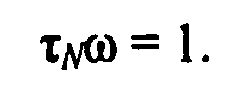
- In turn, τ N is determined by the magnetic anisotropy energy, KV, where K is the magnetic anisotropy and V is the particle volume. The value of K is determined by magnetocrystalline anisotropy or the particle shape if it is not perfectly spherical. This assumes particles are smaller than the critical size for formation of magnetic domains, i.e. they are in the superparamagnetic regime.
- The properties of VAR, magnetic susceptibility, magnetic moment and saturation magnetization are measurable by standard methods known to those skilled in the art.
- The nanomagnetic particles may be selected from ferrites of general formula MO.Fe2O3 where M is a bivalent metal such as Fe, Co, Ni, Mn, Be, Mg, Ca, Ba, Sr, Cu, Zn, Pt or mixtures thereof, or magnetoplumbite type oxides of the general formula MO.6Fe2O3 where M is a large bivalent ion, metallic iron, cobalt or nickel. Additionally, they could be particles of pure Fe, Ni, Cr or Co or oxides of these. Alternatively they could be mixtures of any of these.
- In one embodiment, the nanomagnetic particles are particles of iron oxide such as magnetite (Fe3O4) or maghemite (γ-Fe2O3) with a particle size preferably less than 50 nanometers, for example between 1 and 40 nanometers.
- In a further embodiment, the nanomagnetic particles are particles of maghemite. Such particles can provide a number of advantages in that maghemite nano particles of optimum size possess a higher VAR than do optimum size magnetite nano particles when subjected to clinically relevant magnetic field conditions, and maghemite is generally a more chemical stable form of iron oxide than magnetite.
- Those skilled in the art will appreciate that the higher VAR of maghemite means that a lower nanomagnetic particle content can be used to produce the polymer microgel beads with the required VAR.
- Nanomagnetic particles used in accordance with the invention may be conveniently prepared using techniques known in the art.
- In accordance with a method of the invention, there is provided a dispersion comprising a continuous organic phase and a dispersed aqueous phase. Those skilled in the art may commonly refer to such a dispersion as an inverse emulsion or a water in oil dispersion. The dispersion used in accordance with the invention may therefore simplistically be described as an organic liquid having droplets of aqueous liquid dispersed therein. The term "phase" is therefore used herein to simply convey that there is an interface between the organic and aqueous liquids formed as a result of the liquids being substantially immiscible.
- In isolation, it will be appreciated that organic and aqueous phases will in effect be an organic and aqueous liquid, respectively. In other words, the term phase simply assists with describing these liquids when provided in the form of a dispersion. However, for convenience, the organic and aqueous liquids used to prepare the dispersion may hereinafter simply be referred to as the organic and aqueous phases, respectively. It may also be convenient to refer to the organic and aqueous phases as comprising organic and aqueous solvents, respectively.
- The organic phase will generally comprise or be a hydrophobic liquid. Suitable hydrophobic liquids include, but are not limited to, one or more water-immiscible aliphatic or aromatic organic liquids, such as, for example, hydrocarbons having 6 to 20 carbon atoms, kerosene, petrolatums, xylene, toluene, branched-chain isoparaffins and mixtures thereof.
- Apart form the dispersed aqueous phase, the continuous organic phase may comprise one or more additives typically employed in the art. For example, it may be necessary to employ-a-dispersing agent in order to facilitate maintaining the aqueous phase in a dispersed state throughout the continuous organic phase. Those skilled in the art will be able to select a suitable dispersing agent for this purpose.
- Suitable dispersing agents will generally be any surfactant that can stabilise the dispersed aqueous phase throughout the continuous organic phase. The dispersing agent is typically added to the organic phase, but can be added to the aqueous phase depending on the solubility of the agent used.
- Representatives of such dispersing agents include, but are not limited to, non-ionic surfactants, sorbitan fatty acid esters such as, for example, sorbitan monooleate and sorbitan monolaurate, glycerol esters such as, for example, glycerol monooleate and glycerol monoricinoleate, phthallc esters, partial fatty acid esters of polyglycerol, the reaction product of oleic acid with isopropanolamide, 12-hydroxystearic acid-polyethylene glycol block copolymers (commercially available as Hypermer B246 and Hypermer B261), fatty acid glycerides, glycerin esters, as well as ethoxylated derivatives thereof; cationic surfactants including, but are not limited to, ammonium salts, such as distearyl dimethyl ammonium chloride and dioleyl dimethyl ammonium dichloride; and anionic surfactants such as bis-tri-decyl sulfosuccinic acid salt; or mixtures thereof.
- Polymeric dispersing agents are generally preferred, and may be selected from 12-hydroxystearic acid-polyethylene glycol block copolymers, poly(isobutylene) succinic hydride diethylethanol amine (PIBSADEEA), ethylene-co-maleic anhydride, poly(alphaolefin-co-maleic anhydride), cellulose ethers such as ethyl cellulose, methyl cellulose, hydroxyethyl cellulose, hydroxypropyl cellulose, and carboxyethyl cellulose, poly(lauryl methacrylate-co-acrylic acid), cellulose esters such as acetates, propylonates and butyrates.
- The dispersing agents can be used alone or in combination. The dispersing agent is employed in an amount sufficient to maintain the dispersion until the aqueous liquid is removed. The amount and type of dispersing agent(s) employed will vary depending on the composition of the organic and aqueous phases. Those skilled in the art will be able to select a suitable agent(s) and its amount for a given dispersion. Generally, the dispersing agent is employed in an amount not of greater than about 5 wt. % of the total dispersion.
- A more detailed discussion concerning the dispersed aqueous phase is provided below, but in general terms it will be appreciated that the aqueous phase will be substantially immiscible in the organic phase. In addition to the nanomagnetic particles, the aqueous phase is also said to comprise hydrophilic liquid. By "hydrophilic liquid" is meant water and liquids miscible with water. By being "aqueous", the aqueous phase will of course comprise water, but it may also comprise one or more other hydrophilic liquids such as methanol, ethanol, dioxane and the like. Reference herein to the aqueous phase comprising "hydrophilic liquid" is therefore intended to be a reference to the liquid composition that forms the aqueous phase droplets.
- The aqueous phase will generally not comprise any ethylenically unsaturated monomers.
- The dispersion used in accordance with the invention may be prepared using techniques well known in the art. For example, a suitable aqueous liquid may be combined with a suitable organic liquid and subjected to agitation, for example, by some shearing means. As indicated above, a dispersing agent may also be used to facilitate maintaining the resulting aqueous phase in a dispersed state throughout the resulting continuous organic phase. Through the appropriate control of this process, the size of the dispersed aqueous phase droplets can be selected so as to tailor the size of the polymer microgel beads formed in accordance with the method.
- The dispersed aqueous phase comprises the nanomagnetic particles dispersed therein. Thus, it will be appreciated that the nanomagnetic particles are in effect dispersed throughout the hydrophilic liquid, which collectively form the aqueous phase dispersed throughout the continuous organic phase. Each dispersed droplet of aqueous phase therefore comprises a substantially uniform distribution of the nanomagnetic particles.
- In order to provide the polymer microgel beads with a substantially uniform distribution of the nanomagnetic particles throughout the polymeric matrix of each bead, the nanomagnetic particles are dispersed throughout the aqueous phase. The nanomagnetic particles are maintained in their dispersed state by a steric stabiliser.
- The steric stabiliser is a polymeric material in its own right and comprises a steric stabilising polymeric segment and an anchoring polymeric segment. The steric stabilising polymeric segment is different from the anchoring polymeric segment, and the anchoring polymeric segment has an affinity toward the surface of the nanomagnetic particles and secures the stabiliser to the particles. The steric stabiliser also comprises one or more reactive functional groups. The reactive functional groups may reside in the steric stabilising polymeric segment and/or the anchoring polymeric segment. Generally they will reside only in the steric stabilising polymeric segment.
- By "reactive functional groups" in the context of the steric stabilisers is meant a functional group presented by one steric stabiliser that can react with a complementary functional group presented by another steric stabiliser so as to form a covalent bond therebetween.
- Without wishing to be limited by theory, it is believed that the steric stabiliser used in accordance with the invention forms a strong association with the nanomagnetic particles and provides for a particularly stable dispersion of the particles throughout the aqueous phase. The strong association between the particles and the steric stabiliser is believed to result from the polymeric nature of the anchoring segment of the stabiliser which provides multiple sites for binding interactions between the segment and the particles. The steric stabilising polymeric segment of the stabiliser is believed to promote effective and efficient stabilisation of the particles by providing steric repulsive forces.
- The steric stabiliser used in accordance with the invention has been found to be particularly effective at stabilising relatively small nanomagnetic particles (i.e. less than about 100 nm in size) throughout the aqueous phase. In particular, the stabiliser has been found to effectively and efficiently stabilise relatively small nanomagnetic particles in a substantially non-aggregated form throughout the aqueous phase. By virtue of this effective and efficient form of stabilisation, the polymer microgel beads may be prepared in accordance with the invention with a relatively high nanomagnetic particle content (e.g. up to about 80 wt. %) while still maintaining a substantially uniform and non-aggregated distribution of the nanomagnetic particles.
- As part of the aqueous phase composition, the nanomagnetic particles are maintained in their dispersed state by a steric stabiliser. By being "maintained" in this context is meant that in the absence of the steric stabiliser the nanomagnetic particles would otherwise flocculate or settle out from the aqueous phase as sediment. In other words, the steric stabiliser functions to retain the nanomagnetic particles in the dispersed state.
- The steric stabiliser used in accordance with the invention has a polymeric composition. There is no particular limitation on the molecular weight of the steric stabiliser, and this feature of the stabiliser may be dictated in part by the nature of the nanomagnetic particles that it is destined to stabilise. Generally, the steric stabiliser will have a number average molecular weight of less than about 50,000.
- In some embodiments of the invention, it may be preferable that the number average molecular weight of the steric stabiliser is less than about 30,000, or less than about 20,000, or less than about 10,000 or even less than about 5,000. The number average molecular weight of the steric stabiliser may also range from about 2,000 to about 3,000.
- Steric stabilisers used in accordance with the invention having a relatively low number average molecular weight (e.g. less than about 5,000, preferably in the range of from about 2,000 to about 3,000) have been found to be particularly effective at stabilising relatively small nanomagnetic particles (i.e. particles of less than about 100 nm in size).
- Molecular weight values defined herein are those determined using gel permeation chromatography (GPC).
- The amount of steric stabiliser used relative to the nanomagnetic particles will vary depending-on the nature of the particles, particularly their size. For example, 1g of 5 nm nanomagnetic particles will require more stabiliser than 1g of 1 micron nanomagnetic particles due to their increased surface area. Those skilled in the art will be able to determine the required amount of stabiliser for the selected nanomagnetic particles.
- The steric stabiliser used in accordance with the invention is a polymeric material that may be prepared by any suitable polymerisation technique.
- In one embodiment at least one of the steric stabilising and anchoring polymeric segments that make up the steric stabiliser are derived from one or more ethylenically unsaturated monomers that have been polymerised by a living polymerisation technique. Employing at least one such segment is believed to enhance the stabilising properties of the steric stabiliser. Further detail regarding suitable living polymerisation techniques is discussed below. Where only one of the segments is derived in this manner, the other segment may be derived by any other conventional polymerisation technique known by those skilled in the art.
- By "steric stabilising polymeric segment" is meant a segment or region of the steric stabiliser that is polymeric (i.e. formed by the polymerisation of at least one type of monomer) and that provides for the steric stabilising function of the steric stabiliser. For convenience, the steric stabilising polymeric segment may herein after be referred to polymeric segment "A".
- As alluded to above, the steric stabilising polymeric segment functions to stabilise the particular material throughout the aqueous phase by providing steric repulsion forces.
- By being polymeric, it will be appreciated that the steric stabilising segment comprises polymerised monomer residues. Thus, the segment will comprise polymerised monomer residues that give rise to the required steric stabilising properties. The polymerised monomer residues that make up the steric stabilising polymeric segment may be the same or different.
- The steric stabilising polymeric segment may be substituted with a moiety (e.g. an optional substituent as herein defined), or contain a polymerised monomer residue, that gives rise to electrostatic stabilising properties.
- Where the steric stabilising segment comprises the one or more reactive functional groups, the segment may comprise one or more polymerised monomer residues that present the reactive functional group. Alternatively, the segment may be substituted with the reactive functional group after it has been prepared. In that case, the segment will of course be prepared such that it can be readily substituted.
- In order to provide the desired steric stabilising effect, the steric stabilising polymeric segment will of course be soluble in the aqueous phase. Determining the solubility of a given steric stabilising polymeric segment in a given aqueous phase can readily be determined by simply preparing the polymeric segment in isolation and conducting a suitable solubility test in the chosen aqueous solvent.
- The steric stabiliser as a whole, may or may not be soluble in the chosen aqueous solvent, but will none the less present a steric stabilising polymeric segment that is.
- Those skilled in the art will have an understanding of polymeric materials that may be employed as the steric stabilising polymeric segment, as to the monomers that may be polymerised to form such polymers. For example, suitable polymeric materials include, but are not limited to, polyacrylamide, polyethylene oxide, polyhydroxyethylacrylate, poly N-isopropylacrylamide, polydimethylaminoethylmethacrylate, polyvinyl pyrrolidone and copolymers thereof. Thus, suitable monomers that may be used to form the stabilising polymeric segment include, but are not limited to, acrylamide, ethylene oxide, hydroxyethylacrylate, N-isopropylacrylamide, dimethylaminoethylmethacrylate, vinyl pyrrolidone and combinations thereof.
- Where the steric stabilising segment is to comprise the one or more reactive functional groups, it is preferable that the segment be prepared such that it comprises one or more polymerised monomer residues that present the reactive functional group. In that case, suitable monomers that will present a suitable reactive functional group include, but are not limited to, acetoacetoxyethyl methacrylate, glycidyl methacrylate, N-methylolacrylamide, (isobutoxymethyl)acrylamide, hydroxyethyl acrylate, t-butyl-carbodiimidoethyl methacrylate, acrylic acid, γ-methacryloxypropyltriisopropoxysilane, 2-isocyanoethyl methacrylate and diacetone acrylamide, and combinations thereof.
- Examples of pairs of monomers mentioned directly above that can be used to present the required complementary reactive functional groups of the steric stabilisers include N-methylolacrylamide and itself, (isobutoxymethyl)acrylamide and itself, γ-methacryloxypropyltriisopropoxysilane and itself, 2-isocyanoethyl methacrylate and hydroxyethyl acrylate, and t-butyl-carbodiimidoethyl methacrylate and acrylic acid.
- By being able to select a specific steric stabilising polymeric segment independent of the anchoring polymeric segment, the steric stabilisers used in accordance with the invention can advantageously be tailor designed to suit a particular aqueous phase and thereby maximise the steric stabilising properties of the steric stabiliser.
- Although there is no particular limitation on the polymerisation technique that may be used to prepare the steric stabilising segment, a living polymerisation technique can afford a number of advantages. Those skilled in the art will appreciate that "living polymerisation" is a form of addition polymerisation whereby chain growth propagates with essentially no chain transfer and essentially no termination that give rise to dead polymer chains. By a "dead polymer chain" is meant one that can not undergo further addition of monomers.
- In a living polymerization, typically all polymer chains are initiated at the start of the polymerization with minimal new chains being initiated in latter stages of the polymerization. After this initiation process, all the polymer chains in effect grow at the same rate. Characteristics and properties of a living polymerization generally include (i) the molecular weight of the polymer increases with conversion, (ii) there is a narrow distribution of polymer chain lengths (i.e. they are of similar molecular weight), and (iii) additional monomers can be added to the polymer chain to create block co-polymer structures. Thus living polymerisation enables excellent control over molecular weight, polymer chain architecture and polydispersity of the resulting polymer that can not be achieved with non-living polymerization methods.
- Suitable living polymerisation techniques may be selected from ionic polymerisation and controlled radical polymerisation (CRP). Examples of CRP include, but are not limited to, iniferter polymerisation, stable free radical mediated polymerisation (SFRP), atom transfer radical polymerisation (ATRP), and reversible addition fragmentation chain transfer (RAFT) polymerisation.
- Living ionic polymerisation is a form of addition polymerisation whereby the kinetic-chain carriers are ions or ion pairs. The polymerisation proceeds via anionic or cationic kinetic-chain carriers. In other words, the propagating species will either carry a negative or positive charge, and as such there will also be an associated counter cation or counter anion, respectively. For example, in the case of anionic polymerisation, the polymerisation may be conducted using a moiety represented as I-M+, where I represents an organo-anion (e.g. an optionally substituted alkyl anion) and M represents an associated countercation, or in the case of living cationic polymerisation, the moiety might be represented as I+M-, where I represents an organo-cation (e.g. an optionally substituted alkyl cation) and M represents an associated counteranion. Suitable moieties for conducting anionic and cationic living polymerisation are well known to those skilled in the art.
- The living polymerisation technique may be a CRP technique.
- Iniferter polymerisation is a well known form of CRP, and is generally understood to proceed by a mechanism illustrated below in
Scheme 1.
- With reference to
Scheme 1, the iniferter AB dissociates chemically, thermally or photochemically to produce a reactive radical species A and generally a relatively stable radical species B (for symmetrical iniferters the radical species B will be the same as the radical species A) (step a). The radical species A can initiate polymerisation of monomer M (in step b) and may be deactivated by coupling with radical species B (in step c). Transfer to the iniferter (in step d) and/or transfer to dormant polymer (in step e) followed by termination (in step f) characterise iniferter chemistry. - Suitable moieties for conducting iniferter polymerisation are well known to those skilled in the art, and include, but are not limited to, dithiocarbonate, disulphide, and thiuram disulphide moieties.
- SFRP is a well known form of CRP, and is generally understood to proceed by a mechanism illustrated below in Scheme 2.

- With reference to Scheme 2, SFRP moiety CD dissociates to produce an active radical species C and a stable radical species D. The active radical species C reacts with monomer M, which resulting propagating chain may recombine with the stable radical species D. Unlike iniferter moieties, SFRP moieties do not provide for a transfer step.
- Suitable moieties for conducting SFRP are well known to those skilled in the art, and include, but are not limited to, moieties capable of generating phenoxy and nitroxy radicals. Where the moiety generates a nitroxy radical, the polymerisation technique is more commonly known as nitroxide mediated polymerisation (NMP).
- Examples of SFRP moieties capable of generating phenoxy radicals include those comprising a phenoxy group substituted in the 2 and 6 positions by bulky groups such as tert-alkyl (e.g. t-butyl), phenyl or dimethylbenzyl, and optionally substituted at the 4 position by an alkyl, alkyloxy, aryl, or aryloxy group or by a heteroatom containing group (e.g. S, N or O) such dimethylamino or diphenylamino group. Thiophenoxy analogues of such phenoxy containing moieties are also contemplated.
- SFRP moieties capable of generating nitroxy radicals include those comprising the substituent R1R2N-O-, where R1 and R2 are tertiary alkyl groups, or where R1 and R2 together with the N atom form a cyclic structure, preferably having tertiary branching at the positions α to the N atom. Examples of such nitroxy substituents include 2,2,5,5-tetraalkylpyrrolidinoxyl, as well as those in which the 5-membered hetrocycle ring is fused to an alicyclic or aromatic ring, hindered aliphatic dialkylaminoxyl and iminoxyl substituents. A common nitroxy substituent employed in SFRP is 2,2,6,6-tetramethyl-1-piperidinyloxy.
- ATRP is a well known form of CRP, and generally employs a transition metal catalyst to reversibly deactivate a propagating radical by transfer of a transferable atom or group such as a halogen atom to the propagating polymer chain, thereby reducing the oxidation state of the metal catalyst as illustrated below in Scheme 3.

- With reference to Scheme 3, a transferable group or atom (X , e.g. halide, hydroxyl, C1-C6-alkoxy, cyano, cyanato, thiocyanato or azido) is transferred from the organic compound (E) (e.g. optionally substituted alkyl, optionally substituted aryl, optionally substituted alkylaryl, or the polymer chain) to a transition metal catalyst (Mt, e.g. copper, iron, gold, silver, mercury, palladium, platinum, cobalt, manganese, ruthenium, molybdenum, niobium, or zinc) having oxidation number (n), upon which a radical species is formed that initiates polymerisation with monomer (M). As part of this process, the metal complex is oxidised (Mt n+1X). A similar reaction sequence is then established between the propagating polymer chain and the dormant X end-capped polymer chains.
- RAFT polymerisation is well known in the art and is believed to operate through the mechanism outlined below in Scheme 4.

- With reference to Scheme 4, RAFT polymerisation is believed to proceed through initial reaction sequence (a) that involves reaction of a RAFT moiety (1) with a propagating radical. The labile intermediate radical species (2) that is formed fragments to form a temporarily deactivated dormant polymer species (3) together a radical (R) derived from the RAFT moiety. This radical can then promote polymerisation of monomer (M), thereby reinitiating polymerisation. The propagating polymer chain can then react with the dormant polymer species (3) to promote the reaction sequence (b) that is similar to reaction sequence (a). Thus, a labile intermediate radical (4) is formed and subsequently fragments to form again a dormant polymer species together with a radical which is capable of further chain growth.
- RAFT moieties generally comprise a thiocarbonylthio group (which is a divalent moiety represented by: -C(S)S-) and include xanthates, dithioesters, dithiocarbonates, dithiocarbanates and trithiocarbonates.
- The steric stabilising polymeric segment may be formed by the polymerisation of one type of monomer or a combination of two or more different monomers. Accordingly, the steric stabilising polymeric segment may be a homopolymeric segment or a copolymeric segment.
- Given that the stabilising polymeric segment forms only part of the steric stabiliser, rather than defining the steric stabilising polymeric segment in terms of its number average molecular weight, it can instead be useful to make reference to the number of polymerised monomeric units that collectively form the segment. Thus, although there is no particular limitation on the number of such units that collectively form the steric stabilising polymeric segment, in some embodiments of the invention it may be desirable that the steric stabiliser has a relatively low number average molecular weight. In that case, it is preferable that the steric stabilising polymeric segment has less than about 50, more preferably less than about 40, most preferably from about 15 to about 30 polymerised monomer residue repeat units that make up the overall segment.
- In one embodiment, at least one, preferably at least two, more preferably at least 3 of the polymerised monomer residue repeat units that make up the steric stabilising polymeric segment is a polymerised residue of a monomer that presents a reactive functional group as hereinbefore described.
- By an "anchoring polymeric segment" is meant a segment or region of the steric stabiliser that is polymeric and that has an affinity toward the surface of the nanomagnetic particles and functions to secure the steric stabiliser to the particles. For convenience, the anchoring polymeric segment may hereinafter be referred to as polymeric segment "B".
- By being polymeric, it will be appreciated that the anchoring segment comprises polymerised monomer residues. In particular, the segment will comprise polymerised monomer residues that give rise to the required binding affinity toward the nanomagnetic particles. The polymerised monomer residues that make up the anchoring polymeric segment may be the same or different.
- It is believed that the ability of the anchoring segment to present multiple sites for binding interactions with the nanomagnetic particles at least in part gives rise to the excellent stabilising properties provided by the steric stabiliser.
- Generally, the anchoring segment will have at least two polymerised monomer residues that each provides a site for binding with the nanomagnetic particles, preferably at least three, more preferably at least five, still more preferably at least seven, most preferably at least ten of such polymerised monomer residues. Not all of the polymerised monomer residues that make up the anchoring segment are necessarily required to give rise to a binding interaction with the particles, but it is generally preferred that the majority if not all of the polymerised monomer residues that make up the anchoring segment do give rise to a binding interaction with the particles.
- The anchoring segment may therefore be described as having multiple sites that collectively secure the stabiliser to the particulate material.
- The anchoring polymeric segment can also be substituted with a moiety (e.g. an optional substituent as herein defined) that may or may not give rise to a binding interaction with the nanomagnetic particles.
- Where the anchoring polymeric segment comprises the one or more reactive functional groups, the segment may comprise one or more polymerised monomer residues that present a reactive functional group as hereinbefore described in respect of the steric stabilising polymeric segment. Alternatively, the anchoring polymeric segment may be substituted with a reactive functional group after it has been prepared. In that case, the segment will of course be prepared such that it can be readily substituted.
- In order to provide the desired anchoring effect, the anchoring polymeric segment will have a binding affinity toward the nanomagnetic particles. The specific mode by which the anchoring segments bind to the particles is not particularly important, for example it might be by way of electrostatic forces, hydrogen bonding, ionic charge, Van der Waals forces, or any combination thereof. A particular advantage provided by the anchoring polymeric segment is that it can provide multiple sites for binding interactions with the particles. Thus, even where a given binding site only provides a relatively weak interaction with the particles, the presence of multiples of such sites within the segment enables it as a whole to bind securely with the particles.
- The specific anchoring polymeric segment required will generally be dictated to the nature of the nanomagnetic particles to which it is to bind. When describing the interaction of the anchoring polymeric segment with the particles, it can be convenient to refer to the hydrophilic and hydrophobic character of the segment and the particles. Thus, in general, suitable binding interactions will occur when the segment and the particles have similar hydrophilic or hydrophobic character. For example, where the particles have a relatively hydrophilic surface (e.g. its surface can be wetted with an aqueous solution), then good binding should be attained using an anchoring polymeric segment that has hydrophilic character (e.g. in its isolated form the segment would be soluble in an aqueous medium). Such an example might be realised where the particles are of a type that can form a charge on their surface. In that case, it may be desirable for the segment to comprise polymerised residues of monomers that can also forma charge (e.g. residues of an ionisable monomer) so as to promote ionic binding between the segment and the particles. Promoting the formation of such charged species might be facilitated by adjusting the pH of the aqueous phase in which the stabiliser and particles reside.
- Nanomagnetic particles used in accordance with the invention will generally have a relatively hydrophilic surface, and may be capable of forming a charge on their surface. In that case, the anchoring polymeric segment will preferably comprise polymerised residues of an ionisable monomer.
- By the term "ionisable monomer" is meant that the monomer comprises a functional group which can be ionised in solution to form a cationic or anionic group. Such functional groups will generally be capable of being ionised under acidic or basic conditions through loss or acceptance of a proton. Generally, the functional groups are acid groups or basic groups. For example, a carboxylic acid functional group may form a carboxylate anion under basic conditions, and an amine functional group may form a quaternary ammonium cation under acidic conditions. The functional groups may also be capable of being ionised through an ion exchange process.
- Examples of suitable ionisable monomers having acid groups include, but are not limited to, methacrylic acid, acrylic acid, itaconic acid, p-styrene carboxylic acids, p-styrene sulfonic acids, vinyl sulfonic acid, vinyl phosphonic acid, monoacryloxyethyl phosphate, 2-(methacryloyloxy) ethyl phosphate, ethacrylic acid, alpha-chloroacrylic acid, crotonic acid, fumaric acid, citraconic acid, mesaconic acid, and maleic acid. Examples of suitable ionisable monomers which have basic groups include, but are not limited to, 2-(dimethyl amino) ethyl and propyl acrylates and methacrylates, and the corresponding 3-(diethylamino) ethyl and propyl acrylates and methacrylates.
- Those skilled in the art will be able to select an appropriate anchoring polymeric segment to bind with the surface of the selected nanomagnetic particles.
- By being able to select a specific anchoring polymeric segment independent of the steric stabilising polymeric segment, the steric stabilisers used in accordance with the invention can advantageously be tailor designed to suit particular nanomagnetic particles and thereby maximise the anchoring properties of the steric stabiliser.
- Those skilled in the art will appreciate the variety of polymeric materials that may be employed as the anchoring polymeric segment, as to the monomers that may be polymerised to form such polymers. For example, suitable polymeric materials include, but are not limited to, polyacrylic acid, polymethacrylic acid, polystyrene, polyitaconic acid, poly-p-styrene carboxylic acids, poly-p-styrene sulfonic acids, polyvinyl sulfonic acid, polyvinyl phosphonic acid, poly monoacryloxyethyl phosphate, poly-2-(methylacryloyloxy) ethyl phosphate, polyethacrylic acid, poly-alpha-chloroacrylic acid, polycrotonic acid, polyfumaric acid, polycitraconic acid, polymesaconic acid, polymaleic acid, poly-2-(dimethyl amino) ethyl and propyl acrylates and methacrylates, the corresponding poly-3-(diethylamino) ethyl and propyl acrylates and methacrylates, hydrophobic acrylate and methacrylate polymers, polydimethylaminoethylmethacrylate, and copolymers thereof. Thus, suitable monomers that may be used to form the anchoring polymeric segment include, but are not limited to, acrylic acid, methacrylic acid, itaconic acid, p-styrene carboxylic acids, p-styrene sulfonic acids, vinyl sulfonic acid, vinyl phosphonic acid, monoacryloxyethyl phosphate, 2-(methylacryloyloxy) ethyl phosphate, ethacrylic acid, alpha-chloroacrylic acid, crotonic acid, fumaric acid, citraconic acid, mesaconic acid, maleic acid, 2-(dimethyl amino) ethyl and propyl acrylates and methacrylates, the corresponding 3-(diethylamino) ethyl and propyl acrylates and methacrylates, styrene, hydrophobic acrylate and methacrylate monomers, dimethylaminoethylmethacrylate, and combinations thereof.
- Where the anchoring polymeric segment is to comprise the one or more reactive functional groups, the segment may be prepared such that it comprises one or more polymerised monomer residues that present a reactive functional group as hereinbefore described in respect of the steric stabilising polymeric segment. However, it is preferable that the one or more reactive functional groups reside in the steric stabilising segment.
- There is no particular limitation on the polymerisation technique that may be used to prepare the anchoring polymeric segment. Living polymerisation techniques such as those herein described have been found particularly useful in preparing the anchoring polymeric segment. Where at least one of the steric stabilising and anchoring polymeric segments are derived from one or more ethylenically unsaturated monomers that have been polymerised by a living polymerisation technique; it will preferably be the anchoring segment.
- In one embodiment, both the steric stabilising and anchoring polymeric segments are derived from one or more ethylenically unsaturated monomers that have been polymerised by a living polymerisation technique.
- The anchoring polymeric segment may be formed by the polymerisation of one type of monomer or a combination of two or more different monomers. Accordingly, the anchoring polymeric segment may be a homopolymeric segment or a copolymeric segment.
- Given that the anchoring polymeric segment forms only part of the steric stabiliser, rather than defining the anchoring polymeric segment in terms of its number average molecular weight, it can instead be useful to make reference to the number of polymerised monomeric units that collectively form the segment. Thus, although there is no particular limitation on the number of such units that collectively form the anchoring polymeric segment, in some embodiments of the invention it may be desirable that the steric stabiliser has a relatively low number average molecular weight. In that case, it is preferable that the anchoring polymeric segment has less than about 50, more preferably less than about 40, still more preferably less than about 30, even more preferably from about 5 to about 25, most preferably from about 5 to about 15 polymerised monomer residue repeat units that make up the overall segment.
- In one embodiment, at least one, preferably at least two, more preferably at least 3 of the polymerised monomer residue repeat units that make up the anchoring polymeric segment is a polymerised residue of a monomer that presents a reactive functional group as hereinbefore described in respect of the steric stabilising polymeric segment.
- Provided that the stabiliser functions as herein described, there is no particular limitation on how the stabilising polymeric segment and the anchoring polymeric segment are to be spatially arranged.
- While the steric stabilising polymeric segment and the anchoring polymeric segment may be coupled to each other by any suitable means to form the steric stabiliser, generally they will be directly coupled to each other via a covalent bond and therefore the stabiliser can be simplistically described as or comprising an A-B block copolymer. In that case, A represents the steric stabilising polymeric segment and B represents the anchoring polymeric segment. It will be appreciated from the description above that each of A and B can independently be a homopolymer or a copolymer (e.g. random, block, tapered, etc.).
- The stabiliser may comprise more than one steric stabilising polymeric segment (A) and more than one anchoring polymeric segment (B). For example, the stabiliser may be described as or comprising an A-B-A block copolymer. In that case, each A represents the steric stabilising polymeric segment, which may be the same or different, and B represents the anchoring polymeric segment. The stabiliser might also be described as or comprising a B-A-B block copolymer, where each B represents the anchoring polymeric segment, which may be the same or different, and A represents the steric stabilising polymeric segment that is of sufficient chain length such that it forms a "loop" that extends into the aqueous phase and performs its stabilising role.
- The stabiliser may also have more complex structures such as star and comb polymer structures. In that case, the anchoring polymeric segment B might represent the main polymer backbone of such structures, with multiple steric stabilising polymeric segments A being attached thereto.
- The interaction of a steric stabiliser used in accordance with the invention (in the form of an A-B block copolymer structure) with a nanomagnetic particle in the aqueous phase might be illustrated in the not to scale simplified schematic shown in
Figure 1 . - With reference to
Figure 1 , the steric stabiliser represented by an A-B block copolymer exhibits an affinity toward the surface of the nanomagnetic particle (P) through the anchoring polymeric segment (B). The anchoring polymeric segment (B) therefore secures the steric stabiliser to the particle. The anchoring polymeric segment (B) provides multiple sites for binding interactions between the segment and the particle. The steric stabilising polymeric segment (A), which is different to segment (B), is soluble in the aqueous phase and (i) functions to maintain the particle dispersed throughout the aqueous phase, and (ii) presents a reactive functional group (F). It will be appreciated that in practice the surface of the particle will have many steric stabilisers secured thereto, and that these have been omitted from the illustration inFigure 1 for clarity. - A similar illustration to that in
Figure 1 is shown inFigure 2 where the steric stabiliser used in accordance with the invention is in the form of an A-B-A block copolymer. - As a block copolymer, the steric stabiliser used in accordance with the invention may be prepared by any suitable polymerisation technique. Having regard to the requirements of the polymeric segments A and B, those skilled in the art will be able to prepare suitable block copolymers using techniques well known in the art.
- In one embodiment, the steric stabilising polymeric segment and/or the anchoring polymeric segment of the steric stabiliser used in accordance with the invention is prepared using a living polymerisation technique as herein described. In a further embodiment, at least the anchoring polymeric segment of the steric stabiliser used in accordance with the invention is prepared using a living polymerisation technique as herein described. Of the living polymerisation techniques described herein, RAFT polymerisation is preferred.
- RAFT polymerisation is a well described radical polymerisation technique that enables polymers to be prepared having a well defined molecular architecture and a low poly dispersity. RAFT polymerisation is conducted using a RAFT agent, and polymers formed under the control of the RAFT agent (i.e. polymerised via a RAFT mechanism to form polymer) may be conveniently referred to as a "RAFT polymer" or a "RAFT derived polymer".
- In one embodiment of the invention, the steric stabiliser is a RAFT derived polymer.
- Those skilled in the art will appreciate that RAFT agents are commonly depicted as having the general structure Z-C(S)-S-R, and that on formation a RAFT derived polymer will comprise the reaction residue of the RAFT agent. A steric stabiliser used in accordance with the invention might therefore have a structure depicted by general formula (I):

- In order to function as a RAFT agent in the polymerisation of the one or more ethylenically unsaturated monomers, those skilled in the art will appreciate that R1 will typically be an organic group that functional as a free radical leaving group under the polymerisation conditions employed and yet, as a free radical leaving group, retains the ability to reinitiate polymerisation. Similarly, those skilled in the art will appreciate that Z will typically be an organic group that functions to give a suitably high reactivity of the C=S moiety in the RAFT agent towards free radical addition without slowing the rate of fragmentation of the RAFT-adduct radical to the extent that polymerisation is unduly retarded.
- Examples of suitable R1 groups include alkyl, alkylaryl, alkoxyaryl, and alkoxyheteroaryl, each of which is optionally substituted with one or more hydrophilic groups.
- More specific examples of suitable R1 groups can include C1-C6 alkyl, C1-C6 alkyl aryl; and C1-C6 alkoxy aryl or heteroaryl, each of which is optionally substituted with one or more hydrophilic groups selected from -CO2H, -CO2RN, -SO3H, -OSO3H, -SORN, - SO2RN, -OP(OH)2, -P(OH)2, -PO(OH)2, -OH, -ORN, -(OCH2-CHR)w-OH, -CONH2, CONHR', CONR'R", -NR'R", -N+R'R"R"', where R is selected from C1-C6 alkyl, w is 1 to 10, R', R" and R"' are independently selected from alkyl and aryl which are optionally substituted with one or more hydrophilic substituents selected from -CO2H, -SO3H, - OSO3H, -OH, -(COCH2CHR)w-OH, -CONH2, -SOR and SO2R, and salts thereof, R and w are as defined above. Preferred R1 groups include, but are not limited to, -CH(CH3)CO2H, -CH(CO2H)CH2CO2H, -C(CH3)2CO2H.
- Suitable Z groups may be selected from optionally substituted alkoxy, optionally substituted aryloxy, optionally substituted alkyl, optionally substituted aryl, optionally substituted heterocyclyl, optionally substituted arylalkyl, optionally substituted alkylthio, optionally substituted arylalkylthio, dialkoxy- or diaryloxy- phosphinyl [-P(=O)OR2 2], dialkyl- or diaryl- phosphinyl [-P(=O)R2 2], optionally substituted acylamino, optionally substituted acylimino, optionally substituted amino, R1-(X)-S- and a polymer chain formed by any mechanism, for example polyalkylene oxide polymers such as water soluble polyethylene glycol or polypropylene glycol, and alkyl end capped derivatives thereof, where R1 and X are as defined above and R2 is selected from optionally substituted C1-C18 alkyl, optionally substituted C2-C18 alkenyl, optionally substituted aryl, optionally substituted heterocyclyl, optionally substituted aralkyl, and optionally substituted alkaryl. Preferred Z groups include, but are not limited to, -CH2(C6H5), C1-C20 alkyl,

- Preferred optional substituents for R2 and Z groups include epoxy, hydroxy, alkoxy, acyl, acyloxy, carboxy (and salts), sulfonic acid (and salts), alkoxy- or aryloxy- carbonyl, isocyanato, cyano, silyl, halo, and dialkylamino.
- In selecting both R1 and Z groups of formula (I), all combinations of preferred R1 and Z groups are also preferred.
- Where the hydrophilic group is -n+R'R"R"' there will be an associated counter anion.
- R1 may also be an organic group optionally substituted with one or more hydrophobic groups. In that case, Z is preferably an organic group optionally substituted with one or more hydrophilic groups.
- As used herein, the terms "aryl" and "heteroaryl" refer to any substituent which includes or consists of one or more aromatic or heteroaromatic ring respectively, and which is attached via a ring atom. The rings may be mono or polycyclic ring systems, although mono or bicyclic 5 or 6 membered rings are preferred. Examples of suitable rings include but are not limited to benzene, biphenyl, terphenyl, quaterphenyl, naphthalene, tetrahydronaphthalene, 1-benzylnaphthalene, anthracene, dihydroanthracene, benzanthracene, diberizanthracene, phenanthracene, perylene, pyridine, 4-phenylpyridine, 3-phenylpyridine, thiophene, benzothiophene, naphthothiophene, thianthrene, furan, benzofuran, pyrene, isobenzofuran, chromene, xanthene, phenoxathiin, pyrrole, imidazole, pyrazole, pyrazine, pyrimidine, pyridazine, indole, indolizine, isoindole, purine, quinoline, isoquinoline, phthalazine, quinoxaline, quinazoline, pteridine, carbazole, carboline, phenanthridine, acridine, phenanthroline, phenazine, isothiazole, isooxazole, phenoxazine and the like, each of which may be optionally substituted.
- In this specification "optionally substituted" means that a group may or may not be further substituted with one or more groups selected from, but not limited to, alkyl, alkenyl, alkynyl, aryl, halo, haloalkyl, haloalkenyl, haloalkynyl, haloaryl, hydroxy, alkoxy, alkenyloxy, aryloxy, benzyloxy, haloalkoxy, haloalkenyloxy, acetyleno, carboximidyl, haloaryloxy, isocyano, cyano, formyl, carboxyl, nitro, nitroalkyl, nitroalkenyl, nitroalkynyl, nitroaryl, alkylamino, dialkylamino, alkenylamino, alkynylamino, arylamino, diarylamino, benzylamino, imino, alkylimine, alkenylimine, alkynylimino, arylimino, benzylimino, dibenzylamino, acyl, alkenylacyl, alkynylacyl, arylacyl, acylamino, diacylamino, acyloxy, alkylsulphonyloxy, arylsulphenyloxy, heterocyclyl, heterocycloxy, heterocyclamino, haloheterocyclyl, alkylsulphonyl, arylsulphonyl, alkylsolphinyl, arylsulphinyl, carboalkoxy, alkylthio, benzylthio, acylthio, sulphonamido, sulfanyl, sulfo and phosphorus-containing groups, alkoxysilyl, silyl, alkylsilyl, alkylalkoxysilyl, phenoxysilyl, alkylphenoxysilyl, alkoxyphenoxysilyl, arylphenoxysilyl, allophanyl, guanidino, hydantoyl, ureido, and ureylene.
- Unless stated otherwise, the terms "halogen" and "halo" used herein refer to I, Br, Cl and F.
- In this specification the term "alkyl", used either alone or in compound words such as "alkenyloxyalkyl", "alkylthio", "alkylamino" and "dialkylamino" denotes straight chain, branched or cyclic alkyl, preferably C1-20 alkyl or cycloalkyl. Examples of straight chain and branched alkyl include methyl, ethyl, propyl, isopropyl, butyl, isobutyl, sec-butyl, tert-butyl, amyl, isoamyl, sec-amyl, 1,2-dimethylpropyl, 1,1-dimethyl-propyl, hexyl, 4-methylpentyl, 1-methylpentyl, 2-methylpentyl, 3-methylpentyl, 1,1-dimethylbutyl, 2,2-dimethylbutyl, 3,3-dimethylbutyl, 1,2-dimethylbutyl, 1,3-dimethylbutyl, 1,2,2,-trimethylpropyl, 1,1,2-trimethylpropyl, heptyl, 5-methoxyhexyl, 1-methylhexyl, 2,2-dimethylpentyl, 3,3-dimethylpentyl, 4,4-dimethylpentyl, 1,2-dimethylpentyl, 1,3-dimethylpentyl, 1,4-dimethyl-pentyl, 1,2,3,-trimethylbutyl, 1,1,2-trimethylbutyl, 1,1,3-trimethylbutyl, octyl, 6-methylheptyl, 1-methylheptyl, 1,1,3,3-tetramethylbutyl, nonyl, 1-, 2-, 3-, 4-, 5-, 6- or 7-methyl-octyl, 1-, 2-, 3-, 4- or 5-ethylheptyl, 1-, 2- or 3-propylhexyl, decyl, 1-, 2-, 3-, 4-, 5-, 6-, 7- and 8-methylnonyl, 1-, 2-, 3-, 4-, 5- or 6-ethyloctyl, 1-, 2-,3-or 4-propylheptyl, undecyl, 1-, 2-, 3-, 4-, 5-, 6-, 7-, 8- or 9-methyldecyl, 1-, 2-, 3-, 4-, 5-, 6-or 7-ethylnonyl, 1-, 2-, 3-, 4- or 5-propyloctyl, 1-, 2- or 3-butylheptyl, 1-pentylhexyl, dodecyl, 1-, 2-, 3-, 4-, 5-, 6-, 7-, 8-, 9- or 10-methylundecyl, 1-, 2-, 3-, 4-, 5-, 6-, 7- or 8-ethyldecyl, 1-, 2-, 3-, 4-, 5- or 6-propylnonyl, 1-, 2-, 3- or 4-butyloctyl, 1-2-pentylheptyl and the like. Examples of cyclic alkyl include mono- or polycyclic alkyl groups such as cyclopropyl, cyclobutyl, cyclopentyl, cyclohexyl, cycloheptyl, cyclooctyl, cyclononyl, cyclodecyl and the like.
- As used herein, the term "salt" denotes a species in ionised form, and includes both acid addition and base addition salts. In the context of forming a RAFT polymer, suitable salts are those that do not interfere with the RAFT chemistry.
- As used herein, the term "counter anion" denotes a species capable of providing a negative charge to balance the charge of the corresponding cation. Examples of counter anions include, Cl-, I-, Br-, F-, NO3 -, CN- and PO3 -.
- As used herein, the term "alkoxy" denotes straight chain or branched alkoxy, preferably C1-20 alkoxy. Examples of alkoxy include methoxy, ethoxy, n-propoxy, isopropoxy and the different butoxy isomers.
- As used herein, the term "alkenyl" denotes groups formed from straight chain, branched or cyclic alkenes including ethylenically mono-, di- or poly-unsaturated alkyl or cycloalkyl groups as previously defined, preferably C2-20 alkenyl. Examples of alkenyl include vinyl, allyl, 1-methylvinyl, butenyl, iso-butenyl, 3-methyl-2-butenyl, 1-pentenyl, cyclopentenyl, 1-methyl-cyclopentenyl, 1-hexenyl, 3-hexenyl, cyclohexenyl, 1-heptenyl, 3-heptenyl, 1-octenyl, cyclooctenyl, 1-nonenyl, 2-nonenyl, 3-nonenyl, 1-decenyl, 3-decenyl, 1,3-butadienyl, 1-4,pentadienyl, 1,3-cyclopentadienyl, 1,3-hexadienyl, 1,4-hexadienyl, 1,3-cyclohexadienyl, 1,4-cyclohexadienyl, 1,3-cycloheptadienyl, 1,3,5-cycloheptatrienyl and 1,3,5,7-cyclooctatetraenyl.
- As used herein, the term "alkynyl" denotes groups formed from straight chain, branched or cyclic alkyne including those structurally similar to the alkyl and cycloalkyl groups as previously defined, preferably C2-20 alkynyl. Examples of alkynyl include ethynyl, 2-propynyl and 2- or 3-butynyl.
- As used herein, the term "acyl" either alone or in compound words such as "acyloxy", "acylthio", "acylamino" or "diacylamino" denotes carbamoyl, aliphatic acyl group and acyl group containing an aromatic ring, which is referred to as aromatic acyl or a heterocyclic ring which is referred to as heterocyclic acyl, preferably C1-20 acyl. Examples of acyl include carbamoyl; straight chain or branched alkanoyl such as formyl, acetyl, propanoyl, butanoyl, 2-methylpropanoyl, pentanoyl, 2,2-dimethylpropanoyl, hexanoyl, heptanoyl, octanoyl, nonanoyl, decanoyl, undecanoyl, dodecanoyl, tridecanoyl, tetradecanoyl, pentadecanoyl, hexadecanoyl, heptadecanoyl, octadecanoyl, nonadecanoyl and icosanoyl; alkoxycarbonyl such as methoxycarbonyl, ethoxycarbonyl, t-butoxycarbonyl, t-pentyloxycarbonyl and heptyloxycarbonyl; cycloalkylcarbonyl such as cyclopropylcarbonyl, cyclobutylcarbonyl, cyclopentylcarbonyl and cyclohexylcarbonyl; alkylsulfonyl such as methylsulfonyl and ethylsulfonyl; alkoxysulfonyl such as methoxysulfonyl and ethoxysulfonyl; aroyl such as benzoyl, toluoyl and naphthoyl; aralkanoyl such as phenylalkanoyl (e.g. phenylacetyl, phenylpropanoyl, phenylbutanoyl, phenylisobutylyl, phenylpentanoyl and phenylhexanoyl) and naphthylalkanoyl (e.g. naphthylacetyl, naphthylpropanoyl and naphthylbutanoyl; aralkenoyl such as phenylalkenoyl (e.g. phenylpropenoyl, phenylbutenoyl, phenylmethacryloyl, phenylpentenoyl and phenylhexenoyl and naphthylalkenoyl (e.g. naphthylpropenoyl, naphthylbutenoyl and naphthylpentenoyl); aralkoxycarbonyl such as phenylalkoxycarbonyl (e.g. benzyloxycarbonyl); aryloxycarbonyl such as phenoxycarbonyl and napthyloxycarbonyl; aryloxyalkanoyl such as phenoxyacetyl and phenoxypropionyl; arylcarbamoyl such as phenylcarbamoyl; arylthiocarbamoyl such as phenylthiocarbamoyl; arylglyoxyloyl such as phenylglyoxyloyl and naphthylglyoxyloyl; arylsulfonyl such as phenylsulfonyl and napthylsulfonyl; heterocycliccarbonyl; heterocyclicalkanoyl such as thienylacetyl, thienylpropanoyl, thienylbutanoyl, thienylpentanoyl, thienylhexanoyl, thiazolylacetyl, thiadiazolylacetyl and tetrazolylacetyl; heterocyclicalkenoyl such as heterocyclicpropenoyl, heterocyclicbutenoyl, heterocyclicpentenoyl and heterocyclichexenoyl; and heterocyclicglyoxyloyl such as thiazolylglyoxyloyl and thienylglyoxyloyl.
- As used herein, the terms "heterocyclic", "heterocyclyl" and "heterocycle" used on their own or as part of a term such as "heterocyclicalkenoyl", heterocycloxy" or "haloheterocyclyl" refer to aromatic, pseudo-aromatic and non-aromatic rings or ring systems which contain one or more heteroatoms selected from N, S, and O and which may be optionally substituted. Preferably the rings or ring systems have 3 to 20 carbon atoms. The rings or ring systems may be selected from those described above in relation to the definition of "heteroaryl".
- Preferred steric stabilisers of formula (I) include, but are not limited to, the following general formulas (II) to (X):


- Preparing a steric stabiliser by RAFT polymerisation may involve polymerising under the control of a RAFT agent (i) one or more type of ethylenically unsaturated monomer to provide for at least one steric stabilising polymeric segment (A), and (ii) one or more type of different monomers to provide for at least one anchoring polymeric segment (B) (i.e. where A and B collectively form X in structure (I)). Techniques, conditions and reagents known by those skilled in the art of RAFT polymerisation may be conveniently used to prepare such stabilisers precursors.
- Where the Z-C(S)-S- or R1- moieties of general formula (I) are not particularly important with respect to providing the steric stabiliser used in accordance with the invention with its advantageous properties, one or both of these moieties (or part thereof) may be removed or modified using techniques known in the art. There are numerous techniques known to remove or modify at least the Z-C(S)-S- moiety or part thereof from RAFT derived polymers (e.g. the removal of the sulphur containing groups). For example, the RAFT derived polymer may be reacted with benzoyl peroxide.
- Suitable RAFT agents for preparing steric stabilisers that may be used in accordance with the invention include, but are not limited to, those of general formula (IA):

- In selecting both R1 and Z groups for RAFT agents of the formula (IA), those agents resulting from the combination of preferred R1 and Z groups are also preferred
- Preferred RAFT agents for preparing the steric stabilisers include, but are not limited to, those represented by the following general formulas (XI) to (IXX):


- When preparing a block copolymer structure of the steric stabiliser by any polymerisation technique, including RAFT polymerisation, those skilled in the art will also appreciate that each segment can be formed sequentially by the polymerisation of appropriate monomers. Alternatively, a preformed polymer may be employed as one of the segments and the other segment may be grafted thereto by the polymerisation of appropriate monomers.
- Having regard to the discussion above concerning the required attributes of monomers that may be used to prepare the steric stabilising and anchoring polymeric segments, suitable monomers that may be used in general are those which can be polymerised by a free radical process. Suitable monomers should also be capable of being polymerised with other monomers. The factors which determine copolymerisability of various monomers are well documented in the art. For example, see: Greenlee, R.Z., in Polymer Handbook 3rd Edition (Brandup, J., and Immergut. E.H. Eds) Wiley: New York, 1989 p II/53.
- Such monomers, including those mentioned above, may be selected from those with the general formula (XX):

- where U and W are independently selected from the group consisting of -CO2H, - CO2R1, -COR1, -CSR1, -CSOR1, -COSR1, -CONH2, -CONHR1, -CONR1 2, hydrogen, halogen and optionally substituted C1-C4 alkyl, or U and W form together a lactone, anhydride or imide ring that may itself be optionally substituted, wherein the substituents are independently selected from the group consisting of hydroxy, -CO2H, -CO2R1, -COR1, -CSR1, -CSOR1, -COSR1, -CN, -CONH2, - CONHR1, -CONR1 2, -OR1, -SR1, -O2CR1, -SCOR1, and -OCSR1; and
- V is selected from the group consisting of hydrogen, R2, -CO2H, -CO2R2, -COR2, -CSR2, -CSOR2, -COSR2, -CONH2, -CONHR2, -CONR2 2, -OR2, -SR2, -O2CR2, -SCOR2, and -OCSR2;
- where R2 is selected from the group consisting of optionally substituted C1-C18 alkyl, optionally substituted C2-C18 alkenyl, optionally substituted aryl, optionally substituted heteroaryl, optionally substituted carbocyclyl, optionally substituted heterocyclyl, optionally substituted aralkyl, optionally substituted heteroarylalkyl, optionally substituted alkaryl, optionally substituted alkylheteroaryl and polymer chains wherein the substituents are independently selected from the group consisting of alkyleneoxidyl (epoxy), hydroxy, alkoxy, acyl, acyloxy, formyl, alkylcarbonyl, carboxy, sulfonic acid, alkoxy- or aryloxy-carbonyl, isocyanato, cyano, silyl, halo, amino, including salts and derivatives thereof. Preferred polymer chains include, but are not limited to, polyalkylene oxide, polyarylene ether and polyalkylene ether.
- Examples of monomers of general formula (XX) include, but are not limited to, maleic anhydride, N-alkylmaleimide, N-arylmaleimide, dialkyl fumarate and cyclopolymerisable monomers, acrylate and methacrylate esters, acrylic and methacrylic acid, styrene, acrylamide, methacrylamide, and methacrylonitrile, mixtures of these monomers, and mixtures of these monomers with other monomers.
- Further examples of monomers of general formula (XX) include the following:
- methyl methacrylate, ethyl methacrylate, propyl methacrylate (all isomers), butyl methacrylate (all isomers), 2-ethylhexyl methacrylate, isobornyl methacrylate, methacrylic acid, benzyl methacrylate, phenyl methacrylate, methacrylonitrile, alpha-methylstyrene, methyl acrylate, ethyl acrylate, propyl acrylate (all isomers), butyl acrylate (all isomers), 2-ethylhexyl acrylate, isobornyl acrylate, acrylic acid, benzyl acrylate, phenyl acrylate, acrylonitrile, styrene, functional methacrylates, acrylates and styrenes selected from glycidyl methacrylate, 2-hydroxyethyl methacrylate, hydroxypropyl methacrylate (all isomers), hydroxybutyl methacrylate (all isomers), N,N-dimethylaminoethyl methacrylate, N,N-diethylaminoethyl methacrylate, triethyleneglycol methacrylate, itaconic anhydride, itaconic acid, glycidyl acrylate, 2-hydroxyethyl acrylate, hydroxypropyl acrylate (all isomers), hydroxybutyl acrylate (all isomers), N,N-dimethylaminoethyl acrylate, N,N-diethylaminoethyl acrylate, triethyleneglycol acrylate, methacrylamide, N-methylacrylamide, N,N-dimethylacrylamide, N-tert-butylmethacrylamide, N-n-butylmethacrylamide, N-methylolmethacrylamide, N-ethylolmethacrylamide, N-tert-butylacrylamide, N-n-butylacrylamide, N-methylolacrylamide, N-ethylolacrylamide, vinyl benzoic acid (all isomers), diethylamino styrene (all isomers), alpha-methylvinyl benzoic acid (all isomers), diethylamino alpha-methylstyrene (all isomers), p-vinylbenzene sulfonic acid, p-vinylbenzene sulfonic sodium salt, trimethoxysilylpropyl methacrylate, triethoxysilylpropyl methacrylate, tributoxysilylpropyl methacrylate, dimethoxymethylsilylpropyl methacrylate, diethoxymethylsilylpropyl methacrylate, dibutoxymethylsilylpropyl methacrylate, diisopropoxymethylsilylpropyl methacrylate, dimethoxysilylpropyl methacrylate, diethoxysilylpropyl methacrylate, dibutoxysilylpropyl methacrylate, diisopropoxysilylpropyl methacrylate, trimethoxysilylpropyl acrylate, triethoxysilylpropyl acrylate, tributoxysilylpropylacrylate, dimethoxymethylsilylpropyl acrylate, diethoxymethylsilylpropyl acrylate, dibutoxymethylsilylpropyl acrylate, diisopropoxymethylsilylpropyl acrylate, dimethoxysilylpropyl acrylate, diethoxysilylpropyl acrylate, dibutoxysilylpropyl acrylate, diisopropoxysilylpropyl acrylate, vinyl acetate, vinyl butyrate, vinyl benzoate, vinyl chloride, vinyl fluoride, vinyl bromide, maleic anhydride, N-phenylmaleimide, N-butylmaleimide, N-vinylpyrrolidone, N-vinylcarbazole, butadiene, ethylene and chloroprene. This list is not exhaustive.
- When preparing a steric stabiliser for use in accordance with the invention by the polymerisation of ethylenically unsaturated monomers, the polymerisation may require initiation from a source of free radicals. The source of initiating radicals can be provided by any suitable method of generating free radicals, such as the thermally induced homolytic scission of suitable compound(s) (thermal initiators such as peroxides, peroxyesters, or azo compounds), the spontaneous generation from monomers (e.g. styrene), redox initiating systems, photochemical initiating systems or high energy radiation such as electron beam, X- or gamma-radiation. The initiating system is chosen such that under the reaction conditions there is no substantial adverse interaction between the initiator or the initiating radicals and other reagents present.
- Thermal initiators are chosen to have an appropriate half life at the temperature of polymerisation. These initiators can include one or more of the following compounds:
- 2,2'-azobis(isobutyronitrile), 2,2'-azobis(2-cyanobutane), dimethyl 2,2'-azobis(isobutyrate), 4,4'-azobis(4-cyanovaleric acid), 1,1'-azobis(cyclohexanecarbonitrile), 2-(t-butylazo)-2-cyanopropane, 2,2'-azobis{2-methyl-N-[1,1-bis(hydroxymethyl)-2-hydroxyethyl]propionamide}, 2,2'-azobis[2-methyl-N-(2-hydroxyethyl)propionamide], 2,2'-azobis(N,N'-dimethyleneisobutyramidine) dihydrochloride, 2,2'-azobis(2-amidinopropane) dihydrochloride, 2,2'-azobis(N,N'-dimethyleneisobutyramidine), 2,2'-azobis{2-methyl-N-[1,1-bis(hydroxymethyl)-2-hydroxyethyl]propionamide}, 2,2'-azobis{2-methyl-N-[1,1-bis(hydroxymethyl)-2-ethyl]propionamide}, 2,2'-azobis[2-methyl-N-(2-hydroxyethyl)propionamide], 2,2'-azobis(isobutyramide) dihydrate, 2,2'-azobis(2,2,4-trimethylpentane), 2,2'-azobis(2-methylpropane), t-butyl peroxyacetate, t-butyl peroxybenzoate, t-butyl peroxyneodecanoate, t-butylperoxy isobutyrate, t-amyl peroxypivalate, t-butyl peroxypivalate, diisopropyl peroxydicarbonate, dicyclohexyl peroxydicarbonate, dicumyl peroxide, dibenzoyl peroxide, dilauroyl peroxide, potassium peroxydisulfate, ammonium peroxydisulfate, di-t-butyl hyponitrite, dicumyl hyponitrite. This list is not exhaustive.
- Photochemical initiator systems are chosen to have the requisite solubility in the reaction medium and have an appropriate quantum yield for radical production under the conditions of the polymerisation. Examples include benzoin derivatives, benzophenone, acyl phosphine oxides, and photo-redox systems.
- Redox initiator systems are chosen to have the requisite solubility in the reaction medium and have an appropriate rate of radical production under the conditions of the polymerisation; these initiating systems can include, but are not limited to, combinations of the following oxidants and reductants:
- oxidants: potassium, peroxydisulfate, hydrogen peroxide, t-butyl hydroperoxide.
- reductants: iron (II), titanium (III), potassium thiosulfite, potassium bisulfite.
- Other suitable initiating systems are-described in recent texts. See, for example, Moad and Solomon "the Chemistry of Free Radical Polymerisation", Pergamon, London, 1995, pp 53-95.
- Suitable initiators which have an appreciable solubility in a hydrophilic reaction medium such as water include, but are not limited to, 4,4-azobis(cyanovaleric acid), 2,2'-azobis{2-methyl-N-[1,1-bis(hydroxymethyl)-2-hydroxyethyl]propionamide}, 2,2'-azobis[2-methyl-N-(2-hydroxyethyl)propionamide], 2,2'-azobis(N,N'-dimethyleneisobutyramidine), 2,2'-azobis(N,N'-dimethyleneisobutyramidine) dihydrochloride, 2,2'-azobis(2-amidinopropane) dihydrochloride, 2,2'-azobis{2-methyl-N-[1,1-bis(hydroxymethyl)-2-ethyl]propionamide}, 2,2'-azobis(2-methyl-N-(2-hydroxyethyl)propionamide], 2,2'-azobis(isobutyramide) dihydrate, and derivatives thereof.
- Suitable initiators which have an appreciable solubility in a hydrophobic reaction medium may vary depending on the polarity of the reaction medium, but typically would include oil soluble initiators such as azo compounds exemplified by the well known material 2,2'-azobisisobutyronitrile. Other readily available initiators are acyl peroxides such as acetyl and benzoyl peroxide as well as alkyl peroxides such as cumyl and t-butyl peroxides. Hydroperoxides such as t-butyl and cumyl hydroperoxides may also be used.
- Upon providing the dispersion as herein described, hydrophilic liquid is removed from the aqueous phase. Thus, water and any other hydrophilic solvents or liquids (if present) are removed from the aqueous phase. The function of this process is to force the nanomagnetic particles dispersed in the aqueous phase closer together so as to place the reactive functional groups of stabilisers anchored to a given particle in proximity for reaction with reactive functional groups of stabilisers anchored to neighbouring particles. Thus, it will only be necessary to remove sufficient hydrophilic liquid to achieve this. Generally, a majority of the hydrophilic liquid that forms the aqueous phase will be removed, for example at least 60 wt. %, or at least 70 wt. %, or at least 80 wt. %, or at least 90 wt. %, or at least 95 wt. %, or at least 99 wt. %.
- Upon removal of hydrophilic liquid, it will be appreciated that the composition of the aqueous phase will in effect become concentrated. The concentrated "aqueous phase", which may now only contain little or no hydrophilic liquid, can advantageously remain dispersed throughout the continuous organic phase. The concentrated "aqueous phase" might therefore also be described as a dispersed phase comprising an aggregate of nanomagnetic particles having the steric stabiliser anchored thereto. Despite being in an "aggregated" form, it will be appreciated that each nanomagnetic particle within the aggregate will be separated from neighbouring particles by at least the polymeric chains of the steric stabilisers.
- Provided that integrity of the dispersed aqueous phase is maintained, there is no particular limitation on the means by which hydrophilic liquid can be removed. For example, hydrophilic liquid may be removed by azeotropic distillation.
- After removing sufficient hydrophilic liquid from the aqueous phase, reaction between the reactive functional groups of stabilisers may be promoted so as to form the polymeric matrix of the beads. Those skilled in the art will appreciate that the manner in which the reaction is promoted will vary depending on the type of reactive functional groups presented by the stabilisers. For example, the reaction between the functional groups may be thermally activated. In that case, the continuous organic phase may be heated so as to transfer heat to the dispersed phase comprising the aggregated nanomagnetic particles and thereby promote reaction of the functional groups of the steric stabilisers. Alternatively, provided that sufficient hydrophilic liquid has been removed, the dispersed phase may be separated from the continuous phase, for example by filtration, so as to provide precursor particles to the polymer microgel beads. The resulting isolated precursor particles may then be heated, for example by placing them in an oven, in order to promote reaction of the reactive functional groups and form the polymer microgel beads.
- The mere removal of hydrophilic liquid from the aqueous phase per se may also be sufficient to promote reaction.
- Thus, the steric stabiliser can in effect be covalently coupled to form the polymeric matrix of the beads:
- The polymer content of the polymer microgel beads can be conveniently varied by increasing or decreasing the molecular weight of the steric stabilisers. Thus, an increase in the molecular weight of the stabilisers will increase the polymer content of the beads, whereas a decrease in the molecular weight of the stabilisers will decrease the polymer content of the beads, relative to a fixed nanomagnetic particle content.
- The polymer content of the polymer microgel beads may also be varied by incorporating in the aqueous phase a polymer (hereinafter referred to as a polymeric modifier) having one or more functional groups that can react with the functional groups of the steric stabiliser. Thus, upon removing hydrophilic liquid from the aqueous phase, the polymeric modifier will remain and its functional groups can react so as to collectively with the steric stabilisers form the polymeric matrix of the beads.
- Thus, the steric stabiliser can in effect be covalently coupled with one or more polymers other than the steric stabiliser to form the polymeric matrix of the beads.
- Polymeric modifiers suitable for this purpose will be soluble in the aqueous phase and include, but are not limited to, polyacrylamide, polyethylene oxide, polyhydroxyethylacrylate, poly N-isopropylacrylamide, polydimethylaminoethylmethacrylate, polyvinyl pyrrolidone and copolymers thereof. Monomers that can be used to prepare such polymers are therefore acrylamide, ethylene oxide, hydroxyethylacrylate, N-isopropylacrylamide, dimethylaminoethylmethacrylate, vinyl pyrrolidone and combinations thereof.
- The polymeric modifier will of course also present one or more reactive functional groups that can react with the reactive functional groups of the steric stabilisers. The polymeric modifier may therefore comprise one or more polymerised monomer residues that present the reactive functional group, or the polymeric modifier may be substituted with a reactive functional group post manufacture. In the latter case, the polymeric modifier will of course be prepared such that it can be readily substituted.
- Generally, the polymeric modifier will be prepared such that it comprises one or more polymerised monomer residues that present the reactive functional group. The polymeric modifier will preferably comprise at least 2, at least 3, or at least 4 of such polymerised monomer residues. Monomers that may be used to present the reactive functional group in this regard include those described above for the steric stabiliser.
- The crosslink density of the polymeric matrix of the beads may also be varied by increasing or decreasing the number of reactive functional groups provided by the steric stabiliser and/or the polymeric modifier (if present).
- The polymer microgel beads in accordance with the invention may be used in various applications. It is believed that the beads are particularly suited for use in biomedical applications such as inducing hyperthermia in tissue. Hyperthermia has been proposed as a treatment of diseased tissue. There is evidence to suggest that hyperthermia is effective in treating diseases, including cancerous growths. The therapeutic benefit of hyperthermia therapy is believed to be mediated through two principle mechanisms. Firstly, hyperthermia therapy has a direct tumouricidal effect on tissue by raising temperatures to greater than about 41 or 42°C resulting in irreversible damage to cancer cells. Secondly, hyperthermia is known to sensitise cancer cells to the effects of radiation therapy and to certain chemotherapeutic drugs.
- In contrast to radiotherapy or chemotherapy, hyperthermia therapy is not prone to any cumulative toxicity effects.
- The present invention therefore also provides a composition suitable for administration to a subject, the composition comprising polymer microgel beads in accordance with the invention and a pharmacologically acceptable carrier.
- Compositions in accordance with the invention are suitable for administration to a subject. By the term "subject" is meant either an animal or human subject. By "animal" is meant primates, livestock animals (including cows, horses, sheep, pigs and goats), companion animals (including dogs, cats, rabbits and guinea pigs), and captive wild animals (including those commonly found in a zoo environment). Laboratory animals such as rabbits, mice, rats, guinea pigs and hamsters are also contemplated as they may provide a convenient test system. Preferably, the subject is a human subject.
- By the composition being "suitable" for administration to a subject is meant that administration of the composition to a subject will not result in unacceptable toxicity, including allergenic responses and disease states.
- By "administration" of the composition to a subject is meant that the composition is transferred to the subject. There is no particular limitation on the mode of administration, and the intended application will generally dictate the mode of administration. Generally, the compositions are administered in such a way as to cause the polymer microgel beads to concentrate in a target site. For example, the composition may be administered via intratumoral, peritumoral, or intravascular, intravenous, intraperitoneal, subcutaneous, intrahecal injection or superficial applications. The compositions in accordance with the invention are preferably administered via the arterial or venous blood supply.
- The compositions in accordance with the invention comprise a pharmacologically acceptable carrier. By "pharmacologically acceptable" is meant that the carrier is suitable for administration to a subject in its own right. In other words, administration of the carrier to a subject will not result in unacceptable toxicity, including allergenic responses and disease states. The term "carrier" refers to the vehicle with which the polymer microgel beads are to be administered.
- As a guide only, a person skilled in the art may consider "pharmacologically acceptable" as an entity approved by a regulatory agency of a federal or state government or listed in the US Pharmacopeia or other generally recognised pharmacopeia for use in animals, and more particularly humans.
- Suitable pharmacologically acceptable carriers are described in Martin, Remington's Pharmaceutical Sciences, 18th Ed., Mack Publishing Co., Easton, PA, (1990), and include, but are not limited to, liquids that may be sterilised such as water and oils, including those of petroleum, animal, vegetable or synthetic origin, such as peanut oil, soya bean oil, mineral oil, sesame oil, and the like. Water or soluble saline solutions and aqueous dextrose and glycerol solutions are preferably employed as carriers, particularly for injectable solutions.
- The compositions in accordance with the invention may also include diluents of various buffer content (e.g. Tris-HCL, acetate, phosphate), pH and ionic strength; additives such as solubilising agents, anti-oxidants, and preservatives.
- The compositions in accordance with the invention may be used to provide hyperthermic treatment of a target site in a subject.
- As used herein, a "target site in a subject" is intended to mean a region of the subject that is considered to warrant hyperthermic treatment. There is no particular limitation regarding the location of the target site provided that the composition in accordance with the invention can be administered to it and that the target site can be exposed to the appropriate magnetic field. The target site will generally be diseased tissue, such as cancerous tissue.
- A preferred use of compositions in accordance with the invention is to provide hyperthermic treatment of deep seated cancers such as liver cancer.
- When used to heat subject tissue, the compositions in accordance with the invention preferably comprise polymer microgel beads of a size which ensures they are capable of being trapped in the capillary bed of the tissue (e.g. tumour) rather than being able to pass through the tissue into the venous supply. To effect this entrapment, the beads will preferably have a size ranging from about 10 microns to about 100 microns.
- In order to promote the hyperthermic treatment, the target site is exposed to a magnetic field of clinically acceptable frequency and strength that causes the beads to radiate heat at the target site. By a magnetic field of a "clinically acceptable frequency and strength" is meant a magnetic field that will not result in unacceptable or undesirable physicological response in the subject being treated, be it from the magnetic field per se or its effect on the beads to radiate heat.
- Generally, the magnetic field employed will be an alternating or AC magnetic field.
- Upon being exposed to the magnetic field, the polymer microgel beads at-the target site will generally exhibit a VAR of at least about 1 Watts/cm3, more preferably at least about 10 Watts/cm3, most preferably at least about 20 Watts/cm3.
- Generally, the beads at the target site will be exposed to an AC magnetic field with frequency in the range of about 50-300 kHz and strength of about 50-120 Oe, for example at a frequency of about 100 kHz and a strength of about 90 Oe.
- Exposure of the target site to the appropriate magnetic field causes the polymer microgel beads at the site to heat, and this heat is conducted into the immediately surrounding site (e.g. diseased tissue). This method of heat treatment is generally known as Selectively Targeted Hyperthermia (STH).
- It will be appreciated that adequate heating of the target site will be required for the hyperthermic treatment to be effective. Thus, the method for heating a target site in accordance with the invention provides a means to increase temperature in the target site to above 41°C. For use on the treatment of diseased tissue, the desired result is to decrease the viability of malignant cells. A decrease in the viability of malignant cells can result in either cell death or increased cell sensitivity to the effects of ionising radiation or chemotherapeutic drugs.
- It is preferable that the method of heating a target site in accordance with the invention promotes heating of 42°C at the target site for at least 30 minutes. The level of heating induced by the implanted polymer microgel beads will depend on several factors, including the VAR of the beads, the amount of material that can be localised in and around the target the V AR of the beads, the amount of material that can be localised in and around the target site, and the cooling factors in the environment of the polymer beads, such as blood perfusion.
- The microgel beads may be administered in, as appropriate, a treatment or diagnostic effective amount. A treatment or diagnostic effective amount is intended to include an amount which, when administered according to the desired dosing regimen, achieves a desired therapeutic or diagnostic effect, including one or more of: alleviating the symptoms of, preventing or delaying the onset of, inhibiting or slowing the progression of, diagnosing, or halting or reversing altogether the onset or progression of a particular condition being treated and/or assessed.
- Suitable dosage amounts and dosing regimens to achieve this can be determined by the attending physician and may depend on the particular condition being treated or diagnosed, the severity of the condition as well the general age, health and weight of the subject.
- Compositions comprising the microgel beads may be administered in a single dose or a series of doses.
- Where the compositions comprising the microgel beads are suitable for parenteral administration, they will generally be in the form of an aqueous or non-aqueous isotonic sterile injection solution that may contain one or more of an anti-oxidant, buffer, bactericide or solute which renders the composition isotonic with the blood of the intended subject. Such compositions may be presented in unit-dose or multi-dose sealed containers, for example, ampoules and vials.
- In some applications it may be desirable to image the polymer microgel beads once they have been administered to a subject. The beads may therefore comprise a radioactive isotope for imaging purposes. Examples of suitable radioactive isotopes include 99m Tc, 67Ga, 64Cu, 89Zr and 18F. The beads may be radioactively labeled by any suitable means. For example, the isotope(s) may be conveniently combined with the nanomagnetic particles used in accordance with the invention.
- The invention will now be described with reference to the following examples which illustrate some preferred embodiments of the invention. However, it is to be understood that the particularity of the following description is not to supersede the generality of the proceeding description of the invention.
- Maghemite nanoparticles were produced following the method of Massart (Preparation of aqueous magnetic liquids in alkaline and acidic media. IEEE Transactions on Magnetics, 1981. MAG-17(2): p. 1247-1248). An aqueous mixture of ferric and ferrous chlorides was added to ammonia solution. The resulting precipitate was isolated by centrifugation then oxidized to maghemite by mixing with iron nitrate solution and heating. The precipitate was then washed in 2 molar nitric acid then finally peptised by water to form a dilute aqueous ferrofluid of approximately 5wt% solids.
- A solution of 2-{[butylsulfanyl)carbonothioyl]-sulfanyl}propanoic acid (0.46 g, 1.9 mmol), 4,4'-azobis(4-cyanovaleric acid) (0.03 g, 0.12 mmol), acrylamide (4.79 g, 67.4 mmol), N-(isobutoxymethyl)acrylamide (0.91g, 5.8mM) in dioxane (15 g) and water (7.6 g) was prepared in a 100 mL round bottom flask. This was stirred magnetically and sparged with nitrogen for 15 minutes. The flask was then heated at 70°C for 2 hrs. At the end of this period, acrylic acid (1.39 g, 19.4 mmol) and 4,4'-azobis(4-cyanovaleric acid) (0.03 g, 0.12 mmol), were added to the flask. The mixture was deoxygenated and heating was continued at 70°C for a further 3 hours. The copolymer solution had 32.8% solids. It was then diluted with MQ water to 0.6 wt%. The pH of the diluted copolymer solution was adjusted to 5 with 0.1M NaOH.
- 40 g of the nanoparticle dispersion (5wt %) prepared in the part (a) was diluted with MQ water to 200g to yield 1wt% dispersion of the nanoparticles. The pH of this nanoparticle dispersion prepared was then raised to 5. A 100 g 0.6 wt% solution of the MacroRAFFT of copolymer also at pH 5 from part (b) was then added to a1 wt % dispersion of iron oxide maintained at the same pH. Mixture was vigorously stirred for 2 hours at room temperature. At this pH the copolymer is partially neutralized while the nanoparticles are sufficiently above their point of zero charge to also be stable. Carboxylate ions from the acrylic acid block of the copolymer chemically adsorbed onto the particle surface yielding a stable sterically stabilized dispersion of nanoparticles in water. The dispersion was then dialysed to remove salts, residual solvents, unwanted low molecular weight reaction side products and unbound polymer. The dialysed dispersion was sonicated for ten minutes at 30% amplitude using high energy sonic probe. The purified and sonicated nanoparticle dispersion was then distilled to increase the solid loading in the aqueous ferrofluid dispersion to about 55wt%. The resulting aqueous ferrofluid was found to be stable in a 60% ammonium nitrate solution.
- 1 g of the water based ferrofluid prepared in part (c) was taken in a 10 ml Scintillation vial. 100g, 2wt % solution of oil soluble surfactant, PIBSADEA in toluene was separately prepared in a 100 ml beaker. 2g of this surfactant solution was then added to the scintillation vial containing ferrofluid. The mixture in scintillation vial emulsified on the vortex mixer for about 1 minute. The emulsion was then added to surfactant solution in 250 ml round bottom. The solution in round bottom flask was stirred mechanically. The flask was then heated slowly until the reflux temperature (110°C) of toluene. Water from emulsion drops got stripped off along with toluene in the form of an azeotrope leaving dry microspheres in the continuous phase. Toluene was decanted form the mixture as microspheres precipitated under gravity. Microspheres were then washed couple of times with acetone to get rid of any left over toluene and also PIBSADEA surfactant. Microspheres at the end of this step are in dry powder form. Dry microspheres were then cured at 180°C in heating oven for about 2 hour. This resulted in the crosslinking of polymer molecules stabilising the iron oxide nanoparticles within the microspheres. The beads had an average particle size of 35 microns as determined by light microscopy. When the resulting microgel beads were placed in an oscillating magnetic field of 100 kHz and 90 Oe they generated heat at a rate of 2.9 W/g.
- Maghemite nanoparticles were produced following the method of Massart (Preparation of aqueous magnetic liquids in alkaline and acidic media. IEEE Transactions on Magnetics, 1981. MAG-17(2): p. 1247-1248). An aqueous mixture of ferric and ferrous chlorides was mixed with an ammonia solution. The resulting precipitate was isolated by magnetic sedimentation then oxidized to maghemite by mixing with iron nitrate solution and heating. The precipitate was then washed in 2 molar nitric acid and acetone. The precipitate was peptised by water to form a dilute aqueous ferrofluid of approximately 13 wt% solids and a particle size of approximately 3-20 nm in diameter was determined by transmission electron microscope (TEM).
- A solution of 2-{[dodecylsulfanyl)carbonothioyl]-sulfanyl}propanoic acid (2.11 g, 6.0 A solution of 2-{[dodecylsulfanyl)carbonothioyl]-sulfanyl}propanoic acid (2.11 g, 6.0 mmol), 4,4'-azobis(4-cyanovaleric acid) (0.09 g, 0.31 mmol), acrylamide (8.55 g, 120.3 mmol), N-(isobutoxymethyl)acrylamide (2.75 g, 17.5 mM) in dioxane (30 g) and water (15 g) was prepared in a 250 ml round bottom flask. This was stirred magnetically and sparged with nitrogen for 15 minutes. The flask was then heated at 70°C for 3 hours. At the end of this period, acrylic acid (4.58 g, 63.5 mmol) and 4,4'-azobis(4-cyanovaleric acid) (0.09 g, 0.31 mmol), were added to the flask. The mixture was deoxygenated and heating was continued at 70°C for a further 3 hours. The copolymer solution had 31.6% solids. It was then diluted with MQ water to 0.6 wt%. The pH of the diluted copolymer solution was adjusted to 5 with 0.1 M NaOH.
- 42 g of the nanoparticle dispersion (13 wt%) prepared in the part (a) was diluted with MQ water to 550 g to yield 1 wt% dispersion of the nanoparticles. The pH of this nanoparticle dispersion prepared was then raised to 5. A 500 g 0.6 wt% solution of the macro-RAFT also at pH 5 from Example 2, part (b) was then mixed with a 1 wt% dispersion of iron oxide maintained at the same pH. Mixture was vigorously stirred for 2 hours at room temperature. At this pH the copolymer is partially neutralized while the nanoparticles are sufficiently above their point of zero charge to also be stable. Carboxylate ions from the acrylic acid block of the copolymer chemically adsorbed onto the particle surface yielding a stable sterically stabilized dispersion of nanoparticles in water. The dispersion was then dialysed to remove salts, residual solvents, unwanted low molecular weight reaction side products and unbound polymer. The dialysed dispersion was sonicated for thirty minutes at 50% amplitude using high energy sonic probe. The purified and sonicated nanoparticle dispersion was then distilled to increase the solid loading in the aqueous ferrofluid dispersion to about 40 wt%. The resulting aqueous ferrofluid was found to be stable in concentrated sodium chloride solution and standard phosphate buffered saline.
- 14 g of the water based ferrofluid prepared in part (c) was taken in a 500 ml glass jar. 710 g, 4.8 wt% solution of oil soluble surfactant, PIBSADEA in toluene was separately prepared in a 1 1 round bottom flask. 160 g of this surfactant solution was then added to the jar containing ferrofluid. The mixture in the glass jar emulsified for ten minutes in a sonication bath and sonicated for five minutes at 30% amplitude until almost translucent. The emulsion was then added to surfactant solution in 2 1 round bottom flask. The solution in round bottom flask was stirred mechanically. The flask was then heated slowly until the reflux temperature (110°C) of toluene. Water from emulsion drops got stripped off along with toluene in the form of an azeotrope leaving dry microspheres in the continuous phase. Toluene was decanted form the mixture as microspheres precipitated over a magnet. Microspheres were then washed couple of times with toluene to get rid of any left over PIBSADEA surfactant. Microspheres are dried about 2 of hours at 60°C and at the end of this step are in dry powder form. Dry microspheres were then cured at 180°C in heating oven for about 5 hours. This resulted in the crosslinking of polymer molecules, stabilising iron oxide nanoparticles within the microspheres. The particle size of the beads was determined by TEM and found to be in the range of 400-700 nm in diameter.
Claims (15)
- Polymer microgel beads that: (a) have a polymeric matrix that can absorb and be swollen by an aqueous liquid; and (b) incorporate nanomagnetic particles; wherein a steric stabiliser is associated with the nanoparticles which are distributed substantially uniformly throughout the polymeric matrix, the steric stabiliser being a polymeric material that: (i) forms at least part of the polymeric matrix of the beads; and (ii) comprises a steric stabilising polymeric segment and an anchoring polymeric segment; wherein the steric stabilising polymeric segment is different from the anchoring polymeric segment, and wherein the anchoring polymeric segment has an affinity toward the surface of the nanomagnetic particles and binds the stabiliser to the particles.
- The polymer microgel beads according to claim 1, wherein the beads have a size ranging from about 10 microns to about 50 microns.
- The polymer microgel beads according to claim 1 or 2, wherein nanomagnetic particles have a size of less than 50nm and/or wherein nanomagnetic particles are present in at amount of at least 30 wt.%.
- The polymer microgel beads according to any one of claims 1 to 3, wherein nanomagnetic particles are selected from iron, nickel, chromium, cobalt, oxides thereof and combinations thereof, such as being selected from magnetite (Fe3O4), maghemite (γ-Fe2O3) and combinations thereof.
- The polymer microgel beads according to any one of claims 1 to 4, wherein the steric stabiliser is covalently coupled and forms the polymeric matrix of the beads, or wherein the steric stabiliser is covalently coupled with one or more polymers other than steric stabiliser and forms the polymeric matrix of the beads.
- The polymer microgel beads according to claim 5, wherein the steric stabiliser is covalently coupled a reaction residue of one or more functional groups selected from acetoacetoxyethyl methacrylate, glycidyl methacrylate, N-methylolacrylamide, (isobutoxymethyl)acrylamide, hydroxyethyl acrylate, t-butyl-carbodiimidoethyl methacrylate, acrylic acid, γ-methacryloxypropyltriisopropoxysilane, 2-isocyanoethyl methacrylate and diacetone acrylamide.
- The polymer microgel beads according to any one of claims 1 to 6, wherein:(A) the steric stabiliser has a number average molecular weight ranging from about 1,000 to about 3,000; and/or(B) at least one of the steric stabilising polymeric segment and the anchoring polymeric segment is derived from one or more ethylenically unsaturated monomers that have been polymerised by living polymerisation; and/or(C) the steric stabilising polymeric segment comprises polyacrylamide, polyethylene oxide, polyhydroxyethylacrylate, poly N-isopropylacrylamide, polydimethylamino -ethylmethacrylate, polyvinyl pyrrolidone or a copolymer thereof; and/or(D) the anchoring polymeric segment comprises polyacrylic acid, polymethacrylic acid, polystyrene, polyitaconic acid, poly-p-styrene carboxylic acids, poly-p-styrene sulfonic acids, polyvinyl sulfonic acid, polyvinyl phosphonic acid, poly monoacryloxyethyl phosphate, poly-2-(methylacryloyloxy) ethyl phosphate, polyethacrylic acid, poly-alpha-chloroacrylic acid, polycrotonic acid, polyfumaric acid, polycitraconic acid, polymesaconic acid, polymaleic acid, poly-2-(dimethyl amino) ethyl and propyl acrylates and methacrylates, poly-3-(diethyl amino) ethyl and propyl acrylates and methacrylates, polydimethylaminoethyl- methacrylate, or a copolymer thereof; and/or(E) the anchoring polymeric segment comprises at least 5 polymerised monomer residues that each provide a site that functions to bind the stabiliser to the particles.
- The polymer microgel beads according to any one of claims 1 to 7 further comprising one or more radioactive isotopes.
- A method of preparing polymer microgel beads having a polymer matrix that can absorb and be swollen by an aqueous liquid, the polymer microgel beads incorporating nanomagnetic particles, the method comprising:(i) providing a dispersion comprising a continuous organic phase and a dispersed aqueous phase, the dispersed aqueous phase comprising hydrophilic liquid and nanomagnetic particles dispersed throughout the aqueous phase, the nanomagnetic particles being maintained in their dispersed state by a steric stabiliser, wherein the steric stabiliser is a polymeric material comprising:(a) a steric stabilising polymeric segment and an anchoring polymeric segment, wherein the steric stabilising polymeric segment is different from the anchoring polymeric segment, and wherein the anchoring polymeric segment has an affinity toward the nanomagnetic particles and binds the steric stabiliser to the particles; and(b) one or more reactive functional group;(ii) removing hydrophilic liquid from the aqueous phase; and(iii) promoting a reaction between the reactive functional groups of the steric stabilisers to thereby form the polymer microgel beads incorporating the nanomagnetic particles.
- A composition suitable for administration to subject, the composition comprising a pharmacologically acceptable carrier and polymer microgel beads in accordance with any one of claims 1 to 8.
- A composition in accordance with claim 10 in the form of an aqueous or non-aqueous sterile injectable solution which optionally contains one or more of an anti-oxidant, buffer, bactericide or solute which renders the composition isotonic with the blood of the intended subject.
- A composition as defined in claim 10 or 11 for use in a method for heating a target site of interest in a subject, the method comprising:(i) administering said composition to the subject; and(ii) exposing at least the target site of interest to a magnetic field of a clinically acceptable frequency and strength such that the microgel beads from the composition radiate heat at the target site.
- A composition as defined in claim 10 or 11 for use in a method of performing hyperthermia therapy on a target site of interest in a subject, the method comprising administering said composition to the subject and exposing at least the target site to a magnetic field of clinically acceptable frequency and strength to promote the hyperthermia therapy.
- The composition for use according to claim 13, wherein the target site of interest is cancerous tissue.
- The composition for use according to any one of claims 12 to 14, wherein after administering the composition to the subject and exposing at least the target site to the magnetic field, the polymer microgel beads at the target site exhibit a volumetric absorption rate (VAR) of at least 1 Watts/cm3.
Applications Claiming Priority (2)
| Application Number | Priority Date | Filing Date | Title |
|---|---|---|---|
| AU2008902430A AU2008902430A0 (en) | 2008-05-16 | Polymer microgel beads and preparative method thereof | |
| PCT/AU2009/000618 WO2009137888A1 (en) | 2008-05-16 | 2009-05-15 | Polymer microgel beads and preparative method thereof |
Publications (3)
| Publication Number | Publication Date |
|---|---|
| EP2285881A1 EP2285881A1 (en) | 2011-02-23 |
| EP2285881A4 EP2285881A4 (en) | 2011-06-22 |
| EP2285881B1 true EP2285881B1 (en) | 2014-01-22 |
Family
ID=41318293
Family Applications (1)
| Application Number | Title | Priority Date | Filing Date |
|---|---|---|---|
| EP09745310.4A Not-in-force EP2285881B1 (en) | 2008-05-16 | 2009-05-15 | Polymer microgel beads and preparative method thereof |
Country Status (13)
| Country | Link |
|---|---|
| US (1) | US8852641B2 (en) |
| EP (1) | EP2285881B1 (en) |
| JP (2) | JP5674643B2 (en) |
| KR (1) | KR101625243B1 (en) |
| CN (1) | CN102099408B (en) |
| AU (1) | AU2009246064B2 (en) |
| CA (1) | CA2724177C (en) |
| DK (1) | DK2285881T3 (en) |
| ES (1) | ES2458145T3 (en) |
| IL (1) | IL209241A0 (en) |
| NZ (1) | NZ589289A (en) |
| PT (1) | PT2285881E (en) |
| WO (1) | WO2009137888A1 (en) |
Families Citing this family (11)
| Publication number | Priority date | Publication date | Assignee | Title |
|---|---|---|---|---|
| KR101057484B1 (en) * | 2010-03-19 | 2011-08-17 | 강원대학교산학협력단 | Oral Contrast Agent for Small Intestine Contrast |
| CN102746476B (en) * | 2012-06-18 | 2014-04-23 | 浙江理工大学 | Trithiocarbonate compound containing epoxy group and its preparation method and application |
| CN102746475B (en) * | 2012-06-18 | 2014-04-23 | 浙江理工大学 | Trithiocarbonate compound containing isocyanate group, preparation method and application |
| CN105960440A (en) * | 2014-02-03 | 2016-09-21 | E.I.内穆尔杜邦公司 | Compositions for high speed printing of conductive materials for electronic circuitry type applications, and methods relating |
| US20150240103A1 (en) * | 2014-02-25 | 2015-08-27 | E I Du Pont De Nemours And Company | Compositions for high speed printing of conductive materials for electronic circuitry type applications and methods relating thereto |
| JP6776458B2 (en) * | 2017-03-03 | 2020-10-28 | レゲンツ オブ ザ ユニバーシティ オブ ミネソタ | Treatment with materials and piezoelectric embolic materials |
| US10245576B1 (en) | 2018-09-20 | 2019-04-02 | King Saud University | Magnetic polymer nanocomposite for removal of divalent heavy metal ions from water |
| CN109467628B (en) * | 2018-10-26 | 2020-06-12 | 上海交通大学 | A kind of preparation method of polymer composite nanoparticles |
| CN113939544B (en) * | 2019-04-01 | 2023-08-22 | 悉尼大学 | non-core-shell polymer particles |
| CN112876598B (en) * | 2021-03-04 | 2022-09-27 | 中国科学院合肥物质科学研究院 | Preparation method of multi-response and anisotropic magnetic hydrogel |
| CN115193419B (en) * | 2022-09-13 | 2022-11-22 | 苏州纳微生命科技有限公司 | Magnetic microsphere, preparation method, application and diagnostic kit thereof |
Family Cites Families (9)
| Publication number | Priority date | Publication date | Assignee | Title |
|---|---|---|---|---|
| DE19800294A1 (en) | 1998-01-07 | 1999-07-08 | Mueller Schulte Detlef Dr | Inductively heatable polymer encapsulated magnetic particles for coupling bio-ligands |
| FR2824563B1 (en) * | 2001-05-10 | 2004-12-03 | Bio Merieux | COMPOSITE PARTICLES, DERIVATIVES, PREPARATION METHOD AND APPLICATIONS |
| DE10224352A1 (en) | 2002-06-01 | 2003-12-11 | Mueller Schulte Detlef | Thermosensitive polymer carrier with changeable physical structure for biochemical analysis, diagnostics and therapy |
| CA2517204A1 (en) * | 2003-03-13 | 2004-09-23 | Eugenia Kumacheva | Method of producing hybrid polymer-inorganic materials |
| MY148946A (en) | 2004-10-04 | 2013-06-14 | Univ Sydney | Polymerisation process and polymer product |
| JP2006328309A (en) | 2005-05-30 | 2006-12-07 | Canon Inc | Magnetic polymer particles and method for producing the same |
| TWI314465B (en) * | 2005-12-30 | 2009-09-11 | Ind Tech Res Inst | Thermosensitive nanostructure for hyperthermia treatment |
| KR100819378B1 (en) * | 2006-02-24 | 2008-04-04 | (주)에이티젠 | Magnetic nanocomposite using amphiphilic compound and pharmaceutical composition comprising the same |
| SG170774A1 (en) * | 2006-04-03 | 2011-05-30 | Univ Sydney | Polymer product and interfacial polymerisation process using raft agent |
-
2009
- 2009-05-15 AU AU2009246064A patent/AU2009246064B2/en not_active Ceased
- 2009-05-15 US US12/993,040 patent/US8852641B2/en not_active Expired - Fee Related
- 2009-05-15 CA CA2724177A patent/CA2724177C/en not_active Expired - Fee Related
- 2009-05-15 PT PT97453104T patent/PT2285881E/en unknown
- 2009-05-15 EP EP09745310.4A patent/EP2285881B1/en not_active Not-in-force
- 2009-05-15 JP JP2011508771A patent/JP5674643B2/en not_active Expired - Fee Related
- 2009-05-15 KR KR1020107028333A patent/KR101625243B1/en not_active Expired - Fee Related
- 2009-05-15 CN CN200980128283.5A patent/CN102099408B/en not_active Expired - Fee Related
- 2009-05-15 DK DK09745310.4T patent/DK2285881T3/en active
- 2009-05-15 ES ES09745310.4T patent/ES2458145T3/en active Active
- 2009-05-15 WO PCT/AU2009/000618 patent/WO2009137888A1/en not_active Ceased
- 2009-05-15 NZ NZ589289A patent/NZ589289A/en not_active IP Right Cessation
-
2010
- 2010-11-10 IL IL209241A patent/IL209241A0/en not_active IP Right Cessation
-
2014
- 2014-07-31 JP JP2014156558A patent/JP2014208848A/en active Pending
Also Published As
| Publication number | Publication date |
|---|---|
| JP2011523961A (en) | 2011-08-25 |
| CN102099408A (en) | 2011-06-15 |
| NZ589289A (en) | 2012-06-29 |
| PT2285881E (en) | 2014-04-21 |
| JP5674643B2 (en) | 2015-02-25 |
| EP2285881A1 (en) | 2011-02-23 |
| CA2724177C (en) | 2016-07-05 |
| CA2724177A1 (en) | 2009-11-19 |
| HK1152961A1 (en) | 2012-03-16 |
| AU2009246064A1 (en) | 2009-11-19 |
| KR20110018371A (en) | 2011-02-23 |
| ES2458145T3 (en) | 2014-04-30 |
| DK2285881T3 (en) | 2014-04-28 |
| KR101625243B1 (en) | 2016-05-27 |
| JP2014208848A (en) | 2014-11-06 |
| AU2009246064B2 (en) | 2014-05-15 |
| EP2285881A4 (en) | 2011-06-22 |
| WO2009137888A1 (en) | 2009-11-19 |
| CN102099408B (en) | 2015-01-14 |
| IL209241A0 (en) | 2011-01-31 |
| US20110118533A1 (en) | 2011-05-19 |
| US8852641B2 (en) | 2014-10-07 |
Similar Documents
| Publication | Publication Date | Title |
|---|---|---|
| EP2285882B1 (en) | Polymer microgel beads | |
| CA2724177C (en) | Polymer microgel beads and preparative method thereof | |
| CN113939544B (en) | non-core-shell polymer particles | |
| EP2291175B1 (en) | Administrable compositions | |
| HK1152961B (en) | Polymer microgel beads and preparative method thereof | |
| HK1151811B (en) | Polymer microgel beads | |
| HK1152877B (en) | Administrable compositions |
Legal Events
| Date | Code | Title | Description |
|---|---|---|---|
| PUAI | Public reference made under article 153(3) epc to a published international application that has entered the european phase |
Free format text: ORIGINAL CODE: 0009012 |
|
| 17P | Request for examination filed |
Effective date: 20101213 |
|
| AK | Designated contracting states |
Kind code of ref document: A1 Designated state(s): AT BE BG CH CY CZ DE DK EE ES FI FR GB GR HR HU IE IS IT LI LT LU LV MC MK MT NL NO PL PT RO SE SI SK TR |
|
| AX | Request for extension of the european patent |
Extension state: AL BA RS |
|
| A4 | Supplementary search report drawn up and despatched |
Effective date: 20110524 |
|
| RIN1 | Information on inventor provided before grant (corrected) |
Inventor name: JAIN, NIRMESH Inventor name: HAWKETT, BRIAN STANLEY |
|
| DAX | Request for extension of the european patent (deleted) | ||
| 17Q | First examination report despatched |
Effective date: 20111221 |
|
| REG | Reference to a national code |
Ref country code: HK Ref legal event code: DE Ref document number: 1152961 Country of ref document: HK |
|
| GRAP | Despatch of communication of intention to grant a patent |
Free format text: ORIGINAL CODE: EPIDOSNIGR1 |
|
| INTG | Intention to grant announced |
Effective date: 20130816 |
|
| GRAS | Grant fee paid |
Free format text: ORIGINAL CODE: EPIDOSNIGR3 |
|
| GRAA | (expected) grant |
Free format text: ORIGINAL CODE: 0009210 |
|
| AK | Designated contracting states |
Kind code of ref document: B1 Designated state(s): AT BE BG CH CY CZ DE DK EE ES FI FR GB GR HR HU IE IS IT LI LT LU LV MC MK MT NL NO PL PT RO SE SI SK TR |
|
| REG | Reference to a national code |
Ref country code: GB Ref legal event code: FG4D |
|
| REG | Reference to a national code |
Ref country code: CH Ref legal event code: EP |
|
| REG | Reference to a national code |
Ref country code: AT Ref legal event code: REF Ref document number: 650820 Country of ref document: AT Kind code of ref document: T Effective date: 20140215 |
|
| REG | Reference to a national code |
Ref country code: IE Ref legal event code: FG4D |
|
| REG | Reference to a national code |
Ref country code: DE Ref legal event code: R096 Ref document number: 602009021587 Country of ref document: DE Effective date: 20140306 |
|
| REG | Reference to a national code |
Ref country code: PT Ref legal event code: SC4A Free format text: AVAILABILITY OF NATIONAL TRANSLATION Effective date: 20140409 |
|
| REG | Reference to a national code |
Ref country code: DK Ref legal event code: T3 Effective date: 20140422 |
|
| REG | Reference to a national code |
Ref country code: ES Ref legal event code: FG2A Ref document number: 2458145 Country of ref document: ES Kind code of ref document: T3 Effective date: 20140430 |
|
| REG | Reference to a national code |
Ref country code: HK Ref legal event code: GR Ref document number: 1152961 Country of ref document: HK |
|
| REG | Reference to a national code |
Ref country code: NL Ref legal event code: VDEP Effective date: 20140122 |
|
| REG | Reference to a national code |
Ref country code: LT Ref legal event code: MG4D |
|
| PG25 | Lapsed in a contracting state [announced via postgrant information from national office to epo] |
Ref country code: IS Free format text: LAPSE BECAUSE OF FAILURE TO SUBMIT A TRANSLATION OF THE DESCRIPTION OR TO PAY THE FEE WITHIN THE PRESCRIBED TIME-LIMIT Effective date: 20140522 Ref country code: LT Free format text: LAPSE BECAUSE OF FAILURE TO SUBMIT A TRANSLATION OF THE DESCRIPTION OR TO PAY THE FEE WITHIN THE PRESCRIBED TIME-LIMIT Effective date: 20140122 Ref country code: NO Free format text: LAPSE BECAUSE OF FAILURE TO SUBMIT A TRANSLATION OF THE DESCRIPTION OR TO PAY THE FEE WITHIN THE PRESCRIBED TIME-LIMIT Effective date: 20140422 |
|
| PG25 | Lapsed in a contracting state [announced via postgrant information from national office to epo] |
Ref country code: SE Free format text: LAPSE BECAUSE OF FAILURE TO SUBMIT A TRANSLATION OF THE DESCRIPTION OR TO PAY THE FEE WITHIN THE PRESCRIBED TIME-LIMIT Effective date: 20140122 Ref country code: CY Free format text: LAPSE BECAUSE OF FAILURE TO SUBMIT A TRANSLATION OF THE DESCRIPTION OR TO PAY THE FEE WITHIN THE PRESCRIBED TIME-LIMIT Effective date: 20140122 Ref country code: NL Free format text: LAPSE BECAUSE OF FAILURE TO SUBMIT A TRANSLATION OF THE DESCRIPTION OR TO PAY THE FEE WITHIN THE PRESCRIBED TIME-LIMIT Effective date: 20140122 |
|
| PG25 | Lapsed in a contracting state [announced via postgrant information from national office to epo] |
Ref country code: HR Free format text: LAPSE BECAUSE OF FAILURE TO SUBMIT A TRANSLATION OF THE DESCRIPTION OR TO PAY THE FEE WITHIN THE PRESCRIBED TIME-LIMIT Effective date: 20140122 Ref country code: LV Free format text: LAPSE BECAUSE OF FAILURE TO SUBMIT A TRANSLATION OF THE DESCRIPTION OR TO PAY THE FEE WITHIN THE PRESCRIBED TIME-LIMIT Effective date: 20140122 |
|
| REG | Reference to a national code |
Ref country code: DE Ref legal event code: R097 Ref document number: 602009021587 Country of ref document: DE |
|
| PG25 | Lapsed in a contracting state [announced via postgrant information from national office to epo] |
Ref country code: EE Free format text: LAPSE BECAUSE OF FAILURE TO SUBMIT A TRANSLATION OF THE DESCRIPTION OR TO PAY THE FEE WITHIN THE PRESCRIBED TIME-LIMIT Effective date: 20140122 Ref country code: CZ Free format text: LAPSE BECAUSE OF FAILURE TO SUBMIT A TRANSLATION OF THE DESCRIPTION OR TO PAY THE FEE WITHIN THE PRESCRIBED TIME-LIMIT Effective date: 20140122 Ref country code: RO Free format text: LAPSE BECAUSE OF FAILURE TO SUBMIT A TRANSLATION OF THE DESCRIPTION OR TO PAY THE FEE WITHIN THE PRESCRIBED TIME-LIMIT Effective date: 20140122 |
|
| PG25 | Lapsed in a contracting state [announced via postgrant information from national office to epo] |
Ref country code: PL Free format text: LAPSE BECAUSE OF FAILURE TO SUBMIT A TRANSLATION OF THE DESCRIPTION OR TO PAY THE FEE WITHIN THE PRESCRIBED TIME-LIMIT Effective date: 20140122 Ref country code: SK Free format text: LAPSE BECAUSE OF FAILURE TO SUBMIT A TRANSLATION OF THE DESCRIPTION OR TO PAY THE FEE WITHIN THE PRESCRIBED TIME-LIMIT Effective date: 20140122 |
|
| PLBE | No opposition filed within time limit |
Free format text: ORIGINAL CODE: 0009261 |
|
| STAA | Information on the status of an ep patent application or granted ep patent |
Free format text: STATUS: NO OPPOSITION FILED WITHIN TIME LIMIT |
|
| 26N | No opposition filed |
Effective date: 20141023 |
|
| PG25 | Lapsed in a contracting state [announced via postgrant information from national office to epo] |
Ref country code: LU Free format text: LAPSE BECAUSE OF FAILURE TO SUBMIT A TRANSLATION OF THE DESCRIPTION OR TO PAY THE FEE WITHIN THE PRESCRIBED TIME-LIMIT Effective date: 20140515 |
|
| PG25 | Lapsed in a contracting state [announced via postgrant information from national office to epo] |
Ref country code: MC Free format text: LAPSE BECAUSE OF FAILURE TO SUBMIT A TRANSLATION OF THE DESCRIPTION OR TO PAY THE FEE WITHIN THE PRESCRIBED TIME-LIMIT Effective date: 20140122 |
|
| REG | Reference to a national code |
Ref country code: DE Ref legal event code: R097 Ref document number: 602009021587 Country of ref document: DE Effective date: 20141023 |
|
| REG | Reference to a national code |
Ref country code: FR Ref legal event code: PLFP Year of fee payment: 7 |
|
| PG25 | Lapsed in a contracting state [announced via postgrant information from national office to epo] |
Ref country code: SI Free format text: LAPSE BECAUSE OF FAILURE TO SUBMIT A TRANSLATION OF THE DESCRIPTION OR TO PAY THE FEE WITHIN THE PRESCRIBED TIME-LIMIT Effective date: 20140122 |
|
| PG25 | Lapsed in a contracting state [announced via postgrant information from national office to epo] |
Ref country code: MT Free format text: LAPSE BECAUSE OF FAILURE TO SUBMIT A TRANSLATION OF THE DESCRIPTION OR TO PAY THE FEE WITHIN THE PRESCRIBED TIME-LIMIT Effective date: 20140122 |
|
| REG | Reference to a national code |
Ref country code: FR Ref legal event code: PLFP Year of fee payment: 8 |
|
| PG25 | Lapsed in a contracting state [announced via postgrant information from national office to epo] |
Ref country code: BG Free format text: LAPSE BECAUSE OF FAILURE TO SUBMIT A TRANSLATION OF THE DESCRIPTION OR TO PAY THE FEE WITHIN THE PRESCRIBED TIME-LIMIT Effective date: 20140122 Ref country code: GR Free format text: LAPSE BECAUSE OF FAILURE TO SUBMIT A TRANSLATION OF THE DESCRIPTION OR TO PAY THE FEE WITHIN THE PRESCRIBED TIME-LIMIT Effective date: 20140423 |
|
| PG25 | Lapsed in a contracting state [announced via postgrant information from national office to epo] |
Ref country code: HU Free format text: LAPSE BECAUSE OF FAILURE TO SUBMIT A TRANSLATION OF THE DESCRIPTION OR TO PAY THE FEE WITHIN THE PRESCRIBED TIME-LIMIT; INVALID AB INITIO Effective date: 20090515 |
|
| REG | Reference to a national code |
Ref country code: FR Ref legal event code: PLFP Year of fee payment: 9 |
|
| PGFP | Annual fee paid to national office [announced via postgrant information from national office to epo] |
Ref country code: IE Payment date: 20170519 Year of fee payment: 9 Ref country code: DE Payment date: 20170523 Year of fee payment: 9 Ref country code: DK Payment date: 20170519 Year of fee payment: 9 Ref country code: GB Payment date: 20170519 Year of fee payment: 9 Ref country code: FR Payment date: 20170523 Year of fee payment: 9 Ref country code: CH Payment date: 20170519 Year of fee payment: 9 |
|
| PGFP | Annual fee paid to national office [announced via postgrant information from national office to epo] |
Ref country code: FI Payment date: 20170511 Year of fee payment: 9 Ref country code: PT Payment date: 20170515 Year of fee payment: 9 Ref country code: AT Payment date: 20170522 Year of fee payment: 9 Ref country code: BE Payment date: 20170519 Year of fee payment: 9 Ref country code: IT Payment date: 20170526 Year of fee payment: 9 Ref country code: ES Payment date: 20170628 Year of fee payment: 9 |
|
| PGFP | Annual fee paid to national office [announced via postgrant information from national office to epo] |
Ref country code: TR Payment date: 20170428 Year of fee payment: 9 |
|
| PG25 | Lapsed in a contracting state [announced via postgrant information from national office to epo] |
Ref country code: MK Free format text: LAPSE BECAUSE OF FAILURE TO SUBMIT A TRANSLATION OF THE DESCRIPTION OR TO PAY THE FEE WITHIN THE PRESCRIBED TIME-LIMIT Effective date: 20140122 |
|
| REG | Reference to a national code |
Ref country code: DE Ref legal event code: R119 Ref document number: 602009021587 Country of ref document: DE |
|
| REG | Reference to a national code |
Ref country code: CH Ref legal event code: PL |
|
| REG | Reference to a national code |
Ref country code: DK Ref legal event code: EBP Effective date: 20180531 |
|
| REG | Reference to a national code |
Ref country code: AT Ref legal event code: MM01 Ref document number: 650820 Country of ref document: AT Kind code of ref document: T Effective date: 20180515 |
|
| GBPC | Gb: european patent ceased through non-payment of renewal fee |
Effective date: 20180515 |
|
| REG | Reference to a national code |
Ref country code: BE Ref legal event code: MM Effective date: 20180531 |
|
| PG25 | Lapsed in a contracting state [announced via postgrant information from national office to epo] |
Ref country code: PT Free format text: LAPSE BECAUSE OF NON-PAYMENT OF DUE FEES Effective date: 20181115 Ref country code: FI Free format text: LAPSE BECAUSE OF NON-PAYMENT OF DUE FEES Effective date: 20180515 Ref country code: AT Free format text: LAPSE BECAUSE OF NON-PAYMENT OF DUE FEES Effective date: 20180515 |
|
| REG | Reference to a national code |
Ref country code: IE Ref legal event code: MM4A |
|
| PG25 | Lapsed in a contracting state [announced via postgrant information from national office to epo] |
Ref country code: LI Free format text: LAPSE BECAUSE OF NON-PAYMENT OF DUE FEES Effective date: 20180531 Ref country code: CH Free format text: LAPSE BECAUSE OF NON-PAYMENT OF DUE FEES Effective date: 20180531 |
|
| PG25 | Lapsed in a contracting state [announced via postgrant information from national office to epo] |
Ref country code: FR Free format text: LAPSE BECAUSE OF NON-PAYMENT OF DUE FEES Effective date: 20180531 Ref country code: IE Free format text: LAPSE BECAUSE OF NON-PAYMENT OF DUE FEES Effective date: 20180515 Ref country code: DE Free format text: LAPSE BECAUSE OF NON-PAYMENT OF DUE FEES Effective date: 20181201 Ref country code: GB Free format text: LAPSE BECAUSE OF NON-PAYMENT OF DUE FEES Effective date: 20180515 Ref country code: IT Free format text: LAPSE BECAUSE OF NON-PAYMENT OF DUE FEES Effective date: 20180515 |
|
| PG25 | Lapsed in a contracting state [announced via postgrant information from national office to epo] |
Ref country code: DK Free format text: LAPSE BECAUSE OF NON-PAYMENT OF DUE FEES Effective date: 20180531 Ref country code: BE Free format text: LAPSE BECAUSE OF NON-PAYMENT OF DUE FEES Effective date: 20180531 |
|
| REG | Reference to a national code |
Ref country code: ES Ref legal event code: FD2A Effective date: 20190913 |
|
| PG25 | Lapsed in a contracting state [announced via postgrant information from national office to epo] |
Ref country code: ES Free format text: LAPSE BECAUSE OF NON-PAYMENT OF DUE FEES Effective date: 20180516 |
|
| PG25 | Lapsed in a contracting state [announced via postgrant information from national office to epo] |
Ref country code: TR Free format text: LAPSE BECAUSE OF NON-PAYMENT OF DUE FEES Effective date: 20180515 |