EP2285092A2 - Method and apparatus for adjusting motion fields in a memory - access efficient way to frame interpolation frameworks - Google Patents
Method and apparatus for adjusting motion fields in a memory - access efficient way to frame interpolation frameworks Download PDFInfo
- Publication number
- EP2285092A2 EP2285092A2 EP10169501A EP10169501A EP2285092A2 EP 2285092 A2 EP2285092 A2 EP 2285092A2 EP 10169501 A EP10169501 A EP 10169501A EP 10169501 A EP10169501 A EP 10169501A EP 2285092 A2 EP2285092 A2 EP 2285092A2
- Authority
- EP
- European Patent Office
- Prior art keywords
- vector
- block
- vectors
- blocks
- global
- Prior art date
- Legal status (The legal status is an assumption and is not a legal conclusion. Google has not performed a legal analysis and makes no representation as to the accuracy of the status listed.)
- Granted
Links
- 238000000034 method Methods 0.000 title claims abstract description 28
- 239000013598 vector Substances 0.000 claims abstract description 192
- 230000002457 bidirectional effect Effects 0.000 claims abstract description 10
- 230000015572 biosynthetic process Effects 0.000 claims description 6
- 238000003786 synthesis reaction Methods 0.000 claims description 6
- 238000006243 chemical reaction Methods 0.000 claims description 5
- 238000012937 correction Methods 0.000 claims description 4
- 230000010076 replication Effects 0.000 claims description 4
- 238000012360 testing method Methods 0.000 claims description 4
- 238000002156 mixing Methods 0.000 claims 1
- 238000010586 diagram Methods 0.000 description 3
- 239000000203 mixture Substances 0.000 description 2
- 238000013459 approach Methods 0.000 description 1
- 239000004973 liquid crystal related substance Substances 0.000 description 1
- 238000012805 post-processing Methods 0.000 description 1
Images




Classifications
-
- H—ELECTRICITY
- H04—ELECTRIC COMMUNICATION TECHNIQUE
- H04N—PICTORIAL COMMUNICATION, e.g. TELEVISION
- H04N5/00—Details of television systems
- H04N5/14—Picture signal circuitry for video frequency region
- H04N5/144—Movement detection
- H04N5/145—Movement estimation
Definitions
- This invention relates to a method for adapting the motion vector field to frame interpolation framework in a memory-access efficient way for real-time implementation.
- Film Judder Removal (FJR) and Frame Rate Conversion (FRC) are very important issues for many television producers.
- Most of new Liquid Crystal Displays (LCDs) are 100 Hz or 120 Hz and the films are produced as 24 Hz or 25 Hz and the video content as 50 Hz or 60 Hz.
- LCDs Liquid Crystal Displays
- MVF Motion Vector Field
- motion vectors are determined between two frames by employing a time-sharing multi-tier hierarchical motion estimation approach, wherein the candidate blocks are grouped into a multiple number of hierarchical search areas. After determination of the Motion Vector Field (MVF) motion compensation part is applied.
- MVF Motion Vector Field
- a method for performing motion estimation associated with an encoder For example, the method selects a motion vector centering for a current block in a search area of at least one reference picture. The method calculates a matching cost for each of a plurality of candidate motion vectors derived from the search area, and outputs at least one of the plurality of candidate motion vectors based on the matching cost associated with each of the plurality of candidate motion vectors to a main coding loop.
- the algorithm developed by this invention not only fixes the incorrect vectors but also applies a proper shift on the MVF in order to makeup the latency between the ME instant and frame synthesis instant.
- the object of the present invention is to find the correct vectors for compensation part of the algorithm.
- Another object of the present invention is to implement both the motion estimation and compensation algorithms in real-time for TV.
- the motion vector field (MVF) (big block) is divided into smaller size and replicated to reach to the final synthesis size as shown in Figures 2a and 2b . Then in order to makeup for the "half-a-frame” or "quarter-a-frame” latency between motion estimation (ME) instant and frame synthesis instant, MVF elements change their positions by motion vectors, equal to half or quarter of their values. Also any other latency can be made up depending on the distances between interpolated frame and the previous or current frame and in addition to motion vector of frame, the global motion is also used to shift vector field.
- each big block in the previous motion ( figure 2a ) vector field is divided by two and four, 8x8 blocks are created from a 16x16 blocks. Then vectors in the 16x16 blocks are replicated to each 8x8 blocks.
- new block size of vector field can be 8x8, 4x4, or 2x2. So the vectors in the big blocks (shown in Figure 2a ) are replicated to small blocks (shown in Figure 2b ) and new motion vector field is created. Also sum of absolute differecences (SAD values) are replicated.
- the vectors in the replicated MVF are transferred to new MVF (shifting map) by using motion vectors in the blocks and global vector. There are some important criteria and steps while locating the vector in the shifted MVF, such as;
- Block indexes of each vector in replicated MVF is transferred to new shifted MVF's blocks are the addition of half of the vector sizes in case of frame doubling and block index value in the replicated block size.
- the updated block index in order to find the updated block index, the value found by addition of previous block index and half or quarter length of the vector of that block is divided by new (updated) block size.
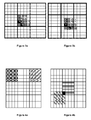
- the vector field is converted from the old big block shown in Figure 6a to smaller blocks shown in Figure 6b .
- all blocks in the same big block should be initialized as the same vector.
- the all light grey blocks should have same vector with the dark grey (black) blocks.
- newly created small, empty block in the old big block will have the same vector with the vector that the most of the other small blocks which are created from the same old block with the empty block has. For example; if we assume that four small blocks are created from the old block and one of them is empty, then regarding the algorithm, the empty one will have the same vector with the most of the other three small blocks.
- the blocks not including vectors should be filled by using candidate (neighbourhood) vectors.
- candidate vectors there can be different number of candidate vectors.
- there can be same and/or different/identical candidate vectors. So, in order to determine the vector in the empty block, just the candidates having different vectors are tested, instead of testing all of the candidate vectors. For example, if we have 9 candidates, m different candidate vectors, i.e. m 3, are tested to determine the correct vector of empty block. In the figure 7 , the specific order for this example should be followed choosing the candidate vectors is shown. In addition to that, the vectors that are tested once, are not needed to be tested again.
- the selection order of the candidate vector can be decided by using the global vector.
- the candidate vector which is nearest to global vector can be chosen first, and the rest of the order is determined according to the similarity, such as, the inner product value, between the global vector and the candidate vector.
- the block value, which is a half candidate vector length ahead from the current block in the current frame, and the block value, which is a half candidate vector length rearward from the current block in the previous frame, are shown in figure 8 .
- the candidate vector compensating the minimum value of distances between two blocks is chosen as the vector of that block.
- SAD of that block is equal to the minimum value of distances between two marked blocks.
- the block distances from the previous and next frames are chosen proportional to the time difference between the interpolation distance and the frame of the block shown in figure 9 .
Landscapes
- Engineering & Computer Science (AREA)
- Multimedia (AREA)
- Signal Processing (AREA)
- Compression Or Coding Systems Of Tv Signals (AREA)
- Television Systems (AREA)
Abstract
Description
- This invention relates to a method for adapting the motion vector field to frame interpolation framework in a memory-access efficient way for real-time implementation.
- In television industry, 100 Hz and 120 Hz televisions are very common and films are produced in 24 Hz and 25 Hz. When showing the film on 100 Hz or 120 Hz TV, film judder and motion blur are formed. So that two main problems of the television technology are the judder and motion blur. In order to remove the judder and blur from video, many Film Judder Removal (FJR), and Frame Rate Conversion (FRC) algorithms are proposed.
- Film Judder Removal (FJR) and Frame Rate Conversion (FRC) are very important issues for many television producers. Most of new Liquid Crystal Displays (LCDs) are 100 Hz or 120 Hz and the films are produced as 24 Hz or 25 Hz and the video content as 50 Hz or 60 Hz. To show the low frame rate films or videos on high frame rate LCDs, it is necessary to generate new frames between input frames. For this, the Motion Vector Field (MVF) should be found and by using this MVF interpolated frame should be created. There are two main problems to solve for accurate interpolation.
- 1. The correct vectors should be found for compensation part of the algorithm. Otherwise, the artefacts are formed on the interpolated frame.
- 2. The algorithm (motion estimation and compensation together) should be implemented in real-time for TV. Otherwise, the algorithm cannot be used in TV industry
- According to the method by Gerard de Haan (G. de Haan, and P. W. A. C. Biezen, "An Efficient True-Motion Estimator Using Candidate Vectors from a Parametric Motion Model", IEEE Trans. on Circuits and Sys. for Video Technology, Vol. 8, No.1, February 1998.), true motion is sought between two frames by using the candidate vectors from a parametric motion model (3D recursive search). By using the motion vector, outputs of the search interpolated frame is generated.
- According to method and apparatus for detecting motion vectors based on hierarchical motion estimation by Hae-Mook Jung (H.M. Jung, "Method and Apparatus for Detecting Motion Vectors Based on Hierarchical Motion Estimation", United States Patent, Patent Number:
5,583,580, Date of Patent: Dec. 10, 1996 ), motion vectors are determined between two frames by employing a time-sharing multi-tier hierarchical motion estimation approach, wherein the candidate blocks are grouped into a multiple number of hierarchical search areas. After determination of the Motion Vector Field (MVF) motion compensation part is applied. - The above two MVF estimation methods and many other variants do not however correspond to the vectors that should be used in the application framework. Depending on the application a set of specific MVF adjustment and correction post processing operations is needed before motion compensation.
- In
US 2009/0129472 A1 , a method for performing motion estimation associated with an encoder is disclosed. For example, the method selects a motion vector centering for a current block in a search area of at least one reference picture. The method calculates a matching cost for each of a plurality of candidate motion vectors derived from the search area, and outputs at least one of the plurality of candidate motion vectors based on the matching cost associated with each of the plurality of candidate motion vectors to a main coding loop. - In
US 2008/0292000 A1 , a method of providing motion estimation which comprises estimating a first motion vector and second motion vector for a first block in a frame of video, determining an error metric corresponding to the first and second motion vector and selecting the motion vector having the better error metric among the first and second motion vector, is described. - The algorithm developed by this invention not only fixes the incorrect vectors but also applies a proper shift on the MVF in order to makeup the latency between the ME instant and frame synthesis instant.
- The object of the present invention is to find the correct vectors for compensation part of the algorithm.
- Another object of the present invention is to implement both the motion estimation and compensation algorithms in real-time for TV.
- The invention is illustrated in the appended figures, in which;
-
Figure 1 : The follow chart of the algorithm developed by this invention is shown -
Figure 2a : Motion vector 16x16 is shown -
Figure 2b : Motion vector 8x8 is shown -
Figure 3a : Previous motion vector is shown -
Figure 3b : Current motion vector is shown -
Figure 4a : Motion vector without collision block problem is shown -
Figure 4b : Motion vector with collision block problem is shown -
Figure 5a : Block diagram of motion vector shifting algorithm, comparison of distances, is shown -
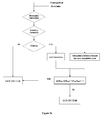
Figure 5b : Block diagram of motion vector shifting algorithm, comparison of old and new SAD values, is shown -
Figure 6a : Before expansion and replication of the vector field, Block Size = 16x16 is shown -
Figure 6b : After expansion and replication of the vector field, Block Size = 4x4 is shown -
Figure 7 : Candidate vector traversing order is shown -
Figure 8 : Bidirectional motion search is shown -
Figure 9 : Block diagram of enhanced bidirectional search is shown - Present invention is used between two main sections of FJR or FRC motion estimation and compensation as shown in
Figure1 . The algorithm developed by this invention comprises two steps; - 1. Motion Vector Field Shifting
- 2. Enhanced Bidirectional Search
- Since small block size gives more accurate results, the motion vector field (MVF) (big block) is divided into smaller size and replicated to reach to the final synthesis size as shown in
Figures 2a and 2b . Then in order to makeup for the "half-a-frame" or "quarter-a-frame" latency between motion estimation (ME) instant and frame synthesis instant, MVF elements change their positions by motion vectors, equal to half or quarter of their values. Also any other latency can be made up depending on the distances between interpolated frame and the previous or current frame and in addition to motion vector of frame, the global motion is also used to shift vector field. For example; as it is shown infigures 2a and 2b , each big block in the previous motion (figure 2a ) vector field is divided by two and four, 8x8 blocks are created from a 16x16 blocks. Then vectors in the 16x16 blocks are replicated to each 8x8 blocks. In other words, if the block size of previous one is 16x16, new block size of vector field can be 8x8, 4x4, or 2x2. So the vectors in the big blocks (shown inFigure 2a ) are replicated to small blocks (shown inFigure 2b ) and new motion vector field is created. Also sum of absolute differecences (SAD values) are replicated. - The vectors in the replicated MVF are transferred to new MVF (shifting map) by using motion vectors in the blocks and global vector. There are some important criteria and steps while locating the vector in the shifted MVF, such as;
- ■ add the half length of the vector to the shifted MVF
- ■ find the updated block index
- ■ boundary corrections on the border vectors of the frames
- ■ check whether there is collision blocks
- ■ check the distance between the vector and global vector to decide for the new vector.
- ■ the blend of collision blocks and the distance between the vector and global vector for the final decision
- First of all; since the block size of the new shifted MVF is the same as the replicated MVF and the vector field will be between the previous frame and the current frame, half length of the vector is added to block index. Also "half-a-frame" or "quarter-a-frame" latency would be possible between ME instant and frame synthesis instant.
- In the
figures 3a and 3b , shifting of motion vector group of a large block from the replicated MVF to shifted MVF is shown. Block indexes of each vector in replicated MVF is transferred to new shifted MVF's blocks are the addition of half of the vector sizes in case of frame doubling and block index value in the replicated block size. As shown inFigure 3 , in order to find the updated block index, the value found by addition of previous block index and half or quarter length of the vector of that block is divided by new (updated) block size. For example; assume that block size is 4,MVmapR(i,j) = 6 i : source block R index where; MVmapC(i,j) = 14 j : source block C index then, MVmapR_Shifted(m, n) = 6 m: destination block R index where; MVmapC_Shifted(m, n) = 14 n: destination block C index and; m = i + rounding (6/ (2*4)) = i+1 and n = j + rounding (14/ (2*4)) = j+ 2 - Also, there should be boundary corrections on the border vectors of the frames. In other words if only bidirectional synthesis is used clipping needs to be applied for the vectors exceeding the boundaries.
- As shown in
figure 4b , there can be some blocks that are matched with the same destination block which are called collision blocks. If there is no collision (figure 4a ), one vector is shifted to the destination block. Otherwise, SAD values of collided blocks are compared, and the source block that has a smaller SAD value locates its vector in that destination block. For example; assume that block size is 4, then,
Vector 1 on block with index (4,4) : MVmapR(4,4) = 8 and MVmapC(4,4) = 8
and;
Vector 2 on block with index (6,6) : MVmapR(6,6) = -8 and MVmapC(6,6) = -8 - Then in a frame rate doubling framework they will collide on block with index (5,5). The blocks (4, 4) and (6, 6) are collided on the (5, 5) block in the shifted MVF. To choose the correct vector, SAD values are compared. The vector that has the smaller SAD is assigned to the collided block.
- Moreover, if the blocks are collided, SAD values are not enough to give last decision. For example; if old and new SAD values are too close to each other, the distance between the vector and global vector is useful in decision process. The vector that is close to the global vector is chosen for the vector of that block. (Shown in
figure 5a ) - Also, as shown in
figure 5b , the final decision could be the result of the blend of collision blocks and the distance between the vector and global vector is useful in decision process. For example; assume that there is already an assignment on a particular destination block. Denote its SAD as Old SAD. Assume, later a second vector from another source block competes for the same destination. Then the following is applied to decide for the winner;
or;
- According to the equation mentioned above, if the corollary of the multiplication of the proportion of Old SAD to New SAD and proportion of the Distance between old vector and global vector to Distance between new vector and global vector is smaller than 1, then old vector is chosen, if it is bigger than 1, then new vector is chosen.
- After motion vector shifting step, there still can be blocks without motion vector. To assign a vector to each empty block, "Bidirectional Search" algorithm is used.
- After expansion and replication, the vector field is converted from the old big block shown in
Figure 6a to smaller blocks shown inFigure 6b . InFigure 6b all blocks in the same big block should be initialized as the same vector. For example, the all light grey blocks should have same vector with the dark grey (black) blocks. - In other words, newly created small, empty block in the old big block will have the same vector with the vector that the most of the other small blocks which are created from the same old block with the empty block has. For example; if we assume that four small blocks are created from the old block and one of them is empty, then regarding the algorithm, the empty one will have the same vector with the most of the other three small blocks.
- After initialization, the blocks not including vectors, should be filled by using candidate (neighbourhood) vectors. Depending on the number of the newly created small blocks, there can be different number of candidate vectors. Also, there can be same and/or different/identical candidate vectors. So, in order to determine the vector in the empty block, just the candidates having different vectors are tested, instead of testing all of the candidate vectors. For example, if we have 9 candidates, m different candidate vectors, i.e. m=3, are tested to determine the correct vector of empty block. In the
figure 7 , the specific order for this example should be followed choosing the candidate vectors is shown. In addition to that, the vectors that are tested once, are not needed to be tested again. - Memory access is the main bottleneck in the real time implementation of block matching operations (SAD computation). Therefore, finding a way to decrease the number of block matching operations from 9 to m is important. Moreover, since decrease in the number of candidate vectors will affect the performance, selection order of the candidate is crucial. The order which is followed should be determined regarding the current vector field. For the specific empty block, the most similar vector to the vector in the previous vector field and also to the neighbour vectors, which are determined before the block, should be tested primarily. Then the other vectors should be tested according to their similarities. For example; if the current block in the previous vector field has a motion vector that is directed upwards, the first order becomes the vector whose direction is upwards.
- Moreover, the selection order of the candidate vector can be decided by using the global vector. The candidate vector which is nearest to global vector can be chosen first, and the rest of the order is determined according to the similarity, such as, the inner product value, between the global vector and the candidate vector.
- In
figure 7 , the following pseudo code is applied to the "traverse" pattern. If it is assumed that m =3;
- After the final candidate vector set is obtained, all of its vectors are put under bidirectional block matching test.
- The block value, which is a half candidate vector length ahead from the current block in the current frame, and the block value, which is a half candidate vector length rearward from the current block in the previous frame, are shown in
figure 8 . - In the case of frame doubling, the candidate vector compensating the minimum value of distances between two blocks, shown in
figure 8 , is chosen as the vector of that block. SAD of that block is equal to the minimum value of distances between two marked blocks. - In the case of other frame conversion rates, the block distances from the previous and next frames are chosen proportional to the time difference between the interpolation distance and the frame of the block shown in
figure 9 .
Claims (15)
- A method for adapting the motion vector field to frame interpolation framework in a memory-access efficient way for real-time implementation, characterized in comprising the following steps;• Motion Vector Field Shifting• Enhanced Bidirectional Search being used in order to assign a vector to the each empty block
- A method according to claim 1 wherein, Motion Vector Field Shifting comprising the steps;• Division of the motion vector field (MVF) into smaller size,• Replication of motion vector field to reach to the final synthesis size,• Transmitting the vectors in the replicated MVF to the new MVF by using vectors in the blocks and the global vector, and• Locating the vector in the shifted MVF.
- A method according to claim 1 wherein, Enhanced Bidirectional Search comprising the steps;• Conversion of the vector field from the old Motion vector field (big block),• Initialization with the same vector with the old big block,• Determination of the empty blocks,• Determination of the selection order for testing the candidate vectors in order to fill the empty blocks,• Testing the candidate vectors in order to fill the empty blocks with vectors,• Decision for the vectors of the empty blocks, and• Application of the vector to the empty block
- A method according to claims 1 and 2 wherein; locating the vector in the shifted field comprises the steps of;• adding the half length of the vector to the shifted MVF,• finding the updated block index,• designating boundary corrections on the border vectors of the frames,• checking whether there are collision blocks,• checking the distance between the vector and global vector to decide for the new vector in the case of collision,• blending collision blocks and the distance between the vector and global vector for the final decision.
- A method according to claims 1, 2 and 4, wherein; in the case of being no collided blocks, one vector is shifted to the destination block.
- A method according to claims 1, 2 and 4 wherein; in the case of collision, old and new SAD values of collided blocks are compared.
- A method according to claims 1, 2, 4 and 6, wherein; the vector of source block that has a smaller SAD value is located in that destination block.
- A method according to claims 1, 4 and 6, wherein; if said old and new SAD values are too close to each other, the distance between the vector and global vector are compared and the vector that is close to the global vector is chosen for the vector of that said block.
- A method according to claims 1, 2, 3, 4, 5, 6, 7, and 8, wherein; if the corollary of the multiplication of the proportion of said old SAD to new SAD and proportion of the distance between old vector and global vector to distance between new vector and global vector smaller than 1, then old vector is chosen.
- A method according to claims 1, 2, 3, 4, 5 6, 7, and 8, wherein; if the corollary of the multiplication of the proportion of said old SAD to new SAD and proportion of the distance between old vector and global vector to distance between new vector and global vector is bigger than 1, then new vector is chosen.
- A method according to claim 1 wherein; the selection order of candidates is determined according to similarities of vectors to the vector in the previous vector field and also to the neighbour vectors which are determined before the block.
- A method according to claim 1, wherein; the selection order of the candidate vector is decided by using the global vector.
- A method according to claims 1 and 12, wherein; the candidate vector which is nearest to global vector is tested first and the rest of the selection order is determined according to the similarities between the global vector and the candidate vector.
- A method according to claims 1, 2, 3, 4, 5, 6, 7, 8, 9, 10, 11, 12 and 13, wherein; in the case of frame doubling, the candidate vector compensating the minimum value of distances between two blocks is chosen as the vector of that block.
- A method according to claims 1, 2, 3, 4, 5, 6, 7, 8, 9, 10 11, 12 and 13, wherein; in the case of frame conversion rates, the block distances from the previous and next frames are chosen proportional to the time difference between the interpolation distance and the frame of the block.
Applications Claiming Priority (1)
| Application Number | Priority Date | Filing Date | Title |
|---|---|---|---|
| TR2009/06020A TR200906020A2 (en) | 2009-08-04 | 2009-08-04 | Method and apparatus for effectively setting motion areas to square interpolation frames with memory access |
Publications (3)
| Publication Number | Publication Date |
|---|---|
| EP2285092A2 true EP2285092A2 (en) | 2011-02-16 |
| EP2285092A3 EP2285092A3 (en) | 2012-08-08 |
| EP2285092B1 EP2285092B1 (en) | 2019-04-17 |
Family
ID=43332549
Family Applications (1)
| Application Number | Title | Priority Date | Filing Date |
|---|---|---|---|
| EP10169501.3A Not-in-force EP2285092B1 (en) | 2009-08-04 | 2010-07-14 | Method and apparatus for adjusting motion fields in a memory - access efficient way to frame interpolation frameworks |
Country Status (2)
| Country | Link |
|---|---|
| EP (1) | EP2285092B1 (en) |
| TR (2) | TR200906020A2 (en) |
Citations (3)
| Publication number | Priority date | Publication date | Assignee | Title |
|---|---|---|---|---|
| US5583580A (en) | 1994-10-08 | 1996-12-10 | Daewoo Electronics Co., Ltd. | Method and apparatus for detecting motion vectors based on hierarchical motion estimation |
| US20080292000A1 (en) | 2007-05-24 | 2008-11-27 | Samsung Electronics Co., Ltd. | System and method of providing motion estimation |
| US20090129472A1 (en) | 2007-11-15 | 2009-05-21 | General Instrument Corporation | Method and Apparatus for Performing Motion Estimation |
Family Cites Families (6)
| Publication number | Priority date | Publication date | Assignee | Title |
|---|---|---|---|---|
| US5748247A (en) * | 1996-04-08 | 1998-05-05 | Tektronix, Inc. | Refinement of block motion vectors to achieve a dense motion field |
| US8553776B2 (en) * | 2004-07-21 | 2013-10-08 | QUALCOMM Inorporated | Method and apparatus for motion vector assignment |
| EP1734767A1 (en) * | 2005-06-13 | 2006-12-20 | SONY DEUTSCHLAND GmbH | Method for processing digital image data |
| KR20070055212A (en) * | 2005-11-25 | 2007-05-30 | 삼성전자주식회사 | Frame interpolation device, frame interpolation method and motion reliability evaluation device |
| EP1855474A1 (en) * | 2006-05-12 | 2007-11-14 | Sony Deutschland Gmbh | Method for generating an interpolated image between two images of an input image sequence |
| EP2237560A1 (en) * | 2009-03-30 | 2010-10-06 | Vestel Elektronik Sanayi ve Ticaret A.S. | Halo reducing motion-compensated interpolation |
-
2009
- 2009-08-04 TR TR2009/06020A patent/TR200906020A2/en unknown
-
2010
- 2010-07-14 EP EP10169501.3A patent/EP2285092B1/en not_active Not-in-force
- 2010-07-14 TR TR2019/10331T patent/TR201910331T4/en unknown
Patent Citations (3)
| Publication number | Priority date | Publication date | Assignee | Title |
|---|---|---|---|---|
| US5583580A (en) | 1994-10-08 | 1996-12-10 | Daewoo Electronics Co., Ltd. | Method and apparatus for detecting motion vectors based on hierarchical motion estimation |
| US20080292000A1 (en) | 2007-05-24 | 2008-11-27 | Samsung Electronics Co., Ltd. | System and method of providing motion estimation |
| US20090129472A1 (en) | 2007-11-15 | 2009-05-21 | General Instrument Corporation | Method and Apparatus for Performing Motion Estimation |
Non-Patent Citations (1)
| Title |
|---|
| G. DE HAAN; P. W A. C. BIEZEN: "An Efficient True-Motion Estimator Using Candidate Vectors from a Parametric Motion Model", IEEE TRANS. ON CIRCUITS AND SYS. FOR VIDEO TECHNOLOGY, vol. 8, no. 1, February 1998 (1998-02-01), XP000737028, DOI: doi:10.1109/76.660831 |
Also Published As
| Publication number | Publication date |
|---|---|
| TR200906020A2 (en) | 2011-02-21 |
| TR201910331T4 (en) | 2019-08-21 |
| EP2285092B1 (en) | 2019-04-17 |
| EP2285092A3 (en) | 2012-08-08 |
Similar Documents
| Publication | Publication Date | Title |
|---|---|---|
| US8189104B2 (en) | Apparatus, method, and computer program product for detecting motion vector and for creating interpolation frame | |
| KR100870278B1 (en) | Apparatus for creating interpolation frame | |
| CN1992789B (en) | Motion estimator and motion method | |
| US20070165719A1 (en) | Motion vector detection method and apparatus | |
| US8184703B2 (en) | Interpolated frame generating method and interpolated frame generating apparatus | |
| KR100226684B1 (en) | A half pel motion estimator | |
| TWI407776B (en) | Image generating device, static text detecting device and method thereof | |
| US8817878B2 (en) | Method and system for motion estimation around a fixed reference vector using a pivot-pixel approach | |
| US20130170551A1 (en) | Halo Reduction in Frame-Rate-Conversion Using Hybrid Bi-Directional Motion Vectors for Occlusion/Disocclusion Detection | |
| US20100328538A1 (en) | Parallel three-dimensional recursive search (3drs) meandering algorithm | |
| JP4299123B2 (en) | Apparatus and method for motion estimation, and image processing apparatus provided with such motion estimation apparatus | |
| EP1438839A1 (en) | Device and method for motion estimation | |
| KR100676704B1 (en) | Motion estimator and its estimation method | |
| US7535513B2 (en) | Deinterlacing method and device in use of field variable partition type | |
| KR20040047963A (en) | Unit for and method of motion estimation and image processing apparatus provided with such motion estimate unit | |
| EP3111630B1 (en) | Method and device for generating a motion-compensated video frame | |
| KR20010084661A (en) | Method for estimating motion and apparatus for the same | |
| KR101217627B1 (en) | Method and apparatus for estimating motion vector based on block | |
| US8305500B2 (en) | Method of block-based motion estimation | |
| US10757438B2 (en) | Motion estimation | |
| US20130235274A1 (en) | Motion vector detection device, motion vector detection method, frame interpolation device, and frame interpolation method | |
| US20070195881A1 (en) | Motion vector calculation apparatus | |
| JP2004356747A (en) | Image matching method and apparatus | |
| EP2237560A1 (en) | Halo reducing motion-compensated interpolation | |
| EP2285092B1 (en) | Method and apparatus for adjusting motion fields in a memory - access efficient way to frame interpolation frameworks |
Legal Events
| Date | Code | Title | Description |
|---|---|---|---|
| PUAI | Public reference made under article 153(3) epc to a published international application that has entered the european phase |
Free format text: ORIGINAL CODE: 0009012 |
|
| AK | Designated contracting states |
Kind code of ref document: A2 Designated state(s): AL AT BE BG CH CY CZ DE DK EE ES FI FR GB GR HR HU IE IS IT LI LT LU LV MC MK MT NL NO PL PT RO SE SI SK SM TR |
|
| AX | Request for extension of the european patent |
Extension state: BA ME RS |
|
| PUAL | Search report despatched |
Free format text: ORIGINAL CODE: 0009013 |
|
| AK | Designated contracting states |
Kind code of ref document: A3 Designated state(s): AL AT BE BG CH CY CZ DE DK EE ES FI FR GB GR HR HU IE IS IT LI LT LU LV MC MK MT NL NO PL PT RO SE SI SK SM TR |
|
| AX | Request for extension of the european patent |
Extension state: BA ME RS |
|
| RIC1 | Information provided on ipc code assigned before grant |
Ipc: H04N 5/14 20060101AFI20120704BHEP |
|
| 17P | Request for examination filed |
Effective date: 20121120 |
|
| 17Q | First examination report despatched |
Effective date: 20140924 |
|
| STAA | Information on the status of an ep patent application or granted ep patent |
Free format text: STATUS: EXAMINATION IS IN PROGRESS |
|
| GRAP | Despatch of communication of intention to grant a patent |
Free format text: ORIGINAL CODE: EPIDOSNIGR1 |
|
| STAA | Information on the status of an ep patent application or granted ep patent |
Free format text: STATUS: GRANT OF PATENT IS INTENDED |
|
| INTG | Intention to grant announced |
Effective date: 20181219 |
|
| GRAS | Grant fee paid |
Free format text: ORIGINAL CODE: EPIDOSNIGR3 |
|
| GRAA | (expected) grant |
Free format text: ORIGINAL CODE: 0009210 |
|
| STAA | Information on the status of an ep patent application or granted ep patent |
Free format text: STATUS: THE PATENT HAS BEEN GRANTED |
|
| AK | Designated contracting states |
Kind code of ref document: B1 Designated state(s): AL AT BE BG CH CY CZ DE DK EE ES FI FR GB GR HR HU IE IS IT LI LT LU LV MC MK MT NL NO PL PT RO SE SI SK SM TR |
|
| REG | Reference to a national code |
Ref country code: GB Ref legal event code: FG4D |
|
| REG | Reference to a national code |
Ref country code: CH Ref legal event code: EP |
|
| REG | Reference to a national code |
Ref country code: DE Ref legal event code: R096 Ref document number: 602010058264 Country of ref document: DE |
|
| REG | Reference to a national code |
Ref country code: AT Ref legal event code: REF Ref document number: 1122814 Country of ref document: AT Kind code of ref document: T Effective date: 20190515 Ref country code: IE Ref legal event code: FG4D |
|
| REG | Reference to a national code |
Ref country code: NL Ref legal event code: MP Effective date: 20190417 |
|
| REG | Reference to a national code |
Ref country code: LT Ref legal event code: MG4D |
|
| PG25 | Lapsed in a contracting state [announced via postgrant information from national office to epo] |
Ref country code: NL Free format text: LAPSE BECAUSE OF FAILURE TO SUBMIT A TRANSLATION OF THE DESCRIPTION OR TO PAY THE FEE WITHIN THE PRESCRIBED TIME-LIMIT Effective date: 20190417 |
|
| PG25 | Lapsed in a contracting state [announced via postgrant information from national office to epo] |
Ref country code: NO Free format text: LAPSE BECAUSE OF FAILURE TO SUBMIT A TRANSLATION OF THE DESCRIPTION OR TO PAY THE FEE WITHIN THE PRESCRIBED TIME-LIMIT Effective date: 20190717 Ref country code: ES Free format text: LAPSE BECAUSE OF FAILURE TO SUBMIT A TRANSLATION OF THE DESCRIPTION OR TO PAY THE FEE WITHIN THE PRESCRIBED TIME-LIMIT Effective date: 20190417 Ref country code: LT Free format text: LAPSE BECAUSE OF FAILURE TO SUBMIT A TRANSLATION OF THE DESCRIPTION OR TO PAY THE FEE WITHIN THE PRESCRIBED TIME-LIMIT Effective date: 20190417 Ref country code: SE Free format text: LAPSE BECAUSE OF FAILURE TO SUBMIT A TRANSLATION OF THE DESCRIPTION OR TO PAY THE FEE WITHIN THE PRESCRIBED TIME-LIMIT Effective date: 20190417 Ref country code: PT Free format text: LAPSE BECAUSE OF FAILURE TO SUBMIT A TRANSLATION OF THE DESCRIPTION OR TO PAY THE FEE WITHIN THE PRESCRIBED TIME-LIMIT Effective date: 20190817 Ref country code: HR Free format text: LAPSE BECAUSE OF FAILURE TO SUBMIT A TRANSLATION OF THE DESCRIPTION OR TO PAY THE FEE WITHIN THE PRESCRIBED TIME-LIMIT Effective date: 20190417 Ref country code: AL Free format text: LAPSE BECAUSE OF FAILURE TO SUBMIT A TRANSLATION OF THE DESCRIPTION OR TO PAY THE FEE WITHIN THE PRESCRIBED TIME-LIMIT Effective date: 20190417 Ref country code: FI Free format text: LAPSE BECAUSE OF FAILURE TO SUBMIT A TRANSLATION OF THE DESCRIPTION OR TO PAY THE FEE WITHIN THE PRESCRIBED TIME-LIMIT Effective date: 20190417 |
|
| PG25 | Lapsed in a contracting state [announced via postgrant information from national office to epo] |
Ref country code: LV Free format text: LAPSE BECAUSE OF FAILURE TO SUBMIT A TRANSLATION OF THE DESCRIPTION OR TO PAY THE FEE WITHIN THE PRESCRIBED TIME-LIMIT Effective date: 20190417 Ref country code: GR Free format text: LAPSE BECAUSE OF FAILURE TO SUBMIT A TRANSLATION OF THE DESCRIPTION OR TO PAY THE FEE WITHIN THE PRESCRIBED TIME-LIMIT Effective date: 20190718 Ref country code: PL Free format text: LAPSE BECAUSE OF FAILURE TO SUBMIT A TRANSLATION OF THE DESCRIPTION OR TO PAY THE FEE WITHIN THE PRESCRIBED TIME-LIMIT Effective date: 20190417 Ref country code: BG Free format text: LAPSE BECAUSE OF FAILURE TO SUBMIT A TRANSLATION OF THE DESCRIPTION OR TO PAY THE FEE WITHIN THE PRESCRIBED TIME-LIMIT Effective date: 20190717 |
|
| REG | Reference to a national code |
Ref country code: AT Ref legal event code: MK05 Ref document number: 1122814 Country of ref document: AT Kind code of ref document: T Effective date: 20190417 |
|
| PG25 | Lapsed in a contracting state [announced via postgrant information from national office to epo] |
Ref country code: IS Free format text: LAPSE BECAUSE OF FAILURE TO SUBMIT A TRANSLATION OF THE DESCRIPTION OR TO PAY THE FEE WITHIN THE PRESCRIBED TIME-LIMIT Effective date: 20190817 |
|
| REG | Reference to a national code |
Ref country code: DE Ref legal event code: R097 Ref document number: 602010058264 Country of ref document: DE |
|
| PG25 | Lapsed in a contracting state [announced via postgrant information from national office to epo] |
Ref country code: SK Free format text: LAPSE BECAUSE OF FAILURE TO SUBMIT A TRANSLATION OF THE DESCRIPTION OR TO PAY THE FEE WITHIN THE PRESCRIBED TIME-LIMIT Effective date: 20190417 Ref country code: RO Free format text: LAPSE BECAUSE OF FAILURE TO SUBMIT A TRANSLATION OF THE DESCRIPTION OR TO PAY THE FEE WITHIN THE PRESCRIBED TIME-LIMIT Effective date: 20190417 Ref country code: CZ Free format text: LAPSE BECAUSE OF FAILURE TO SUBMIT A TRANSLATION OF THE DESCRIPTION OR TO PAY THE FEE WITHIN THE PRESCRIBED TIME-LIMIT Effective date: 20190417 Ref country code: DK Free format text: LAPSE BECAUSE OF FAILURE TO SUBMIT A TRANSLATION OF THE DESCRIPTION OR TO PAY THE FEE WITHIN THE PRESCRIBED TIME-LIMIT Effective date: 20190417 Ref country code: AT Free format text: LAPSE BECAUSE OF FAILURE TO SUBMIT A TRANSLATION OF THE DESCRIPTION OR TO PAY THE FEE WITHIN THE PRESCRIBED TIME-LIMIT Effective date: 20190417 Ref country code: EE Free format text: LAPSE BECAUSE OF FAILURE TO SUBMIT A TRANSLATION OF THE DESCRIPTION OR TO PAY THE FEE WITHIN THE PRESCRIBED TIME-LIMIT Effective date: 20190417 |
|
| PLBE | No opposition filed within time limit |
Free format text: ORIGINAL CODE: 0009261 |
|
| STAA | Information on the status of an ep patent application or granted ep patent |
Free format text: STATUS: NO OPPOSITION FILED WITHIN TIME LIMIT |
|
| PG25 | Lapsed in a contracting state [announced via postgrant information from national office to epo] |
Ref country code: IT Free format text: LAPSE BECAUSE OF FAILURE TO SUBMIT A TRANSLATION OF THE DESCRIPTION OR TO PAY THE FEE WITHIN THE PRESCRIBED TIME-LIMIT Effective date: 20190417 Ref country code: MC Free format text: LAPSE BECAUSE OF FAILURE TO SUBMIT A TRANSLATION OF THE DESCRIPTION OR TO PAY THE FEE WITHIN THE PRESCRIBED TIME-LIMIT Effective date: 20190417 Ref country code: SM Free format text: LAPSE BECAUSE OF FAILURE TO SUBMIT A TRANSLATION OF THE DESCRIPTION OR TO PAY THE FEE WITHIN THE PRESCRIBED TIME-LIMIT Effective date: 20190417 |
|
| REG | Reference to a national code |
Ref country code: CH Ref legal event code: PL |
|
| 26N | No opposition filed |
Effective date: 20200120 |
|
| REG | Reference to a national code |
Ref country code: BE Ref legal event code: MM Effective date: 20190731 |
|
| PG25 | Lapsed in a contracting state [announced via postgrant information from national office to epo] |
Ref country code: CH Free format text: LAPSE BECAUSE OF NON-PAYMENT OF DUE FEES Effective date: 20190731 Ref country code: LI Free format text: LAPSE BECAUSE OF NON-PAYMENT OF DUE FEES Effective date: 20190731 Ref country code: BE Free format text: LAPSE BECAUSE OF NON-PAYMENT OF DUE FEES Effective date: 20190731 Ref country code: LU Free format text: LAPSE BECAUSE OF NON-PAYMENT OF DUE FEES Effective date: 20190714 Ref country code: SI Free format text: LAPSE BECAUSE OF FAILURE TO SUBMIT A TRANSLATION OF THE DESCRIPTION OR TO PAY THE FEE WITHIN THE PRESCRIBED TIME-LIMIT Effective date: 20190417 |
|
| PG25 | Lapsed in a contracting state [announced via postgrant information from national office to epo] |
Ref country code: FR Free format text: LAPSE BECAUSE OF NON-PAYMENT OF DUE FEES Effective date: 20190731 |
|
| PG25 | Lapsed in a contracting state [announced via postgrant information from national office to epo] |
Ref country code: IE Free format text: LAPSE BECAUSE OF NON-PAYMENT OF DUE FEES Effective date: 20190714 |
|
| PGFP | Annual fee paid to national office [announced via postgrant information from national office to epo] |
Ref country code: DE Payment date: 20200721 Year of fee payment: 11 Ref country code: GB Payment date: 20200727 Year of fee payment: 11 Ref country code: TR Payment date: 20200708 Year of fee payment: 11 |
|
| PG25 | Lapsed in a contracting state [announced via postgrant information from national office to epo] |
Ref country code: CY Free format text: LAPSE BECAUSE OF FAILURE TO SUBMIT A TRANSLATION OF THE DESCRIPTION OR TO PAY THE FEE WITHIN THE PRESCRIBED TIME-LIMIT Effective date: 20190417 |
|
| PG25 | Lapsed in a contracting state [announced via postgrant information from national office to epo] |
Ref country code: HU Free format text: LAPSE BECAUSE OF FAILURE TO SUBMIT A TRANSLATION OF THE DESCRIPTION OR TO PAY THE FEE WITHIN THE PRESCRIBED TIME-LIMIT; INVALID AB INITIO Effective date: 20100714 Ref country code: MT Free format text: LAPSE BECAUSE OF FAILURE TO SUBMIT A TRANSLATION OF THE DESCRIPTION OR TO PAY THE FEE WITHIN THE PRESCRIBED TIME-LIMIT Effective date: 20190417 |
|
| REG | Reference to a national code |
Ref country code: DE Ref legal event code: R119 Ref document number: 602010058264 Country of ref document: DE |
|
| GBPC | Gb: european patent ceased through non-payment of renewal fee |
Effective date: 20210714 |
|
| PG25 | Lapsed in a contracting state [announced via postgrant information from national office to epo] |
Ref country code: GB Free format text: LAPSE BECAUSE OF NON-PAYMENT OF DUE FEES Effective date: 20210714 Ref country code: DE Free format text: LAPSE BECAUSE OF NON-PAYMENT OF DUE FEES Effective date: 20220201 |
|
| PG25 | Lapsed in a contracting state [announced via postgrant information from national office to epo] |
Ref country code: MK Free format text: LAPSE BECAUSE OF FAILURE TO SUBMIT A TRANSLATION OF THE DESCRIPTION OR TO PAY THE FEE WITHIN THE PRESCRIBED TIME-LIMIT Effective date: 20190417 |
|
| PG25 | Lapsed in a contracting state [announced via postgrant information from national office to epo] |
Ref country code: TR Free format text: LAPSE BECAUSE OF NON-PAYMENT OF DUE FEES Effective date: 20210714 |