EP2275908A1 - Touch-controlled apparatus and related control method - Google Patents
Touch-controlled apparatus and related control method Download PDFInfo
- Publication number
- EP2275908A1 EP2275908A1 EP09015134A EP09015134A EP2275908A1 EP 2275908 A1 EP2275908 A1 EP 2275908A1 EP 09015134 A EP09015134 A EP 09015134A EP 09015134 A EP09015134 A EP 09015134A EP 2275908 A1 EP2275908 A1 EP 2275908A1
- Authority
- EP
- European Patent Office
- Prior art keywords
- touch
- area
- interrupt request
- unit
- touch screen
- Prior art date
- Legal status (The legal status is an assumption and is not a legal conclusion. Google has not performed a legal analysis and makes no representation as to the accuracy of the status listed.)
- Withdrawn
Links
Images


Classifications
-
- G—PHYSICS
- G06—COMPUTING OR CALCULATING; COUNTING
- G06F—ELECTRIC DIGITAL DATA PROCESSING
- G06F3/00—Input arrangements for transferring data to be processed into a form capable of being handled by the computer; Output arrangements for transferring data from processing unit to output unit, e.g. interface arrangements
- G06F3/01—Input arrangements or combined input and output arrangements for interaction between user and computer
- G06F3/03—Arrangements for converting the position or the displacement of a member into a coded form
- G06F3/041—Digitisers, e.g. for touch screens or touch pads, characterised by the transducing means
- G06F3/044—Digitisers, e.g. for touch screens or touch pads, characterised by the transducing means by capacitive means
-
- G—PHYSICS
- G06—COMPUTING OR CALCULATING; COUNTING
- G06F—ELECTRIC DIGITAL DATA PROCESSING
- G06F3/00—Input arrangements for transferring data to be processed into a form capable of being handled by the computer; Output arrangements for transferring data from processing unit to output unit, e.g. interface arrangements
- G06F3/01—Input arrangements or combined input and output arrangements for interaction between user and computer
- G06F3/048—Interaction techniques based on graphical user interfaces [GUI]
- G06F3/0487—Interaction techniques based on graphical user interfaces [GUI] using specific features provided by the input device, e.g. functions controlled by the rotation of a mouse with dual sensing arrangements, or of the nature of the input device, e.g. tap gestures based on pressure sensed by a digitiser
- G06F3/0488—Interaction techniques based on graphical user interfaces [GUI] using specific features provided by the input device, e.g. functions controlled by the rotation of a mouse with dual sensing arrangements, or of the nature of the input device, e.g. tap gestures based on pressure sensed by a digitiser using a touch-screen or digitiser, e.g. input of commands through traced gestures
- G06F3/04886—Interaction techniques based on graphical user interfaces [GUI] using specific features provided by the input device, e.g. functions controlled by the rotation of a mouse with dual sensing arrangements, or of the nature of the input device, e.g. tap gestures based on pressure sensed by a digitiser using a touch-screen or digitiser, e.g. input of commands through traced gestures by partitioning the display area of the touch-screen or the surface of the digitising tablet into independently controllable areas, e.g. virtual keyboards or menus
Definitions
- the present invention relates to a touch-controlled electronic apparatus and a method capable of using a touch screen (e.g. a capacitive touch panel) as touch buttons according to the pre-characterizing clauses of claims 1, 4, 7, and 12.
- a touch screen e.g. a capacitive touch panel
- PDAs personal digital assistants
- mobile phones mobile phones
- PDA phones PDA phones
- touch panel as their interface tool for data communication.
- the electronic products are usually designed with the trend of light weight and small size, and hence there is no enough space to accommodate conventional input devices such as keyboards or mice.
- display devices equipped with a touch panel are becoming an important component of a variety of electronic products.
- buttons will not only raise the cost but also occupy the circuit space, which results in a limitation to the size of the mobile devices.
- the present invention aims at providing a touch-controlled electronic apparatus and a related method for controlling a touch-controlled electronic apparatus.
- the claimed method for controlling a touch-controlled electronic apparatus which comprises a touch screen having a first area used as touch buttons and a second area used for displaying images, includes the steps of: detecting whether the touch screen receives a touch signal; when detecting that the touch screen receives the touch signal, determining whether a touched position of the touch signal is located on the first area to generate a determining result; and determining to trigger a first interrupt request or a second interrupt request according to the determining result.
- the first area and the second area of the touch screen adopt an identical capacitive touch panel.
- the claimed method for controlling a touch-controlled electronic apparatus which comprises a touch screen having a first area used as touch buttons and a second area used for displaying images, includes the steps of: detecting whether the first area of the touch screen receives a touch signal and detecting whether the second area of the touch screen receives the touch signal to generate a detecting result; and determining to trigger a first interrupt request or a second interrupt request according to the detecting result.
- the first area of the touch screen adopts a first capacitive touch panel
- the second area of the touch screen adopts a second capacitive touch panel.
- the claimed touch-controlled electronic apparatus comprises a touch screen, a driving circuit, and a micro-processing unit.
- the touch screen has a first area used as touch buttons and a second area used for displaying images, wherein the first area and the second area of the touch screen adopt an identical capacitive touch panel.
- the driving circuit is coupled to the touch screen.
- the micro-processing unit is coupled to the driving circuit.
- the claimed touch-controlled electronic apparatus comprises a touch screen, a driving circuit, and a micro-processing unit.
- the touch screen has a first area used as touch buttons and a second area used for displaying images, wherein the first area of the touch screen adopts a first capacitive touch panel and the second area of the touch screen adopts a second capacitive touch panel.
- the driving circuit is coupled to the touch screen.
- the micro-processing unit is coupled to the driving circuit.
- FIG. 1 is an appearance of a touch-controlled electronic apparatus 100 according to a first embodiment of the present invention
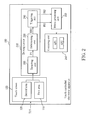
- FIG.2 is a block diagram of the touch-controlled electronic apparatus 100 shown in FIG.1
- the touch-controlled electronic apparatus 100 comprises a touch screen 130, and the touch screen 130 has a first area 110 and a second area 120.
- the first area 110 is used as (one or a plurality of) touch button (s), and the second area 120 is used for displaying images.
- the first area 110 and the second area 120 of the touch screen 130 adopt the same capacitive touch panel. That is, all positions located on the whole touch screen 130 can be used for sensing fingers.
- the touch-controlled electronic apparatus 100 includes, but is not limited to, a touch screen 130, a driving circuit 210, a micro-processing unit 250, and an executing unit 260.
- the driving circuit 210 is coupled to the touch screen 130.
- the driving circuit 210 comprises a detecting unit 220, a determining unit 230, and a triggering unit 240.
- the detecting unit 220 is coupled to the touch screen 130 for detecting whether the touch screen 130 receives a touch signal TU1.
- the determining unit 230 is coupled to the detecting unit 220.
- the determining unit 230 further determines whether a touched position P1 of the touch signal TU1 is located on the first area 110 of the touch screen 130 to generate a determining result DR1.
- the triggering unit 240 is coupled to the determining unit 230 for determining to trigger a first interrupt request IR1 or a second interrupt request IR2 according to the determining result DR1.
- the triggering unit 240 triggers the first interrupt request IR1; and when the determining result DR1 of the determining unit 230 indicates that the touched position P1 of the touch signal TU1 is located on the second area 120, the triggering unit 240 triggers the second interrupt request IR2.
- the micro-processing unit 250 is coupled to the triggering unit 240 of the driving circuit 210 for receiving the first interrupt request IR1 and the second interrupt request IR2.
- the executing unit 260 is coupled to the micro-processing unit 250.
- the executing unit 260 performs a first designated application program AP1 corresponding to the touched position P1 of the touch signal TU1; and when the micro-processing unit 250 receives the second interrupt request IR2, the executing unit 260 performs a second designated application program AP2 corresponding to the touched position P1 of the touch signal TU1.
- Those skilled in the art should appreciate that various modifications of the first application program AP1 and the second application program AP2 may be made without departing from the spirit of the present invention, and they can be designed depending on actual demands.
- the touch-controlled electronic apparatus 100 can be a handheld touch-controlled electronic apparatus, such as a personal digital assistant (PDA), a mobile phone or a PDA phone. But this should not be considered as limitations of the present invention, and the touch-controlled electronic apparatus 100 can be a touch-controlled electronic apparatus of other types.
- the first area 110 and the second area 120 of the touch screen 130 adopt the same capacitive touch panel, wherein the first area 110 is used as a touch button area and the second area 120 is used as an image-displaying area.
- the aforementioned detecting unit 220, the determining unit 230, and the triggering unit 240 can be implemented by software and/or firmware, but in no way should be considered to be limitations of the scope of the present invention. As one skilled in the art will readily appreciate that the detecting unit 220, the determining unit 230, and the triggering unit 240 can be implemented by other means or other components without departing the spirit of the present invention, which also belongs to the scope of the present invention.
- FIG. 3 is an appearance of a touch-controlled electronic apparatus 300 according to a second embodiment of the present invention
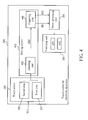
- FIG.4 is a block diagram of the touch-controlled electronic apparatus 300 shown in FIG.3
- the touch-controlled electronic apparatus 300 comprises a touch screen 330, and the touch screen 330 has a first area 310 and a second area 320.
- the first area 310 is used as (one or a plurality of) touch button (s), and the second area 320 is used for displaying images.
- the first area 310 and the second area 320 of the touch screen 330 adopt different capacitive touch panels.
- the first area 310 adopts a first capacitive touch panel while the second area 320 adopts a second capacitive touch panel. That is, only the dotted portions located on the touch screen 330 can be used for sensing fingers.
- the touch-controlled electronic apparatus 300 includes, but is not limited to, a touch screen 330, a driving circuit 410, a micro-processing unit 250, and an executing unit 260.
- the components in the second embodiment labeled with the same numbers as the components in the first embodiment represent that they have the same functions or corresponding locations.
- the driving circuit 410 is coupled to the touch screen 330.
- the driving circuit 410 comprises a detecting unit 420 and a triggering unit 440.
- the detecting unit 420 is coupled to the touch screen 330 for detecting whether the first area 310 of the touch screen 330 receives the touch signal TU1 and for detecting whether the second area 320 of the touch screen 330 receives the touch signal TU1 to generate a detecting result DR2.
- the triggering unit 440 is coupled to the detecting unit 420 for determining to trigger a first interrupt request IR1 or a second interrupt request IR2 according to the detecting result DR2.
- the triggering unit 440 triggers the first interrupt request IR1; and when the detecting result DR2 of the detecting unit 420 indicates that the second area 320 receives the touch signal TU1, the triggering unit 440 triggers the second interrupt request IR2.
- Operations related to the micro-processing unit 250 and the executing unit 260 have already been detailed in FIG.2 above, and further description is omitted here for brevity.
- the touch-controlled electronic apparatus 300 When the touch-controlled electronic apparatus 300 is compared with the touch-controlled electronic apparatus 100 mentioned in the first embodiment, the implementation of the touch-controlled electronic apparatus 300 is more complicated than that of the touch-controlled electronic apparatus 100 because the first area 310 and the second area 320 of the touch screen 330 of the touch-controlled electronic apparatus 300 are implemented by adopting different capacitive touch panels. But the driving circuit 410 of the touch-controlled electronic apparatus 300 has a simpler firmware architecture and a faster processing speed because there is no need to determine the touched position P1 of the touch signal TU1.
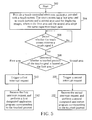
- FIG. 5 is a flowchart illustrating a method for controlling a touch-controlled electronic apparatus according to a first exemplary embodiment of the present invention. Please note that the following steps are not limited to be performed according to the exact sequence shown in FIG. 5 if a roughly identical result can be obtained.
- the method includes, but is not limited to, the following steps: Step 502: Start.
- Step 504 Provide a touch-controlled electronic apparatus provided with a touch screen.
- the touch screen has a first area used as touch buttons and a second area used for displaying images, wherein the first area and the second area adopt the same capacitive touch panel.
- Step 506 Detect whether the touch screen receives a touch signal.
- Step 508 Determine whether a touched position of the touch signal is located on the first area to generate a determining result.
- Step 510 Trigger a first interrupt request.
- Step 512 Receive the first interrupt request, and perform a first designated application program corresponding to the touched position.
- Step 520 Trigger a second interrupt request.
- Step 522 Receive the second interrupt request, and perform a second designated application program corresponding to the touched position.
- step 506 is executed by the detecting unit 220
- step 508 is executed by the determining unit 230
- steps 510 and 520 are executed by the triggering unit 240
- steps 512 and 522 are executed by the micro-processing unit 250 and the executing unit 260.
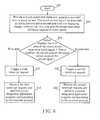
- FIG. 6 is a flowchart illustrating a method for controlling a touch-controlled electronic apparatus according to a second exemplary embodiment of the present invention.
- the method includes, but is not limited to, the following steps: Step 502: Start.
- Step 604 Provide a touch-controlled electronic apparatus provided with a touch screen.
- the touch screen has a first area used as touch buttons and a second area used for displaying images, wherein the first area and the second area adopt different capacitive touch panels.
- Step 606 Detect whether the first area of the touch screen receives a touch signal and detect whether the second area of the touch screen receives the touch signal to generate a detecting result.
- Step 510 Trigger a first interrupt request.
- Step 512 Receive the first interrupt request, and perform a first designated application program corresponding to the touched position.
- Step 520 Trigger a second interrupt request.
- Step 522 Receive the second interrupt request, and perform a second designated application program corresponding to the touched position.
- FIG.6 Please note that the steps shown in FIG.6 are similar than the steps shown in FIG.5 , which is a varied embodiment of FIG.5 . The difference between them is that the step 604 in FIG.6 is used for replacing the step 504 in FIG.5 , and the step 606 in FIG.6 is used for replacing the steps 506 and 508 in FIG.5 . How each element operates can be known by collocating the steps shown in FIG.6 with the elements shown in FIG.3 and FIG.4 , and further description is omitted here for brevity.
- the step 606 is executed by the detecting unit 420, the steps 510 and 520 are executed by the triggering unit 440, and the steps 512 and 522 are executed by the micro-processing unit 250 and the executing unit 260.
- the present invention provides a touch-controlled electronic apparatus (e.g. a mobile phone or a PDA) and a related control method.
- a touch screen e.g. a capacitive touch panel
- common buttons which are traditionally implemented by components such as metal dome keypads, hardwire switches, or resistive buttons can be replaced. Therefore, not only can extra cost and circuit space be saved, but also an aesthetic goal can be achieved.
- the touch-controlled electronic apparatus can adopt the same capacitive touch panel to implement the first area and the second area of the touch screen (such as the first embodiment), or can adopt different capacitive touch panels to implement the first area and the second area of the touch screen (such as the second embodiment) . Both of them have advantages and disadvantages, and they are able to be applied to different applications depending on actual demands.
Landscapes
- Engineering & Computer Science (AREA)
- General Engineering & Computer Science (AREA)
- Theoretical Computer Science (AREA)
- Human Computer Interaction (AREA)
- Physics & Mathematics (AREA)
- General Physics & Mathematics (AREA)
- Position Input By Displaying (AREA)
- User Interface Of Digital Computer (AREA)
Abstract
A touch-controlled electronic apparatus (100) includes a touch screen (130), and the touch screen (130) includes a first area (110) used as touch buttons and a second area (120) used for displaying images. A method for controlling the touch-controlled electronic apparatus (100) includes the steps of: detecting whether the touch screen (130) receives a touch signal (TU1); when detecting that the touch screen (130) receives the touch signal (TU1), determining whether a touched position (P1) of the touch signal (TU1) is located on the first area (110) to generate a determining result (DR1); and determining to trigger a first interrupt request (IR1) or a second interrupt request (IR2) according to the determining result (DR1).
Description
- The present invention relates to a touch-controlled electronic apparatus and a method capable of using a touch screen (e.g. a capacitive touch panel) as touch buttons according to the pre-characterizing clauses of claims 1, 4, 7, and 12.
- In today's consumer electronics markets, portable electronic products such as personal digital assistants (PDAs), mobile phones, and PDA phones have already adopted a touch panel as their interface tool for data communication. Currently, the electronic products are usually designed with the trend of light weight and small size, and hence there is no enough space to accommodate conventional input devices such as keyboards or mice. Especially with the demands for human nature design in Tablet PCs, display devices equipped with a touch panel are becoming an important component of a variety of electronic products.
- Nowadays electronic products (e. g. a mobile phone or a PDA phone) equipped with a touch panel usually adopt components such as metal dome keypads, hardwire switches, or resistive buttons to implement the common buttons of the mobile devices. However, these physical buttons will not only raise the cost but also occupy the circuit space, which results in a limitation to the size of the mobile devices.
- This in mind, the present invention aims at providing a touch-controlled electronic apparatus and a related method for controlling a touch-controlled electronic apparatus.
- This is achieved by a touch-controlled electronic apparatus and a related method for controlling a touch-controlled electronic apparatus according to claims 1, 4 , 7, and 12. The dependent claims pertain to corresponding further developments and improvements.
- As will be seen more clearly from the detailed descriptions following below, the claimed method for controlling a touch-controlled electronic apparatus, which comprises a touch screen having a first area used as touch buttons and a second area used for displaying images, includes the steps of: detecting whether the touch screen receives a touch signal; when detecting that the touch screen receives the touch signal, determining whether a touched position of the touch signal is located on the first area to generate a determining result; and determining to trigger a first interrupt request or a second interrupt request according to the determining result. Herein the first area and the second area of the touch screen adopt an identical capacitive touch panel.
- In addition, as will be seen more clearly from the detailed description following below, the claimed method for controlling a touch-controlled electronic apparatus, which comprises a touch screen having a first area used as touch buttons and a second area used for displaying images, includes the steps of: detecting whether the first area of the touch screen receives a touch signal and detecting whether the second area of the touch screen receives the touch signal to generate a detecting result; and determining to trigger a first interrupt request or a second interrupt request according to the detecting result. Herein the first area of the touch screen adopts a first capacitive touch panel, and the second area of the touch screen adopts a second capacitive touch panel.
- In addition, as will be seen more clearly from the detailed description following below, the claimed touch-controlled electronic apparatus comprises a touch screen, a driving circuit, and a micro-processing unit. The touch screen has a first area used as touch buttons and a second area used for displaying images, wherein the first area and the second area of the touch screen adopt an identical capacitive touch panel. The driving circuit is coupled to the touch screen. The micro-processing unit is coupled to the driving circuit.
- In addition, as will be seen more clearly from the detailed description following below, the claimed touch-controlled electronic apparatus comprises a touch screen, a driving circuit, and a micro-processing unit. The touch screen has a first area used as touch buttons and a second area used for displaying images, wherein the first area of the touch screen adopts a first capacitive touch panel and the second area of the touch screen adopts a second capacitive touch panel. The driving circuit is coupled to the touch screen. The micro-processing unit is coupled to the driving circuit.
- In the following, the invention is further illustrated by way of example, tacking reference to the accompanying drawings. Thereof
-
FIG.1 is an appearance of a touch-controlled electronic apparatus according to a first embodiment of the present invention; -
FIG.2 is a block diagram of the touch-controlled electronic apparatus shown inFIG.1 ; -
FIG.3 is an appearance of a touch-controlled electronic apparatus according to a second embodiment of the present invention; -
FIG.4 is a block diagram of the touch-controlled electronic apparatus shown inFIG.3 ; -
FIG.5 is a flowchart illustrating a method for controlling a touch-controlled electronic apparatus according to a first exemplary embodiment of the present invention; and -
FIG.6 is a flowchart illustrating a method for controlling a touch-controlled electronic apparatus according to a second exemplary embodiment of the present invention. - Please refer to
FIG. 1 together withFIG. 2 .FIG. 1 is an appearance of a touch-controlledelectronic apparatus 100 according to a first embodiment of the present invention, andFIG.2 is a block diagram of the touch-controlledelectronic apparatus 100 shown inFIG.1 . As shown inFIG.1 , the touch-controlledelectronic apparatus 100 comprises atouch screen 130, and thetouch screen 130 has afirst area 110 and asecond area 120. Thefirst area 110 is used as (one or a plurality of) touch button (s), and thesecond area 120 is used for displaying images. Be noted that in this embodiment, thefirst area 110 and thesecond area 120 of thetouch screen 130 adopt the same capacitive touch panel. That is, all positions located on thewhole touch screen 130 can be used for sensing fingers. - As shown in
FIG.2 , the touch-controlledelectronic apparatus 100 includes, but is not limited to, atouch screen 130, a drivingcircuit 210, amicro-processing unit 250, and an executingunit 260. The drivingcircuit 210 is coupled to thetouch screen 130. The drivingcircuit 210 comprises a detectingunit 220, a determiningunit 230, and a triggeringunit 240. The detectingunit 220 is coupled to thetouch screen 130 for detecting whether thetouch screen 130 receives a touch signal TU1. The determiningunit 230 is coupled to the detectingunit 220. When the detectingunit 220 detects that thetouch screen 130 receives the touch signal TU1, the determiningunit 230 further determines whether a touched position P1 of the touch signal TU1 is located on thefirst area 110 of thetouch screen 130 to generate a determining result DR1. The triggeringunit 240 is coupled to the determiningunit 230 for determining to trigger a first interrupt request IR1 or a second interrupt request IR2 according to the determining result DR1. When the determining result DR1 of the determiningunit 230 indicates that the touched position P1 of the touch signal TU1 is located on thefirst area 110, the triggeringunit 240 triggers the first interrupt request IR1; and when the determining result DR1 of the determiningunit 230 indicates that the touched position P1 of the touch signal TU1 is located on thesecond area 120, the triggeringunit 240 triggers the second interrupt request IR2. - Furthermore, the
micro-processing unit 250 is coupled to the triggeringunit 240 of the drivingcircuit 210 for receiving the first interrupt request IR1 and the second interrupt request IR2. The executingunit 260 is coupled to themicro-processing unit 250. When themicro-processing unit 250 receives the first interrupt request IR1, the executingunit 260 performs a first designated application program AP1 corresponding to the touched position P1 of the touch signal TU1; and when themicro-processing unit 250 receives the second interrupt request IR2, the executingunit 260 performs a second designated application program AP2 corresponding to the touched position P1 of the touch signal TU1. Those skilled in the art should appreciate that various modifications of the first application program AP1 and the second application program AP2 may be made without departing from the spirit of the present invention, and they can be designed depending on actual demands. - Please note that the touch-controlled
electronic apparatus 100 can be a handheld touch-controlled electronic apparatus, such as a personal digital assistant (PDA), a mobile phone or a PDA phone. But this should not be considered as limitations of the present invention, and the touch-controlledelectronic apparatus 100 can be a touch-controlled electronic apparatus of other types. Moreover, in this embodiment, thefirst area 110 and thesecond area 120 of thetouch screen 130 adopt the same capacitive touch panel, wherein thefirst area 110 is used as a touch button area and thesecond area 120 is used as an image-displaying area. - Please also note that the aforementioned detecting
unit 220, the determiningunit 230, and the triggeringunit 240 can be implemented by software and/or firmware, but in no way should be considered to be limitations of the scope of the present invention. As one skilled in the art will readily appreciate that the detectingunit 220, the determiningunit 230, and the triggeringunit 240 can be implemented by other means or other components without departing the spirit of the present invention, which also belongs to the scope of the present invention. - Please refer to
FIG.3 together withFIG.4 .FIG. 3 is an appearance of a touch-controlledelectronic apparatus 300 according to a second embodiment of the present invention, andFIG.4 is a block diagram of the touch-controlledelectronic apparatus 300 shown inFIG.3 . As shown inFIG.3 , the touch-controlledelectronic apparatus 300 comprises atouch screen 330, and thetouch screen 330 has afirst area 310 and asecond area 320. Thefirst area 310 is used as (one or a plurality of) touch button (s), and thesecond area 320 is used for displaying images. Be noted that in this embodiment, thefirst area 310 and thesecond area 320 of thetouch screen 330 adopt different capacitive touch panels. For example, thefirst area 310 adopts a first capacitive touch panel while thesecond area 320 adopts a second capacitive touch panel. That is, only the dotted portions located on thetouch screen 330 can be used for sensing fingers. - As shown in
FIG.4 , the touch-controlledelectronic apparatus 300 includes, but is not limited to, atouch screen 330, a drivingcircuit 410, amicro-processing unit 250, and an executingunit 260. The components in the second embodiment labeled with the same numbers as the components in the first embodiment represent that they have the same functions or corresponding locations. The drivingcircuit 410 is coupled to thetouch screen 330. The drivingcircuit 410 comprises a detectingunit 420 and a triggeringunit 440. The detectingunit 420 is coupled to thetouch screen 330 for detecting whether thefirst area 310 of thetouch screen 330 receives the touch signal TU1 and for detecting whether thesecond area 320 of thetouch screen 330 receives the touch signal TU1 to generate a detecting result DR2. The triggeringunit 440 is coupled to the detectingunit 420 for determining to trigger a first interrupt request IR1 or a second interrupt request IR2 according to the detecting result DR2. When the detecting result DR2 of the detectingunit 420 indicates that thefirst area 310 receives the touch signal TU1, the triggeringunit 440 triggers the first interrupt request IR1; and when the detecting result DR2 of the detectingunit 420 indicates that thesecond area 320 receives the touch signal TU1, the triggeringunit 440 triggers the second interrupt request IR2. Operations related to themicro-processing unit 250 and the executingunit 260 have already been detailed inFIG.2 above, and further description is omitted here for brevity. - When the touch-controlled
electronic apparatus 300 is compared with the touch-controlledelectronic apparatus 100 mentioned in the first embodiment, the implementation of the touch-controlledelectronic apparatus 300 is more complicated than that of the touch-controlledelectronic apparatus 100 because thefirst area 310 and thesecond area 320 of thetouch screen 330 of the touch-controlledelectronic apparatus 300 are implemented by adopting different capacitive touch panels. But thedriving circuit 410 of the touch-controlledelectronic apparatus 300 has a simpler firmware architecture and a faster processing speed because there is no need to determine the touched position P1 of the touch signal TU1. - Please refer to
FIG. 5. FIG. 5 is a flowchart illustrating a method for controlling a touch-controlled electronic apparatus according to a first exemplary embodiment of the present invention. Please note that the following steps are not limited to be performed according to the exact sequence shown inFIG. 5 if a roughly identical result can be obtained. The method includes, but is not limited to, the following steps:Step 502: Start. Step 504: Provide a touch-controlled electronic apparatus provided with a touch screen. The touch screen has a first area used as touch buttons and a second area used for displaying images, wherein the first area and the second area adopt the same capacitive touch panel. Step 506: Detect whether the touch screen receives a touch signal. When detecting that the touch screen receives the touch signal, go to Step 508; otherwise, go back toStep 506.Step 508: Determine whether a touched position of the touch signal is located on the first area to generate a determining result. When the determining result indicates that the touched position is located on the first area, go to Step 510; and when the determining result indicates that the touched position is located on the second area, go toStep 520.Step 510: Trigger a first interrupt request. Step 512: Receive the first interrupt request, and perform a first designated application program corresponding to the touched position. Step 520: Trigger a second interrupt request. Step 522 : Receive the second interrupt request, and perform a second designated application program corresponding to the touched position. - How each element operates can be known by collocating the steps shown in
FIG.5 with the elements shown inFIG.1 andFIG.2 , and further description is omitted here for brevity. Be noted that thestep 506 is executed by the detectingunit 220, thestep 508 is executed by the determiningunit 230, thesteps unit 240, and thesteps micro-processing unit 250 and the executingunit 260. - Please refer to
FIG. 6. FIG. 6 is a flowchart illustrating a method for controlling a touch-controlled electronic apparatus according to a second exemplary embodiment of the present invention. The method includes, but is not limited to, the following steps:Step 502: Start. Step 604: Provide a touch-controlled electronic apparatus provided with a touch screen. The touch screen has a first area used as touch buttons and a second area used for displaying images, wherein the first area and the second area adopt different capacitive touch panels. Step 606: Detect whether the first area of the touch screen receives a touch signal and detect whether the second area of the touch screen receives the touch signal to generate a detecting result. When the detecting result indicates that the first area receives the touch signal, go to Step 510; and when the detecting result indicates that the second area receives the touch signal, go toStep 520.Step 510: Trigger a first interrupt request. Step 512: Receive the first interrupt request, and perform a first designated application program corresponding to the touched position. Step 520: Trigger a second interrupt request. Step 522: Receive the second interrupt request, and perform a second designated application program corresponding to the touched position. - Please note that the steps shown in
FIG.6 are similar than the steps shown inFIG.5 , which is a varied embodiment ofFIG.5 . The difference between them is that thestep 604 inFIG.6 is used for replacing thestep 504 inFIG.5 , and thestep 606 inFIG.6 is used for replacing thesteps FIG.5 . How each element operates can be known by collocating the steps shown inFIG.6 with the elements shown inFIG.3 andFIG.4 , and further description is omitted here for brevity. Thestep 606 is executed by the detectingunit 420, thesteps unit 440, and thesteps micro-processing unit 250 and the executingunit 260. - Please note that, the steps of the abovementioned flowcharts are merely practicable embodiments of the present invention, and in no way should be considered to be limitations of the scope of the present invention. The method can include other intermediate steps or several steps can be merged into a single step without departing from the spirit of the present invention.
- The abovementioned embodiments are presented merely for describing features of the present invention, and in no way should be considered to be limitations of the scope of the present invention. In summary, the present invention provides a touch-controlled electronic apparatus (e.g. a mobile phone or a PDA) and a related control method. By making use of a touch screen (e.g. a capacitive touch panel) as touch buttons, common buttons which are traditionally implemented by components such as metal dome keypads, hardwire switches, or resistive buttons can be replaced. Therefore, not only can extra cost and circuit space be saved, but also an aesthetic goal can be achieved. The touch-controlled electronic apparatus can adopt the same capacitive touch panel to implement the first area and the second area of the touch screen (such as the first embodiment), or can adopt different capacitive touch panels to implement the first area and the second area of the touch screen (such as the second embodiment) . Both of them have advantages and disadvantages, and they are able to be applied to different applications depending on actual demands.
- All combinations and sub-combinations of above-described features also belong to the invention.
Claims (15)
- Amethod for controlling a touch-controlled electronic apparatus (100), the touch-controlled electronic apparatus (100) comprising a touch screen (130) having a first area (110) used as touch buttons and a second area (120) used for displaying images, and the first area (110) and the second area (120) of the touch screen (130) adopting an identical capacitive touch panel, the method comprising:detecting whether the touch screen (130) receives a touch signal (TU1);characterized by:when detecting that the touch screen (130) receives the touch signal (TU1), determining whether a touched position (P1) of the touch signal (TU1) is located on the first area (110) to generate a determining result (DR1); anddetermining to trigger a first interrupt request (IR1) or a second interrupt request (IR2) according to the determining result (DR1).
- The method of claim 1, characterized in that the step of determining to trigger the first interrupt request (IR1) or the second interrupt request (IR2) according to the determining result (DR1) comprises:when the determining result (DR1) indicates that the touched position (P1) is located on the first area (110), triggering the first interrupt request (IR1); andwhen the determining result (DR1) indicates that the touched position (P1) is located on the second area (120), triggering the second interrupt request (IR2).
- The method of claim 1, characterized by:when the first interrupt request (IR1) is received, performing a first designated application program (AP1) corresponding to the touched position (P1); andwhen the second interrupt request (IR2) is received, performing a second designated application program (AP2) corresponding to the touched position (P1).
- A method for controlling a touch-controlled electronic apparatus (300), the touch-controlled electronic apparatus (300) comprising a touch screen (330) having a first area (310) used as touch buttons and a second area (320) used for displaying images, and the first area (310) of the touch screen (330) adopting a first capacitive touch panel and the second area (320) of the touch screen (330) adopting a second capacitive touch panel, the method characterized by:detecting whether the first area (310) of the touch screen (330) receives a touch signal (TU1) and detecting whether the second area (320) of the touch screen (330) receives the touch signal (TU1) to generate a detecting result (DR2); anddetermining to trigger a first interrupt request (IR1) or a second interrupt request (IR2) according to the detecting result (DR2).
- The method of claim 4, characterized in that the step of determining to trigger the first interrupt request (IR1) or the second interrupt request (IR2) according to the detecting result (DR2) comprises:when the detecting result (DR2) indicates that the first area (310) receives the touch signal (TU1), triggering the first interrupt request (IR1); andwhen the detecting result (DR2) indicates that the second area (320) receives the touch signal (TU1), triggering the second interrupt request (IR2).
- The method of claim 4, characterized by:when the first interrupt request (IR1) is received, performing a first designated application program (AP1) corresponding to a touched position (P1) of the touch signal (TU1); andwhen the second interrupt request (IR2) is received, performing a second designated application program (AP2) corresponding to the touched position (P1) of the touch signal (TU1).
- A touch-controlled electronic apparatus (100), characterized by:a touch screen (130), comprising:a first area (110), used as touch buttons; anda second area (120), used for displaying images, wherein the first area (110) and the second area (120) of the touch screen (130) adopt an identical capacitive touch panel;a driving circuit (210), coupled to the touch screen (130); anda micro-processing unit (250), coupled to the driving circuit (210).
- The touch-controlled electronic apparatus (100) of claim 7, characterized in that the driving circuit (210) further comprises:a detecting unit (220), for detecting whether the touch screen (130) receives a touch signal (TU1);a determining unit (230), for determining whether a touched position (P1) of the touch signal (TU1) is located on the first area (110) to generate a determining result (DR1) when the detecting unit (220) detects that the touch screen (130) receives the touch signal (TU1); anda triggering unit (240), for determining to trigger a first interrupt request (IR1) or a second interrupt request (IR2) according to the determining result (DR1) of the determining unit (230).
- The touch-controlled electronic apparatus (100) of claim 8, characterized in that the micro-processing unit (250) is coupled to the triggering unit (240) of the driving circuit (210), for receiving the first interrupt request (IR1) and the second interrupt request (IR2).
- The touch-controlled electronic apparatus (100) of claim 8, characterized in that when the determining result (DR1) of the determining unit (230) indicates that the touched position (P1) of the touch signal (TU1) is located on the first area (110), the triggering unit (240) triggers the first interrupt request (IR1) ; and when the determining result (DR1) of the determining unit (230) indicates that the touched position (P1) of the touch signal (TU1) is located on the second area (120), the triggering unit (240) triggers the second interrupt request (IR2).
- The touch-controlled electronic apparatus (100) of claim 8, characterized by:an executing unit (260), coupled to the micro-processing unit (250);characterized in that when the micro-processing unit (250) receives the first interrupt request (IR1), the executing unit (260) performs a first designated application program (AP1) corresponding to the touched position (P1); and when the micro-processing unit (250) receives the second interrupt request (IR2), the executing unit (260) performs a second designated application program (AP2) corresponding to the touched position (P1).
- A touch-controlled electronic apparatus (300), characterized by:a touch screen (330), comprising:a first area (310), used as touch buttons; anda second area (320), used for displaying images, wherein the first area (310) of the touch screen (330) adopts a first capacitive touch panel and the second area (320) of the touch screen (330) adopts a second capacitive touch panel;a driving circuit (410), coupled to the touch screen (330); anda micro-processing unit (250), coupled to the driving circuit (410).
- The touch-controlled electronic apparatus (300) of claim 12, characterized in that the driving circuit (410) further comprises:a detecting unit (420), for detecting whether the first area (310) of the touch screen (330) receives a touch signal (TU1) and detecting whether the second area (320) of the touch screen (330) receives the touch signal (TU1) to generate a detecting result (DR2); anda triggering unit (440), for determining to trigger a first interrupt request (IR1) or a second interrupt request (IR2) according to the detecting result (DR2) of the detecting unit (420).
- The touch-controlled electronic apparatus (300) of claim 13, characterized in that the micro-processing unit (250) is coupled to the triggering unit (440) of the driving circuit (410), for receiving the first interrupt request (IR1) and the second interrupt request (IR2); and characterized in that when the detecting result (DR2) of the detecting unit (420) indicates that the first area (310) receives the touch signal (TU1), the triggering unit (440) triggers the first interrupt request (IR1) ; and when the detecting result (IR2) of the detecting unit (420) indicates that the second area (320) receives the touch signal (TU1), the triggering unit (440) triggers the second interrupt request (IR2).
- The touch-controlled electronic apparatus (300) of claim 13, characterized by:an executing unit (260), coupled to the micro-processing unit (250);characterized in that when the micro-processing unit (250) receives the first interrupt request (IR1), the executing unit (260) performs a first designated application program (AP1) corresponding to the touched position (P1); and when the micro-processing unit (250) receives the second interrupt request (IR2), the executing unit (260) performs a second designated application program (AP2) corresponding to the touched position (P1).
Applications Claiming Priority (1)
| Application Number | Priority Date | Filing Date | Title |
|---|---|---|---|
| TW098123701A TWI460623B (en) | 2009-07-14 | 2009-07-14 | Touch-controlled electronic apparatus and related control method |
Publications (1)
| Publication Number | Publication Date |
|---|---|
| EP2275908A1 true EP2275908A1 (en) | 2011-01-19 |
Family
ID=41581084
Family Applications (1)
| Application Number | Title | Priority Date | Filing Date |
|---|---|---|---|
| EP09015134A Withdrawn EP2275908A1 (en) | 2009-07-14 | 2009-12-07 | Touch-controlled apparatus and related control method |
Country Status (3)
| Country | Link |
|---|---|
| US (2) | US20110012843A1 (en) |
| EP (1) | EP2275908A1 (en) |
| TW (1) | TWI460623B (en) |
Cited By (1)
| Publication number | Priority date | Publication date | Assignee | Title |
|---|---|---|---|---|
| WO2013017460A1 (en) * | 2011-07-29 | 2013-02-07 | Polyic Gmbh & Co. Kg | Plastic film having lines for an input device and method for producing same |
Families Citing this family (7)
| Publication number | Priority date | Publication date | Assignee | Title |
|---|---|---|---|---|
| TWI456478B (en) * | 2011-05-31 | 2014-10-11 | Acer Inc | Method and electronic appataus for touch control |
| DE102013206916B4 (en) | 2012-04-20 | 2022-03-24 | GM Global Technology Operations LLC (n. d. Gesetzen des Staates Delaware) | Method of controlling actuation with active material using an operating envelope |
| TWI475374B (en) * | 2013-01-25 | 2015-03-01 | Wistron Corp | Operating method for power saving and electronic device |
| CN103995661A (en) * | 2013-02-20 | 2014-08-20 | 腾讯科技(深圳)有限公司 | Method for triggering application programs or application program functions through gestures, and terminal |
| US20170090606A1 (en) * | 2015-09-30 | 2017-03-30 | Polycom, Inc. | Multi-finger touch |
| US10191600B2 (en) * | 2015-10-21 | 2019-01-29 | Microsoft Technology Licensing, Llc | Device with mechanical keys and capacitance measurement |
| CN119292808A (en) * | 2023-07-10 | 2025-01-10 | 荣耀终端有限公司 | Abnormal event processing method, electronic device and storage medium |
Citations (5)
| Publication number | Priority date | Publication date | Assignee | Title |
|---|---|---|---|---|
| WO1994022069A1 (en) | 1993-03-19 | 1994-09-29 | Dynapro Technologies Inc. | Extended touch screen |
| WO2003042804A1 (en) | 2001-11-16 | 2003-05-22 | Myorigo Oy | Extended keyboard |
| US20070165006A1 (en) | 2005-10-27 | 2007-07-19 | Alps Electric Co., Ltd | Input device and electronic apparatus |
| US20080259046A1 (en) | 2007-04-05 | 2008-10-23 | Joseph Carsanaro | Pressure sensitive touch pad with virtual programmable buttons for launching utility applications |
| EP2073107A1 (en) | 2007-12-10 | 2009-06-24 | Research In Motion Limited | Electronic device and touch screen having discrete touch-sensitive areas |
Family Cites Families (13)
| Publication number | Priority date | Publication date | Assignee | Title |
|---|---|---|---|---|
| JP2986047B2 (en) * | 1993-04-29 | 1999-12-06 | インターナショナル・ビジネス・マシーンズ・コーポレイション | Digital input display device and input processing device and method |
| KR100593982B1 (en) * | 2003-11-06 | 2006-06-30 | 삼성전자주식회사 | Apparatus and method for providing virtual graffiti and a recording medium thereof |
| US20060077182A1 (en) * | 2004-10-08 | 2006-04-13 | Studt Peter C | Methods and systems for providing user selectable touch screen functionality |
| US8065624B2 (en) * | 2007-06-28 | 2011-11-22 | Panasonic Corporation | Virtual keypad systems and methods |
| JP5586826B2 (en) * | 2007-09-28 | 2014-09-10 | 京セラ株式会社 | Portable electronic devices |
| JP4613979B2 (en) * | 2007-10-16 | 2011-01-19 | ソニー株式会社 | Touch panel, display device with input function, and electronic device |
| KR100904960B1 (en) * | 2007-11-09 | 2009-06-26 | 엘지전자 주식회사 | Handheld terminal |
| US20090146970A1 (en) * | 2007-12-10 | 2009-06-11 | Research In Motion Limited | Electronic device and touch screen having discrete touch-sensitive areas |
| US8265688B2 (en) * | 2007-12-31 | 2012-09-11 | Motorola Mobility Llc | Wireless communication device and split touch sensitive user input surface |
| US8519965B2 (en) * | 2008-04-23 | 2013-08-27 | Motorola Mobility Llc | Multi-touch detection panel with disambiguation of touch coordinates |
| US8683582B2 (en) * | 2008-06-16 | 2014-03-25 | Qualcomm Incorporated | Method and system for graphical passcode security |
| US8487884B2 (en) * | 2008-06-24 | 2013-07-16 | Freescale Semiconductor, Inc. | Touch screen detection and diagnostics |
| US8245143B2 (en) * | 2008-10-08 | 2012-08-14 | Research In Motion Limited | Method and handheld electronic device having a graphical user interface which arranges icons dynamically |
-
2009
- 2009-07-14 TW TW098123701A patent/TWI460623B/en not_active IP Right Cessation
- 2009-10-20 US US12/581,890 patent/US20110012843A1/en not_active Abandoned
- 2009-12-07 EP EP09015134A patent/EP2275908A1/en not_active Withdrawn
-
2012
- 2012-02-09 US US13/370,289 patent/US20120139873A1/en not_active Abandoned
Patent Citations (5)
| Publication number | Priority date | Publication date | Assignee | Title |
|---|---|---|---|---|
| WO1994022069A1 (en) | 1993-03-19 | 1994-09-29 | Dynapro Technologies Inc. | Extended touch screen |
| WO2003042804A1 (en) | 2001-11-16 | 2003-05-22 | Myorigo Oy | Extended keyboard |
| US20070165006A1 (en) | 2005-10-27 | 2007-07-19 | Alps Electric Co., Ltd | Input device and electronic apparatus |
| US20080259046A1 (en) | 2007-04-05 | 2008-10-23 | Joseph Carsanaro | Pressure sensitive touch pad with virtual programmable buttons for launching utility applications |
| EP2073107A1 (en) | 2007-12-10 | 2009-06-24 | Research In Motion Limited | Electronic device and touch screen having discrete touch-sensitive areas |
Cited By (3)
| Publication number | Priority date | Publication date | Assignee | Title |
|---|---|---|---|---|
| WO2013017460A1 (en) * | 2011-07-29 | 2013-02-07 | Polyic Gmbh & Co. Kg | Plastic film having lines for an input device and method for producing same |
| DE102011108803B4 (en) * | 2011-07-29 | 2017-06-29 | Polyic Gmbh & Co. Kg | A plastic film touch sensor, use of the plastic film and method of making a multimodal input device |
| US9699899B2 (en) | 2011-07-29 | 2017-07-04 | Polyic Gmbh & Co. Kg | Plastic film having lines for a multi-modal input device and method for producing |
Also Published As
| Publication number | Publication date |
|---|---|
| TW201102884A (en) | 2011-01-16 |
| TWI460623B (en) | 2014-11-11 |
| US20110012843A1 (en) | 2011-01-20 |
| US20120139873A1 (en) | 2012-06-07 |
Similar Documents
| Publication | Publication Date | Title |
|---|---|---|
| US8896540B2 (en) | Character input device and character input method | |
| US20120139873A1 (en) | Touch-controlled electronic apparatus and related control method | |
| EP2332023B1 (en) | Two-thumb qwerty keyboard | |
| US9035883B2 (en) | Systems and methods for modifying virtual keyboards on a user interface | |
| US8381118B2 (en) | Methods and devices that resize touch selection zones while selected on a touch sensitive display | |
| US9710162B2 (en) | Apparatus and method for inputting character using touch screen in portable terminal | |
| US8395584B2 (en) | Mobile terminals including multiple user interfaces on different faces thereof configured to be used in tandem and related methods of operation | |
| JP5817716B2 (en) | Information processing terminal and operation control method thereof | |
| JP2009536385A (en) | Multi-function key with scroll | |
| JP2011192215A (en) | Device, method and program for inputting character | |
| US20070298849A1 (en) | Keypad touch user interface method and a mobile terminal using the same | |
| US20120013645A1 (en) | Display and method of displaying icon image | |
| US20160054815A1 (en) | Method and mobile terminal for processing touch input | |
| JP2012505567A (en) | Live preview of open window | |
| EP2555085A1 (en) | Mobile terminal with touch panel function and input method for same | |
| US20130167084A1 (en) | Information terminal, method of controlling information terminal, and program for controlling information terminal | |
| US20120120004A1 (en) | Touch control device and touch control method with multi-touch function | |
| US9298364B2 (en) | Mobile electronic device, screen control method, and storage medium strong screen control program | |
| KR20110104620A (en) | Character input method and device in portable terminal | |
| CN101963852A (en) | Touch electronic device and related control method | |
| EP3572921B1 (en) | Portable electronic device and method of controlling same | |
| EP2590056B1 (en) | Mobile terminal device and program used in mobile terminal device | |
| CN106503061A (en) | One population message display method and mobile terminal | |
| US20070040812A1 (en) | Internet phone integrated with touchpad functions | |
| US8773391B2 (en) | Resistive multi-touch device and method for detecting touched points of the resistive multi-touch device thereof |
Legal Events
| Date | Code | Title | Description |
|---|---|---|---|
| PUAI | Public reference made under article 153(3) epc to a published international application that has entered the european phase |
Free format text: ORIGINAL CODE: 0009012 |
|
| 17P | Request for examination filed |
Effective date: 20091207 |
|
| AK | Designated contracting states |
Kind code of ref document: A1 Designated state(s): AT BE BG CH CY CZ DE DK EE ES FI FR GB GR HR HU IE IS IT LI LT LU LV MC MK MT NL NO PL PT RO SE SI SK SM TR |
|
| AX | Request for extension of the european patent |
Extension state: AL BA RS |
|
| RAP1 | Party data changed (applicant data changed or rights of an application transferred) |
Owner name: HTC CORPORATION |
|
| STAA | Information on the status of an ep patent application or granted ep patent |
Free format text: STATUS: THE APPLICATION HAS BEEN WITHDRAWN |
|
| 18W | Application withdrawn |
Effective date: 20151218 |